
You may notice that many of these animals may be listed as Least Concern according by the IUCN Red List. But that doesn’t mean the species is necessarily okay as you’ll see in some of these other entries. IUCN designation is based on how well the species is doing globally. However, when it comes to how the species may be doing in the country, state, region, or locality, it may be a different picture. In this post, we’ll meet ten more animal cuties from these United States. You’ll meet a little birdie in Massachusetts, two little owls in Michigan and Nebraska, river animals in Minnesota and Mississippi, a feisty little falcon in Missouri, a chonky squirrel in Montana, a nightlife-loving creature in Nevada, a furry little murder machine in New Hampshire, and a tiny little turtle in New Jersey.
21. Massachusetts
Black-Capped Chickadee (Poecile atricapillus)
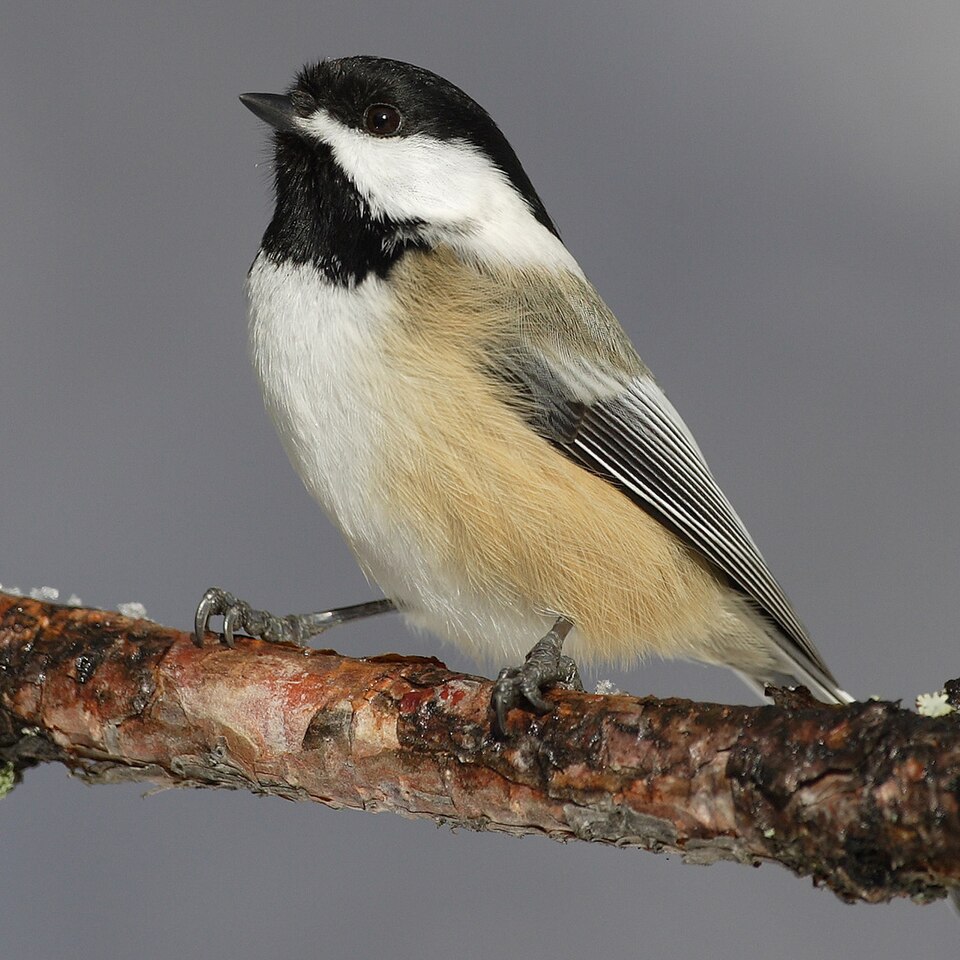
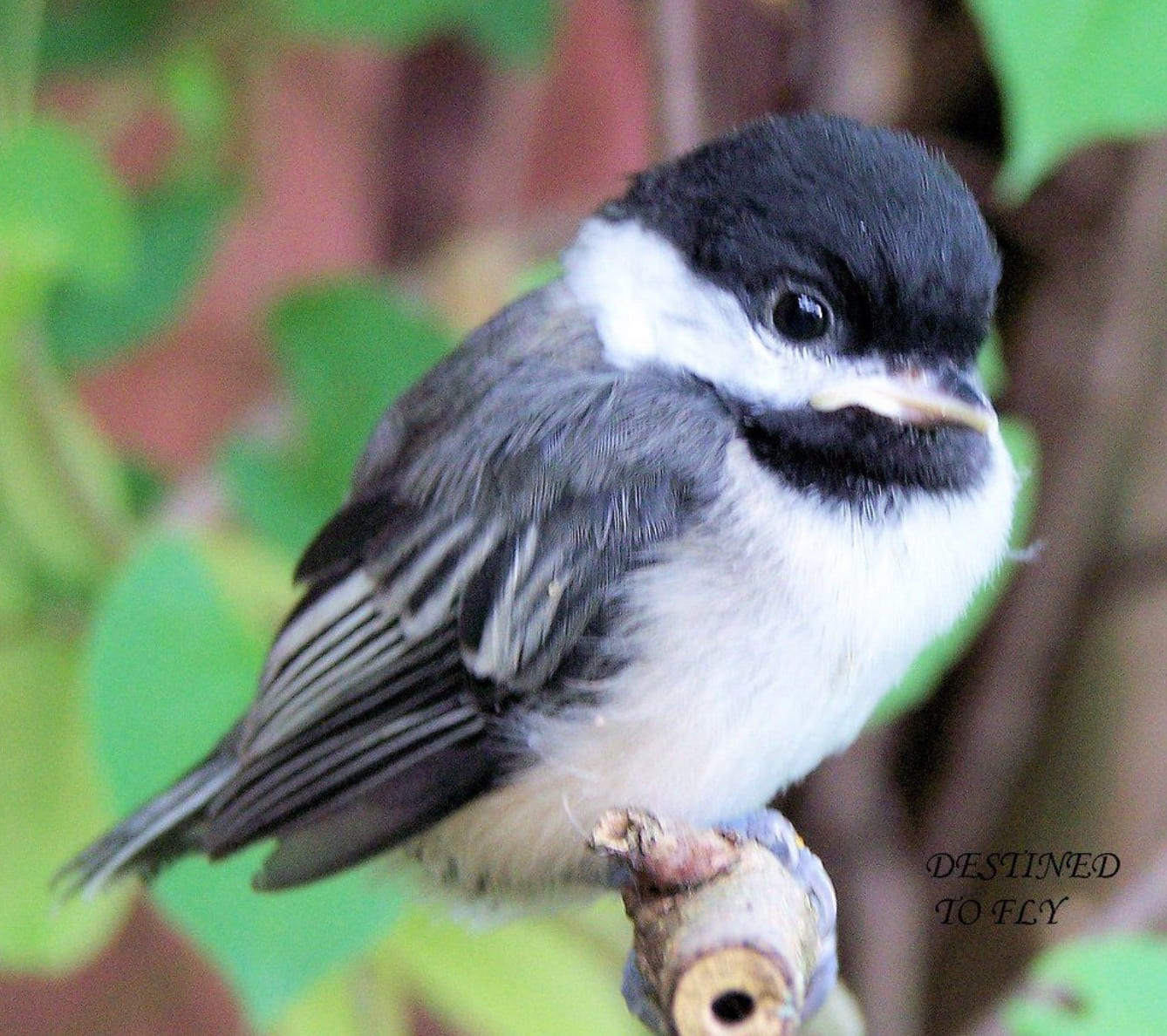
Why the Cutest: For one, it’s Massachusetts’ state bird (also the state bird for Maine but that state has puffins). Second, alongside the Eastern Bluebird, it’s one of the cutest birds you’d find in your own backyard. With its oversized black and white had and small gray, tan, and white body, this little ball of fluff is the whole package. First, it can fly energetic acrobatic stunts like hang upside down while searching for food. Second, it’s fearless and curious. Frequently investigates people and can be coaxed into eating seeds right out of an open hand. Lastly, it emits a cheerful, distinct chick-a-dee-dee call brings life to backyards all year round.
Lifespan: Predators include owls, hawks, shrikes, raccoons, squirrels, opossums, house wrens, and snakes. Can be susceptible to West Nile virus, blood parasites, and avian keratin disorder.
Location and Habitat: Lives in southern Canada and the northern US as south as northern New Mexico and the Carolinas. Is nonmigratory. Inhabited in wooded areas like coniferous and deciduous forests, urban parks, willow thickets, and suburban areas.
Diet: Eats insects (especially caterpillars) as well as berries, seeds, and carrion from dead mammals.
Behavior: Forms mating pairs during late fall and into the winter. Is largely monogamous but some males nest with multiple females and females prefer dominant males. Nests largely in tree cavities that a mating pair excavates themselves, occurs naturally, reuses one once belonging to a woodpecker, or make themselves at home in a nest box. Females only build the nest which can comprise of coarse material like moss or bark strips along with a lining of finer material such as mammal hair. Nesting season lasts through April to June where females lay an average of 6-8 eggs usually once a year. Though they’d rear a second brood if the first is lost. Females incubate. Males go out to feed her and himself. Both parents feed the chicks. Has a dominance hierarchy with males over females and older experienced birds over younger. Flock together during the winter to forage and cache for food, even with different species.
Conservation Status: Currently listed as Least Concern and its numbers are said to be increasing. Yet, threats include pesticide, domestic cats, and flying into windows.
Trivia: Has 9 subspecies. When the nest is disturbed, the female would hiss like a snake. Can interbreed with the Carolina Chickadee, Mountain Chickadee, and Boreal Chickadee. Molts during the summer. Has a complex system of vocalization with 16 distinct types used to convey an array of information.
Other Candidates: Harbor Seal, Striped Skunk, Eastern Chipmunk, New England Cottontail, Red Fox, and Viriginia Opossum.
22. Michigan
Northern Saw-Whet Owl (Aegolius acadicus)
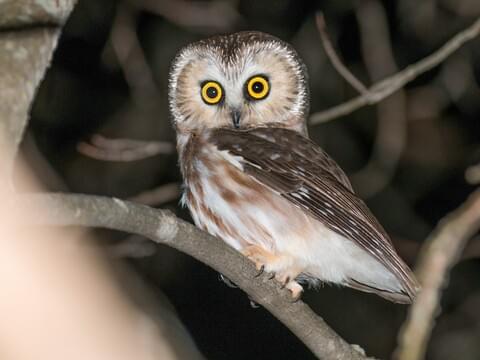
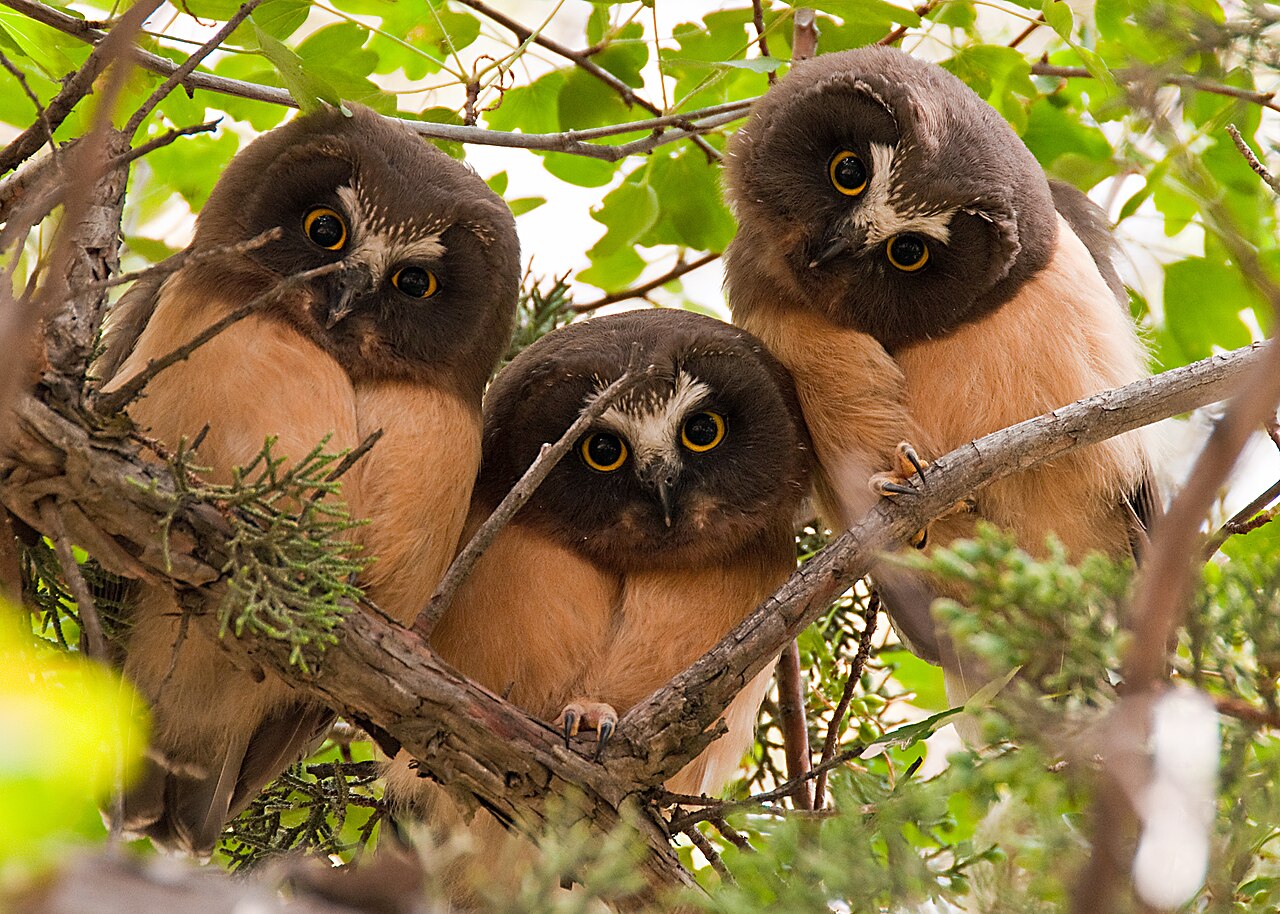
Why the Cutest: This little guy lives in Michigan all year long and is the size of a robin. Its bright cartoon-like yellow eyes and soft facial discs on its oversized round head give it a perpetually startled and curious look. Its heavily, feathered legs make it resemble tiny, round balls of fluff. Often makes a tooting whistle sound. In fact, many see it as the cutest owl ever.
Lifespan: Typically lives 3-7 years in the wild with 4-5 years on average. But can live up to 16-17 years in captivity. Predators include martens, corvids, larger owls, and hawks.
Location and Habitat: Typically lives in North America with range stretching from southern Alaska to central Mexico. Prefers to reside in coniferous forests (ideally near wetlands during the breeding season) but can also be seen in mixed or deciduous woods. Some are permanent residents. Some migrate down south or move to lower ground during the winter.
Diet: Mainly eats small animals with a strong focus on mammals such as mice, voles, shrews, squirrels, chipmunks, flying squirrels, moles, and bats. But will also eat sparrows, swallows, kinglets, chickadees, rock doves, frogs, crustaceans, and insects.
Behavior: Mate in pairs for the breeding season. Males sing from the nest site and cache food in them to attracts a female. Females laying 4-6 eggs in natural tree cavities or woodpecker holes. If it can’t find one due to competition from other woodland creatures, it would happily settle in a man-made nest box. Male does hunting while the female incubates her eggs. Females can have more than one clutch of eggs with different males. Once the offspring developed their feathers, the mother often leaves the father to finish the job while she finds another male to reproduce with in a practice known as sequential polyandry. Like most owls, it’s nocturnal. During the day, it’s completely still against the tree trunk, blending in to avoid notice.
Conservation Status: Currently listed as Least Concern although climate change and habitat loss have led it to seek breeding areas further north with populations decreasing.
Trivia: Get its name due to some claiming its vocalizations sound like a saw being sharpened on a whetstone. Yet, has at least 11 different calls. Has excellent hearing and exceptional vision in low light. In fact, it can hunt in complete darkness on sound alone. Has comb-like wing edges allowing it to swoop down on prey completely undetected.
Other Candidates: North American Otter, Northern Flying Squirrel, Red Fox, and Eastern Chipmunk.
23. Minnesota
North American Beaver (Castor canadensis)
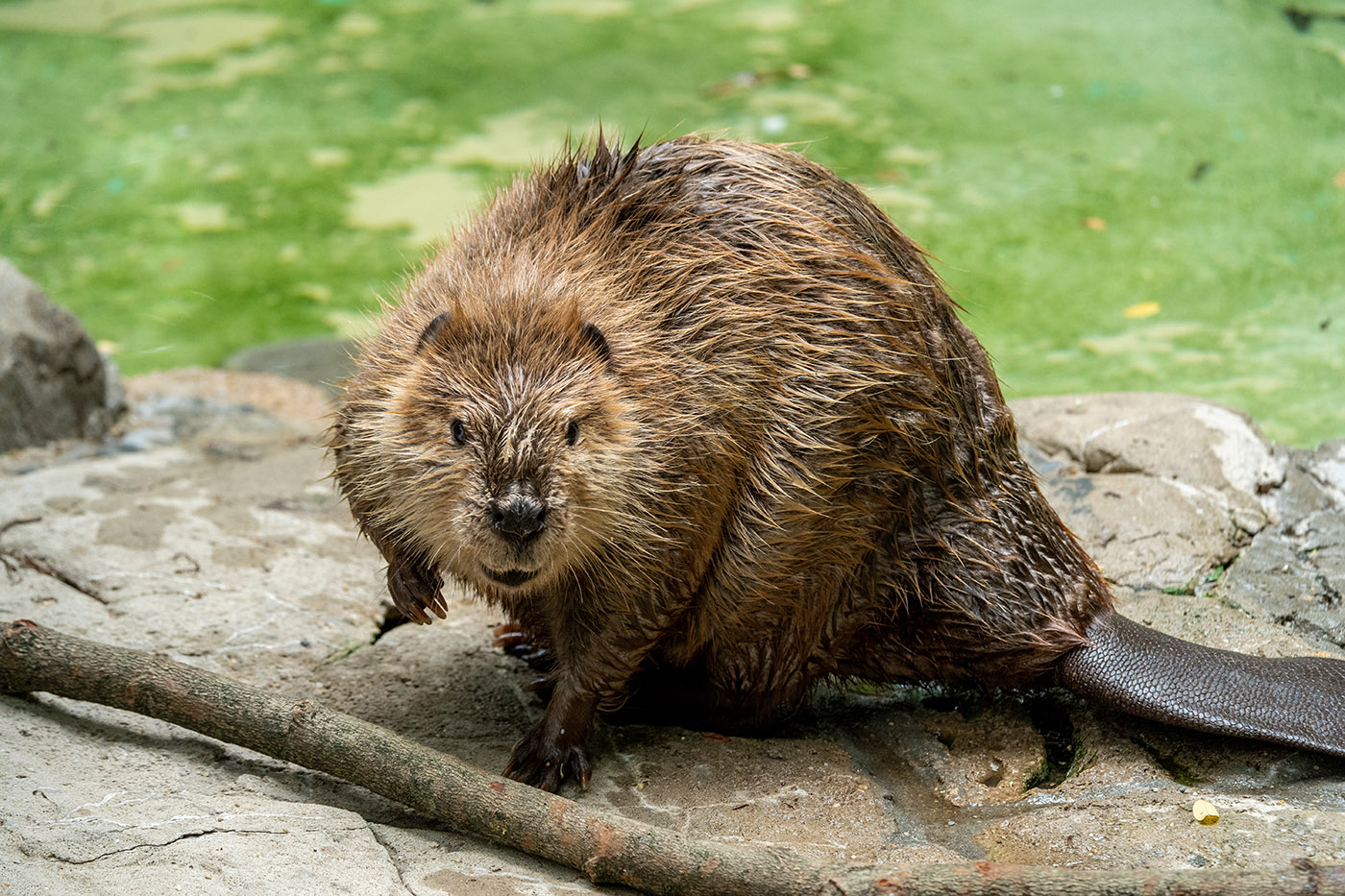
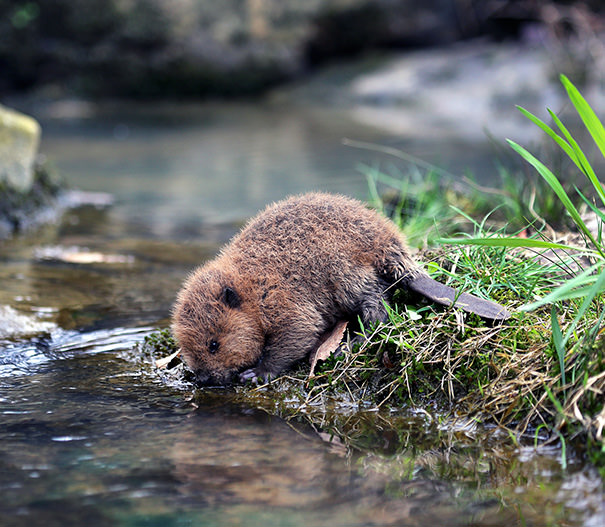
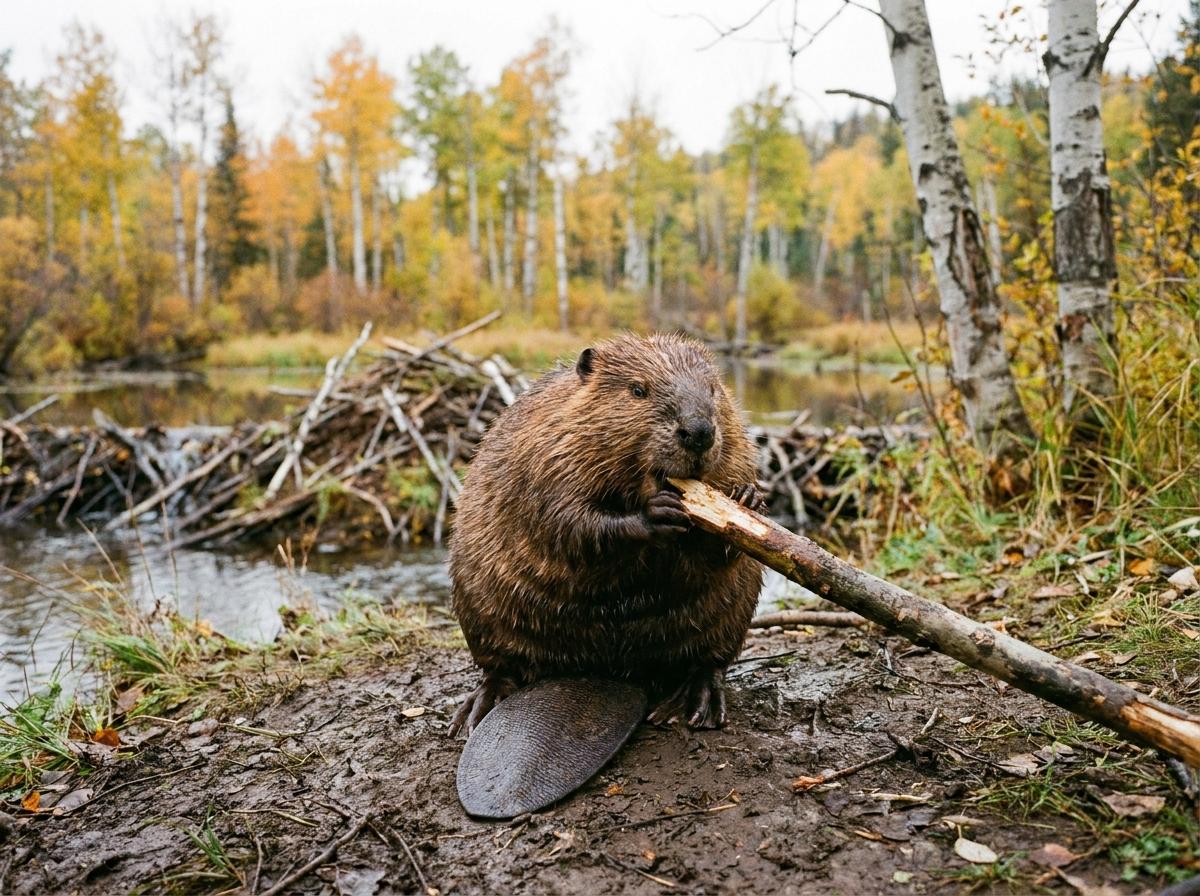
Why the Cutest: With a myriad of trees, lakes, wetlands, and rivers, Minnesota’s basically a beaver’s paradise. Its chunky body, expressive dark eyes, round faces with small ears and prominent teeth, tiny front paws, and wide flat tail compel many to consider it a highly adorable animal. Its kits also make high-pitched human like fussing sounds and playful noises while eating as well. They even engage in cute wrestling, carry sticks and groom each other. Helps that it builds things like lodges, dams, and canals as well as mates for life and takes care of its family and neighbors. The North American Beaver is the perfect cute animal to embody Minnesota for its landscape and its Midwest hospitality. Although it’s not without controversy since Oregon and New York have it as their state mammal. While Minnesota’s known as the Gopher State.
Lifespan: Usually lives up to 10-12 years in the wild, though some exceptional individuals have lived up to 20 years. Can also live 20-30 years in captivity. Predators include coyotes, wolves, mountain lions, black bears, wolverines, Canada lynxes, bobcats, foxes, golden eagles, and bald eagles.
Location and Habitat: Lives in Canada and most of the United States. Can reside in any wild space from southern Alaskan tundra to northern Mexican deserts. But it largely prefers a wild forest with a water source that’s largely undisturbed by humans.
Diet: Is an herbivorous generalist that eats a mix of herbaceous and woody plants. Feeds on bark, cambium, branches, twigs, roots, buds, leaves, stems, sprouts, and even sap and storax. Aspens and poplars are preferred but will go for birch, maple, alder, black cherry, red oak, beech, ash, hornbeam, pine, sweetgum, and spruce. Also eats cattails, water lilies, and other aquatic vegetation.
Behavior: Is nocturnal. Breeding season lasts from December to May but peaks in January. Pairs are monogamous and stay together for multiple breeding seasons, if not for life. Females can have 3-6 kits per litter but usually 4-5 and make a soft bed in the lodge before the birth. Kits stay with family for 2 years before leaving to create their own homes. While both parents and adolescent siblings share responsibility in rearing the young kits. Uses flat, scaly tail to signal danger by slapping and as a location for fat storage. Builds its lodge out of sticks, twigs, rocks, and mud in lakes, streams, and tidal river deltas, which may be surrounded by water or if touching land, include burrows dug into the river banks. Also builds dams across streams as well as its lodge on the ponds the dam forms. When building a pond, it makes a stick pile and eats out one or more underwater entrances and 2 platforms above the water surface inside the pile. The first is used for drying off. Towards winter, it applies mud plaster which, when it freezes, has the same consistency as concrete. Dam is built by trees the beaver cut down along with rocks, grass, and mud. Cuts trees with strong incisor teeth and uses feet for digging, carrying, and placing materials. Builds canals by using forelimbs to push through soil and vegetation.
Conservation Status: Although listed as Least Concern, its numbers are nothing like the used to be thanks to the fur trade whose pelts were particularly prized for making hats and later led to the French and Indian War as well as habitat loss due to deforestation and development and climate change. Nonetheless, thanks to protection measures during the late 19th and early 20th centuries, its numbers have recovered to 10-15 million but its not like the 100-200 million during colonial days. Can also be seen as pests when its ecological engineering poses risks to human structures and crop land. While it is considered invasive in South America and Europe where it was introduced for its fur.
Trivia: Is the national symbol of Canada. Has 25 subspecies. Largest rodent in North America. Communicate through scent marking, vocalization, and tail slapping. Is an excellent swimmer and may remain submerged for 15 minutes. Beaver ponds provide habitats for waterfowl, fish, and other aquatic animals as well as reduce soil erosion and help control flooding. But dams depend on a beaver’s continued presence and maintenance. Is considered a keystone species due to increasing biodiversity in its territory through creating ponds and wetlands. When wetlands form and riparian habitats expand, aquatic plants quickly colonize the watery habitat as animal diversity’s also expanded. Could expand lodges to accommodate other wildlife in its own rooms during the winter months.
Other Candidates: Pocket Gopher, North American River Otter, Least Weasel, Ermine, Pine Marten, Eastern Chipmunk, Thirteen-Lined Ground Squirrel, and Red Fox.
24. Mississippi
North American River Otter (Lontra canadensis)
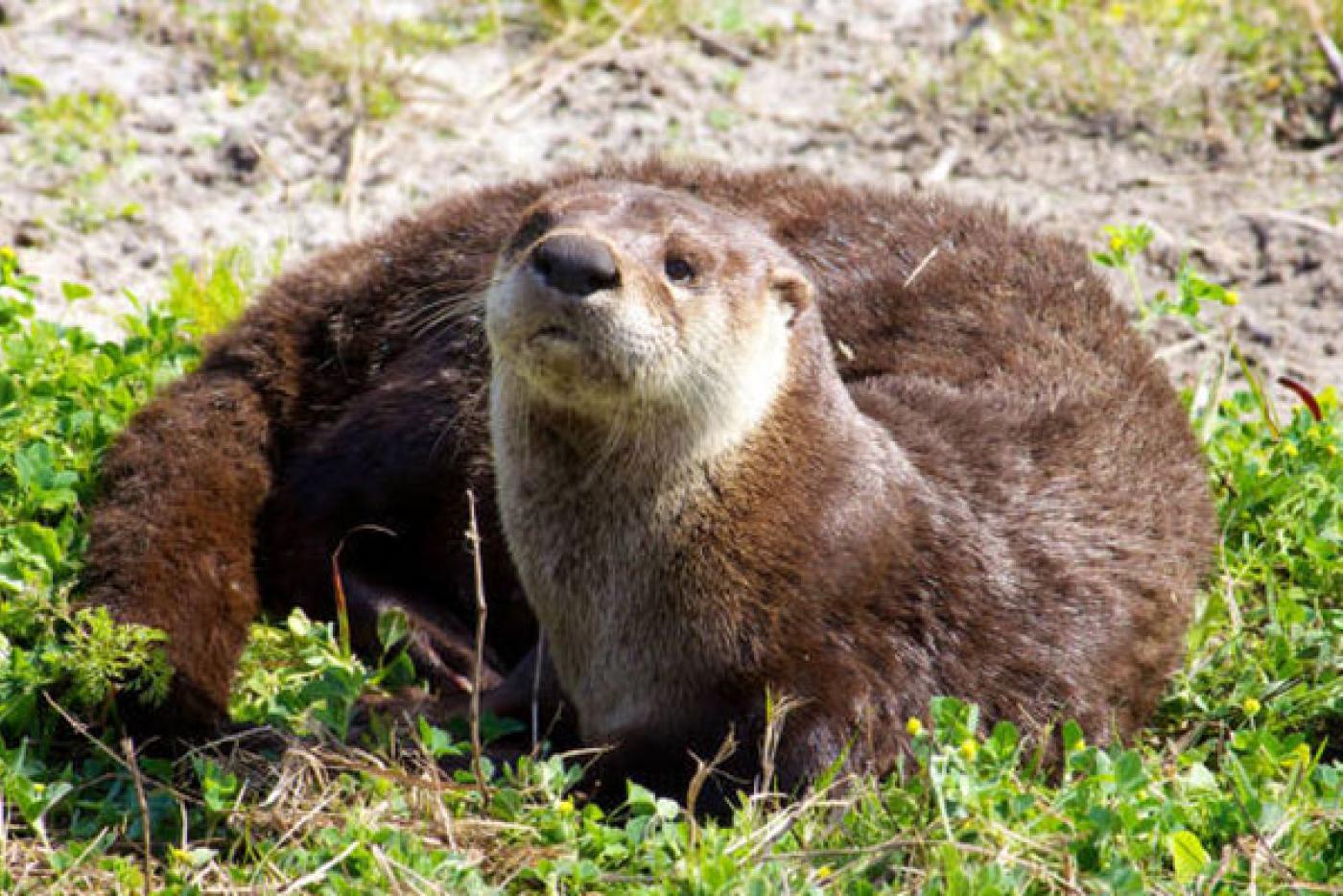
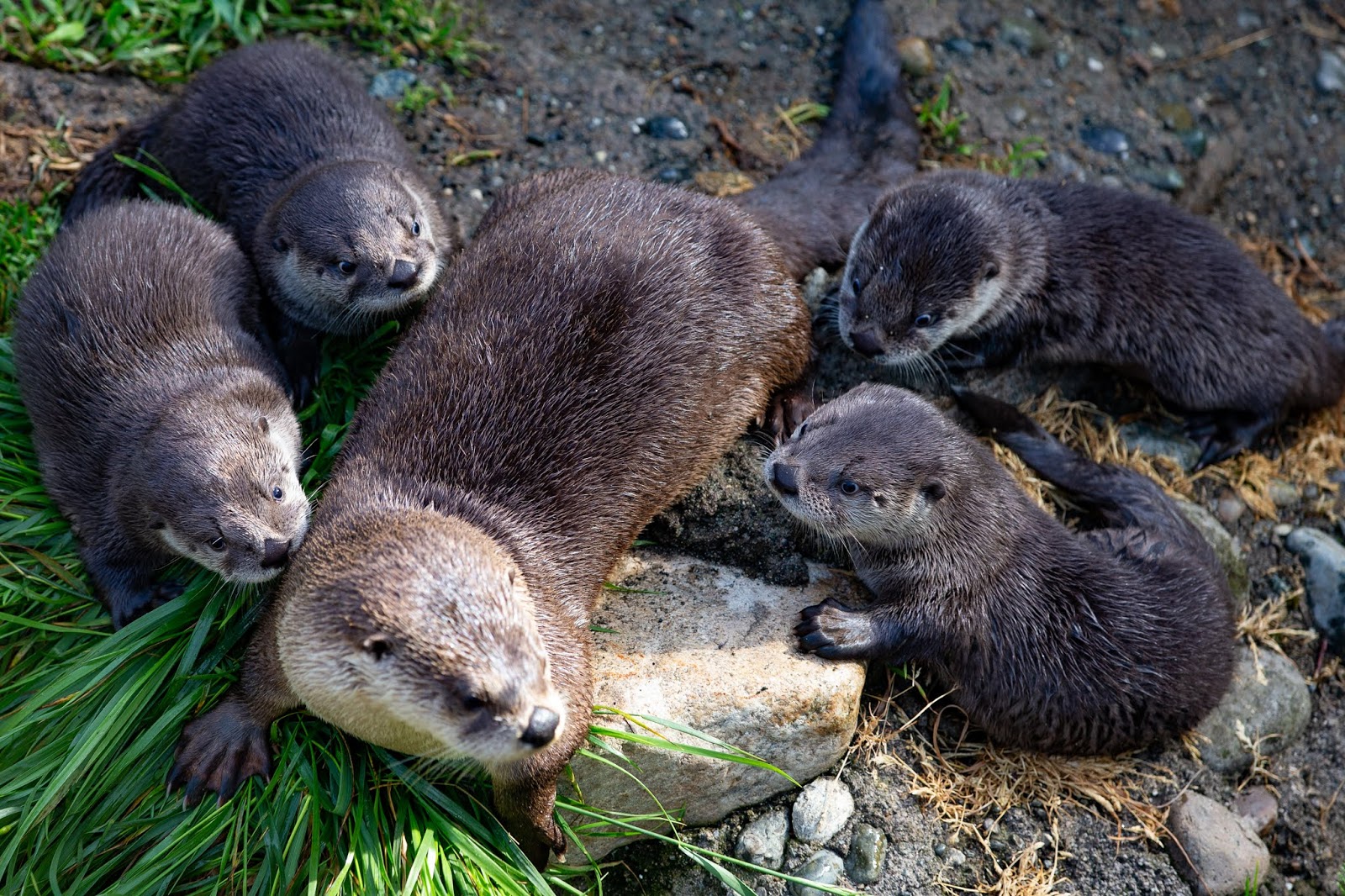
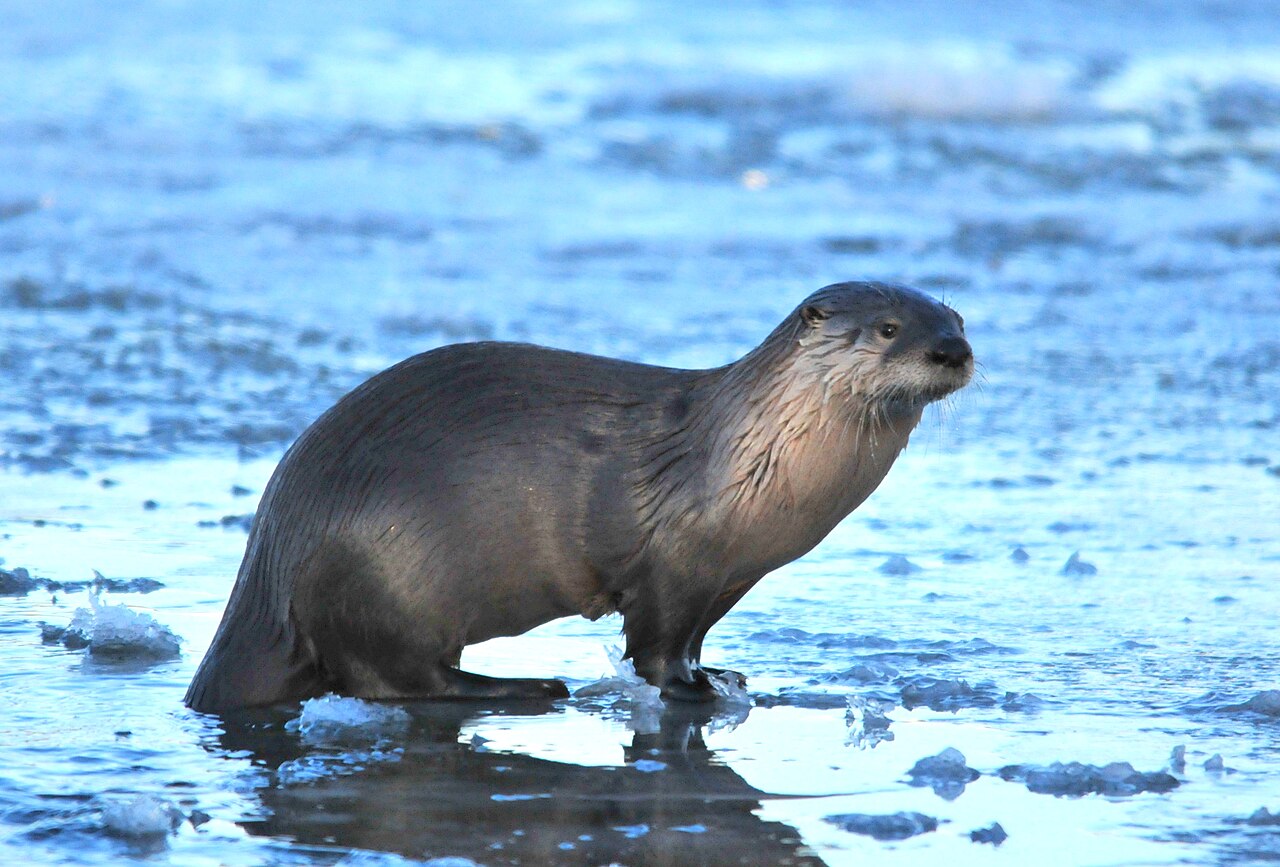
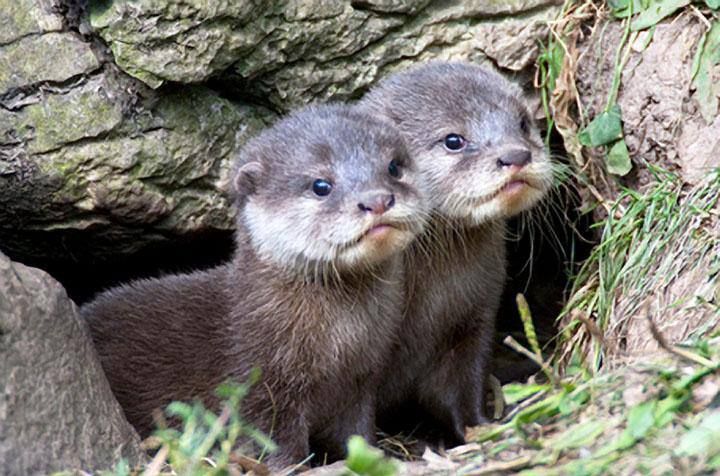
Why the Cutest: Given that Mississippi borders the river that bears its name, it’s a state that’s filled with rivers, streams, and swamps with a little bit of coastline. Mississippi State even has a website called Otter Spotter where people in the state could report otter sightings. With its curious eyes, small ears, long whiskers, little nose, long sausage body, and playful nature, it’s among the cutest animals in most states. In fact, its an animal that loves to play such as wrestle, slide on mud, chase others, and splash in the water.
Lifespan: Usually live 8-9 years in the wild, sometimes 12-13. Well, once it survives its first year and more than half of them typically don’t. Can also live 21-25 years in captivity. Predators include American alligator, American crocodile, killer whale, bobcat, cougar, coyote, domestic dog, wolf, American black bear, bald eagle, red fox, grizzly bear, and polar bear.
Location and Habitat: Lives throughout North America save the American southwest. Resides in a variety of aquatic habitats whether it be freshwater, coastal, or marine. Whether it be rivers, lakes, inland wetlands, coastal shorelines, marshes, and estuaries. Can tolerate a great range of elevation and temperatures. As long as its near a watershed and provides a steady food supply, it could live pretty much anywhere. But prefers such areas with rocks, vegetation, and sufficient cover.
Diet: Mostly eats fish and crustaceans but can also consume frogs, turtles, insects, birds, and some small mammals. So it basically has a rather well-rounded carnivorous diet.
Behavior: Known to be social but could survive on its own. Can hunt in pairs or alone. Loves to play with others, which creates social bonds, improves hunting skills, and marks territory. Not aggressively territorial but frequently scent-marks certain spots to make its presence known.
Conservation Status: Although currently listed as Least Concern, its populations have greatly suffered due to the fur trade, climate change, habitat loss, and pollution. Although clean water regulations, furbearer management techniques, and reintroduction projects have reestablish populations throughout the country save the southwest. Lives in a holt or den often once constructed by other animals or in natural hollows. Den typically has one entrance leading to a nest chamber lined with leaves, grass, moss, bark, and hair. Females can give birth to 1-3 pups, sometimes as many as 5. Mothers raise their young without any male assistance. Although a pup may leave the den at 2 months old, it often stays with its family, which sometimes includes a father, until the following spring.
Trivia: Can effectively avoid predators since it can dive, burrow, twist, and turn its body for evasive attacks, allowing it survive attacks. Dense coat keeps it warm and dry in freezing temperatures.
Other Candidates: Mississippi Map Turtle, Southern Flying Squirrel, Red Fox, Eastern Cottontail, and Least Shrew.
25. Missouri
American Kestrel (Falco sparverius)
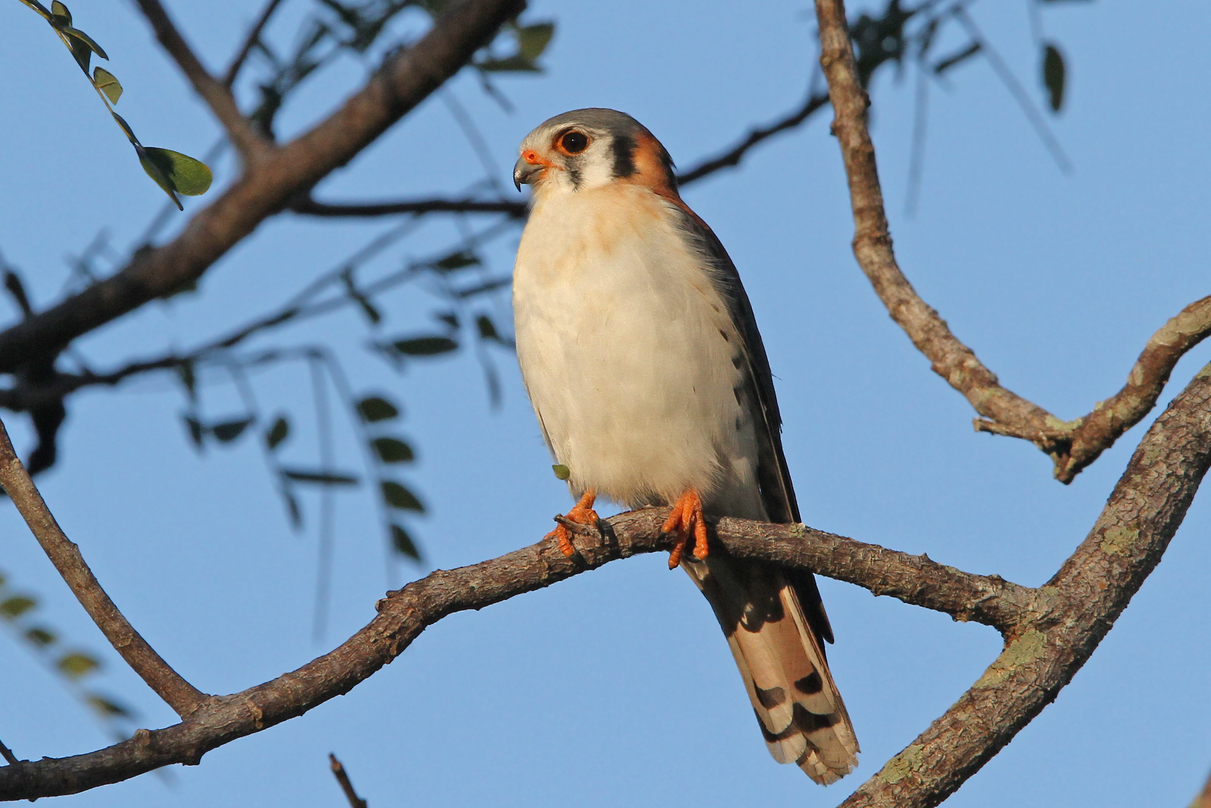
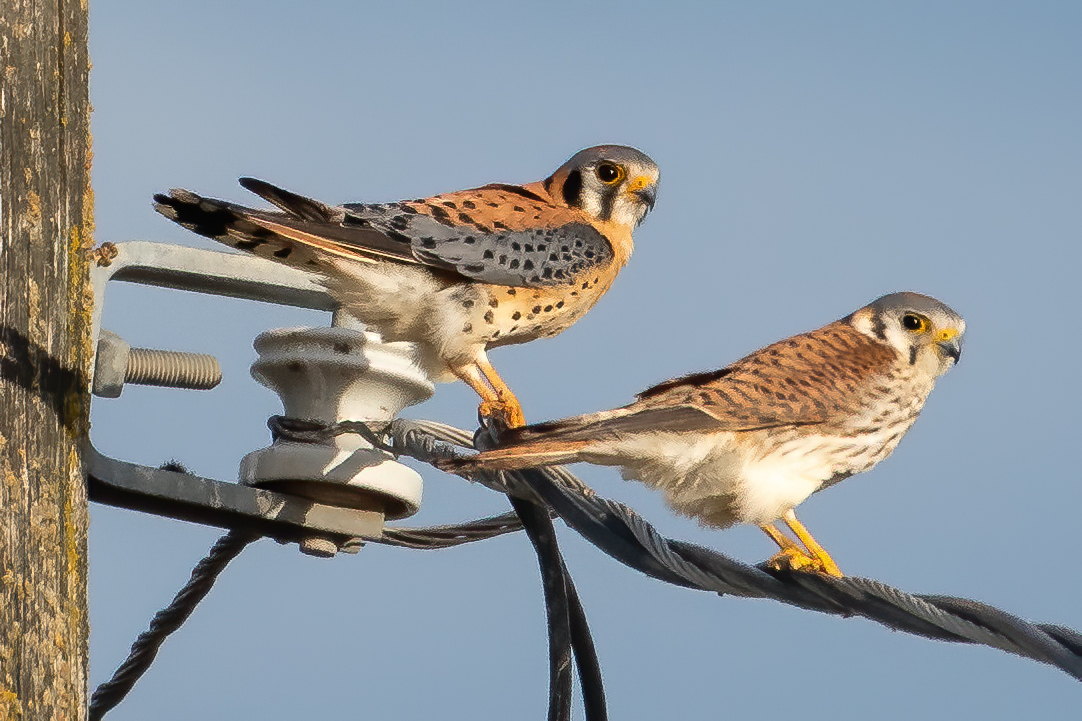
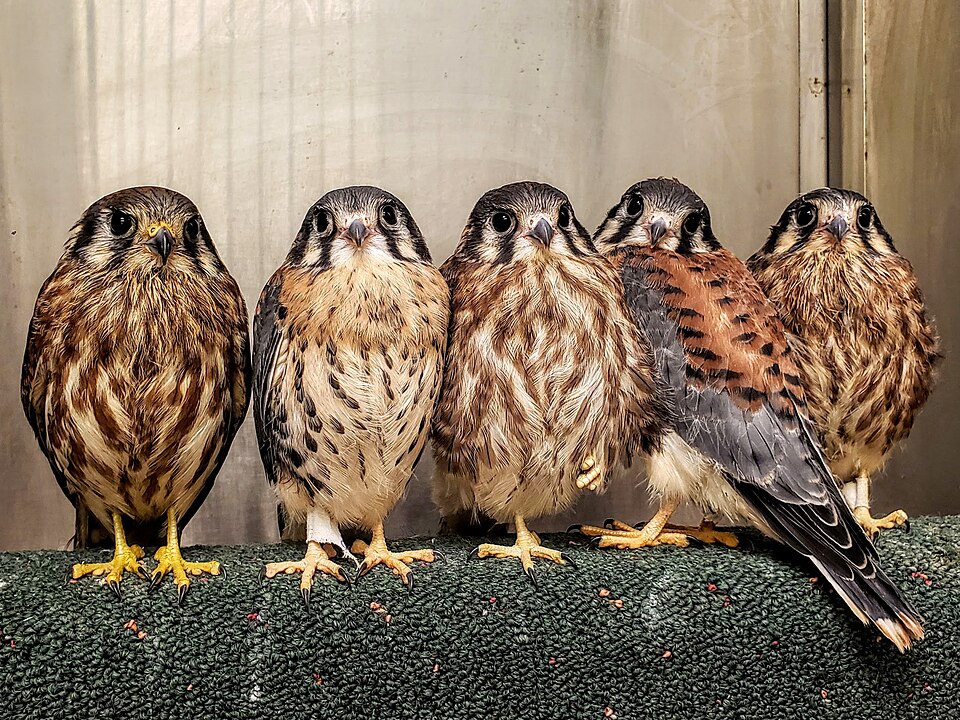
Why the Cutest: A falcon often the size of a blue jay, it’s one of the most underrated American animals and should receive way more attention than it actually receives. This pocket-sized raptor is a colorful bird with an expressive face, large dark eyes, quirky habits such as bobbing its head and tail while perched, and fierce hunting prowess. The American Kestrel may be tiny but it’s a mighty little hunter that will greatly endear you and should at least receive its own nature documentary so millions can get to know and fall in love with it. Especially when it makes its “killy-killy-killy” call whenever territorial or excited. A remarkable, highly adaptable, and often overlooked bird of prey that deserves its day to shine in the spotlight.
Lifespan: Typically lives less 1-5 years in the wild with the oldest recorded age being 11. Can live 14-17 years in captivity. Predators include large snakes, domestic cats, domestic dogs, bigger birds of prey, foxes, bobcats, cougars, bears, and more.
Location and Habitat: Lives in the Americas from Alaska to Argentina save the Amazon Rainforest and parts of Chile. Some migrate. Some do not. Resides in a wide variety of habitats including grasslands, meadows, and deserts as well as other open or semi-open areas. As long as it includes perches, open hunting spaces, and nesting cavities. Can live in very diverse conditions from frozen Arctic tundra and high mountain elevations to tropical rainforests, arid deserts, and beaches. Can even live in urban and suburban areas as well.
Diet: Mainly eats small animals like grasshoppers, crickets, butterflies, moths, dragonflies, beetles, lizards, mice, voles, shrews, frogs, small birds, scorpions, snakes, and bats.
Behavior: Often mate for life while migratory kestrels often use previous nesting sites for consecutive years. Males perform elaborate dive displays to advertise their territory and attract a mate. This consists of several climbs and dives with 3-4 “klee” calls at their peaks. Nests in cavities but can adapt to a wide variety of nesting situations. Prefer natural cavities with closed tops and tight-fitting entrances that provide maximum egg and young protection. Can nest in large woodpecker holes or use abandoned nests built by other birds. Also commonly utilize nesting boxes. Females can lay around 3-7 eggs per clutch (but usually 4-5). Older kestrel pairs often produce more offspring than younger couples.
Conservation Status: Currently listed as Least Concern but have suffered greatly due to environmental stress from human development, use of agricultural chemicals and toxic run-off, pollution, climate change, and habitat loss. And while it’s the most abundant falcon in North America with 9.2 million recorded adults, it has experienced gradual but sustained declines in recent decades, especially in certain regions. But conservation efforts do exist such as the Peregrine Fund’s American Kestrel Partnership that was launched in 2012. This partnership develops and maintains a web-based network for citizen and professional scientists to enter, manage, and consolidate data from kestrel nest box monitoring programs within the Western Hemisphere. Nonetheless, it’s a bird that you likely saw in the wild at least once in your life although you may not remember it or what it exactly was when you saw it.
Trivia: Has 17 subspecies. Only kestrel in the Americas. Have been used in falconry and extensive toxicology research. Although falconers must know that despite being a beginner bird, it’s not easy to train. While hunting, it carefully chooses its battles to conserve energy and will move if its chance of prey success significantly declines. Preferred hunting method is perching and waiting for the food to come to them but can also hunt by kiting, which is the standard hovering in the air while scanning for prey. Bobs head and tail before making a strike.
Other Candidates: North American River Otter, Southern Flying Squirrel, Eastern Gray Squirrel, Virginia Opossum, Eastern Bluebird, and Red Fox.
26. Montana
Yellow-Bellied Marmot (Marmota flaviventer)
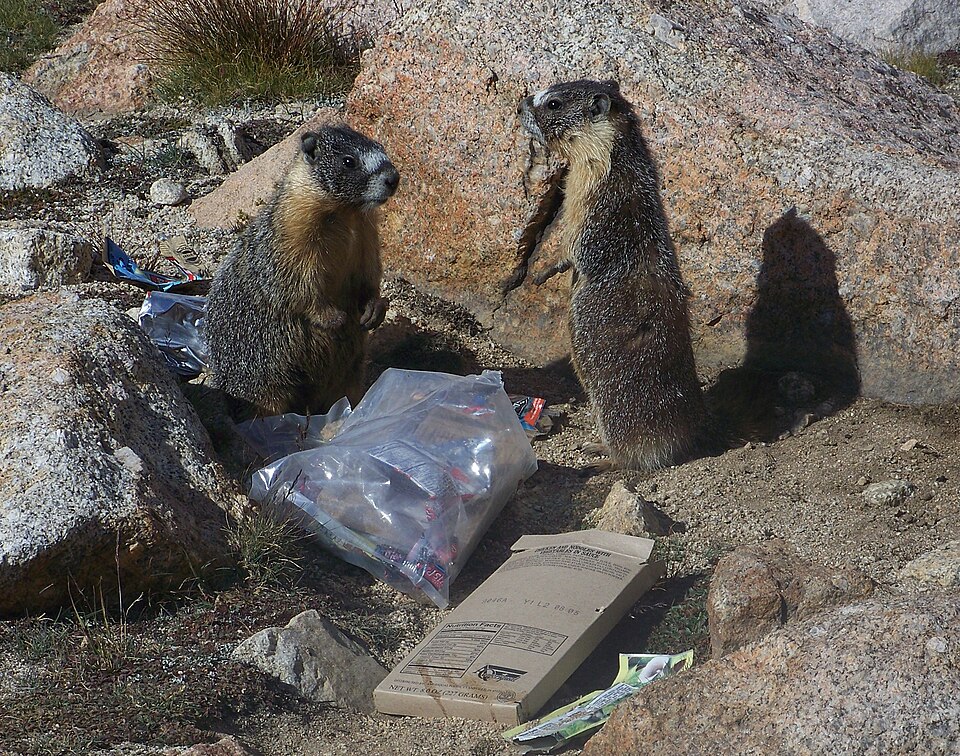
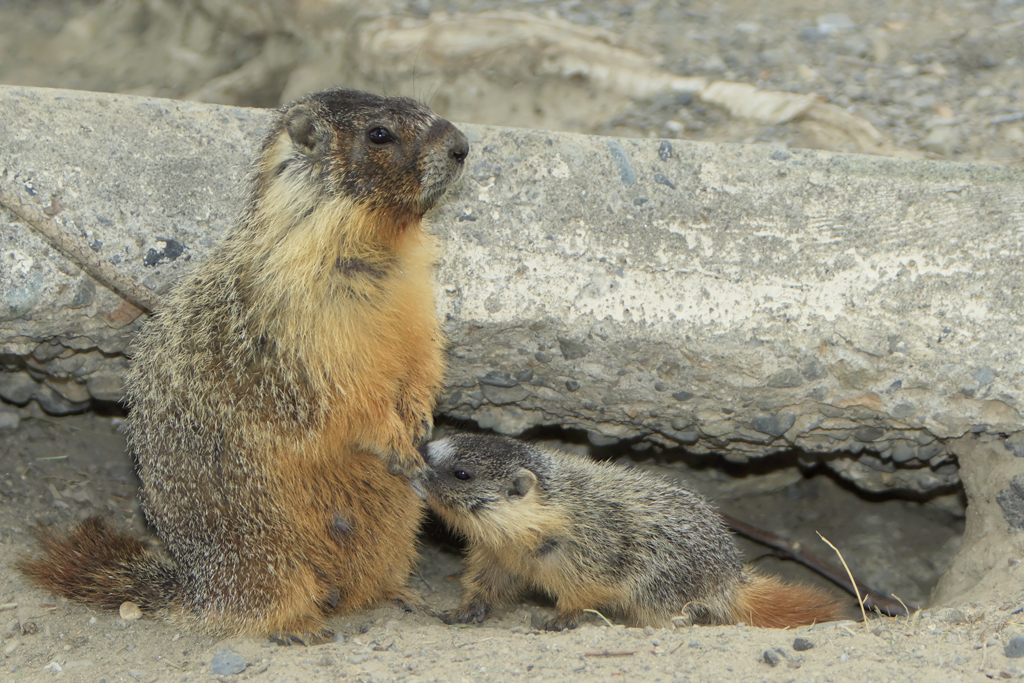
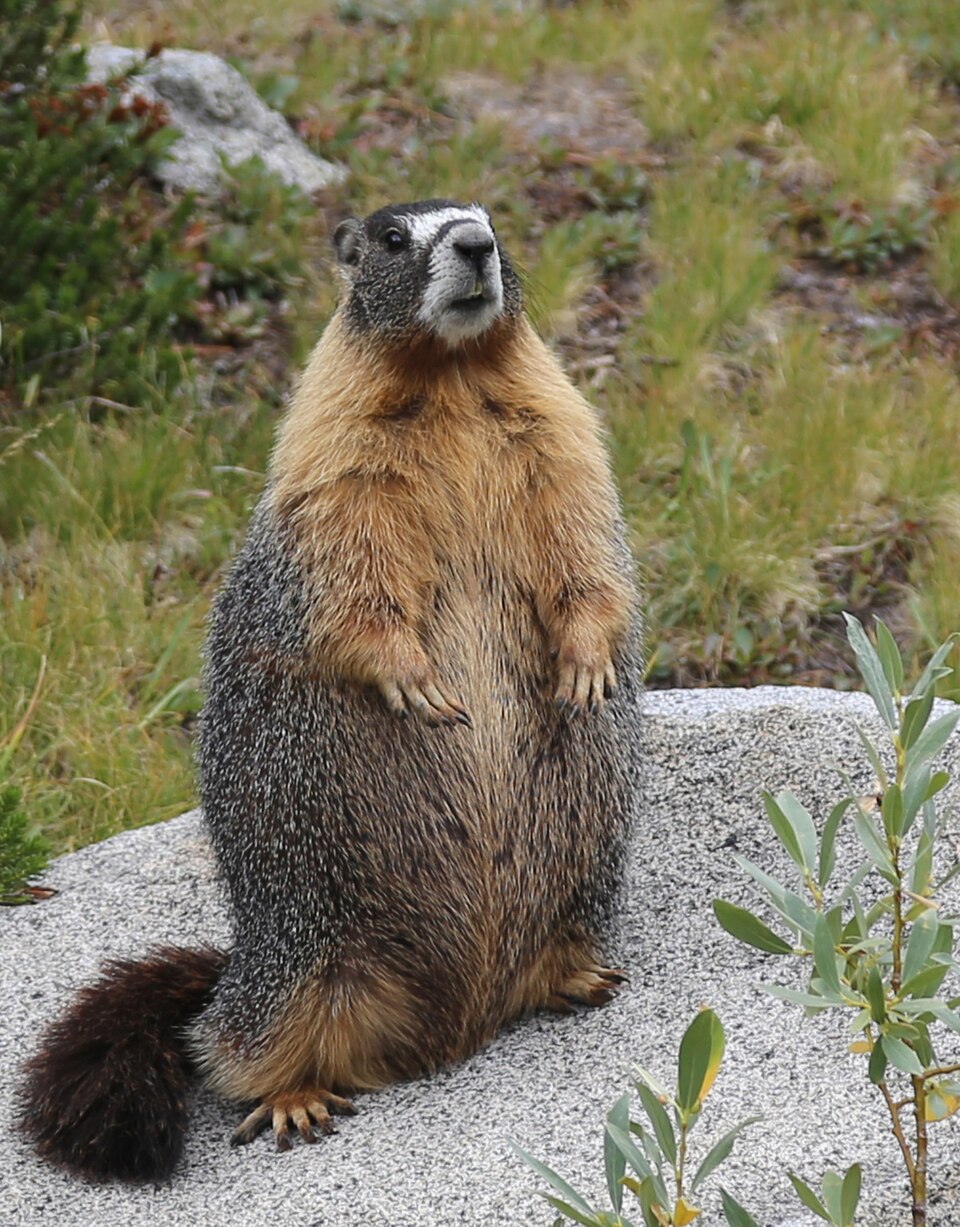
Why the Cutest: Sure, it’s not as adorable as the pygmy rabbit or the American Pika. But this Rocky Mountain critter is a chubby, alpine rodent known by names like “rock chuck” or “whistle pig” due to its loud whistling sounds to warn others of danger. Yet, at the same time, this big chonky ground squirrel loves the easy life of chomping on plants, sunning on boulders, and spending up to 8 months sleeping in its underground burrow. While young marmot pups are often very playful, often tumbling, nuzzling, and chasing each other around rock burrows.
Lifespan: Usually live up to 15 years, which is unusually high for an animal its size. That is if it’s lucky enough to survive its first year, which only half do. Predators include foxes, coyotes, wolves, and eagles.
Location and Habitat: Lives in the semi-arid and mountainous areas of the Rocky Mountains, Sierra Nevada, and Great Basin, usually at elevations above 6,500ft. Inhabits steppes, meadows, talus fields, valleys, foothills, as well as the edges of coniferous and deciduous forests. Can be found as low as 5,400-14,000ft in elevation.
Diet: Omnivorous but mainly eats a plant-based diet of grass, greens, leaves, flowers, legumes, forbs, bird eggs, and insects. Favorite flowers are larkspur, lupine, columbine, cinquefoil, dandelion, and cow parsnip. Also enjoys clover and alfalfa.
Behavior: Typically digs burrows under rocks on slopes of hills, mountains, and cliffs but will burrow underneath trees and buildings. When seeing a predator, it whistles to warn others in its vicinity. Only to afterwards hide in a rock pile until the threat has passed. Is Diurnal. Spends 80% of its life in its burrow, 60% of which is spent in hibernation. Despite hibernating during the winter, it doesn’t store food in a cache. Spends much of the active season accumulating enough fat to survive the winter hibernation. Can live alone, in pairs, or in colonies. Males dig burrows soon after waking from hibernation before finding females to reproduce with. Can have up to 4 female mates by the summer but often has 2-3. Females mate once a year during a 2-week breeding season in the spring. Females produce litters of 3-5 offspring. Colonies comprise of 1 or more harems. Female offspring typically stay in an area around their home. Male offspring leave as yearlings to start their own harems. Is a highly social animal with visiting other burrows, greeting fellow colony members and play-fighting. Communicate to each other through high-pitched whistles. Daily activities include daily grooming, sunning, feeding, digging, and residing in burrow.
Conservation Status: Currently listed as Least Concern although living at high elevations may make it vulnerable to the effects of climate change. Increasing temperatures have shifted marmot behavior causing hibernation to end sooner and breeding season to start likewise. This has resulted in a longer growing season contributing to an increase body mass and population growth.
Trivia: May climb trees to get food but is largely terrestrial.
Other Candidates: Black-Tailed Prairie Dog, North American River Otter, Pygmy Rabbit, Black-Footed Ferret, American Pika, Ermine, North American Beaver, Black-Capped Chickadee, and Mountain Bluebird.
27. Nebraska
Burrowing Owl (Athene cunicularia)
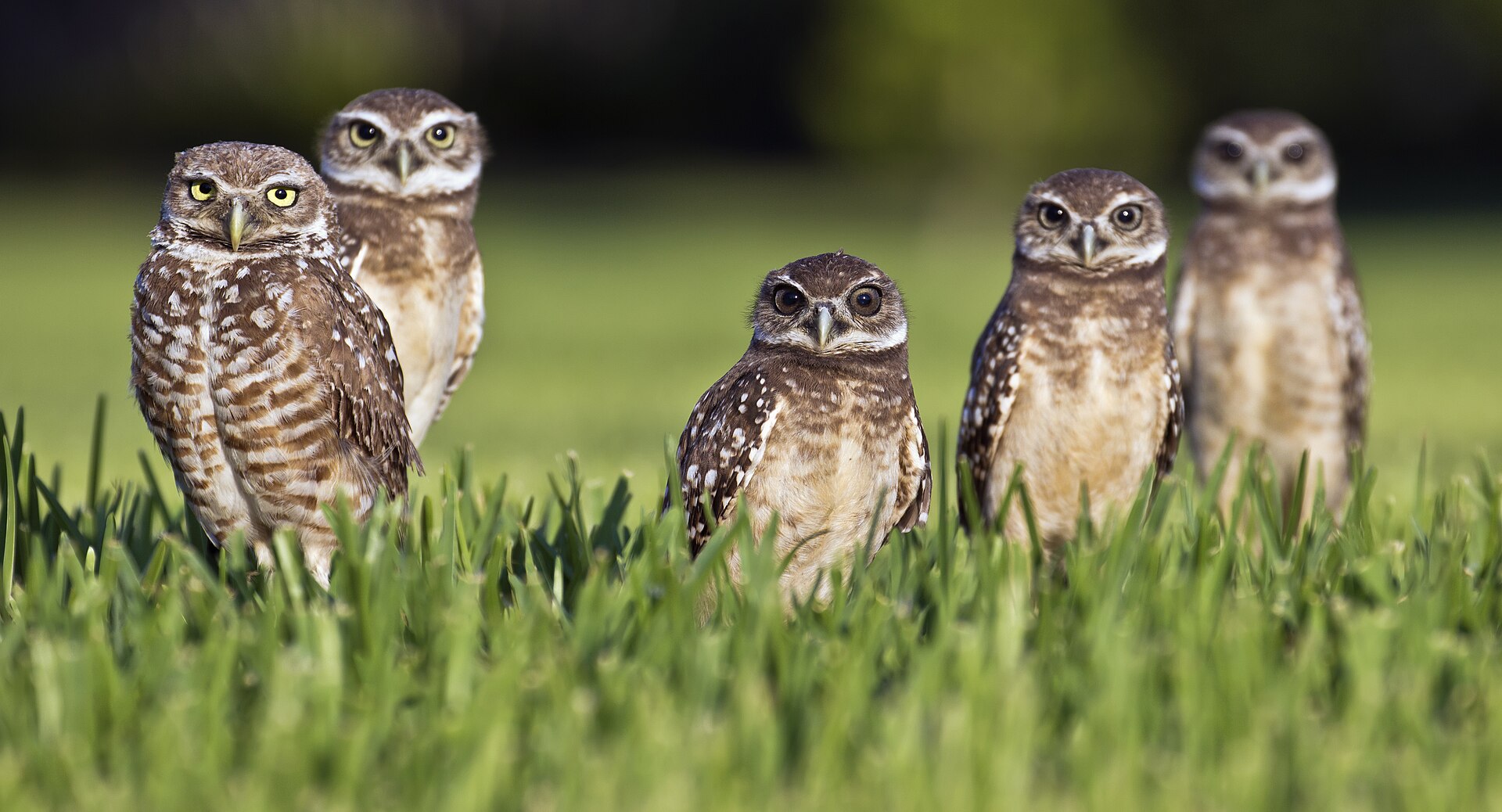
Why the Cutest: With its small size, big yellow eyes, excessive head-bobbing, and habit of living in underground holes, it’s a widely loved bird known to be exceptionally adorable. Its big, wide eyes and bright wide eyebrows make it appear very curious. It bobs its head while watching things or feeling nervous. Since Nebraska is a state of farms and grasslands, the Burrowing Owl is its perfect representation of cuteness.
Lifespan: Can live at least 9 years in the wild and over 10 in captivity. Often killed by vehicular traffic. Predators include badgers, coyotes, snakes, and feral and domestic cats and dogs.
Location and Habitat: Lives as north as Canada and as south as South America. Yet its North American population usually inhabits the Great Plains and Western regions. North American population is mainly migratory that winters in Central America. South American population is not. Often inhabited in rangelands, grasslands, agricultural areas or any open, dry area with low vegetation. It may even nest in golf courses, airports, roadsides, or near farms, homes, and well-maintained irrigation canals. But it can live almost anywhere except high mountain areas, tundra, or dense tropical rainforest.
Diet: Eats large insects, small mammals, bats, birds, reptiles, amphibians, worms, fruits, spiders, and seeds.
Behavior: Despite its name, it’s actually a squatter that frequently nests and roosts in burrows made by other animals, most commonly ground squirrels, foxes, and badgers. But may dig its own if one is unavailable or settle in man-made structures with easy access to the surface. When threatened, it retreats to the burrow and produces a rattling, hissing sounds similar to a rattlesnake. Nesting season is from March to April. Usually monogamous but a male may have occasionally 2 mates. Females usually lay 4-12 eggs per clutch (but usually 9). Both parents raise the chicks. Sometimes nests in loose colonies or nest on the same sites for years. Lines its nest with a wide variety of materials with the most common being animal dung, usually of the cattle variety. Will perch until it spots prey before swooping down or flying up. Sometimes even chase food on the ground. Unlike most owls, it’s active during the day but has night vision and can hunt during around dawn and dusk.
Conservation Status: Although it’s listed as Least Concern, it’s still seen as threatened or endangered in various locations such as Canada, Mexico, South America, Colorado, California, and Florida. This is mainly due to habitat loss, prairie dog control programs, passive relocations, and declines in animal populations that it depends upon. Although it has adapted to living within urban environments.
Trivia: Has 18 subspecies, 2 of which are now extinct. Has longer legs than other owls, allowing it to sprint when pursuing prey. Can actually fly but is often airborne in short bursts such as when fleeing predators and normally doesn’t fly very high off the ground. Bobs head to judge distances.
Other Candidates: North American River Otter, Black-Tailed Prairie Dog, Red Fox, Eastern Cottontail, and North American Porcupine.
28. Nevada
Ringtail (Bassariscus astutus)
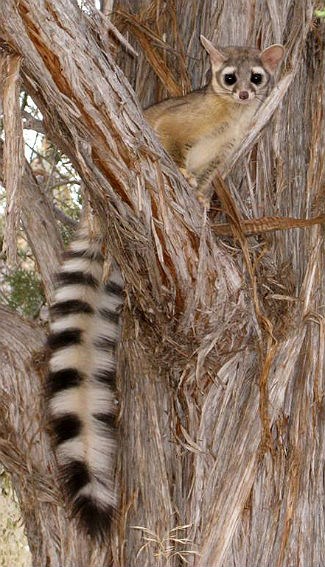
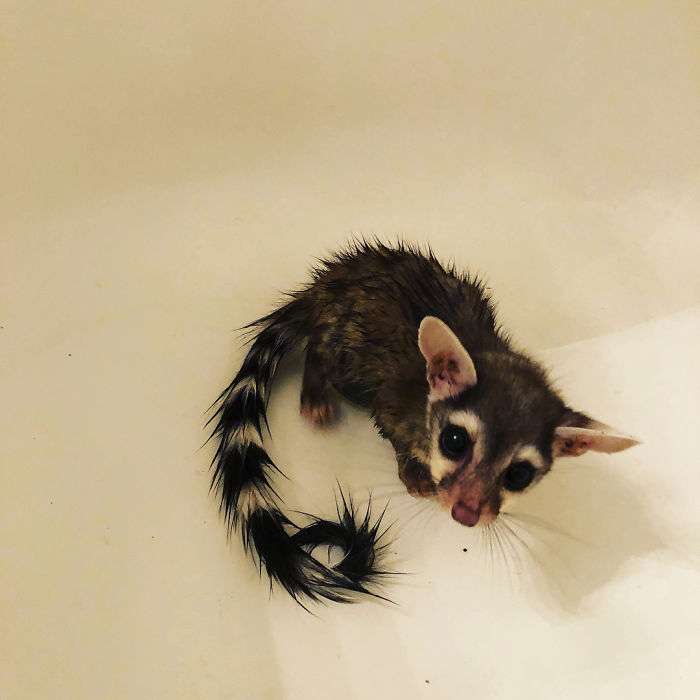
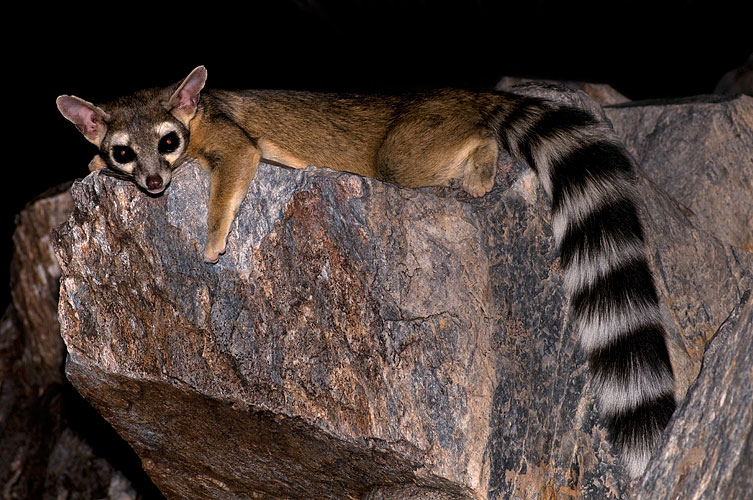
Why the Cutest: It’s a cat-sized desert critter who loves the nightlife, making a perfect cuteness representation for Nevada. Although nightlife for this cutie is very different from a night on the Las Vegas Strip. Its big, round expressive eyes circled by white fur gives it a perpetually curious look. Add that with its long, fluffy tail and large, cupped ears, it resembles something between a ring-tailed lemur and a small toy dog. Even though it’s been described as cat-like. And yet, despite its cuteness, it’s an animal many have never really heard of, which is kind of a shame.
Lifespan: Usually lives 7 years in the wild and can live 14-16 in captivity. Causes of death are predators, disease, and environmental stress. Predators include foxes, bobcats, coyotes, raccoons, hawks, owls, coatis, lynxes, and cougars.
Location and Habitat: Lives in the American Southwest and Mexico. Commonly found in rocky, desert habitats associated with water like riparian canyons, caves, or abandoned mine shafts.
Diet: Eats birds, mice, rats, squirrels, rabbits, snakes, lizards, frogs, toads, insects, berries, seeds, and carrion. So it basically can eat almost anything.
Behavior: Primarily nocturnal. Lives a solitary adult life, only coming together to mate in early spring. Yet, could share a den and actively groom one another. Female produces 2-4 offspring per litter.
Conservation Status: Currently listed as Least Concern but has been hunted for its pelts in the past. Nonetheless, it’s protected in both California and Oregon.
Trivia: Has flexible ankle joints that could rotate over 180 degrees, making it an agile climber. Long tail provides balance for negotiating narrow ledges and limbs, even allowing it to reverse directions by doing a cartwheel. It can climb narrow passages by stemming (which is pressing all its feet on one wall and back against the other or pressing both right feet on one wall and both left feet on the other). Can navigate wider cracks by ricocheting between walls. Has short, straight, and semi-retractable claws well suited for climbing. Ringed tail could be as long as its body. Large eyes and upright ears make it easier for nighttime navigation. Rings are used to distract predators. Can produce a variety of sounds and uses fecal marking as an intraspecific communication method. Can survive long periods on water without food. Can be tamed by humans and was once used by settlers and miners to keep cabins free from vermin. State mammal of Arizona.
Other Candidates: Kit Fox, American Badger, Pygmy Rabbit, and White-Tailed Antelope Squirrel.
29. New Hampshire
Stoat (Mustela erminea)
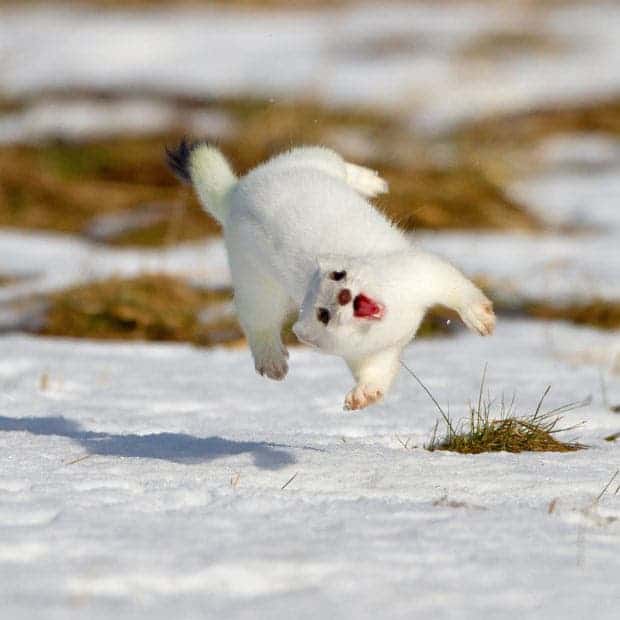
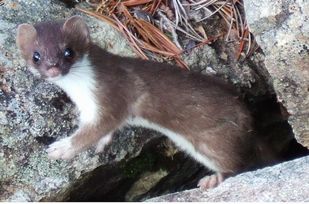
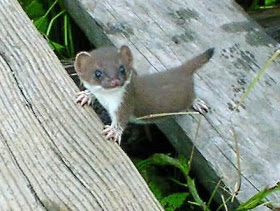
Why the Cutest: It’s a tiny, energetic mammal with an adorable face, playful antics, high speeds, and surprising ferocity that it’s hardly surprising that it has become a mascot of a Winter Olympics. Yet, this beady-eyed stuffed animal is an opportunistic and deadly predator that can kill animals much larger than itself. When excited or trying to confuse its prey, it performs a rapid and twisting dance with leaps and hops. That we must be lucky that its major weapon against us is undeniable cuteness capturing our hearts. Makes one wonder why they’d hunt this little guy for furs. Still, this is an animal that runs on pure killer rabbit energy. Hopelessly adorable but actually deadly to anything rabbit-sized or smaller.
Lifespan: Typically lives 4-6 years in the wild. Predators include foxes, sables, birds of prey, and gray herons. Can be susceptible to tuberculosis, mange, canine distemper, ticks, fleas, and worms.
Location and Habitat: Lives throughout most of the Northern Hemisphere in North America, Europe, and Asia. In North America, it can be found as south as the Great Basin. Resides in a wide range of habitats frozen tundra, high mountains, temperate forests, and grasslands.
Diet: Mostly eats small mammals such as rodents. But can also eat small birds, amphibians, lizards, insects, and lemmings.
Behavior: Breeding season is in April to July. It isn’t monogamous and littermates can have mixed paternity. Females can produce a litter of up to 12 kits but probably have less than that per year. Males play no part in upbringing. Mark territories with urine and feces. Uses burrows and nest chambers of rodents it kills and used the prey furs to line it. Can also inhabit old and rotting stumps, under tree roots, brushwood heaps, haystacks, bog hammocks, cracks of vacant mud buildings, rock piles, rock clefts, and even magpie nests. Is a very opportunistic predator that rapidly moves while checking every nook and cranny for available food. Can climb trees to get birds’ nests and commonly raid nest boxes. Can immobilize larger prey like rabbits with a bite to the neck. Caches leftovers. Is usually a silent animal but can produce a range of sounds such as chirping, hissing, trilling, whining, and squealing.
Conservation Status: Listed as Least Concern. Although it has been hunted for its fur for centuries. While it’s seen as an invasive species in New Zealand and threat to native bird populations.
Trivia: Has 21 subspecies. Has anal scent glands that gives a secretion deposited through body rubbing and emits a distinct odor. Molts twice a year and some adopt a white coat during the winter. Can take down prey much larger than itself. Is considered a good climber, runner, and swimmer.
Other Candidates: Red Fox, New England Cottontail, Black-Capped Chickadee, American Mink, Harbor Seal, American Marten, and New England Cottontail.
30. New Jersey
Bog Turtle (Glyptemys muhlenbergii)
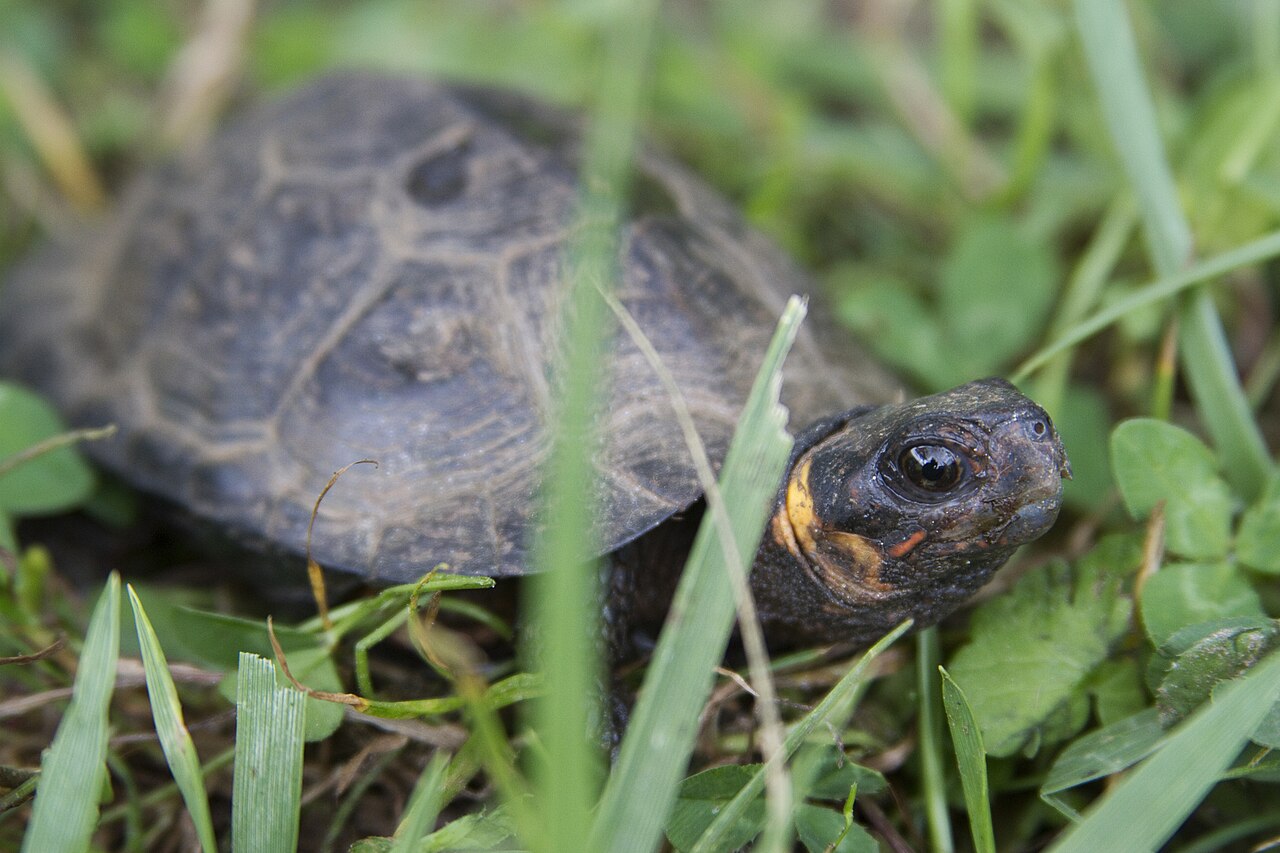
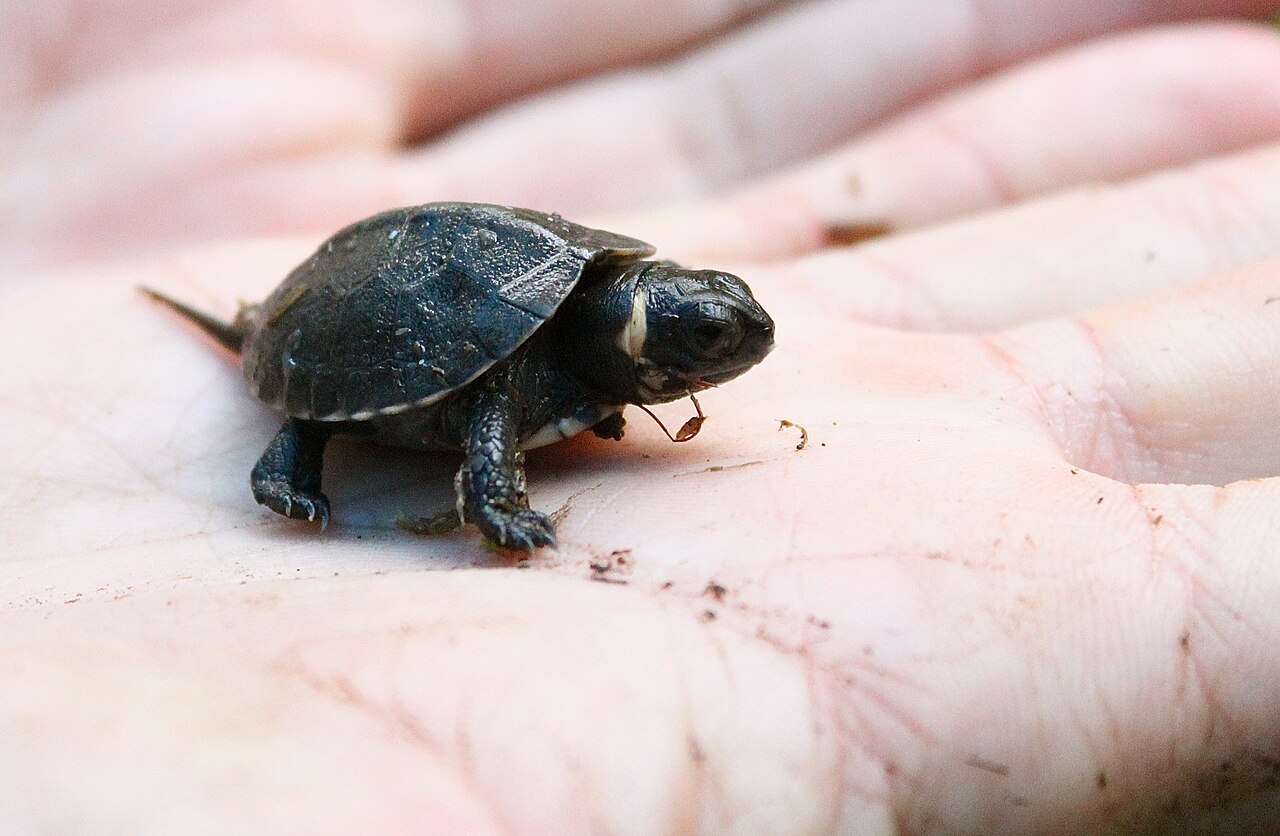
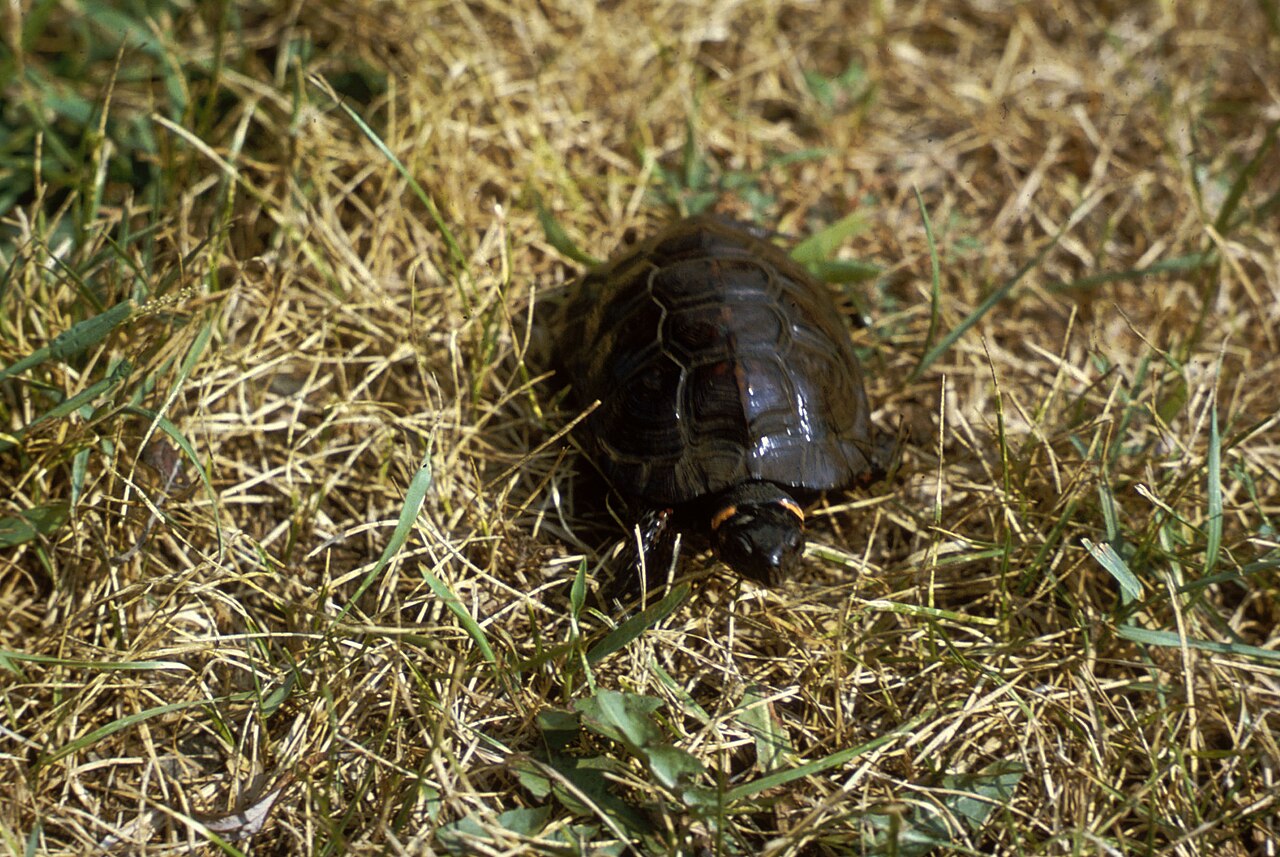
Why the Cutest: It’s the smallest turtle in North America and New Jersey’s state reptile. With its tiny size, orange splotches on its neck and head, and smooth, dark smells, it’s an exceptional cutie that one may want in a terrarium. But before you consider it, know that it’s critically endangered due to the black market pet trade so it’s absolutely not a good idea. Especially when there’s regulations against it. But note that its babies are only the size of pennies.
Lifespan: Usually live 20-30 years in the wild. But may live more than 35 in captivity, possibly more than 50. Predators include snapping turtles, muskrats, striped skunks, foxes, dogs, and raccoons. Susceptible to leeches, parasitic flies, and bacterial infections.
Location and Habitat: Primarily lives in much of the eastern United States. Prefers calcareous wetlands, meadows, bogs, marshes, forest edges, and spring seeps with both wet and dry regions.
Diet: Eats aquatic plants, seeds, berries, earthworms, snails, slugs, insects, other invertebrates, frogs, and other small vertebrates. Can be fed a variety of fruits and veggies as well as meat like liver, chicken hearts, and tinned dog food.
Behavior: Congregates in colonies of less than 20. Mates in early spring. Females lay one clutch per year comprising of 1-6 eggs during April to July. Diurnal and wakes up at sunrise. Spends colder days in dense underbrush, underwater, or buried in mud. Spends warmer days sunning and scavenging (save a short period during mating season). Yet, often takes shelter during the hottest part of the day. In extreme heat, it estivates or go underground sometimes occupying networks of tunnels filled with water. Buries itself in soft tunnels at night. Spends September to April in hibernation either alone or in small groups of 12 that could contain multiple species. Favorite hibernation spots contain dense soil and a strong root system for protection. But could also hibernate at tree bottoms, animal burrows, or empty spaces of mud. Only emerges from hibernation if the temperature hits the 60s-80s. Males are territorial and will fight each other. Females will only be aggressive in self-defense from other females. Main defense is burying itself in soft mud since its shell offers little protection from predators. Moves very little day-to-day, usually 65-70ft on land. Can swim but long swimming excursions are rare. Will travel long distances for a new habitat if its home becomes unsuitable during the spring.
Conservation Status: Listed as Critically Endangered due to habitat loss, invasive plant species, poaching for the pet trade, and pollution. Measures have been implemented to restore wetland habitats and stabilize its population through captive breeding programs.
Trivia: Can survive long periods without oxygen. Other Candidates: Eastern Chipmunk, Red Fox, Harbor Seal, and Virginia Opossum.


