
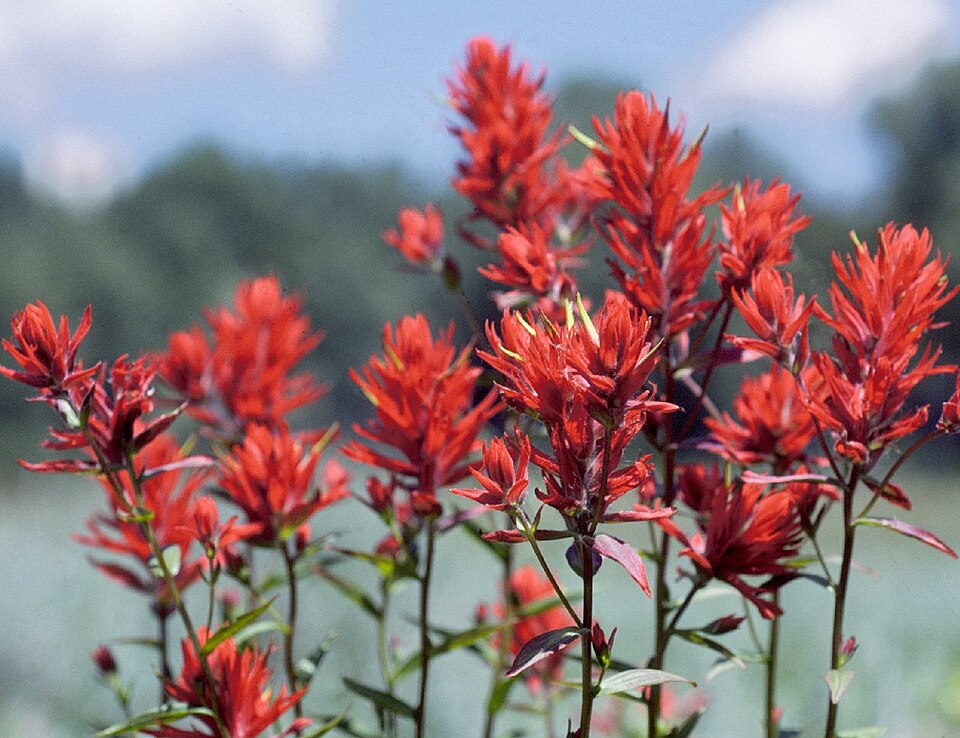
Of course, all things must come to an end and a series of wildflowers is no exception. Still, I must remind you that just because many of these flowers were once used in traditional medicine by Native Americans and others doesn’t mean you should. Because as a history major, I know full well that traditional medicine isn’t the most reliable since a lot of them haven’t been proven as effective medical treatments by medical community. While a lot of them have actually been known to harm actually harm or kill people. Especially if they’re known to be toxic upon ingestion or touch. Anyway, in this post, we’ll see a Pasque flower in South Dakota, garden favorites in Tennessee, Vermont, Virginia, and Wisconsin, an iconic lupine in Texas, two iconic western flowers, a notable wildflower in West Virginia, and a mountain flower in Washington.
41. South Dakota
American Pasque Flower (Pulsatilla nuttalliana)
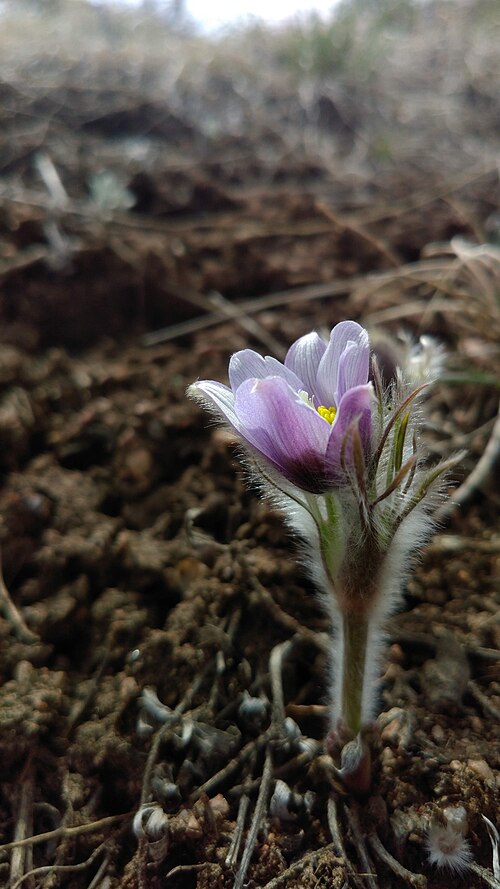
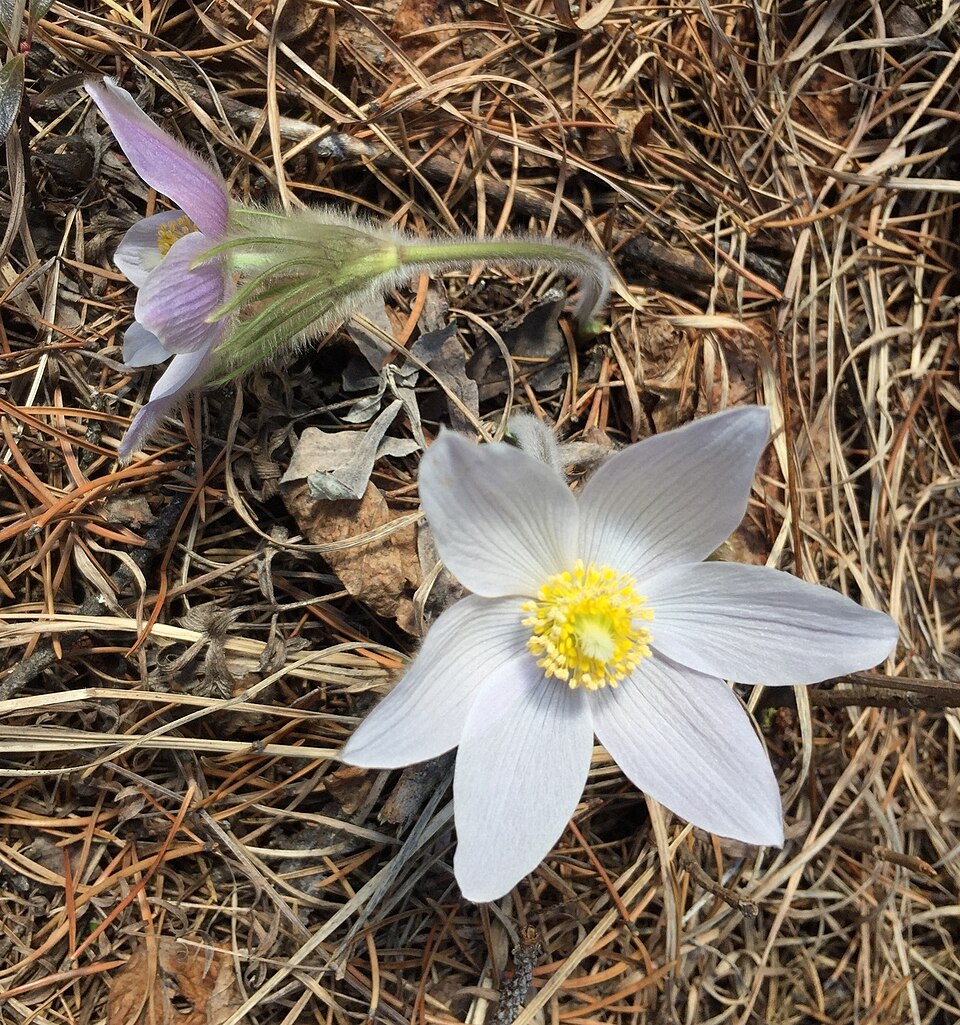
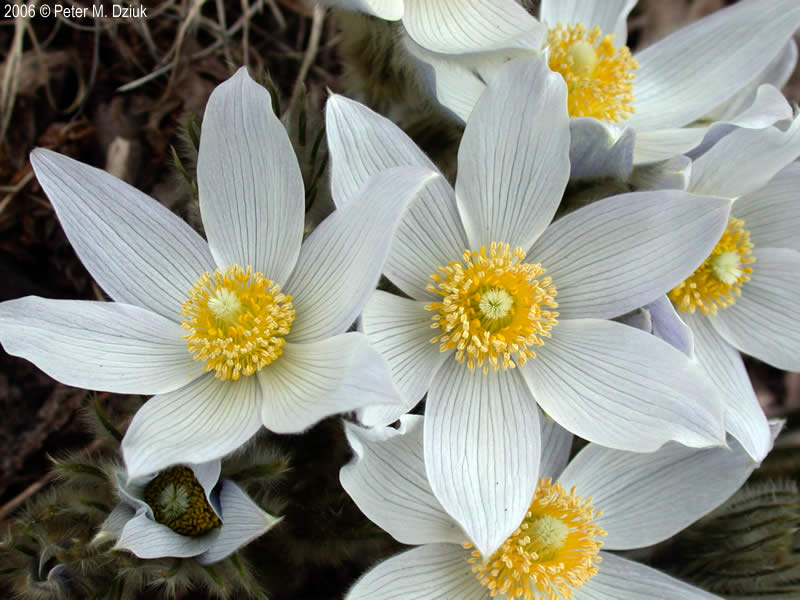
Why the Prettiest: Called the Prairie Pasque Flower, it’s the state flower of South Dakota. A low-lying perennial flower featuring fuzzy low-growing stems with delicate, showy lavender-to-purple bell-shaped flowers.
Location: Native to North America east of Lake Michigan from as north as Alaska to as south as New Mexico.
Environment: Inhabits cool, northern prairies, open slopes, fescue grasslands, granite outcrops in forests, and woodlands dry and open in mountain and boreal areas. Also grows in clearcut areas, roadsides, and gravel pit edges. Adapted to habitat disturbances, including wildfires. Though seeds don’t significantly persist. Grows up to 6 in tall.
Bloom Season: Blooms during the early spring. Flowers bloom before the leaves fully emerge. Is one of the first flowers to bloom during the season, sometimes pushing through lingering snow. Attracts honeybees, mining bees, bumblebees, and hover flies. Has low forage value for herbivores due to it being mildly toxic with its protoanemonin content. Yet, when grazed, it will produce new leaves from dormant buds. And numbers will increase in grazed meadows.
Color Varieties: Available in lavender, purple, and white.
Gardening Conditions: Not as popular as its European counterparts as an ornamental plant. Unless it’s planted in gardens intended to resemble an upper Midwest prairie or in rock gardens. Germinates readily without pre-treatment or stratification within 3 weeks. Propagates through seed and vegetatively. Seedlings are difficult to transplant and transplantation of all plant sizes depends on avoiding root disturbance by digging with a substantial amount of soil. Garden must have good drainage. Grows best in soils that are moist to dry with neutral or slightly alkaline characteristic and winter snow cover. Grows well with some additional compost in the topsoil around 7 cm in depth. Needs partial to half-day shade in hot summer areas. In areas with cool summers like mountain habitats and northern prairies, full sun is required. Contains protoanemonin, a toxin causing skin irritation.
Conservation Status: Currently listed as Secure. Although seen as critically imperiled in Illinois, Washington, and Ontario.
Trivia: Provincial flower of Manitoba. Seeds are distributed by the wind or by catching in fur of passing animals. Prepared and used by indigenous communities for specific traditional remedies.
Other Candidates: Purple Coneflower, Purple Prairie Clover, Black-Eyed Susan, and Gunnison’s Mariposa Lily.
42. Tennessee
Fire Pink (Silene virginica)
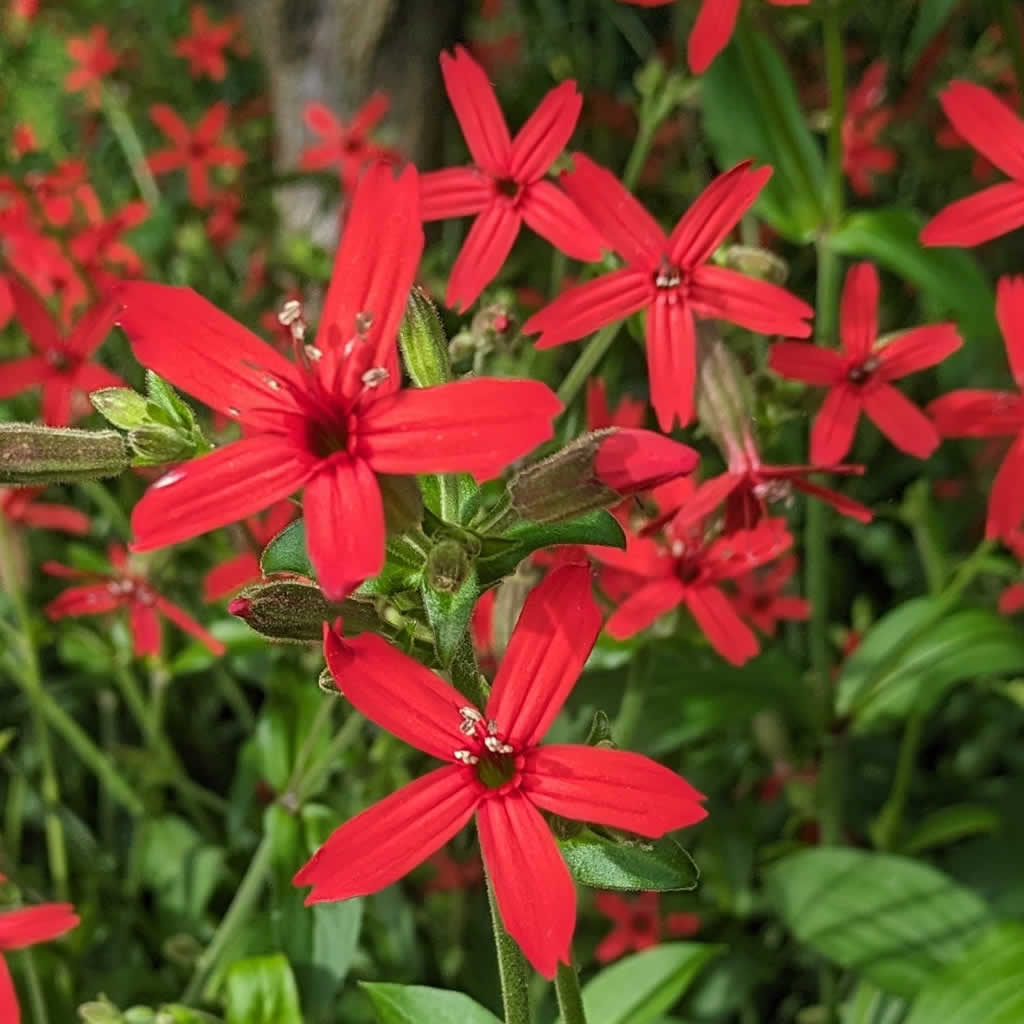
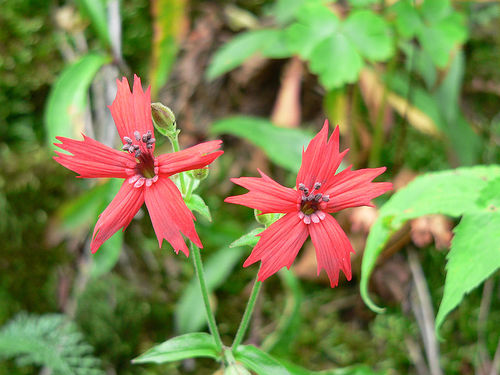
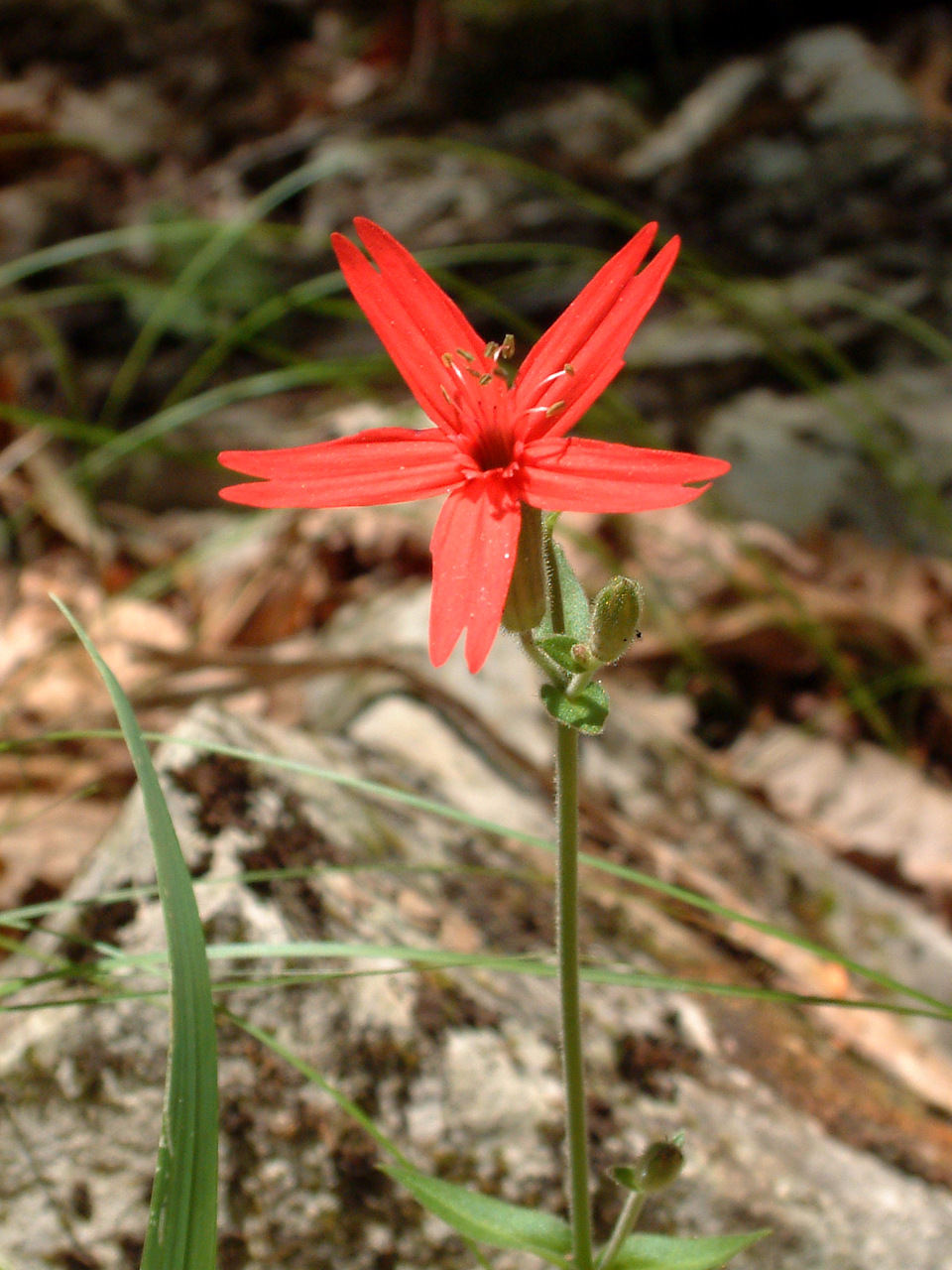
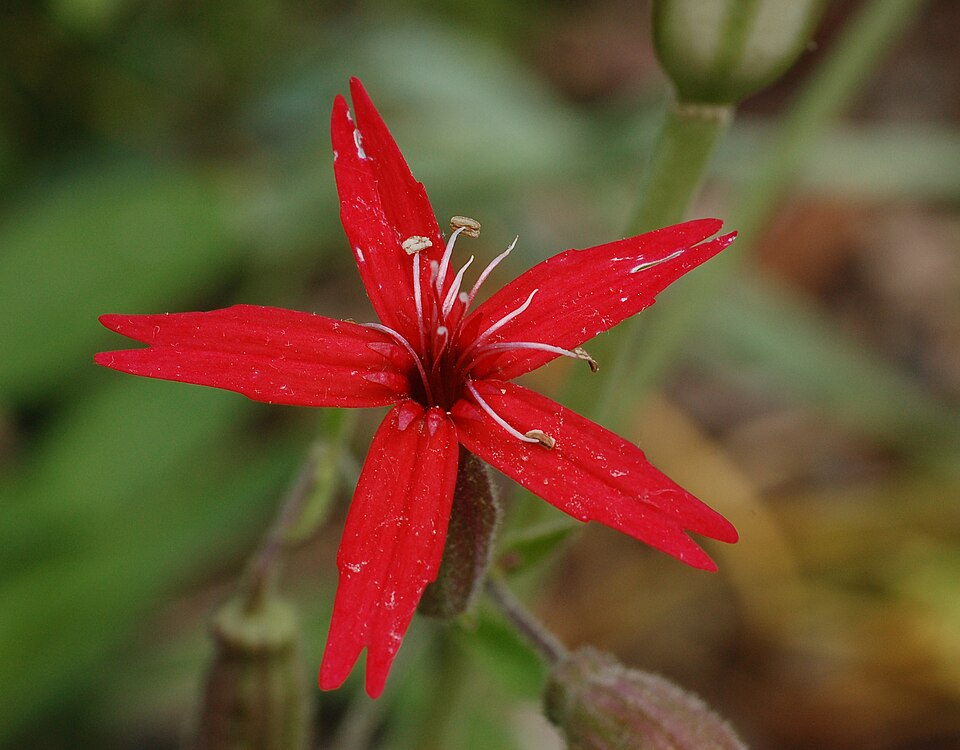
Why the Prettiest: It’s a short-lived perennial is known for its brilliant, star-shaped flowers and sticky stems deterring crawling insects from getting a free meal.
Location: Native to central and eastern North America, ranging as far west as Texas, as north as southern Ontario, and as south as Florida.
Environment: Inhabits open woodlands, rocky slopes, cliffs, and road banks. Can grow up to 8-31 in tall.
Bloom Season: Blooms in late spring and early summer like from April to July. Attracts hummingbirds and long-tongued insects, with the ruby-throated hummingbird being its principal pollinator. Other birds aid in its seed dispersal such as sparrows, juncos, and pine siskins.
Color Varieties: Available in red.
Gardening Conditions: Prefers bright and partial shade and well-drained soils. Yet, tends to grow in areas with acidic, poorer quality soils. Tolerates sunny conditions and can withstand drought and high temperatures. Can self-seed. Doesn’t have serious problems with disease or pests. Though it can be occasionally affected by the anther smut disease, which can render it sterile. Used in rock gardens and along border fronts in landscaping.
Conservation Status: Currently listed as Secure. But imperiled in Louisiana and considered endangered in Wisconsin, Florida, and Michigan.
Trivia: Has sticky, glandular hairs on its upper stem and calyx to trap insects in order to prevent them from nectar feeding and robbing it from the flower without providing pollinator services. Used medicinally by Native Americans and European settlers. Cherokees used the root as a snakebite remedy and intestinal worms. Used by the Iroquois as an anti-bacterial. Though other tribes said it’s poisonous.
Other Candidates: Large-Flowered Trillium, Dwarf-Crested Iris, Nashville Gladecress, and Virginia Bluebell.
43. Texas
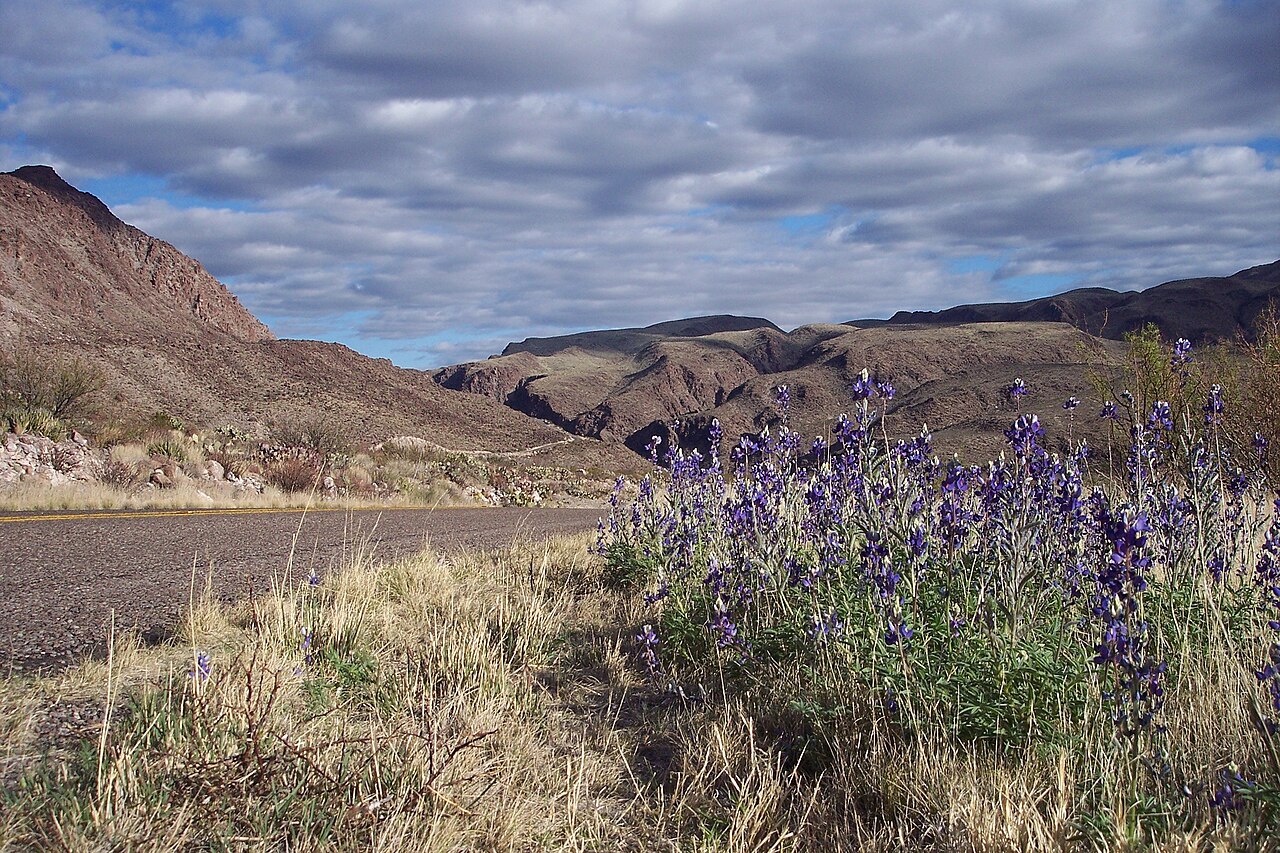
Texas Bluebonnet (Lupinus texensis)
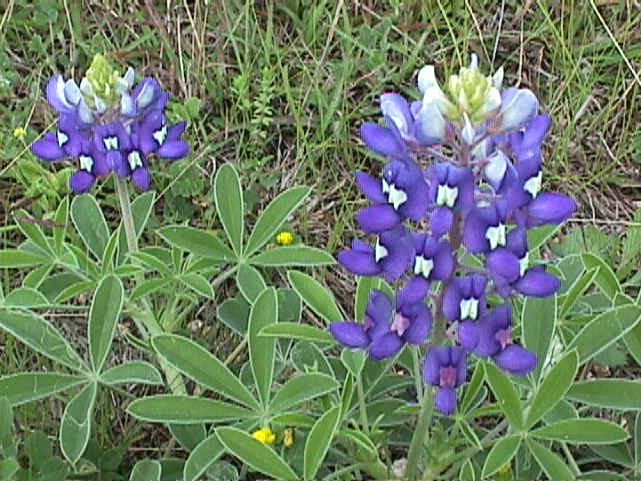
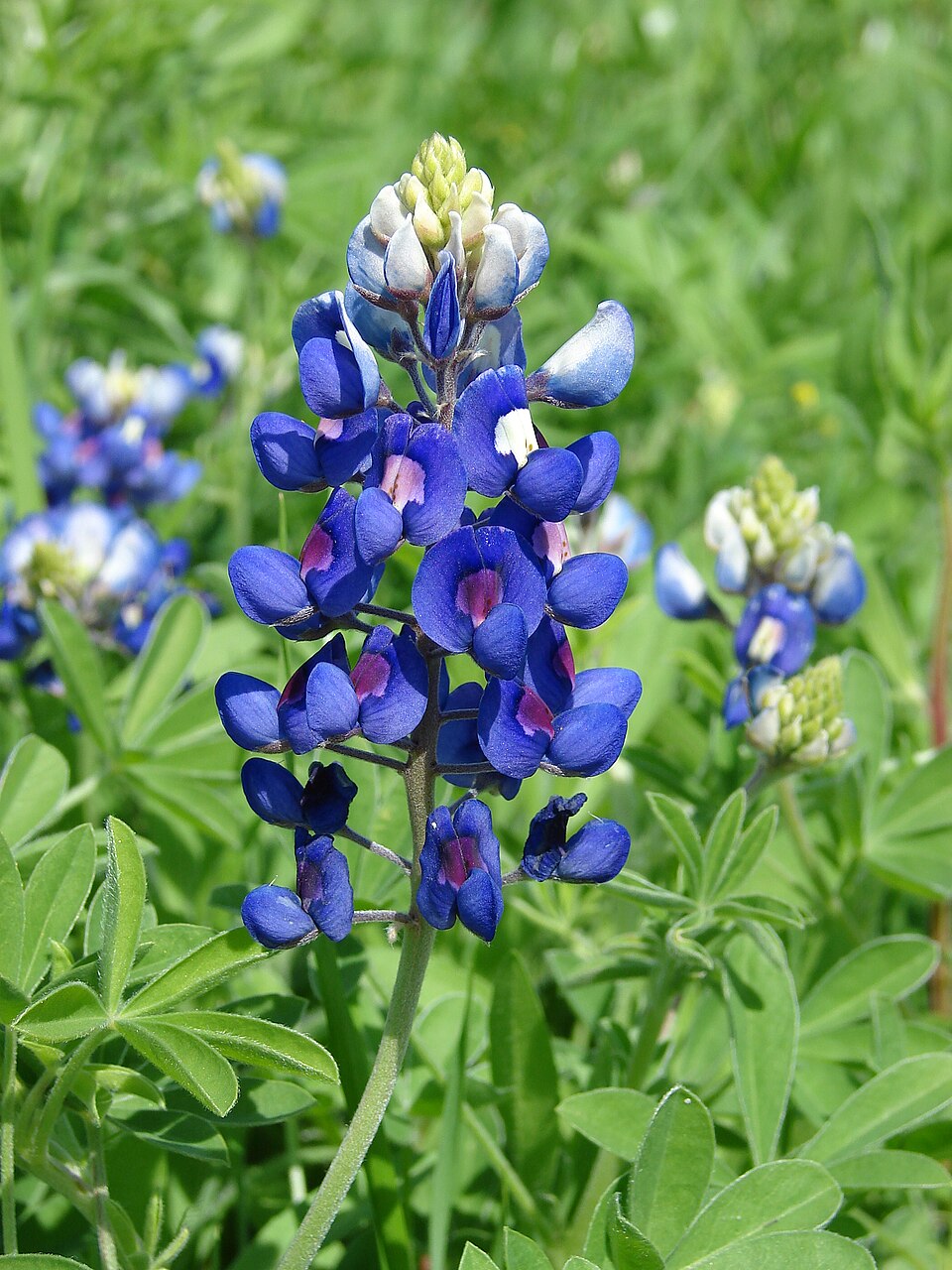
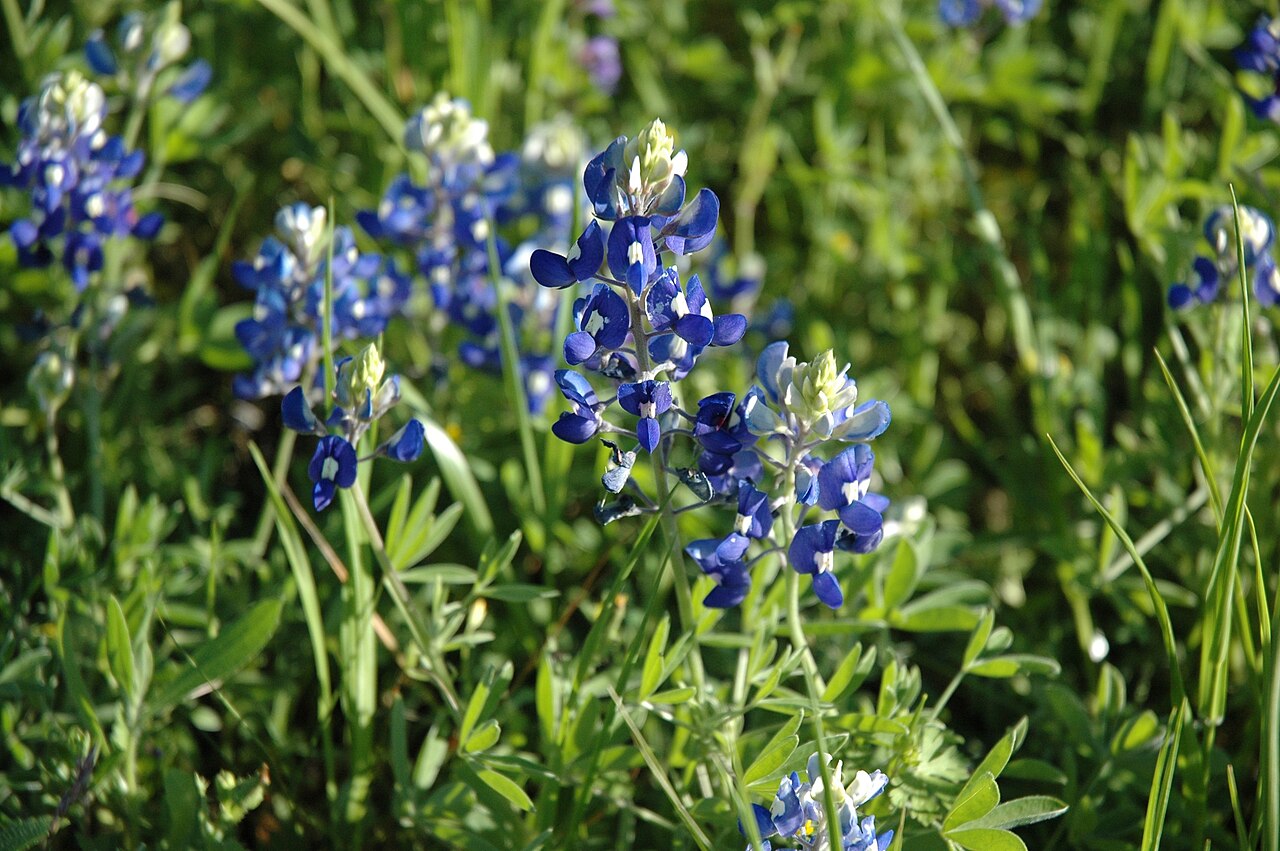
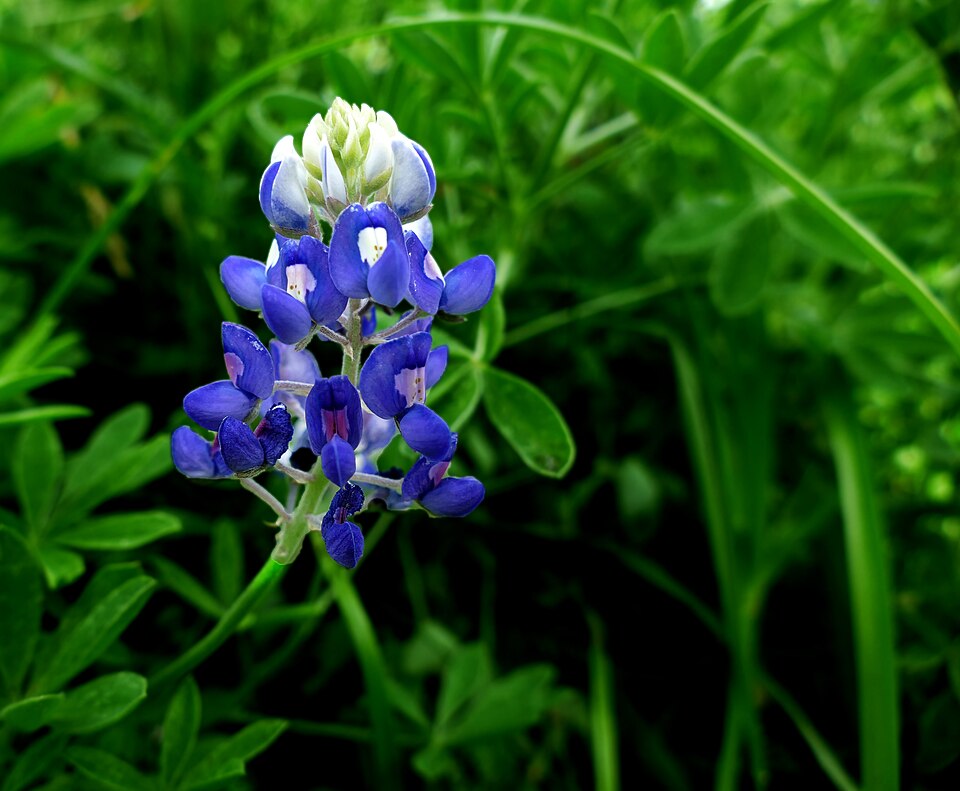
Why the Prettiest: For one, it’s Texas’ state flower, known for its vibrant, blue pea-like clusters with distinct white tips. While its leaves are light green, velvety, palmately compound usually split into 5 leaflets.
Location: Native to the south-central United States and northern Mexico. Found in Texas, Louisiana, and Arkansas.
Environment: Lives in prairies, roadsides, and wooded edges. Grows up to 6 in tall.
Bloom Season: Blooms in early to mid spring such as from March to May. Attracts bees and butterflies.
Color Varieties: Available in blue, white, pink and maroon.
Gardening Conditions: Its gravel-like seed has a hard seed coat that must be penetrated by wind, rain, and weather over a few months (but sometimes several years). Seeds may be scarified before being stored. Seeds germinate in the fall and winter so sow them in the fall. Requires full sun. Thrives in alkaline, moderately fertile, and extremely well-drained soils. Reseeds itself. Plants and seeds are toxic to humans.
Conservation Status: Currently listed as Secure.
Trivia: Said to have the ability to fix the nitrogen in the soil, which benefits surrounding the vegetation.
Other Candidates: Giant Blue Iris, Texas Indian Paintbrush, Indian Blanket, Pink Evening Primrose, Winecup, and Texas Bluebell.
44. Utah
Sego Lily (Calochortus nuttallii)
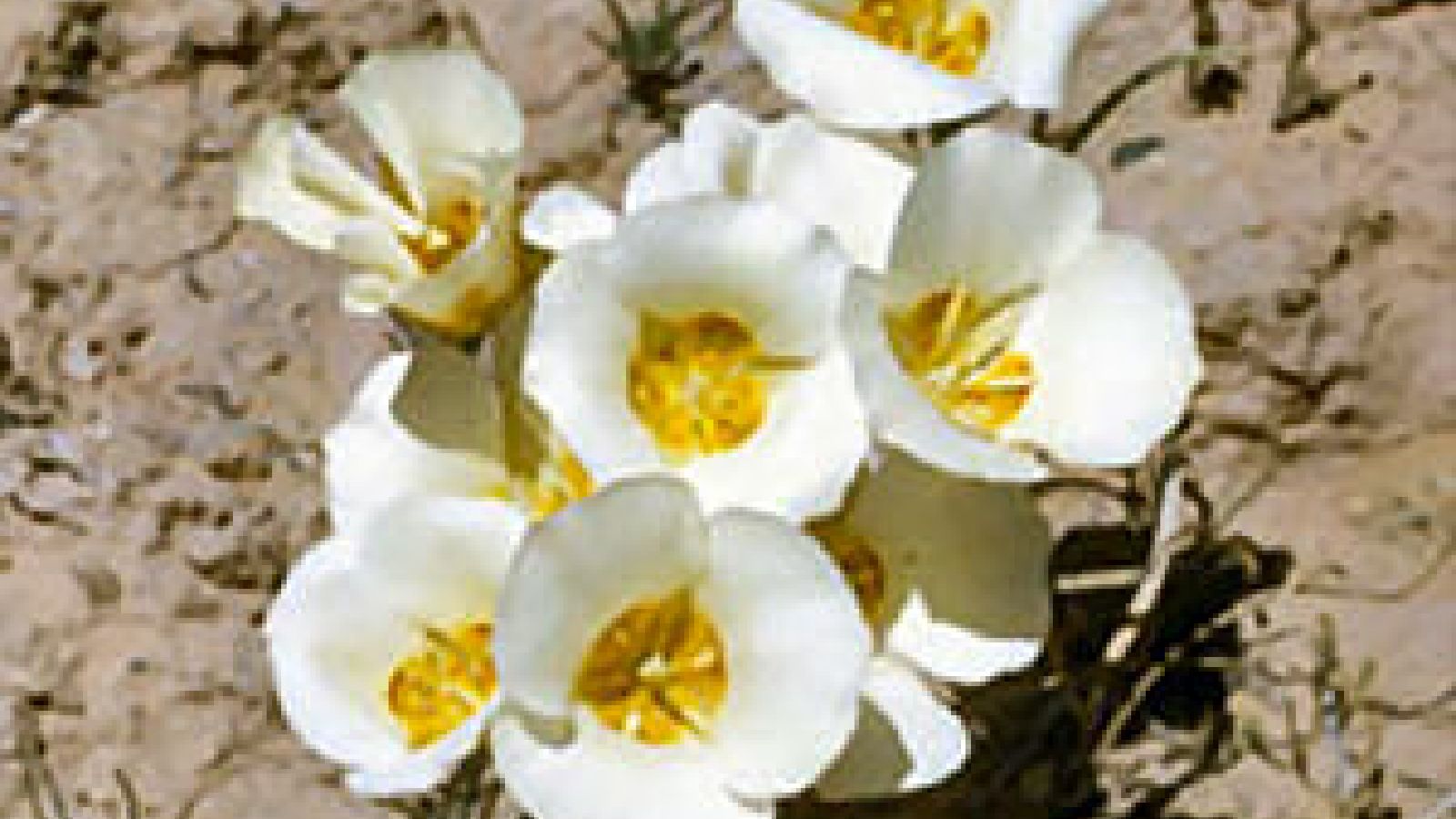
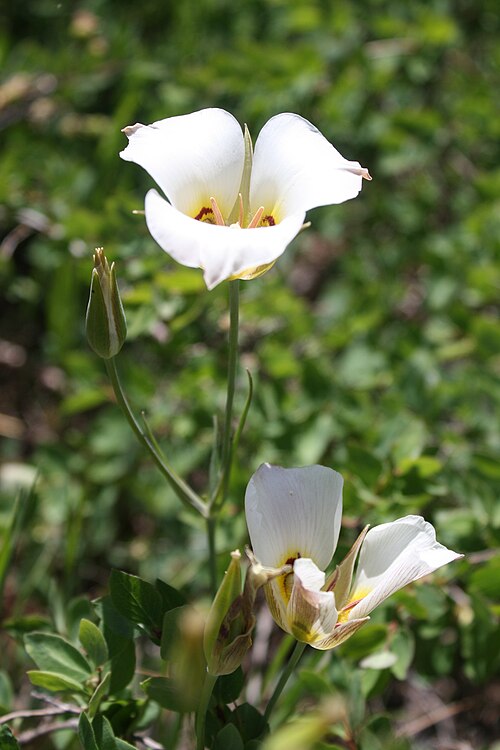
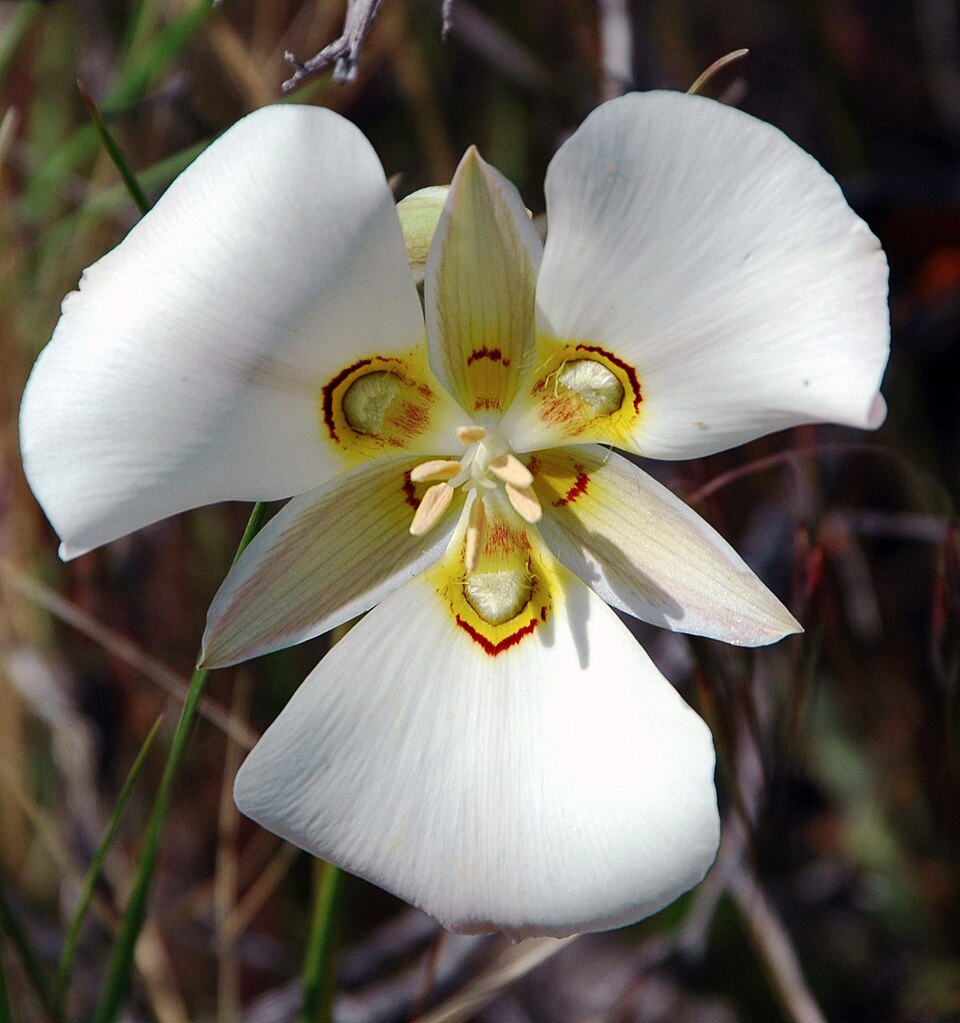
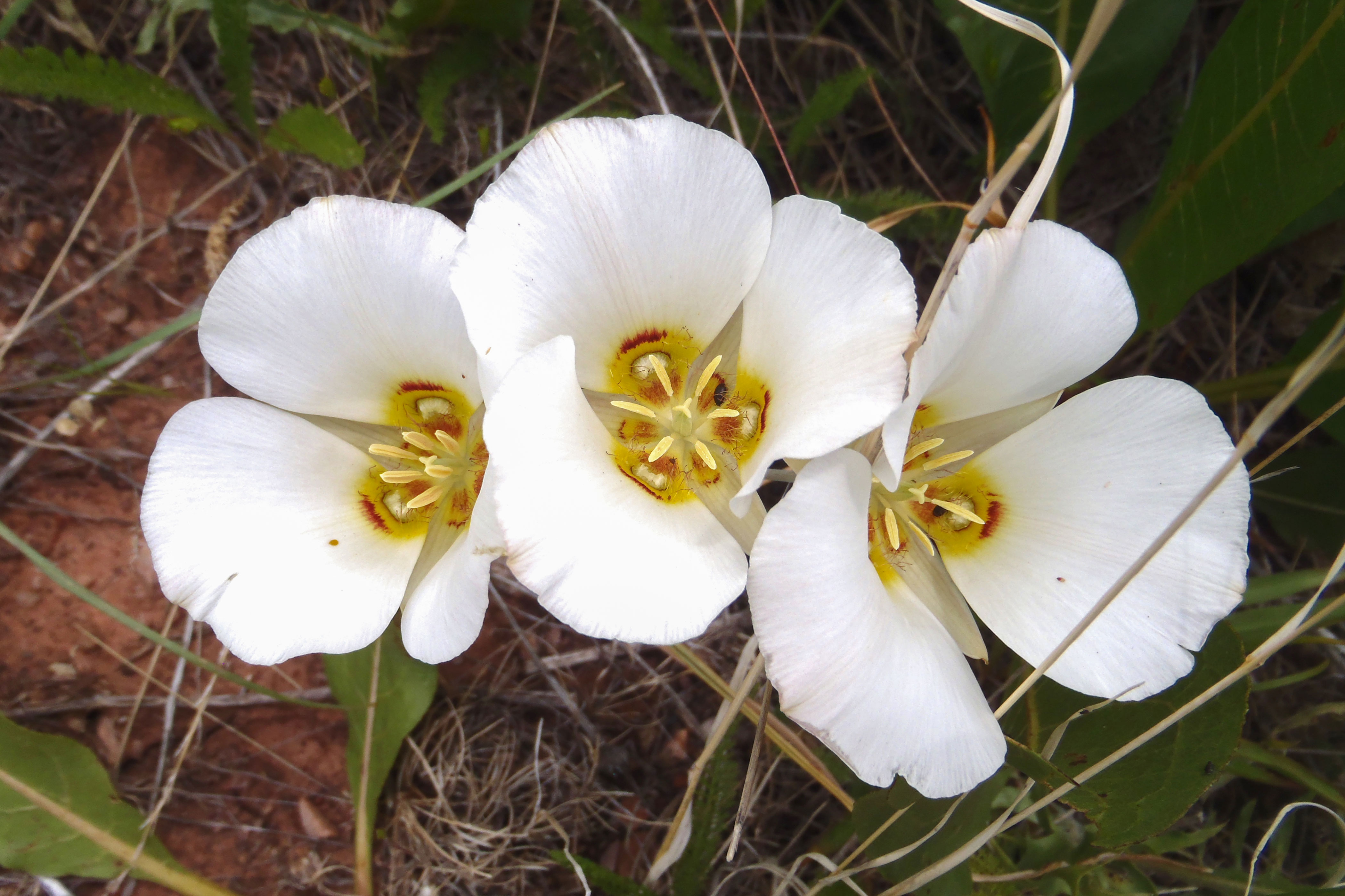
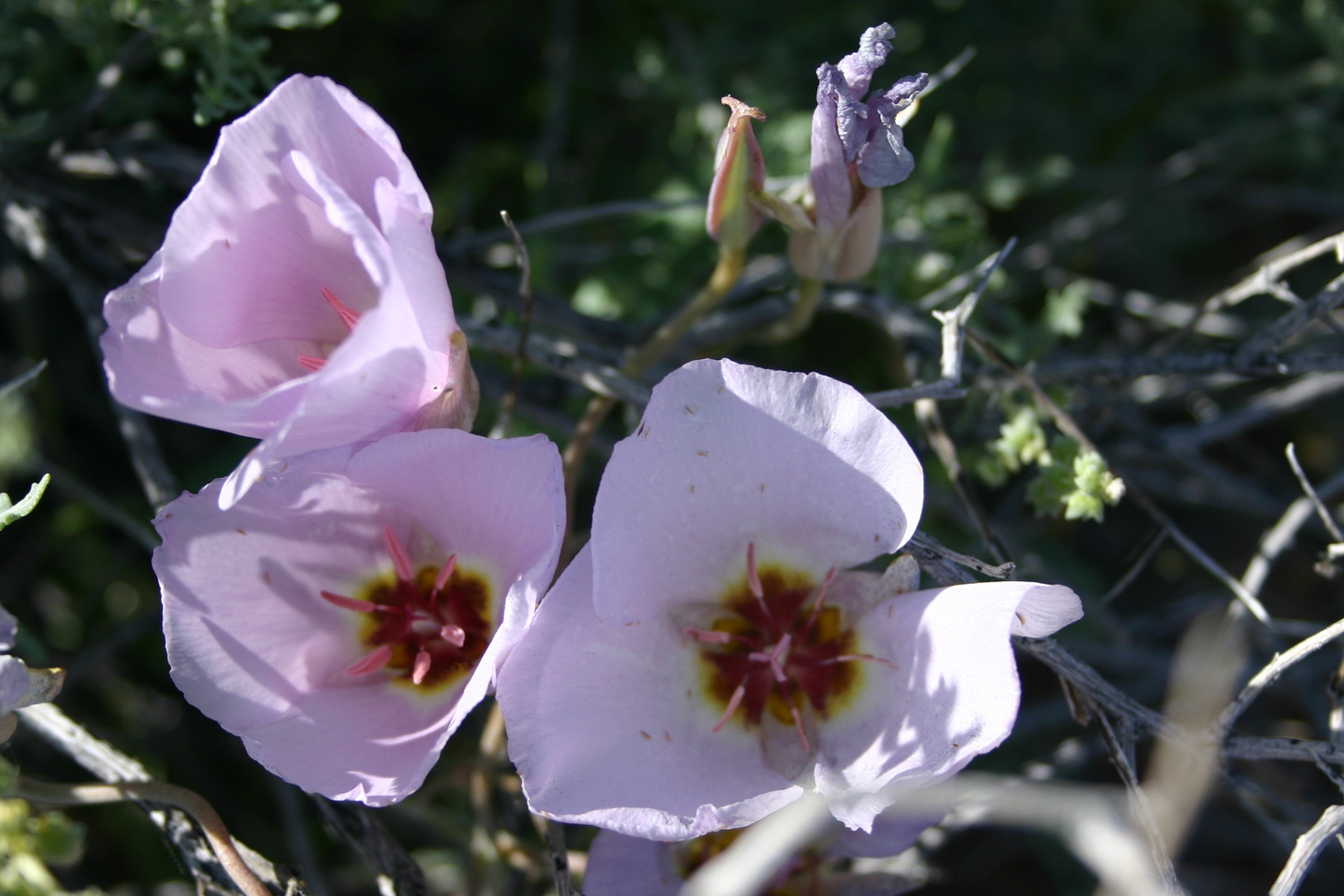
Why the Prettiest: It’s Utah’s official state flower since 1911. It’s a striking, bulbous perennial featuring 2-4 narrow, grass-like leaves that wither as the plant blooms. Bears 1-3 tulip-like, satiny blossoms up to 3 in across featuring white, pink, or lavender petals with distinctive yellow and dark red or maroon markings at the base.
Location: Native to the western United States from as north as Montana to as south as New Mexico and Arizona.
Environment: Lives in dry, brushy or grassy slopes, open foothills, and on desert high country. Can grow up to 6-18 in height.
Bloom Season: Blooms from late spring to early summer, often after seasonal rainfall.
Color Varieties: Available in white, pink, or lavender.
Gardening Conditions: Doesn’t tolerate excessive water in growth or in dormancy. Needs well-drained soil, but not excessively sandy with very little organic matter. Can receive full sun or partial shade in dry climates. In wetter climates, you must take additional critical protections to shield the bulbs from rotting. Can be propagated from newly formed bulblets, which take 2 years to flower.
Conservation Status: Currently listed as Secure.
Trivia: Native Americans used bulbs, seeds, and flowers as food. Hopi used it for ceremonies. Shoshone taught the Mormon pioneers to use the plant for desperately needed food. Commemorated by the Sego Lily Dam, a flood-prevention infrastructure project in the shape of a giant sego lily, built in Salt Lake City’s Sugar House Park in 2017. Can be confused with deathcamas. Is featured on Salt Lake City’s Flag that was designed by 2 high school students for a contest.
Other Candidates: Indian Paintbrush, Silvery Lupine, Utah Columbine, Mountain Bluebell, and Elephant Head.
45. Vermont
Canada Lily (Lilium canadense)
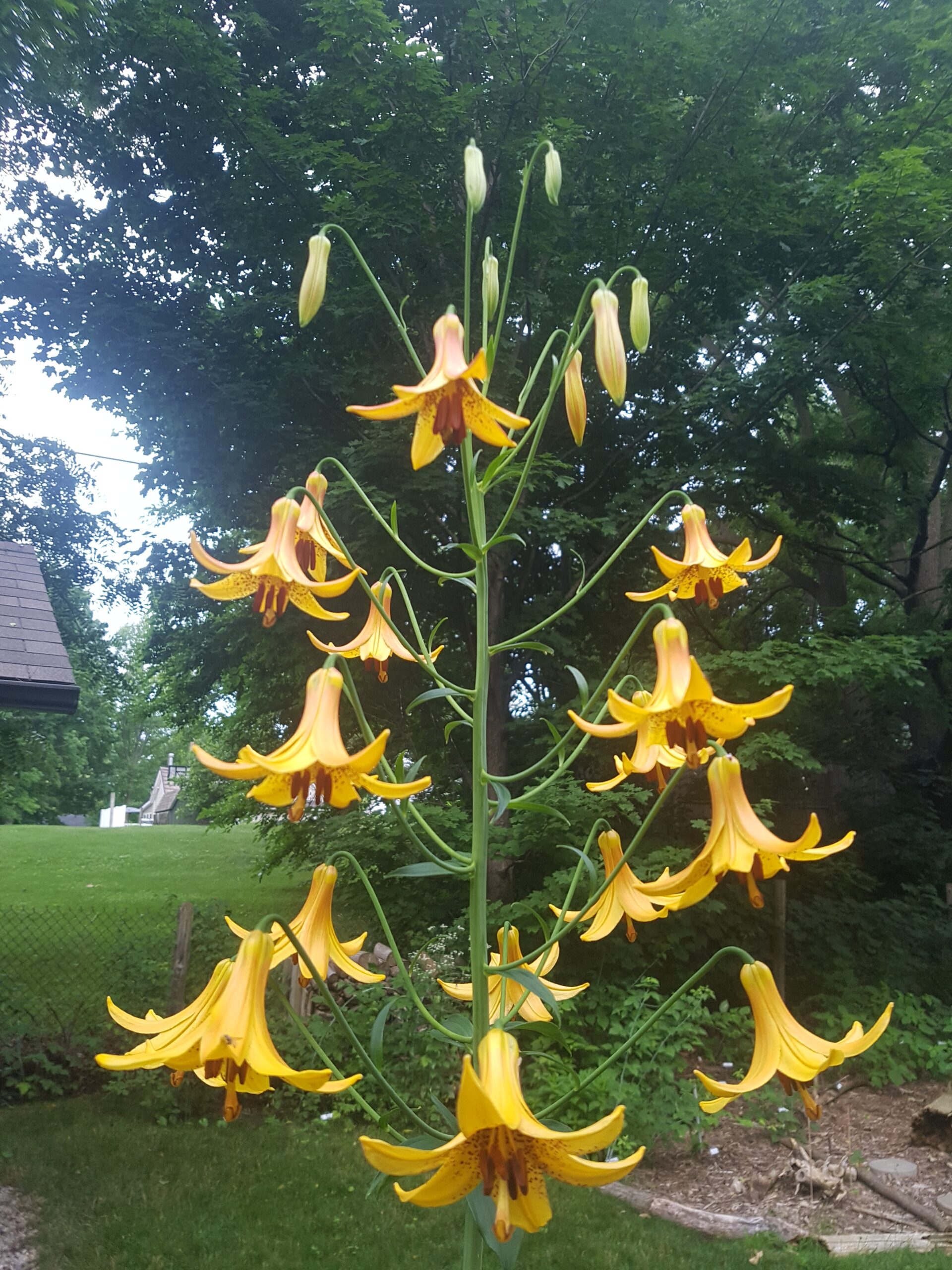
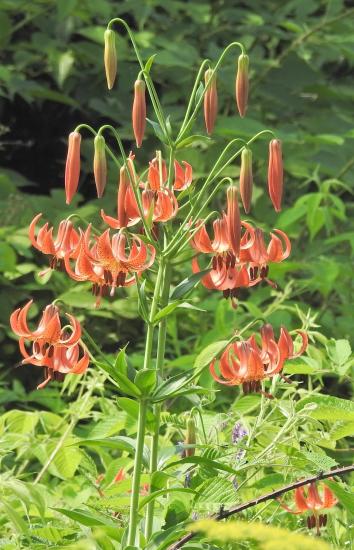
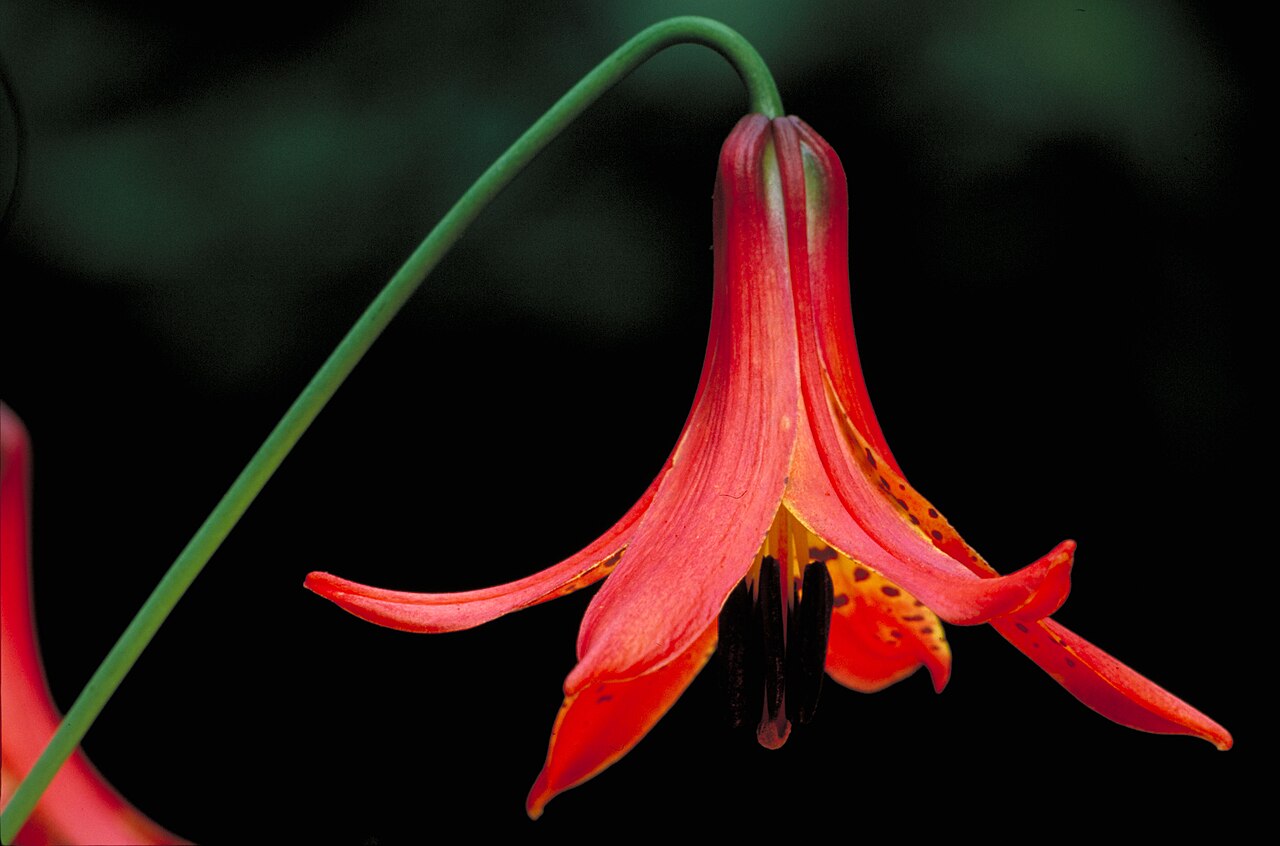
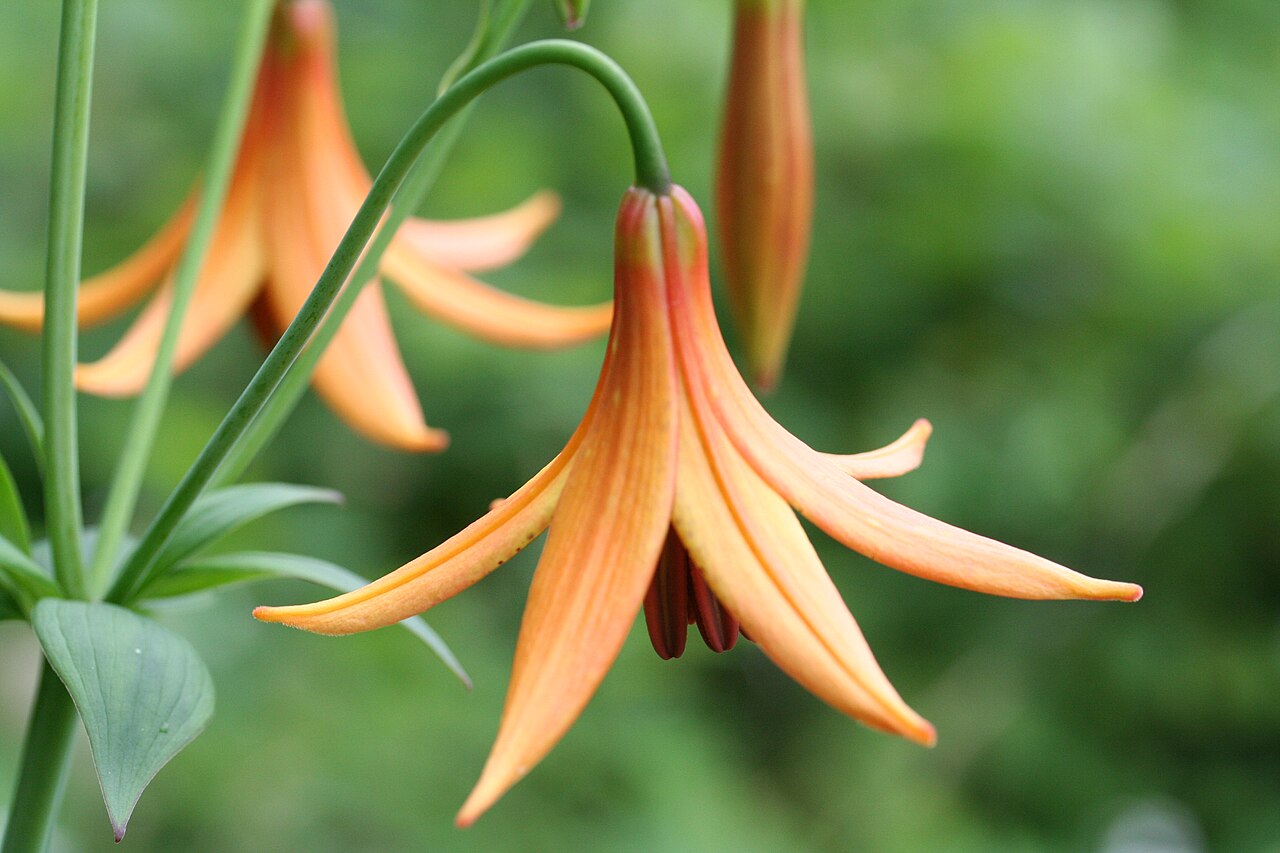
Why the Prettiest: It’s a wildflower known for its chandelier-like clusters of nodding, bell-shaped flowers. Its leaves are lance-shaped and arranged in distinct whorls of 3-8 among them. Up to 20 pendulous, trumpet-shaped flowers per stem.
Location: Native to eastern North America, ranging from Ontario and Nova Scotia to Alabama and Georgia. Most common in New England, the Appalachian Mountains, and the Canadian Maritimes.
Environment: Lives in moist meadows, marsh margins, and wood margins. Less common in urban and suburban areas due to heavy browsing by white-tailed deer. Can grow up to 1.6-4.9ft tall.
Bloom Season: Blooms from June to July. Attracts ruby-throated hummingbirds and large butterflies. Highly favored and heavily browsed by deer.
Color Varieties: Available in yellow, orange, and red, often with darker spots.
Gardening Conditions: Grows best in filtered shade to full sun. Prefers deep, rich, loamy, and acidic to neutral soils that stay consistently moist.
Conservation Status: Currently listed as Secure. Although listed as Rare in Indiana, Exploitably Vulnerable in New York, and Threatened in Rhode Island and Tennessee.
Trivia: Buds and roots were gathered and eaten by Native Americans.
Other Candidates: Red Trillium, White Trillium, Painted Trillium, Spring Beauty, Virginia Bluebell, Cardinal Flower, and Joe Pye Weed.
46. Virginia
Virginia Bluebell (Mertensia virginica)
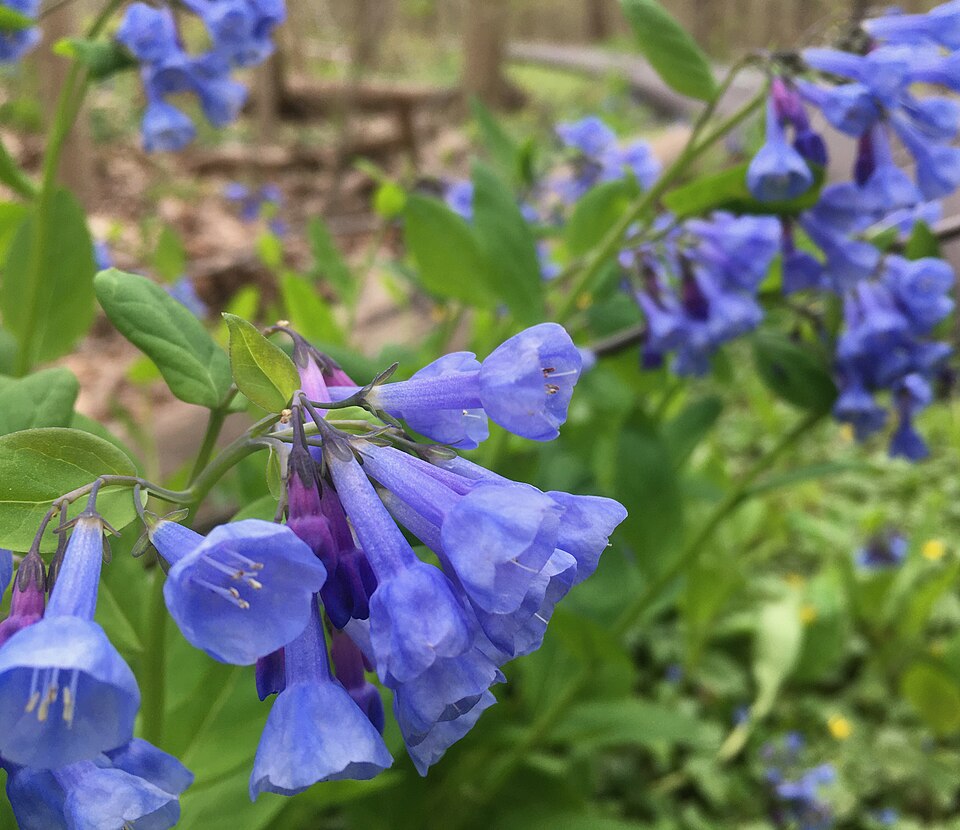
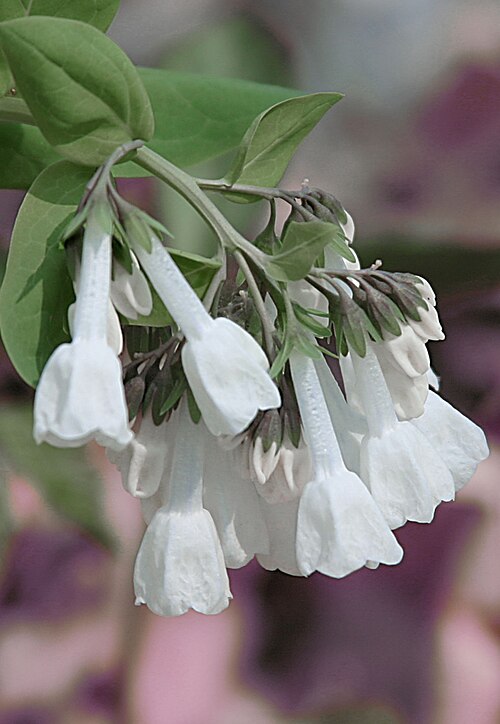
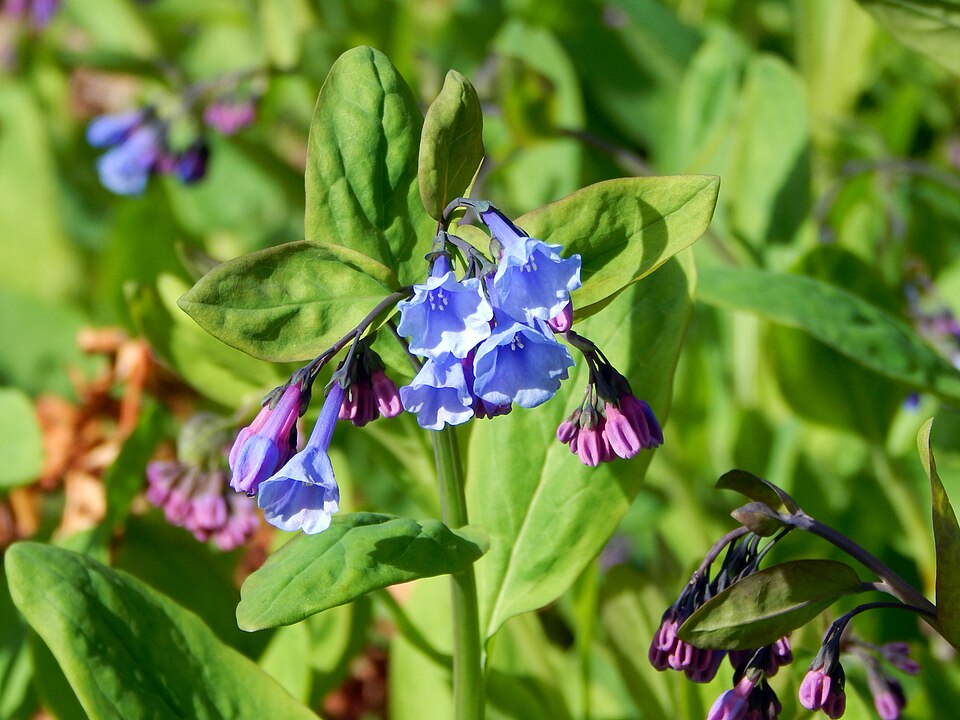
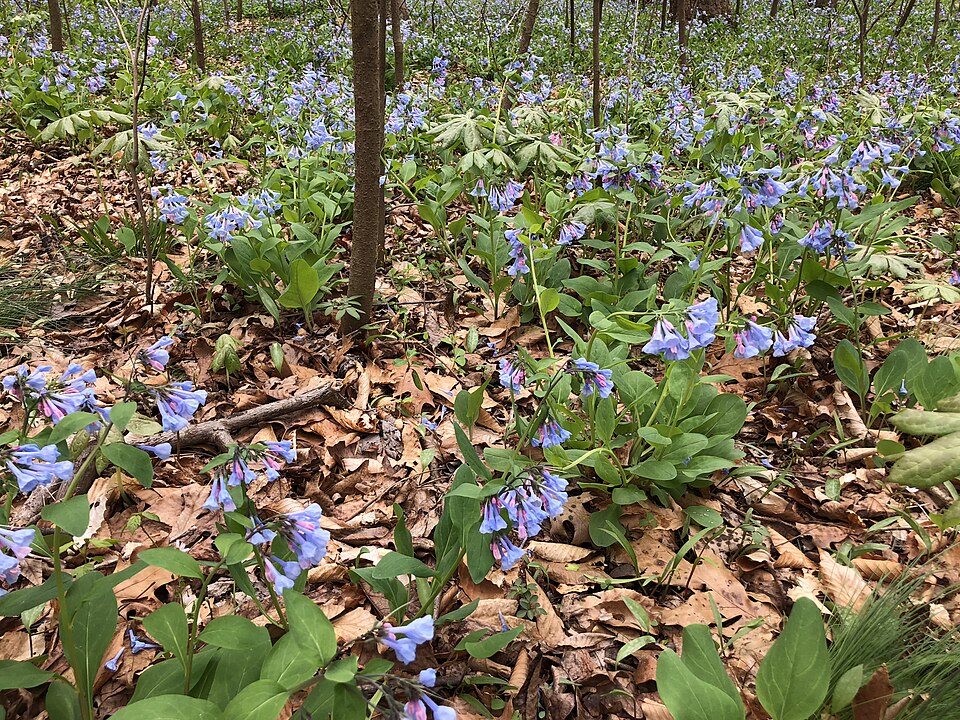
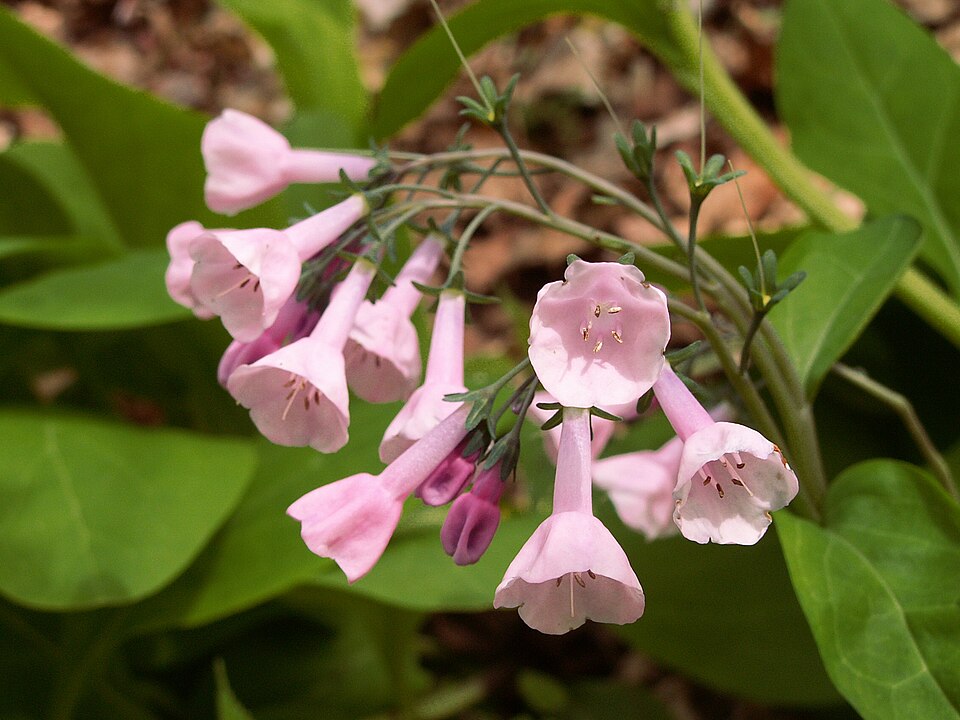
Why the Prettiest: It’s a popular spring ephemeral featuring nodding pink buds opening into soft sky-blue, bell-shaped blossoms.
Location: Native to eastern North America from as north as Ontario and Quebec to as south as Mississippi, Alabama, and Georgia and as west as Kansas.
Environment: Found in rich, moist woods, on low, wooded hillsides, on floodplain forests, and along stream banks. Grows 18-24 in tall.
Bloom Season: Blooms from early to mid-spring like from March to May for about 3-6 weeks. Attracts long-tongued bees like bumblebees, butterflies, moths, skippers, hummingbird moths, flower flies, bee flies, and hummingbirds.
Color Varieties: Available in sky blue, pink, white, and periwinkle.
Gardening Conditions: All parts of the plant are edible, including the flowers. Thrives in partial to full shade. Prefers moist, rich, humus-heavy, and well-draining soil. Requires low maintenance such as adding a layer of organic leaf mulch in the spring. Best paired in shaded garden beds with later-emerging perennials that will fill the space once the plant goes dormant.
Conservation Status: Currently listed as Secure.
Trivia: Often form large groups. Used by Native Americans as medicine for various ailments.
Other Candidates: Yellow Lady’s Slipper, Large-Flowered Trillium, Fire Pink, and Virginia Meadow Beauty.
47. Washington
White Avalanche Lily (Erythronium montanum)
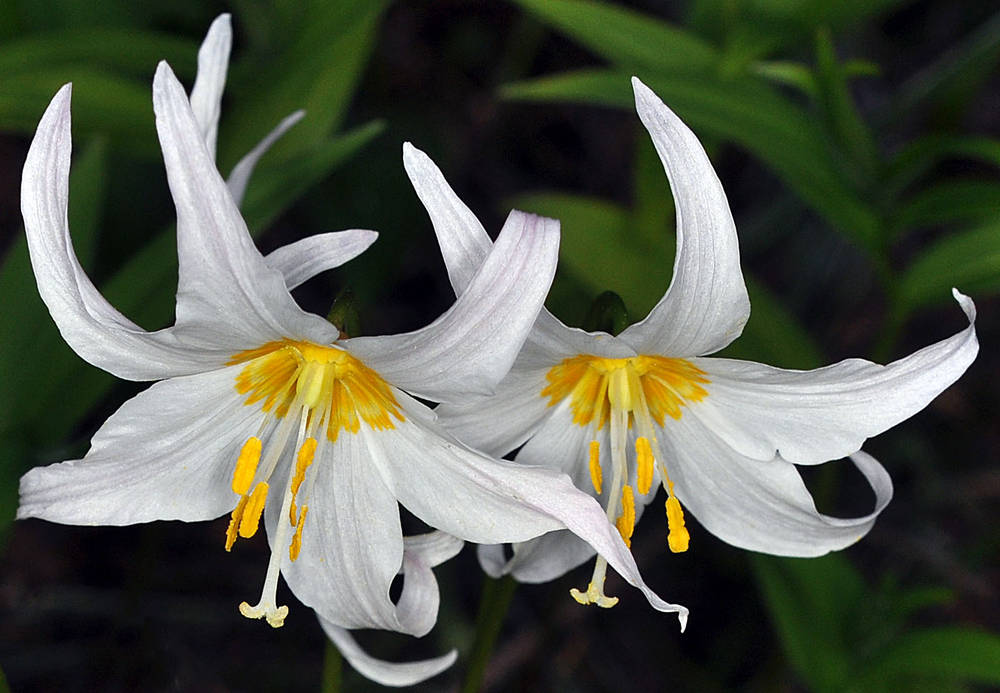
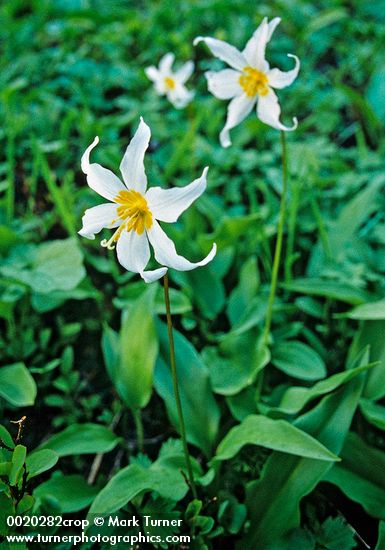
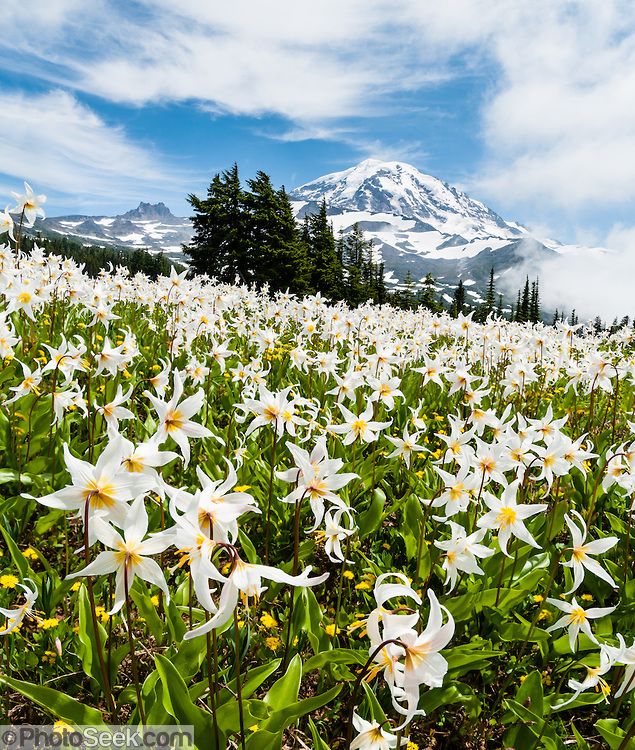
Why the Prettiest: It’s a mountain wildflower known for blooming right at the edge of melting snowfields. Its leaves are a pair of solid, glossy green, lance-shaped basal leaves with smooth coloring. Each stem has 1-4 showy flowers with pristine white petals that sweep or curl backward, revealing a bright yellow center and long yellow anthers. Grows in massive dense patches resembling fresh patches of snow on mountain slopes.
Location: Native to the Pacific Northwest from coastal British Columbia to Oregon, particularly in the alpine and subalpine Cascade and Olympic Ranges.
Environment: Found in damp, subalpine woodlands and alpine meadows, often in extensive patches along the edges of snowfields. Often at elevations between 3,000 and 6,500 ft. Grows up to 6-10 in tall.
Bloom Season: Blooms from late spring to midsummer such as from June to August, beginning when the snow melts and the sunlight hits the soil. Eaten by rodents, deer, elk, and bears.
Color Varieties: Available in white.
Gardening Conditions: Prefers full to partial sunlight and moist, well-drained soil.
Conservation Status: Currently listed as Secure although it’s said to be rare.
Trivia: Stores energy in an underground bulb all winter.
Other Candidates: Lupine, Arrowleaf Balsamroot, Common Camas, and Western Pasque Flower.
48. West Virginia
Giant Ironweed (Vernonia gigantea)
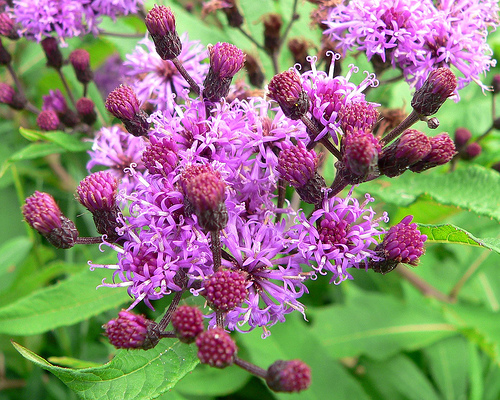
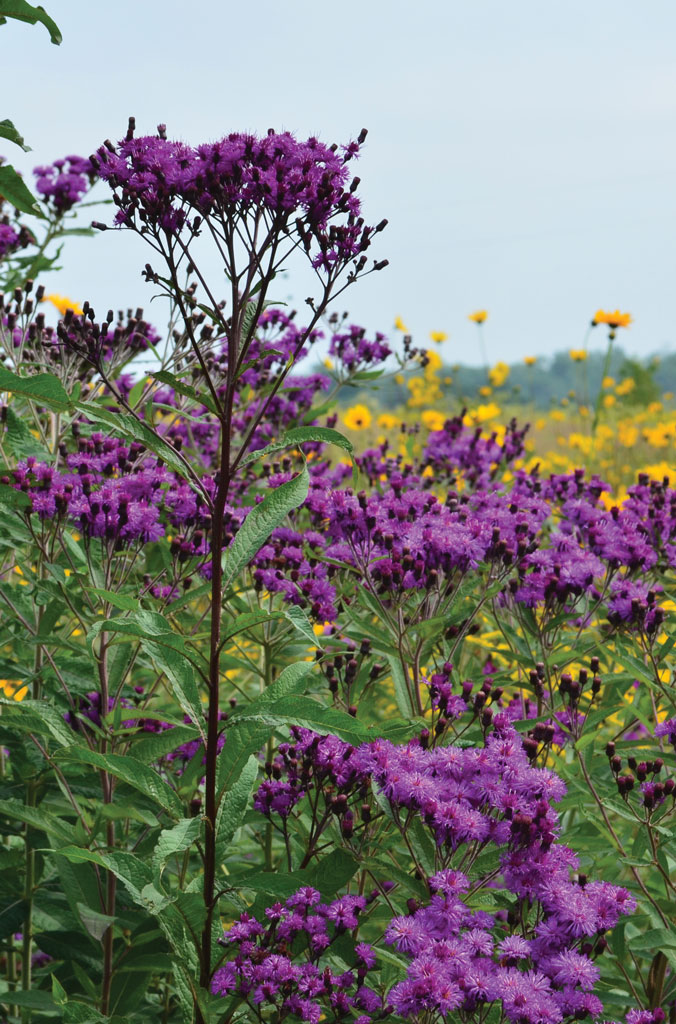
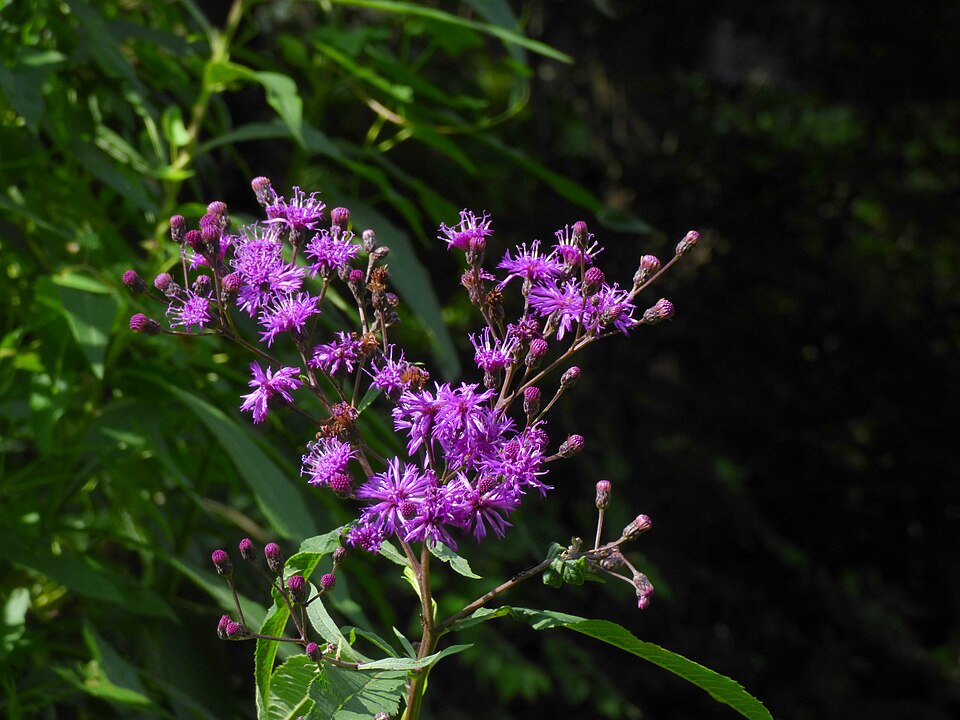
Why the Prettiest: It’s a perennial wildflower with remarkably tough, rigid erect stems that resist flopping over and fluffy, intense purple, magenta, or rose purple clusters.
Location: Native to eastern North America from as north as Ontario and New York state to as south and west as Texas.
Environment: Found along roadsides, meadows, and open woodlands. Can grow up to 5-8 ft tall.
Bloom Season: Bloom from July to September. Larval host to the ironweed borer moth, American lady butterfly, and the red groundling moth. Attracts butterflies, bees, moths, and hummingbirds. Birds feed on its seeds and use the plant as a structural perch.
Color Varieties: Available in magenta and purple.
Gardening Conditions: Plant is self-incompatible and can’t self-pollinate. But can readily self-sow. Prefers full sun to part shade and medium to wet soil. Tolerates wet conditions, seasonal flooding, and heavy clay. But adapts to regular garden soil if kept consistently moist. Very low maintenance with few pests and diseases. Deadheading flower heads before seeds develop prevents unwanted spreading.
Conservation Status: Currently listed as Secure.
Trivia: Seeds are wind-dispersed.
Other Candidates: Virginia Bluebell, Large-Flowered Trillium, Yellow Lady’s Slipper, Cardinal Flower, and Goldenrod.
49. Wisconsin
Shooting Star (Primula meadia)
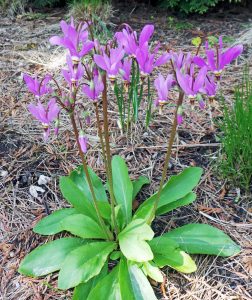
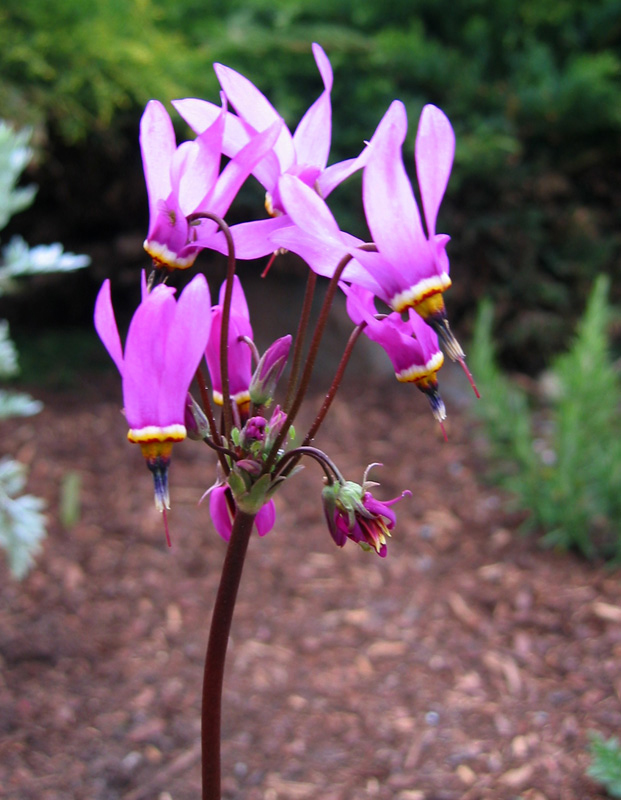
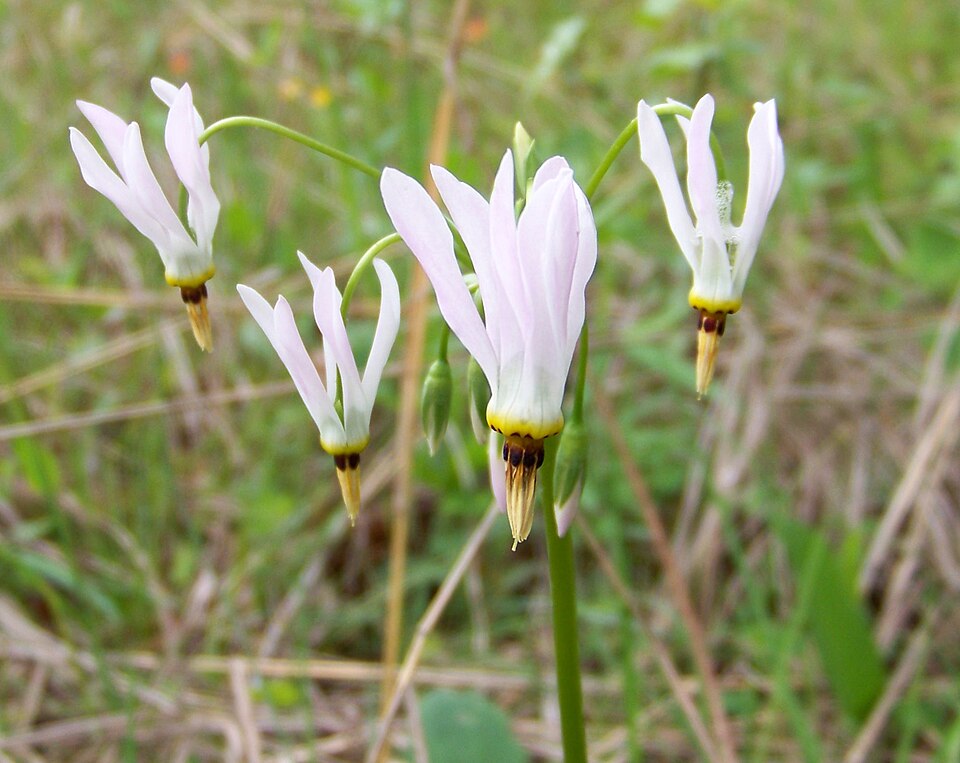
Why the Prettiest: This herbaceous perennial and spring ephemeral has distinctive, nodding, umbrella-like clusters of 8-20 flowers featuring swept-back pink, purple or white petals and a pointed central cone of yellow stamens resembling tiny shooting stars. Forms a low, basal rosette of smooth, bright to grayish green lanced-shaped leaves, often with reddish bases.
Location: Native to central and eastern United States ranging from southern Wisconsin to western Pennsylvania and southeastern Texas and Georgia.
Environment: Found in both prairies and forests, often in calcareous areas. Can live in an open habitat if the effects of potential competing woody vegetation are limited. Grows up to 8-20 in tall.
Bloom Season: Blooms from April to June. Attracts bumblebees and other native bees using buzz pollination to shake the pollen loose. Honeybees often steer clear because it produces strictly pollen, not nectar. But relies on insects to disperse pollen and seeds within pollen capsules. Not preferred by deer or rabbits.
Color Varieties: Available in pink, lavender, magenta, purple, and white.
Gardening Conditions: Thrives while surrounded by plants that are shorter in its early growing stages. Prefers partial shade but can grow in the sun as long as the soil is moist. Prefers rocky, sandy soil but is also able to flourish when planted in clay soil. Once a seed’s propagated, it grows at a slow pace, sometimes taking 4 years to bloom. Benefits from fire and brush removal. Grows well when not obstructed by other flowers and placed at the front of flower beds. Can exist with other species in a rock or woodland garden. Not toxic to humans or pets.
Conservation Status: Currently listed as Secure, though it’s not evenly distributed within its range.
Trivia: Color varies by location. Northern flowers are often pink or lavender. Southern flowers are often white.
Other Candidates: Butterfly Milkweed, Lupine, Pale Purple Coneflower, Wild Columbine, and Wild Bergamot.
50. Wyoming
Wyoming Indian Paintbrush (Castilleja linariifolia)
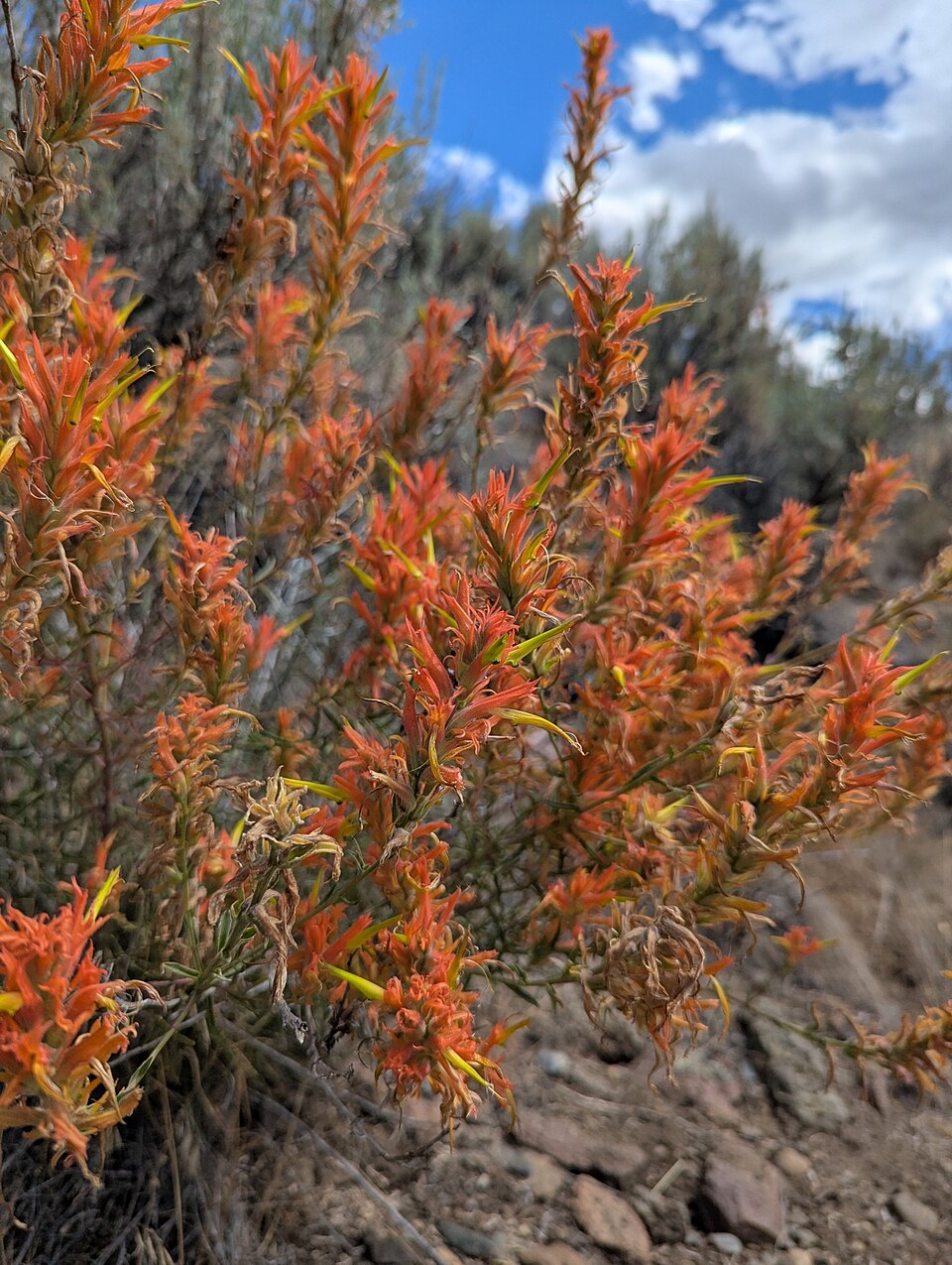
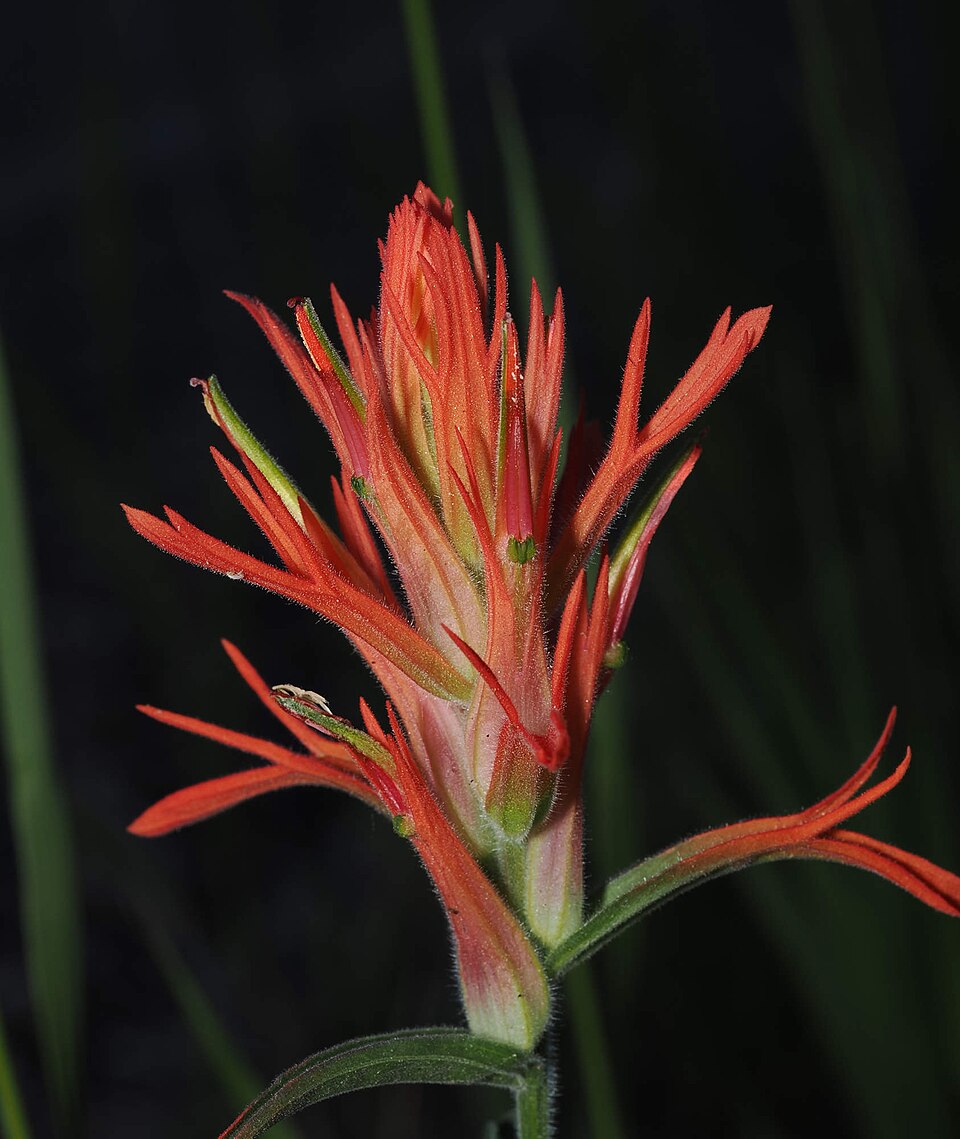
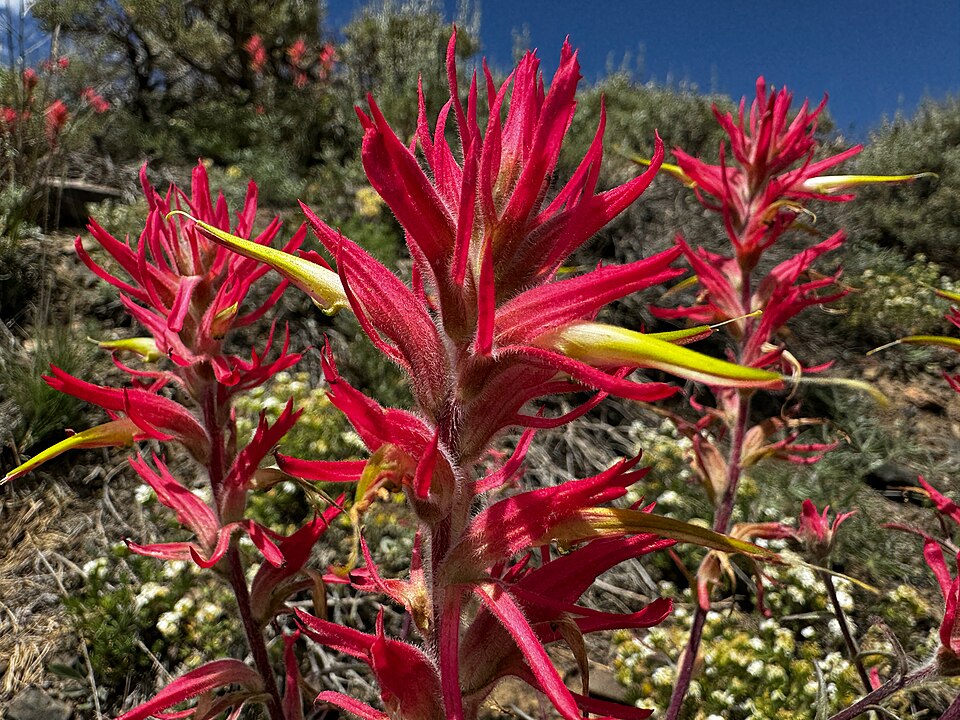
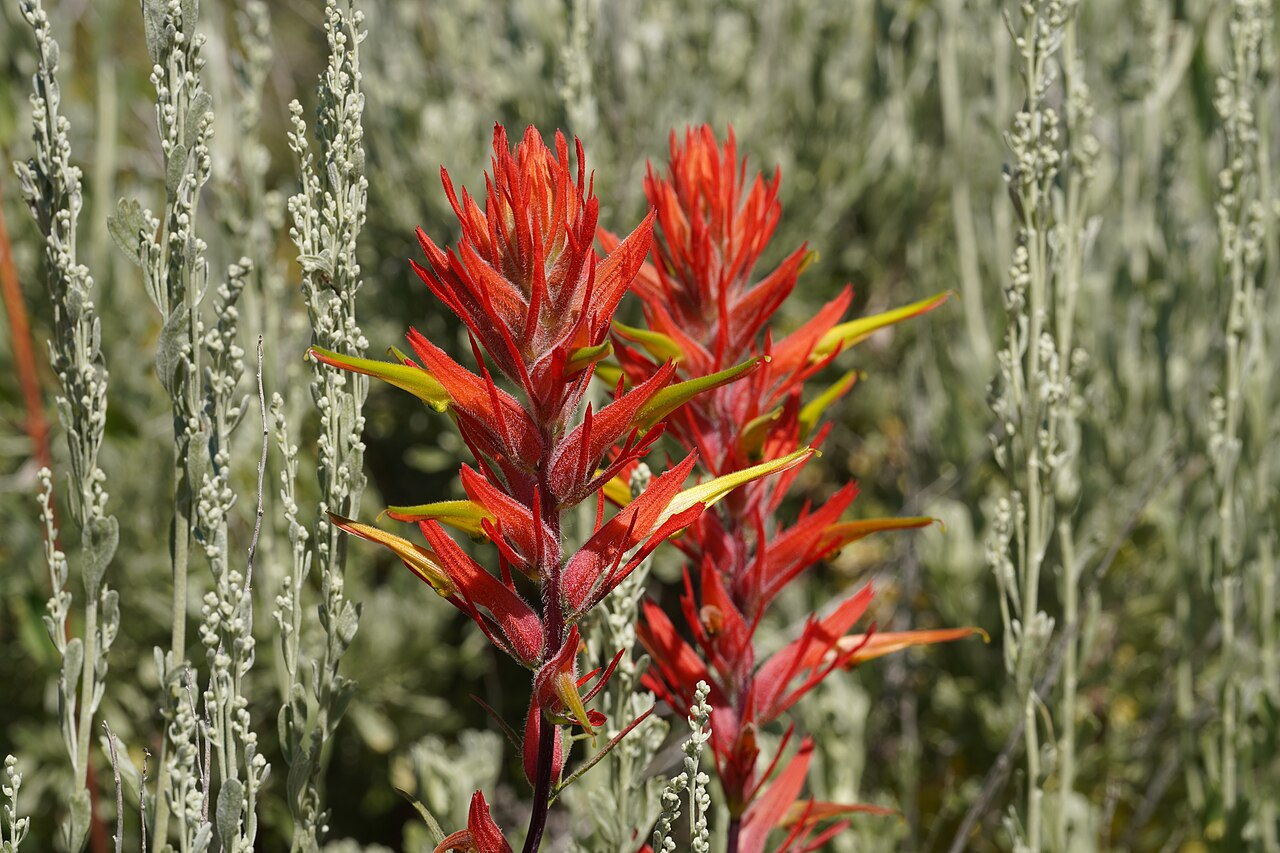
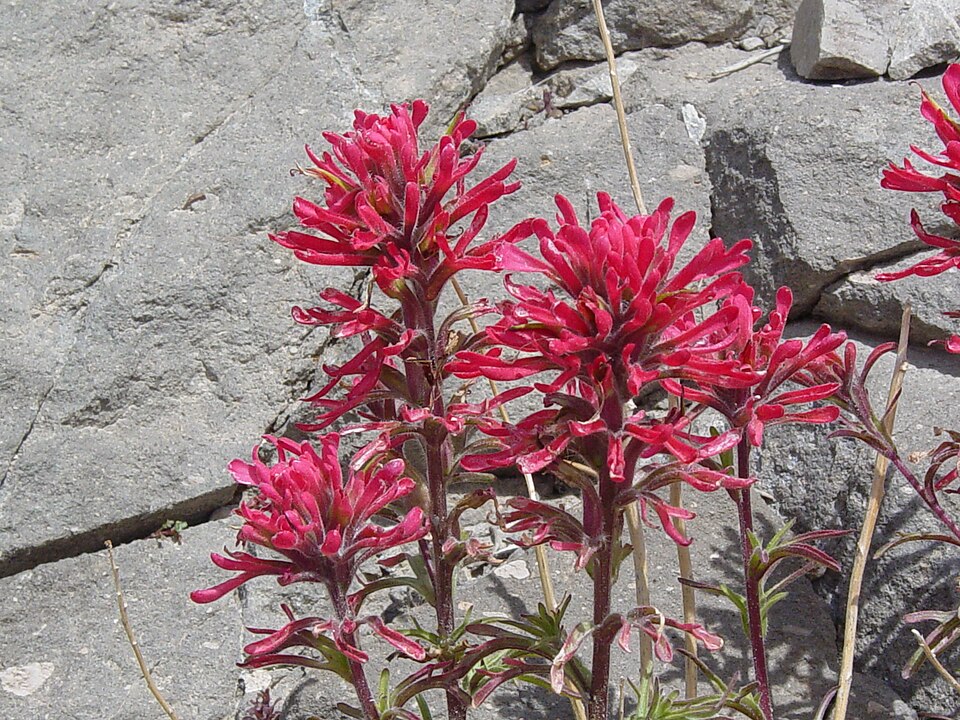
Why the Prettiest: It’s Wyoming’s state flower since 1917 and taller than any other paintbrush flower, which is found in most of the state save for 8 counties. Although the vibrant parts that look like red or orange flower petals are actually specialized modified leaved called bracts. While its true flowers are small and greenish-yellow, modestly hidden inside the bracts.
Location: Native to every US state west of the Rocky Mountains except for Washington along with the state of Sonora in northern Mexico.
Environment: Associated with sagebrush steppe, grasslands, and pinyon-juniper woodlands. Also grows on dry rocky slopes, dry plains, talus deposits at cliff bases, and in forest openings. Grows up to 7-39 in tall.
Bloom Season: Blooms from April to October. Attracts Edith’s checkerspot butterfly that feeds on it exclusively as well as other butterflies, bees, and hummingbirds.
Color Varieties: Available in red, orange, and pink.
Gardening Conditions: Can withstand droughts. Seeds can sometimes be part of wildflower seed mixes sold in the southwest. Note that this plant is hemi-parasitic, meaning its roots attach to the roots of a neighboring plant, frequently native grasses or sagebrush to steal a portion of their water and nutrients. Due to this root dependency, transplanting wild specimens almost always kills them. So if you plant a seed, plant it near a compatible host plant to establish a connection. Prefers full sun and well-drained, lean soils.
Conservation Status: Currently listed as Secure.
Trivia: Present in Tewa and Hano decorative art, painted on pottery, carved into wood, and imitated in colored yarn. Used by the Shoshone as a traditional medicine for venereal disease through boiling the roots, administering it in small amounts, and acting as a purgative.
Other Candidates: Arrowleaf Balsamroot, Rocky Mountain Columbine, Lupine, Fireweed, and Sky Pilot.


