
While many of the entries feature the cute little creatures that we all know and love. Some may be of animals you may not have ever heard or seen. Maybe not even considered as cute. The ringtail isn’t much well known outside its western region, but it’s certainly an adorable creature that’s described as catlike but resembles a cross between a ring-tailed lemur and a small dog. While the American Kestrel is a colorful little falcon the size of a sparrow that you can’t resist if you see it up close. In this post, we’ll see ten more adorable little animals. You’ll meet a curly tailed creature with a keen nose in New Mexico, a little dumpster diving fiend in New York, a favorite marine mammal in North Carolina, a spiky little guy who just wants to be left alone in North Dakota, some birds in Ohio, Oklahoma, Oregon, Pennsylvania, and South Carolina, and a delightful loiterer in Rhode Island.
31. New Mexico
White-Nosed Coati (Nasua narica)
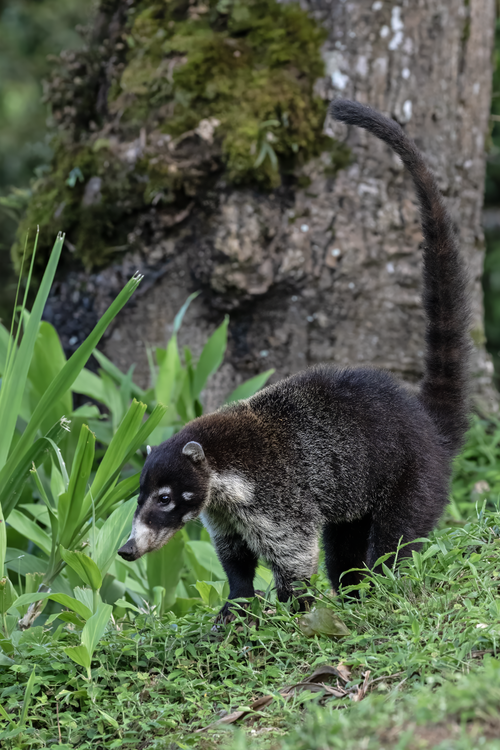
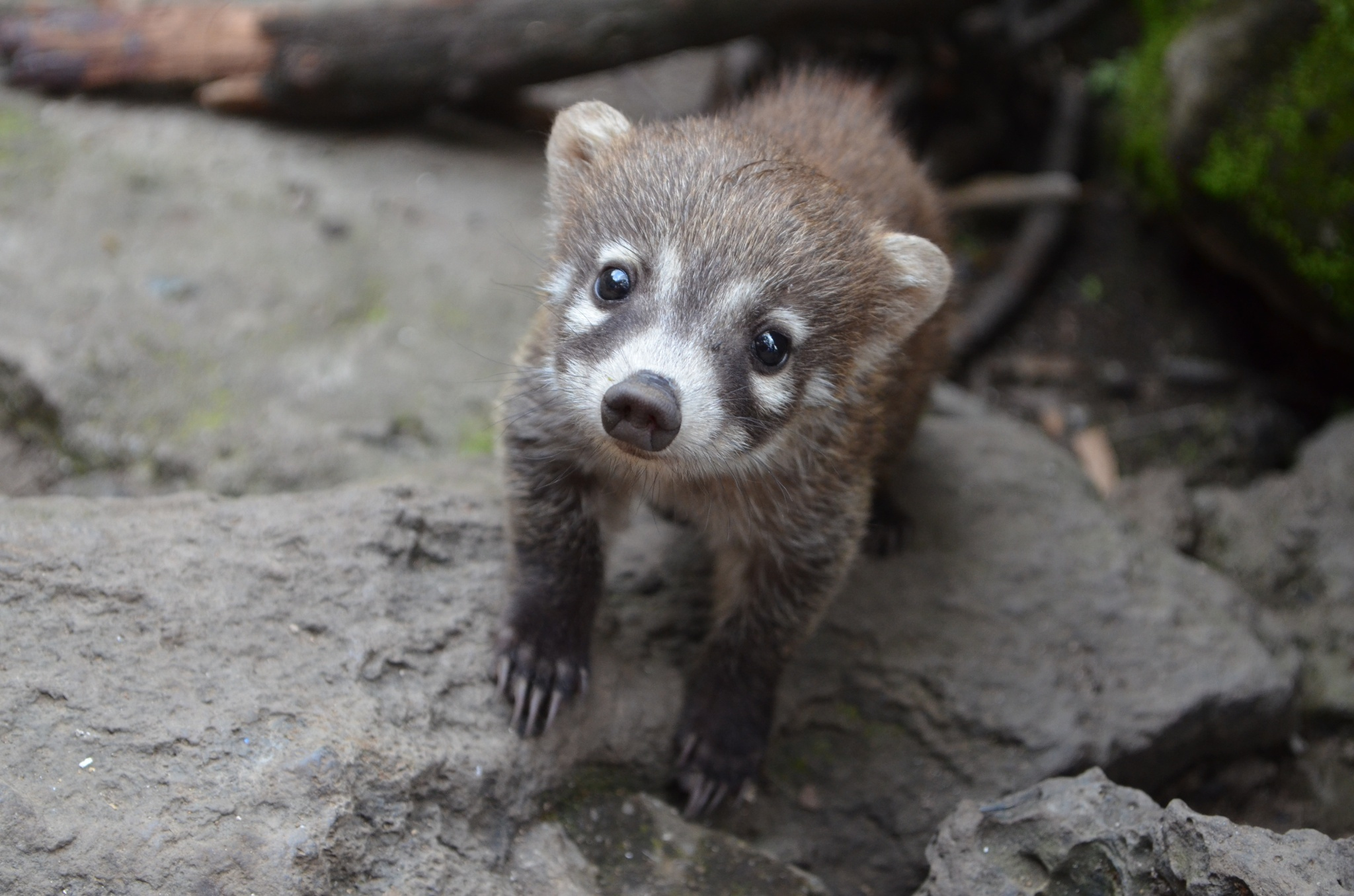
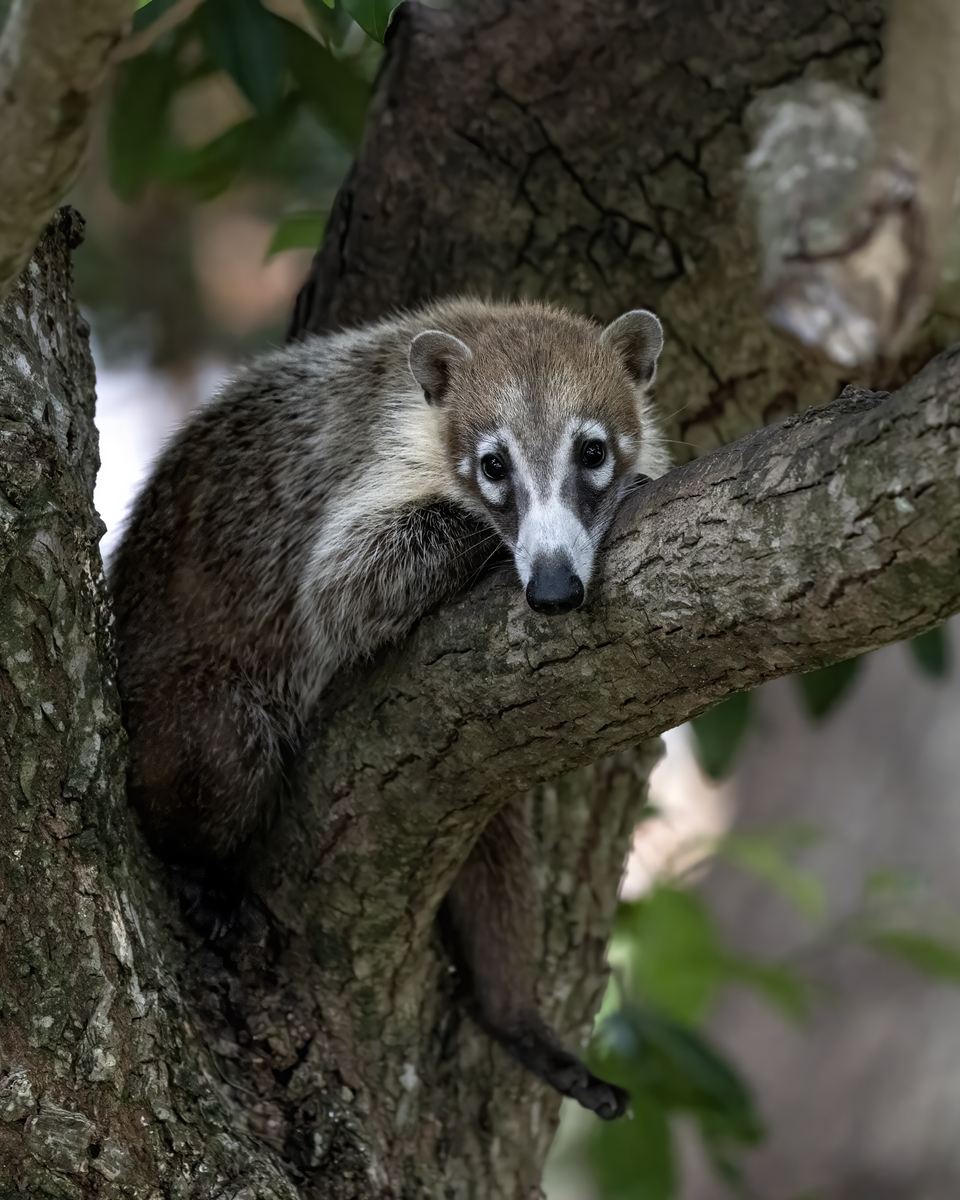
Why the Cutest: It’s a charming long-nosed relative of the raccoon known for its ringed tail and playful curiosity. Its long, twitchy nose can turn in almost any direction as it sniffs out food. It holds its long, ringed tail in the air like a fuzzy antenna. While females and their young travel in groups, clattering and exploring. Pups are remarkably playful, energetic, curious, and resemble a charming mix of raccoon and monkey. Yet, although you may want one, know that it’s highly intelligent, wild, and become extremely destructive or challenging as an adult. Nonetheless, looking at them, it’s no wonder it’s seen as Mexico’s answer to the raccoon.
Lifespan: Usually live as long as 7 years in the wild but can live as many as 14 in captivity. Predators include male coatis, snakes, foxes, jaguars, jaguarundis, and domestic dogs.
Location and Habitat: Lives in the American Southwest, Central America, and parts of South America. Inhabits wooded areas in tropical and subtropical dry broadleaf forests at elevations ranging from sea level to 9,800ft.
Diet: Eats lizards, rodents, fruits, carrion, insects, snakes and eggs.
Behavior: Adult males live solitary lives except during mating season. While adult females and their young live in family groups called bands with males getting kicked out when they hit 2. A single band could have as many as 20-30 members. A single male often mates with females within a single band, which usually takes place between January and March. Pregnant females separate from the band to build their nests on a tree or a rocky niche. Females produce 3-7 young per litter and rejoin the group once their young reach 6 weeks old. Mostly forages on the ground but can climb trees. Is diurnal. Can be a fierce fighter when threatened with its strong jaws, sharp canine teeth, fast scratching paws, and a thick hide sturdily attached to its muscles.
Conservation Status: Listed as Least Concern but considered endangered in New Mexico, likely due to habitat loss and hunting. Sometimes kept as a pet but is difficult to train, needs a vast enclosure, and must be watched at all times.
Trivia: Known pollinator of the balsa tree. Can communicate through chirping, snorting, or grunting sounds as well as uses simple postures and facial expressions to convey messages. Uses its tail for balancing. Has an acute sense of smell.
Other Candidates: Ringtail, Kit Fox, Elf Owl, American Pika, Greater Roadrunner, and Albert’s Squirrel.
32. New York
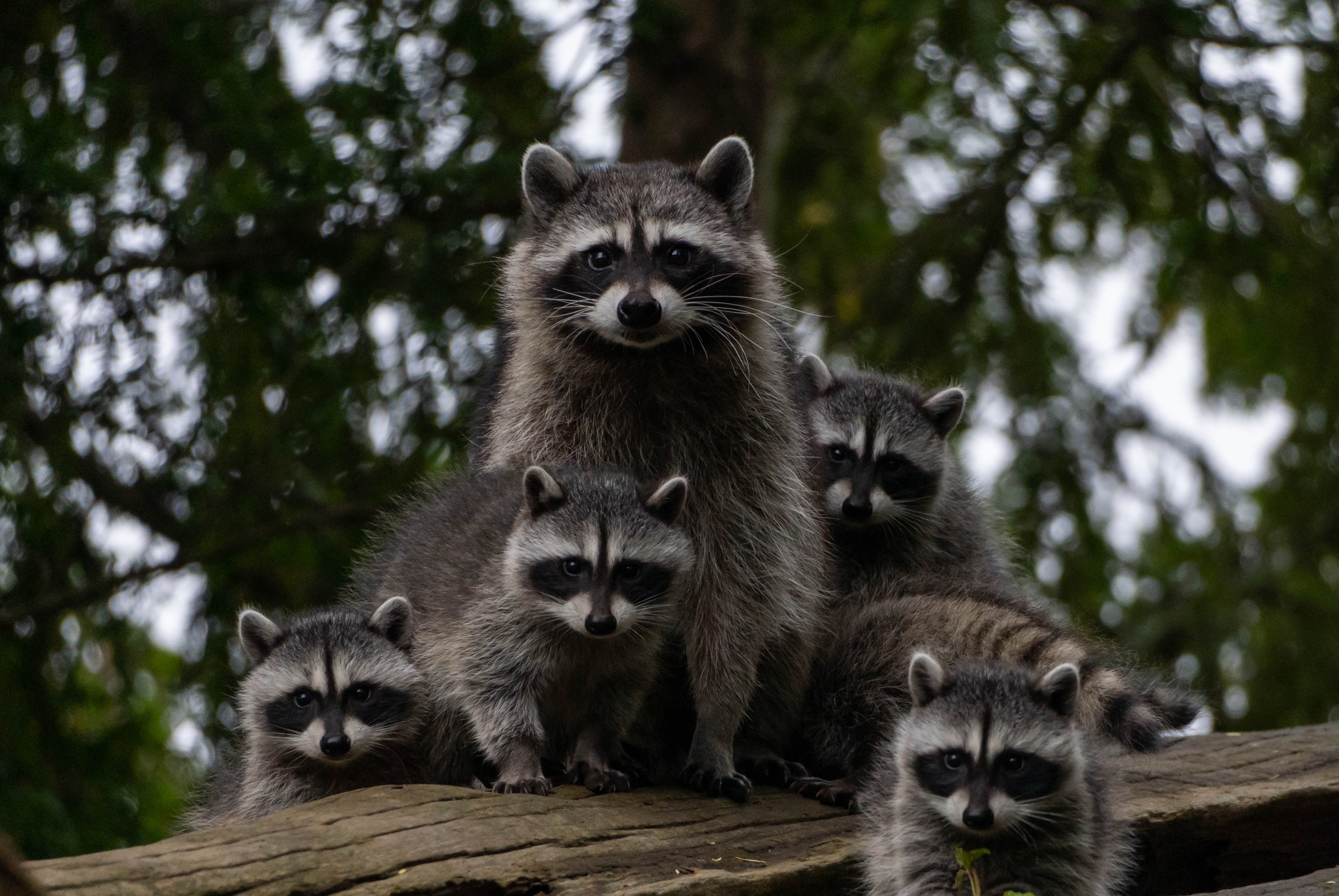
Raccoon (Procyon lotor)
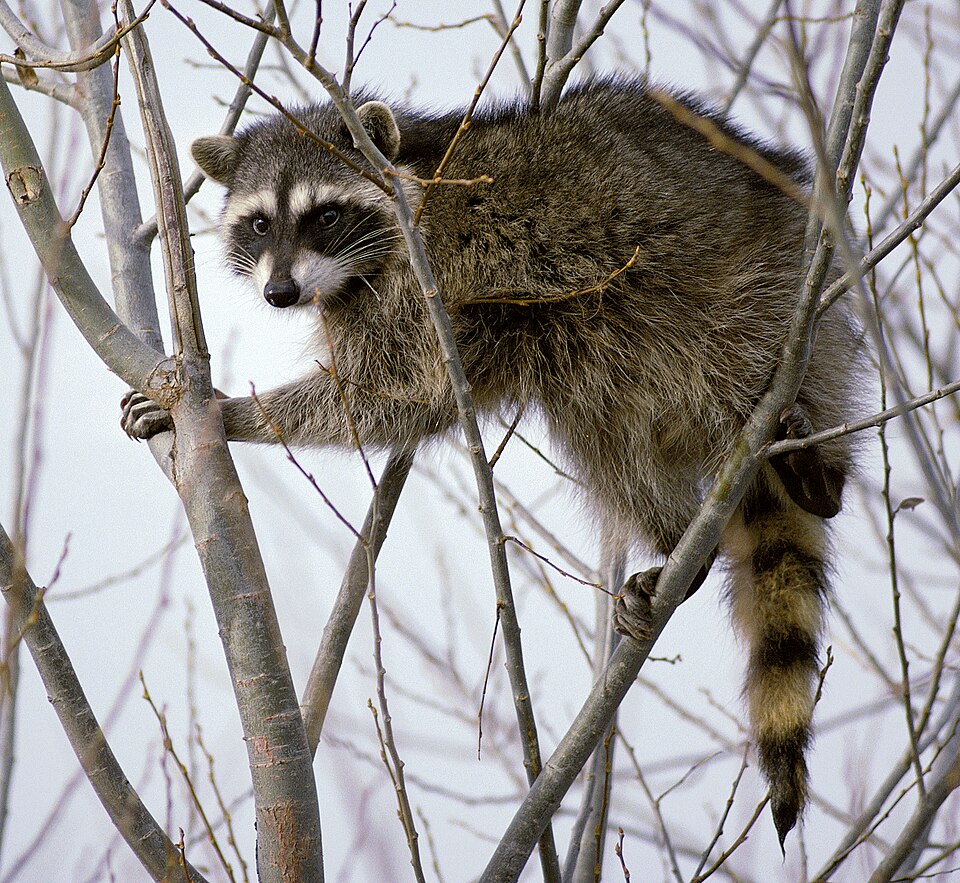
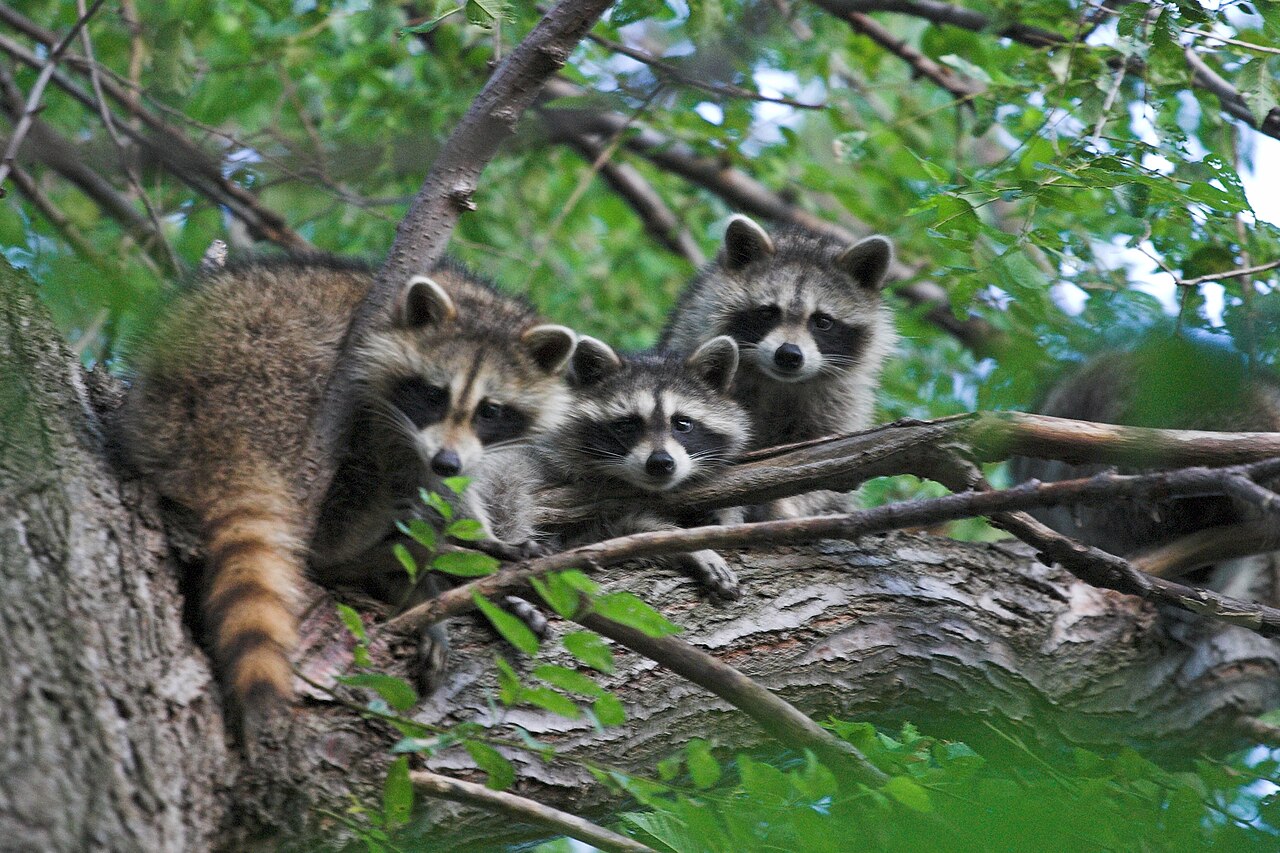
Why the Cutest: Being the state that hosts New York City, what can be a better representative in the United States of Cuteness than an animal fondly remembered as a trash panda? As no showcase of cute American animals would ever be complete without it. Has human-like hands, a sneaky black facemask that makes it resemble a little bandit, and round baby-like features like big eyes and rounded faces. All these trigger our care instincts, making us see it as playful and friendly. While its slow, heavy walk and curious posture looks funny and sweet. It’s so adorable that far too many people can’t help but feed it despite that they certainly shouldn’t. Still, if a raccoon can make it in New York City, then it could make it anywhere.
Lifespan: Usually live 1-3 years in the wild and can live up to 20 years in captivity. Causes of death are traffic volume, hunting, weather severity, starvation, and disease. Predators include bobcats, coyotes, great horned owls, black bears, cougars, wolves, eagles, alligators, lynxes, and jaguars. Prone to diseases like distemper, rabies, tetanus, leptospirosis, listeriosis, tularemia, roundworm and others.
Location and Habitat: Lives in North and Central America from southern Canada to Panama. Inhabits sparsely wooded areas, lowland and deciduous forests with water and marshes, mountain ranges, prairies, coastal marshes, parks, suburbs, farms, and cities.
Diet: Eats insects, worms, crayfish, fish, eggs, fruits, birds, small mammals, nuts, seeds, and leftovers in municipal waste containers. Prefers to eat what it can easily get. Known to raid egg nests so much that it’s often removed from the areas. When food is abundant, it can develop strong preferences for certain foods.
Behavior: Although believed to be solitary, it’s now said to engage in sex-specific social behaviors. Females live in a “fission-fusion society,” sharing a common area and occasionally meeting at feeding and resting grounds. Unrelated males form loose social groups to maintain their position against foreign males during the mating season, which usually consists of no more than 4 individuals. Since some males may be aggressive to unrelated kits, mothers will isolate themselves from other raccoons until the kits are able to defend themselves. Although it’s said that 10-15% of them would do exactly the opposite of what’s expected. Is usually nocturnal but is sometimes active during the day to take advantage of available food sources. Mating season spans from late January to June. Males roam their home ranges in search of females with encounters happening at central meeting places. Every member of the male group usually mates and it’s said that 1/3 of females mate with more than one male. Females produce 2-5 young per litter. Males play no part in raising young. Females stay at their mother’s home range while males move at least 12 miles away in the fall. Though juveniles may share a den with their mothers during their first winter in colder areas. Prefers to shelter in tree hollows in old oaks and other trees but will use burrows dug by other animals, dense undergrowth, or tree crotches. In suburban and urban settings, it can sleep in nearby forests after foraging in settlement area. Can sleep in old hollow trees in gardens as well as cottages, garages, abandoned houses, and attics.
Conservation Status: Currently listed as Least Concern. Considered invasive in Germany, Japan, and the former Soviet Union. Although it was hunted during the fur trade. Unlike most of the animals in this series, its population in the US has greatly increased that there were 15-20 times more raccoons in the 1980s than there were in the 1930s when it was comparatively rare. Some are even kept as pets but are seen more unruly and less trustworthy than skunks. Though some of its subspecies are considered as endangered while others are almost certainly anything but. In fact, it’s often seen as a pest in many areas that’s said to overturn trash cans, raided fruit trees, crop damage, property destruction, and raiding poultry houses.
Trivia: Has 22 subspecies. Has hyper-sensitive front paws. Said to be colorblind but good at seeing green light and can see well at night. Said to be smarter than foxes. Can remember solutions to tasks for at least 3 years. May actually not have existed beyond the easter US, the Gulf of Mexico, and the Great Lakes since it’s not mentioned by early pioneers exploring the central or north central parts of the US, suggesting that it may have taken over the lower 48 after the American Civil War. Yet its presence in Indian mythology and petroglyphs suggest a wide geographic range before white settlers arrived.
Other Candidates: Black-Capped Chickadee, Eastern Chipmunk, Eastern Cottontail, Virginia Opossum, Eastern Bluebird, American Beaver, North American Otter, and Eastern Gray Squirrel.
33. North Carolina
Atlantic Bottlenose Dolphin (Tursiops truncatus)



Why the Cutest: Given that North Carolina is home to the beaches like the Outer Banks, you can’t go wrong by its cuteness representative being the Atlantic Bottlenose Dolphin. Since you can see it off its coastline all year long. It’s a playful, highly intelligent marine mammal known for its curved mouth that makes it appear like it’s always smiling. Its short, stubby snout and jawline creates a natural, friendly expression. Calves love riding on their mothers’ wake, leap out of the water, and play with sea vegetation like sargassum seaweed. Lives in tight groups called pods, often showing affectionate behaviors like rubbing against each other and communicating with clicks and whistles.
Lifespan: Usually live 40 years in the wild, sometimes even to 60. Can live 51 years in captivity. Predators include sharks, sting rays, and orcas.
Location and Habitat: Lives in the Atlantic, Pacific, and Indian Oceans. Inhabit temperate, subtropical, and tropical waters.
Diet: Eats eels, squid, shrimp, and a wide variety of fish depending on location.
Behavior: Can breed throughout the year and is polygamous. Males form alliances and pair bonds to seek a estrus female then attempt to breed the most while keeping the other males away from the viable females. Sometimes separating the female from her own range. Females bear a single calf every 3-6 years with a year-long gestation period. Lives in groups called pods that usually number about 15 but can vary from pairs to over 100 or even 1,000. Group structure depends on sex and age but may change depending on the group. Types of groups include nursery groups, juvenile groups, and groups of adult males. Male dolphins form pair bonds which tend to be the strongest. Females stay in their groups for most of their lives. Most social with group after eating which is usually afternoon or evening where it’s often seen engaging interactions such as play, vocalizations, and cooperative swimming behaviors. Grabs each other with their teeth in fights that can leave rake marks on their dorsal fins that many scientists use to identify them. Doesn’t chew its food but swallows it whole. Can hunt individually or within a pod, mainly through echolocation. Eats 10-20% of its body weight every day.
Conservation Status: Currently listed as Least Concern but still has suffered from whaling, dolphin hunting, pollution, and climate change.
Trivia: Has 10 subspecies. Has longest social memory of any non-human species. Popular in aquarium shows, TV shows, and movies. Has been trained by military to locate sea mines or detect and mark enemy divers like in the US Navy Marine Mammal Program. Sometimes cooperates with fishermen by driving fish toward them and eating whatever fish escape their nets. Use blowholes and nasal sacs to communicate through whistles, squeaks, and pulses vocalizations as well as gestures, postures, and physical contact. All used to convey information, reinforce social bonds, and coordinate group activities. Uses echolocation with high and low frequency sounds in order to locate prey. Can migrate up to 4,200 miles in a season.
Other Candidates: Carolina Chickadee, Eastern Chipmunk, Eastern Cottontail, Gray Fox, Virginia Opossum, Carolina Wren, and Eastern Bluebird.
34. North Dakota
North American Porcupine (Erethizon dorsatum)
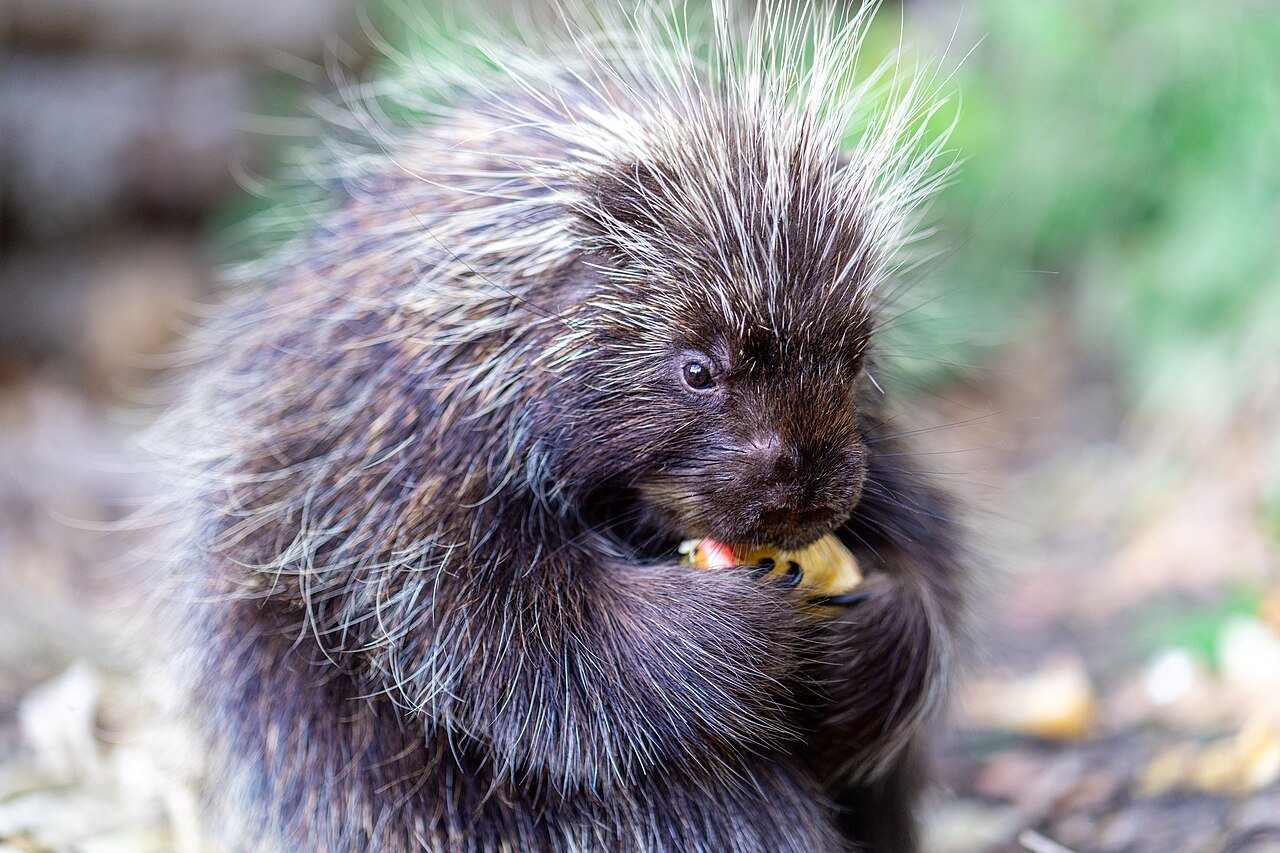
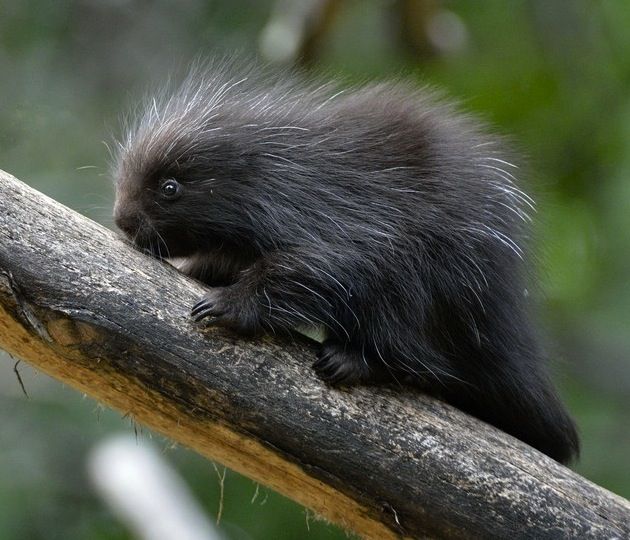
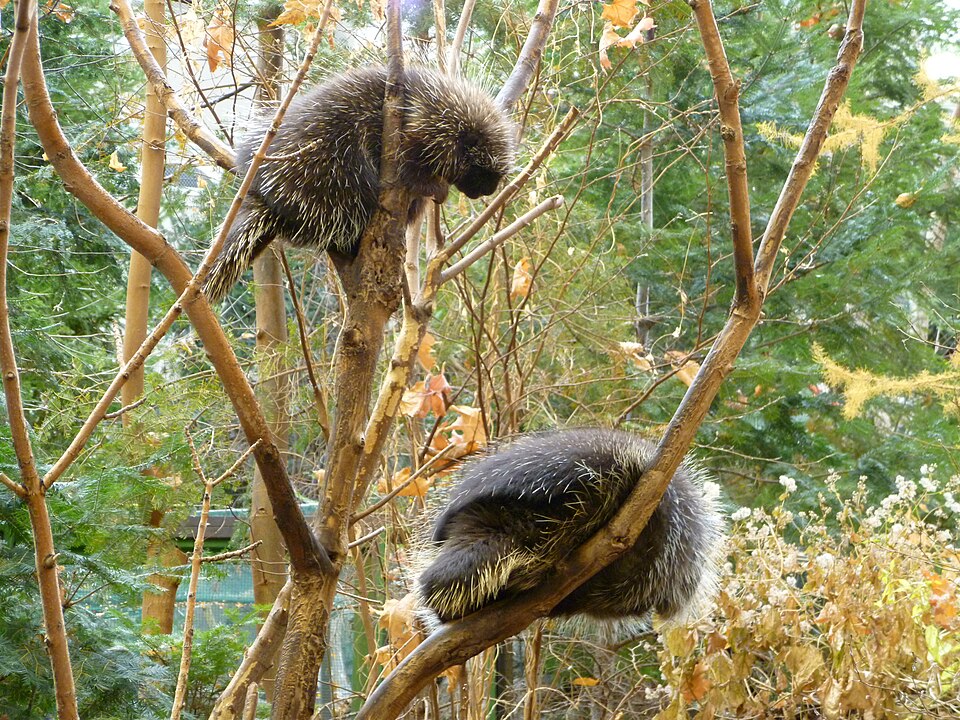
Why the Cutest: With its waddling walk, expressive face, and chatty eating habits, the Northern Porcupine is a surprisingly adorable rodent that’s so much more than it seems on the surface. Sure it can make funny noises while munching on stuff. But despite being a slow-moving and chill waddler, it’s a highly intelligent survivor with massive “FAFO” energy when it comes to predatory defense. Should it survive a predatory attack, its spiky quills will make its adversary regret it for a very long time. Yet, it’s those very quills that allow it to live a long solitary life as a vegetarian minding its own business.
Lifespan: Can typically live up to 30 years in the wild if lucky. Causes of death are motor vehicles, predation, starvation, and falling out of trees. Predators include fishers, wolverines, coyotes, black bears, cougars, golden eagles, and great horned owls.
Location and Habitat: Lives throughout North America from Alaska to as south as Northern Mexico. In the US it primarily lives in New England and the West. Primarily resides in coniferous or mixed forests but could adapt to harsh environments, shrublands, and tundra.
Diet: Eats twigs, roots, stems, fruits, conifer needles, tree bark, and other vegetation. Loves salt and have been known for trying to eat road salt-covered boots left outside tents as well as sweat-soaked gloves and wooden tool handles.
Behavior: Make dens in hollow trees or rocky areas. Rests in trees in the summer. Is nocturnal. Doesn’t hibernate but sleeps in and stays close to its den during the winter. Lives a solitary life save when it’s a mother raising her young. During breeding season in the fall, females secrete a mucus and urine scent to attract nearby males to climb her tree. If another male approaches, the two fight for mating rights. Once one male succeeds, the female climbs down and they mate on the ground. Females often produce a single offspring and provides all the parental care. Porcupette leaves its mother the following fall.
Conservation Status: Currently listed as Least Concern and widely considered as a pest. Though some subspecies are seen as endangered and in need of conservation like in Maryland and Mexico.
Trivia: Has 7 subspecies. Second-largest rodent in North America. Has about 30,000 quills covering its body except its face, underbelly, and feet. These are modified hairs formed into sharp, barbed hollow spines. Although primarily used for defense, it also serves to insulate its body during the winter and for swimming. Is near-sighted and slow-moving but has excellent hearing. Said to have an extraordinary ability to learn complex mazes and to remember them for at least 100 days. Also has a strong odor to warn away predators as well as display a white stripe down its back and make a cackling sound before it swings its tail to the attacker’s face. Quills can easily penetrate skin while their microscopic barbs make them difficult to remove, giving a predator a rather unfortunate moment that it will never forget. Quills used by Native Americans for basket and clothing decorations.
Other Candidates: North American River Otter, Stoat, Piping Plover, Black-Tailed Prairie Dog, Thirteen-Lined Ground Squirrel, Red Fox, Black-Capped Chickadee, Eastern Goldfinch, Mountain Bluebird, Raccoon, Black-Footed Ferret, and American Beaver.
35. Ohio
Northern Parula (Setophaga americana)
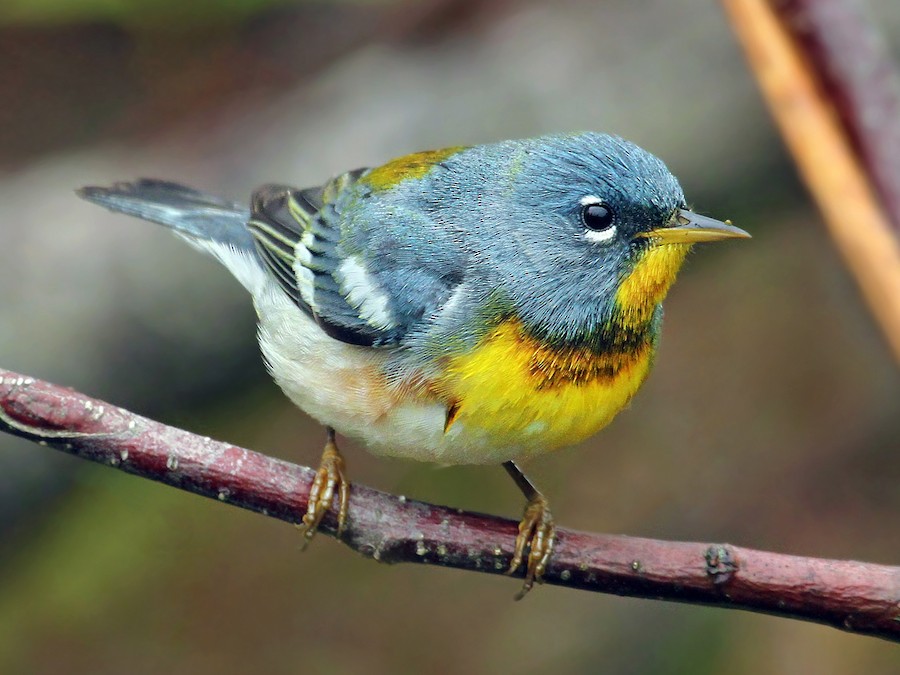
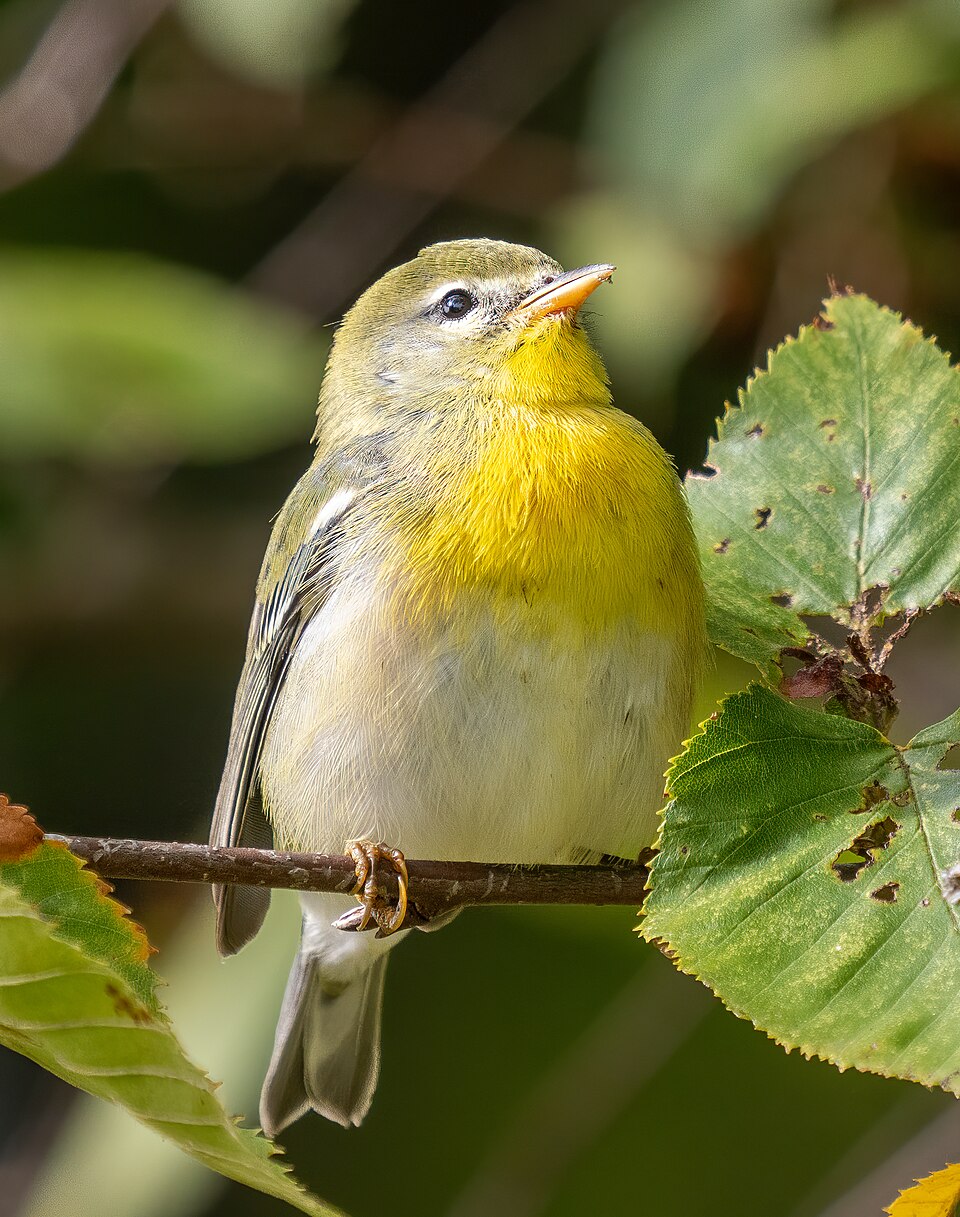
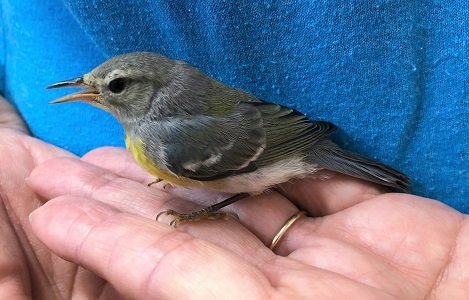
Why the Cutest: It’s a tiny wood warbler known for bright colors, energetic movements, and big personality. The male has a gorgeous blue-gray back with a greenish yellow patch on the center along with a brilliant yellow throat and chest. Its cute eye crescents makes its eyes look large and bright. It also constantly flips, hops, and darts through tree canopies while foraging for insects. All of what makes one wonder why the Buckeye State won’t make it its own official state bird.
Lifespan: Longest recorded age in was 7 years. But since this bird is difficult to track in the wild and is usually not kept in captivity. Causes of death are predation and collision with manmade structures during migration season.
Location and Habitat: Breeds in southern Canada and the eastern US and winters in Central America and in the Caribbean. Primarily resides in forests and swamps, particularly those with high canopies, increased diversity, and good cover during breeding season. During the winter, it could live anywhere as long as it’s warm.
Diet: Mostly eats tree-dwelling invertebrates like spiders, grasshoppers, bugs, locusts, damselflies, aphids, beetles, flies, caterpillars, bees, wasps, and ants.
Behavior: Builds pendulum cup nests with moss, Spanish moss, or coniferous twigs, which can be suspended over water. Is mostly monogamous but incidents of polygamy have been reported. Mating season lasts from March to May. Females lay 3-7 eggs per clutch and can raise more than one brood of chicks per season.
Conservation Status: Currently listed as Least Concern but population has suffered due to habitat loss and air pollution.
Trivia: Captures prey from vegetation using a hover-glean method but can use a variety of foraging methods.
Other Candidates: Raccoon, North American River Otter, Eastern Bluebird, and Red Fox.
36. Oklahoma
Northern Bobwhite (Colinus virginianus)
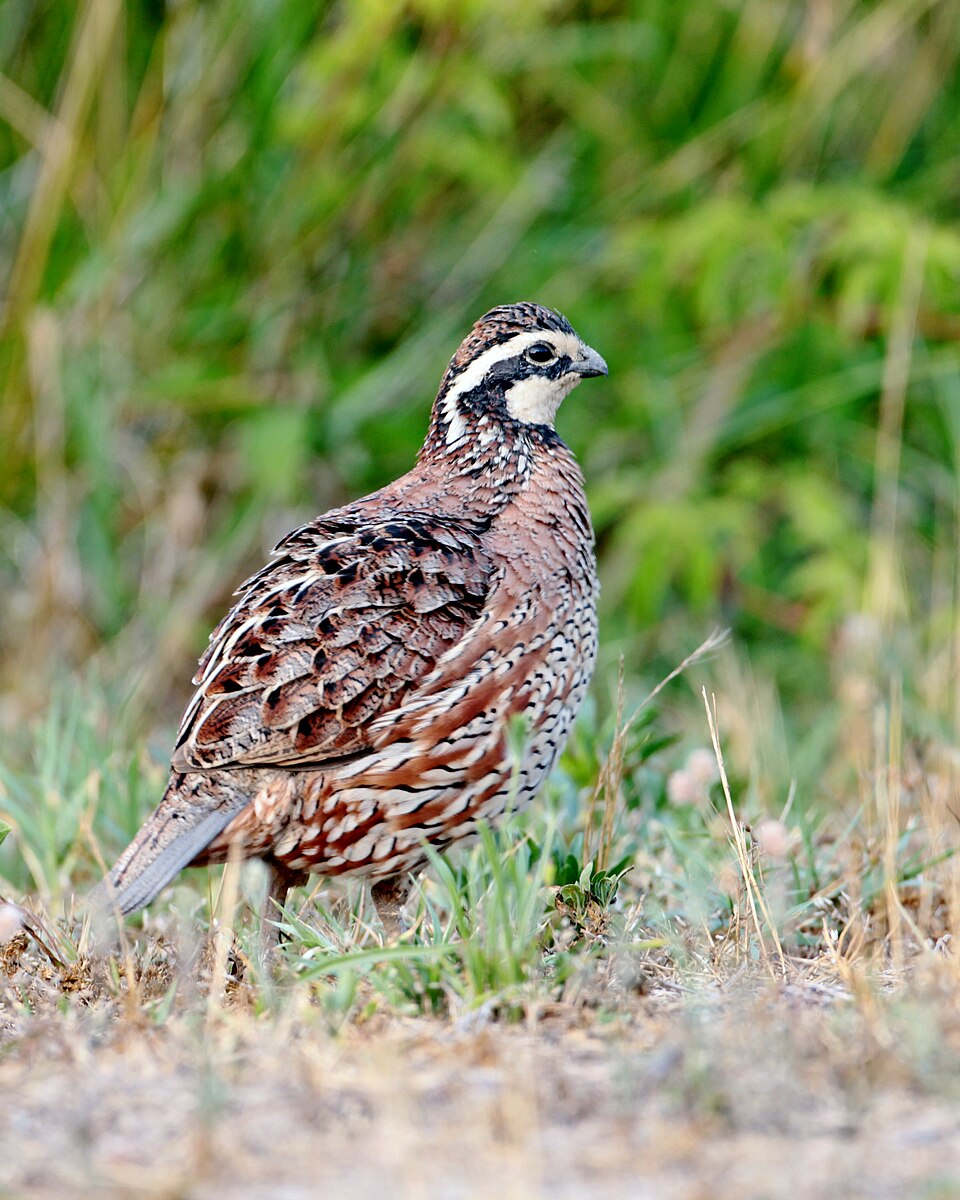
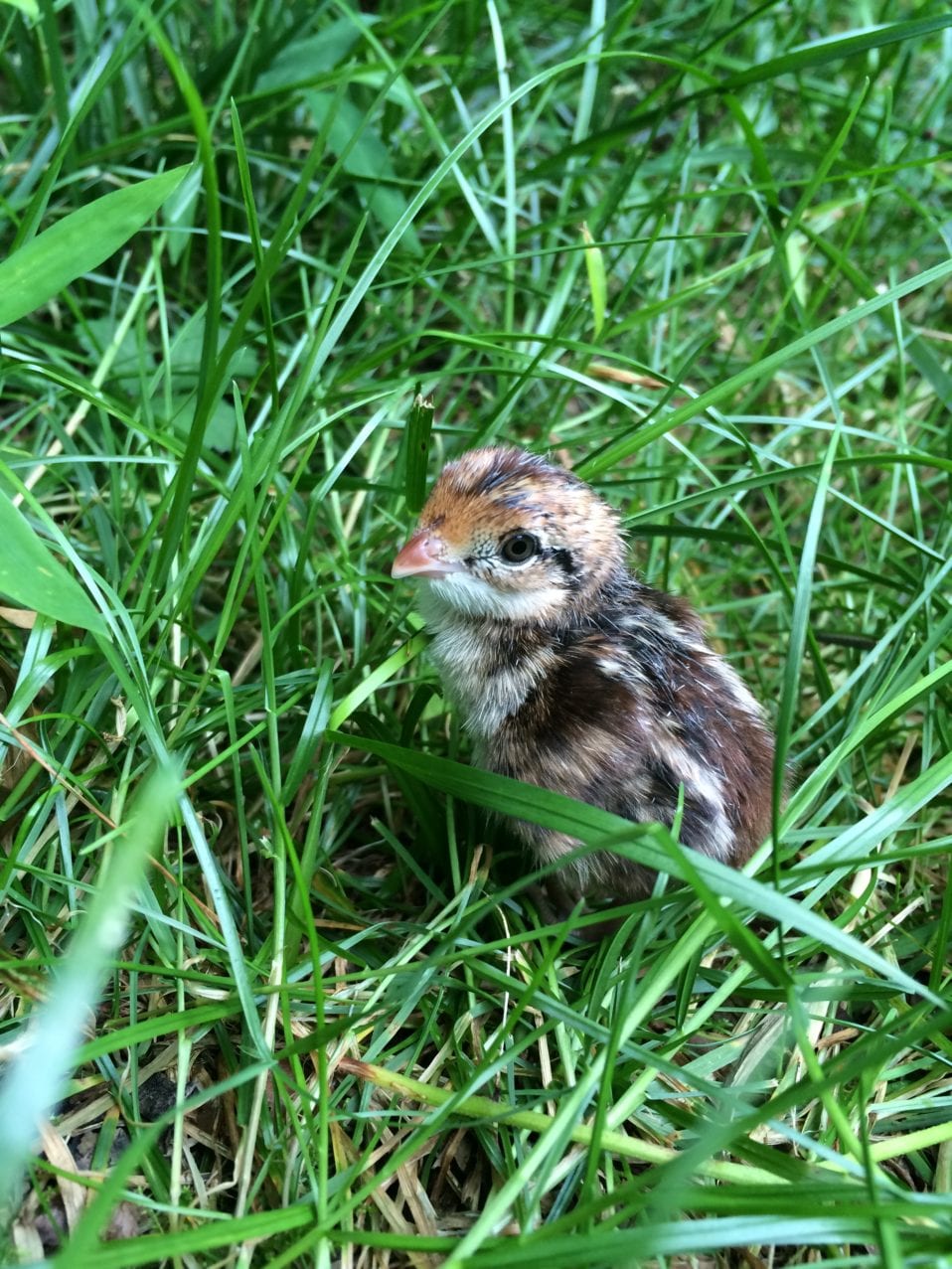
Why the Cutest: This is a small, round, charming bird is known for its chunky body, small head, and cheerful “bob-white” whistle. Its short round body and short tails give it a cute, compact look. Males sports a sharp black and white pattern on its head. While both sexes have brown, reddish, and buff camouflage. Outside the breeding season, it hangs out in cozy groups called coveys, often roosting and circling together. Then there’s the famous “bob-white” whistle.
Lifespan: Usually live 6 months to a year and can live up to 6 years in the wild. Said that 75-80% of the population dies or is replaced annually. Causes of death are predation, harsh winters, deep snow, and habitat loss. Predators include foxes, raccoons, skunks, opossums, bobcats, hawks, harriers, owls, snakes, and feral hogs.
Location and Habitat: Lives in the Eastern US to the Midwest down to the Caribbean and Mexico. Resides in agricultural fields, grassland, open wooded areas, roadsides, and wood edges.
Diet: Eats snails, ticks, grasshoppers, beetles, spiders, leafhoppers, berries, seeds, partridge peas, and cultivated grains.
Behavior: Is shy and elusive. Crouches and freezes when threatened, relying on camouflage to stay undetected. But flies low if closely disturbed. Is generally solitary and mates early in the year. Family groups are common in the summer. Winter roosts may have as many as 10-30 birds in a single covey. Practices ambisexual polygamy. Females lay 8-25 eggs per clutch. Can brood through kidnapping, adopting, creching, and gang brooding. Nests on the ground in a small depression lined with grass and leaves with a cover.
Conservation Status: Currently listed as Near Threatened due to habitat loss, hunting, changing farming practices, pesticides, and brush fires. Numbers have declined 85% from 1966 to 2014. Population decline is wide range and continuing. Thus, it’s become a high priority for conservation.
Trivia: Has 20 subspecies. Gets its name from its cheerful “bob-white” call.
Other Candidates: Black-Tailed Prairie Dog, North American River Otter, and Scissor-Tail Flycatcher.
37. Oregon
Spotted Towhee (Pipilo maculatus)
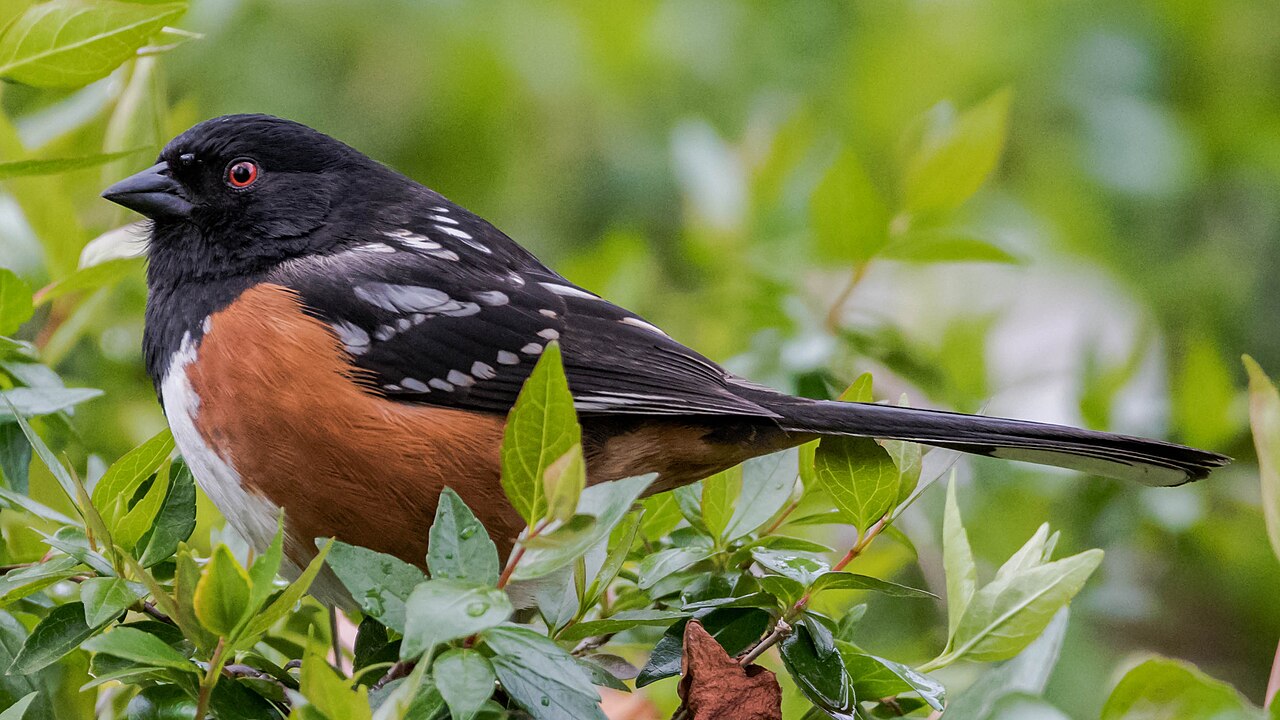
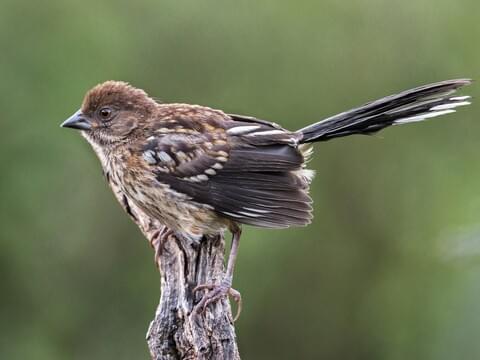
Why the Cutest: It’s a charming, plump songbird with striking colors, bright red eyes, and endearing hopping habits. Its bold, ruby-red eyes sharply stand out against its dark hood. Its sleek black or dark brown back is covered with cute white spots. Sports warm, rust-orange sides that resemble a soft vest next to a clean white belly. When searching for food in the dirt, it does a funny, double-footed backward hop kicking leaves like a tiny, feathery tractor. While it makes quirky, whiny, mewing sounds adding to its playful personality.
Lifespan: Can live up to 11 years in the wild. But usually lives a shorter life due to predation, weather, and disease. So it’s more likely 9-12 years. Predators include snakes and domestic cats.
Location and Habitat: Lives in the western part of North America from southern Canada to Mexico. Some migrate and some don’t. Resides primarily in dry upland forests, open forests, brushy fields, wetland and riparian forests, coastal sage scrub, chaparrals, and urban areas.
Diet: Eats insects, ground dwelling beetles, spiders, other arthropods in a leaf litter, acorns, oats, and berries. Will frequent bird feeders.
Behavior: Nests either on the ground or in low bushes and often in exposed areas. Nest is made from leaves, bark strips, twigs, forb stalks, and grasses as well as lined with pine needles, shredded bark, grass, and sometimes hair. Is monogamous. Females produce 3-5 eggs at least twice a breeding season. Nests are parasitized by cowbirds.
Conservation Status: Currently listed as Least Concern.
Trivia: Has 21 subspecies.
Other Candidates: American Beaver, Sea Otter, American Pika, North American River Otter, Western Snowy Plover, Killdeer, Tree Swallow, Loggerhead Shrike, and Red Fox.
38. Pennsylvania
Cerulean Warbler (Setophaga cerulea)
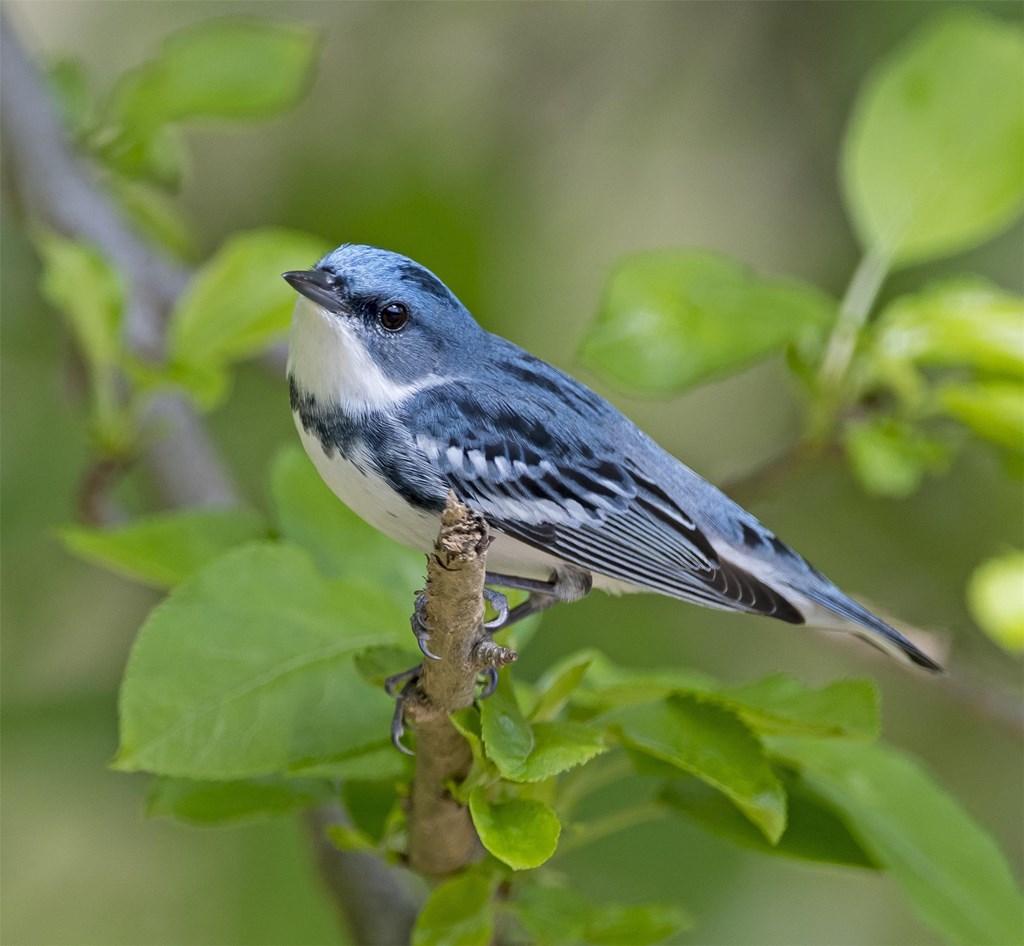
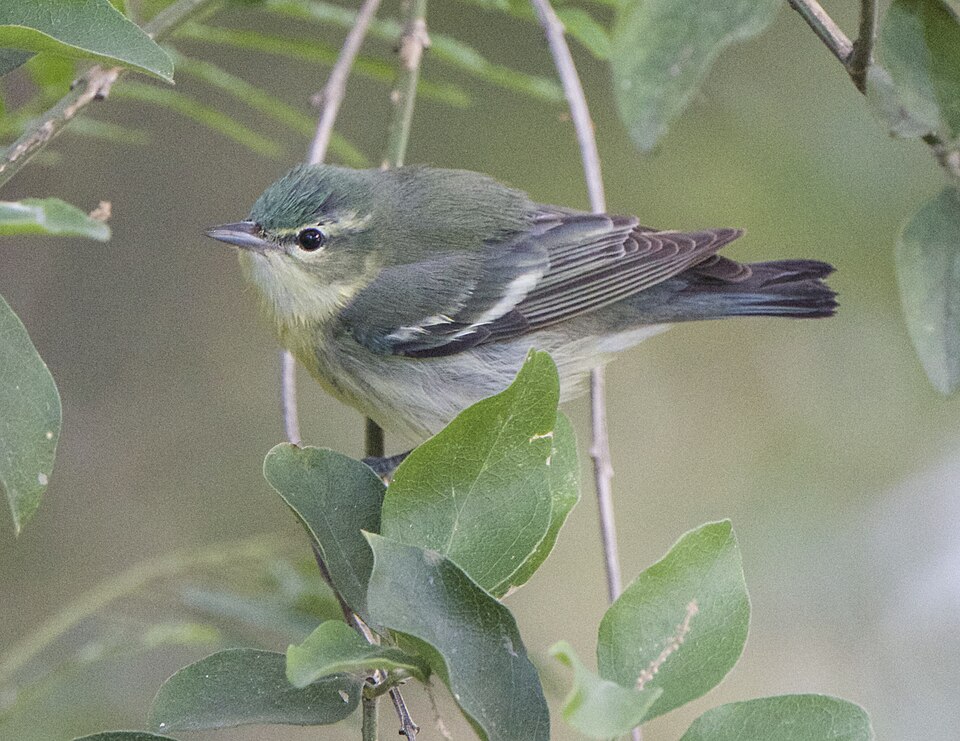
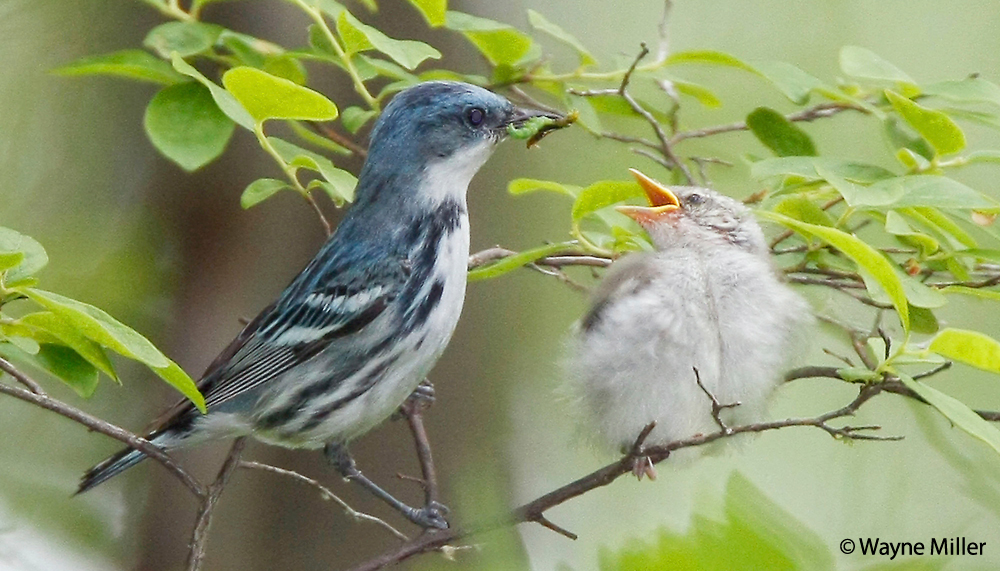
Why the Cutest: This tiny, delicate songbird is a little puffball that many would never see in their backyards but wish they would. Since it’s an insectivore that lives in the treetops. The male is cerulean blue on top with dark streaks, white underparts, bold white wingbars, and a thin black “necklace” across the breasts. Kind of resembles something of a little blue jay. The female is soft blue-green with muted turquoise with a pale eyebrow and yellow wash below. Which by avian female beauty standards is rather stunning. Though you may be unable to see one very often, you might be able to hear its lively, buzzy, 3-part ascending song. But do bring your binoculars if you want to see one up close. In addition, it’s a intrepid traveler since it winters in South America every year, earning more frequent flier miles than many migratory birds in this series.
Lifespan: Typically lives 4-7 years in the wild. Predators include raccoons, squirrels, chipmunks, snakes, chipmunks, and blue jays. Susceptible to blood parasites.
Location and Habitat: Breeds in eastern North America from southern Canada to the US northeast and Great Lakes regions. Winters northern South America within Colombia and Venezuela. Resides primarily in large, unfragmented deciduous hardwood forests. Migrates 3,100 miles between its breeding and non-breeding ranges.
Diet: Primarily eats insects.
Behavior: Males use songs to mark territory and attract mates. Females rarely sing but call when nesting. Is monogamous but can engage in extra-pair copulation. So males engage in mate guarding during periods of foraging, nest building, and nest site selection. Females lay 3-5 eggs once a year. Nests and forages near treetop canopies. Nests in over an area where there’s an empty space for at least 3.3ft or more. Nest is made from tree bark, grasses, and lichens woven together using spider thread and caterpillar silk. Females can attack other females and destroy their nests. Male-on-male attacks can result one falling from heights at 66ft. Both parents build the nest and rear the chicks. Nests could be parasitized by brown-headed cowbirds. Can share space with mixed-species flocks.
Conservation Status: Listed as Near Threatened and is said to be the fastest declining neotropical migrant songbird and warbler species in the US. This is due to change in farming techniques, nest parasitism by the brown-headed cowbird, and deforestation. Has a high level of concern in Pennsylvania.
Trivia: Song is a buzzed, accelerating zray zray zray zray zeeee. Can imitate other birds’ songs.
Other Candidates: North American River Otter, Eastern Bluebird, Eastern Cottontail, Eastern Chipmunk, Snowshoe Hare, Red-Backed Salamander, Groundhog, Raccoon, Northern Flying Squirrel, North American Beaver, and Virginia Opossum.
39. Rhode Island
Harbor Seal (Phoca vitulina)
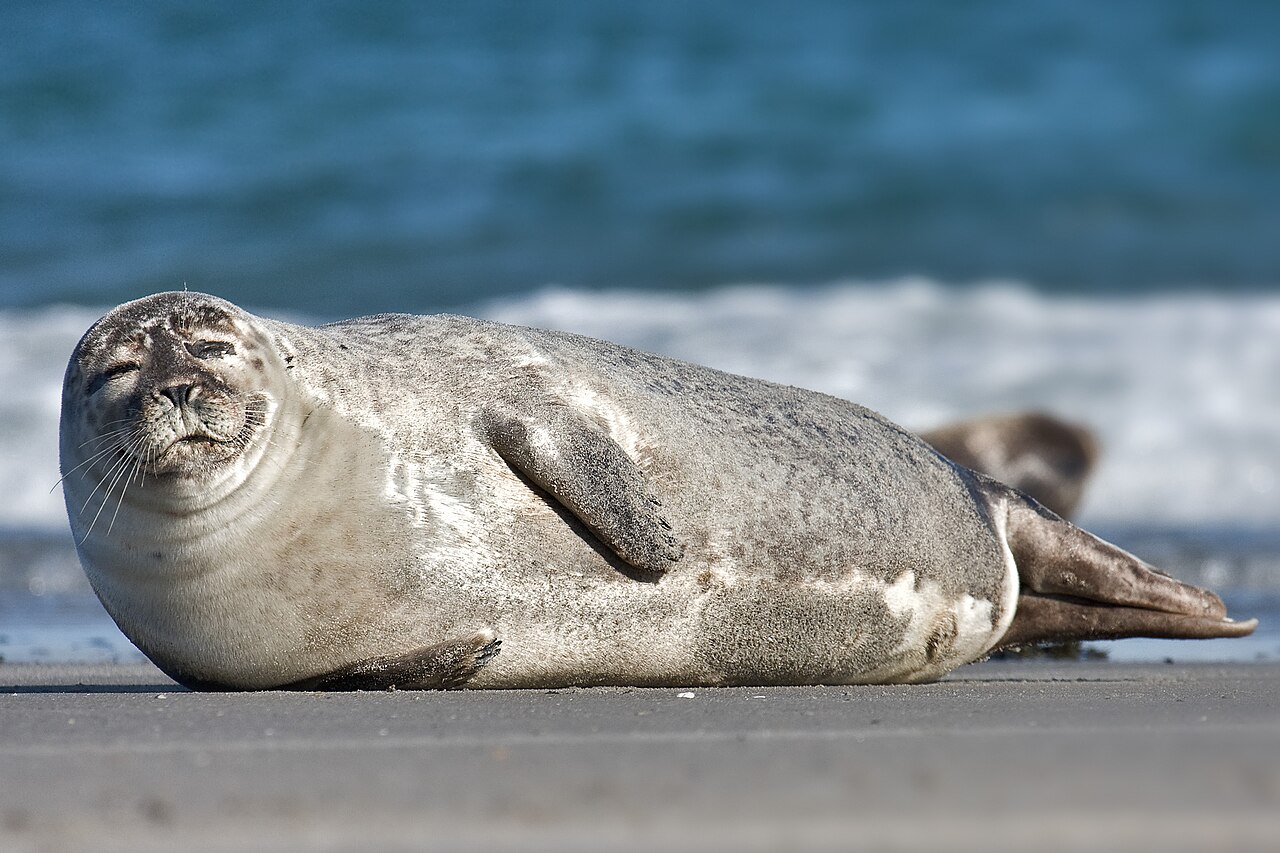
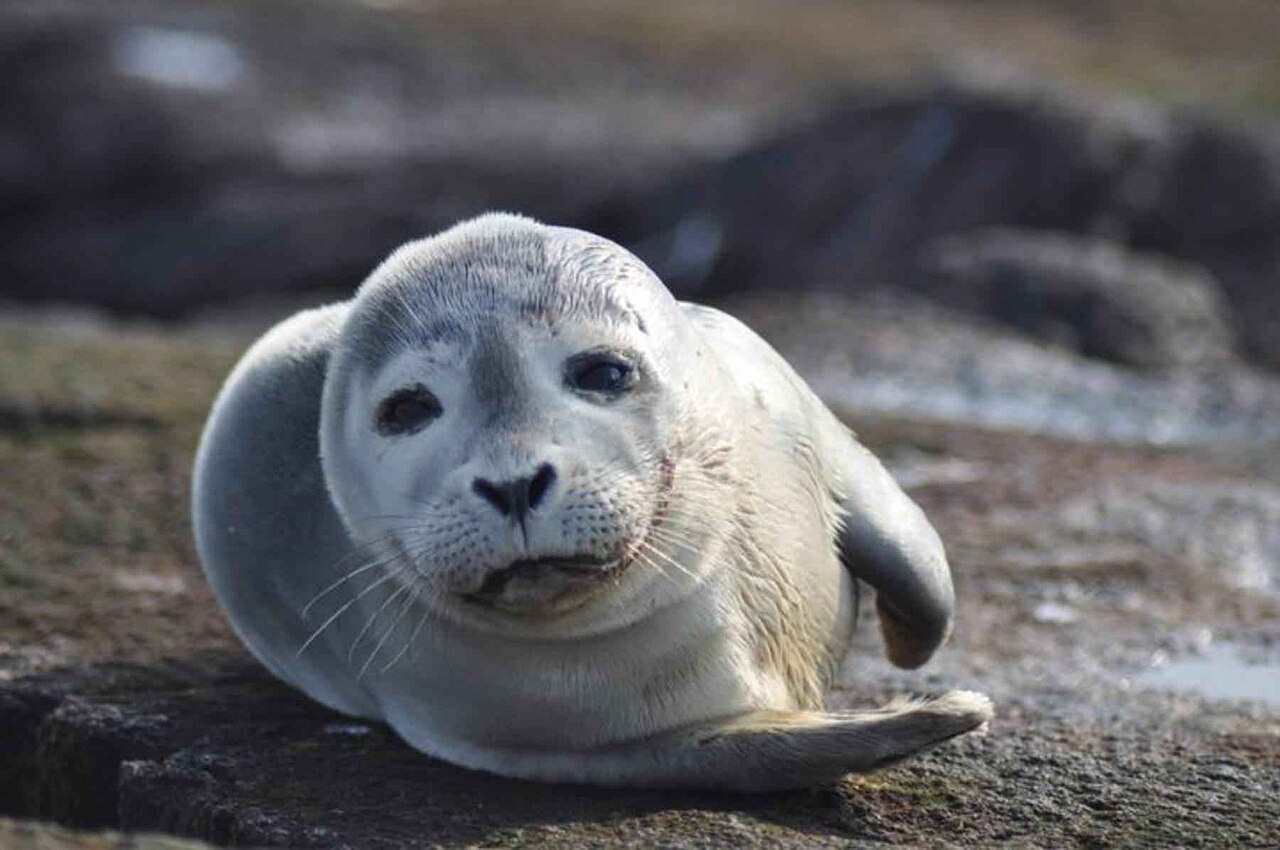
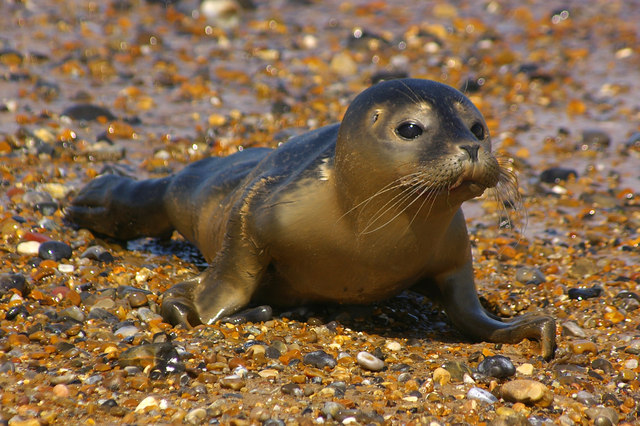
Why the Cutest: No series of animal cuteness would be complete without including a seal given its clumsy waddling on land, relaxing resting positions on the coasts, and dog-like curiosity compelling it to playfully investigate divers and kayakers. Only problem is that while most seals and sea lions are irresistibly cute as pups, that’s not the case when they grow up. Still, this 6ft long and 285 sausage of blubber is a charming marine mammal with its large, soulful eyes, rounded head, and dog-like snout. And who can’t resist those seal pups? Helps that this pinniped is Rhode Island’s official state marine mammal, too.
Lifespan: Typically lives around 20-35 years. Predators include killer whales and large sharks.
Location and Habitat: Lives along temperate and Arctic coastlines within the Northern Hemisphere. Resting sites could be rugged, rocky coasts or sandy beaches. Frequently congregate in harbors, bays, sandy intertidal zones, and estuaries. Swallows food whole.
Diet: Eats fish such as salmon, shad, menhaden, anchovy, herring, mackerel, hake, cod, whiting and flatfish. Also eats shrimp, crabs, octopus, squid, and ducks.
Behavior: Prefers frequent familiar resting sites but could spend several days at sea and travel as many as 50 km but normally doesn’t swim farther than 20 km offshore. Could swim up to a hundred miles up fresh water in large rivers in search of migratory fish like shad and salmon. Can dive as deep as 500 m. Is a solitary when on the water but gregarious when hauled out and during breeding season. Breeding season is usually from February to July. Mating system is unknown but is often thought to be polygamous. Courtship and mating occur underwater. It’s said that males gather together, turn on their backs, put their heads together, and call to attract females ready for breeding. Females give birth to a single pup each year on shore. Pups are well-developed as well as capable of swimming and diving within hours.
Conservation Status: Currently listed as Least Concern. Although some local populations have been threatened due to distemper, conflicts with humans, commercial fishing, pollution, hunting, and climate change.
Trivia: Molts shortly after breeding. Uses non-harmonious vocalizations to maintain breeding territory, attract mates, and during mother and pup interactions.
Other Candidates: North American River Otter, Red Fox, Eastern Chipmunk, New England Cottontail, and Eastern Cottontail.
40. South Carolina
Carolina Wren (Thryothorus ludovicianus)
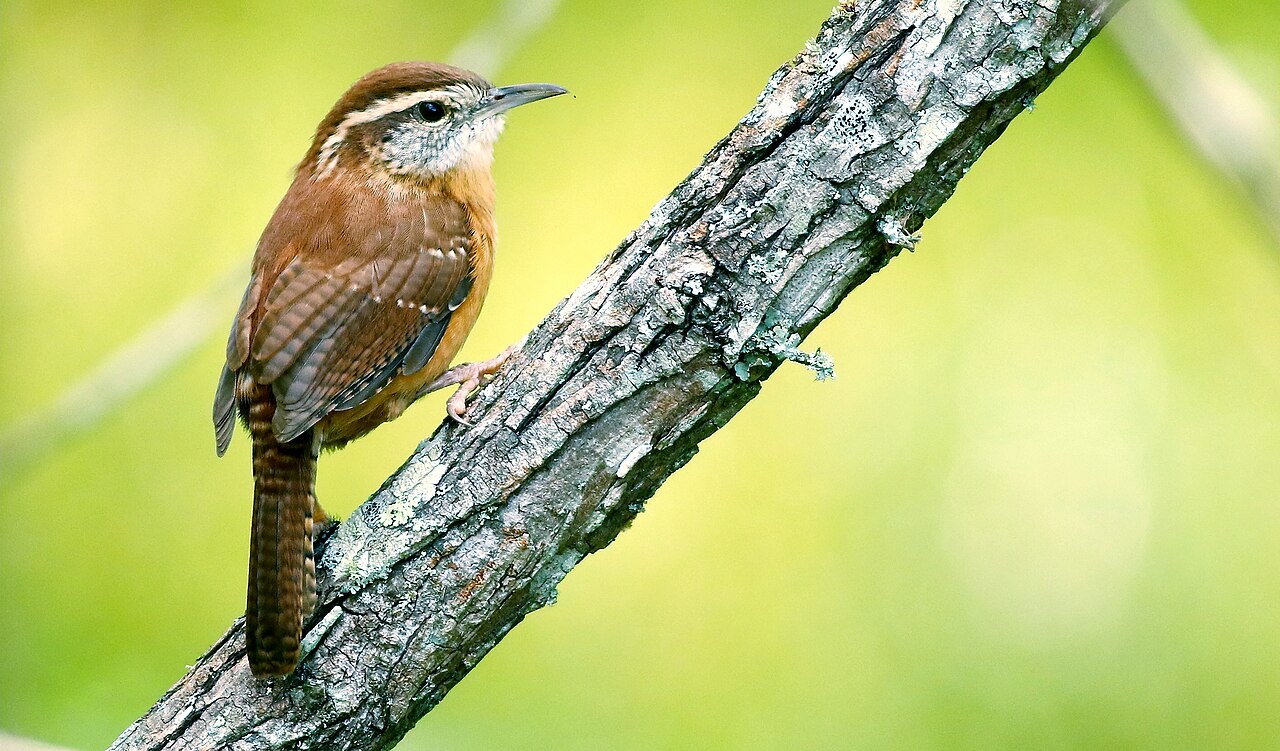
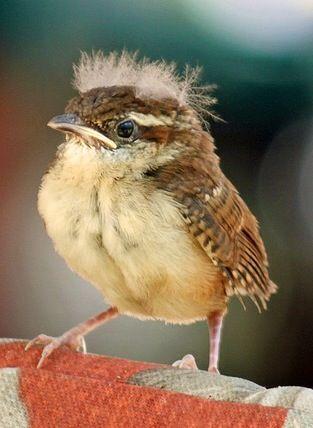
Why the Cutest: For one, it’s South Carolina’s state bird. This is a tiny, energetic ball of fluff with a round, chubby body, a long curved bill, and a tail sticking straight up like a brown little teapot. Its plump body and perky, upright tail gives it a charming, humorous silhouette. Often acts very bold and curious, often hopping close to people or peeking into flowers and garage doors. Yet, despite being small, it sings a loud tea-kettle, tea-kettle song that sounds huge for its tiny size.
Lifespan: Can live as long as 6 years and 90% live less than a decade. Mortality peaks during winter. Susceptible to blowfly parasites and mercury poisoning. Predators include blue jays, domestic cats, timber rattlesnakes, black rat snakes, and raccoons.
Location and Habitat: Lives in eastern North America from southern Canada to coastal Mexico. Reside in a variety of habitats such as woodlands, riparian forests, brushy edges, swamps, overgrown farmland, suburban yards with abundant thick shrubs and trees, and parks. Has an affinity for unkempt yards and dilapidated buildings.
Diet: Eats beetles, bugs, grasshoppers, katydids, spiders, ants, bees, wasps, small lizards, tree frogs, fruit pulp, and seeds. Known to frequent bird feeders.
Behavior: Males sing year-round at any point during the daytime except during the harshest weather conditions. Repertoire consists of at least 20 different phrase patterns and on average 32. Song could be repeated 12 times but repetition is usually 2 or 3. Mate selection is determined by size an tail length in males and wing length in females. Song degradation is used to signal presence of a threat. Tail fanning and wing drooping could be courtship or antagonistic signaling. Moves in jerky hops pillaging through various objects, manmade or natural. When abruptly moving, it pauses for chatter or singing. When stationary, it moves in twitched motions. Can crawl and hang from trees upside down. Flights are generally short, rapid, low-level, and wavelike. Usually mates for life. Males are responsible for guarding territory. Though females can maintain one without a mate to varying success. Nests are arch-shaped with side entrance as well as built of dried plants, bark strips, horsehair, wool, string, and snake sloughs. Nests can be located in fragmented or complete tree cavities or in manmade structures like bird boxes, buildings, tin cans, mailboxes, pockets, hanging jackets in sheds, or tractors. Breeding season is from February to August. Females usually lay 3-6 eggs per clutch. Both parents participate in rearing the young.
Conservation Status: Currently listed as least concern but numbers have suffered due to cowbird parasitism,
Trivia: Has 10 subspecies. Is often wary and more likely to be heard than seen.
Other Candidates: Eastern Chipmunk, Eastern Cottontail, Marsh Rabbit, North American River Otter, Red Fox, Carolina Chickadee, Green Anole, Raccoon, and Striped Skunk.


