
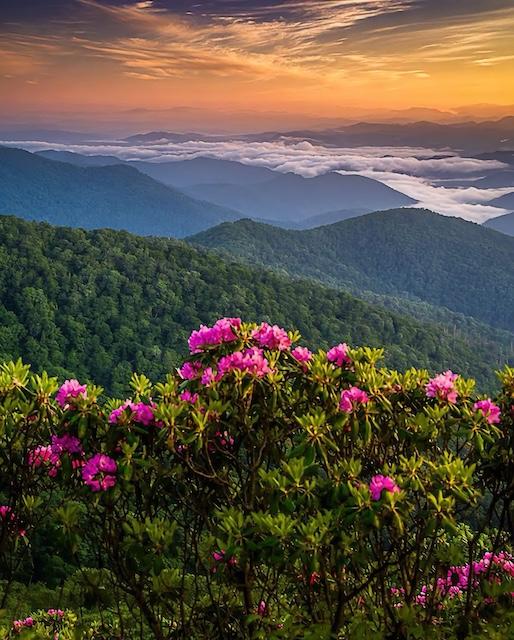
Unlike the cute animals in my previous series, you can actually buy many of these flowers to plant in your own garden. In fact, it’s often encouraged to buy these flowers depending on the location. But one size doesn’t fit all. For instance, I live in southwestern Pennsylvania which is a temperate area with significant greenery and a high rate of precipitation. That we think Seattle’s reputation as the Rainy City is basically a joke. That if you want to grow garden with a cactus or tropical orchid, then you better have a greenhouse. In this post, you’ll see a cactus from New Mexico, an endangered lupine in New York, ornate shrubs from North Carolina and Pennsylvania, a wild rose in North Dakota, garden favorites from Ohio, Oklahoma, Oregon, and Rhode Island, and a controversial yellow flower from South Carolina.
31. New Mexico
Scarlet Hedgehog Cactus (Echinocereus coccineus)
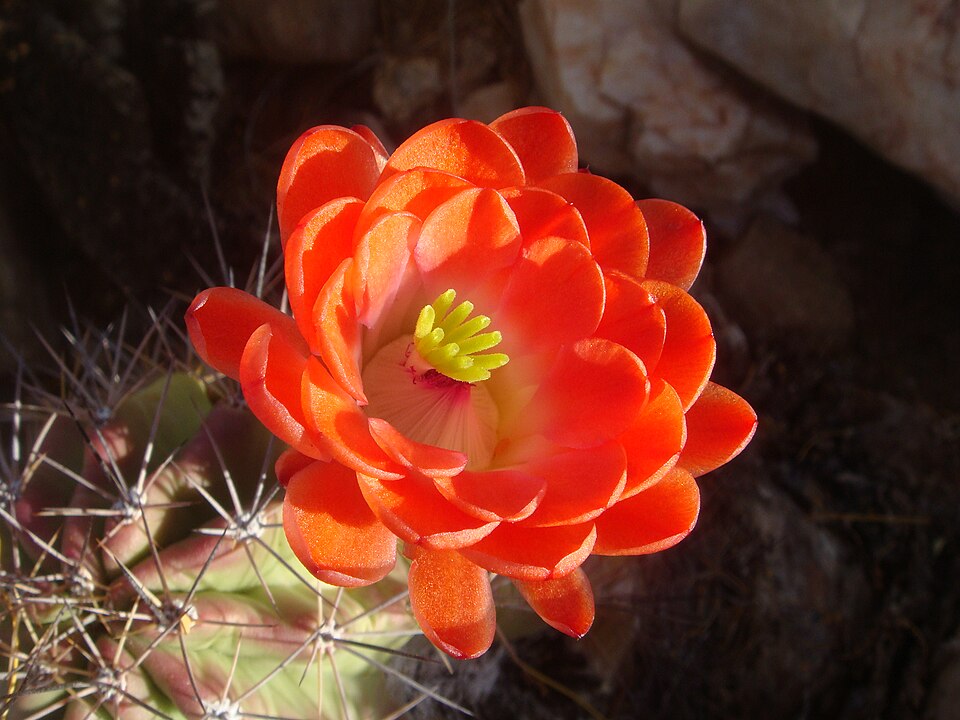
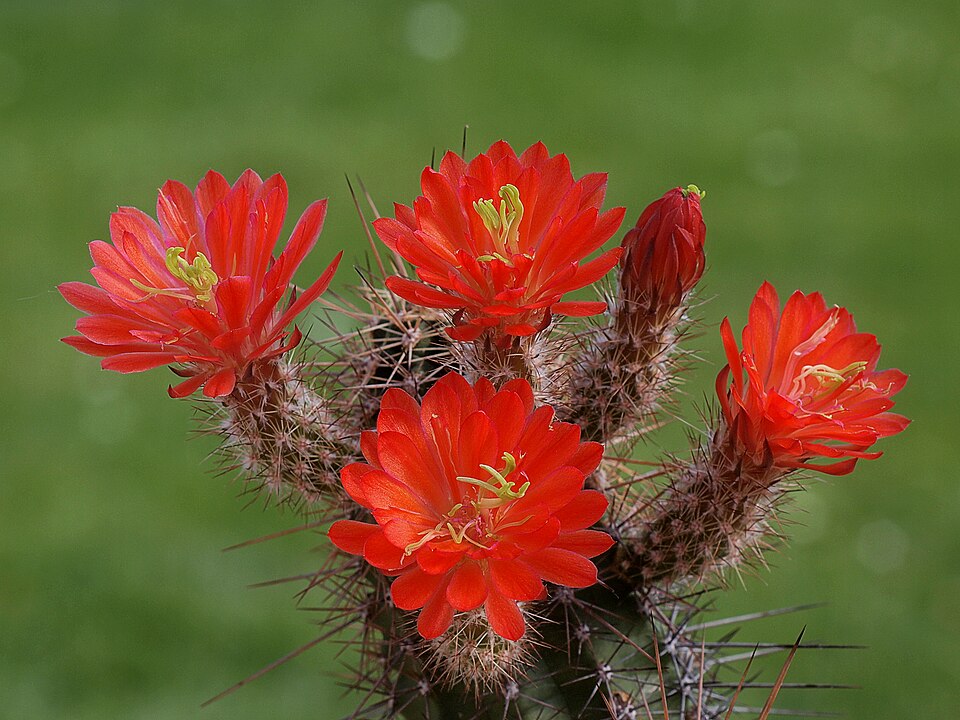
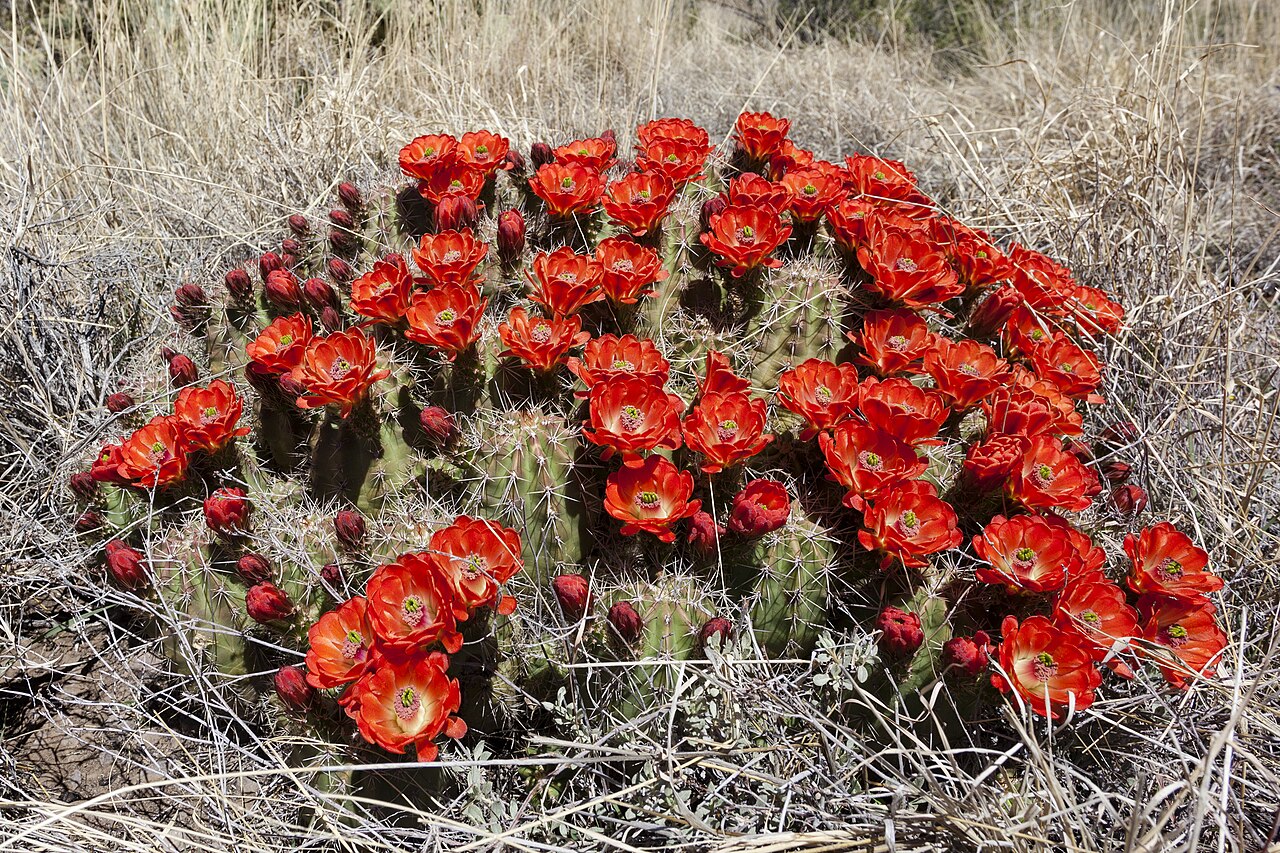
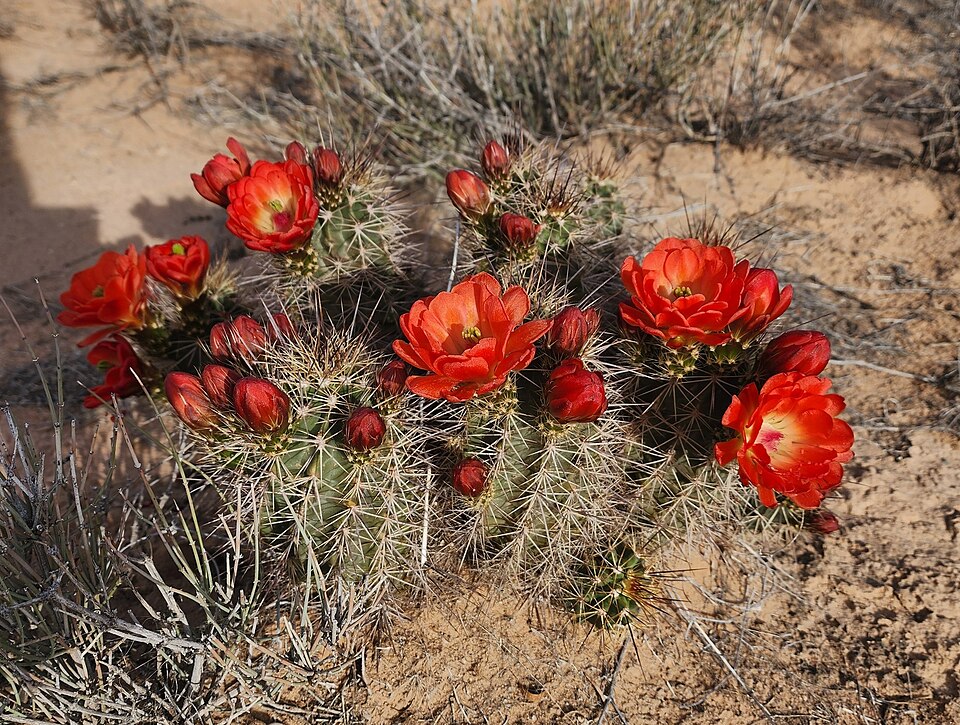
Why the Prettiest: For a state that’s mostly temperate desert, this is a cold-hardy, perennial cactus that produces brilliant scarlet, crimson, or orange funnel-shaped flowers.
Location: Native to the southwest United States.
Environment: Found in desert and rocky environments. Can grow up to 16 in and spread over 2ft in mounds of sprawling clumps.
Bloom Season: Blooms in the spring.
Color Varieties: Available in red, orange, yellow, pink, purple, and white.
Gardening Conditions: Prefers full sun and sandy or rocky well drained-soil. Is cold-hardy and capable of surviving outdoors. Rots easily in heavily wet dirt. Water sparingly and allow soil to quickly dry out between waterings and keep it mostly dry during winter dormancy. If you live in a state like mine where it rains almost every other week, keep it indoors.
Conservation Status: Currently listed as Least Concern.
Trivia: Has 5 subspecies. Forms tight mounds or sprawling clumps of cylindrical of blue-green to dark green stems. Has edible spherical fruits and falling thorns.
Other Candidates: California Golden Poppy, Cholla Cactus, Prickly Pear, Yucca Flower, and Indian Blanket.
32. New York
Wild Lupine (Lupinus perennis)
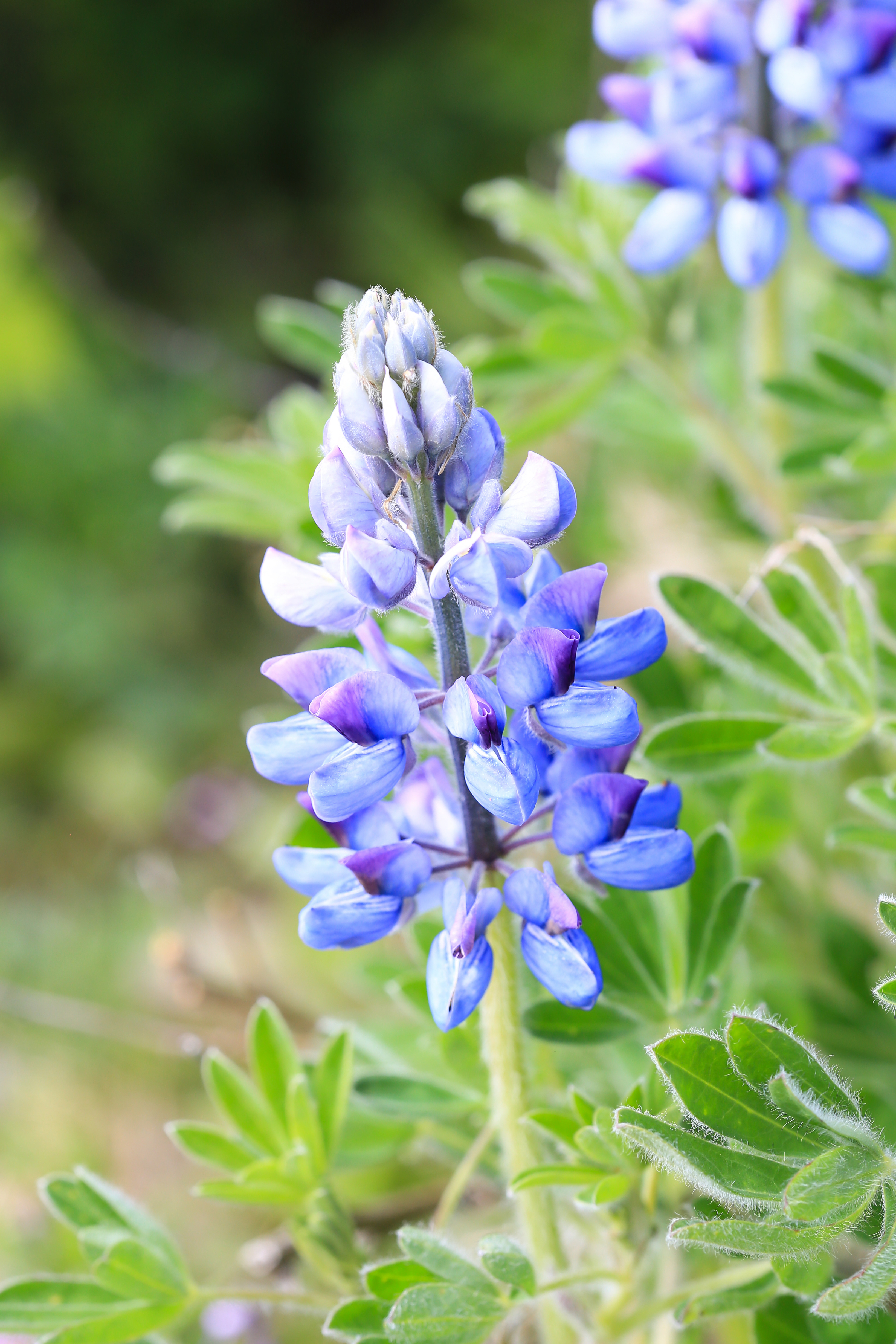
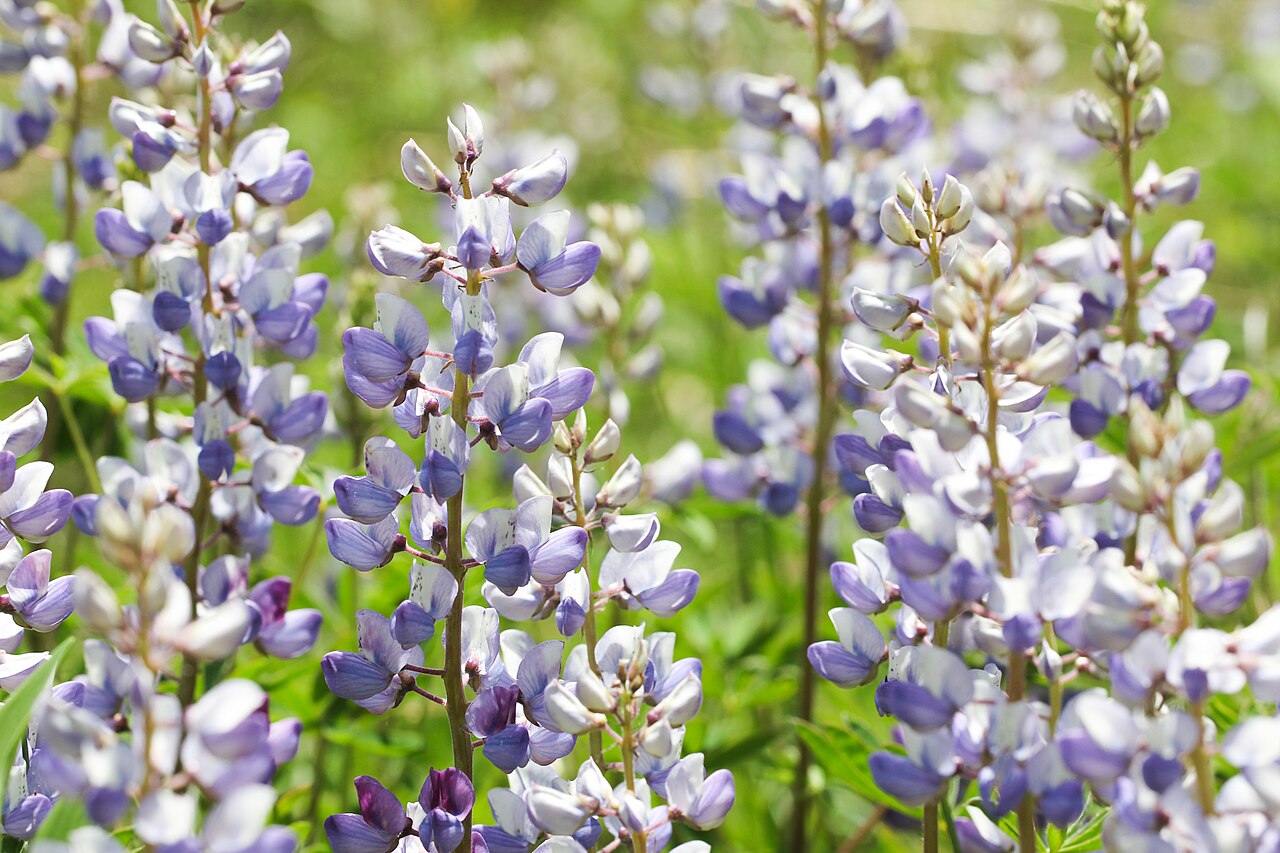
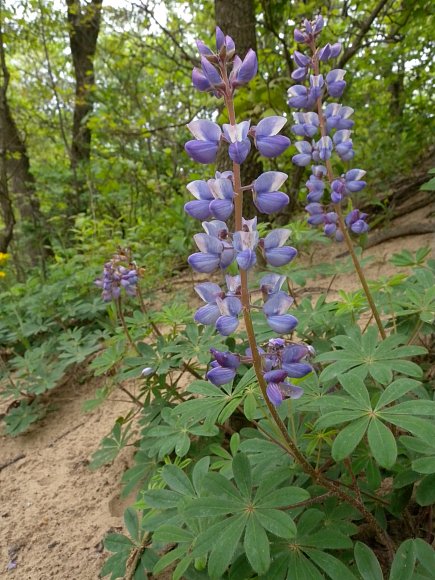
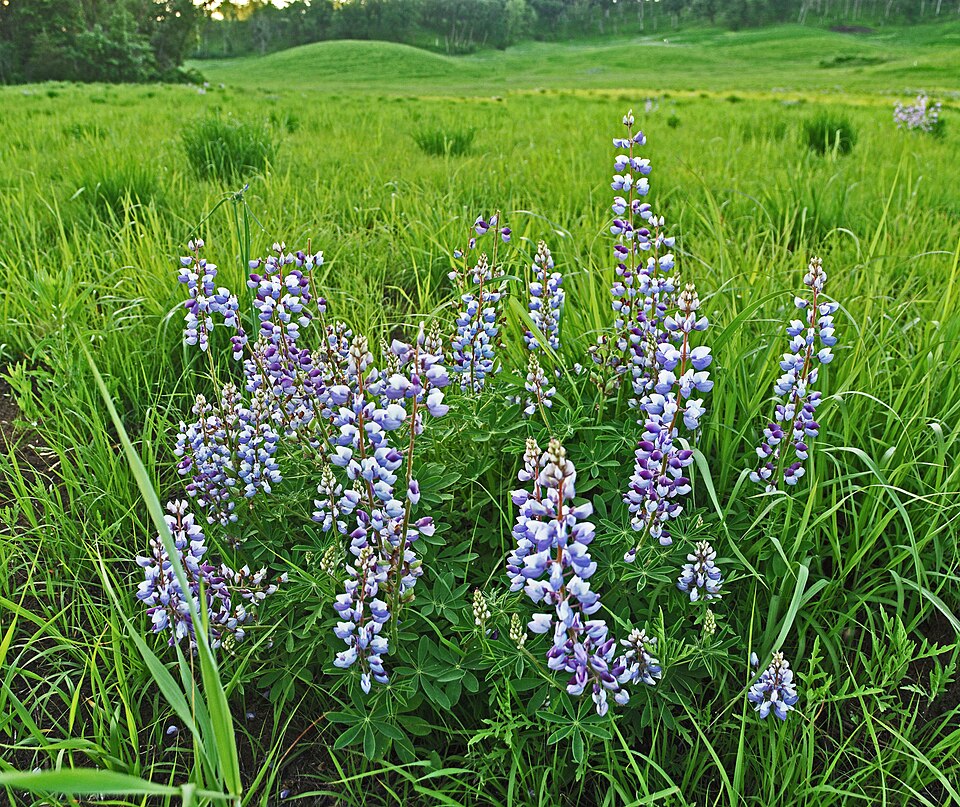
Why the Prettiest: It’s a native perennial wildflower known for its striking spikes of blue or purple pea-like flowers.
Location: Native to the eastern United States from southern Canada to as south as Texas and Florida.
Environment: Found in oak savannas, pine barrens, dunes, and sand plains, many of which are disturbance dependent with suppression of natural fire regimes has contributed to widespread population declines in its native range. Can grow up to 1.5-2.5ft tall.
Bloom Season: Blooms from late spring to early summer. Used as food plants by several caterpillars of butterflies such as the clouded sulfur, eastern tail blue, gray hairstreak, silvery blue, wild indigo duskywing, frosted elfin, eastern Persius duskywing, and rare endangered Karner blue. Attracts bees.
Color Varieties: Available in blue, lavender, and purple.
Gardening Conditions: Prefers dry, acidic, well-drained, sandy soils and high-light habitats. Prefers full sun and partial shade. Can’t tolerate standing water or soggy dirt. Reproduces exclusively by seed, which require scarification and cold stratification before it can successfully sprout. Toxic to livestock like sheep and horses if ingested in large amounts.
Conservation Status: Listed as Vulnerable. Has experienced substantial decline since the 20th century with some areas experiencing losses as high as exceeding 90%. Causes include habitat loss, wildfire suppression, habitat fragmentation, and poor management. Considered to be threatened in New Hampshire.
Trivia: Plays an important role as a pollinator resource and a nitrogen-fixing species in which it forms symbiotic relationships with nitrogen-fixing bacteria in root nodules, enhancing fertility in nutrient-poor environments.
Other Candidates: Pink Lady’s Slipper, New England Aster, Red Columbine, New York Aster, and Cardinal Flower.
33. North Carolina
Catawba Rhododendron (Rhododendron catawbiense)
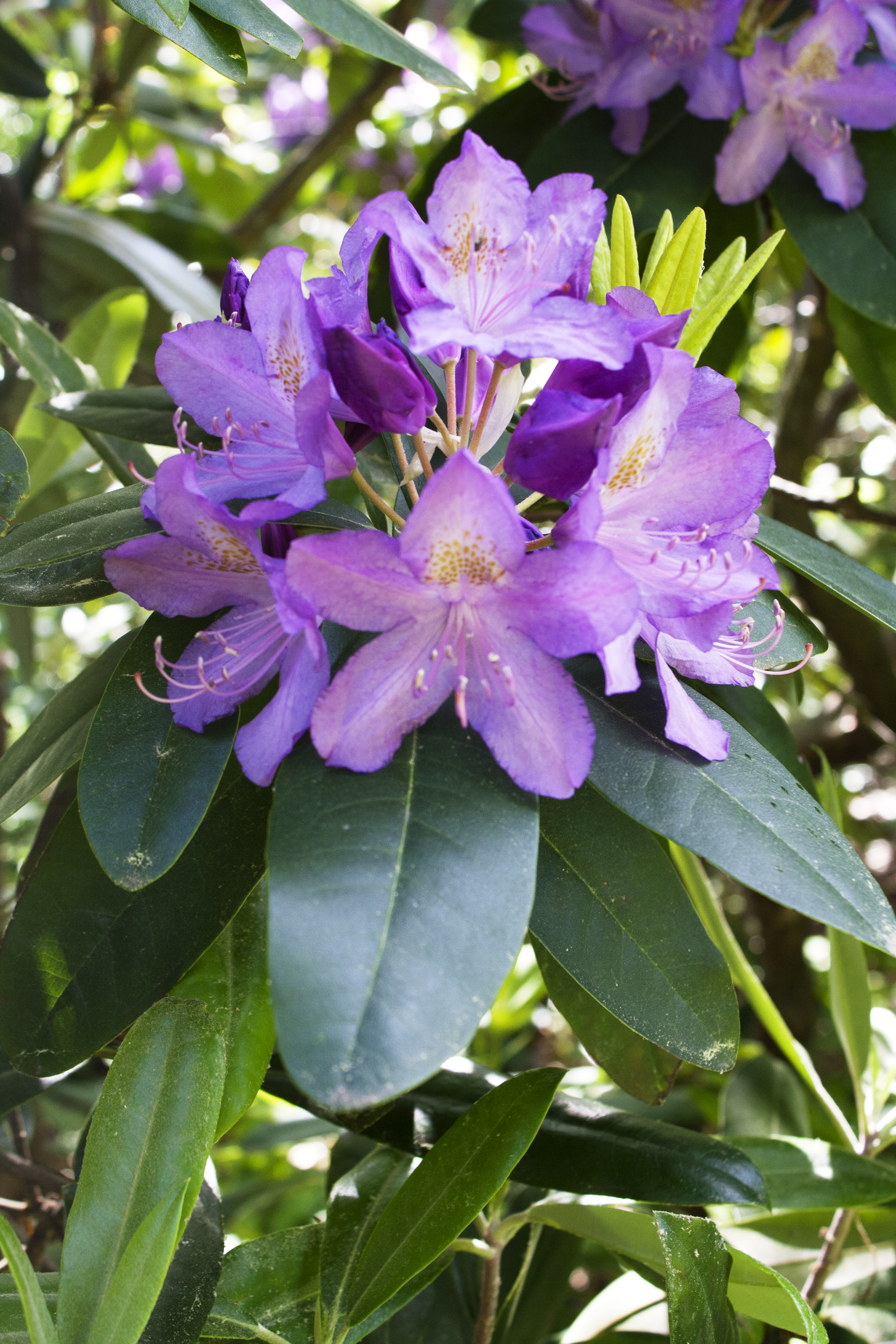
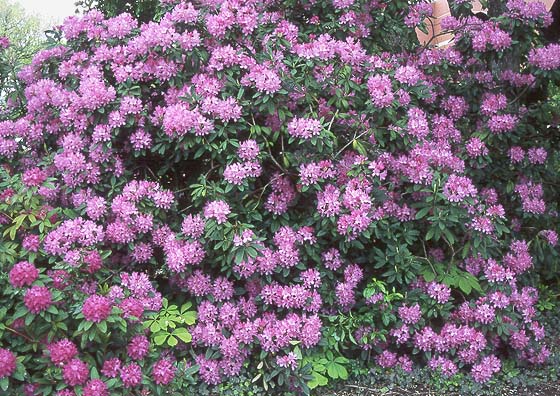
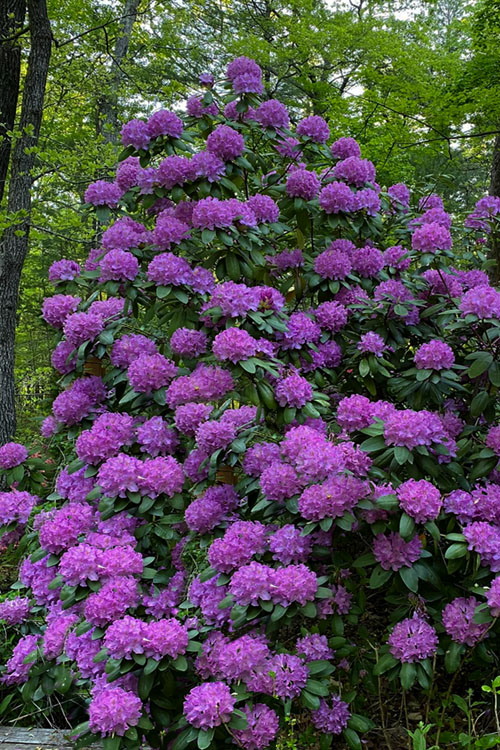
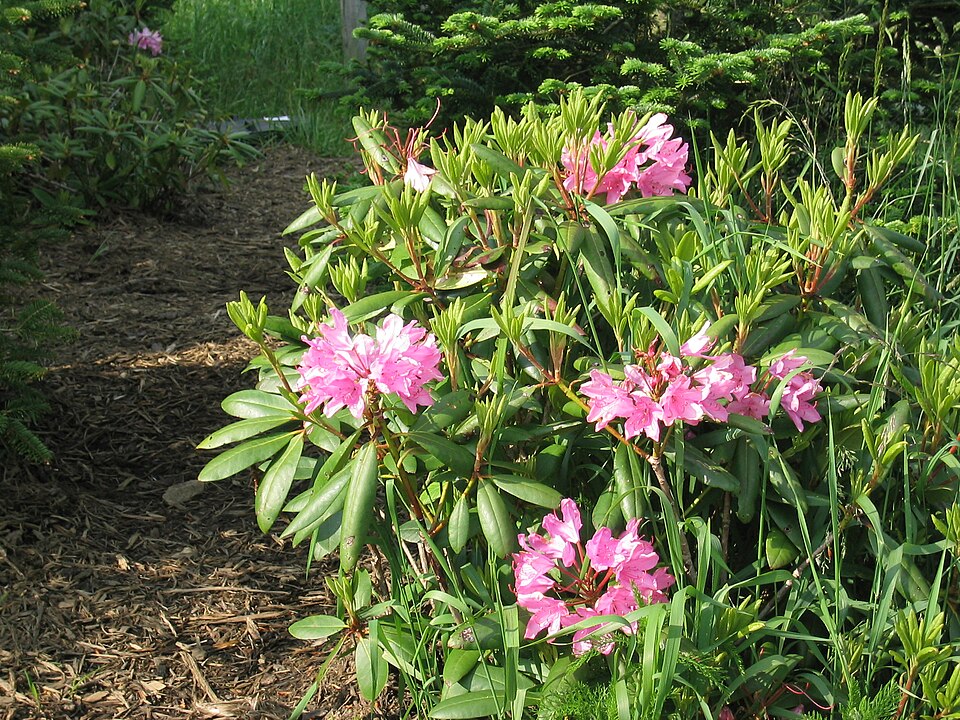
Why the Prettiest: Although a very common site, this is named after a river in North Carolina, a state that comprises of most of its native range. It’s an exquisite broadleaf evergreen shrub that produces clusters of violet, lavender, or deep purple flowers in the spring.
Location: Native in the southern Appalachian Mountains in the eastern United States.
Environment: Found in woodland slopes and ridges. Can grow up to 6-10 ft tall.
Bloom Season: Blooms during the spring from May to June. Attracts hummingbirds, butterflies, and bees.
Color Varieties: Available in pink, purple, lavender, and white.
Gardening Conditions: Widely cultivated shrub in North America and parts of Europe. Plant in partial shade or morning sun with protection from harsh afternoon rays. Requires cool, moist, well-draining, and acidic soil rich in organic matter. Keep the soil moist during establishment but never let the plant sit in soggy or waterlogged soil. Is highly flammable and should not be planted within a defensible space of your home. Susceptible to insect problems include aphids, borers, lace bugs, leafhoppers, mealybugs, mites, nematodes, scale, thrips, and whitefly. Susceptible to diseases like canker, crown rot, root rot, leaf spot, rust, and powdery mildew. Also frequently damaged by deer.
Conservation Status: Currently listed as Secure. Though it likely lost much of its natural range due to development and deforestation.
Trivia: Has several different varieties.
Other Candidates: Oconee Bell, Cardinal Flower, Pink Lady’s Slipper, Butterfly Weed, and Big-Headed Aster.
34. North Dakota
Wild Prairie Rose (Rosa arkansana)
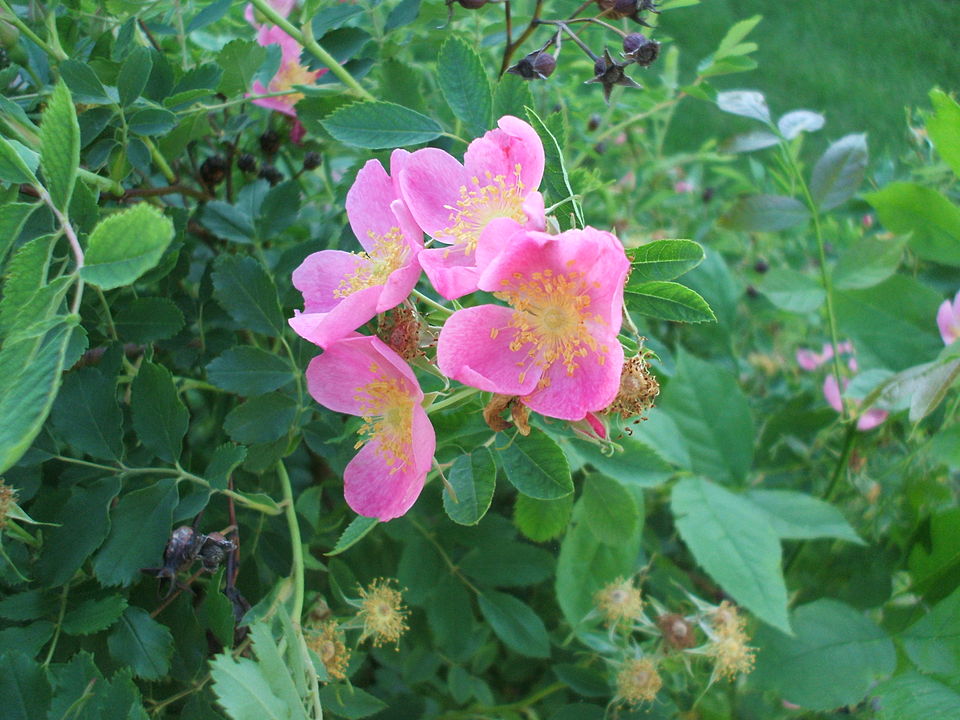
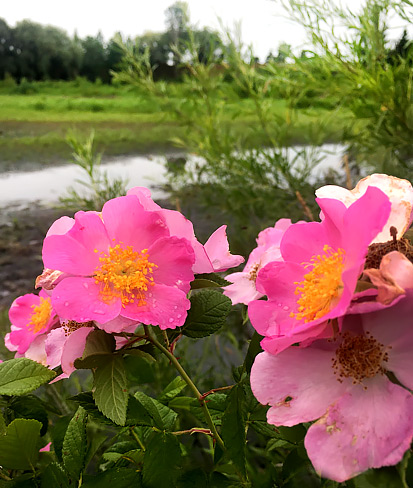
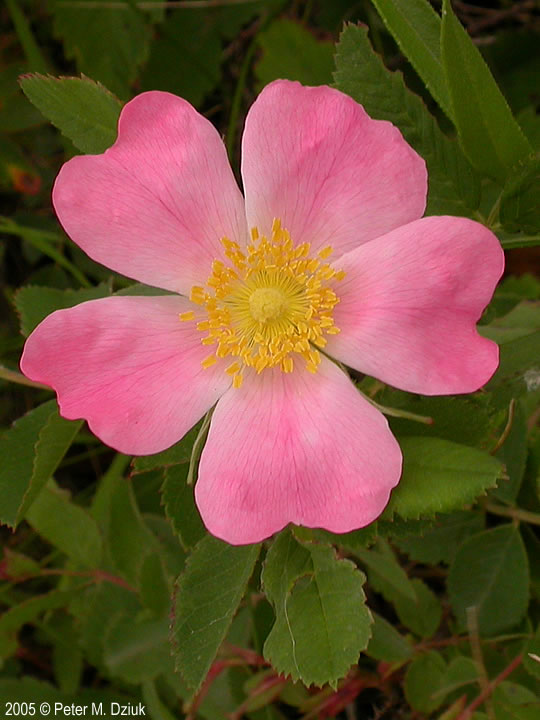
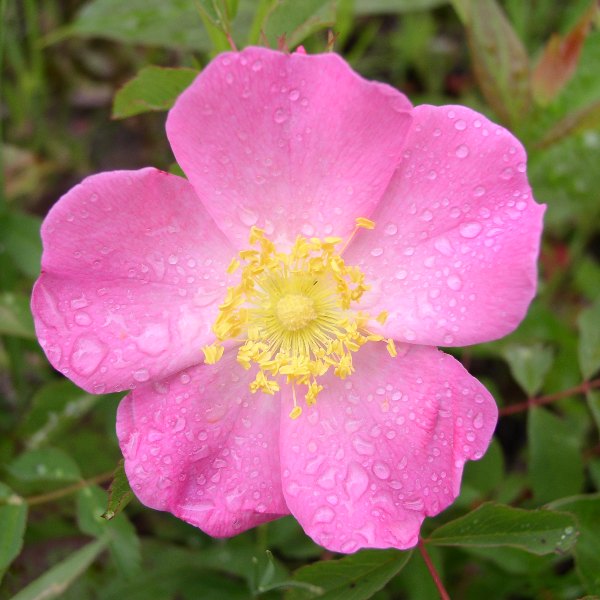
Why the Prettiest: For one, it’s North Dakota’s state flower since 1889 along with Iowa’s. This perennial subshrub produces fragrant pink blossoms and bright red seed pods called hips.
Location: Native to a large central area of North America between the Appalachian and Rocky Mountains from Alberta, Manitoba, and Saskatchewan to as south as New Mexico, Texas, and Indiana.
Environment: Found in pastures, foothills, meadows, and along roadsides. Can grow up to 40 in tall. Spreads by underground roots.
Bloom Season: Blooms from May to September. Attracts native bees, butterflies, and other beneficial insects. Provides food and shelter through its winter rose hips for birds.
Color Varieties: Available in pink and white.
Gardening Conditions: Prefers full sun to partial shade. Adapts well to dry, sandy, loamy, or clay soils. Highly resistant to cold weather, fire, and drought once established.
Conservation Status: Currently listed as Secure. Considered a weed by the US Department of Agriculture.
Trivia: Hips are rich in Vitamin C and can be used to make jellies, teas, and jams. Used in food, food additives, animal foods, bee plants, fuels, poisons, medicines, and environmental compounds.
Other Candidates: Wood Lily, Prairie Smoke, Yellow Prairie Coneflower, and Black-Eyed Susan.
35. Ohio
Large-Flowered Trillium (Trillium grandiflorum)
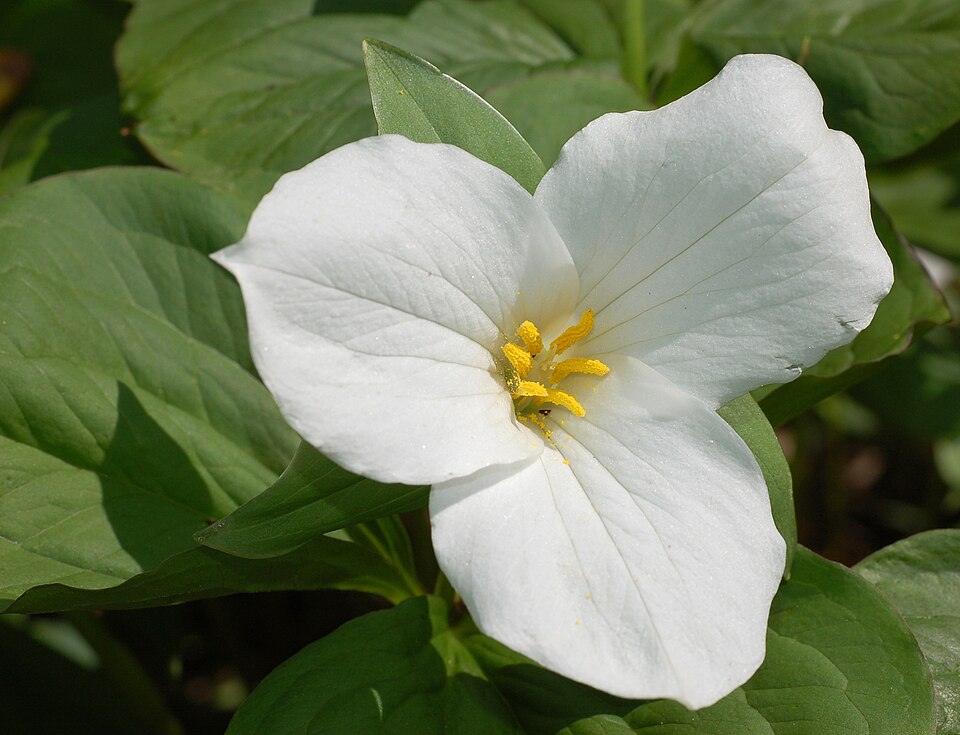
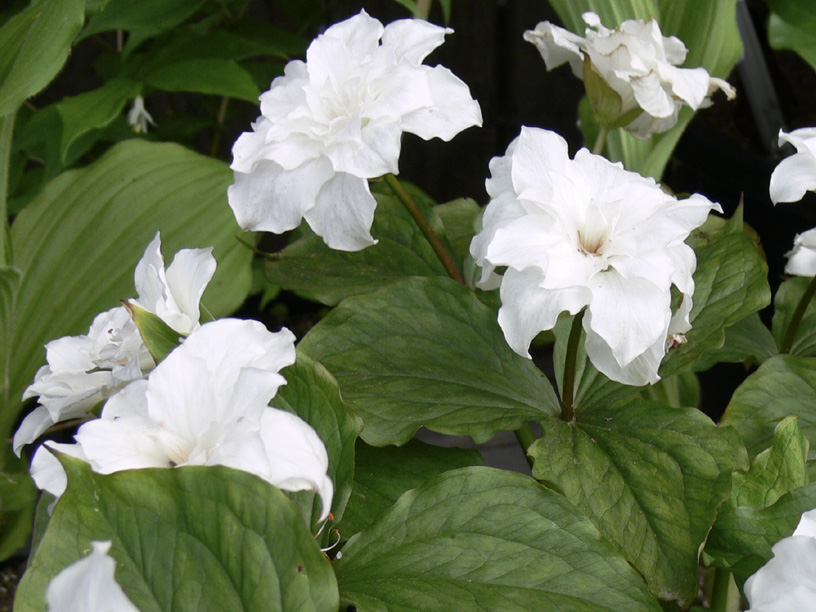
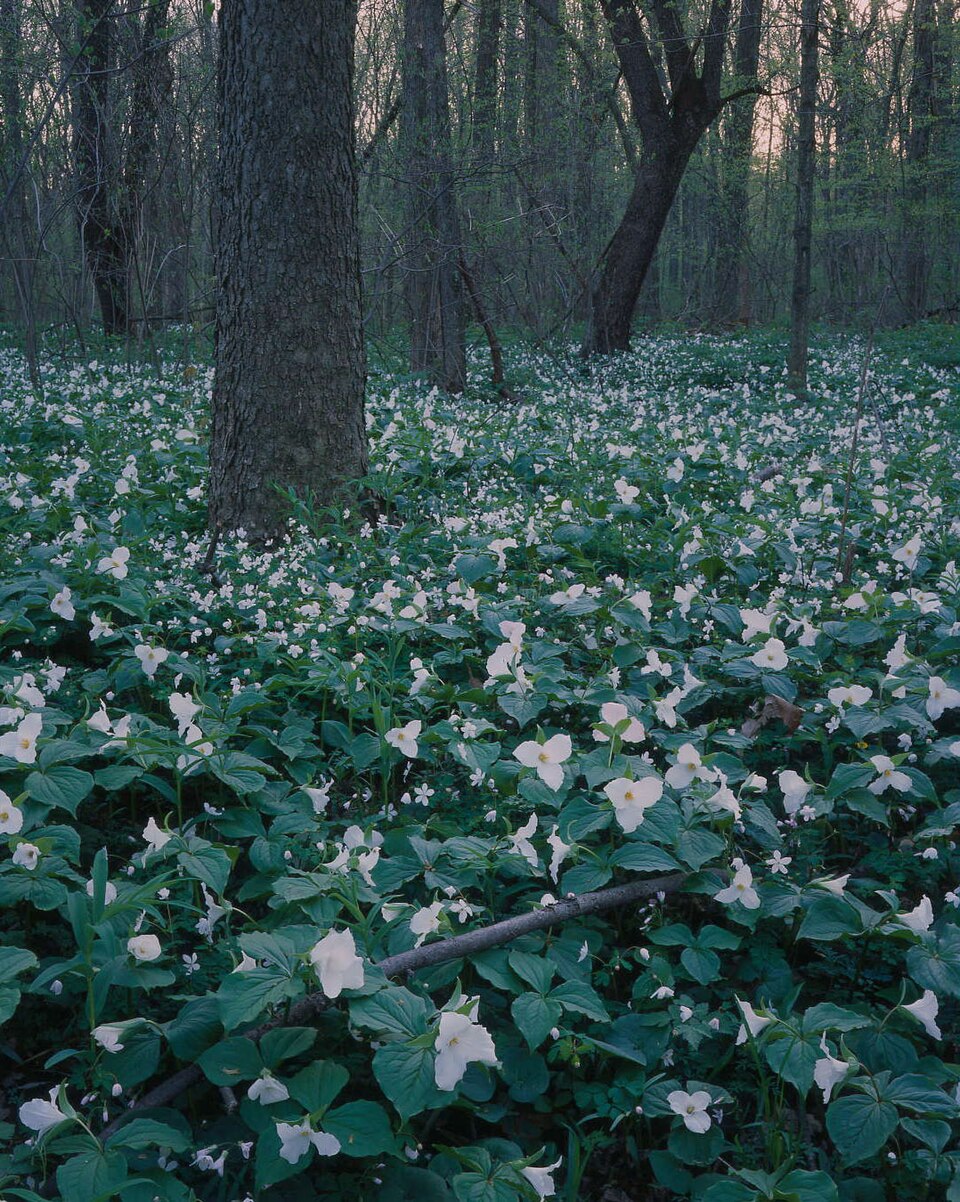
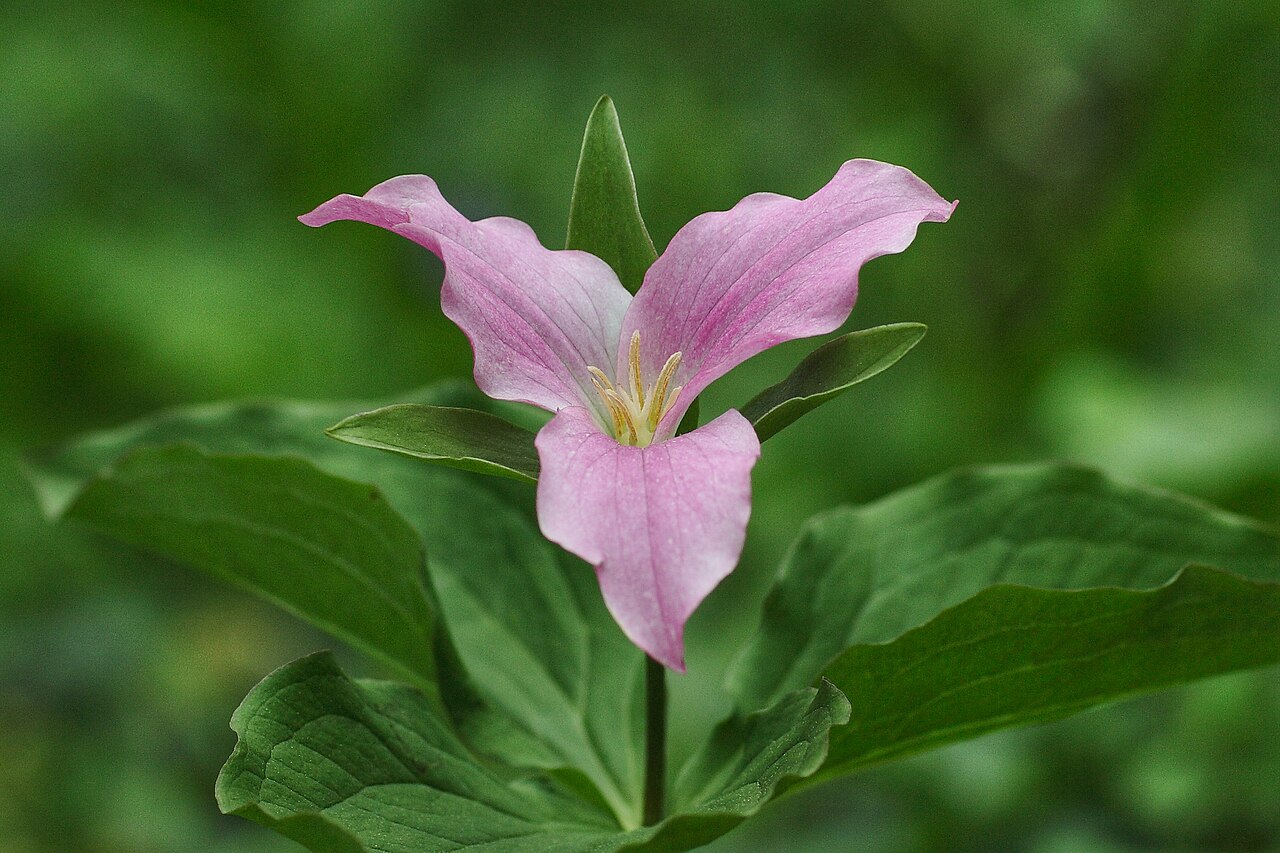
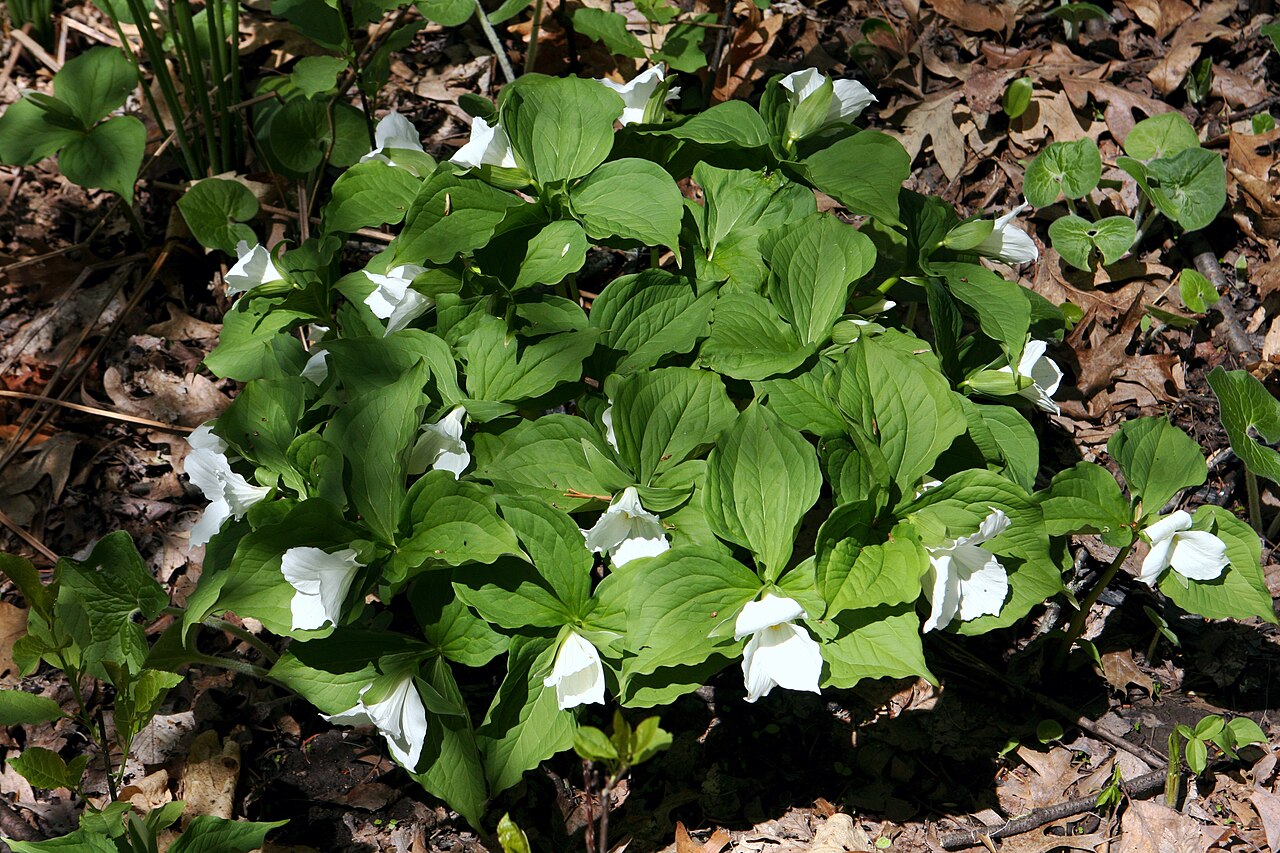
Why the Prettiest: It’s Ohio’s state wildflower. It’s a showy spring-blooming perennial with 3 larger green leaves and a single large 3-petaled white flower that ages into a soft blush pink.
Location: Native to eastern North America from as north as Quebec to as west as Minnesota and as south as Georgia. Also has isolated populations in Iowa, Maine, southern Illinois, and Nova Scotia.
Environment: Inhabits deciduous woodlands. Can grow up to 8-16 in tall.
Bloom Season: Blooms during the spring such as from late April to early June. Attracts bumblebees. Seeds are dispersed by ants, yellowjackets, and deer. A favorite food of white-tailed deer.
Color Varieties: Available in white and pink.
Gardening Conditions: Favors well-drained, neutral to slightly acidic soils, usually in second or young-growth forests. Seeds have double dormancy, meaning that it takes 2 years for it to germinate. Requires 7-10 years to reach flowering size. Susceptible to phytoplasmas disease. Transplantation can result in the plant’s death.
Conservation Status: Currently listed as Secure though it’s been threatened by habitat destruction. Though its popularity as a commercial plant have raised many conservation concerns, given that most of the plants sold are collected from the wild. Said to be critically imperiled in Nova Scotia, Alabama, New Jersey, and South Carolina. While it’s seen as vulnerable in Illinois, Georgia, and Quebec.
Trivia: A single rootstock can form clonal colonies that can become very dense. Flowers are odorless. Occasionally produces double forms of more than 3 petals. Leaves were cooked and eaten by Native Americans who also chewed rootstalks for various medical purposes. Is a symbol for the French-speaking community in Ontario.
Other Candidates: Blazing Star, Sharp-Lobed Hepatica, Goldenrod, and Aster.
36. Oklahoma
Indian Blanket (Gaillardia pulchella)
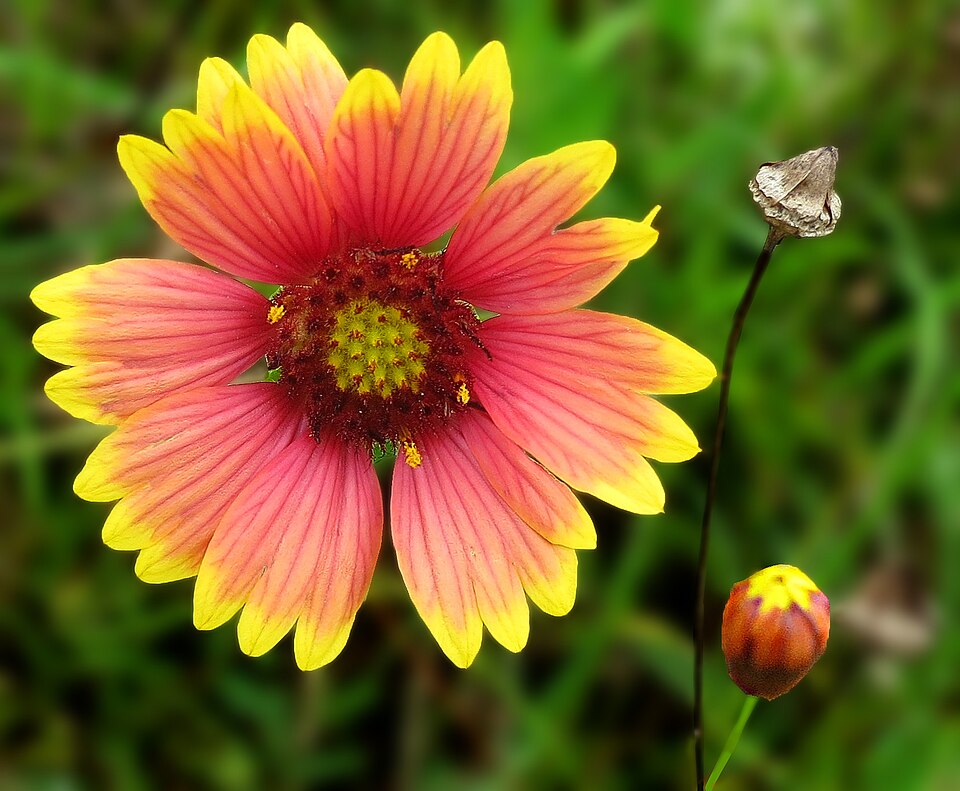
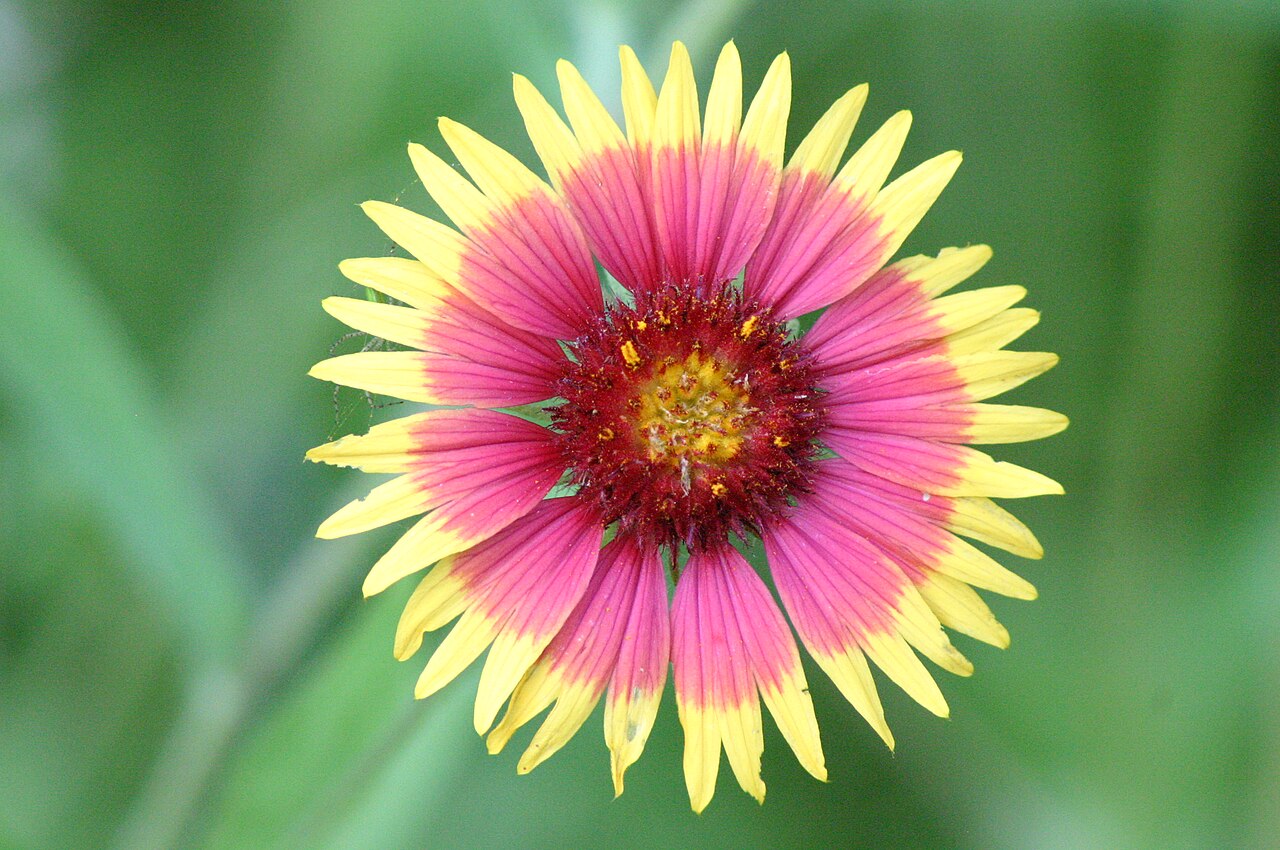
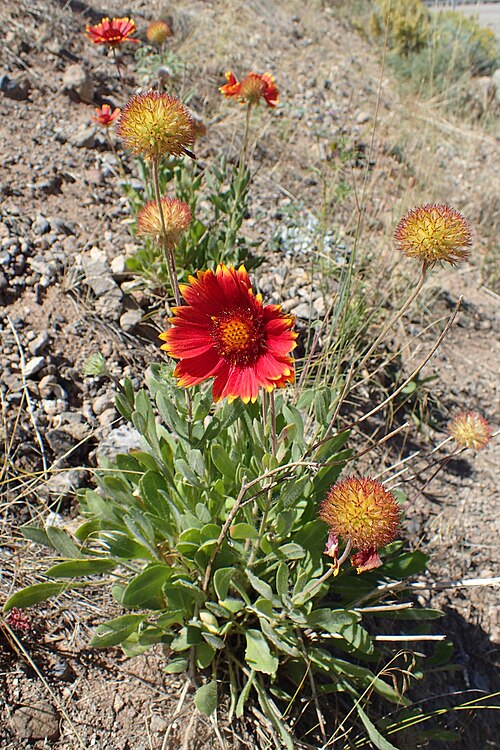
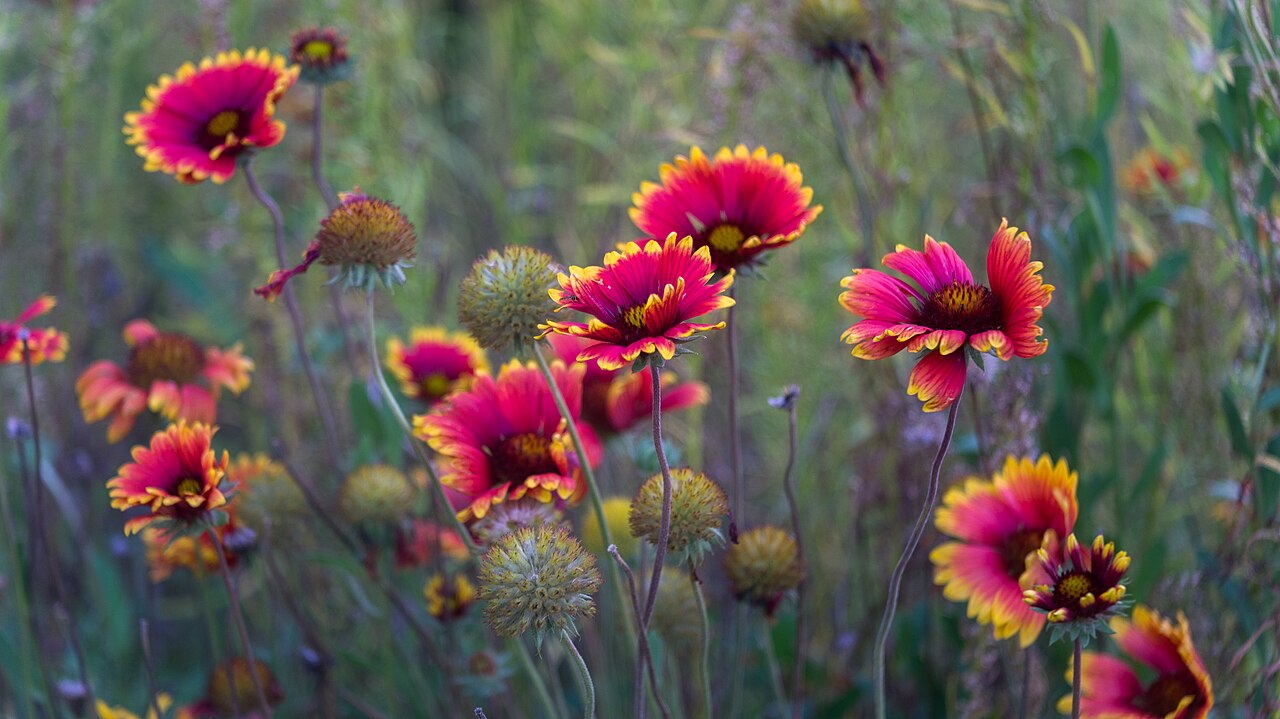
Why the Prettiest: It’s Oklahoma’s state wildflower. A short-lived perennial or annual relative of the daisy family, it produces a vibrant red-and-yellow pinwheel flowers.
Location: Native to northern Mexico and the southern and central United States as north as Nebraska.
Environment: Lives in sandy plains and deserts. Common along roads. Can grow in urban areas but usually below 3,300ft above sea level. Can grow up to 24 in tall.
Bloom Season: Blooms from late spring to early fall or until the first frost. Attracts native bees, butterflies, and beneficial insects. Larval host of the border patch butterfly and painted schinia moth. Seeds provide valuable food source for birds like goldfinches.
Color Varieties: Available in red and yellow.
Gardening Conditions: Prefers loose, sandy, and well-drained soil. Has a high drought tolerance and does best in a hot, dry climate with full sun. Needs only occasional water during dry spells. Can be deadheaded to promote further blooming. Self-seeds freely. Excellent for xerishaping meadows, roadside naturalization, and sunny borders.
Conservation Status: Currently listed as Apparently Secure.
Trivia: County Flower of Penghu County in Taiwan. Produces a dark, reddish amber buttery tasting honey.
Other Candidates: Indian Paintbrush, Plains Coreopsis, Purple Coneflower, and Purple Poppy Mallow.
37. Oregon
Arrowleaf Balsamroot (Balsamorhiza sagittate)
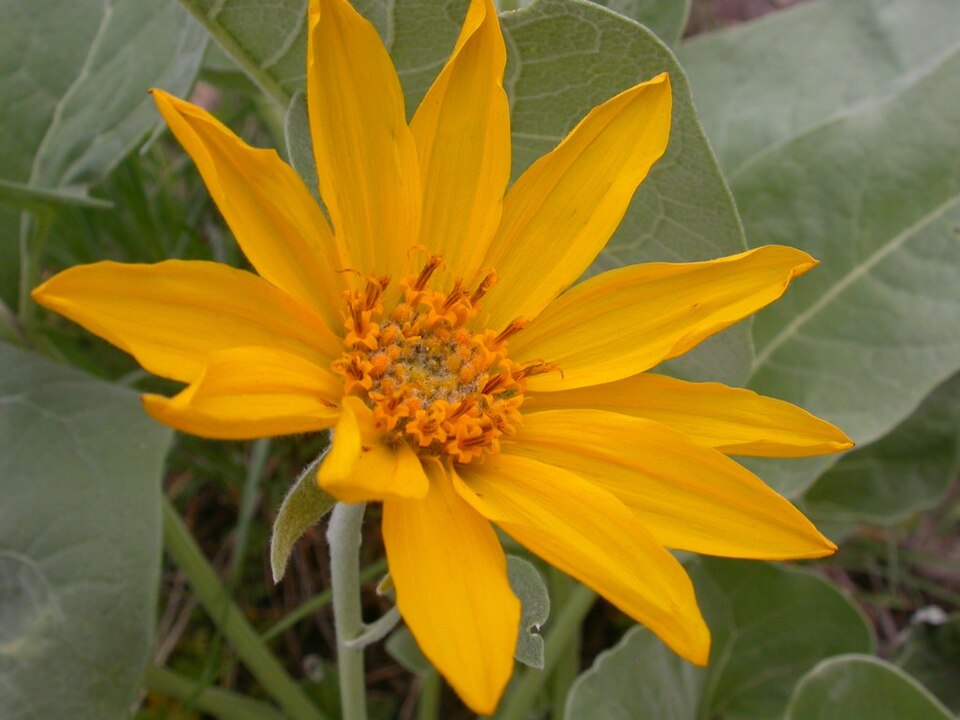
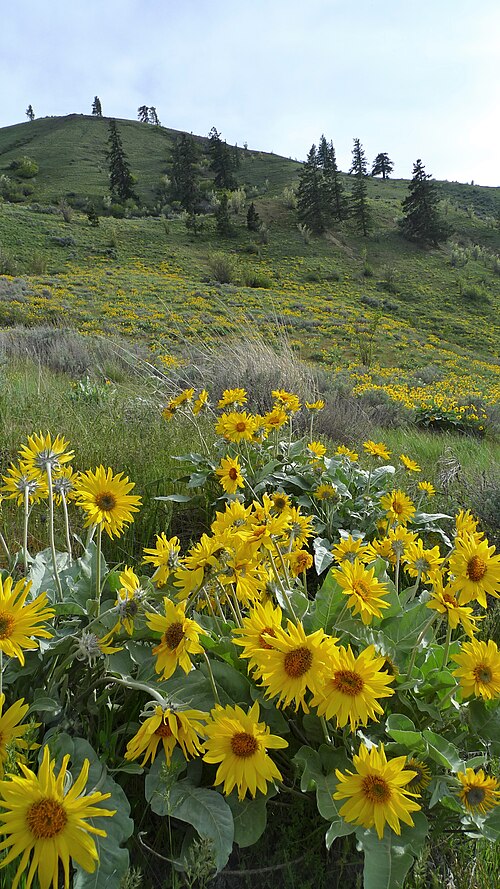
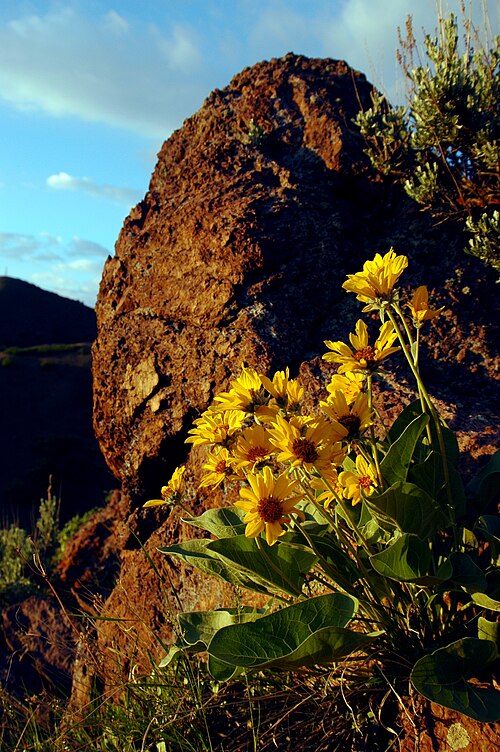
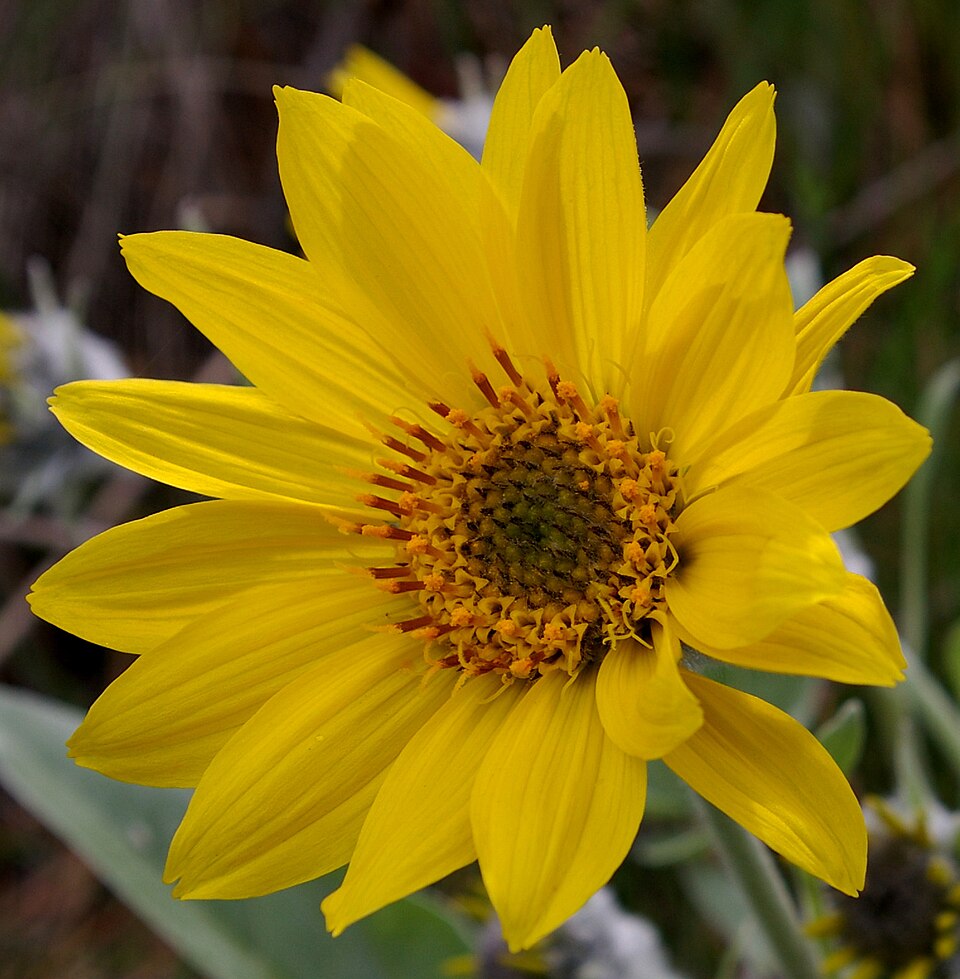
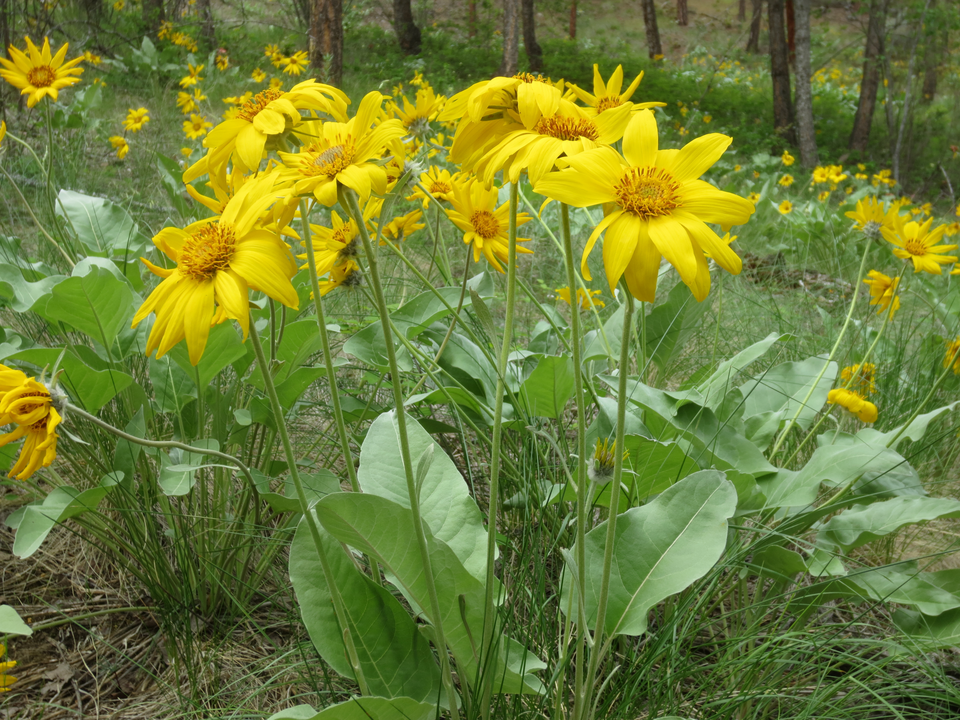
Why the Prettiest: Known as the Oregon Sunflower, this long-lived western perennial in the sunflower family is known for its bright yellow sunflower-like blooms and large, silvery-green arrowhead-shaped leaves.
Location: Native and widespread in western Canada and the western United States. Extends from British Columbia to as south as northern Arizona and California’s Mojave Desert and as west as South Dakota’s Black Hills.
Environment: Lives in many types of habitats such as mountain forests, grasslands, and desert scrub. Can grow from 1-3 ft tall.
Bloom Season: Typically blooms from April to July depending on local climate and elevation. Palatable to grazing animals, particularly the flowers and developing seed heads. Elk and deer browse the leaves.
Color Varieties: Available in yellow.
Gardening Conditions: Is drought tolerant. Used in slope restoration projects for its beauty and slow-growing taproot. Thrives in full sun. Prefers well-drained sandy, gravely, or loamy soils. Due to taproot, it does poorly when transplanted. Best propagated by direct sowing in the fall to allow for cold stratification.
Conservation Status: Currently listed as Secure.
Trivia: Leaves can be raw or cooked for eating but roots must be cooked before consumption. Seeds can be eaten raw or pounded into flour. Specimen collected by William Clark in 1806 during the Lewis and Clark Expedition. While Merriwether Lewis collected a specimen near the Lewis and Clark Pass that same year. Used by Nez Perce, Kootenai, Salish, and Cheyenne as food and medicine. A Nlaka’pamux legend states that when this flower starts blooming meant bitterroot was ready for digging up. Official emblem of Kelowna, British Columbia in Canada.
Other Candidates: Lupine, Indian Paintbrush, Pacific Bleeding Heart, and Camas Lily.
38. Pennsylvania
Mountain Laurel (Kalmia latifolia)
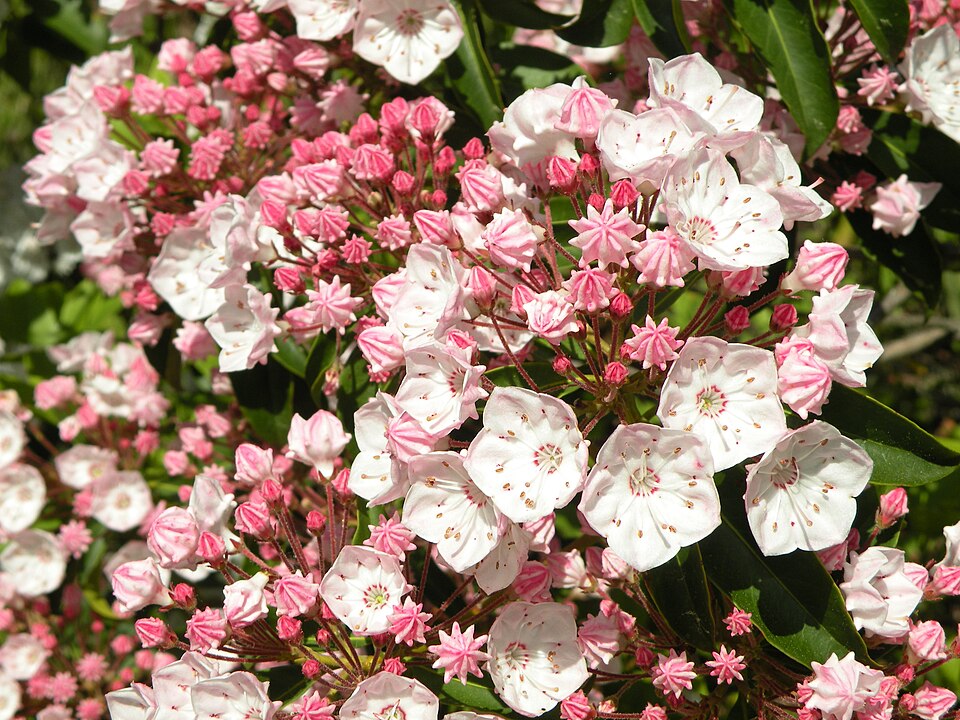
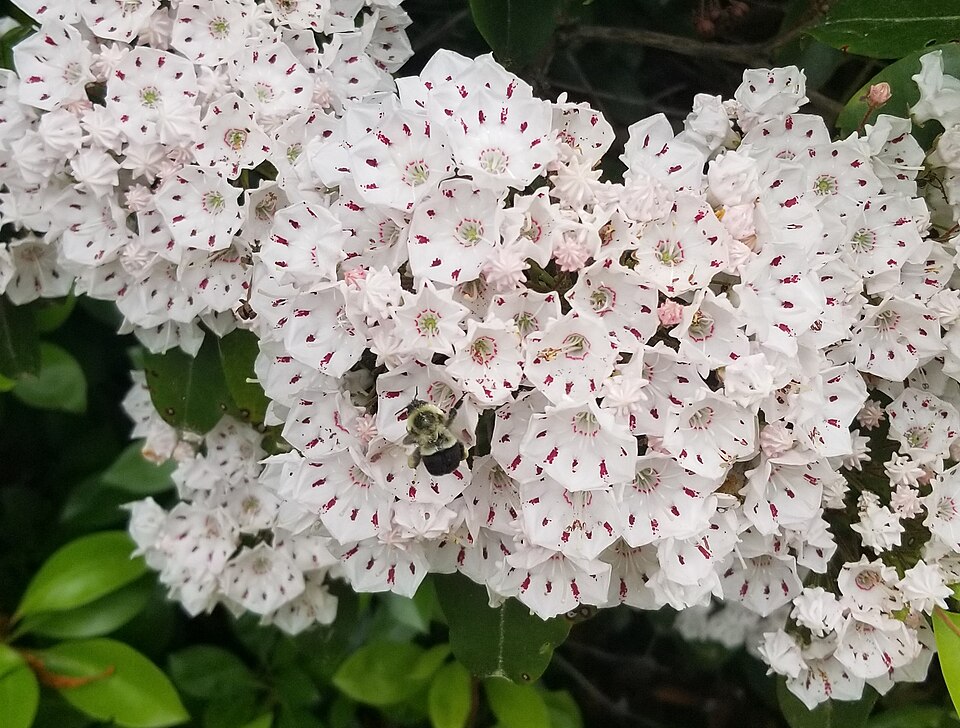
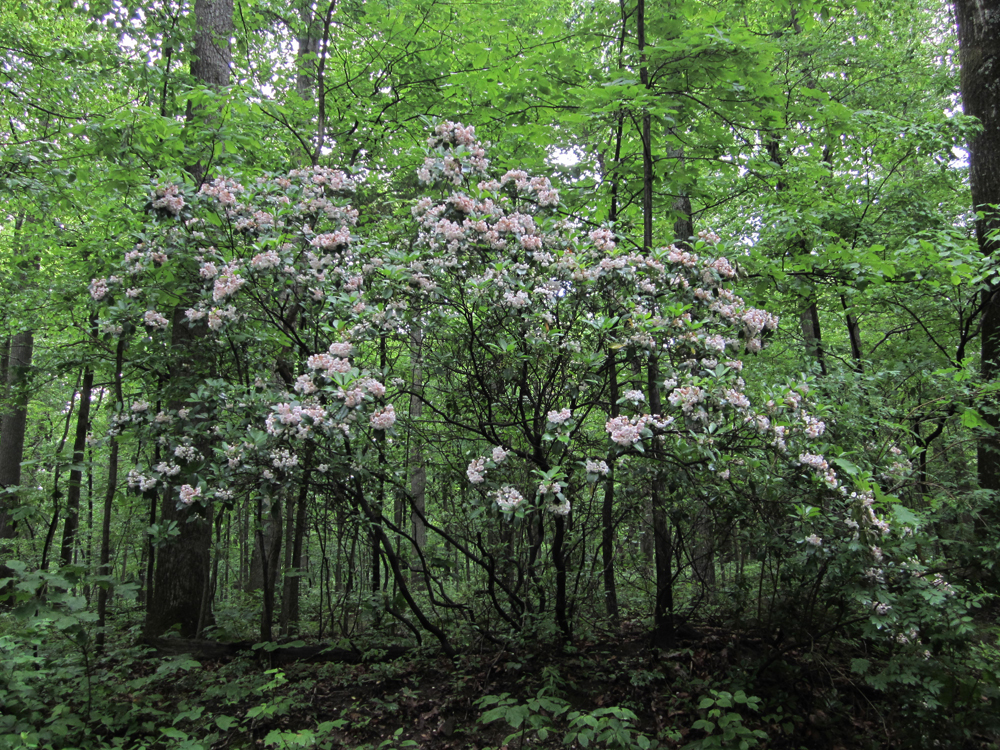
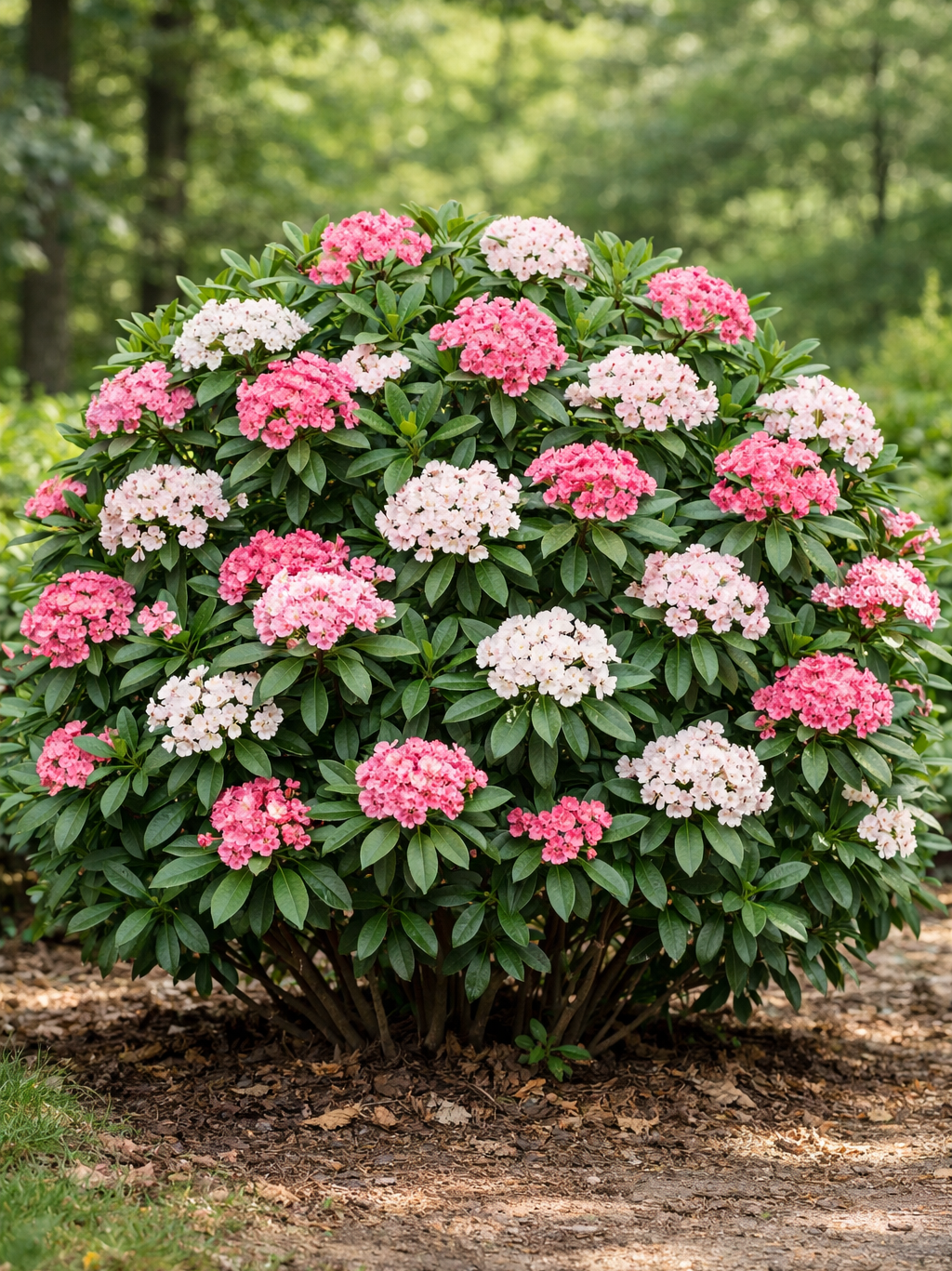
Why the Prettiest: It’s Pennsylvania’s state flower alongside Connecticut’s and namesake of its southwestern Laurel Highlands. It’s a slow-growing evergreen shrub famous for its clusters of cup-shaped pink and white flowers.
Location: Native to the eastern United States with range stretching from Maine to Florida and west to Indiana and Louisiana.
Environment: Naturally found on rocky slopes and mountainous forest areas. Grows in large thickets, covering great areas of the forest floor. Grows very densely in low, wet areas and very sparse in dry uplands. Can grow up to 5-15ft tall in natural settings.
Bloom Season: Blooms in May and June. Attracts butterflies and hummingbirds. Though it has an unusual pollination process where its stamen’s flaments are bent and brought into tension. An insect landing on it releases the tension and catapults the pollen onto the insect.
Color Varieties: Available in white and light pink. Cultivated varieties in various colors.
Gardening Conditions: Thrives in acidic soil. Prefers partial shade such as morning sun filtered with afternoon shade. Individual shrubs must be spaced at least 4-6 ft apart. Apply a layer of mulch to keep shallow roots cool and moist, and prune lightly right after flowering finishes. All parts of plant are toxic upon ingestion to humans, deer, cattle, sheep, monkeys, and goats. This includes the pollen, flowers, twigs, and even food products such as its honey, which may produce neurotoxic and gastrointestinal symptoms in humans eating more than a modest amount. Symptoms begin to appear 6 hours upon ingestion which include irregular or difficulty breathing, anorexia, repeated swallowing, profuse salivation, watering of the eyes and nose, cardiac distress, incoordination, depression, vomiting, frequent defecation, weakness, convulsions, paralysis, coma, and eventually death. Can cause gastrointestinal hemorrhage in animals.
Conservation Status: Currently listed as Least Concern.
Trivia: Namesake of Laurel County in Kentucky, the city of Laurel, Mississippi, and Mount Laurel, New Jersey. Was described by Carl Linneaus in 1753. Can become a tree in the Appalachians but is mainly a shrub further north. Originally brought to Europe during the 18th century as an ornamental plant. Wood is considered heavy but brittle and is more suitable for wreaths, furniture, bowls, handrails or guardrails, and other household items. Wood was used in clocks during the 19th century. Root burls were used for pipe bowls in place of briar burls unattainable in World War II. Used by the Cherokee as a medical analgesic and infusion as well as the wood for carving.
Other Candidates: Cardinal Flower, Great White Trillium, Pink Lady’s Slipper, and Blue-Eyed Mary.
39. Rhode Island
White Bergamot (Monarda fistulosa)
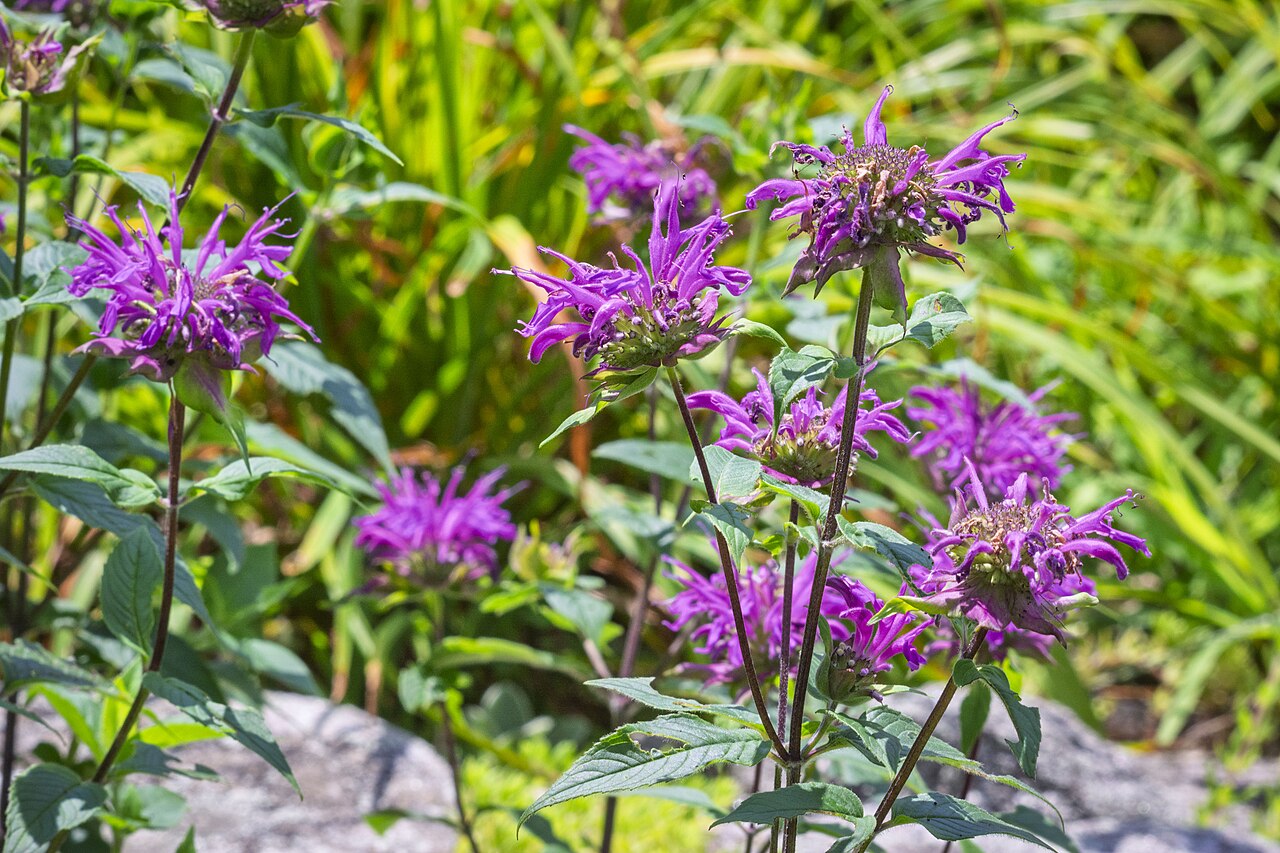
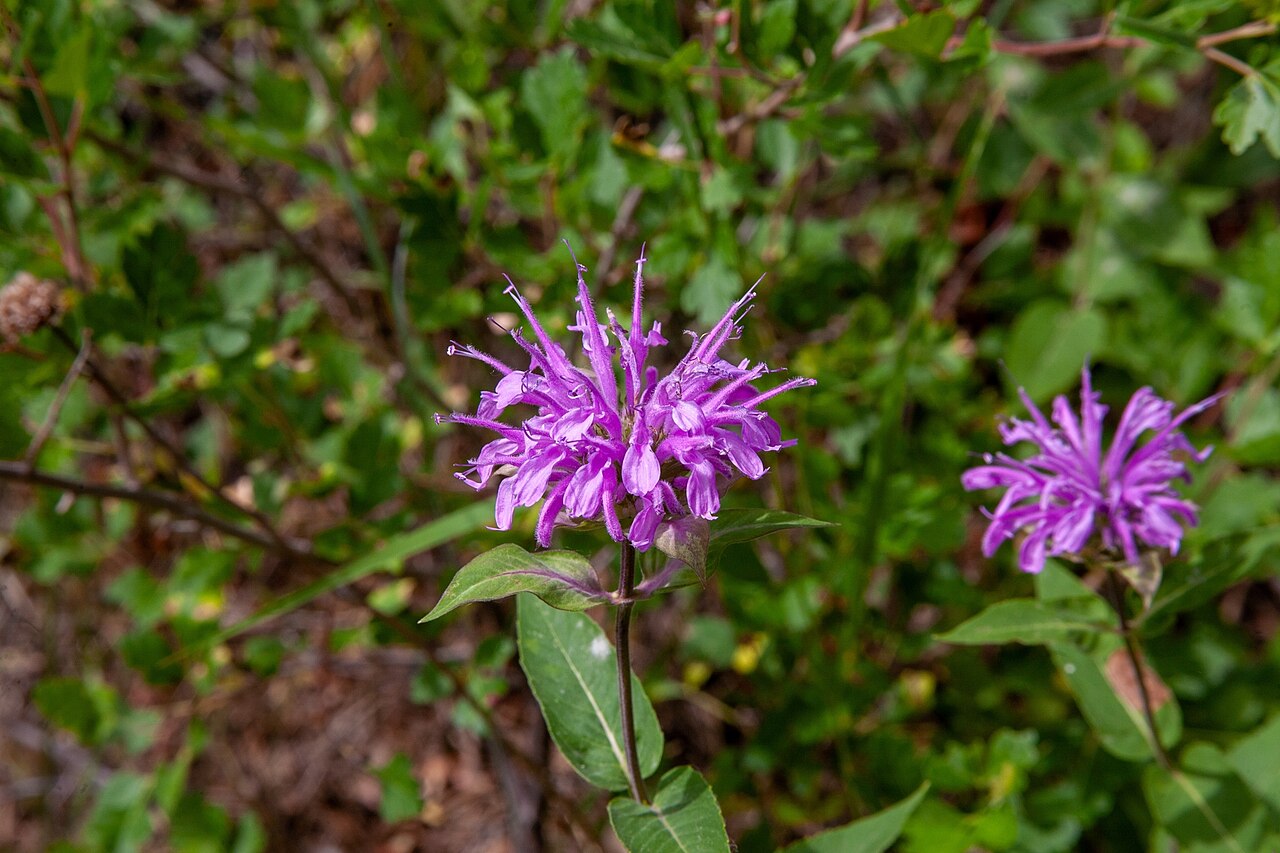
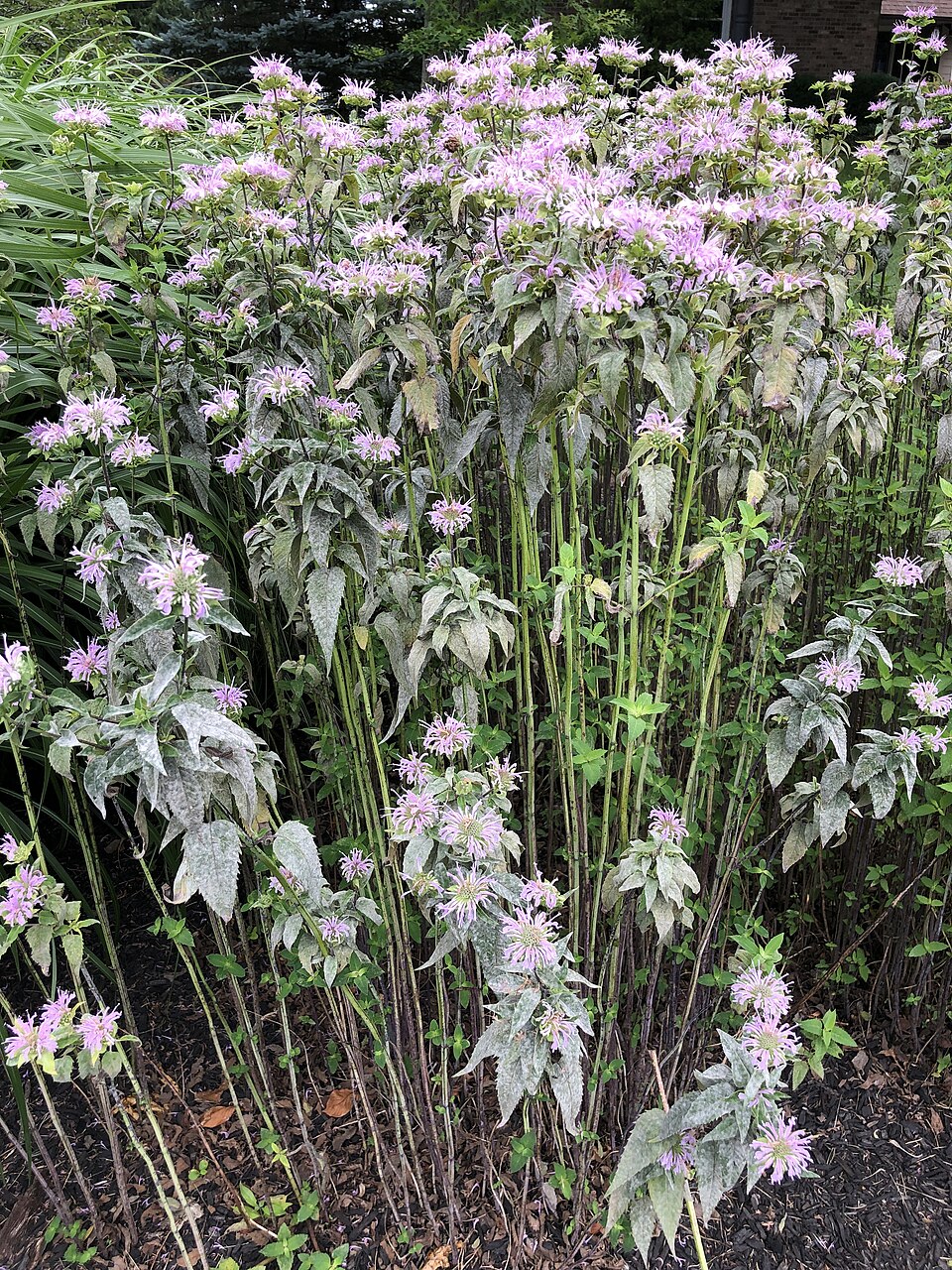
Why the Prettiest: Listed as a historical plant in Rhode Island, it’s a hardy, perennial wildflower is known for its showy, tubular, lavender-pin or white pompom-like clusters.
Location: Native to most of North America. Ranges from Quebec, Northwest Territories, and British Columbia to Georgia, Texas, Arizona, Idaho, and northeastern Washington.
Environment: Found in prairies, dry rocky woods, glade margins, and unplanted fields. Can grow up to 2-4 ft tall.
Bloom Season: Blooms during mid to late summer. As a honey plant, it attracts a variety of pollinators like bees, butterflies and hummingbirds. Larval host to hermit sphinx, orange mint moth, and raspberry pyrausta.
Color Varieties: Available in pink, white, and lavender.
Gardening Conditions: Spreads via rhizomes and self-sowing to form clumping patches. Thrives in full sun to partial shade. Highly adaptable to sandy, loamy, or clay soils ranging from dry to medium moisture, preferring well-drained conditions. Provide good air circulation to prevent powdery mildew, which is common in the plant. Leave hollow dead stems standing through winter to shelter native nesting bees.
Conservation Status: Currently listed as Secure.
Trivia: Known for its fragrance though its composition can be quite variable. Has 8 varieties. Used as a medicinal plant by Native Americans for various ailments such as colds, fevers, and headaches. Can be brewed into a soothing herbal tea.
Other Candidates: Cardinal Flower, Virginia Meadow Beauty, Butterfly Weed, New England Aster, and Black-Eyed Susan.
40. South Carolina
Yellow Jessamine (Gelsemium sempervirens)
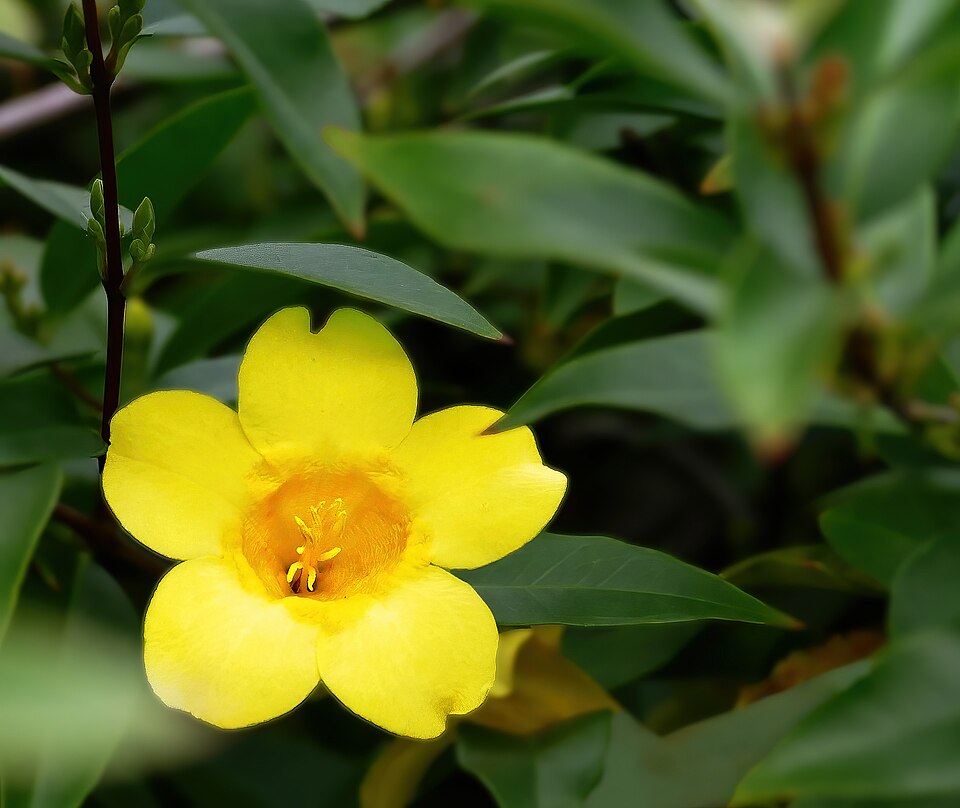
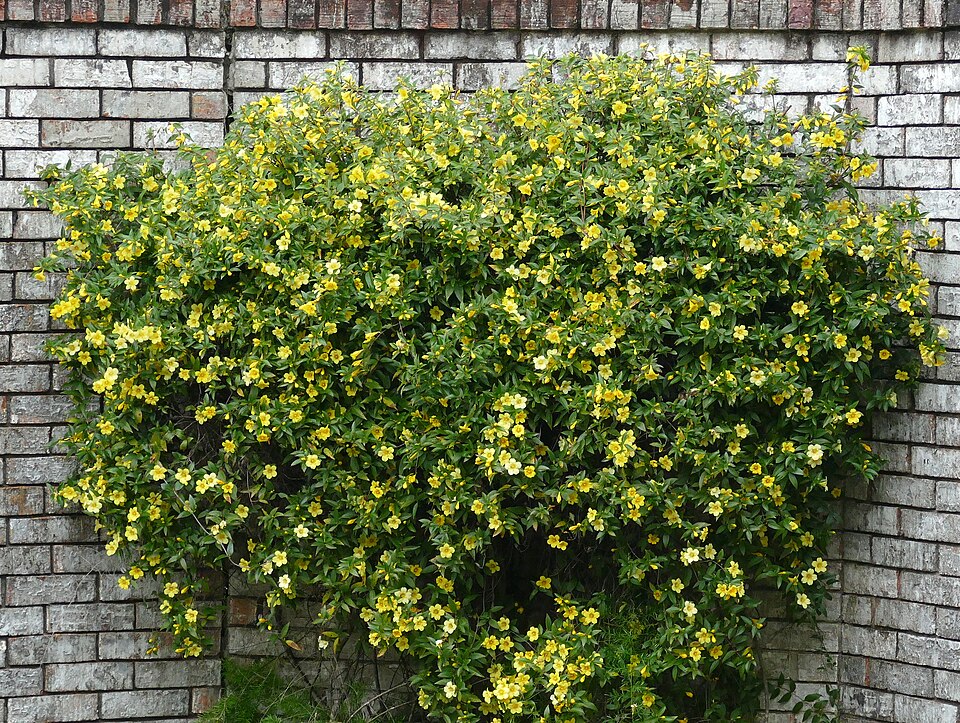
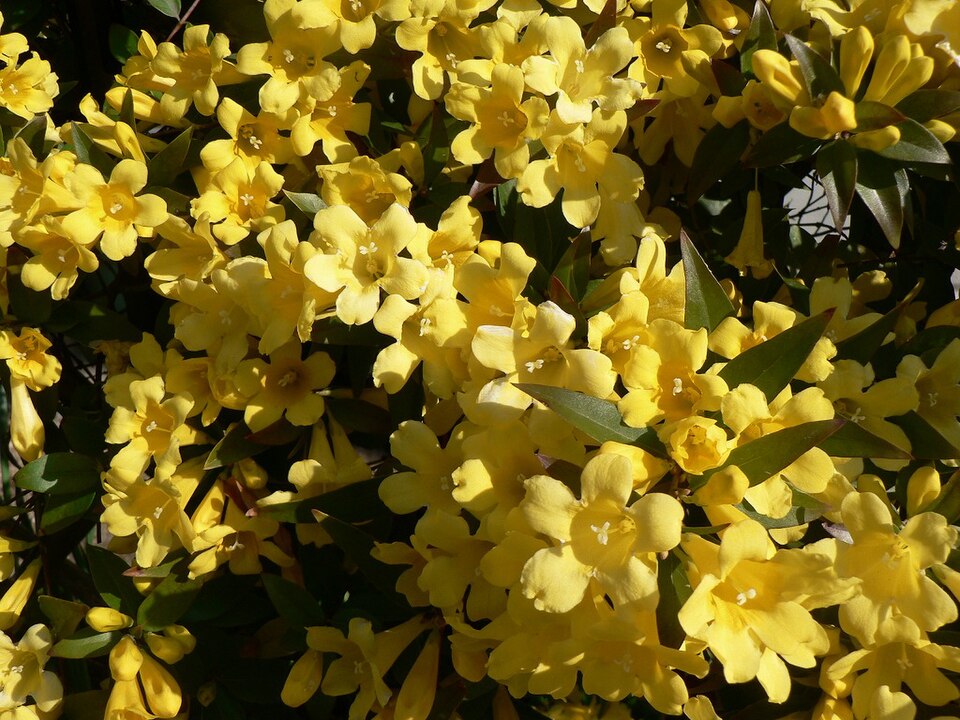
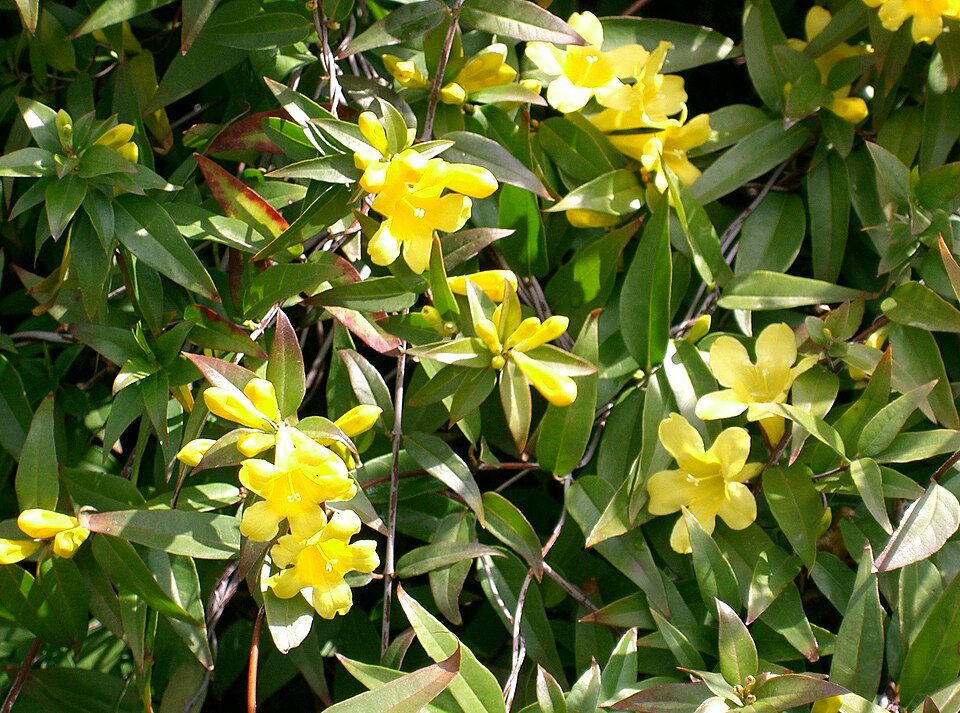
Why the Prettiest: For one, it’s South Carolina’s state flower. A fragrant, evergreen climbing vine famous for its bright yellow, trumpet-shaped, sweet-smelling flowers and glossy green leaves.
Location: Native to subtropical and tropical America from the southeastern and south-central United States to Guatemala.
Environment: Found in wooded areas and thickets growing on tree trunks. Can become weedy in disturbed areas and along roadsides. Can grow up to 10-20 ft tall.
Bloom Season: Blooms in late winter into early spring. Attracts bumblebees and native bees.
Color Varieties: Available in yellow.
Gardening Conditions: Thrives best in full sun and partial shade. Prefers moist, well-drained soil. Needs regular watering when young and becomes drought tolerant once established. All parts of the plant contain toxic strychnine-related alkaloids gelsemine and gelseeminine and shouldn’t be consumed. Sap may cause skin irritation in sensitive individuals. Children, mistaking it for honeysuckle have been poisoned for sucking the nectar from the flower. Symptoms consist of severe muscle weakness and respiratory paralysis. Nectar is toxic to honeybees which could cause brood death when gathered by them. Plant can also be lethal to livestock. Yet, despite the hazards, it’s a popular garden plant in warmer areas. Said to be perfect for training up trellises, arbors, and fences, or letting it sprawl as a mounding ground cover on slopes.
Conservation Status: Currently listed as Secure.
Trivia: Said to be a folk remedy for various ailments.
Other Candidates: Cahaba Lily, Goldenrod, Butterfly Milkweed, Atamasco Lily, and Wild Bergamot.


