
Of course, when it comes to cute animals, you can’t always please everyone. Sure, the sea otter might be perfect for California since it’s the center of the animal’s conservation efforts. But I put in the Island Fox because it’s only found on the state’s Channel Islands. While sea otters could be found in other states like Alaska and Washington. While the sea otter will come much later. Then there’s the fact that a cute critter must fit the state as you can see with the American Pika in Colorado and the West Indian Manatee with Florida. In this post we’ll meet ten more cute creatures from these United States. You’ll meet a sea turtle in Hawaii, a little bunny in Idaho, a couple of skunks in Illinois and Kentucky, a mink in Indiana, a frog in Louisiana, a favorite seabird in Maine, and squirrels in Iowa, Kansas, and Maryland.
11. Hawaii
Green Sea Turtle (Chelonia mydas)
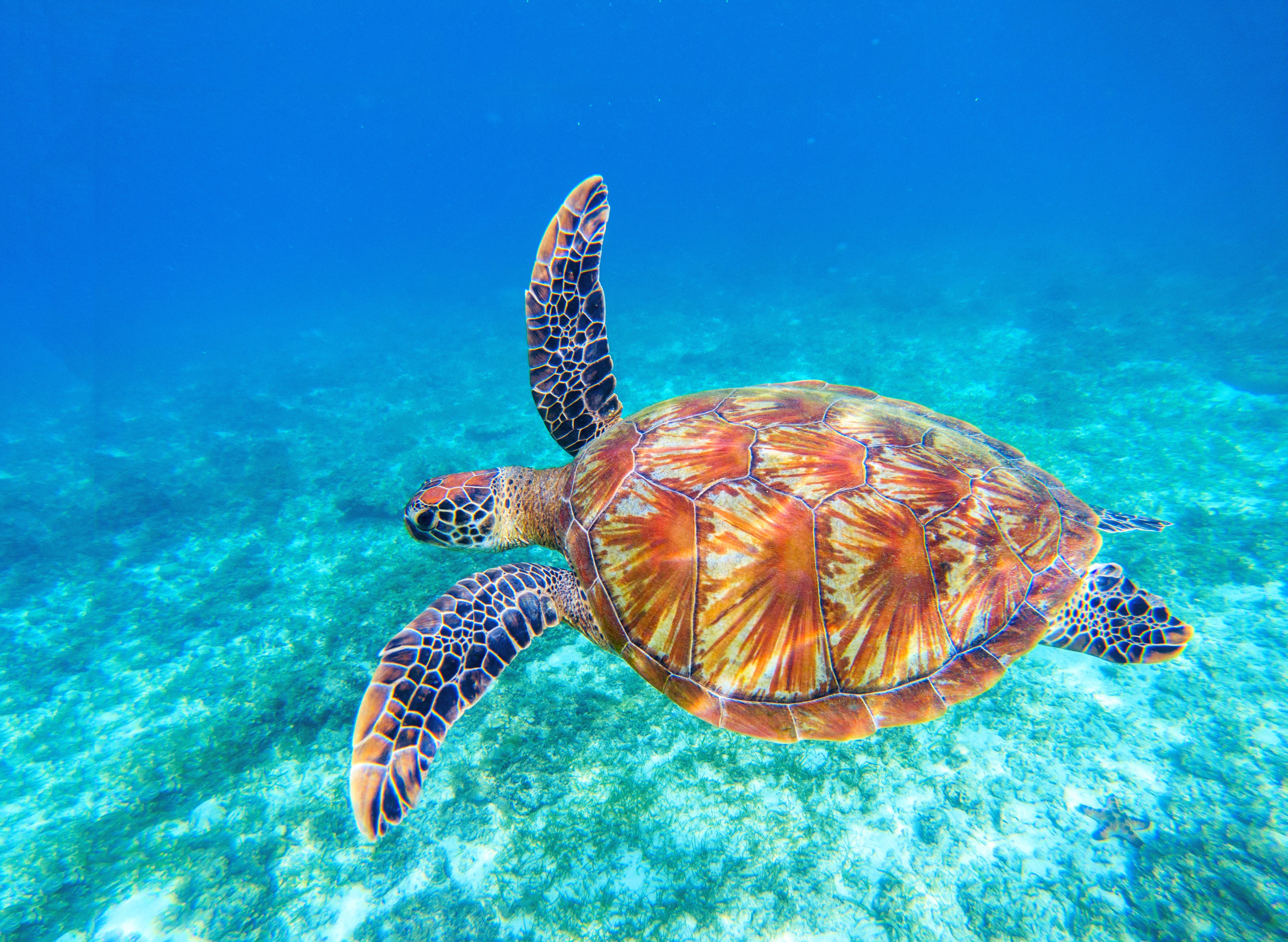
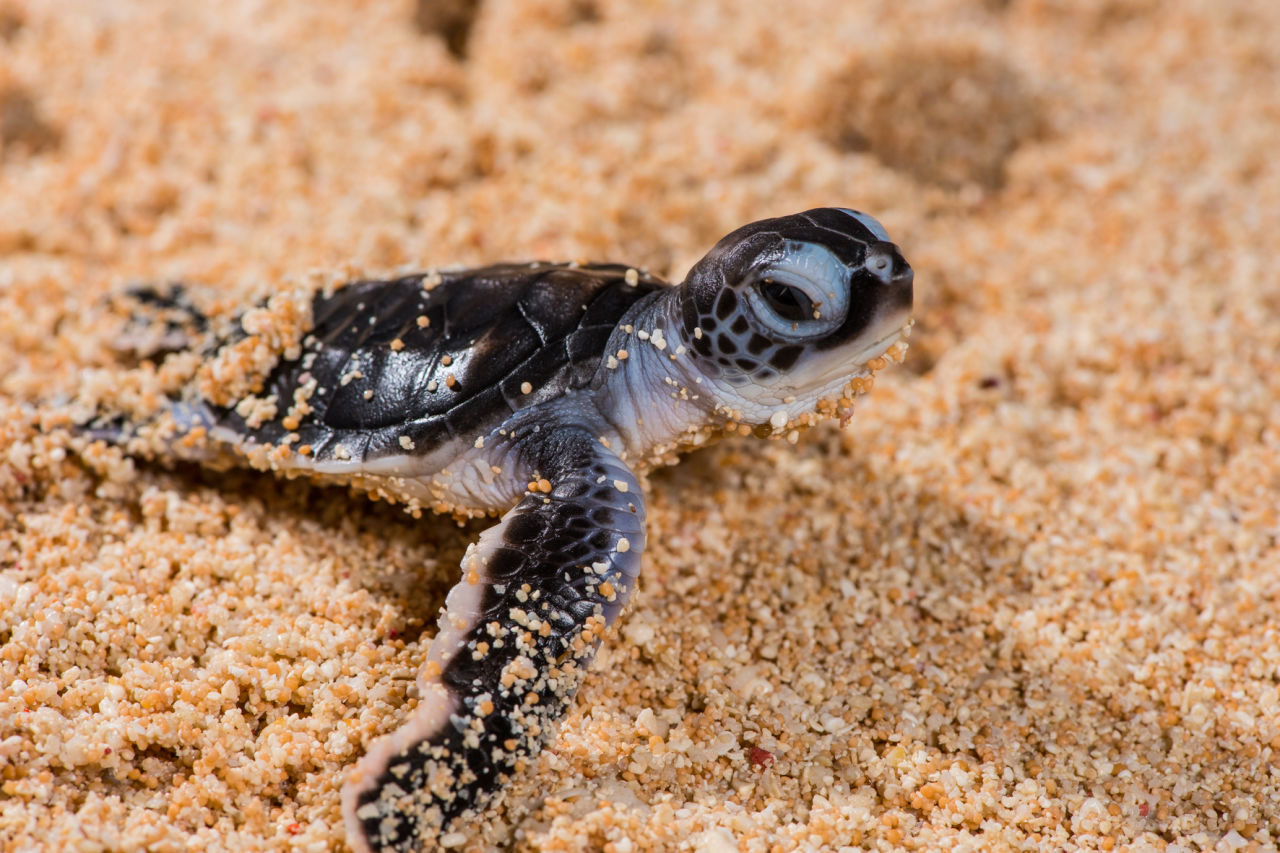
Why the Cutest: This creature always had special meaning to native Hawaiians, said to symbolize a navigator that can find its way home time after time. Some Hawaiian legends said it was the first to guide the Polynesians to the Hawaiian Islands. Hawaiians revere the Kailua, a turtle that could take the form of a girl at will. It’s also regarded as gentle and friendly but not one you can pet. While the baby turtles are especially adorable.
Lifespan: It’s said that most don’t make it to sexual maturity. A significant number don’t make it to the ocean while it’s said many more die as juveniles. But should a Green Sea Turtle be among the 1% who become ready to smash (which might take about 20-50 years), it could expect to live up to 80 years in the wild. Predators include gulls, crabs, sharks, small marine mammals, red foxes, and golden jackals. Parasites include barnacles, leeches, protozoans, cestodes, nematodes, and fipropapilloma.
Location and Habitat: Lives in all temperate and tropical parts of the Atlantic, Pacific, and Indian Oceans as well as within coastal beaches, inshore bays, lagoons, and shoals with lush seagrass meadows. Entire generations migrate between feeding and nesting areas.
Diet: Varies with age. Young turtles eat fish and their eggs, sea hare eggs, hydrozoans, bryozoans, mollusks, jellyfish, small invertebrates, echinoderms, tunicates, insects, worms, sponges, algae, sea grasses, leaves, tree bark, and crustaceans. Older sea turtles eat green and red algae, red moss, freshwater red algae, lobster horns, sea lettuce, green seaweed, crinkle grass, sea grasses, and wetland plants.
Behavior: Often return to breed and lay eggs at the beaches where they were born though only females move up along the high tide line. Females control the mating process in the water with a few populations even practicing polyandry. Females lay a clutch around 85-200 eggs in a hole they dig. When eggs hatch (which is often at night), hatchlings move directly towards the water. A significant number don’t make it to the ocean due to predation.
Conservation Status: Although it’s listed as Least Concern, its population has suffered due to hunting, poaching, egg harvesting, habitat loss, pollution, and climate change.
Trivia: It spends almost its whole life submerged and have an efficient respiratory system that allows it to quickly replace air in its lungs after surfacing for a few seconds. It can also sleep underwater for hours at a time. Can swim up to 40 mph, making it the fast sea turtle. Also, plays an essential role in ecosystems regarding seagrass beds by eating only the tops. Its efforts provide a habitat for many species of fish and crustaceans.
Other Candidates: Puffer Fish, Hawaiian Monk Seal, Hawaiian Spinner Dolphin, ‘I’iwi, Happy Face Spider, Jackson’s, Chameleon, and Gold Dust Day Gecko.
12. Idaho
Pygmy Rabbit (Sylvilagus idahoensis)
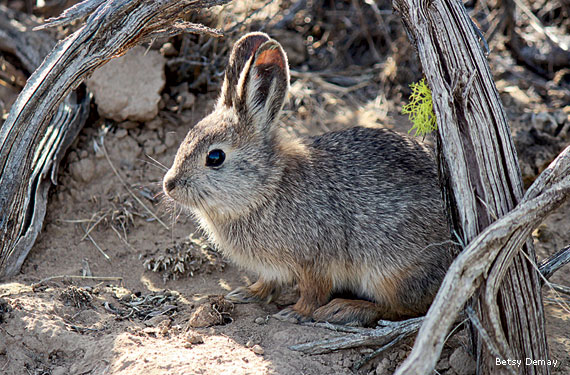
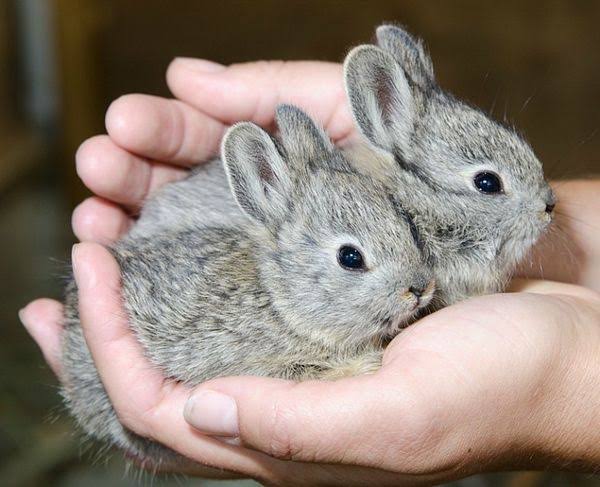
Why the Cutest: It’s a Rocky Mountain critter that belongs in a children’s storybook as well as the world’s smallest rabbit. This fuzzy, grapefruit-sized Idaho potato exhibit short ears and soft gray-brown fur. While southeastern Idaho is full of these spud muffins.
Lifespan: Most usually don’t last long with the highest adult mortality being in late winter and early spring. Juvenile mortality peaks during the summer. In fact, average lifespan is said to be less than 2 years in the wild and up to 3-5 years in captivity. Common causes of death are harsh winters and heavy predation. Predators include weasels, coyotes, red foxes, American badgers, bobcats, great horned owls, and northern harriers.
Location and Habitat: Lives in most of the Great Basin and some of the adjacent intermountain areas of western North America. Normally found in areas on deep soil with tall, dense sagebrush which it uses for shelter and food. Often restricted to areas with heavy shrub cover, primarily in big sagebrush and rabbitbrush communities. Sites also include plants like greasewood, antelope bitterbrush, threetip sagebrush, low rabbitbrush, gray horsebrush, prickly phlox, thick spike wheatgrass, plains reedgrass, sedges, prairie junegrass, Sandberg bluegrass, bluegrass, needle-and-thread grass, western yarrow, rosy pussytoes, milkvetch, arrowleaf balsamroot, buckwheat, tailcup lupine, phlox, bitterbrush, and sulfurflower.
Diet: Primarily eats big sagebrush which comprises 99% of its winter diet. Grasses and forbs are often summer food for this critter. Menu also includes rubber rabbitbrush, winterfat, Indian ricegrass, thick spike wheatgrass, bluebunch wheatgrass, Sandberg bluegrass, and needlegrass.
Behavior: Breeding season lasts from February through May. Litter size is typically 6 and as many as 3 litters could be produced per year. Most active around dusk and dawn but could be active at any time. But usually rests in burrows at midday.
Conservation Status: Although currently listed as Least Concern, it’s particularly vulnerable to habitat destruction due to its reliance on big sagebrush which can be destroyed in brush fires or cleared in agricultural developments. An isolated population is also known to live in the Columbia River drainage basin which faced significant declines due to small size and inbreeding. Only to be reintroduced in 2015 thanks to interstate efforts.
Trivia: One of 2 rabbit species in North America that could dig its own burrow. Burrows are often on the slopes at the base of sagebrush plants with tunnels widening below the surface forming chambers and extend to a depth to 3.3ft. On average, these burrows have 4-5 entrances, sometimes as few as 2 or as many as 10. In shallow soil, it could live in holes among volcanic rocks, in stone walls, around abandoned buildings, and in used burrows made by American Badgers and Yellow-Bellied Marmots. Can venture as far as 300ft from its burrow. During winter, it often tunnels under snow to find food, which can be quite extensive and extend from one sagebrush to another.
Other Candidates: American Pika, Yellow-Bellied Marmot, American Badger, North American River Otter, Red Fox, and Least Weasel.
13. Illinois
Striped Skunk (Mephitis mephitis)
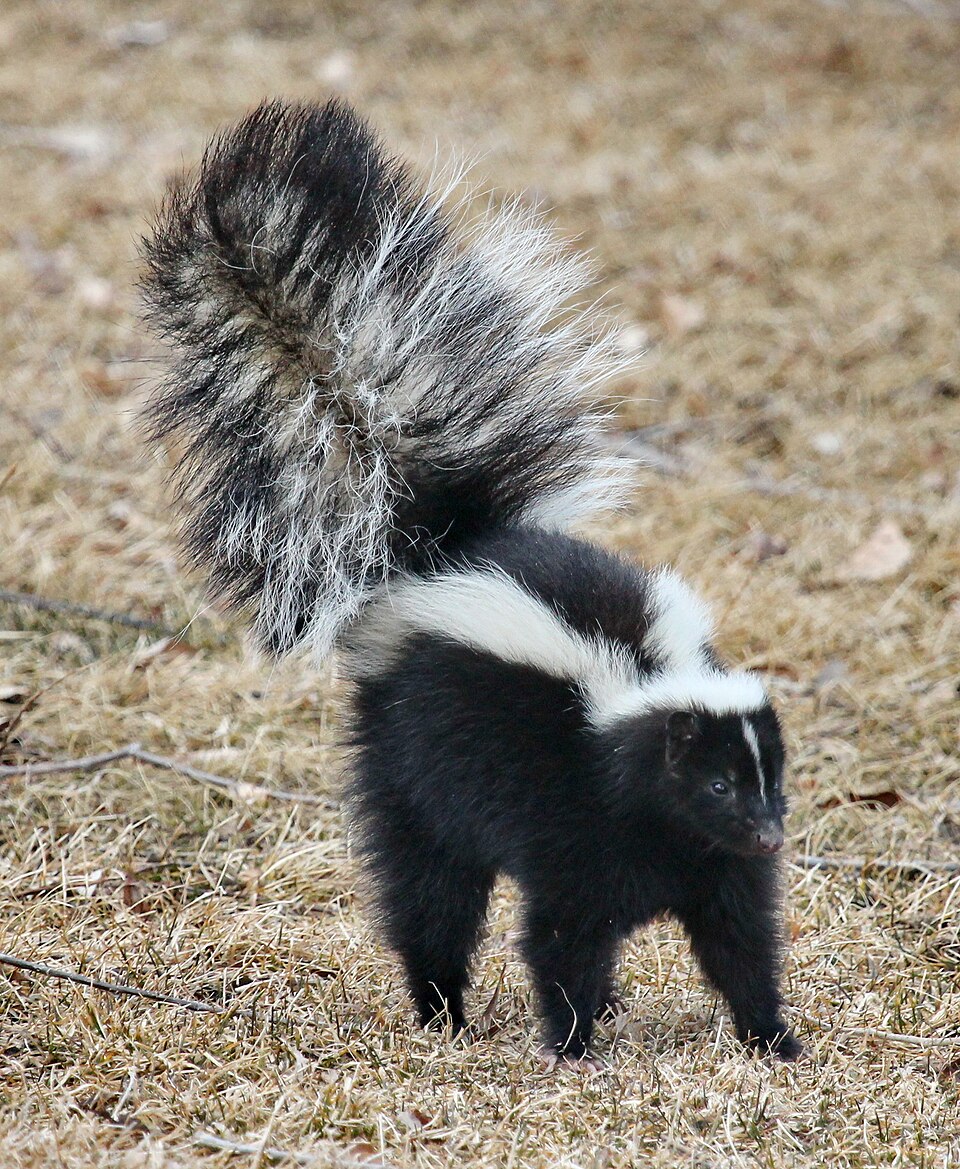
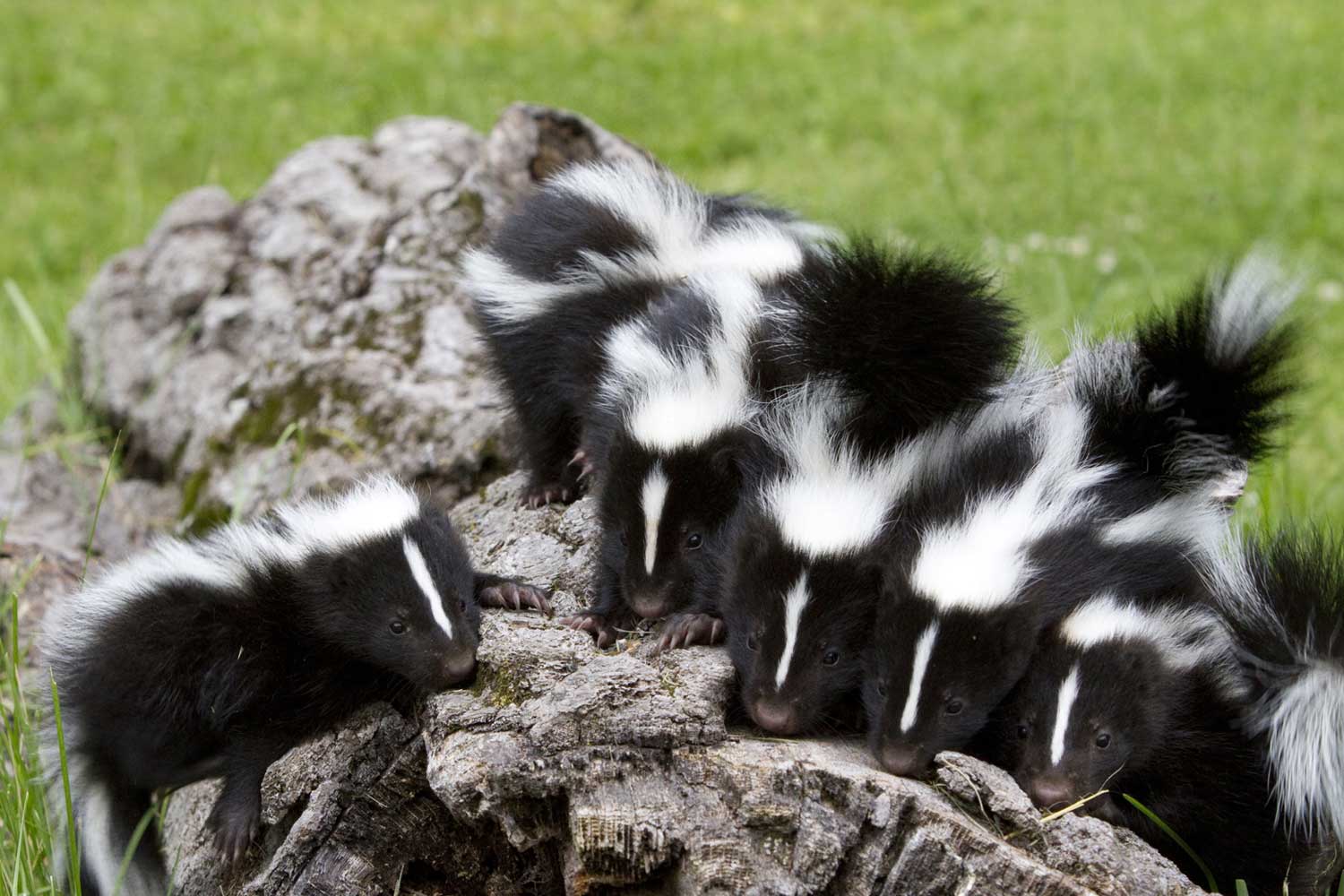
Why the Cutest: Since the Cree and Objibwe shee-gawk is the root word for Chicago, which means “skunk-land,” it might as well represent the Land of Lincoln. Sure, it may be a controversial choice due to its reputation as a little stinker with “don’t make me do it energy” when up against predators and oncoming traffic. While Native American myth and oral tradition may feature them as heroes, villains, tricksters, and monsters. However, it shares popular traits with cats and dogs such as round faces, big dark eyes, tiny paws, and soft fur. Its playful waddles and curious nature could only capture a human heart. While its black and white stripes make it look distinctly cartoonish, like little masked characters. And if you think this little stinker is hard to resist as an adult, wait until you see what its kits look like.
Lifespan: Usually lives around 2-4 years in the wild though some have lived as long as 6-7 years. Though it has a high first-year mortality rate due to severe weather, disease, and starvation. While it can survive 10-15 years in captivity. Aside from birds of prey, it has no natural predators aside from birds of prey since most mammal apex predators don’t want to get sprayed. Though cougars, bobcats, foxes, coyotes, and badgers will hunt one if they’re absolutely starving. It’s also very vulnerable to motor vehicles due to poor night vision. One of the major carriers of rabies, second to raccoons.
Location and Habitat: Lives in southern Canada, most of the lower United States 48, and northern Mexico. Inhabits a variety of habitats like mixed woodlands, brushy corners, open fields interspersed with wooded ravines and rocky outcrops. Some populations such as northwestern Illinois, prefer cultivated areas over uncultivated ones.
Diet: Primarily eats insects like grasshoppers, beetles, crickets, caterpillars, along with other insect larvae and bees. Other invertebrates include worms, crayfish, and other non-insect arthropods. During winter and spring, it often supplements its diet with white-footed mice, voles, along with ground nesting eggs and chicks. Not to mention, amphibians, reptiles, carrion, and fish. In addition, it’s also known to eat apples, blueberries, black cherries, ground cherries, corn and nightshade. Thus, though it prefers grubs, it’s game for basically anything.
Behavior: Unlike what you might see in Bambi, a single male may have a harem of several females that he mates with once a year and defends against other males for over a month. So less Flower and more like Pepe LePew. Once mating is done, the pregnant females return to their dens as the males try to build their fat reserves. Females can produce 2-12 kits per litter but usually 5-6. Although one in Pennsylvania was said to give birth to 18. Can dig its own den but will appropriate any those abandoned by other animals should the opportunity present itself. These dens will only be used in late fall, winter, and early spring, but females with unweaned kits often hold onto them up to the summer. In more human-modified surroundings, it often digs a den in fencerows, mainly because it’s less likely to be disturbed by livestock and machinery. Though it’s common for a single male and multiple females to occupy a single den. Doesn’t fully hibernate in the winter since it will forage in short periods while living off fat reserves, which will result in it losing 50% of its body weight by springtime. Although it’s known for its chemical musk spray against predators, it is mostly a weapon of last resort.
Conservation Status: Listed as Least Concern due to its wide range and ability to adapt to human-modified environments. Although they often fall victims to traffic accidents when crossing a road. Not to mention, highly sought after primarily for its fur and later farmed. Trappers, Chinese immigrants and Native Americans ate them. While Chinese immigrants used its gall bladders as medicine. Its fat was once used as a lubricant. While its musk was once employed as a remedy for asthma, despite its very strong odor being better suited for warding off unwanted suitors. Some are even kept as pets with their stinkers removed or as pest control.
Trivia: Has 13 subspecies. Can use its sharp claws to tear away rotting logs and dig in the soil to find bugs and other prey.
Other Candidates: American Mink, North American River Otter, American Badger, Eastern Chipmunk, and Southern Flying Squirrel.
14. Indiana
American Mink (Neogale vison)
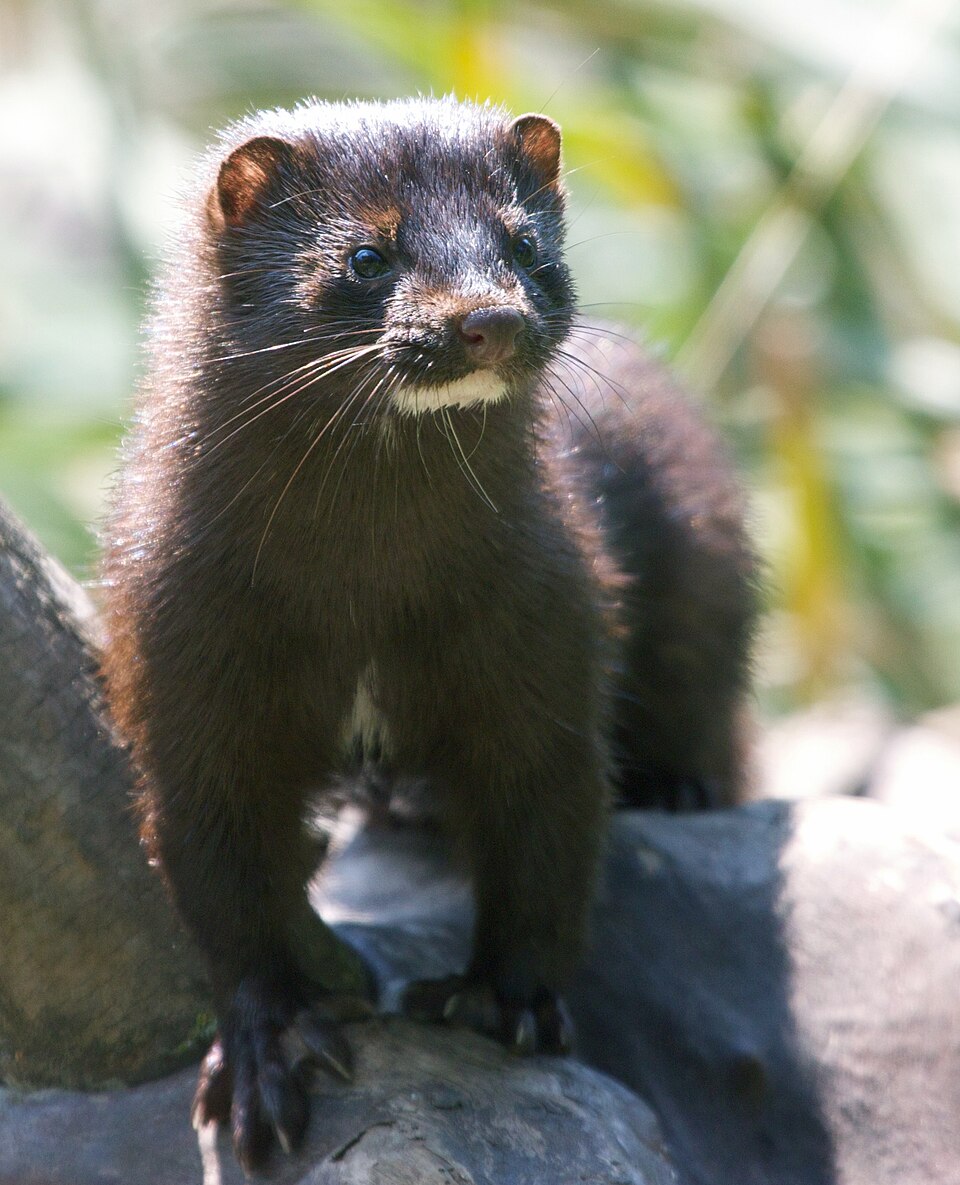
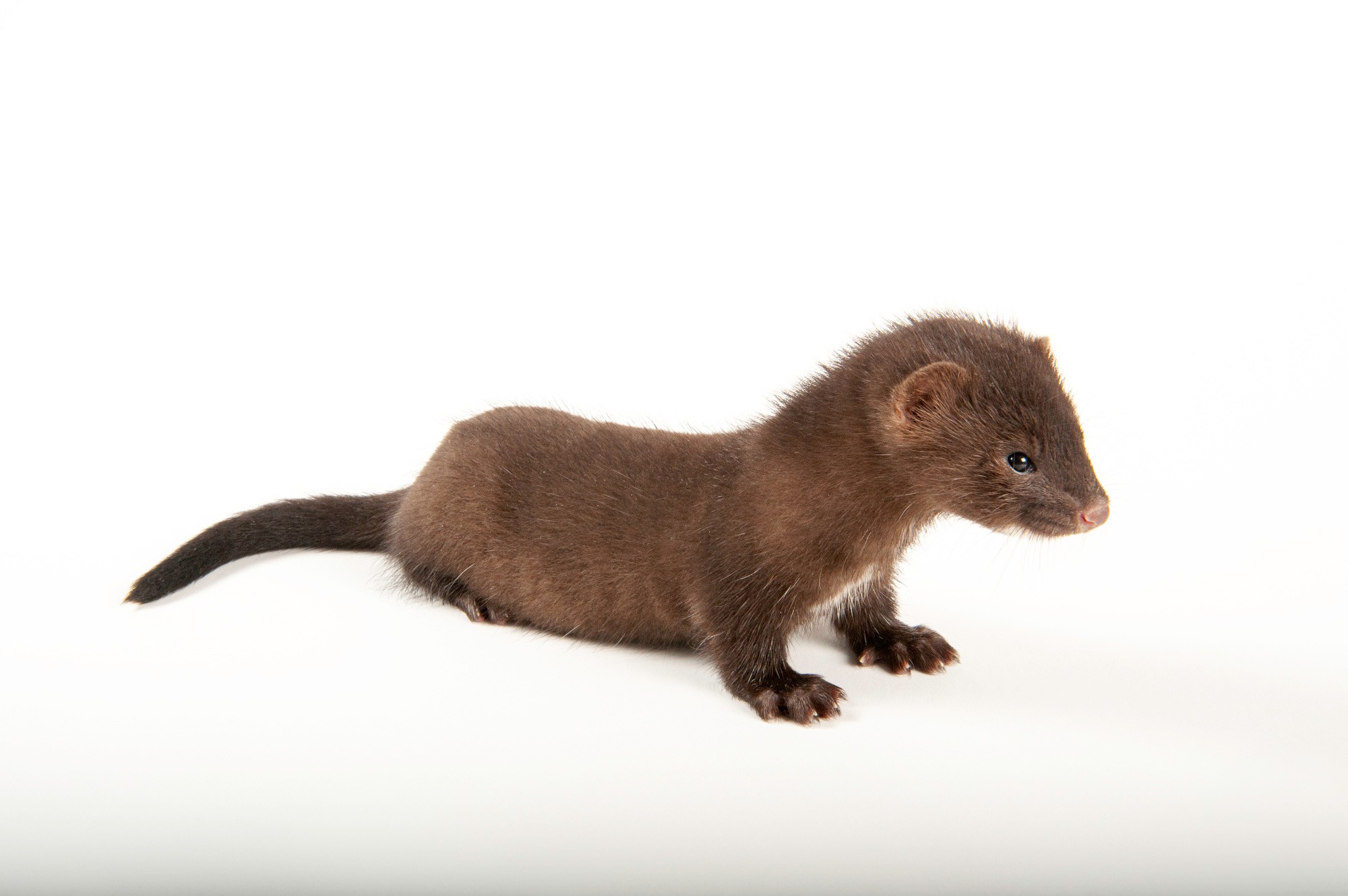
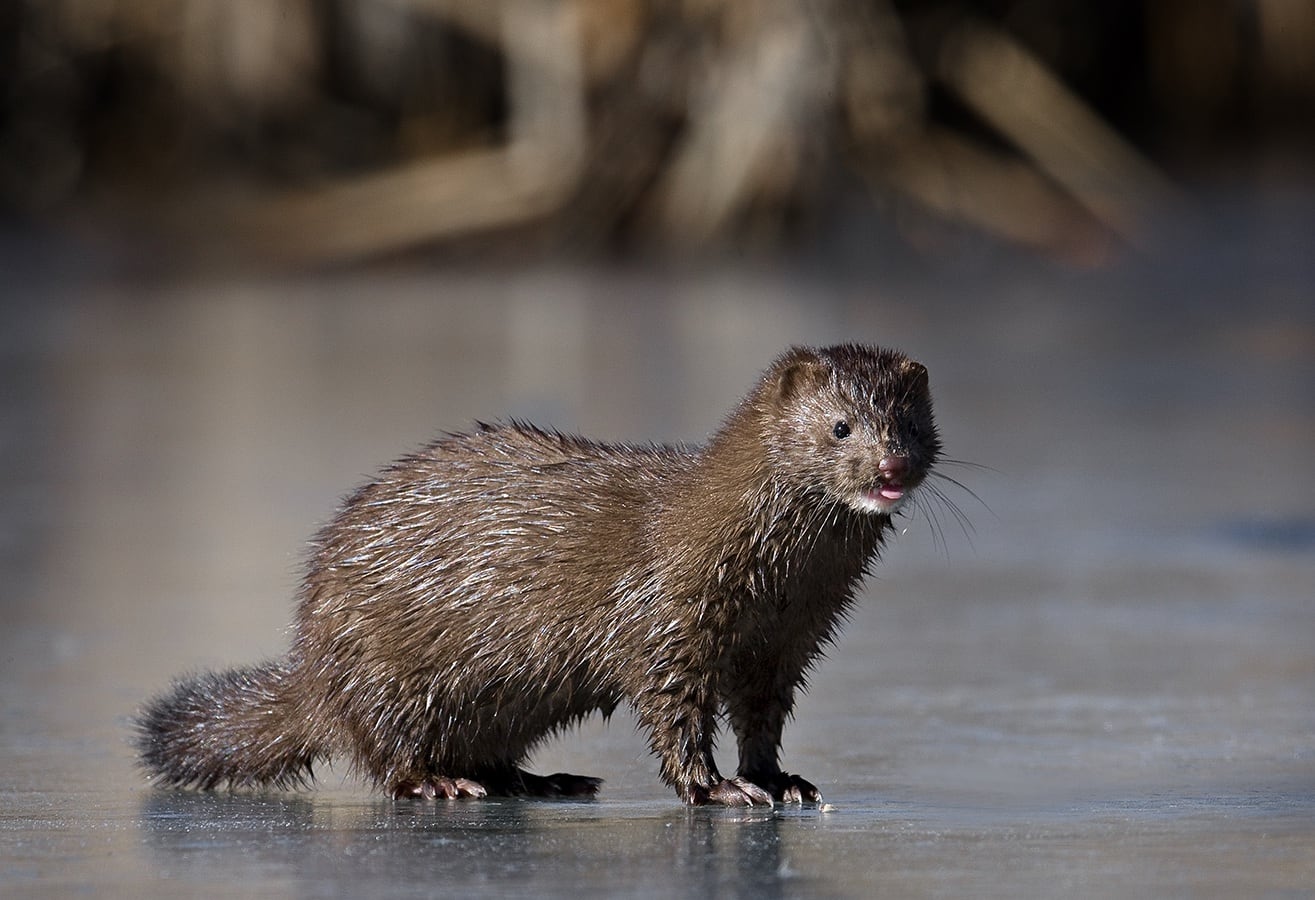
Why the Cutest: The American Mink is an adorable little sausage often exploited for its fur industry. Especially when it came to making coats, stoles, scarves, and trim. As a live animal, it’s highly adaptable in a variety of different environments. While its cuteness can’t be denied with its tiny face, short legs, and sleek body. Because once you see it, you’ll swear that it’s the only one on the block that should be wearing a mink coat it doesn’t have to give an arm and a leg for.
Lifespan: Usually lives 1-3 years in the wild due to disease, traps, hard winters, and predators. Though some could live up to 10 years, especially in captivity. Predators include large birds of prey, bobcats, coyotes, and massive snakes. Often carries tick and flea infestations. While Transmissible Mink Encephalopathy (TME) can prove deadly.
Location and Habitat: Native to most of Canada and the United States from Alaska to the Gulf of Mexico. Most habitats are in undisturbed, rocky coastal habitats with broad littoral zones and dense cover. Some are on estuaries, rivers and canals near urban areas. But as far as real estate goes, this little guy isn’t particularly fussy. As long as the property has an ideal den site that’s close to water.
Diet: Is an opportunistic carnivore that eats fish, crayfish, frogs, rodents, small mammals, birds, crustaceans, and eggs. Although it’s known to attack chicken coops, it only stops once it kills one.
Behavior: Breeding season lasts from February to April with males commonly fighting, which could result in loose, temporary dominance hierarchies governing access to receptive females. Is promiscuous and doesn’t form pair bonds, meaning that male has no role in the parenting. Average litter comprises of 4 kits. Although large litters of 11 and 16 have been reported. Is a solitary animal whose territories have minimal intrasex overlap but extensive intersex overlap. Dens consist of long burrows in river banks, holes under logs, tree stumps, or roots and hollow trees. Yet, it can also have dens in rock crevices, drains, nooks under stone piles and bridges. May nest in burrows once previously dug by badgers, muskrats, and skunks. May even dig burrows from old ant hills. Yet, its den could have a large number of entrances and twisting passages. Entrances can vary from 1-8. Only vocalizes during close encounters with other minks or predators. Emits piercing shrieks when threatened and muffled chuckling during mating. Kits repeatedly squeak when separated from their mothers. In aggressive interactions, it asserts dominance by arching its back, puffing up, lashing out its tail, and stomping and scraping the ground with its feet while opening its mouth in a threat gape. If its show is unsuccessful, fights may result in head or neck injuries.
Conservation Status: Classified as Least Concern. In areas where it was introduced for fur farms, it’s considered invasive, especially when it escapes one. However, it does have a history of being hunted and trapped for its furs as well as tamed as pets and for pest control.
Trivia: Has 15 subspecies. Has been found to be able to transmit the virus causing Covid 19. Is an excellent swimmer and agile climber capable of diving deep underwater to hunt.
Other Candidates: North American River Otter, American Badger, Eastern Chipmunk, Virginia Opossum, and Red Fox.
15. Iowa
Eastern Chipmunk (Tamias striatus)
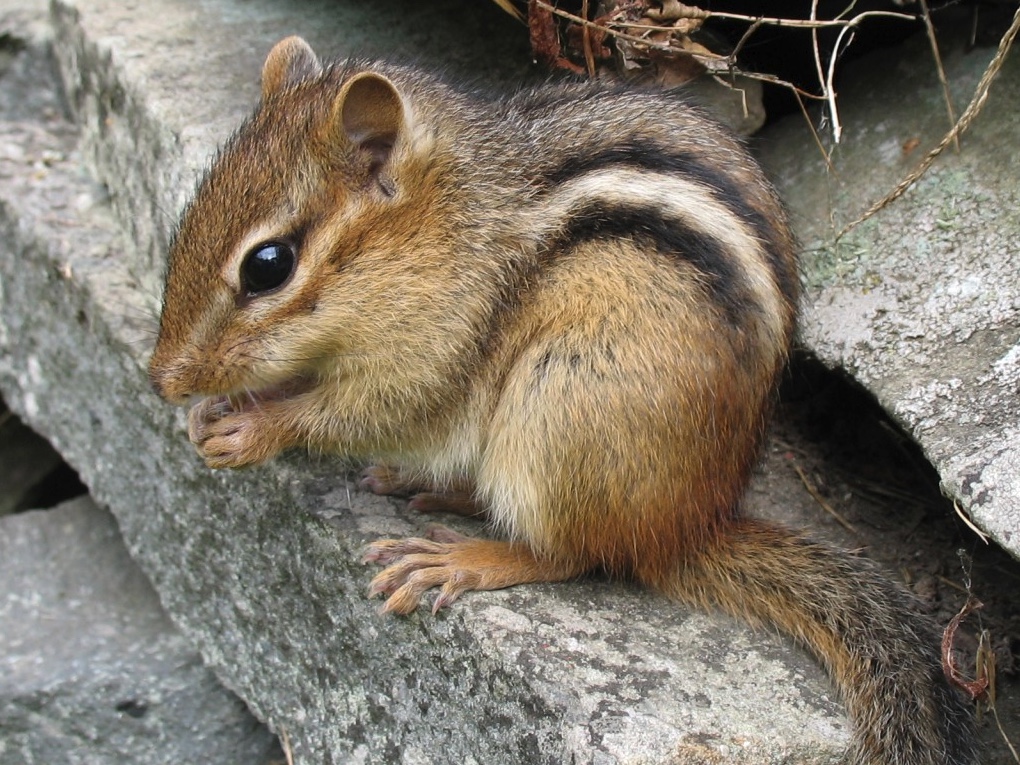
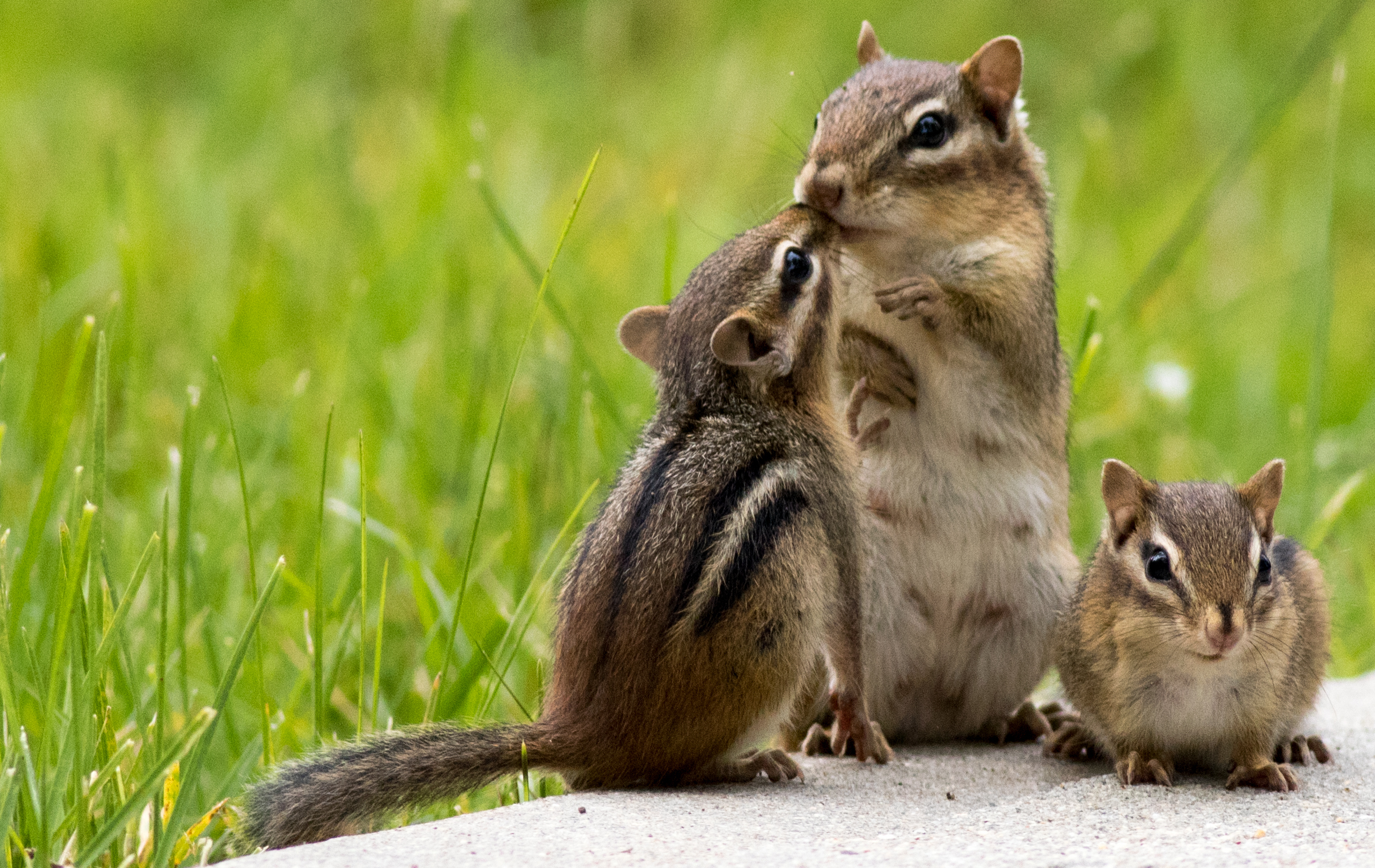
Why the Cutest: With its small body and chubby cheeks, it has often been featured on cartoons for decades like Disney’s Chip and Dale or the brothers Alvin, Simon, and Theodore from Alvin and the Chipmunks. Makes cute noises such as chips, chucks, trills, whistles, squeals, and chatters. Its fast, darting runs make it fun and energetic to watch. When eating, it even holds tiny seeds or nuts in its front paws just like miniature squirrels.
Lifespan: Lives up to 3 years in the wild and up to 8 years in captivity. Predators include hawks, owls, foxes, raccoons, snakes, weasels, coyotes, lynx, domestic dogs, and domestic cats. Can also be a host to parasitic larvae of botflies.
Location and Habitat: Lives predominantly in southeastern Canada and the eastern United States to as far as eastern North Dakota and as south as northeastern Louisiana. Resides in deciduous wooded areas and urban parks. Prefers locations with rocky areas, brush, or log piles along with shrubs to provide cover.
Diet: Eats nuts, seeds, acorns, berries, mushrooms, insects, and occasional small eggs or frogs.
Behavior: Unlike what Disney may tell you, it doesn’t live in a tree or with a sibling. Rather, it’s a solitary creature who spends most of its time foraging on the ground in deciduous woods, brushy areas, and suburban yards. In fact, it digs complex underground tunnel systems that can stretch over 30ft, carefully concealing the entrances. Doesn’t fully hibernate during the winter (at least as we know it). Instead, it stays its burrow during cold weather, waking up periodically to eat from its stored food cache. More like sleeping all except for trips to the fridge. Stores items in its stretchy cheek pouches to transport food back to its underground storehouses. Active during the day. Only interacts with its own species during mating season or pups with their mother. Mating seasons are from February to April and from June to August. Females often produce 1-2 litters of 3-5 young.
Conservation Status: Currently listed as Least Concern as it’s basically a regular backyard sight.
Trivia: Molt once or twice annually.
Other Candidates: American River Otter, Southern Flying Squirrel, Red Fox, Eastern Cottontail Rabbit, American Mink, and Virginia Opossum.
16. Kansas
Black-Tailed Prairie Dog (Cynomys ludovicianus)

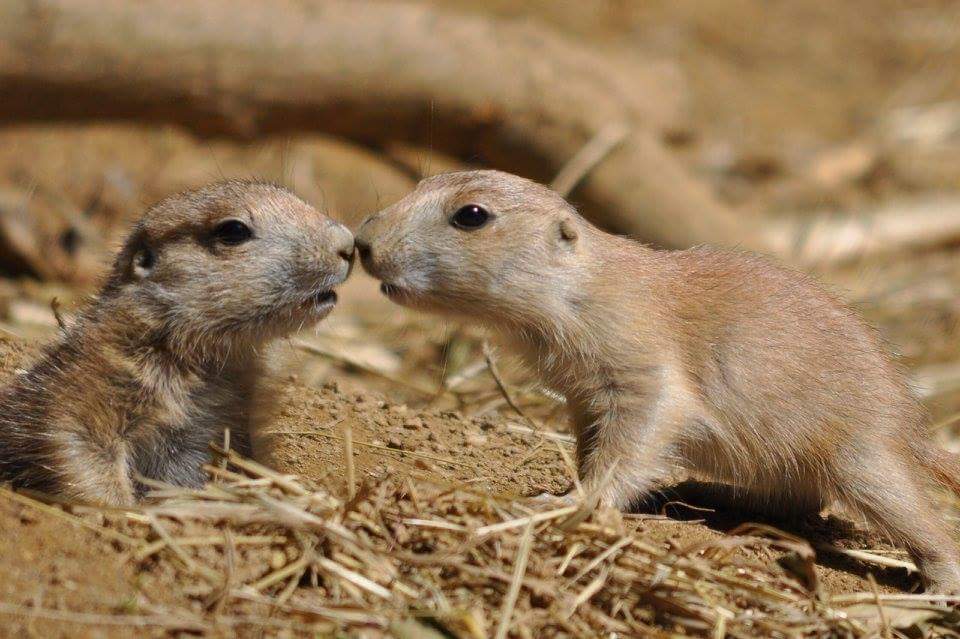
Why the Cutest: Since Kansas is known as the Prairie State, there’s no better animal to represent it in the US of Cuteness than this little guy. This cunning, highly social rodent is famous for its expressive upright stances, complex communication, and adorable “greeting kisses.” Its “jump yip” display has it stretching up on its hind legs and throw its front paws in the air. Within its tight-knit family group, it spends a lot of time grooming and cuddling.
Lifespan: Usually lives 3-5 years though females can live 7-8 years in the wild. Can live 8-10 years or more in captivity. First year survival is 52%. Major causes of death included predation, disease, infanticide, habitat loss, poisoning, trapping, and shooting. Sylvatic plague can wipe out entire colonies within a few days. Also susceptible diseases brought by introduced animals. Predators include coyotes, American badgers, bobcats, golden eagles, ferruginous hawks, red-tailed hawks, prairie rattlesnakes, and black-footed ferrets.
Location and Habitat: Lives in the Great Plains from as north as Montana to as south as Texas. Resides in grassland habitats such as shortgrass prairie, mixed-grass prairie, sagebrush grass, and desert grassland. Habitat preferences influenced by vegetative cover type, slope, soil type, and rainfall amount.
Diet: Herbivorous. Prefers grass over forbs, which comprises of 75% of its diet. Menu includes western wheatgrass, buffalo grass, sedges, scarlet globemallow, Russian thistle, plains prickly pear, rabbitbrush, winterfat, saltbrush, and sagebrush.
Behavior: Is diurnal but doesn’t venture above ground as much when it rains or snows, or when the temperature exceeds 100º F. Spends much of its time either foraging or high alert constantly keeping watch for predators. Doesn’t fully hibernate during the winter, when it continues to leave the burrows to forage but sometimes enters a torpor state at night to conserve energy. This results in it losing 20% of its body weight during the fall and winter months. Lives in colonies, which could range from as little as 5 to thousands and may be subdivided into 2 or more wards based on topographic features like hills. Wards usually have 2 or more coteries which comprise of aggregates of highly territorial, harem-polygynous social groups. Individuals with coteries are often amicable with each other and hostile towards outsiders. Breeding season is usually in the spring. Females usually produce one litter of 3-5 young each year. Young males leave natal territory 12-14 after weaning. Dig vast networks of burrows that are used for breeding, rearing young, and hiding from predators as well as are maintained for generations. Nests consists of fine, dried grass that’s collected by both sexes and all age classes. Most colonies usually contain 20-57 burrows per acre. Types of entrances are dome mounds, rimmed crater mounds, and entrances without structures around them. Entrances may prevent flooding and/or aid in ventilation. Compact soil with its nose.
Conservation Status: Listed as Least Concern although it has lost a lot of ground due to habitat loss due to agriculture and development, having a reputation as pests by ranchers, being seen as competitors for forage against livestock (despite research suggests that it has either a neutral and beneficial effect), and the pet trade. Colonies can also be wiped out by plague. Even though it’s not as in trouble as some grassland species, current numbers and occupied acreage are drastically below historical levels and likely to remain so in the foreseeable future. Mainly because while it may not be officially in danger, its grassland habitat and ecosystem it supports certainly is.
Trivia: Has been called an “ecosystem engineers” due to its influence on its habitat characteristics, landscape architecture, and ecosystem structure and function. That research suggests it to be a keystone species in a significant part of its range. This shit talking critter enhance diversity of flora and fauna through foraging and burrowing activities as well as its presence as prey. Grasslands inhabited by Black-Tailed Prairie Dogs support higher biodiversity than those without them. Also use a sophisticated communication system to describe specific predators. Has sensitive hearing at low frequencies to avoid predators.
Other Candidates: Virginia Opossum, Least Shrew, Eastern Cottontail, and Striped Skunk.
17. Kentucky
Eastern Spotted Skunk (Spilogale putorius)
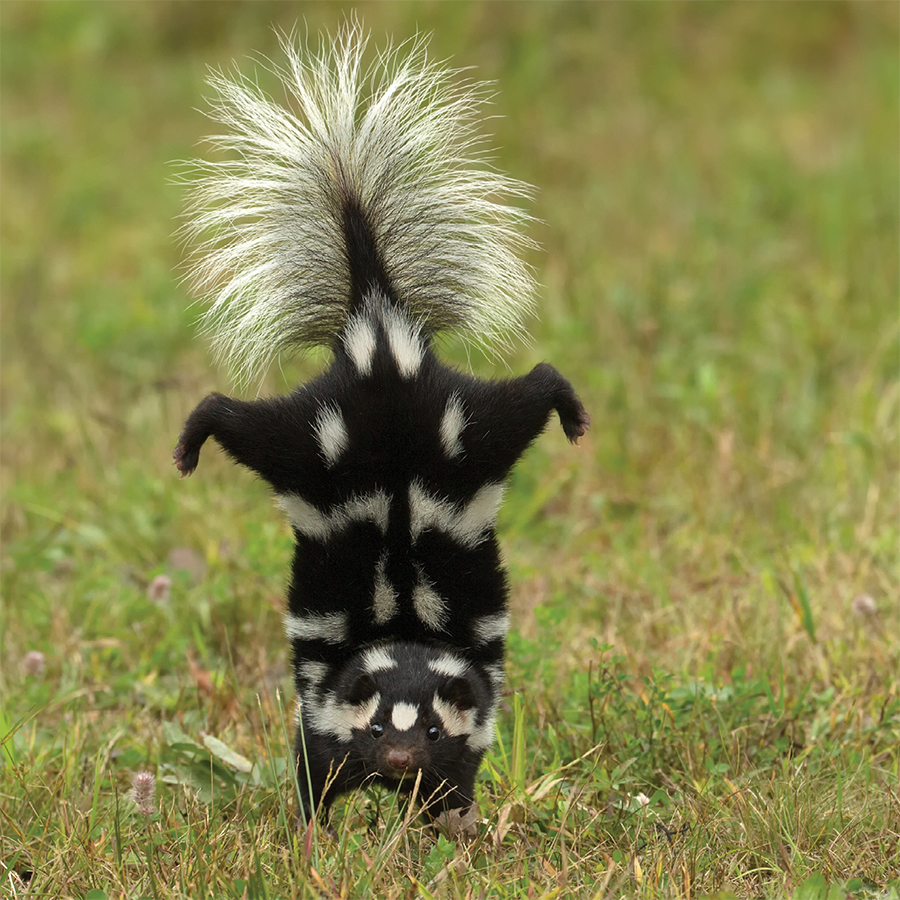
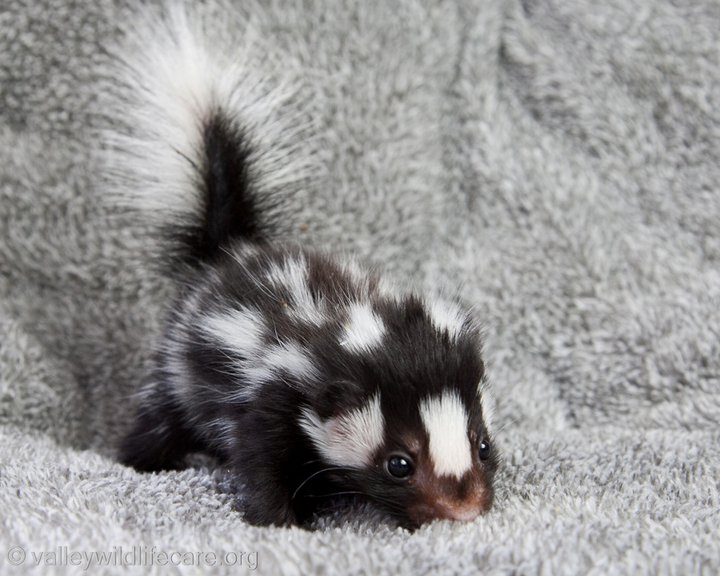
Why the Cutest: It’s Kentucky’s official state non-game mammal. Compared to the Striped Skunk in the Illinois entry, it’s only as large as a good-sized tree squirrel and has a more weasel-like body. Making it resemble a miniature fluffy ferret. It also lifts its back legs in the air in a handstand before it sprays, which many find funny and adorable. While its spotted black and white give it a painted, cute style.
Lifespan: Usually live 1-2 years in the wild though many don’t survive their first year. Can live up to 10 years in captivity. Predators include big cats, bobcats, owls, and birds of prey.
Location and Habitat: Lives mainly in the American southeast and Midwest to the Dakotas and south Texas. Prefers forest edges and upland prairie grasslands, especially when rocky outcrops and shrub clumps are present. Can rely on riptarian corridors with woody shrubs and woodland edges as well as wooden fencerows, odd areas, and abandoned farm buildings.
Diet: Like the Striped Skunk, it eats practically anything such as insects, small mammals, bird eggs, fruits, berries, bees, and honey.
Behavior: Is nocturnal and more active on cool and dry nights than warm and wet ones. Doesn’t hibernate but greatly reduces activity during intense summer heatwaves and very cold winters. Is a secretive and elusive creature that humans rarely see in the wild. Breeding season is usually March and April while young are often born in May. Is generally polygynous. Females produce an average of 4-5 kits per litter. Underground dens can be shared by up to 8 of them during the winter. Burrows could be self-dug or previously abandoned.
Conservation Status: Listed as Vulnerable due to sharp declines in several states, particularly in the Midwest for unknown reasons. Since it was very quick to adapt to human settlement that it was frequently trapped until the mid-20th century, frequently seen in farmlands, and known to dig burrows under barn sides. Causes attributed include pesticide use, modernized farming techniques, over-trapping, habitat loss, and consolidation of barns and other manmade structures. Thus, it has become a rare creature of great conservation need.
Trivia: Tail counts for 1/3 of its total length. Can perform a handstand before a potential predator as well as does foot stomping to warn one approaching it that’s often followed by it spraying the odorous secretion. More agile and vigilant than other North American skunks. Can climb and take shelter in trees and jump.
Other Candidates: North American River Otter, Red Fox, Virginia Opossum, and Eastern Chipmunk.
18. Louisiana
American Green Tree Frog (Dryophytes cinereus or Hyla cinerea)
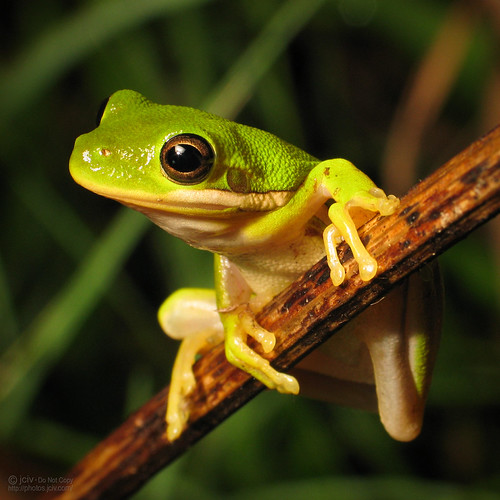
Why the Cutest: It’s Louisiana’s official state amphibian, which is a state known for swamps and the Mississippi Delta. And we all know that swamps are the place where frogs love to be. With big eyes, smiling mouth, chunky build, lime green skin, and suction cup toes, it often sits completely still like a little statue to wedge itself into silly, relaxed resting positions. While is slow, deliberate stretches and measured movements look endearingly awkward.
Lifespan: Usually live about 2-5 years in the wild. Can live up to 6 in captivity, though some have reached 15-20 years. As tadpoles, predators include sunfish, bass, and dragonflies. As adults, predators include snakes, birds, and other frogs. Also prone to parasites such as nematodes, protozoans, and trematodes.
Location and Habitat: Usually lives in the Southeastern United States from Delaware to central Texas. Prefers to reside in small, early successional canopy gaps in forests with a permanent water source and filled with plentiful vegetation and bottom-landed forested area. Found both in natural and settled environments, often sighted in backyards with ponds, in garages, or in garden structures. Commonly resides in cypress ponds, water lily prairies, and marshes. Often seen perched on twigs, low branches, and grasses.
Diet: Primarily insectivores that mostly eat flies, mosquitoes, grasshoppers, cockroaches, spiders, beetles, crickets, and ants. Usually through nighttime ambush foraging. Though ingesting plant material isn’t uncommon.
Behavior: Is relatively sedentary and often stays within its localized home range. May venture to nearby woodlands in wetter regions but remains near water source in dry conditions. Will defend mate calling sites against foreign rivals and invaders using aggressive interactions. This can comprise of a combination of aggressive call signals and wrestling from males. Females usually breed once a year, though some have multiple clutches during a single mating season. A single clutch could contain as many as 400-1,200 eggs which females often lay in permanent bodies of water. Males use distinctive advertising calls to attract mates, which they often have to tweak due to immense pressure to make a unique one guaranteed to attract a female before grasping onto her to begin fertilization. Females often prefer the larger males and the low frequency calls. Oh, and males are polygynous so they’ll do this to as many as they could attract. All while satellite males stand by and let other males do the work before making a move. While their calls can be heard as far as 1-2 kilometers away. Is small and easily frightened so it doesn’t do well with frequent handling. Is nocturnal.
Conservation Status: Listed as Least Concern but still face threats of habitat loss and climate change due to urbanization and severe wildfires. As forest canopies recover from wildfires, it needs alternative shelters with scientists in central Texas using PVC pipe artificial shelters.
Trivia: Can be used as bioindicators for aquatic contamination due to its thin skin. Can also be kept as pets.
Other Candidates: Swamp Rabbit, North American River Otter, Raccoon, and Virginia Opossum.
19. Maine
Atlantic Puffin (Fratercula arctica)
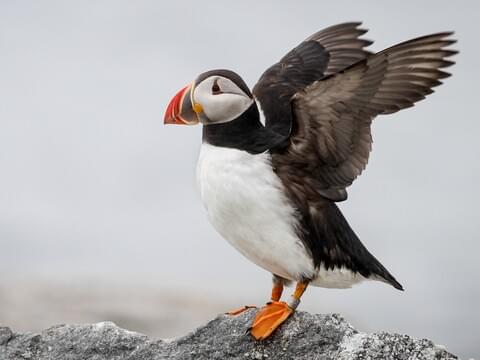
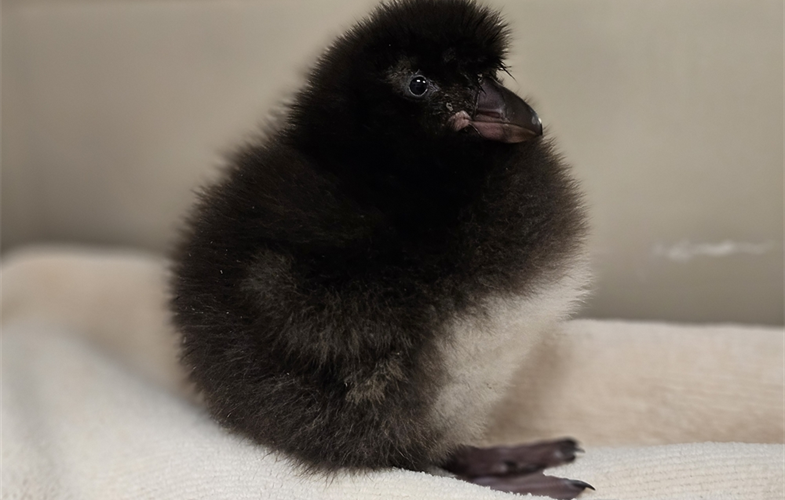
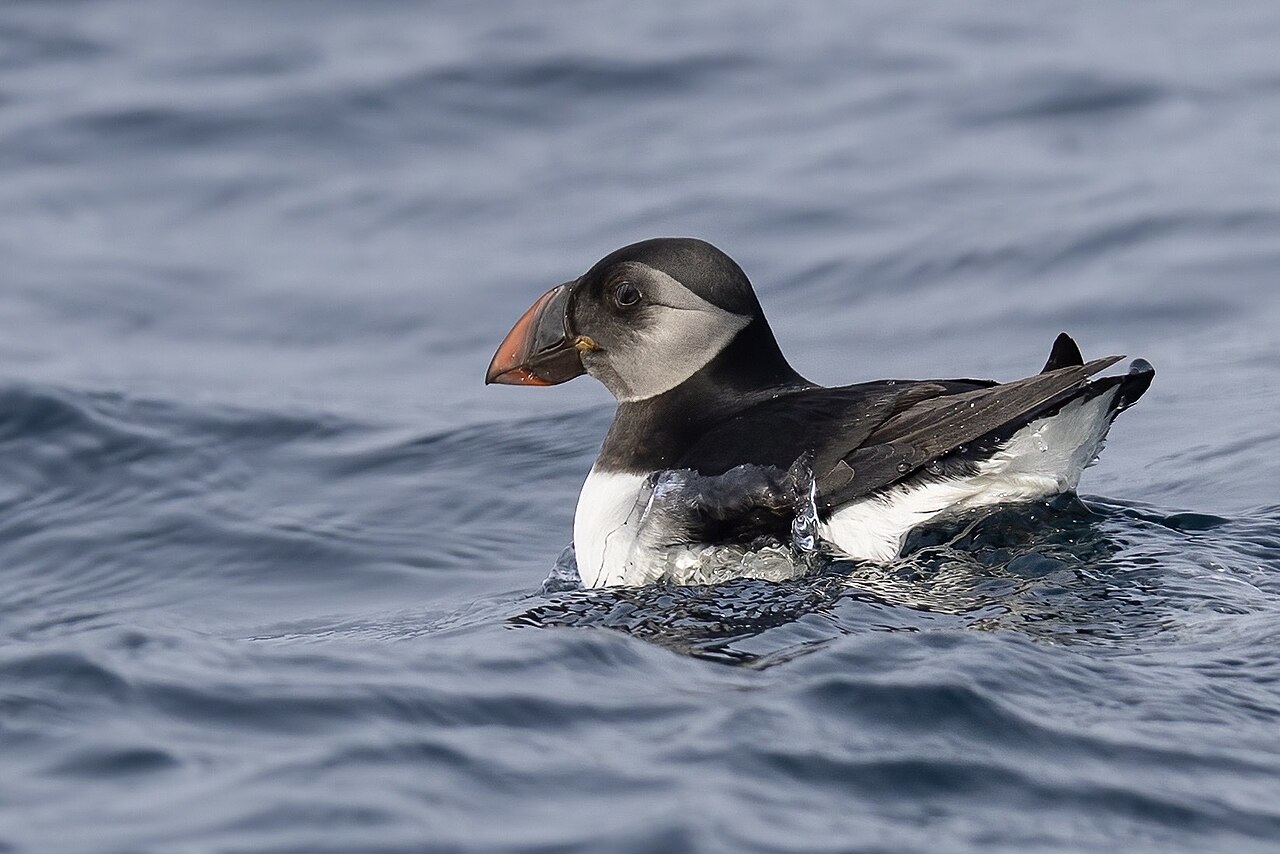
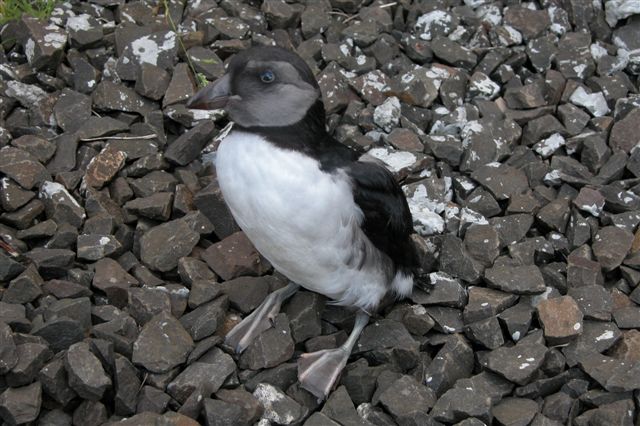
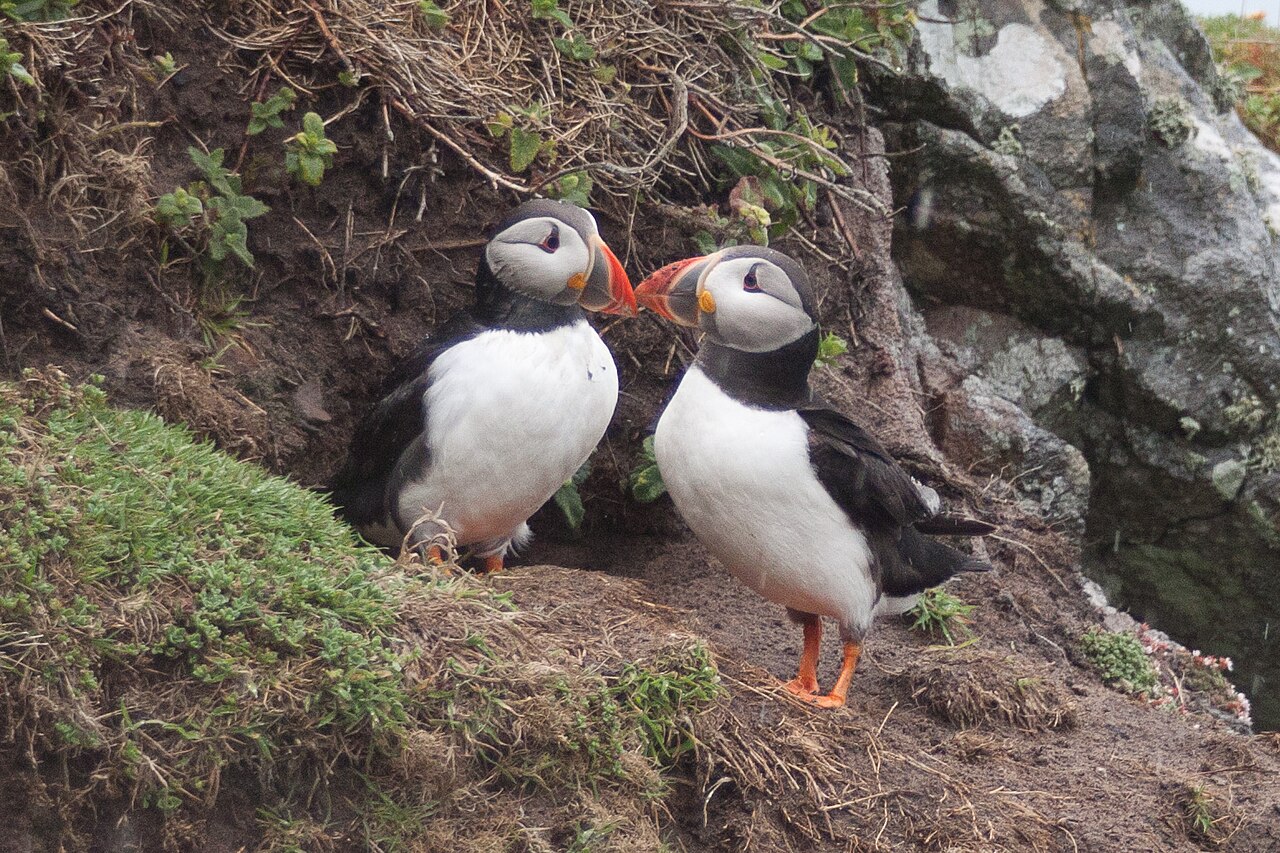
Why the Cutest: Maine is the only state in the entire US where this bird breeds and only on a chain of small islands in the Gulf of Maine, which is a major draw for tourists. All thanks to the restoration efforts of Project Puffin since 1973, which hadn’t had a single bird there since 1885 due to overhunting. Biologists got some chicks in Newfoundland, fed them for a month, and put them in artificial sod burrows on Easter Egg Rock Island from that year to 1986, translocating 954 chicks in all. Even used decoys to give the illusion that an established colony existed. The re-establishment of this nesting colony proved successful that 4,000 of those birds nest on the islands off Maine’s coast each year. While the Seal Island National Wildlife Refuge has become one of the ultimate birder destinations. Called “clown of the sea” or “sea parrot” due to its striking appearance and large colorful bill, the Atlantic Puffin is a pigeon-sized seabird that spends most of its time bobbing in the ocean waves. Bright orange and red bills with expressive eye markings give it a cheerful, painted look along with that tuxedo plumage. Despite appearing graceful in air and water, it orchestrates clumsy landings and awkward waddling gaits on land. And who doesn’t like a puffin pair rubbing their bills together?
Lifespan: Usually live around 20-30 years. Predators include gulls, skuas, large fish, and seals. Prone to fleas and the guillemot tick.
Location and Habitat: Mostly lives in the North Atlantic, spending fall and winter in the open ocean and on coasts during the breeding season.
Diet: Mostly eat fish but can supplement with shrimp, crustaceans, molluscs, and polychaetae worms.
Behavior: Typically mates for life and returns to the exact same burrow year after year and restore bonds through billing (rubbing colorful bills together), nest building, and burrow repair. Though it can do some preening and guarding the burrow while waiting for its partner. Female only lays a single egg per year and both partners share incubation and parenting duties until the chick leaves the nest. Resides in clifftop nesting colonies during breeding season which is normally in the late spring and summer, which are often divided into sub colonies. Can dig its own burrow from a grassy clifftop or reuse existing holes. Lives a solitary existence at sea.
Conservation Status: Classified as Vulnerable due to historical overhunting, overfishing, ocean pollution like oil spills, and climate change limiting food supply.
Trivia: Can flap its wings 400 per minute and reach flying speeds of 55 mph. Molts at sea during the winter in which its brightly colored characteristics are lost before returning during the spring. Can be excellent bioindicators for ocean environment. Official bird symbol of Newfoundland and Labrador in Canada. Uses semi-extended wings as “paddles” to fly through the water and its feet as a rudder. Can swim fast, reach significant depths up to 200ft, and stay submerged for up to a minute. Can swallow small fish while submerged but must bring larger specimens to the surface before it could eat them. Can hold dozens of fish in its beak at one time. Beaks can glow under ultraviolet light.
Other Candidates: Black-Capped Chickadee, Snowshoe Hare, Northern Saw-Whet Owl, North American Porcupine, and Eastern Chipmunk.
20. Maryland
Delmarva Peninsula Fox Squirrel (Sciurus niger cinereus)
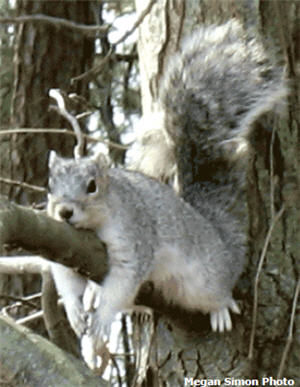
Why the Cutest: Maryland takes up much of the Delmarva Peninsula and had a lot to do with restoring this squirrel’s population. This is an extra-large and fluffy squirrel with thick, silvery fur, short nose, and round face that seems extra plump and cuddly. It’s also known to be very calm, slow moving, and relaxed compared to its more common jittery counterparts.
Lifespan: Typically lives 9-13 years in the wild but 18 years in captivity. Most die within the first year.
Location and Habitat: Lives in eastern Maryland, Delaware, and Virginia along the Delmarva Peninsula. Preferred habitat are mature hardwood and pine forests with open understories.
Diet: Eats nuts and seeds from many trees like oak, hickory, sweet gum, walnut, loblolly pine along with green pine cones.
Behavior: Make dens in tree hollows where it makes a nest of leaves and twigs in the tree’s crotch, in a trunk’s tangled vines, or near the end of a large branch. Mating occurs late winter and early spring. Females produce a litter of 1-6 young which she raises herself. Diurnal and non-territorial. Is asocial and solitary, coming into contact with its own kind during breeding season.
Conservation Status: Currently listed as Vulnerable due to habitat loss in extensive development that only 10% of its historical population was still around by the 1960s. Numbers have recover within the next several decades thanks to some habitat restoration efforts but there’s still plenty of work to be done.
Trivia: Use trees to elude predators. Said to have a large vocabulary of clucking and chucking sounds. Warn of approaching threats with distress screams and high-pitched whines during mating. Stands upright with tail over back when in contact with another fox squirrel. But most vocalization comprises barks.
Other Candidates: North American River Otter, American Mink, Least Weasel, Piping Plover, and Raccoon.


