
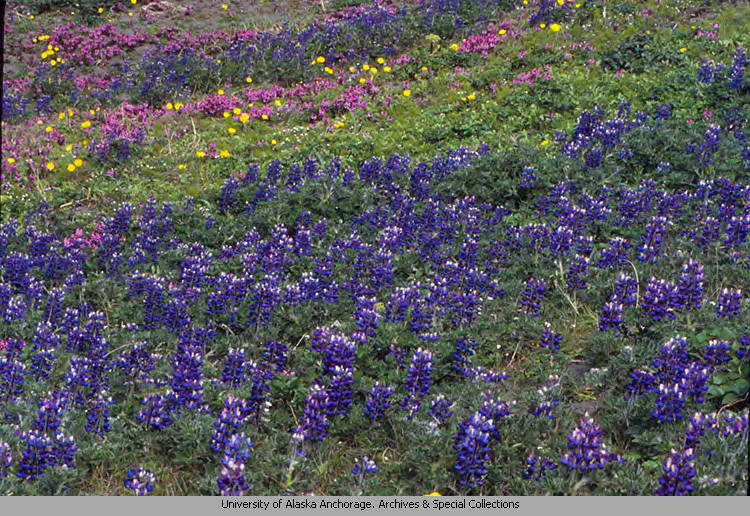
In my country, the United States of America, wildflowers are often part of the American landscape but often don’t receive the recognition they deserve. Yes, many appear in gardens for their ornamental value. But so often we don’t think of these flowers existing in a wild setting. While those we see growing in the wild are often seen as either part of the scenery and those in our lawn are often seen as weeds to mow over or else face the wrath of the local HOA. However, these flowers are part of our heritage and in this series, I’ll highlight the prettiest wildflower from each state. In this post, we’ll look at a rare aquatic plant from the south, a hardy lupine in the far north, a couple red flowers in the southeast, a pink flower in the desert, a poppy and columbine in the west, a marsh flower in New England, a butterfly flower in Delaware, and an aquatic flower in Florida.
- Alabama
Cahaba Lily (Hymenocallis coronaria)
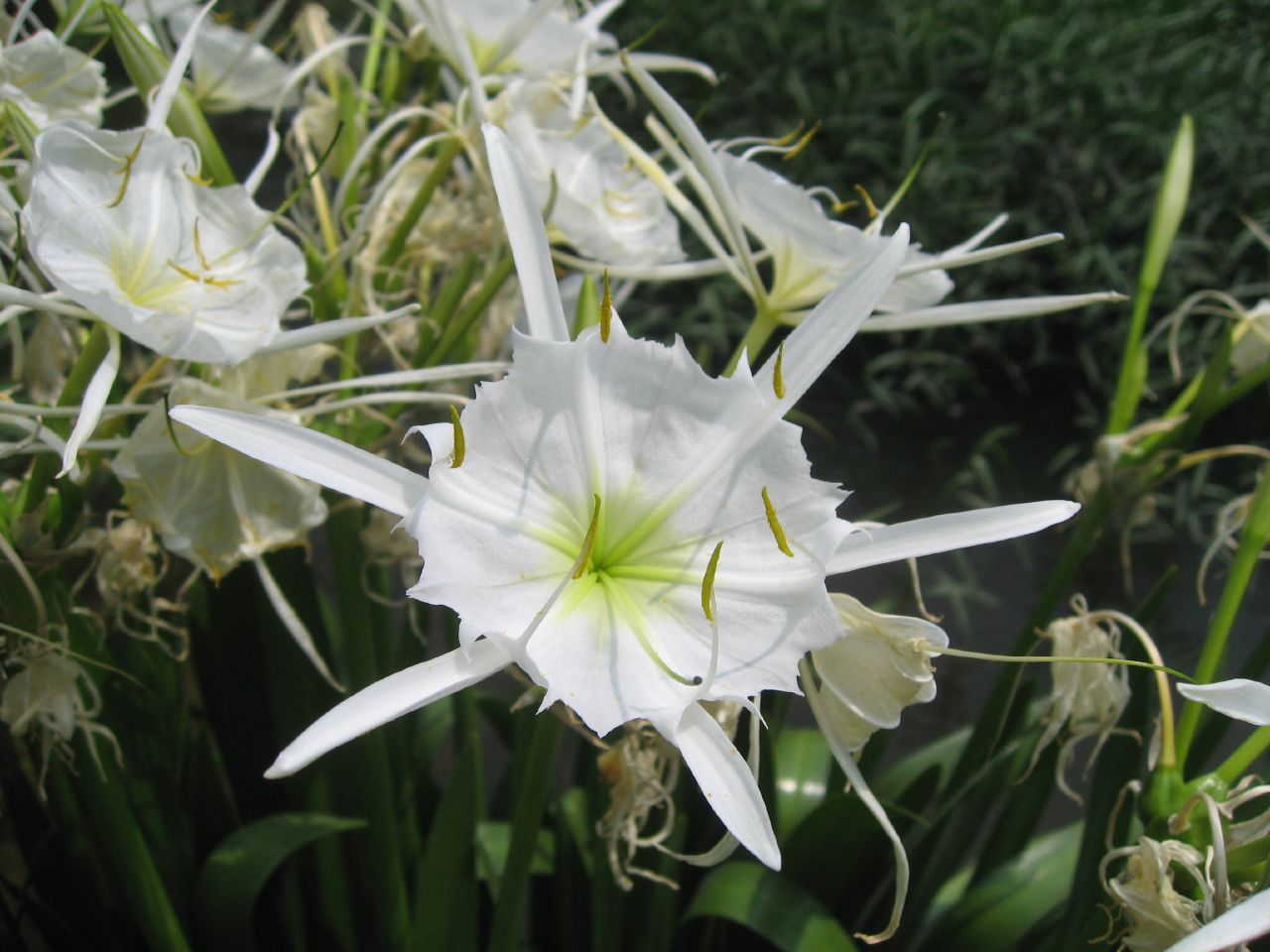
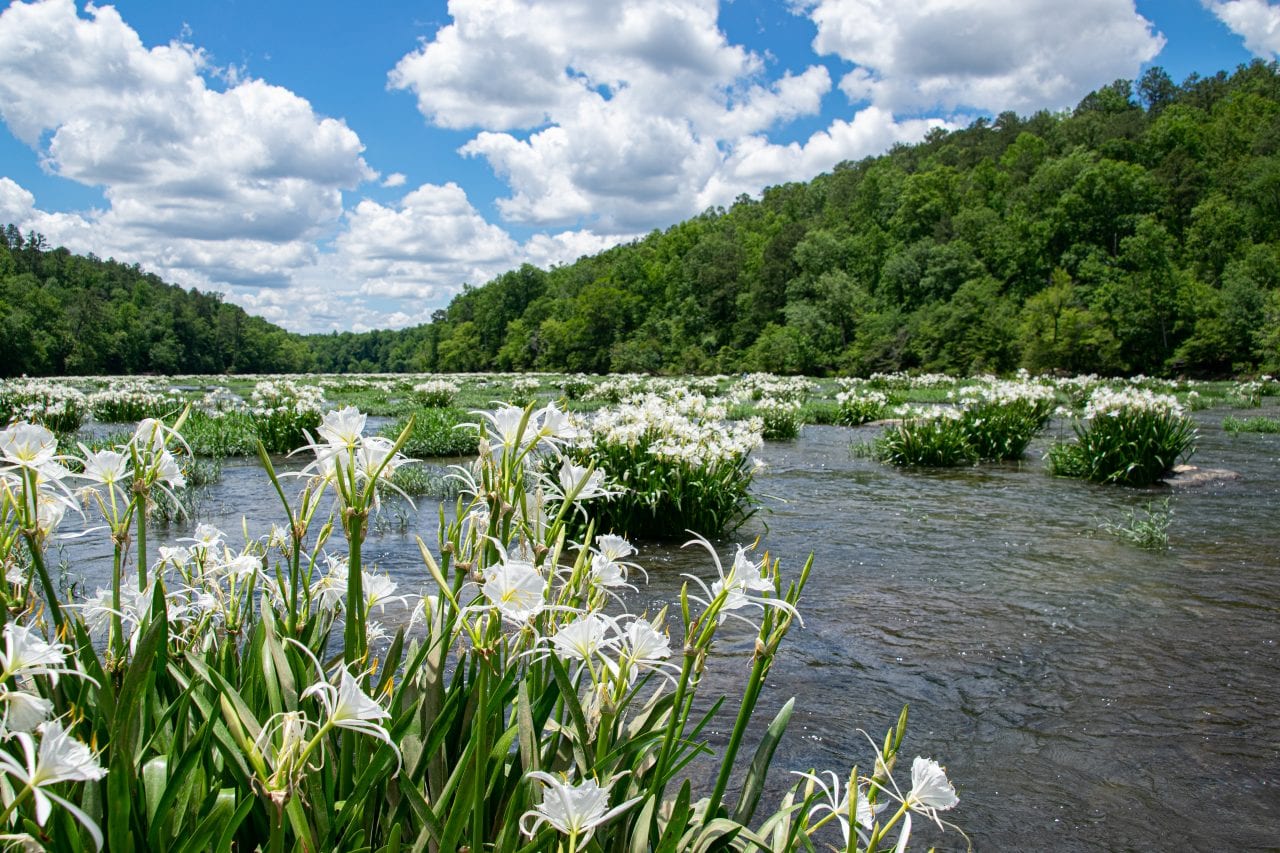
Why the Prettiest: It’s a rare aquatic perennial flower with one of its largest populations in the state’s Cahaba River in 3 places including the Cahaba River Wildlife Refuge and Buck Creek. Also present in the Black Warrior, Coosa, Tallapoosa, and Chattahoochee river systems. Its flowers are showy, fragrant blossoms about 3 in wide with a central cup-like structure called a corona. While its leaves are long, green, flat, and strap-like.
Location: Found only in the southeastern United States such as in Alabama, Georgia, and South Carolina.
Environment: Lives near rocky shoals of rivers and other fresh waterways within the southeast. Grows 3-4 ft tall.
Bloom Season: Blooms from early May to late June with each fragrant flower opening overnight and lasting for a day. Visited and possibly pollinated by the plebian sphinx moth and pipevine swallowtail butterfly.
Color Varieties: Available in white.
Gardening Conditions: Requires a swift, shallow water current and direct sunlight to flourish. Develops from bulb lodging in rocky shoal cracks. Gardeners sometimes grow them in consistently moist garden soil.
Conservation Status: Classified as Vulnerable due to entire populations being wiped out thanks to dam construction, chemical runoff, sewage, and industrial waste threatening fragile river ecosystems. There are approximately only 50 extant populations that only exist in Alabama, Georgia, and South Carolina. A conservation project in Georgia entails seeds being collected, germinated, and grown to establish hardy root systems. Before being planted along river areas where habitat is prime.
Trivia: Also known as a shoals lily or shoals spider lily.
Other Candidates: Pink Lady’s Slipper, Fire Pink, Yellow Trout Lily, Giant Blue Iris, and Purple Coneflower.
2. Alaska
Arctic Lupine (Lupinus nootkatensis)
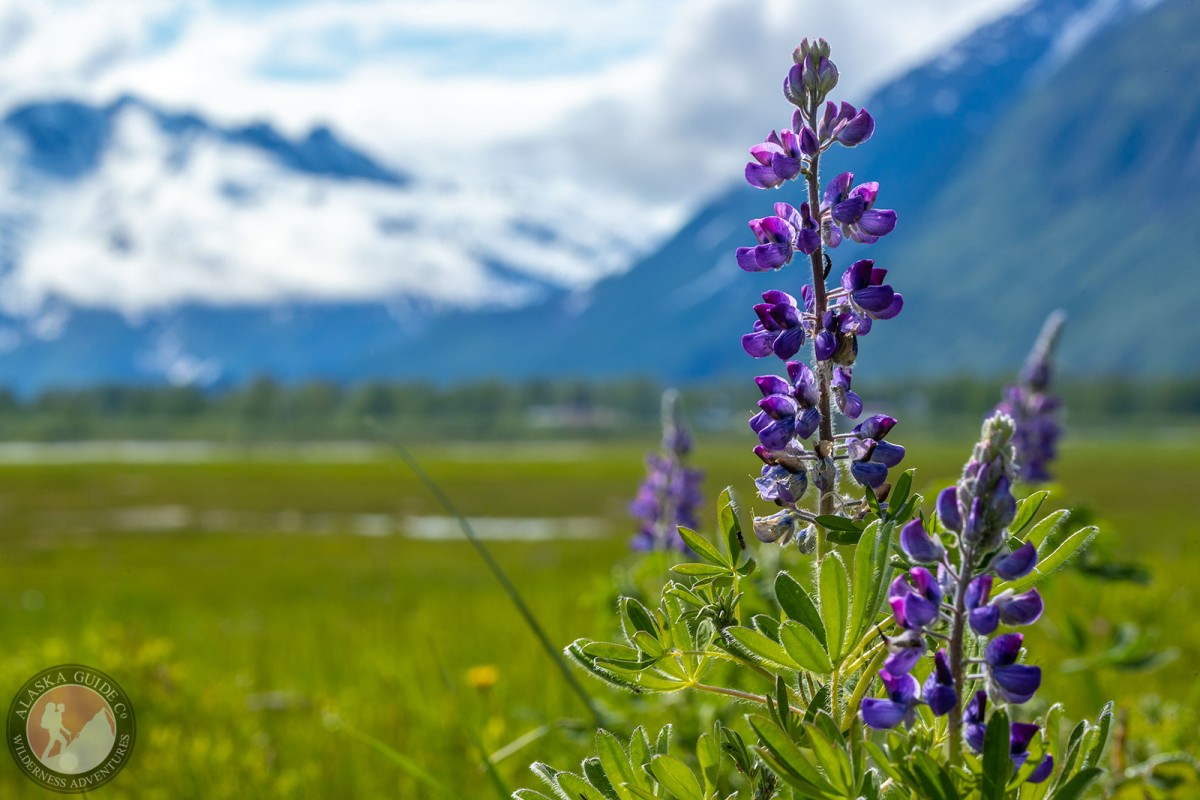
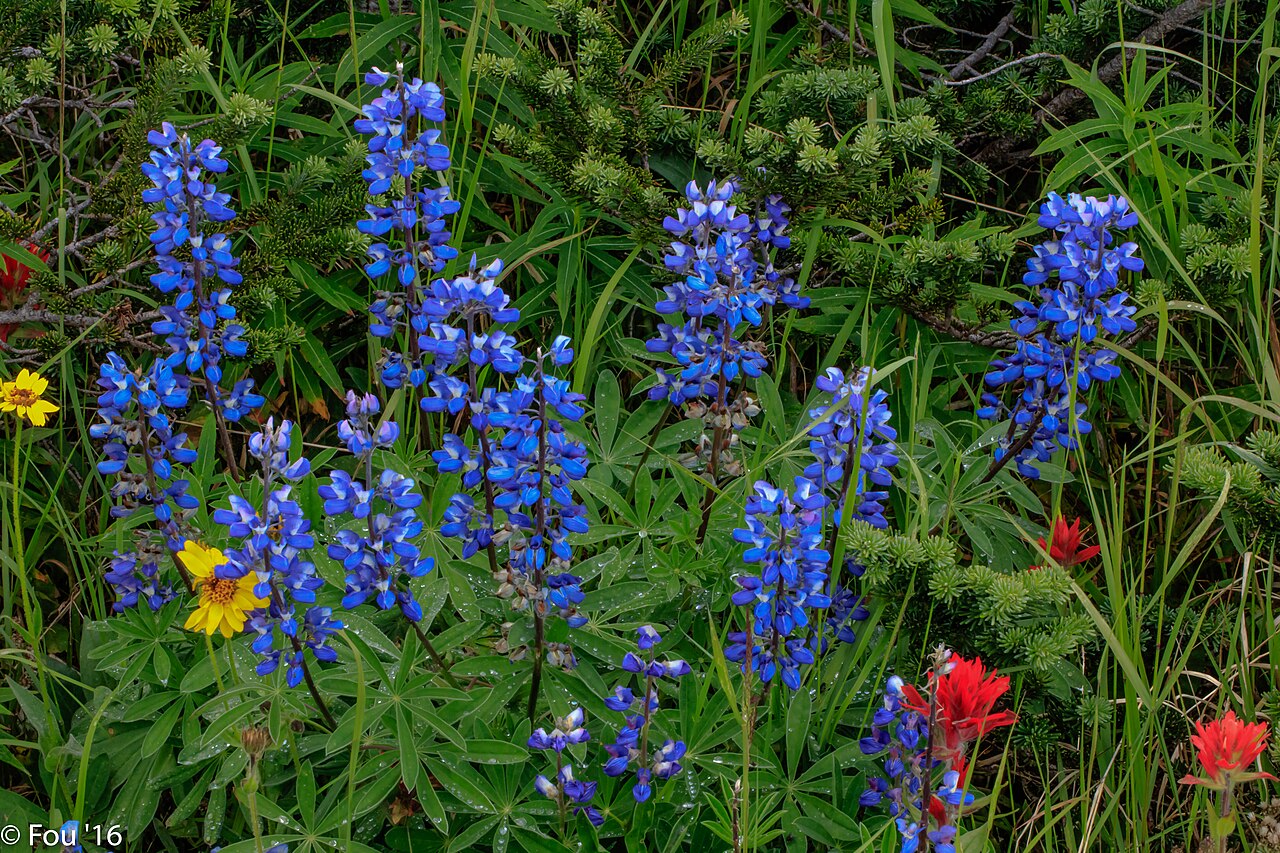
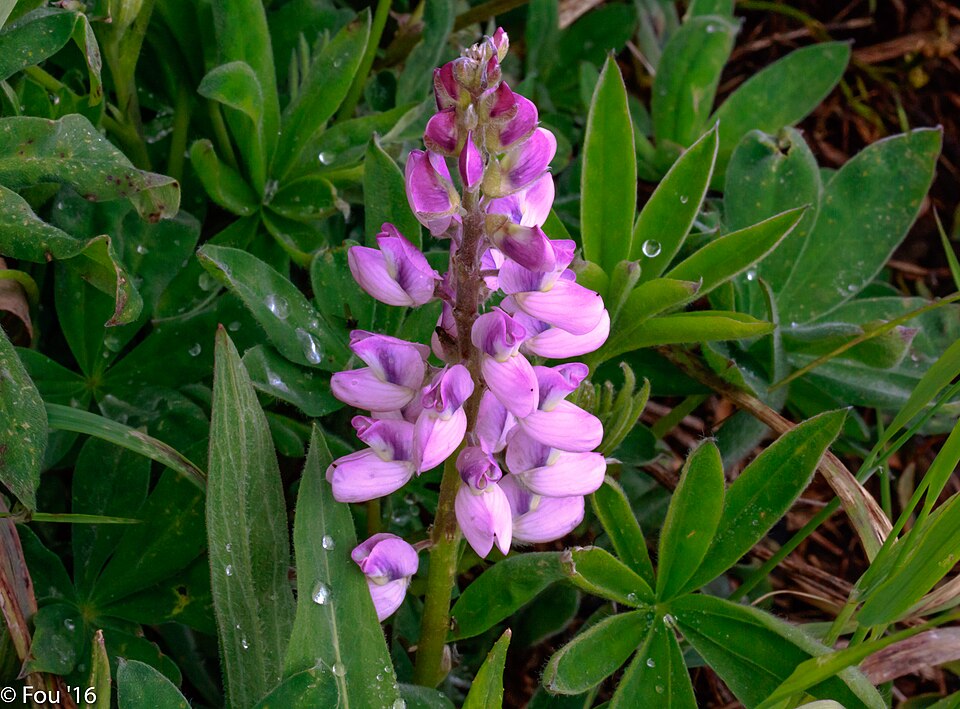
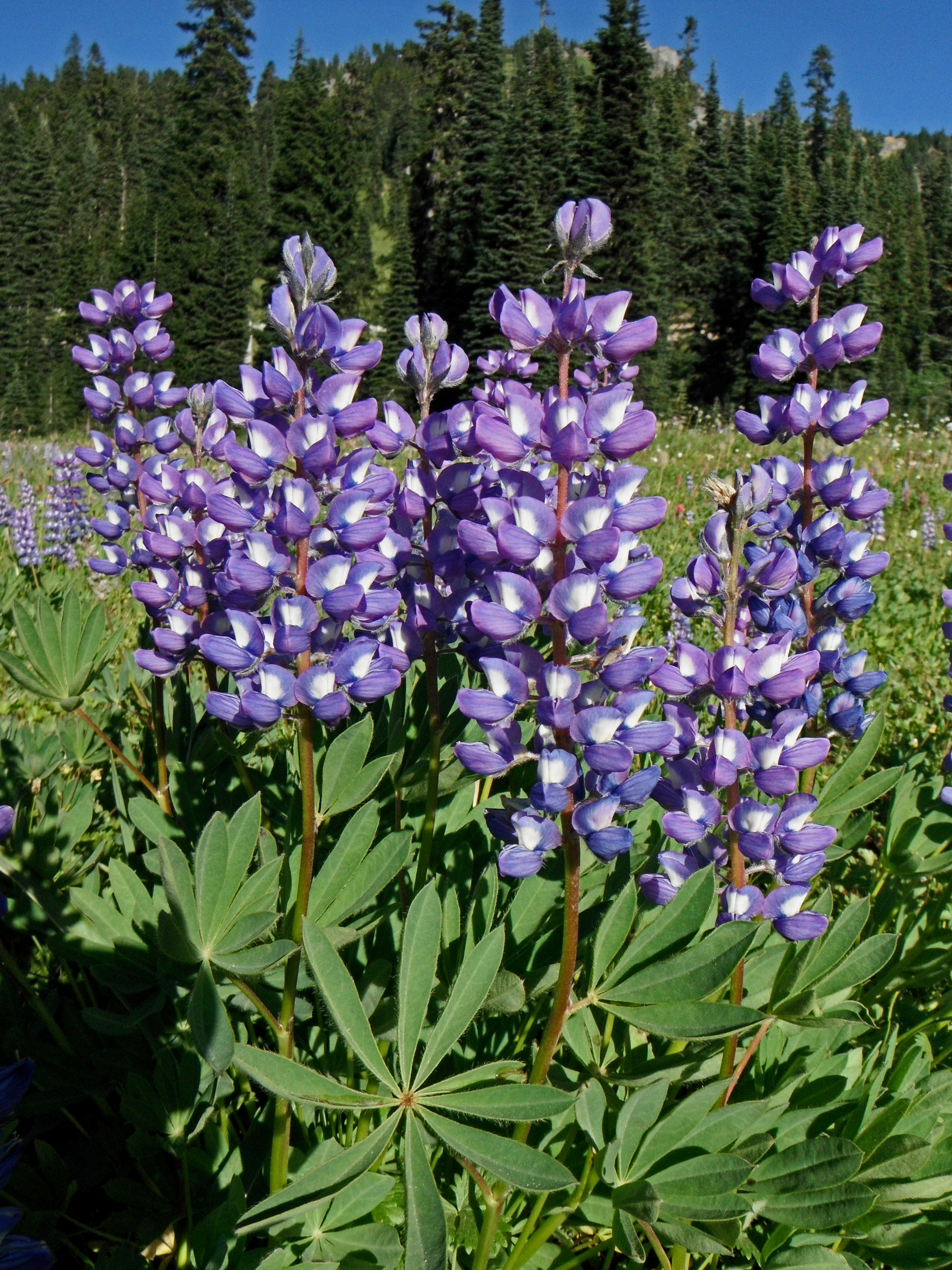
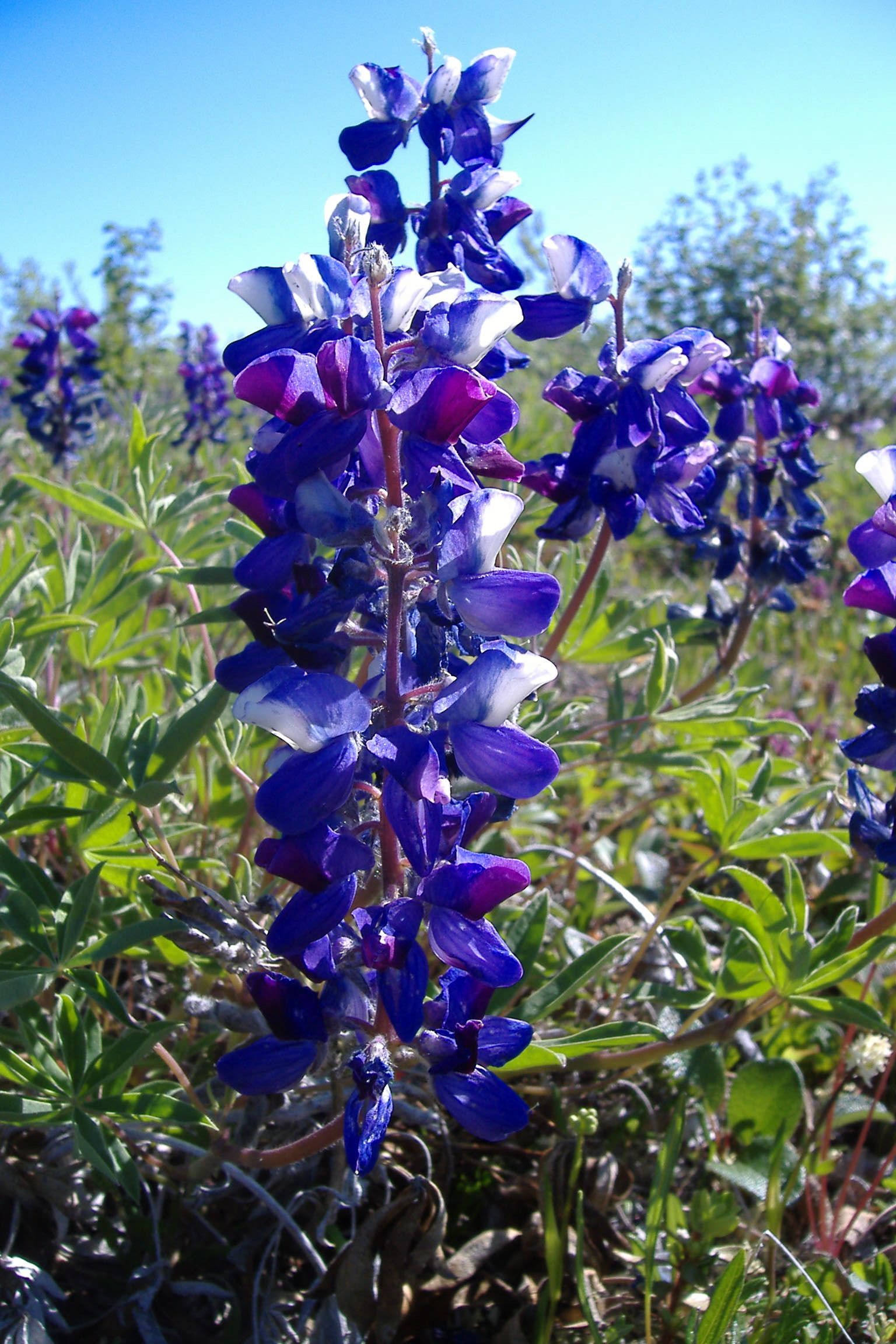
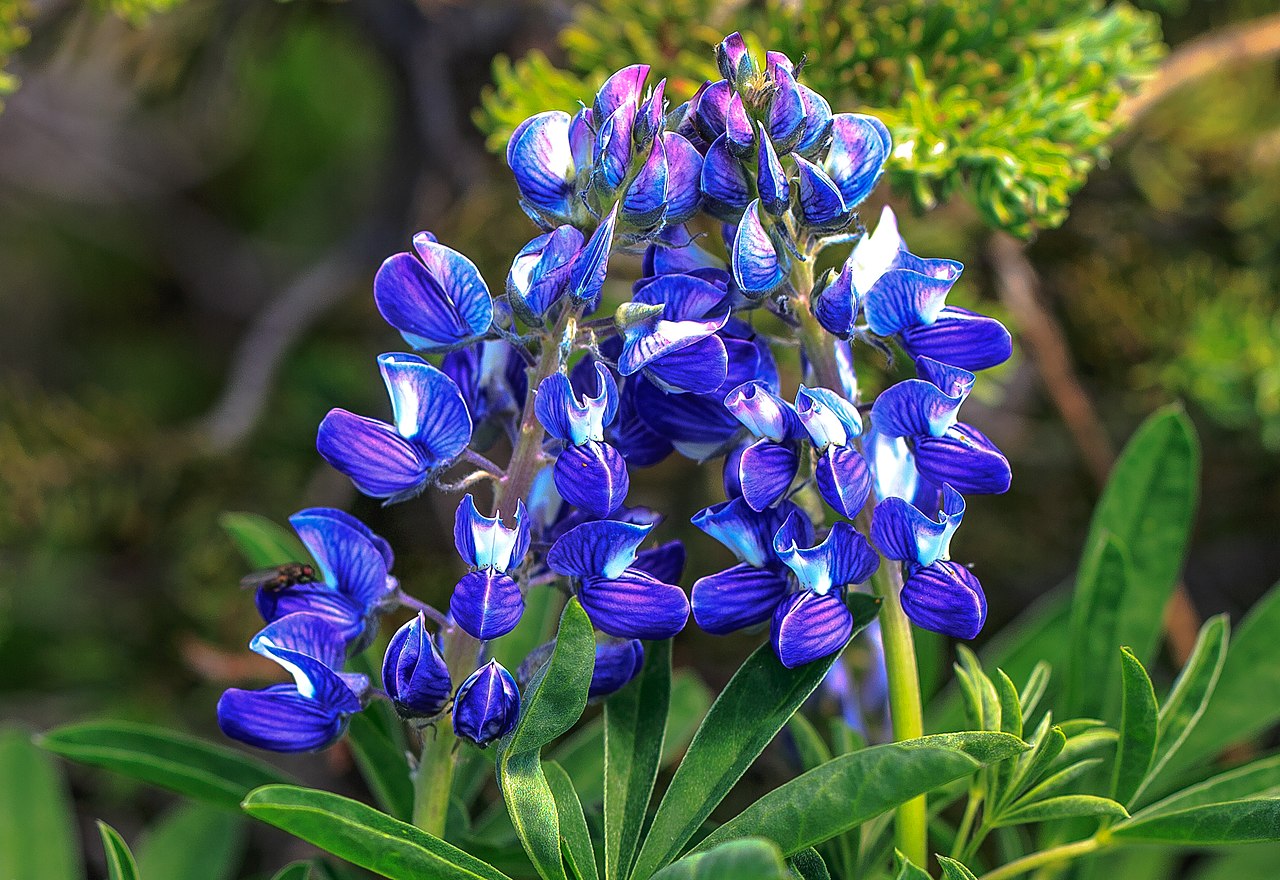
Why the Prettiest: It’s a perennial flower with a strong native presence in Alaska and enjoys significant popularity in Europe. Sports palmately compound (hand-shaped) leaves with dark green 3-9 leaflets that are covered in fine hairs. Displays tall, showy racemes (spikes) of pea-like flowers.
Location: Native to the western coast of North America from the Aleutian Islands, South central Alaska, and along the Alaskan panhandle to British Columbia.
Environment: Grows along roadsides, gravel bars, open meadows, and forest clearings. Thrives in well-drained slopes, subalpine ridges, open tundra, and forest clearings. Grows up to 18-20 in tall.
Bloom Season: Blooms from June to August. Attracts beneficial insects such as native bees, bumblebees, butterflies, and hummingbirds.
Color Varieties: Available in blue, purple, pink, and white.
Gardening Conditions: Is tolerant of cool, wet summers and seed sowing is preferable since its long tap root makes transplanting difficult. Fuzzy seed pods are attractive to children but speckled black seeds can be toxic. Though the toxins flush through the system, internal use isn’t advised naturally. Since ingesting large quantities can cause respiratory depression, sleepiness, and convulsions.
Conservation Status: Classified as Least Concern. Considered invasive in Iceland.
Trivia: Introduced to Europe in the 18th century and is one of the species from which garden hybrids are derived. Valued in Britain and Northern Europe. Is a rigorous self-seeder and seeds can demonstrate extreme dormancy longevity.
Other Candidates: Fireweed, Wild Iris, and Chocolate Lily.
3. Arizona
Parry’s Penstemon (Penstemon parryi)
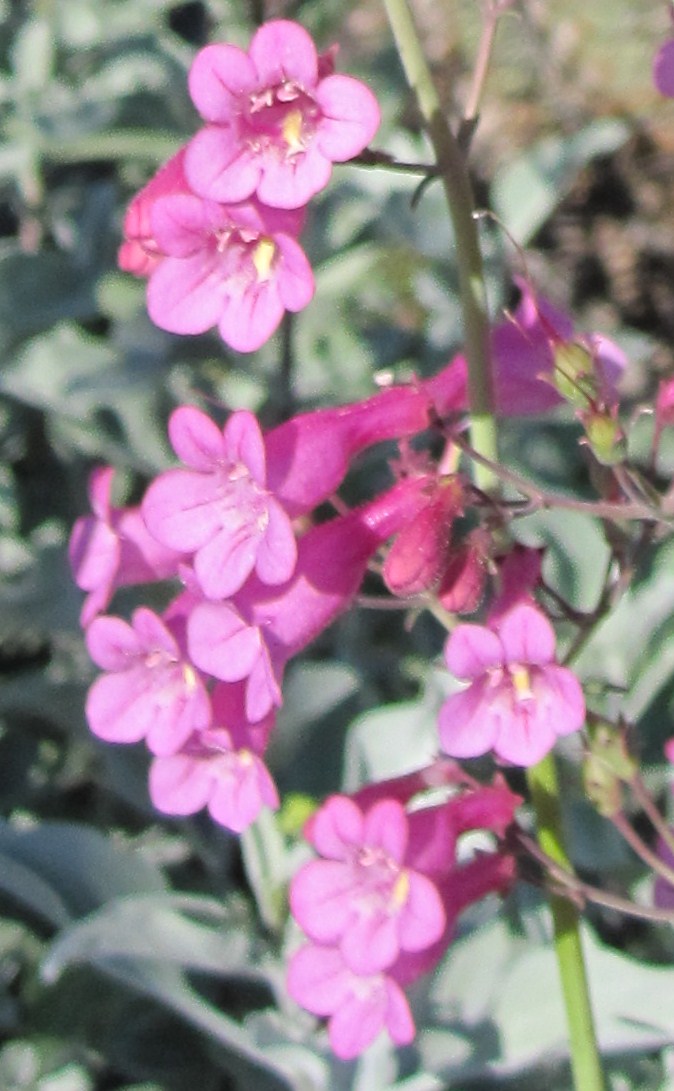
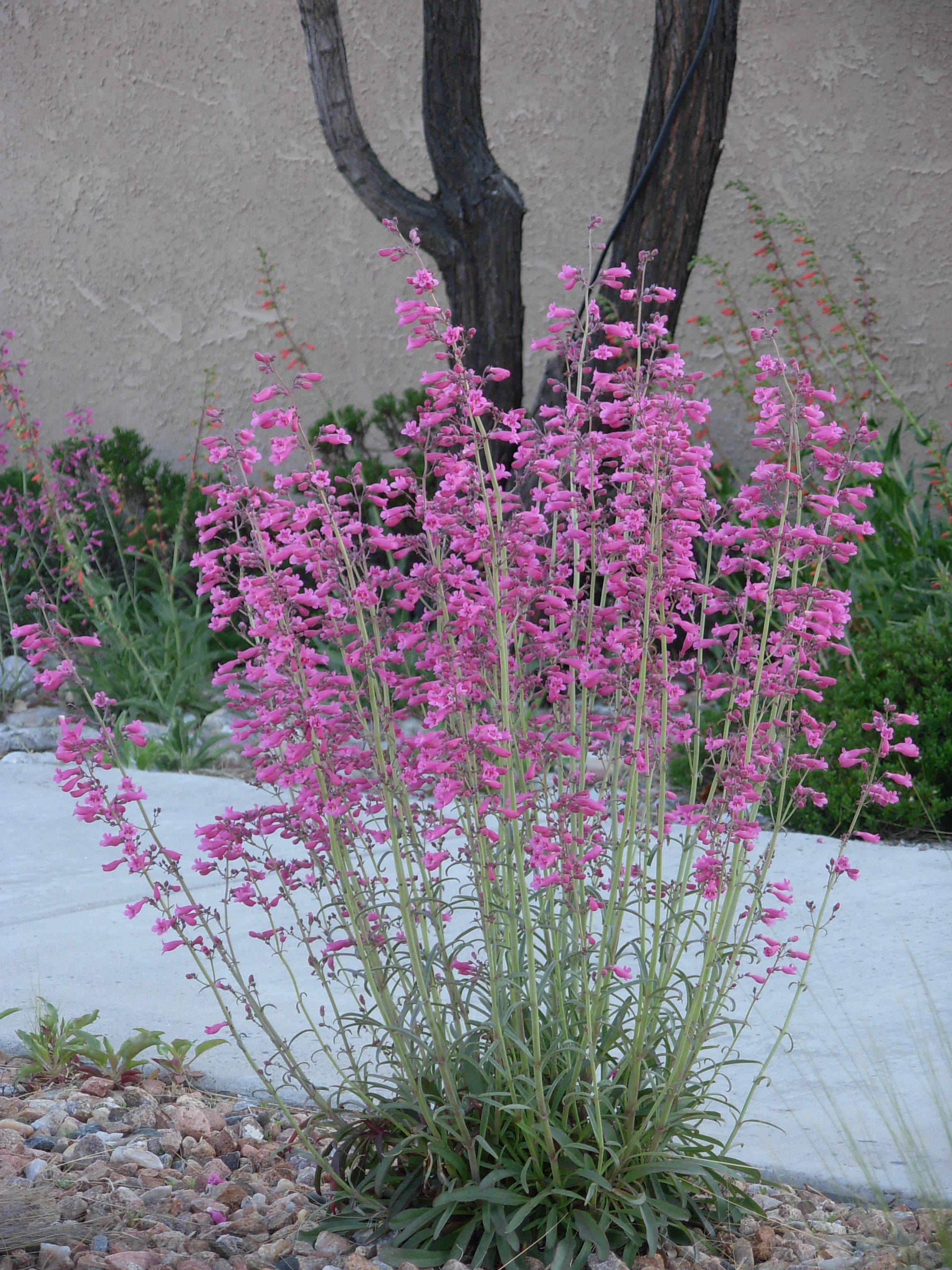
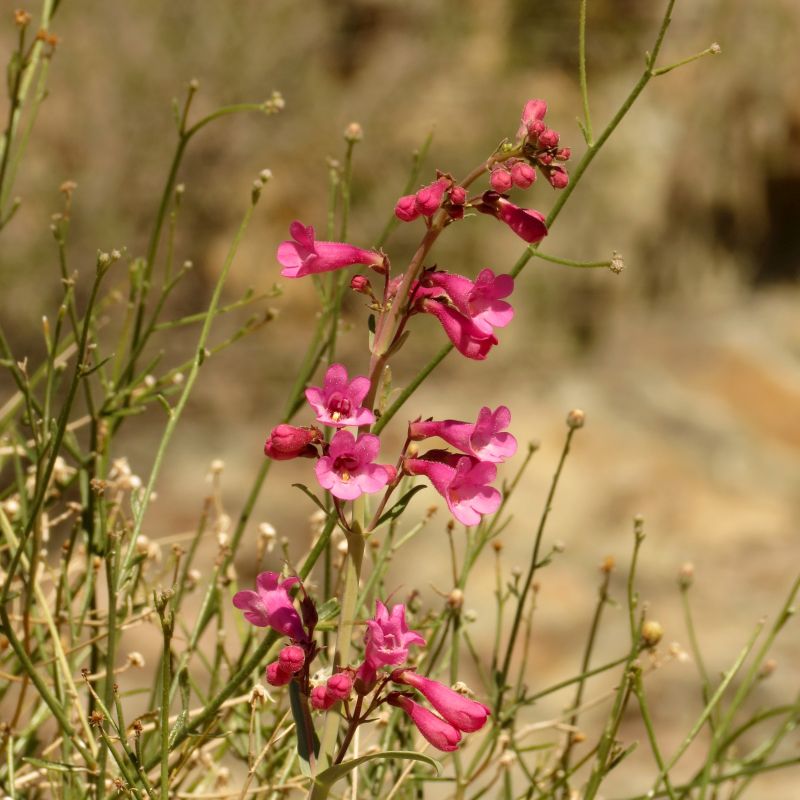
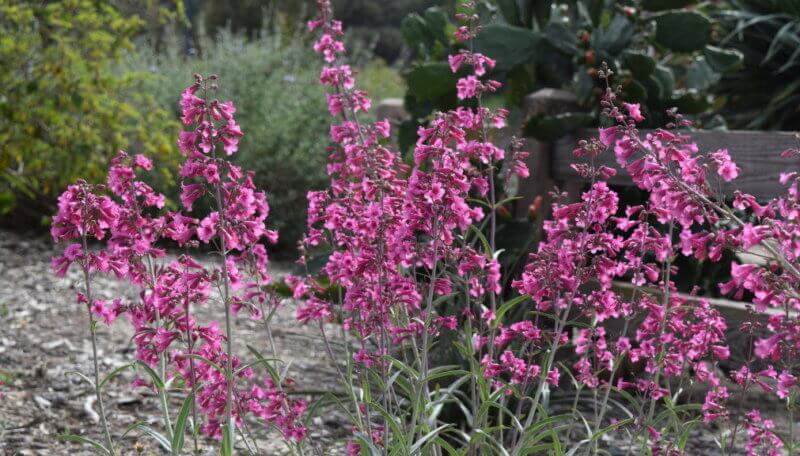
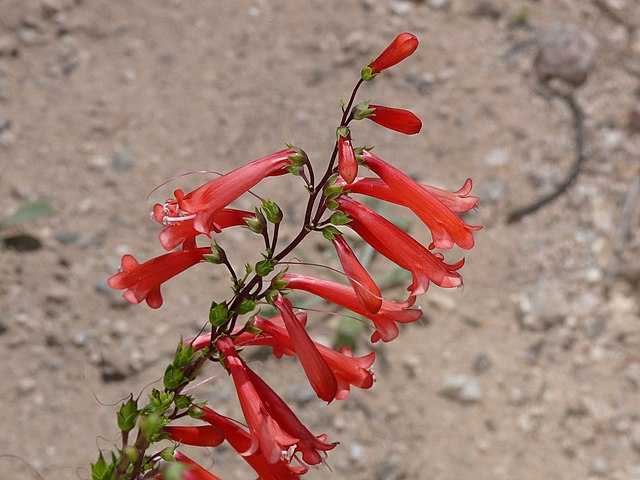
Why the Prettiest: This flower is native perennial to southern Arizona’s Sonoran Desert. Has bright pink to magenta tubular, bell-shaped blooms lining upper stems. Also sports bluish-green, lance-shaped leaves forming a low cluster (rosette) at the plant’s base.
Location: Native to the Sonoran Desert of southern Arizona and northern Mexico.
Environment: Lives in the lowland desert. Can grow 2-5 ft high in upright flowering stalks and blooms in its second year. Can survive average Sonoran rainfall but not prolonged drought.
Bloom Season: Blooms in from March to May. Major favorite of hummingbirds and large butterflies.
Color Varieties: Available in pink, magenta, and red.
Gardening Conditions: Flowering is only achieved in its first year if planted in autumn. Thrives in full sun and part shade. Has low water needs and tolerates cold from 10-20 º F depending on growth stage. Needs dry, well-drained soil.
Conservation Status: Classified as Apparently Secure but faces threats of climate change.
Trivia: Finches and other small birds eat its dry seeds on stalks. While rabbits rarely chew its foliage.
Other Candidates: California Poppy, Desert Globemallow, Owl’s Clover, and Brittlebrush.
4. Arkansas
Cardinal Flower (Lobelia cardinalis)
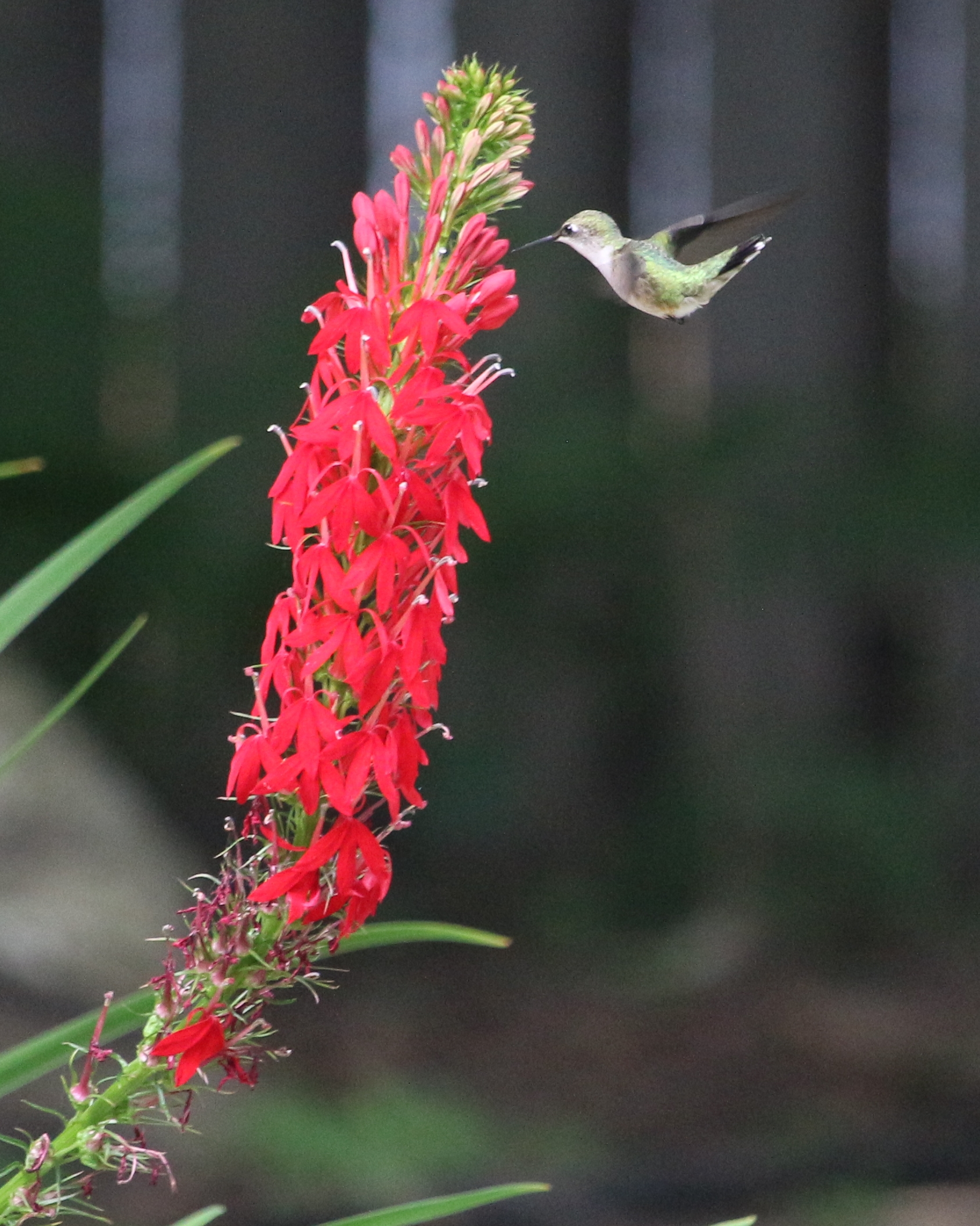
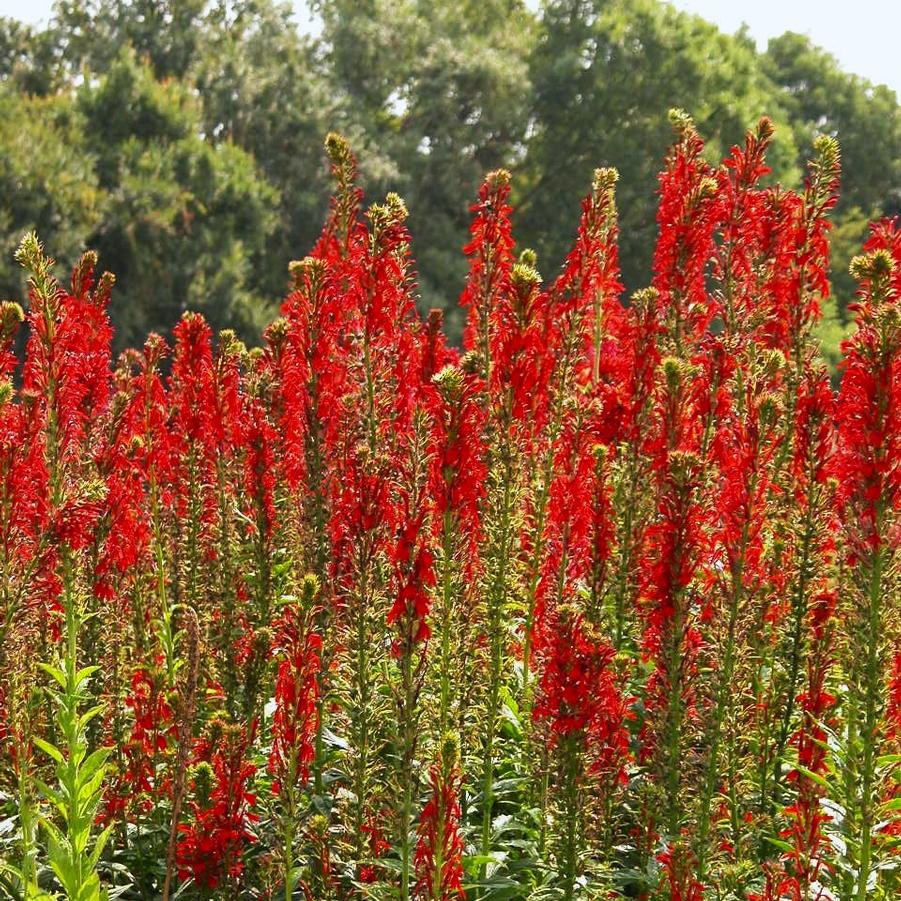
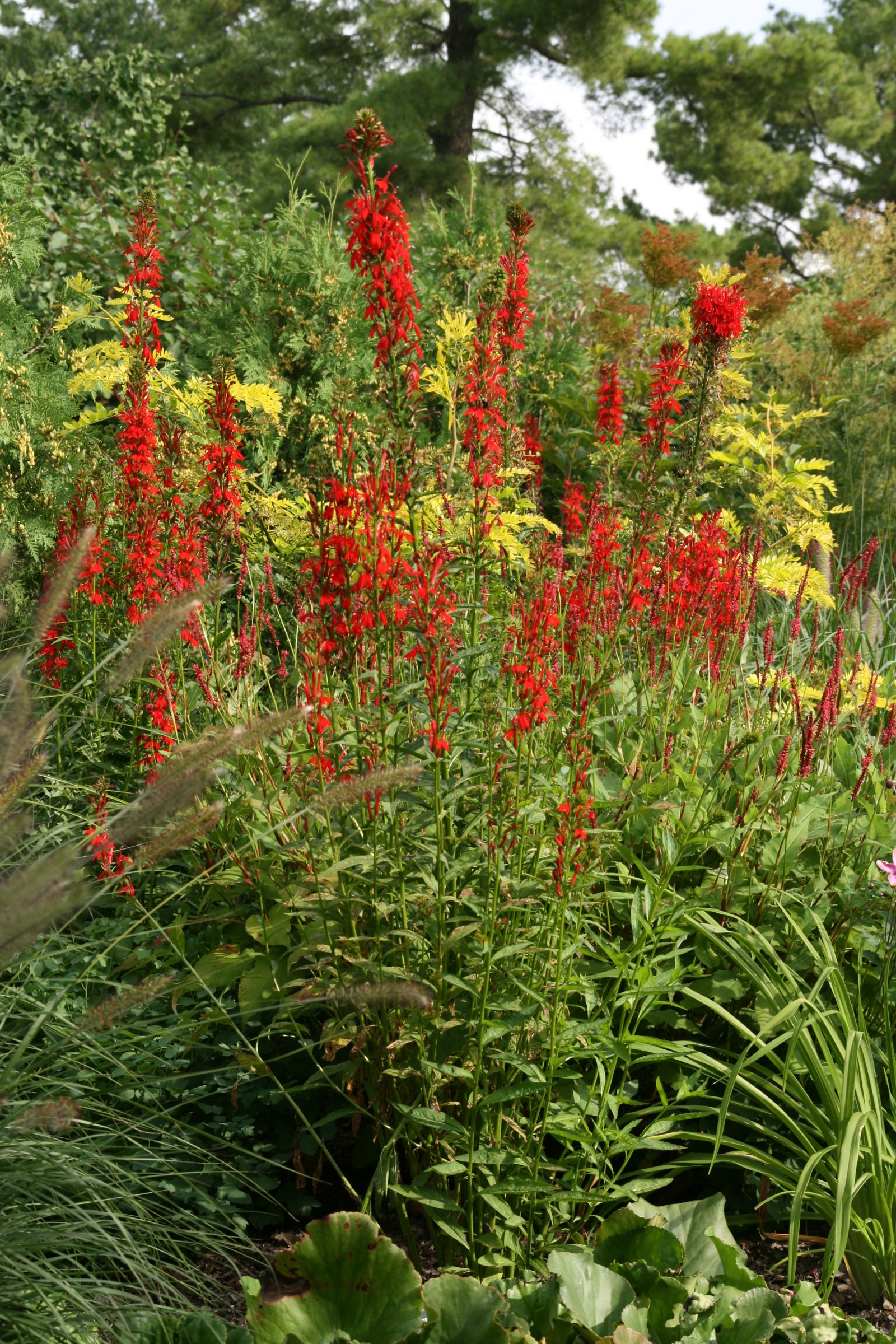
Why the Prettiest: It’s a perennial herbaceous but short-lived plant known for its brilliant, vivid red spikes attracting hummingbirds and butterflies. Sports tubular, bright red blooms with a split lower lip, opening from bottom to top on a spike. Foliage comprises of dark green, lance-shaped and finely-toothed leaves.
Location: Native to southeastern Canada, eastern and southwestern United States, Mexico, Central America, and northern Colombia.
Environment: Found primarily in wet places like riparian zones, riverbanks, bogs, and swamps. Sometimes found in damp or semi-flooded or shaded forest areas. Tends to occupy locations near a water source, providing its roots with consistent hydration via groundwater from saturated soil. Could even be found growing away from or closer to the water and growing aquatically but often with the foliage submerged and flowers at the surface. Can grow up to 2-4 ft tall. Relies on profligate self-seeding.
Bloom Season: Season runs from July through September. Favorite of hummingbirds and butterflies.
Color Varieties: Available in red.
Gardening Conditions: Requires fairly deep soils that remains reliably moist yet sufficiently aerated year-round. May be grown as an accent plant in or along ponds, fountains, or other garden water features. If not planted in or around a water source, it prefers its roots to stay cool, something achieved when grown in dappled sun or part shade. Easily propagated by seed or dividing out young plants forming around the older, mature plants each year. Contains a number of naturally occurring toxic alkaloids such as lobelanine and lobeline, rendering it harmful upon ingestion even in small to mid-sized quantities. Negative symptoms include nausea, vomiting, diarrhea, excessive salivation, fatigue/exhaustion, weakness, pupil dilation, convulsions, and even a coma.
Conservation Status: Currently classified as Least Concern.
Trivia: Used frequently in aquariums and aquascaping hobbies. Used by the Zuni as an ingredient for “schumaakwe cakes” and externally for rheumatism and swelling. Penobscot people dried and smoked (and maybe even chewed) its leaves as a tobacco substitute.
Other Candidates: Purple Coneflower, Black-Eyed Susan, Butterfly Weed, Indian Pink, and White Bergamot.
5. California
California Poppy (Eschscholzia californica)
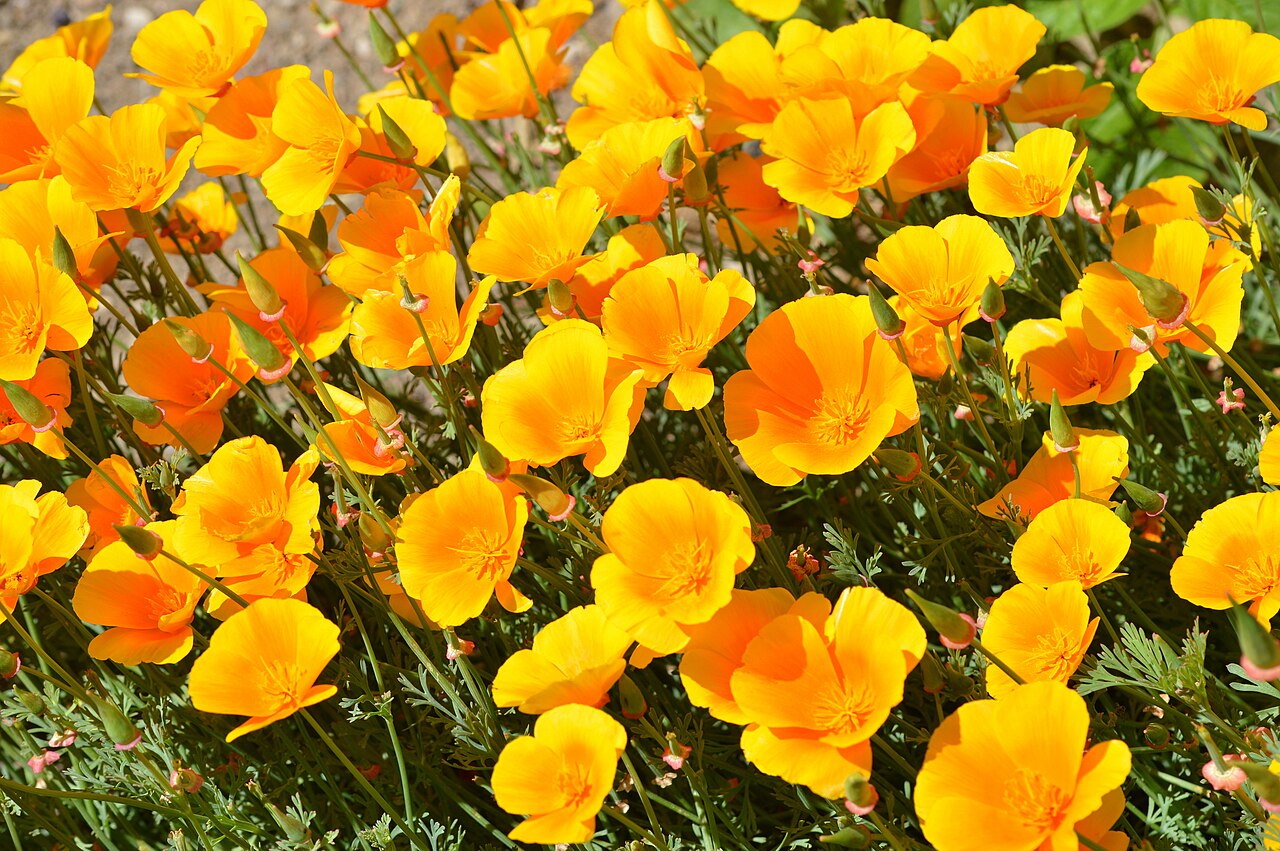
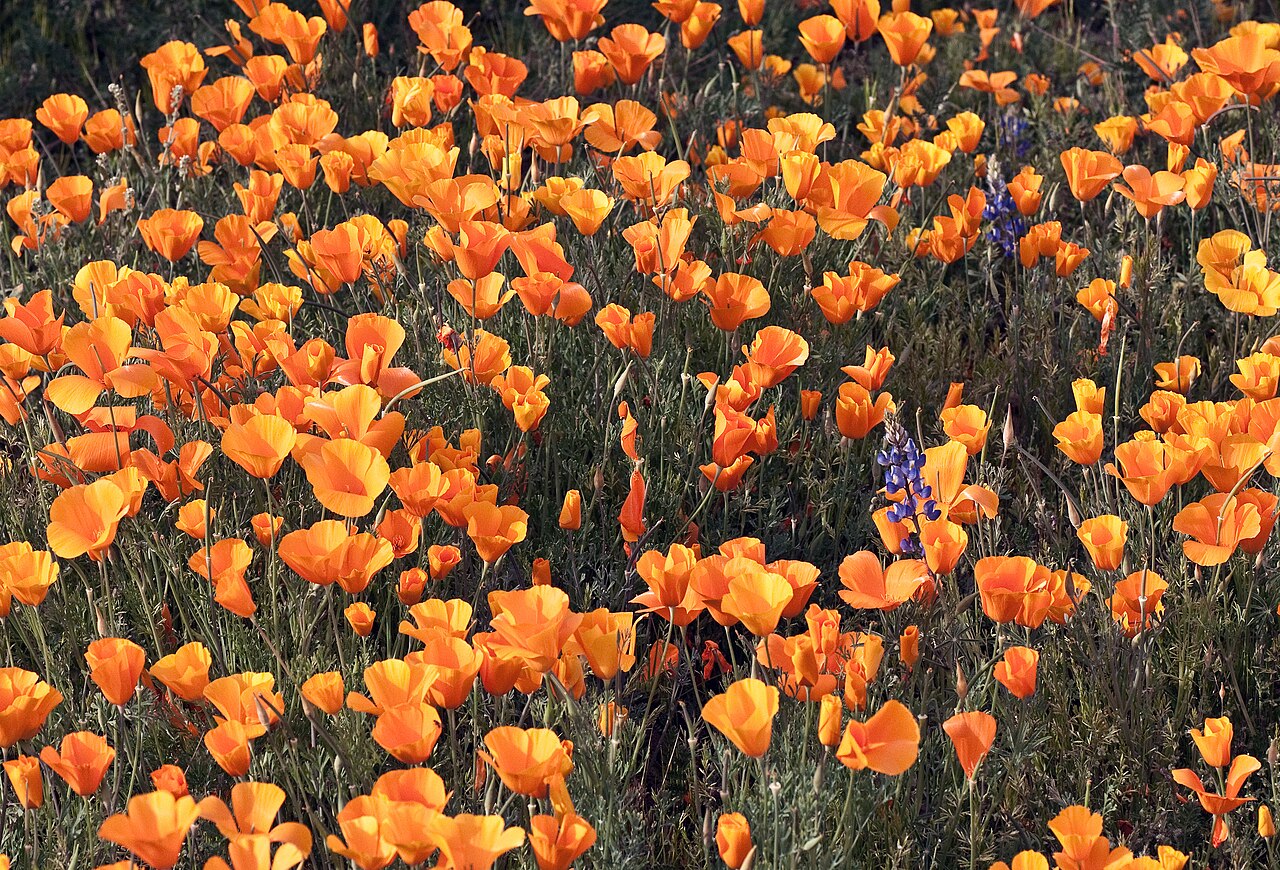
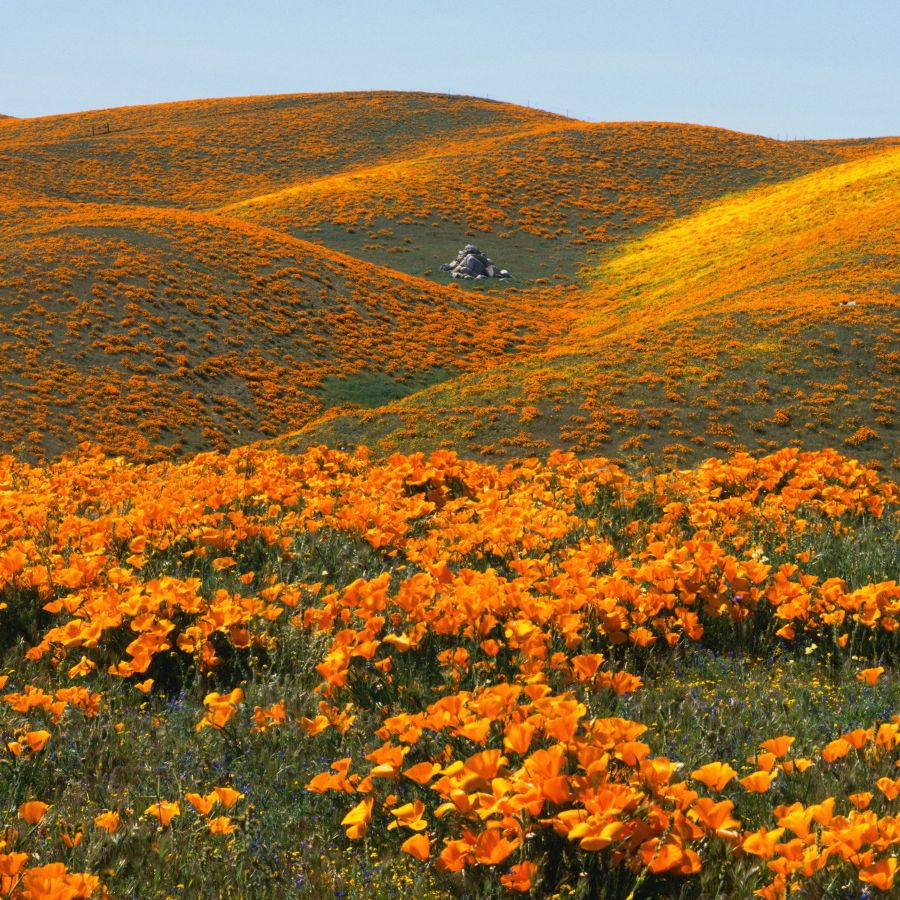
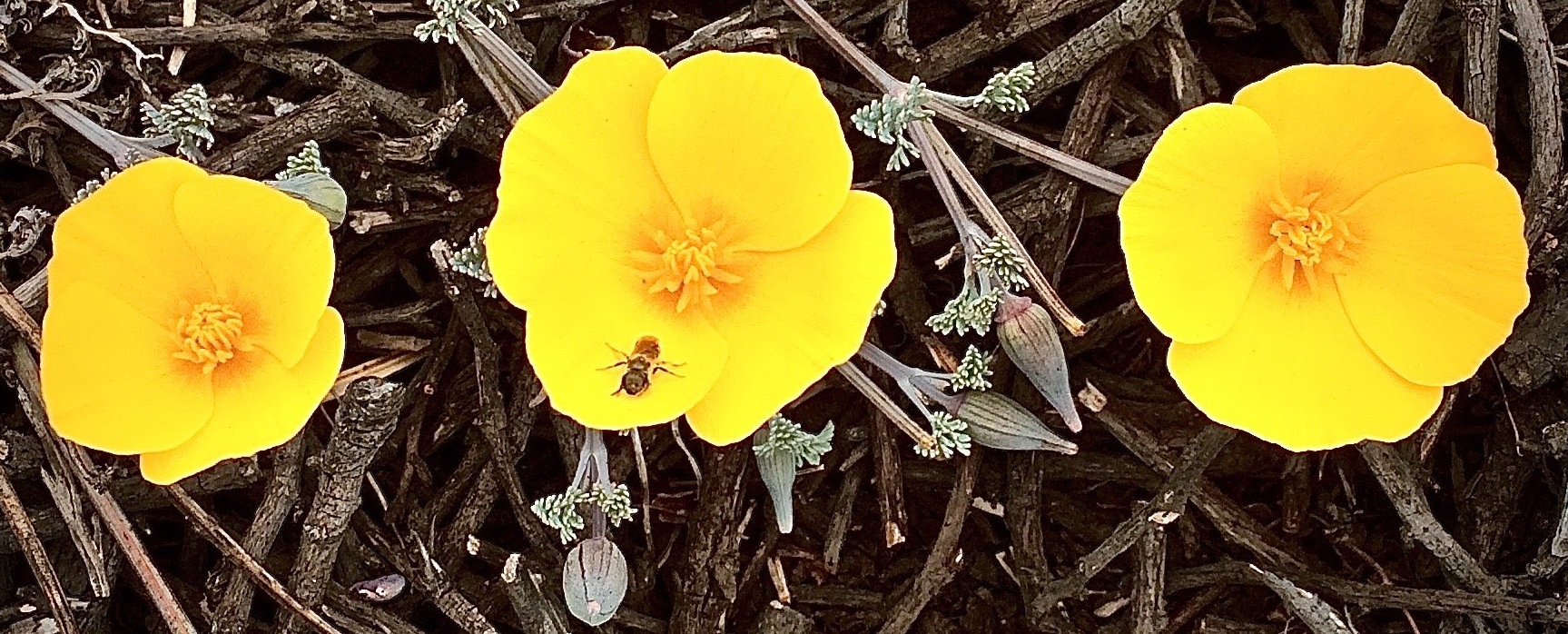
Why the Prettiest: For one, this short-lived perennial or annual plant is California’s official state flower since 1903. Los Angeles County has the Antelope California Poppy Reserve that covers all 1,745 acres of the place during blooming season. Other prominent locations are Bear Valley and Point Buchon. Foliage comprises of distinctive, delicate blue-green leaves with a feathery, lacy texture.
Location: Native to the Pacific Northwest to the Sonora.
Environment: Grows in areas with sunny weather with poor, sandy, or rocky well-drained soil. Grows 1-2ft tall with a compact spread.
Bloom Season: Blooms from February to September. However, flowers can close at night or in windy, cold, and cloudy weather. Attracts native bees, butterflies, and other beneficial insects.
Color Varieties: Available in orange and yellow in the wild. Available in a wide range of flowers as a garden plant.
Gardening Conditions: Best grown as an annual and is easy to tolerate due to being drought tolerant and self-seeding. Ideal setting is full sun and well-draining sandy or loam soil. Water sparingly.
Conservation Status: Classified as Apparently Secure although it’s been threatened by climate change. Has been sold and naturalized throughout Australia, New Zealand, Chile, and Argentina.
Trivia: Has 90 synonyms and 4 varieties. Leaves are often used as a food or garnish and seeds are used in cooking. Petals can be used to create a syrup or dried and added to water to make an infusion or boiled for tea. Used by the some of the state’s ingenious peoples as traditional medicine and cosmetics.
Other Candidates: Matiljia Poppy, Baby Blue Eyes, Arroyo Lupine, Dahlia, California Fuschia, Coyote Mint.
6. Colorado
Colorado Blue Columbine (Aquilegia coerulea)
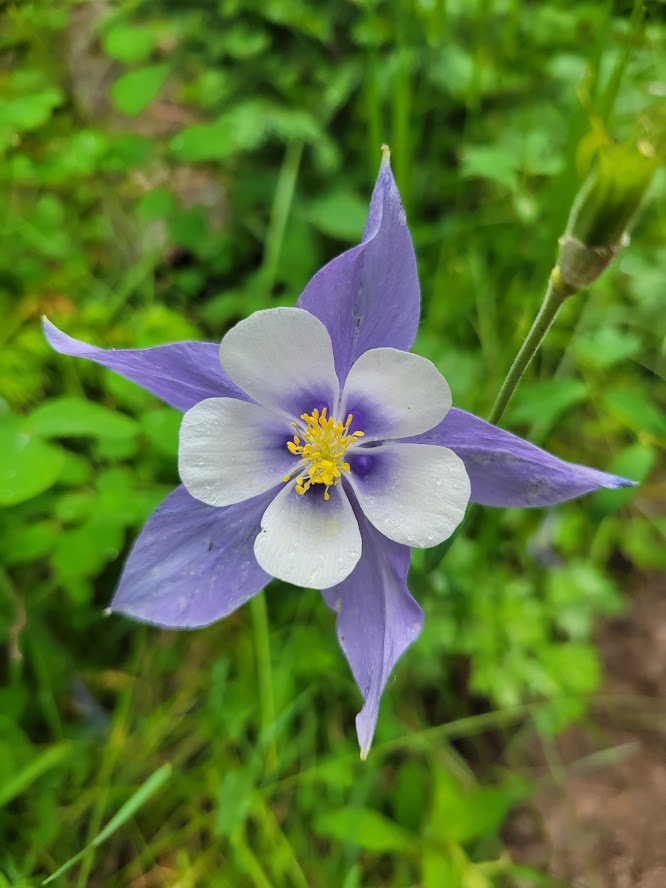
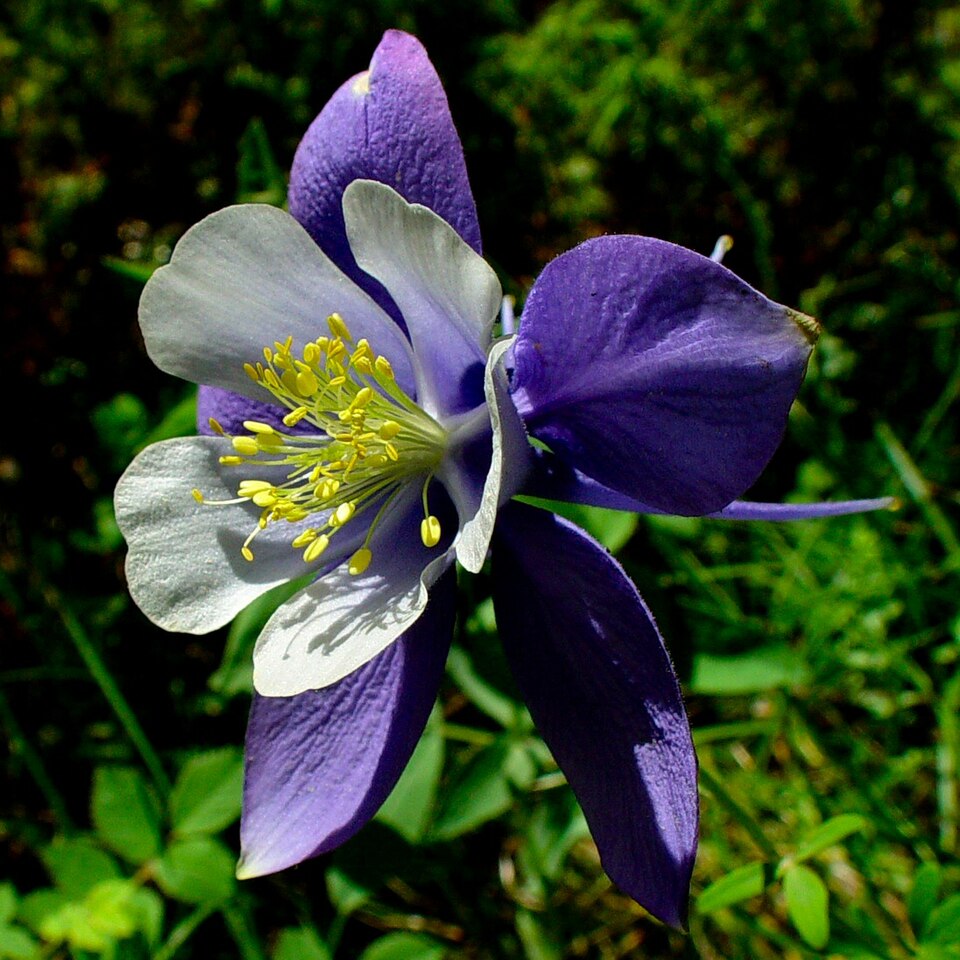
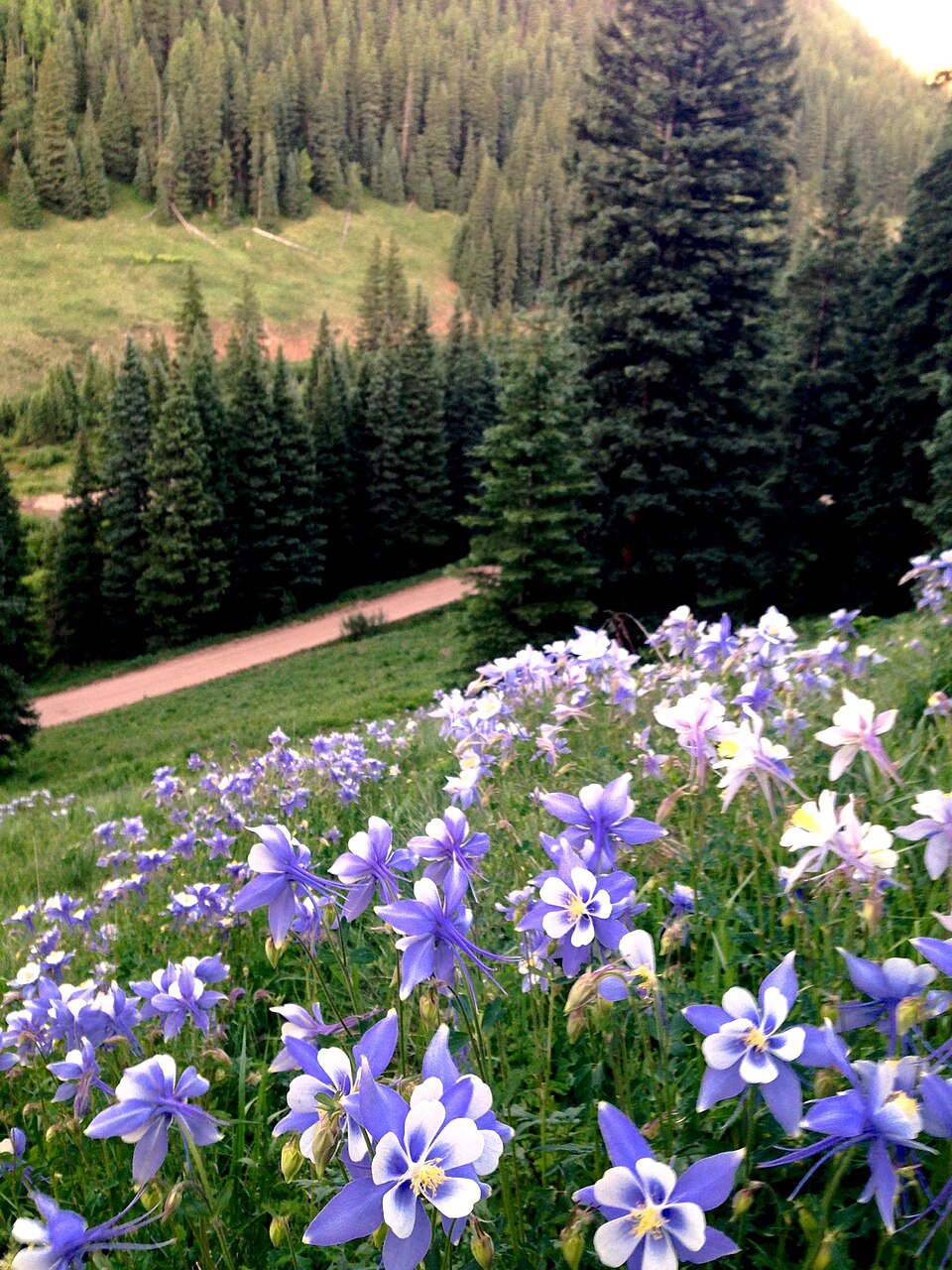
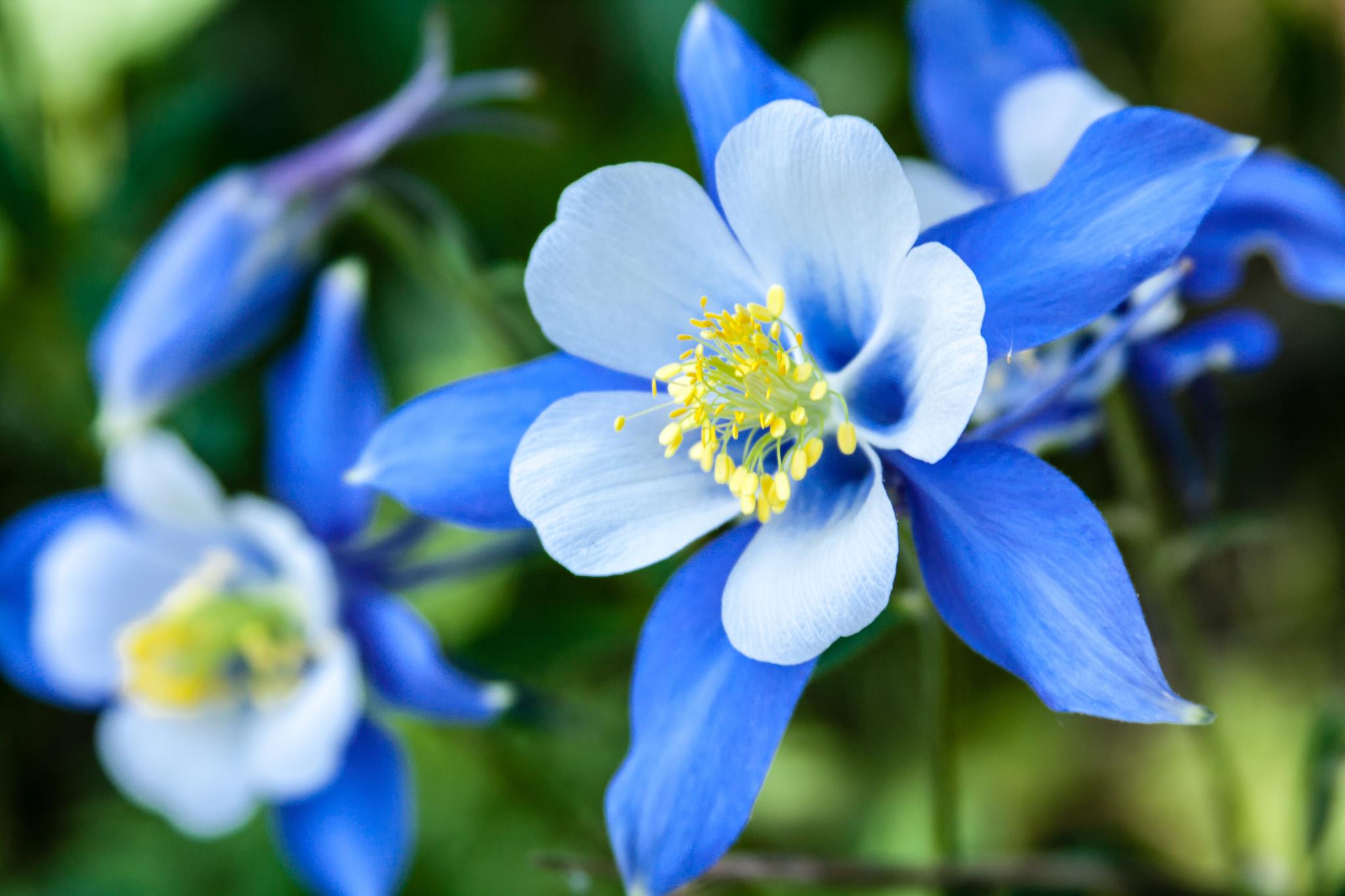
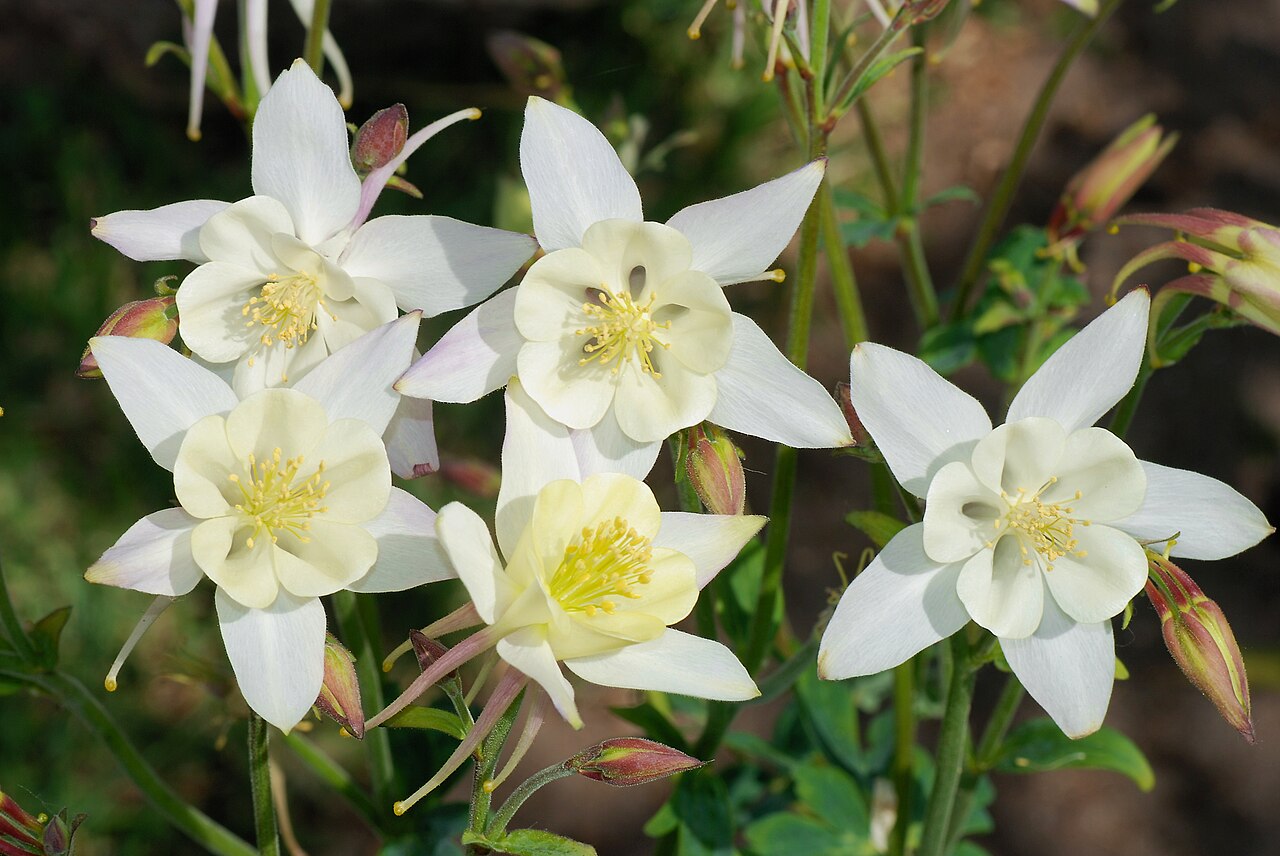
Why the Prettiest: For one, it’s Colorado’s official state flower since 1899. Features large, showy flowers with pale blue or violet sepals/spurs and creamy white petals and delicate grayish green foliage.
Location: Found in the Rocky Mountains in the western United States from southern Montana to northern New Mexico.
Environment: Grows in mountainous areas from foothills to above timberline in the alpine tundra. Prefers moist areas and often found in quaking aspen groves. Can also grow in open coniferous forests, meadows, and in clearings. Can grow up to 6-31 inches.
Bloom Season: Usually as early as April and as late as September. But typically no earlier than May. Mainly pollinated by bumblebees, hummingbirds, and hawkmoths who can’t resist its nectar rich blooms.
Color Varieties: Available in blue, purple, and white in the wild. Cultivated varieties have a wide range of colors.
Gardening Conditions: Grows poorly in heavy soils without good drainage. Most successful in average and medium garden soil that’s well drained and even moisture as well as regular watering within its first year. Can be grown in full sun or partial shade, but does best in light to moderate shade. Used as an ornamental plant in gardens for cut flowers, informal gardens, with roses and other shrubs, and in wildlife gardens. Vulnerable to powdery mildews, particularly when its leaves are regularly watered by overhead irrigation. Susceptible to infestation by aphids, leaf-miner flies, and saw flies. Seeds treated in gibberellic acid and planted in 70 º F results in 93% germination within 3 weeks.
Conservation Status: Classified as Apparently Secure yet faced threats due to overgrazing by cattle and sheep.
Trivia: Frequent garden plant and used in breeding columbine hybrids. A perennial plant that lives 4-6 years. Said to have 6 synonym species, 7 subspecies, 5 varieties, and 2 botanical forms. Seeds have been used by the Goshute people as traditional medicine.
Other Candidates: Indian Paintbrush, Lupine, Western Pasqueflower, and Elephant’s Head.
7. Connecticut
Marsh Marigold (Caltha palustris)
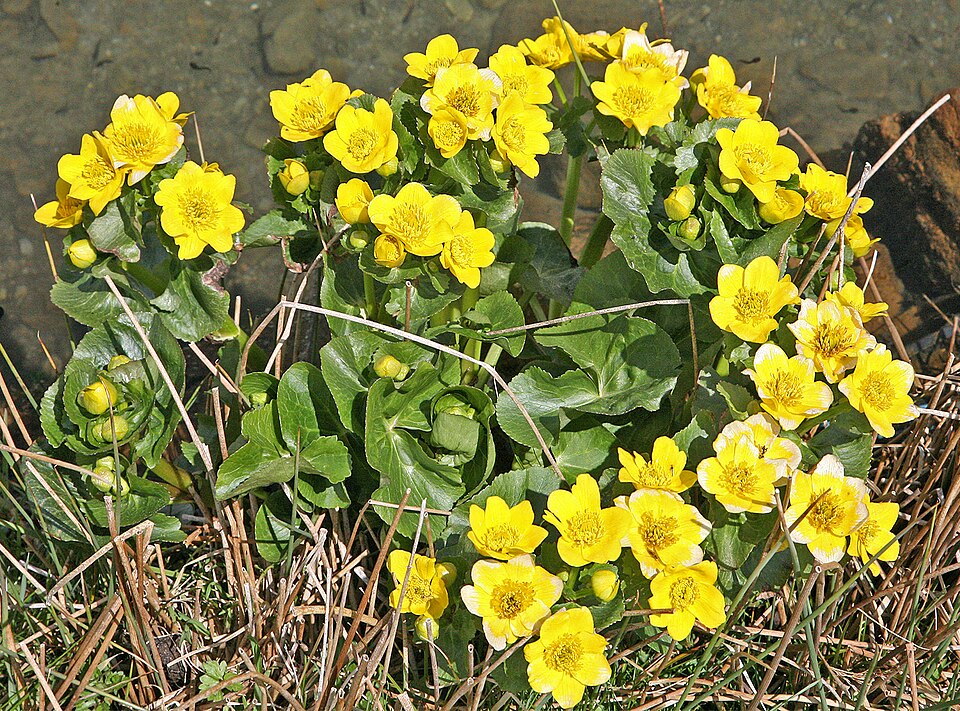
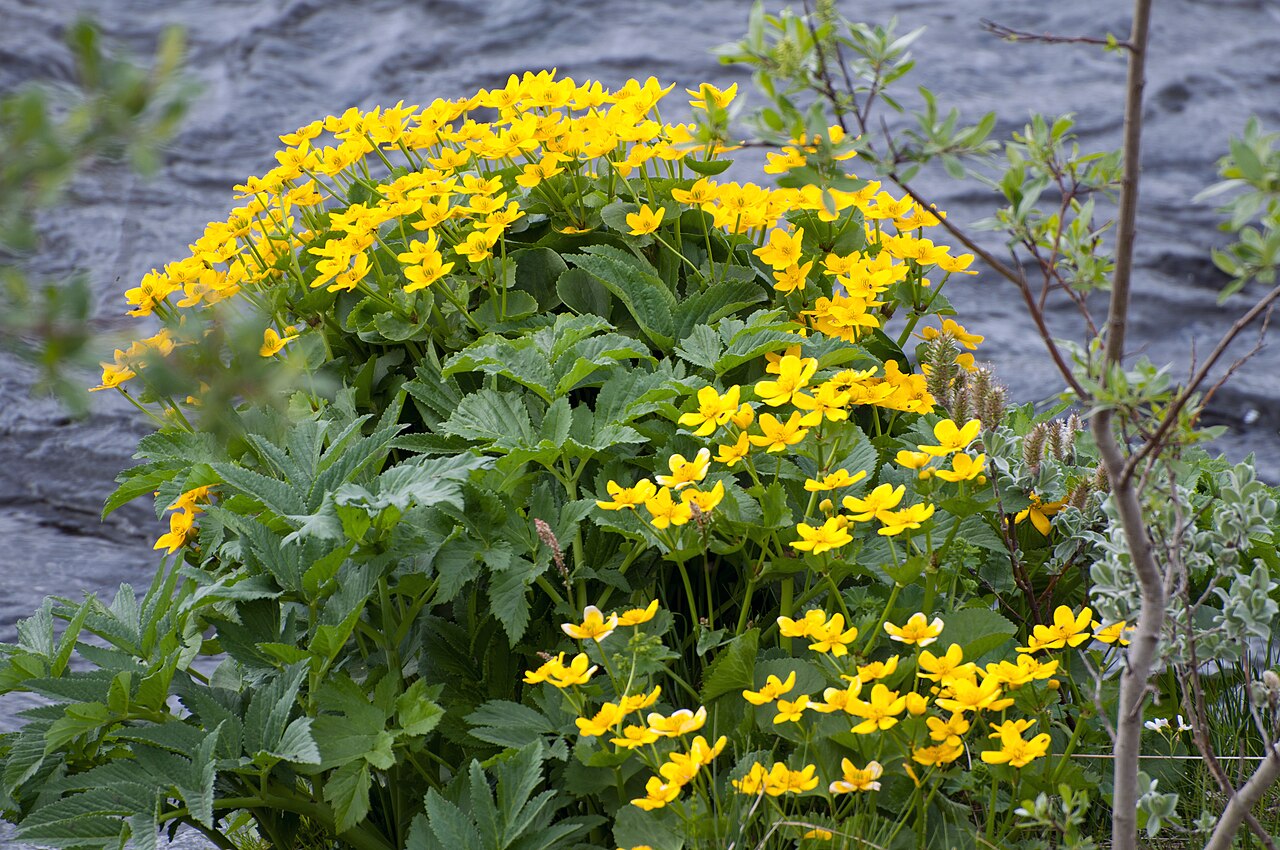
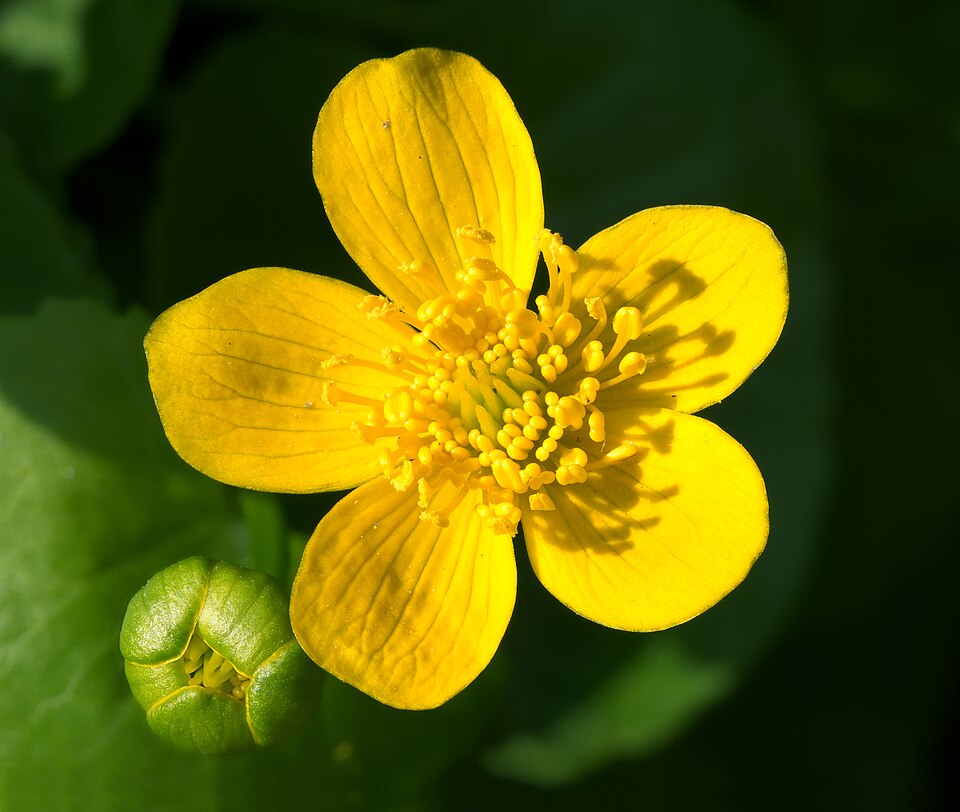
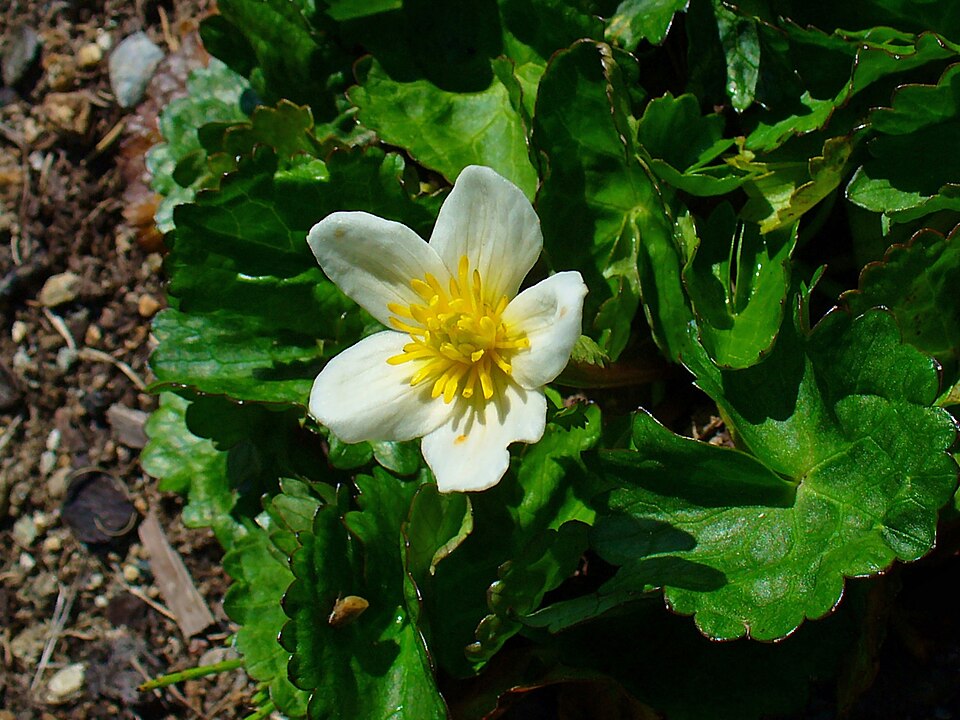
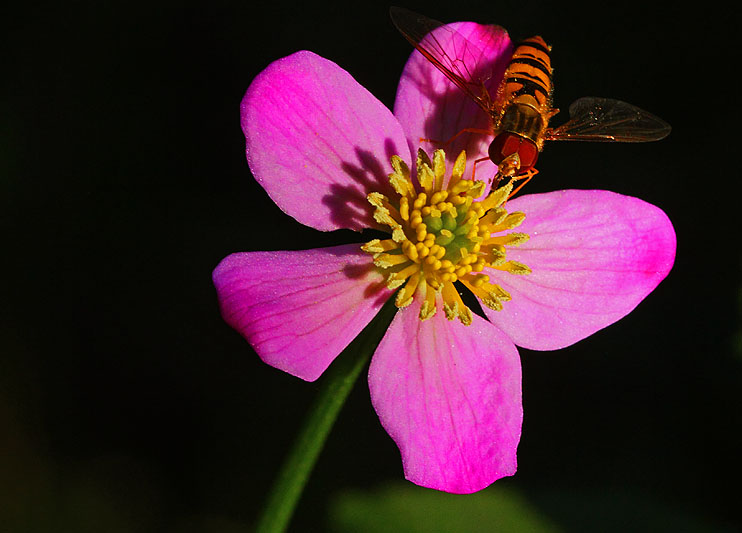
Why the Prettiest: This is a prevalent wild flower in many areas of the eastern United States. Displays showy, buttercup-like yellow flowers with 5-9 petal-like sepals. While its leaves are glossy, dark-green heart- or kidney-shaped.
Location: Native to temperate regions in Northern Hemisphere. Can be found in most of northeastern United States.
Environment: Found in marshes, fens, ditches, and waterway edges in wet woodland or meadow. Grows in oxygen-rich water near the soil’s surface. Can grow to 4-31 in.
Bloom Season: Blooms between April and August depending on altitude and latitude. When it blooms, it dominates the landscape. Attracts beetles, thrips, bugs, butterflies, sawflies, bees, ants, and flies.
Color Varieties: Available in yellow, white, and pink.
Gardening Conditions: Likes rich soil but dislikes application of fertilizer since it avoids high concentrations of ammonium, phosphate, and brackish water. This may be due to seepage that’s rich in iron due to iron ions reacting with phosphate, making it unavailable for plants. This results in insoluble mineral appearing as rusty “flocs” on the water soil and the surface on marsh plants’ stems. Affected by rust species Puccinia calthea and P. calthicola. Contain several active substances with the most important being protoanemonin. Large quantity consumption can cause convulsions, throat burning, vomiting, bloody diarrhea, dizziness, and fainting. Skin or mucus membrane contact with its juices can lead to blistering, inflammation and gastric illness if ingested. Although the toxins could be neutralized and made edible if cooked. Recommended for low-maintenance wildlife gardens, rain gardens, pond edges, stream banks, and bog gardens.
Conservation Status: Currently listed as Least Concern.
Trivia: Has a variety of vernacular names. Is adapted for rain pollination. Each flower can produce up to 200 seeds.
Other Candidates: Cardinal Flower, Purple Trillium, Wild Columbine, Mountain Laurel, and Black-Eyed Susan.
8. Delaware
Butterfly Weed (Asclepias tuberosa)
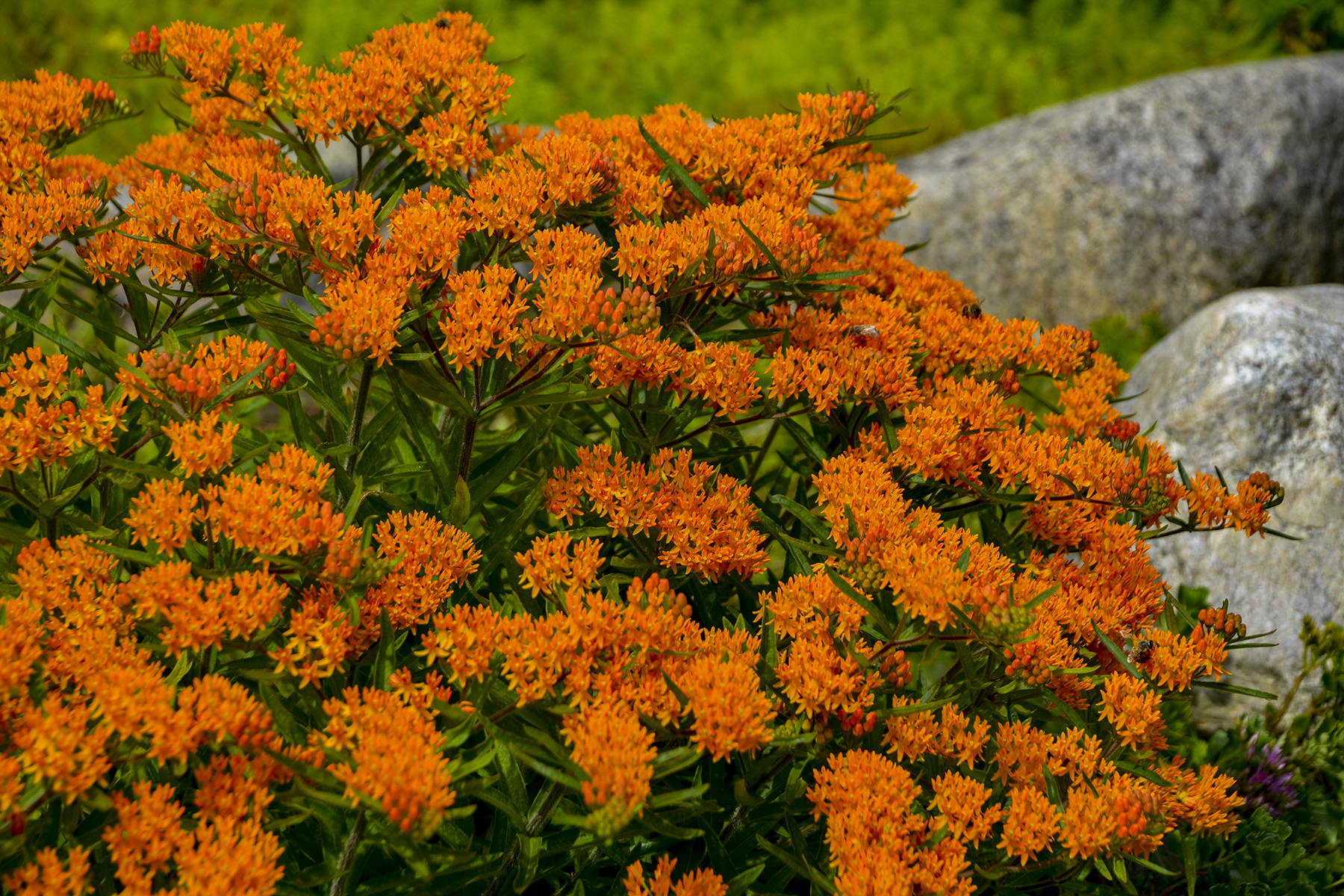
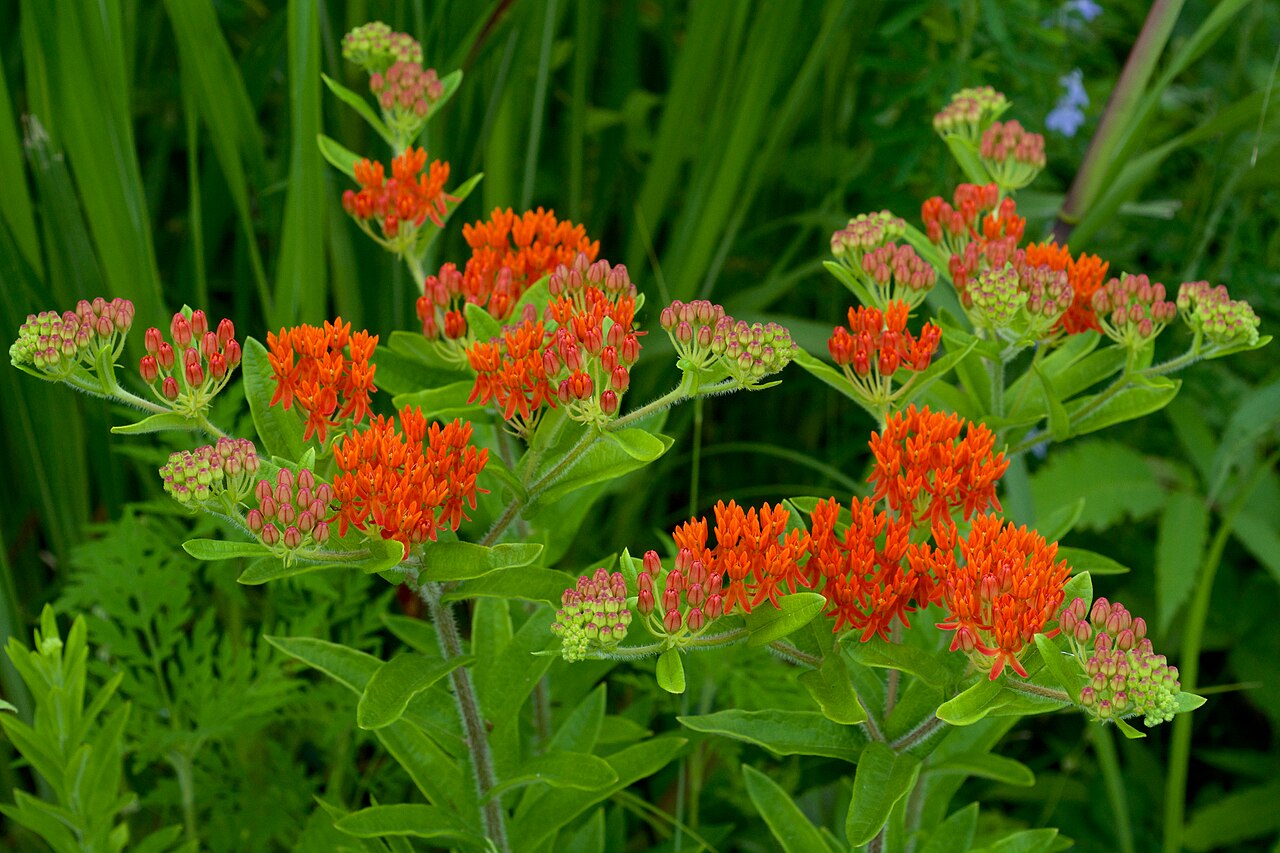
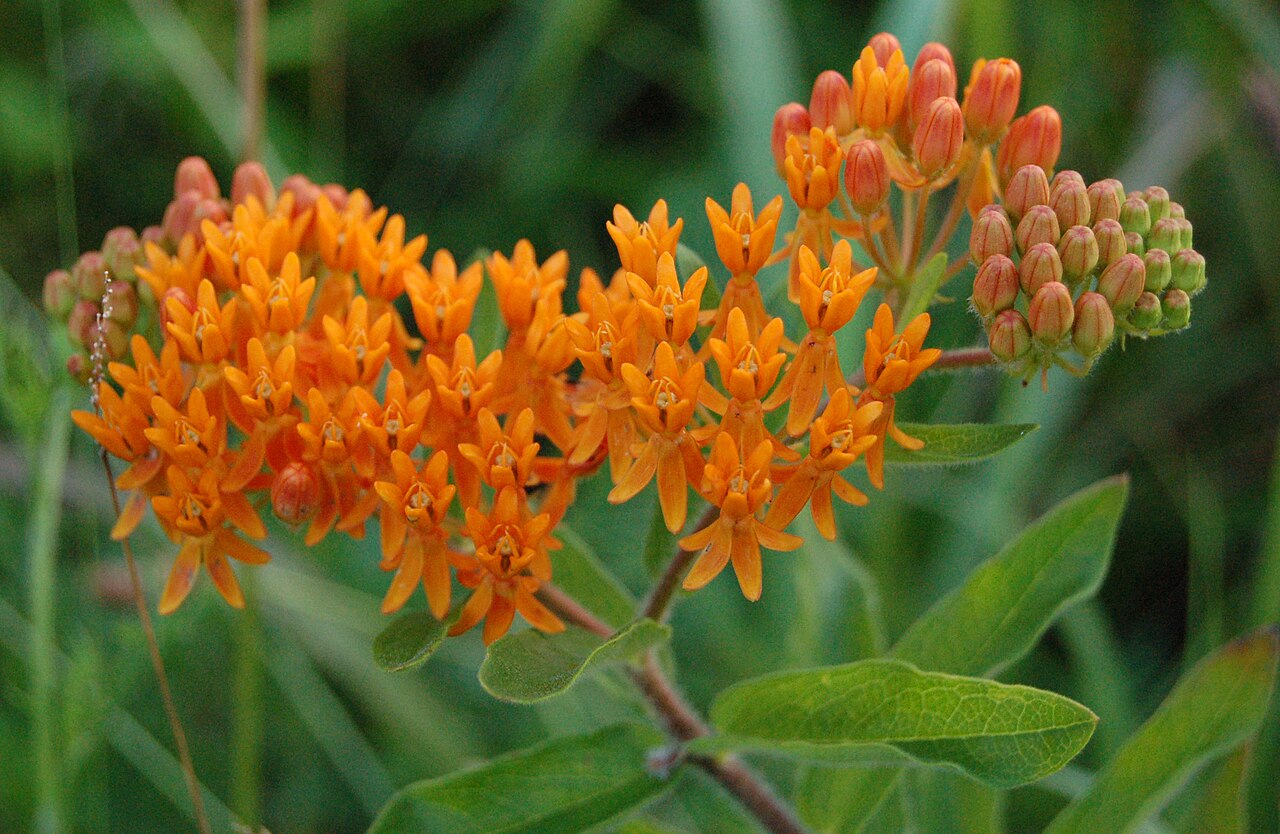
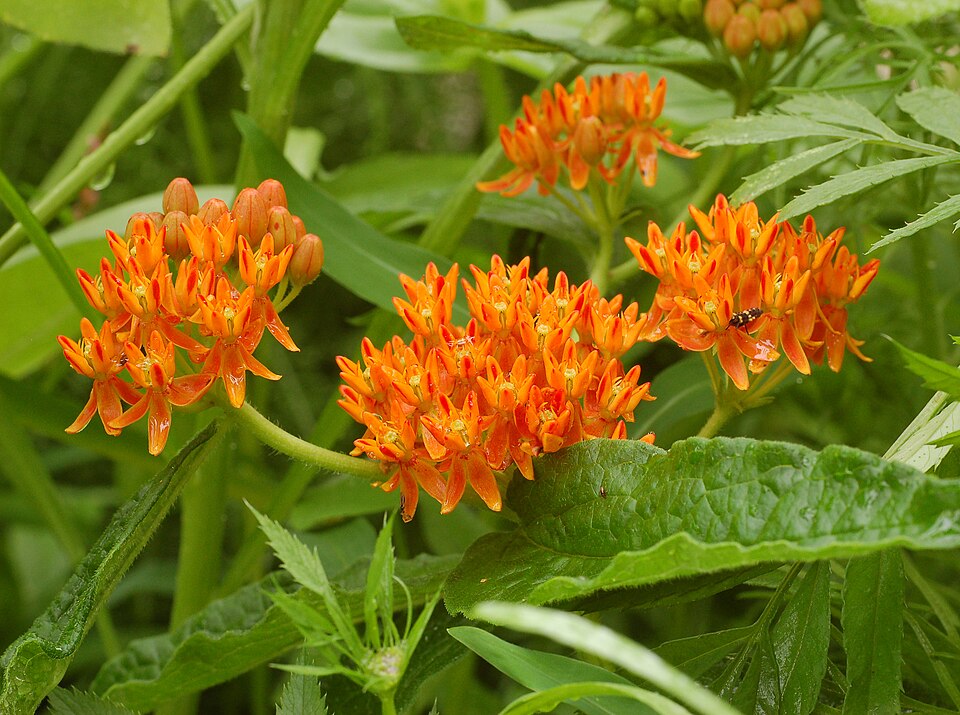
Why the Prettiest: It’s a perennial species of milkweed that’s a stunning clump of perennial flower prized for its flat-topped clusters of bright orange blossoms. Not to mention a host flower for many species of insects including the monarch butterfly.
Location: Can be found in most of the contiguous United States as north as South Dakota to as south as Texas and Mexico and to as west as Utah.
Environment: Found in dry to medium moist soils, clearings, meadows, and open areas. Can grow up to 1.5-3ft tall.
Bloom Season: Blooms from April to September. Primary pollinators are bees and wasps but also attracts butterflies, moths, and hummingbirds. Is the larval food plant of the monarch butterfly, the queen butterfly, dogbane tiger moth, milkweed tussock moth, and the unexpected cycnia. Not a preferred host plant for the monarch butterfly but caterpillars can be reared successfully since it’s a poor source of protection from bird predation and parasite virulence.
Color Varieties: Available in orange, yellow, and red.
Gardening Conditions: Favors dry, sand, or gravel soils and requires full sun. Most easily propagated by seed. Sow it after a frost, it will flower and produce seed within its third year. Water regularly until mature but don’t fertilize. Has deep, woody taproot so it’s difficult to transplant. Has few pest and disease problems but is susceptible to crown rot if planted in poorly drained or too constantly moist locations. Resistant to deer and drought. Contains toxic progesterone-like steroids can cause weakness, seizures, or corneal injuries. Don’t use as a herbal remedy if you’re pregnant or nursing.
Conservation Status: Classified as Secure though its importance to the life of the monarch butterfly makes it an important plant in conservation.
Trivia: Has been found to be largely unaffected by prescribed burns. Roots boiled and used by Native Americans and European settlers as a remedy for diarrhea and respiratory illness. Young seed pods were used as food. Seed pod down was used to make candle wicks. While ethanol extract from roots was used to treat pleurisy.
Other Candidates: Cardinal Flower, Black-Eyed Susan, and Wild Bergamot.
9. Florida
American Lotus (Nelumbo lutea)
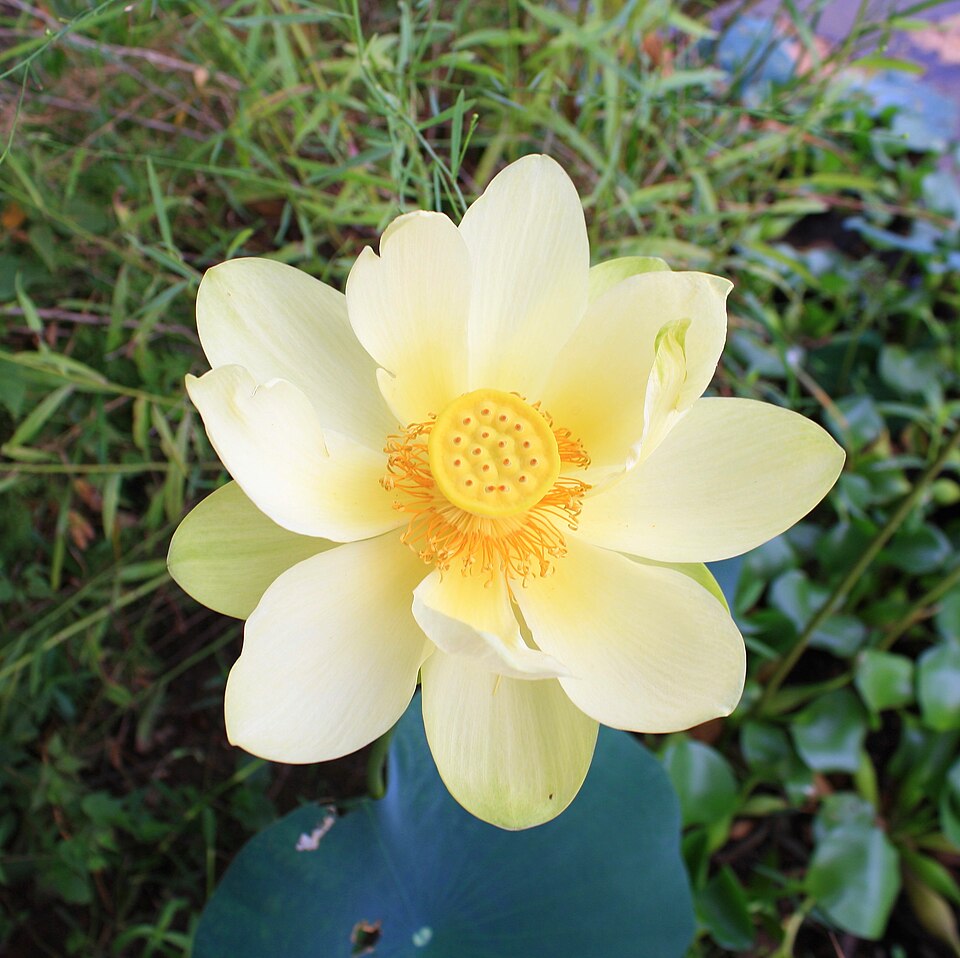
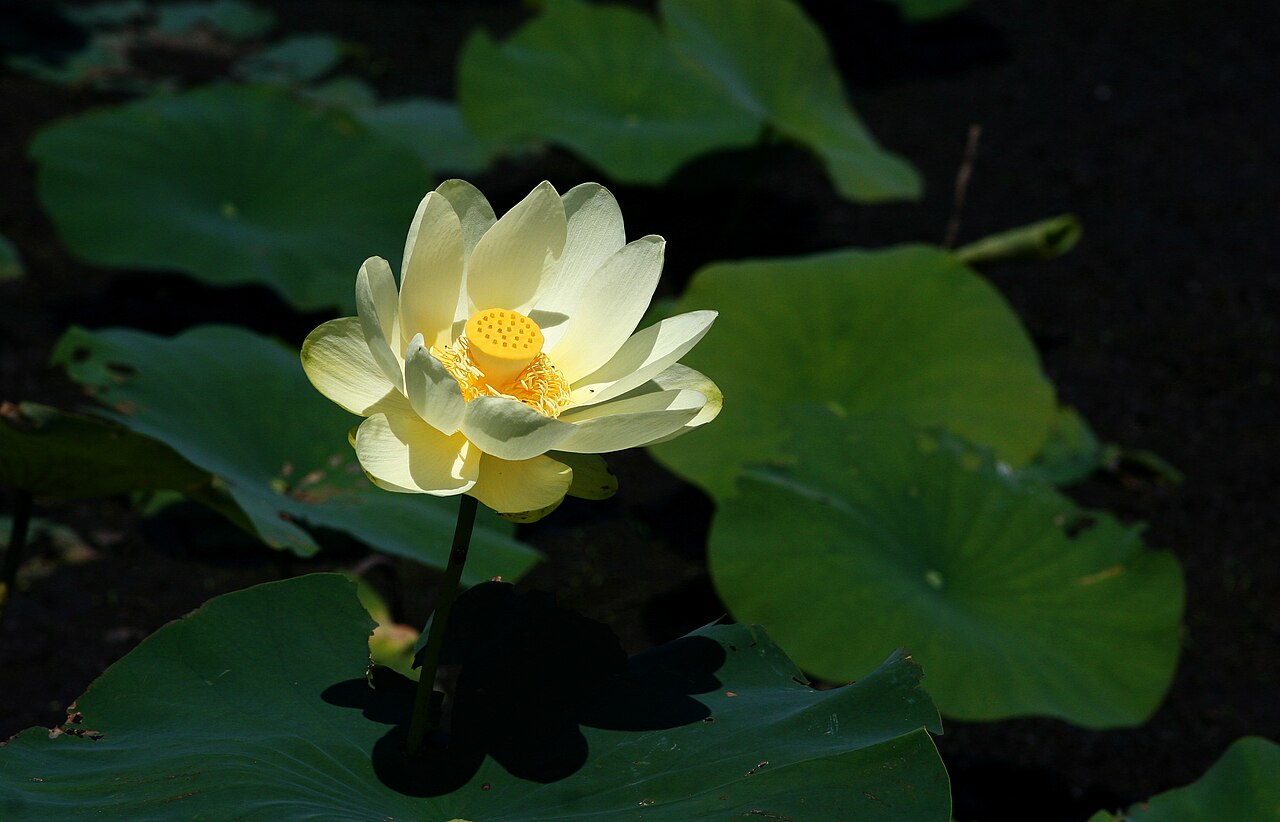
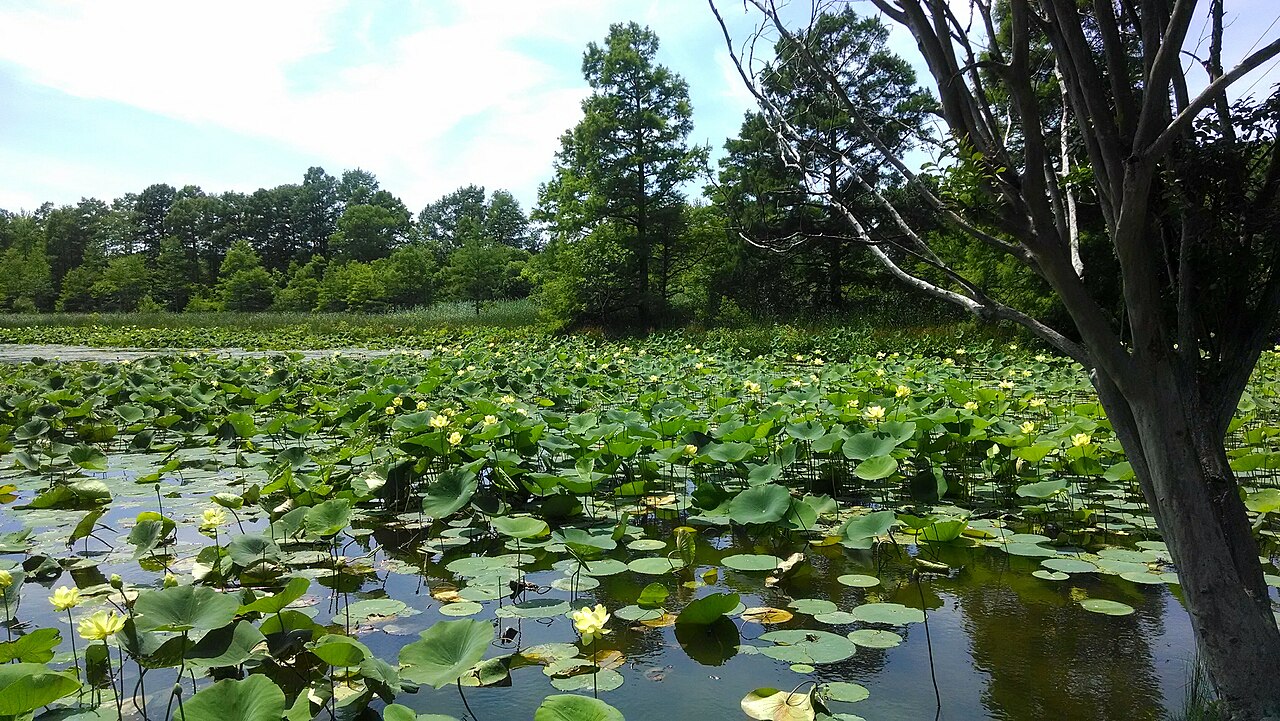
Why the Prettiest: It’s a perennial aquatic plant that’s absolutely perfect for a state known for the Everglades. Sports fragrant pale yellow blooms that are often 7-11 in across and stand high above water. While its blue-green leaves can exceed 2 ft in diameter which attach right to the middle giving the foliage rising straight out of the water like an inverted umbrella.
Location: Native throughout North America with range covering as north as Minnesota to as south as Honduras. Although it’s said that indigenous communities likely expanded its distribution northward and eastward since they used it as a valuable source of food and medicine.
Environment: Grows in lakes and swamps as well as areas subject to flooding. Thrives in shallow freshwater wetlands, quiet lakes, slow rivers, and backwaters with muddy bottoms. Roots are anchored in mud but leaves and flowers emerge on water’s surface. Can grow as tall as 2.6-4.9 ft.
Bloom Season: Season is late spring into the summer. Opens in the morning and closes late afternoon. Larval host plant of the American Lotus borer. Provides food to waterfowl and muskrats. Attracts native bees.
Color Varieties: Available in pale yellow and white.
Gardening Conditions: Spreads via creeping rhizomes and seeds. Widely planted in ponds as an ornamental plant. Propagation seeds can be achieved through scarifying the seed’s pointed tip and soaking it in water or division of established plants. Very cold-hardy as well as helps stabilize mud and keep water clear.
Conservation Status: Classified as Least Concern but has experienced recent population declines due to habitat destruction and have a low level of diversity within its numbers.
Trivia: Has been crossed to create many hybrids as an ornamental plant. Seeds and fruit used by various Native Americans as food and roots as medicine.
Other Candidates: Black-Eyed Susan, Bright Yellow Coreopsis, Scarlet Rosemallow, Blazing Star, and Meadow Beauty.
10. Georgia
Flame Azalea (Rhododendron calendulaceum)
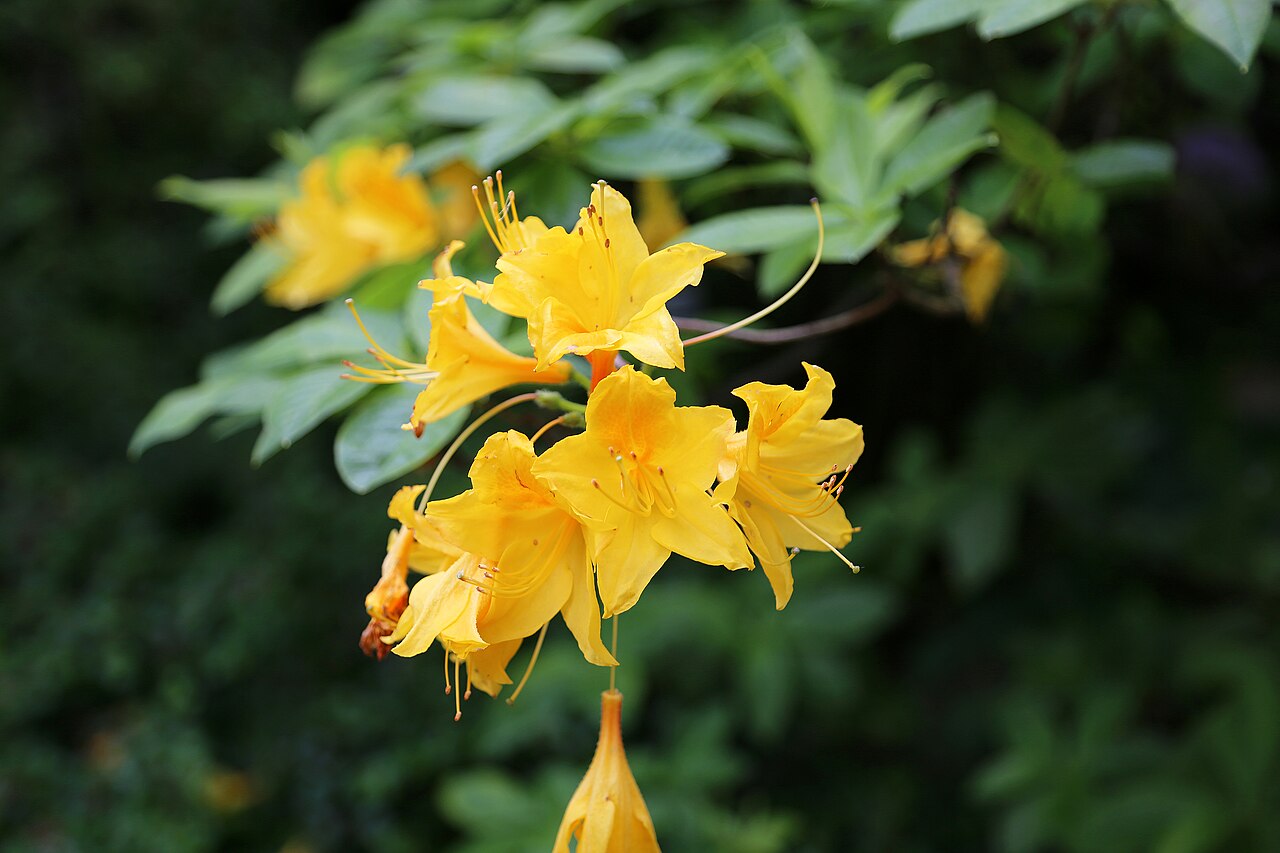
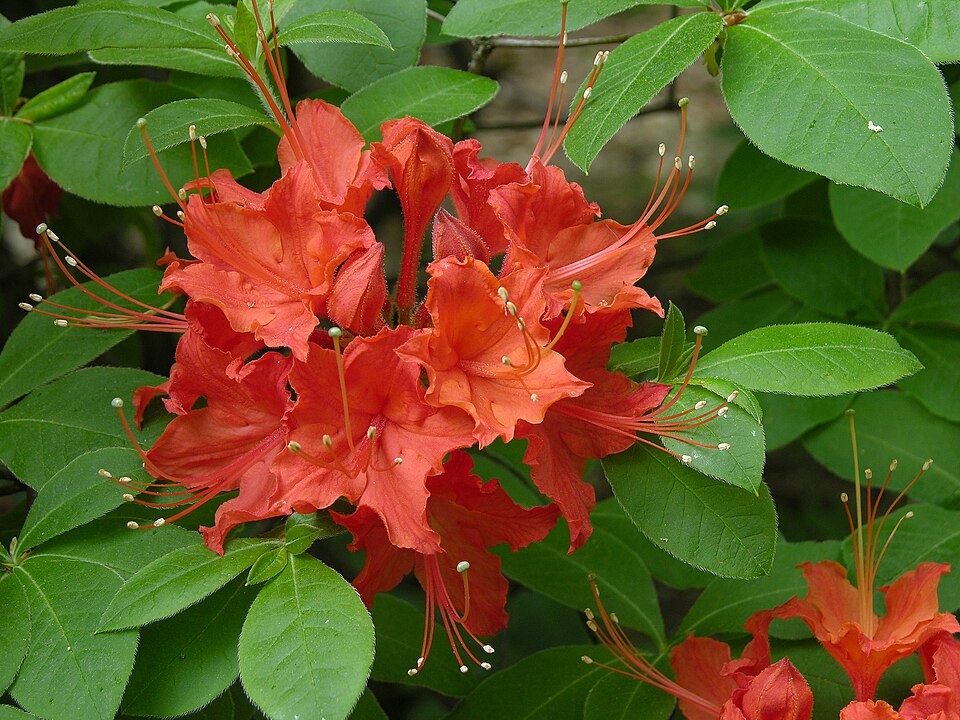
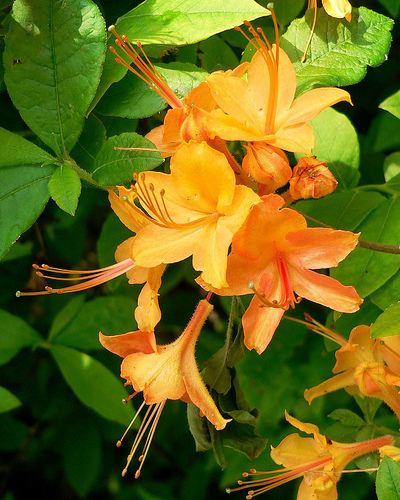
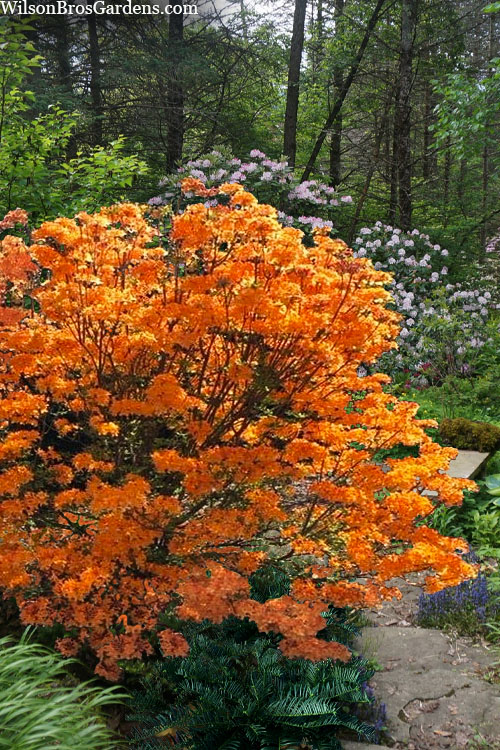
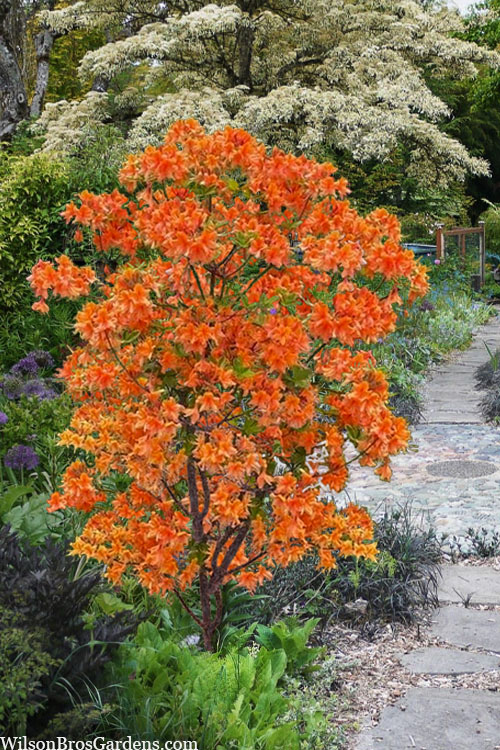
Why the Prettiest: This native Appalachian deciduous shrub stands out with its showy flowers. Has clusters of vibrant fiery red, orange, and yellow blossoms.
Location: Native to the Appalachian Mountains in the eastern United States from southern Pennsylvania and Ohio to northern Georgia.
Environment: Typically found in woodlands slopes and mountain balds, preferring dry rocky mountain woods and mixed deciduous forests. Can grow from 4-8 ft tall and 8-10 ft wide.
Bloom Season: Blooms in late spring into early summer, typically from May to June. Visited by many animals including bees, butterflies, hummingbirds, and small mammals.
Color Varieties: Available in red, orange, pink, and yellow.
Gardening Conditions: Is a popular cultivated plant due to its showy flowers. Requires minimum soil depth of 14 in., a pH range of 4.3-5.8, and at least a 200 day growing season. Prefers soil that’s well-drained, mesic to moist, medium to fine texture, and with partial shade. Can tolerate full sun if soil is consistently moist since afternoon sun can scorch the leaves. In fact, always keep the shallow root systems cool and moist by applying a thick layer of mulch. Doesn’t like “wet feet” or standing water, which causes root rot. Susceptible to fungus Exobasidium vaccinii. All parts are toxic to humans and pets through ingestion.
Conservation Status: Classified as Secure but could be extirpated from Pennsylvania and Alabama.
Trivia: Has several hybrid varieties.
Other Candidates: Cahaba Lily, Pink Lady’s Slipper, Yellow Colic Root, Butterfly Weed, and Fire Pink.


Un análisis muy constructivo y claro sobre The United States of Wildflowers – Part 1 Alabama. Destaca aspectos clave esenciales para entender el tema con profundidad.