
We’re off to a good start. When it comes to selecting what wildflowers to use, it must meet two criteria, it must be wild and it must be native. Sure, you may see plenty of flowers in gardens and at the garden store. But many of them are often cultivated varieties that couldn’t survive in the wild or in local conditions. While there are plenty of flowers growing in the wild that were introduced overseas, either naturalizing or becoming an invasive species. Some of these introduced species have become so invasive that they’re considered a noxious weed. In this post, we’ll see a tropical flower from Hawaii, a western lily from the Rocky Mountains, a couple of garden favorites from the Midwest, Maryland, and New England, a roadside favorite from Iowa, two irises, and an iconic phenomenon from Kansas.
11. Hawaii
Yellow Hibiscus (Hibiscus brackenridgei)
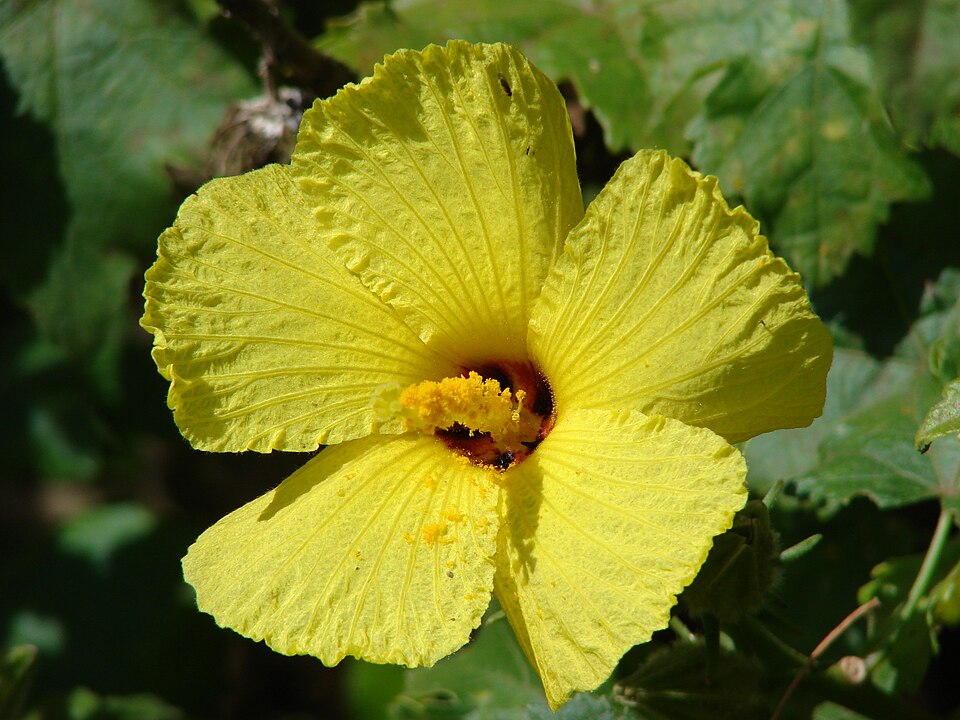
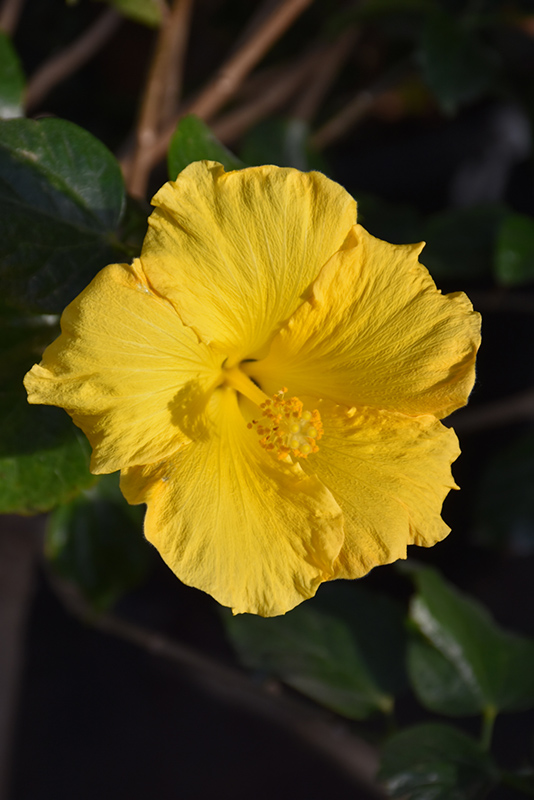
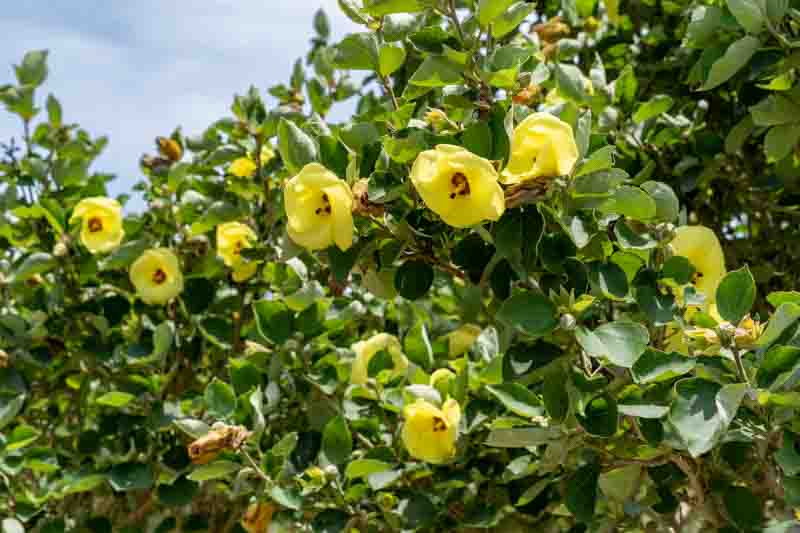
Why the Prettiest: For one, it’s the state flower of Hawaii. It’s a striking tropical shrub featuring vibrant yellow blooms. In Hawaii, this flower represents beauty, hospitality, and aloha.
Location: Native to the Hawaiian Islands.
Environment: Grows in lowland dry forest and shrubland up to 350 m elevation. Can grow up to 5-8ft tall.
Bloom Season: Blooms from spring to fall but its bloom only lasts for a single day. Nonetheless, the plant itself always produces blooms continuously.
Color Varieties: Available in yellow.
Gardening Conditions: Needs full sun to partial shade during the day. Prefers well-drained, neutral to acidic fertile soil. Must be grown indoors in more temperate areas and treated as a tropical annual. Requires regular watering and annual early spring pruning. Popular as a patio pot plant, garden accent, and colorful outdoor hedge.
Conservation Status: Currently listed as Critically Endangered due to habitat loss and degradation as well as introductions of invasive plants and animals. There are 7 populations with a total less than 60 plants.
Trivia: Has 3 subspecies.
Other Candidates: White Ginger Lily, Pua Kala, Beach Morning Glory, Naupaka, Flowering Maple.
12. Idaho
Common Camas Lily (Camassia quamash)
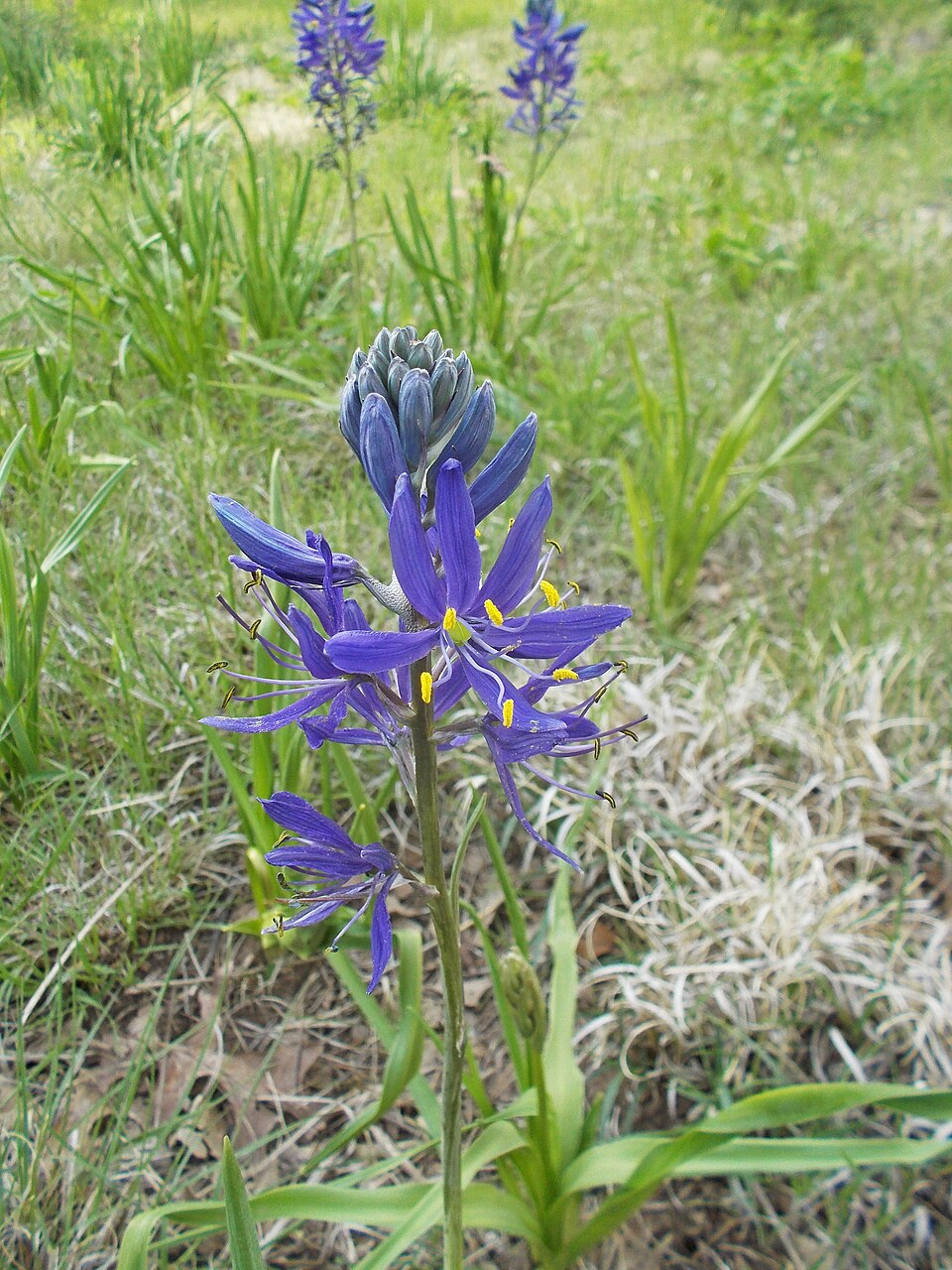
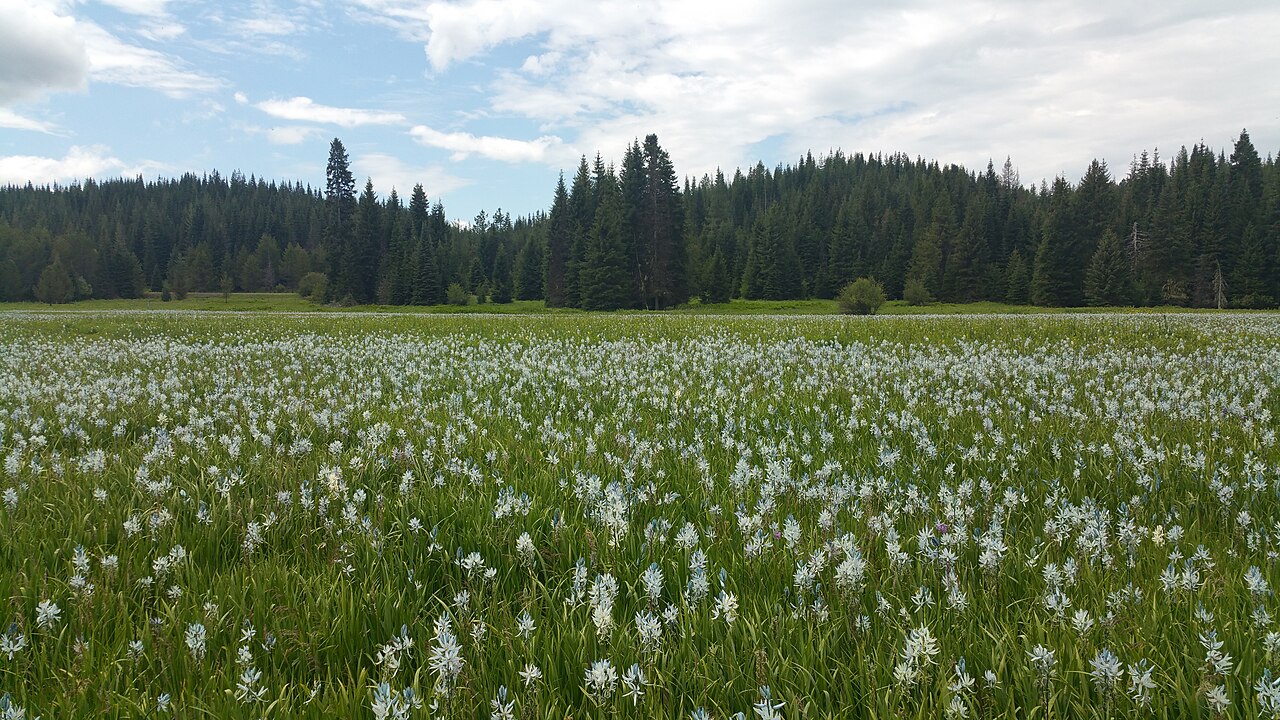
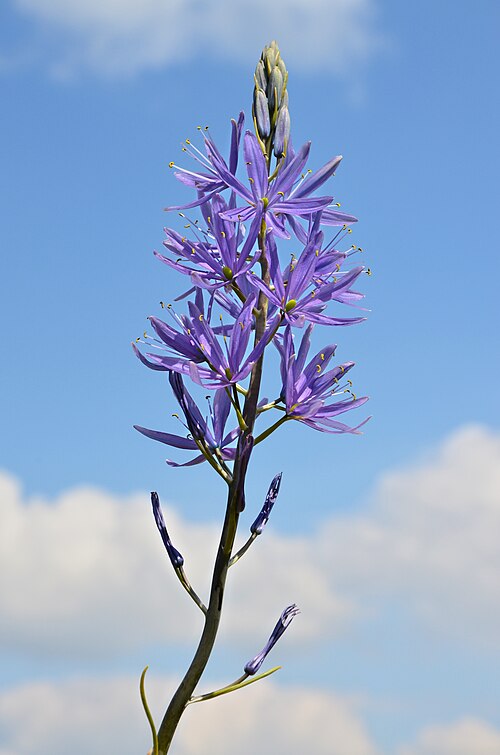
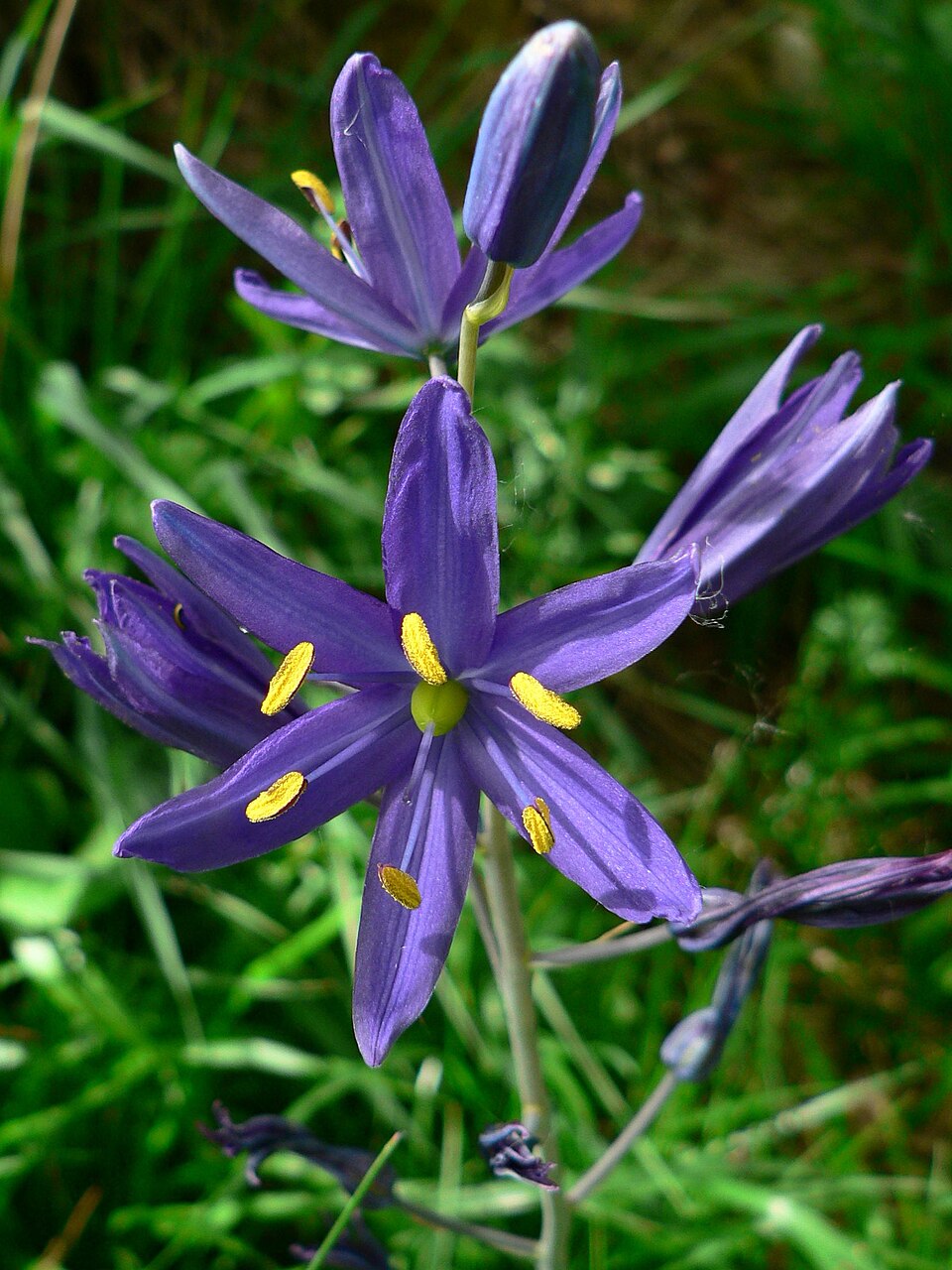
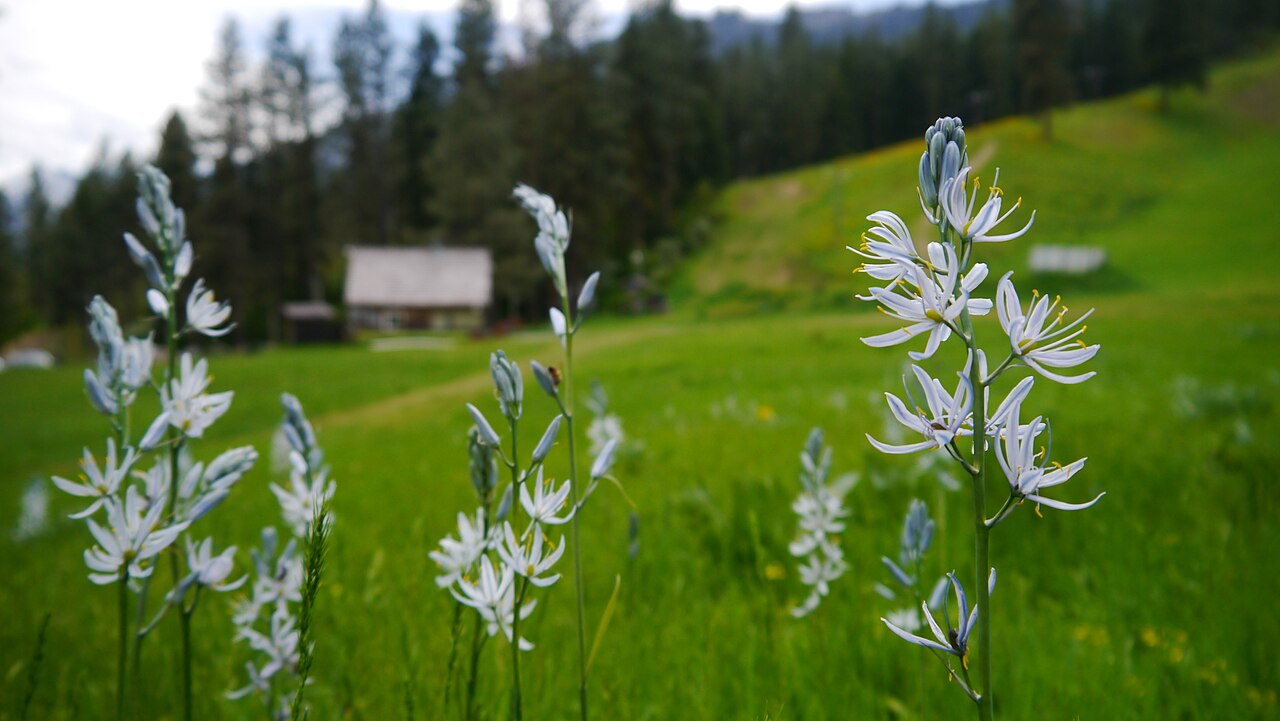
Why the Prettiest: It’s a perennial plant with an herbaceous character with grass-like, strap-like basal leaves and upright spikes of light blue or violet-blue flowers. Known for its striking, violet-blue, star-shaped flowers and importance as a traditional indigenous food source.
Location: Native to western North America from southern Canada to the Northwestern United States.
Environment: Can be found in shaded forest areas, rocky outcrops, open meadows and prairies, alongside streams and rivers, and marshes. Can grow up to 2.6 ft tall.
Bloom Season: Blooms in the late spring and could cover an entire meadow in blue.
Color Varieties: Available in deep blue, light blue, and blue-violet.
Gardening Conditions: Can be grown as an ornamental plant and naturalizes well in gardens. Grows best in well-drained soil high in humus or heavy clay that remains wet in the winter and spring. But dries out after blooming. Plant spreads by seed. However, it looks similar to death camas which is a highly toxic and potentially fatal plant that often grows in the same areas. So don’t forage or eat wild bulbs unless you have expert verification.
Conservation Status: Classified as Secure, although it’s been diminished from its native range due to modern development and agriculture.
Trivia: Has 8 subspecies. Used as food by the Nez Perce and other indigenous tribes, often roasting and boiling the bulbs. Cultivated by the Lekwungen peoples since precolonial times. Bulb is considered edible and nutritious when roasted or boiled as well as contributed to the survival of several members of the Lewis and Clark Expedition.
Other Candidates: Idaho Trillium, Arrowleaf Balsamroot, Camas Lily, Lupine, and Indian Paintbrush.
13. Illinois
Purple Coneflower (Echinacea purpurea)
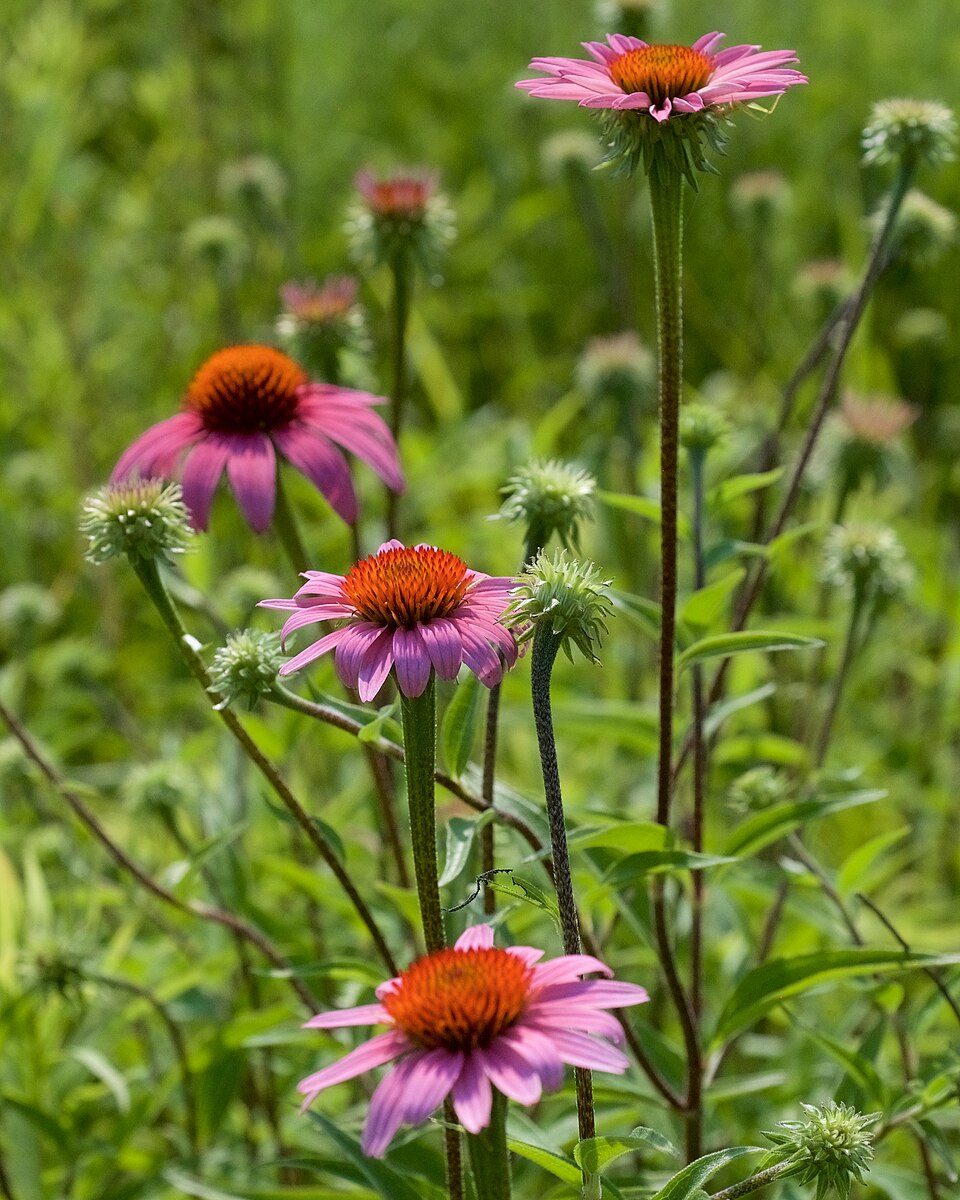
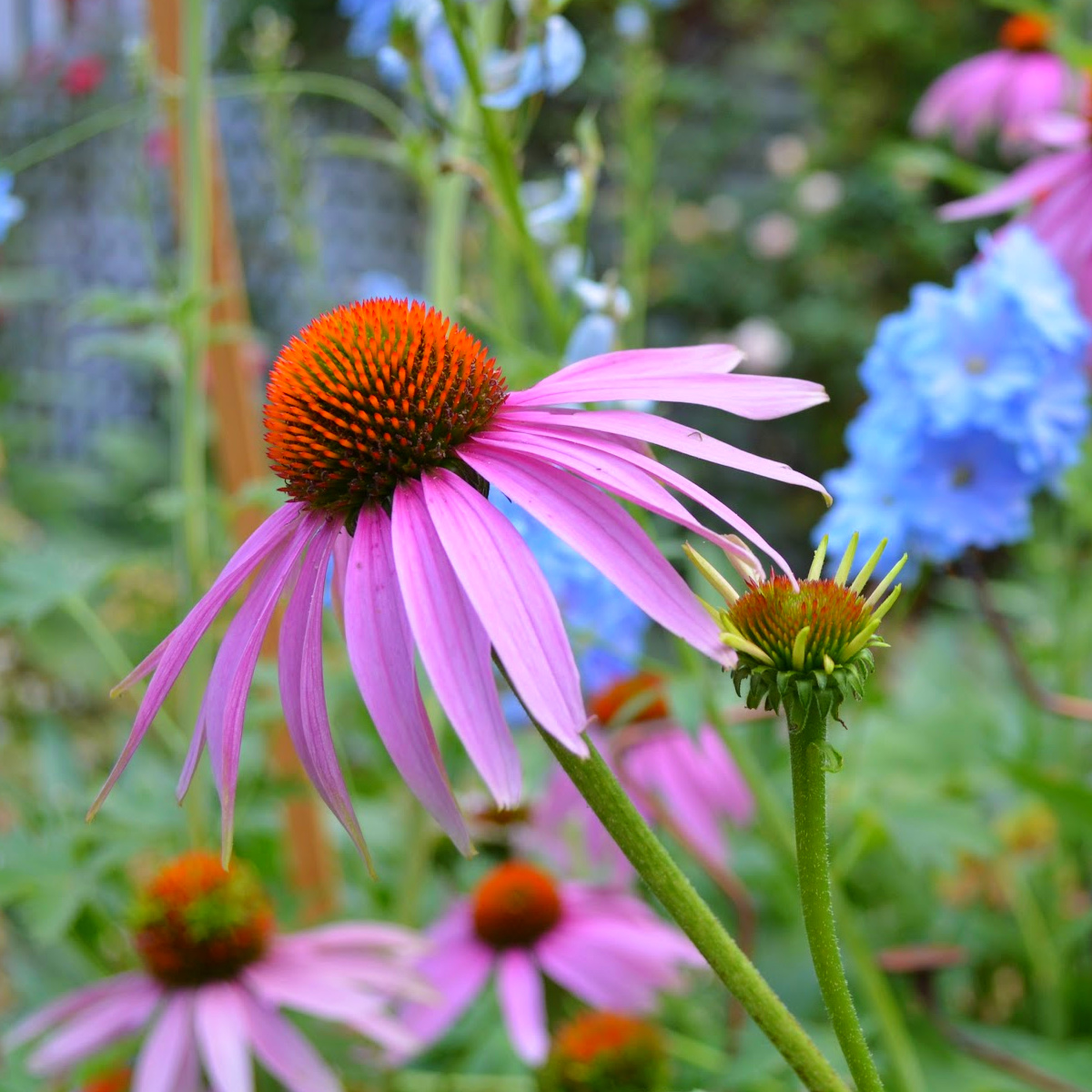
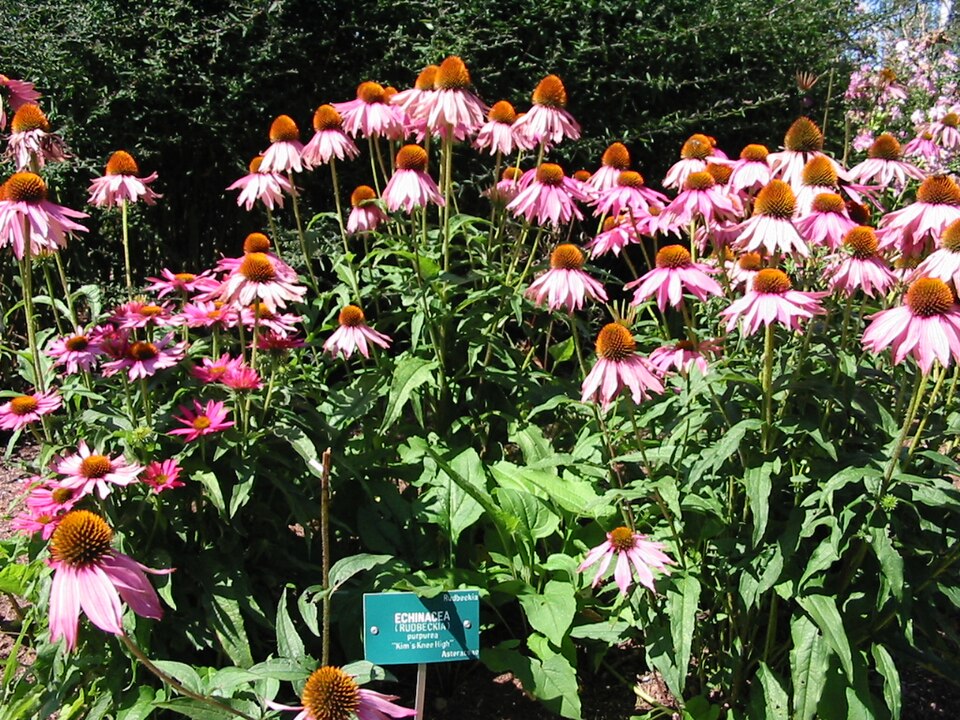
Why the Prettiest: This is a hardy, drought-resistant perennial that produces a vibrant, pink-purple, daisy-like flowers with prominent spiky central cones. Helps that it’s a year-round magnet for wildlife.
Location: Native to parts of eastern North America and present to some extent in the easter, southeastern, and midwestern United States as well as in Ontario. Most common in the Ozarks, the Mississippi Valley, and Ohio Valley.
Environment: Can be found in dry open woods, prairies, and barrens. Grows to 47 in tall and 10 in wide.
Bloom Season: Blooms from June to September or until the first frost. Attracts bees, butterflies, and hummingbirds during the summer. While its dried winter seed heads feed goldfinches. Slugs and rabbits also eat foliage when young or shortly after emerging.
Color Varieties: Usually available in pinkish purple.
Gardening Conditions: Grown as an ornamental plant in temperate regions. Ideal for curbs, walkaways, and beds. Thrives in either dry or moist soils and tolerates drought. As long as the dirt is well-drained, it doesn’t care. But best to keep it moist while it’s young. Prefers full sun but tolerates light shade. Propagated either vegetatively with division, root cuttings, and basal cuttings or by seeds. Seed germination does best with daily temperature fluctuations. Roots can be damaged or eaten by gophers. Dead head spent summer flowers to encourage re-blooming and cut back dead stalks each early spring.
Conservation Status: Classified as Apparently Secure.
Trivia: Used by Native Americans as a traditional medicine to treat many ailments.
Other Candidates: Butterfly Weed, Dense Blazing Star, and Virginia Bluebell.
14. Indiana
Virginia Spring Beauty (Claytonia virginica)
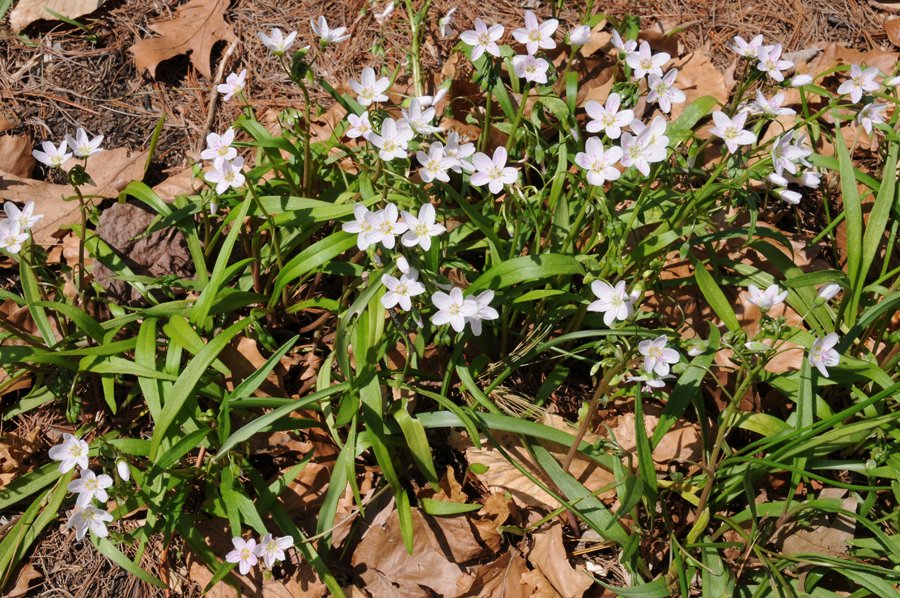
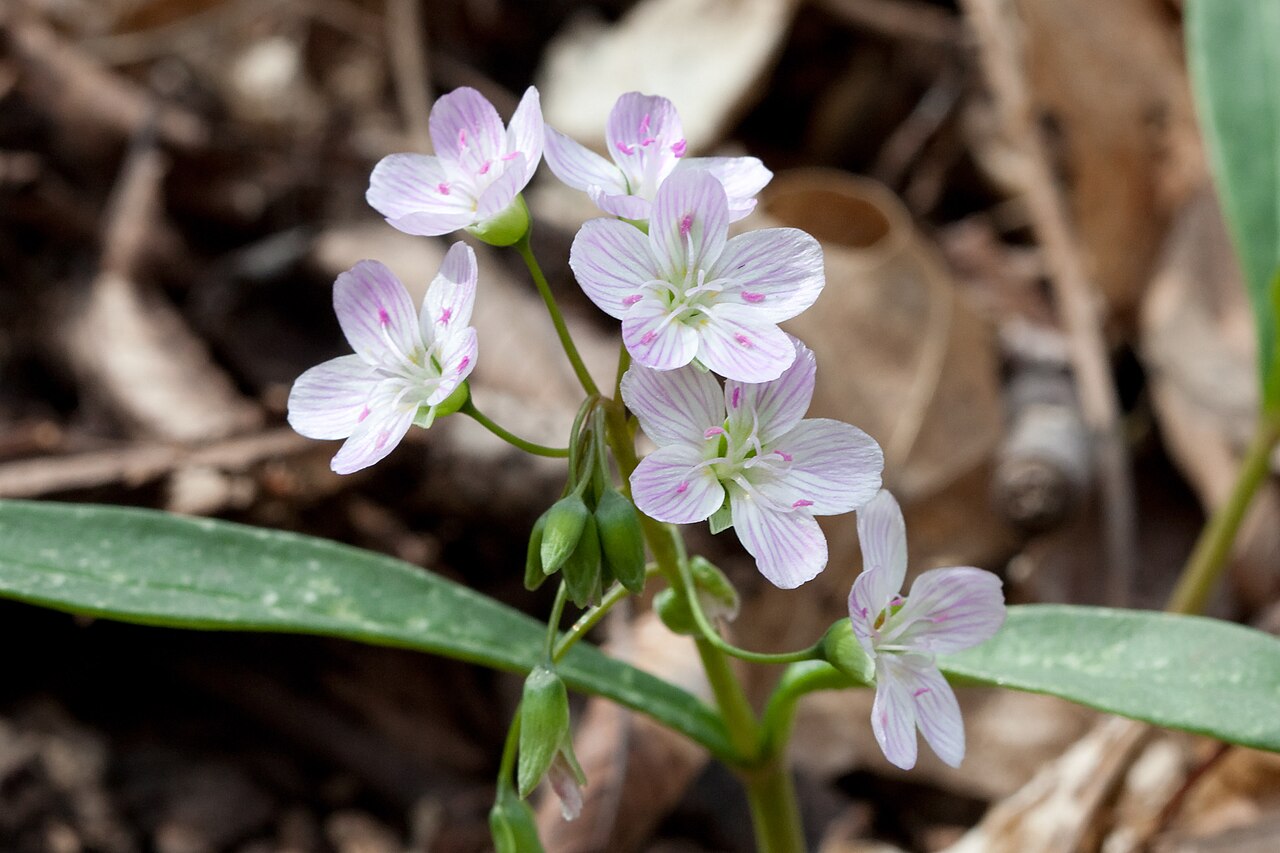
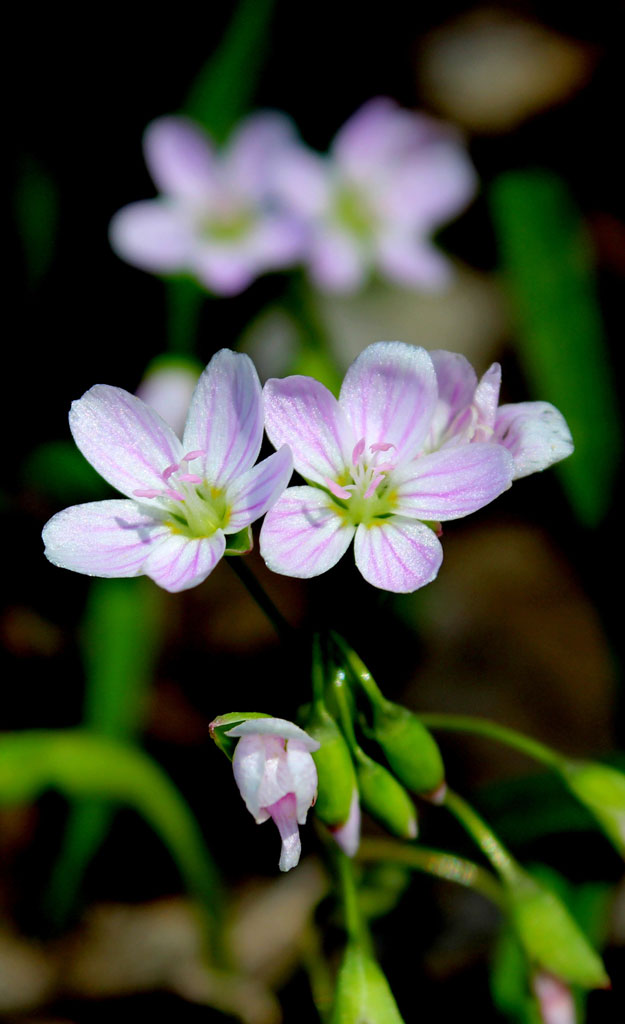
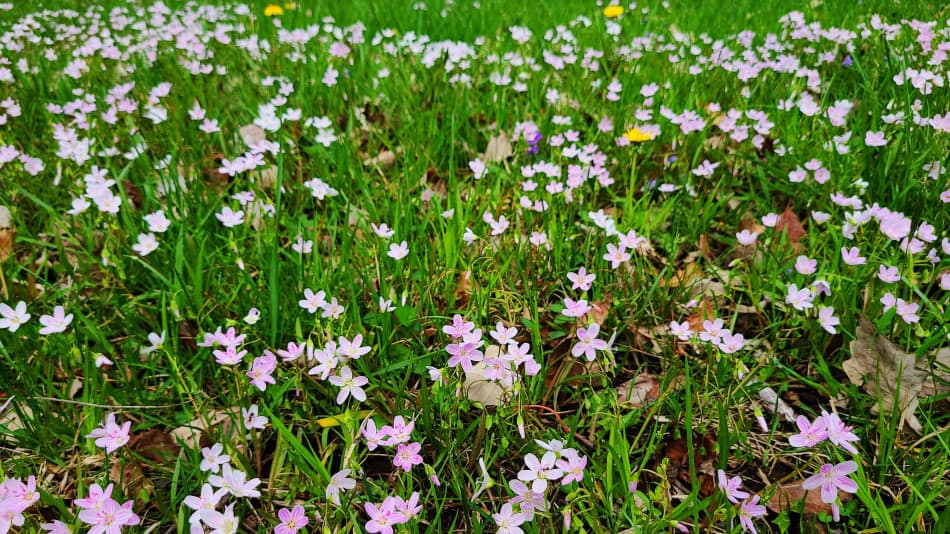
Why the Prettiest: An early spring ephemeral, it’s a low-lying perennial wildflower with small, star-shaped blooms comprising of 5 petals that look pale pink in a distance but close ups show white petals with dark pink stripes. While its foliage consists of narrow, grass-like, dark green leaves growing halfway up the thin stem.
Location: Native across eastern and midwestern United States and parts of Canada. Range from Nova Scotia down to Georgia and west Texas.
Environment: Found in temperate deciduous forests as well as lawns, city parks, woodlands, roadsides, wetlands, bluffs, and ravines. Can grow from 4-10 inches tall.
Bloom Season: Blooms in early spring to summer. Attracts native bees, honey bees, and bumblebees, providing a critical source for early season pollen and nectar. Some specialized bees rely almost exclusively on its pink pollen.
Color Varieties: Available in pale pink and yellow.
Gardening Conditions: All parts of the plant are safe for human consumption but the leaves aren’t known for tasting good. Planted in woodland gardens, rock gardens, or naturalized lawns. Does best in rich, moist, well-drained soil high in organic matter. But can adapt to clay, sand, or loam. Prefers partial shade but tolerates full sun.
Conservation Status: Listed as Secure.
Trivia: Used as a traditional medicine by the Iroquois as a cold infusion or decoction of the powdered roots to children suffering from convulsions. Also ate the roots raw as a birth control method and as food. Roots cooked by the Algonquin like potatoes. Corm like tubers were eaten by colonists as a survival food.
Other Candidates: Virginia Bluebell, Cardinal Flower, Butterfly Milkweed, Wild Bergamot, and Dwarf Larkspur.
15. Iowa
Showy Goldenrod (Solidago speciosa)
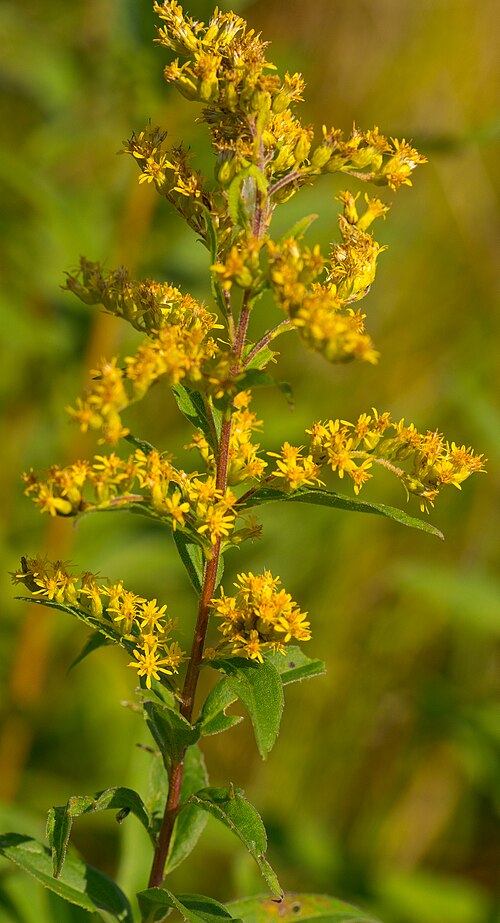
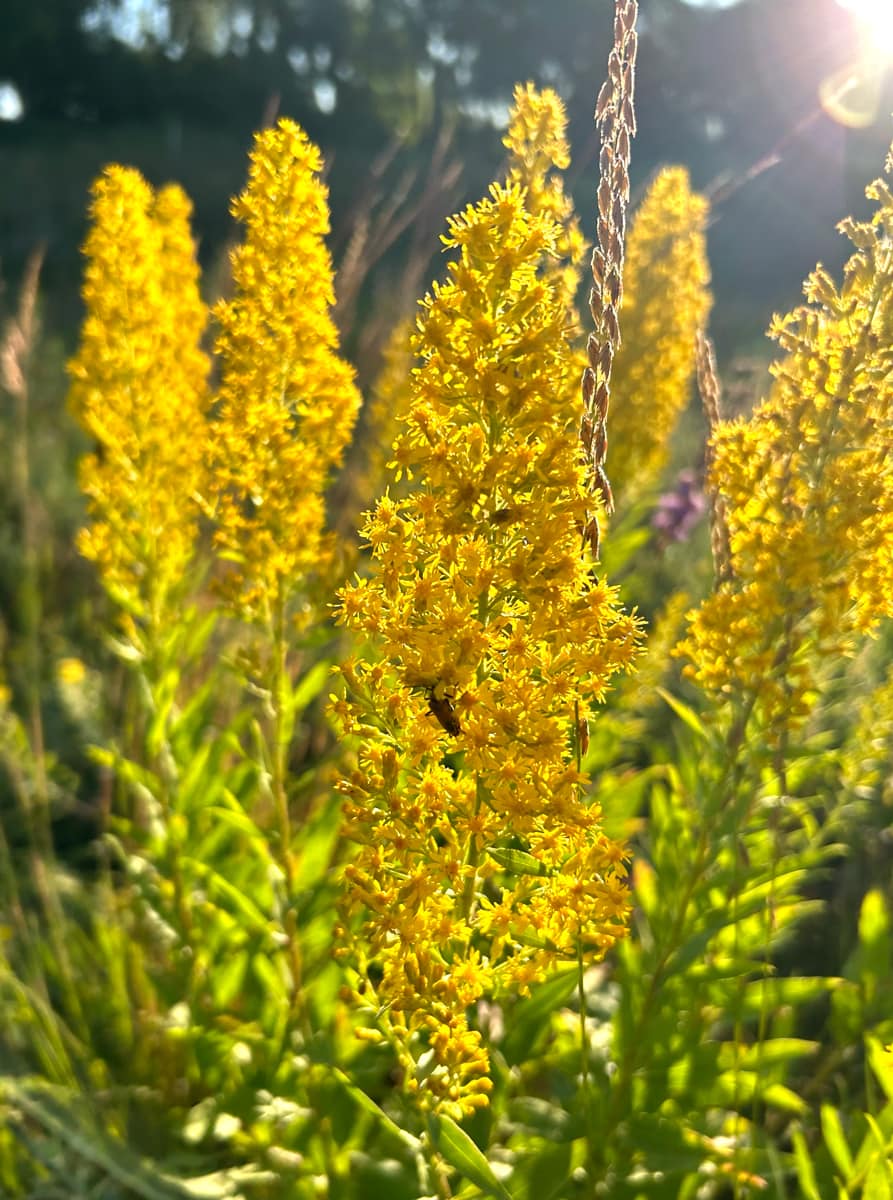
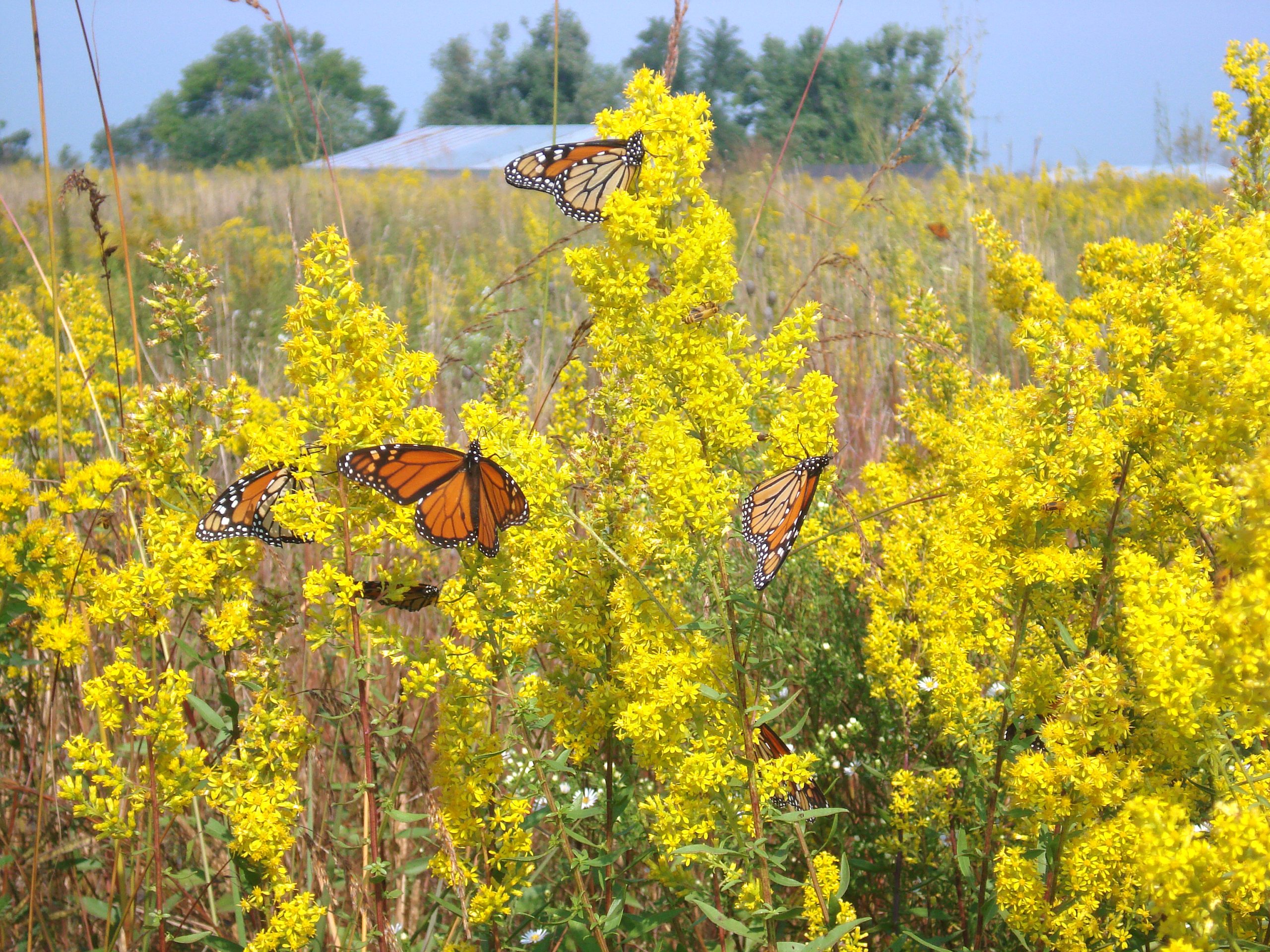
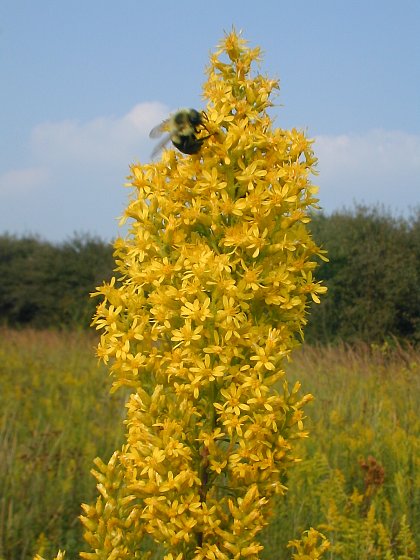
Why the Prettiest: It’s a striking perennial wildflower producing dense, upright, pyramid-shaped clusters of bright golden-yellow flowers. While its smooth, rigid stems are often reddish near the base.
Location: Native to eastern North America from the Atlantic Coast to the Great Plains from as north as southern Canada to as south as Georgia.
Environment: Found in many open areas such as fields, roadsides, hedges, and other habitats. Grows up 2-5 ft tall.
Bloom Season: Blooms from July to October or November. Major food source for bees, butterflies, and beneficial insects late in the season.
Color Varieties: Available in yellow.
Gardening Conditions: Thrives in full sun but accepts partial shade. Adapts to sand, loam, or clay as long as it drains well. Prefers dry to medium moisture and handles drought well once established. But space individual plants 2-3ft apart.
Conservation Status: Listed as Secure.
Trivia: Forms neat clumps with a fibrous root system instead of spreading aggressively like other goldenrods. In addition, due to heavy, sticky pollen that’s often carried by insects instead of the wind, doesn’t cause hay fever.
Other Candidates: Michigan Lily, Purple Coneflower, Black-Eyed Susan, Wild Bergamot, and Virginia Bluebell.
16. Kansas
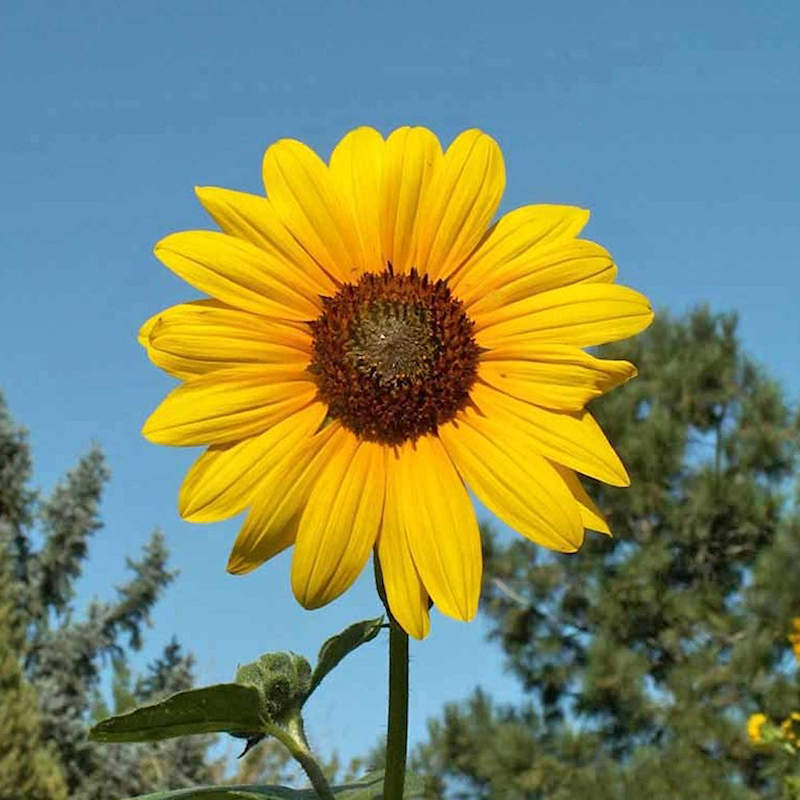
Common Sunflower (Helianthus annuus)
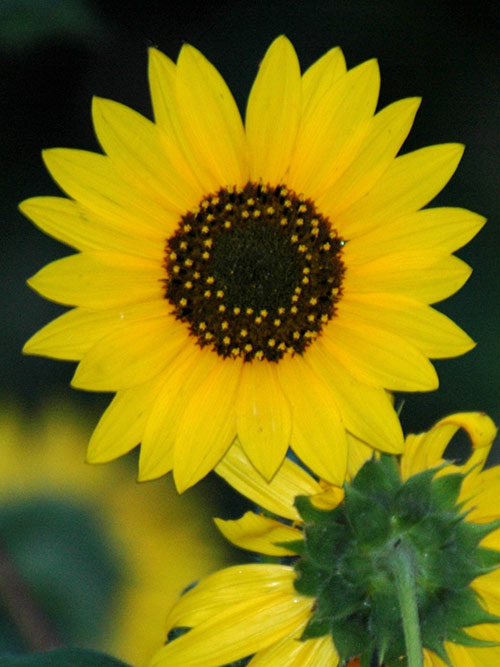
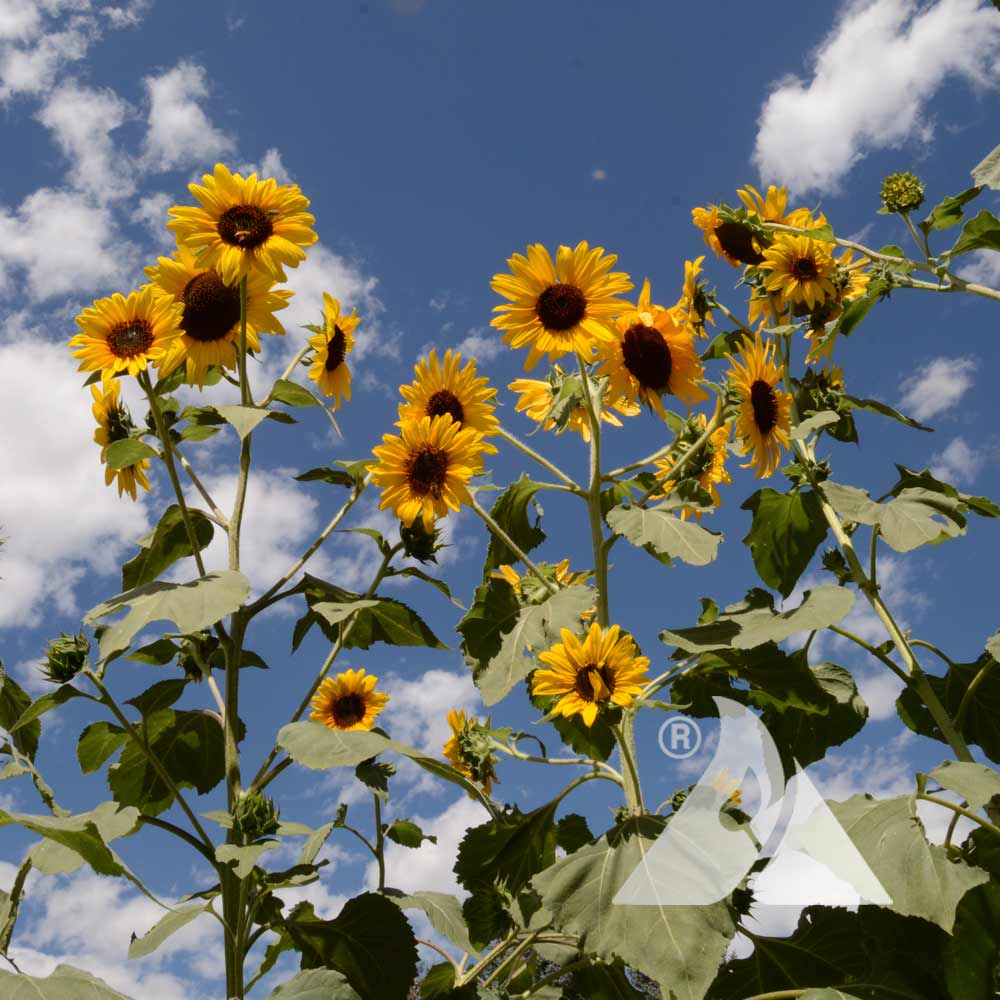
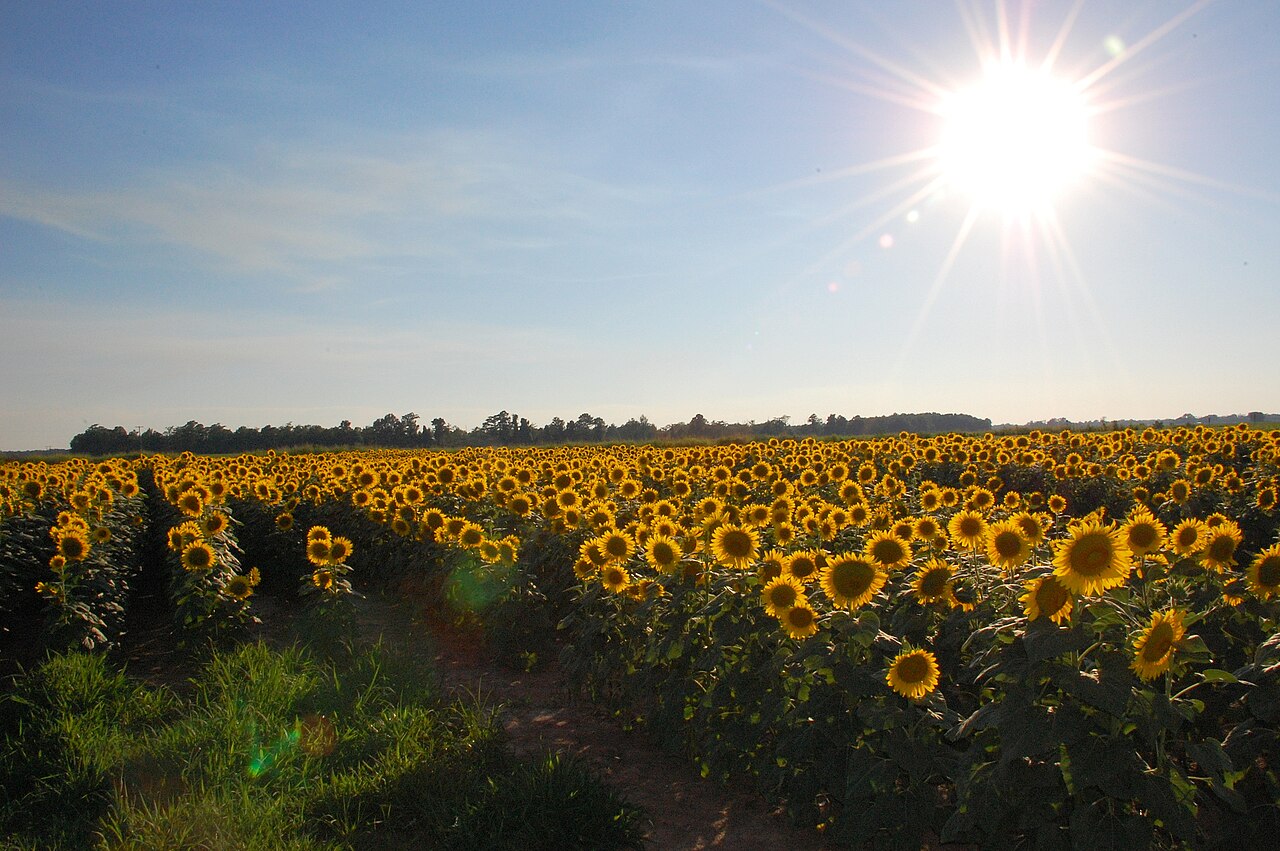
Why the Prettiest: For one, it’s the state flower of Kansas and an iconic one with a major cultural footprint in the Americas and around the world. Painters like Van Gogh have painted it. There are even whole industries behind this flower for its uses, particularly in Russia and former eastern bloc countries, particularly Ukraine. This annual forb in the daisy family features bright yellow ray petals surrounding a brown, yellow, or maroon central disc often measuring 2-5 in across wild varieties.
Location: Native to southern Canada, central and western United States, and Northern Mexico.
Environment: Often appears in dry open areas and foothills. Outside cultivation, it’s found in clay-based soils that are typically wet in the spring but dry out in the summer. Can grow as tall as 2-10 ft.
Bloom Season: Blooms during the late summer to early fall. Acts as a virtual habitat providing nectar to bees and butterflies as well as seeds for birds like goldfinches, doves, and quail.
Color Varieties: Available in Yellow. But cultivated varieties have all kinds of colors.
Gardening Conditions: Grows best in fertile, moist, well-drained soil with heavy mulch. Thrives best in full sun. Susceptible to the Fusarium fungus, downy mildew, broomrapes, as well as other diseases.
Conservation Status: Currently listed as Least Concern.
Trivia: First domesticated by Native Americans. One of the first plants brought from the Americas to Europe during the 16th century. Domesticated form is harvested for its edible seeds for oil, confectionary, fertilizer, livestock feed, birdseed, natural dyes, or as a snack food. National flower of Ukraine and city flower of Kitakyushu, Japan. Has served as symbol of green ideology, protest movements, and indigenous tribe emblems. Subject to much of Native American mythology.
Other Candidates: Butterfly Milkweed, Purple Coneflower, Black-Eyed Susan, Missouri Evening Primrose, and Purple Prairie Clover.
17. Kentucky
Dwarf Crested Iris (Iris cristata)
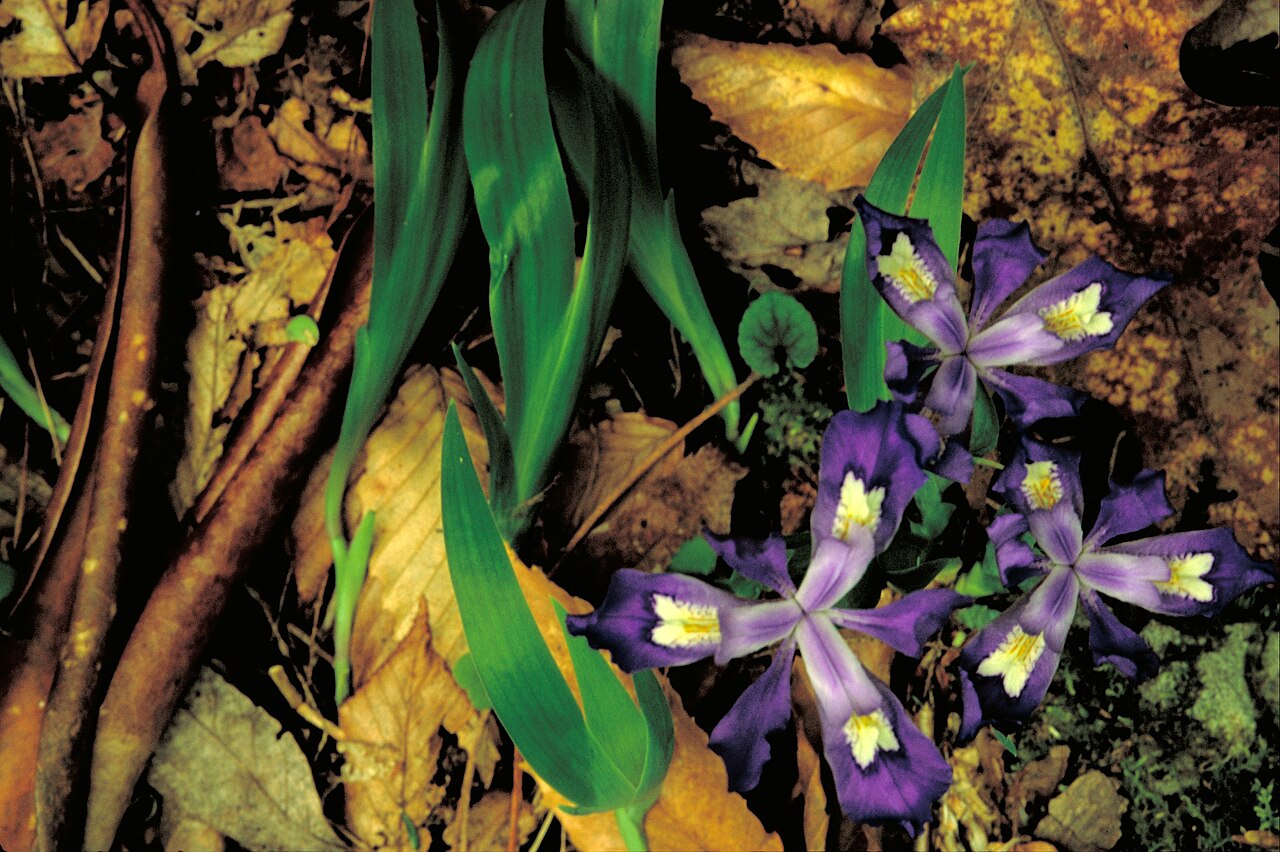
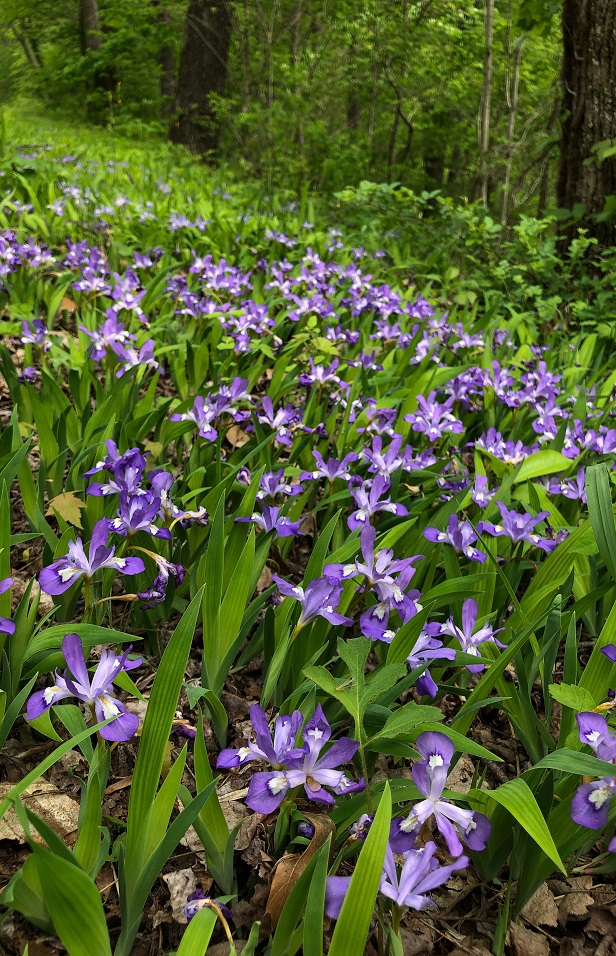
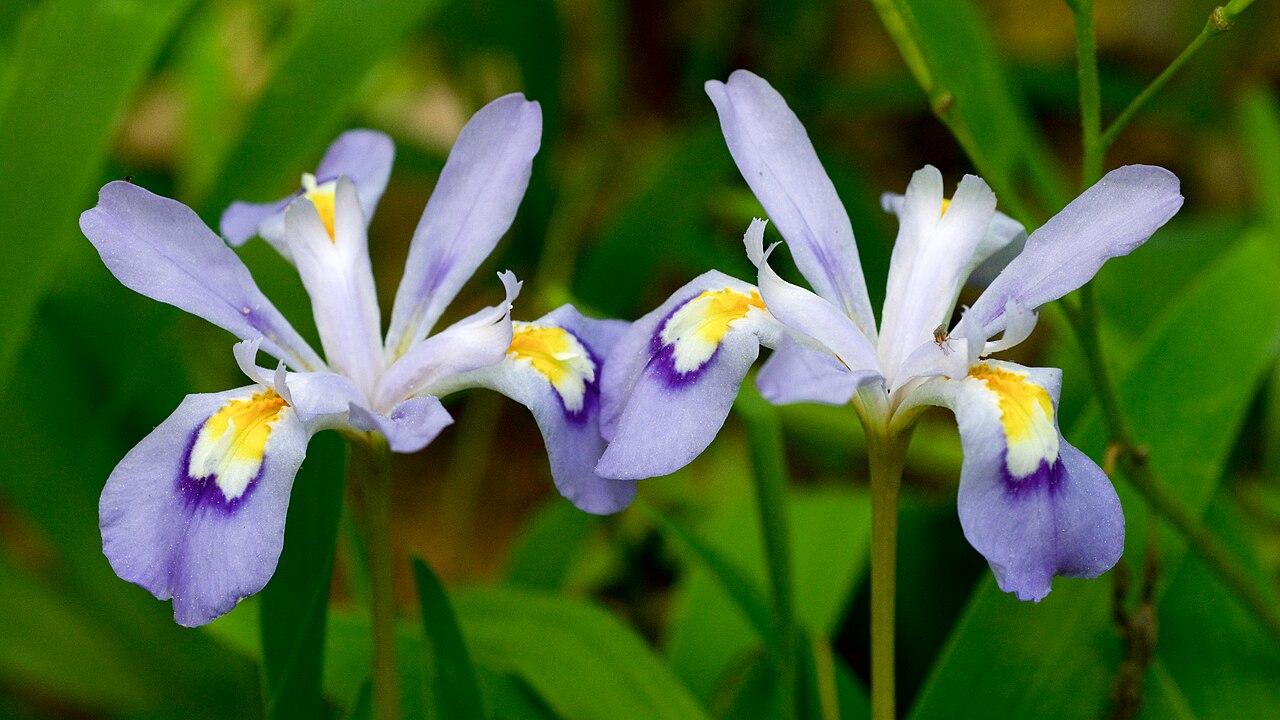
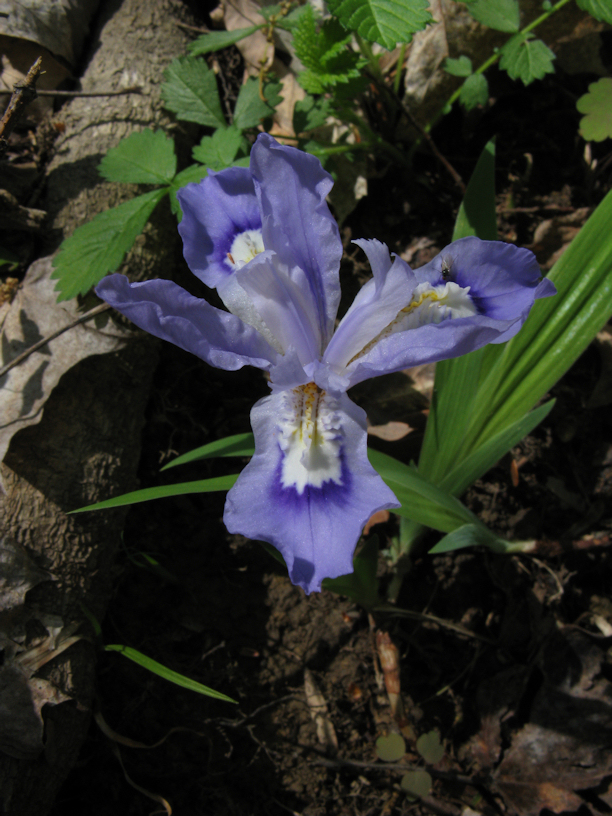
Why the Prettiest: It’s a charming, low-growing perennial that produces delicate light blue, lavender, or white flowers with distinctive gold or white-and-purple crested ridges.
Location: Native to the eastern to central United States.
Environment: Grows in calcareous soils, oak woodlands (or forests), rocky hillsides, ravines, mountain ledges (and bluffs), and along streams. Can grow from 3-9 inches tall.
Bloom Season: Blooms in mid-spring such as April and May. Attracts bees and hummingbirds. Famously resistant to deer and rabbits.
Color Varieties: Available in pale lavender, light blue, purple, and white.
Gardening Conditions: Prefers to grow in well-drained soils that are neutral or slightly acidic. Also prefers high fertile soils containing humus but will tolerate loamy soils. Can tolerate full sun but prefers cool, semi-shaded positions. Has above average water needs during the growing season. Can be naturalized as well as grown in a mixed flower border, rock garden, or create ground cover in a woodland garden. Can also grow on peat banks. Best recommended to add peat and sharp sand when planting new plants. Once planted, can be surrounded with leaf mulch for water retention. Can suffer from damage from snails, slugs, deer, iris borer, verbena bud moth, whiteflies, iris weevil, thrips, aphids, and nematodes. Susceptible to bacterial leaf blight, crown rot, rhizome rot, rust, viruses, and scorch. Can be propagated through seed or by division. Grown in ideal conditions, it can live for 10 years. Nonetheless, as with most irises, most parts of the plant are poisonous. Ingesting it can cause stomach pains and vomiting. Handling the plant without gloves can cause skin irritation or an allergic reaction with a risk of dermatitis.
Conservation Status: Listed as Secure but considered endangered in Maryland and Pennsylvania.
Trivia: Has many different cultivars. Used by Cherokee Indians for herbal medicines treat ulcers and other ailments. Used as a thirst aid by 19th century hunters in Virginia.
Other Candidates: Virginia Bluebell, Showy Goldenrod, Fire Pink, and Yellow Lady’s Slipper.
18. Louisiana
Giant Blue Iris (Iris giganticaerulea)
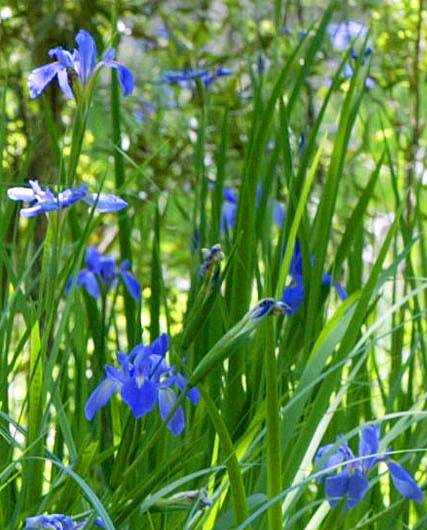
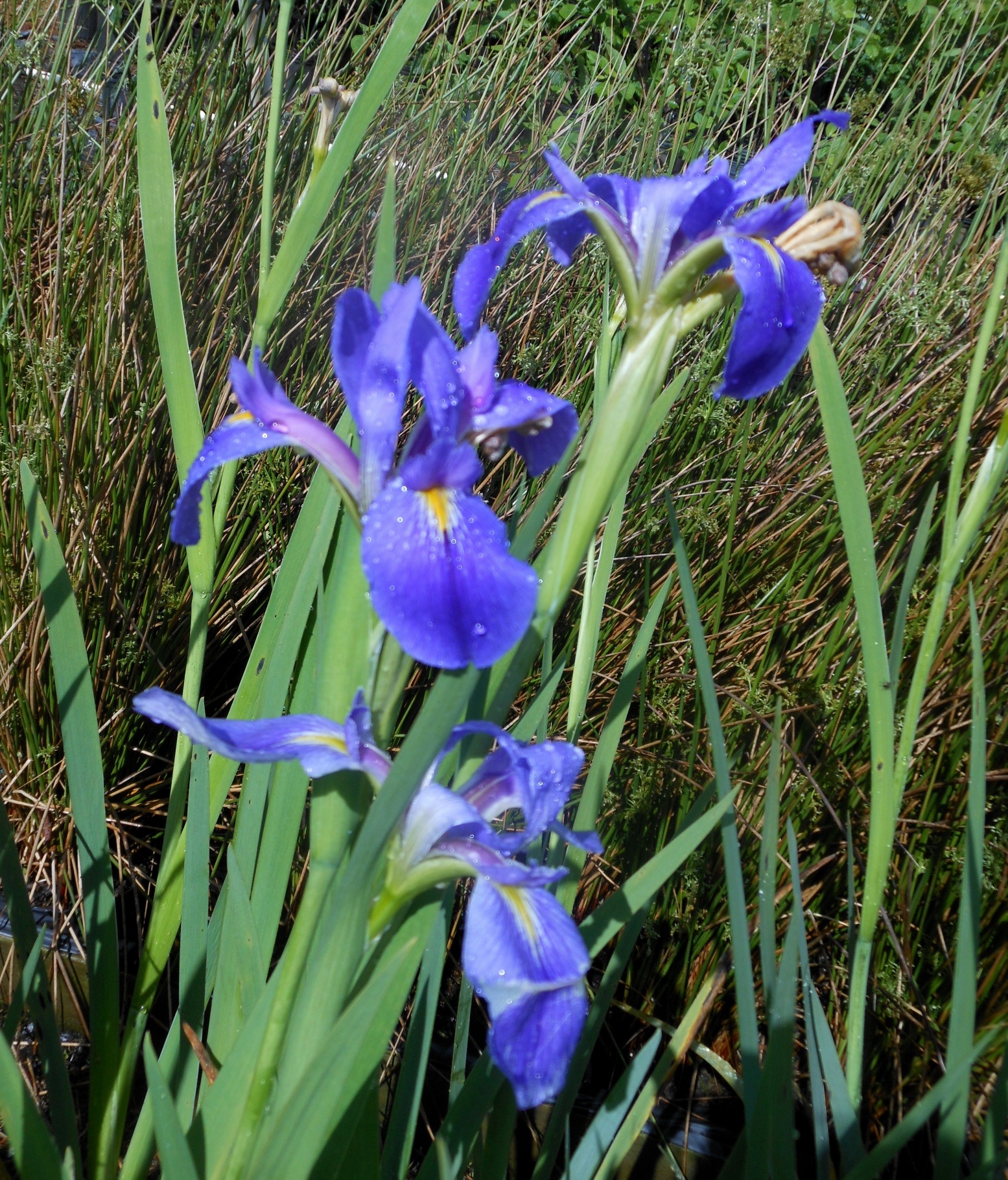
Why the Prettiest: Given that Louisiana is known for its bayous, this is a wetland-loving perennial has sword-like green leaves up to 30 in long as well as massive 6 in blooms in shades of sky blue, violet, and indigo featuring a distinct yellow or white central signal. Commonly found around the city of New Orleans and is one of the few areas where a native population still exists. And it’s the most recognizable Louisiana Iris species.
Location: Native to southern United States near the Gulf of Mexico in states like Alabama, Mississippi, Louisiana, and eastern Texas.
Environment: Grows in shallow freshwater, within roadside ditches, clearings within swamps, wet meadows, and marshes. Tolerates brackish water. Grows up to 3-6ft tall.
Bloom Season: Blooms from March to April.
Color Varieties: Available in pale blue, bright blue, dark blue, lavender, violet, and white.
Gardening Conditions: Needs full sunlight or partial shade and moist, acidic soils with a high organic and high fertility content. For best flowering, moisture is essential in late autumn, winter, and spring times when the plant begins growing new leaves. If using fertilizer, sprinkle around plant in January or February before the plant is in flower. Propagation is best carried by rhizome division since raising a seed is a very slow process.
Conservation Status: Listed as Vulnerable due to habitat destruction and climate change. The Greater New Orleans area is one of the few areas where you can see in its native range.
Trivia: Available at aquatic garden centers.
Other Candidates: Coreopsis, Indian Blanket, Purple Coneflower, Passion Flower, and Swamp Milkweed.
19. Maine
Heart-Leaved Aster (Symphyotrichum cordifolium)
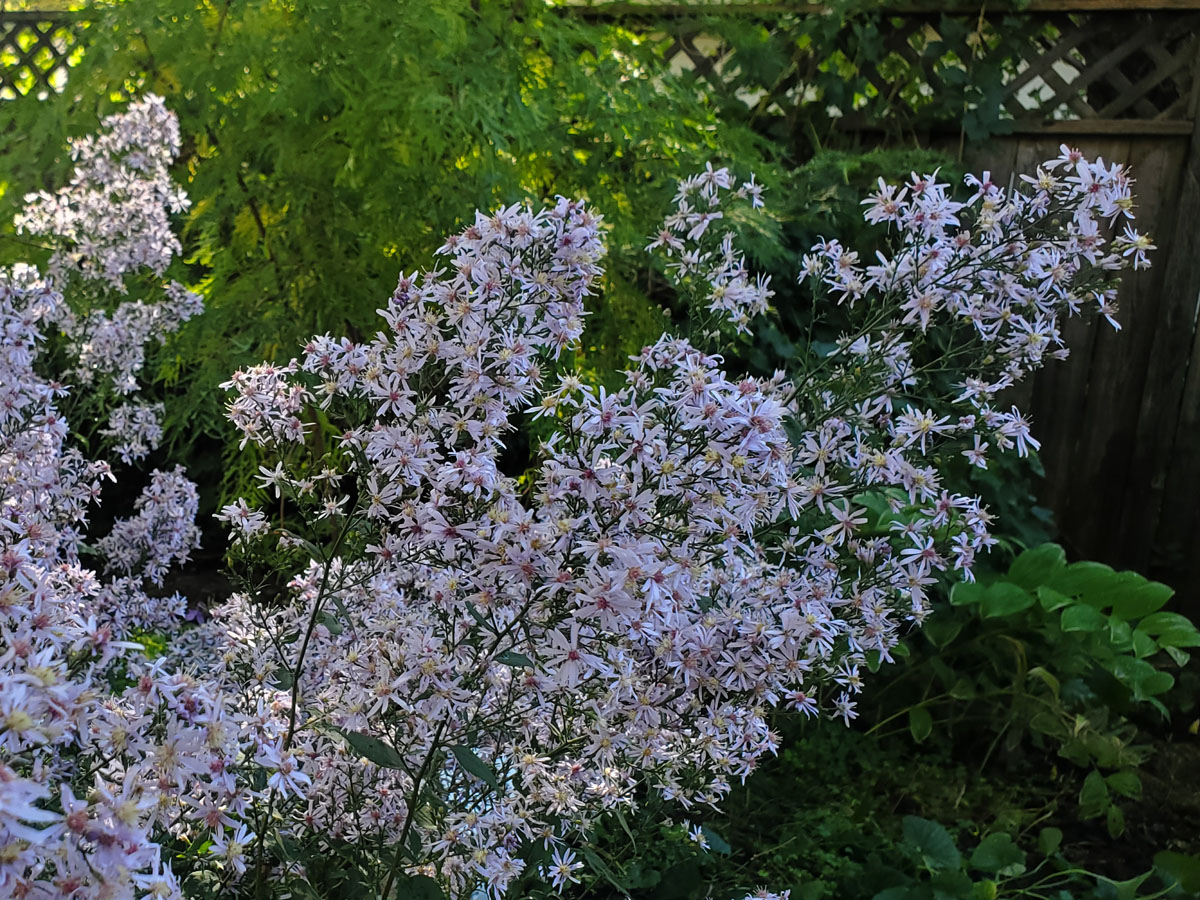
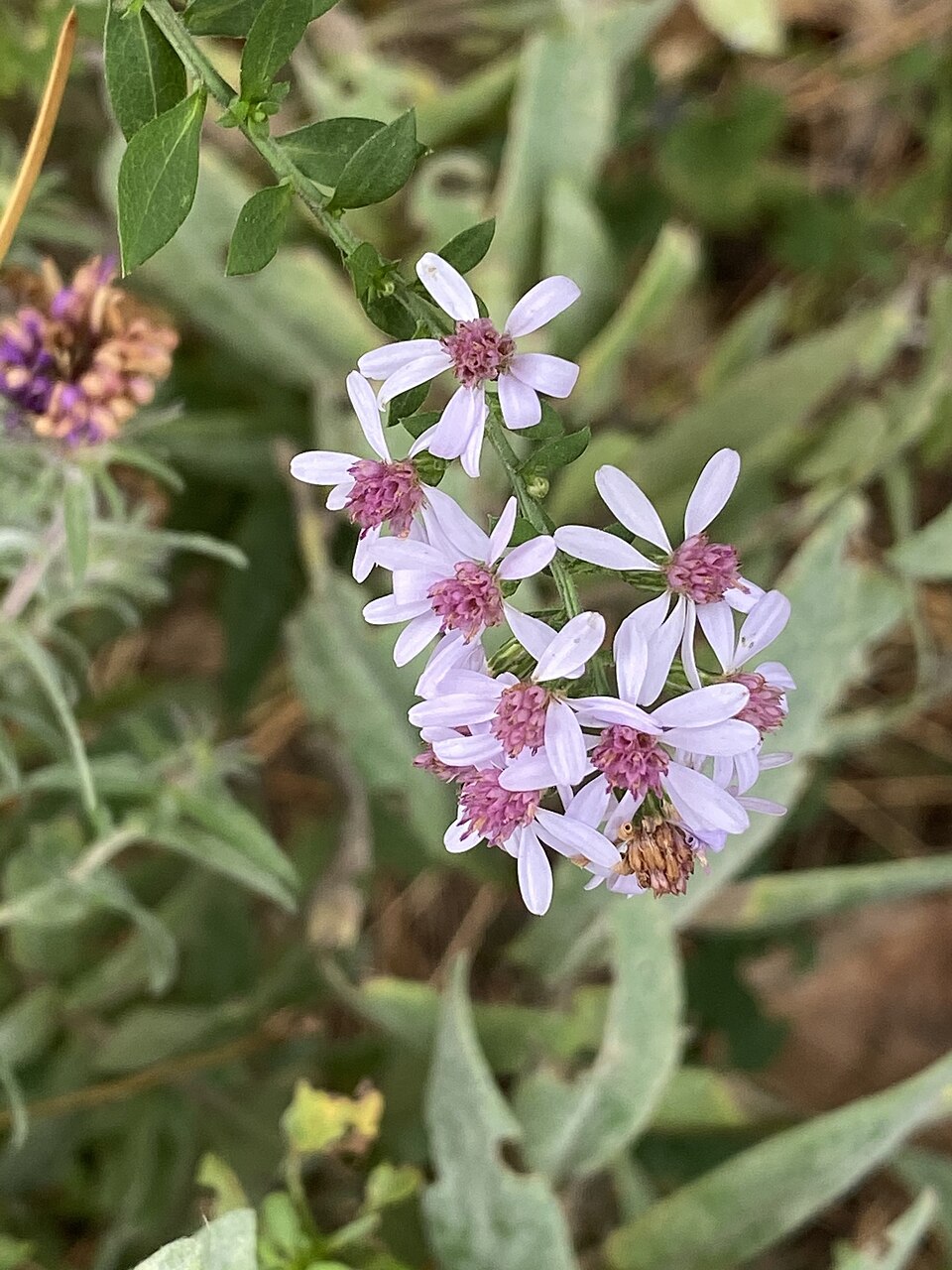
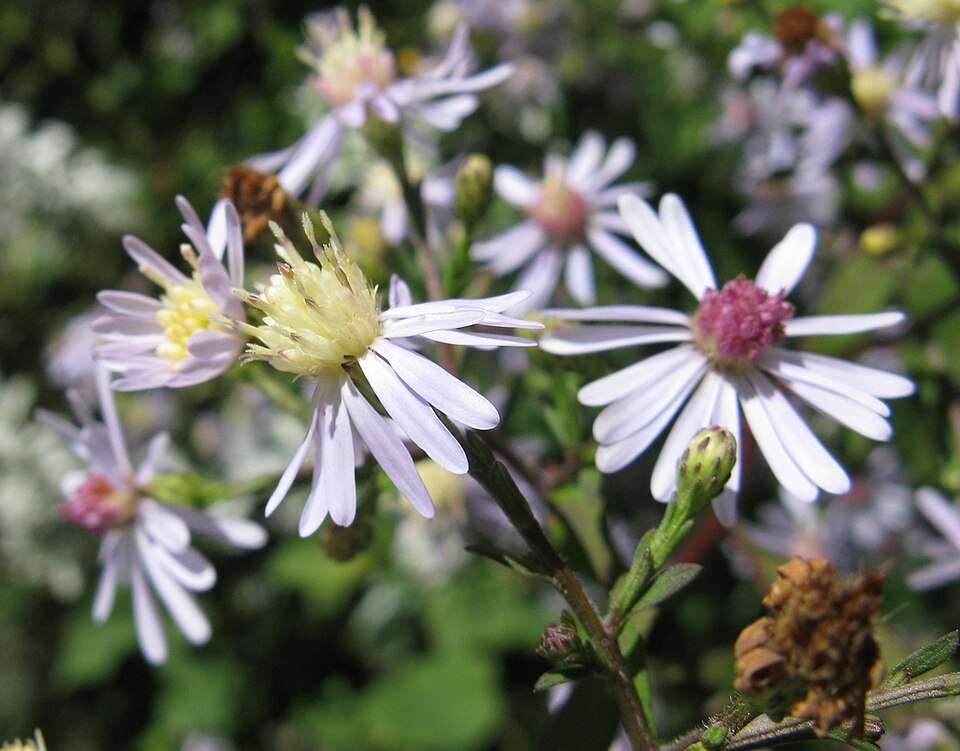
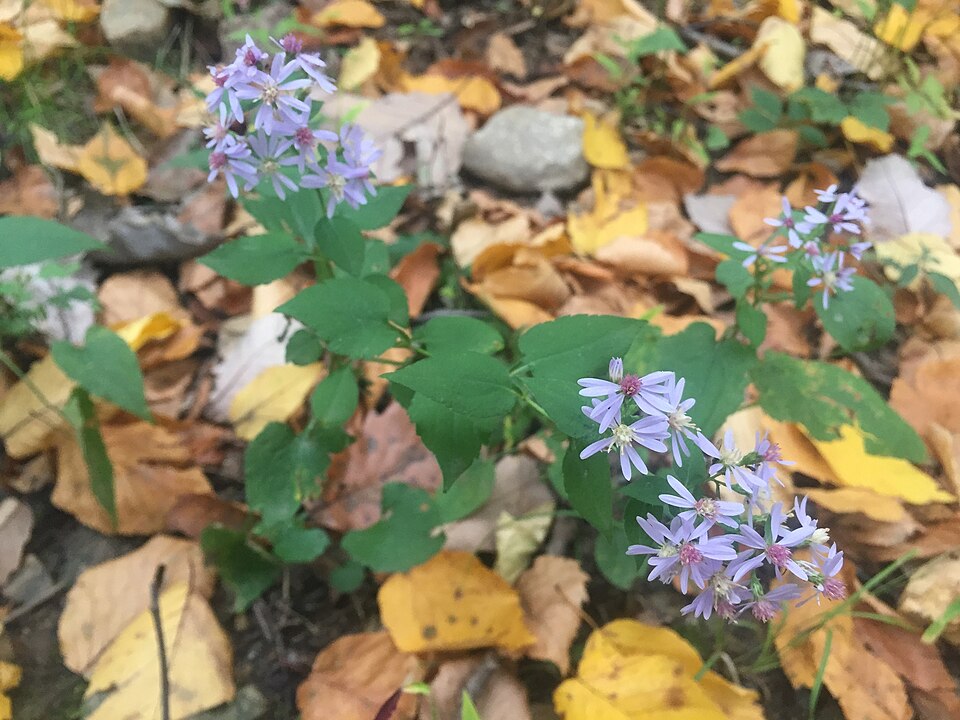
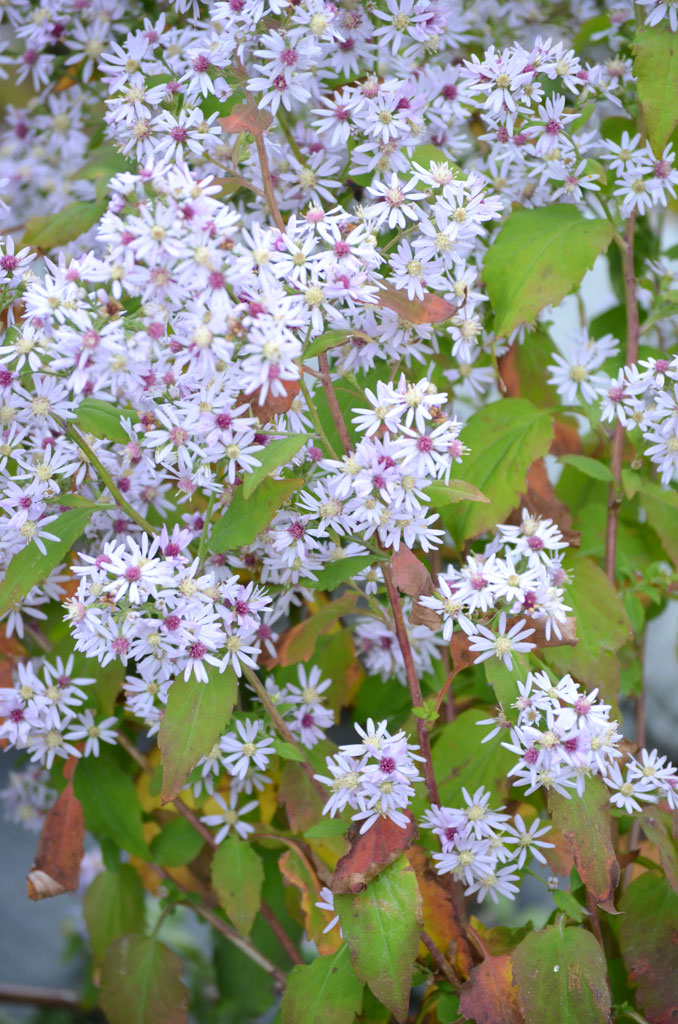
Why the Prettiest: This hardy, shade tolerant perennial has small, daisy-like pale blue to lavender-purple flowers with yellow or pinkish centers that darken to violet. While foliage comprises of distinctive heart-shaped basal leaves.
Location: Native to eastern and central North America.
Environment: Grows primarily in mesic sites with soils that are rocky but generally rich ranging from sea level to 3,900 ft in the Appalachian Mountains. Can be found on open wooded slopes, along stream banks, on moist ledges, in swampy woods, along the borders of deciduous forests, as well as in clearings, thickets, and along ditches and roadsides. Can even be seen in urban areas where it’s considered a weed. Grows 2-4ft tall.
Bloom Season: Blooms from August to October. Attracts bees, wasps, and butterflies. Acts as a larval host for caterpillars of the pearl crescent butterfly and the wavy-lined emerald moth.
Color Varieties: Available in pale blue, lavender, and purple.
Gardening Conditions: Reproduces by seed or vegetatively via short rhizomes. Susceptible to brown rust and red rust. Prefers partial shade to full shade but can tolerate full sun with enough moisture. Adapts well to average, dry, or moist well-drained soils but dislikes being consistently wet.
Conservation Status: Listed as Secure but seen as imperiled and vulnerable in some states. Seen as an introduced species in the UK and Norway.
Trivia: Used by the Ojibwe to make incense to attract deer.
Other Candidates: Black-Eyed Susan, Pink Lady’s Slipper, Trout Lily, and Bunchberry.
20. Maryland
Black-Eyed Susan (Rudbeckia hirta)
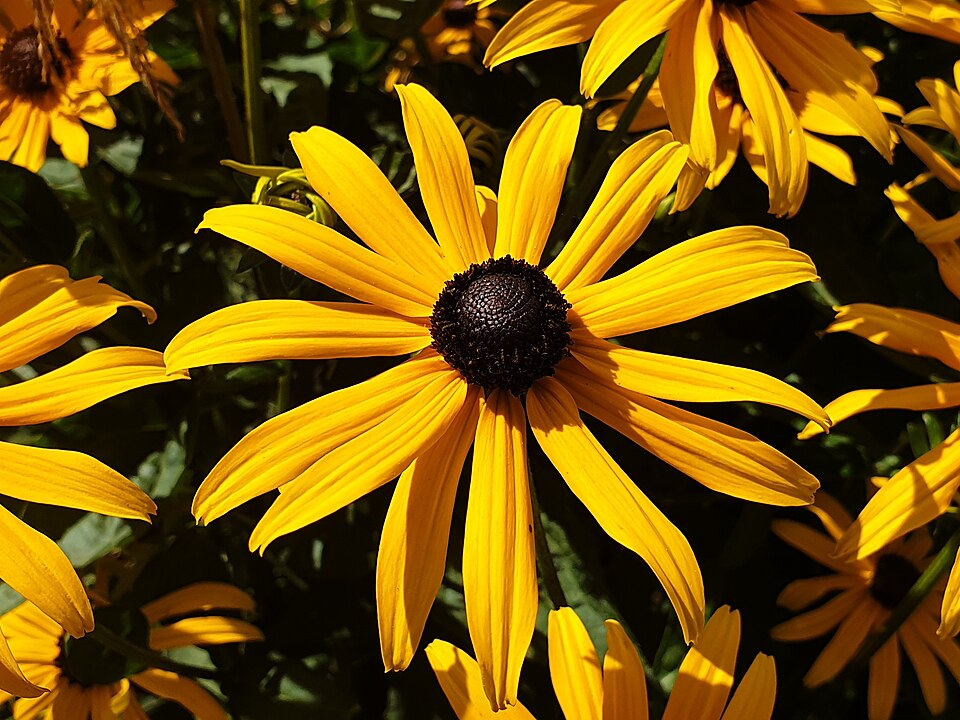
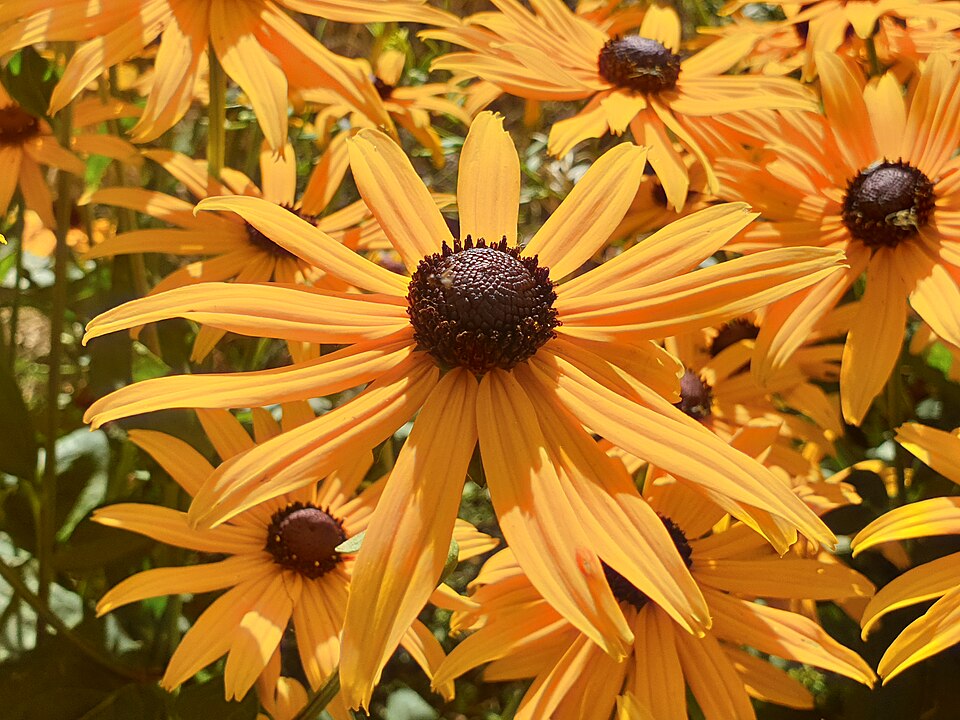
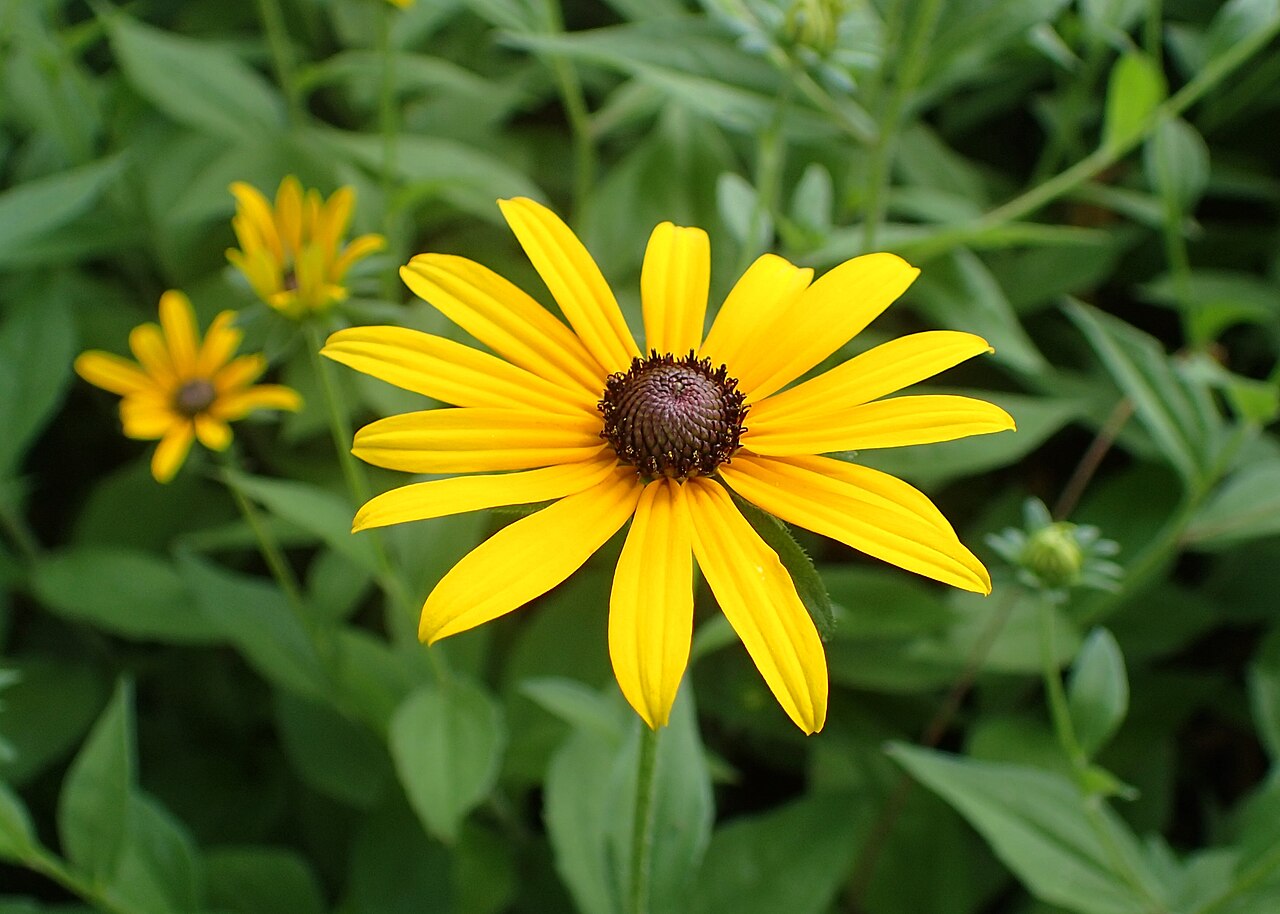
Why the Prettiest: For one, it’s Maryland’s state flower since 1918. Is often used in gardens and ceremonies to celebrate, memorialize, and show affection for the state and its people. Known for its bright yellow petals and deep brown center.
Location: Native to eastern and central North America.
Environment: Often found in roadsides and old fields where soil has been disturbed as well as in the woods. Grows 1-3ft tall.
Bloom Season: Blooms during the summer through fall. Attracts butterflies. Larval host to the bordered patch, gorgone checkerspot, and silvery checkerspot.
Color Varieties: Available in yellow.
Gardening Conditions: Self-seeds to return each year, making it difficult to classify it as either an annual or short-lived perennial. Needs full sun for the best blooms. Prefers well-drained loam, clay, or sandy soil but tolerates poor soil conditions. Water deeply when first planted but can be very drought tolerant once established. Yet, leave dead heads and seed heads through the winter to feed birds, insulate roots before cutting back in the spring.
Conservation Status: Listed as Secure.
Trivia: Has 4 varieties. Used as Native American medicine for various ailments.
Other Candidates: Virginia Bluebell, Butterfly Weed, Cardinal Flower, Wild Bergamot, and Eastern Red Columbine.


