

For every job you might see on TV, movies, or in a book, there are plenty of background people whose work remains invisible. Behind a blacksmith who creates weapons, tools, horseshoes, and other useful items, there were always smelters who had to refine the ore. Behind the scribe and printer are the people who had to make the paper. And behind the building professions are carpenters, brickmakers, smiths, masons, and sawmill workers. Anyway, ever wondered what a cooper was? Perhaps you want to know what a teamster may be. Or maybe you imagined yourself as a druid at some point. In this post, we look at ten more historical professions and their dark realities.
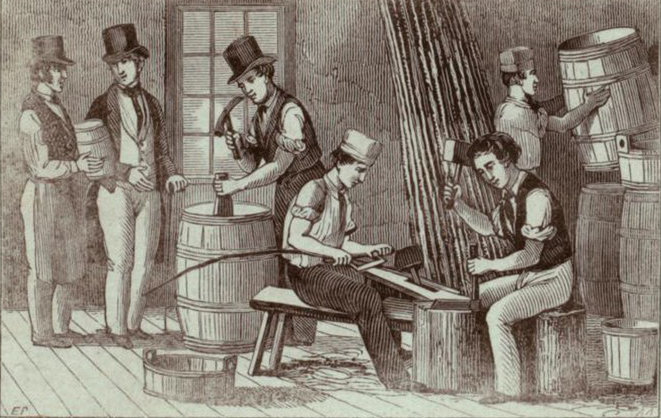
191. Cooper – If you’re not familiar with the term, a cooper is someone who made and repaired barrels, casks, and vats. Due to the lack of refrigeration until more recent times and a high demand for proper food storage, a cooper’s job was a very essential one. But their lives were often not a barrel of monkeys. First, coopers worked with green white oak, a wood that’s exceptionally dense and heavy. Workers routinely lifted and maneuvered staves and finished barrels weighing from 40-100+ lbs. Second, shaping wood by hand, bending thick staves using open fires and heavy chains, and hammering iron hoops required relentless muscular effort, leading to chronic back and joint pain. Third, learning the complex geometry and manual skills required to make a completely watertight vessel without glue took up to 4-7 years of low-wage apprenticeship. Fourth, despite requiring specialized, generational knowledge, traditional coopers were often poorly paid for the sheer volume of grueling manual work they produced. Fifth, bending wood required searing heat over open flames to toast and make staves pliable, increasing risk of severe burns. Lastly, if a tight cooper made a single mathematical or cutting error on a liquid cask, the entire barrel would leak, ruining expensive contents like wine, whale oil, or gunpowder, and forcing the cooper to start over. Still, on the bright side, John Alden served as a cooper on the Mayflower and Priscilla Mullins was perfectly happy to marry him.
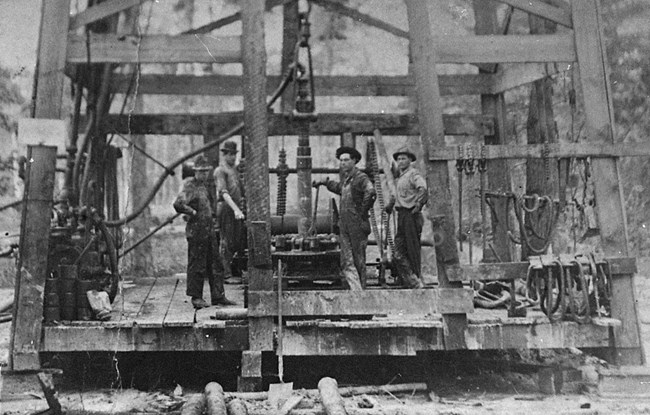
192. Oil Rig Worker – Working on an oil rig is a dangerous business today. But back in the early industry times, it was certainly the stuff of There Will Be Blood. For one, to no one’s surprise, workers faced constant risk of blowouts, heavily failing equipment, and toxic gas leaks without modern regulatory safety nets. Second, severe safety failures often led to disasters resulting in horrific losses. Third, oil rig crews pulled 12-hour shifts, working up to 7 days a week for months at a time without a single day off. Fourth, the heavy physical labor (called “roustabout” work) involved handling greasy, freezing, or scalding machinery that regularly broke bones or wrecked backs. Fifth, workers spent weeks or months isolated on remote land sites or far out to sea platforms, completely cut off from normal social contact. Finally, onshore crews dealt with freezing, muddy wilderness nightmares. While offshore workers endured violent ocean storms to wash them right off deck.
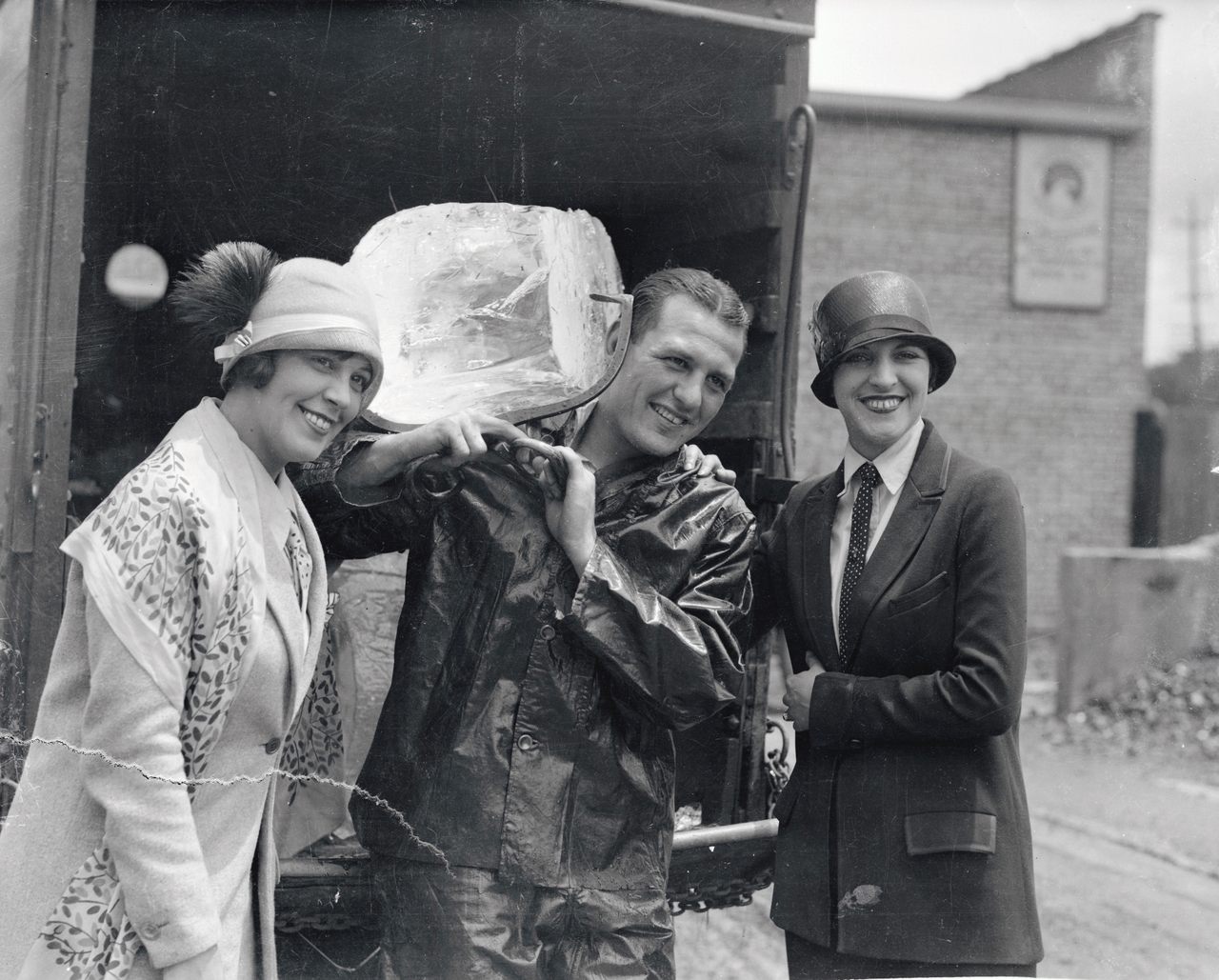
193. Iceman – You may see icemen in the early scenes of Frozen where they take frozen ice blocks from the mountains. But the real icemen didn’t live as quaint a life as you might see in Arendelle. First, icemen hauled solid 50-100lb blocks of ice from horse-drawn wagons, carrying up multiple flights of stairs using sharp metal tongs. Second, a regular day began at 4:00 AM, working through weekends and holidays, particularly under intense summer heat where demand peaked and ice melted fast. Third, wearing heavy leather vests and wet burlap padding meant the icemen spent all day soaked in freezing meltwater, facing severe risks of slipping and joint damage. Fourth, because icemen had to be strong and visited homes during the day while husbands were away, communities gossiped about them and unfairly blamed them for neighborhood drama. Lastly, the job would fall into an irreversible decline with the widespread availability of the refrigerator.
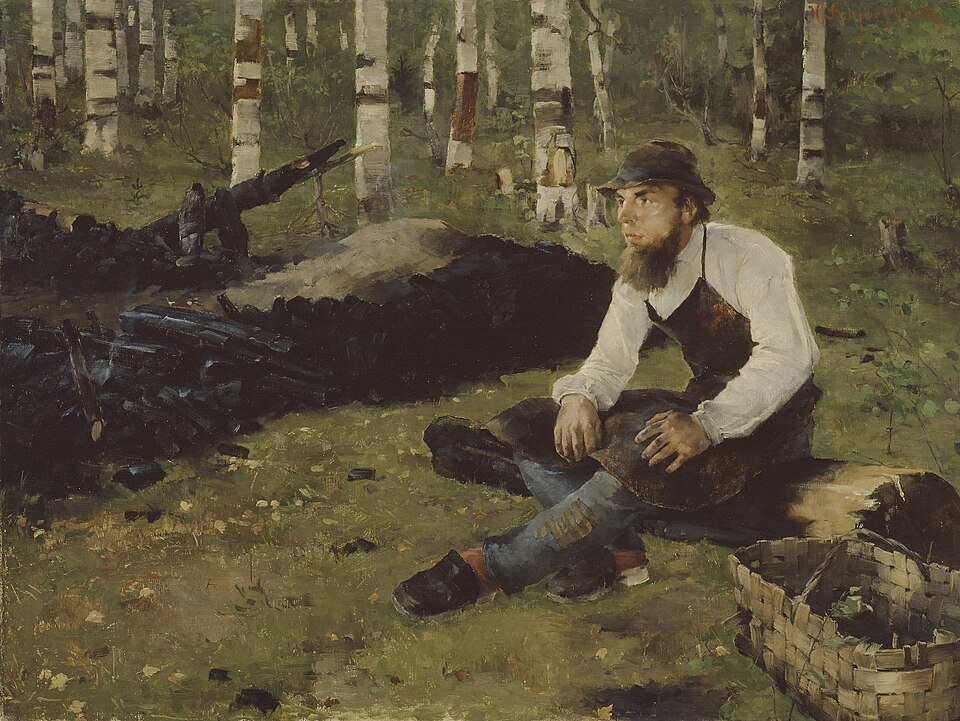
194. Charcoal Burner – Before the coal mining became widespread, charcoal was often an industrial fuel of choice. But the charcoal burner’s life was not one you’d be burning for. First, charcoal burners constantly breathed in thick smoke filled with tar, acetic acid, creosote, and naphtha from pyroligneous vapor, ruining their lungs. While skin and eyes were permanently stained black and irritated by soot, ash, and flying embers. Second, charcoal burners lived in tiny, lonely huts deep in the woods far away from towns and families for months at a time. Lastly, charcoal burners were often feared and ostracized by mainstream society. Superstitious villagers often viewed them with deep suspicion, accusing them of witchcraft or dark, unnatural practices simply because they worked alone in the woods.

195. Teamster – Teamsters are mainly seen as truck drivers hauling goods from one place to another and venturing vast distances. But in history, a teamster’s job was an incredibly rough road despite their profession being among the most essential within whole economies. First, historical teamsters worked 12-18 hour days 7 days a week. An average teamster in 1900 only earned $2 a day at that, which is good by the standards but still pretty terrible if you account for the financial risks involved. Second, teamsters handled heavy freight in all weather extremes such as freezing mud, snow, and summer heat without any climate-controlled cabs. Third, if merchandise was lost, stolen, or damaged, the teamster was often forced to pay out. Fifth, teamsters were also held liable for bad accounts and failed collections from customers. Sixth, as with many jobs of the day, teamsters faced complete lack of labor laws, workplace compensation, or workplace safety regulations. Lasty, in the advent of our modern transportation and roads, we must account the risks of caring for horses pulling the freight wagons as well as rigors of traveling on unpaved roads. Then there’s the fact they had to care for horses which aren’t at all the low-maintenance animals they’re often perceived.

196. Ambulance Driver – Today, ambulance service is often taken for granted. But this wasn’t always the case in the olden days. And the ambulance driver’s life was far from a glamorous one. First, for decades, ambulance drivers had no medical training while paramedics and EMTs weren’t really a thing. Their only job was loading bleeding, broken, or dying people into a vehicle and drive as fast as possible. Since many towns and cities had no dedicated ambulance services, local morticians and funeral homes filled the void. This meant patients were thrown into the back of hearses alongside standard equipment. Before community-based care like Pittsburgh’s pioneering Freedom House Service changed standards in 1967, emergency transport in major cities frequently consisted of a police paddy wagon ride with zero treatment. Second, early horse-drawn carriages, converted Model T Fords, and military trucks had rigid suspension systems. Driving over unpaved and shell-ridden roads meant patients suffering brutal jolts that often worsened internal injuries. Historical vehicles lacked heating or air conditioning. Drivers and patients froze during winter fronts or sweltered in unventilated compartments during summer. Third, engines stalled, tires blew out on muddy tracks, and early vehicles lacked power steering or synchronized gears, making them exhausting to move through dense traffic or rough terrain. Fourth, during World War I ambulance operations, drivers like future Nobel Prize-winning author Ernest Hemingway faced active artillery and machine-gun fire despite Red Cross markings. Because medical convoys were often shelled on purpose. Lastly, wartime ambulance drivers had to pull screaming, severely mutilated soldiers directly out of mud-filled trenches, handle constant triage decisions under pressure, and watch young men die in the back of their vehicles with no way to ease their pain.

197. Undertaker – In our popular imagination, the undertaker is probably the creepiest but most well dressed-man in the historical village. He’d also be the one with the coolest-looking ride. However, being one in the past wasn’t anything to die for. First, before modern arterial embalming became widespread during and after he American Civil War, dead body preservation relied on heavy metals and volatile liquids. Undertakers regularly used significant amounts of toxic arsenic, corrosive alcohol, or primitive ice cooling boards. Second, during the 19th century, bodies often remained in home parlors for days. Thus, undertakers had to manage melting ice chests or rely on crude temporary storage while racing against decomposition in spaces without air conditioning. Third, 19th century mortality rates were exceptionally high due to outbreaks of cholera, smallpox, tuberculosis, scarlet fever, measles, and typhoid. Because autopsies and body preparations were done without protective equipment, ventilation, or sanitary running water in home visits, undertakers faced constant, direct exposure to highly contagious and lethal pathogens. Fourth, many early funerals weren’t just funeral coordinators. They were also local cabinet and furniture makers who had to build custom wooden coffins by hand on short notice. Fifth, undertakers were responsible for hauling heavy wooden caskets, navigating narrow staircases or removing house windows to extract bodies, digging graves by hand in all weather conditions, and managing horse-drawn hearses over unpaved, muddy roads. Sixth, if you’re familiar with Edgar Allan Poe stories, you’d know that the 19th century suffered from a cultural panic over premature burial. Undertakers had to frequently deal with distraught families placing bells, glass panels, or breathing tubes in coffins, demanding prolonged watches over the deceased. Finally, Victorian public mourning expectations were suffocating. Communities pressured undertakers to supply flawless, expensive carriages, plumes, and black drapery, often catching brunt of financial stress and social hostility over families deeply over-indebted by the cost of a “respectable” funeral.
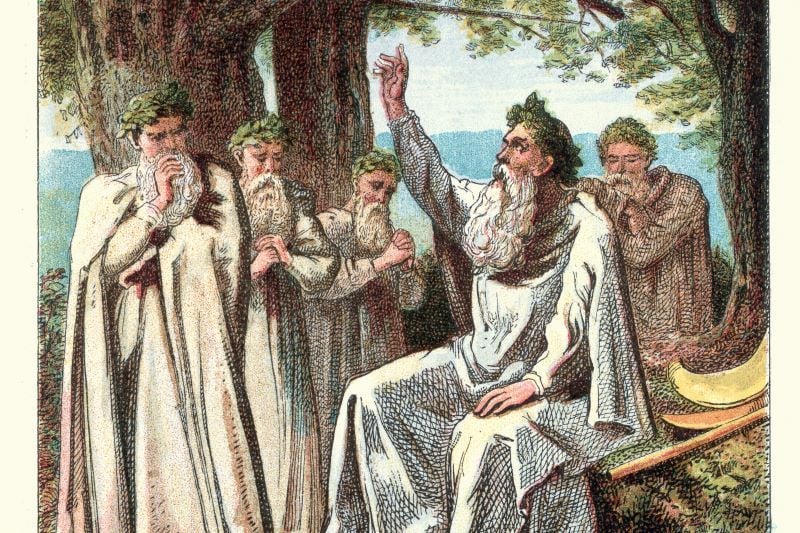
198. Druid – Druids are often seen as the closest thing to wizards in anything pertaining to sword and sandal entertainment. Sure, they were religious figures, but they also did way more than that. However, their lives in Celtic Europe were nothing what you’d see on the screen. First, to be a druid in a society lacking a writing system, a student had to endure a 20-year education comprising of memorizing thousands of verses of law, history, medicine, and astronomy entirely by mouth. All because writing this sacred knowledge was strictly forbidden. Forget a vital legal precedent or ritual verse during an oral exam, your career and social standing effectively evaporated. No pressure. Second, Roman emperors like Tiberius and Claudius banned druids, with Roman legions actively hunting them down (such as the slaughter of Anglesey) because druids served as the political and spiritual backbone of anti-Roman rebellions in western Europe. Third, druids had to preside over high-stakes tribal rituals, which Roman historians included grim human sacrifices to appease the gods or predict the future. Of course, given how Romans depicted people they didn’t like, this might come across as propaganda. But archaeological findings of bog bodies in western and central Europe have lent some credibility to these allegations. Especially since a lot of them were determined as privileged nobles, maybe even chieftans. Lastly, druids functioned as supreme judges, tax-exempt elite, and diplomats in Celtic society. Whenever tribal wars broke out or deals went south, everyone expected a druid to either fix it or take the blame.

199. Ancient Egyptian Embalmer – Today mummies are often seen as iconic in our public imagination that they become the villains in a film franchise. However, the lives of people who actually mummify people were actually quite miserable under the sweltering Egyptian sun. First, ancient Egyptian embalmers worked in hot, enclosed spaces with decaying bodies, bodily fluids, and strong-smelling palm wine and resins. Organ removal was among their duties and comprised of a horror show. Brain removal meant shoving a hook up the nose to smash it and letting it drain out. They also had to pull out the lungs, liver, stomach, and intestines by hand through a small abdominal cut. Third, ancient Egyptian embalmers also stood in and around massive amounts of natron salt, which dried out corpses in 40 days. Yet, also severely dried and cracked the workers’ skin. Fourth, ancient Egyptian embalmers worked in stifling, hot “pure places” where the decomposition rate before the salt took effect was high and rife with bacteria. Though the embalmers themselves wouldn’t know that. Fifth, if you’re the guy who made the abdominal cut to pull out the organs, well, you’d be viewed as a desecrator. Meaning that after cutting the corpse open, you had to flee the crowd ceremonially threw rocks and curses at you for violating the body.

200. Vinter – In the public imagination, wine making is depicted as a rather quaint pastoral activity. But a vinter’s life wasn’t one of happy grape stomping. Actually since wine presses have existed since ancient times, grape stomping was more for the postcards than the reality. Unless there weas no way to afford one. First, given that they mostly operated in times before microscopes and modern scientific understanding, vinters didn’t understand yeast or chemistry, meaning random chance could turn batches into sour vinegar. Wine was stored in either porous clay or leaky wooden barrels without wooden seals, causing foul taste and rapid oxidation. To mask rot and spoilage, vinters added tree resin, lead, ashes, and seawater to the liquid. Second, during the late 19th century, a tiny aphid from North America destroyed millions of European acres, driving entire farming families into deep poverty, including vinters. Desperate grower tried bizarre and useless tricks to save their vines such as burying live toads under the roots to draw out the “poison.” Lastly, a single frost or unseasonal hailstorm could wipe out an entire year of income within minutes, leading to starvation and debt.


