History of the World According to the Movies: Part 94 – General History: Daily Life

Image

If you think Barry Lyndon is too boring or depressing outlook on life in the 18th century, here is the 1963 Oscar winning film Tom Jones which is based on the 1749 comic novel The History of Tom Jones, a Foundling by Henry Fielding. Though it doesn’t really provide an ideal portrait of life at the time, it nevertheless shows an accurate one. Still, even so, it continues to remind us that people living in the 18th century (or any other time in history) were just like everyone else, whores, bad table manners, and all.

Of course, I couldn’t end my movie history series without doing a post on daily life. Let’s just say while movies could show our perception of history, this doesn’t mean it played out like it actually did. Let’s just say if we used Smell-O-Vision in the historical film standpoint, you’d probably wouldn’t be able to see the movie since you’d be out of the theater by then. Still, we all know that those living in the past weren’t nearly as attractive as the actors we see onscreen as I’ve written on my previous posts and they probably didn’t talk the same either. Yet, we kind of let that slide for spectacle purposes. Nevertheless, sometimes the past  is seen as a more ideal time than it actually was, especially for those who grew up at that time. In movie history, we tend to remember some of the warm and fuzzy things about the past (though we don’t tend to ignore some parts though) like how great the clothes were, how exciting the battles were like, and how people seemed to be so polite and formal to each other. Yet, we tend to forget that sometimes the outfits were uncomfortable and not weather accommodating, how wars weren’t really that much fun for the soldiers involved, and that people could be quite vicious toward each other and didn’t always have such concept as equality. Still, there are things movies get wrong about daily life in the past which I shall list.

Health:

No matter the time and place and regardless of social class, everyone was able to receive adequate dental care and retain a full set of teeth even if your dentist was the local blacksmith with no formal dental training and there was no one in sight for miles. (Of course, every American knows the story of Washington’s teeth.)

Infant mortality was almost nonexistent. (Despite the fact that childbirth was considered a dangerous part of a woman’s life and infancy was the most dangerous time in a child’s life before modern medicine. Also, half of all children in Victorian England didn’t see their fifth birthday.)

Diseases never altered appearances despite the fact that many of them were untreatable.

Constant coughing always meant tuberculosis or some deadly respiratory disease.

Most people aged faster and died at a young age. (Of course, average lifespans were low but this was mostly due to the fact that there were so many infant and childhood deaths. Not only that but people of any age often fell victim to now-treatable injuries and illnesses {such as complications from childbirth}. Sure a life of hard work and poor diet took its toll, aging progressed as much as it does today. While living past 80 was rather rare, it wasn’t unheard of. After all, Ramses II lived to be 90 and was Pharaoh for 66 years, which was about two thousand years before Christ.)

Tar and feathering didn’t cause that much damage and could be easily overcome. (Unlike Dustin Hoffman’s character in Little Big Man, being tarred and feathered either resulted in death or if he survived not looking the same way again. In tarring and feathering, the subject would tend to have perhaps severe burns as well as hair ripped out. I mean everyone would remember what was done to you and it was never easy to overcome, if it was ever possible.)

No one worried about catching tuberculosis even around people who hung around them on a regular basis. (TB is a highly contagious disease which was considered untreatable. Then again, according to The Magic Mountain, sometimes it affect some worse than others.)

Cat o’ nine tails flogging didn’t leave any permanent scars on people’s backs. (This flogging could scar a person’s back for life as evidence by the photos of slaves.)

Women:

Women always shaved their legs and still looked well made up with perfect hair after a whole day of housework and child rearing. They also gave birth to big babies and usually lost the pregnancy weight very quickly. (Actually the last part I was making fun of how most babies in films look no less than 3 months old, even if portrayed as a newborn.)

Women of European descent had bones of steel since they could wear a huge dress with a tightly lace corset without suffocating and little damage to their body. (Wearing a huge dress was no fun and many women couldn’t breathe in a corset. Also, did damage to their internal organs.)

Women had long hair that they let flowing free. (Unless they were Ancient Roman prostitutes, but most women in history usually bound their hair to keep it clean from the elements they’d come in contact with or while doing housework.)

Women usually wore white at their wedding. (This was not standard until the Victorian Era and started by Queen Victoria herself.

Before then, it was usually blue, red, purple, or any other color embroidered and brocaded with white and silver thread for rich girls. Not to mention, well off girls did have many white outfits during the 1800s. In Sweden before the 1920s, brides wore black. For poor girls, it was usually their Sunday best. Not to mention, white easily stained and before there were better cleaning methods, wearing white was usually reserved for the upper classes.)

Women were expected to be virgins until marriage. (In some eras and cultures, yes, but for most of history, most guys would be just as happy if she was pretty, rich, young, and healthy enough to have children, strong enough to tend house, and not closely related. And even when a girl’s virginity was emphasized, so was the guy’s as well at times and usually among aristocratic circles. Not to mention, it wasn’t uncommon for a widowed mother to remarry soon after her husband’s death mostly for financial security. Not only that, but marrying a master’s widow was usually how a journeyman tradesman landed his own shop.)

Women between the 16th and the early 20th century wore their hair down in public. (Long tresses in public were considered risqué at the time. Women’s hair was usually pinned up at all times except bedtime or sickness.)

All women were expected to be housewives. (Well, this is a bit complicated but a woman’s role in life depended on her social status, especially in a pre-industrial society. Yet, in the Western World, the idea of women being solely mothers and wives didn’t come to be until the Victorian era. Sure women were expected to be wives and mothers as well as do housework {yet not always in their own house} but they also had to work, too, or at least assist their husband in their jobs. Wives of craftsmen often helped their husbands and could keep running his business in widowhood. Women who were poor or working class either worked in the factories or on the farms like their families did because they simply couldn’t afford to stay home.)

Sex:

Everyone married as teenagers until very recent times. (Ancient times, maybe. Modern times, not so much except maybe in Third-World countries. Though there were marriages that involved teenagers, most of them were concentrated among the upper classes and even then, consummation had to wait until the bride could safely deliver a child {since the teenager involved would almost always be the girl}. Still, though 13 year old mothers did exist in those days, 13 year old brides usually didn’t sleep with their husbands until they were 16 at least {or older depending on the age of the husband}. Everyone else worked and saved money, trained as apprentices or journeymen, or waited for the old man to die until they got married in their mid-twenties when they could afford to. Thus, despite that people didn’t live as long then as we do now, the average marrying age has seldom changed at least as the western world since the Middle Ages is concerned. )

Almost every historical figure was straight or asexual unless hinted otherwise. (There may not be much evidence to determine a person’s sexual orientation but there has been more evidence when it came to historical figures engaging in homosexual acts.)

Until recent times, everyone was conceived and born in wedlock unless stated otherwise. (Actually, the definition of wedlock has been loosely defined ranging from being married in the modern sense to just shacking up. Also, St. Paul says nothing in his letters about cohabitation before marriage because such a concept didn’t even exist. And until recent times, the notion of “common law” marriage was legal and widely practiced. Until recently, even when a couple did cohabit, most of the time they referred to each other “husband and wife” or “roommates” depending on sexual orientation. Not to mention, shotgun weddings in history were very common, since there was a popular saying that the first baby could come at any time after the wedding while the second always took 9 months.)

Children remained innocent and didn’t know anything about the birds and the bees. (Despite the fact that families tended to sleep in one room and at one time, most kids lived on subsistence farms for much of history. Not to mention, most ancient and medieval kids didn’t know anything about privacy. Sex education wasn’t needed then.)

Cousin marriage occurred quite frequently. (Sure there were famous people who married their first cousins like Charles Darwin, Albert Einstein, Edgar Allan Poe, and Jerry Lee Lewis. Sure first cousin marriage was accepted and happened more often to some degree but not to that kind of extent. Also, unlike today, it wasn’t uncommon for people to view even distant cousins as “cousins” as long as it was known they had a traceable common ancestor. And marriages between distant cousins happened much more frequently since they were more likely to occupy the same social status {this explains Franklin and Eleanor Roosevelt who were 5th cousins}, especially if the marriage was arranged.)

Cousin marriages led to birth defects. (Cousin marriages may double the risk of birth defects but that’s only an increase from 2% to 4% as long as it is a one-time thing in the gene pool and there hasn’t been much family intermarriage in previous generations. Now in families in which the members only marry their cousins and have only done so over generation, then you may end up having a child who looks like Charles II of Spain. But then again, there were plenty of Hapsburgs who married their nieces or nephews as well, which doesn’t do their children’s genes any favors. Not to mention, notice by “cousin” I’m only talking about first cousins since first cousin marriage is pretty much illegal in most states while most old time aristocrats married their second cousins, and most people don’t know who their third cousins are.)

Contraception didn’t exist until the 20th century. (Maybe as we know it but people have always tried to find ways to control their fertility and avoid pregnancy since they knew about the basics of sex and procreation. Yet, you don’t want to know what your ancestors used as contraception. Still, what I can say is that the idea of safe sex and STD prevention is new since until the advent of latex condoms and sanitation, the only STD protection was abstinence.)

There were no gay people until recent times. (Gay people have always existed in every culture throughout history yet sometimes it depended how openly.)

City Life:

Urban waterways were always clean and crystal clear before cities had modern municipal sanitation. (Then why did a lot of European children drink alcohol for centuries then? I mean modern water treatment was invented for a reason because you wouldn’t want to drink whatever was in those shit infested waterways at the time.)

City roads were always clean. (Except the fact that horses normally took a crap in the streets and people dumped their bodily waste out the window for centuries {during a tour of the Confederate White House, I found out that Jefferson Davis and his family flushed their bodily contents out into the street}. Sometimes people went to the bathroom out into the street.)

The city air was always clean and breathable. (From the 19th century to the 1980s, it wasn’t uncommon for Pittsburgh’s street lights to come on at noon. Also, there have been notable smog attacks in history.)
Landscapes:

Cemeteries were perfectly pleasant places to walk in during the 18th early 19th century. (By this time churchyard burial crowds grew so crowded that it proved challenging to find fresh spots to dig for fear of previous corpses’ body parts coming up when the gravedigger stuck in the shovel. Not to mention the smell of churchyards filling up with layer after layer of corpses became so unpleasant if not dangerous that the tradition of the bereaved attending grave-side services was often abandoned. Then there’s the fact that gravediggers had to drill a hole into a coffin to make room for new arrivals. They would then install a tube to draw off the gases from purification which would be burned off to make the coffin safe for handling {which could take 20 minutes}. One report said, “to inhale the gas, undiluted with atmospheric air, is instant death.” Until later in the 19th century, urban churchyards were actually environmental disaster areas you wouldn’t want to visit and this wasn’t due to people believing in ghosts. I mean 18th and early 19th century graveyards were places you’d want to avoid.)

Farm villages had nice gravel paths.

Estate lawns were always well manicured. (Despite that most of the landscaping would be done by animals like goats and sheep. However, they didn’t do as well as having a regular tractor or lawn mower would.)

Prostitution was seen as immoral. (Yes, but it was actually tolerated for much of history such as in the Middle Ages. Not only that, but there was much more prostitution {and certainly a lot more prostitutes since it was one of the few opportunities for poor women at the time} in the past than nowadays. Still, it’s no wonder that prostitution is seen as “The World’s Oldest Profession” since almost all ancient civilizations had practiced some kind of sex for currency. There’s a mention of it in Herodotus and in the Code of Hammurabi. Not only that, but it might even be older than humanity itself since Bonobos have been observed trading sexual favors for food, meaning it might go back for millions of years.)

Buildings:

Archaeological monuments were always riddled with booby-traps to protect their treasures from being stolen by robbers and future archaeologists.

No matter how much a building is bombed, you can bet it will still have running water and electricity if available.

No matter what time and place, almost everyone had houses with glass windows. (For a long time in history, window glass was expensive, especially in the 18th century. Also, many people who planned to emigrate to America were advised to take their windows with them. In early America, it wasn’t uncommon for people to remove and store their windows for safekeeping while they were away from home.)

Since the early 1800s, people used modern turning doorknobs. (These were rare during most of the 1800s and weren’t patented until 1878.)

No matter what time and place, most buildings had glass windows. (Since window glass was expensive before industrialization, only the rich can afford them. And even then, they would only put glass windows in certain buildings like their houses. Not sure about public buildings though but I know churches had them.)

Infrastructure:

Roads were always clean and navigable.

Animals:

Horses never took a dump in the street.

Hygiene:

Nobody used a bathroom or discussed bodily functions in any way, shape, or form. (Even though jokes about bodily functions are probably among the oldest on record.)

Urine wasn’t used for anything. (Let’s just say people in history had a lot of uses for urine such as tanning leather, laundry detergent, gun powder, teeth whitener, medicine {18th century doctors used it for almost anything}, and other things.)

No matter what time and place people always managed to wash their hair. (Maybe, but there are so many movies with people having clean hair when they shouldn’t, especially if it’s set during the Age of Sail.)

Communication:

Despite the cultural divides, people were able to communicate with each other without the use of a translator. (If this was true in real life, George Washington wouldn’t have fucked up in Fort Necessity.)

No matter what time or place, everyone wrote on paper. (This partly true because people in ancient and medieval times in the western world did write on a kind of paper like papyrus, parchment, and vellum. However, paper as we know was invented by the Chinese in the second century and didn’t come to Europe until the 13th century.)

All languages always had a formal spelling system.

Printing wasn’t used until the time of Johannes Gutenberg. (Monks actually used some type of printing by carving a whole page on wood during the Middle Ages while the Chinese had printing blocks. Gutenberg only came up with the notion of moveable type which was much more efficient and set off a revolution.)

British people always spoke in modern British accents. (Let’s just say if the movie takes place in England before 1800 and one of the characters is played by an American actor who can’t master an accent {say, Humphrey Bogart}, it probably won’t make much difference. I mean we don’t know how people sounded like before sound recording anyway.)

Quill pens could be used over and over again without having to be redipped in the same inkwell. (Quill pens need to be redipped into the inkwell frequently.)

Quill pens could be used in any temperature setting. (Thomas Jefferson once noted he had to stop writing one night because the ink from his pen kept freezing.)

Messengers had an easy time doing their job. (Sorry, but messengers didn’t have it easy since they had to travel miles {either running or horseback} and their lives were often at risk. Have you ever heard the phrase Don’t Shoot the Messenger?)

Dress:

Everyone dressed in modest clothes. (For the time, maybe but we did have codpieces in the 1500s and cleavage and pushed up boobs were all the rage in 17th and 18th century Europe. Also, when women wore long drawers in the 19th century, they opened at the crotch {so the woman wouldn’t have to lift her hoop skirts up to go to the bathroom}, which explains why the can-can was considered obscene. Ancient Greek athletes participated in the Olympic Games naked. Ancient Egyptian children ran around nude and seeing a topless woman in Minoan Crete was a rather common sight as well as in Egypt. Actually almost anything the Egyptians wore would be considered overly skimpy by today’s standards. Also, there was no such thing as underwear or pajamas until the Industrial Revolution.)

The Dutch wore wooden shoes. (Wooden shoes were worn by the poorer classes of Europe.)

From the Middle Ages on, women always wore underwear. (Well, to a point. But when it comes to underwear as we know it, not really. Female convicts were burned at the stake to preserve modesty, especially in the Middle Ages when most people didn’t really wear any. Not to mention, wearing billowing skirts with underwear sometimes made things difficult to go to the bathroom {but it made it perfectly acceptable for women to pee standing up}. So for a medieval woman, lifting her skirt could result in exposing her genitalia. And even when women had underwear, they still ran the risk of exposing their genitals in public because such garments were designed with a split crotch to allow them to go to the bathroom without having to reach through her skirt and pull down their drawers. So you might as well say that modern women’s underwear didn’t come out until at least the early 20th century.)

No one appeared naked in public. (Have you ever seen ancient artworks?)

Only women wore corsets. (Men wore them during special occasions, too, especially in the 19th century.)

Makeup was always safe to use and didn’t cause any disfigurement, health problems, or death whatsoever. (Despite that lead was a makeup base for hundreds of years which actually caused those three things.)

Women’s clothes never limited physical mobility or caused any health problems whatsoever. (Corsets, hoop skirts, and other old women’s fashions caused their share of health issues for women.)

People always wore left and right oriented shoes. (Such footwear was invented in 1850.)

It wasn’t unusual for clothes to have zippers attached on them. (Zippers were invented in 1891 so much of its attachment on clothing on many historical films before the 20th century is anachronistic.)

Clothing was of regular size. (Well, sometimes, but from many outfits I’ve seen in a museum, much of the clothing looks incredibly tiny.)

Diamond engagement rings were a long standing tradition. (Contrary to a lot of movies, this is only a tradition that dates back to the early 20th century after World War I usually as a way for a man to tell his girlfriend that he actually meant to marry her and wasn’t just proposing to get sex, which was a big deal considering that the early part of the interwar era was the 1920s {a period when pre-marital sex wasn’t as much taboo but birth control wasn’t widely available and slut shaming single mothers was common}. The DeBeers ran with it from there. Yet, the diamond engagement ring tradition did evolve from the notion of common engagement gifts as acrostic jewelry with the initial of the set gems spelling out words or names, and the piece didn’t always have to be a ring. As for wedding bands, well, they’ve been around since the Middle Ages or earlier {yet only for women for rather obvious reasons}, but the idea of men wearing wedding rings is a relatively newer idea.)

Bell-bottom pants appeared in the 1960s and 1970s. (They were invented in the 1920s.)

Kilts were a traditional Scottish garment. (They were around in Scotland in the 1500s which is too late for Braveheart and tartan didn’t develop until that time either and the idea that there was a particular tartan associated with the clans of Scotland stems back to the 19th century in Victorian England, not Scotland. Yet, they were worn by upper class men in Ancient Egypt. They were also seen as the default male garment in many ancient societies like in Ancient Greece except for those with a tradition of horseback riding {they wore pants since they offered a greater protection from chafing}. Still, as with kilts, you’re more likely to see Ramses II in one than William Wallace.)

Pants and jackets were relatively new clothing items. (People were wearing both of these during the Ice Age. Also, the sewing needle is 40,000 years old.)

Children:

Orphanages were usually homes to orphans. (Also to kids who were abandoned for being born out of wedlock as well as kids whose parents were too poor to feed them and kids who were homeless.)

Getting over loss of children was easier back in the day because child mortality was common. (It wasn’t any easier.)

Teddy bears had been toys for children for hundreds of years. (Teddy Bears have been around since 1902.)

Impoverished children could walk as well as possess all four limbs with all their digits. (Many children who were living in poverty during the 19th century would’ve been working in the factories, mines, or other facilities under very unsafe conditions for very long hours and a pittance. Add to that diseases, poor hygiene and malnutrition.)

Family:

Almost everyone lived in nuclear families unless specified otherwise. (Blended families and multiple generations living under one roof were a very common sight. Not to mention, people who lost a spouse usually remarried mostly due to necessity. Also, most Chinese and Indian children today are usually looked after by their grandparents.)


Fathers were always the head of their family. (It actually depended on the culture and who the most senior member of the household. In many Native American societies, descent and family allegiance came from the mother and many times the head of the family was Grandma. Not only that, but in these types of societies it wasn’t uncommon for the kids to be subject to the male authority of their maternal uncle, not their dad. In some Native American cultures, tribal headship was often passed on between brothers or from maternal uncle to nephew. In certain patrilineal societies with multi-generational households, the head of the family was usually the most senior male whether it be Grandpa or a paternal uncle such as in China.)

Teenage children often lived with their parents. (Well, most of the time in history. Yet, this doesn’t apply to those in the craft professions and the noble classes between the Middle Ages and the 19th century since they were usually sent to a foster family, master craftsman, or a boarding school once they hit a certain age. If not, then they usually started working under their parents or at another household.This was because it was popularly held that parents shouldn’t teach their own kids.)

Children were encouraged to read. (Thanks to the popularity of television and video games, yet before that reading was a primary form of entertainment with parents viewing “excessive reading” as more of an issue than “not reading enough.”)

Food and Drink:

People used sugar lumps in their tea from the 17th century. (Sugar cubes were invented in 1840.)

Food products were always genuine, edible, safe, and organic. (The 19th century was a time when food producers were notorious for adulterating their products with anything they could get their hands on which would be remotely similar to the real thing. Here are a few examples of some foods and what kind of fillers they used:

Sugar and flour: Makers of each would pad these products with “daft” with fillers including dirt, sand, plaster of Paris and gypsum.

Tea: There was one Victorian-era shipment of tea inspected by a suspicious buyer which turned out to be almost half dirt and sand.
Coffee: In the 1870s, it was common for what was sold as coffee to contain mostly roasted peas and beans {not coffee beans} flavored with chicory.

Horseradish: Part of Henry J. Heinz’s success in 1869 was initially due to him selling his mother’s grated horseradish in a clear glass jar to show that he was selling the real thing. Unlike his competitors, his product contained no turnip filler, leaves, or wood pulp.

Fruit: Since tainted fruit was blamed for the cholera epidemic of 1832, New York City briefly banned its sale in the aftermath.

Ice Cream: One sample tested from 1881 was found to contain cotton, insects, human hair, and cat hair. Also, it wasn’t unusual for ice cream shop owners to stir their concoctions with their bare hands.

Around the turn of the 20th century, 80% of the samples tested in Philadelphia was found to contain streptococci bacteria.

Butter: “Bogus butter” was sold to unsuspecting customers in the 1890s which was a concoction of bleached hog fat and animal parts.

Meat: See Upton Sinclair’s The Jungle and you can see why. Then there’s the Chicago slaughterhouses sending soldiers in the Spanish American War low quality, spoiled, and adulterated beef products. Naturally meat reaching soldiers caused an unprecedented toll of illnesses and deaths.

And food adulteration hasn’t been limited to the 19th century either.

Bread: A 1757 book claimed that bakers added sacks of old bones to their bread with other additives including chalk, white lead, ash, and slaked lime.

Baked goods: Before food and drug laws, some bakers gave their products a wash of lead chromate said to give their bread and pies a golden glow.

Cherries: One 18th century author claimed that cherry vendors rolled the fruit around their mouths to make it glisten before being displayed.

Milk: One picaresque account in 1771 described how milk was carried in open pails where it could fall prey to “spittle, snot, and tobacco squids….spatterings from coach wheels…the spewings of infants, and vermin plopping into the milk pail.”

In the Ohio River Valley, there was a perennial herb called snakeroot containing the poison tremetol which was safe for cows and passed along in their milk. Though tremetol tainted milk didn’t taste or smell any differently from other milk, thousands are said to have died from the mysterious milk sickness, especially children until frontier physician Anna Pierce Hobbs Bixby figured out the cause supposedly with the help of a Shawnee medicine woman. Still, Nancy Lincoln is said to have died from milk sickness when her son Abraham was nine years old.

Then there’s “swill milk” that came from the distillery cows fed waste mash and “whiskey slops.” Kids given swill milk were said to exhibit signs of drunkenness. Also, distillery dairy cows were so old and sick that they had to be pulled up by cranes in order to be milked.

Butter: Dairies were said to adulterate their butter with anything they could get their hands on including gypsum, gelatin, and mashed potatoes.)

Home:

No matter what time or place, people always kept their clothes in wardrobes, closets, and chests of drawers. (Until the 1600s, most people kept their clothes in trunks along with everything else that belonged to them.)

Maritime:

It wasn’t unusual to have women on board submarines. (Though you may see this a lot in movies, until perhaps a few years ago {if then}, women weren’t allowed to serve on a submarine, at least in the United States.)

Steamboats were a safe mode for transportation. (Steamboats had a lot of hazards on them in an age when these weren’t inspected or insured. By the 1850s, 500 steamboats would be involved in accidents which would kill about 4,000 people. A big cause of accidents was racing with captains ignoring safety precautions in favor of winning making them susceptible to underwater obstacles, boiler explosions, collisions, snags, and fires {it didn’t help that they were made out of wood and coated with flammable paint and varnish}. Mark Twain would lose a brother in a slow and painful death in a steamboat accident in 1858 and wouldn’t be the same after that. And in 1865, the boiler explosion on the Sultana would result in fire and kill between 1400-2200 people and become the worst maritime disaster in US history. Also, there’s a reason why the average steamboat lifespan was 4 to 5 years and let’s just say that the descriptions in accounts pertaining to steamboat accidents are horrifying. Now think about that whenever you see Showboat.)

Transportation:

Train travel was perfectly safe. (Trains and railways were rolling death traps that claimed more lives than some wars in much of the 19th and early 20th centuries whether by derailments, collisions, bridge failures, and others. And that’s for those riding the train. Plenty of people died crossing the railroads as well, especially in the United States.)

Horse transportation was relatively safe. (Horses and horse drawn vehicles brought constant carnage. According to the National Safety Council, transportation fatalities in the 19th century were 10 times the rate of today’s car traffic deaths.)

Old timey cars were perfectly safe. (Despite going 20 mph or less, they didn’t have seat belts or airbags like cars do today. Cue to Matthew’s car wreck in Downton Abbey.)

Etiquette:

Crying in public was considered shameful or as a sign of weakness. (Actually the idea of seeing crying as this was only common within the past few centuries. Before that, grieving openly was actually quite common and was more acceptable as it is today. However, don’t bet on seeing anyone crying in sword and sandal movies except at a highly dramatic moment.)

During a classical music concert most people usually sat quiet in their seats. (Not until the mid-19th century which was started when Richard Wagner {yes, Hitler’s favorite composer} requested that the audience not applaud between some key dramatic points of one of his operas. Yet, even he was alarmed when it was interpreted as an instruction of silence throughout. Still, before then, while people thought it rude to sneeze or cough during a soft section, talking and eating moving were rather common {Josef Haydn’s “Surprise” and “Joke” Symphonies were written because of his annoyance to such activities just to mess around with his audiences}. Opera audiences were even more boisterous than in the modern day {especially in Italy} with fans yelling at the characters onstage or singing along to their favorite choruses with magnetic virtuoso perform making ladies swoon in their seats like an early 1960s Beatles concert. A particular novel set piece that broke expected conventions might be booed or hissed at in the middle of a performance {sometimes riots would erupt, yes, you hear me}. Also, what we refer to as classical music was referred to back in the day as “pop music” or just “music.”)

Entertainment:

Concert venues would darken before the show would start. (Actually this is another invention by Richard Wagner {the composer with the Nazi fans}. Before then, the theater would be well lit during the performance because theatrical events were seen as social occasions and members of the audience would be in their most spectacular clothes for they were there to be seen. The early opera was more of a cabaret affair with only the diehard music fans giving it their full attention. This is partly the reason why early operas have characters repeat their important lyrics over and over again. Still, in the theater, not only was it usual to talk {or heckle} during performances, until the late 18th century, audience members could freely move around the auditorium, into the backstage area, the wings, and even onto the stage itself.)

Theaters were usually safe venues. (Yeah, safe. A series of deadly and horrifying fires {mostly in the lower culture music halls which were very crowded} caused changes in the rules which put an end to the open, cabaret style auditoriums with tables and loose seats, at least at such large venues. 19th century lime lights {yes, a real thing made with burning lime with gases} had the unfortunate tendency to start fires very quickly and because there were no fire safety regulations, these venues weren’t possible to evacuate quickly. During one decade alone, more than 400 US theaters were destroyed by fire.)

Circus tents were perfectly safe. (Canvas circus tents were often treated with paraffin and gasoline which made them an inferno waiting to happen.)

Sawing a woman in half was an old timey magic trick. (It was invented in 1921 by Percy J. Selbit which he debuted at at the Finsbury Park Empire theatre in London. Yet, this wasn’t a presentation you’d want to take your kids to since it had a strong element of graphic amoral entertainment with buckets of fake blood and a realistic spine-sawing effect, which would make Quentin Tarantino and slasher horror filmmakers everywhere cheer in sadistic glee.)

History of the World According to the Movies: Part 93 – General History: Historical Aspects

Image

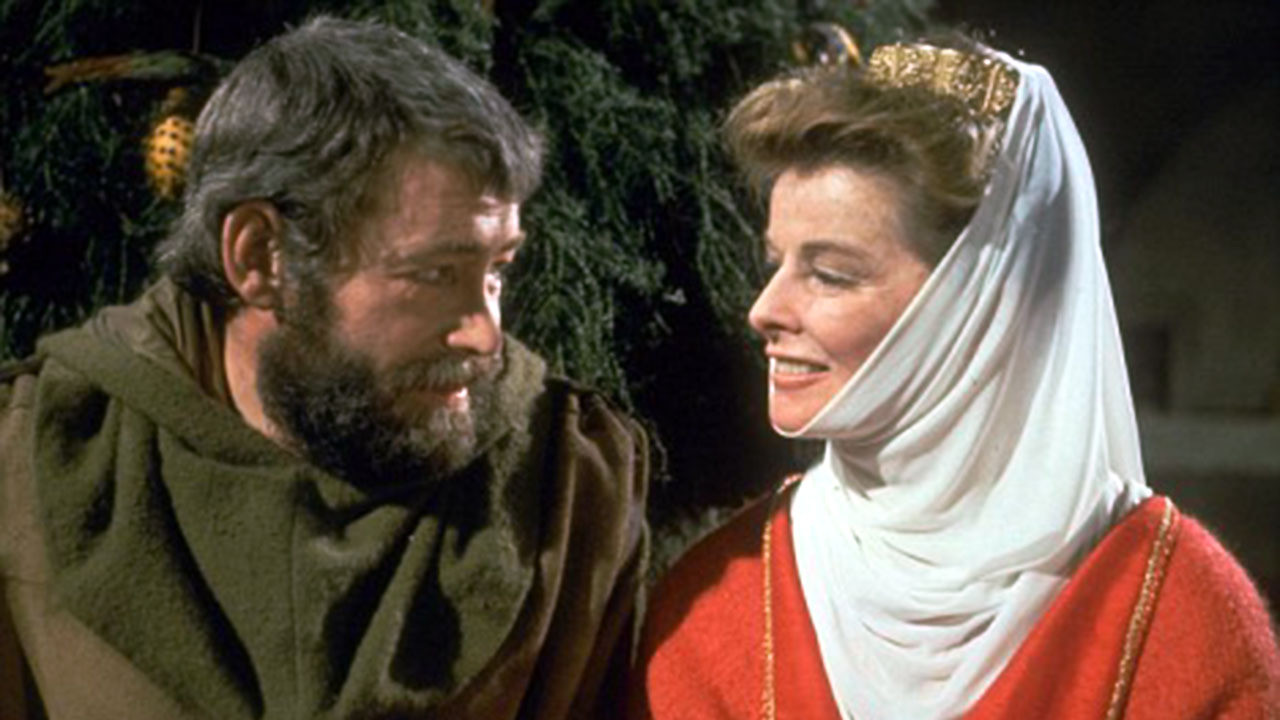
The 1968 The Lion in Winter is one of the best historical films ever, which takes place in the court of King Henry II (played by Peter O’Toole) around Christmastime at Chinon (which is in France). Of course, Katharine Hepburn’s Queen Eleanor of Acquitaine (which she’d win a well deserved Oscar for) is just as conniving and manipulative as the real thing. Still, while the story is fictional royal intrigue it’s nevertheless plausible since most of the characters really did exist and were certainly like their historical counterparts. Nevertheless, that Christmas tree shouldn’t be in this movie since only Germans had them during the Middle Ages.

Of course, though I may be done with the chronological movie history, that doesn’t mean I’m completely done. These next couple of posts are about aspects of history that don’t completely fit in certain eras like how people lived or how certain institutions got on back in the day. I mean history isn’t just a bunch of self contained episodes but rather a time of human change and other things. Still, there are tons of things that history movies tend to get wrong such as movies set in the Middle Ages could have people dressing in outfits that could perhaps be the equivalent of seeing a movie about the American Revolution with all the characters dressed up in 20th century business suits. Or you can have movies set in the early 1800s with women dressed in hoop skirts and crinolines or set in the 1920s with women’s fashions from the 1940s or 1950s. Also, there’s the impression that people in history were more refined and well-behaved than they are now but when you look in the actual history books, you realize that our ancestors weren’t so different than us. Nevertheless, there are certain things movies get wrong about history which I shall list accordingly.

Crime:

Criminal masterminds of yesteryear, at least, were educated and well mannered.

Sympathetic condemned criminals were saved by the noose by someone riding up to them at the last minute. (This didn’t happen a lot, since these kinds of efforts stood a good chance of ending in outright failure.)

Friendly criminals were loveable rogues who wouldn’t hurt a fly unless they absolutely had to. (Most historical criminals were usually worse than their folk legends imply. Yet, there are exceptions such as Billy the Kid’s case since he’s depicted as being much more hostile than he actually was.)

Crime didn’t happen as much in the past as it did now. (There’s less crime in Western societies nowadays than there was then thanks to better law enforcement, better opportunities, and other things.)

Gangsters would always go after law enforcement and their families. (Most gangsters knew that going after cops and/or  their loved ones was simply bad business. Though seen in a lot of movies, most gangsters knew that killing law enforcement officials would be put them in very big trouble. Most gangsters usually committed violence against their colleagues, underlings, and enemies. Sometimes they’d commit violent acts against other gangsters’ families, accomplices, or witnesses but that’s as far as they would go with civilians {I mean there’s a reason why we have witness protection here}. Law enforcement officials were almost never targeted since doing so would’ve been a very stupid thing to do. For instance, Dutch Schultz was killed by the mob in New York  for trying to assassinate a district attorney.)

Gangsters would throw temper tantrums and commit violent acts in public. (Yes, but while many of them were certainly dangerous people and perhaps nuts, most mob bosses would go through great lengths to appear respectable in front of the press. In other words, they knew the value of PR. On the other hand, Golden Age pirates and conquerors would always try to cultivate a ruthless and bloodthirsty image so people would learn not to mess with them. Also, it made it easier for their targets to surrender without much fighting, too.)

Kissing a mafia don’s ring was a long standing tradition. (This is something that Mario Puzo just made up and basically has no basis in reality. Sorry, Godfather fans.)

There wasn’t much graffiti on buildings until recent times. (There’s a lot of intact graffiti found at Pompeii. Much of it is about sex and is downright hilarious.)

Law Enforcement:

Hanging was a quick and painless method of execution and so was burning at the stake. (As TV Tropes and Idioms say, “but this is only true of hangings conducted since roughly 1850. Before this time, execution via hanging was usually caused by strangulation. The victim normally either stood on a cart or sat on the back of a horse: after the noose was tightened around his or her neck, the support was gently removed and the victim would strangle to death. And it wasn’t quick or pretty: the rope cutting into the throat and cutting off the breath, the twists and the contortions of the trussed body, the stench of the feces and urine as the victim’s bowels and bladder emptied, and the involuntary erection (and often ejaculation) experienced by male victims were all deliberate parts of the punishment, as was the jeering, vicious crowd which would pelt the victims with dead cats, rotting meat and vegetables, and feces as they waited to be tied to the gibbet. The families of wealthier criminals could sometimes bribe the jailers to be allowed to pull at the victim’s legs to hurry death, but this was not always permitted. Even this was better than the death accorded to women who killed their husbands, even in self-defense: they were burned, and {no matter what popular history would have us believe} most burning victims were not supplied with gunpowder or other explosives to make their deaths quicker. Executions were supposed to be agonizing. They were supposed to be slow. They were supposed to cause as much suffering as possible.”)

Executioner was always cool job to have. (Most executioners got the gig just to avoid being executed. It was a terrible job with many experiencing PTSD as well as some even committing suicide.)

Beheadings were always accomplished with just one blow.

Criminals were hanged using the long trap door ever since the Middle Ages. (This wasn’t invented until the 19th century.)

Imprisonment was always seen as a punishment. (For most of history, prison has always been seen as a holding place for criminal suspects until their trial {the original reason why they existed in the first place}, their punishment was carried out, or whatever else the authorities knew they could do with them whether it be a day in the stocks, whipping, fines, penal labor, execution, etc. or acquittal. The idea of using imprisonment  as punishment came from the Enlightenment from the 18th century as an alternative to state-sanctioned torture. Outside the Western world, imprisonment wasn’t used as a punishment until the mid-20th century.)

Trials were always fair. (Well, in some instances, yet let me say that until the Enlightenment, they were almost anything but with trial by ordeal, trial by combat, as well as the fact that the defendant had to prove their own innocence. Still, you were better off being accused of heresy under the Inquisition than of witchcraft in Colonial Salem. This is mostly because the Inquisition was actually closer to modern jurisprudence than most civil courts in the 16th and 17th centuries and observed things like having rules of evidence, an appeals process, and codified restrictions on the type and severity of punishments that could be imposed. Also, if you were tried for witchcraft, the Inquisition would usually let you go since they didn’t believe in witches in the first place.)

Weapons:

The six-gun was an accurate weapon.

Any gun can fire multiple rounds regardless of historic era. (Even though repeating firearms weren’t invented until the mid-1800s.Why do you think the musketeers wouldn’t use muskets except when there’s a war on? I mean there was a good reason why they used swords instead.)

Swords made clinking sounds up against each other.

Early gunpowder had a slow burn rate and didn’t create a lot of smoke. (Smokeless slow-burning gunpowder was invented in 1875. Before then, black gunpowder was used which burned very fast and created a lot of smoke.)

Guns discharged more ammo than their stated capacity. (This happens all the time in movies.)

Flintlock pistols were reliable weapons. (They failed to discharge 50% of the time and were considered a secondary weapon in close combat.)

Many Pre-American Civil War firearms could fire multiple rounds without reloading. (Maybe Samuel Colt’s revolver which was invented in 1847 but most Pre-Civil War guns didn’t have this feature. Nevertheless, you see Gaston firing his blunderbuss 3 times in less than a second.)

Cannon balls were the only artillery ammunition until very recent times. (They also had bar and chain shot, canister, case, and grape shot, and Sangrenel. Sometimes they’d use anything if they ran out of ammunition.)

You can shoot fairly far and accurately with a flintlock pistol. (Flintlock pistols were useless beyond point blank range.)

Discharged cannons and guns never recoiled.

Artillery guns and howitzers fired exploding shells. (Only howitzers did.)

Reloading single shot weapons took only a few seconds. (For someone who’s well trained, it would take 15 to 25 seconds.)

Double shooting artillery guns was always a good idea. (It wasn’t since it decreased range.)

Cannon balls had the potential to explode at firing. (Cannon balls are solid shot and don’t work this way.)

Chemical and biological weapons were only invented in the 20th century. (Let’s just say people have been finding creative ways to harm people with germs and chemicals. I mean medieval soldiers flung animals in castles to spread disease and the Spartans used gas warfare on the Athenians during the Peloponnesian Wars.)

Warfare:

There were more “gays” on the bad guy’s side in war than on the good guy’s side. (See “THE 300.”) Or that homosexuality is uncommon in the navy, or was. (Churchill once summed up the grand traditions of the Royal Navy as “Buggery and the lash.”)

All Cavalry regiments carried full battle flags. (They actually flew cavalry flags which are swallow tailed.)

In war, it was always the men who had girlfriends they plan to marry back home who were the first to die and it was the idiot officers who always survived.

Gunshots never damaged people’s hearing. (Hearing loss is very common problem among veterans even today.)

Gunshots and explosions were never caused as much background noise that prevented soldiers from engaging in a conversation.

Officers always gave orders on the battlefield by shouting very loudly at their troops. (For much of history, regimental flags have been used as communication since the advent of firearms since they would be so loud that nobody would be able to hear them as well as the smoke on the battlefield would’ve made it harder for the soldiers to see anything else. Not to mention, walkie talkies didn’t exist then.)

Soldiers and sailors never swore or told any dirty jokes. (So what does that mean if you talk like a sailor? Also, swearing has always been frequent in the military.)

The solider who had less than two weeks on his tour of duty and the officer set to retire always got killed.

Soldiers who were deserters were cowards who didn’t want to fight. (Actually, every desertion tells a different story.)

There were no camp followers who were prostitutes. (For God’s sake, there were prostitute camp followers.)

Most soldiers were volunteers. (What about the soldiers in ancient Sparta? Also, conscription was rather common practice back in the day and compared to how draft dodgers were treated in history, the U.S. government was pretty lenient. Most draft dodgers in other regimes would’ve been executed.)

No soldier ever shit or pissed his pants in battle.

Americans and other English speaking civilizations fight wars more fairly or less cruelly than their enemies. (It is true that the Nazis were guilty of genocide and our side was not, but that is not the same as how they fought in that war. Also the American military commonly committed genocide against the Indians.)

Wounds in war were either incredibly bloody or spurted very little blood at all.

The German army in both world wars was more efficient than the Allied forces, and while we are at it, more hygienic than their enemies. (In fact under those spotless uniforms there tended to be filthy underwear and although the Germans were organization freaks, the American military was more practical, and the Russians were the most efficient.)

Back line soldiers never shot the guy in front of them if it was one of their own. (Napoleon lost a quarter of his troops through friendly fire by this.)

Soldiers usually died in battle. (Most soldiers usually died of their wounds after the battle was over or of disease.)

The French were cowards willing to surrender at the drop of the hat who would rather eat and have sex than fight. (Well, yes, the French would rather eat and have sex than fight but so would anybody with some sense of sanity. However, if history has taught us anything, you should never underestimate the French, especially at war.)

Cavalry charges were always effective. (Horses are actually very bad at bulldozing armed soldiers. I mean, they’re not that stupid.)
There were rules of war before the 19th century. (There was an expectation that soldiers and officers respect certain customs, but nothing was formalized until the Geneva Convention in 1864.)

Arrow wounds don’t cause serious injuries and are relatively easy to remove. (Actually it depends on what kind of armor you’re wearing whether it be metal or a long silk cape. Still, we have to consider the fact that bows and arrows were the primary range weapons for most civilizations until as late as the 17th century. So yes, an arrow wound can certainly kill you. And if you barely have any armor on you, then being shot by one may make it difficult for you to do anything. This might be because of agonizing pain or your body going into shock. Nevertheless, most of the time removing the arrow is much harder than it looks but simply pulling the shaft out may just leave the arrowhead inside the wound {since shafts and arrowheads weren’t as firmly attached as Hollywood makes them out to be}. Archers would just simply snap the shaft {which is harder than movies make it look since arrow shafts were made from the hardest woods available}, widen the wound either with the knife or wiggling it around. Also, arrow wounds had a strong tendency to be badly infected. Thus, an arrow wound was almost never just a flesh wound.)

The Aristocracy:

Aristocrats throughout history, even in Rome, spoke with upper class English accents. (English did not even exist when Rome occupied Britain.)

Rich white aristocrats never sweat despite the fact that they wear multiple layers of heavy clothes. (This isn’t true because I was in Richmond one summer where I toured the Confederate White House and there was one display where all the furniture had slipcovers. And you think people covered their furniture for modesty reasons. No, it was for their protection.)

Aristocrats always had unlimited wardrobes. (Well, they did have a lot of clothes but before the sewing machine clothing was expensive that many actually put their outfits in their wills. Heck, it wasn’t unusual for many poor people to have one or two sets of clothes for their entire lives.)

Religion:

Science and religion have always been at odds. (If that was true, we’d certainly wouldn’t live in as technologically advanced society as we are now. Also, many of our great scientific discoveries were made by clergymen as well as well as other religious men and women {in the Middle Ages, most scientists worked for the Catholic Church and the Big Bang theory was formulated by a priest}. The reason why people may have to say that science and religion are incompatible has more to do with the rise of Fundamentalism than the existence of science and religion themselves.)

No matter what time or place all Christians celebrate Christmas with Christmas trees. (Christmas trees weren’t introduced to Great Britain until Queen Victoria’s marriage to Prince Albert and prior to that was mostly a German tradition. Also, Christmas wasn’t made a national holiday in the United States until the 1870s. Not to mention, from the Reformation until the 1800s, the only Christians who celebrate Christmas were Anglicans, Lutherans, and Catholics, at least in America. The Pilgrims and the Puritans never celebrated Christmas and in early Massachusetts, the holiday was banned and celebrating it had legal consequences. And even when the ban was lifted, Christmas wasn’t widely celebrated in early New England as well as kind of discouraged. Christmas was also banned in England during Oliver Cromwell’s rule in England which lasted for 11 years. Then there’s the fact that other Christian traditions celebrate Christmas on a different date.)

Goddesses were seen as feminine beings and worshiped in a way that brought peace in a society. (Dan Brown, have you ever read any mythological tales regarding ancient pantheons? I wouldn’t say that many of these pagan goddesses were peaceful beings. I mean, look what Hera did to Zeus girlfriends and many of his kids who weren’t hers.)

Mass has been said facing the people since the 1800s. (It wasn’t said this way until the 1960s mostly due to the reforms of Vatican II.)

Magdalene institutions were run by Roman Catholic nuns. (Actually while popular imagery has them run by Catholics, other religious denominations ran Magdalene institutions as well, even in Ireland. Many Magdalene institutions were also run by corporations, sometimes not religiously affiliated at all. Oh, and they didn’t just take prostitutes, unwed mothers, or young girls seen as beautiful, promiscuous and flirtatious. Many of them were orphans, petty crooks, the mentally disabled, and abused girls who had nowhere else to go. Still, it would be fair to say that Magdalene houses functioned as the privatized prisons of their day at least in Ireland. The US Magdalene institutions functioned more like rehab centers. Also, the practice of making women give up out of wedlock babies for adoption wasn’t exclusively done by Catholic nuns as you see in Philomena. Sometimes babies were given up for adoption by the girl’s own parents {and not just Catholic ones either for my dad knew of a Mennonite family who did this}. This was a very common practice in all religious denominations as well as in secular society. Philomena’s son could’ve been taken away from her by practically anybody. Yet, the movie about her still treats what happened to her as an abuse by the Catholic Church, which it was but what they did was seen as perfectly acceptable by the standards of the time.)

The use of white smoke from the Vatican during a papal election that signaled the election of a new Pope. (We’re not sure if this dates back to either 1846 or 1914 though it’s certainly not the centuries old tradition its said to be. Also, the notion of the papacy itself is newer than we think since the title of Pope wasn’t referred to the main man himself until medieval times. Not only that, but it took centuries of maneuvering and precedent setting for Rome to emerge as the undisputed seat of leadership in the Catholic Church {which was sometime during the Dark Ages since most of them by this time and earlier were declared popes retrospectively}. Before then, the Bishops of Rome were often challenged by the Patriarchs of Constantinople and some of the earliest “popes” weren’t considered Bishops of Rome and such, just the most important Christians in Rome and the surrounding areas that were considered by scholars just to give an image of direct descent from Saint Peter. Still, you’d have to admit that Saint Peter was the first Pope but he and his early successors weren’t declared popes in a modern sense. Nevertheless, Catholic Church tradition is complicated stuff but very interesting nevertheless.)

Lots of violence and injustice has been done in the name of religion. (Yes, but when you take a closer look, it’s more over something else like power, money, resources, angst, or what not. Yet, people use religion to justify their actions, even if it wasn’t their main motivation.)

Race:

European society after the Middle Ages is completely ethnically white. (Actually there were Africans living in Europe mostly because of the slave trade and there was later a sizable Asian population, too. Also, Alexandre Dumas and his son were both of African descent as well as Alexander Puskin.)

The United States:

Illegal immigration has only occurred in recent times. (Contrary to what you may see on the news, illegal immigration isn’t a recent thing in the US. There’s an entire history of illegal immigration that spans for hundreds of years. For instance, the Native Americans in Jamestown called it, “white people.”)

There were no black people fighting in America’s wars until the American Civil War. (African Americans have fought in almost every war in American history.)

All American flags had 50 stars even in the 19th century. (The flag with 50 stars didn’t come out until the 1960s when Alaska and Hawaii were added as states.)

In the US, 911 was always dialed in an emergency situation as long as there had been phones. (Calling 911 wouldn’t be an option until the 1968 when the 911 service was established. Before then, you had to press 0 and ask for emergency services.)

No African American performers wore blackface. (Sorry NAACP, but most black performers on vaudeville did. Some were light enough to put on burnt cork to make it clear to the audience. Others just bowed to vaudeville standards. I know it’s pretty unpleasant to think about it yet for much of American history, being in a blackface minstrel show was one of the few ways that actual black performers were seen by a large audience blackface or not though the music would be taken seriously for artistic merit, especially songs by Stephen Foster. However, the tradition of blackface extends to hundreds of years before its disturbing rise in popularity in the US.)

American dry crusaders were always prudish old ladies. (A lot of them were women who had suffered abuse and ruined from alcoholic husbands and fathers as well as many feminists of the day like Frances Willard who many would actually consider a social justice crusader and possible lesbian. A lot of ministers and recovering alcoholics were involved as well. Also, many dry crusaders didn’t just start trumping for temperance when they were geriatrics either.)

Two letter state abbreviations and ZIP codes were on US addresses throughout the 20th century. (ZIP codes were introduced in 1963 while two-letter state abbreviations first came into use in the 1970s.)

The Hollywood sign was always in its present letter configuration. (Until the late 1940s, the sign would’ve read “Hollywoodland” since the sign was originally erected to promote a housing development in the area.)

Stop signs were always red in the US. (Before the late 1950s, they were yellow.)

Asphalt roads always had yellow lines at the center. (This is a rather recent concept but its seen in a lot of movies set in 20th century history.)

Every 18-25 year old in the 1960s and 1970s was a freethinker and hippie activist who cared about the future and had revolution just around the corner. It was also a time when they listened to rock music, did drugs and participated in orgies.

Racism wasn’t much of a problem up in the Northern US while the South was under segregation. (A lot of places in the North had segregation as well. Not to mention, Malcolm X had a very shitty childhood because of racism and he was born in Detroit. Yet, while racism wasn’t as institutionalized in the North as it was in the South, it was still a problem.)

The US flag always had a standard configuration. (The standard design for the star part of the US flag wasn’t set up until 1912. There are plenty of American flag configurations of stars before that point.)

Government:

Rulers were unusually brutal. (Being ruler at the time was a pretty dangerous job where you couldn’t really trust anybody like your relatives, advisors, servants, or even friends. Being ruthless wasn’t an option. Assassination was a common fate for many Roman emperors and members of the royal family in Ancient Egypt.)

No matter what time or place, heroes always believed in Democracy.

Polygamous societies were always oppressive toward women.

Science:

Eugenics weren’t a popular idea before World War II. (Oh, yes they were, especially among whites.)

Telescopes were available and used since antiquity. (They were invented in the 1600s yet you see movies set before that with people using them, including Columbus.)

Western science was always the best science. (There was plenty of scientific advances being done outside. For instance, numbers were invented in India while algebra was invented in the Middle East. Arab medicine in the Middle Ages was said to be much more advanced than the Europeans and India had a form of plastic surgery. Not only that but it was the Chinese who invented gunpowder, paper, the compass, the blast furnace, borehole drilling, the toothbrush, bulkhead partition, cast iron, printing, toilet paper, and so many others. Also, the Mayas had a concept of 0 while the Romans didn’t.)

Europe:

Italy and Germany were always countries. (Most of the time they were either part of the Holy Roman Empire or a bunch of city states until the 1800s. Not to mention, Germany was split during the Cold War Same goes for Belgium. Also, the Netherlands didn’t become a country until the 1500s.)

Russian peasants were brutes or easily-riled hicks living in a deeply oppressed lifestyle in poverty. (They may not have been the most fortunate poor people in Europe but from the Middle Ages to recent times, they were much cleaner than their Western European counterparts. The reason for this is that while other Europeans weren’t bathing at all, Russians took a bath once a week at all levels even to the downtrodden serfs.)

The Swiss invented the cuckoo clock. (Sorry, Harry Lime, but the cuckoo clock was invented in Germany. However, the Swiss did invent the Swiss Army knife, Velcro, aluminum foil, cellophane, bobsleigh, laudanum, LSD, the computer mouse, Absinthe, and bank secrecy. Ulrich and Geneva were centers of Protestantism and headquarters of Calvin and Zwingli. It was also the place where the Red Cross was founded.)

Other:

The Illuminati has been a constant presence of human history which have been gathering money and influence, spinning their webs of lies and deceit in the shadowy heights of society, and had aspirations to establish a dystopian Big-Brother New World Order. (As TV Tropes and Idioms says, “There was a Masonic-like organization of intellectuals which was given this name in Real Life Bavaria in the 1770s, but it was eventually disbanded by the Bavarian government.” They were probably just another brotherhood of funny hats and their New World Order referred to a republican form of government and legislation based on human rights. And this group gets a bad rap because a French royalist blamed them and the Masons for starting the French Revolution.)

Freemasonry is thousands of years old. (Freemasonry as we know it dates back to the early 18th century. Before then, they were just a trade union of actual masons specifically master craftsmen, structural engineers, and architects.)

Everyone didn’t engage in the so-called, “modern vices” that cause such a slew of controversy today. (Actually those “modern vices” that are seen as controversial are incredibly ancient. But let’s not talk about them shall we?)

Tarot cards were used in divination throughout history. (They weren’t used in this way until the 18th century.)

People have been tortured on the iron maiden for centuries. (The first appearance of an iron maiden was in 1793, which makes the possibility of people being tortured on it {for other purposes than Uday Hussein’s enjoyment} highly unlikely.)

People smiled in photos ever since photography was invented. (Most people didn’t smile in their own photographs from the 19th century to the early 20th.)

Early pocket watches always had second hands. (Most early watches didn’t have them.)

Canada always had the Maple Leaf design as its national flag. (Canada didn’t use this flag until the 1960s.)

Celebrity endorsements of products were a relatively knew thing. (The Roman gladiators did this.)

Western society has always been more advanced and enlightened than in other parts of the world. (Well, I wouldn’t go that far since Genghis Khan’s allowed religious toleration in his empire since he basically didn’t care what his subjects believed as long as they accepted him as their ruler (and it’s the same way in most eastern empires whereas religious toleration in Europe wasn’t a popular idea until the 18th century.

History of the World According to the Movies: Part 92 – 1990s Europe

Image

Helen Mirren stars as Her Majesty Queen Elizabeth II in the 2006 The Queen in which she won a well deserved Oscar. The film is a portrait of the relationships between the British Royal Family and the Blair government amidst the tragic death of Princess Diana in a car accident, who was well loved by the public and not so much by the royals (though they were genuine upset by it). Still, you could also say that this film is about how Queen Elizabeth II was under pressure to publicly express her grief on Diana’s death despite being uncomfortable showing her emotions. Still, The Queen is a fitting film that shows what it’s like being a constitutional monarch in this day in age.

Of course, the United States wasn’t the only place where things were happening in the 1990s. After all, the Cold War ending in Europe led to a massive readjustment in Eastern Europe where the 1990s were certainly not a fun time. This is especially true if you lived in Yugoslavia which had been struggling since the 1980s to keep itself together since their dictator Josip Tito died, but it would ultimately fail in 1991 and by the end of the 1990s, the country would be no more since it would split in other nations like Croatia, Macedonia, Albania, Serbia, Montenegro, Bosnia, Slovenia, and Kosovo. Let’s just say it’s a hell hole for Europe. Of course, the other places in Eastern Europe besides the former East Germany, Romania, the Czech Republic, Slovakia, and Poland would be kind of bummed that Communism fell, except perhaps hockey players and women athletes (especially in East Germany). In Britain, you have the rise of Tony Blair as well as a lot of drama in the royal family with Prince Charles and Princess Diana getting divorced, Prince Andrew and Sarah Ferguson getting divorced, and Princess Diana dying in a car accident in 1997 which led to Elton John singing at her funeral and his eventual knightood. Still, Britpop was in vogue at this time with Oasis and the Spice Girls (that would have one member marry a famous soccer player and another father Eddie Murphy’s baby). Nevertheless, there are movies made in this time that contain their share of inaccuracies which I shall list.

Europe:

The European Union was in existence in 1993. (It was known as the EEC or European Economic Community until 1993.)

Yugoslav Wars:

It was the Cincinnati Accords that kept the peace in Bosnia. (It was the Dayton Accords contrary to Behind Enemy Lines because the treaty was signed in Dayton, Ohio. And perhaps not for long.)

France:

Jean Dominique Bauby’s girlfriend at the time wouldn’t visit him in the hospital after he experienced a debilitating stroke. (While this is shown in The Diving Bell and the Butterfly, his late-life partner Florence Ben Sadoun has claimed to be a faithful partner who visited him at Berck-Sur-Mer frequently during Bauby’s final days, driving from Paris for 3 hours 2-3 times a week to be with him {and she had 2 kids from a previous marriage as well}. And she has evidence to back it up since Bauby said so in his memoirs and there’s video footage as well. I think the writer for The Diving Bell and the Butterfly kind of owes Florence an apology.)

Jean Dominque Bauby’s baby mama visited him frequently while he was in the hospital. (Contrary to The Diving Bell and the Butterfly, it’s disputed how often Sylvie de la Rouchefoucauld visited him. She said she saw him frequently while other sources said she rarely did so and was with her boyfriend in New York the day Bauby died in 1997 and she’s hardly mentioned in his memoirs aside from a Father’s Day outing on the beach when she brings their kids to the hospital. Still, she wasn’t the long suffering ex who still loved him in the film who takes up the slack because his girlfriend wouldn’t see him. Rather she moved on. She never had to call up Bauby’s girlfriend or be worried about him being neglected because she’d be at his bedside as often as she could. Oh, and they had two kids not three since the director couldn’t decide between three child actors for the film. Then again, the mother of Bauby’s kids is a successful businesswoman with her own PR company)

During his time in the hospital Jean Dominique Bauby was an invalid babe magnet with women surrounding him in the hospital vying for his attention. (Bauby didn’t mention any of this in his book though friends said he was very charming with a sense of humor. He was also said to be engaging.)

Jean Dominique Bauby’s friend Jean Paul K came to see him in the hospital. (Contrary to The Diving Bell and the Butterfly, Bauby wrote in his memoirs that he felt guilty for not seeing his friend after he had been released from being held hostage in Lebanon.)

Jean Dominique was a miserable wreck during his time having locked-in syndrome and wanted to kill himself. (His girlfriend Florence said that he never wished to die even when he was unable to move everything in his body but an eyelid.)

Florence Ben Sadoun was a weak-willed and selfish girlfriend to Jean Dominique Bauby and was unable to face her once handsome boyfriend. (Contrary to her portrayal in The Diving Bell and the Butterfly, she was anything but. Also, she wasn’t a model at the time; she was a critic and a single mother of two.)

Great Britain:

Robin Janvin was Queen Elizabeth II’s private secretary in 1997. (Not until 1999, unlike in The Queen.)

Queen Elizabeth II:

Queen Elizabeth II and Prince Philip shared a bed. (Though shown in The Queen, the British public have known that the royal couple don’t sleep in the same bedroom since 1982 when someone tried to break in into the Queen’s chamber at Buckingham Palace. However, this just applies to Buckingham Palace since it’s not the only royal residence.)

Between Princess Diana’s death and Queen Elizabeth’s public capitulation, opposition to the monarch dropped from 25% to zero. (Contrary to The Queen, support for republicanism has remained consistent for decades at 15-20% even before and after Diana’s death.)

Prince Charles was Queen Elizabeth II’s only child. (Though he’s the only one of her kids shown in The Queen, she has four kids including Princess Anne, Prince Andrew, and Prince Edward.)

Princess Diana:

Princess Diana had an affair in 1995 with surgeon Hasnat Khan. (Contrary to Diana, though the real Khan said that he and Diana knew each other and dated for two years, but neither he nor Diana have confirmed whether they were in what you’d call “true love.” Yet, this doesn’t stop close friends from saying that he was her “true love” but maybe this is what they’d want to believe. Still, it’s likely that Khan and Diana were no more than just friends, though she might’ve been more like a desperate, wounded stalker who wouldn’t leave him alone.)

Princess Diana dated Dodi Al Fayed to make Dr. Hasnat Khan jealous. (We’re not sure about that contrary to Diana. Also, she and Khan broke up on mutual terms since he couldn’t handle the media attention of her celebrity and she didn’t want to move to Pakistan.)

Princess Diana was a sweet natured, wistful, half-wit. (According to one critic of Naomi Watts’ Diana performance, yet she’s said to be quite smart who tried to make the world a better place but she was also conniving, manipulative, and materialistic. She was also driven by payback trying to make Prince Charles jealous such as posing in a revealing swimsuit on the south of France while the Prince of Wales hosted a 50th birthday party for Camilla Parker-Bowles. Yet, didn’t work since Charles had been in love with Camilla for years {as well as fooled around with her} and only married Diana due to pressure from his family. She was also estranged from her mom for dating a Muslim and hadn’t spoken in months before she died.)

Tony Blair:

Tony Blair and his family cooked their own food while he was prime minister. (Contrary to The Queen, I’m not so sure they’d even be allowed to do this. I mean the President of the United States has his own chef and servant retinue. Then again, maybe the Blairs prefer to cook themselves.)

Miscellaneous:

Adderall was around in the early 1990s. (It wouldn’t be on the market until 1996 and wouldn’t be sold in generic until 2002.)

Nintendo game cubes were around in 1995. (Not until 2001.)

LED warning lights were around in 1995. (Strobe beacons would’ve been used because I have no memory of hearing about LED until my teens.)

History of the World According to the Movies: Part 91- Crime and Law Enforcement in 1990s America

Image

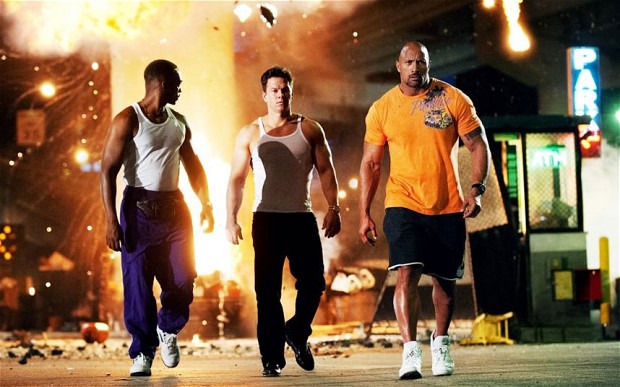
Anthony Mackie, Mark Wahlberg, and Dwayne Johnson star in Michael Bay’s too soon 2013 crime film Pain & Gain. This movie was based on a series of articles by Pete Collins which pertains to a group of violent and criminal bodybuilders as well as outright screw ups. Still, if there was an historic incident Michael Bay could do justice to, it’s this one. Yet, this film was met with outrage by their victims and their families nevertheless. Still, the real life Sun Gym gang wasn’t nearly as likeable as the guys in the movie and their crimes were much worse. Still, it probably would’ve been better if Michael Bay had made this movie perhaps 100 years after the events took place.

Despite the 1990s being a period of stability in the United States, there were plenty of stories on crime. After all, this is the decade when you have the O. J. Simpson’s Bronco chase and the media circus surrounding in his trial over the death of his ex-wife and her boyfriend. Of course, I was in preschool at the time but I sort of remember it being covered on the news and yes, I think he did it. Still, you have other stories of wrong doing as well. In Washington D. C., you have Stephen Glass who was a rising star in The New Republic until it was discovered that he was a pathological liar who may have made up stuff in his 27 out of 41 stories for the magazine which led to the rise in online journalism. In New York, you have Jordan Belfort, the so-called “Wolf of Wall Street” (which was also the nickname of Mr. Peabody), whose brokerage firm Sutton Oakmont was known as a den of sin as well as ran a “pump and dump” operation which would land him in prison for money laundering and securities fraud. He’d also share a prison cell with Tommy Chong. In the South you have con artist Steven Russell whose zany schemes and prison escapes seem too incredible to be true at times.Then there’s Miami, which is home of the Sun Gym gang who were a group of hostile bodybuilders known for kidnapping, extortion, and murder. There are a few movies about some of these exploits which contain their share of inaccuracies I shall list accordingly.

Steven Russell:

Steven Jay Russell escaped from prison wearing hot pants and fishnets. (Contrary to I Love You, Philip Morris, he did this wearing a women’s track bottoms and a tie-dyed T-shirt, since trying to escape prison wearing fishnet stockings and hot pants would be a very bad idea for a man {but certainly much more hilarious}. Also, he pulled this off in 1993, when he was still with his previous boyfriend, not Philip Morris as in the film.)

Steven Jay Russell escaped from prison by coloring his white prison uniform with green marker to resemble scrubs. (Yes, he did this but unlike in I Love You, Phillip Morris, there was a prison guard who wasn’t entirely convinced who said, “Damn, doc, those look like prison whites you’re wearing.” He cheerily replied, “Well, don’t shoot.” The guard didn’t.)

Jordan Belfort:

Jordan Belfort met Danny Porush in a restaurant. (Contrary to The Wolf of Wall Street, they met through Porush’s then wife {and first cousin} who met Jordan on the bus. She said Belfort always gave up his seat for her and found out he lived in the same building with them. She introduced her husband to Belfort thinking that he might help Danny with his struggling ambulette business. After their first conversation, Porush decided to take his Series 7 exam and get a stockbroker license.)

Jordan Belfort was arrested for crashing his Lamborghini while high on expired Quaaludes. (Yes, but the real Belfort says it was a Mercedes. He said he was so high in a drug haze that he couldn’t remember causing several different accidents on his way home, yet he did send one woman to the hospital via a head on collision. Interestingly, Belfort would later become a cell mate to Tommy Chong who encouraged him to write his memoirs.)

Jordan Belfort’s brokerage firm taped cash to a woman’s body. (While it’s seen in The Wolf of Wall Street, Danny Porush says it didn’t happen while Belfort says it did.)

Jordan Belfort hosted a dwarf tossing competition at Stratton Oakmont. (Though he considered hiring a dwarves for tossing, he didn’t actually do so. As Danny Porush said, “We never abused [or threw] the midgets in the office; we were friendly to them. There was no physical abuse.” Yet, it’s in The Wolf of Wall Street.)

Jordan Belfort was called “the Wolf of Wall Street.” (Contrary to The Wolf of Wall Street, the nickname came from an article about him. Also, he only briefly worked as a legitimate stock broker on Wall Street before the 1987 Black Monday crash that left him out of a job.)

Jordan Belfort had a chimpanzee at his Stratton Oakmont brokerage firm. (Contrary to The Wolf of Wall Street, he didn’t. According to Danny Porush, “There were no animals in the office…I would also never abuse an animal in any way.” Yet, he did admit to eating a goldfish.)

Jordan Belfort gave his employees at Stratton Oakmont riling motivational speeches. (Yes, but they were more often filled with self-adulation than Leonardo DiCaprio’s in The Wolf of Wall Street. Strangely the real Belfort is now working as a motivational speaker and corporate consultant. Yet, DiCaprio would say, “Jordan stands as a shining example of the trans formative qualities of ambition and hard work, and in that regard, he is a true motivator.” Yet, I’m not sure he’d be good in the role model department after the cheating, drugs, hazing, and his “pump and dump” schemes which led to being criminally charged, serving prison time, and having his company banned from brokerage activities.)

Stephen Glass:

The Stephen Glass story “Hack Heaven” showed how the ill-equipped The New Republic was to handling someone like him (who has systematically undermined the magazine’s editorial process) when it was exposed as a hoax in the Forbes Digital online magazine. (What’s not mentioned in Shattered Glass is that this episode was one of the key moments that established online media as a serious competitor to the traditional print rather than just a novelty. And this happened in 1998.)

Stephen Glass’ was a respected journalist for The New Republic until his “Hack Heaven” article. (Yes, but what Shattered Glass doesn’t point out is that while he enjoyed the loyalty of the staff, his reporting repeatedly drew outraged rebuttals from his article subjects that eroded his credibility and led to private skepticism in The New Republic. When scandal broke, the editor in chief Martin Peretz admitted that his wife didn’t find Glass’ stories credible and stopped reading them. During Glass’ time at the magazine, out of the 41 stories he published 27 of them were found to be either wholly or partly fabricated. He also wrote for other magazines such as The Heritage Foundation’s Policy Review, JFK Jr.’s George, Rolling Stone, and Harper’s. Not only that but he contributed to PRI’s This American Life hosted by Ira Glass {no relation}.)

The Sun Gym Gang:

The Sun Gym gang consisted of 3 main members. (Contrary to Pain & Gain, it was larger with Sun Gym owner John Mese, stripper Sabina Petrescu, and nurse Cindy Eldridge as accomplices.)

Daniel Lugo was single during the kidnapping of Marc Schiller. (He was married twice and both wives played tangential roles in his schemes. His second wife has divorced him since and won sole custody of their two daughters in 1998.)

The need to fund hormone injections motivated Adrian Doorbal’s crimes. (Contrary to Pain & Gain, he didn’t need to commit further crimes to fund them, thanks to Lugo giving him profits from the Medicare scam. He just participated in the Sun Gym gang’s criminal activities all for the violence.)

Daniel Lugo was a vicious bodybuilding moron. (Contrary to Mark Wahlberg’s portrayal in Pain & Gain, he was a smart man according to the guy who brought him down. He had other criminal activities as well such as a fraud conviction and running a lucrative Medicare scam where he bought information about the recipients and billed the government for bogus medical services. Also, he didn’t attend any self-help seminars, wore vanilla scented cologne, or cite Michael Corleone or Rocky as role models.)

The Sun Gym gang disguised as ninjas in order to kidnap Marc Schiller. (Contrary to Pain & Gain, they discussed dressing up as ninjas on Halloween night to abduct Marc Schiller. Rather they talked about dressing up as ninjas as part of their costume as trick or treaters in which they’d nab him when Schiller would give them candy. The Sun Gym gang was a group of bodybuilders in Florida so you can see why this plan was never executed. Yet, it did take about 6 tries for them to kidnap Schiller {Tony Shaloub’s character in the movie}. Still, they did dress in black, paint their faces with military makeup, and wore gloves in one of their kidnapping attempts.)

Daniel Lugo befriended Marc Schiller at the Sun Gym. (Contrary to Pain & Gain, Schiller distrusted Lugo and never went to the gym. It was actually Jorge Delgado who befriended Lugo and targeted Schiller since he worked for the man as did his wife. Not only that, but it was at Delgado’s {not Schiller’s} warehouse where the kidnappers tortured Schiller for a full month before trying to kill him. As the Miami New Times reported, “Throughout his ordeal with the gang, Schiller had been tased, burned, beaten, pistol-whipped, and forced to endure games of Russian roulette. When the gang was done with him, they made him wash down sleeping pills with liquor, put him behind the wheel of his Toyota 4Runner, and rammed it into a utility pole to make it look like a drunk driving accident. Seeing that he was still alive, they then doused the vehicle with fuel and set it on fire with him in it, but Schiller jumped out of the flaming car. Staggering, the gang ran him over twice with a Camry {not a van} and left him for dead. Miraculously, he lived after eventually coming out of a coma and woke up in the hospital.” Details of Schiller’s torture {which was much more of a living hell in real life} and escape were modified for the film. Oh, and even when Schiller was in the hospital, he organized to be transported to one in Staten Island since he was afraid the Sun Gym gang would try to kill him again. He was right.)

Daniel Lugo killed Frank Griga and Krisztina Furton. (Contrary to Pain & Gain, Adrian Doorbal did with Lugo as an accomplice at Doorbal’s Miami Lakes apartment no less. Doorbal cracked the side of Griga’s head with a blunt object, strangled him with a headlock, and injected him with horse tranquilizer. Lugo covered Furton’s mouth and tackled her yet contrary to the film, she was unarmed. Once bound, Doorbal injected her 3 times not 2, which was too much.)

Daniel Lugo and Adrian Doorbal put Frank Griga and Krisztina Furton’s body parts in barrels and dumped them in a lake. (Contrary to Pain & Gain, Lugo, Doorbal, and “Little Mario” Gray put Griga and Furton’s bodies in drums and dumped them in a drainage ditch in southwest Miami. Too bad for them, Furton had breast implants with serial numbers on them which the Miami police used to identify her remains.)

A member of the Sun Gym gang became acquainted with a demeaning Frank Griga while running into him at a strip club. (Contrary to Pain & Gain, Griga was discovered by Adrian Doorbal who spotted a picture of a Lamborghini Diablo in a photo album belonging to one of his stripper girlfriends Beatriz Weiland. He asked who owned it and it turned out that Griga was one of Weiland’s former generous boyfriends. It was she who introduced Griga to the Sun Gym gang.)

A chainsaw the Sun Gym gang planned use for cutting bodies failed to start due to it being clogged by hair. (It was actually due to them forgetting to put motor oil in it and burnt the engine while trying to start it which they returned to the Home Depot which they exchanged for an electric one with a one year guarantee to “handle all your cutting chores quickly and easily” {kind of reminds me of an episode of Dexter here}. Then that’s the time when Furton’s hair got clogged up in the chainsaw, which led to Adrian Doorbal and Daniel Lugo to chop off her head with a hatchet and used a curved blade and pliers to remove the faces and teeth on the heads.)

Jorge Delgado barbecued hands and feet of Frank Griga and Krisztina Furton outside the warehouse. (Contrary to the Dwayne Johnson expy in Pain & Gain, it was Daniel Lugo who did this and it was on a steel drum with an iron grate not an actual grill. He also grilled Griga and Furton’s skull fragments, too. When Jorge Delgado saw this, he yelled at Lugo who reluctantly agreed to move his operation to a nearby rear ally. Thankfully for them, Dexter wasn’t nearby {it being Miami}.)

At least one member of the Sun Gym gang robbed an armored truck only to get his toe shot off. (Contrary to Pain & Gain, this scene with Dwayne Johnson’s character is entirely fictional. Still, Dwayne Johnson’s character in the film as a composite of Jorge Delgado, Carl Weekes, and Mario Sanchez.)

Adrian Doorbal was a mild mannered man. (Contrary to Pain & Gain, he was violent and sadistic just as all his fellow Sun Gym gang members. And he was much more of an unstable lunatic as well.)

Daniel Lugo wanted to kidnap Marc Schiller over the latter stealing $300,000 from him. (Contrary to Pain & Gain, Lugo just wanted Schiller’s assets and used the money stealing as an excuse.)

One of the Sun Gym members worked at a church and had a gay priest come onto him. (Contrary to what goes on with Dwayne Johnson’s character in Pain & Gain, Carl Weekes didn’t work at a church or had an old gay priest come on to him. Yet, he was drug addicted ex-con who found Jesus.)

One of the Sun Gym members testified against is fellow gang members after an attack of conscience. (Contrary to Pain & Gain, Jorge Delgado just testified against his fellow gang members just to get a lenient sentence in which he got 15 years yet only served 7 ½ {while Daniel Lugo and Adrian Doorbal got the death penalty}. Dwayne John’s other real-life counterpart Carl Weekes who drove the car to run over Marc Schiller got 10 years for attempted murder. He served 7. Yet, he was described as a “weakling” by his fellow gang members since he weighed only 140 pounds. Still, like Dwayne Johnson’s character, both Delgado and Weekes declined to participate in subsequent crimes after the whole Marc Schiller thing.)

The Sun Gym gang held Marc Schiller for weeks because he was resisting. (They held him for that long because the paperwork to sign over everything he had took time. Yet, unlike in Pain & Gain, neither Daniel Lugo nor Adrian Doorbal had any qualms about killing him.)

Members of the Sun Gym gang were vicious morons and steroid-using bodybuilders. (Yes, they were steroid using bodybuilders. Yet, they were said to be the worst combination of manipulation, muscle, and murderous intent.)

Cindy Eldridge:

Cindy Eldridge was a heavyset nurse who met Adrian Doorbal during her work at the doctor’s office. They had a whirlwind courtship and married at home. (Contrary to her Rebel Wilson expy in Pain & Gain, she kind of resembled Tanning Salon Barbie and was a real fitness fanatic. Though she was a nurse who referred him to a doctor who used hormone therapy to treat the weak libidos of steroid users, she didn’t meet Doorbal as she was working but they rather met by chance in 1995 at a restaurant in Key Biscayne on the evening of her surprise 31st birthday party. Not only that, but they only married after dating for over a year at a courthouse but the union lasted for four days when she found out, Doorbal only married her so she couldn’t testify against him with regard to his role in kidnapping Marc Schiller or killing Frank Griga and Krisztina Furton, whose blood she helped Doorbal clean up at his home despite not knowing what actually happened at the time {you think she would being a nurse and all}.)

John Mese:

Sun Gym owner and accountant John Mese was arrested at his own gym. (Contrary to the Michael Bay movie, he was arrested during his own bodybuilding competition in downtown Miami. Also, two of the composites to Dwayne Johnson’s character were arrested at home, not at church. )

Marc Schiller:

Marc Schiller was a sleazy criminal. (Contrary to his Tony Shalhoub expy in Pain & Gain, the real Marc Schiller wasn’t a sleazy man in which he said, “There is no resemblance to me at all. I was always a humble, family person.” At the time, he lived in a two story poolside house with a wife and two kids as well as said that he never smoked cigars and was never surrounded by women in scantily clad bikinis {though having the Sun Gym gang kidnap a wholesome family man that Schiller wouldn’t elicit much sympathy on their part, especially since he drove a Toyota not a BMW with a “Miami Bitch” license plate}. He owned the failing Schlotzsky’s Deli franchise but still had seven figures at the bank thanks to his nutritional supplements companies. Still, the sleazy side of the Tony Shalhoub character in Pain & Gain may be based on Frank Griga who ran a phone sex business as well as smoked cigars surrounded by women in bikinis. As far as criminal activity is concerned, after he testified against the Sun Gym gang, he was arrested by federal agents as he left the courthouse. He was charged with orchestrating a Medicare billing scheme through his nutritional supplement companies. To make things worse, Sun Gym gang member Jorge Delgado was one of the witnesses to testify against Schiller, who pled guilty trying to conspiring to defraud the government. He received 46 months in prison and was ordered to pay back the government $14.6 million {it would be reduced to $128,597.87 and Schiller now insists he’s innocent and just too exhausted to defend himself}. Let’s say that unlike Mr. Monk’s kitchen floor, Marc Schiller’s record wasn’t exactly squeaky clean. Nevertheless, Marc Schiller wasn’t happy with Pain & Gain because the kidnapping incident basically ruined his life and he lost everything over it. Today he just lives in a one bedroom apartment, works for a company at $20 an hour, is divorced from his wife and only sees his kids on occasion, and has little interest in socializing and making friends. I think Michael Bay owes him an apology.)

Marc Schiller recognized Daniel Lugo from his cologne. (He recognized Lugo through his voice.)

Marc Schiller had a boat. (Contrary to Pain & Gain, he didn’t but Frank Griga did so Daniel Lugo couldn’t escape in it as he does in the movie.)

Marc Schiller helped catch Daniel Lugo by hitting him with a car in the Bahamas. (Contrary to Pain & Gain, neither Schiller nor Detective Ed DuBois were present at Daniel Lugo’s capture. Instead, Lugo was apprehended at the Hotel Montague in Nassau by a multiagency task force. Also, contrary to the movie, his girlfriend and parents went with him.)

Law Enforcement:

Ed DuBois:

Ed Dubois was a retired detective with a beautiful wife when he got the call from Marc Schiller. (Contrary to Pain & Gain, he was working for the NFL as a security consultant for Super Bowl XXIX in Miami and operating his P. I. firm he inherited from his dad {and as of 2014, he’s still working as private investigator}. He also had a leg up in the investigation because he knew the Sun Gym owner, John Mese. He was also much younger than as played by Ed Harris.)

Miscellaneous:

Frank Griga had a New York accent. (He had a Hungarian accent.)

History of the World According to the Movies: Part 90 – 1990s America

Image

Though it’s not really set in the 1990s per se, the 2007 adaptation Rent was one of the premiere musicals that shows what the 1990s was really like for people living in the Alphabet City in NYC, particularly struggling artists and hipsters.Nevertheless, it’s a remake of Puccini’s La Boheme with music that is most definitely from the 1990s and nobody is sporting big hair that’s more or less remembered from the 1980s.

As far as my cinematic historical chronology goes, the 1990s is a good place to stop since much of the history in the 2000s and later is more or less viewed as current events in my mind. Still, though I was around during this decade (born January 13th, 1990), I probably don’t have as much insight in the decade since I would be only 9 years old when it ends. Still, I do remember the advancement in computers with the early 1990s being the kind of 1980s type models operating with floppy disks, block lettering, and dark and blue screens to the viable Windows and Macs. It was also a time in which the World Wide Web was in its infancy though I wouldn’t have access to that until the 2000s. Nor would I have access to smaller cell phones, video games, or cable TV either despite having to play Spongebob in a play during my middle school years. Still, let’s say this period is marked by the end of the Cold War, the O. J. Simpson Trial, the Clinton scandals that would end up with his unnecessary impeachment, the break up of Yugoslavia, and the Y2K scare. Nevertheless, since this time is relatively recent, many people won’t consider it history but a lot of movies would be made.

1990s America was a good time in America as far as my childhood is concerned, well, okay since it was a stable and peaceful time compared to what was to come. Sure there was Desert Storm, Dan Quayle, and thousands of Americans having their childhood hero get away with killing his ex-wife (The People’s Almanac had O. J. Simpson as the #1 role model for teens in the 1970s, let that sink in). Still, this was the time of the internet boom and the economic boom under President Clinton. It was also a time of the Disney Renaissance from The Little Mermaid to Tarzan with movies that would be remembered as Disney classics (that I do remember, especially since I watched The Lion King in theaters when I was 4 years old). But this was a renaissance of animation with some great cartoons that have never been made since. Nevertheless, it was a time when hip-hop and rap really came of age which caused a moral panic while Seattle became the grunge capital of the world. Oh, and Kurt Cobain would cause a major splash in Nirvanna during the 1990s before dying of an overdose. Of course, there are quite a few films made at this time but many do contain their share of inaccuracies which I shall list.

Bill Clinton:

Bill Clinton won the 1992 Democratic primary against a candidate of almost unbeatable perfection whose own past included snorting cocaine and experimenting in homosexuality. (Contrary to his expy in Primary Colors, Clinton didn’t have much competition in the 1992 primary. Also, Joe Klein’s book Primary Colors shouldn’t be used as a source material if you want to know anything about the 1992 Clinton campaign since there’s a documentary on it.)

Erin Brockovich:

During the Hinkley case, Erin Brockovich hooked up with a hunky biker named George who was the next door neighbor watching her kids. (Contrary to Erin Brockovich, the man’s name was Jorge Halaby but the relationship didn’t last but don’t be upset because Jorge turned out to be a real asshole. Still, after the film was released, he along with her ex-husband Shawn Brown, and an attorney contacted her and attorney Ed Masry and blackmailed them into paying them $310,000 or else they would tell the media that they {she and Ed} had an affair and that she was an unfit mother, which were false. The three would be arrested for extortion, and though Halaby and Brown were later released, the attorney was jailed as of 2001.)

Erin Brockovich was the former Miss Wichita. (Despite being from Kansas, she was Miss Pacific Coast.)

Erin Brockovich used her cleavage to obtain documents. (While Julia Roberts does this in Erin Brockovich, we’re not so sure, though it probably helped.)

While working on a property case for Ed Masry, Erin Brockovich found that the groundwater in Hinkley might’ve been contaminated by hexavalent chromium which was connected to the horrible diseases suffered by the town’s residents. (Contrary to Erin Brockovich, this has been contested by some scientists who said that cancer rates in the town have never been higher than other remote desert communities in California. Yet, many state and federal agencies including the EPA, no less have found credible links between hexavalent chromium and higher rates of cancer {if inhaled long term at least, but consumption wouldn’t be eliminated altogether}. Perhaps this could be a case of both sides being right, I don’t know. Still, whatever the case, it was probably the right thing to sue Pacific Gas and Electric Company whose workers carelessly dumped the substance and let it seep into the groundwater used by Hinkley’s residents even if she wasn’t exactly right. Yet, we’re not sure how much hexavalent chromium was in Hinkley’s drinking water since Ed Masry’s numbers don’t match with the local water authority’s and other sources.)

Thanks to Erin Brockovich and Ed Masry’s efforts the plaintiffs in the Hinkley case against Pacific Gas and Electric with a $333 million settlement that went to the town’s 648 residents with Brockovich herself receiving a $2 million bonus check. (Though Erin Brockovich implies this and Brockovich did receive $2 million from the case, a good chunk of the money like $133 million went to the lawyers, which was over 40% including $10 million on expenses. Also, Hinkley’s residents didn’t get much of what was left until 6 months after the case with each town person getting $300,000 on average, which was less than expected but the distribution wasn’t equal. Some received several million while others got less. It was said that the distribution of money was based on medical records but Hinkley’s residents noticed that there was no rationale behind how much money each individual received. Some would appeal their settlements seeking more justifiable sums.)

Christopher McCandless:

Christopher McCandless resented his parents for some reason. (Contrary to Into the Wild, in the Jon Krakauer book, McCandless’ reason why he resented his parents was because they weren’t legally married. Rather his dad was already married to another woman and had a family with her, which his mother kept secret from him and pretended nothing was wrong for the sake of their reputation.)

Christopher McCandless worked at Burger King. (According to Jon Krakauer, he worked at McDonalds.)

Sports:

Mickey Ward and Dickie Eklund appeared in court together before Dickie went to jail for over multiple serious charges. (Contrary to The Fighter, Micky was arrested for interfering with Dickie’s arrest who committed a relatively minor offense.)

Micky Ward:

Micky Ward met his girlfriend Charlene Fleming in a bar in 1988 just before his fight with Mike Mungin. (Contrary to The Fighter, they actually met around the Neary fight in 2000 {which his mother didn’t attend} through his dad’s acquaintance. Thus, Amy Adams’ character probably shouldn’t be in the film at all. Also, at the time, he was still with his daughter’s mother who’d later leave him for a guy 30 years older. This led Micky to quit his job as a prison guard and take up boxing again. Still, his sisters weren’t happy with The Fighter who said they were portrayed as unattractive and angry drunks and Dickie Eklund actually got into Christian Bale’s truck and cursed him over it. Yet, he was pleased at Bale’s portrayal of him so I think Dickie complained to the wrong guy.)

Micky Ward was knocked down in a fight with Shea Neary. (He never was. Also, contrary to The Fighter, Neary was from Liverpool not Ireland.)

Micky Ward trained for his comeback without interference from his family alone. (Yes, but contrary to The Fighter, the decision to do so wasn’t as difficult because his brother Dickie was in jail and his dad was on his way to prison for defrauding two elderly women, including one with Alzheimer’s out of more than $90,000 which was her life savings. He said he just came back to boxing because he wanted to. Yet, even though his hand still nagged him as in the film, he had been bed ridden for 4 months after an embarrassing and serious work related injury he suffered while paving roads. He jumped off a roller and landed on a metal pole that ripped a one inch gash in his rear end and traveled four inches to his rectum. This required emergency reconstructive surgery of his bowels yet, good luck with finding Mark Wahlberg complaining about that in the movie.)

Dickie Eklund:

Dickie Eklund was arrested by cops while he was carrying on a prostitution scheme. (Contrary to The Fighter, this didn’t happen though he has been arrested after a man he had robbed went to the police. Dickie went to his sister’s house and hid in the closet to avoid police. She gave him up. Also, by 1995, he’s been arrested 27 times. Yet, he didn’t stay clean once he got out of prison and had been arrested in 2006 for cocaine possession.)

Music:

Ike Turner was still serving prison time in 1993. (He was released in 1991.)

John Denver died in 1996. (His plane crashed in 1997. Yes, he left the world on the jet plane but we’re sure he won’t be back again.)

Ice Cube, Dr. Dre, and Snoop Dogg were famous West Coast rappers in 1991. (Snoop Dogg wasn’t famous yet, while Dr. Dre was still part of the N. W. A. and had yet to release his first solo album.)

Sean Combs and Biggie Smalls were responsible for the 1994 Quad Studios shooting in New York where Tupac Shakur was shot five times. (Contrary to the 2009 Notorious, Combs denies this but Skakur believed that they knew about it before it happened. Still, him and Biggie were said to be friends before the shooting happened which led to their feud.)

The Notorious B. I. G. (a. k. a. Biggie Smalls or Christopher Wallace):

Biggie Smalls’ mom mistook her son’s drug stash as old mashed potatoes. (Contrary to the Notorious biopic, Violetta Wallace learned of her son’s drug dealing when her son was arrested in 1990 for possessing an unregistered loaded gun. Of course, she refused to believe it was possible at first but eventually confronted him in which he admitted that the accusations were true. Still, she also learned about some of the bad things he did after he became a star. Still, it’s funny that his real name was Christopher Wallace and that he did tell off his math teacher who said he’d never make it to no more than a garbage man by saying that he’d make more money as a garbage collector than his teacher {and his mother was also a teacher by the way despite calling him “Chrissy-Pooh” and did name him after Christopher Robin}.)

Biggie Smalls’ mother kicked him out of the house when he was 17. (Except, unlike in Notorious, she only kicked him out for two weeks after she discovered he was dealing drugs and took a life insurance policy on him. Of course, it would pay off seven years later.)

Biggie Smalls’ daughter was born in 1990 when he was released from jail. (Contrary to the 2009 Notorious, she was born in 1993 about nine months after he was locked up. But, yes, he had a daughter before he was famous.)

Biggie Smalls met Sean Combs after a friend submitted a tape he recorded. (Well, contrary to the 2009 Notorious, the story is more complicated than shown in the movie. Yet, the friend submitted the tape to a DJ for a rapper known as Big Daddy Kane who Biggie was an admirer of who passed on to an editor named Matty of The Source magazine where Biggie was listed among March 1992 “Unsigned Hype” column. Matty then passed the tape to Sean Combs at Uptown Records after he told him he was looking for some hardcore rappers. Still, Combs was a record producer at the label where he had started from intern to vice-president after dropping out of college following his promotion. He would earn “Puffy” as part of his collection of nicknames for his impatient and unruly behavior in 1993 which caused Uptown Entertainment’s CEO to fire him. He would later form Bad Boy Records taking Biggie and Craig Mack with him.)

Biggie Smalls’ car accident in 1996 impaired his health. (Well, yes, he did have to use a cane after that since the rod in his leg made him unable to walk during his two months in therapy but he weighed over 300 pounds so you do the math. Still, what Notorious fails to mention was that the car accident was a blessing in other respects since Biggie had health problems before the accident that could’ve been fatal if left untreated due to him having asthma and smoking a lot of pot. Thus, while Biggie’s 1996 car accident temporarily crippled him, it might’ve saved his life.)

Biggie Smalls mother had breast cancer. (Yes, but she beat it twice.)

Nobody is sure who killed Biggie Smalls. (Yes, this is true. Yet, contrary to the 2009 Notorious, Biggie’s killer was described as a black man wearing a suit and bow tie kind of like Brother Mouzone from The Wire. Also, he’s said to have driven a dark Chevy Impala.)

Biggie Smalls was supposed to be in Los Angeles at the time of his death. (Contrary to what the 2009 Notorious implies, according to Sean Combs, “That morning I got a call from Biggie. … He was supposed to go to London. He called me and said, ‘I’m not going to London.'” Biggie instead decided to go to LA with Combs to the Vibe party to celebrate finishing his second album Life After Death. Combs would confess, “The call just plays over and over in my head. I’m like, ‘What if he would have just got on the plane?'”)

Sean Combs (a. k. a. Puffy, Puff Daddy, P. Diddy, etc.):

Sean Combs gave Biggie Smalls a $60,000 advance for signing with Bad Boy Records. (According to Biggie’s mom Violetta Wallace, she writes in her book about her son, “The truth is, Christopher accepted the illusion of a friend and mentor for about $25,000. That’s the amount Puffy lured my son with… It was enough money to make my son believe that Puffy was ready to do anything for him.” Still, Combs really did care about him since he said the 2009 Notorious, “Going to watch the movie is one of the hardest things that I’ve ever done. It opened up so many wounds for me.”)

Tupac Shakur (a. k. a. 2Pac):

Tupac Shakur was shot in the head during the 1994 Quad Cities assault. (Yes and twice, he was but the 2009 Notorious ignores that he was also shot twice in the groin as well as the hand and thigh {though some sources said that he accidentally shot himself. He was also robbed of his jewelry. Then again, he was in New York to for a trial for sexual assault in which he was bailed out by Death Row Records who he signed on a 3 year contract and went to the Quad Studios to do a rap song that night.)

Tupac Shakur hooked up with Biggie Smalls’ wife Faith Evans. (While it’s implied in the 2009 Notorious, Tupac and Faith {a songwriter in her own right} were probably no more than acquaintances or professional colleagues. Though a magazine photo with Faith and Tupac made Biggie pissed off, Faith denies whether the two them hooked up. However, while rumors did exist, Tupac milked it for all it’s worth and accused Biggie of plagiarism in the process. Yet, whether Tupac really hooked up with Biggie’s wife or was just saying it to piss him off can’t be confirmed.)

Miscellaneous:

The Trump World Tower existed in the 1990s. (Construction didn’t begin until 1999 yet its appearance in the 2009 Notorious can be forgiven.)

Gary Locke had a thick Chinese accent. (His portrayal in Battle in Seattle is offensive since he speaks English like a native since he’s a 3rd generation Asian American.)

The 21 Blackjack team consisted of white MIT students. (Contrary to 21, the team was almost completely Asian, including the main character and the guy played by Kevin Spacey. Also, they came from other schools like Princeton and Harvard. Also, none of the students got beaten up by Vegas casino security, used strippers to cash out their chips, or even drink, visit strip clubs, or play slots.)

The Stratosphere Tower was in Las Vegas in the 1990s. (It wasn’t completed until 1996.)

The Union Bank of California was around in 1992. (It was formed in 1996.)

The Energy Consol Center was in Pittsburg during the early 1990s. (Why is this in The Perks of Being a Wallflower? It wasn’t built until 2008.)

The Marlboro Man died of cancer. (Contrary to Thank You for Smoking, there has been more than one Marlboro man but the first Marlboro man who appeared in the 1960s commercials died of AIDS in 1996 {and yes, he was openly gay who owned a bar}. Two of the verified guys who appeared as the Marlboro Man are said to be still alive. Still, there have been four guys who claimed to be the Marlboro Man who have died of smoking related illnesses like cancer with two of them being anti-smoking activists. There may even be a fifth.)

History of the World According to the Movies: Part 89 – World of the 1980s

Image

Cool Runnings is a 1993 Disney film about the Jamaican bobsled team starring John Candy as their disgraced gold medalist coach who probably didn’t exist. Yet, while this is sort of entertaining in its own little way, it bears little resemblance to the real story except that there was a boblsed team from Jamaica that competed in the 1988 Olympics at Calgary. Let’s just say that the real story didn’t have anything to do with failed sprinters or a disgraced gold medalist coach. Rather the idea of a Jamaican bobsled team came from American businessmen and the team members were recruited from the army. Oh, and they didn’t make it to the first round in 1988 either.

Of course, things weren’t just happening in the US during the 1980s. In Britain, you had the rule of Margaret Thatcher and her Conservative Party where the country saw the decline in manufacturing, unions, and what not and people weren’t happy about it. You have Eastern Europe where the Cold War was thawing its one last thaw and where East and West Germany would be reunited in 1989. You have Japan where it’s said to become an economic powerhouse with its culture and popular media making it to America’s shores as well as China becoming a Communist country in name only but would remain as an authoritarian dictatorship to this day. Then there’s Jamaica with it’s 1988 bobsled team that won your hearts in Cool Runnings. Next you have the Falklands war between Britain and Argentina as well as Apartheid in South Africa. Still, while there are some movies made about the 1980s, there are plenty of things they get wrong which I shall list.

Jamaica:

The members of the 1988 Jamaican Olympic bobsled team were failed sprinters who approached a disgraced gold medalist to train them. (Contrary to Cool Runnings, they were recruited from the army with one being a helicopter pilot. Not only that but it was the idea of two  American businessmen who saw the Jamaicans playing around with pushcart street races and figured hurtling them down a giant ice slide 100 miles per hour in a metal box was a logical step. It basically went on what you’d expect if your state tourism board volunteered you to play in the Super Bowl, say tomorrow. Oh, and they had a number of coaches assigned to the team, which didn’t include a disgraced American coach played by John Candy.)

The other Olympic bobsled teams in 1988 were openly hostile to the Jamaican bobsled team. (Though seen in Cool Runnings, the real team received nothing but support from their competitors and some even lent their equipment to help them. According to one of the bobsledders Devon Harris, We didn’t experience any animosity from other teams as depicted in the movie. One of the East Germans smiled at me and gave me a badge.”)

The 1988 Jamaican bobsled team had to go through zany fundraising schemes to finance their trip to the Winter Olympics. (They went to Calgary that year on corporate funding.)

The Jamaican bobsled team crashed in the final race due to mechanical failure but they carried the sled to the finish line. (Contrary to Cool Runnings, the crash happened during the qualifiers so the team didn’t make it to the first round and was caused by human error. Oh, and that carrying the sled to the finish line bit didn’t even happen.)

Europe:

Ireland:

Ivan McCormick passed up the opportunity to join U2. (Contrary to Killing Bono, it was actually his brother Neil who is now a music journalist. As for Ivan, he’d become a wedding singer. Also, the bit about the gangsters and guns isn’t true either.)

Great Britain:

British Labour Party leader Michael opposed the British War in the Falkland Islands. (Unlike in The Iron Lady, he actually supported it. It was one of the few issues he actually agreed with Thatcher despite their differences.)

Margaret Thatcher:

Margaret Thatcher had become notoriously rude during her time as British Prime Minister in the late 1980s. (Contrary to The Iron Lady, she was always tough and inflexible.)

Margaret Thatcher gave a speech prior to Bobby Sands’ 1981 hunger strike that said, “There’s no such thing as political murder, political bombing or political violence. There is only criminal murder, criminal bombing, criminal violence. We will not compromise on this. There will be no political status.” (She gave this speech a few days after Bobby Sands began his hunger strike, though this can be forgiven in Hunger.)

Towards the end of her time as prime minister, half of Great Britain hated Margaret Thatcher for no reason. (Contrary to The Iron Lady, let’s just say that the Brits don’t like her for reasons that her economic policies led to mass unemployment , the destruction of the country’s industrial sector, and the weakening power of its trade unions. Also, the reason why she continued to win elections in the 1980s had more to do with her Conservative Party’s popularity and she was a hit among them until 1990, not hers since she had one of the lowest approval ratings of any British Prime Minister. In Britain, a prime minister’s approval rating doesn’t always correspond with their re-election chances. Let’s just say she left office with her party turned against her and people in England were rioting against her policies such as a poll tax.)

Margaret Thatcher wore a hat in the House of Commons while she was prime minister. (Contrary to The Iron Lady, she never did it since the practice is discouraged by Parliament members at the time.)

There were no MPs in Parliament while Margaret Thatcher was prime minister. (There were between 19 and 41 female MPs during Thatcher’s time but you wouldn’t know it from The Iron Lady.)

Michael Peterson (a.k.a Charles Bronson):

Charles Bronson proposed to his girlfriend before being sent back to prison. (Contrary to Bronson, he did rob a jewelry store and stole an engagement ring with the purpose of proposing to his girlfriend. However, he was arrested during a morning jog before he could get around to it.)

Charles Bronson was the most violent prisoner in Britain. (Well, he’s said to be but he’s never killed or raped anyone. I think serial killers are just more dangerous than those who assault and commit armed robbery. No offense, Britain but yes, he’s violent all right, but he’s not in the same league with some famous American criminals.)

Music:

Tony Wilson was at Ian Curtis’ funeral. (Contrary to 24 Hour Party People, he was given the task of looking after his Belgian girlfriend Annik Honore so she wouldn’t attend so not to cause an upset with his wife.)

“Under Pressure” was a popular song in April 1981. (It would be released in July of that year.)

Joy Division:

Ian Curtis hung himself in a den while watching TV. (He hung himself in the kitchen after watching a Werner Herzog film and while listening to an Iggy Pop album.)

Ian Curtis’ first seizure occurred on stage during a Joy Division gig. (It occurred when he was in a car on the way home from a gig.)

Joy Division’s original name was Stiff Kittens. (They originally went by Warsaw and never officially went by that name, though they did allow it to be used on a poster for a show because they didn’t have any other name they could use.)

Neo-Fascists attended and caused a riot at a Joy Division concert. (Though seen in 24 Hour Party People, this didn’t happen.)

Northern Ireland:

The Troubles:

Bobby Sands:

Bobby Sands communicated with a priest name Father Dominic during his hunger strike in prison. (Contrary to Hunger, Sands’ diaries refer to two such priests named Father Murphy and Father Toner.)

Miscellaneous:

Bystolic was available during the 1980s. (It didn’t come out until 2008.)

Stainless steel was used in a lot of kitchen appliances during this time. (Not until the 1990s.)

Only sexual deviants and drug addicts contracted HIV and AIDS. (People also contracted HIV through their long time sexual partners, blood transfusions, and being born to an HIV positive parent.)

Snowboard didn’t exist in the 1980s. (They did but most ski resorts wouldn’t allow them.)

CD burning was a thing during the 1980s. (CD burning wasn’t available until the 1990s.)

Plastic bags were widely available in 1981. (Not really.)

History of the World According to the Movies: Part 88 – 1980s America

Image

Though I have criticized Oliver Stone on JFK, I have to admit that his 1987 Wall Street does ring true of the climate of the 1980s. Starring Michael Douglas, Daryl Hannah along with Charlie and Martin Sheen, this film sort of defines the atmosphere of corporate greed screwing hardworking Americans through stock speculation and all those fancy Wall Street schemes which ruined so many lives. Still, remember that Gordon Gekko’s actions weren’t considered criminal in 1985 when the film takes place (though they were by 1987) yet, they weren’t exactly moral either. Yet, even that doesn’t stop stockbrokers and white collar criminals from Wall Street claiming Gekko, which makes Michael Douglas cringe.

The 1980s isn’t much of a decade that’s grounded much in movie history, yet, that’s because most of the movies about the 1980s were either made at the time or are nostalgia pieces in themselves. However, for some it was a great time with Wall Street, the end of Communism, pop culture, and early video games and personal computers. Yet, for others it was a terrible time with the decline of industry and manufacturing, AIDS, crack in the inner cities and the war on drugs, the decline of Communism, and the rise of yuppie materialism and income inequality. Still, it was also a decade when you have big frizzy hair like the young rock bands of the era or the prime time soap operas. Yet, perhaps there are plenty of films made at the time your parents would want you to watch.

In 1980s America, it was either the best of times or the worst of times. Or something in between since it was the rise of the rust belt in my neck of the woods where a bunch of people lost their jobs but at least my parents met and got married at this time. Still, you have Ronald Reagan as president who is either the closest thing to Jesus or one of the most overrated US presidents of all time depending on your political point of view (as a liberal history nut, I kind of side with the latter). You have the AIDS crisis, the widening gap between rich and poor, more laissez fair economics which will soon lead the country to a recession in 2008, the futile war on drugs as many people in the inner cities destructively become addicted to it, the rise of white collar crime, and of course, mullets. Yes, it was such an epidemic among the masses in 1980s fashion. Still, while there are movies set in the 1980s, they do contain their share of inaccuracies which I shall list.

Ronald Reagan:

Ronald Reagan supported Apartheid in South Africa. (While The Butler erroneously implies this, he most certainly did not. Yet, the film is right that he threatened to veto Congressional sanctions on apartheid in South Africa, yet Reagan states in his diaries that he did so because he disliked sanctions as a policy, arguing that they hurt ordinary people. Yet, as strongly as he held these views, he held them inconsistently. For instance, he was happy to use sanctions when it came to Iran and Cuba whose citizens undoubtedly suffered as a result like Reagan said in his diaries. Not to mention, the fact that South Africa was the only country in Africa to have a strong anti-communist position was also a factor. Still, I have to give kudos for Lee Daniels for portraying Reagan as the flawed human being he really was instead of his demi-god status as seen by the American right. Also, despite the Right hating her, Jane Fonda is a good choice as Nancy Reagan. But seriously, Alan Rickman as the Gipper? Please.)

Ron Woodroof:

Ron Woodroof rode rodeo, drank beer, partied in his trailer, and had sex with as many women as possible. (Contrary to Dallas Buyers Club Woodroof didn’t rodeo yet he was a fan. Also, he may have had sex with a few fellows, too.)

Ron Woodroof tested positive for HIV in 1985. (Contrary to Dallas Buyers Club, Woodroof wasn’t since there were no reliable blood tests available until late 1986 and the term HIV wasn’t used by the medical establishment at the time. Then people were diagnosed with AIDS based on their white blood cell count and other symptoms.)

Ron Woodroof was a homophobe before being diagnosed with HIV. (Contrary to Dallas Buyers Club, Woodroof’s close friends and associates say that he was never homophobic and perhaps even had relationships with men as well as women {he had an ex-wife and daughter and identified as bisexual}. Still, the views his Matthew McConaughey portrayal holds in the film were widely held by many at the time, especially when AIDS was seen as a gay man’s disease and the fact that AIDS could be contracted through unprotected heterosexual sex wasn’t common knowledge. Still, Woodroof did say that he might’ve contracted it through heterosexual sex with a drug addict.)

Ron Woodroof was a lone libertarian warrior fighting the evil that was big government, refusing to listen to the silly old highly qualified doctors with their fancy ideas of double-blind testing. He was a fighter for freedom and his God-given right to dose AIDS patients with unlicensed Peptide T and Aloe Vera juice. (As a TV writer said about Dallas Buyers Club once active in the buyer club movement himself, “The movie distorts the facts about AZT … to make Woodroof seem heroic for his murderous advice to others not to take it.” Also, AZT is still available and has worked for so many patients at an appropriate dose as far as I know. The reason why it nearly killed Ron Woodroof in the film was because he wasn’t much of a responsible person {which led to his conclusion that AZT was poison and doesn’t work} and the fact that self-treatment is never a good idea, even for doctors. Yet, in the 1980s AIDS wasn’t a well understood disease at the time. Still, what Dallas Buyers Club suggests should never be seen as a template for health policy particularly when it comes to experimental drugs. The FDA’s regulations exist for a reason such as protecting the public against drugs that don’t work, are too toxic, or from companies known for selling such drugs with no evidence of efficacy or safety.)

Ron Woodroof’s physician was a woman. (No, his physician was a man and certainly didn’t look like Jennifer Garner. Her character is fictional.)

Ron Woodroof lost a trial seeking to allow him to distribute Peptide T. (Yes, but he and his buyers clubs were involved in multiple lawsuits yet though he wasn’t allowed to distribute the drug, he was allowed to use it for his own purposes. Also, he sued the FDA for not allowing him in the initial trial of AZT, though to be fair, he would’ve been a poor test subject at the time.)

Chris Gardner:

Chris Gardner was a devoted dad to his son. (Contrary to The Pursuit of Happyness, he wasn’t quite the father Will Smith makes him out to be. For one, he was so focused on the job and earning his first million that he actually didn’t know where the hell his son was for the first four months of the stockbroker training program {the boy was with his mother Jackie}. Oh, and did I say that Chris Jr. was conceived while Gardner was still married to another woman {whom he wouldn’t be divorced from until 1986}? He also sold drugs for a time and even did cocaine with his mistress that included small doses of PCP and marijuana. Then again, doing cocaine won’t disqualify you as a stock broker.)

Chris Gardner got the attention of a Dean Wittier executive by solving a Rubik’s Cube. (Contrary to The Pursuit of Happyness, he actually befriended a stockbroker who helped him. The Rubik’s Cube bit is fiction.)

Chris Gardner was paid nothing during his training with Dean Wittier. (He was being paid $1,000 a month by the company. Also, they didn’t hire just one person from the training program but basically everyone who passed the licensing exam.)

Chris Gardner went broke selling bone density scanner. (Contrary to The Pursuit of Happyness, he didn’t. Also, he sold various medical products as well.)

Chris Gardner was struck by a car while chasing after a stolen bone density scanner. (This didn’t happen.)

Chris Gardner’s wife was named Linda. (Her name was Sherry Dyson and she wasn’t his son’s mother either. Chris Jr.’s mother was Jackie Medina who he had an affair with and moved in with when she became pregnant.)

Chris Gardner’s son was five years old in 1982. (Sorry, but Chris Gardner Jr. is 33 years old and was born in 1981, which would make him a year old who was still in diapers. I don’t see eight-year-old Jaden Smith resorting to that.)

Chris Gardner was arrested just before his big interview due to parking tickets. (Contrary to The Pursuit of Happyness, it seems that he was actually arrested after Jackie accused him of domestic violence. Of course, he denies this to this day.)

Eruption of Mount Saint Helens:

There was a highway near Mount Saint Helens that was named 607. (There wasn’t but there was an access road near Spirit Lake called State Route 504 unlike what the St. Helens film says.)

Vulcanologist David Johnston fell in love with a woman while working at Mount Saint Helens. (Contrary to the film about it, he didn’t but he did fall for a girl before working at Alaska’s Mount Augustine volcano.)

During the eruption of Mount St. Helens, there were pilots in the area running into disoriented birds. (No such incident was reported.)

Vulcanologist David Johnston hiked at the Coldwater Ridge to get his observation post. (Contrary to St. Helens, he didn’t have to do this but he had his truck and camper there. According to Wikipedia, “The way up Coldwater Ridge at the time was a series of switchback logging roads that led to a small clearing, at which his truck and camper were located. Incidentally, the propane tank and remnants of his camper were found three miles away from where his observation site was located, in 1993.” Still, he ended up dying there in the exact same way as in the movie.)

The waivers of liability were mentioned on April 30, 1980 in Cougar, Washington. (Contrary to St. Helens they weren’t until the day before the eruption and only brought up by the state’s governor and state police chief as a means to appease scores of home and property owners in Toutle not Cougar. Also, the film makes no mention of the scores of homeowners being led by a State-Patrol convoy to the mountain after the waivers had been signed.)

Nearby Mount Saint Helens resident Harry R. Truman owned a dog. (He didn’t. Rather he owned 16 cats and raccoons all of whom lived indoors with him. Still, better to depict him in St. Helens as a dog owner rather than as a crazy cat and raccoon guy.)

During the Mount Saint Helens eruption on May 18, 1980, there was a man driving down a dirt road and ran his car into a tree. (This was taken for a story of Seattle’s KOMO TV news photographer, David Crockett but he never hit a tree. Yet, contrary to St. Helens, his path was blocked by rapidly developing mudflows taking out stretches of a logging road he was using as an access route.)

Crime and Law Enforcement:

Carl “Tuffy” DeLuna died of a heart attack when the FBI found mob records in his home. (Contrary to Casino, he was arrested during the raid on his house in 1979 and was later sentenced to prison for skimming Las Vegas casinos and was released in 1998. He died in 2008 and may have seen the movie.)

Frank “Lefty” Rosenthal:

Frank “Lefty” Rosenthal ran one casino in Las Vegas. (He ran four for the Chicago Mafia such as Stardust, Hacienda, Fremont and Marina.)

Frank “Lefty” Rosenthal had security crush a cheater’s hands. (According to him, yes, but not in accordance with the circumstances in Casino. Rather, he had two guys electronically signaling each other who were part of a larger group scamming other casinos for an extended period of time. Such actions were meant as a message to the group to deter others from coming back and doing the same.)

Frank “Lefty” Rosenthal and his wife Geri had one daughter. (Unlike what’s seen in Casino, they had a daughter named Stephanie and a son named Steven. Geri also had a daughter named Robin Marmor with her high school sweetheart in 1957 and was 11 when her mother met Frank. She’s not in the movie.)

Frank “Lefty” Rosenthal was a loving husband and father who only made his wife wear a beeper after she tried to run off with their daughter. (Unlike his Robert DeNiro expy in Casino, Lefty was a husband from hell who brutally beat his wife, openly cheated and humiliated her by buy other women more expensive gifts than her. Yet, he was enough of a hypocrite to make her carry around a beeper so he knew where she was at all times. Seriously, Martin Scorsese, I think you owe Geri Rosenthal an apology.)

Geri Rosenthal:

Geri McGee Rosenthal was a selfish low life who cheated on her husband and abandoned her daughter. (Her expy in Casino was the wife from hell played by Sharon Stone. Geri was no saint and was a chip hustler but she used the money to help a sick mother, her sister’s family, and her illegitimate daughter {with the real Lester Diamond who was named Marmor}. People in Las Vegas rave about her generosity and how much of a loving mother she was who certainly did not tie her daughter to a bed {this coming from Lefty so it might not be reliable}. Also, her actions toward her husband were more understandable when you realize the kind of person he really was.)

Geri Rosenthal tried to run off with her daughter and ex-boyfriend. (According to Frank Rosenthal, she did but also with their son and his money.)

Ted Bundy:

Ted Bundy’s colon was backed with cotton to avoid soiling during his execution. (Unlike what his 2002 biopic depicts, this was thankfully discontinued in Florida by 1989. Also, the electric chair was operated by a push button not a flip switch.)

Ted Bundy’s executioner was a female corrections officer with long hair. (Contrary to the 2002 film of him, it was a private citizen who paid $150 to do the honor and was present behind a screen obstructed by the view of witnesses.)

Ted Bundy’s last words were, “Tell my family I love them.” (They were “Jim and Fred, I’d like you to give my love to my family and friends.” Still, I’m not sure if he had any love for them since he was probably a clinical sociopath.)

Ted Bundy was only given one application of lethal electric current during his execution. (Florida procedures said that the current was applied three times.)

Aileen Wuornos:

Aileen Wuornos’ girlfriend was a beautiful Catholic schoolgirl named Selby Wall. (Contrary to Monster, she was a hefty butch lesbian pushing 30 named Tyria Moore who was a hotel maid. All that changed due to legal reasons. Also, Wuornos herself wasn’t nearly as ugly as Charlize Theron portrayed her.)

Aileen Wuornos was a victim of circumstance who honestly tried to change her ways but the cruel world pushed her back and wasn’t without compassion. (Contrary to Monster, she wasn’t the loveable serial killer as portrayed by Charlize Theron. In real life, she was a sadistic {and dangerously psychotic} murderer who enjoyed torturing her victims {though she did have a horrendous childhood that left her really messed up to be fair}. Her claims for killing her first victim were in self-defense with no evidence to back them {I mean the guy was found in a wooded area with several bullet wounds in him}. Oh, and she blew her brass ring by beating up her husband. She never showed any remorse for what she did and firmly believed she was ridding the streets of evil men. Not only that, but she was convinced her mind was controlled by radio waves and believed she was going off in a spaceship to join Jesus by the time of her execution.)

Aileen Wuornos committed 7 murders. (Contrary to Monster, she was convicted of six but she claimed to kill seven.)

Aileen Wuornos was the first female serial killer in the US. (By the time Wuornos came around there have been over 80 female serial killers recorded in the US. Yet, her methods were different from what would female serial killers would normally use such as killing strangers outdoors with a gun for personal gratification, instead of killing family and friends indoors via poison or suffocation mostly for financial gain.)

Most of Aileen Wuornos’ victims were attractive men. (All her victims were men over 40.)

Aileen Wuornos’ first victim was a man who brutally raped her. (Contrary to Monster, Wuornos was said to be raped and knocked up as a teenager by a friend of her grandfather’s {and might’ve been sexually assaulted by her grandfather as well. Nevertheless, she gave up the child for adoption, thankfully}, probably had an incestuous relationship with her brother, and her dad was an incarcerated psychopath sex offender who killed himself {she never met him but that would explain a lot and her mother divorced him a few months before Aileen was born for good reason}. Not to mention, she was a prostitute but had committed other crimes {though she certainly didn’t sleep with 250,000 like she claims since that would mean she had to have sex with 35 men every day for 20 years}. Still, whether her first victim raped her or not, he kind of had it coming since he was a convicted rapist.)

Jim Williams:

Jim Williams shot bisexual prostitute Danny Hansford during a Christmas party in 1981. (Contrary to Midnight in the Garden of Good and Evil, he shot the guy in May. Also, his lawyer in the film didn’t represent him in the first trial and came on the case later.)

Jim Williams died of a heart attack after being acquitted at the place Danny Hansford was shot. (He died of pneumonia and heart failure in 1990. Also, he died in the foyer outside the office where Hansford was shot, contrary to legend. Yet, he died 6 months after his acquittal.)

Sports:

The Miracle on Ice:

Men’s US hockey player William “Buzz” Schneider participated in the “Herbies” drill during the game against Norway. (Contrary to Miracle, he was thrown out for fighting and didn’t dress with the rest of the team after the game.)

Men’s US hockey player Rob McClanahan was in the University of Minnesota’s team when it beat Boston in the 1976 NCAA playoff game. (While it’s mentioned in Miracle, he wasn’t on Minnesota’s team then because he was still in high school.)

The Men’s US Hockey team won two games after they faced Czechoslovakia. (They played two games by this point. Though they won against the Czechs, they tied with the Swedes.)

Men’s US hockey player Kevin Morrow was clean shaven. (He had a beard.)

Men’s US hockey players Mark Pavelich, John Harrington and Buzz Schneider were part of the Smurf line. (It was called the Coneheads line but most people my age wouldn’t get the reference from 1970s SNL. Also, the Smurfs came out in the 1980s.)

Television:

David Letterman wore glasses in the early 1980s. (He didn’t.)

Dolly Parton was on The Tonight Show with Johnny Carson in the early 1980s. (Not until 1986.)

Andy Kaufman:

The Carnegie Hall “milk and cookies” performance was one of Andy Kaufman’s last after being diagnosed with cancer. (It was during his 1979 show, which was 5 years before his death.)

Andy Kaufman’s death might’ve been a hoax. (Contrary to what Man on the Moon says, it very much wasn’t.)

Jerry Lawler’s wife Stacey “Kat” Carter was at Andy Kaufman’s funeral. (Contrary to Man on the Moon, she and her husband haven’t even met each other in 1984, let alone marry because she was 14 years old at the time. This would make her attending Kaufman’s funeral with him highly unlikely.)

Music:

During Tina Turner’s debut solo performance at the Ritz in 1983, Ike Turner showed up and tried to silence her with his gun. (Contrary to What’s Love Got to Do with It, this never happened because Tina and Ike never saw each other again since their 1978 divorce. Not only that, but Ike was never seen in the public eye for years from that time. Also, Tina already had a solo career since 1976.)

Robert Palmer’s “Simply Irresistible” was a popular hit in 1987. (It was released in 1988.)

Hollywood:

No one knew who Rock Hudson was in 1985. (Most people did since he was active right up until his death.)

Terminator 2: Judgment Day was a popular film in 1987. (It came out in 1991.)

Miscellaneous:

Buyer’s clubs were mostly run by one person. (They were mostly co-operative enterprises run by groups of mostly gay people. Say what you want about Rayon but at least there were a lot more people like him/her than how Ron Woodroof was portrayed in Dallas Buyers Club.)

Buyer’s clubs were the story of the AIDS crisis which were a vehicle for scientific progress. (The buyers clubs were a tangent to activists forcing real scientists to get to work.)

Thanks to a mixture of olive and rapeseed oil, little Lorenzo Odone would be cured of his ALD and live happily ever after. (Contrary to Lorenzo’s Oil, he died of aspiration pneumonia at 30 in 2008 yet he did live about 2 decades longer than originally predicted by doctors. Luckily, his mother didn’t live to see that since she died of lung cancer in 2000. Still, Lorenzo’s oil hasn’t proven its long-term effectiveness in treating ALD at its onset but it’s highly effective if given beforehand. Yet, the real scientist Hugh Moser wasn’t too happy of how the film portrayed him.)

Passports were required to cross the US-Mexican border in 1987. (Not until 2008.)

Rev. Jerry Falwell and Charles Keating knew each other personally. (They never did.)

Challenger exploded in 1985. (Not until 1986. Also, contrary to Wall Street, there’s no such thing as NASA stock.)

The Lady Chablis’ real name was Frank. (It was Benjamin. Still, at least they actually cast a trans woman to play her in Midnight in the Garden of Good and Evil. Actually it’s the real Lady Chablis playing herself. Sure she may seem like a walking stereotype but she probably was really like this. Come to think of it, there are a lot of characters in that movie playing themselves.)

After the Jim Williams trial young reporter John Berendt settled down in Savannah with his girlfriend. (Contrary to Midnight in the Garden of Good and Evil, despite covering the Jim Williams’ trials for 8 years since there were four of them {two convictions, one hung jury, and one acquittal}, he probably didn’t move to Savannah to be with his girlfriend. Also, since he was born in 1939, he was in his 40s during the events in the movie and he was going back and forth since he also worked for Esquire at this time. And unlike the John Cusack expy in the movie, he’s gay so he wouldn’t be romantically involved with Alison Eastwood’s character. Also, her character wasn’t involved with her business partner at the piano bar either {who died of AIDS}.)

Larry Flynt’s mother was present at his wife’s funeral. (She died five years before so, no, unlike what’s seen in The People vs. Larry Flynt.)

Eugene Allen decided to retire after realizing at a state dinner that he had been a subservient performer for whites. (Contrary to The Butler, he actually had a good time at the state dinner and expressed great pride in his job as well as kept a scrapbook. The only reason why Eugene Allen decided to retire was because he was simply getting old after working at the White House for 34 years. When he left, President Reagan wrote a tender note and Nancy tightly hugged him. Allen would refer to the White House by writing, “The White House is different because it is the White House. It’s considered the number one house in the world. And just to be around the president and the first lady, every day, it’s different from other people. Even though they are people just like we are.”)

History of the World According to the Movies: Part 87 – 1970s Europe

Image

The 1986 film Sid and Nancy that stars Gary Oldman and Chloe Webb as the doomed lovers Sid Vicious and Nancy Spungen. Though the movie doesn’t quite get the 1970s British punk rock scene right, it captures the self-destructive and dysfunctional nature that their relationship was (which was plagued by sex, drugs, and rock n roll as well as craziness). Yet, while this movie may not have an accurate depiction of Nancy’s murder, it’s very likely Sid did it though Sex Pistols fans dispute this.

Yet, the US wasn’t the only happening place in the 1970s. Europe had a lot of things going on there as well. You have the Cold War slacking off in Eastern Europe where there was a short period of stability and economic growth as well as a bit of openness of Western Media. So it’s no surprise that people in that area would embrace fashions from the 1970s and continue to wear them until the 2000s. In 1975, the last Francisco Franco would finally die and would be succeed by King Juan Carlos who decided to become a constitutional monarch in a democratic state. Also, Franco would stay dead. The Troubles (that began in 1966) would be in full swing in Northern Ireland during this time between the Catholic IRA and the Unionist Protestants (though this didn’t mean that they were practicing however) that sparked a wave of terrorism that would last a couple of decades. In Great Britain, despite the Beatles breaking up, you had a music scene that included Led Zeppelin, Queen, the Sex Pistols, Elvis Costello, and others. You also had Monty Python there as well, which we shouldn’t forget about.Some of them would be from the 1960s while others would not. There aren’t a lot of movies set at this time though the films out there do contain their share of inaccuracies which I shall list.

France:

Yves Saint Laurent died in 1976 or soon after. (Contrary to his biopic, Yves lived for another 32 years.)

West Germany:

Ignes Ponto was sitting on the patio in sunshine when her husband got shot. (Contrary to the Baader Meinhof Complex she was making a phone call when she witnessed her husband getting assassinated in their house.)

Ireland:

Cerebral palsy author Christy Brown wrote My Left Foot while seeing English nurse Mary Carr. (He had already written his autobiography by 1954 unlike what the movie suggests. In fact, he was a well established author who already had an affair with a married American woman by then who administered a strict working regimen for him mostly by denying him booze until a day’s work was completed {yet he dumped her after over a decade for Carr who may not have been a nurse}.)

Christy Brown lived happily ever after with Mary Carr. (Contrary to what My Left Foot wants you to believe, they didn’t live happily ever after. Brown would remain a recluse for the later years of his life and his health deteriorated. He died by choking on a piece of meat in 1981 and his body was found to have significant bruising that led many to believe that Carr had abused him. Thus, he spent his later life in an angry alcoholic haze married to a cheating bisexual alcoholic prostitute who neglected him and whisked him away to an ocean front cottage in Kerry to hide him from his anxious family and friends. His final works were critical and commercial failures. After his death, Mary threw out many of his paintings.)

Great Britain:

David Frost:

David Frost met Caroline Cushing during his interviews with Richard Nixon. (Contrary to Frost/Nixon, they had been dating five years by then.)

Margaret Thatcher:

Margaret Thatcher was mainly occupied as a wife and mother. (Yes, she was married and had kids but she was a career politician since 1950 where she sat on a podium next to her dad and discussed the welfare state during a Dafford selection meeting.)

Margaret Thatcher became leader of the Conservative Party by going through a fabulous blow dry. (Though The Iron Lady suggests this, she most likely didn’t. Yet, I beg to differ about Sarah Palin, on the other hand.)

Margaret Thatcher said goodby to Airey Neave a few moments before his assassination. (Contrary to The Iron Lady, she wasn’t in Westminster at the time and carrying out official business elsewhere when she found out.)

Sports:

Formula One racers James Hunt and Niki Lauda loathed each other. (Contrary to Rush, they were rivals but they were also good friends. When Hunt won his Formula Two Race in 1972 at Oulton Park, Lauda and fellow driver Ronnie Peterson congratulated him and “were genuinely happy to see James finally get a share of the success they felt he deserved.” Hunt would also say, “I got on very well with Niki and always had done since we first met in Formula Three and gypsied around Europe together. We raced against each other but we also teamed up as mates, not just casual acquaintances.”)

Lord Alexander Hesketh’s money problems caused him to sell his Easton Nelson estate. (He sold it to a Russian businessman in 2005.)

Nicki Lauda’s relationship with Marlene Knaus was love at first sight. (Yes, it was, yet unlike in Rush, he dumped his girlfriend of 8 years for her. So he probably wasn’t as disciplined and obsessive as he was in the film.)

Derby county soccer manager David Mackay betrayed Brian Clough to become the team’s manager. (Contrary to The Damned United, Mackay sued the film’s production company over such implication.)

Brian Clough:

Leeds soccer manager Brian Clough burned his predecessor’s desk. (Contrary to The Damned United, his son Nigel said he did no such thing. Still, you have to praise The Damned United for showing what goes on in a sports team as realistically as possible and avoids all the twists and turns of a traditional sports movie. Also, Don Revie didn’t snub him for his son said it would’ve been completely out of character for him to do so. Besides, Revie was being promoted to manage England’s national team when Clough replaced him.)

Brian Clough never managed the Brighton & Hove Albion club. (Actually he did with his assistant Peter Taylor during the 1973-1974 season contrary to The Damned United a famous British sports movie. The team finished 19th.The film’s said to get a lot of things wrong about the actual events though and I’ll leave it at that since I’m an American who doesn’t like sports and would know nothing about British soccer anyway.)

Brian Clough blamed Leeds for his team’s loss to the Italians. (Contrary to The Damned United, Clough felt that the Juventus team influenced the referee in favor on their side and berated Leeds.)

Brian Clough represented soccer player Brian Bremner when the latter was punished for sending off in the Charity Shield. (Contrary to The Damned United, Bremner was represented by Maurice Lindley. Also, though seen belligerently unrepentant in the film, a fellow player remarked that Bremner apologized during his hearing and was close to tears. Still, as an American, I don’t know who these people are.)

Music:

The Sex Pistols:

Sid Vicious and Nancy Spungen were in their late twenties when they met. (They met in their early 20s but they’re played by 30 year old Gary Oldman and 28 year old Chloe Webb.)

After the Sex Pistols’ first gig, Sid Vicious assaulted a critic Dick Dent with a bass guitar. (Contrary to Sid and Nancy, he whipped NME reporter Nick Kent with a bike chain.)

Nancy Spungen gave Sid Vicious his trademark chain/padlock necklace. (It was actually given to him by Pretenders lead singer Chrissie Hynde.)

Sid Vicious was a terrible bassist who didn’t know how to play. (This is disputed. He never played bass prior to being hired for the Sex Pistols yet he was willing to learn. Yet, that’s not to say he didn’t have any musical talent because he was a drummer and singer before that point. Still, bass guitar wasn’t his forte and he’s said to be a better singer than Johnny Rotten though but hiring him as the lead singer wasn’t an option for manager Malcolm McLaren. Nevertheless, Sid’s dreadful bass playing had less to do with his talent as a musician and more to do with the fact he was assigned the wrong instrument.)

Sid Vicious and Nancy Spungen had a suicide pact but Vicious reneged and stabbed Nancy in a heated argument. (This is how Nancy was killed in Sid and Nancy but we’re not sure what happened on the night she was killed though most people believed that Sid was responsible despite him telling different stories and later retracting his confession. I mean he was a long term drug addict with a history of violent behavior, including several arrests.)

Nancy Spungen introduced Sid Vicious to heroin. (Contrary to Sid and Nancy, Sid was already doing hard drugs before he met her. His mother was a drug dealer, too.)

Crime:

Michael Peterson (a.k.a Charles Bronson):

Michael Peterson was sent to prison for robbing a post office of £42 and some change. (Contrary to Bronson, the amount was £26.18.)

Northern Ireland:

The Troubles:

The Guilford Four:

Gerry and Giuseppe Conlon were taken to the same prison. (Contrary to In the Name of the Father, they were in separate prisons and never saw each other again.)

The real bombers of the two Guilford soldiers’ pubs were incarcerated with the Guilford Four. (Contrary to In the Name of the Father, they weren’t. Yet, they did confess at their own trial which exonerated them. Yet, as in the film, it was dismissed by the British authorities until the evidence that the police had lied about the Guilford Four’s “confessions” was revealed.)

There was an alibi witness for the Guilford Four. (There wasn’t. Rather the police falsified their interrogation notes to cover up the coercion they used to obtain their “confessions.” Let’s just say enhance interrogation techniques were involved. Yet, unlike in In the Name of the Father, this was discovered by another British police detective, not the Four’s lawyer.)

Miscellaneous:

Reebok was a popular shoe brand in 1972. (The first Reeboks were made in 1978.)

Visa and Master Card were in business in 1971. (Actually Visa wasn’t around until 1977 and Master Card was known as “Master Charge” until 1979.)

The smiley face logo was created in the late 1970s. (It was created in the early 1970s but it was passed its peak in popularity by the late 1970s though.)

1977 was the year of three Popes. (It was 1978.)

Disco music was the dominant music genre of the 1970s. (There was a lot music diversity during the 1970s with genres like Southern Rock, Country Rock, Punk Rock, J-Pop, Soul R&B, Heavy Metal, Hard Rock, Alternative Rock, New Wave, Soft Rock, Glam Rock, and Rap Music .)

Disco was just a fad. (In the United States maybe, but disco music stayed popular in Great Britain well into the 1980s influencing genres like New Wave, synthpop, and other styles. In Eastern Europe and Russia, disco lingered well into the 1990s and is still popular in Poland. Also, it’s been influential in other genres of music and has a following even if the culture associated with disco has died out. Still, be prepared to see disco shows during pledge season on PBS after the doo wop generation dies out.)

History of the World According to the Movies: Part 86 – Crime and Law Enforcement in 1970s America

Image

The 2013 American Hustle starring Amy Adams, Bradley Cooper, Jeremy Renner, Christian Bale, and Jennifer Lawrence is a loose retelling of the Abscam scandal. This was a collaboration between FBI agents and con artists bringing down criminals and corrupt politicians. Of course, while it says that some of the events in this film were true, the real story is much bleaker than what’s depicted on film including the happy ending. Still, the bit about Jeremy Renner giving Christian Bale the microwave as a gift actually happened if it makes you feel better.

The 1970s is a popular decade in movies pertaining to crime in the United States. And the US has more crime stories than just Watergate. You have the story of gangster Frank Lucas also known as Superfly who started as a low ranking gangster to another lord and became a noteworthy drug lord in New York. You have law enforcement officials like Joseph Pistone and Serpico who investigated either the mafia or cops behaving badly within the New York City Police Department. Next you have some of most famous serial killers active at this time like the Zodiac Killer, Ted Bundy, Jeffrey Dahmer, John Wayne Gacy, BTK, David Berkowitz, and others. You have Clifford Irving who fooled McGraw Hill into paying him to write an autobiography of Howard Hughes. Then there’s the scheme which was a collaboration of criminals and the FBI called Abscam that would later lead to the conviction of 19 people including a US senator and 6 US congressmen. Still, while there are plenty of true crime to depict in Hollywood, there are plenty of inaccuracies contained in such films which I shall list accordingly.

Ted Bundy:

Ted Bundy flunked out of law school and psychology classes. (Contrary to the 2002 film about him, he was a poor law student but graduated with honors as a psychology major.)

The “cheerleader” victim’s name was Jane Gilchrist. (Her name was Nancy Wilcox who was leaving a cheerleading competition when Bundy snatched her.)

Ted Bundy’s first arrest and Caryn Campbell’s murder took place in 1976. (They took place in 1975.)

During his first prison escape, Ted Bundy jumped from a window at a lower roof. (According to The Stranger Beside Me, he jumped from the window to the ground.)

Colorado authorities sought the death penalty for Ted Bundy. (They didn’t contrary to the 2002 film.)

Ted Bundy lost total interest in his studies after his girlfriend left him. (Contrary to the film, his breakup led him to study and take even more classes to get into American politics even working in political campaigns for the Republican Party. Also, he and that girlfriend would get back together while he was seeing someone else but would later end that relationship without explanation while they were engaged.)

Ted Bundy hotwired a car. (Contrary to the 2002 film, he found the keys inside it to steal the vehicle. Guess the owner was a complete idiot.)

Ted Bundy’s final victim was a girl rope skipping in the park named Susan Moore. (Her name was Kimberly Leach who was returning to the school gym to retrieve her forgotten purse when Bundy abducted her. She’d never claim it.)

Ted Bundy’s Volkswagen was yellow. (It was tan.)

Ted Bundy’s final arrest for stealing a car in Florida took place in an open field in broad daylight. (Contrary to the 2002 film, it took place in 1978 in a residential neighborhood at 1:00 AM.)

Ted Bundy took a woman from her home by wrapping her in a large sheet and carrying her to his car in front of witnesses in a street. (Contrary to the 2002 film, he stated he was always careful about witness identification.)

Clifford Irving:

Clifford Irving used a Newsweek article “The Secret World of Howard Hughes,” as research for his fake autobiography of Howard Hughes in 1971. (The article came out in 1976 after Hughes died and included a sketch of the last few years of his life. Clifford Irving wouldn’t have access to this like he does in The Hoax. Also, though Irving himself criticized the film, there’s not much I can write about the accuracy since he’s a pretty unreliable person.)

Jimmy Burke:

Jimmy Burke was a nasty and ruthless mobster who loved hijacking trucks. (He was even nastier than Robert DeNiro’s expy portrayal of him in Goodfellas. In real life, he liked to shake down people by locking their kids in the fridge as well as cut his wife’s annoying ex-boyfriend into pieces and committed numerous other murders. He and Vario also ripped of the robbers and other guys involved in the Lufthansa, which nobody got more than a $50,000 cut and most got less {out of a $6 million robbery}. The robbers involved still got murdered for asking for a fair cut. Talk about being screwed royally.)

Paul Vario:

Paul Vario was a likeable capo who helped protect other gangsters from themselves. (Contrary to his Goodfellas expy, he had more direct involvement in the nastier and bloodier crimes committed by his crew. In Wiseguy, Henry Hill recalled Vario attacking a barmaid with a baseball bat after she told his wife they were having an affair. Yet, Wiseguy author Nicholas Pileggi writes, “He abhorred unnecessary violence {the kind he hadn’t ordered}, mainly because it was bad for business.” Oh, and he also had an affair with Henry Hill’s wife while he was in prison.)

Henry Hill:

Henry Hill never personally killed anyone despite being an accomplice in several murders. (He actually had killed three people, contrary to Goodfellas. Yet, he isn’t the most reliable narrator in the movie nor is he meant to.)

Tommy De Simone:

Tommy De Simone was a short violent pistol. (Contrary to the Joe Pesci expy portrayal in Goodfellas, he was about 6’2” and weighed over 200 pounds. Also, he was born in 1950 so he wasn’t the same age as Henry Hill. Not only that, he was a much nastier man than Pesci was in the film. What ultimately led to his murder was that he tried to rape Henry Hill’s wife when he was in prison {though killing Billy Batts may have also had something to do with it, too}.)

Benjamin “Lefty” Ruggerio:

Benjamin “Lefty” Ruggerio was Joseph Pistone’s faithful friend during his time as Donnie Brasco. (He was a genuine thug who Pistone despised. Most of his positive traits in Donnie Brasco were taken from the real life Sonny Black, the only gangster Pistone felt some kinship and considered to have a genuine good side.)

Benjamin “Lefty” Ruggerio was whacked. (Contrary to Donnie Brasco, he was arrested by FBI agents in 1981 and sentence to 20 years in prison thanks to Pistone’s work. He was released in the early 1990s and died of cancer on Thanksgiving 1995 at the age of 72. Yet, Sonny Black certainly was since he was found in a body bag with guns shot wounds and his hands cut off in 1982. Also, it was Sonny Black who removed his jewelry not Lefty.)

Angelo Sepe:

Angelo Sepe was a murder victim found hanging in a meat truck freezer for his involvement in the Lufthansa Heist. (Actually contrary to Goodfellas, this was a how a man named Richard Eaton was murdered {after being tortured by Jimmy Burke} for stealing $250,000 and skimming even more being laundered {he had no involvement with the heist}. As for Sepe, he wasn’t a victim in the Lufthansa Heist, but actually the one carrying out the murders. He’d later be killed by a hit squad for robbing a Lucchese affiliated drug trafficker.)

Sonny Black:

Sonny Black was ruthless and brutal gangster. (Contrary to Donnie Brasco, he was the only gangster whom Joseph Pistone felt any kinship and thought he possessed any redeeming qualities. In Donnie Brasco, his worst traits were taken from Pistone’s earliest mentor who was so notoriously nasty that he was feared and hated by other gangsters and eventually went into hiding, knowing that dozens of New York Mafiosi had been dreaming of putting a bullet into him for decades. His character is absent from the film.)

Frank Lucas:

Frank Lucas paid a cop off on the street for finding his drug stash in his trunk. (Unlike in American Gangster, Lucas paid off the guy at the station.)

Frank Lucas was in prison from 1976-1991. (Contrary to American Gangster, he was out on parole between 1981-1984.)

Frank Lucas kept his money in a doghouse. (He didn’t. Yet, Julie Lucas was said to throw suitcases full of money out the bathroom window during their arrest.)

Julie Lucas left her husband after he was arrested on drug charges. (Contrary to American Gangster, they have been married for over 40 years and are still together to this day. Yet, she did go back to Puerto Rico to raise her kids with her parents.)

Frank Lucas snitched on dirty cops, not drug dealers. (Unlike in American Gangster, he snitched on dirty cops, fellow drug dealers, and members of the mob. Yet, he didn’t do it out of the goodness of his heart.)

Frank Lucas smuggled heroin from Vietnam in the coffins of dead American servicemen. (Though this is in American Gangster, this is highly disputed. Though Lucas claims this, he could sometimes exaggerate the numbers. US Sergeant Lesley “Ike” Atkinson claimed he used teak furniture and military luggage to smuggle the heroin.)

Julie Lucas was well aware of her husband’s business but was uninvolved. (Though she’s shown to be this way in American Gangster, she was certainly an accomplice since she was arrested and convicted for her involvement in Frank’s drug business.)

Frank Lucas and his wife were childless. (Though it’s seen in American Gangster, they actually had seven kids.)

Frank Lucas’ wife Julie was a former Miss Puerto Rico. (Contrary to American Gangster, there was never a woman listed among the Miss Puerto Rico’s winners list by the name of Julie Fariat. Yet, Lucas did meet his wife there while on a retreat to dream up “business” ideas.)

Frank Lucas gave himself away when he wore a fur coat. (Well, it’s kind of exaggerated in American Gangster but the cops already knew who he was by then.)

The Zodiac Killings:

Robert Graysmith was the hero in the Zodiac case. (Contrary to Zodiac, his analysis isn’t universally accepted, though the film doesn’t present him as perfect. Yet, casting Jake Gyllenhaal in that role makes him a more sympathetic character, no matter what he does whether it’s trying to match killings to lunar cycles, badgering witnesses, getting carried away with his own fame, neglecting his family, naming suspects based on unorthodox investigations, quit his job, and gets obsessed with a serial killer. Also, he was cartoonist for God’s sake.)

There were no surviving witnesses in the Zodiac killings. (There were two but they weren’t much help. Still, though the Zodiac killer boasted about killing 37 people, there was only enough evidence to confirm 5 and there were 2 survivors.)

Rick Marshall may have been the Zodiac killer. (Zodiac leaves this open though he certainly wasn’t since the hypothesis was disproved by fingerprint analysis.)

Allen Leigh may have been the Zodiac killer. (This is what Graysmith believed in Zodiac but the evidence against him was seen as circumstantial and his candidacy as a suspect was disqualified due to handwriting analysis and DNA tests.)

The Zodiac killer was responsible for killing 12 people. (He was only confirmed in killing 5 people unlike what Curse of the Zodiac says. And, no, the case wasn’t officially closed in 2004 by the San Francisco Police Department. It’s still open.)

Law Enforcement:

Ritchie Roberts:

Detective Ritchie Roberts was the prosecutor and lead investigator in Frank Lucas’ case. (This wouldn’t be allowed in the United States. Yet, Roberts was the prosecutor but he wasn’t the lead investigator.)

Ritchie Roberts was the main figure in the Frank Lucas investigation. (Contrary to American Gangster, he was relatively minor figure and among a whole squad of guys who worked on it. Ex-New Jersey cops Ed Jones, Al Spearman and Ben Abruzzo played a much bigger role and weren’t happy when they were left out in American Gangster. Jones said, “We spent nearly two years risking our lives on that case, and then we see a guy who had no interest before we made the arrests take the credit. We’re angry.” Yet, Lucas did have a hit on Roberts and Roberts did pay for one of his kids’ education and is his son’s godfather. Yes, they’re still friends to this day.)

During his time in the Frank Lucas case, Ritchie Roberts was in a heated custody battle with his ex. (Sorry, but unlike what American Gangster shows, Roberts never had any children with his first wife. In fact, he told the New York Post that the depiction of his relationship with his first wife was offensive.)

Ritchie Roberts arrested Frank Lucas while the latter was leaving church. (Contrary to American Gangster, the Lucases were arrested in their New Jersey home.)

Joseph Pistone (a. k. a. Donnie Brasco):

The FBI agents working with Joseph Pistone were useless fools. (One of the clownish characters in Donnie Brasco was actually an FBI agent posing as a dangerous mob turf boss during the operation. Also. Pistone was an FBI agent.)

Joseph Pistone was a good looking guy. (Contrary to Donnie Brasco, he looked nothing like Johnny Depp.)

Joseph Pistone began to identify with the members of the Bonnano family during his undercover work as Donnie Brasco. (Contrary to Donnie Brasco, Pistone only had a real relationship with Sonny Black. He found the rest of the gangsters only superficially charming, having to deal with their brutality and lack of any basic humanity day in and day out more or less reinforced his negative views on the Mafia. So, no, he didn’t turn away from the FBI and became a gangster at heart.)

During his time as Donnie Brasco, Joseph Pistone conspired to commit a murder and assaulted a civilian. (Unlike what you see in Donnie Brasco, Pistone wouldn’t have done either since such activities would’ve sent him to jail {though he had 4 contracts to whack people but he claims to have never followed through}. Yet, he and undercover agents did stage fake whacks with the police but the targets would be admitted in a witness protection program. He actually went undercover as a jeweler.)

Abscam:

Melvin Weinberg had been living a life of crime since he smashed windows for his father as a child. (Contrary to American Hustle, he only began working for his father as an adult and after his first marriage to a woman named Mary who had three kids with him {absent from the film and not even mentioned} but David O. Russell you wouldn’t find an overweight Christian Bale {who gained over 40 pounds and avoided the gym for his role} smashing windows as anything adorable. But yes, Weinberg did smash windows to drum up his dad’s business though a later report says he did it at behest of a local union to punish businesses that used non-union glaziers. Not only that but the glass business was heavily corrupt at the time in which companies bribed unions and cheated customers.)

Camden Mayor Angelo Errichetti was a selfless politician who only got involved in Abscam to provide jobs to his constituents. (Like his Jeremy Renner expy, Errichetti did care for the people of Camden, New Jersey, and was widely praised for it. However, he had a reputation for committing crimes. During the Abscam operation, he offered to get the fake sheikh into illegal business such as money counterfeiting and drug smuggling. Oh, and he asked for a $400,000 bribe. Still, at least they got his hair style right.)

Melvin and Cynthia Marie Weinberg were a young couple during the Abscam operation. (Though their expies were portrayed by a pushing 40 Christian Bale and Jennifer Lawrence who’s my age, the real Weinbergs were much older with Melvin in his 50s and Cynthia Marie in her late 40s. However, there was no love pentagon between them that included a mobster and an FBI agent. Still, Weinberg kind of looked like a more or less cleaned up version of Salman Rushide or an Iranian ayatollah in a 1970s business suit.)

Tony Amoroso was a crazy coke head FBI agent involved in Abscam who wore curlers in his hair. (Unlike his expy in American Hustle, Amoroso was only one of a number of agents involved in the scam. Also, there’s no evidence he wore curlers, went nuts, beat up his boss, snorted cocaine, or carried on an affair with Weinburg’s mistress. Bradley Cooper’s character is also an expy for FBI agent John Goode who came up with the Abscam idea in the first place.)

Melvin Weinburg was a kind man who was conflicted between shacking up with his mistress and being a dad to his adopted son. (He abandoned his first wife and their three biological children for his then mistress and later wife Cynthia Marie. Thus, he was more of a scumbag than his Christian Bale expy in American Hustle.)

Cynthia Marie Weinberg nearly blew her husband’s cover and left her husband for a mobster. (Unlike her expy in American Hustle, Cynthia didn’t almost blow her husband’s cover by accident {since she wasn’t involved} or shacked up comfortably with a mobster. In fact, contrary to the Jennifer Lawrence expy she wasn’t a ditz according to columnist Jack Anderson. Rather she was seen as a whistleblower, yet she was devoted to her husband that she sold her engagement ring to bail Mel out when he was arrest for fraud. Yet, she wasn’t aware that her husband was cheating on her even after Mel’s story was told in The Sting Man. Rather, Mel insisted her that the mistress was a figment of journalist-author Robert W. Greene’s imagination just to add sex to the book so it would sell. She fell for it. But she later did find out eventually and confronted Evelyn but it didn’t take place in a ladies’ room nor did it end with a kiss. Nor did her marriage with Melvin end in an amicable divorce. Rather, Melvin abandoned her for his mistress and she hanged herself in 1982 weeks after going to the press claiming that he profited from Abscam and accused her husband of taking bribes and gifts including a microwave oven. She was 50.)

Melvin Weinberg left his wife, Cynthia Marie for Evelyn Knight and lived happily ever after. (Contrary to American Hustle, Weinberg abandoned his wife for Evelyn. Yet, while he and Evelyn did marry and adopted a son {who’s now a cop}, they later divorced. They still live near each other but they aren’t on speaking terms.)

Melvin Weinberg was just a big time con artist before he was recruited as an FBI informant for Abscam. (Contrary to his expy in American Hustle, he had already been an FBI informant for years and had a reputation for always delivering. In fact, he was so good as an informant, he thought he could make a living from it and did it only for the money and legal benefits. He also liked to outsmart corrupt politicians whom he called, “a bunch of perverts, drunks, and crooks.” He managed to get six US congressmen and a senator convicted of bribery {he tried to bribe Larry Pressler and John Murtha but they were too smart to take the case of money he offered them}. Still, many Americans and the US government were ambivalent about Abscam and some called it entrapment. Yet, the fallout of Abscam didn’t make the political figures appear corrupt, just stupid and the American people weren’t happy about it that the Justice Department was forced to issue new guidelines restricting undercover operations against politicians.)

The fake sheikh in the Abscam operation was played by a Mexican American agent who spoke no Arabic. (Contrary to American Hustle, he was played by three agents. First, by FBI agent Mike Dennehy who’s the brother of the Tony and Golden Globe award winning Brian who spoke no Arabic and perhaps made an even less convincing sheikh than a Mexican. Second, by a Lebanese American who probably did. They even added another fictional sheikh promoted to full emir.)

Evelyn Knight was an American woman impersonating a British aristocrat who was involved in Melvin Weinberg’s scams. (Unlike the Amy Adams expy in American Hustle, Knight was actually British but she was involved in her boyfriend’s scams but to a lesser extent and she didn’t know what Melvin did until one of his victims sued him and the Feds had an arrest warrant out for her. Weinberg would agree to help the FBI with 4 cases if charges against her were dropped. Still, she was said to be very beautiful that Melvin called her “Lady Evelyn” though nobody thought she was nobility. Also, she wasn’t involved in Abscam or with an FBI agent {yet she did almost leave Melvin for Wayne Newton}.)

Melvin Weinberg felt so bad for Mayor Errichetti that he tried to engineer a reduced sentence for him. (Like their expies in American Hustle, Weinberg did have a fondness for Errichetti but he made no attempt to protect him from prosecution. Yet, the admiration had more to do with Errichetti being the biggest crook of them all. Also, contrary to Jeremy Renner, Errichetti got a 6 year stint in prison {and served 2 ½ years, not 18 months. Still, Errichetti helped open Abscam wide and connected Weinberg with a whole host of US congressmen.)

Miscellaneous:

Detective John Trupo blew his brains out during the 1970s before his fellow cops could arrest him. (Contrary to American Gangster, Frank Lucas said that he didn’t know what happened to him and is still alive as far as he knows.)

FBI informant Danny Greene was killed in a Cadillac. (Contrary to Kill the Irishman, he was killed in a Lincoln Continental.)

Gangster Carmine Galante was killed during the winter. (He was killed in July 1979, unlike what you see in Donnie Brasco.)

Charles Manson was a serial killer. (Not exactly, but he had a tendency to enable them since his followers certainly were. He’s only know to may have killed one person personally.)

Jeffrey Dahmer was sentenced to 957 years in federal prison. (Contrary to the Jeremy Renner film about him, he was convicted of 15 murders at a state trial in Wisconsin and served his sentence at a state correctional facility.)

Son of Sam was a serial killer in the Bronx. (He was active in Queens.)

Louis Cafora and his wife were found dead in a Pepto-Bismol pink 1979 Coupe DeVille Cadillac by kids playing in a parking lot. (Contrary to Goodfellas, their bodies were never found and the car was a Fleetwood but it was pink. The guy drove it to an FBI investigation in that.)

History of the World According to the Movies: Part 85 – The Watergate Scandals

Image

The 1976 film All the President’s Men is perhaps the definitive film in relation to the events of the Watergate scandals. It stars Robert Redford and Dustin Hoffman as two young Washington Post reporters Bob Woodward and Carl Bernstein. Though not always true real events, this movie shows the first seven months in uncovering one of the biggest political scandals in American history that led to the fall of a US president. Yet, while it portrays the press as the hero, it was actually a group effort between journalists and government whistle blowers.

Perhaps no event in American history during the 1970s takes no more significance than the Watergate scandals of the Nixon administration. Political corruption has always existed in American politics even at the time of the founding Fathers (look it up). Yet, among all the political scandals in US history, Watergate remains the most infamous in which a midnight break-in gone wrong at the eponymous Washington DC hotel and office complex (at the Democratic National Committee headquarters, no less) would lead to a massive coverup of Richard Nixon and his administration once the burglars were found to have connections to Nixon’s reelection campaign. Watergate would then be the term that would cover an array of clandestine and often illegal activities undertaken by the Nixon administration including “dirty tricks” like bugging the offices of political opponents and people of whom Nixon or his officials were suspicious as well as ordering harassment of activists groups and political figures, using the FBI, CIA, and the IRS. When Congress discovered a conspiracy as well as multiple administration abuses, Nixon’s resistance would lead to a constitutional crisis, articles of impeachment, and Nixon resigning from the presidency leaving the office in disgrace. However, though there are some movies about the Watergate scandals, there are some things that these films get wrong which I shall list.

Richard Nixon:

Richard Nixon knew about the Watergate break-in before it happened. (Actually he didn’t until after it happened. Yet, since the burglars consisted of a CIA agent and were funded by his reelection campaign, Nixon became worried that the full extent of his illegal activities would be known. Thus, proceed with the coverup.)

Richard Nixon felt guilty about Watergate and had some regard for the law. (Nixon never felt sorry about Watergate and had little regard for the law to get what he wanted and had no qualms about covering up illegal activity. Yet, his lack of guilt had more to do with the fact that he was a power-hungry social climber all his life {with a horrible childhood to boot as well as had to make concessions in his life like going to Whittier College instead of Ivy League}. Sorry, Oliver Stone.)

At his resignation, Nixon said, “To leave office before my term is completed is abhorrent to every instinct in my body. I have never been a quitter.” (He actually said, “I have never been a quitter. To leave office before my term is completed is abhorrent to every instinct in my body.”)

Richard Nixon signed his resignation letter the day before he left office and prior to it being publicly announced. (Contrary to Nixon, he publically announced his resignation and signed the letter the next day before departing from the White House that noon.)
Robert Preston landed a helicopter on the White House Lawn the day before Richard Nixon answered with “the boil must be picked” in front of the House Judiciary Committee Subpoena for Additional Presidential Tape Recordings. (Contrary to The Assassination of Richard Nixon, these events happened a couple of months apart with the former in February and the latter in April of 1974.)

The key motive for the Watergate cover-up had a lot to do with Cold war politics and Richard Nixon’s pre-presidential involvement in the Kennedy Assassination. (Contrary to Nixon, the Watergate Scandals had nothing to do with either {and he certainly wasn’t involved with the CIA on the latter since Nixon had almost nothing political against John F. Kennedy except for beating him in a presidential race}. However, the cover up became necessary not because of anything Nixon did in the Eisenhower administration, but because his own presidential administration used government power {FBI, IRS, and CIA} illegally. Such conduct was so widespread, it was a habit. And when some of his own operatives were caught in the Watergate burglary, they were silenced before they led to what Nixon attorney general John Mitchell called, “the White House horrors.”)

The 1972 Election:

Richard M. Nixon described George McGovern as “that pansy, poet, socialist.” (Maybe, yet contrary to Nixon, the real McGovern says that “Nixon never once mentioned my name in public in the 1972 presidential campaign. He would neither debate me, nor appear on the same stage, or even in the same city. So I think my family was cheered to hear my name at long last on Mr. Nixon’s lips—courtesy of Oliver Stone and Anthony Hopkins.” Man, apart from the behind the scenes of the Nixon reelection campaign, the 1972 election must’ve been pretty boring. Also, to call McGovern a “pansy” is highly inaccurate since the guy was a freaking war hero {which he didn’t mention probably because he didn’t want Nixon’s guys to swiftboat him}.)

Bob Woodward and Carl Bernstein:

Bob Woodward and Carl Bernstein directly caused the fall of Richard Nixon. (Contrary to All the President’s Men, Bob Woodward and Carl Bernstein were just the messenger boys. The film ignores the contributions of various conscientious public servants. There’s Senator Sam Ervin whose select committee held the first congressional Watergate hearings and discovered the existence of the White House tapes. Then there’s Congressmen Peter Rodino who was chairman of the Judiciary Committee that approved 3 articles of impeachment against Nixon. Next you have the embarrassingly named Archibald Cox, the special prosecutor fired in the Saturday Night Massacre and his replacement Leon Jaworski. Finally, you have tough minded federal district court judge John Sirica who made it clear that he’d squeeze the burglars until they talked and the president until he turned over the tapes. It was collective action of the press, bureaucrats, and politicians that brought the fall of Nixon. And not all of them had pure motives to bring Nixon’s fall either as in the Mark Felt example. Of course, some of these guys are mentioned in the book but you’d understand that Bob Woodward has an ego a mile wide despite not being as attractive as Robert Redford. Carl Bernstein looks more like an emo version of Dustin Hoffman.)

The name of the lawyer who encountered Bob Woodward at the arraignment of the Watergate burglars was named “Markham.” (His name was Douglas Caddy.)

Herbert Sloan was reliable source for Carl Bernstein. (Contrary to All the President’s Men, their relationship was more complicated. The last minute conversation between Bernstein and Sloan resulted in a massive miscommunication that led to the printing that Sloan had implicated H. R. Haldeman to a Grand Jury {Sloan couldn’t verify the claims of Haldeman’s involvement in the Watergate burglary directly. Sloan’s lawyer would deny such claims}. Later the White House would denounce the Washington Post for “shabby journalism” and the newspaper’s investigation was greatly set back while it made the validity of the previous Watergate articles public. As for Woodward and Bernstein, it took them 5 weeks to regain credibility and publish another front page article.)

Bob Woodward and Carl Bernstein worked like the perfect team during their time on the Watergate story. (While it’s implied in All the President’s Men, they had a rocky relationship, often fighting and disagreeing on the details of their stories. Also, after Nixon’s resignation, they split up and while they would collaborate on The Final Days and The Secret Man together, they pretty much didn’t collaborate much.)

Bob Woodward and Carl Bernstein’s homes were bugged. (They weren’t as far as we know.)

Bob Woodward was a confident and take charge kind of guy. (Contrary to Robert Redford’s portrayal in All the President’s Men, he’s described in the book as “a registered Republican, was cautious, an awkward writer and shy interviewer.” Also, he had only been at The Washington Post for 8 months prior to Watergate and still had a lot to learn from his colleagues.)

Carl Bernstein was a shaggy chain-smoking journalist who almost seemed to stumble through his investigation at times. (Yes, he was but contrary to All the President’s Men, he’s described in the book as “brash, ready to take a chance, a polished writer and cunning interviewer.”)

Bob Woodward was blond. (His hair was as brown as a mahogany table.)

Bob Woodward and Carl Bernstein were on the Watergate story for 7 months. (Their time on the story lasted for a year and a half.)

The Washington Post:

Barry Sussman played no role in breaking in the Watergate story. (While he’s absent in All the President’s Men, he was one of the major players since he was the first person of the Washington Post to pick up the Watergate story and would continue to write and edit stories about it for the duration. He would be a major supporter for Woodward and Bernstein.)

Washington Post managing editor Howard Simons was a passive man. (Contrary to All the President’s Men, he was an aggressive and outspoken reporter who supported Woodward and Bernstein throughout their entire story.)

Katherine Graham played little role in the Watergate story. (For God’s sake, she was the publisher of the Washington Post and she’s not portrayed in All the President’s Men at all. Sure most of the Washington Post employees were male during the 1970s but she was the one who helped the paper gain power and even helped its notoriety by publishing “The Pentagon Papers.” When Woodward and Bernstein were writing about the Watergate scandals, she had to defend the newspaper from attacks by the federal government and it was because of her leadership that the company managed to survive and flourish. Also, Graham was the person at the Washington Post who made the final decision to publish the Woodward and Bernstein’s stories.)

Deep Throat:

No one knew who Deep Throat was. (Deep Throat’s identity was an open secret for years even Nixon suspected that Mark Felt was leaking information to Bob Woodward but decided not to go after him. However, Mark Felt wasn’t a saint for it’s more likely that he leaked the information out of revenge against Nixon for not promoting him to replace J. Edgar Hoover. As Woodward would say, “Felt believed he was protecting the bureau by finding a way, clandestine as it was, to push some of the information from the FBI interviews and files out to the public, to help build public and political pressure to make Nixon and his people answerable. He had nothing but contempt for the Nixon White House and their efforts to manipulate the Bureau for political reasons.” Though Deep Throat’s identity was a mystery for over 30 years, Felt was the main candidate. Still, having Hal Holbrook portray him in All the President’s Men is actually a historically accurate approximation.)

Deep Throat was two ditzy teenage girls. (This was the premise for the comedy Dick, though it’s implausible. Also, Felt’s identity as Deep Throat wasn’t much of a mystery to many in Washington.)

Deep Throat wasn’t an informant for Bob Woodward until the Watergate scandal. (Though it’s implied in All the President’s Men, Mark Felt had passed information to Woodward a month before Watergate. Woodward’s story at the time was the attempted assassination of Governor and Presidential candidate George Wallace, a case that Felt was investigating. Also, contrary to the film, Felt didn’t approach Woodward on Watergate, Woodward called Felt in his office just days after the break-in.)

Donald Segretti:

Donald Segretti seemed like a decent guy who just happened to destroy Edward Muskie’s presidential campaign. (He was also a mentor to Karl Rove. Yes, old Turd Blossom himself.)

Donald Segretti felt regret for his actions in Watergate for he didn’t know what he had gotten himself into or the full extent of repercussions. (Contrary to All the President’s Men, Segretti was recruited for these dirty tricks and knew exactly what he was doing all along. According to a blog on the movie, “On 27th October, 1972, Time Magazine published an article claiming that it had obtained information from FBI files that Dwight Chaplin had hired Segretti to disrupt the Democratic campaign. The following month Carl Bernstein interviewed Segretti who admitted that E. Howard Hunt and Gordon Liddy were behind the dirty tricks campaign against the Democratic Party {Spartacus Educational}.” Perhaps Segretti was playing Bernstein for a sap in the film, but he certainly didn’t feel any regret at least until he got caught. By then, he just ratted out his co-conspirators.)

The Frost/Nixon Interviews:

Richard Nixon apologized to David Frost about Watergate. (Contrary to Frost/Nixon, Nixon’s team prepared a confession but when it came down to the interview, Nixon couldn’t bring himself to say it until his staff had to coax him.)

Richard Nixon and David Frost discussed Watergate on the last night of the Nixon interviews. (They discussed it on the first night. Also, Frost/Nixon ignores the fact that Nixon received 20% of the ad revenue from the interviews enticing him to want to get more people to watch it. Also, the ratings for the interviews dropped dramatically after all the Watergate material had been discussed and he didn’t admit anything that wasn’t public knowledge.)

David Frost and Richard Nixon didn’t meet before the Frost/Nixon interviews of 1976. (They first met in 1968 when Nixon was running for president. Apparently, Nixon enjoyed the interview so much that after he was elected, he met Frost at the White House to discuss producing a TV special.)

David Frost thought Richard Nixon did a terrible job on the first three interviews. (Frost thought that Nixon did a great job.)

Nixon confessed to David Frost about Watergate. (He didn’t but he did apologize for disappointing the American people. Also, many people thought Nixon got the best of David Frost during the interviews.)

Richard Nixon made a late night telephone call to David Frost just before their last interview. (The late night telephone call in Frost/Nixon never happened.)

Jack Brennan was a humorless military man who had no problem bullying and threatening people in order to protect Nixon’s image. (Though he was a former Marine, he was known to be friendly and good natured person as well as quite funny. It was also said that Brennan might have been able to talk Nixon out of Watergate if he had served on his staff during the latter’s presidency.)

Miscellaneous:

TV reporter Sally Aiken claimed that Ken Clawson wrote the infamous “Canuck Letter.” (Her name was Marilyn Berger yet All the Presidents Men {the book} states that it was a female bookkeeper who isn’t named anyway so that could be forgiven.)

“The bookkeeper” wasn’t a particularly bright woman who didn’t play a vital role in uncovering the Watergate story. (While All the President’s Men downplays her role in the scandal, she was a very smart woman who played a critical role as a bookkeeper for Nixon’s reelection campaign under Maurice Stans. She had direct access to accounts and what was being done in spite of Richard Nixon. She contacted the FBI considerably earlier than her boss Herbert Sloan, informed investigators about money being disbursed to G. Gordon Liddy and others, along with the shredding of the ledgers and important documents that would incriminate the committee. Her name was Judy Hoback and Carl Bernstein probably didn’t have to speak very softly to her or use the first letters of her last name to coax verification of Nixon campaign members involved in illegal actions.)