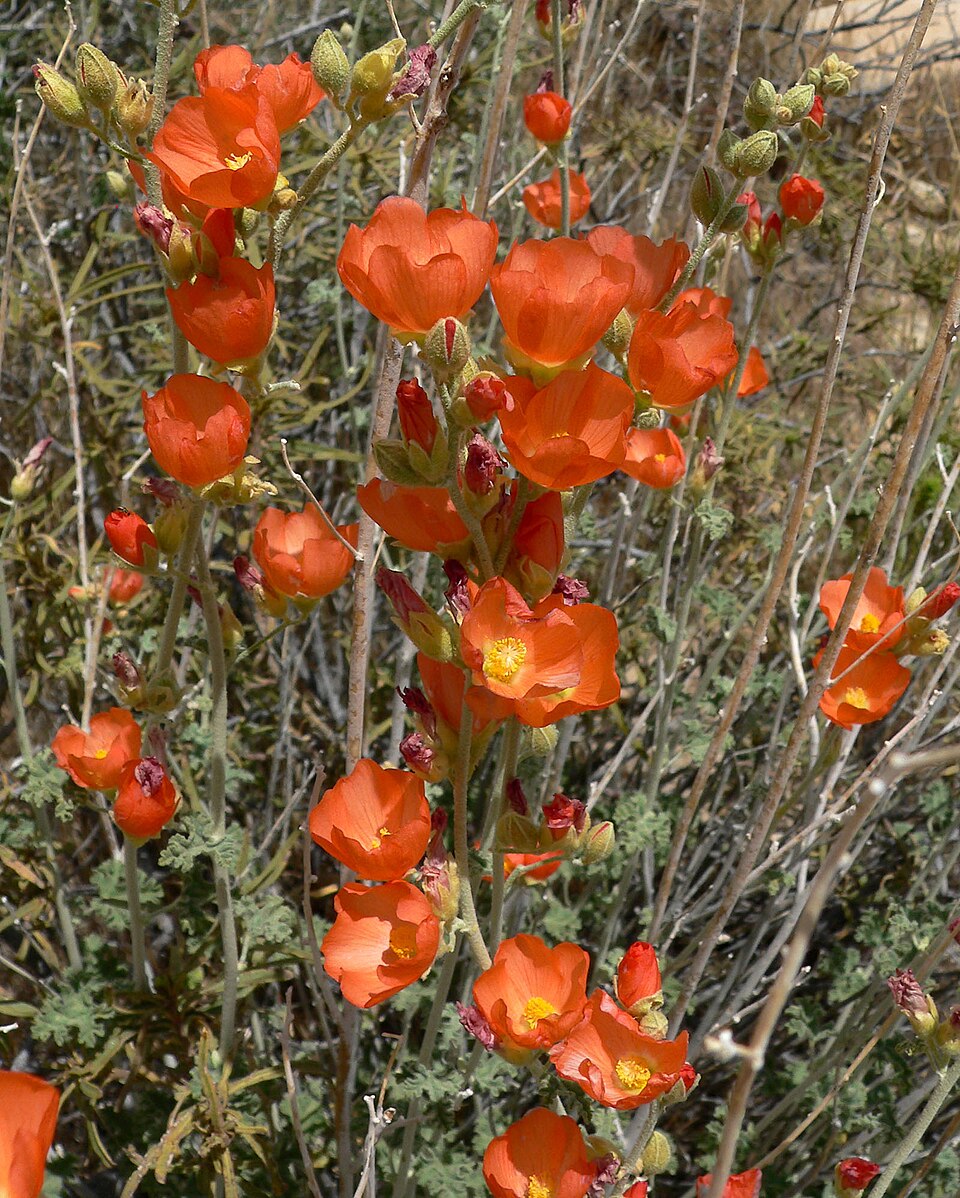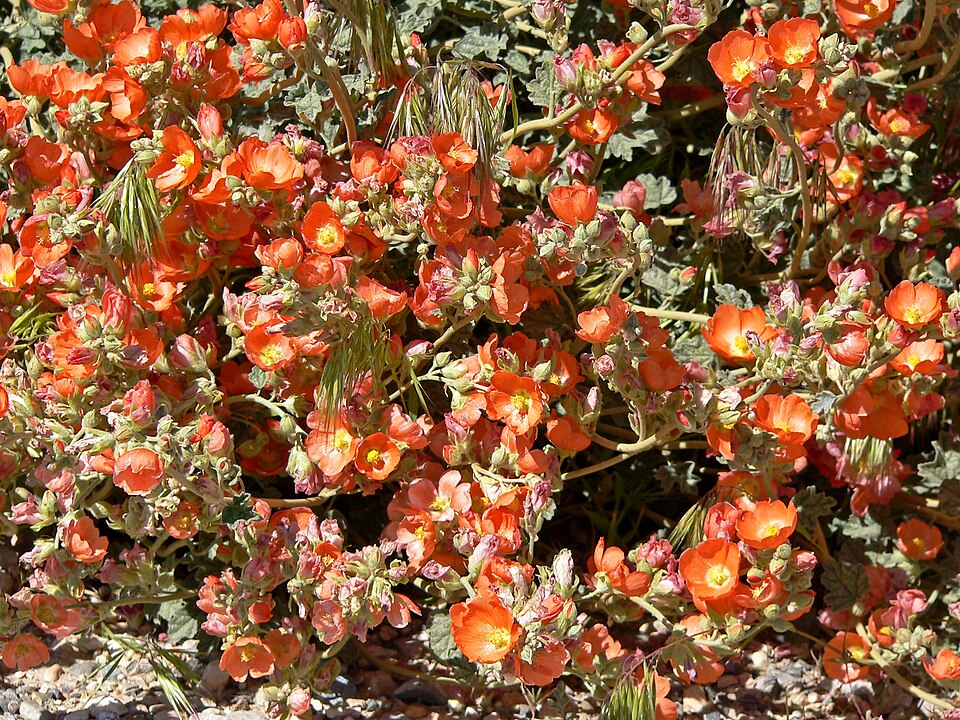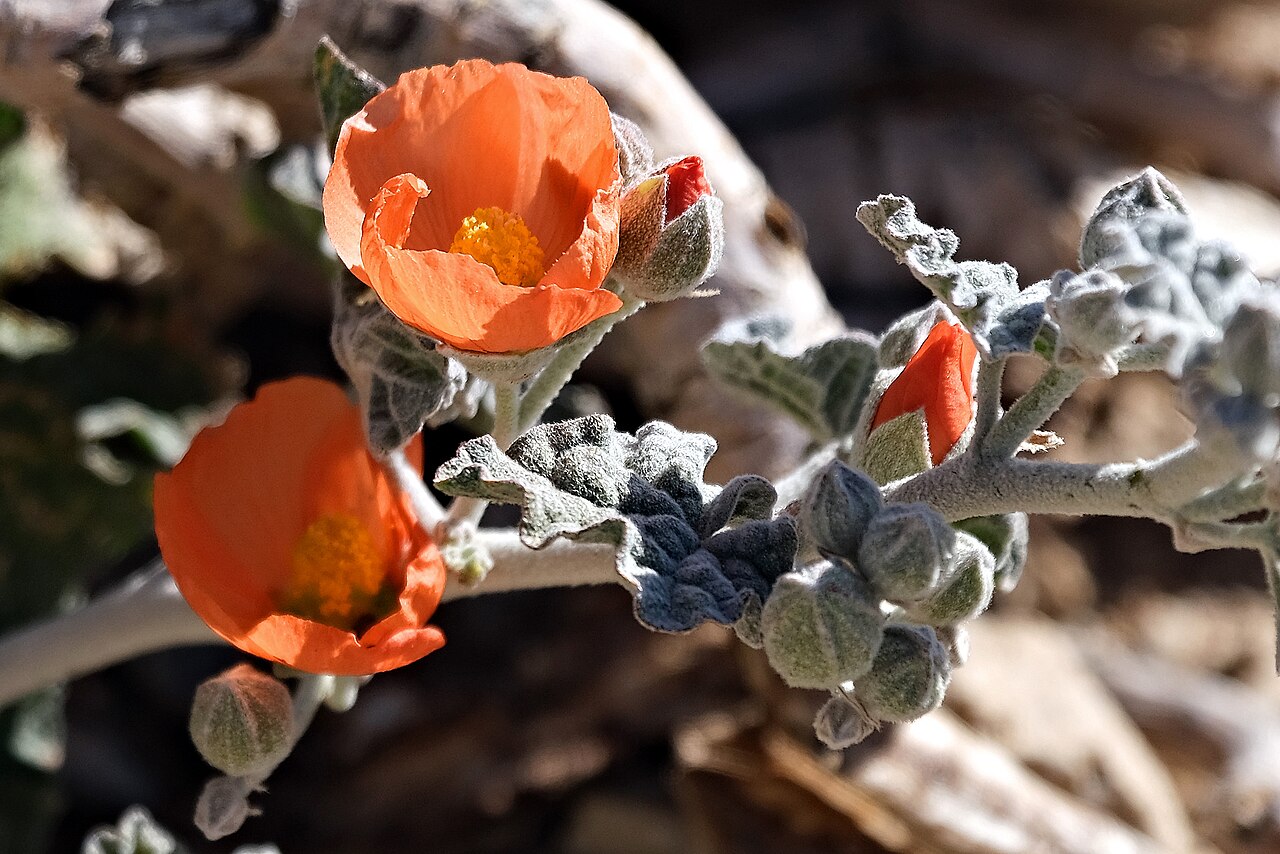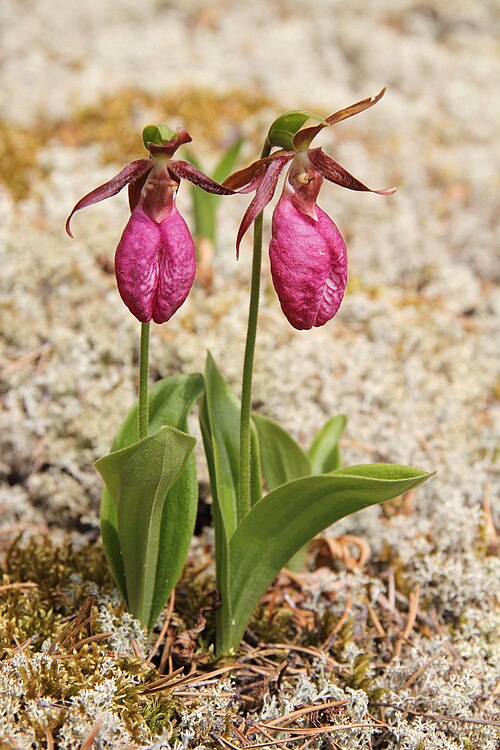
The United States of Wildflowers – Part 5 South Dakota to Wyoming

              Of course, all things must come to an end and a series of wildflowers is no exception. Still, I must remind you that just because many of these flowers were once used in traditional medicine by Native Americans and others doesn’t mean you should. Because as a history major, I know full well that traditional medicine isn’t the most reliable since a lot of them haven’t been proven as effective medical treatments by medical community. While a lot of them have actually been known to harm actually harm or kill people. Especially if they’re known to be toxic upon ingestion or touch. Anyway, in this post, we’ll see a Pasque flower in South Dakota, garden favorites in Tennessee, Vermont, Virginia, and Wisconsin, an iconic lupine in Texas, two iconic western flowers, a notable wildflower in West Virginia, and a mountain flower in Washington.

41. South Dakota

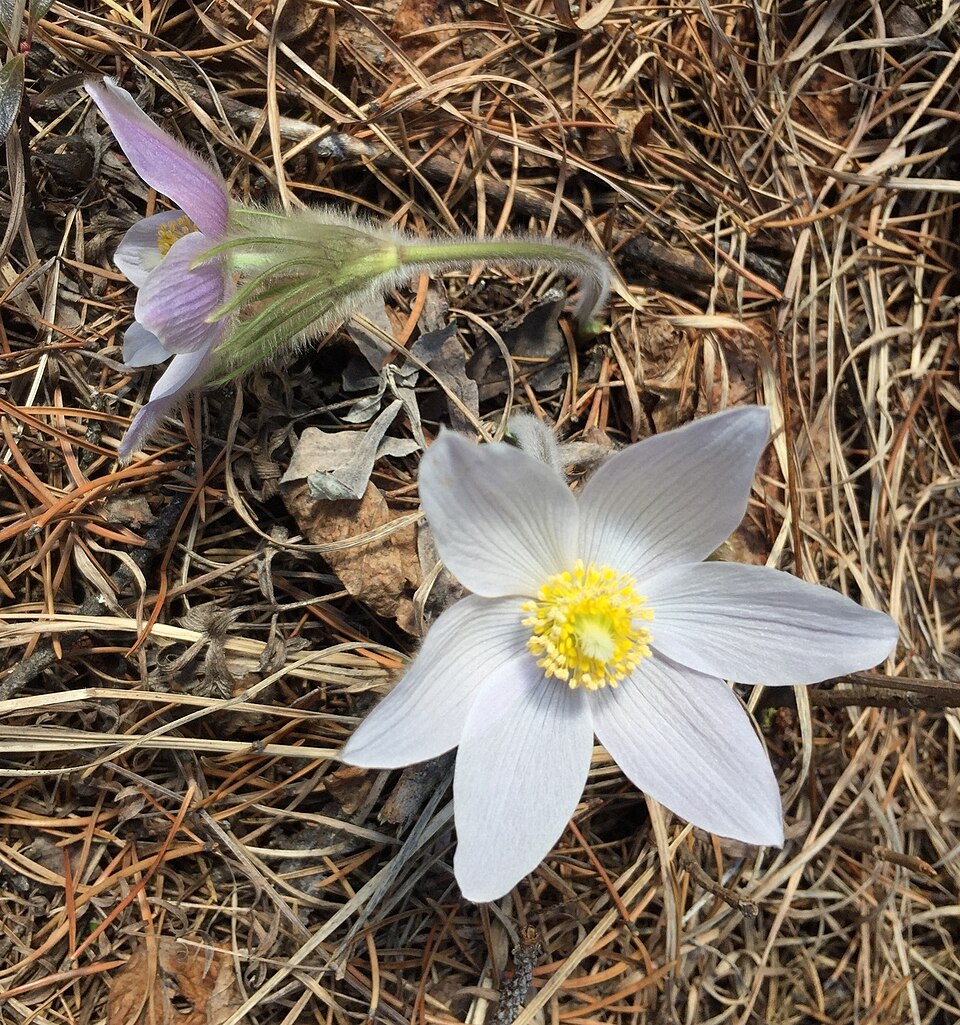
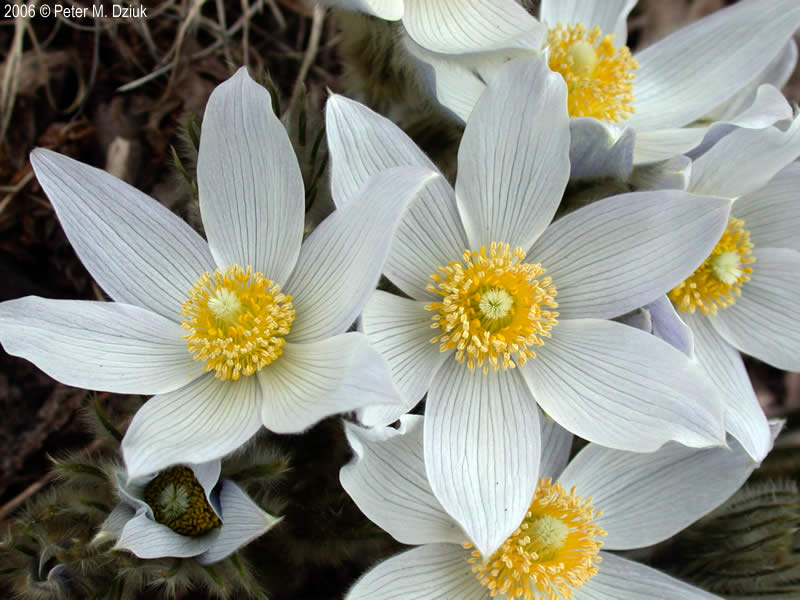
American Pasque Flower (Pulsatilla nuttalliana)
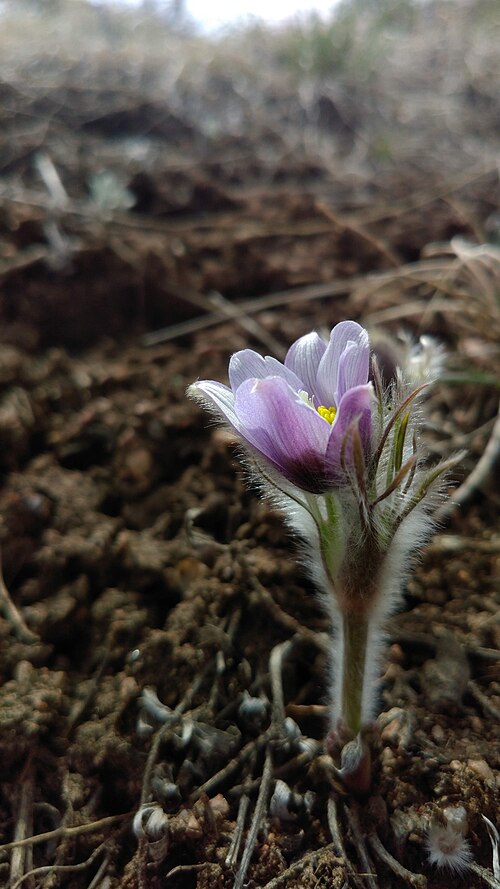
Why the Prettiest: Called the Prairie Pasque Flower, it’s the state flower of South Dakota. A low-lying perennial flower featuring fuzzy low-growing stems with delicate, showy lavender-to-purple bell-shaped flowers.

Location: Native to North America east of Lake Michigan from as north as Alaska to as south as New Mexico.

Environment: Inhabits cool, northern prairies, open slopes, fescue grasslands, granite outcrops in forests, and woodlands dry and open in mountain and boreal areas. Also grows in clearcut areas, roadsides, and gravel pit edges. Adapted to habitat disturbances, including wildfires. Though seeds don’t significantly persist. Grows up to 6 in tall.

Bloom Season: Blooms during the early spring. Flowers bloom before the leaves fully emerge. Is one of the first flowers to bloom during the season, sometimes pushing through lingering snow. Attracts honeybees, mining bees, bumblebees, and hover flies. Has low forage value for herbivores due to it being mildly toxic with its protoanemonin content. Yet, when grazed, it will produce new leaves from dormant buds. And numbers will increase in grazed meadows.

Color Varieties: Available in lavender, purple, and white.

Gardening Conditions: Not as popular as its European counterparts as an ornamental plant. Unless it’s planted in gardens intended to resemble an upper Midwest prairie or in rock gardens. Germinates readily without pre-treatment or stratification within 3 weeks. Propagates through seed and vegetatively. Seedlings are difficult to transplant and transplantation of all plant sizes depends on avoiding root disturbance by digging with a substantial amount of soil. Garden must have good drainage. Grows best in soils that are moist to dry with neutral or slightly alkaline characteristic and winter snow cover. Grows well with some additional compost in the topsoil around 7 cm in depth. Needs partial to half-day shade in hot summer areas. In areas with cool summers like mountain habitats and northern prairies, full sun is required. Contains protoanemonin, a toxin causing skin irritation.

Conservation Status: Currently listed as Secure. Although seen as critically imperiled in Illinois, Washington, and Ontario.

Trivia: Provincial flower of Manitoba. Seeds are distributed by the wind or by catching in fur of passing animals. Prepared and used by indigenous communities for specific traditional remedies.

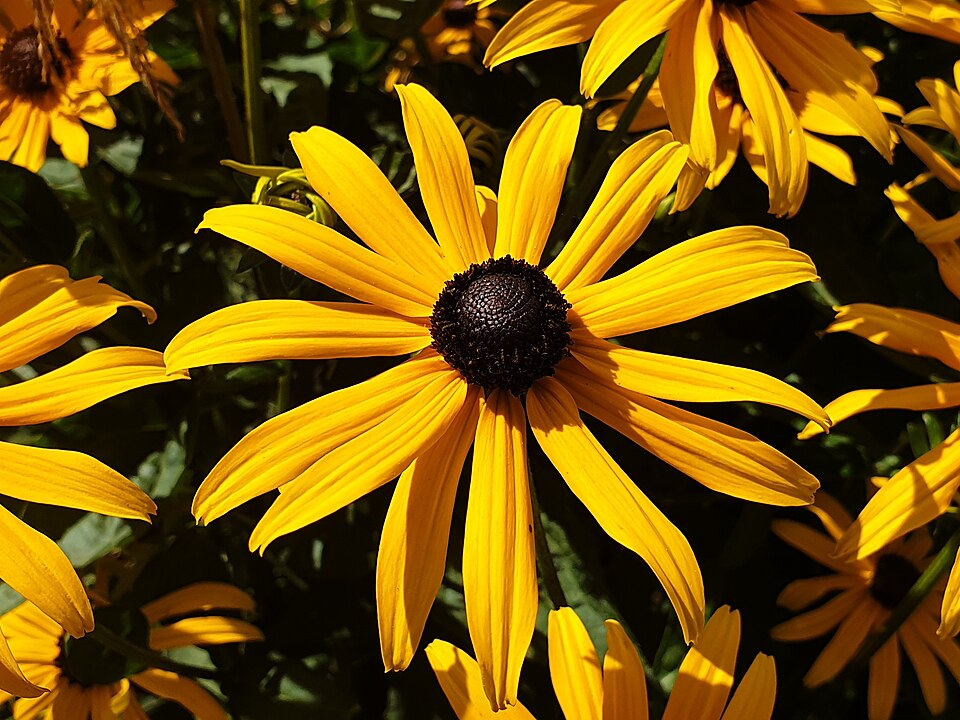
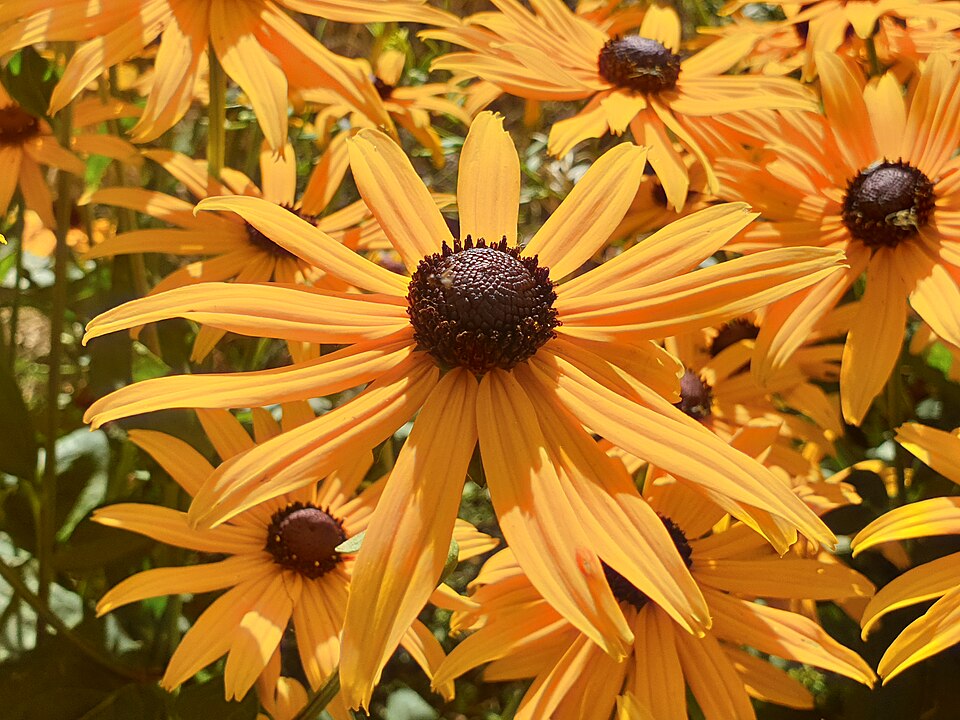
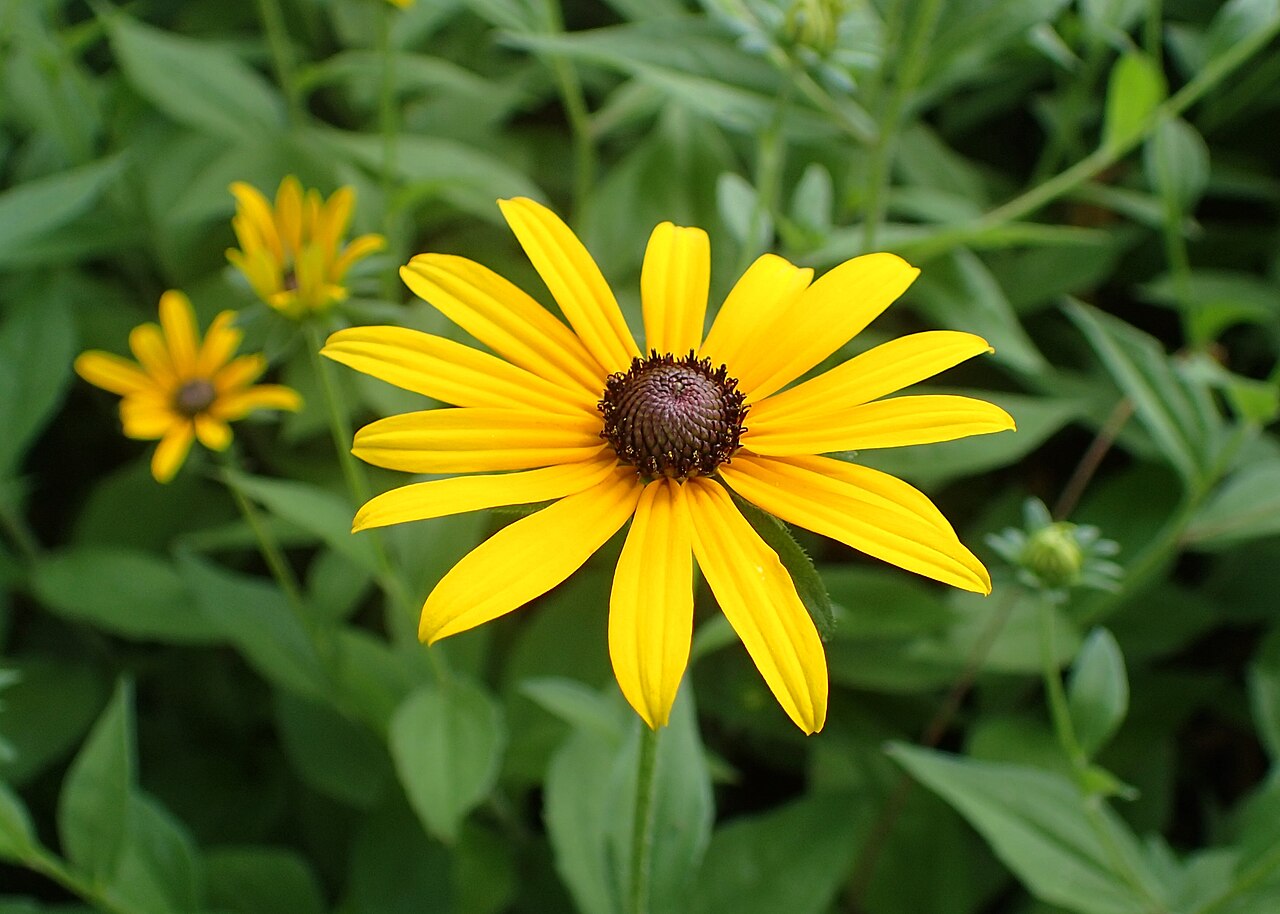
Other Candidates: Purple Coneflower, Purple Prairie Clover, Black-Eyed Susan, and Gunnison’s Mariposa Lily.

42. Tennessee

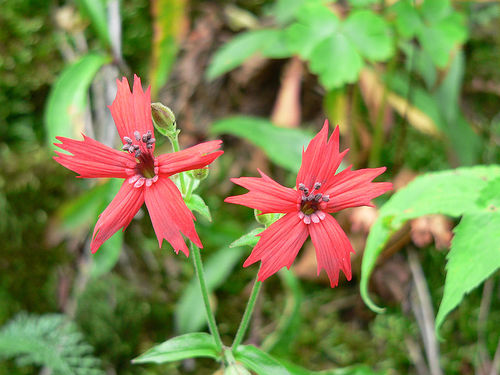
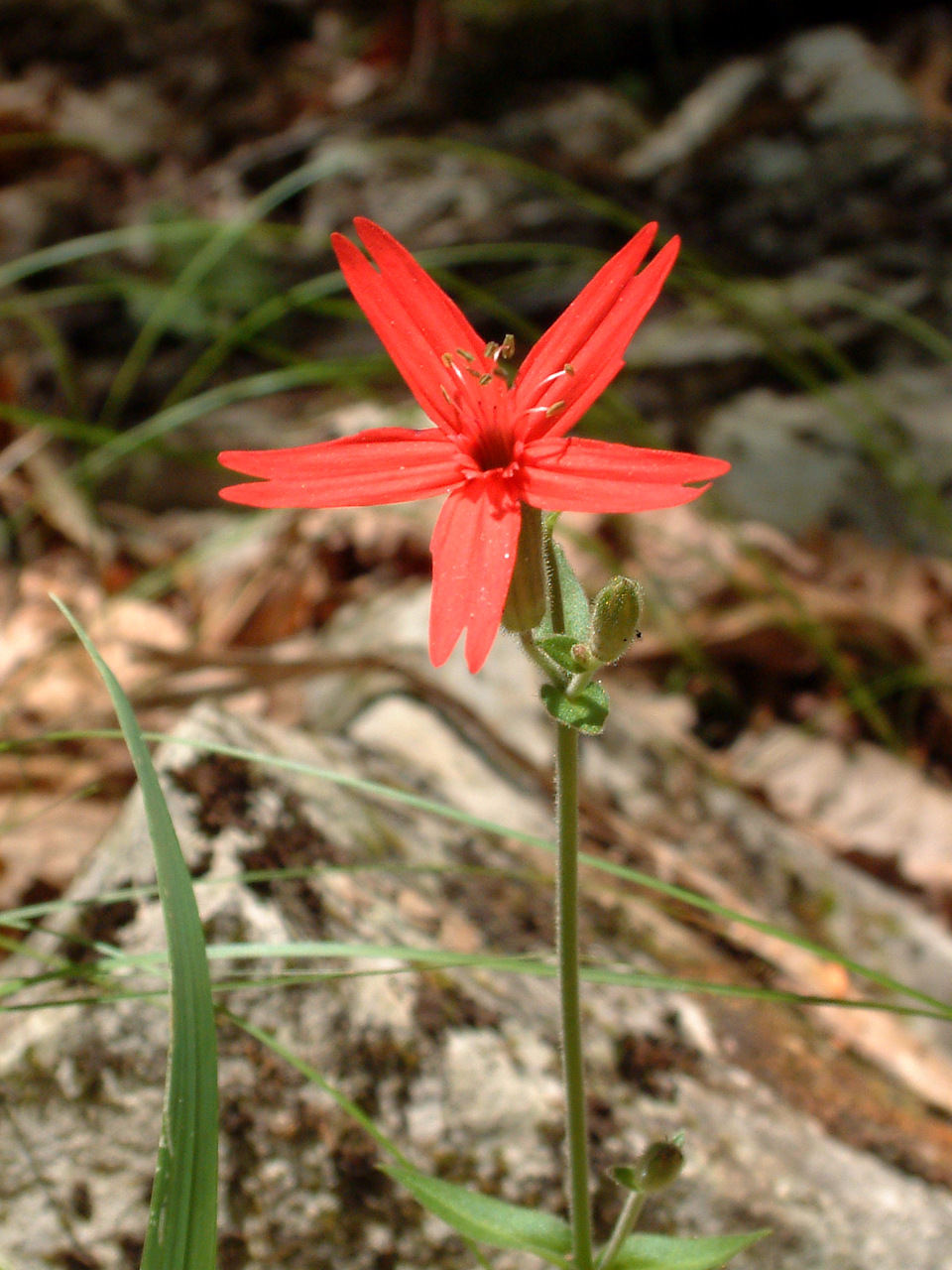
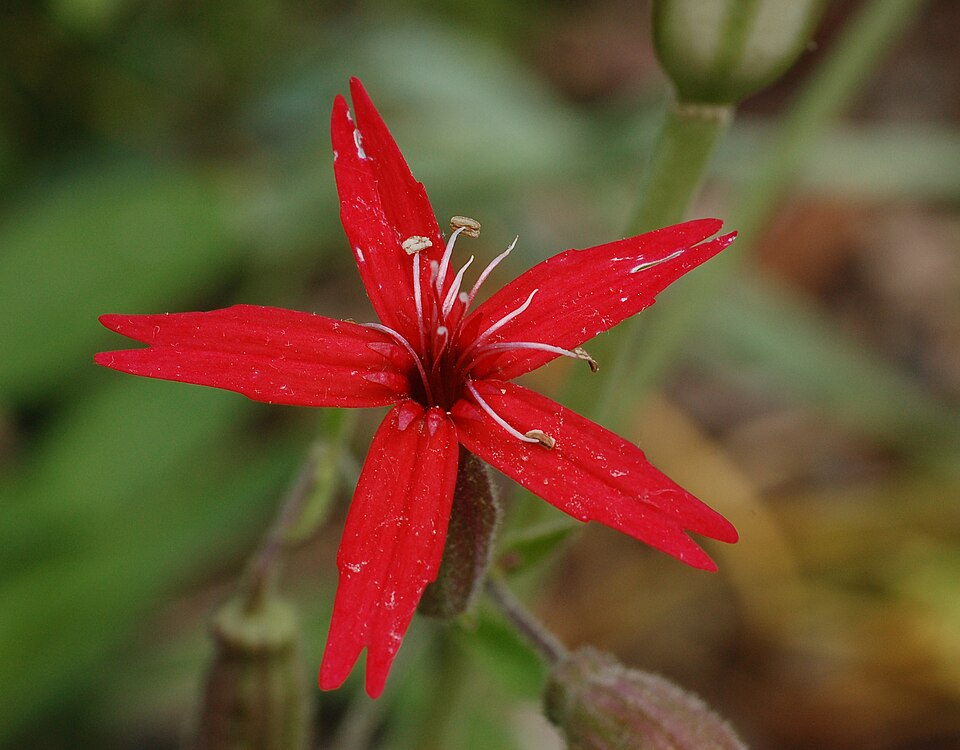
Fire Pink (Silene virginica)
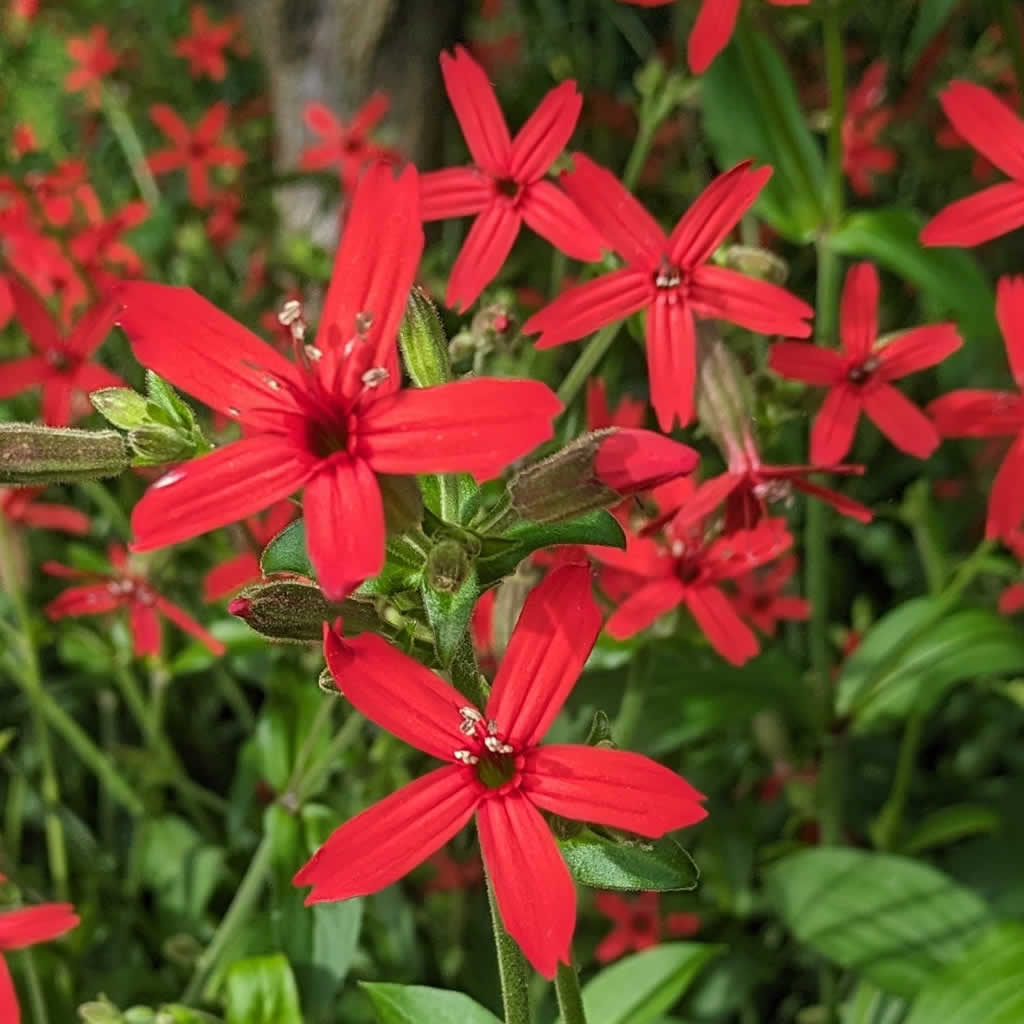
Why the Prettiest: It’s a short-lived perennial is known for its brilliant, star-shaped flowers and sticky stems deterring crawling insects from getting a free meal.

Location: Native to central and eastern North America, ranging as far west as Texas, as north as southern Ontario, and as south as Florida.

Environment: Inhabits open woodlands, rocky slopes, cliffs, and road banks. Can grow up to 8-31 in tall.

Bloom Season: Blooms in late spring and early summer like from April to July. Attracts hummingbirds and long-tongued insects, with the ruby-throated hummingbird being its principal pollinator. Other birds aid in its seed dispersal such as sparrows, juncos, and pine siskins.

Color Varieties: Available in red.

Gardening Conditions: Prefers bright and partial shade and well-drained soils. Yet, tends to grow in areas with acidic, poorer quality soils. Tolerates sunny conditions and can withstand drought and high temperatures. Can self-seed. Doesn’t have serious problems with disease or pests. Though it can be occasionally affected by the anther smut disease, which can render it sterile. Used in rock gardens and along border fronts in landscaping.

Conservation Status: Currently listed as Secure. But imperiled in Louisiana and considered endangered in Wisconsin, Florida, and Michigan.

Trivia: Has sticky, glandular hairs on its upper stem and calyx to trap insects in order to prevent them from nectar feeding and robbing it from the flower without providing pollinator services. Used medicinally by Native Americans and European settlers. Cherokees used the root as a snakebite remedy and intestinal worms. Used by the Iroquois as an anti-bacterial. Though other tribes said it’s poisonous.

Other Candidates: Large-Flowered Trillium, Dwarf-Crested Iris, Nashville Gladecress, and Virginia Bluebell.

43. Texas

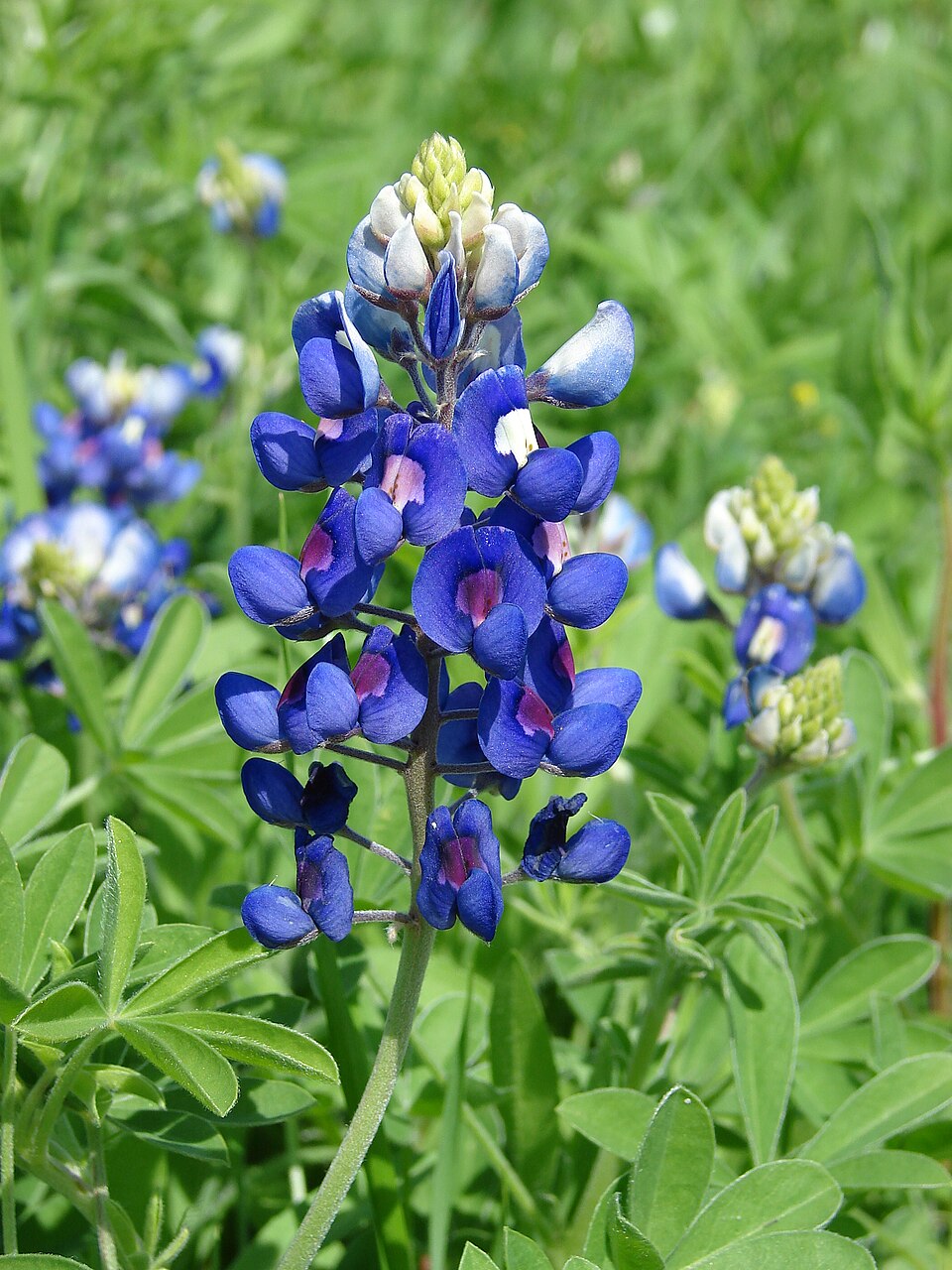
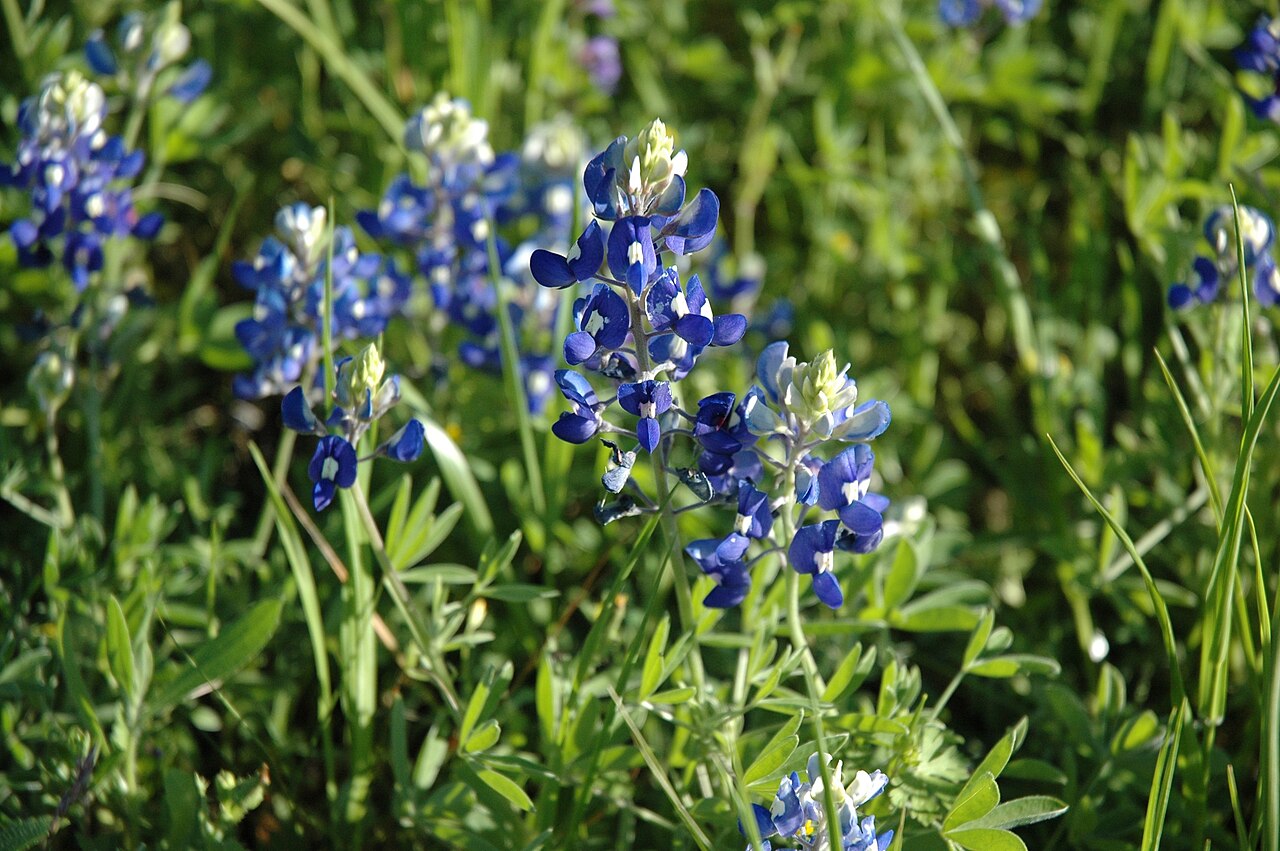
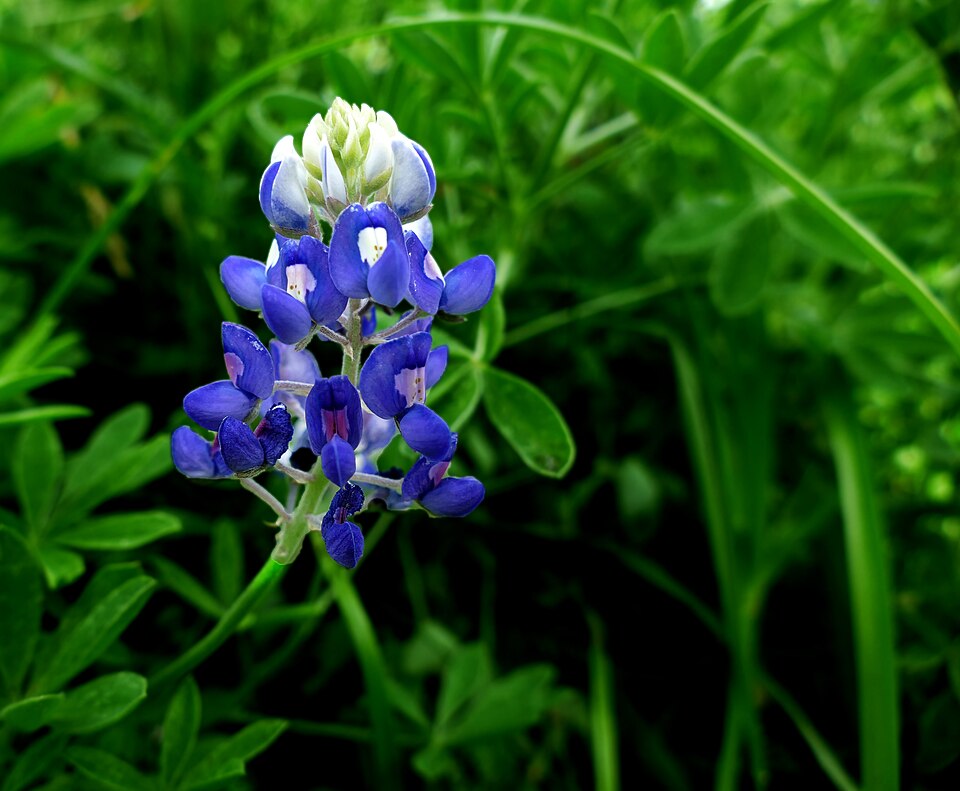
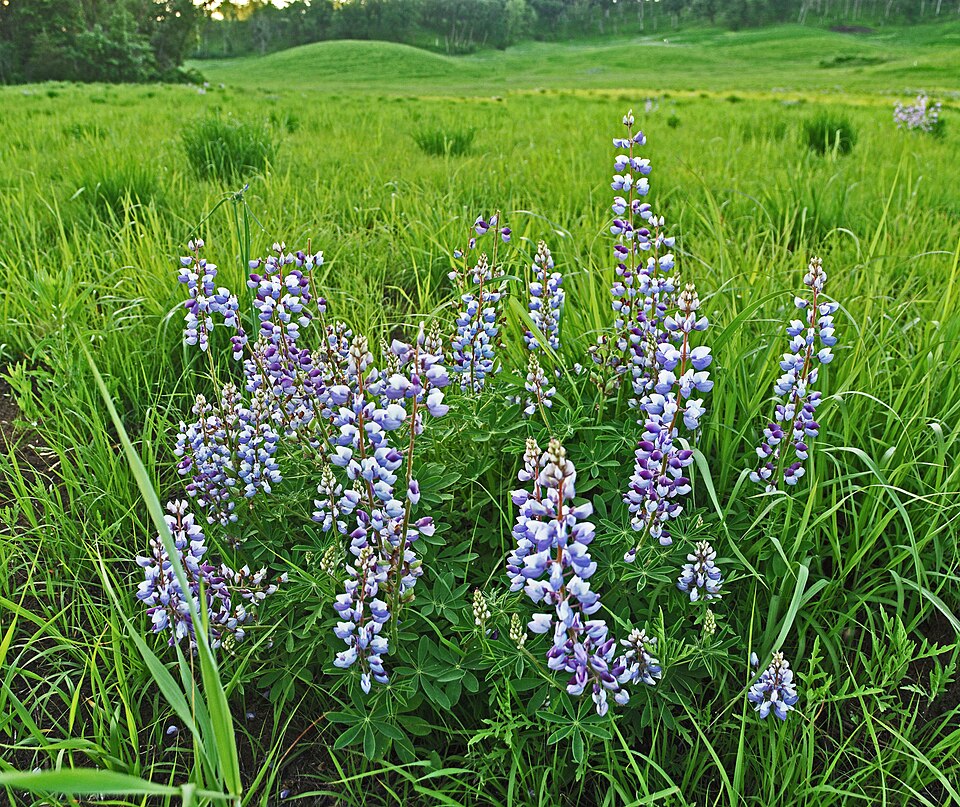
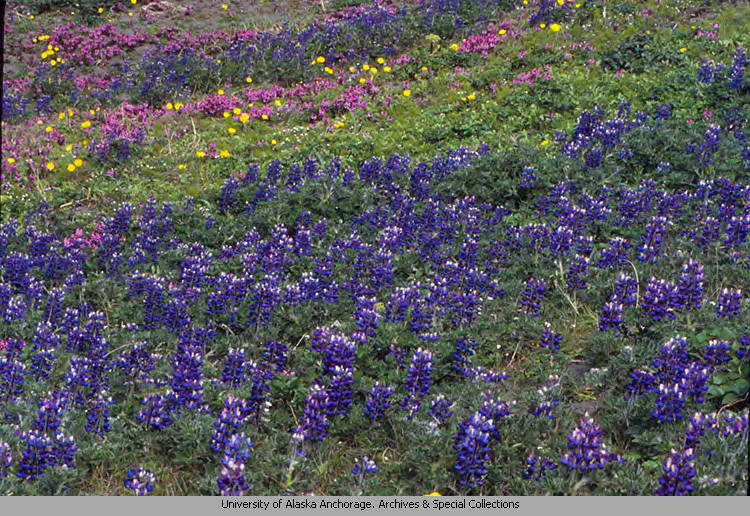
Texas Bluebonnet (Lupinus texensis)
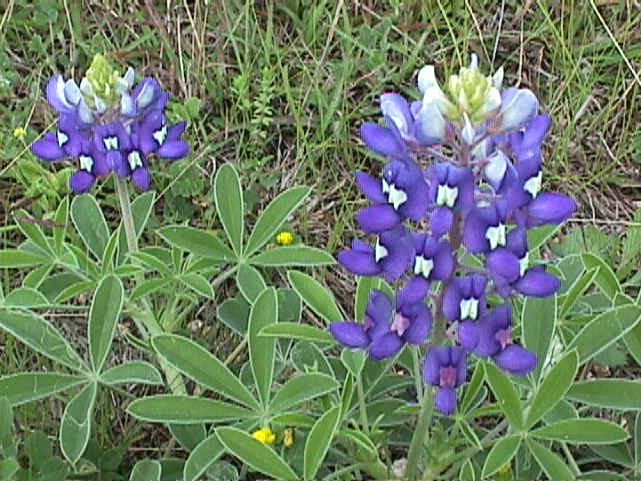
Why the Prettiest: For one, it’s Texas’ state flower, known for its vibrant, blue pea-like clusters with distinct white tips. While its leaves are light green, velvety, palmately compound usually split into 5 leaflets.

Location: Native to the south-central United States and northern Mexico. Found in Texas, Louisiana, and Arkansas.

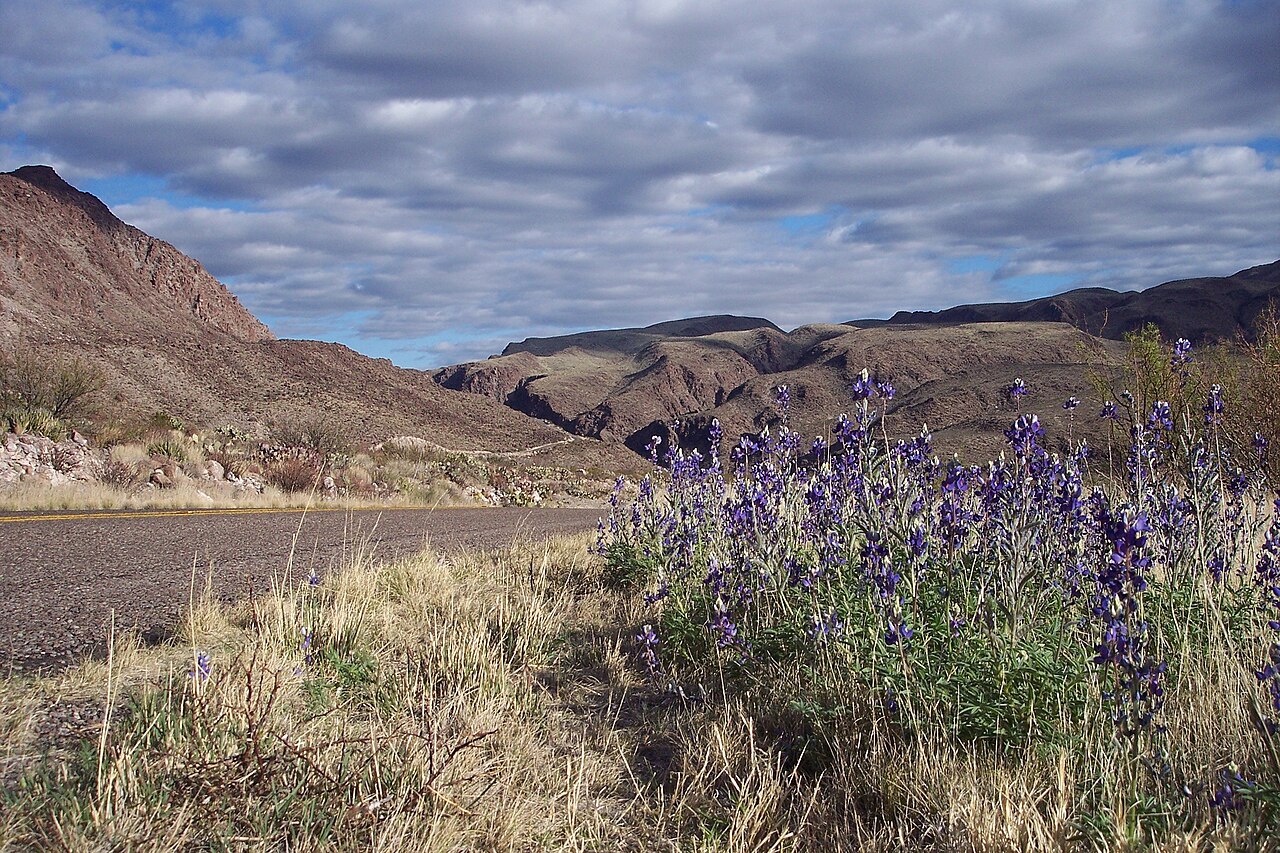
Environment: Lives in prairies, roadsides, and wooded edges. Grows up to 6 in tall.

Bloom Season: Blooms in early to mid spring such as from March to May. Attracts bees and butterflies.

Color Varieties: Available in blue, white, pink and maroon.

Gardening Conditions: Its gravel-like seed has a hard seed coat that must be penetrated by wind, rain, and weather over a few months (but sometimes several years). Seeds may be scarified before being stored. Seeds germinate in the fall and winter so sow them in the fall. Requires full sun. Thrives in alkaline, moderately fertile, and extremely well-drained soils. Reseeds itself. Plants and seeds are toxic to humans.

Conservation Status: Currently listed as Secure.

Trivia: Said to have the ability to fix the nitrogen in the soil, which benefits surrounding the vegetation.

Other Candidates: Giant Blue Iris, Texas Indian Paintbrush, Indian Blanket, Pink Evening Primrose, Winecup, and Texas Bluebell.

44. Utah

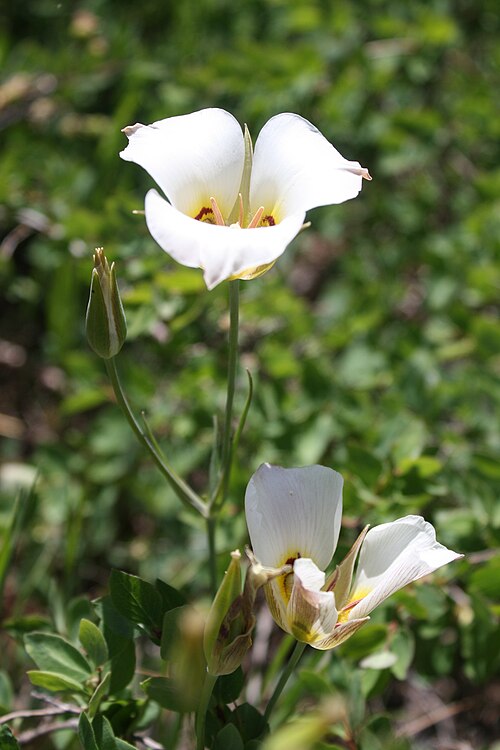
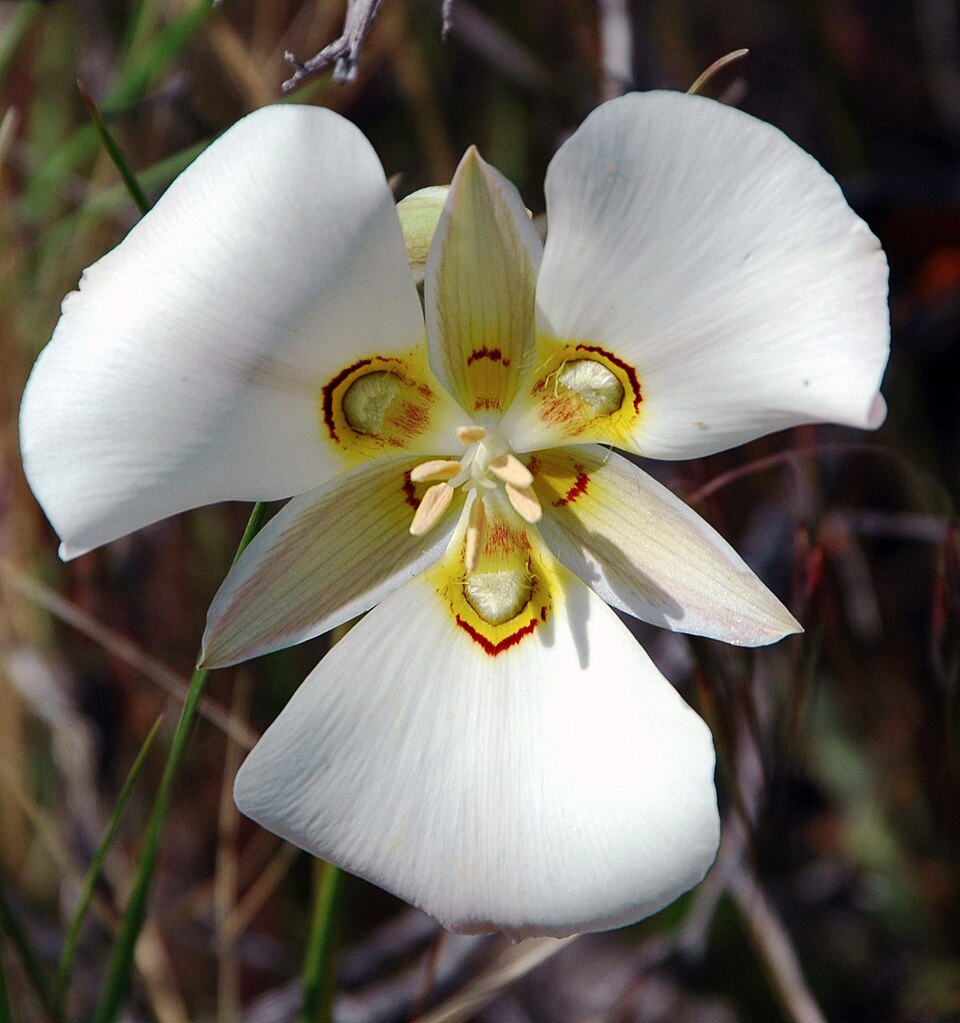
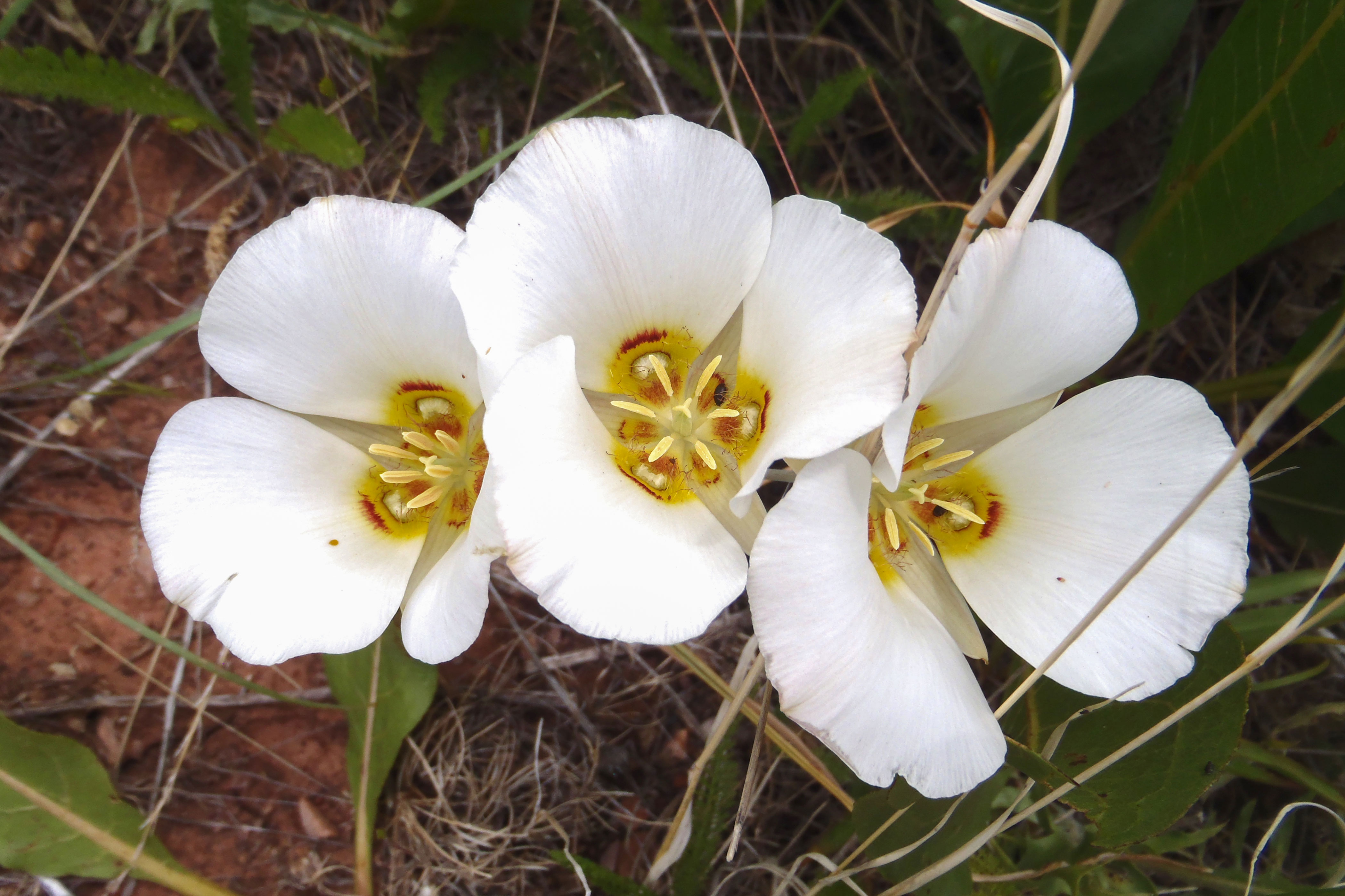
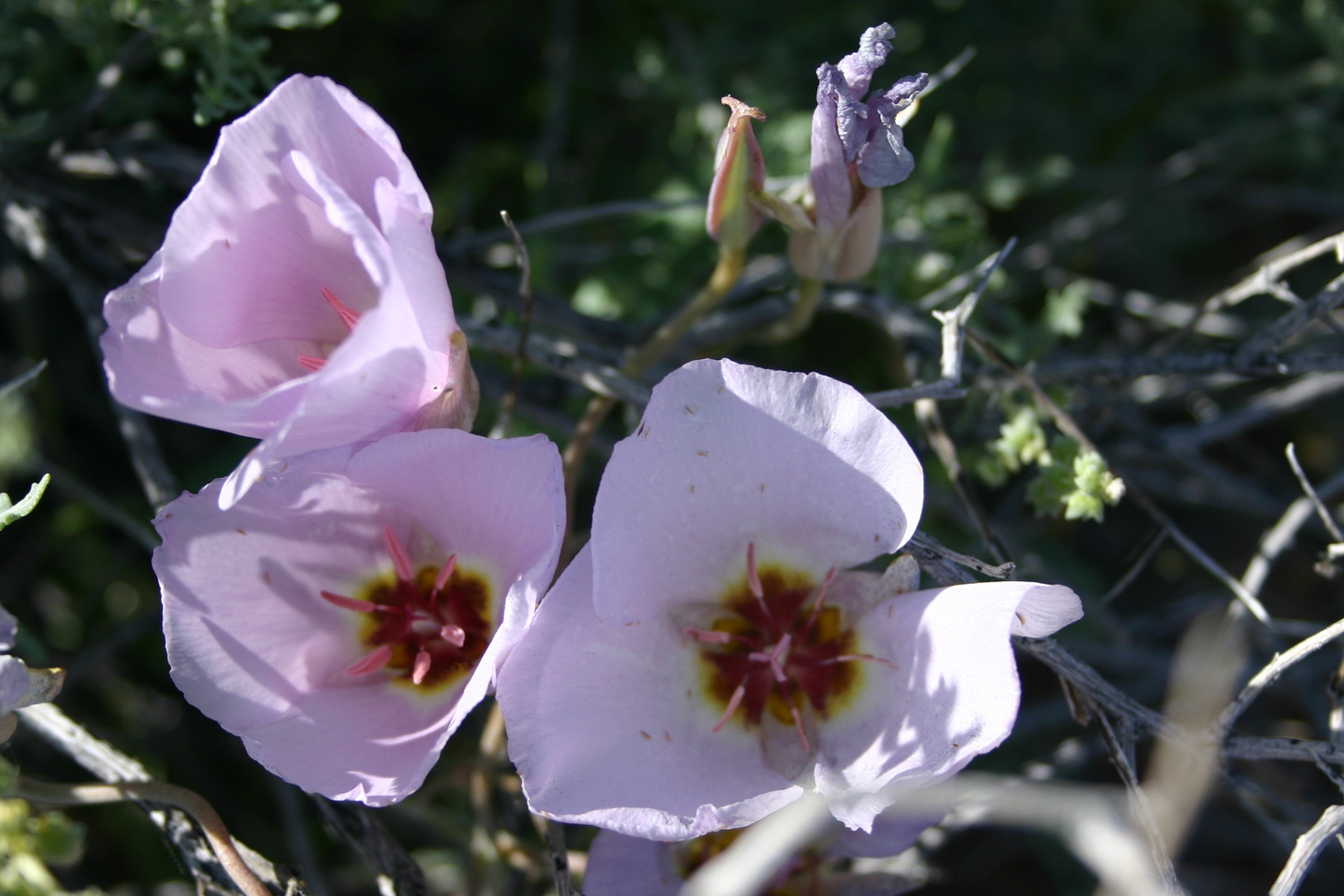
Sego Lily (Calochortus nuttallii)
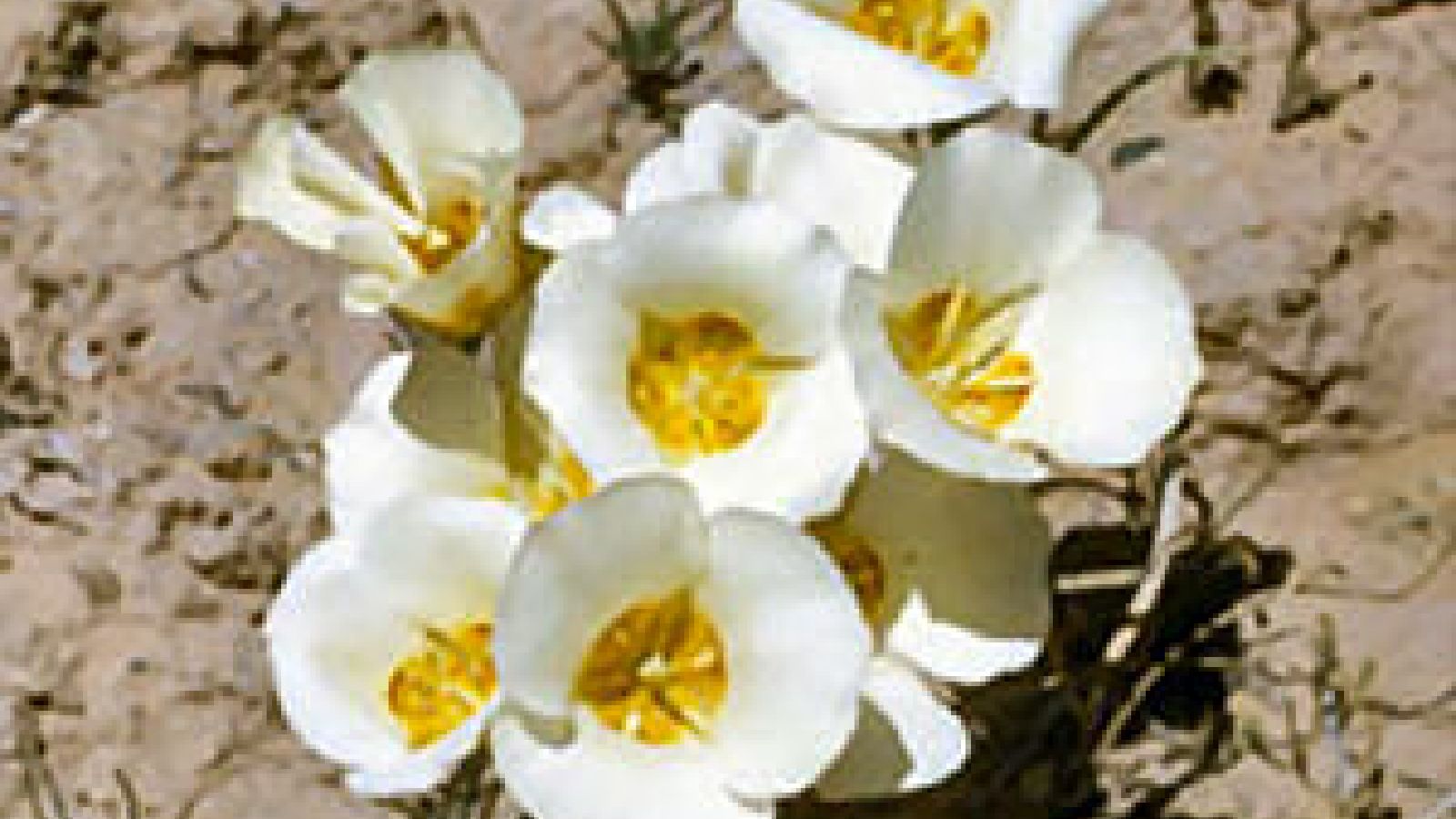
Why the Prettiest: It’s Utah’s official state flower since 1911.  It’s a striking, bulbous perennial featuring 2-4 narrow, grass-like leaves that wither as the plant blooms. Bears 1-3 tulip-like, satiny blossoms up to 3 in across featuring white, pink, or lavender petals with distinctive yellow and dark red or maroon markings at the base.

Location: Native to the western United States from as north as Montana to as south as New Mexico and Arizona.

Environment: Lives in dry, brushy or grassy slopes, open foothills, and on desert high country. Can grow up to 6-18 in height.

Bloom Season: Blooms from late spring to early summer, often after seasonal rainfall.

Color Varieties: Available in white, pink, or lavender.

Gardening Conditions: Doesn’t tolerate excessive water in growth or in dormancy. Needs well-drained soil, but not excessively sandy with very little organic matter. Can receive full sun or partial shade in dry climates. In wetter climates, you must take additional critical protections to shield the bulbs from rotting. Can be propagated from newly formed bulblets, which take 2 years to flower.

Conservation Status: Currently listed as Secure.

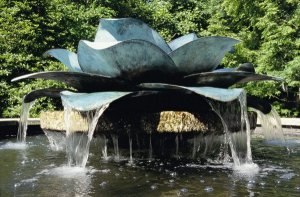
Trivia: Native Americans used bulbs, seeds, and flowers as food. Hopi used it for ceremonies. Shoshone taught the Mormon pioneers to use the plant for desperately needed food. Commemorated by the Sego Lily Dam, a flood-prevention infrastructure project in the shape of a giant sego lily, built in Salt Lake City’s Sugar House Park in 2017. Can be confused with deathcamas. Is featured on Salt Lake City’s Flag that was designed by 2 high school students for a contest.

Other Candidates: Indian Paintbrush, Silvery Lupine, Utah Columbine, Mountain Bluebell, and Elephant Head.

45. Vermont

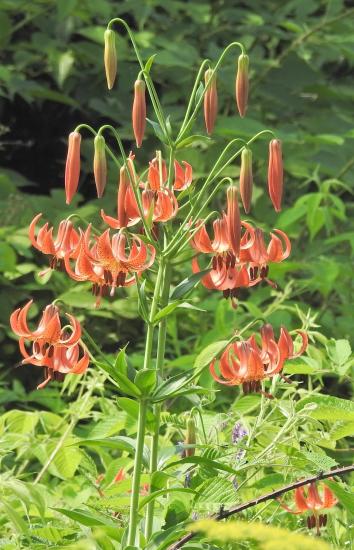
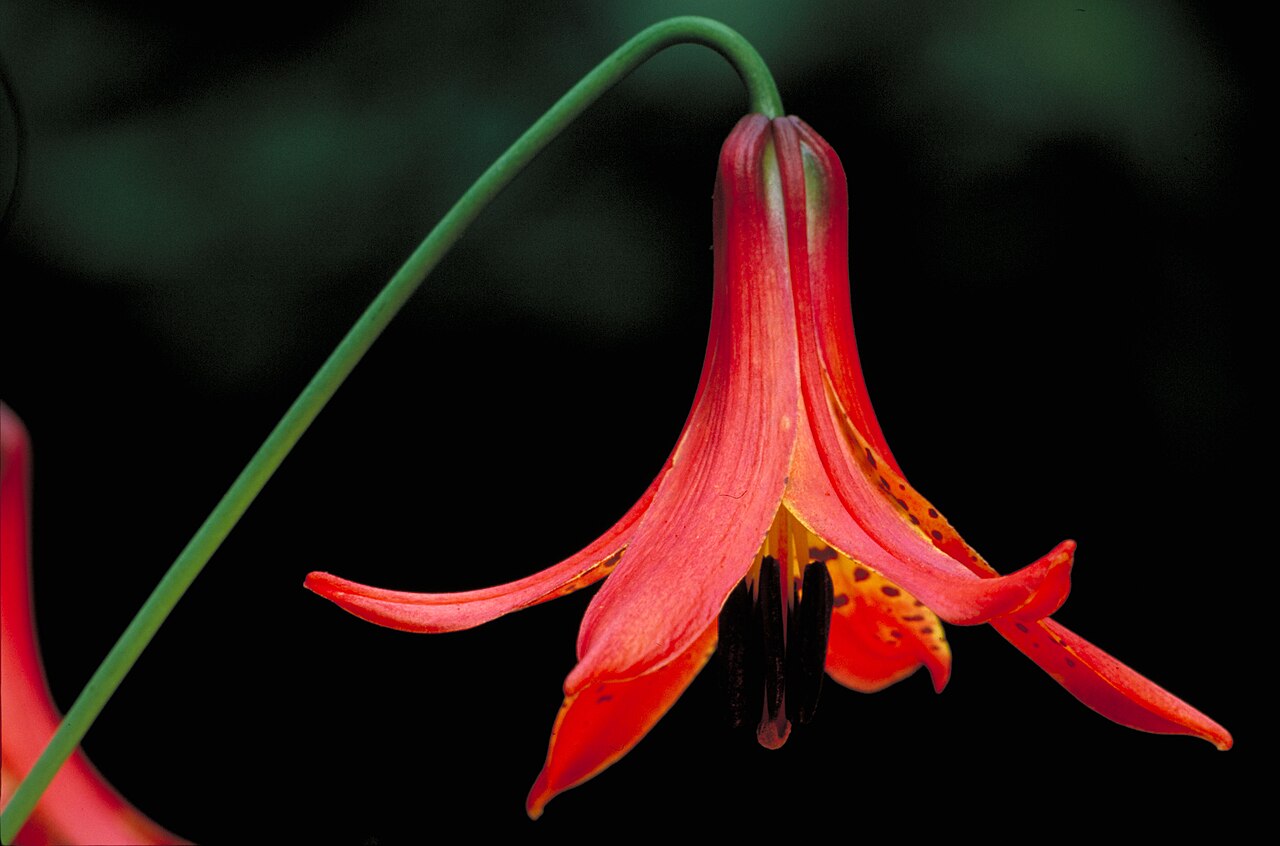
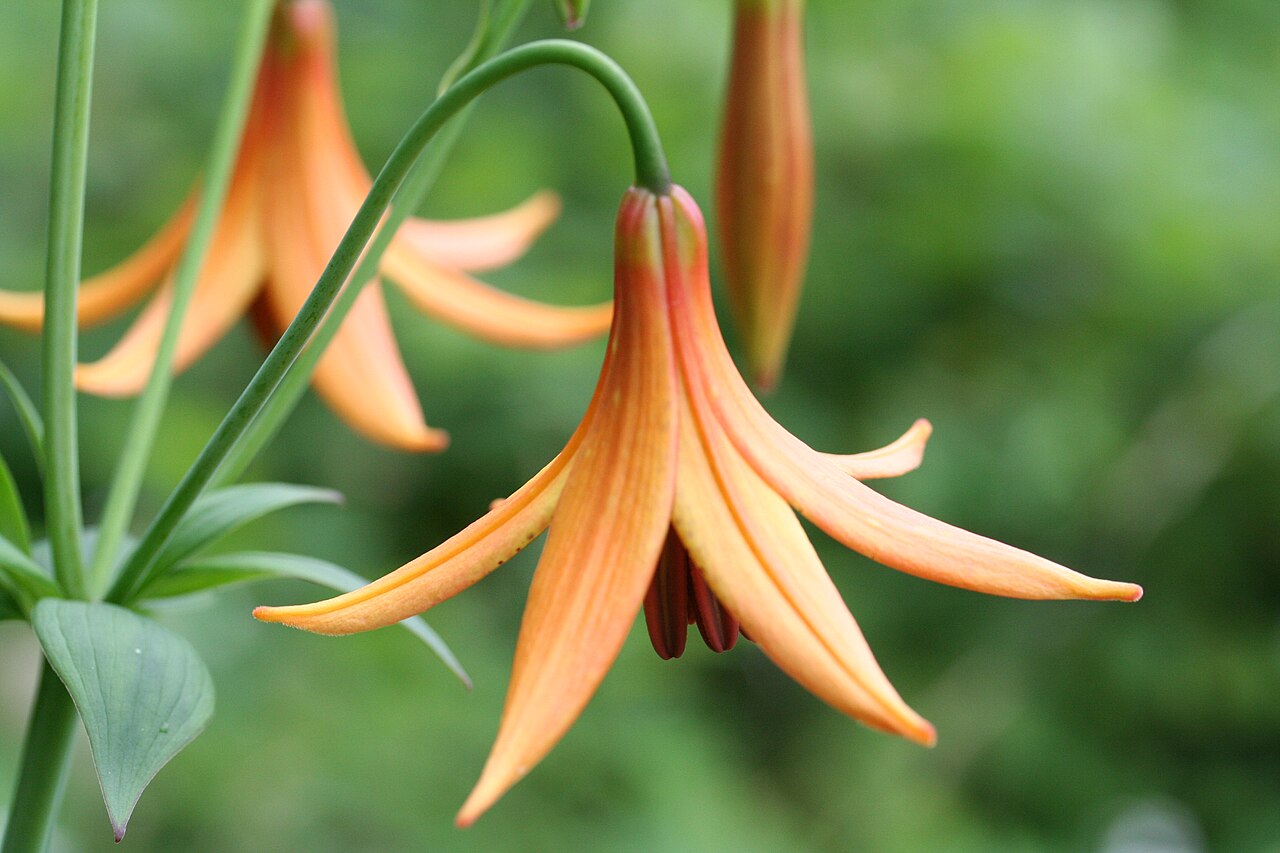
Canada Lily (Lilium canadense)
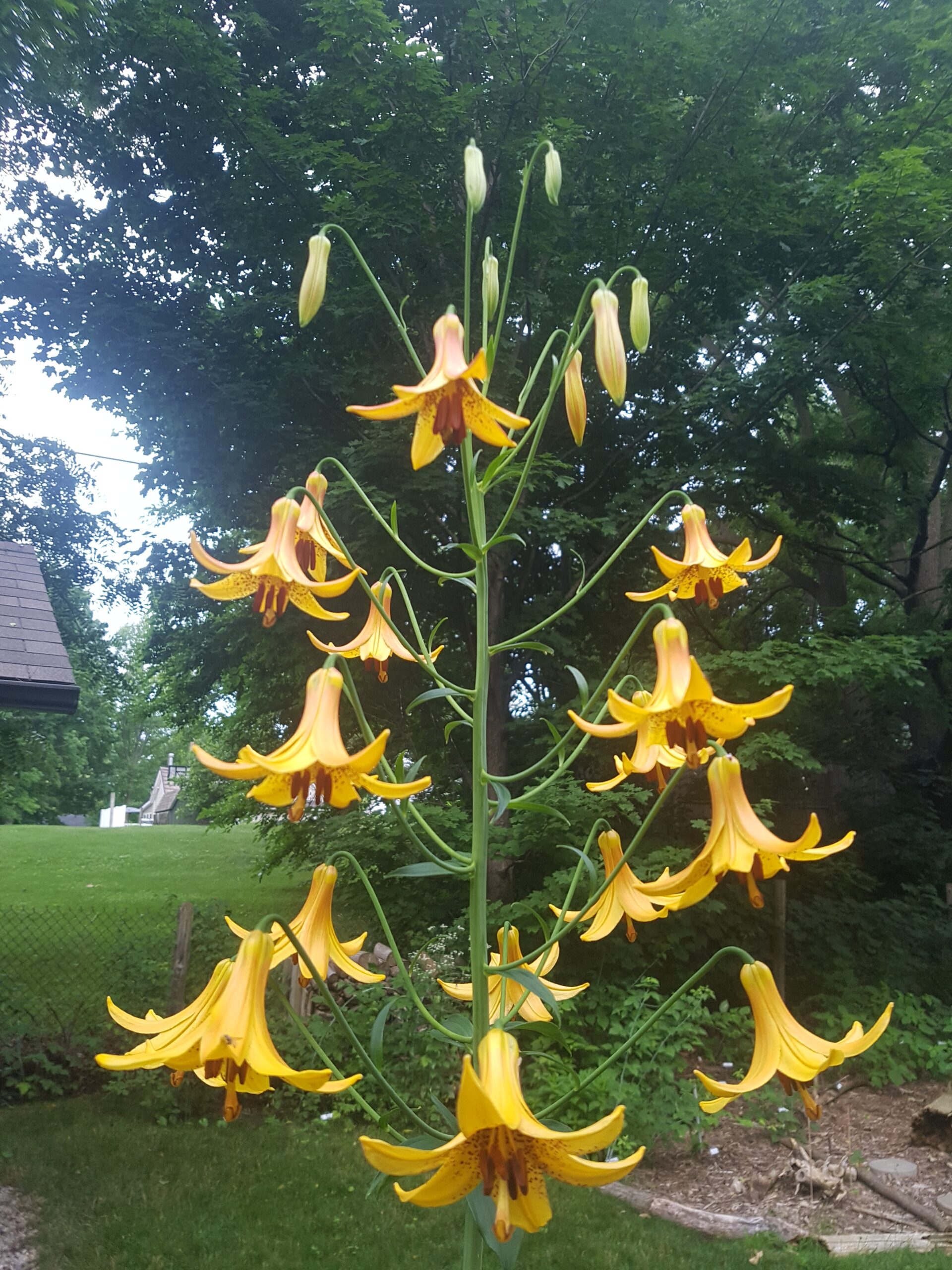
Why the Prettiest: It’s a wildflower known for its chandelier-like clusters of nodding, bell-shaped flowers. Its leaves are lance-shaped and arranged in distinct whorls of 3-8 among them. Up to 20 pendulous, trumpet-shaped flowers per stem.

Location: Native to eastern North America, ranging from Ontario and Nova Scotia to Alabama and Georgia. Most common in New England, the Appalachian Mountains, and the Canadian Maritimes.

Environment: Lives in moist meadows, marsh margins, and wood margins. Less common in urban and suburban areas due to heavy browsing by white-tailed deer. Can grow up to 1.6-4.9ft tall.

Bloom Season: Blooms from June to July. Attracts ruby-throated hummingbirds and large butterflies. Highly favored and heavily browsed by deer.

Color Varieties: Available in yellow, orange, and red, often with darker spots.

Gardening Conditions: Grows best in filtered shade to full sun. Prefers deep, rich, loamy, and acidic to neutral soils that stay consistently moist.

Conservation Status: Currently listed as Secure. Although listed as Rare in Indiana, Exploitably Vulnerable in New York, and Threatened in Rhode Island and Tennessee.

Trivia: Buds and roots were gathered and eaten by Native Americans.

Other Candidates: Red Trillium, White Trillium, Painted Trillium, Spring Beauty, Virginia Bluebell, Cardinal Flower, and Joe Pye Weed.

46. Virginia

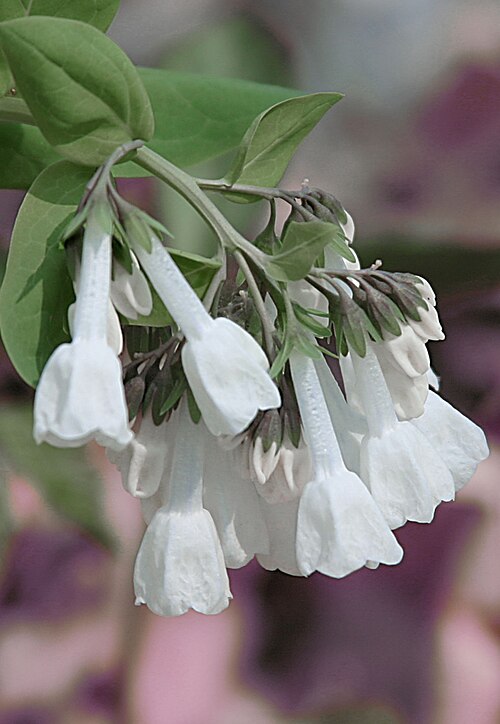
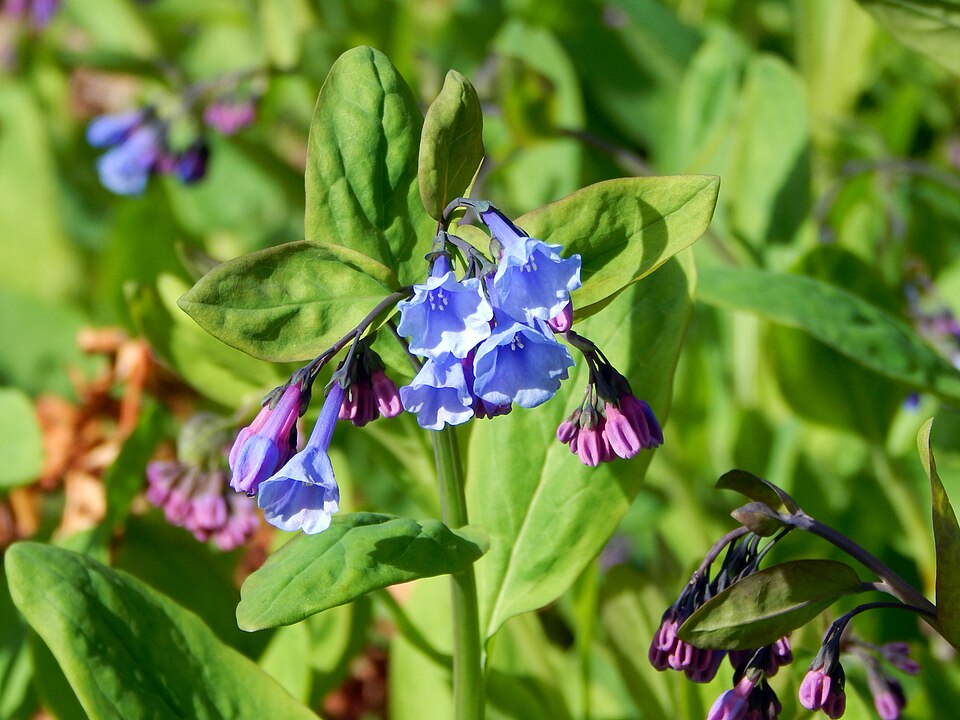
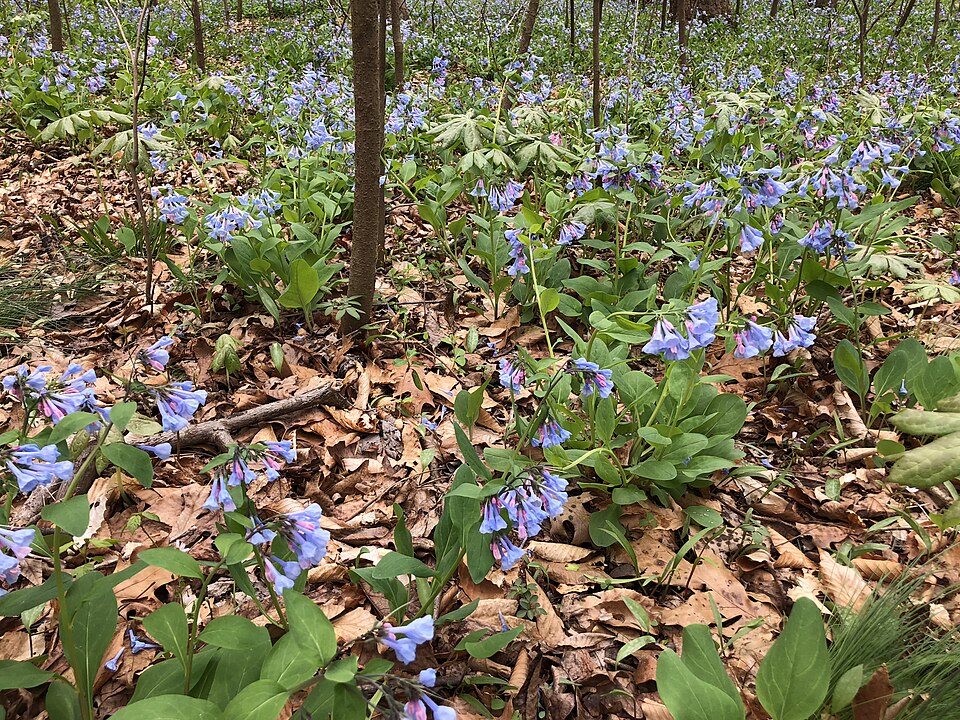
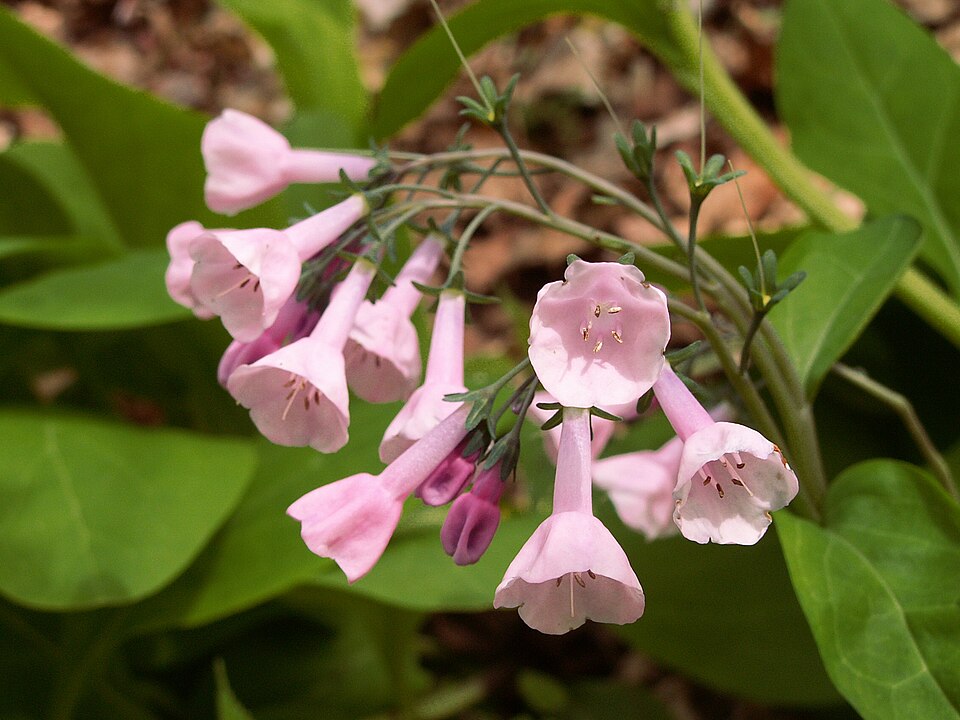
Virginia Bluebell (Mertensia virginica)
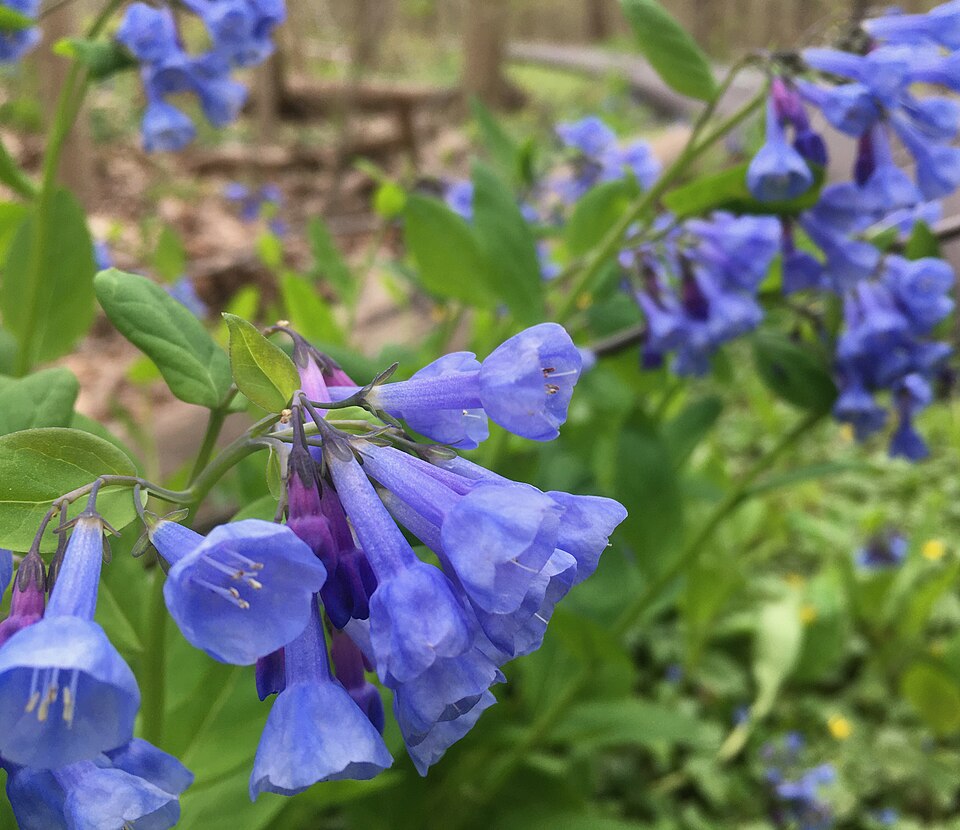
Why the Prettiest: It’s a popular spring ephemeral featuring nodding pink buds opening into soft sky-blue, bell-shaped blossoms.

Location: Native to eastern North America from as north as Ontario and Quebec to as south as Mississippi, Alabama, and Georgia and as west as Kansas.

Environment: Found in rich, moist woods, on low, wooded hillsides, on floodplain forests, and along stream banks. Grows 18-24 in tall.

Bloom Season: Blooms from early to mid-spring like from March to May for about 3-6 weeks. Attracts long-tongued bees like bumblebees, butterflies, moths, skippers, hummingbird moths, flower flies, bee flies, and hummingbirds.

Color Varieties: Available in sky blue, pink, white, and periwinkle.

Gardening Conditions: All parts of the plant are edible, including the flowers. Thrives in partial to full shade. Prefers moist, rich, humus-heavy, and well-draining soil. Requires low maintenance such as adding a layer of organic leaf mulch in the spring. Best paired in shaded garden beds with later-emerging perennials that will fill the space once the plant goes dormant.

Conservation Status: Currently listed as Secure.

Trivia: Often form large groups. Used by Native Americans as medicine for various ailments.

Other Candidates: Yellow Lady’s Slipper, Large-Flowered Trillium, Fire Pink, and Virginia Meadow Beauty.

47. Washington

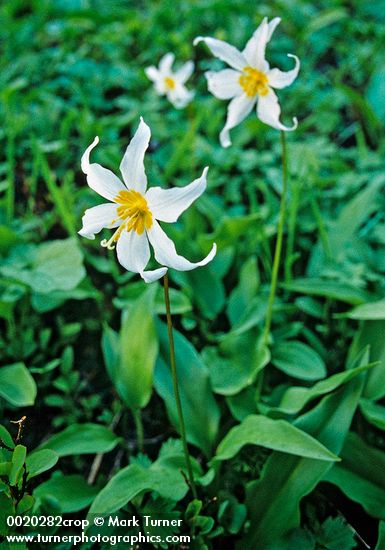
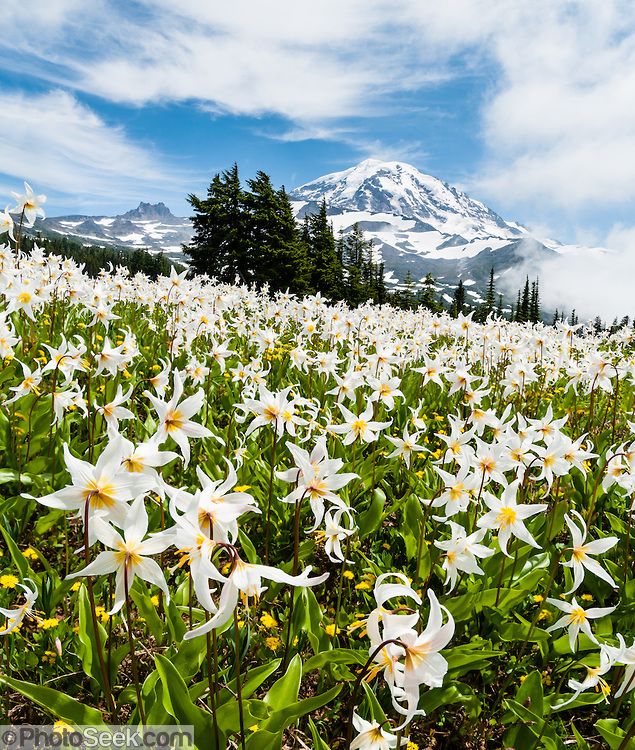
White Avalanche Lily (Erythronium montanum)
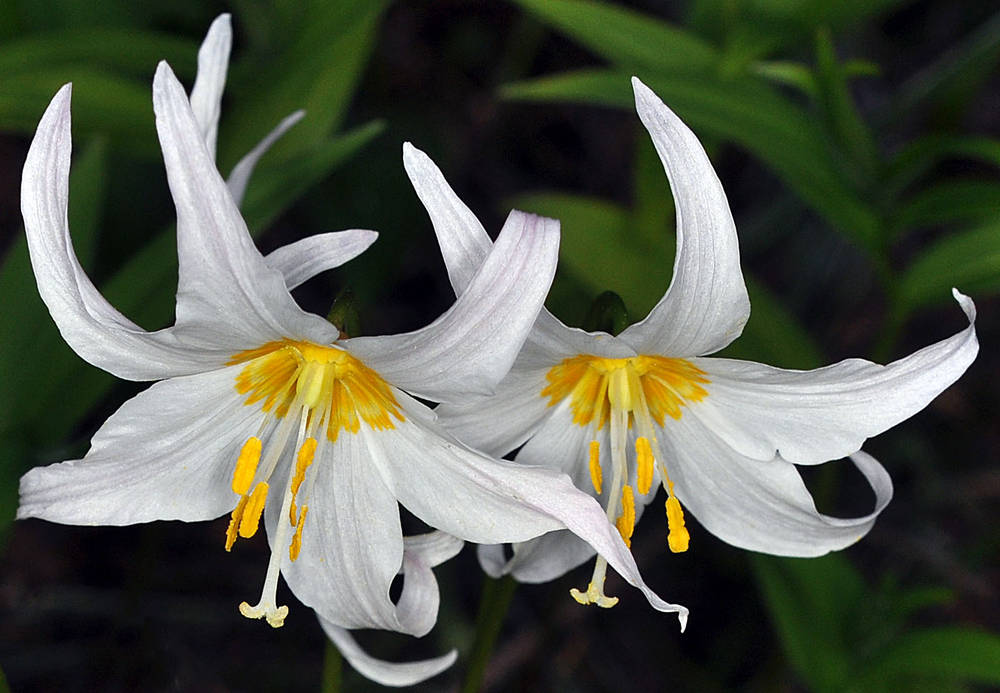
Why the Prettiest: It’s a mountain wildflower known for blooming right at the edge of melting snowfields. Its leaves are a pair of solid, glossy green, lance-shaped basal leaves with smooth coloring. Each stem has 1-4 showy flowers with pristine white petals that sweep or curl backward, revealing a bright yellow center and long yellow anthers. Grows in massive dense patches resembling fresh patches of snow on mountain slopes.

Location: Native to the Pacific Northwest from coastal British Columbia to Oregon, particularly in the alpine and subalpine Cascade and Olympic Ranges.

Environment: Found in damp, subalpine woodlands and alpine meadows, often in extensive patches along the edges of snowfields. Often at elevations between 3,000 and 6,500 ft. Grows up to 6-10 in tall.

Bloom Season: Blooms from late spring to midsummer such as from June to August, beginning when the snow melts and the sunlight hits the soil. Eaten by rodents, deer, elk, and bears.

Color Varieties: Available in white.

Gardening Conditions: Prefers full to partial sunlight and moist, well-drained soil.

Conservation Status: Currently listed as Secure although it’s said to be rare.

Trivia: Stores energy in an underground bulb all winter.

Other Candidates: Lupine, Arrowleaf Balsamroot, Common Camas, and Western Pasque Flower.

48. West Virginia

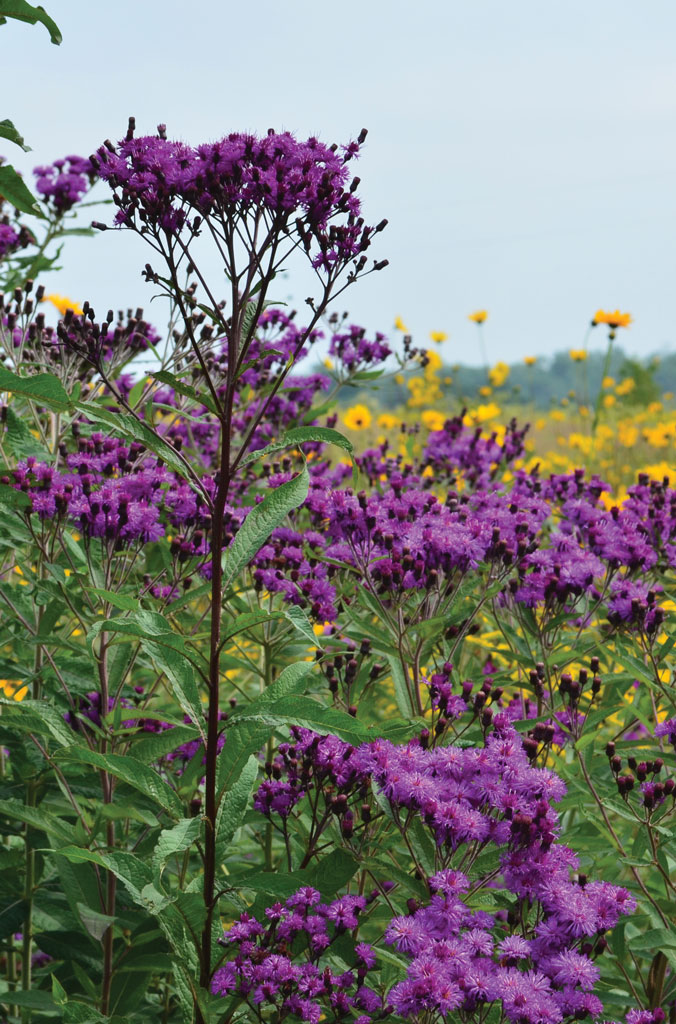
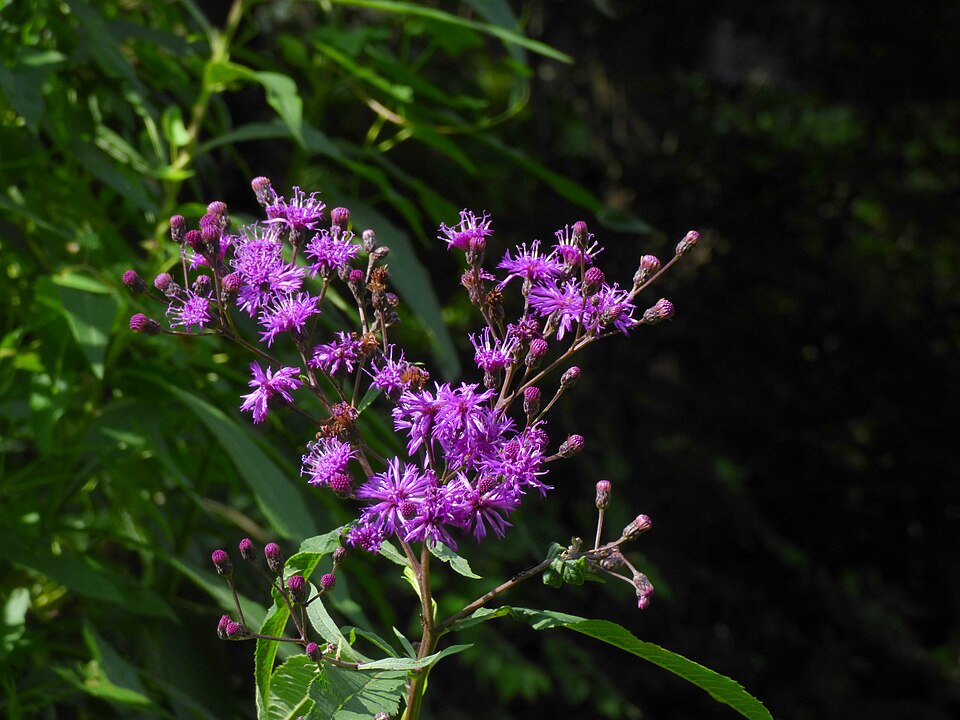
Giant Ironweed (Vernonia gigantea)
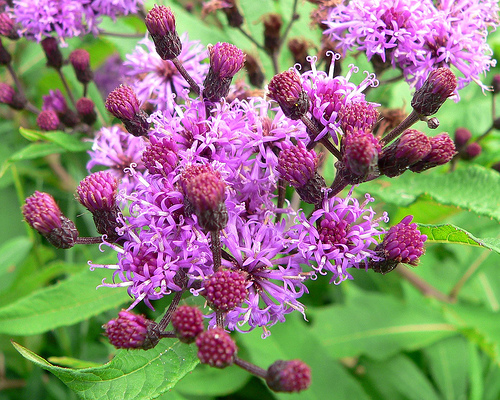
Why the Prettiest: It’s a perennial wildflower with remarkably tough, rigid erect stems that resist flopping over and fluffy, intense purple, magenta, or rose purple clusters.

Location: Native to eastern North America from as north as Ontario and New York state to as south and west as Texas.

Environment: Found along roadsides, meadows, and open woodlands. Can grow up to 5-8 ft tall.

Bloom Season: Bloom from July to September. Larval host to the ironweed borer moth, American lady butterfly, and the red groundling moth. Attracts butterflies, bees, moths, and hummingbirds. Birds feed on its seeds and use the plant as a structural perch.

Color Varieties: Available in magenta and purple.

Gardening Conditions: Plant is self-incompatible and can’t self-pollinate. But can readily self-sow. Prefers full sun to part shade and medium to wet soil. Tolerates wet conditions, seasonal flooding, and heavy clay. But adapts to regular garden soil if kept consistently moist. Very low maintenance with few pests and diseases. Deadheading flower heads before seeds develop prevents unwanted spreading.

Conservation Status: Currently listed as Secure.

Trivia: Seeds are wind-dispersed.

Other Candidates: Virginia Bluebell, Large-Flowered Trillium, Yellow Lady’s Slipper, Cardinal Flower, and Goldenrod.

49. Wisconsin

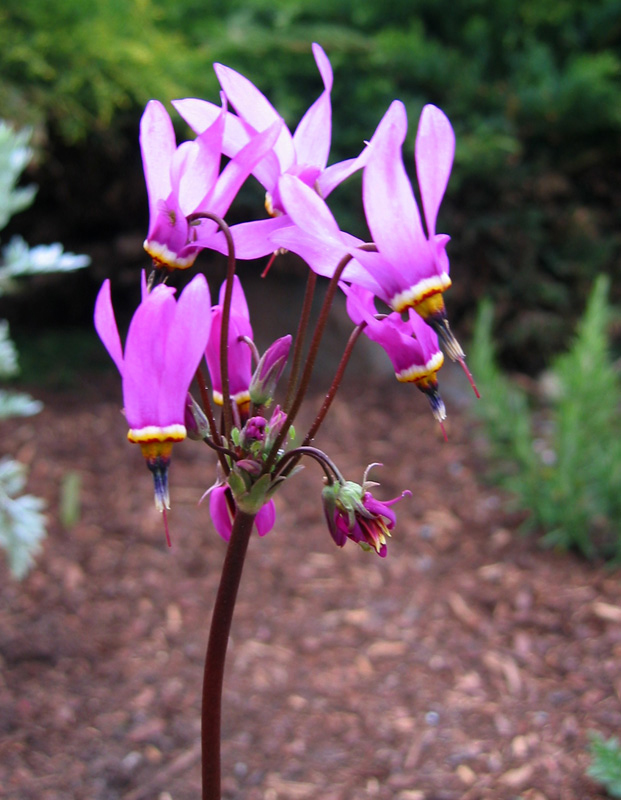
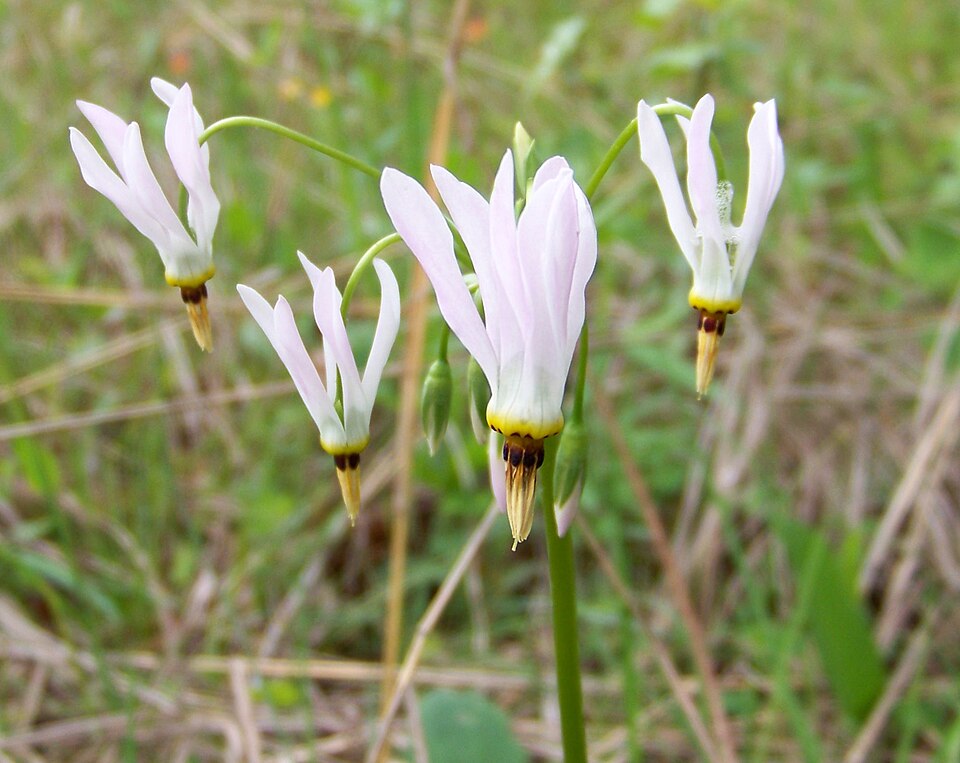
Shooting Star (Primula meadia)
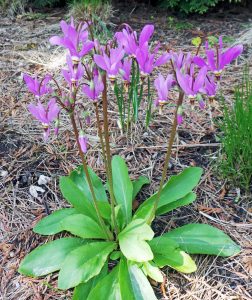
Why the Prettiest: This herbaceous perennial and spring ephemeral has distinctive, nodding, umbrella-like clusters of 8-20 flowers featuring swept-back pink, purple or white petals and a pointed central cone of yellow stamens resembling tiny shooting stars. Forms a low, basal rosette of smooth, bright to grayish green lanced-shaped leaves, often with reddish bases.

Location: Native to central and eastern United States ranging from southern Wisconsin to western Pennsylvania and southeastern Texas and Georgia.

Environment: Found in both prairies and forests, often in calcareous areas. Can live in an open habitat if the effects of potential competing woody vegetation are limited. Grows up to 8-20 in tall.

Bloom Season: Blooms from April to June. Attracts bumblebees and other native bees using buzz pollination to shake the pollen loose. Honeybees often steer clear because it produces strictly pollen, not nectar. But relies on insects to disperse pollen and seeds within pollen capsules. Not preferred by deer or rabbits.

Color Varieties: Available in pink, lavender, magenta, purple, and white.

Gardening Conditions: Thrives while surrounded by plants that are shorter in its early growing stages. Prefers partial shade but can grow in the sun as long as the soil is moist. Prefers rocky, sandy soil but is also able to flourish when planted in clay soil. Once a seed’s propagated, it grows at a slow pace, sometimes taking 4 years to bloom. Benefits from fire and brush removal. Grows well when not obstructed by other flowers and placed at the front of flower beds. Can exist with other species in a rock or woodland garden. Not toxic to humans or pets.

Conservation Status: Currently listed as Secure, though it’s not evenly distributed within its range.

Trivia: Color varies by location. Northern flowers are often pink or lavender. Southern flowers are often white.

Other Candidates: Butterfly Milkweed, Lupine, Pale Purple Coneflower, Wild Columbine, and Wild Bergamot.

50. Wyoming

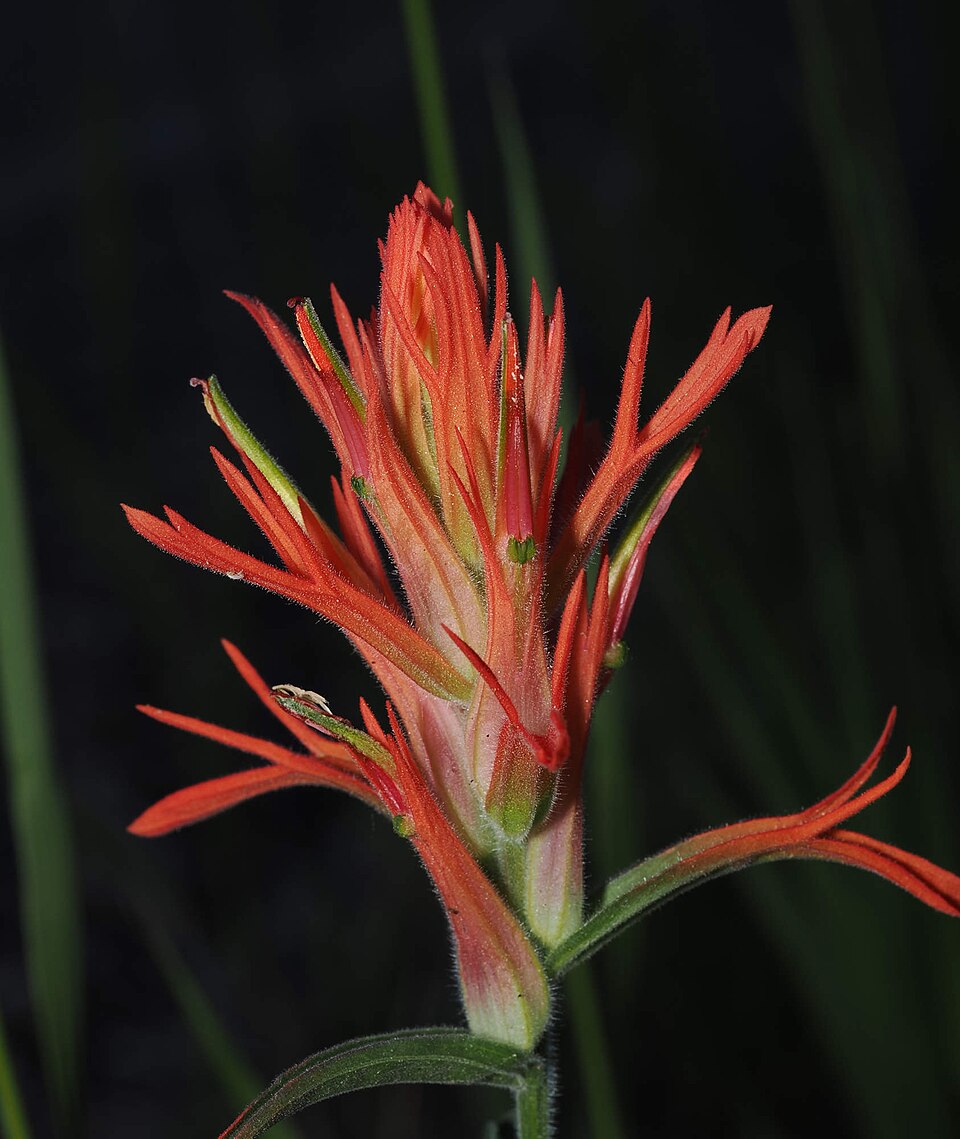
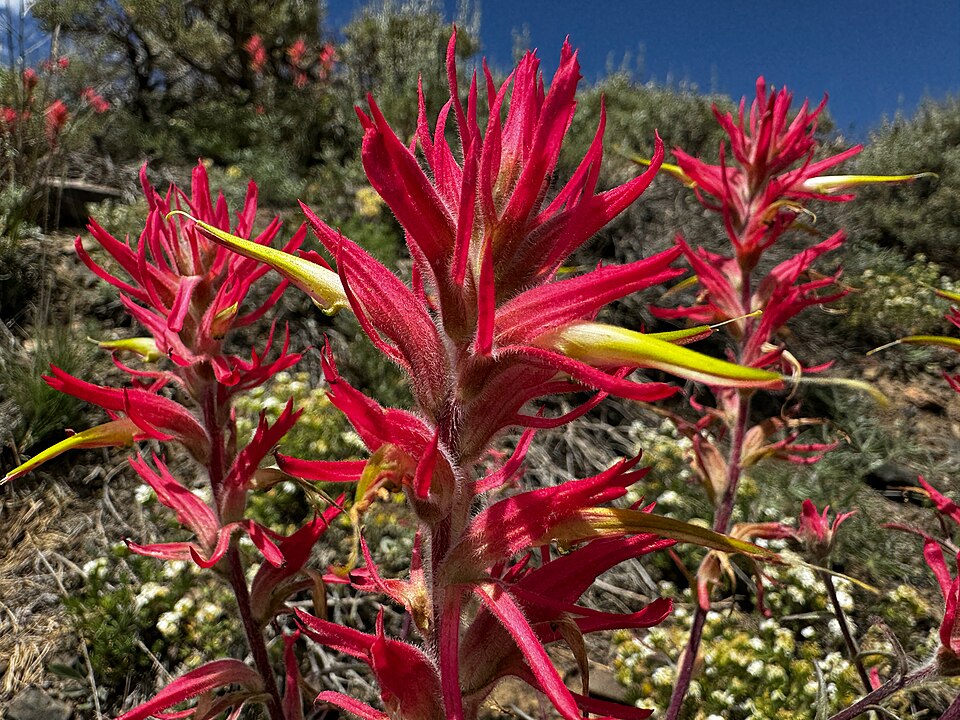
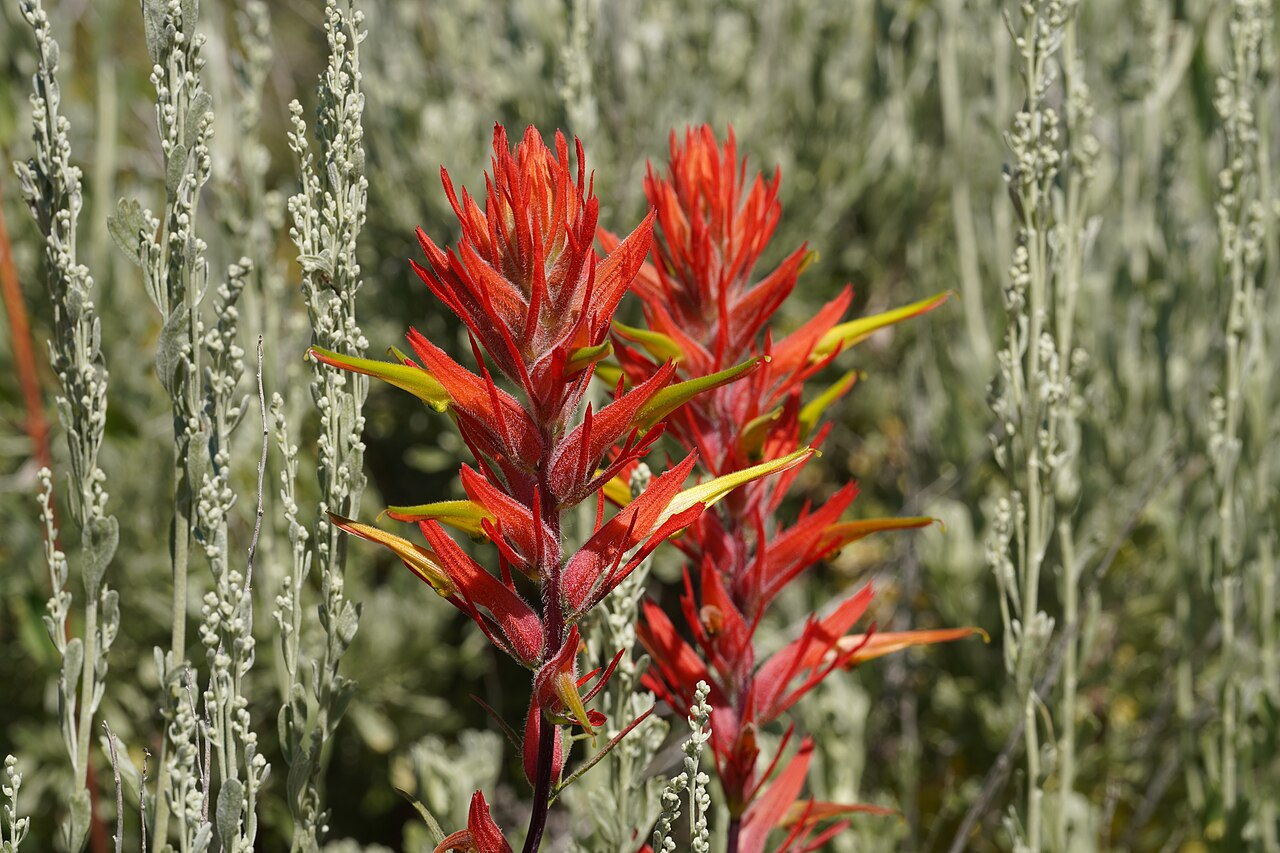
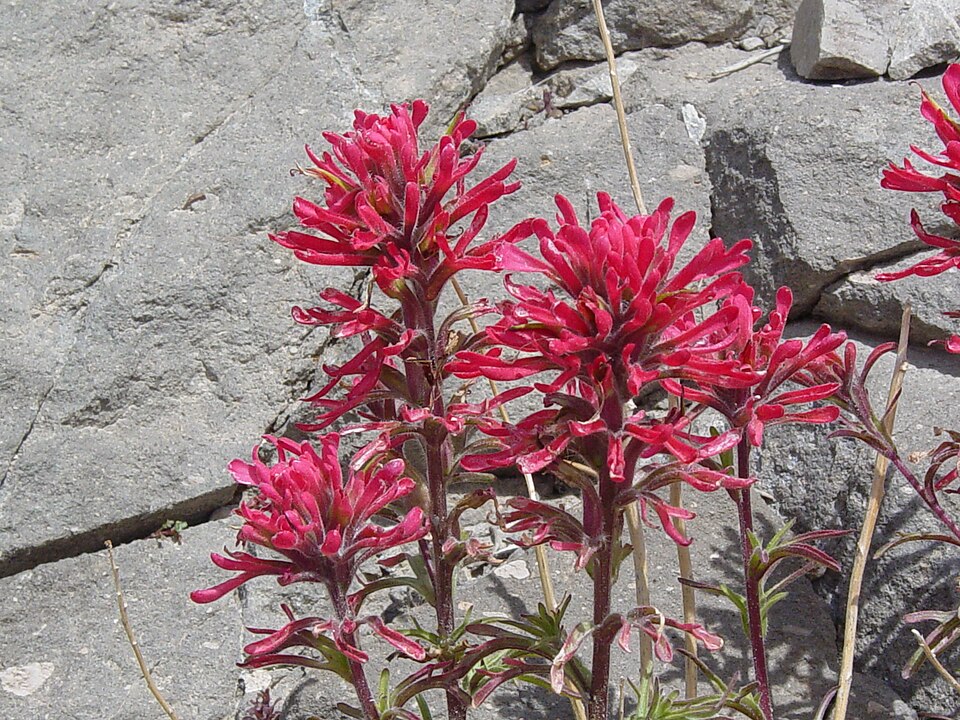
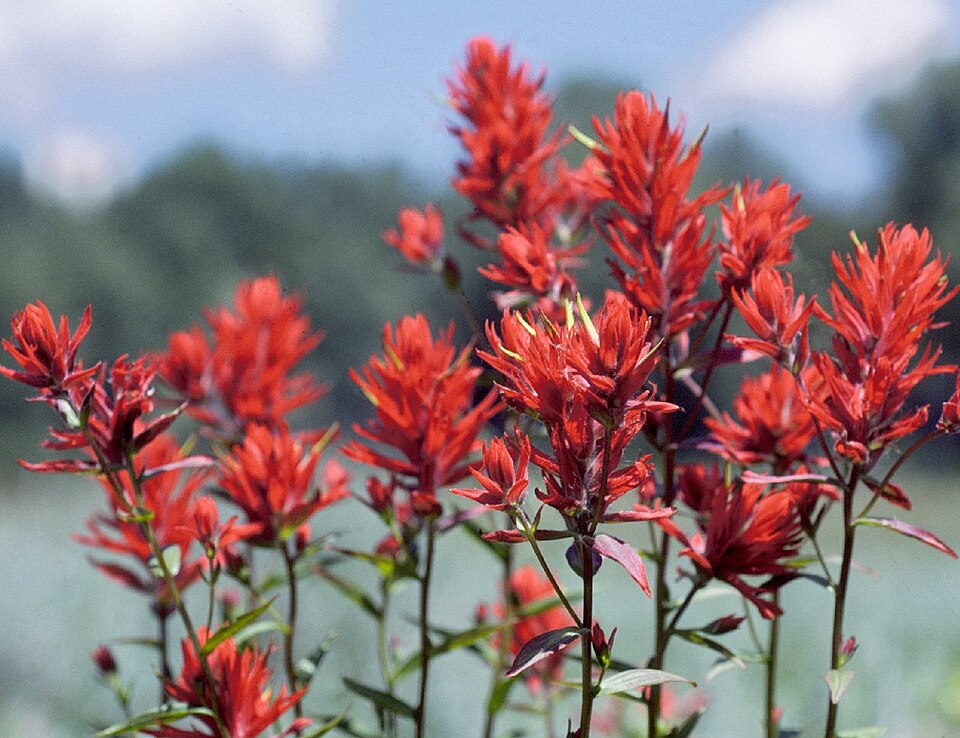
Wyoming Indian Paintbrush (Castilleja linariifolia)
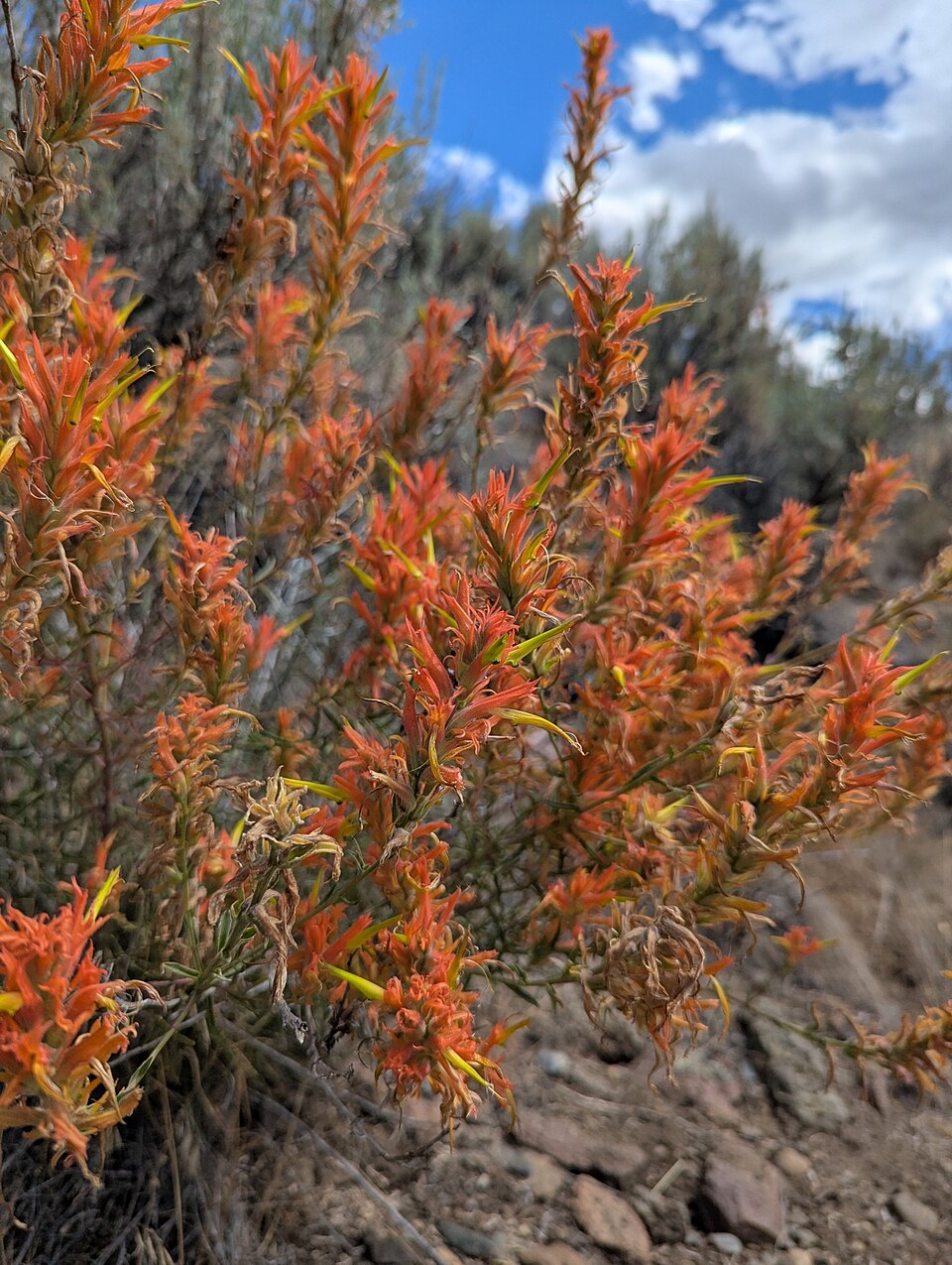
Why the Prettiest: It’s Wyoming’s state flower since 1917 and taller than any other paintbrush flower, which is found in most of the state save for 8 counties. Although the vibrant parts that look like red or orange flower petals are actually specialized modified leaved called bracts. While its true flowers are small and greenish-yellow, modestly hidden inside the bracts.

Location: Native to every US state west of the Rocky Mountains except for Washington along with the state of Sonora in northern Mexico.

Environment: Associated with sagebrush steppe, grasslands, and pinyon-juniper woodlands. Also grows on dry rocky slopes, dry plains, talus deposits at cliff bases, and in forest openings. Grows up to 7-39 in tall.

Bloom Season: Blooms from April to October. Attracts Edith’s checkerspot butterfly that feeds on it exclusively as well as other butterflies, bees, and hummingbirds.

Color Varieties: Available in red, orange, and pink.

Gardening Conditions: Can withstand droughts. Seeds can sometimes be part of wildflower seed mixes sold in the southwest. Note that this plant is hemi-parasitic, meaning its roots attach to the roots of a neighboring plant, frequently native grasses or sagebrush to steal a portion of their water and nutrients. Due to this root dependency, transplanting wild specimens almost always kills them. So if you plant a seed, plant it near a compatible host plant to establish a connection. Prefers full sun and well-drained, lean soils.

Conservation Status: Currently listed as Secure.

Trivia: Present in Tewa and Hano decorative art, painted on pottery, carved into wood, and imitated in colored yarn. Used by the Shoshone as a traditional medicine for venereal disease through boiling the roots, administering it in small amounts, and acting as a purgative.

Other Candidates: Arrowleaf Balsamroot, Rocky Mountain Columbine, Lupine, Fireweed, and Sky Pilot.
The United States of Wildflowers – Part 4 New Mexico to South Carolina

              Unlike the cute animals in my previous series, you can actually buy many of these flowers to plant in your own garden. In fact, it’s often encouraged to buy these flowers depending on the location. But one size doesn’t fit all. For instance, I live in southwestern Pennsylvania which is a temperate area with significant greenery and a high rate of precipitation. That we think Seattle’s reputation as the Rainy City is basically a joke. That if you want to grow garden with a cactus or tropical orchid, then you better have a greenhouse. In this post, you’ll see a cactus from New Mexico, an endangered lupine in New York, ornate shrubs from North Carolina and Pennsylvania, a wild rose in North Dakota, garden favorites from Ohio, Oklahoma, Oregon, and Rhode Island, and a controversial yellow flower from South Carolina.

31. New Mexico

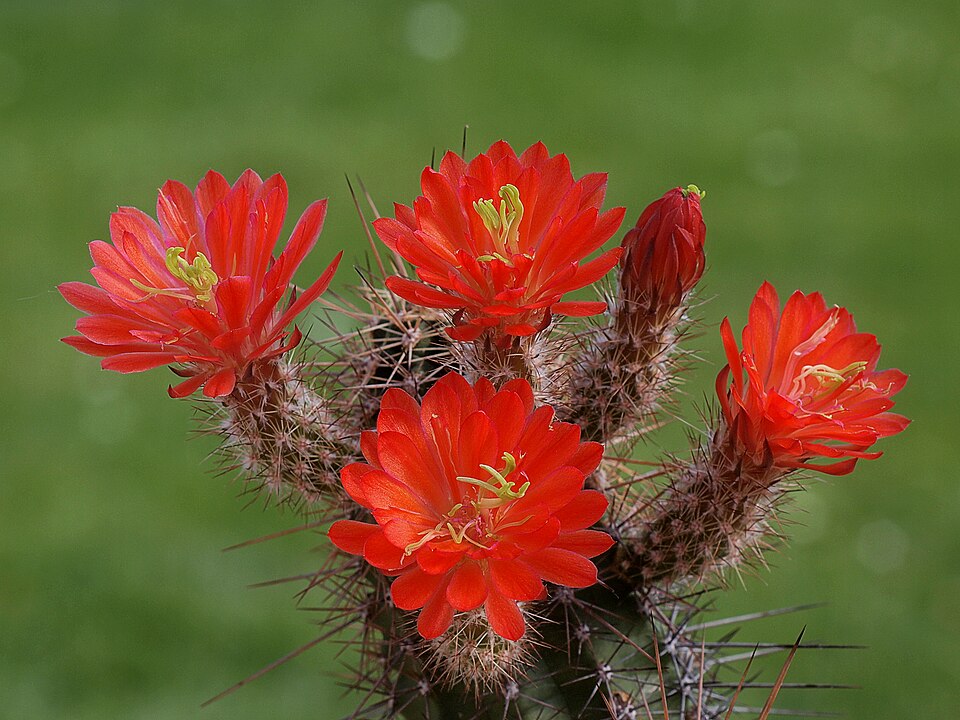
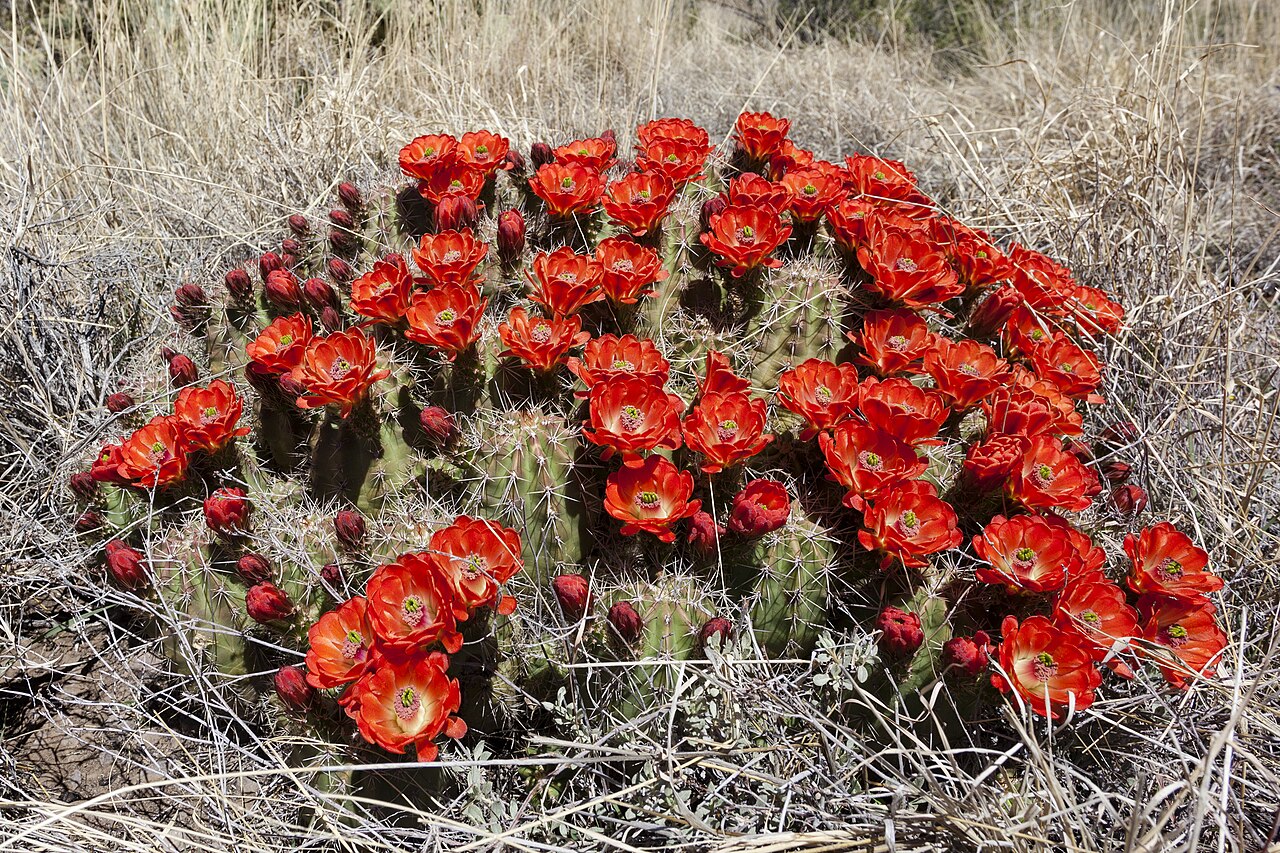
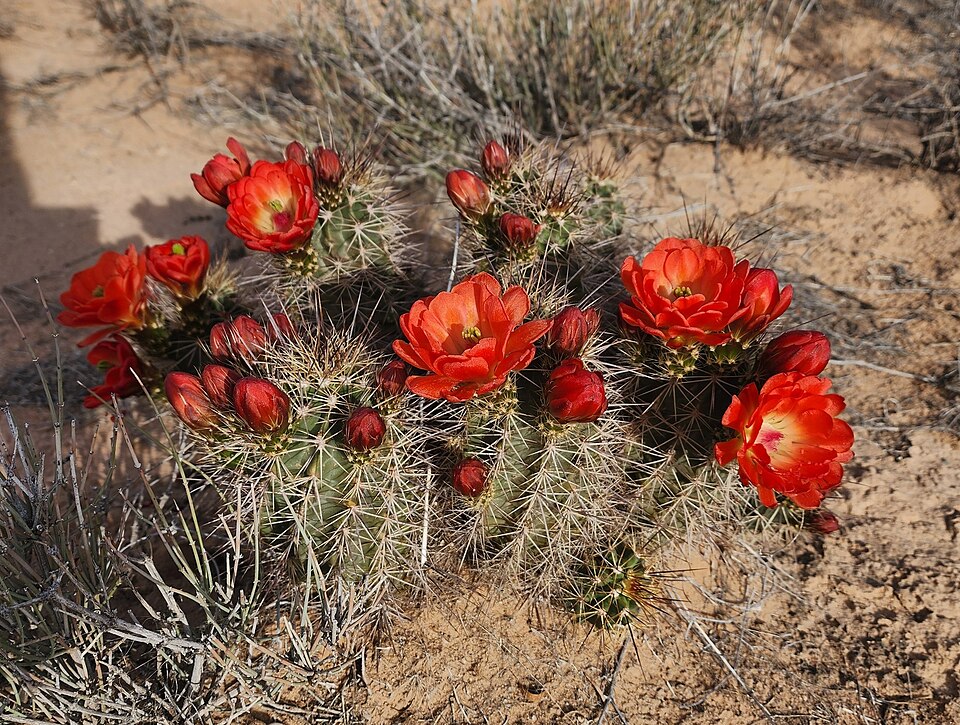
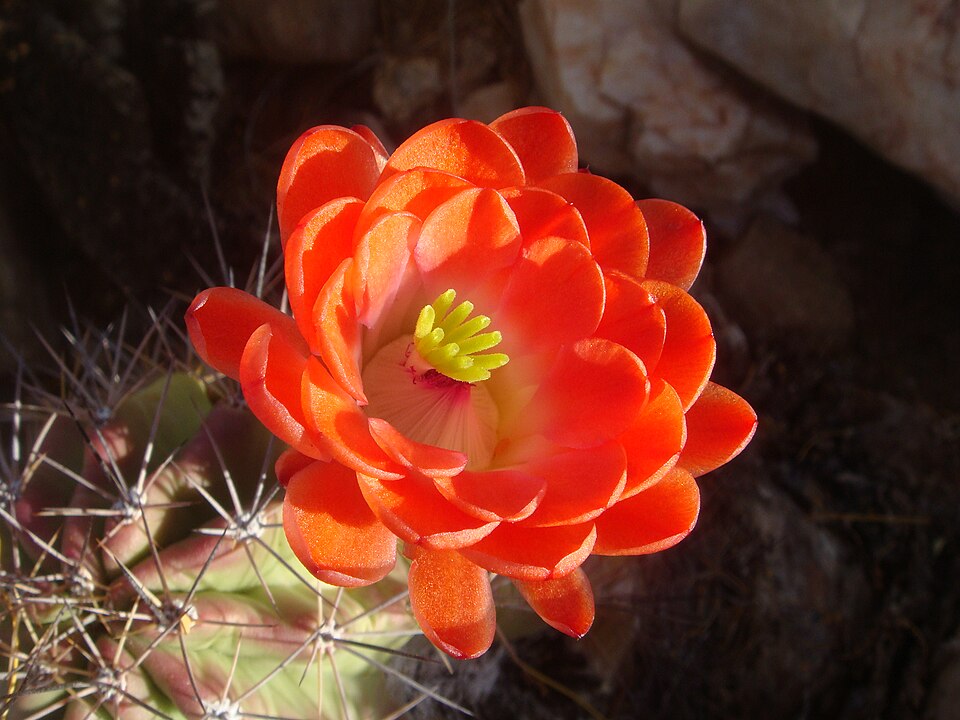
Scarlet Hedgehog Cactus (Echinocereus coccineus)

Why the Prettiest: For a state that’s mostly temperate desert, this is a cold-hardy, perennial cactus that produces brilliant scarlet, crimson, or orange funnel-shaped flowers.

Location: Native to the southwest United States.

Environment: Found in desert and rocky environments. Can grow up to 16 in and spread over 2ft in mounds of sprawling clumps.

Bloom Season: Blooms in the spring.

Color Varieties: Available in red, orange, yellow, pink, purple, and white.

Gardening Conditions: Prefers full sun and sandy or rocky well drained-soil. Is cold-hardy and capable of surviving outdoors. Rots easily in heavily wet dirt. Water sparingly and allow soil to quickly dry out between waterings and keep it mostly dry during winter dormancy. If you live in a state like mine where it rains almost every other week, keep it indoors.

Conservation Status: Currently listed as Least Concern.

Trivia: Has 5 subspecies. Forms tight mounds or sprawling clumps of cylindrical of blue-green to dark green stems. Has edible spherical fruits and falling thorns.

Other Candidates: California Golden Poppy, Cholla Cactus, Prickly Pear, Yucca Flower, and Indian Blanket.

32. New York

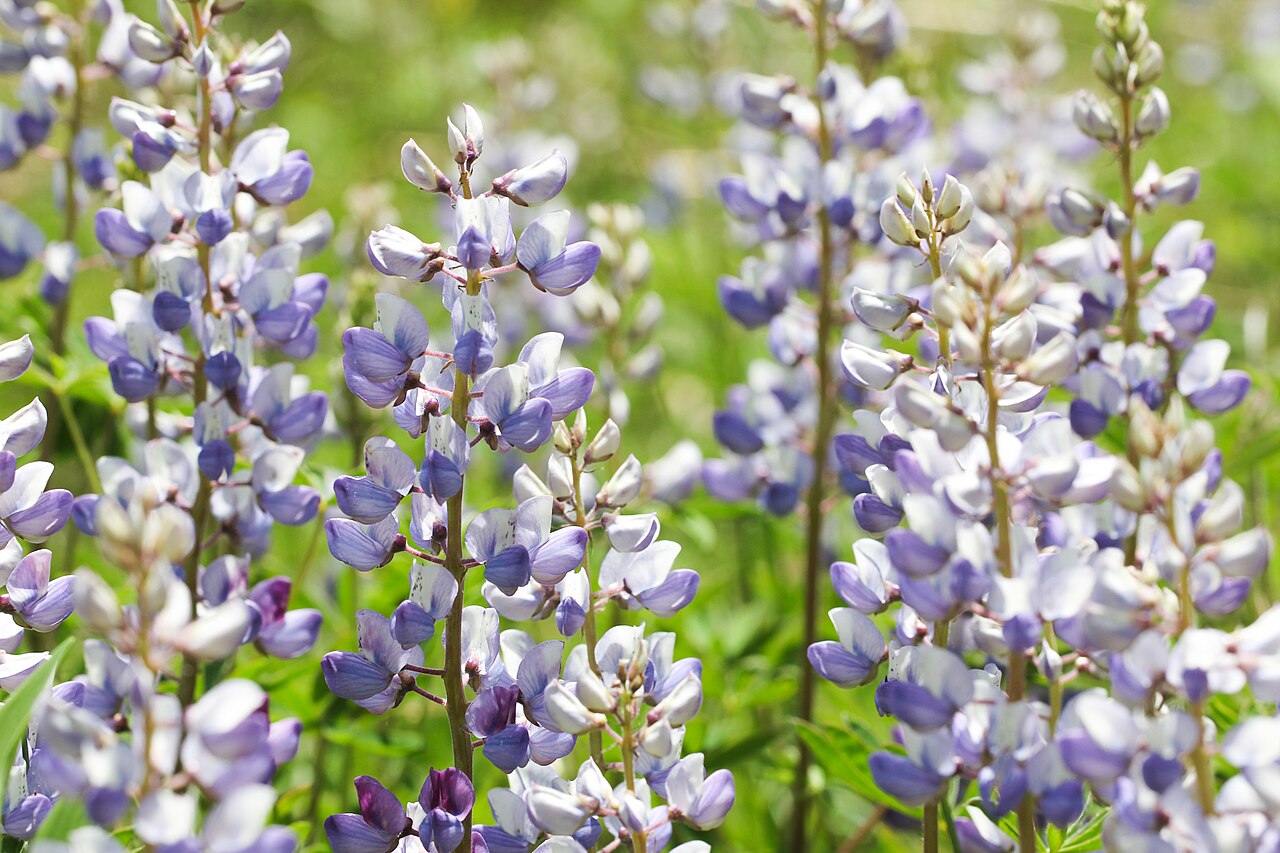
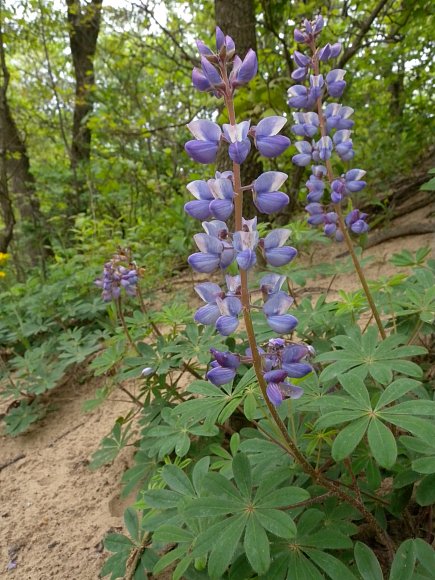
Wild Lupine (Lupinus perennis)

Why the Prettiest: It’s a native perennial wildflower known for its striking spikes of blue or purple pea-like flowers.

Location: Native to the eastern United States from southern Canada to as south as Texas and Florida.

Environment: Found in oak savannas, pine barrens, dunes, and sand plains, many of which are disturbance dependent with suppression of natural fire regimes has contributed to widespread population declines in its native range. Can grow up to 1.5-2.5ft tall.

Bloom Season: Blooms from late spring to early summer. Used as food plants by several caterpillars of butterflies such as the clouded sulfur, eastern tail blue, gray hairstreak, silvery blue, wild indigo duskywing, frosted elfin, eastern Persius duskywing, and rare endangered Karner blue. Attracts bees.

Color Varieties: Available in blue, lavender, and purple.

Gardening Conditions: Prefers dry, acidic, well-drained, sandy soils and high-light habitats. Prefers full sun and partial shade. Can’t tolerate standing water or soggy dirt. Reproduces exclusively by seed, which require scarification and cold stratification before it can successfully sprout. Toxic to livestock like sheep and horses if ingested in large amounts.

Conservation Status: Listed as Vulnerable. Has experienced substantial decline since the 20th century with some areas experiencing losses as high as exceeding 90%. Causes include habitat loss, wildfire suppression, habitat fragmentation, and poor management. Considered to be threatened in New Hampshire.

Trivia: Plays an important role as a pollinator resource and a nitrogen-fixing species in which it forms symbiotic relationships with nitrogen-fixing bacteria in root nodules, enhancing fertility in nutrient-poor environments.

Other Candidates: Pink Lady’s Slipper, New England Aster, Red Columbine, New York Aster, and Cardinal Flower.

33. North Carolina

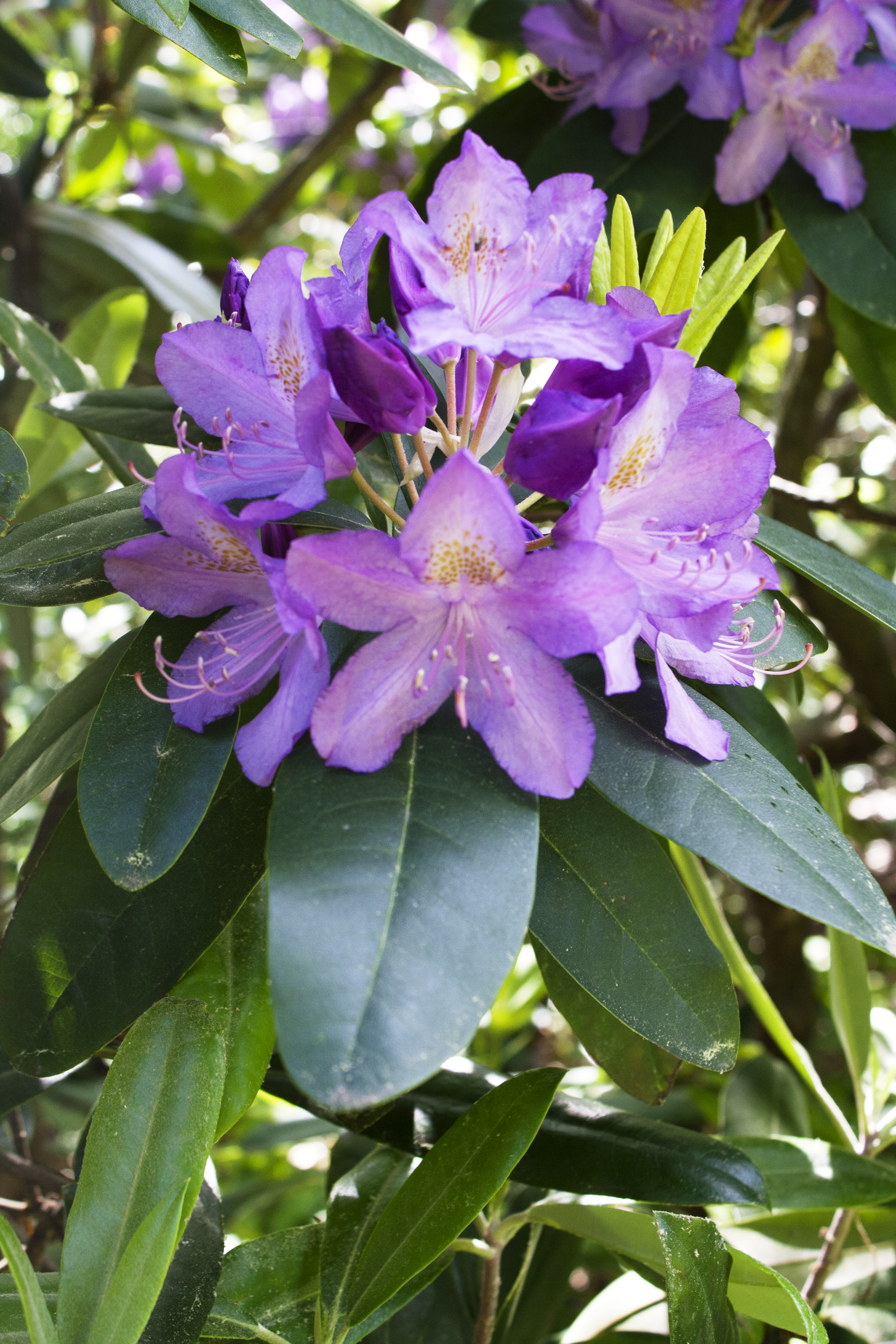
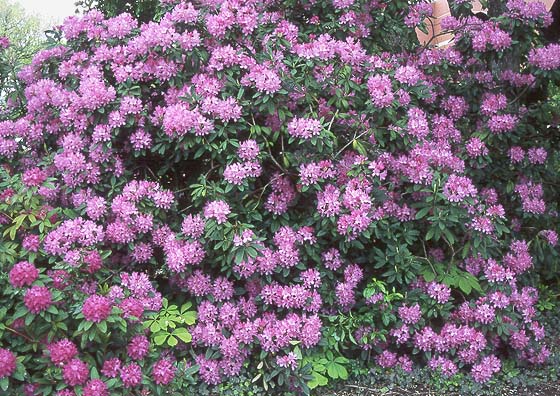
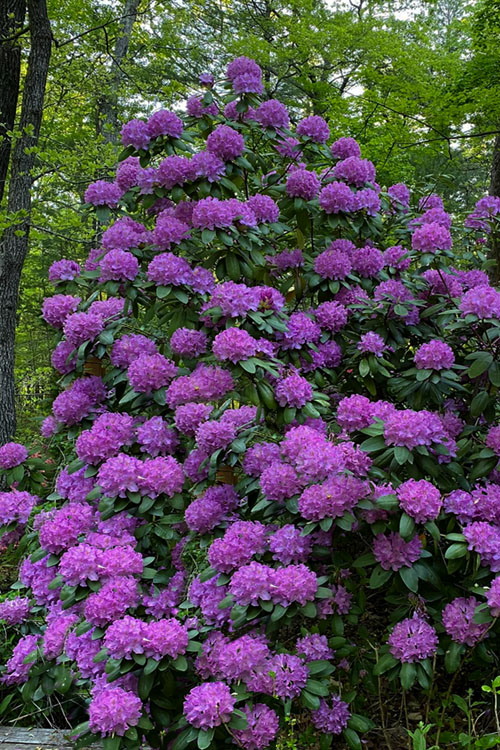
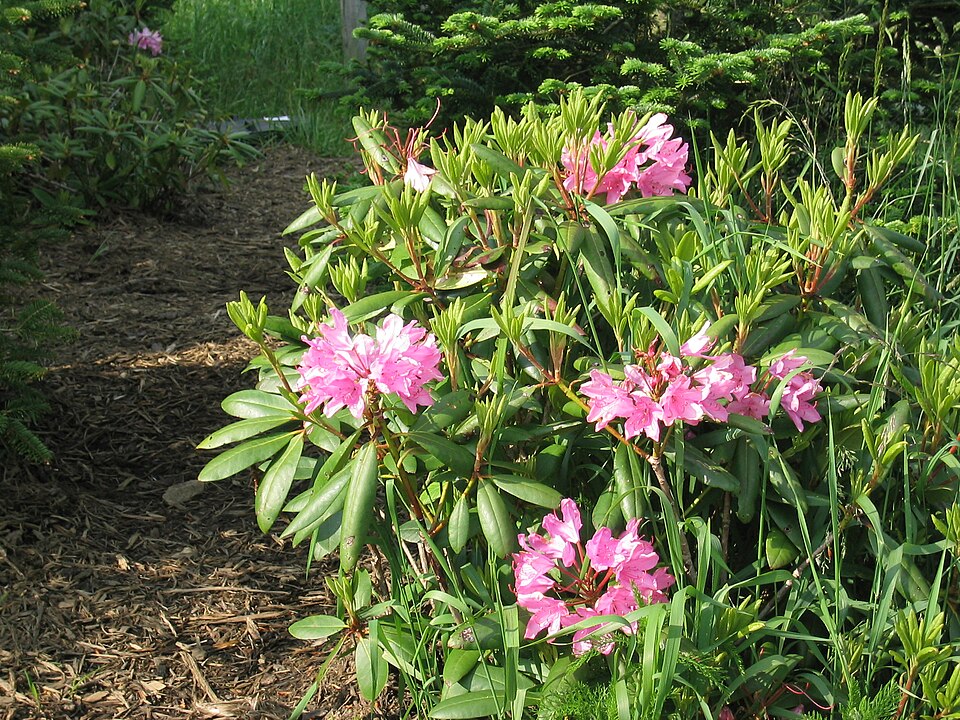
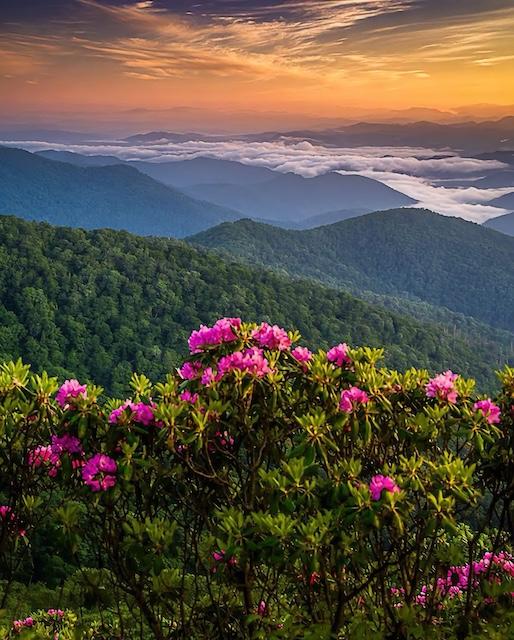
Catawba Rhododendron (Rhododendron catawbiense)

Why the Prettiest: Although a very common site, this is named after a river in North Carolina, a state that comprises of most of its native range. It’s an exquisite broadleaf evergreen shrub that produces clusters of violet, lavender, or deep purple flowers in the spring.

Location: Native in the southern Appalachian Mountains in the eastern United States.

Environment: Found in woodland slopes and ridges. Can grow up to 6-10 ft tall.

Bloom Season: Blooms during the spring from May to June. Attracts hummingbirds, butterflies, and bees.

Color Varieties: Available in pink, purple, lavender, and white.

Gardening Conditions: Widely cultivated shrub in North America and parts of Europe. Plant in partial shade or morning sun with protection from harsh afternoon rays. Requires cool, moist, well-draining, and acidic soil rich in organic matter. Keep the soil moist during establishment but never let the plant sit in soggy or waterlogged soil. Is highly flammable and should not be planted within a defensible space of your home. Susceptible to insect problems include aphids, borers, lace bugs, leafhoppers, mealybugs, mites, nematodes, scale, thrips, and whitefly. Susceptible to diseases like canker, crown rot, root rot, leaf spot, rust, and powdery mildew. Also frequently damaged by deer.

Conservation Status: Currently listed as Secure. Though it likely lost much of its natural range due to development and deforestation.

Trivia: Has several different varieties.  

Other Candidates: Oconee Bell, Cardinal Flower, Pink Lady’s Slipper, Butterfly Weed, and Big-Headed Aster.

34. North Dakota

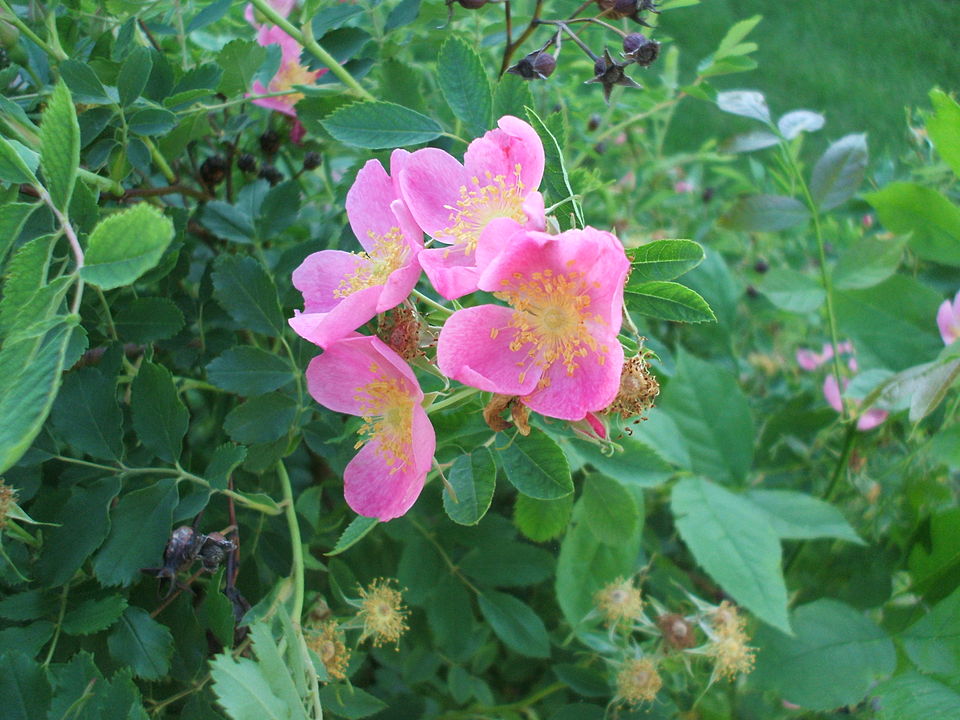
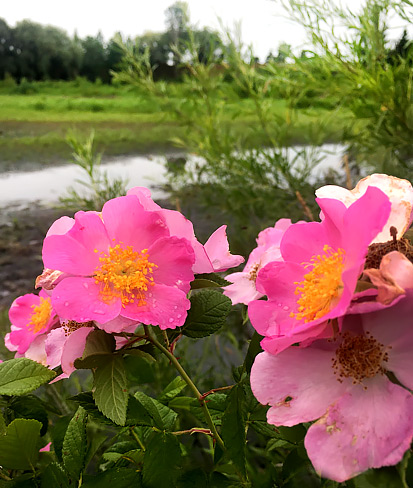
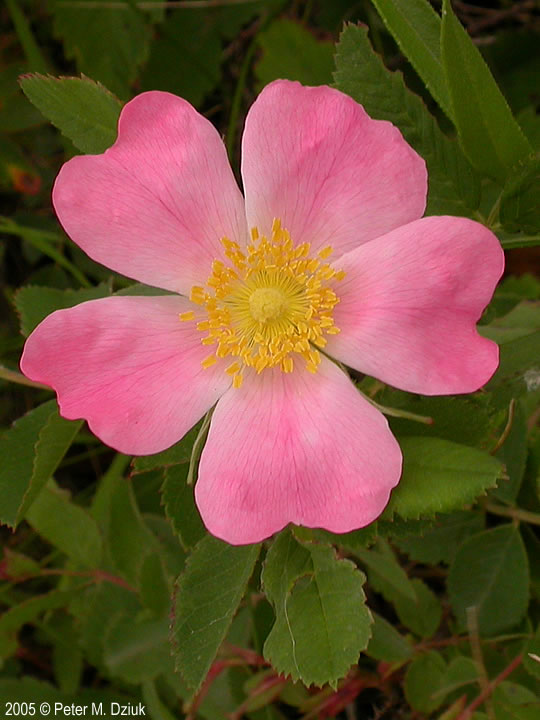
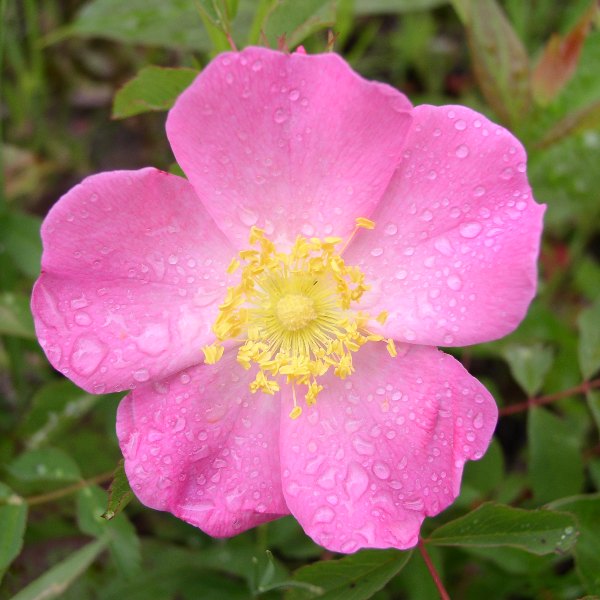
Wild Prairie Rose (Rosa arkansana)

Why the Prettiest: For one, it’s North Dakota’s state flower since 1889 along with Iowa’s. This perennial subshrub produces fragrant pink blossoms and bright red seed pods called hips.

Location: Native to a large central area of North America between the Appalachian and Rocky Mountains from Alberta, Manitoba, and Saskatchewan to as south as New Mexico, Texas, and Indiana.

Environment: Found in pastures, foothills, meadows, and along roadsides. Can grow up to 40 in tall. Spreads by underground roots.

Bloom Season: Blooms from May to September. Attracts native bees, butterflies, and other beneficial insects. Provides food and shelter through its winter rose hips for birds.

Color Varieties: Available in pink and white.

Gardening Conditions: Prefers full sun to partial shade. Adapts well to dry, sandy, loamy, or clay soils. Highly resistant to cold weather, fire, and drought once established.

Conservation Status: Currently listed as Secure. Considered a weed by the US Department of Agriculture.

Trivia: Hips are rich in Vitamin C and can be used to make jellies, teas, and jams. Used in food, food additives, animal foods, bee plants, fuels, poisons, medicines, and environmental compounds.

Other Candidates: Wood Lily, Prairie Smoke, Yellow Prairie Coneflower, and Black-Eyed Susan.

35. Ohio

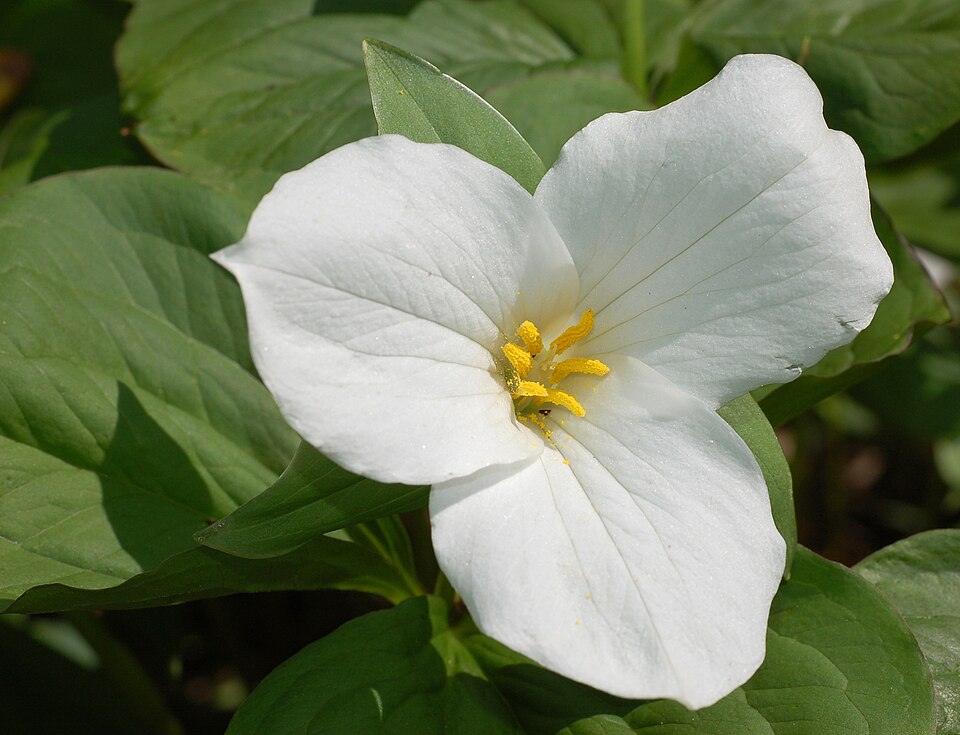
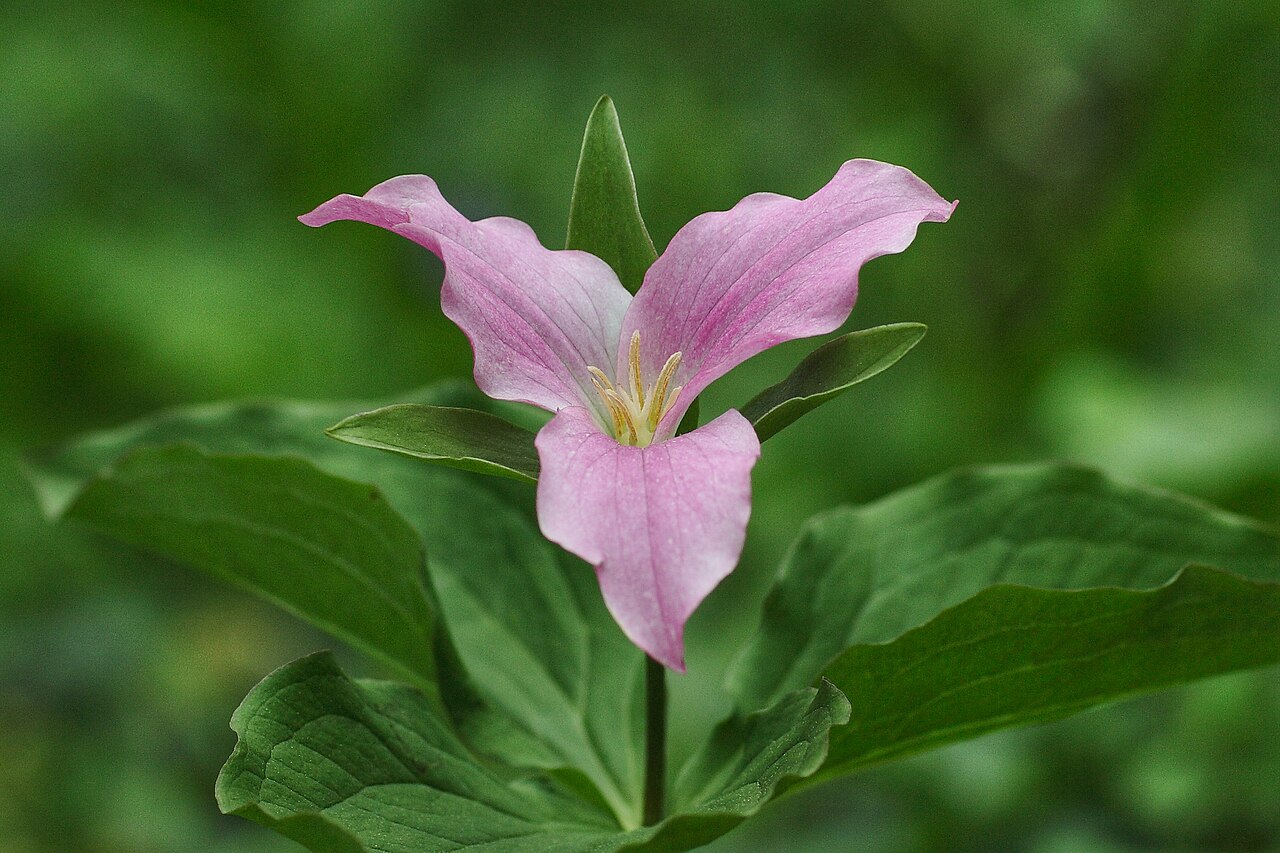
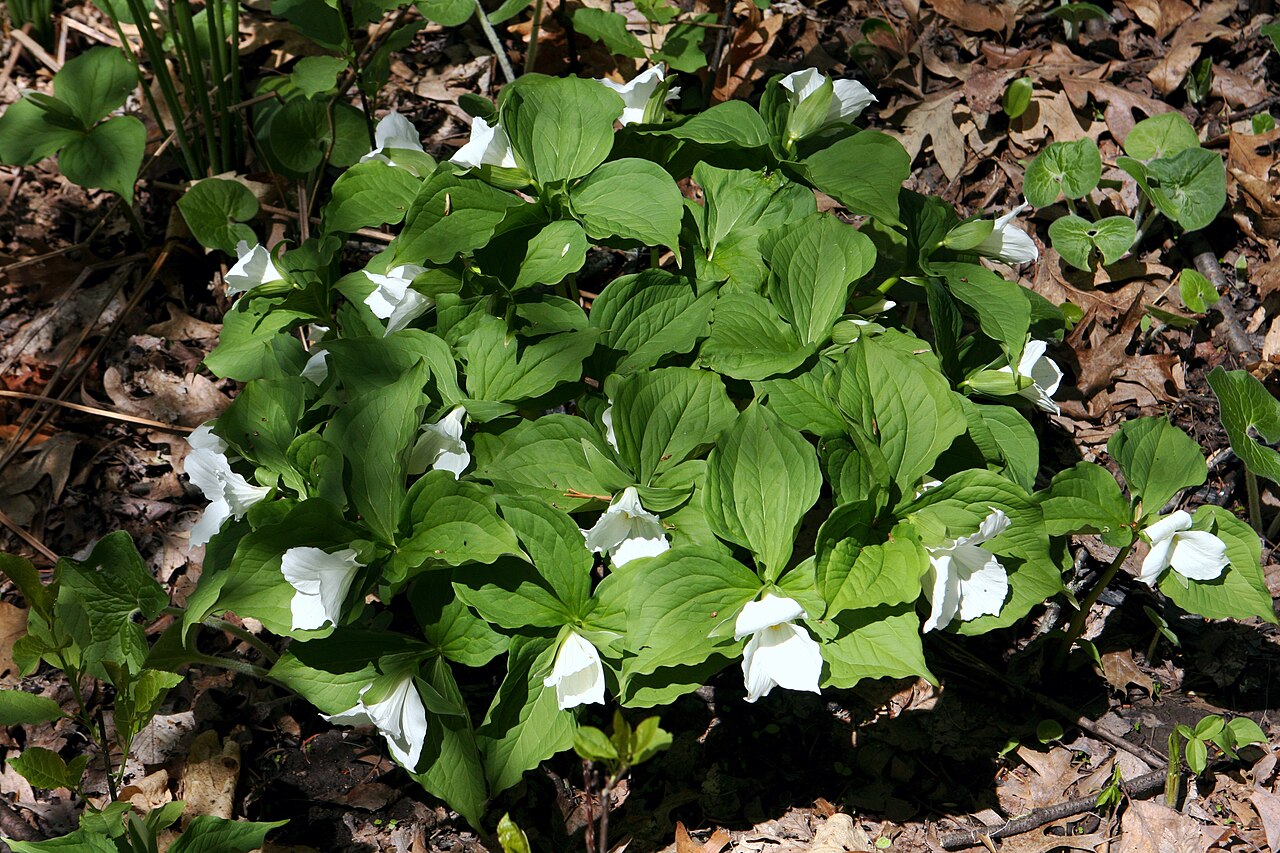
Large-Flowered Trillium (Trillium grandiflorum)

Why the Prettiest: It’s Ohio’s state wildflower. It’s a showy spring-blooming perennial with 3 larger green leaves and a single large 3-petaled white flower that ages into a soft blush pink.

Location: Native to eastern North America from as north as Quebec to as west as Minnesota and as south as Georgia. Also has isolated populations in Iowa, Maine, southern Illinois, and Nova Scotia.

Environment: Inhabits deciduous woodlands. Can grow up to 8-16 in tall.

Bloom Season: Blooms during the spring such as from late April to early June. Attracts bumblebees. Seeds are dispersed by ants, yellowjackets, and deer. A favorite food of white-tailed deer.

Color Varieties: Available in white and pink.

Gardening Conditions: Favors well-drained, neutral to slightly acidic soils, usually in second or young-growth forests. Seeds have double dormancy, meaning that it takes 2 years for it to germinate. Requires 7-10 years to reach flowering size. Susceptible to phytoplasmas disease. Transplantation can result in the plant’s death.

Conservation Status: Currently listed as Secure though it’s been threatened by habitat destruction. Though its popularity as a commercial plant have raised many conservation concerns, given that most of the plants sold are collected from the wild. Said to be critically imperiled in Nova Scotia, Alabama, New Jersey, and South Carolina. While it’s seen as vulnerable in Illinois, Georgia, and Quebec.

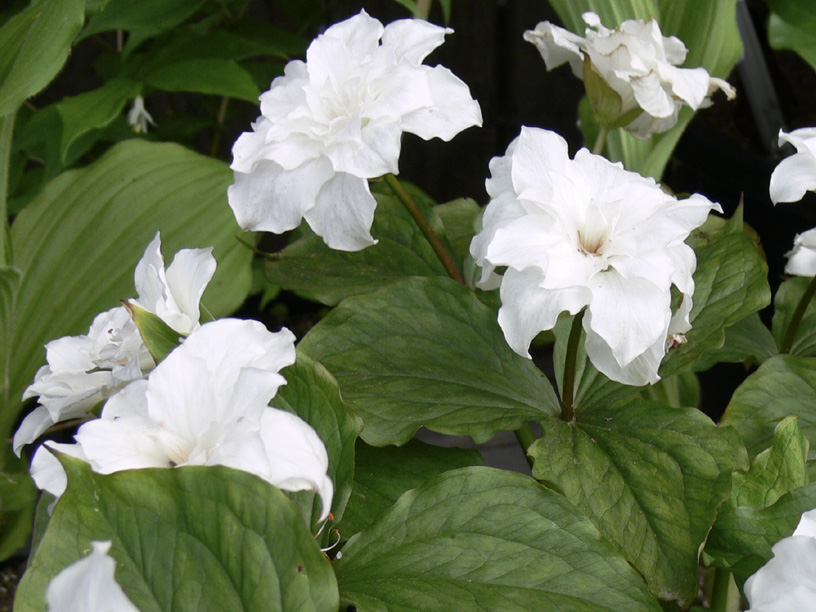
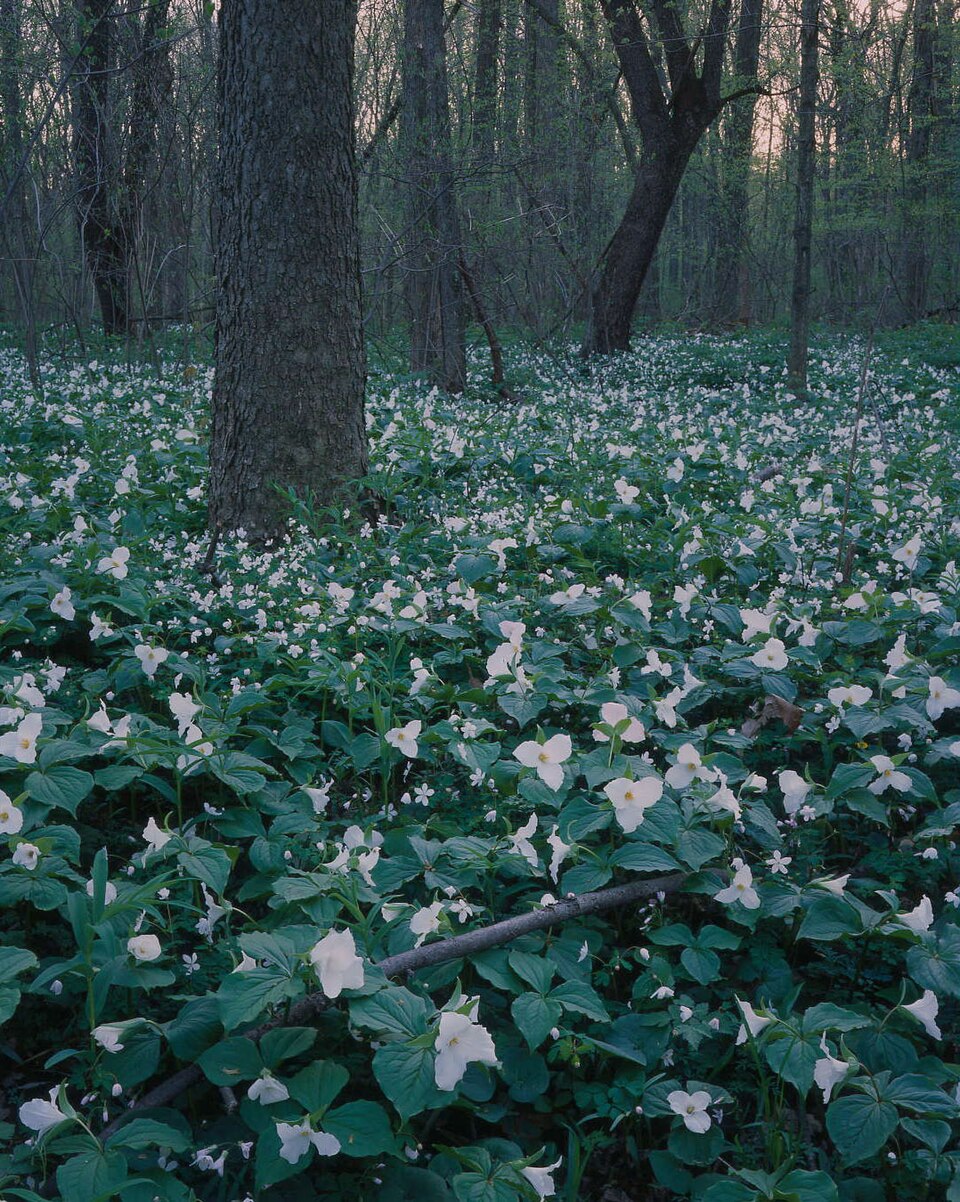
Trivia: A single rootstock can form clonal colonies that can become very dense. Flowers are odorless. Occasionally produces double forms of more than 3 petals. Leaves were cooked and eaten by Native Americans who also chewed rootstalks for various medical purposes. Is a symbol for the French-speaking community in Ontario.

Other Candidates: Blazing Star, Sharp-Lobed Hepatica, Goldenrod, and Aster.

36. Oklahoma

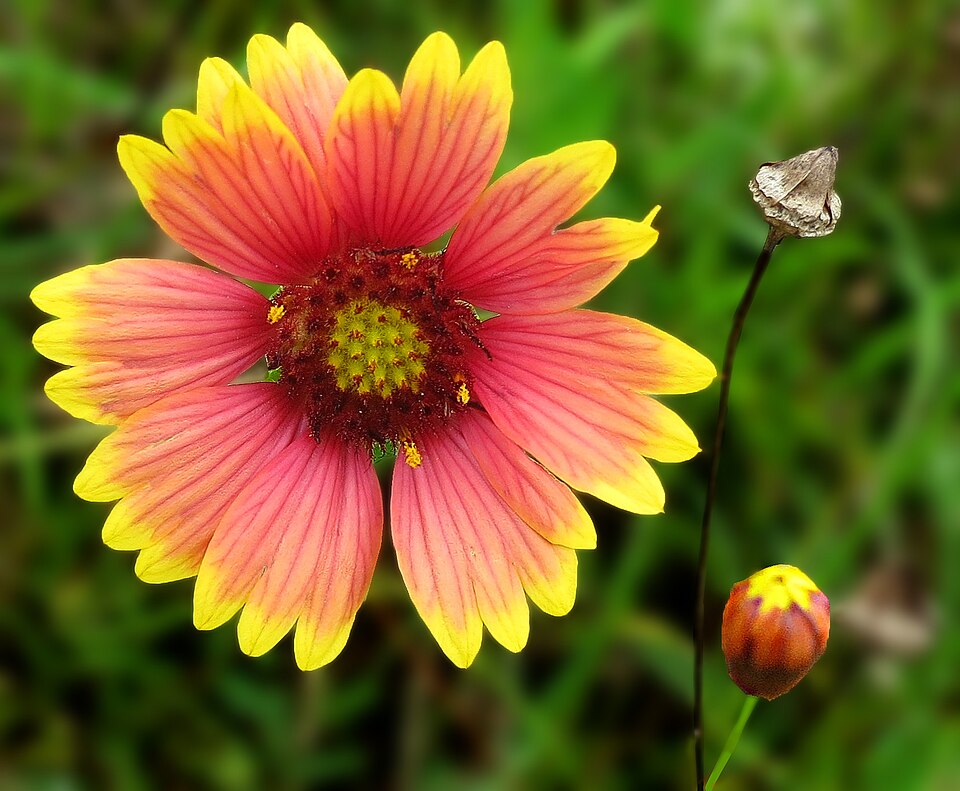
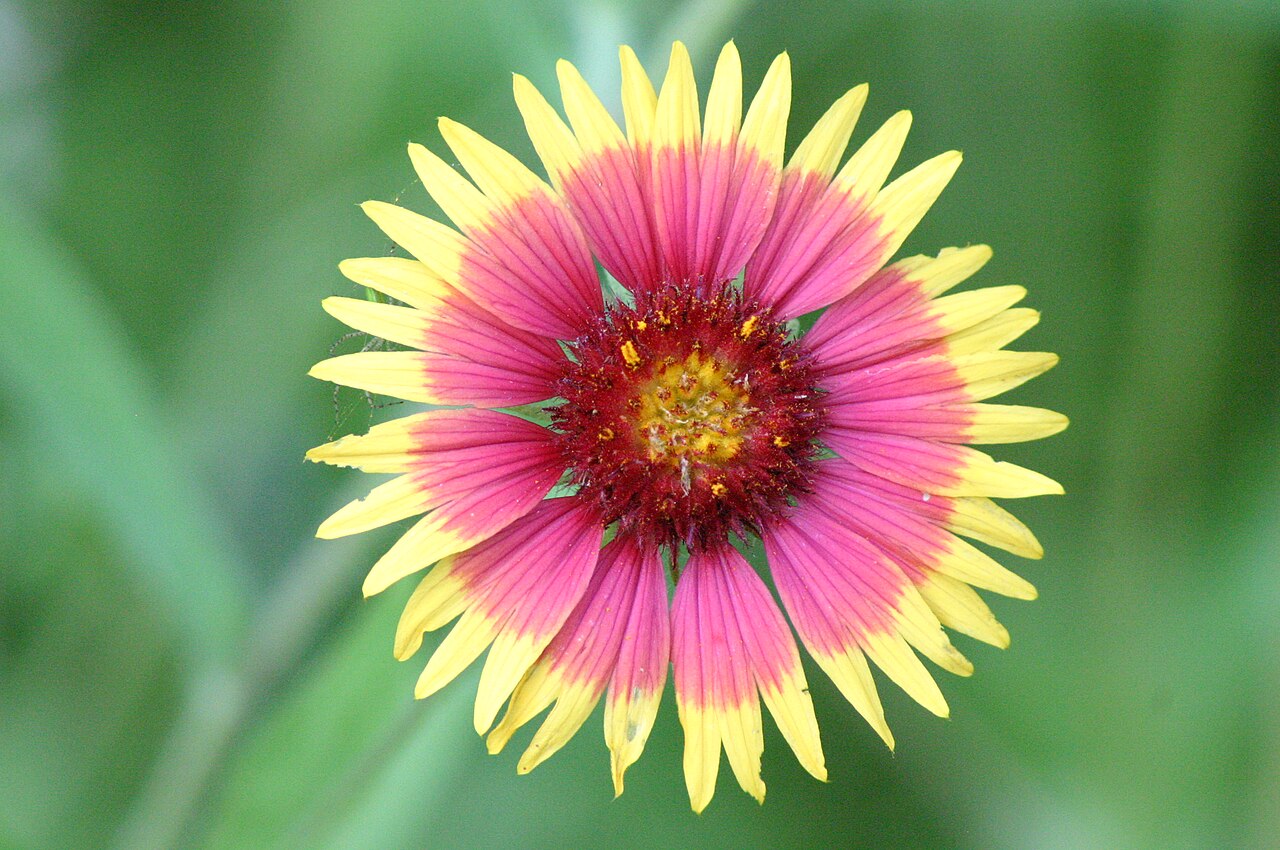
Indian Blanket (Gaillardia pulchella)

Why the Prettiest: It’s Oklahoma’s state wildflower. A short-lived perennial or annual relative of the daisy family, it produces a vibrant red-and-yellow pinwheel flowers.

Location: Native to northern Mexico and the southern and central United States as north as Nebraska.

Environment: Lives in sandy plains and deserts. Common along roads. Can grow in urban areas but usually below 3,300ft above sea level. Can grow up to 24 in tall.

Bloom Season: Blooms from late spring to early fall or until the first frost. Attracts native bees, butterflies, and beneficial insects. Larval host of the border patch butterfly and painted schinia moth. Seeds provide valuable food source for birds like goldfinches.

Color Varieties: Available in red and yellow.

Gardening Conditions: Prefers loose, sandy, and well-drained soil. Has a high drought tolerance and does best in a hot, dry climate with full sun. Needs only occasional water during dry spells. Can be deadheaded to promote further blooming. Self-seeds freely. Excellent for xerishaping meadows, roadside naturalization, and sunny borders.

Conservation Status: Currently listed as Apparently Secure.

Trivia: County Flower of Penghu County in Taiwan. Produces a dark, reddish amber buttery tasting honey.

Other Candidates: Indian Paintbrush, Plains Coreopsis, Purple Coneflower, and Purple Poppy Mallow.

37. Oregon

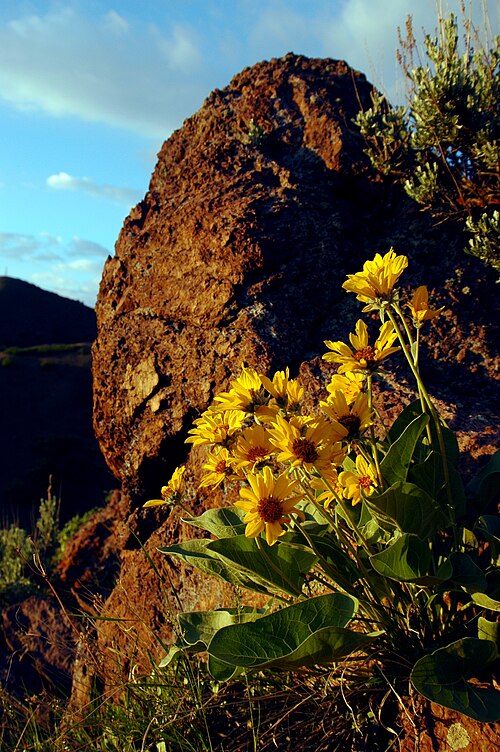
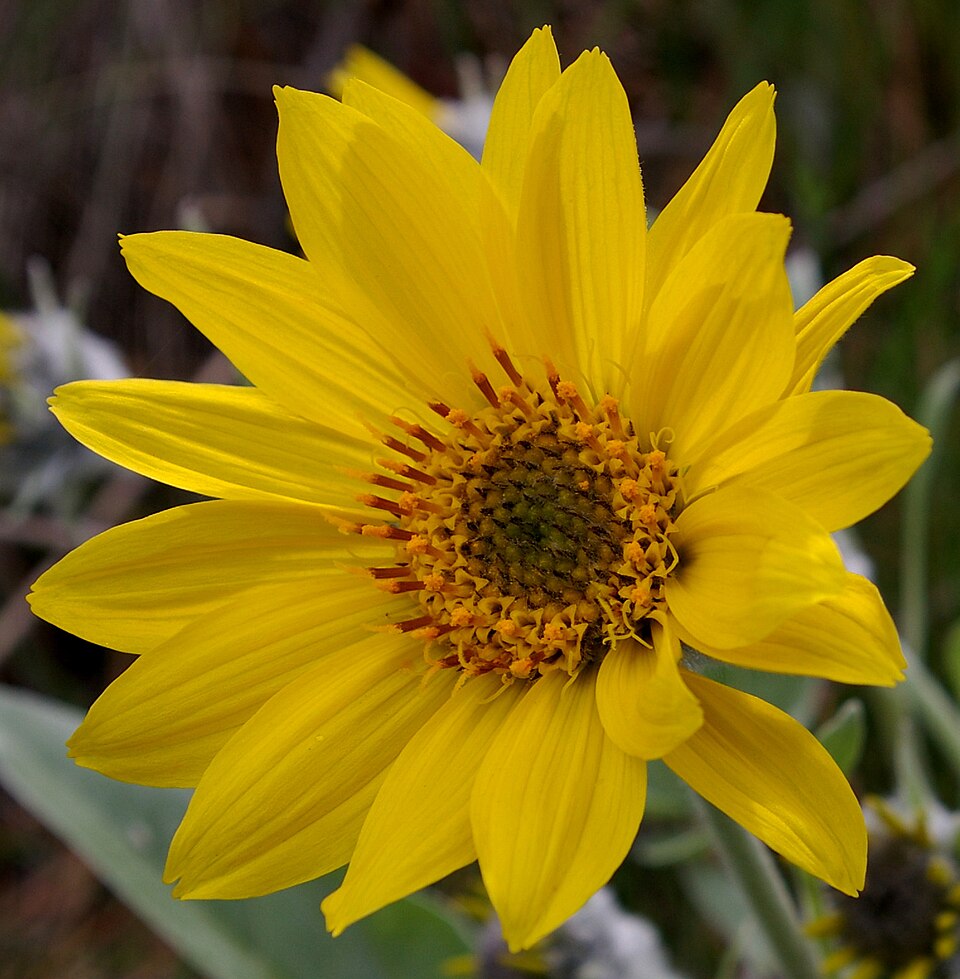
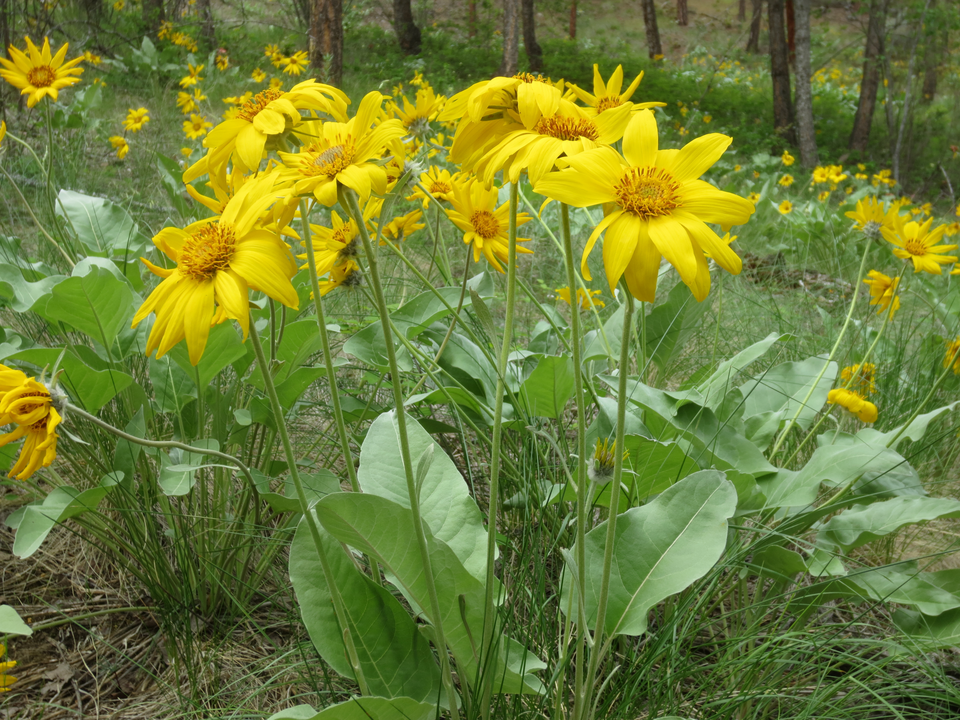
Arrowleaf Balsamroot (Balsamorhiza sagittate)

Why the Prettiest: Known as the Oregon Sunflower, this long-lived western perennial in the sunflower family is known for its bright yellow sunflower-like blooms and large, silvery-green arrowhead-shaped leaves.

Location: Native and widespread in western Canada and the western United States. Extends from British Columbia to as south as northern Arizona and California’s Mojave Desert and as west as South Dakota’s Black Hills.

Environment: Lives in many types of habitats such as mountain forests, grasslands, and desert scrub. Can grow from 1-3 ft tall.

Bloom Season: Typically blooms from April to July depending on local climate and elevation. Palatable to grazing animals, particularly the flowers and developing seed heads. Elk and deer browse the leaves.

Color Varieties: Available in yellow.

Gardening Conditions: Is drought tolerant. Used in slope restoration projects for its beauty and slow-growing taproot. Thrives in full sun. Prefers well-drained sandy, gravely, or loamy soils. Due to taproot, it does poorly when transplanted. Best propagated by direct sowing in the fall to allow for cold stratification.

Conservation Status: Currently listed as Secure.

Trivia: Leaves can be raw or cooked for eating but roots must be cooked before consumption. Seeds can be eaten raw or pounded into flour. Specimen collected by William Clark in 1806 during the Lewis and Clark Expedition. While Merriwether Lewis collected a specimen near the Lewis and Clark Pass that same year. Used by Nez Perce, Kootenai, Salish, and Cheyenne as food and medicine. A Nlaka’pamux legend states that when this flower starts blooming meant bitterroot was ready for digging up. Official emblem of Kelowna, British Columbia in Canada.

Other Candidates: Lupine, Indian Paintbrush, Pacific Bleeding Heart, and Camas Lily.

38. Pennsylvania

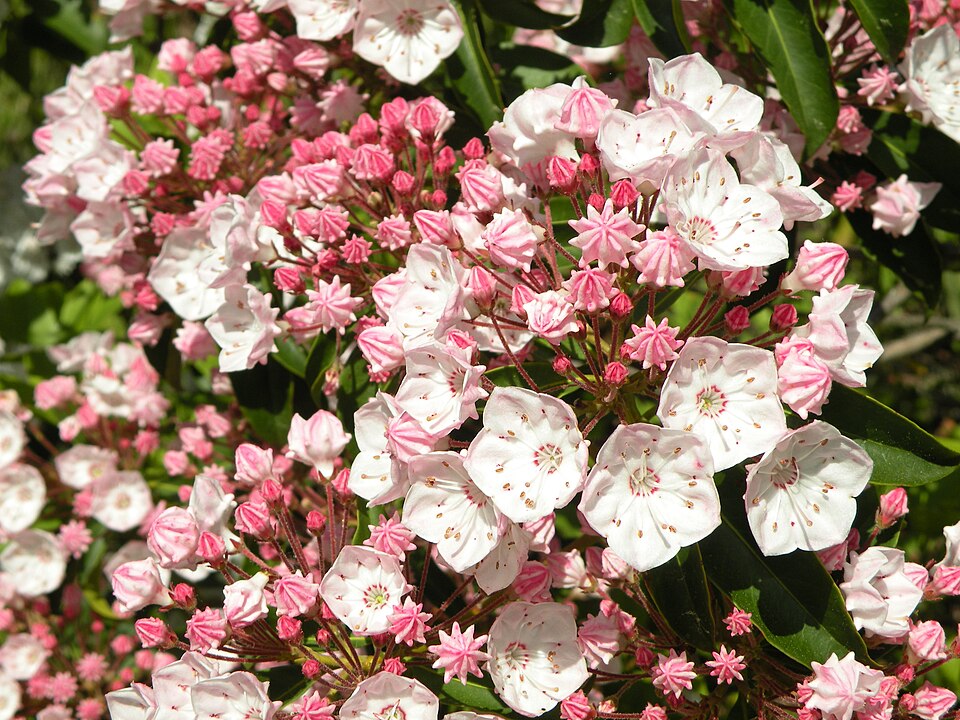
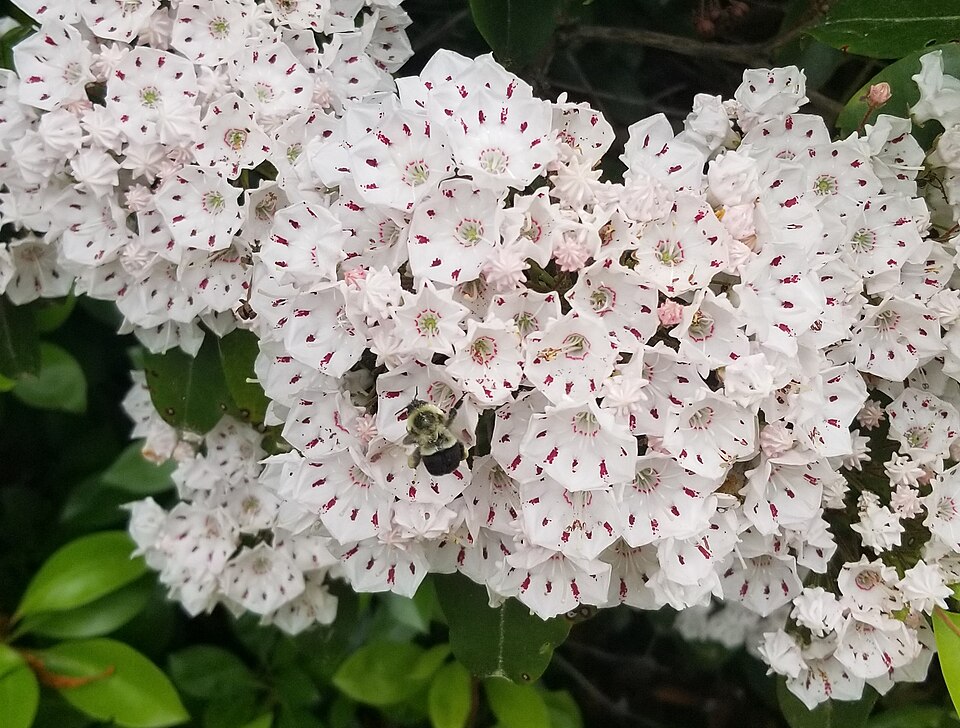
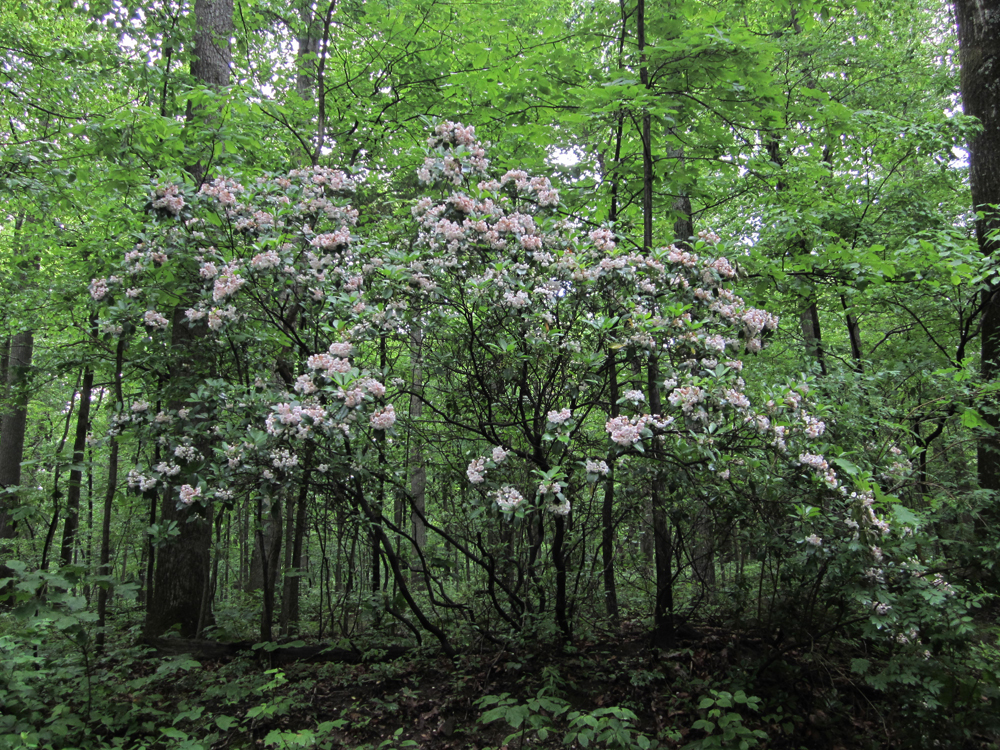
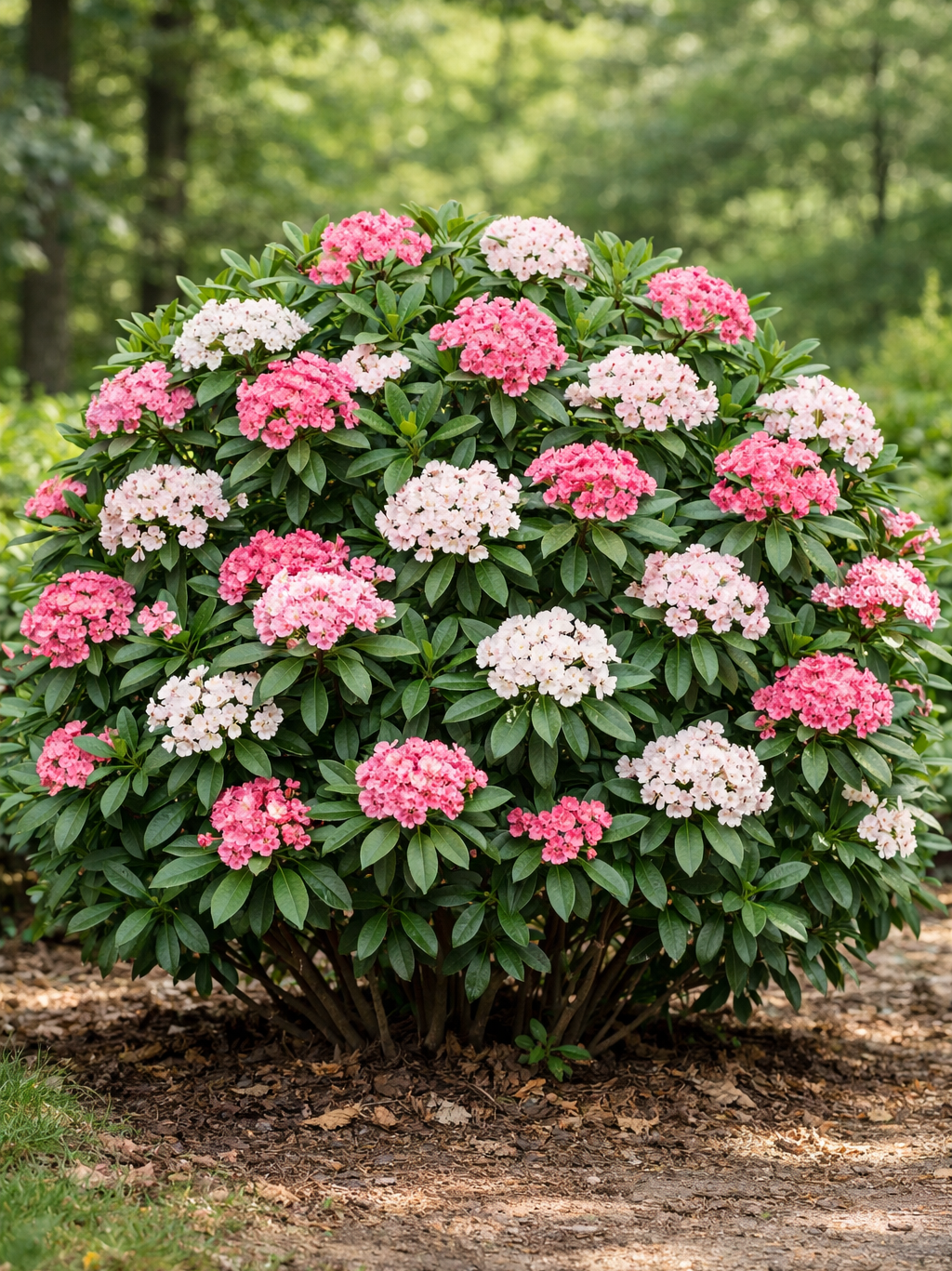
Mountain Laurel (Kalmia latifolia)

Why the Prettiest: It’s Pennsylvania’s state flower alongside Connecticut’s and namesake of its southwestern Laurel Highlands. It’s a slow-growing evergreen shrub famous for its clusters of cup-shaped pink and white flowers.

Location: Native to the eastern United States with range stretching from Maine to Florida and west to Indiana and Louisiana.

Environment: Naturally found on rocky slopes and mountainous forest areas. Grows in large thickets, covering great areas of the forest floor. Grows very densely in low, wet areas and very sparse in dry uplands. Can grow up to 5-15ft tall in natural settings.

Bloom Season: Blooms in May and June. Attracts butterflies and hummingbirds. Though it has an unusual pollination process where its stamen’s flaments are bent and brought into tension. An insect landing on it releases the tension and catapults the pollen onto the insect.

Color Varieties: Available in white and light pink. Cultivated varieties in various colors.

Gardening Conditions: Thrives in acidic soil. Prefers partial shade such as morning sun filtered with afternoon shade. Individual shrubs must be spaced at least 4-6 ft apart. Apply a layer of mulch to keep shallow roots cool and moist, and prune lightly right after flowering finishes. All parts of plant are toxic upon ingestion to humans, deer, cattle, sheep, monkeys, and goats. This includes the pollen, flowers, twigs, and even food products such as its honey, which may produce neurotoxic and gastrointestinal symptoms in humans eating more than a modest amount. Symptoms begin to appear 6 hours upon ingestion which include irregular or difficulty breathing, anorexia, repeated swallowing, profuse salivation, watering of the eyes and nose, cardiac distress, incoordination, depression, vomiting, frequent defecation, weakness, convulsions, paralysis, coma, and eventually death. Can cause gastrointestinal hemorrhage in animals.

Conservation Status: Currently listed as Least Concern.

Trivia: Namesake of Laurel County in Kentucky, the city of Laurel, Mississippi, and Mount Laurel, New Jersey. Was described by Carl Linneaus in 1753. Can become a tree in the Appalachians but is mainly a shrub further north. Originally brought to Europe during the 18th century as an ornamental plant. Wood is considered heavy but brittle and is more suitable for wreaths, furniture, bowls, handrails or guardrails, and other household items. Wood was used in clocks during the 19th century. Root burls were used for pipe bowls in place of briar burls unattainable in World War II. Used by the Cherokee as a medical analgesic and infusion as well as the wood for carving.

Other Candidates: Cardinal Flower, Great White Trillium, Pink Lady’s Slipper, and Blue-Eyed Mary.

39. Rhode Island

White Bergamot (Monarda fistulosa)

Why the Prettiest: Listed as a historical plant in Rhode Island, it’s a hardy, perennial wildflower is known for its showy, tubular, lavender-pin or white pompom-like clusters.

Location: Native to most of North America. Ranges from Quebec, Northwest Territories, and British Columbia to Georgia, Texas, Arizona, Idaho, and northeastern Washington.

Environment: Found in prairies, dry rocky woods, glade margins, and unplanted fields. Can grow up to 2-4 ft tall.

Bloom Season: Blooms during mid to late summer. As a honey plant, it attracts a variety of pollinators like bees, butterflies and hummingbirds. Larval host to hermit sphinx, orange mint moth, and raspberry pyrausta.

Color Varieties: Available in pink, white, and lavender.

Gardening Conditions: Spreads via rhizomes and self-sowing to form clumping patches. Thrives in full sun to partial shade. Highly adaptable to sandy, loamy, or clay soils ranging from dry to medium moisture, preferring well-drained conditions. Provide good air circulation to prevent powdery mildew, which is common in the plant. Leave hollow dead stems standing through winter to shelter native nesting bees.

Conservation Status: Currently listed as Secure.

Trivia: Known for its fragrance though its composition can be quite variable. Has 8 varieties. Used as a medicinal plant by Native Americans for various ailments such as colds, fevers, and headaches. Can be brewed into a soothing herbal tea.

Other Candidates: Cardinal Flower, Virginia Meadow Beauty, Butterfly Weed, New England Aster, and Black-Eyed Susan.

40. South Carolina

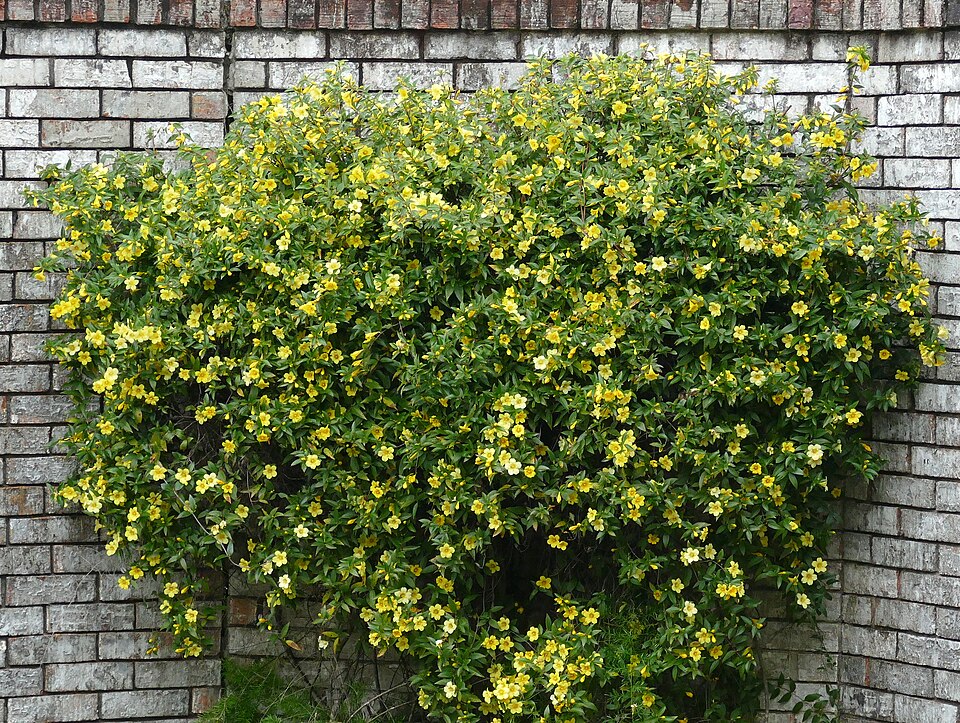
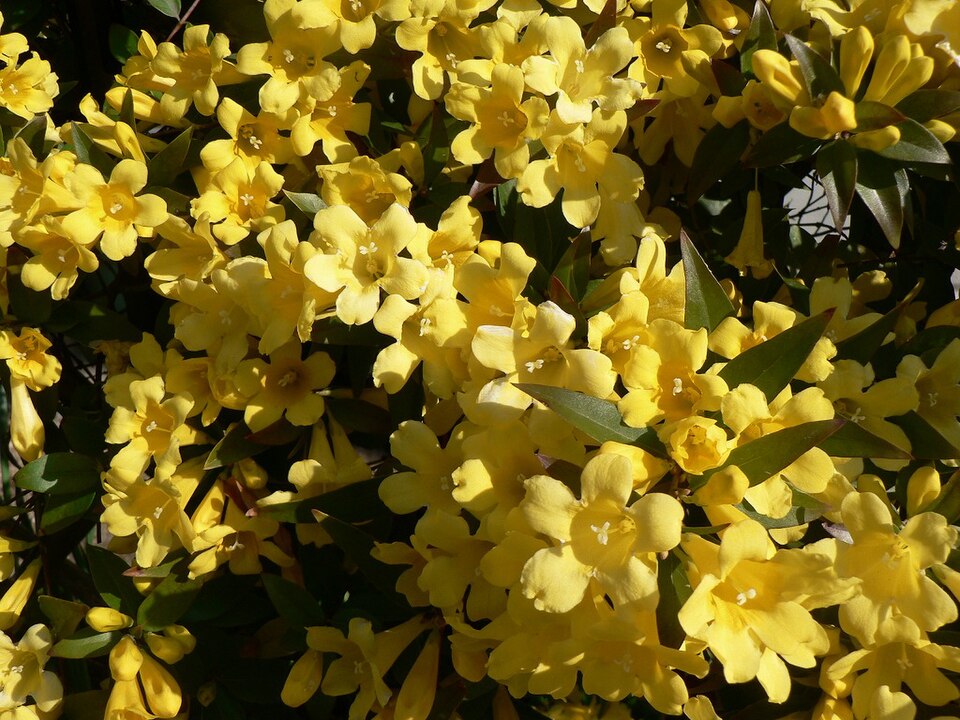
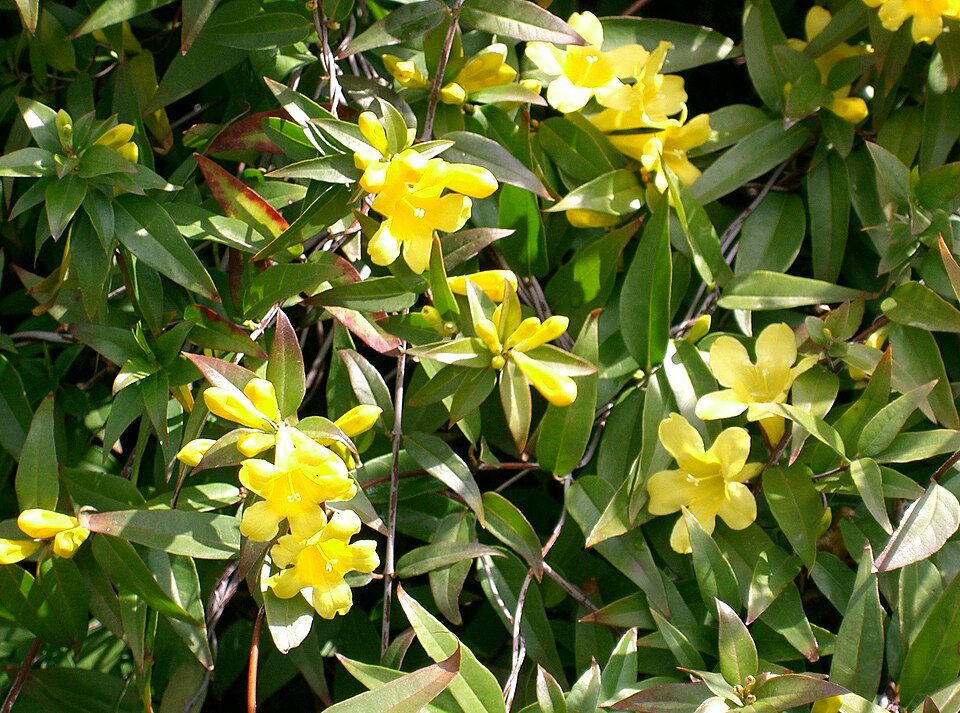
Yellow Jessamine (Gelsemium sempervirens)

Why the Prettiest: For one, it’s South Carolina’s state flower. A fragrant, evergreen climbing vine famous for its bright yellow, trumpet-shaped, sweet-smelling flowers and glossy green leaves.

Location: Native to subtropical and tropical America from the southeastern and south-central United States to Guatemala.

Environment: Found in wooded areas and thickets growing on tree trunks. Can become weedy in disturbed areas and along roadsides. Can grow up to 10-20 ft tall.

Bloom Season: Blooms in late winter into early spring. Attracts bumblebees and native bees.

Color Varieties: Available in yellow.

Gardening Conditions: Thrives best in full sun and partial shade. Prefers moist, well-drained soil. Needs regular watering when young and becomes drought tolerant once established. All parts of the plant contain toxic strychnine-related alkaloids gelsemine and gelseeminine and shouldn’t be consumed. Sap may cause skin irritation in sensitive individuals. Children, mistaking it for honeysuckle have been poisoned for sucking the nectar from the flower. Symptoms consist of severe muscle weakness and respiratory paralysis. Nectar is toxic to honeybees which could cause brood death when gathered by them. Plant can also be lethal to livestock. Yet, despite the hazards, it’s a popular garden plant in warmer areas. Said to be perfect for training up trellises, arbors, and fences, or letting it sprawl as a mounding ground cover on slopes.

Conservation Status: Currently listed as Secure.

Trivia: Said to be a folk remedy for various ailments.

Other Candidates: Cahaba Lily, Goldenrod, Butterfly Milkweed, Atamasco Lily, and Wild Bergamot.

The United States of Wildflowers – Part 3 Massachusetts to New Jersey

You may notice that many of these wildflowers are often the state flowers in many of these states. But that isn’t always the case. Still, states have a habit becoming attached to certain flowers that it often becomes part of its emblem. Yet, as you’ll see later, it’s not unusual for some states to have the same state flower with the common violet being one for 4. But I can’t use the common violet for all four of them. Anyway, in this post, you’ll see a columbine from New England, a lily from the Midwest, two lady’s slippers, a coreopsis, an evening primrose, a small pink flower westerners can’t resist in Montana, two mallow flowers, and a violet with a polarizing reputation.

21. Massachusetts

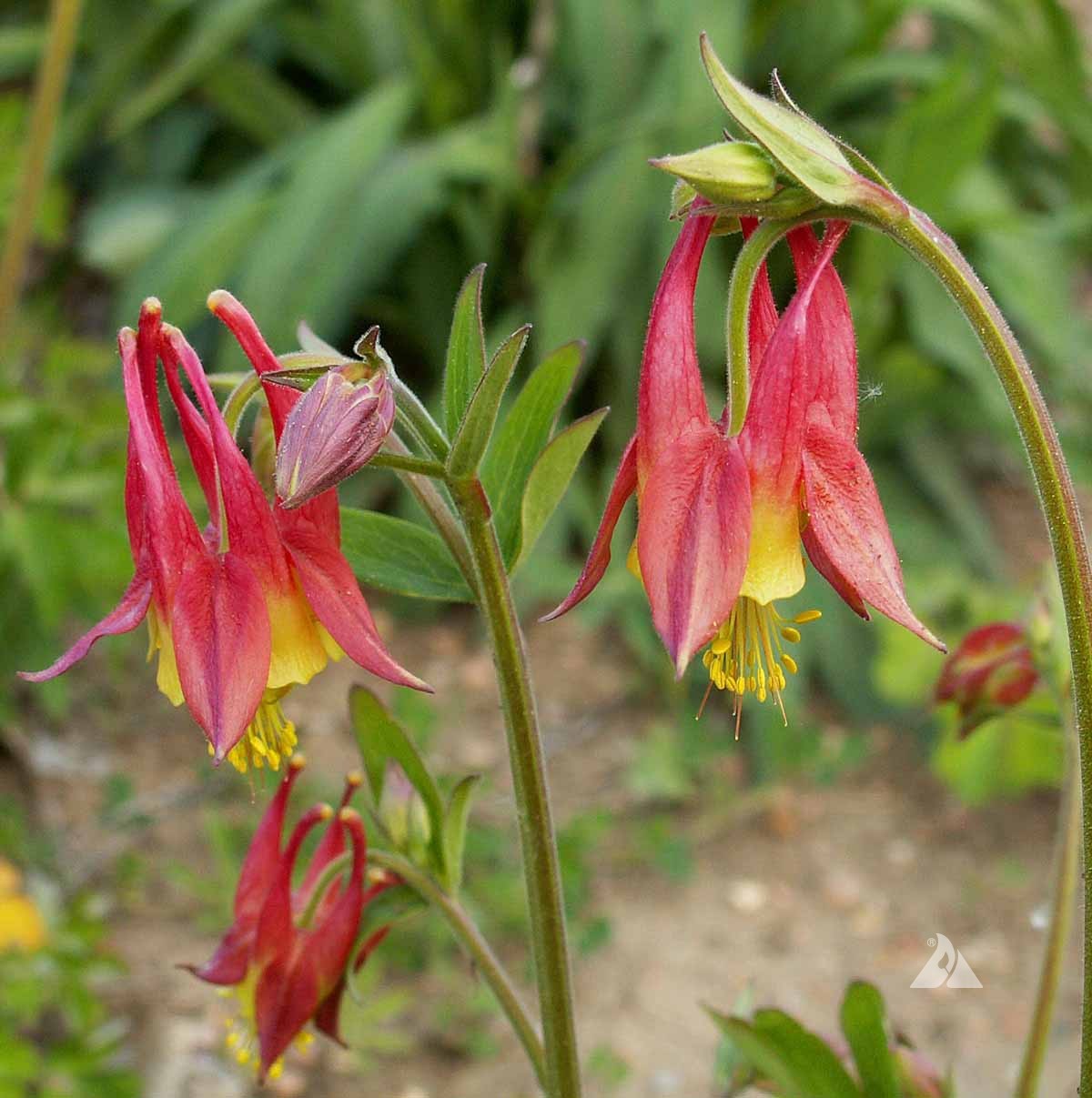
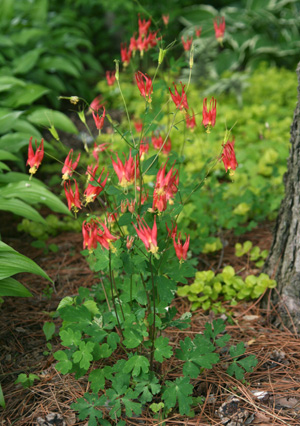
Eastern Red Columbine (Aquilegia canadensis)

Why the Prettiest: It’s an herbaceous perennial known for its nodding, two-toned red and yellow spurred flowers that attract hummingbirds and butterflies. Its dainty, downward-facing red and yellow blooms with backward-pointing spurs holding nectar. While its foliage consists of deeply lobed, fern-like leaves that are semi-evergreen.

Location: Native to eastern and central North America, from New Brunswick to Florida as west as from Saskatchewan to Texas. Sole native columbine from eastern North America.

Environment: Inhabits woodlands, forest edges, rocky slopes, and shaded bluffs. But can live in a wide range of habitats. Can grow up to 6-35 in tall.

Bloom Season: Blooms from mid-spring to early summer such as from April to July. Primary pollinator is the Ruby-Throated Hummingbird but also attracts bees, bumblebees, and hawk moths. While the rusty-patched bumblebee has been known for nectar robbing by cutting holes in the spurs. Host plant for the common duskywing butterfly and columbine borer moth.

Color Varieties: Available in red and yellow.

Gardening Conditions: Commonly kept as an ornamental plant. Has a mixed mating system where it can self-pollinate and outcross. Is self-compatible and can produce seeds without a pollinator but doesn’t fully compensate. Reproductive success is also reliant on population size with larger and more densely populated areas producing more seeds. Resistant to deer and rabbit browsing. Susceptible to leaf miner activity that only creates a serpentine trail among the leaves and has a low susceptibility to disease in its native range. Grows best in light to moderate shade and prefers well-drained sandy loams, thriving in limestone-based or circumneutral soils. Plants grown in soils too moist or rich may produce weak plants with shorter lifespans. Seedlings generally flower in second year. Mature plants are highly resistant to drought. Perfect for woodland gardens, rock gardens, shady borders, and native pollinator spaces.

Conservation Status: Currently listed as Secure.

Trivia: Has a chemical defensive system in which it releases hydrogen cyanide when plant tissue is damaged. Used by several Native American communities as a love charm by crushing its seeds and rubbed on hands like the Pawnee. Seeds also used by Omaha, Pawnee, and Ponca as perfume. Used by Pawnee and Cherokee as medicine as well.

Other Candidates: Pink Lady’s Slipper, New England Aster, and Cardinal Flower.

22. Michigan

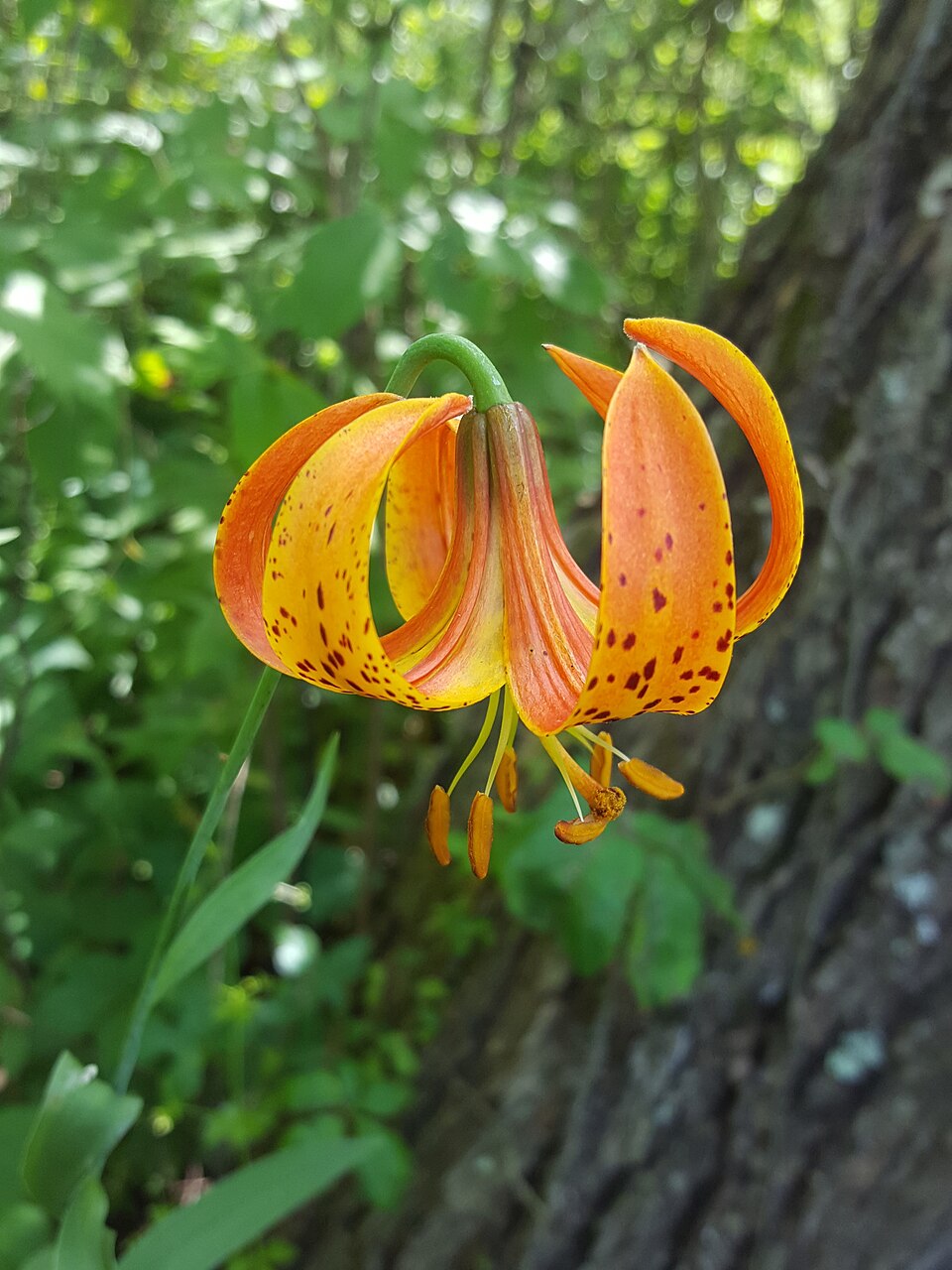
Michigan Lily (Lilium michiganense)

Why the Prettiest: It’s a striking bulbous perennial in the Great Lakes and Upper Mississippi known for its bright orange, heavily spotted downward-facing flowers with petals curving sharply backward. While its leaves are lance-shaped and arranged in distinct whorls around the stem’s middle.

Location: Native to the Great Lakes and Upper Mississippi Valley regions of the United States and Canada, from South Dakota through Ontario to New York, south to Georgia to Oklahoma.

Environment: Inhabits wet meadows, fens, moist woodland edges, bottom lands and prairies. Can grow up to 5 x 2 ft.

Bloom Season: Blooms during the summer from June to August. Attracts hummingbirds, large butterflies, and sphinx moths.

Color Varieties: Available in red-orange with purple-brown spots.

Gardening Conditions: Needs full sun or partial shade. Prefers rich, deep, moist, and cool organic soils. Though adapts well to average, well-drained garden loam or clay. Ideal for native plant gardens, perennial borders, cottage gardens, or naturalized damp areas along ponds or streams. But know that voles, chipmunks, and deer love to eat the foliage or dig up the bulbs.

Conservation Status: Listed as Secure but is endangered in New York and threatened in Tennessee.

Trivia: Is often confused for the Asian Tiger Lily.

Other Candidates: Large-Flowered Trillium, Dwarf Lake Iris, Blazing Star, Prairie Smoke, and Marsh Marigold.

23. Minnesota

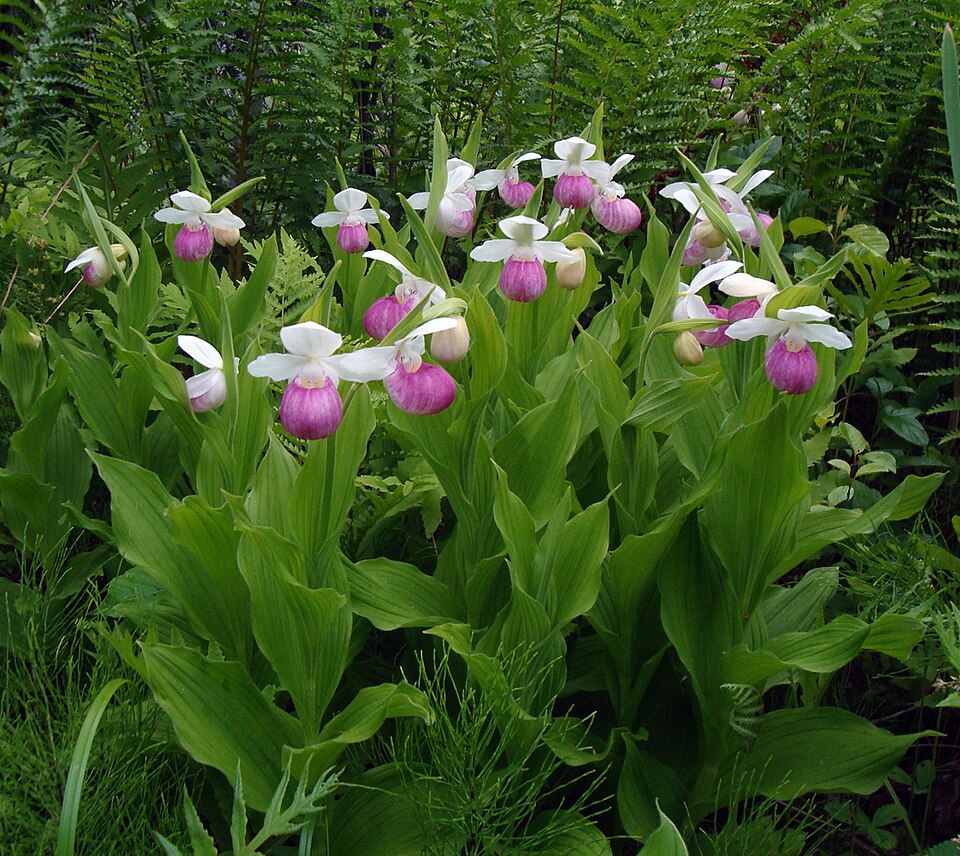
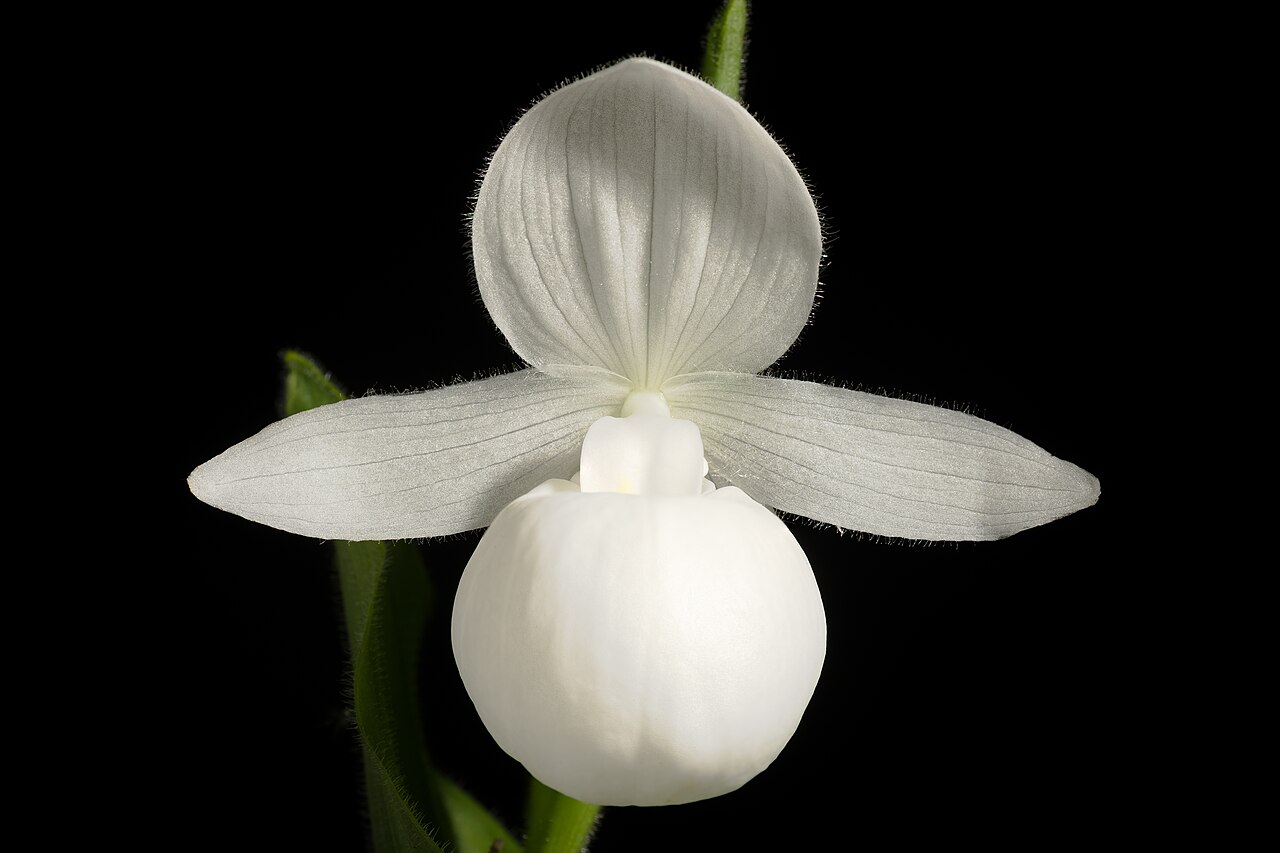
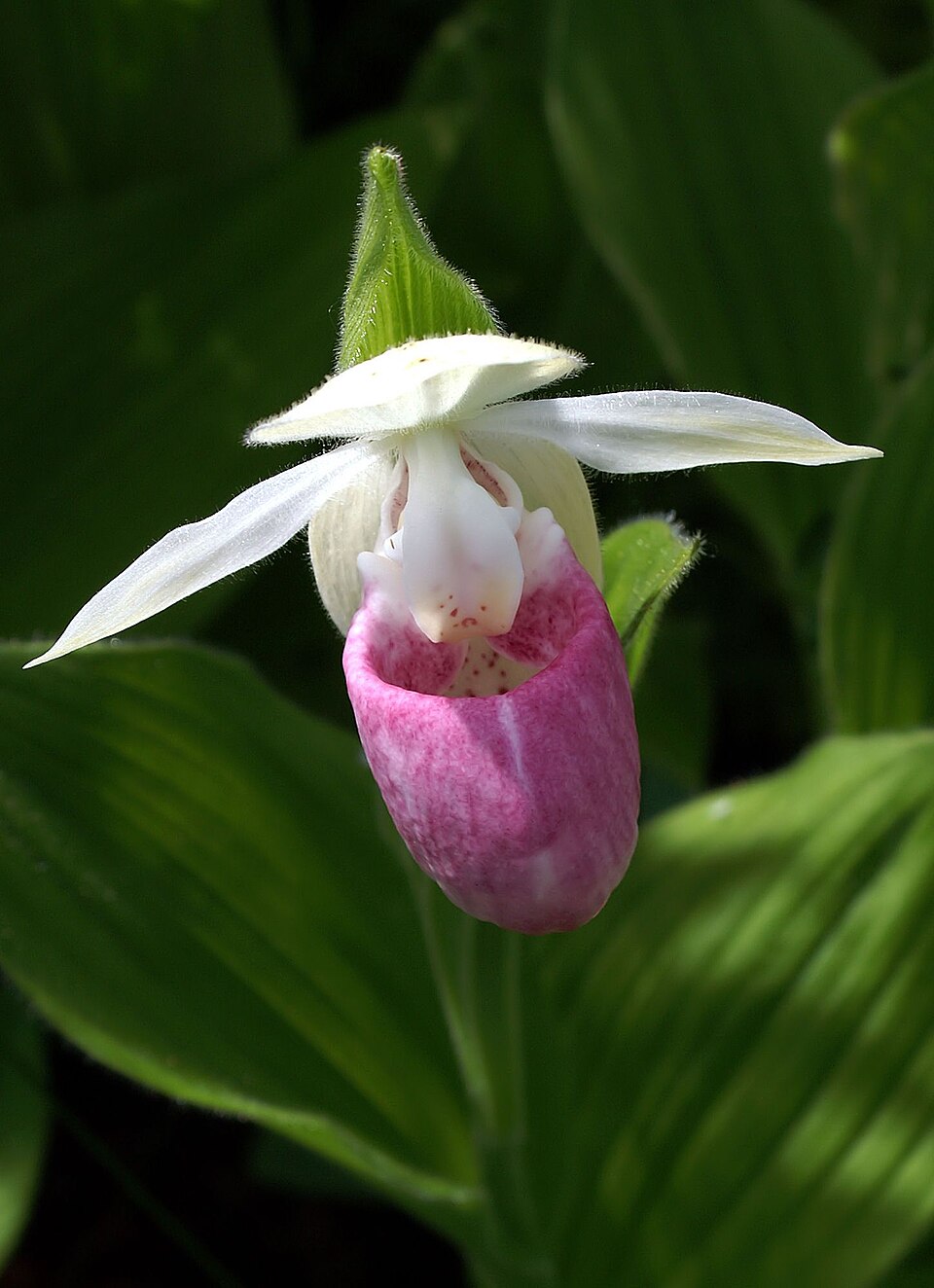
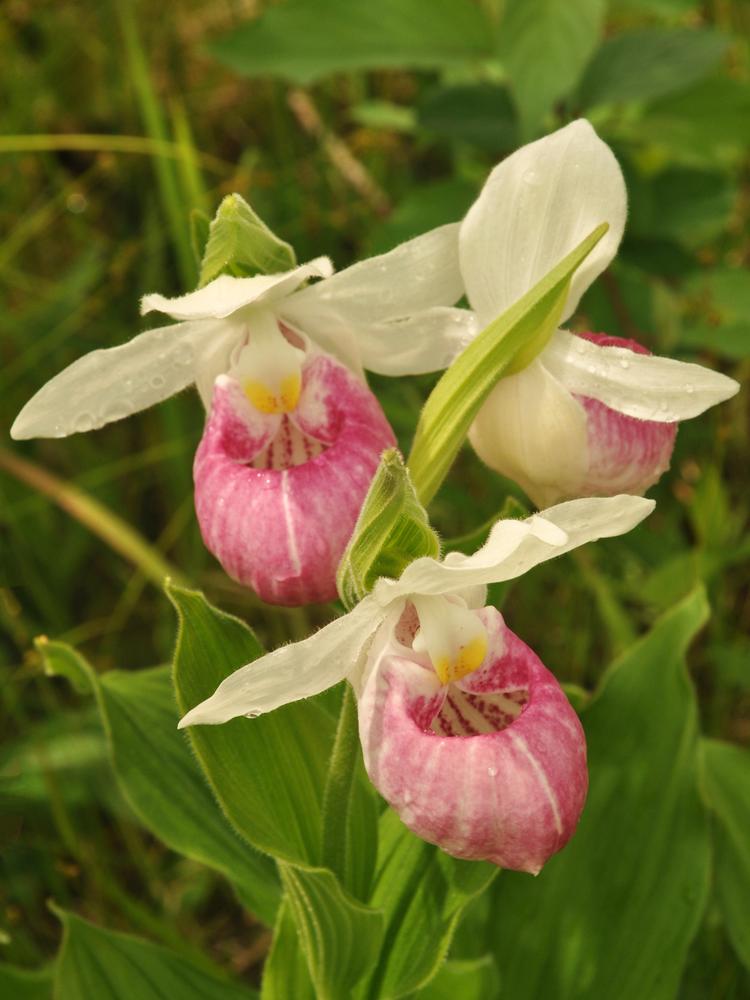
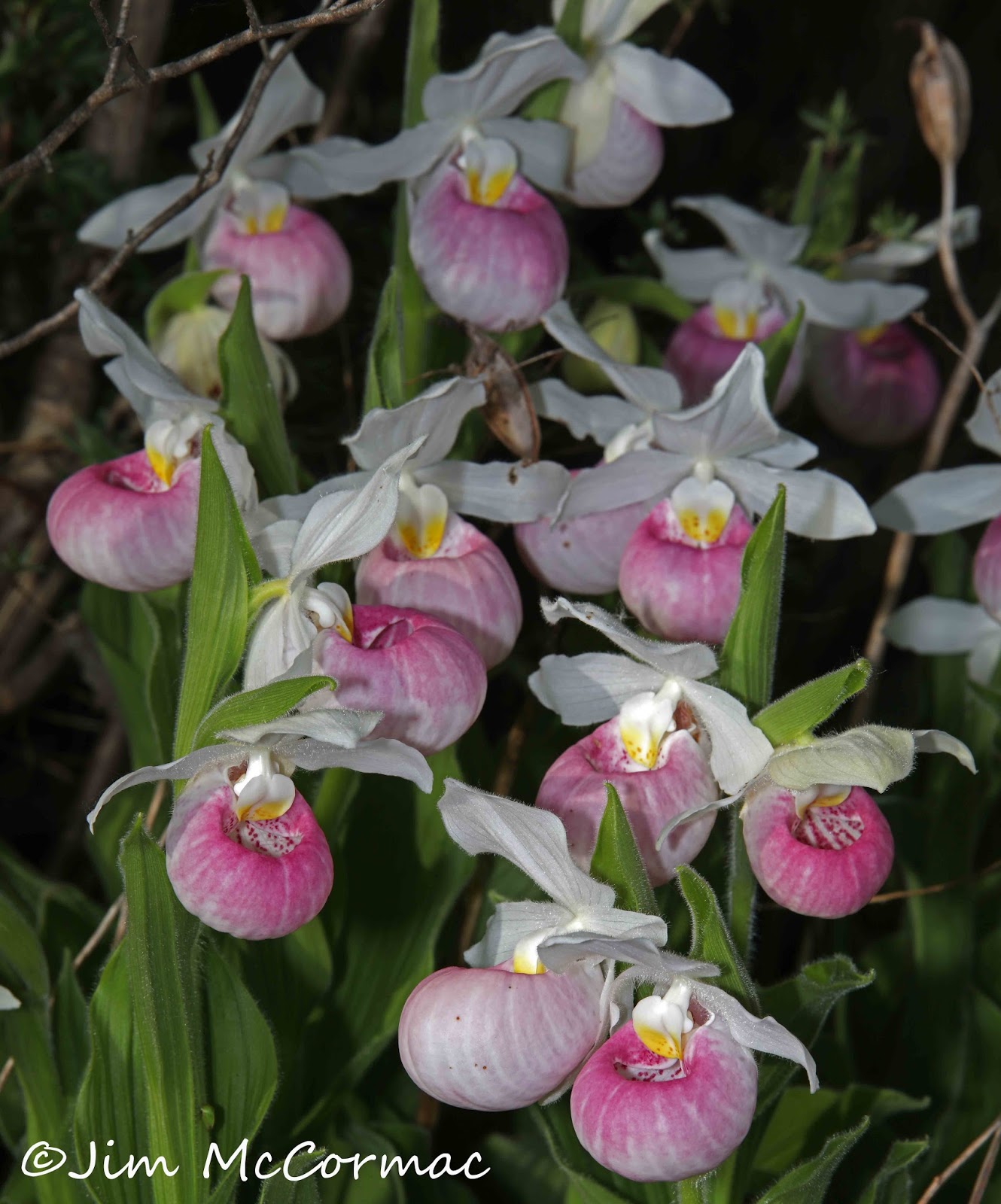
Showy Lady’s Slipper (Cypripedium reginae)

Why the Prettiest: For one, it’s Minnesota’s state flower as well as a rare native orchid in North America. It features brilliant white petals paired with a large, bulbous pouch suffused with deep pink and magenta.

Location: Native to northern North America. Can be found from as north as Saskatchewan to as south as Arkansas and Tennessee. Has a strong presence in the Great Lakes region.

Environment: Grows in wetlands such as fens, wooded swamps, and riverbanks. Most likely found in mossy hummocks. Can grow up to 0.7-3ft tall, making it the tallest native northern orchid.

Bloom Season: Blooms in early to midsummer such as from June to July. Attracts and depends on pollinators like syrphid flies, beetles, and Megachile bees. Occasionally eaten by white-tailed deer.

Color Varieties: Available in white with a pouch that can be purple, pink, and white.

Gardening Conditions: Thrives in neutral to basic soils but can grow in slightly acidic conditions. Prefers very loose soil when growing in fens. Can tolerate full sun but prefers partial shade for part of the day. Since full sun exposure can bleach its lip and less deeply colored. A single seed pod can produce 50,000 seeds but there’s low seed to flowering germination. Thus, vegetative reproduction is far more common. Foliage hairs contain oils that can cause a rash similar to poison ivy or dermatitis.

Conservation Status: Currently listed as Least Concern. Although it’s quite rare due to its habitat destruction and exploding deer population. So its critically imperiled and vulnerable in various states and Canadian provinces.

Trivia: Forms in clumps by branching of underground rhizomes. Roots are typically within a few inches of soil’s top. Was known to Charles Darwin who unsuccessfully tried to cultivate the plant. Provincial flower of Prince Edward Island. Has been used in native remedies for dermatitis, toothaches, anxiety, headaches, and as an antispasmodic stimulant and sedative.

Other Candidates: Large-Flowered Trillium, Purple Coneflower, Bee Balm, and Butterfly Weed.

24. Mississippi

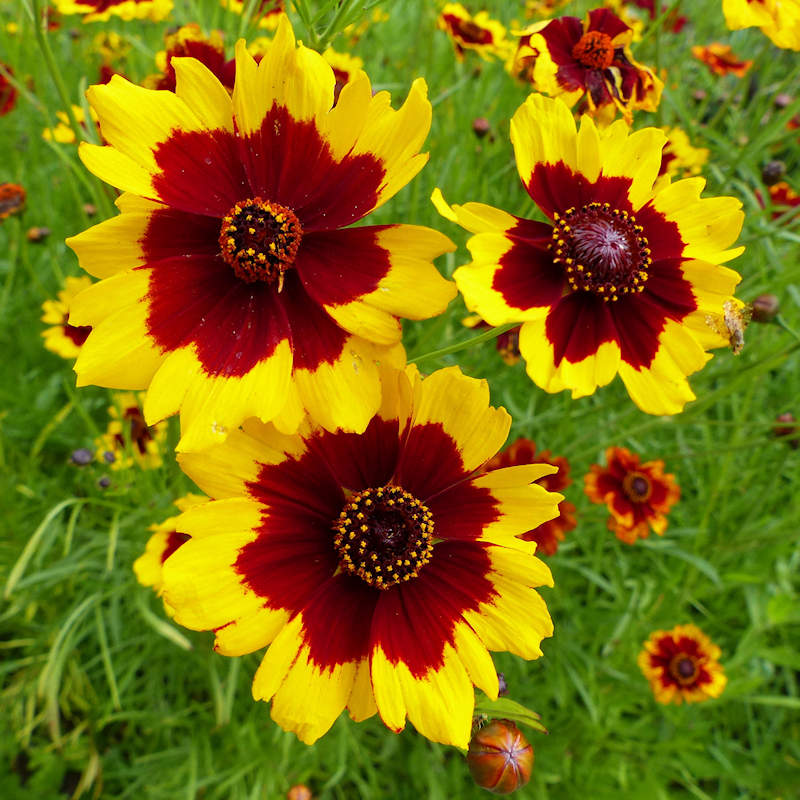
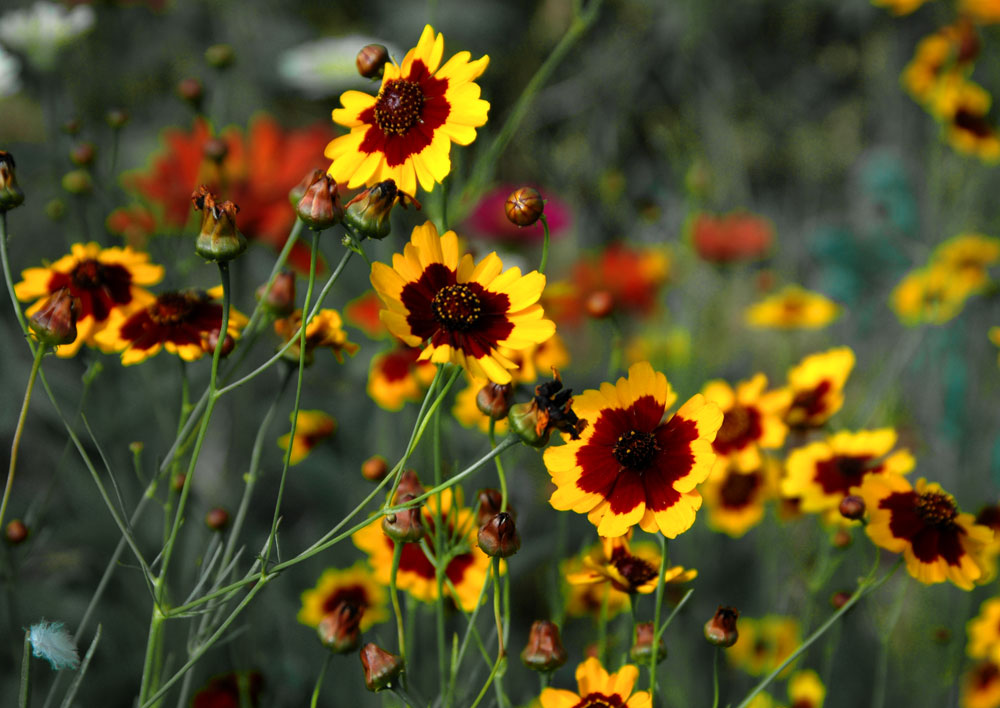
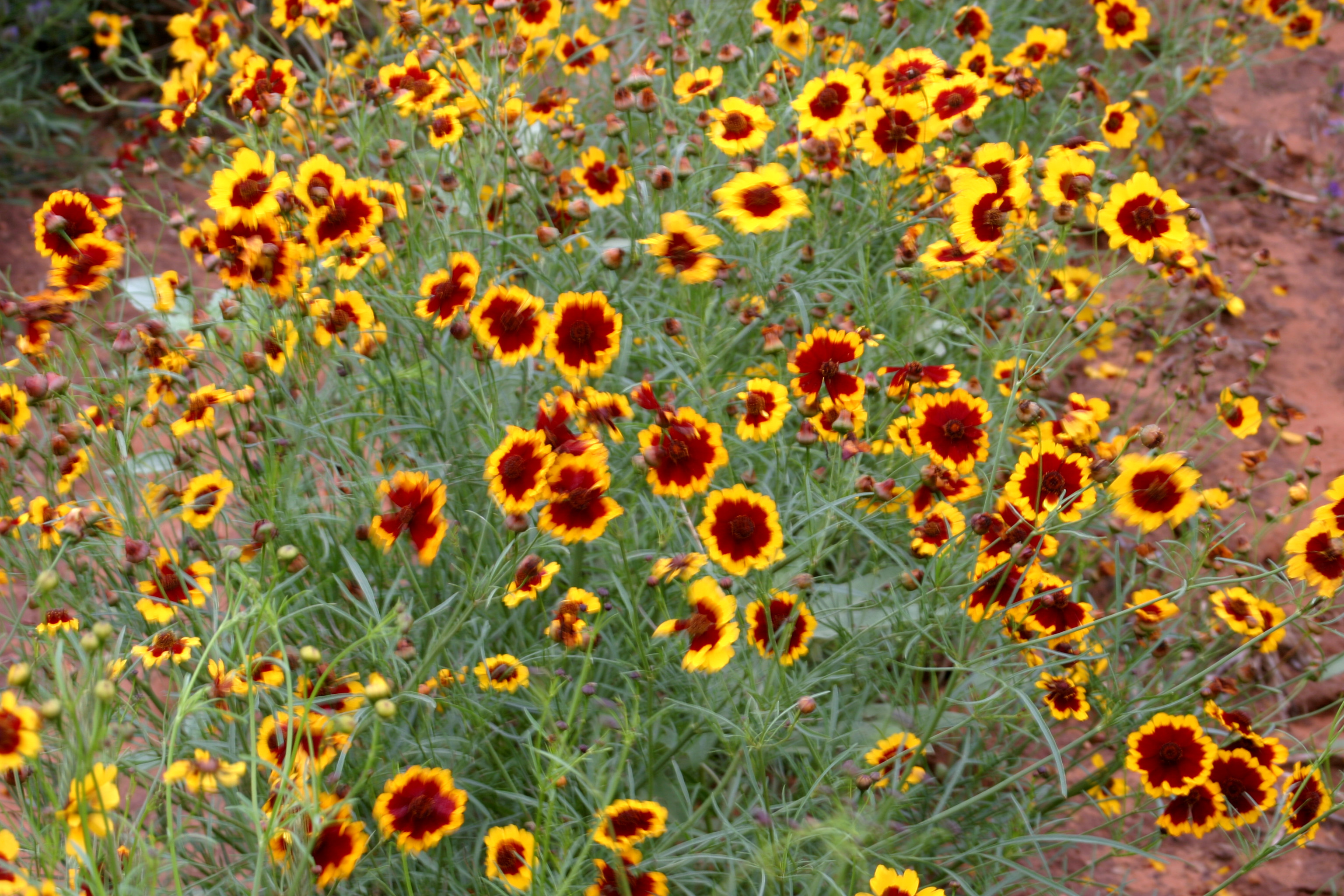
Plains Coreopsis (Coreopsis tinctoria)

Why the Prettiest: This annual and biennial forb is a fast-growing, cheerful native wildflower featuring bright, yellow petals and rich maroon or brown centers.

Location: Native in Canada, northeastern Mexico, and most of the United States.

Environment: Grows in disturbed areas such as roadsides, ditches, pastures, and cultivated fields. Often found in prairies, savannas, and plains at elevations up to 6,562 ft above sea level. Can grow up to 12-40 in tall.

Bloom Season: Blooms from June to September or by the first frost. Attracts long- and short-tongued bees, wasps, butterflies, and beetles. Is larval host to various insects.

Color Varieties: Available in yellow and deep red or brown.

Gardening Conditions: Grows well in many types of soil. But prefers sandy or well-drained loam types. Though prefers full sun, it can grow in partial shade. Though often said to be an annual, it can sometimes produce a better bloom in its second year. Self-seeds in open, bare soil. Cultivated as an ornamental plant for gardens and as a native plant for wildlife gardens and natural landscaping.

Conservation Status: Currently listed as Secure.

Trivia: Zuni used blossoms to make a mahogany red dye for yarn, a hot beverage before coffee, and female fertility treatment.

Other Candidates: Giant Blue Iris, Yellow Jessamine, Black-Eyed Susan, Purple Coneflower, Butterfly Weed, and Cardinal Flower.

25. Missouri

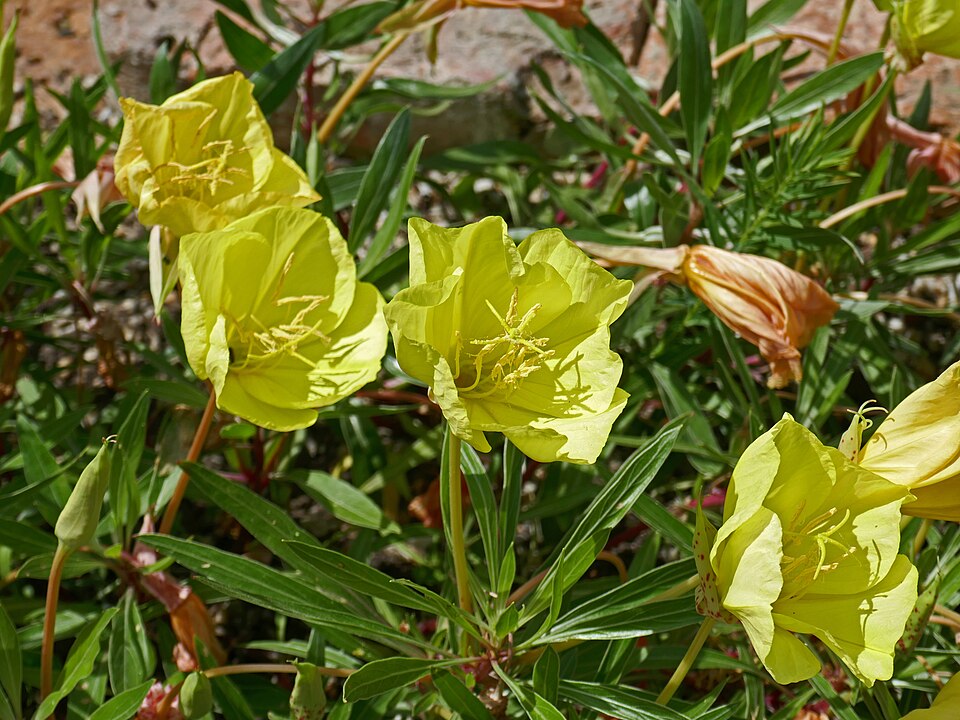
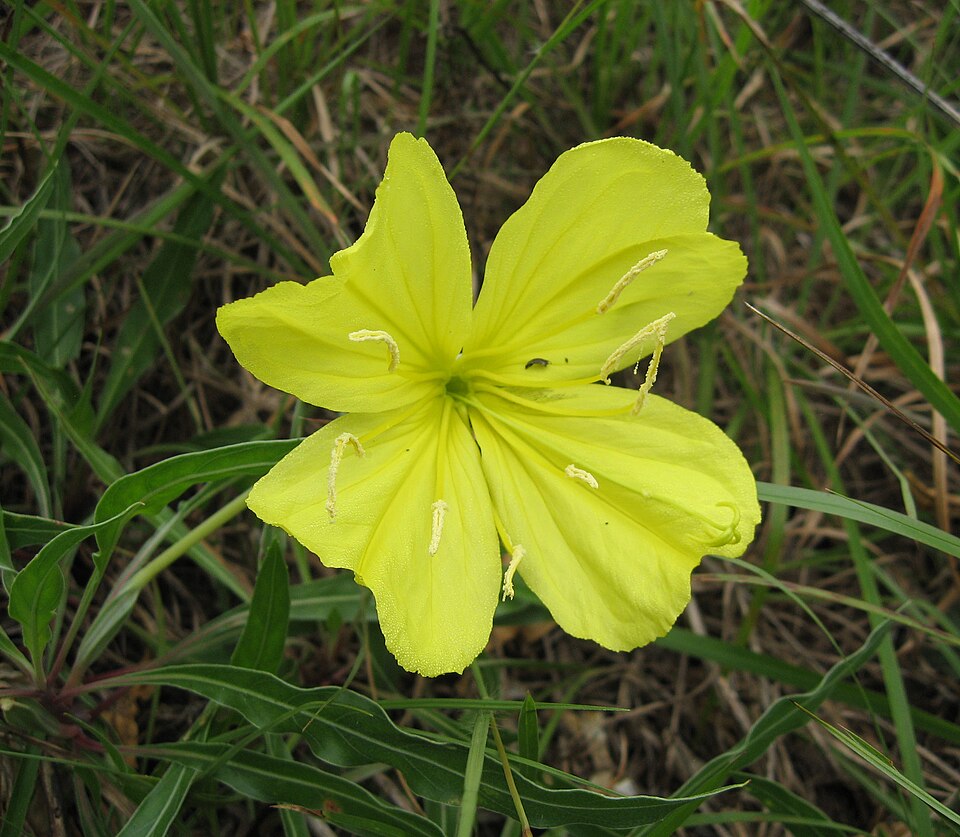
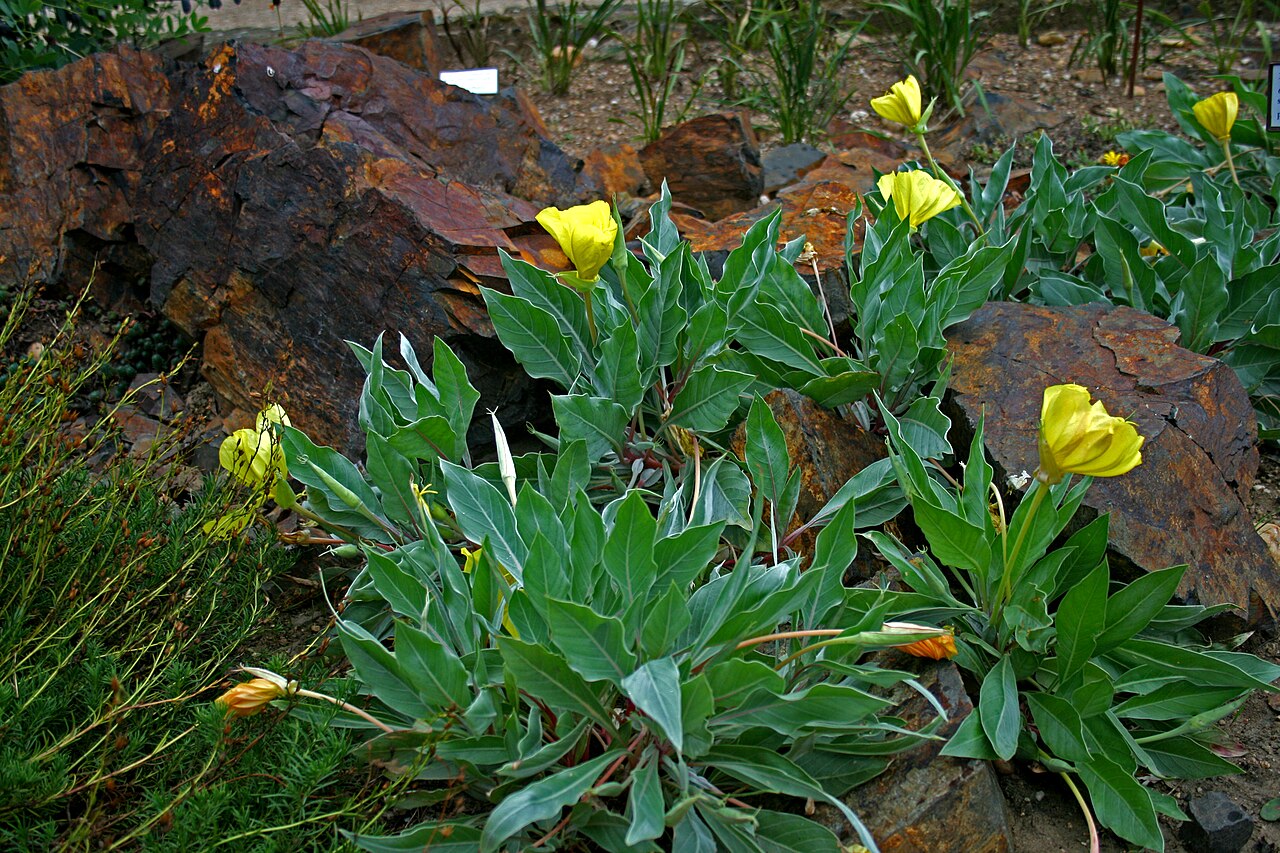
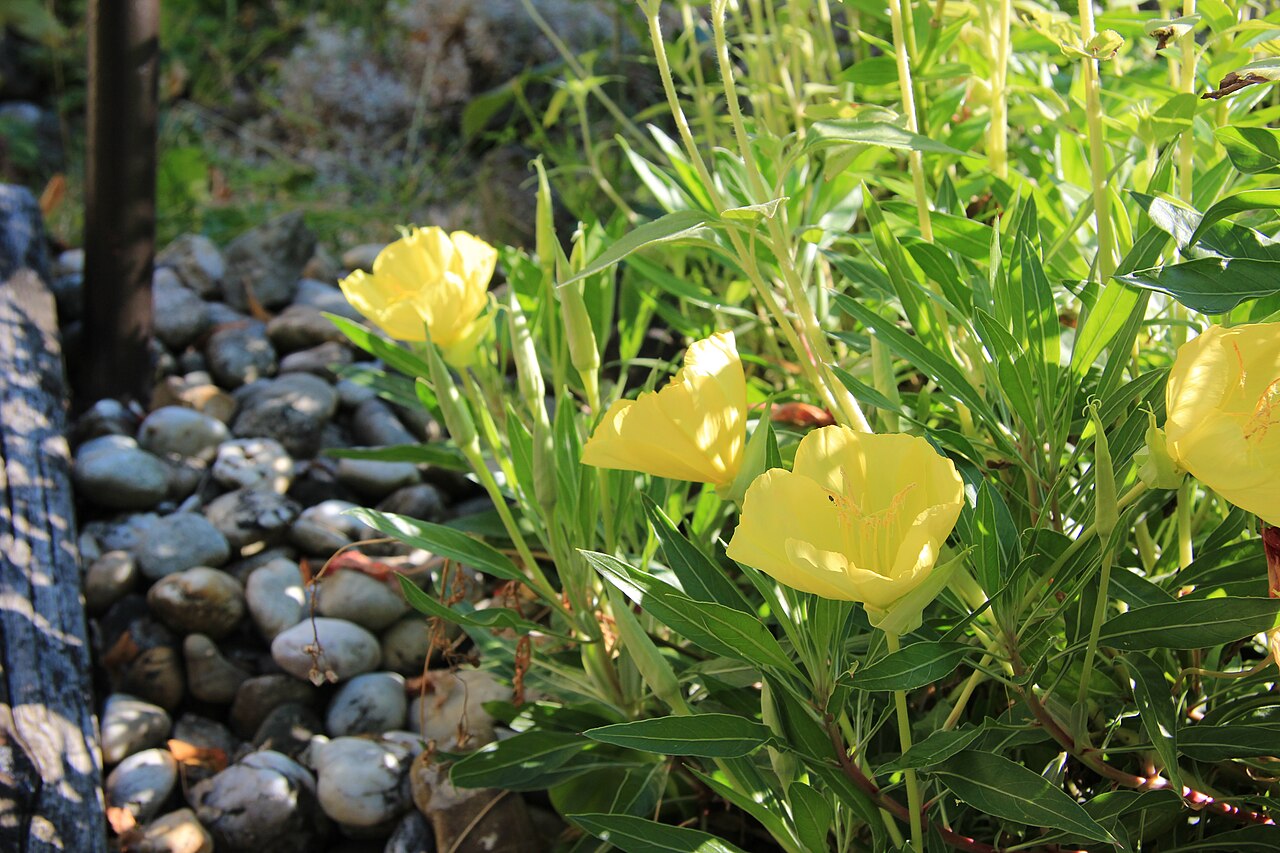
Missouri Evening Primrose (Oenothera macrocarpa)

Why the Prettiest: This tough, low-lying perennial blooms showy, giant, fragrant bright yellow flowers opening in the evening. Foliage is narrow, lance-shaped, gray-green to deep green leaves on reddish trailing stems.

Location: Native to northeastern Mexico and the south-central United States.

Environment: Found in calcareous prairies, limestone outcrops, glades, bluffs, quarries, and roadsides. Can grow up to 18 in tall.

Bloom Season: Blooms from late spring to late summer such as from May to August. Typically open in late afternoon or evening and glow through the night before fading the next morning. Pollinated by sphinx and hawk moths.

Color Varieties: Available in canary yellow.

Gardening Conditions: Suitable for ground cover in poor, sandy soil that doesn’t become waterlogged during the winter, in full sun. But tolerates partial shade. Dislikes wet, poorly-drained soils and rich, crowded environments. Has low water needs and can resist drought due to a deep taproot. Offers good moderate resistance against deer and rabbits.

Conservation Status: Currently listed as Secure.

Trivia: Produces distinct, 4-ridged seed pods that turn burgundy and sienna in the fall. Seed pods are often used in flower arrangements.

 Best Viewing: Best seen at night during the summer.

Other Candidates: Purple Coneflower, Black-Eyed Susan, Prairie Blazing Star, Virginia Bluebell, and Dutchman’s Breeches.

26.Montana

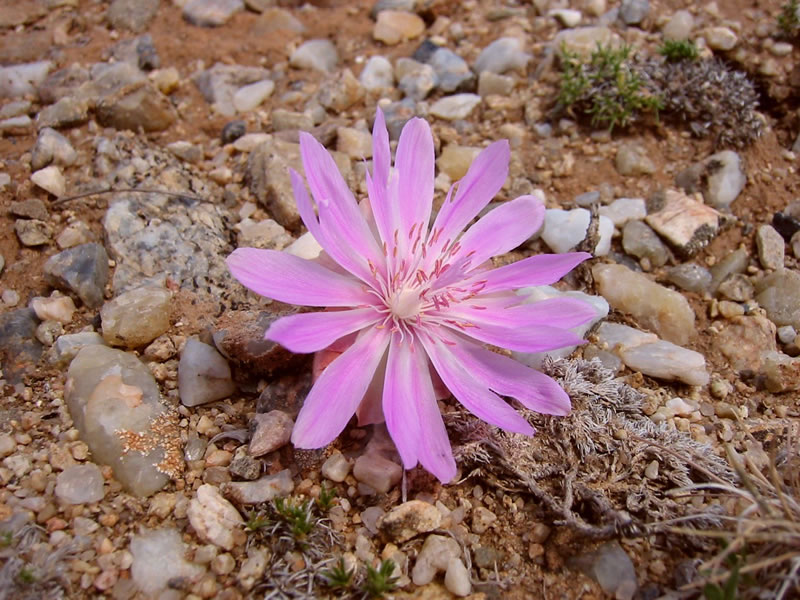
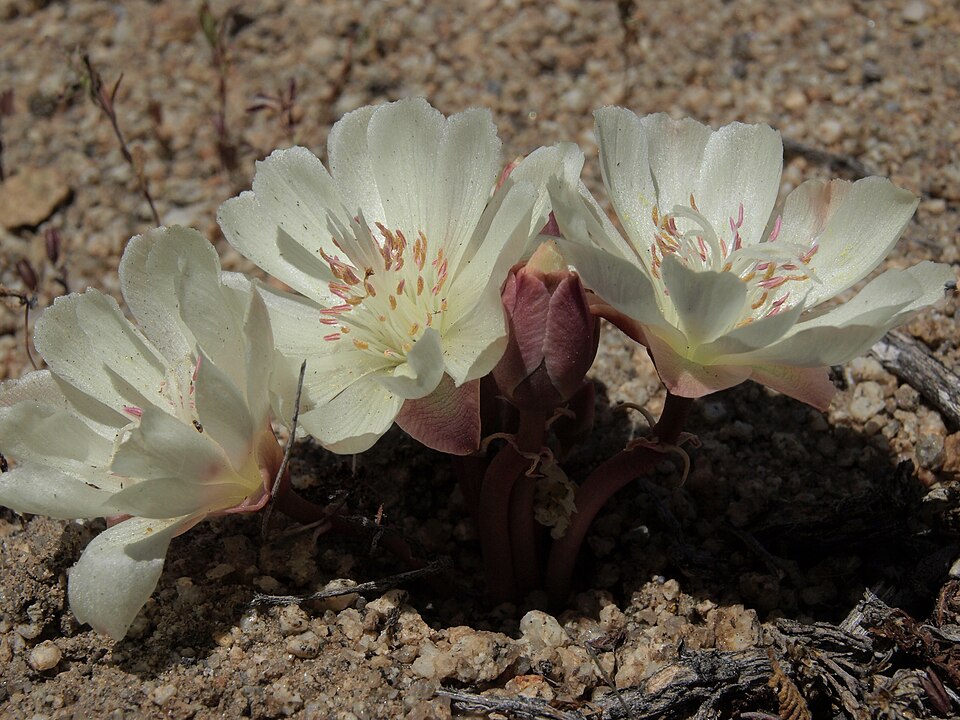
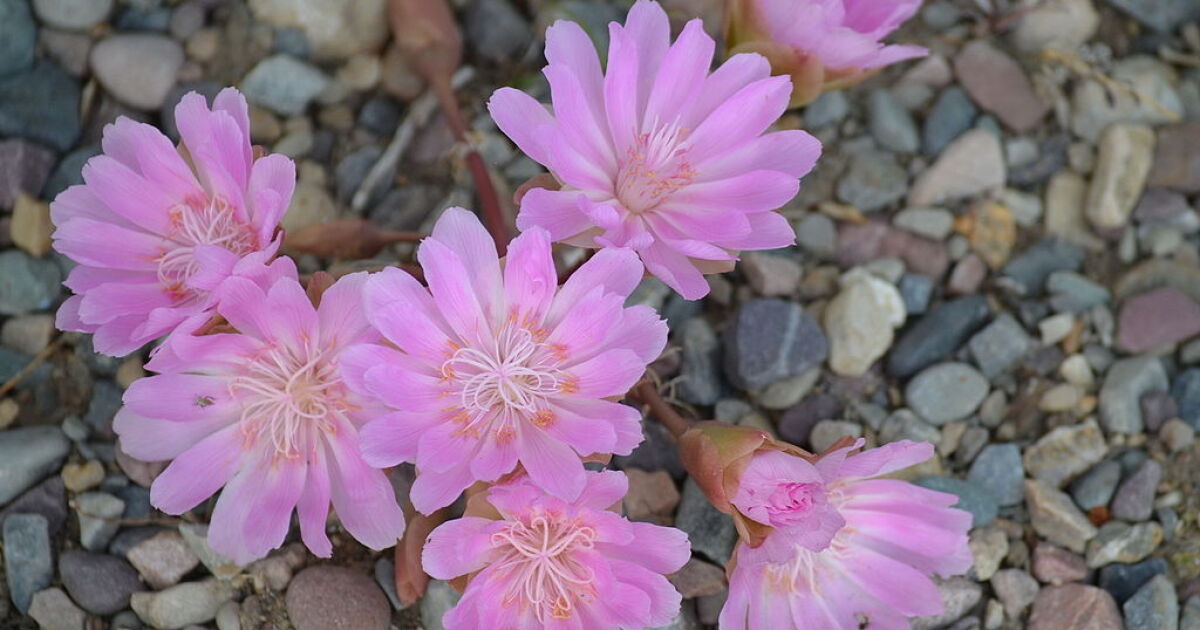
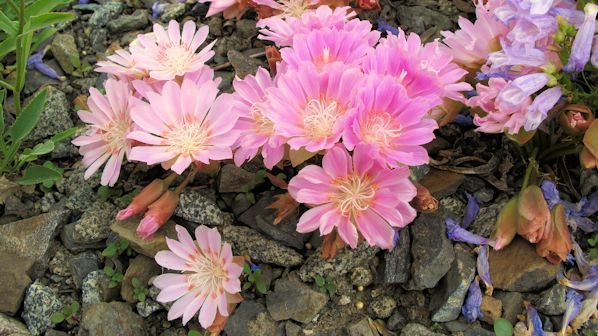
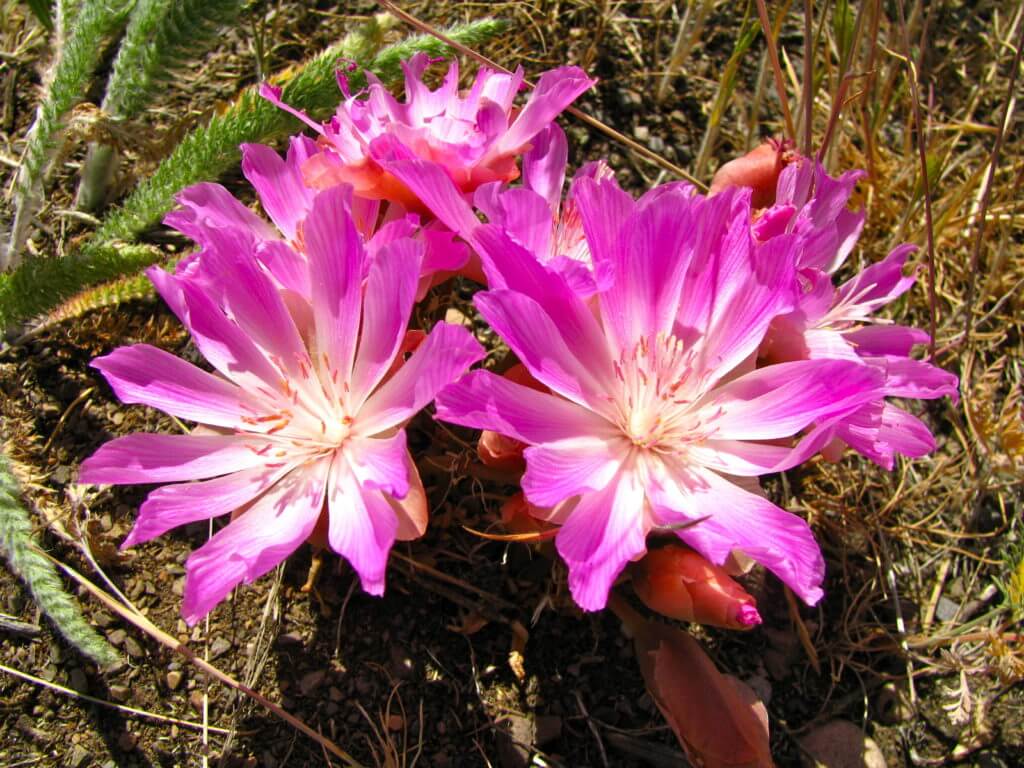
Bitterroot (Lewisia rediviva)

Why the Prettiest: It’s Montana’s state flower since 1895 and has many geographical features with its name within its borders like the Bitterroot Mountains, the Bitterroot Valley, and the Bitterroot River. It’s a small, low-growing perennial that rarely exceeds 2 inches in height. Its fleshy rosette of succulent leaves in early spring usually wither away before the flower blooms. Blossoms are star-shaped flowers can range from deep pink to white or lavender.

Location: Native to the western North America from as north as British Columbia to as south as southern California and as east as western Montana.

Environment: Inhabits low to moderate elevations on grassland, open bushland, and forest. Can grow up to an inch.

Bloom Season: Blooms from April to July.

Color Varieties: Available in pink, white, and lavender.

Gardening Conditions: Can survive extremely dry conditions. Prefers dry rocky or gravelly soils.  

Conservation Status: Currently listed as Secure.

Trivia: If collected early enough, its roots can be peeled, boiled, and made into a jelly-like food. Used by Native Americans as food and for ceremonies before harvest. Merriwether Lewis ate it during the Lewis and Clark Expedition. Can regenerate from dry and seemingly dead roots.

Other Candidates: Indian Paintbrush, Arrowleaf Balsamroot, Glacier Lily, and Silvery Lupine.

27. Nebraska

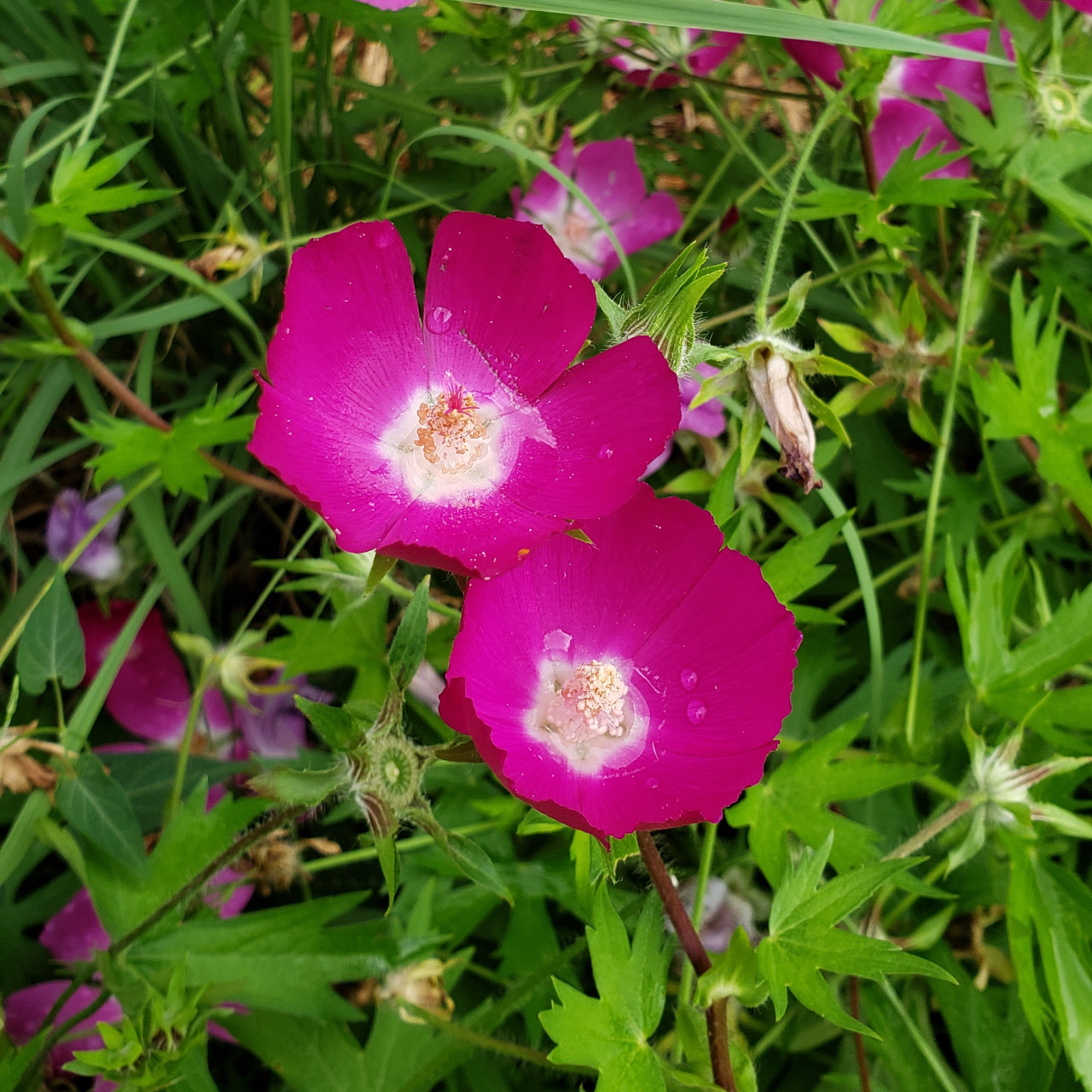
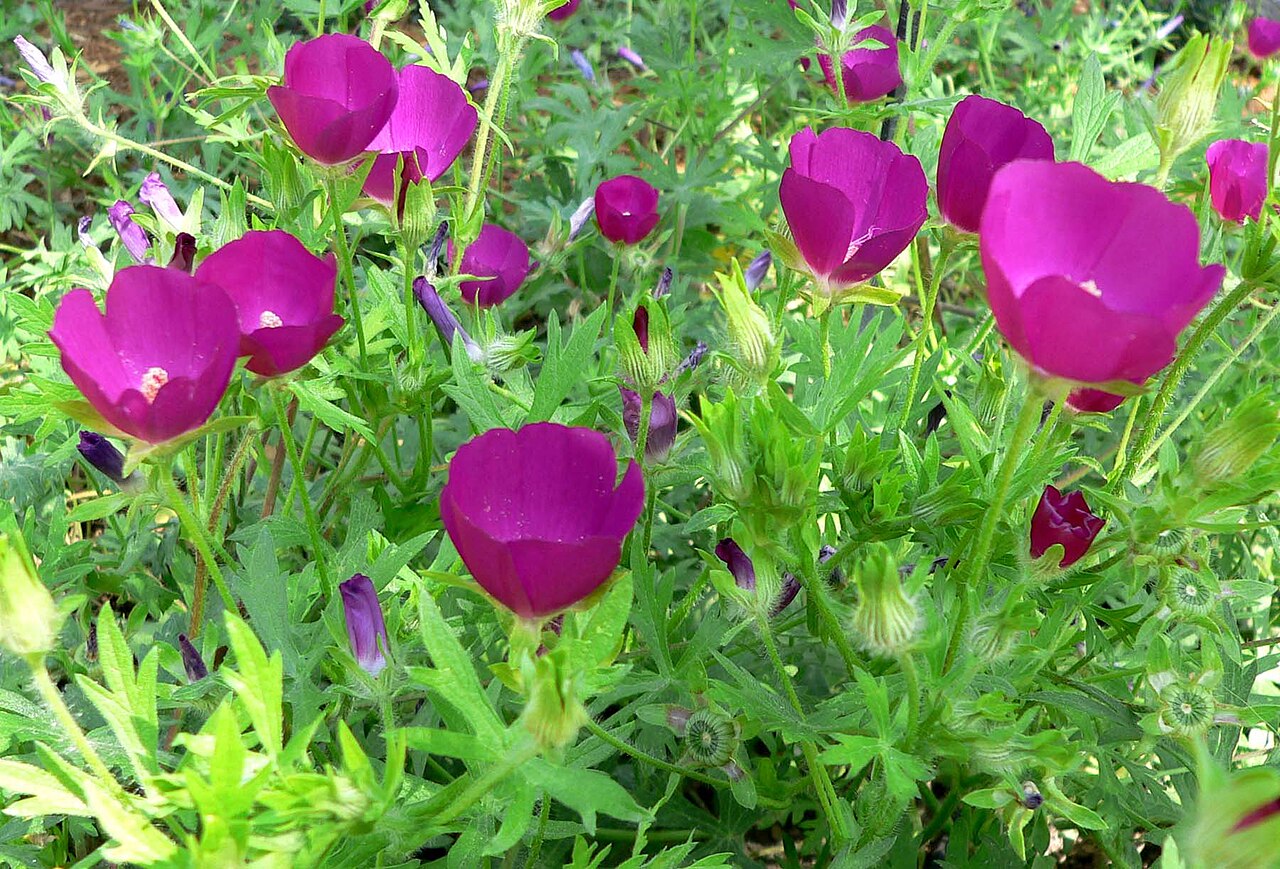
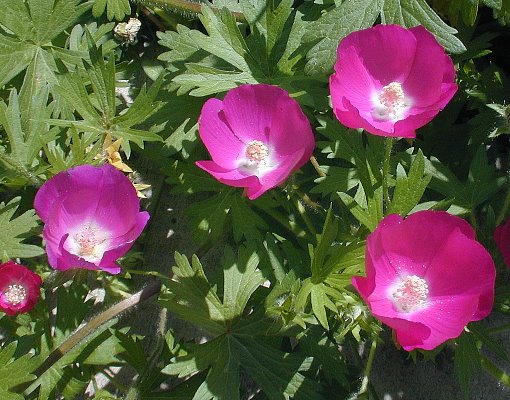
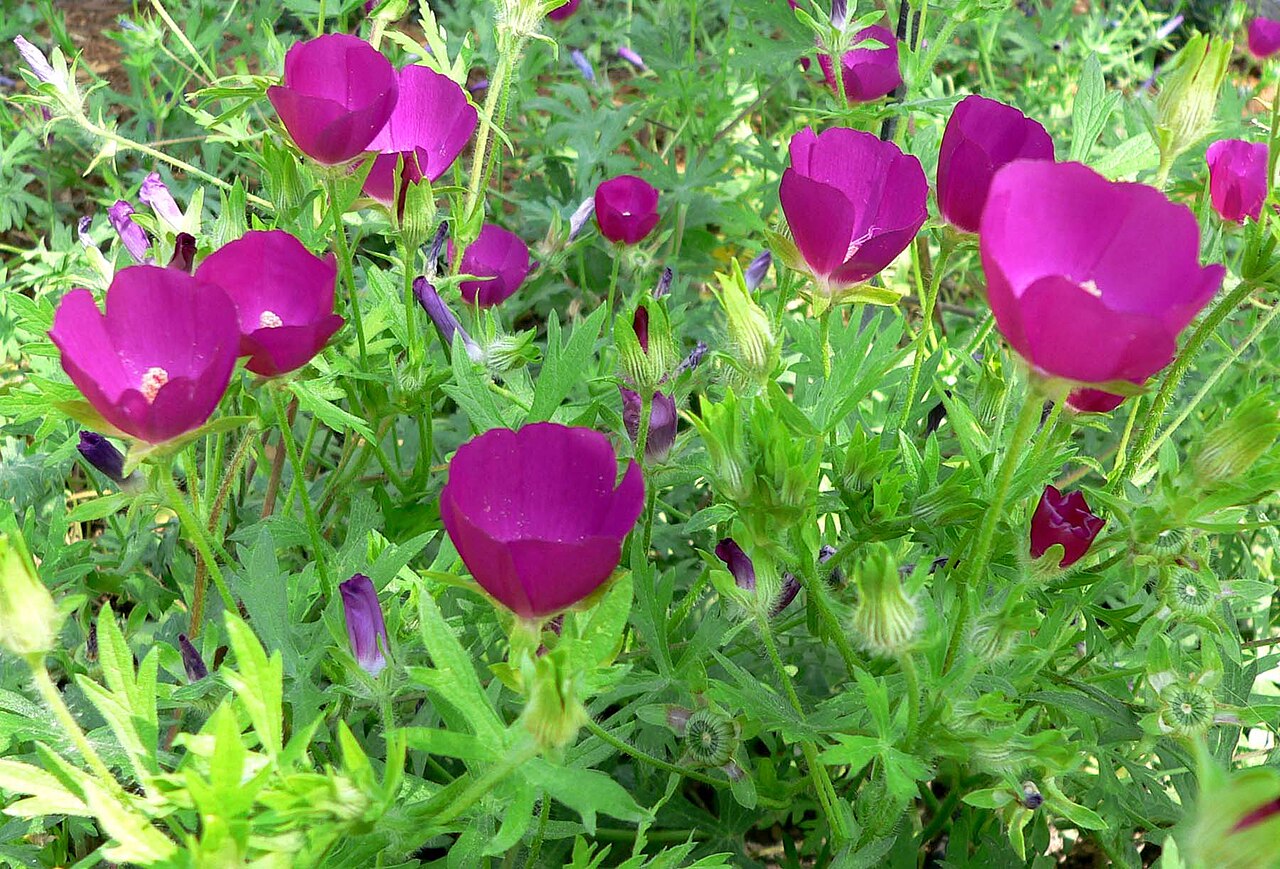
Purple Poppy Mallow (Callirhoe involucrate)

Why the Prettiest: It’s a tough, low-lying native perennial of the Great Plains that features vibrant, cup-shaped magenta blooms with white centers.

Location: Native to the US Great Plains and adjacent areas of northern Mexico.

Environment: Found in upland prairies, roadsides, pastures, and other open, disturbed areas. Grows 6-12 in and spreads 3ft.

Bloom Season: Blooms late spring through summer and into fall. Attracts bees, bumblebees, and butterflies.

Color Varieties: Available in bright magenta or wine-red.

Gardening Conditions: Prefers dry, sandy, or loamy, well-drained soils. Dislikes wet, soggy roots, which can cause crown rot. Prefers full sun. Makes a good water thrifty ground cover, making it excellent for rock gardens, borders, and cascading over retaining walls. Due to a deep tap root, it’s very drought resistant once established. But it’s difficult to move or transplant so choose a permanent spot carefully. Generally deer resistant though rabbits may graze on young growth.

Conservation Status: Currently listed as Secure.

Trivia: Used by Native Americans as a pain reliever.

Other Candidates: Western Prairie Fringed Orchid, Purple Coneflower, Prairie Coneflower, Carolina Puccoon, Black-Eyed Susan, Scarlet Globemallow, and Blue False Indigo.

28. Nevada

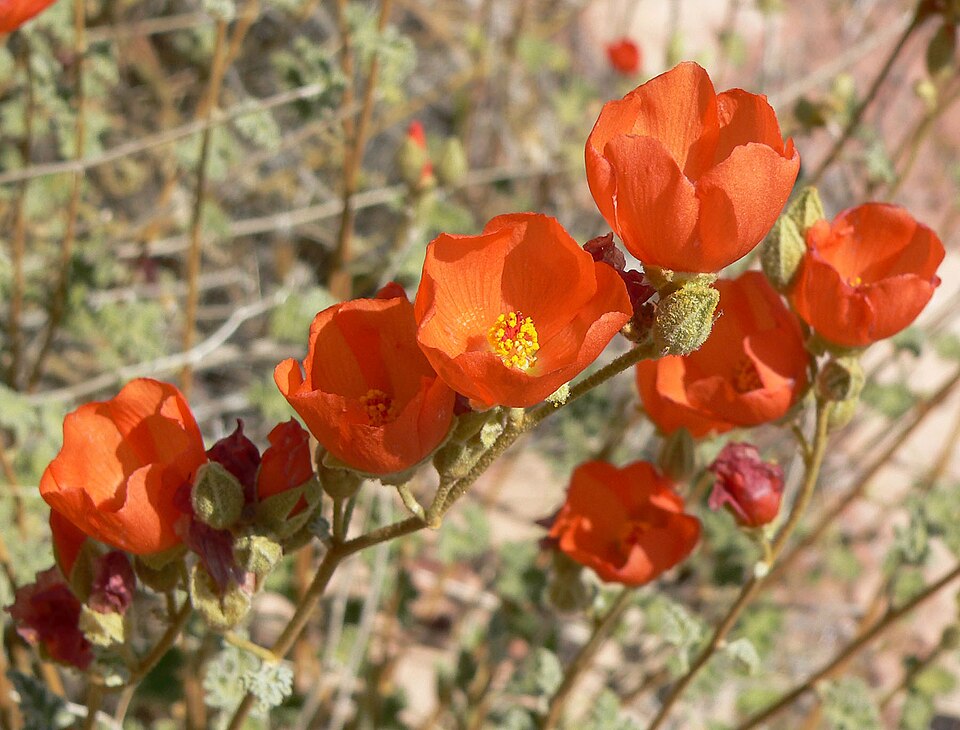
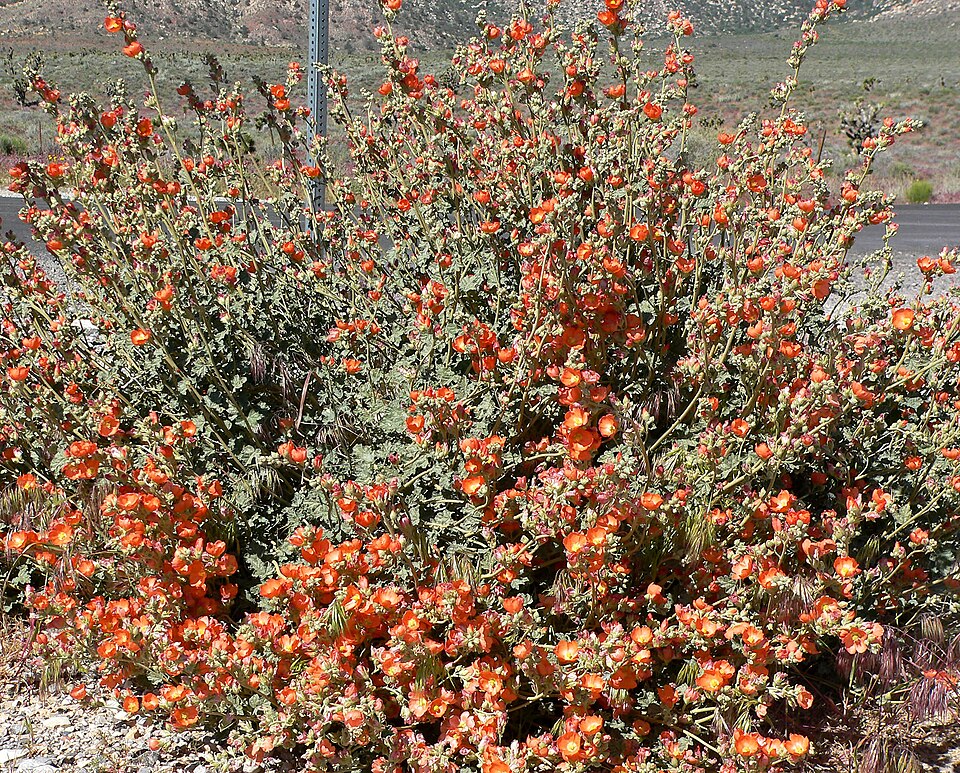
Desert Globemallow (Sphaeralcea ambigua)

Why the Prettiest: This is a perfect flower for a mostly desert state since it’s a tough, drought-tolerant perennial shrub with bright apricot-orange, bowl-shaped, hollyhock like blooms. While its fuzzy, whitish-green or green leaves have scalloped edges.

Location: Native to the southwestern United States and northwest Mexico.

Environment: Found in Mojave, Great Basin, and Sonoran Desert ecoregions. Grows well in alkaline soils, both sandy and clay, usually near creosote bush or desert chaparral habitats at 490-8,200ft in elevation. Can grow up to 2-4ft tall.

Bloom Season: Blooms from spring to summer but could last for months. Attracts numerous bee pollinators, including the specialist ground-dwelling bee. Also attracts hummingbirds and butterflies. Provides food and habitat for other species.

Color Varieties: Available in orange.

Gardening Conditions: Can be used in native, pollinator, or drought resistant gardens and as a buffer against invasive species. Requires full sun with natural rainfall, though you can increase flowering with supplemental watering. Prefers sandy, desert soil with good drainage but can tolerate some clay. But hates heavily wet soil. Still, it can be trimmed back after heavy blooming to encourage neat shape and fresh flowers.

Conservation Status: Currently listed as Secure.

Trivia: Used by the Shoshone people as a medicinal plant.

Other Candidates: Desert Peach, Indian Paintbrush, Lupine, Desert Marigold, and Palmer’s Penstemon.

29. New Hampshire

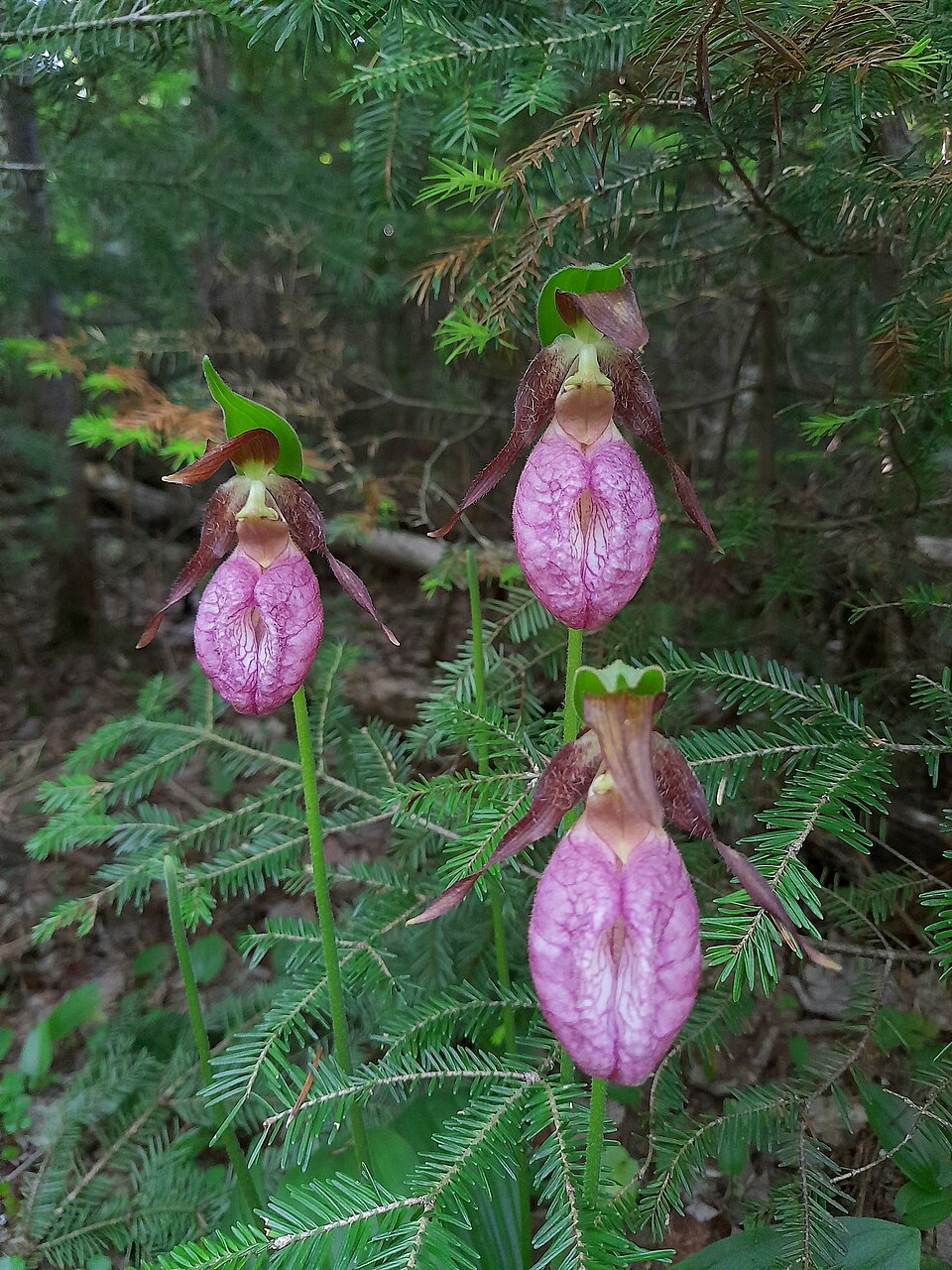
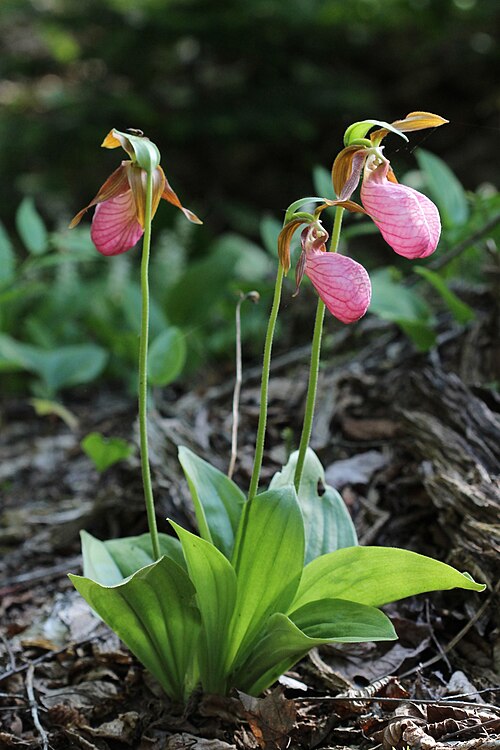
Pink Lady’s Slipper (Cypripedium acaule)

Why the Prettiest: For one, it’s New Hampshire’s state wildflower. It’s also a striking orchid for its unique pouch-shaped pink flower. Its single pink or magenta pouch resembles a moccasin shoe.

Location: Native to eastern North America, particularly in the Great Lakes region, the Northeast, along the Appalachian Mountains, and every Canadian province save for British Columbia.

Environment: Found in pine forests with sandy soil, where it’s often seen in large colonies. Also grows in deciduous woods. Though mature well-shaded forests are preferred. Can grow up to 1ft 4 in tall.

Bloom Season: Blooms from mid-spring to early summer such as from May to July. Attracts bees but they eventually stop visiting because it doesn’t produce nectar and offers no food but still gets pollinated through deception, usually by queens.

Color Varieties: Available in pink, magenta, and white.

Gardening Conditions: Takes many years to go from seed to plant that gathering seed-bearing specimens is presently unsustainable. Since tiny seeds need a special soil fungus to germinate and feed the young plant. Requires highly acidic soil and tolerates a range shade and moisture. Though prefers partial shade and well-drained slopes. Highly sensitive to shade and soil disturbances and environmental changes. Due to its fragile relationship with soil fungi, it usually dies if you dig it up and move it to a home garden. Not as common as other flowers in garden stores due to the extra care involved should the growing site not be suitable for its cultivation. Though germination labs have increased its availability.

Conservation Status: Currently listed as Least Concern but has experienced substantial population decline due to habitat loss, deforestation, and development. Considered vulnerable in New York, endangered in Illinois and Tennessee, and unusual in Georgia.

Trivia: Provincial flower of Saint Edward Island. Used by Native Americans as medicine. Used by Algonquin for treating menstrual disorders. Can live up to 20 years in its natural habitat.

Other Candidates: Wild Lupine, Painted Trillium, Mountain Avens, Blue Flag Iris, and Cardinal Flower.

30. New Jersey

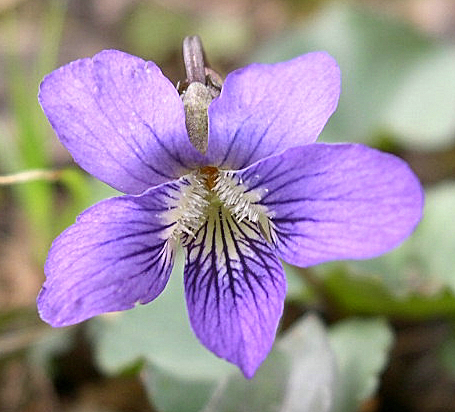
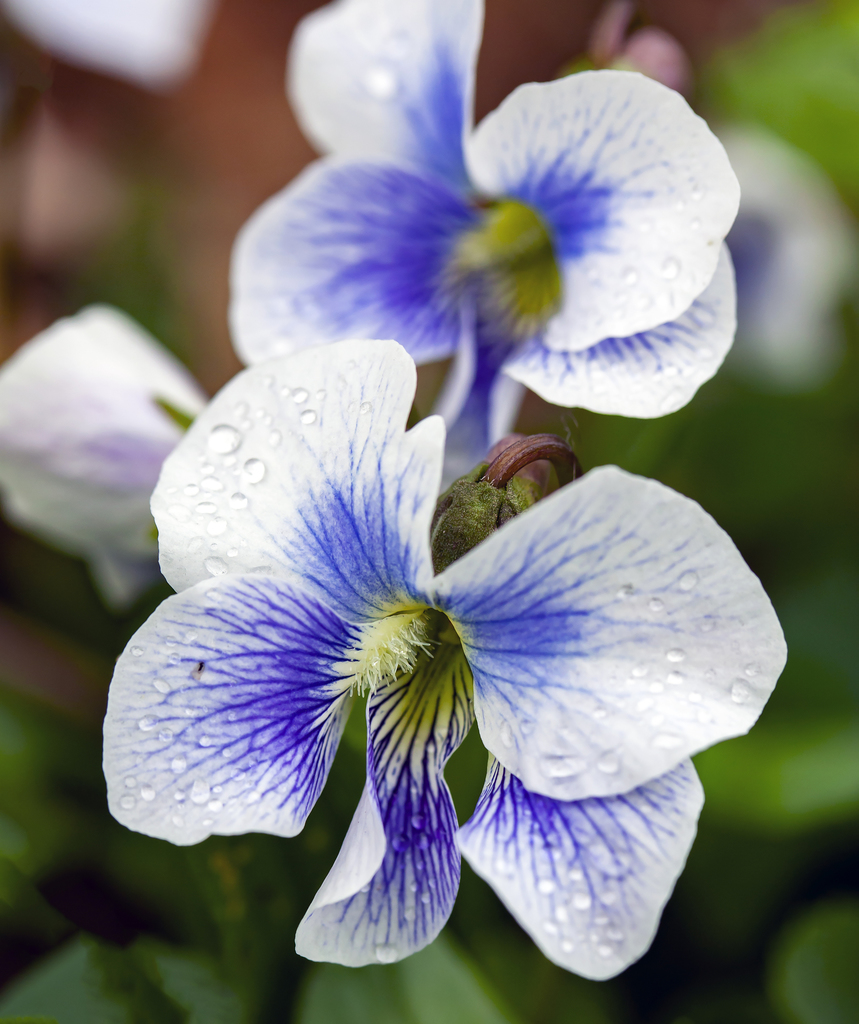
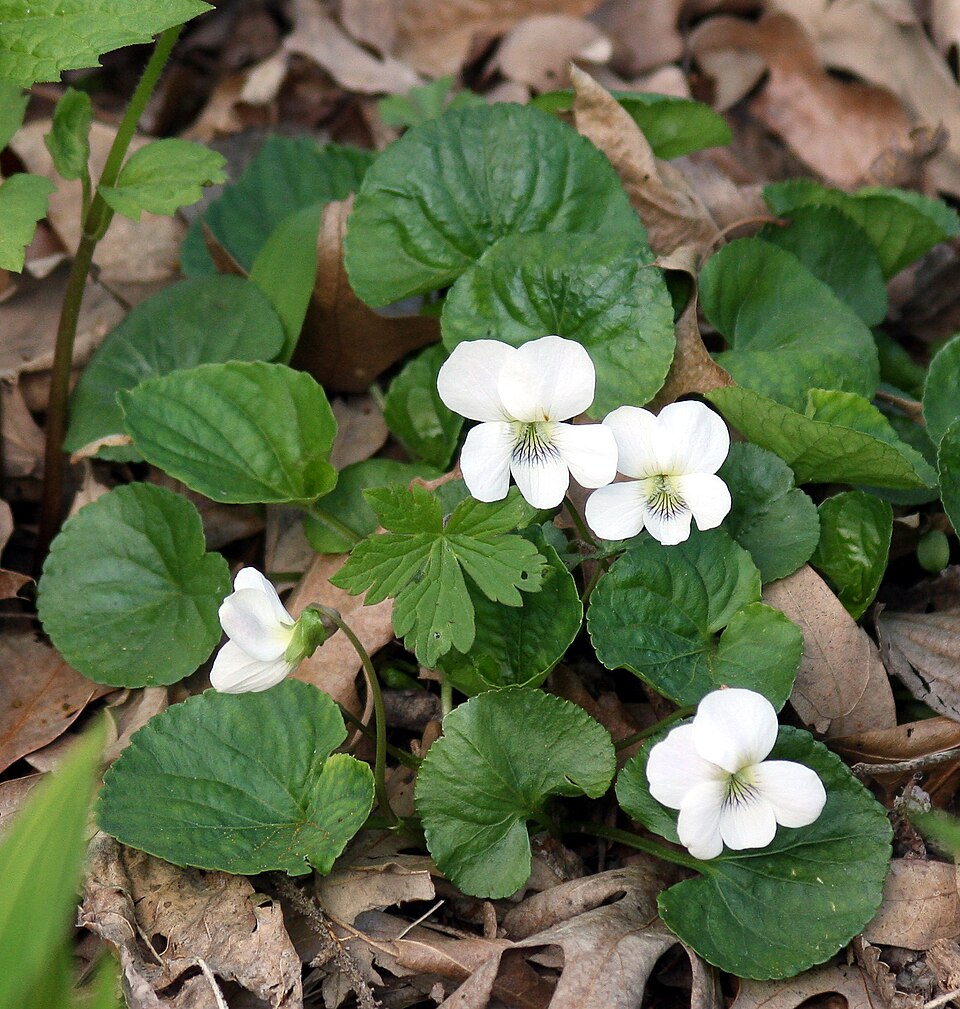
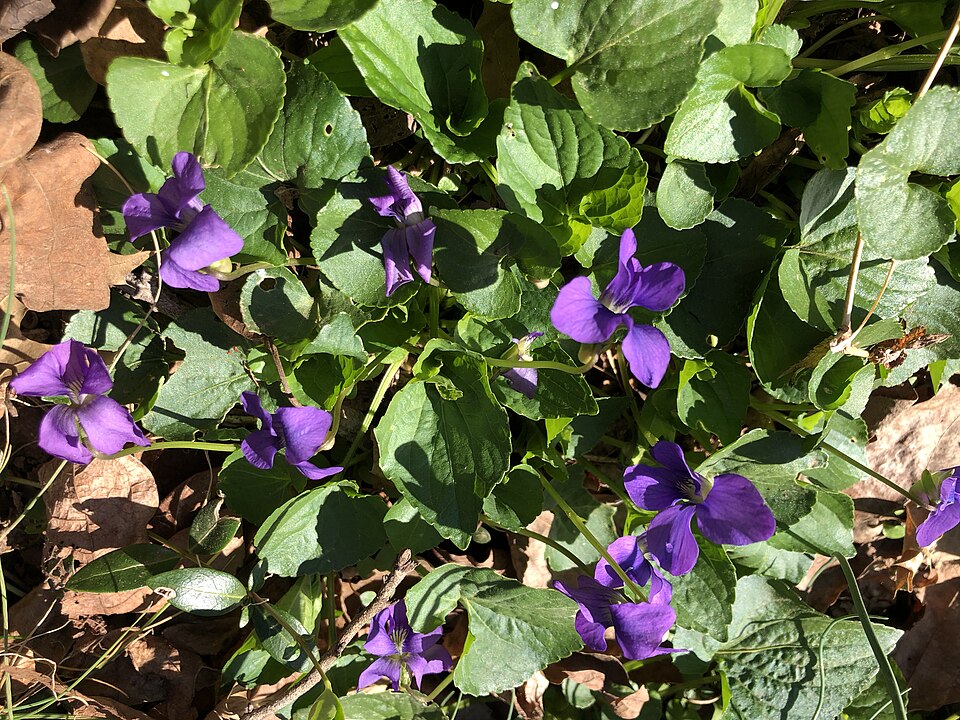
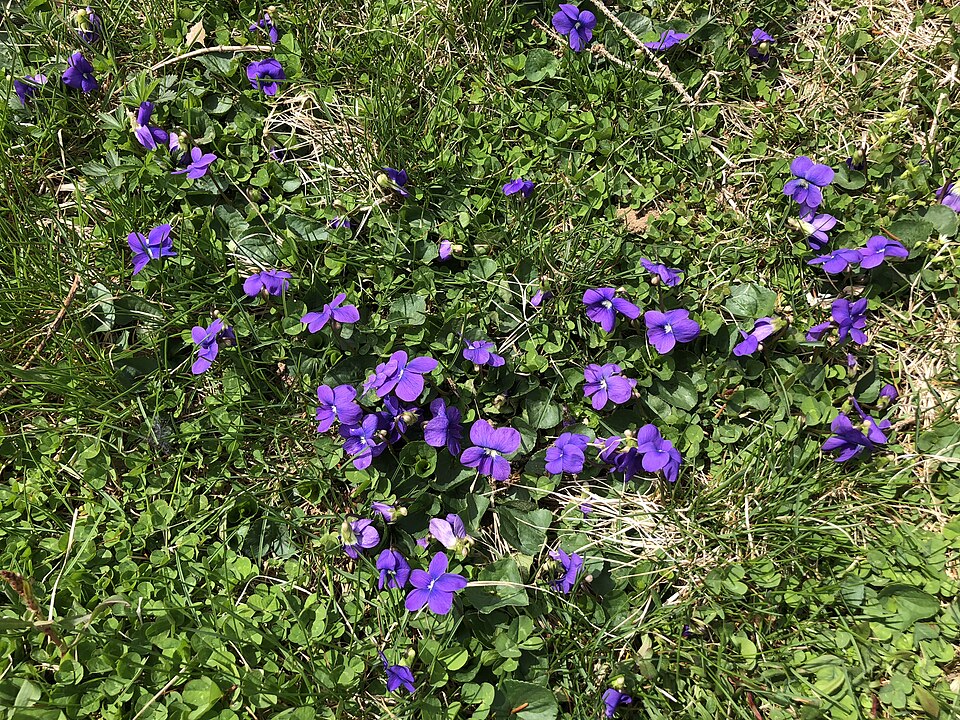
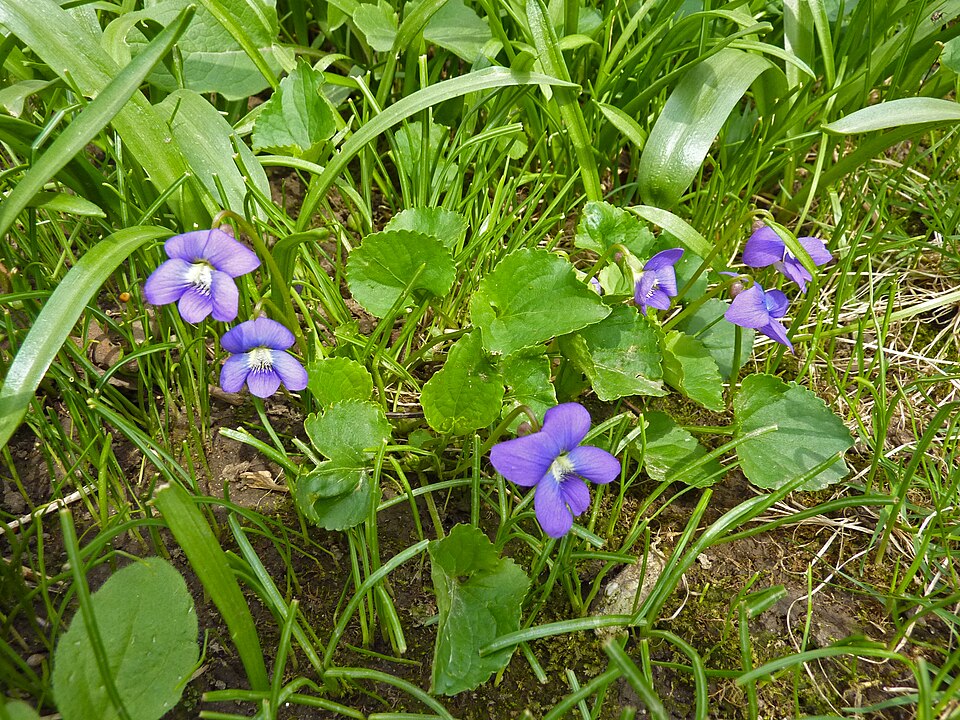
Common Blue Violet (Viola sororia)

Why the Prettiest: It’s New Jersey’s state flower as well as that of Illinois, Rhode Island, and Wisconsin. It’s a low-growing, herbaceous perennial with glossy, heart-shaped leaves with scalloped edges and blue-purple flowers with white throats.

Location: Native to eastern North America from southern Canada to northern Mexico.

Environment: Native habitats are moist, rich woods and swamps. But often found in lawns and gardens or pretty much anywhere. Can grow up to 4-6 in tall.

Bloom Season: Blooms from April to June. Larval host for fritillary butterflies. Attracts mason bees, sweat bees, and specialist mining bees. Serves as food for wild turkeys, rabbits, deer, livestock, mourning doves, bobwhites, and white-footed mice. Seeds are dispersed by ants.

Color Varieties: Available in bluish purple, white, pink, and blue-and-white.

Gardening Conditions: Grows best in well-drained and shady habitats, likely on forest floors. But can adapt to sunny or partly shady conditions. Prefers soil that’s moist, rich, and well-drained. Has no known toxicities nor insect or disease problems and is safe around pets. Reproduces by seed and vegetatively. Can be a soft, living carpet in shade gardens and woodland edges.

Conservation Status: Currently listed as Secure.

Trivia: Used as a medicine by Europeans and Native Americans. Can be eaten raw or cooked, or brewed for tea. May also work as an anti-inflammatory and used for topically skin conditions. Yet, many consider it as a weed. Can self-fertilize and shoot seeds as far as 9ft away. Used to decorate waterways and park areas. Known as a symbol of love and modesty by Sappho, Shakespeare, and Christina Rossetti. A 1920s play in France called The Captive also established it as a “lesbian flower.”

Other Candidates: Virginia Bluebell, Black-Eyed Susan, Butterfly Weed, and Spotted Beebalm.

The United States of Wildflowers – Part 2 Hawaii to Maryland

We’re off to a good start. When it comes to selecting what wildflowers to use, it must meet two criteria, it must be wild and it must be native. Sure, you may see plenty of flowers in gardens and at the garden store. But many of them are often cultivated varieties that couldn’t survive in the wild or in local conditions. While there are plenty of flowers growing in the wild that were introduced overseas, either naturalizing or becoming an invasive species. Some of these introduced species have become so invasive that they’re considered a noxious weed. In this post, we’ll see a tropical flower from Hawaii, a western lily from the Rocky Mountains, a couple of garden favorites from the Midwest, Maryland, and New England, a roadside favorite from Iowa, two irises, and an iconic phenomenon from Kansas.

11. Hawaii

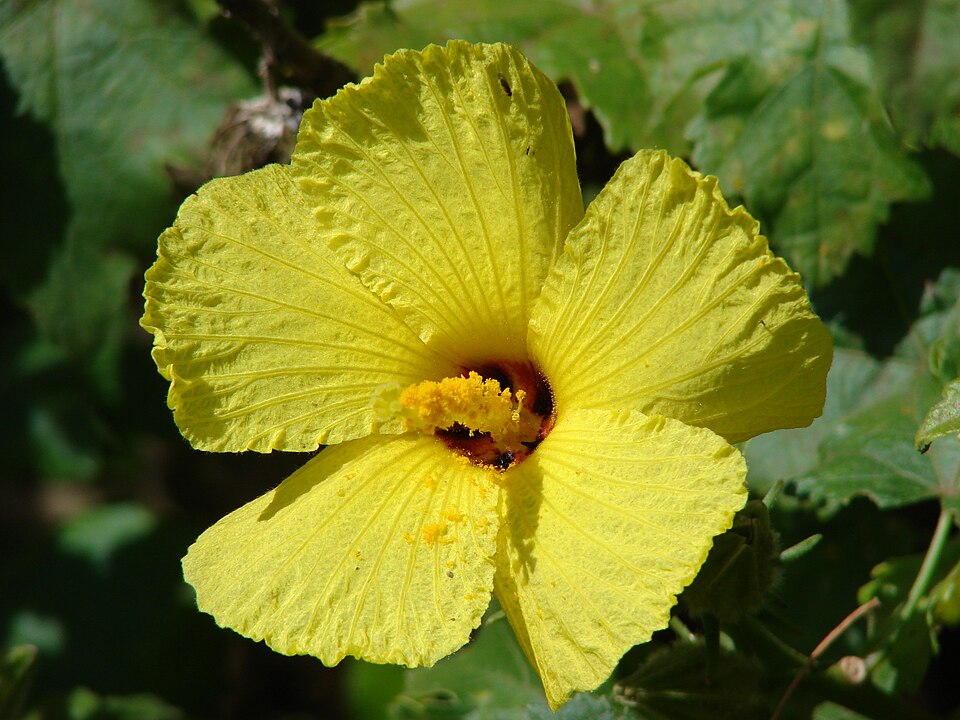
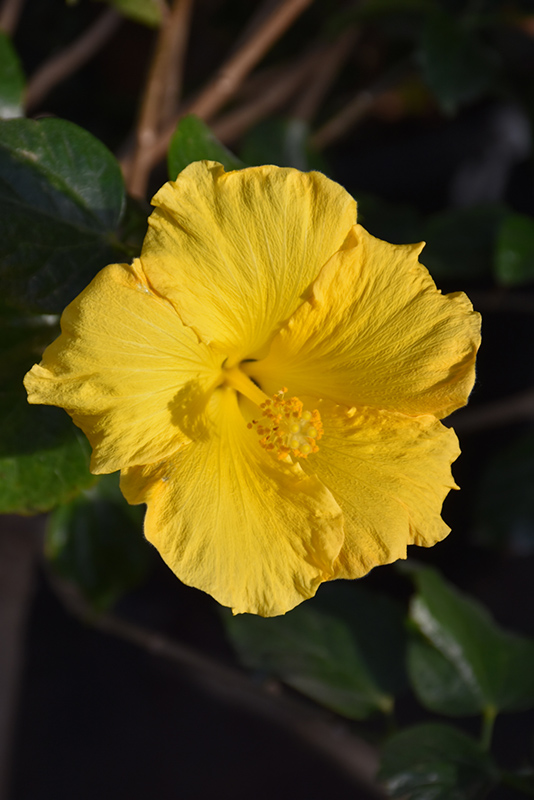
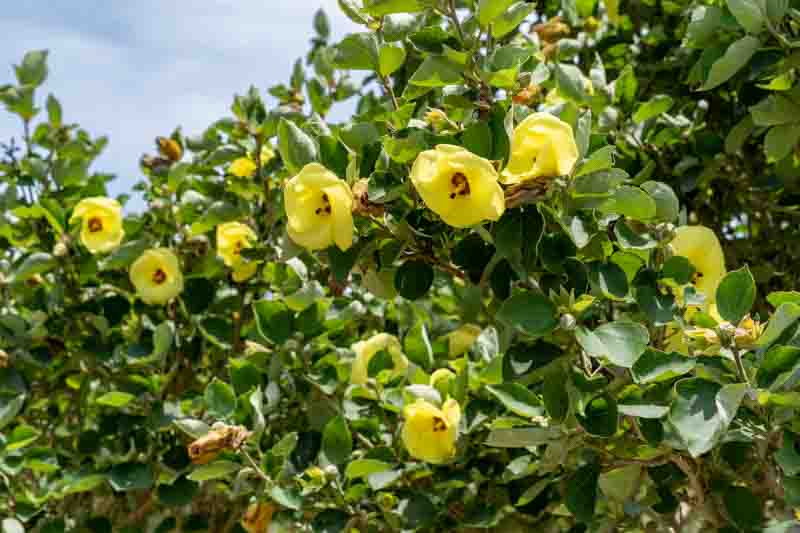
Yellow Hibiscus (Hibiscus brackenridgei)

Why the Prettiest: For one, it’s the state flower of Hawaii. It’s a striking tropical shrub featuring vibrant yellow blooms. In Hawaii, this flower represents beauty, hospitality, and aloha.

Location: Native to the Hawaiian Islands.

Environment: Grows in lowland dry forest and shrubland up to 350 m elevation. Can grow up to 5-8ft tall.

Bloom Season: Blooms from spring to fall but its bloom only lasts for a single day. Nonetheless, the plant itself always produces blooms continuously.

Color Varieties: Available in yellow.

Gardening Conditions: Needs full sun to partial shade during the day. Prefers well-drained, neutral to acidic fertile soil. Must be grown indoors in more temperate areas and treated as a tropical annual. Requires regular watering and annual early spring pruning. Popular as a patio pot plant, garden accent, and colorful outdoor hedge.

Conservation Status: Currently listed as Critically Endangered due to habitat loss and degradation as well as introductions of invasive plants and animals. There are 7 populations with a total less than 60 plants.

Trivia: Has 3 subspecies.

Other Candidates: White Ginger Lily, Pua Kala, Beach Morning Glory, Naupaka, Flowering Maple.

12. Idaho

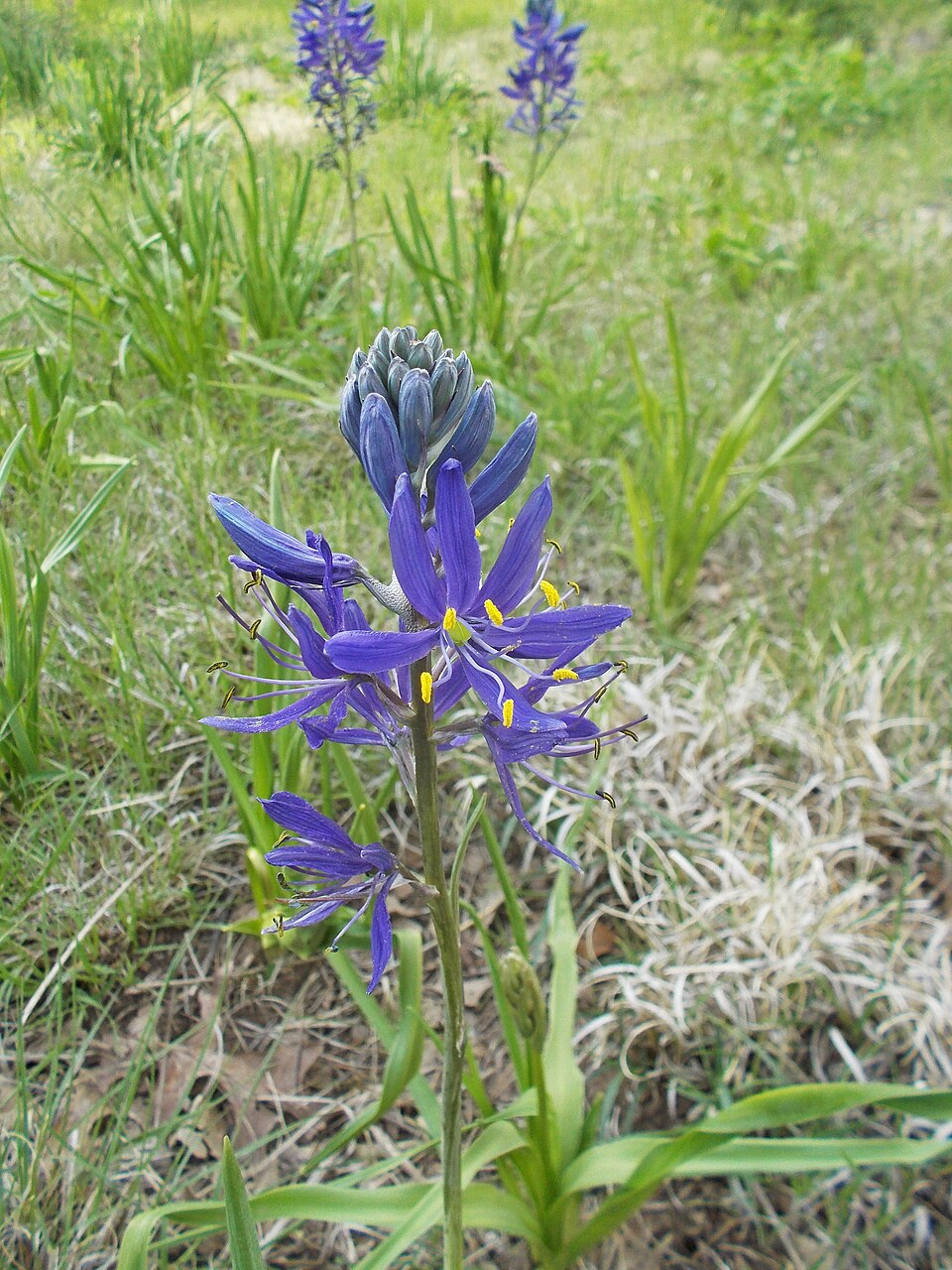
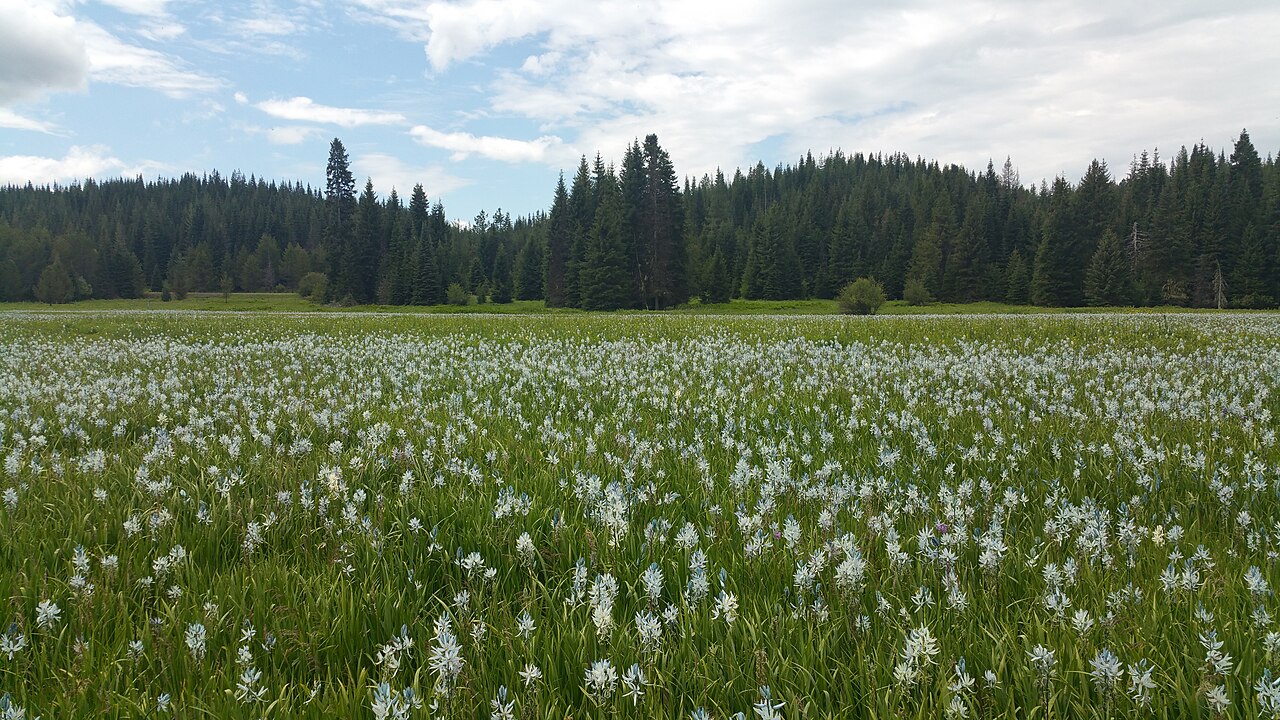
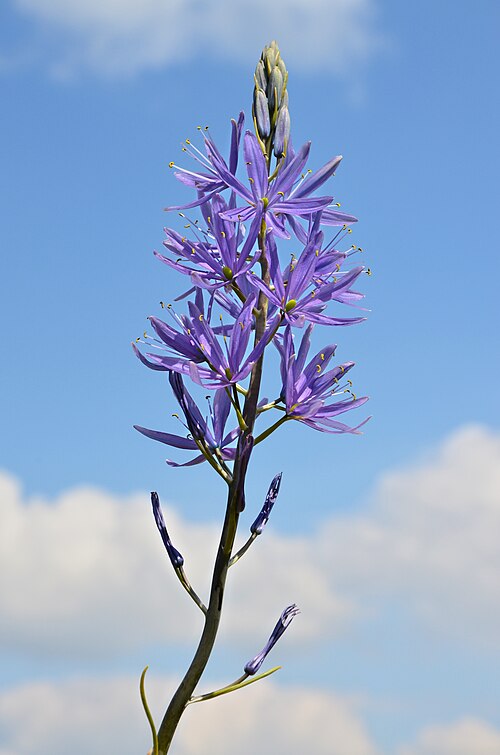
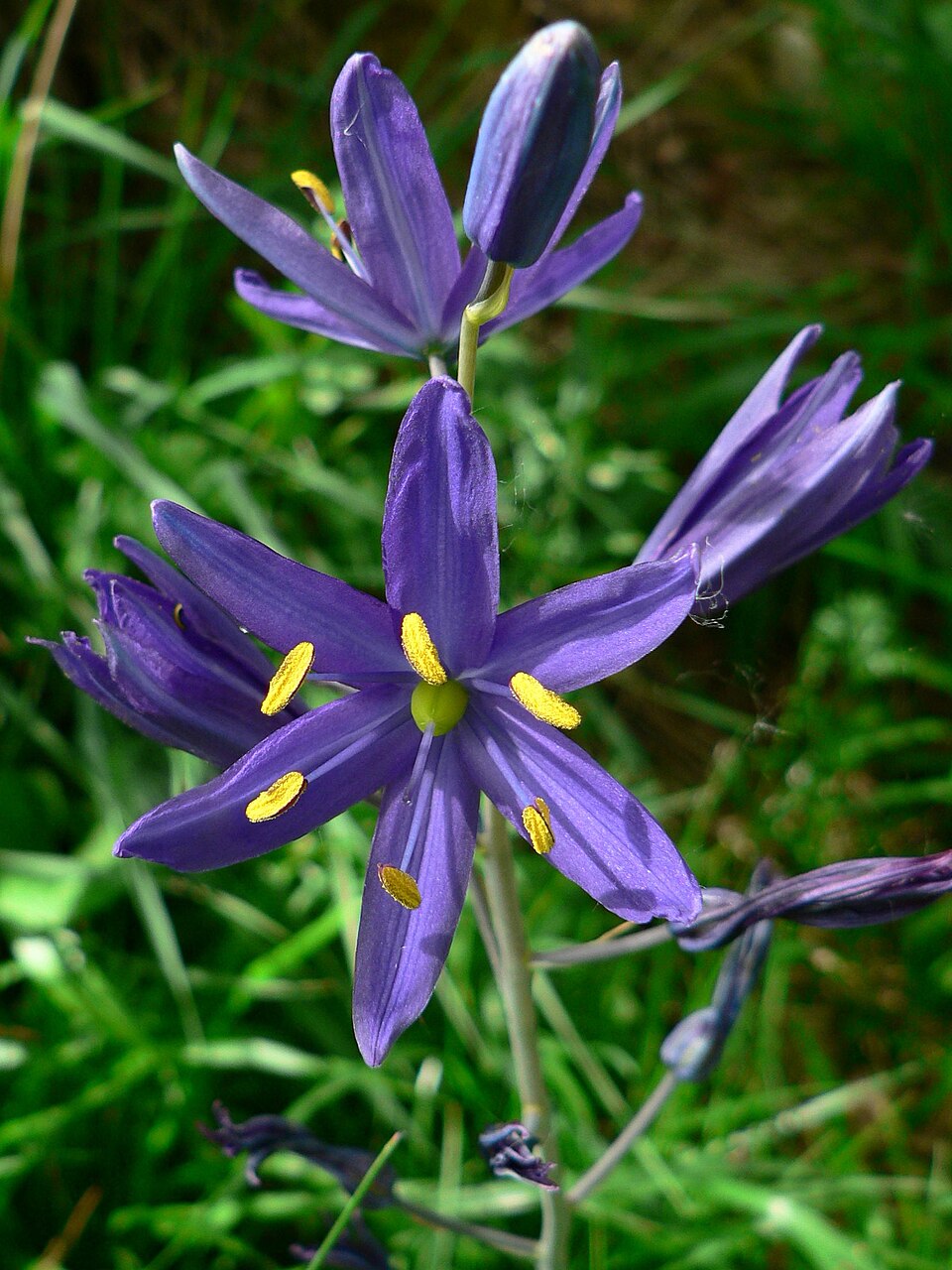
Common Camas Lily (Camassia quamash)

Why the Prettiest: It’s a perennial plant with an herbaceous character with grass-like, strap-like basal leaves and upright spikes of light blue or violet-blue flowers. Known for its striking, violet-blue, star-shaped flowers and importance as a traditional indigenous food source.

Location: Native to western North America from southern Canada to the Northwestern United States.

Environment: Can be found in shaded forest areas, rocky outcrops, open meadows and prairies, alongside streams and rivers, and marshes. Can grow up to 2.6 ft tall.

Bloom Season: Blooms in the late spring and could cover an entire meadow in blue.

Color Varieties: Available in deep blue, light blue, and blue-violet.

Gardening Conditions: Can be grown as an ornamental plant and naturalizes well in gardens. Grows best in well-drained soil high in humus or heavy clay that remains wet in the winter and spring. But dries out after blooming. Plant spreads by seed. However, it looks similar to death camas which is a highly toxic and potentially fatal plant that often grows in the same areas. So don’t forage or eat wild bulbs unless you have expert verification.

Conservation Status: Classified as Secure, although it’s been diminished from its native range due to modern development and agriculture.

Trivia: Has 8 subspecies. Used as food by the Nez Perce and other indigenous tribes, often roasting and boiling the bulbs. Cultivated by the Lekwungen peoples since precolonial times. Bulb is considered edible and nutritious when roasted or boiled as well as contributed to the survival of several members of the Lewis and Clark Expedition.

Other Candidates: Idaho Trillium, Arrowleaf Balsamroot, Camas Lily, Lupine, and Indian Paintbrush.

13. Illinois

Purple Coneflower (Echinacea purpurea)

Why the Prettiest: This is a hardy, drought-resistant perennial that produces a vibrant, pink-purple, daisy-like flowers with prominent spiky central cones. Helps that it’s a year-round magnet for wildlife.

Location: Native to parts of eastern North America and present to some extent in the easter, southeastern, and midwestern United States as well as in Ontario. Most common in the Ozarks, the Mississippi Valley, and Ohio Valley.

Environment: Can be found in dry open woods, prairies, and barrens. Grows to 47 in tall and 10 in wide.

Bloom Season: Blooms from June to September or until the first frost. Attracts bees, butterflies, and hummingbirds during the summer. While its dried winter seed heads feed goldfinches. Slugs and rabbits also eat foliage when young or shortly after emerging.

Color Varieties: Usually available in pinkish purple.

Gardening Conditions: Grown as an ornamental plant in temperate regions. Ideal for curbs, walkaways, and beds. Thrives in either dry or moist soils and tolerates drought. As long as the dirt is well-drained, it doesn’t care. But best to keep it moist while it’s young. Prefers full sun but tolerates light shade. Propagated either vegetatively with division, root cuttings, and basal cuttings or by seeds. Seed germination does best with daily temperature fluctuations. Roots can be damaged or eaten by gophers. Dead head spent summer flowers to encourage re-blooming and cut back dead stalks each early spring.

Conservation Status: Classified as Apparently Secure.

Trivia: Used by Native Americans as a traditional medicine to treat many ailments.

Other Candidates: Butterfly Weed, Dense Blazing Star, and Virginia Bluebell.

14. Indiana

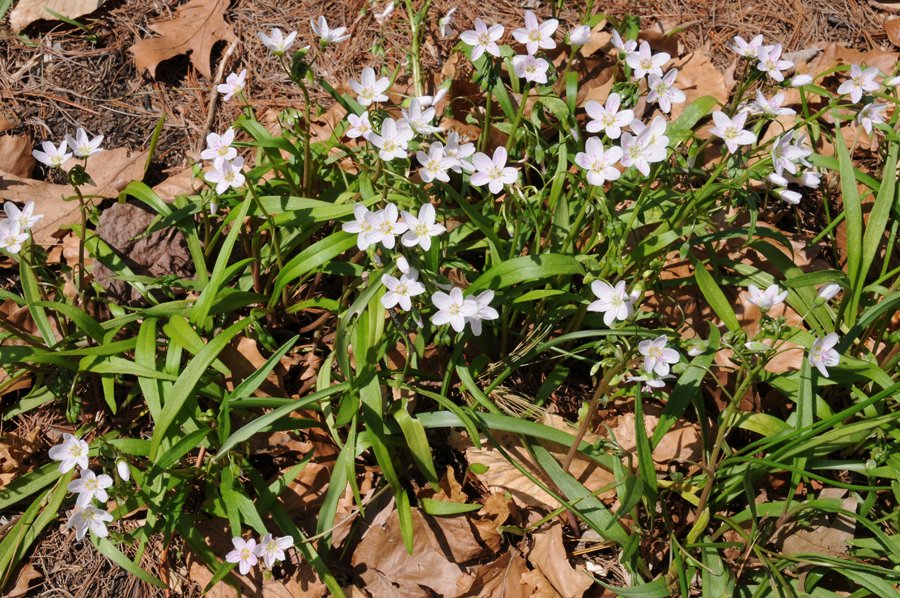
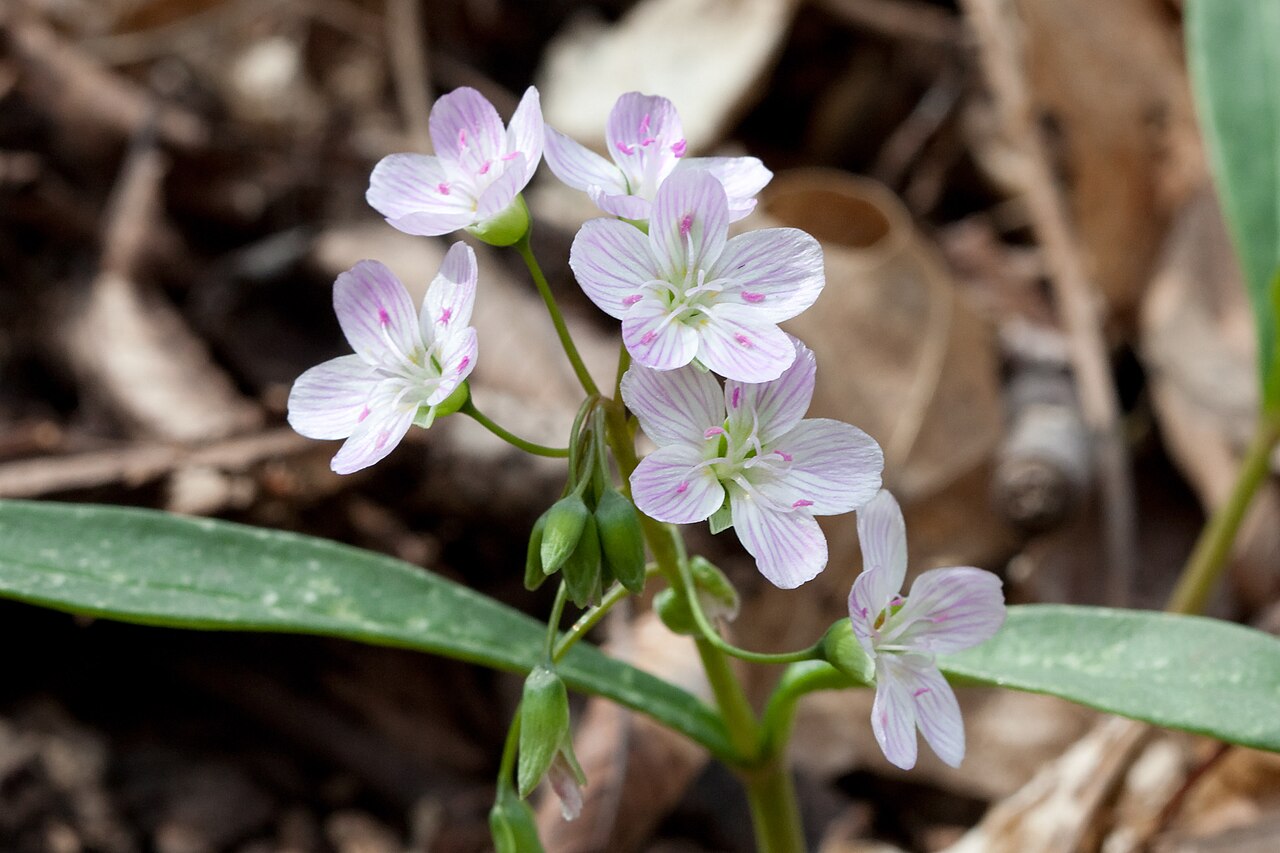
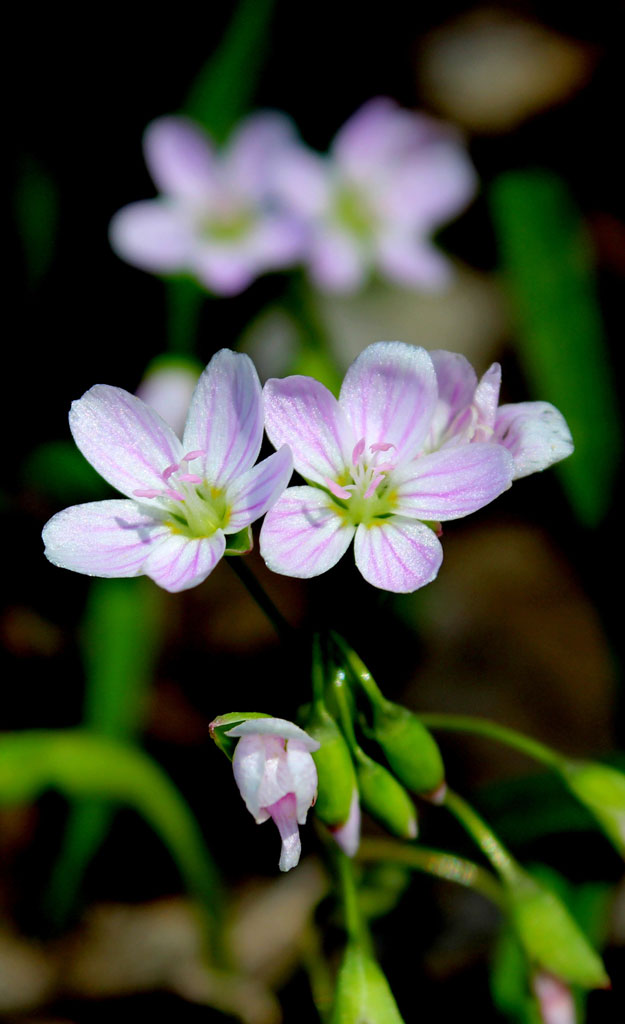
Virginia Spring Beauty (Claytonia virginica)

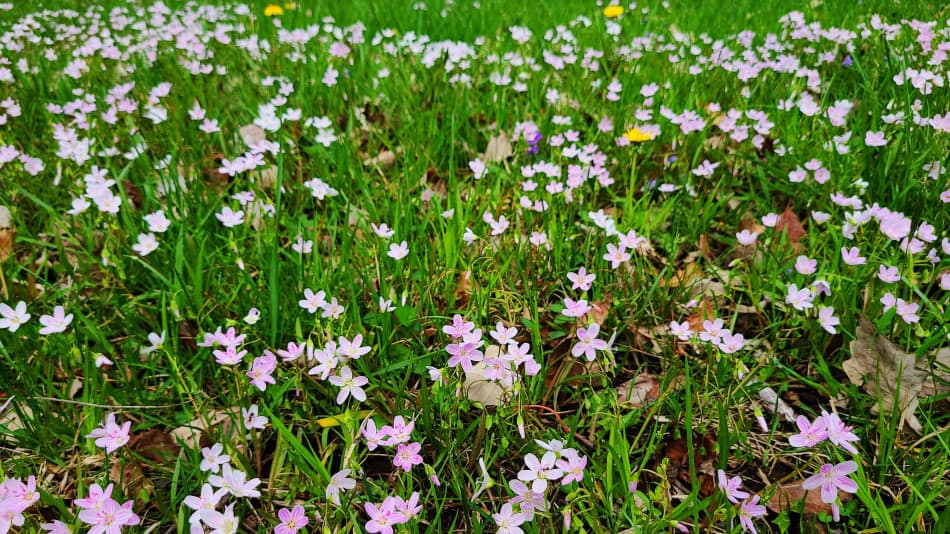
Why the Prettiest: An early spring ephemeral, it’s a low-lying perennial wildflower with small, star-shaped blooms comprising of 5 petals that look pale pink in a distance but close ups show white petals with dark pink stripes. While its foliage consists of narrow, grass-like, dark green leaves growing halfway up the thin stem.

Location: Native across eastern and midwestern United States and parts of Canada. Range from Nova Scotia down to Georgia and west Texas.

Environment: Found in temperate deciduous forests as well as lawns, city parks, woodlands, roadsides, wetlands, bluffs, and ravines. Can grow from 4-10 inches tall.

Bloom Season: Blooms in early spring to summer. Attracts native bees, honey bees, and bumblebees, providing a critical source for early season pollen and nectar. Some specialized bees rely almost exclusively on its pink pollen.

Color Varieties: Available in pale pink and yellow.

Gardening Conditions: All parts of the plant are safe for human consumption but the leaves aren’t known for tasting good. Planted in woodland gardens, rock gardens, or naturalized lawns. Does best in rich, moist, well-drained soil high in organic matter. But can adapt to clay, sand, or loam. Prefers partial shade but tolerates full sun.

Conservation Status: Listed as Secure.

Trivia: Used as a traditional medicine by the Iroquois as a cold infusion or decoction of the powdered roots to children suffering from convulsions. Also ate the roots raw as a birth control method and as food. Roots cooked by the Algonquin like potatoes. Corm like tubers were eaten by colonists as a survival food.

Other Candidates: Virginia Bluebell, Cardinal Flower, Butterfly Milkweed, Wild Bergamot, and Dwarf Larkspur.

15. Iowa

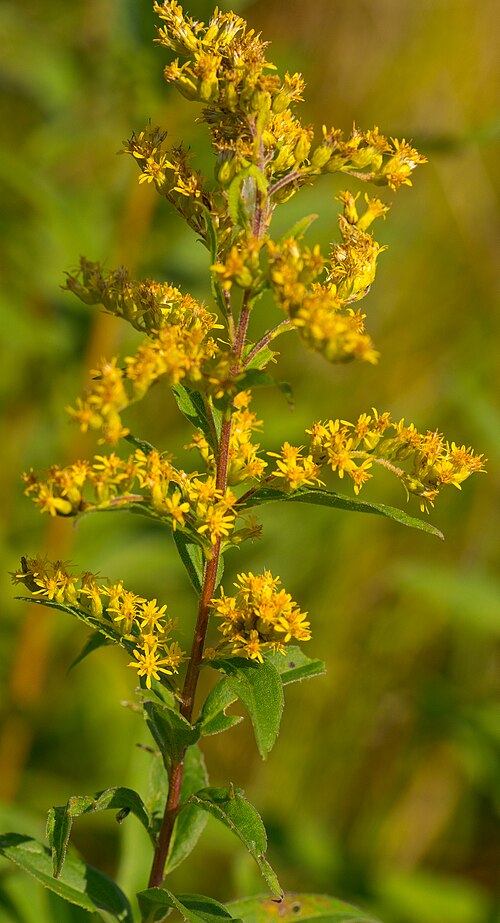
Showy Goldenrod (Solidago speciosa)

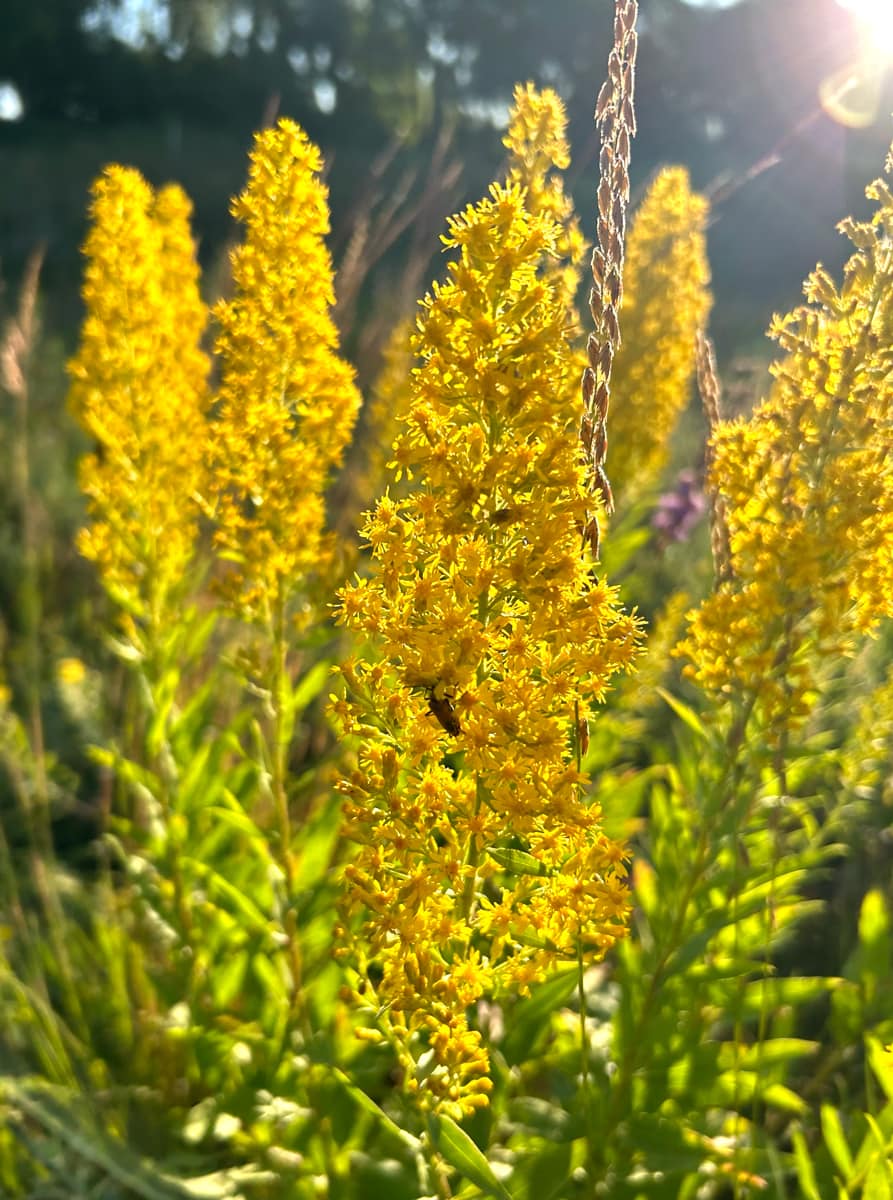
Why the Prettiest: It’s a striking perennial wildflower producing dense, upright, pyramid-shaped clusters of bright golden-yellow flowers. While its smooth, rigid stems are often reddish near the base.

Location: Native to eastern North America from the Atlantic Coast to the Great Plains from as north as southern Canada to as south as Georgia.

Environment: Found in many open areas such as fields, roadsides, hedges, and other habitats. Grows up 2-5 ft tall.

Bloom Season: Blooms from July to October or November. Major food source for bees, butterflies, and beneficial insects late in the season.

Color Varieties: Available in yellow.

Gardening Conditions: Thrives in full sun but accepts partial shade. Adapts to sand, loam, or clay as long as it drains well. Prefers dry to medium moisture and handles drought well once established. But space individual plants 2-3ft apart.

Conservation Status: Listed as Secure.

Trivia: Forms neat clumps with a fibrous root system instead of spreading aggressively like other goldenrods. In addition, due to heavy, sticky pollen that’s often carried by insects instead of the wind, doesn’t cause hay fever.

Other Candidates: Michigan Lily, Purple Coneflower, Black-Eyed Susan, Wild Bergamot, and Virginia Bluebell.

16. Kansas

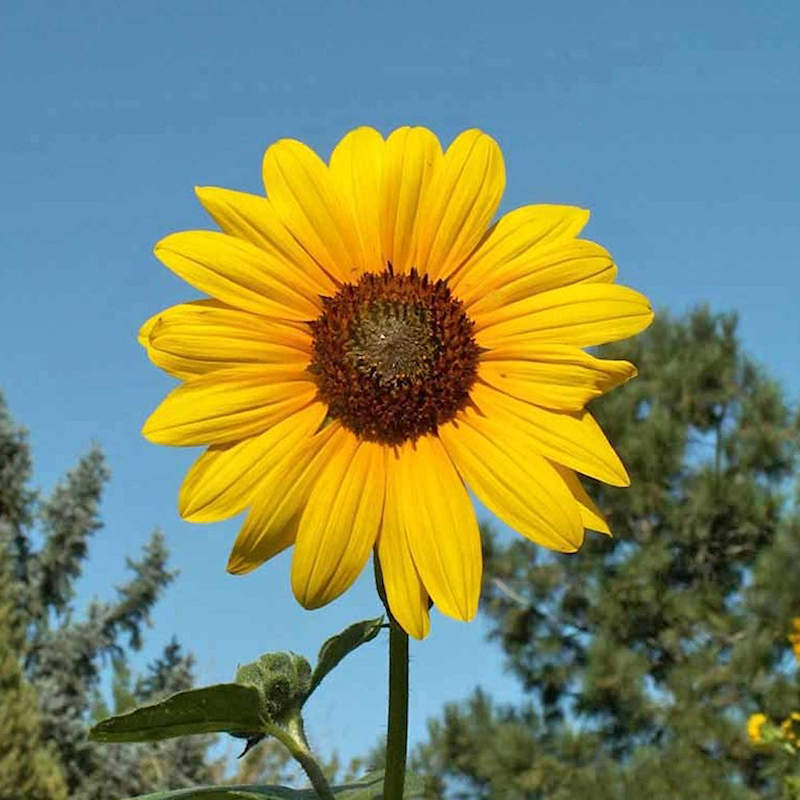
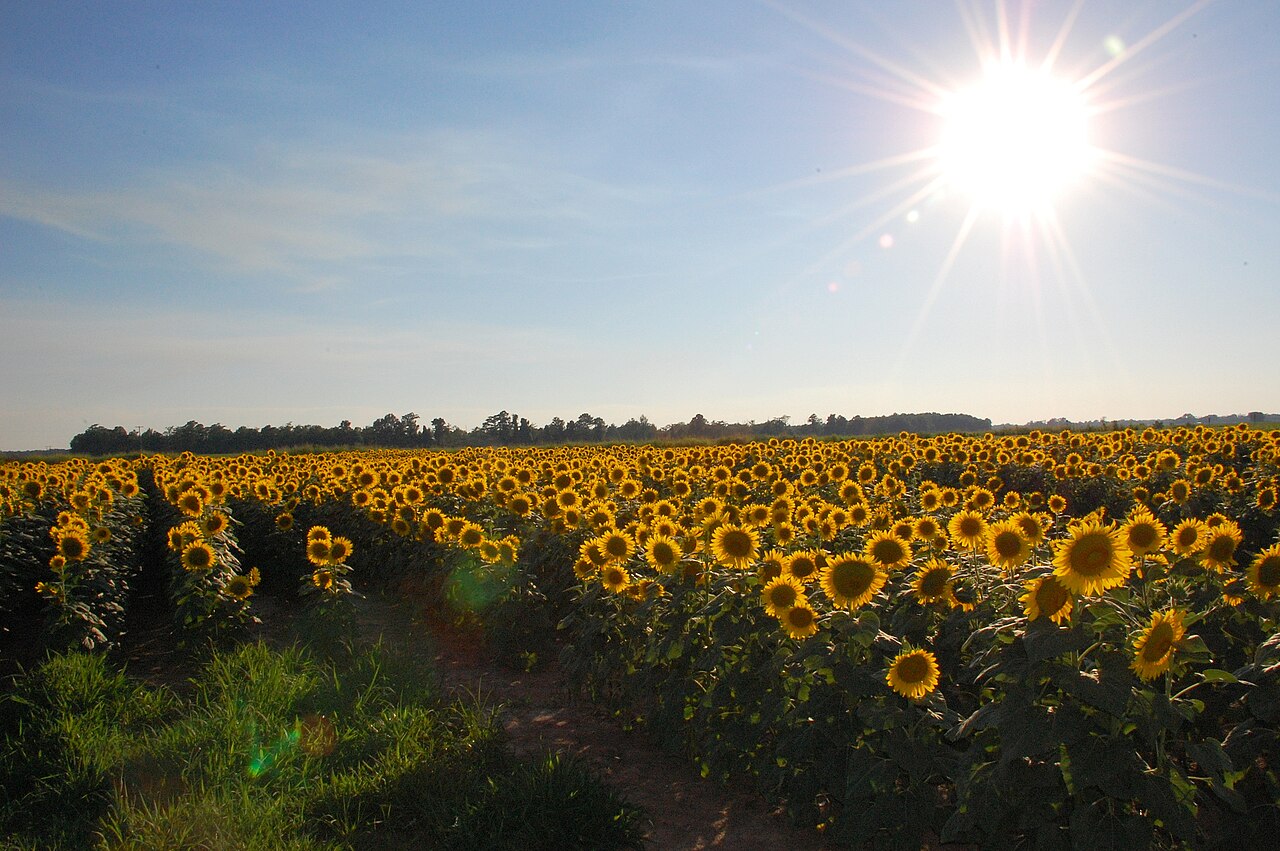
Common Sunflower (Helianthus annuus)

Why the Prettiest: For one, it’s the state flower of Kansas and an iconic one with a major cultural footprint in the Americas and around the world. Painters like Van Gogh have painted it. There are even whole industries behind this flower for its uses, particularly in Russia and former eastern bloc countries, particularly Ukraine. This annual forb in the daisy family features bright yellow ray petals surrounding a brown, yellow, or maroon central disc often measuring 2-5 in across wild varieties.

Location: Native to southern Canada, central and western United States, and Northern Mexico.

Environment: Often appears in dry open areas and foothills. Outside cultivation, it’s found in clay-based soils that are typically wet in the spring but dry out in the summer. Can grow as tall as 2-10 ft.

Bloom Season: Blooms during the late summer to early fall. Acts as a virtual habitat providing nectar to bees and butterflies as well as seeds for birds like goldfinches, doves, and quail.

Color Varieties: Available in Yellow. But cultivated varieties have all kinds of colors.

Gardening Conditions: Grows best in fertile, moist, well-drained soil with heavy mulch. Thrives best in full sun. Susceptible to the Fusarium fungus, downy mildew, broomrapes, as well as other diseases.

Conservation Status: Currently listed as Least Concern.

Trivia: First domesticated by Native Americans. One of the first plants brought from the Americas to Europe during the 16th century. Domesticated form is harvested for its edible seeds for oil, confectionary, fertilizer, livestock feed, birdseed, natural dyes, or as a snack food. National flower of Ukraine and city flower of Kitakyushu, Japan. Has served as symbol of green ideology, protest movements, and indigenous tribe emblems. Subject to much of Native American mythology.

Other Candidates: Butterfly Milkweed, Purple Coneflower, Black-Eyed Susan, Missouri Evening Primrose, and Purple Prairie Clover.

17. Kentucky

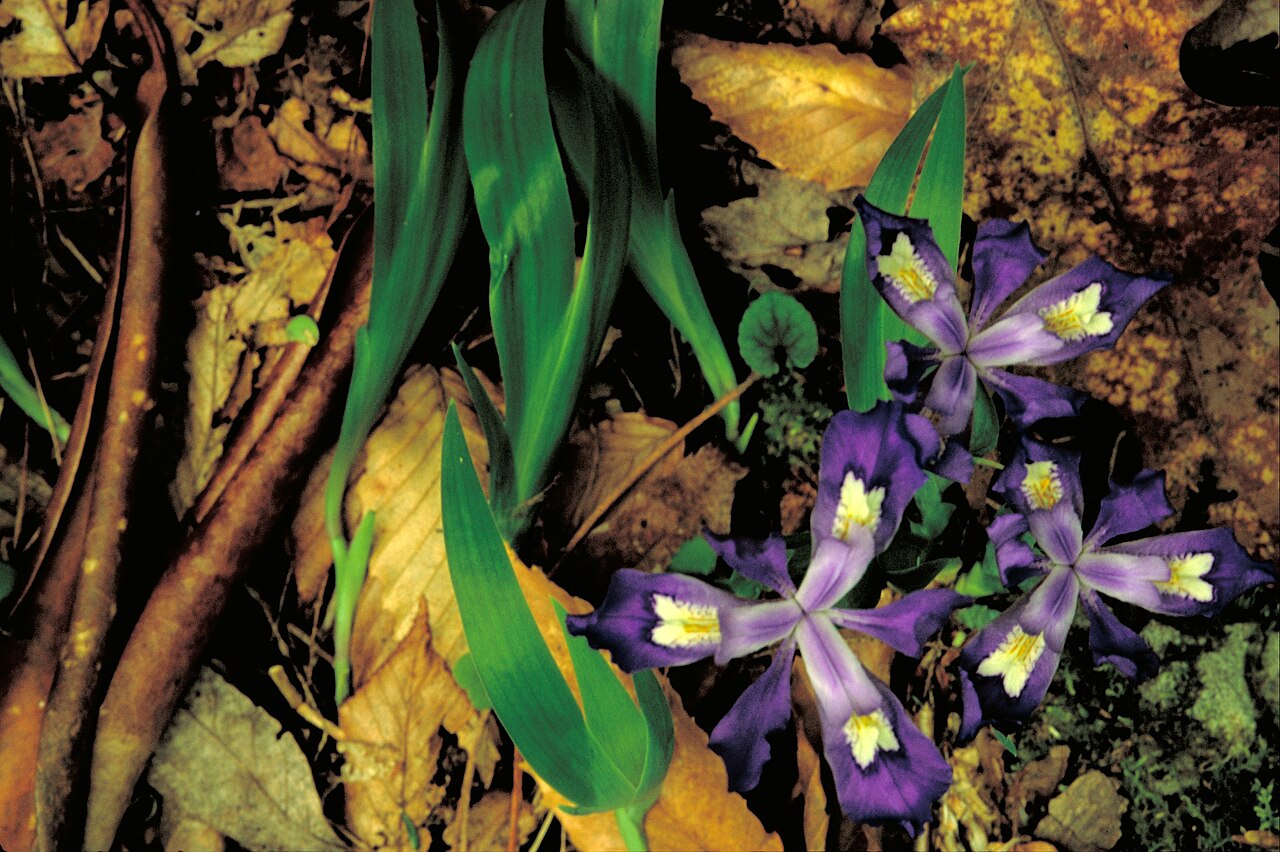
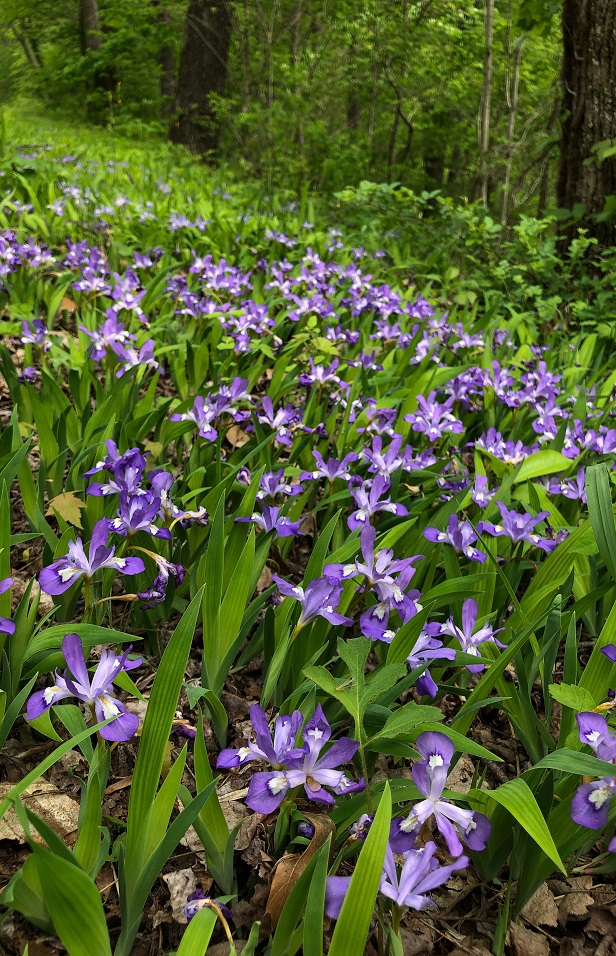
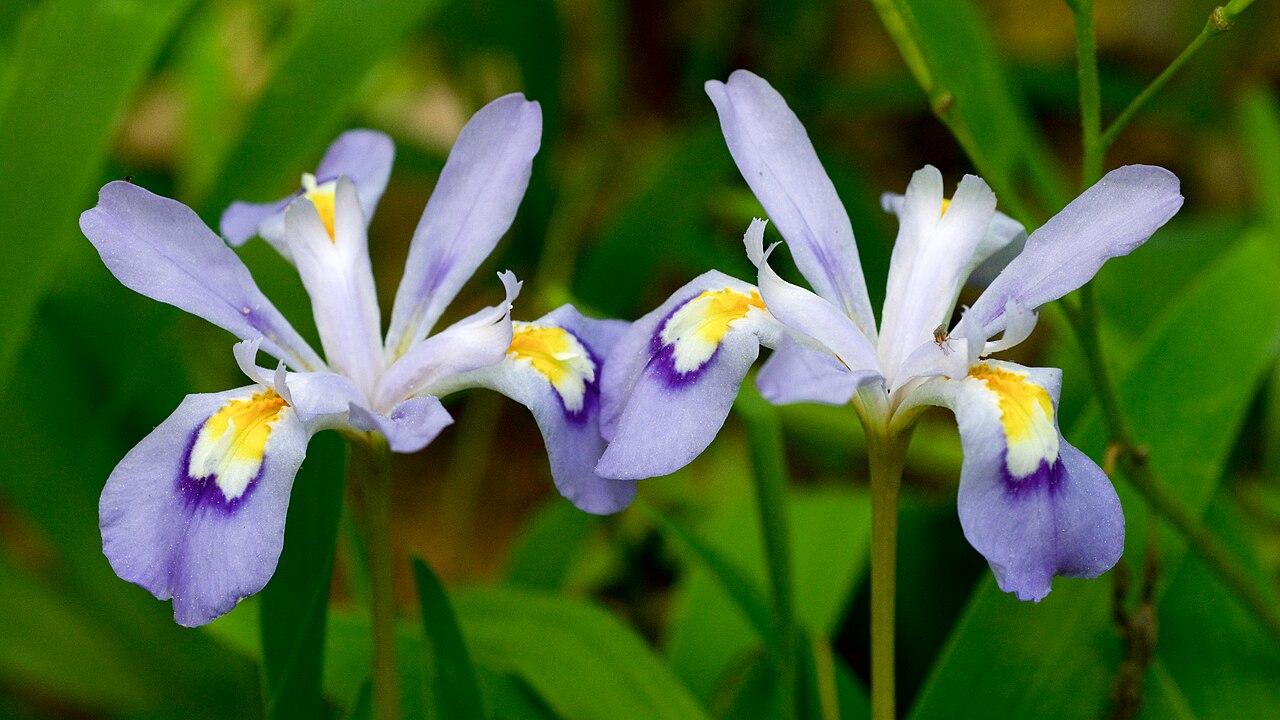
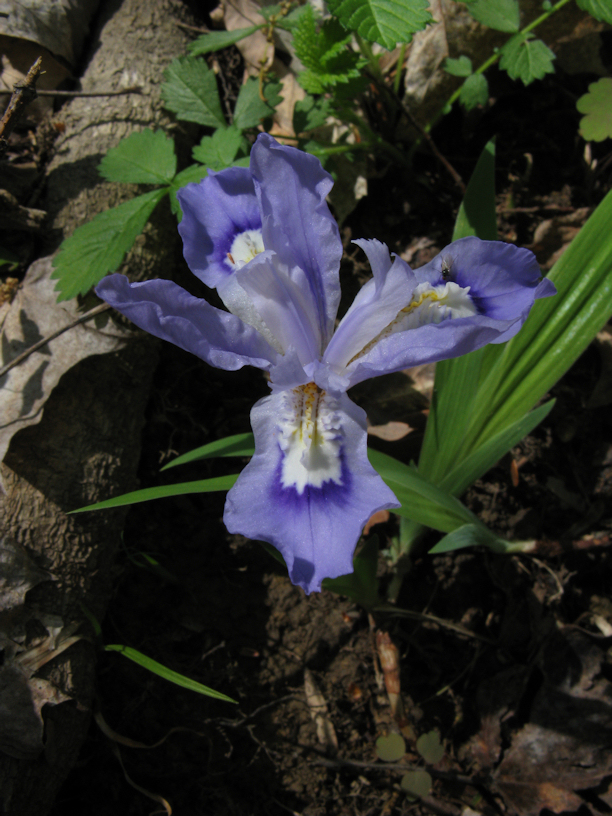
Dwarf Crested Iris (Iris cristata)

Why the Prettiest: It’s a charming, low-growing perennial that produces delicate light blue, lavender, or white flowers with distinctive gold or white-and-purple crested ridges.

Location: Native to the eastern to central United States.

Environment: Grows in calcareous soils, oak woodlands (or forests), rocky hillsides, ravines, mountain ledges (and bluffs), and along streams. Can grow from 3-9 inches tall.

Bloom Season: Blooms in mid-spring such as April and May. Attracts bees and hummingbirds. Famously resistant to deer and rabbits.

Color Varieties: Available in pale lavender, light blue, purple, and white.

Gardening Conditions: Prefers to grow in well-drained soils that are neutral or slightly acidic. Also prefers high fertile soils containing humus but will tolerate loamy soils. Can tolerate full sun but prefers cool, semi-shaded positions. Has above average water needs during the growing season. Can be naturalized as well as grown in a mixed flower border, rock garden, or create ground cover in a woodland garden. Can also grow on peat banks. Best recommended to add peat and sharp sand when planting new plants. Once planted, can be surrounded with leaf mulch for water retention. Can suffer from damage from snails, slugs, deer, iris borer, verbena bud moth, whiteflies, iris weevil, thrips, aphids, and nematodes. Susceptible to bacterial leaf blight, crown rot, rhizome rot, rust, viruses, and scorch. Can be propagated through seed or by division. Grown in ideal conditions, it can live for 10 years. Nonetheless, as with most irises, most parts of the plant are poisonous. Ingesting it can cause stomach pains and vomiting. Handling the plant without gloves can cause skin irritation or an allergic reaction with a risk of dermatitis.

Conservation Status: Listed as Secure but considered endangered in Maryland and Pennsylvania.

Trivia: Has many different cultivars. Used by Cherokee Indians for herbal medicines treat ulcers and other ailments. Used as a thirst aid by 19th century hunters in Virginia.

Other Candidates: Virginia Bluebell, Showy Goldenrod, Fire Pink, and Yellow Lady’s Slipper.

18. Louisiana

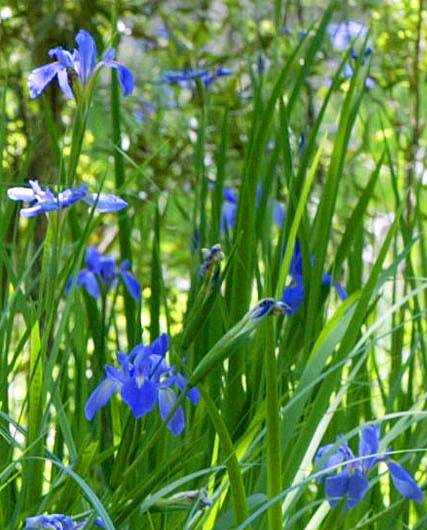
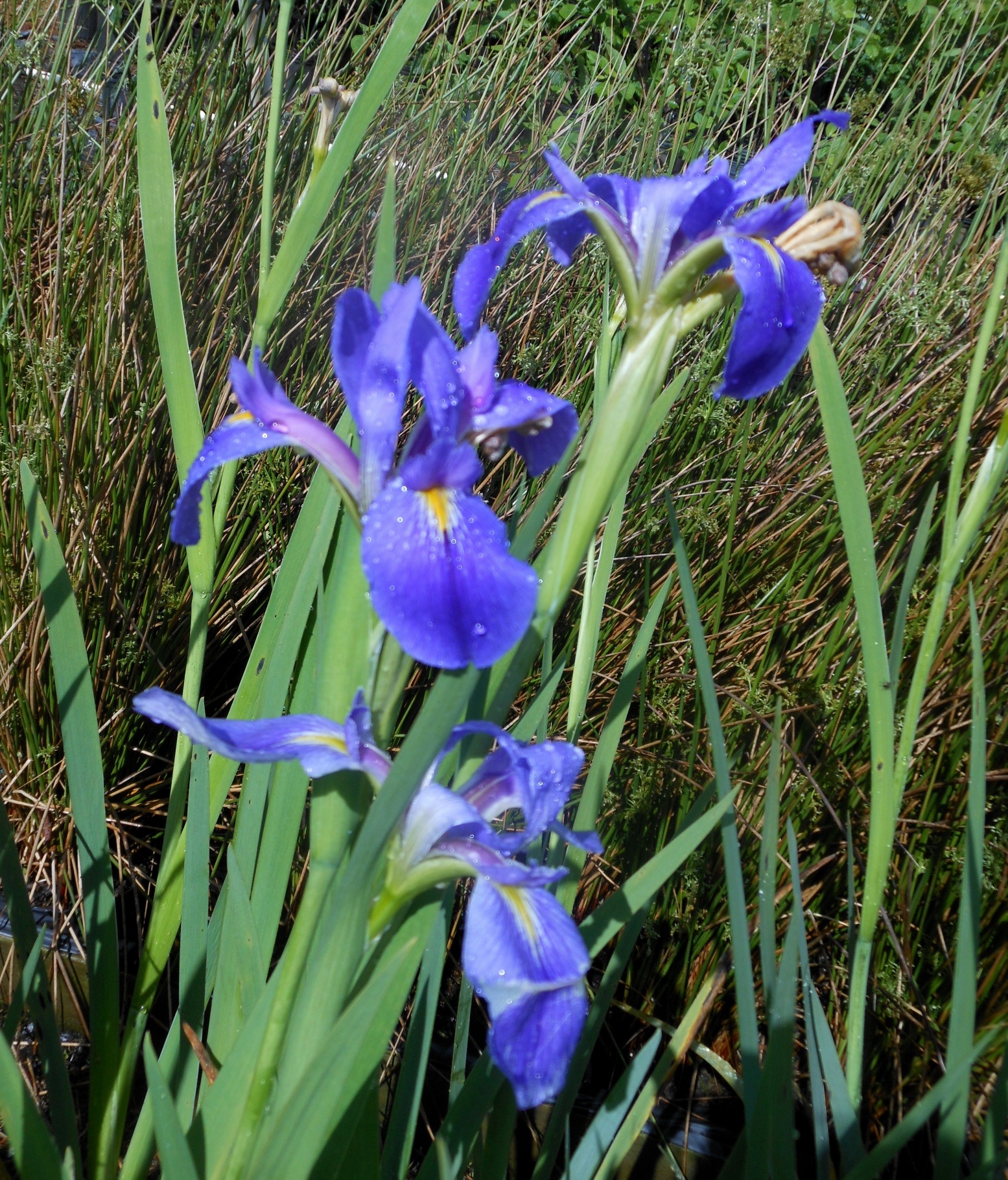
Giant Blue Iris (Iris giganticaerulea)

Why the Prettiest: Given that Louisiana is known for its bayous, this is a wetland-loving perennial has sword-like green leaves up to 30 in long as well as massive 6 in blooms in shades of sky blue, violet, and indigo featuring a distinct yellow or white central signal. Commonly found around the city of New Orleans and is one of the few areas where a native population still exists. And it’s the most recognizable Louisiana Iris species.

Location: Native to southern United States near the Gulf of Mexico in states like Alabama, Mississippi, Louisiana, and eastern Texas.

Environment: Grows in shallow freshwater, within roadside ditches, clearings within swamps, wet meadows, and marshes. Tolerates brackish water. Grows up to 3-6ft tall.

Bloom Season: Blooms from March to April.

Color Varieties: Available in pale blue, bright blue, dark blue, lavender, violet, and white.

Gardening Conditions: Needs full sunlight or partial shade and moist, acidic soils with a high organic and high fertility content. For best flowering, moisture is essential in late autumn, winter, and spring times when the plant begins growing new leaves. If using fertilizer, sprinkle around plant in January or February before the plant is in flower. Propagation is best carried by rhizome division since raising a seed is a very slow process.

Conservation Status: Listed as Vulnerable due to habitat destruction and climate change. The Greater New Orleans area is one of the few areas where you can see in its native range.

Trivia: Available at aquatic garden centers.

Other Candidates: Coreopsis, Indian Blanket, Purple Coneflower, Passion Flower, and Swamp Milkweed.

19. Maine

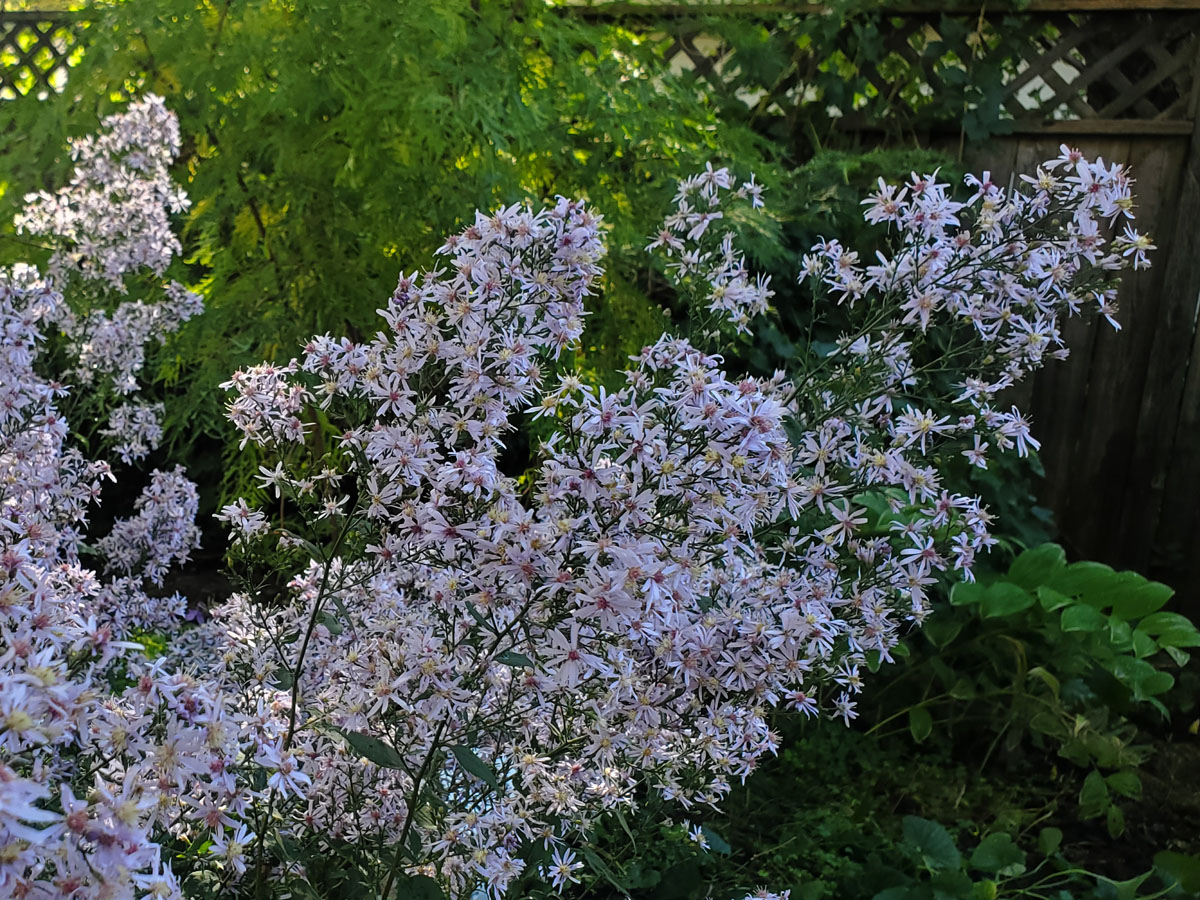
Heart-Leaved Aster (Symphyotrichum cordifolium)

Why the Prettiest: This hardy, shade tolerant perennial has small, daisy-like pale blue to lavender-purple flowers with yellow or pinkish centers that darken to violet. While foliage comprises of distinctive heart-shaped basal leaves.

Location: Native to eastern and central North America.

Environment: Grows primarily in mesic sites with soils that are rocky but generally rich ranging from sea level to 3,900 ft in the Appalachian Mountains. Can be found on open wooded slopes, along stream banks, on moist ledges, in swampy woods, along the borders of deciduous forests, as well as in clearings, thickets, and along ditches and roadsides. Can even be seen in urban areas where it’s considered a weed. Grows 2-4ft tall.

Bloom Season: Blooms from August to October. Attracts bees, wasps, and butterflies. Acts as a larval host for caterpillars of the pearl crescent butterfly and the wavy-lined emerald moth.

Color Varieties: Available in pale blue, lavender, and purple.

Gardening Conditions: Reproduces by seed or vegetatively via short rhizomes. Susceptible to brown rust and red rust. Prefers partial shade to full shade but can tolerate full sun with enough moisture. Adapts well to average, dry, or moist well-drained soils but dislikes being consistently wet.

Conservation Status: Listed as Secure but seen as imperiled and vulnerable in some states. Seen as an introduced species in the UK and Norway.

Trivia: Used by the Ojibwe to make incense to attract deer.

Other Candidates: Black-Eyed Susan, Pink Lady’s Slipper, Trout Lily, and Bunchberry.

20. Maryland

Black-Eyed Susan (Rudbeckia hirta)

Why the Prettiest: For one, it’s Maryland’s state flower since 1918. Is often used in gardens and ceremonies to celebrate, memorialize, and show affection for the state and its people. Known for its bright yellow petals and deep brown center.

Location: Native to eastern and central North America.

Environment: Often found in roadsides and old fields where soil has been disturbed as well as in the woods. Grows 1-3ft tall.

Bloom Season: Blooms during the summer through fall. Attracts butterflies. Larval host to the bordered patch, gorgone checkerspot, and silvery checkerspot.

Color Varieties: Available in yellow.

Gardening Conditions: Self-seeds to return each year, making it difficult to classify it as either an annual or short-lived perennial. Needs full sun for the best blooms. Prefers well-drained loam, clay, or sandy soil but tolerates poor soil conditions. Water deeply when first planted but can be very drought tolerant once established. Yet, leave dead heads and seed heads through the winter to feed birds, insulate roots before cutting back in the spring.

Conservation Status: Listed as Secure.

Trivia: Has 4 varieties. Used as Native American medicine for various ailments.

Other Candidates: Virginia Bluebell, Butterfly Weed, Cardinal Flower, Wild Bergamot, and Eastern Red Columbine.

The United States of Wildflowers – Part 1 Alabama to Georgia

              In my country, the United States of America, wildflowers are often part of the American landscape but often don’t receive the recognition they deserve. Yes, many appear in gardens for their ornamental value. But so often we don’t think of these flowers existing in a wild setting. While those we see growing in the wild are often seen as either part of the scenery and those in our lawn are often seen as weeds to mow over or else face the wrath of the local HOA. However, these flowers are part of our heritage and in this series, I’ll highlight the prettiest wildflower from each state. In this post, we’ll look at a rare aquatic plant from the south, a hardy lupine in the far north, a couple red flowers in the southeast, a pink flower in the desert, a poppy and columbine in the west, a marsh flower in New England, a butterfly flower in Delaware, and an aquatic flower in Florida.

  1. Alabama

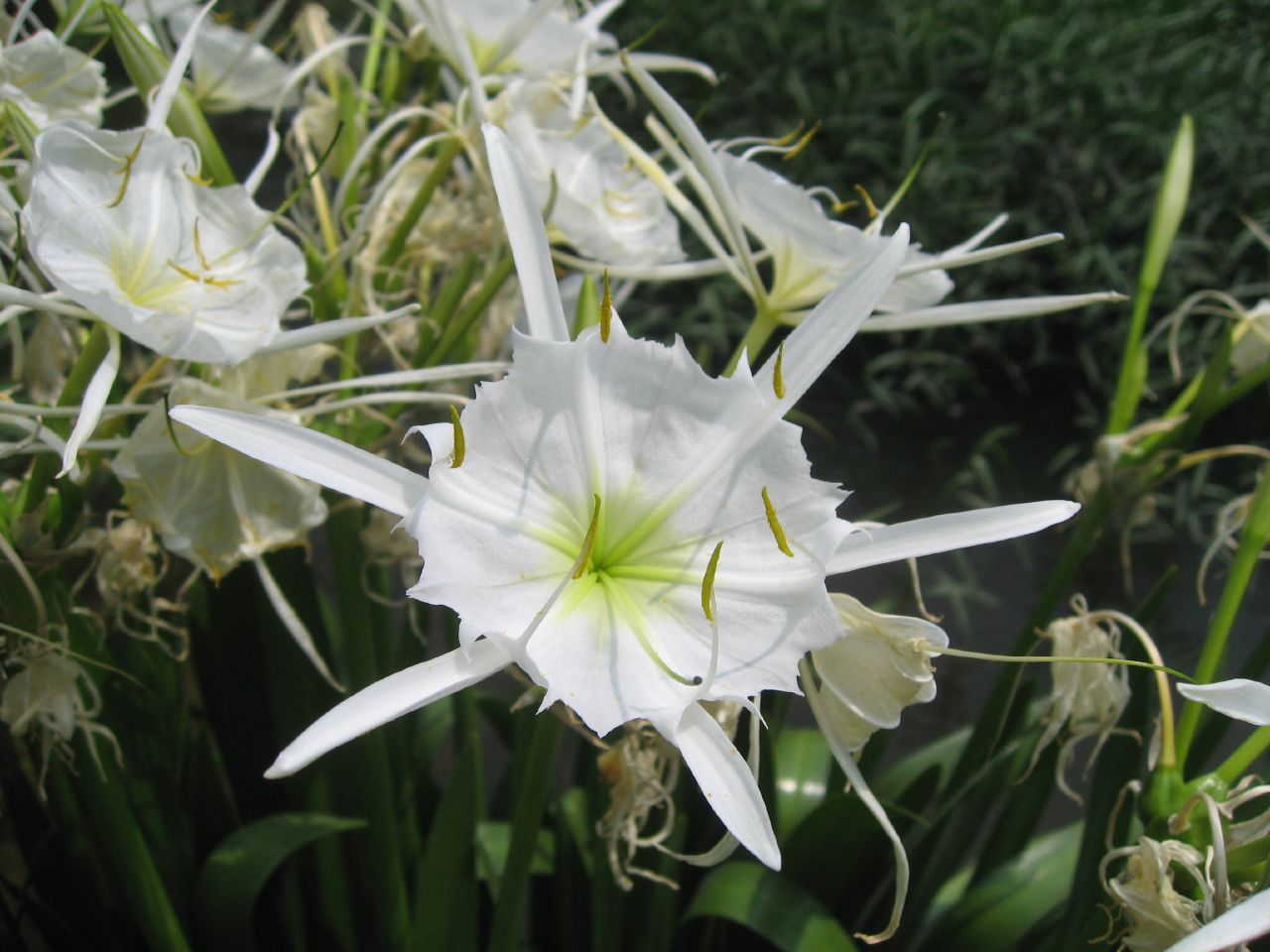
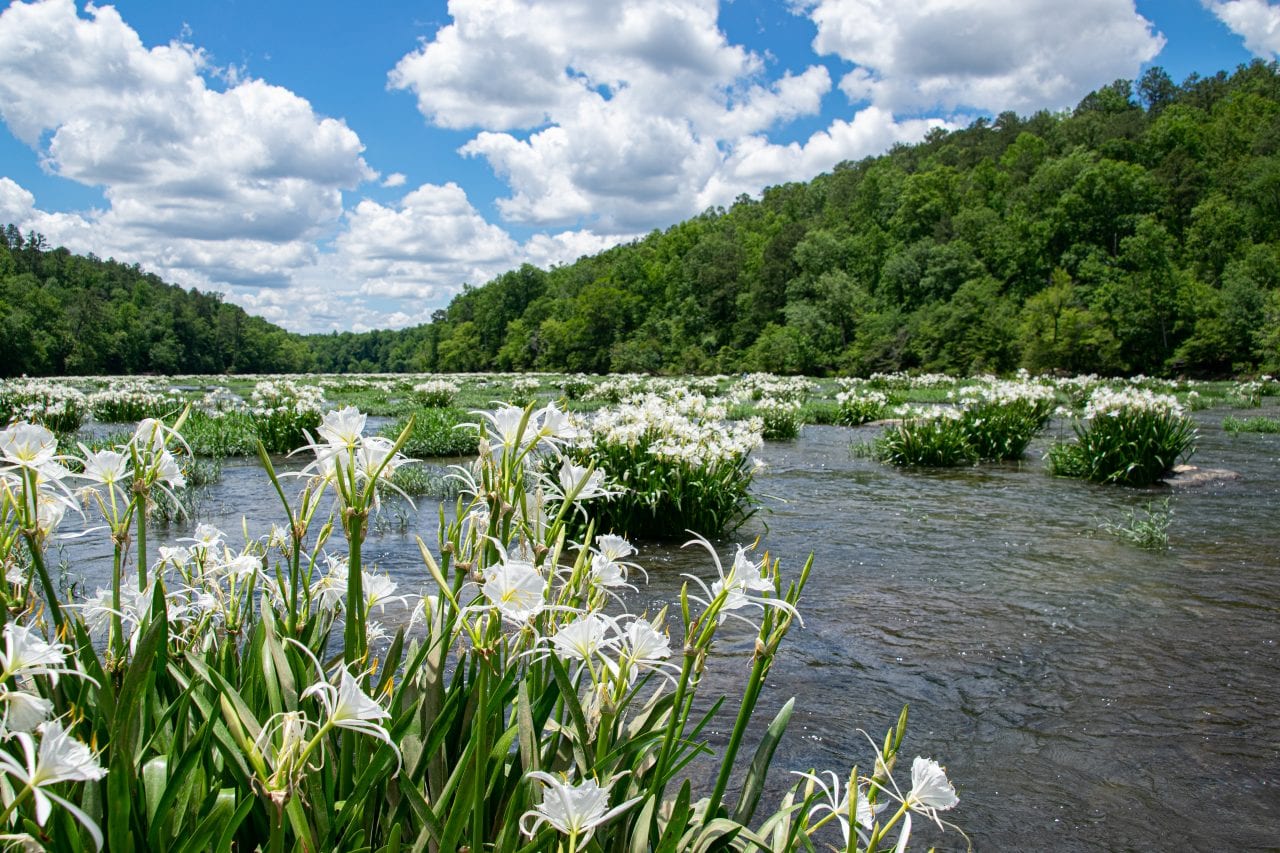
Cahaba Lily (Hymenocallis coronaria)

Why the Prettiest: It’s a rare aquatic perennial flower with one of its largest populations in the state’s Cahaba River in 3 places including the Cahaba River Wildlife Refuge and Buck Creek. Also present in the Black Warrior, Coosa, Tallapoosa, and Chattahoochee river systems. Its flowers are showy, fragrant blossoms about 3 in wide with a central cup-like structure called a corona. While its leaves are long, green, flat, and strap-like.

Location: Found only in the southeastern United States such as in Alabama, Georgia, and South Carolina.

Environment: Lives near rocky shoals of rivers and other fresh waterways within the southeast. Grows 3-4 ft tall.

Bloom Season: Blooms from early May to late June with each fragrant flower opening overnight and lasting for a day. Visited and possibly pollinated by the plebian sphinx moth and pipevine swallowtail butterfly.

Color Varieties: Available in white.

Gardening Conditions: Requires a swift, shallow water current and direct sunlight to flourish. Develops from bulb lodging in rocky shoal cracks. Gardeners sometimes grow them in consistently moist garden soil.

Conservation Status: Classified as Vulnerable due to entire populations being wiped out thanks to dam construction, chemical runoff, sewage, and industrial waste threatening fragile river ecosystems. There are approximately only 50 extant populations that only exist in Alabama, Georgia, and South Carolina. A conservation project in Georgia entails seeds being collected, germinated, and grown to establish hardy root systems. Before being planted along river areas where habitat is prime.

Trivia: Also known as a shoals lily or shoals spider lily.

Other Candidates: Pink Lady’s Slipper, Fire Pink, Yellow Trout Lily, Giant Blue Iris, and Purple Coneflower.

2. Alaska

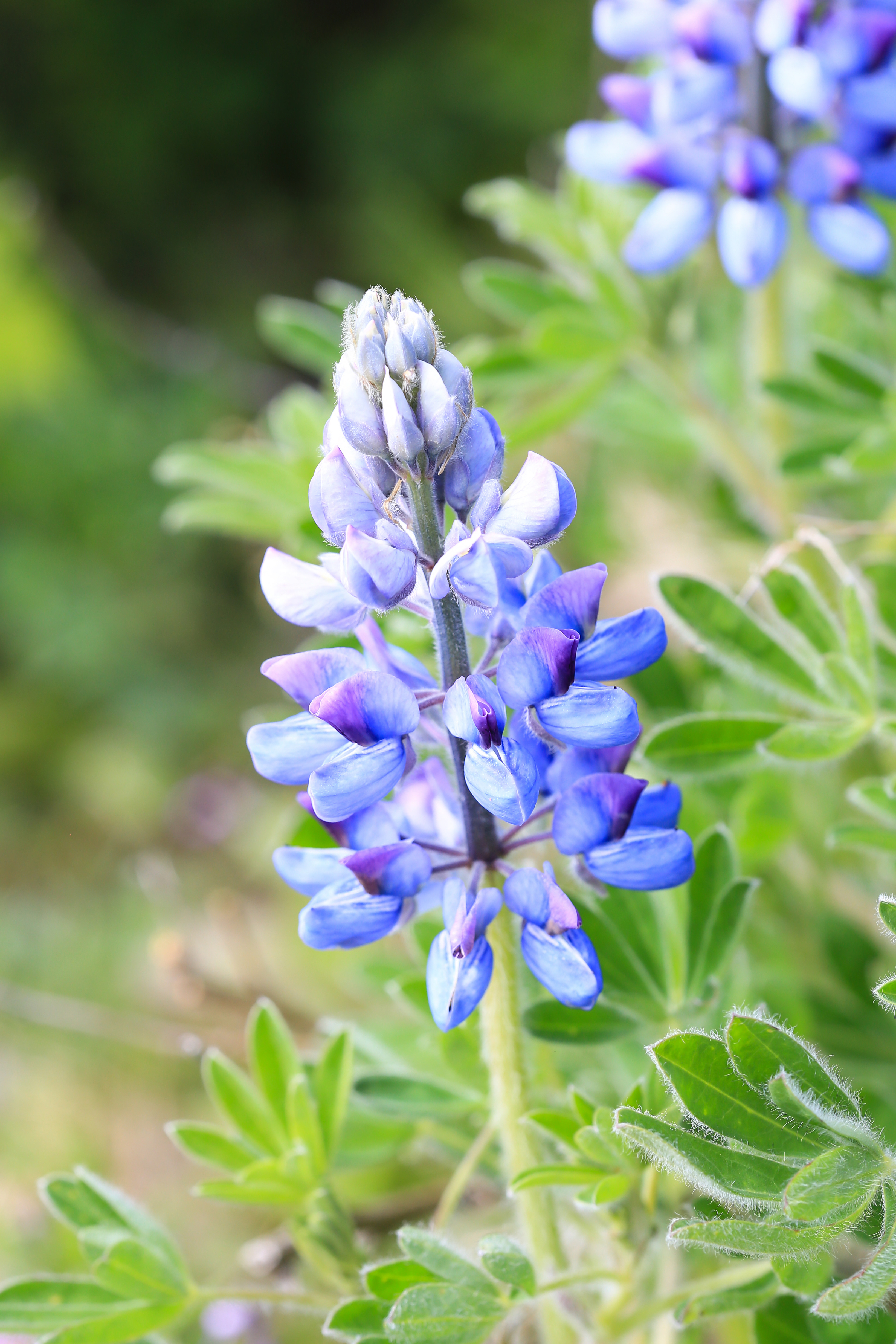
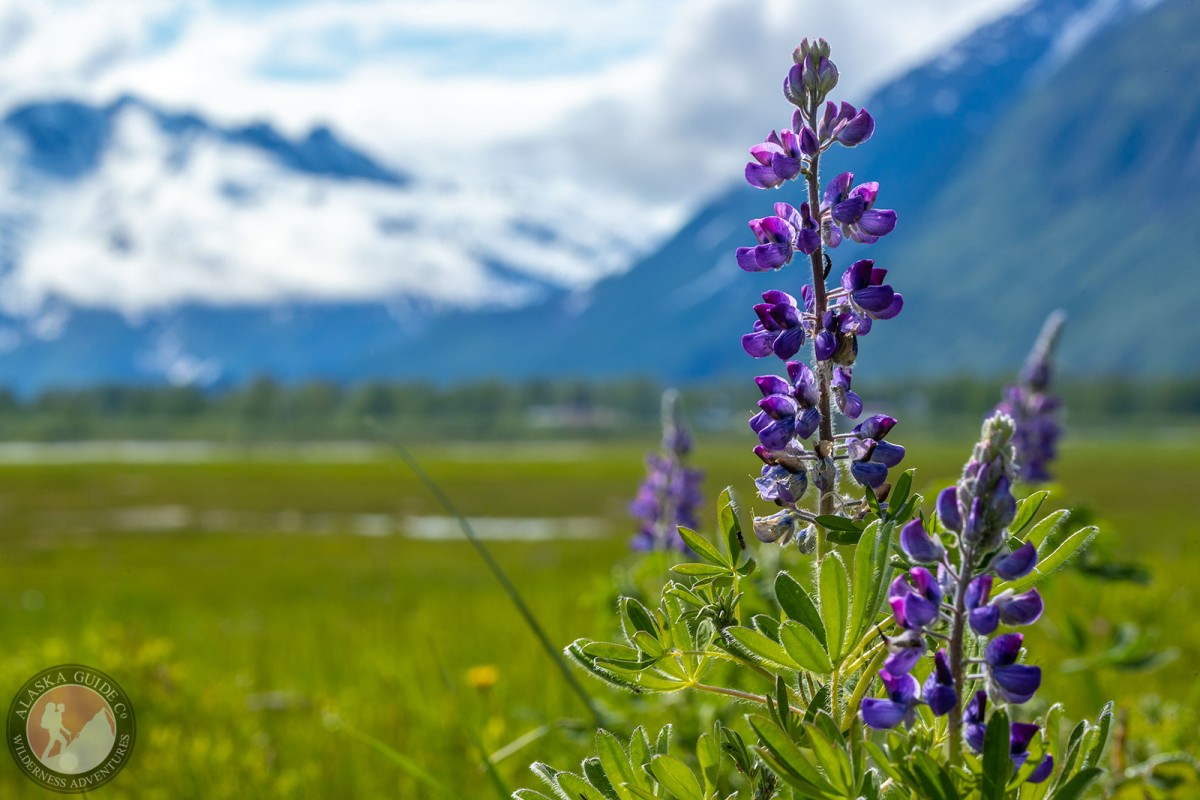
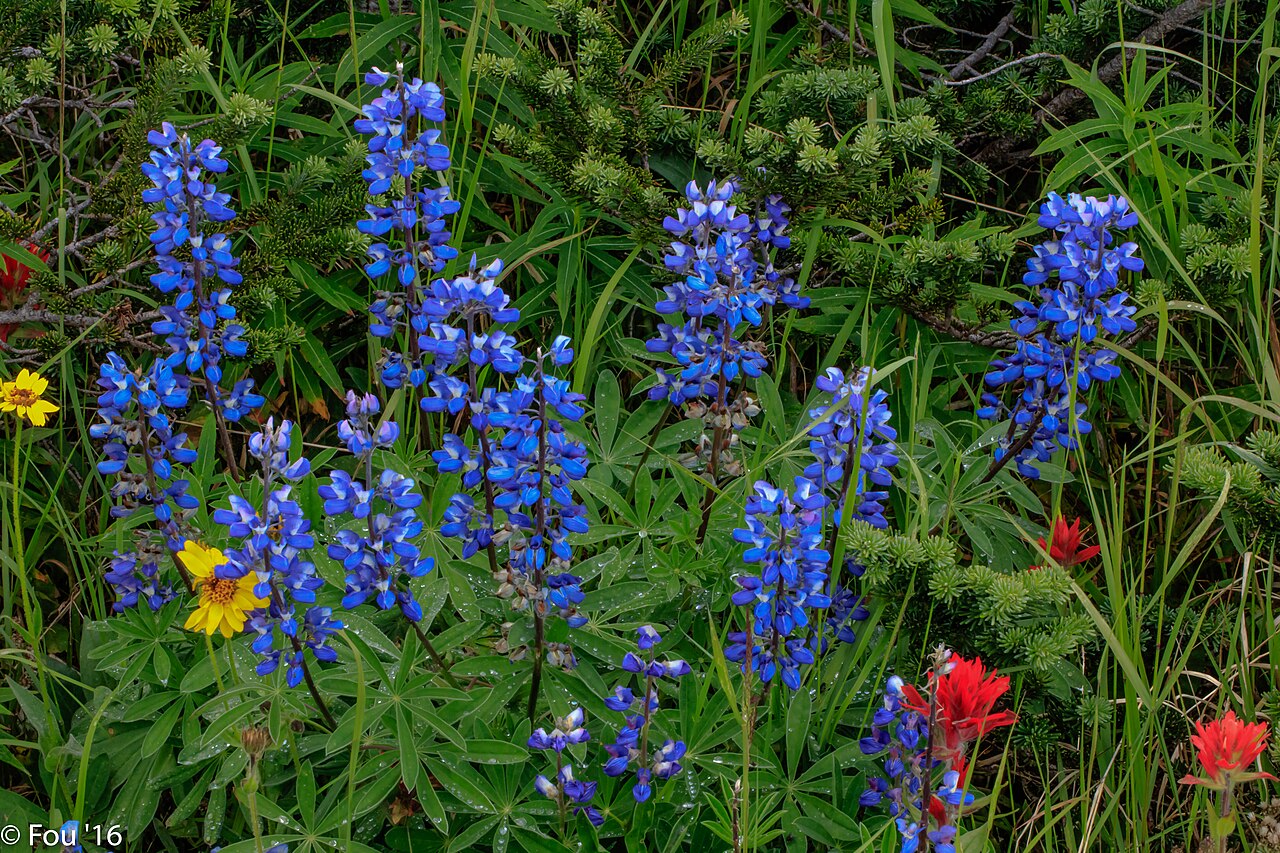
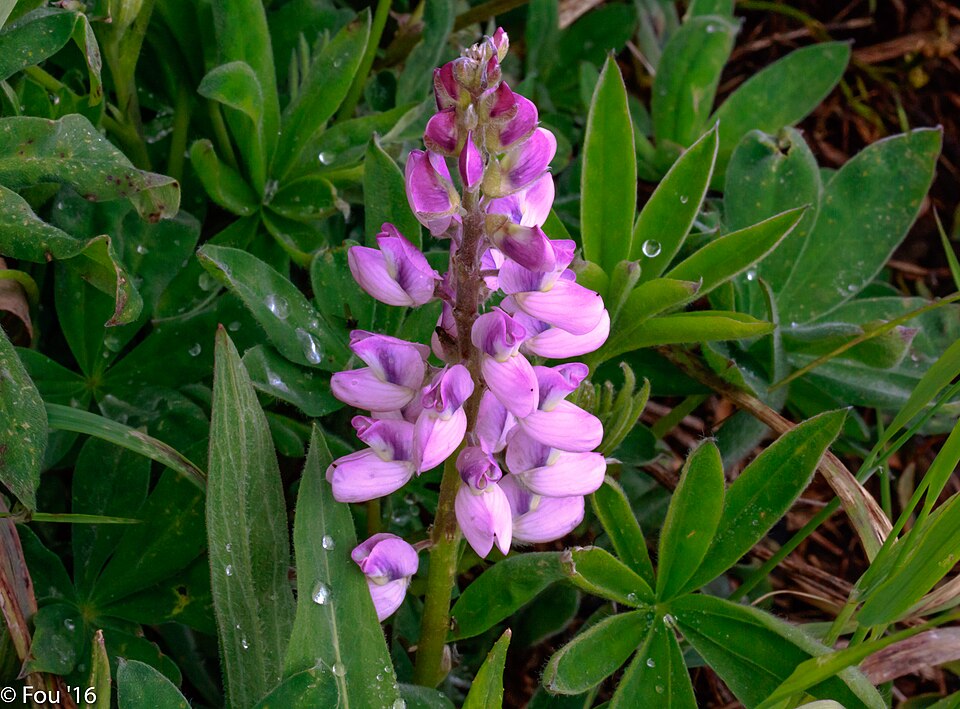
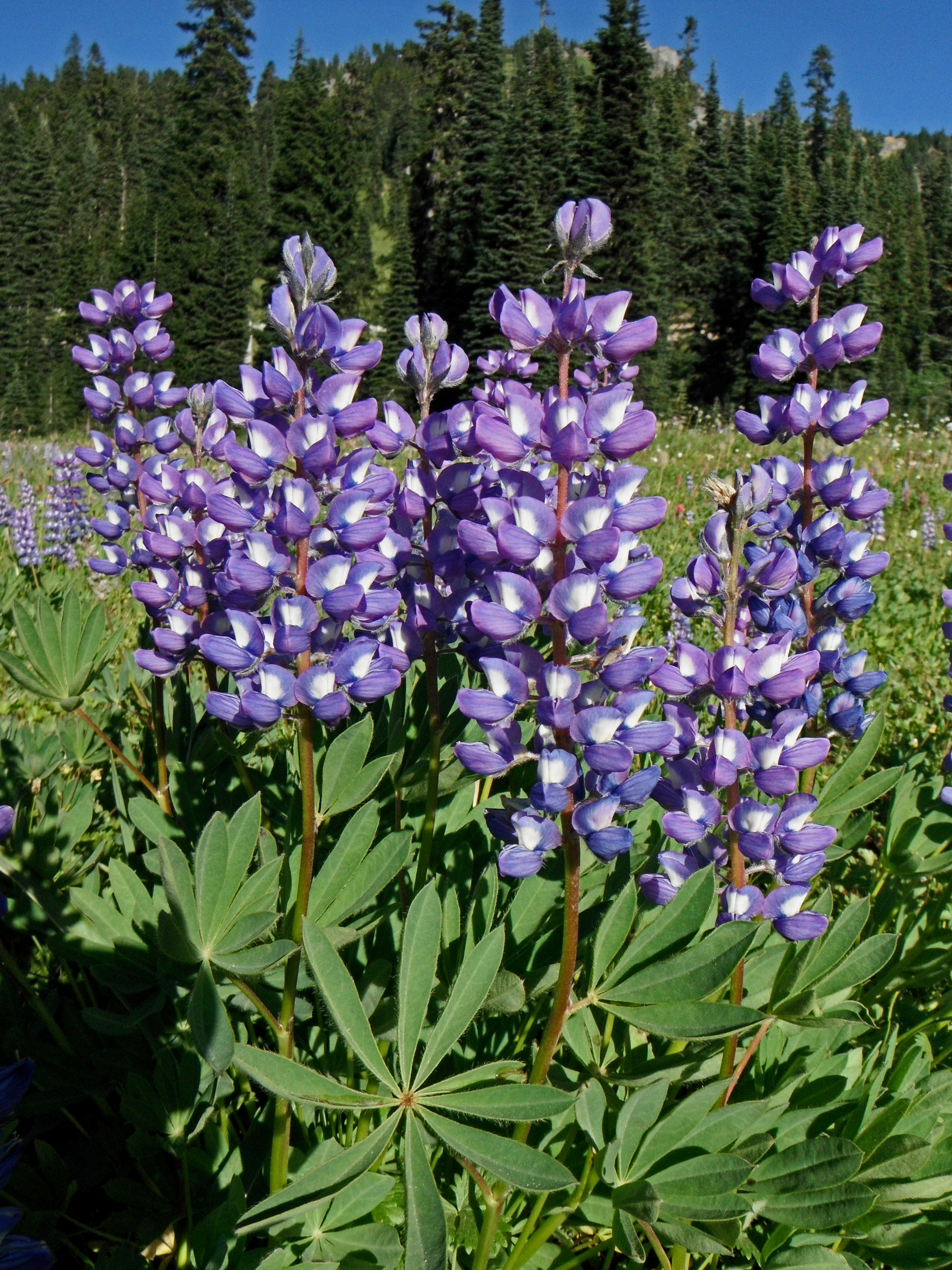
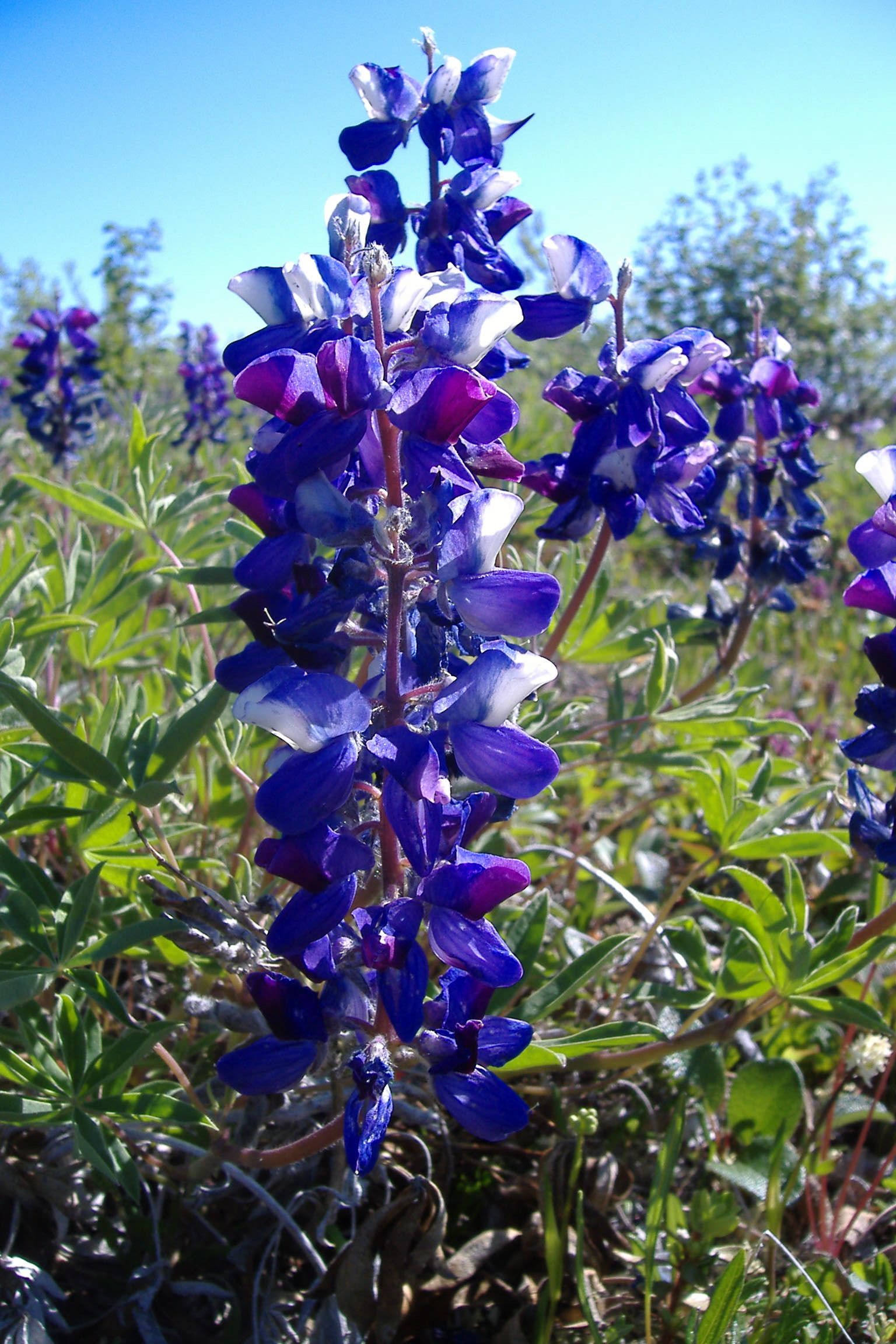
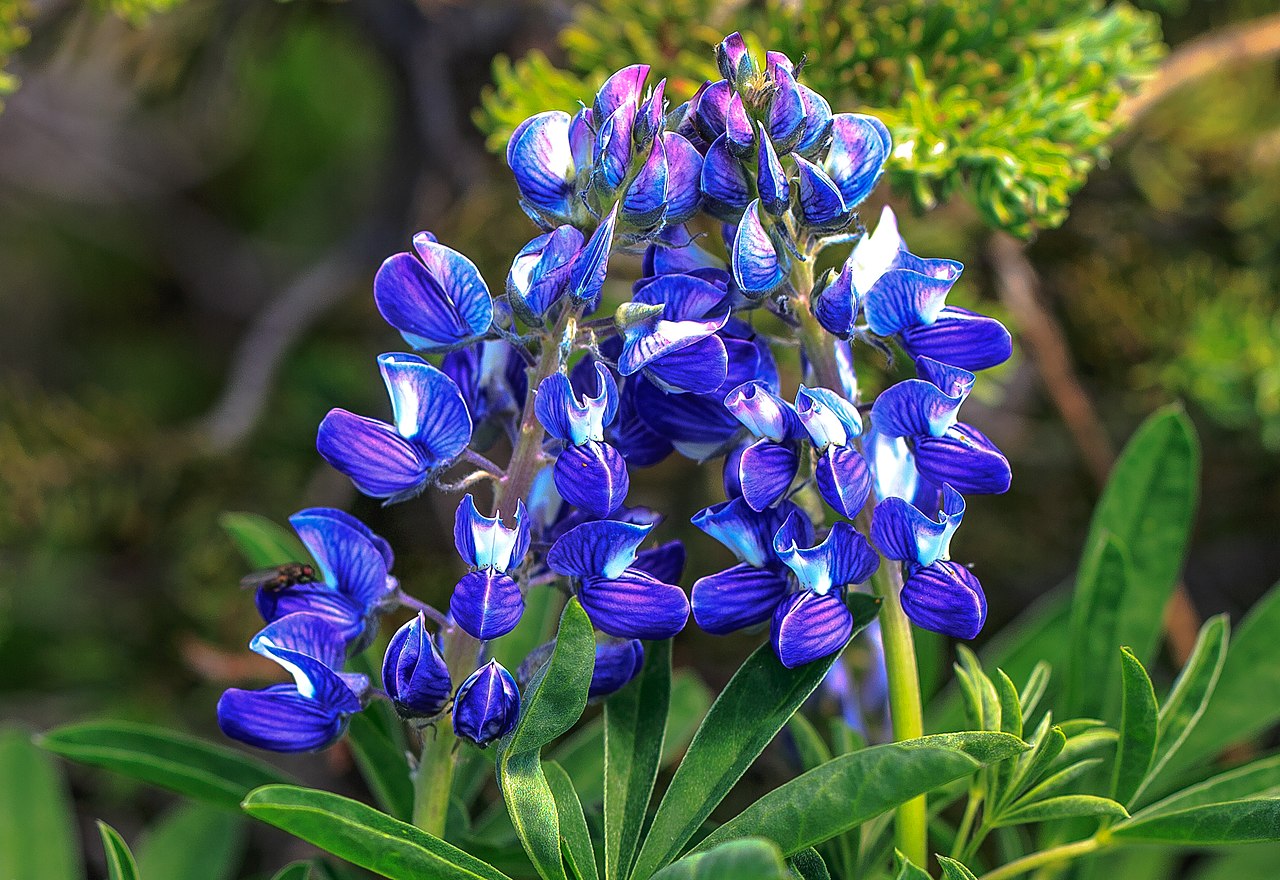
Arctic Lupine (Lupinus nootkatensis)

Why the Prettiest: It’s a perennial flower with a strong native presence in Alaska and enjoys significant popularity in Europe. Sports palmately compound (hand-shaped) leaves with dark green 3-9 leaflets that are covered in fine hairs. Displays tall, showy racemes (spikes) of pea-like flowers.

Location: Native to the western coast of North America from the Aleutian Islands, South central Alaska, and along the Alaskan panhandle to British Columbia.

Environment: Grows along roadsides, gravel bars, open meadows, and forest clearings. Thrives in well-drained slopes, subalpine ridges, open tundra, and forest clearings. Grows up to 18-20 in tall.

Bloom Season: Blooms from June to August. Attracts beneficial insects such as native bees, bumblebees, butterflies, and hummingbirds.

Color Varieties: Available in blue, purple, pink, and white.

Gardening Conditions: Is tolerant of cool, wet summers and seed sowing is preferable since its long tap root makes transplanting difficult. Fuzzy seed pods are attractive to children but speckled black seeds can be toxic. Though the toxins flush through the system, internal use isn’t advised naturally. Since ingesting large quantities can cause respiratory depression, sleepiness, and convulsions.

Conservation Status: Classified as Least Concern. Considered invasive in Iceland.

Trivia: Introduced to Europe in the 18th century and is one of the species from which garden hybrids are derived. Valued in Britain and Northern Europe. Is a rigorous self-seeder and seeds can demonstrate extreme dormancy longevity.

Other Candidates: Fireweed, Wild Iris, and Chocolate Lily.

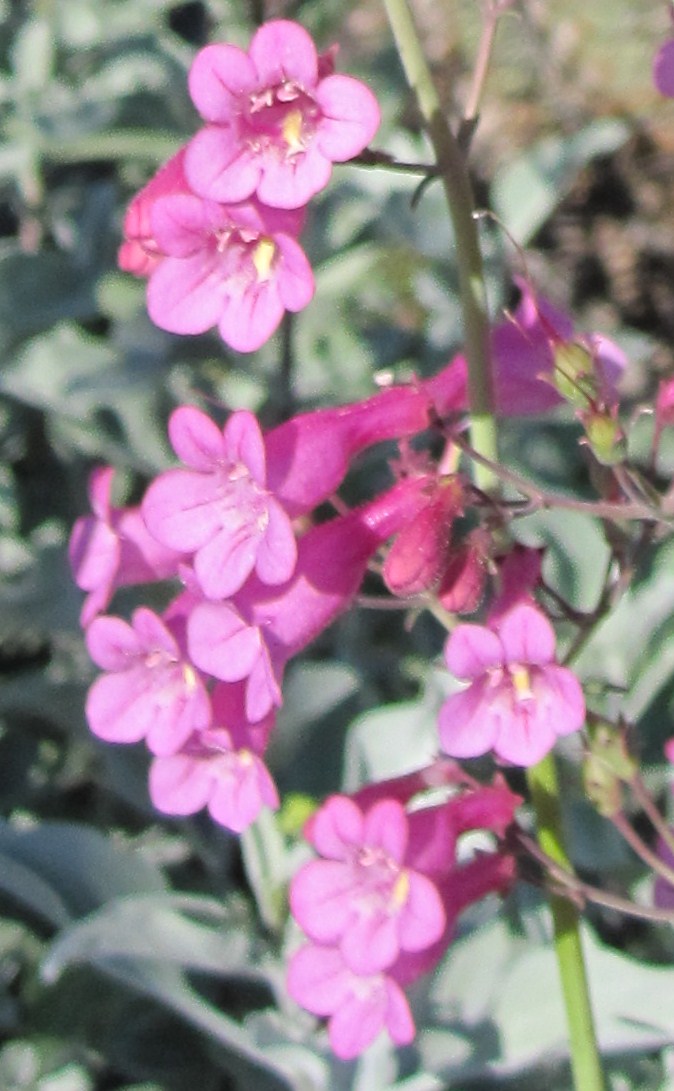
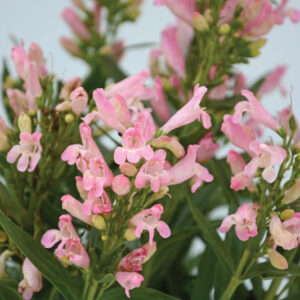
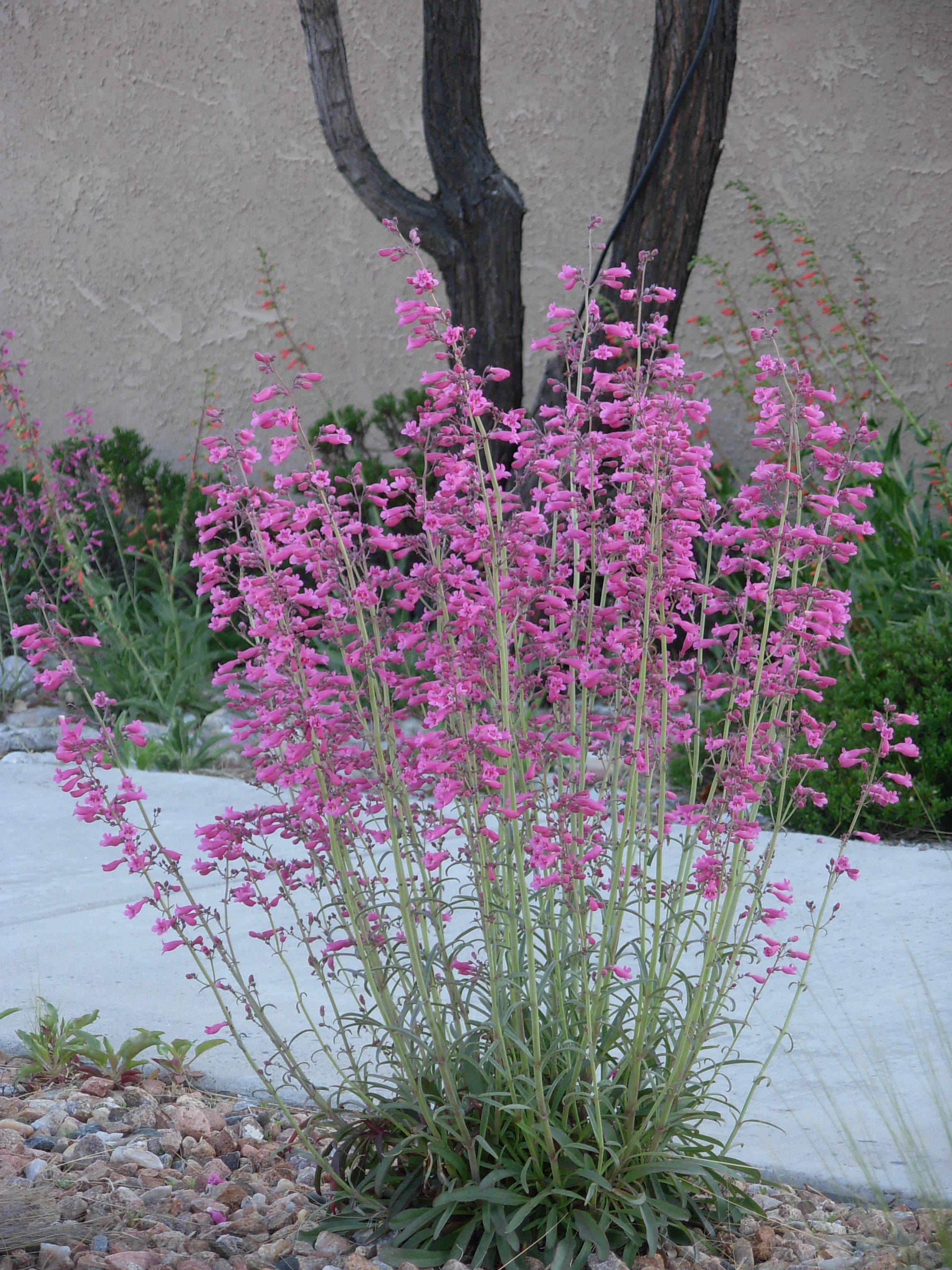
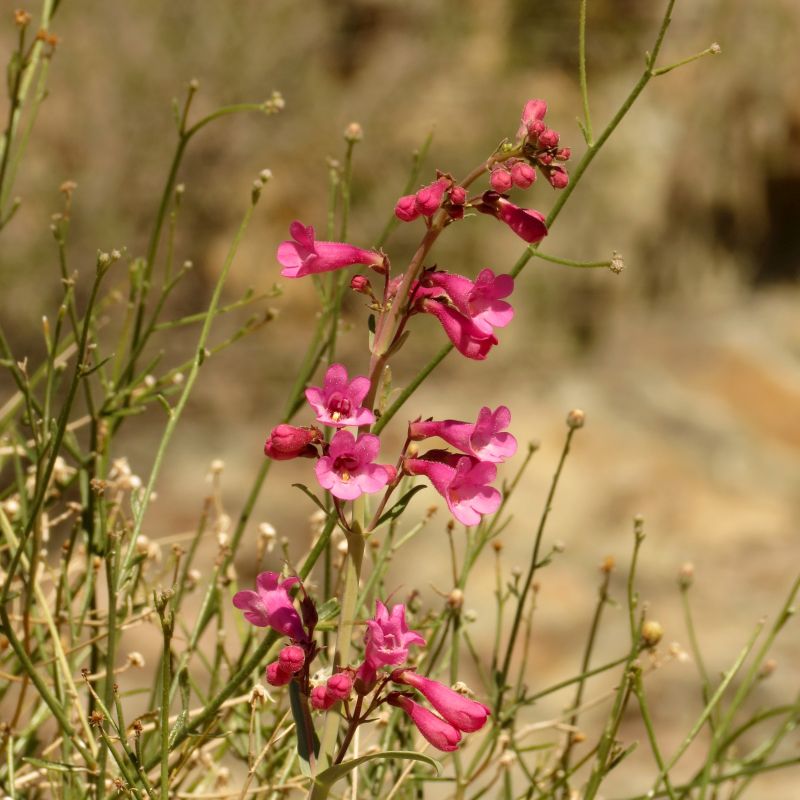
3. Arizona

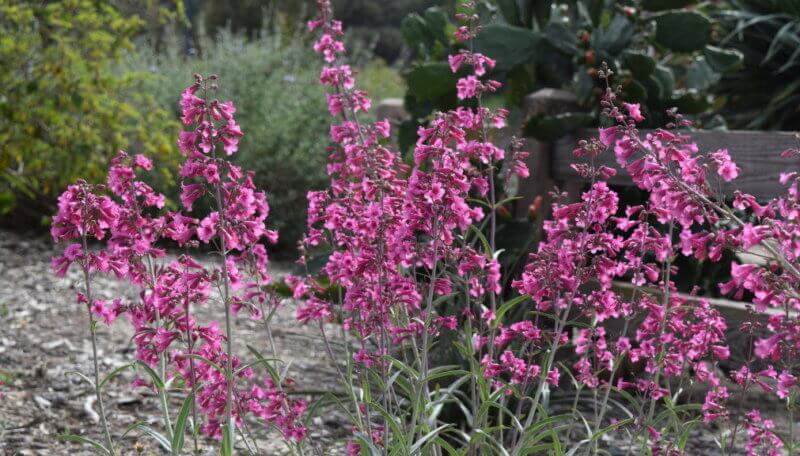
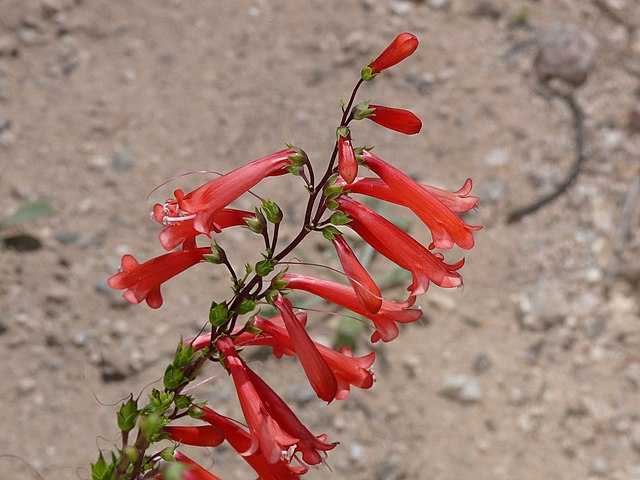
Parry’s Penstemon (Penstemon parryi)

Why the Prettiest: This flower is native perennial to southern Arizona’s Sonoran Desert. Has bright pink to magenta tubular, bell-shaped blooms lining upper stems. Also sports bluish-green, lance-shaped leaves forming a low cluster (rosette) at the plant’s base.

Location: Native to the Sonoran Desert of southern Arizona and northern Mexico.

Environment: Lives in the lowland desert. Can grow 2-5 ft high in upright flowering stalks and blooms in its second year. Can survive average Sonoran rainfall but not prolonged drought.

Bloom Season: Blooms in from March to May. Major favorite of hummingbirds and large butterflies.

Color Varieties: Available in pink, magenta, and red.

Gardening Conditions: Flowering is only achieved in its first year if planted in autumn. Thrives in full sun and part shade. Has low water needs and tolerates cold from 10-20 º F depending on growth stage. Needs dry, well-drained soil.

Conservation Status: Classified as Apparently Secure but faces threats of climate change.

Trivia: Finches and other small birds eat its dry seeds on stalks. While rabbits rarely chew its foliage.

Other Candidates: California Poppy, Desert Globemallow, Owl’s Clover, and Brittlebrush.

4. Arkansas

Cardinal Flower (Lobelia cardinalis)

Why the Prettiest: It’s a perennial herbaceous but short-lived plant known for its brilliant, vivid red spikes attracting hummingbirds and butterflies. Sports tubular, bright red blooms with a split lower lip, opening from bottom to top on a spike. Foliage comprises of dark green, lance-shaped and finely-toothed leaves.

Location: Native to southeastern Canada, eastern and southwestern United States, Mexico, Central America, and northern Colombia.

Environment: Found primarily in wet places like riparian zones, riverbanks, bogs, and swamps. Sometimes found in damp or semi-flooded or shaded forest areas. Tends to occupy locations near a water source, providing its roots with consistent hydration via groundwater from saturated soil. Could even be found growing away from or closer to the water and growing aquatically but often with the foliage submerged and flowers at the surface. Can grow up to 2-4 ft tall. Relies on profligate self-seeding.

Bloom Season: Season runs from July through September. Favorite of hummingbirds and butterflies.

Color Varieties: Available in red.

Gardening Conditions: Requires fairly deep soils that remains reliably moist yet sufficiently aerated year-round. May be grown as an accent plant in or along ponds, fountains, or other garden water features. If not planted in or around a water source, it prefers its roots to stay cool, something achieved when grown in dappled sun or part shade. Easily propagated by seed or dividing out young plants forming around the older, mature plants each year. Contains a number of naturally occurring toxic alkaloids such as lobelanine and lobeline, rendering it harmful upon ingestion even in small to mid-sized quantities. Negative symptoms include nausea, vomiting, diarrhea, excessive salivation, fatigue/exhaustion, weakness, pupil dilation, convulsions, and even a coma.

Conservation Status: Currently classified as Least Concern.

Trivia: Used frequently in aquariums and aquascaping hobbies. Used by the Zuni as an ingredient for “schumaakwe cakes” and externally for rheumatism and swelling. Penobscot people dried and smoked (and maybe even chewed) its leaves as a tobacco substitute.

Other Candidates: Purple Coneflower, Black-Eyed Susan, Butterfly Weed, Indian Pink, and White Bergamot.

5. California

California Poppy (Eschscholzia californica)

Why the Prettiest: For one, this short-lived perennial or annual plant is California’s official state flower since 1903. Los Angeles County has the Antelope California Poppy Reserve that covers all 1,745 acres of the place during blooming season. Other prominent locations are Bear Valley and Point Buchon. Foliage comprises of distinctive, delicate blue-green leaves with a feathery, lacy texture.

Location: Native to the Pacific Northwest to the Sonora.

Environment: Grows in areas with sunny weather with poor, sandy, or rocky well-drained soil. Grows 1-2ft tall with a compact spread.

Bloom Season: Blooms from February to September. However, flowers can close at night or in windy, cold, and cloudy weather. Attracts native bees, butterflies, and other beneficial insects.

Color Varieties: Available in orange and yellow in the wild. Available in a wide range of flowers as a garden plant.

Gardening Conditions: Best grown as an annual and is easy to tolerate due to being drought tolerant and self-seeding. Ideal setting is full sun and well-draining sandy or loam soil. Water sparingly.

Conservation Status: Classified as Apparently Secure although it’s been threatened by climate change. Has been sold and naturalized throughout Australia, New Zealand, Chile, and Argentina.

Trivia: Has 90 synonyms and 4 varieties. Leaves are often used as a food or garnish and seeds are used in cooking. Petals can be used to create a syrup or dried and added to water to make an infusion or boiled for tea. Used by the some of the state’s ingenious peoples as traditional medicine and cosmetics.

Other Candidates: Matiljia Poppy, Baby Blue Eyes, Arroyo Lupine, Dahlia, California Fuschia, Coyote Mint.

6. Colorado

Colorado Blue Columbine (Aquilegia coerulea)

Why the Prettiest: For one, it’s Colorado’s official state flower since 1899. Features large, showy flowers with pale blue or violet sepals/spurs and creamy white petals and delicate grayish green foliage.

Location: Found in the Rocky Mountains in the western United States from southern Montana to northern New Mexico.

Environment: Grows in mountainous areas from foothills to above timberline in the alpine tundra. Prefers moist areas and often found in quaking aspen groves. Can also grow in open coniferous forests, meadows, and in clearings. Can grow up to 6-31 inches.

Bloom Season: Usually as early as April and as late as September. But typically no earlier than May. Mainly pollinated by bumblebees, hummingbirds, and hawkmoths who can’t resist its nectar rich blooms.

Color Varieties: Available in blue, purple, and white in the wild. Cultivated varieties have a wide range of colors.

Gardening Conditions: Grows poorly in heavy soils without good drainage. Most successful in average and medium garden soil that’s well drained and even moisture as well as regular watering within its first year. Can be grown in full sun or partial shade, but does best in light to moderate shade. Used as an ornamental plant in gardens for cut flowers, informal gardens, with roses and other shrubs, and in wildlife gardens. Vulnerable to powdery mildews, particularly when its leaves are regularly watered by overhead irrigation. Susceptible to infestation by aphids, leaf-miner flies, and saw flies. Seeds treated in gibberellic acid and planted in 70 º F results in 93% germination within 3 weeks.

Conservation Status: Classified as Apparently Secure yet faced threats due to overgrazing by cattle and sheep.

Trivia: Frequent garden plant and used in breeding columbine hybrids. A perennial plant that lives 4-6 years. Said to have 6 synonym species, 7 subspecies, 5 varieties, and 2 botanical forms. Seeds have been used by the Goshute people as traditional medicine.

Other Candidates: Indian Paintbrush, Lupine, Western Pasqueflower, and Elephant’s Head.

7. Connecticut

Marsh Marigold (Caltha palustris)

Why the Prettiest: This is a prevalent wild flower in many areas of the eastern United States. Displays showy, buttercup-like yellow flowers with 5-9 petal-like sepals. While its leaves are glossy, dark-green heart- or kidney-shaped.

Location: Native to temperate regions in Northern Hemisphere. Can be found in most of northeastern United States.

Environment: Found in marshes, fens, ditches, and waterway edges in wet woodland or meadow. Grows in oxygen-rich water near the soil’s surface. Can grow to 4-31 in.

Bloom Season: Blooms between April and August depending on altitude and latitude. When it blooms, it dominates the landscape. Attracts beetles, thrips, bugs, butterflies, sawflies, bees, ants, and flies.

Color Varieties: Available in yellow, white, and pink.

Gardening Conditions: Likes rich soil but dislikes application of fertilizer since it avoids high concentrations of ammonium, phosphate, and brackish water. This may be due to seepage that’s rich in iron due to iron ions reacting with phosphate, making it unavailable for plants. This results in insoluble mineral appearing as rusty “flocs” on the water soil and the surface on marsh plants’ stems. Affected by rust species Puccinia calthea and P. calthicola. Contain several active substances with the most important being protoanemonin. Large quantity consumption can cause convulsions, throat burning, vomiting, bloody diarrhea, dizziness, and fainting. Skin or mucus membrane contact with its juices can lead to blistering, inflammation and gastric illness if ingested. Although the toxins could be neutralized and made edible if cooked. Recommended for low-maintenance wildlife gardens, rain gardens, pond edges, stream banks, and bog gardens.

Conservation Status: Currently listed as Least Concern.

Trivia: Has a variety of vernacular names. Is adapted for rain pollination. Each flower can produce up to 200 seeds.

Other Candidates: Cardinal Flower, Purple Trillium, Wild Columbine, Mountain Laurel, and Black-Eyed Susan.

8. Delaware

Butterfly Weed (Asclepias tuberosa)

Why the Prettiest: It’s a perennial species of milkweed that’s a stunning clump of perennial flower prized for its flat-topped clusters of bright orange blossoms. Not to mention a host flower for many species of insects including the monarch butterfly.

Location: Can be found in most of the contiguous United States as north as South Dakota to as south as Texas and Mexico and to as west as Utah.

Environment: Found in dry to medium moist soils, clearings, meadows, and open areas. Can grow up to 1.5-3ft tall.

Bloom Season: Blooms from April to September. Primary pollinators are bees and wasps but also attracts butterflies, moths, and hummingbirds. Is the larval food plant of the monarch butterfly, the queen butterfly, dogbane tiger moth, milkweed tussock moth, and the unexpected cycnia. Not a preferred host plant for the monarch butterfly but caterpillars can be reared successfully since it’s a poor source of protection from bird predation and parasite virulence.

Color Varieties: Available in orange, yellow, and red.

Gardening Conditions: Favors dry, sand, or gravel soils and requires full sun. Most easily propagated by seed. Sow it after a frost, it will flower and produce seed within its third year. Water regularly until mature but don’t fertilize. Has deep, woody taproot so it’s difficult to transplant. Has few pest and disease problems but is susceptible to crown rot if planted in poorly drained or too constantly moist locations. Resistant to deer and drought. Contains toxic progesterone-like steroids can cause weakness, seizures, or corneal injuries. Don’t use as a herbal remedy if you’re pregnant or nursing.

Conservation Status: Classified as Secure though its importance to the life of the monarch butterfly makes it an important plant in conservation.

Trivia: Has been found to be largely unaffected by prescribed burns. Roots boiled and used by Native Americans and European settlers as a remedy for diarrhea and respiratory illness. Young seed pods were used as food. Seed pod down was used to make candle wicks. While ethanol extract from roots was used to treat pleurisy.

Other Candidates: Cardinal Flower, Black-Eyed Susan, and Wild Bergamot.

9. Florida

American Lotus (Nelumbo lutea)

Why the Prettiest: It’s a perennial aquatic plant that’s absolutely perfect for a state known for the Everglades. Sports fragrant pale yellow blooms that are often 7-11 in across and stand high above water. While its blue-green leaves can exceed 2 ft in diameter which attach right to the middle giving the foliage rising straight out of the water like an inverted umbrella.

Location: Native throughout North America with range covering as north as Minnesota to as south as Honduras. Although it’s said that indigenous communities likely expanded its distribution northward and eastward since they used it as a valuable source of food and medicine.

Environment: Grows in lakes and swamps as well as areas subject to flooding. Thrives in shallow freshwater wetlands, quiet lakes, slow rivers, and backwaters with muddy bottoms. Roots are anchored in mud but leaves and flowers emerge on water’s surface. Can grow as tall as 2.6-4.9 ft.

Bloom Season: Season is late spring into the summer. Opens in the morning and closes late afternoon. Larval host plant of the American Lotus borer. Provides food to waterfowl and muskrats. Attracts native bees.

Color Varieties: Available in pale yellow and white.

Gardening Conditions: Spreads via creeping rhizomes and seeds. Widely planted in ponds as an ornamental plant. Propagation seeds can be achieved through scarifying the seed’s pointed tip and soaking it in water or division of established plants. Very cold-hardy as well as helps stabilize mud and keep water clear.

Conservation Status: Classified as Least Concern but has experienced recent population declines due to habitat destruction and have a low level of diversity within its numbers.

Trivia: Has been crossed to create many hybrids as an ornamental plant. Seeds and fruit used by various Native Americans as food and roots as medicine.

Other Candidates: Black-Eyed Susan, Bright Yellow Coreopsis, Scarlet Rosemallow, Blazing Star, and Meadow Beauty.

10. Georgia

Flame Azalea (Rhododendron calendulaceum)

Why the Prettiest: This native Appalachian deciduous shrub stands out with its showy flowers. Has clusters of vibrant fiery red, orange, and yellow blossoms.

Location: Native to the Appalachian Mountains in the eastern United States from southern Pennsylvania and Ohio to northern Georgia.

Environment: Typically found in woodlands slopes and mountain balds, preferring dry rocky mountain woods and mixed deciduous forests. Can grow from 4-8 ft tall and 8-10 ft wide.

Bloom Season: Blooms in late spring into early summer, typically from May to June. Visited by many animals including bees, butterflies, hummingbirds, and small mammals.

Color Varieties: Available in red, orange, pink, and yellow.

Gardening Conditions: Is a popular cultivated plant due to its showy flowers. Requires minimum soil depth of 14 in., a pH range of 4.3-5.8, and at least a 200 day growing season. Prefers soil that’s well-drained, mesic to moist, medium to fine texture, and with partial shade. Can tolerate full sun if soil is consistently moist since afternoon sun can scorch the leaves. In fact, always keep the shallow root systems cool and moist by applying a thick layer of mulch. Doesn’t like “wet feet” or standing water, which causes root rot. Susceptible to fungus Exobasidium vaccinii. All parts are toxic to humans and pets through ingestion.

Conservation Status: Classified as Secure but could be extirpated from Pennsylvania and Alabama.

Trivia: Has several hybrid varieties.

Other Candidates: Cahaba Lily, Pink Lady’s Slipper, Yellow Colic Root, Butterfly Weed, and Fire Pink.

The Spouting World of Water Fountains

27d61b4c570fc2928c06a1d5da12e5fd

Whether in a scenic garden, a street, or a public park, you’re bound to find fountains spouting jets of water into the air during the spring and summer months. Though you may often see them as fancy water jets for people to look at and throw pennies in, they originally used for providing water from springs, reservoirs, mountain rivers, and aqueducts to cities, towns, and villages before the days of indoor plumbing. And until the late 19th century, most fountains were operated by gravity and needed a source of water from higher ground. But many also used siphoning to make water spout, too. Though we often think fountains were invented in Ancient Rome along with the aqueduct, both technologies actually come from the Greeks. Ancient Greek fountains were mainly made from stone or marble with water flowing through bronze pipes and emerging from the mouth of a sculpted mask representing a lion’s head or an animal’s muzzle. The most famous fountain in Ancient Greece was the Enneacrounos in Athens’ Agora which had 9 large spouts. But even that isn’t as impressive as the fountains of ancient Rome that contained decorations of bronze or stone masks of animals or heroes. Medieval Islamic as well as European Renaissance and Baroque fountains are often held as artistic masterpieces. Nevertheless, since we now have indoor plumbing, most fountains are now seen as decoration. Well, save for the occasional drinking fountain. Now since they tend to be popular in gardens, you can find many of them sold at any home improvement or garden store. And they come in all different, shapes, sizes, and forms. So for your reading pleasure, I bring you a treasure trove of water fountains to delight in.

  1. You can always make water spout through pipes.

Sure this mostly consist of pipe from the gutter drain. But it certainly works.

2. Even a miniature garden can use its own fountain.

Not sure if a mini garden fountain is quite right. Yet, I can see why someone would want one.

3. A small indoor fountain can bring some watery joy.

Helps if it has a colorful seahorse, coral, and golden shells. Then again, I kind of consider fountains more of an outdoor thing.

4. Sometimes a hollow stone column, a basin, and a metal spout is all you need.

Well, it doesn’t look like much. But it certainly goes with the garden scenery.

5. A watering can makes a wonderful fountain spout.

Well, that’s pretty inventive. Doesn’t hurt to put plants in it either.

6. What do you mean water can spring up from rocks?

This is a more naturalistic fountain for gardens. And yes, you barely notice it except for the water spouting at the top.

7. Even a small ceramic fountain is no less impressive.

Yes, it’s a rather small structure. But its deep blue color will certainly make an impression.

8. With copper pipes and water jets, you can make the water flow anywhere.

This one is shaped in a wheel with holes in the pipes. So the water can trickle down exactly where it’s supposed to.

9. You can go as high as you want with buckets and a watering can.

Yes, you’ll find quite a few DIY varieties on here like this one. Yet, this fountain has a certain kind of charm.

10. In this fountain, it takes a long time for the water to flow down.

This one appears to be made of copper from what I can tell. And are those things shaped like leaves?

11. Though most fountains are made of stone and marble, a tree stump one is always close to nature.

This one is even made with tiers still containing the bark. Great for any rustic garden.

12. Even a simple design can do the trick.

This one just consists of a stone bowl and a small jet. It’s not fancy but it will do.

13. With this fountain, you’ll find water flowing down all the steps.

This one is best suited for a wall as you can see. But it will surely go well with wooden fencing.

14. A mosaic fountain should always boast magnificent tiling.

After all, who doesn’t go for colorful decorations now and then? Love the brilliant blue.

15. A stone basin can sometimes be a lasting feature.

Here’s another mosaic fountain with blue tiling. Yet, this one also has lovely white edging and a stone basin tricking water down once it’s full.

16. A bowl and pitcher can be just as nice.

Even helps if both are intricately decorated. As long as you have the pitcher pouring into the bowl.

17. The larger the water receptacle the better.

This one uses a large stone jar that’s against a stone wall. Perfect for a garden, though I wouldn’t drink the water in it.

18. Sometimes an old bathtub can make the perfect fountain pond.

Well, that’s pretty ingenious. Just put the jet in with a bunch of rocks and you’re done.

19. With a box fountain, you sometimes need to cut corners.

Because if you don’t, where could the water flow like this? Well, it can overflow but that would make a mess.

20. When you have a pump, expect water to flow from buckets.

This one uses 3 buckets and a faucet. Certainly an interesting fountain to see.

21. A long thick log of bamboo is great for making a water wall.

A water wall is a certain type of fountain that has water flowing from the top down like a waterfall. Pretty simple explanation, really.

22. Speaking of water walls, check this one out of a Japanese arch.

This one is made from wood in the Japanese arch style. But it still has water trickling down from it.

23. Sometimes a large stone water jar is all you need.

This fountain has a stone jar tipped to have water spilling over the rocks. Fairly simple concept to apply.

24. Got some old tubas? Make a fountain out of them.

Hey, if the old Sousaphones don’t work, you might as well. Since you can surely have water flowing in them.

25. For a simple but modernist concept, try a fountain of raised metal bowls.

Sure it might not look like much without the water. But it spouts where it should and creates a couple waterfalls, too.

26. Since fountains are water fixtures, I’d say a dolphin motif seems appropriate.

I guess this one is made for indoors or a courtyard. But since everyone likes dolphins, I’ll put it on this post.

27. With 3 large stone jars, who knows what fountain you’d have.

These jars are of all different shapes, sizes, and colors, too. Great to have in any garden.

28. If you want the water to flow somewhere, a trough of brick should do the trick.

Yes, that’s a fountain. And yes, it takes a lot of room. But it’s not too fancy and has a stone basin at the end.

29. Sometimes 3 rock fountains can be better than one.

This one consists of rocks of different shapes and sizes. Wonderful centerpiece for any rock garden.

30. No fountain can be nearly as impressive as one with 3 bronze horses.

And it has water spouting from all their mouths. Yes, they look majestic, but I’m not sure about the spouting part. Well, to each his own.

31. Sometimes a water fountain can leave room for flowers.

This one even has a place for water to fall in a rocky stream. Nevertheless, you can’t help but love it.

32. This fountain head is nothing short of angelic.

This is an impressive bronze fountain that’s probably seen in a park. Yet, it’s nowhere near the ones you’d see in Italy or France.

33. A rocky waterfall always gives a naturalistic charm.

Yes, it almost seems like water is flowing from the ruins. And yet, it’s perfect for a scenic garden that’s most likely near a mansion.

34. A mosaic fountain should always be tiled to impress.

This one even has a white border and a lion’s head. Love the floral design.

35. There’s nothing better than a fountain attached to an urn for flowers.

This might be from some French chateau. Yet, it certainly goes well with the landscape.

36. A wooden bucket and pump fountain is never complete without a washboard.

Well, it certainly has a rustic feel to it. Yet, you don’t need to prime the pump to get any water in this one.

37. A modern black fountain has a certain kind of elegance.

Though I wouldn’t say it goes with a wall of flowers. But you have to like having its spouts together.

38. You can’t have too many teapots with this fountain.

Seems to me this is for an Alice in Wonderland garden. Still, at least it’s original and clever.

39. This stone arch fountain almost resembles ancient ruins.

Though I’m not sure if an arch would have a stone bridge within it. Yet, I understand it works with the waterfall.

40. With enough metal teapots, you can fill a whole cup.

This one even has string holding the pots up. Not sure how that works. But I like it.

41. A square flat fountain can always please.

Well, it’s great among rocks. Love the water coming out of it. So pretty.

42. For a more Southwest feel, this fountain of ceramic pottery is just for you.

Well, large ceramic pottery, anyway. Still, the stand is totally supposed to resemble adobe.

43. A stone enclosed waterfall is always a wondrous sight of beauty.

Almost thought it was from Maymont at first. But then I realized the Maymont one had lions on it. Still, love it.

44. A large fountain should always have a bowl overflowing.

Guess this is supposed to be for a courtyard. Love the blue and purple tiles.

45. How about a fountain with a large wagon wheel?

Not sure if the wheel turns. But I guarantee there’s water coming out of it.

46. Who knows what you can come up with when you have a bunch of empty bottles?

Though only 3 of these spout water. The rest have their bottoms facing.

47. This stone fountain has 4 metal spouts coming from it.

Well, it may be rather plain to some. But I do like how it has a basin to go with the pavement.

48. A metal garden bicycle can fit all kinds of pots.

Well, this is an interesting concept. This one has a pottery pitcher pouring into multiple pots. And a flower pot in the front, too.

49. No fountain is as whimsical is a ferris wheel of buckets.

I know some people might think it strange. But it’s from Pinterest. Of course, you’d probably not see that at a garden store.

50. Glass bowls make great fountain tiers.

Well, whatever works I guess. Though I do love the artistry on this one. So pretty.

51. A blue mosaic fountain almost appears heavenly.

It even has water coming out of the sun which is kind of weird. But it’s nevertheless impressive.

52. Put a wheelbarrow near a pump and watch the water flow.

Helps if the wheelbarrow is quite rusty. And the receptacle is a rock edged pond.

53. When you pour a jar, you can make a waterfall.

Well, if you have something to constantly put the water in the jar first. But it goes well with the plants.

54. Sometimes inspiration can come in the strangest manifestations.

This one has bottles in a bucket like champagne or beer on ice. Yet, instead of ice or alcohol, it’s water.

55. Sometimes you can do with 3 spouts on a wall.

This one must be in the Spanish mission style. Simplistic yet with a certain elegance.

56. When you pour the kettle, water comes out for the flowers.

Sure the kettle is rusty. But at least pouring it in a large bucket makes does wonders. Love it.

57. From this fountain, the water almost resembles sails.

Yes, it’s certainly meant to impress. And it even has a boat bottom to go with it.

58. With the right stonework, a fountain can always have a serene water way.

Well, the fountain is far off in the back in this picture. But it surely appears pleasant as the water flows to the basin.

59. Presenting the vortex fountain.

It’s basically a fountain that creates a whirlpool. And yes, it looks pretty cool.

60. On a mosaic fountain, you can never have enough water jets.

Sure this looks incredibly expensive. But I’m sure many rich people have something like this in their gardens by now.

61. Female nudes appear in all kinds of art and fountains are no exception.

And I guess there’s water spraying from her nipples. Wonder what kind of garden this is supposed to be for.

62. A marble fountain should always have a black sphere on top.

Yet, it sure seems perfect in a courtyard setting. Still, think it’s quite spectacular.

63. What comes in one watering can, comes out in another.

This is more suited for steps. Yet, it certainly has a whimsical touch.

64. You’d almost be stumped to miss this fountain.

And as you can see, it’s within a stump. Helps if you have plants growing around it.

65. Sometimes a small black fountain is in simple elegance.

Well, it’s in an oval shape with a square receptacle. So classy.

66. A Moorish garden is always a spectacular sight.

This is from a botanical garden in Missouri. But yes, it’s in the Moorish style that’s supposed to be close to paradise.

67. Why stick with one waterfall when you can have 3?

Well, seems like the kind of fountain for a patio. Yet, you can’t hate this one.

68. A spherical spout is almost out of this world.

Now that’s interesting. Not necessarily my taste. But unique enough for this post.

69. Best to put some gravel if you have a stone waterfall.

Yes, I know it’s a compact waterfall for a patio. But it’s amazing to see nonetheless.

70. A fountain at a corner patio can always impress.

Still, I’m sure this one doesn’t come cheap. But it sure looks pretty cool.

71. For an old cabin look, a wooden fountain will surely do.

Sure it might somewhat resemble a Jacuzzi. Well, if it weren’t for the jet spout.

72. A wall fountain can be so much simpler if you have bamboo.

Sure bamboo may be cheap. But for some reason I don’t imagine ancient China or Japan having water fountains. Well, at least ones appear like those we’re used to.

73. Sometimes it’s best to go with nature when it comes to waterfalls.

Well, that certainly looks almost naturalistic. Quite lovely if you can get my drift.

74. For a more rustic fountain, a pump and 3 wooden buckets should do.

Well, it’s certainly quite unique to put on this post. Nevertheless, the buckets always overflow.

75. A flowery fountain has water coming from the petals.

Well, when you’re doing a fountain post, you have to go with some unusual examples. This surely takes the cake. Yet, you have to admire it.

76. A colonnade is a fine addition to surround a fountain.

This is from a park in Houston. And though it’s not fancy, it’s surely spectacular.

77. A small fountain in a patio works best when stacked with stone.

After all, everyone has to adore a water jet in a small pool. Stunning to say the least.

78. Well, everything seems square on this fountain.

This one is made from concrete. Not fancy, but not bad.

79. Sometimes concrete and stone have a simple magnificence to them.

This one’s title has the words, “affordable simple design.” Yet, it’s probably the case if your net worth is over $2 million and you run a casino.

80. You can always create wonders with enough stone fountains together.

For some reason, they remind me of steaming rocks. Yet, it’s a lovely garden addition.

81. A mosaic fountain can always use a vase.

This one has a blue one with arms. Also like how the tile is painted. Beautiful.

82. A stone ship should always have a water wheel.

So when the dragon spurts out water, the wheel turns. And it seems like it spilled some from what I could tell from the wet spot.

83. Peacocks look especially grand on a tile fountain.

After all, there’s almost no bird as pretty and with a long feathery train. Love the flowers, too.

84. This fountain boasts a real carnival of animals.

I guess this is for a zoo in California. But you have to admire the animal art on it.

85. This angel fountain boasts a wall of water.

This is a lovely structure. Love how each wing has water raining down.

86. A brick fountain always has a sold foundation.

Of course, it’s not graceful like some of the other fountains here. But it’s certainly interesting to look at.

87. A brick waterfall should always enchant.

Have to admire the brick work on this. Also has a gravel pool for the water.

88. Sometimes you can find a fountain in the most interesting formation.

Not sure what shape it’s supposed to be on the top. But you have to admire the waterfalls.

89. Never thought you’d see water coming out a glass sphere.

The glass ball fountain is supposed to be of a unique design. Not sure if I can understand the concept.

90. A Gothic fountain can always impress in the garden.

Well, it’s more like Gothic Revival. And more suited for old cathedral courtyards than anything.

91. You can’t take the Earth for granted in this fountain.

After all, there’s no other planet like it that we know of. Nevertheless, it’s quite lovely.

92. Didn’t know there were any adobe fountains out there.

Actually, it’s not made from adobe. But it depicts an Pueblo Indian scene as far as I can tell.

93. As water flows, this fountain ignite flames in no time.

Guess you need fire to make a fountain more spectacular. As if water doesn’t accomplish that already.

94. You’d almost swear the water’s coming from the sky.

I know it seems hard to wrap your head around. But there must be a device that makes the water come out from the floating faucet.

95. Things are getting grassy with this fountain.

Well, it’s a grass ball fountain. Makes sure you trim it once in a while though.

96. A dragon fountain is always a splendid sight.

This is from China, by the way. Though you’d probably already guessed that. Yes, it’s a magnificent dragon.

97. A hurricane eye fountain always flows water in a spiral.

It’s meant for a patio, especially one with stone pavement. Yet, it’s quite sublime.

98. It takes a broken large pot with some little ones to really make a splash.

Another fountain in the Southwest patio style. But this one is quite colorful to behold.

99. Here we come to a Japanese scene with its own water wheel.

Yes, it’s a fountain with a small picturesque scene. But you can’t help but love it.

100. It always rains a rainbow with a fountain wall of lights.

Well, at least at night, anyway. But the water and colors are simply spectacular.

The Springtime World of Miniature Easter Gardens

6012084_XXX_v1

With Easter, spring is in the air  as flowers like daffodils, tulips, and crocuses start blooming from their winter slumber. So it’s only natural that we have flowers and gardens galore. This is especially the case when you’re talking about a smaller capacity when you’re talking about miniature gardens since you don’t need to keep them outdoors. Not to mention, there are plenty of Easter mini garden stuff available. Nevertheless, mini Easter gardens can come in all different kinds of varieties. One notably common variation is a Resurrection garden which is sort of a tradition in Great Britain since I’ve seen plenty of them in English churches (since the Brits are really into gardening). Now a Resurrection garden is called thus because it features an empty tomb indicating that Jesus has risen from the dead. Since the empty tomb can just involve a small flower pot with rocks at the front or a stone turned, it’s relatively easy mini garden to do. You can also do a garden in an Easter basket as well. So for your reading pleasure, I give you a snapshot into a treasury of mini Easter garden scenes.

  1. A natural Easter basket is sometimes best.

This one has a nice little spring flower scene with a nest of eggs and a bunny statue. So lovely.

2. As we see here, Jesus Christ is the Lamb of God.

Jesus’s cross contains the crown of thorns and a white sash. And the crosses are made from twigs.

3. Always go with a couple Easter eggs in a vibrant grotto.

Because that’s the only way I can tell this is an Easter garden. Though I like the statue and columns.

4. Even the fairies wish you a happy Easter.

They also even like to hang out with little bunnies in baskets. Like the flowery trees.

5. I suppose a moss covered tomb would be more appropriate.

Though I normally don’t imagine it as such since the Holy Land is more or less depicted as a desert. Then again, you have to admire the flowers.

6. How about some flowers among the gravel church path?

Helps if the church is small and in a Tudor style. Makes a quaint garden scene if you’ve ever seen one.

7. Doesn’t hurt to plant a few flowers near the empty tomb.

These empty tomb gardens can range from plain to quite elaborate. But I had to include this one with the flowers.

8. Sometimes moss and rocks are all you need.

Because an empty tomb garden doesn’t require much as far as aesthetics go. Also, you can make crosses with just about any stick you find.

9. Pink and purple flowers have a real spring touch.

Yes, it’s another empty tomb garden. But at least this one has pink and purple flowers. You’ll see a lot of these though.

10. “And they brought him to a place called Golgotha (which means the place of the skull).”

Okay, this is a rather morbid rendition with including a skull. But it’s at least accurate in etymology.

11. An empty tomb scene can always do with a few flowers.

This one has a wood chip path from the crosses to the tomb. Though you’d find a few flower patches.

12. These little lambs love to play among the flowers.

After all, lambs are innocent creatures that Moses demanded to be slaughtered so Hebrew families wouldn’t succumb to the plague of the Firstborn son. And that’s how we get Passover.

13. For Easter, you might want to let some bunnies near your caravan.

Well, Easter bunnies, anyway. Though make sure they’re not some human figures in bunny costumes.

14. “He is not here. He is risen.”

As you can see, they even have Resurrection figurines. Though I wouldn’t say they’re necessary.

15. Sometimes a garden more close to nature comes to mind.

This one appears to be set in a plot at some church. But you can see the moss and flowers nonetheless.

16. For Easter scenes, adding some Easter eggs always helps.

Because nothing says Easter like colored eggs. Also helps if you include bunnies and chicks.

17. A bare Easter tree can always use a few ornaments.

Yet, this one has bunnies instead of Easter eggs as would be the case. Like the flowers and butterfly though.

18. For an empty tomb garden, all you need is a hillside plot.
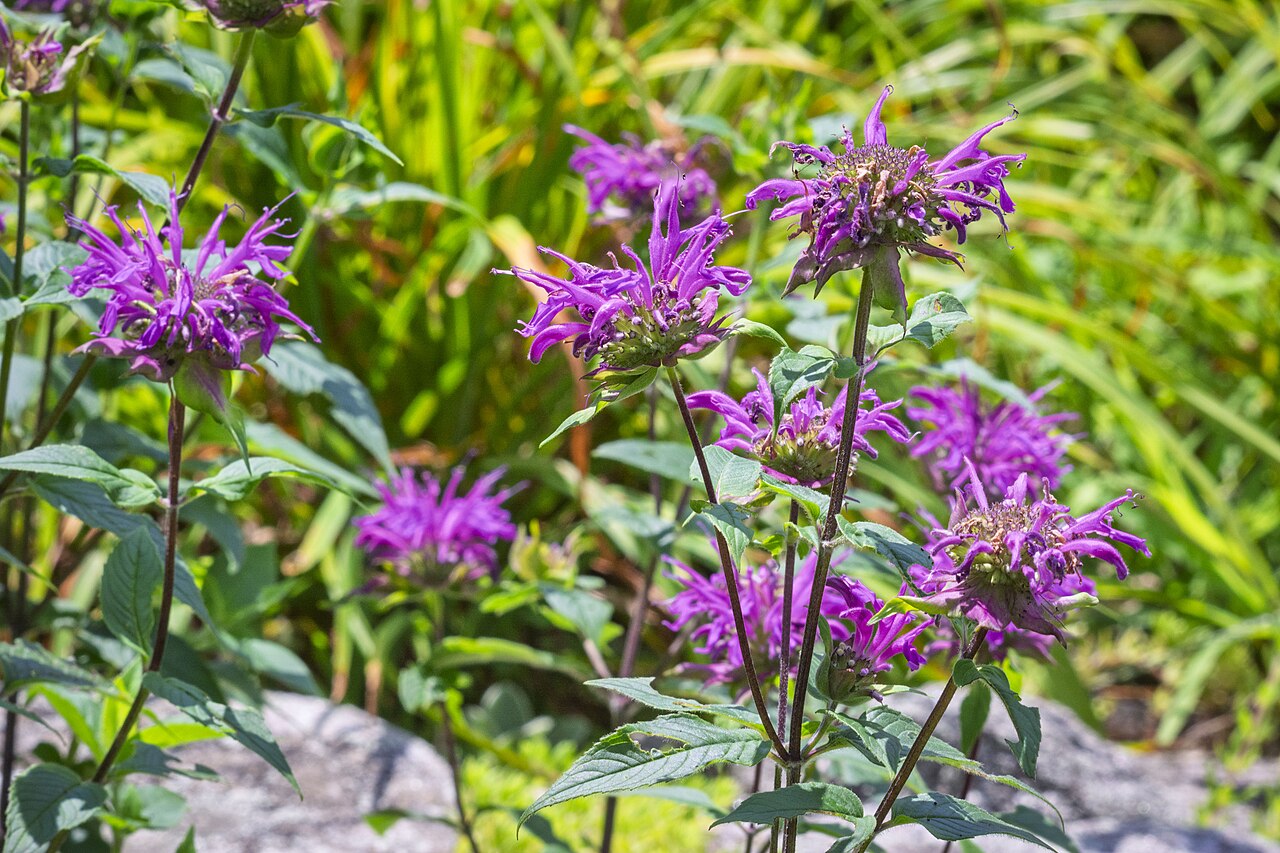
Though most usually use a flower pot and rocks for the empty tomb. But at least it includes planted flowers.

19. When in doubt, you can always try a nature scene.

This one is taken from a show on the Hallmark Channel. I know that network is famous for its saccharine programming but at least this garden is pretty.

20. Apparently, you’ll find the risen Jesus in this garden.

I don’t know about you. But I kind of like it better when resurrection gardens don’t include action figures.

21. Now this is what I call a real Easter free for all.

This one even has a lit candle, which I’d advise against. However, this is as Easter as it gets without the Christian motifs.

22. Sometimes resurrection scenes are better with peg dolls.

Though I’d advise against it. I think a tomb scene with flowers is sufficient enough.

23. An empty tomb can conveniently fit in an Easter basket.

Not sure if the plants are real. But it seems easy enough to do.

24. An Easter garden can always start small.

These are of mini Easter baskets, by the way. Yet, each has a flower and cute critter to love.

25. An Easter garden can’t go without a few spring touches.

Here you come to an assortment of spring decor that’s expensive as hell. All surrounding a glass stone lake.

26. These little chickies find a haven among flowers.

I think this might be from a basket. Though the chicks and the chocolate eggs give it an Easter touch.

27. With church gardens, you can never have enough plants.

A lot of British churches have these gardens around Easter which can get very elaborate. This one really takes the cake.

28. Spring is a time of new life and new beginnings.

Here we have a lamb and bunny watching some chicks hatch in a nest. So adorable.

29. For English gardens, flowers are all planted in neat and ordered rows.

Not sure if the flowers are real in this. But it nonetheless looks quite stunning to behold.

30. With this garden, it’s Easter eggs galore.

Of course, most of the Easter eggs should be hidden for the kids in the trees. But the ground’s just fine with me.

31. An Easter garden should remind one of an earthly paradise.

Here’s an empty tomb garden with all kinds of flowers in a church. Not sure about the figures here though.

32. A resurrection garden should always be brimming with spring flowers.

As you may see, you can customize a lot of these empty tomb gardens. Yet, the flowers on this one are simply breathtaking.

33. A resurrection garden must lead to much rejoicing.

This one is from a church. And yes, the flowers here certainly bring a smile on your face.

34. A small flower pot makes an ideal empty tomb.

Outside the empty tomb gardens, I found a lot of Easter mini gardens hard to find. So sometimes you have to go with what you can get.

35. If you think flowers are boring, you can always add animals.

Though I don’t think giraffes, tigers, and hippos are native to the Middle East. But to each his own.

36. For outdoor mini gardens, it helps to make a big impression.

This one is from outside a church. And yes, it features an empty tomb of rocks. Love it.

37. Rejoice, for He has risen!

And yet, another resurrection reenactment with peg dolls. Though I think it would be better if we didn’t include Jesus here.

38. For bunnies, Easter is a time of family togetherness.

Still, even in their anthropomorphic outfits, I’d expect there be more bunny family members. Then again, some of them might’ve been eaten already.

39. Nothing says Easter like planting flowers in eggshells.

Not sure how this arrangement can be done. But it seems possible. So pretty.

40. Even Easter bunnies head to church on Easter Sunday.

Well, when you don’t have an empty tomb, a church would do. Though I kind of wish there was a resurrection scene with bunny figures. That would be awesome.

41. Here we come to a fairy near the bunny bench.

Not sure if I’d want to do that. Because bunnies will attack when disturbed.

42. Didn’t know a bunny can live in toadstool house.

Under a toadstool maybe. But inside one, not a chance. Though it’s quite clever.

43. Here we come to 2 bunnies lounging on the patio.

Yet, they somewhat feel drawn to a basket of eggs in an ornate wheelbarrow. Simple yet sublime.

44. These little bunnies just want to enjoy the peaceful meadow.

You can tell this is an Easter garden because it features a cross along with the bunnies. Yet, it’s so adorable.

45. On Easter, I’m sure that Christ will light the way.

You may find candles in these gardens as well. Though I’d advise you to proceed with caution.

46. Perhaps you can spare a dime for a few rabbits.

Because bunnies need to make a living, too. Like the purple flowers though.

47. The Easter Bunny should find this fountain most welcoming.

Might’ve shown this garden before in other mini garden posts. But not with the Easter decorations.

48. In this Easter garden, you’ll find all kinds of eggs.

Even includes a bench with bunnies on it. Though you’d have an easy time finding these eggs in this garden.

49. Sometimes all you need are a couple of Easter bunnies.

This one just uses 2 little bunnies and moss. Adorable, yet so simple.

50. Flowers always mean that the resurrection is upon us.

Kind of makes a great contrast between the solemn Good Friday and the invigorating Easter. Love it.

51. For a resurrection garden, you might want to plant it inside the altar.

Well, that’s a clever way of doing it. The altar makes a nice backdrop. But wonder when they’ll have to clean up once Pentacost is over.

52. Not sure where I can find the tomb on this one.

Though I do admire the flowers and the moss hill of crosses. Then again, maybe we’re not suppose to see the empty tomb on this.

53. Little chicks always belong among the daffodils.

To these chickies, the daffodils almost resemble trees. So cute.

54. For a small patch, an Easter bunny can feel right at home.

You can even put in a few eggs and a bunny statue. Now that’s an Easter garden basket.

55. For Easter, you can’t ask for a more colorful scene like this.

This one includes an Easter house and an Easter egg bridge. But I’m sure the decor doesn’t come cheap.

56. Chicks always like being among the flowers.

Well, they include flowers I’d find at my grandma’s house. But the chickies are simply adorable.

57. With an Easter garden, it helps if you can go all out.

This one is from a Scottish hotel. But I love how it features an Easter egg tree.

58. A resurrection garden should always be outside for all to see.

This one may not have much color. But then again, maybe Easter came early that year.

59. Seems like we’ve come to an Easter garden party.

Perhaps in a forest with cotton candy trees. Though I’m not sure if this uses any real plants.

60. Sometimes there’s nothing like spending Easter on the farm.

This one is part of a set but at least it’s brightly colored and includes bunnies. So cute.

61. You can’t celebrate Easter without including some flowers and butterflies.

This one really gets in the spring of things. Love the beautiful colors.

62. Make sure your empty tomb garden has plenty of moss.

This one doesn’t use a lot. But the stone is certainly turned as it should be.
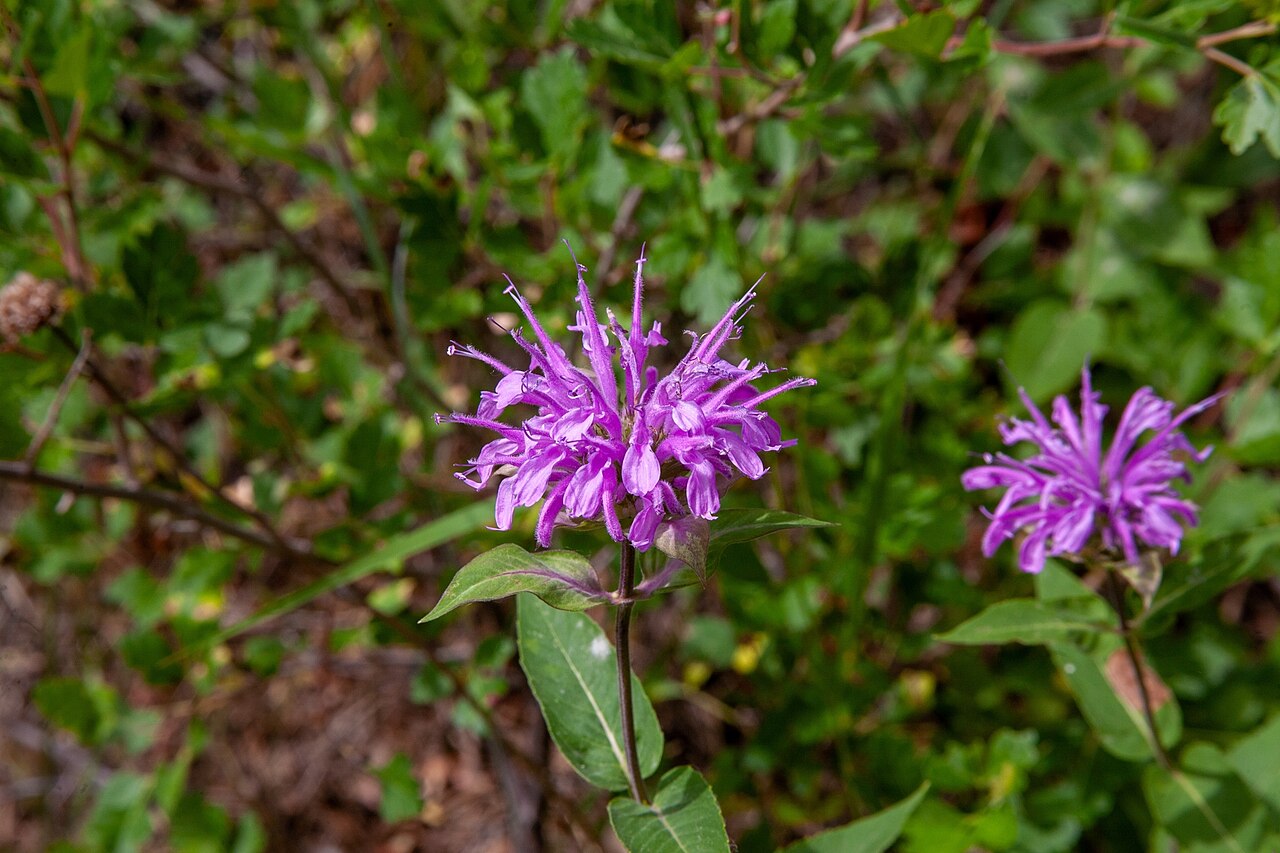
63. Remember you don’t need crosses to make an empty tomb garden.

After all, they didn’t say Jesus was buried beneath Calvary. Though this resembles more of a hobbit hole.

64. My guess is that you’ll find nothing behind the stone.

As you probably know by now, there’s nothing inside. For Jesus has risen.

65. On some Easter gardens, it’s all about the foliage.

This one has a lot of moss and other plants. But the crosses are of solid wood.

66. For a pond scene, it helps to surround a pool with stones.

Well, at least this one has flowers and succulents. Though this empty tomb garden thing is getting old.

67. An Easter mini garden can never have too many daisies.

This one has a rather sunny disposition. Like the rabbit climbing out of a pot.
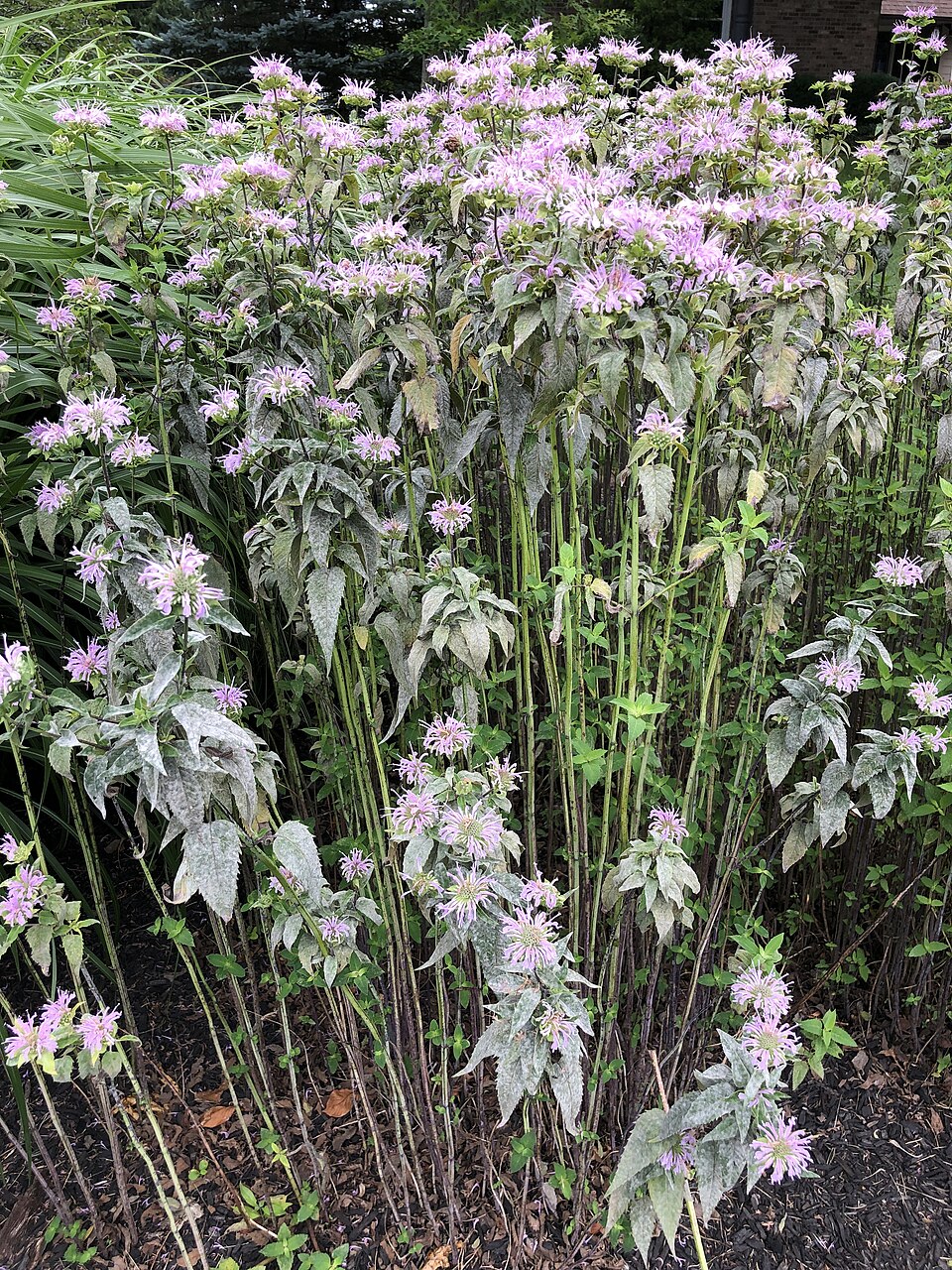
68. A large rock can serve as an appropriate tomb.
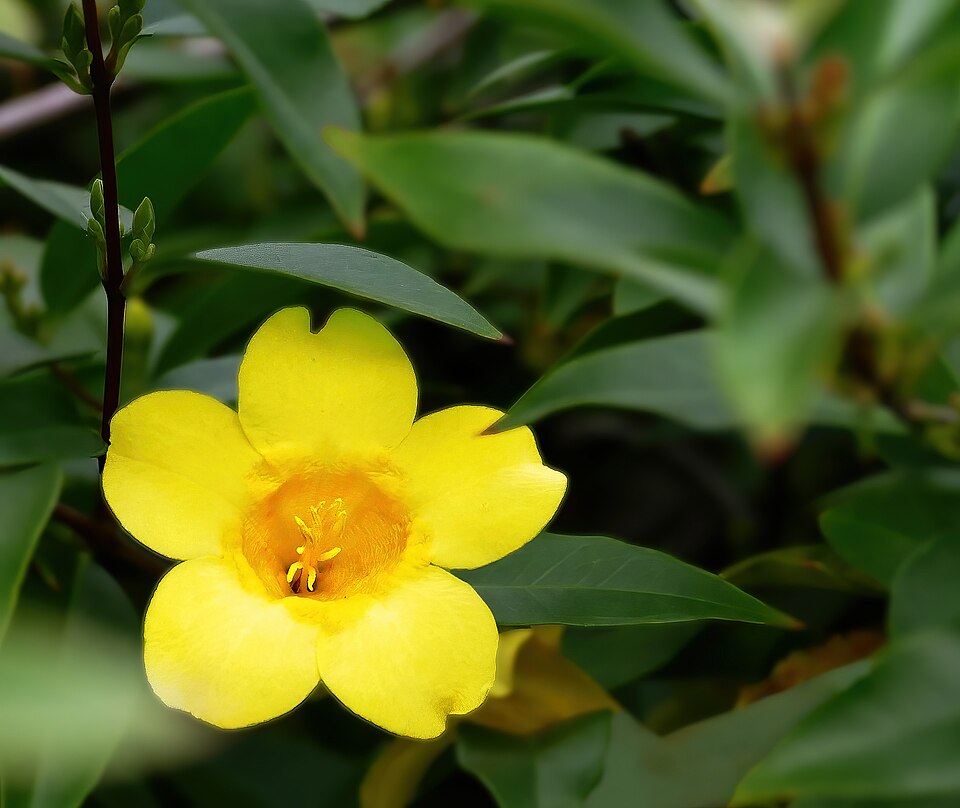
Helps if it’s hollowed through first. Though at least the rocks match.

69. A fairy garden with Easter eggs and chicks can spring into anything.

Well, this is more of a spring garden than an Easter one. But the chickies and colored eggs are here, anyway.

70. A pixie fairy garden has a pair of pastel houses.

Well, at least it includes bunny on the side. Though the one on the right should’ve had a different color.

71. Leafy plants can really make the garden come alive.

This one uses a square tomb. And the crosses seem rather level for some reason. Doesn’t use too many flowers.

72. As far as I know, this Easter garden is of the zen variety.

Not sure if zen Easter gardens even exist. If they do, this is what they’d look like.

73. I’m sure a carrot house is appropriate rabbit housing.

However, some rabbits might find it hard to resist. Nevertheless, think it’s quite clever.

74. A spring fairy garden must have its own array of flowers.

This one even has its own evergreen tree. Not sure why that’s there. Love the flowers.

75. Sometimes you can make a tomb with just a couple of rocks.

Well, that’s one way of putting it. Still, I doubt the stone is hollow for the emptiness effect.

76. A carrot house is a cozy bunny home, especially on Easter.

This is a cute little Easter garden. Like the little flowers. Think that carrot house is clever.

77. A fairy garden in the spring should be of vibrant color.

Well, this will make a fine Easter garden. Like the little house and stone work.

78. Animals flock to any fairy house.

Well, statue animals anyway. Like the gravel pond of ducks.

79. A spring garden is always meant for the birds.

This is especially if it has a moss roof. Nevertheless, the bluebirds stand out.

80. With these 3 fairy basket gardens, you can make Easter magic.

Okay, maybe they’re not exactly Easter gardens per se. But if you’re no fan of chicks or bunnies, they’ll surely do.

The Holly and Ivy World of Miniature Christmas Gardens

studio-m-gypsy-garden-fairy-garden-fall-thanksgiving-_1

Though the holiday season may be upon us, tis usually not the season for gardening. At least if you live where I do when it’s more likely that your garden will usually have dead stuff that you had to clean out in the fall. I mean winter gardens are usually not much to look at unless you live in the tropics. Then it doesn’t really look right since winter is a time for snow. And snow usually happens at cold temperatures which plants don’t do well in. Anyway, since miniature gardens are usually in containers, this isn’t a problem for people who are into them. In fact, it’s not uncommon for people to decorate their own mini gardens with a holiday touch or make Christmas mini gardens of their own. If you don’t believe me, you can find a lot of places selling miniature garden stuff online. And yes, many of these use fake snow for a more wintry atmosphere. So for your reading pleasure, I give you an assortment of Christmas miniature garden to bring you holiday cheer this season.

  1. The star must always go on top of the tree.

And I see the tree here is resplendently decorated. Love the red bow. The horse wreath is nice, too.

And I see the tree here is resplendently decorated. Love the red bow. The horse wreath is nice, too.

2. A nativity scene in your miniature garden keeps the spirit of the season.

It's even better if you have a dirt ground and a twig stable. Still, this is lovely.

It’s even better if you have a dirt ground and a twig stable. Still, this is lovely.

3. Mini gardens with multiple layers should always look festive.

Love how this garden has angels and a richly decorated archway. Very much in the Christmas spirit of things.

Love how this garden has angels and a richly decorated archway. Very much in the Christmas spirit of things.

4. Evergreen trees and snow always make a great Christmas landscape.

The tree on this one only has a red star. But you have to like the snowman and the sleigh full of gifts.

The tree on this one only has a red star. But you have to like the snowman and the sleigh full of gifts.

5. Sometimes a few holiday decorations is all you need.

This one just includes presents in an urn, a snowman, and a wreath. All in all, it's holiday simplicity.

This one just includes presents in an urn, a snowman, and a wreath. All in all, it’s holiday simplicity.

6. You don’t have a Christmas mini garden unless you have lights.

The tree in this garden has red lights all over it. And there's even a tree in the house.

The tree in this garden has red lights all over it. And there’s even a tree in the house.

7. It’s always great to have stockings and presents at the tree.

This one has stockings hung at the tree as well as gifts on a sled nearby. There is even a deer in the snow.

This one has stockings hung at the tree as well as gifts on a sled nearby. There is even a deer in the snow.

8. Tis the season to deck the halls inside and out.

This one has lights on the house as well as candy canes and a sled on a frozen pond. Like the wreath on the table.

This one has lights on the house as well as candy canes and a sled on a frozen pond. Like the wreath on the table.

9. A mirror always makes a great frozen pond.

This one also includes snow covered church as well as a wreath. All in all, lovely.

This one also includes snow covered church as well as a wreath. All in all, lovely.

10. Make sure your mini garden tree is richly decorated for the season.

Helps if the bush has red bows, too. Not to mention, the gifts near the tree bring an extra holiday touch.

Helps if the bush has red bows, too. Not to mention, the gifts near the tree bring an extra holiday touch.

11. In a miniature garden, you can still have a snowman without the snow.

But it would still resemble a lawn decoration. Still, love the wreath on the chair.

But it would still resemble a lawn decoration. Still, love the wreath on the chair.

12. You can always have a birdbath near a decorated tree.

This one looks quaint. Normally, you couldn't do this outdoors. But in mini gardens, go right ahead.

This one looks quaint. Normally, you couldn’t do this outdoors. But in mini gardens, go right ahead.

13. Sometimes all it takes are a few shiny red baubles.

Yet, in this case the baubles have to be small to be near the church. So do the snow covered evergreen trees.

Yet, in this case the baubles have to be small to be near the church. So do the snow covered evergreen trees.

14. To bring in the spirit of the season, just add a few small baubles.

Yes, a few shiny baubles are all you need. These ones have gold decoration on them, too.

Yes, a few shiny baubles are all you need. These ones have gold decoration on them, too.

15. Even Santa has to stop by to admire the gnome’s decorations.

There's even some semblance of a gingerbread house, too. Like the lights on the trees and the tire swing though.

There’s even some semblance of a gingerbread house, too. Like the lights on the trees and the tire swing though.

16. Snowmen can make any place seem like a home.

This one even includes a tree with a present. And it's mostly covered with snow (which is fake naturally).

This one even includes a tree with a present. And it’s mostly covered with snow (which is fake naturally).

17. For a holiday mini garden, just add decorations.

Yes, a lot of this seems to be out of proportion. But that's how mini gardens are sometimes. Love the wreaths.

Yes, a lot of this seems to be out of proportion. But that’s how mini gardens are sometimes. Love the wreaths.

18. Sometimes all you just have to do is decorate the tree.

Well, this one isn't as nice as the others I've shown. But it's pretty enough.

Well, this one isn’t as nice as the others I’ve shown. But it’s pretty enough.

19. Outdoor decorations should always be in the spirit of the season.

This one uses a Christmas wreath and other holiday touches. So simple yet so quaint.

This one uses a Christmas wreath and other holiday touches. So simple yet so quaint.

20. When in doubt, go with a peppermint candy trail.

Well, it gives it a sweet charm. Though the tree doesn't look real.

Well, it gives it a sweet charm. Though the tree doesn’t look real.

21. A miniature Christmas garden should always have a fence with candy canes.

A tree decked in baubles also helps as well. So does having it covered in snow.

A tree decked in baubles also helps as well. So does having it covered in snow.

22. Sometimes a few decorations can make a winter wonderland.

This one just has a star on the tree and a red archway with a snowflake. So it didn't take much.

This one just has a star on the tree and a red archway with a snowflake. So it didn’t take much.

23. To bring the Christmas spirit, sometimes you just have to deck the arch way.

Well, there's a snow covered tree here, too. But you have to love the wreaths and the garland.

Well, there’s a snow covered tree here, too. But you have to love the wreaths and the garland.

24. A tree and angel should always be at the center.

Well, the angel here has a wreath around its head. The tree is snow covered but looks fake.

Well, the angel here has a wreath around its head. The tree is snow covered but looks fake.

25. During the Christmas season nothing beats a gingerbread house.

Also helps if it includes a peppermint candy patio. Love the tree and lights though.

Also helps if it includes a peppermint candy patio. Love the tree and lights though.

26. Having green plants in the background gives an evergreen atmosphere for the holiday season.

This one uses decor that's in a similar style. Yet, Santa seems bigger than this house.

This one uses decor that’s in a similar style. Yet, Santa seems bigger than this house.

27. Sometimes all you need are a couple of Santa hats.

And this is all what this garden has for Christmas decorations. Well, there's still cotton snow though.

And this is all what this garden has for Christmas decorations. Well, there’s still cotton snow though.

28. You can always have lights and presents on a Christmas tree.

You can even have a wreath on the tool shed. Still, it must be beautiful when it's lit up at night.

You can even have a wreath on the tool shed. Still, it must be beautiful when it’s lit up at night.

29. Sometimes a small tree can do just as well.

But you might not use as many decorations though. Still, like the red ribbons.

But you might not use as many decorations though. Still, like the red ribbons.

30. This tree mini garden takes the blue ribbon.

This one even has stars surrounding it. All it needs is snow in my opinion.

This one even has stars surrounding it. All it needs is snow in my opinion.

31. Of course, some miniature Christmas gardens can go all out on a whole wagon.

This one has a whole village with a train below and lighted garland roof. Not to mention, you have to love the lighted star.

This one has a whole village with a train below and lighted garland roof. Not to mention, you have to love the lighted star.

32. Sometimes gravel is all you need to create a winter wonderland.

This one has a snowman as well as a bench with gifts. all in all, it's adorable.

This one has a snowman as well as a bench with gifts. all in all, it’s adorable.

33. A few red decorations can always make the season bright.

Not sure what I think about the tree. But I do think the shiny holly berries make a nice touch.

Not sure what I think about the tree. But I do think the shiny holly berries make a nice touch.

34. You can be festive for the holidays even within a small space.

This is of the tea cup garden variety which is small. Still, like the candy cane lamp post.

This is of the tea cup garden variety which is small. Still, like the candy cane lamp post.

35. The more greenery in your miniature Christmas garden the better.

This one has a tower decorated with a wreath and garlands. Also like the tree.

This one has a tower decorated with a wreath and garlands. Also like the tree.

36. How about a little Santa hat in the shrubs?

This one also has a pile of snowballs and red ribbons on the archway. Simple but lovely.

This one also has a pile of snowballs and red ribbons on the archway. Simple but lovely.

37. Fans of Rudolph the Red-Nosed Reindeer will adore this miniature garden.

However, the Christmas special is a lot weirder than you know. It's kind of like Lord of the Rings made for kids on acid.

However, the Christmas special is a lot weirder than you know. It’s kind of like Lord of the Rings made for kids on acid.

38. Beads and lights really bring out the beauty in a tree.

Both tree and shrub seem to have a lot of beads on it. The lights also look pretty.

Both tree and shrub seem to have a lot of beads on it. The lights also look pretty.

39. A holiday house should always have some seasonal trimmings.

This one doesn't use a lot of decorations. But you have to admire the snow on the roof.

This one doesn’t use a lot of decorations. But you have to admire the snow on the roof.

40. A lighted tree is great next to a quaint Christmas cottage.

Well, the house is certainly in the Christmas spirit. Love the lighted tree.

Well, the house is certainly in the Christmas spirit. Love the lighted tree.

41. A gingerbread house should be between two lit trees.

This one has trees side by side that have lights in each of them. For all I can say, this is beautiful.

This one has trees side by side that have lights in each of them. For all I can say, this is beautiful.

42. A gingerbread house in a miniature garden is surely sweet.

This one is surrounded by candy canes and holly berries. Like the gingerbread man.

This one is surrounded by candy canes and holly berries. Like the gingerbread man.

43. It always looks a lot like Christmas when you stick a few candy canes in the ground.

Like how the house is made to resemble a fairy abode with a petal roof. Of course, it has candy cane decoration as well.

Like how the house is made to resemble a fairy abode with a petal roof. Of course, it has candy cane decoration as well.

44. Seems like Santa has made a stop here.

Well, there aren't a lot of reindeer here but that can be forgiven. Also, not a lot of snow either.

Well, there aren’t a lot of reindeer here but that can be forgiven. Also, not a lot of snow either.

45. Of course, you can always spend Christmas at the beach.

This one has Santa's hat and boots near a chair. It's as if Santa has been here.

This one has Santa’s hat and boots near a chair. It’s as if Santa has been here.

46. Sometimes a from the archway is all you need.

Well, this one uses a few non-traditional Christmas motifs like a mistletoe lantern and sled. Either way it gives a rustic impression.

Well, this one uses a few non-traditional Christmas motifs like a mistletoe lantern and sled. Either way it gives a rustic impression.

47. The presents will be at the wreathed lantern.

This one includes 2 deer which I know wouldn't be used for Santa's sleigh. It also has a snowman.

This one includes 2 deer which I know wouldn’t be used for Santa’s sleigh. It also has a snowman.

48. It’s beginning to look a lot like Christmas in this fairy village.

You just have to look closer just to get my drift. But it certainly resembles a fairy tale forest.

You just have to look closer just to get my drift. But it certainly resembles a fairy tale forest.

49. All this miniature garden needs is a few candy canes and lights.

The lights on this one seem to be rather small. Makes me wonder about what bulbs they get if any of them go out.

The lights on this one seem to be rather small. Makes me wonder about what bulbs they get if any of them go out.

50. A well decorated Christmas tree always makes the season bright.

This one even has a wooden reindeer. Still, really love the bows and lights.

This one even has a wooden reindeer. Still, really love the bows and lights.

51. A richly decorated Christmas tree should always have presents below it.

Well, this is just a lonely tree near a road. Still, you can't hate how it's decorated or the presents.

Well, this is just a lonely tree near a road. Still, you can’t hate how it’s decorated or the presents.

52. In a miniature garden, a Christmas tree really has to light up.

And yes, it certainly shines bright at night as you see here. Still, got to love the decorations.

And yes, it certainly shines bright at night as you see here. Still, got to love the decorations.

53. A bonsai can easily make a Christmas tree as any evergreen.

This bonsai tree even has a bow and beads around it. And it goes nicely with the red chair.

This bonsai tree even has a bow and beads around it. And it goes nicely with the red chair.

54. Sometimes all it takes is a Christmas tree with colorful lights.

This one has presents, a tree, Santa, and baubles on a pot. Like the white bench and table though.

This one has presents, a tree, Santa, and baubles on a pot. Like the white bench and table though.

55. Sometimes cotton is sufficient for a blanket of snow.

After all, it's fluffy. Yet, in this garden, it doesn't seem to cover everything in sight.

After all, it’s fluffy. Yet, in this garden, it doesn’t seem to cover everything in sight.

56. A gingerbread house must always have a Christmas tree with candy canes nearby.

And it's an especially colorful gingerbread house, too. The candy cane bench is perfect.

And it’s an especially colorful gingerbread house, too. The candy cane bench is perfect.

57. Seems like this small garden has a few trees in order.

This one has Santa, two presents, and a candy cane chair. Doesn't seem like much, but it'll do.

This one has Santa, two presents, and a candy cane chair. Doesn’t seem like much, but it’ll do.

58. A plain stone house should always have some light decorations.

This one even has a gingerbread house as well as fairies in the snow. So lovely.

This one even has a gingerbread house as well as fairies in the snow. So lovely.

59. For a Christmas mini garden you can always go with a single candy cane.

This one also has a few decorations on it as well. But the lone candy cane stands out.

This one also has a few decorations on it as well. But the lone candy cane stands out.

60. Seems like the snow isn’t long for this garden.

Guess they didn't have a lot of cotton. But you have to admire the snowman on this one. Like the plaid house.

Guess they didn’t have a lot of cotton. But you have to admire the snowman on this one. Like the plaid house.

61. Sometimes you can use normal baubles for a Christmas mini garden.

You can also see a Christmas tree with green beads. Love the owl which I think is a hoot.

You can also see a Christmas tree with green beads. Love the owl which I think is a hoot.

62. Christmas decorations always look lovely on brass furniture.

The arch and bench are covered in tinsel and bows. The arch even has lights.

The arch and bench are covered in tinsel and bows. The arch even has lights.

63. Orange and blue look good on a Christmas tree.

Yet, there seems to be presents all around as well. Seems like an idyllic scene for the holiday season.

Yet, there seems to be presents all around as well. Seems like an idyllic scene for the holiday season.

64. For those who opt for a blue Christmas, this is the miniature garden for you.

This one also has blue star signs like the last one. But this garden includes snow and a lawn chair.

This one also has blue star signs like the last one. But this garden includes snow and a lawn chair.

65. Looks like Santa is taking his gig outdoors this time.

Yes, this one has a girl on Santa's lap. And she's not wearing a coat in the snow at all.

Yes, this one has a girl on Santa’s lap. And she’s not wearing a coat in the snow at all.

66. A layered pot tends to have Santa on a ledge.

And Santa seems to be bigger than that house. And so does the North Pole.

And Santa seems to be bigger than that house. And so does the North Pole.

67. A Christmas fairy village should always have lights.

And the lights seem to be along the fence. Yet, you can see the decorations if you look more closely.

And the lights seem to be along the fence. Yet, you can see the decorations if you look more closely.

68. A skinny light Christmas tree is always better than none.

Well, it seems to take a form of an overgrown bush. Like the bow at the top.

Well, it seems to take a form of an overgrown bush. Like the bow at the top.

69. It’s always nice to relax around a peppermint patio.

There's not much snow. But the peppermint bench, table, and stools surely bring in the holiday spirit.

There’s not much snow. But the peppermint bench, table, and stools surely bring in the holiday spirit.

70. Fairies always seem to frolic near a frozen pond.

This one uses poinsettias that make an ideal Christmas garden addition. And not just miniature ones either.

This one uses poinsettias that make an ideal Christmas garden addition. And not just miniature ones either.

71. There’s nothing like an angel that shows peace on earth, good will toward men.

This one even has a nice little golden church on a hill. Still, it's quite lovely with the snowflakes.

This one even has a nice little golden church on a hill. Still, it’s quite lovely with the snowflakes.

72. I call this one, “Snowmen on the Rocks.”

Because the snowmen don't seem to be near any snow. Yet, they seem to exist.

Because the snowmen don’t seem to be near any snow. Yet, they seem to exist.

73. A holiday miniature garden like this comes with all the trimmings.

This one seems to have a lot in it. Yet, it seems to become its own winter wonderland.

This one seems to have a lot in it. Yet, it seems to become its own winter wonderland.

74. How about including a poinsettia to kick off the Christmas spirit?

And yes, a pointsettia is included. Whether it's real or fake, I can't decide.

And yes, a pointsettia is included. Whether it’s real or fake, I can’t decide.

75. Of course if a pink Christmas suits your fancy, this miniature garden is for you.

It even has a pink trail as well as purple baubles. Certainly to brighten your season with cheer.

It even has a pink trail as well as purple baubles. Certainly to brighten your season with cheer.

76. Of course, you can always go with a white Christmas tree.

Yet, there doesn't seem to be a lot of snow in this one. But it has a lot of Christmas decorations that there should be.

Yet, there doesn’t seem to be a lot of snow in this one. But it has a lot of Christmas decorations that there should be.

77. A Christmas miniature garden like this is a perfect winter wonderland.

Now this is a garden with all the Christmas trimmings. All it needs is a decorated tree and it's all set.

Now this is a garden with all the Christmas trimmings. All it needs is a decorated tree and it’s all set.

78. In a winter wonderland like this, you’ll find a tree of gold somewhere.

And here it is within a tower. Bet it's to protect it from the snowy weather. Love it.

And here it is within a tower. Bet it’s to protect it from the snowy weather. Love it.

79. You can decorate a miniature Christmas tree with whatever you have at home.

And this one seems to be decorated this way. Nice that it has Santa's sack and presents.

And this one seems to be decorated this way. Nice that it has Santa’s sack and presents.

80. A Christmas miniature garden like this should have a big bushy tree with all the trimmings.

Yeah, it looks similar to some of the previous ones I've shown in this post. Yet, it seems more like something you'd put on a Christmas card.

Yeah, it looks similar to some of the previous ones I’ve shown in this post. Yet, it seems more like something you’d put on a Christmas card.

The Little Nightmare World of Miniature Halloween Gardens

group1s

When it comes to Halloween and other holidays, there are some post ideas I reuse on an annual basis since I like them and have proven popular. Then there are posts of ideas I want to try out on my own since I think I should come up with a few original concepts during the holidays. This is a combination of two. As I’ve seen on Pinterest, my post on miniature gardens has proven quite popular since I created and published it last year. And there are plenty of miniature garden decorations available for each holiday season. Halloween is one of these times since it’s a highly popular holiday and pretty much the last holiday before retail outlets everywhere get into their Christmas decorations as if Thanksgiving didn’t really exist in between. Well, at least in the United States as far as I’m concerned. Anyway, it’s not unusual to find mini gardens decorated for Halloween. You might find some presented as tiny graveyards or haunted lawns. Some even have it in autumn fashion with pumpkins. But however these gardens are made, I bring some of them to you.

  1. Sometimes for your Halloween garden, all you need are pumpkins and orange fencing.

Helps if it has vines growing from a bird bath. Really brings out some of the creepiness.

Helps if it has vines growing from a bird bath. Really brings out some of the creepiness.

2. This mini garden must’ve been abandoned by fairies years ago.

But the pumpkins seem ripe and everything later looks like crap in the fall. Like the skeleton.

But the pumpkins seem ripe and everything later looks like crap in the fall. Like the skeleton.

3. When it comes to Halloween some take time to dress their door on the trees.

Since it's fall, the gnomes didn't have to do much to their place. Just decorate the front door for trick or treaters.

Since it’s fall, the gnomes didn’t have to do much to their place. Just decorate the front door for trick or treaters.

4. Welcome to the fairy graveyard.

Complete with a dangling skull decoration. Still, almost didn't see the graves in this one.

Complete with a dangling skull decoration. Still, almost didn’t see the graves in this one.

5. For Halloween miniature gardens, the more haunted the better.

Here we come across a churyard garden with a cob webbed tree and graves. Doesn't have a lot of plants but plenty of gravel.

Here we come across a churchyard garden with a cob webbed tree and graves. Doesn’t have a lot of plants but plenty of gravel.

6. Sometimes it doesn’t take much for a mini garden to be truly haunted.

This one just looks unkempt and has decorations. Including pumpkins and a skeleton.

This one just looks unkempt and has decorations. Including pumpkins and a skeleton.

7. Not sure if this is a good place to trick or treat.

Though not the most haunted house I've seen, the skull posts seem quite scary. Still, like the ghosts and trick or treaters.

Though not the most haunted house I’ve seen, the skull posts seem quite scary. Still, like the ghosts and trick or treaters.

8. Someone must’ve spilled the cauldrons at this place.

Hope whatever potion the witches were making doesn't do any nasty damage. Love the pumpkins, by the way.

Hope whatever potion the witches were making doesn’t do any nasty damage. Love the pumpkins, by the way.

9. Please don’t mind the reclining skeleton.

He's just only resting his bones. And I tell you, there's no bones about it.

He’s just only resting his bones. And I tell you, there’s no bones about it.

10. Sometimes it helps to start simple.

These just have Halloween decorations as well. But the black cat seems a little freaked out.

These just have Halloween decorations as well. But the black cat seems a little freaked out.

11. It might be best to keep out of this one.

Since it specifically states to keep out despite that cemeteries are technically public parks. Love the decor on this.

Since it specifically states to keep out despite that cemeteries are technically public parks. Love the decor on this.

12. Sometimes a modest graveyard in a bucket will do.

And it seems that someone must've been here recently. But probably got spooked out. Must've seen a ghost.

And it seems that someone must’ve been here recently. But probably got spooked out. Must’ve seen a ghost.

13. Skeletons and jack-o-lanterns can always make a spooky garden.

This especially goes for the skeletons. Doesn't matter if they're standing or buried in the ground either.

This especially goes for the skeletons. Doesn’t matter if they’re standing or buried in the ground either.

14. Seems like this place has become a ghostly hangout.

After all, ghosts must like billowing shrubs and cobblestone paths. Nevertheless, this is charming.

After all, ghosts must like billowing shrubs and cobblestone paths. Nevertheless, this is charming.

15. Only the dead seem to reside at this house.

Still, I like how this person did their own haunted house and like how the plants seem to take it over. I think it's very creative.

Still, I like how this person did their own haunted house and how the plants seem to take it over. I think it’s very creative.

16. In a Halloween mini garden, the plants can just run wild.

You can see how the plants dangle from the box in this one. Love the decorations.

You can see how the plants dangle from the box in this one. Love the decorations.

17. Sometimes ghosts and witches prefer the peaceful nature surroundings.

Well, this is a graveyard with a path and an imposing rock. But I'm not sure what the pumpkins are doing here.

Well, this is a graveyard with a path and an imposing rock. But I’m not sure what the pumpkins are doing here.

18. A black pumpkin garden could always cause a sensation.

This is especially when there's a skeleton bench and grave stones. Still, if this pumpkin is real, you might need to throw it out in early November.

This is especially when there’s a skeleton bench and grave stones. Still, if this pumpkin is real, you might need to throw it out in early November.

19. This Halloween mini garden is so spooky that even the pot is alive.

Well, alive in lights. But you have to admit, this takes Halloween mini gardens to a whole new level.

Well, alive in lights. But you have to admit, this takes Halloween mini gardens to a whole new level.

20. With a Halloween garden like this, you can even decorate the trees.

The table has some bones on top. But none you'd want to give your dog. Like how the trees are decked for the holiday.

The table has some bones on top. But none you’d want to give your dog. Like how the trees are decked for the holiday.

21. Nothing makes a better mini garden pot than a black cauldron.

And it doesn't hurt if it has legs. Not sure if I see any plants here though.

And it doesn’t hurt if it has legs. Not sure if I see any plants here though.

22. Sometimes all you need are skulls, pumpkins, and anything orange.

Well, I didn't include the scared black cat, though. But I do like the skull and the jack-o-lantern on the chair.

Well, I didn’t include the scared black cat, though. But I do like the skull and the jack-o-lantern on the chair.

23. In Halloween mini gardens, the more scary plants the better.

Seems like there's a creepy monster ball tonight. Wonder who'll show up. Then again, maybe I don't want to know.

Seems like there’s a creepy monster ball tonight. Wonder who’ll show up. Then again, maybe I don’t want to know.

24. Halloween can be such a strange time that you’ll find jack-o-lanterns on trees.

In real life, putting jack-o-lanterns on trees just weighs them down as well as poses a fire hazard. But this doesn't seem too bad.

In real life, putting jack-o-lanterns on trees just weighs them down as well as poses a fire hazard. But this doesn’t seem too bad.

25. Is that a trail of eyeballs?

Seems like this person got a little creative with this miniature garden. I mean there's a pumpkin with some painted gravestones and an eyeball trail. The cauldron looks perfect for a witch's lair.

Seems like this person got a little creative with this miniature garden. I mean there’s a pumpkin with some painted gravestones and an eyeball trail. The cauldron looks perfect for a witch’s lair.

26. Sometimes it takes the right setting for a house to seem haunted.

Not sure if those are trick or treaters dressed as ghosts or just ghosts. Sometimes you can't tell on Halloween.

Not sure if those are trick or treaters dressed as ghosts or just ghosts. Sometimes you can’t tell on Halloween.

27. Sometimes all a skeleton wants is a quiet afternoon.

Though the ghost always has to bug him. Love the plants near the scarecrow though.

Though the ghost always has to bug him. Love the plants near the scarecrow though.

28. The plants seem rather wild in this graveyard.

I guess these are normal plants in a bucket with a large skull and grave stones. Kind of freaky but I like it.

I guess these are normal plants in a bucket with a large skull and grave stones. Kind of freaky but I like it.

29. While some mini gardens feature a haunted house, this one shows a haunted village.

Houses are on the top. Plants are on the bottom. Someone must've had too much time on their hands.

Houses are on the top. Plants are on the bottom. Someone must’ve had too much time on their hands.

30. Wonder what monsters rise from this garden?

I can see Frankenstein's monster from the ground as well as a goblin. At least I think it's a goblin.

I can see Frankenstein’s monster from the ground as well as a goblin. At least I think it’s a goblin.

31. Guess this pumpkin house didn’t have any candy.

Or it just creeped them out with the creepy doll girl and the trees with heads. Yet, the trick or treaters seem like they're minding their own business.

Or it just creeped them out with the creepy doll girl and the trees with heads. Yet, the trick or treaters seem like they’re minding their own business.

32. Seems like this garden has been overrun by spiders.

That might explain the cobwebs on the trees. But even at this scale, they'll still freak people out.

That might explain the cobwebs on the trees. But even at this scale, they’ll still freak people out.

33. Looks like this garden’s been swept in the wind.

Yes, fall can be a rather windy time of year. It can also be quite rainy as well, especially in October.

Yes, fall can be a rather windy time of year. It can also be quite rainy as well, especially in October.

34. Don’t mind the skeleton as you pass the cemetery.

As you might notice, the mini garden decorations aren't always up to scale. Look on how the skeleton seems to be a giant compared to where the graves are and the other figures.

As you might notice, the mini garden decorations aren’t always up to scale. Look on how the skeleton seems to be a giant compared to where the graves are and the other figures.

35. This old house has always been a haven for skeletons.

Because they tend to rise from their graves and haunt the place. Seem to have a good time.

Because they tend to rise from their graves and haunt the place. Seem to have a good time.

36. I’m sure it’s perfectly safe to trick or treat here.

Just don't mind the Venus Fly Traps and the other weird flora here. They just eat the insects.

Just don’t mind the Venus Fly Traps and the other weird flora here. They just eat the insects.

37. This witch always likes to be around her weeds.

And she sure loves how they seem to grow wild. Not sure if she's sweeping or about to fly with her broomstick.

And she sure loves how they seem to grow wild. Not sure if she’s sweeping or about to fly with her broomstick.

38. Put a few tombstones and you have yourself a graveyard.

Not sure I want to know who's buried here. But I like how they go with the plants.

Not sure I want to know who’s buried here. But I like how they go with the plants.

39. Sometimes it doesn’t hurt to improvise.

As you can see, the pumpkins in here are just painted rocks. May not seem perfectly symmetrical but seems to work.

As you can see, the pumpkins in here are just painted rocks. May not seem perfectly symmetrical but seems to work.

40. Ghosts always love haunting a pumpkin house.

Yes, a lot of these mini gardens feature the same decorations over and over again. But none of these are in the same style.

Yes, a lot of these mini gardens feature the same decorations over and over again. But none of these are in the same style.

41. Even gnomes can be in a carving mood this time of year.

And they all seem to be carving away. Looks like one is carving the biggest pumpkin for a master touch.

And they all seem to be carving away. Looks like one is carving the biggest pumpkin for a master touch.

42. Even more than a pumpkin house, ghosts also enjoy nearby ponds.

There we see the ghosts at the pumpkin house again. Nevertheless, the fern on this is lovely.

There we see the ghosts at the pumpkin house again. Nevertheless, the fern on this is lovely.

43. A gnome house is always a welcoming place for anyone.

This includes skeletons, ghosts or any undead. Gnomes don't care.

This includes skeletons, ghosts or any undead. Gnomes don’t care.

44. Seems like the white vines are growing from this pot.

Then again, I wonder if they're supposed to be cobwebs. That might explain a lot.
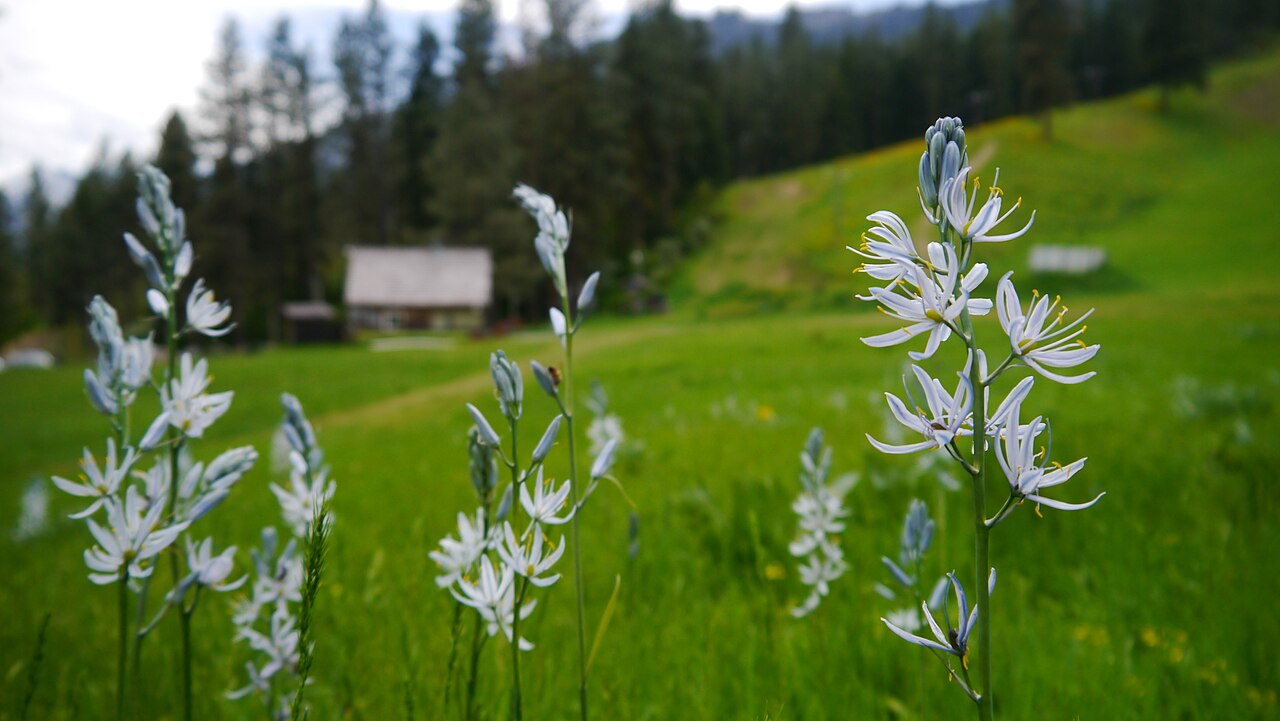
Then again, I wonder if they’re supposed to be cobwebs. That might explain a lot.
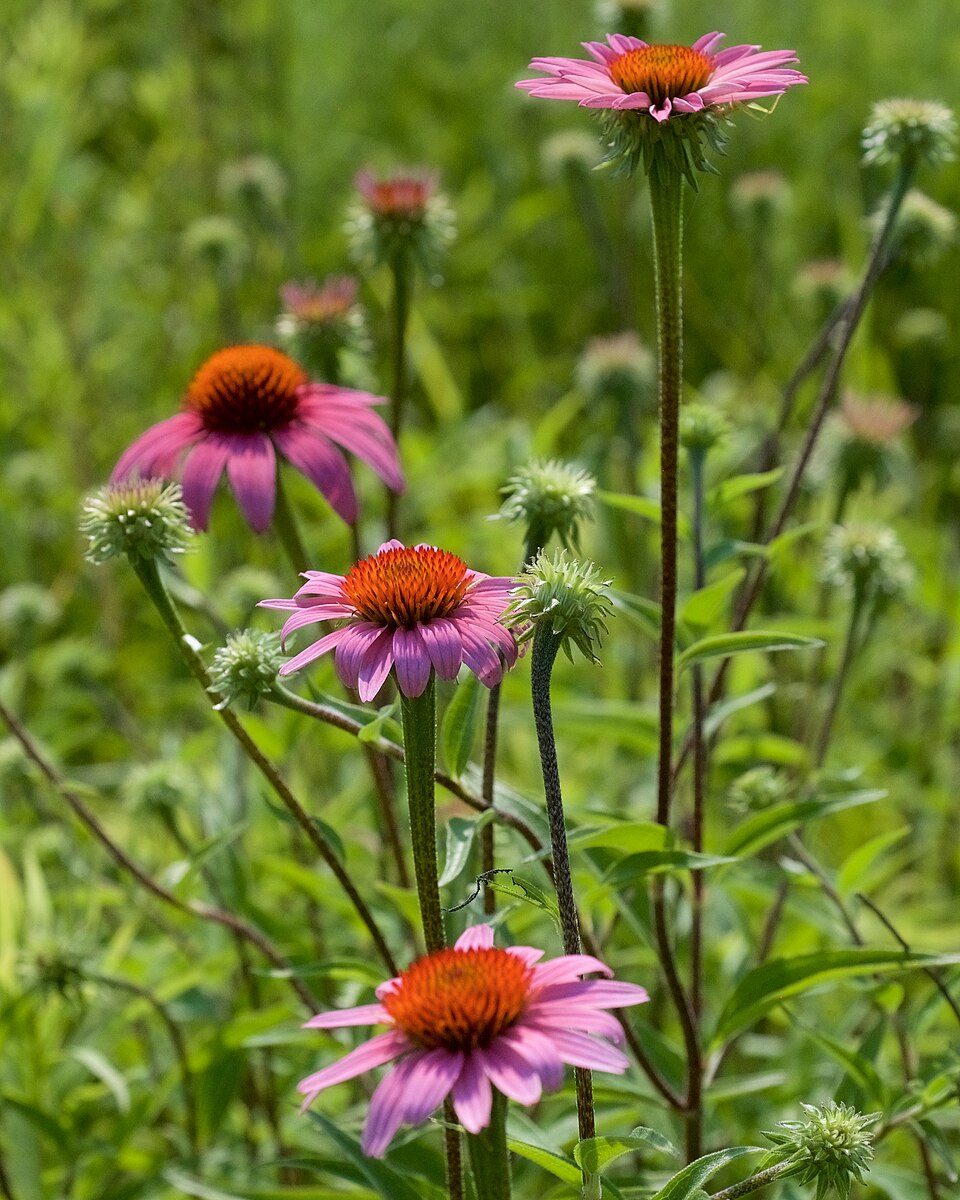
45. There’s nothing better on Halloween than a picnic near an abandoned cemetery.

Not sure if you'd care to see some unburied skeletons. But some things can't always be helped.

Not sure if you’d care to see some unburied skeletons. But some things can’t always be helped.

46. At some pumpkin houses, it may be wise to watch your back.

After all, there's a "Beware" sign as well as some graves. Nothing good can come from this.

After all, there’s a “Beware” sign as well as some graves. Nothing good can come from this.

47. There’s something a little batty about this house.

Love the nice purple house among the pumpkins. Really makes it seem haunted, but not too scary.

Love the nice purple house among the pumpkins. Really makes it seem haunted, but not too scary.

48. Best not get too close to this scary tree.

Seems like there's something not right about this tree. Something seems to glow inside. Like the plants on this.

Seems like there’s something not right about this tree. Something seems to glow inside. Like the plants on this.

49. Never saw a haunted house like this before.

Then again, it might be a house just decked for Halloween. Might just belong to some fantastical being like the Easter Bunny. Or the Joker.

Then again, it might be a house just decked for Halloween. Might just belong to some fantastical being like the Easter Bunny. Or the Joker.

50. A jack-o-lantern on each side is all the decoration you’ll need.

Well, at this place anyway. Though it does include a haunted house that says, "Trick or Treat." Not to mention, you have to admire the plants.

Well, at this place anyway. Though it does include a haunted house that says, “Trick or Treat.” Not to mention, you have to admire the plants.

51. There’s nothing like having jack-o-lanterns in the pumpkin patch.

Or having ghosts near your house, which seems smaller than the scarecrow. Honestly, sometimes decor isn't always up to scale.

Or having ghosts near your house, which seems smaller than the scarecrow. Honestly, sometimes decor isn’t always up to scale.

52. Heard of a haunted house? How about a haunted castle?

Well, this is quite interesting. Heard it even lights up to be extra scary.

Well, this is quite interesting. Heard it even lights up to be extra scary.

53. This Halloween mini garden has had the zen treatment.
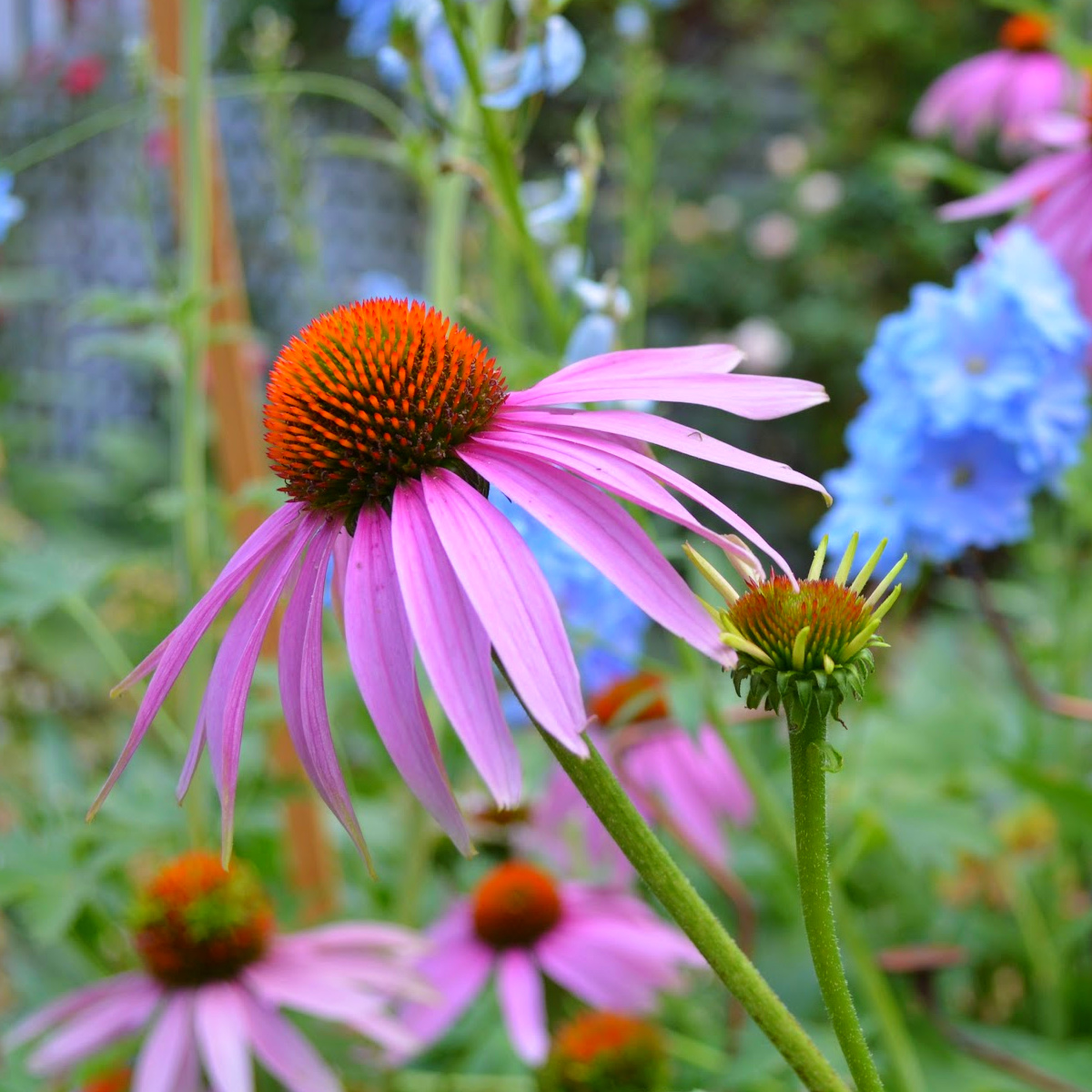
Not sure how calming it may be. But like how they have the bones and grave stones in the sand.
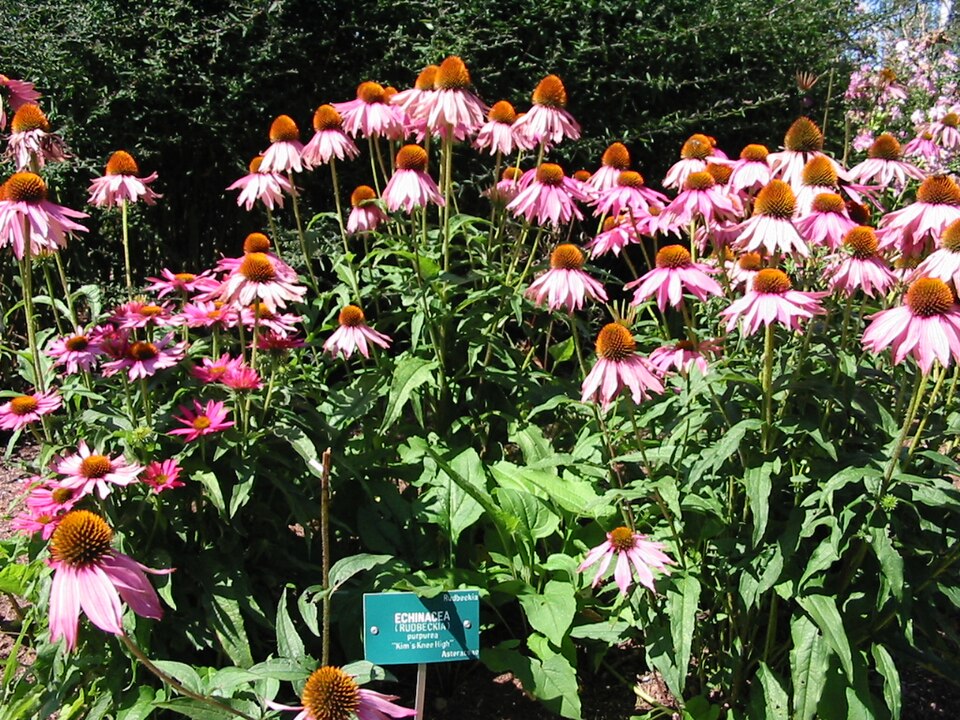
Not sure how calming it may be. But like how they have the bones and grave stones in the sand.

54. You’ll never know what you’ll find in this scary place.

Yeah, this seems a bit unique from the other ones. Like how the scary entities go well with the plants.

Yeah, this seems a bit unique from the other ones. Like how the scary entities go well with the plants.

55. Graveyards can always be a haunt for lost souls and bodies.

This one has cobwebs and a skeleton in a cage. Not sure why. Though I like the tree.

This one has cobwebs and a skeleton in a cage. Not sure why. Though I like the tree.

56. What you might find in this pumpkin might be a grave surprise.

Even has grave stones all close together. Can really use some landscaping though since the weeds are out of hand.

Even has grave stones all close together. Can really use some landscaping though since the weeds are out of hand.

57. Orange gravel is always in the Halloween spirit.

Also helps if there's a table set and a billowing bonsai tree. Love this.

Also helps if there’s a table set and a billowing bonsai tree. Love this.

58. This mini garden has become quite a haven for the haunting.

You can see witches and ghosts galore here. Like the house. Seems rather normal but nevertheless spooky.

You can see witches and ghosts galore here. Like the house. Seems rather normal but nevertheless spooky.

59. Now this garden has an interesting house.

Well, this one has the works. Some ghosts, some graves, and even a haunted house in two parts.

Well, this one has the works. Some ghosts, some graves, and even a haunted house in two parts.

60. That’s just a lonely skeleton with a bag of candy.

Well, there are a couple of ghosts nearby but that's beside the point. Love the trees though.

Well, there are a couple of ghosts nearby but that’s beside the point. Love the trees though.

61. Wonder what’s lurking in this little teacup.

I don't think the teacup is necessarily little. But I love how it's shaded to fit with the Halloween decor on this.

I don’t think the teacup is necessarily little. But I love how it’s shaded to fit with the Halloween decor on this.

62. In this zen mini garden, the bones can be anywhere.

Sometimes, they can be buried in the sand. Not sure if you can piece them together.

Sometimes, they can be buried in the sand. Not sure if you can piece them together.

63. Don’t cross that mummy coming from the bridge.

This seems to have a little Halloween village going on. There's even a witch and a Grim Reaper there, too.

This seems to have a little Halloween village going on. There’s even a witch and a Grim Reaper there, too.

64. This skeleton is taking a break from trick or treating.

Or scaring off trick or treaters for candy. This could depend on interpretation.

Or scaring off trick or treaters for candy. This could depend on interpretation.

65. Looks like the witch didn’t land on her feet.

This one doesn't seem to have much to do with it. Just needs some plants, a witch, and a few gourds and squashes.

This one doesn’t seem to have much to do with it. Just needs some plants, a witch, and a few gourds and squashes.

66. There might be something lurking in the bushes here.

It's either a ghost or just cobwebs. Since a witch may live in that house, it may not bee good.

It’s either a ghost or just cobwebs. Since a witch may live in that house, it may not bee good.

67. This little patio is ready for the festivities.

Well, this seems kind of cute. Love the trick or treaters and the banner.

Well, this seems kind of cute. Love the trick or treaters and the banner.

68. Sometimes it’s hard to be a lonely ghost.

Must've been buried some place far away and very quickly. Then again, I'm not sure what the pumpkins are doing here.

Must’ve been buried some place far away and very quickly. Then again, I’m not sure what the pumpkins are doing here.

69. Wonder if it snowed in this neck of the woods.

Yes, I've seen it snow in October. But I haven't seen an Ent with a crystal ball. What's with that?

Yes, I’ve seen it snow in October. But I haven’t seen an Ent with a crystal ball. What’s with that?

70. This garden already seems covered in cobwebs.

And covered over black flowers, too. Yet, ghosts and other Halloween figures love it.

And covered over black flowers, too. Yet, ghosts and other Halloween figures love it.

71. A garden like this might bring you bumps in the night.

Heard this is made from an Altoids box. Wonder how it's possible to accomplish that.

Heard this is made from an Altoids box. Wonder how it’s possible to accomplish that.

72. Imagine working in a graveyard like this.

Well, there's a pumpkin house and even more imposing grave stones surrounding it. Not sure if it's a place for giants staffed by wee folk or what.

Well, there’s a pumpkin house and even more imposing grave stones surrounding it. Not sure if it’s a place for giants staffed by wee folk or what.

73. In mini gardens purple lights spark Halloween magic.

And it seems like the ghosts love to frolic in it, too. Grave stones aren't too shabby either.

And it seems like the ghosts love to frolic in it, too. Grave stones aren’t too shabby either.

74. Sneezy is all set up for some Halloween relaxation.

Well, not really since he's posing as a garden gnome. But I do love the deck is set up as well as the plants.

Well, not really since he’s posing as a garden gnome. But I do love the deck is set up as well as the plants.

75. Looks like there’s a fallen witch at the side of the road.

Also, why do ghosts need roads? They're dead. Then again, this may be a trick or treater.

Also, why do ghosts need roads? They’re dead. Then again, this may be a trick or treater.

76. Wonder what happened to this witch.

Seems like everything but her shoes, hat, broomstick, and cauldron disappeared. Love the tree though.

Seems like everything but her shoes, hat, broomstick, and cauldron disappeared. Love the tree though.

77. And you thought things couldn’t be less scary in the desert.

Not sure why they have giant eyeballs here. The skeletons make more sense. Love the cacti.

Not sure why they have giant eyeballs here. The skeletons make more sense. Love the cacti.

78. This witch always prefers her garden patio covered with cobwebs.

Too bad the cat's painted on a rock. But it surely makes a stunning display if you ask me.

Too bad the cat’s painted on a rock. But it surely makes a stunning display if you ask me.

79. This little graveyard is all dirt and sticks.

Yes, I know there aren't any plants here. But this is for Halloween so it works.

Yes, I know there aren’t any plants here. But this is for Halloween so it works.

80. With Halloween mini gardens, it helps if there are black, imposing cliffs.

Man, this seems to be covered in ghosts and pumpkins. Wonder where the pumpkin patch is from the pumpkin house.

Man, this seems to be covered in ghosts and pumpkins. Wonder where the pumpkin patch is from the pumpkin house.

The Bright Sunny World of Suncatchers

sunflakes

For the wind chime’s optical equivalent, you have the suncatcher. Believed to be originally made by the Southwestern Native Americans, these things are pieces of reflective glass or nacre that are hung indoors at windows to catch the light from a nearby source. Of course, I’m not sure if I’d ever have these in my home since my dad has a tendency for migraines. However, you can also put suncatchers outdoors as well and they do make ones specifically for gardens as you shall see. Some of the designs like you see above could be abstract, perhaps with some mobile like chained elements. And sometimes they, too can be attached to wind chimes like you’ve probably saw. More complex designs can evoke plants or animals. Many of the wind chimes you might see can be massed produced. Others made by hand which you might see on Etsy or Pinterest. And in this post, I give you a treasure trove of suncatchers for your eyes’ desires.

  1. A purple butterfly is sure to shine through the window.

But not when it's overcast as you see here. But still, this is quite pretty.

But not when it’s overcast as you see here. But still, this is quite pretty.

2. If you like bluebirds at your window, you might like this suncatcher.

Like butterflies, birds also tend to be a common suncatcher motif. You'll see a few of these.

Like butterflies, birds also tend to be a common suncatcher motif. You’ll see a few of these.

3. Those who like pond scenery might prefer a suncatcher of a dragonfly and frog with a lily pad.

Of course, you might not be able to see the frog since it's blended in with the lily pad. Because the frog doesn't want the dragon fly to notice.

Of course, you might not be able to see the frog since it’s blended in with the lily pad. Because the frog doesn’t want the dragon fly to notice.

4. Nothing says spring like a suncatcher wreath of butterflies and flowers.

I'm sure this thing is quite delicate. But it should look brilliant shining through the window.

I’m sure this thing is quite delicate. But it should look brilliant shining through the window.

5. It’s said that a crescent moon shines brightly in the sun.

Yes, this is a lovely suncatcher. But it's a moon. The moon comes out at night. See where I'm getting at?

Yes, this is a lovely suncatcher. But it’s a moon. The moon comes out at night. See where I’m getting at?

6. Seems like these pieces of this broken heart were put back together.

Maybe not but it sure looks like it. Nevertheless, you have to love this heart suncatcher design.

Maybe not but it sure looks like it. Nevertheless, you have to love this heart suncatcher design.

7. You can make your own suncatcher with wire and beads.

As long as you have something that brings in the sunlight. Still, this is pretty.

As long as you have something that brings in the sunlight. Still, this is pretty.

8. With this suncatcher, you can always see the colors of the rainbow.

That way whenever the sun shines in, you'll always have a rainbow. Like how the colors are arranged in this one.

That way whenever the sun shines in, you’ll always have a rainbow. Like how the colors are arranged in this one.

9. For sun on winter days, go with a snowflake one.

Most of these suncatchers pertain to spring and summer. But there are some that cover other seasons, too.

Most of these suncatchers pertain to spring and summer. But there are some that cover other seasons, too.

10. This suncatcher is sure a colorful star.

Well, it's in a star shape with a crystal in the center. Love the colors though.

Well, it’s in a star shape with a crystal in the center. Love the colors though.

11. What’s better than a rainbow but a rainbow flower?

This is lovely. But it's sure a large panel as I can see. I bet this looks great in the sunlight.

This is lovely. But it’s sure a large panel as I can see. I bet this looks great in the sunlight.

12. This blue heart suncatcher sure does shimmer.

Or is it purple? Either way, it sure looks pretty. Wouldn't mind having this one.

Or is it purple? Either way, it sure looks pretty. Wouldn’t mind having this one.

13. When it comes to suncatchers, you can’t go wrong with wire trees.

With the beads as leaves and flowers. Nevertheless, someone must've spent a lot of time on this.

With the beads as leaves and flowers. Nevertheless, someone must’ve spent a lot of time on this.

14. Another wire suncatcher is surrounded by butterflies.

Well, this one has wire butterflies and flowers. But I sure love the colors on this one.

Well, this one has wire butterflies and flowers. But I sure love the colors on this one.

15. This suncatcher shimmers like a hanging jewel in the sunlight.

This one is one of the more abstract types. But this doesn't mean it's less lovely than some of the others.

This one is one of the more abstract types. But this doesn’t mean it’s less lovely than some of the others.

16. For a more green suncatcher, you can always go with tree.

Well, if you're not into floral suncatchers, this one may do. Still, I think it would make a fine addition to any window.

Well, if you’re not into floral suncatchers, this one may do. Still, I think it would make a fine addition to any window.

17. Polly wanna suncatcher?

You got that right, this is a parrot suncacther. Requires much less maintenance than the real thing.

You got that right, this is a parrot suncacther. Requires much less maintenance than the real thing.

18. Looks like this woman is hanging around a spider web.

Or so it looks like a spider web. Wonder what she has in her hand. A raindrop?

Or so it looks like a spider web. Wonder what she has in her hand. A raindrop?

19. This jeweled suncatcher is from wire and in a shape of a heart.

Well, this is wonderful. Love the sparkly beads on this. Guess it shimmers in the sunlight.

Well, this is wonderful. Love the sparkly beads on this. Guess it shimmers in the sunlight.

20. This blue suncatcher has a little snowflake on the end.

Wonder how this shimmers in the sunlight. Still, this is more meant for winter decoration.

Wonder how this shimmers in the sunlight. Still, this is more meant for winter decoration.

21. If you like flowers, then you’ll love these flowery suncacter panels.

I guess these are all painted. Nevertheless, these sure look so beautiful.

I guess these are all painted. Nevertheless, these sure look so beautiful.

22. Those in a spring mood might take well to this yellow flower suncatcher.

Guess this one's lost a few petals. Oh wait, that's a lily on a pad. Are there yellow lily pad flowers out there? Not sure.

Guess this one’s lost a few petals. Oh wait, that’s a lily on a pad. Are there yellow lily pad flowers out there? Not sure.

23. If you like irises, this suncatcher is for you.

This is beautiful. I'm sure this was mass produced. But I like how it's painted.

This is beautiful. I’m sure this was mass produced. But I like how it’s painted.

24. Look at this bluebird in the corner.

Well, this is kind of neat. Never seen something like that before. Seems quite rustic if you ask me.

Well, this is kind of neat. Never seen something like that before. Seems quite rustic if you ask me.

25. If you like Tiffany designs, then you’ll sure love this suncatcher.

You got to love the stained glass on this. Seems like it comes straight from a Tiffany lamp. Very beautiful.

You got to love the stained glass on this. Seems like it comes straight from a Tiffany lamp. Very beautiful.

26. This rainbow heart is a suncatcher you’re bound to love.

Love to see the sun shining through this heart suncatcher. Sure is quite beautiful.

Love to see the sun shining through this heart suncatcher. Sure is quite beautiful.

27. This star suncatcher chain is in full red, white, and blue.

A fine suncatcher for any patriotic home in America. Like the spirals on these. So whimsical.

A fine suncatcher for any patriotic home in America. Like the spirals on these. So whimsical.

28. You heard of dreamcatchers? Well, this one catches some sun.

And this seems like a rainbow one at that. Or so it seems. At any rate, like the feathers.

And this seems like a rainbow one at that. Or so it seems. At any rate, like the feathers.

29. If you love flowers, then you’ll adore this pansy suncatcher.

You might see a lot of pansies around. But I do like this purple one. The ribbons are a nice touch, too.

You might see a lot of pansies around. But I do like this purple one. The ribbons are a nice touch, too.

30. This rainbow suncatcher has the sunlight dancing on it.

This is on crystal bead chain. I know there are a few of these. But I think this is the best one.

This is on crystal bead chain. I know there are a few of these. But I think this is the best one.

31. There’s no suncatcher more quaint than that of a ladybug.

Sure real ladybugs aren't known to be adorable. But this is so cute if you ask me.

Sure real ladybugs aren’t known to be adorable. But this is so cute if you ask me.

32. Those with a sunny disposition, you might like this sunflower suncatcher.

Well, it's more vibrant than a real sunflower. But it's still quite pretty.

Well, it’s more vibrant than a real sunflower. But it’s still quite pretty.

33. For those who like winter wonders, go with this suncatcher penguin.

This one even has a snowflake coming from its beak. So adorable.

This one even has a snowflake coming from its beak. So adorable. Why, I like penguins.

34. This dream catcher suncatcher has its own stained glass eagle.

Yes, this is a Native American style suncatcher. But the eagle looks pretty cool.

Yes, this is a Native American style suncatcher. But the eagle looks pretty cool.

35. If you like rainbows, how about one squared?

Yes, this one is in a square and in a crazy design. Love it though.

Yes, this one is in a square and in a crazy design. Love it though.

36. Now that is one funky colored rooster.

For those who live on a farm or keep chickens this is the kind of suncatcher for you. Love the feathers on this.

For those who live on a farm or keep chickens this is the kind of suncatcher for you. Love the feathers on this.

37. For you artsy religious types out there, this suncatcher is for you.

Well, this is pretty neat. Not a conventional shape. But I wouldn't mind having one like this, particularly if it was purple.

Well, this is pretty neat. Not a conventional shape. But I wouldn’t mind having one like this, particularly if it was purple.

38. Those who might appreciate the beauty of the desert might enjoy this suncatcher.

Sure the desert might have lovely landscapes. But is it a great place to live? Not really.

Sure the desert might have lovely landscapes. But is it a great place to live? Not really.

39. Seems like this wire tree got encased in some glass.

Now this is something. Wonder they did this. Perhaps we'll never know.

Now this is something. Wonder they did this. Perhaps we’ll never know.

40. Looks like this cardinal has found the perfect place to spread his wings.

This is a suncatcher for a garden since it has a stick below. But this fairly fine craftsmanship if you ask me.

This is a suncatcher for a garden since it has a stick below. But this fairly fine craftsmanship if you ask me.

41. Why make a stained glass flower suncatcher when you can press one in glass?

Well, this is lovely. Doesn't mean that the painted glass flowers are less pretty though.

Well, this is lovely. Doesn’t mean that the painted glass flowers are less pretty though.

42. I’m sure anyone would want a suncatcher tulip or two.

These come in 4 colors. However, the light purple one is the best out of these 4 or so I think.

These come in 4 colors. However, the light purple one is the best out of these 4 or so I think.

43. I guess this glass suncatcher has gone green.

Well, green and purple anyway. But that is a very nice green. Not to mention, this one has some glass markings as well.

Well, green and purple anyway. But that is a very nice green. Not to mention, this one has some glass markings as well.

44. Ah, can anyone think of anything more adorable than a sleeping angel?

Yes, this is quite cute. Still, think it's more suitable for nighttime decor. Not so much as a suncatcher.

Yes, this is quite cute. Still, think it’s more suitable for nighttime decor. Not so much as a suncatcher.

45. This rainbow butterfly is a wonder to behold in the sun.

Yes, this is a rainbow butterfly suncatcher. And yes, it's in the sunlight. Amazing, isn't it?

Yes, this is a rainbow butterfly suncatcher. And yes, it’s in the sunlight. Amazing, isn’t it?

46. Well, that’s one way to make a rainbow heart.

This one has the colors coming from the center. Nevertheless, it's quite beautiful.

This one has the colors coming from the center. Nevertheless, it’s quite beautiful.

47. If you’re into the life aquatic, you might enjoy this seahorse suncatcher.

I suppose they have aquatic stuff, too. Don't know what to make of that seahorse though.

I suppose they have aquatic stuff, too. Don’t know what to make of that seahorse though.

48. As we all know, I couldn’t do a suncatcher post without including a rose.

Of course, this was probably not an easy thing to make. But you do have to admire its beauty and craftsmanship.

Of course, this was probably not an easy thing to make. But you do have to admire its beauty and craftsmanship.

49. Now that seems like a very intricate dream catcher.

This dreamcatcher seems to bear some resemblance to a stained glass window. But it's a suncatcher.

This dreamcatcher seems to bear some resemblance to a stained glass window. But it’s a suncatcher.

50. Those who live near the seashore might like this sand dollar suncatcher.

Not sure how sand dollars come into existence. But you have to like this one of stained glass.

Not sure how sand dollars come into existence. But you have to like this one of stained glass.

51. Not a fan of seahorses? How about this jellyfish suncatcher?

Yes, a jellyfish may be pretty. But there are plenty you don't want to swim near. Because they're highly poisonous and can kill you.

Yes, a jellyfish may be pretty. But there are plenty you don’t want to swim near. Because they’re highly poisonous and can kill you.

52. Nothing shines more in the sunlight than this rainbow suncatcher panel.

Kind of reminds you of as stained glass rainbow window. Like the squares.

Kind of reminds you of as stained glass rainbow window. Like the squares.

53. This suncatcher will surely glimmer in the sunlight like a gem.

This is beautiful. Lobe the blue pieces on this. And the frame.

This is beautiful. Lobe the blue pieces on this. And the frame.

54. When it comes to animals, you can’t go wrong with this stained glass raindrop cat.

Many of the cat suncatchers show the cat from the back. This one at least shows the eyes.

Many of the cat suncatchers show the cat from the back. This one at least shows the eyes.

55. This blue angel is simply divine.

This one uses wire, marbles, and glass for this angel. And the results are wondrous beyond compare.

This one uses wire, marbles, and glass for this angel. And the results are wondrous beyond compare.

56. This owl suncatcher is sure to be a hoot.

This is adorable. Love the big eyes on this one. Also like how it's purple.

This is adorable. Love the big eyes on this one. Also like how it’s purple.

57. This praying angel suncatcher sure captures such angelic beauty.

Yes, I know I've been putting a few angel suncatchers up. But trust me, this one is incredibly beautiful.

Yes, I know I’ve been putting a few angel suncatchers up. But trust me, this one is incredibly beautiful.

58. Nothing makes a more sacred suncatcher than this brilliant blue cross.

Yes, this is another cross suncatcher. But you have to love that brilliant blue on this one. So lovely.

Yes, this is another cross suncatcher. But you have to love that brilliant blue on this one. So lovely.

59. How about go up in this rainbow hot air balloon?

Yes, hot air balloons can be wonders in the sky like this one. But you have to love these colors.

Yes, hot air balloons can be wonders in the sky like this one. But you have to love these colors.

60. This purple flower is so pretty you’d almost think it would be on a Tiffany lamp.

I really like this flower for it's petals and design. Also, because it's purple.

I really like this flower for it’s petals and design. Also, because it’s purple.

61. When it comes to birds in flight almost no one beats the hummingbird.

You have to love the colors on this one. If it weren't for the shine, you'd almost think the green matches the trees.

You have to love the colors on this one. If it weren’t for the shine, you’d almost think the green matches the trees.

62. If you’re into marittime, this sailboat suncatcher may float your boat.

I like the white part of this. They kind of remind me of crazy clouds.

I like the white part of this. They kind of remind me of crazy clouds.

63. I’m no one could resist these flower suncatchers.

Well, these are 3-dimensional suncatcher flowers. But they're nevertheless quite pretty and probably delicate.

Well, these are 3-dimensional suncatcher flowers. But they’re nevertheless quite pretty and probably delicate.

64. How about a suncatcher spider web?

Normally, you might think spiders and webs are creepy. But this spiderweb seems like an unforgettable work of art.

Normally, you might think spiders and webs are creepy. But this spiderweb seems like an unforgettable work of art.

65. This suncatcher will guarantee you luck from the Irish.

Yes, this is a shamrock suncatcher. And I'm sure they sell these for Saint Patrick's Day.

Yes, this is a shamrock suncatcher. And I’m sure they sell these for Saint Patrick’s Day.

66. Hey, look, a blue octopus from the deep.

Well, at least it's not a blue ringed octopus. Those things are poisonous. Still, fine artistry here.

Well, at least it’s not a blue ringed octopus. Those things are poisonous. Still, fine artistry here.

67. Imagine having this design in your window.

This one has rainbow glass surrounded by black. Very pretty though. So lovely.

This one has rainbow glass surrounded by black. Very pretty though. So lovely.

68. For your fall garden, I suppose this scarecrow suncatcher would be nice.

I'm sure this won't scare any crows. But it'll look great in your garden even if it doesn't.

I’m sure this won’t scare any crows. But it’ll look great in your garden even if it doesn’t.

69. Looks like this suncatcher contains a couple of dragonflies.

Now this seems to be quite colorful. Love the glass pieces on this thing. So pretty.

Now this seems to be quite colorful. Love the glass pieces on this thing. So pretty.

70. You’d never come across a butterfly this beautiful.

This one is so lovely with the colorful spots and stripes. Not sure if there's a real butterfly that looks like this.

This one is so lovely with the colorful spots and stripes. Not sure if there’s a real butterfly that looks like this.

71. No one could resist this teddy bear suncatcher.

And here is one in their little pajama outfit. Probably used for a kids room. But it's so adorable.

And here is one in their little pajama outfit. Probably used for a kids room. But it’s so adorable.

72. How about a fish in a raindrop?

Okay, maybe I'm not a fan of fishing. But I have to admit this is pretty cool.

Okay, maybe I’m not a fan of fishing. But I have to admit this is pretty cool.

73. Here is an angel with a candle to protect you.

Must be a guardian angel motif. But this one has brilliant wings and an iridescent gown.

Must be a guardian angel motif. But this one has brilliant wings and an iridescent gown.

74. This panel has a rose in a vase.

For some reason this reminds me of the rose I've seen on Beauty and the Beast. Not sure why. Lovely though.

For some reason this reminds me of the rose I’ve seen on Beauty and the Beast. Not sure why. Lovely though.

75. Seems like this ship is already sailing the ocean blue.

Seems like this was based on some beautiful painting. Love how it seems so peaceful if you look at it long enough.

Seems like this was based on some beautiful painting. Love how it seems so peaceful if you look at it long enough.

76. This butterfly always seems to glimmer in the light.

Like how this butterfly looks like when you show it on the water on a sunny day. So pretty.

Like how this butterfly looks like when you show it on the water on a sunny day. So pretty.

77. Who knows what could shine with blue and white.

Yes, this is another abstract design. Like the white ring around the blue loops on this.

Yes, this is another abstract design. Like the white ring around the blue loops on this.

78. This suncatcher is called, “Love Shines.”

This one consist of a rainbow and a crystal heart. So beautiful.

This one consist of a rainbow and a crystal heart. So beautiful.

79. Seems like this heart was created from so many pieces.

Then again, that's probably the point. But you have to appreciate the craftsmanship with all the wire and colorful glass pieces inside.

Then again, that’s probably the point. But you have to appreciate the craftsmanship with all the wire and colorful glass pieces inside.

80. Each point of this 6 pointed star has a color of the rainbow.

Yes, I know I have a lot of rainbow stuff on this post. But who doesn't like rainbows? Seriously, I can't think of anyone.

Yes, I know I have a lot of rainbow stuff on this post. But who doesn’t like rainbows? Seriously, I can’t think of anyone.