US State Mount Rushmore: Part 6 – Montana to New Jersey

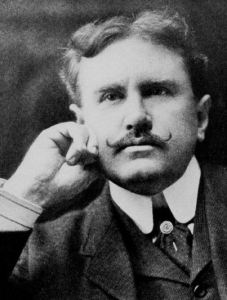
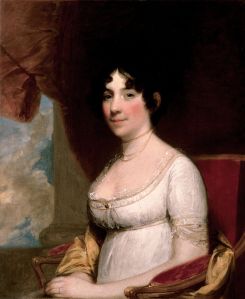
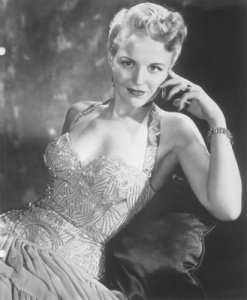
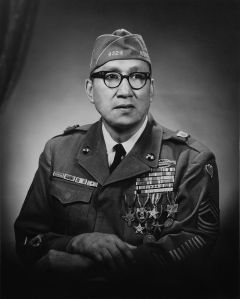
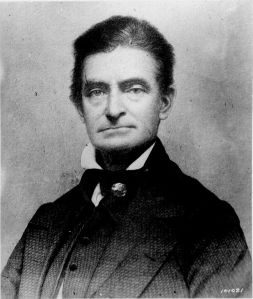
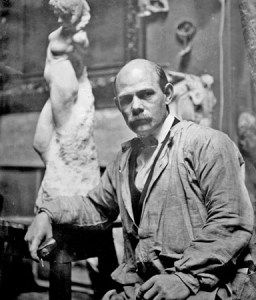
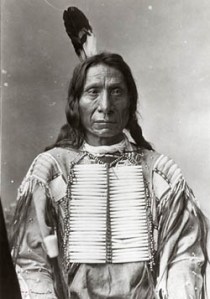
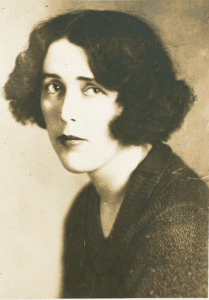
Guess we’re halfway through. I know you might find it unusual that Jim Henson is included among the Mississippi crowd but he actually was from that state even if it didn’t seem apparent to you. And yes, I know Elvis is more or less associated with Memphis and it might seem out of place to put him in Mississippi. But I have news for you, Elvis was born there as well. However, let’s move on shall we? Because in this selection, I will bring you some more Mount Rushmores from the states of Montana to New Jersey. First, it’s up in Montana where we’ll meet the first US Congresswoman, a guide at Glacier National Park who hung out with Blackfeet Indians, a very underrated microbiologist, and an adventurer who played an important role in the creation of Yellowstone National Park. Second, it’s off to Nebraska where we have an author’s whose books suggest lesbian undertones, a Catholic priest who founded a home for troubled youth, the man responsible for Mount Rushmore, and a formidable Indian chief. Third, we go to Nevada where you’ll find a journalist who covered the Russian Revolution, an animal rights activist, a basket weaver, and a teenage boy who showed what can brown do for you. Next, we go to Granit State New Hampshire where you’ll meet these rock solid figures consisting of an astronaut, a reclusive novelist, a noted sculptor whose work still stands, and a Treasury secretary who introduced the first paper US currency. And last but not least, we come to Garden or Toxic Dump State New Jersey where you’ll find a legendary inventor, a Scottish minister who modernized Princeton, a fiery suffragist, and a US president who enacted much needed Progressive Era reforms even if he was a filthy racist.

26. Montana

Though Jeannette Rankin could vote for herself when she ran for Congress in 1916, she couldn't vote for president. She'd go to serve for 2 non-consecutive terms, mostly because she was a pacifist and a US entered a world war during both of them.

Though Jeannette Rankin could vote for herself when she ran for Congress in 1916, she couldn’t vote for president. She’d go to serve for 2 non-consecutive terms, mostly because she was a pacifist and the US entered a world war during both of them.

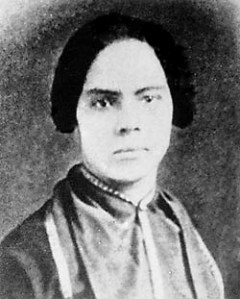
Figure 1: Jeannette Rankin– first woman to hold a high government office in the US when she was elected as the first US Congresswoman from the state of Montana. Also elected in 1940. As a lifelong pacifist she was one of 56 members of Congress who voted against entry into WWI and the only member of Congress to vote against declaring war on Japan after the attack on Pearl Harbor in 1941.

As a fur trader, James Willard Schultz lived among the Blackfoot Indians where he married, had a son, and was adopted into the tribe. Is also well known for guiding and outfitting local hunters at what is now Glacier National Park where he explored an named many of the features.

As a fur trader, James Willard Schultz lived among the Blackfoot Indians where he married, had a son, and was adopted into the tribe. Is also well known for guiding and outfitting local hunters at what is now Glacier National Park where he explored an named many of the features.

Figure 2: James Willard Schultz– author, explorer, Glacier National Park guide, fur trader and historian of the Blackfoot Indians. Lived amongst the Pikuni tribe during the period 1880-82 where he was given the name “Apikuni” by their chief, Running Crane, a word that’s Blackfeet for “spotted robe.” He had an Indian wife and a son called Lone Wolf as well. Is most noted for his prolific stories about Blackfoot life and his contributions to the naming of prominent features in Glacier National Park. Unfortunately, suffered from ill health for most of his last 30 years since guiding at the rugged Glacier took a physical toll on him. Published 37 fiction and non-fiction books dealing with the Blackfoot, Koontenai, and Flathead Indians. Works received critical literary acclaim from the general media as well as academia for his story telling and contributions to ethnology.

Throughout his career, Maurice Hilleman developed over 40 vaccines with 8 of those among the 14 recommended in current vaccine schedules. He's credited with saving more lives than any other medical scientist in the 20th century. Sad he's not as well known as he should.

Throughout his career, Maurice Hilleman developed over 40 vaccines with 8 of those among the 14 recommended in current vaccine schedules. He’s credited with saving more lives than any other medical scientist in the 20th century. Sad he’s not as well known as he should.

Figure 3: Maurice Hilleman– microbiologist who specialized in vaccinology and developed over 40 vaccines, an unparalleled record of productivity. Developed 8 of the 14 routinely recommended in current vaccine schedules comprising of those for measles, mumps, hepatitis A, hepatitis B, chickenpox, meningitis, pneumonia and Haemophilus influenzae bacteria. Also played a role in the discovery of the cold-producing adenoviruses, the hepatitis viruses, and the cancer-causing virus SV40. Credited with saving more lives than any other medical scientist in the 20th century and described as “the most successful vaccinologist in history.”

Nathaniel P. Langford is best known for playing a role in the creation of Yellowstone National Park and serving as its first superintendent. Unfortunately, he only had the job for 5 years because he didn't have the resources to effectively run it like a salary.

Nathaniel P. Langford is best known for playing a role in the creation of Yellowstone National Park and serving as its first superintendent. Unfortunately, he only had the job for 5 years because he didn’t have the resources to effectively run it like a salary.

Figure 4: Nathaniel P. Langford– explorer, businessman, bureaucrat, vigilante and historian who played an important role in the early years of the Montana gold fields, territorial government and the creation of Yellowstone National Park. Was a member of the 1870 Washburn–Langford–Doane Expedition which explored portions of the region that soon would become the iconic park. Though he was the park’s first superintendent, he didn’t have much time to run it and only entered it twice during his 5 years as superintendent since there was no salary, no funding to run the park, and no way to enforce legal protection for its wildlife or geological features. He also lacked the means to improve or properly protect the place without formal policy or regulations. This left Yellowstone vulnerable to poachers, vandals, and others seeking to raid its resources and there was lawlessness and exploitation of the park’s resources. He was forced out in 1877 by political pressure accusing him of neglect which was partly true.

27. Nebraska

“The great fact was the land itself, which seemed to overwhelm the little beginnings of human society that struggled in its sombre wastes. It was from facing this vast hardness that the boy’s mouth had become so bitter; because he felt that men were too weak to make any mark here, that the land wanted to be let alone, to preserve its own fierce strength, its peculiar, savage kind of beauty, its uninterrupted mournfulness.” from O! Pioneers (1913). Nevertheless, while Willa Cather is said to be among America’s first lesbian authors, her sexuality is still hotly debated.

Figure 1: Willa Cather– author who achieved recognition for her novels of frontier life on the Great Plains including O Pioneers!, The Song of the Lark, and My Ántonia. Was awarded the Pulitzer Prize for One of Ours, a novel set during WWI. Work is often marked by its nostalgic tone, her subject matter and themes drawn from memories of her early years on the American plains in Nebraska. Sexual identity remains a point of contention among scholars despite being widely seen as a lesbian.

“Often it has been said that youth is the nation’s greatest asset. But it is more than that – it is the world’s greatest asset. More than that, it is perhaps the world’s only hope.”

“Often it has been said that youth is the nation’s greatest asset. But it is more than that – it is the world’s greatest asset. More than that, it is perhaps the world’s only hope.”

Figure 2: Edward J. Flanagan– Catholic priest who founded an orphanage for homeless boys known as Boys Town which now also serves as a center for troubled youth. Stated, “there’s no such thing as a bad boy” and rejected the reform school model. Pioneered efforts to save children from neglect, abuse, poverty, illiteracy and lawlessness as well as passionately advocated for issues few dared to broach in his day. Wrote numerous articles, booklets, and books on child-rearing for parents. Served on several committees and boards dealing with the welfare of children and was the author of articles on child welfare as well as traveled to study child welfare problems in Ireland, Japan, Korea, Germany, and Austria. Received his own Oscar when Spencer Tracy won one for Best Actor in a biopic about his life which read: “To Father Flanagan, whose great humanity, kindly simplicity, and inspiring courage were strong enough to shine through my humble effort. Spencer Tracy.” Was given the title, “Servant of God” and may be in the process of becoming a saint.

Sculptor Gutzon Borglum is best known for carving 4 presidents into Mount Rushmore in Rapid City, South Dakota. However, we should note that Borglum had deep racist convictions in Nordic superiority and was a member of the Klu Klux Klan.

Sculptor Gutzon Borglum is best known for carving 4 presidents into Mount Rushmore in Rapid City, South Dakota. However, we should note that Borglum had deep racist convictions in Nordic superiority and was a member of the Klu Klux Klan.

Figure 3: Gutzon Borglum– artist and sculptor who is associated with his creation of Mount Rushmore National Memorial as well as other works of art including a bust of Abraham Lincoln exhibited in the White House by Theodore Roosevelt and now held in the United States Capitol Crypt in Washington, D.C. Also carved the faces in Stone Mountain, Georgia which was for the United Daughters for the Confederacy. The fact he was a strong nativist, racist, and member of the Klu Klux Klan made him a suitable choice.

While not as well known as some of his Indian contemporaries, Ogala Lakota Chief Red Cloud was one of the most formidable Native American opponents the US Army has ever faced. Because of him, the Fetterman Fight in Red Cloud's War was said to be US Army's worst defeat on the Great Plains before Little Bighorn, of course.

While not as well known as some of his Indian contemporaries, Ogala Lakota Chief Red Cloud was one of the most formidable Native American opponents the US Army has ever faced. Because of him, the Fetterman Fight in Red Cloud’s War was said to be US Army’s worst defeat on the Great Plains before Little Bighorn, of course.

Figure 4: Red Cloud– an important leader of the Oglala Lakota who was one of the most capable Native American opponents the United States Army faced, leading a successful campaign in 1866-1868 known as Red Cloud’s War which was over control of the Powder River Country in northeastern Wyoming and southern Montana. The largest action, the Fetterman Fight (with 81 men killed on the U.S. side), was the worst military defeat suffered by the U.S. on the Great Plains until the Battle of the Little Bighorn ten years later. After signing the treaty of Fort Laramie, he led his people in the important transition to reservation life.

28. Nevada

Lousie Bryant was a Marxist journalist know for her coverage of the Russian Revolution as well as the leaders involved. After John Reed's death in Baku, she collected his papers for future publication as well as married a third time, had a daughter, as well as continued her travels and her work at least for awhile.

Lousie Bryant was a Marxist journalist know for her coverage of the Russian Revolution as well as the leaders involved. After John Reed’s death in Baku, she collected his papers for future publication as well as married a third time, had a daughter, as well as continued her travels and her work at least for awhile.

Figure 1: Louise Bryant– feminist, activist, and journalist known for her sympathetic coverage of Russia and the Bolsheviks during the Russian Revolution along with her second husband John Reed. Wrote about leading Russian women such as Katherine Breshkovsky and Maria Spiridonova as well as men including Alexander Kerensky, Vladimir Lenin, and Leon Trotsky and her news stories appeared in newspapers across the U.S. and Canada in the years immediately following WWI. Defended the Russian Revolution in a testimony before the Overman Committee, a Senate subcommittee established to investigate Bolshevik influence in the US in 1919 as well as undertook a nationwide speaking tour to encourage public support of the Bolsheviks and to discourage armed U.S. intervention in Russia. After Reed’s death, she continued to write for Hearst about Russia as well as Turkey, Hungary, Greece, Italy, and other countries in Europe and the Middle East.

While some little girls might wish for a pony at some point their lives, Velma Bronn Johnston led a campaign to stop the eradication of free roaming horses on the American landscape. She was instrumental in passing legislation to stop using aircraft and land vehicles to stop their inumane capture.

While some little girls might wish for a pony at some point their lives, Velma Bronn Johnston led a campaign to stop the eradication of free roaming horses on the American landscape. She was instrumental in passing legislation to stop using aircraft and land vehicles to stop their inumane capture.

Figure 2: Velma Bronn Johnston– animal rights activist who led a campaign to stop the eradication of mustangs and free-roaming burros from public lands as well as was instrumental in passing legislation to stop using aircraft and land vehicles from inhumanely capturing them.

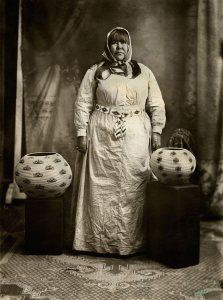
Though she spent her earlier years cooking and doing washing for miners and their families, Dat So La Lee would gain recognition for her basket weaving when she worked for a couple of art dealers who discovered the quality of her work. Not sure what she got out of the baskets she sold.

Though she spent her earlier years cooking and doing washing for miners and their families, Dat So La Lee would gain recognition for her basket weaving when she worked for a couple of art dealers who discovered the quality of her work. Not sure what she got out of the baskets she sold.

Figure 3: Dat So La Lee (a.k.a. Louisa Keyser)– member of the Washoe people and celebrated Native American basket weaver whose basketry came to national prominence during the Arts and Crafts movement and the “basket craze” of the early 20th century. Said to have made 120 baskets which were sold to her employers’ emporium. 20 of these were purchased from the State of Nevada.

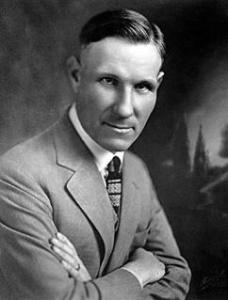
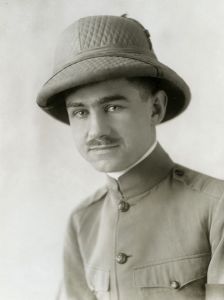
When he was only 19, James E. Casey founded what would soon become UPS. By the time of his death, he was worth $100 million.

When he was only 19, James E. Casey founded what would soon become UPS. By the time of his death, he was worth $100 million.

Figure 4: James E. Casey– businessman and philanthropist who at 19, founded the American Messenger Company in 1907 where he served as president, CEO, and chairman which would later become the United Parcel Service (UPS). Also created Casey Family Programs and the Annie E. Casey Foundation with his siblings in 1966 to help children who were unable to live with their birth parents—giving them stability and an opportunity to grow to responsible adulthood because he sought to ways to help those who lacked a family life he found to be so crucial to his own success. Left a net worth of $100 million at the time of his death.

29. New Hampshire

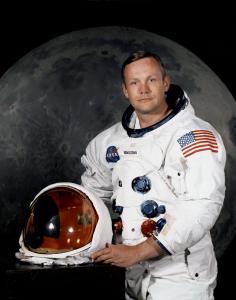
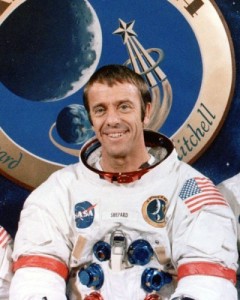
While Alan Shepard wasn't able to orbit the earth, he did manage to be the first American in space. Also got to play golf on the moon which is pretty awesome to watch. Because it's on the moon.

While Alan Shepard wasn’t able to orbit the earth, he did manage to be the first American in space. Also got to play golf on the moon which is pretty awesome to watch. Because it’s on the moon.

Figure 1: Alan Shepard– naval officer and aviator, test pilot, businessman, and one of the original Mercury 7 NASA astronauts who in May 1961 became the second person and the first American to travel into space. Commanded the Apollo 14 mission in 1971, piloting the lander Antares to the most accurate landing of the Apollo missions. Was the fifth oldest person to walk on the moon and the only one of the Mercury 7 to do so as well as hit 2 golf balls on the lunar surface.

J. D. Salinger's Catcher in the Rye is widely celebrated as an American classic. However, Salinger wasn't really comfortable with his fame and went into hiding in New Hampshire for the rest of his life. Also had a thing for women in their teens and early 20s which is kind of creepy.

J. D. Salinger’s Catcher in the Rye is widely celebrated as an American classic. However, Salinger wasn’t really comfortable with his fame and went into hiding in New Hampshire for the rest of his life. Also had a thing for women in their teens and early 20s which is kind of creepy.

Figure 2: J.D. Salinger– writer who won acclaim early in life but became reclusive for more than a half-century. Best known for his novel The Catcher in the Rye which was an immediate popular success with his depiction of adolescent alienation and loss of innocence in the protagonist Holden Caulfield was influential, especially among adolescent readers. Even today, it remains popular and controversial, selling around 250,000 copies a year.

Daniel Chester French was one of the most acclaimed sculptors at around the turn of the century. However, none of his works compare than his statue of Abraham Lincoln at the Lincoln Memorial.

Daniel Chester French was one of the most acclaimed sculptors at around the turn of the century. However, none of his works compare than his statue of Abraham Lincoln at the Lincoln Memorial.

Figure 3: Daniel Chester French– one of the most prolific and acclaimed American sculptors of the late 19th and early 20th centuries who is best known for his design of the monumental work as well as the statue of Abraham Lincoln at the Lincoln Memorial. Was a founding member of the National Sculptor Society, helped design the Pulitzer Prize gold medals, as well as helped found the Berkshire Playhouse.  Many of his public monuments still stand.

“True democracy makes no enquiry about the color of skin, or the place of nativity, whereever it sees man, it recognizes a being endowed by his Creator with original inalienable rights.” – from (1845)

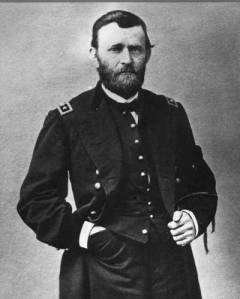
Figure 4: Salmon P. Chase– politician and jurist who served as Chief Justice of the Supreme Court who presided over the Senate trial of Andrew Johnson’s impeachment proceedings in 1868. Yet, is better known for his time as Secretary of Treasury in the Lincoln administration where he strengthened the federal government by introducing its first paper currency as well as a national bank during the American Civil War. Prior to the war, he articulated the “slave power conspiracy” thesis, devoting his energies to the destruction of what he considered the Slave Power which was a conspiracy of Southern slave owners to seize control of the federal government and block the progress of liberty (and to be fair, he was right since pro-slavery politicians were a dominant political influence during the Antebellum years). And coined the coined the slogan of the Free Soil Party, “Free Soil, Free Labor, Free Men.”

30. New Jersey

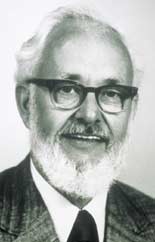
Thomas Edison first gained notice with his phonograph which earned him the nickname,

Thomas Edison first gained notice with his phonograph which earned him the nickname, “The Wizard of Menlo Park.” It was the first machine to record sound and eventually gave rise to the recording industry.

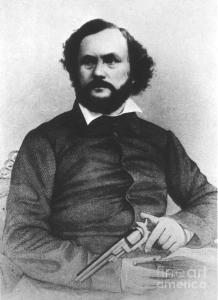
Figure 1: Thomas Edison– inventor and businessman dubbed, “The Wizard of Menlo Park” who developed many devices that greatly influenced life around the world including the phonograph, the motion picture camera, the long-lasting, practical electric light bulb which had impacts in electric light and power utilities, sound recording, and motion pictures all of which established major industries worldwide. Also had an impact in mass communication and in particular, telecommunications. Other inventions like a stock ticker, a mechanical vote recorder, a battery for an electric car, and a system of electric-power generation and distribution to homes, businesses, and factories which is a crucial development in the modern industrialized world. Was one of the first inventors to apply the principles of mass production on a large scale to the process of invention, and because of that, he’s often credited with the creation of the first industrial research laboratory. Held 1,093 US patents in his name as well as many in the UK, France, and Germany.

While president of what became known as Princeton, John Witherspoon turned a subpar college for training ministers to a major institution of learning worthy of competing with Harvard and Yale. James Madison and Aaron Burr were among his pupils.

While president of what became known as Princeton, John Witherspoon turned a subpar college for training ministers to a major institution of learning worthy of competing with Harvard and Yale. James Madison and Aaron Burr were among his students.

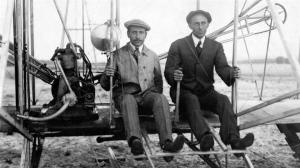
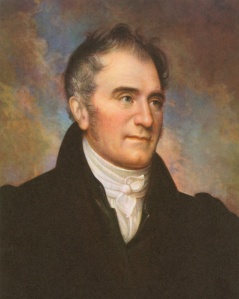
Figure 2: John Witherspoon– Presbyterian minister, politician, professor, Founding Father, and president of the College of New Jersey which is now known as Princeton University who was an influential figure in the development of the United States’ national character. Transformed Princeton from a sub-par college chiefly designed to train clergymen to a prestigious educational institution that would equip leaders of a new country through fundraising locally and in his native Scotland, adding 300 of his own books to the college library, purchasing scientific equipment, and instituting a number of reforms including modeling the syllabus and university structure after that used in Scottish universities as well as firmed up entrance requirements which helped the school compete with Harvard and Yale. Was also a signer of the Declaration of Independence as a delegate from New Jersey and might’ve formulated an early version of American exceptionalism. Aaron Burr and James Madison were among his most famous students.

Alice Paul had a Ph.D from the University of Pennsylvania as well as spent time in the militant British WSPU. She'd apply what she learned to the women's suffrage movement in the US and got to see the results in 1920.

Alice Paul had a Ph.D from the University of Pennsylvania as well as spent time in the militant British WSPU. She’d apply what she learned to the women’s suffrage movement in the US and got to see the results in 1920.

Figure 3: Alice Paul– suffragist, feminist, and women’s rights activist who was the main leader and strategist of the 1910s campaign for the 19th Amendment which prohibits sex discrimination in the right to vote. A Sociology Ph.D., she wrote her dissertation was entitled “The Legal Position of Women in Pennsylvania” that discussed the history of the women’s movement in Pennsylvania and the rest of the U.S., and urged woman suffrage as the key issue of the day. She also spent time in the UK with the militant WSPU, participating in their demonstrations and marches as as learned tactics she applied when she came home to the US. Along with Lucy Burns and others, she strategized the events such as the Woman Suffrage Procession and the Silent Sentinels, which led the campaign that resulted in its successful passage in 1920. Demonstrated for the women’s right to vote through organizing the Women’s Suffrage Procession in 1913, picketing in front of the White House sometimes with violent opposition as well as going on hunger strikes in prison. Spent a half century as leader of the National Woman’s Party, which fought for her Equal Rights Amendment to secure constitutional equality for women winning a large degree of success with the inclusion of women as a group protected against discrimination by the Civil Rights Act of 1964.

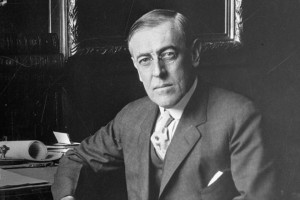
“Our own desire for a new international order under which reason and justice and the common interests of mankind shall prevail is the desire of enlightened men everywhere. Without that new order the world will be without peace and human life will lack tolerable conditions of existence and development. Having set our hand to the task of achieving it, we shall not turn back.” -from a speech to Congress (1918) in which he’s trying to get the US to join the League of Nations. It didn’t work.

Figure 4: Woodrow Wilson– academic and college president of Princeton who served as US president from 1913-1921 whose administration saw the passage of progressive legislation policies unparalleled until the New Deal in 1933 which include the establishment of the Federal Reserve, the Federal Trade Commission, the Clayton Antitrust Act, the Federal Farm Loan Act as well as reintroduction of the income tax. Avoided a railroad strike and economic crisis by imposing an 8-hour workday on railroads. His Clayton Antitrust Act prohibited price discrimination, agreements prohibiting retailers from handling other companies’ products, and directorates and agreements to control other companies as well as dictated accountability of individual corporate officers and clarified guidelines and ended union liability antitrust laws as well. Administration saw passage of 3 Constitutional Amendments which authorized direct election of senators, Prohibition, and female suffrage. Second term saw the US entry into WWI, the Spanish Flu epidemic, the Russian Revolution, and the Palmer Raids. In 1918, he issued his principles for peace in the Fourteen Points and promoted the formation of a League of Nations as well as a Wilsonian ideology that called for an activist foreign policy that called on the nation to promote global democracy. Was awarded the Nobel Peace Prize in 1919 for his international efforts. While praised for his foreign policy efforts that has led to establishment of the United Nations, he has been criticized by several historians for his virulent racism and his shitty record on civil rights and civil liberties.

US State Mount Rushmore: Part 5 – Massachusetts to Missouri

So we’re coming to the half-way point in the series. When it came to compiling this series, some states were easier than others since not every state has a lot of famous people. I know who I have for Massachusetts is bound to get complaints since I’m well aware that some people might have other ideas on which people I should put on since the state has a very rich history with Puritans, patriots, authors, and other historical figures. Virginia is another one since it has all Founding Fathers and no Robert E. Lee in sight. And don’t get me started about New York or California. Nevertheless, I bring you more Mount Rushmore compilations in my series from Massachusetts to Missouri. From Massachusetts I’ll introduce you to an underrated Founding Father, an author most people read in high school, the most famous suffragette, and a guy whose main interests included camping in the woods and sticking it to the man. After that, it’s on to Michigan where you’ll meet an industrialist who revolutionized transportation and the American way of life, a controversial civil rights activist, and two labor leaders with one buried under concrete somewhere in Detroit. Then we venture into the state of Minnesota where you’ll meet a Native American historian, an iconic cartoonist, a celebrated author of the Jazz Age, and a legendary aviator who maybe shouldn’t be hanging around with Nazis. Next, it’s down South to Mississippi where you’ll find a leader of a bunch of states that broke off from the country over slavery, a man they call a rock n’ roll king, a woman who organized Freedom Summer, and a puppeteer who died too soon. Finally, we go to Show Me State Missouri where you’ll see an animation tycoon, a black beauty maven, a smartass US president, and an expatriate poet who inspired a hit Broadway musical.

21. Massachusetts

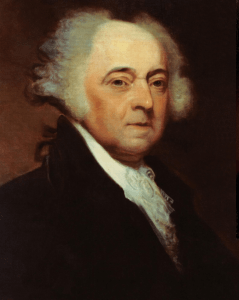
John Adams is perhaps one of the more underrated Founding Fathers since he contributed so much to this country yet remained forgotten for years. But you have to admire him for representing the British troops involved with the Boston Massacre because he believed they had a right to counsel and protection of innocence. And because Boston was rife with anti-British sentiment at this point, this was a job no local attorney wanted.

John Adams is perhaps one of the more underrated Founding Fathers since he contributed so much to this country yet remained forgotten for years. But you have to admire him for representing the British troops involved with the Boston Massacre because he believed they had a right to counsel and protection of innocence. And because Boston was rife with anti-British sentiment at this point, this was a job no local attorney wanted.

Figure 1: John Adams– lawyer, author, statesman, and diplomat who served as president and as a Founding Father was a leader of American independence. Was a political theorist in the Age of Enlightenment who promoted republicanism and a strong central government with his innovative ideas frequently published. Though he collaborated with cousin Samuel Adams, he established his prominence prior to the American Revolution providing a successful though unpopular defense of British soldiers involved with the Boston Massacre and played a major role in persuading the Continental Congress to declare independence as well as assisted Jefferson in drafting the Declaration of Independence in 1776 and was its foremost advocate. As a diplomat, he established the eventual peace treaty with Great Britain and acquired vital governmental loans from Amsterdam bankers. Was the primary author of the Massachusetts Constitution in 1780 which influenced American political theory as did his earlier Thoughts on Government. Narrowly avoided a war with France and appointed John Marshall during his presidency and is often called, “the father of the American Navy.” Though he wasn’t a popular president to serve another term and had been forgotten for decades, modern historians have ranked his presidency favorably and his legacy has been rediscovered in recent years.

“How slowly I have made my way in life! How much is still to be done! How little worth — outwardly speaking — is all that I have achieved! The bubble reputation is as much a bubble in literature as in war, and I should not be one whit the happier if mine were world-wide and time-long than I was when nobody but yourself had faith in me.
The only sensible ends of literature are, first, the pleasurable toil of writing; second, the gratification of one’s family and friends; and, lastly, the solid cash.” -from a 1851 letter. Still, you have to admit, Nathaniel Hawthorne wasn’t a bad looking guy in 1841.

Figure 2: Nathaniel Hawthorne– novelist and short story writer known for works featuring moral allegories with a Puritan inspiration set in New England. His fiction is considered part of the Romantic movement and, more specifically Dark romanticism with themes often centering on the inherent guilt, evil and sin of humanity with his works often having moral messages and deep psychological complexity, loaded symbolism, and sometimes bordering on surrealism. His portrayals of the past are a version of historical fiction used only as a vehicle to express common themes of ancestral sin, guilt and retribution. And later works reflect his negative view of the Transcendentalist movement. Best known for writing The Scarlet Letter which is almost always required reading in high school and while students complain about boring them to tears because they have no appreciation whatsoever for a great literary genius. Also wrote The House of the Seven Gables, Twice-Told Tales, The Blithedale Romance, The Marble Faun, “Young Goodman Brown,” “Rappacchini’s Daughter,” and Tanglewood Tales.

“Cautious, careful people, always casting about to preserve their reputation and social standing, never can bring about a reform. Those who are really in earnest must be willing to be anything or nothing in the world’s estimation.”

Figure 3: Susan B. Anthony– social reformer and feminist who played a pivotal role in the women’s suffrage movement. Collaborated with her lifelong friend Elizabeth Cady Stanton in social reform activities primarily in women’s rights publishing a newspaper called The Revolution, founding the National Woman Suffrage Association, with Matilda Joslyn Gage worked on what eventually grew into a 6-volume History of Woman Suffrage, and arranged for Congress to be presented with an amendment giving women the right to vote which was ratified as the 19th Amendment in 1920. Best known for being arrested for voting in Rochester, New York in 1872 which resulted in her conviction in a widely publicized trial. Played a key role in creating the International Council of Women which is still active. Though harshly ridiculed and accused of destroying the institution of marriage when she started campaigning for women’s rights, public perception changed radically during her lifetime mostly because of her efforts that she celebrated her 80th birthday at the White House.

“My desire for knowledge is intermittent; but my desire to bathe my head in atmospheres unknown to my feet is perennial and constant. The highest that we can attain to is not Knowledge, but Sympathy with Intelligence. I do not know that this higher knowledge amounts to anything more definite than a novel and grand surprise on a sudden revelation of the insufficiency of all that we called Knowledge before — a discovery that there are more things in heaven and earth than are dreamed of in our philosophy.” from Walking

Figure 4: Henry David Thoreau– author, poet, philosopher, abolitionist, naturalist, tax resister, development critic, surveyor, and historian. As a leading transcendentalist, he’s best known for his book Walden, a reflection upon simple living in natural surroundings and his essay Resistance to Civil Government (also known as Civil Disobedience), an argument for disobedience to an unjust state. His books, articles, essays, journals, and poetry total over 20 volumes. Lasting contributions are his writings on natural history and philosophy, where he anticipated the methods and findings of ecology and environmental history, two sources of modern-day environmentalism. Literary style interweaves close natural observation, personal experience, pointed rhetoric, symbolic meanings, and historical lore, while displaying a poetic sensibility, philosophical austerity, and “Yankee” love of practical detail. Philosophy of civil disobedience later influenced the political thoughts and actions of such notable figures as Leo Tolstoy, Mahatma Gandhi, and Martin Luther King, Jr.

22. Michigan

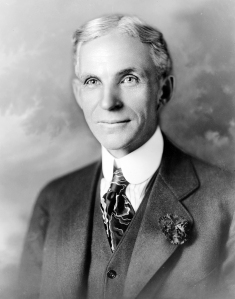
Henry Ford's Model T was the first economy car on the road and in many ways transformed America and the world. However, he was also an Anti-Semite who kind of got too cozy with Hitler, hated unions, and repeatedly clashed with his son Edsel. But unlike Walton, at least he believed in paying his workers a decent wage.

Henry Ford’s Model T was the first economy car on the road and in many ways transformed America and the world. However, he was also an Anti-Semite who kind of got too cozy with Hitler, hated unions, and repeatedly clashed with his son Edsel. But unlike Walton, at least he believed in paying his workers a decent wage.

Figure 1: Henry Ford– industrialist who founded the Ford Motor Company and sponsored the development of the assembly line technique of mass production which led him to become one of the richest and best known people in the world. His development, manufacture, and introduction of the Model T revolutionized transportation and American industry which transformed the automobile from an expensive curiosity into a practical conveyance that would profoundly impact the landscape of the twentieth century. Credited with “Fordism” which was mass production of inexpensive goods coupled with high wages for workers and believed in consumerism as the key to world peace. His intense commitment to systematically lowering costs resulted in many technical and business innovations, including a franchise system that put dealerships throughout most of North America and in major cities on six continents. Was widely known for his pacifism during WWI and publishing antisemitic tracts like the The International Jew (as well as did business with the Nazis well into WWII). Was adamantly against labor unions as well.

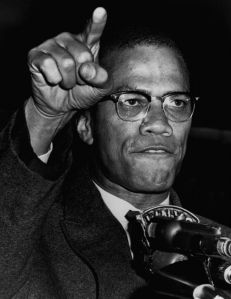
“We cannot think of uniting with others, until after we have first united among ourselves. We cannot think of being acceptable to others until we have first proven acceptable to ourselves.” – from A Declaration of Independence (1964)

Figure 2: Malcolm X– Muslim minister and human rights activist who has been called one of the greatest and most influential African Americans in history. To admirers he was a courageous advocate for the rights of blacks, a man who indicted white America in the harshest terms for its crimes against black Americans while detractors accused him of preaching racism and violence. Though he served as the public face for the Nation of Islam for a dozen years, he soon grew disillusioned with the group and its leader that he eventually repudiated it, disavowed racism, and founded Muslim Mosque, Inc. and the Organization of Afro-American Unity where he continued to emphasize Pan-Africanism, black self-determination, and black self-defense. His book, The Autobiography of Malcolm X, published shortly after his assassination, is considered one of the most influential non-fiction books of the 20th century.

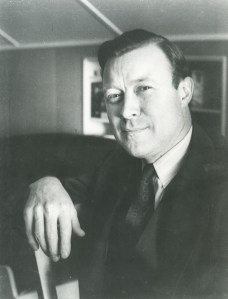
“There’s a direct relationship between the ballot box and the bread box, and what the union fights for and wins at the bargaining table can be taken away in the legislative halls.” – from 1970. Still very much rings true today as we’ve seen in government. Still, while Henry Ford believed in giving his workers fair wages so they buy his cars, Walter Reuther and his UAW made sure Ford kept it that way.

Figure 3: Walter Reuther– labor union leader who made the United Auto Workers a major force not only in the auto industry but also in the Democratic Party and the Congress of Industrial Organizations (CIO) in the mid 20th century. As a leading liberal and supporter of the New Deal coalition, working to strengthen the labor union movement, raise wages, and give union leaders a greater voice in state and national Democratic party politics. As a senior union organizer in the 1930s, he helped win major strikes for union recognition against General Motors and Ford with a highly publicized confrontation with Ford security forces in 1937. During the course, he’d be hospitalized after being badly beaten by strike breakers. He’d also survive two assassination attempts, one of them which permanently crippled his right hand. After WWII, he led a 113 day strike against General Motors with limited success. Delivered contracts for his membership through brilliant negotiating tactics such as choosing one of the “big three” automakers, and if it did not offer concessions, he’d strike it and let the other two absorb its sales. Not to mention, along with higher hourly wages, he’d also negotiate for paid vacations, employer-funded pensions, health insurance, supplementary unemployment benefits, and lower price cars for workers. Was a major supporter in the Civil Rights Movement where he participated in the March on Washington as well as the Selma to Montgomery March. Also marched with with the United Farm Workers. He even stood beside Martin Luther King Jr. during the latter’s “I Have a Dream” speech. In his prime, he was said to be influential and powerful enough to frighten conservatives that Barry Goldwater once declared him a more dangerous menace to the US than the Soviet Union or Sputnik.

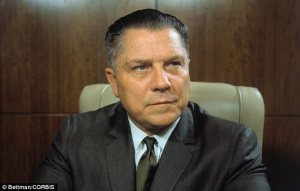
As head of a Teamsters Union, Jimmy Hoffa was a very controversial figure in his lifetime, especially with his ties to the mob. Yet, whether you call him a saint or corrupt boss, it's a safe bet that his body is under some Detroit concrete by now.

As head of a Teamsters Union, Jimmy Hoffa was a very controversial figure in his lifetime, especially with his ties to the mob. Yet, whether you call him a saint or corrupt boss, it’s a safe bet that his body is under some Detroit concrete by now.

Figure 4: Jimmy Hoffa– union leader and author who served as president of the Teamsters Union from 1958-1971 where he played a major role in the growth and development of the union which eventually became the largest (by membership) in the United States with over 1.5 million members at its peak, during his terms as its leader. His involvement with organized crime got him into a lot of trouble which led him convicted of jury tampering, attempted bribery, and fraud in 1964 as well as his imprisonment in 1967 and sentence to 13 years after an exhaustive appeal process. And he was only released when he agreed to resign in 1971 as part of a pardon agreement with Nixon which blocked him from union activities until 1980. His disappearance in 1975 has given rise to many theories as to what happened to him (though organized crime had something to do with his death). While his critics say he enriched himself at the expense of the teamsters, his defenders claim that “dedication as an American labor leader for more than 40 years, as well as his widely recognized accomplishments on behalf of teamsters and all working people in America” should not be forgotten.

23. Minnesota

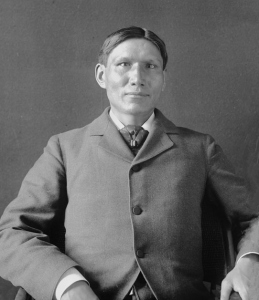
After spending some time treating Indians on reservations, Dr. Charles Eastman became a prolific Indian activist as well as a historian his Santee Dakota people. He is one of the first to write American history from the Native American point of view.
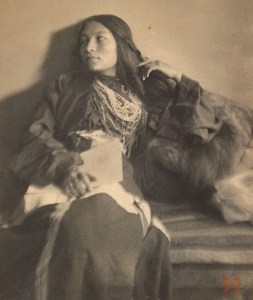
After spending some time treating Indians on reservations, Dr. Charles Eastman became a prolific Indian activist as well as a historian his Santee Dakota people. He is one of the first Native Americans to write American history from the Native American point of view.

Figure 1: Charles Eastman– Santee Dakota physician, writer, national lecturer, and reformer who in the early 20th century was “one of the most prolific authors and speakers on Sioux ethnohistory and American Indian affairs.” After working as a physician on reservations in South Dakota (one time caring for Indians after Wounded Knee), he became increasingly active in politics and issues on Native American rights, he worked to improve the lives of youths, and founded 32 Native American chapters of the Young Men’s Christian Association (YMCA) as well as also helped found the Boy Scouts of America. Also considered the first Native American author to write American history from the Native American point of view.
Nicknamed

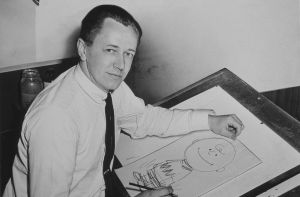
Nicknamed “Sparky,” Charles Schulz was the creator of the Peanuts comic strip that featured memorable characters like Snoopy and Charlie Brown. It would run for nearly 50 years and influence later cartoonists whho came after him.

Figure 2: Charles Schulz– cartoonist best known for his comic strip Peanuts (which featured the characters Charlie Brown and Snoopy, among others). Widely regarded as one of the most influential cartoonists of all time, cited as a major influence by many later cartoonists. Calvin and Hobbes creator Bill Watterson wrote in 2007: “Peanuts pretty much defines the modern comic strip, so even now it’s hard to see it with fresh eyes. The clean, minimalist drawings, the sarcastic humor, the unflinching emotional honesty, the inner thoughts of a household pet, the serious treatment of children, the wild fantasies, the merchandising on an enormous scale—in countless ways, Schulz blazed the wide trail that most every cartoonist since has tried to follow.”

“Once one is caught up into the material world not one person in ten thousand finds the time to form literary taste, to examine the validity of philosophic concepts for himself, or to form what, for lack of a better phrase, I might call the wise and tragic sense of life.” – From a letter to his daughter (1940). Nevertheless, while F. Scott Fitzgerald’s The Great Gatsby is celebrated as an embodiment of the 1920s, it also shows the excess and shallow of the Jazz Age that doesn’t make the decade seem like a fun time.

Figure 3: F. Scott Fitzgerald– novelist and short story writer whose works are the paradigmatic writings of the Jazz Age and is widely regarded as one of the greatest American writers of the 20th century. Considered a member of the “Lost Generation” of the 1920s, he wrote 5 novels and numerous short stories many of which treat themes of youth and promise, and age and despair. Best known work is The Great Gatsby which is considered required reading in many high school and college classes as well as continues to sell millions of copies.

When Charles Lindbergh flew solo on his the Spirit of Saint Louis from New York to Paris, he was hailed as a national hero. However, aside from his kid being murdered, we tend to forget about his belief in eugenics, his friendliness toward Hitler and the Third Reich, and his 3 secret European families.

When Charles Lindbergh flew solo on his the Spirit of Saint Louis from New York to Paris, he was hailed as a national hero. However, aside from his kid being murdered, we tend to forget about his belief in eugenics, his friendliness toward Hitler and the Third Reich, and his 3 secret European families. Lucky Lindy, indeed.

Figure 4: Charles Lindbergh– aviator, author, inventor, military officer, explorer, and social activist who emerged making the first solo transatlantic flight from New York to Paris with his Spirit of Saint Louis monoplane which earned him an Orteig Prize and the Medal of Honor. His son’s kidnapping and eventual murder was the subject of a major government investigation and a national tragedy. While he was (somewhat rightfully) accused of being a fascist for shaking hands with Hitler, he flew 50 combat missions in the Pacific during WWII as a civilian consultant. Later became a prolific prize-winning author, international explorer, inventor, and environmentalist. Had 7 children in 3 secret European families.

24. Mississippi

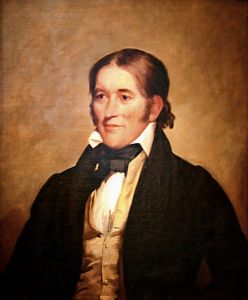
Elected as President of the Confederacy during the American Civil War, Jefferson Davis was unable to find a strategy to defeat the Union and wasn't the effective war leader Lincoln was. If Jefferson Davis gets any reverence or honors today, then it has more to do what he did after the war and Lost Cause mythology.

Elected as President of the Confederacy during the American Civil War, Jefferson Davis was unable to find a strategy to defeat the Union and wasn’t the effective war leader Lincoln was. If Jefferson Davis gets any reverence or honors today, then it has more to do what he did after the war and Lost Cause mythology.

Figure 1: Jefferson Davis– politician best known as the President of the Confederacy during the American Civil War who took personal charge of the Confederate war plans but was unable to find a strategy to defeat the more populous and industrialized Union. After the war had ended, remained a proud apologist for the cause of slavery for which he and the Confederacy had fought. Many historians attribute the Confederacy’s weaknesses to his poor leadership like his preoccupation with detail, reluctance to delegate responsibility, lack of popular appeal, feuds with powerful state governors and generals, favoritism toward old friends, inability to get along with people who disagreed with him, neglect of civil matters in favor of military ones, and resistance to public opinion all worked against him. Wrote a memoir entitled The Rise and Fall of the Confederate Government. And while he was initially displaced by Ex-Confederate affection, but through his reconciliation efforts between North and South, they eventually came to appreciate his role in the war, seeing him as a Southern patriot, and he became a hero of the Lost Cause in the post-Reconstruction South.

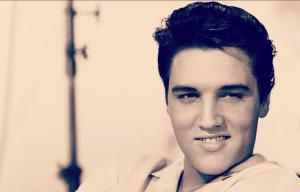
I'm not a very big Elvis fan. But I have to admit that it's no wonder he was seen as a sex symbol during the 1950s. But I guess drugs , booze, and peanut butter, banana, and bacon of sandwiches put an end to that.

I’m not a very big Elvis fan. But I have to admit that it’s no wonder he was seen as a sex symbol during the 1950s. But I guess drugs , booze, and peanut butter, banana, and bacon of sandwiches put an end to that.

Figure 2: Elvis Presley– musician, singer, and actor who is regarded as one of the most significant cultural icons of the 20th century, he is often referred to as “the King of Rock and Roll”, or simply, “the King.” Was an early popularizer of rockabilly, an uptempo, backbeat-driven fusion of country music and rhythm and blues and regarded as the leading figure of rock and roll after a series of successful network television appearances and chart-topping records. His energized interpretations of songs and sexually provocative performance style, combined with a singularly potent mix of influences across color lines that coincided with the dawn of the Civil Rights Movement, made him enormously popular—and controversial. As one of the most celebrated and influential musicians of the 20th century, he was commercially successful in many genres pop, blues and gospel and is the best-selling solo artist in the history of recorded music with estimated record sales of around 600 million worldwide.

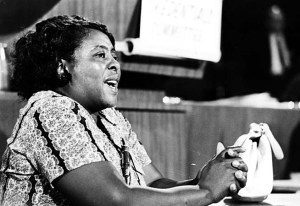
“I always said if I lived to get grown and had a chance, I was going to try to get something for my mother and I was going to do something for the black man of the South if it would cost my life; I was determined to see that things were changed.” – from (1965)

Figure 3: Fannie Lou Hamer– voting rights activist, civil rights leader, and philanthropist who was instrumental in organizing Mississippi’s Freedom Summer for the Student Nonviolent Coordinating Committee (SNCC) which attempted to register as many African American voters in the state as possible as well as set up dozens of Freedom Schools, Freedom Houses, and community centers in small towns throughout Mississippi to aid the local black population. Later became the vice-chair of the Mississippi Freedom Democratic Party, which she represented at the 1964 Democratic National Convention in Atlantic City, New Jersey. Epitaph reads: “I am sick and tired of being sick and tired.”

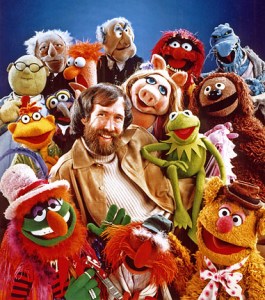
We all know that Jim Henson has shaped so many childhoods with his characters on Sesame Street and the Muppets. And while those beloved characters are still around today, we can all agree that his sudden death was just too soon.

We all know that Jim Henson has shaped so many childhoods with his characters on Sesame Street and the Muppets. And while those beloved characters are still around today, we can all agree that his sudden death was just too soon.

Figure 4: Jim Henson– puppeteer, artist, cartoonist, inventor, screenwriter, songwriter, musician, actor, film director, and producer who achieved international fame as the creator of the Muppets. Helped develop characters for Sesame Street with which he was involved for 20 years as well as won fame for his creations, particularly Kermit the Frog, Rowlf the Dog, and Ernie. Also had frequent roles in Muppets films such as The Muppet Movie, The Great Muppet Caper and The Muppets Take Manhattan, and created advanced puppets for projects like Fraggle Rock, The Dark Crystal, and Labyrinth. Founded the Jim Henson Company, Jim Henson Foundation, and Jim Henson’s Creature Shop. His sudden death from streptococcal toxic shock syndrome was widely lamented in the film and television industries.

25. Missouri

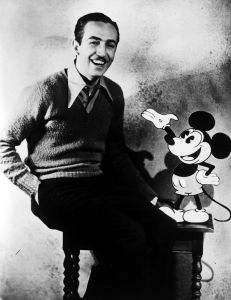
Yes, I know Walt Disney wasn't the kind of wholesome and lovable guy he portrayed himself as. Also he smoked like a chimney that he croaked. But still, you have to admit, his films still entertain since generations have practically been raised on them. Nevertheless, contrary to popular belief, he was fried not frozen.

Yes, I know Walt Disney wasn’t the kind of wholesome and lovable guy he portrayed himself as. Also he smoked like a chimney that he croaked. But still, you have to admit, his films still entertain since generations have practically been raised on them. Nevertheless, contrary to popular belief, he was fried not frozen after his death.

Figure 1: Walt Disney– entrepreneur, animator, voice actor, and film producer who was a prominent figure within the American animation industry and throughout the world and is regarded as a cultural icon. Known for his influence and contributions to entertainment during the 20th century and as a Hollywood business mogul, co-founded the Walt Disney Company with his producer brother. As his studio became more successful, he became more adventurous in his cartoons introducing synchronized sound, full-color three-strip Technicolor, feature-length cartoons and introducing technical developments on cameras. Noted as a filmmaker and popular showman as well as an innovator in animation and theme park design. With his staff created famous fictional characters including Mickey Mouse, Donald Duck, and Goofy and was the original voice for Mickey himself. He also produced feature films like Snow White and the Seven Dwarfs, Pinocchio, Dumbo, Fantasia, Bambi, and more. Yet, he wasn’t said to be great to work with. Moved to theme parks in the 1950s where he opened Disneyland and was in the planning stage of Disney World when he died of lung cancer. Left behind a vast legacy, including numerous animated shorts and feature films produced during his lifetime; the company, parks, and animation studio that bear his name; and the California Institute of the Arts (CalArts). Reputation changed in the years after his death, away from an American patriot and toward someone whose work was representative of American imperialism. But his movies continue to entertain.

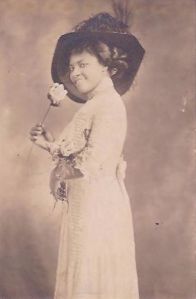
While not technically a millionaire, Madam C.J. Walker became the wealthiest African American woman with her line of beauty products. Was also known for her activism and philanthropy with her home used as a gathering place for the black community.

While not technically a millionaire, Madam C.J. Walker became the wealthiest African American woman with her line of beauty products. Was also known for her activism and philanthropy with her home used as a social gathering place for the black community.

Figure 2: Madam C. J. Walker– entrepreneur, philanthropist, and a political and social activist who is eulogized as the first female self-made millionaire in America and became one of the wealthiest African American women in the country. Made her fortune by developing and marketing a line of beauty products for black women through the successful business she founded the Madame C.J. Walker Manufacturing Company. And in addition to sales training and grooming, she showed other black women how to budget, build their own businesses, and encouraged them to become financially independent. Also known for her philanthropy and social activism who donated to numerous organizations and was a patron of the arts. Her lavish Villa Lewaro served as a social gathering place for the African American community.

“I fired him because he wouldn’t respect the authority of the president. That’s the answer to that. I didn’t fire him because he was a dumb son of a bitch, although he was, but that’s not against the law for generals. If it was, half to three-quarters of them would be in jail.”- On why he fired General Douglas MacArthur. Still, truth be told, MacArthur had it coming.

Figure 3: Harry S. Truman– president from 1945-1953 whose administration saw the final months of WWII and the start of the Cold War as well as marked a turning point in US foreign policy in which it renounced isolationism for good. Made the decision to drop the atomic bomb on Hiroshima and Nagasaki. Helped found the United Nations and issued the Truman Doctrine to contain Communism as well as got the $13 billion Marshall Plan enacted to rebuild Western Europe. Oversaw the Berlin Airlift, the creation of NATO, and most of the Korean War. On the domestic front, he successfully guided the American through the post-war economic challenges as well as submitted first comprehensive civil rights legislation and issued Executive Orders to start racial integration in the military and federal agencies. His 1948 election upset to win a full term as president has often been invoked by later ‘underdog’ presidential candidates. Popular and scholarly assessments of his presidency initially were unfavorable but became more positive over time following his retirement from politics. However, his firing of Douglas MacArthur during the Korean War did attract considerable controversy even though it was the right decision.

“Endurance of friendship does not depend/Upon ourselves, but upon circumstance./But circumstance is not undetermined./Unreal friendship may turn to real/But real friendship, once ended, cannot be mended./Sooner shall enmity turn to alliance./The enmity that never knew friendship/Can sooner know accord.”- from Murder in the Cathedral (1935)

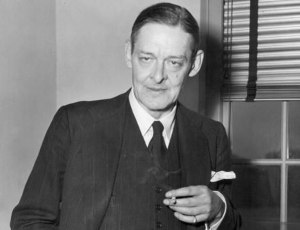
Figure 4: T.S. Eliot– expatriate essayist, publisher, playwright, literary and social critic and “one of the twentieth century’s major poets” who attracted widespread attention for his poem “The Love Song of J. Alfred Prufrock,” which is seen as a masterpiece of the Modernist movement and was followed by some of the best-known poems in the English language, including The Waste Land, “The Hollow Men,” “Ash Wednesday,” and Four Quartets. Also known for 7 plays, particularly Murder in the Cathedral and made major contributions to literary criticism as well. Awarded the Nobel Prize in Literature in 1948, “for his outstanding, pioneer contribution to present-day poetry.” His Old Possum’s Book of Practical Cats was made into the highly popular Broadway musical Cats.

US State Mount Rushmore: Part 4 – Kansas to Maryland

Okay, I know that some of these famous Americans might not be suitable for elementary school kids to do reports on. Of course, Alfred Kinsey is obvious since he was a pioneer in human sexuality while Eugene Debs was a political radical and Al Capone and John Dillinger were criminals. However, this series about honoring great Americans who’ve necessarily made positive contributions since that might be a matter of opinion. And then there are some people who are rather controversial but that doesn’t mean I should leave them out. Nevertheless, in this post I bring you the Mount Rushmores I compiled from prairie state Kansas to Chesapeake Bay state Maryland. First, we venture to Kansas which has at times has been no place like home to a prominent WWII general who later became president, a noted black photographer and filmmaker, a famous poetic voice from the Harlem Renaissance, and a legendary aviator. Second, it’s on to Kentucky where you’ll meet an interesting lot consisting of a bird guy who’s name is synonymous with avian conservation, a knife guy who died at the Alamo, an eccentric journalist, and a mystic monk. Then we go down to Louisiana, home to a legendary jazz trumpeter, a larger than life politician, a French pirate, and a highly well-known gay playwright. Next, I bring you up north to the state of Maine where you’ll meet a legendary American poet, one of the most unlikely military heroes, an advocate for the mentally ill, and an academic who was an early supporter of civil rights. Finally, we go to Maryland where you’ll find a former slave who became the most prominent voice for African Americans in the 19th century, a lawyer who wrote what became a national anthem, a civil rights lawyer who eventually sat on the highest court bench in the land, and a Catholic bishop who supported Christian unity as well as a separation between church and state.


16. Kansas

"This is a long tough road we have to travel. The men that can do things are going to be sought out just as surely as the sun rises in the morning. Fake reputations, habits of glib and clever speech, and glittering surface performance are going to be discovered."-from 1942. Also, before becoming Supreme Commander of the Allied Forces, he spent a time "studying dramatics" under Douglas MacArthur as he put it. So I'm sure he has the chops to rein in a prima donna like George S. Patton.

“This is a long tough road we have to travel. The men that can do things are going to be sought out just as surely as the sun rises in the morning. Fake reputations, habits of glib and clever speech, and glittering surface performance are going to be discovered.”-from 1942. Also, before becoming Supreme Commander of the Allied Forces, he spent a time “studying dramatics” under Douglas MacArthur as he put it. So I’m sure he has the chops to rein in a prima donna like George S. Patton.

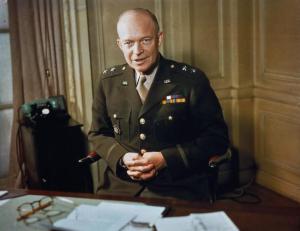
Figure 1: Dwight D. Eisenhower – US president from 1953-1961 and 5-star general during WWII who served as Supreme Commander of Allied Forces in Europe. Responsible for planning and supervising the invasion of North Africa with Operation Torch in 1942-43 and the successful invasion of France and Germany in 1944-45. Was first Supreme Commander of NATO, served as Army Chief of Staff under Truman, and president of Columbia University. Administration saw the end of the Korean War, coups in Iran and Guatemala, troubles in Vietnam, the Suez crisis, establishment of NASA, the early years of the Civil Rights Movement, the U2 Incident, McCarthyism, establishment of the Interstate Highway System, and Alaska and Hawaii becoming states.

Gordon Parks was a pioneer among African photojournalists and filmmakers. Nevertheless, he's best remembered as the creator of Shaft in recent generation as well as taking photos of poor Americans during the 1940s. But he did much more than that.

Gordon Parks was a pioneer among African photojournalists and filmmakers. Nevertheless, he’s best remembered as the creator of Shaft in recent generation as well as taking photos. But he did much more than that.

Figure 2: Gordon Parks– photographer, musician, writer, and film director who became prominent in US documentary photojournalism in the 1940s through the 1970s, particularly in issues of civil rights, poverty, and African Americans. Was the first African American to produce and direct major motion pictures, developing films relating the experience of black slaves and struggling black Americans, and creating the “Blaxploitation” genre. Best remembered for his iconic photos of poor Americans during the 1940s (particularly the lady with the brooms behind the American flag), his photographic essays in Life magazine, and as the director in the 1971 film Shaft. Also an author, poet, and composer.

O, let America be America again —/The land that never has been yet —/And yet must be — the land where every man is free..Sure, call me any ugly name you choose —/The steel of freedom does not stain./From those who live like leeches on the people's lives,/We must take back our land again,/America! - from "Let America Be America Again"

O, let America be America again —/The land that never has been yet —/And yet must be — the land where every man is free./Sure, call me any ugly name you choose —/The steel of freedom does not stain./From those who live like leeches on the people’s lives,/We must take back our land again,/America! – from “Let America Be America Again”

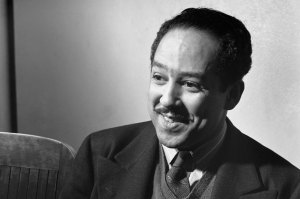
Figure 3: Langston Hughes– poet, social activist, novelist, playwright, and columnist who was one of the earliest innovators of the then-new literary art form called jazz poetry and best known as a leader of the Harlem Renaissance. Famously wrote about the period that “the negro was in vogue”, which was later paraphrased as “when Harlem was in vogue.” Poetry and fiction portrayed the lives of the working-class blacks in America, lives he portrayed as full of struggle, joy, laughter, and music.  Stressed a racial consciousness and cultural nationalism devoid of self-hate and thought united people of African descent and Africa across the globe to encourage pride in their diverse black folk culture and black aesthetic. In his time, he was one of the few prominent black writers to champion racial consciousness as a source of inspiration for black artists which influence many black writers today.

While she was only a passenger in her first Transatlantic flight, Amelia Earhart soon became the first woman to fly across the Atlantic solo. However, her attempt to fly around the world didn't turn out so well since her plane hasn't been seen since 1937.

While she was only a passenger in her first Transatlantic flight, Amelia Earhart soon became the first woman to fly across the Atlantic solo. However, her attempt to fly around the world didn’t turn out so well since her plane hasn’t been seen since 1937.

Figure 4: Amelia Earhart– aviation pioneer and author who was the first female aviator to fly solo across the Atlantic Ocean, receiving the US Distinguished Flying Cross for the record and set many other records as well. Wrote bestselling books about her flying experiences and was instrumental in the formation of The Ninety-Nines, a female pilot organization. Disappeared in an attempt to make a circumnavigational flight around the globe in 1937 over the central Pacific Ocean. Fascination with her life, career, and disappearance continues to this day.


17. Kentucky

Though John James Audubon is a celebrated figure among bird fans, he tend to kill a lot of birds so he could study them, stuff them, and put them in paintings. To be fair, killing animals in the name of science and conservation was a very common practice in the 19th century.

Though John James Audubon is a celebrated figure among bird fans, he tend to kill a lot of birds so he could study them, stuff them, and put them in paintings. To be fair, killing animals in the name of science and conservation was a very common practice in the 19th century.

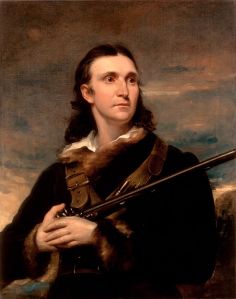
Figure 1: John James Audubon– ornithologist, naturalist, and painter who was notable for his extensive studies documenting all types of American birds and for his detailed illustrations that depicted the birds in their natural habitats. His major work titled The Birds of America is considered one of the finest ornithological works ever completed with nearly all later ornithological works were inspired by his artistry and high standards. Made significant contributions to the understanding of bird anatomy and behavior through his field notes. Identified 25 new species and 12 subspecies.

Sure Jim Bowie may not be as well known as Davy Crockett, but he's still an awesome legend in his own right as a fighter and frontiersman with a big ass knife that bears his name. Not to mention, but there's considerable evidence that he died as the real hero of the Alamo while fighting Mexicans in his bed.

Sure Jim Bowie may not be as well known as Davy Crockett, but he’s still an awesome legend in his own right as a fighter and frontiersman with a big ass knife that bears his name. Not to mention, but there’s considerable evidence that he died as the real hero of the Alamo while fighting Mexicans in his bed.

Figure 2: Jim Bowie– pioneer who played a prominent role in the Texas Revolution which culminated in this death at the Battle of the Alamo. Stories of him as a fighter and frontiersman have made him a legendary figure and a folk hero of American culture. Despite conflicting accounts of the manner of his death, the “most popular, and probably the most accurate” accounts maintain that he died in his bed after emptying his pistols into several Mexican soldiers. Was renowned for his prowess with a large knife that lends his name with which he was reputed to kill a Louisiana sheriff after having been shot and stabbed himself, according to reports of the 1827 Sandbar fight.

"I was a seeker, a mover, a malcontent, and at times a stupid hell-raiser. I was never idle long enough to do much thinking, but I felt somehow that my instincts were right." And yes, that's the real Hunter S. Thompson. I'm sure you were expecting Johnny Depp.

“I was a seeker, a mover, a malcontent, and at times a stupid hell-raiser. I was never idle long enough to do much thinking, but I felt somehow that my instincts were right.” And yes, that’s the real Hunter S. Thompson. I’m sure you were expecting Johnny Depp.

Figure 3: Hunter S. Thompson– journalist, author, and founder of the gonzo journalism movement. Became a counter cultural figure in the 1970s, with his own brand of New Journalism which he termed “Gonzo”, an experimental style of journalism where reporters involve themselves in the action to such a degree that they become central figures of their stories. Best known work is Fear and Loathing in Las Vegas: A Savage Journey to the Heart of the American Dream which constitutes a rumination on the failure of the 1960s counterculture movement and was serialized by Rolling Stone with which he’d be long associated. Also known well known for his inveterate hatred of Richard Nixon, who he claimed represented “that dark, venal, and incurably violent side of the American character” as well as for his lifelong use of alcohol and illegal drugs, his love of firearms, and his iconoclastic contempt for authoritarianism.

“To say that I am made in the image of God is to say that Love is the reason for my existence, for God is love. Love is my true identity. Selflessness is my true self. Love is my true character. Love is my name.”- from Seeds of Contemplation (1949)

Figure 4: Thomas Merton– writer, mystic, poet, social activist, and Trappist monk of the Abbey of Gethsemani, Kentucky who wrote more than 70 books, mostly on spirituality, social justice, and a quiet pacifism as well as scores of essays and reviews. Among his most enduring works is his bestselling autobiography The Seven Storey Mountain which sent scores of WWII veterans, students, and even teenagers flocking to monasteries across the US. Was a keen proponent of interfaith understanding, pioneered dialogue between Asian spiritual figures including the Dalai Lama, and authored books on Zen Buddhism and Taoism. Called by Pope Francis as ”a man of prayer, a thinker who challenged the certitudes of his time and opened new horizons for souls and for the Church. He was also a man of dialogue, a promoter of peace between peoples and religions.”


18. Louisiana

Sometimes nicknamed "Satchmo" or "Pops," Louis Armstrong is one of the most influential and recognizable figures in jazz. However, sometimes his irrepressible personality was so strong that it overshadowed his contribution as a musician and a singer.

Sometimes nicknamed “Satchmo” or “Pops,” Louis Armstrong is one of the most influential and recognizable figures in jazz. However, sometimes his irrepressible personality was so strong that it overshadowed his contribution as a musician and a singer.

Figure 1: Louis Armstrong– trumpeter, composer, and singer who was one of the most influential figures in jazz and whose career spanned 5 decades and different jazz eras with a profound influence extending well beyond jazz music. One of the first truly popular African American entertainers to “cross over” whose skin color was secondary to his music in an America that was extremely racially divided. Was a foundational influence in jazz shifting focus from collective improvisation to solo performance. With his instantly recognizable gravelly voice, he was also an influential singer demonstrating great dexterity as an improviser, bending lyrics and melody of a song for expressive purposes as well as skilled in scat singing.

Called, "The Kingfish," Huey Long was a very controversial figure in Louisiana, even during his own lifetime. Sure he was a populist who called to "Share our Wealth" and make "Every Man a King." But his dictatorial means and motives violated American norms.

Called, “The Kingfish,” Huey Long was a very controversial figure in Louisiana, even during his own lifetime. Sure he was a populist who called to “Share our Wealth” and make “Every Man a King.” But his dictatorial means and motives violated American norms.

Figure 2: Huey Long– politician nicknamed “The Kingfish,” who served as Louisiana’s governor and senator during from 1928 to his assassination in 1935. Best known for being an outspoken populist who denounced the rich and the banks and called for “Share Our Wealth” that proposed new wealth distribution measures in the form of a net asset tax on corporations and individuals to curb poverty and homelessness during the Great Depression. Advocated federal spending on public works, schools and colleges, and old age pensions stimulate the economy as well as was an ardent critic of the Federal Reserve. As Louisiana’s political boss, he commanded wide networks of supporters and was willing to take forceful action. Under his leadership, he expanded hospitals and schools, set of a system of charity hospitals to provide healthcare to the poor, massive highway construction and free bridges that brought an end to rural isolation, and free textbooks provided for schoolchildren. But his dictatorial means and motives violated American norms. Remains a controversial figure in Louisiana with critics and supporters debating whether or not he was a dictator, demagogue, or populist. Has inspired countless novels, particularly Robert Penn Warren’s All the King’s Men.

Jean Lafitte was no saint. and only agreed to help the US in exchange for a pardon. But his assistance to Andrew Jackson proved critical in a achieving victory for the Battle of New Orleans.

Jean Lafitte was no saint. and only agreed to help the US in exchange for a pardon. But his assistance to Andrew Jackson proved critical in a achieving victory for the Battle of New Orleans.

Figure 3: Jean Laffite– pirate and privateer in the Gulf of Mexico in the early 19th century who had a successful smuggling operation in Louisiana with his brothers as well as was instrumental in helping Andrew Jackson defend New Orleans against British forces in the final battle of the War of 1812 in exchange for a legal pardon. His assistance to the US in that battle was crucial in achieving victory for he provided ships and men. Also suggested to Jackson that the American line of defense be extended from the Mississippi to a nearby swamp. Later became a spy for the Spanish during the Mexican War of Independence and developed a pirate colony in what is today Galveston, Texas. Continued attacking merchant ships as a pirate around Central American ports until he died around 1823, trying to capture Spanish vessels. Historians have speculated about his life and death ever since.

Though not actually from Tennessee, Tennessee Williams was a prolific playwright who's best known for A Streetcar Named Desire. His dysfunctional family drama is often said to be an inspiration for many of his stage classics.

Though not actually from Tennessee, Tennessee Williams was a prolific playwright who’s best known for A Streetcar Named Desire. His dysfunctional family drama is often said to be an inspiration for many of his stage classics.

Figure 4: Tennessee Williams– playwright and author of many stage classics. Considered among the three foremost playwrights in 20th-century American drama along with Eugene O’Neill and Arthur Miller. Also wrote short stories, poetry, essays and a volume of memoirs. Best known for The Glass Menagerie, A Streetcar Named Desire, Cat on a Hot Tin Roof, and Sweet Bird of Youth. While his plays in the 1940s and 1950s are seen as extraordinary, his later works brought him turmoil and theatrical failures, mainly due to his alcoholism.


19. Maine

"All your strength is in your union,/All your danger is in discord;/Therefore be at peace henceforward,/And as brothers live together." - from The Song of Hiawatha (1855)

“All your strength is in your union,/All your danger is in discord;/Therefore be at peace henceforward,/And as brothers live together.” – from The Song of Hiawatha (1855)

Figure 1: Henry Wadsworth Longfellow– poet and educator whose works include “Paul Revere’s Ride”, The Song of Hiawatha, and Evangeline and was one of the 5 Fireside poets. First American to translate Dante Alighieri’s Divine Comedy. Wrote many lyric poems known for their musicality and often presenting stories of mythology and legend and was the most popular American poet of his day. Yet has been criticized for imitating European styles and writing specifically for the masses.

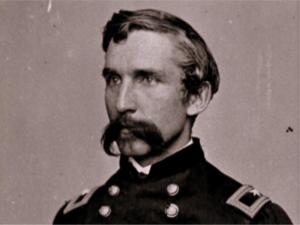
Joshua Chamblerlain played a key role in the Battle of Gettysburg when he and the 20th Maine held off the Confederates at Little Round Top on the second day. He was awarded a Medal of Honor for his heroism.

Joshua Chamblerlain played a key role in the Battle of Gettysburg when he and the 20th Maine held off the Confederates at Little Round Top on the second day. He was awarded a Medal of Honor for his heroism.

Figure 2: Joshua Chamberlain– college professor who volunteered for the Union Army during the American Civil War where he became a highly respected and decorated Union officer reaching the rank of brigadier general. Most well-known for his gallantry at Gettysburg in his valiant defense of Little Round Top where he ordered simultaneous full frontal assault and flanking maneuver on Confederate troops, capturing 101 of them. This earned him the Medal of Honor as well as gave him the honor of commanding Union troops at the surrender ceremony of Robert E. Lee’s Army at Appomattox Court House. After the Civil War, served as governor of Maine and president of his alma mater Bowdoin College.

While Dorothea Dix's advocacy of putting the mentally ill in institutions might not go well with us today, in her day, it wasn't unusual to see the mentally ill treated much worse like put in prisons along side violent criminals. And if there was any mental health system present, it was unregulated, underfunded, and prone to widespread abuse.

While Dorothea Dix’s advocacy of putting the mentally ill in institutions might not go well with us today, in her day, it wasn’t unusual to see the mentally ill treated much worse like put in horrific prisons with appalling conditions alongside violent criminals. And if there was any mental health system present, it was unregulated, underfunded, and prone to widespread abuse.

Figure 3: Dorothea Dix– author, teacher, and activist on behalf of the indigent insane who, through a vigorous program of lobbying state legislatures and the US Congress, created the first generation of American mental asylums as well as helped change people’s perceptions on the mentally ill as well as prisoners and the disabled. Her own troubled family background and impoverished youth is said to serve as a galvanizing force throughout her career. Served as Superintendent of Army Nurses during the American Civil War where she established a reputation as an advocate for the work of female nurses.

"We shall speak against slavery, as we have hitherto done. We can find no language that has the power to express the hatred we have towards so vile and so wicked an institution-We hate it-we abhor, we lather it-wedetest it and despise it as a giant sin against God."

“We shall speak against slavery, as we have hitherto done. We can find no language that has the power to express the hatred we have towards so vile and so wicked an institution-We hate it-we abhor, we lather it-wedetest it and despise it as a giant sin against God.”

Figure 4: Oren Burbank Cheney– Free Will Baptist clergyman, politician, editor, and academic who was a leader in the New England antislavery movement and played an active role in the empowerment of African Americans and women in the American Civil War and decades beyond as well as was one of the earliest advocates for civil rights for both groups. His contributions to the political and religious landscape of Maine and Massachusetts proved to be influential and changed the notions of equality in the United States. Established Bates College which provided the backdrop to increased racial equality, the formalization of women’s rights, making a college education available for those with limited financial means, and educational reform where he was president for 39 years.


20. Maryland

"He is a lover of his country who rebukes and does not excuse its sins. It is righteousness that exalteth a nation while sin is a reproach to any people."

“He is a lover of his country who rebukes and does not excuse its sins. It is righteousness that exalteth a nation while sin is a reproach to any people.”

Figure 1: Frederick Douglass– social reformer, abolitionist, orator, writer, and statesman. After escaping slavery, he became a national leader of the abolitionist movement from Massachusetts and New York, gaining note for his dazzling oratory and incisive antislavery writings. Because he was born into slavery, he was seen by abolitionists as a living counter-example to slaveholders’ arguments that slaves lacked the intellectual capacity to function as independent American citizens. Wrote several autobiographies and was influential in promoting the cause of abolition. Was a firm believer in the equality of all peoples, in dialogue and in making alliances across racial and ideological divides, and in the liberal values of the American Constitution. By making a career of agitating the American conscience, he is by far the most influential African American of the 19th century.

Even before Francis Scott Key's poem became US national anthem, "The Star-Spangled Banner" was increasingly popular throughout the 19th century, even played by bands at public events like 4th of July celebrations. And it has been played at sporting events since at least the 1918 World Series.

Even before Francis Scott Key’s poem became US national anthem, “The Star-Spangled Banner” was increasingly popular throughout the 19th century, even played by bands at public events like 4th of July celebrations. And it has been played at sporting events since at least the 1918 World Series. So when it came time to choose a national anthem, Key’s song was a natural choice.

Figure 2: Francis Scott Key– lawyer, author, and amateur poet who wrote the lyrics to what eventually became the US national anthem, “The Star Spangled Banner” which was based on his experience witnessing the 1814 bombardment of Fort McHenry in the Battle of Baltimore while he was a prisoner on a British ship during the War of 1812. It would be published in the American and Commercial Daily Advertiser that same year as “Defence of Fort M’Henry.” He later took it to Thomas Carr who adapted it to a melody of a popular drinking love song “To Anacreon in Heaven” and it became “The Star-Spangled Banner” ever since. Though somehow difficult to sing, the song became increasingly popular, competing with “Hail Columbia,” as the de facto national anthem during both the Mexican-American War and the American Civil War. More than a century after its publication, it was adopted as the US national anthem first by an Executive Order by Woodrow Wilson in 1916 and then by Congressional resolution in 1931. Also wrote some religious poems that were used in Christian hymns.

Even if he wasn't the first black Supreme Court Justice, Thurgood Marshall would still be in this series since his career as an attorney for the NAACP played a pivotal role in the Civil Rights Movement. His most famous case was Brown v. Board of Education which ruled segregation in public schools as unconstitutional.

Even if he wasn’t the first black Supreme Court Justice, Thurgood Marshall would still be in this series since his career as an attorney for the NAACP played a pivotal role in the Civil Rights Movement. His most famous case was Brown v. Board of Education which ruled segregation in public schools as unconstitutional.

Figure 3: Thurgood Marshall– lawyer who served as Chief Counsel for the NAACP Legal Defense and Educational Fund during the 1940s and1950s. Best known for his high success rate in arguing civil rights cases before the Supreme Court and for the victory in Brown v. Board of Education of Topeka, a decision that desegregated public schools. Would eventually be appointed the first African American justice on the Supreme Court where he served from 1967-1991.

As the first American Catholic bishop, John Carroll was an early advocate for a vernacular liturgy because he wanted everyone in his flock to have access to the Scriptures. Unfortunately for him, Catholic liturgy wouldn't be in the vernacular until nearly 200 years later with Vatican II.

As the first American Catholic bishop, John Carroll was an early advocate for a vernacular liturgy because he wanted everyone in his flock to have access to the Scriptures and he knew that there were Catholics who didn’t understand Latin. Unfortunately for him, Catholic liturgy wouldn’t be in the vernacular until nearly 200 years later with Vatican II.

Figure 4: John Carroll– prelate to the Roman Catholic Church who served as the first American bishop and archbishop as well as founded Georgetown University and the first diocesan parish at Saint John the Evangelist in what is now Forest Glen, Maryland. When he joined the Jesuits, there was no public Catholic Church in Maryland due to anti-Catholic discrimination laws that effectively banned Catholics from political participation. In 1776, he accompanied Benjamin Franklin on a failed diplomatic mission to Quebec which gave him some name recognition to other Founding Fathers. Selected as Bishop of Baltimore by US clergy which was approved by Pope Pius VI. Was an early advocate for Christian unity and a vernacular liturgy as well as wrote articles defending Catholic tradition from those who promoted anti-Catholicism and fought notions of state establishment Protestantism as the official religion (though he always treated non-Catholics with respect).

US State Mount Rushmore: Part 3 – Hawaii to Iowa

So two down. Yes, I know that there will be some white people complaining about Florida’s all black lineup, perhaps saying that there are plenty of famous white Floridians, too. However, I didn’t compile these Mount Rushmore sets based on race. And it’s just turned out that the figures I had for Florida had accomplishments that can’t possibly be ignored. The fact they’re black is just a coincidence. Anyway, in this selection, I bring you the Mount Rushmores from Hawaii to Iowa. From Hawaii hails a Chinese cop who inspired a popular detective, an explorer who rediscovered a lost Inca citadel, and two Hawaiian monarchs. Then we’re off to Idaho where you’ll meet 4 people whose accomplishments weren’t small potatoes like an FBI agent who brought down a US president, a guy who invented television, a literary expatriate, and a lady guide for Lewis and Clark. Next, it’s on to Illinois where you have a great emancipator, one of the best known gangsters in Prohibition, a pioneer in social work, and a libertarian Nobel Prize winning economist. After that is Indiana where you’ll find a Depression Era rock star criminal, a pioneer in human sexuality, a journalist who wrote about the little guy, and a the biggest name in Progressive Era Socialism. Finally, you have Iowa where you’ll meet the guy behind one of the most famous American paintings, a man who had a Wild West show, a highly noted conservationist, and perhaps the best known big band leader of all time.


11. Hawaii

Though Charlie Chan was played by a white guy in the movies, he was at least partly inspired by a real Chinese Hawaiian detective named Chang Apana who had a very distinguished and adventurous career in the Honolulu Police Department. However, Earl Derr Biggers' widow disputes this but you know, he was pretty awesome in his own way.

Though Charlie Chan was played by a white guy in the movies, he was at least partly inspired by a real Chinese Hawaiian detective named Chang Apana who had a very distinguished and adventurous career in the Honolulu Police Department. However, Earl Derr Biggers’ widow disputes this but you know, he was pretty awesome in his own way.

Figure 1: Chang Apana– Chinese Hawaiian member of the Honolulu Police Department for 34 years as an officer and detective who was acknowledged by Earl Derr Biggers as the inspiration for Charlie Chan. Was successful in solving many cases due to his fluency in several languages, his wide network of informants, and meticulous detective style.

While he was from a family of famous missionaries, Hiram Bingham III rediscovered the ruins of the lost Inca citadel of Machu Picchu with the help of indigenous farmers. Nevertheless, while he does seem like he's in Indiana Jones mode here, he thankfully didn't destroy it.

While he was from a family of famous missionaries, Hiram Bingham III rediscovered the ruins of the lost Inca citadel of Machu Picchu with the help of indigenous farmers. Nevertheless, while he does seem like he’s in Indiana Jones mode here, he thankfully didn’t destroy it.

Figure 2: Hiram Bingham III– explorer, academic, and politician who made public the existence of the Inca citadel of Machu Picchu in 1911 with the guidance of local indigenous farmers. Later became a US Senator.

Through alliances and conquest, King Kamehameha I united Hawaii and established a kingdom. While it did outlive him, it didn't survive the 19th century due to American Imperialism.

Through alliances and conquest, King Kamehameha I united Hawaii and established a kingdom. While it did outlive him, it didn’t survive the 19th century due to American Imperialism.

Figure 3: Kamehameha I– established the Kingdom of Hawaii after uniting most of the islands through conquest as well as developed alliances with the major Pacific colonial powers which preserved Hawaii’s independence under his rule. Remembered for the Kānāwai Māmalahoe, the “Law of the Splintered Paddle”, which protects human rights of non-combatants in times of battle.

Queen Liliʻuokalani was Hawaii's first and last reigning queen as well as its last reigning monarch. In 1895, she was forcibly removed from her throne while Hawaii was annexed to the United States. Was also an accomplished author and songwriter with her “Aloha Oe” being Hawaii's state song.

Queen Liliʻuokalani was Hawaii’s first and last reigning queen as well as its last reigning monarch. In 1895, she was forcibly removed from her throne while Hawaii was annexed to the United States. Was also an accomplished author and songwriter with her “Aloha Oe” being Hawaii’s state song.

Figure 4: Liliʻuokalani– last monarch of the Kingdom of Hawaii from 1891-1893 when she was deposed and Hawaii was annexed to the US. Was also an accomplished author with her book Hawaiʻi’s Story by Hawaiʻi’s Queen as well as songwriter and musician who wrote the “Aloha Oe” which is Hawaii’s state song.


12. Idaho

As "Deep Throat," W. Mark Felt leaked information about Watergate to Bob Woodward and Carl Bernstein eventually proved vital in bringing down Richard Nixon's presidency. However, his involvement as "Deep Throat" was kept a secret for decades until he revealed it in 2005. He died 3 years later.

As “Deep Throat,” W. Mark Felt leaked information about Watergate to Bob Woodward and Carl Bernstein eventually proved vital in bringing down Richard Nixon’s presidency. However, his involvement as “Deep Throat” was kept a secret for decades until he revealed it in 2005. He died 3 years later.

Figure 1: W. Mark Felt– FBI Special Agent who rose to the Bureau’s Associate Director and was the Watergate scandal’s whistleblower referred to as “Deep Throat” in which he provided the Washington Post with critical information that eventually led to Richard Nixon’s resignation in 1974. His involvement with Bob Woodward and Carl Bernstein was kept a secret for nearly 30 years. It is alleged he blew the whistle on Watergate as revenge against Nixon for passing him over for Bureau Director that he thought he deserved and giving it L. Patrick Gray whom he resented and didn’t think was up for the job.

In America, a man like Philo Farnsworth should be a household name since he was the inventor of television which has changed the world significantly. However, he's not as well known as he should be. Also appeared on TV once in his life in 1957 for a CBS quiz show I've Got a Secret.

In America, a man like Philo Farnsworth should be a household name since he was the inventor of television which has changed the world significantly. However, he’s not as well known as he should be. Also appeared on TV once in his life in 1957 for a CBS quiz show I’ve Got a Secret.

Figure 2: Philo Farnsworth– inventor and TV pioneer who made many contributions that were crucial to the early development of all-electronic television. Perhaps best known for his 1927 invention of the first fully functional all-electronic image pickup device (video camera tube), the “image dissector”, as well as the first fully functional and complete all-electronic television system. Was also the first person to demonstrate such a system to the public. Developed a TV system complete with receiver and camera which he produced commercially in the form of Farnsworth Television and Radio Corporation from 1938-1951. Held 300 patents mostly in TV and radio. Later in life, invented a small nuclear fusion device the Farnsworth–Hirsch fusor, or simply “fusor”, employing inertial electrostatic confinement (IEC) that has been the acknowledged inspiration for other fusion approaches including the Polywell reactor concept in terms of a general approach to fusion design.

As an expatriate editor for several American literary magazines in London, Ezra Pound was a significant figure in the early modernist movement during the early 20th century. As a poet, he developed Imagism which was inspired by Chinese and Japanese poetry.

As an expatriate editor for several American literary magazines in London, Ezra Pound was a significant figure in the early modernist movement during the early 20th century. As a poet, he developed Imagism which was inspired by Chinese and Japanese poetry.

Figure 3: Ezra Pound– expatriate poet and critic as well as major figure in the modernist movement. Contribution to poetry began with his development of Imagism, a movement derived from classical Chinese and Japanese poetry, stressing clarity, precision and economy of language. Helped discover and shape the work of contemporaries T. S. Eliot, James Joyce, Robert Frost, and Ernest Hemingway. Was responsible for the 1915 publication of Eliot’s “The Love Song of J. Alfred Prufrock” and the serialization from 1918 of Joyce’s Ulysses, while he was a foreign editor of several American magazines in London. Embraced Benito Mussolini’s Italian fascism during the 1930s and 1940s as well as expressed support for Hitler and wrote for publications owned by British fascist Oswald Mosley as well as made several propaganda speeches against the US, FDR, and the Jews during WWII.

While no contemporary portrait exists of Sacagawea, familiarity with the western landscape and several Indian tribes proved vital for the Lewis and Clark expedition. One highlight was when she came to her Shoshone people and broke down in tears when trying to translate when she discovered that the the leader was her brother she hadn't seen in years.

While no contemporary portrait exists of Sacagawea, familiarity with the western landscape and several Indian tribes proved vital for the Lewis and Clark expedition. One highlight was when she came to her Shoshone people and broke down in tears when trying to translate when she discovered that the the leader was her brother she hadn’t seen in years.

Figure 4: Sacagawea– a Lemhi Shoshone woman who helped the Lewis and Clark Expedition achieve each of its chartered mission objectives exploring the Louisiana Purchase. With the expedition between 1804 and 1806, she traveled thousands of miles from North Dakota to the Pacific Ocean, establishing cultural contacts with Native American populations, and researched natural history. The National American Woman Suffrage Association of the early 20th century adopted her as a symbol of women’s worth and independence, erecting several statues and plaques in her memory, and doing much to spread the story of her accomplishments.


13. Illinois

"Four score and seven years ago our fathers brought forth on this continent, a new nation, conceived in Liberty, and dedicated to the proposition that all men are created equal. Now we are engaged in a great civil war, testing whether that nation or any nation so conceived and so dedicated, can long endure. We are met on a great battle-field of that war. We have come to dedicate a portion of that field, as a final resting place for those who here gave their lives that that nation might live. It is altogether fitting and proper that we should do this. But, in a larger sense, we can not dedicate, we can not consecrate, we can not hallow, this ground. The brave men, living and dead, who struggled here, have consecrated it, far above our poor power to add or detract. The world will little note, nor long remember what we say here, but it can never forget what they did here. It is for us the living, rather, to be dedicated here to the unfinished work which they who fought here have thus far so nobly advanced. It is rather for us to be here dedicated to the great task remaining before us — that from these honored dead we take increased devotion to that cause for which they gave the last full measure of devotion — that we here highly resolve that these dead shall not have died in vain — that this nation, under God, shall have a new birth of freedom — and that government of the people, by the people, for the people, shall not perish from the earth." - Gettysburg Address

“Four score and seven years ago our fathers brought forth on this continent, a new nation, conceived in Liberty, and dedicated to the proposition that all men are created equal. Now we are engaged in a great civil war, testing whether that nation or any nation so conceived and so dedicated, can long endure. We are met on a great battle-field of that war. We have come to dedicate a portion of that field, as a final resting place for those who here gave their lives that that nation might live. It is altogether fitting and proper that we should do this. But, in a larger sense, we can not dedicate, we can not consecrate, we can not hallow, this ground. The brave men, living and dead, who struggled here, have consecrated it, far above our poor power to add or detract. The world will little note, nor long remember what we say here, but it can never forget what they did here. It is for us the living, rather, to be dedicated here to the unfinished work which they who fought here have thus far so nobly advanced. It is rather for us to be here dedicated to the great task remaining before us — that from these honored dead we take increased devotion to that cause for which they gave the last full measure of devotion — that we here highly resolve that these dead shall not have died in vain — that this nation, under God, shall have a new birth of freedom — and that government of the people, by the people, for the people, shall not perish from the earth.” – Gettysburg Address

Figure 1: Abraham Lincoln– US president who led the country through the American Civil War-its bloodiest war and an event often considered its greatest moral, constitutional, and political crisis. In doing so, he preserved the union, abolished slavery, strengthened the federal government, and modernized the economy. Key moments in his life are his highly publicized debates against Stephen Douglas during the 1858 Senate election, his election to the presidency in 1860 which sparked the formation of the Confederacy, issuing the Emancipation Proclamation, confronting his opponents by pitting them against each other and carefully planned political patronage, appointing Ulysses S. Grant as commander of Union forces, pushing the 13th Amendment through Congress that outlawed slavery permanently, and his Second Inaugural Address. His Gettysburg Address has become an iconic endorsement of the principles of nationalism, republicanism, equal rights, liberty, and democracy. Has been consistently ranked both by scholars and the public as one of the 3 greatest US presidents, if not the greatest president the US has ever had.

In his public persona, Al Capone would seem to you like a big, friendly guy you'd want to have a beer with. However, keep in mind that this guy dominated Chicago as head of an organized crime syndicate during Prohibition. And it's very likely that he was involved in the Saint Valentine's Day Massacre. But at least you can be grateful that he was brought down by the IRS.

In his public persona, Al Capone would seem to you like a big, friendly guy you’d want to have a beer with. However, keep in mind that this guy dominated Chicago as head of an organized crime syndicate during Prohibition. And it’s very likely that he was involved in the Saint Valentine’s Day Massacre. But at least you can be grateful that he was brought down by the IRS.

Figure 2: Al Capone– gangster who attained fame during the Prohibition Era as the co-founder of the Chicago Outfit of which he reigned as crime boss for 7 years in which he expanded the bootlegging business through increasingly violent means as well as his mutually profitable relationships with mayor William Hale Thompson and the city’s police kept him seemingly safe from law enforcement. Though styled himself as a “modern day Robin Hood” and reveled in media attention, his image would be forever tarnished by the Saint Valentine’s Day Massacre which resulted in the killing of 7 rival gang members in broad daylight which led influential citizens to demand government action and newspapers to dub him “Public Enemy No.1.” Details of his reign, his flashy fashion sense, his colorful personality, and eventual fall and imprisonment for tax evasion have made him the most famous American Prohibition gangster of all time.

As founder of Chicago's Hull House, Jane Addams was one of the most prominent reformers of the Progressive Era, the first American woman to win a Nobel Peace Prize, and pioneer in the social work profession. She was instrumental in turning America to issues of concern to mothers, such as the needs of children, local public health, and world peace. Why isn't she more famous in this country I have no idea. Because she really deserves to be remembered.

As founder of Chicago’s Hull House, Jane Addams was one of the most prominent reformers of the Progressive Era, the first American woman to win a Nobel Peace Prize, and pioneer in the social work profession. She was instrumental in turning America to issues of concern to mothers, such as the needs of children, local public health, and world peace. Why isn’t she more famous in this country I have no idea. Because she really deserves to be remembered.

Figure 3: Jane Addams- pioneer settlement activist/reformer, social worker, public philosopher, sociologist, author, and leader in women’s suffrage and world peace who created the first Hull House in Chicago, co-founded the ACLU, as well as became one of the most prominent reformers of the Progressive Era. Helped turn American issues of concern to mothers, such as needs of children, local public health, and world peace. Became a role model for middle-class women who volunteered to uplift their communities. Was the first American woman to be awarded the Nobel Peace Prize and is recognized as the founder of the social work profession.

I'm no admirer of Milton Friedman nor do I support his economic theories. However, I do admit that his ideas have influenced so many politicians, particularly Republicans and Libertarians. And he has been cited by The Economist as, "the most influential economist of the second half of the 20th century ... possibly of all of it."

I’m no admirer of Milton Friedman nor do I support his economic theories. However, I do admit that his ideas have influenced so many politicians, particularly Republicans and Libertarians. And he has been cited by The Economist as, “the most influential economist of the second half of the 20th century … possibly of all of it.”

Figure 4: Milton Friedman– Nobel Prize winning economist for his research on consumption analysis, monetary history and theory and the complexity of stabilization policy. His political philosophy extolled the virtues of a free market economic system with minimal intervention. advocated policies such as a volunteer military, freely floating exchange rates, abolition of medical licenses, a negative income tax, ending the Federal Reserve, abolishing Social Security, and school vouchers (with volunteer military being his only good idea). Works include many monographs, books, scholarly articles, papers, magazine columns, television programs, and lectures, and cover a broad range of economic topics and public policy issues. Was an advisor to Ronald Reagan, Margaret Thatcher, and Augusto Pinochet. Has been very influential in Republican and Libertarian politics.


14. Indiana

As a Depression-Era outlaw, John Dillinger stood out as the most notorious of all even among more violent criminals like Pretty Boy Floyd, Baby Face Nelson, and Bonnie and Clyde. However, the fact he escaped prison by fooling 17 guards with a gun made from a potato might have something to do with it.

As a Depression-Era outlaw, John Dillinger stood out as the most notorious of all even among more violent criminals like Pretty Boy Floyd, Baby Face Nelson, and Bonnie and Clyde. However, the fact he escaped prison by fooling 17 guards with a gun made from a potato might have something to do with it.

Figure 1: John Dillinger– infamous gangster during the Great Depression who operated with a group of men known by some as the Dillinger Gang or Terror Gang that were, among other activities, accused of robbing 24 banks and 4 police stations. Escaped from jail twice. Seen as the most notorious of Depression-era outlaws, standing out among more violent criminals like Baby Face Nelson, Pretty Boy Floyd, and Bonnie and Clyde. Courted publicity by styling himself as a Robin Hood figure and the media ran exaggerated accounts of his bravado and colorful personality, causing the government to demand federal action. As a result, J. Edgar Hoover developed a more sophisticated FBI as a weapon against organized crime using him and his gang as his campaign platform.

While professor at the University of Indiana, Alfred Kinsey was a pioneer in the field of researching human sexuality which made him a controversial figure. Nevertheless, his work has had significant impact on our culture ever since.

While professor at the University of Indiana, Alfred Kinsey was a pioneer in the field of researching human sexuality which made him a controversial figure. Nevertheless, his work has had significant impact on our culture ever since.

Figure 2: Alfred Kinsey– biologist, professor of entomology and zoology, and sexologist who in 1947 founded the Institute for Sex Research at Indiana University, now known as the Kinsey Institute for Research in Sex, Gender, and Reproduction. Best known for writing Sexual Behavior in the Human Male and Sexual Behavior in the Human Female which are also known as the Kinsey Reports as well as the Kinsey Scale. While research on human sexuality, foundational to the field of sexology, provoked controversy in the 1940s and 1950s, his work has influenced cultural values in the US and worldwide.

While many journalists get attention through interviewing larger than life figures, Ernie Pyle earned acclaim by traveling across the country writing about ordinary people, especially in rural areas. As a WWII correspondent, he hung out with American GIs and won a Pulitzer Prize for it.

While many journalists get attention through interviewing larger than life figures, Ernie Pyle earned acclaim by traveling across the country writing about ordinary people, especially in rural areas. As a WWII correspondent, he hung out with American GIs and won a Pulitzer Prize for it.

Figure 3: Ernie Pyle– journalist who as a roving correspondent for the Scripps-Howard newspaper chain, earned wide acclaim for his accounts of ordinary people and later of ordinary American soldiers during WWII, lending the same folksy style to his war-time reports before being killed by enemy fire on lejima during the Battle of Okinawa. Syndicated column ran in more than 300 newspapers nationwide and at the time of his death he was among the best known American war correspondents as well as won the Pulitzer Prize in 1944 for his spare, poignant accounts of “dogface” infantry soldiers from a first person perspective. Harry Truman wrote of him, “No man in this war has so well told the story of the American fighting man as American fighting men wanted it told. He deserves the gratitude of all his countrymen.”

"I am not a Labor Leader; I do not want you to follow me or anyone else; if you are looking for a Moses to lead you out of this capitalist wilderness, you will stay right where you are. I would not lead you into the promised land if I could, because if I led you in, some one else would lead you out. You must use your heads as well as your hands, and get yourself out of your present condition; as it is now the capitalists use your heads and your hands."

“I am not a Labor Leader; I do not want you to follow me or anyone else; if you are looking for a Moses to lead you out of this capitalist wilderness, you will stay right where you are. I would not lead you into the promised land if I could, because if I led you in, some one else would lead you out. You must use your heads as well as your hands, and get yourself out of your present condition; as it is now the capitalists use your heads and your hands.”

Figure 4: Eugene V. Debs– union leader who was one of the founding members of the Industrial Workers of the World (IWW) and 5 time presidential candidate of the Socialist Party of America, once running his 1920 presidential campaign from prison. His candidacies and work with labor movements led him to become one of the best known Socialists in America. Helped motivate the American Left as a measure of political opposition to corporations and WWI. Honored by socialists, communists, and anarchists for his compassion for the labor movement and his motivation to have the average working man build socialism without large state involvement. Has been cited as the inspiration for numerous politicians.


15. Iowa

He may not look very remarkable but this Grant Wood who brought you American Gothic which as become an iconic painting of 20th century America. You've probably seen it.

He may not look very remarkable but this Grant Wood who brought you American Gothic which as become an iconic painting of 20th century America. You’ve probably seen it.

Figure 1: Grant Wood– painter best known for his paintings depicting the American Midwest, particularly American Gothic which has become the iconic painting of the 20th century. His painting Foundation in Education is on Iowa’s state quarter.

William "Buffalo Bill" Cody is best known for his Wild West Shows that have shaped how we came to perceive the American West. Were they 100% accurate? No. But they were highly popular around the globe.

William “Buffalo Bill” Cody is best known for his Wild West Shows that have shaped how we came to perceive the American West. Were they 100% accurate? No. But they were highly popular around the globe.

Figure 2: William Frederick “Buffalo Bill” Cody– scout, bison hunter, and showman who became a Pony Express rider at 14, served for the Union during the American Civil War, and was a civilian scout for the US Army during the Indian Wars for which he received a Medal of Honor. One of the most colorful figures of the American West, he founded Buffalo Bill’s Wild West Show in 1883 which provided education and entertainment about bronco riding, handling bovine and equine livestock, roping, and other herdsman skills seen in present day rodeos. Despite that he’s said to have killed 4,282 bison in 18 months and the cultural western myths his shows projected that have now become part of the American Western ethos, he was said to respect Native Americans and support their rights as well as believed in conservation and equal pay for women.

"Modern natural history deals only incidentally with the identity of plants and animals, and only incidentally with their habits and behaviors. It deals principally with their relations to each other, their relation to the soil and water in which they grow, and their relations to the human beings who sing about 'my country' but see little or nothing of its inner workings. This new science of relationships is called ecology, but what we call it matters nothing. The question is, does the educated citizen know he is only a cog in an ecological mechanism? That if he will work with that mechanism his mental wealth and his material wealth can expand indefinitely? But that if he refuses to work with it, it will ultimately grind him to dust? If education does not teach us these things, then what is education for?" -from "Natural History: The Forgotten Science" (1938)

“Modern natural history deals only incidentally with the identity of plants and animals, and only incidentally with their habits and behaviors. It deals principally with their relations to each other, their relation to the soil and water in which they grow, and their relations to the human beings who sing about ‘my country’ but see little or nothing of its inner workings. This new science of relationships is called ecology, but what we call it matters nothing. The question is, does the educated citizen know he is only a cog in an ecological mechanism? That if he will work with that mechanism his mental wealth and his material wealth can expand indefinitely? But that if he refuses to work with it, it will ultimately grind him to dust? If education does not teach us these things, then what is education for?” -from “Natural History: The Forgotten Science” (1938)

Figure 3: Aldo Leopold– author, scientist, ecologist, forester, conservationist, and environmentalist who is best known for his book A Sand County Almanac which has sold more than 2 million copies. Influential in the development of environmental ethics and in the movement for wilderness conservation. His ethics on nature and wildlife preservation had a profound impact on the environmental movement with his ecocentric and holistic ethics regarding land. Emphasized biodiversity and ecology and was the founder of the science of wildlife management.

You might've heard Glenn Miller's music at some time in your life, particularly when you see something pertaining to the 1930s or 1940s. Of course, some people might know him better because his plane went missing during WWII which has given rise to conspiracy theories.

You might’ve heard Glenn Miller’s music at some time in your life, particularly when you see something pertaining to the 1930s or 1940s. Of course, some people might know him better because his plane went missing during WWII which has given rise to conspiracy theories.

Figure 4: Glenn Miller– musician, arranger, composer, and bandleader in the swing era who was a bestselling recording artist and led one of the best known big bands. Recordings include “In the Mood”, “Moonlight Serenade”, “Pennsylvania 6-5000”, “Chattanooga Choo Choo”, “A String of Pearls”, “At Last”, “(I’ve Got a Gal In) Kalamazoo”, “American Patrol”, “Tuxedo Junction”, “Elmer’s Tune”, and “Little Brown Jug.” Also known for his plane disappearing over the English Channel which has given rise to many conspiracy theories (though in reality it was due to bad weather, pilot error, and mechanical failure).

US State Mount Rushmore: Part 2 – Colorado to Georgia

So we’re off to a great start. You might notice that you might not know some of these people I put up on the last post, especially the ones from Alaska excluding Bob Ross of course. In some states, there’s not a lot of famous people who’ve achieved national fame or made contributions that affected the country. While looking on Wikipedia, I found a lot of the people listed in some of the less populated states that are either alive or local politicians. In my second selection in this series we look at the Mount Rushmores I picked from states beginning with Colorado and ending with Georgia. From Colorado you’ll meet a blacklisted Hollywood screenwriter, a white woman who dedicated her life advocating for Native Americans, a globetrotting journalist who came with the idea of the travelogue, and a famous singer-songwriter who sang about his love of nature and his favorite state. From Connecticut, you’ll see an iconic American writer and humorist known for wearing a white suit, a woman who wrote a controversial novel that drove the country apart and into war, a man who made a fortune in his innovation of firearms, and a man who invented a device that contributed to the expansion of the institution of slavery. Next, it’s off to Delaware where you’ll find a Frenchman who founded one of the most successful American corporations, the first black woman to own a newspaper, a man who built one of the country’s most iconic buildings, and a woman who invented a family of synthetic fibers. After that is an all-black lineup in Florida with a key woman of the Harlem Renaissance, a labor organizer who arranged the March on Washington, a leader of the NAACP, and an iconic musician whose influence can still be felt in the music industry today. Finally, we get to Georgia where we’ll get to know an iconic Southern Gothic writer, another writer who wrote a novel that inspired an iconic film, a minister who helped keep the dream alive, and a man from the Harlem Renaissance who helped inspire future civil rights activist in future decades.


6. Colorado

As a member of the Hollywood Ten, Dalton Trumbo refused to name names and was put on the Hollywood Blacklist because of it for over a decade. Did that stop him from writing screenplays? Not a chance. In fact, his work won 2 Oscars during this period even though he couldn't claim them at the time.

As a member of the Hollywood Ten, Dalton Trumbo refused to name names and was put on the Hollywood Blacklist because of it for over a decade. Did that stop him from writing screenplays? Not a chance. In fact, his work won 2 Oscars during this period even though he couldn’t claim them at the time.

Figure 1: Dalton Trumbo– screenwriter and novelist who was a member of the Hollywood Ten who refused to testify before the House Un-American Activities Committee in 1947 that resulted in him being blacklisted by the motion picture industry for over a decade. Yet, he continued working clandestinely eventually earning 2 Academy Awards for Roman Holiday and The Brave One (with credit given to a front writer). His public credit for scripting Exodus and Spartacus marked the end of the Hollywood Blacklist and his earlier achievements were eventually credited to him.

"If I can do one hundredth part for the Indian that Mrs. Stowe did for the Negro, I will be thankful." She was also friends with Emily Dickinson and they corresponded with each other throughout their lives since they were in school.

“If I can do one hundredth part for the Indian that Mrs. Stowe did for the Negro, I will be thankful.” She was also friends with Emily Dickinson and they corresponded with each other throughout their lives since they were in school.

Figure 2: Helen Hunt Jackson– poet and writer who became an activist on behalf of improved treatment of Native Americans by the US government. Described the adverse effects of government actions in her history A Century of Dishonor. Her novel Ramona dramatized the federal government’s mistreatment of Native Americans in Southern California during the Mexican-American War which attracted considerable attention to her cause. Though commercially popular enough to have been reprinted 300 times and attract many tourists to Southern California, most readers preferred the romantic and picturesque qualities rather than its political content. Was lifelong friends with Emily Dickinson. Buried in Colorado Springs.

While he had a long career in broadcasting, Lowell Thomas is best known as the man who made Lawrence of Arabia famous as well as filmed a travelogue depicting him that was a huge success.

While he had a long career in broadcasting, Lowell Thomas is best known as the man who made Lawrence of Arabia famous as well as filmed a travelogue depicting him that was a huge success.

Figure 3: Lowell Thomas– writer, broadcaster, and traveler who’s best known as the man who made Lawrence of Arabia famous through shooting dramatic footage, touring the world, narrating his film With Allenby in Palestine and Lawrence which was seen by 4 million people and made $1.5 million. He did this through funding by 18 Chicago filmmakers who he’d done a favor for by exposing a blackmailer (without the information becoming public) and because he wanted to find material that would encourage Americans to support WWI which wasn’t very popular with the public. Came up with the novel idea of the travelogue. Later spent his career narrating newsreels and was a newscaster for CBS and NBC radio and television. Was known to make the occasional gaffe.

"Now his life is full of wonder but his heart still knows some fear/Of a simple thing he cannot comprehend/Why they try to tear the mountains down to bring in a couple more/More people, more scars upon the land And the Colorado rocky mountain high/I've seen it raining fire in the sky/I know he'd be a poorer man if he never saw an eagle fly/Rocky mountain high"- from "Rocky Mountain High"

“Now his life is full of wonder but his heart still knows some fear/Of a simple thing he cannot comprehend/Why they try to tear the mountains down to bring in a couple more/More people, more scars upon the land
And the Colorado rocky mountain high/I’ve seen it raining fire in the sky/I know he’d be a poorer man if he never saw an eagle fly/Rocky mountain high”- from “Rocky Mountain High”

Figure 4: John Denver– singer-songwriter, activist, actor, and humanitarian. Best known as a popular acoustic artist in the 1970s and was America’s best-selling performer by 1974. Primarily sang about his joy in nature, his enthusiasm for music, and his relationship trials. Music has appeared on a variety of charts including country and western as well as adult contemporary. Signature songs “Rocky Mountain High” and “Take Me Home, Country Roads” have become state songs for Colorado and West Virginia respectively. Sang about his beloved Colorado numerous times and was honored as the state’s Poet Laureate in 1974. Activism usually focused on calling attention to environmental issues, supporting space exploration, and testifying in front of Congress against censorship.


7. Connecticut

"I thoroughly disapprove of duels. I consider them unwise and I know they are dangerous. Also, sinful. If a man should challenge me now I would go to that man and take him kindly and forgivingly by the hand and lead him to a quiet retired spot and kill him." -from his autobiography.

“I thoroughly disapprove of duels. I consider them unwise and I know they are dangerous. Also, sinful. If a man should challenge me now I would go to that man and take him kindly and forgivingly by the hand and lead him to a quiet retired spot and kill him.” -from his autobiography.

Figure 1: Mark Twain– author and humorist best known for The Adventures of Tom Sawyer and The Adventures of Huckleberry Finn, the latter often called, “The Great American Novel” as well as has been repeatedly restricted by American high schools.  Was a master at rendering colloquial speech as well as helped create and popularize distinctive American literature built on American themes and language. Noted as “the great American humorist of his age” and called by William Faulkner as “the father of American literature.” Work continues to be rediscovered by researchers as recently as 1995 and 2015 since he wrote under so many different pen names. Often depicted as an old man in a white suit. Said to be born and die with the coming of Halley’s Comet though he did read his obituary before writing that reports of his death have been greatly exaggerated.

"We hear often of the distress of the negro servants, on the loss of a kind master; and with good reason, for no creature on God's earth is left more utterly unprotected and desolate than the slave in these circumstances." - from Uncle Tom's Cabin

“We hear often of the distress of the negro servants, on the loss of a kind master; and with good reason, for no creature on God’s earth is left more utterly unprotected and desolate than the slave in these circumstances.” – from Uncle Tom’s Cabin

Figure 2: Harriet Beecher Stowe– abolitionist and author who’s best known for her novel Uncle Tom’s Cabin which depicts the harsh life of African Americans and slavery which reached millions that it energized anti-slavery forces in the North while provoking widespread anger in the South during the 1850s. Wrote 30 books including novels, 3 travel memoirs, and collections of articles and letters. Was influential for both her writings and her public stands on social issues of the day.

Samuel Colt's use of interchangeable parts allowed him to become one of the first to exploit the assembly line and make the revolver's mass production commercially viable. However, he was also a pioneer in mass marketing, advertising and product placement. It's said that for its first 25 years, his company produced over 400,000 of his trademark revolvers. Kind of makes me cringe.

Samuel Colt’s use of interchangeable parts allowed him to become one of the first to exploit the assembly line and make the revolver’s mass production commercially viable. However, he was also a pioneer in mass marketing, advertising and product placement. It’s said that for its first 25 years, his company produced over 400,000 of his trademark revolvers. Kind of makes me cringe.

Figure 3: Samuel Colt– inventor and industrialist who founded what’s now Colt’s Manufacturing Company and made the mass production of the revolver commercially viable. During the Civil War, he supplied firearms for both the North and the South and his weapons were prominent during the settling of the western frontier. His use of interchangeable parts helped him become one of the first to exploit the assembly line. His innovative use of art, celebrity endorsements, and corporate gifts to promote his wares also made him a pioneer in the fields of advertising, product placement, and mass marketing. By the time he died in 1862, he was one of the wealthiest men in America.

In many ways, Eli Whitney's invention of the cotton gin shows the benefits and the consequences of technological innovation. While his invention brought great wealth to the US, it strengthened the economic foundation of slavery and drove the North and South further apart and eventually to war.

In many ways, Eli Whitney’s invention of the cotton gin shows the benefits and the consequences of technological innovation. While his invention brought great wealth to the US, it strengthened the economic foundation of slavery, drove the North and South further apart, and eventually to war.

Figure 4: Eli Whitney– inventor best known for inventing the cotton gin which was a key invention of the Industrial Revolution and shaped the economy of the Antebellum South by making upland short cotton a very profitable crop, which strengthened the economic foundation of slavery in the United States and eventually culminated into the American Civil War. Though he received fame, his invention didn’t make him rich. Also championed the idea of interchangeable parts as a maker of muskets.


8. Delaware

Though Éleuthère Irénée du Pont de Nemours originally founded his company as a gunpowder manufacturer, it would later become one of the largest and most successful corporations in American history. And his descendants would be one of America's richest and most prominent families. Of course, his descendant you probably remember the best is that crazy guy played by Steve Carell in Foxcatcher.

Though Éleuthère Irénée du Pont de Nemours originally founded his company as a gunpowder manufacturer, it would later become one of the largest and most successful corporations in American history. And his descendants would be one of America’s richest and most prominent families. Of course, his descendant you probably remember the best is that crazy guy played by Steve Carell in Foxcatcher.

Figure 1: Éleuthère Irénée du Pont– chemist and industrialist founded the gunpowder manufacture and future chemical conglomerate E. I. du Pont de Nemours and Company which became one the largest and most successful corporations in America. His descendants, the Du Pont family have been one of America’s richest and most prominent families since the 19th century with generations of influential businessmen, politicians, and philanthropists.

With her Provincial Freeman, Mary Ann Shadd Cary became the first black woman in North America to own a newspaper and was a prominent abolitionist in the 1850s. Also worked to recruit black volunteers for the Union during the American Civil War.

With her Provincial Freeman, Mary Ann Shadd Cary became the first black woman in North America to own a newspaper and was a prominent abolitionist in the 1850s. Also worked to recruit black volunteers for the Union during the American Civil War.

Figure 2: Mary Ann Shadd Cary– anti-slavery activist, journalist, publisher, teacher, and lawyer. Was the first female African American newspaper editor and publisher in North America when she edited the Provincial Freeman in 1853. Traveled around the US and Canada advocating for full integration and self-reliance. She also advocated that free blacks move to Canada which attracted controversy. During the American Civil War, she helped enlist black volunteers for the Union Army. Became the second black woman to earn a law degree when she graduated as a lawyer at the age of 60 in 1883.

John Jakob Raskob may not have designed the Empire State Building. But he contracted the skyscraper which became the tallest building in the world at the time and the most iconic in New York City.

John Jakob Raskob may not have designed the Empire State Building. But he contracted the skyscraper which became the tallest building in the world at the time and the most iconic in New York City.

Figure 3: John Jakob Raskob– financial executive and businessman for Du Pont and General Motors, and builder of the Empire State Building. Though he was a key supporter of Alfred E. Smith as chairman of the Democratic National Committee, he was a prominent opponent of FDR’s New Deal legislation.

No, this isn't Mrs. Doubtfire doing science. This is DuPont chemist Stephanie Kwolek who invented a family of exceptionally strong synthetic fibers called Kelvar. So who says women can't invent anything?

No, this isn’t Mrs. Doubtfire doing science. This is DuPont chemist Stephanie Kwolek who invented a family of exceptionally strong synthetic fibers called Kelvar. So who says women can’t invent anything?

Figure 4: Stephanie Kwolek– chemist and inventor whose career at Du Pont spanned over 40 years and is best known for inventing the first of a family of synthetic fibers of exceptional strength and stiffness known as Kelvar which has many applications, ranging from bike tires, racing sails, and body armor. In 1995, she became the 4th woman to be added to the National Inventors Hall of Fame.


9. Florida

"I accept this idea of democracy. I am all for trying it out. It must be a good thing if everybody praises it like that. If our government has been willing to go to war and sacrifice billions of dollars and millions of men for the idea I think that I ought to give the thing a trial. The only thing that keeps me from pitching head long into this thing is the presence of numerous Jim Crow laws on the statute books of the nation. I am crazy about the idea of Democracy. I want to see how it feels."- from "Crazy for This Democracy" in 1945.

“I accept this idea of democracy. I am all for trying it out. It must be a good thing if everybody praises it like that. If our government has been willing to go to war and sacrifice billions of dollars and millions of men for the idea I think that I ought to give the thing a trial. The only thing that keeps me from pitching head long into this thing is the presence of numerous Jim Crow laws on the statute books of the nation. I am crazy about the idea of Democracy. I want to see how it feels.”- from “Crazy for This Democracy” in 1945.

Figure 1: Zora Neale Hurston– novelist, short story writer, folklorist, and anthropologist who wrote 4 novels and more than 50 short stories, plays, and essays. Best known work is her 1937 novel Their Eyes Were Watching God. Traveled extensively through the American South, the Caribbean, and Central America to conduct anthropological research and immerse herself in the local culture. Despite being a key figure of the Harlem Renaissance, her work slid into obscurity for decades.

A. Philip Randolph had a significant impact on the Civil Rights Movement from the 1930s onward. His methods of nonviolent confrontation were employed in the Montgomery Bus Boycott and other demonstrations.

A. Philip Randolph had a significant impact on the Civil Rights Movement from the 1930s onward. His methods of nonviolent confrontation were employed in the Montgomery Bus Boycott and other demonstrations.

Figure 2: A. Philip Randolph– leader in the Civil Rights Movement, the American labor movement, and socialist political parties. Organized and led the Brotherhood of Sleeping Car Porters which was the first predominantly African American labor union. In the early Civil Rights Movement, he led the March on Washington Movement which convinced President Franklin Delano Roosevelt to issue an executive order in 1941 banning discrimination in defense industries during WWII. His group would later pressure President Harry S. Truman to issue an executive order ending discrimination in the armed forces in 1948. Head of the March on Washington at which Martin Luther King Jr. delivered his “I Have a Dream” speech and inspired the Freedom budget, which aimed to deal with economic problems facing the black community. Had a significant impact on the Civil Rights Movement with leaders in the 1950s and 1960s using tactics he pioneered like such as encouraging African-Americans to vote as a bloc, mass voter registration, and training activists for nonviolent direct action.

"Lift every voice and sing/Till earth and heaven ring,/Ring with the harmonies of Liberty./Let our rejoicing rise high as the listening skies;/Let it resound loud as the rolling sea." - from "Lift Every Voice and Sing"

“Lift every voice and sing/Till earth and heaven ring,/Ring with the harmonies of Liberty./Let our rejoicing rise high as the listening skies;/Let it resound loud as the rolling sea.” – from “Lift Every Voice and Sing”

Figure 3: James Weldon Johnson– author, educator, lawyer, diplomat, songwriter, and civil rights activist who’s best remembered for his leadership of the NAACP where he was the first African American to be chosen as executive secretary of the organization. Also established his reputation as a writer and was known during the Harlem Renaissance for his poems, novels, and anthologies collecting both poems and spirituals of black culture. Most famous work is The Autobiography of an Ex-Colored Man which explores the conflict between assimilation and maintaining one’s cultural identity.

"Hey mama, don't you treat me wrong,/Come and love your daddy all night long./All right now, hey hey, all right./See the girl with the diamond ring;/She knows how to shake that thing./All right now now now, hey hey, hey hey./Tell your mama, tell your pa,/I'm gonna send you back to Arkansas./Oh yes, ma'm, you don't do right, don't do right."- from "What I'd Say"

“Hey mama, don’t you treat me wrong,/Come and love your daddy all night long./All right now, hey hey, all right./See the girl with the diamond ring;/She knows how to shake that thing./All right now now now, hey hey, hey hey./Tell your mama, tell your pa,/I’m gonna send you back to Arkansas./Oh yes, ma’m, you don’t do right, don’t do right.”- from “What I’d Say”

Figure 4: Ray Charles– singer, songwriter, musician, and composer. Referred to as “The Genius” and “The High Priest of Soul,” he pioneered the genre of soul music during the 1950s combining rhythm and blues, gospel, and blues styles into music he recorded for Atlantic records. Also contributed to the racial integration of country and pop music during the 1960s with his crossover success at ABC Records as well as be one of the first African American musicians to be granted artistic control by a mainstream record company. Called by Frank Sinatra as “the only true genius in show business,” and it was often said by Billy Joel, “This may sound like sacrilege, but I think Ray Charles was more important than Elvis Presley.” Has been one of the most influential recording artists to date. Version of “Georgia On My Mind” was made the official state song of Georgia.


10. Georgia

While Flannery O'Connor's writings reflected her Catholic beliefs, she didn't write the kind of glurge worthy Christian stuff you see in today's Christian film industry. No, she had her characters go to a state of divine grace through pain, violence, and ludicrous behavior in the pursuit of the holy. One story involves a whole family getting stopped on the road and eventually killed by thugs. Or one pertaining to a hermaphrodite showing his or her, well, nevermind.

While Flannery O’Connor’s writings reflected her Catholic beliefs, she didn’t write the kind of glurge worthy Christian stuff you see in today’s Christian film industry. No, she had her characters go to a state of divine grace through pain, violence, and ludicrous behavior in the pursuit of the holy. One story involves a whole family getting stopped on the road and eventually killed by thugs. Or one pertaining to a hermaphrodite showing his or her, well, nevermind.

Figure 1: Flannery O’Connor– writer and essayist who was an important voice in American literature. Wrote 2 novels and 32 short stories as well as a number of reviews and commentaries. Was a Southern writer who often wrote in a Southern Gothic style and relied heavily on regional settings and grotesque characters. Her writing also reflected her own Roman Catholic faith, and frequently examined questions of morality and ethics. Was the first writer born in the 20th century to have her works collected and published in the Library of America.

Though Margaret Mitchell gets some flack about her nostaligized portrayal of the South during the American Civil War and Reconstruction in Gone With the Wind, the book continues to be popular among generations and all over the world. Mostly because it's about people. Adapted into a movie that's seen as one of the greatest films ever made.

Though Margaret Mitchell gets some flack about her nostaligized portrayal of the South during the American Civil War and Reconstruction in Gone With the Wind, the book continues to be popular among generations and all over the world. Mostly because it’s about people. Adapted into a movie that’s seen as one of the greatest films ever made.

Figure 2: Margaret Mitchell– author and journalist best known for writing Gone With the Wind for which she won a National Book Award and the Pulitzer Prize for Fiction. It has since become an American classic and adapted into one of the greatest movies of all time. Yet it has led people worldwide to incorrectly think that it was the true story of the Old South and how it was changed by the American Civil War and Reconstruction as well as the negative effects it has had on race relations by its resurrection of Lost Cause mythology.

Ralph Abernathy was a frequent collaborator and friend of Martin Luther King Jr. as well as carried on the Poor People's Campaign after his assassination. However, shortly before his death, he wrote a controversial autobiography that revealed allegations pertaining to King's marital infidelities.

Ralph Abernathy was a frequent collaborator and friend of Martin Luther King Jr. as well as carried on the Poor People’s Campaign after his assassination. However, shortly before his death, he wrote a controversial autobiography that revealed allegations pertaining to King’s marital infidelities.

Figure 3: Ralph Abernathy Sr. – Baptist minister, civil rights leader, and Martin Luther King Jr.’s closest friend who collaborated with him to create the Montgomery Improvement Association which would lead the Montgomery Bus Boycott, co-founded the Southern Christian Leadership Conference of which he became president after King’s assassination. Led the Poor People’s Campaign in Washington D. C. and served as an advisory committee member of the Congress on Racial Equality. Addressed the United Nations in 1971 on World Peace. Wrote And the Walls Came Tumbling Down: An Autobiography, a controversial autobiography about his and King’s involvement in the civil rights movement.

"There is always a certain glamour about the idea of a nation rising up to crush an evil simply because it is wrong. Unfortunately, this can seldom be realized in real life; for the very existence of the evil usually argues a moral weakness in the very place where extraordinary moral strength is called for." - from The Suppression of the African Slave Trade to the United States of America, 1638-1870

“There is always a certain glamour about the idea of a nation rising up to crush an evil simply because it is wrong. Unfortunately, this can seldom be realized in real life; for the very existence of the evil usually argues a moral weakness in the very place where extraordinary moral strength is called for.” – from The Suppression of the African Slave Trade to the United States of America, 1638-1870

Figure 4: W. E. B. Du Bois– sociologist, historian, civil rights activist, Pan-Africanist, author, and editor who was the first African American to earn a doctorate and was one of the co-founders of the NAACP. As a civil rights activist, he insisted on full civil rights and increased political representation and believed that believed that African Americans needed the chances for advanced education to develop its leadership. Strongly protested against lynching, Jim Crow Laws, and discrimination in education and employment and his cause included people of color everywhere, particularly Africans and Asians in colonies. Helped organize several Pan-African Congresses to fight for independence of African colonies from European powers as well as made several trips to Europe, Africa, and Asia. After WWI, he surveyed the experiences of African American soldiers in France and documented widespread bigotry in the US military. His collection of essays The Souls of Black Folk was a seminal work of African American literature and his 1935 magnum opus Black Reconstruction in America challenged the prevailing orthodoxy that blacks were responsible for the failures of the Reconstruction Era. Wrote one of the first scientific treatises in the field of American sociology, he published three autobiographies, each of which contains insightful essays on sociology, politics and history as well as published many influential pieces in the NAACP journal he edited, The Crisis. Many of the reforms for which he had campaigned his entire life were embodied in the 1964 Civil Rights Act that was enacted a year after his death.

US State Mount Rushmore: Part 1 – Alabama to California

In our American culture, Mount Rushmore has become a national symbol of the United States since Gutzon Borglum carved the faces of 4 presidents on the mountain in the Black Hills of South Dakota. When I was in college, one of my roommates used to watch ESPN a lot. One time, the network was doing a feature on which sports figures they’d put on Mount Rushmore pertaining to each state. I didn’t think about it at the time. But now since recently I came up with the idea of whether to do a similar idea. But this time, instead of sports figures, it would pertain to people from American history and culture (even though I did include a couple of sports figures Jackie Robinson and Jim Thorpe). Because after all, the US does have a captivating history and there are plenty of famous Americans who’ve contributed to the nation as well as the world in unique ways. I know plenty of elementary schools tend to emphasize this by assigning students famous Americans. My famous American project in 3rd grade was Molly Pitcher said to give soldiers water and take over loading her husband’s cannon at the Battle of Monmouth. Now this woman sort of existed but there’s some evidence she didn’t but I was stuck with her. Another one I remember was a kid doing one on Virginia Dare who did exist since she was the first white child born in the Americas. But she was born on Roanoke Island that disappeared so who knows what happened to her. Then I remember another kid doing one on Albert Einstein who did exist and did reside in the US. But he was already famous for his Theory of Relatively when he came to the US in 1933 as a refugee from his native Germany. So considering him a famous American would be like saying the same about John Lennon who is best known for being one of the Beatles who all came from Liverpool in the UK. And of course, many tend to credit Betsy Ross who designed the first American flag even though this was cooked up bullshit her grandkids made up. So I bring my series on the idea that if each state had their very own Mount Rushmore, then these should be the people who should be on it based on this criteria:

  1. The celebrities depicted must be dead. (Because you don’t want highly partisan figures. However, this means that people like Bob Dylan, John Glenn, Kens Burns, Barack Obama, the Clintons, Oprah, Muhammad Ali, Stephen King, and others don’t make it on their respective states.)
  2. The celebrities pertaining to the state must have either been born or spent considerable time there. (For instance, though Edgar Allan Poe is associated with Maryland, he didn’t spend a lot of time there and really should be on for Virginia, Pennsylvania, or New York but those spots were taken. However, Dolley Madison was born in North Carolina but she was a rather significant First Lady while George M. Cohan gets in for Rhode Island for his immeasurable contributions to Broadway even though he was only born there.)
  3. Each celebrity can only be depicted on one state. (For instance, despite that Lincoln had lived in Kentucky and Indiana, he’s only depicted for Illinois because that’s where he spent most of his life. Then you have Mark Twain who was born in Missouri and spent some time in California but he spent the bulk of his life in Connecticut.)
  4. Has made a clear and considerable impact on American culture. (Reagan’s legacy is more or less debated among party lines and can either be a good or bad president depending on what your political views are. Not to mention, as far as California is concerned, his influence on the US doesn’t have nearly the cultural impact as Republicans say it does. Nixon by contrast, no matter what you think of him, will always be remembered with Watergate which will forever stain his legacy as well as American politics. This is why Reagan isn’t on for California and Nixon is. Same goes for John Muir, Jackie Robinson, and Caesar Chavez since they’re practically cultural icons.)
  5. Has to have verifiable account of accomplishments. (For instance, details in Calamity Jane’s autobiography are questionable. Same goes for John C. Fremont.)
  6. Impact can have positive, ambiguous, or negative effects on country. (For instance, Al Capone is on Illinois because his domination of Chicago’s organized crime scene during Prohibition made him the most famous US gangster of all time. Nevertheless, this rule allows inclusion of more infamous and controversial figures like legendary criminals or people with very negative legacies that are also very noteworthy.)
  7. State location has to be certain. (For instance, Chief Joseph and Crazy Horse don’t make it on there because they’re associated with multiple states while Sitting Bull died at the same place he was born so he makes it on South Dakota’s. Douglas MacArthur doesn’t get in since he was from a military family and didn’t stay in one place for long. And I had to leave Francis Hopkinson out since though he signed the Declaration of Independence as a delegate from New Jersey, he spent a lot of his life in Philadelphia.)
  8. Can be very well known as well as relatively obscure. (For instance, a lot of these states have famous people who you may not have heard of like Delaware which consists of a founder of a major US corporation, the first black woman in North America to edit and own a newspaper, the man who built the Empire State Building, and the inventor of Kelvar.)
  9. Just because some famous person didn’t make it to their state Mount Rushmore doesn’t mean they’re less important. (For instance, I would’ve loved to have added Harvey Milk, Harriet Tubman, Rosa Parks, Washington Irving, Ralph Waldo Emerson, Bonnie and Clyde, Edgar Allan Poe, Lewis and Clark, William Tecumseh Sherman, Robert E. Lee, Arthur Ashe, George C. Marshall, Betty Ford, Frances Willard, Margaret Sanger, Gifford Pinchot, Jim Morrison, Buddy Holly, Samuel Adams, John Hancock, Dorothy Day, Babe Ruth, George S. Patton, Jesse Owens, Henry Clay, Truman Capote, Clara Barton, Ernest Hemingway, Charles Goodyear, Sojourner Truth, John Steinbeck, Eugene O’Neill, Arthur Miller, Frances Perkins, John Ericson, Upton Sinclair, Andrew Carnegie, P. T. Barnum, Jesse James, Fred Rogers, Duke Ellington, Billie Holiday, Bessie Smith, John D. Rockefeller, Mary Chestnut, Elisha Hunt Rhodes, and more but you can only fill 4 slots for each state.)

For this first selection, I bring you the figures I have in mind for the state Mount Rushmores from Alabama to California. From Alabama, you have an author who wrote a book that managed to convey the evils of racism in a way that’s accessible to almost anyone, a deafblind woman who was a leading activist and author in her day, a young Baptist minister who became the face of the Civil Rights Movement, and a scientist who devoted his life to finding alternative crops to cotton in order to help poor families in the South. From Alaska there’s a former Air Force sergeant who had a show about the joys of painting, a woman who was instrumental in creating the Arctic National Wildlife Refuge, an explorer who wrote numerous articles about the Alaskan wilderness, and an Alaskan Native woman whose advocacy led to the passage of the first US anti-discrimination law. In Arizona, I bring you two great Native American warriors who’ve been elevated to iconic status, a politician who’s has a substantial influence in American conservatism, and a major figure in Latin music. From Arkansas comes a black woman who’s been a major literary figure in American literature in the latter half of the 20th century, a major country music superstar who always dressed in black, a man who founded the world’s largest retailer that now sets the way how the industry does business, and a civil rights activist who was involved in a school integration crisis. And finally, we get to California where you’ll meet a Scotsman who became a founding father of environmentalism, a man who would’ve become a great US president had he not gotten involved in a major political scandal, a baseball player whose career challenged the traditional basis of segregation, and a union organizer who’s become an icon among the Hispanic community.

  1. Alabama
"I wanted you to see what real courage is, instead of getting the idea that courage is a man with a gun in his hand. It's when you know you're licked before you begin, but you begin anyway and see it through no matter what. You rarely win, but sometimes you do."- Atticus Finch from To Kill a Mockingbird

“I wanted you to see what real courage is, instead of getting the idea that courage is a man with a gun in his hand. It’s when you know you’re licked before you begin, but you begin anyway and see it through no matter what. You rarely win, but sometimes you do.”- Atticus Finch from To Kill a Mockingbird

Figure 1: Harper Lee – author of To Kill a Mockingbird which won the 1961 Pulitzer Prize and has become a classic in modern American literature as well as been cited as a factor in the success of the civil rights movement in the 1960s by giving white Southerners a way to understand racism that they’ve been brought up with and to find another way. Assisted her close friend Truman Capote in his research for the book In Cold Blood.

We mainly know Helen Keller from her story of how her teacher Annie Sullivan broke through the isolation imposed by a near complete lack of language which allowed her to blossom and communicate. Keller and Sullivan would be together until Sullivan died in 1936.

We mainly know Helen Keller from her story of how her teacher Annie Sullivan broke through the isolation imposed by a near complete lack of language which allowed her to blossom and communicate. Keller and Sullivan would be together until Sullivan died in 1936.

Figure 2: Helen Keller– author, political activist, and lecturer. First deafblind person to earn a bachelor’s degree. Member of the Socialist Party of America and Industrial Workers of the World as well as campaigned for women’s suffrage, labor rights, socialism, and other similar causes.

"Let us not wallow in the valley of despair. I say to you today, my friends, that in spite of the difficulties and frustrations of the moment, I still have a dream. It is a dream deeply rooted in the American dream. I have a dream that one day this nation will rise up and live out the true meaning of its creed: "We hold these truths to be self-evident: that all men are created equal." I have a dream that one day on the red hills of Georgia the sons of former slaves and the sons of former slaveowners will be able to sit down together at a table of brotherhood. I have a dream that one day even the state of Mississippi, a state, sweltering with the heat of injustice, sweltering with the heat of oppression, will be transformed into an oasis of freedom and justice. I have a dream that my four little children will one day live in a nation where they will not be judged by the color of their skin but by the content of their character. I have a dream today."- from King's "I Have a Dream" speech during the 1963 March on Washington.

“Let us not wallow in the valley of despair. I say to you today, my friends, that in spite of the difficulties and frustrations of the moment, I still have a dream. It is a dream deeply rooted in the American dream. I have a dream that one day this nation will rise up and live out the true meaning of its creed: “We hold these truths to be self-evident: that all men are created equal.” I have a dream that one day on the red hills of Georgia the sons of former slaves and the sons of former slaveowners will be able to sit down together at a table of brotherhood. I have a dream that one day even the state of Mississippi, a state, sweltering with the heat of injustice, sweltering with the heat of oppression, will be transformed into an oasis of freedom and justice. I have a dream that my four little children will one day live in a nation where they will not be judged by the color of their skin but by the content of their character. I have a dream today.”- from King’s “I Have a Dream” speech during the 1963 March on Washington.

Figure 3: Martin Luther King Jr.– Baptist minister, activist, humanitarian, and leader of the Civil Rights Movement. Best known for his role in the advancement of civil rights using nonviolent civil disobedience based on his Christian beliefs. Delivered his “I Have a Dream” speech during the March on Washington. Received the Nobel Peace Prize in 1964. Also made speeches against poverty and opposed the Vietnam War. Has his own national holiday and very deservedly so.

Carver is often mistakenly credited with inventing peanut butter. However, it's said that the Aztecs have been known to make peanut butter from ground peanuts since the 15th century. And that many methods of peanut preparation had been developed and patented by by various pharmacists, doctors and food scientists working in the US and Canada.

Carver is often mistakenly credited with inventing peanut butter. However, it’s said that the Aztecs have been known to make peanut butter from ground peanuts since the 15th century. And that many methods of peanut preparation had been developed and patented by by various pharmacists, doctors and food scientists working in the US and Canada.

Figure 4: George Washington Carver– botanist and inventor who based his research into and promotion of alternative crops to cotton such as peanuts and sweet potatoes as food for poor farmers and for products to improve their quality of life. Though he spent years promoting numerous peanut products, none were commercially successful. Was also a leader in promoting environmentalism.


  1. Alaska
"Traditionally, art has been for the select few. We have been brainwashed to believe that Michaelangelo had to pat you on the head at birth. Well, we show people that anybody can paint a picture that they're proud of. It may never hang in the Smithsonian, but it will certainly be something that they'll hang in their home and be proud of. And that's what it's all about." Nevertheless, while his show may not give rise to the next Michelangelo, it was quite relaxing to watch.

“Traditionally, art has been for the select few. We have been brainwashed to believe that Michaelangelo had to pat you on the head at birth. Well, we show people that anybody can paint a picture that they’re proud of. It may never hang in the Smithsonian, but it will certainly be something that they’ll hang in their home and be proud of. And that’s what it’s all about.” Nevertheless, while his show may not give rise to the next Michelangelo, it was quite relaxing to watch.
Figure 1: Bob Ross– painter, art instructor, and television host. Creator and host of The Joy of Painting on PBS. Coined the phrase, “happy little tree.” Started painting while serving as a sergeant at Eiselson Air Force Base.

Here's Margaret Murie with her husband who was also active in the campaign to protect what is now Arctic National Wildlife Refuge. I hope their ghosts haunt anyone who intends to drill there because it's a place that should be protected for everyone.

Here’s Margaret Murie with her husband who was also active in the campaign to protect what is now Arctic National Wildlife Refuge. I hope their ghosts haunt anyone who intends to drill there because it’s a place that should be protected for everyone.

Figure 2: Margaret Murie– naturalist, author, adventurer, and conservationist dubbed as “Grandmother of the Conservation Movement” by the Sierra Club and the Wilderness Society. Helped in the passage of the Wilderness Act and was instrumental in creating the Arctic National Wildlife Refuge (which is now subject to drilling controversies).

Here is Bob Marshall in front of what Bob Ross would call a "happy little tree." His travels to Alaska led him to write The Arctic Village and found The Wilderness Society.

Here is Bob Marshall in front of what Bob Ross would call a “happy little tree.” His travels to Alaska led him to write The Arctic Village and found The Wilderness Society.

Figure 3: Bob Marshall– forester, writer, and wilderness activist. Was a scientist with doctorates in philosophy and plant physiology. Explored the Alaskan wilderness and wrote numerous articles and books, including his bestselling 1933 book The Arctic Village. Was chief of forestry in the Bureau of Indian Affairs and head of recreation management in the Forest Service during the FDR administration. Founded the Wilderness Society in 1935 and is considered largely responsible for the wilderness preservation movement. 25 years after his untimely death of a heart attack at 38, partly as a result of his efforts, The Wilderness Society fostered the Wilderness Act, which legally defined the wilderness of the US and protected some nine million acres of federal land.

"I would not have expected that I, who am barely out of savagery, would have to remind gentlemen with five thousand years of recorded civilization behind them, of our Bill of Rights."

“I would not have expected that I, who am barely out of savagery, would have to remind gentlemen with five thousand years of recorded civilization behind them, of our Bill of Rights.”

Figure 4: Elizabeth Peratrovich– member of the Tlingit nation as well as an important civil rights activist who worked on behalf of equality of all Alaskan Natives as a leader in the Alaska Native Brotherhood and the Alaska Native Sisterhood. Credited with advocacy that gained passage of the then territory’s Anti-Discrimination Act of 1945, the first anti-discrimination law in the US.


  1. Arizona
While Ira Hayes became a national hero for being among the 6 flag raisers at Iwo Jima, he was never comfortable with fame and descended into alcoholism after his Marine services. Flags of Our Fathers suggests that he might've suffered from PTSD.

While Ira Hayes became a national hero for being among the 6 flag raisers at Iwo Jima, he was never comfortable with fame and descended into alcoholism after his Marine services. Flags of Our Fathers suggests that he might’ve suffered from PTSD.

Figure 1: Ira Hayes-Pima Native American and US Marine who was one of the 6 flag raisers immortalized in the iconic photograph of the flag raising on Iwo Jima during WWII. Instrumental in revealing the true identity of one of the pictured Marines who was later killed in action. However, he never really felt comfortable with his fame, descended into alcoholism, and was found dead on his reservation. He was buried with full military honors at Arlington National Cemetery.

"I was no chief and never had been, but because I had been more deeply wronged than others, this honor was conferred upon me, and I resolved to prove worthy of the trust." Nevertheless, Geronimo was the kind of Indian fighter and leader who just couldn't stay put.

“I was no chief and never had been, but because I had been more deeply wronged than others, this honor was conferred upon me, and I resolved to prove worthy of the trust.” Nevertheless, Geronimo was the kind of Indian fighter and leader who just couldn’t stay put.

Figure 2: Geronimo– leader of Chiricahua Apache who fought against encroachment of European settlers on Native American lands; hero of Native American fight for respect and independence. Wasn’t really a chief since only about 30-50 Apaches would be among his following but frequently led numbers larger than that. But while other Apache leaders conducted raids and carried on revenge warfare, he accumulated a record of effective resistance during this time that matched any of his contemporaries and his fighting ability extended to over 30 years. Said to “surrender” to reservation life 3 times between 1876-1886 but he led bands to “breakouts” each time. And the years after he surrendered for the last time, he spent as a prisoner of war. Among his tribe many Chiricahua had mixed feelings for him for while they respected him as a skilled and effective leader of raids or warfare, he wasn’t very likeable and wasn’t widely popular among the other Apache. He also hated Mexicans more than Americans, by the way.

No, this isn't a middle aged Bernie Sanders with Instagram filters. This is Republican US Senator Barry Goldwater who's often credited with the resurgence of the modern American conservative movement. Way different personality.

No, this isn’t a middle aged Bernie Sanders with Instagram filters. This is Republican US Senator Barry Goldwater who’s often credited with the resurgence of the modern American conservative movement. Way different personality.

Figure 3: Barry Goldwater-politician and businessman who’s often most credited with the resurgence of American conservative political movement of the 1960s as well as had a substantial impact in the libertarian movement. Rejected the legacy of the New Deal and fought through the conservative coalition against the New Deal coalition. His defeat in the 1964 presidential election allowed younger conservatives to mobilize even though he was a much less active leader afterwards. Urged Richard Nixon to resign during the Watergate scandal. Became a vocal opponent of the Religious Right in the 1980s. Was the first candidate of Jewish heritage to be nominated for President by a major American party.

Lalo Guerro is best known as the "Father of Chicano Music" who's career spanned for nearly 7 decades. As a prolific musician he's said to be the musical historian of his beloved his Chicano culture and has influenced generations of Latin music artists.

Lalo Guerro is best known as the “Father of Chicano Music” who’s career spanned for nearly 7 decades. As a prolific musician he’s said to be the musical historian of his beloved his Chicano culture and has influenced generations of Latin music artists.

Figure 4: Eduardo “Lalo” Guerrero– Mexican-American guitarist, singer, songwriter, and farm labor activist best known for his strong influence in today’s Latin musical artists that he’s called the “Father of Chicano Music.” Recorded and/or wrote over 700 songs from 1939 including ones about Caesar Chavez, other farm workers, and braceros. Also wrote for many famous artists. Worked closely with Chavez for farm workers’ rights.


  1. Arkansas
"You may shoot me with your words,/You may cut me with your eyes,/You may kill me with your hatefulness,/But still, like air, I'll rise." - from "Still I Rise"

“You may shoot me with your words,/You may cut me with your eyes,/You may kill me with your hatefulness,/But still, like air, I’ll rise.” – from “Still I Rise”

Figure 1: Maya Angelou– poet, memoirist, and civil rights activist. Published 7 autobiographies, 3 books of essays, several books of poetry, and was credited with a list of plays, movies, and TV shows spanning 50 years. Best known for her memoir I Know When the Caged Bird Sings based on her childhood in Stamps which brought her fame and international acclaim.

"I wear the black for the poor and the beaten down,/Livin' in the hopeless, hungry side of town,/I wear it for the prisoner who has long paid for his crime,/But is there because he's a victim of the times."- from "Man in Black"

“I wear the black for the poor and the beaten down,/Livin’ in the hopeless, hungry side of town,/I wear it for the prisoner who has long paid for his crime,/But is there because he’s a victim of the times.”- from “Man in Black”

Figure 2: Johnny Cash– singer-songwriter, guitarist, actor, and author who’s widely considered one of the most influential musicians of the 20th century and one of the best-selling musical artists of all time, selling 90 million records worldwide. Though primarily a country music icon, songs also spanned rock and roll, rockabilly, blues, folk, and gospel. Known for his deep, calm baritone-bass voice, distinctive sound of his Tennessee Three backing band, rebelliousness, increasingly somber and humble demeanor, free prison concerts, and a trademark look which earned him the nickname, “The Man in Black.”

To some, Wal Mart founder Sam Walton is a hero to American capitalism and consumerism. But to me, he's a founder of a consumer in our society that has led to the mass exploitation, materialism, and superficiality. Seriously, when Wal Mart decided to be open on Thanksgiving I was pissed.

To some, Wal Mart founder Sam Walton is a hero to American capitalism and consumerism. But to me, he’s a founder of a consumer in our society that has led to the mass exploitation, materialism, and superficiality. Seriously, when Wal Mart decided to be open on Thanksgiving I was pissed.

Figure 3: Sam Walton– businessman and entrepreneur best known for founding Wal Mart and Sam’s Club which have forever changed the nature of retail business, if not capitalism for better or worse with predatory pricing, treating workers like commodities that they’re forced to rely on government programs for basic needs, union busting, importing products made from slave labor, ideological censorship, and not giving a shit about local communities. While his chain may boast always low prices in order to live better, it has brought a very high price for communities, consumers, workers, competitors and others. Today, Wal Mart is the world’s largest retailer and sets the standards on how the rest of the industry does business while his heirs are among the richest people in the country.

As head of the NAACP in Arkansas, Daisy Bates guided and advised the Little Rock Nine when they attempted to enroll at the all white Central High School in 1957. She also used her organizational skills to get the kids in as well as her home as a haven for them. While her efforts initially met opposition from the state government, she persevered and was ultimately successful.

As head of the NAACP in Arkansas, Daisy Bates guided and advised the Little Rock Nine when they attempted to enroll at the all white Central High School in 1957. She also used her organizational skills to get the kids in as well as her home as a haven for them. While her efforts initially met opposition from the state government, she persevered and was ultimately successful.

Figure 4: Daisy Bates– civil rights activist, publisher, journalist, and lecturer who as publisher of the Arkansas State Press and president of her state’s NAACP, played a critical role in the Little Rock Nine Integration Crisis of 1957 at Central High School when 9 black students attempted to enroll in an all-white school but were stopped by the Arkansas National Guard under the governor’s orders. Her memoir recounting the crisis, The Long Shadow of Little Rock, won the 1988 National Book Award.


  1. California
"Any fool can destroy trees. They cannot run away; and if they could, they would still be destroyed — chased and hunted down as long as fun or a dollar could be got out of their bark hides, branching horns, or magnificent bole backbones. Few that fell trees plant them; nor would planting avail much towards getting back anything like the noble primeval forests. … It took more than three thousand years to make some of the trees in these Western woods — trees that are still standing in perfect strength and beauty, waving and singing in the mighty forests of the Sierra. Through all the wonderful, eventful centuries … God has cared for these trees, saved them from drought, disease, avalanches, and a thousand straining, leveling tempests and floods; but he cannot save them from fools — only Uncle Sam can do that." - from American Forests

“Any fool can destroy trees. They cannot run away; and if they could, they would still be destroyed — chased and hunted down as long as fun or a dollar could be got out of their bark hides, branching horns, or magnificent bole backbones. Few that fell trees plant them; nor would planting avail much towards getting back anything like the noble primeval forests. … It took more than three thousand years to make some of the trees in these Western woods — trees that are still standing in perfect strength and beauty, waving and singing in the mighty forests of the Sierra. Through all the wonderful, eventful centuries … God has cared for these trees, saved them from drought, disease, avalanches, and a thousand straining, leveling tempests and floods; but he cannot save them from fools — only Uncle Sam can do that.” – from American Forests

Figure 1: John Muir– naturalist, author, environmental philosopher, and early advocate of wilderness preservation in the US. His letters, essays, and books telling of his adventures have been read by millions that continued to be discussed today. Published 12 books and 300 articles. Activism helped preserve the Yosemite Valley, Sequoia National Park, and other wilderness areas. Founded the Sierra Club. Referred to as the “Father of the National Parks” and is a patron saint of 20th century American environmentalism.

In many ways, Nixon could've went down in history as one of the nation's greatest presidents. But due to Watergate, perhaps Stephen Ambrose said it best, "Nixon wanted to be judged by what he accomplished. What he will be remembered for is the nightmare he put the country through in his second term and for his resignation."

As far as Richard Nixon’s legacy goes, perhaps Stephen Ambrose said it best, “Nixon wanted to be judged by what he accomplished. What he will be remembered for is the nightmare he put the country through in his second term and for his resignation.”

Figure 2: Richard Nixon– US president from 1969-1974 who could’ve been great man of our times if he wasn’t so morally lacking. Rose to national prominence as a leading anti-communist with his pursuit of the Alger Hiss case while his “Checkers Speech” led Eisenhower choose him as his vice president. His presidency saw the end of American involvement in Vietnam, end of the military draft, opening diplomatic relations with China, initiation of détente with the Soviet Union, founding of the Environmental Protection Agency, the Apollo 11 moon landing, Arab oil embargo, and enforced desegregation of Southern schools. Brought down by revelations pertaining to his involvement in the Watergate scandals which cost him political support and led him to resign the presidency in disgrace in the face of certain impeachment and removal from office. His actions pertaining to the Watergate scandal have caused a permanent stain on the presidency, his legacy, and American politics ever since.

As the first African American man to play a major league sport in the modern era, Jackie Robinson challenged the traditional basis of racial segregation through his exceptional talent, his use of nonviolence, and his dignified character. His 10 year career with the Brooklyn Dodgers and off the field activities greatly contributed to the Civil Rights Movement.

As the first African American man to play a major league sport in the modern era, Jackie Robinson challenged the traditional basis of racial segregation through his exceptional talent, his use of nonviolence, and his dignified character. His 10 year career with the Brooklyn Dodgers and off the field activities greatly contributed to the Civil Rights Movement.

Figure 3: Jackie Robinson– Major League Baseball second baseman for the Brooklyn Dodgers who became the first African American to play in the major leagues in the modern era. Through his exceptional 10 year career, his character, his use of nonviolence, and his unquestionable talent challenged the traditional basis of segregation which then marked many aspects of American life. Had an impact on the culture and contributed significantly to the Civil Rights Movement. Was also the first black TV analyst in MLB and first black vice president of a major American corporation. In 1997, the MLB universally retired his uniform number across all major leagues, being the first athlete in any sport to be so honored as well as adopted the tradition of “Jackie Robinson Day” in 2004 with every player on every team wearing his No. 42.

"We don't know how God chooses martyrs. We do know that they give us the most precious gift they possess — their very lives." Today Caesar Chavez is a national icon to the Latino community. Yet, he has attracted controversy as an icon for organized labor and leftist politics since conservatives were in ire when they named a ship after him.

“We don’t know how God chooses martyrs. We do know that they give us the most precious gift they possess — their very lives.” Today Caesar Chavez is a national icon to the Latino community. Yet, he has attracted controversy as an icon for organized labor and leftist politics since conservatives were in ire when they named a ship after him.

Figure 4: Caesar Chavez– farm worker, labor leader, and civil rights activist who with Dolores Huerta, co-founded what is known as the United Farm Workers. His public relations approach to unionism and aggressive but nonviolent tactics made the farm workers’ struggle a moral cause with nationwide support. Has become a major historical icon for the Latino community, organized labor, and leftist politics as well as symbolizes support for workers and for Hispanic empowerment based on grass roots organizing. Catchphrase “Si se puede” (“Yes, it can be done.”) His birthday is a state holiday in California.

Justice Is Not for Sale: Why the Private Prison System Must Go

shutterstock_17071270.jpg

As a practicing Catholic, I’m well aware that Lent is a penitential season for reflection and fasting. But I’m also one of those liberal Catholics concerned with social justice issues, especially ones that I think don’t receive enough focus than they should most of the time. One of these is the issue of privatized prisons, which I decide to do a blog post on since it’s been in my head for a long time and keeps up with the season of Lent. Besides, those affected by the privatized prison system are among the most vulnerable in our society since they neither have a political voice nor are innocent enough for people to demonstrate on their behalf. Yes, I know that a lot of our laws protect criminals but if you ever know how they’ve been treated by the system throughout history, it makes a lot of sense. Because while they may not be innocent or anywhere nice, criminals are human beings who deserve to be treated with dignity regardless of what they did. A lot of times, society hasn’t been very kind to them and many have been subjected to punishments that are a lot more harshly and less humane than several years in a barred cell. Sure everyone agrees that criminals should be made accountable for their actions but there are so many problems with how we treat criminals that this has led to a situations known as recidivism and prison overcrowding. Mass incarceration due to the War on Drugs has also played a key role. One of the ways, the US has tried to deal with such problems of rising prison costs is contracting privatized prison facilities. As of 2013, there are 133,000 state and federal prisoners housed in privately owned prisons in the US consisting of 8.4% of the country’s prison population. This includes 19.1% of federal prisoners and 6.8% of their state prison counterparts. And the number has been at a slow increase since the 1980s which has made the private prison industry a $5 billion dollar business enterprise with investors like Wells Fargo, Bank of America, Fidelity Investments, General Electric, and the Vanguard Group. The most prominent companies are the Corrections Corporation of America, the GEO Group, Inc., and Management and Training Corporation. Private prisons operate in 33 states. Not surprisingly, most are located in the southern and western states. However, I believe that the privatized prison industry is one that brings out the worst in our country that they should be banned. And it’s a shame that because the story of private prisons is one which nobody talks about but I think it’s one everyone should hear.

mississippi

This is from a privatized prison in Mississippi. It’s said that while minorities tend to be over represented in the general prison population, this is even more so in for-profit facilities. And they usually tend to be young and poor. This is mostly due to the notion that such inmates are cheaper to incarcerate.

  1. For-profit prisons harm minorities, the young, and the poor. – Poor and ethnic minorities have been disproportionately affected by the faults of criminal justice system (especially if they’re young men). In the US, it’s said that 1 in 3 African American men as well as 1 in 6 Latino men will spend time behind bars during their lifetime. Not only that, but black men are 20 more times likely to be arrested for marijuana possession and spend 20 more years in federal prisons than their white peers for the same crimes. And that’s just in the publicly run facilities. According to a UC Berkeley Ph. D. candidate named Christopher Petrella, the racial disparities in privatized prisons are even greater with people of color being housed at higher percentages. Not only that, but they also tend to be young. Petrella found that this was because private prisons usually seek out the youngest, healthiest, and cheapest prisoners. Add to the fact that many of them tend to be disproportionately poor, are usually convicted of nonviolent drug offenses and petty thievery, and more likely to experience recidivism. For them, such prisoners are the best kind of money making asset despite that they’ll be screwed up for life. After all, a young and poor person who’s convicted of petty thievery will end up committing more crimes in the future since ex-cons are often targets of discrimination as job candidates and educational institutions. Many nonviolent ex-cons and parolees are among the least deserving of such treatment. This should give us an idea that for-profit prison companies are in it to make money and not to protect society.
itppIryHDXO0

According to this infographic on prison violence in Mississippi, 3 of its 4 private prisons have experienced more assaults than any of its public pens. And unfortunately, the state’s private prison population is increasing.

2. For-profit prisons abuse prisoners.- Horror stories from the world of American privatized prisons are plentiful and appalling as profits are normally placed ahead of inmates’ care, health, and safety. Last year, the ACLU filed a lawsuit against the East Mississippi Correctional Facility (EMCF) on behalf of the inmates. Alleged abuses include rampant rapes, prisoners placed in solitary confinement for months at a time, stabbings, beatings, and other acts of violence occurring on a regular basis (whether the guards are involved or turning a blind eye). It’s also been reported that juveniles are put in jails with adults, where they’re oftentimes sexually (or otherwise) assaulted. Chronic hunger, malnourishment, rat infestations, suicides, have also been chronicled. And EMCF is not an unusual case. It’s widely reported that private prisons have much higher rates of inmate on inmate violence than their state run counterparts. 65% more frequent to be exact. And conditions are said to be even more horrific. A 2011 ACLU report on private prisons report horrifying cases of abuse that include juveniles smelling of urine and feces, racial segregation, punishment for speaking Spanish, and refusal of medical and mental health treatment. Thus, being an inmate in a private prison can be a hellish experience because private prisons have no interest in their inmates’ well being. To them, prisoners are commodities to profit from and nothing more.

detentioninfographic

This is an infographic on immigrant detention centers, many of which operate in the private prison business. A lot of these centers treat immigrants horribly where they have to live in horrid conditions and precarious circumstances as well as without legal representation. Undocumented immigrants have committed no crime whatsoever and their illegal entry is a civil violation at best. Yet, these detention centers treat them like criminals.

3. For-profit prisons victimize immigrants.– Aside from state and federal prisons, private prison ventures have been operating centers for immigrant detainees because the federal government lacks money and inclination to build anew. John Whitehead writes, “And yes, in case you were wondering, part of the investment pitch for CCA and its cohort GEO Group include the profits to be made in building “kindler, gentler” minimum-security facilities designed for detaining illegal immigrants, especially low-risk detainees like women and children. With immigration a persistent problem in the southwestern states, especially, and more than 250 such detention centers going up across the country, there is indeed money to be made. For example, GEO’s new facility in Karnes County, Texas, boasts a “608-bed facility still smelling of fresh paint and new carpet stretch[ing] across a 29-acre swath of farmland in rural South Texas. Rather than prison cells, jumpsuits, and barbed wire fencing, detainees here will sleep in eight-bed dormitory-style quarters, wearing more cozy attire like jeans and T-shirts. The facility’s high walls enclose lush green courtyards with volleyball courts, an AstroTurfed soccer field, and basketball hoops, where detainees are free to roam throughout the day.” All of this, of course, comes at taxpayer expense.” When I was in college, I’ve seen how immigrant detainees were treated on Frontline. Not sure if the facility featured was owned by ICE or by some private prison company. Either way, it was nothing like that and sort of brought me some degree of shame for my country. But at any rate, these people were all huddled together incredibly inhumane conditions such as physical abuse, inadequate healthcare, threats to physical violence, overcrowding, and squalor. Many of these detainees can’t afford to hire a lawyer and remain trapped in a seemingly endless legal process. It’s not surprising that a lot of them can be held in these centers for months, possibly over a year. They’re also used as cheap labor to maintain the facilities. Some earn a dollar a day, some earn stuff like candy bars, and some earn nothing. And it’s said perks like healthy food, outdoor activities, and mental health care are less available in private ICE facilities than their state run counterparts. Whitehead also writes how immigrants are heavily impacted with 2.5 million people being through the immigration detention system since 2003. At least half of them had been in private facilities that hold 34,000 on a daily basis as mandated by Congress. Today private prisons control 62% of the incarcerated immigrant population in the US.
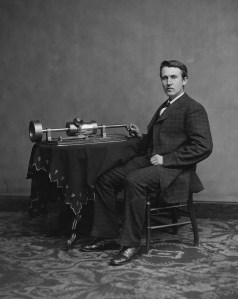
990702 PAHOKEE YOUTH CENTER

This is photo is from a private juvenile center in Florida, which has privatized their juvenile prison system. As the most recent data indicates 40% of all juveniles are in private facilities where they’re being abused, neglected, and living in unsanitary conditions. All this is making their situations all the more tragic.

4. For-profit prisons harm children.- According to federal data in 2011, nearly 40% of juvenile delinquents are committed to private facilities. In Florida, private contractors have recently took control of all the state’s 3,300 youth prison beds which has produced some of the worst re-offending rates in the nation. Today, more than 40% of the state’s incarcerated youth wind up arrested and convicted of another crime within a year after their release. On the other hand, only 25% of youth offenders end up the same way in New York which has no private juvenile facilities to speak of. And privatization of Florida’s Department of Juvenile Justice continues to fail the state’s most troubled kids despite numerous allegations of abuse, neglect, violence, and unsanitary conditions. So much so that it has attracted attention from the US Department of Justice. One of the largest companies in juvenile sentencing is Youth Services International that had more than 40,000 boys and girls in 16 states go through its facilities whether they be prisons, boot camps, or detention center in over the last 20 years. Children held at YSI facilities across the country have frequently faced beatings, neglect, sexual abuse, and unsanitary food. And YSI isn’t an unusual case. Incarcerating adults in the name of profit is one thing, but doing the same to children is just beyond the pale. Many juvenile delinquents come from terrible circumstances like poverty or abuse. A lot of them are mentally ill and have substance abuse problems. Now juvenile detention centers aren’t supposed to be like Disney World. But they shouldn’t be hell houses either where kids have no adequate access to services to prepare for release like education resources, mental health counseling, or substance abuse treatment. But that’s exactly what’s happening at private juvenile facilities across the country and the reports about the conditions are shocking. It’s tragic that such conditions lead to many of these kids leading horrible lives and being trapped in a system that they can never get out of. Many kids in private juvenile detention centers will be screwed up for life as well as set up for a lifetime of incarceration as adults.

profitfrompain1

Though more abuse occurs in private prisons than their public counterparts, companies are more likely to turn a blind eye since they’re more focused on making money. And as a result, complaints are ignored while incidents aren’t even reported.

5. For-profit prisons profit from abuse, silencing, and mistreatment.– While many conservatives believe that prisoners have it easy in prison with great food, workout equipment, entertainment, and a lot of time on their hands, nothing could be further from the truth. Even the least notorious prisons are rife with inequality, dangers, and misery. And it’s not uncommon for a young first time offender to be placed right next to a career criminal. Nevertheless, public prisons don’t benefit from abuse and mistreatment of prisoners and neither does the general public. As prison corporations are lauded for their tough on crime measures, incidences of abuse, neglect, and violence are often unreported and unnoticed while communities suffer. Inmates grievances often go unread and unanswered while red flags are kept within. And thanks to Minneci v. Pollard (2012), the Supreme Court ruled that Eighth Amendment “cruel and unusual” cases can’t be brought against private prison employees, which ensues. Private prisons simply don’t care about the general welfare of their inmates than the profits they’re getting from them. And as long as private prisons profit from their inmates’ misery and squalor, they will keep their inmates’ grievances from seeing the light of day. Such actions deny any potential for outside oversight.

o-CARD-570

While JPay isn’t exactly in the private prison business, they do profit off of inmates and their loved ones with their banking service. They’ve exploited these people mercilessly with exorbitant fees. And it doesn’t help that many of them are already financially struggling and suffering.

6. For-profit prison companies exploit prison families. – It is well known that private prison companies and their affiliates do everything they can to make a buck off people in prison and their families. Prison phone companies are said to charge high rates for prisoners to talk to family and friends. If they or their loved ones can’t afford the fees, they run a higher risk of social isolation, which will not help their rehabilitation. Studies have shown that social connections are critical to a prisoner’s rehabilitation process once they’re released. Not to mention, there are 2.7 million kids who have an incarcerated parent and many of them suffer immeasurably when such unaffordable rates rob them of parental contact. And it’s bad enough that these kids come from at-risk backgrounds of poverty and have an elevated risk for drug abuse, school failure, unemployment, and mental health problems. Many of these children are likely to end up just like their parents. For children whose mothers are in jail, many of them will end up in foster care and never see them again since they have no one else who’d take care of them. That’s not forgetting the financial strains for-profit prisons and their affiliates put on families. For instance, for-profit prison banker JPay is known to prey on inmates’ families with some forgoing medical care, skipping utility bills, and limiting contact with imprisoned relatives just to make payments. Many of these prison families tend to be poor and such costs make it much more difficult for them to escape poverty as long as their loved one is in the system. And it doesn’t help that JPay is the only way to for nearly 40% of prison families to send money to a loved one which costs $6.95 for fast processing. Else, it might take forever if loved ones go with the “free option.” Private vendors can also charge prisoners and their families sky high prices essentials like clothes and hygiene products. It’s terrible enough for families should have their loved one incarcerated. But it’s devastating that they have to suffer for their loved one’s crime like this through no fault of their own.

8215347_G

In 2010, 3 inmates broke out of the Arizona State Prison in Kingman, Arizona, kidnapped and killed 2 tourists, and burned their bodies in a camper. It was later found that this prison operated by the Management and Training Corporation had inadequate patrols and prison movement, excessive false alarms, inadequate staff training., and inconsistencies with visitor screening procedures. You can see why private prisons don’t want to take in violent offenders.

7. Privatized prisons do a terrible job keeping violent offenders behind bars. – When it comes to a prison system’s effectiveness in protecting the public, you want one that’s fit to keep the most dangerous criminals behind bars. Given the problems our public prison system has, you still have maximum security facilities that have done a great job keeping the Unabomber and Charles Manson at bay. However, when it comes to security, private prisons tend to be medium at the max and often refuse to accept inmates that cost the most to house. Many of the crooks that actually pose a danger to society would fall into this category. A 2005 study found that Arizona’s public facilities were 7 times more likely to house violent criminals and 3 times more likely to house those convicted of more serious crimes. And when it comes to handling these dangerous criminals that are usually reclassified as a low security risk, private prisons have proved inept which has led to terrible consequences both in the jails and out. After all, the high frequency of unchecked violence that goes in there proves that some of these violent criminals are in there. Also, violent offenders have a tendency to be transferred to a public facility. Then there’s the question of security and keeping these crooks in. In 2010, 3 inmates escaped from a private prison in Kingman, Arizona, kidnapped two tourists, killed them both, and burned their bodies in the camper. It was later found that the prison these inmates broke out of had inadequate patrols and prison movement (the perimeter was unmonitored for 15 minutes at the start of every shift and had only one guard at the premises during the time of escape), excessive false alarms (89 during a 16 hour study period), inadequate training (1/3 of security staff had less than 3 months on the job and there was no officer training program), and inconsistencies with visitor screening procedure. To put it this way, such a system made this a very easy prison to escape and not one you’d want to put murderers in.

How Private Prisons Profit

This is an infographic snip showing how private prisons profit which consists of occupancy quotas, cutting corners on costs, choosing cheap inmates, and keeping them in horrible conditions. Sure private prisons say that they’re more cost efficient than their public counterparts, but at what cost?

8. Privatized prisons aren’t cost efficient.- Private prison companies often sell the idea that they’re a cost-effective option for cash strapped states. However, there are 24 different studies on cost-effectiveness revealed that it’s either inconclusive or non-existent. Some research has even concluded that for-profit prisons might cost more than their public counterparts. It was also determined that some cost estimates might be misleading because privatize facilities often refuse to accept inmates that cost the most to house such as the disabled, the elderly, the HIV-positive, the mentally ill, those convicted of serious and violent crimes, and others. And a 2001 study concluded that many prison companies artificially inflate cost savings by sending the less expensive inmates to their facilities. Furthermore, privatized prisons are more likely to dole out twice the amount of infractions against inmates that lengthened their sentences by average 2 to 3 months, which can amount to as much as $3,000 increased cost per prisoner. Not only that, but inmates housed in private prisons were more likely to wind up back in the system after being released. And we all know recidivism contributes to prison overcrowding and isn’t fiscally responsible by any stretch of the imagination. Not to mention, these companies are paid by the state and at the taxpayer expense. If a state failed to reach an occupancy rate, it has to pay the company a reimbursement. Add to that the cost of poor quality that’s shifted to police dealing with escapees, court systems coping with prison lawsuits, and public hospitals treating inmates.

Boon to Local Economies.

Private prisons like to sell the idea that they help save taxpayer money and benefit local economies. However, several studies have found just the opposite. Here is an infographic detailing the case of Harding, Montana where the promise of a private prison never panned out and wasted the town millions.

9. Privatized prisons are a waste of taxpayer money and don’t benefit local economies.– While privatization is claimed to lead to tax savings for the public, it actually costs us more. Sure some of you might complain about your tax dollars going to public programs like welfare and other social services, but each public dollar paid through one social service will spend itself 4-8 times more elsewhere in the public sector. But once public money goes into private hands, it is gone for good. This is especially true when privatization corporations are given handsome tax breaks and “incentives” in the form of what liberals like me call, “corporate welfare” meaning we’re even less likely to see that money again even if these companies present a lower figure to do the same job. We should also remember that those who privatize are generally wealthy who tend to receive your hard earned tax dollars funneled into rich guys’ coffers for their own personal gain. Today such “corporate welfare” is justified through the notion that the “free market” is the same as democracy, an idea that assumes that if everything was privatized and ruled by the law of the dollar, then democracy will be ensured. This may be true for the rich but it’s not for everyone else. And such ideas about “the free market” are what’s screwing this country, especially since Citizens United. Nevertheless, private prisons are said to rely on government perks like subsidies as well as tax abatements and reductions. But of course, many states sign up private prison contracts since they offer a promise for jobs. However, we should note that they don’t hire a lot of staff and despite claims that state budgets can be bolstered by private prisons, studies have found just the opposite.

private-prisons-protest

While the private prison industry is certainly profitable, the concept of locking up criminals for profit is inherently unethical since it reduces them as commodities. Sure criminals aren’t innocent people but they’re also human beings. And no human being should have their freedom taken away from them in the name of profit.

10. Profiting from the imprisonment of human beings is morally wrong and constitutes as predatory practices. –As a venture, the private prison industry is a case in which a few people exploit our society’s larger problems for their own gain at a cost we all bare and get little in return. As John Whitehead writes, “No matter what the politicians or corporate heads might say, prison privatization is neither fiscally responsible nor in keeping with principles of justice. It simply encourages incarceration for the sake of profits, while causing millions of Americans, most of them minor, nonviolent criminals, to be handed over to corporations for lengthy prison sentences which do nothing to protect society or prevent recidivism. This perverse notion of how prisons should be run, that they should be full at all times, and full of minor criminals, is evil.” With the growing influence of the private prison industry, the US is, in effect, commoditizing human bodies for an industry in militant pursuit of profit. And it’s an industry that creates a system that trades money for human freedom, often at the expense of the nation’s most vulnerable populations: children, immigrants, and the poor. For such an enterprise to exist our country is morally indefensible and a national disgrace.

private_prisons_charts_foia

This is the infographic where the Freedom of Information Act is applicable to prisons. Notice how the public and private maps are of different colors. That’s because that private prisons tend to operate with little government oversight. This not acceptable.

11. Privatized prisons aren’t held accountable to the same degree their government owned counterparts. – Our taxpayer funded public prisons may be inherently flawed in many ways. But at least these prisons are operated and overseen by the state and federal governments for the benefit of the public good. Because of this, public prisons are encouraged to provide the best quality of service taxpayer money can buy. Because if public prisons fail, then everyone suffers. Privatized prisons just want to make money with their profit depending on the money they get from the state and spending as little as possible on the prisoners and the prisons. Not only that, but also housing as many inmates as possible, kept as long as possible, and housed as cheaply as possible. Meanwhile, private prison company executives receive multi-million dollar paychecks as well as profits for shareholders who will never suffer any negative consequences. And it doesn’t help that they’re receiving government subsidies and tax perks funded by the general public who suffers. Not to mention, since many states rely private prison companies to self-report, they have figured ways to make themselves look clean in the eyes of the state regardless what’s really happening at their facilities. Sure private prisons might operate under corporate oversight but as with most corporations, these companies will never voluntarily shape up unless there’s more government intervention. And so far, there has been little government oversight.

ITPI-CCAGEOProfits-Feb2016-1

While it’s very apparent that social problems and flaws in the criminal justice system lead to mass incarceration, private prisons profit from them and have no incentive to fix them. In fact, a lot of their lobbying efforts have been a major stumbling block in criminal justice reform. And it’s costing our tax dollars in the process.

12. Privatized prisons profit from existing problems in the criminal justice system and society and give no incentive to solve them. -While public prisons do carry a heavy taxpayer burden as well as are facing problems such as overcrowding and high recidivism, at least public investment and government oversight gives incentives to solve such problems in the penal system. After all, a government owned prison system that’s funded by taxpayers helps promote measures aimed at reforming prisoners and reducing crime. And that’s how it should be. However, the private prison industry is only held accountable to their investors, shareholders, and benefactors who’s only concern are profits. And the private prison industry profits by making sure that more people are put in jail. When making a pitch to potential investors, CCA is quick to point out that private prisons comprise of a unique, recession-resistant investment opportunity, with more than 90% of the market up for grabs, little competition, high recidivism, and the potential for future growth in the prison population. As CCA reported in 2014, “The demand for our facilities and services could be adversely affected by the relaxation of enforcement efforts, leniency in conviction or parole standards and sentencing practices or through the decriminalization of certain activities that are currently proscribed by our criminal laws. For instance, any changes with respect to drugs and controlled substances or illegal immigration could affect the number of persons arrested, convicted, and sentenced, thereby potentially reducing demand for correctional facilities to house them. … Legislation has been proposed in numerous jurisdictions that could lower minimum sentences for some non-violent crimes and make more inmates eligible for early release based on good behavior.” It’s no surprise that the private prison industry has no interest in reforming prisoners or reducing crime like ending ex-con job discrimination, decriminalizing marijuana, reducing the system’s racist impact on minorities, and any other policies that cut into their profits. As long as these problems persist, the private prison industry will be all too willing to exploit this country’s systematic social problems in the name of profit. What our criminal justice system needs is reform, not incentive for expansion.

Private Prison Giants and Their Activities

This infographic shows the kind of issues the private prison companies have lobbied for over the years. You might notice that none of them pertain to prisoner rehabilitation. That’s because they’re not interested in reforming prisoners because it hurts their profits. And it should be no surprise to any of us that private prisons have high recidivism rates. Their business model was constructed that way.

13. Privatized prisons have no incentive to rehabilitate prisoners.– Because public prisons are funded by taxpayers and run by governments, they always have an incentive to rehabilitate prisoners before release so they won’t wind up in jail again. And while such systems are significantly flawed and not always effective, at least public investment encourages public prisons to have more responsibility in inmate welfare, rehabilitation, and public safety. But for private prison companies, their primary responsibility is generating profits for shareholders through incarcerating as many people as possible, as long as possible, and as cheaply as possible. Under such a system, it’s very difficult or outright impossible for the private prison industry to be genuinely concerned for the welfare of inmates, let alone their rehabilitation. After all, to them, reforming a prisoner is just making them less likely to function as a future source of profit. Not to mention, private prison companies have little incentive to release an inmate early, regardless how well they’ve behaved since it would reduce their cash flow. As for providing treatment, why bother if it means losing a customer?

Walnut-Grove-Correctional-Facility-Prison

In 2010, rival gangs rioted at the Walnut Grove Youth Correctional Facility which resulted in 6 hospitalizations, including one with permanent brain damage. Since the MTC owned prison had a staff to prison ratio of 1/120, they just sat there and waited until the fight ended. In 2014, there were 2 riots that sent 18 and 4 inmates to the hospital respectively.
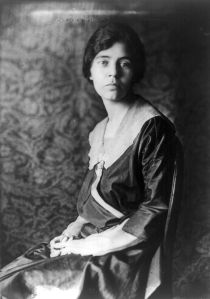
14. Privatized prisons have are poorly staffed with poorly trained and paid employees.– Evidence suggests that for-profit prisons are chronically understaffed, inadequately trained, and underpaid. And when you combine this with such prisons rapidly expanding, things are bound to get ugly which could put the prisoners’ and the employees’ safety in jeopardy. This is one of the reasons why privatized prisons have increased incidences of violence and escapes. A lot of times private prisons are so poorly run that they simply can’t find enough officers and other employees. Turnover rates are significantly higher. It’s not surprising since assaults on guards by inmates are 49% more frequent than in state run prisons. And it’s said that private prison employees are paid an average of 21% less than their state employed counterparts according to a 2010 report by the US Department of Labor. However, some private prisons just don’t want to spend “extra” money in order to hire enough officers and staff members to adequately run them even as these places are rapidly expanding to house more inmates. Many also spend less money on training for correctional officers as well. The Walnut Grove Youth Correctional Facility in Mississippi had a staff to prisoner ration of 1/120. When this prison experienced a riot in 2010, 6 inmates were rushed to the hospital, including one with permanent brain damage. During the riot, the staff just sat there and waited until the melee ended because there were 60 times more prisoners than staff. A lack of well trained and paid staff can also lead to corruption as there have been reports guards resorting to smuggling contraband for inmates. This could mean anything from T-shirts to cigarettes and knives or other weapons.

Quotas and Taxes

It’s very common for private prison companies to have contracts to guarantee prison occupancy rates and/or force taxpayers to pay empty beds. 90% is the most frequent occupancy requirement. Along with promoting harsher sentencing measures, private prisons are a huge contributor to mass incarceration.

15. Privatized prisons contribute to mass incarceration.-In 2012, CCA sent a letter to 48 states offering to buy their public prisons with promises that they have at least 1,000 beds and 90% occupancy for the next 20 years. In fact, nearly 2/3 of private prison contracts mandate that state and local governments maintain a certain occupancy rate usually 90% and require taxpayers to pay for empty beds. In Arizona, 3 private prisons are operating with a 100% occupancy guarantee. Such requirements by private prison companies are a common practice. Today crime rates are falling and the rate of incoming undocumented immigrants have leveled off. But today the US puts more people in prison than anywhere else on earth which is fueling a major crises. Such occupancy requirements by private prison companies only encourage this and have since the 1980s, especially since private prison inmate usually remain in jail longer. The fact these private prisons are profiting from the War on Drugs, undocumented immigration, as well as poor people being in desperate situations, ensures that mass incarceration is here to stay. And it also guarantees that the criminal justice system and public prisons will be swamped with more inmates than it would know what to do with.

unholy-alliance

The private prison lobby has enormous influence in federal and state governments across the country as well as contributed millions to political candidates of both parties. In turn, these prison companies have advocated “tough on crime” measures like “Truth and Sentencing” and “Three Strikes” laws as well as anti-immigration and pro privatization policies.

16. Private prison industry lobbying have a corrupting influence on the policy. – Private prisons are a highly profitable business due to government payments and prison laborers forced to work for pennies on behalf of corporations like Boeing and McDonald’s. And like any corporation, these corrections companies have powerful lobbies in Washington contributing millions to political candidates. They also lobbied for policies advocating free-market privatization as well as “tough on crime” laws like “Truth in Sentencing” and “Three Strikes Law.” CCA has helped financed Proposition 6 in California in 2008 which would’ve placed additional penalties for drug crimes. And GEO Group lobbied for Jessica’s Law in 2006 which pertains to the treatment of sex offenders. As a lobby, private prison companies influence legislation for tougher, longer sentences. They’ve also supported Arizona’s highly controversial anti-illegal immigration law. Both GEO and CCA have engaged in initiatives to create new crimes, particularly nonviolent offenses like failure to pay fines for misdemeanor offenses in Missouri (that go to private collection agencies) or being unable to afford bail. And they have responded to criminal justice reform and leniency to nonviolent criminals with vociferous opposition. Nevertheless, while private prisons benefit through such policies, their public counterparts and everyone else doesn’t. It turns out Florida US Senator Marco Rubio is one of the private prison industry’s biggest beneficiaries and political champions. He is closely connected with The GEO Group and has hired a former trustee as an economic consultant and a former lobbyist as his chief of staff from that company. GEO was also a top 10 contributor to Rubio’s Reclaim America PAC with his chief of staff being a senior advisor. There’s no question that Rubio opposes immigration or criminal justice reform since GEO has given him $40,000 in campaign contributions, making him its top recipient in the Senate. And opposition to criminal justice reform should render any candidate woefully inadequate to lead a nation suffering from a prison system that essentially perpetuates the oppression of its most vulnerable citizens. Yet, today the private prison industry is the biggest lobby that’s getting little scrutiny. That should change.

150812-cash-for-kids-jsw-334p_013828aebe25325b5353bdef714f14f1.nbcnews-ux-2880-1000

This is a picture of Sandy Fonzo of Wilkes-Barre, Pennsylvania confronting former Luzerne County judge Mark Ciavarella. Her son committed suicide when caught in the infamous”kids for cash” scandal where 2 judges were paid $2.8 million by Mid-Atlantic Youth Services Corporation to send over 2,000 children to it’s 2 facilities on unusually long sentences for rather petty crimes. While the judges were eventually sentence to long prison terms, hundreds of young lives were ruined in the process. And tragically, it’s said that there’s considerable evidence that private prisons have a very corrupting influence in the criminal justice system.

17. Private prisons have a corrupting influence in the criminal justice system. – While the US criminal justice system is corrupt, prison privatization simply encourages incarceration for the sake of profits which doesn’t keep with the principles of justice in any way, shape, or form. One scandal that has illustrated this is the “kids for cash” atrocity in Luzerne County, Pennsylvania. From 2003-2008, the Mid Atlantic Youth Services Corporation (a firm specializing in juvenile offenders), paid off 2 judges to jail youths and send them to their 2 private prison facilities. The 2 judges made over $2.6 million in the scam to by sending more than 2,000 kids to prison on unusually long sentences for incredibly petty crimes like stealing DVDs from Wal Mart, mocking a principal on Myspace, packing ibuprofen and trespassing in vacant buildings. Over 50% of the kids who appeared before Judge Mark Ciavarella lacked legal representation and 60% of those kids were removed from their homes. Luckily the 2 judges were sentenced to 17.5 and 28 years in federal custody but not without ruining thousands of young lives in the process. And there is evidence that private prisons tend to bribe judges at a regular basis. This kind of corruption might mean your DUI could turn into a maximum sentence if you can’t afford to hire the right lawyer. Since Florida privatized the entirety of its $183 million juvenile justice system, its Department of Juvenile Justice has been reported as effectively complicit in allowing problems to fester in its jails and is a failed system of oversight and accountability. State probes of mistreatment typically end with inconclusive evidence with only a quarter of cases ever being substantiated. And there is little incentive to crack down on contractors. Reform is also not likely to happen because so many Florida politicians have received money from juvenile prison companies that Governor Rick Scott challenged the “unsupported suggestion” that problems in Florida’s juvenile justice programs were systemic. Today Florida is failing its juvenile delinquents because it seems it doesn’t want to assume any responsibility for these troubled kids. The influence of private prisons can lead to a US criminal justice system based upon increasing the wealth and power of the corporate state, which isn’t fair when certain convictions guarantee payout. Our justice system should exist for the benefit of the public good, not for the financial benefit of a few corporations who house inmates for their bread and butter. And the fact many local and state judges are elected just makes it even worse.

prison-data-short

Recidivism is a huge problem in the prison system, especially when it leads to overcrowding. However, private prison companies see it as an asset to profit from. So they invest very little to almost nothing into a prisoner’s rehabilitation. Because why try to lose a customer?

18. Privatized prisons contribute to increased recidivism. – Despite claims that private prisons have lower recidivism rates, prisoners housed in private facilities are 40-60% more likely to return than their state run counterparts. It’s not surprising since private prisons have no incentive to rehabilitate the prisoners they house which makes them more susceptible to another prison sentence after they’re released. Across the country, recidivism is a major problem since it traps people in a vicious cycle of poverty, exploitation, and repeated offenses. Recidivism is a good reason to ban the box since convictions can prevent nonviolent ex-cons from getting a job that could keep them out of prison for good. Not to mention, recidivism leads to prison overcrowding. But for private prison companies, banning the box is bad business since their goal is to incarcerate more people in the name of profit. Other ways that private prisons encourage recidivism include limiting an inmate’s contact with family, offering a lack of educational options, and deficient rehabilitation programs. The fact that many of them charge inmates money for services like food and medical care also makes it difficult for them to get back on their feet after release.

infographic_620

Today there are 10,500 state prisoners are transferred to private prisons outside their home state, possibly as far as 450-3,000 miles. Though seen as a solution to prison overcrowding, this practice is detrimental to the criminal justice system because it impedes a prisoner’s rehabilitation and destroys families and communities.

19. Privatized prisons lead to prisoners being incarcerated outside their own jurisdictions.– If someone commits a crime, they will be tried, convicted and sentenced there. And it’s generally expected that the punishment will play out close to home. However, with the rise of privatized prisons, some states have been seeking solutions to prison overcrowding by having some of their inmates shipped to out of state locations across the country. Today there are more than 10,500 state prisoners in for-profit prisons outside their own states, approximately 450-3,000 miles from their home state. And it’s mostly without the prisoners’ consent. One example is Vermont since it has only 7 in-state correctional facilities, it has contracted with private prison companies for years, sending prisoners to out of state locations. Today there are currently hundreds of individuals being held from New York, Arizona, Michigan, and Kentucky. California, Hawaii, and Idaho that also house their inmates out of state as well. However, while this practice of transferring inmates out of their jurisdictions is detrimental to the criminal justice system because it separates inmates from their loved ones and social connections with the outside world. Furthermore, transporting prisoners to a remote location puts them in unfamiliar surroundings despite that inmates do much better in rehabilitation when they’re incarcerated near their own home and families. Not to mention, travel for family and friends is often prohibitively expensive. It also costs money and communities as well as destroys families. There are also concerns about the difficulty of oversight.

01-prisons-for-profit-500x500

This is a satirical flyer pertaining to for-profit prisons. However, while the private prison industry is profitable, it’s an unethical business that carries very high social costs. But it’s one that’s seldom talked about which is just so tragic.

20. Privatized prisons carry higher social costs. – Incarceration doesn’t really make us safer when we jail nonviolent criminals. Nevertheless, dealing with crime brings a lot of social costs that we need to talk about because they’re almost never discussed. There are the social costs such as broken families and communities of both victims and perpetrators. There are the hidden financial costs like paying for foster care for prisoners’ children (particularly if they’re single women) as well as what we’ll pay again when a prisoner emerges more desperate, addicted, uneducated, and disenfranchised than they went in. Then there’s the political costs of a society that seeks vengeance through prisons and punishment that will cost us twice the price of ensuring true equality, opportunity, and social health at the roots of our society. Private prisons will only increase such costs.

privateprisons

In conclusion, the existence of for-profit prisons only benefits the companies who own them through profiting on mass incarceration. Despite being wildly profitable, it is a business of total moral bankruptcy that hurts inmates and their families, scams communities, corrupts legal systems, and wastes taxpayer money. It is an industry that does nothing to protect the public or save money in any way. Thus, the private prison industry shouldn’t have a right to exist because its existence is a national shame.

Touchdown with These Super Bowl Sunday Party Treats (Second Edition)

aa945abc2d2f7d3050e550f7074c2a4e

Just when you thought the holiday gorging season is over. Another one just seems to take its place.  This time it’s NFL playoff season which will soon cap it off with the Super Bowl, which will be the most watched TV event of the year (but I’ll be watching Downton Abbey and Galavant if the Steelers aren’t in it). This year the Steelers barely made it into the playoffs after winning against Cleveland and Buffalo winning against the Jets (thank you, Buffalo). So naturally, on Saturday, they’ll be going against the Cincinnati Bengals. Nevertheless, most of the food that’s eaten during football games isn’t the best thing for you. Let’s face it, if your New Year’s resolutions include losing weight or eating healthier, you might stay away from the standard football fare like burgers, hotdogs, fries, chips, nachos, wings, pizza, fried chicken, and what else have you. And when it comes to the Super Bowl, well, you can bet some football fans will probably have given up sticking to their diets. Now I am not the most avid football fan. Yet, since I live in Pittsburgh Steeler country, I am well aware that pro football is a really big deal that the Super Bowl is America’s biggest unofficial national holiday. So it’s not unusual that many people throw Super Bowl parties on Super Bowl Sunday with their own gridiron grub. So for your reading pleasure this playoff season, here are some more Super Bowl delights for your big game party.

  1. New York Giants fans will surely get a kick out of these cupcakes.
0b058db598c8940040221b979e5ad252

I’m not sure if the Giants are in the playoffs this year. Then again, they’ve won 2 Super Bowls against the Patriots. So this sort of counts.

2. This football cookies will certainly look good on your Super Bowl dessert platter.

0c8c42411c18749df51a698813fec48e

After all, football cookies seem easy to make and decorate. I’m sure you can find chocolate and white icing at your local grocery store.

3. You’ve heard of cheeseburgers. But have you’ve seen a cheeseburger cupcake?

1ca49aa003f84e61da55679b2d028c8a

Yes, this is a cheeseburger cupcake. Still, unlike some, you can have one with chocolate and vanilla.

4. It’s not a Super Bowl party without some pigskin potato skins.

2d33761177fb1cb66f70a4fe112c14b4

I’ve done pigskin potato skins in my last Super Bowl treat post. but these are made in a very different way. Still has the same heart attack potential.

5. Last year’s top Super Bowl dessert was none other than the Deflate Cake.

cake

Sorry, Patriots fans, but I couldn’t resist. This is just perfect. the deflated football almost looks real. I’m sure this wasn’t made in New England.

6. These Ritz cracker crunch footballs will surely delight the younger fans.

2dd3a686c295c6f85ef895a5916d7ead

These look almost professionally made as you might see. Still, at least this picture lists the ingredients so I won’t have to make them out myself.

7. Of course, a Super Bowl treat post wouldn’t be complete without a snackadium to keep some food in one place.

3f366e2e43c300c0f508b492af513546

This one has olives on the play in the guacamole field. Still, seems smaller than others but I’m sure some of the fare might not be good for you.

8. Nothing makes a great dessert on Super Bowl Sunday than these football cupcakes.

4fbefd3e8904f47b6a404a3501b45102

Uses cookie footballs and minty green icing. Still, they’re quite adorable. And they’re chocolate.

9. When it comes to dip, you can’t go wrong with a guac field.

7b9118fcd2a82e8b92d8d163cb278738

At least this looks a bit healthier than the previous stuff I’ve put on my post so far. Like how they used peppers for field goals.

10. Super Bowl Sunday wouldn’t be the same without some chocolate peanut football treats.

6b2f64cad8bd0d93f3886a2aa1cdd18e

These look quite cute. Not sure how you get the peanuts together. But it looks doable. Also uses chocolate icing.

11. Bring the big game spirit onto your dessert platter than some football pretzel sticks.

8bef3c312046ec4d80f2661827fea6db

Seems like all you have to do with these are dip them in chocolate, wait for them to dry, and put football etchings on them. Can’t be that difficult.

12. If you prefer fun size, these pretzel bites will make your game.

03d6f0cd386cc381bba7d5263097d8f1

Like the sticks, it just seems you dip them in chocolate before painting stripes on them. Not shaped like footballs. But as long as they’re tasty, who cares.

13. Your Super Bowl appetizer isn’t complete without a football bread bowl of dip.

45b3a5f0e12fb58d5fd33bc7fee399e0

On second thought, couldn’t just be football bread instead? That would’ve been great just as well and there would be no need to scoop out the bread.

14. This football appetizer platter will give you all the cheese and crackers of your heart’s desires.

800e95e6da9a1dd71927b8a36fb8c827

Well, the football is made from pepperoni and cheese with everything else surrounding it. Not the most healthy option for you. But it doesn’t look half bad.

15. Fans in Seattle will certainly delight munching on a sugar cookie jersey of their favorite Seahawk.

97afd4415a35e8aea28b166517daf07f

Not sure if I know any of these guys besides Marshawn Lynch and the one with the braids (whose name I forget). Still, the fans will love them.

16. Mason jar football brownie treats would make a fine addition to any Super Bowl party.

9a25e1f1b451fa230abc041a905c94c3

Not sure how big these jars are. But these certainly look tasty. Love the brownie footballs at the top.

17. This pigskin cheese dip is all covered in bacon.

1196b5ce7270c98274e460ce9af0c2e0

Now this is bound to give someone coronaries. Because bacon isn’t known to be good for you. Still, like the cheese stripes.

18. This Super Bowl, grace your dessert platter with these football bars.

2014 valentine super bowl fruit  football snacks - dessert bar ideas super bowl themed snacks-f10636

Not sure what these are. Cheese cake bars? Seems to look like it. Oh, wait, they’re fruit bars. Well, as long as they resemble footballs, that’s fine with me.

19. These football pretzels are sure to make a tasty Super Bowl snack.

2015 valentine chocolate caramel pretzels super bowl football snacks - chocolate super bowl treats f-f55388

Actually they’re football pretzel sandwich snacks. They’re used with Rolo chocolate. Not sure if this was made by the company. But it still goes on the post.

20. Nothing makes a Super Bowl party worthwhile than some Buffalo chicken sandwich patties.

2904d3bbd33dba9f8a2102f40b5f01b0

Basically it’s ground up buffalo chicken shaped into footballs. And they’re decorated by string cheese for a more realistic effect.

21. Nothing is sure to excite the people of Green Bay, Wisconsin than a Green Bay Packers gingerbread house.

9ab04f2d60086cabc7f40e8f30ce4609

Yes, somebody actually did this. Still, I think it would’ve been more appropriate if it was a cheese or lunch meat house. Because it’s the Packers.

22. Steeler fans are sure to adore this cake as a dessert centerpiece.

3136d84c7ead36e1d193bf09b1c2e98b

Of course, I had to include at least one Steeler treat on this post. Not sure about the football. Looks a bit deflated and more appropriate for a New England Patriots cake.

23. You can’t have a Super Bowl party without including some cookie dough footballs.

18008ba08c7c7f3dedeb54f978ea66ad

They’re basically footballs with cookie dough inside a shell of chocolate. I’m sure it’s perfectly safe. I mean they put cookie dough in ice cream for God’s sake.

24. On the field, it’s the Hershey’s Kisses vs. the Reese’s Peanut Butter Cups.

6909477e67c9552e39b7456d1659fba9

To be fair, both candies are made by the same company, Hershey’s. Still, this cake is amazing. I also love how they made the striped Hershey Kisses refs.

25. For those who fondly remember Deflategate, feast your eyes on this chocolate “Bradie” ball.

1427435951719

This was made by a guy in Pennsylvania and it wasn’t for sale. Nevertheless, it weighs 13 lbs. Sorry, scratch that. It actually weighs 11.2 lbs since someone named Tom Brady let the air out.

26. Though it’s winter, these Giants ice cream sandwiches make a great frozen treat in New York.

a60c6790b8b581eaae0e760af495196f

Yes, these are New York Giants ice cream sandwiches. And since they’re a football team, each one has stripes and team colors in sprinkles.

27. With the Denver Broncos in the playoffs, there’s no better time to show you a Denver Brocnos dessert pizza.

Roberta's Chocolates - 8/23/07 - Chocolate Pizzas

Most of this is made from popcorn and chocolate as well as sprinkles and other candies. Actually found it on Pinterest in September.

28.  You can’t have a Super Bowl snackadium without some pop cans at the edges.

b77babab4a416e0eb8ad526276cfc274

Actually I see some bear cans in the mix as well. Nevertheless, I think the most healthy things in here are the popcorn and the dips.

29. Why just have hotdogs on your grill when you can also have them on your dessert platter, too?

cache_2878093404

Yes, those are candy hotdogs. And yes, the circus peanut buns and gum drop relish make them look disgusting. Still, it’s unique so they’ll do.

30. People of Chicago would certainly adore this Chicago Bears chocolate cake.

bearscake01

Well, the Chicago Bears were National Conference champs and played in the Super Bowl in 2006. But the Indianapolis Colts beat them. Also, haven’t won a Super Bowl since the 1980s.

31. You never have a complete Super Bowl dessert platter until you have football gobs.

1911158364435ff401de261d762909c3

Seems like these gobs are rather easy to make as long as they’re shaped like footballs. Then after that is the icing of the stripes.

32. People from Seattle can always go crazy over a double decker Seahawk cake.

8f9a9aee965e09b4df13f8dc616d7206

Now that’s a cake you could see from a mile away or in the dark. A green icing that bright could do that to a cake.

33. You can’t have a hit Super Bowl party without some cinnamon roll football cookies.

d8d01ce6b7d633dd8816c46b04cee376

Yes, these are made from cinnamon roles. But they’re flatter as you see. Not sure if you can eat them for breakfast.

34. If you love the Pittsburgh Steelers, then you’ll love these Steeler sugar cookies.

cdebfd73930d9779850f9e2f41676234

Seems like this one has footballs, Steeler helmets, stadium views, Terrible Towels, logo, and jerseys of Big Ben, Heinz Ward, and Polamalu. Now Ward and Polamalu are out.

35. Nothing makes a better Super Bowl dessert than some football peanut butter Rice Krispie treats.

b568413b8f39227a9bb649a6b7430b6c

Yes, they’re just footballs with peanut butter. No, real footballs don’t look like that. Still, seem tasty.

36. For healthier dessert options, may I suggest you go with some chocolate football apple slices?

e10d5150e10cb872cee90d2ea3b11f4f

It’s possible that they’re probably covered in chocolate so they resemble footballs. Still, healthier than some of the other options on here, I’ll say.

37. These Oreo cookie footballs will surely make tasty Super Bowl treats during the big game.

e85ab9f26c04816860f3d4559534cb11

I guess the Oreo cookies are crumpled up in footballs and covered by chocolate icing. May not look like much but I bet they taste great.

38. Seems like one of these little wieners just made a pass.

enhanced-buzz-6286-1390411157-23

These are mini hotdogs with olive helmets and mustard features. And it seems they’re in the heat of a critical moment at this time.

39. This football cake is sure to make a wonderful centerpiece for your Super Bowl party.

733fa73853c9237beba1623c2cc105da

And it’s surrounded by graham crackers to dip in. Either consisting of field goal icings and ones all covered in sprinkles.

40. Nothing makes a Super Bowl party better than a peanut butter football cake.

FNK_Peanut-Butter-Football-Cookie_s4x3

And all you have to do once it’s out of the oven are putting in some icing marks. Still, has some cracks but I’d certainly eat it.

41. No Super Bowl party platter is complete without a football pizza.

914f530d4de65a11eb6bfd1f876ca720

Yes, I did a football pizza before last year. And yes, it did have pepperoni and cheese. But this one is round.

42. You’re familiar with hotdogs at football games. But have you ever seen a football hotdog?

football-hot-dog

Well, this is more of a cheese and chili football hotdog. Nevertheless, it does have the football spirit and nachos on the side.

43. Seems like this large snackadium offers more healthier options.

greatest super bowl food stadiums (15)

Well, this contains fruit, cheese, and guacamole dip. Also, from what I can tell, this snackadium seems to be made for a Pittsburgh area venue. Well, at least according to the table cloth and the dip.

44. Celebrate the Super Bowl with with some football mozzarella sticks.

ghk-football-mozzarella-sticks-lgn

Yes, these are football mozzarella sticks. Yes, I know they don’t look like sticks. But they resemble footballs and shouldn’t that be enough?

45. This cookie tray is bound to have a jersey of your favorite Pittsburgh Steeler.

grid-cell-12888-1390578927-16

Well, Big Ben and Harrison are still around. Holmes got traded. Polamalu, Keisel, and Ward have retired. Not sure about the others.

46. For Seahawks fans, these blue and green Rice Krispie treats can’t be beat.

0d1c0f2ef17f3af6c0094749152193a2

Well, they’re in the team colors whether through sprinkles, icing, or food coloring. Still, not sure how they’d taste.

47. You can’t complete a Super Bowl dessert platter without some cookie ice cream sandwiches.

iphone-006-500x375

Yet, out of these footballs, only half of these are covered in chocolate. Nevertheless, they sure look tasty if you ask me.

48. This football contains 3 different dips.

hqdefault

Seems like they consist of guacamole, salsa, and dressing. How they remain separated in this dish, I have no idea.

49. I give you, the quintessential meat snackadium.

meat_stadium

The stands are made out of hamburgers and the edges and field goals are made out of hotdogs. Nevertheless, it’s certainly bound to induce some heart attacks.

50. These chocolate football brownies are sure to be any chocolate lover’s Super Bowl delight.

9e60d7a7740b9917f333cdc76f86da58

Now these are chocolate football brownies with chocolate icing. Must be so chocolatey rich as I say.

51. For Giants fans, you can’t have a better Super Bowl cake than one of MetLife Stadium.

metlife_stadium_cake

I guess this was made by a professional. Still, love how the crowd is represented by sprinkles. So creative.

52. This Super Bowl, take a bite out of these super football sandwiches.

SUPER_BOWL_2013-0285

Seems like these buns are whole wheat and have the markings made from cheese. Still, I’m sure they’d be great for any Super Bowl party.

53. Nothing makes a great Super Bowl snack like some football nuts.

Superbowl-Football-Nuts-2-by-1-Fine-Cookie-1024x683

Seems like these were from the year when it was the San Francisco 49ers against the Baltimore Ravens. Ravens won and it resulted in as many Super Bowl wins for Ray Lewis as murder allegations.

54. This large snackadium is sure a real hoagie breadbasket.

Super-Bowl-Of-Food

Seems like this one appears to be made by someone with too much time on their hands or in the restaurant business. Wonder what happened to the food left over.

55. When it comes to parking, this snackadium has a whole lot to follow.

snackstadium_anchor

Seems like this one is all packed with snacks and brownies. Still, I love how this person used chocolate bars for cars and chocolate chips for wheels.

56. For a veggie dish, may I suggest some football taco salad?

super-bowl-snacks20-550x550

Then again, this may be a dip for all I know. Then again, it’s probably healthier than some of the other dishes on this post. And it’s the most colorful football arrangement I’ve seen so far.

57. This snackadium seems partially constructed from Rice Krispies.

super-bowl-snack-stadium-014

This seems to be an interesting arrangement. Probably built by someone with too much time on their hands. Likethe donuts on the burgers.

58. This Super Bowl dessert platter will sure be a hit at your party during the big game.

the-sweet-life

This seems to have a fruit pizza field and other delights. Nevertheless, seems to be made by a Green Bay Packers fan by the looks of it.

59. No Super Bowl party would be complete without these big game cupcakes.

faee8ab60e7402387a941ef10e0f564c

These consist of a football and a filled stadium. And the best part about these is that they’re chocolate.

60. New Enlganders would delight with these Patriots cookies.

1335678085f0214137c637bf19e164ce

These consist of a couple helmets, logos, and footballs. Also has a a Brady jersey. One for each side. What an asshole.

61. In memory of Deflategate, here are some great football cookies in case the Patriots make the Super Bowl.

Deflated_Footballs_Boston_Bakery_Coffee_Shop

They’re said to be made by a coffee company in Boston. Seriously, I’m not kidding. Still, wonder how many orders they got outside New England.

62. Another cookie option would be of Tom Brady’s court portrait.

Cookies_1445012643470_25320275_ver1.0_640_480

For some reason, this guy reminds me more of FBI Agent Nelson Van Alden from Boardwalk Empire. Seriously, he totally looks as if he could drown his partner in a lake in an attempt to baptize him. Made from an Indianapolis bakery.

63. Like peanut butter and chocolate chips? Then you’ll love these football cookies.

e5b5980065f3040ea56aa7bf8ecb1b4b

Well, these footballs seem spotty if you ask me. But nevertheless, they sure look tasty regardless.

64. This Superbowl, take a bite out of these Reese’s fudge footballs.

95fc83a73557cb10dbf2decddc87af6f

Seem to resemble the Ritz cracker crunch ones I showed earlier. But they’re probably softer. Still, these look so delicious.

65. Nothing makes a Super Bowl party complete than these little football toast pizzas.

IMG_4713

They seem rather small and made with mustard stripes. Still, whoever made these was quite creative if you ask me.

66. Celebrate this Super Bowl with some jello shots representing your team.

Image-Make-San-Francisco-49ers-Jello-Shots-Intro

Now jello shots contain alcohol and shouldn’t be taken by anyone under 21, pregnant, AA members, or designated drivers. Nevertheless, these seem to be for the San Francisco 49ers. Of course, you probably remembered what happened to them when they went against Baltimore.

67. For those rooting for Green Bay, this cake is for you.

P1010977b

Seems most appropriate since the Packers are associated with cheese, namely cheese heads. Still, not sure if I’m fine with them beating the Steelers at the Super Bowl. Then again, it could be worse.

68. This cake is sure to show some plays on the field.

hail-mary-football-field-decorated-brownies-8-pin

This looks quite clever to say the least. Seems so simple to make if you know how to do an icing playbook.

69. To make your Super Bowl party a hit, use some football pizza dip.

Football-Dip

To some it resembles a pizza. To others, it looks like a pie with pepperoni on top. But to me, it’s clever and seems rather appetizing.

70. When it comes to Super Bowl parties, you can’t go wrong with a football stuffed pizza.

Stuffed-Pizza-football-super-bowl-party-food-2

Yes, I might’ve shown a football calzone before. But this one is made from bread and it looks so toasty. Also love the cheese decor on this.


SantaCon Costumes Are Coming to Town

fccdb78ffb7c4a0cbae4560a7fb1c4f4

Okay, SantaCon is actually over for this year and I couldn’t do a post on it then since I was in Richmond, Virginia last weekend for my sister’s VCU graduation. But still, I have to keep the Christmas posts coming somehow. Now SantaCon is an American holiday tradition that’s an annual mass gathering where people dressed as Santa Claus or other Christmas characters parade in several world cities in a parade and pub crawl. Though originated in San Francisco as “joyful performance art” in the 1990s, it’s largest gathering is in New York City. And it’s now evolved into a “reviled bar crawl” of drunken brawling, vandalism, and disorder in New York City and elsewhere. It has resulted in fierce community resistence, especially from parents who don’t want their kids to see a naughty Santa. Other names for this are Santarchy, Santa Rampage, the Red Menace, and Santapalooza. Still, despite it’s naughty yuletide reputation, this doesn’t mean we can’t have fun with SantaCon. And as I looked on Pinterest, SantaCon has an array of unique Christmas costumes to boot. So for your reading pleasure, here is a treasury of SantaCon costumes that you might like to see. And you don’t have to take my word for it.

  1. Some might find sexy gingerbread lady yummy enough to eat this holiday season.
0aaf71a39f041eaaa652b1c1bbfbb538

I don’t know about you. But for some reason, I don’t think food should be sexy. Seriously, that’s just wrong.

2. Of course, at SantaCon there’s bound to be one sexy Frosty the Snowman.

0c1f1cb1220b4959079cbdee7df1fbe0

But I’m sure she won’t be wearing this in order to build one. Seriously, that outfit is totally unsuited for below freezing temperatures. Dressing like that will get you hypothermia.

3. He may live at the North Pole but he has a hunk of heart of burning love.

02a66c7d92364456da3eeea89b9a95ea

Seems like Santa Elvis has just entered the building. Has his Santa suit, red sash, big glasses, and slicked back pompadour and all. Now he’s all sleighed up.

4. Sometimes at SantaCon it’s either be present or be present.

3ad331291346a36bc641809792e7d20e

And it seems this guy managed to fit his upper torso in a purple present box. But he asks not to be opened until Christmas.

5. Since the Nutcracker is running this season, you can’t forget the toy soldier.

4b706d9d3a9c780aef4e8b8a881b5ad6

Now this toy soldier costume is for women as you see. But unlike some of the costumes so far, it ain’t supposed to be sexy at all.

6. As with any winter wonderland gathering, you can’t forget the Ice Queen.

4f19b64132d8ec5512d64bb7e8ccb578

Of course, I’m sure she’s probably the slowest member of the SantaCon pub craw. However, her dress is a convenient flat surface nonetheless.

7. When it comes to Santas, a sexy one is a real treat.

5bbd433698308a75ec6e9e1023a9cbff

I don’t mind women dressing as Santas. However, I kind of find it hard to accept one being sexy in a Santa suit. Maybe it’s just me.

8. Still, a toy soldier can always look so proper and badass in a big tall furry hat.

7d4467e66be56b24db18795312801361

Yes, I know that toy soldiers usually tend to be guys. But this guy in such a costume kind of gives me the creeps for some reason. I don’t know why.

9. For lady Santa costumes, a cape and a skirt is all you need.

08c967f6f2ac22321285a41bc79a8616

Now that looks kind of cute and not too sexy as some of the other costumes. However, I hope her tights keep her legs warm enough. Because they look they might freeze.

10. Now this costume looks like a cross between Santa and a Victoria’s Secret model.

8c4dc86d8f3973d80c76447590606211

Then again, if you love Christmas and have a job dancing on tables, this might be the SantaCon outfit for you. Unless the weather in your neck of the woods is below freezing of course.

11. To appear more festive at New York’s SantaCon, you might want to go as a Rockette.

8c84d98300e8f29c6e97495c9628e13e

Of course, you might look glamorous in such an outfit. But if it’s 32 below outside, you might want to wear it with pants.

12. Now this pink Santa outfit will make you the darling of the Santa pub crawl.

8c0258fc331fe8b8bdaf9f86a1fdd185

Now this one looks like a Santa nightie you might see at a Victoria’s Secret fashion show. And I’m not sure those stockings are bound to keep you warm in freezing weather either.

13. Now this woman is dressed as a gingerbread lady who’s yummy enough for Santa’s plate.

17ae22f9c0a955c395e0b5824ce880bc

While many of these costumes certainly come from stores like Yandy or Party City, this woman has made her own. And yes, she looks so cute in it. Love the mittens.

14. If you prefer a long dress, may I suggest you dress as a Victorian caroler?

22bc483a42b49f669291d3597384d7dd

Now that really doesn’t look like something from the 1800s. Then again, if it looked authentic, it would be terribly uncomfortable and hard to fit through a door.

15. This girl at SantaCon comes as pretty as a Christmas tree.

36a8c8c7f3a2903e2ac88ea9461ed2aa

Wait a minute, she is a Christmas tree. And it seems that she made her own costume by dressing in green with tinsel and some metal to boot.

16. For the holiday season, it helps to dress up as pretty snowflakes.

90f7b15394b7a44d5a24686251fdfc52

Seems like these women decided to match and make their own costume as well. Hope they don’t hit somebody with those giant snowflakes possibly made from construction paper.

17. Of course, a sexy toy soldier always has to wear a short black skirt.

094a209d6a2c64a0b526a7e93ad52cde

Looks more like a marching band majorette uniform to me. Then again, I’m sure her legs would be freezing cold once it snows.

18. You better watch out/You better not cry/You better not pout, I’m telling you why/Santa pimp is coming to town.

107e27b3af56a5a6a00f6971c2f0d557

Now this is a Santa who prefers you to be naughty instead of nice. Because when you’re naughty toward his ho, ho, hos, he gets paid. Yeah, he’s very naughty as well.

19. You can be a sexy Santa with a short red and white fur lined dress and some jingly reindeer antlers.

96e45c501f70505b4ae50e372a46b399

For the love of God, can’t we not sexualize Santa for once? He’s a jolly fat man with a white beard. And yet, they make sexy Santa costumes. That’s not right.

20. Of course, we shouldn’t forget about the unsung heroes of Christmas who get absolutely no recognition: Santa’s sleigh repair crew.

191f1e5a315da49d5090408a67142940

You know, the guys who make sure Santa’s sleigh is up and running for Christmas Eve. Yeah, you probably never heard of them. But hey, somebody has to do it. You also forget about those who have to clean up after the reindeer, too.

21. As Santa said, “Rudolph with your nose so bright, won’t you drive my sleigh tonight.”

421bedaf5c2dc8ed549b374badb9f67e

Now this sexy Rudolph costume is bound to make anyone look like a deer in the headlights. Then again, female reindeer do have antlers this time of year. So why not.

22. Nothing makes you a darling of SantaCon than a Santa suit and a light up ugly Christmas sweater.

463dad36929c234bc410a00b775c4c7b

Seems this guy will soon be easy for the cops to find if he’s acting too naughty at this convention. Yeah, SantaCon doesn’t really have a good reputation.

23. When it comes to being sexy Santa, why need pants?

724fda2d85d80427240448182b400e45

Now this is just wrong. I’m sure no one would wear something like that at the North Pole. Still, if a guy wore that, would we call him sexy? No, we’d think he looks like an idiot.

24. A lady toy soldier always looks sharp in a red skirt and white hat.

0998e63527d158065138431c07f4d0b5

Also looks like a marching band majorette uniform to me. Also, I don’t think the short skirt and tights are cold weather accommodating.

25. Ladies and gentlemen, may I present to you the Santabot 3000.

3216a1f65ede746c06bdf0ba0ab46329

Now this is a clever costume if you think about it. However, I suppose this guy will have trouble moving around. Wonder what his gift giving efficiency rate is.

26. A candy cane costume is sure to make you look as sweet as peppermint.

50ca8ab500f694d4746d9815f40525b8

I don’t know about you but she looks more like what you’d expect Candy Cane forest inhabitant to look like if Candyland was a horror movie. Then again, at least she has everything matching.

27. Seems like these presents didn’t have much wrapping to them.

3610a7a64a3ad0a557654364ba42d494

I’m sure these aren’t meant for freezing conditions. Still, you probably shouldn’t unwrap them until Christmas, just to be safe.

28. When it comes to SantaCon, it’s all for one and one for all.

0312f0327ab6d0ef153af8b3a276cb41

Now these are just Santa versions of the 3 Musketeers. And yes, they’re using candy canes instead of swords.

29. Of course, in warmer climates, Santa might don a sombrero.

954cde1f56f9e8b7fa8a8da9c86f50e2

I don’t know about this. Kind of think sombreros and Santa suits don’t go together. Maybe it’s just they’re clothing articles made for different climates.

30. At SantaCon, real man dress as reindeer with real animal skin.

0076384c600e9265e4b0bee4a98c8b9d

Not sure how PETA would feel about this (then again, I do). Still, hope he’s not wearing it during deer season.

31. Of course, not all snowflake costumes are alike.

81130c9ae64a5009d2484e44027752ee

Yes, snowflakes are pretty. But this guy looks like he’s an advertising mascot for some product. I don’t know why.

32. Seems like Santa’s bound to have a blue Christmas this year.

141987bc5dc9ea61d59f076c1698b963

Well, this is a blue Santa suit. And yes, they exist. Still, not sure if that’s Santa’s color.

33. Of course, tis the season for snowmen.

1565003b2cb9d815934af2b183ce6ca6

Now this is a rather convincing snowman costume. However, I can’t help thinking that it looks a bit creepy. Must be the eyes.

34. When one of you is a toy soldier, almost all of you have to match.

61146501c1b843a63a97ee68cb950ba9

Now it’s snowing here. Then again, at least some of these girls are wearing pants. But one stands out because she’s wearing a green and red hat.

35. Looks like this Santa pimp is looking for some of his ho, ho, hos.

6a011168476f8c970c0147e0a348fd970b-300wi

Yeah, don’t know what’s behind the Santa pimp costume either. Then again, I do like his candy cane suit, red fedora, and pimp candy cane.

36. Sometimes a silver Christmas tree makes a less complicated costume.

a359e2ce6724dced3802b64f4709fd14

Now this one doesn’t have a lot of silver limbs on it. But I do like how she put all those bulbs on that cone hat. Very stunning.

37. During the holiday season, there’s nothing better than a sexy polar bear.

a66cf43b6ae440960e262f24122b7a9f

With a costume like that, you’d swear that she was a member of the polar bear club. Hope she loves to swim in freezing temperatures in that.

38. Don’t worry about them. They’re just a couple of candy canes.

abff78e4d7f0668595af16bedae30d1f

Now those are clever costumes. It’s apparent how their white outfits are covered in red ribbons. And how their crooks are made from paper.

39. Now I’m not sure which one of these two is supposed to be Rudolph.

accaa98f10fd651efee4562e2c48aeae

Then again, this costumes are made for both men and women. And neither of them are sexy at any means.

40. At SantaCon, save Santa the trip and be naughty.

article-2248854-1689CB46000005DC-948_634x707

Of course, SantaCon is the kind of event where the Christmas clad characters do all sorts of naughty things. And sometimes they dress naughty, too.

41. Now I see that this elf is a bit on the naughty side.

af4d22430e03a662673128979a9c356a

I don’t know about you. But from the look at this, it’s a bit too naughty for my taste. Also, I’m sure she’s bound to freeze her ass off when it’s under 32 degrees outside.

42. Never thought they’d have a sexy reindeer around at SantaCon.

b00cf107d0c67e7df3eda15957e467e2

Of course, I’m not sure if the antlers and red nose make this costume a bit freaky. But then again, to each his own.

43. Of course, it can be hard to participate in a pub crawl if you’re inside a snow globe.

29906170001_4659530830001_video-still-for-video-4658732155001

On a positive note, at least their friends will have a designated drive. Yet, I’m sure their costumes will make that job rather difficult.

44. At SantaCon, anyone is bound to shimmer in this Santa dress.

b98abc5b656f89522138c40e6167e114

Now this one kind of reminds me of the get up some pop stars wear on their Christmas album covers. Mariah Carey comes to mind.

45. Of course, when Santa can’t deliver his presents, the Caped Crusader takes over.

b889a22edb901017eca66607a71a1658

Of course, he’s not smiling because Batman really doesn’t have a merry Christmas most of the time. Yes, I know the guy needs some psychiatric counseling. Still, he looks like a badass.

46. Hey, look, it’s the Grinch with little Cindy Lou Who.

b98186ff3e4d0112a9e38b5aad915b2d

And they even have their dog dressed as Max in full reindeer attire. Oh, and they even have a sack for good measure.

47. Now this guy is all dressed and ready in his own snowman suit.

ba46defe929676c91efa33ee53c2d3c9

Now that guy looks quite flashy. Maybe the suit is fuzzy white and he’s wearing a scarf and hat.

48. Now this elf seems a bit on the skimpy side to me.

OLYMPUS DIGITAL CAMERA

She reminds me of a skimpy elf you’d see at Santaland in the mall. Or some North Pole gentleman’s club.

49. Seems like this snowman really wants to be the center of attention.

bcf06e098c2b5e094b7fa194e0646aa8

Yeah, that snowman is practically taking over the whole photo. And some of the Santas are really not happy about it.

50. Now this is the kind of Christmas tree costume you can fold up and store in your attic.

c02c310f2916ef454bf684e829886f9b

Yeah, that one looks like it was made from hoops and stretchy green material. wonder what those yellow and red things are on it.

51. Seems like this Santa pimp is all about the ho, ho, hos and the benjamins.

c30ac63f420c6ccbc6ef2fb6a14d518e

Yes, this is my 3rd Santa pimp on this post. Yes, you see a lot of them. No, I don’t know why it’s a popular idea for SantaCon.

52. Of course, these 4 candy canes all come in a set.

ca9f573b6aeffdd450ca07a25bc028b7

Wonder what it’s like to be wearing a giant crook on your head. Might make you look like an idiot in some situations. But not on Christmas.

53. For SantaCon, a dress like this will certainly make you a winter darling.

cb14c175e1a768b20112f3efb78edb96

Now this doesn’t look like it’s suited for cold weather. Better to wear it with pants outside.

54. When it comes to reindeer, you can’t ignore the one with the golden antlers.

d5a8191451176d9f029fa96d9df69a57

Now this is a cute reindeer costume. Love the fuzzy cuffs and gold antlers. Nice makeup job, too.

55. Of course, Christmas wouldn’t be the same without a cute elf on the shelf.

e4f579ffa8480cf4b9160226a116f81f

Now normally I think elf on the shelf is a creepy phenomenon that I tend to make fun of mercilessly. But this costume is quite cute if I say so myself.

56. Now I call these ladies, “the Snowflake Girls.”

e009bb157baaf780b867edfe903df647

Not sure if their legs can withstand freezing temperatures. Still, I like their snowflake headbands. Very clever.

57. A snowman costume is never complete without a white tutu.

e3586c4092e6aa15149eca5b40e5fc48

Well, at least they can keep their head and necks warm with a scarf and hat. But they could really use a coat.

58. This Christmas tree comes complete with all the trimmings.

e41471fb429e4d12753d68c0f31e5d08

Of course, you wouldn’t want to eat any of the candy canes. They came with her costume. Still, she must’ve spent a lot of time on this.

59. A toy soldier is never a badass unless he has his rifle.

d69f1d62857362eaea8e394ed3912116

Dear Lord, please let that gun be fake. Also, the hat and makeup job doesn’t enhance that guy’s costume at all.

60. Of course, sexy elf costumes aren’t just reserved for the ladies.

21c79e8582c3a4d8ba49ace3eae06c05

Nice try. But I don’t know if any guy could look sexy in a velvet elf costume. Yet, this guy doesn’t look half bad.

61. For elves who like turned shoes and fur trimmings, go for it.

e33965d04d589935c2b060e6ec5caad0

Now that kind of looks like an elf costume David Sedaris would describe in his Santaland diaries. Yeah, I’m sure a guy wouldn’t wear it unless his job required him to.

62. If you enjoyed A Christmas Story, then you’ll love how this leg lamp lights up.

e69788e3a5785bff16779dc1a5dfe884

Man, little did people know that a lamp people would associate with strip club decor would now be a Christmas decoration. Of course, that was before A Christmas Story came out and attracted a lot of fans.

63. Looks like this is a job for Santaman.

ed1111d62a8686515739e147fc83c4f2

Yes, Santaman will make sure all the good girls and boys will receive their presents. And that evil is vanquished once and for all.

64. The Force is strong with these Santas.

enhanced-buzz-4907-1385081681-9

Now this consists of Princess Leia with Christmas decor, and Santa Stormtrooper, Yoda, and Chewbacca. Yes, the Force is strong with Christmas this year.

65. When it comes to Christmas hairstyles a candy cane mohawk is always fashionable.

enhanced-buzz-8372-1385083301-15

Of course, I couldn’t pass this one up. Yeah, this Santa really looks like a real tough guy with his mohawk and jacket. This is just too hilarious to resist.

66. Hey, nobody calls Santa chicken.

enhanced-buzz-10069-1385081986-19

Now that’s something I’ve never seen before. Hope Santa wasn’t tarred and feathered. Because that’s stuff is such a bitch to get off. Then again, he probably wasn’t.

67. Of course, being a reindeer on the mantle isn’t as great as it’s cracked up to be.

enhanced-buzz-11865-1385082747-1

Now that’s a very clever costume. Love the deer head with antlers. But I bet it’s very hard to move around in.

68. Oh, no, it’s the Abominable Snowman!

enhanced-buzz-16361-1385082593-0

Then again, seems that this yeti has toned down his look a bit for this year. Also, he kind of looks like a smurf with white hair and a beard.

69. Seems like Katy Perry has dressed up as a scantily clad nutcracker this year.

f9e6afeedcd1a7660df6c9ddffc6b7ec

Of course, she most likely got this costume from some online vendor like Yandy or Party City. Because they certainly sell them. Believe me, I’ve seen it advertised.

70. If you can’t wrap your presents, then put them in a gift bag.

f53c6d1af3dbc237d6514460a1f69681

Now this costume certainly looks doable. All you need are large gift bags and a lot of tissue paper.

71. A tall furry hat and a pleated skirt are always essential for any lady toy soldier.

fe2f609210a003ee15a4daf14d09af11

Let’s hope she’s wearing pants to keep her from freezing. Still, the hat certainly looks cool and sure seems warm and fuzzy, too.

72. Ladies and gentlemen, may I present to you Santa Beaker.

GettyImages-501131072

Of course, Santa Beaker only says one thing and thinks that Christmas is all about him. Still, this is a very clever costume if I say so myself.

73. Looks like we have a Krampus in Santa clothing in this place.

img-9392jpg-163248908cb146de

Now this is a mythical creature from Central Europe who does terrible things to very bad children on Christmas Eve. So be good and save him the trip.

74. Not sure if this guy is supposed to be Santa or some candy cane Monopoly man.

OB-QY793_SantaC_HV_20111212085921

Seems like this guy has his pants all covered in money. Yet, his boots are trimmed with fur. But he sure looks trim.

75. Now instead of a white beard, this Santa seems to have a boom box and a white shag feather wig.

santacon_2008_6

Then again, I’m not sure whether this guy is supposed to be Santa or not. Still, he really seems to rock it in the Christmas spirit.

76. Surely this Christmas candy fairy will bring you some much needed Christmas cheer.

santacon_2013_014

Yes, this is one of those sexy costumes they gear to women. However, you have to admire the creativity on this with the wings and the Christmas tree on top. Never seen a Christmas costume like that before.

77. Of course, in Westeros, Christmas doesn’t always mean, “Peace on Earth, Good Will Toward Men.”

santacon_2013_019

Yes, this is Game of Thrones Santa. And yes, his arsenal is on his throne. But considering how the show has a high death rate, he should be prepared for anything.

78. Darth Vader Claus would like you to come over to the merry side of the Force.

santacon07-19

Yes, this is another Darth Vader Santa Claus. And yes, he knows what you’re getting for Christmas. Because he can feel your presents.

79. Of course, you never know who’d just turn up at SantaCon.

US-ENTERTAINMENT-SANTACON

Yes, this is Spiderman dressed as Santa Claus. As you see he’s wearing two suits this time. And he’s taking a selfie.

80. Nevertheless, Mr. Candy Cane will always dress in red and white for the occasion.

P4GJ0UO

And I see he’s wearing a Christmas bow for his suit. He also has a candy cane scarf. Sad he’s not carrying a large candy cane in his hand. That would look cool.

Pass the Drumstick with These Thanksgiving Craft Projects

a-THANKSGIVING-CRAFTS-640x468

Of course, back when we were in school, we all should remember doing some sort of Thanksgiving craft project. I know I have. I mean we all should have some idea about drawing turkeys with hands. Still, craft projects have always been associated with elementary school children in art class, in one way or another. However, contrary to what a recent immigrant might see on the TV screens or around the block, Thanksgiving is a holiday and Americans do celebrate it with food and family. Yes, it denotes the time when the Indians helped a bunch of religious puritanical separatists (and others) survive after they lost nearly half their group during their first New England winter. And we know that some of those Indians would later regret that act of kindness in the long run when later settlers decided to seize their landholdings. Oh, and the fact the Indians didn’t appreciate the gifts the Pilgrims had in store for them like small pox. But we don’t tell little ones that much. No, we try to sanitize it to fit a more elementary school audience because they might be traumatize by the idea of Native American genocide. Still, many of the craft projects that I’ll present aren’t the appropriate kind for elementary school kids in art class. Rather these are for people like parents, party hosts, and repressed art majors. So for your reading pleasure, here is an assortment of craft projects for Thanksgiving.

  1. There’s never enough tulle to make a turkey wreath.
From what I've seen, turkeys aren't usually red, orange, or yellow. They're usually brown and black. Well, at least the wild ones are.

From what I’ve seen, turkeys aren’t usually red, orange, or yellow. They’re usually brown and black. Well, at least the wild ones are.

2. Bring in the autumn spirit this Thanksgiving with these hanging acorns.

Now these are adorable. Hope they don't go on any Christmas tree. That might not be appropriate.

Now these are adorable. Hope they don’t go on any Christmas tree. That might not be appropriate.

3. Get your hair in the Thanksgiving mood with these Pilgrim hair clips.

Now these are so adorable. Makes you want to forget how bad things got between the Massachusetts settlers and the Wampanoag in later decades.

Now these are so adorable. Makes you want to forget how bad things got between the Massachusetts settlers and the Wampanoag in later decades.

4. Set your place at your Thanksgiving dinner with this turkey place mat.

Now you can put all your utensils inside the turkey's feathers. Still, wonder why anyone would need to eat a meal with 3 different forks and 2 different spoons is beyond me.

Now you can put all your utensils inside the turkey’s feathers. Still, wonder why anyone would need to eat a meal with 3 different forks and 2 different spoons is beyond me.

5. Grace your Thanksgiving table with this pine cone turkey.

Now this is something kids could make. Just need feathers, pine cone, pipe cleaners, and googly eyes.

Now this is something kids could make. Just need feathers, pine cone, pipe cleaners, and googly eyes.

6. Any balls of yarn can be a turkey if you add some cloth attributes.

Now this is a cute turkey. But it seems to have weird blue eyes that makes it look dazed for some reason.

Now this is a cute turkey. But it seems to have weird blue eyes that makes it look dazed for some reason.

7. For garland decorations, how about try Indian corn?

As I found out while doing my movie history series, Indian corn didn't look like this in the 1620s. The kernels were said to be much smaller.

While this was indeed the corn used by Native Americans during the first Thanksgiving. However, its texture doesn’t resemble corn as we know it.

8. Deck your home for Thanksgiving with these autumn leaf samplers.

Now these come in so many colors and shapes. Still, not sure what kind of leaves they are.

Now these come in so many colors and shapes. Still, not sure what kind of leaves they are from the looks of them.

9. When making a decorative turkey, it helps if you stick feathers in a pumpkin.

Actually, it would look better with some darker feathers. Then again, the turkeys I usually see are usually brown or black.

Actually, it would look better with some darker feathers. Then again, the turkeys I usually see are usually brown or black anyway.

10. This turkey hair clip would make anyone’s hair festive this Thanksgiving season.

Now this was made from ribbon. Still, the googly eyes make this turkey seem dazed or cross eyed for some reason or another.

Now this was made from ribbon. Still, the googly eyes make this turkey seem dazed or cross eyed for some reason or another.

11. For a more autumn look, it helps if you use leaves to hang them by your window.

However, you might want to get the leaves when they're still colorful and on the trees. Because by November, they're brown and fall off.

However, you might want to get the leaves when they’re still colorful and on the trees. Because by November, they’re brown and fall off.

12. Grace your Thanksgiving table this year with this flower turkey centerpiece.

Now I'm not sure about putting turkeys on flowers. Just seems a bit weird for me. But to each his own.

Now I’m not sure about putting turkeys on flowers. Just seems a bit weird for me. But to each his own.

13. Nothing says “Happy Thanksgiving” on your doorstep than this burlap turkey wreath.

Not sure if it looks like a turkey to me. But I see it has feathers, legs, and a Pilgrim hat.

Not sure if it looks like a turkey to me. But I see it has feathers, legs, and a Pilgrim hat.

14. For a more harvest feel on your front door, this tulle harvest wreath will do quite nicely.

Now this is pretty and it's all in fall colors. Love the autumn decorations on this, too.

Now this is pretty and it’s all in fall colors. Love the autumn decorations on this, too.

15. Keep your little one warm this Thanksgiving with this crocheted turkey cap.

Now this is adorable. Sure it might look ridiculous on an older child. But I don't think a toddler is going to remember wearing something like this.

Now this is adorable. Sure it might look ridiculous on an older child. But I don’t think a toddler is going to remember wearing something like this.

16. For a more festive Thanksgiving, this burlap turkey wreath might serve your fancy.

Yes, I know it's another burlap turkey wreath. But this has a brighter disposition wit the vibrant orange bow.

Yes, I know it’s another burlap turkey wreath. But this has a brighter disposition wit the vibrant orange bow.

17. For a more colorful and 3-dimensional turkey, you can always make one from paper machete.

Now this looks well done and certainly not made by a kid. At least not a kid without exceptional art skills.

Now this looks well done and certainly not made by a kid. At least not a kid without exceptional art skills.

18. Cuddle up this Thanksgiving with these crocheted Pilgrim plushies.

Now these are cute. Love their clothes though they're more suited for Pilgrim Sunday dress than anything.

Now these are cute. Love their clothes though they’re more suited for Pilgrim Sunday dress than anything.

19. Keep warm while watching the parade this Thanksgiving with this turkey quilt.

Now the feathers are in a variety of fabrics to make it look rustic but colorful. But each feather uses fall colors despite the pattern.

Now the feathers are in a variety of fabrics to make it look rustic but colorful. But each feather uses fall colors despite the pattern.

20. Grace your Thanksgiving table with a fall floral centerpiece like this.

Now I'm sure the flowers are as fake as the ones on grave sites. Because most flowers are dead by November. Still, it's pretty.

Now I’m sure the flowers are as fake as the ones on grave sites. Because most flowers are dead by November. Still, it’s pretty.

21. Bring the Thanksgiving spirit to your home by stuffing your own cornucopia this year.

Now this looks like it was stuff with stuff you'd see at someone's grave. But at least they have a turkey feather in there.

Now this looks like it was stuff with stuff you’d see at someone’s grave. But at least they have a turkey feather in there.

22. Now this turkey quilt has feathers of all different colors.

Of course, I kind of find it strange why they dress turkeys a Pilgrims in Thanksgiving art. I mean it's an American native bird. Then again, dressing it as an Indian might have unfortunate implications.

Of course, I kind of find it strange why they dress turkeys a Pilgrims in Thanksgiving art. I mean it’s an American native bird. Then again, dressing it as an Indian might have unfortunate implications.

23. Nothing makes Thanksgiving look more festive than this tulle turkey wreath.

Yes, I know it's another tulle turkey wreath. But it's quite adorable just the same, especially with those ping pong ball eyes.

Yes, I know it’s another tulle turkey wreath. But it’s quite adorable just the same, especially with those ping pong ball eyes.

24. For those who like to decorate with flowers, these Pilgrim hat bouquets will simply stun any table.

The Pilgrim hats seem to be made from flower pots and construction paper. The flowers appear to be of plastic as far as I can tell.

The Pilgrim hats seem to be made from flower pots and construction paper. The flowers appear to be of plastic as far as I can tell.

25. Create a rustic Thanksgiving atmosphere with these tree trunk candles.

You can tell this is a Thanksgiving arrangement because of the wooden turkeys. Still, let's hope the trunks don't catch fire.

You can tell this is a Thanksgiving arrangement because of the wooden turkeys. Still, let’s hope the trunks don’t catch fire.

26. Nothing is cuter on Thanksgiving than this crocheted stuffed turkey.

Kind of reminds me of the peacock from my amigurumi post of last year. Still, it's just as adorable.

Kind of reminds me of the peacock from my amigurumi post of last year. Still, it’s just as adorable.

27. Why burn a tree branch in your fire this autumn while you can make it to hold candles?

Then again, I'm not sure if it's a tree branch or a trunk. Still, you have to think the candle arrangement is clever.

Then again, I’m not sure if it’s a tree branch or a trunk. Still, you have to think the candle arrangement is clever.

28. This owl wreath is charming fall decor for any front door.

Personally, I kind of prefer owls to turkeys. Maybe it's because owls are cool birds of prey with big eyes. Turkeys on the other hand, really don't have as much coolness.

Personally, I kind of prefer owls to turkeys. Maybe it’s because owls are cool birds of prey with big eyes. Turkeys on the other hand, really don’t have as much coolness.

29. Nothing makes a great Thanksgiving centerpiece than this pumpkin bouquet.

Of course, for the fall feel the flowers has to match with the pumpkin's exterior. Thus, I'm sure most of these flowers came from a craft store.

Of course, for the fall feel the flowers has to match with the pumpkin’s exterior. Thus, I’m sure most of these flowers came from a craft store.

30. For a more fall feel, wrap a big candle with some ears of Indian corn.

Indian corn is also called

Indian corn is also called “Flint corn” since its kernels are said to be hard as flint and leave no dents. It’s also said to be rather durable.

31. Since Thanksgiving is associated with football, perhaps nothing can emphasize such spirit than a football turkey.

Yes, it's a paper kid project. But it's adorable and clever to say the least. Seriously, who ever thought of football feathers is a genius.

Yes, it’s a paper kid project. But it’s adorable and clever to say the least. Seriously, who ever thought of football feathers is a genius.

32. Be in the Thanksgiving spirit this turkey day in this turkey shirt.

Then again, it's probably one for a young girl as I can see it. I mean it has a bow and some feathers at the bottom.

Then again, it’s probably one for a young girl as I can see it. I mean it has a bow and some feathers at the bottom.

33. For the cold ride to grandmother’s house, you might want to wear this knitted turkey hat.

Now this is different from the other turkey hat. Then again, you might not want to wear this in front of your relatives for fear that they might think you're nuts.

Now this is different from the other turkey hat. Then again, you might not want to wear this in front of your relatives for fear that they might think you’re nuts.

34. Of course, you can make a turkey from a gourd and tissue paper.

Seems like kids might do in art class. Still, these do look cute if you ask me.

Seems like kids might do in art class. Still, these do look cute if you ask me.

35. This Pilgrim hat will certainly make a great Thanksgiving centerpiece.

Interesting how it has to be in festive fall decoration to be considered Thanksgiving appropriate. It could just be a Pilgrim hat and be Thanskgivingy enough.

Interesting how it has to be in festive fall decoration to be considered Thanksgiving appropriate. It could just be a Pilgrim hat and be Thanskgivingy enough.

36. Of course, a pumpkin bouquet doesn’t have to be in fall colors.

Now I like these bouquets better than the other ones I featured. Seems to have more vibrant colors.

Now I like these bouquets better than the other ones I featured. Seems to have more vibrant colors.

37. Nothing makes your Thanksgiving more like autumn like a fall flower wreath.

Now this mostly consists of Black-Eyed Susans with some leaves and a plaid bow. Still, it's quite warm and lovely.

Now this mostly consists of Black-Eyed Susans with some leaves and a plaid bow. Still, it’s quite warm and lovely.

38. Let guests know their places at the table with these turkey place holders.

Seem to come in 3 different sizes. But they seem rather easy and adorable.

Seem to come in 3 different sizes. But they seem rather easy and adorable.

39. Nothing brings the Thanksgiving spirit to your front door than this bauble autumn wreath.

Not sure if I like the colors on these. Not sure if baubles and earth tones go together.

Not sure if I like the colors on these. Not sure if baubles and earth tones go together.

40. Celebrate Thanksgiving with these Indian and Pilgrim flower pot figures.

Now these are so adorable. However, after Thanksgiving, you can use these to play Colonial Indian Wars. Yay!

Now these are so adorable. However, after Thanksgiving, you can use these to play Colonial Indian Wars. Yay!

41. It’s not Thanksgiving until you make your own sock turkey.

Now this turkey seems to have a dark tossel hat instead of a Pilgrim hat. Does that mean this turkey is a thug? Not sure.

Now this turkey seems to have a dark tossel hat instead of a Pilgrim hat. Does that mean this turkey is a thug? Not sure.

42. To express the Thanksgiving spirit, this walnut turkey pin will do nicely.

Looks like this was made in some elementary school art class. Still, it's quite cut if I say so myself.

Looks like this was made in some elementary school art class. Still, it’s quite cut if I say so myself.

43. This fall garland will certainly look rustic on anyone’s front door.

Now this doesn't seem in vibrant fall colors. But has a lot of flowers, strands of wheat, nuts, and other trimmings.

Now this doesn’t seem in vibrant fall colors. But has a lot of flowers, strands of wheat, nuts, and other trimmings.

44. Make this Thanksgiving memorable wearing this turkey dress.

Then again, this one might be for a young girl. But it is quite adorable and creative just the same.

Then again, this one might be for a young girl. But it is quite adorable and creative just the same.

45. Now this is a very colorful turkey hair clip.

Now this one has all kinds of ribbons with all kinds of colors from pink to blue. Still, it's quite cure.

Now this one has all kinds of ribbons with all kinds of colors from pink to blue. Still, it’s quite cute.

46. Now these pinwheel turkeys are sure to make the perfect outdoor Thanksgiving decoration.

Now these are cute. Then again, they'll certainly stand out in a front lawn with bare trees and fallen leaves.

Now these are cute. Then again, they’ll certainly stand out in a front lawn with bare trees and fallen leaves.

47. Your guests will sure gobble up over this wooden turkey.

Now this is just adorable. Love the wooden and the autumn leaf feathers on this one.

Now this is just adorable. Love the wooden and the autumn leaf feathers on this one.

48. These turkey hair clips will sure bring the thankful spirit.

Now these are so adorable with some ribbons and felt. Still, probably worn by kids.

Now these are so adorable with some ribbons and felt. Still, probably worn by kids.

49. Nothing brings the Thanksgiving spirit to your home than an autumn leaf wreath.

Now the leaves are fake. However, the yellow ones seem to have names on them for some reason.

Now the leaves are fake. However, the yellow ones seem to have names on them for some reason.

50. Show the harvest mood with this wheat wreath on your front door.

Now I'm sure the wheat is fake. If not, then don't hang it outside since it might attract crows.

Now I’m sure the wheat is fake. If not, then don’t hang it outside since it might attract crows.