History of the World According to the Movies: Part 54 – World War I

Image

Perhaps no movie defines our perception of World War I than Lewis Milestone’s 1930 adaptation of Erich Maria Remarque’s novel All Quiet on the Western Front starring Lew Ayres (who I believed was robbed of an Academy Award that year). This is one of the first masterpieces in sound which is still a timeless anti-war classic after 84 years. Paul Bäumer is perhaps one of the most tragic characters in movie history, just a mere teenage boy who eventually loses all his friends and is reduced to an empty shell by the end unable to connect with anyone outside the war. His coming of age story is truly heartbreaking to watch. Nevertheless, Paul’s story is a story of every soldier in this war and perhaps in any war who manages to retain his humanity among the endless carnage and recognizes his enemies as human beings like himself. Despite this being a tragedy, this is truly a great film for the ages.

Two world wars took place in the 20th century but are celebrated by Hollywood in very different ways. One is used to emphasize the glory of courage, self-sacrifice, patriotism, doing what’s right, and male bonding. The other is presented as a horrible nightmare with broken innocence, incompetent and self-absorbed generals, and unimaginable horror. This post is about the former. Of course, World War I was caused by a lot of things such as entangling alliances as well as countries stockpiling on the latest in weapons technology but things wouldn’t reach fever pitch until 1914 when a 19-year old Black Hand terrorist named Gavrilo Princip who was unknowingly working for a head of Serbian official shot Archduke Ferdinand and his wife Sophia at Sarajevo (though he regretted killing the latter). Since Ferdinand was the heir to the Austro-Hungarian throne, this meant war between Serbia and the Austro-Hungarian Empire. However, Russia had been an age old ally of Serbia longer than it had been with Austria or Germany so it entered on the Serbian side. And Russia’s allies Britain and France (along with domains and allies like Belgium and Italy) entered on the Allied side while Germany and the Ottoman Empire sided with Austria forming the Central Powers since Germany and Austria spoke the same language and the Ottoman Empire really didn’t like Russia. The US would enter later but the whole thing is pretty complicated. Still, it is a war known for introducing things like aerial fighting and tanks as well as chemical weapons and trench warfare. Nevertheless, World War I was perhaps the deadliest conflict in history up to this point killing more than 9 million men. Though this was called “the War to End All Wars” it didn’t necessarily do that as we know. Nevertheless, there are plenty of inaccuracies in movies made at this time which I shall list accordingly.

The Western Front:

European World War I generals were blundering incompetents willing to sacrifice their men for little appreciable gain. (They actually had a more difficult time to adapt to the war’s unprecedented scale of new technologies.)

The Battle of the Somme took place in 1917. (It took place in 1916.)

Three French soldiers representing their division in their regiment were shot by firing squad after their contingent refused to advance at Souain. (Actually 30 French soldiers were tried and 4 were convicted and shot. Yet, the French general Géraud Réveilhac also ordered artillerymen to fire on the men who refused to advance. As in Paths of Glory, the artillerymen refused.)

General Géraud Réveilhac received his comeuppance after sentencing four French soldiers to be shot by firing squad after they refused to advance in the Souain. (Actually unlike his expy in Paths of Glory, Réveilhac remained in his post until he was given leave in February in 1916. According to one officer, he seemed to have “reached the limit of his physical and mental abilities.” He would later be made a Grand Officer of the Legion d’Honneur and died peacefully at the age of 86 in 1937. Meanwhile, the French authorities repeatedly refused to investigate the case with the innocent soldiers executed by firing squad for no reason. Yet, thanks to the efforts of the wife and sister of two of the men, a court cleared them in 1934.)

All trench battles took place in a very open desert like environment on the Western Front. (Most of the fighting was in France and Belgium and there were areas that consisted of deeply wooded hills. Yet, perhaps this is an artistic choice to make the landscape look desolate.)

British soldiers participated at the front during the Battle of Verdun. (The Battle of Verdun was primarily between the German and French armies.)

The Battle of the Marne was fought before 1916. (It was fought in 1918.)

The Allies marched into Berlin in 1918. (Sorry, Captain Renault, but you probably weren’t with the Americans when they marched into Berlin in 1918 because it didn’t happen.)

Western Front generals were blundering incompetents wantonly sacrificing men for little appreciable gain. (Recent historians argue that the war’s unprecedented scale and new technologies {gas, planes, tanks} made it extraordinarily difficult for generals on either side to adapt. So it might’ve been less on blundering incompetence and more on generals simply being incapable for conducting this sort of war.)

The Christmas Truces:

The Christmas Truce started with a singer moving out of No Man’s Land carrying a lit-up Christmas tree. (It actually began as a mutual agreement by both sides to bury their dead. Still, it didn’t prevent many of the Germans from being shot by snipers if they ventured in No Man’s Land.)

The musical exchanges during the Christmas Truces were prompted by Scottish troops. (It actually began with the Germans singing their carols from their trenches {but not exposing themselves to the enemy} followed by opposing troops countering with carols of their own. Still, Joyeux Noel is actually based on various documented events during the Christmas Truces with the director including Scottish soldiers instead of English because he wanted to include bagpipes.)

Sergeant Alvin C. York:

Sergeant Alvin York shot a German in revenge when the latter threw a grenade for killing his friend. (York did shoot a German for throwing a grenade and refusing to surrender, yet the grenade killed no Americans.)

The German contingent that faced Alvin York was headed by a major. (It was headed by Lieutenant Paul Vollmer.)

Sergeant Alvin York used a Luger he took from a captured German soldier after losing his US Army Colt M1911. (He kept his Army Colt in the entire battle and never took a gun from any German prisoner to use. Yet, Gary Cooper does this in Sergeant York because the Luger was the only blank adapted handgun available on the set.)

Sergeant Alvin York was clean shaven even after the war. (He had grown a mustache during his service and kept it for the rest of his life. Still, I’m not sure Gary Cooper would’ve looked good in one anyway since I’ve never seen him with facial hair.)

Sergeant Alvin York was unfamiliar with electricity until after the war. (This guy spent weeks training in the army as well as considerable time in Europe. At this point, electric lights shouldn’t have been an oddity to him.)

Sergeant Alvin York received the Medaille Militaire for his heroism. (He didn’t receive this but he was awarded the Legion d’Honneur and the Croix de Guerre.)

Sergeant Alvin York shot Germans coming at him from front to back. (He actually shot at them from back to front, “just like a flock of turkeys,” he said. Yes, turkey hunting was a great training exercise for him.)

Sergeant Alvin York received his own farm by the state of Tennessee right after the war just before he married his sweetheart Gracie. (The farm was provided to him by the Rotary Club of Nashville who purchased the land in 1919, after the war ended. Alvin and Gracie were married by this point and didn’t move in until 1922.)

The Italian Front:

“Beer Barrel Polka” was played by Italian Army marching bands during the war. (It wasn’t written until the late 1920s and is a Czech song.)

The Middle East and North Africa:

T. E. Lawrence:

T.E. Lawrence was tall, blond, handsome, and asexual. (Sure he was blond, but that’s as true as it gets with his appearance. In real life, Lawrence of Arabia was about 5’5” tall and wasn’t as handsome as Peter O’Toole {Noel Coward is quoted as saying that the movie should’ve been called “Florence of Arabia”}. As for his sexuality, there’s some debate whether he was asexual or a gay sado-masochist.)

Farraj was mortally wounded by a detonator that went off in his clothes. (According to T. E. Lawrence, he was shot by a Turk while riding his camel.)

T. E. Lawrence was an egotistical eccentric who hungered for publicity and notoriety. (The real Lawrence shunned publicity and was greatly distressed by his enormous fame following the war and the publication of his autobiography The Seven Pillars of Wisdom. He actually signed up for the Royal Air Force under an assumed name for ten years to avoid the spotlight and was killed in a motorcycle accident shortly after his enlistment ended. He even shunned a knighthood as well as simultaneously aided and disliked reporter Lowell Thomas. He was also a man born in the Victorian era who maintained strict rules about public behavior and typically exercised restraint keeping with the well-known British stiff-upper lip tradition. Still, he was an eccentric all right, but he was a complicated man who just wanted to share his story but at the same time also desired to be left alone.)

T. E. Lawrence favored Arab independence from European powers. (Some say he did. Others say he was actually a fierce imperialist who wanted the British to rule in the Middle East and didn’t wish to the French to have any influence in the region. Either way, he didn’t want the Turks to rule the area. Still, it’s fair to say he was a servant of two masters and was never really at home with Great Britain or the Middle East.)

The battle of Aqaba was glorious cavalry charge into the town by the Arabs themselves. (It was really a prolonged fight and the British fleet interfered, too.)

T. E. Lawrence had no idea about the Sykes-Picot Agreement until near the end of the war. (The Sykes-Picol was an agreement to divide the Ottoman territories between Britain and France, which was a catalyst for Lawrence’s conflict of interest. Still, Lawrence was probably well aware of it.)

T.E. Lawrence was on mostly good terms with his superior officers. (He was actually rather contemptuous of their military-rank-and-file and their strategies and how they drew the borders in the Middle East.)

T.E. Lawrence shot a servant to put him out of his misery. (He didn’t have to make such sacrifice since a Turkish gunman did the deed for him.)

Auda was an unreformed savage who cared only for violence, treasure, and his own pompous self-image. (He was a serious and intelligent leader who deserved more credit for taking Aqaba than T.E. Lawrence. His family was deeply offended by the Antony Quinn portrayal in Lawrence of Arabia and spent years trying but unsuccessfully suing the producers.)

T.E. Lawrence rescued Gasim Johar from the desert but was forced to execute him. (He didn’t have to shoot him. He shot a guy named Hamed in a dispute between the Syrians and Moroccans.)

The US entered WWI after Aqaba. (They entered before.)

Hajim Bey imprisoned, tortured, sexually assaulted, and perhaps raped T. E. Lawrence at Deraa. (Some historians consider the whole Deraa thing a fantasy since Lawrence described it so sensually. Also, he was seen unhurt afterwards but he did become more withdrawn and peculiar after Deraa. Still, it’s very likely he was raped to avoid further torture.)

T. E. Lawrence was left handed. (He was right handed.)

T. E. Lawrence ate with his left hand in the company of Bedouin tribes and was clumsy on a camel at the start of his Middle Eastern time in World War I. (Lawrence had traveled the region before and was much more experienced dealing with the people there than Lawrence of Arabia implies. Still, he would’ve known that you didn’t eat with your left hand around Bedouin tribes since it’s their customary hand for wiping their asses after going to the bathroom. Also, Lawrence would’ve never been clumsy on a camel and certainly knew how to ride one unlike how Peter O’Toole was {of course, such scenes are kind of played for laughs but you have to leave them in}.)

T. E. Lawrence’s Arab army entirely deserted him as he moved further north. (According to records, only one or two Arabs did.)

Gallipoli:

The British contingent at Gallipoli was lazy and incompetent. (The reverse is actually true, but you can’t have them as the heroes in an Australian war movie like Gallipoli. By the way, Gallipoli also carries the distinction has the most accurate historical movie Mel Gibson has ever made and he looks damn hot in it. Nevertheless, the Gallipoli Campaign is sort of like Australia’s version of the Battle of Gettysburg.)

The attack of the Nek was a diversion for the British contingent landing at Sulva. (It was actually a diversion for the Kiwi {New Zealand contingent} landing at Sair Bair.)

The British command at the Nek was responsible for the heavy Australian losses caused there. (Actually there was little British command and control at the Nek and the incompetent officers primarily responsible for the heavy losses were Brigadier Hughes and Colonel Anthill who were Australian. So it was actually Australian incompetence and miscommunication between these two officers that was responsible for the disaster at the Nek. Still, Gallipoli’s depiction of the British was very disrespectful.)

The British soldiers at Gallipoli drank tea as the Australians died for them. (Actually, the British sent two companies of Royal Welsh Fusiliers {whom they could ill afford to lose} to help when they heard the attack had stalled. These Welshmen suffered heavy losses trying to support the Aussie attack. Also, during the whole campaign, the British 29th Division {the “Incomparables”} suffered 34,000 losses, the highest of any siege unit at Gallipoli and earned 12 Victorian Crosses. Still, the idea of tea drinking British at Gallipoli was still a popular belief in Australia at the time despite that the British were actually fighting alongside them.)

The US entered the war before Gallipoli. (The Gallipoli campaign was fought in 1915. The US entered the war in 1917.)

The Australians lost more men at Gallipoli than they did at any time of the war. (They actually lost more men in the European trenches.)

The Eastern Front:

The Russians spent the beginning of World War I dealing with the Russian winter. (Barbara Tuchman has said that the Russians started fighting during the summer and St. Petersburg would’ve been extremely hot at the time.)

Russia was still fighting World War I in 1917. (Sort of, but Russia would be in a state of chaos that year with the Russian Revolution in hand that it would have to back out.)

War in the Air:

World War I pilots had exceptional flight instruction before they went off to war. (Only towards the end of the war, in the early part most of the pilots received minimal training because there weren’t many competent flight instructors. After that, they were on their own to fend for themselves. The average lifespan of a WWI pilot in flight was 20 minutes and the average WWI pilots lasted three to six weeks. Still beats the trenches though.)

Most pilots managed to survive their first dogfight. (Well, some is a more accurate statement.)

Fighter pilots fired machine guns by reaching up and pulling large levers. (No fighting aircraft functioned this way. From Imdb: “The guns were triggered by levers mounted on the control stick which pulled wire cables up to the guns.”)

The Luftstreitskraefte (German Imperial Air Force):

The Fokker DR-1 triplane was the standard German plane. (It wasn’t in widespread use until later in the war.)

The Fokker DR-1 carried overall lozenge pattern camouflage. (It didn’t.)

German single-seat fighter aircraft carried bombs. (No German aircraft did.)

The Blue Max was awarded to German pilots who shot down 20 enemy aircraft. (In the beginning of the war, German pilots had to shoot down 8 enemy aircraft to receive a Blue Max. That number was later raised to 16. So George Peppard definitely received his Blue Max fair and square.)

The Fokker DR-1 was powered by an Allied engine. (It was powered by a German engine.)

German Lieutenant Kurt Wolff was shot down in a nighttime mission. (According to his wing man, Lt. Carl-August von Schoenebeck, he was shot down in a dogfight during the day time.)

German pilot Stefan Kirmaier was shot down by a French pilot during the summer. (He was actually shot down by an English pilot in November.)

The L32 Zeppelin was shot down in France during the day time. (It was shot down in Great Britain during the night.)

German fighter pilots had a set uniform. (They actually wore the uniform of where they were from in they were from in the German Army whether it be the infantry, cavalry, navy, or artillery. The Red Baron wore a cavalry uniform. The German Luftstreitskraefte had no “standard” uniforms during World War I. Same went for ground crew.)

French Air Force:

Pilots in the Lafyette Escadrilles, lived in a grand castle like building. (They lived in a mansion.)

French World War I planes were heavy and hard to move around. (They were made out of wood and were easily maneuverable. Yet, they caught fire easily as well.)

The Red Baron:

Manfred Von Richthofen was in an older man during World War I. (He was only 25 when he was shot down.)

Jasta 11 and Richthofen’s Flying Circus were separate squadrons. (Jasta 11 was Richthofen’s Flying Circus.)

Rittmeister Manfred Freiherr von Richthofen (a. k. a. The Red Baron) was a proto-pacifist who instructed his men not to kill any enemy pilots. (The Red Baron showed no such tendency and actually encouraged his men to aim at the pilots of enemy planes because it was the easiest way of shooting them down. Still, this is in his 2008 biopic from Germany. By the way, he had a cousin who married a British author named D. H. Lawrence and an uncle living in Colorado.)

Manfred von Richthofen saw Lieutenant Werner Voss get shot down. (Richthofen was on leave in a famous dogfight against a squadron of 8 British SE5’s led by James McCudden.)

Lothar von Richthofen was flying with his older brother Manfred, the day the latter got shot down. (Lothar had been shot down March 13, 1918 and was hospitalized by April 21 of that year due to injuries. He learned about his brother’s death during his stay there.)

The German pilots trained with the Curtiss JN4 (Jenny). (This plane was made in the US and only exported to Great Britain. The Germans wouldn’t have one of these.)

Baron Manfred von Richthofen had a girlfriend who was a nurse named Kate Otersdorf during World War I. (For God’s sake, the Red Baron didn’t have a known girlfriend since having one went against everything he believed. He believed that it was unwise and dishonorable for a pilot to have a relationship given that the average life expectancy was so short. However, he did have a “secret” love he intended on marrying after the war but it wasn’t the woman who nursed him back to health from his head wound. Still, Otersdorf probably would’ve wished to be the Red Baron’s girlfriend.)

Baron Manfred von Richthofen had always been interested in flying planes since his youth as well as to escape an unheroic death at Verdun. (It was more or less because he started out as a reconnaissance cavalry officer before his regiment was shortly dismounted and they later found themselves serving as dispatch runners and telegraph operators. Richthofen was already thinking of transferring to the army supply branch before he became fascinated with planes after seeing a German aircraft behind the lines so he applied to the Imperial German Army Air Service and was transferred in May of 1915. Still, he didn’t want to die an unheroic death though, which his 2008 biopic does get right. Not to mention, the Wright brothers made their first flight when Richthofen was 11 and it’s rather unlikely that he may have seen a plane as a child. And at 11, he was already training to be a cavalry officer who would’ve been more interested in horses than planes.)

Captain Roy Brown:

Captain Roy Brown was shot down by the Red Baron and escaped from a German POW  before sharing a drink with him in No Man’s Land. (Neither of these happened and Brown never met the Red Baron except in combat. Also, Brown was credited as the guy who shot down the Red Baron, though we’re not sure whether it was him or someone else.)

Captain Roy Brown was a member of the Royal Canadian Flying Corps. (Despite being Canadian, he was a member of the Royal Naval Air Service and later the Royal Air Force. The Royal Canadian Flying Corps never existed.)

Major Lanoe Hawker:

Major Lanoe Hawker flew a SE5 with a grim reaper painted on it when he fought the Red Baron. (He flew an Airco DH.2 when the Red Baron shot him down which didn’t have a grim reaper on it. The pilot who did have a grim reaper painted on his plane had a French Escadrille N.94, which Hawker wouldn’t have flown anyway due to being British.)

Lanoe Hawker had a beard. (He had a mustache but the as a British Army officer, he wouldn’t be allowed to have a beard.)

War in the Sea:

In 1916, the German armored cruiser SMS Frederich Carl sank in seconds after hitting a Russian mine causing a big loss of lives. (The Frederich Carl was sunk by Russian mines in 1914 but it stayed afloat for several hours, which was enough for the light cruiser SMS Augsburg to arrive to save most of the crew and resulted in only the loss of 8 crew members.)

Espionage:

Mata Hari was still holding performances in 1917. (Her last performance was in 1915.)

Mata Hari was a rather important spy for the Germans. (Yes, she had a lot of well-connected lovers, but she did try to assist the French secret service through Georges Ladoux, head of counterespionage. However, there’s scant evidence she was really an important spy or working for the Germans. Her execution by firing squad might’ve been rather unjustified.)

Mata Hari’s lover was a Russian aviator named Alexis Rosanoff. (It was actually a man named Captain Vladimir de Masloff whom she protected just as she did in the movie about her.)

The Home Front:

When asked by a military representative, “Would you care to tell us what you would do if you saw a German soldier raping your sister?” Lytton Strachey replied, “I believe I should attempt to come between them.” (He actually said, “I should try and interpose my own body.” Still, the sentiment is accurate as in Carrington. Strachey was eventually disqualified for military service on medical grounds.)

You could join the Australian Light Horse Brigade without bringing any horses. (In the Australian cavalry during World War I, you had to bring your own. Also, you couldn’t travel from Adelaide to Perth by train at this time either since the railroad wouldn’t be built until the 1920s.)

Australians had to be 21 to enlist in the military in 1915. (They could be between 18-45 years old.)

The Aquatania was used as a passenger liner during World War I. (It had actually been used as a military transport and had a camo makeover to boot.)

Ernest Hemingway was a famous author in 1917. (He was a soldier fighting in the war at this point and wouldn’t achieve fame until the 1920s with his books about the war like A Farewell to Arms.)

Germany had radio broadcasting during World War I. (There was no radio broadcasting in Germany until 1923 so everyone there would’ve known about the 1918 Armistice agreement through newspapers.)

History of the World According to the Movies: Part 53 – The RMS Titanic

Image

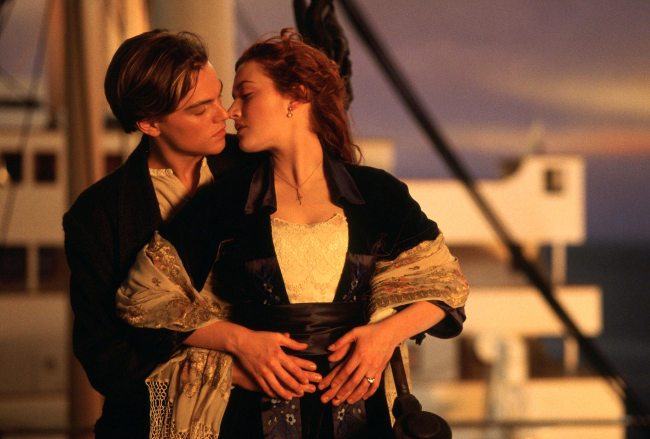
Of course, I couldn’t do a post on the RMS Titanic without having a picture from James Cameron’s 1997 take on the disaster which propelled Kate Winslet and Leonardo DiCaprio to megastardom as well as won 11 Oscars including Best Picture. Still, it’s not the most accurate cinematic retelling but it’s by far the most popular and the one my generation most likely remembers (especially my neighbor who went to see it multiple times in the theater). Still, I may not have been allowed to see it as a seven-year-old at the time of its release, but I had some idea how big this film was. Nevertheless, at a historical stand point, despite this scene being a highly romantic moment between Jack and Rose, this scene most likely never would happen because people were specifically prohibited from being there, really. I mean there were signs on the Titanic specifically telling people not to do this!

It may seem odd for me to focus one of my posts on movie history on one single event that lasted for a less than a week but in many ways, the voyage of the RMS Titanic is a truly memorable one that once shook the world. However, somehow a story of a huge luxury liner that sank in the North Atlantic Ocean after hitting an iceberg which killed about 1,517 people seems to have a certain hold on a lot of people that James Cameron’s 1997 epic was a critical and box office success at the time even if it’s not the most accurate nor the most entertaining rendition out of many films that covered the disaster. Yet, back in April of 1912, news of the sinking of the RMS Titanic sent shock waves throughout the world and it has been the subject of much captivation and artistic rendition ever since. The movie adaptation on this disaster actually came out in 1912, not long after it happened. But while many ships have met their watery graves in the ocean which carried far more people, it’s the one of the RMS Titanic that keeps grabbing the attention with so much that has been written and filmed of it. Nevertheless, the cinematic retellings do have their share of inaccuracies which I shall list accordingly.

The White Star Line:

The White Star Line was a public company. (It was actually a subsidiary of a private company and didn’t offer stock nor have a stock price to worry about. Oh, and it was owned by J. P. Morgan.)

The Ship:

The Titanic’s furniture at Palm’s Court consisted of tan wicker furniture and circular tables with bare walls. (Photos of the Titanic showed that the room had wicker furniture, square tables, and walls with real climbing ivy.)

Passengers on the Titanic were allowed on the forecastle, head, and bow. (They weren’t allowed on these parts on the ship. In fact, there were signs that said “Passengers Not Allowed Beyond This Point” mounted on the leeward side of the forward breakwater {both port and starboard}. So the scene where Leonardo DiCaprio says, “I’m king of the world!” wouldn’t have taken place.)

The Titanic’s first class dining hall had table lamps. (It didn’t.)

The Titanic’s entrance vestibule had wooden doors. (According to Imdb: “When James Cameron visited the wreck two years after filming ended, he discovered that the doors were in fact inaccurately portrayed in the {1997} film.”)

The Titanic’s Master at Arm’s office had a porthole. (It was an interior room and therefore, wouldn’t have portholes.)

The Titanic had shuffleboard, its own tailor shop, and regular bar in which people would get drinks. (There was no shuffleboard or a tailor shop on the Titanic. Also, on the Titanic, passengers would order their drinks through waiters and stewards who’d fetch them for the passengers.)

The Titanic had a dance floor in its first class dining saloon. (The Titanic did not have a dance floor. Also, among middle and upper classes, public dancing was seen as inappropriate in 1912.)

The grand staircase of the Titanic had an elaborate brass dome. (It didn’t.)

The watertight doors of the Titanic slid horizontally. (They didn’t.)

The Titanic was as big as the Mauretania and the Lusitatania. (It was actually 90 some feet longer than either ship.)

The Titanic had a piano in its lounge. (There’s no evidence on whether it was or not.)

The funnels on the Titanic were noisy on the outside but could barely be heard on the inside of the ship even during the sinking. (It’s said to sound like 20 locomotives blowing off steam at low key. Also, the noise of the funnels hindered Jack Philips from hearing transmissions from other ships since the Marconi office was below a funnel.)

The Crew:

The crew of the crows nest were equipped with binoculars and communicated to the bridge through screaming back and forth. (They didn’t have binoculars. They also communicated to the bridge through telephone.)

Captain Smith witnessed the Titanic colliding with an iceberg. (He was in his cabin at the time.)

The crew on the Titanic wore Royal Navy uniforms. (They weren’t in the Royal Navy. They wore uniforms from the White Star Line.)

First Officer Murdoch lowered Collapsible C boat. (Chief Officer Wilde did this.)

First Officer William Murdoch shot two innocent men to prevent them from boarding a lifeboat during the sinking of the Titanic and later committed suicide. (Murdoch more likely tried to do what he could to save the passengers and went down with the ship like most of the crew did except those who manned the lifeboats. His hometown and family were outraged by Murdoch’s depiction in the James Cameron movie since his locale treats him as a local hero. As to his fate, we really can’t say whether he committed suicide or not because there are many contradictory accounts of what happened to him. The crew members may have been inexperienced but there are plenty of stories of the crew members performing heroic actions. Actually, James Cameron treats most of the Titanic crew members in a negative light with the exception of Captain Smith of course, who I think bears the bulk of the responsibility for the Titanic sinking in the first place since he was the one who canceled the lifeboat drill, ignored prior warnings of icebergs ahead, and ordered the Titanic to go full speed.)

Second Officer Charles Herbert Lightoller was nervous martinet. (He was actually a hero who kept a dozen people alive on an overturned Collapsible B.)

German First Officer Petersen vainly tried to save the greedy British from their own destruction. (The First Officer on the Titanic was William Murdoch who went down with the ship. Not to mention, the Titanic was a British ship manned by a British crew! Petersen was a fictional character created for a 1943 Nazi propaganda film of the Titanic sinking, which James Cameron has seen since he borrowed plenty of its elements for the 1997 film {though he claims he hasn’t, nice try}. Strangely enough, while the German 1943 version of the Titanic sinking is flat out Nazi propaganda, it isn’t the worst film adaptation of the disaster.)

Captain Edward John Smith had a mustache while on the Titanic and made it to New York. (He had a mustache and a full white beard like in the Edwardian style. Also, he died during the sinking.)

Captain Smith went on the bridge of the Titanic during the sinking. (There are conflicting survivor testimonies as to what happened to him. Some say he stayed on the bridge, others say he jumped off the ship in a life jacket. A few accounts even said he committed suicide.)

Captain Edward John Smith planned to retire after the Titanic‘s maiden crossing. (It’s common knowledge and he was supposed to since he was 62 {though the Titanic registers list him as 59} while the mandatory retirement age on the White Star Line was 60. However, there’s some debate whether this was true or not. Still, he was probably not looking forward to it and if he was, he was probably more or less being pressured into retirement.)

Captain Smith visited the wireless cabin to tell the operators to send calls for assistance and gave the incorrect coordinates for the ship. (He actually gave the correct coordinates and it was 4th Officer Boxhall who gave the screwed up coordinates some minutes later to the Marconi operators Phillips and Bride.)

Captain Smith was at the starboard side during the Titanic sinking. (He was on the starboard side most of the time and Harold Bride says that Smith returned with him into the wireless room.)

2nd Officer Lightoller was wearing an overcoat during the loading of the lifeboats even when he was on the Collapsible B. (When launching the last two lifeboats, he said in his autobiography that he was wearing a pants and sweater over his pajamas as well as a life jacket. He had already discarded his overcoat by that point.)

Chief Baker Charles Joughin was drunk during the Titanic sinking. (He wasn’t though he did take a quick nip in his cabin during the evacuation.)

Sub-Lieutenant Harold Godfrey Lowe saw women and children among the debris. (He didn’t report seeing any women and children among the wreckage.)

The Passengers:

Thomas Andrews clearly noticed that the Titanic hit something while he was in his cabin going over the ship’s blueprints. (While Andrews was in his cabin working on improvements for the Titanic {which he designed himself}, he didn’t feel the iceberg collision and was informed of it when he was summoned by the crew.)

Thomas Andrews surveyed the iceberg damage and realized that the Titanic was going to sink. (From a page of goofs on James Cameron’s Titanic: “We don’t know what transpired between Captain Smith, Andrews, Chief Officer Wilde, First Officer Murdoch or Sixth Officer Moody, as all were lost.”)

J. Bruce Ismay was an arrogant bullying prick who forced Captain Smith to run the ship full speed into the ice field and acted as a sniffling coward who hopped aboard the first available lifeboat. (Actually it was Smith’s decision to run the ship full speed. Also, Ismay was diligent in helping load and lower lifeboats and only took his seat in one after he made sure that there were no women and children there to take it instead. Of course, he was wrong since most of the women and children on the ship by that time were all crowded in steerage and went down with the ship.)

There were Spanish passengers in steerage on the Titanic. (There were 3 Spanish passengers in 1st class and 5 in 2nd class. None were in 3rd.)

J. Bruce Ismay pressured Captain Smith to speed up the Titanic in order to achieve a new speed record for the White Star Line. (Everyone knew that the White Star Line couldn’t win against the Lusitania and the Mauretania. Also, the Titanic and its sister ships like the Olympic and the Britannic weren’t designed to beat the Cunard Line based on speed but on luxury and technological novelties {and even that’s subjective}. Furthermore, arriving early wouldn’t lead to applause but complaints from the passengers whose hotel reservations would’ve been set for the following day and annoyance from New York customs.)

Harold Sanderson was the chairman of the White Star Line who disembarked at during a port of call at Cherbourg, France before the Titanic set sail for the Atlantic. (Well, he was a senior official of the White Star Line in 1912. He wasn’t the chairman. J. Bruce Ismay was. This error is in the 1953 Titanic film with Barbara Stanwyck. Also, the Titanic made a port of call at Queenstown, Ireland before heading to New York, not Cherbourg, France.)

J. Bruce Ismay’s wife was Gloria. (Her name was Florence Schieffelin during the Titanic’s maiden voyage.)

All the Titanic passengers were white. (Most of them were, but there were some racial minorities among them.)

Madeline Astor was an old woman having an affair during the Titanic voyage. (She was actually a heavily pregnant 18 year old girl. Her son was born 4 months after the voyage. She wasn’t a buxom blond woman pushing 30 either but a slender teenage brunette. Of course, her husband John Jacob Astor was 54 years old which is kind of creepy.)

Molly Brown was one of the first passengers on board Lifeboat 6. (She was one of the last.)

The Maiden Voyage:

The Titanic set sail in brilliant sunshine at Southampton. (Photographs showed that the Titanic set sail in sky overcast.)

Tickets on the Titanic were easy to transfer to another passenger. (They were impossible to transfer so it’s very unlikely for the Jack and Rose love story to happen, historically speaking.)

The Titanic sailed out of Liverpool. (It sailed out of Southampton. In fact, one of the reasons why the White Star Line chose Southampton as its main terminal was because their newest ships were too big for Liverpool’s harbor.)

During the voyage, a bunch of third class passengers went to the first class hangout to find what was going on. (This never happened but it’s in the German 1943 Titanic film. Also, this was never allowed.)

The Titanic was christened before its maiden voyage. (The White Star Line never really christened their ships at this point. Also, the fact that the Titanic was never christened contributed to why some people believed it sunk in the first place.)

The Titanic was due in New York on April 15. (It was due to land in New York on April 17.)

The White Star Line was aiming to get a Blue Ribbon during the Titanic’s voyage. (It had already given up that goal by that point.)

Life in first class aboard the Titanic was boring while life in steerage was lively and fun. (Of course, James Cameron’s Titanic is told through Rose’s point of view and she may have believed this. However, let’s just say that in most of history, it was better to be rich than poor for obvious reasons {and casualty records on the Titanic’s sinking show this since more people in steerage died than from first and second class}. Also, single men and women were segregated in third class with single women in the bow and single women and families in the stern.)

The Titanic arrived at Cherbourg, France at dusk with every single light on in the ship. (It arrived at Cherbourg, France during the day time but we’re not sure how long it took to transfer passengers and mail to and from the ship so it could’ve been evening. But by that time only the anchor lights would’ve been on. Also, the Titanic was only 2/3 occupied at this point so all the lights wouldn’t have been on the ship even if it does look pretty in the James Cameron film.)

Colonel Archibald Gracie was British. (He was actually American but Cameron had him speaking in a British accent for some reason.)

The Iceberg Collision:

Titanic’s E deck was immediately flooded during the iceberg collision. (E deck was two floors above the collision site and wasn’t immediately flooded.)

The impact of the Titanic hitting the iceberg threw the passengers forward. (If it did, the Titanic would’ve had a lower body count. However, the impact caused the ship to shake slightly and was barely noticeable.)

The Titanic collided with a small iceberg. (The iceberg was actually quite huge, especially underwater.)

The first warning of ice was brought to bridge. (It wasn’t. Actually the Titanic received multiple warnings of icebergs from other ships but not all of them were relayed to radio operators and the ice conditions for that April were the worst for that month in the previous 50 years.)

The Titanic hit the iceberg by its port side. (It was hit on its starboard side but this is shown in multiple films.)

The iceberg collision ruptured five of Titanic‘s compartments. (It ruptured six. Still, five was the minimum number of compartments that had to be ruptured before the ship could sink.)

The Sinking:

“CQD” was sent from the Titanic as a distress signal. (Yes, it was but “SOS” was used later on.)

The Titanic sank in one piece. (It actually split in two pieces near the surface. Yet, many film adaptations made before the 1980s show this because the technology to find and view the wreckage itself didn’t exist at the time. Thus, it was popularly believed it sank in one piece.)

All the Titanic’s boilers were lit before it sank. (Only 24 out its 29 boilers were ever lit, yet it’s said there was to be a full speed test with all of them lit on April 15th, 1912. Of course, you know what happened by then.)

The Titanic sank on a starry night. (It actually sank on a dark and moonless night.)

Picasso paintings were lost on the Titanic. (There were no Picasso paintings on there and many of them depicted in the movies are still on display. Also, we know what happened to his painting Les Demoiselles d’Avignon since you can actually see it in a museum. Boy, Rose must’ve gotten scammed big time somehow.)

Lifeboats on the Titanic were loaded according to gender, age, and class. (They weren’t loaded according to class despite what James Cameron might imply. In fact, more third class women survived the Titanic than first class men. And many of the first class men who survived were vilified as selfish cowards willing to save their own skins as 150 women and children met their watery deaths.)

The Titanic passengers were awakened to find the ship sinking at the sound of the siren informing them of the collision. (No such system existed on the Titanic. Passengers in all three classes were informed about their sinking through stewards knocking on their cabin doors and only when crew members knew that the ship was going to sink.)

Men on the Titanic were prevented from getting to the lifeboats during the sinking. (Men were indeed prevented from accessing lifeboats on the port side. Yet, men on the starboard side allowed men if no more women and children were willing to go or didn’t show up. Also, a third of the men in first class survived.)

The red ensign was on the Titanic flagstaff during the sinking. (The Titanic sank during the night while red ensigns are flown during the day time.)

The Titanic sank almost immediately after hitting an iceberg. (The ship struck the iceberg at 11:40 pm. The ship sank at 2:20 am so sinking took a good 2 ½ hours at least.)

Men dressed in drag to get on to the Titanic life boats. (The idea of men dressing up as women during the sinking has been long discredited as a hoax. According to Imdb: “This was a rumor started by one survivor’s business competitor to discredit him.”)

The Titanic sank with the lights in its portholes. (The electrical power failed a few seconds before the ship went down.)

712 people survived on the Titanic. (The exact count of survivors has been disputed but there were 712 on the lifeboats.)

Only six people were in the ocean were saved 6 during the Titanic sinking. (13 were saved from the waters but 3 of them died.)

Only one of the Titanic lifeboats went back to search for survivors. (Two or three of them did.)

Engineers put water in the boilers while the Titanic was sinking. (Putting water into the boiler would’ve been a bad idea and engineers in 1912 knew that.)

Everyone survived the Titanic with no traumatic effects. (The sinking of the RMS Titanic actually killed well over 1,500 people which is why it’s so remembered in the first place. However, there are a couple animated films that actually have such an ending with one called Titanic: The Legend Goes On that features singing immigrant mice and a rapping dog {seriously} and The Legend of the Titanic which has singing mice, an octopus that saves the ship and a “save the whales” plot {which is totally irrelevant since kerosene had already put most whaling out of business back in the late 1800s. Most modern whaling is actually done for food. Also, nobody owns the seas and oceans.} It also claimed that sharks prevented the Titanic from swerving around the iceberg which is just wrong because the Titanic was going too fast at that point to begin with to turn in time. It also blames sharks as the reason why the iceberg was there to begin with. Oh, and did I say that the latter animated film had a sequel that takes place in Atlantis featuring mermaids, talking toys, and evil mice? Seriously not making this up. Also, they were both made in Italy. Still, at least people got to die in Anastasia and Pocahontas!)

Children from First and Second class died in the sinking. (Only one child from first class did by the name of Loraine Allison who stayed on deck with her parents.)

The band played “Nearer My God to Thee” as the Titanic sank. (There’s dispute on what they played. Yet, the band had no horns section nor did anyone stand up and sing. Most experts believe it was “Autumn.”)

The Titanic boilers exploded while the ship was sinking. (No boiler exploded during the disaster yet such is shown in multiple films.)

The Titanic’s lifeboats were available for every passenger. (The ship had lifeboats that were only available for 1,178  people. The limited number of lifeboats was one of the reasons why so many people died on the Titanic.)

All of the Titanic’s lifeboats were successfully launched before it sank. (Collapsible B wasn’t for it floated off upside down which allowed Second Officer Lightoller and others to survive. Also, the collapsible boats were unwieldy and had room for 47 passengers each.)

Third class passengers were locked aboard the Titanic to keep them from taking a seat in a lifeboat before the first and second class passengers. (It was a regulatory measure to prevent “less cleanly” third class passengers from transmitting diseases and infections to others so they could be the only ones requiring health inspections on their arrival in New York. And even when they were locked, they didn’t bar the access to the deck, only the first and second passenger areas of the ship. In fact, when the Titanic was sinking, crew members went there immediately to lead the third class women and children to safety. However, the reason why so many people in steerage died on the Titanic was that many of them had a hard time finding their way through the maze of corridors to the life boats, with those who couldn’t speak English at an even greater disadvantage since the signs were only in English. Also, the third class cabins weren’t as close to the deck and the life boats as those of first and second class. Still, maybe having crew members who knew a foreign language as well as foreign language signs could’ve saved more people!)

During the sinking, many of the passengers went inside because it was too cold. (Most survivor accounts said they went on deck as soon as they put their life belts on. And they weren’t too impressed by the poor efforts of some of the crewmen preparing the boats. Those staying inside during the Titanic‘s sinking were people who either chose to go down with the ship or had no idea where to fetch the lifeboats.)

The Carpathia was the closest ship to the Titanic when it was sinking. (The Mount Temple and the Californian were closer. However, the Californian had its radio turned off for the night and when the captain saw the signal rockets shot off by the Titanic as distress signals, he just assumed they were fireworks aboard a luxury liner and went to bed. Then there’s the Norwegian whaling ship the Samson which was illegally hunting seals in US waters who mistook the lights and the signal rockets from the Titanic as belonging to the US or Canadian Coast Guard and only learned about the tragedy at the next port of call. The Carpathia may just get notice in the movies because it was the closest ship that came in and helped.)

The forecastle and the well deck were submerged when the first two lifeboats were away. (They wouldn’t go under water until the very last lifeboats were launched.)

Lifeboat 7 nearly tipped passengers at sea. (No survivor ever recalled this happening. However, there was some similar mishap on Lifeboat 5.)

“Women and children first” was the officer’s orders at gunpoint during the sinking of the Titanic. (“Women and children first” was standard procedure of most ships at the time. Almost all the male survivors of the Titanic {save a handful of crew members} were vilified because of this.)

Miscellaneous:

Everyone believed the Titanic was unsinkable. (The Titanic wasn’t big news until it hit an iceberg and sank. The ship claimed to be unsinkable was its sister ship the Olympic and that was before it experienced a minor collision. Yet, it had the same captain, traveled the same route, had the same facilities, and the same number of lifeboats.)

Life jackets on the Titanic had 12 pieces of cork in them. (They had six pieces of cork in them.)

The Titanic‘s lifeboats were tested in Belfast with the weight of 70 men. (There’s no way to verify this. However, there was testing on 66 people and the boats performed well. Still, many of the life boats on the Titanic left the ship half full.)

Father Thomas Byles prayed at the poop deck with the masses during the sinking. (He prayed at the aft end of the boat deck. Also, according to eyewitness accounts, Byles didn’t quote Revelation but recited the rosary, and performed acts of contrition and absolution to the doomed masses who congregated round him.)

The Titanic survivors on the Carpathia were all berthed in steerage. (Some Titanic survivors were berthed in 3rd class when suitable space in 2nd class couldn’t be found.)

The Titanic was badly designed, badly built, and badly operated by the standards of the time. (It was actually a very good ship even by modern standards since it managed to stay afloat well over 2 hours after being hit by an iceberg {even Thomas Andrews thought the ship wouldn’t last more than an hour and a half}. Still, it was built by the best available materials of the time period as well as not traveling too fast for the conditions by the standards of the time. Also, it was the second ship in a line of three Olympic sized ships. Besides, scientists have determined no man made structure could ever survive a collision with an iceberg going 30 mph. Also, it split at a 23 degree maximum tilt which is twice the intended design limits on modern ships. Thus, the Titanic was just torn apart by forces that were way beyond the extremes of what a structure was designed to withstand.)

History of the World According to the Movies: Part 52 – Early 20th Century Europe

Image

Of course, I couldn’t think of any movie that characterizes Pre-World War I Europe than the 1964 My Fair Lady starring Audrey Hepburn and Rex Harrison. Yes, I know it’s a musical but it’s fun and entertaining with costume as authentic as the misogyny. And, yes, hats in that era were that big. For all the ladies out there, I sincerely recommend you making your boyfriends watch this with you.

Unless it’s set in Russia, no era in history has been shown as nostalgically as the early 20th century. Despite the fact that much of the world was under a ruling monarchy, the a small elite controlled much of the world’s wealth, most women didn’t have the right to vote and were willing to go through extraordinary measures to get it, and child labor existed in even the most prosperous nations, a lot of family friendly musicals, cartoons, and romances are set in this period. Perhaps there’s the steam punk appeal with the old timey automobiles out on the road with no traffic rules, seat belts, or speeding limits, and went as fast as 20 miles per hour. Perhaps there’s the appeal with the amazing flying machines like biplanes, balloons, and airship zeppelins. Maybe it’s the amazing costumes and the massive women’s hats. Or perhaps this period is so idealized by movies because this is the part of the 20th century which is before things like the Titanic, a war that would wipe out a significant fraction of a generation of young men, a flu epidemic that would also wipe out a lot of young people. Let’s just say the 1910s wasn’t a great era for young people. Still, for Europe, the early 1900s was a time when the British Empire was in it’s glory days, France still had its art scene and was getting into experimenting with film, Germany and Austria had their monarchies, and technology and science were creating a great range of new inventions. Nevertheless, there are significant inaccuracies in movies set in this time which I shall list accordingly.

Edwardian Great Britain:

The Duke and Duchess Marlborough had daughters before World War I. (The Duchess of Marlborough was an American woman named Consuelo Vanderbilt Marlborough who was married to the 8th Duke of Marlborough who was a cousin of Winston Churchill. They had two boys who weren’t yet of marriageable age and were separated until their divorce in 1921. Thus, the reference of the Duchess of Marlborough’s daughter in 1912 would’ve been historically inaccurate.)

Dr. Hawley Harvey Crippen killed and brutally mutilated his wife Cora. (Recent DNA evidence has found that the remains found in his basement not only weren’t Cora but of a dude. So it’s probably likely that he didn’t kill his wife like he’s alleged to.)

King Edward VII:

King Edward VII was alive in 1912. (He died in 1910. Yet, he’s the king in My Fair Lady.)

King Edward VII wanted his son the future George V to be frightened of him. (Actually they were very close and Edward VII actually brought George’s desk next to his at Buckingham Palace so they could work together. Of course, they come from a family in which it wasn’t very common for sovereigns to get along so harmoniously with their heirs apparent.)

King George VI:

King George VI was starved and pinched by his nanny when he was a child. (Actually, his original head nanny wasn’t really that abusive and actually pinched his brother David {the future Edward VIII} before taking him to see his parents and didn’t starve him or his siblings. Nevertheless, she was quite a piece of work who neglected the kids, particularly Bertie. Also, while Bertie might’ve had an eating disorder, he developed it all on his own and by that point the original nanny was replaced by a kind and motherly one named Charlotte Bill who swore like a sailor off duty. Still, she was a full time companion to Bertie’s youngest brother Johnnie when the boy was “hidden from view” and was with him when he died.)

Dora Carrington:

Dora Carrington was straight. (She was bisexual and had affairs with women which is left out in the 1995 movie about her. At least Frida Kahlo’s bisexuality wasn’t left out in her movie.)

James M. Barrie:

James M. Barrie was a normal sized attractive man. (He was actually very short with a head that seemed too big for his body {5’3 ½” to be exact which is about my height} with a receding hairline and a persistent cough to boot. Yet, in Finding Neverland, he’s played by Johnny Depp. Some said he might’ve had psychogenic dwarfism. Also, he’s said to have a lot of self-esteem issues stemming from when he had a brother die at six and how his mother made it clear to her surviving child that she preferred the dead son who’d never grow up to him. )

James M. Barrie set aside seats for children on Peter Pan’s opening night. (This didn’t happen.)

Peter Davies was James M. Barrie’s inspiration for Peter Pan. (Barrie met the Llewelyn Davies boys when Peter was only a baby and unlike as seen from Finding Neverland, he wasn’t the youngest brother. Barrie was actually closer to George and Michael with the latter being the inspiration for Peter Pan. Peter just shared the character’s name. Oh, and Peter Pan initially appeared as a character in a fictional universe in one of Barrie’s novels before he wrote the play.)

The Llewelyn Davies boys were all living with their widowed mother Sylvia when they met James M. Barrie. (Actually the father of the boys Arthur Davies was very much alive several years into Barrie’s friendship with his sons. He and Sylvia also had Michael and Nicholas during that time, with the latter being absent in Finding Neverland. And no, Barrie didn’t have any romantic feelings for Sylvia for their relationship was much more platonic though Barrie claim they were engaged. Besides, Arthur Llewelyn Davies was a much more attractive man even though he did die in 1907 of skin cancer and Sylvia 3 years later in 1910.)

Sylvia Llewelyn Davies had blond hair. (Photographs reveal her as a brunette.)

James M. Barrie and his wife Mary Ansell divorced before the Peter Pan premiere in 1903. (They divorced in 1909.)

James M. Barrie’s producer Charles Frohman was full of cynical misgivings of the Peter Pan idea. (He was actually very supportive of Barrie throughout his career and one of the few friends he ever had and was crazy about Peter Pan from its inception that he’d act out whole scenes of the play to friends. Frohman would die during the bombing of the Lusitania.)

James M. Barrie’s relationship with Peter Davies managed to achieve an equilibrium. (Their relationship became more strained as the boy grew up and Peter actually grew to hate his association with Peter Pan. As with George and Michael, they both died young and in tragic circumstances. George was killed by a sniper in WWI at only 21 years old. Michael and his close friend {possibly lover} drowned in either a terrible accident or a suicide pact. Peter committed suicide in 1960 at 63 though he was actually much luckier than the boys and might’ve did it because he was suffering from emphysema and found out that his wife and kids had inherited Huntington’s disease. Also, he became an alcoholic yet he probably had plenty of reasons why he drank and might’ve just been drunk when he threw himself in front the train. Still, he managed to start a publishing company that published works by his cousin Daphne Du Maurier and managed to win a Military Cross for his actions in World War I.)

Beatrix Potter:

Norman Warne proposed to Beatrix Potter in person and her parents softened their opposition to the match. (Contrary to Miss Potter, he proposed through letter but her parents never softened their opposition to the match. Lucky for them, Norman died a month later due to lymphatic leukemia. He’s probably the reason why she never married.)

Beatrix Potter had no interest in shrooms. (She had detailed studies in fungi and once wanted to be a mycologist, though you wouldn’t know it from Miss Potter. Still, being a woman at the time, she had to settle for children’s book author.)

Frederick Warne published Beatrix Potter’s The Tale of Peter Rabbit. (Actually she published the story herself in a private manner before Warne took it up.)

Switzerland:

Carl Jung and Sabina Spielrein engaged in BDSM during their affair. (Their fantasies were more about an obsession with the Wagnerian hero Sigfried than anything related to BDSM as in A Dangerous Method. Still, Carl Jung did have a sexual relationship with this woman.)

Sabina Spielrein went crazy when Carl Jung tried to dump her that she was set on ruining him. (She did have trouble accepting the breakup yet the real Jung’s letters make him sound so much like an asshole that it’s impossible not to take his side. However, him and Freud also belittled her as a colleague throughout her career while simultaneously incorporating some of her ideas such as the “death instinct” into their own work. In A Dangerous Method, Spielrein is made to be like Glen Close in Fatal Attraction. Yet, Spielrein might have some justification on wanting to ruin Jung’s career because he used her for his own ends, both as a sexual partner and as a colleague.)

Carl Jung was an open-minded, human-hearted, progressive who gallantly explored uncharted territory in search of ideals and nobly believing the possibility of more. (Jung may have put forward a lot of new and interesting concepts in psychology but vast bodies of his work were disproved, and his penchant for the mystical was rather detrimental to scientific theory like the equivalent of a creationist in the field of evolutionary theory. Not to mention, he was a Swiss evangelical who married a woman for money and had the habit of sleeping with his patients. Oh, and he was complicit with the Nazis.)

Carl Jung was under 6 feet tall. (He was 6’1.”)

Austria:

Sigmund Freud’s work on a male’s preoccupation with penis size was around before World War I. (He actually didn’t publish anything about this until 1920 under the title “The Pleasure Principle.” Also, until 1919, Freud relied on data solely from females.)

Sigmund Freud was a gruff, stubborn, conservative crackpot who jumped to conclusions, reduced everything to sex, shirked any ideas that weren’t his own, impeded progress, and strived to preserve the status quo in psychiatry. (This is a popular image of Freud but he wasn’t really like this. Still, while Freud was fallible and stubborn, he was also lighthearted and brilliant. Also, many of his theories proved to be right and his Oedipus complex theory had absolutely nothing to do with parental incest. Oh, and he was never as hot as Viggo Mortenson.)

Sigmund Freud rejected the notion of the repression of ego during sex. (The repression of ego during sex was Freud’s own idea.)

Germany:

Kaiser Wilhelm II spoke English in a German accent. (He spoke it like a member of the British Royal Family would since his grandmother was Queen Victoria. Then again, he was German and spoke the language so maybe having a German accent in World War I movies can be forgiven.)

“Deutschlandlied” was the national anthem for Imperial Germany. (Imperial Germany never had a national anthem, though “Watch on the Rhine” served as one in the unofficial sense. “Deutschlandlied” is actually the national anthem for the Weimar Republic when it was adopted in 1922.)

The Cecilienhof palace was built for Wilhelm II. (It was built for the last crown prince of Germany who lived there from 1917-1919 and 1926-1945.)

Austria:

Colonel Alfred Redl was a essentially a scapegoat by officials of the Austro-Hungarian Empire to distract from a coup d’etat planned by Archduke Franz Ferdinand who actually betrayed military secrets to Russia. (There’s a movie about this but this premise is total bullshit. Redl actually did betray military secrets to the Russians. Most historical accounts claim that Redl committed treason because Russian agents blackmailed for homosexuality, while a few accounts say he merely did it for money. As for Archduke Ferdinand, there’s no way he was planning a coup, nor was he a bloodthirsty warmonger of any kind.)

Miscellaneous:

Old timey cars were perfectly safe and navigable. (Yes, you certainly start seeing more cars on the road at this time and yes, they did go slower than nowadays. However, these were the days when there weren’t any speed limits, traffic rules, or seat belts. Also, while many people were upset when Matthew Crawley was killed in a car crash in Downton Abbey, such accidents were very common place. Not to mention, between 1890 and 1916, they used horses to haul stranded cars out of ruts, mud, and ditches. As for navigability, paved asphalt streets weren’t a common sight in this time and your early cars weren’t all-terrain vehicles. Oh, and you had to use a crank to get them to start.)

Early flying machines were perfectly safe. (Orville Wright and Lieutenant T. E. Selfridge found out the hard way in 1908 when Orville’s plane developed mechanical problems and crashed in Maryland, killing Selfridge.)

Wristwatches were a common accessory. (Not until after World War I. Until then, pocket watches reigned supreme.)
Electric trolleys were faster than horses and clanged to alert passengers of their presence. (Yes, they could but they usually didn’t travel that fast since they had to deal with traffic. They usually traveled at a horse’s pace and seldom at their rated speed because the horses just wouldn’t get out of their way.)

Knapsack parachutes were around in 1908. (They were invented in 1911.)

Nobody sweat in an old timey bathing suit. (They were made out of wool and were very impractical to swim in, more or less made for preserving modesty than actual swimming. Women’s bathing suits were black, knee-length, puffed-sleeve wool dresses, often featuring a sailor collar, and worn over bloomers or drawers trimmed with ribbons and bows. Men’s kind of resembled striped pajama leotards or something worn by guys on the high school wrestling team. Still, if you were a woman who wanted to swim, you sometimes ran the risk of being arrested for indecent exposure. Also, it wasn’t unusual for beaches to ban topless bathing for men.)

Early psychoanalysis was permeated with sexual perverts. (There were a lot of early psychoanalysts involved who were there for the intellectual and humanitarian purposes. That’s not to say that there weren’t any perverts among the early shrinks for there certainly were like Carl Jung. Still, while Sigmund Freud has been portrayed this way in movies, he wasn’t a pervert though or at least knew to keep it in his pants.)

Wheels had metal rims and spokes at this time. (They actually had wooden rims and spokes.)

Modern frosted glass light bulbs were used at this time. (Light bulbs of the era were hand blown clear glass ones.)
Most roads were paved during this time. (Most of them were unpaved, cobbled or lined with crushed rocks, such as gravel and they weren’t properly maintained as well as often lay in disrepair.)

Gentlemen wore their hats indoors. (They didn’t do this until in very recent times.)

Suffragettes were just angry women shouting with signs. (Women in this era went through great lengths to get the vote even risking their lives and braving police brutality. One British woman threw herself at the horse tracks during a Derby race. A lot of suffragettes got arrested and went on hunger strikes in jail. Still, suffragettes make hippies and Occupy Wall Street protestors look like a bunch of wusses.)

Catholic priests at the time wore a traditional black garment with a white “dog collar.” (By this time, the Catholic Church forbade priests to dress this way.)

History of the World According to the Movies: Part 51 – America at the Turn of the Century

Image

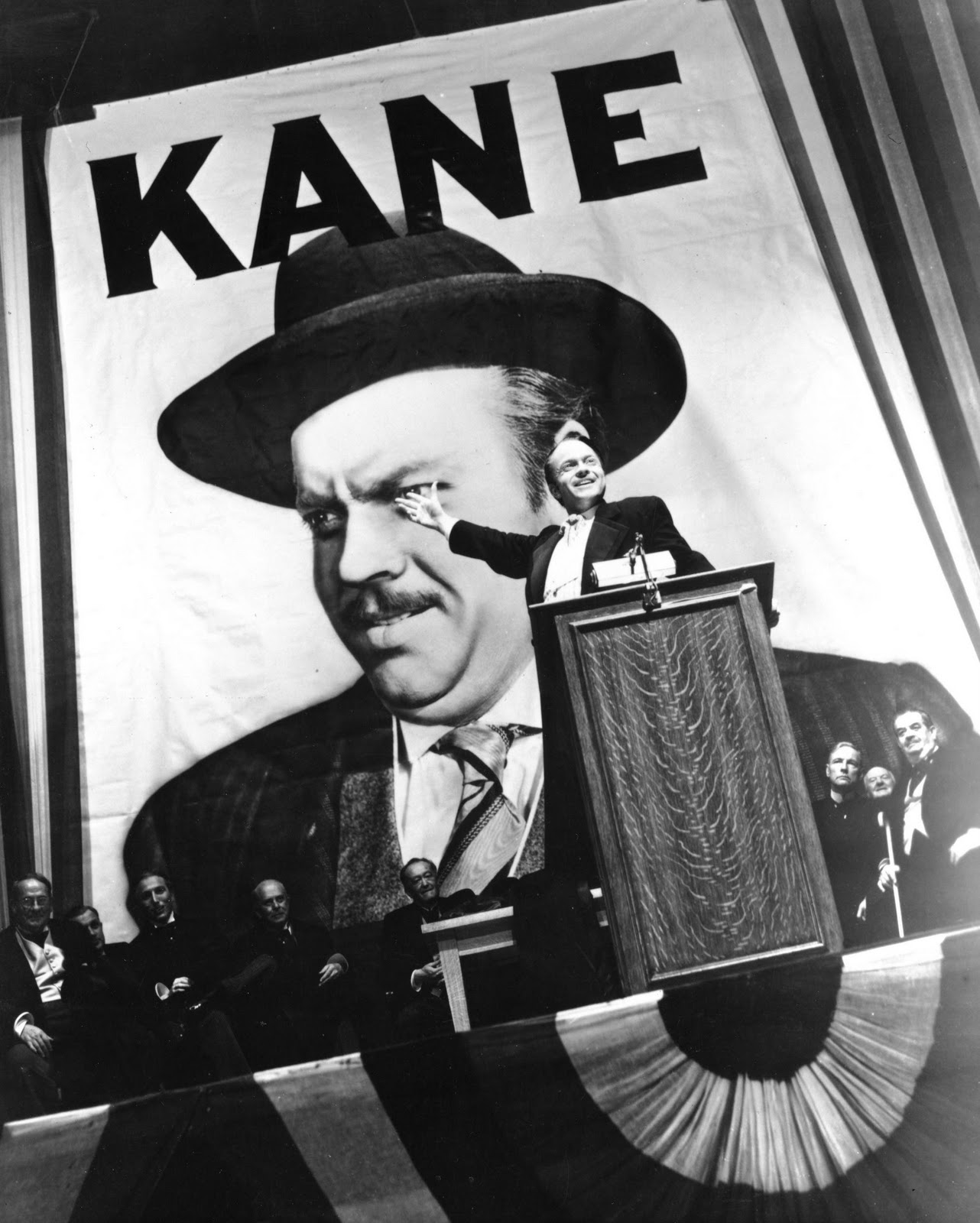
Orson Welles’ 1941 masterpiece Citizen Kane has been deemed as the best movie of all time by many film organizations like the American Film Institute. It’s thinly veiled story about William Randolph Hearst who managed to use his media savvy to get the US into a war with Spain with “Remember the Maine.” Yet, this movie also talks about the rising presence in the mass media in America about the turn of the century which men like Kane and Hearst helped engineer. While I may not think it’s the best movie of all time, I do agree that it’s a movie of great cinematic and historical value which should’ve received more contemporary recognition than it got.

My last part of the series regarding history in the movies will pertain to the 20th century since much of 21st history is too recent for everyone to agree upon since we live in a world of political bias and events of our recent past are very prone to opinionated judgements which may or may not be accurate depending on who you believe. Sometimes relatively recent history isn’t actually considered history at all but may fall around the line of current events since many of the participants are still alive, which is helpful for historians in some respect but sometimes they’d prefer talking about someone who is dead since they can’t really talk back. There may have been certain events that happened within the last 20 years or so but such incidences aren’t times that historians can adequately judge at the moment. Besides, I need to stop somewhere.

The 20th century was an even more transformative time than the one that preceded it with massive changes taking place within the span of generations and decades. In 1900, there were barely any cars on the street and by 1999, much of the western world starting to head toward the information age. Whatever progress is made in any field during the 19th century, would practically be on steroids in the 20th and then some ranging with everything from electricity, fashion, entertainment, to civil rights. Yet, the 20th century brought on its share of new challenges, new problems, and compelled us to redefine our place in the world as in a global village. Not to mention, the 20th century would be fraught by global conflicts, worldwide economic crises, pandemics, genocide, cultural unrest, and other things. Of course, these incidences are nothing new at all and have happened a lot in the past, but 20th century history implies that they are. Yet, the difference is that 20th century events in history are more likely to be recorded and depicted right where they happened and when thanks to the accessibility of information at this time. Events that occurred earlier are more likely to be forgotten until several years later. Not to mention, advances in communication have managed to make manipulating history much harder to do in many cases, though it is possible for many to use the media in their favor. But let’s say that Egyptian Pharaohs had a much easier time toppling monuments of their predecessor and expunge them from records than most of our dictators would today, since camera images can provide plenty of damning evidence than stone hieroglyphs.

Of course, I can’t begin my blog series on movies set in the 20th century until I discuss movie history in the United States around the turn of the century between the end of the American Civil War and US entry into World War I in 1917. This was a time of much excitement and contradiction. It was a time of progressive politics, science and technological innovation, expansionism, and increasing prestige. Yet, this is a time of rampant ethnic and racial discrimination, political corruption, boom and bust economic cycles, and widening divisions between the rich and poor. You have new inventions like phonographs, telephones, airplanes, and film. You have great waves of immigration from all over the world at this time seeking a new life in this country, yet at this time the American Dream has never been so far to reach due to discrimination, limited educational opportunities, child labor, monopolies, and political opposition of unionization. In 1890, the top 1% of Americans possessed more wealth than the poorest 99% combined, which is a reason why much of this period is called the Gilded Age. Still, you have plenty of movies set in this era tell how great this time was but it wasn’t. Nevertheless, there are plenty of inaccuracies I shall list accordingly.

The Statue of Liberty:

The Statue of Liberty was originally green like it is now. (It was originally brown and it took over 35 years for it to change color.)

The Statue of Liberty originally had a golden torch. (The gold leaf covered torch was installed in 1986. The original torch had portholes where it was illuminated from within.)

Industry:

Pinkerton Detective James McPharlan’s initial contact with the Molly Maguires was at Port Clinton’s Emerald House. (It was at the Sheridan House in nearby Pottsville, Pennsylvania.)

Jack Kehoe brought Detective McPharlan into the Molly Maguires. (It was “Muff” Lawler who did since he was the master of the group’s membership. Of course, Kehoe is played by Sean Connery in The Molly Maguires. Still, Kehoe was seen by the Pinkertons as the master conspirator in the Molly Maguires and was seen by Allen Pinkerton as a diabolical figure. Still, in the Molly Maguires there was plenty of private and workplace squabbles, ethnic resentment, and class grievances that gave much rise to the violence in the coal patches of Western Pennsylvania. The movie about them is more about the immigrant experience.)

James McPharlan’s relationship with Mary Raines was a tragic love story. (The woman McPharlan courted was Mary Ann Higgins who was a sister-in-law to one of the Molly Maguires, Jimmy Kerrigan. However, it was a romance that furthered the investigation into the group and nothing more.)

Inventors:

Alexander Graham Bell:

Alexander Graham Bell invented the telephone in his youth. (It was invented by Antonio Meucci in 1860 and Johann Phillip Reis in 1861 and both called it a “telephone.” Still, he invented a telephone called the Bell – telephone in the 1870s. Nevertheless, Bell would later invent a model for a wireless telephone called a Photophone, which would be precursor to fiber-optic communication. He also invented a metal detector and did experiments in hydrofoils and aeronautics.)

Alexander Graham Bell sent the first sound through a wire in the 1870s. (The first sound through a wire was made by Johann Phillip Reis in 1862.)

Mabel Hubbard fell for Alexander Graham Bell at first sight when she accidentally ran into him when he arrived to her family’s house. (Well, we’re not sure though he was definitely one of Mabel’s teachers and she was his favorite pupil. Still, they were a devoted couple until Alexander’s death in 1922.)

Alexander Graham Bell and Thomas A. Watson were clean shaven men in the 1870s. (Both had beards.)

Alexander Graham Bell was a great humanitarian for the deaf. (Despite having a deaf wife and mother, he was a shitty guy to the deaf community {though he did think he was doing the right thing}. He was a big believer in eugenics {the idea that sterilizing poor and disabled people was rad idea} and wasn’t too thrilled with having deaf teachers or deaf people marrying each other. Not to mention, his ideas on teaching deaf people to read lips really didn’t help their quality of life. So yes, Bell was a real huge jerk.)

Nikola Tesla:

Nikola Tesla was an underrated inventor who was a crazy genius but was screwed by Thomas Edison. (Edison wasn’t a nice guy and did steal inventions from some people but you can’t blame all of Tesla’s failures on him though they did have an intense rivalry. When Tesla got bored of sane science his career totally bombed. Tesla’s attempts to build a death ray and the weather control machine or whatever else he was hoping to build just didn’t work. He may have done some important work in physics as well as been the first person to file a patent of a VTOL aircraft, but neither would actually be built decades later when the actual nuts-and-bolts engineering was being done by someone else. Yet, he’s seen as an awesome underrated scientist in whatever he’s in. Yet, Marconi did still Tesla’s patent for radio while Edison didn’t.)

Nikola Tesla succeeded at building a working death ray. (He didn’t but many of his ideas were used by later inventors and scientists.)

Thomas Edison:

Thomas Edison was a ruthless, violent man who crushed his foes by sending goons to burn down their labs and run them out of town. (Edison might’ve been ruthless and played dirty enough to order a disinformation against AC involving lobbying and killing animals. He’d even briefly switch his view on the death penalty and invent an electric chair if it meant making the other guy look bad. However, Edison would never have stooped so low as to burn his rivals’ labs and run them out of town. As for inventing the electric chair, he would live to regret it.)

Thomas Edison invented the electrical power transmission. (Actually Nikola Tesla did since he was the guy who advocated alternating current. Edison was on team direct current. From Imdb: “Edison insisted on powering his lights with direct current, which could only travel sort distances from the generators that produced it. Tesla used alternating current, which could be run through transformers to increase its voltage so it could be moved over long distances, then reduced in voltage again for home use. Tesla’s alternating current, not Edison’s direct current, quickly became the standard and is what we use today.”)

Thomas Edison was married once. (He was married twice. His wife depicted in Edison the Man only lived to be 30 and died in the 1880s. He also had three kids from each marriage.)

Thomas Edison invented the light bulb. (He invented a light bulb that was more marketable. However, there were two other guys who have before him across the Atlantic Ocean.)

Dr. John Harvey Kellogg:

George Kellogg was a boozed-up vagrant who burned down his dad’s sanitarium. (He wasn’t though Dr. John Harvey Kellogg did adopt 42 children putting Angelina Jolie and Mia Farrow to shame. Oh, and George didn’t burn down his dad’s Battle Creek Sanitarium {though it did burn down in 1902 due to an accident but it had been rebuilt by the time The Road to Wellville is set which is in 1907}.)

Dr. John Harvey Kellogg’s sanitarium allowed mixed quarters among the sexes. (Men and women were segregated at his sanitarium.)

Dr. John Harvey Kellogg died attempting to demonstrate the high dive. (He actually peacefully died in his bed.)

Writers:

Mark Twain:

Samuel Clemens was in Nevada before American Civil War. (He went there after the war started and his brief stint in the Confederate Army, partly to get out of the conflict. Nevertheless, he hated slavery which is well known.)

Samuel Clemens met Henry Huttleston Rogers who told the author he could avoid bankruptcy in his publishing company if he didn’t honor his overly generous contract to publish Ulysses S. Grant’s memoirs. Clemens was willing to risk bankruptcy after seeing Grant dying and poverty stricken since the country owed him such a debt of gratitude. (Clemens’ company did publish Grant’s memoirs which were a huge success and eight years before he met Rogers. Still, like his 1944 biopic The Adventures of Mark Twain, Clemens would’ve risked bankruptcy anyway to get Grant’s memoirs published if he had to because he respected the man so much that he let Grant’s family have 75% of the royalties. However, publishing Grant’s memoirs wouldn’t have been seen as a financial risk because he was still well loved by the time of his death, especially among people who’ve actually known and served with him {which was a lot}. Not to mention, any publishing company would’ve wanted to get their hands on them. Still, Clemens’ business did go bankrupt but not because of Grant.)

Mark Twain wore his signature white suit while his wife Olivia was still alive. (He only started wearing it after he mourned his wife’s death in 1904, at which time he swore to only wear white for the rest of his life. However, knowing that his white suit is his signature look, this can be forgiven in any biopic of him.)

Tom Sawyer, Huckleberry Finn, and Jim were real people in Samuel Clemens’ childhood. (They’re fictional characters of Twain’s own creation but they were based on real people he knew when he was a kids. Still, their presence in his childhood is rather appropriate for his 1944 biopic even if those three were fictional creations. Still, at least Jim’s in it even though Twain’s hometown doesn’t include him.)

Samuel Clemens knew of his wife Olivia Langdon when he was still a river pilot on the Mississippi River. (They met in 1867 and before then he probably didn’t know she existed. Oh, and he didn’t meet her brother while he was still a river pilot. Yet, they did meet through her brother Charles and their father wasn’t really keen on the idea on their relationship. Interestingly, their first date was to a Charles Dickens reading and throughout their lives in Hartford, had Harriet Beecher Stowe as a next door neighbor.)

“Warm summer sun shine kindly here, Warm southern wind blow softly here, Green sod above, lie light, lie light – Good night, dear heart, Good night, good night,” was on Olivia Langdon Clemens’ grave. (It’s on Susy Clemens’ grave who died of spinal meningitis at twenty-four, which left her father Samuel Clemens heartbroken and her family devastated. Thirteen years later Mark Twain would later lose his youngest daughter Jean who drowned in a bathtub at twenty-nine following an heart attack triggered by epilepsy {this is widely believed but Jean did suffer from seizures throughout her life}.)

Socialites:

Molly Brown:

Molly Brown and her husband were never accepted into high Denver society until the Titanic sank. (Yes, they were even before then. Also, their Denver house was quite small with only one room having a smidgeon of red wall paper {unlike what The Unsinkable Molly Brown wants you to believe}. Yet, she did have another house called the Avoca right outside the city. Also, her parties were quite well attended. Not to mention, in 1912, she was known as “Maggie.”)

Molly and John Brown got back together after the sinking of the Titanic. (They didn’t though they did care and communicate with each other throughout their lives and his name was James Joseph Brown or “J. J. Brown.” Also, they had two kids absent from The Unsinkable Molly Brown {which gets everything wrong}. Also, she was never an orphan or an only child and she got married in a Leadville Catholic church, not at Brown’s house. Not to mention, The Unsinkable Molly Brown makes her look like a selfish immature bitch when she actually did a lot of philanthropy and activism, especially in the rights of women and workers, education, historic preservation, and others.)

Entertainers:

George M. Cohan:

George M. Cohan was born on the 4th of July. (He wasn’t for he was born on July 3rd. His dad had him listed on the 4th of July out of patriotic fervor. Also, Josie was already two years old at George’s birth {in Yankee Doodle Dandy, she’s younger than him}.)

George M. Cohan received the Congressional Medal of Honor. (He was never in the military. However, he did receive the Congressional Gold Medal. Apparently the guys who made Yankee Doodle Dandy didn’t think people would know anything about the Congressional Gold Medal.)

Jerry Cohan was the last of the 4 Cohans other than George M. Cohan himself. (He actually died in 1917 while his wife Helen died in 1928. George’s sister Josie did 1916. Still, that deathbed scene in Yankee Doodle Dandy should’ve involved George with his mother which would’ve made much historical sense. Either that, or have Helen Cohan present at Jerry Cohan’s deathbed because she outlived her husband.)

George M. Cohan’s wife was named Mary. (Actually Mary Cohan is a fictional character. Cohan was actually married twice. First to a woman named Ethel Levey whom he divorced in 1907. His second was Agnes Mary Nolan but who knows what he called her. Unlike in Yankee Doodle Dandy, Cohan also had four kids who all had careers in show biz. As for his looks, Cohan was a much better looking man than James Cagney who more or less resembled an elder Peter Sellers in his later years.)

Will Rogers:

Will Rogers was white. (He was of mixed race and just over 1/4 Cherokee. He also grew up as a member of the Cherokee Nation in Oklahoma.)

Cole Porter:

Cole Porter’s Yale “Bull Dog” song was instantly embraced as Yale’s anthem in 1914. (Actually “Bull Dog” is a fraternity smoking song and Cole Porter’s song for Yale was “Bingo! Eli Yale.” Also, he didn’t pay his way through college playing in a pit band or work at a sheet music store. Nor did he drop out of Yale either for he actually graduated. He actually switched from Harvard Law to its music school. Oh, and though he did serve in the French Army during World War I, he didn’t see combat nor was he ever injured. And unlike what Night and Day implies, Monty Woolley wasn’t his grizzled professor, he was an upperclassmen whom Cole knew socially and ended up becoming an actor {though he probably appeared as himself for he was an old grizzled bearded dude at the time}. Still, like Porter, Woolley was also gay.)

Cole Porter’s family was so happy when he decided to become a musician and quit law school. (Cole’s family wasn’t happy at all with his decision to get into music that on one occasion his mother and grandfather didn’t speak to each other or to Cole for several months. He and his grandfather never reconciled.)

The Progressive Era:

Theodore Roosevelt:

Theodore Roosevelt was nearly assassinated during his presidential campaign in 1904. (The attempt on his life was made in 1912, when he was a former president running as a candidate of the Progressive Party. Though the bullet hit him which resulted in him seeping blood, he delivered his speech as planned for a whole 90 minutes and didn’t seek medical attention until he finished. Yes, he was a medical marvel. Still, I wonder why there’s no Hollywood biopic of this man.)

Teddy Roosevelt had a deep, resonant, and bombastic voice. (His recording reveals him with a high pitched upper class New Yorker voice. However, he sounded like this because he typically used a high pitched voice that carries better in an outdoor venue, grew up with respiratory diseases like asthma, and came from an aristocratic family. Most Teddy Roosevelt portrayals sound nothing like the guy did in real life. Also, Hollywood tends to portrays him as a much older man despite the fact that he was only 42 when he became president {making him the youngest US president ever} and didn’t live past 60.)

Theodore Roosevelt was perfectly fine being called “Teddy.” (He hated being called “Teddy” since it was what his first wife Alice called him who ended up tragically dying in childbirth on the same day as his mother and in the same house. He actually preferred to be called “T. R.” Not to mention, he pronounced the name “Roosevelt” with the first part rhyming with “ruse.”)

Charles Curtis served as Vice President under Theodore Roosevelt. (He was vice-president under Herbert Hoover from 1929-1933, not under Teddy Roosevelt. In fact, in 1904, Roosevelt had no vice president since he had assumed the office after the McKinley assassination in the days before presidents in his position usually selected one. His eventual Vice-President was Charles Fairbanks, a senator from Indiana. Still, Ragtime should get its facts straight.)

Harry Houdini:

Harry Houdini jumped in the Detroit River locked in a trunk with the water turned into thick ice as well as had to conduct an excruciating underwater search for a hole in the ice directed by his dead mother’s voice. (Unlike what the movie Houdini says, while Houdini did jump in the Detroit River from Detroit’s Belle Isle Bridge, he was actually fettered in manacles and two sets of handcuffs. Of course, there were later embellishments which hadn’t been verified as depicted in the Tony Curtis film. However, hole in the ice or not, Houdini wasn’t guided by his dead mother’s voice because he performed the trick in November 27, 1906. At that time his mother was still alive.)

Harry Houdini’s mother died the same day as his Detroit River jump. (No, his mother didn’t die that day. Rather she died 7 years later but she was unquestionably the greatest loss of his life that he spent the rest of his life seeking authentic spiritual contact with her.)

Harry Houdini was an enterologist. (He was actually an escape artist contrary to the Tony Curtis film and his “Metamorphosis” trick with his wife actually had him freed and her take his place.)

Harry Houdini’s wife Bess always nagged him into seeking a normal day job a at a lock factory. (Actually their marriage was actually more boring that it was in the Tony Curtis film. Unlike most performers, Houdini had almost no problems reconciling love with his career or marriage and show business because Bess was his assistant and designed his costumes. Still, Bess may not have been able to have kids and there’s the fact that Harry’s family wouldn’t allow her to be interred with him after she died since she was raised Catholic and Harry was Jewish. Not to mention, Houdini’s work as an escape artist gave him more fame and fortune than he would’ve ever had.)

Harry Houdini’s work as an escape artist was inspired by a supernatural voice telling him to seek death at the price of fame. (Sorry, but the Tony Curtis movie has it wrong. His work as an escape artists was inspired by his psychological conflicts and teemed with elements of perverse anxieties like exhibitionism, mutilation, entrapment, insanity, and death. He was also a man who had been driven to escape his impoverished Jewish childhood, which is totally ignored in the film.)

All of Harry Houdini’s tricks were aided by a strange and hypnotic supernatural power. (He actually developed many of his acts by himself with modifications along the way. Besides, he performed many of his acts hundreds of times. Also, his escape acts took hours not minutes. Still, he was around at a time when there wasn’t a lot of venues for entertainment. Still, while Houdini did try to make a “scientific” search for the supernatural, he and his wife had briefly worked as sham mediums and they knew the tricks of the trade. He also devoted considerable energy to unmasking spiritualist charlatans with all the drama and publicity at his command, including one in which he duplicated all the effects of spirit photographs for all to see when Scientific American offered prizes for an authentic one under scientific conditions.)

Miscellaneous:

Small town America, in the past, was populated by people who were more innocent and virtuous than we are today. (Ever hear of lynchings?)

Lynchings only took place in the South. (Lynchings took place nationwide, but the South was the lynching capital of the country. It was also an event in the South where the white people would have picnics and bring their kids, yeah really. And the victims weren’t always innocent black men either as westerns were quick to point out, especially older westerns.)

More immigrants came to the US around the turn of the century than ever in American history. (Unless you are referring to European immigration, then no. Actually there have been more people coming to this country in the present day than there has ever been before thanks to the dropped quotas and bans on non-white immigrants, and even those weren’t effective. The reason why it’s mostly focused on this time period is because most Americans are descended from the people who came at the time around my parents’ generation.)

Charles Ossining invented a cola containing cocaine in the 1910s. (Coca-Cola originally had substantial quantities of cocaine until between 1891 and 1903. By the 1910s, it had virtually none due to the fact that cocaine distribution was already regulated by the Harrison Narcotics Tax Act of You914.)

The US economy boomed during this time. (Well, the economy grew but prosperity wasn’t enjoyed by everyone since this is a time of great economic and social inequality. Also, just because the US economy was big doesn’t mean it was stable, which it wasn’t and had its own share of disasters. You have the Black Friday panic on September 29, 1869, a day when the whole US economy was taken down by two speculators named James Fisk and Jay Gould whose efforts {made possible by a government tip off} to corner the gold market leading to a 30% increase in gold prices followed by large plummet when the federal government stepped in to sell some of their own holdings causing many investors to lose fortunes. You have the Panic of 1873 caused by the closing of a large and respected bank that helped the government finance during the US Civil War and the Northern Pacific Railroad called the Jay Cooke & Company leading European investors to call in their loans to American companies and the New York Stock Exchange shutting its doors for 10 days. Then you have 40% of American farmers losing their farms with many becoming tenants on land they formerly owned during the 1880s. Those who mortgaged to railroad companies found themselves foreclosed and homeless. Finally, there’s the Panic of 1893 caused by the bankruptcy of the National Cordage Company that tried to corner the rope market and was the most actively traded company on the NYSE at that point. This resulted in the failure of more than 500 banks and the closing of 15,000 businesses. Oh, it also led to a run in US gold reserves that backed the dollar that led to President Grover Cleveland having to borrow $65 million in gold from J. P. Morgan. Yet, do you hear about any of these financial disasters in movies? Not a chance.)

It was very possible for immigrants to have their surname change on a whim and without their consent. (This almost never happened unless at the immigrant’s request though this is a commonly believed myth. From Imdb: “Each immigrant had to have paperwork specifically saying their first and last name, and if something did not match, they were sent back to their home country to retrieve the correct paperwork.” Perhaps many immigrants changed their names since it would’ve been easier than having to go back to their home country to retrieve the correct paperwork.)

Immigrants at Ellis Island who were marked with an circled X were suspected as having small pox. (In history, a circled X was a sign for a mental illness, which would be entirely plausible in Vito Corleone’s case.)

History of the World According to the Movies: Part 50 – Latin America

Image

I couldn’t think of any other movie that pertains to Latin American history than The Motorcycle Diaries from 2004 which recalls 23-year old Argentine medical student Ernesto Guevara on his life changing journey through South America with his friend Alberto Granado. Of course, given his fame as a T-shirt image, Che Guevara has become America’s favorite Marxist guerrilla commander and revolutionary. However, the truth about Che isn’t as loveable as Hollywood portrays it to be.

Latin America doesn’t have a long history. Well, actually it does since it was once inhabited by indigenous tribes but and then colonized by the Europeans. Still, as independent entities, well, that’s only since the 19th century which is why I put it here. Of course, Hollywood portrays Latin American history as a long era with deserts, jungles, dictators, and hapless villagers. But is this a true portrayal of Latin American history? Not really since it’s more complex than that with interesting historical figures, events most people have never heard of, diverse cultures, and other things. Still, it’s kind of shown in the movies as a Third World travelogue like India and most of Asia you probably never saw in your life. Let’s just say it’s far more complicated than you see in the movies. Nevertheless, there aren’t many movies pertaining to Latin American history that people in the US know despite that it’s only south of the Southwest border like along Texas, Arizona, New Mexico, and California. Not to mention, the US Hispanic population is on the rise and it’s the place many of our immigrants are coming from undocumented and otherwise. Nevertheless, there are a lot of things movies get wrong about Latin American history which I shall list accordingly.

Mexico:

Antonio Lopez de Santa Anna:

General Antonio Lopez de Santa Anna wore a shako helmet. (His foot soldiers did not him.)

General Antonio Lopez de Santa Anna attacked the Alamo with 7,000 men. (More like 2500 men.)

General Antonio Lopez de Santa Anna was a much older man during the siege of the Alamo. (He was only 42.)

Mexican general and president, Antonio López de Santa Anna was a villainous man who executed prisoners by cannon fire, puffed a gold braid, ate bonbons on fancy silverware while everyone else starved, and valued a human life as much as a chicken’s but not in a good way. (He was brutal but he’s actually a more interesting case. His hobbies included gambling on cockfights, consuming opium, and dishonoring women. Still, he had a great degree of charm alongside his brutality like a mustache twirling super villain.)

Benito Juarez:

Benito Juarez asked ex-Emperor Maximilian in Mexico to forgive him when the latter was about to be shot by firing squad. (Nice little scene for Juarez but the real Juarez didn’t regret Maximilian’s execution and wrote a manifesto saying it was “just, necessary, urgent and inevitable”.)

Pancho Villa:

Several of Pancho Villa’s associates spoke Quecha. (Quecha is a South American dialect that would’ve been spoken in Peru, Ecuador, Bolivia, and Argentina. Pancho Villa was from Mexico.)

Pancho Villa took Mexico City by himself from Victriano Huerta and made himself president. (Actually he took it in a three pronged attack with Emiliano Zapata and Venustiano Carranza. After Huerta fled, they ruled the country together but Zapata soon went home Carranza eventually forced Villa out of power and ruled Mexico by himself. But he had Zapata assassinated while Villa retired.)

Emiliano Zapata:

Emiliano Zapata talked like Speedy Gonzales. (Contrary to Marlon Brando’s disastrous performance in Viva Zapata!, Zapata was well known for his high pitched, delicate voice. Still, Brando’s performance as Zapata must’ve been very offensive to the indigenous community in Mexico because it’s really terrible though Anthony Quinn does a hell of a good job as his brother.)

Emiliano Zapata and his followers were pro-American and the US supported Latin American liberation during the Mexican Revolution. (Well, it’s more complicated. True, the Zapistas did have some admiration for the US system of government after spending years under dictatorial regimes. And yes, the United States did provide asylum to rebel figurehead Francisco Madero where he remained unmolested. However, this was the time of US imperialism and America was basically looking after its own interests as said by William Howard Taft: “The day is not far distant when three Stars and Stripes at three equidistant points will mark our territory: one at the North Pole, another at the Panama Canal, and the third at the South Pole. The whole hemisphere will be ours in fact as, by virtue of our superiority of race, it already is ours morally.” Nevertheless, while the US did interfere with the Mexican Revolution, they weren’t above switching sides when it suited their own interests. Madero only suited their interests briefly and there’s an unproven theory that Madero was killed by US Ambassador Henry Lane Wilson {he wasn’t} but Wilson seemed to give the impression that the US was fine with Victoriano Huerta bumping off his rival until the US turned against him {still, Huerta was kind of a guy who switched sides as often as he changed uniforms}. As for Ambassador Wilson, well, President Wilson eventually fired him for interfering with Mexican politics.)

Emiliano Zapata was illiterate until he got married. (He may have not been the most educated guy in Mexico due to indigenous peasant background, but he could read and write by the time he was an adult. Still, Zapata’s wedding was interrupted by government troops riding forth against him. Also, contrary to Viva Zapata!, Zapata was assassinated by the forces of President Venustiano Carranza.)

Emiliano Zapata confronted Porfirio Díaz at Mexico’s National Palace. (This is the stuff of legend which has been discounted. Yet, this is in Viva Zapata!. However, while Porfirio Diaz was a bad president in his later years, he had earlier destroyed the brigands that plagued Mexico’s roads and set up the country’s infrastructure so the nation would benefit for years to come. Still, he was senile and surrounded by idiots and yes-men in his later years and should’ve retired.)

Francisco Madero:

Francisco Madero was a naïve idiot who didn’t know he was being executed by firing squad until somebody started shooting. (Madero’s family should’ve sued Elia Kazan for slander for portraying the guy this way in Viva Zapata!. The real Madero wasn’t so daft and knew very well he what was going to happen to him as he said to a loyal officer on his execution, “Adiós, my general. I shall never see you again.” His brother’s death was far more brutal.)

Mexican general Victoriano Huerta was present at Francisco Madero’s execution. (He wasn’t but he did order his execution.)

President Francisco Madero was overthrown in a coup and shot by General Pascal. (He was overthrown and assassinated by Gen. Victoriano Huerta yet he had someone else do the shooting. Also, there was no general named Pascal. Oh, and he was shot in a prison outside Mexico City not at the National Palace.)

Frida Kahlo:

Frida Kahlo seduced Italian photographer Tina Modotti in front of everyone at a party. (Yes, Frida was bisexual. Yet, Modotti might’ve introduced Frida Kahlo to her husband Diego Rivera, though they told several versions on how they met. Still, she didn’t publicly seduce Modotti.)

Leon Trotsky moved out of Frida Kahlo’s house to avoid falling in love with her and went to less secure digs where in which he would shortly meet his end with the ice pick. (Yes, she had an affair with Trotsky. Yes, he lived with her but so did her husband Diego Rivera. Still, though Trotsky and Frida ended the affair, she still allowed him to stay in the house but she left for Paris. Trotsky moved out when she was abroad possibly owing to a disagreement with Diego Rivera in 1939. However, unlike what Frida suggests, her libido had absolutely nothing to do with Trotsky’s murder since he was already Stalin’s #1 enemy by 1940 and Stalin had already killed members of his family and followers. Stalin was going to get him eventually. Also, he was killed by an ice axe not a pick contrary to popular legend.)

Frida Kahlo was completely able bodied before her bus accident. (Actually she had a lot of health problems as a child. She contracted polio at six that left her right leg thinner than her left, which she disguised by wearing long colorful skirts. It’s also been theorized that she may have been born with spinal bifida. Though she recovered from the bus accident, she had relapses of extreme pain for the rest of her life and had spent months of the time bedridden or hospitalized and was never able to have children.)

Frida Kahlo had no facial hair. (She had a mustache.)

Miscellaneous:

Good Mexicans were weak and stupid while bad Mexicans were corrupt, ruthless, and cruel.

Mexican villages had constant problems with bandits ransacking the town who lived much better lives than they did.

Everyone in Mexico was a Mestizo and everyone in other Latin American countries was Hispanic.

Mexicans were lazy workers who took midafternoon siestas. (The reason that Latin American workers took siestas was because they’ve been working all day in the hot sun. They took naps because they were exhausted or they would die, not lazy.)

Three Finger Jack and Joaquin Murieta were a cheery band of California outlaws under Mexican rule in California with Murieta’s brother Alejandro using guile to steal from corrupt soldiers in California’s government. (Three Finger Jack and Murieta were Gold Rush outlaws with a gang believed to be responsible for the murders in the Mother Lode area in the Sierra Nevadas. Alejandro Murieta was made up for The Mask of Zorro yet he ends up naming his kid Joaquin in The Legend of Zorro. Still, Joaquin Murieta and Three-Finger Jack were brought down in 1853. Still, Murieta was said to be a Mexican patriot or “The Mexican Robin Hood” though he probably wasn’t either.)

The US Army fought the French occupiers of Mexico. (Yes, Mexico was occupied by the French during the American Civil War and the Lincoln administration wasn’t happy about it. However, there was never any fighting between the US and the French. Besides, the Lincoln administration was more interested in fighting Confederate forces anyway. Yet, both Union and Confederate forces did battle the Indian tribes at the US and Mexican border as depicted in Major Dundee.)

The war against Maximilian in Mexico was seen as a “revolution.” (From Imdb: “As the Juarez government had never fled Mexico during the intervention, and consistently insisted it was the lawful government, no loyal Mexican would consider the war a revolution; it was the expulsion of a foreign invader.” Kicking the French puppet regime out of Mexico formed the basis of celebrating Cinco de Mayo.)

Leon Trotsky was assassinated by a man named Frank Jacson. (The guy’s name was Ramon Mercader who was an NKVD mole for Stalin and had successfully got close enough to Trotsky to kill him {despite the fact only Trotsky and Mercader’s girlfriend trusted him}. Still, Mercader wasn’t the only NKVD mole in Trotsky’s organization. Nevertheless, Trotsky was a horrible judge of character since he seriously underestimated Josef Stalin and never understood him as a brilliant, calculating, and visionary megalomaniac with an insatiable bloodthirst and a pathological need to get even with his enemies, with Trotsky at the top of his list. It was underestimating Stalin, that got Trotsky exiled in the first place.)

El Salvador:

Archbishop Oscar Romero’s assassin shot him while taking communion in front of him with photojournalist Robert Boyle sitting a few pews away. (Romero’s assassin was actually hiding behind a pillar when he shot him. Also, Robert Boyle wasn’t really there contrary to Oliver Stone’s Salvador, which isn’t a good reference source if you want to know anything about the civil war in El Salvador during the 1980. Robert Boyle also didn’t try to get his girlfriend Maria in the United States or photojournalist Jack Casady for that matter {because he didn’t exist}. Seriously, Oliver Stone is as bad with history as Mel Gibson, though his is more along current events.)

Panama:

Manuel Noriega was in hiding while on the run after the invasion of Panama. (Contrary to The Men who Stare at Goats, he never was. In fact, he briefly sought refuge at the Vatican Embassy after the invasion of Panama and the US knew it.)

Argentina:

Eva Peron:

Eva Peron was a beloved figure in Argentina who championed for the people. (She also was a great spokeswoman for her husband’s regime which helped make Argentina a hospitable place for Nazis. Still, Juan Peron’s willingness for having diplomatic relations with Franco Spain had more to do with his country being 1/3 Spanish and Franco being in desperate need for a political ally. Also, while Juan Peron did facilitate the entrance of Nazi criminals to Argentina, Russia, Great Britain, and the US did the same thing and probably for the same reasons such as to acquire advanced technology developed by the Germans during World War II. Of course, those countries took in scientists like Heisenberg and Von Braun but they were nevertheless war criminals. It’s just that after WWII, Britain, the US, and Russia didn’t really care that much. Yet, at the same time, Argentina accepted more Jewish immigrants than any other Latin American country under Peron’s watch.)

Eva Peron had an affair with 36 year old Agustín Magaldi when she was 15. (This is in Evita, yet since it’s 38-year-old Madonna playing a 15-year-old girl, this isn’t squicky. However, the real Eva probably didn’t have a relationship with Magaldi, 15 or not since the guy usually traveled with his wife. Not to mention, he was actually a chubby mama’s boy and far from the suave matinee idol he’s depicted. Also, it’s said that Eva’s family may have traveled to Buenos Aires with her. Unfortunately, when Andrew Lloyd Webber did his musical in the 1970’s, the only English biography of Eva Peron available in English was by a political opponent of the Perons and hasn’t been found very reliable. Rather an American equivalent of Evita would be kind of like a musical about Barack Obama based solely upon his Conservapedia page.)

Eva Peron’s rise to power just consisted of a mere makeover. (Yeah, Andrew Lloyd Webber, except that you left out Eva Peron’s support and campaign for women’s suffrage and social justice causes, her creation of the female Peronist Party, her work in government {overseeing ministries of labor, social welfare, and health as well as eventually became her husband’s vice-president and received the title of Spiritual Leader of Argentina a few months before her death from cervical cancer at 33 in 1952 [even if she did all that in her husband’s discretion]}, and dubious rumors of her links to fascist regimes. Evita just gives us only hats and lipstick and practically says nothing about why she’s so remembered in Argentina and says that her status as a beloved figure wasn’t deserved. No wonder people in that country hated it.)

Eva Peron was an ambitious woman who slept her way to power. (Now I see why Argentinian’s don’t like Evita. She was ambitious and had many relationships with men but it’s said that her success as a radio actress had more to do with her own merit as well as her willingness to take any job she could get {though she did arrive to Buenos Aires lacking a formal education or connections so she probably submitted to the casting couch a few times as many aspiring actresses did in her day}. Her business partner at Radio El Mundo didn’t really like her but admitted she was “thoroughly dependable” and by the time she met her husband, she was earning 6,000 pesos a month. Still, while Eva Peron wasn’t what you called a saint, she wasn’t a bad person either. Not to mention, Eva’s political success most definitely had a lot to do with her marriage to Juan Peron as well as her loyalty to him when he was imprisoned {though she didn’t organize the effort to get him out since she had no political clout with labor unions and wasn’t well liked in his inner circle or in Argentina’s entertainment business}, her effectiveness as a political campaigner, as well as other things. More importantly, Juan loved her or he wouldn’t have married her when he got out of prison. It’s very fair to say she loved him since she stood by Juan during his imprisonment, thanks to his political opponents in government who weren’t happy with his growing popularity. Besides, by the time she got sick, Eva was working as many as 20-22 hours a day and even ignored her husband’s request that she take some time off, cut back, and cool it on the weekends.)

Eva Peron was from a humble rural Argentine family. (Yes, she grew up poor but her dad was actually a wealthy rancher named Juan Duarte who was married and had multiple families. However, he wasn’t married to Evita’s mother Juana Ibarguren and when he died, Juana and her children were barred from attending his funeral. Still, Eva wasn’t destined for a good life not just due to poverty, but also because she was born out of wedlock in the days when illegitimate children were rejected and stigmatized. When Eva grew up and moved to Buenos Aires, she dyed her hair blond {she originally had black hair} and changed her name to Duarte. When she married Juan Peron, it’s said she destroyed her birth certificate and forged a new one. Still, if she had any resentment to the upper classes, then there’s a good reason for it who often depicted her as a low class person who slept her way to the top.)

Che Guevara:

Che Guevara was a heroic figure who stood for civil disobedience, rebellion, and freedom. (He also personally killed hundreds of people to spread communism and “liberate” the poor even Cuban rock fans. He saw rock music as a staple of American imperialism and had a strong dislike for it. Oh, and did I say he hated gay people? Still, he was verbally abrasive toward everyone in his unit which sometimes makes him come off as racist toward black people.)

Che Guevara was clean-cut and handsome. (Well, it’s said that he looked like a movie star when he was groomed. However, he had a lifelong aversion to grooming so that didn’t happen that often. Also, he once wore a pair of underpants for 2 months and gleefully won a bet that they would stand by themselves. Gross! In fact, it was his aversion to grooming in which he earned his nickname “Che” which means “pig.”)

Che Guevara’s girlfriend Chichina gave him $15 to buy her a bathing suit when he reached the US. (The money was actually for a scarf. However, she did dump him though and they never saw each other again.)

Che Guevara and Alberto Granado were chased out of a dance hall in Chile and managed to escape in the nick of time after Che caused a scandal by having a fling with a mechanic’s wife. (Unlike The Motorcycle Diaries, they actually stayed in the town for another night, had lunch with a family next door to the garage, and left without incident in the afternoon.)

Che Guevara gave the $15 to an impoverished Communist couple in Chuquicamata, Chile. (He, Alberto Granado, and the $15 actually made it to Miami where Che spent the money on a scarf he sent to his ex-girlfriend.)

Che Guevara was Eva Peron’s creepy stalker who turned up in various points in her life to remind her of her impending death. (Contrary to Evita, Che and Peron never met though Guevara did send Evita a prank letter asking her to buy him a jeep.)

Che Guevara served in the Cuban Revolution as a mercenary and combatant. (He was actually hired to serve as a medic yet he became a combatant later.)

Che Guevara was shot dead in Bolivia three times. (He was shot 9 times.)

Miscellaneous:

Argentina was a haven for Nazis. (Argentina wasn’t the only country to grant asylum to Nazis but gets a bad name for welcoming guys like Adolf Eichmann and Dr. Josef Mengele. Other Latin American countries did the same thing and so did Russia and the US. Still, many Latin American countries also provided asylum for many Jewish immigrants after the Holocaust as well. It’s a strange place.)

Peru:

The sundial at the Inti Huatana had a piece broken off around the 1950s. (It was in perfect condition at this time and the damage occurred in 2000 when a crane fell on it. Of course, you couldn’t show that in The Motorcycle Diaries.)

Chile:

Journalist Charles Horman’s body was shipped back from Chile after he was killed in the Pinochet’s regime. (While there is a scene of what is believed to be Horman’s body in the final image of Missing, DNA evidence has determined that the remains shipped back to Charles’ family in the United States didn’t belong to him. Still, as of now, they never found his body.)

Pinochet’s coup took place around the 1973 Christmas season. (Contrary to The House of the Spirits, it took place in September of that year, a little early to buy Christmas presents, you think?)

Venezuela:

Carlos the Jackal was a diabolical mastermind who was part of many assassinations and was never caught. (He was just a bumbling terrorist with a huge ego that led to his downfall with his 1994 capture. His past reputation was highly exaggerated and he wasn’t viewed that highly dangerous as movies claim him to be in real life {only said to have killed 11 people and injured 150 during his attacks}. Still, there are plenty of movies made with him as a main villain when he’d already been caught. Seriously, the Bourne series gives him too much credit.)

Paraguay:

Dr. Josef Mengele was a diabolical mastermind who tried to clone Adolf Hitler and launch am elaborate political scheme to recreate the Fourth Reich. (For one, while Mengele was a psychotic State-sponsored serial killer worthy of his nickname “The Angle of Death” he was actually a totally incompetent scientist {to the point other Nazi scientists thought him as a highly unqualified butcher} who wouldn’t be capable of undergoing a cloning project that was at least a century ahead of its time, let alone plan an elaborate scheme to recreate the Fourth Reich. Oh, and while he was in Paraguay for some time, he was actually living in Brazil where he died in 1979, hence the title, The Boys from Brazil from 1978. Still, he could’ve actually seen the movie despite having his health greatly deteriorated by that point.)

Dr. Josef Mengele fled to Paraguay after Adolf Eichmann was captured by Mossad agents in Argentina. (He was believed to be living in Paraguay but actually fled to Brazil.)

Brazil:

Brazil adopted soccer during the 20th century as its national pastime. (Soccer had been introduced in Brazil in 1884.)

Bolivia:

Butch Cassidy spent 20 years living in Bolivia and tried to return to the United States in the 1920s. (It’s pretty much accepted that he and the Sundance Kid killed themselves in 1908. Yet, it’s the subject of a 2011 film called Blackthorn. Still, he probably didn’t have any children with Etta Place.)

History of the World According to the Movies: Part 49 – Life in 19th Century Europe

Image

Here we have a lovely ball scene from Luchino Visconti’s 1963 movie The Leopard starring Burt Lancaster as an aristocrat having to deal with the changes that come with Italian unification as well as other aspects that any noble of the 19th century has to deal with like a rising middle class, a dying aristocracy, and other things. Still, Burt Lancaster’s character faces many of the obstacles that befall many people in his class all over Europe. Still, it’s nice to see him dance with Claudia Cardinale who plays the woman who marries his nephew.

Europe went through a lot in the 19th century and not just in France, Great Britain, or in the German speaking world either. Spain lost its most of its colonial empire and would soon become a constitutional monarchy by the end. Belgium would form in the 1830s as a constitutional monarchy though it would later have a king named Leopold II who would be responsible for atrocities in the Congo Free State which would inspire Joseph Conrad’s Heart of Darkness as well as the first human rights movement. Much of Eastern Europe would continue to be dominated under Prussia, Russia, and the Ottoman Empire, though the Greeks did manage to gain their independence with Lord Byron fighting for them. Finally, Italy would unify in the 1860s thanks to the efforts of Giuseppe Garibaldi and his army of Redshirts known for their fighting prowess as well as utter ability to be utterly disposable (couldn’t resist with the Star Trek reference). Still, there were plenty of others fighting alongside him as well as plenty of opera composers, too. And of course, Russia tried to modernize by getting rid of the serfs and slaves but doesn’t do much else except produce a string of composers and writers. Nevertheless, Europe at the end of the 19th century would be a very different place than at its beginning just in time for another big trans formative century. Still, there are a lot of movies made in this time period which get a lot of things wrong about this time, and I shall list these errors.

Spain:

Queen Maria Louisa hated her unflattering portrait Francisco Goya painted for her. (She actually liked it so much that she made Goya the first court painter in Spain.)

Francisco Goya’s artwork brought him to the unwanted attention of the Spanish Inquisition. (There’s no record it did.)

Queen Isabella II was running Spain while she was ten. (Her mother was actually ruling as regent but John Quincy Adams would’ve just wanted to say that in Amistad.)

Ireland:

The Irish were a bunch of culturally backward country bumpkins who drank heavily and encouraged spousal abuse. (This is not only false but very offensive.)

Sein Finn was formed during Queen Victoria’s reign. (It was founded in 1905, four years after Victoria died.)

Belgium:

King Leopold I of Belgium was a pushy manipulator who tried to use his nephew Albert to control Queen Victoria. (He was actually Victoria’s favorite uncle who gave her a lot of good advice. However, his son was a real evil bastard, to put it mildly.)

King Leopold I didn’t visit Great Britain with his family. (He did but since his kids were Leopold II and the Mad Carlotta, it’s kind of justifiable you don’t see them in The Young Victoria.)

King Leopold was the youngest son of a penniless duke. (For one, he had a younger brother who died shortly after birth which was two years after his. Second, his old man Francis of Saxe-Coburg-Saalfeld was far from penniless.)

Vincent van Gogh took up with a prostitute named Sien when she had a small baby. (She was pregnant by that time and had a five-year-old girl. However she was an alcoholic prostitute who hated him when she shacked up with Vince.)

Norway:

Norway’s capital was Oslo at this time. (Yes, but the city’s name was Christiana. Sort of like how Tokyo was the capital of Japan in the Tokugawa Era when it was named Edo.)

Miscellaneous:

The Duchy of Savoy existed in the early 19th century. (It had ceased to exist by 1713 when the duchy acquired the kingdom of Sardinia. At that time the Duke of Savoy was simply called, “the king of Sardinia.”)

Everyone in the nineteenth century aged faster than they do today. (They aged at around the same speed as we do today once you subtract the hard work and malnutrition.)

Young revolutionaries in Europe were sympathetic to the peasants and their plights. (Actually they revolted more for themselves since they were mostly middle class born and when they got what they wanted, rejoined the human race and went on with their lives.)

19th century scientists ranged from loveable eccentrics whose experiments tended to go out of control to total nutcases and/or possibly sociopaths who performed scientific experiments with little regard to ethics or concern for the community and usually in their secret laboratory.

Photography was available in the 1820s and 1830s. (It wasn’t available until the 1840s.)

The Prayer of St. Michael existed in 1846. (It was written by Pope Leo XIII in 1888.)

19th century 12 pound guns could fire at a distance of 1,500 yards. (This would be well beyond accurate range for any gun like this.)

The Peterson System pipe was around during the mid-1800s. (It wasn’t patented until 1894 and made in Dublin.)

Metal cartridges were widely used from the mid-19th century. (They wouldn’t be widely used until the late 1860s.)

4 wheeled train cars were common place throughout the 19th century. (Not in the US after 1850.)

It wasn’t unusual for a woman in the 19th century to be wearing a bra. (19th century women didn’t wear bras, which were invented in 1913.)

Dynamite was around since the mid-1800s. (It was invented in 1866.)

19th century Gatling guns were reliable weapons. (Let’s just say these machine guns didn’t have a fast firing speed like they do in many Civil War movies.)

All 19th century trains had air brakes. (They weren’t invented until 1869 yet trains in movies before that somehow had them.)

Dresses had in seam pockets throughout the 19th century. (Flat surface pockets weren’t invented until after the American Civil war. Before that, wealthy women used Chatelaines that held purses and other items while poorer women used cloth pockets suspended from a strap pinned to a waistband.)

Kissing and holding hands in public was acceptable behavior in the upper classes. (Not until the turn of the 20th century.)

Vaccines were around at this time. (They were developed in 1885 by Louis Pasteur but Edward Jenner did have one for smallpox in the 18th century.)

Gas lighting was clean with no ill effects as well as gave warm glow. (By this I mean, literal gas lighting not the type of emotional abuse inspired by the Ingrid Bergman movie. Gas lights left a sooty residue everywhere, blackened ceilings, corroded metal, and even wilted and yellowed indoor plants. Rich people didn’t use gas lighting for the damage it did to paintings and precious fabrics. They also had a nasty tendency to explode and were a great fire hazard. Still, this should make you wonder why Ingrid Bergman’s ceilings were so clean in Gaslight.)

Household servants were treated well by the estate owners. (Depends on the location. If you were a servant in early 19th century Russia or Pre-Civil War America, you probably didn’t earn anything at all. Still, while people in the 19th century viewed servants like people nowadays view their appliances, doesn’t mean they were treated that well. A live-in maid usually earned less than $35 a year while general servants could make as much as $90 annually. A better paid butler could expect to earn an annual salary of $230 a year. They also faced a constant risk of being let go and were subject to an honesty test by their employers hiding a coin or something valuable in plain sight to see if they would pocket it. Sometimes they weren’t even called by their own names.)

Photographs were always black and white or sepia toned.

Small boys wore pants and short hair. (They actually wore dresses because they weren’t potty trained and fasteners like snaps, zippers, and Velcro weren’t available for the time period. Also, clothes for very young children were hard to make and the fact that babies and toddlers grew quickly. Having them wear dresses was a matter of practicality because it made diaper changing easier and could be worn for a few years. Thus, men like Ernest Hemingway, Douglas MacArthur, Teddy Roosevelt, Winston Churchill, and others. As for hair, it wasn’t unusual for some to have long hair and curls {though this wasn’t standard for the time period}.)

Chimney sweeps were pre-teen boys who went in fully clothed. (Except in the German states {where chimney sweeps had their own guilds and were primarily adults}, chimney sweeps elsewhere in the western world started out as young as 4-5 years old {in the US they were primarily black in the 19th century and from the South and hired from their owners} and were usually at the end of their careers by 11 or 12. Known as “climbing boys” they would climb up the chimneys naked {or in pants and a cotton shirt} propelling themselves with their knees and elbows which would be scraped raw. Oh, and they rarely bathed. There were also methods to enforce the boys to work harder. One was to light a pile of straw in the grate to send a blast of heat up the chimney after them. Another was to send another sweep to prick pins on the soles of his feet or butt. Of course, the child chimney sweep is a fixture in the 19th century though the practice of child chimney sweeps began to fade in the 1870s mostly due to laws banning the practice.)

Child chimney sweeps rarely got stuck in the chimneys they were cleaning. (Many boys did get stuck in chimneys, which could be for hours before they were either pushed from below, pulled out with a rope, or taking out by removing bricks from the chimney. They harder they struggled, the tighter they were wedged could possibly cause a fall of soot which could lead to their suffocation. Child chimney sweeps suffered from hazards like general neglect, stunted growth and deformities of spine, legs, and arms, blindness, asthma and respiratory problems, chest inflammation, burns, accidents, and bruises. Yet, perhaps the most famous health hazard for a child chimney sweep was Chimney Sweeps’ Cancer which was a cancer of the scrotum and didn’t occur until the sweep was in his late teens or early 20s. It was the first reported occupational cancer.)

Women’s dresses weren’t fire hazards in the mid-19th century. (Women who wore crinolines of tulle and gauze as well as wide sleeves were walking torches in the era of candles and open flames. In the 1850s, there was a prima ballerina who died when her petticoat puffed tutu was ignited by a gas lamp.)

Women in the mid-19th century never experienced embarrassing wardrobe malfunctions. (If a fashionable woman fell, the crinoline would splay all about her like a 3D fan exposing whatever was beneath. Also, this was a time when such clothing wouldn’t make it easy for women to go to the bathroom so they probably wore split crotch knickers which explained why the can-can was considered obscene. Yes, any women experiencing a wardrobe malfunction in this era would make Janet Jackson’s little incident at the 2004 Super Bowl seem tame.)

Workhouses were primarily for orphan children. (They were actually for those who were too poor, old, or ill to support themselves. This could be due to periods of high unemployment, someone having no family willing or able to provide care for them when they were elderly or sick. However, contrary to most adaptations of Oliver Twist, orphan children weren’t the only people living at workhouses which included unmarried pregnant women disowned by their families, mentally ill and mentally handicapped poor, and others who had no other means of support or economic opportunity. Workhouses in 19th century were in Britain during both the Georgian and Victorian Eras. Nevertheless, Oliver Twist wouldn’t be just working alongside orphans like himself though inmates were segregated into certain classes depending on gender, age, and health. )

Workhouse admission was akin to a form of prison. (In the 19th century, this was seen as a poor relief measure and entry was usually voluntary {except maybe in Oliver Twist’s case since he practically lived in one all his life}, though it was a painful decision since it carried a change of legal status such as the loss of political rights. Still, they life there was kind of like prison, except that inmates would have their possessions seized and stored until they left.)

Women had no rights during this time. (This depended on the country or what time in the 19th century you lived in. Still, this was a century when women made gains in property ownership, divorce, work, and education. Still, by the end of the 19th century, only women in New Zealand had the right to vote but the Women’s Suffrage movement was in full swing by this time.)

The 1890s were a great time in history. (In old movies, this was a very nostalgic decade for a time. However, in this decade, there was rampant child labor, rampant discrimination in the United States, European Anti-Semitism, lots of abject poverty, wars and human rights abuses in Africa, and other things.)

History of the World According to the Movies: Part 48 – The German-Speaking World of the 19th Century

Image

Here’s Gary Oldman as Ludwig van Beethoven in 1994’s Immortal Beloved which makes Amadeus look like a faithful biopic. Sure Oldman does look like Beethoven as you clearly see. Yet, let’s just say, he wouldn’t ask Metternich for favors, he didn’t love his sister-in-law Johanna, and he didn’t sire his own nephew Karl. Nor did he will his estate to his Immortal Beloved either.

The German speaking world of the 19th century was a key place during this time period. The Holy Roman Empire had collapsed in 1806 (partly thanks to Napoleon who probably had something to do with it) which left the Empire of Austria-Hungary which still had an Emperor that would last until World War I. Nevertheless, while Vienna was the home of the royal family as well as where the famous Clemmens von Metternich ran things from 1790 until he was forced to resign among the 1848 Revolutions. However, though many contemporaries think that the Austrian-Hungarian Empire was a backward, ignorant, and underdeveloped, they forget that this was Vienna was home to a lot of great 19th century German composers as well as Sigmund Freud. Then you have Germany which began the 19th century as a loose confederation of small entities until the Prussian Prime Minister Otto von Bismarck started a war with France in the 1870s and helped form these little countries into Germany which was ruled by the Kaisers. It was also a place for composers,  scientists, and other people of note. There aren’t a lot of movies made in this period save maybe a few Nazi propaganda films as well as those that take place in Vienna. Yet, there are plenty of inaccuracies in these films, nevertheless.

Austria:

Ludwig van Beethoven:

Ludwig van Beethoven’s will mentioned an “immortal beloved.” (She wasn’t mentioned in his will. Also, the mention of an “immortal beloved” was in a series of letters dating said to be written in 1812. Beethoven died in 1827 and probably wasn’t still hung up with her. Still, he had quite a lot of romances in his life so there are plenty of candidates. As to his will, he left the bulk of his estate to his nephew Karl who he loved with a sort of tormented horror in a parental fashion.)

Ludwig van Beethoven was deaf when he wrote the “Pathetique” sonata. (He wrote it in 1798 when he could still hear and was doing performances. He certainly heard it.)

Ludwig van Beethoven was a ladies man. (Contrary to what Immortal Beloved says, he was unlucky with women in general and often rejected by them. He also tended to form attachments with women who were unreachable {already married}.)

Ludwig van Beethoven stopped playing after his Eroica Symphony. (He stopped playing in 1814 due to his hearing loss. However, this was long after he wrote the Eroica {or Third Symphony} which was in 1805 and said to originally to be titled the Bonaparte Symphony. However, he changed it to Eroica when he found that Napoleon had declared himself Emperor according to one of his biographers. He was crushed and tore the title page in half.)

Ludwig van Beethoven died poor. (He may not have been a wealthy composer but he was a shrewd businessman and not above doing music commissions just for money. Still, he spent a lot of his money on his family, especially when it came to his brother Kaspar’s tuberculosis treatment and in a custody battle over his nephew. Not to mention, as a composer in his day, he was responsible for all the expenses in performing his work.)

Ludwig van Beethoven had an unkempt appearance, had terrible manners, and was emotionally unstable. (He had usually been a neat freak and was polite in public until his personal life and health problems began to take their toll in the 1810s. His hearing loss was also a factor. Still, he had a close circle of devoted friends all his life though there are accounts of him accusing them of cheating him only to later get over it and apologize to them the next day.)

Clemens Von Metternich and Ludwig van Beethoven met in person in which the latter offered to write an oratorio praising the former in return for the arch-conservative minister intervening on the composer’s custody dispute over his nephew. (For one, they didn’t meet in person. Second, to think Beethoven would propose such a thing to a guy who had secret police on him is not only absurd, it’s borderline slanderous because Beethoven was a passionate democrat who supported revolutions sweeping across Europe.)

Ludwig van Beethoven’s immortal beloved was his sister-in-law Johanna and was her son Karl’s real father. And the reason why he was so horrible and abusive to Johanna was that he was secretly crazy in love with her. (For fucking God’s sake, Immortal Beloved, Beethoven isn’t a sparkly vampire from Twilight! Besides, it’s highly unlikely that Johanna van Beethoven was the immortal beloved because he was completely awful to her, calling her a whore in public multiple times and questioning her fitness as a mother. It’s also likely that his nephew Karl had a lot of resentment for his uncle because of how he treated his mom. Not to mention, Karl wasn’t his son since Ludwig and Joanna were on bad terms from the start. His biographer Anton Schindler is said to allege that Giulietta Guicciardi was the most likely candidate who might’ve been engaged to Beethoven at one point but ended up dumping him for another guy mostly due to their different social standings. Nevertheless, if Johanna was the immortal beloved, Beethoven probably would’ve married her without a hitch which would’ve made things a lot easier for both of them as well as Karl.)

Countess Anna Marie Erdody saved Ludwig van Beethoven from public humiliation, gave him a place to stay, and took up with him. (All that’s known about her in Beethoven’s life was that she paid to keep him in Vienna when he threatened to leave.)

Ludwig van Beethoven wrote the “Immortal Beloved” letter in Karlsbad. (It’s fairly certain he actually wrote it while at a spa in Teplitz. The person he wrote to was in Karlsbad or Prague as far as he knew.)

Ludwig van Beethoven met Giulietta Guicciardi in 1804. (He actually met her in 1800.)

Ludwig van Beethoven’s music was way for him to express himself during times in his life. (Actually he was a man dedicated to his craft who composed music for its own sake. Yet, he didn’t always compose music that was inspired from his life. He also said that it was his music that kept him from committing suicide since couldn’t bear to leave his music unwritten.)

Ludwig van Beethoven’s relationship with Giulietta Guicciardi fell apart over a bet to see on whether Beethoven still knew how to play the piano. Giulietta also betrayed Beethoven by testing his deafness. (Beethoven’s main instruments were the piano and violin since he wrote a lot of music for them. Still, they more or less broke up due to their different social standings and he knew they had no future together. Also, it’s very likely that Giulietta’s cousins didn’t tear up their dresses in a public place to have sex with him. Still, Beethoven’s love life was hampered by class issues since he was a commoner who kept falling for aristocratic women way out of his league. Maybe he should’ve just marry girls like his brothers did.)

Anton Schindler was Beethoven’s executor. (He was his first biographer, secretary, and friend. Yet, he’d probably be executor, too.)

Ludwig van Beethoven had a female copyist and co-conductor. (He had two and they were both male and neither contributed or altered the score. Also, the person who assisted him with conducting the 9th Symphony was Michael Umlauf though Beethoven was on stage but the orchestra had been told to ignore him. Also, one of the soloists by the name of Caroline Unger had to turn him around to see the enthusiastic applause of the audience.)

In 1824, Ludwig van Beethoven was hard of hearing but quite capable of understanding people who spoke loudly. (Though he had never experienced permanent deafness, his condition fluctuated between total silence and terrible tinnitus. Also, his hearing had deteriorated severely by the time he composed his 9th symphony. Still, unlike many popular portrayals of Beethoven today, he was able to carry on conversations as long as they were facilitated by notebooks and that the person he was talking to looked directly at him since he could read lips.)

Ludwig van Beethoven was deaf for most of his life even in his youth. (He could hear perfectly fine until he started to lose his hearing at 26 this was gradual process due to having a “distended inner ear” which developed lesions over time. By 1818 he was almost completely deaf. As to what caused it, his hearing loss has been attributed to typhus, aut0-immune disorders {like systemic lupus erythematosus}, or his habit of immersing cold water on his head to stay awake.)

Ludwig van Beethoven’s 9th Symphony was an ode to himself escaping the oppression of his father. (Uh, Beethoven’s actual inspiration for his 9th Symphony was

Ludwig van Beethoven was private about his deafness. (His deafness wasn’t a secret and he was very public about it.)

Ludwig van Beethoven’s grave was an 8-foot obelisk. (His original grave was 2 feet tall and in a different Vienna cemetery. His body would later be moved next to Schubert in the 1880s at the site where the 8 foot obelisk in his memorial stands.)

Kaspar van Beethoven survived his famous brother Ludwig. (He died of tuberculosis in 1815 and was one of the reasons why Beethoven had a nasty custody battle with his widow. Heck, Beethoven had spent money for his care.)

Karl van Beethoven left his uncle Ludwig after he tried to commit suicide. (Yes, Beethoven did have a stormy relationship with his nephew who tried to kill himself. Yet, Karl didn’t leave his uncle until after finishing the metronome markings for his uncle’s 9th Symphony. And when he did, he left under his uncle’s permission {though reluctantly} to join the army.)

Sigmund Freud:

Sigmund Freud’s “Dora” case was in 1892, in which Freud had her strip naked for a back massage. (Freud had the “Dora” case for 11 weeks in 1900. Also, according to his published account of the whole thing, he never laid a hand on her. Not to mention, he never had his patients strip naked and never massaged anything other than their foreheads. Yet, there were some erotic undercurrents in Freud’s treatment of her. Still, Freud was a psychiatrist not a masseuse.)

Anna O. was Sigmund Freud’s patient. (She may have been the founding patient of psychoanalysis but she was the patient of Josef Breuer, Freud’s friend and patron. He reported the case to Freud in detail and often at his request. Yet, Freud never met this women, let alone treated her.)

Sigmund Freud hypnotized a female patient to get to the root of her traumatic experience in 1896. (He had given up using hypnotism by this time since he had discovered the value of sitting behind his patients instead. Though he did use both years earlier. Still, Freud didn’t pursue any of his female patients and was well known for being faithful to his wife.)

Signmund Freud’s theories of psychology revolved around sex. (Many did, but he also had theories on dreams. However, what cements Freud’s place in history is the use of his method of talking to people in order to cure their mental issues, his work concerning the subconscious, and his theory of the Id, Ego, and Superego were all considered groundbreaking and laid the foundations of what much is understood about psychology today.)

After discovering the Oedipus complex, Sigmund Freud felt horrendously guilty and was ready to abandon his practice because it revealed the latent hatred of his father. (There’s no evidence that his theory of the Oedipus complex depressed him. In fact, he was quite pleased with it saying that every man has been a little Oedipus at some time in his life. And, by Oedipus complex, he didn’t mean that guys are sexually attracted to their mothers, which it mostly implies in pop culture.)

Empress Elisabeth:

Empress consort Elisabeth was hated by her mother-in-law Dowager Sophie and brought the sun and love to everyone else by solving their problems with much class and sweetness. (She was more of a woman who was unable to withstand pressure coming from the Hapsburg Court and plagued by disgraces and mental illness. She never recovered from the loss of her son who died of a murder-suicide with his mistress at the Mayerling hunting lodge. Not to mention, in many ways, she was kind of strange to put it lightly. Also, Sophie was more of an ignored expert yet she was still a domineering woman who picked all grandchildren’s names. But she tried to make her daughter-in-law a good empress and was adamant about tradition. This clashed with Elisabeth’s free spirited nature. And though she was stern and strict, Sophie was very caring and actually worried about her daughter-in-law. Still, Empress Elisabeth was nowhere near the Disney princess mode a she’s depicted in the Sissi trilogy.)

Empress consort Elisabeth and Emperor Franz Josef were around the same age. (Well, they did have an eight year age difference like my grandparents. Yet, when they met Franz was 23 and Elisabeth was 15. Oh, and he met her while on a visit to meet her sister whom he was supposed to marry in the first place but fell for her instead.)

Emperor Franz Josef and Empress Elisabeth had a fairytale relationship. (They had a rocky marriage. However, Elisabeth would undergo mercury treatments {which were commonly used for treating syphilis} and soon had her teeth rot. She also displayed erratic behavior. So somebody wasn’t being faithful here.)

The “Emperor’s Waltz” was played at Franz Joseph and Elisabeth’s wedding in 1854. (It was composed by Johann Strauss Jr. in 1889.)

Empress consort Elisabeth met Maria Vetsera. (She probably didn’t since she had been the wandering Empress who shunned Vienna, the Court, the etiquette, and even the politics. However, she was in Vienna when Crown Prince Rudolf died.)

Johann Strauss Jr.:

Johann Strauss Jr.’s first marriage was to a baker’s daughter. (It was to a singer named Henrietta Trefz, who wasn’t a baker’s daughter.)

Johann Strauss Jr. composed “The Blue Danube” during his dad’s lifetime. (“The Blue Danube” was composed in 1866. Johann Strauss Sr. died in 1849 so he probably wouldn’t have been able to hear it.)

The Mayerling Incident:

Maria Vetsera lived to be 20. (She died at 17 in a murder-suicide with her lover the Crown Prince Rudolf at the Mayerling hunting lodge. Pretty sad story. Still, this incident was one of the reasons why Archduke Ferdinand would be assassinated since it practically made him heir to the throne of Austria after his dad renounced his claim.)

Maria Vetsera refused to bow before Crown Princess Stephanie at the German Embassy ball. (Contrary to the movie Mayerling with Omar Sharif, this was never mentioned by anyone who attended the party. The only account that does mention this is from the Countess Marie Larish who wasn’t even invited because her mother was an actress. She was also kind of a shady and perverse character despite being Empress Elisabeth’s protege.)

Crown Prince Rudolf and Maria Vetsera made a suicide pact because they couldn’t live in a world without love or prospects for peace. (Most historians agree this wasn’t the case. Actually, contrast with the movie Mayerling, the incident isn’t as romantic as it implies. Many historians think that Rudolf’s murder-suicide had more to do with Rudolf being a desperate man too afraid to die alone {though official reports say that it was due to Franz Josef’s demand that the couple end their relationship}. Also, Maria Vetsera wasn’t his only mistress nor was she the only one Rudolf asked to die with him. Still, though Rudolf did at least play with the idea of the Austrian-Hungarian Empire having a federal parliamentary democracy {though there’s doubt whether he really believed them} and clashed with his father, he was a jaded alcoholic who was seriously ill with some STD and used morphine to relieve his suffering as well as a weak and unsound man. Also, unlike his Omar Sharif portrayal, Rudolf didn’t leave a good looking corpse. As for Maria she was just a 17 year old girl desperately in love with a troubled man and was too young to understand her lover was using her as a helping hand to die. Not to mention, Rudolf died six hours after his teenage mistress.)

Crown Prince Rudolf took part in student demonstrations. (This is implausible since his dad’s henchmen watched him like a hawk day and night. Also, he was more interested in partying than political protesting regardless of what his ideas were.)

Crown Prince Rudolf was drawn into a treasonable attempt to dethrone his father as the King of Hungary mostly because he wanted to put his liberal ideas into practice and that he could divorce his wife Stephanie and marry his mistress Maria Vetsera. (Unlike the Omar Sharif portrayal in Mayerling, the real Crown Prince Rudolf would’ve done no such thing. For one, while Hungary had the right to self-govern within the Empire, most Hungarians were perfectly fine with the Dual Monarchy and would’ve never wished to replace Emperor Franz Josef as their king, especially with a divorced man, something that would’ve been totally unacceptable in a predominantly Catholic nation. Second, Rudolf may have had liberal ideas{or at least played with them} and probably toyed with the idea of divorcing his wife {since it was an unhappy marriage and that his wife had failed to give him a son and may have been rendered infertile due to contracting VD from her husband. Not to mention, his father-in-law was Leopold II who was famous for his brutality in the Congo}. Third, he probably had no plans on marrying his teenage mistress and it’s very likely he didn’t love her anyway. Fourth, he wasn’t serious enough about politics to even consider overthrowing his old man over anything.)

Maria Vetsera was blond. (Photographs indicate that she had dark hair.)

Other:

Richard Wagner was responsible for Nazism. (No, he wasn’t. Sure he was anti-Semitic but he died six years before Hitler was born. Still, the Nazis were a fan of his music and he gets a bad rap for that.)

Germany:

Kasper Hauser was a young man when he appeared in Nuremberg. (He was said to be 17.)

Albert and his brother Ernest lived in Saxe-Coburg-Gotha around 1837. (They were attending the University of Bonn as residents.)
There was a Prince of Brunswick at the Duke of Richmond’s ball during the Napoleonic Wars. (There was never a prince of Brunswick but there was a Duke of Brunswick who was 43 at the time of Waterloo.)

The Brothers Grimm wrote “Jack and the Beanstalk.” (It’s an old English tale and not well-known in Germany so it’s not one of them.)
Prussian General Blücher ordered his army to leave no survivors. (He actually told them to pursue the French until their last breath. It’s just that his army was in no mood in taking prisoners at the time.)

The Prussians wore black military uniforms. (They were dark blue. Also, contrary to Waterloo, the black-clad Leibhusaren weren’t part of Blucher’s army. )

Otto von Bismarck challenged Kaiser Wilhelm I’s authority. (No, because Kaiser Wilhelm I let Bismarck do whatever he wanted. Still, Bismarck was one of the reasons why Kaiser Wilhem was able to rule Germany though it was the Kaiser who appointed him prime minister. Unfortunately Kaiser Wilhelm I died in 1888 and his son Frederich III died of cancer after ruling Germany for 99 days which paved the way for Kaiser Wilhelm II who eventually fired Bismarck from his job after unifying Germany and running it for nearly 20 years mostly because Wilhelm II was fed up with being Bismarck’s puppet.)

Otto von Bismarck was a proto-Hitler. (No, he wasn’t despite being portrayed like that in Nazi propaganda films. Still, Bismarck was a sneaky bastard who enacted social welfare policies to reduce worker support for the socialist parties he loathed and set the retirement age to 65 thinking that nobody would receive benefits since a lot of people didn’t live past 50 at the time. However, though he had few scruples he wasn’t willing to override, Bismarck was a pragmatist more willing to find more expedient and effective ways to get what he wanted and didn’t pursue aggressive foreign policy.)

Albert Einstein was a patent clerk in 1899. (He was still in school at this point and wouldn’t become one until 1902.)

History of the World According to the Movies: Part 47 – The Victorian Era

Image

Emily Blunt stars in 2009’s The Young Victoria which is known for it’s costume design yet it did take a few liberties with the truth though it shows a Queen Victoria we rarely get to see. Still, in movies, we’re used to seeing Queen Victoria as an old queen wearing black but we forget that she ascended the British throne at just 18 and didn’t start wearing black until the death of her husband Prince Albert in 1861. Not to mention, white wasn’t considered a traditional wedding color until Queen Victoria wore it at her nuptials as shown here. Still, while the Victorian Era was know for traditionalism, it also started a lot of traditions we come to know today.

Though remembered as an era of stale and frumpy traditionalism, the Victorian Era was a time of tumultuous social, cultural, and technological change in Great Britain. Victorian Britain is said to be the birthplace of the modern middle class as well as for the rapid and jarring transformation to a highly industrialized nation, the massive Expansion of the British Empire, and the high emphasis on morality and propriety that only barely masked a dark and seedy underbelly of society. However, it was also a time of many of your familiar authors like Charles Dickens, Rudyard Kipling, the Bronte sisters, the Brownings, Lewis Carroll, Robert Louis Stevenson, Oscar Wilde, Bram Stoker, and Arthur Conan Doyle. Not to mention, it was time when the English speaking world started celebrating Christmas as a major holiday with Christmas trees, Christmas cards, Christmas caroling, Christmas lights, and Christmas dinner all introduced by Queen Victoria’s beloved German husband Prince Albert. Still, no discussion of the Victorian Era would be complete without talking about Queen Victoria herself, who reigned for sixty-four years, longer than any British monarch before or since (so far). Nevertheless, there are a lot of movies set in this era since most of these authors listed above had at least one book made into one. Not to mention, Victorian Britain tends to be a common setting for period pieces though you can always tell how far along since Victorian fashions changed quite a bit as time went on. Still, as far as movies go, there quite a bit of historical inaccuracies which I shall list.

Queen Victoria:

William Lamb, 2nd Viscount Melbourne and Queen Victoria were of similar age. (He was about 40 years her senior and was the closest thing she had to a dad {her biological father Prince Edward, Duke of Kent died when she was a baby. However, he did take great pride in her, said she was going to be Queen, and brought her to a military review to the shock of his brother the future King George IV}. Interestingly, Lord Melbourne was married to the infamous Caroline Lamb known for her short affair with Lord Byron and conducted a vicious tirade of revenge against him after he dumped her, that lasted longer than the original affair as well as played a major part in ruining Byron’s reputation in England with accusations of crimes up to and including murder. Yep, Queen Victoria’s father figure was married to Lord Byron’s psycho ex.)

Queen Victoria had a crush on Lord Melbourne. (No, she didn’t have any romantic feelings toward him at all because he was her father figure nearly 40 years older than her. Their relationship was more likely paternal than romantic.)

Queen Victoria had a loving relationship with Prince Albert. (Yes, but she was rather conflicted with Albert taking over more and more of her work when her pregnancies forced her to step aside. She really appreciated him for picking up the slack but she didn’t like being robbed of her powers as queen. She was also prone to temper tantrums and hated being pregnant and breastfeeding. Not to mention, neither Albert nor Victoria were loving parents to Bertie {future Edward VII who was actually a decent and charming king but he had many affairs}. Then there’s the fact that Prince Albert wasn’t very popular in Britain until the Great Exhibition of 1851 and that he helped popularize Christmas. Nevertheless, it’s said the Victoria actually married Albert as soon as she could in order to move out of her self-centered mother’s house {even as Queen she had to live with her mom, whom she had a difficult relationship with}. Victoria and Albert’s relationship wasn’t easy but they loved each other.)

Queen Victoria was a prudish old woman with no sense of humor. (She wasn’t always an old woman as seen in The Young Victoria. Also, she never said, “We are not amused” and actually did have a sense of humor an there’s a picture of her smiling {she was even a fan of Alice in Wonderland}. It’s also said by her staff she, “was immensely amused and roared with laughter” on many occasions. Still, she and Albert managed to have nine children so make that what you will. Also, she liked to draw and collect male nude figure drawings and at least gave one to her husband as a gift.)

Queen Victoria sent a portrait to Albert with her in a white dress with a tiara and a vertical bun while they were dating. (This portrait was done two years after they were married. Furthermore, the tiara and hair style were suggested by Albert himself.)

Victoria and Albert reigned. (Except that Albert was a prince consort and had no official standing.)

Queen Victoria was British. (She was born in Britain but to a German father and a half-German mother. She even spoke German with her husband. Also, Victoria wasn’t a British name until she came to the throne. Still, she did speak English in a British accent like you’d expect.)

Queen Victoria lived to be over 85. (She died at 81 in 1901.)

Queen Victoria was right handed. (She was left handed but a lot of movies get this wrong.)

Queen Victoria was interested in Albert due to the guy’s successful wooing. (It was more on her willingness to please her uncle Leopold. Luckily he didn’t want her to marry his own son who was crazy though Victoria did comment on the younger Leopold’s industriousness after she sent him a toy steam engine {little she know that her cousin Leopold II would become one of history’s greatest villains due to the atrocities he was responsible for in the Congo Free State inspiring Joseph Conrad’s Heart of Darkness}.)

Prince Albert was present at Queen Victoria’s coronation. (Sorry, Julian Fellowes, but Prince Albert wasn’t at his future wife’s coronation ceremony. They were dating at the time though and wrote letters to each other. Also, his family wasn’t invited.)

It was love at first sight for Queen Victoria and Prince Albert. (She was repelled of him during their first meeting in 1836 since he had a tendency to be fat at the time. Still, he did lose the weight and developed a fine waist which Victoria admired so much that she married him. As for Albert, he was actually quite ambivalent about coming to Britain and marrying Victoria {unexpectedly} and wasn’t the lovesick puppy as depicted in The Young Victoria. Actually his love for her developed more or less after their marriage than before.)

Prince Albert was willing to take a bullet for Queen Victoria. (He was never forced to do such thing and was never harmed in any of her assassination attempts.)

Sir John Conroy was at court when Queen Victoria was crowned. (She had expelled Conroy from court as soon as she became queen. However, sure he was a piece of shit but he wasn’t quite the bastard depicted in The Young Victoria.)

Queen Victoria and Prince Albert were first cousins. (Well, they were supposed to be first cousins since Queen Victoria’s mother and Prince Albert’s {official} father were siblings. However, according to German historians Prince Albert was said to have resembled his mother’s boyfriend, Alexander von Hanstein who wasn’t related to any of the German royal families so it’s up for debate who his biological father really was. Nevertheless, their marriage didn’t have much to do with Victoria’s descendents having hemophilia since she became a carrier due to having a father who was in his fifties at the time she was born.)

Queen Victoria’s relationship to her servant John Brown fed a wave of republicanism to the nation at large. (Yes, Republicanism was on the rise in Great Britain but she wasn’t the sole cause. Yet, it had its roots in the Chartist movement, was stoked by a financial crisis in 1866, and the naming of the Prince of Wales in a divorce case was also a factor.)

Benjamin Disraeli shamed Queen Victoria on her relationship with her servant John Brown after the man’s death. (She was never shamed out of her admiration for Brown. She also developed an attachment to her Hindustani teacher Abdul Karim. Still, Mrs. Brown probably plays down the romance with John Brown which is probably more or less right.)

Queen Victoria ordered a Mass of Thanksgiving at St. George’s Chapel when her oldest son recovered from typhoid. (She was a devout low-church Anglican/Presbyterian in England and Scotland and would never have ordered a Mass. She actually ordered a Church of England service at St. Paul’s Cathedral to celebrate her son Edward’s recovery.)

Prince Albert and her cousin George were the only suitors Queen Victoria had to deal with. (Actually she had other suitors including Albert’s brother Edward.)

Benjamin Disraeli:

Benjamin Disraeli spoke from notes in his speeches in Parliament. (Disraeli made a point in delivering all his speeches from memory even if they were several hours long or involved complicated statistics. He also warned younger politicians against using notes as a crutch.)

Benjamin Disraeli was British Prime Minister in 1866. (He didn’t serve his first term as prime minister until 1868.)

Benjamin Disraeli was prime minister during the “Disestablishment of the Irish Church” question which was in 1867. (Disraeli didn’t start his first term as prime minister until 1868. The “Disestablishment of the Irish Church” question wasn’t raised in 1867 or under his first term either. Rather it was raised in 1869 under the prime minister ship of William Gladstone, his rival.)

Benjamin Disraeli wasn’t Jewish. (He was and his whole life was a history of struggling to overcome Anti-Semitism to be accepted in mainstream British society. Interestingly, he got his start as a romance novelist so he could get into politics but continued his writing even after he got his wish. However, though Jewish, he wasn’t a practicing Jew.)

Lord Melbourne took an active interest in Benjamin Disraeli. (Lord Melbourne was dubious about Disraeli’s future as anyone else was.)

Benjamin Disraeli knew Queen Victoria personally during her coronation. (She didn’t know much about him at the time apart from him writing some novels. Actually, she didn’t really become acquainted with him until after Prince Albert had died.)

Sir Henry Ponsonby:

Sir Henry Ponsonby was Queen Victoria’s private secretary before 1866. (He didn’t serve until after the death of his predecessor Sir Charles Grey in 1870.)

Ripper Murders:

Jack the Ripper was the most notorious serial killer of all time. (The only thing that was notorious about him was that he was never caught mostly because 19th century police investigation was very, very faulty and unreliable. Still, he only killed 5 people when many identified serial killers have killed more than that even Victorian Britain.)

Jack the Ripper murdered attractive young women. (Four of his victims were in their mid-forties and only one of them was said to be young and good looking.)

Frederick Abberline was a young man as well as psychic and an opium addict who died soon after the Ripper murders. (He was a middle-aged man in 1888 with no known opium addiction nor claim on psychic abilities. Not to mention, he would investigate other cases after Jack the Ripper. Also, he died in 1929 in his 80s at his Bournemouth villa. Yet, in a movie called From Hell, he’s played by Johnny Depp.)

All of Jack the Ripper’s victims were friends. (Well, they were professional colleagues in the oldest profession. However, there’s no evidence to support this.)

Prince Albert Victor, the Duke of Clarence was Jack the Ripper. (He’s been a candidate for Jack the Ripper but there are plenty of reasons to doubt he was. First, there’s no basis in him ever being involved with East End prostitutes, let alone siring a child by one. Second, there were rumors he was gay and he didn’t seem to show much interest in women {save maybe a couple}. Third, though it’s rumored he may have had syphilis, royal records state that he died from a bout of influenza in the pandemic of 1889-1892. Fourth, at the time of two of the Ripper murders, he was in Scotland in the presence of Queen Victoria and other family members, visiting German royalty, and a large number of staff. Furthermore, there are plenty of records that state he couldn’t have been near any of the Ripper murders at all. Fifth, he was a high profile member of the royal family as well as considered second in line to the throne, a position that would give him a lot of attention from the media of the time. So to think that Prince Albert Victor was Jack the Ripper is very much of a stretch since there’s overwhelming evidence he wasn’t.)

Jack the Ripper was dressed in a top hat and a cape as well as carried a “Gladstone bag.” (Witnesses say that he actually wore common clothes indicative of lower-middle class status {making it another reason why Prince Albert Victor couldn’t have been Jack the Ripper}. Also, while there has been a sighting of a man with a “Gladstone bag” he was later proven not to be involved in the murders. Not to mention, most true sightings of the killer showed nothing but his hands yet one may have contained a parcel of paper that may have concealed the knife.)

Jack the Ripper didn’t kill alone and didn’t kill his victims where they were found. (With one possible exception, there’s no evidence more than one person was involved in the murders or that his victims were killed anywhere other than where they were found.)

Jack the Ripper used a carriage as a mode of transportation. (For one, there’s little evidence that he had since they were loud on cobble-stoned streets and witnesses certainly would’ve noticed it. Second, he’s said to be a lower middle class guy.)

Jack the Ripper knew his victims. (He may have talked to them but there’s no evidence he knew them personally.)

Frederick Abberline was acquainted with Mary Kelly before her murder. (He didn’t know of her existence until her corpse turned up.)

The Ripper letters came from Jack the Ripper himself. (Hundreds of Ripper letters were written but historians believed few actually came from the killer himself, if at all.)

Sir William Gull was Jack the Ripper. (There’s no evidence he was. Also, though he was the royal physician, he was in his seventies during the Ripper murders and had recently suffered a stroke.)

Charles Darwin:

Charles Darwin abandoned Christianity after his voyage of the H.M.S. Beagle that led him to develop his theory of evolution. (To be fair, Charles Darwin did lose his faith but that didn’t happen until decades after his Beagle voyage and It’s pretty clear that his scientific findings had nothing to do with it. In fact, he considered his work to be proof of God’s existence as well as wrote extensively and approvingly about the religious implications {despite knowing how controversial the work would be}. The reason why Darwin lost his faith is highly debatable, one possible explanation could be the tragic and prolonged death of his daughter. Also, as a side note, there were many amateur scientists in the 19th century who were also clergymen.)

Charles Darwin was the first man to propose the theory of evolution. (Darwin was just the first guy who explained the process of evolution which could be observed and tested. The idea of evolution isn’t an new idea but has been around for a very long time, even during the Middle Ages {Saint Thomas Aquinas may have wrote something suggesting it}. Also, there were other theories of evolution out there before Darwin came along.)

Charles Darwin formulated his theory of evolution by studying finches in the Galapagos during his Beagle voyage. (He wasn’t just studying finches there but other animals of which many that tend to exist in areas they didn’t seem to fit and others that would’ve been well suited but didn’t exist.)

Charles Darwin proclaimed that humans descended from monkeys and apes. (Actually he said that humans are related to monkeys and apes as well as evolved from a common primate ancestor. He didn’t say that humans evolved from them. To add further note, Darwin was not a fan of eugenics nor believed in Social Darwinism.)

Edward VII:

King Edward VII was addressed as “Edward” while Prince of Wales. (He was actually called Albert Edward, and prior to his ascension was known as Prince Albert {after whom, by the way, the brand of pipe tobacco was named a source of Prince Albert in a can jokes. Yes, he’s that Prince Albert, not his dad}. Also, his family and close friends called him, “Bertie.” This is kind of confusing but true.)

Kaiser Wilhem II was Edward VII’s cousin. (The Kaiser was his nephew as well as Queen Victoria’s grandson.)

Oscar Wilde:

Oscar Wilde didn’t have a homosexual encounter until after he was married with kids. (A recent biographer said he had a relationship with Frank Miles in 1876 but his sex life after his marriage is much better known.)

Oscar Wilde met Lord Alfred Douglas at the premiere of Lady Windemere’s Fan in 1892. (He’s said to have met Douglas through another of Wilde’s young men at his residence on Tite Street in 1891.)

Winston Churchill:

Winston Churchill’s parents were doting and supportive of him. (Actually, with few exceptions, the portrayals of Winston Churchill’s parents in Young Winston are false and compared to them, they make any reality show parent look like a Mother or Father of the Year. His parents basically neglected him and his brother and he was one of the only kids in school not to go home for Christmas and basically spent his summers in France which was a way for his parents to get rid of him. His dad had no idea of what was going on with his kids’ lives nor he care to. He didn’t know the school he sent Winston to or how old he was. And Jennie as pretty as she was, was also selfish, shallow, and thrill-seeking type who didn’t much care for kids. She was also said to have slept with nineteen men including King Edward VII. And Winston was well aware of that and even knew one who was kinder to him than his own father. Perhaps the best things about Winston Churchill’s childhood were that he was from a wealthy family and grew up during Victorian times. If he had been growing up these days, the future prime minister’s family would’ve been featured in a reality show.)

Winston Churchill was a dutiful and obedient child at school. (He was actually known for constant misbehavior and occasional acts of unprovoked violence. Of course, it was to be expected since he had very shitty parents.)

Jennie Churchill was an angel in the house and a model of sexual propriety who didn’t understand when her husband’s doctors explained his syphilis illness. (Churchill’s mother had a reputation as a slut and after Randolph died, she married a man about the same age as Winston. When it went wrong with him, she married an even younger man after that. Still, to say she was a model of Victorian womanhood is a joke. Amazing embarrassing mother? Absolutely. By the way, Winston Churchill was listed as being born 2 months premature on his birth certificate though we’re probably sure it may have more to do with being born less than eight months after his parents were married.)

The Bronte Sisters:

Both Emily and Charlotte Bronte were in love with the same man. (Contrary to Devotion, they never were.)

Elizabeth Barrett and Robert Browning:

It was love at first sight between Elizabeth Barrett and Robert Browning. (Their courtship actually began through a correspondence of letters they exchanged before they even met in person. The first one was a fan letter sent by Robert Browning fawning over how much he liked the poems Elizabeth published in 1844. So it was probably more like love before first sight to them.)

Edward Barrett expressed incestuous tendencies toward his daughters and discouraged contact with any guys. (Actually her dad discouraged marriage between any of his children whether male or female and disinherited them for this reason {Elizabeth had eight brothers and three sisters with all but one girl surviving to adulthood}. Still, there’s no evidence that he was sexually aggressive toward any family members.)

Edward Barrett had a sex addiction and regularly raped his wife. (There’s no evidence of this. Still, Edward Barrett wasn’t an abusive father or a rapist. He was just a man of his time.)

Elizabeth Barrett Browning was disabled. (She had a lot of health problems that made it painful for her to stand or walk. More or less an invalid than disabled.)

Crimean War:

The Battle of Balaklava directly resulted in the fall of Sebastopol. (It actually left the Russians in charge of an Allied supply route.)

Lord Raglan was a stiff-upper lipped commander. (He was even stiffer than his John Gielgud portrayal in The Charge of the Light Brigade. When he had his arm amputated due to being shot in the elbow with a musket ball at Waterloo, he was stoically silent without anesthesia while the surgeon sawed off his arm. The only comment he made was when he saw his arm chucked in the basket in which he said, “Hey, bring my arm back up. There’s a ring my wife gave me on the finger.” Yes, this guy was really like this in real life.)

Captain Louis Nolan had an affair with another officer’s wife as well as ordered black Moselle wine when Lord Cardigan asked for champagne. This made Cardigan furious that he had Nolan arrested. (I’m not sure that Nolan had an affair or whether that was made up. However, the wine incident did happen but with a guy named Captain John Reynolds who was in the Indian division of the British Army, not Nolan. The real Nolan did fight in the Sikh Wars but he was born in Milan and served in the 10th Hungarian Hussars before joining the British Army.)

Fanny Duberly was a featherbrained slut trying to bed Lord Cardigan. (She was actually a tough minded adventurous woman who was endlessly faithful to her husband. She should sue for slander in her depiction in The Charge of the Light Brigade.)

It was General Airey that half-garbled the order from Lord Raglan to Lord Cardigan which prompted the Charge of the Light Brigade. (Most historians blamed Captain Nolan for garbling the order, which was then misinterpreted by Lord Lucan, and the charge was carried out by Lord Cardigan. There’s actually some dispute over who was responsible for the disastrous charge though but agree that Captain Nolan was an arrogant and hotheaded young officer who kind of got what he deserved in the end.)

The Charge of the Light Brigade was a direct plan to invade the Russian camp. (It was the result of a command mix up between Lord Cardigan and Lord Raglan. Also, the Charge of the Light Brigade was a complete and utter disaster mostly because of the incompetence of the British top brass consisted of a bunch of upper class twits. Also, during the charge, whole regiments were annihilated.)

The Battle of Balaclava resulted in the fall of Sebastopol. (It didn’t.)

The Battle of Balaclava and the Charge of the Light Brigade took place in 1856. (It took place in 1854.)

The Light Brigade regiments wore cherry color breeches. (Only the 11th Hussars wore pants of that color. Officers and troops of the other four regiments wore dark blue breeches with double yellow stripes or white stripes in the case of the 17th Lancers.)

The Crimean War was a primarily British conflict. (It was primarily between Russia and the Ottoman Empire. France and Great Britain were allies on the Turkish side since they knew the Ottoman Empire was on the decline and wanted its territories. Yes, Britain and France sided with the Muslim power this time.)

Lord Raglan was an air-headed incompetent. (While he wasn’t the best general, Lord Lucan and Cardigan were probably worse than he was. Yet, his incompetence is highly debatable.)

Lords Lucan and Cardigan hated each other for no reason. (The men were brothers-in-law and didn’t like each other. However, most historians think their enmity stemmed from Lucan mistreating Cardigan’s sister. Still, after the Charge of the Light Brigade, both guys tried to viciously smear one another over it.)

The Battle of Balaclava was an important battle in the Crimean War. (Contrary to the fact that it featured one of the greatest military blunders in history that inspired a Tennyson poem, it was actually a minor skirmish compared to larger, bloodier, and more important battles like the Alma and Inkerman, let alone the protracted siege of Sevastopol {which Leo Tolstoy participated in}. Also, the Russians and Turks fought famous battles in the Caucasus and the Balkans without French and British participation, but nobody pays attention to that.)

The Charge of the Light Brigade started in India. (It started in Russia. Unlike the depiction in the 1936 film, it was never stationed in India. Still, the 1936 Charge of the Light Brigade film almost has nothing to do with the Crimean War and more or less resembles the Siege of Cawnpore.)

Florence Nightingale was the lady with the lamp who helped clean up Crimea. (Yes, but The Lady with the Lamp ignores that she was also a mathematical genius who invented the pie chart. Also, she may have been gay.)

The Elephant Man:

The Elephant Man’s name was John Merrick. (It was Joseph Merrick.)

The Elephant Man had no control over his sideshow career. (Actually Merrick chose to exhibit himself and was treated well by the sideshow establishment as well as established an equal financial partnership with his trainer Tom Norman whose speaking to him “like a dog” was actually part of an act. During 22 months, Merrick managed to save £50 of his earnings {equivalent of what a working class family earned for a year}. So he was probably not a helpless victim but a guy who used what God gave him and was savvy enough to financially benefit from it.)

The Elephant Man was taken in by the Royal London Hospital, was kidnapped by his boss, and carried off to Belgium where he was locked in a cage with baboons. (Merrick never shared any living quarters with baboons and actually went to Belgium by choice after the tide of public taste turned against freak shows in Great Britain. Not to mention, he was robbed by his Austrian business partner there. However, Merrick was only at the Royal Hospital in London after he returned to Great Britain in a state of distress.)

Miscellaneous:

Welsh children were more content to work in the coal mines than go to school. (Actually this is the other way around. Most nineteenth century children would rather go to school even though that was no day at the beach either but at least school children didn’t have to worry about losing a limb, disfigurement, having soot all over their faces, or work-place related death.)

The upper classes of Victorian England were uptight prudes. (They tended to be anything but. However they were very good at keeping up appearances. Also, Victorian era porn would make much of the smut on the internet look like something out of a children’s book. Not to mention, many Victorians also wrote erotica.)

The Duke of Sussex was as tall as Queen Victoria and sported a mustache by the time he walked her down the aisle. (He was very tall and had shaved his mustache and wore a set of mutton chops.)

Robert Burns gave a recital of “Auld Lang Syne” at Queen Victoria’s Balmoral Castle during her reign. (The poem was written in 1788 which meant that Burns was probably long dead at that point. Also, it was published as a song in 1886.)

Anne Crook had an affair with Prince Albert Victor as well as had his child. (There’s no evidence for this nor is there evidence of her knowing any of the Ripper victims or receiving a lobotomy. Also, she’s probably a fictional character.)

Lower class Londoners had Cockney accents. (Really, gov’nuh?)

Sweet lovely virginal young women of aristocratic status and downtrodden whores could die of the same disease yet suffer it in very different ways.

Contrived coincidences abounded everywhere among the characters, especially when it concerned unknown parents.

Lord Kelvin was a sniveling, conniving, backstabber willing to stop anyone out of a little more than professional jealousy. (Of course, this is how Disney depicted him in Around the World in 80 Days. However, this guy was a noteworthy scientist who discovered the first and second laws of thermodynamics, the concept of absolute zero temperature resulting in getting a scale named after him, other things noteworthy of science. Furthermore, he was knighted for working on the Transatlantic Telegraph Cable, including several inventions on this project. Still, Disney’s Kelvin rendition kind of captures the Victorian viciousness in the scientific community perfectly.)

Charlie Chaplin was a kid around 1887. (Sorry Shanghai Knights, but Chaplin was born in 1889, around the same week as Hitler no doubt.)

History of the World According to the Movies: Part 46 – Late Georgian Great Britain

Image

The 1941 film That Hamilton Woman starring husband and wife Sir Laurence Olivier and Vivien Leigh recounts the scandalous relationship between Admiral Horatio Nelson and Lady Emma Hamilton. Of course, this movie isn’t 100% accurate due to stuff like the Hays Code and let’s say that Lord Nelson and Lady Hamilton weren’t that hot in real life at this point in their lives. Nor did Lord Nelson ever wear an eye patch. Still, at least this romance featured two historical characters who actually loved each other in real life unlike some movies.

Great Britain’s first 37 years in the 19th century were encompassed by the Late Georgian Era. Of course, the Industrial Revolution had already kicked off by this time and its effects would later lend inspiration to many Charles Dickens novels. The lives of the upper-classes and gentry, however, would become the tableau in which many novels from Jane Austen are set, especially during the Regency when King George III went permanently insane that the future George IV had to rule as regent for nine years. Not to mention, a lot of the works of the Bronte sisters take place in this period as well though you wouldn’t know it since many movies of their works usually have women in big dresses. Still, much the movies set in this period would usually pertain to either Austen novels or the Napoleonic Wars since the British were the main adversaries of the French as well as introduced heroes like the Duke of Wellington who defeated Napoleon at Waterloo and Admiral Horatio Nelson, famous for his victory at Trafalgar, having one arm and one eye, and his scandalous relationship with Lady Emma Hamilton. This would also be an era of Romantic Era poets and writers like Lord Byron, Percy Shelley, Samuel Taylor Coleridge, William Wordsworth, and Mary Shelley as well. Not to mention, this would be the time period when Britain would give the vote to Catholics and abolish slavery. Nevertheless, there are plenty of historical errors in movies set in this time period I shall list accordingly.

Napoleonic Wars:

The Battle of Waterloo was mostly a British victory. (Wellington’s army wasn’t just made up of English, Scottish, or Irish soldiers as seen in Waterloo, but also the contingents from various German states and the Kingdom of the United Netherlands {Dutch and Belgian} that consisted of 2/3 of his army. It was an international effort.)

General Ponsonby died in the same way as his father during the Napoleonic wars. (His dad was a politician who died peacefully in 1806. Ponsonby himself, according to French accounts surrendered to a French sergeant of lancers who later killed him when a group of British cavalrymen attempted to rescue him {and Ponsonby was getting ready to bolt without handing his sword or dismounting}.)

Royal Marines had child drummers during the Napoleonic Wars. (Their drummers were adults.)

Royal Navy vessels always had one man at the wheel during the Napoleonic Wars whether in battle or during a storm. (There could be as many as four or more guys on the wheel in either situation.)

ADC Lord Hay was killed at Waterloo. (He actually was killed at Quatre Bas.)

The HMS Agamemnon was a 3 decked battleship on the line. (It had 2 gun decks.)

The Santisma Trinidad burned and sank during the Battle of Trafalgar while several ships exploded. (It was captured and taken by the British as a prize after the battle. But it was lost in a storm. Also, during the Battle of Trafalgar, there only one ship that blew up, which was a French gunner called the Achilles.)

The Burke and Hare Murders:

William Burke and William Hare were childless. (Contrary to Burke & Hare, Burke had left a wife and two children in Northern Ireland. We’re not sure whether he deserted them or that his wife simply refused to join him in Scotland. Hare and his wife had a baby with whooping cough during the trial proceedings who was said to be used “as an instrument for delaying or evading whatever question it was inconvenient for her to answer.” Hare’s wife also had another kid to her first marriage.)

William Burke’s girlfriend was an actress named Ginny Hawkins he met during the murders. (Her name was Helen McDougal and they had been living together for 10 years they were assumed to be married. In fact, they had been living at the Hares’ lodging house since they arrived in Edinburgh in 1827. And Burke was well-acquainted with Hare’s wife whom he met on previous trips to the city. As for Hare’s wife, her name was Margaret Laird who did run a lodging house. But she had inherited it from her previous husband after he died. And in 1828, she had one child and was pregnant for some time during the murders. Nevertheless, Ginny Hawkins was loosely based on a real actress named Eva Le Gallienne who played the role of Hamlet.)

William Burke got involved in the murders to raise money for his girlfriend’s play. (This was a ploy for Burke & Hare to make Burke seem like a more sympathetic character. If there’s any motive it might’ve been the possibility that he was sending money to his wife and kids back home. Or that he worked in a variety of trades that either didn’t suit him or didn’t pay well. Or that selling dead bodies to Robert Knox was an easy way to make money. As for Hare, he had a pregnant wife and a stepchild to support and most of his wife’s tenants consisted of beggars and vagrants. And she ran her lodging house at a loss with her charges owing money.)

William Burke’s girlfriend knew nothing about the murders. (While there’s no direct evidence she was, Helen McDougal is widely assumed to be. However, we do know that she had seen many of their victims while they were alive and she had the clothing of one of them in her possession {though to be fair, Burke often passed victims’ clothes to others while Hare disposed them in the Union Canal}. Oh, and they killed her cousin. And that she tried to bribe a couple into keeping quiet about a dead body under a bed. But Burke claimed that she knew nothing and believed he and Hare were grave robbers. Then again, he might’ve been just trying to clear her name. Nevertheless, how much McDougal may have known of the murders and whether she was involved will never be known. Nevertheless, she got off on “not proven.”)

William Hare’s wife knew about the murders and was perfectly fine with them. (Yes, but that wasn’t all. Margaret certainly knew about the murders and there’s enough evidence to suggest that she might’ve assisted or even initiated some of them. We know this because when Burke and Hare split the money among themselves, she always got a cut “for the house.” But what role she played is unknown other than covering them up since many of the victims were her own lodgers.)

William Burke and William Hare were grave robbers before they turned to murder. (There’s no evidence to suggest they ever were. Besides, by then, grave robbing was so commonplace back then that relatives of the recently deceased were known to watch over their graves. And watchtowers were installed in cemeteries. Such developments sped the way for many grave robbers into committing anatomy murder with Burke and Hare’s being the most infamous.)

Dr. Robert Knox performed a sideshow act in America after the Burke and Hare murders. (Contrary to Burke & Hare, Knox continued to teach for many years, but his career and reputation were ruined since he’d always be known as the guy who bought bodies off of serial killers. His house would be frequently vandalized. He’d soon have to resign as curator of the museum he founded and students stopped taking his classes. He ended up working in a cancer hospital in London and writing various works. Still, I can forgive John Landis for that since the sideshow act was too good to miss.)

Dr. Robert Knox’s motivation for getting mixed up with Burke and Hare was that Dr. Monro had access to all the good cadavers and to receive a prestigious award from the King. (In reality, Knox was likely to already have an established network of body snatchers in Edinburgh as well as had agents in Glasgow, Manchester, and Dublin. All of these guys charged him the same as Burke and Hare. Yet, the bodies Burke and Hare sent were obviously in much better shape. Still, Knox was a very busy man at the time since he was aspiring to become a professor at the University of Edinburgh, was working on a research project of comparative anatomy,was Curator of the Museum of the College of Surgeons of Edinburgh, and was in the process of seeing several books through publication. Furthermore, he usually delegated responsibilities of his dissecting establishment at 10 Surgeon’s Square to his staff. This included his brother, his technician and doorkeeper, and 3 assistants. It was these guys who mostly dealt with Burke and Hare directly, not Knox. So to say that Knox was complicit in the murders other than being a paying customer who didn’t know he was getting into, is a bit of a stretch. Still, the idea of Dr. Monro hogging the cadavers makes sense since an act of 1823 saw a dramatic drop in crimes punishable by death which caused an extreme shortage of dead bodies legally available for medical schools.)

William Burke confessed to his crimes to save his friends and love. (Burke did no such thing. In fact, he was betrayed by William Hare who sold him out after they were caught. Hare agreed to testify against Burke and his girlfriend to escape persecution. This is mostly because the police had little hard evidence to convict both of them. Nevertheless, if given the chance, Burke would’ve done the same thing but he wasn’t offered. Hare was perfectly happy to do this. Nevertheless, Burke probably did try to clear his girlfriend by claiming she knew nothing about the murders, but he only confessed after knowing he was going to be hanged and there was nothing he could do about it.)

Most of Burke and Hare’s victims were men of various backgrounds. (The known victims consisted of 12 women, 3 men, and one child. All were very poor, often homeless {which doesn’t make for an entertaining black comedy}. To target men in fancy clothes, carriages, or fur coats would’ve been unthinkable to them since it would’ve led to an easy arrest {no matter how vulnerable these guys were at the time}. So like most serial killers, they preyed on Edinburgh’s poorest communities who were less likely to be missed or recognized. Nevertheless, this resulted in the two being charged with only 3 of the murders. And while Burke and Hare are said to have killed 16 people, the real total is likely to be a lot higher.)

Suspicion of Burke and Hare’s murders arose when medical  body of a local crime boss appeared at Dr. Knox’s dissection table. (The bodies that were recognized by Knox’s students were of a prostitute named Mary Paterson and a mentally challenged young man with a limp but a familiar character named James Wilson also known as “Daft Jamie.” Nevertheless, the two wouldn’t be caught until a couple lodgers called the cops after discovering the body of Mrs. Mary Docherty {or Margery Campbell} under a bed. The body was removed when the police arrived. Burke and Helen McDougal were arrested under questioning. As for the Hares, they were arrested after police were given an anonymous tip-off to Knox’s dissecting rooms where the couple who turned the guys in positively identified Docherty’s body.)

William Burke and William Hare had a genial relationship throughout the murders. (Their relationship had disintegrated towards the end as Burke became suspicious that Hare and Margaret were cutting him and Helen McDougal out of deals with Knox. When they were arrested along with their women, each gave conflicting testimony and the two guys blamed each other.)

William Hare and his wife started a funeral business in Edinburgh after William Burke’s execution. (Contrary to Burke & Hare this wasn’t true. Rather, in reality, Hare and his wife along with Helen McDougal entered into the 19th century equivalent to “witness protection.” And for awhile they had to be taken into police custody and moved since their notoriety attracted mobs and threats to their safety. For the Hares, establishing a funeral business in Edinburgh wouldn’t have been possible for they had no peace afterwards. Nevertheless, McDougal was last seen in Durham, Margaret went back to her family in Ireland, and Hare was last seen fleeing an inn after being trapped by a mob. We’re not sure what happened to him since.)

William Burke and William Hare were likeable guys. (Contrary to Burke & Hare, neither were as nice as Simon Pegg and Andy Serkis portrayed them. Hare was said to be prone to violence while drunk and might’ve killed his wife’s first husband who mysteriously disappeared, conveniently leaving a boardinghouse and him a wealthier man. Burke left a wife and two kids in Ireland. He was working as a shoemaker at the time and could read and write. Yet, he was the more likeable of the two.)

The Duke of Wellington:

The Duke of Wellington spoke in an English accent. (He was Irish. Still, as prime minister, his main accomplishment would be granting Catholic Emancipation granted in Parliament.)

Sir Arthur Wellesley was the Duke of Wellington in 1810. (He was elevated to the Peerage after the Battle of Talavera and to a Dukedom in 1814. The post of the Duke of Wellington didn’t exist yet.)

The Duke of Wellington was an old man during the Battle of Waterloo. (He was in his forties around the same age as Napoleon.)

The Duke of Wellington was opposed to the judicial killing of Field Marshall Michel Ney and saw it as a vicious action of the Duchesse d’Angouleme (Louis XVI and Marie Antoinette’s only surviving child at the time). (As a friendly observer and adviser to King Louis XVIII, Wellington had no legal standing to get involved and most likely didn’t.)

Admiral Horatio Nelson and Lady Emma Hamilton:

Lord Admiral Horatio Nelson wore an eye patch after he lost his eye. (Most of the time he didn’t and at least That Hamilton Woman gets this right even though he wears it once. However, Lord Nelson never did look as hot as Sir Laurence Olivier {who’s a rather tall man while Nelson wasn’t} and neither was Lady Hamilton as pretty as Vivien Leigh and was actually kind of chunky in her later years.)

Admiral Horatio Nelson had “A Life on the Ocean Waves,” played at a victory party. (It was composed in the 1830s when Nelson was long dead.)

Admiral Horatio Nelson was a tall man. (Contrary to his Sir Laurence Olivier portrayal in That Hamilton Woman, he was 5’4″ and weighed about 100 pounds. This would make him built like James Madison. But this guy had the habit of showing his chest as well as covering it in official regalia, which made it clear to the enemy exactly who he was. This didn’t go personally well for him at Trafalgar since he was killed by a French sniper because of this. He also flaunted his small size and disabilities as proof of his bravery. And unlike the real 5’7″ tall Napoleon Bonaparte who was really slightly above average by 19th century standards, Nelson was basically the poster child of the Napoleonic Complex that we should call it the Lord Nelson Complex. Let’s just say That Hamilton Woman would’ve made much more historical sense if they cast Claude Rains in the role instead of Sir Laurence Olivier. Then again, Hollywood has a habit of making certain historical figures taller than they actually were, particularly men.)

Horatio Nelson died at sunset during the Battle of Trafalgar when his ship was fighting the French flagship Redoubtable under heavy fog. (The flagship was the Bucenature and the battle was fought on a perfectly clear day. But yes, they were fighting the Redoubtable and the Santasima Trinidad, too. Also, Nelson is said to have died around 4:30 in the afternoon.)

Horatio Nelson was rear-admiral of the Blue in 1798. (His highest rank vice-admiral of the White Squadron.)

Lord Horatio Nelson had to wait for Sir William Hamilton to die before he could shack up with Lady Emma Hamilton and the two of them kept their relationship under wraps despite having a child together. (Yes, they did let their daughter Horatia be raised by another couple {yet they adopted her later}. Yet, they did pose as her godparents at her christening. However, by the time Emma had Horatia, Nelson was already openly living with the Hamiltons in a ménage a trois. For God’s sake, Nelson was holding Emma’s hand at her husband’s death bed. This was no secret in Great Britain but Emma’s devotion to Nelson was notoriously flamboyant {and it helped that Nelson was a such a prima donna that he made George S. Patton look meek in comparison}. Also, unlike what That Hamilton Woman depicts, Emma was doing a performance art show in which she appeared as famous women from history. Emma Hamilton wasn’t a goody-goody wifelet but a crazy freewheeling nympho who’d put Miley Cyrus to shame. Guess 1940s Hollywood was more tolerant on adultery than threesomes.)

Emma Hamilton was surprised to see Lord Horatio Nelson’s eye patch and empty sleeve. (She probably wouldn’t have been surprised by his war wounds since his exploits were known all over Europe at this point. She would’ve known he couldn’t see from his right eye and had lost most of his right arm. Also, Nelson didn’t wear an eye patch {which he doesn’t in much of That Hamilton Woman save a few scenes}. He may have actually worn a less glamorous eye shade on his hat when it was sunny on deck.)

Lord Horatio Nelson had a full set of teeth throughout his life. (It’s said he lost most of his teeth when he and Emma Hamilton were reacquainted. Yet, his time in the Napoleonic Wars had seemed to prematurely aged him and he was afflicted by coughing spells. Oh, and did I say he was around 40 at the time?)

Emma Hamilton was 18 when she arrived in Naples. (She was 21. However, unlike what That Hamilton Woman implies, Emma had quite a life before she came there. She was a spokesmodel for the Temple of Health, a dodgy London health clinic that sold infertile couples sessions on an electrified Celestial Bed in which the shocks were said to aid conception. She was a mistress to Sir Harry Featherstonehaugh and had a child by him before moving on to MP Charles Greville. Also, she was the favorite subject of the painter George Romney. This was all before she went to Naples where she met her future husband Sir William Hamilton.)

Beau Brummel:

George “Beau” Brummel was booted out of the British Army when he criticized Prince George about the uniforms for his Dragoons. (Brummel resigned his commission in the Hussars voluntarily most likely because he didn’t want to go to war. Yet, there are theories that he couldn’t abide the 10th Dragoons formal hairstyle {long and powdered with a pigtail} and wanted to wear his hair in the Roman Emperor style {short but brushed forward}. There’s probably an understanding why screenwriters would go with the uniforms.)

Beau Brummel and George IV were around the same age. (They were friends around George IV’s wedding to Caroline of Brunswick but Beau was 16 at the time while George IV was twice his age.)

Beau Brummel was bisexual. (There’s no record of him having romantic relationships with anyone, though he spent a lot of time with courtesans and it’s been suggested {and he’s said to have syphilis}. However, he and George IV probably didn’t have a mutually romantic friendship since George IV was exclusively straight and a womanizer. Then again, Elizabeth Taylor {which she is in his biopic} would make an appropriate love interest for him since she has male fans from all sexual orientations.)

Beau Brummel asked Lord Byron, “Who’s your fat friend?” as an insult to Prince Regent George. (It was said to be toward a guy named Lord Alvanley not, Byron. Still, Brummel never protested against Prince George in public speeches.)

Beau Brummel contracted tuberculosis while on exile to Calais. (His French medical records say he had syphilis, which you can’t put in a 1950s biopic. So he may not have been romantically involved with anyone but maybe he might’ve had a few flings.)

George IV and Beau Brummel bonded over the former’s impending and unwanted marriage to Caroline of Brunswick. (They were already friends by this point, though it’s pretty clear George IV didn’t want to marry Caroline of Brunswick and it was a miracle that he was able to sire a daughter from her {though Princess Charlotte’s death would send her uncles scrambling to produce heirs and make Queen Victoria’s existence and succession possible. If she didn’t die of childbirth, Victoria may not have never been born, let alone be queen}.)

King George IV and Beau Brummel had a tearful reconciliation at Brummel’s deathbed. (Actually King George IV died 10 years before Brummel did, so that wouldn’t happen. Also, there’s no record on them having met again after 1816. Not to mention, Brummel remained in France for the rest of his life.)

King William IV:

When King William IV insulted the Duchess of Kent, she sat several feet away from him, she left the room, and neither Princess Victoria nor anyone else reacted much. (The Duchess of Kent sat next to the king, she didn’t leave the room, and Princess Victoria cried in reaction to the king’s outburst, and the guests were aghast.)

Jane Austen:

Jane Austen had a romance with Tom Lefroy, who was the love of her life and a guy she almost married. (Yes, she and Tom Lefroy knew each other but there are plenty of scholars who are skeptical on whether the two were ever a couple. All that’s documented about her relationship with him was that they danced together in 3 Christmas balls. Lefroy may have said he was in love with Austen but at that time he was an old man who may have been willing to play up to his connection with the famous female novelist. Yet, he’s mentioned in only three of Austen’s letters that survive but her sister did burn most of the letters she sent so we’ll never know. Still, it may not have amounted to much contrary to what Becoming Jane implies. However, Austen did receive at least one marriage proposal but it was from a different guy named Harris Biggs-Wither who she turned down {maybe because she didn’t want to be Mrs. Biggs-Wither and a butt of many Monty Python jokes}.)

Jane Austen was a frustrated and mediocre writer until a man entered her life, introduced her to Tom Jones, and taught her about love. (I’m sure she was perfectly capable of telling her own stories without the aid of any men. Becoming Jane is probably an insult to a female writer who wrote with such genius and originality like Jane Austen did. Not to mention, she was already working on her first novel before she even met him and had already read Tom Jones, too. Still, Tom Lefroy may not have been the only man in her life and there’s some reason to believe that she may have actually chose not to get married due to how many of her family members died in childbirth at the time.)

Tom Lefroy proposed to Jane Austen. (Chances are he most likely never proposed to her because he wasn’t from a well-off family and she wouldn’t be what his folks would consider appropriate marriage material. He probably led her on during many occasion and their relationship probably never really went anywhere from a mere flirtation despite any mutual feelings for each other. He more likely never saw Jane again after leaving Hampshire the first time. Lefroy would later marry a woman with a large fortune with whom he’d have seven kids and would later become Britain’s Lord Chief Justice. Nevertheless, Jane Austen had a close relationship with his aunt who was her mentor.)

Jane Austen’s brother Henry was a guy who liked to drink, party, and screw around with prostitutes. (Actually he wasn’t like that but he was adventurous. He ended up marrying a cousin ten years older than him and became a clergyman after she died.)

Jane Austen’s parents didn’t get along. (It’s implied in their letters that they certainly loved each other. Also, while finances were tight in the Austen household, they were never in dire straits.)

Jane Austen was pretty. (There aren’t many contemporary portraits of her save probably one and she doesn’t look very flattering in that. However, we’re really not sure what she really looked like.)

King George IV:

King George IV was a well-meaning and clumsy man. (Many of the people who knew him personally would’ve said otherwise according to his eulogy, “there never was an individual less regretted by his fellow-creatures than this deceased king…If he ever had a friend – a devoted friend in any rank of life – we protest that the name of him or her never reached us.” )

William Pitt the Younger:

William Pitt the Younger was still alive after 1806. (He died that year.)

William Wilberforce’s illness caused a rift between him and William Pitt the Younger. (His illness actually strengthened their relationship.)

William Wilberforce was present at William Pitt the Younger’s deathbed. (Wilberforce didn’t make it in time.)

George Gordon, Lord Byron:

Lord Byron could walk perfectly fine on two legs. (He had a clubbed foot that plagued him throughout his life.)

Lord Byron was thin. (He wasn’t. Actually despite being a vegetarian and athletic most of his life, he was overweight since he wore several waistcoats to sweat the fat off. Still, he was an inspiration for the modern vampire. But he was no model of sexiness by our standards.)

Mary Shelley:

Mary Shelley’s only work was Frankenstein. (Wikipedia has quite a list of her works including novels, editorials, plays, short stories, and travelogues. She was a pretty busy woman. Yet, what’s she remembered for? Still, her dad was the political philosopher William Godwin and her mother was the famous philosopher and women’s rights proponent Mary Wollstonecraft. Her husband was the poet Percy Blysshe Shelley.)

Miscellaneous:

Charles Fox was known as “Lord Charles Fox.” (He was in the House of Commons until the day he died which was in 1806 so he wouldn’t have been able to make comments about Wilberforce after the abolition of the slave trade. Still, he was a younger son of a baron and known as the “Honorable Charles Fox.”)

Formal birth registrations were in place in this time. (The UK didn’t have any formal birth registrations until 1837. At this time the only formal records were baptisms from parish churches.)

The Royal Lyceum Theatre was around in 1828. (It was built in 1883.)

Greyfriars Bobbby died in the 1820s. (He was alive around 1855-1872.)

Edinburgh’s law enforcement was handled by a local militia in the 1820s. (Edinburgh was one of the first cities in Great Britain to establish a police department. But they relied on local residents to bring crimes to their attention and when they weren’t solving crimes, they were arresting poor people. This is why the Burke and Hare murders lasted for 10 months free from police inquiry until a couple of lodgers reported their discovery of Mary Docherty’s dead body.)

History of the World According to the Movies: Part 45 – 19th Century France

Image

As much as I love Les Miserables, if there’s a movie about the 19th century I should put on this post, it would have to be Gance’s 1927 silent epic Napoleon since this is seen as a very significant film chronicling the life of the French Emperor Napoleon Bonaparte played by Albert Dieudonne. And there is no person who’s more important in France during this period than this guy who tried to conquer Europe but ultimately failed at Waterloo. Nevertheless, I know how the French take their movie industry seriously as well as their history and they probably wouldn’t like it if I put a picture of a film from their history which wasn’t made by them.

Of course, America wasn’t the only place making history in the 19th century. Nor was it just a century of imperialism and colonization either. The 19th century was a very important time in our history. For one, it’s a time of the Napoleonic Wars which would wreak Europe for the first 15 years until Waterloo where one 5’7″ Corsican from seemingly nowhere sought to conquer Europe to put it under his domain. Of course, I’m talking about Napoleon Bonaparte. It was a century of rebellions, revolutions, nationalism, and unification of Germany and Italy as well as the formation of a new country called Belgium. It was a century of great scientific and technological innovation with the Industrial Revolution, modern medicine, the discovery of fossils, and other things I can’t name off the top of my head. Furthermore, it was a great century of cultural contributions of writers, composers, painters, sculptors, and others. Let’s just say the 19th century is perhaps a very trans formative century in which the world would never be the same after all these developments. Not to mention, this is a time well represented in movies since there’s so many world changing things happening here.

While the French Revolution sought to get rid of kings once and for all, the French government wouldn’t get rid of them for good until the 1870s. From this they would be ruled by three dynasties such as the Bonapartes who called themselves Emperor like Napoleon from 1804-1815 roughly and his nephew Napoleon III who ruled from 1852-1870. Both of these guys actually seized power during France’s first two republics and thus put an end to them. You have the Bourbon monarchy that once ruled France prior to the French Revolution who were restored when Napoleon was exiled with the reigns of Louis XVIII and Charles X that lasted until the 1830s. Then you have the House of Orleans a Bourbon collateral branch with the 18 year reign of Louis Philippe. He would be overthrown when the monarchy was abolished in 1848. Nevertheless, because of all this, France now has three royal pretenders to this day, which puts them in such an unenviable position. Still, other than that, France would see other rebellions such the 1832 June Rebellion seen in Les Miserables which would end very badly for Marius’ friends. You’d also have authors such as Alexandre Dumas, Victor Hugo, Gustave Flaubert, and other literary luminaries. Paris would be the place of great art movements like Impressionism and Post-Impressionism as well as others. France would also be the home of Louis Pasteur the famous scientist who would bring medicine out of it’s medieval stasis and the Curies who’d discover radium, win Nobel Prizes, and spawn a daughter who’d also win a Nobel Prize as well. Nevertheless, movies set in 19th century France have their share of inaccuracies which I shall list.

Napoleon Bonaparte:

Napoleon was a near psychotic with dreams of world domination. (He was overreachingly ambitious and ruthless, but he was nowhere in Hitler’s league.)

Napoleon Bonaparte rose to greatness through the ranks. (Yes, but he was also a part of an ancient but impoverished aristocratic family as well as educated in the foremost military academy in France.)

Napoleon spoke with a thick French accent. (He spoke French with a Corsican accent because he was from Corsica and he didn’t learn French until he was 9. Also, he actually hated France when he was growing up and never forgave his dad for submitting to French rule as well as dreamed of liberating Corsica from the French. Heck, he’d be furious to see someone play him in a French accent because for a long time, he didn’t consider himself French. Nevertheless, his support of the French Revolution would get himself and his family thrown out of Corsica for the rest of their lives.)

Napoleon was short, even by nineteenth century standards. (His height was 5’7” which is considered short by our standard but by nineteenth century standards, this was considered about average. As a side note, Admiral Horatio Nelson was 5’4.” Still, Napoleon’s nickname “The Little Corporal” was a more affectionate moniker that had more to do with his humility than his height.)

Talleyrand was present at Napoleon’s reburial in 1840. (He had died 2 years before that.)

Napoleon was able to observe an entire battlefield and beyond from where he was sitting or standing. (Part of his defeat at Waterloo was contributed by the fact he didn’t know what the hell was going on during that battle since he had hemorrhoids. During the Battle of Hougoumont, most of Wellington’s army was hidden from French view among ridges, trees, and etc. and Napoleon was unable to see that Wellington didn’t move throughout the whole time. Also, according to one report, Napoleon was unaware that there was a fortified castle behind the wood of Hougomont when the battle began {the forest was chopped in 1816}.)

Napoleon always had the habit of putting his hand in his coat pocket. (He only had his hand in his pocket while posing for portraits as most men did at the time.)

Napoleonic Wars:

The French used American made frigates during the Napoleonic Wars. (American warships didn’t have a good reputation in Europe until after the War of 1812. The possible exception would’ve been the America the US gave France after the Revolutionary War.)

Napoleon was furious when Marshall Ney delivered a captured British flag from Quatre Bras to him because Ney didn’t launch troops in pursuit of the Duke of Wellington’s army. (Ney was too busy at Quatre Bras to run such an errand on June 16, 1815 and only met Napoleon the next day with the latter arriving at Quatre Bras with part of his force from Ligny. Also, Napoleon didn’t order his top commanders to pursue the allied armies before noon on June 17th, 1815 either.)

The French Army of the North crossed the Dutch border on the evening of June 15, 1815 during the ball in Brussels. (They actually crossed the border on the morning of June 14th and Wellington received news of it 8 hours before the ball in Brussels. He delayed action because he felt he still had to be concerned about a possible French thrust further to the west of the road through Mons.)

The French Army used rifles in the Napoleonic Wars. (Napoleon had discarded these weapons as too slow to reload since their barrels had grooves inside them. Washington wasn’t too fond of these guns either.)

Colonel Cambronne died in defiance of being forced to surrender to Colonel Halkett. (He actually surrendered to Colonel Hugh William Halkett, the commander of a brigade of lowly Hanoverian Landwehr {militia}. Though wounded, he was still well enough to manage an escape when an opportunity unexpectedly presented itself moments later. He died in 1842 of a ripe old age.)

Practically all of Napoleon’s Old Guard died at the Battle of Waterloo. (C’mon, there had to be some survivors.)

The French commander at Avila threatened local peasants to tell him where the cannon was shortly after the journey to Avila with the cannon started. (Avila was too far away from the cannon heading toward the town. The peasants could’ve never known where it was or even know anything about it. Communication was very slow in those days.)

François Louis Fournier challenged Pierre Dupont to their first duel when Dupont was sent to arrest Fournier for killing the Mayor of Strasbourg’s son in 1800. (Contrary to The Duellists, they had their first duel in 1794. Also, Dupont was actually sent to tell Fournier that he had really bummed everyone out by killing his opponent and was now totally not invited to the party that night. Yes, this triggered 19 years of vicious death matches between the two men. They would duel 17 times with their final battle being in 1813 {not 1816 as the film portrays}.)

Dupont was willing to duel Fournier with pistols. (Dupont avoided fighting Fournier with pistols because the latter was known as an excellent shot famous for shooting clay pipes out of the mouths of Hussars riding past him while smoking. To fight a pistol duel with such man would’ve been a death wish. Also, pistol duels were more fatal in general as in the case of what happened to Alexander Hamilton. Yet, Andrew Jackson did manage to survive one with a bullet in his chest that remained in there for the rest of his life.)

Andoche Junoit said about not needing a sign when the artillery shells dump soil where he was painting one. (This was based on an actual incident, except that Junoit was writing a letter to Napoleon, not painting a sign.)

French troops marched in step when the moved across country. (They used a route step which put the troops in a loose formation but not in step because marching in step was too tiresome and inefficient. Of course, if they were in an American high school marching band instead of a 19th century European army, it would be a different story.)

Franco Prussian War and the Paris Commune:

Paris was a nice place to live in 1870 and 1871. (No, it wasn’t. Paris was actually under siege, battered soldiers anxiously discussed the Franco-Prussian war in the coffee shops, people ate their own pets and even elephants at the zoo just to stay alive, students manning the barricades, beggars dying of starvation in the streets, monocle German officers peering down cannons from just beyond the city limits, and after the city had fallen to the Germans, a revolutionary Commune set up ending the Communards being shot dead by firing squads. In short, this would be a scene that makes Paris in Les Miserables look pretty nice.)

The Dreyfus Affair:

The Dreyfus Affair had nothing to do with anti-Semitism. (It’s like saying that the American Civil War didn’t have anything to do with slavery. Yes, the Dreyfus Affair was one of the nastiest cases dealing with anti-Semitism in which a Jewish military officer named Alfred Dreyfus was accused and convicted of treason before being sent in a Devil’s Island prison in French Guiana. When they found out it was a different guy who committed the crime Dreyfus was accused of, there was a large scale cover-up with the real culprit being pardoned by the French government. Nevertheless, Dreyfus’ Jewishness made him an easy target.)

Alfred Dreyfus was officially exonerated when Emile Zola recently died. (He wasn’t finally exonerated of all charges by a military commission in 1906 as well as reinstated and made Knight of the Legion of Honor. Zola died in 1902. Still, despite being pardoned in 1899, he would again be convicted of treason in a second trial despite overwhelming evidence he was innocent.)

Louis Pasteur:

Louis Pasteur’s daughter Annette married a man named Matel. (Actually his daughter’s name was Marie Louise and she married a man named René Vallery-Radot. She was one of two of Pasteur’s five kids who survived into adulthood as well as his only surviving daughter. His three oldest daughters died of typhoid, which served as his prime motivation for curing infectious diseases. Still, Pasteur is a significant figure since he’s known as the father of modern medicine.)

Napoleon III and Louis Pasteur didn’t get along. (Napoleon III was his patron who built him a laboratory with all the resources he needed for his research only halting it when he became gravely ill since he didn’t want to waste money on a laboratory for a person who may soon be dead. Yet, even when Pasteur was sick, Emperor Napoleon III personally visited him and assured him that he’d get his lab. He’d even bring court members to admire Pasteur’s projects. Still, unlike in The Story of Louis Pasteur, Napoleon III wasn’t a stupid reactionary nor did he exile the scientist but a guy with an ego that got France into disastrous wars and foreign misadventures, which would get him to fall into Otto von Bismarck’s trap in the Franco Prussian War. I mean there’s a reason why Napoleon III was France’s last monarch. Louis Pasteur was Emperor Napoleon III’s favorite scientist and Pasteur’s main worry had more to do with the French Emperor seeing him as a miracle worker who could do almost anything. This led to Napoleon III assigning Pasteur tasks always outside his experience but the scientist always came through. The two would remain friends even after Napoleon III was overthrown and Pasteur would refuse to say a bad thing about the Emperor as well as remained grateful to him towards the end of his life. Nevertheless, I wonder what it would be like to have Louis Pasteur visit a hospital during the American Civil War.)

Moulin Rouge:

The Moulin Rouge was a haven for Bohemian artists animated by the chance to live out their four tenets: Truth, Beauty, Freedom, and Love. (Actually the Moulin Rouge was driven by commercial success like any other club in its day. Still, it’s commercial success has a lot to do with a dirt little dance of the time called the can-can. Nevertheless, it wasn’t really Henri Touluse-Lautrec’s favorite place in the world but they basically hired him to do posters for it and he had his own table there.)

The can-can was created at the Moulin Rouge. (It had actually been around since the 1830s but it was a far more respectable dance before the Moulin Rouge opened in 1889. It originally started as more of a rowdy as well as reckless high-spirited and high kicking working class jig which didn’t show much flashing knickers. However, the Moulin Rouge took this dance and supercharged it for all the world to see using it to help advertise their courtesan dancers {yes, most of their dancers were whores}. Still, contrary to many movies, the can-can at Moulin Rouge wasn’t a kind of dance you’d want your kids to see since it became more crude and explicit as time went on. Nevertheless, the scandalous can-can put Moulin Rouge on the map.)

Moulin Rouge’s sign read “L’amor.” (It read “Can-Can” which was what it was known for.)

Can-can dancers always danced in a line during the 1890s. (They were semi-professional solo dancers. And it didn’t become a highly choreographed dance until the early 20th century.)

Vincent van Gogh:

Vincent van Gogh went mad and sliced off his ear after a fight with Paul Gaugain. (He only sliced up a portion of his left lobe which he gave to his favorite prostitute Rachel at a local brothel in Arles. Later on 30 townspeople would make a petition to get rid of him.)

Vincent van Gogh shot himself in a wheat field while working on his last painting. (This is depicted in Lust for Life, though there weren’t any witnesses to van Gogh’s shooting so we really don’t know whether he was in a wheat field or a barn. Still, he probably wasn’t working on Wheat Field with Crows, which has been seen as his last work but it’s not since he completed at least two other paintings after it. Also, in 2011 two of his recent biographers contested whether van Gogh committed suicide due to the upbeat deposition of his paintings right before he died, his view that suicide was immoral and sinful, the fact that he traveled a mile between the wheat field and the inn after sustaining a fatal stomach wound {though he died from complications two days later}, how the bullet entered his stomach at an oblique angle {and that it was brown with a purple halo that meant the gun was fired at some distance}, and the possibility of him and the unlikelihood of him of being able to obtain a gun despite his well-known mental health problems {as well as the public knowledge of his destructive tendencies}. The authors contend that a couple village teenage boys might’ve shot him by accident and that he claimed he tried to kill himself so the kids wouldn’t get in trouble. Of course, this theory has recently stirred considerable controversy though there’s some reasonable evidence on both sides. Either way, he didn’t get shot while working on Wheat Field with Crows.)

Miscellaneous:

Alexandre Dumas was white. (He was biracial and had a black grandmother. Father was one of Napoleon’s generals who also became the highest ranked person of color in any European military and was born in Haiti to a French nobleman and his slave. Quoted as saying to a guy who insulted him because of his mixed-race, “My father was a mulatto, my grandfather was Negro, and my great-grandfather a monkey. You see, Sir, my family starts where yours ends.” Still, he’s played by Gerard Depardieu when Lenny Kravitz would’ve made a better choice {at least Kravitz is biracial despite not being French}.)

The June Rebellion of 1832 was a French Revolution. (Not like the one that took place in 1789. Yet, this was set off by the death of one General Jean-Maximilien Lamarque who was a political opponent to French King Louis Philippe. Now this should shed some light on why Marius’ friends were all killed. Still, this is a relatively small and not quite significant event in French history as well as an outright failure.)

Antoine Nicolau was deeply in love with Bernadette Soubirious and vowed to remain unmarried when she entered a convent. (No such relationship was ever said to exist between the two of them.)

Vital Dutour was an atheist who didn’t find faith until he suffered from cancer of the larynx. (He was a devout Catholic who simply thought Bernadette was hallucinating. Also, it was a different guy who suffered the cancer of the larynx in the novel The Song of Bernadette who’s probably an expy of the freethinking Emile Zola who denounced the industry that sprang up at the miraculous spring at Lourdes.)

Henri de Toulouse Lautrec’s drink of choice was cognac. (It was absinthe which was said to be an alcoholic psychoactive drug of the 1890s but it’s actually about as dangerous as any highly alcoholic and it’s psychoactive properties were highly exaggerated. So no it’s not like an 1890s LSD with booze.)