History of the World According to the Movies: Part 24 – Early Colonization

Image

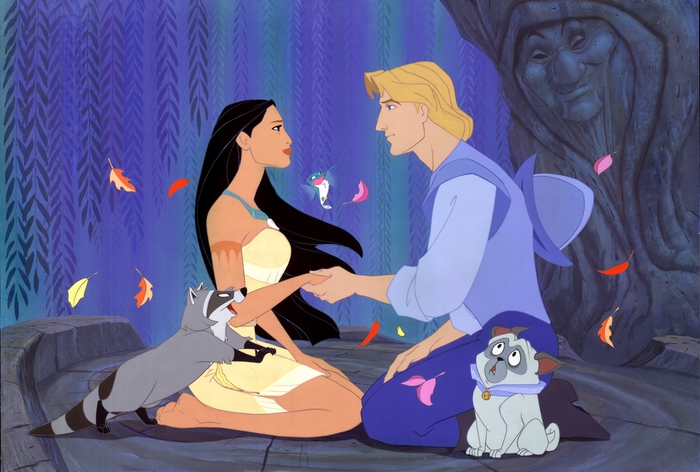
Of course, Disney’s 1995 Pocahontas is probably the only movie from the early colonization era most people have seen. However, for those who were kids when this movie came out, a lot of what this movie says about the founding of Jamestown is bullshit. For instance, John Smith looked much more like his voice talent Mel Gibson in real life than as a blond stud. He also had a talent for bullshit so some of the accuracy in his writings is sketchy. Also, Pocahontas was only a pre-teen in 1607 and never had any romantic encounter with John Smith at all. Talk about all that ruining your childhood.

Sure I may go back and forth from European history with the rest of the world. Yet, in many ways, history relating to Colonialism and Imperialism runs very much from the 1400s until after the Second World War, which means we’re covering a very large length of time. It is also a time of early globalization but not as we know it since many peoples are subjugated by European powers who may soon use white supremacy to justify it. Also, this era marks the beginning of slavery in the western world with the slave trade which was just unspeakably horrible with terrible implications we’re dealing with today. Many Hollywood movies usually take place at this time since there’s a lot of famous literature from this period in history sometimes told as adventures {like Kipling’s from British India}, pirates, exotic locations, and great white heroes. In fact, many filmmakers like doing movies set during this era because not only can they do an action packed adventure set in exotic locations, but also have a white male protagonist the audience can relate to (well, white audiences in the US or UK at least). Nevertheless, expect the White Man’s Burden to come up a lot in these movies whether intentionally or not, especially in literary adaptations in which the source material can be rather racist.

We begin this era with the Age of Exploration, in which traders tried to find a quicker route to Asia in order to bypass the Muslim middlemen. Though Columbus didn’t really discovered America, he opened the Americas up for business with the Columbian Exchange and the world would never be the same again. The Age of Colonization and international trade had begun. At first it was Spain and Portugal amassing colonial and trading empires but later powers like France, Britain, and the Netherlands would join in and be fabulously wealthy from it. Of course, you have the Spanish Conquistadors colonizing much of Latin America through guns, germs, and steel (as well as native allies who were fed up with their overlords). Areas of the Spanish Empire would include some islands in the Caribbean, most of Central America, much of South America except Brazil, the Guianas, and Suriname, the American Southwest, and Florida. The French would soon amass a colonial empire reaching from Canada all the way down to the Mississippi founding cities like New Orleans, Detroit, Montreal, St. Louis, Baton Rouge, Quebec City, Mobile, and Biloxi. Then you have the British who settled in Roanoke in the 1580s (which failed) and Jamestown around 1607 which would be the first permanent settlement of the Americas. Nevertheless, movies sometimes get a lot of facts wrong during the early colonization, which I should list accordingly.

Columbus:

Christopher Columbus sailed to the West Indies to prove that the world was round. (Actually he wanted to prove that sailing west would lead to a shorter route to the East Indies since most people in his day didn’t believe that there would be two mass continents on the way. He was wrong. Also, most Europeans haven’t believed in a flat earth since antiquity anyway {maybe even before Jesus}. The notion that Europeans believed the world was flat around the time of Columbus was just some bullshit made up by Washington Irving, which is rather insulting if you think about it.)

Columbus was the first European to make landfall in the Americas. (The Vikings were about five hundred years earlier, but they didn’t stay long. However, what is significant about Columbus’ landfall in the Americas is that it marks the start of a permanent European presence that changed the world. Thus, even though Columbus wasn’t the first European in the Americas, his voyages made more of an impact on history than the Vikings did.)

Columbus met his friend Diego Arana while on a trading voyage from Lisbon. (He didn’t meet the guy until several years later.)

One of Columbus’ men was eaten by sharks on his first voyage to the New World. (Nobody died during that voyage, at least at sea anyway. The thirty-nine men he left behind were killed by the time he returned to Hispanola.)

Columbus realized he didn’t land in India. (He never realized he actually landed in the Bahamas instead.)

Christopher was nearly executed during a near mutiny on his voyage. (He wasn’t, but he almost had his crew mutiny twice.)

Alonso Pinzon was a supportive sidekick to Columbus. (He was a case-hardened mariner whose support made Columbus’ voyage possible.)

Columbus was a forward-thinking idealist with his good intentions subverted by greedy and evil Spaniards. (He was a failure as a colonial founder and administrator that all his official responsibilities and duties were stripped by 1500 when the crown took charge and sent Columbus and his brothers home in chains. He also blamed everyone but himself for his spectacular fall from grace. Oh, and he systematically enslaved the Taino Indians, introduced Old World diseases to the New World {like smallpox}, and syphilis to bring back to Europe {but unknowingly and on accident}.)

The Nina, Pinta, and the Santa Maria all made it back to Spain. (The Santa Maria wrecked so only the Nina and Pinta made it back.)

Columbus took three voyages in which he fell out of favor on his second. (He took four voyages with the second tarnishing his reputation and the third leading to his downfall.)

Columbus’ achievements were forgotten until his son Hernando’s biography of him recounted them. (He was named and praised by all 16th century chroniclers.)

Explorations:

Juan Ponce de Leon discovered Florida in 1523. (He sailed to Florida in 1513 and died in 1521.)

Conquistadores:

The Spanish were among some of the cruelest conquerors in history who exploited the Indians for gold via slave labor, destroyed their culture, and forced them to convert to Christianity. (Yes, they did all of that and yes, they were cruel but they were better overlords than, well, the English. At least the Spanish married native women and lived in a society that accepted their mixed race children. Not to mention, they also tried to make Christianity more accessible to the Indians and there were priests who argued that they be treated better {and many Indians converted willingly}. Besides, the Spanish conquistadors wouldn’t have overthrown the Aztec Empire without their Indian allies {who were already sick of the Aztecs by then}. Not only that, but their defeat of the Aztec Empire showed that the Aztec gods have failed them. And though the Spanish had wiped out about 95% of the Indian population in the Americas, they mostly did it by accident usually through the spread of their germs and probably never set foot in most of the areas where Indians died by their diseases. The English gave Indians smallpox blankets and ostracized people for marrying Indians, with the exception of John Rolfe, of course.)

The Spanish conquistadors brought the collapse of Mayan civilization. (Actually Mayan civilization had been nonexistent for centuries before the Spanish set foot and they mostly brought the collapse onto themselves perhaps through environmental destruction. Also, the people the Spanish conquistadors met were Aztecs, not Maya.)

In 1560, the large El Dorado expedition was under Gonzalo Pizarro set off from Peruvian Sierras. The only document surviving from this lost expedition is the diary of monk Gaspar de Carvajal. (Gonzalo Pizarro {half-brother of Francisco, by the way} died twelve years before the Ursua El Dorado expedition. As a matter of fact, he was executed as a famous traitor to the king of Spain. Pizarro’s El Dorado expedition took place in 1541 and came down from Ecuador led by Francisco de Orellana, which Carvajal did accompany him as well as chronicle it but the main body was forced to turn back due to hardships like disease and hunger. Yet, a small detachment {including Carvajal} did press on and managed to follow the Amazon River all the way down to the Atlantic as well as landed on the coast of Venezuela in 1542. Dominican Friar Gaspar de Carvajal wasn’t on the El Dorado expedition but rather living safely at his Lima monastery because he didn’t want to go on another expedition to the Amazon ever again since he had lost an eye from an Indian attack. However, he’s in Herzog’s Aguirre Wrath of God to serve as the voice of reason and narrator.)

Lope de Aguirre went mad and was marooned in the Amazon. (He brought his men down to the Atlantic following the same route that Carvajal had taken nearly twenty years before, reaching the mouth of the Amazon on July 4, 1561 and sailed from there to the Venezuelan island of Margarita where he instituted another reign of terror that matched his ferocity in his behavior in the Amazon. At the end of August, Margarita was devastated, while Aguirre had left for the Venezuelan mainland. He met his death at the hands of royalist forces in Barquisimento on October 27, 1561 since he had killed expedition leader Pedro de Ursua, Don Fernando, and at least forty members as well as launched a reign of terror in the Amazon and incited a rebellion against Philip II and schemed to overthrow Spanish rule in Peru. His body was quartered and thrown into the street and a solemn proclamation was issued requiring any house belonging to Aguirre be leveled and strewn with salt so “no trace or memory….should remain.” Many of Aguirre’s men were offered pardons.)

Lope de Aguirre was a common criminal and a pathological killer who went insane. (He was a middle-aged mercenary soldier who came to the New World in search of riches like many conquistadors and went there at a young age. However, while he did kill a lot of people and instigate reigns of terror as well as may have been crazy, he was also an astute politician and leader of men. He also found on the Amazon theater on what he believed equal to the scale of his vast ambitions, a place he could be in his own words “Prince of Freedom” and “Wrath of God.” He also was a guy who incited a rebellion against Philip II as well as gave a speech calling his men to relinquish their Spanish nationality. He even wrote a letter to the king shortly before his death.)

The Spanish Church sided with the strong during the 16th century. (Spanish missionaries in the New World were among the first people to denounce the conquistadors’ treatment of Indians {dating as early as 1511}, most famously Dominican Friar Bartolome de Las Casas. Many Spanish clergymen were also among some of the most renowned intellectuals of their day bringing old ideas about justice and responsibilities of kingship as well as a new culture of Renaissance driven thinkers like Erasmus and Saint Sir Thomas More. However, don’t get the impression that Spanish missionaries were totally wonderful people, because even the nicest ones had their limits in kindness and had played roles in wiping out Indians and their culture. Like the conquistadores, they also exploited Indians by having them work as slave labor and other abuses. Yet, though we do tend to somewhat blame Spanish missionaries for Indian cultural destruction, we also have to account that more Indian cultures were wiped out through European diseases, many of which never had contact with white people at all.)

Dominican Friar Gaspar de Carvajal died in a native ambush on the Amazon River. (He died of old age in his monastery in Lima in 1584.)

Dominican Friar Gaspar de Carvajal was a cowardly priest as well as corrupt religious fanatic who always sided with the strongest. (He was actually a born survivor who lost an eye during an Indian attack and had dedicated his life to the conversion of Indians {in other words, a missionary badass}. He had a benevolent attitude toward the Indians which was consistent with his fellow Dominican brother Bartolome de Las Casas.)

Spanish conquistadores believed in the lost city of El Dorado. (Actually this may have been based on a myth by the Chibcha Indians of South America. However, sometimes the Spanish authorities used this story to set up expeditions in search of this city of gold in hopes of getting troublemakers out of Peru, never to return.)

The El Dorado expedition of 1560 was lost. (Actually there’s more documentation of the last ten months of Lope de Aguirre’s life than his first fifty years because of this since it’s well documented. Also, people in South America very well knew what happened on this expedition.)

Francisco Orellana was buried in Nazca tomb in a Nazca fashion. (The Nazca culture was already extinct by 800 A.D. before the Spanish Conquistadors ever got to Peru in 1532. However, Orellana is said to have vanished while looking for a lost Nazca city. However, he’s unlikely to have met any Nazca.)

Hernando Cortes sailed to the New World for gold and glory. (True, but he was sent there to trade with the natives. But he overruled his orders and even defeated the Spanish army sent to arrest him.

Hernando Cortes often enslaved Spanish prisoners. (Yes, he took fellow Spaniards as prisoners. But the idea of enslaving a fellow Christian or Spaniard would’ve horrified him.)

Hernando Cortes was a humorless hardass who’d use natives as tools and betray allies at the drop of a hat if he doesn’t get his way. (He was a charming diplomat who forged real alliances with some native groups. For he wouldn’t have taken down the Aztec Empire without them.)

Jamestown:

Pocahontas saved John Smith’s life and carried on a romance with him. (Yes, she might have saved his life but no, she didn’t have a romantic relationship with him unlike what Disney says. Also, she was about ten or eleven at the time and she really wasn’t called Pocahontas but Matoaka. However, they did meet. By the way, when she saw him again, she slapped him in the face. Oh, and he also claimed about being “saved” by powerful women on more than one occasion. Not to mention, he didn’t write about Pocahontas saving his life in his 1608 account and that story first appeared in 1622, possibly to take advantage of her prominence in England. So it’s best to look at it with suspicion.)

Coastal Virginia was filled with mountains and thick pine trees. (Coastal Virginia is actually flat and swampy. Virginia’s mountains are hundreds of miles away from it.)

Governor John Ratcliffe was a villainous man. (He was actually more foolishly trusting than anything. Interestingly, he was flayed and later burned alive by Powhatan Indians in 1609 but of course, you wouldn’t see that in a Disney movie. Oh, and he wasn’t the first governor of Jamestown and wasn’t in charge during the voyage {though he was captain of the ship Discovery}. Nor was he sent back to England in chains after being removed. This was not over Indian treatment, but over enlisting colonists to build a governor’s house, trade with Indians, and handling food shortages. Not to mention, he and John Smith were allies and he didn’t think the Indians were barbaric because he’d been trading with them. Oh, and he died because Indians tricked him with a lure for food which resulted in his family unfriendly death in 1609. However, considering the circumstances Jamestown was facing, you couldn’t blame the guy.)

John Smith was a clean shaven handsome blond guy. (He was actually a short, portly, brown-haired, and bearded man as well as pushing thirty.)

John Smith was a decent guy when it came to the Indians. (John Smith was much more of jerk in real life and actually kidnapped an Indian leader so the guy’s tribe would provide him with plentiful resources. He had a tendency to exaggerate {or just plain make up} things in his accounts. He was also a mercenary and fantasist who could be ambitious, abrasive, self-promoting, and feisty. Still, he was competent even though he was unpopular among the colonists {well, the first wave who saw themselves as his social superiors}.)

The Indians and white Jamestown settlers all managed to make friends. (American history pertaining to Native Americans tells a very different story, very different. Besides, unlike what the Disney movie suggests, after John Smith had to seek medical attention for a “gunpowder accident,” relations between the Indians and settlers at Jamestown would shortly go to hell. Also, while John Smith would see Pocahontas again, he wouldn’t return to Jamestown.)

John Smith went scouting around after landfall in Virginia. (He was arrested and clapped in irons during the voyage {for concealing a mutiny} and wasn’t released until a month after landing at Jamestown. He did most of his exploring and trading after that.)

John Rolfe and Pocahontas had a serenely happy marriage and was easily accepted among the English. (She was probably not as happy or as accepted as depicted in The New World. One letter from an acquaintance said that Rolfe dragged her around as a “sore against her will.” Yet, the marriage did help stabilize native and settler relations. Oh, and Rolfe wasn’t above using his wife’s image to sell tobacco.)

John Smith was nearly executed on top of a bluff at dawn in front of angry colonists who had come to rescue him. (He was going to be executed in Powhatan’s longhouse in front of his warriors and counselors. The colonists didn’t know where he was. Of course, this is coming from the real John Smith.)

Chief Powhatan had a loving relationship with Pocahontas’s mother. (Maybe, but the guy had at least 50 wives each of whom gave him at least one child before being sent back to where they came from. Assuming she didn’t die in childbirth, we can say that Pocahontas’s mother would’ve suffered a similar fate though she’d be supported by Powhatan until she found another husband. So let’s just say that Powahatan and Pocahontas’s mother didn’t have a typical marital relationship.

Chief Powhatan was actually a good father to Pocahontas who was his only daughter. (Pocahontas was his favorite daughter but she was also one of his innumerable children by an estimated 50 wives. And of his kids, Smith also had contact with one of his sons. Also, he didn’t try to save her when she was kidnapped by the English, which led to her berating him and choosing to stay with the British as well as convert to Christianity. Of course, Powhatan had his reasons for not attacking the British camp. His people were also political savvy and very fierce in battle. Oh, and he may have ruled over as many as 34 tribes.)

Kocoum was an Indian who was betrothed to Pocahontas. (Mattaponi tradition holds that Kocoum was Pocahontas’ first husband who was killed after her capture in 1613 or may have not been murdered at all. Yet, there’s another theory that this guy could possibly be an Indian nickname of John Rolfe himself.)

Pocahontas was an Indian princess. (She was a chief’s daughter but she was presented at King James I’s court as one. Thus, she was viewed as a princess in her lifetime, just not among her own people.)

Edward Wingfield was shot and killed by settlers at Jamestown. (He died in 1630 in his eighties and wrote several books about Jamestown.)

Pocahontas was accompanied by her uncle Opechancanough while traveling in England who was to mark a notch on a stick every time he encountered an Englishman. (While the notches story is accurate, she was actually accompanied by her half-brother-in-law Tomocomo who was also sent to search for John Smith. He returned to Virginia with Samuel Argall and John Rolfe in 1617 but he didn’t have nice things to say about the English and was disgraced. Oh, and Opechancanough actually staged a massacre at the Virginia colony years later which killed 350 people in one hour.)

John Smith had tattoos. (The European practice of tattooing was dead for centuries and wouldn’t be readopted until a century later {unless if they were French Canadian soldiers}. However, it’s possible that John Smith might’ve had native tattoos though.)

King James I ordered John Smith to leave Jamestown. (He left for England in 1609 due to a gunpowder accident which resulted in severe burns, yet he recovered.)

Pocahontas was kidnapped by English settlers while John Smith was still in Jamestown. (Pocahontas was kidnapped in 1613. John left for England in 1609.)

Captain Christopher Newport had two fully functioning arms at Jamestown. (He had part of his arm severed before he landed at Jamestown.)

The first Jamestown colonists sailed on the Susan Constant. (They sailed on the Susan Constant, Godspeed, and Discovery.)

New France:

Jesuit priests proselytized Indians and were accompanied by lay domestics on their missions back in 1634. (At this time, French Jesuit priests were sent in pairs partly to avoid sexual temptation. They only had lay domestics later in which they had to sign a civil contract and take a vow of chastity, poverty, and obedience to accompany the Jesuit priests on missions. And no, they didn’t embark on long journeys so close to winter freeze-ups.)

French 17th century Jesuit priests baptized with saliva. (Saliva has never been a valid matter for baptism and no 17th century Jesuit {let alone any priest} would never have baptized anyone with their own spit.)

Algonquin Indians killed priests during disease outbreaks within their walls. (They never did this even though they knew that missionary priests may have spread the diseases that killed many of them.)

French colonists took Indian wives out of love. (They took Indian wives in order to help bring peace to the tribes and the French. Taking Indian wives also helped French Canadian fur traders do business with their indigenous in-laws, which benefited both parties.)

History of the World According to the Movies: Part 23 – Life in Renaissance Europe

Image

Perhaps no movie captures the Renaissance more than The Agony and the Ecstasy starring Charlton Heston as Michelangelo. Though it is true that Michelangelo painted the ceiling of the Sistine Chapel, it’s said that Heston thought the artist was 100% heterosexual, which is actually not true. In fact, he actually wrote love poems to certain young men and his female figures have been known to be based on his studies of male anatomy.

The Renaissance covers a lot of ground in movies. And of course, whether we like it or not, the Renaissance changed Europe forever with works of art, science, religion, philosophy, and so much more. Italy produced artists like Leonardo, Michelangelo, Raphael, and Donatello or was call them The Teenage Mutant Ninja Turtles (again with the turtle nonsense, well, I can’t help it). Italy also had a lot of other notables, too, like Titian, Botticelli, Cellini, Galileo, Machiavelli, Dante, and others. Of course, Renaissance Italy was rife with corrupt popes and wars with all sorts of backstabbing and intrigue. Yet, they did manage to create great art. Then you have Renaissance Spain home of the Spanish Inquisition that became a new country and world power by founding one of the first big colonial Empires (more on this later)  as well as served as a bastion for the Catholic Counter-Reformation (Ignatius Loyola and Theresa of Avila were from there) yet they also produced the notable Miguel Cervantes who wrote Don Quixote, one of the first western novels as well as a satire of chivalry. Then you have the artist El Greco who did many religious paintings in Toledo and would later inspire other artists like Picasso, the Impressionists, and others. Renaissance Germany would also be a place of chaos due to religious wars and reformations, some more radical than others. Yet, Germany also had its share of painters as well as Johnannes Gutenberg whose moveable type invention would change communication for ever. Then you have Russia, which started to take its familiar form under the legendary Ivan the Terrible. Nevertheless, movies centered around life in Renaissance Europe do take some artistic liberties which I will list accordingly.

Italy:

Michelangelo was straight. (Sorry, Charlton Heston, Michelangelo was gay {or perhaps bisexual} and so was Leonardo. Still, I wonder they cast Heston in this role because of this since he was convinced the man who painted the Sistine Chapel was 100% heterosexual and the fact he’s been playing roles that carry homoerotic subtext throughout his career.)

Galieo got in trouble with the Catholic Church for supporting Copernicus’ theory of heliocentricity and put him under house arrest as a result. (No, it was more or less for depicting his friend, Pope Urban VIII as an idiotic peasant in a satire he wrote {who had been defending him} as well as alienating the Jesuits and two Vatican astronomers. This was because he was using his scientific findings to reinterpret Scripture {which was really not a good thing to do}. As TTI assesses the Galileo affair, “To keep it short, the Church of Galileo’s day issued a non-infallible disciplinary ruling concerning a scientist who was advocating a new and still-unproved theory and demanding that the Church change its understanding of Scripture to fit his. At the end of the day, the entire fiasco boils down to an overgrown squabble involving a cranky old man and a bunch of annoyed bigwigs who decided to cut him down to size.” Oh, and he was given a manservant under house arrest at his villa and published another scientific book without incident. Nevertheless, if religion played a role into Galileo’s condemnation, it had more to do with the Catholic Church’s reaction to the Protestant Reformation which was still going on by the early 1600s and won’t effectively end until the 30 Years War. We should know that the religious climate at the time was rife with Christian Fundamentalism on both sides during the Reformation.)

Galileo was first condemned by the Catholic Church. (He was actually very popular with the Church until he started being an asshole to the Pope. Rather the first people to condemn him were secular scholars. In fact, geocentricity was the dominant view held by the majority of scientists in his day, secular and otherwise. And you can guess what the secular scholars were using to refute his arguments. So maybe you can see why Galileo was reinterpreting Scripture based on his scientific findings, which got him inevitable trouble with the Catholic Church. So from the Church’s standpoint doing science is fine, but using science to reinterpret the Scriptures, no way in hell.)

Leonardo Da Vinci was part of a secret society that knew the secret of Jesus. (My guess this is something Dan Brown just made up for a story.)

Italy was a peaceful place during the Renaissance. (The Italian city-states were constantly at each other’s throats for a significant time period. These Italian wars were also a reason why Machiavelli wrote The Prince.)

Giordano Bruno was unjustly burned at the stake for his embrace of Copernican astronomy and his doctrine of the plurality of inhabited worlds. (It was actually for his theological heresies as TTI lists: “that Christ was not God but merely an unusually skillful magician, that the Holy Ghost is the anima mundi, that the Devil will be saved, etc.” He had multiple chances to repent but was defiant to the very end. Oh, and he claimed he was the real messenger of God and denounced the Church as charlatans {this would’ve been a capital offense}. So though he may have been unjustly burned at the stake by our standards, those in the 16th would’ve seen his execution perfectly justified, which would make him more of a martyr for religious freedom than for science.)

Marco Venier was in love with Veronica Franco. (They may have been intimate but their love story might’ve been greatly exaggerated.)

Artemisia Gentileschi painted nude men and had an obsession with male genitals. (She painted female nudes and a very violent painting on Judith slaying Holofernes with blood spurting out of the guy’s head.)

The relationship between Artemisia and her mentor Tassi was consensual and loving. (He wasn’t her long term mentor and any sexual relationship they did had consisted of rape or other sexual abuse. Also, they despised each other.)

Agostino Tassi was a handsome and devoted lover to Artemisia. (He was a philanderer and serial rapist {jailed for sexual crimes} who only appeared briefly in Artemisia’s life. He’s said to have had sex with his sister-in-law as well as killed his wife. Oh, and during his rape trial, he defended his innocence as well as called Artemsia, her mother, and sisters whores. And yet, he’s portrayed as a good guy in Artemisia’s 1997 biopic.)

Artemisia ardently defended Tassi during his rape trial. (She condemned him and vigorously described how he raped her. Seriously, why is Artemisia and Tassi’s relationship portrayed as a love story when it was really anything but?)

Caravaggio was gay. (Well, his name was Michelangelo, but we can’t be sure.)

Benvenuto Cellini was a ladies’ man who had a relationship with a Florentine Duchess. (Well, he did fool around with some of his models {one of them gave him an illegitimate daughter}, but there’s probably a good chance he wasn’t dallying with a duchess. He also married his servant and had five children. However, he didn’t always limit himself to women because he was charged with sodomy 4 times {and three of them were against men}.)

Raphael was commissioned to paint the ceiling of the Sistine Chapel. (Julius II had him commissioned for another project at the time yet he was definitely influenced by Michelangelo’s work. Oh, and he convinced the Pope to put Michelangelo on the Sistine Chapel.)

Galileo’s daughter Virginia was wooed by a man named Marsili who was a scion of a wealthy family for eight years. (She had been in a convent as a young girl and became a nun because being illegitimate meant she would never be courted by wealthy men like Marsili. Still, she was close to her father.)

Ireland:

Hugh O’Donnell’s ascension in Donegal helped prophesized independence from England under Elizabethan rule, which allows him to convince the Irish lords to band together with other clans and bargain for their freedom for a position of strength. (Well, Hugh O’Donnell was a real person but he was unable to get the local Irish lords to join him or able to gain any independence from England whatsoever and wouldn’t become independent until the 1920s. Oh, and O’Donnell ended up fleeing and dying in Spain.)

Russia:

Ivan IV almost gave up the throne after his wife died since he thought her death was God’s punishment on him, yet stayed on the will of the people. (Well, Ivan the Terrible was a religious man, but he actually blamed his wife’s death on the boyars, claiming they maliciously poisoned her {though this is disputed}. Nevertheless, despite his lack of real evidence, Ivan IV had a number of boyars tortured and executed. Of course, he had a strong dislike for the boyars since childhood anyway so he might’ve been using his wife’s death as an excuse. As for the abdication and leaving Moscow, he only did that a few years later alleging it was over aristocratic and clerical treason and embezzlement. He only returned because the boyars feared an uprising from the Muscovite citizenry, and Ivan only agreed on the condition he was granted absolute power. So the autocratic Czardom began.)

Sweden:

Eric of Sweden was king 1585. (His half-brother John III was at the time. Also, he had abandoned his proposal to marry Elizabeth I in 1560 when his father died. He was deposed in 1568 and had died in captivity in 1577.)

Spain:

Philip II was a power hungry and religious zealot man who just wanted to dominate England so he sent the Spanish Armada. (Sure he was power hungry and yes, he did want to rule England as well as cash in on New World riches. However, he sent the Spanish Armada because English privateers were raiding Spanish ships and colonies as well as that Elizabeth encouraged a rebellion in the Netherlands.)

Philip II was a hunched and shadowy figure with a dark beard and an incompetent king as well as a religious fanatic. He was also a cruel tyrant. (Yes, he was a religious man and a rigidly conscientious one feeling he had a duty to retain his Hapsburg patrimony and re-establish the Roman Catholic faith in Europe, but he wasn’t cruel by 16th century standards. However, he was tall, blonde, and handsome as well as highly intelligent having several successes with his foreign policies. Many of his descendants are a different story {because he followed a tradition of marrying his relatives}.)

The Spanish Infanta was a child around the time of the Spanish Armada. (She was 21.)

Queen Isabella was in love with a Spanish Conquistador and had her life threatened by the Grand Inquisitor. (None of these happened. Also, she was the one who started the Spanish Inquisition in the first place and ran it as a state institution. Not to mention, she was dead before the Spanish Conquistadors even existed.)

Out of King Ferdinand and Isabella, it was Isabella who wore the pants. (Well, Ferdinand of Aragon was one of Machiavelli’s models for The Prince and did rule jointly with his wife, but yeah, the Spanish Inquisition was her idea.)

El Greco was imprisoned and facing execution before the Spanish Inquisition. (He lived spent the rest of his life in Toledo where he had a family {as well as lived to be a grandfather} and worked for various religious institutions. Also, he was living near an area the Spanish Inquisition had the most influence. So if he was ever tried by the Spanish Inquisition, he probably wasn’t facing a death sentence. Furthermore, he even painted a Grand Inquisitor’s portrait.)

Miguel Cervantes was imprisoned by the Spanish Inquisition. (Cervantes actually did begin writing Don Quixote while in prison but wasn’t because he wrote a play that the Spanish establishment didn’t like. The real reason why he was imprisoned was due to financial irregularities in his accounts which happened twice. In short, it was money problems, not angering the Spanish Inquisition. It would’ve made more historical sense in Man of La Mancha to have Cervantes arrested for failing to repay his bookie.)

The University of Salamanca was filled with the medieval mentality that gripped Spain during the fifteenth century. (Like the Portuguese, the Spanish had the best geographical knowledge of the day at its disposal so they could’ve had justifiable doubt on Columbus’ theories. Also, is was a big intellectual center of Catholic Spain where they debated about the standing of Indians, economics, and law.)

Malta:

The Great Siege of Malta involving the order of St. John of Jerusalem took place in 1528 in which it was a force of 400 Knights and 800 mercenaries against. (Actually the siege took place in 1565 and the Knights of St. John weren’t granted Malta and Tripoli by Holy Roman Emperor Charles V until 1530. As for numbers, the most probable is 9000 including the Maltese militia. However, they did face against 40,000 Turkish attackers at most though the number is more like 25,000-30,000.)

Renaissance Life:

Renaissance maidens never had to worry about mud stains on the train of their beautiful gowns. (Despite the fact that people peed and threw their bodily waste out of the windows.)

Most people executed for witchcraft were wise women who were ahead of their time. (For one, most people who were executed for witchcraft were people who their neighbors didn’t like and claimed them for practicing witchcraft. Favorite targets were outcasts/marginals or people who lived outside society norms like supposed thieves, supposed unbelievers, unwed mothers, strange old women living outside the village, and so on. And they weren’t always women, by the way. Also, since the late Middle Ages was the time of plague outbreaks, most landlords needed any workforce they could get, wise women were the only eligible midwives and local medics around. And when anyone died of from treatable conditions like childbirth complications, these women often took the blame but they probably wouldn’t be burned for it since to do so would obviously be the stupidest thing possible. Not to mention, anyone trying to denounce a “witch” at that time was considered a troublemaker and flogged.)

People washed their faces with water. (They rarely bathed at this time since they thought it was bad for you. Also, they thought water was unhealthy.)

Double bittted axes were used to chop down trees. (They were invented in the US during the 1870s.)

Sidesaddles had 2 pommels. (They only had one which held only the right leg in place.)

The Renaissance only lasted for 100 years. (It actually overlaps with the Middle Ages and may have perhaps lasted for 300 years starting in Italy in the 1300s with Dante, Giotto, and others.)

The Renaissance was a period of Enlightenment. (In a way, yes, but it wasn’t one of the most enlightened time in Europe with the Protestant Reformation {and all the ugly stuff that went with it}, people being tortured, and notions like freedom of religion and speech being almost unheard of {or used as a pragmatic policy}. And almost nobody gave a shit about the working class or poor other than themselves {the peasants in Protestant principalities learned the hard way and Luther gave them absolutely no sympathy}. Besides, the fact the first person to play Juliet was a teenage boy kind of illustrates how people viewed women during that period. Also, the notion of religious toleration was much more exercised in Asian entities and to a much greater extent for hundreds of years than in Europe at this point {since religious pluralism was the norm in many of these vast Asian empires}. Not to mention, while there were plenty of Renaissance scientists, Renaissance medicine was just as terrible as it was in the Middle Ages and will remain so until well into the 19th century. Oh, and the 1500s also marked the early years of Spanish colonialism, too. And there were all kinds of wars and violent crime. So to say that the Renaissance was a period of Enlightenment really doesn’t hold up.)

People drank water. (No one drank the stuff during this time. It was considered unhealthy. Most would drink ale instead {including children.})

The early 16th century was an age of superstition mixed with paganism and fostering an unquestioning obedience of people. (Not necessarily since this the Renaissance was in full stride by this time. But this was a time rife with a high level of religiosity in Northern Europe which gave rise to the Reformation.)

Solid chocolate was available at this time. (It wasn’t until two centuries later. Though chocolate was introduced in Europe by the Spanish during the 16th century, most people would either be drinking or eating the beans at this time.)

Men used to drape their cloaks on mud puddles for ladies to walk on, which either never got dirty or washed regularly. (I doubt men did this in Renaissance Europe, even if the women behind them were queens. This is probably a myth.)

Formal duels of honor were the preferred means of settling fights. (Only among the upper classes who were the only ones with any time to concern themselves with codes of honor, formal challenges to their character, reputation, or social status. Scuffles, street-fights, reencounters, affrays, ambushes, brawls, dunking violence, and assassinations were far more common. Men went around armed because they lived in a violent world where self-defense was necessary against the daily possibility of personal assault.)

Only gentlemen owned rapiers. (It originated with common citizen and soldiers with frequent street-fighting, brawling, urban gang wars, and dueling. The earliest references for rapier use pertain to urban homicides, criminal assaults, and common fighting guilds. If The Wire took place during the Renaissance, you can pretty much guess that almost every character would be armed with one of these.)

It wasn’t unusual for a noblewoman to want to aspire to be an actress. (For someone of noble birth from up until very recent times, an acting career would be unthinkable regardless of gender. Actors were looked down upon during much of history and the Age of Shakespeare was no exception. If a nobleman was ever involved in a theatrical production during the 1500s, he was either a patron or a playwright, not an actor. Thus, it would’ve been more accurate in Shakespeare in Love if Gwyneth Paltrow’s character was either a peasant girl with acting ambitions {since most roles were played by men} or a noblewoman who wanted to be a playwright.)

Being “broken at the wheel” was a way to extract confessions. (It was an execution method, mostly for offenders who committed the most serious crimes. As TTI explains: “The victim would be strapped to a cart wheel, then have their arms and legs broken with sledge hammers. They would then bleed to death slowly. It was reserved for people such as heretics whom even the ordinary painful death by burning or hanging was considered too good for. In the Austria-based Empire of the Habsburgs, it was the harshest punishment reserved for traitors and rebels against the State.”)

History of the World According to the Movies: Part 22 – Renaissance France and Scotland

Image

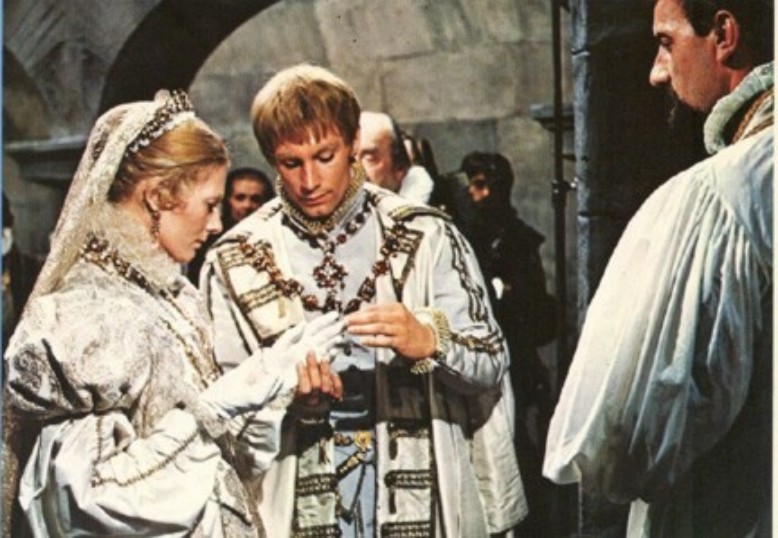
A scene from the 1971 film on Mary, Queen of Scots starring Vanessa Redgrave in the title role where she marries her half-cousin Henry Stuart, Lord Darnley in a Catholic ceremony. Sure this may look like a fairy tale wedding to some people but those who know anything about the story of Mary, Queen of Scots knows that it all goes downhill from there. Seriously, Darnley was a real jerk as Timothy Dalton played him.

Of course, if there’s a movie about Tudor England, chances are that you will have either France or Scotland as their enemies (or Spain but that’s for another post). Nevertheless, these countries go well together with the Renaissance era since they both had Catholic monarchs as well as a large number of Protestants in them. It also helps that Mary, Queen of Scots grew up in France and was married to the French king (I’m not kidding on this for her first husband was Francis II). France during the 1500s was ruled by the Valois family as well as the place where the Catholic and Protestant clashes came to a head with religious wars and the Saint Bartholomew’s Day Massacre. Yet, you also had a guy like Henri of Navarre who was willing to convert to Catholicism and marry a French princess so the country could be at peace. Of course, once he ascended the French throne, he issued the Edict of Nantes which brought religious toleration to the Catholic country. Then you have Scotland, home of Mary, Queen of Scots who was one of the most unlucky monarchs of history with a poor choice of men as well as a Catholic queen in a country with a Protestant majority population. Not to mention, she’d end up abdicate for her son and would later be beheaded by her cousin Queen Elizabeth I in England. Nevertheless, movies about Renaissance Scotland and France do contain their share of errors which I shall list accordingly.

France:

Catherine de’ Medici:

Catherine de’ Medici instigated the St. Bartholomew’s Day Massacre. (Sure she was anything but a saint and she saw little wrong with the travesty, but she’s probably innocent of starting the whole thing. Also, she was planning to ally herself with the Navarre family who were Protestants. The massacre was probably more likely a spur of the moment thing started by the Guise family because of the marriage between Medici’s daughter and Henri of Navarre. And the Guises were more extremist Catholics than the French royal family. Still, Henri Duke of Guise would later apologize for the whole affair and put the Huguenots under his personal protection.)

Catherine de’ Medici poisoned Queen Jeanne III of Navarre. (Jeanne died of natural causes but people suspected poison.)

Henri III:

Veronica Franco slept with French King Henri III and convinced him of a Franco-Venetian alliance. (Yes, she did sleep with him while he visited Venice, but she didn’t convince him to ally with the city-state. She wrote poems for him as well as dedicated poetic works to the French king though.)

Henri, Duke of Anjou (later King Henri III) had a clothing obsession and dressed in drag in front of the English court of Queen Elizabeth I. (Yes, he did like clothes and occasionally dressed in drag. Yet, he never actually went to England or met Queen Elizabeth I. His brother Francois did and was one of Elizabeth’s few suitors to court her in person earned the nickname of “Frog.”)

King Henri III was a flaming cross dresser. (Yes, he was a cross dresser but he was anything but gay since the number of female mistresses he had was unaccountable. Thus, he was more of a cross dressing skirt chaser extraordinaire.)

Henri III had an incestuous relationship with his aunt Scottish Queen mother Mary of Guise. (They never had a sexual relationship. Also, they never met or were blood related. She was just his brother’s mother-in-law. Oh, and Mary of Guise was a member of an extremely Catholic family in France who were rivals to the Valois royals.)

Marguerite of Valois:

Marguerite of Valois’s lover Joseph La Mole was wounded by marauding Catholics during the Saint Bartholomew’s Day Massacre. (This is based on a true story, but she claimed the man was a different guy named Monsieur de Teian. Still, it’s said she and La Mole were involved, but that’s as far as it goes.)

Marguerite of Valois was a beautiful ivory skin brunette as well as poisonous. (From contemporary portraits I’ve seen of her, she seems to have lighter hair as well as bears a strong resemblance to Catherine de Medici {who wasn’t the most attractive woman}. However, she probably got by on her fashion sense and personality since she had a string of lovers. Also, she was used more as an unwilling pawn than anything.)

Other:

Charles IX died of arsenic poisoning and was mistakenly assassinated by his family. (He died of tuberculosis, not poison. Also, his family wasn’t trying to assassinate Henri of Navarre for he was too valuable for them to kill.)

Catherine de’ Medici’s children committed incest together while Henri III had feelings for his mother. (This is highly unlikely, but this was probably started by Alexandre Dumas in his novel  Le Reine Margot.)

Diane de Poitiers plead the king for mercy on behalf of her husband Count Louis de Breze who’s been charged with treason while the adult prince Henri wrestled with his groom. (It was her father who was charged with treason which was in 1523 when Prince Henri was 4 years old.)

Stuart Scotland:

Mary of Guise:

Queen mother Mary of Guise rode in front of her troops on the battlefield with both legs over the horse. (Even a reigning queen wouldn’t ride in front of her troops {and she actually refused to do so} as well as rode side-saddle. Oh, and she sent a fleet against the English and rebelling Scottish Protestant landlords with a fleet.)

Queen mother Mary of Guise was killed by Francis Walsingham. (She died in June 1560 of dropsy realizing she had it the previous April.)

Mary, Queen of Scots:

Mary, Queen of Scots made decisions based on her emotions. (There were perfectly logical theories why she’d marry Darnley and Bothwell, neither of these guys were good men.)

Mary, Queen of Scots was petite. (She was said to be 6 feet tall.)

Mary, Queen of Scots approved the murder of her husband Lord Darnley. (We don’t know whether she approved or not {though many historians think she was innocent} but still, having him alive wasn’t going to make her life better and it’s not like the guy didn’t deserved it because he was kind of a bastard. I mean the guy killed one of her friends in front of her while she was pregnant. He was also said to have died under mysterious circumstances. Also, the authenticity of the Casket Letters has been hotly debated.)

Mary, Queen of Scots was abused by her jailer. (Her jailer, Amyas Paulet treated her rather well.)

Mary, Queen of Scots had a Scottish accent. (She had been living in France since she was a child and was once married to the French king. She would’ve had a French accent.)

Mary, Queen of Scots had a West Highland White terrier. (It appeared in Scotland in the 19th century.)

Mary, Queen of Scots was executed for no reason. (She was involved in the Babington Plot which was a conspiracy to put herself on the English throne {though she wasn’t originally a part of it though getting her in might have been a job by Francis Walsingham}.)

Mary, Queen of Scots was blonde. (She was a redhead.)

Mary, Queen of Scots was executed by a single swift axe stroke. (It took two ax strokes to lop her head off with the executioner using the axe as a saw. Some said it took three.)

Mary, Queen of Scots’ execution was held indoors. (It took place in the great hall at Fotheringay castle, which isn’t near the Scottish mountains but in flat English countryside.)

Mary, Queen of Scots had James VI of Scotland (or James I of England) at the Earl of Bothwell’s estate. (He was born in Edinburgh castle.)

Mary, Queen of Scots was pretty right up to her execution. (She wore a wig at the time and had suffered from wearing lead based makeup. Oh, and she died at 44 and had been in custody at various places.)

It was only the English Protestants who wanted Mary, Queen of Scots dead. (The Continental Catholic powers might’ve been involved as well. After all, who would support the overthrow of a Protestant monarchy for a woman shacking up with her husband’s killer? She was worse than worthless to them alive.)

Mary, Queen of Scots escaped with the Earl of Bothwell after the Rizzio murder. (She didn’t. She actually escaped with Darnley, believe it or not.)

Mary, Queen of Scots married her last two husbands for love. (Darnley maybe, but Bothwell, no way.)

Mary, Queen of Scots was romantically involved with her secretary David Rizzio. (They weren’t involved but Darnley did suspect it. Still, there’s no question that Darnley was the father of James I of England.)

Henry Stuart, Lord Darnley:

Lord Darnley had a homosexual affair with David Rizzio. (He was actually jealous of Rizzio for his association with his wife, which was the reason he killed him.)

Lord Darnley was sent to Scotland to woo Mary, Queen of Scots. (It was to help his dad, Lennox with financial stuff.)

Lord Darnley was a member of one England’s oldest Catholic families at the time. (His dad was an exiled Scottish lord while his mother was a Tudor and a Douglas. Also, he was Mary’s half-cousin who did have rights to the Stuart crown.)

Lord Darnley was in love with Mary, Queen of Scots. (He probably didn’t love her.)

Lord Darnley had syphilis in the days following his death. (We’re not sure what he had or whether it was syphilis, smallpox, fever, or poisoning. Yet, it didn’t kill him.)

Lord Darnley had set the explosion at Kirk o’ Field to kill his wife Mary, Queen of Scots. (We’re pretty sure that he didn’t set the explosion.)

James Hepburn, Earl of Bothwell:

The Earl of Bothwell and Mary, Queen of Scots had a loving relationship. (I don’t think Mary felt any love for this man.)

The Earl of Bothwell was at Mary and Darnley’s wedding. (He was in exile at the time.)

James Hepburn, Earl of Bothwell was in love with Mary, Queen of Scots and thought about her best interests. (Bothwell wasn’t exactly what you’d call a nice guy. Sure most historians believe that he killed Lord Darnley but that’s not the worst thing he did {actually he kind of did Mary a favor}. He squandered his fiancée out of her possessions and later abandoned her {which will later cause him to spend the last ten years of his life in prison}. He was said to have gotten divorced from his first wife for fooling around with a servant {or because he had his eye on Mary or the crown}. Then there’s how he managed to get hitched to Mary, Queen of Scots. Mary, Queen of Scots says that the two were in love and she freely consented. But actual historical accounts say that they were just friends before the two married and that Bothwell was more or less after her for power. Also, Bothwell might have even kidnapped and raped her in order to secure her marriage to her and the crown. Not to mention, they were married in a Protestant rite, which wouldn’t be what Mary had in mind. Still, Mary’s marriage to Bothwell was one of the reasons why she was forced to abdicate in favor of her infant son James VI {who’d eventually become James I of England} and was later imprisoned by her own people before Elizabeth I got her.)

The Earl of Bothwell was executed by dragging. (He died in a Danish prison.)

James Stewart, Earl of Moray:

The Earl of Moray plotted against Mary, Queen of Scots and wished to use his half-sister as a figurehead. (Despite their religious differences, Mary, Queen of Scots and the Earl of Moray seemed to get along rather well. He only turned against Mary in opposition to her marriage to Lord Darnley but he was pardoned after returning to Scotland from seeking shelter in England.)

Other:

Scottish lords wore kilts in Mary, Queen of Scots’ court. (Scottish lords didn’t wear kilts in 16th century Scotland.)

History of the World According to the Movies: Part 21 – The Elizabethan Age

Image

From the historic travesty Elizabeth and Elizabeth: The Golden Age where dramatic license runs wild and real history comes to die. I mean you’d be better learning real history from a Renaissance Fair than in this historic disasterpiece. Yet, like Braveheart, this got Oscar nominations nevertheless. Also, there’s no way in hell Elizabeth looked like that in her fifties.

Of course, my last post didn’t cover the whole Tudor age since Hollywood makes a lot of movies in this era since the Tudors produced both Henry VIII and Queen Elizabeth I. However, between their, Henry VIII’s other children Edward VI and Mary I also ruled England for those eleven years which were eventful but short. Nevertheless, Elizabeth I ascended the throne 1558 and would rule for over forty years which would signal the English Renaissance in its full flower. England soon became interested in settling colonies in the Americas with Roanoke (which failed), Shakespeare wrote his plays, the Church of England as we know it began to take shape, Mary, Queen of Scots lost her head, and the English defeated the Spanish Armada. Elizabeth I was an astute monarch who helped bring England onto the world stage and led a true golden age. However, she never married and died childless which meant that her throne went to the King of Scotland at the time named James VI (I’ll get to this somehow). Nevertheless, this post will be long since one Indian director made a couple of films called Elizabeth and Elizabeth: the Golden Age that offend me both as a Catholic, a film lover, and history buff, which I should list accordingly. Apparently these were very popular in Great Britain but do make me worried since I believe filmmakers should have at least some concern with facts like people’s life dates for instance. Shekhar Kapur apparently seems to take as much of a dramatic license as Mel Gibson. Still, here are some of the movie inaccuracies from the Elizabethan Age.

Edward and Mary:

Edward VI:

Edward VI was sickly child all his life. (He was said to be good in health until a teenage bout with measles which weakened his immune system.)

The Duke of Northumberland pressured a dying Edward VI to have his daughter-in-law Lady Jane Grey succeed him. (Lady Jane’s succession was Edward’s own idea dating before his final illness so he could stop the Catholic Mary from getting the throne. Yet, the marriage between Lady Jane and Guilford Dudley was the Duke of Northumberland’s idea.)

Edward VI died of tuberculosis. (He died of a chest infection but we’re not sure whether it was TB or not.)

Lady Jane Grey and Guilford Dudley:

Guilford Dudley was a virgin with a passion for social justice and he and Lady Jane actually loved each other. (In reality, he was a total asshole who had a temper tantrum when Jane refused to make him king after her coronation. They hated each other and Jane never wanted to marry Guilford in the first place. She was so repelled by him that their marriage was never consummated and she refused to see him on the night before his execution. I’m sorry, but that Lady Jane movie starring Cary Elwes and Helena Bonham Carter is just a load a crap because Guilford and Jane’s relationship was anything but a romantic love story. Rather, it was a match made in hell {and definitely their parents’ idea}. )

Lady Jane Grey and Guilford Dudley lived as man and wife in their own house. (Though they did get married, they never lived as a married couple the short time they were together {Jane was obliged to live with her in-laws and became convinced they were trying to murder her}. Jane would be crowned a month after their wedding {and would refuse Guilford to be crowned king}. Nine days later, they’d both be in prison in separate towers, never to contact each other again. Of course, their marriage would’ve been a disaster anyway.)

The Wyatt Rebellion was a plot to put Jane Grey back on the throne. (It was a plot to put Elizabeth on the throne.)

Guilford Dudley was youngest of three sons. (He was the youngest of five sons who’ve all survived to adulthood.)

Jane Grey was a precocious and talented scholar with zeal for social reform. (Yes, she was a very intelligent young lady. However, monarchs were never interested in social reform during the 1500s. In fact, those interested in social reform were commoners, who were executed trying to instill it by themselves.)

Lady Jane Grey didn’t want to marry Lord Guilford Dudley because she was in love with Edward VI. (She was actually in love with a guy named Edward Seymour, Earl of Hertford. That and the fact Dudley was a total jerk she had nothing in common with.)

Mary I:

Mary Tudor was fat. (She was said to be rail thin at least until cancer bloated her. Her and Elizabeth weren’t considered very attractive, especially toward the ends of their reigns.)

Mary I was a cruel tyrant who was worthy of her “Bloody Mary” nickname. (She executed less people than anyone else in her dynasty. She was mostly hated for marrying Philip II. Also, she was capable of inspiring great loyalty, especially to her friends and servants.)

Mary I died from a phantom pregnancy. (She died from cancer three years after experiencing a false pregnancy {which might have been a tumor that caused recurring abdominal swelling}.)

Princess Elizabeth:

Robert Dudley was with Elizabeth when she was arrested and sent to the Tower of London. (He was already in prison by this time with his four brothers since his brother Guilford was married to Lady Jane Grey. Yet, all the Dudley brothers save Guilford {who’d be executed} would all be released by 1555.)

Elizabeth was under house arrest at Hatfield for four years. (It was at Woodstock, but I doubt if there was brown acid there.)

Elizabeth was addressed as “Princess Elizabeth” during the reign of her half-sister. (She had been declared a bastard and stripped of that title.)

Princess Elizabeth’s first crush was Lord Thomas Seymour yet she was a knowing nymphet who tempted him. (Her first crush was probably her childhood friend Robert Dudley. Still, Elizabeth did live with Catherine Parr after she married Thomas Seymour who she had been in love with throughout her marriage to Henry VIII. However, her relationship with Thomas Seymour at the time bordered more on sexual abuse. I mean the guy would go into Elizabeth’s room half-naked every morning chasing her around the bed and spanking her butt {for non-disciplinary reasons} as well as even tried to kiss her at least once. Oh, and Elizabeth was 14 at the time. Nevertheless, Elizabeth tried getting up early so she would already be dressed when he turned up. Thus, she was certainly not that into him at all. Also, Catherine Parr was once seen to have held Elizabeth fast while Seymour ripped the girl’s dress apart. Still, in Young Bess, they seem to make Seymour’s attentions on her seem to be the result of Elizabeth’s tempting him, which weren’t.)

Others:

Bishop Stephen Gardiner was a Catholic fanatic who had people in his diocese executed and supported Mary I’s marriage to Philip II. (He was considered a moderate who didn’t have anyone executed and actually opposed Mary I marrying Philip II.)

The Duke of Norfolk was a Catholic conspiracy plotter who urged Mary I to kill Elizabeth before she succeeded the throne. (The Duke of Norfolk was vague about his religion and never considered himself other than Anglican and only got involved in the conspiracies against Elizabeth much later.)

John Fekenham was an old man when he tried to convert Jane Grey to Catholicism. (He was only in his thirties.)

Nicholas Ridley and Hugh Latimer were burned with an unnamed woman. (They weren’t executed with anyone else.)

Elizabethan Age:

Elizabeth I:

Elizabeth I received a marriage proposal from Henry Duke of Anjou. (He never met and never proposed to her. Also, he was married to someone else.)

Elizabeth I was a major slut. (If she was, she had a clever way of hiding it even though many reputable historians continue to assert that she was a virgin for various reasons or that she wasn’t sexually active during her reign. First, she knew if it could be proven that she wasn’t a virgin, she would lose all her power. Second, she wouldn’t have much of an opportunity to have sex since she was constantly surrounded by maids, courtiers, and other servants as well as had several bed maids so she never slept alone. Besides, she had no way of being certain which of these people were spies for one of her many enemies and could destroy her with a report of any sexual indiscretion. Not to mention, many historians said she was too politically savvy to be caught with her pants down, unlike like some politicians today. Thus, there’s pretty much a plausible historical case that Queen Bess wasn’t getting any.)

Elizabeth I met Mary, Queen of Scots. (They never met in person. Still, Mary, Queen of Scots would later have a grandson who’d suffer the same fate for different reasons.)

Elizabeth I cut her hair to show she was a virgin. (She didn’t and wore a wig to hide her thinning and graying hair as well as wore make up to conceal her smallpox scars, which she did later in her reign.)

Elizabeth I reprimanded a council member for divorcing twice. (Obtaining a divorce was almost impossible at the time {and Henry VIII knew that very well, though he wasn’t technically seeking a divorce}.)

Elizabeth I consulted with Dr. John Dee on matters around the time of the Spanish Armada. (He was abroad at the time and would return after the Spanish Armada.)

Men in Elizabeth I’s court wore long cloaks and carried swords in the Queen’s presence. (Weapons were forbidden in court {except by the Royal Guard} and Elizabeth I had banned long cloaks in case an assassin was hiding a weapon under it.)

Elizabeth I never married over her love for Robert Dudley. (Sure it’s very likely Robert Dudley was the love of her life. However, there are several explanations for this and she probably had other reasons not to marry Dudley other than him having a wife or two. Not only that, but the time when Dudley was in between marriages she chose not to. This might’ve been due to the fact that Dudley’s first wife died under suspicious circumstances which didn’t help his reputation. Also, the cult of the Virgin Queen wasn’t used to full effect until over 20 years after she became queen with her last serious marriage proposal. Thus, it was much more likely that Elizabeth I chose not to marry because staying single was good politics as well as being a Protestant queen in the 16th century didn’t provide her with a lot of options in the marriage market.)

Elizabeth I was a calculating and vicious queen. (She was actually quite intelligent and charming.)

Elizabeth I was the same age as Henri III. (She was 18 years older than him.)

Elizabeth I set up Lord Darnley with Mary, Queen of Scots. (She forbade the match since Mary and Darnley were half-cousins.)

Elizabeth I wore a suit of armor. (She never did.)

Elizabeth I’s funeral procession was led on the frozen Thames. (She died in the spring of 1603.)

The Pope excommunicated Elizabeth I early in her reign which made her a fair target for Catholic assassins. (He excommunicated her in 1570 which severed official Roman Catholic ties to England {not an act by British bishops who really had no say anyway}. Still, Elizabeth I didn’t really care about what her people believed in as long as they didn’t do anything treasonous. Her 1570 excommunication only made Elizabeth I more likely to execute Catholics only because she didn’t want them to be more loyal to the Pope than her.)

Elizabeth I was almost assassinated during the river pageant early in her reign. (This happened in 1578 but it was a salute gone wrong and no one was killed.)

Elizabeth I was a dimwitted nymphomaniac as a young woman. (She was neither since she was a very competent ruler as well as an intellectually distinguished woman of her age who knew the value of keeping it in her pants.)

Elizabeth I’s relationship with Robert Dudley was physically abusive. (Tempestuous and fascinating in power balance maybe, but it was never physically abusive.)

Elizabeth I was reluctant to see the Earl of Essex beheaded. (She was a lot more keen than she was in Elizabeth and Essex.)

Sir Robert Dudley, Earl of Leicester:

Sir Robert Dudley was a traitor, a conspirator, and a Catholic convert who was banished for being involved in a Catholic plot. (Dudley was a devoted Puritan and remained faithful to his Queen throughout his life. Oh, and he was banished because of a scandal over the mysterious death of his wife Amy who fell down the stairs under suspicious circumstances.)

Elizabeth I didn’t know that the Earl of Leicester was married. (She attended his wedding. Also, he married his first wife while Elizabeth’s dad was still king and they both knew each other since they were kids.)

Sir Robert Dudley was not present in the Tilbury camp during the Spanish Armada Crisis. (He was a Lieutenant General during the whole affair and would die shortly after. Oh, and Elizabeth I actually took his death hard.)

Robert Dudley had an affair with Lettice Knollys. (She was married to Walter Devereux and had many children with him including Robert Devereux, Earl of Essex another favorite of Queen Elizabeth I. Oh, and she married Robert Dudley in 1578.)

Sir William Cecil, Lord Burghley:

Sir William Cecil was old enough to be Elizabeth I’s dad. (He was only 13 years older than her.)

Sir William Cecil was made Lord Burghley when Elizabeth I retired him. (She ennobled him as a reward for his services 13 years into her reign and he remained her most loyal adviser until his death.)

Lord Burghley was alive around the time of the Earl of Essex’s execution in 1601. (He died in 1598.)

Sir Francis Walsingham:

Sir Francis Walsingham was a ruthless and scheming middle aged man who killed a young boy, was a proponent of torture and sexually ambiguous. (He was only a few years older than her and wasn’t much of a schemer as he’s depicted in the Cate Blanchett movie nor did he ever kill a young boy {or anyone}. Oh, and he wasn’t a key figure in English politics until after he was recalled from France since he spent his early years in court as a servant to Sir William Cecil. On a personal note, he was very religious, happily married, and had a daughter who married Sir Philip Sidney and Robert Devereux. Still, he was a proponent of torture.)

Elizabeth I visited Sir Francis Walsingham when he was dying. (She let him die in poverty and simply didn’t visit him.)

Francis Walsingham had trapped and executed the Duke of Norfolk. (Walsingham was in France when Norfolk was executed.)

Francis Walsingham locked up six bishops to guarantee passage of the Act of uniformity to secure the Queen’s act, which won by five votes. (No such action ever took place {actually Sir William Cecil got them to agree through more complex means}. According to Movie Mistakes Cecil, “effectively became the first government whip, using many techniques, the most important being a procedural device that limited debate to that which was justified by Scripture alone. The Catholic MP’s walked out in protest. The two ringleaders of the protest were taken to the Tower of London.” Also, Elizabethan bishops didn’t wear black mitres either.)

The Babington Plot:

Alvaro de la Quadra was assassinated in retaliation for the Babington Plot. (He died in 1564, 22 years before the Babington plot ever took place.)

The Babington Plot ended with Anthony Babington aiming a pistol at Elizabeth I in St. Paul’s Cathedral. (It was thwarted in the planning stages and was one of the main reasons Mary, Queen of Scots was executed.)

The Spanish Armada:

The English lost ships during their clash with the Spanish Armada. (No single ship was lost.)

The Spanish Armada battle took place off the coast of England. (It was off the coast of France.)

The English defeat of the Spanish Armada was due to the English navy efforts. (The Spanish Armada campaign was disastrously mismanaged {by the Spanish} yet they could’ve won easily as the English ran out of ammo. Yet, they were shipwrecked by powerful storms off the West coast of Ireland.)

William Shakespeare:

Shakespeare’s inspiration Viola was a woman who aspired to be an actress in one of his plays. (The romance of Shakespeare in Love never happened. Also, he may have been bisexual since his sonnets focus on a young boy and a Dark Lady.)

Macbeth was performed before Hamlet. (Hamlet was performed before Macbeth.)

Shakespeare didn’t author his plays but was given them by Edward de Vere. (There’s some debate over this but it’s plausible. Also, a PBS special argued this quite convincingly. My guess is these guys probably collaborated.)

Richard III was played on the eve of the Essex Rebellion. (It was Richard II.)

William Shakespeare wrote the King James Bible. (It’s very likely he didn’t, but if he did, he wasn’t the sole collaborator.)

Sir Walter Raleigh:

Sir Walter Raleigh was the hero of the English Campaign against the Spanish Armada. (Sir Francis Drake was since it was his moment of triumph. Raleigh was kept in Ireland at that time on special business.)

Elizabeth I knighted Sir Walter Raleigh to keep him in England and against his will. (It was a reward for his services. Also, he was knighted on a ship and not against his will.)

Sir Walter Raleigh was a pirate who was imprisoned around the time of the Spanish Armada. (Drake was the pirate. Also, Raleigh only was imprisoned by Elizabeth I several years after the Spanish Armada.)

Sir Walter Raleigh had an easily understandable accent. (His strong West Country accent made it difficult for some courtiers to understand him and made him an object of ridicule. For instance, Elizabeth I called him “Water” because of it. Also, Drake had the same accent.)

Sir Walter Raleigh had an affair with Bess Throckmorton around the time of the Spanish Armada. (This happened three years after the English defeated the fleet. Oh, and she was secretly married to him as well as had his child. Not to mention, Elizabeth I didn’t know about Raleigh’s secret marriage and family until several months after his child Damerei was born. The infant died during Raleigh’s imprisonment in the Tower of London.)

Sir Walter Raleigh introduced potatoes to Europe. (The Spanish Conquistadors did in 1570 while Raleigh was at Oxford, which were cultivated in Peru for thousands of years. Francisco Pizzaro would’ve been a better candidate.)

Sir Walter Raleigh introduced tobacco to Europe. (Maybe in England but the person who introduced tobacco to Europe was actually Christopher Columbus himself. In fact, it had already been considered a wonder drug as well as smoked when Raleigh was six years old.)

Sir Walter Raleigh discovered “Virginia” which he named after Elizabeth I. (Sure he sent a mission to establish a settlement in Roanoke Island around 1584 {which failed and is off the coast of today’s North Carolina} but he never set foot in the New World. Also “Virginia” was derived by the name of the Roanoke chief “Wingina” which was modified by Queen Elizabeth I to “Virginia.”)

Sir Walter Raleigh returned home from Virginia. (The first successful English colony in Virginia was founded as Jamestown in 1607, four years after Elizabeth I died. Seriously?)

Sir Walter Raleigh was cool, sardonic, and proud. (He was 19 years younger than Elizabeth I as well as a major suck up constantly seeking more financial rewards from the queen to finance his lavish wardrobe. Also, he had a pair of gem encrusted shoes worth £6000 at the time {and would make Imelda Marcos look like a cheapskate}. Also, he’d probably not cover mud puddles with his cloak for her since he may not have wanted to get shit all over it.)

Elizabeth I put Sir Walter Raleigh in jail for marrying one of her ladies in waiting. (Yes, but Throckmorton was forbidden to enter a relationship without the queen’s approval. Raleigh and Throckmorton were in a relationship and had a baby together before the queen knew anything about it.)

Sir Walter Raleigh and his wife spent the rest of their lives in the New World. (They remained in England for the rest of their lives. Also, even after Walter’s execution in 1618, it’s said Bess had his disembodied head embalmed and kept it in her house until she died. Sometimes it’s said she even showed it off to dinner guests.)

Robert Devereux, Earl of Essex:

The Earl of Essex and Elizabeth I had a romantic relationship. (Historians interpreted it as a mother-son relationship, grand romance, or both.)

The Earl of Essex was an advocate of freedom and democracy. (Sure he was popular, but he wouldn’t be any advocate for democracy or freedom.)

The Earl of Essex showed up with an army to take Elizabeth I’s throne. (He only came by himself and covered in mud. Also, his rebellion was more of a temper tantrum.)

Others:

Kat Astley was the same age as Elizabeth I. (She was 30 years older than her and served as her governess as well as the closest thing she had to a mom at the time.)

Robert Cecil was a supercilious counselor at Elizabeth I’s court. (He was her chief counselor whom she’d refer to as “my dwarf” since he was small and had a curved spine.)

Bishop Stephen Gardiner, the Earl of Arundel, and the Duke of Sussex were executed for plotting against Elizabeth I. (Gardiner died before Elizabeth took the throne, the Earl of Arundel was sentenced to the Tower of London and died in prison, and the Duke of Sussex was a loyal supporter of hers who was never implicated in any plots or executed.)

Sir Thomas Elyot was drowned by Ballard for being a reverse mole. (He died on his Cambridgeshire estates in 1546.)

The Duke of Norfolk was a cold, power-hungry, and calculating mastermind Catholic in his thirties trying to overthrow Queen Elizabeth. (Yes, he was involved in plots to overthrow Queen Elizabeth I which consisted of marrying Mary, Queen of Scots {without the Queen’s permission} and the Babington Plot {these happened within 14 years apart from each other}. However, he was just a naïve and gullible co-conspirator. Oh, and he was 22 year old Protestant {as we know} when Elizabeth succeeded the throne but was 36 at his execution. Interestingly, he was also Elizabeth’s first cousin through her mother’s side. As one blogger noted, “Thomas Howard, 4th Duke of Norfolk, came from a long line of men with a tendency for pissing off the monarch and getting imprisoned or executed, and decided not to break with tradition.”)

John Ballard was a co-conspirator in the Ridolfi plot with the Duke of Norfolk. (He wasn’t but he was considered an initiator in the Babington Plot and was executed for his involvement in it in 1586. Oh, and he was a Jesuit.)

Lettice Knollys died by a poison dress meant for Elizabeth I. (She outlived Elizabeth by 31 years.)

Christopher Marlowe was alive in 1598. (He died in 1593.)

Ben Jonson’s dad was a glass maker. (He was clergyman while his stepdad was a bricklayer.)

Francis Drake brought potatoes to the Old World. (The Spanish brought them from Peru.)

Men in the Elizabethan era used rapiers as a weapon of choice. (They despised it, and preferred good old long swords.)

History of the World According to the Movies: Part 20 – Tudor England

Image

I can never think of a better movie featuring Tudor England than A Man for All Seasons which is about the the story of Saint Sir Thomas More who refused to go along with his friend Henry VIII and lost his head for it. Of course, you may think that Robert Shaw’s Henry VIII is too buff but he would’ve actually looked very much like this at the time. He only got fat later in life. Still, let’s just say More wasn’t as saintly as he’s portrayed in here by Paul Scofield.

When Henry Tudor killed Richard III during the Battle of Bosworth Field, he ascended the English throne and started a new dynasty that was to last a little over a century as well as ended the Wars of the Roses. Sort of. Henry Tudor became Henry VII, married Elizabeth of York which not only was a perfectly arranged marriage producing four children but was also a good policy move securing his place on the throne, had successfully handled two pretenders to the throne, and made England in better shape than before. Unfortunately, Hollywood thinks doing a movie about his life would be very boring subject since everyone best knows him for being the father of one of more famous despots in history, Henry VIII. Now we all know that this guy was that he broke away from the Roman Catholic Church after Pope Clement VII refused to give him an annulment from his wife who failed to give him a son. Of course, many don’t know that Pope Clement was in no place to give him one anyway since Henry VIII was married to Catherine of Aragon, whose nephew Holy Roman Emperor Charles V was holding the pontiff hostage. Henry’s also best known for marrying six times (with their fates being divorced, beheaded, died, divorced, beheaded, survived) as well as beheading two of them (one of them being Queen Elizabeth’s mother whose beheading was a setup). Also, he’s dissolved monasteries to pay for his foreign wars and self-enrichment as well as executing a whole bunch of people including many of his friends who wouldn’t go along with him on some things (I’m talking to you Thomas More). Oh, and he’s known for being fat. Still, Henry VIII is a very interesting historical subject for filmmakers and there are plenty of movies taking place in his reign. However, there are things about movies set in Tudor England that contain inaccuracies, which I shall list.

Tudor England:

Everyone spelled their name and everything else the same way all the time. (There were no standard spelling system at this time.)

The Tudor Rose was an actual rose. (It was a heraldic emblem of the unification of the houses of Lancaster and York.)

English Protestants were good guys while Spanish and British Catholics were absolutely bad. (Neither side was no better than anyone else.)

Henry VIII:

Henry VIII was a fat and villainous king. (He was once a relatively kind and generous ruler as well as fairly buff and handsome until right before the end of his marriage with Anne Boleyn. Of course, his Tudor diet, leg ulcers, and jousting accident took a toll on him both physically and mentally. In fact, his jousting accident might’ve been the start of his decline into the fat bearded despot we know since Anne Boleyn miscarried and was executed after that incident on trumped charges.)

Henry VIII was an intellectual cypher, possessed with low cunning. (He was something of an intellectual with a real appreciation for high culture.)

Henry VIII’s Church of England was Protestant. (He’d execute you if you’d say that because he absolutely loathed Protestantism. Also, his church was just a separation of England from Rome and dissolved monasteries just to get cash to finance a war in France as well as land and goods.)

Henry VIII sought an annulment from the Pope just so he could divorce his wife. (He wanted to disinherit his daughter, Mary and assure that there was no way she would ever become Queen. It didn’t work.)

Saint Sir Thomas More:

Saint Sir Thomas More was witty and used clean language. (Yes, he was witty but his writings on Martin Luther have him call the guy a “pimp” or an “arse” and claimed his mouth was “a shit-pool of all shit.” He also said Luther celebrated Mass in a lavatory, and listed four type of ordure he was filled with consisting of {merda, stercus, lutum and coenum [all Latin for shit and dirt]}. In some ways, he sometimes talked as if he was a character in a 16th century version of The Wire. Still, too bad, they couldn’t include that in A Man for All Seasons since it was made in the 1960s{it would’ve been so much more entertaining}.)

Saint Sir Thomas More was a good Catholic of purity and principle who refused to recognize Henry VIII’s divorce from Catherine of Aragon and refused to break with the Catholic Church and paid it with his life. (Yes, he refused to recognize Henry’s church, divorce, and remarriage, and that’s what got him killed. Actually, as a good Catholic in his day, well, that’s difficult to determine. Loyal and faithful, yes, but he wasn’t the kind of guy who’d let his daughter marry a Protestant, for he was a vigorous opponent of Protestantism {and thought heretics should be burned at the stake}. Though he remained Catholic, he also believed that a council of bishops should be superior to the pope in authority or do without a pope altogether and was buddies with Thomas Cromwell and Erasmus of Rotterdam.)

Saint Sir Thomas More owned a yellow Labrador retriever. (The ones with the features we see today weren’t even bred yet.)

King Henry VIII needed Saint Sir Thomas More’s endorsement. (He just wanted it for the prestige since he liked people agreeing with him on these things. Cramner and Cromwell had already assured he had ample ground for annulling his marriage to Catherine of Aragon.)

Saint Sir Thomas More railed against Cardinal Wolsey. (He wasn’t anything but a docile servant to him on both public and private matters since he counted on the guy for advancement. He never did anything to offend Wolsey until after the cardinal failed to gain acceptance of the king’s annulment {in which More responded with a cruel and vindictive tirade of him during his maiden speech as Lord Chancellor in front of Parliament} and thus, fell from grace.)

Saint Sir Thomas More only had a daughter and was married once. (He had four kids as well as a stepdaughter and was married twice {and Dame Alice wasn’t the mother of his kids and her daughter wasn’t his}. Also, he had various foster kids, too. However, he did believe in giving his daughters a full formal education.)

The Duke of Norfolk conspired against Saint Sir Thomas More because he wanted his job. (Maybe, but he was also Anne Boleyn’s uncle at the time as well.)

Thomas Cromwell played an active role in Saint Sir Thomas More’s execution. (His role in executing More is unclear. Still, despite that Cromwell was a Protestant and was no fan of religious toleration either, the strongly Catholic Sir Thomas More and his family didn’t have much against him personally. William Roper was on friendly terms with Cromwell before More’s trial and remained with him afterward. Not to mention, a year after More’s death, Cromwell is said stand as godfather to William and Margaret Roper’s child and they remained Catholics for the rest of their lives. They may have been rivals and might’ve been in different religious camps, but they weren’t exactly enemies.)

Richard Rich committed vicious perjury against Saint Sir Thomas More. (It’s highly unlikely he did this maliciously since he was guy willing to bend by every wind. Also, what he said against More was much less malicious.)

William Roper:

William Roper was Protestant when he married Margaret More. (His flirtation with Lutheranism happened after he and Margaret were married. Also, Thomas More would’ve been absolutely furious if any of his kids married a guy he knew was a Protestant.)

William Roper was a model son-in-law for Thomas More, despite his religious views. (Sure he wrote a glowing biography of the man, but he also fell out with Dame Alice after More’s execution and repeatedly sued her for his lands as a quarrelsome and litigious man.)

William and Margaret Roper weren’t married prior to Sir Thomas More’s appointment as Lord Chancellor and had no kids prior to his death. (William and Margaret married in 1521, More was appointed Lord Chancellor 8 years later. Also, they had at least 3 kids by the time More died in 1535.)

Catherine of Aragon:

Catherine of Aragon and Princess Mary were able to see each other while Anne Boleyn was queen. (They were forbidden from seeing each other, thanks to Henry VIII.)

Catherine of Aragon didn’t have a sexual relationship with Prince Arthur. (Well, she claimed this, but there’s debate about this. Yet, her previous marriage to Henry VIII’s brother was one of the reasons why Henry VIII wanted to divorce her since he believed marrying his brother’s widow was the reason he wasn’t getting an heir.)

Catherine of Aragon was Spanish who had dark eyes and hair. (Yes, but she didn’t have the Mediterranean features associated with most Spanish people. Rather she was a redhead with blue eyes and alabaster skin and so were the old Spanish families. Thus, she probably looked more like Conan O’Brien than Irene Papas.)

Henry VIII was devoted to Catherine of Aragon before the Boleyn sisters. (Henry had at least one out of wedlock son to one of Catherine’s maid before Mary or Anne showed up. Also, he was known to be unfaithful to his mistresses as well as his wives.)

Mary Boleyn:

Henry VIII had a child with Anne Boleyn’s sister Mary before they got together. (Mary Boleyn probably was Henry VIII’s mistress but it’s highly unlikely that she had a child by him for Henry VIII didn’t acknowledge either of her two children. She was also married to another guy so Henry VIII may not have even known whether either of her kids were his or not. Her husband was more likely the father anyway.)

Mary Boleyn was blushing virgin who loved Henry VIII and only wanted a quiet life in the country while her sister Anne was evil and ambitious. (Actually, Mary Boleyn had a reputation as “The Great Prostitute,” and was married by the time of her alleged affair with Henry VIII. She was even allegedly a mistress to the King of France for three years. Also, she was recalled from the French court because her behavior there was scandalous to them that she was sent home in disgrace. Oh, and there’s no indication that Mary was unwilling to sleep with Henry VIII either. Anne Boleyn, on the other hand, only slept with one guy in her entire life. Still, she supported charities, sheltered Protestants, promoting artistic endeavors, and showed an unusually keen interest in Elizabeth’s upbringing. She also secured a respectable pension for her sister and sent her nephew to a Cistercian monastery for his education.)

Mary Boleyn lived happily ever after and married Sir William Stafford for love. (She died barely nine years into her marriage with him with her younger children being seven and eight. Oh, and she was banished by the English court to Rochford Hall for marrying Stafford since a common soldier was below her social station as well as got disowned by her family for good. Of course, exile was probably a blessing for her despite that she was never allowed to travel to London or France {though she wanted to return there}. )

Henry VIII trusted Mary Boleyn over her sister. (When Mary’s husband died, Henry VIII gave guardianship of her two-year-old son to Anne because he was worried about her “easy virtue.”)

Mary Boleyn was heartbroken when Henry VIII dumped her for her sister. (She and Henry VIII had been on the outs for years so she wasn’t too upset he was seeing her sister.)

Mary Boleyn pleaded for her siblings’ lives. (By this point, Mary absolutely had no influence on the king even though she tried to seek his favor for her second husband through highly placed people of court. She didn’t visit her siblings in prison nor wrote or communicated with them in any way since she had been kicked out of court for marrying a common soldier.)

Mary Boleyn was banished from her family for being a threat to Henry VIII’s affection. (Her family disowned her because she married a guy below her station.)

Mary Boleyn seized Princess Elizabeth from the palace and carried her off to raise in the countryside. (For one, Elizabeth was 2 or 3 at the time. Second, the Boleyns practically disowned her over her marrying William Stafford years ago. Third, I’m sure kidnapping the king’s daughter would’ve led to execution and she died in 1544. Fourth, we all know that Elizabeth lived in her father’s palace until his death when she was 14. After that, she went to live with Thomas Seymour and Catherine Parr, which wasn’t a happy time in her life.)

Anne Boleyn:

Anne Boleyn was obsessed with wanting Elizabeth to become queen. (She was more worried about her daughter being exiled or killed or perhaps being executed herself.)

Anne Boleyn initially rejected Henry VIII before she gave in. (Anne Boleyn would’ve done no such thing nor would any of Henry VIII’s other wives since it was a great way to improve their families’ status and gain considerable influence. Also, she wouldn’t refuse him with accusations nor criticize the king in front of his face since that could get any noble thrown out of court as well as in a lot of trouble {look at all the buddies Henry VIII beheaded like Saint Sir Thomas More}. Of course, for such behavior, Henry VIII probably would’ve punished her by having her marry some lord in Ireland as well as forcing her to move away from all the sophistication and attention she craved. Not to mention, at least two of Henry VIII’s six wives were in love with other men and still accepted his marriage proposal. A royal marriage was a goal for many noble women in the sixteenth century.)

Henry VIII and Anne Boleyn married in a public ceremony. (They married in secret because according to some people and the Catholic Church, he was still technically married to Catherine of Aragon.)

Henry VIII raped Anne Boleyn in which Elizabeth I was conceived. (Their pre-marital sexual encounter was most likely consensual though Anne was pregnant at the time of their wedding. Henry VIII may not have been a nice guy, but he’d never force himself on anyone sexually like that.)

Anne Boleyn wasn’t a virgin when she met Henry VIII. (If she wasn’t, she’d have kept that fact to herself. However, if she wasn’t, she certainly didn’t sleep with as many guys as her sister did {since she was the one who had a reputation for sluttiness}.)

Anne Boleyn forced Henry VIII to leave Catherine of Aragon. (She refused to sleep with him until he was free to marry again {though the no-sex rule may have been Henry’s decision since he was trying to make nice with the pope and didn’t want any girlfriends popping out bastards} but the idea of an annulment had been on his mind for quite some time since he was already obsessed with having a male heir.)

Anne Boleyn chose death so Elizabeth could become queen. (Elizabeth was removed from succession right after her mother’s execution. Few people in 1536 could’ve imagined she ended up queen.)

Anne Boleyn secretly married Henry Percy and was exiled to France when her parents found out. (She was secretly engaged to him since her father opposed the match yet it’s very unlikely that their relationship was ever consummated. Their relationship was broken up by Cardinal Wolsey, not Henry VIII. As for being in France, she and her sister were sent there for an education.)

Anne Boleyn didn’t love Henry VIII. (She probably did to some extent, though sometimes he didn’t seem like a loveable guy. Still, she pretty much remained faithful to him as his queen who did her best to please him despite getting screwed in the process. If that’s not love, I don’t know what is.)

Anne Boleyn was cold, vindictive, vain, ruthlessly ambitious, and given to physical violence. (Ambitious, arrogant, and short-tempered, yes, but she was highly intelligent, politically astute, bilingual, artistically gifted, loyal to her family, and generous to her friends as well as known for her charm and elegance.)

Anne Boleyn was older than her sister Mary. (Anne was younger.)

Henry VIII lost interest in Anne Boleyn at the time of their wedding. (No, he had a long seven year courtship with her, a short affair, and a three year marriage. They didn’t have sex until shortly before their wedding. He lost interest in her after her second miscarriage thinking it was Catherine of Aragon all over again. Also, shortly before her second miscarriage, he had been involved in a jousting incident that might’ve sent him on a physical and mental decline so he wasn’t in the best of health either.)

Anne Boleyn was accused of incest with her brother. (She was also accused with adultery with several men including her brother and with high treason in plotting with one of her lovers to kill the king. All were trumped up of course, for Henry VIII needed an excuse to get rid of her so he could wed Jane Seymour.)

Anne Boleyn was in 18 years old when she met Henry VIII in 1527. (She was at least in her early twenties, maybe as old as 26.)

Henry VIII visited Anne Boleyn after her arrest and offered to a deal which would’ve given her freedom. (He didn’t and her marriage was annulled anyway with Elizabeth being declared a bastard like Mary. Not to mention, she was disallowed the right to question witnesses against her. Also, she had last seen Henry a joust a day before her arrest but the king never interfered with the proceedings at Anne’s trial. Still, Henry VIII offered no alternatives for Anne since she would’ve saved her own neck when given the chance.)

Anne Boleyn pressured Henry VIII to have Saint Sir Thomas More executed. (There’s no evidence from that period that suggests this.)

The debate between Catholicism vs. Protestantism killed Anne Boleyn. (It was actually two miscarriages and being arrested and executed under trumped charges that did her in.)

Anne Boleyn and Henry VIII were publicly disappointed when Elizabeth was born. (Well, they were disappointed but they didn’t show it in public. Of course, he rationalized that if Anne could give birth to a healthy girl, then she’d have a healthy boy. Well, Anne ended up having two miscarriages.)

Sir William Carey:

Sir William Carey was a merchant. (He was a notable courtier as well as one of king’s favorite Gentlemen of the Bedchamber {I’m not kidding on this, seriously} who she married around her affair with Henry VIII. Oh, and he attended the wedding and arranged the whole marriage himself.)

Sir William Carey originally wanted to marry Anne Boleyn but settled for Mary. (Anne was never considered as a marriage candidate for him. Also, it was Henry VIII who helped arrange the match between Mary and William in the first place.)

Anne of Cleves:

Anne of Cleves was ugly. (Most of Henry VIII’s contemporaries thought she was rather pleasant looking. Also, one courtier said she was Henry’s prettiest queen. Of course, she didn’t suit Henry’s preferences at the time.)

Anne of Cleves made herself unattractive in front of Henry VIII so she could be free to marry her sweetheart as well as won her freedom at a card game on her wedding night. (She was actually rather attractive and one of Henry’s prettiest queens. Yet, she was probably repulsed by the obese Henry from the start and there’s no evidence whether she had a boyfriend. Oh, and she didn’t win her freedom through a card game but consented to the divorce, giving her respectable settlement in return.)

Jane Seymour:

Jane Seymour died shortly after giving birth to Prince Edward. (Childbirth was the main cause of her death but she would survive Edward’s birth for a couple of weeks and she there for his christening.)

Henry VIII was devastated by Jane Seymour’s death. (Well, he did consider her the love of his life after she gave him what he had to wait 27 years for. However, contemporary reports say he was mildly upset that Jane’s death had disrupted his hunting plans. Besides, their relationship wasn’t the most ideal, especially by then.)

Others:

Cardinal Wolsey died as Lord Chancellor. (He died a year after he was stripped of this office.)

Princess Elizabeth had to talk Henry VIII out of arresting Catherine Parr by spotting a French naval ship. (Yes, Henry VIII did think about arresting Catherine Parr for her religious views on the advice of Bishop Gardiner. However, Catherine managed to talk her husband out of it, saving her own life.)

Anne and Mary Boleyn spoke in English accents. (They were raised in French and would’ve spoken in French accents.)

George Boleyn was gay as well as in love with Francis Weston but had designs on his sister Anne. (There’s no evidence of him having any kind of sexual orientation, yet he certainly didn’t commit incest with his sister.)

Thomas and Elizabeth Boleyn were devoid of their affection for their daughters and willing to use them as sexual pawns. (Well, it depended on the situation.)

Sir Thomas More’s father was dead prior to his Lord Chancellor appointment. (Sir John More was very much alive and died in 1531).

Katherine Howard fell in love with Thomas Culpeper after she married Henry VIII. (She was in love with Culpeper before marrying the king. She also had an affair with Francis Dereham before she ever met Henry.)

History of the World According to the Movies: Part 19 – The Catholic Counter-Reformation

Image

Here is Queen Isabella of Spain played by Rachel Weisz in The Fountain. I chose this picture since Queen Isabella of Spain is one of the few figures in the Catholic Counter-Reformation to be depicted in a positive light since she’s mostly seen being a patron of Christopher Columbus (and that most movies on the Inquisition are usually played for horror). However, unlike most depictions of her including this, she’s also known for starting the Spanish Inquisition we all know as the one of the fiercest villainous organizations depicted on film. Also, there’s no way in hell the Grand Inquisitor Torquemada would’ve ever wanted to assassinate her for since he knew what the penalty would be (while a Grand Inquisitor making an attempt on her life would actually seem more like karma). Also, she was not in love with a Conquistador (and was faithful to her husband King Ferdinand as well as the fact the Conquistadors weren’t around until after she was dead) and certainly didn’t look like that around middle age and seems to retain her figure all too well after ten pregnancies.

Of course, there’s also the Catholic Counter-Reformation which sought to correct certain abuses of the Catholic Church as well as bring the faith back to the people. Of course, the Counter-Reformation was a time of the Inquisitions where many of the leading clerics would round up heretics for torture and trial. The most famous was the Spanish Inquisition which tended to turn out of nowhere from time to time at a random mention uttering “Nobody expects the Spanish Inquisition!” then proceeded to torture people with dish racks, fluffy cushions, and comfy chairs (actually this isn’t the one from Monty Python, sorry). Actually the real Spanish Inquisition was a quasi – state and religious organization started by Ferdinand and Isabella that was set to unite Spain under the “new” Catholicism once and for all, which more or less pertained to expelling or persecuting the Jews and Muslims in the area, especially those who converted. Oh, and there were plenty of other Inquisitions to root out heresy as well. You also have the Jesuits under Saint Ignatius Loyola who found a new order of priests devoted to education, spiritual exercises, and total obedience to the Pope. Of course, while this movement exists today, it didn’t always get good press. Then there’s the Catholic mysticism of Saint Theresa of Avila and her order captured most famously in a statue by Bernini. And last but not least, let’s not forget the Council of Trent which helped shaped Catholicism within much of its history before Vatican II. Of course, some reforms would be unmet, but this managed to put some areas of Europe back in the Catholic Church’s hands as well as helped make the Church a more efficient and accountable religious institution. Still, Hollywood rarely touches upon this and sees the Catholic Church during the Reformation as a static and backward institution which doesn’t say the whole truth (I mean you get movies about Martin Luther but you barely have any on Ignatius Loyola or Theresa of Avila). And depictions of the Inquisitions are much worse than they were in real life by 16th century standards (this doesn’t dismiss them as bad guys but they weren’t nearly the monsters you see in the movies). So here are some cinematic inaccuracies relating to the Catholic Reformation.

Catholic Reaction:

Catholic leaders refused to debate or engage Martin Luther. (Some Catholic theologians actually did and in public like Johann Eck.)

Catejan was a cardinal during the conclave that elected Pope Leo X in 1513. (He was made a cardinal four years later.)

Girolamo Aleander was a cardinal during the Diet of Worms. (He wouldn’t become cardinal until 15 years later.)

Catholic Europe was rife with witch burning hysteria. (The real witch-burning hysteria was in Protestant northern Europe where more witches were killed. The Inquisition did their share to prevent such hysteria in Catholic areas.)

Catholic clergymen and leaders were misogynistic. (Maybe, but many Protestant sects were no better since they wanted all women to stay in the kitchen more or less. Oh, and they did raided convents as well as forced nuns to convert and marry in some situations. At least Catholic women had some choice to become nuns if they wanted to. The 16th century wasn’t a good time for women, let’s just leave it at that.)

Catholic priests were all trained assassins in the 16th century. (Yeah, I can believe it. Not really.)

Popes:

Pope Julius II wore golden armor. (He was a warrior pope who did wear armor, but it wouldn’t have been made out of gold {which is too soft for the battlefield}.)

Pope Julius II was clean shaven. (He had a beard. He also had an illegitimate daughter and was rumored to be gay, strangely.)

Pope Leo X was around in 1525. (He died well before then.)

Pope Julius II was present in Rome when Martin Luther was there. (He wasn’t.)

Pope Leo X put a bounty on Martin Luther’s head. (He actually sent orders that Luther’s safe passage was to be respected.)

The Catholic Church refused to grant King Henry VIII a divorce from Catherine of Aragon out of moral principles. (The real reason had nothing to do with moral principle as we learn from Lucrezia Borgia’s married life for but then again, her dad was the pope. Also, Henry VIII was in good graces with the Church prior to that time and was given the title “Defender of the Faith,” from Leo X long before he was petitioning for a divorce and knew the pope owed him a favor. However, the reason why the Pope Clement VII didn’t grant Henry VIII a divorce had nothing to do with the fact that he was married but who he was married to and in a loving relationship of over 20 years in fact. Not to mention, annulments were fairly common back then and if Henry VIII was married to anyone else, he probably would’ve obtained it easily. Yet, Clement VII was being held prisoner by Holy Roman Emperor Charles V, Catherine of Aragon’s nephew. Also, Henry VIII wasn’t asking for a divorce from the Pope but an annulment so he wouldn’t have his daughter Mary inherit the throne after he died. He didn’t just want to be single again, he wanted Catherine declared a whore and his daughter Mary a bastard. It’s pretty obvious why Charles V didn’t want that done to his aunt. It didn’t really work. Besides, other heirless kings have divorced their wives before. And Pope Clement VII didn’t really refused, but delayed making any decision hoping that either Henry or Charles would die in the process or just wanted Henry to take care of the matter himself, but not in the way he wanted it.)

Henry VIII’s annulment request to the Pope was unusual for its time. (Contrary to what you see in movies, trying to divorce your spouse on grounds of consanguinity was actually very common on among the royals and nobles who could afford it and the fact they married among their own kinds, leaving the marriage pool quite small to begin with. Eleanor of Acquitaine did this by saying that King Louis VII of France on grounds that they were 3rd cousins even though she basically dumped him for a man who was just as closely related to her as he was. And this was a successful case. The only thing that was unusual about Henry’s request is that Catherine of Aragon was his sister-in-law before she was his wife and that he asked for a special dispensation to marry her. And now he was using their former connection to annul their marriage which didn’t go well with her nephew Holy Roman Emperor Charles V who was keeping Pope Clement VII in prison.)

The Borgias:

Pope Alexander VI had five kids. (He’s said to have more than that. Yet, some say that he may not have fathered any kids at all. Still, he’s said to have a descendant named Francis who became a Jesuit and a saint. Also, he’s an ancestor of Brooke Shields.)

Cesare Borgia killed Lucrezia’s second husband Alfonso of Aragon. (He was primarily accused of his brother-in-law’s murder but he had a lot of other enemies, too, so we’re not sure. Also, though the Borgias had a notorious reputation for ruthlessness and murder, they were no more murderous than any other prominent Italian family at the time. They just got a bad rep for being social climbers and Spanish. Oh, and Niccolo Machiavelli’s shout-out to Cesare in The Prince certainly doesn’t help either.)

Lucrezia Borgia had sex with her male relatives. (This most likely never happened and the child born in the Borgia household in 1498 wasn’t Lucrezia’s son.)

Jesuits:

The Jesuits were assassins. (They were a priestly order set up by Saint Ignatius Loyola, which helped reinvigorate Catholicism through education and spiritual exercises. Nevertheless, the first Jesuits were ex-soldiers, by the way and called themselves “Soldiers of Christ.”)

The Inqusitions:

The Inquisition was one of the big muscles of oppression during the Counter-Reformation. (Actually the Inquisition began before that and even though it ended in the 1800s, it was off and on. It began in the 1300s, peaked in the 1500s with the Reformation and Spanish Inquisition, and died down way after that. Also, the real muscle for the Counter-Reformation were the Jesuits who helped reclaim areas of Catholicism with education and zeal. Not only that, the Protestants had their ways of oppressing others, too whether they be Catholic, Jewish, or different kind of Protestant.)

The Inquisition consisted of a bunch of witch-hunters who accused people of witchcraft. (Actually the Spanish Inquisition was more interested in condemning heretics {or whatever else the Spanish Crown wanted for sometimes the Spanish Inquisition targeted certain individuals for solely political reasons}. Even at the height of witch craziness, the official Catholic Church position on witchcraft accusations was superstitious nonsense and actually tried to suppress witch-hunts and often investigated the cases of the accused so they can acquit them and calm down the public panic. And the Church had forbidden the belief in witchcraft since the 7th century even though it became more open to it late in the Middle Ages. Not to mention, the Spanish Inquisition was more likely to go after the accusers than the accused unless they were also suspected of heresy. Also, the Spanish Inquisition only executed 12 people for witchcraft {and the inquisitors involved in those were punished}. Not only that, some of the first people to speak out against accusations of witchcraft and torture were priests based on their experiences and did so by pointing out the obvious. However, there were witch burnings in Protestant areas during the sixteenth and seventeenth centuries and witchcraft was considered a crime according to secular law.)

Veronica Franco was accused of witchcraft and was tried by the Roman Catholic Inquisition. It was only by the intervention of the Marco Venier and Venetian senate that she was dismissed of all charges. (Sure, yet even though the Inquisition tried her, they were on her side and would eventually dismiss her of all charges anyway, no matter what the people of Venice did because this was how the Inquisition normally handled witchcraft charges. Thus, she was never in any danger from them. They only arrested and tried her in order to calm down the public hysteria and prove that the notion of witchcraft was just superstitious nonsense.)

The Catholic Church largely supported the Spanish Inquisition, which tortured, persecuted, and slaughtered tens of thousands. (The Spanish Inquisition was mostly operated by the Spanish government and while the Catholic Church hierarchy supported it to a certain extent, but it was the least religiously motivated inquisition though despite its reputation. If it was ever used as a political tool of repression, it was mainly for the Spanish Crown, not the Church. And this Inquisition often focused its surveillance on cities due to limited resources and wasn’t deployed much overseas. They were also highly regulated, didn’t always use torture to extract confessions, and served primarily to educate ordinary people about the faith and how to uphold it, sort of what the Jesuits did. The Spanish Inquisition only executed about 1500-5,000 of the people it tried in its entire existence {mostly because the convict usually fled and burned in effigy}, which was less than how many people were killed executed in Europe for witchcraft at the same time estimated at 60,000. Also, the Spanish Inquisition spent most of their time correcting peasant superstitions, lapses of morality and sexual misconduct, and confronting religious ignorance. Heresy only occupied 3% of their cases, which by Hollywood standards is boring. They also introduced the presumption of innocence, provided legal counsel for the accused, considered confession without factual corroboration unfit grounds for sentence, and were forbidden to accept accusations from ex-convicts or people who could benefit from the sentence. None of that was observed by most secular courts of the period as well as were methodical for gathering and basing their cases on evidence. They also didn’t burn books either despite having a banned books list, the books were widely available. As for torture, it was considered an exceptional method up to the 18th century, just as fines and imprisonment are used today but it wasn’t to a high degree since the Inquisition was forbidden to draw blood during torture. Of course, they didn’t believe in habeas corpus either and the accused could be in prison for two years without knowing his or her accusers were. Actually the notoriety of the Spanish Inquisition was more or less formulated by anti-Catholic propaganda and that Spain was at war with Protestant nations like England and the Netherlands where there was more freedom of speech for its time and the printing press was much more available. So while the Spanish Inquisition wasn’t in any way nice and did persecute people, they were far from the ideal frothing at the mouth villains from Hollywood movies {since they wouldn’t burn people at the stake who were accused of heresy by their neighbors who just didn’t like them}.)

The Spanish Inquisition and the Papal Inquisition were one and the same. (They were completely separate organizations and happened at completely different times.)

The Catholic Church executed heretics during the Counter Reformation and Inquisition under auto da fe (act of faith). (The Church never executed anyone even for heresy since priests were and still are forbidden to shed blood. When they did convict someone, the Church handed him or her to the secular authorities who executed them. Also auto da fe was not the execution itself but the public penance of convicted heretics that occurred before the sentence was to be carried out and many were spared at the last moment if they confessed and repented.)

The Spanish Inquisition was a religious organization that handled only religious cases. (The Spanish also used it as a tool for political repression ran by the state and all cases were reported to the El Escorial first, not the pope. Actually it was mainly used as a tool for political repression and one of the least religiously motivated inquisitions to date. In fact, the very existence of the Spanish Inquisition sort of violated the separation of church and state but then again, there wasn’t much separation in Spain to begin with.)

The Spanish Inquisition was Spain’s muscle to suppress heretical ideas and enforce the old Catholicism on the population. (Actually the Spanish Inquisition was not interested in enforcing the “old” Catholicism as it was promoting the “new” Catholicism, making the country resistant to the Counter-Reformation. And it was also used to Christianize Granada or expel those who didn’t want to convert {or were practicing their old religions in secret}.)

Veronica Franco was tried once by the Inquisition. (She was tried twice for witchcraft and in both she confessed to performing sorcerous rituals to entertain her clients and insisted she didn’t believe them. The Inquisition just said her actions were inappropriate and not do them anymore in each case. Her witchcraft case against the Inquisition was no less ordinary than anyone else’s in Catholic Europe. Oh, and she was denounced by her son’s tutor over revenge since she suspected him of theft of various precious items in her house, not because she bewitched legions of men.)

History of the World According to the Movies: Part 18 – The Reformation

Image

Luther: a movie starring Joseph Fiennes about one of the guys who got the Reformation started. Of course, a movie pertaining to the Protestant Reformation isn’t going to cast Catholics in a positive light (though it does more than it’s fair share to be as rabidly anti-Catholic as possible). Of course, they had to in order to make Martin Luther look good because he doesn’t seem like a likeable guy in this at all. Also, you wouldn’t have seen him in the role of a parish priest, c’mon. He was an Augustinian monk and theology professor at Wittenburg! Then again, perhaps he’s taking over for somebody. Oh, and is the congregation sitting in pews? Holy shit!

So we’re back in Europe which is now in a period of great social and cultural change called the Renaissance, a period of rebirth in the arts and sciences as well as philosophy. You have artists like Leonardo, Michelangelo, Raphael, and Donatello who created great masterpieces before becoming the Teenage Mutant Ninja Turtles (I’m just kidding on that one). You also have Giotto, Botticelli, Titian, and others even though the most famous were Italian. You have writers like Dante and Shakespeare writing works that would help shape their respective languages for generations. You have scientists like Copernicus, Galileo, Vesalius, and others who’d shape our perception of the world for later generations and pave way to men like Newton and Kepler. Then you have philosophies like Humanism, secularism, and individualism celebrating the glory of humanity and all it’s wonders. Also, you have Johannes Gutenberg whose printing press would bring this period into a new information and revolutionize communication in such a way that A&E will make him Man of the last Millennium. Of  course, I probably wouldn’t be able to write this post or anything at all if he wasn’t around because movable type made life so much easier for me.

However, this is also a time period saw the coming of what’s known as the Protestant Reformation when countries and peoples of Western Europe started breaking away from the Roman Catholic Church. There were a lot of things that led to the Protestant Reformation like indulgences, the Avignon Papacy, urbanization, proto-nationalism, popular piety, Christ-centered theology, Christian humanism, as well as fears and superstitions relating to death. Since Northern Europe was more religious than places like Spain or Italy, it was there where Protestantism took root. And because of the printing press and secular rulers wanting their own church to better control their people, you could see why Martin Luther became as successful creating his own denomination as he did. Still, even though everyone in Europe knew that the Catholic Church was corrupt as well as had their own ideas about reforming it, doesn’t mean that people were willing to break away from the Church or became Luther’s disciples, because Lutheranism only reached parts of Germany and Scandinavia. Erasmus and Thomas More might’ve had their own ideas at reforming the Catholic Church but both of them remained in the flock and greatly bashed Luther and his ideas. John Calvin would later come up with his more exportable brand with his Reformed movement in Geneva and others would follow like Zwingli, some more radical than others. However, Hollywood usually focuses on Luther since he started it all though they’re not always 100% accurate on facts and tend to have a very anti-Catholic slant on it. Of course, who could blame them since Martin Luther wasn’t the kind of guy you would’ve wanted to have a beer with. Nevertheless, here are the inaccuracies I shall list.

Martin Luther:

Martin Luther was a prudish man. (This was a guy who’d write to his friends about his bowel movements.)

Martin Luther was a timid man. (No, but he was a man forged with passion and rage nonetheless.)

Protestantism began with Martin Luther. (There were heretical movements before Martin Luther going on in Europe since the Middle Ages. Luther’s brand of Protestantism was one of the first to have any kind of staying power.)

Luther referred to Biblical passages by book, chapter, and verse while starting his reformation. (Biblical passages weren’t listed like this until 1551 and even then, the divisions weren’t ubiquitous until the Geneva Bible.)

All the nobles stood up to Charles V during the Augsburg Confession. (Only the Duke of Saxony and Louis V of Palatine did.)

Martin Luther and Spalatin went to law school together. (They didn’t meet until later in life.)

Frederick of Saxony was given a golden rose as a bribe to deliver Luther to Rome. (It was to bribe him to run for Holy Roman Emperor against Charles V.)

Martin Luther was a saintly iconoclastic hero. (He may have caused a stir with his religious views but he was basically a social conservative. Also, he hated the Jews.)

Andreas Karlstadt radically distorted Luther’s views while he was in seclusion in Wartburg and insisting on being addressed “Brother Andreas.” (Though Karlstadt actually orchestrated the reforms, they were more peaceful. Yet, they were too radical for Luther {like Mass vernacularization} and he tried to either undo them or slow them. Also, Karlstadt didn’t renounce his professor title until Luther’s return.)

Martin Luther returned to Wittenburg with modest growth of a beard and was under the name “Knight George.” (He had returned with a beard “sufficient to deceive his mother” and under the name “Junker George” {which means “Knight George.”})

Johann Tetzel was at the Augsburg Confession. (He was never at the meeting.)

Johann von Staupitz was alive in 1526. (He died in 1524.)

Martin Luther’s 1520 treatises were in print by that June when Exsurge Domine was issued. (They were not.)

Martin Luther told Karlstadt to leave Wittenburg in 1522. (He pleaded with him in Orlamunde to return after Karlstadt had voluntarily left.)

Martin Luther was in Wittenburg during the Diet of Augsburg in 1530. (He was staying in Coburg.)

Ein’ feste Burg existed in Luther’s time. (It didn’t. According to Wikipedia, “it was a product of the later Pietistic movement which found faultwith early rhythmic chorale melodies because their dance-like rhythms were too secular in nature.”)

Martin Luther spent his years in exile translating the New Testament into German, having visions of the devil, and ranting rhetorically in thin air. (Yes, but it gets weirder with Martin Luther according to the Guardian, “Luther believed poltergeists were attacking his ceiling with walnuts, and once threw a dog out of a window because he thought it was Satan. He also suffered physically. “The Lord has struck me in the rear end with terrible pain,” he complained to a friend. To another, more prosaically: “My arse has gone bad.” This does at least explain why he was so grumpy.” Oh, and he got fat.)

Martin Luther was the primary reformer of the Reformation. (Yes, but he wasn’t the only one. You had John Calvin in France who founded Calvinism and ran Geneva on it. Also, you have the radical reformers behind the peasant revolts in Germany as well as others.)

Tetzel made it to Wittenburg and Saxony. (He never made it there thanks to Frederick the Wise banning him. However, he did go to nearby border towns drawing Saxony coin to the ire of both Frederick and Luther.)

Luther succeeded by theology and faith. (His success also had more to do with politics and economics as well as the fact that some German princes were tired of their gold going to Rome. And Luther knew this.)

Martin Luther nailed his 95 Theses on the Cathedral door of Wittenburg. (He actually sent them in a letter to his superiors. He never mentioned actually nailing his 95 Theses on a cathedral door.)

Martin Luther insisted on burying someone who committed suicide in his parish cemetery. (There’s no record of this. Also, he probably would’ve never preached outside the pulpit. Also, he didn’t come to Wittenburg as a parish priest.)

Martin Luther was intense, uncertain, humorless, and generally liberal cleric with passion with fits of melancholy and depression. (He actually did have a sense of humor and also possessed  a gregarious personality. He loved beer, lively conversation, and hearty laughter. And he was no neurotic introvert by any standards as well as a social conservative.)

Martin Luther was mostly disturbed by the use of indulgences on his trip to Rome. (True, but he was also disturbed by the moral laxity he observed among the clergy as well as developed an aversion toward relics, purgatory, and prayers to the saints.)

During the Diet of Worms Martin Luther said, “Here I stand. I can do no other. God help me. Amen.” (He never said this.)

Martin Luther showed genuine remorse over the massacres during the Peasants’ Rebellion caused by their misunderstanding of him. (He may have actually been calling for the princes to show no mercy upon the uprising.)

Martin Luther’s stand on the Bible was accountable for the Peasants’ War of 1525. (It wasn’t. It was how the peasants misunderstood him and distorted his teaching.)

Martin Luther met Frederick the Wise personally. (They never did.)

Frederick the Wise lamented over the Peasants Rebellion of 1525. (He was dead and buried in Wittenburg castle by that time.)

Martin Luther never associated the Pope as the Anti-Christ. (Uh, he actually did before he published his 95 theses in 1517.)

Luther’s heart was really with the peasants. (No, it was in his own theology. He certainly didn’t like it when they revolted.)

Karlstadt advocated political egalitarianism. (He never did.)

Frederick the Wise paid Martin Luther’s salary. (He didn’t.)

Martin Luther returned to Wittenburg on Elector Frederick’s behest. (He returned very much against the ruler’s will.)

Protestants:

Northern Europeans in Protestant countries willingly broke away from the Catholic Church. (If Europeans, you mean resident nobles, then yes, but if you mean everyone else, then not really except in France. And parts of the English population remained Catholic and are to this day.)

Protestants were open to scientific thought during the Reformation. (Actually, even though it was the Catholic Church who put Galileo on house arrest, but he probably wouldn’t be safe with the Protestants either at least in the 1500s. Sometimes they were more willing to interpret scripture more literally than the Catholic Church would. Also, the pope didn’t put Galileo on house arrest, cardinals did and the Catholic Church’s motive didn’t have much to do with Galileo’s ideas than his attitude to the pope. Galileo also published another scientific book without incident after that. Not to mention, it was the secular scientists who were more critical of Galileo’s ideas. And wasn’t the Catholic Church behind the Gregorian calendar that was more scientifically accurate than the Julian calendar most of Europe had been using? And weren’t the British one of the last European nations to adopt that?)

Heretics were peaceful and/or eccentric evangelists who were just persecuted by the Catholic Church for speaking their mind. (Many heretical movements from the Middle Ages to the Reformation were anything but and also strove not only to reform religion but also secular life and some actually tried to do so quite forcefully by physical elimination of the nobility and clergy, attracting simple criminals. To compare them to fascists, Bolsheviks, or Middle East terrorists isn’t much of a stretch.)

Protestants were more tolerant of new ideas than the Catholic Church and didn’t believe in superstition. (It was the Protestants who were burning the witches.)

Protestants celebrated Christmas. (The Calvinists and the Puritans didn’t for they thought it was too Papist and pagan.)

Protestants were anti-establishment types. (Just because they were religious radicals doesn’t mean that they were social radicals either for many certainly weren’t such as the reformers who found favor with resident nobles. And those who were as much social as well as religious radicals didn’t find much favor in Europe, even in Protestant entities.)

Early Protestants were champions of conscience, freedom, and toleration. (Uh, when it came to their own ideas perhaps, but no. Protestants during the Reformation were also hostile to Catholics and other Protestants outside their denomination. Leaders in Protestant domains set up their own state churches which people had to attend and adhere to. Lutheran princes suppressed Catholic monasteries in their territories and Luther supported the expulsion of Catholics who were banned from Saxony in 1527. Also, John Calvin and his followers ran Geneva as a Protestant theocracy. Still, just because you had a group willing to break away from the Catholic Church doesn’t mean they believed in religious toleration, because they certainly didn’t.)

People unhappy with the Church joined the Protestant faith. (Many did not and actually bashed these Protestant movements like Erasmus {who also bashed the Catholic Church a lot to but remained faithful}.)

Miscellaneous:

Congregants were seated in pews during this time. (They weren’t a common fixture of churches until after the Reformation.)

Confession wasn’t necessary for those who bought indulgences. (If the buyer didn’t purchase them for oneself. Otherwise, indulgences specified that the buyer had to go to confession.)

The sale of indulgences brought upon the Reformation. (Yes, but it wasn’t the only factor.)

Pre-reformation priests lived wealthy lifestyles. (Not by our standards. Also, one of the calls for the Reformation was the abundance of uneducated priests from the ranks of the poor and peasants. The Catholic Church knew this and tried to correct this in the Counter-Reformation.)

History of the World According to the Movies: Part 17 – Pre-Columbian America

Image

Of course, in one of Mel Gibson’s attempts to bring history to life, here’s his vision of Pre-Columbian America, specifically the Mayans. Still, though the architecture may be historically acceptable, they look pretty drab by most Mayan standards. If these buildings really looked as they did in Mayan times, they’d be painted in bright colors so they could easily be seen like most buildings in Latin America or Southern United States. Also, they Mayans were much more than a civilization that practiced human sacrifice which Mel Gibson fails to show. Not to mention, this movie also contains a heavy Eurocentric bias by including Spanish Conquistadors but that’s beside the point.

Just because the continents of North and South America had to be discovered by Europeans, doesn’t mean that there’s no history in the Americas to be told. While only few societies in the New World had a written language, the Americas had plenty of civilizations in the Pre-Columbian era nonetheless. After all, indigenous peoples had been living in North and South America for thousands of years before the arrival of Columbus explained by the presence of archaeological evidence. Of course, when it comes to movies set in Pre-Columbian America, Hollywood mostly centers on the Mayans since we know more about them than any other such civilization at this time, they had a written language which has been preserved, and that the Mayan people still survive to this day. There can’t really be a historically accurate movie on Pre-Columbian civilizations because there are things we simply don’t know about their cultures and archaeological evidence can only go so far. Still, there are plenty of historical accuracies in movies set in Pre-Columbian America that even archaeologists can say which may consist of putting the wrong buildings in the wrong locations as part of the wrong civilizations, having people speak the wrong language, or what not. Sometimes Pre-Columbian culture on film can consists of mish-mash between cultures. Still, I list some here.

The Mayans:

The Mayans ransacked a village of their own people for sacrificial victims and slaves. (Captives were taken during war and there is not much evidence that they ever did this.)

The Mayans sacrificed captives in mass quantities. (No, that was the Aztecs who did that. When it came to human sacrifice, the Mayans were into quality not quantity. Besides, to the Maya, human sacrifice was a very personal thing.)

The Mayans sacrificed almost anyone. (Again, it’s the Aztecs. The Mayans preferred to sacrifice royals and elites {preferably adversarial} taken from war, which led to a lot of wars in the process. Oh, and there were rituals pertaining to self-sacrifice involving a Mayan king having to draw blood through a barbed thread at either the tongue or his genitals. The 1960s Mayan movie with Yul Brynner is actually more accurate in its treatment of Mayan human sacrifice than the one directed by Mel Gibson since the character trying to avoid sacrifice is a chief who’d be a more likely candidate {despite that he’s the leader of a tribe from Mississippi}.)

The Mayans were a savage people with reckless sewage treatment, widespread slavery, bad rave dancing, and a real lust of human blood. (They were also very concerned with hygiene. They had remarkable astronomy with their calendar being especially good at predicting eclipses and were able to precisely measure planetary orbits. They also had advances in medicine, agronomy, and mathematics. Also, all the Mayan buildings were built by free men who participating in such projects as a civic duty. Yet, we don’t know whether these people did it because they were forced to, as a way of using labor to pay taxes, or voluntarily. Then there was the Mayan ball game which was a combination of basketball, lacrosse, and rollerball, in which either the captain of the winning or losing team was sacrificed, we’re not sure which. Oh, and they were probably one of the most sophisticated Pre-Columbian civilizations of all time, which was an ordered society of maize, kings, and gods, as well as flourished for a thousand years. Nevertheless, they were no violent than other civilizations even if they did practice human sacrifice.)

The Mayans were awed by solar eclipses. (They were accomplished astronomers and therefore, the Mayan elites would’ve known it was coming and planned a ritual all around it.)

The Mayan civilization collapsed with the arrival of the Spanish Conquistadors in the 1500s. (The Maya Civilization collapsed in 900 A. D. which was 600 years before the Spanish ever set foot when their cities were abandoned {yet it’s possible that some of the Mayan cities did survive}. Of course, Spanish disease killed many of the Mayan people, but that’s beside the point  since it took almost 200 years to subdue the people who were left from their remaining cities {while the Aztec Empire fell within a year}. Still, as to what caused the Mayan collapse, many have their own theories like drought, deforestation, disease, overpopulation, warfare, social disruption.)

Mayan villagers were hunters and gatherers in the deep jungles of Meso America. (Actually they would’ve been farmers on manicured land with a very structured social and economic system. Oh, and they had crops like cacao, tomatoes, corn, and avocados long before the Europeans did.)

The Mayans thought 2012 would be the end of the world. (The Mayans never equated the end of their calendar with the end of the world. Also, it’s 2014.)

Mesoamerican jungle people were never aware of Mayan pyramids. (They would’ve since these structures were never too far from anywhere in the Mayan world, occupied or abandoned. If you lived 6 to 12 miles outside a large Mayan community, you would’ve certainly have seen one since such structures were usually 20 kilometers away from anywhere in the Mayan world.)

Lots of Mayans wore jade. (Jade was only reserved for royalty since it was a symbol of royal power and wealth.)

The Mayans were mankind’s earliest civilization. (Actually the Mesopotamians were as far as the historic record goes. And in Meso America, the Olmecs. Also, the Olmecs and the Zapotecs had writing before the Mayans but not much of it survives.)

Mayan sacrificial victims were painted blue and were sacrificed on a column shaped stone. (The Mayans would never paint their victims blue. Rather they would adorn them with special quetzel plumed headdresses. And it’s the Aztecs who were known to sacrifice victims this way, not the Maya. Also, the Mayans used decapitation, heart excision, dismemberment, hanging, disembowelment, skin flaying, skull splitting, throwing kids in wells, and burning.)

The Mayans relished torturing their captives. (Not necessarily, but their victims were their enemies suffering a long tortuous death and being carefully disassembled. These guys were competition and a Mayan ruler may get something to add to his kingdom.)

The Mayas didn’t have libraries. (They did, but the Spanish destroyed most of their books that there are only three or four left {and one may be a fake}.)

The Mayans were tall, slim, ripped, tan, and very European looking. (The actual Mayans were shorter and stocky but I was just ripping off a 1960s movie called Kings of the Sun starring Yul Brynner.)

The Mayans visited the US Gulf Coast. (Well, it could’ve happened since the the Mississippians did grow Mesoamerican crops like corn, beans, and squash but we can’t be sure.)

Mayan kings were bystanders in human sacrifice rituals while two priests did the actual work. (He was usually the central figure who conducted rituals in front of a large audience in a major ceremonial fashion. He was not only the political leader in his Mayan city-states, but a religious one as well.)

Mayan villagers lived in stick huts in the wild jungle. (They would’ve lived in homes with stone foundations near the cleared plazas or in surrounding villages near the capital. Housing on lots were planned and intensively managed spaces where fruits, vegetables, and medicinal plants were grown and where some domesticated animals were raised.)

The Mayans were sun worshipers and called themselves “sun people.” (They had a pantheon of gods with the Maize god as the most important deity because he signified the change of the seasons.)

Some Mayan tribes used swords made out of wood or metal. (They usually used obsidian for knives which were very sharp.)

Aztecs and The Triple Alliance Empire:

The Aztecs were a homogenous people. (The Aztec Empire was run by a triple Alliance of three Nahuatl city states Tenochtitlan, Tlateloco, and Tlacopan near the islets of Lake Texcoco. Oh, and they called themselves the Mexica who may have came to Mexico during the 13th century from Arizona {oh, the irony}.)

The main Aztec city was situated in the jungle. (The Aztec Triple Alliance ran their empire from Tenochtitlan which was built upon a lake in a the middle of the Valley of Mexico. When the Spanish arrived, it looked like a Pre-Columbian Venice with a network of canals and bridges. Of course, no filmmaker has a budget to recreate this.)

The Aztecs used gold coins. (They more likely used cocoa beans as currency than gold coins. Besides, Aztec gold coins never existed in Pre-Columbian America.)

The Aztecs mummified their dead. (High-ranking Aztecs were cremated. However, the Andean peoples certainly did.)

South America:

Nazca buildings were made out of stone. They also built their tombs on hills and were mummified in a fashion depicted by Francisco de Orellana. (Nazcas built with adobe, had their tombs in the ground in flat areas, and mummified people by hunkering their knees against their chests before wrapping them.)

Peruvian coastal tribes used blowpipes with poisoned darts. (Amazon jungle tribes did.)

Meso and South America:

All Pre-Columbian cultures in Meso and South America look basically the same. (Despite the fact that many of these societies existed in different environments and have different styles of art and architecture.)

The groups of people who lived in Meso and South America were the Mayans, the Aztecs, and the Incas. (There were many other indigenous groups who lived in the same areas.)

All Pre-Columbian cultures in Meso and South America lived in the jungle. (They lived in all kinds of environments and climates such as deserts, mountains, the coasts, and other areas.)

All Meso American buildings and structures were of just plain rock. (Actually they were painted in bright colors like the works so they could be more visible.)

The Meso and South American Indians sacrificed to Quetzalcoatl more often than any other god. (He’s perhaps the only god in many of his pantheons who didn’t ask for it and abhorred the practice {making him the most bloodless and most merciful god in the pantheon whose sacrifices only comprised of birds, snakes, tortillas, and butterflies}. So it’s very unlikely that even the Aztecs would sacrifice to him. Filmmakers probably use him the most as a god to sacrifice to because his name is easier to pronounce and he’s the most famous in his pantheon anyway {he’s probably the only Mesoamerican god most people know}. Also, the Plumed Serpent is a cool nickname. As for the heart ripping out of a person’s chest and tossing the body down the pyramid stairs, that’s a festive sacrifice for the Aztec war god, Huitzilopochtli, whose name is a mouthful and is nicknamed the Left-Handed Hummingbird, yeah.)

Mesoamericans made and used crystal skulls. (Every crystal skull ever found turned out to be a fake.)

The Meso and South American Indians didn’t use metal weapons because they didn’t have the technology. (They actually did but the fact they didn’t use metal weapons was more out of personal choice because the aim of war for them was to take captives to sacrifice later, not to kill people. Also, they used metals for their figurines but they didn’t see it worth much.)

The Meso and South American Indians bound their infants’ heads with a rope to honor their gods. (It was in accordance with their beauty standards. Also, they liked elongated noses like Adrien Brody’s.)

Quecha was spoken in what is now Mexico. (It’s an Andes language spoken throughout the Inca Empire.)

Meso and South American women walked around in scantily clad bikinis or bare breasts. (No, they didn’t. Many of them simply wore a decorated cloth with holes for the head and arms. Also, many of them were shown in artwork as rather conservatively dressed with their breasts covered.)

Meso and South American Indians lusted after gold as a precious metal. (Mayas used cacao beans as currency, the Aztecs valued feathers and jade much more than gold, and the Incas only saw gold as some metal to make a drinking vessel out of. Let’s just say the Mesoamericans would be more pissed off at you eating their chocolate than melting any of their gold jewelry.)

Meso and South American Indians viewed white people as gods. (No Inca or Aztec Emperor ever mistaken a Spanish Conquistador as a god. Their giving gifts to the Spaniards was more about showing superiority and good ol’ sacred hospitality. The Spanish just assumed this.)

Meso and South American priests were always bloodthirsty men wanting to sacrifice nubile virgins to their dinosaur gods. (Sure they were the ones doing the human sacrifices most of the time. Yet, they usually viewed it as part of their job and most of their rituals do include some sort of sacrifice. They believed that such sacrifices sustained the universe and many of their stories dealt with the importance of sacrifice. Also, most Pre-Columbian sacrificial victims were men.)

Meso and South American Pre-Columbian artifacts are usually cursed. (I’m sure this isn’t the case.)

Meso and South American people could stop sacrificing people whenever. (Being sacrificed was seen as a great honor in these cultures. Besides, to them, not sacrificing people was one way to usher in the apocalypse.)

Meso and South American gods didn’t succumb to temptation. (There’s a story about Quetzalcoatl getting drunk and banging his sister. So Miguel and Tulio didn’t have to worry much about making mistakes in El Dorado.)

North America:

The Indians were noble savages who worshiped nature and cared for the environment. (This is all bullshit for there were many Native American societies that farmed and built structures like houses, temples, and monuments, even in North America.)

The New World was mostly unpopulated, with Native settlements few and far between. (Truth is, the Europeans were keen on spreading diseases they were already immune to {very successfully, I might add}. The native population was decimated by bugs like Smallpox. These sicknesses spread so fast, that when settlers moved west, they found a fraction of the population that once thrived there.)

Native Americans were a backward, childlike people who talked like Tonto. (Never mind the working economy, clearly defined values and morals, deep religion, highly developed language, and well developed justice system. Yes, Native American society was that complex, just ask the Iroquois Nations and the Cherokee.)

The Inuit always wore parkas, carved trinkets, lived in igloos, went fishing with harpoon, traveled by sled and huskies, and ate cod liver oil. They also kissed by rubbing each other’s noses together. (It might have been true at one time but not during the 1920s.)

Indian princesses were gorgeous. (There had to be ugly Indian princesses.)

Mayans and Mississippians spoke similar languages. (Their languages were from completely separate families like the Mayan and the Algonquin.)

The Mississippian peoples lived in tepees and hunted buffalo. (I don’t think this is very likely since it’s more suggestive of Plains Indians. Also, the Mississippian people were an agrarian society as far as I know. But who knows what they lived in anyway. The Mississippians were a mound building culture, however. Yet, I’m sure the Mayans didn’t build pyramids there.)

The Inuit wore metal sunglasses over their eyes. (They didn’t, yet there’s a movie poster of an Inuit who does.)

Indians planted corn in rows. (They didn’t plant corn that way.)

Indian corn ears were far larger than a human hand. (Native corn were about the size of a thumb, rarely ever bigger. Large corn was a product of seed selection and genetic research mostly done since the 1860s.)

Iroquois settled on the Ottawa River. (It was Algonquin territory.)

Indians fought during the winter. (Native war parties usually stayed home during the winter.)

Iroquois gratuitously killed their young prisoners. (They would never have killed a young prisoner who could’ve been adopted into a family to replace a fallen kinsman.)

Indian guards raped female prisoners. (Well, Mary Rowlandson did testify she was raped by one during the Indian Wars in Massachusetts, but there was a strict taboo against raping war prisoners throughout the native East. The Iroquois in particular eschewed sex with future adopted kinswomen.)

Iroquois guards were posted on a scaffold tower on cold of dead winter nights. (No Iroquois guard was.)

Most Indian captives were killed. (Indian captives were mainly adopted and kept alive.)

Indian captives were led by leather thongs around their necks and fully dressed. (They were naked when taken prisoner.)

History of the World According to the Movies: Part 16 – Africa

Image

Sure this is a movie about something that happened during the 1990s as well as centers on a real guy who’s still alive, yet Hotel Rwanda is a good movie to picture because it’s about an ordinary African man who saved so many lives at a great cost to himself. Of course, this takes place during the Rwandan genocide with AK-47s and machetes galore. Still, the reality of this event was much worse than depicted and Don Cheadle’s character paid a much bigger price for his efforts.

Africa: the cradle of humanity. For its thousands years of history, it has been home to great tribes, cultures, kingdoms, and civilizations. Not only has it been the home of Ancient Egypt but also of Carthage, Nubia in the ancient world. In the European Middle Ages, it was home to great empires and kingdoms like Mali, Aksum, Songhai, Great Zimbabwe, Asante, and so many others all a unique culture of riches, rituals, and innovations. However, if you should ever dare making a movie pertaining to this history of Africa, then a Hollywood producer will probably tell you to get a job for National Geographic. After all, Hollywood is simply not interested in the African history that doesn’t contain violence, oppression, poverty, human rights violations, disease, crazy dictators, poaching on endangered species, or Europeans (or biblical figures in that matter). I mean the only reason why Hollywood would ever do something on African history is to present people being subject to unimaginable horrors as well as make themselves look good. Of course, depictions of African history tend to be either racist, violent, or both. Nevertheless, while Africa is a continental hellhole it’s seen on film, there’s more to African history than that, much more. We also know it’s a home to a lot exotic animals, but we know everyone likes to see them on nature documentaries. Nevertheless, out of movies on African we do have, filmmakers can make a lot of use of artistic license, and here are the inaccuracies, I’ll show here.

Ethiopia:

Ethiopia has always been a heavily pagan and juju spirit believing culture. (It is also has some of the oldest churches and synagogues in Africa as well as a sizeable Muslim population. Orthodox Christianity was introduced in the 4th century and Judaism even earlier and was said to be the home of the Queen of Sheba from the King Solomon stories.)

King Solomon got together with the Queen of Sheba. (There’s no record of this, not even in the Bible.)

Zimbabwe:

Great Zimbabwe was built by a lost white race. (This is about as true as saying that Great Zimbabwe was built by aliens. This notion was debunked in 1905.)

The DRC:

The DRC was always the DRC. (It had been called Zaire for a while and had its named changed back to the DRC in 1997.)

Sierra Leone:

The De Beers company secretly hired Executive Outcome to make a fortune out of diamond mining during a civil war in Sierra Leone. Also, Executive Outcome was also a mining company and received diamond mining concessions as payment. (They were actually solely a military contract company like Blackwater hired by the government of Sierra Leone. Their main job was to retake the rebel-controlled diamond field used to raise funds {but they didn’t mine or take diamonds from the fields}, which they did. De Beers had no links to EO during the 1999 civil war in Sierra Leone.)

Somalia:

Muse had his hand sliced open in the trap of broken glass. (The trap of broken glass didn’t happen though Muse did get his hand sliced open when he was captured by the crew and he went below deck with a crew member unarmed.)

Captain Philips was held hostage by Somali pirates for a day and half. (It was actually for five days.)

The Americans were working alone in Somalia to capture Mohamed Farrah Aidid in the battle of Mogadishu. (Actually they had help from the Malaysians and the Pakistanis. Also, it was a Malaysian general who was at the command at Mogadishu. Apparently, the Malaysians’ beef with Black Hawk Down is perhaps justified.)

Captain Philips offered his life and let himself be a hostage in exchange for the pirates leaving the ship when his 2nd mate was going to be shot. (According to TTI: “In reality, Phillips never offered his life and was more the subject of a botched hostage exchange than letting himself become one, which he himself admits in interviews. Additionally, some of Phillips’ former crew feel he was responsible for the hijacking because he ignored suggestions to steer the ship farther from the coast, but Phillips countered that they would have been just as unsafe 600 miles away as they were at 300.”)

South Africa:

White South Africans were rich and racist and were either Afrikaans or Rooineks. (Actually there are plenty of white South Africans who aren’t of Dutch or British descent as well as plenty who live in the middle class alongside blacks since South Africa is the most middle class African country. And I’m sure there are some white South Africans who aren’t racist {like Alan Paton and F. W. deClerk}. There’s also a sizable Asian population, too.)

The Springboks rugby team’s winning the 1995 Rugby World Cup brought everlasting racial unity in South Africa. (Contrary to Invictus, the feeling of apparent racial unity lasted about a month. The winning team was later plagued by racism with Matt Damon’s character organizing a standoff with the South African Rugby Union and offered the other players sweet deals to sign with the World Rugby Corporation, except the token black player who got less than the others despite being one of the most popular on the team.  Another player Geo Cronje refused to share rooms or shower with his black teammates as recently as 2003. They also had a bad succession of coaches after their World Cup-winning coach had to step down due to leukemia.)

Black South African women had limited roles in the Anti-Apartheid Movement. (There was a 1956 Anti-pass march co-organized by the Federation of South African Women. So women were pretty active in the movement.)

Nelson Mandela’s political views didn’t change while he was in prison. (Except for not wanting apartheid, many of them did. For instance, he started out as a radical who favored nationalizing key industries. And he wasn’t initially in favor of adopting a multi-racial view of South Africa. Oh, and he was also a communist, which has been a South African open secret for years.)

Winnie Mandela was an irrational Lady Macbeth type woman who was the cause of the black-on-black violence in the 1980s and early 1990s South Africa. (She wasn’t. The violence was actually between the African National Congress and state-funded proxy organizations.)

Nelson Mandela was the major figure in the anti-apartheid movement. (Mandela was chosen by a committee in the ANC as the international face of the movement. Also, he was in prison much of the time. Still, the ANC’s work on social justice relied on collective and collaborative leadership. Of course, films about Mandela tend to ignore guys like Walter Sisulu, Joe Slovo and Oliver Tambo working behind the scenes. Ever heard of them? Neither did I.)

The African National Congress was a peaceful political organization. (It initially started out as a paramilitary group, which bombed public buildings in order to destabilize the South African government. In some ways, they started out no differently than some Mideast terrorist organizations.)

Prison guard James Gregory had a close relationship with Nelson Mandela while the latter was in prison. (Nelson Mandela only mentions him twice in his autobiography and they barely spoke to each other. Also, his friends were furious that the guy wrote a book about it which was later turned into a movie.)

Nelson Mandela spent his whole nearly 30 year prison sentence on Robben Island. (He only spent 17.5 years of his sentence there. He actually initially imprisoned Johannesburg then Pretoria for a year and a half during his trial then sent to Robben Island. After spending his 17.5 years there, he was sent to Pollsmoor Prison for 6 years, then to Victor Verster Prison for 2 years until his release. So though he did spend almost 30 years in prison, he didn’t spend it all in one place.)

White South Africans referred to blacks by the “k-word” during apartheid. (Even under apartheid it was illegal to use this word.)

The first meeting between white reporter Donald Woods and Stephen Biko went rather swimmingly. (Actually Biko gave a more powerful and confrontational speech saying he was trying to discourage hatred of any sort as well as liberate black people not white liberals.)

Stephen Biko was chaste, humble, and non-violent. (He was known for speaking fierly, wittingly, and colloquially  with references of “hey, man!” in his speeches. Also, he was known to be a womanizer despite having a wife and long-term mistress.)

Uganda:

Bob Astles was a Scottish physician who was a loveable rouge who helped bring down the Idi Amin regime. (Astles wasn’t Scottish nor a doctor and wasn’t a nice guy {he was called the second most hated man there as well as nicknamed “The White Rat”}. Actually he was an adviser to the regime Amin overthrew and was tortured and imprisoned for 17 weeks after the despot took power until he gave Astes a job {though Astles had been living in Uganda for 30 years and was in his 50s unlike James McAvoy’s character in The Last King of Scotland who’s his expy}. Oh, and he never fooled around with one of Amin’s wives either {though there was a doctor who did but he was African}. And he tried to flee Uganda when Amin was overthrown in 1979 but brought back to face criminal charges and prison.)

Idi Amin killed his wife for getting knocked up by doctor. (Her lover accidently killed her while giving her a botched abortion and later killed himself. Of course, Idi was probably the reason why she’d seek abortion in the first place and would’ve killed her anyway if he ever found out.)

Only one hostage was killed during the rescue operation at the Entebbe Airport. (Three were and a fourth would be killed later at a hospital by Ugandan Army officers.)

Rwanda:

The Rwandan Tutsis were victims of a savage Hutu driven genocide in Rwanda solely because they always hated each other. (The Tutsis and Hutus had been at odds with each other since Belgian rule since Belgium often appointed Tutsis as their colonial retainers in the region. Before the Belgian intrusion, they managed to at least coexist peacefully since the Tutsis were herders and the Hutus were farmers. Not to mention, Tutsi and Hutu relations in Rwanda had been strained for years and there have been incidences of anti-Tutsi violence in the country since the 1960s.)

Paul Rusesabagina was a Hutu. (Yes, but only on his father’s side. His mother was a Tutsi.)

Tatiana Rusesabagina never understood why he had to stand behind to protect people sheltering in his hotel. (She actually did if reluctantly for good reason.)

Tatiana Rusesabagina was angry about Paul putting her and their kids on a truck to escape the Hôtel des Mille Collines, which was a last minute decision on his part. (She was actually sad but nevertheless accepted the decision due to the circumstances. Also, he discussed the matter with her and the kids the night before the attempted evacuation.)

Paul Rusesabagina’s extended family managed to survive the Rwandan genocide in one piece. (Actually though Paul and his wife and kids managed to survive, many of his relatives weren’t so lucky. During the genocide though Paul did everything in his power, Tatiana lost her mother, father {who had to pay soldiers to shoot him instead of lopping off his limbs one at a time}, brother, sister-in-law, and four nieces and nephews. Paul lost four brothers. Furthermore, his actions earned him so many death threats after the genocide that he and his family had to move to Belgium. So the ending to real Hotel Rwanda wasn’t nearly as happy as it was depicted in the film {it still isn’t}. And the genocide depicted is depicted less violent in Hotel Rwanda than it really was.)

The United Nations helped save some of the Rwanadans from slaughtering each other. (Sure the UN did help some, but they never called what was happening in Rwanda a “genocide”  until years after it happened, despite evidence that the Tutsi population was being massacred. Many affected by it are still not being helped by the UN.)

Libya:

Libyan rebel leader Omar Mukhtar was brought down when his horse was shot and thrown aside. (He’s actually said to be pinned under it but the scene plays out like this in Lion of the Desert probably because being under a horse would’ve been unsafe for Anthony Quinn.)

Benito Mussolini sent Rodolfo Graziani to take over as governor of Libya in 1929. (He sent him the next year and only as vice-governor unlike what Lion of the Desert would tell you. Nevertheless, he took over a disastrous military campaign against the Libyan rebels that had been going on since 1923.)

Rodolfo Graziani graciously returned Omar Mukhtar’s glasses to him after they had been stolen from a previous battle. This happened during the rebel leader’s show trial in Benghazi. (Transcripts reveal that Mukhtar had to ask Graziani for his glasses back, which his interrogators considered outrageous.)

Miscellaneous:

African civilization has mostly been tribal and rather primitive. (Lo, they forget that Egypt is an African country and the African Kingdoms of Mali, Songhai, Nubia, Zimbabwe, and others. Of course, there are still African tribes as always but there were African kingdoms, too.)

African slavery didn’t exist until the European slave trade. (Yes, it did but not as you know it. Africans had been slaving each other for centuries, but they treated their slaves as servants or even members of the family.)

No African tribe profited from the slave trade. (Europeans befriended paid certain African tribes to get captives from their rivals. Many West African tribes made a lot of money on this.)

Africa has always been a continent full of black people with the exception of Egypt. (Even though the people in North Africa tend to be considered Arabs than black. Also, the fact that there is a sizable white population in South Africa and that the continent is home to Indians and Asians as well. Gandhi was even there once.)

All black Africans tended to resemble those from West Africa. (The reason why movies depict Africans as if they are from West and Central Africa is because it’s where many ancestors of African Americans came from. Yet, not all Africans in Africa look like that.)

Black Africans were primitive, childlike, superstitious, believed in witchcraft and voodoo, lived in huts, defended themselves with spears and shields, could be easily scared by modern technology, or be easily ripped off being sold worthless junk. (Superstitious, yes, believed in witchcraft and voodoo yes, lived in huts, sort of, defended themselves with spears and shields, perhaps, could be easily ripped off, maybe, could be easily scared by modern technology, maybe. However, primitive and childlike, hell no.)

Blacks were enslaved by kidnapping. (They were usually enslaved through war but yeah, it’s kind of accurate.)

Most of Africa has been ruled by strongmen dictators who lived like kings. (Actually besides South Africa there have been African nations that have enjoyed stable democratic rule like Kenya at least most of the time.)

Much of Africa was independent by the 1950s. (Most African countries wouldn’t gain their independence until the 1960s.)

The Zulu had mass marriage ceremonies in front of the king. (I’m not sure about that.)

History of the World According to the Movies: Part 15 – The Rest of Asia

Image

Of course, no movie can emphasize Asian history more than Mongol, which is about perhaps the most important person in its history as well as one of its most famous conquerors Genghis Khan. Though this movie shows how rough he had it from his childhood to young adulthood, it nevertheless shows a fairly accurate portrait of the man whose family would conquer Asia. Also, if you’re Asian, there’s a good chance you’re related to him.

As far as Asian movie history goes, I’ve covered China, Japan, and India. But though they may be the biggest entities with historical movies or historical movie errors, they are just three countries in a large continent that includes a variety of countries, cultures, and what not. And all these countries each have their own history. Of course, you have Mongolia, home of a man who started out as a son of a Mongolian chief who got poisoned, only to become perhaps the most legendary conqueror who ever lived. Of course, his name is Genghis Khan. In Thailand you have the kings of Siam with the most memorable these days having a musical about him and being played by one of the hottest bald guys in history. Then there’s Tibet home of the 14th Dalai Lama (well, he’s in exile now) and the best known Hollywood movie about his life stars Brad Pitt as a former Nazi. Then there are the aspects in Asian history films that show up in every movie, especially when it pertains to martial arts or Buddhism. Nevertheless, historical errors in movies on Asian history still abound which I shall list.

Mongolia:

Genghis Khan started a war Khwarzim because he thought it would be a great place to conquer the world. (He might’ve had intentions about it but it was really in revenge because the Shah killed his messengers.)

Khwarzim fell in one battle. (The Mongols conquered each city one by one.)

The Khwazim Shah died in battle. (He fled to an island in the Caspian Sea and died there.)

Genghis Khan died at Khwarzim. (He died in a hunting accident seven years after conquering it at 65. This is according to the Mongols who said he fell off his horse and died from the injuries. Some say he was killed by the Western Xia in battle.)

Jochi was Genghis Khan’s son. (Though Genghis would raise him as his own child, he was never sure if he was the boy’s father since his mother Borte was kidnapped after they were married. She was heavily pregnant with Jochi and living with another man when Genghis found her. Jochi and his descendants may have been passed over as his heirs after Genghis died for this reason {though Jochi predeceasing his dad may also have been a factor}. This had unfortunate implications in Genghis Khan’s empire).

The Mongol tribes rode on western horses. (They rode on stocky horses with short legs and large heads. Of course, the filmmakers may thought these horses were too peculiar looking to be seen.)

Genghis Khan got his start as a Mongol chief Temujin who kidnapped his wife Borte a Tartar princess. (Of course, Genghis Khan’s real name actually was Temujin, which most films about him usually get right. However there’s no evidence if Borte was a Tartar princess and I’m not sure if Genghis was a Mongol chief {his dad was before he was poisoned} yet when he married her. I mean he had a very rough childhood in which his family was under rival subjugation the entire time. Also, she was abducted after the two were married and there’s no way Genghis would’ve kidnapped her because they were engaged to each other as children.)

Borte had to rescue Temujin after he was taken in a raid. (It’s the other way around.)

Temujin was enslaved by the Tangut kingdom until Borte traveled and travailed to rescue him. (There’s no record of this. However, he was captured by enemies as a child.)

Genghis Khan had dark hair and eyes. (He’s said to be a redhead with green eyes {according to Islamic accounts} but then again, we’re really not sure what he looked like anyway. Still, dark hair and dark eyes may be a better approximate. However, there have been children with lighter hair and eyes in Mongolia though.)

Temujin was a rather young man when he started to be called Genghis Khan. (He was never called that until he was in his thirties. Oh, and he was still conquering about the time at his death at 65.)

Borte was Genghis Khan’s only wife. (She was his first wife as well as his Empress but he took other women as wives and was certainly not a faithful husband. I mean we have DNA evidence showing he left a shitload of descendants {8% of males in Asia are said to have his Y chromosome}. If you’re Asian and the place your family came from was conquered by Genghis Khan {or his immediate family}, there’s a very good chance you’re related to him.)

Genghis Khan had a Fu Manchu mustache. (That style has never been popular among the Mongols and it’s fairly unlikely he had one. Also, Mongolians mostly depict him as having a full beard.)

The Mongol Hordes were groups of barbarian raiders on horseback. (Genghis Khan actually had a well organized army like the Romans. However, their large supply of replacement horses and habits of marching in divided columns certainly gave such illusion.)

Temujin made an alliance with the Chinese Emperor and stayed at his palace. (This never happened.)

Jamuga was Temujin’s main rival for control of the Mongol tribes and enemy. (Yes, but he was also his childhood friend and helped Temujin rescue Borte from a rival chieftain who kidnapped her {or possibly impregnated her.})

Temujin killed Jamuga in a duel who mortally wounded him. (Temujin had Jamuga executed by having his men wrapped in a rug and beat to death as well as lived to be 72.)

Borte was blonde or redheaded. (It’s very likely she wasn’t either. But she is in the Genghis Khan biopic starring Omar Sharif as well as the one starring John Wayne.)

Genghis Khan was a brutal warlord as well as a conquer. (Yes, Genghis Khan was a very brutal conqueror and history shows this in great detail such as systemic slaughters of civilians. He is widely seen as a genocidal ruler to this day by Iranians, Afghans, Middle Easterners, and Eastern Europeans. However, as far as his empire was concerned, Genghis cared very little of how his subjects led their lives as long as they accepted him as their ruler. In fact, he even encouraged religious tolerance {well, to an extent} as well as created a system of meritocracy as well as adopted the Uighur script for the Mongol Empire’s writing. He also explained his policies clearly to all his soldiers. Furthermore, he brought the Silk Road under a cohesive political environment.)

Genghis Khan conquered China. (Contrary to popular belief, this is only partly true if you’re referring to territory that’s part of China today like where the Uighur live who don’t consider themselves Chinese. But China at the time, no. Nevertheless, when Genghis died, his empire extended from the Caspian Sea to the Sea of Japan. His descendants would conquer China and establish the Yuan Dynasty as well as Persia along with parts of Russia and Eastern Europe.)

Tibet:

Austrian Heinrich Harrer only took the Nazi flag reluctantly. (Well, he’d call it a youthful mistake and never actually fought for the Nazis since he left Europe before the start of the war. But he didn’t join the Nazis reluctantly and was a committed SS NCO office. Hell, he even had a photo with Adolf Hitler himself.)

The two-year-old 14th Dalai Lama met a monk disguised as a servant entering his house as part of an entourage. (The Dalai Lama himself has said that the first meeting did not take place at his house. Rather he came outside and greeted the disguised monk and his companion. His mother said that two monks came and set canes {one belonging to his predecessor} at the side of the house and that he picked the correct one. He also asked the undisguised monk why was it taken from him.)

The 14th Dalai Lama’s choice of his Second Regent was Taktra Rinpoche was spontaneous and to the man’s surprise. (He was the main candidate.)

The 14th Dalai Lama met Mao Zedong in Beijing alone. (The 10th Panchen Lama was with him.)

Austrian Heinrich Harrer was always thinking about his son during his time in Asia. (Though he did have an ex-wife and son, unlike what you see in Seven Years in Tibet, he doesn’t mention them in his book. And his contact with his son was nothing what the movie shows. Also, the kid was raised by his ex-wife’s mother while his ex-wife’s new husband died in WWII. Not only that, but Harrer said there was little to tie him to his Austrian home as one of the reasons why he stayed in Tibet in the first place).

Before the Chinese invasion, Chinese Communists negotiators arrived in Lhasa on a Tibetan constructed airfield where they held a conference with the Dalai Lama that consisted of one of them destroying a sand mandala and saying that “religion is poison.” (None of these events occurred in Harrer’s book or in any of the numerous histories that have been written about the matter. The airport in Lhasa was constructed in 1956 and the Dalai Lama used an incomplete road system for his Beijing visit with Mao Zedong in 1954. However, the scene does illustrate exactly how the Chinese Communists viewed traditional culture and religion because they destroyed a lot of places in China that were of cultural and religious significance like temples).

The Dalai Lama was enthroned after WWII. (His enthronement ceremony took place in 1940. He assumed temporal power in 1950).

Thailand:

King Mongkut of Siam was a cruel, eccentric, and indulgent monarch who opposed Westernization and was controlling of his harem of women. He also died while the American Civil War was raging in the states and was succeeded by his ten-year-old son. (True Mongkut had 32 wives and 82 kids, but he and his successors embraced modernization while retaining Siam’s culture. He released numbers of concubines so they could find their own husbands and banned certain practices like forced marriages and wife-selling. Not to mention, slavery there was not like slavery was in the West either. For instance, in Siam, slavery was sometimes voluntary and there was no racial distinction. Also, Siamese slaves couldn’t be tortured and could buy their freedom. He may have been eccentric but he wasn’t self-indulgent for he had lived as a Buddhist monk for 27 years before becoming king and probably didn’t torture or execute anybody. As for his death, Mongkut died in 1868 and by then his successor was a teenager {though he did try to send elephants to the US but he wrote the letter to James Buchanan, not Lincoln but it was Lincoln who answered}. He also died when Anna Leonowens was in England. Nevertheless, The King and I is banned in Thailand because of the film’s inaccuracies as well as its depiction of the royal family the Thai thought disrespected Mongkut and his son who are still revered as great kings to this day.)

Louis Leonowens died as a child in a riding accident. (He outlived his mother as well as married twice and had children. Also, he died in 1919 at the age of 63 most likely from Spanish Flu. And as an adult, visited Siam himself on many occasions but he would be estranged from his mother for 19 years due to debts in the US.)

King Mongkut wanted Anna Leonowens to stay in his palace for some unknown reason. (He actually didn’t want her to live in the expat community because he didn’t want her to try to convert Siamese children to Christianity like the Western missionaries have done before. Of course, Leonowens was more enlightened about religion than most whites in the 1860s {since she was part-Indian herself}.)

Anna Leonowens was a mother hen over King Mongkut’s harem. (She described these ladies as her “sisters” as well as her intellectual and moral equals or betters.)

Anna Leonowens was born in Wales around 1834 to an upper-middle class family. (She was born in Bombay in 1831 to a poor teenage mother of mixed British and Indian origin according to a recent biography, though she claimed this. Also, she spent her childhood in India knowing English, Hindi, and Marathi and she never visited Great Britain until after she left Siam. Still, she managed to reinvent herself in Singapore as an educated Welsh gentlewoman and begged for a job at the Siamese court. Sorry, but the real Anna Leonowens wasn’t exactly a person she claimed to be and more likely didn’t look like Deborah Kerr. And she’s probably lived a story similar to The Great Gatsby before Jay Gatsby.)

Anna Leonowens had one son with her husband. (She had four children but two didn’t survive infancy. Also, she had a daughter Avis at a English school at the time she went to Siam. Interestingly, she was a great aunt to Boris Karloff.)

Thailand was referred by its present name in 1936. (Until 1939, it was called Siam.)

Anna Leonowens and King Mongkut were the same age. (In reality, Mongkut was about 60 years old while Leonowens was in her late 20’s or early 30’s. But I understand someone of Mongkut’s respective age would make the movie far creepier. Yet, even Yul Brynner’s performance makes Mongkut’s sudden death in the film far more shocking than it should’ve been.)

Burma:

General Ne Win killed Aung San while he was standing. (He was sitting down and didn’t have time to stand before having 13 bullets through him. Also, his assassination plot was traced to a former prime minister U Saw back in 1947, not the guys leading Burma today.)

Aung San Suu Kyi was inspired to fight against the regime in Burma after she returned to see her sick mother, where the Burmese army cracked down on protestors weeks before she arrived. (Yes, but she also met many of the injured in the hospital her mother was staying.)

Aung San Suu Kyi’s first public speech was at Shwedagon Pagoda in Rangoon. (She had delivered one at the Rangoon hospital two days before.)

Southeast Asia:

Krakatoa was east of Java. (It’s west of Java and yet we have Krakatoa, East of Java instead.)

Singaporeans wore triangular hats. (Taiwanese do, but no one from Singapore does.)

Chinese Singaporeans spoke Cantonese. (They speak Mandarin, which is the main Chinese dialect there.)

Miscellaneous:

Anyone in East Asia knew martial arts. (Kung Fu Hustle does a spectacular job illustrating and parodying this to hilarious dimensions.)

It wasn’t unusual for Asians and whites to intermingle even though their children showed no Asian features. (I went to school with a few guys with Asian and white parents, they looked more Asian than some of the Asians I’ve seen in classic Hollywood movies, even those who were mixed. Maybe that’s because they were played by Europeans with the exception of Yul Brynner in The King and I who had Siberian ancestry. For God’s sake, they had John Wayne play Genghis Khan!)

Buddhists and Hindus were vegetarians and nonviolent. (Not all Hindus and Buddhists were vegetarians and many of them fought in wars and their kings kept armies. Yet, there were Hindu and Buddhist rulers who were more enlightened than some of the western rulers of their day. Also, Buddhism was a big religion in China and Japan and both were rather violent civilizations. There were also well documented Buddhist uprisings in much of Asian history as well. Not to mention, Buddhism was widely practiced by Mongols and samurai and was the faith most practiced by the Vietnamese, especially those who lived in the North during the Vietnam War.)

Asians never spoke crudely nor engaged in any form of bathroom humor. (Some of the writings of Chairman Mao tell a very different story. Some of his sayings would make Howard Stern blush.)

Asia mostly consisted of East Asia. (There’s more to Asia than China, Japan, Korea, Mongolia, and India. You also have Southeast Asia, the Middle East, and Central Asia.)

Central Asians were savages. (They had their own civilizations. It’s just that Europeans and Chinese kept encroaching their territory.)