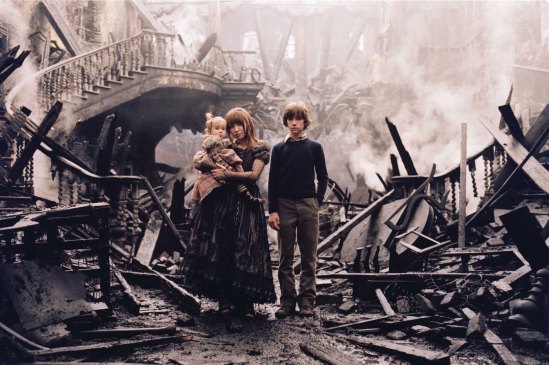
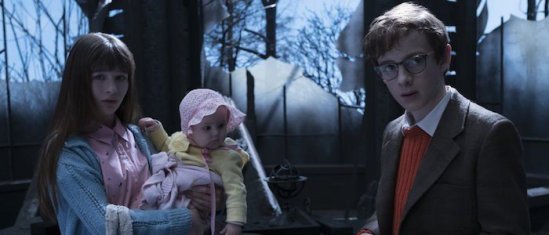
A Series of Unfortunate Events: The Musical – “Banker Refuted”

BankMovie.png

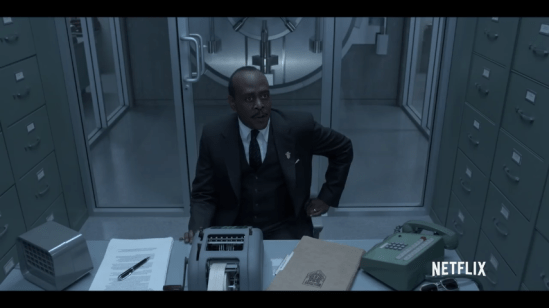
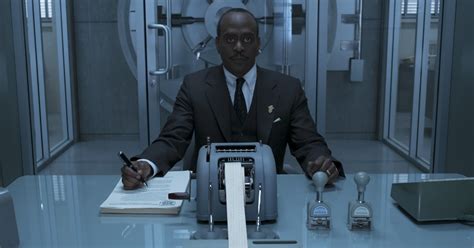
The day after the puttanesca incident when Count Olaf smacked Klaus in the face,  the Baudelaires go to Mulctuary Money Management to visit Mr. Poe. After all, he did say he would help if they need them. But once they get there, the coughing banker is busy and doesn’t have much time for them. So the kids explain how Count Olaf is an abusive monster, gave them only one bed, makes them do ridiculous chores, drinks too much, has terrible friends, and always asks about their money. Now since it’s the first book, you probably assume that Mr. Poe is a sensible adult and take the orphans’ concerns seriously. But he doesn’t. Instead, he states that as their legal guardian, Count Olaf can raise the Baudelaires if he sees fit even if they don’t like some of his methods or lifestyle. Violet is furious since their legal guardian threatened Sunny and smacked her brother across the face. Frustrated, they suck it up and leave. Still, it’s a critical scene showing that despite how well Mr. Poe means, he’s an utterly incompetent adult thanks to his stupidity, condescending attitude, and downright uselessness.

y76US8k

I think a good number for this scene would be “Farmer Refuted” from Hamilton. The original version involves Alexander Hamilton a loyalist publicly advocating against the American Revolution. This song was inspired by a series of anonymous letters to newspapers in New England, with Bishop Samuel Seabury writing as a “A Westchester Farmer” (1774) describing about how destructive a revolution against Great Britain would be. Hamilton responded with “A Full Vindication of the Measures of Congress” and later, “The Farmer Refuted,” (1775). Also, keep in mind that King George III’s nickname was “Farmer George” due to his interest in agriculture. So in this song Hamilton argues against the loyalist Seabury and the soon-to-be mad King George simultaneously. In this version, I have the Baudelaire orphans arguing with Mr. Poe and getting increasingly frustrated of his inability to take their concerns seriously. Because the guy is a complete idiot.


“Banker Refuted”

Mr. Poe:
In loco parentis means “acting in the role of a parent.”
It’s a legal term which applies to your guardian, Count Olaf.

Now that you’re in his care, the Count may raise you
However in ways he’ll see fit

Sunny: (subtitled babble) Oh my God. Tear this dude apart

Mr. Poe:
I’m sorry your parents spoiled you rotten
If they didn’t make you do chores
Or never had you see them drink wine

Violet: Yes, they did

Mr. Poe:
Their friends might’ve been better than his
But these are things to get used to
For shame, for shame!

Klaus: Yo!

Mr. Poe:
Now that you’re in his care

Klaus:
You don’t care to understand the way he treats

Mr. Poe:
The—

Klaus:
He’s completely horrible

Mr. Poe:
Count may raise you—

Klaus:
He’s a drunk

Mr. Poe:
However in ways he’ll

Klaus:
There are laws against child abuse

Mr. Poe:
See fit—

Sunny: (subtitled babble)
It’s hard to listen to you with a straight face

Mr. Poe:
I’m sorry your—

Violet:
Our mom and dad

Mr. Poe:
Parents spoiled

Violet:
Didn’t spoil us

Mr. Poe:
You rotten–

Sunny: (subtitled babble)
Honestly, you shouldn’t even talk—

Mr. Poe:
If they didn’t make you do chores–

Klaus:
Count Olaf’s insane!
We made him puttanesca for dinner
But he asked where’s the roast beef?

Mr. Poe:
Or never had you see them drink wine

Klaus:
My baby sister has more sense than thee

Mr. Poe:
Their friends might’ve been better than his

Klaus:
But strangely, you drool just the same!

Mr. Poe:
But these are things to get used to

Sunny: (subtitled babble) Is he in Jersey?

Mr. Poe: For shame—

Sunny: (subtitled babble) What a useless asshole!

Mr. Poe: For shame!

Klaus: What a useless moron!

Mr. Poe: Now—

Klaus:
If you repeat yourself again I’m gonna

Mr. Poe & Klaus:
Scream—

Klaus:
Honestly, look at me, can’t you see?

Mr. Poe: However in ways —

Violet:
Don’t modulate the key then not take us seriously
Jesus, he lifted and threatened Sunny
Before striking Klaus across the face!

Klaus: Violet, please!

Violet:
Klaus, I’d rather be honest than accommodate
Drop the niceties

Mr. Poe:
Sorry, you must get out posthaste.
For I’ve got a lot of work.

Violet:
Since you won’t help, you jerk!

A Series of Unfortunate Events: The Musical – “Dinner Scene”

fbbe7611a883989c69560f609e5f20ae

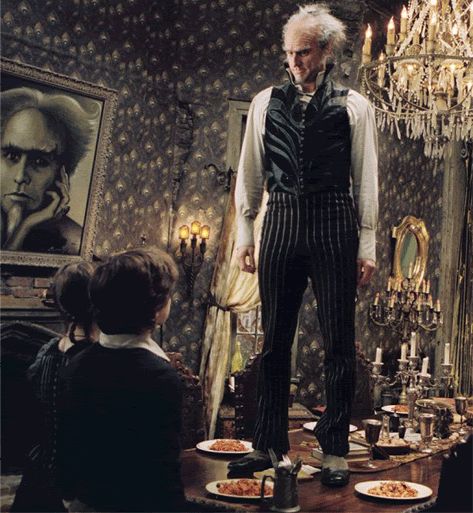
After the Baudelaires prepared the pasta Puttanesca dish, Count Olaf goes into the kitchen to tell them to bring roast beef. The children remind him that he didn’t request it. But Olaf’s pissed and lifts Sunny up to “discipline” them, or a word which here means in this context, “threaten or intimidate.” Yet, he eventually puts her down and accepts to eat their “disgusting sauce” anyway. After dinner, he orders the kids to clean up and “go to their beds.” However, given his inability to keep his mouth shut when he should, Klaus reminds Olaf that he only gave them one bed and can’t use their fortune to buy another until Violet turns 18. Olaf smacks Klaus in the face so hard he falls on the floor. In the books, while the troupe laughs and applauds at him, the children languidly wash the dishes before going to bed, quietly weeping due to the situation they’re in.

ef3989d37bf87b28911679432d00bc58

I think a good song for the occasion is “Joseph’s Dreams” from Joseph and the Amazing Technicolor Dreamcoat. The original version entails Joseph talking about his dreams in which his prestige rises above his brothers’ that make him sound rather arrogant and stuck up. Sure he can’t help it, but like Klaus, he might want to keep his mouth shut. Because his dream talk just pisses them off so much that his older brothers resolve to get rid of him. In this version, the Baudelaires decide to see Mr. Poe about the matter.


“Dinner Scene”

Count Olaf:
Orphans, bring the roast beef dinner.

Klaus:
We didn’t make roast beef
Try this pasta Puttanesca dish
We had made instead

Violet:
You didn’t even specify the dish
You wanted us to make
We only thought this recipe
Would be easy to pull through
We worked so hard, we tried our best
To cook you up this meal
So perhaps it’s best you eat this up
And don’t give us a squeal

Count Olaf:
As your dad, don’t trifle me
Serve the roast beef now
Else I drop your baby sister
From high up in the air

Klaus:
Puttanesca’s all we made
Please be satisfied
Now put our sister Sunny down
Since she’s now begun to cry

Count Olaf:
Fine, serve your lousy pasta dish
Along with that disgusting sauce
But clean the kitchen afterwards
Then it’s straight up to your beds

Klaus:
You only provided us with one bed!

Count Olaf:
Then why don’t you buy one

Klaus:
You know we don’t have any money!

Count Olaf:
But you do, of course
You inherited a fortune
Your folks have left behind

Klaus:
That money’s not to be used
Till Violet turns eighteen

Violet:
Oh, God, he’s struck Klaus across the face!

Troupe:
That’ll sure show this ungrateful brat
Who should know better than talk back
This boy deserves all he gets!

The Bald Man:
You better be polite or Count Olaf will
Rearrange your pretty face

Hook-Handed Man:
If I know you, Olaf, you’ll figure
How to get their cash

Violet:
Count Olaf is a monster
There is one thing we must do
First thing, tomorrow morning
We must go see
Mr. Poe

A Series of Unfortunate Events: The Musical – “Master of the House”

asoue1

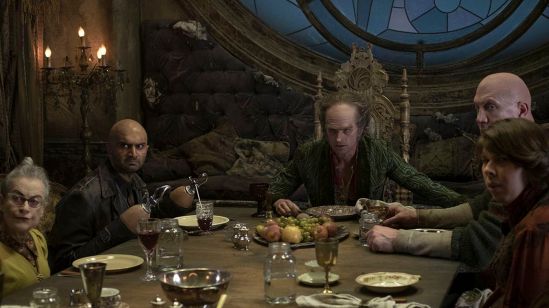
In addition to being one of the most infamous literary villains in recent times, Count Olaf has a theater troupe of nefarious henchmen. There’s the Hook-Handed man who’s featured prominently in the books with his hooks at the end of his upper appendages. God only knows how he lost them. Then you have the Bald Man with the Long Nose who plays a key role in the books and can be downright nasty. In the show, he’s more of a dumb muscle who likes to paint. After that is the Person of Indeterminate Gender whose very fat in the books, mostly speaks in grunts, and is seen as one of the scariest members to Klaus. In the Netflix show, they’re kind of dim but can occasionally say some insightful things about gender roles. Next, the two White-Faced Women who usually don’t have much characterization. But whether they resemble geishas or old grannies, you never see one without the other. And finally, we have the Wart-Faced Man who shows up in The Bad Beginning but we don’t know what happened to him since.

th3

I think a good introduction to them would be in a song like “Master of the House” from Les Miserables. The original version features the innkeeper Thenardier singing of how much of a sleazy bastard he is. In the movie, you may see him having a good old time stealing money and valuables from his patrons. In this version, I have Count Olaf welcoming and entertaining his henchmen as the Baudelaires make dinner. Yet, I gave Mrs. Thenardier’s lines to the Hook-Handed Man since he’s Count Olaf’s most prominent featured crony in the series.


“Master of the House” (ASOUE Version)

Sung by Count Olaf and his Troup

Count Olaf:

Welcome, my friends, sit yourself down
To the best house of the best actor in town
As for the rest, all of ’em crooks:
Rooking their guests and cooking the books
Seldom do you see
Honest men like me
A gent of good intent
Who’s content to be

Master of the house, doling out the charm
Ready with a handshake and an open palm
Tells a saucy tale, makes a little stir
Fellow guests appreciate a bon-viveur
Glad to do a friend a favor
Doesn’t cost me to be nice
But nothing gets you nothing
Everything has got a little price!

Master of the house, keeper of the troupe
Ready to relieve kids of their cash or two
Take them in their care making them do chores
Having them make dinner that only we will gorge
Everybody loves an actor
Everybody’s bosom friend
I do whatever pleases
Jesus! Won’t I bleed ’em in the end!

Count Olaf & Troupe:
Master of the house, quick to catch yer eye
Never wants a trust fund to pass him by
Handsome to a fault, genius on the stage
Comforter, philosopher, and lifelong mate!
Everybody’s boon companion
Everybody’s chaperone

Count Olaf:
But lock up your valises
Jesus! Won’t I skin you to the bone!

Enter Monsieur, we have a scheme
Perhaps we can talk it over roast beef
Don’t mind the kids, they’re cooking now
What we talk won’t interest them anyhow
Care for some fine wine
As we sit and dine
And nothing’s overlooked
Till I’m satisfied

Food beyond compare. Food beyond belief
I’m sure the kids are busy cooking the roast beef
Hope they won’t take long, surely we’re all starved
Scheming on an empty stomach can only go so far
Theater friends are more than welcome
Downstairs bathroom’s on the right
Yes, the toilet’s dirty
But you should check the nearby dive’s!

Never mind the rats, never mind the mice
I’m sure the Baudelaires will make this place look nice
Here’s a little glass, take a little wine
I have enough to pass out after dinner time
When it comes to entertaining
There are a lot of tricks I know
Got to see these three kids chopping wood
Jesus! It’s just as hilarious as it goes!

Count Olaf & Troupe:
Master of the house, quick to catch yer eye
Never wants a trust fund to pass him by
Handsome to a fault, genius on the stage
Comforter, philosopher, and lifelong mate!
Everybody’s boon companion
Gives ’em everything he’s got

Count Olaf:
Dirty bunch of geezers
Jesus! What a sorry little lot!

Hook Handed Man:
I used to dream that I’d be filthy rich
But God Almighty, have you seen what’s happened since?

Master of the house? Isn’t worth my spit!
`Comforter, philosopher’ and lifelong shit!
Cunning little brain, regular Voltaire
Thinks he’s quite a genius but there’s not much there
What a cruel trick of nature landed me with such a louse
God knows how I’ve lasted working for this bastard in the house!

Count Olaf & Troupe:
Master of the house!

Hook Handed Man:
Master and a half!

Count Olaf & Troupe:
Comforter, philosopher

Hook Handed Man:
Ah, don’t make me laugh!

Count Olaf & Troupe:
Handsome to a fault, genius on the stage

Hook Handed Man:
Hypocrite and con man and inebriate!

Count Olaf & Troupe:
Everybody bless the actor!
Everybody bless his friends!

Count Olaf:
Everybody raise a glass

Hook Handed Man:
Raise it up the master’s arse

All:
Everybody raise a glass to the Master of the House!

A Series of Unfortunate Events: The Musical – “Poor, Poor Orphans”

bad beginning5

Under Count Olaf’s guardianship, the Baudelaire children were forced to do a series of endless and difficult chores. However, one day Olaf asks the kids to make a dinner for him and his theater troupe despite that they don’t know how to cook. So they go to their neighbor, Justice Strauss’s place and make use of her vast library. The find a recipe for pasta puttanesca, buy the ingredients, and cook it to serve as a meal. But will Olaf and his troupe be pleased with their efforts? Only time will tell.

a-second-season-of-a-series-of-unfortunate-events-is-officially-happening.png

For this song I chose the “Poor, Poor Joseph” song from Joseph and His Amazing Technicolor Dreamcoat. It’s an upbeat song that in the original version depicts Joseph’s jealous older brothers abducting him and throwing him in a well. Before selling him off to slavery where he ends up in Egypt. On the bright side, it leads to a hilarious cowboy number where his brothers try to explain the situation to their father Jacob. Compared to that, the ASOUE version is strangely light-hearted since it pertains to making dinner. Even if it’s for one of the most despicable villains in literature.


“Poor, Poor Orphans”

Lemony Snicket:

One day, early morn,
The Count left the poor kids a note

Told them to cook a meal
For ten in his theater troupe

Had to be ready by seven and serve it
Clean it up and stay out of Olaf’s way

Violet:
How do we accomplish this?
We don’t even know how to cook

Klaus:
We just need a cookbook
Which we really have to find
Except Count Olaf has no books of any kind

Violet:
We need one now! Else dinner won’t be made.

Lemony Snicket:
Poor, poor orphans, what’cha gonna do?
Things look bad for you, hey, what’cha gonna do?
Poor, poor orphans, what’cha gonna do?
Things look bad for you, hey, what’cha gonna do?

Justice Strauss:
Hi, kids, how you’ve been?
Is there anything you need?
Just hear to check on you
See how you’re handling your new life

Violet:
Olaf’s bringing home some friends
Wants us to make a meal we can’t

Justice Strauss:
Well, come to my house,
I’ll give you what you need
Borrow my cookbook and pay for groceries
Feel free to come by anytime

Klaus:
Thanks, for saving our asses just in time

Lemony Snicket:
There they spent the day
Preparing the Puttanesca sauce
Served it on pasta
Along with instant pudding for dessert
They meal was made by the designated time
Hopefully, Count Olaf won’t bitch and whine

Here he now comes with his freakish troupe
What a sordid group, hey, how low can he stoop?
Poor, poor children, will he be impressed?
Situation’s grave, though afraid what will be next?

A Series of Unfortunate Events: The Musical – “If I Were a Rich Man”

Count-Olaf

It’s no question that Count Olaf is a greedy and selfish man who cares only for obtaining wealth and power as well as will go to great lengths to get what he wants. But why he goes after Baudelaire fortune when he could’ve just robbed a bank is never explained, yet he pursues them with dogged obsession. Nonetheless, once these three precocious orphans end up in his care, he wastes no time making their lives miserable by making them do a list of endless and difficult chores for his entertainment. Tall, rail thin, with a unibrow, wheezy voice, gleaming eyes, horrendously bad hygiene, and an eye on his left ankle, he is a treacherous criminal mastermind who can make the Baudelaires’ lives hell despite how they constantly thwart his plans. Still, while he may seem quite overdramatic in his portrayals by Jim Carrey and Neil Patrick Harris, do not underestimate him. Because despite being not as bright and cultured as the Baudelaires, Count Olaf is a very intelligent man who can stay ahead of the authorities and know what they’ll do in order to hunt him. In fact, he can fool even the most intelligent person around him, including their subsequent guardians. And as the series goes on, he only gets much worse.

c3a1fabadf76e59dc819e703bf20d390

A good song for him in The Bad Beginning would be “If I Were a Rich Man” from Fiddler on the Roof. In the original version, protagonist Tevye sings of how his life would be like if he was rich and complains to God about why he’s stuck to being a poor milkman with 5 daughters. However, Tevye just wants a better life where he wouldn’t have to work hard he tries to be a good Jew. Sure his aspirations are unrealistic and he knows it. But we’ve all been there. In the ASOUE version,  I have Count Olaf wish more sinister ides on how he’d spend the lavish Baudelaire fortune.


“If I Were a Rich Man” (ASOUE Version)

Sung by Count Olaf

Dear God, three rich orphans are in my care.
I realize, of course, that it’s no shame to be in debt.
But it’s no great honor either!
So, what would have been so terrible if I had these brats’ fortune?

If I were a rich man,
Ya ha deedle deedle, bubba bubba deedle deedle dum.
All day long I’d biddy biddy bum.
If I were a wealthy man.
I wouldn’t have to work hard.
Ya ha deedle deedle, bubba bubba deedle deedle dum.
If I were a biddy biddy rich,
Yidle-diddle-didle-didle man.

I’d build a big tall house with rooms by the dozen,
Right in the middle of the town.
A fine tin roof with real wooden floors below.
There would be one long staircase just going up,
And one even longer coming down,
And one more leading nowhere, just for show.

I’d fill my yard with shrubs and busts made in my likeness
For everyone in town to see.
And each one would make me look like a marvel
While seen as a great work or masterpiece
As if to say “Here lives a wealthy man.”

If I were a rich man,
Ya ha deedle deedle, bubba bubba deedle deedle dum.
All day long I’d biddy biddy bum.
If I were a wealthy man.
I wouldn’t have to work hard.
Ya ha deedle deedle, bubba bubba deedle deedle dum.
If I were a biddy biddy rich,
Yidle-diddle-didle-didle man.

I’ll wear some fine clothes when I leave from the theater
With a hot girl at each arm.
Enjoying nightlife to my heart’s delight.
I will be putting on airs and strutting like a peacock.
Oy, what a happy mood I’d be.
Screaming at the servants, day and night.

The most important men in town would come to fawn on me!
They would ask me to advise them,
Like a Sullivan the Wise.
“If you please, Count Olaf…”
“Pardon me, Count Olaf…”
Posing problems that would cross a lawyer’s eyes!
And it won’t make one bit of difference if I answer right or wrong.
When you’re rich, they think you really know!

If I were rich, I’d have the time that I lack
To trash any critics of my plays.
And maybe scheme a plot that would kill them all.
And I’d throw grand parties with wine for my backers, several hours in a day.
That would be the sweetest thing of all.

If I were a rich man,
Ya ha deedle deedle, bubba bubba deedle deedle dum.
All day long I’d biddy biddy bum.
If I were a wealthy man.
I wouldn’t have to work hard.
Ya ha deedle deedle, bubba bubba deedle deedle dum.
Now I need to come up with a plan,
To get these brats’ money in my hands.
And prevent them spoiling my scams? So I’d be a wealthy man…

A Series of Unfortunate Events: The Musical – “Consider Yourself”

series-of-unfortunate-events-trailer-netflix

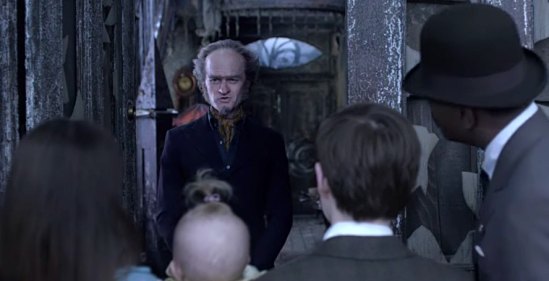
A Series of Unfortunate Events often get its name due to all the sadness, misfortune, misery, and woe the Baudelaire children put up with in their lives since their parents died in a fire. But most of the terrible things happen to them are thanks to the actions of one man, Count Olaf. Soon after losing their parents and home, they’re sent to live with this guy as their guardian. Since their parents’ will stipulated that the kids be sent to their closest geographically living relative and Count Olaf is their third or fourth cousin 3-4 times removed. Then again, that could be a lie. I really don’t know how Mr. Poe chooses Baudelaire guardians in the books. On paper, he’s an actor with his own theater troupe. But despite having a noble title, his house is a dump, decorated with eye pictures on the walls, and has a tower the kids aren’t allowed to enter. They find Olaf himself as an unpleasant man, easily angered, and refers to the kids as “orphans” or “brats.” He only provides them with one room with one bed and makes them do pointless and difficult chores for his entertainment. And he gets worse from there.

2004_unfortunate_events_037

Perhaps a good song for their first encounter could be “Consider Yourself” straight out of the 1960s musical Oliver!, which is based on the Charles Dickens novel Oliver Twist. In the original version, the Artful Dodger befriends Oliver and welcomes him into their gang of petty criminals that’s headed by a creepy man named Fagin. Sure Oliver isn’t up for a great experience with these guys. But at least it beats the workhouse in Victorian England. And the song seems quite upbeat since Oliver has no idea what he signed up for. This ASOUE version is much grimmer though we don’t get the full scope of Count Olaf’s villainy just yet.


“Consider Yourself” (ASOUE Version)

Sung by Count Olaf and the Baudelaire Orphans

Count Olaf:
Consider yourself at home
Consider yourself one of the household staff
I’ve made a long list of chores
Here’s your toothbrushes to clean the floor
Consider yourself, well in
Consider yourself a part of the furniture
There isn’t a lot to spare
Who cares?..I’ve got a bedroom upstairs!

There’s a chance you’ll see
When you clean
Some larger rats
Really nasty gnats
And mouse
While I’ll use your fortune
As a way
To foot the bill
While I have you clean my house!
Consider yourself my charge
I don’t want to have no fuss,
For after some consideration, I can state
Consider yourself
Pretty fucked.

Consider yourself…

Violet:
At home?

Count Olaf:
Consider yourself…

Klaus:
One of the cleaning staff

Count Olaf:
I’ve made a long list

Violet and Klaus:
Of chores

Count Olaf:
It’s clear…you’re…

Violet and Klaus:
Going to clean the floor

Count Olaf:
Consider yourself…

Sunny:
(subtitled baby talk) Well screwed!

Count Olaf:
Consider yourself…

Violet:
Part of the furniture

Count Olaf:
There isn’t a lot to spare

Klaus:
Who cares?
We’ve got to get out of here

Count Olaf:
Don’t ever try to be la-di-da or uppity-
Put or shut up, that’s all

Violet:
Though I can be rather handy with a rolling pin
When the landlord comes to call!

Count Olaf:
Consider yourself
My charge.
I don’t want to have no fuss

ALL:
For after some consideration we can state

Count Olaf:
Consider yourself

Baudelaires:
No!

ALL:
Pretty fucked!

Violet:
Consider ourselves at home…
Mr. Poe’s gotten it all so wrong
Consider ourselves done in…
There’s only one bed to spare

Klaus:
There’s a chance at hand
Olaf’s bad
Such a nasty man
And this shithole—
Of a house
Wish we’d live nearby
Justice Strauss
With all her books
All shelved up in her clean house!

Violet:
Consider ourselves enslaved.
He’ll always give us fuss
For after some consideration, we can state…
Consider ourselves…
Really fucked!

Violet:
Consider yourself

Sunny:
(Subtitled babble) At home.

Klaus:
He’s taken to us

Sunny:
(Subtitled babble) Like slaves

Violet:
Consider yourself

Klaus:
Done in.
He’s making us do these chores.
He wants us to go outside chopping wood
Despite that this is only June
And to repair a broken window he could’ve fixed
Oh, my God, he’s such a loon!

Violet:
Consider ourselves his slaves
We don’t want to have no fuss
For after some consideration we can state
Consider ourselves
Really fucked.

Klaus:
For after some consideration we can state
Consider ourselves…
Really fucked!

If this house should be
Right into our old neighborhood
They’d condemn it
To a lot
And he makes us to maintain
This God awful hellhole place
With the smallest brush he’s got.

Violet:
Consider ourselves at home.
Consider ourselves living with parasites.
This room only has us one bed.
And it’s infested with fleas instead.
Consider ourselves done in.
Consider ourselves with the bad furniture.
There isn’t much to spare.
Who cares?
Whatever we’ve got we share.

If it should chance to be
We should see some harder days,
With Count Olaf,
In this house
Always a chance we’ll see
Somebody to help us out.
Let’s just hope it’s Justice Strauss.

Consider ourselves his slaves.
We don’t want to have no fuss
For after some consideration we can state
Consider yourself…
Really fucked!!

A Series of Unfortunate Events: The Musical – “When I Was a Lad”

thM5Z058J1

In A Series of Unfortunate Events, the Baudelaires encounter plenty of adults you might consider as idiots, a word which here means, “if they’re not affiliated with the villainous Count Olaf or guaranteed to die for being too good for this sinful earth, they’re most likely incompetent or unable to help the Baudelaires in any meaningful way.” But there is no adult in this series who’s as utterly useless and idiotic as Mulctuary Money Management’s most famous banker, Mr. Arthur Poe. In the ASOUE books, Mr. Poe is the guy who’s in charge of managing the vast Baudelaire fortune the kids are set to inherit when Violet turns 18. Yet, he’s also the guy who sends the Baudelaire orphans to their respective guardians and is the last guy you’d want associated with child services. Seriously, Mr. Poe doesn’t know the meaning of the word, “background check.” Still, throughout the series, he is blatantly ignorant, easily gullible when he shouldn’t be, and never listens to the Baudelaires. This despite that he should know better. Furthermore, he thinks the kids will be safe wherever they end up despite the Count Olaf always finds them. Sure he might mean well, but he always proves so unhelpful to the orphans that Lemony Snicket thinks a jar of mustard would be better equipped to keep them out of danger. And I don’t think I can disagree since he seems the most useless adult in the Snicketverse, which is no small feat considering the stiff competition.

Timothy-Spall_Lemony-Snickets-A-Series-of-Unfortunate-Events_2004-900x505

As for musical numbers, a great song to characterize him would be “When I Was a Lad” from the Gilbert and Sullivan operetta HMS Pinafore. In the play, this is the introductory song of First Lord of Admiralty Sir Joseph K. Porter who describes his rise through law and politics to become head of the Queen’s Navy. Despite that he has absolutely no experience with any sort of naval command or ship. Kind of like how Donald Trump has no experience in government but 60 million people voted him to be president and now we’re stuck with him in the White House. Anyway, what’s interesting about Admiral Porter is that he’s based on a real guy named W.H. Smith who became First Lord of Admiralty despite having no navy background whatsoever. The joke with Porter in this song was more about the massive corruption involved as he recounts his rise through law, politics, and eventually his current position almost entirely thanks to nepotism. Smith’s reputation never recovered because the 19th century Brits never let him live it down. Seriously, the Band of Royal Marines greeted him with this song during his visit to Portsmouth. And Benjamin Disraeli often privately referred to him as “Pinafore Smith.” Though my ASOUE version of this song gives Mr. Poe plenty of relevant experience, I do add a stinger on why you wouldn’t want to entrust him with your kids.


“When I Was a Lad” (ASOUE Version)

Sung by Mr. Poe

Mr. Poe:
When I was a lad I served a term
As office boy to this financial firm.
I cleaned the windows and I swept the floor,
And I polished up the handle of the big front door.

Chorus:
He polished up the handle of the big front door.

Mr. Poe:
I polished up that handle so carefullee
That now I am an executive at Mulctuary!

Chorus.
He polished up that handle so carefullee,
That now he is an executive at Mulctuary!

Mr. Poe:
As office boy I made such a mark
That they gave me the post of a junior clerk.
I served the statements with a smile so bland,
And I copied all the letters in a big round hand.

Chorus:
He copied all the letters in a big round hand.

Mr. Poe:
I copied all the letters in a hand so free,
That now I am an executive at Mulctuary!

Chorus:
He copied all the letters in a hand so free,
That now he is an executive at Mulctuary!

Mr. Poe:
In serving statements I made such a name
That an articled clerk I soon became;
I wore clean collars and a brand-new suit
For the pass examination at the Institute.

Chorus:
For the pass examination at the Institute.

Mr. Poe:
That pass examination did so well for me,
That now I am an executive at Mulctuary!

Chorus:
That pass examination did so well for he,
That now he is an executive at Mulctuary!

Mr. Poe:
Of financial knowledge I acquired such a grip
That they took me into the management.
And that junior management, I began,
As executor of various wealthy families.

Chorus:
As executor of various wealthy families.

Mr. Poe:
The Baudelaires and Quagmires most famously,
That now I am an executive at Mulctuary!

Chorus:
The Baudelaires and Quagmires most famously,
That now I am an executive at Mulctuary!

Mr. Poe:
I grew so rich that I was sent
Promoted to senior management.
I always heeded at my bank’s call,
And I never thought of thinking for myself at all.

Chorus:
He never thought of thinking for himself at all.

Mr. Poe:
I thought so little, they rewarded me
By making me an executive at Mulctuary!

Chorus:
He thought so little, they rewarded he
By making him an executive at Mulctuary!

Mr. Poe:
Now young clerks all, whoever you may be,
If you want to rise to the top of the tree,
If your soul isn’t fettered to an office stool,
Be careful to be guided by this golden rule.

Chorus:
Be careful to be guided by this golden rule.

Mr. Poe:
Stick close to your desks and never see your kids,
And you all may be executives at Mulctuary!

Chorus:
Stick close to your desks and never see your kids,
And you all may be executives at Mulctuary!

A Series of Unfortunate Events: The Musical – “Deacon Blues”

a-series-of-unfortunate-events-netflix

Of course, A Series of Unfortunate Events wouldn’t be the memorable young adult series we know and love without its remarkable narrator Lemony Snicket. In real life, he’s merely a pseudonym for the books’ real author, Daniel Handler who also uses it to write children’s books. But in the ASOUE books and the prequel series All the Wrong Questions, he’s also a character. Though in public, it’s said that Handler is publicly alleged to be Snicket’s “legal literary and social representative.” In A Series of Unfortunate Events, he’s a wanted fugitive who’s charged himself with chronicling the lives of the Baudelaire orphans. He’s a very depressed man who’s mourning for his deceased love Beatrice whom he dedicates every book to along with his previous life being framed for a series of crimes he didn’t commit. His outlook on life is darkly humorous. In his narration, he can be brutally honest and sometimes savage. His constantly definition of words and sometimes condescending and patronizing way of speaking is likely a parody and satire of how kids’ books are dumbed down and treat readers like idiots. In the books, you never see his face in his About the Author blurb photograph. Though you can see him in full view on the TV show as portrayed by Patrick Warburton.

litparksnicket

As an introductory song for him, I thought Steely Dan’s “Deacon Blues” would be more appropriate. It’s a jazzy but sad tune about an aspiring jazz musician struggling to make it big characterized by the late Walter Becker as a “loser” as the subject was meant to reflect, “… a broken dream of a broken man living a broken life.” In A Series of Unfortunate Events, Lemony Snicket is certainly a broken man living a broken life. He’s a wanted man who has to constantly go on the lam for crimes he didn’t do. While he still carries a torch for the love of his life who he could’ve and should’ve married. But she ended up with another man and later died. Perhaps he sees researching and writing about the Baudelaires as a way to redeem himself or perhaps honor the memory of an ex-girlfriend he never really got over. Nonetheless, this is a song that’s perfect for a man like Lemony Snicket.


“Deacon Blues” (ASOUE Version)

Sung by Lemony Snicket

This is the tale by the expanding man
That shape is my shade
There where I used to stand
It seems like only yesterday
I gazed through the glass
At ramblers, wild gamblers
That’s all in the past

You call me a fool
You say it’s a crazy scheme
This task is sad
But I’m already on the team
So useless to ask me why
Throw a kiss and say goodbye
I’ll find out this time
I’m ready to cross that fine line

Chronicle the Baudelaires
I’ll find just what I need
Conduct research all day long
And cry myself to sleep
They got a name for the winners in the world
I want a name when I lose
They call Alabama the Crimson Tide
Call me Deacon Blues

My back to the wall
A victim of laughing chance
This is for me
The essence of failed romance
Sharing the things I know and love
With those of my kind
Libations
Sensations
That stagger the mind

I play my accordion
Through each depressing scene
Fantasize about Beatrice
Of what our lives could’ve been
I leave when the sun goes down
Avoiding every cop in town
I’m now on my own
I’ll drive these kids’ story home

Chronicle the Baudelaires
I’ll find just what I need
Conduct research all day long
And cry myself to sleep
They got a name for the winners in the world
I want a name when I lose
They call Alabama the Crimson Tide
Call me Deacon Blues

This is the tale by the expanding man
I take one last drag
As I go on the lam
I cry when I write these books
Sue me if I get it wrong
There’s so much to see
You’ll probably not see me

I chronicle the Baudelaires
I’ll find just what I need
Conduct research all day long
And cry myself to sleep
They got a name for the winners in the world
I want a name when I lose
They call Alabama the Crimson Tide
Call me Deacon Blues

A Series of Unfortunate Events: The Musical – “Briny Beach”

6WNvzHhMmd3x

Dear Viewer,

The musical you’re about to view is extremely unpleasant. It tells an unhappy tale of three unlucky children. Despite being charming and clever, the Baudelaire siblings lead lives filled with misery and woe. From this very post when the children are on Briny Beach and receive terrible news, continuing through the entire story, disaster lurks on every corner. One might think they’re magnets for misfortune. 

Throughout this musical, the three youngsters encounter a greedy and repulsive villain, disastrous fires, paper-thin disguises, plots to steal their fortune, and numerous dreadful pop song parodies from musicals and rock albums. 

It is my sad duty to chronicle this series of unfortunate events, but there’s nothing preventing you from clicking on any ads or looking from some happier post on this blog. Or even looking for something happy, if that’s what you prefer. Like the Hunger Games parody songs.

With all due respect,

Lemony Snicket

the-bad-beginning-violet-klaus-and-sunny-baudelaire-28090293-1400-932

Alongside the Harry Potter books, A Series of Unfortunate Events was among my favorite books during my adolescence. Like The Hunger Games series, it doesn’t revolve around nice stuff. But at least it doesn’t involve teenagers fighting to the death in live television. But it does pertain to a serial killer who pursues and wreaks havoc on three precocious orphaned children for their money as they move from guardian to guardian. Filled with dark humor, literary and cultural allusions, sarcastic story-telling as well as a lot of content you wouldn’t deem appropriate for children like gory death scenes, this 13-book coming-of-age series isn’t the kind of story you’d think would make a good light-hearted musical. But now that its second season has been adapted for a Netflix series, it doesn’t hurt to try. Especially if the show stars Neil Patrick Harris as Count Olaf and how the setting is entrenched in a world that’s very unlike our own. Besides, A Series of Unfortunate Events is a very dark series which can be a little fun with crazy costumes, eccentric characters, and dystopic feel taken to existential absurdity.

69117d4ac9437af38b9ef664c558ef89

Note: These songs are parodies. And no, I don’t have permission. But screw them since I think it’s funny. But feel free to make videos of these if you wish, but for God’s sake just give me credit. Some of the lyrics might not be original since I usually copy and paste them before I add my own additions. And I sometimes leave them in if I think it might go well with the song. Nevertheless, the songs chronology may conform to the books at first. But I’ll also add other songs as I go along which won’t conform to the sequence in later additions. So don’t be surprised if these are out of order.

a-series-of-unfortunate-events-700x300

Anyway, this number is set in the first book where Mr. Poe arrives at Briny Beach to tell the Baudelaires orphans that their parents have died in a fire at their mansion. I thought the appropriate song to parody here could be “Coat of Many Colors” from Joseph and his Technicolor Dreamcoat. Now this is a rather upbeat musical from the 1970s that’s often performed in high schools around the US today. But keep in mind it’s about a young man whose jealous brothers basically abduct him and sold him to slavery like the original Bible story. Also, it has a lot of adult content like the sexual harassment scene with Popitar’s wife. But in this song, Joseph receives his fancy coat and is unaware of what his older brothers will do to him. And by this point, while the Baudelaire children may be sad about their parents and their house, they don’t know all the unfortunate events that’ll await them by this point.


“Briny Beach”

Lemony Snicket:
What you’re seeing is an incredibly depressing play
Of three unlucky kids with lives of great malaise
So go see something with more uplift
Perhaps Les Miserables

Violet the eldest, had a great inventor’s mind
Klaus the middle, loved to read in his spare time
And baby Sunny, she loved to bite
The three young Baudelaires-

Their lives started out as sweet
Till that day at Briny Beach

From a visit from a banker named Mr. Poe

Mr. Poe:
Sorry, kids, but what you need to know is

Afraid your house burned in a fire
Where your parents soon expired
Not sure if they could’ve seen the danger
I could not imagine any danger
But they perished in that fiery blaze at home.
As family executor, you will stay with me tonight
Don’t you worry for I’ve already called my wife
But only for the next few days
Until we find you a better place to live

You’ll live with nearby kin
The next four years
Your family’s fortune safe
Till Violet comes of age
Don’t worry for we’ll soon find
A new guardian for you

Lemony Snicket:
And from that day on
The kids knew their carefree days were gone
But they didn’t imagine any danger
Or that Mr. Poe can’t screen any stranger

He took them to their home
Or what’s left of it I suppose
Such a sorry wreckage of a mansion
You can’t even employ a restoration
There were burned books, singed hooks, cinder,
And ash
Their whole house was
Reduced to wreckage from the fire

Violet and Klaus:
There was not much left
For us to take
It’s time to go
To Mr. Poe’s
Our life is so unfair

Lemony Snicket:
The orphans missed their mom and dad
But Poe’s sons were spoiled brats
Made a pair of really shitty roommates

Violet and Klaus:
Asked us whether we killed our own parents

Lemony Snicket:
But things will soon get worse
You’d think these kids were cursed
Shortly they’re fostered by Count Olaf
Some cousin these orphans never heard of

Lemony Snicket, Violet and Klaus, Ensemble & Children
They lost their parents, their home, their books,
Their beds, their clothes, their furniture,
Their photos, their toys, their board games,
Their contraptions, their china, their jewelry,
Their suitcases, their utensils, their stove,
Their dressers, their desks, their pencils,
Their crayons, their chew toys, their manuals,
Their purses, their antiques, their tables,
Their chairs, their counters, their electronics,
Their vacuums, their trash cans, their laundry
Their ribbons, their cribs, their cabinets,
Their hooks, their lamps, their files,
Their papers, their cleaners, their doors,
Their windows, their blankets, their sheets,
And roof

The Madness of the Snowflake King

In this winter of our discontent, there is a term flying around conservative circles called “snowflake” used to describe liberal extremists who get offended by every statement and/or belief that doesn’t exactly match their own. To them, these individuals think they’re just unique as “snowflakes” when they really just have fragile feelings. To be fair, I do believe there are some liberal snowflakes who do exist. But when it comes to fragile feelings and offense by every statement and/or belief not aligning theirs, I think the “snowflake” label describes conservatives much more. For one, conservatives have an entire media ecosystem to insulate them from uncomfortable mainstream truths and assure them their views are perfectly reasonable. I mean when other networks air rather damning stuff on Donald Trump, Fox News runs stupid shit and peddles conspiracy theories. Secondly, conservatives go absolutely apeshit over race related issues such as Black Lives Matter calling attention to police brutality, NFL players taking a knee, and removing Confederate monuments. Third, those so-called “snowflakes” conservatives refer to have had to deal with all kinds of offenses and systematic injustices against them for perhaps their whole lives.

But in the United States, there is no bigger snowflake in the country than Snowflake King Donald Trump. Even before he ran for president and disastrously ended up in the White House, we all know that this guy has a massively inflated ego and self-delusions of grandeur. He sees himself as a successful and brilliant businessman despite being an outright fraud who’s shamelessly engaged in unethical practices and corruption that have ruined hundreds of people’s lives. His presidency will become legend for his incompetence, his Twitter tantrums, his lack of regard for the law, democratic principles, and norms, and his corrupt administration that’s loaded with sycophants. Still, Trump is known to burst over the slightest insult that he’s referred the mainstream media as “fake news” whenever they run a negative story about him. For a president, to discredit the media over the negative stuff about him whether it be his unethical business practices, his flagrant disregard for democratic norms, his lack of respect of democratic values, openly racist tirades, his Twitter tantrums, his incompetence and mental instability, and pathological dishonesty. Even before he became president, Trump was known to at least threatening to sue those who dare challenge him or at least said stuff about him he didn’t like. Sometimes this has resulted in real life consequences. In 1990, he threatened to sue Janney Montgomery Scott unless they fired their securities analyst Mark Roffman. His crime? Issuing a negative forecast for Trump Taj Mahal which was later proved correct. Nevertheless, Roffman lost his job and spent the next few years in a living hell. A year later, Trump threatened to sue any broadcaster or distributor who’d show an 80 minute documentary about him called Trump: What’s the Deal?, which powerfully and disturbingly portrayed him as the fraud he actually is. His effort to suppress the film proved successful.

Recently, a book has been recently published called Fire and Fury: Inside the White House which has been dominating the political cycle this January. Written by longtime New York columnist Michael Wolff, media outlets have run excerpts from it which has resulted in a furious response from Donald Trump. In fact, his lawyers sent a cease and desist letter to the book’s publisher, demanding to stop publication. Not surprisingly, it has become a bestseller as copies fly off the shelves. Still, while Fire and Fury isn’t the most factually accurate account of Trump in the White House, it nonetheless confirms a lot of the dysfunction and disorganization that has characterized the administration. Specifically, Wolff’s book depicts a deeply unprepared, incurious president surrounded by toadying advisers concerned about his ability to do his job. Knowing how willfully ignorant Trump is about how government works during the 2016 Election campaign, this isn’t surprising at all. His lack of knowledge of the US political system was a source of constant criticism. One big instance of that on display was when he promised to pick a Supreme Court Justice who’d “look very seriously” at Hillary Clinton’s e-mails. However, the Supreme Court tries laws, not people. In a primary debate in Houston, Trump referred to federal judges “signing bills” a task the president does in a federal system. As Wolff recalled in his book on how some of Trump’s closest aides spoke of him behind closed doors: “This—insulting Donald Trump’s intelligence—was both the thing you could not do and the thing—drawing there-but-for-the-grace-of-God guffaws across the senior staff—that everybody was guilty of. Everyone, in his or her own way, struggled to express the baldly obvious fact that the president did not know enough, did not know what he didn’t know, did not particularly care, and, to boot, was confident if not serene in his unquestioned certitudes. There was now a fair amount of back-of-the-classroom giggling about who had called Trump what. For Steve Mnuchin and Reince Priebus, he was an “idiot.” For Gary Cohn, he was “dumb as shit.” For H. R. McMaster he was a “dope.” The list went on.”

Now we all know that Donald Trump doesn’t like to read which is a very terrible sign. Because on any given day, a president is expected to read about as much as a college student cramming for a big exam. Thus, as Cracked reports, intelligence agencies have to keep their reports 25% shorter than Obama’s and allow no space for dissenting opinions. Policy papers are trimmed from 3-6 pages down to a single page with lots of graphics and maps. The National Security Council has taken things a step further by “strategically” including Trump’s name as often as possible since he usually keeps reading if he sees it mentioned. But a bigger problem than these oversimplified briefings is that Trump apparently doesn’t even bother to read them. This can lead Lord Cheetohead to embarrass himself in talks with foreign leaders, drafting woefully inept executive orders, or signing off on documents he doesn’t even understand. As Wolff recalls: “Here was, arguably, the central issue of the Trump presidency, informing every aspect of Trumpian policy and leadership: he didn’t process information in any conventional sense — or, in a way, he didn’t process it at all. Trump didn’t read. He didn’t really even skim. If it was print, it might as well not exist. Some believed that for all practical purposes he was no more than semiliterate.” He even quotes Gary Cohn stating, “It’s worse than you can imagine. An idiot surrounded by clowns. Trump won’t read anything — not one-page memos, not the brief policy papers; nothing. He gets up halfway through meetings with world leaders because he is bored.”

Furthermore, Wolff notes how Donald Trump doesn’t seem to understand the kind of responsibility being a president entails. Most Americans are familiar with the idea as of the president as a political and institutional concept, with an emphasis on ritual and propriety. Well, Trump isn’t most Americans since he’s prone to his ongoing Twitter tantrums over stuff that pisses him off. As Wolff writes, “Here was another peculiar Trump attribute: an inability to see his actions the way most others saw them. Or to fully appreciate how people expected him to behave. The notion of the presidency as an institutional and political concept, with an emphasis on ritual and propriety and semiotic messaging — statesmanship — was quite beyond him.”

Wolff also describes him as anti-intellectual as he noted, “For anything that smacked of a classroom or of being lectured to — “professor” was one of his bad words, and he was proud of never going to class, never buying a textbook, never taking a note — he got up and left the room. This was a problem in multiple respects — indeed, in almost all the prescribed functions of the presidency.” Such conduct is very unbecoming of a vast array of occupations, especially if they require a college degree. But if you’re the President of the United States, it’s incredibly unforgivable. Though we know that Trump’s brand contains a very anti-intellectual streak, eschews the advice of experts, doesn’t sponsor any cultural events, and doesn’t express any form of curiosity in anything. He sees no value in science, history, or education. And his campaign might be responsible for why more Republicans might have more negative opinions about colleges and professors they see as liberal elites in their ivory tower. If Trump should call himself a “stable genius” then he’d probably buckle up in the Oval Office, listen to criticism, and take notes. Despite that academics might seem to be in their own little worlds at times, a politician advocating anti-intellectualism is a very terrible thing since it encourages willful ignorance and disinterest in learning and education. And Trump’s willful ignorance and disinterest in anything but his own vanity and enrichment is rooted into his own narcissism and sociopathy since he worships no god by himself and he has no faith than in the almighty dollar.

Nor does Donald Trump seem to have the proper temperament or understand his role to lead a nation. As Wolff recalls, “What was, to many of the people who knew Trump well, much more confounding was that he had managed to win this election, and arrive at this ultimate accomplishment, wholly lacking what in some obvious sense must be the main requirement of the job, what neuroscientists would call executive function. He had somehow won the race for president, but his brain seemed incapable of performing what would be essential tasks in his new job. He had no ability to plan and organize and pay attention and switch focus; he had never been able to tailor his behavior to what the goals at hand reasonably required. On the most basic level, he simply could not link cause and effect.” Cracked has reported that American agencies are withholding an unusual amount of information from Trump. Though Trump has expressed scorn for the intelligence community (particularly when it comes to Russia). However, a bigger concern for them might be his habit of casually announcing classified information to rival governments. In May 2017, during a meeting with Russian officials, Trump reportedly boasted about the quality of intelligence he received every day. He also revealed details of a terrorist plot he’d recently been informed of. The problem with that is that revealing you know something can let someone guess fairly quickly how much you know it which can compromise the original intelligence source who may not have wanted the Russians to know about it. Though America doesn’t need to be hostile with Russia anymore, we know it has very different goals and ambitions than we do. Meaning that we need to exercise a degree of caution when dealing with them. But Trump’s carelessness with intelligence can be more than a one-time problem since in the wake of this story, an unnamed European country warned that they may stop sharing intelligence with the United States because they don’t like Trump compromising sources while trying to impress people.

Nevertheless, Donald Trump’s bizarre behavior has often compelled about his mental state long before Fire and Fury. Just last week, he unleashed a series of tweets which culminated in a nuclear threat of nuclear war with North Korea. On January 2, 2018, he tweeted, “North Korean Leader Kim Jong Un just stated that the “Nuclear Button is on his desk at all times.” Will someone from his depleted and food starved regime please inform him that I too have a Nuclear Button, but it is a much bigger & more powerful one than his, and my Button works!” In fact, the book’s very title came from a Trump speech back in 2017 over North Korea when he said, “North Korea best not make any more threats to the United States. They will be met with fire and fury like the world has never seen.” This at an event that was supposed to focus on opioids. Such statement terrified North Korean experts who worried about Trump provoking a war with another nuclear-armed power. Yet, Wolff noted such words also scared the bejesus out of Trump’s staff as they spent the next week trying to get him to stop talking about it. As Wolff wrote, “North Korea, a situation the president had consistently been advised to downplay, now became the central subject of the rest of the week — with most senior staff occupied not so much by the topic itself but by how to respond to the president, who was threatening to ‘blow’ again. Charlottesville was a mere distraction, and indeed, the staff’s goal was to keep him off North Korea.” To use Charlottesville to distract Trump from North Korea just makes me cringe. This is one of many examples illustrating that Trump is incapable of understanding the consequences of his actions. When Trump does something like fire James Comey, bomb Syria, or threaten North Korea, he does so without any sense of how human beings might be affected. As Wolff writes, “One of Trump’s deficiencies — a constant in the campaign and, so far, in the presidency — was his uncertain grasp of cause and effect. Everyone [in the White House], in his or own way, struggled to express the baldly obvious fact that the president did not know enough, did not know what he didn’t know, did not particularly care and, to boot, was confident if not serene in his unquestioned certitudes.”

But while the White House tries to write off Fire and Fury as “trashy tabloid fiction,” its fallout suggests otherwise. Already, Donald Trump has treated its revelations as gospel truth has launched a blood feud with his former strategist and campaign CEO Steve Bannon. Because on January 3, 2018, the Guardian posted excerpts from Wolff’s quoting Bannon saying some remarkable things about the Trump family. In these excerpts, Bannon called Donald Trump Jr.’s meeting with a Russian lawyer at Trump Tower “treasonous,” speculated that Trump might’ve been involved as well, and asserts that Jared Kushner is involved in some “greasy” business that could expose him to money laundering charges. These revelations not only cut into Trump’s denial of wrongdoing in the Russian scandal but also insulted his family members as well. Neither of which will put you in Trump’s good graces. Interestingly, Bannon’s Brietbart website reproduced some quotes sometime later without disputing them, giving a seeming impression of accuracy. Furious at the Bannon revelations, Trump released an infuriating statement reading, “Steve Bannon has nothing to do with me or my Presidency. When he was fired, he not only lost his job, he lost his mind. Steve doesn’t represent my base — he’s only in it for himself.” Except that Bannon’s Brietbart website is called “the platform of the Alt-Right” who mostly comprise of white supremacists which number among Trump’s most ardent supporters. Anyway, Trump goes on to minimize Bannon’s role in his 2016 victory and complain that he helped cost Republicans a Senate seat in Alabama by endorsing Roy Moore. Look, we all know that Bannon played a pivotal role in the Trump campaign or otherwise the alt-right wouldn’t be a thing. Furthermore, he also accused Bannon of constantly, leaking false information to the media to make himself seem far more important than he was” since it “is the only thing he does well.” Now Bannon is even out at Brietbart over the Trump book controversy over his comments.

It’s not hard to imagine that Donald Trump’s staff never thought he should be president. Nor is it difficult to think that Trump never wanted to be president in the first place. As Wolff frames it, “The Trump campaign had, perhaps less than inadvertently, replicated the scheme from Mel Brooks’s The Producers. In that classic, Brooks’s larcenous and dopey heroes, Max Bialystock and Leo Bloom, set out to sell more than 100 percent of the ownership stakes in the Broadway show they are producing. Since they will be found out only if the show is a hit, everything about the show is premised on its being a flop. Accordingly, they create a show so outlandish that it actually succeeds, thus dooming our heroes.” Though at least Bialystock and Bloom ended up in prison and didn’t doom a whole country. Still, Wolff believes that the Trump administration’s problems currently lie at the concept that even his staff didn’t think he’d win. Why release your tax returns if he’s going to lose? What’s the harm in sucking up to Russia’s government if he’s likelier to build a hotel in Moscow than occupy the White House? Why bother with educating the candidate on major policy issues or build a real platform when he’ll never govern? Or why worry about conflicts of interests or business entanglements if they’re never going to matter? This might explain so much. Yet, even if he was just running for president, those things will still matter.

Still, Fire and Fury paints a picture of Donald Trump through his own tweets, speeches, comments, and actions as well as the constant on- and off-the record statements from his staff. It’s similar to what reporters have heard from top staff at the White House. And similar to what I and much of the American public have long suspected. Trump is not cognitively up to the job of the presidency. He’s not just someone who doesn’t know much about policy or foreign affairs. It’s that he’s someone who doesn’t want to know about policy or foreign affairs. And he dislikes the methods by which you actually could learn about policy and foreign affairs. Thus, Trump’s ignorance isn’t an absence of knowledge. It’s closer to a personality trait and possibly even an ideology, which is even worse.

Naturally, when a man so unqualified for the presidency that his campaign wants him to lose unexpectedly wins the White House, chaos ensues. Suppose you work for Donald Trump at the White House. How would you please, placate, manage, constrain and inform a raging child king? Though the answer is embarrassing. But it’s one Trump’s staff and any foreign government wanting America’s favor know all too well: flattery and sycophancy. Trump’s staff tries to keep their boss from social media with constant praise and putting lots of media in front of him. Also, his staff worry about leaving him alone for hours at a time because he watches too much TV, gets annoyed with what he sees, and throws a Twitter tantrum. Other techniques for keeping Trump happy include hanging a map displaying his electoral victory in the West Wing, planting supporters and planting supporters in crowds as he gives a speech. One instance of the latter had him being passionately cheered while he gave a speech at the CIA headquarters by non-CIA supporters in the front rows for that specific purpose. This pissed off the CIA who consider themselves apolitical and don’t appreciate being herded into a meeting to listen to someone complain about how hard or unfair their job is. He thinks that no politician has been treated more unfairly than him despite that the TV news media has treated him much better than he deserves to be.

And how do you harness the remarkable opportunity you’ve been given to actually build something of value? The central struggle of Trump’s early months was between chief strategist Steve Bannon, Chief of Staff Reince Priebus, and chief son-in-law Jared Kushner. All of them in their proximity to power, saw the potential to build a presidency they could be proud of or at least less disgraced by. As Wolff recalled: “Each man saw the president as something of a blank page — or a scrambled one. And each, Walsh came to appreciate with increasing incredulity, had a radically different idea of how to fill or remake that page. Bannon was the alt-right militant. Kushner was the New York Democrat. And Priebus was the establishment Republican. “Steve wants to force a million people out of the country and repeal the nation’s health law and lay on a bunch of tariffs that will completely decimate how we trade, and Jared wants to deal with human trafficking and protecting Planned Parenthood.” And Priebus wanted Donald Trump to be another kind of Republican altogether … As Walsh saw it, Steve Bannon was running the Steve Bannon White House, Jared Kushner was running the Michael Bloomberg White House, and Reince Priebus was running the Paul Ryan White House.” This struggle was hardly a civil conflict ideal as Wolff records the tree factions’ endless squabbles comprising of leaks, schemes, backbiting, and the outside heavies brought in to change Trump’s mind at the last minute. But the conflict was so immense because Trump is incapable of and uninterested in resolving. Trump never gave a damn about Trumpism since he’s not sufficiently interested in policy, ideology, or ideas to direct his own presidency’s course. Thus, the course will be directed by the most firmly established interests around him like his family the congressional GOP.

Nonetheless, Michael Wolff’s Fire and Fury contains a mystery it never resolves. As he wrote, “It was obvious to everyone that if [Trump] had a north star, it was just to be liked. He was ever uncomprehending about why everyone did not like him, or why it should be so difficult to get everyone to like him.” However, it would be easy enough for Donald Trump to run a presidency that left him better-liked. He could work with the Democrats, ease up the culture war, and give some gentler speeches. There has never been a president for whom the bar is lower than for Trump. It would be so easy to clear it and he’d have people around him happily acting as guides and cheerleaders. But he didn’t do any of that and Wolff’s book doesn’t provide a satisfying answer since it’s a portrait of a man undone by the very forces he unleashed. Because Donald Trump doesn’t care about policy, politics, ideology, or coalitions. All he cares about is Trump. He wanted to put his name on buildings and in tabloids. Now he has his name on the most important building on the planet and on the front page of most every newspaper in the world. Yet, outside a few conservative outlets, the coverage he receives is horrible, the worst of any president in memory. He can’t perform his job well enough to be liked or respected. But he only wanted the job in the first place because it would force the whole world to like or respect him (except it people still don’t like or respect him, including me). And he’s driven to rage and paranoia by the resulting dissonance, disappointment, and hurt. Mostly because he doesn’t understand that running for the most powerful office in the land will not get people to like and respect you. You have to do something to earn that adoration and respect. Sure he might be a rich businessman, but his career and life have been marked by unethical business practices, baffling corruption, inflammatory statements, and other dubious deeds. Trump wants the adoration and respect for doing nothing besides being a rich businessman and TV star.

This wasn’t what Donald Trump wanted and it’s not clear whether it’s something he can bear. A more capable, competent, and stable person would by now, have either changed their behavior to receive more of the response they crave or just given up on getting that kind of attention. Yet, Trump exists in an unhappy middle ground, starting his day with morning rage tweets, spending weekends retreating to one of his golf clubs, searching for validation he craves in his Twitter feed and on Fox and Friends but never getting it from the elite taskmasters he’s always sought to impress. The pressures of the presidency are enough to break almost anyone but Trump is less suited for the work and backlash than most. The strain’s already showing as his workday’s reportedly shrunk to 11am to 6pm. Yet, the bulk of his first term remains to the detriment of us all and it can include his financial secrets being revealed to the world, his family being indicted, and a crisis he mishandles exploding into a catastrophe (like that didn’t happen already in Puerto Rico). The question now is whether Trump’s staff can keep governing around him and whether a dysfunctional president can have a semi-functional White House. And so far, I don’t really know if that’s possible with a narcissistic sociopath like Donald Trump. Because he’s a man who cares nothing about America, has no respect for democratic values, and doesn’t think the rule of law applies to him. A man like him only inspires more chaos and internal stripe which won’t end until he’s out.