The Anatomy of a Wooden Ship: Part 3- The Ropes

Santa_Maria_Pinta_Nina_McConnell_painting_Christopher_Columbus

Built in Galicia in 1460, La Santa Maria de Inmaculada Conception was a carrack that served as Christopher Columbus’s flagship on his monumental 1492 voyage. While the carrack was slower compared to the Nina and Pinta, it did well on its Atlantic voyage, it ran aground and sank near what is present day Haiti in December of that year.

So now we have the sails and masts, we move onto the ropes. While the sails propel the ship and the masts carry the sails, the ropes hold the masts and sails together in the rigging. Now the rigging is a system of ropes, cables, chains supporting the ship’s masts and sails. There’s standing rigging including shrouds and stays which adjust the sails’ position and poles they’re attached to. Then there’s the running rigging which consists of halyards, braces, sheets, and vangs. The ropes also put the sails in working order, which can be lifted, reefed, and furled in whenever the windy conditions permit.

The Ropes:

Backstay- stay extending from the ship’s mastheads to its side and provides lateral support to the mast in a fore-and-aft rigged ship.

Becket- a rope with a knot on one end and an eye on the other. Used to secure loose ropes, spars, or oars.

Bight- the loop or double part created in a rope or strand of a rope when folded. Often used in creating complex knots.

Bitter End- the inboard end of a rope or anchor cable.

Block or pulley- a wooden or metal case in which one or more sheaves (rollers) are fitted through which lines can run to either increase purchase or change direction. In the 17th and 18th centuries, block pins were often made of greenheart.

Bobstay- rope used on ship to steady the bowsprit.

Boltrope- strong rope stitched to a sail’s outer edges to prevent tearing.

Bowline- rope used to keep a square sail’s weather leech to haul it forward, allowing the ship to point as high into the wind as possible.

Brace- a rope by which a yard is swung around and secured to shift a sail into a favorable position to the wind and the course of a square-rigged ship.

Brails or leech lines- ropes on a sail’s edge for hauling up.

Breeching Rope- a thick and heavy rope used to secure a cannon to the ship’s side for controlling and limiting gunfire recoil. Often wound around the cannon’s cascable and looped through both of a gun carriage’s sides. Both ends had an eye-splice which connected the gun to heavy ringbolt attached to the ship’s side. As a rule of thumb, it was 3 times the length of the gun barrel and could be 6 ½ inches in diameter for a large gun like a 32 pounder.

Bull Rope- rope used for hoisting the topmast or topgallant mast in a square-rigged ship.

Buntline- rope attached to a square sail’s foot to haul it up to the yard while keeping it from opening up. Normally there were multiple evenly-spaced buntlines leading through blocks on a yard to the foot of a square sail bent to that yard.

Buntline Hitch- a knot used to tie a buntline to a square sail’s foot.

Cable- a heavy rope or chain for mooring or anchoring. Can also be a naval unit of distance.

Catblock- block with 2 or 3 sheaves and with an iron strap and hook attached, used to draw the anchor the catshead.

Chip Log- a wood piece tied to a knotted cord. A ship’s speed was measured by counting the number of knots passing over the stern while being timed.

Clew Line- a line used for hauling up the clews when furling sail.

Clove Hitch- a knot used to tie and secure ratlines to the shrouds.

Cordage- ropes in a ship’s rigging.

Crowfoot- rigging to even the pull or load on the spars, stays, and leeches. Often more decorative than purposeful. Used on the mast tops until 1800.

Dandy-Rig- name used a for a variety of rigs, most often a ketch or yawl-rig.

Deadeye- a round or triangular hardwood block with one or more holes and a grooved perimeter. Used to set up a ship’s stays and shrouds. Most common thought of variety was said to have 3 holes.

Double Block- a tackle block with 2 sheaves located side by side.

Downhaul- rope for holding down or hauling down a sail or spar.

Earing- rope used for fastening a square sail’s top corners to its yard. Can also be an eye spliced into a sail’s boltrope for reefing purposes.

Eye- a circular loop at the shroud or stay’s end.

Fack- a full circle of any rope or cable.

Fisherman’s Knot- a not used to secure a line’s end to a ring or spar. Made by 2 turns with end passed back under both.

Footrope- a rope in a square-rigged ship suspended below a yard on which the topmen stood while furling or reefing sails.

Forestay- stay leading from the foremast to the ship’s bow.

Futtock Shroud- a shroud used to brace and support the topmast’s base, running downward and inward from the futtock base on the topmast base sides to the futtock band around the mast or directly to the lower shroud.

Gammoning- a heavy rope for securing the bowsprit to the ship’s stem.

Girtline- a rope passing through a block hung from a mast or masthead for hoisting relatively light loads such as a flag, tools, and weapons.

Halyard- a line used to hoist a sail, spar, or flag.

Hank- a series of rings or clips for attaching a jib or staysail to a stay.

Hawser- a heavy cable or rope that’s used for tying up or pulling a ship.

Hogging Truss- a rope or chain running front to back and tightened by a Spanish windlass and fastened to prevent stem and stern from sagging.

Jack-Block- a pulley system for raising topgallant masts.

Jeer- heavy tackle used for hoisting lower yards in square-rigged ships.

Jib Sheet- sheet or line controlling the jib sail.

Jigger- a 5ft long rope piece with a block at one end and a sheave at the other. Used to pull back tension at the cable’s hind part, when it’s pulled aboard ship by a windlass.

Jumper- a stay leading from the jib-boom’s outer edge to the dolphin striker.

Jury Rig- a temporary rig used to replace a damage mast or spar.

Lanyard- a short rope used on a ship for fastening things such as sails.

Lift- a rope in a square-rigged ship leading from the masthead, crosstrees, or cap to a yard’s either end for support.

Limber Rope- a rope threaded into the limber holes running the ship’s length. Pulled back and forth to keep the limber holes from plugging.

Line- rope.

Main Sheet- the rope controlling the angle at which a main sail is trimmed and set.

Main Stay- stay extending from the foremast’s main-top to its foot.

Man Rope- rope used as a ship’s handrail.

Martingale- a stay running from the jib-boom end to the dolphin striker, holding the jib-boom down against the fore topgallant mast stay’s pull.

Masthead Knot- a knot around the jury-rigged masthead intended to provide for stays attachment points.

Nave Line- a small tackle used to keep the parrel directly opposite to the yard, particularly while raising or lowering, (as it would otherwise hang under the yard), and prevent it from being sufficiently braced.

Nipper- a short length of rope used to bind an anchor cable.

Oakum- small old rope pieces used for filling holes in ship’s sides.

Outhaul- rope used to haul a sail taut along a spar.

Painter- a rope attached to the ship’s front used for tying it to a post. Used to control a smaller boat while loading or unloading from a beach.

Parrel- an arrangement of rollers and flat wood pieces held together with rope. Used to hold a yard against a mast while allowing it to be raised and lowered. Sometimes all the yards or some of the lighter, upper yards were held to the mast with ropes called parrel lashings.

Preventer- a rope backing-up another line or rope under extra strain to prevent the latter from breaking or giving way.

Quail- coil.

Quarter Netting- netting along the quarter rails.

Ratlines- horizontal lines running along the shrouds to create a ladder for the crew to use in getting to the rigging, tops, and yards.

Reef Points- short tapered rope lengths located across and reeved through the sail which can be tied together or hauled onto a yard to keep part of the sail out of use in strong winds. Reinforced with reef bands to keep sail from tearing.

Reef Tackle- a tackle for hauling up reef bands onto a yard and thus lessening the effective sail area in strong winds.

Rigging- all the ropes, chains, wires, and tackle used to support the masts and yards for hoisting, lowering, or trimming sails.

Roband- yarn piece used to fasten a sail to a spar.

Rode- an anchor length or chain.

Rolling Hitch- a knot to secure and attach one rope to another.

Rope- any flexible heavy cord to over an inch in diameter. Tightly intertwined fibers used in ship ropes were hemp, manila, sisal, and coir.

Running Rigging- name given to all the lines, ropes, and chains controlling sails, yards, and masts or all the rigging except for the shrouds and stays.

Sail Burton- a block and tackle extending from the topmast’s head to the deck of a square-rigged ship. Used for hoisting the sails aloft when they were bent to the yards.

Sheepshank- a knot shortening a line. Should remain under tension to be secure.

Sheet- rope running from the bottom aft the corner of a sail that’s used for controlling the sail on a ship and can be adjusted to the wind.

Shroud- standing rigging giving lateral and aft support to the masts.

Standing Rigging- name given to all the ropes and chains used to support the yards and bowsprits like the shrouds and stays.

Stay- part of the standing rigging supporting a mast in a fore-and-aft rigged ship. Forestays provide forward support while backstays provide support from the rear.

Tackle- a system of ropes and blocks for raising and lowering weights of rigging and pulleys for applying tension and gaining mechanical advantage.

Timber Hitch- a knot used for fastening around a spar to be hoisted. Tightens under strain and releases easily when slackened.

Timenoguy- rope stretched from one place to another on a ship.

Toggle- a fastener consisting of a peg or crosspiece inserted into an eye of a rope end in order to attache it to something.

Topping Lift- a rope running from the back boom end through a masthead block and down to the cleat at the mast’s foot. Used for holding up the boom when the main sail isn’t used.

Triple Sister- a pulley block with 3 sheaves side by side in the same housing.

Turk’s Head- a knot resembling a turban. Worked on a rope with a small line piece.

Tye- a chain or rope hoisted onto a yard on a mast. One end passed through the mast and was secured to the yard’s center. The other end was attached to a tackle for hoisting.

Voyol- a looped rope used to unmoor or hoist the ship’s anchor. Since it was a thinner, lighter, and more pliable than an anchor cable, it was easier to wind around the capstan and more convenient to use the voyol to hoist in the larger, stiffer, anchor cables by seizing thin, removable lines called nippers.

Wale Knot- a large knot created by untwisting the rope end strands and interweaving them.

Warp-Anchor Rope- rope reserved for attaching the anchor. Usually made of hemp and normally 3 times the water depth.

Whipping- a binding on a rope end to prevent it from unraveling.

Woolding- a rope around a mast or yard, often where it’s been fished or scarfed in order to strengthen it.

Yard Horse- ropes slung under a yard from the lift to the yardarm on which sailors or top men stood while reefing or furling sails.

The Anatomy of a Wooden Ship: Part 2- The Masts

800px-Yasmina.Bounty

Built in 1784 and acquired by the British Royal Navy in 1787 for a botanical mission, the HMS Bounty was sent to the Pacific Ocean under the command of Captain William Bligh to acquire breadfruit for transport to the British West Indies. But the mission was never completed due to a mutiny led by acting Lieutenant Fletcher Christian in an incident known as the Mutiny on the Bounty. Christian, the mutineers, and their native allies would later burn the Bounty after mooring it on Pitcarin Island.

Well, we’re off to a good start in this series. While the sails make the ship go with the wind, they’d fly of the ship if they weren’t strung to long, tall masts. These are tall poles erected more or less vertically on the ship’s centerline. These are meant to carry sails and spars while giving necessary height to a navigation light, look-out position, signal yard, or signal mast. Large wooden ships had several of these with size and configuration depending on their styles. Until the mid-19th century, all ship’s masts were made out of wood formed from a single or several pieces of timber, mainly consisting of a conifer tree trunk. From the 16th century, ships were often built of a size requiring taller and thicker masts than could be made from a single tree trunk. On these larger ships, to achieve the necessary height, the masts were built from up to 4 sections (also called masts), known in order of rising height above the decks as the lower, top, topgallant, and royal masts. Giving the lower sections sufficient thickness necessitated building up separate wood pieces. Such section was known as a made mast as oppose to masts formed by single pieces of timber known as pole masts.

The Masts and Poles:

Bibb- a wooden bracket supporting trestle trees.

Bonaventure Mizzenmast- small and furthest from the mizzenmast that’s often seen on larger galleons.

Boom- a horizontal pole along the mast’s bottom edge to where it’s fastened. Used for holding and extending the sail as well as changing its direction.

Cap- wooden mast top through which the mast is drawn when being stepped or lowered. Often made of elm.

Crow’s Nest- a small platform near the top of a mast, sometimes enclosed, where a lookout could have a better view when watching for sails or land.

Crosstree- a light oak timber spreader fixed across the trestle trees at the lower mast and top mast’s upper ends. Supported the topmast and topgallant mast shrouds.

Fid- a bar of wood or iron taking the topmast weight when it’s stepped on the lower mast. When a topmast hole corresponds with one in the lower mast, the fid is driven through to hold them together.

Fish- a wood piece, somewhat resembling a fish, used to strengthen a mast or yard.

Forebitt- post for fastening cables at ship’s foremast.

Foremast- the ship’s front mast located nearest to the bow.

Futtock Plates- plates of wood or iron where topmast shroud deadeyes were secured.

Gaff- a swinging spar where the head of a 4-sided fore-and-aft sail is attached and used to extend it away from a mast supporting it. When a gaff is hoisted, it carries up the sail with it. Normally takes 2 halyards to hoist a gaff-rigged sail.

Gooseneck- a fitting attaching the boom to a mast of fore-and-aft rigged ship, allowing the boom to swing sideways. Or the join between the whipstaff and the tiller.

Heel- the mast’s lower end. Also the keel’s back end.

Hoop- wooden ring securing a sail’s luff to a mast that slide up and down when it’s hoisted or lowered in a fore-and-aft rigged ship.

Horn- fixture securing a gaff to a mast but could slide up or down.

Hound- a large timber support bracket location directly below the masthead that supports the trestle trees and top.

Jack-Cross-Tree- a single iron cross-tree at a topgallant mast’s head.

Jack Staff- a short staff at ship’s bow from which the jack is hoisted.

Jackstay- an iron or wooden bar running along ship’s yard to which the sails are fastened.

Jackyard- spar used to spread the foot of a gaff-topsail.

Jib Stick- a spar used to hold out the jib when sailing almost directly downwind or in light airs when the jib may otherwise flap or collapse. The outboard end may have a U shape to take the jib to take a jib sheet or a point to go into the clew. The inboard end may be fastened or held at some convenient point such as a side stay or a purpose made fitting.

Jury Mast- a temporary or makeshift mast erected whenever the mainmast had been destroyed.

Lower Mast- the main mast body rising up from a ship and the complete mast’s first division.

Lubber’s Hole- the floor opening of the fore, main, and mizzen mast tops of square-rigged ships, giving access to the topmasts from below.

Main or main mast- the longest and primary mast located at the ship’s middle. On a 2-masted ship, it’s always the tallest mast.

Mast- a large vertical pole set in a ship used to attach further yards and spars to carry sails. A mast is taken through the hole in the decks and fitted onto the keelson step.
Made Mast- a mast made in sections from separate pieces of timber.

Mast Cheek- one of a pair of support brackets directly below the masthead’s trestle trees.

Masthead- mast top.

Mast Step- an often-strengthened socket used to take the mast’s downward thrust and hold it in position. May be on the keel or the deck on a smaller ship.

Mizzenmast- usually the third and/or furthest mast on a square-rigged ship or a 3 masted schooner. Also the furthest mast on a 2-masted ship like a ketch or yawl.

Pole-Mast- an uninterrupted single spar mast. Has no topmast nor topgallant mast.

Royalmast- the mast next above the topgallant mast and the fourth division of a complete mast.

Sheer Pole- a horizontal rod parallel to ratlines attached to the shrouds’ base just above the deadeyes to keep shrouds from twisting while they were being set up and tensioned.

Spar- a wooden pole used for supporting the rigging and sails such as a boom, gaff, yard, mast, or bowsprit.

Spreader- a metal bar used in a square-rigged ship’s foremast to give more spread to the fore sails’ tacks.

Sprit- a long spar stretching diagonally across a fore-and-aft sail to support the peak.

Top or fighting top- a masthead platform used to extend the topmast shrouds to provide the topmast additional support. Early tops were often enclosed and basket-like while later tops were always open. Was a great platform for look-out and for snipers and archers to take aim from.

Topgallant Mast or l’gallant- the mast above the topmast on a square-rigged ship. The third division of a complete mast.

Topmast- the mast above the lower mast. The second division of a complete mast. Highest mast in a fore-and-aft rigged ship.

Trestle Tree- oak timbers horizontally fixed back and forth on a lower and upper masthead of a square-rigged ship. Used to support the topmast or topgallant mast, the lower and upper crosstrees, and the top. Normally rests on the lower mast’s cheeks or a topmast’s hounds.

Truck- a wooden top of a mast, staff, or flag pole.

Vangs- braces supporting the mizzen mast gaff to keep it steady. Connected to the gaff’s outer end, they reach downwards to the ship’s furthest side, where they’re hooked and fashioned. They’re slackened when the wind is fair and drawn in when the gaff’s position is unfavorable to the ship’s course.

Yard – a long tapering spar on a square-rigged ship slung to a mast and spread the head of a square sail, lugsail, or lateen and forward from the shrouds. Each square sail hangs from its own yard. Seamen furl the sails by bending over the yard as they use both hands hauling the sail. The sail is trimmed to the wind by braces leading from the yard arms back or forward to another mast or down to the deck.

Yardarm- the main yard across the mast holding up the sail or either end of the yard on a square sail. The yardarm is a vulnerable target in combat and a favorite place to hang prisoners or enemies. Also a yard’s outward end.

The Anatomy of a Wooden Ship: Part 1- The Sails

31730

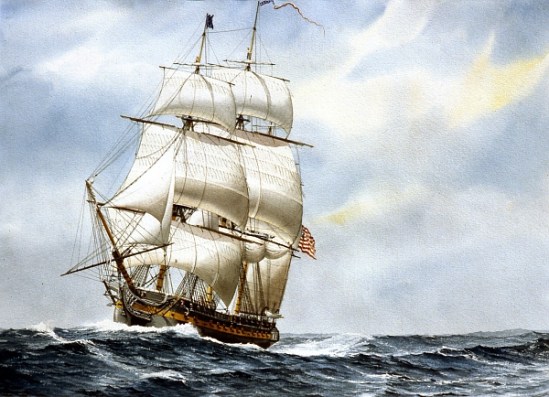
Here is a painting of the USS Constitution, affectionately known as “Old Ironsides,” due to its prowess during the War of 1812 where it defeated 5 British warships. Built in the 1790s, this heavily armed frigate is the world’s oldest commissioned naval ship that’s still afloat. Though today it sits in Boston Harbor as a museum piece taking part in ceremonies, educational programs and historic reenactments with a US Navy crew of 60.

You see these ships in hit swashbuckling pirate movie as they float like castles on the waves with their intricate wooden facades and graceful sails blowing in the wind. But while movies tend to glamorize life on a wooden ship as full of glorious naval engagements, swashbuckling pirates, bold explorers, and trips to exotic islands with either nubile native women or cannibals, the reality of living on these ships wasn’t as fun as movies make it out to be. For one, life on a wooden ship often included bad food filled with weevils, unsanitary conditions, nasty diseases, rat infestations, lots of shit, hours of boredom, horrifying injuries and medical care, sexism, classism, and not a woman in sight. Not to mention, voyages could last years, punishments were harsh with keelhauling or flogging, lots of drinking and impressment, and other hellish things. Oh, and the pirates, well, they’re basically gangsters raiding merchant ships who were drunks who didn’t bathe or shave for months and were more often than not riddled with STDs and bad teeth. From the early modern period to the mid-19th century, wooden sailing ships dominated the waves in an era called The Age of Sail. Harnessing the power of winds and current, these ships helped kick start an age of exploration, globalization, colonialism, international trade, great naval battles, smallpox, racism, and slavery. Yet, even so, we all muse about the glorious sailing ships across the sea in their full sail glory while the men onboard seem to have a knack for adventure.

li0026

The HMS Victory was launched in 1765 and is first rate ship of the line with its 104 guns. It’s best known as Lord Admiral Horatio Nelson’s flagship during the Battle of Trafalgar in 1805 which has gone down in history as one of Great Britain’s greatest Royal Navy victories. While the Victory survived the battle since it’s been on drydock as a museum ship since 1922, Lord Nelson did not.

I kick off this wooden ship series with the defining sails from a wooden sailing ship. And boy, did these ships have a ton of them tied to the masts and help propel the ship with the wind. Now sailing along the water has been around at least since the 6th millennium BCE with archaeological remains found from excavations into Cucuteni-Trypillian culture and of the Ubaid period in Mesopotamia. Ancient Egyptians and Sumerians used square rig boats as early 3200 BCE and it’s believed they established sea trading routes as far as the Indus Valley. Yet, for much of ancient times and the medieval period, many of the large sailing ships were man-powered galleys a la Ben Hur. Triangular fore-and-aft rig were invented in the Mediterranean as single-yarded lateen sails and began as a convention in southern Europe as the gentle climate made its use practical. And in a few centuries in Italy before the Renaissance, it began replacing the square rig which had dominated Europe since the dawn of sea travel. Yet, despite having seen it in trade and during the Crusades, Northern Europeans were resistant to adopting the fore-and-aft rig. But the Renaissance and the Age of Exploration changed this. From 1475, their use increased and within a century, the fore-and-aft rig was commonly used on boats on rivers and estuaries in Britain, northern France, and Low Countries. Though square rigs remain standard for harsher conditions of the open North Sea as well as in trans-Atlantic sailing. Yet, even those had some fore-and-aft sails for navigational purposes.

The Sails:

Bonnet- extra canvas strip fixed to the foot of a fore-and-aft sail.

Bunt- middle of a square sail.

Clew- corner sail with hole attached to ropes.

Course Sail- the largest and lowest square sail on a mast.

Cringle- a sail’s corner loop where lines are attached.

Cross Jack- the lowest square sail or the mizzen mast’s lower yard.

Drabler- an additional ship canvas attached to the bonnet’s foot of a fore-and-aft sail.

Driver- a large sail suspended from the mizzen gaff. Can also be a jib-headed spanker.

Flying Jib- the outermost triangular fore-and-aft sail. Extends beyond the jib and is carried on a stay attached to a flying jib-boom.

Foot- a sail’s bottom edge.

Fore-and-Aft-Sail- a triangular sail behind mast, attached to a gaff and boom parallel with a keel.

Foresail- lowest sail set on the foremast on a square-rigged ship.

Gaff-Topsail- a triangular topsail with its foot extended upon the gaff.

Genoa- a large jib overlapping the mainsail.

Head- top edge of a 4-sided sail. Can also be the area in front of the forecastle and beak. May be proper term for a ship’s toilet.

Headsail- sail set forward of the ship’s foremast.

Jackyard Topsail- a triangular topsail set above the mainsail in a gaff-rigged ship.

Jib- a small triangular fore-and-aft sail carried on a stay near the ship’s front stretching from the top foremast to the bow or bowsprit.

Lateen Sail- a triangular fore-and-aft sail, set on a long yard at an angle to a relatively short mast. Sometimes supported with boom.

Leech- a square sail’s vertical edge and a fore-and-aft sail’s afterside.

Loose-Footed- a fore-and-aft sail set without a boom such as most jibs.

Luff- a fore-and-aft sail’s leading forward edge. Also to bring a ship’s bow closer to the wind, usually to decrease the headsails’ power.

Lugsail-a quadrilateral sail lacking a boom, has a foot larger than the head, and is bent to a yard hanging obliquely on the mast.

Main Sail- the ship’s principal and largest sail. In square-rigged ships, it’s the lowest sail on the Main Mast.

Mizzen- sail behind or on top the ship’s main sail. Can also be a 3-masted ship.

Moonraker- a small light sail set above the skysail on a square-rigged ship.

Peak- the upper far corner of a four-sided, gaff-rigged, fore-and-aft sail.

Reef Band- an extra canvas strip attached across a sail to strengthen it where the reef points are located.

Roach- curved cut in sail’s edge to prevent chafing.

Royal- a small sail on a royal mast just above the topgallant sail. Normally the fourth sail in ascending order from the deck.

Sail- a cloth or canvas piece or combination of pieces cut and sewn together to the desired shape and size attached to a ship’s spars and/or rigging. Used for catching wind and propelling the ship. Often repaired at sea or at anchor in a secluded bay thousands of miles from home. Could be quite a patchwork of different material pieces.

Skysail- a small square sail above the royal on a square-rigged ship. Normally the fifth sail in the ascending order from the deck.

Skyscraper- triangular sail above the skysail in fair weather.

Spanker- a fore-and-aft sail on the aftermost mast, bent with a gaff and boom.

Spinnaker- a large triangular sail opposite the main sail.

Sprit Sail- a square or fore-and-aft sail extended by a sprit.

Square Sail- a four-sided sail set from a yard and hanging symmetrically across the mast.

Stay Sail- a triangular fore-and-aft sail set by attaching it to a stay.

Studding Sails- square sails rigged to extra yards that are lashed and extra further out from the primary yards. Typically extended the width of the sails on a square-rigged ship.

Stun Sail- a light auxiliary sail to the principal sails’ sides.

Tack- the lower forward corner of a fore-and-aft sail. Can be the rope used to hold the lower course corners and staysails on the weather side of a square-rigged ship or a line used to pull a studding sail’s lower corner to its boom. Or can be to change course on a ship by shifting the helm and sails’ position.

Throat- the upper foremost corner of a fore-and-aft sail.

Topgallant Sail- the sail set above the topsail and third sail in the ascending order from deck on a square-rigged mast. Later 19th century ships may carry a lower topgallant sail and an upper topgallant sail.

Topsail- a square sail set above the lowest sail on the mast of a square-rigged ship and is the second sail in ascending order from the deck. Can also be a triangular or square sail set above the gaff of a lower sail on a fore-and-aft-rigged ship. But while it’s usually the second sail in ascending order from deck on a fore-and-aft rigged ship, it can sometimes be the third.

Trysail- a small fore-and-aft sail used during storm conditions and placed instead of the regular sail. Usually hoisted on a lower mast.

Welcome Aboard to the Maritime World of Boats

imagesIES7XG2O

Whether to get across a large body of water, fish, or just to cruise around, boats have always been with us. From the small paddle boats to the humongous cruise ships across the ocean, you’ll find plenty of all shapes and sizes. This is especially the case during the summer. At that time you’ll find rowboats, canoes, and kayaks on the rivers, lakes, and streams. While you may see sailboats and yachts on the oceans. Other boats include cargo ships, fishing boats, house boats, barges, tugboats, motorboats, gondolas, and pontoon boats. However, some of these boats you see on the water can be quite unusual these days, which is where I come in. So for your reading pleasure, I give you a treasure trove of boats that’ll make you scratch your heads if you saw them floating by.

  1. Bet you didn’t know a boat can have wings.

It’s actually a hovercraft with glider features. And by the way, they normally can’t fly unlike what you’d see in the Hunger Games.

2. If you’re an old timey spy, this boat might suit you.

It’s an old-fashioned amphibious vehicle. You’ll see a few of these on this post. Yet, this one resembles what you’d see in a 1960s spy movie.

3. You can go far on the water with this sneaker.

Yes, this is a giant shoe boat. And it seems like it has a motor inside it. Need I say more?

4. Now you don’t need to leave the lake if you want to soak into a hot tub.

Sure it’s impossible to make a hot tub time machine. But jacuzzi boats exist which looks quite strange, indeed.

5. Never thought I’d see a pumpkin boat before.

From what I see, I think they have a race involving these enormous pumpkin boats. Wonder what they use to make them so huge. Gamma rays?

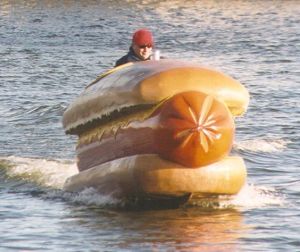
6. While hotdogs normally get soggy in water, may I make an exception?

And this one is made of metal while equipped with a motor. Wonder if it serves hotdogs to boat racers.

7. Sometimes you just have to choose an unusual picnic spot.

Though having one on the water is kind of a stretch. But I guess you can always attach logs for buoyancy.

8. A motor boat must always make an impression.

This one is painted in bright red and yellow. So you can see it from miles away.

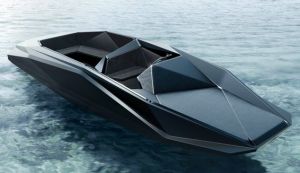
9. Perhaps a small, sleek, geometric boat might suit you.

Though it’s only available in black. And you most likely can’t afford it.

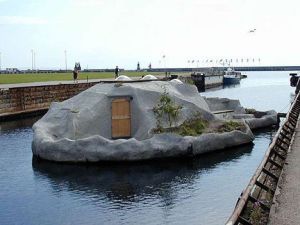
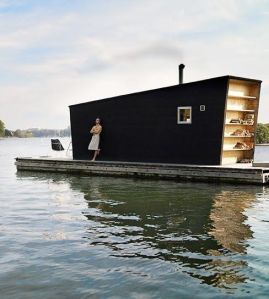
10. If you want a more naturalistic houseboat, we’ve got you covered.

This one seems to resemble a small cave home. Though I’m sure the rock facade is fake.

11. All you need to make a boat is a motor and a large dining room table.

Well, that seems to work for some reason. But not exactly the ideal boat most people would have in mind.

12. How about a tiki bar on the water?

It’s a pontoon boat with a bar, deck chairs, and artificial grass. You can even try to play golf on it.

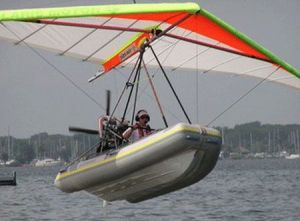
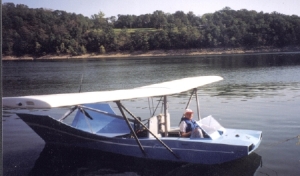
13. Need a lift from the lake? This is the boat for you.

Yet, another boat that can fly. This one combines a small motor boat and an ultralight plane.

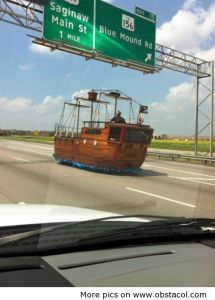
14. Let’s hope nobody runs into a pirate ship in traffic.

It’s an amphibious pirate ship, all right. But don’t worry, they only rob tractor trailer trucks.

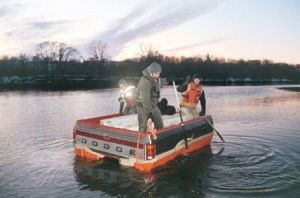
15. When you’re stuck on the river’s shore, a truck bed boat comes in handy.

Indeed, you’ll find quite of few boats people made themselves in this post. This consists of a bed from an old Dodge.

16. Well, never saw a fly that big on the water before.

Well, it’s a large zipper fly. But it runs on water, not on teeth.

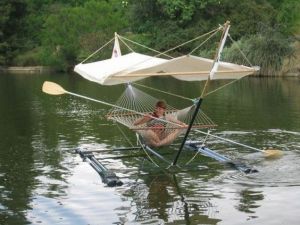
17. Ladies and gentlemen, I give you the hamma kayak.

This is one consists of a hammock and a kayak. But unlike most kayaks, it has shade.

18. Perhaps you’d like a small cottage on the water.

It’s just a small house on a barge. Still, it’s rather quaint.

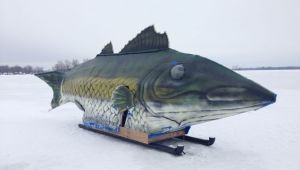
19. This seems to give a fishing boat a whole new meaning.

Well, it’s a literal fish boat. But it’s seems more suited for the winter weather as you can see.

20. Whether on ice or water, best take an Arctic Ant.

It’s also known as a hydrocopter. And it’s a boat suited for adverse conditions as far as I know.

21. Got a shit load of cans? Make a boat out of it.

Though it’ll take a lot of cans. And make sure they’re washed and dried before assembly.

22. Now that’s what I call a recreational vehicle.

Indeed, most people can’t go on the water in an RV. But this is an exception, apparently.

23. Want to fly from the water? Just add wings.

I know this is another boat the flies. But I’m not sure if the wings did the trick in this case.

24. Perhaps you want to ride the waves in comfort.

This one has a couch on a pontoon. And it seems this family is enjoying themselves.

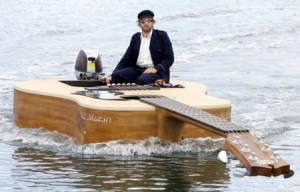
25. Apparently, a giant guitar makes a great floatation device.

This large guitar may not make a great instrument. But it’s perfect for a hipster’s boat trip across the river.

26. You’d find this small boat almost transparent.

And yes, it’s certainly made of plastic. But you can what’s underneath the water on the floor.

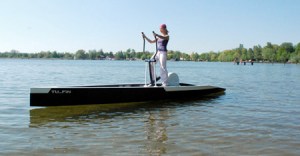
27. This boat operates on paddle power.

Seems like it’s a boat with an exercise machine. But the machine powers the boat.

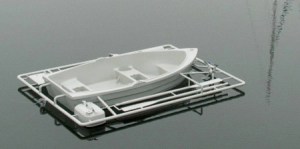
28. With this boat, it’s some assembly required.

It’s a boat kit boat. Includes oars, rudder, and something resembling a motor, apparently.

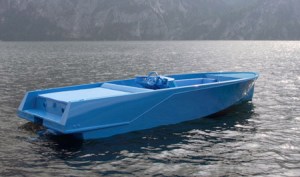
29. You’ll find this boat out of the blue.

Since it’s mostly blue without it. But I don’t think it blends in the sky.

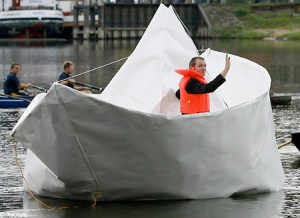
30. You’d almost assume this boat was folded.

It’s based on Japanese origami design. And I hope it’s not made out of real paper.

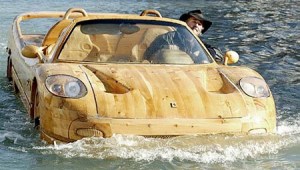
31. An amphibious vehicle should always have the right varnish.

It’s a car boat made out of wood. And for some reason actually seems to work.

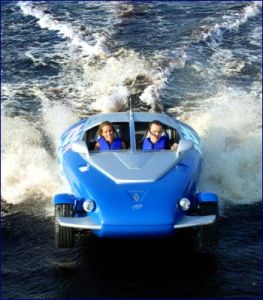
32. Speaking of amphibious vehicles, this red boat car is state of the art.

Indeed, you probably cant’ afford it. But it’s quite stunning on the water.

33. Care for music on the water?

As you can see, this guy has his instruments all laid out. While his boat is painted in all kinds of colors. Don’t ask if he has weed.

34. A houseboat should always be one’s castle.

However, I don’t think medieval house boats looked like that. Since they’d more likely be made of wood and have sails.
35. I guess this car boat is used for safari tours.

Though it doesn’t seem to offer much protection. Since you can stick your head out the windows.

36. You’d almost think this car boat has Formula 1 caliber.

Since this boat seems to resemble a race car. But it works well in land or on the water.

37. Perhaps you may prefer a fancy wooden ship.

Yet, this seems to take the notion to unrealistic proportions. I mean real wooden ships were never that colorful.

38. Wonder how well you can row a cup.

This is seen as a coffee cup boat. And yes, it includes a saucer.

39. Behold, I give you the Cosmic Muffin.

I know it resembles a space shuttle you’d see on Star Trek. But it’s a boat recycled from a Howard Hughes plane.

40. If you want to stand out, a boat like this might do the trick.

What is that large black thing on the front of it? Is it a loudspeaker? Or something else?

41. You got to pedal hard to move a waterwheel.

Well, it’s a paddle wheel more or less. And there’s really not much room on it either.

42. This Earth Race boat will come in handy for supervillains.

Because it seems exactly like the boat you’d imagine Lex Luthor to have. And yes, it seems rather menacing.

43. If you’re stranded on a deserted island, why I have a boat for you.

It mostly consists of a tent on a sail raft. Then again, in some deserted island situations, this might not be feasible.

44. Perhaps you might want a boat in pink.

Yes, it’s the kind of boat you’d imagine Barbie to have. But this one is life size and way more expensive.

45. Aaaah! Shark!

Don’t worry. it’s just a shark submarine. Still, it looks really cool.

46. I give you the royal swan boat.

While swan boats exist, they’re nothing compared to this boat. Wonder if it’s a ferry.

47. This marlin seems to have a lot to say.

Not sure if I can make out the words. But this fish boat seems to have whimsical quality to it.

48. Hope you can get a load of these fly boats.

These are quite small compared to the other fly boats I’ve shown. Yet, they must be a sight to behold in the sky.

49. Check out this foot print boat across the water.

Of course, this kind of resembles something you’d see from a sci-fi shoe or movie. Yet, it doesn’t impress onlookers.

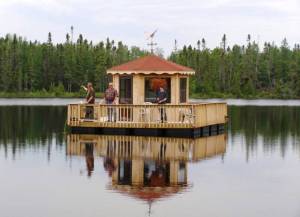
50. I’m sure you can enjoy a gazebo anywhere.

Well, it’s more like a gazebo house boat. But at least it includes a nice porch to fish from.

51. To keep up with the times, a boat car needs a sleek design.

If it was just a road car, it would’ve been considerably cheaper. Since it seems to resemble a slightly more expensive sedan.

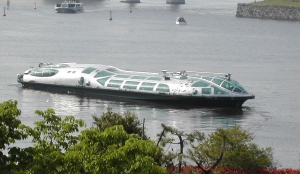
52. Someone’s yacht must come with a glass top.

Yet, another sci-fi looking boat on the water. Seems like one Padme would vacation in on Naboo.

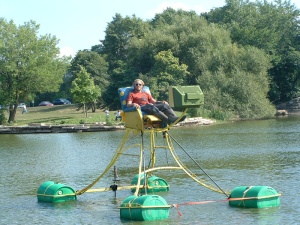
53. Sometimes it helps to rest on the water in style.

This one has a high chair with empty plastic barrels. Would be perfect for any lifeguard.

54. Never thought I’d see a houseboat like this before.

It seems to resemble an actual house with siding. Though it includes 2 decks and ladders.

55. You’d think this house boat came from a junk yard.

Well, it’s made from an old bus and other parts. But you can see how it can fit in a house boat design.

56. This house boat has some rather tropical luxury accommodations.

This one is more suited for island areas near the Equator. But the roof almost makes it seem like it’s somewhat affordable.

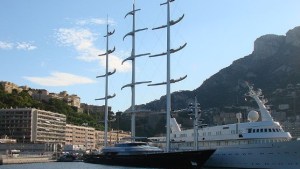
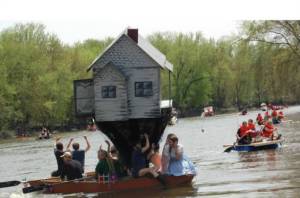
57. Where are the sails on this thing?

You have to wonder about that. Still, what are those tall things supposed to be? I can’t even imagine.

58. Perhaps this boat can be a bridge on the waterways.

Heard this is called a Proteus ship. Yet, it’s the kind of boat with its own jet skis, apparently.

59. With this camper, you can have your site on water or land.

Well, that’s one way to make a house boat. Still, don’t forget to have chairs for a patio.

60. Sometimes it helps if you raise the trailer up a bit.

Yet, another redneck house boat. And one that can really use a paint job since it’s quite rusty.

61. A boat of reeds can surely float.

Though it appears rather flammable if you ask me. Still, the figurehead is quite cute.

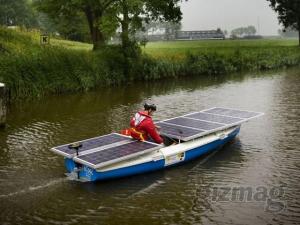
62. This rowboat operates on solar power.

You’d think she wouldn’t need oars for a solar powered boat. But you’d be wrong.

63. May I give you the Sea Shadow.

This is supposed to be the naval equivalent to a stealth plane. Though it seems like the kind of boat you’d imagine Darth Vader using.

64. Oh, my God, it’s a Orca on the shore!

Actually it’s an orca submarine. And yes, it can jump out of the water.

65. This boat runs with the sun.

And yet, this boat is made by the genius company behind the Gulf of Mexico oil spill. And that is why I oppose offshore oil drilling.

66. Looks like these settlers decided to row across the river.

Sadly, after their crossing, Brad would later fall ill and die of dysentery. He will be missed.

67. I dub thee the HMS Wooden Subby.

Yes, it’s supposed to be a wooden submarine. But no, I don’t think it was present during the Battle of Trafalgar.

68. You’d almost think someone was living inside a nut.

It’s actually a weirdly designed houseboat. And yes. it even has a window.

69. This boat seems to have a rather Dutch disposition.

It’s a clog boat with tulips painted on it. Must’ve been made in the Netherlands.

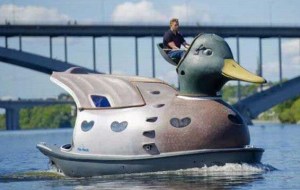
70. This gives a whole new meaning to the word, “duck boat.”

It’s a boat resembling a duck. But please don’t pay attention to the windows and marks on it.

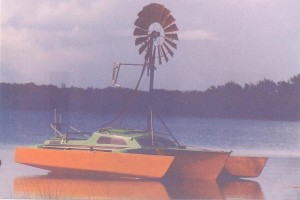
71. A boat will ride like the wind with a wind turbine.

Though it may not travel very far. But it does have a homespun look to it.

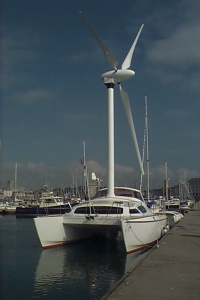
72. Perhaps a modern windmill boat may suit you.

And this one is mainly used as a sail. And yet, sticks out like a sore eye.

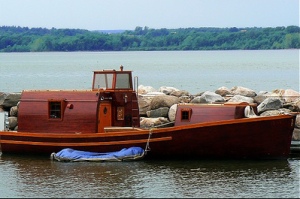
73. A wooden boat should always be one of good taste.

This one even has 2 decks and a porch. Yet, it’s best not to leave any fires on it alone for too long.

74. Perhaps a simple wooden boat will suit your fancy.

This one even has wooden cabins and windows. Quaint for relaxing on a Sunday afternoon.

75. I almost thought it was a cruise ship.

It’s actually a small boat that can only fit one guy. Yet, it’s quite lovely to look at.

76. Behold, the Nautlimo.

It’s a pink limo on the water. So you can travel on the river in style.

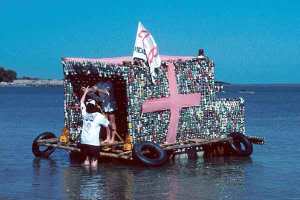
77. You’d almost think it’s a canned truck.

This one has a pink cross on the side. Not to mention, it has tires to act as wheels on the water.

78. Care to cruise in a muscle car?

It’s a 1950’s style car boat. And you can drive it on land or water.

79. Got a bike with large tires? Make a boat out of it.

You’ll have to row it. But you can rest your head on the rubber and paint the flowers on the tires.

80. Children would love a treehouse on the river.

Yes, they seem quite happy. Yet, I wonder what the tree house could fit in.

81. Got plastic bottles? Make a boat out of them.

Well, at least these people made something constructive out of this junk. And I’m sure it’ll last for years.

82. Boat or a resort home?

It’s more of a yacht that has a house on top. Includes trees and a deck.

83. You can’t have a well-dressed boat without curtain.

And yes, the curtains are on the top. What they’re used for, I don’t know.

84. A fancy boat should always include windows.

Yes, it does resemble a piece of bad architecture. But it’s a sleek metal boat from Russia.

85. Wouldn’t you want to fish in comfort?

This one has a comfy chair on a barrel barge. But someone has their fishing rods on the edge.

86. Don’t like scuba diving but like to see what’s underwater? This EGO Submarine boat is for you.

This is a personal-semi-submarine. Expensive but quite cool to look at.

87. “We all live in a yellow submarine…”

When I saw one of these in Google Images, I had to include it. Ironically, it’s in Liverpool.

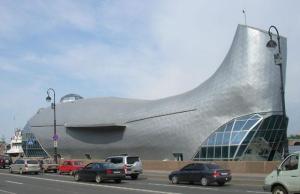
88. Anyone would flip over this dolphin submarine.

Though I wonder how big it is compared to a dolphin. Still, looks kind of cool.

89. So I guess there’s a biblical flood looming.

Don’t worry, it’s some Dutch guy’s replica of Noah’s Ark. Sadly it doesn’t have any unicorns.

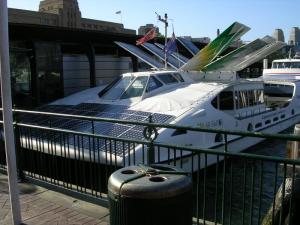
90. Even you can put solar panels on your boat.

And yes, they’re well suited for powering boats, too. Though the sun isn’t as effective as gasoline.

91. You’d find this wooden house boat quite charming.

Well, it’s rather small. But includes a deck, ladder, and windows.

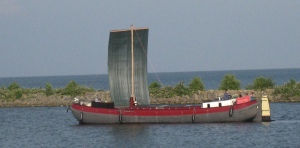
92. Now you can have your own Viking long ship.

I know it’s kind of a home made attempt. Still, I hope the monastery nearby has a high tech security system.

93. You can go anywhere on the water in this red boat.

It’s of redneck design by the way. Though it almost seems like someone spent a fortune on it.

94. You’d almost mistake this boat for the Magic School Bus.

It’s actually a duck boat from London. And no, it can’t shrink and travel through your body.

95. Bet you can’t go across the river in a hydrocopter.

This one has blades on the bottom to move it along. But only room for a few.

96. Oh, no, the ship’s sinking! We’re sinking!

Actually, the boat was designed that way. The guy’s fine.

97. You’d think this house boat was futuristic.

It’s actually made from an old camper. And I don’t think it’s for sale.

98. This boat makes for a whale of a tale.

It’s a whale boat, get it. Nonetheless, it’s quite huge if you ask me.

99. Sometimes a simple boat house will do.

This is a pre-fab boat house. And it’s ultramodern as well as not quite fancy.

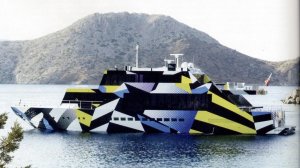
100. Looking at this boat, you’d wonder if your eyes hurt.

This one is painted in a bizarre pattern. Still, I’m sure onlookers would complain.

A Disgrace to the Nation, a Disgrace to the Presidency

I have not been shy about my fierce antagonism to Donald Trump. But his Helsinki summit with Russian President Vladimir Putin culminated in a show stopping trainwreck that should’ve shocked nobody but generated bipartisan outrage across the United States. On Monday, July 16, 2018, Trump held a friendly rendezvous with Putin who sabotaged an American election on his behalf. And he has been rewarded by seeing an American foreign policy turn in a pro-Russian direction.

When Donald Trump issued a plea on a podium in Doral, Florida on July 27, 2016, he stated, “Russia, if you’re listening, I hope you’re able to find the 30,000 emails that are missing.” We all know he was referring to the emails Hillary Clinton had deleted as irrelevant to her work as Secretary of State. But for those who don’t understand, Trump was publicly asking for Russian agents to break into her computer systems, steal documents she had erased, and release them to the public. And according to recently released indictments Special Counsel Robert Mueller revealed a few days before, that same day, for the first time, Russian hackers attempted to hack into, “email accounts at a domain hosted by a third-party provider and used by Clinton’s personal office.” They also, “targeted seventy-six email addresses at the domain for the Clinton campaign.” Now Russia’s campaign to interfere in the election had been an ongoing campaign as early as March that year. What Trump’s request seems to have done was focus efforts on Clinton’s inbox. There are plenty of plausible explanations of wat happened here. Maybe the Russians heard Trump’s call and heeded it. Perhaps Trump’s invitation was attached to a private plea to Russian contacts like one sent by either Paul Manafort or Roger Stone. It’s possible the whole thing was just coincidental. But we should resist the tendency to speculate since it’ll just distract us from what we do know. And it’s damning.

Nonetheless, it should be glaringly apparent that Vladimir Putin is not our friend. He does not share our values nor does he care for democracy. In fact, he rules Russia as a kleptocratic dictator with a repressive iron fist. For God’s sake, the guy had his critics and political opponents murdered, including journalists and ex-spies like Alexander Litvanenko in Great Britain. It’s obvious that Russia couldn’t have meddled in the 2016 presidential campaign by hacking into the DCCC, DNC, and Hillary Clinton’s team without his orders. And we know they orchestrated this massive information theft on the Dems and used it to help Donald Trump win. Not to mention, Russia’s efforts to help Trump win included social media campaigns to inflame racial divisions on his behalf with armies of bots meant to elevate stories boosting him and hurting Clinton along with efforts to compromise state voting machines. None of this is in doubt.

Even before Donald Trump decided to run for president, the Russian ties were there. In 2008, Donald Trump Jr. said of the Trump Organization, “Russians make up a pretty disproportionate cross-section of a lot of our assets.” And in 2014, Eric Trump added, “We don’t rely on American banks. We have all the funding we need out of Russia.” From 2003-2017, “buyers connected to Russia or former Soviet republics made 86 all-cash sales — totaling nearly $109 million — at 10 Trump-branded properties in South Florida and New York City.” Trump’s onetime campaign manager Paul Manafort had ties to the Kremlin and was deeply in debt to Oleg Deripaska, a Russian oligarch, closely connected to Vladimir Putin. And he was keeping in touch with this guy’s team during the election as well as asked of his powerful position in the Trump campaign, “How do we use [it] to get whole?”

Yet, we also know that Donald Trump has repeatedly praised Vladimir Putin even at considerable political cost after asking Russia to hack into Clinton’s emails, which it did. We know that Trump associates like Roger Stone seem to have advanced warning of the hacked emails’ release. We know that the willingness to cooperate with the Russians wasn’t one of Trump’s idiosyncratic musings. It was suffused in the Trump campaign’s top ranks since members of his inner circle like Donald Trump Jr., Jared Kushner, and Paul Manafort eagerly accepted a meeting with Russian operatives promising Hillary Clinton dirt. And that Trump dictated the statement lying about the infamous Trump Tower meeting’s purpose. Additionally, we know the Trump campaign interfered in the Republican National Committee’s platform drafting to softening the language on Russia and Ukraine. We know that Jared Kushner sought a secret communications channel with the Russians so the US government couldn’t hear their negotiations.

The Russia strokefest even carry on to Donald Trump’s presidency for there has never been a single issue haunting his administration as long or as much as his Russian ties. Since his election, he’s bucked his party, his administration, and decades of foreign policy in attempts to shield Russia from sanctions for electoral interference, pull American support back from NATO and the European Union, and forge a closer relationship with Vladimir Putin. Then there’s Trump’s own testimony about firing FBI Director James Comey to end his investigation into Russia’s role into the 2016 election. In addition, he wanted to fire Attorney General Jeff Sessions and Deputy Attorney General Rod Rosenstein for failing to protect him from the investigation. An it’s no wonder the Trump administration has moved from arguing that Trump didn’t obstruct justice to arguing that by definition, the president can’t obstruct justice. All of this leads to Trump insisting on the Helsinki meeting with Putin over his staff’s objections and despite the absence of any clear agenda.

Indeed, Donald Trump addressed the election hacking during his joint press conference with Vladimir Putin. “I will tell you that President Putin was extremely strong and powerful in his denial today,” he said. Well, you think? Because of course he’d deny that he’d have anything to do with election hacking despite all evidence to the contrary. Trump then added, “And what he did is an incredible offer. He offered to have the people working on the case come and work with their investigators with respect to the 12 people. I think that’s an incredible offer.” Uh, no it’s not. If anything, that’s like having Al Capone offering to help the cops with the investigation over the guys involved in the Saint Valentine’s Day Massacre. You know that things won’t turn well. If anything, Putin isn’t interested with working with the Mueller investigation. More likely he’d offer to help with respect to draw people from the Mueller team into Russia to kill them.

Donald Trump then attacked US intelligence services and again mused how much better it might’ve been if Russia cracked into Hillary Clinton’s server and gotten her documents. “What happened to Hillary Clinton’s emails?” he demanded as if anyone cared about her emails 2 years after the 2016 election. “33,000 emails gone — just gone. I think in Russia they wouldn’t be gone so easily.” Even his allies were dumbstruck, with former Bush press secretary Ari Fleisher tweeting: “I continue to believe there was no collusion between the Trump campaign and Russia. But when Trump so easily and naively accepts Putin’s line about not being involved, I can understand why Ds think Putin must have the goods on him.” Asked if Russia had compromising material on Trump, Putin replied, “it’s difficult to imagine utter nonsense on a bigger scale than this. Please disregard these issues and don’t think about this anymore again.” Though you can imagine him privately laughing maniacally with fellow Russian officials. When asked about whether he holds Russia accountable for their actions contributing to the deterioration in the US-Russia relationship, he replied in an answer reeking of treason:

“Yes, I do. I hold both countries responsible. I think the United States has been foolish. I think we have all been foolish. We should have had this dialogue a long time ago, a long time, frankly, before I got to office. I think we’re all to blame. I think that the United States now has stepped forward along with Russia. We’re getting together and we have a chance to do some great things, whether it’s nuclear proliferation in terms of stopping, we have to do it — ultimately, that’s probably the most important thing that we can be working on.

“I do feel that we have both made some mistakes. I think that the probe is a disaster for our country. I think it’s kept us apart. It’s kept us separated. There was no collusion at all. Everybody knows it. People are being brought out to the fore. So far that I know, virtually, none of it related to the campaign. They will have to try really hard to find something that did relate to the campaign.

“That was a clean campaign. I beat Hillary Clinton easily and, frankly, we beat her. And I’m not even saying from the standpoint — we won that race. It’s a shame there could be a cloud over it. People know that. People understand it. The main thing — and we discussed this also — is zero collusion. It has had a negative impact upon the relationship of the two largest nuclear powers in the world. We have 90 percent of nuclear power between the two countries. It’s ridiculous. It’s ridiculous what’s going on with the probe.”
He’s basically saying that the US is no better than Russia. And that he won a clean campaign so all what the Mueller probe is doing is hurting our relationship with Russia.

Despite that 12 Russian agents hacked into Democratic emails on Putin’s orders and for Trump’s benefit. And the Trump team was eager to let it all happen. Later, when asked specifically about Russia-backed hackers stealing Americans’ private correspondence, Donald Trump replied: “My people came to me, [Director of National Intelligence] Dan Coats came to me, and some others, and said they think it’s Russia. I have President Putin; he just said it’s not Russia. I will say this. I don’t see any reason why it would be, but I really do want to see the server. But I have confidence in both parties.” Uh, Coats and his team didn’t think it’s Russia. They said it was Russia. But anyways, as president of the United States, Trump stated that he has equal confidence in Vladimir Putin and the American intelligence community the same way he believes that both the white supremacists and counter-protestors in Charlottesville were “very fine people.” Such remarks are politically baffling since such remarks only undermine his position. The simplest explanation for why a president who happily outsources his domestic policy to Paul Ryan and his judicial nominations to the Federalist Society insists on freelancing around Russia is that there’s a genuine meeting of minds between Trump and Putin on a wide range of issues.

Take the matter of the natural gas pipeline Nord Stream 2 Germany plans to build which Russia hawks in the US and Europe have long been concerned about. Such pipeline would give Russian fossil fuels more access to the European market. Donald Trump often likes to criticize Germany but rarely likes to bash Russia. But somehow, he surprised many observers by criticizing this pipeline at the NATO Conference in Brussels. On the surface, it appears that Trump had tried to ingratiate his passion for making trouble with German Chancellor Angela Merkel with something resembling routine American foreign policy. But the Helsinki summit quickly dashed those hopes. Asked by a Russian journalist about the pipeline and how he’d characterize the US-Russia relationship, Trump made it clear his pipeline concern isn’t that it would give Russia undue political leverage over Germany, but simply that would be bad for fossil fuel interests:

“I called him a competitor, and a good competitor he is. I think the word competitor is a compliment. I think that we will be competing when you talk about the pipeline. I’m not sure necessarily that it’s in the best interests of Germany or not. That was a decision that they made. We will be competing. As you know, the United States is now, or soon will be, but I think it is right now the largest in the oil and gas world. So we’re going to be selling LNG. We’ll have to be competing with the pipeline. I think we will compete successfully. Although there is a little advantage locationally. I wish them luck.

“I discussed with Angela Merkel in pretty strong tones. But I also know where they’re coming from. They have a very close source. We will see how that all works out. But we have lots of sources now. The United States is much different than it was a number of years ago when we weren’t able to extract what we can extract today. So today, we’re number one in the world at that. I think we will be out there competing very strongly. Thank you very much.”

Essentially, Donald Trump’s view on the relationship with NATO to Nord Stream 2 make absolutely no sense. But it’s consistent with his overall worldview. While a normal US leader may worry that Russo-German energy ties might undermine Germany’s ability to lead an independent Europe at a political level, Trump’s objection is backward. He doesn’t think it’s worth America’s while to contribute to Europe’s defense through NATO if Europe turns around and buys Russian gas. He defines Russia as a “competitor” to the United States exclusively in the commercial sphere rather than a geopolitical one. That’s why he called the EU a “foe” in much stronger terms in regards to competition levels in export markets. If you view world affairs through a mercantile like Trump does, then America’s closest allies who are mostly rich democracies are our biggest enemies and deterring Russian expansionism is a waste of cash. Nonetheless, it’s time to accept that this is what Trump really thinks and that’s how he’s governing accordingly.

In New York Magazine, Jonathan Chait published a speculative idea that Donald Trump had been a compromised Russian agent since the 1980s, which though chilling borders more on conspiracy theory than anything else. It’s more likely that Trump is more concerned on how the Russian election meddling for his behalf may render his electoral victory illegitimate. Though he doesn’t care much about how to win since he’s employed dubious means in the past. In fact, he’s more worried about getting caught. Nevertheless, like much of the debate, Chait’s piece reflects the view we’re still largely in the dark about the Trump Organization’s true nature of its relationship with Russia. Except we’re not. In fact, we know a vast amount about Trump’s Russia connections, Russia’s role in the 2016 election, the Trump Organization’s efforts to conceal Russian contacts, Trump’s efforts to impede the investigation into the matter, and about his treatment of Russia, Putin, and NATO since his election. As former NSA official and executive editor of Lawfare Susan Hennessy told Vox, “Every single time we’ve heard of that the Russians reached out to offer something — dirt on Hillary Clinton, access to another trove of emails, secret meetings, back channels — the common theme of every single individual in Trump’s orbit was, ‘Yes. Help us out.’ That is the really astounding picture that has emerged.”

While there is much left to find out, learning the truth is important for its own sake. Yet, the obsessive focus on what we still don’t know reflects a hope among Donald Trump’s opponents that Mueller will find something, reveal something, or bait Trump into doing something that will trigger consequences of some kind. However, there’s nothing so automatic in the system. And there’s no reason to believe further revelations would call forth that kind of response. At this point, the big issue isn’t what we don’t know. It’s what to do with what we do know.

Thanks to politics, the 2018 and 2020 elections can’t and won’t act as a clear way for accountability on Donald Trump and Russia. From issues such as Supreme Court justices, tax policy, Obamacare’s future, civil rights, workers’ rights, and environmental regulations, there is too much at stake at any given election these days and there are too few choices available for voters for them to answer a problem as complex and unusual as this one. This is especially true since Republicans control both houses of Congress and many in the House have went out of his way to protect him. Because they know their future is tied to Trump’s survival. Anything that weakens his administration weakens their 2018 reelection prospects, their ability to fill judgeships, and their ability to pass tax cuts. Thus, their political lives depend on Trump’s political strength.

It’s hard to remember now that Donald Trump entered the White House with an unexpectedly low level of support from his own party. Vulnerable Republican senators and House members refused to admit voting for him while Speaker Paul Ryan stated he’d no longer defend him. As a candidate, Trump was personally hostile to a number of established GOP figures like US Senator Ted Cruz and expressed heterodox views on a wide range of policy issues. Theoretically, it could’ve led to an unusual dynamic where congressional Republicans subjected Trump to an uncommonly stringent level of oversight for a same-party president, and Trump engaged in an uncommonly high level of policymaking cutting across established party lines. In practice, Trump and the GOP reached a Faustian compromise. Republicans would give no restraint whatsoever on Trump’s personal corruption or financial conflicts of interests. While Trump won’t attempt to pursue heterodox agendas on infrastructure, healthcare, anti-trust, etc. that he promised on the campaign trail, which was easy enough since he made them to give socially conservative white working-class voters no incentive to vote with their economic interests. And he doesn’t care much about those supporters anyway and had no plans on fulfilling what he promised them. The deal has worked well on domestic issues, culminating in the nomination of Brett Kavanaugh to succeed Anthony Kennedy on the Supreme Court.

But it’s begun falling apart on foreign affairs after a successful 2017. Coats, Defense Secretary James Mattis, and others with conventional conservative Republican views hold key advisor jobs in the Trump administration. However, Trump had no interest taking their advice since he thinks that advice is wrong. And now he’s acting to unravel America’s global trading relationships, doing what he can to undermine NATO and the EU, trying to find excuses to get out of defense obligations to South Korea, and otherwise implement a mercantilist vision he’s articulated over and over again. Thus, it’s time for congressional Republicans to stop issuing gutless statements denouncing him and start taking this seriously as his policy agenda. But since Republicans place a higher value on party unity than the foreign policy issues they claim to stand for, they will do whatever they can to stay in Trump’s good graces and avoid angering his base before the upcoming midterm elections. Because they don’t want to jeopardize their legislative agenda, they’ll let their Snowflake King take a sledge hammer on decades of US foreign policy on Russia and other issues. At the same time, the mainstream GOP tries desperately to at least pretend they can be anti-Putin and pro-Trump. However, the Trump-Putin presser makes it clear that it’s impossible.

Meanwhile, congressional Democrats don’t have the power to do anything right now and are more focused taking back Congress back in 2018. But even if they do win the election, their priority will be retaking the presidency in 2020. So they’ll more likely focus on healthcare and Social Security, not Russia and the 2016 campaign. Thus, it’s best we don’t expect impeachment down the line in the foreseeable future. Since while the Democrats can successfully impeach him and remove him from office quite easily once they’re in power, that might mean President Mike Pence. And no one in the Democratic Party wants that.

As for the rest of the legal system, well, there’s nothing necessarily illegal about Donald Trump publicly asking Russia to hack Hillary Clinton’s emails. Just as there’s nothing illegal about him pursuing a stunningly pro-Putin foreign policy after receiving Russia’s aid. The actual hacking was illegal, no doubt. But who’s going to hold Russia accountable for that? It won’t be the Trump administration who asked for and benefitted from their help. For when asked by a Reuters journalist “Do you hold Russia at all accountable for anything in particular” that has contributed to the decline in the US-Russia bilateral relationship, Trump delivered the defining answer of his foreign policy that he doesn’t. Nor did he object to Vladimir Putin’s oppression, Russia’s 2008 effort to dismember the former Soviet Republic of Georgia, Russia-backed forces shooting down Malaysia Airlines Flight MH-17 and killing hundreds of civilians, Russia’s invasion of Crimea, its subsequent invasion of Eastern Ukraine, Russia’s apparent use of a deadly nerve agent in the UK, or of course, the computer hacking associated with the 2016 election.
Though Mueller’s indictments were announced just before the infamous Trump and Putin summit, it first led to talk of whether Trump might cancel it meeting (which he didn’t) and then speculation over whether and how he’d confront Putin over Russia’s actions. But everyone knows that Trump’s actual response to Russia’s intervention on his behalf has always been of gratitude and solicitousness. So what other response is there to a world power doing exactly what you asked of them in a time of political need?

Nevertheless, after a massive bipartisan condemnation of Donald Trump’s disastrous press conference with Vladimir Putin in Helsinki where he questioned Russian meddling in the 2016 election, Trump held a surprise press conference the next day to walk back on his comments. Sitting at a table with members of Congress, he read clearly prepared statement asserting he had “accepted” US intelligence’s findings that Russia was behind cyberattacks leading up to the 2016 election. He claimed he had misspoken about the press conference when he questioned the idea of Russian interference which might be plausible in theory. But take his statement in the context of what Trump actually said, it makes no sense. And it’s very clear he’s still expressing skepticism about Russia’s guilt as he states:

“My people came to me, Dan Coats came to me and some others; they said they think it’s Russia. I have President Putin. He just said it’s not Russia. I will say this. I don’t see any reason why it would be, but I really do want to see the server. But I have confidence in both parties. … I think it’s a disgrace that we can’t get Hillary Clinton’s 33,000 emails.

“So I have great confidence in my intelligence people, but I will tell you that President Putin was extremely strong and powerful in his denial today. And what he did is an incredible offer. He offered to have the people working on the case come and work with their investigators, with respect to the 12 people [Russian agents indicted by special counsel Robert Mueller for election interference]. I think that’s an incredible offer.”

What he’s saying is that there’s a conflict between US intelligence and Russia claims, that he’s not sure who’s right, and that he’d appreciate Russian intelligence’s help in clearing up what happened. Despite the fact that the 12 newly indicted Russians were intelligence agents so we’re in no position to trust Russian intelligence on such matters whatsoever. What’s more he still reiterated his skepticism when he said, “I accept our intelligence community’s conclusion that Russia’s meddling in the 2016 election took place,” following it up with, “Could be other people also. A lot of people out there.” He still doesn’t believe Russia is involved and he’s trying to convinced us that he didn’t mean what he said. Let’s not kid ourselves that Trump’s trying to gaslight the entire world and assert something he didn’t by sheer force of confidence. He’s brazenly lying to us and we shouldn’t let him get away with it. Russia meddled with the 2016 presidential campaign of which can there be no doubt. We shouldn’t believe otherwise.

Yes, Virginia, There Was a Manchurian Candidate and Now He’s President

While Donald Trump was out of the country acting like a complete disgrace toward our closest ally, Special Counsel Robert Mueller filed an indictment against 12 Russian officers for crimes related to hacking and publicly releasing the Democrats’ emails as part of an effort to interfere with the 2016 presidential campaign. As long suspected, Mueller alleges it was Russian intelligence officers behind the high-profile hackings of emails and documents from the Democratic National Committee and the Democratic Congressional Campaign Committee, and various Hillary Clinton campaign staff emails, including those of her campaign manager John Podesta. Many of these were posted by 3 separate entities. Two of those, “Guccifer 2.0” and “the DCL Leaks website” were created and controlled by GRU officers from Russia’s intelligence agency. The third, Wikileaks, got the stolen DNC emails from these officials (and eventually, the Podesta emails), but referred as “Organization 1” it’s not yet charged with anything.

The indictment presents significant technical evidence on precisely how these Russians pulled off the hack, including electronic communications and transfers of information between the various figures involved. However, there’s no allegation that any Americans or any Trump campaign member were criminally or knowingly involved in the hackings or leaks. Or at least not yet. But nonetheless, this new slew of indictments brings the entire total in the Mueller probe to 32 individuals and 3 companies.

The new indictments released on Friday, July 13, 2018, provide concrete evidence that the release of the hacked DNC emails was timed for maximum political impact. And they suggest Russian intelligence agents and Wikileaks planned to engineer discord between Hillary Clinton and Bernie Sanders supporters during the 2016 Democratic National Convention. According to the latest Mueller statement, a conversation between Russian intelligence and Wikileaks on July 6, 2016 had the latter correspond with GRU officers with “if you have anything hillary related we want it in the next tweo [sic] days prefable [sic] because the DNC is approaching and she will solidify bernie supporters behind her after.” After the Russians responded with, “ok … i see,” Wikileaks explained their motives for wanting information that would reveal tension between the Sanders and Hillary camps. They replied with, “we think trump has only a 25% chance of winning against hillary … so conflict between bernie and hillary is interesting.” Of course, tensions between Sanders and Clinton existed long before the hacked emails were released since it was why the DNC was such a splash. But Russia and Wikileaks knew that releasing the information at the opportune time would have ripple effects. The Democratic National Convention was meant to be a coming together moment to focus on defeating Donald Trump and the Republicans after a long and bitter primary between Clinton and Sanders. In fact, Sanders actively encouraged his fans to vote for Clinton in his convention speech. Yet, with the leaked emails as backdrop, he was booed at every turn and some Berniecrats didn’t heed his call to vote at all in 2016. Though there is a lot of speculation about how the trove of leaked DNC documents spurred discord between the two groups, the indictments suggest that this is exactly what the Russians wanted.

Mueller’s indictments also detailed a Russian hack into a state board of elections website (believed to be Illinois) in July 2016. According to him, Kremlin-linked hackers, “stole information related to approximately 500,000 voters, including names, addresses, partial social security numbers, dates of birth, and driver’s license numbers.” In addition, Russian spies penetrated a US vender that supplied voter-registration verification software and, in November 2016, sent over 1,000 spearfishing emails to “organizations and personnel involved in administering elections in numerous Florida counties.” They even visited election websites in Georgia, Florida, and Iowa in an attempt to find vulnerabilities. The incursions into the US voting infrastructure have been widely reported. But Mueller’s indictment present clear evidence that Russian intelligence probed into the systems. Though there’s no proof that these hacks altered the vote count or election outcome. Yet, Russia wasn’t poking around for kicks since spies were likely gathering information and searching out vulnerabilities.

But these 12 new indictments of Russian intelligence officers are a powerful reminder of the 2 hard core truths of the Trump-Russia story that often go missing amid the political controversy and amateur detective work. First, whether the anyone in Trump campaign was knowingly involved or not, real crimes were committed in 2016 with real victims. Second, since announcing his candidacy for the presidency in 2015, Donald Trump has gone out of his way to shield those who committed these crimes from exposure or accountability. But whether that’s because his campaign colluded with Russia or that he merely benefited from these crimes remains to be seen. Yet, these points are worth dwelling over because they cut against 2 commonplace narratives about the case. One renders the entire issue as a question of mystery and spycraft, leading ultimately to things like Jonathan Chait’s maximalist speculation that perhaps Trump had been a KGB asset since the 1980s or anything comparable to the stuff of Cold War fiction like The Manchurian Candidate. The other renders it as a narrowly political question where passionate Hillary Clinton fans should feel robbed of an election win. Though her critics across the political spectrum can smugly feel self-assured there were other reasons she lost.

Obviously, illegal hacking and invasion of privacy is a bad thing on its own terms regardless of election outcome. When Russian hackers pilfered John Podesta’s Gmail inbox, they didn’t exclusively obtain material highly relevant to Hillary Clinton’s career and political prospects. In fact, the vast majority was simply the personal correspondence of a man involved with Democratic Party politics. Wikileaks then laundered through his emails to disguise their origins and posted their entirety online with no regard to privacy or newsworthiness. The contents include a risotto recipe, an email birth announcement by a friend, a performance evaluation on a previous job, and hundreds upon hundreds of examples that had nothing to do with Clinton or American politics. But once the emails were out, there were few visible alternatives but to cover them. It’s understandable why Republicans chose to opportunistically take advantage of the crimes by gleefully citing them as a damning indictment on Clinton. However, fundamentally, all Americans using email have a genuine interest not seeing this form of privacy invasion not to become a routine aspect in our lives. It’s illegal for a reason, and it would be good for people committing this kind of crime to be caught and punished.

But Donald Trump has consistently acted to prevent any form of accountability. In fact, during the 2016 campaign, he publicly lauded the criminals on TV. Of course, he shouldn’t have done this since it was in poor form. But the fact he did this probably deserved to be a bigger point of emphasis in the coverage at the time. Yet, what’s really remarkable is that Trump has kept operating as a kind of de facto accessory after the fact of the crimes. He’s repeatedly denied the existence of a Russian hacking campaign by over and over again suggesting that Mueller and the federal investigators looking into the crime are nothing but a partisan political ploy. However, at best, it’s Trump rather than Mueller who’s exclusively viewing the whole thing through a partisan lens. But a less generous interpretation of Trump can be that he’s deliberately trying to stymie the investigation because he’s aware that he’s personally guilty of serious crimes. And he fears a thorough investigation will expose them.

Even if that’s not the case and Donald Trump is merely reacting to the partisan interest in the Trump-Russia investigation with his own partisan antics, the misconduct involved is serious. A president has obligations to the country and to its citizens, including those who didn’t vote for him. Donald Trump’s inability to even feign anger or outrage at the real crimes committed against real American citizens is remarkably relative to the context of what’s ordinarily considered acceptable presidential behavior. That it seems banal from Trump itself is perhaps not surprising given how flagrantly and consistently he reminds us that he doesn’t care about anyone outside his narrow circle of support. Yet, that’s merely a measure of how far we’ve fallen as a society in the Trump era. But it’s not a real reason to ignore it.

Still, you have to wonder about Donald Trump’s conduct over the whole Russia investigation. On July 27, 2016, in front of TV cameras in front of the whole world, he said he hoped Russia would, “find the 30,000 emails that are missing … I think you will probably be rewarded mightily by our press.” Apparently, Russian intelligence officers were happy to oblige since they launched a new attack to hack and publicly Democratic emails, according to Mueller’s latest indictments. To be clear, the DNC emails had been hacked and leaked by then while Podesta’s inbox was already compromised. In fact, the Russian email phishing expeditions against the Democrats were well underway by March 2016 when the Podesta emails were infiltrated. In May, George Papadopoulos drunkenly bragged about Russians having dirt on Hillary Clinton to an Australian diplomat. The infamous Trump Tower meeting involving Donald Trump Jr., Jared Kushner, and Paul Manafort took place in June. Thus, Trump’s comments can’t be claimed as the start of Russia’s digital attacks against American political parties and figures. But the timing is nevertheless uncanny. Because the same day he called for Russia to find Clinton’s missing emails, the hackers went after Clinton’s personal email within hours. As the indictment states:

“The conspirators spearphished individuals affiliated with the Clinton campaign through the summer of 2016. For example, on or about July 27, 2016, the conspirators attempted after hours to spearphish for the first time email accounts at a domain hosted by a third-party provider and used by Clinton’s personal office. At or around the same time, they also targeted seventy-six email addresses at the domain for the Clinton campaign.”

Nevertheless, Donald Trump’s brazen comment urging a foreign power to hack his opponent has always been difficult to decipher. Was it a typical Trump bluster, at a time when hacked emails and Clinton’s email server were huge news stories? Or was there something more sinister going on. The new Mueller indictment doesn’t answer that. But it sure looks like when Trump asked Russia to find Hillary’s emails, Russia heard him.

In addition, the White House’s reaction to Mueller’s new indictments included zero condemnation of Russia for interfering in a US presidential election. But instead focused on bolstering Donald Trump’s longtime assertions that there was “no collusion” between his campaign and Russia and that interference didn’t change the 2016 election’s outcome. Apparently, calling out Russia for launching a malicious attack against American democracy wasn’t a Trump White House priority. Since it was a glaring omission people noticed immediately as one guy tweeted: “The White House statement on today’s indictment includes no condemnation of Russia. It also refers to “alleged hacking.” The fact that hacking happened is not an allegation.” Except that Russia intelligence was behind the high-profile DNC and DCCC hacking breaches during the 2016 campaign. And while the indictment doesn’t allege any American or Trump campaign involvement yet (at least knowingly), it seems that was the message the White House wanted us to take away.

Despite that the new indictments don’t prove that the Trump campaign was entirely innocent either. In fact, far from it. During the 2016 campaign, it was apparent enough that Donald Trump was unusually friendly to Russia and that the Russian interventions seemed aimed at trying to help his electoral chances at Hillary Clinton’s expense. After the election, more and more attention became devoted whether any Trump’s associates and Putin’s government coordinated to intervene in the campaign in some way. Though there’s no smoking gun yet, it’s not mere idle speculation either. As of July 2018, there are at least 6 instances in which Trump associates tried to get Russian dirt communicated with hacking and leaking figures. The FBI investigation kicked off when George Papadopoulos drunkenly bragged to an Australian diplomat about getting Russian dirt against Hillary Clinton. Then there’s the infamous Trump Tower meeting that June involving Donald Trump Jr., Jared Kushner, and Paul Manafort meeting with Russians to discuss “adoption” through Next, we have Cambridge Analytica, Roger Stone, and Donald Trump Jr.’s contacts with Wikileaks. In addition, Roger Stone corresponded with Guccifer 2.0 while remaining in Trump’s orbit as an impromptu adviser. Last, there’s the matter of Republican operative Peter Smith trying to find the missing Hillary Clinton emails who claimed he was in contact with Michael Flynn and other Trump staff.

Nonetheless, the 12 new indictments of Russian intelligence officers come at a very bad time for Donald Trump who’s supposed to meet face-to-face with Russian President Vladimir Putin within three days at the time. It’s more likely Mueller announced the indictments on July 13 because that’s when they were ready since they reflect months and months of work by him and his team. While the Putin meeting only materialized just weeks ago. According to Assistant Attorney General Rob Rosenstein, the timing of the release “is a function of the collection of the facts, the evidence, and the law and a determination that it was sufficient to present the indictment at this time.” But even if that wasn’t intentional, it’s extremely awkward for Trump since he’s about to meet Putin for a high-stakes diplomatic meeting in Helsinki, which they’re expected to discuss Russia’s election hanky panky among other things. While that’ll be contentious, Putin will again deny Russia interfere at all while Trump will say he believes him as a matter of course. Yet, thanks to the Mueller indictments proving that Russian spies were behind the Democratic hacking breach, Trump will find it a lot harder to say he believes Putin without looking like a complete fool in the process at best or complicit a worst. In fact, Trump will at least find it harder to avoid the topic altogether.

For in Vladimir Putin’s tightly controlled Russia, it’s nearly impossible to believe all these people operated for months to sway the US election without their boss’s green light, as 3 US intelligence concluded in January 2017. At the minimum, it stretches credulity to think Putin at least didn’t know about the efforts. Yet, with all the evidence piling up, there’s a miniscule chance Donald Trump will challenge Putin’s denial when they meet. Hell, he might even stop praising Putin and Russia as he has over the past few days despite knowing the imminent indictments days ago. If any of this happens, it’d be a huge shift in his approach toward the Russian dictator and the Mueller investigation. But don’t bet on that because admitting that Russia interfered in the 2016 election to get Trump elected will likely tarnish his victory which he likes bragging about. He could heed Democratic calls to cancel the meeting entirely.

On Saturday, July 14, 2018, Donald Trump fired off a series of tweets with, “The stories you heard about the 12 Russians yesterday took place during the Obama Administration, not the Trump Administration. Why didn’t they do something about it, especially when it was reported that President Obama was informed by the FBI in September, before the Election?….Where is the DNC Server, and why didn’t the FBI take possession of it? Deep State?” Indeed, Barack Obama was president during that time. But the hacks at the DNC, DCCC, and the Hillary Clinton campaign were meant to hurt her and help Trump, which the US intelligence community has repeatedly asserted. Furthermore, why Obama didn’t act sooner is complicated but he did send Homeland Security Secretary Jeh Johnson, CIA Director John Brennan, and other administration members to look into it as soon as he knew about it. But he didn’t make a show of it due to squabbles among Democratic and Republican leaders. Vice President Joe Biden even said that during an event or the Council of Foreign Relations, Senate Majority Leader Mitch McConnell refused to sign a bipartisan condemning Russia’s 2016 activities. And that the Obama administration worried that without a bipartisan front, it would look like they were trying to sway the election, which he didn’t want. As Biden told Politico, “Can you imagine if the president called a press conference in October, with this fella, [Trump campaign CEO Steve] Bannon, and company, and said, ‘Tell you what: Russians are trying to interfere in our elections and we have to do something about it.’ What do you think would have happened? Would things have gotten better, or would it further look like we were trying to delegitimize the electoral process, because of our opponent?” Though the Obama administration formally accused the Russian government that October, it came just a half-hour before the infamous Access Hollywood tape leaked. And we all know which story got more publicity.

In the meantime, Director of National Intelligence Dan Coats warned of the intensifying threat of cyberattacks against US digital infrastructure, calling Russia “the most aggressive foreign” in attempts to disrupt and divide America. He told the audience at the Hudson Institute, “These actions are persistent, they’re pervasive and they are meant to undermine America’s democracy on a daily basis, regardless of whether it is election time or not. The warning signs are there. The system is blinking. And it is why I believe we are at a critical point.” Coats has been one of the more vocal voices in the Trump administration about the very real threat of Russia incursions into US digital infrastructure and its meddling to sow discord and division. He has previously warned that the 2018 midterms could be a Russian hacking target and according to the New York Times, he indicated that the federal government was working with state and local jurisdictions to secure their infrastructure. Yet, Russia isn’t the only offender for North Korea, China, and Iran are also waging cyberattacks at all fronts: federal, state, and local governments along with private entities. However, Coats stated that so far analysts haven’t seen, “electoral interference in specific states and in voter databases that we experienced. However, we realize we are just one click of the keyboard away from a similar situation repeating itself.” So it pays to remain vigilant of future Russian hacks.

None Dared Called It Terrorism

While the country was swept in the Supreme Court Justice media frenzy, Donald Trump issued pardons for two Oregon cattle ranchers whose conviction for setting fire to public lands became a rallying cry for militia groups in 2016, leading to a tense, days-long standoff with federal officials. On Tuesday July 12, 2018, Trump gave clemency to Dwight Lincoln Hammond Jr., and his son Steven, whose convictions and a court order that they return to prison, inspired the militia group standoff at Oregon’s Malheur Wildlife Refuge during January 2016. There is no doubt their pardon is Trump’s latest example using his pardon power as a cudgel in the culture war. After all, granting pardons or commuting sentences to figures waging partisan warfare or have become right-wing folk heroes.
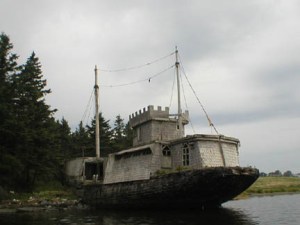
In 2010, the Hammonds were convicted of setting 2 fires that burned on federal land. The father-son duo stated they set the fires to reduce the invasive sagebrush and juniper tree growth for wildfire prevention, thereby accelerating rangeland grasses for cattle feed. But a 2015 statement from the US Attorney’s Office read, “Witnesses at the trial, including a relative of the Hammonds, testified the arson occurred after Steven Hammond and his hunting party illegally slaughtered several deer on BLM property. Jurors were told that Steven Hammond handed out ‘Strike Anywhere’ matches with instructions that they be lit and dropped on the ground because they were going to ‘light the whole country on fire.’ One witnessed testified that he barely escaped the eight to ten foot high flames caused by the arson.” That fire consumed 139 acres of federal property and destroyed all evidence of game violations. As for the other fire Steven started in 2006, prosecutors stated that he set several back fires, violating a burn ban, to save his winter feed after lightning stated numerous fires nearby.

We should also note that the Hammonds had been fighting for the feds to get out of the land management business since the 1980s. The federal pursuit of these men followed years of permit violations and unauthorized fires, but they never accepted responsibility. Late in the 1980s, Dwight began trading barbs with the US Fish & Wildlife employees. Both father and son had previously been accused of making death threats against federal officials and were arrested in 1994 after trying to stop federal workers from fencing off a canal at Malheur. The elder Hammond had even reportedly “threatened to kill” the manager of the refuge that they used for their cows. As former US Attorney Dwight Holton told KGW News, “The Hammonds were serial arsonists who stole from United States taxpayers for years.”

Anyway, in 2012, since US District Michael R. Hogan said the mandated 5-year sentence under the 1996 Antiterrorism and Effective Death Penalty Act, he sentenced the Dwight Hammond to 3 months and Steven a year. But because that was less than the mandatory minimum sentence federal law mandated, the federal government challenged the sentence. In 2015, an appellate court ruled that the Hammonds had been illegally sentenced and had to return to prison. Such decision sparked outcry among their local community and across the rural West, with critics slamming the federal government for their aggressive tactics. However, Oregon US Attorney, Billy Williams, justified the mandatory sentencing, saying they’re, “intended to be long enough to deter those like the Hammonds who disregard the law and place firefighters and others in jeopardy.” This sparked a flashpoint in the ongoing dispute between cattle ranchers and the federal government over land-use rights.

The Hammonds’ case became a rallying cry that kicked off a tense stand-off. In January 2016, armed anti-government militias and “patriot” groups seized Malheur Wildlife Refuge headquarters. To reflect their belief the federal government has only a limited right to own property within a state, they changed the refuge’s name to Harney County Resource Center.They stayed for more than 3 weeks with the standoff only ending after state troopers shot and killed one of the militia members and arrested 6 others. The Hammonds’ importance to the standoff was mostly symbolic. They may have initially welcomed the militia’s help, only to rejected it later and told the groups to go home. In addition, the groups occupying the Malheur Wildlife Refuge had broader disputes with the federal government about public land use than just the Hammonds’ case. Nonetheless, the case became a focal point for armed militias that violently occupied federal land in order to achieve their goals. Nonetheless, leaders Ammon and Ryan Bundy, (sons of the infamous Cliven Bundy of the Nevada standoff with feds over unpaid grazing fees) along with 5 other defendants were eventually acquitted of charges stemming from the takeover by a federal jury in Portland.
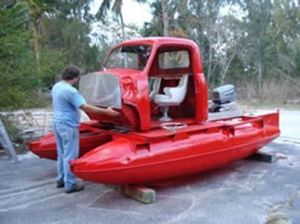
But it’s the latest example of Donald Trump using near-limitless presidential power in the service of a cause celebre for extreme segments of the right. While George W. Bush and Barack Obama relied on Office of Pardon Attorney recommendations that used a multi-step application process to determine whose cases get relief, Trump has bypassed all of that. Instead, he’s used his pardon power to commute the sentences of ideological fellow travelers such as prominent right-wing figures or folk heroes caught up in legal trouble. Before the Hammonds, it was conservative writer and conspiracy theory enthusiast, and troll Dinesh D’Souza who pleaded guilty in 2014 to violating campaign finance laws after falsely claiming he was targeted for political retribution. Before him, was Dick Cheney’s former Chief of Staff I. “Scooter” Libby who was convicted of perjury and obstruction of justice for lying to the FBI during an investigation into who leaked the name of undercover CIA operative Valerie Plame. And before him, it was ex-Maricopa sheriff Joe Arpaio known for his cruelty to anyone he suspected as undocumented immigrants and was convicted of contempt of court.

Regardless of what you think about public land use or federal overreach, as Center for Western Priorities Executive Director Jennifer Rokala said the Hammond pardon sends a, “dangerous message to America’s park rangers, wildland firefighters, law enforcement officers, and public lands managers. President Trump, at the urging of Interior Secretary Ryan Zinke, has once again sided with lawless extremists who believe that public land does not belong to all Americans.” Oregon Wild’s Arran Robertson told the AP about the pardon’s darker impact, stating, “From the Bundys to logging and oil companies, special interests are working with the Trump administration to dismantle America’s public lands heritage, and this will be viewed as a victory in that effort.” Yet, the Hammond pardons come as some federal employees in the rural American West are nervous of what they say is a high likelihood more standoffs can break out. According to NPR’s Kirk Siegler, citing soil scientists, cattle range managers, and those staffing recreation sites, “It’s also not clear yet if other ranchers who graze their cattle on public lands might decide to openly defy federal laws, [with] the Hammonds being pardoned.”

Nonetheless, the matter of the Hammonds and the armed militia takeover of the Malheur Wildlife Refuge is one I find particularly disgraceful. It’s plain to see that the Hammonds clearly committed an act of domestic terrorism and for endangering lives in their arson crime. So, a 5-year mandatory minimum sentence for setting fire to federal land is hardly government overreach. Yet, somehow the District Court judge finds such a sentence too lengthy and harsh for two cattle ranchers who burned 139 acres of land to cover up an illegal deer hunt. As he noted, “would not meet any idea I have of justice, proportionality … it would be a sentence which would shock the conscience to me.” It just seems like the guy sympathized with them enough to let them off so easily. Despite that according to Think Progress, the prosecutors’ choice was rooted in the firefighters’ earnest belief that the Hammond ranchers have been indifferent to their lives at best and seeking to harm them at worst. In the wake of their pardon, White House press secretary Sarah Huckabee Sanders said in a briefing, “The Hammonds are devoted family men, respected contributors to their local community and have widespread support from their neighbors, local law enforcement and farmers and ranchers across the West.” She basically describes these guys like they’re some friendly neighborhood Though mandatory minimums have their share of critics all across the political spectrum, the Hammonds were serving a sentence that was established for terrorists which they undeniably were. Besides, there are plenty of other people languishing in prison under mandatory minimums for far lesser crimes. Yet, none of them get the kind of sympathy these men received by the media, the government, or the criminal justice system.

Then there’s the takeover of the Malheur National Wildlife Refuge by armed anti-government militia and “patriot” groups. Despite that these guys seized a wildlife refuge carrying weapons for political purposes, somehow the media referred their clear act of domestic terrorism as a “protest.” And yet, despite holding the place hostage for about 40 days until an armed standoff with federal authorities prior to arrests, the Bundy brothers who led this takeover and 5 walked free. Look, I have no problem with protesting about public lands and use rights though I do believe that this land was made for you and me and have no problem with the federal government setting aside lands for preservation of our national heritage. But once you bring loaded guns to threaten federal employees and take over a wildlife refuge, that’s terrorism. And yet, none called it terrorism. Despite that while the locals were sympathetic with the Hammonds’ plight, they weren’t interested in Ammon and Ryan Bundy’s takeover of a federal building. The fact the Hammond case was so connected to the Bundys makes their pardon seem like Donald Trump is signaling the noxious Nevada ranchers that it’s okay to seize and destroy public lands when someone has a beef with the feds. There are plenty of ways to lawfully address grievances. Domestic terrorism shouldn’t be one of them nor should be condoned, much less pardoned. Since that undermines Americans’ rights to our shared public lands and national parks.

Nonetheless, I can’t help but imagine how different the legal system and the media would perceive this circus if the Hammonds and the anti-government militia groups at Malheur weren’t white. I’m sure none of them would’ve received the sympathy or the positive recognition for their efforts. Hell, if the Hammonds were Hispanic, I’d bet any money that Judge Hogan would’ve sentenced them to at least the mandatory minimum with no outcry other than their sentence wasn’t harsh enough. And they’d certainly not receive a pardon from Donald Trump. In fact, he’d be ranting about them at his ego-stroking, hate-filled rallies and use them as an example to illustrate how Hispanics put America to shit with their crime and violence. In addition, if those anti-government militias and “patriot” groups were all Muslims, well, you can guess they wouldn’t have held onto the Malheur Wildlife Refuge for long. Mostly because the authorities would’ve called law enforcement at all levels akin to the Standing Rock protests until all the ranchers were cuffed and put into a truck to the jail. The media and the country would universally condemn them. A federal jury would convict them while a federal judge would hand them a sentence to make sure they’d never see the light of day again. If not, then perhaps give the jury an option of instilling the death penalty. I know that implying that race was a factor in how the Hammonds and the right-wing militia groups at Malheur were treated less harshly than other terror incidents may make people uncomfortable. Yet, I can’t ignore the fact that race has been a determining factor on why the country doesn’t seem to take right-wing and white supremacist terrorism much more seriously. Another reason has to do with that millions of white conservative Americans may share their principles to certain extents and don’t want to look in the metaphorical mirror whenever a right-wing terror event occurs or take that responsibility.

However, the Hammonds’ pardon deserves special attention and more media coverage than it got because it’s an extremely irresponsible one. Not just because Donald Trump granted them clemency on partisan grounds, but because it sets a dangerous message that threatens our national security and the lives of millions of Americans. In a time of rising hate crimes and right-wing terrorism, presidential pardons to domestic terrorists are among the last things America needs right now. By pardoning Dwight and Steven Hammond, Trump not only lets them out of jail but also that the fires they lit were perfectly acceptable. These pardons mark the first time anti-government militia groups opposing federal land laws have their issues validated at the federal level. Not to mention, they speak to the ways the Trump administration is emboldening the far-right patriot movement more generally. It’s as if Trump’s signaling the radical right not to worry about facing criminal charges. Southern Poverty Law Center reporter Ryan Lenz told The Daily Beast, “This is the latest in a long string of setbacks for federal efforts to bring anti-government extremists to justice for their actions. The militia movement sees this as further vindication and further proof that their cause is just.”

The worst implications of the Hammond pardons may have nothing to do with desecrating public lands with no consequence. The rise of right-wing extremist terrorism is a threat to national security that Donald Trump and millions of Americans don’t want to acknowledge or solve. And it doesn’t help that many of these white supremacists, right-wing terrorists, and extremists comprise of a key part of Trump’s base and count among his most ardent supporters. The Hammond pardons send a glaring message that he has their back in the White House. If any of them are facing federal convictions and sentencing, Trump will make sure they get off scot free to terrorize whatever facet of America they please. As long he could use his pardon power for terrorists to outrage liberals and inflame culture war tensions, then millions of Americans’ lives could be in danger to political violence. And there’s nothing they could do about it. Nonetheless, suppose his next pardon was the man who ran over Heather Heyer at Charlottesville and he goes free. After all, Trump once called the white supremacists responsible for the violence in Charlottesville, “very fine people.” I’m sure a pardon for some of those guys will be around the corner should they have legal troubles. As former Colorado National Monument superintendent Joan Anzelmo tweeted on the matter: “This is so very wrong. No one is safe from felons with friends in high places. Terrible. Dangerous. Wrong.”

Who Will Rid Us of This Activist Judge?

In the wake of Supreme Court Justice Anthony Kennedy’s retirement, there is so much for Americans, particularly the Democrats to be worried about. After all, him stepping down during the Donald Trump nightmare would shift the Court to the right for the next few decades. Now that Lord Cheetohead has nominated DC Appeals Court Judge Brett Kavanaugh, there is plenty of talk about how his tenure of the court might overturn Roe v. Wade, gut the Affordable Care Act, undermine labor rights, weaken environmental regulations, hurt civil rights, and give more free rein on large corporations to do whatever the hell they want. But while all these issues are very important to consider, it’s not exactly on my mind at the moment.

Before I get to the point, I must acknowledge that during the 1990s, Kavanaugh worked on an independent counsel Kenneth Starr’s extremely zealous team of prosecutors pursuing what they believed to be wrongdoing by President Bill Clinton. For those who were either too young like me or not born yet, this independent counsel investigation into Clinton began with a land deal in Arkansas and eventually ended with a report recommending his impeachment for lying under oath and obstructing justice over his affair with Monica Lewinsky. According to Ken Gormley in his book, The Death of American virtue, Kavanaugh was a particularly committed team player. Since at one point, he wrote a memo to Starr which included the following:

“After reflecting this evening, I am strongly opposed to giving the President any “break”… unless before his questioning on Monday, he either i) resigns or ii) confesses perjury and issues a public apology to you [Starr]. I have tried hard to bend over backwards and be fair to him… In the end, I am convinced that there really are [no reasonable defenses]. The idea of going easy on him at the questioning is abhorrent to me…

“[T]he President has disgraced his Office, the legal system, and the American people by having sex with a 22-year-old intern and turning her life into a shambles—callous and disgusting behavior that has somehow gotten lost in the shuffle. He has committed perjury (at least) in the Jones case… He has tried to disgrace [Ken Starr] and this Office with a sustained propaganda campaign that would make Nixon blush.”

As much as I think Clinton’s impeachment was stupid, I can see the guy’s point on the perjury part and the fact Lewinsky hasn’t been able to escape the infamy of the whole scandal since. Yet, to be fair, men in elected office publicly lie about their extramarital proclivities happens all the time and most usually don’t face any legal trouble whatsoever. Besides, perjury over an extramarital affair doesn’t seem like an impeachable offense compared to, well, making money off the presidency, firing the FBI director while under criminal investigation, ignoring the Emoluments Clause, and possibly colluding with the Russians. Kavanaugh’s memo went on to propose asking President Clinton questions like:

“If Monica Lewinsky says that you ejaculated into her mouth on two occasions in the Oval Office area, would she be lying?

“If Monica Lewinsky says that on several occasions you had her give [you] oral sex, made her stop, and then ejaculated into the sink in the bathroom off the Oval Office, would she be lying?

“If Monica Lewinsky says that you masturbated into a trash can in your secretary’s office, would she [be] lying?”

However, fast forward a decade and Kavanaugh seems to do a 180 on the topic after later working for a president from his own party. From 2001-2006, he served in President George W. Bush’s White House, first in the White House Counsel’s office and later as White House Staff Secretary. In 2006, he was confirmed to the US Court of Appeals for the DC Circuit. And in 2009, he wrote an article that would be published in the Minnesota Law Review. Now this piece addressed several issues related to the presidency and separation of powers. Yet, the most relevant section comes right after the introduction, focusing on civil and criminal investigations of sitting US presidents:

I. PROVIDE SITTING PRESIDENTS WITH A TEMPORARY DEFERRAL OF CIVIL SUITS AND OF CRIMINAL PROSECUTIONS AND INVESTIGATIONS

He then opens here by describing his work for President Bush and how he learned to appreciate “how complex and difficult that job is” and continues (emphasis added):

“I believe it vital that the President be able to focus on his never-ending tasks with as few distractions as possible. The country wants the President to be “one of us” who bears the same responsibilities of citizenship that all share. But I believe that the President should be excused from some of the burdens of ordinary citizenship while serving in office.”
He next calls on Congress to consider passing a law that would relieve some of the burdens and expresses his doubts that investigations of a sitting president can rise above politics.

“In particular, Congress might consider a law exempting a President—while in office—from criminal prosecution and investigation, including from questioning by criminal prosecutors or defense counsel. Criminal investigations targeted at or revolving around a President are inevitably politicized by both their supporters and critics.

“As I have written before, ‘no Attorney General or special counsel will have the necessary credibility to avoid the inevitable charges that he is politically motivated—whether in favor of the President or against him, depending on the individual leading the investigation and its results.’”

Look, I understand that the presidency is a complex and difficult job. But while I may agree that investigations regarding sitting presidents may not be able to rise above politics, that doesn’t mean we shouldn’t excuse them from “some of the burdens of ordinary citizenship while serving in office.” Our country was built upon the idea that presidents must obey the laws and suffer the legal consequences like everyone else. This is especially because the presidency is the highest office in the nation and the fact they can be sued, criminally investigated, and prosecuted like everyone else is a major check on the President’s power. But while the Mueller probe may be politicized among the American public, the rationale behind it such as the FBI investigation on the Trump campaign and George Papadopoulos drunkenly bragging about Russians digging dirt on Hillary Clinton had nothing to do with politics.

Nonetheless, Kavanaugh bemoans the consequences if the sitting president was indicted:

“The indictment and trial of a sitting President, moreover, would cripple the federal government, rendering it unable to function with credibility in either the international or domestic arenas. Such an outcome would ill serve the public interest, especially in times of financial or national security crisis.”

Indeed, this is a genuinely unsettled legal question. While Justice Department opinions have typically stated that sitting presidents can’t be indicted, some experts have argued otherwise. The question has never been tested in the courts, but it was revived last year with the scandal over Donald Trump, Russia, and possible obstruction of justice. Special Counsel Robert Mueller seems unlikely to defy Justice Department policy with a legally questionable indictment of Trump. But if he does, the Supreme Court would surely decide on the matter. And since he’s been nominated to the Court, Kavanaugh’s 2009 article on the subject takes on a significant importance.

Kavanaugh goes on to the civil suit arena:

“Even the lesser burdens of a criminal investigation—including preparing for questioning by criminal investigators—are time-consuming and distracting. Like civil suits, criminal investigations take the President’s focus away from his or her responsibilities to the people. And a President who is concerned about an ongoing criminal investigation is almost inevitably going to do a worse job as President.”

This will also likely resonate with Donald Trump, who’s spent an enormous amount of time on the Mueller probe while plagued by other lawsuits as well. Indeed, the question on whether Trump should have to sit for Mueller’s “questioning” is a current discussion topic. If Trump should refuse questioning (which he will), Mueller could subpoena him, which will culminate in a battle likely rising to the Supreme Court.

Kavanaugh concludes by briefly trying to address two possibly critiques on his arguments. First, he says that the president could always be prosecuted after he leaves office. Second, if the president does anything bad, Congress could use the impeachment process.

“One might raise at least two important critiques of these ideas. The first is that no one is above the law in our system of government. I strongly agree with that principle. But it is not ultimately a persuasive criticism of these suggestions. The point is not to put the President above the law or to eliminate checks on the President, but simply to defer litigation and investigations until the President is out of office.

“A second possible concern is that the country needs a check against a bad-behaving or law-breaking President. But the Constitution already provides that check. If the President does something dastardly, the impeachment process is available. No single prosecutor, judge, or jury should be able to accomplish what the Constitution assigns to the Congress. Moreover, an impeached and removed President is still subject to criminal prosecution afterwards.”

However, his conclusion falls short on to points. First, waiting until the president is out of office to investigate him doesn’t prevent the damage he may cause during his tenure as well as gives him free rein to abuse his power while in office. Second, while Donald Trump has done really bad things over his presidency and before then, that doesn’t mean Congress will impeach him. Because it’s controlled by the GOP who has no interest to check his power. Besides, Kavanaugh doesn’t address what happens when it’s not yet clear and hotly disputed whether not a president has done “something dastardly” like colluding with Russia to intervene in the 2016 election, or obstructing justice. It appears he’d be happy to leave that to Congress to decide, without any investigation from the executive branch. Now this is disturbing since I consider such investigation from the executive branch necessary before Congress can decide whether to impeach a president.

He concludes the section:

“In short, the Constitution establishes a clear mechanism to deter executive malfeasance; we should not burden a sitting President with civil suits, criminal investigations, or criminal prosecutions. The President’s job is difficult enough as is. And the country loses when the President’s focus is distracted by the burdens of civil litigation or criminal investigation and possible prosecution.”

Of course, the country loses when a president’s focus is distracted by the burdens of civil litigation or criminal investigation and possible prosecution. But the country loses more when a president suspected of egregious wrongdoing is allowed to abuse his power however he pleases without any way to hold him accountable. Stating that we shouldn’t “burden” a sitting president with civil suits, criminal investigations, or criminal prosecutions because the presidency is a difficult job as it is simply doesn’t cut it. Yes, such processes might be a pain in the ass but they ensure that sitting presidents must answer to the law regarding their actions. If a sitting president doesn’t want to be distracted by lawsuits, criminal inquiries, and prosecution, then he shouldn’t have done what got him there in the first place. This especially goes with a president who believes he’s above the law and can do whatever he damn well pleases without consequence.
So why did Kavanaugh change his mind? Probably because he spent 5 years working for a president from his own party who gave him a big promotion. As he admits in his 2009 article:

“This is not something I necessarily thought in the 1980s or 1990s. Like many Americans at that time, I believed that the President should be required to shoulder the same obligations that we all carry. But in retrospect, that seems a mistake.

“Looking back to the late 1990s, for example, the nation certainly would have been better off if President Clinton could have focused on Osama bin Laden without being distracted by the Paula Jones sexual harassment case and its criminal investigation offshoots. To be sure, one can correctly say that President Clinton brought that ordeal on himself, by his answers during his deposition in the Jones case if nothing else.”

I may be no legal expert. But unlike Kavanaugh, I still believe a president should shoulder the same obligations we all carry. And yes, the nation would’ve been better off if President Clinton wasn’t distracted by the Paula Jones sexual harassment case and the criminal investigation offshoots. But to say that prevented Clinton from catching Osama Bin Laden is quite a stretch. However, just because the whole Bill Clinton impeachment circus might’ve been a mistake that made nobody happy, doesn’t mean we should exempt sitting presidents from civil litigation or criminal investigations and prosecution. Donald Trump and his team have been under criminal investigation by the FBI for possible collusion with Russia long before he was even elected to the presidency. And his efforts to stop it like the firing of FBI Director James Comey have only verified suspicions that they did. Or at least saw no problem with it. Besides, Robert Mueller’s team has already either indicted or accepted guilty pleas from 4 former Trump advisers, 14 Russian nationals, 3 Russian companies, a California man, and a London-based lawyer. Furthermore, the US intelligence community and the Senate Intelligence Committee all say that Russia tried to help Trump win the 2016 election and that Russa President Vladimir Putin ordered his government to do so. The real question now is whether Trump and his team colluded with Russia’s effort to sow seeds of division through the internet and running ads to stir up racial tensions.

What Kavanaugh wrote in 2009 about executive power sounds nice to Donald Trump and may be the major reason why he chose the guy to replace Justice Anthony Kennedy. It’s not too far-fetched to assume the Supreme Court may hear an element of the Russia investigation like subpoenaing a sitting president or less likely indicting one. There’s also a strong possibility that Kavanaugh can be one of the justices to decide on such matters. Sure, he advocated passing a law to protect the president from civil and criminal scrutiny but he didn’t say such notion is unconstitutional. Yet, to suggest that a president shouldn’t be subject to a civil suit or criminal prosecution while in office appears to fly in the face of decades of precedent stating that no one, including the president is above the law. While we don’t know if Trump has any criminal exposure at this point, Kavanaugh’s position could influence how he ruled on the appropriateness of any future actions by prosecutors against him. What impact that might have on the Mueller investigation remains to be seen. But should the Supreme Court rule in Trump’s favor that would neutralize the Mueller probe until he leaves office, America is in serious trouble.

Nonetheless, we must acknowledge that Brett Kavanaugh’s entire career has been in service to the Republican agenda. His old writings from the 1990s show that he was certainly a true believer in the Starr investigation before the Bush administration made him skeptical on the wisdom of litigation and investigations involving a sitting president. Donald Trump’s legal team has prepared to argue that the president isn’t obligated to sit for a Mueller interview and has limitless power to shut down the investigation or pardon anyone involved, including himself. Though this argument is basically summed as: Trump isn’t above the law, he is the law. The Kavanaugh from 20 years ago would’ve vociferously disagreed since he urged his boss, Kenneth Starr not to cut Bill Clinton any slack in his inquiry on the Lewinsky affair. When time came to help write the Starr report, Kavanaugh argued for Clinton’s impeachment for lying to his staff and misleading the American public. Had he still held that belief today, Trump would’ve never considered him for the Supreme Court. Yet, after working for George W. Bush, Kavanaugh apparently changed his tune as indicated in his 2009 article for the Minnesota Law Review. Not only did he contend that the president can’t be indicted, he also took his interpretation of executive power one step further by suggesting Congress pass a law allowing the president to defer such investigations until they’re out of office.

Still, I think it’s more likely that his awakening on presidential power during the Bush administration and his 2009 apology for the Starr report conceals more partisan motivations. Should the Russia investigation culminate in a Supreme Court battle, could we expect Kavanaugh to rule Trump’s case impartially and without favor? Or would he rationalize bending over backwards for the outcome he’d want to see? Because from my standpoint, I think he’s an activist judge willing to hold certain views that would be in his party’s favor. And I strongly believe Trump selected him to protect him from Mueller’s Russia investigation. He shouldn’t have seat on the bench of the most powerful court in the land.

To the Honorable United States Representative Conor Lamb of the Pennsylvania 18th District

Dear Congressman Lamb:

As your constituent of the 18th District, I have been satisfied with your efforts to represent the interest of Southwest Pennsylvania in ways your hypocritical sellout predecessor Dr. Tim Murphy ever could. Though you may not be my representative for much longer due to a new congressional map, I wish you the best of luck beating Keith Rothfus. As a liberal who supports gun control and environmental protection, I know you may not share my views on everything. But since I live in a heavily red district, I know I have to make due with whoever Democrat has a fighting chance in the polls and be as inoffensive to the electorate as possible. Unlike Murphy, your support for affordable healthcare and unions seems genuine while you appear very keen on fixing the opioid crisis ravaging our nation. From looking at your priorities list, you seem honestly committed for actions that benefit working Pennsylvanians and their families.

However, while your site states that you have a bias for action, I am not sure if any of your stated goals are feasible at the moment. You may be today’s Senator Jefferson Smith in Washington, but sometimes a fresh face with good ideas can only go so far. You may be willing to work with anyone to protect our people and bring good jobs. But so has any politician willing to work across the aisle for the greater good. Yet, sometimes it does not matter whether you are willing to work with those who do not agree with you. But whether those on the other side are willing to work with you. And from what I have seen with the Obamacare repeal nightmare last year and since, I honestly believe that as long as Donald Trump is in office and Republicans control both houses of Congress that our nation’s problems will not get better and even exacerbate in years to come.

Yet, if there is anything requiring direct action by our leaders in Washington, then it is on the matter of Donald Trump in the White House. I am painfully aware he enjoys a credible following among a significant contingent in the 18th district since so many in my community, neighborhood, and extended family have disturbingly supported him and continue to do so despite all the unconscionable things he’s said and done. I know you make it a priority not to criticize Trump by name in your public life out of reluctance to offend potential constituents and voters. However, as my US Representative who genuinely cares about the issues affecting working Pennsylvanians and their families, I strongly urge you do. Now you do not have to talk about Russia or Stormy Daniels. Nor do you need to address his other numerous scandals and controversies. But I do believe if you really care about and respect your Trump-supporting constituents, you need to at least tell them the cold, hard, truth they do not want to hear: that the man they see as their champion has no interest in solving their problems and is not on their side. Trump knows how to give wins to interest groups he actually cares about, many of these are large corporation who support unpopular measures such as letting health insurance companies discriminate against those with preexisting conditions, doing away with key environmental regulations protecting our access to clean air and water, letting financial advisers deliberately give their clients bad advice on their money, eliminating essential banking regulations that will pave way to another recession someday, getting rid of key labor protections like those against wage theft, and handing a sweetheart tax cut deal boosting corporate profits to record levels.

But more importantly, you need to address the undeniable fact that Donald Trump has never been the friend of ordinary working Americans and never will. Throughout his entire career he has reaped in millions from the remains of failing businesses at the expense of investors, small businesses, and American workers. For decades, according to a 2016 USA Today article, Trump has been subject to at least 60 lawsuits along with hundreds of liens, judgements, and other government filings documenting people accusing him of failing to pay them for their work. These include a Florida dishwasher, a New Jersey glass company, a carpet company, a plumber, painters, 48 waiters, dozens of bartenders and other hourly workers at his resorts and clubs, real estate brokers who sold him his properties, and even several law firms that once represented him in these suits and others. Since 2005, Trump’s companies have also been cited for 24 Fair Labor Standards Act violations for failing to pay overtime or minimum wage according to the US Department of Labor at the time. In addition, USA Today’s review found more than 200 mechanic’s liens on wage theft claims filed by contractors and employees against Trump, his companies, or his properties since the 1980s. These range from a $75,000 claim by a New York heating and air conditioning company to a $1 million claim from a president of a New York City real estate banking firm. For Trump Taj Mahal casino project in Atlantic City, New Jersey Casino Control Commission records state that at least 253 subcontractors weren’t paid in full or on time, if at all. These comprise of workers who installed walls, chandeliers, and plumbing.

Nor do all these wage theft cases date from the 1980s. In May 2016, Trump Miami Resort Management LLC settled with 48 waiters at Trump National Doral Miami golf resort over failing to pay overtime for a 10-day Passover event. The lawsuit contended that some even worked 20-hour shifts. In Trump’s facilities at California and New York, bartenders and wait staff have sued with a range of allegations from not letting workers take breaks to not passing along tips to servers. And in January 2017, several contractors who worked on his D.C. Hotel project with renovating the Old Post Office on wage theft claims.

In sum, these actions paint a picture of Donald Trump’s sprawling organization consistently failing to pay small businesses and individuals before tying them up in court and other negotiations for years. Sometimes Trump’s team financially overpowers and outlasts much smaller opponents by draining their resources that some give up the fight or settle for less, some declare bankruptcy, and some end up out of business entirely. Of course, Trump and his associates have shrugged off these wage theft claims on the excuse that they did a terrible job despite that he often offered to rehire those same contractors again. But the sheer number of companies and others he hasn’t paid either suggest two things. His companies have a poor tract record hiring workers and assessing contractors. Or more likely as alleged in dozens of court cases that Trump’s businesses renege on contracts, refuse to pay, or consistently attempt to change payment terms after the work is done.

Mind-boggling wage theft practices is just one way Donald Trump has screwed his over ordinary Americans. Though he has done well after his multiple Atlantic City casino bankruptcies, his own casino employees have collectively lost millions of dollars in retirement savings after Trump Hotels & Casino Resorts’ value plummeted. According to a class action lawsuit filed against the company following its 2004 bankruptcy, starting in 1996, THCR encouraged its employees to invest their 401(k) savings in company stock. That same year, it sold $1.1 billion in junk bonds to offset Trump’s personal debt and buy more ill-fated casino properties in Atlantic City. Then when the stock price neared its nadir amid bankruptcy, the company forced its workers to sell at a huge loss. More than 400 employees lost more than a combined total of $2 million from their retirement accounts. One worker who put $1,000 into her 1997 retirement account had her savings withered to just $59 by 2004. Trump has never had to declare personal bankruptcy but the company he set up to operate his Atlantic City casinos went through numerous corporate restructurings to reduce its debt load. Since Trump used his company as a means to of transferring his personal debt, issuing rounds of junk bonds to build cash that would erase them. As he prospered, his companies floundered. In other words, he put up little of his own money, shifted personal debts to his casinos while collecting millions of dollars in salary, bonuses, and other payments. Any burden of his failures fell on his investors and others who bet on his business expertise. While Atlantic City casino employees had their retirement savings wiped out, the share price rose from $.57 to $2.04/share, and Trump kept his $2 million salary after THCR emerged from bankruptcy, and took in more than $44 million in compensation over the course of 14 years he served as the company’s chairman.

Despite how many publications like the Washington Post, The New York Times, The Wall Street Journal, USA Today and others have done stellar work on reporting Donald Trump’s history of corrupt business practices which have left a trail of destruction and destruction in its wake, especially in Atlantic City. But I was deeply disappointed by how little the televised media and our leaders in Washington have touched upon his sordid history of corruption and abuse of power which I strongly believe are the core of his character and give an idea of what he really thinks about his white working class base. To him, they are just a means to the end meant to be cast aside once they’re no longer useful to him. I know their racial resentment and anxiety over demographic change was the main reason why so many of them voted for this unrespectable con artist to the presidency. But I think another big reason why he is in the White House today is the fact that many Americans don’t seem to take corporate crimes as seriously as they should since they hurt those with the least resources to defend themselves. Yet, when corporate executives steal from their employees and use their company to leverage debt and free themselves from responsibility for their bad decisions, ordinary working Americans suffer. And that is especially the case when workers are underpaid and in precarious situations that will result in termination if they ever dare complain or challenge their bosses. Trump’s crimes may be egregious but he’s far from the only man in Corporate America who’s screwed over his investors and employees. Wage theft is so endemic in this country that the average American has either been a victim of it or knows someone who has. And even when caught, employers who steal from their workers usually face little or no consequences. Since no Wall Street banker has been convicted for causing the Great Recession, I think addressing Trump’s shady business practices is a conversation is sorely needed on Capitol Hill and in our public squares, at least to make an example out of him.

I know criticizing Donald Trump in front of your constituents won’t be easy for you. I understand you don’t want to alienate potential voters. Yet, if not enough people in Congress don’t address Trump’s abuses of power and corruption as a businessman, including what he did to Atlantic City, then I deeply fear he might be on his way to winning a second term as president. Since the Constitution limits presidents to serving two terms, it’s very possible that Trump won’t need his white working class base anymore to retain power in the White House. I really don’t want to face the prospect of a Trump reelection victory. I have been through that nightmare once in my life resulting me crying myself to sleep afraid of what would happen to me and waking up early when I couldn’t sleep anymore. As a young woman on the autistic spectrum, I was almost inconsolable over the notion of losing my Medicaid coverage when the American Healthcare Act passed the House until the Senate’s ACA repeal plan died on the floor last summer. Since finding a job is difficult for me at the moment, I don’t ever want to go through that again. And since Medicaid is so essential for fighting the opioid crisis in this country which is now a national emergency, neither do you.

I know you are a good man and are nothing like the good for nothing piece of shit in the White House. You have made sacrifices to your country such as your time in the Marines and you support the welfare of those who served. And I do believe you care about ordinary Americans and their families. However, being a true advocate for your constituents shouldn’t just be about making stump speeches on what potential voters might want to hear. Though I know you do your best to fulfill the promises you’ve made. I am aware you don’t want to cause controversy among the public in Southwestern Pennsylvania. And considering you won your seat in a highly-contested special election by 755 votes, I wouldn’t blame you.

However, there comes a time when you must state the inconvenient truth that might make your constituents view you as a pariah in anger, which may put your political future at risk. Yet, if you want to prove that you’re truly on your constituents’ side and that you’re willing to put their interests first, then you must make a compelling, respectful, honest case to prove that Trump is taking them for suckers and has no intention to fix their problems. His history as a corrupt businessman who’s exploited employees and investors to enrich himself perfectly illustrates this. In fact, I have compiled a blog post in The Lone Girl in a Crowd highlighting decades worth of his corruption scandals with links if you’re interested. Yet, however vague and substance-lacking they were, Trump campaigned on some ideas similar to yours and promised similar things which unlike you, he had no intention to deliver. Many voters in the 18th District fell for it hook, line, and sinker. Living in a rural area, I witnessed the worst of it with people in my community flaunting Trump signs everywhere I went, of which I found deeply distressing. But even then, I knew Trump was working his art of the con since I had been conducting research on his past and building a case against him. Nonetheless, if you truly respect Trump voters, then you must tell them the truth, even if it brings you fits of rage from potential voters already sold on his brazen lies and false promises or costs your nascent career. Your constituents in Southwest Pennsylvania deserve nothing less.

Asking you to criticize Donald Trump at the risk of losing your career may not be the wisest of requests. Yet, with the Republican Party so deep in his support for this unrespectable man, I am desperately pleading you to stand up to him on behalf of the people in your district. Yet, while you denounce him as a fraud, assure your voters you will work with him if that’s possible and do everything you can to protect them against his cruel and hostile policies that only benefit him, his allies, and his corporate backers. Trump may value loyalty of his subordinates and supporters, but that doesn’t mean he will return the favor for he’s known to stab people in the back once they cease being useful to him or suddenly become a liability. And though he will provoke controversy to please his base, he will not go out of his way to help his supporters in any meaningful way that doesn’t benefit him in return. Since you’ve been a Marine, I’m sure you can show him what true loyalty means as you represent constituents who may not have voted for you and may not be able to give you anything in return.

The Anthro World of Furry Costumes (Third Edition)

2c6f32ae4eb2366ddc62ce28c89c019c

In the hot and humid atmosphere of Southwestern PA in early July, the Furries descend upon Pittsburgh for their annual Anthro Con, which is the world’s second largest convention for them. Why they’re able to withstand the hot summer heat this time of year, I have no idea. But they come from all over the place and have money to burn so Pittsburgh really doesn’t mind as long as they behave themselves. This year, the Furries are stated to bring about $7.9 million to Allegheny County which is a big boost to the area. And with that kind of cash, you really don’t care where it comes from, even if it is from people who like dressing in animal costumes. And if you go to Fernando’s Café during this weekend, you’ll find plenty of Furries hanging out. After all, they raised money to help the owner keep his business through donations during the Great Recession. So for your reading pleasure, I give you another assortment of Furries for this Anthro Con weekend.

  1. A crouching dog is always ready to rumble.

Here he is ready to fight. Best not to mess with him or he’ll rip you to shreds.

2. This fox is ready to mingle in her bright red scarf.

She has her own fluffy tail with a blue tip. And she’s not shy to show it off.

3. Of course, you might have some hell hounds here and there.

Don’t they won’t bite. They’re just hanging out at the convention.

4. Always put your best paw forward.

This dog seems happy to greet their fellow furries. And will show their blue and yellow paws.

5. Someone must’ve received a package.

And someone can’t wait to open it. Wonder what it is. Is it a brand new chew toy?

6. A few pounds of kibble, please.

Actually they seem more likely to be in the candy store. Yet, I’m not sure what this person is supposed to be.

7. Only at Anthro Con can a bunny and polar bear be friends.

Because in real life, a bear is more likely to eat the bunny. And a bunny is less likely to be purple and yellow.

8. A cool cat can always be a snappy dresser.

This one wears a green shirt and a blue polka dot scarf. And they’re all dressed and ready to go.

9. This sitting dog is all covered in tiger stripes.

He’s also wearing a shirt and pants. Seems like he’s going to a concert afterwards.

10. This dark dog sometimes loves to lay about.

And he seems ready to show his claws. So best you leave like right now.

11. I thought dogs weren’t allowed on the subway.

Don’t worry, I’m sure he’s toilet trained. Because he’s a guy in an animal costume.

12. This tiger is locked and loaded.

I’m sure the gun is a toy. But he surely looks like a badass compared to Tony the Tiger.

13. Don’t mind the dog with this cup.

He just has a red Dixie cup on his nose. Guess he really likes to party.

14. You need not fear this friendly hyena.

After all, he’s not that filthy compared to those on the Savannah. Rather, he seems quite clean and friendly.

15. This dog loves showing his claws.

Since they’re all shiny and green. And so is his tongue which is kind of gross.

16. This tiger always loves to wander in the forest.

Well, they’re wearing ragged clothes for some reason. Yet, they like pouncing on the rocks.

17. No frisky fox can resist this vixen.

After all, sexy foxes are always seen as vixens. This one is no different.

18. This cat knows how to don a sweater.

Not sure how he keeps cool during the summer. But he doesn’t look quite bad either.

19. Get a load of this colorful cat.

Yes, this colorful tiger seems straight out of a drug trip. But they just like to hang around.

20. This dog always knows how to rock.

Here he is in his furry get up. He even has his own hat for his ears to stick out.

21. This cat loves hanging by the waterside.

Though they may not want to go into the water. Since it might ruin their coat.

22. This cat has the world on a staff.

This might be a character from some video game. Then again, you have to like their sense of style.

23. Every dog needs a break now and then.

Well, we all can use a break. Furries are probably no exception.

24. Someone seems quite excited today.

Well, they’re in their pants and shirt. And they have their paws up in glee.

25. Want to give a hand to this colorful goat?

Keep in mind that a lot of these furries don’t appear in colors that conform to nature. This goat is purple with green feet and horns.

26. This blue fox wears their heart on their coat.

Well, they have hearts on their upper arms. And they seem quite modest about it.

27. Want to play some ball?

Hope you can keep up in a game of catch. Then again, it’s not a game you should play indoors.

28. This horned cat is off on an epic adventure.

And they seem rather sneaky about it if you ask me. Hope they watch the horns.

29. These loveable animals love to train for a fight.

But they’re always in a good sport about it. Yet, don’t mess with them or they will fight.

30. This dragon loves to spread their wings.

Kind of surprise you don’t see a lot of dragons at these events. Since they’re among the coolest fantasy creatures.

31. Bet you’re expecting this white tiger to drop and give twenty.

Yet, whatever the case, this tiger seem irritated about it. Not sure why, exactly.

32. How about you raise your paws for this tiger?

Sure they may seem a bit dirty. But they’re happy to smile for the camera.

33. This bird of prey has come to roost.

This bird also looks familiar. Not sure where I’d recognize them from.

34. Get a look at this friendly zebra.

Because zebras in the wild are usually too mean for domestication. Since they have to defend themselves against lions.

35. This dog always loves to receive a heart now and then.

Doesn’t hurt that she’s wearing a wig and glasses. Don’t worry, she won’t bite.

36. This wolf feels rather ambivalent about city life.

And I’m sure they’re not in Pittsburgh. Since it’s a coastal area while Pittsburgh certainly isn’t.

37. This dog always shows pride in their ears.

And they don’t mind standing for the photo either. Still, they have their unique kind of charm.

38. Who says dogs don’t have wings?

Actually, dogs don’t have wings in real life. But in furry land, an animal can have as many attributes as desired.

39. Perhaps a snowy owl may interest you.

Though this owl likes to wear clothes like they’re from a fantasy story. Not exactly sure why.

40. “I shall call him, Mini Me.”

Well, they have stuffed dog in a similar patterned scarf. So you can get the idea.

41. This spotted pooch loves to sport a long jacket.

Guess they’re on a key mission. Not sure but they’ll never say.

42. This yellow beast sports a flower necklace.

She also seems rather coy about being photographed. But her yellow fur makes her stand out.

43. This wolf loves to play in the snow.

Not sure why Pittsburgh would host Anthro Con in the winter than the summer. Weather wise, it would make more sense.

44. Who can turn down flowers from this dog?

Indeed, the roses are fake. But this dog seems quite sweet with its puppy eyes.

45. Who says a tiger can’t come in on a scooter?

This yellow and black striped tiger shows otherwise. And they seem to have a rather good time.

46. I wouldn’t go near Puss in Boots if I were you.

Because when he shows his kitty cat eyes, he’s about to attack. Since he uses them to get his enemies to drop their guard.

47. Some colorful dog would like to say hello.

They may be dining out. But that doesn’t mean they won’t turn down a photo op.

48. Didn’t know they can do hand signs with paws.

Yet, they don’t seem to mind as they salute for the camera. And wearing a multicolored scarf around their neck.

49. Who wants to give a cat a hug?

There they are dressed and in a pile of leaves. But they seem quite happy to spread out their arms.

50. Bet you’d never come across a horse like this before.

Yes, that’s a furry horse. And yes, they almost seem like they’re straight from a fantasy story.

51. You always have that one furry willing to show off their tail.

This one has a long, striped tail with bright blue stripes on it. And they’re dying to show it off.

52. This cat seems like a slave to fashion.

They’re in a sleek skirt and matching skirt. So this cat must make herself fancy.

53. Best you don’t go near this big black dog.

Yet, he seems to keep his sleek black coat impeccable. But beware of them.

54. Who says furries don’t like dancing?

This fox always knows how to do the tango. Though I wonder if they know the fox trot.

55. This dog likes showing off their blue fur.

Well, their belly seems to contain blue shades. But they love to rock their coat for the picture.

56. This blue cat just wants to swing by.

They have pink and blue stripes. And they seem to like hanging around the spiral staircase.

57. This lion just wants to hang out in a tree.

Though they seem to have some spots on their coat. Not sure why that is.

58. This dog has to be in a harness.

Wonder if they’re kept on a leash. Though this dog seems friendly to me.

59. Can you give a paw to this pink cat?

She even has her own collar. And you got to love her pink spots, too.

60. This cat knows how to rock a suit.

Sure he may be a tabby. But that doesn’t mean he can dress too shabby.

61. Apparently, this fox has his pants ultimately ripped.

He even seems equipped with belts on his chest. Bet he’s on an adventure.

62. Want to play in the snow with this dragon?

Well, if you get cold, this dragon can breathe some fire. But they better not scorch a forest.

63. This brave wolf knows how to use an ax.

He’s even clad in armor for added protection. And I guess he couldn’t fit into the helmet and pants.

64. This bird has plenty to crow about.

This one has a bird spreading their wings. Wonder what kind it’s supposed to be since you have to look from the back.

65. Not sure if I want to run into this bear in the woods.

Seems like a rather realistic costume if you get my drift. Wonder how many times they get mistaken for the real thing.

66. You might want to get acquainted with this goat.

And they seem rather fuzzy in their white coat. Not to mention how they rock the horns.

67. This white tiger just wants to lay around with the other cats.

You have to wonder what the cat is thinking. Because it may not have the slightest idea.

68. All these furries want are free hugs.

They even have free hug signs. Still, I don’t think there’s much to worry about with them.

69. Bet you wouldn’t run into to this funky goat.

They’re mostly blue and wearing a hat over the scarf. Check out those pink glasses.

70. You wouldn’t like this polar bear when they’re angry.

And it seems that this bear is on the rampage. So best to stay away from them.

71. Apparently, this buck decided to go stag.

After all, he came all by himself. But I wouldn’t lock antlers with him on a bad day.

72. This cat knows how to use the Force.

Here they sit on the couch with a purple lightsaber in hand. But they will pounce when threatened.

73. Hope you didn’t think you’d see them in this post.

Indeed this is the Pink Panther. Cue the iconic Harry Mancini music.

74. Check this fox on the bridge.

Not sure if they’re in Pittsburgh. But the city does have at least one yellow bridge.

75. Seems like these two have a kitten in their paws.

Well, the kitten is a plush toy. But these cats seem to care about each other.

76. This dog greets everyone with open paws.

They’re even wearing a shirt and shorts. And they’re wanting for a hug.

77. This black dog has a rather sneaky side.

This guy is called Zippo Wolf. And I bet they’re in Pittsburgh for the convention.

78. Lay your eyes on this blue raccoon.

They’re even wearing a gray sweat shirt. Still, hope they don’t get in your garbage.

79. This lonely kitty needs a hug.

Well, they’re pouting at this point. So now may not be a great time.

80. This dog always loves to nibble on a steak now and then.

Well, as long as it’s plush steak. But they don’t seem to mind.