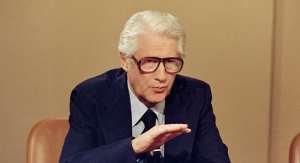
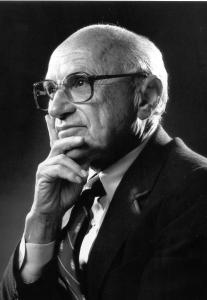
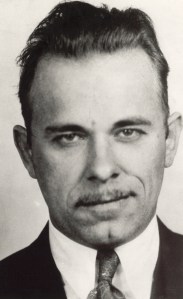
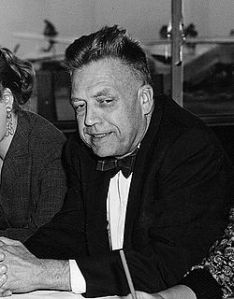
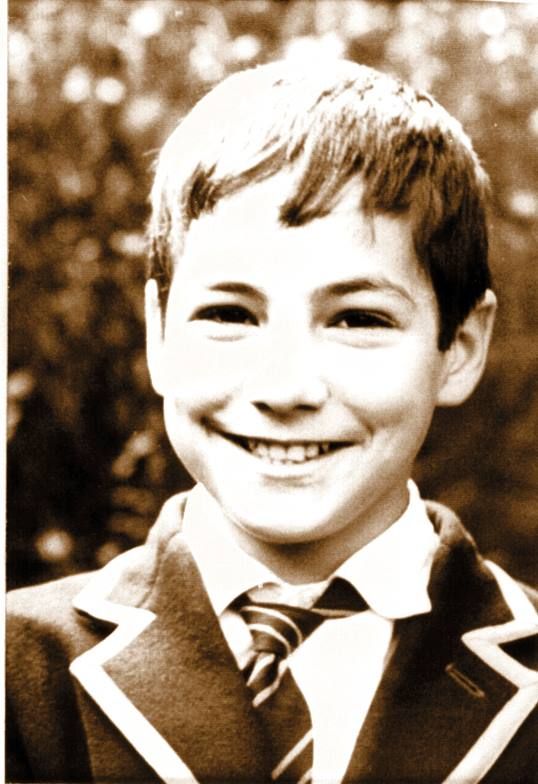
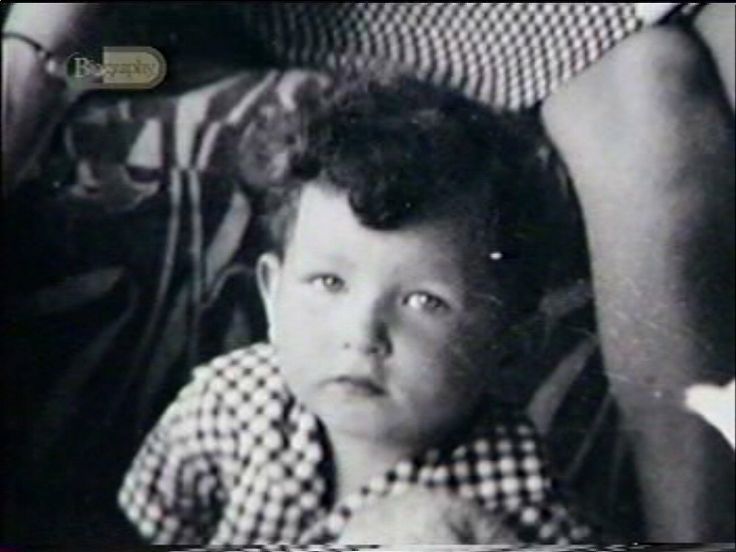
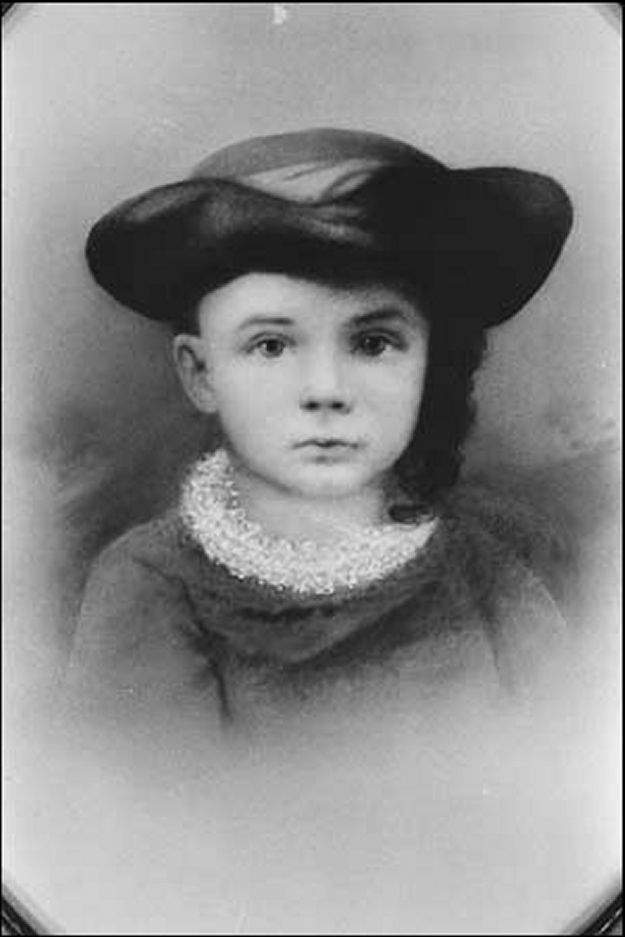
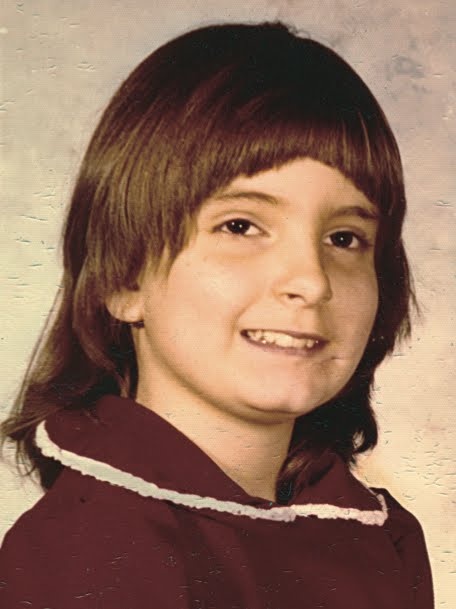
US State Mount Rushmore: Part 7 – New Mexico to Ohio

I know you might be surprised to find out that the guy behind Mount Rushmore was a member of the KKK or that Charles Lindbergh had 3 secret families in Europe. But we have to acknowledge that our historical figures aren’t perfect. They’re just human beings in their own time like the rest of us. Besides, how many presidents were slave owners? Does this mean we should judge them as horrible people? Nevertheless, just because some historical figure may be racist that doesn’t mean we should take down certain monuments in honor of them, just as long they didn’t leave much of a negative legacy pertaining to race. For instance, while there were some students who wanted Woodrow Wilson’s statue removed from Princeton due to his deep seated racism and I can’t blame them for it, we have to acknowledge Wilson did do a lot of good things, many of which have a positive impact today such as his Fourteen Points and the Federal Reserve which our country needed. And that’s why I don’t think his statue should be removed. If there’s a famous American’s statue that should be removed, I’d recommend a more suitable candidate like Jefferson Davis or John C. Calhoun. Moving on, in this installment, I’ll bring you of my own Mount Rushmores from New Mexico to Ohio. First, in the southwest, we come to New Mexico where we’ll meet a noted frontiersman whose legend surpassed his stature, an artist known paintings with Freudian interpretations, a scientist who led a team building weapons of mass destruction, and the most famous teenage hoodlum. Second, it’s off to Empire State New York, where you’ll get to know 3 Roosevelts and a man who’s now the subject of a hit hip hop Broadway musical. Third, we come to North Carolina where we’ll get to see a legendary jazz musician, a legendary newscaster, an entertaining short story writer, and a First Lady who set the standards of a White House hostess. Then there’s North Dakota where we’ll meet a female jazz singer, a French adventurer, an overlooked Native American war hero, and a co-founder of a calculator company. Finally, we’re on to the Buckeye State of Ohio where you’ll find two brothers who learned to fly, a man on the moon, a general who saved the Union, and a lovable domestic terrorist.


31. New Mexico

Kit Carson was such a legend in American history even in his own lifetime, that many people tend to mistake him as a fictional character. However, he certainly, but he wasn't kind of guy he's often perceived. For instance, while he was an Indian fighter, he didn't hate Indians. He was also short, not ruggedly built, and illiterate.

Kit Carson was such a legend in American history even in his own lifetime, that many people tend to mistake him as a fictional character. However, he certainly, but he wasn’t kind of guy he’s often perceived even when he was alive. For instance, while he was an Indian fighter, he didn’t hate Indians. He was also short, had fine features, and couldn’t read or write. His slight stature often took his fans by surprise, including one by the name of William Tecumseh Sherman.

Figure 1: Kit Carson– frontiersman who worked as a fur, wilderness guide, Indian agent, and army officer who became a frontier legend in his own lifetime via biographies and news articles as well as exaggerated versions exploits being subject to dime novels. His time as a fur trapper in the Rocky Mountains where he lived and married among the Cheyenne and Arapaho tribes led to John C. Fremont hiring him as a guide on an expedition that covered much of California, Oregon, and the Great Basin area. Through Fremont’s accounts, he’d achieve national fame. Also participated in the uprising against Mexican rule in California as well as served as a scout and courier in the Mexican-American War for his rescue mission after the Battle of San Pasqual and for his coast-to-coast journey from California to Washington, DC to deliver news of the conflict in California to the U.S. government. And during the American Civil War, he led a Union regiment of mostly Hispanic volunteers from New Mexico at the Battle of Valverde in 1862 and later led forces to suppress the Navajo, Mescalero Apache, and the Kiowa and Comanche Indians.

Georgia O'Keeffe is often well known for her paintings pertaining to skyscrapers, flowers, desert skulls, and Freudian interpretations. Of course, her flower paintings are often seen as veiled illusions of female genitalia. Yet, in reality, they're actually plant genitalia because that's what flowers are.

Georgia O’Keeffe is often well known for her paintings pertaining to skyscrapers, flowers, desert skulls, and Freudian interpretations. Of course, her flower paintings are often seen as veiled illusions of female genitalia. Yet, in reality, they’re actually plant genitalia because that’s what flowers are.

Figure 2: Georgia O’Keeffe– artist best known for her paintings of enlarged vaginalike flowers, New York skyscrapers, and New Mexico landscapes who’s been recognized as the “Mother of American modernism.” A lot of her work has been subject to Freudian interpretation as well as undertones pertaining to sex and death.

When the first atomic bomb was detonated on July 16, 1945 during the Trinity test in New Mexico, J. Robert Oppenheimer remarked later that it reminded him of the words from the Bhagavad Gita: "Now I am become Death, the destroyer of worlds." After the atom bomb drops on Japan, he'd later feel that he had blood on his hands.

When the first atomic bomb was detonated on July 16, 1945 during the Trinity test in New Mexico, J. Robert Oppenheimer remarked later that it reminded him of the words from the Bhagavad Gita: “Now I am become Death, the destroyer of worlds.” After the atom bomb drops on Japan, he’d later feel that he had blood on his hands. Also sounded like Fred Rogers, by the way.

Figure 3: J. Robert Oppenheimer– theoretical physicist and professor who was the head of the Los Alamos Laboratory and is among those who are called “father of the atomic bomb” for their role in the Manhattan project which developed the first nuclear weapons used in Hiroshima and Nagasaki. After the war, he became chairman of the influential General Advisory Committee of the newly created United States Atomic Energy Commission, and used that position to lobby for international control of nuclear power to avert nuclear proliferation and a nuclear arms race with the Soviet Union. But after provoking ire from many politicians for his outspoken opinions during McCarthyism, he suffered the revocation of his security clearance in a much-publicized hearing in 1954, and was effectively stripped of his direct political influence. His achievements in physics include the Born–Oppenheimer approximation for molecular wavefunctions, work on the theory of electrons and positrons, the Oppenheimer–Phillips process in nuclear fusion, and the first prediction of quantum tunneling as well as made important contributions to the modern theory of neutron stars and black holes, as well as to quantum mechanics, quantum field theory, and the interactions of cosmic rays. Remembered as a founding father of the American school of theoretical physics that gained world prominence.

In many respects, the main reasons why Billy the Kid became an outlaw had more to do with being poor and having no one to care for him at a young age. When he got a chance to go straight, he usually took it. While his daring prison escape made him a legend, I tend to see him as a tragic figure.

In many respects, the main reasons why Billy the Kid became an outlaw had more to do with being poor and having no one to care for him at a young age. When he got a chance to go straight, he usually took it. While his daring prison escape made him a legend, I tend to see him as a tragic figure.

Figure 4: Billy the Kid– Old West gunfighter and outlaw who participated in New Mexico’s Lincoln County War and is known to have killed eight men. An outlaw and fugitive since adolescence, his notoriety grew when the Las Vegas, New Mexico’s Las Vegas Gazette and the New York Sun carried stories about his crimes. Though captured by Sheriff Pat Garrett where he was convicted of killing Sheriff William J. Brady and sentenced to hang, he escaped from jail in April 1881, killing 2 sheriff’s deputies in the process evaded capture for more than 2 months before Garrett ultimately shot and killed him that July. His legend grew over the next several decades that he didn’t die that night with a number of men claiming to be him.


32. New York

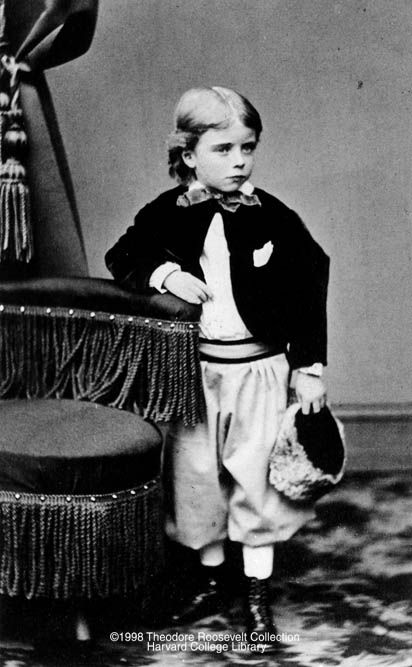
"A good many of you are probably acquainted with the old proverb, “Speak softly and carry a big stick — you will go far.” If a man continually blusters, if he lacks civility, a big stick will not save him from trouble, and neither will speaking softly avail, if back of the softness there does not lie strength, power." -from a speech in 1901. He actually said this before he was president, by the way. Still, while he did have his faults, you can't hate this guy.

“A good many of you are probably acquainted with the old proverb, “Speak softly and carry a big stick — you will go far.” If a man continually blusters, if he lacks civility, a big stick will not save him from trouble, and neither will speaking softly avail, if back of the softness there does not lie strength, power.” -from a speech in 1901. He actually said this before he was president, by the way. Still, while he did have his faults, you can’t hate this guy.

Figure 1: Theodore Roosevelt– statesman, author, explorer, soldier, naturalist, and reformer who served as president from 1901-1909. Successfully overcame his childhood health problems by embracing a strenuous lifestyle as well as integrated his exuberant personality, vast range of interests, and world-famous achievements into a “cowboy” persona defined by robust masculinity. His first book of many The Naval War of 1812 established him as both a learned historian and a popular writer. Escaped to the wilderness of the American West and operated a cattle ranch for some time in the Dakotas. Gained national fame for courage during the Spanish–American War serving with the Rough Riders. As president, he led his party and country into the Progressive Era championing his “Square Deal” domestic policies, promising the average citizen fairness, breaking of trusts, regulation of railroads, and pure food and drugs. With conservation a top priority, he established myriad new national parks, forests, and monuments intended to preserve the nation’s natural resources. His foreign policy focused on Central America where he began construction of the Panama Canal, greatly expanded the US Navy, and sent the Great White Fleet on a world tour to project the United States’ naval power around the globe, and made an effort to end the Russo-Japanese War which won him the 1906 Nobel Peace Prize. After his presidency, went on a safari to Africa and toured Europe. Founded his Progressive “Bull Moose” Party in 1912 after failing to gain the Republican nomination for a third term as well as survived an assassination attempt that year in the most badass way imaginable. Later led a 2 year expedition in the Amazon Basin, nearly dying of tropical disease. Has been consistently ranked by scholars as one of the greatest US presidents while his colorful personality and interesting life has made him one of the most memorable. Catchphrase is “Speak softly and carry a big stick.” His family was also quite badass with his oldest son receiving the Medal of Honor for leading troops on the beaches of Normandy during WWII while his niece was none other than Eleanor Roosevelt herself.

"So, first of all, let me assert my firm belief that the only thing we have to fear is fear itself — nameless, unreasoning, unjustified terror which paralyzes needed efforts to convert retreat into advance. In every dark hour of our national life a leadership of frankness and vigor has met with that understanding and support of the people themselves which is essential to victory."- from his first inaugural address (1933)

“So, first of all, let me assert my firm belief that the only thing we have to fear is fear itself — nameless, unreasoning, unjustified terror which paralyzes needed efforts to convert retreat into advance. In every dark hour of our national life a leadership of frankness and vigor has met with that understanding and support of the people themselves which is essential to victory.”- from his first inaugural address (1933)

Figure 2: Franklin Delano Roosevelt– president from 1933-1945 who won a record 4 presidential elections and dominated his party for many years as a central figure in world events during the mid-20th century, leading the US during a time of worldwide economic depression and total war. His program for relief, recovery, and reform known as the New Deal involved a great expansion of the role of federal government in the economy with major surviving programs including the Securities and Exchange Commission, the Wagner Act, the Federal Deposit Insurance Corporation, and Social Security. As leader of the Democratic Party, he built the New Deal Coalition, bringing together and uniting labor unions, big city machines, white ethnics, African Americans, and rural Southern whites to support the party that significantly realigned the American politics after 1932, creating the Fifth Party System as well as defined American liberalism throughout the middle third of the 20th century. Key moments in his pre-presidential career include his marriage to Eleanor Roosevelt, opposing Tammany Hall, his time as Assistant Secretary of the Navy during WWI, trying to recover from debilitating polio that struck him in 1921, and his time as Governor of New York. Administration saw repeal of Prohibition, massive Supreme Court backlash on New Deal programs that resulted in his court packing scheme, the Dust Bowl, many public works projects like the Tennessee Valley Authority (TVA), the Japanese attack on Pearl Harbor, WII, Japanese American internment camps, and the Yalta Conference. Often ranked by scholars as one of the top three U.S. Presidents, along with Abraham Lincoln and George Washington as well as possibly seen as the greatest US president of the 20th century.

"At all times, day by day, we have to continue fighting for freedom of religion, freedom of speech, and freedom from want — for these are things that must be gained in peace as well as in war." - from (1943)

“At all times, day by day, we have to continue fighting for freedom of religion, freedom of speech, and freedom from want — for these are things that must be gained in peace as well as in war.” – from (1943)

Figure 3: Eleanor Roosevelt– politician, diplomat, and activist as well as the longest-serving First Lady who later served as US Delegate to the United Nations General Assembly from 1945-1952. Was called by Harry S. Truman as “First Lady of the World” in tribute to her human rights achievements. As a teenager, she overcame a very unhappy childhood losing a father who was womanizing alcoholic and a mother disappointed in her because she wasn’t pretty enough along with a younger brother as well as who knows what she went through at her grandma’s before she blossomed while attending finishing school in England. While her marriage to her fifth cousin Franklin was complicated with his affair with Lucy Mercer and his controlling mother, she found a way to fulfill herself by taking up social work and social causes as well as ultimately persuaded her husband to stay in politics and began regularly making public appearances on his behalf throughout his public career in government. As First Lady, she significantly reshaped and redefined the role of that office during her tenure and beyond for future First Ladies. While widely respected in later years, she was controversial for her outspokenness, particularly for her stance on racial issues. Was the first presidential spouse to hold press conferences, write a syndicated newspaper column, and speak at a national convention. Publicly disagreed with her husband’s policies on a few occasions. Advocated for expanded roles for women in the workplace, the civil rights of African Americans and Asian Americans, and the rights of World War II refugees. Remained active in politics after her husband’s death and for the rest of her life. Pressed the US to join the United Nations where she became its first US delegate serving as the first chair of the UN Commission on Human Rights, and oversaw the drafting of the Universal Declaration of Human Rights. By the time of her death, was regarded as “one of the most esteemed women in the world”; she was called “the object of almost universal respect” in her New York Times obituary.

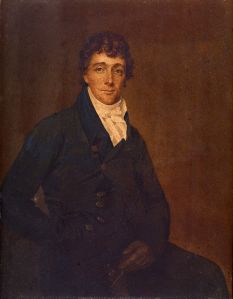
"Unless your government is respectable, foreigners will invade your rights; and to maintain tranquillity you must be respectable; even to observe neutrality you must have a strong government." -from (1788) stumping for ratification for the US Constitution, no doubt. Alexander Hamilton knew the value of a strong central government.

“Unless your government is respectable, foreigners will invade your rights; and to maintain tranquillity you must be respectable; even to observe neutrality you must have a strong government.” -from (1788) stumping for ratification for the US Constitution, no doubt. Alexander Hamilton knew the value of a strong central government and a strong central economic system.

Figure 4: Alexander Hamilton– Founding Father who rose to chief staff aide to General George Washington during the American Revolution, one of the most influential interpreters and promoters of the U.S. Constitution, founder of the first voter-based political party called the Federalist Party, Father of the US Coast Guard, and first Secretary of the Treasury. Born out of wedlock and orphaned at a young age in the West Indies, he came to New York as a student at King’s College (now Columbia University), rose to captain during the American Revolution, and becoming Washington’s most senior aide after being sent on numerous important missions to tell generals what his boss wanted. Helped achieve ratification of the US Constitution by writing 51 of the 85 installments of The Federalist Papers, which to this day are the single most important reference for Constitutional interpretation as well as set precedents for federal authority that are still used by the courts. As Treasury Secretary, he made immeasurable contributions to the nation’s financial system by having the Federal government assume states’ debts, payment of war bonds, the establishment of a national bank, a system of tariffs, creation of a mechanism to collect taxes, and friendly trade relations with Britain. His monetary policy saved the fledgling US from financial ruin. Could’ve risen to the presidency had he not have been involved in a sex scandal that came out in 1797 that ruined his reputation. Opposed John Adams’ reelection in 1800 which led to a tie between Thomas Jefferson and Aaron Burr and later lobbied his fellow Federalist congressmen to side with Jefferson despite philosophical differences mainly because he saw Burr as an unprincipled opportunist. Burr later killed him in a duel.


33. North Carolina

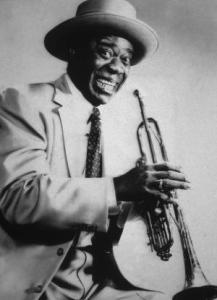
On his saxophone, John Coltrane became an iconic figure in jazz who has influenced innumerable musicians. His death at 40 from liver cancer in 1967 shocked many in the musical community.

On his saxophone, John Coltrane became an iconic figure in jazz who has influenced innumerable musicians. His death at 40 from liver cancer in 1967 shocked many in the musical community.

Figure 1: John Coltrane– jazz saxophonist and composer who helped pioneer the use of modes in jazz and was later at the forefront of free jazz. Led at least 50 recording sessions during his career and appeared as a sideman on many albums of other musicians including Miles Davis and Thelonious Monk. His music took on an increasingly spiritual dimension influencing innumerable musicians, and remains one of the most significant saxophonists in music history. Posthumous honors include canonization by the African Orthodox Church and a special Pulitzer Prize in 2007.

"We can deny our heritage and our history, but we cannot escape responsibility for the result. There is no way for a citizen of a republic to abdicate his responsibilities. As a nation we have come into our full inheritance at a tender age. We proclaim ourselves, as indeed we are, the defenders of freedom, wherever it continues to exist in the world, but we cannot defend freedom abroad by deserting it at home. The actions of the junior Senator from Wisconsin have caused alarm and dismay amongst our allies abroad, and given considerable comfort to our enemies. And whose fault is that? Not really his. He didn't create this situation of fear; he merely exploited it — and rather successfully. Cassius was right. "The fault, dear Brutus, is not in our stars, but in ourselves." Good night, and good luck." -from his broadcast on See It Now from 1954.

“We can deny our heritage and our history, but we cannot escape responsibility for the result. There is no way for a citizen of a republic to abdicate his responsibilities. As a nation we have come into our full inheritance at a tender age. We proclaim ourselves, as indeed we are, the defenders of freedom, wherever it continues to exist in the world, but we cannot defend freedom abroad by deserting it at home. The actions of the junior Senator from Wisconsin have caused alarm and dismay amongst our allies abroad, and given considerable comfort to our enemies. And whose fault is that? Not really his. He didn’t create this situation of fear; he merely exploited it — and rather successfully. Cassius was right. “The fault, dear Brutus, is not in our stars, but in ourselves.” Good night, and good luck.” -from his broadcast on See It Now from 1954.

Figure 2: Edward R. Murrow– broadcast journalist who first came to prominence with a series of radio broadcasts for the news division of CBS during WWII which were followed by millions of listeners in the US as well as assembled a team of foreign correspondents as the Murrow Boys. As a pioneer in TV news broadcasting, he produced a series of reports that helped lead to the censure of Senator Joseph McCarthy. However, his hard-hitting approach to the news and willingness to cover controversial subjects cost him influence in the world of television as well as eventually got his show canceled. Considered one of journalism’s greatest figures for his honesty and integrity in delivering the news by many except the sensationalist cable news networks, particularly Fox News.
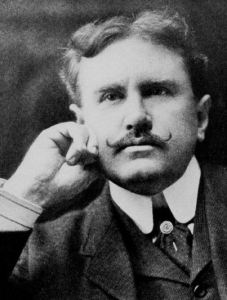
"I know you. I have heard of you all my life. I know now what a scourge you have been to your country. Instead of killing fools you have been murdering the youth and genius that are necessary to make a people live and grow great." - from "The Fool Killer" (1908)

“I know you. I have heard of you all my life. I know now what a scourge you have been to your country. Instead of killing fools you have been murdering the youth and genius that are necessary to make a people live and grow great.” – from “The Fool Killer” (1908)

Figure 3: O. Henry– short story writer whose tales were known for their wit, wordplay, warm characterization, and surprise endings. Writing career took off while he was serving a 5 year prison sentence for embezzlement where he had 14 stories published under various pseudonyms but was later released good behavior after 3. Based many of his stories in his own time in New York City and mostly deal with ordinary people though his characters can be roaming the cattle-lands of Texas, exploring the art of the con-man, or investigating the tensions of class and wealth in turn-of-the-century New York. Had an inimitable hand for isolating some element of society and describing it with an incredible economy and grace of language. Best known works are “The Gift of the Magi,” “The Ransom of Red Chief,” “The Cop and the Anthem,” “A Retrieved Reformation,” “The Duplicity of Hargraves,” and “The Caballero’s Way.” Coined the term, “banana republic.”
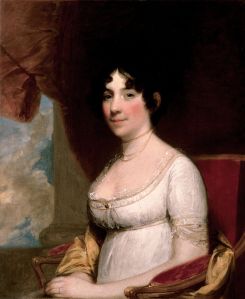
Dolley Madison is one of the best known First Ladies who helped boost her husband's popularity with her iconic style and social presence, hosted the first inaugural ball in Washington D.C., and saved a portrait of George Washington when the British torched the White House during the War of 1812. Still, in 1794, 43-year-old James Madison managed to shock everyone by marrying her.

Dolley Madison is one of the best known First Ladies who helped boost her husband’s popularity with her iconic style and social presence, hosted the first inaugural ball in Washington D.C., and saved a portrait of George Washington when the British torched the White House during the War of 1812. Still, in 1794, 43-year-old James Madison managed to shock everyone by marrying her. And she was my age at the time.

Figure 4: Dolley Madison– First Lady and wife of James Madison who was noted for her social graces which boosted her husband’s popularity during his presidency and did much to define the role of the President’s spouse. Also helped to furnish the newly constructed White House and is credited with saving the classic portrait of George Washington when the British set fire to the White House in 1814 during the War of 1812. Before her husband’s presidency, she sometimes served as First Lady to Thomas Jefferson for official ceremonial functions.


34. North Dakota
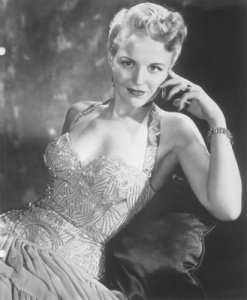
From vocalist to her local radio station to singing with Benny Goodman's big band, Peggy Lee would become a noted multi-faceted artist and performer writing music for films, acting, and creating conceptual record albums. On Lady and the Tramp, she not only sang, but also wrote some songs as well as provided the voices of 4 characters. Why she was omitted from the Oscars in memoriam roll in 2002, I have no idea.

From vocalist to her local radio station to singing with Benny Goodman’s big band, Peggy Lee would become a noted multi-faceted artist and performer writing music for films, acting, and creating conceptual record albums. On Lady and the Tramp, she not only sang, but also wrote some songs as well as provided the voices of 4 characters. Why she was omitted from the Oscars in memoriam roll in 2002, I have no idea.

Figure 1: Peggy Lee– jazz and popular music singer, songwriter, composer, and actress in a career spanning 6 decades. From her beginning as local radio vocalist to singing with Benny Goodman’s band, she forged a sophisticated persona, evolving into a multi-faceted artist and performer. Wrote music for films, acted, and created conceptual record albums-encompassing jazz, chamber, pop, and art songs. Was among the first of the “old guard” to recognized rock n’roll and recorded with The Beatles, Randy Newman, Carole King, and James Taylor and others. Was nominated for Best Supporting Actress for her performance in Pete Kelly’s Blues. But is better known for her work in Lady and the Tramp where she wrote songs, supplied the singing, and did the speaking voices of 4 characters.

While the Marquis de Mores only spent 3 years in North Dakota's Badlands, he did manage to leave an impression. He's also said to challenge Teddy Roosevelt to a duel.

While the Marquis de Mores only spent 3 years in North Dakota’s Badlands, he did manage to leave an impression. He’s also said to challenge Teddy Roosevelt to a duel.

Figure 2: Marquis de Mores– famous duelist, frontier ranchman in the Badlands of Dakota Territory during the final years of the American Old West era, a railroad pioneer in Vietnam, and an anti-Semitic politician in his native France. Tried to revolutionize the ranching industry by shipping refrigerated meat to Chicago by railroad, thus bypassing the Chicago stockyards by building a meat packing plant for this purpose in a town he founded in 1883 and named after his wife Medora (which failed, by the way). Notoriously sent Theodore Roosevelt what the latter interpreted as a challenge to a duel though nothing came of it. Was called the “Emperor of the Bad Lands.” After he left the Dakota Territory, was embroiled in political controversies for the remainder of his life before being assassinated in North Africa which prompted no enquiries or serious attempts to put his murderers to justice.
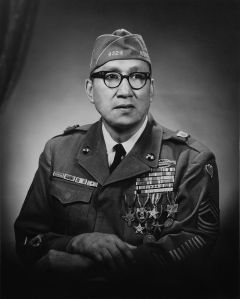
A combat veteran in 2 wars, Woodrow W. Keeble managed to single-handedly destroy 3 enemy machine gun bunkers and kill an additional 7 in nearby trenches during the Korean War. However, it would take a long campaign by his family an congressional delegations to award him with the Medal of Honor he so richly deserved. Perhaps being an Indian had something to do with it.

A combat veteran in 2 wars, Woodrow W. Keeble managed to single-handedly destroy 3 enemy machine gun bunkers and kill an additional 7 in nearby trenches during the Korean War. However, it would take a long campaign by his family an congressional delegations to award him with the Medal of Honor he so richly deserved. Perhaps being an Indian had something to do with it.

Figure 3: Woodrow W. Keeble– member of the Sisseton Wahpeton Oyate of the Lake Traverse Reservation who was a US Army National Guard combat veteran of both WWII and the Korean War. Following a long campaign by his family and the congressional delegations of both North and South Dakota he was posthumously awarded the Medal of Honor for his actions on October 20, 1951 in which he single-handedly destroyed three enemy machine-gun bunkers and killed an additional seven enemy soldiers in nearby trenches. Had he been white, not only would he have received a Medal of Honor in his own lifetime, but also get his own Hollywood movie.
As a co-founder of Texas Instruments, Patrick E. Haggerty turned an small Texas oil exploration company into the leader of semiconductors it is today. You probably have used one of TI's calculators and it's probably because of him.

As a co-founder of Texas Instruments, Patrick E. Haggerty turned an small Texas oil exploration company into the leader of semiconductors it is today. You probably have used one of TI’s calculators and it’s probably because of him.

Figure 4: Patrick E. Haggerty– engineer and businessman who co-founded Texas Instruments where he served as president and chairman as well as was most responsible for turning a small Texas oil exploration company into the leader in semiconductors that it is today. Under his influence, the company invested in transistors when their commercial value was still much in question but ended up creating the first silicon transistor, the first commercial transistor radio, and the first integrated circuit.


35. Ohio
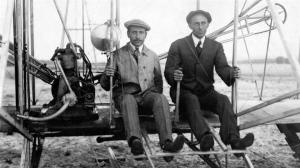
Funded by their Dayton, Ohio bicycle shop, Wilbur and Orville Wright would soon create a heavier than air flying machine that would be among the first to stay in flight in 1903. Sure there may be some controversy about whether they made the first flight, but the Wright Brothers have pictures of theirs.

Funded by their Dayton, Ohio bicycle shop, Wilbur and Orville Wright would soon create a heavier than air flying machine that would be among the first to stay in flight in 1903. Sure there may be some controversy about whether they made the first flight, but the Wright Brothers have pictures of theirs.

Figure 1: The Wright Brothers– inventors and aviation pioneers who are credited with building the world’s first successful airplane and making the first controlled, powered and sustained heavier-than-air human flight, on December 17, 1903 near Kitty Hawk, North Carolina. Developed their flying machine into the first practical fixed-wing aircraft within the next 2 years. But their fundamental breakthrough was their invention of three-axis control, which enabled the pilot to steer the aircraft effectively and to maintain its equilibrium, a method that became and remains standard on fixed-wing aircraft of all kinds. Gained the mechanical skills essential for their success by working for years in their shop in Dayton, Ohio with printing presses, bicycles, motors, and other machinery. And it was their work with bicycles in particular that influenced their belief that an unstable vehicle like a flying machine could be controlled and balanced with practice. Their extensive glider tests would help them develop their skills as pilots while their shop employee built the first airplane engine. Their status as inventors of the airplane has been subject to counter-claims by various parties with much controversy persisting over the many competing claims of early aviators.
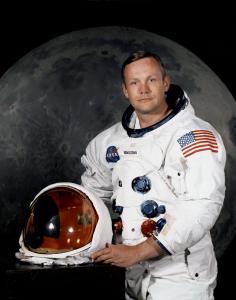
"The exciting part for me, as a pilot, was the landing on the moon … Walking on the lunar surface was very interesting, but it was something we looked on as reasonably safe and predictable." - from an interview in 2007.

“The exciting part for me, as a pilot, was the landing on the moon … Walking on the lunar surface was very interesting, but it was something we looked on as reasonably safe and predictable.” – from an interview in 2007.

Figure 2: Neil Armstrong– aerospace engineer, naval aviator, test pilot, university professor, and astronaut who was the first person to walk on the moon. Joining NASA in 1962, he made his first space flight as command pilot of Gemini 8 in March 1966, becoming the organization’s first civilian astronaut to fly in space as well as performed the first space docking with David Scott. But the mission was aborted after he used some of his reentry control fuel to prevent a dangerous spin caused by a stuck thruster, in the first in-flight space emergency. Was commander of Apollo 11, the first manned Moon landing mission in July 1969 where he and Buzz Aldrin descended onto the lunar surface and spent 2 ½ hours outside the spacecraft while Michael Collins remained in lunar orbit in the Command/Service Module. Later served on two accident investigations pertaining to Apollo 13 and the Challenger disaster and taught at the University of Cincinnati. Said, ”That’s one small step for man, one giant leap for mankind.”
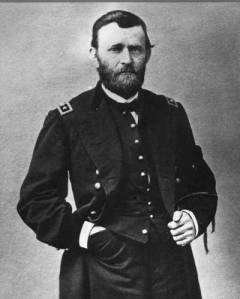
"There was no time during the rebellion when I did not think, and often say, that the South was more to be benefited by its defeat than the North. The latter had the people, the institutions, and the territory to make a great and prosperous nation. The former was burdened with an institution abhorrent to all civilized people not brought up under it, and one which degraded labor, kept it in ignorance, and enervated the governing class. "-from his personal memoirs

“There was no time during the rebellion when I did not think, and often say, that the South was more to be benefited by its defeat than the North. The latter had the people, the institutions, and the territory to make a great and prosperous nation. The former was burdened with an institution abhorrent to all civilized people not brought up under it, and one which degraded labor, kept it in ignorance, and enervated the governing class. “-from his personal memoirs

Figure 3: Ulysses S. Grant– president from 1869-1877 who’s better known as Commanding General of the United States Army during the American Civil War in which he worked closely with Lincoln to lead the Union Army to victory over the Confederacy. Earned his reputation as an aggressive commander early in the war by taking control of Kentucky and most of Tennessee and led Union forces to victory in the Battle of Shiloh. Earned the nickname “Unconditional Surrender Grant,” because his generous surrender terms allowed his enemies to lose with dignity. Though some said that he was a drunk (which is hard to prove) or was just a butcher who only won because he had superior numbers (which wasn’t the whole story as you’ve seen with some of Lincoln’s other generals, particularly George B. McClellan). After a series of coordinated battles by July 1863, he defeated Confederate armies and seized control of Vicksburg which gave full Union control of the Mississippi River and divided the Confederacy into two. Was promoted to Lieutenant General after his victories of the Chattanooga Campaign. Confronted Robert E. Lee in a series of bloody battles trapping the latter’s army in their defense of Richmond that led to Lee’s Appomattox surrender which effectively ended the war. And since he let Lee surrender with dignity, Lee would never tolerate a bad word about the man in his face. As president, he stabilized the nation during the turbulent Reconstruction, prosecuted the Klu Klux Klan, established Yellowstone as the world’s first national park as well as the National Park system, and enforced civil and voting rights laws using the army and the Department of Justice. Responded to charges of corruption in executive offices more than any other 19th century president but appointed the first Civil Service Commission and signed legislation ending the corrupt moiety system. And while his presidency was marred by a severe economic depression, he remained highly popular for the rest of the 19th century. Embarked on a widely praised 2 year world tour after he left office wrote his memoirs that proved to be a financial and critical success. Hailed for his military genius and his strategies featured in military history books, scholars have rated his presidency as mixed but his reputation has significantly improved in recent years.
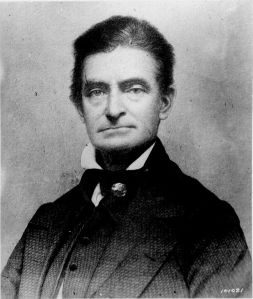
"If it is deemed necessary that I should forfeit my life for the furtherance of the ends of justice, and mingle my blood further with the blood of my children and with the blood of millions in this slave country whose rights are disregarded by wicked, cruel, and unjust enactments, I submit; so let it be done!"

“If it is deemed necessary that I should forfeit my life for the furtherance of the ends of justice, and mingle my blood further with the blood of my children and with the blood of millions in this slave country whose rights are disregarded by wicked, cruel, and unjust enactments, I submit; so let it be done!”

Figure 4: John Brown– abolitionist who believed armed insurrection was the only way to overthrow the institution of slavery in the United States and saw himself as the instrument of God’s wrath in punishing men for the sin of owning slaves. Commanded forces at the Battle of Black Jack and the Battle of Osawatomie during the 1856 conflict in Kansas with his followers killing 5 slavery supporters at Pottawatomie. Yet he’s best known for leading an unsuccessful raid on the federal armory at Harper’s Ferry that killed 7 people which ended in the group’s capture as well as resulted in his conviction and death sentence by hanging. But not without electrifying the nation and escalating the tensions that would lead to secession and the American Civil War. His actions prior to the Civil War as an abolitionist, and the tactics he chose, still make him a controversial figure today that he’s sometimes memorialized as a heroic martyr and a visionary and sometimes vilified as a madman and terrorist. And it doesn’t help that historians remain divided on whether it’s accurate to refer him as “America’s first domestic terrorist.”

US State Mount Rushmore: Part 6 – Montana to New Jersey

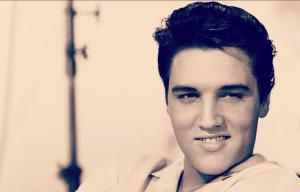
Guess we’re halfway through. I know you might find it unusual that Jim Henson is included among the Mississippi crowd but he actually was from that state even if it didn’t seem apparent to you. And yes, I know Elvis is more or less associated with Memphis and it might seem out of place to put him in Mississippi. But I have news for you, Elvis was born there as well. However, let’s move on shall we? Because in this selection, I will bring you some more Mount Rushmores from the states of Montana to New Jersey. First, it’s up in Montana where we’ll meet the first US Congresswoman, a guide at Glacier National Park who hung out with Blackfeet Indians, a very underrated microbiologist, and an adventurer who played an important role in the creation of Yellowstone National Park. Second, it’s off to Nebraska where we have an author’s whose books suggest lesbian undertones, a Catholic priest who founded a home for troubled youth, the man responsible for Mount Rushmore, and a formidable Indian chief. Third, we go to Nevada where you’ll find a journalist who covered the Russian Revolution, an animal rights activist, a basket weaver, and a teenage boy who showed what can brown do for you. Next, we go to Granit State New Hampshire where you’ll meet these rock solid figures consisting of an astronaut, a reclusive novelist, a noted sculptor whose work still stands, and a Treasury secretary who introduced the first paper US currency. And last but not least, we come to Garden or Toxic Dump State New Jersey where you’ll find a legendary inventor, a Scottish minister who modernized Princeton, a fiery suffragist, and a US president who enacted much needed Progressive Era reforms even if he was a filthy racist.

26. Montana

Though Jeannette Rankin could vote for herself when she ran for Congress in 1916, she couldn't vote for president. She'd go to serve for 2 non-consecutive terms, mostly because she was a pacifist and a US entered a world war during both of them.

Though Jeannette Rankin could vote for herself when she ran for Congress in 1916, she couldn’t vote for president. She’d go to serve for 2 non-consecutive terms, mostly because she was a pacifist and the US entered a world war during both of them.

Figure 1: Jeannette Rankin– first woman to hold a high government office in the US when she was elected as the first US Congresswoman from the state of Montana. Also elected in 1940. As a lifelong pacifist she was one of 56 members of Congress who voted against entry into WWI and the only member of Congress to vote against declaring war on Japan after the attack on Pearl Harbor in 1941.

As a fur trader, James Willard Schultz lived among the Blackfoot Indians where he married, had a son, and was adopted into the tribe. Is also well known for guiding and outfitting local hunters at what is now Glacier National Park where he explored an named many of the features.

As a fur trader, James Willard Schultz lived among the Blackfoot Indians where he married, had a son, and was adopted into the tribe. Is also well known for guiding and outfitting local hunters at what is now Glacier National Park where he explored an named many of the features.

Figure 2: James Willard Schultz– author, explorer, Glacier National Park guide, fur trader and historian of the Blackfoot Indians. Lived amongst the Pikuni tribe during the period 1880-82 where he was given the name “Apikuni” by their chief, Running Crane, a word that’s Blackfeet for “spotted robe.” He had an Indian wife and a son called Lone Wolf as well. Is most noted for his prolific stories about Blackfoot life and his contributions to the naming of prominent features in Glacier National Park. Unfortunately, suffered from ill health for most of his last 30 years since guiding at the rugged Glacier took a physical toll on him. Published 37 fiction and non-fiction books dealing with the Blackfoot, Koontenai, and Flathead Indians. Works received critical literary acclaim from the general media as well as academia for his story telling and contributions to ethnology.

Throughout his career, Maurice Hilleman developed over 40 vaccines with 8 of those among the 14 recommended in current vaccine schedules. He's credited with saving more lives than any other medical scientist in the 20th century. Sad he's not as well known as he should.

Throughout his career, Maurice Hilleman developed over 40 vaccines with 8 of those among the 14 recommended in current vaccine schedules. He’s credited with saving more lives than any other medical scientist in the 20th century. Sad he’s not as well known as he should.

Figure 3: Maurice Hilleman– microbiologist who specialized in vaccinology and developed over 40 vaccines, an unparalleled record of productivity. Developed 8 of the 14 routinely recommended in current vaccine schedules comprising of those for measles, mumps, hepatitis A, hepatitis B, chickenpox, meningitis, pneumonia and Haemophilus influenzae bacteria. Also played a role in the discovery of the cold-producing adenoviruses, the hepatitis viruses, and the cancer-causing virus SV40. Credited with saving more lives than any other medical scientist in the 20th century and described as “the most successful vaccinologist in history.”

Nathaniel P. Langford is best known for playing a role in the creation of Yellowstone National Park and serving as its first superintendent. Unfortunately, he only had the job for 5 years because he didn't have the resources to effectively run it like a salary.

Nathaniel P. Langford is best known for playing a role in the creation of Yellowstone National Park and serving as its first superintendent. Unfortunately, he only had the job for 5 years because he didn’t have the resources to effectively run it like a salary.

Figure 4: Nathaniel P. Langford– explorer, businessman, bureaucrat, vigilante and historian who played an important role in the early years of the Montana gold fields, territorial government and the creation of Yellowstone National Park. Was a member of the 1870 Washburn–Langford–Doane Expedition which explored portions of the region that soon would become the iconic park. Though he was the park’s first superintendent, he didn’t have much time to run it and only entered it twice during his 5 years as superintendent since there was no salary, no funding to run the park, and no way to enforce legal protection for its wildlife or geological features. He also lacked the means to improve or properly protect the place without formal policy or regulations. This left Yellowstone vulnerable to poachers, vandals, and others seeking to raid its resources and there was lawlessness and exploitation of the park’s resources. He was forced out in 1877 by political pressure accusing him of neglect which was partly true.

27. Nebraska

“The great fact was the land itself, which seemed to overwhelm the little beginnings of human society that struggled in its sombre wastes. It was from facing this vast hardness that the boy’s mouth had become so bitter; because he felt that men were too weak to make any mark here, that the land wanted to be let alone, to preserve its own fierce strength, its peculiar, savage kind of beauty, its uninterrupted mournfulness.” from O! Pioneers (1913). Nevertheless, while Willa Cather is said to be among America’s first lesbian authors, her sexuality is still hotly debated.

Figure 1: Willa Cather– author who achieved recognition for her novels of frontier life on the Great Plains including O Pioneers!, The Song of the Lark, and My Ántonia. Was awarded the Pulitzer Prize for One of Ours, a novel set during WWI. Work is often marked by its nostalgic tone, her subject matter and themes drawn from memories of her early years on the American plains in Nebraska. Sexual identity remains a point of contention among scholars despite being widely seen as a lesbian.

“Often it has been said that youth is the nation’s greatest asset. But it is more than that – it is the world’s greatest asset. More than that, it is perhaps the world’s only hope.”

“Often it has been said that youth is the nation’s greatest asset. But it is more than that – it is the world’s greatest asset. More than that, it is perhaps the world’s only hope.”

Figure 2: Edward J. Flanagan– Catholic priest who founded an orphanage for homeless boys known as Boys Town which now also serves as a center for troubled youth. Stated, “there’s no such thing as a bad boy” and rejected the reform school model. Pioneered efforts to save children from neglect, abuse, poverty, illiteracy and lawlessness as well as passionately advocated for issues few dared to broach in his day. Wrote numerous articles, booklets, and books on child-rearing for parents. Served on several committees and boards dealing with the welfare of children and was the author of articles on child welfare as well as traveled to study child welfare problems in Ireland, Japan, Korea, Germany, and Austria. Received his own Oscar when Spencer Tracy won one for Best Actor in a biopic about his life which read: “To Father Flanagan, whose great humanity, kindly simplicity, and inspiring courage were strong enough to shine through my humble effort. Spencer Tracy.” Was given the title, “Servant of God” and may be in the process of becoming a saint.

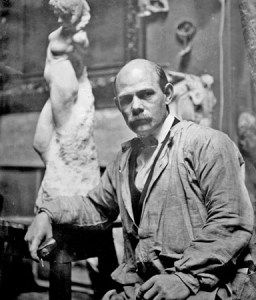
Sculptor Gutzon Borglum is best known for carving 4 presidents into Mount Rushmore in Rapid City, South Dakota. However, we should note that Borglum had deep racist convictions in Nordic superiority and was a member of the Klu Klux Klan.

Sculptor Gutzon Borglum is best known for carving 4 presidents into Mount Rushmore in Rapid City, South Dakota. However, we should note that Borglum had deep racist convictions in Nordic superiority and was a member of the Klu Klux Klan.

Figure 3: Gutzon Borglum– artist and sculptor who is associated with his creation of Mount Rushmore National Memorial as well as other works of art including a bust of Abraham Lincoln exhibited in the White House by Theodore Roosevelt and now held in the United States Capitol Crypt in Washington, D.C. Also carved the faces in Stone Mountain, Georgia which was for the United Daughters for the Confederacy. The fact he was a strong nativist, racist, and member of the Klu Klux Klan made him a suitable choice.

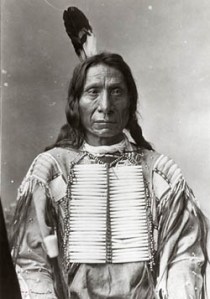
While not as well known as some of his Indian contemporaries, Ogala Lakota Chief Red Cloud was one of the most formidable Native American opponents the US Army has ever faced. Because of him, the Fetterman Fight in Red Cloud's War was said to be US Army's worst defeat on the Great Plains before Little Bighorn, of course.

While not as well known as some of his Indian contemporaries, Ogala Lakota Chief Red Cloud was one of the most formidable Native American opponents the US Army has ever faced. Because of him, the Fetterman Fight in Red Cloud’s War was said to be US Army’s worst defeat on the Great Plains before Little Bighorn, of course.

Figure 4: Red Cloud– an important leader of the Oglala Lakota who was one of the most capable Native American opponents the United States Army faced, leading a successful campaign in 1866-1868 known as Red Cloud’s War which was over control of the Powder River Country in northeastern Wyoming and southern Montana. The largest action, the Fetterman Fight (with 81 men killed on the U.S. side), was the worst military defeat suffered by the U.S. on the Great Plains until the Battle of the Little Bighorn ten years later. After signing the treaty of Fort Laramie, he led his people in the important transition to reservation life.

28. Nevada

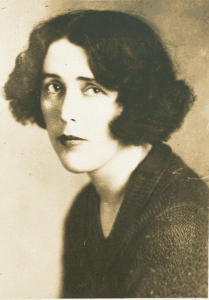
Lousie Bryant was a Marxist journalist know for her coverage of the Russian Revolution as well as the leaders involved. After John Reed's death in Baku, she collected his papers for future publication as well as married a third time, had a daughter, as well as continued her travels and her work at least for awhile.

Lousie Bryant was a Marxist journalist know for her coverage of the Russian Revolution as well as the leaders involved. After John Reed’s death in Baku, she collected his papers for future publication as well as married a third time, had a daughter, as well as continued her travels and her work at least for awhile.

Figure 1: Louise Bryant– feminist, activist, and journalist known for her sympathetic coverage of Russia and the Bolsheviks during the Russian Revolution along with her second husband John Reed. Wrote about leading Russian women such as Katherine Breshkovsky and Maria Spiridonova as well as men including Alexander Kerensky, Vladimir Lenin, and Leon Trotsky and her news stories appeared in newspapers across the U.S. and Canada in the years immediately following WWI. Defended the Russian Revolution in a testimony before the Overman Committee, a Senate subcommittee established to investigate Bolshevik influence in the US in 1919 as well as undertook a nationwide speaking tour to encourage public support of the Bolsheviks and to discourage armed U.S. intervention in Russia. After Reed’s death, she continued to write for Hearst about Russia as well as Turkey, Hungary, Greece, Italy, and other countries in Europe and the Middle East.

While some little girls might wish for a pony at some point their lives, Velma Bronn Johnston led a campaign to stop the eradication of free roaming horses on the American landscape. She was instrumental in passing legislation to stop using aircraft and land vehicles to stop their inumane capture.

While some little girls might wish for a pony at some point their lives, Velma Bronn Johnston led a campaign to stop the eradication of free roaming horses on the American landscape. She was instrumental in passing legislation to stop using aircraft and land vehicles to stop their inumane capture.

Figure 2: Velma Bronn Johnston– animal rights activist who led a campaign to stop the eradication of mustangs and free-roaming burros from public lands as well as was instrumental in passing legislation to stop using aircraft and land vehicles from inhumanely capturing them.

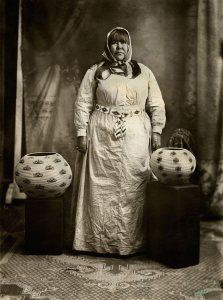
Though she spent her earlier years cooking and doing washing for miners and their families, Dat So La Lee would gain recognition for her basket weaving when she worked for a couple of art dealers who discovered the quality of her work. Not sure what she got out of the baskets she sold.

Though she spent her earlier years cooking and doing washing for miners and their families, Dat So La Lee would gain recognition for her basket weaving when she worked for a couple of art dealers who discovered the quality of her work. Not sure what she got out of the baskets she sold.

Figure 3: Dat So La Lee (a.k.a. Louisa Keyser)– member of the Washoe people and celebrated Native American basket weaver whose basketry came to national prominence during the Arts and Crafts movement and the “basket craze” of the early 20th century. Said to have made 120 baskets which were sold to her employers’ emporium. 20 of these were purchased from the State of Nevada.

When he was only 19, James E. Casey founded what would soon become UPS. By the time of his death, he was worth $100 million.

When he was only 19, James E. Casey founded what would soon become UPS. By the time of his death, he was worth $100 million.

Figure 4: James E. Casey– businessman and philanthropist who at 19, founded the American Messenger Company in 1907 where he served as president, CEO, and chairman which would later become the United Parcel Service (UPS). Also created Casey Family Programs and the Annie E. Casey Foundation with his siblings in 1966 to help children who were unable to live with their birth parents—giving them stability and an opportunity to grow to responsible adulthood because he sought to ways to help those who lacked a family life he found to be so crucial to his own success. Left a net worth of $100 million at the time of his death.

29. New Hampshire

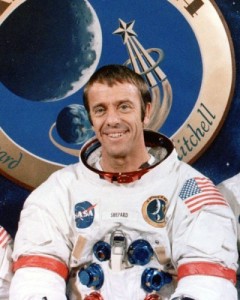
While Alan Shepard wasn't able to orbit the earth, he did manage to be the first American in space. Also got to play golf on the moon which is pretty awesome to watch. Because it's on the moon.

While Alan Shepard wasn’t able to orbit the earth, he did manage to be the first American in space. Also got to play golf on the moon which is pretty awesome to watch. Because it’s on the moon.

Figure 1: Alan Shepard– naval officer and aviator, test pilot, businessman, and one of the original Mercury 7 NASA astronauts who in May 1961 became the second person and the first American to travel into space. Commanded the Apollo 14 mission in 1971, piloting the lander Antares to the most accurate landing of the Apollo missions. Was the fifth oldest person to walk on the moon and the only one of the Mercury 7 to do so as well as hit 2 golf balls on the lunar surface.

J. D. Salinger's Catcher in the Rye is widely celebrated as an American classic. However, Salinger wasn't really comfortable with his fame and went into hiding in New Hampshire for the rest of his life. Also had a thing for women in their teens and early 20s which is kind of creepy.

J. D. Salinger’s Catcher in the Rye is widely celebrated as an American classic. However, Salinger wasn’t really comfortable with his fame and went into hiding in New Hampshire for the rest of his life. Also had a thing for women in their teens and early 20s which is kind of creepy.

Figure 2: J.D. Salinger– writer who won acclaim early in life but became reclusive for more than a half-century. Best known for his novel The Catcher in the Rye which was an immediate popular success with his depiction of adolescent alienation and loss of innocence in the protagonist Holden Caulfield was influential, especially among adolescent readers. Even today, it remains popular and controversial, selling around 250,000 copies a year.

Daniel Chester French was one of the most acclaimed sculptors at around the turn of the century. However, none of his works compare than his statue of Abraham Lincoln at the Lincoln Memorial.

Daniel Chester French was one of the most acclaimed sculptors at around the turn of the century. However, none of his works compare than his statue of Abraham Lincoln at the Lincoln Memorial.

Figure 3: Daniel Chester French– one of the most prolific and acclaimed American sculptors of the late 19th and early 20th centuries who is best known for his design of the monumental work as well as the statue of Abraham Lincoln at the Lincoln Memorial. Was a founding member of the National Sculptor Society, helped design the Pulitzer Prize gold medals, as well as helped found the Berkshire Playhouse.  Many of his public monuments still stand.

“True democracy makes no enquiry about the color of skin, or the place of nativity, whereever it sees man, it recognizes a being endowed by his Creator with original inalienable rights.” – from (1845)

Figure 4: Salmon P. Chase– politician and jurist who served as Chief Justice of the Supreme Court who presided over the Senate trial of Andrew Johnson’s impeachment proceedings in 1868. Yet, is better known for his time as Secretary of Treasury in the Lincoln administration where he strengthened the federal government by introducing its first paper currency as well as a national bank during the American Civil War. Prior to the war, he articulated the “slave power conspiracy” thesis, devoting his energies to the destruction of what he considered the Slave Power which was a conspiracy of Southern slave owners to seize control of the federal government and block the progress of liberty (and to be fair, he was right since pro-slavery politicians were a dominant political influence during the Antebellum years). And coined the coined the slogan of the Free Soil Party, “Free Soil, Free Labor, Free Men.”

30. New Jersey

Thomas Edison first gained notice with his phonograph which earned him the nickname,

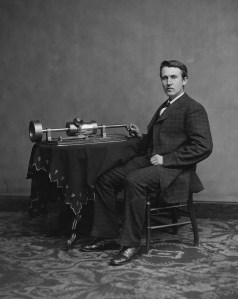
Thomas Edison first gained notice with his phonograph which earned him the nickname, “The Wizard of Menlo Park.” It was the first machine to record sound and eventually gave rise to the recording industry.

Figure 1: Thomas Edison– inventor and businessman dubbed, “The Wizard of Menlo Park” who developed many devices that greatly influenced life around the world including the phonograph, the motion picture camera, the long-lasting, practical electric light bulb which had impacts in electric light and power utilities, sound recording, and motion pictures all of which established major industries worldwide. Also had an impact in mass communication and in particular, telecommunications. Other inventions like a stock ticker, a mechanical vote recorder, a battery for an electric car, and a system of electric-power generation and distribution to homes, businesses, and factories which is a crucial development in the modern industrialized world. Was one of the first inventors to apply the principles of mass production on a large scale to the process of invention, and because of that, he’s often credited with the creation of the first industrial research laboratory. Held 1,093 US patents in his name as well as many in the UK, France, and Germany.

While president of what became known as Princeton, John Witherspoon turned a subpar college for training ministers to a major institution of learning worthy of competing with Harvard and Yale. James Madison and Aaron Burr were among his pupils.

While president of what became known as Princeton, John Witherspoon turned a subpar college for training ministers to a major institution of learning worthy of competing with Harvard and Yale. James Madison and Aaron Burr were among his students.

Figure 2: John Witherspoon– Presbyterian minister, politician, professor, Founding Father, and president of the College of New Jersey which is now known as Princeton University who was an influential figure in the development of the United States’ national character. Transformed Princeton from a sub-par college chiefly designed to train clergymen to a prestigious educational institution that would equip leaders of a new country through fundraising locally and in his native Scotland, adding 300 of his own books to the college library, purchasing scientific equipment, and instituting a number of reforms including modeling the syllabus and university structure after that used in Scottish universities as well as firmed up entrance requirements which helped the school compete with Harvard and Yale. Was also a signer of the Declaration of Independence as a delegate from New Jersey and might’ve formulated an early version of American exceptionalism. Aaron Burr and James Madison were among his most famous students.

Alice Paul had a Ph.D from the University of Pennsylvania as well as spent time in the militant British WSPU. She'd apply what she learned to the women's suffrage movement in the US and got to see the results in 1920.

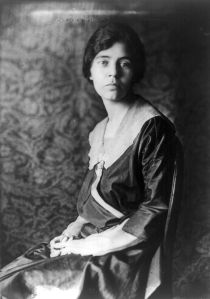
Alice Paul had a Ph.D from the University of Pennsylvania as well as spent time in the militant British WSPU. She’d apply what she learned to the women’s suffrage movement in the US and got to see the results in 1920.

Figure 3: Alice Paul– suffragist, feminist, and women’s rights activist who was the main leader and strategist of the 1910s campaign for the 19th Amendment which prohibits sex discrimination in the right to vote. A Sociology Ph.D., she wrote her dissertation was entitled “The Legal Position of Women in Pennsylvania” that discussed the history of the women’s movement in Pennsylvania and the rest of the U.S., and urged woman suffrage as the key issue of the day. She also spent time in the UK with the militant WSPU, participating in their demonstrations and marches as as learned tactics she applied when she came home to the US. Along with Lucy Burns and others, she strategized the events such as the Woman Suffrage Procession and the Silent Sentinels, which led the campaign that resulted in its successful passage in 1920. Demonstrated for the women’s right to vote through organizing the Women’s Suffrage Procession in 1913, picketing in front of the White House sometimes with violent opposition as well as going on hunger strikes in prison. Spent a half century as leader of the National Woman’s Party, which fought for her Equal Rights Amendment to secure constitutional equality for women winning a large degree of success with the inclusion of women as a group protected against discrimination by the Civil Rights Act of 1964.

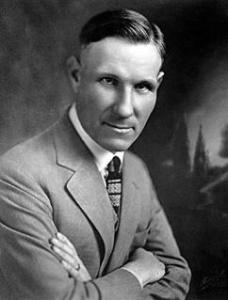
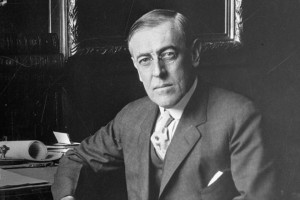
“Our own desire for a new international order under which reason and justice and the common interests of mankind shall prevail is the desire of enlightened men everywhere. Without that new order the world will be without peace and human life will lack tolerable conditions of existence and development. Having set our hand to the task of achieving it, we shall not turn back.” -from a speech to Congress (1918) in which he’s trying to get the US to join the League of Nations. It didn’t work.

Figure 4: Woodrow Wilson– academic and college president of Princeton who served as US president from 1913-1921 whose administration saw the passage of progressive legislation policies unparalleled until the New Deal in 1933 which include the establishment of the Federal Reserve, the Federal Trade Commission, the Clayton Antitrust Act, the Federal Farm Loan Act as well as reintroduction of the income tax. Avoided a railroad strike and economic crisis by imposing an 8-hour workday on railroads. His Clayton Antitrust Act prohibited price discrimination, agreements prohibiting retailers from handling other companies’ products, and directorates and agreements to control other companies as well as dictated accountability of individual corporate officers and clarified guidelines and ended union liability antitrust laws as well. Administration saw passage of 3 Constitutional Amendments which authorized direct election of senators, Prohibition, and female suffrage. Second term saw the US entry into WWI, the Spanish Flu epidemic, the Russian Revolution, and the Palmer Raids. In 1918, he issued his principles for peace in the Fourteen Points and promoted the formation of a League of Nations as well as a Wilsonian ideology that called for an activist foreign policy that called on the nation to promote global democracy. Was awarded the Nobel Peace Prize in 1919 for his international efforts. While praised for his foreign policy efforts that has led to establishment of the United Nations, he has been criticized by several historians for his virulent racism and his shitty record on civil rights and civil liberties.

US State Mount Rushmore: Part 5 – Massachusetts to Missouri

So we’re coming to the half-way point in the series. When it came to compiling this series, some states were easier than others since not every state has a lot of famous people. I know who I have for Massachusetts is bound to get complaints since I’m well aware that some people might have other ideas on which people I should put on since the state has a very rich history with Puritans, patriots, authors, and other historical figures. Virginia is another one since it has all Founding Fathers and no Robert E. Lee in sight. And don’t get me started about New York or California. Nevertheless, I bring you more Mount Rushmore compilations in my series from Massachusetts to Missouri. From Massachusetts I’ll introduce you to an underrated Founding Father, an author most people read in high school, the most famous suffragette, and a guy whose main interests included camping in the woods and sticking it to the man. After that, it’s on to Michigan where you’ll meet an industrialist who revolutionized transportation and the American way of life, a controversial civil rights activist, and two labor leaders with one buried under concrete somewhere in Detroit. Then we venture into the state of Minnesota where you’ll meet a Native American historian, an iconic cartoonist, a celebrated author of the Jazz Age, and a legendary aviator who maybe shouldn’t be hanging around with Nazis. Next, it’s down South to Mississippi where you’ll find a leader of a bunch of states that broke off from the country over slavery, a man they call a rock n’ roll king, a woman who organized Freedom Summer, and a puppeteer who died too soon. Finally, we go to Show Me State Missouri where you’ll see an animation tycoon, a black beauty maven, a smartass US president, and an expatriate poet who inspired a hit Broadway musical.

21. Massachusetts

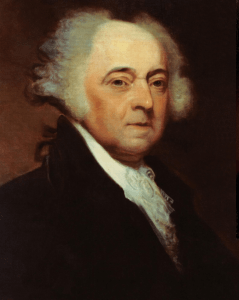
John Adams is perhaps one of the more underrated Founding Fathers since he contributed so much to this country yet remained forgotten for years. But you have to admire him for representing the British troops involved with the Boston Massacre because he believed they had a right to counsel and protection of innocence. And because Boston was rife with anti-British sentiment at this point, this was a job no local attorney wanted.

John Adams is perhaps one of the more underrated Founding Fathers since he contributed so much to this country yet remained forgotten for years. But you have to admire him for representing the British troops involved with the Boston Massacre because he believed they had a right to counsel and protection of innocence. And because Boston was rife with anti-British sentiment at this point, this was a job no local attorney wanted.

Figure 1: John Adams– lawyer, author, statesman, and diplomat who served as president and as a Founding Father was a leader of American independence. Was a political theorist in the Age of Enlightenment who promoted republicanism and a strong central government with his innovative ideas frequently published. Though he collaborated with cousin Samuel Adams, he established his prominence prior to the American Revolution providing a successful though unpopular defense of British soldiers involved with the Boston Massacre and played a major role in persuading the Continental Congress to declare independence as well as assisted Jefferson in drafting the Declaration of Independence in 1776 and was its foremost advocate. As a diplomat, he established the eventual peace treaty with Great Britain and acquired vital governmental loans from Amsterdam bankers. Was the primary author of the Massachusetts Constitution in 1780 which influenced American political theory as did his earlier Thoughts on Government. Narrowly avoided a war with France and appointed John Marshall during his presidency and is often called, “the father of the American Navy.” Though he wasn’t a popular president to serve another term and had been forgotten for decades, modern historians have ranked his presidency favorably and his legacy has been rediscovered in recent years.

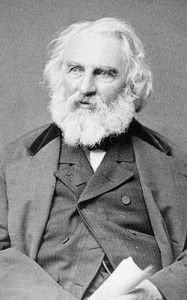
“How slowly I have made my way in life! How much is still to be done! How little worth — outwardly speaking — is all that I have achieved! The bubble reputation is as much a bubble in literature as in war, and I should not be one whit the happier if mine were world-wide and time-long than I was when nobody but yourself had faith in me.
The only sensible ends of literature are, first, the pleasurable toil of writing; second, the gratification of one’s family and friends; and, lastly, the solid cash.” -from a 1851 letter. Still, you have to admit, Nathaniel Hawthorne wasn’t a bad looking guy in 1841.

Figure 2: Nathaniel Hawthorne– novelist and short story writer known for works featuring moral allegories with a Puritan inspiration set in New England. His fiction is considered part of the Romantic movement and, more specifically Dark romanticism with themes often centering on the inherent guilt, evil and sin of humanity with his works often having moral messages and deep psychological complexity, loaded symbolism, and sometimes bordering on surrealism. His portrayals of the past are a version of historical fiction used only as a vehicle to express common themes of ancestral sin, guilt and retribution. And later works reflect his negative view of the Transcendentalist movement. Best known for writing The Scarlet Letter which is almost always required reading in high school and while students complain about boring them to tears because they have no appreciation whatsoever for a great literary genius. Also wrote The House of the Seven Gables, Twice-Told Tales, The Blithedale Romance, The Marble Faun, “Young Goodman Brown,” “Rappacchini’s Daughter,” and Tanglewood Tales.

“Cautious, careful people, always casting about to preserve their reputation and social standing, never can bring about a reform. Those who are really in earnest must be willing to be anything or nothing in the world’s estimation.”

Figure 3: Susan B. Anthony– social reformer and feminist who played a pivotal role in the women’s suffrage movement. Collaborated with her lifelong friend Elizabeth Cady Stanton in social reform activities primarily in women’s rights publishing a newspaper called The Revolution, founding the National Woman Suffrage Association, with Matilda Joslyn Gage worked on what eventually grew into a 6-volume History of Woman Suffrage, and arranged for Congress to be presented with an amendment giving women the right to vote which was ratified as the 19th Amendment in 1920. Best known for being arrested for voting in Rochester, New York in 1872 which resulted in her conviction in a widely publicized trial. Played a key role in creating the International Council of Women which is still active. Though harshly ridiculed and accused of destroying the institution of marriage when she started campaigning for women’s rights, public perception changed radically during her lifetime mostly because of her efforts that she celebrated her 80th birthday at the White House.

“My desire for knowledge is intermittent; but my desire to bathe my head in atmospheres unknown to my feet is perennial and constant. The highest that we can attain to is not Knowledge, but Sympathy with Intelligence. I do not know that this higher knowledge amounts to anything more definite than a novel and grand surprise on a sudden revelation of the insufficiency of all that we called Knowledge before — a discovery that there are more things in heaven and earth than are dreamed of in our philosophy.” from Walking

Figure 4: Henry David Thoreau– author, poet, philosopher, abolitionist, naturalist, tax resister, development critic, surveyor, and historian. As a leading transcendentalist, he’s best known for his book Walden, a reflection upon simple living in natural surroundings and his essay Resistance to Civil Government (also known as Civil Disobedience), an argument for disobedience to an unjust state. His books, articles, essays, journals, and poetry total over 20 volumes. Lasting contributions are his writings on natural history and philosophy, where he anticipated the methods and findings of ecology and environmental history, two sources of modern-day environmentalism. Literary style interweaves close natural observation, personal experience, pointed rhetoric, symbolic meanings, and historical lore, while displaying a poetic sensibility, philosophical austerity, and “Yankee” love of practical detail. Philosophy of civil disobedience later influenced the political thoughts and actions of such notable figures as Leo Tolstoy, Mahatma Gandhi, and Martin Luther King, Jr.

22. Michigan

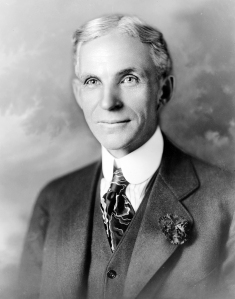
Henry Ford's Model T was the first economy car on the road and in many ways transformed America and the world. However, he was also an Anti-Semite who kind of got too cozy with Hitler, hated unions, and repeatedly clashed with his son Edsel. But unlike Walton, at least he believed in paying his workers a decent wage.

Henry Ford’s Model T was the first economy car on the road and in many ways transformed America and the world. However, he was also an Anti-Semite who kind of got too cozy with Hitler, hated unions, and repeatedly clashed with his son Edsel. But unlike Walton, at least he believed in paying his workers a decent wage.

Figure 1: Henry Ford– industrialist who founded the Ford Motor Company and sponsored the development of the assembly line technique of mass production which led him to become one of the richest and best known people in the world. His development, manufacture, and introduction of the Model T revolutionized transportation and American industry which transformed the automobile from an expensive curiosity into a practical conveyance that would profoundly impact the landscape of the twentieth century. Credited with “Fordism” which was mass production of inexpensive goods coupled with high wages for workers and believed in consumerism as the key to world peace. His intense commitment to systematically lowering costs resulted in many technical and business innovations, including a franchise system that put dealerships throughout most of North America and in major cities on six continents. Was widely known for his pacifism during WWI and publishing antisemitic tracts like the The International Jew (as well as did business with the Nazis well into WWII). Was adamantly against labor unions as well.

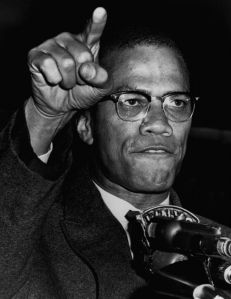
“We cannot think of uniting with others, until after we have first united among ourselves. We cannot think of being acceptable to others until we have first proven acceptable to ourselves.” – from A Declaration of Independence (1964)

Figure 2: Malcolm X– Muslim minister and human rights activist who has been called one of the greatest and most influential African Americans in history. To admirers he was a courageous advocate for the rights of blacks, a man who indicted white America in the harshest terms for its crimes against black Americans while detractors accused him of preaching racism and violence. Though he served as the public face for the Nation of Islam for a dozen years, he soon grew disillusioned with the group and its leader that he eventually repudiated it, disavowed racism, and founded Muslim Mosque, Inc. and the Organization of Afro-American Unity where he continued to emphasize Pan-Africanism, black self-determination, and black self-defense. His book, The Autobiography of Malcolm X, published shortly after his assassination, is considered one of the most influential non-fiction books of the 20th century.

“There’s a direct relationship between the ballot box and the bread box, and what the union fights for and wins at the bargaining table can be taken away in the legislative halls.” – from 1970. Still very much rings true today as we’ve seen in government. Still, while Henry Ford believed in giving his workers fair wages so they buy his cars, Walter Reuther and his UAW made sure Ford kept it that way.

Figure 3: Walter Reuther– labor union leader who made the United Auto Workers a major force not only in the auto industry but also in the Democratic Party and the Congress of Industrial Organizations (CIO) in the mid 20th century. As a leading liberal and supporter of the New Deal coalition, working to strengthen the labor union movement, raise wages, and give union leaders a greater voice in state and national Democratic party politics. As a senior union organizer in the 1930s, he helped win major strikes for union recognition against General Motors and Ford with a highly publicized confrontation with Ford security forces in 1937. During the course, he’d be hospitalized after being badly beaten by strike breakers. He’d also survive two assassination attempts, one of them which permanently crippled his right hand. After WWII, he led a 113 day strike against General Motors with limited success. Delivered contracts for his membership through brilliant negotiating tactics such as choosing one of the “big three” automakers, and if it did not offer concessions, he’d strike it and let the other two absorb its sales. Not to mention, along with higher hourly wages, he’d also negotiate for paid vacations, employer-funded pensions, health insurance, supplementary unemployment benefits, and lower price cars for workers. Was a major supporter in the Civil Rights Movement where he participated in the March on Washington as well as the Selma to Montgomery March. Also marched with with the United Farm Workers. He even stood beside Martin Luther King Jr. during the latter’s “I Have a Dream” speech. In his prime, he was said to be influential and powerful enough to frighten conservatives that Barry Goldwater once declared him a more dangerous menace to the US than the Soviet Union or Sputnik.

As head of a Teamsters Union, Jimmy Hoffa was a very controversial figure in his lifetime, especially with his ties to the mob. Yet, whether you call him a saint or corrupt boss, it's a safe bet that his body is under some Detroit concrete by now.

As head of a Teamsters Union, Jimmy Hoffa was a very controversial figure in his lifetime, especially with his ties to the mob. Yet, whether you call him a saint or corrupt boss, it’s a safe bet that his body is under some Detroit concrete by now.

Figure 4: Jimmy Hoffa– union leader and author who served as president of the Teamsters Union from 1958-1971 where he played a major role in the growth and development of the union which eventually became the largest (by membership) in the United States with over 1.5 million members at its peak, during his terms as its leader. His involvement with organized crime got him into a lot of trouble which led him convicted of jury tampering, attempted bribery, and fraud in 1964 as well as his imprisonment in 1967 and sentence to 13 years after an exhaustive appeal process. And he was only released when he agreed to resign in 1971 as part of a pardon agreement with Nixon which blocked him from union activities until 1980. His disappearance in 1975 has given rise to many theories as to what happened to him (though organized crime had something to do with his death). While his critics say he enriched himself at the expense of the teamsters, his defenders claim that “dedication as an American labor leader for more than 40 years, as well as his widely recognized accomplishments on behalf of teamsters and all working people in America” should not be forgotten.

23. Minnesota

After spending some time treating Indians on reservations, Dr. Charles Eastman became a prolific Indian activist as well as a historian his Santee Dakota people. He is one of the first to write American history from the Native American point of view.

After spending some time treating Indians on reservations, Dr. Charles Eastman became a prolific Indian activist as well as a historian his Santee Dakota people. He is one of the first Native Americans to write American history from the Native American point of view.

Figure 1: Charles Eastman– Santee Dakota physician, writer, national lecturer, and reformer who in the early 20th century was “one of the most prolific authors and speakers on Sioux ethnohistory and American Indian affairs.” After working as a physician on reservations in South Dakota (one time caring for Indians after Wounded Knee), he became increasingly active in politics and issues on Native American rights, he worked to improve the lives of youths, and founded 32 Native American chapters of the Young Men’s Christian Association (YMCA) as well as also helped found the Boy Scouts of America. Also considered the first Native American author to write American history from the Native American point of view.

Nicknamed

Nicknamed “Sparky,” Charles Schulz was the creator of the Peanuts comic strip that featured memorable characters like Snoopy and Charlie Brown. It would run for nearly 50 years and influence later cartoonists whho came after him.

Figure 2: Charles Schulz– cartoonist best known for his comic strip Peanuts (which featured the characters Charlie Brown and Snoopy, among others). Widely regarded as one of the most influential cartoonists of all time, cited as a major influence by many later cartoonists. Calvin and Hobbes creator Bill Watterson wrote in 2007: “Peanuts pretty much defines the modern comic strip, so even now it’s hard to see it with fresh eyes. The clean, minimalist drawings, the sarcastic humor, the unflinching emotional honesty, the inner thoughts of a household pet, the serious treatment of children, the wild fantasies, the merchandising on an enormous scale—in countless ways, Schulz blazed the wide trail that most every cartoonist since has tried to follow.”

“Once one is caught up into the material world not one person in ten thousand finds the time to form literary taste, to examine the validity of philosophic concepts for himself, or to form what, for lack of a better phrase, I might call the wise and tragic sense of life.” – From a letter to his daughter (1940). Nevertheless, while F. Scott Fitzgerald’s The Great Gatsby is celebrated as an embodiment of the 1920s, it also shows the excess and shallow of the Jazz Age that doesn’t make the decade seem like a fun time.

Figure 3: F. Scott Fitzgerald– novelist and short story writer whose works are the paradigmatic writings of the Jazz Age and is widely regarded as one of the greatest American writers of the 20th century. Considered a member of the “Lost Generation” of the 1920s, he wrote 5 novels and numerous short stories many of which treat themes of youth and promise, and age and despair. Best known work is The Great Gatsby which is considered required reading in many high school and college classes as well as continues to sell millions of copies.

When Charles Lindbergh flew solo on his the Spirit of Saint Louis from New York to Paris, he was hailed as a national hero. However, aside from his kid being murdered, we tend to forget about his belief in eugenics, his friendliness toward Hitler and the Third Reich, and his 3 secret European families.

When Charles Lindbergh flew solo on his the Spirit of Saint Louis from New York to Paris, he was hailed as a national hero. However, aside from his kid being murdered, we tend to forget about his belief in eugenics, his friendliness toward Hitler and the Third Reich, and his 3 secret European families. Lucky Lindy, indeed.

Figure 4: Charles Lindbergh– aviator, author, inventor, military officer, explorer, and social activist who emerged making the first solo transatlantic flight from New York to Paris with his Spirit of Saint Louis monoplane which earned him an Orteig Prize and the Medal of Honor. His son’s kidnapping and eventual murder was the subject of a major government investigation and a national tragedy. While he was (somewhat rightfully) accused of being a fascist for shaking hands with Hitler, he flew 50 combat missions in the Pacific during WWII as a civilian consultant. Later became a prolific prize-winning author, international explorer, inventor, and environmentalist. Had 7 children in 3 secret European families.

24. Mississippi

Elected as President of the Confederacy during the American Civil War, Jefferson Davis was unable to find a strategy to defeat the Union and wasn't the effective war leader Lincoln was. If Jefferson Davis gets any reverence or honors today, then it has more to do what he did after the war and Lost Cause mythology.

Elected as President of the Confederacy during the American Civil War, Jefferson Davis was unable to find a strategy to defeat the Union and wasn’t the effective war leader Lincoln was. If Jefferson Davis gets any reverence or honors today, then it has more to do what he did after the war and Lost Cause mythology.

Figure 1: Jefferson Davis– politician best known as the President of the Confederacy during the American Civil War who took personal charge of the Confederate war plans but was unable to find a strategy to defeat the more populous and industrialized Union. After the war had ended, remained a proud apologist for the cause of slavery for which he and the Confederacy had fought. Many historians attribute the Confederacy’s weaknesses to his poor leadership like his preoccupation with detail, reluctance to delegate responsibility, lack of popular appeal, feuds with powerful state governors and generals, favoritism toward old friends, inability to get along with people who disagreed with him, neglect of civil matters in favor of military ones, and resistance to public opinion all worked against him. Wrote a memoir entitled The Rise and Fall of the Confederate Government. And while he was initially displaced by Ex-Confederate affection, but through his reconciliation efforts between North and South, they eventually came to appreciate his role in the war, seeing him as a Southern patriot, and he became a hero of the Lost Cause in the post-Reconstruction South.

I'm not a very big Elvis fan. But I have to admit that it's no wonder he was seen as a sex symbol during the 1950s. But I guess drugs , booze, and peanut butter, banana, and bacon of sandwiches put an end to that.

I’m not a very big Elvis fan. But I have to admit that it’s no wonder he was seen as a sex symbol during the 1950s. But I guess drugs , booze, and peanut butter, banana, and bacon of sandwiches put an end to that.

Figure 2: Elvis Presley– musician, singer, and actor who is regarded as one of the most significant cultural icons of the 20th century, he is often referred to as “the King of Rock and Roll”, or simply, “the King.” Was an early popularizer of rockabilly, an uptempo, backbeat-driven fusion of country music and rhythm and blues and regarded as the leading figure of rock and roll after a series of successful network television appearances and chart-topping records. His energized interpretations of songs and sexually provocative performance style, combined with a singularly potent mix of influences across color lines that coincided with the dawn of the Civil Rights Movement, made him enormously popular—and controversial. As one of the most celebrated and influential musicians of the 20th century, he was commercially successful in many genres pop, blues and gospel and is the best-selling solo artist in the history of recorded music with estimated record sales of around 600 million worldwide.

“I always said if I lived to get grown and had a chance, I was going to try to get something for my mother and I was going to do something for the black man of the South if it would cost my life; I was determined to see that things were changed.” – from (1965)

Figure 3: Fannie Lou Hamer– voting rights activist, civil rights leader, and philanthropist who was instrumental in organizing Mississippi’s Freedom Summer for the Student Nonviolent Coordinating Committee (SNCC) which attempted to register as many African American voters in the state as possible as well as set up dozens of Freedom Schools, Freedom Houses, and community centers in small towns throughout Mississippi to aid the local black population. Later became the vice-chair of the Mississippi Freedom Democratic Party, which she represented at the 1964 Democratic National Convention in Atlantic City, New Jersey. Epitaph reads: “I am sick and tired of being sick and tired.”

We all know that Jim Henson has shaped so many childhoods with his characters on Sesame Street and the Muppets. And while those beloved characters are still around today, we can all agree that his sudden death was just too soon.

We all know that Jim Henson has shaped so many childhoods with his characters on Sesame Street and the Muppets. And while those beloved characters are still around today, we can all agree that his sudden death was just too soon.

Figure 4: Jim Henson– puppeteer, artist, cartoonist, inventor, screenwriter, songwriter, musician, actor, film director, and producer who achieved international fame as the creator of the Muppets. Helped develop characters for Sesame Street with which he was involved for 20 years as well as won fame for his creations, particularly Kermit the Frog, Rowlf the Dog, and Ernie. Also had frequent roles in Muppets films such as The Muppet Movie, The Great Muppet Caper and The Muppets Take Manhattan, and created advanced puppets for projects like Fraggle Rock, The Dark Crystal, and Labyrinth. Founded the Jim Henson Company, Jim Henson Foundation, and Jim Henson’s Creature Shop. His sudden death from streptococcal toxic shock syndrome was widely lamented in the film and television industries.

25. Missouri

Yes, I know Walt Disney wasn't the kind of wholesome and lovable guy he portrayed himself as. Also he smoked like a chimney that he croaked. But still, you have to admit, his films still entertain since generations have practically been raised on them. Nevertheless, contrary to popular belief, he was fried not frozen.

Yes, I know Walt Disney wasn’t the kind of wholesome and lovable guy he portrayed himself as. Also he smoked like a chimney that he croaked. But still, you have to admit, his films still entertain since generations have practically been raised on them. Nevertheless, contrary to popular belief, he was fried not frozen after his death.

Figure 1: Walt Disney– entrepreneur, animator, voice actor, and film producer who was a prominent figure within the American animation industry and throughout the world and is regarded as a cultural icon. Known for his influence and contributions to entertainment during the 20th century and as a Hollywood business mogul, co-founded the Walt Disney Company with his producer brother. As his studio became more successful, he became more adventurous in his cartoons introducing synchronized sound, full-color three-strip Technicolor, feature-length cartoons and introducing technical developments on cameras. Noted as a filmmaker and popular showman as well as an innovator in animation and theme park design. With his staff created famous fictional characters including Mickey Mouse, Donald Duck, and Goofy and was the original voice for Mickey himself. He also produced feature films like Snow White and the Seven Dwarfs, Pinocchio, Dumbo, Fantasia, Bambi, and more. Yet, he wasn’t said to be great to work with. Moved to theme parks in the 1950s where he opened Disneyland and was in the planning stage of Disney World when he died of lung cancer. Left behind a vast legacy, including numerous animated shorts and feature films produced during his lifetime; the company, parks, and animation studio that bear his name; and the California Institute of the Arts (CalArts). Reputation changed in the years after his death, away from an American patriot and toward someone whose work was representative of American imperialism. But his movies continue to entertain.

While not technically a millionaire, Madam C.J. Walker became the wealthiest African American woman with her line of beauty products. Was also known for her activism and philanthropy with her home used as a gathering place for the black community.

While not technically a millionaire, Madam C.J. Walker became the wealthiest African American woman with her line of beauty products. Was also known for her activism and philanthropy with her home used as a social gathering place for the black community.

Figure 2: Madam C. J. Walker– entrepreneur, philanthropist, and a political and social activist who is eulogized as the first female self-made millionaire in America and became one of the wealthiest African American women in the country. Made her fortune by developing and marketing a line of beauty products for black women through the successful business she founded the Madame C.J. Walker Manufacturing Company. And in addition to sales training and grooming, she showed other black women how to budget, build their own businesses, and encouraged them to become financially independent. Also known for her philanthropy and social activism who donated to numerous organizations and was a patron of the arts. Her lavish Villa Lewaro served as a social gathering place for the African American community.

“I fired him because he wouldn’t respect the authority of the president. That’s the answer to that. I didn’t fire him because he was a dumb son of a bitch, although he was, but that’s not against the law for generals. If it was, half to three-quarters of them would be in jail.”- On why he fired General Douglas MacArthur. Still, truth be told, MacArthur had it coming.

Figure 3: Harry S. Truman– president from 1945-1953 whose administration saw the final months of WWII and the start of the Cold War as well as marked a turning point in US foreign policy in which it renounced isolationism for good. Made the decision to drop the atomic bomb on Hiroshima and Nagasaki. Helped found the United Nations and issued the Truman Doctrine to contain Communism as well as got the $13 billion Marshall Plan enacted to rebuild Western Europe. Oversaw the Berlin Airlift, the creation of NATO, and most of the Korean War. On the domestic front, he successfully guided the American through the post-war economic challenges as well as submitted first comprehensive civil rights legislation and issued Executive Orders to start racial integration in the military and federal agencies. His 1948 election upset to win a full term as president has often been invoked by later ‘underdog’ presidential candidates. Popular and scholarly assessments of his presidency initially were unfavorable but became more positive over time following his retirement from politics. However, his firing of Douglas MacArthur during the Korean War did attract considerable controversy even though it was the right decision.

“Endurance of friendship does not depend/Upon ourselves, but upon circumstance./But circumstance is not undetermined./Unreal friendship may turn to real/But real friendship, once ended, cannot be mended./Sooner shall enmity turn to alliance./The enmity that never knew friendship/Can sooner know accord.”- from Murder in the Cathedral (1935)

Figure 4: T.S. Eliot– expatriate essayist, publisher, playwright, literary and social critic and “one of the twentieth century’s major poets” who attracted widespread attention for his poem “The Love Song of J. Alfred Prufrock,” which is seen as a masterpiece of the Modernist movement and was followed by some of the best-known poems in the English language, including The Waste Land, “The Hollow Men,” “Ash Wednesday,” and Four Quartets. Also known for 7 plays, particularly Murder in the Cathedral and made major contributions to literary criticism as well. Awarded the Nobel Prize in Literature in 1948, “for his outstanding, pioneer contribution to present-day poetry.” His Old Possum’s Book of Practical Cats was made into the highly popular Broadway musical Cats.

US State Mount Rushmore: Part 4 – Kansas to Maryland

Okay, I know that some of these famous Americans might not be suitable for elementary school kids to do reports on. Of course, Alfred Kinsey is obvious since he was a pioneer in human sexuality while Eugene Debs was a political radical and Al Capone and John Dillinger were criminals. However, this series about honoring great Americans who’ve necessarily made positive contributions since that might be a matter of opinion. And then there are some people who are rather controversial but that doesn’t mean I should leave them out. Nevertheless, in this post I bring you the Mount Rushmores I compiled from prairie state Kansas to Chesapeake Bay state Maryland. First, we venture to Kansas which has at times has been no place like home to a prominent WWII general who later became president, a noted black photographer and filmmaker, a famous poetic voice from the Harlem Renaissance, and a legendary aviator. Second, it’s on to Kentucky where you’ll meet an interesting lot consisting of a bird guy who’s name is synonymous with avian conservation, a knife guy who died at the Alamo, an eccentric journalist, and a mystic monk. Then we go down to Louisiana, home to a legendary jazz trumpeter, a larger than life politician, a French pirate, and a highly well-known gay playwright. Next, I bring you up north to the state of Maine where you’ll meet a legendary American poet, one of the most unlikely military heroes, an advocate for the mentally ill, and an academic who was an early supporter of civil rights. Finally, we go to Maryland where you’ll find a former slave who became the most prominent voice for African Americans in the 19th century, a lawyer who wrote what became a national anthem, a civil rights lawyer who eventually sat on the highest court bench in the land, and a Catholic bishop who supported Christian unity as well as a separation between church and state.


16. Kansas

"This is a long tough road we have to travel. The men that can do things are going to be sought out just as surely as the sun rises in the morning. Fake reputations, habits of glib and clever speech, and glittering surface performance are going to be discovered."-from 1942. Also, before becoming Supreme Commander of the Allied Forces, he spent a time "studying dramatics" under Douglas MacArthur as he put it. So I'm sure he has the chops to rein in a prima donna like George S. Patton.

“This is a long tough road we have to travel. The men that can do things are going to be sought out just as surely as the sun rises in the morning. Fake reputations, habits of glib and clever speech, and glittering surface performance are going to be discovered.”-from 1942. Also, before becoming Supreme Commander of the Allied Forces, he spent a time “studying dramatics” under Douglas MacArthur as he put it. So I’m sure he has the chops to rein in a prima donna like George S. Patton.

Figure 1: Dwight D. Eisenhower – US president from 1953-1961 and 5-star general during WWII who served as Supreme Commander of Allied Forces in Europe. Responsible for planning and supervising the invasion of North Africa with Operation Torch in 1942-43 and the successful invasion of France and Germany in 1944-45. Was first Supreme Commander of NATO, served as Army Chief of Staff under Truman, and president of Columbia University. Administration saw the end of the Korean War, coups in Iran and Guatemala, troubles in Vietnam, the Suez crisis, establishment of NASA, the early years of the Civil Rights Movement, the U2 Incident, McCarthyism, establishment of the Interstate Highway System, and Alaska and Hawaii becoming states.

Gordon Parks was a pioneer among African photojournalists and filmmakers. Nevertheless, he's best remembered as the creator of Shaft in recent generation as well as taking photos of poor Americans during the 1940s. But he did much more than that.

Gordon Parks was a pioneer among African photojournalists and filmmakers. Nevertheless, he’s best remembered as the creator of Shaft in recent generation as well as taking photos. But he did much more than that.

Figure 2: Gordon Parks– photographer, musician, writer, and film director who became prominent in US documentary photojournalism in the 1940s through the 1970s, particularly in issues of civil rights, poverty, and African Americans. Was the first African American to produce and direct major motion pictures, developing films relating the experience of black slaves and struggling black Americans, and creating the “Blaxploitation” genre. Best remembered for his iconic photos of poor Americans during the 1940s (particularly the lady with the brooms behind the American flag), his photographic essays in Life magazine, and as the director in the 1971 film Shaft. Also an author, poet, and composer.

O, let America be America again —/The land that never has been yet —/And yet must be — the land where every man is free..Sure, call me any ugly name you choose —/The steel of freedom does not stain./From those who live like leeches on the people's lives,/We must take back our land again,/America! - from "Let America Be America Again"

O, let America be America again —/The land that never has been yet —/And yet must be — the land where every man is free./Sure, call me any ugly name you choose —/The steel of freedom does not stain./From those who live like leeches on the people’s lives,/We must take back our land again,/America! – from “Let America Be America Again”

Figure 3: Langston Hughes– poet, social activist, novelist, playwright, and columnist who was one of the earliest innovators of the then-new literary art form called jazz poetry and best known as a leader of the Harlem Renaissance. Famously wrote about the period that “the negro was in vogue”, which was later paraphrased as “when Harlem was in vogue.” Poetry and fiction portrayed the lives of the working-class blacks in America, lives he portrayed as full of struggle, joy, laughter, and music.  Stressed a racial consciousness and cultural nationalism devoid of self-hate and thought united people of African descent and Africa across the globe to encourage pride in their diverse black folk culture and black aesthetic. In his time, he was one of the few prominent black writers to champion racial consciousness as a source of inspiration for black artists which influence many black writers today.

While she was only a passenger in her first Transatlantic flight, Amelia Earhart soon became the first woman to fly across the Atlantic solo. However, her attempt to fly around the world didn't turn out so well since her plane hasn't been seen since 1937.

While she was only a passenger in her first Transatlantic flight, Amelia Earhart soon became the first woman to fly across the Atlantic solo. However, her attempt to fly around the world didn’t turn out so well since her plane hasn’t been seen since 1937.

Figure 4: Amelia Earhart– aviation pioneer and author who was the first female aviator to fly solo across the Atlantic Ocean, receiving the US Distinguished Flying Cross for the record and set many other records as well. Wrote bestselling books about her flying experiences and was instrumental in the formation of The Ninety-Nines, a female pilot organization. Disappeared in an attempt to make a circumnavigational flight around the globe in 1937 over the central Pacific Ocean. Fascination with her life, career, and disappearance continues to this day.


17. Kentucky

Though John James Audubon is a celebrated figure among bird fans, he tend to kill a lot of birds so he could study them, stuff them, and put them in paintings. To be fair, killing animals in the name of science and conservation was a very common practice in the 19th century.

Though John James Audubon is a celebrated figure among bird fans, he tend to kill a lot of birds so he could study them, stuff them, and put them in paintings. To be fair, killing animals in the name of science and conservation was a very common practice in the 19th century.

Figure 1: John James Audubon– ornithologist, naturalist, and painter who was notable for his extensive studies documenting all types of American birds and for his detailed illustrations that depicted the birds in their natural habitats. His major work titled The Birds of America is considered one of the finest ornithological works ever completed with nearly all later ornithological works were inspired by his artistry and high standards. Made significant contributions to the understanding of bird anatomy and behavior through his field notes. Identified 25 new species and 12 subspecies.

Sure Jim Bowie may not be as well known as Davy Crockett, but he's still an awesome legend in his own right as a fighter and frontiersman with a big ass knife that bears his name. Not to mention, but there's considerable evidence that he died as the real hero of the Alamo while fighting Mexicans in his bed.

Sure Jim Bowie may not be as well known as Davy Crockett, but he’s still an awesome legend in his own right as a fighter and frontiersman with a big ass knife that bears his name. Not to mention, but there’s considerable evidence that he died as the real hero of the Alamo while fighting Mexicans in his bed.

Figure 2: Jim Bowie– pioneer who played a prominent role in the Texas Revolution which culminated in this death at the Battle of the Alamo. Stories of him as a fighter and frontiersman have made him a legendary figure and a folk hero of American culture. Despite conflicting accounts of the manner of his death, the “most popular, and probably the most accurate” accounts maintain that he died in his bed after emptying his pistols into several Mexican soldiers. Was renowned for his prowess with a large knife that lends his name with which he was reputed to kill a Louisiana sheriff after having been shot and stabbed himself, according to reports of the 1827 Sandbar fight.

"I was a seeker, a mover, a malcontent, and at times a stupid hell-raiser. I was never idle long enough to do much thinking, but I felt somehow that my instincts were right." And yes, that's the real Hunter S. Thompson. I'm sure you were expecting Johnny Depp.

“I was a seeker, a mover, a malcontent, and at times a stupid hell-raiser. I was never idle long enough to do much thinking, but I felt somehow that my instincts were right.” And yes, that’s the real Hunter S. Thompson. I’m sure you were expecting Johnny Depp.

Figure 3: Hunter S. Thompson– journalist, author, and founder of the gonzo journalism movement. Became a counter cultural figure in the 1970s, with his own brand of New Journalism which he termed “Gonzo”, an experimental style of journalism where reporters involve themselves in the action to such a degree that they become central figures of their stories. Best known work is Fear and Loathing in Las Vegas: A Savage Journey to the Heart of the American Dream which constitutes a rumination on the failure of the 1960s counterculture movement and was serialized by Rolling Stone with which he’d be long associated. Also known well known for his inveterate hatred of Richard Nixon, who he claimed represented “that dark, venal, and incurably violent side of the American character” as well as for his lifelong use of alcohol and illegal drugs, his love of firearms, and his iconoclastic contempt for authoritarianism.

“To say that I am made in the image of God is to say that Love is the reason for my existence, for God is love. Love is my true identity. Selflessness is my true self. Love is my true character. Love is my name.”- from Seeds of Contemplation (1949)

Figure 4: Thomas Merton– writer, mystic, poet, social activist, and Trappist monk of the Abbey of Gethsemani, Kentucky who wrote more than 70 books, mostly on spirituality, social justice, and a quiet pacifism as well as scores of essays and reviews. Among his most enduring works is his bestselling autobiography The Seven Storey Mountain which sent scores of WWII veterans, students, and even teenagers flocking to monasteries across the US. Was a keen proponent of interfaith understanding, pioneered dialogue between Asian spiritual figures including the Dalai Lama, and authored books on Zen Buddhism and Taoism. Called by Pope Francis as ”a man of prayer, a thinker who challenged the certitudes of his time and opened new horizons for souls and for the Church. He was also a man of dialogue, a promoter of peace between peoples and religions.”


18. Louisiana

Sometimes nicknamed "Satchmo" or "Pops," Louis Armstrong is one of the most influential and recognizable figures in jazz. However, sometimes his irrepressible personality was so strong that it overshadowed his contribution as a musician and a singer.

Sometimes nicknamed “Satchmo” or “Pops,” Louis Armstrong is one of the most influential and recognizable figures in jazz. However, sometimes his irrepressible personality was so strong that it overshadowed his contribution as a musician and a singer.

Figure 1: Louis Armstrong– trumpeter, composer, and singer who was one of the most influential figures in jazz and whose career spanned 5 decades and different jazz eras with a profound influence extending well beyond jazz music. One of the first truly popular African American entertainers to “cross over” whose skin color was secondary to his music in an America that was extremely racially divided. Was a foundational influence in jazz shifting focus from collective improvisation to solo performance. With his instantly recognizable gravelly voice, he was also an influential singer demonstrating great dexterity as an improviser, bending lyrics and melody of a song for expressive purposes as well as skilled in scat singing.

Called, "The Kingfish," Huey Long was a very controversial figure in Louisiana, even during his own lifetime. Sure he was a populist who called to "Share our Wealth" and make "Every Man a King." But his dictatorial means and motives violated American norms.

Called, “The Kingfish,” Huey Long was a very controversial figure in Louisiana, even during his own lifetime. Sure he was a populist who called to “Share our Wealth” and make “Every Man a King.” But his dictatorial means and motives violated American norms.

Figure 2: Huey Long– politician nicknamed “The Kingfish,” who served as Louisiana’s governor and senator during from 1928 to his assassination in 1935. Best known for being an outspoken populist who denounced the rich and the banks and called for “Share Our Wealth” that proposed new wealth distribution measures in the form of a net asset tax on corporations and individuals to curb poverty and homelessness during the Great Depression. Advocated federal spending on public works, schools and colleges, and old age pensions stimulate the economy as well as was an ardent critic of the Federal Reserve. As Louisiana’s political boss, he commanded wide networks of supporters and was willing to take forceful action. Under his leadership, he expanded hospitals and schools, set of a system of charity hospitals to provide healthcare to the poor, massive highway construction and free bridges that brought an end to rural isolation, and free textbooks provided for schoolchildren. But his dictatorial means and motives violated American norms. Remains a controversial figure in Louisiana with critics and supporters debating whether or not he was a dictator, demagogue, or populist. Has inspired countless novels, particularly Robert Penn Warren’s All the King’s Men.

Jean Lafitte was no saint. and only agreed to help the US in exchange for a pardon. But his assistance to Andrew Jackson proved critical in a achieving victory for the Battle of New Orleans.

Jean Lafitte was no saint. and only agreed to help the US in exchange for a pardon. But his assistance to Andrew Jackson proved critical in a achieving victory for the Battle of New Orleans.

Figure 3: Jean Laffite– pirate and privateer in the Gulf of Mexico in the early 19th century who had a successful smuggling operation in Louisiana with his brothers as well as was instrumental in helping Andrew Jackson defend New Orleans against British forces in the final battle of the War of 1812 in exchange for a legal pardon. His assistance to the US in that battle was crucial in achieving victory for he provided ships and men. Also suggested to Jackson that the American line of defense be extended from the Mississippi to a nearby swamp. Later became a spy for the Spanish during the Mexican War of Independence and developed a pirate colony in what is today Galveston, Texas. Continued attacking merchant ships as a pirate around Central American ports until he died around 1823, trying to capture Spanish vessels. Historians have speculated about his life and death ever since.

Though not actually from Tennessee, Tennessee Williams was a prolific playwright who's best known for A Streetcar Named Desire. His dysfunctional family drama is often said to be an inspiration for many of his stage classics.

Though not actually from Tennessee, Tennessee Williams was a prolific playwright who’s best known for A Streetcar Named Desire. His dysfunctional family drama is often said to be an inspiration for many of his stage classics.

Figure 4: Tennessee Williams– playwright and author of many stage classics. Considered among the three foremost playwrights in 20th-century American drama along with Eugene O’Neill and Arthur Miller. Also wrote short stories, poetry, essays and a volume of memoirs. Best known for The Glass Menagerie, A Streetcar Named Desire, Cat on a Hot Tin Roof, and Sweet Bird of Youth. While his plays in the 1940s and 1950s are seen as extraordinary, his later works brought him turmoil and theatrical failures, mainly due to his alcoholism.


19. Maine

"All your strength is in your union,/All your danger is in discord;/Therefore be at peace henceforward,/And as brothers live together." - from The Song of Hiawatha (1855)

“All your strength is in your union,/All your danger is in discord;/Therefore be at peace henceforward,/And as brothers live together.” – from The Song of Hiawatha (1855)

Figure 1: Henry Wadsworth Longfellow– poet and educator whose works include “Paul Revere’s Ride”, The Song of Hiawatha, and Evangeline and was one of the 5 Fireside poets. First American to translate Dante Alighieri’s Divine Comedy. Wrote many lyric poems known for their musicality and often presenting stories of mythology and legend and was the most popular American poet of his day. Yet has been criticized for imitating European styles and writing specifically for the masses.

Joshua Chamblerlain played a key role in the Battle of Gettysburg when he and the 20th Maine held off the Confederates at Little Round Top on the second day. He was awarded a Medal of Honor for his heroism.

Joshua Chamblerlain played a key role in the Battle of Gettysburg when he and the 20th Maine held off the Confederates at Little Round Top on the second day. He was awarded a Medal of Honor for his heroism.

Figure 2: Joshua Chamberlain– college professor who volunteered for the Union Army during the American Civil War where he became a highly respected and decorated Union officer reaching the rank of brigadier general. Most well-known for his gallantry at Gettysburg in his valiant defense of Little Round Top where he ordered simultaneous full frontal assault and flanking maneuver on Confederate troops, capturing 101 of them. This earned him the Medal of Honor as well as gave him the honor of commanding Union troops at the surrender ceremony of Robert E. Lee’s Army at Appomattox Court House. After the Civil War, served as governor of Maine and president of his alma mater Bowdoin College.

While Dorothea Dix's advocacy of putting the mentally ill in institutions might not go well with us today, in her day, it wasn't unusual to see the mentally ill treated much worse like put in prisons along side violent criminals. And if there was any mental health system present, it was unregulated, underfunded, and prone to widespread abuse.

While Dorothea Dix’s advocacy of putting the mentally ill in institutions might not go well with us today, in her day, it wasn’t unusual to see the mentally ill treated much worse like put in horrific prisons with appalling conditions alongside violent criminals. And if there was any mental health system present, it was unregulated, underfunded, and prone to widespread abuse.

Figure 3: Dorothea Dix– author, teacher, and activist on behalf of the indigent insane who, through a vigorous program of lobbying state legislatures and the US Congress, created the first generation of American mental asylums as well as helped change people’s perceptions on the mentally ill as well as prisoners and the disabled. Her own troubled family background and impoverished youth is said to serve as a galvanizing force throughout her career. Served as Superintendent of Army Nurses during the American Civil War where she established a reputation as an advocate for the work of female nurses.

"We shall speak against slavery, as we have hitherto done. We can find no language that has the power to express the hatred we have towards so vile and so wicked an institution-We hate it-we abhor, we lather it-wedetest it and despise it as a giant sin against God."

“We shall speak against slavery, as we have hitherto done. We can find no language that has the power to express the hatred we have towards so vile and so wicked an institution-We hate it-we abhor, we lather it-wedetest it and despise it as a giant sin against God.”

Figure 4: Oren Burbank Cheney– Free Will Baptist clergyman, politician, editor, and academic who was a leader in the New England antislavery movement and played an active role in the empowerment of African Americans and women in the American Civil War and decades beyond as well as was one of the earliest advocates for civil rights for both groups. His contributions to the political and religious landscape of Maine and Massachusetts proved to be influential and changed the notions of equality in the United States. Established Bates College which provided the backdrop to increased racial equality, the formalization of women’s rights, making a college education available for those with limited financial means, and educational reform where he was president for 39 years.


20. Maryland

"He is a lover of his country who rebukes and does not excuse its sins. It is righteousness that exalteth a nation while sin is a reproach to any people."

“He is a lover of his country who rebukes and does not excuse its sins. It is righteousness that exalteth a nation while sin is a reproach to any people.”

Figure 1: Frederick Douglass– social reformer, abolitionist, orator, writer, and statesman. After escaping slavery, he became a national leader of the abolitionist movement from Massachusetts and New York, gaining note for his dazzling oratory and incisive antislavery writings. Because he was born into slavery, he was seen by abolitionists as a living counter-example to slaveholders’ arguments that slaves lacked the intellectual capacity to function as independent American citizens. Wrote several autobiographies and was influential in promoting the cause of abolition. Was a firm believer in the equality of all peoples, in dialogue and in making alliances across racial and ideological divides, and in the liberal values of the American Constitution. By making a career of agitating the American conscience, he is by far the most influential African American of the 19th century.

Even before Francis Scott Key's poem became US national anthem, "The Star-Spangled Banner" was increasingly popular throughout the 19th century, even played by bands at public events like 4th of July celebrations. And it has been played at sporting events since at least the 1918 World Series.

Even before Francis Scott Key’s poem became US national anthem, “The Star-Spangled Banner” was increasingly popular throughout the 19th century, even played by bands at public events like 4th of July celebrations. And it has been played at sporting events since at least the 1918 World Series. So when it came time to choose a national anthem, Key’s song was a natural choice.

Figure 2: Francis Scott Key– lawyer, author, and amateur poet who wrote the lyrics to what eventually became the US national anthem, “The Star Spangled Banner” which was based on his experience witnessing the 1814 bombardment of Fort McHenry in the Battle of Baltimore while he was a prisoner on a British ship during the War of 1812. It would be published in the American and Commercial Daily Advertiser that same year as “Defence of Fort M’Henry.” He later took it to Thomas Carr who adapted it to a melody of a popular drinking love song “To Anacreon in Heaven” and it became “The Star-Spangled Banner” ever since. Though somehow difficult to sing, the song became increasingly popular, competing with “Hail Columbia,” as the de facto national anthem during both the Mexican-American War and the American Civil War. More than a century after its publication, it was adopted as the US national anthem first by an Executive Order by Woodrow Wilson in 1916 and then by Congressional resolution in 1931. Also wrote some religious poems that were used in Christian hymns.

Even if he wasn't the first black Supreme Court Justice, Thurgood Marshall would still be in this series since his career as an attorney for the NAACP played a pivotal role in the Civil Rights Movement. His most famous case was Brown v. Board of Education which ruled segregation in public schools as unconstitutional.

Even if he wasn’t the first black Supreme Court Justice, Thurgood Marshall would still be in this series since his career as an attorney for the NAACP played a pivotal role in the Civil Rights Movement. His most famous case was Brown v. Board of Education which ruled segregation in public schools as unconstitutional.

Figure 3: Thurgood Marshall– lawyer who served as Chief Counsel for the NAACP Legal Defense and Educational Fund during the 1940s and1950s. Best known for his high success rate in arguing civil rights cases before the Supreme Court and for the victory in Brown v. Board of Education of Topeka, a decision that desegregated public schools. Would eventually be appointed the first African American justice on the Supreme Court where he served from 1967-1991.

As the first American Catholic bishop, John Carroll was an early advocate for a vernacular liturgy because he wanted everyone in his flock to have access to the Scriptures. Unfortunately for him, Catholic liturgy wouldn't be in the vernacular until nearly 200 years later with Vatican II.

As the first American Catholic bishop, John Carroll was an early advocate for a vernacular liturgy because he wanted everyone in his flock to have access to the Scriptures and he knew that there were Catholics who didn’t understand Latin. Unfortunately for him, Catholic liturgy wouldn’t be in the vernacular until nearly 200 years later with Vatican II.

Figure 4: John Carroll– prelate to the Roman Catholic Church who served as the first American bishop and archbishop as well as founded Georgetown University and the first diocesan parish at Saint John the Evangelist in what is now Forest Glen, Maryland. When he joined the Jesuits, there was no public Catholic Church in Maryland due to anti-Catholic discrimination laws that effectively banned Catholics from political participation. In 1776, he accompanied Benjamin Franklin on a failed diplomatic mission to Quebec which gave him some name recognition to other Founding Fathers. Selected as Bishop of Baltimore by US clergy which was approved by Pope Pius VI. Was an early advocate for Christian unity and a vernacular liturgy as well as wrote articles defending Catholic tradition from those who promoted anti-Catholicism and fought notions of state establishment Protestantism as the official religion (though he always treated non-Catholics with respect).

US State Mount Rushmore: Part 3 – Hawaii to Iowa

So two down. Yes, I know that there will be some white people complaining about Florida’s all black lineup, perhaps saying that there are plenty of famous white Floridians, too. However, I didn’t compile these Mount Rushmore sets based on race. And it’s just turned out that the figures I had for Florida had accomplishments that can’t possibly be ignored. The fact they’re black is just a coincidence. Anyway, in this selection, I bring you the Mount Rushmores from Hawaii to Iowa. From Hawaii hails a Chinese cop who inspired a popular detective, an explorer who rediscovered a lost Inca citadel, and two Hawaiian monarchs. Then we’re off to Idaho where you’ll meet 4 people whose accomplishments weren’t small potatoes like an FBI agent who brought down a US president, a guy who invented television, a literary expatriate, and a lady guide for Lewis and Clark. Next, it’s on to Illinois where you have a great emancipator, one of the best known gangsters in Prohibition, a pioneer in social work, and a libertarian Nobel Prize winning economist. After that is Indiana where you’ll find a Depression Era rock star criminal, a pioneer in human sexuality, a journalist who wrote about the little guy, and a the biggest name in Progressive Era Socialism. Finally, you have Iowa where you’ll meet the guy behind one of the most famous American paintings, a man who had a Wild West show, a highly noted conservationist, and perhaps the best known big band leader of all time.


11. Hawaii

Though Charlie Chan was played by a white guy in the movies, he was at least partly inspired by a real Chinese Hawaiian detective named Chang Apana who had a very distinguished and adventurous career in the Honolulu Police Department. However, Earl Derr Biggers' widow disputes this but you know, he was pretty awesome in his own way.

Though Charlie Chan was played by a white guy in the movies, he was at least partly inspired by a real Chinese Hawaiian detective named Chang Apana who had a very distinguished and adventurous career in the Honolulu Police Department. However, Earl Derr Biggers’ widow disputes this but you know, he was pretty awesome in his own way.

Figure 1: Chang Apana– Chinese Hawaiian member of the Honolulu Police Department for 34 years as an officer and detective who was acknowledged by Earl Derr Biggers as the inspiration for Charlie Chan. Was successful in solving many cases due to his fluency in several languages, his wide network of informants, and meticulous detective style.

While he was from a family of famous missionaries, Hiram Bingham III rediscovered the ruins of the lost Inca citadel of Machu Picchu with the help of indigenous farmers. Nevertheless, while he does seem like he's in Indiana Jones mode here, he thankfully didn't destroy it.

While he was from a family of famous missionaries, Hiram Bingham III rediscovered the ruins of the lost Inca citadel of Machu Picchu with the help of indigenous farmers. Nevertheless, while he does seem like he’s in Indiana Jones mode here, he thankfully didn’t destroy it.

Figure 2: Hiram Bingham III– explorer, academic, and politician who made public the existence of the Inca citadel of Machu Picchu in 1911 with the guidance of local indigenous farmers. Later became a US Senator.

Through alliances and conquest, King Kamehameha I united Hawaii and established a kingdom. While it did outlive him, it didn't survive the 19th century due to American Imperialism.

Through alliances and conquest, King Kamehameha I united Hawaii and established a kingdom. While it did outlive him, it didn’t survive the 19th century due to American Imperialism.

Figure 3: Kamehameha I– established the Kingdom of Hawaii after uniting most of the islands through conquest as well as developed alliances with the major Pacific colonial powers which preserved Hawaii’s independence under his rule. Remembered for the Kānāwai Māmalahoe, the “Law of the Splintered Paddle”, which protects human rights of non-combatants in times of battle.

Queen Liliʻuokalani was Hawaii's first and last reigning queen as well as its last reigning monarch. In 1895, she was forcibly removed from her throne while Hawaii was annexed to the United States. Was also an accomplished author and songwriter with her “Aloha Oe” being Hawaii's state song.

Queen Liliʻuokalani was Hawaii’s first and last reigning queen as well as its last reigning monarch. In 1895, she was forcibly removed from her throne while Hawaii was annexed to the United States. Was also an accomplished author and songwriter with her “Aloha Oe” being Hawaii’s state song.

Figure 4: Liliʻuokalani– last monarch of the Kingdom of Hawaii from 1891-1893 when she was deposed and Hawaii was annexed to the US. Was also an accomplished author with her book Hawaiʻi’s Story by Hawaiʻi’s Queen as well as songwriter and musician who wrote the “Aloha Oe” which is Hawaii’s state song.


12. Idaho

As "Deep Throat," W. Mark Felt leaked information about Watergate to Bob Woodward and Carl Bernstein eventually proved vital in bringing down Richard Nixon's presidency. However, his involvement as "Deep Throat" was kept a secret for decades until he revealed it in 2005. He died 3 years later.

As “Deep Throat,” W. Mark Felt leaked information about Watergate to Bob Woodward and Carl Bernstein eventually proved vital in bringing down Richard Nixon’s presidency. However, his involvement as “Deep Throat” was kept a secret for decades until he revealed it in 2005. He died 3 years later.

Figure 1: W. Mark Felt– FBI Special Agent who rose to the Bureau’s Associate Director and was the Watergate scandal’s whistleblower referred to as “Deep Throat” in which he provided the Washington Post with critical information that eventually led to Richard Nixon’s resignation in 1974. His involvement with Bob Woodward and Carl Bernstein was kept a secret for nearly 30 years. It is alleged he blew the whistle on Watergate as revenge against Nixon for passing him over for Bureau Director that he thought he deserved and giving it L. Patrick Gray whom he resented and didn’t think was up for the job.

In America, a man like Philo Farnsworth should be a household name since he was the inventor of television which has changed the world significantly. However, he's not as well known as he should be. Also appeared on TV once in his life in 1957 for a CBS quiz show I've Got a Secret.

In America, a man like Philo Farnsworth should be a household name since he was the inventor of television which has changed the world significantly. However, he’s not as well known as he should be. Also appeared on TV once in his life in 1957 for a CBS quiz show I’ve Got a Secret.

Figure 2: Philo Farnsworth– inventor and TV pioneer who made many contributions that were crucial to the early development of all-electronic television. Perhaps best known for his 1927 invention of the first fully functional all-electronic image pickup device (video camera tube), the “image dissector”, as well as the first fully functional and complete all-electronic television system. Was also the first person to demonstrate such a system to the public. Developed a TV system complete with receiver and camera which he produced commercially in the form of Farnsworth Television and Radio Corporation from 1938-1951. Held 300 patents mostly in TV and radio. Later in life, invented a small nuclear fusion device the Farnsworth–Hirsch fusor, or simply “fusor”, employing inertial electrostatic confinement (IEC) that has been the acknowledged inspiration for other fusion approaches including the Polywell reactor concept in terms of a general approach to fusion design.

As an expatriate editor for several American literary magazines in London, Ezra Pound was a significant figure in the early modernist movement during the early 20th century. As a poet, he developed Imagism which was inspired by Chinese and Japanese poetry.

As an expatriate editor for several American literary magazines in London, Ezra Pound was a significant figure in the early modernist movement during the early 20th century. As a poet, he developed Imagism which was inspired by Chinese and Japanese poetry.

Figure 3: Ezra Pound– expatriate poet and critic as well as major figure in the modernist movement. Contribution to poetry began with his development of Imagism, a movement derived from classical Chinese and Japanese poetry, stressing clarity, precision and economy of language. Helped discover and shape the work of contemporaries T. S. Eliot, James Joyce, Robert Frost, and Ernest Hemingway. Was responsible for the 1915 publication of Eliot’s “The Love Song of J. Alfred Prufrock” and the serialization from 1918 of Joyce’s Ulysses, while he was a foreign editor of several American magazines in London. Embraced Benito Mussolini’s Italian fascism during the 1930s and 1940s as well as expressed support for Hitler and wrote for publications owned by British fascist Oswald Mosley as well as made several propaganda speeches against the US, FDR, and the Jews during WWII.

While no contemporary portrait exists of Sacagawea, familiarity with the western landscape and several Indian tribes proved vital for the Lewis and Clark expedition. One highlight was when she came to her Shoshone people and broke down in tears when trying to translate when she discovered that the the leader was her brother she hadn't seen in years.

While no contemporary portrait exists of Sacagawea, familiarity with the western landscape and several Indian tribes proved vital for the Lewis and Clark expedition. One highlight was when she came to her Shoshone people and broke down in tears when trying to translate when she discovered that the the leader was her brother she hadn’t seen in years.

Figure 4: Sacagawea– a Lemhi Shoshone woman who helped the Lewis and Clark Expedition achieve each of its chartered mission objectives exploring the Louisiana Purchase. With the expedition between 1804 and 1806, she traveled thousands of miles from North Dakota to the Pacific Ocean, establishing cultural contacts with Native American populations, and researched natural history. The National American Woman Suffrage Association of the early 20th century adopted her as a symbol of women’s worth and independence, erecting several statues and plaques in her memory, and doing much to spread the story of her accomplishments.


13. Illinois

"Four score and seven years ago our fathers brought forth on this continent, a new nation, conceived in Liberty, and dedicated to the proposition that all men are created equal. Now we are engaged in a great civil war, testing whether that nation or any nation so conceived and so dedicated, can long endure. We are met on a great battle-field of that war. We have come to dedicate a portion of that field, as a final resting place for those who here gave their lives that that nation might live. It is altogether fitting and proper that we should do this. But, in a larger sense, we can not dedicate, we can not consecrate, we can not hallow, this ground. The brave men, living and dead, who struggled here, have consecrated it, far above our poor power to add or detract. The world will little note, nor long remember what we say here, but it can never forget what they did here. It is for us the living, rather, to be dedicated here to the unfinished work which they who fought here have thus far so nobly advanced. It is rather for us to be here dedicated to the great task remaining before us — that from these honored dead we take increased devotion to that cause for which they gave the last full measure of devotion — that we here highly resolve that these dead shall not have died in vain — that this nation, under God, shall have a new birth of freedom — and that government of the people, by the people, for the people, shall not perish from the earth." - Gettysburg Address

“Four score and seven years ago our fathers brought forth on this continent, a new nation, conceived in Liberty, and dedicated to the proposition that all men are created equal. Now we are engaged in a great civil war, testing whether that nation or any nation so conceived and so dedicated, can long endure. We are met on a great battle-field of that war. We have come to dedicate a portion of that field, as a final resting place for those who here gave their lives that that nation might live. It is altogether fitting and proper that we should do this. But, in a larger sense, we can not dedicate, we can not consecrate, we can not hallow, this ground. The brave men, living and dead, who struggled here, have consecrated it, far above our poor power to add or detract. The world will little note, nor long remember what we say here, but it can never forget what they did here. It is for us the living, rather, to be dedicated here to the unfinished work which they who fought here have thus far so nobly advanced. It is rather for us to be here dedicated to the great task remaining before us — that from these honored dead we take increased devotion to that cause for which they gave the last full measure of devotion — that we here highly resolve that these dead shall not have died in vain — that this nation, under God, shall have a new birth of freedom — and that government of the people, by the people, for the people, shall not perish from the earth.” – Gettysburg Address

Figure 1: Abraham Lincoln– US president who led the country through the American Civil War-its bloodiest war and an event often considered its greatest moral, constitutional, and political crisis. In doing so, he preserved the union, abolished slavery, strengthened the federal government, and modernized the economy. Key moments in his life are his highly publicized debates against Stephen Douglas during the 1858 Senate election, his election to the presidency in 1860 which sparked the formation of the Confederacy, issuing the Emancipation Proclamation, confronting his opponents by pitting them against each other and carefully planned political patronage, appointing Ulysses S. Grant as commander of Union forces, pushing the 13th Amendment through Congress that outlawed slavery permanently, and his Second Inaugural Address. His Gettysburg Address has become an iconic endorsement of the principles of nationalism, republicanism, equal rights, liberty, and democracy. Has been consistently ranked both by scholars and the public as one of the 3 greatest US presidents, if not the greatest president the US has ever had.

In his public persona, Al Capone would seem to you like a big, friendly guy you'd want to have a beer with. However, keep in mind that this guy dominated Chicago as head of an organized crime syndicate during Prohibition. And it's very likely that he was involved in the Saint Valentine's Day Massacre. But at least you can be grateful that he was brought down by the IRS.

In his public persona, Al Capone would seem to you like a big, friendly guy you’d want to have a beer with. However, keep in mind that this guy dominated Chicago as head of an organized crime syndicate during Prohibition. And it’s very likely that he was involved in the Saint Valentine’s Day Massacre. But at least you can be grateful that he was brought down by the IRS.

Figure 2: Al Capone– gangster who attained fame during the Prohibition Era as the co-founder of the Chicago Outfit of which he reigned as crime boss for 7 years in which he expanded the bootlegging business through increasingly violent means as well as his mutually profitable relationships with mayor William Hale Thompson and the city’s police kept him seemingly safe from law enforcement. Though styled himself as a “modern day Robin Hood” and reveled in media attention, his image would be forever tarnished by the Saint Valentine’s Day Massacre which resulted in the killing of 7 rival gang members in broad daylight which led influential citizens to demand government action and newspapers to dub him “Public Enemy No.1.” Details of his reign, his flashy fashion sense, his colorful personality, and eventual fall and imprisonment for tax evasion have made him the most famous American Prohibition gangster of all time.

As founder of Chicago's Hull House, Jane Addams was one of the most prominent reformers of the Progressive Era, the first American woman to win a Nobel Peace Prize, and pioneer in the social work profession. She was instrumental in turning America to issues of concern to mothers, such as the needs of children, local public health, and world peace. Why isn't she more famous in this country I have no idea. Because she really deserves to be remembered.

As founder of Chicago’s Hull House, Jane Addams was one of the most prominent reformers of the Progressive Era, the first American woman to win a Nobel Peace Prize, and pioneer in the social work profession. She was instrumental in turning America to issues of concern to mothers, such as the needs of children, local public health, and world peace. Why isn’t she more famous in this country I have no idea. Because she really deserves to be remembered.

Figure 3: Jane Addams- pioneer settlement activist/reformer, social worker, public philosopher, sociologist, author, and leader in women’s suffrage and world peace who created the first Hull House in Chicago, co-founded the ACLU, as well as became one of the most prominent reformers of the Progressive Era. Helped turn American issues of concern to mothers, such as needs of children, local public health, and world peace. Became a role model for middle-class women who volunteered to uplift their communities. Was the first American woman to be awarded the Nobel Peace Prize and is recognized as the founder of the social work profession.

I'm no admirer of Milton Friedman nor do I support his economic theories. However, I do admit that his ideas have influenced so many politicians, particularly Republicans and Libertarians. And he has been cited by The Economist as, "the most influential economist of the second half of the 20th century ... possibly of all of it."

I’m no admirer of Milton Friedman nor do I support his economic theories. However, I do admit that his ideas have influenced so many politicians, particularly Republicans and Libertarians. And he has been cited by The Economist as, “the most influential economist of the second half of the 20th century … possibly of all of it.”

Figure 4: Milton Friedman– Nobel Prize winning economist for his research on consumption analysis, monetary history and theory and the complexity of stabilization policy. His political philosophy extolled the virtues of a free market economic system with minimal intervention. advocated policies such as a volunteer military, freely floating exchange rates, abolition of medical licenses, a negative income tax, ending the Federal Reserve, abolishing Social Security, and school vouchers (with volunteer military being his only good idea). Works include many monographs, books, scholarly articles, papers, magazine columns, television programs, and lectures, and cover a broad range of economic topics and public policy issues. Was an advisor to Ronald Reagan, Margaret Thatcher, and Augusto Pinochet. Has been very influential in Republican and Libertarian politics.


14. Indiana

As a Depression-Era outlaw, John Dillinger stood out as the most notorious of all even among more violent criminals like Pretty Boy Floyd, Baby Face Nelson, and Bonnie and Clyde. However, the fact he escaped prison by fooling 17 guards with a gun made from a potato might have something to do with it.

As a Depression-Era outlaw, John Dillinger stood out as the most notorious of all even among more violent criminals like Pretty Boy Floyd, Baby Face Nelson, and Bonnie and Clyde. However, the fact he escaped prison by fooling 17 guards with a gun made from a potato might have something to do with it.

Figure 1: John Dillinger– infamous gangster during the Great Depression who operated with a group of men known by some as the Dillinger Gang or Terror Gang that were, among other activities, accused of robbing 24 banks and 4 police stations. Escaped from jail twice. Seen as the most notorious of Depression-era outlaws, standing out among more violent criminals like Baby Face Nelson, Pretty Boy Floyd, and Bonnie and Clyde. Courted publicity by styling himself as a Robin Hood figure and the media ran exaggerated accounts of his bravado and colorful personality, causing the government to demand federal action. As a result, J. Edgar Hoover developed a more sophisticated FBI as a weapon against organized crime using him and his gang as his campaign platform.

While professor at the University of Indiana, Alfred Kinsey was a pioneer in the field of researching human sexuality which made him a controversial figure. Nevertheless, his work has had significant impact on our culture ever since.

While professor at the University of Indiana, Alfred Kinsey was a pioneer in the field of researching human sexuality which made him a controversial figure. Nevertheless, his work has had significant impact on our culture ever since.

Figure 2: Alfred Kinsey– biologist, professor of entomology and zoology, and sexologist who in 1947 founded the Institute for Sex Research at Indiana University, now known as the Kinsey Institute for Research in Sex, Gender, and Reproduction. Best known for writing Sexual Behavior in the Human Male and Sexual Behavior in the Human Female which are also known as the Kinsey Reports as well as the Kinsey Scale. While research on human sexuality, foundational to the field of sexology, provoked controversy in the 1940s and 1950s, his work has influenced cultural values in the US and worldwide.

While many journalists get attention through interviewing larger than life figures, Ernie Pyle earned acclaim by traveling across the country writing about ordinary people, especially in rural areas. As a WWII correspondent, he hung out with American GIs and won a Pulitzer Prize for it.

While many journalists get attention through interviewing larger than life figures, Ernie Pyle earned acclaim by traveling across the country writing about ordinary people, especially in rural areas. As a WWII correspondent, he hung out with American GIs and won a Pulitzer Prize for it.

Figure 3: Ernie Pyle– journalist who as a roving correspondent for the Scripps-Howard newspaper chain, earned wide acclaim for his accounts of ordinary people and later of ordinary American soldiers during WWII, lending the same folksy style to his war-time reports before being killed by enemy fire on lejima during the Battle of Okinawa. Syndicated column ran in more than 300 newspapers nationwide and at the time of his death he was among the best known American war correspondents as well as won the Pulitzer Prize in 1944 for his spare, poignant accounts of “dogface” infantry soldiers from a first person perspective. Harry Truman wrote of him, “No man in this war has so well told the story of the American fighting man as American fighting men wanted it told. He deserves the gratitude of all his countrymen.”

"I am not a Labor Leader; I do not want you to follow me or anyone else; if you are looking for a Moses to lead you out of this capitalist wilderness, you will stay right where you are. I would not lead you into the promised land if I could, because if I led you in, some one else would lead you out. You must use your heads as well as your hands, and get yourself out of your present condition; as it is now the capitalists use your heads and your hands."

“I am not a Labor Leader; I do not want you to follow me or anyone else; if you are looking for a Moses to lead you out of this capitalist wilderness, you will stay right where you are. I would not lead you into the promised land if I could, because if I led you in, some one else would lead you out. You must use your heads as well as your hands, and get yourself out of your present condition; as it is now the capitalists use your heads and your hands.”

Figure 4: Eugene V. Debs– union leader who was one of the founding members of the Industrial Workers of the World (IWW) and 5 time presidential candidate of the Socialist Party of America, once running his 1920 presidential campaign from prison. His candidacies and work with labor movements led him to become one of the best known Socialists in America. Helped motivate the American Left as a measure of political opposition to corporations and WWI. Honored by socialists, communists, and anarchists for his compassion for the labor movement and his motivation to have the average working man build socialism without large state involvement. Has been cited as the inspiration for numerous politicians.


15. Iowa

He may not look very remarkable but this Grant Wood who brought you American Gothic which as become an iconic painting of 20th century America. You've probably seen it.

He may not look very remarkable but this Grant Wood who brought you American Gothic which as become an iconic painting of 20th century America. You’ve probably seen it.

Figure 1: Grant Wood– painter best known for his paintings depicting the American Midwest, particularly American Gothic which has become the iconic painting of the 20th century. His painting Foundation in Education is on Iowa’s state quarter.

William "Buffalo Bill" Cody is best known for his Wild West Shows that have shaped how we came to perceive the American West. Were they 100% accurate? No. But they were highly popular around the globe.

William “Buffalo Bill” Cody is best known for his Wild West Shows that have shaped how we came to perceive the American West. Were they 100% accurate? No. But they were highly popular around the globe.

Figure 2: William Frederick “Buffalo Bill” Cody– scout, bison hunter, and showman who became a Pony Express rider at 14, served for the Union during the American Civil War, and was a civilian scout for the US Army during the Indian Wars for which he received a Medal of Honor. One of the most colorful figures of the American West, he founded Buffalo Bill’s Wild West Show in 1883 which provided education and entertainment about bronco riding, handling bovine and equine livestock, roping, and other herdsman skills seen in present day rodeos. Despite that he’s said to have killed 4,282 bison in 18 months and the cultural western myths his shows projected that have now become part of the American Western ethos, he was said to respect Native Americans and support their rights as well as believed in conservation and equal pay for women.

"Modern natural history deals only incidentally with the identity of plants and animals, and only incidentally with their habits and behaviors. It deals principally with their relations to each other, their relation to the soil and water in which they grow, and their relations to the human beings who sing about 'my country' but see little or nothing of its inner workings. This new science of relationships is called ecology, but what we call it matters nothing. The question is, does the educated citizen know he is only a cog in an ecological mechanism? That if he will work with that mechanism his mental wealth and his material wealth can expand indefinitely? But that if he refuses to work with it, it will ultimately grind him to dust? If education does not teach us these things, then what is education for?" -from "Natural History: The Forgotten Science" (1938)

“Modern natural history deals only incidentally with the identity of plants and animals, and only incidentally with their habits and behaviors. It deals principally with their relations to each other, their relation to the soil and water in which they grow, and their relations to the human beings who sing about ‘my country’ but see little or nothing of its inner workings. This new science of relationships is called ecology, but what we call it matters nothing. The question is, does the educated citizen know he is only a cog in an ecological mechanism? That if he will work with that mechanism his mental wealth and his material wealth can expand indefinitely? But that if he refuses to work with it, it will ultimately grind him to dust? If education does not teach us these things, then what is education for?” -from “Natural History: The Forgotten Science” (1938)

Figure 3: Aldo Leopold– author, scientist, ecologist, forester, conservationist, and environmentalist who is best known for his book A Sand County Almanac which has sold more than 2 million copies. Influential in the development of environmental ethics and in the movement for wilderness conservation. His ethics on nature and wildlife preservation had a profound impact on the environmental movement with his ecocentric and holistic ethics regarding land. Emphasized biodiversity and ecology and was the founder of the science of wildlife management.

You might've heard Glenn Miller's music at some time in your life, particularly when you see something pertaining to the 1930s or 1940s. Of course, some people might know him better because his plane went missing during WWII which has given rise to conspiracy theories.

You might’ve heard Glenn Miller’s music at some time in your life, particularly when you see something pertaining to the 1930s or 1940s. Of course, some people might know him better because his plane went missing during WWII which has given rise to conspiracy theories.

Figure 4: Glenn Miller– musician, arranger, composer, and bandleader in the swing era who was a bestselling recording artist and led one of the best known big bands. Recordings include “In the Mood”, “Moonlight Serenade”, “Pennsylvania 6-5000”, “Chattanooga Choo Choo”, “A String of Pearls”, “At Last”, “(I’ve Got a Gal In) Kalamazoo”, “American Patrol”, “Tuxedo Junction”, “Elmer’s Tune”, and “Little Brown Jug.” Also known for his plane disappearing over the English Channel which has given rise to many conspiracy theories (though in reality it was due to bad weather, pilot error, and mechanical failure).

US State Mount Rushmore: Part 2 – Colorado to Georgia

So we’re off to a great start. You might notice that you might not know some of these people I put up on the last post, especially the ones from Alaska excluding Bob Ross of course. In some states, there’s not a lot of famous people who’ve achieved national fame or made contributions that affected the country. While looking on Wikipedia, I found a lot of the people listed in some of the less populated states that are either alive or local politicians. In my second selection in this series we look at the Mount Rushmores I picked from states beginning with Colorado and ending with Georgia. From Colorado you’ll meet a blacklisted Hollywood screenwriter, a white woman who dedicated her life advocating for Native Americans, a globetrotting journalist who came with the idea of the travelogue, and a famous singer-songwriter who sang about his love of nature and his favorite state. From Connecticut, you’ll see an iconic American writer and humorist known for wearing a white suit, a woman who wrote a controversial novel that drove the country apart and into war, a man who made a fortune in his innovation of firearms, and a man who invented a device that contributed to the expansion of the institution of slavery. Next, it’s off to Delaware where you’ll find a Frenchman who founded one of the most successful American corporations, the first black woman to own a newspaper, a man who built one of the country’s most iconic buildings, and a woman who invented a family of synthetic fibers. After that is an all-black lineup in Florida with a key woman of the Harlem Renaissance, a labor organizer who arranged the March on Washington, a leader of the NAACP, and an iconic musician whose influence can still be felt in the music industry today. Finally, we get to Georgia where we’ll get to know an iconic Southern Gothic writer, another writer who wrote a novel that inspired an iconic film, a minister who helped keep the dream alive, and a man from the Harlem Renaissance who helped inspire future civil rights activist in future decades.


6. Colorado

As a member of the Hollywood Ten, Dalton Trumbo refused to name names and was put on the Hollywood Blacklist because of it for over a decade. Did that stop him from writing screenplays? Not a chance. In fact, his work won 2 Oscars during this period even though he couldn't claim them at the time.

As a member of the Hollywood Ten, Dalton Trumbo refused to name names and was put on the Hollywood Blacklist because of it for over a decade. Did that stop him from writing screenplays? Not a chance. In fact, his work won 2 Oscars during this period even though he couldn’t claim them at the time.

Figure 1: Dalton Trumbo– screenwriter and novelist who was a member of the Hollywood Ten who refused to testify before the House Un-American Activities Committee in 1947 that resulted in him being blacklisted by the motion picture industry for over a decade. Yet, he continued working clandestinely eventually earning 2 Academy Awards for Roman Holiday and The Brave One (with credit given to a front writer). His public credit for scripting Exodus and Spartacus marked the end of the Hollywood Blacklist and his earlier achievements were eventually credited to him.

"If I can do one hundredth part for the Indian that Mrs. Stowe did for the Negro, I will be thankful." She was also friends with Emily Dickinson and they corresponded with each other throughout their lives since they were in school.

“If I can do one hundredth part for the Indian that Mrs. Stowe did for the Negro, I will be thankful.” She was also friends with Emily Dickinson and they corresponded with each other throughout their lives since they were in school.

Figure 2: Helen Hunt Jackson– poet and writer who became an activist on behalf of improved treatment of Native Americans by the US government. Described the adverse effects of government actions in her history A Century of Dishonor. Her novel Ramona dramatized the federal government’s mistreatment of Native Americans in Southern California during the Mexican-American War which attracted considerable attention to her cause. Though commercially popular enough to have been reprinted 300 times and attract many tourists to Southern California, most readers preferred the romantic and picturesque qualities rather than its political content. Was lifelong friends with Emily Dickinson. Buried in Colorado Springs.

While he had a long career in broadcasting, Lowell Thomas is best known as the man who made Lawrence of Arabia famous as well as filmed a travelogue depicting him that was a huge success.

While he had a long career in broadcasting, Lowell Thomas is best known as the man who made Lawrence of Arabia famous as well as filmed a travelogue depicting him that was a huge success.

Figure 3: Lowell Thomas– writer, broadcaster, and traveler who’s best known as the man who made Lawrence of Arabia famous through shooting dramatic footage, touring the world, narrating his film With Allenby in Palestine and Lawrence which was seen by 4 million people and made $1.5 million. He did this through funding by 18 Chicago filmmakers who he’d done a favor for by exposing a blackmailer (without the information becoming public) and because he wanted to find material that would encourage Americans to support WWI which wasn’t very popular with the public. Came up with the novel idea of the travelogue. Later spent his career narrating newsreels and was a newscaster for CBS and NBC radio and television. Was known to make the occasional gaffe.

"Now his life is full of wonder but his heart still knows some fear/Of a simple thing he cannot comprehend/Why they try to tear the mountains down to bring in a couple more/More people, more scars upon the land And the Colorado rocky mountain high/I've seen it raining fire in the sky/I know he'd be a poorer man if he never saw an eagle fly/Rocky mountain high"- from "Rocky Mountain High"

“Now his life is full of wonder but his heart still knows some fear/Of a simple thing he cannot comprehend/Why they try to tear the mountains down to bring in a couple more/More people, more scars upon the land
And the Colorado rocky mountain high/I’ve seen it raining fire in the sky/I know he’d be a poorer man if he never saw an eagle fly/Rocky mountain high”- from “Rocky Mountain High”

Figure 4: John Denver– singer-songwriter, activist, actor, and humanitarian. Best known as a popular acoustic artist in the 1970s and was America’s best-selling performer by 1974. Primarily sang about his joy in nature, his enthusiasm for music, and his relationship trials. Music has appeared on a variety of charts including country and western as well as adult contemporary. Signature songs “Rocky Mountain High” and “Take Me Home, Country Roads” have become state songs for Colorado and West Virginia respectively. Sang about his beloved Colorado numerous times and was honored as the state’s Poet Laureate in 1974. Activism usually focused on calling attention to environmental issues, supporting space exploration, and testifying in front of Congress against censorship.


7. Connecticut

"I thoroughly disapprove of duels. I consider them unwise and I know they are dangerous. Also, sinful. If a man should challenge me now I would go to that man and take him kindly and forgivingly by the hand and lead him to a quiet retired spot and kill him." -from his autobiography.

“I thoroughly disapprove of duels. I consider them unwise and I know they are dangerous. Also, sinful. If a man should challenge me now I would go to that man and take him kindly and forgivingly by the hand and lead him to a quiet retired spot and kill him.” -from his autobiography.

Figure 1: Mark Twain– author and humorist best known for The Adventures of Tom Sawyer and The Adventures of Huckleberry Finn, the latter often called, “The Great American Novel” as well as has been repeatedly restricted by American high schools.  Was a master at rendering colloquial speech as well as helped create and popularize distinctive American literature built on American themes and language. Noted as “the great American humorist of his age” and called by William Faulkner as “the father of American literature.” Work continues to be rediscovered by researchers as recently as 1995 and 2015 since he wrote under so many different pen names. Often depicted as an old man in a white suit. Said to be born and die with the coming of Halley’s Comet though he did read his obituary before writing that reports of his death have been greatly exaggerated.

"We hear often of the distress of the negro servants, on the loss of a kind master; and with good reason, for no creature on God's earth is left more utterly unprotected and desolate than the slave in these circumstances." - from Uncle Tom's Cabin

“We hear often of the distress of the negro servants, on the loss of a kind master; and with good reason, for no creature on God’s earth is left more utterly unprotected and desolate than the slave in these circumstances.” – from Uncle Tom’s Cabin

Figure 2: Harriet Beecher Stowe– abolitionist and author who’s best known for her novel Uncle Tom’s Cabin which depicts the harsh life of African Americans and slavery which reached millions that it energized anti-slavery forces in the North while provoking widespread anger in the South during the 1850s. Wrote 30 books including novels, 3 travel memoirs, and collections of articles and letters. Was influential for both her writings and her public stands on social issues of the day.

Samuel Colt's use of interchangeable parts allowed him to become one of the first to exploit the assembly line and make the revolver's mass production commercially viable. However, he was also a pioneer in mass marketing, advertising and product placement. It's said that for its first 25 years, his company produced over 400,000 of his trademark revolvers. Kind of makes me cringe.

Samuel Colt’s use of interchangeable parts allowed him to become one of the first to exploit the assembly line and make the revolver’s mass production commercially viable. However, he was also a pioneer in mass marketing, advertising and product placement. It’s said that for its first 25 years, his company produced over 400,000 of his trademark revolvers. Kind of makes me cringe.

Figure 3: Samuel Colt– inventor and industrialist who founded what’s now Colt’s Manufacturing Company and made the mass production of the revolver commercially viable. During the Civil War, he supplied firearms for both the North and the South and his weapons were prominent during the settling of the western frontier. His use of interchangeable parts helped him become one of the first to exploit the assembly line. His innovative use of art, celebrity endorsements, and corporate gifts to promote his wares also made him a pioneer in the fields of advertising, product placement, and mass marketing. By the time he died in 1862, he was one of the wealthiest men in America.

In many ways, Eli Whitney's invention of the cotton gin shows the benefits and the consequences of technological innovation. While his invention brought great wealth to the US, it strengthened the economic foundation of slavery and drove the North and South further apart and eventually to war.

In many ways, Eli Whitney’s invention of the cotton gin shows the benefits and the consequences of technological innovation. While his invention brought great wealth to the US, it strengthened the economic foundation of slavery, drove the North and South further apart, and eventually to war.

Figure 4: Eli Whitney– inventor best known for inventing the cotton gin which was a key invention of the Industrial Revolution and shaped the economy of the Antebellum South by making upland short cotton a very profitable crop, which strengthened the economic foundation of slavery in the United States and eventually culminated into the American Civil War. Though he received fame, his invention didn’t make him rich. Also championed the idea of interchangeable parts as a maker of muskets.


8. Delaware

Though Éleuthère Irénée du Pont de Nemours originally founded his company as a gunpowder manufacturer, it would later become one of the largest and most successful corporations in American history. And his descendants would be one of America's richest and most prominent families. Of course, his descendant you probably remember the best is that crazy guy played by Steve Carell in Foxcatcher.

Though Éleuthère Irénée du Pont de Nemours originally founded his company as a gunpowder manufacturer, it would later become one of the largest and most successful corporations in American history. And his descendants would be one of America’s richest and most prominent families. Of course, his descendant you probably remember the best is that crazy guy played by Steve Carell in Foxcatcher.

Figure 1: Éleuthère Irénée du Pont– chemist and industrialist founded the gunpowder manufacture and future chemical conglomerate E. I. du Pont de Nemours and Company which became one the largest and most successful corporations in America. His descendants, the Du Pont family have been one of America’s richest and most prominent families since the 19th century with generations of influential businessmen, politicians, and philanthropists.

With her Provincial Freeman, Mary Ann Shadd Cary became the first black woman in North America to own a newspaper and was a prominent abolitionist in the 1850s. Also worked to recruit black volunteers for the Union during the American Civil War.

With her Provincial Freeman, Mary Ann Shadd Cary became the first black woman in North America to own a newspaper and was a prominent abolitionist in the 1850s. Also worked to recruit black volunteers for the Union during the American Civil War.

Figure 2: Mary Ann Shadd Cary– anti-slavery activist, journalist, publisher, teacher, and lawyer. Was the first female African American newspaper editor and publisher in North America when she edited the Provincial Freeman in 1853. Traveled around the US and Canada advocating for full integration and self-reliance. She also advocated that free blacks move to Canada which attracted controversy. During the American Civil War, she helped enlist black volunteers for the Union Army. Became the second black woman to earn a law degree when she graduated as a lawyer at the age of 60 in 1883.

John Jakob Raskob may not have designed the Empire State Building. But he contracted the skyscraper which became the tallest building in the world at the time and the most iconic in New York City.

John Jakob Raskob may not have designed the Empire State Building. But he contracted the skyscraper which became the tallest building in the world at the time and the most iconic in New York City.

Figure 3: John Jakob Raskob– financial executive and businessman for Du Pont and General Motors, and builder of the Empire State Building. Though he was a key supporter of Alfred E. Smith as chairman of the Democratic National Committee, he was a prominent opponent of FDR’s New Deal legislation.

No, this isn't Mrs. Doubtfire doing science. This is DuPont chemist Stephanie Kwolek who invented a family of exceptionally strong synthetic fibers called Kelvar. So who says women can't invent anything?

No, this isn’t Mrs. Doubtfire doing science. This is DuPont chemist Stephanie Kwolek who invented a family of exceptionally strong synthetic fibers called Kelvar. So who says women can’t invent anything?

Figure 4: Stephanie Kwolek– chemist and inventor whose career at Du Pont spanned over 40 years and is best known for inventing the first of a family of synthetic fibers of exceptional strength and stiffness known as Kelvar which has many applications, ranging from bike tires, racing sails, and body armor. In 1995, she became the 4th woman to be added to the National Inventors Hall of Fame.


9. Florida

"I accept this idea of democracy. I am all for trying it out. It must be a good thing if everybody praises it like that. If our government has been willing to go to war and sacrifice billions of dollars and millions of men for the idea I think that I ought to give the thing a trial. The only thing that keeps me from pitching head long into this thing is the presence of numerous Jim Crow laws on the statute books of the nation. I am crazy about the idea of Democracy. I want to see how it feels."- from "Crazy for This Democracy" in 1945.

“I accept this idea of democracy. I am all for trying it out. It must be a good thing if everybody praises it like that. If our government has been willing to go to war and sacrifice billions of dollars and millions of men for the idea I think that I ought to give the thing a trial. The only thing that keeps me from pitching head long into this thing is the presence of numerous Jim Crow laws on the statute books of the nation. I am crazy about the idea of Democracy. I want to see how it feels.”- from “Crazy for This Democracy” in 1945.

Figure 1: Zora Neale Hurston– novelist, short story writer, folklorist, and anthropologist who wrote 4 novels and more than 50 short stories, plays, and essays. Best known work is her 1937 novel Their Eyes Were Watching God. Traveled extensively through the American South, the Caribbean, and Central America to conduct anthropological research and immerse herself in the local culture. Despite being a key figure of the Harlem Renaissance, her work slid into obscurity for decades.

A. Philip Randolph had a significant impact on the Civil Rights Movement from the 1930s onward. His methods of nonviolent confrontation were employed in the Montgomery Bus Boycott and other demonstrations.

A. Philip Randolph had a significant impact on the Civil Rights Movement from the 1930s onward. His methods of nonviolent confrontation were employed in the Montgomery Bus Boycott and other demonstrations.

Figure 2: A. Philip Randolph– leader in the Civil Rights Movement, the American labor movement, and socialist political parties. Organized and led the Brotherhood of Sleeping Car Porters which was the first predominantly African American labor union. In the early Civil Rights Movement, he led the March on Washington Movement which convinced President Franklin Delano Roosevelt to issue an executive order in 1941 banning discrimination in defense industries during WWII. His group would later pressure President Harry S. Truman to issue an executive order ending discrimination in the armed forces in 1948. Head of the March on Washington at which Martin Luther King Jr. delivered his “I Have a Dream” speech and inspired the Freedom budget, which aimed to deal with economic problems facing the black community. Had a significant impact on the Civil Rights Movement with leaders in the 1950s and 1960s using tactics he pioneered like such as encouraging African-Americans to vote as a bloc, mass voter registration, and training activists for nonviolent direct action.

"Lift every voice and sing/Till earth and heaven ring,/Ring with the harmonies of Liberty./Let our rejoicing rise high as the listening skies;/Let it resound loud as the rolling sea." - from "Lift Every Voice and Sing"

“Lift every voice and sing/Till earth and heaven ring,/Ring with the harmonies of Liberty./Let our rejoicing rise high as the listening skies;/Let it resound loud as the rolling sea.” – from “Lift Every Voice and Sing”

Figure 3: James Weldon Johnson– author, educator, lawyer, diplomat, songwriter, and civil rights activist who’s best remembered for his leadership of the NAACP where he was the first African American to be chosen as executive secretary of the organization. Also established his reputation as a writer and was known during the Harlem Renaissance for his poems, novels, and anthologies collecting both poems and spirituals of black culture. Most famous work is The Autobiography of an Ex-Colored Man which explores the conflict between assimilation and maintaining one’s cultural identity.

"Hey mama, don't you treat me wrong,/Come and love your daddy all night long./All right now, hey hey, all right./See the girl with the diamond ring;/She knows how to shake that thing./All right now now now, hey hey, hey hey./Tell your mama, tell your pa,/I'm gonna send you back to Arkansas./Oh yes, ma'm, you don't do right, don't do right."- from "What I'd Say"

“Hey mama, don’t you treat me wrong,/Come and love your daddy all night long./All right now, hey hey, all right./See the girl with the diamond ring;/She knows how to shake that thing./All right now now now, hey hey, hey hey./Tell your mama, tell your pa,/I’m gonna send you back to Arkansas./Oh yes, ma’m, you don’t do right, don’t do right.”- from “What I’d Say”

Figure 4: Ray Charles– singer, songwriter, musician, and composer. Referred to as “The Genius” and “The High Priest of Soul,” he pioneered the genre of soul music during the 1950s combining rhythm and blues, gospel, and blues styles into music he recorded for Atlantic records. Also contributed to the racial integration of country and pop music during the 1960s with his crossover success at ABC Records as well as be one of the first African American musicians to be granted artistic control by a mainstream record company. Called by Frank Sinatra as “the only true genius in show business,” and it was often said by Billy Joel, “This may sound like sacrilege, but I think Ray Charles was more important than Elvis Presley.” Has been one of the most influential recording artists to date. Version of “Georgia On My Mind” was made the official state song of Georgia.


10. Georgia

While Flannery O'Connor's writings reflected her Catholic beliefs, she didn't write the kind of glurge worthy Christian stuff you see in today's Christian film industry. No, she had her characters go to a state of divine grace through pain, violence, and ludicrous behavior in the pursuit of the holy. One story involves a whole family getting stopped on the road and eventually killed by thugs. Or one pertaining to a hermaphrodite showing his or her, well, nevermind.

While Flannery O’Connor’s writings reflected her Catholic beliefs, she didn’t write the kind of glurge worthy Christian stuff you see in today’s Christian film industry. No, she had her characters go to a state of divine grace through pain, violence, and ludicrous behavior in the pursuit of the holy. One story involves a whole family getting stopped on the road and eventually killed by thugs. Or one pertaining to a hermaphrodite showing his or her, well, nevermind.

Figure 1: Flannery O’Connor– writer and essayist who was an important voice in American literature. Wrote 2 novels and 32 short stories as well as a number of reviews and commentaries. Was a Southern writer who often wrote in a Southern Gothic style and relied heavily on regional settings and grotesque characters. Her writing also reflected her own Roman Catholic faith, and frequently examined questions of morality and ethics. Was the first writer born in the 20th century to have her works collected and published in the Library of America.

Though Margaret Mitchell gets some flack about her nostaligized portrayal of the South during the American Civil War and Reconstruction in Gone With the Wind, the book continues to be popular among generations and all over the world. Mostly because it's about people. Adapted into a movie that's seen as one of the greatest films ever made.

Though Margaret Mitchell gets some flack about her nostaligized portrayal of the South during the American Civil War and Reconstruction in Gone With the Wind, the book continues to be popular among generations and all over the world. Mostly because it’s about people. Adapted into a movie that’s seen as one of the greatest films ever made.

Figure 2: Margaret Mitchell– author and journalist best known for writing Gone With the Wind for which she won a National Book Award and the Pulitzer Prize for Fiction. It has since become an American classic and adapted into one of the greatest movies of all time. Yet it has led people worldwide to incorrectly think that it was the true story of the Old South and how it was changed by the American Civil War and Reconstruction as well as the negative effects it has had on race relations by its resurrection of Lost Cause mythology.

Ralph Abernathy was a frequent collaborator and friend of Martin Luther King Jr. as well as carried on the Poor People's Campaign after his assassination. However, shortly before his death, he wrote a controversial autobiography that revealed allegations pertaining to King's marital infidelities.

Ralph Abernathy was a frequent collaborator and friend of Martin Luther King Jr. as well as carried on the Poor People’s Campaign after his assassination. However, shortly before his death, he wrote a controversial autobiography that revealed allegations pertaining to King’s marital infidelities.

Figure 3: Ralph Abernathy Sr. – Baptist minister, civil rights leader, and Martin Luther King Jr.’s closest friend who collaborated with him to create the Montgomery Improvement Association which would lead the Montgomery Bus Boycott, co-founded the Southern Christian Leadership Conference of which he became president after King’s assassination. Led the Poor People’s Campaign in Washington D. C. and served as an advisory committee member of the Congress on Racial Equality. Addressed the United Nations in 1971 on World Peace. Wrote And the Walls Came Tumbling Down: An Autobiography, a controversial autobiography about his and King’s involvement in the civil rights movement.

"There is always a certain glamour about the idea of a nation rising up to crush an evil simply because it is wrong. Unfortunately, this can seldom be realized in real life; for the very existence of the evil usually argues a moral weakness in the very place where extraordinary moral strength is called for." - from The Suppression of the African Slave Trade to the United States of America, 1638-1870

“There is always a certain glamour about the idea of a nation rising up to crush an evil simply because it is wrong. Unfortunately, this can seldom be realized in real life; for the very existence of the evil usually argues a moral weakness in the very place where extraordinary moral strength is called for.” – from The Suppression of the African Slave Trade to the United States of America, 1638-1870

Figure 4: W. E. B. Du Bois– sociologist, historian, civil rights activist, Pan-Africanist, author, and editor who was the first African American to earn a doctorate and was one of the co-founders of the NAACP. As a civil rights activist, he insisted on full civil rights and increased political representation and believed that believed that African Americans needed the chances for advanced education to develop its leadership. Strongly protested against lynching, Jim Crow Laws, and discrimination in education and employment and his cause included people of color everywhere, particularly Africans and Asians in colonies. Helped organize several Pan-African Congresses to fight for independence of African colonies from European powers as well as made several trips to Europe, Africa, and Asia. After WWI, he surveyed the experiences of African American soldiers in France and documented widespread bigotry in the US military. His collection of essays The Souls of Black Folk was a seminal work of African American literature and his 1935 magnum opus Black Reconstruction in America challenged the prevailing orthodoxy that blacks were responsible for the failures of the Reconstruction Era. Wrote one of the first scientific treatises in the field of American sociology, he published three autobiographies, each of which contains insightful essays on sociology, politics and history as well as published many influential pieces in the NAACP journal he edited, The Crisis. Many of the reforms for which he had campaigned his entire life were embodied in the 1964 Civil Rights Act that was enacted a year after his death.

US State Mount Rushmore: Part 1 – Alabama to California

In our American culture, Mount Rushmore has become a national symbol of the United States since Gutzon Borglum carved the faces of 4 presidents on the mountain in the Black Hills of South Dakota. When I was in college, one of my roommates used to watch ESPN a lot. One time, the network was doing a feature on which sports figures they’d put on Mount Rushmore pertaining to each state. I didn’t think about it at the time. But now since recently I came up with the idea of whether to do a similar idea. But this time, instead of sports figures, it would pertain to people from American history and culture (even though I did include a couple of sports figures Jackie Robinson and Jim Thorpe). Because after all, the US does have a captivating history and there are plenty of famous Americans who’ve contributed to the nation as well as the world in unique ways. I know plenty of elementary schools tend to emphasize this by assigning students famous Americans. My famous American project in 3rd grade was Molly Pitcher said to give soldiers water and take over loading her husband’s cannon at the Battle of Monmouth. Now this woman sort of existed but there’s some evidence she didn’t but I was stuck with her. Another one I remember was a kid doing one on Virginia Dare who did exist since she was the first white child born in the Americas. But she was born on Roanoke Island that disappeared so who knows what happened to her. Then I remember another kid doing one on Albert Einstein who did exist and did reside in the US. But he was already famous for his Theory of Relatively when he came to the US in 1933 as a refugee from his native Germany. So considering him a famous American would be like saying the same about John Lennon who is best known for being one of the Beatles who all came from Liverpool in the UK. And of course, many tend to credit Betsy Ross who designed the first American flag even though this was cooked up bullshit her grandkids made up. So I bring my series on the idea that if each state had their very own Mount Rushmore, then these should be the people who should be on it based on this criteria:

  1. The celebrities depicted must be dead. (Because you don’t want highly partisan figures. However, this means that people like Bob Dylan, John Glenn, Kens Burns, Barack Obama, the Clintons, Oprah, Muhammad Ali, Stephen King, and others don’t make it on their respective states.)
  2. The celebrities pertaining to the state must have either been born or spent considerable time there. (For instance, though Edgar Allan Poe is associated with Maryland, he didn’t spend a lot of time there and really should be on for Virginia, Pennsylvania, or New York but those spots were taken. However, Dolley Madison was born in North Carolina but she was a rather significant First Lady while George M. Cohan gets in for Rhode Island for his immeasurable contributions to Broadway even though he was only born there.)
  3. Each celebrity can only be depicted on one state. (For instance, despite that Lincoln had lived in Kentucky and Indiana, he’s only depicted for Illinois because that’s where he spent most of his life. Then you have Mark Twain who was born in Missouri and spent some time in California but he spent the bulk of his life in Connecticut.)
  4. Has made a clear and considerable impact on American culture. (Reagan’s legacy is more or less debated among party lines and can either be a good or bad president depending on what your political views are. Not to mention, as far as California is concerned, his influence on the US doesn’t have nearly the cultural impact as Republicans say it does. Nixon by contrast, no matter what you think of him, will always be remembered with Watergate which will forever stain his legacy as well as American politics. This is why Reagan isn’t on for California and Nixon is. Same goes for John Muir, Jackie Robinson, and Caesar Chavez since they’re practically cultural icons.)
  5. Has to have verifiable account of accomplishments. (For instance, details in Calamity Jane’s autobiography are questionable. Same goes for John C. Fremont.)
  6. Impact can have positive, ambiguous, or negative effects on country. (For instance, Al Capone is on Illinois because his domination of Chicago’s organized crime scene during Prohibition made him the most famous US gangster of all time. Nevertheless, this rule allows inclusion of more infamous and controversial figures like legendary criminals or people with very negative legacies that are also very noteworthy.)
  7. State location has to be certain. (For instance, Chief Joseph and Crazy Horse don’t make it on there because they’re associated with multiple states while Sitting Bull died at the same place he was born so he makes it on South Dakota’s. Douglas MacArthur doesn’t get in since he was from a military family and didn’t stay in one place for long. And I had to leave Francis Hopkinson out since though he signed the Declaration of Independence as a delegate from New Jersey, he spent a lot of his life in Philadelphia.)
  8. Can be very well known as well as relatively obscure. (For instance, a lot of these states have famous people who you may not have heard of like Delaware which consists of a founder of a major US corporation, the first black woman in North America to edit and own a newspaper, the man who built the Empire State Building, and the inventor of Kelvar.)
  9. Just because some famous person didn’t make it to their state Mount Rushmore doesn’t mean they’re less important. (For instance, I would’ve loved to have added Harvey Milk, Harriet Tubman, Rosa Parks, Washington Irving, Ralph Waldo Emerson, Bonnie and Clyde, Edgar Allan Poe, Lewis and Clark, William Tecumseh Sherman, Robert E. Lee, Arthur Ashe, George C. Marshall, Betty Ford, Frances Willard, Margaret Sanger, Gifford Pinchot, Jim Morrison, Buddy Holly, Samuel Adams, John Hancock, Dorothy Day, Babe Ruth, George S. Patton, Jesse Owens, Henry Clay, Truman Capote, Clara Barton, Ernest Hemingway, Charles Goodyear, Sojourner Truth, John Steinbeck, Eugene O’Neill, Arthur Miller, Frances Perkins, John Ericson, Upton Sinclair, Andrew Carnegie, P. T. Barnum, Jesse James, Fred Rogers, Duke Ellington, Billie Holiday, Bessie Smith, John D. Rockefeller, Mary Chestnut, Elisha Hunt Rhodes, and more but you can only fill 4 slots for each state.)

For this first selection, I bring you the figures I have in mind for the state Mount Rushmores from Alabama to California. From Alabama, you have an author who wrote a book that managed to convey the evils of racism in a way that’s accessible to almost anyone, a deafblind woman who was a leading activist and author in her day, a young Baptist minister who became the face of the Civil Rights Movement, and a scientist who devoted his life to finding alternative crops to cotton in order to help poor families in the South. From Alaska there’s a former Air Force sergeant who had a show about the joys of painting, a woman who was instrumental in creating the Arctic National Wildlife Refuge, an explorer who wrote numerous articles about the Alaskan wilderness, and an Alaskan Native woman whose advocacy led to the passage of the first US anti-discrimination law. In Arizona, I bring you two great Native American warriors who’ve been elevated to iconic status, a politician who’s has a substantial influence in American conservatism, and a major figure in Latin music. From Arkansas comes a black woman who’s been a major literary figure in American literature in the latter half of the 20th century, a major country music superstar who always dressed in black, a man who founded the world’s largest retailer that now sets the way how the industry does business, and a civil rights activist who was involved in a school integration crisis. And finally, we get to California where you’ll meet a Scotsman who became a founding father of environmentalism, a man who would’ve become a great US president had he not gotten involved in a major political scandal, a baseball player whose career challenged the traditional basis of segregation, and a union organizer who’s become an icon among the Hispanic community.

  1. Alabama
"I wanted you to see what real courage is, instead of getting the idea that courage is a man with a gun in his hand. It's when you know you're licked before you begin, but you begin anyway and see it through no matter what. You rarely win, but sometimes you do."- Atticus Finch from To Kill a Mockingbird

“I wanted you to see what real courage is, instead of getting the idea that courage is a man with a gun in his hand. It’s when you know you’re licked before you begin, but you begin anyway and see it through no matter what. You rarely win, but sometimes you do.”- Atticus Finch from To Kill a Mockingbird

Figure 1: Harper Lee – author of To Kill a Mockingbird which won the 1961 Pulitzer Prize and has become a classic in modern American literature as well as been cited as a factor in the success of the civil rights movement in the 1960s by giving white Southerners a way to understand racism that they’ve been brought up with and to find another way. Assisted her close friend Truman Capote in his research for the book In Cold Blood.

We mainly know Helen Keller from her story of how her teacher Annie Sullivan broke through the isolation imposed by a near complete lack of language which allowed her to blossom and communicate. Keller and Sullivan would be together until Sullivan died in 1936.

We mainly know Helen Keller from her story of how her teacher Annie Sullivan broke through the isolation imposed by a near complete lack of language which allowed her to blossom and communicate. Keller and Sullivan would be together until Sullivan died in 1936.

Figure 2: Helen Keller– author, political activist, and lecturer. First deafblind person to earn a bachelor’s degree. Member of the Socialist Party of America and Industrial Workers of the World as well as campaigned for women’s suffrage, labor rights, socialism, and other similar causes.

"Let us not wallow in the valley of despair. I say to you today, my friends, that in spite of the difficulties and frustrations of the moment, I still have a dream. It is a dream deeply rooted in the American dream. I have a dream that one day this nation will rise up and live out the true meaning of its creed: "We hold these truths to be self-evident: that all men are created equal." I have a dream that one day on the red hills of Georgia the sons of former slaves and the sons of former slaveowners will be able to sit down together at a table of brotherhood. I have a dream that one day even the state of Mississippi, a state, sweltering with the heat of injustice, sweltering with the heat of oppression, will be transformed into an oasis of freedom and justice. I have a dream that my four little children will one day live in a nation where they will not be judged by the color of their skin but by the content of their character. I have a dream today."- from King's "I Have a Dream" speech during the 1963 March on Washington.

“Let us not wallow in the valley of despair. I say to you today, my friends, that in spite of the difficulties and frustrations of the moment, I still have a dream. It is a dream deeply rooted in the American dream. I have a dream that one day this nation will rise up and live out the true meaning of its creed: “We hold these truths to be self-evident: that all men are created equal.” I have a dream that one day on the red hills of Georgia the sons of former slaves and the sons of former slaveowners will be able to sit down together at a table of brotherhood. I have a dream that one day even the state of Mississippi, a state, sweltering with the heat of injustice, sweltering with the heat of oppression, will be transformed into an oasis of freedom and justice. I have a dream that my four little children will one day live in a nation where they will not be judged by the color of their skin but by the content of their character. I have a dream today.”- from King’s “I Have a Dream” speech during the 1963 March on Washington.

Figure 3: Martin Luther King Jr.– Baptist minister, activist, humanitarian, and leader of the Civil Rights Movement. Best known for his role in the advancement of civil rights using nonviolent civil disobedience based on his Christian beliefs. Delivered his “I Have a Dream” speech during the March on Washington. Received the Nobel Peace Prize in 1964. Also made speeches against poverty and opposed the Vietnam War. Has his own national holiday and very deservedly so.

Carver is often mistakenly credited with inventing peanut butter. However, it's said that the Aztecs have been known to make peanut butter from ground peanuts since the 15th century. And that many methods of peanut preparation had been developed and patented by by various pharmacists, doctors and food scientists working in the US and Canada.

Carver is often mistakenly credited with inventing peanut butter. However, it’s said that the Aztecs have been known to make peanut butter from ground peanuts since the 15th century. And that many methods of peanut preparation had been developed and patented by by various pharmacists, doctors and food scientists working in the US and Canada.

Figure 4: George Washington Carver– botanist and inventor who based his research into and promotion of alternative crops to cotton such as peanuts and sweet potatoes as food for poor farmers and for products to improve their quality of life. Though he spent years promoting numerous peanut products, none were commercially successful. Was also a leader in promoting environmentalism.


  1. Alaska
"Traditionally, art has been for the select few. We have been brainwashed to believe that Michaelangelo had to pat you on the head at birth. Well, we show people that anybody can paint a picture that they're proud of. It may never hang in the Smithsonian, but it will certainly be something that they'll hang in their home and be proud of. And that's what it's all about." Nevertheless, while his show may not give rise to the next Michelangelo, it was quite relaxing to watch.

“Traditionally, art has been for the select few. We have been brainwashed to believe that Michaelangelo had to pat you on the head at birth. Well, we show people that anybody can paint a picture that they’re proud of. It may never hang in the Smithsonian, but it will certainly be something that they’ll hang in their home and be proud of. And that’s what it’s all about.” Nevertheless, while his show may not give rise to the next Michelangelo, it was quite relaxing to watch.

Figure 1: Bob Ross– painter, art instructor, and television host. Creator and host of The Joy of Painting on PBS. Coined the phrase, “happy little tree.” Started painting while serving as a sergeant at Eiselson Air Force Base.

Here's Margaret Murie with her husband who was also active in the campaign to protect what is now Arctic National Wildlife Refuge. I hope their ghosts haunt anyone who intends to drill there because it's a place that should be protected for everyone.

Here’s Margaret Murie with her husband who was also active in the campaign to protect what is now Arctic National Wildlife Refuge. I hope their ghosts haunt anyone who intends to drill there because it’s a place that should be protected for everyone.

Figure 2: Margaret Murie– naturalist, author, adventurer, and conservationist dubbed as “Grandmother of the Conservation Movement” by the Sierra Club and the Wilderness Society. Helped in the passage of the Wilderness Act and was instrumental in creating the Arctic National Wildlife Refuge (which is now subject to drilling controversies).

Here is Bob Marshall in front of what Bob Ross would call a "happy little tree." His travels to Alaska led him to write The Arctic Village and found The Wilderness Society.

Here is Bob Marshall in front of what Bob Ross would call a “happy little tree.” His travels to Alaska led him to write The Arctic Village and found The Wilderness Society.

Figure 3: Bob Marshall– forester, writer, and wilderness activist. Was a scientist with doctorates in philosophy and plant physiology. Explored the Alaskan wilderness and wrote numerous articles and books, including his bestselling 1933 book The Arctic Village. Was chief of forestry in the Bureau of Indian Affairs and head of recreation management in the Forest Service during the FDR administration. Founded the Wilderness Society in 1935 and is considered largely responsible for the wilderness preservation movement. 25 years after his untimely death of a heart attack at 38, partly as a result of his efforts, The Wilderness Society fostered the Wilderness Act, which legally defined the wilderness of the US and protected some nine million acres of federal land.

"I would not have expected that I, who am barely out of savagery, would have to remind gentlemen with five thousand years of recorded civilization behind them, of our Bill of Rights."

“I would not have expected that I, who am barely out of savagery, would have to remind gentlemen with five thousand years of recorded civilization behind them, of our Bill of Rights.”

Figure 4: Elizabeth Peratrovich– member of the Tlingit nation as well as an important civil rights activist who worked on behalf of equality of all Alaskan Natives as a leader in the Alaska Native Brotherhood and the Alaska Native Sisterhood. Credited with advocacy that gained passage of the then territory’s Anti-Discrimination Act of 1945, the first anti-discrimination law in the US.


  1. Arizona
While Ira Hayes became a national hero for being among the 6 flag raisers at Iwo Jima, he was never comfortable with fame and descended into alcoholism after his Marine services. Flags of Our Fathers suggests that he might've suffered from PTSD.

While Ira Hayes became a national hero for being among the 6 flag raisers at Iwo Jima, he was never comfortable with fame and descended into alcoholism after his Marine services. Flags of Our Fathers suggests that he might’ve suffered from PTSD.

Figure 1: Ira Hayes-Pima Native American and US Marine who was one of the 6 flag raisers immortalized in the iconic photograph of the flag raising on Iwo Jima during WWII. Instrumental in revealing the true identity of one of the pictured Marines who was later killed in action. However, he never really felt comfortable with his fame, descended into alcoholism, and was found dead on his reservation. He was buried with full military honors at Arlington National Cemetery.

"I was no chief and never had been, but because I had been more deeply wronged than others, this honor was conferred upon me, and I resolved to prove worthy of the trust." Nevertheless, Geronimo was the kind of Indian fighter and leader who just couldn't stay put.

“I was no chief and never had been, but because I had been more deeply wronged than others, this honor was conferred upon me, and I resolved to prove worthy of the trust.” Nevertheless, Geronimo was the kind of Indian fighter and leader who just couldn’t stay put.
Figure 2: Geronimo– leader of Chiricahua Apache who fought against encroachment of European settlers on Native American lands; hero of Native American fight for respect and independence. Wasn’t really a chief since only about 30-50 Apaches would be among his following but frequently led numbers larger than that. But while other Apache leaders conducted raids and carried on revenge warfare, he accumulated a record of effective resistance during this time that matched any of his contemporaries and his fighting ability extended to over 30 years. Said to “surrender” to reservation life 3 times between 1876-1886 but he led bands to “breakouts” each time. And the years after he surrendered for the last time, he spent as a prisoner of war. Among his tribe many Chiricahua had mixed feelings for him for while they respected him as a skilled and effective leader of raids or warfare, he wasn’t very likeable and wasn’t widely popular among the other Apache. He also hated Mexicans more than Americans, by the way.

No, this isn't a middle aged Bernie Sanders with Instagram filters. This is Republican US Senator Barry Goldwater who's often credited with the resurgence of the modern American conservative movement. Way different personality.

No, this isn’t a middle aged Bernie Sanders with Instagram filters. This is Republican US Senator Barry Goldwater who’s often credited with the resurgence of the modern American conservative movement. Way different personality.

Figure 3: Barry Goldwater-politician and businessman who’s often most credited with the resurgence of American conservative political movement of the 1960s as well as had a substantial impact in the libertarian movement. Rejected the legacy of the New Deal and fought through the conservative coalition against the New Deal coalition. His defeat in the 1964 presidential election allowed younger conservatives to mobilize even though he was a much less active leader afterwards. Urged Richard Nixon to resign during the Watergate scandal. Became a vocal opponent of the Religious Right in the 1980s. Was the first candidate of Jewish heritage to be nominated for President by a major American party.

Lalo Guerro is best known as the "Father of Chicano Music" who's career spanned for nearly 7 decades. As a prolific musician he's said to be the musical historian of his beloved his Chicano culture and has influenced generations of Latin music artists.

Lalo Guerro is best known as the “Father of Chicano Music” who’s career spanned for nearly 7 decades. As a prolific musician he’s said to be the musical historian of his beloved his Chicano culture and has influenced generations of Latin music artists.

Figure 4: Eduardo “Lalo” Guerrero– Mexican-American guitarist, singer, songwriter, and farm labor activist best known for his strong influence in today’s Latin musical artists that he’s called the “Father of Chicano Music.” Recorded and/or wrote over 700 songs from 1939 including ones about Caesar Chavez, other farm workers, and braceros. Also wrote for many famous artists. Worked closely with Chavez for farm workers’ rights.


  1. Arkansas
"You may shoot me with your words,/You may cut me with your eyes,/You may kill me with your hatefulness,/But still, like air, I'll rise." - from "Still I Rise"

“You may shoot me with your words,/You may cut me with your eyes,/You may kill me with your hatefulness,/But still, like air, I’ll rise.” – from “Still I Rise”

Figure 1: Maya Angelou– poet, memoirist, and civil rights activist. Published 7 autobiographies, 3 books of essays, several books of poetry, and was credited with a list of plays, movies, and TV shows spanning 50 years. Best known for her memoir I Know When the Caged Bird Sings based on her childhood in Stamps which brought her fame and international acclaim.

"I wear the black for the poor and the beaten down,/Livin' in the hopeless, hungry side of town,/I wear it for the prisoner who has long paid for his crime,/But is there because he's a victim of the times."- from "Man in Black"

“I wear the black for the poor and the beaten down,/Livin’ in the hopeless, hungry side of town,/I wear it for the prisoner who has long paid for his crime,/But is there because he’s a victim of the times.”- from “Man in Black”

Figure 2: Johnny Cash– singer-songwriter, guitarist, actor, and author who’s widely considered one of the most influential musicians of the 20th century and one of the best-selling musical artists of all time, selling 90 million records worldwide. Though primarily a country music icon, songs also spanned rock and roll, rockabilly, blues, folk, and gospel. Known for his deep, calm baritone-bass voice, distinctive sound of his Tennessee Three backing band, rebelliousness, increasingly somber and humble demeanor, free prison concerts, and a trademark look which earned him the nickname, “The Man in Black.”

To some, Wal Mart founder Sam Walton is a hero to American capitalism and consumerism. But to me, he's a founder of a consumer in our society that has led to the mass exploitation, materialism, and superficiality. Seriously, when Wal Mart decided to be open on Thanksgiving I was pissed.

To some, Wal Mart founder Sam Walton is a hero to American capitalism and consumerism. But to me, he’s a founder of a consumer in our society that has led to the mass exploitation, materialism, and superficiality. Seriously, when Wal Mart decided to be open on Thanksgiving I was pissed.

Figure 3: Sam Walton– businessman and entrepreneur best known for founding Wal Mart and Sam’s Club which have forever changed the nature of retail business, if not capitalism for better or worse with predatory pricing, treating workers like commodities that they’re forced to rely on government programs for basic needs, union busting, importing products made from slave labor, ideological censorship, and not giving a shit about local communities. While his chain may boast always low prices in order to live better, it has brought a very high price for communities, consumers, workers, competitors and others. Today, Wal Mart is the world’s largest retailer and sets the standards on how the rest of the industry does business while his heirs are among the richest people in the country.

As head of the NAACP in Arkansas, Daisy Bates guided and advised the Little Rock Nine when they attempted to enroll at the all white Central High School in 1957. She also used her organizational skills to get the kids in as well as her home as a haven for them. While her efforts initially met opposition from the state government, she persevered and was ultimately successful.

As head of the NAACP in Arkansas, Daisy Bates guided and advised the Little Rock Nine when they attempted to enroll at the all white Central High School in 1957. She also used her organizational skills to get the kids in as well as her home as a haven for them. While her efforts initially met opposition from the state government, she persevered and was ultimately successful.

Figure 4: Daisy Bates– civil rights activist, publisher, journalist, and lecturer who as publisher of the Arkansas State Press and president of her state’s NAACP, played a critical role in the Little Rock Nine Integration Crisis of 1957 at Central High School when 9 black students attempted to enroll in an all-white school but were stopped by the Arkansas National Guard under the governor’s orders. Her memoir recounting the crisis, The Long Shadow of Little Rock, won the 1988 National Book Award.


  1. California
"Any fool can destroy trees. They cannot run away; and if they could, they would still be destroyed — chased and hunted down as long as fun or a dollar could be got out of their bark hides, branching horns, or magnificent bole backbones. Few that fell trees plant them; nor would planting avail much towards getting back anything like the noble primeval forests. … It took more than three thousand years to make some of the trees in these Western woods — trees that are still standing in perfect strength and beauty, waving and singing in the mighty forests of the Sierra. Through all the wonderful, eventful centuries … God has cared for these trees, saved them from drought, disease, avalanches, and a thousand straining, leveling tempests and floods; but he cannot save them from fools — only Uncle Sam can do that." - from American Forests

“Any fool can destroy trees. They cannot run away; and if they could, they would still be destroyed — chased and hunted down as long as fun or a dollar could be got out of their bark hides, branching horns, or magnificent bole backbones. Few that fell trees plant them; nor would planting avail much towards getting back anything like the noble primeval forests. … It took more than three thousand years to make some of the trees in these Western woods — trees that are still standing in perfect strength and beauty, waving and singing in the mighty forests of the Sierra. Through all the wonderful, eventful centuries … God has cared for these trees, saved them from drought, disease, avalanches, and a thousand straining, leveling tempests and floods; but he cannot save them from fools — only Uncle Sam can do that.” – from American Forests
Figure 1: John Muir– naturalist, author, environmental philosopher, and early advocate of wilderness preservation in the US. His letters, essays, and books telling of his adventures have been read by millions that continued to be discussed today. Published 12 books and 300 articles. Activism helped preserve the Yosemite Valley, Sequoia National Park, and other wilderness areas. Founded the Sierra Club. Referred to as the “Father of the National Parks” and is a patron saint of 20th century American environmentalism.

In many ways, Nixon could've went down in history as one of the nation's greatest presidents. But due to Watergate, perhaps Stephen Ambrose said it best, "Nixon wanted to be judged by what he accomplished. What he will be remembered for is the nightmare he put the country through in his second term and for his resignation."

As far as Richard Nixon’s legacy goes, perhaps Stephen Ambrose said it best, “Nixon wanted to be judged by what he accomplished. What he will be remembered for is the nightmare he put the country through in his second term and for his resignation.”
Figure 2: Richard Nixon– US president from 1969-1974 who could’ve been great man of our times if he wasn’t so morally lacking. Rose to national prominence as a leading anti-communist with his pursuit of the Alger Hiss case while his “Checkers Speech” led Eisenhower choose him as his vice president. His presidency saw the end of American involvement in Vietnam, end of the military draft, opening diplomatic relations with China, initiation of détente with the Soviet Union, founding of the Environmental Protection Agency, the Apollo 11 moon landing, Arab oil embargo, and enforced desegregation of Southern schools. Brought down by revelations pertaining to his involvement in the Watergate scandals which cost him political support and led him to resign the presidency in disgrace in the face of certain impeachment and removal from office. His actions pertaining to the Watergate scandal have caused a permanent stain on the presidency, his legacy, and American politics ever since.

As the first African American man to play a major league sport in the modern era, Jackie Robinson challenged the traditional basis of racial segregation through his exceptional talent, his use of nonviolence, and his dignified character. His 10 year career with the Brooklyn Dodgers and off the field activities greatly contributed to the Civil Rights Movement.

As the first African American man to play a major league sport in the modern era, Jackie Robinson challenged the traditional basis of racial segregation through his exceptional talent, his use of nonviolence, and his dignified character. His 10 year career with the Brooklyn Dodgers and off the field activities greatly contributed to the Civil Rights Movement.

Figure 3: Jackie Robinson– Major League Baseball second baseman for the Brooklyn Dodgers who became the first African American to play in the major leagues in the modern era. Through his exceptional 10 year career, his character, his use of nonviolence, and his unquestionable talent challenged the traditional basis of segregation which then marked many aspects of American life. Had an impact on the culture and contributed significantly to the Civil Rights Movement. Was also the first black TV analyst in MLB and first black vice president of a major American corporation. In 1997, the MLB universally retired his uniform number across all major leagues, being the first athlete in any sport to be so honored as well as adopted the tradition of “Jackie Robinson Day” in 2004 with every player on every team wearing his No. 42.

"We don't know how God chooses martyrs. We do know that they give us the most precious gift they possess — their very lives." Today Caesar Chavez is a national icon to the Latino community. Yet, he has attracted controversy as an icon for organized labor and leftist politics since conservatives were in ire when they named a ship after him.

“We don’t know how God chooses martyrs. We do know that they give us the most precious gift they possess — their very lives.” Today Caesar Chavez is a national icon to the Latino community. Yet, he has attracted controversy as an icon for organized labor and leftist politics since conservatives were in ire when they named a ship after him.

Figure 4: Caesar Chavez– farm worker, labor leader, and civil rights activist who with Dolores Huerta, co-founded what is known as the United Farm Workers. His public relations approach to unionism and aggressive but nonviolent tactics made the farm workers’ struggle a moral cause with nationwide support. Has become a major historical icon for the Latino community, organized labor, and leftist politics as well as symbolizes support for workers and for Hispanic empowerment based on grass roots organizing. Catchphrase “Si se puede” (“Yes, it can be done.”) His birthday is a state holiday in California.

Vintage Celebrity Endorsements from the Days of Old

slide_235186_1148298_free

Since the NFL playoffs are major events on television this time of year, it’s no surprise that sponsors tend to air a flow of commercials during these games, many of which you probably have never seen before. Now many of these tend to pertain to food, cars, alcoholic beverages, and boner pills. But some don’t. Nevertheless, it’s not unusual that you might see plenty of products endorsed by celebrities sort of like, “Buy this product because I use it and I think it’s great. And I’m famous enough that you’ll trust my judgement.” You might not know this but the practice of product promotion through celebrity endorsement has been around for a very long time. How long?, you may ask. Well, let’s just that Roman gladiators endorsed products like today’s professional athletes. But why would anyone listen to a celebrity on something like food or hair care products? I don’t know. But I do know that people listen to celebrities, perhaps more than they should. I mean if it wasn’t for Jenny McCarthy saying that vaccines cause autism (which isn’t true at all by the way as several studies have shown), some people wouldn’t be as skeptical of vaccines as they are (which isn’t a good thing, honestly). Nevertheless, I can show you some of the great vintage celebrity endorsement ads out there. But you’d probably be bored to tears. So instead, I’ll show some of the more questionable ones, some of which don’t have the same impact as they did upon release. Others make you shake your head for an explanation. So without further adieu, I present to you some crazy celebrity endorsements from yesteryear. There’s a chance you might not know a lot of these people.
  1. After a show, the legendary jazz trumpeter Louis Armstrong likes to relax to Camel cigarettes.
00aa5d3c526d444be63229e363c5ff39

Uh, Louis, as a jazz trumpet player, you work a lot with your lungs which is apparent in photos. So I don’t think relaxing to Camels may not be the best way to relax. Seriously, it’s not.

2. Rock Hudson sure likes to wrap around girls wearing Emba Mink.

0e6ee3e28abb261280dd698e2fb899b5

Anyone who’s familiar with Rock Hudson’s sexual orientation would automatically see why this ad is hilarious. Seriously, I’m sure he’s totally faking it with that woman. I mean anyone who has any idea about who he was knows that he was more into the boys.

3. If Stevie Wonder could play video games, he’d play Atari.

1f65b466f199b80d84c40f3271fcaf32

Of course, Stevie Wonder doesn’t play video games because he’s as blind as a bat since birth. Seriously, how in the hell could anyone trust a blind guy’s judgement on video game consoles? Yes, he’s a Grammy award winning legend, but that doesn’t mean anything when it comes to video games. And I especially mean that if it pertains to an ad endorsed by a guy who can’t see a thing.

4. If Geoffrey Holder had hair, he’d use Vidal Sassoon for men.

2a3d3191e73b71afd11a462336ed5fb4

I’m not sure who this guy is other than him being a bald black actor. However, when it comes to choosing a shampoo, who do you think I’d trust more a bald guy or Sasquatch? Answer is always going to be Sasquatch every time. Still, at least Troy Polamalu’s endorsements for Head and Shoulders actually make sense.

5. New York Yankees legend Babe Ruth likes to smoke Old Gold  cigarettes after a big game.

2ef4e0a2a8ea9592316f8b02685d8ae6

Great job, Babe, that’s another way to be a bad influence among your young fans. Now I understand nobody thought anything about it at the time. But still, those Old Gold cigarettes can’t help your game.

6. When it comes to giving boxes of chocolates, Humphrey Bogart chooses Whitman’s.

2fbc0a3ef0fc1874c8f6c9a11c40e6e0

Reading Bogart’s face in this ad, I don’t think he communicates an expression of thoughtfulness. Rather I think he’s trying to put on a straight face while wondering how the hell he got into this endorsement deal in the first place.

7. Sandra Dee always tans faster with Coppertone suntan lotion.

5d1d4b41495cd6e4f5135e334ad0a4bf

When it comes to suntan lotion, you don’t want something that gives you a faster and deeper tan. Because that’s followed by a faster and deeper burn. Also, is it just me, or does Sandra Dee look a bit like a Oompah Loompah?

8. Dolores Del Rio smokes Lucky Strikes and has her throat insured for $50,000.

6a00d83451ccbc69e201053603879d970b

Uh, I don’t know about you, Dolores, but I think quitting Lucky Strikes altogether is a better investment on your throat than a $50,000 insurance policy. After all, years of smoking killed Humphrey Bogart and George Harrison in their late 50s from throat cancer.

9. Fred MacMurray always enjoys the taste of Campbell’s chicken noodle soup.

7a3d24150e20bac90a85d5ff52445bc8

Is it just me or does Fred MacMurray seem to have a psychokiller glint on his face? He just looks so terrifying as if he’s trying to hide his strong bloodlust behind his pearly white smile. Still, this guy wasn’t known for playing psychokillers. Having a romantic interest in psychokillers, yes. But that was just Double Indemnity.

10. When it comes to cigarette brands, legendary baseball player Jackie Robinson smokes Chesterfield.

7aa6f666a227b66787e03e9620240957

Yeah, Jackie, way to go with encouraging kids to smoke. Just remember you’ll be an anti-drug crusader toward the end of your life and die of a heart attack at 53.

11. Dorothy Lamour always knows that Royal Crown Cola tastes better than all the others.

7e781d2cc7db33805762bf9584a6ba7e

I don’t drink pop so I couldn’t care less about Dorothy Lamour’s soft drink preference. However, I am interested about where Dorothy Lamour gets her hair done. Is it somewhere in Whoville?

12. Liberate your eyes with Alice Cooper’s Whiplash unisex mascara.

09e65dc7470d5bb90766d005cc6cd70d

Well, I think Alice Cooper having a unisex mascara line is actually appropriate. However, not sure what I think about him wearing shiny wrapping paper with electrical tape. That’s just weird.

13. Right Guard Sport Stick helps Hulk Hogan express his sensitive side.

14b28abd863bbf2206a35a764de7ced3

Hulk Hogan achieved fame as a studio wrestler. I’m sure an ad showing him putting up a sweat in the ring would be more appropriate. So why they have him painting is beyond me.

14. Royal Crown Cola would like to congratulate on her Oscar win for Mildred Pierce.

31f913dde7afc64d622d0d6cf28a2d36

I’m sure Joan Crawford will be a reliable spokeswoman for Royal Crown Cola’s product. That is, until a decade later when she marries the CEO of Pepsi. Also, didn’t have a great relationship with a couple of her kids.

15. Rock Hudson can always tell a Halo girl by the shine of her hair.

41f1c14833021dfd3655caabd7c1d669

However, while Rock might admire a woman’s shiny Halo hair, he tends to go for the Halo guys. Seriously, Rock, we all know you did this ad while you were in the Hollywood celluloid closet.

16. Florida Orange Juice: the premiere citrus for 1970s homophobes.

45fdaf126a5baf78dd063a0e64270c5c

This terrifying woman pouring orange juice is Anita Bryant, former Miss Oklahoma, pop singer, and the spokeswoman for the Florida Citrus Commission. However, she’s better known as an outspoken opponent of gay rights and her 1977, “Save Our Children” campaign. Today the gay community continues to regard her name synonymous with bigotry and homophobia.

17. Ed Sullivan takes his pictures with his Kodak Brownie 20.

74e9298e164e23fe4ec96900663c5fdc

I don’t know about you. But looking at this ad, I find the idea of having my picture taken by Ed Sullivan as a very disturbing ordeal. Seriously, he looks as if he’s up to no good.

18. For Donald Trump, Trump steaks are the world’s greatest steaks.

86d26e716a85ccca892cb8502aed6eb3

Of course, Donald Trump would think anything’s the best in the world if it has his name on it. Even his awful orange hamster hair. Still, for the love of God, please don’t vote for this guy for president. This man is a repulsive human being who feeds off the worst of humanity. Seriously, I really hate this guy.

19. On his boat with Lauren Bacall, Humphrey Bogart prefers to smoke cigarillos.

92ef792088797172e2e010c70d883166

Yes, Humphrey Bogart smoked a lot in his life and movies, onscreen and off. Little did he know that all his years of smoking would lead to his death from throat cancer at 57. And it wasn’t a pleasant way to go either.

20. Ronald Reagan always prefers to smoke Chesterfields.

94e31d070f366516d6f7d49136d72743

Guess he’s sure to regret doing that ad when he’s the US President during the 1980s. I mean didn’t his wife start a drug awareness campaign called, “Just Say No”? And here he is telling people to say, “yes” to smoking.

21. Arnold Schwarzenegger enjoys a V drink from Japan.

298cfff34b2d7718e3100f8d6488b672

Man, Arnie seems to have had a horrendous taste in fashion during the 1980s. Wherever he got that outfit, I really don’t want to know.

22. Merle Oberon uses Tru-Color Lipstick for her lips.

447f5c30a6e5083e29101133e6ec352c

You might not know that Merle Oberon was said to suffer damage to her complexion in the 1940s from a combination of cosmetic poisoning and an allergic reaction to sulfa drugs. It’s alleged that she went through some partially successful dermabrasion procedures. Let’s just say if she endorsed any cosmetics, I’d advise you to stay away from them.

23. These Major League Baseball players always want the very best. So they smoke Cheserfields.

960x540

Wonder how many of these guys died of smoker related illnesses like lung cancer and heart disease. Also, I really don’t think cigarettes could help their game.

24. It’s said that Vincent Price’s Chinese Chicken is inscrutably delicious.


3308cb03e8095ec6f37d0bcb1049d2a2

Not sure if Vincent Price was a good cook. However, since he’s best known for playing horror movie villains, ask yourself, would you ever eat anything made by Vincent Price? Think about it.

25. For a square deal to your lungs, smoke Teddy cigarettes.

16697c9afc4d8db0f0c120b31ece08df

This one came from Norway so it’s unlikely Teddy Roosevelt ever smoked these (but he did smoke in real life like most men at the time). But the Norwegians seem to have an affinity for the man as you see here. Then again, he was an incredible badass.

26. Tyrone Power opts for milder Chesterfields.

32955b83b793d20299b10c64701d0d66

Tyrone Power might’ve smoked Chesterfields but he also died suddenly of a massive heart attack at 44. Genetics might’ve been involved (his dad died at 62 and in his arms). But his smoking might’ve had something to do with it.

27. Spock doesn’t always drink beer. But when he does, he drinks Heineken.

77398b7b2a8c735b46aef9a83b38bfc5

Uh, Heineken, Vulcan ears don’t work that way. Also, I don’t think Vulcans drink alcohol. Then again, booze might come in handy whenever he’s going through Pon Farr.

28. Bill Cosby always enjoys Jello pudding pops.

265692a041c9529bab6c00b90538a94c

For all we know, those pops could be filled with booze and roofies and aimed toward women he wants to knock out and rape. Just say no, when he offers you one. Seriously, just say no.

29. Howdy Doody’s favorite treat is marshmallow “crispy squares.”

b0b46652d82bf9d715ca55ad61a0a985

For one, those are “Rice Krispie Treats,” to call them anything else is plain heresy for me. Second, Howdy Doody was a popular character from a children’s show, not some cowboy doll known to kill people in their sleep. Though I can see why people might make that mistake.

3o. Bill Cosby calculates with a TI-59 Programmable.

bill-cosby-calculator

I wonder if Texas Instruments regrets this endorsement during the 1980s. You can say that about any company that’s used Bill Cosby as a spokesman.

31. Merle Oberon uses Pan Cake make up to look younger and lovelier.

c20a3ed049deea5f877d9128007ae92e

Once again, Merle Oberon isn’t the best authority on make up products. Remember how I said she had cosmetic poisoning that ruined her skin complexion.

32. Sonny and Cher read the book that everyone’s talking about: The Bible.

CherBible

Don’t really see Cher as religious. But I heard that while Sonny publicly identified as Roman Catholic, he had an interest in Scientology and took Scientology courses. He was also said to be kind of a jerk to Cher if you ask me.

33. Vincent Price always prefers Creamettes whenever he makes pasta.

d87f379fe3ad463459295512d4f3831d

Whenever Vincent Price makes pasta, you wonder whether anyone drops dead from poison. Or ends up in his special room of horrors. Seriously, I wouldn’t eat anything made by Vincent Price no matter how good of a cook he is.

34. When it comes to killing roaches, Muhammad Ali goes with d-Con Roach Traps since they kill without poison.

da02ef9f55f2f5e9745adb2c1de2a569

Apparently, the notion that Muhammad Ali will beat ’em up and not kill them doesn’t apply to roaches. To him, roaches are as good as dead.

35. Doris Day endorses the International Deluxe Series 56 Roller Compactor.

Doris-Day-Roller

Doris Day was an actress and here she is on a steamroller. Which begs the question: how in the hell she’d know about steamrollers? The only people I’ve seen using them are PennDOT workers for God’s sake. Seriously, why?

36. Phillies Cigars present the Mickey Mantle Baseball Special.

cfda7aacfeac560748178dfa541f141b

Is it just me or does Mickey Mantle seem like he’s hiding something sinister in that glove? It’s almost like he wants kids to get these cigars for the cards and that they perish by smoking themselves to death.

37. For rich flavor, Dick Nolan smokes Camels.

e4ca4c2a8415f38f4f68e3932350d998

I’m sure smoking Camels is going to help Nolan with his play on the field. All it will do is harden his arteries and clog his lungs with tar. Also doesn’t help that he plays for the Detroit Lions.

38. For Christmas, Sean Connery always enjoys the gift of Jim Beam bourbon.

f3f2ee2ceffc2dd27c0f98a57682fbae

I thought Sean Connery more or less enjoys martinis, shaken, not stirred. Then again, he’d probably go, “That’s not what your mother said” and act like his crass self on Celebrity Jeopardy.

39. Eddie Cantor likes to make whoopie and smoke Old Gold.

f86b6d927cbe285ebde51bbf0a4eb009

Uh, Eddie, I think you need to wash your face. Seriously, you really need to wash your face. Your blackface makeup is really causing riots among your black audiences. It’s virulently racist expression. For the love of God, Eddie, wash your freaking face! Jesus Christ!

40. Even Groucho Marx thinks that Frosted Flakes are g-r-r-reat.

GrouchoFrostedFlakes

For some reason, I don’t think Groucho is giving a ringing endorsement. Rather his face reads, “How in the hell did this creep get in here? Get me security.”

41. As Bob Hope said, drilling for oil is about as tough as sipping pop from a sponge.

HopeTexaco

Apparently, I’m not sure if the sipping through a sponge metaphor makes any sense to me. Could it be that getting oil out is relatively easy at first but as you get more out, it becomes harder to find? That might make some sense.

42. When it comes to underwear, J. R. Ewing prefers $3.oo hard cash and soft comfort in BVD.

fc6e5d577cfb13dbc8137e4e76776e0e

While J. R. Ewing might prefer soft comfort in his underpants, he tends to pursue hard cash by making it harder for everyone else. He’s just that kind of Texas oilman asshole you love to hate.

43. Like Joan Blondell, Auto-Lite Spark Plugs have rhythm and perfect performance.

JoanPlug

Not sure what Joan Blondell knows about spark plugs. But at least this makes better sense than endorsing a steamroller. I mean she probably drives a car. Still, spark plugs aren’t glamorous products.

44. When he’s in the ring, Jerry Lewis grabs the bull by the tail.

jerry-lewis-consolidated-paper

Uh, Jerry, you really don’t want to do that. For one, it’s considered an act of cowardice for matadors in the ring. Second, it pisses off the bull.

45. Orson Welles always enjoys drinking Paul Mason wine.

WellesMasson

Yes, he enjoys wine that suits his large appetite. High caloric food and booze were his major weaknesses as he tried to slim down with crash diets, drugs, and corsets for his early film roles. But after 1960, he was permanently obese.

46. Boris Karloff is distressed that he can’t find his carload full of arsenic.

KarloffNortherPacific

This was when Boris Karloff was playing Jonathan Brewster in the original Broadway production of Arsenic and Old Lace. This is for Northern Pacific Railway. Nevertheless, I think his arsenic would’ve been confiscated by security by this point. At least today.

47. Michael Jordan is really into his Ball Park franks.

MJFranks

I don’t know about you. But it seems like MJ is a little too suggestive while eating his hotdog. Makes me want to question whether which team he really bats for. Then again, he might really enjoy Ball Park franks.

48. Opera singer Patrice Munsel says that Camel cigarettes agree with your throat.

MunselOperaCamels

I guess this woman didn’t have a long career in opera due to her lungs being filled up with tar. Still, Camel cigarettes don’t agree with your throat. Nor does any tobacco products. And that’s not me talking. That’s science.

49. Who knew that Reggie Jackson drove a Volkswagen Rabbit?

RegRabbit

And I guess Reggie Jackson is the guy on his team that everyone makes fun of for driving an ugly car. Then again, the 1970s weren’t a great time for car design. But still, neither Volkswagen or baseball have a great reputation these days.

50. O. J. Simpson gets his kicks with Dingo boots.

slide_235186_1148644_free

I don’t know what’s crazier about this ad. The fact that Dingo has O. J. Simpson as its spokesman even though the guy would later kill his ex-wife and her boyfriend. Or that O. J. has 3 legs.

51. Before Stevie Wonder would get in a car with a drunk driver, he’d drive himself.

stevie-wonder-drunk-driving

I saw this poster at my school when I was a grade schooler during the 1990s. It made sense at the time mostly because when you’re that age, you tend to have no idea that Stevie Wonder has been blind from birth. Yes, riding with a drunk driver is a big mistake. So is getting in a car driven by a guy who’s blind like Stevie Wonder.

52. Smirnoff helps Woody Allen get out of his shell.

tumblr_lgf53rzoeq1qdf16no1_400

That seems like freaky photoshop here by the looks of it. Not sure if Smirnoff should’ve gone with a literal interpretation, especially if it makes Woody Allen a bit of a creep. Then again, he kind of is.

53. Even His Holiness Pope Leo XIII enjoys Mariani Wine.

vin-mariani-pope-leo-xiii

Mariani wine was a popular 19th century drink that consisted of Bordeaux wine with cocaine. Pope Leo XIII was a big fan of the drink and had the Vatican award a gold medal for the guy who created it. Yes, you can’t make that stuff up.

54. Eddie Fisher and Debbie Reynolds use Western Union to send a telegram to their mothers on Mother’s Day.

OLYMPUS DIGITAL CAMERA

These two are the parents of Carrie Fisher who’d later play Princess Leia. However, they do seem like such a sweet couple. Too bad that Eddie Fisher would later dump the wholesome Debbie for Elizabeth Taylor. Surprisingly, Debbie and Liz seemed to remain good friends like George Harrison and Eric Clapton.

55. Edgar Bergen and Charlie McCarthy would like you to drink some Coca Cola.

576e85a354a7ac6e6284516747da093e

No, these guys didn’t consist of a mad toymaker and his killer gentlemen doll. Bergen was a ventriloquist and Charlie McCarthy was his dummy (though he does look quite creepy). Their show was very popular on the radio at the time. He’s also the father of Candice Bergen.

56. The Dionne quintuplets march on with Karo.

a4bb7dccad8bf3d7b0ad3f076515bace

Yes, they may appear like little rays of sunshine. But beneath their faces lies a maliciousness that breaks out when you least expect. Avoid these killer cherubs if you can.

57. Groucho Marx enjoys Blatz beer.

groucho_blatz

Yes, I know Groucho Marx was a funny guy. But looking at this, he seems like he’s offering you a drink that probably contains poison. And he seems to hope that you’re too dumb to notice.

58. Edmund Lowe protects his voice with Lucky Strikes.

6-Lucky-Strike–I-Protect-My-Voice-With-Luckies

He’s another opera singer, by the way. However, you what would do a better job protecting his voice than Luckies? Quitting them. Seriously, there are plenty of smokers who’ve lost their voices that some of them had to have special boxes put in.

59. Buster Keaton enjoys Smirnoff Vodka.

258f97735877c8969c8bb69148975f5b

Not sure if you’d want to Buster Keaton to endorse your vodka, Smirnoff. Yes, he’s a silent legend, but he suffered from crippling alcoholism during the 1930s which nearly ruined his life. How bad was it? Well, at one point he married his nurse during an alcoholic binge.

60. Bing Crosby advises parents how to handle teenagers.

3630a01f1c5a2be451fbc52dd8ce0037

So his advice is with Fleers gum. Wasn’t expecting that. Rather, I thought he’d employ some measure of physical or emotional abuse on his kids, according to a few of his sons. Not sure if I’d trust his judgement.

61. The loveliest women in the world take Ayds like Hedy Lamarr.

323dcdc3a5fad7c2ddc78738a4bb31ac

Ayds were weight loss candies they had back in the day. Unfortunately, they fell out of popularity in the 1980s with the AIDS outbreak. Guess Hedy might’ve regretted this endorsement by that time.

62. Elvira just loves a man with a hairy chest.

f1ba35ce44338b175697386ec4cafac2

I guess she’s a bit into men who tend to be walking carpets. Also, Coors Light had a Beer Wolf mascot? Wonder what happened to him.

63. It’s elementary to know why Basil Rathbone enjoys Chesterfield cigarettes.

91bfd59db0cabda06c7ce91c11e21aca

I don’t know about you but does Basil Rathbone seem a bit creepy in this like he’s some serial killer in the dark. Must be the lighting if you ask me.

64. Peter Lawford wishes he went to more parties that serve Heublein’s Cocktails.

9f77936c9520855fdb1faf9b0362a999

Of course, Peter Lawford was known to have several failed marriages and chronic alcoholism. Died of a heart attack at 61 along with complications associated with kidney and liver failure.

65. Dennis Hopper is practically helpless in his bath tub.

4aa9d45018778ca785a1075cd6013a44

This is a Japanese shampoo ad from the 1980s. Not sure why Hopper’s like this and why the water in his tube is a bright blue.

66. Phil Silvers always enjoys Smirnoff around the holiday season.

443de4671c1b3616773dcec5431c27b0

I don’t know about you, but something doesn’t seem right about Phil Silvers in this. Either he’s violently insane or just drunk.

67. Vincent Price wants you to wrap yourself in Emba Mink.

ebaca72b79cb050dca30eded7b939124

Yes, I know that Vincent Price is known to play creeps in his movies. And he’s certainly creepy in this one. But he’s more like the dirty old man trying to grope this young blonde than anything you’d see from a horror movie.

68. When they say, “Bloody Mary,” Julie Newmar reaches for Smirnoff.

12b8415b7f531223ef1beb0377474bd9

Not sure who Julie Newmar is nor do I care. But whipping out a bottle of vodka like a gun, really? That’s just crazy.

69. Dragnet’s Jack Webb says it’s wise to smoke Fatima cigarettes.

3167e8ac108b8468f10cac034c5bd31d

Jack Webb was a radio personality. No, I’m not sure if he’s ever been in horror movies. Nevertheless, he certainly has a face to play a some slasher film psychokiller. Yes, I can totally see him murdering teenagers and he wouldn’t have to wear a mask.

70. Robert Goulet and Carol Lawrence always enjoy a Heublein cocktail.

4c2499e52e9ee95ec1382d5d76a6b5d1

For some reason Robert Goulet seems more focused on Carol Lawrence more than anything. Not sure if he’s staring at her boobs or her legs. Probably her legs. Yes, Robert Goulet is a perv.

The Early Lives of Celebrities in Pictures

Me and my sister at some park swing set in 1994. Now I'm not a celebrity by any stretch of the imagination. But I just thought this photo was appropriate. That's all.

Me with my mom and my sister, Molly at some park swing set in 1994. Now I’m not a celebrity by any stretch of the imagination. But I just thought this photo was appropriate to open this post. That’s all.

As human beings, while there are hundreds of ways to die, we all pretty much start our lives the same way. Obviously, all of us start our lives as babies and progress through childhood. And let’s just say, celebrities are no different. Yes, they’re famous and live more affluent lives than we do. Yes, they tend to be targets of the paparazzi and tabloids. Yes, they even get stories about them in the newspaper. But like you and me, we tend to forget that the rich and famous did start out as children. Still, when you look at some of their pictures, it’s pretty interesting. This is particularly the case in some of these old baby pictures when you even see boys wearing dresses. Now in this post, I present to you an assortment of photos of well-known celebrities. Some of them you will know while others you may not. Some of them are currently dead while others may be very much alive and might not want me to show them for fear of embarrassment.Now by “celebrity” I tend to include anyone who’s famous, not just people you see in Hollywood or in the entertainment industry. So without further adieu, here are some childhood pictures of celebrities in their early lives.

  1. Cat Stevens
Now Cat Stevens looks quite spiffy as an English schoolboy than the kind of folk rock singer-songwriter he'd become in the 1970s. He'd also be known for converting to Islam later on and changing his name to Yusuf Islam. Then again, he was the son of a Greek Cypriot and a Swede.

Now Cat Stevens looks quite spiffy as an English schoolboy than the kind of folk rock singer-songwriter he’d become in the 1970s. He’d also be known for converting to Islam later on and changing his name to Yusuf Islam. Then again, he was the son of a Greek Cypriot and a Swede.

2. Charles Boyer

Awwww. He's such an adorable little French baby. Of course, it's hard to imagine this little guy growing up to be Ingrid Bergman's psychological abusing husband in Gaslight. He was also an inspiration for Pepe le Pew, by the way.

Awwww. He’s such an adorable little French baby. Of course, it’s hard to imagine this little guy growing up to be Ingrid Bergman’s psychological abusing husband in Gaslight. He was also an inspiration for Pepe le Pew, by the way.

3. Salma Hayek

Of course, even as a baby she knew she was destined to be a star. Also, I love the bow in her hair.

Of course, even as a baby she knew she was beautiful enough for the camera. Also, I love the bow in her hair. So cute.

4. Stephen King

Just a little kid in the park. You know the kind of little boy who'd grow up to have a really demented imagination. Still, even as a little tyke he has that signature smile.

Just a little kid in the park. You know the kind of little boy who’d grow up to have a really demented imagination. Still, even as a little tyke he has that signature smile.

5. Rudyard Kipling

Judging how they dressed boys in those days, I guess he's probably old enough to attend grade school. Yet, he's so distinguished in his little suit. Of course, he'd later wear glasses, grow a mustache, and go bald. Still, he's best known for his literary output on India during the Raj.

Judging how they dressed boys in those days, I guess he’s probably old enough to attend grade school. Yet, he’s so distinguished in his little suit. Of course, he’d later wear glasses, grow a mustache, and go bald. Still, he’s best known for his literary output on India during the Raj.

6. Bob Dylan

This is him while he was 3 years old and known as Robert Zimmerman. However, not sure if his dipes, they need a-changin' or not.

This is the famed singer-songwriter while he was 3 years old and known as Robert Zimmerman from Minnesota. However, not sure if his dipes, they need a-changin’ or not. Also, not sure how he sounded like but let’s just say he’s not praised for his vocals. Besides, I don’t think he wants to go to Maggie’s Farm no more.

7. Henry Ford

Can't believe this little boy in the ruffle and funny hat would grow up to become one of the most influential innovators in history. I mean he came up with the auto assembly line with the Model T and established the Ford Motor Company. Also was a noted anti-Semite though.

Can’t believe this little boy in the ruffle and funny hat would grow up to become one of the most influential innovators in history. I mean he came up with the auto assembly line with the Model T and established the Ford Motor Company. Also was a noted anti-Semite though.

8. Angelina Jolie

Well, she might be blond but she does have the lips. Still, this little girl is bound to grow up to be one of the prettiest stars in Hollywood today. She'd also adopt a bunch of kids and have a few with Brad Pitt.

Well, she might be blond but she does have the lips. Still, this little girl is bound to grow up to be one of the prettiest stars in Hollywood today. She’d also adopt a bunch of kids and have a few with Brad Pitt.

9. Adele

Now this little lady will soon grow up to be a Grammy Award winning singer/songwriter best known for her sultry voice. Would also do the theme song for Skyfall. Still, this photo is suffering from serious red eye here.

Now this little lady will soon grow up to be a Grammy Award winning singer/songwriter best known for her sultry voice. Would also do the theme song for Skyfall. Still, this photo is suffering from serious red eye here.

10. Christopher Walken

Sure he's a kid at this time but he's actually quite cute. However, adult Christopher Walken is better known for his scratchy New York accented voice as well as looking quite haggard and creepy.

Sure he’s a kid at this time but he’s actually quite cute. However, adult Christopher Walken is better known for his scratchy New York accented voice as well as looking quite haggard and creepy.

11. Tina Fey

Well, she has the scar on her face. However, she also may be sporting a mullet from what I can tell from this picture. Of course, it really does look like her.

Well, she has the scar on her face. However, she also may be sporting a mullet from what I can tell from this picture. Of course, it really does look like her.

12. Barbara Stanwyck

Of course, it doesn't quite look like Barbara as we know here. However, she's also known to have a really shitty childhood with her mom being killed by a drunk driver and her dad deserting the family. She was also placed in a series of foster homes as well.

Of course, it doesn’t quite look like Barbara as we know here. However, she’s also known to have a really shitty childhood with her mom being killed by a drunk driver and her dad deserting the family. She was also placed in a series of foster homes as well.

13. Jennifer Lopez

Normally, when I hear about J. Lo, an image of a little girl in a dress and braid loops doesn't really come to mind. I'm not sure why. Still, this is an adorable picture.

Normally, when I hear about J. Lo, an image of a little girl in a dress and braid loops doesn’t really come to mind. I’m not sure why. Still, this is an adorable picture.

14. Harry S. Truman

Yes, this is baby Harry Truman who'd later grow up to become one of the most wise ass presidents of the United States. Of course, at this moment he's basically dropping atomic bombs in his diapers (metaphorically speaking, of course).

Yes, this is baby Harry Truman who’d later grow up to become one of the most wise ass presidents of the United States. Of course, at this moment he’s basically dropping atomic bombs in his diapers (metaphorically speaking, of course).

15. Robert Pattinson

For some reason, he kind of reminds me of my cousin. Well, at least the blond hair. Still, he's much cuter than the pale, emotionally abusive, creepy, and one-dimensional vampire he'd become famous for.

For some reason, he kind of reminds me of my cousin. Well, at least the blond hair. Still, he’s much cuter than the pale, emotionally abusive, creepy, and one-dimensional vampire he’d become famous for.

16. Vincent Price

Yes, he was a rich boy as you see in this picture. But he'd soon become one of the most famous horror movie legends of all time with his distinctive, creepy voice. He's also Tim Burton's hero.

Yes, he was a rich boy as you see in this picture. But he’d soon become one of the most famous horror movie legends of all time with his distinctive, creepy voice. He’s also Tim Burton’s hero.

17. Betty White

Even then she had the dimples. Of course, Betty White was also famous for a pioneer in television. But you probably know her as a funny old lady from the Golden Girls.

Even then she had the dimples. Of course, Betty White was also famous for a pioneer in television. But you probably know her as a funny old lady from the Golden Girls.

18. Lenny Kravitz

Seated with his mother so she could make sure that he doesn't split his coveralls while standing up. It's also funny if you consider the fact he wore gold mascara as Jennifer Lawrence's fashion designer on The Hunger Games.

Seated with his mother so she could make sure that he doesn’t split his coveralls while standing up. It’s also funny if you consider the fact he wore gold mascara as Jennifer Lawrence’s fashion designer on The Hunger Games.

19. The Sundance Kid

Pictured with his dad who doesn't seem very affectionate here. Of course, this little tyke from Pennsylvania will go on to have a life of crime out west, die in South America, and be played by Robert Redford. Yes, a true American outlaw legend.

Pictured with his dad who doesn’t seem very affectionate here. Of course, this little tyke from Pennsylvania will go on to have a life of crime out west, die in South America, and be played by Robert Redford. Yes, a true American outlaw legend.

20. Ernest Hemingway

Something tells me that this little boy didn't seem to care too much about wearing frilly dresses. Guess it's because he'd grow up to lead a life doing all kinds of men's stuff like going to war, hunting big game in Africa, watching a bullfight, getting drunk in Paris, screwing a bunch of women, being married 4 times, and committing suicide in Idaho.

Something tells me that this little boy didn’t seem to care too much about wearing frilly dresses. Guess it’s because he’d grow up to lead a life doing all kinds of men’s stuff like going to war, hunting big game in Africa, watching a bullfight, getting drunk in Paris, screwing a bunch of women, being married 4 times, and committing suicide in Idaho. I’d like to page Dr. Freud to determine whether this little guy spent the rest of his life compensating for something.

21. Martha Stewart

When she grows up, she'll become a domestic diva as well as a convicted felon. But right now, isn't she so adorable? Wouldn't you just love to see her in the kitchen or making crafts?

When she grows up, she’ll become a domestic diva as well as a convicted felon. But right now, isn’t she so adorable? Wouldn’t you just love to see her in the kitchen or making crafts? But hold onto your wallet.

22. David Bowie

Who knew that this little diaper filler will go on to become a recording artist known to wear outrageous outfits during the 1970s. Also played the Goblin King in a movie where he wore skin tight leather pants.

Who knew that this little diaper filler will go on to become a recording artist known to wear outrageous outfits during the 1970s, in which he performed as Ziggy Stardust. Also played the Goblin King in a movie where he wore skin tight leather pants.

23. Bruce Willis

Enjoy that blond hair while it lasts little guy. Because like your marriage to Demi Moore, it'll be gone before you know it. Luckily your action movie career shows that you'll embrace the change.

Enjoy that blond hair while it lasts little guy. Because like your marriage to Demi Moore, it’ll be gone before you know it. Luckily your action movie career shows that you’ll embrace the change.

24. Neil Young

Now I hate to say this but he was certainly one ugly kid while growing up. Besides, his teeth are kind of freaky. Still, at least he'll grow up to sometimes join Crosby, Stills, and Nash as well as write a bunch of great songs as a solo artist.

Now I hate to say this but he was certainly one ugly kid while growing up. Besides, his teeth are kind of freaky. Still, at least he’ll grow up to sometimes join Crosby, Stills, and Nash as well as write a bunch of great songs as a solo artist. His voice, however, is something to be desired.

25. Conan O’Brien

For some reason, I'm not surprised that Conan was the red haired kid with freckles while growing up. Still, he needs to watch out for the local big bully, Jay Leno who'd give him the chance of hosting a late night show before taking it away from him. Yes, he got screwed big time.

For some reason, I’m not surprised that Conan was the red haired kid with freckles while growing up. Still, he needs to watch out for the local big bully, Jay Leno who’d give him the chance of hosting a late night show before taking it away from him. Yes, he got screwed big time.

26. Jane Goodall

Now here's the little lady with her toy chimpanzee, which is so adorable. Little did we know that it would amount to a lifetime of studying chimpanzees in the wild in Africa.

Now here’s the little lady with her toy chimpanzee, which is so adorable. Little did we know that it would amount to a lifetime of studying chimpanzees in the wild in Africa.

27. Cary Grant

Who knew that the man we associate with classiness would start out as some poor boy from Bristol? Of course, Grant would also have a pretty rotten childhood in which his dad put his mom in a loony bin so he could shack up with his girlfriend. Yeah, little Archie Leach didn't have an easy life and left home for Vaudeville at 14.

Who knew that the man we associate with classiness would start out as some poor English boy from Bristol? Of course, Grant would also have a pretty rotten childhood in which his dad put his mom in a loony bin so he could shack up with his girlfriend. Yeah, little Archie Leach didn’t have an easy life and left home for Vaudeville at 14. He also had a Cockney accent, by the way.

28. Jimmy Fallon

Now this little boy doesn't seem camera shy in the slightest. Of course, it's funny how my dad thought he wouldn't amount to anything after he left SNL. Boy, he didn't seem to bet on him hosting Late Night or the Tonight Show. Loved how he turned the theme of Reading Rainbow into a stoner anthem.

Now this little boy doesn’t seem camera shy in the slightest. Of course, it’s funny how my dad thought he wouldn’t amount to anything after he left SNL. Boy, he didn’t seem to bet on him hosting Late Night or the Tonight Show. Loved how he turned the theme of Reading Rainbow into a stoner anthem.

29. Justin Bieber

Yes, he's adorable as a teddy bear. But when he grows up, chances are unless you're preteen to teenage girl, you're probably not going to like him. This is especially the case when he does a lot of other obnoxious things.

Yes, he’s adorable as a teddy bear. But when he grows up, chances are unless you’re preteen to teenage girl, you’re probably not going to like him. This is especially the case when he does a lot of other obnoxious things.

30. Gerald Ford

At the time, he was known as Leslie Lynch King Jr. Of course, his parents would split up and his mom married a much better man who adopted him and gave him his name. That man was Gerald Ford. Still, he'd go on to play college football and pardon Richard Nixon. Nevertheless, I think he's adorable in his little dress.

At the time, he was known as Leslie Lynch King Jr. Of course, his parents would split up and his mom married a much better man who adopted him and gave him his name. That man was Gerald Ford. Still, he’d go on to play college football and pardon Richard Nixon. Nevertheless, I think he’s adorable in his little dress and playing his accordion.

31. James Cagney

Can't believe that this little boy in frills and stroller would grow up to play gangsters at Warner Brothers. Then again, he did play George M. Cohan in Yankee Doodle Dandy. Still, I don't think he looks too happy.

Can’t believe that this little boy in frills and stroller would grow up to play gangsters at Warner Brothers. Then again, he did play George M. Cohan in Yankee Doodle Dandy. Still, I don’t think he looks too happy.

32. Eric Clapton

When he grows up, he's going to become one of the greatest rock guitarists of all time as well as steal George Harrison's first wife, Patti Boyd. Will also be inducted into the Rock n' Roll Hall of Fame 3 time as part of the Yard Birds, Cream, and as a solo artist.

When he grows up, he’s going to become one of the greatest rock guitarists of all time as well as steal George Harrison’s first wife, Patti Boyd. Will also be inducted into the Rock n’ Roll Hall of Fame 3 time as part of the Yard Birds, Cream, and as a solo artist.

33. Kanye West

Of course, this little boy will soon become an obnoxious rapper who will interrupt Taylor Swift's awards speech at the VMAs. He'd also marry Kim Kardashian and name his daughter North. But isn't he so adorable in that clown hat?

Of course, this little boy will soon become an obnoxious rapper who will interrupt Taylor Swift’s awards speech at the VMAs. He’d also marry Kim Kardashian and name his daughter North. But isn’t he so adorable in that clown hat?

34. Mohandas K. Gandhi

Yes, this is the future Mahatma as a 4 year old boy in India. I'm sure his idea of passive resistance won't work for him when it comes to afternoon naps. Because India tends to be a rather hot place.

Yes, this is the future Mahatma as a 4 year old boy in India. I’m sure his idea of passive resistance won’t work for him when it comes to afternoon naps. Because India tends to be a rather hot place.

35. Billy Joel

Yes, this is the little Piano Man himself without his two front teeth. Of course, he'll grow up as a well as endure moments when he crashes cars into houses. Will also be married to Christie Brinkley during the 1980s.

Yes, this is the little Piano Man himself without his two front teeth. Of course, he’ll grow up as a well as endure moments when he crashes cars into houses. Will also be married to Christie Brinkley during the 1980s.

36. Leonardo DiCaprio

Yes, that's Leonardo DiCaprio. Well, he was a kid in the 1970s so his parents probably thought that hairstyle was cute. Of course, he'd end up becoming a star after Titanic. But he should've been nominated for Django Unchained.

Yes, that’s Leonardo DiCaprio. Well, he was a kid in the 1970s so his parents probably thought that hairstyle was cute. Of course, he’d end up becoming a star after Titanic. But he should’ve been nominated for Django Unchained.

37. The Dalai Lama

Of course, unlike many of the celebrities on this list, he assumed his position when he was still in diapers. Of course, he wouldn't stay in Tibet for long due to the rise of Chinese who forced him to flee to India.

Of course, unlike many of the celebrities on this list, he assumed his position when he was still in diapers. Of course, he wouldn’t stay in Tibet for long due to the rise of Chinese who forced him to flee to India.

38. Miley Cyrus

Sorry I couldn't find a baby picture of her on a wrecking ball, which would've been so adorable. Still, this is as close as I could get.

Sorry I couldn’t find a baby picture of her on a wrecking ball, which would’ve been so adorable. Still, this is as close as I could get.

39. F. Scott Fitzgerald

Some of you may not know who he is. But this little boy would go on to write The Great Gatsby, a book a lot of teenagers are required to read in high school. He was also a drunk and had a crazy wife.

Some of you may not know who he is. But this little boy would go on to write The Great Gatsby, a book a lot of teenagers are required to read in high school. He was also a drunk and had a crazy wife. Oh, and he’s played by Loki in Midnight in Paris.

40. Stephen Hawking

Yes, this is the world famous physicist Stephen Hawking. Of course, at this point he got to do a lot of things on his own that he wouldn't be able to do later in life like crawling. Still, he's probably not capable of solving complex physics problems, yet.

Yes, this is the world famous physicist Stephen Hawking. Of course, at this point he got to do a lot of things on his own that he wouldn’t be able to do later in life like crawling. Still, he’s probably not capable of solving complex physics problems, yet.

41. Lucille Ball

Of course, you'll remember her for being in a 1950s sitcom as being married to Ricky. But once she kicked Desi Arnaz out for being a creep, she assumed control over their production company which helped put on a lot of classic shows. One of these would be Star Trek.

Of course, you’ll remember her for being in a 1950s sitcom as being married to Ricky. But once she kicked Desi Arnaz out for being a creep, she assumed control over their production company which helped put on a lot of classic shows. One of these would be Star Trek.

42. Jeff Bridges

Yes, the Dude high fives, apparently. Still, this is a picture of him with his dad, Lloyd. Nevertheless, even at the age of 2, he'd make his debut as Jane Greer's baby in The Company She Keeps. Still, he's the best known actor from that family.

Yes, the Dude high fives, apparently. Still, this is a picture of him with his dad, Lloyd. Nevertheless, even at the age of 2, he’d make his debut as Jane Greer’s baby in The Company She Keeps. Still, he’s the best known actor from that family.

43. Steve Martin

Seems like this little boy from Waco will soon be one of the best known celebrities today. Of course, he's said to be a hell of a banjo player and his

Seems like this little boy from Waco will soon be one of the best known celebrities today. Of course, he’s said to be a hell of a banjo player and his “King Tut” song is hilarious.

44. Bette Davis

Now this baby girl will grow up to be one of Hollywood's foremost actresses and have big eyes. Her roles would range from ugly ducklings, spinsters, fallen women, divas, and bitches. Oh, and she'd go on to be president of the Academy of Motion Pictures and win 2 Oscars.

Now this baby girl will grow up to be one of Hollywood’s foremost actresses and have big eyes. Her roles would range from ugly ducklings, spinsters, fallen women, divas, and bitches. Oh, and she’d go on to be president of the Academy of Motion Pictures and win 2 Oscars as well as have a career that spanned nearly 5 decades.

45. Humphrey Bogart

Now his baby picture is just simply adorable. However, the adult Humphrey Bogart isn't remembered for his cuteness. In fact, he's much more appealing for his, uh, personality.

Now his baby picture is just simply adorable. However, the adult Humphrey Bogart isn’t remembered for his cuteness. In fact, he’s much more appealing for his, uh, personality.

46. Meryl Streep

Seemed to be such a smiley baby and loved puppies. Of course, she might've been quite the diva as well. Still, she'll grow up to be one of Hollywood's most illustrious actresses of all time.

Seemed to be such a smiley baby and loved puppies. Of course, she might’ve been quite the diva as well. Still, she’ll grow up to be one of Hollywood’s most illustrious actresses of all time.

47. Shirley MacLaine and Warren Beatty

You may know who Shirley MacLaine is if you've seen Downton Abbey. However, she had a little brother named Warren Beatty who was known to be the hottie of his day. He also directed Reds and is currently married to Annette Bening.

You may know who Shirley MacLaine is if you’ve seen Downton Abbey. However, she had a little brother named Warren Beatty who was known to be the hottie of his day. He also directed Reds and is currently married to Annette Bening.

48. Joan Crawford

To be fair, Joan Crawford had a rough childhood and grew up in a broken home. Of course, she would go on to have to be a big movie star as well as be seen as an abusive mother, thanks to her adoptive daughter's Mommie Dearest.

To be fair, Joan Crawford had a rough childhood and grew up in a broken home. Of course, she would go on to have to be a big movie star as well as be seen as an abusive mother, thanks to her adoptive daughter’s Mommie Dearest.

49. Leonard Nimoy

Contrary to popular belief, Nimoy was actually born to a Jewish family in Boston. Not on Vulcan to a Vulcan dad and human mom. Nevertheless, everyone will know him as Spock.

Contrary to popular belief, Nimoy was actually born to a Jewish family in Boston. Not on Vulcan to a Vulcan dad and human mom. Nevertheless, everyone will know him as Spock.

50. Vivien Leigh

Now this little girl will soon grow up to play Scarlett O'Hara from Gone with the Wind. Still, you have to love her little curls in this one. So cute.

Now this little girl will soon grow up to play Scarlett O’Hara from Gone with the Wind. Still, you have to love her little curls in this one. So cute.

51. Truman Capote

In the book, To Kill a Mockingbird, Harper Lee describes Dill looking a lot like this (which you wouldn't pick up from the movie). Of course, there's a reason why Truman Capote was the inspiration for Dill since he and Lee would be childhood friends. However, he'd later be known for Breakfast at Tiffany's and In Cold Blood. Not to mention, he was also rather light in the loafers so to speak.

In the book, To Kill a Mockingbird, Harper Lee describes Dill looking a lot like this (which you wouldn’t pick up from the movie). Of course, there’s a reason why Truman Capote was the inspiration for Dill since he and Lee would be childhood friends. However, he’d later be known for Breakfast at Tiffany’s and In Cold Blood. Not to mention, he was also rather light in the loafers so to speak.

52. Adrien Brody

Awwww, little Adrien is so adorable with his little button nose and his somewhat immobilizing winter clothes. Of course, his nose will actually be more aquiline and prominent when he's older. But unlike Bogie and Walken, his cuteness won't really fade. Just change form so to speak. Also, will win an Oscar for Best Actor at 29.

Awwww, little Adrien is so adorable with his little button nose and his somewhat immobilizing winter clothes. Of course, his nose will actually be more aquiline and prominent when he’s older. But unlike Bogie and Walken, his cuteness won’t really fade. Just change form so to speak. Also, will win an Oscar for Best Actor at 29 and a French Cesar before Kristen Stewart.

53. Madonna

Who knew that this little doe eyed girl would become so identified with skimpy outfits in music videos? Of course, we should also remember that Madonna is her given birth name as well.

Who knew that this little doe eyed girl would become so identified with skimpy outfits in music videos? Of course, we should also remember that Madonna is her given birth name as well.

54. Sir Laurence Olivier

Little Larry is so adorable in his sailor outfit in 1915. Of course, he'll be one of the great British legends of stage and screen as well as known for his film performances of Shakespeare.

Little Larry is so adorable in his sailor outfit in 1915. Of course, he’ll be one of the great British legends of stage and screen as well as known for his film performances of Shakespeare.

55. Elizabeth Taylor

Now we all know this little girl will gain fame as one of Hollywood's most beautiful actresses of all time. She'd also become a alcoholic and marry 8 times, including twice to Richard Burton. But she's so adorable standing herself with the boat.

Now we all know this little girl will gain fame as one of Hollywood’s most beautiful actresses of all time. She’d also become a alcoholic and marry 8 times, including twice to Richard Burton. But she’s so adorable standing herself with the boat.

56. Frida Kahlo

Here's the future painter holding a doll with a book in its hand. Of course, because of health problems and an accident in her teenage years, Frida will be unable to have children. So she kept a bunch of monkeys instead. Not to mention, she was married to Diego Rivera.

Here’s the future painter holding a doll with a book in its hand. Of course, because of health problems and an accident in her teenage years, Frida will be unable to have children. So she kept a bunch of monkeys instead. Not to mention, she was married to Diego Rivera.

57. Queen Elizabeth II

Here is the future queen on her grandmother Queen Mary's lap. Of course, she wasn't known to be a warm and fuzzy sort. More like a kleptomaniac and a jewel collector.

Here is the future queen on her grandmother Queen Mary’s lap. Of course, she wasn’t known to be a warm and fuzzy sort. More like a kleptomaniac and a fanatic jewel collector.

58. Neil Armstrong

Seems like this little boy had a lot of great dreams ahead of him. However, I'm sure being the first man on the moon wasn't one of them.

Seems like this little boy had a lot of great dreams ahead of him. However, I’m sure being the first man on the moon wasn’t one of them. It’s possible nobody expected him to achieve that during his childhood.

59. Lyndon Baines Johnson

Yes, he may be a little cowboy in coveralls. But even then he seems to develop his distinctive features. Of course, the future president would also be known to be a colorful figure who conducted meetings in his bathroom, pulled his dick at the White House Press Corps, and holding a dog by the ears.

Yes, he may be a little cowboy in coveralls. But even then he seems to develop his distinctive features. Of course, the future president would also be known to be a colorful figure who conducted meetings in his bathroom, pulled his dick at the White House Press Corps, and holding a dog by the ears. Still, despite the political price he paid in popularity, he’s remembered as a very successful US presidents in history.

60. Pharrell Williams

Now he just looks so adorable and happy in that fro. Of course, he'd soon shave his head and start wearing an ugly looking hat.

Now he just looks so adorable and happy in that fro. Of course, he’d soon shave his head and start wearing an ugly looking hat.

61. Ozzy Osbourne

Somehow I'm not used to seeing him in a sweater, necktie, or with short hair. Of course, his speech was probably much more comprehensible back in the day. Still, doesn't seem likely to hop on the crazy train.

Somehow I’m not used to seeing him in a sweater, necktie, or with short hair. Of course, his speech was probably much more comprehensible back in the day. Still, doesn’t seem likely to hop on the crazy train.

62. Hugh Hefner

Who knew that this little squirt with blocks would soon become founder of Playboy and have a mansion full of gorgeous young women. Of course, he's one of the guys who angers die hard Christians and feminists alike.

Who knew that this little squirt with blocks would soon become founder of Playboy and have a mansion full of gorgeous young women. Of course, he’s one of the guys who angers die hard Christians and feminists alike.

64. Sir Anthony Hopkins

Sure he may have looked like an innocent schoolboy then. But let's just say, he'll be famous for playing one of the most brutal fictional serial killers of all time. You know the criminal psychologist who enjoys fine cannibalistic dining.

Sure he may have looked like an innocent schoolboy then. But let’s just say, he’ll be famous for playing one of the most brutal fictional serial killers of all time. You know the criminal psychologist who prefers to eat human flesh as gourmet meals.

64. Brad Pitt

Such a little guy and he's already sporting one of his iconic hairstyles. Still, he's just so adorable in this picture.

Such a little guy and he’s already sporting one of his iconic hairstyles. Still, he’s just so adorable in this picture.

65. Jacqueline “Jackie” Kennedy Onassis

When this little girl grows up, she's going marry John F. Kennedy and become one of the most iconic First Ladies in history. She'll also marry a Greek shipping tycoon later on as well. But now, she'd rather sit with her cute dog.

When this little girl grows up, she’s going marry John F. Kennedy and become one of the most iconic First Ladies in history. She’ll also marry a Greek shipping tycoon later on as well. But now, she’d rather sit with her cute dog.

66. Hillary Clinton

Sure she's just learned to walk but already little Hillary Rodham is hitting the campaign trail for president of her local playground. While the local toddlers may not like her, they think her opponents are either worse or stand no chance of winning.

Sure she’s just learned to walk but already little Hillary Rodham is hitting the campaign trail for president of her local playground. While the local toddlers may not like her, they think her opponents are either worse or stand no chance of winning.

67. Alice Cooper

Seems more clean cut than I usually see him as an adult. Of course, he's probably looking forward to school being out, at least for the summer.

Seems more clean cut than I usually see him as an adult. Of course, he’s probably looking forward to school being out, at least for the summer.

68. Walt Disney

Yes, that baby in a dress is the guy who will found what's now a multi-billion dollar empire of wholesomeness and whimsy. Of course, he's not much fond of Communism, Jews, or moms.

Yes, that baby in a dress is the guy who will found what’s now a multi-billion dollar empire of wholesomeness and whimsy. Of course, he’s not much fond of Communism, Jews, or moms.

69. Albert Einstein

Of course, like most young boys at the time, the future Nobel Prize winning physicist would be stuck wearing a dress in the first few years of his life. Still, he kind of looks spiffy and doesn't seem to mind.

Of course, like most young boys at the time, the future Nobel Prize winning physicist would be stuck wearing a dress in the first few years of his life. Still, he kind of looks spiffy and doesn’t seem to mind.

70. Gregory Peck

Sure he may be toddling around, but this little boy will soon become one of the hottest men in the Golden Age of Hollywood. He'd also play Atticus Finch, by the way, just so you know.

Sure he may be toddling around, but this little boy will soon become one of the hottest men in the Golden Age of Hollywood. He’d also play Atticus Finch, by the way, just so you know.

71. Gary Cooper

You can guess that this little tyke loved playing cowboys in his early life. Of course, it's prevalent that he also got frequently cast in westerns in his movie career.

You can guess that this little tyke loved playing cowboys in his early life. Of course, it’s prevalent that he also got frequently cast in westerns in his movie career.

72. Bruno Mars

Seems like he looks no different than as an adult. I mean the guy basically has the same hairstyle and everything. Just a little more pint-sized than he was as an adult.

Seems like he looks no different than as an adult. I mean the guy basically has the same hairstyle and everything. Just a little more pint-sized than he was as an adult.

73. Sean Connery

Seems like this sweet boy is destined to become a little heartbreaker as 007. But now he just wants to hug his puppy.

Seems like this sweet boy is destined to become a little heartbreaker as 007. But now he just wants to hug his little puppy.

74. Kevin Spacey

Seems like someone just can't wait to unwrap their Christmas presents. Of course, this cuteness wouldn't last so he can work its magic on House of Cards.

Seems like someone just can’t wait to unwrap their Christmas presents. Of course, this cuteness wouldn’t last so he can work its magic on House of Cards.

75. Orson Welles

Such a cute kid in his little winter outfit. Of course, he won't be so adorable once he gets older and fatter. In fact, he'll get quite grotesque. Still, his movie Citizen Kane will be a masterpiece in cinema.

Such a cute kid in his little winter outfit. Of course, he won’t be so adorable once he gets older and fatter. In fact, he’ll get quite grotesque. Still, his movie Citizen Kane will be a masterpiece in cinema.

76. James Dean

Sure he may be tiny, but this little boy will soon appear in movies like East of Eden, Rebel Without a Cause, and Giant. After that, he'd die in a car crash at 24.

Sure he may be tiny, but this little boy will soon appear in movies like East of Eden, Rebel Without a Cause, and Giant. After that, he’d die in a car crash at 24.

77. Martin Luther King Jr.

I'm sure this little boy has a dream, but you won't hear of it until 1963 during the March on Washington. Still, the future civil rights leader is quite adorable in this photo.

I’m sure this little boy has a dream, but you won’t hear of it until 1963 during the March on Washington. Still, the future civil rights leader is quite adorable in this photo.

78. Jimmy Stewart

Now isn't this little guy handsome? Of course, he's adorable in his little outfit. Nevertheless, this boy from Indiana, Pennsylvania will grow up to play George Bailey from It's a Wonderful Life as well as obtain the rank of Major General in the Air Force Reserve.

Now isn’t this little guy handsome? Of course, he’s adorable in his little outfit. Nevertheless, this boy from Indiana, Pennsylvania will grow up to play George Bailey from It’s a Wonderful Life as well as obtain the rank of Major General in the Air Force Reserve.

79. Katharine Hepburn

Now she's just so adorable with her cute haircut and freckles. Of course, she'll go on to win 4 Oscars and have an affair with Spencer Tracy.

Now she’s just so adorable with her cute haircut and freckles. Of course, she’ll go on to win 4 Oscars and have an affair with Spencer Tracy.

80. Bill Clinton

Yes, little Bill looks so handsome in his suit and coat. And I'm sure he loves the ladies and the ladies love him. Of course, that would soon come back to bite him when he's an adult.

Yes, little Bill looks so handsome in his suit and coat. And I’m sure he loves the ladies and the ladies love him. Of course, that would soon come back to bite him when he’s an adult.

81. Antonio Banderas

Now this baby seems so cute in his little cap. Of course, he doesn't seem to be a happy in this photo. Then again, he'll go on to do the voice of Puss in Boots.

Now this baby seems so cute in his little cap. Of course, he doesn’t seem to be a happy in this photo. Then again, he’ll go on to do the voice of Puss in Boots.

82. James Earl Jones

Somehow it's hard to believe that this kid will later become famous for his deep and sonorous voice. For many he'd be best known for voicing Darth Vader and Mufasa.

Somehow it’s hard to believe that this kid will later become famous for his deep and sonorous voice. For many he’d be best known for voicing Darth Vader and Mufasa.

83. Lauren Bacall

Seems like baby Betty Joan Perske just wants to lounge around in her stroller. She also seems so snug and warm in her little woolen cap. Meanwhile her future husband is probably on his stage career at this point, given it was the 1920s.

Seems like baby Betty Joan Perske just wants to lounge around in her stroller. She also seems so snug and warm in her little woolen cap. Meanwhile her future husband is probably on his stage career at this point, given it was the 1920s.

84. Pope Francis

You don't think of your future pontiff from Argentina as a schoolboy don't you? Of course, he also seems to sport elf or goblin ears.

You don’t think of your future pontiff from Argentina as a schoolboy don’t you? Of course, he also seems to sport elf or goblin ears, too.

85. Carl Sagan

Of course, we all know that the stars and the universe are in his future. Well, as far as the PBS documentary Cosmos is concerned for the 1980s. Still, he's pretty adorable so to speak.

Of course, we all know that the stars and the universe are in his future. Well, as far as the PBS documentary Cosmos is concerned for the 1980s. Still, he’s pretty adorable so to speak.

86. Peter Cushing

Hard to believe that this curly haired toddler would grow up to play Van Helsing, Dr. Whoi as well as bitch slap Darth Vader. Of course, you have to wonder whether his mother wanted him to be a girl in that get up.

Hard to believe that this curly haired toddler in a dress would grow up to play Van Helsing, Dr. Who as well as bitch slap Darth Vader and blow up Alderaan. Of course, you have to wonder whether his mother wanted him to be a girl in that get up.

87. Theodore Roosevelt

Yes, this is Teddy Roosevelt. I'm sure he's toilet trained by this point since he's wearing pants. But as soon as he overcame childhood health problems, he'd soon be open to writing books, going on adventures, and running for office.

Yes, this is Teddy Roosevelt. I’m sure he’s toilet trained by this point since he’s wearing pants. But as soon as he overcame childhood health problems, he’d soon be open to writing books, going on adventures, and running for office. Not to mention, being a badass president and having a badass family.

88. Beatrix Potter

Best known for writing The Tale of Peter Rabbit and other stories you've probably heard during your childhood. Still, I'm sure she's not a wizard or related to Harry Potter for that matter.

Best known for writing The Tale of Peter Rabbit and other stories you’ve probably heard during your childhood. Still, I’m sure she’s not a wizard or related to Harry Potter for that matter.

89. Michael Douglas

Seems like someone wants to shave like his daddy, Kirk Douglas (who'd later play Spartacus). Still, I'm sure little Michael is bound up to grow up looking just like him (sans the distinctive voice and dimple chin).

Seems like someone wants to shave like his daddy, Kirk Douglas (who’d later play Spartacus). Still, I’m sure little Michael is bound up to grow up looking just like him (sans the distinctive voice and dimple chin).

90. Katie Perry

Yes, she's simply adorable in her little sailor dress and cute haircut. However, you wouldn't say the same if she was wearing a similar outfit when she got older. You know how the press talks about the way she dresses in her music videos.

Yes, she’s simply adorable in her little sailor dress and cute haircut. However, you wouldn’t say the same if she was wearing a similar outfit when she got older. You know how the press talks about the way she dresses in her music videos.

91. Eminem

Never expected Eminem to be a ginger. Of course, I never thought I'd see a picture of him wearing plaid either. Still, he had a pretty crappy childhood though.

Never expected Eminem to be a ginger. Of course, I never thought I’d see a picture of him wearing plaid either. Still, he had a pretty crappy childhood though.

92. Princess Catherine, Duchess of Cambridge

Here we see the future princess climbing a rock in her pigtails. Of course, when her prince comes, little would she know that he'd be an actual prince. Prince William, anyway.

Here we see the future princess Kate Middleton climbing a rock in her pigtails. Of course, when her prince comes, little would she know that he’d be an actual prince. Prince William, anyway.

93. Robert Downey Jr.

At this point, he's at the age when he's probably learning how to read from Iron Man. However, after cleaning up his drug habit which almost wrecked his career, he would soon play him.

At this point, he’s at the age when he’s probably learning how to read from Iron Man. However, after cleaning up his drug habit which almost wrecked his career, he would soon play him.

94. Beyonce Knowles

For some reason, she reminds me of a little Cabbage Patch kid in this picture. Must be the hair. Then again, she's much cuter than a Cabbage Patch kid anyway.

For some reason, she reminds me of a little Cabbage Patch kid in this picture. Must be the hair. Then again, she’s much cuter than a Cabbage Patch kid anyway.

95. Buster Keaton

Before his movie career, little Buster would begin his time in show business with his vaudevillian parents which usually consisted of comedy sketches. He'd often wear a deadpan expression on his face during the acts. As a young man, he'd achieve fame as one of the great comedians of the silent era.

Before his movie career, little Buster would begin his time in show business with his vaudevillian parents which usually consisted of comedy sketches. He’d often wear a deadpan expression on his face during the acts. As a young man, he’d achieve fame as one of the great comedians of the silent era.

96. Franklin Delano Roosevelt

Of course, seeing the kid in dress and long hair, some of you might think this would be Eleanor. But you'd be wrong. This is FDR as a baby with his father James. Besides, Eleanor's dad Elliot was a much younger man as well as a womanizing drunk.

Of course, seeing the kid in dress and long hair, some of you might think this would be Eleanor. But you’d be wrong. This is FDR as a baby with his father James. He was doted and loved on by both his parents, but especially his mom (to Eleanor’s distress, no doubt). And yes, babies were dressed like that back then. Besides, Eleanor’s dad Elliot was a much younger man as well as a womanizing drunk.

97. Henri Toulouse-Lautrec

Of course, since his aristocratic parents were first cousins with a family history of inbreeding, he would be suspect with cogenital health problems throughout his life. Of course, these stunted his growth as well during adolescence and he'd also be known for his short stature. But at least he liked to draw and became a painter, anyway.

Of course, since his aristocratic parents were first cousins with a family history of inbreeding, he would be suspect with cogenital health problems throughout his life. Of course, these stunted his growth as well during adolescence and he’d also be known for his short stature. But at least he liked to draw and became a painter, anyway.

98. Eleanor Roosevelt

Now this is Eleanor Roosevelt. Of course, unlike her husband, she had a wretched childhood with losing her parents at a young age and living in her grandma's house starved for affection. Still, at least she was able to assert her self-confidence during finishing school (or high school).

Now this is Eleanor Roosevelt. Of course, unlike her husband, she had a wretched childhood with losing her parents at a young age and living in her grandma’s house starved for affection. Still, at least she was able to assert her self-confidence during finishing school (or high school).

99. Alfred Hitchcock

“Good evening. I’m afraid I have some terrible news tonight because I just soiled my pants. Now I have to cry it all out before my mother could secure me a new diaper.” Still, even as a baby, you can still tell that it’s the master of suspense.

100. Winston Churchill

This is the future British prime minister when he was about 6 or 7 years old. But even then he seems to strike the pose of a British gentlemen. But since his dad wasn't the oldest son in a noble family, he had to strike it on his own. His parents were also kind of neglectful with his American mother being quite a slut.

This is the future British prime minister when he was about 6 or 7 years old. But even then he seems to strike the pose of a British gentlemen. But since his dad wasn’t the oldest son in a noble family, he had to strike it on his own. His parents were also kind of neglectful with his American mother being quite a slut.

Movie Stars Who Have Never Won an Oscar: Part 20 – Margaret Hamilton to Madeleine Carroll

Though taller than some of her leading men, Cyd Charisse was a staple of movie musicals throughout the 1940s and 1950s as well as appeared alongside Gene Kelly and Fred Astaire.

Though taller than some of her leading men, Cyd Charisse was a staple of movie musicals throughout the 1940s and 1950s as well as appeared alongside Gene Kelly and Fred Astaire.

Since my last 10 movie stars are all women, I open this final installment with a note about actresses. Now while actresses in Hollywood have always had less opportunity than men, ladies in the Golden Age of Hollywood didn’t have much better, especially with the morality clauses. Of course, a lot of actresses I’ve known during that period were in only a few known films and had less roles in movies I’ve never heard of as they aged. Yet, some who weren’t cast for their youth and beauty tended to be confined to character and supporting roles. So it’s no surprise that I didn’t compile as many. Yet, in this final edition here are 10 more. First, we have Margaret Hamilton famous for playing the Wicked Witch of the West but was actually a rather nice lady followed by Mildred Dunnock a schoolteacher who later played Mrs. Loman in Death of a Salesman. Second, there are versatile actresses Geraldine Fitzgerald and Ann Southern who’ve both had long careers as well as Nina Foch who played the Pharaoh’s daughter in The Ten Commandments (the one who found Moses).  After them comes Dame Flora Robson though not pretty played roles ranging from maids, queens, and serial killers on stage and screen followed by Una O’Connor who mostly played maids. Then there’s wholesome cute girl Jean Crain whom studios wanted to play teenagers for years. Next is Cyd Charisse best known for her long marriage to Tony Martin as well as her roles in movie musicals during the 1940s and 1950s. And last but not least is the first icy Hitchcock blonde herself, Madeleine Carroll. So without further adieu, here are 10 Oscar less actresses for your reading pleasure in this final edition I bring to you.

191. Margaret Hamilton

Wicked Witch of the West: [to Dorothy] "And as for you, my fine lady, it's true I can't attend to you here and now as I'd like; but just try to stay out of my way – just try! I'll get you, my pretty, and your little dog too!" Though Margaret Hamilton would traumatize generations of children as the Wicked Witch of the West, she was a sweet woman who frequently gave to charitable organizations, spoke for pet welfare, and dearly loved children.

Wicked Witch of the West: [to Dorothy] “And as for you, my fine lady, it’s true I can’t attend to you here and now as I’d like; but just try to stay out of my way – just try! I’ll get you, my pretty, and your little dog too!”
Though Margaret Hamilton would traumatize generations of children as the Wicked Witch of the West, she was a sweet woman who frequently gave to charitable organizations, spoke for pet welfare and public education, and dearly loved children.

Personal Life: (1902-1985) Born in Cleveland, Ohio. Attended Wheelock College in Boston where she became a teacher. Made her stage debut in 1923. Made her first film in 1933. Married to Paul Meserve for 7 years and had a son she raised on her own. Retired in 1982. Died of a heart attack in Salisbury, Connecticut at 82.
Famous for: American character actress best known as the Wicked Witch of the West from The Wizard of Oz. Career spanned for nearly 50 years and usually playing spinsters, particularly of the New England variety. Notable roles are Madame Du Barry from Hat, Coat, and Glove, Lucy Gurget from The Farmer Takes a Wife, Martha Perkins from Way Down East, Agatha from These Three, Drugstore Lady from Nothing Sacred, Mrs. Harper from The Adventures of Tom Sawyer, Miss Gulch / The Wicked Witch of the West from The Wizard of Oz, Martha Steele from Babes in Arms, Mrs. Gideon from My Little Chickadee, Mrs. Jackson from The Invisible Woman, Norah from Twin Beds, Mrs. Larch from The Ox-Bow Incident, Myrtle Ferguson from Johnny Come Lately, Norah from State of the Union, Teacher from The Red Pony, Mrs. Theresa Appleby from Bungalow 13, Elaine Zacharides from 13 Ghosts, Mrs. Nicholson from Paradise Alley, Miss Kaller from The Anderson Tapes, Daphne Heap from Brewster McCloud, and Mae from Rosie!.
Nominated for: Hamilton was never nominated for an Oscar.
Most Crushing Loss: Not being nominated for Best Supporting Actress in 1939 for The Wizard of Oz. Man, she was one mean and green witch.
Reasons: Trust me, you don’t want to give a statuette to a woman best known for playing a notorious villain known to traumatize kids for generations. It’s kind of a shame since she was a very nice person who cared deeply about children and frequently gave to charitable organizations. And it didn’t help that many children believed she was mean in real life.
Trivia: During the 1930s, she never put herself under contract to any one studio and priced her services at $1,000 a week to support herself and her son. Garland visited her and looked after her son while she was recovering in the hospital after she suffered burns during her exit from Munchkinland filming. When she returned, she said, “I won’t sue, because I know how this business works, and I would never work again. I will return to work on one condition — no more fireworks!” A stand-in for her wasn’t so lucky. Son commented that she enjoyed saying, “I’ll get you, my pretty, and your little dog, too!”-that she sometimes used it in real life. Took roles in whatever medium she could get if she was free. Though she reprised her famous role on Sesame Street, her appearance hasn’t been aired since 1976 as a result of complaints from parents of terrified children. Yet, she also appeared on Mister Rogers’ Neighborhood where she explained that she wasn’t a bad witch. Appeared in PSAs for organizations promoting the welfare of pets. Was lifelong friends with Ray Bolger. Served on the Beverly Hills Board of Education between 1948 to 1951, and was a Sunday school teacher during the 1950s.Said The Wizard of Oz was her favorite book since she was 4.

192. Mildred Dunnock

A school teacher who didn't start acting until her 30s, Mildred Dunnock was known to play sweet motherly figures such as Linda Loman from Death of a Salesman. Yet, she's the one in the wheelchair Richard Widmark pushes down the stairs in Kiss of Death.

A school teacher who didn’t start acting until her 30s, Mildred Dunnock was known to play sweet motherly figures such as Linda Loman from Death of a Salesman. Yet, she’s the one in the wheelchair Richard Widmark pushes down the stairs in Kiss of Death.

Personal Life: (1901-1991) Born in Baltimore, Maryland. Attended Goucher College. Was a school teacher who didn’t start acting until her early 30s. Made her first film in 1944. Married to Keith Urmy for 58 years and had 2 children. Retired in 1987. Died of natural causes at Oak Bluffs, Massachusetts at 90.
Famous for: American character actress whose career spanned 57 years. Notable roles are Miss Ronberry from The Corn is Green, Mrs. Rizzo from Kiss of Death, Linda Loman from Death of a Salesman, Señora Espejo from Viva Zapata!, Mrs. Ruth Golding from The Jazz Singer, Martha Reno from Love Me Tender, Mrs. Wiggs from The Trouble with Harry, Aunt Rose Comfort from Baby Doll, Miss Elsie Thornton from Peyton Place, Sister Margharita (Mistress of Postulants) from The Nun’s Story, Mrs. Wandrous from Butterfield 8, Pilar from Behold a Pale Horse, Mrs. Sherman from The Spiral Staircase, and Nellie from The Pick-Up Artist.
Nominated for: Dunnock was nominated twice for Best Supporting Actress in 1951 for Death of a Salesman and 1956 for Baby Doll.
Most Crushing Loss: Not being nominated for Best Supporting Actress in 1947 for Kiss of Death. I mean she should get something after what Richard Widmark did to her in that movie.
Reasons: Dunnock was nominated in very bad years and was burned out by the competition.
Trivia: Was a founding member of the Actors Studio.

193. Geraldine Fitzgerald

Though best known for playing the clueless Isabelle Linton from Wuthering Heights, Irish-American actress Geraldine Fitzgerald enjoyed a long acting career in film, theater, and television. Of course, we're not sure if her son's father was Orson Welles even though it's rumored to be.

Though best known for playing the clueless Isabelle Linton from Wuthering Heights, Irish-American actress Geraldine Fitzgerald enjoyed a long acting career in film, theater, and television. Of course, we’re not sure if her son’s father was Orson Welles even though it’s rumored to be.

Personal Life: (1913-2005) Born in Greystones, County Wicklow in Ireland. Father was an attorney. Studied painting at the Dublin School of Art and the Polytechnic School of Art. Debuted on stage in 1932 and made her first film in 1934. Became a US citizen during WWII. Married twice and had 2 children. Married to second husband Stuart Scheftel for 48 years. Retired in 1991. Died in New York City of Alzheimer’s Disease at 91.
Famous for: Irish American actress whose career spanned 59 years. Notable roles are
Maggie Tulliver from The Mill of the Floss, Isabella from Wuthering Heights, Ann King from Dark Victory, Marthe de Brancovis from Watch on the Rhine, Edith Bolling Galt from Wilson,
Ellen Rogers / Elaine Duprez from O. S. S., Gladys Halvorsen from Nobody Lives Forever, Elizabeth Grahame from The Obsessed, Marilyn Birchfield from The Pawnbroker, Rev. Wood from Rachel, Rachel, Mrs. Jackson from The Last American Hero, Jessie from Harry and Tonto, Grandma Carr from The Mango Tree, Maud Kennaway from Diary of the Dead, Martha Bach from Arthur, and Mrs. Monahan from Easy Money.
Nominated for: Fitzgerald was nominated for Best Supporting Actress in 1939 for Wuthering Heights.
Most Crushing Loss: Not receiving an honorary Oscar for her long and varied career.
Reasons: Perhaps it’s due to that we’re not sure who Michael Lindsay-Hogg’s father who’s said to resemble Orson Welles. Also was burned by the competition in 1939.
Trivia: Second husband was grandson of Isidor Straus who died on the Titanic. Was one of the first women to receive a Tony nomination for directing. Spent time as a cabaret singer in the 1970s. Mother of Let It Be director Michael Lindsay-Hogg but we’re not sure whether his father was her first husband or Orson Welles.

194. Nina Foch

Though most famous as Moses' adoptive mother in The Ten Commandments, Dutch born Nina Foch often played aloof, and often foreign women of sophistication. She was also blonde by the way and started in horror movies.

Though most famous as Moses’ adoptive mother in The Ten Commandments, Dutch born Nina Foch often played aloof, and often foreign women of sophistication. She was also blonde by the way and started in horror movies.

Personal Life: (1924-2008) Born Nina Consuelo Maud Fock in Leiden, Netherlands. Mother was an American actress and singer while father was a Dutch classical music conductor. Went with her mother to the US as a toddler after her parents divorced. Made her first film in 1943. Married 3 times and had a son to second husband Dennis de Brito. Lived at Beverly Hills for over 40 years. Died of complications from the blood disorder myelodysplasia (or kidney disease) at 84.
Famous for: Dutch-born American actress and leading lady in films from the 1940s to the 1950s. Played cool, aloof, and often foreign women of sophistication. Appeared in over 80 films and hundreds of TV shows. Notable roles are Nicki Saunders from The Return of the Vampire, Lois Garland from Shadows in the Night, Celeste from Cry of the Werewolf, Frieda Brenner from Strange Affair, Constantia from A Song to Remember, Milo Roberts from An American in Paris, Marie Antoinette from Scaramouche, Elena Cantu from Sombrero, Erica Martin from Executive Suite, Bithiah from The Ten Commandments, and Helena Glabrus from Spartacus.
Nominated for: Foch was nominated for Best Supporting Actress in 1954 for Executive Suite.
Most Crushing Loss: Not being nominated for Best Supporting Actress in 1960 for Spartacus. Yes, she didn’t have enough screen time but her portrayal of a Roman aristocrat was one of the most historically accurate in movie history.
Reasons: Probably had to do with the fact she was in a lot of horror movies early in her career. Also burned by the competition when she was nominated. I mean it should’ve been clear that Eva Marie Saint was going to win.
Trivia: Taught at the University of Southern California’s School of Cinematic Arts as well as spent time as an acting coach. Last name “Foch” rhymes with “Gosh” (I can see where mispronunciations can get out of hand).

195. Cyd Charisse

Born Tula Ellice Finklea, Cyd Charisse adopted her stage name by using an alternative spelling of her brother's nickname for her which was a mispronunciation of "Sis" and the surname of her first husband Nico. Also known for her long legs.

Born Tula Ellice Finklea, Cyd Charisse adopted her stage name by using an alternative spelling of her brother’s nickname for her which was a mispronunciation of “Sis” and the surname of her first husband Nico. Also known for her long legs.

Personal Life: (1922-2008) Born Tula Ellice Finklea in Amarillo, Texas. Father was a jeweler. Took dancing lessons as a child to overcome a bout of polio. Auditioned and danced for the Ballet Russe de Monte Carlo. Went to Hollywood after the company broke up in WWII. Made her first film in 1943. Married twice and had a son to each husband. Married to second husband Tony Martin for 60 years. Retired in 2007. Died of a heart attack at 86.
Famous for: American actress and singer whose abilities were featured in 1940s and 1950s musicals and transitioned to straight acting in the 1950s. Notable roles are Lily from Something to Shout About, Deborah Andrews from The Harvey Girls, Ballerina from The Ziegfeld Follies, Conchita from Fiesta, Rosa Senta from East Side, West Side, Dancer from Singin’ in the Rain, Gabrielle Gerard from The Band Wagon, Fiona Campbell from Brigadoon, Jackie Leighton from It’s Always Fair Weather, Maria Corvier from Meet Me in Las Vegas, Ninotchka Yoschenko from Silk Stockings, Charlotte King from Twilight of the Gods, and Sarita from The Silencers.
Nominated for: Charisse was never nominated for an Oscar.
Most Crushing Loss: Not receiving an honorary Oscar for her career. Seriously, she’s one of the best known dancers in 1950s musicals. Not to mention, she had to make herself look shorter than some of her co-stars like Gene Kelly and Fred Astaire which was no easy task.
Reasons: Charisse is best known for her dancing in musicals and her long marriage to Tony Martin but not much else. And basically only acted sporadically after the 1950s.
Trivia: Was listed under The Guinness Book of World Records for “Most Valuable Legs” because it’s said MGM reportedly insured for $5 million, though she claimed this was false. Wrote a joint memoir with second husband Tony Martin. Stage name originated from her brother’s nickname for her, “Sid” which was a mispronunciation of “Sis” and the last name of her first husband Nico Charisse. Awarded the National Medal of the Arts and Humanities in 2006. Daughter-in-law died in the American Airlines Flight 191 tragedy on May 25, 1979. Produced an exercise video targeted to senior citizens.

196. Una O’Connor

Born in a Catholic nationalist family in Northern Ireland, Una O'Connor would have an extensive career as a character actress mainly playing comical wives, housekeepers, and servants, especially in 1930s horror movies.

Born in a Catholic nationalist family in Northern Ireland, Una O’Connor would have an extensive career as a character actress mainly playing comical wives, housekeepers, and servants, especially in 1930s horror movies.

Personal Life: (1880-1959) Born Agnes Teresa McGlade in Belfast, Ireland to a Catholic Nationalist family. Changed her name when she began acting at Dublin’s Abbey Theatre. Made her first film in 1930. Never married or had children. Retired in 1957. Died of a heart attack at 78.
Famous for: Irish character actress known for playing comical wives, housekeepers, and servants. Notable roles are Ellen Bridges from Cavalcade, Jenny Hall from The Invisible Man, Wilson from The Barretts of Wimpole Street, Mrs. Gummidge from David Copperfield, Mrs. McPhillip from The Informer, Minnie from Bride of Frankenstein, Mary from Little Lord Fauntleroy, Bess from The Adventures of Robin Hood, Miss Latham from The Sea Hawk, Mrs. Mulcahey from The Strawberry Blonde, Marie from Lillian Russell, Tobacconist from Random Harvest, Norah from Christmas in Connecticut, Sarah Leek from Holy Matrimony, Mrs. Umney from The Canterville Ghost, Mrs. Breen from The Bells of St. Mary’s, Mrs. Foreman from Of Human Bondage, Duenna from The Adventures of Don Juan, and Janet from Witness for the Prosecution.
Nominated for: O’Connor was never nominated for an Oscar.
Most Crushing Loss: Not being nominated for Best Supporting Actress in 1957 for Witness for the Prosecution.
Reasons: She was basically typecast as the female comic relief. Also known to appear in a lot of horror movies and came from a Catholic nationalist family from Northern Ireland.
Trivia: Would not work on any radio program sponsored by a company that distributed or manufactured alcohol in any form.

197. Dame Flora Robson

Dame Flora Robson may not have had the looks of a leading lady, yet she played a wide range of roles on stage and screen from queens to killers. She also played Queen Elizabeth I in 2 movies.

Dame Flora Robson may not have had the looks of a leading lady, yet she played a wide range of roles on stage and screen from queens to killers. She also played Queen Elizabeth I in 2 movies.

Personal Life: (1902-1984) Born in South Shields, Durham in England. Came from a family of engineers and her father was a ship’s engineer who noticed her talent at 5. Grew up in London and attended the Royal Academy of Dramatic Art. Made her stage debut at 19 but found it difficult to get parts because she lacked the conventional looks (she had a long face, big nose, and wide mouth). Made her first film in 1931. Private life mostly focused on her sisters so she never married or had children. Retired in 1981. Possibly died of cancer at 82.
Famous for: British actress and star of stage and cinema particularly renowned for her performances in plays demanding dramatic and emotional intensity. Range extended from queens to murderesses. Notable roles are Empress Elisabeth from The Rise of Catherine the Great, Livia from I, Claudius, Queen Elizabeth I of England from Fire Over England and The Sea Hawk, Ellen from Wuthering Heights, Angelique Buiton from Saratoga Trunk, Ftatateeta from Caesar and Cleopatra, Sister Philippa from Black Narcissus, Countess Clara Platen from Saraband, Nurse from Romeo and Juliet, Dowager Empress Tzu-Hsi from 55 Days at Peking, Miss Milchrest from Murder at the Gallop, Mrs. Cassidy from Young Cassidy, Queen of Hearts from Alice’s Adventures in Wonderland, and A Stygian Witch from Clash of the Titans.
Nominated for: Robson was nominated for Best Supporting Actress in 1946 for Saratoga Trunk.
Most Crushing Loss: Not being nominated for any roles in her better known films most notably for Best Supporting Actress in 1947 for Black Narcissus.
Reasons: Robson was better known as a British actress on the stage than in Hollywood films. Also, Saratoga Trunk wasn’t a good movie according to critics. Not to mention being burned by the competition.
Trivia: Was of Scottish descent. Received an honorary doctorate from Durham University. Became a dame in 1960.

198. Ann Sothern

Ann Southern was an actress of many talents who performed on radio, stage, and screen for decades as well as started a variety of businesses she managed. She also survived hepatitis and a back injury in the1970s as well as lived to 92.

Ann Southern was an actress of many talents who performed on radio, stage, and screen for decades as well as started a variety of businesses she managed. She also survived hepatitis and a back injury in the1970s as well as lived to 92.

Personal Life: (1909-2001) Born Harriet Arlene Lake in Valley City, North Dakota. Mother was a concert singer and later vocal coach for Warner Bros. while father worked in importing and exporting. Grew up in Minneapolis, Minnesota. At 4, her parents separated and would divorce in 1927. Started taking piano lessons at 5 and accompanied her mother in concert tours as long as school permitted it. Began voice lessons at 14. Attended the University of Washington but dropped out after a year and soon joined her mother where she won a role in a Warner Bros. revue. Made her first film in 1927. Married twice and had a daughter to second husband Robert Sterling. Contracted infections hepatitis after getting impure serum from England in the late 1940s which confined her to a bed. In 1974, she was injured in Jacksonville, Florida when a fake tree fell on her back which left her with a fractured lumbar vertebrae and damaged nerves in her legs. She was then subject to multiple hospitalizations, weight gain, back braces, depression, physical pain, and had to walk with a cane for the rest of her life. Retired in 1987 and moved to Ketchum, where she lived for the rest of her life. Died of heart failure at 92.
Famous for: American actress whose career spanned 6 decades starting from bit parts to starring roles. Worked on stage, radio, film, and television. Notable roles are Maisie Ravier from The Maisie series, Flo Adams from Brother Orchid, Joyce Harmon from Words and Music, Rita Phipps from A Letter to Three Wives, Crystal Carpenter from The Blue Gardenia, Sue Ellen Gamadge from The Best Man, Sade from Lady in a Cage, Mrs. Grace Argona from Sylvia, and Tisha Doughty from The Whales of August.
Nominated for: Sothern was nominated for Best Supporting Actress in 1987 for The Whales of August.
Most Crushing Loss: Not being nominated for Best Supporting Actress in 1949 for A Letter to Three Wives.
Reasons: Sothern was just burned by the competition during her nomination. Also, she only acted sporadically in her later years.
Trivia: Maternal grandfather was Danish violinist Hans Nielsen and paternal grandfather was Quaker engineer and naval architect Simon Lake. Won a state sponsored contest for student musical composer 3 years in a row in high school. Was a classmate of Eddie Albert in high school and graduated in the same class with him. Converted to Roman Catholicism in 1952 and credited her faith with helping her get over her health issues. Had her own TV show. Opened the Ann Sothern Sewing Center in Sun Valley, Idaho which sold fabric, patterns and sewing machines in the 1950s. Had a cattle ranch in Idaho named the A Bar S Cattle Company. Owned Vincent Productions, Inc. as well as nightclubs in Las Vegas and Chicago. Also had her own music company called A Bar S Music Company and released albums. Mother of Tisha Sterling.

199. Jeanne Crain

While Jean Crain striven to be a serious actress on film, the studios always wanted her to play cute girls. For instance, despite thinking that Pinky would lead to better roles, 20th Century Fox cast her as a 13 year old girl despite that she was 25, married, and a mom.

While Jean Crain striven to be a serious actress on film, the studios always wanted her to play cute girls. For instance, despite thinking that Pinky would lead to better roles, 20th Century Fox cast her as a 13 year old girl despite that she was 25, married, and a mom.

Personal Life: (1925-2003) Born in Barstow, California and grew up in Los Angeles. Father was a school teacher. Was given a screen test opposite Orson Welles while in high school but didn’t get the part. Made her first film at 18 in 1943. Married to Paul Brinkman for 57 years (though they were separated at the time of his death) and had 7 children. Retired in 1975. Died of a heart attack at 78.
Famous for: American actress whose career spanned for 38 years. Worked from bit parts to starring roles. Notable roles are Margy Frake from State Fair, Ruth Berent from Leave Her to Heaven, Marjorie ‘Margie’ MacDuff from Margie, Julia Rogers from Centennial Summer, Deborah Bishop from A Letter to Three Wives, Patricia ‘Pinky’ Johnson from Pinky, Ann Gilbreth from Cheaper by the Dozen, Deborah Higgins from People Will Talk, Deborah Young from O. Henry’s Full House, Ruth Stanton Bowman from Dangerous Crossing, Connie Jones/Mitzi Jones from Gentlemen Marry Brunettes, Dora Temple from The Fastest Gun Alive, Diane Blane from The Tattered Dress, Letty Page from The Joker Is Wild, Laura Riley from Guns in the Timberland, Tenet/Nefertiti from Nefertiti, Queen of the Nile, Peggy Shannon from Madison Avenue, and Claudia Procula.
Nominated for: Crain was nominated for Best Actress in 1949 for Pinky.
Most Crushing Loss: Not being nominated for Best Supporting Actress in 1945 for Leave Her to Heaven. As Gene Tierney’s adoptive sister, she manages to hide a large amount of angst underneath that veneer of smiles and wholesomeness.
Reasons: Crain was more or less burned by the competition. Also, her character was supposed to be black passing for white, which should’ve went to Lena Horne anyway. Not to mention, while she hoped her role in Pinky would give her more serious parts, 20th Century Fox had other ideas like casting her as a 13 year old despite being 25, married, and a mother. Being cast as cute girls would get her passed over for more serious roles she should’ve played.
Trivia: Also noted for her ice skating. Miss Pan Pacific at the Pan-Pacific Auditorium in Los Angeles while in high school. In the late 1940s and early 1950s, was nicknamed ‘Hollywood’s Number One party girl’, and she was quoted saying that she was invited to at least 200 parties a year. Was earning $3,500 a week in the 1950s as well as her own dress line during the 1970s.

200. Madeleine Carroll

Madeleine Carroll would make movie history with her appearance in The 39 Steps as Alfred Hitchcock's first icy blonde that would appear in many of his later films. Yet, her service during WWII were just as remarkable as well.

Madeleine Carroll would make movie history with her appearance in The 39 Steps as Alfred Hitchcock’s first icy blonde that would appear in many of his later films. Yet, her service during WWII were just as remarkable as well.

Personal Life: (1906-1987) Born Edith Madeleine Carroll in West Bromwich, Staffordshire in England. Mother was a French immigrant while father was an Irish professor of languages. Attended and graduated from the University of Birmingham and taught an all girls’ boarding school. Made her first film in 1928. Married 4 times with second husband being Sterling Hayden. Had a daughter with fourth husband Andrew Heiskell. Became a US citizen in 1944. Moved to Paris in 1951 and would later move to Spain. Retired in 1955. Died in Marabella, Spain from pancreatic cancer at 81.
Famous for: British American actress who was popular in both the 1930s and 1940s. At the peak of her success she was the highest paid actress in the world, earning a then staggering $250,000 in 1938. Notable roles are Diana Cheswick from The Guns of Loos, Lucille de Choisigne from Madame Guillotine, Queen Caroline Matilde of Denmark from Loves of a Dictator, Pamela from The 39 Steps, Elsa Carrington from Secret Agent, Judy Perrie from The General Died at Dawn, Linda Stewart from Safari, Charlotte Dunterry from Virginia, Carol Delbridge from Bahama Passage, Karen Bentley from My Favorite Blonde, and Mrs. Erlynne from The Fan.
Nominated for: Carroll was never nominated for an Oscar.
Most Crushing Loss: Not receiving an honorary Oscar for her career and her distinction as the prototype for the icy Hitchcock blonde. Also, not receiving the Jean Hersholt Humanitarian Award for her tireless efforts during and after WWII.
Reasons: Well, for one, there weren’t as many slots for Academy Award nominees as there are now in the 1930s (especially in the early years). Also, took an acting hiatus in WWII after her sister was killed in a German air raid during the Blitz and would be involved in the plight of European children some time afterwards.
Trivia: Was the first Hitchcock blonde. Was a Red Cross (and later US Army Air Corps) nurse during WWII after her sister was killed in the Blitz. Donated her chateau outside Paris to more than 150 orphans and arranged groups in California to knit for them. Awarded the Legion d’Honneur for her efforts by France as well as the American Medal of Freedom. Dwight D. Eisenhower said that of all the movie stars he met in Europe during the war, he was the most impressed with her and Herbert Marshall. Conducted a radio program fostering French-American friendship and helped in the rehabilitation of concentration camp victims after WWII. Formed a production company with her third husband which made several 2 reel documentaries with one strongly shown in Canada focusing on the devastation of children’s lives in WWII Europe which became a prime source of funds of for the manufacture of artificial limbs for wounded children. First British beauty to be offered a major American film contract. Fourth husband was publisher of Life Magazine.