US State Mount Rushmore: Part 4 – Kansas to Maryland

Okay, I know that some of these famous Americans might not be suitable for elementary school kids to do reports on. Of course, Alfred Kinsey is obvious since he was a pioneer in human sexuality while Eugene Debs was a political radical and Al Capone and John Dillinger were criminals. However, this series about honoring great Americans who’ve necessarily made positive contributions since that might be a matter of opinion. And then there are some people who are rather controversial but that doesn’t mean I should leave them out. Nevertheless, in this post I bring you the Mount Rushmores I compiled from prairie state Kansas to Chesapeake Bay state Maryland. First, we venture to Kansas which has at times has been no place like home to a prominent WWII general who later became president, a noted black photographer and filmmaker, a famous poetic voice from the Harlem Renaissance, and a legendary aviator. Second, it’s on to Kentucky where you’ll meet an interesting lot consisting of a bird guy who’s name is synonymous with avian conservation, a knife guy who died at the Alamo, an eccentric journalist, and a mystic monk. Then we go down to Louisiana, home to a legendary jazz trumpeter, a larger than life politician, a French pirate, and a highly well-known gay playwright. Next, I bring you up north to the state of Maine where you’ll meet a legendary American poet, one of the most unlikely military heroes, an advocate for the mentally ill, and an academic who was an early supporter of civil rights. Finally, we go to Maryland where you’ll find a former slave who became the most prominent voice for African Americans in the 19th century, a lawyer who wrote what became a national anthem, a civil rights lawyer who eventually sat on the highest court bench in the land, and a Catholic bishop who supported Christian unity as well as a separation between church and state.


16. Kansas
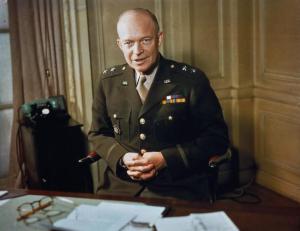
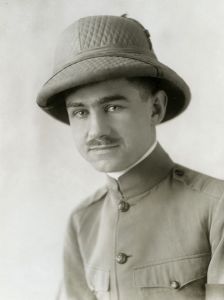
"This is a long tough road we have to travel. The men that can do things are going to be sought out just as surely as the sun rises in the morning. Fake reputations, habits of glib and clever speech, and glittering surface performance are going to be discovered."-from 1942. Also, before becoming Supreme Commander of the Allied Forces, he spent a time "studying dramatics" under Douglas MacArthur as he put it. So I'm sure he has the chops to rein in a prima donna like George S. Patton.

“This is a long tough road we have to travel. The men that can do things are going to be sought out just as surely as the sun rises in the morning. Fake reputations, habits of glib and clever speech, and glittering surface performance are going to be discovered.”-from 1942. Also, before becoming Supreme Commander of the Allied Forces, he spent a time “studying dramatics” under Douglas MacArthur as he put it. So I’m sure he has the chops to rein in a prima donna like George S. Patton.

Figure 1: Dwight D. Eisenhower – US president from 1953-1961 and 5-star general during WWII who served as Supreme Commander of Allied Forces in Europe. Responsible for planning and supervising the invasion of North Africa with Operation Torch in 1942-43 and the successful invasion of France and Germany in 1944-45. Was first Supreme Commander of NATO, served as Army Chief of Staff under Truman, and president of Columbia University. Administration saw the end of the Korean War, coups in Iran and Guatemala, troubles in Vietnam, the Suez crisis, establishment of NASA, the early years of the Civil Rights Movement, the U2 Incident, McCarthyism, establishment of the Interstate Highway System, and Alaska and Hawaii becoming states.

Gordon Parks was a pioneer among African photojournalists and filmmakers. Nevertheless, he's best remembered as the creator of Shaft in recent generation as well as taking photos of poor Americans during the 1940s. But he did much more than that.

Gordon Parks was a pioneer among African photojournalists and filmmakers. Nevertheless, he’s best remembered as the creator of Shaft in recent generation as well as taking photos. But he did much more than that.

Figure 2: Gordon Parks– photographer, musician, writer, and film director who became prominent in US documentary photojournalism in the 1940s through the 1970s, particularly in issues of civil rights, poverty, and African Americans. Was the first African American to produce and direct major motion pictures, developing films relating the experience of black slaves and struggling black Americans, and creating the “Blaxploitation” genre. Best remembered for his iconic photos of poor Americans during the 1940s (particularly the lady with the brooms behind the American flag), his photographic essays in Life magazine, and as the director in the 1971 film Shaft. Also an author, poet, and composer.
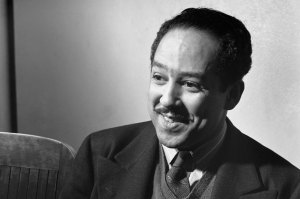
O, let America be America again —/The land that never has been yet —/And yet must be — the land where every man is free..Sure, call me any ugly name you choose —/The steel of freedom does not stain./From those who live like leeches on the people's lives,/We must take back our land again,/America! - from "Let America Be America Again"

O, let America be America again —/The land that never has been yet —/And yet must be — the land where every man is free./Sure, call me any ugly name you choose —/The steel of freedom does not stain./From those who live like leeches on the people’s lives,/We must take back our land again,/America! – from “Let America Be America Again”

Figure 3: Langston Hughes– poet, social activist, novelist, playwright, and columnist who was one of the earliest innovators of the then-new literary art form called jazz poetry and best known as a leader of the Harlem Renaissance. Famously wrote about the period that “the negro was in vogue”, which was later paraphrased as “when Harlem was in vogue.” Poetry and fiction portrayed the lives of the working-class blacks in America, lives he portrayed as full of struggle, joy, laughter, and music.  Stressed a racial consciousness and cultural nationalism devoid of self-hate and thought united people of African descent and Africa across the globe to encourage pride in their diverse black folk culture and black aesthetic. In his time, he was one of the few prominent black writers to champion racial consciousness as a source of inspiration for black artists which influence many black writers today.

While she was only a passenger in her first Transatlantic flight, Amelia Earhart soon became the first woman to fly across the Atlantic solo. However, her attempt to fly around the world didn't turn out so well since her plane hasn't been seen since 1937.

While she was only a passenger in her first Transatlantic flight, Amelia Earhart soon became the first woman to fly across the Atlantic solo. However, her attempt to fly around the world didn’t turn out so well since her plane hasn’t been seen since 1937.

Figure 4: Amelia Earhart– aviation pioneer and author who was the first female aviator to fly solo across the Atlantic Ocean, receiving the US Distinguished Flying Cross for the record and set many other records as well. Wrote bestselling books about her flying experiences and was instrumental in the formation of The Ninety-Nines, a female pilot organization. Disappeared in an attempt to make a circumnavigational flight around the globe in 1937 over the central Pacific Ocean. Fascination with her life, career, and disappearance continues to this day.


17. Kentucky
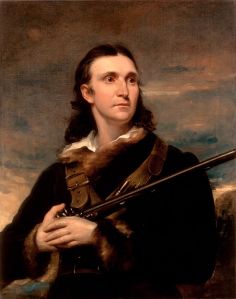
Though John James Audubon is a celebrated figure among bird fans, he tend to kill a lot of birds so he could study them, stuff them, and put them in paintings. To be fair, killing animals in the name of science and conservation was a very common practice in the 19th century.

Though John James Audubon is a celebrated figure among bird fans, he tend to kill a lot of birds so he could study them, stuff them, and put them in paintings. To be fair, killing animals in the name of science and conservation was a very common practice in the 19th century.

Figure 1: John James Audubon– ornithologist, naturalist, and painter who was notable for his extensive studies documenting all types of American birds and for his detailed illustrations that depicted the birds in their natural habitats. His major work titled The Birds of America is considered one of the finest ornithological works ever completed with nearly all later ornithological works were inspired by his artistry and high standards. Made significant contributions to the understanding of bird anatomy and behavior through his field notes. Identified 25 new species and 12 subspecies.
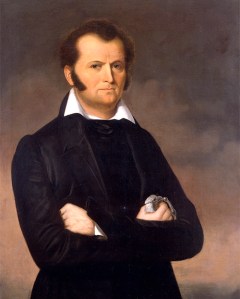
Sure Jim Bowie may not be as well known as Davy Crockett, but he's still an awesome legend in his own right as a fighter and frontiersman with a big ass knife that bears his name. Not to mention, but there's considerable evidence that he died as the real hero of the Alamo while fighting Mexicans in his bed.

Sure Jim Bowie may not be as well known as Davy Crockett, but he’s still an awesome legend in his own right as a fighter and frontiersman with a big ass knife that bears his name. Not to mention, but there’s considerable evidence that he died as the real hero of the Alamo while fighting Mexicans in his bed.

Figure 2: Jim Bowie– pioneer who played a prominent role in the Texas Revolution which culminated in this death at the Battle of the Alamo. Stories of him as a fighter and frontiersman have made him a legendary figure and a folk hero of American culture. Despite conflicting accounts of the manner of his death, the “most popular, and probably the most accurate” accounts maintain that he died in his bed after emptying his pistols into several Mexican soldiers. Was renowned for his prowess with a large knife that lends his name with which he was reputed to kill a Louisiana sheriff after having been shot and stabbed himself, according to reports of the 1827 Sandbar fight.
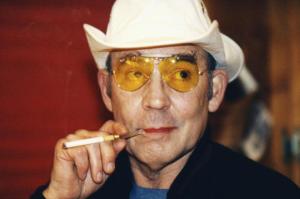
"I was a seeker, a mover, a malcontent, and at times a stupid hell-raiser. I was never idle long enough to do much thinking, but I felt somehow that my instincts were right." And yes, that's the real Hunter S. Thompson. I'm sure you were expecting Johnny Depp.

“I was a seeker, a mover, a malcontent, and at times a stupid hell-raiser. I was never idle long enough to do much thinking, but I felt somehow that my instincts were right.” And yes, that’s the real Hunter S. Thompson. I’m sure you were expecting Johnny Depp.

Figure 3: Hunter S. Thompson– journalist, author, and founder of the gonzo journalism movement. Became a counter cultural figure in the 1970s, with his own brand of New Journalism which he termed “Gonzo”, an experimental style of journalism where reporters involve themselves in the action to such a degree that they become central figures of their stories. Best known work is Fear and Loathing in Las Vegas: A Savage Journey to the Heart of the American Dream which constitutes a rumination on the failure of the 1960s counterculture movement and was serialized by Rolling Stone with which he’d be long associated. Also known well known for his inveterate hatred of Richard Nixon, who he claimed represented “that dark, venal, and incurably violent side of the American character” as well as for his lifelong use of alcohol and illegal drugs, his love of firearms, and his iconoclastic contempt for authoritarianism.

“To say that I am made in the image of God is to say that Love is the reason for my existence, for God is love. Love is my true identity. Selflessness is my true self. Love is my true character. Love is my name.”- from Seeds of Contemplation (1949)

Figure 4: Thomas Merton– writer, mystic, poet, social activist, and Trappist monk of the Abbey of Gethsemani, Kentucky who wrote more than 70 books, mostly on spirituality, social justice, and a quiet pacifism as well as scores of essays and reviews. Among his most enduring works is his bestselling autobiography The Seven Storey Mountain which sent scores of WWII veterans, students, and even teenagers flocking to monasteries across the US. Was a keen proponent of interfaith understanding, pioneered dialogue between Asian spiritual figures including the Dalai Lama, and authored books on Zen Buddhism and Taoism. Called by Pope Francis as ”a man of prayer, a thinker who challenged the certitudes of his time and opened new horizons for souls and for the Church. He was also a man of dialogue, a promoter of peace between peoples and religions.”


18. Louisiana
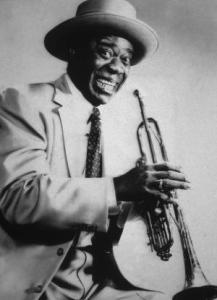
Sometimes nicknamed "Satchmo" or "Pops," Louis Armstrong is one of the most influential and recognizable figures in jazz. However, sometimes his irrepressible personality was so strong that it overshadowed his contribution as a musician and a singer.

Sometimes nicknamed “Satchmo” or “Pops,” Louis Armstrong is one of the most influential and recognizable figures in jazz. However, sometimes his irrepressible personality was so strong that it overshadowed his contribution as a musician and a singer.

Figure 1: Louis Armstrong– trumpeter, composer, and singer who was one of the most influential figures in jazz and whose career spanned 5 decades and different jazz eras with a profound influence extending well beyond jazz music. One of the first truly popular African American entertainers to “cross over” whose skin color was secondary to his music in an America that was extremely racially divided. Was a foundational influence in jazz shifting focus from collective improvisation to solo performance. With his instantly recognizable gravelly voice, he was also an influential singer demonstrating great dexterity as an improviser, bending lyrics and melody of a song for expressive purposes as well as skilled in scat singing.

Called, "The Kingfish," Huey Long was a very controversial figure in Louisiana, even during his own lifetime. Sure he was a populist who called to "Share our Wealth" and make "Every Man a King." But his dictatorial means and motives violated American norms.

Called, “The Kingfish,” Huey Long was a very controversial figure in Louisiana, even during his own lifetime. Sure he was a populist who called to “Share our Wealth” and make “Every Man a King.” But his dictatorial means and motives violated American norms.

Figure 2: Huey Long– politician nicknamed “The Kingfish,” who served as Louisiana’s governor and senator during from 1928 to his assassination in 1935. Best known for being an outspoken populist who denounced the rich and the banks and called for “Share Our Wealth” that proposed new wealth distribution measures in the form of a net asset tax on corporations and individuals to curb poverty and homelessness during the Great Depression. Advocated federal spending on public works, schools and colleges, and old age pensions stimulate the economy as well as was an ardent critic of the Federal Reserve. As Louisiana’s political boss, he commanded wide networks of supporters and was willing to take forceful action. Under his leadership, he expanded hospitals and schools, set of a system of charity hospitals to provide healthcare to the poor, massive highway construction and free bridges that brought an end to rural isolation, and free textbooks provided for schoolchildren. But his dictatorial means and motives violated American norms. Remains a controversial figure in Louisiana with critics and supporters debating whether or not he was a dictator, demagogue, or populist. Has inspired countless novels, particularly Robert Penn Warren’s All the King’s Men.

Jean Lafitte was no saint. and only agreed to help the US in exchange for a pardon. But his assistance to Andrew Jackson proved critical in a achieving victory for the Battle of New Orleans.

Jean Lafitte was no saint. and only agreed to help the US in exchange for a pardon. But his assistance to Andrew Jackson proved critical in a achieving victory for the Battle of New Orleans.

Figure 3: Jean Laffite– pirate and privateer in the Gulf of Mexico in the early 19th century who had a successful smuggling operation in Louisiana with his brothers as well as was instrumental in helping Andrew Jackson defend New Orleans against British forces in the final battle of the War of 1812 in exchange for a legal pardon. His assistance to the US in that battle was crucial in achieving victory for he provided ships and men. Also suggested to Jackson that the American line of defense be extended from the Mississippi to a nearby swamp. Later became a spy for the Spanish during the Mexican War of Independence and developed a pirate colony in what is today Galveston, Texas. Continued attacking merchant ships as a pirate around Central American ports until he died around 1823, trying to capture Spanish vessels. Historians have speculated about his life and death ever since.

Though not actually from Tennessee, Tennessee Williams was a prolific playwright who's best known for A Streetcar Named Desire. His dysfunctional family drama is often said to be an inspiration for many of his stage classics.

Though not actually from Tennessee, Tennessee Williams was a prolific playwright who’s best known for A Streetcar Named Desire. His dysfunctional family drama is often said to be an inspiration for many of his stage classics.

Figure 4: Tennessee Williams– playwright and author of many stage classics. Considered among the three foremost playwrights in 20th-century American drama along with Eugene O’Neill and Arthur Miller. Also wrote short stories, poetry, essays and a volume of memoirs. Best known for The Glass Menagerie, A Streetcar Named Desire, Cat on a Hot Tin Roof, and Sweet Bird of Youth. While his plays in the 1940s and 1950s are seen as extraordinary, his later works brought him turmoil and theatrical failures, mainly due to his alcoholism.


19. Maine
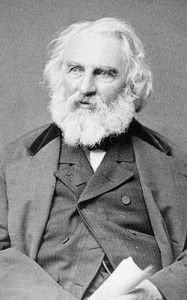
"All your strength is in your union,/All your danger is in discord;/Therefore be at peace henceforward,/And as brothers live together." - from The Song of Hiawatha (1855)

“All your strength is in your union,/All your danger is in discord;/Therefore be at peace henceforward,/And as brothers live together.” – from The Song of Hiawatha (1855)

Figure 1: Henry Wadsworth Longfellow– poet and educator whose works include “Paul Revere’s Ride”, The Song of Hiawatha, and Evangeline and was one of the 5 Fireside poets. First American to translate Dante Alighieri’s Divine Comedy. Wrote many lyric poems known for their musicality and often presenting stories of mythology and legend and was the most popular American poet of his day. Yet has been criticized for imitating European styles and writing specifically for the masses.
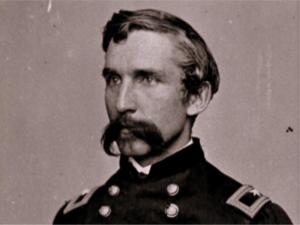
Joshua Chamblerlain played a key role in the Battle of Gettysburg when he and the 20th Maine held off the Confederates at Little Round Top on the second day. He was awarded a Medal of Honor for his heroism.

Joshua Chamblerlain played a key role in the Battle of Gettysburg when he and the 20th Maine held off the Confederates at Little Round Top on the second day. He was awarded a Medal of Honor for his heroism.

Figure 2: Joshua Chamberlain– college professor who volunteered for the Union Army during the American Civil War where he became a highly respected and decorated Union officer reaching the rank of brigadier general. Most well-known for his gallantry at Gettysburg in his valiant defense of Little Round Top where he ordered simultaneous full frontal assault and flanking maneuver on Confederate troops, capturing 101 of them. This earned him the Medal of Honor as well as gave him the honor of commanding Union troops at the surrender ceremony of Robert E. Lee’s Army at Appomattox Court House. After the Civil War, served as governor of Maine and president of his alma mater Bowdoin College.

While Dorothea Dix's advocacy of putting the mentally ill in institutions might not go well with us today, in her day, it wasn't unusual to see the mentally ill treated much worse like put in prisons along side violent criminals. And if there was any mental health system present, it was unregulated, underfunded, and prone to widespread abuse.

While Dorothea Dix’s advocacy of putting the mentally ill in institutions might not go well with us today, in her day, it wasn’t unusual to see the mentally ill treated much worse like put in horrific prisons with appalling conditions alongside violent criminals. And if there was any mental health system present, it was unregulated, underfunded, and prone to widespread abuse.

Figure 3: Dorothea Dix– author, teacher, and activist on behalf of the indigent insane who, through a vigorous program of lobbying state legislatures and the US Congress, created the first generation of American mental asylums as well as helped change people’s perceptions on the mentally ill as well as prisoners and the disabled. Her own troubled family background and impoverished youth is said to serve as a galvanizing force throughout her career. Served as Superintendent of Army Nurses during the American Civil War where she established a reputation as an advocate for the work of female nurses.

"We shall speak against slavery, as we have hitherto done. We can find no language that has the power to express the hatred we have towards so vile and so wicked an institution-We hate it-we abhor, we lather it-wedetest it and despise it as a giant sin against God."

“We shall speak against slavery, as we have hitherto done. We can find no language that has the power to express the hatred we have towards so vile and so wicked an institution-We hate it-we abhor, we lather it-wedetest it and despise it as a giant sin against God.”

Figure 4: Oren Burbank Cheney– Free Will Baptist clergyman, politician, editor, and academic who was a leader in the New England antislavery movement and played an active role in the empowerment of African Americans and women in the American Civil War and decades beyond as well as was one of the earliest advocates for civil rights for both groups. His contributions to the political and religious landscape of Maine and Massachusetts proved to be influential and changed the notions of equality in the United States. Established Bates College which provided the backdrop to increased racial equality, the formalization of women’s rights, making a college education available for those with limited financial means, and educational reform where he was president for 39 years.


20. Maryland

"He is a lover of his country who rebukes and does not excuse its sins. It is righteousness that exalteth a nation while sin is a reproach to any people."

“He is a lover of his country who rebukes and does not excuse its sins. It is righteousness that exalteth a nation while sin is a reproach to any people.”

Figure 1: Frederick Douglass– social reformer, abolitionist, orator, writer, and statesman. After escaping slavery, he became a national leader of the abolitionist movement from Massachusetts and New York, gaining note for his dazzling oratory and incisive antislavery writings. Because he was born into slavery, he was seen by abolitionists as a living counter-example to slaveholders’ arguments that slaves lacked the intellectual capacity to function as independent American citizens. Wrote several autobiographies and was influential in promoting the cause of abolition. Was a firm believer in the equality of all peoples, in dialogue and in making alliances across racial and ideological divides, and in the liberal values of the American Constitution. By making a career of agitating the American conscience, he is by far the most influential African American of the 19th century.
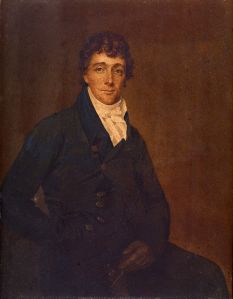
Even before Francis Scott Key's poem became US national anthem, "The Star-Spangled Banner" was increasingly popular throughout the 19th century, even played by bands at public events like 4th of July celebrations. And it has been played at sporting events since at least the 1918 World Series.

Even before Francis Scott Key’s poem became US national anthem, “The Star-Spangled Banner” was increasingly popular throughout the 19th century, even played by bands at public events like 4th of July celebrations. And it has been played at sporting events since at least the 1918 World Series. So when it came time to choose a national anthem, Key’s song was a natural choice.

Figure 2: Francis Scott Key– lawyer, author, and amateur poet who wrote the lyrics to what eventually became the US national anthem, “The Star Spangled Banner” which was based on his experience witnessing the 1814 bombardment of Fort McHenry in the Battle of Baltimore while he was a prisoner on a British ship during the War of 1812. It would be published in the American and Commercial Daily Advertiser that same year as “Defence of Fort M’Henry.” He later took it to Thomas Carr who adapted it to a melody of a popular drinking love song “To Anacreon in Heaven” and it became “The Star-Spangled Banner” ever since. Though somehow difficult to sing, the song became increasingly popular, competing with “Hail Columbia,” as the de facto national anthem during both the Mexican-American War and the American Civil War. More than a century after its publication, it was adopted as the US national anthem first by an Executive Order by Woodrow Wilson in 1916 and then by Congressional resolution in 1931. Also wrote some religious poems that were used in Christian hymns.

Even if he wasn't the first black Supreme Court Justice, Thurgood Marshall would still be in this series since his career as an attorney for the NAACP played a pivotal role in the Civil Rights Movement. His most famous case was Brown v. Board of Education which ruled segregation in public schools as unconstitutional.

Even if he wasn’t the first black Supreme Court Justice, Thurgood Marshall would still be in this series since his career as an attorney for the NAACP played a pivotal role in the Civil Rights Movement. His most famous case was Brown v. Board of Education which ruled segregation in public schools as unconstitutional.

Figure 3: Thurgood Marshall– lawyer who served as Chief Counsel for the NAACP Legal Defense and Educational Fund during the 1940s and1950s. Best known for his high success rate in arguing civil rights cases before the Supreme Court and for the victory in Brown v. Board of Education of Topeka, a decision that desegregated public schools. Would eventually be appointed the first African American justice on the Supreme Court where he served from 1967-1991.
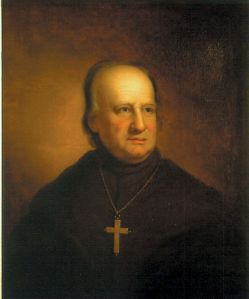
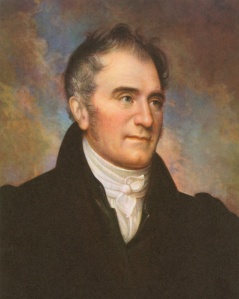
As the first American Catholic bishop, John Carroll was an early advocate for a vernacular liturgy because he wanted everyone in his flock to have access to the Scriptures. Unfortunately for him, Catholic liturgy wouldn't be in the vernacular until nearly 200 years later with Vatican II.

As the first American Catholic bishop, John Carroll was an early advocate for a vernacular liturgy because he wanted everyone in his flock to have access to the Scriptures and he knew that there were Catholics who didn’t understand Latin. Unfortunately for him, Catholic liturgy wouldn’t be in the vernacular until nearly 200 years later with Vatican II.

Figure 4: John Carroll– prelate to the Roman Catholic Church who served as the first American bishop and archbishop as well as founded Georgetown University and the first diocesan parish at Saint John the Evangelist in what is now Forest Glen, Maryland. When he joined the Jesuits, there was no public Catholic Church in Maryland due to anti-Catholic discrimination laws that effectively banned Catholics from political participation. In 1776, he accompanied Benjamin Franklin on a failed diplomatic mission to Quebec which gave him some name recognition to other Founding Fathers. Selected as Bishop of Baltimore by US clergy which was approved by Pope Pius VI. Was an early advocate for Christian unity and a vernacular liturgy as well as wrote articles defending Catholic tradition from those who promoted anti-Catholicism and fought notions of state establishment Protestantism as the official religion (though he always treated non-Catholics with respect).
US State Mount Rushmore: Part 3 – Hawaii to Iowa

So two down. Yes, I know that there will be some white people complaining about Florida’s all black lineup, perhaps saying that there are plenty of famous white Floridians, too. However, I didn’t compile these Mount Rushmore sets based on race. And it’s just turned out that the figures I had for Florida had accomplishments that can’t possibly be ignored. The fact they’re black is just a coincidence. Anyway, in this selection, I bring you the Mount Rushmores from Hawaii to Iowa. From Hawaii hails a Chinese cop who inspired a popular detective, an explorer who rediscovered a lost Inca citadel, and two Hawaiian monarchs. Then we’re off to Idaho where you’ll meet 4 people whose accomplishments weren’t small potatoes like an FBI agent who brought down a US president, a guy who invented television, a literary expatriate, and a lady guide for Lewis and Clark. Next, it’s on to Illinois where you have a great emancipator, one of the best known gangsters in Prohibition, a pioneer in social work, and a libertarian Nobel Prize winning economist. After that is Indiana where you’ll find a Depression Era rock star criminal, a pioneer in human sexuality, a journalist who wrote about the little guy, and a the biggest name in Progressive Era Socialism. Finally, you have Iowa where you’ll meet the guy behind one of the most famous American paintings, a man who had a Wild West show, a highly noted conservationist, and perhaps the best known big band leader of all time.


11. Hawaii

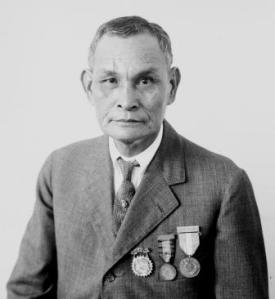
Though Charlie Chan was played by a white guy in the movies, he was at least partly inspired by a real Chinese Hawaiian detective named Chang Apana who had a very distinguished and adventurous career in the Honolulu Police Department. However, Earl Derr Biggers' widow disputes this but you know, he was pretty awesome in his own way.

Though Charlie Chan was played by a white guy in the movies, he was at least partly inspired by a real Chinese Hawaiian detective named Chang Apana who had a very distinguished and adventurous career in the Honolulu Police Department. However, Earl Derr Biggers’ widow disputes this but you know, he was pretty awesome in his own way.

Figure 1: Chang Apana– Chinese Hawaiian member of the Honolulu Police Department for 34 years as an officer and detective who was acknowledged by Earl Derr Biggers as the inspiration for Charlie Chan. Was successful in solving many cases due to his fluency in several languages, his wide network of informants, and meticulous detective style.

While he was from a family of famous missionaries, Hiram Bingham III rediscovered the ruins of the lost Inca citadel of Machu Picchu with the help of indigenous farmers. Nevertheless, while he does seem like he's in Indiana Jones mode here, he thankfully didn't destroy it.

While he was from a family of famous missionaries, Hiram Bingham III rediscovered the ruins of the lost Inca citadel of Machu Picchu with the help of indigenous farmers. Nevertheless, while he does seem like he’s in Indiana Jones mode here, he thankfully didn’t destroy it.

Figure 2: Hiram Bingham III– explorer, academic, and politician who made public the existence of the Inca citadel of Machu Picchu in 1911 with the guidance of local indigenous farmers. Later became a US Senator.

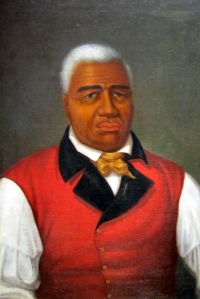
Through alliances and conquest, King Kamehameha I united Hawaii and established a kingdom. While it did outlive him, it didn't survive the 19th century due to American Imperialism.

Through alliances and conquest, King Kamehameha I united Hawaii and established a kingdom. While it did outlive him, it didn’t survive the 19th century due to American Imperialism.

Figure 3: Kamehameha I– established the Kingdom of Hawaii after uniting most of the islands through conquest as well as developed alliances with the major Pacific colonial powers which preserved Hawaii’s independence under his rule. Remembered for the Kānāwai Māmalahoe, the “Law of the Splintered Paddle”, which protects human rights of non-combatants in times of battle.

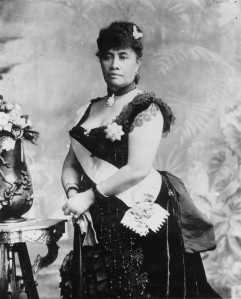
Queen Liliʻuokalani was Hawaii's first and last reigning queen as well as its last reigning monarch. In 1895, she was forcibly removed from her throne while Hawaii was annexed to the United States. Was also an accomplished author and songwriter with her “Aloha Oe” being Hawaii's state song.

Queen Liliʻuokalani was Hawaii’s first and last reigning queen as well as its last reigning monarch. In 1895, she was forcibly removed from her throne while Hawaii was annexed to the United States. Was also an accomplished author and songwriter with her “Aloha Oe” being Hawaii’s state song.

Figure 4: Liliʻuokalani– last monarch of the Kingdom of Hawaii from 1891-1893 when she was deposed and Hawaii was annexed to the US. Was also an accomplished author with her book Hawaiʻi’s Story by Hawaiʻi’s Queen as well as songwriter and musician who wrote the “Aloha Oe” which is Hawaii’s state song.


12. Idaho

As "Deep Throat," W. Mark Felt leaked information about Watergate to Bob Woodward and Carl Bernstein eventually proved vital in bringing down Richard Nixon's presidency. However, his involvement as "Deep Throat" was kept a secret for decades until he revealed it in 2005. He died 3 years later.

As “Deep Throat,” W. Mark Felt leaked information about Watergate to Bob Woodward and Carl Bernstein eventually proved vital in bringing down Richard Nixon’s presidency. However, his involvement as “Deep Throat” was kept a secret for decades until he revealed it in 2005. He died 3 years later.

Figure 1: W. Mark Felt– FBI Special Agent who rose to the Bureau’s Associate Director and was the Watergate scandal’s whistleblower referred to as “Deep Throat” in which he provided the Washington Post with critical information that eventually led to Richard Nixon’s resignation in 1974. His involvement with Bob Woodward and Carl Bernstein was kept a secret for nearly 30 years. It is alleged he blew the whistle on Watergate as revenge against Nixon for passing him over for Bureau Director that he thought he deserved and giving it L. Patrick Gray whom he resented and didn’t think was up for the job.

In America, a man like Philo Farnsworth should be a household name since he was the inventor of television which has changed the world significantly. However, he's not as well known as he should be. Also appeared on TV once in his life in 1957 for a CBS quiz show I've Got a Secret.

In America, a man like Philo Farnsworth should be a household name since he was the inventor of television which has changed the world significantly. However, he’s not as well known as he should be. Also appeared on TV once in his life in 1957 for a CBS quiz show I’ve Got a Secret.

Figure 2: Philo Farnsworth– inventor and TV pioneer who made many contributions that were crucial to the early development of all-electronic television. Perhaps best known for his 1927 invention of the first fully functional all-electronic image pickup device (video camera tube), the “image dissector”, as well as the first fully functional and complete all-electronic television system. Was also the first person to demonstrate such a system to the public. Developed a TV system complete with receiver and camera which he produced commercially in the form of Farnsworth Television and Radio Corporation from 1938-1951. Held 300 patents mostly in TV and radio. Later in life, invented a small nuclear fusion device the Farnsworth–Hirsch fusor, or simply “fusor”, employing inertial electrostatic confinement (IEC) that has been the acknowledged inspiration for other fusion approaches including the Polywell reactor concept in terms of a general approach to fusion design.

As an expatriate editor for several American literary magazines in London, Ezra Pound was a significant figure in the early modernist movement during the early 20th century. As a poet, he developed Imagism which was inspired by Chinese and Japanese poetry.

As an expatriate editor for several American literary magazines in London, Ezra Pound was a significant figure in the early modernist movement during the early 20th century. As a poet, he developed Imagism which was inspired by Chinese and Japanese poetry.

Figure 3: Ezra Pound– expatriate poet and critic as well as major figure in the modernist movement. Contribution to poetry began with his development of Imagism, a movement derived from classical Chinese and Japanese poetry, stressing clarity, precision and economy of language. Helped discover and shape the work of contemporaries T. S. Eliot, James Joyce, Robert Frost, and Ernest Hemingway. Was responsible for the 1915 publication of Eliot’s “The Love Song of J. Alfred Prufrock” and the serialization from 1918 of Joyce’s Ulysses, while he was a foreign editor of several American magazines in London. Embraced Benito Mussolini’s Italian fascism during the 1930s and 1940s as well as expressed support for Hitler and wrote for publications owned by British fascist Oswald Mosley as well as made several propaganda speeches against the US, FDR, and the Jews during WWII.

While no contemporary portrait exists of Sacagawea, familiarity with the western landscape and several Indian tribes proved vital for the Lewis and Clark expedition. One highlight was when she came to her Shoshone people and broke down in tears when trying to translate when she discovered that the the leader was her brother she hadn't seen in years.

While no contemporary portrait exists of Sacagawea, familiarity with the western landscape and several Indian tribes proved vital for the Lewis and Clark expedition. One highlight was when she came to her Shoshone people and broke down in tears when trying to translate when she discovered that the the leader was her brother she hadn’t seen in years.

Figure 4: Sacagawea– a Lemhi Shoshone woman who helped the Lewis and Clark Expedition achieve each of its chartered mission objectives exploring the Louisiana Purchase. With the expedition between 1804 and 1806, she traveled thousands of miles from North Dakota to the Pacific Ocean, establishing cultural contacts with Native American populations, and researched natural history. The National American Woman Suffrage Association of the early 20th century adopted her as a symbol of women’s worth and independence, erecting several statues and plaques in her memory, and doing much to spread the story of her accomplishments.


13. Illinois

"Four score and seven years ago our fathers brought forth on this continent, a new nation, conceived in Liberty, and dedicated to the proposition that all men are created equal. Now we are engaged in a great civil war, testing whether that nation or any nation so conceived and so dedicated, can long endure. We are met on a great battle-field of that war. We have come to dedicate a portion of that field, as a final resting place for those who here gave their lives that that nation might live. It is altogether fitting and proper that we should do this. But, in a larger sense, we can not dedicate, we can not consecrate, we can not hallow, this ground. The brave men, living and dead, who struggled here, have consecrated it, far above our poor power to add or detract. The world will little note, nor long remember what we say here, but it can never forget what they did here. It is for us the living, rather, to be dedicated here to the unfinished work which they who fought here have thus far so nobly advanced. It is rather for us to be here dedicated to the great task remaining before us — that from these honored dead we take increased devotion to that cause for which they gave the last full measure of devotion — that we here highly resolve that these dead shall not have died in vain — that this nation, under God, shall have a new birth of freedom — and that government of the people, by the people, for the people, shall not perish from the earth." - Gettysburg Address

“Four score and seven years ago our fathers brought forth on this continent, a new nation, conceived in Liberty, and dedicated to the proposition that all men are created equal. Now we are engaged in a great civil war, testing whether that nation or any nation so conceived and so dedicated, can long endure. We are met on a great battle-field of that war. We have come to dedicate a portion of that field, as a final resting place for those who here gave their lives that that nation might live. It is altogether fitting and proper that we should do this. But, in a larger sense, we can not dedicate, we can not consecrate, we can not hallow, this ground. The brave men, living and dead, who struggled here, have consecrated it, far above our poor power to add or detract. The world will little note, nor long remember what we say here, but it can never forget what they did here. It is for us the living, rather, to be dedicated here to the unfinished work which they who fought here have thus far so nobly advanced. It is rather for us to be here dedicated to the great task remaining before us — that from these honored dead we take increased devotion to that cause for which they gave the last full measure of devotion — that we here highly resolve that these dead shall not have died in vain — that this nation, under God, shall have a new birth of freedom — and that government of the people, by the people, for the people, shall not perish from the earth.” – Gettysburg Address

Figure 1: Abraham Lincoln– US president who led the country through the American Civil War-its bloodiest war and an event often considered its greatest moral, constitutional, and political crisis. In doing so, he preserved the union, abolished slavery, strengthened the federal government, and modernized the economy. Key moments in his life are his highly publicized debates against Stephen Douglas during the 1858 Senate election, his election to the presidency in 1860 which sparked the formation of the Confederacy, issuing the Emancipation Proclamation, confronting his opponents by pitting them against each other and carefully planned political patronage, appointing Ulysses S. Grant as commander of Union forces, pushing the 13th Amendment through Congress that outlawed slavery permanently, and his Second Inaugural Address. His Gettysburg Address has become an iconic endorsement of the principles of nationalism, republicanism, equal rights, liberty, and democracy. Has been consistently ranked both by scholars and the public as one of the 3 greatest US presidents, if not the greatest president the US has ever had.

In his public persona, Al Capone would seem to you like a big, friendly guy you'd want to have a beer with. However, keep in mind that this guy dominated Chicago as head of an organized crime syndicate during Prohibition. And it's very likely that he was involved in the Saint Valentine's Day Massacre. But at least you can be grateful that he was brought down by the IRS.

In his public persona, Al Capone would seem to you like a big, friendly guy you’d want to have a beer with. However, keep in mind that this guy dominated Chicago as head of an organized crime syndicate during Prohibition. And it’s very likely that he was involved in the Saint Valentine’s Day Massacre. But at least you can be grateful that he was brought down by the IRS.

Figure 2: Al Capone– gangster who attained fame during the Prohibition Era as the co-founder of the Chicago Outfit of which he reigned as crime boss for 7 years in which he expanded the bootlegging business through increasingly violent means as well as his mutually profitable relationships with mayor William Hale Thompson and the city’s police kept him seemingly safe from law enforcement. Though styled himself as a “modern day Robin Hood” and reveled in media attention, his image would be forever tarnished by the Saint Valentine’s Day Massacre which resulted in the killing of 7 rival gang members in broad daylight which led influential citizens to demand government action and newspapers to dub him “Public Enemy No.1.” Details of his reign, his flashy fashion sense, his colorful personality, and eventual fall and imprisonment for tax evasion have made him the most famous American Prohibition gangster of all time.

As founder of Chicago's Hull House, Jane Addams was one of the most prominent reformers of the Progressive Era, the first American woman to win a Nobel Peace Prize, and pioneer in the social work profession. She was instrumental in turning America to issues of concern to mothers, such as the needs of children, local public health, and world peace. Why isn't she more famous in this country I have no idea. Because she really deserves to be remembered.

As founder of Chicago’s Hull House, Jane Addams was one of the most prominent reformers of the Progressive Era, the first American woman to win a Nobel Peace Prize, and pioneer in the social work profession. She was instrumental in turning America to issues of concern to mothers, such as the needs of children, local public health, and world peace. Why isn’t she more famous in this country I have no idea. Because she really deserves to be remembered.

Figure 3: Jane Addams- pioneer settlement activist/reformer, social worker, public philosopher, sociologist, author, and leader in women’s suffrage and world peace who created the first Hull House in Chicago, co-founded the ACLU, as well as became one of the most prominent reformers of the Progressive Era. Helped turn American issues of concern to mothers, such as needs of children, local public health, and world peace. Became a role model for middle-class women who volunteered to uplift their communities. Was the first American woman to be awarded the Nobel Peace Prize and is recognized as the founder of the social work profession.

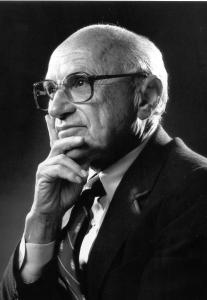
I'm no admirer of Milton Friedman nor do I support his economic theories. However, I do admit that his ideas have influenced so many politicians, particularly Republicans and Libertarians. And he has been cited by The Economist as, "the most influential economist of the second half of the 20th century ... possibly of all of it."

I’m no admirer of Milton Friedman nor do I support his economic theories. However, I do admit that his ideas have influenced so many politicians, particularly Republicans and Libertarians. And he has been cited by The Economist as, “the most influential economist of the second half of the 20th century … possibly of all of it.”

Figure 4: Milton Friedman– Nobel Prize winning economist for his research on consumption analysis, monetary history and theory and the complexity of stabilization policy. His political philosophy extolled the virtues of a free market economic system with minimal intervention. advocated policies such as a volunteer military, freely floating exchange rates, abolition of medical licenses, a negative income tax, ending the Federal Reserve, abolishing Social Security, and school vouchers (with volunteer military being his only good idea). Works include many monographs, books, scholarly articles, papers, magazine columns, television programs, and lectures, and cover a broad range of economic topics and public policy issues. Was an advisor to Ronald Reagan, Margaret Thatcher, and Augusto Pinochet. Has been very influential in Republican and Libertarian politics.


14. Indiana

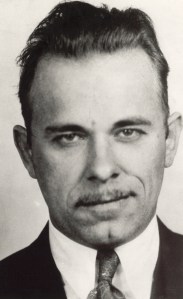
As a Depression-Era outlaw, John Dillinger stood out as the most notorious of all even among more violent criminals like Pretty Boy Floyd, Baby Face Nelson, and Bonnie and Clyde. However, the fact he escaped prison by fooling 17 guards with a gun made from a potato might have something to do with it.

As a Depression-Era outlaw, John Dillinger stood out as the most notorious of all even among more violent criminals like Pretty Boy Floyd, Baby Face Nelson, and Bonnie and Clyde. However, the fact he escaped prison by fooling 17 guards with a gun made from a potato might have something to do with it.

Figure 1: John Dillinger– infamous gangster during the Great Depression who operated with a group of men known by some as the Dillinger Gang or Terror Gang that were, among other activities, accused of robbing 24 banks and 4 police stations. Escaped from jail twice. Seen as the most notorious of Depression-era outlaws, standing out among more violent criminals like Baby Face Nelson, Pretty Boy Floyd, and Bonnie and Clyde. Courted publicity by styling himself as a Robin Hood figure and the media ran exaggerated accounts of his bravado and colorful personality, causing the government to demand federal action. As a result, J. Edgar Hoover developed a more sophisticated FBI as a weapon against organized crime using him and his gang as his campaign platform.

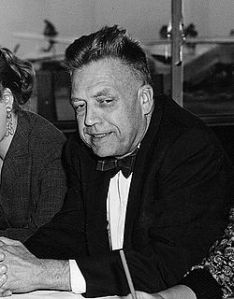
While professor at the University of Indiana, Alfred Kinsey was a pioneer in the field of researching human sexuality which made him a controversial figure. Nevertheless, his work has had significant impact on our culture ever since.

While professor at the University of Indiana, Alfred Kinsey was a pioneer in the field of researching human sexuality which made him a controversial figure. Nevertheless, his work has had significant impact on our culture ever since.

Figure 2: Alfred Kinsey– biologist, professor of entomology and zoology, and sexologist who in 1947 founded the Institute for Sex Research at Indiana University, now known as the Kinsey Institute for Research in Sex, Gender, and Reproduction. Best known for writing Sexual Behavior in the Human Male and Sexual Behavior in the Human Female which are also known as the Kinsey Reports as well as the Kinsey Scale. While research on human sexuality, foundational to the field of sexology, provoked controversy in the 1940s and 1950s, his work has influenced cultural values in the US and worldwide.

While many journalists get attention through interviewing larger than life figures, Ernie Pyle earned acclaim by traveling across the country writing about ordinary people, especially in rural areas. As a WWII correspondent, he hung out with American GIs and won a Pulitzer Prize for it.

While many journalists get attention through interviewing larger than life figures, Ernie Pyle earned acclaim by traveling across the country writing about ordinary people, especially in rural areas. As a WWII correspondent, he hung out with American GIs and won a Pulitzer Prize for it.

Figure 3: Ernie Pyle– journalist who as a roving correspondent for the Scripps-Howard newspaper chain, earned wide acclaim for his accounts of ordinary people and later of ordinary American soldiers during WWII, lending the same folksy style to his war-time reports before being killed by enemy fire on lejima during the Battle of Okinawa. Syndicated column ran in more than 300 newspapers nationwide and at the time of his death he was among the best known American war correspondents as well as won the Pulitzer Prize in 1944 for his spare, poignant accounts of “dogface” infantry soldiers from a first person perspective. Harry Truman wrote of him, “No man in this war has so well told the story of the American fighting man as American fighting men wanted it told. He deserves the gratitude of all his countrymen.”

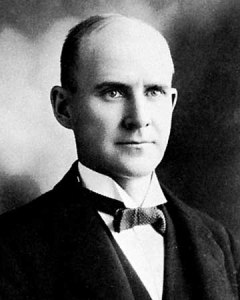
"I am not a Labor Leader; I do not want you to follow me or anyone else; if you are looking for a Moses to lead you out of this capitalist wilderness, you will stay right where you are. I would not lead you into the promised land if I could, because if I led you in, some one else would lead you out. You must use your heads as well as your hands, and get yourself out of your present condition; as it is now the capitalists use your heads and your hands."

“I am not a Labor Leader; I do not want you to follow me or anyone else; if you are looking for a Moses to lead you out of this capitalist wilderness, you will stay right where you are. I would not lead you into the promised land if I could, because if I led you in, some one else would lead you out. You must use your heads as well as your hands, and get yourself out of your present condition; as it is now the capitalists use your heads and your hands.”

Figure 4: Eugene V. Debs– union leader who was one of the founding members of the Industrial Workers of the World (IWW) and 5 time presidential candidate of the Socialist Party of America, once running his 1920 presidential campaign from prison. His candidacies and work with labor movements led him to become one of the best known Socialists in America. Helped motivate the American Left as a measure of political opposition to corporations and WWI. Honored by socialists, communists, and anarchists for his compassion for the labor movement and his motivation to have the average working man build socialism without large state involvement. Has been cited as the inspiration for numerous politicians.


15. Iowa

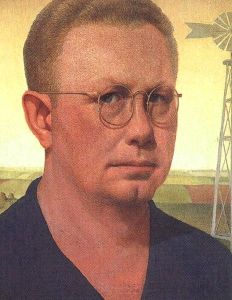
He may not look very remarkable but this Grant Wood who brought you American Gothic which as become an iconic painting of 20th century America. You've probably seen it.

He may not look very remarkable but this Grant Wood who brought you American Gothic which as become an iconic painting of 20th century America. You’ve probably seen it.

Figure 1: Grant Wood– painter best known for his paintings depicting the American Midwest, particularly American Gothic which has become the iconic painting of the 20th century. His painting Foundation in Education is on Iowa’s state quarter.

William "Buffalo Bill" Cody is best known for his Wild West Shows that have shaped how we came to perceive the American West. Were they 100% accurate? No. But they were highly popular around the globe.

William “Buffalo Bill” Cody is best known for his Wild West Shows that have shaped how we came to perceive the American West. Were they 100% accurate? No. But they were highly popular around the globe.

Figure 2: William Frederick “Buffalo Bill” Cody– scout, bison hunter, and showman who became a Pony Express rider at 14, served for the Union during the American Civil War, and was a civilian scout for the US Army during the Indian Wars for which he received a Medal of Honor. One of the most colorful figures of the American West, he founded Buffalo Bill’s Wild West Show in 1883 which provided education and entertainment about bronco riding, handling bovine and equine livestock, roping, and other herdsman skills seen in present day rodeos. Despite that he’s said to have killed 4,282 bison in 18 months and the cultural western myths his shows projected that have now become part of the American Western ethos, he was said to respect Native Americans and support their rights as well as believed in conservation and equal pay for women.

"Modern natural history deals only incidentally with the identity of plants and animals, and only incidentally with their habits and behaviors. It deals principally with their relations to each other, their relation to the soil and water in which they grow, and their relations to the human beings who sing about 'my country' but see little or nothing of its inner workings. This new science of relationships is called ecology, but what we call it matters nothing. The question is, does the educated citizen know he is only a cog in an ecological mechanism? That if he will work with that mechanism his mental wealth and his material wealth can expand indefinitely? But that if he refuses to work with it, it will ultimately grind him to dust? If education does not teach us these things, then what is education for?" -from "Natural History: The Forgotten Science" (1938)

“Modern natural history deals only incidentally with the identity of plants and animals, and only incidentally with their habits and behaviors. It deals principally with their relations to each other, their relation to the soil and water in which they grow, and their relations to the human beings who sing about ‘my country’ but see little or nothing of its inner workings. This new science of relationships is called ecology, but what we call it matters nothing. The question is, does the educated citizen know he is only a cog in an ecological mechanism? That if he will work with that mechanism his mental wealth and his material wealth can expand indefinitely? But that if he refuses to work with it, it will ultimately grind him to dust? If education does not teach us these things, then what is education for?” -from “Natural History: The Forgotten Science” (1938)

Figure 3: Aldo Leopold– author, scientist, ecologist, forester, conservationist, and environmentalist who is best known for his book A Sand County Almanac which has sold more than 2 million copies. Influential in the development of environmental ethics and in the movement for wilderness conservation. His ethics on nature and wildlife preservation had a profound impact on the environmental movement with his ecocentric and holistic ethics regarding land. Emphasized biodiversity and ecology and was the founder of the science of wildlife management.

You might've heard Glenn Miller's music at some time in your life, particularly when you see something pertaining to the 1930s or 1940s. Of course, some people might know him better because his plane went missing during WWII which has given rise to conspiracy theories.

You might’ve heard Glenn Miller’s music at some time in your life, particularly when you see something pertaining to the 1930s or 1940s. Of course, some people might know him better because his plane went missing during WWII which has given rise to conspiracy theories.

Figure 4: Glenn Miller– musician, arranger, composer, and bandleader in the swing era who was a bestselling recording artist and led one of the best known big bands. Recordings include “In the Mood”, “Moonlight Serenade”, “Pennsylvania 6-5000”, “Chattanooga Choo Choo”, “A String of Pearls”, “At Last”, “(I’ve Got a Gal In) Kalamazoo”, “American Patrol”, “Tuxedo Junction”, “Elmer’s Tune”, and “Little Brown Jug.” Also known for his plane disappearing over the English Channel which has given rise to many conspiracy theories (though in reality it was due to bad weather, pilot error, and mechanical failure).

US State Mount Rushmore: Part 2 – Colorado to Georgia

So we’re off to a great start. You might notice that you might not know some of these people I put up on the last post, especially the ones from Alaska excluding Bob Ross of course. In some states, there’s not a lot of famous people who’ve achieved national fame or made contributions that affected the country. While looking on Wikipedia, I found a lot of the people listed in some of the less populated states that are either alive or local politicians. In my second selection in this series we look at the Mount Rushmores I picked from states beginning with Colorado and ending with Georgia. From Colorado you’ll meet a blacklisted Hollywood screenwriter, a white woman who dedicated her life advocating for Native Americans, a globetrotting journalist who came with the idea of the travelogue, and a famous singer-songwriter who sang about his love of nature and his favorite state. From Connecticut, you’ll see an iconic American writer and humorist known for wearing a white suit, a woman who wrote a controversial novel that drove the country apart and into war, a man who made a fortune in his innovation of firearms, and a man who invented a device that contributed to the expansion of the institution of slavery. Next, it’s off to Delaware where you’ll find a Frenchman who founded one of the most successful American corporations, the first black woman to own a newspaper, a man who built one of the country’s most iconic buildings, and a woman who invented a family of synthetic fibers. After that is an all-black lineup in Florida with a key woman of the Harlem Renaissance, a labor organizer who arranged the March on Washington, a leader of the NAACP, and an iconic musician whose influence can still be felt in the music industry today. Finally, we get to Georgia where we’ll get to know an iconic Southern Gothic writer, another writer who wrote a novel that inspired an iconic film, a minister who helped keep the dream alive, and a man from the Harlem Renaissance who helped inspire future civil rights activist in future decades.


6. Colorado

As a member of the Hollywood Ten, Dalton Trumbo refused to name names and was put on the Hollywood Blacklist because of it for over a decade. Did that stop him from writing screenplays? Not a chance. In fact, his work won 2 Oscars during this period even though he couldn't claim them at the time.

As a member of the Hollywood Ten, Dalton Trumbo refused to name names and was put on the Hollywood Blacklist because of it for over a decade. Did that stop him from writing screenplays? Not a chance. In fact, his work won 2 Oscars during this period even though he couldn’t claim them at the time.

Figure 1: Dalton Trumbo– screenwriter and novelist who was a member of the Hollywood Ten who refused to testify before the House Un-American Activities Committee in 1947 that resulted in him being blacklisted by the motion picture industry for over a decade. Yet, he continued working clandestinely eventually earning 2 Academy Awards for Roman Holiday and The Brave One (with credit given to a front writer). His public credit for scripting Exodus and Spartacus marked the end of the Hollywood Blacklist and his earlier achievements were eventually credited to him.

"If I can do one hundredth part for the Indian that Mrs. Stowe did for the Negro, I will be thankful." She was also friends with Emily Dickinson and they corresponded with each other throughout their lives since they were in school.

“If I can do one hundredth part for the Indian that Mrs. Stowe did for the Negro, I will be thankful.” She was also friends with Emily Dickinson and they corresponded with each other throughout their lives since they were in school.

Figure 2: Helen Hunt Jackson– poet and writer who became an activist on behalf of improved treatment of Native Americans by the US government. Described the adverse effects of government actions in her history A Century of Dishonor. Her novel Ramona dramatized the federal government’s mistreatment of Native Americans in Southern California during the Mexican-American War which attracted considerable attention to her cause. Though commercially popular enough to have been reprinted 300 times and attract many tourists to Southern California, most readers preferred the romantic and picturesque qualities rather than its political content. Was lifelong friends with Emily Dickinson. Buried in Colorado Springs.

While he had a long career in broadcasting, Lowell Thomas is best known as the man who made Lawrence of Arabia famous as well as filmed a travelogue depicting him that was a huge success.

While he had a long career in broadcasting, Lowell Thomas is best known as the man who made Lawrence of Arabia famous as well as filmed a travelogue depicting him that was a huge success.

Figure 3: Lowell Thomas– writer, broadcaster, and traveler who’s best known as the man who made Lawrence of Arabia famous through shooting dramatic footage, touring the world, narrating his film With Allenby in Palestine and Lawrence which was seen by 4 million people and made $1.5 million. He did this through funding by 18 Chicago filmmakers who he’d done a favor for by exposing a blackmailer (without the information becoming public) and because he wanted to find material that would encourage Americans to support WWI which wasn’t very popular with the public. Came up with the novel idea of the travelogue. Later spent his career narrating newsreels and was a newscaster for CBS and NBC radio and television. Was known to make the occasional gaffe.

"Now his life is full of wonder but his heart still knows some fear/Of a simple thing he cannot comprehend/Why they try to tear the mountains down to bring in a couple more/More people, more scars upon the land And the Colorado rocky mountain high/I've seen it raining fire in the sky/I know he'd be a poorer man if he never saw an eagle fly/Rocky mountain high"- from "Rocky Mountain High"

“Now his life is full of wonder but his heart still knows some fear/Of a simple thing he cannot comprehend/Why they try to tear the mountains down to bring in a couple more/More people, more scars upon the land
And the Colorado rocky mountain high/I’ve seen it raining fire in the sky/I know he’d be a poorer man if he never saw an eagle fly/Rocky mountain high”- from “Rocky Mountain High”

Figure 4: John Denver– singer-songwriter, activist, actor, and humanitarian. Best known as a popular acoustic artist in the 1970s and was America’s best-selling performer by 1974. Primarily sang about his joy in nature, his enthusiasm for music, and his relationship trials. Music has appeared on a variety of charts including country and western as well as adult contemporary. Signature songs “Rocky Mountain High” and “Take Me Home, Country Roads” have become state songs for Colorado and West Virginia respectively. Sang about his beloved Colorado numerous times and was honored as the state’s Poet Laureate in 1974. Activism usually focused on calling attention to environmental issues, supporting space exploration, and testifying in front of Congress against censorship.


7. Connecticut

"I thoroughly disapprove of duels. I consider them unwise and I know they are dangerous. Also, sinful. If a man should challenge me now I would go to that man and take him kindly and forgivingly by the hand and lead him to a quiet retired spot and kill him." -from his autobiography.

“I thoroughly disapprove of duels. I consider them unwise and I know they are dangerous. Also, sinful. If a man should challenge me now I would go to that man and take him kindly and forgivingly by the hand and lead him to a quiet retired spot and kill him.” -from his autobiography.

Figure 1: Mark Twain– author and humorist best known for The Adventures of Tom Sawyer and The Adventures of Huckleberry Finn, the latter often called, “The Great American Novel” as well as has been repeatedly restricted by American high schools.  Was a master at rendering colloquial speech as well as helped create and popularize distinctive American literature built on American themes and language. Noted as “the great American humorist of his age” and called by William Faulkner as “the father of American literature.” Work continues to be rediscovered by researchers as recently as 1995 and 2015 since he wrote under so many different pen names. Often depicted as an old man in a white suit. Said to be born and die with the coming of Halley’s Comet though he did read his obituary before writing that reports of his death have been greatly exaggerated.

"We hear often of the distress of the negro servants, on the loss of a kind master; and with good reason, for no creature on God's earth is left more utterly unprotected and desolate than the slave in these circumstances." - from Uncle Tom's Cabin

“We hear often of the distress of the negro servants, on the loss of a kind master; and with good reason, for no creature on God’s earth is left more utterly unprotected and desolate than the slave in these circumstances.” – from Uncle Tom’s Cabin

Figure 2: Harriet Beecher Stowe– abolitionist and author who’s best known for her novel Uncle Tom’s Cabin which depicts the harsh life of African Americans and slavery which reached millions that it energized anti-slavery forces in the North while provoking widespread anger in the South during the 1850s. Wrote 30 books including novels, 3 travel memoirs, and collections of articles and letters. Was influential for both her writings and her public stands on social issues of the day.

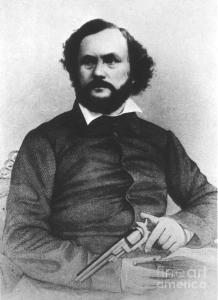
Samuel Colt's use of interchangeable parts allowed him to become one of the first to exploit the assembly line and make the revolver's mass production commercially viable. However, he was also a pioneer in mass marketing, advertising and product placement. It's said that for its first 25 years, his company produced over 400,000 of his trademark revolvers. Kind of makes me cringe.

Samuel Colt’s use of interchangeable parts allowed him to become one of the first to exploit the assembly line and make the revolver’s mass production commercially viable. However, he was also a pioneer in mass marketing, advertising and product placement. It’s said that for its first 25 years, his company produced over 400,000 of his trademark revolvers. Kind of makes me cringe.

Figure 3: Samuel Colt– inventor and industrialist who founded what’s now Colt’s Manufacturing Company and made the mass production of the revolver commercially viable. During the Civil War, he supplied firearms for both the North and the South and his weapons were prominent during the settling of the western frontier. His use of interchangeable parts helped him become one of the first to exploit the assembly line. His innovative use of art, celebrity endorsements, and corporate gifts to promote his wares also made him a pioneer in the fields of advertising, product placement, and mass marketing. By the time he died in 1862, he was one of the wealthiest men in America.

In many ways, Eli Whitney's invention of the cotton gin shows the benefits and the consequences of technological innovation. While his invention brought great wealth to the US, it strengthened the economic foundation of slavery and drove the North and South further apart and eventually to war.

In many ways, Eli Whitney’s invention of the cotton gin shows the benefits and the consequences of technological innovation. While his invention brought great wealth to the US, it strengthened the economic foundation of slavery, drove the North and South further apart, and eventually to war.

Figure 4: Eli Whitney– inventor best known for inventing the cotton gin which was a key invention of the Industrial Revolution and shaped the economy of the Antebellum South by making upland short cotton a very profitable crop, which strengthened the economic foundation of slavery in the United States and eventually culminated into the American Civil War. Though he received fame, his invention didn’t make him rich. Also championed the idea of interchangeable parts as a maker of muskets.


8. Delaware

Though Éleuthère Irénée du Pont de Nemours originally founded his company as a gunpowder manufacturer, it would later become one of the largest and most successful corporations in American history. And his descendants would be one of America's richest and most prominent families. Of course, his descendant you probably remember the best is that crazy guy played by Steve Carell in Foxcatcher.

Though Éleuthère Irénée du Pont de Nemours originally founded his company as a gunpowder manufacturer, it would later become one of the largest and most successful corporations in American history. And his descendants would be one of America’s richest and most prominent families. Of course, his descendant you probably remember the best is that crazy guy played by Steve Carell in Foxcatcher.

Figure 1: Éleuthère Irénée du Pont– chemist and industrialist founded the gunpowder manufacture and future chemical conglomerate E. I. du Pont de Nemours and Company which became one the largest and most successful corporations in America. His descendants, the Du Pont family have been one of America’s richest and most prominent families since the 19th century with generations of influential businessmen, politicians, and philanthropists.

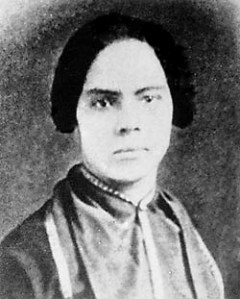
With her Provincial Freeman, Mary Ann Shadd Cary became the first black woman in North America to own a newspaper and was a prominent abolitionist in the 1850s. Also worked to recruit black volunteers for the Union during the American Civil War.

With her Provincial Freeman, Mary Ann Shadd Cary became the first black woman in North America to own a newspaper and was a prominent abolitionist in the 1850s. Also worked to recruit black volunteers for the Union during the American Civil War.

Figure 2: Mary Ann Shadd Cary– anti-slavery activist, journalist, publisher, teacher, and lawyer. Was the first female African American newspaper editor and publisher in North America when she edited the Provincial Freeman in 1853. Traveled around the US and Canada advocating for full integration and self-reliance. She also advocated that free blacks move to Canada which attracted controversy. During the American Civil War, she helped enlist black volunteers for the Union Army. Became the second black woman to earn a law degree when she graduated as a lawyer at the age of 60 in 1883.

John Jakob Raskob may not have designed the Empire State Building. But he contracted the skyscraper which became the tallest building in the world at the time and the most iconic in New York City.

John Jakob Raskob may not have designed the Empire State Building. But he contracted the skyscraper which became the tallest building in the world at the time and the most iconic in New York City.

Figure 3: John Jakob Raskob– financial executive and businessman for Du Pont and General Motors, and builder of the Empire State Building. Though he was a key supporter of Alfred E. Smith as chairman of the Democratic National Committee, he was a prominent opponent of FDR’s New Deal legislation.

No, this isn't Mrs. Doubtfire doing science. This is DuPont chemist Stephanie Kwolek who invented a family of exceptionally strong synthetic fibers called Kelvar. So who says women can't invent anything?

No, this isn’t Mrs. Doubtfire doing science. This is DuPont chemist Stephanie Kwolek who invented a family of exceptionally strong synthetic fibers called Kelvar. So who says women can’t invent anything?

Figure 4: Stephanie Kwolek– chemist and inventor whose career at Du Pont spanned over 40 years and is best known for inventing the first of a family of synthetic fibers of exceptional strength and stiffness known as Kelvar which has many applications, ranging from bike tires, racing sails, and body armor. In 1995, she became the 4th woman to be added to the National Inventors Hall of Fame.


9. Florida

"I accept this idea of democracy. I am all for trying it out. It must be a good thing if everybody praises it like that. If our government has been willing to go to war and sacrifice billions of dollars and millions of men for the idea I think that I ought to give the thing a trial. The only thing that keeps me from pitching head long into this thing is the presence of numerous Jim Crow laws on the statute books of the nation. I am crazy about the idea of Democracy. I want to see how it feels."- from "Crazy for This Democracy" in 1945.

“I accept this idea of democracy. I am all for trying it out. It must be a good thing if everybody praises it like that. If our government has been willing to go to war and sacrifice billions of dollars and millions of men for the idea I think that I ought to give the thing a trial. The only thing that keeps me from pitching head long into this thing is the presence of numerous Jim Crow laws on the statute books of the nation. I am crazy about the idea of Democracy. I want to see how it feels.”- from “Crazy for This Democracy” in 1945.

Figure 1: Zora Neale Hurston– novelist, short story writer, folklorist, and anthropologist who wrote 4 novels and more than 50 short stories, plays, and essays. Best known work is her 1937 novel Their Eyes Were Watching God. Traveled extensively through the American South, the Caribbean, and Central America to conduct anthropological research and immerse herself in the local culture. Despite being a key figure of the Harlem Renaissance, her work slid into obscurity for decades.

A. Philip Randolph had a significant impact on the Civil Rights Movement from the 1930s onward. His methods of nonviolent confrontation were employed in the Montgomery Bus Boycott and other demonstrations.

A. Philip Randolph had a significant impact on the Civil Rights Movement from the 1930s onward. His methods of nonviolent confrontation were employed in the Montgomery Bus Boycott and other demonstrations.

Figure 2: A. Philip Randolph– leader in the Civil Rights Movement, the American labor movement, and socialist political parties. Organized and led the Brotherhood of Sleeping Car Porters which was the first predominantly African American labor union. In the early Civil Rights Movement, he led the March on Washington Movement which convinced President Franklin Delano Roosevelt to issue an executive order in 1941 banning discrimination in defense industries during WWII. His group would later pressure President Harry S. Truman to issue an executive order ending discrimination in the armed forces in 1948. Head of the March on Washington at which Martin Luther King Jr. delivered his “I Have a Dream” speech and inspired the Freedom budget, which aimed to deal with economic problems facing the black community. Had a significant impact on the Civil Rights Movement with leaders in the 1950s and 1960s using tactics he pioneered like such as encouraging African-Americans to vote as a bloc, mass voter registration, and training activists for nonviolent direct action.

"Lift every voice and sing/Till earth and heaven ring,/Ring with the harmonies of Liberty./Let our rejoicing rise high as the listening skies;/Let it resound loud as the rolling sea." - from "Lift Every Voice and Sing"

“Lift every voice and sing/Till earth and heaven ring,/Ring with the harmonies of Liberty./Let our rejoicing rise high as the listening skies;/Let it resound loud as the rolling sea.” – from “Lift Every Voice and Sing”

Figure 3: James Weldon Johnson– author, educator, lawyer, diplomat, songwriter, and civil rights activist who’s best remembered for his leadership of the NAACP where he was the first African American to be chosen as executive secretary of the organization. Also established his reputation as a writer and was known during the Harlem Renaissance for his poems, novels, and anthologies collecting both poems and spirituals of black culture. Most famous work is The Autobiography of an Ex-Colored Man which explores the conflict between assimilation and maintaining one’s cultural identity.

"Hey mama, don't you treat me wrong,/Come and love your daddy all night long./All right now, hey hey, all right./See the girl with the diamond ring;/She knows how to shake that thing./All right now now now, hey hey, hey hey./Tell your mama, tell your pa,/I'm gonna send you back to Arkansas./Oh yes, ma'm, you don't do right, don't do right."- from "What I'd Say"

“Hey mama, don’t you treat me wrong,/Come and love your daddy all night long./All right now, hey hey, all right./See the girl with the diamond ring;/She knows how to shake that thing./All right now now now, hey hey, hey hey./Tell your mama, tell your pa,/I’m gonna send you back to Arkansas./Oh yes, ma’m, you don’t do right, don’t do right.”- from “What I’d Say”

Figure 4: Ray Charles– singer, songwriter, musician, and composer. Referred to as “The Genius” and “The High Priest of Soul,” he pioneered the genre of soul music during the 1950s combining rhythm and blues, gospel, and blues styles into music he recorded for Atlantic records. Also contributed to the racial integration of country and pop music during the 1960s with his crossover success at ABC Records as well as be one of the first African American musicians to be granted artistic control by a mainstream record company. Called by Frank Sinatra as “the only true genius in show business,” and it was often said by Billy Joel, “This may sound like sacrilege, but I think Ray Charles was more important than Elvis Presley.” Has been one of the most influential recording artists to date. Version of “Georgia On My Mind” was made the official state song of Georgia.


10. Georgia

While Flannery O'Connor's writings reflected her Catholic beliefs, she didn't write the kind of glurge worthy Christian stuff you see in today's Christian film industry. No, she had her characters go to a state of divine grace through pain, violence, and ludicrous behavior in the pursuit of the holy. One story involves a whole family getting stopped on the road and eventually killed by thugs. Or one pertaining to a hermaphrodite showing his or her, well, nevermind.

While Flannery O’Connor’s writings reflected her Catholic beliefs, she didn’t write the kind of glurge worthy Christian stuff you see in today’s Christian film industry. No, she had her characters go to a state of divine grace through pain, violence, and ludicrous behavior in the pursuit of the holy. One story involves a whole family getting stopped on the road and eventually killed by thugs. Or one pertaining to a hermaphrodite showing his or her, well, nevermind.

Figure 1: Flannery O’Connor– writer and essayist who was an important voice in American literature. Wrote 2 novels and 32 short stories as well as a number of reviews and commentaries. Was a Southern writer who often wrote in a Southern Gothic style and relied heavily on regional settings and grotesque characters. Her writing also reflected her own Roman Catholic faith, and frequently examined questions of morality and ethics. Was the first writer born in the 20th century to have her works collected and published in the Library of America.

Though Margaret Mitchell gets some flack about her nostaligized portrayal of the South during the American Civil War and Reconstruction in Gone With the Wind, the book continues to be popular among generations and all over the world. Mostly because it's about people. Adapted into a movie that's seen as one of the greatest films ever made.

Though Margaret Mitchell gets some flack about her nostaligized portrayal of the South during the American Civil War and Reconstruction in Gone With the Wind, the book continues to be popular among generations and all over the world. Mostly because it’s about people. Adapted into a movie that’s seen as one of the greatest films ever made.

Figure 2: Margaret Mitchell– author and journalist best known for writing Gone With the Wind for which she won a National Book Award and the Pulitzer Prize for Fiction. It has since become an American classic and adapted into one of the greatest movies of all time. Yet it has led people worldwide to incorrectly think that it was the true story of the Old South and how it was changed by the American Civil War and Reconstruction as well as the negative effects it has had on race relations by its resurrection of Lost Cause mythology.

Ralph Abernathy was a frequent collaborator and friend of Martin Luther King Jr. as well as carried on the Poor People's Campaign after his assassination. However, shortly before his death, he wrote a controversial autobiography that revealed allegations pertaining to King's marital infidelities.

Ralph Abernathy was a frequent collaborator and friend of Martin Luther King Jr. as well as carried on the Poor People’s Campaign after his assassination. However, shortly before his death, he wrote a controversial autobiography that revealed allegations pertaining to King’s marital infidelities.

Figure 3: Ralph Abernathy Sr. – Baptist minister, civil rights leader, and Martin Luther King Jr.’s closest friend who collaborated with him to create the Montgomery Improvement Association which would lead the Montgomery Bus Boycott, co-founded the Southern Christian Leadership Conference of which he became president after King’s assassination. Led the Poor People’s Campaign in Washington D. C. and served as an advisory committee member of the Congress on Racial Equality. Addressed the United Nations in 1971 on World Peace. Wrote And the Walls Came Tumbling Down: An Autobiography, a controversial autobiography about his and King’s involvement in the civil rights movement.

"There is always a certain glamour about the idea of a nation rising up to crush an evil simply because it is wrong. Unfortunately, this can seldom be realized in real life; for the very existence of the evil usually argues a moral weakness in the very place where extraordinary moral strength is called for." - from The Suppression of the African Slave Trade to the United States of America, 1638-1870

“There is always a certain glamour about the idea of a nation rising up to crush an evil simply because it is wrong. Unfortunately, this can seldom be realized in real life; for the very existence of the evil usually argues a moral weakness in the very place where extraordinary moral strength is called for.” – from The Suppression of the African Slave Trade to the United States of America, 1638-1870

Figure 4: W. E. B. Du Bois– sociologist, historian, civil rights activist, Pan-Africanist, author, and editor who was the first African American to earn a doctorate and was one of the co-founders of the NAACP. As a civil rights activist, he insisted on full civil rights and increased political representation and believed that believed that African Americans needed the chances for advanced education to develop its leadership. Strongly protested against lynching, Jim Crow Laws, and discrimination in education and employment and his cause included people of color everywhere, particularly Africans and Asians in colonies. Helped organize several Pan-African Congresses to fight for independence of African colonies from European powers as well as made several trips to Europe, Africa, and Asia. After WWI, he surveyed the experiences of African American soldiers in France and documented widespread bigotry in the US military. His collection of essays The Souls of Black Folk was a seminal work of African American literature and his 1935 magnum opus Black Reconstruction in America challenged the prevailing orthodoxy that blacks were responsible for the failures of the Reconstruction Era. Wrote one of the first scientific treatises in the field of American sociology, he published three autobiographies, each of which contains insightful essays on sociology, politics and history as well as published many influential pieces in the NAACP journal he edited, The Crisis. Many of the reforms for which he had campaigned his entire life were embodied in the 1964 Civil Rights Act that was enacted a year after his death.

US State Mount Rushmore: Part 1 – Alabama to California

In our American culture, Mount Rushmore has become a national symbol of the United States since Gutzon Borglum carved the faces of 4 presidents on the mountain in the Black Hills of South Dakota. When I was in college, one of my roommates used to watch ESPN a lot. One time, the network was doing a feature on which sports figures they’d put on Mount Rushmore pertaining to each state. I didn’t think about it at the time. But now since recently I came up with the idea of whether to do a similar idea. But this time, instead of sports figures, it would pertain to people from American history and culture (even though I did include a couple of sports figures Jackie Robinson and Jim Thorpe). Because after all, the US does have a captivating history and there are plenty of famous Americans who’ve contributed to the nation as well as the world in unique ways. I know plenty of elementary schools tend to emphasize this by assigning students famous Americans. My famous American project in 3rd grade was Molly Pitcher said to give soldiers water and take over loading her husband’s cannon at the Battle of Monmouth. Now this woman sort of existed but there’s some evidence she didn’t but I was stuck with her. Another one I remember was a kid doing one on Virginia Dare who did exist since she was the first white child born in the Americas. But she was born on Roanoke Island that disappeared so who knows what happened to her. Then I remember another kid doing one on Albert Einstein who did exist and did reside in the US. But he was already famous for his Theory of Relatively when he came to the US in 1933 as a refugee from his native Germany. So considering him a famous American would be like saying the same about John Lennon who is best known for being one of the Beatles who all came from Liverpool in the UK. And of course, many tend to credit Betsy Ross who designed the first American flag even though this was cooked up bullshit her grandkids made up. So I bring my series on the idea that if each state had their very own Mount Rushmore, then these should be the people who should be on it based on this criteria:

  1. The celebrities depicted must be dead. (Because you don’t want highly partisan figures. However, this means that people like Bob Dylan, John Glenn, Kens Burns, Barack Obama, the Clintons, Oprah, Muhammad Ali, Stephen King, and others don’t make it on their respective states.)
  2. The celebrities pertaining to the state must have either been born or spent considerable time there. (For instance, though Edgar Allan Poe is associated with Maryland, he didn’t spend a lot of time there and really should be on for Virginia, Pennsylvania, or New York but those spots were taken. However, Dolley Madison was born in North Carolina but she was a rather significant First Lady while George M. Cohan gets in for Rhode Island for his immeasurable contributions to Broadway even though he was only born there.)
  3. Each celebrity can only be depicted on one state. (For instance, despite that Lincoln had lived in Kentucky and Indiana, he’s only depicted for Illinois because that’s where he spent most of his life. Then you have Mark Twain who was born in Missouri and spent some time in California but he spent the bulk of his life in Connecticut.)
  4. Has made a clear and considerable impact on American culture. (Reagan’s legacy is more or less debated among party lines and can either be a good or bad president depending on what your political views are. Not to mention, as far as California is concerned, his influence on the US doesn’t have nearly the cultural impact as Republicans say it does. Nixon by contrast, no matter what you think of him, will always be remembered with Watergate which will forever stain his legacy as well as American politics. This is why Reagan isn’t on for California and Nixon is. Same goes for John Muir, Jackie Robinson, and Caesar Chavez since they’re practically cultural icons.)
  5. Has to have verifiable account of accomplishments. (For instance, details in Calamity Jane’s autobiography are questionable. Same goes for John C. Fremont.)
  6. Impact can have positive, ambiguous, or negative effects on country. (For instance, Al Capone is on Illinois because his domination of Chicago’s organized crime scene during Prohibition made him the most famous US gangster of all time. Nevertheless, this rule allows inclusion of more infamous and controversial figures like legendary criminals or people with very negative legacies that are also very noteworthy.)
  7. State location has to be certain. (For instance, Chief Joseph and Crazy Horse don’t make it on there because they’re associated with multiple states while Sitting Bull died at the same place he was born so he makes it on South Dakota’s. Douglas MacArthur doesn’t get in since he was from a military family and didn’t stay in one place for long. And I had to leave Francis Hopkinson out since though he signed the Declaration of Independence as a delegate from New Jersey, he spent a lot of his life in Philadelphia.)
  8. Can be very well known as well as relatively obscure. (For instance, a lot of these states have famous people who you may not have heard of like Delaware which consists of a founder of a major US corporation, the first black woman in North America to edit and own a newspaper, the man who built the Empire State Building, and the inventor of Kelvar.)
  9. Just because some famous person didn’t make it to their state Mount Rushmore doesn’t mean they’re less important. (For instance, I would’ve loved to have added Harvey Milk, Harriet Tubman, Rosa Parks, Washington Irving, Ralph Waldo Emerson, Bonnie and Clyde, Edgar Allan Poe, Lewis and Clark, William Tecumseh Sherman, Robert E. Lee, Arthur Ashe, George C. Marshall, Betty Ford, Frances Willard, Margaret Sanger, Gifford Pinchot, Jim Morrison, Buddy Holly, Samuel Adams, John Hancock, Dorothy Day, Babe Ruth, George S. Patton, Jesse Owens, Henry Clay, Truman Capote, Clara Barton, Ernest Hemingway, Charles Goodyear, Sojourner Truth, John Steinbeck, Eugene O’Neill, Arthur Miller, Frances Perkins, John Ericson, Upton Sinclair, Andrew Carnegie, P. T. Barnum, Jesse James, Fred Rogers, Duke Ellington, Billie Holiday, Bessie Smith, John D. Rockefeller, Mary Chestnut, Elisha Hunt Rhodes, and more but you can only fill 4 slots for each state.)

For this first selection, I bring you the figures I have in mind for the state Mount Rushmores from Alabama to California. From Alabama, you have an author who wrote a book that managed to convey the evils of racism in a way that’s accessible to almost anyone, a deafblind woman who was a leading activist and author in her day, a young Baptist minister who became the face of the Civil Rights Movement, and a scientist who devoted his life to finding alternative crops to cotton in order to help poor families in the South. From Alaska there’s a former Air Force sergeant who had a show about the joys of painting, a woman who was instrumental in creating the Arctic National Wildlife Refuge, an explorer who wrote numerous articles about the Alaskan wilderness, and an Alaskan Native woman whose advocacy led to the passage of the first US anti-discrimination law. In Arizona, I bring you two great Native American warriors who’ve been elevated to iconic status, a politician who’s has a substantial influence in American conservatism, and a major figure in Latin music. From Arkansas comes a black woman who’s been a major literary figure in American literature in the latter half of the 20th century, a major country music superstar who always dressed in black, a man who founded the world’s largest retailer that now sets the way how the industry does business, and a civil rights activist who was involved in a school integration crisis. And finally, we get to California where you’ll meet a Scotsman who became a founding father of environmentalism, a man who would’ve become a great US president had he not gotten involved in a major political scandal, a baseball player whose career challenged the traditional basis of segregation, and a union organizer who’s become an icon among the Hispanic community.

  1. Alabama
"I wanted you to see what real courage is, instead of getting the idea that courage is a man with a gun in his hand. It's when you know you're licked before you begin, but you begin anyway and see it through no matter what. You rarely win, but sometimes you do."- Atticus Finch from To Kill a Mockingbird

“I wanted you to see what real courage is, instead of getting the idea that courage is a man with a gun in his hand. It’s when you know you’re licked before you begin, but you begin anyway and see it through no matter what. You rarely win, but sometimes you do.”- Atticus Finch from To Kill a Mockingbird

Figure 1: Harper Lee – author of To Kill a Mockingbird which won the 1961 Pulitzer Prize and has become a classic in modern American literature as well as been cited as a factor in the success of the civil rights movement in the 1960s by giving white Southerners a way to understand racism that they’ve been brought up with and to find another way. Assisted her close friend Truman Capote in his research for the book In Cold Blood.

We mainly know Helen Keller from her story of how her teacher Annie Sullivan broke through the isolation imposed by a near complete lack of language which allowed her to blossom and communicate. Keller and Sullivan would be together until Sullivan died in 1936.

We mainly know Helen Keller from her story of how her teacher Annie Sullivan broke through the isolation imposed by a near complete lack of language which allowed her to blossom and communicate. Keller and Sullivan would be together until Sullivan died in 1936.

Figure 2: Helen Keller– author, political activist, and lecturer. First deafblind person to earn a bachelor’s degree. Member of the Socialist Party of America and Industrial Workers of the World as well as campaigned for women’s suffrage, labor rights, socialism, and other similar causes.

"Let us not wallow in the valley of despair. I say to you today, my friends, that in spite of the difficulties and frustrations of the moment, I still have a dream. It is a dream deeply rooted in the American dream. I have a dream that one day this nation will rise up and live out the true meaning of its creed: "We hold these truths to be self-evident: that all men are created equal." I have a dream that one day on the red hills of Georgia the sons of former slaves and the sons of former slaveowners will be able to sit down together at a table of brotherhood. I have a dream that one day even the state of Mississippi, a state, sweltering with the heat of injustice, sweltering with the heat of oppression, will be transformed into an oasis of freedom and justice. I have a dream that my four little children will one day live in a nation where they will not be judged by the color of their skin but by the content of their character. I have a dream today."- from King's "I Have a Dream" speech during the 1963 March on Washington.

“Let us not wallow in the valley of despair. I say to you today, my friends, that in spite of the difficulties and frustrations of the moment, I still have a dream. It is a dream deeply rooted in the American dream. I have a dream that one day this nation will rise up and live out the true meaning of its creed: “We hold these truths to be self-evident: that all men are created equal.” I have a dream that one day on the red hills of Georgia the sons of former slaves and the sons of former slaveowners will be able to sit down together at a table of brotherhood. I have a dream that one day even the state of Mississippi, a state, sweltering with the heat of injustice, sweltering with the heat of oppression, will be transformed into an oasis of freedom and justice. I have a dream that my four little children will one day live in a nation where they will not be judged by the color of their skin but by the content of their character. I have a dream today.”- from King’s “I Have a Dream” speech during the 1963 March on Washington.

Figure 3: Martin Luther King Jr.– Baptist minister, activist, humanitarian, and leader of the Civil Rights Movement. Best known for his role in the advancement of civil rights using nonviolent civil disobedience based on his Christian beliefs. Delivered his “I Have a Dream” speech during the March on Washington. Received the Nobel Peace Prize in 1964. Also made speeches against poverty and opposed the Vietnam War. Has his own national holiday and very deservedly so.

Carver is often mistakenly credited with inventing peanut butter. However, it's said that the Aztecs have been known to make peanut butter from ground peanuts since the 15th century. And that many methods of peanut preparation had been developed and patented by by various pharmacists, doctors and food scientists working in the US and Canada.

Carver is often mistakenly credited with inventing peanut butter. However, it’s said that the Aztecs have been known to make peanut butter from ground peanuts since the 15th century. And that many methods of peanut preparation had been developed and patented by by various pharmacists, doctors and food scientists working in the US and Canada.

Figure 4: George Washington Carver– botanist and inventor who based his research into and promotion of alternative crops to cotton such as peanuts and sweet potatoes as food for poor farmers and for products to improve their quality of life. Though he spent years promoting numerous peanut products, none were commercially successful. Was also a leader in promoting environmentalism.


  1. Alaska
"Traditionally, art has been for the select few. We have been brainwashed to believe that Michaelangelo had to pat you on the head at birth. Well, we show people that anybody can paint a picture that they're proud of. It may never hang in the Smithsonian, but it will certainly be something that they'll hang in their home and be proud of. And that's what it's all about." Nevertheless, while his show may not give rise to the next Michelangelo, it was quite relaxing to watch.

“Traditionally, art has been for the select few. We have been brainwashed to believe that Michaelangelo had to pat you on the head at birth. Well, we show people that anybody can paint a picture that they’re proud of. It may never hang in the Smithsonian, but it will certainly be something that they’ll hang in their home and be proud of. And that’s what it’s all about.” Nevertheless, while his show may not give rise to the next Michelangelo, it was quite relaxing to watch.

Figure 1: Bob Ross– painter, art instructor, and television host. Creator and host of The Joy of Painting on PBS. Coined the phrase, “happy little tree.” Started painting while serving as a sergeant at Eiselson Air Force Base.

Here's Margaret Murie with her husband who was also active in the campaign to protect what is now Arctic National Wildlife Refuge. I hope their ghosts haunt anyone who intends to drill there because it's a place that should be protected for everyone.

Here’s Margaret Murie with her husband who was also active in the campaign to protect what is now Arctic National Wildlife Refuge. I hope their ghosts haunt anyone who intends to drill there because it’s a place that should be protected for everyone.

Figure 2: Margaret Murie– naturalist, author, adventurer, and conservationist dubbed as “Grandmother of the Conservation Movement” by the Sierra Club and the Wilderness Society. Helped in the passage of the Wilderness Act and was instrumental in creating the Arctic National Wildlife Refuge (which is now subject to drilling controversies).

Here is Bob Marshall in front of what Bob Ross would call a "happy little tree." His travels to Alaska led him to write The Arctic Village and found The Wilderness Society.

Here is Bob Marshall in front of what Bob Ross would call a “happy little tree.” His travels to Alaska led him to write The Arctic Village and found The Wilderness Society.

Figure 3: Bob Marshall– forester, writer, and wilderness activist. Was a scientist with doctorates in philosophy and plant physiology. Explored the Alaskan wilderness and wrote numerous articles and books, including his bestselling 1933 book The Arctic Village. Was chief of forestry in the Bureau of Indian Affairs and head of recreation management in the Forest Service during the FDR administration. Founded the Wilderness Society in 1935 and is considered largely responsible for the wilderness preservation movement. 25 years after his untimely death of a heart attack at 38, partly as a result of his efforts, The Wilderness Society fostered the Wilderness Act, which legally defined the wilderness of the US and protected some nine million acres of federal land.

"I would not have expected that I, who am barely out of savagery, would have to remind gentlemen with five thousand years of recorded civilization behind them, of our Bill of Rights."

“I would not have expected that I, who am barely out of savagery, would have to remind gentlemen with five thousand years of recorded civilization behind them, of our Bill of Rights.”

Figure 4: Elizabeth Peratrovich– member of the Tlingit nation as well as an important civil rights activist who worked on behalf of equality of all Alaskan Natives as a leader in the Alaska Native Brotherhood and the Alaska Native Sisterhood. Credited with advocacy that gained passage of the then territory’s Anti-Discrimination Act of 1945, the first anti-discrimination law in the US.


  1. Arizona
While Ira Hayes became a national hero for being among the 6 flag raisers at Iwo Jima, he was never comfortable with fame and descended into alcoholism after his Marine services. Flags of Our Fathers suggests that he might've suffered from PTSD.

While Ira Hayes became a national hero for being among the 6 flag raisers at Iwo Jima, he was never comfortable with fame and descended into alcoholism after his Marine services. Flags of Our Fathers suggests that he might’ve suffered from PTSD.

Figure 1: Ira Hayes-Pima Native American and US Marine who was one of the 6 flag raisers immortalized in the iconic photograph of the flag raising on Iwo Jima during WWII. Instrumental in revealing the true identity of one of the pictured Marines who was later killed in action. However, he never really felt comfortable with his fame, descended into alcoholism, and was found dead on his reservation. He was buried with full military honors at Arlington National Cemetery.

"I was no chief and never had been, but because I had been more deeply wronged than others, this honor was conferred upon me, and I resolved to prove worthy of the trust." Nevertheless, Geronimo was the kind of Indian fighter and leader who just couldn't stay put.

“I was no chief and never had been, but because I had been more deeply wronged than others, this honor was conferred upon me, and I resolved to prove worthy of the trust.” Nevertheless, Geronimo was the kind of Indian fighter and leader who just couldn’t stay put.

Figure 2: Geronimo– leader of Chiricahua Apache who fought against encroachment of European settlers on Native American lands; hero of Native American fight for respect and independence. Wasn’t really a chief since only about 30-50 Apaches would be among his following but frequently led numbers larger than that. But while other Apache leaders conducted raids and carried on revenge warfare, he accumulated a record of effective resistance during this time that matched any of his contemporaries and his fighting ability extended to over 30 years. Said to “surrender” to reservation life 3 times between 1876-1886 but he led bands to “breakouts” each time. And the years after he surrendered for the last time, he spent as a prisoner of war. Among his tribe many Chiricahua had mixed feelings for him for while they respected him as a skilled and effective leader of raids or warfare, he wasn’t very likeable and wasn’t widely popular among the other Apache. He also hated Mexicans more than Americans, by the way.

No, this isn't a middle aged Bernie Sanders with Instagram filters. This is Republican US Senator Barry Goldwater who's often credited with the resurgence of the modern American conservative movement. Way different personality.

No, this isn’t a middle aged Bernie Sanders with Instagram filters. This is Republican US Senator Barry Goldwater who’s often credited with the resurgence of the modern American conservative movement. Way different personality.

Figure 3: Barry Goldwater-politician and businessman who’s often most credited with the resurgence of American conservative political movement of the 1960s as well as had a substantial impact in the libertarian movement. Rejected the legacy of the New Deal and fought through the conservative coalition against the New Deal coalition. His defeat in the 1964 presidential election allowed younger conservatives to mobilize even though he was a much less active leader afterwards. Urged Richard Nixon to resign during the Watergate scandal. Became a vocal opponent of the Religious Right in the 1980s. Was the first candidate of Jewish heritage to be nominated for President by a major American party.

Lalo Guerro is best known as the "Father of Chicano Music" who's career spanned for nearly 7 decades. As a prolific musician he's said to be the musical historian of his beloved his Chicano culture and has influenced generations of Latin music artists.

Lalo Guerro is best known as the “Father of Chicano Music” who’s career spanned for nearly 7 decades. As a prolific musician he’s said to be the musical historian of his beloved his Chicano culture and has influenced generations of Latin music artists.

Figure 4: Eduardo “Lalo” Guerrero– Mexican-American guitarist, singer, songwriter, and farm labor activist best known for his strong influence in today’s Latin musical artists that he’s called the “Father of Chicano Music.” Recorded and/or wrote over 700 songs from 1939 including ones about Caesar Chavez, other farm workers, and braceros. Also wrote for many famous artists. Worked closely with Chavez for farm workers’ rights.


  1. Arkansas
"You may shoot me with your words,/You may cut me with your eyes,/You may kill me with your hatefulness,/But still, like air, I'll rise." - from "Still I Rise"

“You may shoot me with your words,/You may cut me with your eyes,/You may kill me with your hatefulness,/But still, like air, I’ll rise.” – from “Still I Rise”

Figure 1: Maya Angelou– poet, memoirist, and civil rights activist. Published 7 autobiographies, 3 books of essays, several books of poetry, and was credited with a list of plays, movies, and TV shows spanning 50 years. Best known for her memoir I Know When the Caged Bird Sings based on her childhood in Stamps which brought her fame and international acclaim.

"I wear the black for the poor and the beaten down,/Livin' in the hopeless, hungry side of town,/I wear it for the prisoner who has long paid for his crime,/But is there because he's a victim of the times."- from "Man in Black"

“I wear the black for the poor and the beaten down,/Livin’ in the hopeless, hungry side of town,/I wear it for the prisoner who has long paid for his crime,/But is there because he’s a victim of the times.”- from “Man in Black”

Figure 2: Johnny Cash– singer-songwriter, guitarist, actor, and author who’s widely considered one of the most influential musicians of the 20th century and one of the best-selling musical artists of all time, selling 90 million records worldwide. Though primarily a country music icon, songs also spanned rock and roll, rockabilly, blues, folk, and gospel. Known for his deep, calm baritone-bass voice, distinctive sound of his Tennessee Three backing band, rebelliousness, increasingly somber and humble demeanor, free prison concerts, and a trademark look which earned him the nickname, “The Man in Black.”

To some, Wal Mart founder Sam Walton is a hero to American capitalism and consumerism. But to me, he's a founder of a consumer in our society that has led to the mass exploitation, materialism, and superficiality. Seriously, when Wal Mart decided to be open on Thanksgiving I was pissed.

To some, Wal Mart founder Sam Walton is a hero to American capitalism and consumerism. But to me, he’s a founder of a consumer in our society that has led to the mass exploitation, materialism, and superficiality. Seriously, when Wal Mart decided to be open on Thanksgiving I was pissed.

Figure 3: Sam Walton– businessman and entrepreneur best known for founding Wal Mart and Sam’s Club which have forever changed the nature of retail business, if not capitalism for better or worse with predatory pricing, treating workers like commodities that they’re forced to rely on government programs for basic needs, union busting, importing products made from slave labor, ideological censorship, and not giving a shit about local communities. While his chain may boast always low prices in order to live better, it has brought a very high price for communities, consumers, workers, competitors and others. Today, Wal Mart is the world’s largest retailer and sets the standards on how the rest of the industry does business while his heirs are among the richest people in the country.

As head of the NAACP in Arkansas, Daisy Bates guided and advised the Little Rock Nine when they attempted to enroll at the all white Central High School in 1957. She also used her organizational skills to get the kids in as well as her home as a haven for them. While her efforts initially met opposition from the state government, she persevered and was ultimately successful.

As head of the NAACP in Arkansas, Daisy Bates guided and advised the Little Rock Nine when they attempted to enroll at the all white Central High School in 1957. She also used her organizational skills to get the kids in as well as her home as a haven for them. While her efforts initially met opposition from the state government, she persevered and was ultimately successful.

Figure 4: Daisy Bates– civil rights activist, publisher, journalist, and lecturer who as publisher of the Arkansas State Press and president of her state’s NAACP, played a critical role in the Little Rock Nine Integration Crisis of 1957 at Central High School when 9 black students attempted to enroll in an all-white school but were stopped by the Arkansas National Guard under the governor’s orders. Her memoir recounting the crisis, The Long Shadow of Little Rock, won the 1988 National Book Award.


  1. California
"Any fool can destroy trees. They cannot run away; and if they could, they would still be destroyed — chased and hunted down as long as fun or a dollar could be got out of their bark hides, branching horns, or magnificent bole backbones. Few that fell trees plant them; nor would planting avail much towards getting back anything like the noble primeval forests. … It took more than three thousand years to make some of the trees in these Western woods — trees that are still standing in perfect strength and beauty, waving and singing in the mighty forests of the Sierra. Through all the wonderful, eventful centuries … God has cared for these trees, saved them from drought, disease, avalanches, and a thousand straining, leveling tempests and floods; but he cannot save them from fools — only Uncle Sam can do that." - from American Forests

“Any fool can destroy trees. They cannot run away; and if they could, they would still be destroyed — chased and hunted down as long as fun or a dollar could be got out of their bark hides, branching horns, or magnificent bole backbones. Few that fell trees plant them; nor would planting avail much towards getting back anything like the noble primeval forests. … It took more than three thousand years to make some of the trees in these Western woods — trees that are still standing in perfect strength and beauty, waving and singing in the mighty forests of the Sierra. Through all the wonderful, eventful centuries … God has cared for these trees, saved them from drought, disease, avalanches, and a thousand straining, leveling tempests and floods; but he cannot save them from fools — only Uncle Sam can do that.” – from American Forests

Figure 1: John Muir– naturalist, author, environmental philosopher, and early advocate of wilderness preservation in the US. His letters, essays, and books telling of his adventures have been read by millions that continued to be discussed today. Published 12 books and 300 articles. Activism helped preserve the Yosemite Valley, Sequoia National Park, and other wilderness areas. Founded the Sierra Club. Referred to as the “Father of the National Parks” and is a patron saint of 20th century American environmentalism.

In many ways, Nixon could've went down in history as one of the nation's greatest presidents. But due to Watergate, perhaps Stephen Ambrose said it best, "Nixon wanted to be judged by what he accomplished. What he will be remembered for is the nightmare he put the country through in his second term and for his resignation."

As far as Richard Nixon’s legacy goes, perhaps Stephen Ambrose said it best, “Nixon wanted to be judged by what he accomplished. What he will be remembered for is the nightmare he put the country through in his second term and for his resignation.”

Figure 2: Richard Nixon– US president from 1969-1974 who could’ve been great man of our times if he wasn’t so morally lacking. Rose to national prominence as a leading anti-communist with his pursuit of the Alger Hiss case while his “Checkers Speech” led Eisenhower choose him as his vice president. His presidency saw the end of American involvement in Vietnam, end of the military draft, opening diplomatic relations with China, initiation of détente with the Soviet Union, founding of the Environmental Protection Agency, the Apollo 11 moon landing, Arab oil embargo, and enforced desegregation of Southern schools. Brought down by revelations pertaining to his involvement in the Watergate scandals which cost him political support and led him to resign the presidency in disgrace in the face of certain impeachment and removal from office. His actions pertaining to the Watergate scandal have caused a permanent stain on the presidency, his legacy, and American politics ever since.

As the first African American man to play a major league sport in the modern era, Jackie Robinson challenged the traditional basis of racial segregation through his exceptional talent, his use of nonviolence, and his dignified character. His 10 year career with the Brooklyn Dodgers and off the field activities greatly contributed to the Civil Rights Movement.

As the first African American man to play a major league sport in the modern era, Jackie Robinson challenged the traditional basis of racial segregation through his exceptional talent, his use of nonviolence, and his dignified character. His 10 year career with the Brooklyn Dodgers and off the field activities greatly contributed to the Civil Rights Movement.

Figure 3: Jackie Robinson– Major League Baseball second baseman for the Brooklyn Dodgers who became the first African American to play in the major leagues in the modern era. Through his exceptional 10 year career, his character, his use of nonviolence, and his unquestionable talent challenged the traditional basis of segregation which then marked many aspects of American life. Had an impact on the culture and contributed significantly to the Civil Rights Movement. Was also the first black TV analyst in MLB and first black vice president of a major American corporation. In 1997, the MLB universally retired his uniform number across all major leagues, being the first athlete in any sport to be so honored as well as adopted the tradition of “Jackie Robinson Day” in 2004 with every player on every team wearing his No. 42.

"We don't know how God chooses martyrs. We do know that they give us the most precious gift they possess — their very lives." Today Caesar Chavez is a national icon to the Latino community. Yet, he has attracted controversy as an icon for organized labor and leftist politics since conservatives were in ire when they named a ship after him.

“We don’t know how God chooses martyrs. We do know that they give us the most precious gift they possess — their very lives.” Today Caesar Chavez is a national icon to the Latino community. Yet, he has attracted controversy as an icon for organized labor and leftist politics since conservatives were in ire when they named a ship after him.

Figure 4: Caesar Chavez– farm worker, labor leader, and civil rights activist who with Dolores Huerta, co-founded what is known as the United Farm Workers. His public relations approach to unionism and aggressive but nonviolent tactics made the farm workers’ struggle a moral cause with nationwide support. Has become a major historical icon for the Latino community, organized labor, and leftist politics as well as symbolizes support for workers and for Hispanic empowerment based on grass roots organizing. Catchphrase “Si se puede” (“Yes, it can be done.”) His birthday is a state holiday in California.

The Crazy World of Historical Beauty Tips

4. Pavonia_0

Disclaimer: These tips are historical for a reason and aren’t meant to be applied at home. Most of the time it calls for treatments containing chemicals that have been deemed poisonous and/or dangerous as well as lead to unfortunate side effects. As a result, even if such treatments give you the desired beauty results, you shouldn’t try them at home for to do so is as stupid as shit. Seriously, it was seriously stupid, if not downright insane for our ancestors to try such treatments then.

Cosmetology isn’t a strong subject of mine. In fact, I normally don’t wear makeup at all since I think it’s a massive waste of money and a massive waste of time to put it on. Besides, when I was in high school, I tried to come up with a morning routine pertaining to getting ready as quickly as possible. Because in order to catch the bus at a quarter till 7, I had to get up before 6 in the morning. Putting on makeup was just too much for me so I only wore when I had to which was when I had to go on Hometown HiQ in my junior and senior years. But since I tend to have lovely face to begin with, attracting guys isn’t much of a problem for me. Nevertheless, while beauty is in the eye of the beholder, it doesn’t stopped people for being obsessed with it, especially women. And for centuries, people would go to great lengths to look desirable whether it is to attract a spouse, show wealth and power, and appear to please guests. Yes, I know people tend to be shallow in the pursuit of beauty. Yet, sometimes this would mean resorting to treatments that seem insane, disgusting, and even dangerous. Here I list the all the crazy ways people have tried to achieve the perfect look.

Skin

portrait_of_a_lady_in_blue-thomas-gainsborough-patches2

To have skin like a gorgeous 18th century beauty, always apply a generous amount of powder of white lead as. Consuming arsenic also helps, too. Of course, they’ll eventually kill you through slow poisoning. But that’s the price you pay for keeping up appearances.

“Moles may be removed by moistening a stick of nitrate of silver, and touching them: they turn black, become sore, dry up, and fall off. If they do not go by first application, repeat. They are generally a great disfigurement to the face and should be removed, but it is better and safer to consult a surgeon before taking any steps to remove them.” (This is from the 1800s. Still, I think the notion of consulting a doctor before taking any steps to remove moles should’ve been the first thing discussed here. Also, while silver nitrate in low concentrations and brief exposure can control nosebleeds and prevent gonorrhea, it’s still very toxic and corrosive. Side effects can consist of burns and eye damage.)

In Ancient Greece, a mix of olive oil and white lead will whiten the skin. (While it did lighten the skin, women who used such beauty treatments were also subjected to death by slow lead poisoning which was absorbed in the skin. This is why lead based makeup is so dangerous.)

For that aristocratic European paleness, it’s always recommended to go with lead makeup and consuming arsenic for a white glow on the skin. You can even bleed yourself for a more natural pale look with leeches. (Okay, so women in Europe from the Elizabethan Era to the 19th century would try to achieve a pale complexion through either poisoning themselves which would shorten their lifespan or bleeding themselves with leeches. Arsenic is linked to a number of cancers including bladder, lung, skin, nasal passages, and more as well as hair loss and goiters. They also tried mercury which is also poisonous. That’s disturbing.)

For great skin complexion like a geisha or a kabuki performer, nothing works like nightingale poop. (Since nightingale poop contains guanine, it’s said to actually work and you can have such treatment at $180. Still, this is pretty disgusting.)

Want to get rid of those unsightly freckles? Use some lavender freckle lotion. (Warning: contains hydrochloric acid, which might make your face melt off like in Raiders of the Lost Ark. I think I’ll keep my freckles, thank you very much.)

To remove freckles, mix lemon juice, sugar, and borax before rubbing it onto your skin. (Who knew that an 1891 freckle removing solution contained similar ingredients to floor cleaner?)

Want to get rid of those unsightly scars? A treatment involving blades running through your chemically hardened skin is recommended. (This treatment was an idea by some sadistic dermatologist in the early 1900s. Side effects include intense pain as well as potentially more scarring and infection. Yes, it does seem like something you’d see from the Stephen King School of Dermatology.)

For extreme medieval pallor, controlled bleeding is just the ticket. (Aristocratic women did this in the 6th century. Let’s just say it didn’t do wonders for their life expectancy.)

A Parisian beauty always had facials of raw beef or veal on your face. (Okay, that’s disgusting, unsanitary, and sure to attract vermin and pets.)

Banish unsightly freckles with covering your face with bull or hare blood. (This is from 14th century England. Probably something not guaranteed to work and is incredibly disgusting.)

For a Medieval bath, get yourself clean with some soap that’s available in tallow, ash, and beef or mutton fats. (Guess bathing in the Middle Ages isn’t very pleasant. Besides, wouldn’t you have to have a bath after your bath to get all the ash and animal fat off? I mean they might’ve worked okay but wouldn’t make you smell nice. Maybe that’s why people at that time wore a lot of perfume.)

For a glowing complexion in Ancient Rome, a concoction of gladiator sweat and fat from the animals they slew is best recommended. (That’s nasty. Very nasty.)

For lovely complexion, it’s best to wear a toilet mask overnight. (This is from the Victorian Era. Also doubles as a Halloween costume.)

Hair

aphrodite-6

f you’re a woman of Ancient Athens who seeks to have the highly coveted locks of the mighty Aphrodite, drench your hair in vinegar and bleach. Sure it might lead to hair falling out but you can always wear a wig.

“One-half ounce sugar of lead, one half ounce lac sulphur, one ounce glycerine, one quart rain water. Saturate the hair and scalp with this two or three times per week and you will soon have a head free from gray hairs and dandruff, while the hair will be soft and glossy.” (Too bad people from the 1800s didn’t have Head and Shoulders {which gets rid of dandruff but not gray hair}. But a gray hair treatment containing lead is not a good idea.)

To achieve the highly coveted blond hair like Aphrodite, drench your hair in vinegar and bleach. (Ancient Greek women who tried to achieve blond hair this way would later have their hair fall out. This would lead to the popularity of wigs. You have to wonder why they just go with their natural hair color in the first place.)

An ideal hair length for a Japanese woman is 2 feet below the waist. (I’m sure hair care for a Japanese woman didn’t come cheap. And I bet her long hair had plenty of split ends.)

Want red hair like Queen Bess? Try a concoction of lead, quicklime, sulfur, and water. (A lot of women tried to do such thing back in the Elizabethan Era. Side effects are headaches, nausea, and regular nosebleeds. On second thought maybe trying to get Queen Elizabeth I’s ginger locks is totally not worth it.)

For the most ornate and sculpted powdered wig at the royal court, lard helps hold the locks in place. (Wigs were very popular during the 18th century that many of these could be quite huge. However, lard tended to attract lice and other vermin that sometimes a cage was even set over the woman’s head at night to keep the rats at bay. You heard me, some of those women slept in these ridiculous vermin attracting wigs. Also, the wigs might be powdered with lead, a poison we’re all familiar with. Or flour which also attracts vermin.)

For soft, sexy, and luscious hair, Lola Montez recommends a mixture of salts of tartar, lemon juice, camphor, and tincture of cantharides. (Cantharides are also known as Spanish Fly which is a powerful blister causing irritant.)

According to Thomas S. Sozinsky, a mixture of cantharides and ammonia make a great scalp invigorator. (No, it causes blisters on the scalp and makes them more painful.)

Parents should cut their children’s hair because it makes it turn coarse and wiry. (So say the Victorians. However, most parents cut their kids’ hair when they’re a little more than a year old.)

Since hair is living tissue that draws on resources from the body, parents shouldn’t allow their kids’ hair grow beyond 6 inches until they turn 14, lest overtax their systems and cause them to perish. (This is another Victorian beauty tip. However, hair is dead tissue and it won’t overtax kids systems.)

A girl should never have scissors touch her hair after the age of 5 or it’ll be scraggly and limp when she gets older. (Actually when your kid turns 5, you should start taking them to a professional for their haircut already. This goes for boys and girls. And no, cutting doesn’t make hair scraggly and limp. Seems like the Victorians have no idea about hair at all.)

According to Annie Jenness Miller, a gentle electrical current is excellent for the scalp. (I’m not so sure about that. I mean don’t the send electrical current to the scalp for convicts in the electric chair?)

In ancient Arabia, it’s best said that dipping your hair in camel urine achieves a great shine. (Maybe, but it won’t make your hair smell good either.)

For blond hair in Renaissance Venice, rub lion urine into your hair before giving it a healthy dose of sunshine so it can bleach. (Okay, I don’t think this was effective. Also sounds gross. Not to mention, where the hell would they get a lion in Renaissance Venice?)

Washing is bad for your hair. So in order to keep it clean, spend 30 minutes brushing it. (This is from the 19th century. Of course, brushing it for 30 minutes won’t keep it as clean as a 10 minute shower.)

For blond hair in the Middle Ages, mix honey and white wine together, apply it to your hair, and then leave it overnight. Then, add a mixture of calendine roots, olive-madder, oil of cumin seed, box shavings, and saffron. Wash off after 24 hours. (I have no idea why anyone thinks such concoction would work. But it’s certainly crazy and disgusting.)

Weight Loss and Figure Control

f5e7f69b0695cddea7d551845f4f1668

In the Victorian Age, no lady would ever be caught dead without wearing a corset to give her as dainty a a waist as possible. Sure it might crush your internal organs and cause difficulty in breathing, but you’ll look amazing.

Swallowing tapeworms is a great way to keep yourself slim and trim. (Again, women from the Elizabethan Era to the early 20th century for losing weight. Nevertheless, please don’t do this.)

Pouring ammonia into your bath and taking it orally is a great way to lose weight. (Or so the Victorians thought. But yeah, you will lose weight if you drank ammonia because you’d die. However, it’s not. Seriously, don’t do this for the love of God.)

Achieve support and a slim waist with lacing yourself in a corset. (This was widely used between the late Middle Ages to the early 1900s. The 19th century corsets were made from whalebone and were especially popular. Sure not all women tightened their corsets to the point of injury. But I’m sure they weren’t good for a woman’s internal organs.)

For a tinier waist, it always helped to get your lower ribs removed. (Women in the Victorian era did this and so do some women today. However, I would never recommend this.)

Feet

bndfeet3

From the T’ang Dynasty to the early 20th century, well off Chinese mothers would bound their daughters’ feet from a young age to achieve “golden lotus” feet which permanently crippled on. Also, after these women got married, they usually had to make love with their husbands with their shoes on. And yes, those feet look incredibly gruesome.

For calloused feet, get a pedicure by sitting in a pool of flesh eating doctor fish. (This is a method that’s popular in Japan and in parts of Asia. Yet, these fish usually eat the dead skin and leave the meaty stuff behind. It’s actually still around at high end spas for rich people. However, putting your feet in a pool of flesh eating fish sounds like the stuff of nightmares. Also, this treatment is banned in the US for being unsanitary.)

If you want your girls to improve their marriage chances in old time China, make sure you bind her feet when she’s between 4-7 so they won’t grow to normal size. (This was a horrifying and painful beauty practice that crippled many women since it was first practiced among court dancers during the T’ang Dynasty. Also, these lotus feet had folds so deep that they couldn’t be cleaned that women had to keep their feet covered at all times even in the sight of their husbands. Side effects include septicemia {which is a potentially life threatening bacteria in the blood}, poor circulation, and gangrene.)

Annie Jenness Miller says that generous applications of cannabis is great for corns on your feet. (Cannabis, eh? Wonder what else you’d use it for?)

Acne Management

Got acne? Try the Pokitonoff acne treatment by mixing Vaseline with Ergotine. (This was from the turn of the 19th century. Also, if your teenager experiences hallucinations after using it, remember that Ergotine is basically LSD which does absorb through the skin. So I guess a side effect to fighting pimples was tripping balls. It’s as if this idea came from a dermatology center run by Dr. Timothy Leary.)

According to Thomas S. Sozinsky, the best way of getting rid of acne is to take pills containing compound extracts of colocynth, sulphate of iron, and nux vomica. (As I said before, nux vomica is strychnine which is a deadly poison. However, it didn’t stop other beauty manuals from rubbing it on your head as a hair tonic and putting it in skin cream. Neither of which is a good idea.)

How to get rid of acne by Ovid: “Make haste and bake pale lupins and windy beans. Of these take six pounds each and grind the whole in the mill. Add thereto white lead and the scum of ruddy nitre and Illyrian iris, which must be kneaded by young and sturdy arms. And when they are duly bruised, an ounce should be the proper weight. If you add the glutinous matter wherewith the Halcyon cements its nest, you will have a certain cure for spots and pimples.” (Sure Ovid may be best for his poems and prose in Ancient Rome. But he’s terrible with beauty advice, especially since his recipe contains white lead, cave wall scum, and bird spit. One is a known poison, the other two, you have to do something stupid to get.)

To get rid of blemishes, it helps to use mercury. (Mercury can be easily absorbed through the skin and cause birth defects, kidney and liver problems, fatigue irritability, tremors, depression, a metallic taste in the mouth, and death. So you’re probably better off with a face full of pimples.)

Body Hair Removal

x-ray

Want to get rid of pesky body hair? Try x-ray removal which removes body hair through heavy exposure. However, heavy exposure can cause cancer and kill you.

For enhanced beauty in Japan, a geisha should remove her eyebrows with tweezers and paint a pair a thick, false eyebrows. (I really don’t see the point of this. Couldn’t they just go with their real eyebrows? But at least they didn’t put dead mice for eyebrows like 18th century aristocrats.)

Having trouble getting rid of unsightly body hair? A homemade depilatory cream containing abrasives like quicklime and arsenic is recommended. (Sorry, but smooth skin isn’t worth getting poisoned to death over. Besides, quicklime is used in construction.)

To remove body hair at a time with no razors in sight, buff up with sandpaper. (Women in the 1940s did this during WWII. However, let’s just say it’s less effective than waxing but just as painful. Ouch.)

Tired of shaving? Well, remove your hair with an X-Ray treatment. (Yes, heavy exposure to X-rays might remove body hair, which is why a lot of rich people did it back in the day. However, there’s a reason why people who do and get X-rays today have to wear protective gear, because they cause cancer.)

Remove unwanted body hair by rubbing a mixture of red orpiment, gum of ivy, ants’ eggs, and vinegar. (This is from the Middle Ages. And yes, it’s gross.)

Hair Restoration

Got baldness? Well, rub in a mix of various household ingredients along with nux vomica and cantharides. (These two ingredients are known as strychnine and Spanish Fly. Both are poisonous and deadly. May not help men with baldness but side effects include horrible spasms and paralysis, possibly with an erection. Yes, this so-called treatment for baldness is as stupid as shit.)

If you live at a time before Rogaine, you might want to cure your baldness, rub in some paraffin wax into your roots. (This was a treatment for baldness in the early 1900s when open flames were used a bit more liberally than they are today. So until a guy’s hair grew in, keeping his highly flammable head away from everything was in his best interests.)

A mixture of Hound’s Tongue and hog’s lard can deter hair loss. (To be fair Hound’s Tongue is a plant in which you bruise the leaves and make a juice out of it. With that you boil it in hog’s lard.)

Anti-Aging

To slow down aging skin in the ancient world, a facial mask or a mud bath with crocodile dung is recommended. (The Greeks and Romans did this. Sure it’s disgusting. But at least no one was dying from it. That we know of.)

Eyes

Ancient-Egyptian-Eye-Makeup-1

For eye makeup in Ancient Egypt, line your eyes with black lead based kohl. Yes, lead is poisonous which can kill you but it does enhance the Egyptian look, doesn’t it?

Achieve the look of an Ancient Egyptian with lead based kohl eyeliner. (Lead based makeup has been used for centuries. However, keep in mind that lead based makeup is dangerous which can lead to lead poisoning which can cause seizures, coma, reproductive problems, skin inflammation, muscle and joint pain, high blood pressure, and death. Also, both men and women used eyeliner in Ancient Egypt.)

For big pupils, use eye drops of Belladonna. (Women in the 19th century did this since big pupils were apparently sexy back then. But it’s also so toxic that it’s also known as Deadly Nightshade. Side effects include visual distortion, light sensitivity, heart palpitations, blindness, and death. Your eyes were created for sight, not for beauty.)

According to Lola Montez, the best way to achieve glistening, brilliant, beautiful eyes is to squeeze orange juice directly into them. Sure it will hurt but the results are worth it. (Sorry, but they’re not since orange juice in your eyes might temporarily blind you. Let’s just say if you want glistening, brilliant, beautiful eyes, just do either nothing or what’s recommended by your eye doctor. Because you need to see from them.)

A wash for irritated eyes should consist of rosewater, opium, and ammonia. (Yeah, nothing like ammonia and opium for a soothing eye bath. Please don’t do this.)

For enhanced lashes, get eyelash extensions. (Women were doing this around the turn of the century. A newspaper article from 1899 describes it as this: “An ordinary fine needle is threaded with a long hair, generally taken from the head of the person to be operated upon. The lower border of the eyelid is then thoroughly cleaned, and in order that the process may be as painless as possible rubbed with a solution of cocaine. The operator then by a few skilful touches runs his needle through the extreme edges of the eyelid between the epidermis and the lower border of the cartilage of the tragus. The needle passes in and out along the edge of the lid leaving its hair thread in loops of carefully graduated length.” Sounds horrifying, does it?)

For eyebrow tint, mascara, and eyeliner, best use resin, frankincense, and tar. (Victorian women did this. Still, tar for eyebrow enhancement.)

Breath and Body Odor

Have bad breath? Chew a lump of charcoal. (Women used to do this in the 1800s, which left them minty fresh and black toothed. Thank God for toothpaste.)

For fresh breath in ancient Rome, gargle with some mouthwash of Portuguese urine. (I’m sure the Romans had a different idea of minty freshness. Still, that’s utterly disgusting.)

Teeth

cab56c109221d22309413c145e70cd37

For a long time in Japanese history geishas and married women applied the painful, time consuming, and arduous task of ohaguro which translates to “black teeth.” This was applied every 3 days or so

For blackened teeth, a Heian geisha should use a mixture of oxidized iron fillings steeped in an acidic solution. (Sure a Heian geisha might be seen as a great beauty but I’m sure painful reactions from the dangerous chemicals were common. Married women also blackened their teeth with lacquer which was a foul and time consuming process that was repeated every 3 days or so. However, it did protect against tooth decay, but I’m not sure if that’s a good way to do it. Luckily the Japanese government banned this practice in 1870.)

In Ancient Rome, urine is great for teeth whitening. (But would I want to use it? No way in hell.)

Breasts

According to Byzantine obstetrician Metrodona, you can tone up your rack with a mix of red wine and white lead. (Let’s just say firm and supple boobs aren’t worth stinking like a wino and getting lead poison over.)

Small boobs keeping you single? Well, get some breast implants. Available in ivory, glass balls, or ground rubber. (Yes, you could get a boob job in the 19th century. However, considering the implant materials you probably wouldn’t want to.)

Lips

To achieve a red stain on your lips in Mughal India, make chewing betel leaves an essential part of your beauty routine. (Chewing betel leaves also lead to women’s teeth decayed. Sorry, but it’s totally not worth it.)

Want red lips like an Ancient Egyptian princess? Use some lipstick that includes some bromine mannite. (Bromine is a highly toxic that it was used as a chemical warfare agent during World War I. And these it’s shipped in lead lined steel drums. Side effects include skin burning as well as kidney failure and brain damage over time. It’s incredibly obvious why they no longer have bromine lipstick.)

Other

beaute-calibreur-micrometre-max-factor-04

To aid makeup artists for styling movie stars, Max Factor came up with a beauty calibrator in 1934. It’s said to give great measurements and detect flaws. Seems more like something that came out of the Edgar Allan Poe School of Cosmetology to me, but that’s just my opinion.

In ancient India, using cow urine is a great for losing weight, acne-fighting, healing cracked heels, and cleansing your system. (Not sure if this works and I really don’t want to know.)

Don’t have dimples? Then try Isabelle Gilbert’s dimple machine. (This was used in 1936 but it was only a fad. Because this contraption was very uncomfortable. Really, do you really want your cheeks pierced?)

With thorium chloride and radium bromide, radioactive cosmetics “Stimulates cellular vitality, activates circulation, firms skin, eliminates fats, stops enlarged pores forming, stops and cures boils, pimples, redness, pigmentation, protects from the elements, stops ageing and gets rid of wrinkles, conserves the freshness and brightness of the complexion.” (This is from a Thor-radia ad from the 1930s. Still, you don’t want radioactive makeup since radiation is known to cause cancer.)

For makeup artists, help actors achieve a movie star look with the beauty calibrator. (This is from the 1930s to help measure a subject’s face to see where improvements can be made. But to me, it resembles an iron maiden for the head that’s straight from the Edgar Allan Poe School of Cosmetology.)

A beauty vacuum helmet surrounds you with low atmospheric pressure that will make you look amazing. (A 1940s invention that seems like you’d find in a beauty salon that’s subject to a Stephen King novel.)

Ladies, for unsightly odors for where the sun don’t shine, a diluted solution of Lysol is the ticket. (Vaginal douching with Lysol was common for women back in the day for hygiene as well as birth control {which isn’t very effective}. Your grandmother might’ve done this for either purpose. Sure it might prevent infections, make your vagina squeaky clean, and lead to marital bliss. But it also happened to cause inflammation, burning, and death. Let’s just say I’d rather leave my stinky ladyparts alone, thank you very much.)

For those who have a sagging chin, the double chin reducer. (This is an old beauty contraption which looks very painful to wear. Maybe youthful beauty isn’t what it’s cracked up to be.)

For a perfect nose, try the nose helmet. (Another old beauty contraption that seemed to deliver nothing but a perfect headache since it would have to be strapped on tightly for painful nose reshaping. Maybe if you’re wishing to have a perfect nose, perhaps take a tip from Adrien Brody and just accepting your imperfect schnozz for the way it is. After all, he hasn’t fared too badly and he’s a freaking movie star.)

Beyond Future Imperfect – Part 6: Arts and Entertainment No One’s Going to Be Interested

We’re down to the final installment as we speak. Luckily, for us this is the fun post in this series since it pertains to the arts and entertainment, which is a pretty big range. You have sports and games, which is a rather unpredictable realm since people tend to bet on sports. And you never know which game is going to be popular. You have media like newspaper and magazines as well as radio, TV, and Internet. You have TV which is used for news, shows, and seeing the world as your heart desires without leaving your living room. You have literature and books that have shaped the course of generations. You have movies that are among the most popular forms of entertainment for generations which explains why TCM appeals to multiple demographics. And finally, you have music which always existed but with the Edison phonograph, it’s huge business. Nevertheless, these art forms always had their critics and people who thought such breakthroughs were fads that’ll be gone in a short time. But they were wrong. So for the last time this series, I bring you my final installment of Beyond Future Imperfect.

Sports? You’ve Been Hit in the Head Too Many Times

March_Madness_Bracket_SCREENSHOT

Yes, basketball is just another new game. Of course, never mind that it’s one of the most popular sports in the world with professional leagues. And the fact that people do brackets on March Madness every year.

“Poor build. Very skinny and narrow. Ended the ’99 season weighing 195 pounds and still looks like a rail at 211. Looks a little frail and lacks great physical stature and strength. Can get pushed down more easily than you’d like. Lacks mobility and ability to avoid the rush. Lacks a really strong arm. Can’t drive the ball down the field and does not throw a really tight spiral. System-type player who can get exposed if he must ad-lib and do things on his own.” — Tom Brady’s scouting report for the 2000 NFL Draft (Guess who helped the Patriots win 4 Super Bowls. Nevertheless, he’s still a jerk.)

“Possesses minimal football knowledge and lacks motivation.” – early scouting report on NFL coach Vince Lombardi. (Today the Super Bowl trophy is named after him.)

“Taking the best left-handed pitcher in baseball and converting him into a right fielder is one of the dumbest things I ever heard.” — Tris Speaker, baseball hall of famer, talking about Babe Ruth, 1919. (Apparently, Babe Ruth’s batting record made him a larger than life figure in the 1920s. And his record stood for 34 years until broken by Hank Aaron.)

“Huh. Another new game.”—-Frank Mahan, upon hearing of Basketball (You mean a game that will become one of the most popular sports on the entire planet?)

“Just so-so in center field.” – New York Daily News, after the premiere of Willie Mays, 1951. (Willie Mays is one of the best baseball players of all time.)

Games? Got No Time for That

“Why would anyone want to play a game that has no winner?” –Publisher who rejected Dungeons & Dragons (which is a rather popular game among fantasy nerds.)

“People won’t want to play these electronic games for more than a week, not once we start selling pinball machines for the home,” – Gus Bally, Arcade Inc., 1979. (Uh, newsflash, video games are now a multi-billion dollar industry in the 21st century.)

Print Media? Who Cares?

“A short-lived satirical pulp.”– TIME, writing off MAD magazine in 1956. (MAD Magazine is still around and is about half a century old.)

“Come on, Stan, people hate spiders. They’re creepy. And everybody knows that teenagers are sidekicks, not superheroes. This Spider-Man idea just won’t sell.” — Martin Goodman, founder of Marvel Comics (paraphrased by Stan Lee), 1962. (Spiderman would become one of the most famous and popular Marvel superheroes ever. Cue 54 years later, and he’s still enormously popular around the world.)

Web Media? Seriously, There’s an App for That?

“The subscription model of buying music is bankrupt. I think you could make available the Second Coming in a subscription model and it might not be successful.” Steve Jobs — Rolling Stone, Dec. 3, 2003 (Uh, Steve, have you ever heard of Netflix? So maybe the subscription model doesn’t work for music.)

“Think about it: You cannot pay the rent posting videos on YouTube.” — Viacom chairman Sumner Redstone, 2007. (Maybe not, but it’s made a shitload of money for advertisers.)

Books? Who Reads Them?

Harry-Potter-1940x1212

Seems like children weren’t very into witches and wizards. So how JK Rowling managed to publish a series of books about a kid in a wizarding school that attracted a generation of fans is beyond me. Actually it’s not.

“If you believe it is a work of genius, then you may lose a thousand pounds.” — Stanley Unwin, giving permission to publish a work that everyone in the publishing house feared would lose money. (His son believed the same thing but wanted to publish it anyway. The work was Lord of the Rings.)

“Children just aren’t interested in witches and wizards anymore.”-an anonymous publishing executive to J.K. Rowling in 1996. (Yeah, despite that what this executive just turned down is the first book in the Harry Potter series. A series which consisted of 7 books, 8 movies, and millions of merchandise and royalties.)

“The style of his tale is in places disfigured by mad (rather than bad) English; and its catastrophe is hastily, weakly, and obscurely managed…We have little more to say in reprobation or in recommendation of this absurd book…Mr. Melville has to thank himself only if his horrors and his heroics are flung aside by the general reader, as so much trash belonging to the worst school of Bedlam literature — since he seems not so much unable to learn as disdainful of learning the craft of an artist.”— Henry F. Chorley, reviewing Moby-Dick (Boy, did this guy underestimate one of the greatest works in American literature.)

“I’m sorry, Mr Kipling, but you just don’t know how to use the English language.” – The San Francisco Examiner, rejecting a submission by Rudyard Kipling in 1889. (Kipling is one of the most famous authors of the English language of all with works like The Jungle Book, Kim, “Gunga Din,” “Rikki Tikki Tavi,” and The Man Who Would be King.)

“You’ll never make any money out of children’s books” – Advice to JK Rowling from Barry Cunningham, editor at Bloomsbury Books, 1996. (She made a shitload of money off Harry Potter.)

Television? Just a Box of Plywood and a Screen

LCD HDTV

Some said that television was impossible. Others said it was only a fad that wouldn’t last. So how did we get from those old fashioned TVs to this then? My point.

“While theoretically and technically television may be feasible, commercially and financially I consider it an impossibility, a development of which we need waste little time dreaming.” — Lee DeForest, inventor. (Commercially and financially it’s the ultimate juggernaut.)

“Television won’t last because people will soon get tired of staring at a plywood box every night.” – -Darryl Zanuck, movie producer, 20th Century Fox, 1946 (Today TV is very much alive and well as we all see.)

“TV will never be a serious competitor for radio because people must sit and keep their eyes glued on a screen; the average American family hasn’t time for it.” from the New York Times, 1939. (Logical, but completely wrong.)

“Television won’t last. It’s a flash in the pan.” — Mary Somerville, pioneer of radio educational broadcasts, 1948. (Uh, some flash in the pan television turned out to be since it’s still around.)

“Television? The word is half Latin and half Greek. No good can come of it.” C. P. Scott. (Oh, yes it can.)

“I will believe in the 500-channel world only when I see it.” – Sumner Redstone, Chairman, Viacom and CBS, 1994. (Man, does he have any idea on how many channels there are nowadays?)

Movies? Just a Fad

MSDGOWI EC001

Sure Gary Cooper is happy that Clark Gable got the lead in Gone With the Wind and not him. Still, why MGM didn’t ask Gable to play Rhett Butler first is my question since he was born to play that role. Nevertheless, this film earned millions at the box office, won several Oscars, and is seen as movie classic people still watch multiple times. You have to love this movie.

“Who the hell wants to hear actors talk?” — H. M. Warner, Warner Brothers, 1927. (Ironically, Warner Brothers was the company that released The Jazz Singer later that year, which changed the motion picture industry forever. Sound movies have been made ever since. Nevertheless, the transition wasn’t as easy as most people think it is.)

“I’m just glad it’ll be Clark Gable who’s falling on his face and not Gary Cooper.” — Gary Cooper on his decision not to take the leading role in “Gone With the Wind.” (To be fair, Cooper was right to turn down the role of Rhett Butler but not for the reasons he thought at the time. Most people agree Clark Gable was essentially born to play Rhett Butler, a role of a lifetime that gave him everlasting fame that he’s still remembered to this day. As for Gone With the Wind, well, it’s one of the most successful and critically acclaimed movies of all time that continues to be adored by people all over the world over generations.)

“Can’t sing, can’t act, slightly bald – can dance a little.” – Talent agent on Fred Astaire. (Astaire had that guy’s report framed and put over a fireplace in his mansion. Yes, he became an iconic song and dance man as well as one of Hollywood’s biggest stars.)

“While Daniel’s reportedly making close to three hundred thousand dollars for the first movie, it’s been speculated that he’ll rake in close to fifteen million dollars, if the sequels are successful.” – Katie Couric on Daniel Radcliffe’s earnings on the Harry Potter franchise. (Keep in mind that Radcliffe made $53 million on the last two movies alone.)

“Time travel movies don’t work. They just don’t work.” – Executive who passed on Back to the Future (which is a 1980s classic, by the way.)

“No Civil War movie ever made a nickel!” — Louis B. Mayer to David O. Selznick on Gone with the Wind. (Boy, was Mayer wrong, especially since he was alive when Birth of a Nation came out {which was a huge hit, but it’s a racist piece of shit}.)

“You better get secretarial work or get married.” –Emmeline Snively, advising would-be model Marilyn Monroe in 1944. (Later she’d be an actress and the first woman to pose nude for Playboy. Today she’s an American cultural icon.)

“Movies are a fad. Audiences really want to see live actors on a stage.”—Charlie Chaplin (Pretty good guess for what would become an incredibly important medium of entertainment for generations to come as well as an industry earning millions of dollars. And yes, you helped create that.)

“If we put out a screen machine, there will be a use for maybe about ten of them in the whole United States. With that many screen machines, you could show the pictures to everyone in the country — and then it would be done. Let’s not kill the goose that lays the golden egg.” — Thomas Edison on movie projectors (At the time, Edison had a thriving business making viewing devices called Kinetoscopes, which showed movies to one person at a time. Other people will improve this invention and would soon make full fledged movies.)

“I wouldn’t give a dime for all the possibilities of [motion pictures with sound]. The public will never accept it.” — Kodak founder George Eastman (Oh, yes, the public will. And they did.)

“…[S]ound is a passing fancy. It won’t last.”— MGM exec Irving Thalberg, after seeing “The Jazz Singer” in 1927. (They’re still with us in 2016. In fact, most movies made are talkies that sound departments are now the most underrated people in Hollywood. Some passing fancy that turned out to be.)

“I do not believe that black and white will disappear entirely. It will still be the ideal medium for certain subjects, not merely for newsreels and shorts, but for full-length pictures.”— Rouben Mamoulian, director of one of the first three-strip Technicolor movies, “Becky Sharp” (Nowadays most movies are in color because it’s cheaper. However, some films are made in black and white for artistic purposes.)

“Films made expressly for theatrical distribution should not be funneled into television, nor should big-name personalities be encouraged to appear too frequently on video, because the public will tire of seeing them and thus their pictures will suffer at the box office.” — A group of thirty Hollywood producers and cinema owners, 1951. (Turns out that putting celebs on Leno, Letterman, or Conan actually helps ticket sales. And then there’s the teleplay that was later made into a movie called Marty that won a slew of Academy Awards. Not to mention, nowadays, they even have movie networks like TCM which is fairly popular. Also, a movie has to be out on home media long enough to be broadcast on TV where it’s edited for commercials and censorship {save on TCM, PBS, and Premium Cable}.)

“I say to you that the VCR is to the American film producer and the American public as the Boston strangler is to the woman home alone.” — Jack Valenti, 1982. (Within a decade of that statement, studios were making more money from home video than from movie ticket sales. So if your indie film didn’t do well at the box office. Just hope it comes out on DVD.)

“…[W]ithout even knowing what’s happening, audiences might gradually absorb that the digital images they’re watching in theaters are no different than what they see at home, that they’re actually just watching TV with more people. And that could be the end of movies as we know them.” — Variety film critic Todd McCarthy, writing about digital projection in 1999. (Nowadays, everything’s digital).

“…Digital technologies can enable a level of piracy that would undermine our capacity to produce films and entertainment, undermine deployment of broadband networks, undermine the digital television transition, and ultimately result in fewer choices and options for American consumers.”— Disney chairman Michael Eisner, speaking to Congress in 2002.(Eisner neglected to note that digital technologies can also radically reduce Disney’s costs of distributing content to consumers and to theaters. Also: at the time, Disney movies were not available legally on the Internet, and today, most of the Disney catalog is still available only on DVD. Who exactly is presenting consumers with fewer choices and options? Hint: It’s not Disney.)

“There are great cinematographers who’ll shoot on film for the next twenty years.” — Bob Beitcher, chief executive of Panavision, 2006.  (Though Panavision has been a pioneer of digital cinematography with cameras like the Genesis, its bigger business is renting high-end film cameras.)

Music? That’s Not Going to Last

the-beatles

So Decca turned down these 4 Liverpudlian mop tops because they hated their music and guitar stuff was on the way out. Meanwhile these guys signed with 2 other companies, produced a shitload of albums and songs, appeared in 3 movies and Ed Sullivan, and experienced a dramatic break up.

“We don’t like their sound, and guitar music is on the way out.” — Decca Recording Co. rejecting the Beatles, 1962. (This is probably the worst business decision Decca ever made, which certainly went back to bite them in the ass. Columbia and Apple were I bet the person who made the decision was fired over this.)

“It’ll be gone by June.” – Variety Magazine on Rock n’ Roll, 1955 (Sorry, but Rock n’ Roll is here to stay and shows no signs of fading out anytime soon.)

“The phonograph is not of any commercial value.”— Thomas Alva Edison, 1880 (Edison has no idea what he just invented like a way to record sound that can be listened to later. This would lead to all kinds of developments as well as the birth of the recording industry.)

“Far too noisy, my dear Mozart. Far too many notes.”— Emperor Ferdinand of Austria, 1786 (Obviously, he knew nothing about music.)

“”Weird Al” Yankovic, your fifteen minutes are up.” – a review of UHF, 1980s. (Nevertheless, Weird Al is one of the most enduring and popular musical artists because he continues to parody music. He’s never went anywhere.)

“Stick to driving a truck, because you’ll never make it as a singer.” – Eddie Bond rejecting Elvis Presley, 1954. (Elvis would release his first few hits a month later.)

“Guitar is a good hobby, John, but you’ll never make a living of it.”—John Lennon’s Aunt Mimi when he was a teenager. (In 1964, a group of fans had that quote on a plaque and sent to her.)

“He’s not going to go far, is he? He’s just not star material.” – Rock journalist Judy Willis on David Bowie. (I’m sure she eventually underestimated the power of Ziggy Stardust and Major Tom.)

“Male vocal in the 1968 feeling—thin, piercing voice with no emotional appeal…dreary songs…one-key singer…pretentious material.” — A panel review of a BBC audition in 1968 of Sir Elton John to promote his first single, “Lady Samantha.” (He’d get much better after a few years.)

“I’ve heard they have beautiful lights but they don’t sound like nothing.” – Jimi Hendrix on Pink Floyd. (Boy, would he be wrong about them. I mean the group’s The Wall and Dark Side of the Moon have become iconic albums in their own right.)

“Home Taping Is Killing Music” — A 1980s campaign by the BPI, claiming that people recording music off the radio onto cassette would destroy the music industry. (No, it wouldn’t since it’s kind of impossible since the music changes so often. My parents just recorded stuff on cassette from records and CDs during the 1980s and 1990s.)

“The singer [Mick Jagger] will have to go; the BBC won’t like him.”— First Rolling Stones manager Eric Easton to his partner after watching them perform. (Sorry, but Mick Jagger is still the lead singer for the Rolling Stones and shows no sign of slowing down.)

“The Beatles have no future in show business.”— Dick Rowe, Decca Records executive, rejecting The Beatles (Makes me wonder whether he ended up fired sometime after this. I mean he’s basically made one of the worst decisions in music history.)

“Next Christmas the iPod will be dead, finished, gone, kaput.” – Sir Alan Sugar, 2005. (It’s still around and was a massive success.)

Beyond Future Imperfect – Part 5: Politics, War, and Medicine What Are They Good For? Absolutely Nothing

We now move on to politics, war, and medicine which kind of go together in regard to subject matter. For one, politics is essential in governing a nation, especially when it pertains to starting or preventing a war. In fact, most conflicts in history usually have economic or political causes, if not all. And since wars usually have a shitload of people killed or injured, medicine will be essential. Not to mention, it’s usually the part of the government to decide whether a nation should have universal healthcare. If you live in the United States, then the answer is no which is so fucking unfair because healthcare is a basic human right and nobody should be denied medical treatment for being poor. Call it Socialism but I call universal healthcare a basic human decency and morally non-negotiable. Healthcare is not a commodity, America. Okay, sorry about that, but I have very strong opinions on this subject. Same with war and guns which I hate because they tend to inflict carnage that preventable and unnecessary. Anyway, without further adieu, I give you my fifth installment of predictions that never came true in the realm of governing, war, and health.

Politics? Quit Your Whining

Official_portrait_of_Barack_Obama

And they said this guy wouldn’t win a single primary against Hillary in 2008. Man, that guy must be quite a long shot, whatever happened to him? Oh, wait, he became President.

“It will be years — not in my time — before a woman will become Prime Minister.” — Margaret Thatcher, 1974. (Thatcher would become Britain’s first and only female prime minister 5 years later and would remain so until 1990.)

“Reagan doesn’t have that presidential look.” – United Artists executive after rejecting Reagan as lead in the 1964 film The Best Man (Apparently, the Republican party and legions of voters thought otherwise in 1980.)

“Democracy will be dead by 1950.”–John Langdon-Davies, A Short History of The Future, 1936. (Democracy still exists though it exists with a lot corruption. But it’s here.)

“Our country has deliberately undertaken a great social and economic experiment, noble in motive and far reaching in purpose.” -– Herbert Hoover, on Prohibition, 1928. (Yes, noble in motive. But far reaching in purpose, not so much. Besides, Prohibition was an economic heyday for moonshiners, bootleggers, speakeasies, and organized crime. Also led to an explosion of alcoholism in women, which wasn’t a big problem before Prohibition since women then were mostly social drinkers.)

“Read my lips: NO NEW TAXES.” –George H. W. Bush, 1988. (Of course, he later had to do the fiscal conservative thing for a war that he had to raise taxes. At least he was sensible.)

“This is the second time in our history that there has come back from Germany to Downing Street peace with honor. I believe it is peace for our time.” -– Neville Chamberlain, British Prime Minister, September 30th, 1938. (To be fair, Chamberlain knew what he was getting into and that peace between Britain and Germany wasn’t going to last since he started planning for war {on Baldwin’s advice}, just to stay on the safe side. And he certainly didn’t underestimate Hitler {and knew he was a danger since 1935}. It was the public who did and they didn’t want to go to war. He just went for appeasement in order to buy more time, look good for the media, as well as the fact it was the only acceptable political option. This was more or less a speech for the cameras and he knew it. But he also knew if he wanted to sell the war later, he couldn’t reject diplomacy. The Brits fell for it.)

“Sensible and responsible women do not want to vote.” –Grover Cleveland, U.S. President, 1905. (Uh, yes, they do you sexist prig who married a trophy wife you raised, which is incredibly creepy. Yes, sensible and responsible women do want the vote. That’s why Wyoming granted universal suffrage in the 1880s.)

“Anyone who thinks it is going to run the government of South Africa lives in cloud-cuckoo land.”- Margaret Thatcher on the African National Congress, 1987. (This party has run the South African government since the 1990s.)

“When the president does it ,that means it is not illegal.”— Richard Nixon, 1977 (Nixon, you still haven’t learned from Watergate, have you?)

“Left-handed incumbents have never been re-elected…so look for a one-term Clinton Presidency.” – TIME, 1992. (Clinton served two terms and so did Obama. So your argument is invalid.)

“If [Hillary Clinton] gets a race against John Edwards and Barack Obama, she’s going to be the nominee. Gore is the only threat to her, then. Barack Obama is not going to beat Hillary Clinton in a single Democratic primary. I’ll predict that right now.” – William Kristol, Fox News, Dec. 17, 2006. (Okay, for one, Gore didn’t run for president in 2008. Second, Barack Obama was elected president that year, which I think explains how that Democratic primary turned out.)

War? Please, Stop Overreacting

AtomicBomb2

Apparently, some expert in explosives says that the atom bomb will never go off. Excuse can anyone tell me why an image of this scares the hell out of people? Should we tell him what happened at Hiroshima and Nagasaki?

“The bomb will never go off. I speak as an expert in explosives.” — Admiral William Leahy, U.S. Atomic Bomb Project. (Guess this guy spoke too soon, didn’t he? Because the atomic bombs did go off in Hiroshima and Nagasaki and it basically annihilated them in the process. This is nuclear war is so scary. Some expert in explosives Admiral Leahy turned out to be.)

“Airplanes are interesting toys but of no military value.” — Marechal Ferdinand Foch, Professor of Strategy, Ecole Superieure de Guerre. (Tell that to the Red Baron and all the other WWI pilots in their Fokkers and Sopwith Camels.)

“No, it will make war impossible.” – -Hiram Maxim, inventor of the machine gun, in response to the question “Will this gun not make war more terrible?” from Havelock Ellis, an English scientist, 1893 (Havelock Ellis was right because machine guns have made war much more horrific. Hiram Maxim had no idea what his invention would entail.)

“The idea that cavalry will be replaced by these iron coaches is absurd. It is little short of treasonous.” — Comment of Aide-de-camp to Field Marshal Haig, at tank demonstration, 1916 (Modern militaries no longer use cavalry which were already on their way out after the American Civil War.)

“Four or five frigates will do the business without any military force.”-– British prime minister Lord North, on dealing with the rebellious American colonies, 1774. (Uh, I think you might need some more frigates and a military force.)

“They couldn’t hit an elephant at this dist-“ — Last words of Gen. John Sedgwick, spoken as he looked out over the parapet at enemy lines during the Battle of Spotsylvania in 1864. (Spoke too soon, didn’t you?)

“You will be home before the leaves have fallen from the trees.” -– Kaiser Wilhelm, to the German troops, August 1914. (Seems like the Kaiser was way off since WWI lasted for 4 years. Then again, he didn’t say which year.)

“The Americans are good about making fancy cars and refrigerators, but that doesn’t mean they are any good at making aircraft. They are bluffing. They are excellent at bluffing.”–Hermann Goering, Commander-in-Chief of the Luftwaffe, 1942. (Uh, Goering, you might want to take that back.)

“There is no doubt that the regime of Saddam Hussein possesses weapons of mass destruction. As this operation continues, those weapons will be identified, found, along with the people who have produced them and who guard them.” –General Tommy Franks, March 22nd, 2003. (This one never gets old. Seriously, there were no weapons of mass destruction. And the US came into Iraq and overthrow Saddam Hussein for nothing.)

“Has there ever been danger of war between Germany and ourselves, members of the same Teutonic race? Never has it even been imagined.”— Andrew Carnegie, 1913 (Guess who the US went to war with 4 years later. Also, in 1941.)

“War between Japan and the United States is not within the realm of reasonable possibility. …A Japanese attack on Pearl Harbor is a strategic impossibility.”— Major George Fielding Eliot, 1938 (Thanks, you just gave Admiral Yamamoto a way to bomb Pearl Harbor 3 years later.)

“The machine gun is a much overrated weapon; two per battalion is more than sufficient.”— General Douglas Haig, 1915 (Two machine guns per battalion isn’t enough for WWI.)

“I do not consider Hitler to be as bad as he is depicted. He is showing an ability that is amazing and he seems to be gaining his victories without much bloodshed.”— Mahatma Gandhi, 1940 (Uh, Gandhi, we don’t consider Hitler that bad because he gains victories without much bloodshed. It has more to do with the rounding up of millions of Jews and other undesirables to concentration camps and having them killed for no reason. You know, genocide.)

“I also lay aside all ideas of any new works or engines of war, the invention of which long-ago reached its limit, and in which I see no hope for further improvement…-“- Sextus Julius Frontinus, governor of Britania, 84 C.E. (I see plenty since I no longer live at a time where most people fight with swords, spears, and shields.)

“…transport by railroad car would result in the emasculation of our troops and would deprive them of the option of the great marches which have played such an important role in the triumph of our armies.”– Dominique Francois Arago (1786-1853) (As we found out in the American Civil War, railroads actually made moving supplies and troops much easier.)

“I do not myself think that any civilized nation will torpedo unarmed and defenceless merchant ships.”–Charles Cooper Penrose-Fitzgerald, Admiral Royal Navy, Strand Magazine, July, 1914, page 20. (Guess what happened in both world wars. Also see what happened to the HMS Lusitania.)

“Atomic energy might be as good as our present-day explosives, but it is unlikely to produce anything very much more dangerous.” Winston Churchill, 1939. (Uh, Winston, you might be shitting your pants upon seeing a mushroom cloud in the movie newsreels 6 years later.)

“No matter what happens, the U.S. Navy is not going to be caught napping.” – U.S. Secretary of Navy, December 4, 1941. (So what were you doing at Pearl Harbor 3 days later? You know, before the Japanese surprised you by bombing it?)

“Simply stated, there is no doubt that Saddam Hussein now has weapons of mass destruction.” – Dick Cheney August 26, 2002. (Really, Cheney? Because US Intelligence never found any. Iraq was a mistake.)

“[The Joint Intelligence Committee] concludes that Iraq has chemical and biological weapons, that Saddam has continued to produce them, that he has existing and active military plans for the use of chemical and biological weapons, which could be activated within 45 minutes, including against his own Shia population, and that he is actively trying to acquire nuclear weapons capability.” – Tony Blair, 2002. (For one, Saddam had no weapons of mass destruction by then. Second, how could he have plans to use them if he didn’t have them in the first place?)

Medicine? Sorry, There’s Nothing We Can Do About That

X-ray

So, Lord Kelvin, you tell me that X-Rays are a hoax. Nevertheless, can you tell me what this is and how it was produced? I think x-rays have something to do with it but I’m not sure.

“Louis Pasteur’s theory of germs is ridiculous fiction.” — Pierre Pachet, Professor of Physiology at Toulouse, 1872. (Someone get this guy a microscope. Because Pasteur’s theories on germs are scientific gospel.)

“The abdomen, the chest, and the brain will forever be shut from the intrusion of the wise and humane surgeon.” — Sir John Eric Ericksen, British surgeon, appointed Surgeon-Extraordinary to Queen Victoria 1873. (Obviously, he had no idea that 20th century would see development in chest splitting and brain surgery that we have a board game based on it.)

“If excessive smoking actually plays a role in the production of lung cancer, it seems to be a minor one.” – -W.C. Heuper, National Cancer Institute, 1954 (“Minor” in that smoking is the #1 cause of lung cancer that has killed millions of people. Nevertheless, tobacco is known to kill a third of its users each year.)

“That virus is a pussycat.” -– Dr. Peter Duesberg, molecular-biology professor at U.C. Berkeley, on HIV, 1988. (HIV is the farthest thing from a pussycat as we speak since it destroys your immune system before it kills you.)

“The abolishment of pain in surgery is a chimera. It is absurd to go on seeking it today.”—Dr. Alfred Velpeau, surgeon professor, Paris Faculty of Medicine, 1837 (Obviously, hasn’t seen the development of anesthesia and my Uncle Marty’s profession, anesthesiologist.)

“X-rays will prove to be a hoax.” — Lord Kelvin, President of the Royal Society, 1883. (Apparently, some scientists didn’t think so and they were right.)

“A certain Liquor which they call Coffee…which will soon intoxicate the brain.” — G. W. Parry (1601) (Coffee is a caffeinated drink. It’s not a liquor. Unless you’re talking about Four Loko which has alcohol and caffeine.)

Beyond Future Imperfect – Part 4: Society, Travel, Business and Economics? Seriously, You Got to Be Kidding Me

Now we’re halfway through. So while my previous posts focused on science and technology, in this installment, we move away from that. Rather, in this edition we’ll focus more on the social development in our history. In many ways, our society is always changing even if it can be hard for some people and institutions to accept it. For instance, in 2007, many people thought that Americans would never elect a black guy as their president. Given that African Americans were treated as slaves and second class citizens who were segregated to the crap parts of town. And the enduring racism in this country that’s embedded in the American culture. But in 2008, that’s exactly what happened with the election of Barack Obama. Another thing Americans didn’t imagine in 2007 was the nationwide legalization of gay marriage. The Republican dominated Supreme Court did just that 8 years later and there was much rejoicing. Nevertheless, gay marriage has become substantially less controversial in recent years and it’s a relatively easy issue to get behind. Then you have travel which pertains to places that some thought were of little tourist value like the Grand Canyon and the Effiel Tower. Finally, we have business and economics which people tend to get the wrong idea about that it’s often been politicized. Seriously, back in August of 2014, I wrote a blog post on the Federal Reserve to explain why Ron Paul’s call to “End the Fed” was an incredibly stupid idea. So without further adieu, here is my next installment of Beyond Future Imperfect for your reading pleasure.

Society? Sorry, Never Gonna Change

women_large

Yes, I’m sure women have been traditionally seen as housewives and stay-at-home moms. But I’m positive that women have made plenty of contributions outside the home, since, well, ever. Nevertheless, at least feminism helped make that much more acceptable by the 1970s. Still, look at this WWII poster for yourselves. Doesn’t look like a housewife to me.

“I see no good reasons why the views given in this volume should shock the religious sensibilities of anyone.” — Charles Darwin, The Origin Of Species, 1869. (Well, he wasn’t totally wrong as I do believe God did play a role in the evolution of life through the process of natural selection, which was probably His divine intention anyway. Besides, there’s the story of Jacob breeding goats so he could trick his father-in-law into giving him the greater share of the flock. Not to mention, Christians have long considered the Genesis creation story as an allegory long before Darwin even developed his theory of evolution. For instance, Saint Augustine believed that everything was created by God in the same instant and not in 6 days as Genesis would require. Also, there’s the fact that many people lived on farms at the time who are familiar breeding livestock and crops. However, Darwin wasn’t counting the notion of Biblical literalists who believe in the Young Earth Creationism.)

“If anything remains more or less unchanged, it will be the role of women.” –David Riesman, conservative American social scientist, 1967. (Well, as far as sexual reproduction is concerned. Other than that…women’s roles will certainly change and be beyond the role of housewife.)

“The multitude of books is a great evil. There is no limit to this fever for writing; every one must be an author; some out of vanity, to acquire celebrity and raise up a name, others for the sake of mere gain.”–Martin Luther, German Reformation leader, Table Talk, 1530s(?). (Sorry, Martin Luther, but books are a great good. And no, not everyone writes to become a celebrity.)

“Not one man I have spoken to likes a woman in mini skirts.” – Coco Chanel, 1969. (Coco has obviously not been around the right kind of men. Of course, men like women in miniskirts. Well, a lot of them anyway.)

“Visionaries see a future of telecommuting workers, interactive libraries and multimedia classrooms. They speak of electronic town meetings and virtual communities. Commerce and business will shift from offices and malls to networks and modems. And the freedom of digital networks will make government more democratic. Baloney.”– Clifford Stoll in “Newsweek”, 1995. (This is happening now as we speak.)

“Assuming then my postulata as granted, I say, that the power of population is indefinitely greater than the power in the earth to produce subsistence for man. Population, when unchecked, increases in a geometrical ratio.” – Thomas Malthus, who, in 1798, argued that population growth would outpace agricultural production. (Today we have agricultural industrial complex which can feed way more people than whatever Malthus’s world had in the 1790s.)

Travel? Nobody’s Going to See That

The-Beautiful-Grand-Canyon-by-Michael-Matti

Yeah, I’m sure this majestic natural wonder is certainly a “profitless locality.” Never mind that it’s the #1 reason why people flock from all over the world to visit Arizona. Why the hell is it called “The Grand Canyon State” then?

“Ours has been the first, and doubtless to be the last, to visit this profitless locality.” — Lt. Joseph Ives, after visiting the Grand Canyon in 1861. (Too bad this guy knew nothing about tourism. Today, the Grand Canyon is the #1 tourist destination in Arizona as well as a national icon for the state. Hell, they don’t call Arizona, “the Grand Canyon” state for nothing.)

“And for the tourist who really wants to get away from it all, safaris in Vietnam” – -Newsweek, predicting popular holidays for the late 1960s. (Thanks but no thanks, Newsweek, but I’d stay the hell out of Vietnam, especially in the late 1960s when it’s a complete hellscape thanks to the Viet Cong and American GIs. Sorry, but safaris in Vietnam in the late 1960s aren’t going to happen.)

“We, writers, painters, sculptors, architects and passionate devotees of the hitherto untouched beauty of Paris, protest with all our strength, with all our indignation in the name of slighted French taste, against the erection … of this useless and monstrous Eiffel Tower … To bring our arguments home, imagine for a moment a giddy, ridiculous tower dominating Paris like a gigantic black smokestack, crushing under its barbaric bulk Notre Dame, the Tour Saint-Jacques, the Louvre, the Dome of les Invalides, the Arc de Triomphe, all of our humiliated monuments will disappear in this ghastly dream. And for twenty years … we shall see stretching like a blot of ink the hateful shadow of the hateful column of bolted sheet metal.” – excerpt of a protest letter on the Eiffel Tower sent to Charles Alpand who was Minister of Works and Commissioner of the 1889 World’s Fair. (They had no idea that the Eiffel Tower would become the symbol of Paris and would attract a lot of tourism from all over the world.)

“The world will little note, nor long remember what we say here…”—Abraham Lincoln, “The Gettysburg Address” (the most famous speech in American history) (Yeah, really underestimated that one, especially since people know “The Gettysburg Address” by heart.)

Business and Economics? That Won’t Pay Off

fedex_trucks_plane_logos_630_flickr

Let’s just say, whoever started this company shouldn’t have gotten a C on his term paper proposing an overnight delivery service. Because all this shows that it was a very good idea.

“The concept is interesting and well-formed, but in order to earn better than a ‘C’, the idea must be feasible.” — A Yale University management professor in response to Fred Smith’s paper proposing reliable overnight delivery service. (Smith went on to found Federal Express Corp. We can now determine that the ‘C’ he got from his Yale management professor was undeserved.)

“A cookie store is a bad idea. Besides, the market research reports say America likes crispy cookies, not soft and chewy cookies like you make.” — Response to Debbi Fields’ idea of starting Mrs. Fields’ Cookies. (Thankfully, Mrs. Fields had the business sense to ignore this response and found a company that survives to this day.)

“Stocks have reached what looks like a permanently high plateau.” — Irving Fisher, Professor of Economics, Yale University, 1929. (Come October and Irving Fisher would be eating his own words when the stock market crashed and the Great Depression later ensued.)

“Remote shopping, while entirely feasible, will flop – because women like to get out of the house, like to handle merchandise, like to be able to change their minds.”–TIME, 1966, in one sentence writing off e-commerce long before anyone had ever heard of it. (TIME really had no idea what it was talking about. Because online shopping is incredibly popular right now.)

“We will bury you.” –Nikita Krushchev, Soviet Premier, predicting Soviet communism will win over U.S. capitalism, 1958. (Sorry, Kruschev, but US capitalism would win over the Soviet Union instead. Yet, I’m not so sure about US democracy would win over whatever Russia has though. Because Putin has been in power there for a very long time.)

“In all likelihood world inflation is over.”–International Monetary Fund CEO, 1959. (Inflation is still going on and is happening all the time.)

“This antitrust thing will blow over.”–Bill Gates, founder of Microsoft. (No, it won’t, Bill, but it will drag on until 2001.)

“Capitalist production begets, with the inexorability of a law of nature, its own negation.”-Karl Marx. (Sorry, Karl, but capitalism is still alive and well thanks to government regulations, trade unions, and consumerism.)

“Your cigar-ettes will never become popular.”— F. G. Alton (cigar maker, turning down Mr. John Player), 1870 (Yes, they did, unfortunately. And there’s a lot of lung cancer to prove it.)

“By the year 1982 the graduated income tax will have practically abolished major differences in wealth.” – Irwin Edman, professor of philosophy Columbia University, 1932. (The graduated income tax is still around and has never abolish major differences in wealth.)

Crime, Law, and Order? What’s That a Show?

“The case is a loser.” -– Johnnie Cochran, on soon-to-be client O.J.’s chances of winning, 1994. (It should’ve been, but thanks to Johnnie Cochran’s thing about the glove, it wasn’t.)

Environment? C’mon, This is Nonsense

“By 1985, air pollution will have reduced the amount of sunlight reaching earth by one half … ” – Life magazine, 1970. (Not really, except maybe in China. Not to mention, this didn’t take climate change into account.)

“(The world will be) 11 degrees colder in the year 2000.” – Kenneth Watt, 1970. (Sorry, but it was warmer by the 2000s as I recall. Because you know, climate change.)

Disasters? Dream On

“The deliverance of the saints must take place some time before 1914.”— Charles Taze Russell (founder of Jehovah’s Witnesses), 1914 (Apocalypse predictions always never come true.)

“The deliverance of the saints must take place some time after 1914.”— Charles Taze Russell (founder of Jehovah’s Witnesses), 1923 (Now that’s a little better.)

” … civilization will end within 15 or 30 years unless immediate action is taken against problems facing mankind,” George Wald, Harvard University, 1970 (As of 2016, it’s still going strong. Still, Apocalyptic prophecies never come true.)

“The death rate will increase until at least 100-200 million people per year will be starving to death during the next ten years.” – Paul Ralph Ehrlich, 1970. (46 years later and that many people isn’t dying of starvation.)

Beyond Future Imperfect – Part 3: Science, Technology, and Space Travel? You’re Crazy

As you’ve seen so far, you notice that a lot of a lot of these bad predictions pertain to science and technology. After all such ideas tend to shape our lives. Yet, back when scientific theory was being formulated, there were many critics who dismissed such ideas. Sure some of it had to do with religion which usually gets blamed nowadays, particularly when we talk about certain Christian groups not wanting their kids to be taught about evolution in public schools (though as a practicing Catholic, I do believe in evolution through natural processes and divine intervention. Not sure what role God played in this, but then again, the Lord works in mysterious ways.) However, when it comes to criticizing science, it’s not always about religion. Rather it might be the fact that the theory in question seems so crazy to some people that it absolutely makes no sense to them whatsoever. Technology is also changing as well and you’ve seen a lot of how people dismissed big breakthroughs as flops, fads, or failures. One of these breakthroughs in science and technology was space travel that was originally seen as something straight out of Jules Verne. So for your reading pleasure, I now bring you my third installment of Beyond Future Imperfect.

Science? You Mean Bullshit

512275631

Yes, I know that Galileo’s condemnation by the Catholic Church tends to serves as an example of how science and religion don’t tend to get along. However, we tend to forget that the a lot of scholars secular and otherwise didn’t think heliocentrism made a lot of sense. Mostly because they couldn’t wrap their heads around the idea of an earth in motion while everything in their world remained in place. After all, if the earth moves, you should be able to feel it.

“I am tired of all this sort of thing called science here… We have spent millions in that sort of thing for the last few years, and it is time it should be stopped.”–Simon Cameron, U.S. Senator, on the Smithsonian Institute, 1901. (And you thought the Republicans’ war on science was a new thing since so many of them deny climate change as a manmade thing that’s happening as we speak.)

“People give ear to an upstart astrologer who strove to show that the earth revolves, not the heavens or the firmament, the sun and the moon… Whoever wishes to appear clever must devise some new system, which of all systems is of course the very best. This fool wishes to reverse the entire science of astronomy; but the sacred scripture tells us that Joshua commanded the sun to stand still, not the earth.”— Martin Luther, 1540 (Seems like he wasn’t a big fan of Copernicus, a Polish priest who was proven right about heliocentrism by the way.)

“I can accept the theory of relativity as little as I can accept the existence of atoms and other such dogma.”— Professor Ernst Mach (as in speed-of-sound measurement), 1913 (So how is this guy a scientist? I can understand Einstein’s relativity theory with him. But atoms?)

“The most important fundamental laws and facts of physical science have all been discovered, and these are now so firmly established that the possibility of their ever being supplemented by new discoveries is exceedingly remote.”— Forest Ray Moulton, Astronomer, 1935 (There’s still more to be discovered, man. Just watch PBS on Wednesday night.)

“Mathematics is inadequate to describe the universe, since mathematics is an abstraction from natural phenomena. Also, mathematics may predict things which don’t exist, or are impossible in nature.”- Ludovico delle Colombe, 1633 (Uh, you might want to reconsider.)

“Animals, which move, have limbs and muscles. The earth does not have limbs and muscles; therefore it does not move.”- Scipio Chiaramonti [Professor of philosophy and mathematics at University of Pisa, arguing against the heliocentrc system, 1633] (Uh, just because something doesn’t have limbs and muscles doesn’t mean it doesn’t move. For instance, the earth moves around the sun by invisible forces like gravity. Reminds me of the witch sketch from Monty Python and the Holy Grail.)

“Just as in the microcosm there are seven `windows’ in the head (two nostrils, two eyes, two ears, and a mouth), so in the macrocosm God has placed two beneficent stars (Jupiter, Venus), two maleficent stars (Mars, Saturn), two luminaries (sun and moon), and one indifferent star (Mercury). The seven days of the week follow from these. Finally, since ancient times the alchemists had made each of the seven metals correspond to one of the planets; gold to the sun, silver to the moon, copper to Venus, quicksilver to Mercury, iron to Mars, tin to Jupiter, lead to Saturn.

From these and many other similar phenomena of nature such as the seven metals, etc., which it were tedious to enumerate, we gather that the number of planets is necessarily seven… Besides, the Jews and other ancient nations as well as modern Europeans, have adopted the division of the week into seven days, and have named them from the seven planets; now if we increase the number of planets, this whole system falls to the ground… Moreover, the satellites are invisible to the naked eye and therefore can have no influence on the earth, and therefore would be useless, and therefore do not exist.”– Francesco Sizzi, astronomer at Florence. [Arguing against Galileo’s 1610 announcement of his discovery of four moons of Jupiter.] (Someone get this guy a telescope. Because that’s how Galileo discovered them. Also, there are way more than 7 metals.)

“It is difficult to deal with an author whose mind is filled with a medium of so fickle and vibratory a nature…; We now dismiss…the feeble lucubrations of this author, in which we have searched without success for some traces of learning, acuteness, and ingenuity, that might compensate his evident deficiency in the powers of solid thinking…”- Henry Brougham. [Criticizing Thomas Young’s wave theory of light.] (Let me guess who’s right here. Uh, Thomas Young.)

“Buildings and the earth itself would fly off with such a rapid motion that men would have to be provided with claws like cats to enable them to hold fast to the earth’s surface.” — Libertus Fromundus, Anti-Aristarchus, 1631 (I don’t think this guy understands how planetary motion works.)

“If we concede the motion of the earth, why is it that an arrow shot into the air falls back to the same spot, while the earth and all the things on it have in the meantime moved very rapidly toward the east? Who does not see that great confusion would result from this motion?” — Polacco, Anticopernicus Catholicus, 1644 (Uh, how about gravity?)

“There is nothing new to be discovered in physics now; All that remains is more and more precise measurement.” – Lord Kelvin, 1900. (Einstein’s Theory of Relativity is a start as far as he’s concerned.)

Technology? That’s Science Fiction

xerox-copiers

And IBM thought the founders of Xerox could only sell 5,000 of these things. Today, the word Xerox is now synonymous for “photocopier.” So the joke’s on IBM.

“If I had thought about it, I wouldn’t have done the experiment. The literature was full of examples that said you can’t do this.” — Spencer Silver on the work that led to the unique adhesives for 3-M “Post-It” Notepads. (Boy, this guy didn’t know what he just accomplished with “Post-It” Notepads.)

“You want to have consistent and uniform muscle development across all of your muscles? It can’t be done. It’s just a fact of life. You just have to accept inconsistent muscle development as an unalterable condition of weight training.” — Response to Arthur Jones, who solved the “unsolvable” problem by inventing Nautilus. (And people have been using that ever since.)

“Drill for oil? You mean drill into the ground to try and find oil? You’re crazy.” — Workers whom Edwin L. Drake tried to enlist to his project to drill for oil in 1859. (Apparently, drilling for oil ended up becoming one of the most profitable enterprises ever. Hell, this world basically runs on oil drilling which isn’t helping our fossil fuel dependency.)

“The world potential market for copying machines is 5000 at most.” — IBM, to the eventual founders of Xerox, saying the photocopier had no market large enough to justify production, 1959 (Today, these are at almost every office building, school, or business you can think of. And Xerox is now synonymous with photocopier.)

“Inventions reached their limit long ago and I see no hope for further development.”— Julius Sextus Frontinus, prominent Roman engineer (c. 40-103 AD) (I can see plenty after the first century AD, thank you very much.)

“In my own time there have been inventions of this sort, transparent windows, tubes for diffusing warmth equally through all parts of a building, short-hand which has been carried to such a pitch of perfection that a writer can keep pace with the most rapid speaker. But the inventing of such things is drudgery for the lowest slaves; philosophy lies deeper…”- Roman poet Lucius Annaeus Seneca (4 B.C.E.-65 C.E.) (Seems like the Romans weren’t fans of scientific innovations.)

“There is a young madman proposing to light the streets of London—with what do you suppose—with smoke!”– Sir Walter Scott (1771-1832) [On a proposal to light cities with gaslight.] (Gas would be the dominant source of lighting throughout the late 19th and early 20th century.)

“Theological: It is an intervention in God’s order, which makes nights dark…

Medical: It will be easier for people to be in the streets at night, afflicting them with colds…

Philosophical-moral: Morality deteriorates through street lighting. Artificial lighting drives out fear of the dark, which keeps the weak from sinning.” –The Kölonische Zeitung [Köln, Germany, 28 March 1819] on why there shouldn’t be street lighting. (I can give you plenty of good reasons for it. For one, it keeps you safe. Second, it helps you navigate through the area. Third, it helps you determine where to avoid the horseshit.)

“Given a compact power source…the house of the future would have no roots tying it to the ground. Gone would be water pipes, drains, power lines; the autonomous home could therefore move, or be moved, to anywhere on earth at the owner’s whim. The time may come, therefore, when whole communities may migrate south in the winter, or move to new lands whenever they feel the need for a change of scenery.” Arthur C. Clarke describing 2001 in 1966. (Nice way to picture the future which didn’t happen yet, especially in 2001.)

“Printed books will never be the equivalent of handwritten codices, especially since printed books are often deficient in spelling and appearance.” – Trithemius in his treatise, “In Praise of Copying.” (Actually printed books are better in appearance and spelling, thanks to Johannes Gutenberg in the 1400s.)

Space Travel? Seriously, You’re Delusional

Apollo-11-moon-landing-4

And there were so many people who didn’t think this moment on July 20, 1969 wouldn’t be possible. But it happened and Buzz Aldrin is still alive to tell the tale. There were 5 other landings after that with 9 other men on the moon ever since. Unfortunately, despite it being televised, many people believed that the moon landing was faked in Arizona.

“That Professor Goddard with his ‘chair’ in Clark College and the countenancing of the Smithsonian Institution does not know the relation of action to reaction, and of the need to have something better than a vacuum against which to react–to say that would be absurd. Of course, he only seems to lack the knowledge ladled out daily in high schools.” — 1921 New York Times editorial about Robert Goddard’s revolutionary rocket work. The remark was retracted in the July 17, 1969 issue. (Yeah, I can see where the New York Times would regret that one. Because rockets have been sent to space since the 1950s.)

“A rocket will never be able to leave the Earth’s atmosphere.” — New York Times, 1936 (Man, it seems like the NYT is really stuck with the impossibility of rockets in space thing. Wonder how that worked out.)

“There is practically no chance communications space satellites will be used to provide better telephone, telegraph, television, or radio service inside the United States.” — T. Craven, FCC Commissioner, in 1961 (the first commercial communications satellite went into service in 1965). (Boy, that’s sure going to bite him in the ass 4 years later. And yes, we do use commercial satellites nowadays.)

“To place a man in a multi-stage rocket and project him into the controlling gravitational field of the moon where the passengers can make scientific observations, perhaps land alive, and then return to earth – all that constitutes a wild dream worthy of Jules Verne. I am bold enough to say that such a man-made voyage will never occur regardless of all future advances.” — Lee DeForest, American radio pioneer and inventor of the vacuum tube, in 1926 (Note: This was how Apollo 11 pulled it off the moon landing in 1969.)

“There has been a great deal said about a 3000 miles high angle rocket. In my opinion such a thing is impossible for many years. The people who have been writing these things that annoy me have been talking about a 3000 mile high-angle rocket shot from one continent to another, carrying an atomic bomb and so directed as to be a precise weapon which would land exactly on a certain target, such as a city.

“This foolish idea of shooting at the moon is an example of the absurd length to which vicious specialization will carry scientists working in thought-tight compartments. Let us critically examine the proposal. For a projectile entirely to escape the gravitation of earth, it needs a velocity of 7 miles a second. The thermal energy of a gramme at this speed is 15,180 calories… The energy of our most violent explosive–nitroglycerine–is less than 1,500 calories per gramme. Consequently, even had the explosive nothing to carry, it has only one-tenth of the energy necessary to escape the earth… Hence the proposition appears to be basically impossible.”– W. A. Bickerton, Professor of Physics and Chemistry at Canterbury College (Christchurch, New Zealand), 1926. (Yet, somehow NASA seemed to pull this off in 1969.)

“There is not in sight any source of energy that would be a fair start toward that which would be necessary to get us beyond the gravitative control of the earth.”– Forest Ray Moulton (1872-1952), astronomer, 1935. (How about a fancy type of gasoline called rocket fuel?)

“Space travel is utter bilge.”– Dr. Richard van der Reit Wooley, Astronomer Royal, space advisor to the British government, 1956. (Apparently, Sputnik would orbit the following year. I’d like to see his reaction.)

Beyond Future Imperfect – Part 2: Energy, Computers, and Communication, How Absurd

So we’re off to a good start. As you may see, sometimes the future is never what we imagine it. And sometimes what we think was impossible is made possible. And none of that can be emphasized than in this post. In this edition of Beyond Future Imperfect, we go over what people initially surmised about energy, computers, and communication. To people who lived before these caught on, they would’ve thought such things were the stuff of science fiction. For instance, before the late 1800s, nobody would imagine lights being powered by electricity. Then the light bulb was invented and it took a savvy inventor named Thomas Edison to popularize it. And before WWII, nobody thought nuclear power was possible, even Albert Einstein. Yes, that Einstein. Then there’s the development of computers which people in your grandparents’ generation wouldn’t dream of having due to them being incredibly expensive and the tendency to take up a whole room. But the development of the microchip changed all that which led to the rise of Silicon Valley as well as the emergence of Bill Gates, Steve Jobs, and the Internet. And there’s communication which before the Industrial Revolution, hadn’t seen much development since Johannes Gutenberg invented the printing press and movable type in the 1400s. Yet, messages were still delivered through horse, coach, and messenger. But the Industrial Revolution saw the development of the telegraph which led to the telephone. Later on, you then had the invention of radio and television. And in the 1980s and 1990s, you had the Internet, whose development for the massses was funded by the US government in a bill passed through Congress that was sponsored by a little known Senator named Al Gore. So without further adieu, I now bring you my second post in the series of Beyond Future Imperfect.

Electricity? Just a Phase

19444-004-2A2305FA

Sure Edison didn’t really invent the light bulb and he knew it. But it was his light bulb that turned out more practical, long lasting, and commercially viable among the masses. And they said electricity was just a phase. Well, his idea of direct current, that is.

“Everyone acquainted with the subject will recognize it as a conspicuous failure.” – -Henry Morton, president of the Stevens Institute of Technology, on Edison’s light bulb, 1880 (Boy, he had no idea that Edison’s lightbulb would help bring electricity into people’s homes and that it’s still around to this day. Some failure that turned out to be.)

“When the Paris Exhibition [of 1878] closes, electric light will close with it and no more will be heard of it.” – Oxford professor Erasmus Wilson (Seems like Professor Wilson is sorely mistaken, since everyone in industrialized world uses electric lights to this day.)

“There is no plea which will justify the use of high-tension and alternating currents, either in a scientific or a commercial sense.”— Thomas Alva Edison, 1889 (We still use the alternating current today. Direct current, on the other hand….)

“Such startling announcements as these should be deprecated as being unworthy of science and mischievous to its true progress.”— Sir William Siemens (on Edison’s announcement of light bulb), 1880 (Clearly this guy has no idea how the light bulb will change the world.)

“Do not bother to sell your gas shares. The electric light has no future.” —Professor John Henry Pepper, Victorian-era celebrity scientist, sometime in the 1870s (Yes, it has a future like you wouldn’t believe. Seriously, we still use it in the 21st century.)

Nuclear Power? Forget It

Nuclear.power.plant.Dukovany

And Einstein thought this wouldn’t be possible in the 1930s. Guess that’s one of the few things he was definitely wrong about. Nevertheless, would I say it’s safe? No freaking way.

“There is not the slightest indication that nuclear energy will ever be obtainable. It would mean that the atom would have to be shattered at will.” — Albert Einstein, 1932. (This is probably one of the few instances in the history of science where Einstein is wrong. Seriously, splitting the atom was done in his own lifetime for God’s sake. And yes, nuclear energy does exist for that.)

“There is no likelihood man can ever tap the power of the atom. The glib supposition of utilizing atomic energy when our coal has run out is a completely unscientific Utopian dream, a childish bug-a-boo. Nature has introduced a few fool-proof devices into the great majority of elements that constitute the bulk of the world, and they have no energy to give up in the process of disintegration.”— Robert Millikan, Nobel Prize winner in physics, 1920 (Man, he’s going to be in for a shock come the 1940s.)

“All the waste in a year from a nuclear power plant can be stored under a desk.”— Ronald Reagan, 1980 (Seriously, can someone please school Ronald Reagan on how nuclear energy works. Tell him how much waste a nuclear plant generates a year. It’s a matter of tons.)

“The energy produced by the breaking down of the atom is a very poor kind of thing. Anyone who looks for a source of power in the transformation of the atom is talking moonshine.”— Ernest Rutherford, 1936 (He won’t be saying this by 1945.)

Nuclear-powered vacuum cleaners will probably be a reality in 10 years.” -– Alex Lewyt, president of vacuum cleaner company Lewyt Corp., in the New York Times in 1955. (Thank the Lord this didn’t happen. Noisy vacuum cleaners are bad enough. Radioactive vacuum cleaners are the stuff of nightmares.)

“There is little doubt that the most significant event affecting energy is the advent of nuclear power…a few decades hence, energy may be free—just like the unmetered air….-“- John von Neumann, scientist and member of the Atomic Energy Commission, 1955. (Uh, no, it won’t. Seriously, people receive electric bills. Also, nuclear power isn’t what it’s cracked up to be.)

Computers? You Mean These Useless Magic Machines?

computersandlaptops

Back in the day, it was said that computers in the future would weight 1.5 tons and that there would be a market for 5 of them. Guess they weren’t betting on the invention of the microchip.

“I think there is a world market for maybe five computers.” — Thomas Watson, chairman of IBM, 1943. (Today there’s a market for countless computers.)

“Where a calculator on the ENIAC is equipped with 18,000 vacuum tubes and weighs 30 tons, computers in the future may have only 1,000 vacuum tubes and weigh only 1.5 tons.” — Popular Mechanics, 1949.  (Today’s computers are made with no vacuum tubes and can fit on a desk, lap, or palm in your hand.)

“I have traveled the length and breadth of this country and talked with the best people, and I can assure you that data processing is a fad that won’t last out the year.” — The editor in charge of business books for Prentice Hall, 1957. (Well, data processing is alive and well because it’s used in practically everything.)

But what…is it good for?” — Engineer at the Advanced Computing Systems Division of IBM, 1968, commenting on the microchip. (Well, for making computers more accessible, affordable, smaller, more useful, and more powerful. And basically changing computers as we know them.)

“There is no reason anyone would want a computer in their home.” — Ken Olson, president, chairman and founder of Digital Equipment Corp., 1977. (Yes, this is as Bill Gates and Steve Jobs showed them and got rich over it.)

“Get your feet off my desk. Get out of here. You stink. And we’re not going to buy your product.”—Joe Keenan, President of Atari, responding to Steve Jobs’ offer to sell him the rights to Apple (Atari just made a very dumb mistake.)

“It would appear that we have reached the limits of what is possible to achieve with computer technology, although one should be careful with such statements, as they tend to sound pretty silly in five years.”— John von Neumann, computer inventor, 1949

“We have reached the limits of what is possible with computers.”— John Von Neumann, 1949 (Just wait until the microchip is invented.)

“We will never make a 32 bit operating system.” — Bill Gates (Oh, yes, you will, Bill. Yes, you will.)

“The whole conception is flawed at the top because people don’t read anymore.”—Steve Jobs discussing the Kindle (Newsflash: they do.)

“I’m sorry… but really? This is really what you think the iPad will cause? What we have now with this tablet craze is a trend, like Pogs. (…) I don’t know how anyone can possibly think that the iPad will be some sort of paradigm shift.”— moocat commenting on this Gizmodo article about the iPad being the future. (Sorry, but the he iPad is a hit that they’ve made other computer tablets as well. In fact, I have an LG Tablet from Verizon which I got for Christmas.)

“For the most part, the portable computer is a dream machine for the few … On the whole, people don’t want to lug a computer with them to the beach or on a train to while away hours they would rather spend reading the sports or business section of the newspaper.” – Erik Sandberg-Diment, The New York Times, 1985. (Clearly this guy has never foreseen laptops, Kindles, or iPads.)

Communication? Come Back to Reality

telephone_tall_c1940_dbloc_sa

Wonder why Western Union turned down Alexander Graham Bell’s offer of $100,000 for his telephone company? Seriously, isn’t transmitting voices better than Morse Code? Oh, well, their loss.

“This ‘telephone’ has too many shortcomings to be seriously considered as a means of communication. The device is inherently of no value to us.” — Western Union internal memo, 1876. (Of course, telephones made wire communication much easier due to a speaker and receiver you can talk into and hear through. Sure beats Morse code. Phones are still around to this day. Western Union, on the other hand is not.)

“The Americans have need of the telephone, but we do not. We have plenty of messenger boys.” — Sir William Preece, chief engineer of the British Post Office, 1876. (I’m sure messenger boys aren’t as efficient as communicating through wires.)

“The wireless music box has no imaginable commercial value. Who would pay for a message sent to nobody in particular?” — David Sarnoff’s associates in response to his urgings for investment in the radio in the 1920s. (Uh, a lot of people since David Sarnoff knew what he was doing and he got rich on it.)

“The radio craze…will die out in time.”— Thomas Alva Edison, 1922 (No, it won’t, Mr. Edison.)

“The Internet will catastrophically collapse in 1996.”— Robert Metcalfe, internet inventor (date unknown) (The Internet is still around and it’s 20 years after 1996.)

“The Internet? We are not interested in it.” –Bill Gates, 1993. (Really, Bill? Think you’d better start.)

“It is impossible to transmit the human voice over wires as may be done with dots and dashes of Morse code, and that, were it possible to do so, the thing would be of no practical value.” – Boston newspaper, 1865. (Guess what happened within the next decade.)

“Radio has no future.”– Lord Kelvin (1824-1907), British mathematician and physicist, ca. 1897. (Once again, Lord Kelvin is wrong. Dead wrong.)

“What use could this company make of an electrical toy?”— William Orton, Western Union President, turning down Alexander Graham Bell’s offer to sell his telephone company for $100,000 (As a matter of fact, the $100,000 for that electric toy was worth it.)

“[Apple’s iPhone] is the most expensive phone in the world and it doesn’t appeal to business customers because it doesn’t have a keyboard which makes it not a very good e-mail machine…”–Steve Ballmer, Microsoft’s CEO, 2007. (Meanwhile, Steve Jobs just earned Apple millions of dollars and is laughing his way to the bank.)

“The telephone is a curious device that might fairly find place in the magic of Arabian Tales. Of what use is such an invention?”—A newspaper reporter, 1876. (Uh, talking to people over long distances.)

“The coming of the wireless era will make war impossible, because it will make war ridiculous.”–Guglielmo Marconi, pioneer of radio, Technical World Magazine, October, 1912, page 145. (Just because something makes war ridiculous doesn’t make it impossible. Also, guess what happens 2 years later.)

“The truth is no online database will replace your daily newspaper, no CD-ROM can take the place of a competent teacher and no computer network will change the way government works.” – Clifford Stoll, 1995. (Maybe not, but the Internet is changing everything as we speak. Ever heard of Amazon?)