To the Honorable United States Senator Pat Toomey of Pennsylvania

Dear Senator Toomey:

I am writing to you today to strongly urge you to oppose the Better Care Reconciliation Act which will gut the Affordable Care Act, slash Medicaid by $800 billion, leave 22 million uninsured, and roll back protections for those with pre-existing conditions. Drafting of the BCRA was conducted through a highly partisan, secretive, and undemocratic process despite being one of the most consequential pieces of legislation. There is no state where a majority support it. Healthcare is a fundamental right which the federal government should guarantee to all Americans. Legislation to deprive people of healthcare and lower their quality of life is unconscionable. To vote for such an atrocious bill that will only hurt most Pennsylvanians on so many levels. Your unwillingness to even meet with your constituents on the BCRA only highlights your cowardice on this piece of legislation. You can say that recent Medicaid growth is unsustainable (it’s not). You can claim that the ACA is collapsing (contrary to what most experts believe). But even if both were true, to support the BCRA is inherently inexcusable regardless what you believe in.

Senator Toomey, I know your mind is made up and you will more than likely vote for this morally indefensible healthcare bill. After all, you have never been keen on government intervention in providing healthcare for all Americans. I agree the Affordable Care Act does not cover everyone and does not do enough to make healthcare more affordable. But there is no doubt that the ACA has expanded coverage to 20 million more Americans and improved coverage for millions more. It has also saved lives. The BCRA does nothing to fix the ACA’s flaws and even significantly weakens many of the law’s provisions such as essential health benefit requirements, a ban on pre-existing conditions, and barring lifetime or annual caps. Furthermore, the bill would drastically reduce Medicaid funding and other subsidies. All of this will significantly raise premiums, deductibles, and out of pocket costs as well as leave millions of Americans with no access to adequate care. In addition, these provisions will lead to almost a million Americans losing their jobs, medical facility closings, and widespread economic ruin in communities nationwide. Statewide 731,000 Pennsylvanians will lose their insurance while countless more will be left with more expensive but inferior coverage. Without the coverage they have, thousands will die because they couldn’t receive the care they needed including the elderly, children, people with disabilities, the chronically ill, women, veterans, substance abusers, the mentally ill, and the poor. Many of them are Medicaid recipients who may not be able to get coverage through their employer or the individual market. And despite what you think about it, it’s an indispensable program and possibly their only lifeline. Nobody should be denied healthcare regardless of who they are, especially if receiving medical treatment is a matter of life or death. And for many, without healthcare, they may be able to get a job or live an independent life with dignity.

Senator, you were elected to the US Senate to represent the interests of your constituents first and foremost. But your recent cowardly behavior suggests you’re more willing to throw Pennsylvanians under the bus for the good of the party. If you’re willing shut people out of a town hall for fear of your constituents protesting over legislation that will have a damaging impact on their lives, then perhaps you shouldn’t be a US Senator. You have a duty to vote against a wretched healthcare bill that most people in your state don’t want and will certainly ravage the state. People will die. People will lose their jobs. People will get sicker. Hospitals will close down and put communities in economic ruin. Our state’s problem with opioid addiction will exacerbate because more people won’t be able to afford treatment. Vote for the BCRA with your party and I guarantee you will have blood on your hands if it ever becomes law. I sincerely hope your name is dragged through the mud for your advocacy and support for the BCRA which will only provide worse care for Americans or no care at all. And I hope that Pennsylvanians will remember what you did within the next 5 years so they can kick you out of office by the time your term is up.

I absolutely do not care what your or your party’s views on healthcare are. Nor do I care about your negative perception of the ACA as an extension of big government. Because despite what you think, for profit healthcare is an American travesty that discriminates against the poor and must die. There is nothing you can do to convince me that free market healthcare is the best system since I’ve known countless cases where it has failed. And as someone on the autism spectrum, I will cling to my Medicaid coverage so tight that you’ll have to pry it from my cold dead hands. To support such a system that denies people access to the healthcare they need is inherently morally indefensible and violates Americans’ right to life, liberty, and the pursuit of happiness. And all that matters much more to me than any of your free market ideas you prize most highly. Well, your free market praises can go straight to hell for all I care. It deeply horrifies me that politicians like you could ever craft, let alone campaign for legislation that consists of nothing but heartless cruelty to those most vulnerable. And in the least transparent as well as most partisan and undemocratic way possible, I might add. I’d like to think my government representatives would at least have a heart not to play politics with mine or anyone else’s healthcare, especially a sick child’s. But I know full well, it’s certainly not the case. And I know it’s not the case with you which is a shame. However, if you are willing to support legislation that will only lead to pain and suffering, then may that be on your soul for the rest of your days. And may your vote for the BCRA ruin your career and reputation. Because I don’t think you’d deserve nothing less.

The Matter of Gerrymandering

11-PA-US-Congressional-Districts-All1

Every ten years after the census, each state in the US is required to redraw its legislative districts in order to accommodate changes in population. Now redistricting is supposed to be fair and proportional. But since most states in the US have their legislatures control redistricting, this isn’t always the case. As result you have a practice known as gerrymandering. Named after an early 19th century governor of Massachusetts, to gerrymander is to manipulate an electoral district’s boundaries so as to establish a political advantage for a particular party or demographic. The primary goal for this is to maximize the effect of supporters’ votes while minimizing opponents.’ Recently, gerrymandering has become a major problem in the United States mostly due to a dominant political party wanting to retain power in the state. So much so that the US Supreme Court has recently agreed to hear arguments on a partisan gerrymandering case. Nevertheless, though the practice is mostly perceived as bad for democracy through court rulings and anti-discrimination laws, it doesn’t seem to go away any time soon.

572704_81_60945_IiWPqqG_U

Gerrymandering Tactics:

07-participation-voting-and-electionsclicker-37-638

Here are common ways states gerrymander districts for representatives. Cracking and packing are the most common. But sweetheart gerrymandering exists, too so incumbents can stay in.


Cracking: consists of spreading voters of a particular type among districts in order to deny a sufficiently large voting bloc in any particular district. For example, a state might split urban area voters among several districts of mostly suburban voters. Such arrangement would be on the presumption that the two groups would vote differently and the suburban voters far more likely getting their way in elections. You can see this in action by looking at Austin, Texas in the state’s congressional map where parts of 5 districts are but not one of them contain a majority of its residents or voters. And it’s very clear the Texas Legislature drew these districts that way to curb Austin’s liberal political influence within the Republican dominated state.

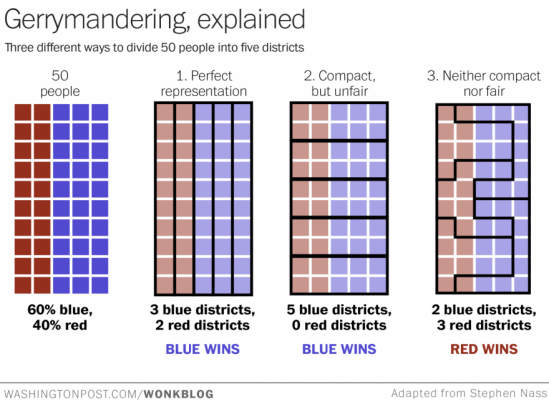
Packing: To concentrate as many voters of one type into a single electoral district in order to reduce their influence in other areas. In some cases, legislatures may do this to obtain representation for a community of common interest (like a majority-minority district), rather than to dilute that interest over several districts to the point of ineffectiveness (and to avoid likely racial discrimination lawsuits if minority groups are involved). You can often see this in congressional districts pertaining to urban communities of color. When the party controlling the districting process has a statewide majority, packing is usually not necessary since the minority party can be “cracked” everywhere. Though it’s often employed by parties to pack voters together into a minimum number of districts and don’t have enough representation in others to win the majority of the House’s seats. Because by forfeiting a few districts packed with the opposition, cracking can be used in shaping the remaining districts.

Hijacking: Redraws 2 districts in such a way as to force 2 incumbents of the same political party to run against each other in one district, ensuring that one of them will be eliminated. Meanwhile, this would leave the other district to be won by someone from a different political party. A good example of this happened in my own congressional district during the early 2000s, when Congressmen John Murtha and Frank Mascara had to compete against each other. And my district ended up with a representative from Johnstown.

Kidnapping: Aims to move areas where a certain elected official has significant support to another district, making it more difficult to win future elections with a new electorate. This is often employed against politicians representing multiple urban areas, removing larger cities in order to make the district more rural.

These tactics are typically combined in some form, creating new “forfeit” seats for packed voters of one type in order to secure more seats and greater voter representation of another type. This results in candidates of one party (usually the one responsible for the gerrymandering) winning by small majorities in most of the districts and another winning by a large majority in only a few.

Gerrymandering Types:

momentum640

Prison-based gerrymandering is when they count urban prisoners in their rural corrections facilities as residents despite that they can’t vote or they don’t live there. Here is a map of what states and localities have done to handle the problem. As for those who don’t, well, it’s very clear they benefit from it.

Partisan Gerrymandering– When districts are redrawn in order to increase a political party’s power in legislatures. This is the most general form of gerrymandering that it’s just referred to as “gerrymandering.”

Incumbent or Bipartisan Gerrymandering– When the districts are redrawn in order to protect incumbents in both parties in order to keep the status quo, regardless of what voters want.

Prison-Based Gerrymandering– Counting incarcerated people who aren’t allowed to vote in the district where the prison is located instead of their home district.

Negative Racial Gerrymandering– Drawing districts to prevent racial and ethnic minorities from electing their candidates. White Southern Democrats used this from Reconstruction to the mid-20th century to reduce black people’s voting impact if efforts to effectively disenfranchise them had failed. Prohibited thanks to the 1965 Voting Rights Act and subsequent amendments.

Affirmative Racial Gerrymandering– Drawing district lines in order to favor ethnic and racial groups. Though whether it benefits minorities is very hard to say since the practice is controversial that there are several Supreme Court rulings on this. Because this type has been known to both increase and decrease minority representation in federal and state governments. Since the Civil Rights Era, it’s been difficult to determine since most minorities vote Democrat while white conservatives have shifted Republican during the last 4 decades. Nevertheless, the Supreme Court has ruled in the North Carolina case that partisan gerrymandering along racial lines is unconstitutional.

Signs of Gerrymandering in Your State:

Votes_vs_Representation_v2

One key sign of gerrymandering is that the election outcomes don’t reflect the votes cast. Now while the South is mostly Republican now, there should be more Democratic representatives as you can see. But gerrymandering skews the results so Republicans can send more representatives.

  1. The shapes of the congressional districts makes no logical sense. – This is an easy one to spot but it’s not always a guarantee. Sometimes districts can be drawn in ridiculous ways for a very important reason like adhering to the Voting Rights Act. The VRA ensures that minority voters can’t be unfairly packed or cracked in ways that reduce their chances of electing representatives representing their communities. But the vast majority of the time a contorted looking district is a warning sign of gerrymandering.
  2. Your community has virtually little in common with most of your fellow constituents in the district.– You might feel good about living in a district where your congressman shares your views. But you might think it odd that your fellow supporters don’t even live in the same city or school district. You and your Republican friends have been “packed” together into a conservative echo-chamber. Everyone shares the same ideas and generally agrees with each other. And you start feeling like you don’t need to be involved. Or the communities in the district just don’t simply belong together. For instance, in Pennsylvania, my district, the 18th, is lumped together with most of Washington and Greene Counties along with a good chunks of Allegheny and Westmoreland Counties. But the 9th District includes Fayette and Indiana Counties which don’t have much to do with each other at all. Whereas, residents in Westmoreland and Fayette County have known each other for years, especially where I live. Their high school sports teams play against each other. The state government and other organizations usually has them in the same jurisdiction. People even have friends and family living in both counties. And don’t get me started on the 12th District which is just a sliver stretching from Lawrence County through Beaver, Allegheny, Westmoreland, Somerset, and Cambria, which seems to defy all explanation. Meanwhile, the 14th District is basically crammed into a Democratic pocket in Allegheny County.
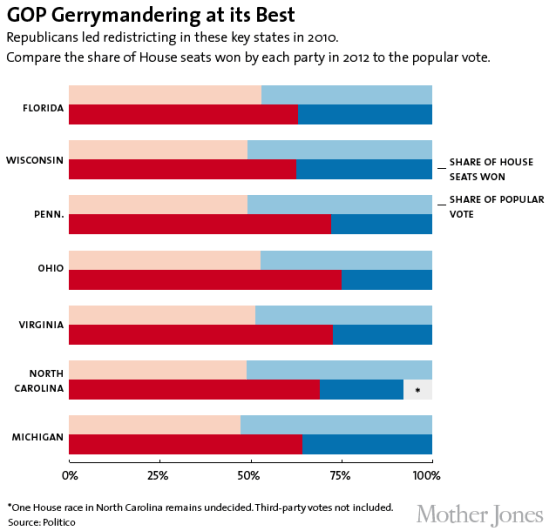
  3. Election outcomes don’t match votes.- This is the surest sign of gerrymandering. One way to measure this through the efficiency gap, computing the difference in wasted votes from the 2 political parties summed all over the districts in the state divided by the number of votes. When parties win elections in rough proportion to their electoral popularity, the efficiency gap is near zero with both parties having an equal wasted vote distribution. But if the gap exceeded a certain threshold, then you can surmise the party with fewer wasted votes could control the state as long as the district map was valid. They used this measure to determined gerrymandering in Wisconsin. In the 2012 Election, Republicans in that state had 48.6% of the 2 party votes, 61% of its 99 districts in the state legislature. Thus, its efficiency gap was 11.69% to 13%. The Supreme Court is expected to hear a case on Wisconsin’s gerrymandering in the fall of this year. Yet, in 2012, Republicans in state legislators also received a minority of the statewide vote in Florida, Michigan, North Carolina, Ohio, and my home state of Pennsylvania, but still ended up controlling the state legislatures. And scholars estimate that gerrymandering has helped congressional Republicans control 10-15 more seats in the House even though Democratic congressional candidates received more votes in 2012.
  4. Your district has been changed and you feel like you can no longer make your voice heard.– Now this has happened to me a couple times in my life since mine was switched from Murtha’s to Murphy’s while I was in college. So let’s say you’re a Democrat who’s voted for Democratic candidates during the last few elections. Then you and other Democrats get “cracked” away from your neighbors and put you into a Republican majority district. That Republican representative in your district doesn’t need to listen to your voice on your concerns because they know all their Republican supporters will re-elect them year after year. Your Democratic voice gets lost in your district’s Republican majority. This might leave you feel hopeless and disenfranchised. Or like you shouldn’t even bother voting because Tim Murphy will always win unopposed.
  5. Your representative skipped a town hall to go golfing with a lobbyist.– As taxpayers and voters, our politicians are supposed to work for us. Having politicians manipulate voting maps to keep themselves in office turns democracy on its head. When your district’s drawn to avoid outside competition and to ensure only one party’s candidate wins, chances are your representative doesn’t need worry about what their constituents think of them. Thus, they could spend more time hanging out with lobbyist friends and cater to their wealthy donors’ needs. Even if you might belong to the advantaged party, you’re still not going to get good representation because our elected official knows that reelection is in the bag, whether they listen to you or not. You see this a lot with Republican representatives voting for the American Healthcare Act which most of their constituents don’t want at all. It’s very clear, the House couldn’t have passed that bill if gerrymandering wasn’t involved.
  6. You feel like you don’t need to vote because the candidate who won the primary will win the election anyway.- When one party has manipulated the system to ensure they hold the majority in specific districts, the election itself becomes a mere formality.
  7. The dominant party’s candidates are more worried about a primary challenger than the opposition candidate.- When elected party officials pay more attention to the primary than the general election, they become more extreme since their focus is scoring points against the other party than solve problems most important to Americans. We should also understand that primaries are held on many different dates, generate less attention, and attract disproportionate shares of hardcore, ideological party activists to the polls. In 2014, only 14.6% of eligible voters participated in congressional primaries which was a record low. This means a tiny fraction of voters who are the most hardened partisans are essentially electing 90% of Congressional members.
  8. Your representatives support policies most constituents in your district oppose.- Despite that political polarization is strong in America, there are still plenty of issues most voters can agree upon. One recent example of this is Republican healthcare plan to replace Obamacare which faces strong opposition from the American public across the political spectrum and in all 50 states. However, that didn’t stop congressional Republicans from passing the American Healthcare Act in May. They were able to pass such egregious legislation because they either didn’t feel they needed to listen to their constituents’ viewpoints and/or knew that voting the way their constituents wanted them to would result in their party or donors throwing their support to a more extreme primary challenger. The fact so many congressional Republicans avoided holding townhalls when the AHCA was up for debate strongly suggest the latter.

Why Gerrymandering Is Bad:

stacked-gop

In recent years, Republicans have greatly benefited from gerrymandering as seen in this graph. And because of this, many cities aren’t well represented at all.

  1. Undermines the democratic process by putting the majority party at an unfair advantage.– With gerrymandering, your representatives pick the voters most likely to reelect them again and again. That’s not how democracy is supposed to work. We the voters should choose our politicians, not the other way around. We deserve fair elections and a transparent process for determining our districts. If not, then elections just become mere formalities.
  2. Takes power away from voters to hold their representatives accountable.-When districts have been drawn to avoid competition and to ensure one party’s candidate wins, our representatives don’t really need to worry about listening to constituents with differing political viewpoints Because they’re virtually guaranteed reelection simply because of their party affiliation and ideology. This can be very frustrating if your representative isn’t in your party and doesn’t support the same views as you do.
  3. Significant vote wastage from the other side which leads to partisan distortion.– The advantaged party will have voters in packed districts whose votes go for naught. And they will have more than 50%+1 in cracked districts to be reasonably sure of winning. 55-45% or a 10 point partisan advantage is often the target but it can be more. And sometimes it may turn out to be less. Wasted votes are almost always expected in elections. But significant vote wastage in several district may result in representatives that may reflect the interests of slightly more than 50% of their district’s voters. This might not seem much, but when you take the votes altogether, it can really add up. But a high amount of wasted votes means that vast swaths of the American electorate aren’t being represented in Congress or state legislatures at all.
  4. Reinforces and increases hyper-partisanship and polarization in government.– Forming districts to ensure high levels of partisanship often result in higher levels of partisanship in legislative bodies. Manipulating and stretching congressional districts also pushes incumbents to extremes of the political spectrum. Mostly because fear of a primary challenger drives incumbents focus on maintaining ideological purity than legislative pragmatism. If a substantial number of districts are designed to be polarized, then their representatives will act in a heavily partisan manner, creating and perpetuating partisan gridlock. Nevertheless, redistricting has become a major front in the permanent campaign between parties. Party members, Congress members, and state legislators find their own interests in reelection and majority status importantly connected to these redistricting efforts. This makes them even more inclined to cooperate with partisan team play that it drains the policy-making process of its capacity to negotiate and compromise. Thus, even well-meaning politicians can’t do their jobs representing spread-out communities with different needs and priorities, effectively maintaining offices across wide geographic areas, or solve problems that affect us all.
  5. Fewer competitive districts and more safe incumbents.– Incumbents are far more likely to be reelected under gerrymandering and are more likely to be of the majority party orchestrating the gerrymander. Thus, incumbents are usually easily renominated in subsequent elections, even if they are in the minority party. California’s 2000 redistricting effort redrew congressional district lines in ways that all but guaranteed incumbent victories. As a result California only saw congressional seat change hands between 2000 and 2010. Not to mention, if districts become increasingly stretched out, candidates must pay increased costs for transportation and campaign advertising. The incumbent’s advantage of securing funds will certainly give them a significant advantage. In many districts, some representatives could run unopposed.
  6. Reduces political power in minority groups.- Gerrymandering may be advocated to improve representation within legislatures among otherwise underrepresented minority groups by packing them into a single district. But the practices is controversial for good reason. First, being confined to a single district may lead minority groups to remain marginalized because candidates outside their district no longer need to represent them to win elections.
  7. Emboldens politicians to enact unpopular policies.– Whenever gerrymandering ensures guaranteed victories to your representative, they will have less incentive to represent their constituents’ interests, even when those interests have majority support across the electorate. And they’re much more beholden to their party establishment and wealthy donors. After all, why go to a town hall while reelection’s already in the bag? As a result, your representative more likely to support bills you won’t like whether they belong in your party or not. The passage of the AHCA by congressional Republicans is a perfect example of this since most of the American public strongly opposed it. And even now, it’s very likely many of Republicans who voted for this morally indefensible bill will be reelected anyway.
  8. Encourages redistricting practices that create inaccurate pictures of community populations.– One practice that exists today is prison-based gerrymandering. Now the Census Bureau counts incarcerated people as residents of towns where they’re confined which is used to draw legislative districts. This interferes with equal representation in virtually every state and skews demographics. This phenomenon violates the idea of one person, one vote for 3 reasons. First, these prisoners are disenfranchised in 48 states and can’t vote in local elections anyway. Second, prisons are disproportionately built in rural areas while most incarcerated people call urban areas home. Counting urban prisoners as “residents” of rural districts artificially inflates political representation in rural districts containing large prisons at expense of voters in all other places without them, especially communities bearing the most direct costs of crime. Third, counting large populations of prisoners as local residents leads to misleading conclusions about community size and growth.
  9. Drives down voter turnout.– Since gerrymandering often results in incumbents able to win elections either lopsided or unopposed, many people get disenchanted with the electoral process and not vote. After all, your vote from the opposition will probably be wasted anyway.
  10. Allows outside money and influence control parties’ agendas.– This makes representatives more beholden to party ideology and wealthy donors as well as makes it easier for extremists to gain control of the party. What happened to the GOP during the 2016 Election is a perfect example of this.

How to Detect, Handle, and Prevent Gerrymandering:

gerrymandering_compact

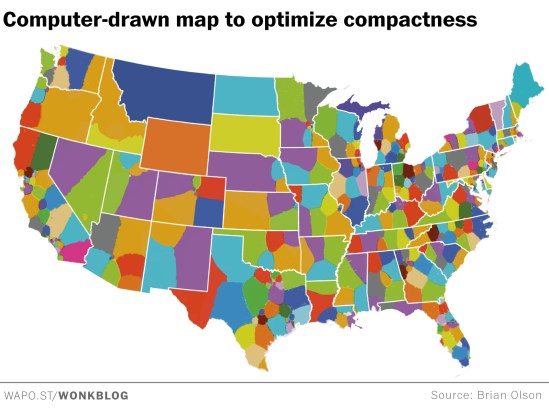
Here’s a rough map on what the United States would look like if the districts were redrawn for compactness. By the way, this is done by a computer.

  1. Calculating the Efficiency Gap to determine whether either party enjoyed a systematic advantage in turning votes into seats.– This is the difference of the wasted votes between political parties summed all over the districts divided by the number of votes expressed by this equation:
  • Efficiency Gap = (Total Democratic Wasted Votes – Total Republican Wasted Votes) ÷ Total Votes

When each party wins a district election in rough proportion to its popularity, the efficiency gap is near zero. But if a district plan is above a certain threshold a gap of 2 or more seats in congressional elections or a gap of 8% or greater for state legislature races, then there’s a constitutional problem.

  1. Ensure that each plan must meet neutral redistricting criteria.- The US Supreme Court has held that if a jurisdiction’s redistricting plan violates the Equal Protection Clause or the Voting Rights Act of 1965, then a federal court must order the jurisdiction to propose a new redistricting plan that remedies the gerrymandering. If that jurisdiction fails to do so, then the court itself must draw a redistricting plan that cures the violation and use its equitable powers to impose the plan on the jurisdiction. At the state level, courts may impose redistricting plans on jurisdictions where legislatures have to follow standards such as partisan fairness.
  2. Establish non-partisan redistricting commissions instead of politicians.– After all, if elected legislators want to increase their own political influence, then state legislatures shouldn’t control redistricting. After all, you wouldn’t let athletes serve as referees during their own games. So far, states like California, Hawaii, Washington, New Jersey, and Arizona have resorted to creating standing committees for redistricting since the 2010 census. These commissions’ new maps don’t have to be approved by state legislatures. Yet, they’re not necessarily non-partisan per se since they all have seats for Democratic and Republican appointees. Yet, some have additional seats reserved for independent and non-partisan figures. Letting computers to redraw districts more fairly based on the recent Census.
  3. Stop counting prisoners as residents like the Census Bureau does for redistricting state and local legislatures.– Counting prisoners as residents leads to prison-based gerrymandering which gives certain communities disproportionate representation. States can correct this by creating a special state-level census collecting home addresses of people in prison and then adjusts the US Census counts prior to redistricting. Legislation in part modeled after how Kansas changes where the US counts students and the military has also been passed in California, Delaware, Maryland, and New York. Another thing states can do is standardize collecting home address information when people are shipped off to the state pen. Over time, this will generate a complete home address information dataset for use in future redistricting or the Census Bureau to use directly. States can also prohibit state, county, and municipal legislative districts from using prison populations as padding. Those at correctional facilities should be declared as living as “addresses unknown” and not included in the redistricting data, except where the home address data exists and a state agency can adjust the Census Bureau’s redistricting data to reflect those counted at home. Such solutions can eliminate electoral harm caused by prison-based gerrymandering and provide a complete solution counting everyone in the correct location by next Census.
  4. Increase transparency regulations in the redistricting process.– When a single political party controls both the legislative houses in a state during redistricting, both Democrats and Republicans have displayed a marked propensity for conducting the process in secrecy with no oversight or standards of fairness. A 2012 investigation by the Center for Public Integrity reviewed every state’s redistricting processes for both transparency and potential for public input, assigning 24 states grades of either D or F. So the need for transparency in redistricting is clear. In response, redistricting legislation has been introduced to Congress a number of times in recent years, including Redistricting Transparency Acts of 2010, 2011, and 2013. The merit on increasing transparency in redistricting is based largely on the idea that lawmakers would be less inclined to draw gerrymandered districts if they had to defend such districts in public.
  5. Outlaw voter profiling.– In recent years, advancements in technology have led to elaborate voter datasets and special districting software has made gerrymandering a more precise science. Using such databases, gerrymandering politicians can predict voting behavior of each potential district with an astonishing degree of precision, leaving little chance for accidentally creating a competitive district. If we want redistricting based on neutral criteria, then this practice should be done away with since it’s basically the representatives choosing the voters.
  6. Experiment with alternative voting systems.– The predominant voting system in the US is a first-past-the-post system requiring single member districts to exist. Various alternative district-based voting systems that minimally rely on redistricting or not at all. These typically involve at-large elections or multimember districts. Examples include the single-transferable vote, cumulative voting, and limited voting. There are also proportional voting systems used in most European countries no districts are present, and the party that gets, for example, 30% of the votes gets roughly 30% of the seats in the legislature. Since the US has a 2 party system, that threshold could be about 45-50%. However, proportional voting systems might break the strong constituency link that’s an American election cornerstone.
FairDistricts_2.21.17

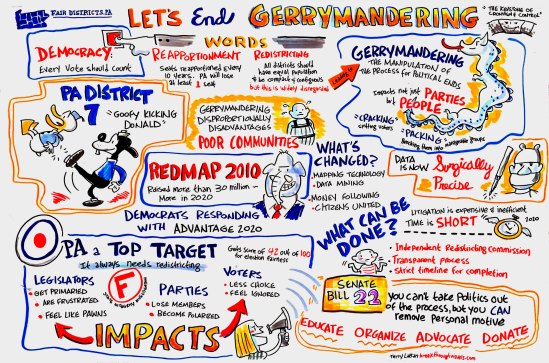
And so I end this post with a rough guide to gerrymandering in Pennsylvania. Still, this is a major problem in American democracy that affect us all. We need to do something about it.

The Republicans’ War on Obamacare Must End Once and for All

screen-shot-2017-03-08-at-2-13-54-pm

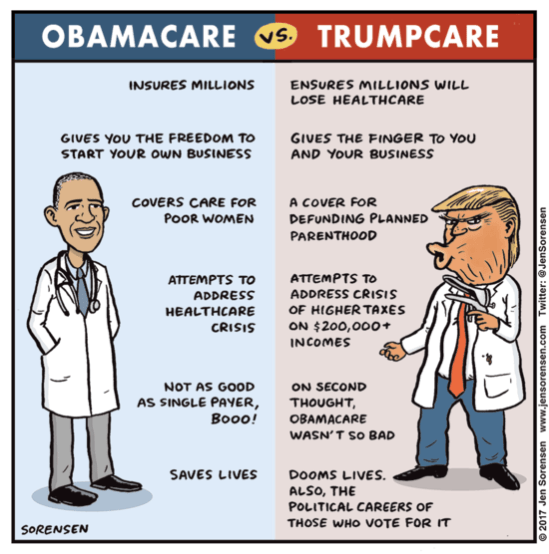
As Donald Trump’s Russian investigation circus dominates the headlines and airwaves, Senate Republicans are secretly working on their bill to repeal and replace the Affordable Care Act also known as Obamacare. So far on what we heard, it’s said to be quite similar to the dreaded American Healthcare Act that passed in the US House of Representatives back in early May save for a seven-year Medicaid expansion phase out. But it’s possible that the US Senate can vote on this bill before the 4th of July recess. Though we may not know what’s in the GOP Senate bill, we need to understand that the Republicans’ vision on healthcare is fundamentally unpopular and has more to do with implementing a massive tax cut for their rich donors and their free market ideology into federal policy. They GOP establishment doesn’t think it’s the government’s job to make sure everyone has healthcare and that publicly funded healthcare expands government power. And they’re keeping their bill a secret in order to keep their healthcare vision pure. But whatever their healthcare bill is, it’s clear it would likely lead to fewer Americans having health insurance and billions being cut from Medicaid. Should the Senate GOP come to a vote in the coming weeks, then resisting such travesty can’t be more important than now. And it’s paramount that Americans speak up against the GOP effort to repeal Obamacare before it’s too late since healthcare touches all our lives.

obamacare-trumpcare915

As a Catholic and a liberal, I’ve always believed that for-profit health insurance is inherently wrong since it makes money on people’s misery and discriminates against the old, sick, disabled, and poor. Nobody should be denied healthcare for any reason. I passionately believe that healthcare is a fundamental right that nobody can take away. As someone on the autism spectrum who’s on Medicaid, I consider such service a godsend and liberating. I’m not ashamed for relying on Medicaid since it government medical assistance has greatly helped me throughout my life. And I’m perfectly fine with my tax dollars paying for other people’s medical treatments, especially if they’re much more disadvantaged than me. Though finding a decent dentist who takes my plan is a pain in the ass, it at least provides the healthcare access I need so finding a job with health benefits isn’t a matter of life and death. If my job doesn’t provide health benefits, then I can purchase a subsidized plan on the individual market thanks to the Obamacare exchanges and the Medicaid expansion. And thanks to Obamacare, I won’t have to worry about lifetime caps or my autism being a preexisting condition. Still, while I don’t think Obamacare goes far enough and would prefer a single payer US healthcare policy, I strongly think that it’s a step in the right direction and improves healthcare access drastically. To repeal and replace it with a healthcare plan that takes healthcare away from people who benefit from Obamacare like myself is malicious and cruel. To me healthcare isn’t about government, money, or whether we should pay for other people’s treatment. It’s an issue of human dignity as well as a matter life and death. The idea of the GOP healthcare becoming law scares the hell out of me. And I’m very afraid I’ll lose my Medicaid and may never be able to get health insurance that’s just as good, or at all. I shouldn’t have to lose my healthcare just so some rich guy can have a massive tax cut he doesn’t even need. Nor should anyone else. I strongly wish the Republicans give up trying to repeal Obamacare once and for all because politicians, corporations, and employers shouldn’t decide who should have access to healthcare. If someone gets sick or injured, they should receive the best care they need without breaking the bank. And I don’t care who that person is, whether they can afford it or who has to pay for their treatment. Because if their life depends on receiving care, then nothing else should matter. And I think it’s an appalling shame that too many people in this country don’t agree with me on that.

eaker-gov-just-stop-being-poor-american-health-care-act-of-16012621

Here is a list of reasons why we need to stop the Republicans from repealing Obamacare and replacing it with a cruel substitute that nobody wants.


  1. The Republican Healthcare Plan to Repeal and Replace Obamacare is being comprised in secret and is being rushed to passage violates legislative due process.– Regardless of what you think about Obamacare, the process to pass the Affordable Care Act was lengthy, thorough, and transparent. In the House the ACA, received 79 hearings with 181 witnesses and 121 amendments as well as took over a year to pass. By contrast, Trumpcare has been rushed as well as negotiated in backrooms without input from experts, stakeholders, or the public. In the House, the AHCA received literally no hearings, no witnesses, and no substantive amendments and the Republicans passed it less than 2 months after revealing it. As of now, a group of 13 GOP Senators are deciding the future of the American healthcare system without following formal processes or seeking public input. Republican senators are now cutting deals on Trumpcare through informal working groups aimed at getting support for their healthcare plan from any holdouts. These working groups don’t include a single female Senator-Republican or Democrat. The Senate hasn’t held any public hearings or listening sessions on Trumpcare. Nor have they asked for feedback from any of the key stakeholders such as the public, children’s or disability rights groups providers, nor small business owners. Nevertheless, on such a major piece of legislation like Trumpcare, public debate is essential since it promotes accountability by leaving a public record of how a law came to be. And hearings give lawmakers the chance to hear from experts on what the bill would do. These GOP procedural shortcuts are the height of hypocrisy and set a dangerous precedent.
  2. The Republican Healthcare Plan to Repeal and Replace Obamacare is highly favorable to conservative free market ideology.– One of the main reasons for all the secrecy for the GOP drafting their healthcare legislation in secret is that Republicans want their plan to be as conservative ideologically pure as possible. Sure they want to scrap Obamacare but not because it doesn’t cover enough people and rising premiums. But they want to do so because they don’t believe the government should have to provide healthcare or regulate the healthcare industry. Nor do they believe that taxpayers should pay for other people’s healthcare. The GOP isn’t interested in the opinions of families or healthcare providers who will live out the consequences of their decisions every day. What most Americans want more government intervention in healthcare as well as expand coverage and access. The AHCA does the opposite of that which is what the Republicans want, which at its core is to redirect money spent to buy insurance for the poor to $600 billion tax cuts for the rich.
  3. The Republican Healthcare Plan to Repeal and Replace Obamacare is an unacceptable moral travesty.– Knowing what’s in the American Healthcare Act, it’s very clear that the GOP Senate’s healthcare plan would be no different from this one. A healthcare policy that denies health insurance to millions of Americans isn’t just horrifically unpopular and unsustainable, it’s also inherently cruel. Healthcare is a right that should never be denied to anyone in need of it. A bill that takes away healthcare from millions of people is unacceptable. Denying a poor person lifesaving medical care is not only a death sentence, but also undermines their humanity by reducing them to a financial risk. It also deprives them of a right to live or that their life doesn’t matter. Unfortunately this is the norm in the US healthcare system even with Obamacare though at a smaller scale. And if Trumpcare becomes law, expect such atrocities to happen more often. If we value human life and dignity, then we should make sure that nobody has the right to people’s access to healthcare. Whether this means more government intervention or a taxpayer funded healthcare system shouldn’t even matter.
  4. The Republican Healthcare Plan to Repeal and Replace Obamacare is wildly unpopular.– There is not a majority supporting the GOP healthcare plan in a single US state. Not one. Less than 20% of Americans Trumpcare. Most American healthcare establishment has condemned it. The reason why GOP Senators are now crafting healthcare legislation in secret is because they know the public doesn’t want it. And they know voting for such a plan could politically cost them big time come 2018. But at the same time, they don’t want to alienate their base and donors who want Obamacare repealed as soon as possible. Though it would be better for Republicans politically as well as the nation, if they just give up trying to repeal Obamacare and leave it alone.
  5. The Republican Healthcare Plan to Repeal and Replace Obamacare threatens health security for every American.– Unless you’re young, rich, and/or relatively healthy, Trumpcare could determine whether millions of Americans will have health coverage. The healthcare system touches all our lives and a GOP plan to repeal Obamacare could leave millions of Americans uninsured, which can be a matter of life or death to thousands of them. Not to mention, it’s greatly apparent that most of the American public and the healthcare industry don’t want the GOP’s healthcare plan. That doesn’t even get to the fact that the House passed the American Healthcare Act with no input from experts, stakeholders, or the public. Nor did the AHCA received any hearings, witnesses, or substantive amendments to the actual legislation accepted in committee. They tried to pass it 17 days after revealing it and were able to do so in less than 2 months. Surely any major piece of legislation that threatens at least your healthcare security shouldn’t be rushed through a very undemocratic process.
  6. The American Healthcare Act takes away healthcare from 23 million Americans.-According to nonpartisan estimates by the Congressional Budget Office (CBO). This will result in 24,000-44,000 more Americans dying every year from lack of insurance along with medical bankruptcies, lost wages, untreated illnesses, and others.
  7. The American Healthcare Act hikes deductibles by $1500 on average.– Trumpcare pushes Americans into low quality, high cost-sharing health insurance by providing meager tax credits compared to the Affordable Care Act. This is the opposite of what Trump promised in his campaign. This will have particular negative impact for those least able to pay them.
  8. The American Healthcare Act ends federal protections for people with pre-existing conditions.– TrumpCare incentivizes states to drop consumer protections, meaning insurance companies will be able to charge people with pre-existing conditions more. 130 million Americans have a pre-existing condition. Insurers in states that adopt opt-out waivers on ACA protections could charge people with pre-existing conditions 10 to 20 times more than others. And the CBO estimates that 1 in 6 people in the country would live in such a state. People could face premiums well over $100,000. Though Republicans are trying to make the case that high-risk pools will protect people with pre-existing conditions, they’ve been tried before and don’t work. And they usually have significantly higher premiums, lifetime limits, enrollment caps, waiting lists, and lock-out periods.
  9. The American Healthcare Act allows insurance companies to charge older Americans significantly more their healthcare.– A single, 64-year-old adult making 26,500 a year would have to pay between $13,600 and $16,100 in annual premiums, depending on whether they live in a state that sought a waiver from consumer protections. Compare this to the $1,700 the same person would have to pay under the current law, that’s a 950% increase.
  10. The American Healthcare Act cuts $834 billion from Medicaid, a program that more than 70 million Americans, half of which are children, rely on.– Medicaid is the largest health insurance provider in the United States and is funded by the government. Trumpcare cuts federal funding for the program which will result in states having to ration care and cut the quality of services. This could be devastating for the elderly, people with disabilities, the chronically ill, the mentally ill, addicts, children, and low income families. And many of these people would end up uninsured and unable to get health insurance anywhere else, especially if they have pre-existing conditions or if their employer doesn’t provide it. Under Trumpcare, Medicaid for kids, elderly, and the disabled is radically transformed into a system where states get fixed funding, regardless of their healthcare needs and unexpected disasters like Zika or opioid addiction spikes that drive up the cost of services. It’s estimated that under Trumpcare, 14 million will lose their Medicaid coverage.
  11. The American Healthcare Act puts lifetime and annual benefit caps on the table for even those with employer coverage.– This means a baby with a serious medical condition could use up its lifetime limits in the first month of life under Trumpcare.
  12. The American Healthcare Act makes women pay more for health insurance than men.– Because insurance companies could charge more for pre-existing conditions like breast cancer or assault survival and because pregnancy care no longer would be a required benefit, women would once again pay more for healthcare than men. The CBO estimates that woman wanting maternity care will have to add $1000 a month to her premiums.
  13. The American Healthcare Act defunds Planned Parenthood.– Nearly 3 million Americans, especially women and families receive affordable healthcare services annually at Planned Parenthood facilities. Trumpcare prohibits funding from going to these clinics.
  14. The American Healthcare Act harms children with special needs by cutting Special Education funds for schools.– Medicaid funds a large portion of education for students with a variety of disabilities. Buried in this bill is a provision that no longer recognizes schools as required Medicaid providers, on top of massive cuts to the program.
  15. Under the American Healthcare Act, health insurance companies can cover fewer essential health benefits even under employer plans.– Under Obamacare, insurance companies are required to cover a list of 10 essential health benefits including doctors’ services, inpatient and outpatient care, prescription drug coverage, pregnancy and childbirth, mental health services, and more as well as limits out of pocket costs. States under Trumpcare allows states to opt out of essential benefit requirements which will mean higher premiums and more out of pocket costs.
  16. The American Healthcare Act eliminates the employer mandate for large companies which will result in 7 million American workers losing employer coverage.– Under Obamacare, businesses with at least 50 employees are required to offer health insurance to their full time workers. Trumpcare eliminates this mandate which will result in large businesses dumping people off their employee-sponsored insurance. This will be particularly devastating to low income workers who may be able to afford purchasing healthcare on the individual market, especially if they have pre-existing conditions and higher premiums. And many will certainly not have the Medicaid expansion to fall back on.
  17. And the American Healthcare Act does all this to pay for $600 billion in tax breaks for the wealthy and corporations.– Providing a massive tax cut to the rich and corporations is no justification for denying millions of people healthcare. I don’t care what your political beliefs are. Still, if you want to finance healthcare access to people who can’t afford it, other people have to pay for it. And for rich people and corporations, that price is relatively small compared to what most Americans have to put up with if they don’t pay the bill.
  18. The American Healthcare Act will result in more abortions as well as maternal and infant deaths.– Because that’s what happens when you defund Planned Parenthood, cut $834 billion from Medicaid, no longer have pregnancy care as a required benefit, designate pregnancy and disabilities as pre-existing conditions, and cut access to healthcare entirely for millions of women. Lack of access to healthcare is a major reason why a lot of women terminate their pregnancies and why maternal deaths in the US are so high right now. Because when a pregnant woman doesn’t have healthcare access, having an abortion isn’t much of a choice. Because Texas refused to expand Medicaid and has taken great lengths to close its abortion clinics, it now has the highest maternal mortality rate in the entire developed world. Many of these women who die from pregnancy-related complications are poor and uninsured. Not to mention, before Obamacare, it’s widely noted that that insurance companies forced women to abort if their unborn babies had birth defects. A bill funding abortions on demand upholds the sanctity of human life far more than Trumpcare ever could, especially if a poor woman’s alternative is death. If we’re a society who values life and wants to save unborn babies, then ensuring that their mothers have access to healthcare is absolutely vital.
  19. The American Healthcare Act will exacerbate the opioid crisis.– Under the ACA, substance abuse treatment is considered an essential health benefit health insurance companies are required to cover. Many Americans also depend on Medicaid to pay for their substance abuse treatment as well. While the opioid crisis is devastating at epic proportions, it had existed long before Obamacare was made into law. Yet, if it wasn’t for Obamacare, the opioid crisis would’ve been much worse since many addicts would’ve not had access to treatment. This is especially the case for low income Americans who’ve suffered the most. Trumpcare could deny these people the very treatment they need to get their lives back on track which will result in more overdose deaths, family tragedies, and ravaged communities. Furthermore, under Trumpcare, insurance companies can deny or limit care to opioid addicts since substance abuse has often been seen as a pre-existing condition.
  20. The American Healthcare Act will result in more lives more deaths and disabilities from gun violence.– Another major public health crisis in the US is gun violence which kills nearly as many people as opioid addiction and costs American taxpayers $229 billion or over $700 per American annually. The total cost of gun violence amounts to more than the total cost of obesity and almost as much as the annual price tag for the entire Medicaid program. This includes at least $8.6 billion in direct expenses such as for emergency and medical care, which can include follow-ups, readmissions, disability, home medications, extended treatments like physical therapy, mental health services, and loss of work. From 2006-2014, the annual cost for initial hospitalizations for firearms injuries averaged $734.6 million per year. Medicaid paid about 1/3 of the costs, the largest proportion while insured patients accounted for over a quarter since most gun victims are young men from low income areas. For every one person who dies from a gunshot, there are 3 or 4 who usually survive. Individuals hospitalized for firearm injury were 30 times more likely to be re-hospitalized for another gun injury and 11 times more likely to die from gun violence within the next 5 years. A gunshot wound can wreck a person’s whole life if they don’t seek proper medical treatment as soon as possible. Many poor people either die or become permanently disabled from gunshot wounds, because they can’t afford the emergency room bill which amount to thousands of dollars. Yet, many suffer with long term physical, mental, and financial problems. And gunshot wounds often drive up US medical costs. Should Trumpcare become law, expect more gun victims leaving hospitals without adequate medical care and more uninsured victims. Not to mention, higher medical costs for the rest of us.
  21. The American Healthcare Act will result in more preventable deaths.– Despite what one Republican Idaho congressman might tell you, people have died because they were uninsured. Before the American Healthcare Act was passed, a 2009 study in the American Journal of Public Health found that lack of health insurance was associated with 45,000 deaths per year. The study’s author reported that lack of healthcare access contributed to one person dying every 12 minutes. If Trumpcare becomes law, it’s estimated that 22,000 – 44,000 will die a year due to lack of health insurance.
  22. The American Healthcare Act will hurt the US economy.– The Commonwealth Fund estimates that Trumpcare can cost over 1.8 million jobs. Not to mention, since it will certainly result in higher healthcare costs, expect job loss and hospital closings in the healthcare industry, especially in poor and rural areas. We should remember the healthcare industry accounts for 1/6 of the US economy, employs 19 million people. Also, high premiums, healthcare costs, and lack of affordable options might lead many people to reconsider quitting their jobs to start their own business, a concept known as “job lock.”
  23. The American Healthcare Act will hurt communities.– Since Trumpcare will make healthcare less affordable, this will leave many hospitals and medical facilities vulnerable to closing, particularly in rural and impoverished areas. Hospitals provide a critical function in local communities. A hospital closing not only costs jobs and revenue, but also cuts healthcare access to the people who live there, forcing them to seek medical care farther away. This can be especially devastating in impoverished and rural areas.
  24. The American Healthcare Act will hurt Americans’ quality of life.– While Obamacare has its faults, it at least provided millions of Americans with adequate healthcare coverage and options to meet many people’s needs and don’t break the bank. Thanks to the ACA, more people are covered and are more willing to visit a doctor. Not to mention, more people are able to depend less on employee-sponsored health benefits and are able to leave their job to start a business, raise a child, or retire early. And if you can’t find a job or lost one for reasons beyond one’s control, then it’s not the end of the world if your state has the Medicaid expansion. Trumpcare can have devastating implications on people’s lives, especially if they’re unable to get treatment for chronic pre-existing conditions. Many already employed may be forced to return to the workforce and to jobs they despise. Those who can’t find a job would be under increased pressure to find one while those who’ve lost theirs can lose their benefits. But both would be unable to find an affordable healthcare plan on the individual market, especially if they have a pre-existing condition. Same goes for those who lose their healthcare due to divorce or death of a spouse. People in abusive relationships could end up staying with their abusive partners. Those struggling with addiction and mental illness may not be able to seek treatment. Those who can’t work due to illness may end up unable to afford coverage and be forced to postpone treatment, which can make them even sicker. And it increases the possibility for people’s medical treatments driving them to bankruptcy.
  25. The American Healthcare Act is fundamentally Un-American.– If patriotism should mean anything to us, then it means sacrificing for the common good. Under the ACA, healthier and wealthier Americans pay a little more so sicker and poorer Americans don’t die. A for-profit healthcare system where people are seen to deserve the best deal they can get for themselves just doesn’t deliver that promise. Most Americans know that very well and are perfectly willing to subsidize poorer and sicker people under Obamacare, especially if it means better coverage for them. The Republican passage of the American Healthcare Act in May is a major betrayal to American values. In addition, it’s undemocratic to fast-track a major piece of legislation that would affect people’s lives every day without even consulting them, especially if it’s a policy the public doesn’t want at all.

The Political Backlash Against Public Protest

22march9-superJumbo

Now that we’ve embarked on the winter of our discontent, millions of Americans find their civil liberties, health, and personal safety either severely compromised or under constant threat. Since January, the Trump administration and Republican Party’s actions have repeatedly illustrated that it has no respect for America’s democratic values or its people. Regardless of what Trump supporters believe in, these are not normal times. Supporting such an unrespectable man is inherently unacceptable. Not because I’m a liberal Democrat who doesn’t respect other people’s values or opinions I don’t agree with. Though that may be true to some extent, especially if their beliefs can be translated into policies undermining mine or anyone else’s quality of life, fundamental rights as human beings, and affordable access to basic needs and opportunities. And I am deeply convinced that Trump’s presidency as well as Republican politicians in the federal and state governments champion policies that do nothing but screw Americans’ lives in more ways than one. For many including myself, resistance to Trump and the GOP isn’t strictly due to politics nor is it in any way optional. Yet, though I have turned to blogging the occasional diatribe several times, many have staged protests such as taking to the streets numerous times. Over the past year, a historical level of protest and activism has spilled out into the nation’s parks, streets, and sidewalks. The Women’s March anchored in Washington D.C. with echoes across the nation, was perhaps the single largest day of protest in American history.

Nevertheless, since the end of 2016, a Republican lawmakers in more than 20 states have introduced wave of anti-protest bills in state legislatures. These pieces of legislation attempt to criminalize and penalize protesting in various ways such as increasing fines and jail sentences for protestors obstructing justice, tampering with or trespassing on infrastructure such as railways and pipelines, picketing, wearing masks, or refusing to leave an “unlawful protest.” Anti-protest bills in North Dakota, Tennessee, and Florida remove liability from drivers who “accidentally” hit and kill protestors. A bill in Indiana initially instructed police to clear protestors from highways by “any means necessary.” Proposed legislation in Washington and North Carolina label protests, “economic terrorism.” A bill in Minnesota charges policing costs to protestors. Bills in Michigan and North Carolina allows businesses to sue individuals protesting them. A bill in Arizona uses anti-racketeering laws to seize protestors’ assets. And a bill in Oregon would require public community colleges to expel students convicted of participating in a “violent riot.” As the ACLU’s Vera Eidelman said, “The proposed bills have been especially pervasive in states where protests flourished recently. This flood of bills represents an unprecedented level of hostility towards protesters in the 21st century. And many of these bills attack the right to speak out precisely where the Supreme Court has historically held it to be the most robust: in public parks, streets and sidewalks.” The United Nations has also decried the trend as “incompatible with US obligations under international human rights law” and that they represent “a worrying trend that could result in a detrimental impact on the rights to freedom of peaceful assembly and freedom of expression in the country.”

Despite that some media articles portray the recent increase in legislation targeting protesting due to large and almost daily demonstrations since Trump’s inauguration, this troubling trend actually began before he took office. Anti-protest bills in Washington, Minnesota, Michigan, and North Dakota were among the earliest introduced as a direct response to the labor movement lobbying to raise the minimum wage, Black Lives Matter demonstrations erupting following police killings, and resistance against the Dakota Access Pipeline by Indigenous water protectors at Standing Rock. Still, due to Trump’s 3 executive orders on policing, Republican domination of most state legislatures, the Trump administration’s pro-policing and pro-business attitude, and the rise of constant and spontaneous anti-Trump protests, you get an atmosphere where many powerful interests have stake in suppressing mass dissent. Of course, journalists, civil liberties experts, lawyers, and Democratic lawmakers have addressed that these bills criminalize peaceful protests and chill dissent. They note that penalties for these actions already exist. For instance, there isn’t a single city or county in the US that can’t already prosecute people for intentionally obstructing cars or pedestrians or for trespassing on private property. When a protest in Baton Rouge grew so large it spilled into the streets, the problem wasn’t that law enforcement couldn’t arrest anyone engaged in wrongdoing. In fact, quite the contrary since the police relied on existing trespass or obstruction laws to dramatically and unconstitutionally overcharge peaceful protestors. Not to mention, many existing laws always attempt to balance between the right to protest and the ability to drive. Also, anti-protest legislation is obviously unconstitutional since it violates the First Amendment protecting freedom of speech. Several of these bills have already been rejected such as those in Virginia, Michigan, and Arizona. But many still remain under consideration so anyone with an interest in protecting dissent must still remain vigilant and vigorously opposing those still on the table.

Yet, there are disturbing trends behind introducing such flagrantly unconstitutional legislation are false assumptions about protesting. For instance, Arizona’s anti-protest bill was explicitly based on the claim that protestors are paid to be in the streets. The “paid protestor myth has long existed as well as been codified in police training manual and Trump’s rhetoric. However, while seasoned activists mostly dismiss the paid protestor idea as a joke, the politicians introducing these anti-protest bills are deadly serious. And it’s mostly believed that liberal billionaire George Soros who usually distributes the protesting paychecks that don’t really exist. Despite his Open Society Foundation offering grants to those working on specific projects like civil liberties and criminal justice reform, there’s absolutely no evidence he’s paid people to be in the streets. Yet, that didn’t stop Washington State Senator Doug Eriksen specifically naming him and the Sierra Club as intended targets while introducing anti-protest legislation in his state. Another protest myth is behind a measure in Georgia’s pro-policing bill package which creates a new felony for protestors throwing “human or animal excreta” at police during demonstrations. Yet, though throwing literal shit at cops has often been cited in police manuals, there’s no evidence such incidents actually happened.

Additionally, another alarming trend besides punishing people with significant imprisonment and fines based on claims with no supporting evidence, anti-protest bills also attempt to redefine what a “riot” means so more actions can fall under this category and to link protesting to terrorism. Arizona’s proposal would’ve expanded the state’s anti-racketeering laws to designate rioting under organized crime. It also would’ve redefined rioting to include vandalism. Washington’s bill went a bit further to recharacterize protests as acts of “economic terrorism” like a non-violent demonstration hurting a company’s bottom line is being re-classified as a serious threat deserving severe punishment.

Of course, the recent anti-protest legislation surge isn’t the first time state legislatures tried to clamp down on effective demonstrations. In 2006, Congress passed The Animal Enterprise Terrorism Act which allegedly protects animal enterprises by defining “eco-terrorists” as animal and environmental activists who successfully pose a threat from businesses profiting from critters. This legislation tied protesting to “terrorism” that animal rights activists were imprisoned despite doing nothing more than running a website. After AETA, the conservative bill mill known as the American Legislative Exchange Council (ALEC) produced model legislation for the state level, expanding on AETA to further erode Constitutional rights and heavily punish animal rights and environmental activists. Hopefully, none of the proposed bills were passed by any state legislature.

However, we should really keep in mind that Republican lawmakers didn’t stop there. Instead, they used an incremental approach of inserting these failed bills’ key provisions into other legislation. Some of these can include using specific language like ecological terrorism or including the same penalties for a more limited number of offenses than the original legislation. So keep that lesson in mind when it comes to this round of unconstitutional and punitive legislation.

Fortunately, many of these current anti-protest bills are so obviously unconstitutional and based on outright lies that they’re unlikely to past. Already many have failed while others have been sent back to committees for revisions to make them more acceptable to lawmakers and the general public. And we should expect to see some parts of these bills introduced elsewhere should they fail in their current form. Even so, the fact so many of these anti-protest bills that have been introduced will likely have a chilling effect on dissent as well as create a climate of confusion and fear. Few people would be as willing to protest if they thought they could easily get arrested, fined, jailed, or even killed. The lack of clarity over where these bills stand in the legislative process, the low likelihood they’ll bass in their current forms, and the actual consequences if they do is enough to cast doubt among any would be protester.

Civil liberties advocates are now questioning which individuals or interest groups are behind this legislation wave targeting mass protest and the right to dissent. ALEC is most likely involved due to its anti-worker and anti-environmental platform which many of these protests are at odds with. Yet, ALEC’s model legislation strategy is commonplace and well-absorbed so it doesn’t need formal organization from above. Lawmakers could simply copy or adapt legislation from other states. Another possible organizing force behind anti-protest legislation are police unions and their coordinated efforts of law enforcement. Thanks to the Trump administration’s pro-policing stance, it’s not much of a surprise for law enforcement organizations prioritizing criminalizing protest activity.

Americans have a love-hate relationship with protesting. On one hand, it’s disruptive to normal activity as it’s supposed to be. But on the other hand, it’s an American tradition that’s helped to advance considerable progress on civil rights and improved living conditions. Many of what the US has accomplished to create a more perfect union was made possible thanks to public protests. Of course, not all of them have been peaceful such as the labor protests during the Gilded Age. Nevertheless, even without that, it’s possible I may not be able to attend college or write this blog today. Nevertheless, to criminalize peaceful protests is a flagrant violation of the First Amendment which guarantees freedom of speech, freedom of assembly, and freedom of petition. Criminalizing peaceful protest isn’t only unconstitutional, it’s un-American and unacceptable. In a representative democracy, when people come together to voice their dissent, they help create change. Today, state representatives should be celebrating that their constituents are getting out into the streets and making their voices heard. Yet, tragically, thanks to corporate campaign donors, state reps call their efforts “garbage” and are proposing bills that would criminalize protests or even put protestors’ lives in danger. Sure they won’t admit to it when promoting these bills. But that’s the ultimate aim. Legislators in states with significant protest activity should listen to those voices speaking out, especially in moments of disagreement. Not silence them.

Why We Need to Stop Likening Donald Trump to Andrew Jackson

Imacon Color Scanner

As president, Donald Trump has often been linked to Andrew Jackson in both good qualities and bad. Trump has braced the comparison since he chose to grace the Oval Office with Jackson’s portrait as well as laid a wreath at his grave at the Hermitage in Nashville, Tennessee to honor his 250th birthday. Though he doesn’t try to claim that he shares the policies and attitudes Jackson embraced, he’s proposed to be in the 21st what the seventh president was during the 19th. After all, what made Jackson so fondly remembered by some was his connection to ordinary people as well as his embodiment of populist politics. Meanwhile, detractors often note how Jackson was an unapologetic racist and slave owner whose harsh treatment of Indian tribes eventually led to the Trail of Tears. And they often remark compare it to how Trump used racism to win over the support of working class whites as a political outsider taking on the establishment and riding into Washington to return power to the people. However, though understand Americans’ need to make historical comparisons, I find the idea of likening Trump to Old Hickory deeply insulting to Andrew Jackson and his memory.

Now I understand that Andrew Jackson wouldn’t rank among many Americans’ favorite presidents for very justifiable reasons. Sure he was an unapologetic racist who defended slavery without question and his policy on Indian removal in the Southeast resulted in tragic consequences such as the Trail of Tears, destruction of tribal culture, and genocide. In addition, Jackson’s dismantling of the Bank of the United States led to the Panic of 1837 as well as decades of frequent bank failures and economic instability until the creation of the Federal Reserve. Jackson’s practice of appointing personal associates, wealthy friends, and party loyalists to federal offices as a reward for victory generated what would later be called the spoils system which led to a lot of government corruption for decades and eventually the assassination of a US president. And yes, I understand that like Trump, Jackson could be especially harsh on his enemies, violated political norms and constitutional concepts he didn’t like, had some anti-intellectual tendencies, was obsessed with the media, occasionally had little regard for the law and institutions, and was seen by his detractors as an unstable demagogue and a would-be dictator.

However, besides inspiring distrust in certain elements of political elites in their day along with some other qualities, Trump and Jackson have little in common. In fact, Andrew Jackson would’ve despised Trump and liken his sham populism to an image of William Henry Harrison drinking hard cider in front of a log cabin. Jackson certainly would’ve been greatly insulted of Trump citing him as his hero and a reflection of himself. Such notion that a draft-dodging elitist and opportunist who’d apply to his high-born privilege in order to skirt the consequences for his legion of despicable business practices and did nothing to demonstrate a commitment to public service could resemble Old Hickory basically desecrates almost everything about him and what he stood for. Whenever you see Jackson’s portrait in Trump’s Oval Office, don’t see it as being enshrined in a place of honor regardless of what you think of him. Rather think of Jackson’s presence in the Oval Office as one of great misfortune of having to see a man like Trump exploit him as nothing more than a mere prop to shamelessly project his faux populist image in order to deceive his constituents with no second thought. Only to betray his lowly supporters by using his presidential power to enrich himself along with his elitist friends, backers, allies, as well as the GOP and corporate establishment at the common people’s expense. All Jackson can do is hopelessly watch by, unable to tell the world what he was all about in his defense while Trump distorts his image and legacy for his own benefit. Jackson may not have been an exemplary role model, but he was certainly no Donald Trump. And we should see Trump’s honoring him as nothing short of disgraceful to a man who’s currently turning in his grave.

By all accounts, Andrew Jackson was a complex and fascinating man who remains one of the most studied and controversial Americans in the 19th century. Whether you love him or hate him, there are plenty of qualities about the man you have to respect as well as the impact he made. And despite all the awful stuff he did, there’s a reason why historians rate his presidency so highly. Generations of parents named their sons after Jackson, often placing both his names before their surname. Jackson’s election to the presidency comes off as a vindication of American ideals and affirms American greatness. Jackson’s unapologetic defense of slavery and infamous policy regarding Indian removal have marred his complicated legacy and for very good reason. The fact he made his fortune speculating Indian lands as well as owning (and possibly trading) slaves doesn’t help his reputation. Yet, he was a staunch believer in popular democracy (at least among white men) and believed in the sanctity of the American Union with almost religious conviction. But despite his lasting reputation as an aggressive, no nonsense, I’ll-do-things-my-way kind of guy, Jackson was far more than the one dimensional caricature he’s often depicted as. He was self-raised, self-educated, and well-read in current events (with a subscription to 17 newspapers). He conducted himself as a quintessential Southern gentleman with exquisite manners and a rather gallant attitude towards women. Though nasty and spiteful to enemies, he was generous, considerate, and loyal to his friends and a devoted husband to his wife Rachel. Though strong in his convictions and an intense partisan, he was not without moments of compromise and indecision. And he wasn’t above appointing cabinet members who disagreed with him like his closest advisor Martin Van Buren as well as Edward Livingston and Louis McLane. Nor did he always hold grudges for he welcomed Thomas Hart Benton back into the fold despite being a longtime foe. Furthermore, he considered his word his bond as well as strived to exhibit fidelity, honor, and integrity.

We need to understand that what attracted ordinary people to support Jackson was totally different than what attracted people to Trump. Though 19th century political campaigns often involved nasty mudslinging, Jackson’s appeal to the common people had much more to do with the great positive sentiment Jackson evoked in the average Americans at the time. What ordinary Americans loved most about him was that he really was one of them. His father died before he was born while his mother died in his teens. Everything Jackson achieved in life came through his own efforts. What Jackson projected is the belief that any kid can grow up to be president. If a poor kid from the Carolinas can reach the White House, then it must be the case that talent, grit, and honor could make up for the humblest beginnings. His modest background as a self-made man on the frontier who championed those of his former station cast him as an outsider from the aristocracy of Washington’s political elite. The people loved him for it and voted for him out of affinity and pride. His 1829 inauguration saw one of the largest crowds by that point as he took the oath of office at the US Capitol’s East Portico. After the ceremony, Jackson invited the public to the White House for a reception where thousands of his supporters held a raucous party, inflicting a degree of damage to the fixtures and furnishings

And Andrew Jackson had done plenty in his lifetime of public service to earn his supporters’ admiration that they were glad to cast their vote for him. He served as a courier to a local colonial militia during the American Revolution and at the Battle of Hanging Rock during his early teens. At 14, he was taken captured by the British, where he braved small pox, starvation, and being slashed by a British officer for refusing to clean his boots. When he moved to Tennessee as an adult, he spent much of that time in the service of his adopted state and the US. He helped write the state’s constitution and served as a circuit judge. He represented Tennessee in the House and the Senate. He was governor of Florida while it was a federal territory. Most famously, Jackson commanded Tennessee militia and later US Army troops during the War of 1812, earning the name “Old Hickory” for his resilience in combat and willingness to endure the same hardships as his men. He fought a war against the Creek Indians with an arm in his sling from a shoulder wound. His victory at the Battle of New Orleans was the signal triumph of the American armed forces between the Revolution and the Civil War. During that time, Jackson was broadly acclaimed as second only to George Washington among the pantheon of American military heroes. Because despite the War of 1812 being virtually over for 2 weeks thanks to the Treaty of Ghent, the British had still viewed the Louisiana Purchase as illegitimate. Had the Brits seized on New Orleans, they were prepared, treaty or no treaty, to declare the Louisiana Purchase a dead letter and redraw the political map of North America. Jackson’s victory ensured that the British wouldn’t renegotiate peace terms ending the war. Though some people questioned Jackson’s politics, nobody questioned his courage and patriotism.

We should also understand that there was much more about Andrew Jackson than this image of a wild backwoodsman initially suggests. When a young woman from South Carolina named Julia Ann Conner visited his Hermitage in 1827, she found him to be nothing like she expected. Rather she wrote him to be a “venerable, dignified, fine-looking man, perfectly easy in manner.” She noted how Jackson kept articles he received from the Washington’s family on his mantelpiece as “preserved with almost sacred veneration.” Conner even joined him in a game of chess and referred Jackson as an “excellent player” as he “frequently directed my moves—apparently much interested in the fate of the game … there were no traces of the ‘military chieftain’ as he is called!” This is a very different portrait of Jackson than what many Americans are used to. But it nonetheless explains much of his character. Though he may come off as reckless, he more often played games in politics and war with skill and patience. His enemies and much of posterity never quite understood that what was the most fundamental fact about Jackson wasn’t a problem with his temper, but more often than not, his ability to control it and harness that energy in ways that would’ve driven other politicians to ruin such as intimidating his foes or advancing his agenda. Sure he was prone to fits of rage and for getting into duels and brawls, especially as a young man. But he was self-aware enough to understand his weaknesses and took care to compensate for them. With that came a kind of self-restraint, which worked so well his closest advisor, Martin Van Buren marveled how Jackson could turn anger on and off at will. But as Conner noted, he was as at home with his chessboard as he was with charging blindly forward. Though he certainly was a powerful personality, Jackson’s rise from his humble beginnings could never be possible without his shrewdness, resourcefulness, as well as his capacity to cultivate himself while retaining an image as a fearsome and violent man of action he used to his advantage. Yet, seeing Jackson this way makes the idea of him being a reflection of Trump astoundingly laughable.

Andrew Jackson’s distrust for elites and the Washington establishment was also very different from Trump’s. A political centrist and believer in Jeffersonian principles, Jackson believed that monied and business interests would corrupt Republican values. While his defeat of the Second Bank of the United States and his opposition to federal public works projects hurt ordinary Americans, his rationale behind both reflects that sentiment. Back in the 19th century, legislatures often granted corporations charters to build infrastructure which gave them valuable privileges. State governments often shared corporate ownership with private investors. Jackson feared that public investments offered unearned advantages to insiders that would surely lead to corruption and as he put it, “destroy the purity of our government.” Nevertheless, despite vetoing the Marysville Road project, Jackson’s administration saw more federal funding on infrastructure than all his predecessors combined. And Jackson’s Marysville Road veto had more to do with it connecting two towns in Kentucky, which he viewed as nothing more than a pork barrel project for Henry Clay’s home state.

As for the Second Bank of the United States, well, it was a public-private corporation partly funded by taxpayers but controlled by private investors, some of whom were European. Despite its hold on the nation’s currency gave it immense economic powers such as destroying state banks by calling in their loans, it faced no democratic oversight. And its capital was twice the federal government’s expenditures. The Panic of 1819 was particularly devastating for ordinary Americans thanks excessive land speculation, unsecured loans, misrepresentation, and the unrestrained use of paper money. The Bank did little to relieve since it was deeply enmeshed in these inflationary practices. Jackson opposed the Bank because he considered it a privileged, monopolistic, and undemocratic corporation. He was sure the Bank made dubious loans and campaign contributions to influence politicians and editors as well as to even buy elections. When the bill to renew the charter reached his desk, Jackson vetoed it bristled with populist attacks ringing eerily familiar. He charged that “The rich and powerful too often bend the acts of government to their selfish purposes.” They sought special favors “to make the rich richer and the potent more powerful,” rightly leading “the humbler members of society—the farmers, mechanics, and laborers … to complain of the injustice of their government.” In his farewell address, Jackson warned that the people, “have little or no share in the direction of the great moneyed corporations,” and were always “in danger of losing their fair influence in the government.” Today, you’d find many of these anti-big business sentiments in a Bernie Sanders speech against the Citizens United ruling, a Supreme Court decision that Jackson would’ve certainly not enforced. Trump, on the other hand, clearly sees absolutely no problem with corporate influence on government as illustrated by his donations to various political entities including Citizens United, receiving generous campaign contributions, and appointing billionaire CEOs to cabinet positions.

Nevertheless, what’s the most outrageous about the Trump-Jackson analogy is the most basic. Regardless what you think about him, Andrew Jackson was the president who more than any other, secured the future of American democracy. For the quarter-century before Jackson, presidents were essentially aristocrats who essentially appointed their own successors with the Election of 1800 being the only exception. When he was elected to the presidency in 1828, he won with 56% of the popular vote which was 12 points more than his opponent, John Quincy Adams. By frustrating Adams’s bid for reelection, Jackson broke the mold and became president at a time when states had started abandoning their property and residency voting requirements, which he both encouraged and benefitted from. Sure Jacksonian democracy fell short of today’s model since most women and blacks couldn’t vote. But by enfranchising all white males other than property owners, it represented a huge step forward from the unabashed elitism characterizing the 18th century. That elitism was part of why many in the political establishment in Jackson’s time likened him to a dangerous demagogue as well as an unstable, would-be dictator. We should note that the Founding Fathers came up with the Electoral College and election of senators through the state legislatures because they harbored a lot of distrust toward the common people and likened democracy to mob rule. Jackson knew this and as president, had repeatedly called for a constitutional amendment to abolish it for reasons we don’t have to get into after 2016. And it was certainly why then Speaker Henry Clay encouraged the House of Representatives to choose John Quincy Adams over Jackson in 1824, which resulted in his appointment as Secretary of State. Furious Jackson supporters would call this a “corrupt bargain” because their candidate won at least 42% of the popular vote. Yet, because no candidate received a clear majority of electoral votes (due to the race consisting of 4 different guys), the decision fell to the House. Still, had Jackson succeeded in eliminating the Electoral College, Trump would’ve never become president since he lost the popular vote by the largest historical margin of anyone who’s ever won the presidency.

Moreover, Andrew Jackson’s character and worldview reflected a genuine conviction in the people’s ultimate wisdom. He came to that populism through his experience and his own humble beginnings. As a self-made man, he saw his political mission to remove what he believed to be corrupting influences such as the Second Bank of the United States, entrenched federal appointees, and money speculators. That so ordinary Americans which he called “the planter, the farmer, the mechanic, and the laborer” could rise to prosperity. In other words, Jackson believed the federal government should benefit the interests of all Americans and that political participation should be a right. And he expanded the role of the presidency from mere executive to active representative of the people. Another one of Jackson’s most central beliefs was the inviolability of the federal Union and that concepts like secession and nullification were unacceptable. The fact he was willing to go to war with South Carolina when it threatened to secede during the Nullification Crisis illustrate this. Jackson believed that popular democracy spoke most clearly when the nation spoke as the nation. Not as separate polities in individual states. And that the union must be preserved above all else. His ideas in popular democracy and devotion to the Union above all else have left an indelible mark in the American consciousness, both of which he considered as inseparable. Generations after him have built on them and expanded on and in ways even he wouldn’t have imagined. Yes, his idea of popular democracy only included all white men. But it nevertheless provided a foundation for women and minorities to campaign for their voting rights as well as inspired almost every liberal and progressive movement and policy ever since. Jacksonian democracy became a touchstone of American politics that every presidential candidate since had to possess a common touch or effectively fake it. His idea of the president being the people’s representative has helped shaped the modern American presidency as we know it. And the Jacksonian concept that the union must be saved above all else strongly influenced the Union cause during the Civil War. Jackson’s policy during the Nullification Crisis set a precedent for Abraham Lincoln to follow through by sending military force against the Confederacy.

Andrew Jackson may have done plenty of terrible things that have hurt a lot people during his lifetime as well as led to plenty of negative repercussions even after he left office. He could sometimes be woefully wrong on what he thought was best for the American people. He may have stood on the wrong side of history in regards to defending slavery and removing Native Americans from their land so his friends could build plantations. Yes, he personally profited from stealing land from the Indians during the Indian wars. Yes, he brought a new coalition to elites into power such New York politicians, Pennsylvanian businessmen, and Southern slaveholders. And yes, he tended to their special interests as any typical politician. Still, Jackson was no opportunist and didn’t use populism as a political device. He didn’t use his image as a temperamental man for mere theatrics. He wanted to accomplish things. He never ever threw his friends under the bus even it was expedient to do so. He never embarrassed foreign dignitaries nor handled diplomatic disputes with anything other than moderation and skill. Nor did he try to profit from the presidency since he asked a friend to settle his business affairs after he won the election so he could focus on being president. But regardless of how we view Jackson today, he was a military hero who served his country in combat and a politician who generally placed the nation’s interests above his own. He symbolized the democratic struggle among the great majority against unearned power and special privilege. Furthermore, he was a firm believer in American democratic values as he once said, “As long as our government is administered for the good of the people, and is regulated by their will; as long as it secures to us the rights of persons and of property, liberty of conscience, and of the press, it will be worth defending.”

As Thomas Hart Benton said of the Jackson presidency, “Great is the confidence which he has always reposed in the discernment and equity of the American people. I have been accustomed to see him for many years, and under many discouraging trials; but never saw him doubt, for an instant, the ultimate support of the people … He always said the people would stand by those who stand by them.” Andrew Jackson was a very flawed man whose life and legacy reflected the best and the worst of America in his time and all time. Yet, even the ugliest parts of his life and legacy don’t dismiss him as any less than a man who tried to be worthy of the American people’s support. After all, despite that America has viewed itself as a beacon of liberty, democracy, and prosperity, it was also built on slavery and Native American displacement and genocide. And Jackson’s attitudes and actions regarding slavery and Native Americans are so glaring that they can’t be ignored. Nor should they be. Though his grave sins keep us from viewing him as an icon of reverence, Jackson’s life should teach us that even heroic men like him are seldom pillars of perfection. Jackson knew this for though he may have been critical of the founding generation, he nonetheless appreciated those responsible for crafting and refining the systems of checks and balances on which the nation was based. Even though he didn’t always observe them as president. Not to mention, a lot of Jackson’s own supporters didn’t always agree with him including close friends and advisers. Still, if Jackson and his fellow Democrats can get things so badly wrong, then we’re forever vulnerable as well. History may well remind us that we’re always at risk of falling short in the unending search for a more perfect Union.

Nevertheless, while Jackson shouldn’t be idolized on a pedestal, he doesn’t deserve outright vilification either even if he deserves being called out for his sins. Nor should he ever be reduced to a one-dimensional caricature since there’s nothing simple about him. Such approaches do a disservice to him as the complex and fascinating man he was and how he should be remembered as. Nor should he be embraced by a president who knows nothing about him, shares none of the causes he championed, and praises him so he can depict him in his own image. Donald Trump is no Andrew Jackson nor does he even come remotely close. Unlike the 7th president, this unrespectable man has repeatedly demonstrated that he cares more about himself than the American people and what is best for this nation’s future. His praises of dictators show he has more affinity for a culture common in authoritarian systems where ruling regimes have a monopoly on truth. Though he has promoted himself as a successful businessman, he’s very much a product of inherited wealth and unearned privilege which have gotten him where he is today. And he often used his status to avoid military service, federal taxes, and taking responsibility for his despicable business practices. Nor was his success the result of his hard work and natural ability. It’s very clear that Trump’s populism is a sham. Then there’s the fact Trump has promoted his real-estate investments during his presidential campaign as well as acknowledges that he “might have” discussed his global business interests in his talks with foreign leaders since his election. Even as president Trump hasn’t separated himself from his business, which puts him in clear violation of the Emoluments Clause. It’s very clear he’s profited from both his campaign and his presidency. His business interests abroad might have an impact on American foreign policy. To equate Jackson with Trump normalizes the latter in ways that should offend us in 2017. Jackson for all his faults doesn’t deserve to be equated to this unrespectable man, regardless of his sins. Jackson may not have been a great hero to many people’s eyes for very good reasons. But what Trump embodies basically goes against almost everything that Jackson stood for as well as exemplify why Americans still admire him today.

On the Firing of FBI Director James Comey

The decision to fire Comey happened so quickly that virtually no one had any warning. Various media outlets reported that multiple senior FBI and Department of Justice officials having no knowledge of Trump’s announcement ahead of the White House’s release. In fact, one CNN reporter tweeted about FBI sources texting him on whether the Comey news was true. Congress didn’t know either. Senator Dianne Feinstein knew about Comey’s firing only 20 minutes before White House announced it. Senator John Cornyn claimed he learned about it on his iPhone during a meeting. Comey found out while trying to recruit FBI agents in Los Angeles from a TV in the background. Comey laughed in response thinking it was a prank. Nevertheless, whether you liked him or hated him, his firing has profoundly troubling implications for the United States government. Like it or not, Comey was one of the few people in the Justice Department truly independent of Trump and willing to hold him accountable for his actions. And his ousting raised serious questions on Justice Department independence and possibly the integrity of American democracy as we know it.

As a liberal Democrat, I am no fan of FBI Director James Comey. I am still mad at him for his mishandling over Hillary Clinton’s e-mails, especially when he released a statement about discovering more of them in late October. Back in July, he claimed that while her use of a private e-mail server as Secretary of State was “extremely careless” in regard to classified information, he didn’t recommend bringing any charges against her. Then in late October, he wrote a new letter to Congress saying he discovered new Clinton e-mails that could be relevant which turned out to contain no significant new information. Nonetheless, the damage was done and Comey’s rogue conduct in the run-up to the 2016 presidential election may have cost Clinton the White House. But it also gave the impression that the FBI was intervening in an election and politicizing the US legal system. Comey’s behavior certainly violated longstanding FBI norms against trying targets of an investigation in the media. It didn’t help that in March 2017, Comey announced that the FBI had been investigating into Russian interference and links to the Trump campaign and whether there had been any coordination since July 2016. So if the FBI was looking into Trump’s connections with the Russians last summer, why didn’t Comey mention it earlier? And why did he decide to say anything about investigating Hillary’s e-mails instead? So, on one hand, I can totally see why Comey’s firing was deserved.

However, Comey’s dismissal is deeply disturbing since Donald Trump fired him and why. According to Deputy Attorney General Rod Rosenstein, it was over mishandling Hillary Cinton’s e-mail investigation last year. Sure Comey’s surprise public announcement of recommending no charges brought against Clinton “was wrong” because “it is not the function of the [FBI] director to make such an announcement.” The FBI should investigate while the Justice Department should decide whether to bring charges. But as Rosentein states, Comey, “announced his own conclusions about the nation’s most sensitive criminal investigation, without the authorization of duly appointed Justice Department leaders.” Yes, Comey “laid out his version of the facts for the news media as if it were a closing argument, but without a trial,” which Rosenstein writes, “is a textbook example of what federal prosecutors and agents are taught not to do.” And yes, Comey shouldn’t have told Congress about the FBI’s discovery of new Clinton e-mails while his defense whether to “speak” or “conceal” the investigation does him no favors. As Rosenstein argued, “When federal agents and prosecutors quietly open a criminal investigation, we are not concealing anything; we are simply following the longstanding policy that we refrain from publicizing non-public information.” Now I can’t disagree with Rosenstein’s points. Yet, it’s very clear the Trump administration is lying their asses off. Because while Comey certainly did mishandle Hillary’s e-mail investigation, Democrats have made strikingly similar criticisms about his behavior for months. They’ve even argued that Comey’s decision to send the letter in October might’ve put Trump in office.

In addition, what Rosenstein wrote in the Justice Department letters completely contradicts everything Trump and his boss Attorney General Jeff Sessions have said about Comey and Hillary Clinton since the campaign. Trump repeatedly complained that Comey was too soft on Clinton and responded to his late October letter to Congress saying, “It took guts for Director Comey to make the move that he made.” And he has long maintained that the FBI director was right to release it. If he has any complaints about Comey’s behavior, it’s that he didn’t go far enough. Then Senator Jeff Sessions that Comey had “an absolute duty, in my opinion, 11 days or not, to come forward with the new information that he has.” And he defended the FBI director’s July statements on Clinton stating that Obama’s Justice Department had put him in a position so he “had” to speak for himself. Neither of these men cared whether Comey violated longstanding FBI norms against trying investigation targets to the media. And it’s obvious there’s no reason to believe either would change their minds. Because both these men benefitted significantly from what Comey did. Besides, during his first week in office, Trump had asked Comey to stay on his post and he planned to serve out the full remainder of his term. By then, everything about his actions in the Clinton investigation were well-known. What changed between now and then that would’ve led Trump or Sessions view Comey’s handling of the situation so differently, is impossible to fathom. Nor would it make any sense. Besides, a New York Times report that Sessions had been “had been working to come up with reasons” to fire Comey since at least last week.

Donald Trump is a notorious liar and has a long history of corruption. For years, he called New York tabloids using a fake name. He claimed that climate change was a Chinese hoax before alleging he never said that during a debate. He’s constantly lied about his wealth that we’re not even sure how much he makes. He’s promised to release his tax returns but still hasn’t. He denied mocking a reporter with a disability when there’s a video showing him doing just that. He said Ted Cruz’s father was involved in the JFK assassination. He denied telling America to “check out [the] sex tape” of former Miss Universe Alicia Machado. He promised to get behind a healthcare bill that covered everyone, lowered deductibles, and avoided Medicaid cuts. But he endorsed the American Healthcare Act which does the opposite on all 3 counts.  It’s widely reported that Trump lies all the time that we just assume it whenever he opens his mouth or is on his Twitter feed.

Another reason is that what’s changed between January is that in March, Comey revealed the FBI is investigating whether Trump’s campaign or associates colluded with Russia during the 2016 election. Two days after his testimony, CNN reported that “the FBI has information that indicates associates of President Donald Trump communicated with suspected Russian operatives to possibly coordinate the release of information damaging to Hillary Clinton’s campaign.” And that the information came from “human intelligence, travel, business and phone records, and accounts of in-person meetings.” Though CNN’s reporters cautioned the info “was not conclusive,” the FBI was pointing in a direction it could implicate Trump officials. Had the bureau actually found hard proof that the Trump campaign had coordinated with the Russians, it would’ve been the kind of scandal that topples a presidency. By early April, the FBI investigation into Russia had to form a special unit for it in Washington. Meanwhile, the House investigation had stalled thanks to Rep. Devin Nunes’s weird insistence on backing up Trump’s wild claims about Obama spying on him in Trump Tower. And the fact Nunes was chairing the investigative committee despite that he served on Trump’s campaign and transition team. At the same time, the Senate proceeded slowly due to being given only limited funding and staff. But it was to the point where senators publicly complained about the pace. So that left the FBI conducting the most serious investigation to Trump’s Russia ties by far. And it was one Congress or journalists couldn’t match. The bureau had money, trained investigators, and access to powerful surveillance tools. But most importantly, it had a director entirely behind the investigation. This is easily illustrated in a report from the New York Times. According to them, just days before Comey’s firing, the FBI director asked the Justice department “for a significant increase in resources for the bureau’s investigation into Russia’s interference in the presidential election, according to three officials with knowledge of his request.”

Since at least last spring, there have been ongoing allegations of Russian collusion with the Trump campaign. Vladimir Putin is no fan of western democracy and has repeatedly tried to show his people how it’s no better than any other government system. Trump has praised Putin on multiple occasions along with other authoritarian leaders. And there’s mounting evidence multiple members of Trump’s campaign and administration were in direct contact with Russian intelligence in the run up to the election. And several have lied about it. Trump’s association with Russia has been the center of a scandal he can never shake off. And his sudden decision to oust Comey ensures that the scandal will haunt the rest of Trump’s presidency and hopefully end it prematurely.

Recently a report from CNN states that the FBI’s Russia investigation is just heating up. Grand jury subpoenas were issued to associates of fired National Security Adviser Michael Flynn. They wrote, “Investigators have been looking into possible wrongdoing in how Flynn handled disclosures about payments from clients tied to foreign governments including Russia and Turkey.” We should also account that President Barack Obama and former Acting Attorney General Sally Yates had warned Trump about Flynn well in advance. We all know that Flynn was fired for lying about his contacts with Russian Ambassador Sergey Kislyak. Now Flynn has sought immunity from prosecution (which he didn’t get) as it became clear he accepted money from the Russian and Turkish governments without properly disclosing it. Trump’s son-in-law and Senior White House aide Jared Kushner also held undisclosed meetings with Kislyak during the transition period and only made them public a few months later. Even more disturbing, then Attorney General designate Jeff Sessions lying under oath during his confirmation hearings. He told lawmakers he had no interactions with the Russian government. Only it turned out he had held conversations with Kisylak so he promised to recuse himself from the FBI investigation. Well, sort of. Because Sessions recommended that Trump fire Comey.

For a president to fire the FBI director looking into him and his associates, it’s natural to question about a cover-up. Nevertheless, Trump has repeatedly denounced the Russia story as “fake news.” He was reportedly very angry when Sessions recused himself from any investigations into the 2016 election in early March. Less than 24 hours before firing Comey, he apparently called the investigation of or hearings on the subject a “taxpayer funded charade,” and asked when it would “end.” In the letter in which he fired Comey, Trump stated that: “I greatly appreciate you informing me, on three separate occasions, that I am not under investigation. I nevertheless concur with the judgment of the Department of Justice that you are not able to effectively lead the Bureau.” It’s obvious he intended to shield himself from cover-up allegations.

A report from Politico states that Trump “had grown enraged by the Russia investigation, two advisers said, frustrated by his inability to control the mushrooming narrative around Russia.” According to an adviser, Trump, “repeatedly asked aides why the Russia investigation wouldn’t disappear and demanded they speak out for him. He would sometimes scream at television clips about the probe.” Several other people familiar with the events said that Trump “had talked about the firing for more than a week, and the [Justice Department] letters were written to give him a rationale for firing Comey.” Now this makes a lot more sense than what the administration said. Jake Tapper from CNN quoted a “source close to Comey” claiming the FBI director was fired for refusing to provide Trump “with any assurance of personal loyalty,” and because the bureau’s Russia investigation wasn’t going away but “accelerating.” And two New York Times reporters stated that on the day before the firing Trump, “told people around him that he wanted Mr. Comey gone, repeatedly questioning Mr. Comey’s fitness for the job and telling aides there was ‘something wrong’ with him.”

Trump has a long history of covering stuff up. It’s easy to presume the real reason behind Comey’s firing had something to do with the ongoing Russia investigation. However, we don’t really know that. Nevertheless, over the years, despite never facing a serious criminal investigation, he’s repeatedly bumped against one. Mostly because Trump has been able to use his money, power, and celebrity to get away with stuff that would’ve landed someone else in jail. So it’s no surprise he’d use his presidential powers to obstruct and subvert justice. All his life, Trump has gone to great lengths to avoid taking responsibility for his actions. He has viciously retaliated when anyone challenges him on them. And he has often rationalized them, often by blaming the victim. He seems to have been mixed up with the Mafia. His casinos have paid civil fines for evading money laundering rules. He’s been involved in empty box tax scams. Not to mention, he may have committed criminal tax evasion with his Trump Foundation. It’s possible Comey’s firing could’ve had something to do with Russia. But the FBI could’ve easily found some totally unrelated criminal misconduct. Or that Trump’s refusal to release his tax returns has nothing to do with Russian bribes or blackmail. What we do know is that Trump appears covering something up. We’re not exactly sure what it is. But it sure seems like something big and important. Since all the evidence seems to paint a very clear picture of a president deciding to fire an FBI director to obstruct an ongoing investigation before stitching together a shaky justification for doing so. In short, Trump fired Comey out of self-preservation which is consistent with everything else he’s done all his life.

Nevertheless, Comey’s firing was among 3 instances where Trump fired major Justice Department officials who served in the Obama administration. In his first 4 months in office, President Pussygrabber has fired the acting attorney general, asked 46 US attorneys to resign, and dismissed the director of the FBI. Some of these moves don’t seem unusual, at least in isolation. But take them together and it raises the question whether Trump has been trying to impede investigations into himself or his associates through muscling out independent actors in the Justice Department. Shortly after he was sworn in Trump fired Acting Attorney General Sally Yates for refusing to defend his travel ban in court. Though this move was unusual, it was aimed at someone who’d eventually leave her post once Jeff Sessions was confirmed. Yet, Trump would call her “an Obama Administration appointee who is weak on borders and very weak on illegal immigration” who “betrayed the Department of Justice.” Not to mention, Yates had given Trump’s White House counsel Doug McGahn a disturbing briefing warning that then-National Security adviser Michael Flynn was, “potentially vulnerable to Russian blackmail.”

In March, Trump asked for resignations from 46 US attorneys held over from the Obama years. In case you don’t know, these people are powerful DOJ law enforcement officials in their states and districts with a tradition of acting mostly independently. Yet, there’s a precedent for a new president to replace all his predecessor’s appointees though Trump has yet to nominate a single person for a US attorney post. But the firing of Preet Bharara stands out because Trump had asked him to stay on several months earlier and he refused to step down. ProPublica later revealed that Bharara had been investigating Health and Human Services Secretary Tom Price’s stock trades. Even more interesting, the New York Times reported that the day before he asked the US attorneys to resign, Trump’s office placed an unusual call to Bharara’s office for a call back. According to the report, Bharara reviewed Justice Department protocol and decided it wouldn’t be appropriate to return Trump’s call. Bharara suspects something weird going on, sending cryptic sounding tweets. One of these referred to the “Moreland Commission” which New York Governor Andrew Cuomo created to investigate state politics and hastily shut down as part of a political deal. Now Bharara was unanimously confirmed by the US Senate as US attorney was one of “the nation’s most aggressive and outspoken prosecutors of public corruption and Wall Street crime.” His tenure as the US attorney for the Southern District of New York prosecuted nearly 100 Wall Street executives for insider trading and other offenses. Hell, he was even speculated as a potential candidate for attorney general. Nevertheless, Bharara has sworn that serving as US attorney was “the greatest honor of my professional life” and that “one hallmark of justice is absolute independence, and that was my touchstone every day that I served.” However, the fact he operated on Trump’s home turf and possibly angered many of his donors probably had something to do with his firing.

But Trump’s firing of Comey is different since it’s the move with the least precedent and justification. The FBI director is a nonpartisan appointee who serves a 10 year term. Recent new presidents usually keep their predecessors’ FBI directors on as Trump said he’d keep Comey on, too. The only recent firing of an FBI director was in 1993 over alleged financial misdeeds. Democrats and Republicans alike may have dealt intense criticism to him over his handling on the Hillary Clinton e-mail investigation. But by January, he seemed to have all that behind him as Trump had told him he’d keep his post. Nevertheless, Comey’s ouster calls the independence of the US’s top law enforcement institutions into serious question, which is deeply troubling. Even Democrats deeply critical of Comey’s handling of Clinton’s e-mails have reacted in horror since he was clearly independent of Trump. And like Bharara and Yates, was highly regarded for his work. With his and earlier two firings, Trump has sent an unmistakable message to the Justice Department and other law enforcement officials refusing to toe the White House line may not keep their jobs for long.

Democrats have good reason to compare the Comey firing to the biggest political scandal: Watergate. If you’re American, Watergate has a singular resonance that nearly every scandal eventually has a “-gate” added to its name. And they’re quick to call to create the position that ultimately led to Richard Nixon’s downfall: a special prosecutor with broad investigative powers and the freedom to follow evidence without needing congressional approval. Massachusetts Senator Edward Markey remarked that the Comey firing was “disturbingly reminiscent of the Saturday Night Massacre during the Watergate scandal and the national turmoil it caused.” What Markey describes is when Nixon tried to kneecap a dangerous investigation into his own wrongdoing. In October 1973, special prosecutor Archibald Cox issued a subpoena ordering Nixon to turn over copies of taped conversations in the Oval Office. Nixon refused before ordering Attorney General Elliot L. Richardson to fire him. Richardson refused and resigned in protest. Nixon then gave the same order to Deputy Attorney General William D. Ruckelshaus who refused and also quit in protest. So Nixon turned to then-Solicitor General Robert Bork who agreed to do what the other two officials would not. After Cox was out, Nixon, according to the Washington Post, “also abolished the office of the special prosecutor and turned over to the Justice Department the entire responsibility for further investigation and prosecution of suspects and defendants in Watergate and related cases.”

And that’s where it becomes all the more relevant. It’s not just that Trump fired the guy charged with leading the explosive investigation into whether his campaign colluded with the Russians as Moscow searched for ways to ensure Hillary Clinton’s defeat. It’s that Trump is putting that investigation back into the hands of a Justice Department led by Jeff Sessions. Sessions’s own ties to Russia and his own lies about them make him spectacularly unfit for any role in determining the Trump-Russia investigation’s future course or who’d be leading it. And we all know that Trump won’t let the executive branch investigate his own and his associates’ actions. By ousting Comey and putting FBI and Justice Department independence into question, Trump has given employees potential motivations to leak further in an administration already plagued by damaging anonymous leaks from intelligence agencies and law enforcement already. And those leaks could have serious consequences. After all, Bob Woodward and Carl Bernstein’s famous source Deep Throat turned out to be a high-ranking FBI agent.

Yet, when Nixon tried to curb the Watergate investigation through firing Justice Department officials, it led to bipartisan backlash. A new special prosecutor was appointed who seriously pursued the matter, a congressional investigation moved forward, and it all ended with Nixon’s resignation in order to what seemed like certain impeachment. But back then there were principled Republicans like Ruckelhaus, Richardson, John Dean, and Senator Howard Bakker who put country over party and acted with courage and honor. The political system has considerably changed since 40 years ago, especially in the Republican Party. Whether serious investigations into Trump will continue depends on a large part on how congressional Republicans act since they control the House and Senate. But now we have Republicans like Senate Majority Leader Mitch McConnell and House Speaker Paul Ryan who Trump is unfit for office but won’t act. So far for the most part, they’ve been willing and eager to try to defend Trump and shield him from potentially damaging investigations. Though several Republican senators did criticize him the night of the firing and the party can come under increased pressure to create a special bipartisan committee investigating either Comey’s ouster or the Russia scandal.

Still, despite everyone demanding for a special prosecutor and that the next FBI director be independent and impartial, it would be naïve to think that the Republican Party cared about the integrity of American government institutions to force Trump into complying with some basic ethics guidelines and undertake meaningful financial disclosures. But we should remember that this is the same party that blocked Merrick Garland’s nomination to the Supreme Court during the Obama administration because they didn’t want the highest court in the land to flip Democrat after Antonin Scalia’s sudden demise. In the Trump administration, we have Ivanka Trump hawking a book from inside the West Wing and nobody having any clue what kind of sweetheart deals corporations or foreign governments with business before the US government are striking with the Trump Organization. And in exchange for turning a blind eye towards Trump’s corruption, Republicans get a slate of conservative judges, a solid roster of business-friendly regulators, and if they’re lucky, a giant tax cut for the rich and millions cut off from Medicaid benefits and Obamacare exchanges. Nevertheless, the price is obvious. The deeper you get in bed with Trump, the more tightly your fate is intertwined with his. And keep in mind, that last week, House Republicans had a big party at the White House for passing a profoundly malicious healthcare bill nobody wanted. But whether Republicans will continue sucking up to Trump or put nation over party remains to be seen. Nevertheless, a reporter from Marketwatch has said that McConnell and Ryan won’t do their jobs out of fear that exercising their duty could rile up Trump’s supporters, which may cost them their power. And because of their fear of the mob, they enable Trump’s narcissism, incompetence, corruption, and contempt for the Constitution and the American people.

It’s clear Comey’s firing doesn’t seem to faze Senate Majority Leader Mitch McConnell who’s said he doesn’t see any need for a special prosecutor or an independent commission to review Russia’s influence on the 2016 election. He also implied that calls for another investigation were “partisan” arguing that Democrats should be in favor of Trump’s decision. Sure Dems have bemoaned how Comey handled Hillary Clinton’s e-mail probe. But not to the degree that they wanted him fired, least of all by Trump. And it’s especially the case since he was the man investigating Russian interference in the 2016 election as well as seemed to be among the few who could’ve truly held Trump accountable. Besides, several congressional Republicans are now beginning to question the timing and rationale behind Comey’s firing, too. Senator John McCain said in a statement, “I have long called for a special congressional committee to investigate Russia’s interference in the 2016 election. The president’s decision to remove the FBI director only confirms the need and the urgency of such a committee.” Senator Richard Burr tweeted, “I have found Director Comey to be a public servant of the highest order.” And that, “His dismissal further confuses an already difficult investigation by the Committee.” Not to mention, the Senate’s Trump/Russia investigation has started getting serious as the committee announced it’s issued a subpoena to former National Security adviser Flynn and demanded he turn over related documents. Committee Chair Burr and ranking member Senator Mark Warner have also declared they’d subpoena anyone else asked to produce documents but didn’t. And they’ve asked the now ousted Comey to testify. But as far as Republicans are concerned there is still a long way to go.

Yet, what’s certain is that replacing Comey with a well-qualified FBI director or continuing with existing congressional inquiries will not remedy the situation ousting him has put us in. We all know that Trump is going to replace Comey with a swamp crony and that congressional Republicans squabble amongst themselves over this for the time being. What’s needed is a separate investigation featuring sworn testimony from key players, subpoenas, and documents into why Comey was fired. But even so, it’s obviously clear Trump fired him in order to obstruct an ongoing investigation. America can’t afford to have Republican leaders protecting and defending Trump again and again. Even they know he’s a thoroughly unfit, corrupt, dangerous, and unrespectable man. Even if their party does benefit from his horrible leadership, their stance to stick by him as long as they get what they want is profoundly troubling as well as sets a terrible example for the country. And it’s especially the case if what they want is a maliciously cruel healthcare plan nobody else wants that would cut healthcare access from millions of Americans and will result in many deaths if it becomes law. For the sake of the nation, congressional Republicans need to put their country and constituents first. Or else, his erratic ways will eventually drag them down with them. Though breaking with Trump might risk riling up his supporters, they should remember he is incredibly unpopular with record low approval ratings. So it’s best they reconsider before it’s too late, even if it does cost them their careers in the long-term. If they don’t, then the American people will certainly need different lawmakers to represent them. To let Trump get away with firing the guy investigating his and his associates Russia ties is morally indefensible and an unforgivable shame.

To the Honorable United States Representative Tim Murphy of the Pennsylvania 18th District

Note: I was going to e-mail this to my congressman on his website as a way to express my righteous indignation at his voting for the monstrosity known the American Healthcare Act. But since it’s rather long and the language is so colorful and direct, I thought it would be better to publish this piece on my blog and open to the public. Of course, this is probably not a good way to treat a US Congressman. However, in my defense, he pretty much deserves to be humiliated as much as any of the 217 Republican Congress responsible for passing this morally reprehensible bill. Even more so if that particular congressman is none other than House Speaker Paul Ryan. As a citizen, I believe it is our duty to hold any Republican who supported the AHCA accountable. Since I can’t write 217 blog posts for each GOP congress member who did, then I hope my piece to Murphy sets an example. A legislator voting to deny Americans healthcare is inherently unacceptable and there is no justification for it. People’s lives are at stake depending on whether it becomes law and we cannot let that happen. The AHCA is an absolute moral disgrace and any legislator who supported it must never live it down.

Dear Congressman Murphy:

I am writing to you to express my seething moral outrage and disgust on your vote in favor of the American Healthcare Act on May 4, 2017. You claim you voted but repeal the Affordable Healthcare Act in order to save Southwestern Pennsylvania. But in reality, you voted for a bill casting tens of millions of people off their health insurance, slash hundreds of millions from Medicaid, and send premiums through the roof for older and poorer Americans. The AHCA is a bill of unspeakable cruelty as well as a policy depicting nothing but appalling disdain for the human dignity among the most vulnerable and a flagrant violation of this nation’s ideals.

Voting in favor of such morally indefensible legislation virtually destroys your credibility among your constituents as their US representative. Your support for this bill expresses that you would put the interests of your party, your donors, and your career over those of the very people you were elected to represent. It absolutely horrifying that you could even think your vote in favor of the AHCA was your way of rescuing Southwestern Pennsylvania from the ACA when the AHCA is significantly worse. The AHCA is not an important first step to fixing our nation’s broken healthcare system. But it breaks it down even further by making healthcare even more unaffordable and inaccessible for Americans. And it undoes many of the ACA regulations and consumer protections that have significantly improved and increased healthcare coverage for millions of Americans. I understand that the ACA needs fixed since it does not lower healthcare prices nor cover everyone. However, any ACA replacement bill that does away with these protections as well as deny and worsen coverage for Americans like the AHCA is absolutely unacceptable. Your vote for the AHCA did not rescue Southwestern Pennsylvania. But instead you condemned and sold out Southwestern Pennsylvania. If this bill is ever made into law, people will die and blood will be on your hands.

Looking at your website, I see headlines of articles regarding your advocacy for people suffering from disabilities, drug addiction, and the mentally ill. Under the AHCA, states can apply for waivers to opt out of ACA regulations and protections, allowing insurance companies to deny the very care these people need. They can eliminate required coverage for mental health services, substance abuse treatment, and prescription drugs. They can offer policies with annual and lifetime limits. They can deny coverage to those with preexisting conditions like mental illness and disability. It even sabotages Medicaid which a lot of the people you claim to champion depend on. It is a disgrace that the Schizophrenia & Related Disorders Alliance of America recognized you as “Exceptional Legislator.” It is an appalling shame that the National Association of Psychiatric Health Systems recognized you as “Mental Health Champion.” Your vote for the AHCA was a profound betrayal to these people since they are among the most vulnerable in society. It is deeply cruel of you to call yourself their champion but are willing to throw them under the bus. Well, you can consider yourself their champion no longer. If you truly are, you would have vehemently opposed this legislative travesty in the first place. As a “Mental Health Champion,” you should have voted against it even at the expense of your career. Twenty-one of your fellow congressional Republicans were willing to do just that. Sure you may claim that you secured $15 billion for mental health and addiction treatment in the AHCA, but that is a very empty gesture. Nor does it shield anyone suffering from addiction or mental illness from being turned away from the very treatment they need. You have lost any semblance of credibility in order to be a “Mental Health Champion.” Now you are just another lapdog for the Trump administration.

I do not care what you believe in or why you voted for the American Health Care Act. What your views makes no difference to me, especially in matters of life or death. Even as a Republican congressman, your support for the American Healthcare Act is completely inexcusable on so many levels. As a lawmaker, you were charged with representing your constituents’ interests, which the AHCA completely goes against. Most Americans do not want it especially if it puts their healthcare access in jeopardy. Practically every organization in the medical establishment condemned it. The AHCA is a vicious piece of legislation threatening people’s access to healthcare which is irresponsible, inexcusable, and dangerous. This goes especially for an “Exceptional Legislator” and a “Mental Health Champion” like you, which you completely failed to live up to when voting for that morally indefensible bill. Twenty of your colleagues from your own party understood that, including four from Pennsylvania. They may not be in good shape in 2018 but they are significantly better people than you will ever be.

Whether you like it or not, your vote for the American Healthcare Act illustrates that you advocate a healthcare vision that demeans human life and is indifferent to human suffering. May you never be allowed to forget it and may you have to live with your vote for the AHCA for the rest of your days. I sincerely hope you are held responsible for what you have done, especially if the wretched bill becomes law. Let your name be dragged through the mud wherever you go. May the disabled, addicted, and mentally ill spit on you for selling them out. And may your constituents greet you with the anger and revulsion over your betrayal that you deserve. As my congressman, I have lost all respect for you and nothing else on your record could ever change that. There is nothing you can do to redeem yourself for not even Jesus could ever forgive what you did. If you have to support legislation threatening Americans’ access to affordable healthcare, then you are not worth the blood that flows in your veins.

A Letter on the American Health Care Act

The United States House of Representatives has just passed the phenomenally unpopular American Healthcare Act which is nothing but a complete travesty and a moral disgrace. The bill in question will repeal the Affordable Care Act as well as institute a healthcare policy that would take away or worsen coverage from millions of Americans, especially those on Medicaid and/or with preexisting conditions. In addition, the AHCA would allow states to apply for a waiver to opt out most of the regulations and consumer protections Obamacare gives. Under these waivers, states could allow insurance companies to charge older people 5 times more than the young for the same policy. They can eliminate required coverage called essential health benefits such as maternity care, mental health care, emergency services, hospitalization, preventive care, substance abuse treatment, and prescription drugs. And they can charge more or deny coverage to those with preexisting conditions like cancer, diabetes, or arthritis. Not to mention, these waivers can also impact those with employer-based health insurance because they’d allow insurers to offer policies with annual and lifetime limits that the ACA bans. And some companies may choose those policies for their workers to lower their premiums. Never have I seen any form of legislation emanating such disdain for the most vulnerable suffering among us. And what horrifies me more is that these 217 Republicans would proudly cast their vote for such appalling disrespect of human dignity. This is a moral outrage and there’s absolutely no justification for it. These 217 Republicans don’t deserve any respect or recognition as decent human beings. Because no principled legislator, Democrat or Republican, would vote for a horrendous bill like this or celebrate taking healthcare away from their constituents afterwards.

For Republicans to craft such policy in the first place is nothing but monstrous cruelty. So it goes without saying that the AHCA is a bill that nobody asked for and nobody wants. The whole healthcare industry and medical establishment virtually condemned it. Countless polls show that the overwhelming majority of Americans hate it for very good reasons. Experts tore it to shreds. But 217 Republicans voted to pass this wretched AHCA anyway despite such strong objections, including from their own constituents who elected them. Congressional Republicans just moved this travesty to the floor with no Congressional Budget Office Score, no committee hearings, no studies, and very few public discussions. It was all put to the floor in secrecy and haste. And Republicans tried to sell this bill with a campaign of flat-out lies and deceit. Cheeto Head has promised to cover everyone, even those who can’t afford healthcare. Republicans repeatedly promised that the AHCA would give Americans more choice and lower premiums and deductibles. Even House Majority Leader Kevin McCarthy swore that nobody would have their Medicaid taken away from them. But they’ve opposed any specific healthcare plan that does these things and refuse to defend their policy outcome their actual position would bring about. What’s in the AHCA clearly reflects this.

I can’t think of anyone in their right mind who’d support this nightmare bill that is nothing but a disaster to all Americans. The American Healthcare Act is just a $1 trillion tax cut scheme to benefit their selfish donors who don’t want to pay for someone else’s medical treatment. But it’s a scheme that would cause tens of millions to lose coverage, slash hundreds of millions of dollars from Medicaid, and send premiums skyrocketing for older and poorer Americans. If it becomes law, the consequences will be absolutely devastating. The AHCA will kill significant numbers of Americans. Some will lose their Medicaid, won’t go to the doctor, and will wind up finding out too late that they’re sick. There will also be some whose serious conditions will put up against lifetime limits or render them unable to afford what’s on offer in the high-risk pools and suddenly can’t get treatment. Families will go bankrupt due to high medical bills. Such notions aren’t abstractions or exaggerations but the reality. To millions of Americans, whether the AHCA became law isn’t just a matter of politics or even morality. It’s a matter of life or death.

What the AHCA vote to pass it shows that 217 congressional Republicans don’t think their lives matter and are indifferent to their suffering. And it’s even worse that they celebrate their morally abominable actions with carts of booze and liquor rolling in to the chambers. Now they have blood on their hands. These people must be held to account as well their decision can and should be a career-defining vote for every member of the House. No congressman voting for such vicious legislation should ever be allowed to forget it. Angry and betrayed constituents should make their intensity and revulsion of what their representatives had done clear. And these reps should be challenged about it at every townhall meeting, at every campaign debate, in every election, and every day with letters and phone calls. Even if this malicious bill never becomes law and its potential harm averted, it still doesn’t excuse its supporters’ moral responsibility. The AHCA is one of the most critical moments of American history and an act of unspeakable cruelty that should haunt those who supported it to the end of their days.

As a Catholic, liberal, and American, I believe that healthcare is a fundamental human right that should be guaranteed for all. To me, a for-profit market healthcare system the United States currently has simply shouldn’t exist. Nobody should be denied healthcare, especially when they need it. To deny a sick person needed care for whatever reason is nothing short of discrimination at best and a human rights violation at worst. Your access to healthcare shouldn’t be determined by what job you have or whether you got one, how much money you make, whether you have a preexisting condition, whatever health plan you have, how sick you are, who your parents are, where you live, or whatever else. All Americans are entitled to seek the medical treatment they need without breaking the bank. And nobody should die for being denied a medical treatment that would’ve saved their life.

Unfortunately, much of the country doesn’t see it that way since the for-profit healthcare is what dominates the US medical system which I strongly believe is discriminatory, costly, and unsustainable. Though Obamacare has significantly expanded coverage for millions of Americans as well as achieved significant progress, there’s still a long way to go. It may not cover everyone nor is it perfect, but the fact it has improved and increased healthcare coverage for millions of Americans who’d otherwise wouldn’t have makes it worthy to uphold for the time being. If Obamacare should be repealed and replaced, then it might as well be in favor of a single payer system or at a plan that at least fixes its problems. Any healthcare plan that provides anything less is unacceptable. Any plan that takes coverage away from any Americans and makes healthcare even more unaffordable is morally reprehensible. And anyone in Congress who supports a healthcare plan like the AHCA doesn’t stand for their constituents’ interests. Sure they may not believe healthy people shouldn’t pay for sick people’s care. But such constructs are utterly indefensible when American lives are at stake. Besides, the idea of healthy people paying for the sick is how health insurance works. It’s not anyone’s fault for getting sick, injured, mentally ill, or having a disability. So why should they be punished for not pulling their weight if they can’t afford treatment? There’s no reason for it because they certainly don’t deserve to die.

As the American Healthcare Act moves to the Senate, the lives and futures of Americans are now at stake. People are deeply terrified of this bill becoming law. Regardless of party affiliation, the US Senate must do everything it can to make sure the AHCA dies and never becomes law. The fight for affordable healthcare in America isn’t a matter of political football. It’s a matter of life or death. To support the AHCA is to defend the indefensible. To threaten access to people’s healthcare is irresponsible, inexcusable, and dangerous. And it flagrantly violates our nation’s values. Clearly, Americans deserve a better healthcare plan than this utter monstrosity. And they deserve better representatives with the 217 Republicans who just sold their souls. There’s nothing decent about the AHCA and no lawmaker should ever vote for it. And its passage in the House of Representatives doesn’t reflect the will of the American people at all nor brings credit to our nation’s ideals. The last thing the United States needs right now is to return to the horrors of the pre-Obamacare system which the AHCA seeks to bring back. For the love of God, I plead to my fellow Americans to not have us go through that hell again. And if it becomes law, I will absolutely not stand for it. Enough is enough and we can’t allow this catastrophe. The AHCA must die for the sake of the nation. These are the times that try men’s souls as now is the winter of our discontent. And we do what we can until the AHCA is completely dead before it ever gets to Trump’s desk. Because if it gets there, we’re all fucked.

A Primer on Sanctuary Cities in the United States


sanctuary-city.jpg

Federal immigration officials often rely on local law enforcement to identify people who may be in violation of immigration laws. But some jurisdictions would refuse to turn over suspected undocumented immigrants to the Immigration and Customs Enforcement. The process goes as follows. Police arrest immigrants for reasons unrelated to their immigration status and are booked in local jails. There, their fingerprints are taken and eventually shared with Immigration and Customs Enforcement which is required by law. ICE will ask officials to hold individuals if they’re in violation of immigration laws while ICE obtains a warrant. County and municipal policies dictate whether to comply, or release the individuals in question. Depending on local criteria, a sanctuary jurisdiction wouldn’t comply.
sanctuarycities

Sanctuary cities have been a major topic in recent years and are mainly believed to be liberal metropolises that are riddled with crime. Conservatives often argue in favor of defunding them and they aren’t seen as popular. However, sanctuary communities have been on the rise and not for the reasons conservatives think.

In recent times, the topic of sanctuary cities has attracted a lot of attention since undocumented immigration is a very controversial subject almost everyone has an opinion about. And this issue has been pushed by Republicans who call sanctuary cities as a crime ridden hellholes that should be defunded in order to get with the program. Congressional Republicans have introduced bills targeting these places, while Republican governors and state legislators have enacted policies banning them. Either way, Republican politicians have campaigned against sanctuary cities during the 2016 election. And now newly President Cheeto Pussygrabber has signed an executive order directing the Attorney General and the Secretary of Homeland Security to defund sanctuary jurisdictions refusing to comply with federal immigration law. Also, he issued the Department of Homeland Security to begin issuing public reports including, “a comprehensive list of criminal actions committed by aliens and any jurisdiction that ignored or otherwise failed to honor any detainers with respect to such aliens.” However, a George Mason law professor argued that Mr. Raging Orange Rug Hair’s withholding of federal funding to these places would be unconstitutional: “Trump and future presidents could use [the executive order] to seriously undermine constitutional federalism by forcing dissenting cities and states to obey presidential dictates, even without authorization from Congress. The circumvention of Congress makes the order a threat to separation of powers, as well.” Nevertheless, sanctuary communities have been on the rise, especially in my home state of Pennsylvania where they now consist of half the state. And it’s likely that Pittsburgh may be on its way. Though that hasn’t stopped the State House from passing an anti-sanctuary bill mandating that these counties and municipalities honor ICE requests to hold a person in custody for at least 48 hours or else no state grants for law enforcement.
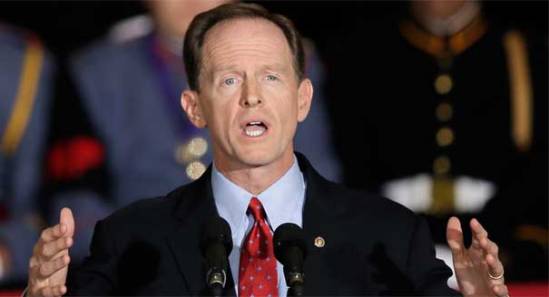
121127_pat_toomey_ap_328

Here is Senator Pat Toomey of Pennsylvania. In 2016, he distinguished himself as a high profile opponent of sanctuary cities and has proposed to defund these criminal hellholes. But in a sick twist of irony, one of these would be his home county of Lehigh which became the setting for a major case that made sanctuary communities much more popular in Pennsylvania.

So what are sanctuary cities? Are they really as horrible as they say? And why have they been on the rise in recent years? You might think these policies are designed to protect undocumented immigrants. But the reality is far more complicated than what most people even imagine. And they’re often so misunderstood. Perhaps I can show you an FAQ to answer your questions.

What is a sanctuary city?

san_francisco_sanctuary_city_800x500

When people think about sanctuary cities, they often think of San Francisco. However, sanctuary cities is kind of misnomer since sanctuary polices have been adopted by states as well as all kinds of municipalities. Sometimes this is through written policy while other times it’s through certain practices. These policies and practices differ throughout jurisdictions. However, just to be convenient we’re just going to define sanctuary jurisdictions as places who refuse to honor ICE detainers by themselves for whatever reason.

A sanctuary city is a jurisdiction that’s adopted a policy protecting undocumented immigrants by not prosecuting them for violating federal immigration laws in the country in which they’re now living. Such policy can be set out expressly in law (as in local ordinance) or observed only in practice (like a don’t ask, don’t tell policy). It generally applies to cities that don’t use municipal funds or resources to enforce nationally immigration laws and usually forbid police or municipal employees to inquire about a person’s immigration status. The designation has no precise legal meaning. Policies and practices differ throughout the country.

How many sanctuary cities are there?

l_ice_pa_counties_map1200

This map is from a study at Temple University in Philadelphia. It shows how each county in the state deals with ICE detainer requests. I should also like to point out that many of these sanctuary counties don’t like to be viewed as such and went for Trump in 2016. And they’re certainly not the places you think of when we talk about sanctuary cities.

According to the Immigrant Legal Resource Center, sanctuary policies limiting how much local police can cooperate with requests from federal authorities to hold immigrants in detention are present in 4 states, 39 cities, and 364 counties. These include almost every county in Colorado, Oregon, and New York as well as most of Florida as well as California, Vermont, Rhode Island and Connecticut, and several major cities on the East Coast. And they’re not just limited to liberal and urban areas either. For instance, if you look at a map of Pennsylvania from a study at Temple, you’d notice that there are sanctuary policies in my home jurisdiction of Westmoreland County as well as in Fayette, Washington, Somerset, Armstrong, Butler, Clarion, Erie, Blair, and Bedford as of 2017. And the ones I just described have only had sanctuary policies in their books since September. All of these counties went for Trump in 2016 and probably would rather see the undocumented living among them deported. Which is why local officials try to distance themselves from the loaded “sanctuary” label.

Are sanctuary cities legal?

It’s hard to say. The Illegal Immigration Reform and Immigrant Responsibility Act of 1996 has outlawed cities’ bans against municipal workers’ reporting people’s immigration status to federal authorities as well as established minor crimes as grounds for deportation. Its Section 287(g) allows state and local law enforcement personnel to enter into agreements with the federal government to be trained in immigration enforcement that would help them enforce immigration law. But it provides no general power for immigration enforcement by state and local authorities. However, such provision was only implemented by state and local authorities in California, Arizona, Alabama, Florida, and North Carolina as of 2006. Furthermore, 8 U.S. Code § 1373 states that “a Federal, State, or local government entity or official may not prohibit, or in any way restrict, any government entity or official from sending to, or receiving from, the Immigration and Naturalization Service information regarding the citizenship or immigration status, lawful or unlawful, of any individual.” Opponents state that the Justice Department requires that most federal grant money recipients certify their compliance to federal law, which sanctuary cities violate by not asking about, recording, or submitting their residents’ immigration status to the feds.

However, though federal officials usually have to rely on local police to help enforce federal immigration laws, the law doesn’t necessarily require local authorities to detain undocumented immigrants because their federal counterparts make a request. In fact, federal courts across the country have found complying with requests is usually voluntary. To back it up, supporters often cite the Tenth Amendment that according the Immigrant Legal Resource Center, prevents the, “federal government from coercing state or local governments to use their resources to enforce a federal regulatory program, like immigration.” Thus, Congress can’t force state or local governments to collect immigrant status information in order to share it with the Feds. And because these places never collected the data in the first place, they didn’t violate federal law. Some even believe enforcing immigration should only be left to the federal government and that local law enforcement should stay out of it. So let’s just say it’s a legal tossup at the moment.

Are sanctuary cities a new thing?

california-sanctuary-state-accepting-all-illegal-immigrants

Sanctuary cities have been in California for years thanks to the Sanctuary Movement. However, while many think that California metro areas adopt these policies due to liberal leanings, we also have to account for the fact that undocumented immigrants play a key role in the state’s economy and society, especially in low-income jobs. Not to mention, past instances have led authorities focus more on building relationships with immigrant communities in order to solve crimes. In other words, local law enforcement needs undocumented immigrants to be able to contact them without fear of deportation.

No. Los Angeles was the first to initiate a sanctuary city policy in 1979 to prevent police from inquiring about arrestees’ immigration status. The internal “Special Order 40” states: “Officers shall not initiate police action with the objective of discovering the alien status of a person. Officers shall not arrest nor book persons for violation of title 8, section 1325 of the United States Immigration code (Illegal Entry).” Certain other cities have followed suit during the 1980s and after. Though recent years have also contributing other jurisdictions to the same.

So when did sanctuary cities become a national issue?
gettyimages-484036000_custom-6f03bd35457bf77470fc9295a42e8067549f36b3-s900-c85

Sanctuary cities have become more of a high profile issue in recent years due to their reputation of harboring undocumented immigrants. And much of it has been opposition by Republicans who have no idea why jurisdictions would implement these policies in the first place. This especially apparent with Pat Toomey who opposes sanctuary polices while his home Lehigh County has adopted them. And for a very good reason.

The issue entered in the national spotlight with the 2008 GOP presidential primary when Colorado Representative Tom Tancredo ran on an anti-illegal immigration platform and specifically attacked sanctuary cities. Former Massachusetts governor Mitt Romney also accused former mayor Rudy Giuliani of running New York City as one. Giuliani’s campaign returned the favor saying that Romney ran a sanctuary in the Governor’s mansion and that New York City isn’t a “haven” for undocumented immigrants.

Then there were reports of a series of crimes. In late June 2009, 3 undocumented immigrants were suspected of murdering a waitress in Albuquerque, New Mexico (one of whom was not deported despite being arrested for two prior DUI incidents). Then mayoral candidate Richard J. Berry decried the city’s sanctuary policy and vowed to eliminate it if elected. He defeated incumbent Mayor Martin Chavez that year.

kate_header

Kathryn Steinle’s murder by an undocumented immigrant Juan Francisco Lopez-Sanchez in 2015 had sparked a national debate about sanctuary cities. And it led to a piece of congressional legislation known as “Kate’s Law” which targeted undocumented immigrants with criminal records and multiple deportations. But as of 2017, no vote has been held.

In 2015, an undocumented immigrant with multiple deportations shot Kathryn Steinle dead in San Francisco which sparked controversy and political debate over its place as a sanctuary city. In addition, many Republican presidential candidates would blame the sanctuary city policy for Steinle’s murder and encourage the need for a secure border wall. Donald Trump would also use the incident to criticize Jeb Bush and as a rationale to deport undocumented immigrants in the US.

Meanwhile, Congress would author The Establishing Mandatory Minimums for Illegal Reentry Act of 2015 or Kate’s Law which would’ve amended the Immigration and Nationality Act to increase from two years to five years the maximum prison term for an alien who reenters after being denied admission, excluded, deported, or removed. It also would’ve established a 10-year maximum prison sentence for an alien reentering after being denied admission, excluded, deported, or removed on 3 or more prior occasions and 5-year mandatory minimum prison term for an alien who reenters after being removed following a conviction for an aggravated felony or following 2 or more prior convictions for illegal reentry.

Do sanctuary cities increase crime?
sanctuarycityexempt

Despite that conservatives have pointed out how sanctuary policies contribute to more crime, there is absolutely no evidence supporting that argument. However, there is evidence that might suggest that sanctuary policies might do the opposite.

According to a study by University of California at Riverside assistant professor Loren Collingwood, sanctuary policies don’t have any statistically meaningful effect on crime.

A study by associate professor Tommy K. Wong of the University of California, San Diego draws a different conclusion. “Crime is statistically significantly lower in sanctuary counties compared to nonsanctuary counties,” he wrote in a paper for the Center of American Progress. “Moreover, economies are stronger in sanctuary counties—from higher median household income, less poverty, and less reliance on public assistance to higher labor force participation, higher employment-to-population ratios, and lower unemployment.” The study evaluated sanctuary and non-sanctuary cities, “while controlling for differences in population, the foreign-born percentage of the population, and the percentage of the population that is Latino.”

6859973794_0799583aea_z-1

Local law enforcement in sanctuary jurisdictions often admit that they rely on undocumented immigrants to come forward and report crimes. The fact undocumented immigrants are more likely to be crime victims than anyone else and more afraid to contact the police shows why.

We should also account that local law enforcement officials favor sanctuary policies and have said they don’t want the job of enforcing federal immigration laws. In addition, they admit to relying on immigrants in their communities to come forward to report crimes. The fact undocumented immigrants are most likely to be crime victims and least likely to report crimes to the police illustrates why many police view sanctuary cities this way. Undocumented immigrants who don’t live in sanctuary jurisdictions are frequently discouraged from reporting crimes to police due to fears of deportation. And these deportation fears can limit law enforcement access to potential victims, witnesses, informants, and neighborhood advocates. Many police often say that honoring ICE detainer requirements could scare people away and don’t want law-abiding undocumented immigrants to be afraid to contact them in order to report a crime.

Do sanctuary city policies prevent police from cooperating with federal immigration authorities?

ice-xcheckii-artsyarrestshot

Contrary to popular belief, while sanctuary policies may restrict police from cooperating with federal authorities, they don’t prevent it entirely. Most of the time, sanctuary policies restrict ICE cooperation with law enforcement on certain criteria. For instance, a sanctuary jurisdiction may refuse to honor ICE detainer requests because the individual warrant out against them or a criminal record to speak of. Or that the detainer isn’t backed up by a warrant from a judge.

Most sanctuary policies only limit police from cooperating with federal immigration authorities on undocumented immigrants with no criminal record to speak of. Let’s just say every jurisdiction is different but most of the time sanctuary policies specify that local authorities can’t hand over undocumented immigrants to ICE solely due to their immigration status, on minor crimes, or without any judicial warrant or court order. None of these protective policies prevent police from pursuing immigrants who commit felonies. According to a Department of Justice inspector general report, some jails in sanctuary areas only comply with a detainer request when the inmate has prior felony convictions, gang membership, or is on a terrorist watchlist. Others may reject every detainer request as well as refuse any kind of collaboration with ICE. In my home Westmoreland County, Pennsylvania, county prison staff don’t accept ICE detainers unless they have a judicially authorized warrant or court order. Otherwise, the ICE detainer will be sent back to the agent. But while Westmoreland County said they’d inform ICE if a suspected undocumented immigrant is being released, most cooperation ends here. Washington County does the same thing as well as put the detainers on file for future reference. Meanwhile, Butler County’s sanctuary policy expressly forbids ICE agents from accessing the county jail or those in custody for investigative purpose. Butler also prohibits officials from using county resources to communicate with ICE regarding inmates. So whether sanctuary policies prevent local police from cooperating with ICE varies from jurisdiction.

Why would any place want to adopt sanctuary policies?

secure-communities

If you want to understand why jurisdictions would adopt sanctuary policies, we should understand the Secure Communities program which was supposed to encourage federal, state, and local cooperation on deporting criminal undocumented immigrants. However, the Secure Communities program was riddled with problems, had unclear constitutionality, and resulted in incidents of abuse.

During the height of the country’s undocumented immigration challenges before the recession, law enforcement officials in some communities expressed concerns about releasing these inmates after they’ve serve time for state offenses. Some of these communities entered agreements to help federal authorities with immigration enforcement. These arrangements allowed local jails to house undocumented immigrants after they served time on state charges and bill the federal government for this service. Sometimes they passed these inmates to jails without any formal notice to family members, then into the immigration court system for an expedited removal hearing. A lot of times, people were returned to their home countries in weeks. By 2011, the Secure Communities program had been deporting more than 400,000 people per year and had over 1,210 jurisdictions participating.

1281320336_7ntyksov_secure_communities

The Secure Communities program was often criticized for many of its inherent flaws such has lack of recognition of civil rights and due process as well as lack of transparency and oversight. Studies showed that most of the arrestees who were deported didn’t have any serious criminal record to speak of. There may be constitutional issues as well.

Critics often said the Secure Communities Program could generate a revenue stream for local prisons as well as violate international human rights accords. Many localities and states reported not being reimbursed for costs relating to their participation and saw the program as a strain on their resources. Civil liberties organizations called it a vehicle for cultural profiling. Some people couldn’t talk to their embassy officials from their countries or notify family members of their arrests, basically disappearing without explanation.More than one analysis of deportees and what happened during the process showed that most of these people were initially arrested for minor traffic violations, had no criminal records to speak of, or were low-level offenders who served their time. A 2011, Berkeley study showed that only 52% of Secure Communities arrestees were scheduled to have a hearing before a judge and out of those who had, only 24% were represented by an attorney. They also found that 88,000 families that included US citizens had a relative arrested under the program and that 3,600 of arrestees were US citizens. Immigrant advocates said the program deeply damaged already limited police trust in immigrant communities, making people afraid to call the cops or provide information, which these advocates saw as a threat to public safety. Thus, making these places harder to police. Also a number of court cases implied that the “detainer requests” might be unconstitutional and put cities in violation of the Fourth Amendment. Then there are have been reports that the Secure Communities program didn’t have clear complaint mechanisms as well as a lack of transparency and oversight.
ernesto008

Ernesto Galarza was a part-time construction worker who was illegally held at the Lehigh County jail for 3 days pursuant of an ICE detainer without a warrant, court order, or an explanation. And the ICE detainer was issued because Allentown police suspected Galarza may be an undocumented immigrant. Even though he carried a state driver’s license and his Social Security card as well as told police he was born in Perth Amboy, New Jersey. His case sent a broad message that if local jurisdictions choose to honor ICE detainer requests, they’ll have to face the consequences if it’s against the wrong people. Such ruling has been a driving force for jurisdictions across Pennsylvania adopting sanctuary policies.

Then there’s the matter with ICE issuing detainer requests they use to gain custody of undocumented immigrants for deportation. Detainer requests aren’t supported by a finding of probable cause or court order. In other words, it’s someone could have an ICE detainer on them on mere suspicion of an undocumented immigration status which can result in being detained for more than 48 hours. So it’s no surprise that some legal experts have questioned these ICE detainers’ constitutionality. In November 2008, Allentown police arrested a part-time construction worker named Ernesto Galarza in a drug bust at his workplace on a drug offense of which he was found innocent. At the time of his arrest, Galarza showed his state driver’s license and Social Security Card from his wallet and told local officials he was born in Perth Amboy, New Jersey, which should’ve made his US citizenship obvious to law enforcement. However, because Galarza was Hispanic, the arresting officer was apparently unsure about his citizenship and called ICE. ICE issued a detainer asking prison officials to hold Galarza while ICE investigated his citizenship and immigration status. As a result, Galarza was illegally held in the Lehigh County Prison for 3 days past when he should’ve been released with no warrant, no court order, and no explanation. And it was all because of racial profiling among local law enforcement as well as ICE agents’ baseless assertion that he might be an undocumented immigrant from the Dominican Republic they were looking for. Galarza lost his part-time job because of this. In March 2014, the U.S. Third Circuit Court of Appeals in Philadelphia found Lehigh County violated Galarza’s constitutional rights. Furthermore, the court ruled his detainer was only a request for help, not a binding order such as a federal warrant signed by a magistrate and that local governments have to pay damages for violating the rights of criminal suspects and jail inmates, not ICE. In other words, because Lehigh chose to honor the ICE detainer which resulted in a citizen’s wrongful imprisonment, it’s on them. After having to pay Galarza $95,000 in damages and attorney’s fees, the Lehigh County commissioners voted unanimously not to imprison people solely on ICE detainers against them. Other Pennsylvania counties followed suit figuring that it was safer to break federal immigration law than accidentally violate a citizen’s civil rights. Because if a local cop can get an ICE detainer against someone on merely suspecting their legal status, then it’s the federal immigration policy with the problem.

Do undocumented immigrants commit more crime than others?

To put it this way, absolutely not. Immigrants of all kinds are actually much less likely to commit crimes than native born citizens regardless of legal status. Not only that, the possibility of deportation usually gives immigrants a high incentive to obey the law. However, undocumented immigrants are far more likely to be crime victims because they’re least likely to report to the police due to threats of deportation. Now there may be some undocumented immigrants who are criminals, but the count’s not as high as 2-3 million. DHS estimates about 1.9 million while the Migration Policy Institute and Pew Research Center approximates 820,000 with some already incarcerated. Still, we should understand that undocumented crime is far less of a problem in localities than undocumented immigrants shunning contact with the police.

What about the shooting of Kathryn Steinle?
sanchez-steinle-ap

The murder of Kathyrn Steinle is often used as a talking point for cracking down on sanctuary cities. Is San Francisco’s sanctuary policy at fault? To an extent. But despite being deported 5 times, Juan Lopez-Sanchez was a low-level drug offender who served his time. So prior to shooting Steinle with a stolen gun, there was very little reason he’d pose a danger upon his release.

I know this story is often used by sanctuary city opponents on how San Francisco’s refusal to honor a detainer for Juan Lopez-Sanchez requesting that they keep him until ICE agents arrived cost a young woman’s life. Sure Lopez-Sanchez was a convicted felon who’ve been deported 5 times. However, there’s a lot that’s misunderstood about this case. For one, Lopez-Sanchez wasn’t a violent criminal and his record mostly consisted of reentry violations and drug offense all of which he served time on. The only real danger he posed to society was endangering those who bought drugs from him. So at best he was a low-level offender who served his time. Also, multiple deportations aren’t unusual for undocumented immigrants even for those without criminal records. Not to mention, Lopez-Sanchez had been homeless since his release. Second, the reason San Francisco didn’t honor ICE’s request was because Lopez-Sanchez had no active warrant for his arrest upon his release as consistent with their sanctuary city policy upon his release from prison. Yet, while the sheriff’s failure to notify ICE about Lopez-Sanchez’s release may have cost Steinle’s life since he had no active arrest warrant, it doesn’t mean that San Francisco’s sanctuary city policy is solely at fault. And if it is, it could be easily remedied with placing rules requiring law enforcement to notify ICE on individuals with criminal history upon their release. Other sanctuary jurisdictions do that. Third, it’s very likely that Steinle’s death was an accident because Lopez-Sanchez had absolutely no idea who she was. And it’s very unlikely that he fired that stolen gun in order to kill her because he might’ve fired toward the ground before the bullet ricocheted from the pavement. Fourth, it’s very likely Steinle’s death was due to failures at the local, state, and federal levels. Sure San Francisco’s sanctuary policy may be partly to blame. Yet, the Bureau of Prisons could’ve also handed Lopez-Sanchez to ICE instead of San Francisco. Hell, they could’ve just turned him over to a California state penitentiary. Or pass laws requiring people to lock their guns before leaving them in a car. Or maybe put Lopez-Sanchez in a halfway house so he wouldn’t be shooting a gun in the street.

cj2mvqcweaag95g

The fact Lopez-Sanchez is an undocumented immigrant is only reason why Steinle’s death has generated such political outcry. However, had Lopez-Sanchez been a native-born US citizen, Steinle’s death would’ve been just as senseless and tragic. But nobody would blame it on San Francisco’s sanctuary city policy or that he should’ve been deported.

However, we should also note that prisons release crooks who go on to commit violent crimes all the time even for drug offenses like Lopez-Sanchez. Usually nobody says that such crimes could’ve been prevented had they been deported. Because most of these criminals were born in the United States. I’m sure the Bureau of Prisons has handed over US-born criminals to San Francisco authorities all the time as well as for crimes Lopez-Sanchez was charged with. It’s probably not unusual that San Francisco releases US-born prisoners without active warrants against them after they serve their time. And I’m certain it’s not unheard of for a US-born ex-con with a record like Lopez-Sanchez to kill someone shortly afterwards. Does any of that lead us to doubt whether our criminal justice system is too lenient? Sometimes. Yet, if Lopez-Sanchez was a native-born US citizen, would any politician blame San Francisco’s sanctuary policy and failure to deport him for Steinle’s death? No. Would Steinle’s murder have gotten the kind of attention it received? No. Because Lopez-Sanchez’s status as an undocumented immigrant is the sole reason why Steinle’s murder is so often used by immigration opponents to illustrate how sanctuary cities threaten public safety. But if Lopez-Sanchez wasn’t undocumented, he still would’ve posed just as much of a danger as any other violent criminal. And Steinle’s death would’ve been just as senseless and tragic even if covered just like any other murder case.

Why support sanctuary cities?

immigration

Sanctuary jurisdictions have many reasons to implement the kind of policies they do. Sometimes it’s because undocumented immigrants contribute so much to their society. Sometimes it could be that police would rather build relationships with immigrant communities and solve crimes than enforce immigration law. And sometimes it might be due to the area having limited resources and bigger priorities, having bad experiences with ICE, and a desire to avoid legal entanglements.

Other than basic human decency and keeping families together, supporters argue that cities have bigger priorities and too few resources to handle immigration enforcement. Many local policymakers and law enforcement agencies say that immigration enforcement isn’t their responsibility and that cracking down on undocumented residents disrupts community relations and make it more difficult to do their jobs. Cops prefer to focus on routine incidents in their localities than check whether a suspect, victim, or witness is legally on US soil. Yet, supporters note that none of their protective policies in any way prevent local police from pursuing immigrants suspected of committing crimes. In places like California, it might also be due to the vital role undocumented immigrants play in its economy and society as well as their large Latino population. You can say the same for many major cities as well as areas of Colorado and Florida. Then there’s the fact a lot of these places have endured a lot of bad experiences when they did cooperate with ICE, particularly during the Secure Communities program. For the recent rise in sanctuary counties in Pennsylvania, it has less to do with favoring undocumented immigration and more to do with avoiding expensive litigation, having limited jail space, not getting paid honoring ICE detainers, and others. Because honoring ICE detainers and racial profiling in local law enforcement have led to US citizens being illegally detained as illustrated in the Galarza case in Senator Pat Toomey’s home in Lehigh County. And since detainer requests aren’t binding orders, these local governments are usually stuck with paying the most in damages over civil rights violations, which Lehigh didn’t want to repeat. In the case of Armstrong County, the federal government didn’t reimburse their costs at the desired rate when they did hold people for ICE as well as having a jail typically operating at capacity.

Why oppose sanctuary cities?

end-sanctuary-cities-illegal-alien

Opponents on sanctuary policies often argue that they undermine federal enforcement efforts and compromising public safety that leads to preventable crimes. But opponents often stereotype sanctuary jurisdictions as places that are riddled with crime and lawlessness. Rather than a place that might be similar to where they live.

Opponents argue that sanctuary policies encourage undocumented immigration, undermine federal enforcement efforts, and severely compromise public safety resulting in crimes that could’ve been avoided through deportation. Furthermore, they believe that sanctuary policies keep police from investigating, questioning, and arresting people who’ve broken federal immigration law.

Is there a moral basis for sanctuary cities?

undocumented006

Though the legal basis of sanctuary policies may be in limbo, the moral basis is very much sound. I mean it should be a no brainer to keep families together as well as relieve law-abiding residents of deportation fears. Besides, sanctuary policies might be the best morally solution available at the moment.

Though the legal question of sanctuary cities can be debated, the moral question may not be the case. From what I know about undocumented immigrants, most of them came to this country illegal because the federal immigration system didn’t give them any legally viable options. Most of them have been in the US for at least 10 years while some came as children who grew up calling this country home. Many children who are US citizens and even American spouses. And despite entering illegally, most undocumented immigrants hold jobs, pay taxes, obey most of the laws, celebrate national holidays, and make contributions to society in ways most Americans don’t recognize. Furthermore, most undocumented immigrants come to the US for a better life than the one they left behind, not to commit crimes that endanger public safety. The fact federal immigration policy subjects their very presence as grounds for deportation has resulted in communities wary of law enforcement, thousands of broken families, and hundreds of kids in foster homes. And there is no good way for them to gain legal status or even citizenship. Ignoring an unjust federal immigration policy by providing a safe haven for these people may not be legal, but it’s probably the best moral solution available. But since President Cheeto Fuzz assumed office, you can forget the prospect of much needed comprehensive immigration reform for the next 4-8 years because that’s just not going to happen. In addition, the fact someone could get an ICE detainer against them because a police officer suspects their legal status has led to incidents of racial profiling and illegally holding American citizens in jail for over 48 hours with no warrant, no court order, and no explanation. In that case, refusing to hold individuals solely on an ICE detainer is morally reasonable. Then there’s the matter that municipalities don’t have the resources to handle immigration enforcement as well as bigger things to worry about. Local police would rather catch criminals than crack down on otherwise law-abiding residents who could help them. To cooperate with ICE may not be in their best interests and may lead local authorities to neglect their civic responsibilities to their constituents. So yes, enacting a sanctuary policy is probably the right thing to do.

Should sanctuary cities be punished for not complying with federal immigration policy?

reg_west

If you think sanctuary cities should be defunded because they’re crime ridden areas sheltering undocumented immigrants, you might want to check if you live in one and why. If you live in Westmoreland County, Pennsylvania, you should really reconsider because it’s a sanctuary county. I swear I didn’t make this up. Look it up.

No. Despite that sanctuary policies may or may not go against federal law, I don’t think penalizing them is a good idea. Now I do believe that states and localities should adhere to federal law in most cases, especially when it comes to policies involving healthcare, education, civil rights, environmental protection, labor standards, product standards, gun laws, and financial regulation. In many cases, I find that a lot of state and local governments don’t serve their constituents’ best interests, especially when it concerns women, minorities, and the poor. But I do make exceptions when I think federal policy may not be unjust, inadequate, and prone to a lot of abuse particularly when it comes to national policy dealing with undocumented immigrants. The fact states and localities have developed their own policies to dealing with ICE and undocumented immigrants illustrates how federal immigration policy badly needs reform which won’t happen anytime soon. States and localities instituting sanctuary policies have very good reasons to enact them. They may not always be about protecting undocumented immigrants living among them, especially since it’s not just liberal cities adopting these policies. Or in jurisdictions where sanctuary policies would have widespread support like in rural and suburban Pennsylvania.Thus, penalizing sanctuary jurisdictions won’t be a very good idea in any case because they’re clearly not the problem. Sanctuary policies are more like a flawed and necessary substitute to work around a broken immigration system that needed to be fixed a long time ago but hasn’t. The best deterrence would be to pass comprehensive immigration reform which opens a path to citizenship for undocumented immigrants as well as requiring ICE detainers be issued with warrants and court orders. Now that I think about it, perhaps instead of punishing sanctuary jurisdictions, maybe our politicians should spend time in them and learn about their policies and why they enact them. And perhaps put those policies into congressional legislation. We can start by making US Senator Pat Toomey spend his congressional recess at his Allentown home for he really needs to know why Lehigh County enacted the kind of sanctuary policy he’s so vigorously opposed as well as a lesson on Galarza v. Szalczyk. Nevertheless, if the US government can’t come up with a federal immigration policy this nation needs, then expect more state and local governments enacting their own ideas to make the best of a sticky situation.

6e73acabd814f8da35fae22868240fa3

I end this post by bringing you a picture of the red covered bridge near where I live in the sanctuary jurisdiction of Westmoreland County, Pennsylvania. Let it be known that sanctuary policies aren’t just limited to liberal urban enclaves like San Francisco. They can also exist in rural areas like this that don’t have a lot of liberals in them. Or a lot of people supporting sanctuary policies either. You can even live in a sanctuary jurisdiction and not even know it. Keep that in mind.

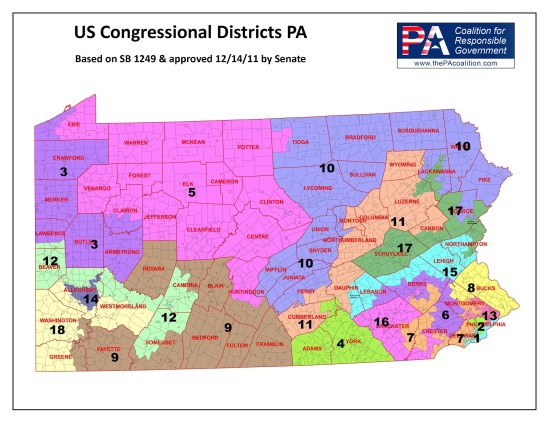
Why We Need to Defend Network Neutrality

net-neutrality-op

Since the 1990s, the internet has become so much a part of our lives that it’s easy to imagine that it will always remain the free and open medium it is now. We’d like to believe it will remain a place where you can always access any lawful content you want and where those delivering that content can’t play favorites because they disagree with the message being delivered or want to charge more money for faster delivery. However, despite that we have rules in place protecting network neutrality thanks to the Federal Communications Commission, there may be no such guarantees after January 20, 2017. Why? Because not only did 60 million voters elect an unrespectable man like our soon-to-be groper-in-chief, Republicans have control of both houses in Congress and will more than likely retain power on the Supreme Court. Furthermore, there Senate hasn’t reconfirmed a Democratic FCC commissioner to another 5-year-term. Not only that, but the man President-Elect Evil Cheeto Head wants to chair the FCC is a longtime opponent of net neutrality and telecom lobbyist. If Donald Trump and his swamp cronies have their way within the next 4-8 years, this open internet and the network neutrality principles that sustain it, could be a thing of the past. Profits and corporate disfavor of controversial viewpoints or competing services can change both of what you see online and your connection quality. And the need to monitor what you do online in order to play favorites means even more consumer privacy invasions piled up on top of the NSA’s prying eyes. A lot of Americans don’t know about net neutrality because it doesn’t get a lot of coverage on the news media than it should. As for me, I first heard about this from my parents while I was in high school after they watched something from Bill Moyers about it. Those who do overwhelmingly support it across the political spectrum. And many Americans take the notion of a free and open internet for granted which they will sure to miss. But unfortunately, its share of detractors are in high positions of power as well as contribute generously to Republican politicians. Here I list a rough FAQ on net neutrality basics because if there’s a time we need to know and preserve net neutrality to protect the internet, it is now.

net-neutrality-1

Network neutrality is the principle that requires all legal content to be treated equally by internet service providers. This allows consumers to pay a monthly fee to the ISPs in order to access any website and service they want. Net neutrality is essential for a free and open internet in a digital economy as well as in a 21st century democracy.

What Is Network Neutrality?

Network neutrality is the guiding principle that internet service providers and government regulators should allow access to all applications and content regardless of source and without favoring or blocking particular products or websites. In other words, while ISPs provide you access to the internet, they should treat all services and websites the equally, which lets you use it as much as you want for anything you want at the cost of a monthly fee. Network neutrality preserves a free and open internet while preventing companies from discriminating against different kinds of websites and services.

What’s the Difference Between ISPs and Content Providers?

An ISP is a company that provides you access to the Internet like AT&T, Comcast, Verizon, Cox, Charter, and Time Warner Cable. Most people get their high-speed internet access from only these few telecommunication giants. The very few smaller carriers usually rely on the big guys to serve their customers. Content providers are companies that create and/or distribute videos and programs like Netflix and Amazon. Sometimes ISPs can also be content providers as well since Comcast owns NBC Universal as well as delivers TV shows and movies through its Xfinity internet service.

net-neutrality-what-you-need-know-now-infographic

We should care about network neutrality because it encourages innovation, promotes free speech, and prevents abuse by ISP gatekeepers. Without it, ISPs would demand a cut from every website in order to funnel that content to customers and possibly slow down or block content they don’t like. What the ISPs want the internet to be like should be unacceptable to all Americans.

Why Should We Care About Network Neutrality?

Network neutrality is essential because a free and open internet is the single greatest technology of our times that stimulates ISP competition, helps prevent unfair pricing practices, promotes innovation, promotes the spread of ideas, drives entrepreneurship, and protects freedom of speech. Overall, network neutrality keeps the internet a cornerstone of freedom and opportunity. When we receive or send data over the internet, we expect our ISPs to transfer it from one end of the network to the other. We don’t expect them to analyze or manipulate it. Without net neutrality, telecommunications companies can carve the internet into fast and slow lanes. An ISP can slow down its competitors’ content or block political opinions it disagreed with. ISPs can also charge extra fees to the few content companies that could afford to pay for preferential treatment while relegating everyone else to a slower rate of service. Such actions could destroy an open internet. So this is a very important issue.

no-more-wires

Telecom companies want to interfere with their customers’ internet mainly for profit and corporate interests. They want to block speech that would make them look bad, slow down or block applications that aren’t their own, and increase profits by making developers pay more to avoid having their data blocked or slowed down.

Why Would the Telecoms Want to Interfere with Internet Data?

Well, the answer boils down to simple profit and corporate interests. Companies might want to interfere with speech that makes them look bad, block applications that compete with their own, or increase their profit by forcing developers to pay more to avoid having their data blocked or slowed down.

isp-market-share

Those who believe that competition will ensure a free and open internet are sorely mistaken since building broadband is expensive that most ISPs are telecom companies since they already have the communication infrastructure already in place. And as far as internet provider consumer choice is concerned, most Americans are usually limited to 3 or fewer.

Won’t Competition Prevent Them from Doing Any of This?

Sorry, free-market believers, but your faith in the divine forces of capitalism will not save you. Normally competition should and would prevent telecoms from interfering with internet data. But it won’t. For one, data manipulation isn’t always easily detectable. Content can be delayed or distorted in a number of subtle ways. Secondly, building a high-speed broadband service is very expensive so there aren’t many of them. So it’s no surprise that they tend to be big phone and cable companies because they already have the data “pipes” in place. Most Americans don’t have more than a handful for legitimate high-speed broadband options at home (the vast majority have 3 or fewer). What this means is that customers can’t switch if big broadband providers start messing around with their service. Additionally, big content providers like Netflix have to send their data through these “last mile” gatekeepers. So, all you free-market absolutist libertarians, the current market competition just isn’t enough to stop them from blocking services or charging more for a fast lane.

goia9nn

If telecom companies had their way which might happen under a Trump administration, you can expect a the future of the internet to look like a pay to play service like this. Doesn’t seem like one you’d want, does it?

Have There Been Any Actual Instances of Service Providers Interfering with the Internet or Is This All Theoretical?

Real abuses have happened consistently over the past decade. New technologies now allow telecom companies to scrutinize over every piece of information we send or receive online like websites, email, videos, Internet phone calls, or data generated by games or social networks. They could also program the computers that route that information to interfere with the data flow by slowing down or blocking traffic and communicators that they don’t like while speeding up traffic they do or that pays them extra for the privilege. To put it this way, imagine if your phone company could mess with your calls every time you tried to order a pizza from Domino’s because Pizza Hut is paying them to route their calls first. Though opponents claim the threat is only “theoretical” or that applying common carrier principles to the internet is a “solution in search of a problem,” there have been numerous incidents of abuse. There’s AT&T censoring words from Pearl Jam’s Eddie Vedder when he sang, “George Bush, leave this world alone” and “George Bush find yourself another home.” The company complained the words were censored to prevent youth visiting the website from being exposed to “excessive profanity.” Though the song contained none. They later blamed it on an external website contractor hired to screen the performance.  There’s Comcast discriminating against an entire class of online activities by using deep packet inspection to block file transfers from customers using popular peer-to-peer networks like BitTorrent, eDonkey, and Gnutella. In national tests conducted by the Associated Press, their actions were confirmed to be unrelated to network congestion since blocking took place at times when it wasn’t congested. And while Comcast blocked applications often used in trade videos like pirated content, much of what was blocked was legitimate. Then we have Verizon cutting off text-messaging program by the pro-choice group NARAL that it used to send messages to its supporters. The company stated that it wouldn’t service programs from any group “that seeks to promote an agenda or distribute content that, in its discretion, may be seen as controversial or unsavory to any of our users.” And that was just 2007. These are just incidents but this kind of behavior hasn’t become broadly accepted to the internet structure. But without enforceable net neutrality rules in place (which can happen under a Trump administration), that could quickly happen. The consistency of these abuses tells us all we need to know about what will happen if companies are permitted to exploit their power over our Internet connections.

net-neutrality-1-620x400

Net neutrality is great for business since it puts small businesses, startups, and entrepreneurs on an fair and playing field. They rely on net neutrality to launch their business, create a market, advertise their products and services, and distribute their goods to customers. This helps create jobs, competition, and innovation. Without it, ISPs would seize every possible opportunity to profit which would squeeze its competitors out.

Why Is Network Neutrality Important for Business?

Net neutrality is crucial for small business owners, startups, and entrepreneurs, because they rely on an open internet to launch their business, create a market, advertise their products and services, and distribute their goods to customers. They need an open internet to foster job growth, competition, and innovation in the 21st century and beyond. Net neutrality lowers the barriers for them by ensuring the web is a fair and level playing field. And it’s because of net neutrality that businesses and entrepreneurs are able to thrive online. They use the internet to reach new customers as well as showcase their goods, applications and services. Since ISPs are by definition the gatekeepers to the internet, they would seize every possible opportunity to profit from that gatekeeper control if net neutrality wasn’t in place while the next Google wouldn’t get off the ground. So no company should be able to interfere with this open marketplace.

d2a942044f8426be62aaca36f530c154

Net neutrality is essential for a free democracy in the 21st century because it protects freedom of speech. Not only that, but net neutrality allows the internet to be a platform for voices to be heard who wouldn’t be represented otherwise in our media landscape.

Why Is Network Neutrality Important for Communities of Color?

The open internet allows communities of color to tell their own stories as well as organize for racial and social justice. The mainstream media has failed to allow people of color speak for themselves. And due to economic inequality and runaway media consolidation, they own only a handful of broadcast stations. This lack of divers ownership is a primary reason why the media has gotten away with portraying minority communities stereotypically. The open internet gives marginalized voices opportunities to be heard which they wouldn’t previously have access to. Without net neutrality, ISPs could block unpopular speech and prevent dissident voices from speaking freely online. This would lead people of color to lose a vital platform. Not to mention, millions of minority owned small businesses wouldn’t be able to compete with large corporations online, which would further deepen economic inequality in our nation’s most vulnerable communities. This isn’t just limited to communities of color either. For instance, the Internet is a great place to find out about environmental disasters in rural areas that tend to slip under the radar, which I’ve put to very good use. Not to mention, since runaway media consolidation and decline in newspapers has led to less local voices being heard from within their communities and less local content being produced, having a free and open internet more than makes up for it.

screen-shot-2014-11-12-at-12-04-32-pm

President-Elect Cheeto Creepazoid is a known opponent of net neutrality and has a known telecom lobbyist he wants to tap to head the FCC. It’s also clear that he doesn’t understand net neutrality either. Since he’s an extremely greedy and vindictive bastard who’s no friend to free speech, expect to take his views on this subject very seriously. Because starting January 20, 2017, net neutrality’s days may be numbered.

Why Do We Need to Defend Network Neutrality?

In February 2015, the Federal Communications Commission enacted Title II reclassification of internet access service to a telecommunications service which allows the agency to create strong network neutrality rules allowing customers to have reasonable, reliable, and nondiscriminatory services. What the FCC did was designate ISPs as “common carriers” or private companies that sell their services to consumers without discrimination. This is similar to how consumers received landline telephone service. A federal court decision has also upheld the ruling.  However, even good ideas have their detractors and net neutrality is no different. Since the 2015 FCC Title II classification, opponents have worked everywhere from Congress to the courts in order to dismantle or undermine it. While foes have filed 10 lawsuits over it, Republican lawmakers have put forth more than a dozen bills or amendments to weaken or kill the FCC’s new regulations. None succeeded. However, Donald Trump’s election to the presidency as well as guaranteed Republican control of Congress and possibly the Supreme Court is very likely to mean that net neutrality’s days may be numbered. Trump will appoint 2 new commissioners in 2017 (while a Democratic member hasn’t been reconfirmed for another term) and has 2 people on his transition team with strong ties to the telecom industry. Trump’s man to run the FCC is Jeffrey Eisenach who’s a known anti-regulatory zealot criticized for his anti-neutrality stance as a think tank scholar while receiving funds from Verizon to underwrite his work. As Center for Digital Democracy executive director Jeffrey Chester states, “What Trump appears to be doing on internet and privacy policy is basically allowing the swamp to decide our digital future, allowing crocodiles to eat up our rights. What the big cable and phone companies want Trump to do is to turn the internet over to them to run as a private fiefdom.” Since Trump is known to be very pro-business and a greedy sociopath as well as no friend to the First Amendment and constitutional rights, his opposition to net neutrality is almost certainly sincere. So as soon as Trump is sworn in, expect net neutrality to be a threat.

2435556186_1d9eaafe36

Here is a small snapshot of net neutrality camps. Most Americans aware of net neutrality usually favor it along with the following mentioned. Those opposed are usually telecom companies as well as free-market conservatives and libertarians.

Who Supports Network Neutrality?

The good news is that network neutrality enjoys huge bipartisan support among consumers since more than 4 million Americans have filed public comments with the FCC about it, which is more than any other issue it’s handled. Chances are if Americans have heard of net neutrality, they most likely support it regardless of race, age, creed, political stance, or income level. The fact so many organizations support it like Greenpeace, Gun Owners of America, the Christian Coalition, the Electronic Frontiers Foundation, AARP, American Library Association, Consumer Federation of America, and the Media Access Project illustrates how popular net neutrality is across the political spectrum. You can include unions and religious institutions as well. It also enjoys strong support from small businesses and large companies like Apple, Netflix, Tumblr, Kickstarter, Wikia, Microsoft, Facebook, Twitter, Google, Amazon, eBay, Yahoo!, Etsy, and others. President Barack Obama is one of the most prominent supporters of net neutrality whose expressed commitment to the cause helped lead to the landmark 2015 FCC ruling that designated the internet as a utility to preserve it and so are most Democratic Party politicians.

tim-murphy

This is Pennsylvania US Representative Tim Murphy (R). He represents my congressional district. Unlike the most of his possible constituents Murphy publicly opposes network neutrality which is against the interests of every internet user, mostly due to big telecom companies giving him big wads of cash. That and how nobody seems to successfully run against him. If you live in my congressional district and think you can beat him, give me a call. Please, I don’t want him representing me any more. And I don’t care if people in my district approve of him.

Who Opposes Network Neutrality?

The bad news is that despite being a highly good and popular idea, net neutrality has a lot of very powerful enemies such as telecommunications industries, some network engineers, conservative to libertarian scholars, and many Republican politicians. Major ISPs and telecommunication companies like Comcast, Verizon, Cox, AT&T, and Time Warner mainly oppose net neutrality because they want to manage internet access like blocking charging users different rates to access different services or simply blocking certain services altogether. The 2015 FCC Title II ruling was not great to their bottom line that they’ve vowed to fight these regulations all the way to the Supreme Court. And in fact, the last time the FCC tried to instill net neutrality protections, Verizon sued and the rules were overturned by a federal court in 2014. These companies have lobbied against net neutrality 3 times as hard as its biggest proponents as well as outspent them 5 to 1. They also heavily contribute to Republican political campaigns which explains why so many GOP politicians oppose net neutrality while their constituents overwhelmingly don’t. Many of these politicians call it, “Obamacare for the Internet.” Organizations against net neutrality are usually free-market advocacy groups like FreedomWorks, Americans for Prosperity, the American Enterprise Institute, the Competitive Enterprise Institute, Citizens Against Government Waste, and the Progress and Freedom Foundation. Tech companies like IBM, Intel, Cisco, Qualcomm, and Juniper also oppose net neutrality measures as well.

media_consolidation

The main reason why many Americans don’t know much about net neutrality is due to runaway media consolidation. As of 2016, 90% of the media is controlled by 6 corporation. Two of these corporations are telecom giants like Comcast and Time Warner who oppose net neutrality.

Why Don’t We Hear About Network Neutrality?

Mostly because the mainstream media rarely talks about it if ever. Yes, there may have been an episode of John Oliver about it as well as some discussion on PBS but that’s about it. A big reason for this is media consolidation. As of now, only 6 corporations control 90% of media in the United States, including Comcast and Time Warner who are known to oppose net neutrality. And it doesn’t help that Comcast owns MSNBC while Time Warner owns CNN. Then there’s Fox News which is a conservative news outlet owned by Rupert Murdoch. Not to mention, a lot of telecoms sponsor a lot of news programming which can influence their content. The fact so many Americans have never heard about net neutrality leads them to take the notion of a free internet for granted. And if Trump’s administration gets rid of it, most Americans will miss it.

slwbxza

Protecting Network Neutrality is important for all Americans and we need to make sure it survives the Trump administration. 21st America depends on a free and open internet which is essential for our society. This is a list of what you can do.

What Can We Do to Protect Network Neutrality?

Well, you can do a lot of things to protect network neutrality. You can e-mail the Federal Communications Commission. You can contact your state representatives (though make sure they’re not against net neutrality before you do so because a lot of them receive campaign contributions from giant telecom companies. So if you live in Pennsylvania and your representative is Tim Murphy or Joseph Pitts, contact Senator Bob Casey instead. Because Senator Pat Toomey is against net neutrality, too, along with these big telecom industry stooges). You can donate to civil liberties and consumer groups like Public Knowledge, Electronic Frontiers Foundation, Free Press, Consumers Union, and the American Civil Liberties Union. You can stay informed and tell your friends. At any rate, remember that network neutrality isn’t a partisan issue so don’t let Trump’s swamp cronies let telecom companies slow down or block sites users love. And let the FCC use its Title II powers to stop them.

tombstone-feature

Remember Trump and his swamp cronies are enemies of the free and open internet we know and love. Don’t let them kill network neutrality or this will happen. Please, my fellow Americans, I know most of you support this. Please don’t fail me like you did in the 2016 Election. America can’t afford this.