
Movie Couples that Won’t Last

We’ve seen the kinds of movies in which love conquers all and that the leads involved will live happily ever after. However, we need to know is that it takes more than that to keep a relationship together and there are couples who you see in the movies that don’t seem to have much of a future together after the credits roll. There are some Hollywood movies that have realistic ideas about relationships and others that would make anyone ask questions wondering why these people just don’t split up already. Here is a list of couples who I believe won’t make it after the film is over. These include couples whose relationships have already ended by the movie’s conclusion or is destined to end when one of them dies. Rather these are couples who are together by the end but who won’t seem to have much of a future any time soon.


1. Johnnie Asgarth and Lina McLaidlaw
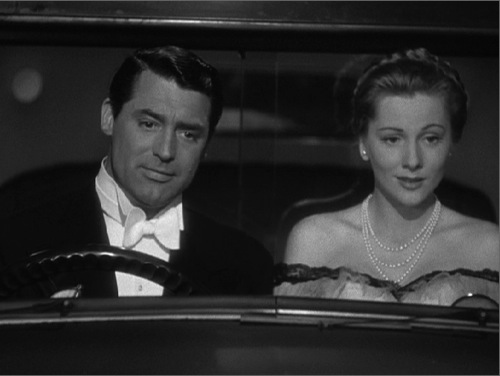
Suspicion Cary Grant Joan Fontaine Hitchcock pic 1

From: Suspicion

Problem: Money issues and lack of trust

If there is any movie relationship I think would least likely last after the credits, I would put my money on this one despite being made in the 1940s. Despite being played by Cary Grant, Johnnie Asgarth is a selfish and irresponsible turd who probably wouldn’t have proposed to Lina if she didn’t grow up rich. And he wouldn’t have spent vast amounts of money on Lina As the relationship progresses, it’s very clear that Johnnie’s gambling, dishonesty, and selfishness become glaring liabilities that he eventually loses Lina’s trust to the point she considers leaving him only to decide staying due to her low self-esteem as well as her fear of remaining single for the rest of her life. The relationship eventually gets to the point that Lina starts suspecting that Johnnie is planning to kill her, which may make her seem a bit crazy at first. Yet, take into account that Johnnie’s tendency to lie is well-known even among his friends, Lina’s cousin firing him for embezzlement and she didn’t know for weeks, him selling his wife’s priceless antique chairs (which were family heirlooms and a wedding gift from her father) to pay off a gambling death without her knowledge and consent, his friend was found dead under mysterious circumstances after Johnnie convinced him to finance a hugely speculative land development scheme, and his disturbing enthusiasm for murder mysteries. Of course, we find out in the end that Johnnie intended to do no such thing but that doesn’t dismiss him from being a terrible husband and that he was secretly trying to borrow from his wife’s life insurance policy to repay someone doesn’t necessarily make things better either, assuming that Johnnie was telling the truth. Sure they may have made up by the end but their marital problems may never be resolved. Johnnie may have promised to face his responsibilities but he’s probably not going to stick to it and he would soon be back to his old irresponsible ways. The only future I see in this relationship is one of rampant distrust and financial ruin, both of which lead to the inevitable of divorce. And it’s only a matter of time when Lina realizes that she doesn’t have to put up with Johnnie’s crap and has the courage to leave him for good.


2. Benjamin Braddock and Elaine Robinson
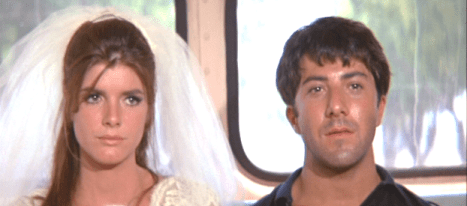
graduate

From: The Graduate

Problem: Mutual interest is more based on unavailability and desire to rebel against parents than actual love. Also, he banged her mom.

While Elaine Robinson would’ve made a mistake to quit college and marry a medical student (even at her mom’s wishes), being in a relationship with Benjamin Braddock is hardly a suitable alternative. I mean he’s a guy with no job, no ambitions, and no prospects as well as had a torrid affair with her mother, which would make any future family get togethers seem a bit unsettling. Also, keep in mind that they only went on one date after which Mrs. Robinson forbade them from seeing each other again. But Ben becomes increasingly obsessed with her that he ends up stalking her at Berkeley despite that she’s not really into him and is seeing another guy. Oh, and he wrecked her wedding but that is more forgivable since she probably didn’t want to marry the blonde guy in the first place and didn’t know much about him either. Yet, the fact she was willing to run off with Benjamin over it more or less seem like a desperate girl’s attempt to escape from her parents’ control (and I couldn’t blame her for this) than actual love. This isn’t a good basis for a relationship and even the end scene makes it clear that they may not actually love each other and perhaps would end up exactly like their parents. Then again, it’s possible that they’re finally starting to think about the implications of their actions.


3. Artie Green and Betty Schaefer

From: Sunset Boulevard

Problem: While he was away, she had a romantic entanglement with his best friend who later got killed over it.

Their relationship isn’t a main focus in this movie but you have to remember that Betty was engaged to another man by the time she took up with screenwriter Joe Gillis. Of course, Artie was away at the time but even before his departure, you sense that Joe and Betty have an attraction toward one another which will play a key role to the plot once they start working on a screenplay together and falling in love in the process. Now anyone familiar with this move knows that Joe Gillis has spent considerable time living with a rich older woman named Norma Desmond who’s to put it mildly emotionally unstable. Now Norma’s discovery of Gillis’ and Betty’s at least emotional tryst would eventually lead her shooting him dead. Despite that Joe’s murder isn’t her fault, Betty is going to feel some degree of responsibility for it possibly for the rest of her life. And this may be a source of emotional strain in her relationship with Artie since she’s probably not going to be willing to talk about it with him. Then again, with the publicity surrounding Gillis murder by a once famous movie star, Artie might find out anyway and may have some questions to ask Betty when he gets back that she may not even want to answer. And Betty should at least be lucky that we didn’t have shows like Dateline and Nancy Grace during the 1950s since she would’ve certainly be hounded by such sensationalistic press. Also, it seems very likely that Betty is willing to marry Artie just because he has much less baggage even if she may not be wildly in love with him.


4. Han Solo and Princess Leia

StarWarsEmpireStrikesBackGb080512

From: Star Wars

Problem: Han’s looming unemployment and deteriorating self-worth. Also, the bit about Princess Leia’s sense of royal entitlement and their relationship revolving around the galactic rebellion.

So here’s the couple united by the cause of the galactic rebellion in which they overcame things like checkered pasts, socioeconomic differences, experimentation in incest, carbonite freezing, and a general distaste for one another. Sure Han and Leia are certainly entertaining to watch but their happiness after the victory party isn’t expected to last long. After all, Leia is certainly going to be busy with helping her brother restore the Force and reestablish the galactic senate. Han is obviously unemployed and really can’t go back to his smuggling days before the war since the legal equivalent is just a trucker which wouldn’t make him seem like a badass. And it doesn’t help that he owes money to every planet in the galaxy and always shoots first in a fight, which doesn’t make him good material for a diplomat. Not to mention, him and Leia didn’t meet before the war and practically every single activity and conversation they shared revolved around it. Not only that but they don’t really know each other outside of that context which is one reason why marriages rushed into wartime usually don’t last as evidence by divorce statistics rising after almost every single major war in recent times. It’s very likely that Han will grow passive aggressive and spiteful toward Leia’s royal sense of entitlement leading to possible 4 am fights, alcoholism, and murder suicide to follow. Then again, Han may decide to settle down as a house husband but I don’t really see that going down well.


5. Prince Eric and Ariel
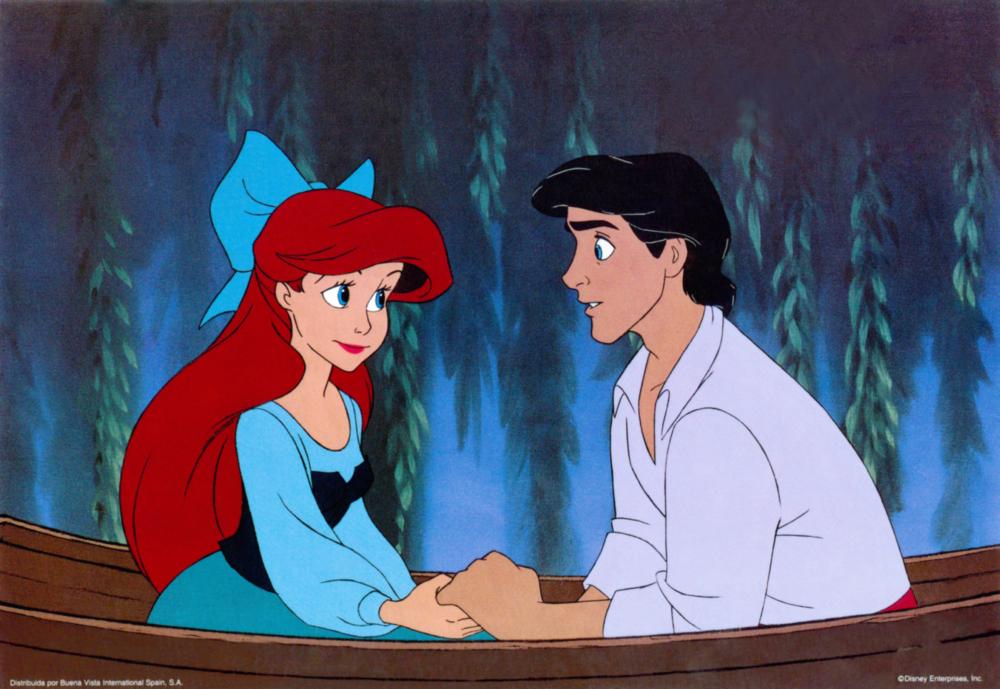
M8DLIME EC006

From: The Little Mermaid

Problem: Unrealistic compromise and that this relationship is based on terrible decision making and rushed escalation.

Sure a lot of little girls may have liked The Little Mermaid, but we have to face the facts that Ariel is a terrible role model as a Disney princess. Ariel basically gave up her life, voice, and lower body to be with a guy who she just met while Eric is conflicted between choosing her and another girl he just met (who turns out to be Ursula in disguise). Also give into account that Ariel is a teenage girl prone to making the same stupid impulsive decisions as any teenager would. I also don’t think Eric is too far off either since he basically decided to marry a girl he knew for less than a day (granted he was under Ursula’s spell at the time but still rushing to marry someone you knew for less than 24 hours is never a good thing). Still, even though Ariel and Eric marry as humans and seem happy in the end, their future doesn’t seem very good. For one, the two of them hardly knew each other and their attraction to each other seems rather shallow and based on physical attributes and Florence Nightingale syndrome. Second, soon Ariel will grow up to realize what she’s done and her relationship with Eric is doomed to end with her either feeling homesick or resentful and homesick or perhaps physically sick when she discovers that human sex isn’t the same as mermaid sex.


6. Spock and Uhura
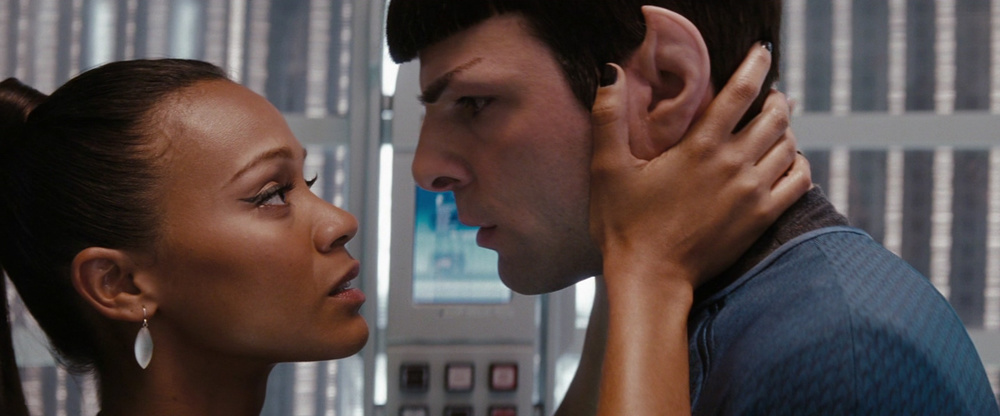
spock-uhura-star-trek-2009

From: J. J. Abrams’ Star Trek

Problem: Emotional unavailability, different expectations, and needs.

I don’t know about you but I’m personally stumped why J. J. Abrams would decide to make Spock and Uhura a couple. If there was any woman in the Star Trek universe I’d match Spock with it would have to be Nurse Chapel since she had the hots for him during the original TV series (that or the girl Spock was supposed to marry back home). Sure there are certainly successful Vulcan-human pairings in the Star Trek universe and Spock is living proof of that since his parents were still together in the original series as far as we know (though we don’t see them “together in the movies”). And it’s possible that Vulcans and humans can be attracted and have a relationship with each other. Yet, let’s face it, Vulcans aren’t known for their emotional intimacy since they pride themselves suppressing any emotional displays in favor of cold, calculating logic. We know from J. J. Abrams’ Star Trek that Uhura has certain emotional needs, which Spock unsurprisingly tries to ignore. And it’s no surprise that emotional unavailability leads to disengagement from the relationship in which Uhura could only put up with Spock’s emotional distance for so long before walking out. And if they have a child, then it could expect a frustrated mother and a distant father, which doesn’t translate to a happy childhood. As for their sex life, I’m sure it’s not one of Spock’s favorite activities since he’s part of a species known to get horny every seven years. Yet, he’s probably not the one who’s initiating it. Then there’s Pon Farr, and you don’t want to see Spock during that time.


7. Pat Solitano Jr. and Tiffany Maxwell
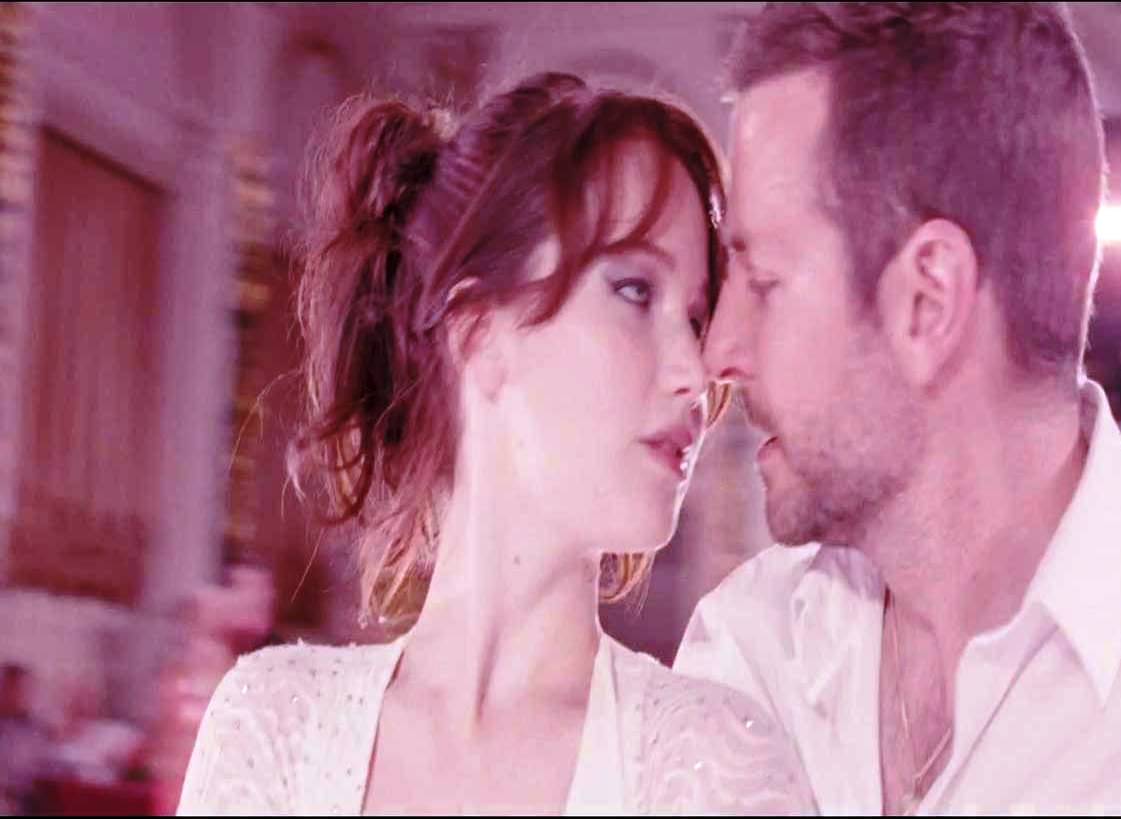
the-silver-linings-playbook-movie-poster-5

From: The Silver Linings Playbook

Problem: Mental illness, unemployment, and her sex addiction.

Sure Pat and Tiffany may love each other and life happily ever after, but remember that neither of them have been cured or even adequately treated. Also, note that if they are to have a life together, remember that they both were fired from their jobs for serious misbehavior whether it’s nearly beating up a co-worker for banging his (soon to be ex) wife or sleeping with everyone at the office after her husband’s untimely death. These aren’t ways you’d want to be remembered from work and they will both have a hard time getting a job, especially since Pat did time in a mental institution for eight months. Not only that, take note that Pat is a teacher by trade so he probably doesn’t have much chance of finding a job in the educational field again. Then there’s the fact that Tiffany asked Pat to have sex with her an hour after they first meet as well as her explaining, “I was a slut. There will always be a part of me that is dirty and sloppy, but I like that!” Hmm, I love this movie but I’m not sure if a union between a mentally ill man whose explosive outburst of assault toward a man having sex with his ex-wife and a clinical nymphomaniac is going to amount to anything good. I hope that Tiffany doesn’t like that dirty part about herself too much because one relapse can make this relationship become less than a romantic comedy and more of a Nancy Grace obsession. Still, at least they’re a couple who knows exactly what they’re getting into unlike some couples on the list.


8. T. R. Deviln and Alicia Huberman
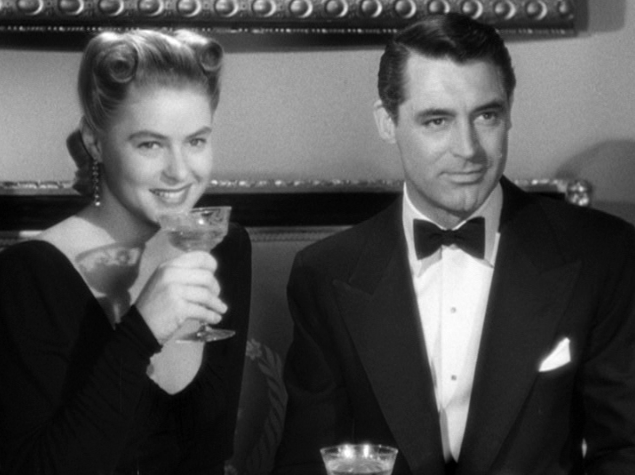
notorious2

From: Notorious

Problem: Workplace romantic entanglements, alcoholism, emotional unavailability, and overall dickishness.

Look, I don’t know about you but I don’t think Devlin and Alicia’s relationship has much of a chance after the movie even if they are played by Cary Grant and Ingrid Bergman. Sure they fall in love during the course of the film but what they really have is almost nothing more than a working relationship and despite his feelings, Devlin has no qualms about putting the job before anything else, even Alicia during an espionage mission that basically amounts to government-sponsored prostitution. Also, speaking about her, the only reason why Devlin ever tried to pursue her was because he was sent to recruit her for an espionage mission involving her father’s friend in Rio de Janeiro since her dad was convicted as a Nazi spy and she’s an admitted American patriot. Yet, Alicia is also an alcoholic with a reputation for promiscuity, and Devlin doesn’t let Alicia hear the end of it. Still, Devlin uses Alicia’s love for him and low self-esteem to help carry the mission and yet, has the propensity of acting like a total dick to her that you seem to have more sympathy for Alex Sebastian despite that he’s a Nazi, is storing uranium in his wine cellar, and eventually tries to kill Alicia towards the end. Then there’s the fact that Alicia was poisoned toward the end and the chance she may not make it to the hospital. If she does, the chances of them staying together don’t seem good since Devlin is still a spy as far as we know and Alicia will probably emerge from the situation perhaps even more messed up than she was before. And I don’t see Devlin as a supportive love interest when it comes to Alicia’s problems, because he certainly wasn’t during the job though maybe it was his way of acting “professional.”


9. Godfrey Parke and Irene Bullock
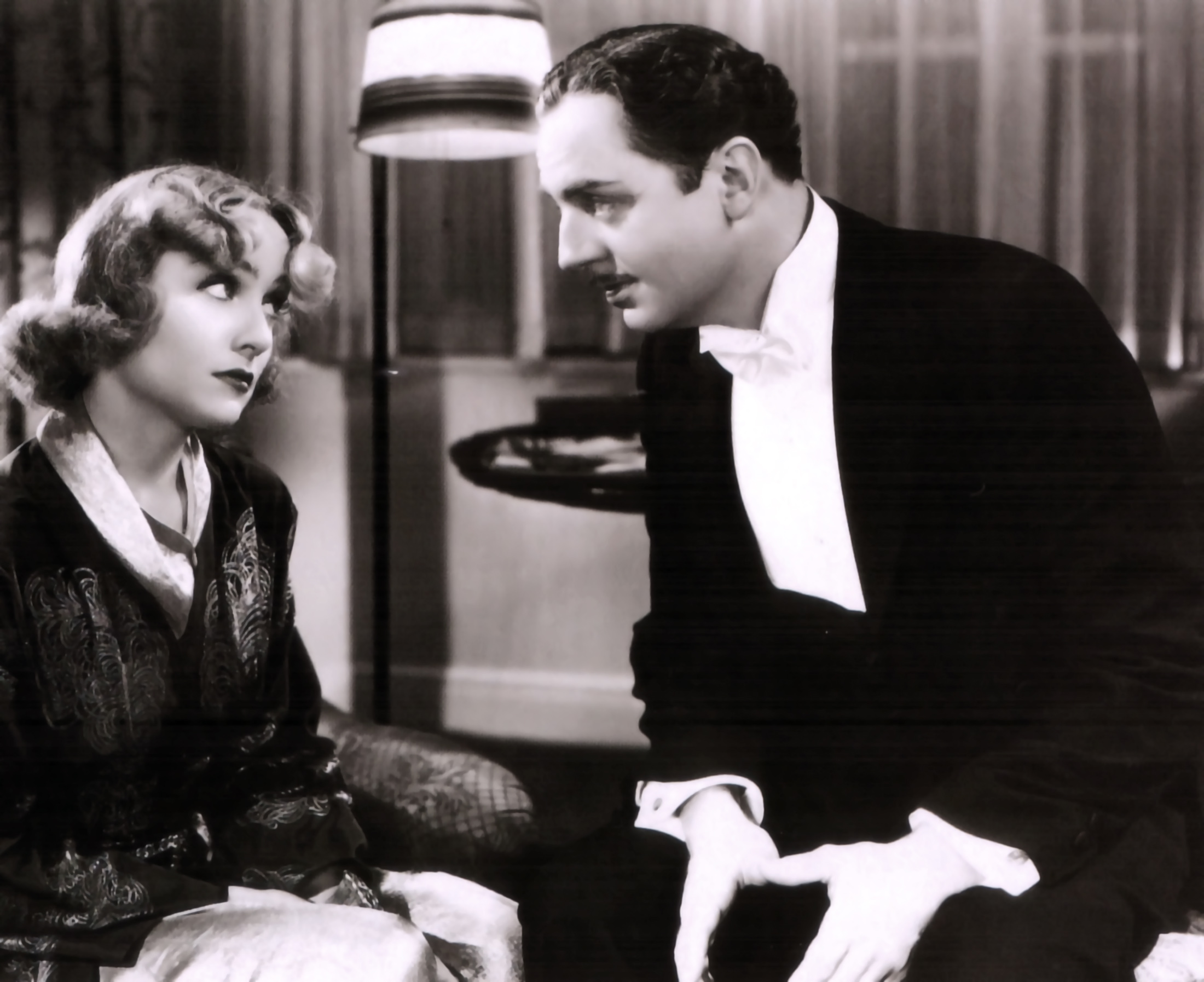
Annex-Lombard-Carole-My-Man-Godfrey_01

From: My Man Godfrey

Problem: Immaturity, personality differences, different focuses, and that attraction seems rather one sided.

Sure Godfrey must’ve felt some romantic affection for Irene and was certainly grateful for all what she did for him, but I don’t really see him being as crazy about her as she is about him. Nor do I see them as perfectly suited for each other either since she just acts like an infatuated teenage girl who seems to have a spoiled rich girl entitlement complex while he is much more concerned about getting his life back together after losing everything through an ugly divorce and I doubt he wants to get into a new relationship anytime soon. Besides, Irene is just so immature and I think she kind of forced Godfrey into marrying her and she didn’t really seem concerned with his needs too much though she is really nice about it. I kind of imagine them eventually getting sick of each other with Godfrey getting annoyed at Irene’s crazy superficial antics and Irene basically getting bored with him as her infatuation dies down. Either they’d end up like Irene’s parents or headed for divorce court. Godfrey probably should’ve married the maid.


10. Hercules and Megara
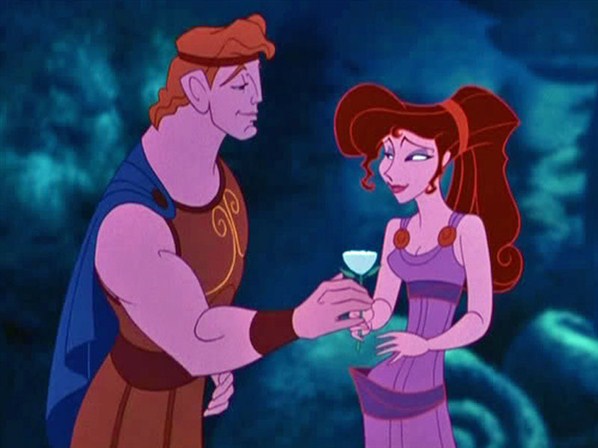
4E453EBDCD98D8357A429E9119D375

From: Hercules

Problem: Basically it’s doomed by canon.

Let’s face it. I know Hercules would go to the Underworld to save Megara in the Disney movie but the original myth doesn’t have a happy ending to these two. Rather their relationship ends with Hera (who’s not his mom) driving Hercules insane and killing Megara and their children. Either that or he just killed their children and Megara simply went back to her dad who had her married to someone else. Oh, and did you know that Megara’s said to be the daughter of the Theban King Creon who’s Oedipus’ uncle and brother-in-law? That would make her Oedipus’ cousin and niece by marriage. Still, whether out of guilt by this or not, Hercules would have to go on performing Twelve Labors after this. Nevertheless, if it’s Greek mythology, then the tragic end of Hercules’ relationship with Megara can’t be avoided. Hey, at least it won’t end as ugly as Jason and Medea’s, now these two make even the nastiest breakups seem pretty tame.


11. The Little Tramp and Most of His Love Interests
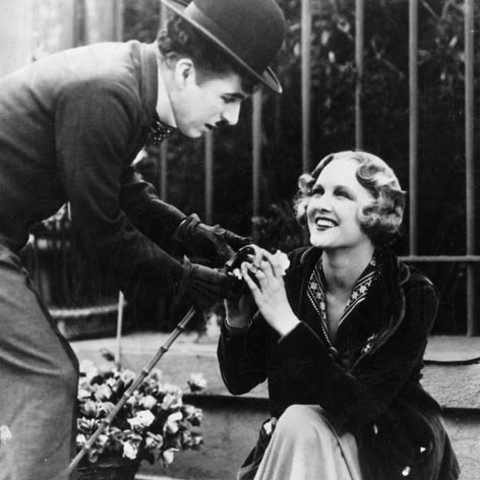
chaplin1

From: Most of Charlie Chaplin’s films up to Modern Times

The Problem: Doomed by canon, homelessness, unemployment, possible criminal record, and others.

We may love Charlie Chaplin’s Little Tramp character who has won over so many hearts and fans during the 1920s. Too bad he doesn’t have much luck with women and we always know that practically every relationship he has (even if they’re still together at the credits) will end in some sort of breakup before the next Little Tramp film comes around, despite that he tends to do practically a lot for the girls he likes. Perhaps it has to do with that he’s a homeless man who probably drifts from one town to the next while his love interests want to settle down. Not to mention, the Tramp has a tendency to get arrested a lot since he’s, well, a hobo. So while he could be a sweet as can be, his relationships with women would all end in some sort of breakup before the next one comes around.


12. Lieutenant Jack Dunbar and Stands With a Fist
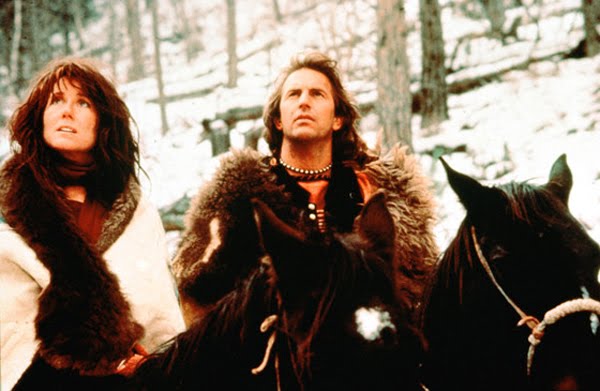
dances-with-wolves1

From: Dances With Wolves

Problem: Mutual Stockholm Syndrome.

Hmm an army officer abandoned by his military at some faraway outpost and later forced into interacting with Native Americans hooks up with a white woman orphaned during an Indian raid on her family’s settlement and then forced into similar dependency on the tribe. They met as consenting captives of the Sioux and fell in love while exploring the their captors’ virtues together. Sure they may seem to be in a stable compatible relationship and don’t seem to have much problem at first. But what these two white people have is known to psychologists as Stockholm syndrome which pertains to the a captive’s misinterpretation of a lack of abuse as kindness as if they were abused dogs with new owners. According to the experts, a love predicated on a psychological disorder is doomed to fail, especially when the cause of the disorder is removed. At the end the couple leave the tribe and set off on their own on the open plains. The only way Dunbar and Stands With a Fist could keep the spark alive is that they act as perpetrator against the other. And you thought this was a happy love story.


13. Jason and Medea
images

From: Jason and the Argonauts

Problem: Doomed by canon, unrealistic compromise, dickishness, and craziness.

Let’s just say while Medea may have helped Jason and his fellow Argonauts obtain the Golden Fleece, but once they land in Corinth, let’s just say it’s going to get ugly. Medea is a powerful and genius sorceress who ends up betraying her father and brother (who she’d later kill) for a guy she just met by the name of Jason. She supported Jason through their adventures, quests, and battles as well as suffered horribly for her love for him and bore him two boys. Jason was impressed by Medea’s devotion to him and swore to stay by her forever. And guess what Jason does for all that she’s done for him? Well, he dumps her for a princess since he has no more use for Medea. Medea retaliates by killing his new bride, father-in-law, and their two kids. Jason should’ve known what he was getting into and should have never royally piss her off in the first place.


14. John Bender and Claire Standish
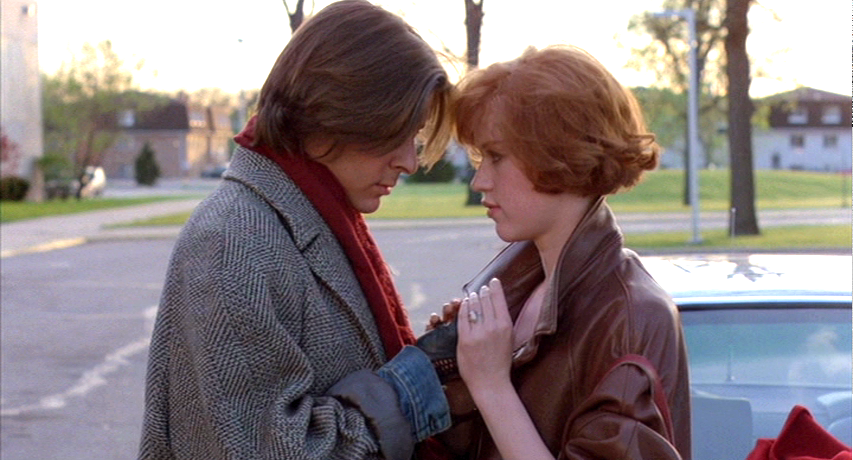
thebreakfastclub

From: The Breakfast Club

Problem: Relationship based on his Post-Traumatic Embitterment Disorder and her desire to get back at daddy.

I haven’t seen this movie but this pairing seems far uglier than those “good girl and bad boy” couples. At least Han and Leia were adults who knew what they were getting into. Claire is just a naive girl who mistakes antisocial tendencies for awesome attractive qualities. Bender is simply an angry, bitter, and aggressive teenage boy with a rap sheet and history of self-destruction. Basically he’s a guy who’s future consists of a prison cell in his lifetime. He’s antisocial, offensive, and generally kind of a dick who torments Claire on a regular basis. Sure he may have had a traumatizing childhood filled with shitty Christmas gifts. Such a combination of helplessness and rage may draw a girl like Clair who may want to help and get back at daddy but she should just go towards the door. According to the experts, Bender will likely shut down around affection and intimacy, and when he’s incapable of expressing his feelings like a normal human being, lash out with violence. If she decides to stay with Bender, Claire has a possible future of unrequited love and excuses about running into a door.


15. Nick and Honey
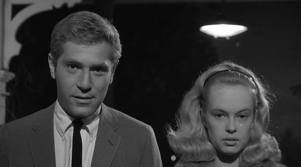
images1

From: Who’s Afraid of Virginia Woolf?

Problem: Marriage is more or less based on money and a  pregnancy scare than anything as well as emotional unavailability, alcoholism, and possible mental illness.

You would think that George and Martha would be the couple in this movie headed to divorce court because they are simply dysfunctional alcoholics who constantly fight and insult each other. Yet, later on you tend to realize that these two are utterly messed up people who thrive on drama and their torrid relationship is basically built on that and they can’t really live without each other either. With these Nick and Honey, there seems to be no foundation between them other than money and perhaps a pregnancy scare from what I figured. Neither seem to be in love with one another and don’t seem to have much of an emotional connection. There’s obviously something wrong with Honey other than alcoholism. And I wouldn’t be surprised if Nick just left her in a couple years for one of his prettier students.


16. George Wickham and Lydia Bennett

From: Pride and Prejudice

Problem: Basically these two married because they were living together unchaperoned for two weeks and that he as bribed by Mr. Darcy. Also, he’s overwhelmingly selfish while she’s just an immature brat.

Sure I know that divorce wasn’t easy to get in the early 1800s but let’s just say Lydia is bound for an unhappy life after marrying Wickham as a teenager and I wouldn’t be surprised if she goes back home to her parents after a few years, carries on an affair, or is forced to fend for herself. Still, she’s selfish, completely self-involved, materialistic, and cares absolutely nothing about those hurt because of her, the trouble she causes for her family, or the consequences of her stupid actions. In fact, she won’t even acknowledge that her actions were stupid or had any damaging effects. However, Lydia is a teenage girl who does stupid teenage things so there’s a chance she’ll regret what she’s done once she grows out of being such a brat. As for Wickham, well, he may seem an okay guy on the surface but once you get to know him, you realize that he’s a manipulative and selfish bastard who spends his time partying, whoring, and running huge gambling debts that he had to desert his militia regiment because he owes so much money to his soldiers. Oh, and he was hoping to marry a rich girl even after he deceived Lydia into thinking he was in love with her so she would elope with him. Not only that, but if it wasn’t for Mr. Darcy and his large disposable income, Wickham probably wouldn’t have married her in the first place. Still, you can make the case for Wickham being a sociopath and probably doesn’t love Lydia. Let’s just say that Jane Austen has them in a loveless marriage and leeching Lydia’s relatives but that doesn’t mean they’re living together.


17. Professor Henry Higgins and Eliza Doolittle
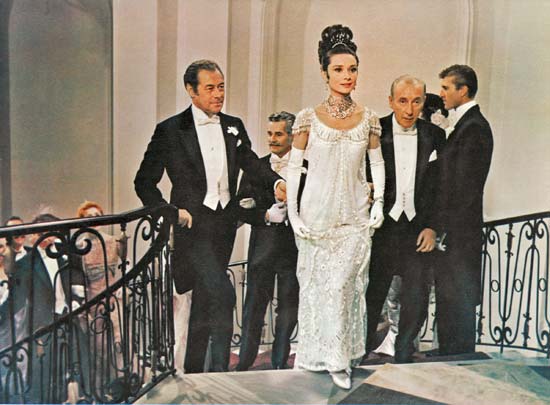
90661-004-00E4F325

From: My Fair Lady

Problem: Socioeconomics, large age difference, his misogyny, the fact George Bernard Shaw didn’t see them as a couple, and other reasons.

Sure Higgins may have grown to care for Eliza by the end of the movie but that doesn’t change the fact that he’s a misogynist who took advantage of her to win a bet. This isn’t something Eliza is going to easily forgive him for. I mean the guy has two songs about how he doesn’t like women. George Bernard Shaw always hated how his Pygmalion adaptations have Higgins and Doolittle pairing up and he thought that seeing Eliza with a middle aged misogynist as the worst thing he could’ve imagined. If it were up to him, she’d end up with Freddie who’s the creepy stalker but considering his play took place in 1912, there’s an obvious reason why that may not last. It’s very clear that any romance involving Eliza and Higgins would involve the latter wearing the pants in the relationship and it’s very likely that it would be rather similar to what they have when he was trying to teach her how to speak English without a Cockney accent. However, this time, Eliza wouldn’t have much desire to reinvent her life because she already has and would probably leave Higgins for some nicer guy her age. And no, she probably wouldn’t end up with Colonel Pickering because he’s older than Higgins and more like a father figure to her.


18. L. B. “Jeff” Jeffries and Lisa Carol Freamont
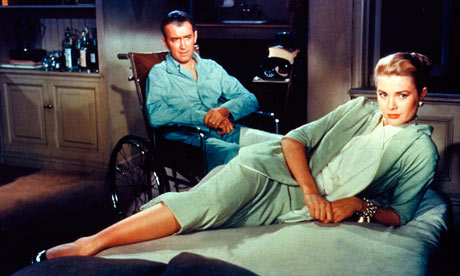
Rear Window - James Stewart and Grace Kelly

From: Rear Window

Problem: Differing lifestyles, the fact the relationship doesn’t seem to be getting anywhere, and other issues.

This is a hard case since Jeff is clearly not the happiest camper in this movie since he’s recovering from a broken leg while confined to a wheelchair in his little apartment in 90 degree weather with no air conditioner, no TV or internet, and no handicap access. We shouldn’t be surprised that Jeff may come off like a jerk whose new hobby is watching his neighbors, especially a guy who might’ve killed his wife. Now I have respect Lisa for being there for Jeff at this difficult time in his life but he doesn’t really seem to appreciate her and has doubts on whether their relationship would last. Of course, it’s given that Jeff is a professional photographer who travels a lot and Lisa’s a socialite who probably has a much more luxurious lifestyle than what he’s used to given what his apartment looks like while she’s wearing designer clothes. Not only that but I’m sure that many of Jeff’s neighbors aren’t that well off either. Not to mention, Jeff seems to have bitter attitudes about marriage. I’m not sure that either is willing to compromise for the other. Let’s say I give them until his legs are better.


19. Don Birnam and Helen St. James
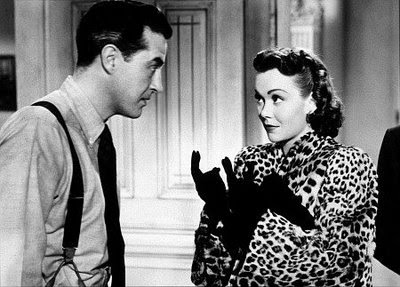
lost weekend 1

From: The Lost Weekend

Problem: Alcoholism and co-dependency issues.

I have never believed in the notion that a good woman helping a guy turn his life around and while this movie seems to hint toward a happy ending, things aren’t so much cut and dried in reality. Don might’ve stopped drinking and decide to write his novel but he’s not necessarily out of the woods yet or whether he’ll stay sober for good (in the original book, he doesn’t). And if he does, it’s not going to be because of Helen. Still, we have to accept that they were together for three years and Helen knew Don was a drunk the whole time. Throughout the film, it’s very apparent that Helen is a co-dependent since she’s constantly babying him, always making excuses for him, and refuses to make demands for him. Furthermore, she foolishly thinks that she has the strength and determination to help Don stop drinking. By three years in, she should know that Don’s alcoholism isn’t her problem and she can’t fix it. But Helen doesn’t seem to acknowledge this at all. Still, I could see this relationship going in a variety of ways. Don may experience continual relapses that will either lead to his death or Helen possibly coming to her senses and dumping him. And if Don stays sober there’s a possibility he may come to see Helen as medicine and demand a fresh start in a new relationship with a more self-assured woman willing to make demands on him.


20. Edward and Vivian
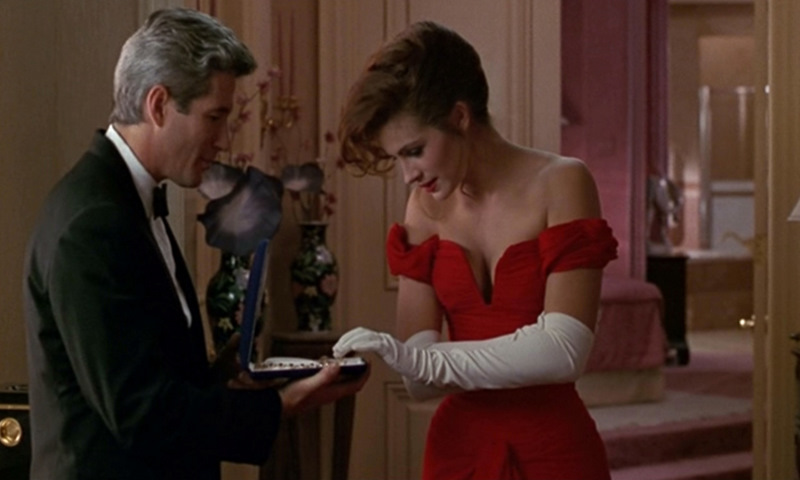
Pretty-Woman_Julia-Roberts_red-evening-gown_mid.bmp

From: Pretty Woman

Problem: Let’s see, she’s a hooker and he’s a callous businessman, the possibilities are endless since screwing other people is not a solid foundation for a relationship.

I haven’t seen this film and I’m not sure if I ever want to since it kind of has unrealistic ideas about love and such, especially in the realm of wealthy businessmen dating hookers. But having a long term relationship with one? Please, I’m not sure if that’s going to work out. Of course, the notion that Edward may not be entirely comfortable with Vivian’s colored past as a prostitute, but it’s very clear in the movie he already knows about her work in the sex industry and that there are certain things about prostitutes you need to expect. After all, as a businessman, he probably has been with quite a few of them. However, while businessmen and prostitutes may screw over people for money this doesn’t mean they’re similar creatures who belong together. Rather, there’s a big difference between your body because you have to and ruining other people’s businesses because you want to. And while Vivian may give up her life as a prostitute, this doesn’t mean Edward would stop screwing other businesses and ruin other people’s lives, including some women who may become prostitutes because of him. I’m not sure that Vivian would feel comfortable pairing up with such a jerk.
History of the World According to the Movies: Part 82 – American Film and Music of the 1960s

Image

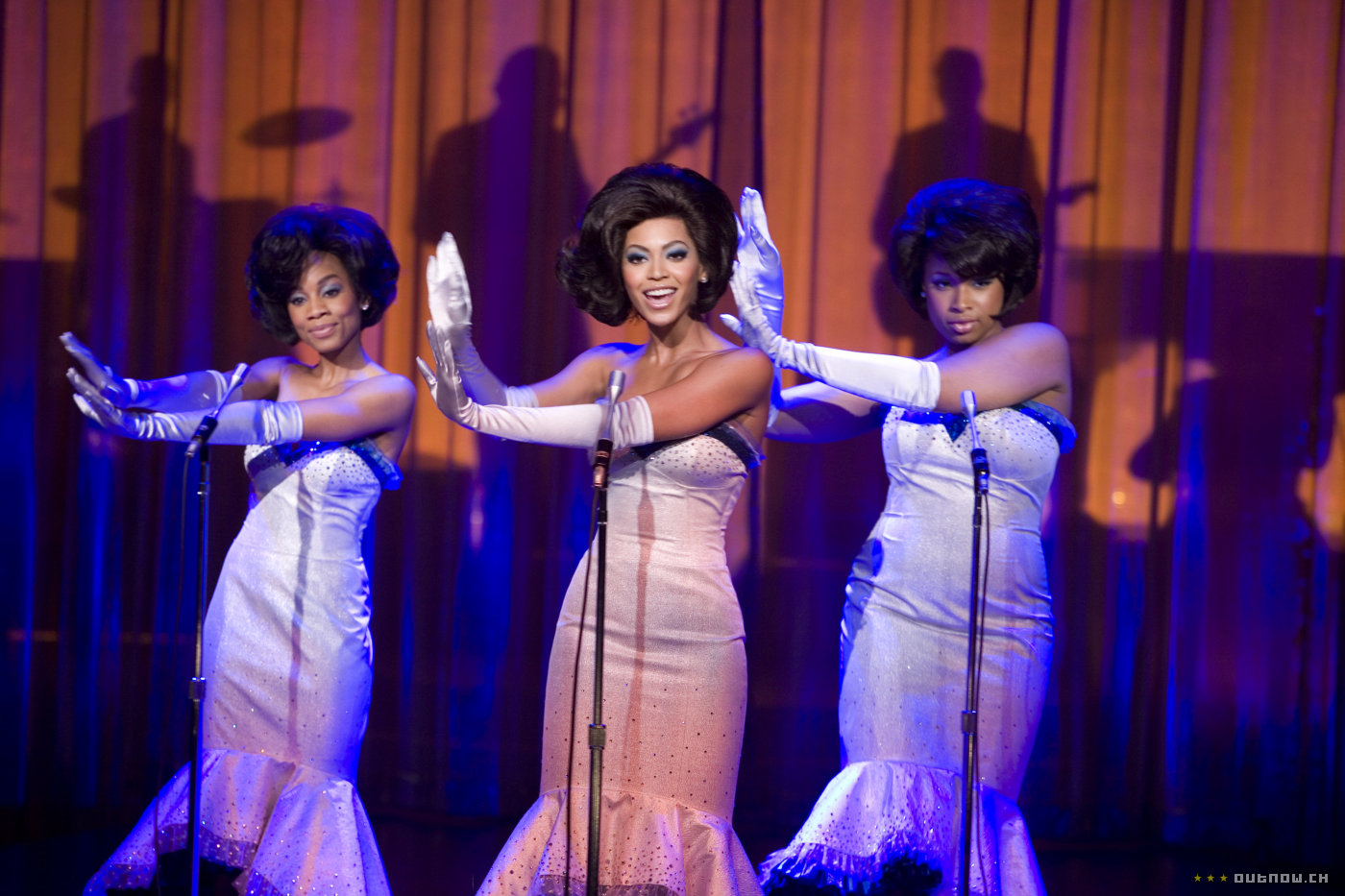
Jennifer Hudson, Beyonce Knowles, and Anika Noni Rose star in the 2006 musical Dreamgirls which tells the story of the Supremes though they’re known by different names in this. Still, it gets the story mostly right and shows the Motown intrigue behind the scenes. Though Diana Ross didn’t think this film was an accurate representation, fellow Supreme Mary Wilson said it was “closer to the truth than they’ll ever know.”

Music and film would change a lot in 1960s America. Sure many of the old stars would still be around yet, you would have plenty of new voices. In Greenwich Village, you have Bob Dylan who brought a new standard of songwriting as well as influence practically every genre of music as well as poetry and prose. In Detroit, you have the Motown sound that included artists like Aretha Franklin, the Supremes, Marvin Gaye, Smokey Robinson, and plenty of other African American artists. In New Jersey, you have Frankie Valli and the Four Seasons whose story would later get made into a Broadway musical Jersey Boys. On the West Coast, you have the Beach Boys and surf music and Creedence Clearwater Revivial which would help define the Southern Rock genre. Yet, the 1960s would soon give way to psychedelic rock music and folk protest songs. Let’s just say, rock music by the end of the decade won’t just consist of a bunch of dance songs anymore. As with Hollywood, while many of the old movie stars are still alive, the studio system won’t be (since all the old moguls would be either retired or dead by this point) and nor would the Hays Code. Thus, the old Hollywood days would end as we know it and would give rise to what we know as New Hollywood with a new generation of stars as well as movies that have more, violence, gore, sex, and controversy. Some of these new movies would be inspired by foreign films. By the end of the decade, you will have the MPAA ratings system though it won’t yet include a PG-13 rating and the NC-17 equivalent would be X. Still, while there are plenty of movies on the 1960s culture in the US, they do get plenty of things wrong, which I shall point out.

Music:

Leonard Chess died in 1967. (He died two years later.)

“American Pie” was a popular song in 1969. (It was recorded in 1971.)

Santana’s Abraxas was a popular album in 1967. (It was released in 1970.)

Marvin Gaye’s “I Heard It Through the Grapevine” was a popular song in 1964. (It was released in 1967.)

CCR’s Cosmo’s Factory was on sale in 1967. (It was released in 1970.)

Blues artist Little Walter died in the arms of Muddy Waters’ wife in 1967. (He died at his girlfriend’s house in 1968 contrary to Cadillac Records.)

Waylon Jennings sported his trademark long hair and beard in the mid-1960s. (In the 1960s, he was clean shaven with short black hair. He didn’t get his trademark look until the mid-1970s “outlaw” era.)

Berry Gordy was a villainous character dealing in payola and other activities. (Contrary to his Eddie Murphy expy in Dreamgirls, Smokey Robinson had Paramount and Dreamworks apologize to Gordy and other Motown alumni. However, to be fair, it’s alleged that Gordy was involved in illegal activities.)

“Leaving on a Jet Plane” was a hit in 1967. (It was released in 1969.)

Janis Joplin died in 1969. (She died in 1970.)

Johnny Cash:

Johnny Cash was willing to kick his habit out of his love for June. (His love for June Carter certainly helped as well as her insistence that she wouldn’t marry him until he was clean and sober. However, by 1968, Cash was at the lowest point in his life in which his only choices were to either kick drugs or die.)

Johnny Cash collapsed on stage in Las Vegas during a 1965 performance. (Contrary to Walk the Line, he did not.)

Johnny Cash’s marriage with his first wife ended after his arrest in El Paso. (Contrary to Walk the Line, it ended after a bizarre cave incident in Nickajack Cave in Tennessee. As he told MTV, “In 1967 … I was on amphetamines really, really bad, and I was totally insane. I got in my Jeep and I drove down to Chattanooga, and there was a cave there … a monstrous cave, it went for miles back up onto Lookout Mountain. I went into that cave with my pills, just exploring, you know. I had all these wild ideas about finding gold, Civil War [memorabilia] or something in this cave. I’d keep going and I kept taking the pills, kept taking the amphetamines, and after a certain point, after I’d been in there about three hours … I tried to close my eyes, but you can’t close your eyes for long on amphetamines. I laid down and I said, ‘God, I can’t take it anymore; I can’t make it any further, you’ll have to take me now, I want to go, I want to die.’ ” Vivian would say that if Johnny wouldn’t have gotten involved with drugs, they would’ve remained together. However, I tend to disagree with that since he already knew June Carter by then.)

Johnny Cash had to fight to do his Folsom prison concert. (Contrary to Walk the Line, he did not since he had been performing in prisons since the 1950s.)

Johnny Cash found his new house after passing out in the nearby woods. (There’s no evidence of this unlike what you see in Walk the Line.)

Patsy Cline:

Patsy Cline recorded “Crazy” before her famous auto accident. (Contrary to Coal Miner’s Daughter, she recorded the song a few weeks after the accident.)

Patsy Cline and her brother were on their way to pick up beer when she nearly lost her life in a 1961 winter car crash. (Contrary to Sweet Dreams, the crash happened in June and she and her brother were en route to pick up material for her seamstress mother to use for Patsy’s stage clothes. Oh, and the crash was a head on collision with another car which caused Patsy to be thrown through the windshield, not a broadside from a truck and pulled from the wreck by her brother.)

Charlie Dick was an abusive husband to Patsy Cline who beat her up in front of their kids. (Contrary to Sweet Dreams, both Charlie and daughter Julie deny this. Relatives and friends dispute how whether their marriage was abusive and to what extent, yet values dissonance may come into play. Still, they did have a son named Randy Dick, which is pretty bad if you ask me. I mean that’s more of a name for a male porn star.)

Patsy Cline’s airplane crashed into a mountain cliff due to difficulties restarting the engine after switching from an empty fuel tank to a full one en route from Nashville to Kansas City. (Contrary to the 1985 Sweet Dreams, Cline’s plane crashed in a forest in Camden, Tennessee {there are no mountains in the western part of the state} while en route from Kansas City to Nashville. Also, the crash was caused by bad weather and the fact that Cline’s manager was piloting the plane who became disoriented and lost control.)

Ike and Tina Turner:

Ike Turner was the front man for the Kings of Rhythm when he met Tina. (Contrary to What’s Love Got to Do with It, Ike was front man in the way he was a band leader and organizer. However, he had other singers and performers fronting the band because he had stage fright. Also, the original vocalist behind “Rocket 88” was Jackie Brentson, not Ike.)

Ike Turner pushed a cake in Tina’s face which led to a food fight in the club. (Contrary to the film, though Tina was given a cake she didn’t order while waiting for food, Ike just told her to eat it.)

Tina Turner’s first performance with Ike and the Kings of Rhythm with Ike playing guitar. (Both said that Tina started singing when she was given a microphone by the band’s drummer while Ike was playing piano during an intermission. Yet, she did front the band the night she began singing with him. Also, her first recording was singing background vocals to Ike’s “Box Top” as Little Anne, contrary to What’s Love Got to Do with It.)

Ike and Tina Turner opened for the Rolling Stones in 1968 with “Proud Mary.” (Contrary to What’s Love Got to Do with It, Ike and Tina would open for the Stones twice in 1966 and 1969. However, they didn’t perform “Proud Mary” at either tour because the song was released in 1969 performed by its original artists Creedence Clearwater Revival {lead singer John Fogerty wrote the song}. The Turner version wasn’t recorded until 1970.)

Ike and Tina Turner had no hits between “A Fool in Love” and “River Deep – Mountain High.” (Contrary to the movie about them, they had several. However, it was during “River Deep – Mountain High” they worked for Phil Spector {yes, that guy who wore dreadful wigs and killed someone}.)

Ike Turner raped and beat up Tina in the recording studio. (Both Turners denied this contrary to What’s Love Got to Do with It. However, it’s fairly well known that Ike would physically abuse her {which even he has admitted}. Yet, Tina would say that Ike would ask for sex after he beat her up. At that point, she would be too afraid to refuse so the sex probably wasn’t 100% consensual. Nevertheless, Ike Turner complained that Laurence Fishburne’s portrayal of him was inaccurate, but I find that many of the things he said about the film are unreliable. I mean Ike said that he and Tina weren’t legally married though Tina was able to divorce him in 1978.)

Tina Turner once headed to her mother’s house in St. Louis to hide from Ike Turner. (Contrary to What’s Love Got to Do with It, Tina said that Ike knew where to seek her out. Also, Tina didn’t have a good relationship with her mother.)

Ike was Craig Turner’s father. (Sorry, but Craig was actually Tina’s son with another man named Raymond Hill {who was one of the reasons why Ike pressured Tina to change her name from Anna Mae Bullock}. Their only child together would be Ronnie Turner who was born in 1960. Yet, they did raise Ike’s two sons from a previous marriage together. Still, they didn’t become a couple until 1959 when Ike separated from his then wife, Lorraine Taylor.)

Ike and Tina Turner performed a concert at the Apollo Theater with Otis Redding and Martha and the Vandellas in 1960. (Contrary to the biopic about them, Martha and the Vandellas hadn’t formed yet by this point and several of them were performing in a different group called the Del-Phis. Redding was fronting several bands and had yet to record his first single by this time.)

Ray Charles:

Ray Charles was banned from playing in Georgia in 1962. (He never was but he did refuse to play for a segregated audience in Augusta, Georgia, after a plea by young civil rights activists by telegram {not protest as in Ray}. Yet, he did pay the promoter for compensation.)

Ray Charles’ wife Bea stayed with him regardless of her husband’s faults. (Though this is implied in Ray, she actually got fed up with his long absences, his drugs, and most especially his affairs that she divorced him in 1977.)

Jim Morrison:

Jim Morrison’s film school project had him reading his terrible poetry over Neo-Nazi rallies and disembodied women’s legs in black stockings. (Contrary to The Doors, this didn’t happen, though his film did include a German actress.)

Jim Morrison was arrested in New Haven in 1968. (He was arrested in 1967.)

Jim Morrison’s “Young Lion” photo was taken by a female photographer who asked him to take off his shirt in a sexy voice. (The photographer’s name was Joel Brodsky who was a man, so a historically accurate rendition of the shoot probably wouldn’t go too well.)

Jim Morrison was a talentless, spoiled egomaniac who was unable to stagger through a scene without whiskey, pills, or powder. (Jim Morrison’s former bandmates said that Oliver Stone exaggerated his problems with drugs in The Doors. Still, as bad as Jim Morrison was at poetry, you have to agree that most of his songs with The Doors are far better than any kind of crap Justin Bieber produced. Not to mention, Morrison’s word salad verses went perfect with the band’s trippy style. Still, aside from lead vocals, he’s said to have played harmonica, percussion, synthesizer, maracas, tambourine, and piano.)

Jim Morrison put an emphasis on “higher” during the Doors’ performance of “Light My Fire” on The Ed Sullivan Show. (Contrary to the 1991 film, he performed the song more or less as he originally recorded it, yet he did ignore Ed Sullivan’s request to change the lyric {which had practically nothing to do with drugs}. However, there was no way that the Doors were going to comply with Ed Sullivan’s request. I mean Ed Sullivan was tempting fate on this one.)

Jim Morrison locked Pam Courson in the closet before setting it on fire. (Contrary to the Oliver Stone film, this never happened.)

Jim Morrison was an out of control sociopath. (His former bandmates contested to the Val Kilmer’s portrayal of him in Oliver Stone’s The Doors. Morrison was a self-centered hedonist which can’t be disputed but he probably wasn’t a sociopath.)

Jim Morrison attended the University of Florida. (He attended Florida State.)

Jim Morrison was 21 in 1966. (He was 23.)

Jim Morrison’s long-suffering girlfriend Pam Courson was a two dimensional bitch. (Meg Ryan’s portrayal in the Jim Morrison biopic offended the surviving Doors who said she had personality and everything.)

Jim Morrison committed indecent exposure during the Doors 1969 Miami concert. (Contrary to The Doors, though Morrison would be arrested and convicted of indecent exposure whether he flashed his audience has been disputed by witnesses, even former bandmates. As John Densmore said, “If Jim had revealed the golden shaft, I would have known.”)

Bob Dylan:

Bob Dylan was involved in a serious motorcycle accident. (Contrary to I’m Not There, the accident wasn’t as serious as reported at the time.)

Bob Dylan’s performance was booed at the 1965 Newport Folk Festival because he used electric guitar on his songs. (Witnesses actually complained more about the amplification quality than and length of the performance than whether Dylan used his electric guitar on “Maggie’s Farm.” According to Al Kooper, Dylan’s organist, “Some had travelled thousands of miles and paid a lot of money for tickets and what did they get? Three songs, and one of those was a mess. They didn’t give a shit about us being electric. They just wanted more.” In short, Dylan was booed simply because he was performing with lousy speakers not for upsetting folk purists by going electric.)

Bob Dylan was responsible for Edie Sedgewick’s drug abuse and death. (Dylan wanted to sue Factory Girl over such insinuation. Yet, they were close friends but probably not lovers. Still, Dylan was probably not responsible for her death for Edie was anorexic as a kid and had experimented with drugs before she met the singer-songwriter.)

Bobby Darin:

Bobby Darin acknowledged Nina Cassotto Maffia as his mother in public. (Actually contrary to Beyond the Sea, he never acknowledged Nina as his mother in public and didn’t know that she was his mom until he was 33 years old {and before then, he thought that she was his much older sister since his mother had him at 16}. Unsurprisingly, he barely tolerated that knowledge in private.)

Bobby Darin believed that Charlie Maffia was his father. (Contrary to Beyond the Sea, he didn’t, nor did he ever appreciate anything his stepfather did for him. Also, Darin was much better looking than Kevin Spacey.)

Bobby Darin was in his trailer at Big Sur when he heard of Robert F. Kennedy’s assassination. (Contrary to Beyond the Sea, he was with RFK on the campaign trail when the presidential candidate got shot. He actually witnessed it in that very hotel.)

Bobby Darin’s popularity was in decline near the end of his life. (Contrary to Beyond the Sea, he had a successful weekly variety show for the last two years so it wasn’t just those who attended clubs or went to Vegas who saw him. He was also even loved as a comic and impressionist alongside his music. He was also said to be a good actor, too, and even was nominated for an Oscar.)

Bobby Darin and Sandra Dee were married to the end of his life. (They divorced in 1967 and Bobby remarried someone else though him an Dee did remain friends.)

The Supremes:

Florence Ballard was able to survive on a solo career. (Though her expy Effie White does in Dreamgirls, Florence Ballard died of a coronary thrombosis as she was poised to launch a solo career.)

Florence Ballard and Diana Ross eventually reconciled after Ross took over as Supremes lead singer while Ballard was passed over. (Contrary to Dreamgirls, Ballard and Ross would remain estranged until Ballard’s death. Yet, Ross would establish a trust fund for Ballard’s children after Ballard died so she probably felt some guilt. Still, Ballard being pushed to the background wasn’t really Ross’s fault as implied in the film.)

The Doors:

The Doors’ New Haven concert was a beautiful sell-out show in a beautiful theater with a balcony. (Contrary to The Doors, it took place in a broken down hockey rink with no balcony. It was also half empty.)

“Roadhouse Blues” was popular in 1968. (The Doors released this song in 1970.)

Woodstock:

“Comin’ into Los Angeles” and “Beautiful People” were both played during the daytime. (Contrary to Taking Woodstock, they were played at night. Arlo Guthrie’s performance of the former is seen in the 4-hour documentary which I saw.)

“Maggie M’Gill” was played at Woodstock. (Woodstock took place in 1969 while The Doors recorded this song in 1970. Seriously, the filmmakers of Taking Woodstock could’ve seen the documentary to check themselves.)

Woodstock was wonderful. (Yeah, a three day music festival that had drug addled hippies waiting in line to use a port a potty. Not only that, but it rained at some time. Not my idea of fun. The documentary doesn’t seem to make it much of a great party either. Of course, best get the best performances on iTunes. Oh, I forgot they didn’t have iTunes then. I bet the Woodstock cleaning crew didn’t have much fun.)

Frankie Valli and the Four Seasons:

Tommy DeVito was an uncleanly roommate who peed in the sink. (Contrary to Jersey Boys, according to the real Tommy DeVito, “Some of it is bullsh*t — where I pee in the sink, and the dirty underwear. I was probably the cleanest guy there. I don’t even know how they come up with this kinda stuff.” Yet, he and his fellow band members were friends with a young Joe Pesci.)

Tommy DeVito was in debt to the mob for $150,000. (Actually unlike you see in Jersey Boys, the real Tommy DeVito claims he was never in the mob, yet he did perform for them. Yet, it was more likely the mob owed him money than vice versa.)

Tommy DeVito was kicked out of The Four Seasons and was forced to perform live in Las Vegas. (Contary to Jersey Boys, DeVito moved to Las Vegas in 1970 on his own free will since he had several siblings living there and actually quit the group because “I had had it up to here with the traveling and changing clothes three times a day, and taking two planes and then driving 100 miles to do a date. Getting on stage and doing the same stuff — I just had it.”)

Hollywood:

Anthony Perkins did the shower scene in Psycho. (Contrary to Hitchcock, Perkins wasn’t on the set that day and had a smaller female stand-in to take his place as well as others. This was intentional because Hitchcock didn’t want audiences to be tipped off of the murderer’s true identity at this point in the film. To have Perkins do the shower scene himself wouldn’t have added to the suspense for he was a tall man. The only scene where Perkins dressed up as Mrs. Bates was during the big-reveal climax in the cellar.)

Psycho was filmed on the Paramount studio lot. (It was filmed at Universal but it was released by Paramount.)

Vera Miles had a full head of hair during the filming of Psycho. (Before filming Psycho, she shaved her head for a role in 5 Branded Women. Then again, maybe her character’s wearing a wig in Psycho.)

Melvyn Douglas was dying when he won the Oscar in 1963. (He’d die in 1981.)

Bernard Hermann’s nickname was Bernie. (Contrary to Hitchcock, no one called him that. He was called “Benny.”)

Disney Winnie the Pooh toys appeared on shelves in 1961. (Though Disney did have the film rights to the A. A. Milne characters, they didn’t acquire the merchandising rights until a year later.)

Robert Sherman walked with a limp because he was shot. (This is alluded to in Saving Mr. Banks but he was actually wounded in World War II while during the liberation of Dachau.)

Joseph Stefano played an insignificant role in the making of Psycho. (For God’s sake, he wrote the screenplay.)

Alfred Hitchcock:

Alfred Hitchcock and Alma Reville had no children. (They had a daughter named Pat and she was involved in the making of Psycho playing one of Marion’s co-workers. Pat Hitchcock also played a significant role in Strangers on a Train as Farley Granger’s girlfriend’s sister who wore glasses and would have small roles in several of his productions {mostly because she wasn’t a gorgeous blonde}. Yet, you wouldn’t know it from Hitchcock where her existence doesn’t seem to be mentioned. Still, she would’ve definitely had been to the premiere of Psycho.)

Alfred Hitchcock took a mortgage on his house to finance Psycho. (Contrary to Hitchcock, no director under studio contract did this. Also, the film greatly portrays the Hitchcocks as much poorer than they really were. Hitchcock actually had two houses and a vast savings so he could definitely afford to produce the film without him and Alma having to cut back on personal expenses. Financing Psycho wasn’t a big financial risk for him and he was already a legend in Hollywood by then anyway.)

Alfred Hitchcock’s marriage to Alma Reville was a creative partnership that was strained by jealously. (While their marriage was a creative partnership, it was one of the few happy marriages in Hollywood to last more than 50 years. But Reville’s contributions to Hitchcock’s films hadn’t gained much public recognition until recently. Still, she didn’t have to bail him out of every crisis he supposedly got himself in and wasn’t frustrated of her talents being overlooked or felt any need to be recognized on her own terms because she had been credited for her work on many of his films and others. Also, the alleged affair Alma may have had with Whitfield Cook might’ve taken place in 1949 during the writing of Stage Fright when Hitch was in England, not during the making of Psycho. Still, her friendship with Cook wasn’t close enough to make Hitch feel threatened or jealous and the affair was probably platonic. In fact, Cook was a long-time friend of the Hitchcocks,  wrote Strangers on a Train with Alma, and would distance himself from Alma when he thought things between the two were going too far {though Hitchcock does depict him as a villainous womanizer which is far from the truth. Not only that, but Cook’s journals suggest he may have been gay}. Still, much of the strife between Hitch and Alma in Hitchcock is mostly pure dramatic license.)

Alma Hitchcock took over directing a part of Psycho for her husband when he was ill. (Contrary to Hitchcock, she didn’t. When Hitch fell ill, it was the his assistant director who assumed the role. And no, his illness wasn’t self-induced over the unhappiness of his private life because his was one of the least unhappy in Hollywood.)

Film censors were up in arms over the thought that Alfred Hitchcock would include a flushing toilet scene in Psycho. (They were more concerned about him including the word, “transvestite.” The part about the toilet is just urban legend.)

Alfred Hitchcock terrified Janet Leigh into giving a more believable performance during the filming of the shower scene in Psycho. (Contrary to Hitchcock, this may not have happened. Retaining an image of dignity and control. And no, he didn’t have violent impulses either. He was more of a perfectionist than anything and was completely professional with his female leads on the set and his flirtations with actresses never led to notable marital tension.)

Walt Disney:

Walt Disney didn’t smoke. (Contrary to Saving Mr. Banks, he was a notorious chain smoker all his adult life which contributed to his death of lung cancer but Disney has an anti-smoking ban. Also, contrary to legend, Walt Disney wasn’t cryogenically frozen after his death. He was actually cremated. In short, he was fried, not frozen.)

Walt Disney had to convince P. L. Travers to hand over the film rights to Mary Poppins. (Though this is the premise of Saving Mr. Banks, Disney already secured the film rights {subject to Travers’ approval of the script} when Travers arrived to consult the Disney staff in Burbank. In fact, Walt Disney left Burbank for a vacation in Palm Springs a few days into Travers’ US visit hoping that the Sherman brothers would work something out with Travers. Yet, much of what is adapted into Saving Mr. Banks comes from their correspondence through letters, telegrams, and telephone calls. Oh, and the guy who first contacted Travers wasn’t Walt Disney but his brother Roy.)

Walt Disney took P. L. Travers on a tour of Disneyland where she rode a carousel. (Contrary to Saving Mr. Banks, she probably didn’t ride a carousel in Disneyland. In fact, she hated Disneyland.)

Walt Disney had a loveable avuncular personality. (He was also a racist, anti-Semite, and misogynist {I mean how many mothers die in Disney movies, good God}. Also, he was one of those guys who named names during McCarthyism.)

P. L. Travers:

P. L. Travers was a lonely old spinster. (She adopted a boy named Camilus though he didn’t know about his twin brother until he met the guy in a bar. Sure he was pissed at Travers but they did reconcile. She also tried to adopt her 17-year-old maid, too. Not only that, but she had a long term relationship with a married man as well as a possible live-in girlfriend for over a decade. Oh, and she didn’t save her mother from drowning and she dedicated Mary Poppins to her mother, not her dad.)

P. L. Travers approved Disney’s changes to the script and story to the movie adaptation of Mary Poppins. (Contrary to Saving Mr. Banks, she never approved of the dilution of the harsher aspects of Mary Poppins’ character, felt ambivalent about the music, and hated the use of animation. Walt Disney would overrule her objections to portions of the final film citing contract stipulations and final cut privileges. After the premiere, Travers is said to approach Disney and told him to remove the animated sequences. Disney dismissed her request saying, “Pamela, the ship has sailed.” Still, Ms. Travers should’ve known what to expect from a Disney adaptation of her work.)

P. L. Travers was emotionally moved during the premiere of Mary Poppins. (Yes, Travers did cry at the premiere of Mary Poppins but it wasn’t out of how good of job Walt Disney did in adapting her book. Rather she cried out of anger and frustration over the film which she felt betrayed the artistic integrity of her characters and work. In fact, she was so resentful of what she considered poor treatment on Disney’s hands that she vowed never to permit the Walt Disney Company to adapt any of her novels in any form of media. In fact, in her last will, Travers banned any Americans from adapting her works in any form of media.)

Bruce Lee:

Bruce Lee opened his own kung-fu school at his wife Linda’s suggestion. (Contrary to Dragon: The Bruce Lee Story, he had opened his kung-fu school before he even met her.)

Bruce Lee got into a fight at the set of Big Boss. (Contrary to his biopic, he didn’t but he was challenged while doing Enter the Dragon. And no, he didn’t injure his back during a fight, but rather in 1970 when he was lifting weights.)

History of the World According to the Movies: Part 73 – The Post-War American West

Image

Warren Beatty and Annette Bening star in the 1991 film of Bugsy where they portray the famed gangster Bugsy Siegel and “queen of the gangster molls” Virginia Hill. While their relationship was very accurately depicted in the film, their personalities weren’t. Bugsy Siegel was a notorious hitman who enjoyed killing and torturing people but did cultivate himself as an extravagant playboy. Virginia Hill was also an experience foul-mouthed criminal who had been involved with a string of gangsters and earned her way to the top through that and blackmailing thousands of dollars. Still, while this film says that Bugsy helped found Las Vegas, he was better known for making it the city it is today as a city of tacky glamor if you know what I mean. Still, we don’t know who killed him.

The American West seems to be a popular destination of post-WWII films set in the United States but it’s mostly different from the place we were accustomed to in the 19th century. Instead of the cowboys and Indian wilderness fare you see in the Old West movies, you have a much more cosmopolitan atmosphere with skyscrapers, fancy cars, glamor, luxury, gangsters, femme fatales, private eyes, fedoras, and Hollywood celebrities. Settings in Post-War films of the American West are usually set in places like San Francisco, Los Angeles, and Las Vegas or other swanky place. And many a time they usually revolve around crime and violence which would send people to flee to the suburbs if they could afford to do so. Yet, instead of the American idealism you see in westerns, these movies more or less portray the dark side of the American Dream in many respects with very few people you could trust if any since backstabbing is a common occurrence. Oh, and almost anyone could kill or be killed. Thus, many post-war era gangster and film noir movies are set in this location. Yes, Hollywood is still up and running yet the Old Hollywood Era as we know is about to decline due to TV as well as the end of the Studio System and Hays Code that will just be around the corner in the 1960s but RKO will get bought be a tire company before the 1940s are over. You also have many East Coast mobsters on a mass exodus to LA and Vegas where they will invest in new gambling enterprises as well as ritzy buildings but there will be killing. Then you have the Los Angeles Police Department, which is infamous for its corruption and violence against minorities. Nevertheless, there are movies set in this era that contain their share of inaccuracies which I shall list accordingly.

Gangsters and Criminals:

Mickey Cohen:

Gangster Mickey Cohen was taken down by the LAPD’s Gangster Squad trying to avenge the murder of one of their beloved wire tapper, Conwell Keeler during a shootout at the crime boss’s hotel with dozens of gangsters getting mowed down. (Contrary to Gangster Squad, the real Gangster Squad had no need to avenge the death of their beloved wire tapper since he was very much alive at the time and would actually outlive Cohen as well as most of the members on the original squad. Oh, and he did not have a porn stache either. As for Mickey Cohen, his capture didn’t happen in the way and he was arrested on tax evasion. The scene of his capture actually played out with cops simply confronting Cohen on some evidence that they found while digging into his incinerator. They also asked him how he could afford $50,000 to decorate his house all while shooting bullets. Also, unlike the movie, Jack O’Mara didn’t beat up Mickey or play any part of his capture since it happened in 1961, when he was retired {though he did watch Cohen’s trial as a civilian}.)

Mickey Cohen lived in a mansion. (Contrary to Gangster Squad, he didn’t. Rather he and his wife lived in a Brentwood house despite being wiretapped by police who listened to their conversations. The Cohens didn’t notice the wires until their gardener discovered them in 1948. The Vice Squad did this to blackmail him and the scheme ended in a public messy scandal.)

Mickey Cohen organized the murder of opponent Jack Dragna. (Contrary to Gangster Squad, Dragna died of a heart attack in 1956 so there’s no evidence Mickey ever organized the guy’s murder unless it was with through a regular diet of fried chicken or something else that’s bad for the arteries.)

Mickey Cohen murdered Jack Walen at his house. (While it’s possible he killed the guy, Whalen wasn’t killed at his home. He was shot in 1959 during a dinner with Cohen and his associates. Cohen wasn’t accused or convicted of the murder himself.)

Mickey Cohen was sent to Alcatraz for murder in 1949. (He was imprisoned in 1951 in which he was sentenced for four years and 1961 both times for tax evasion. He was sent to Alcatraz on his second arrest but he was later transferred to a federal facility in Atlanta, where he’d be released in 1972.)

Mickey Cohen often fired at cops. (Most organized syndicate mobsters would never try use violence on cops or other law enforcement because they knew shooting one would mean serious trouble. Also, the Gangster Squad often harassed Cohen’s organization to make it more difficult for him to conduct business.)

Mickey Cohen was killed with a lead pipe in prison. (He was hit with one, but he died in 1976 of stomach cancer and he was out of prison by then.)

Mickey Cohen was a violent sociopath. (Contrary to Gangster Squad, Sean Penn’s portrayal makes him a cardboard cutout. The real Mickey Cohen was a far more interesting man who hung out with celebrities like Errol Flynn and Robert Mitchum. He even had Billy Graham try to convert him. He was also seen as a suave gentleman beyond reproach as well as viewed by many as a real-life celebrity with his violent tendencies seen by few {with his shooting rampage after Bugsy Siegel’s death being one of them}. Those who made Gangster Squad seemed to use video games as source material.)

Mickey Cohen was slim and wasn’t afraid to get his hands dirty. (Cohen had a great fondness for ice cream that he considered as one of the four essential food groups which he ate every meal and a pathological fear of germs. He was also rather short. A more accurate Cohen would be a short, chubby, and frowning man who was endlessly washing his hands. Definitely not Sean Penn. Perhaps Jonah Hill.)

Mickey Cohen was recruited by Bugsy Siegel after the latter saw him rip off one of his operations. (Actually contrary to Bugsy, Cohen was sent from Cleveland to help Siegel and become his #2. Yet, they did admire and respect each other. When Bugsy was murdered, Cohen was so angry he stormed to the Hotel Roosevelt where he believed the killers were staying and shot up his gun to the ceiling demanding they show themselves.)

Mickey Cohen never married and had a mistress named Grace Faraday who he was very possessive of. (Contrary to Gangster Squad, though he was a philanderer, he had been married since 1940. His wife was LaVonne Weaver who was a petite model and dance instructor who put up with his affairs. They split in 1951.)

After Mickey Cohen’s arrest, leaders of the LAPD tried to take over his operations. (While the LAPD had a notorious reputation for corruption, I highly doubt that police officers would be involved with taking over Mickey Cohen’s organization like in L. A. Confidential since they just wanted to dissolve the organization. But there was some sort of power struggle among his lieutenants that did result in a lot of violence.)

Bugsy Siegel:

Despite being a murderer and a philanderer, deep down Bugsy Siegel was a charmer, romantic, and doting dad who baked cakes for his little girl’s birthday. (Sorry, Warren Beatty, but I understand you played him this way. Yet, the philandering and murdering bit are pretty much true. Still, the real Bugsy Siegel was arrested various times for rape, drug possession, carrying concealed weapons, and a string of murders, though he usually got off. Witnesses were beaten up, and in some cases, mysteriously died. When his old pal Bo Weinberg got on Bugsy’s bad side, Bugsy pistol whipped him, stabbed him in the neck, and repeatedly stabbed him in the stomach while Weinberg was gasping his way to an agonizing death. After his death, Bugsy repeatedly punctured Weinberg’s gut before throwing him into the East River just to get rid of the intestinal gases that make human bodies float after death. Yeah, he was that kind of guy.)

Bugsy Siegel was reluctant to kill Hank Greenberg. (Contrary to Bugsy, Bugsy and Greenberg were more like colleagues of the Jewish mob hit squad Murder Inc. than friends. Also, Greenberg was a much smarter man than his Elliot Gould portrayal. Sure he would threaten to turn in fellow mobsters for cash, but he never visited Bugsy and lived in LA because he was almost killed while hiding out with his former gang in Detroit. As for his murder, the New York mob establishment had already viewed Greenberg as a stool pigeon when he sent a letter he’d narc them out unless they gave him money to survive since he had been on the lam for several months thus making him a marked man. Furthermore Bugsy killed Greenberg with 3 other mobsters including Siegel’s brother-in-law and Virginia Hill wasn’t waiting in the car. Not only that, but Bugsy was too happy to kill Greenberg that he was advised by his other posse members to stay away from the slaying. His gang was too scared of him to get him to change his mind or suggest a smarter way to kill Greenberg that the murder was sloppily handled. The ensuing trial would reveal Bugsy’s true image to the West Coast for the first time.)

When Bugsy Siegel arrived in Las Vegas, the place was just a barren strip of Nevada desert and the first guy to envision it as a resort city it is today. (Except that contrary to Bugsy, Bugsy Siegel didn’t really personally hew Las Vegas out of untouched sand. Las Vegas had been inhabited since the 1930s during the Hoover Dam construction and by the time Bugsy is set in 1946, it already had a casino as well as become a kind of tourist destination {except that it was a nuclear testing site}. As a matter of fact, Bugsy Siegel actually bought into an existing casino development headed by Bill Wilkerson, who’s not in the film. With that he brought the idea of a pampered and exclusive hotel on the Vegas strip at a time when most of the city’s lodgings had a cowboy theme. It’s through the Flamingo’s construction that Siegel laid the groundwork of some of the ritzy hotels that are seen everywhere in the Vegas strip today.)

The Mafia was reluctant to grasp Bugsy Siegel’s ideas about Las Vegas. (Contrary to Bugsy, they were happy about looking for ways to extend their gambling operations in havens like Vegas and Havanna. In fact, Bugsy had run several offshore gambling operations in California and Nevada was just an extension of that. What the Mafia wasn’t sold on was the cost. Still, even after Bugsy was killed, organized crime syndicates would move in to build several high end hotels in the 1950s. If it weren’t for the mob, Las Vegas would just consist of a bunch of cowboy joints.)

Bugsy Siegel launched a surprise attack against Chicago mob boss Joey Epstein for the latter’s comments on Virginia Hill. (Contrary to Bugsy, this didn’t happen.)

Bugsy Siegel went to California to try to claim the state’s rackets for the East Coast bosses. (Yes, but Bugsy didn’t tell you that he also went there to flee from the New York authorities who were cracking down on organized crime hard.)

Bugsy Siegel was duped by Virginia Hill for millions in the construction and running of the Flamingo. (Contrary to Bugsy, both might’ve been involved in the skimmings with Siegel controlling most of the money while Hill was his henchman. Yet, Hill might’ve informed on him to the Chicago bosses which might’ve led to Bugsy’s murder. Not to mention, construction materials weren’t cheap at the end of World War II and the hotel had opened too soon. Yet, it would make a profit but Bugsy wouldn’t be around to enjoy it.)

Bugsy Siegel was killed right after the Flamingo’s failure. (He lived on for another year but most historians say that he knew his time was coming. Yet, his death had more to do with cutting too many powerful interests {particularly those who sent him in the first place} out of his West Coast revenues. In other words, he had taken his famous cavalier attitude too far and failed to check himself. By the time of his death the mob families out east had grown tired of his losses and rebellion and sent someone to take him out.)

Bugsy Siegel met his end being shot in the chest while he was watching a showreel by himself seeing himself doing a Hollywood screen test. (Actually though Bugsy was watching showreels at the time of this death, he was in a conversation with another gangster during that time. And he wasn’t shot in the chest but in the head with such force that his eye was blown out and later found by some unfortunate person 15ft away from his body. Still, I can see why Barry Levinson would clean Bugsy’s death scene up.)

Bugsy Siegel wanted to kill Axis leaders. (Actually he wanted to sell explosives to Mussolini in order to prevent Jewish persecution. However, he didn’t meet any Nazis during his European trip. Wish he would though for he would’ve made a great Inglourious Basterd.)

Esta Siegel:

Esta Siegel was forced to stay back East while her husband set out to build his empire out West. (Actually contrary to Bugsy, she went with him and resided in their Los Angeles mansion which they rented at way more than $40,000. Also, Esta’s brother was involved in some of Bugsy’s criminal activities who was a well-known Mafia hitman in his own right, too. She probably knew more than the movie implies. She divorced Bugsy in 1946.)

Jack Dragna:

Jack Dragna was a pathetic mobster who let Bugsy intimidate him. (Actually contrary to Bugsy, he was just as scary mobster as they come and smart enough to know when he was outgunned.)

Jack Dragna was Mickey Cohen’s boss. (Contrary to Gangster Squad, they were equals in Bugsy Siegel’s organization. When Cohen succeeded Bugsy, Dragna resented it so much that he tried to have him killed several times. However, Cohen just refused to believe that Dragna wanted him dead.)

Johnny Stompanato:

Johnny Stompanato was shot in the head in 1949. (Contrary to Gangster Squad, he was stabbed with scissors in 1958 by Cheryl Crane, the daughter of his girlfriend Lana Turner. It’s said she did it due to how Stompanato was treating her mother bit the official motive was self-defense {and despite suspicion, it’s certainly not true that Cheryl had a crush on Stompanato because she’s a lesbian}. Still, Stompanato and Turner had a relationship filled with violent arguments, physical abuse, and repeated reconciliations. Stompanato also pulled a gun at Sean Connery on suspicion that the Scotsman was having an affair with Turner while they were filming a movie together in England. Connery grabbed the gun out of Stompanato’s hand and twisted the gangster’s wrist, causing the crook to run sheepishly off the set.)

Johnny Stompanato and Lana Turner dated in 1953. (They didn’t meet until 1957. But having Guy Pearce mistake Lana Turner for a Lana Turner lookalike hooker was just too funny to resist on L. A. Confidential.)

Meyer Lansky:

Meyer Lansky admired Virginia Hill. (Maybe in Bugsy, but in real life, he would’ve saw her for what she was but he may have had some respect and admired her for her ability to earn money. Still, Ben Kingsley’s portray in Bugsy is mostly accurate to the real guy.)

Virginia Hill:

Virginia Hill was a regular gangster’s moll. (Contrary to Bugsy, she was not. Rather she was an experienced criminal as well as a foul mouthed viper and it was this nature that actually drew Bugsy to her in the first place. Though she started out as a prostitute, she did move up as a co-conspirator in several Mafia operations as well as represented Chicago mob interests in Vegas. In 1951, she was known as “queen of the gangster molls.”)

Virginia Hill was linked to Chicago mob boss Joey Epstein. (Yes, but he wasn’t the only one for she was involved with several high ranked mobsters like Frank Costello, Joe Adonis and others before meeting Bugsy. In Hollywood, she took her lessons in her mobster affairs and was known to blackmail several actors for thousands of dollars under threat that she’d reveal vices that could ruin their careers. She also had enough money to rent two mansions which Bugsy frequented since his family lived in Los Angeles. Bugsy didn’t need to be her sugar daddy.)

Virginia Hill was in Las Vegas when Bugsy Siegel was murdered. (She was out of the country taking a flight to Paris four days before. Yet, Bugsy was killed at one of her mansions.)

Virginia Hill was so devastated by Bugsy Siegel’s death that she committed suicide. (Actually, while she kills herself in Bugsy, the real Virginia Hill wouldn’t do the deed until 20 years later when she was living in Austria, though it may have been under suspicious circumstances since it’s said Joe Adonis was in the same village she was. By that time, she already married and had a child. Also, she might’ve been involved in Bugsy’s murder in the first place.)

Barbara Graham:

Barbara Graham had one infant son by the time of her murder conviction. (She had 2 sons from her first marriage who aren’t seen in I Want to Live! who were at least school age. But their father had custody and she probably never saw them again. Also, her youngest son was named Tommy, not Bobby, yet his name was probably changed for legal reasons. Still, she was married 4 times.)

Barbara Graham was faithful to her husband Henry. (She had an affair with Emmet Perkins who was a bit player for Mickey Cohen. Not to mention, she was frequently associated with men with records of violent crime.)

Barbara Graham wasn’t addicted to drugs. (She was a heroin addict.)

Barbara Graham didn’t kill Mabel Monahan. (Contrary to I Want to Live!, we can never be sure because her credibility was destroyed since she offered $25,000 to a fellow inmate to pose as a friend to provide an alibi. However, she was an undercover informer who wanted to reduce her own manslaughter sentence. Not to mention, she had already served time for perjury. Jack Santo and Emmet Perkins were certainly guilty though. However, Barbara was at the Monahan house during Mabel’s murder, which we can’t dispute. Still, she may not have been completely innocent but there’s reasonable doubt on the murder charge. Nevertheless, she probably should’ve received life in prison instead because the prosecutor’s case was flimsy. The papers also failed to cover the Monahan case objectively because she was a pretty woman, opting for sensationalism and speculation over substance and significant developments. She got way more coverage than he co-defendants Jack Santo and Emmet Perkins and the media tended to assume her guilt even before the trial. You can say she was more or less convicted because her checkered past and good looks basically made her tabloid fodder and proven guilty by public opinion. Thus, this got her legally screwed over. Nevertheless, even if Graham did pistol whip Monahan, this doesn’t necessarily make her guilty of murder since Monahan’s cause of death was asphyxiation {a.k.a. strangled}. Also, she had no record of violent crime prior to the Monahan incident and there was no physical evidence linking her to Monahan’s murder.)

Barbara Graham was the last person to approach the Monahan House. (According to John True and Baxter Shorter, she was the first. But when it comes to their accounts, Shorter and True’s stories about the Mabel Monahan murder tend to diverge aside from the pistol whipping and search for valuables. For instance, in Shorter’s account Emmet Perkins and John True struck Monahan {with Perkins pistol whipping her} while Jack Santo and Perkins tied her up and dragged her into the hall closet. True’s account has Graham pistol whipping Monahan  and slipping a pillow case on her but has Santo and Perkins tying her up and fastening a strap around Monahan’s neck. Nevertheless, if you take the coroner’s report which states that Monahan was strangled and both these guys’ accounts, the filmmakers of I Want to Live! could’ve made a very convincing case of Barbara Graham’s innocence.)

John True implicated Barbara Graham for murdering Mabel Monahan. (Contrary to I Want to Live!, while it seems True would’ve done this {though legalities have his name changed to Bruce King}, he only implicated her for beating Monahan up, possibly so he won’t have to spend a day in prison. He might’ve thought Graham’s pistol whipping killed her, but Monahan didn’t die that way. So at worst, True’s account only implicates Graham of robbery and assault {or possibly attempted murder}, but not actual murder. Baxter Shorter didn’t implicate her for murder either. In fact, the last two guys Monahan’s even seen with in both their stories are Emmet Perkins and Jack Santo with both of them tying and dragging her away. Not to mention, it’s possible Shorter and True may not have seen or heard the actual murder take place {since Monahan was probably knocked out by then}. Still, it’s probably fair to say that the prosecutor screwed up somewhere.)

Barbara Graham, Emmet Perkins, and Jack Santo were caught with their clothes on. (They were all caught naked. Santo even sported an erection. Also, the guy accompanying them was John True not Bruce King. But True would later be released after he agreed to testify against Santo, Perkins, and Graham, especially after informant Baxter Shorter’s kidnapping. In short, John True was in fear of his life and quite possibly incriminated Graham to save his own ass. He also had no criminal record, prior to the Monahan episode so he made a more reliable witness. Not to mention, it took a couple of months for them to get caught for there was a reward of $5,000 for information on Mabel Monahan’s death. And they were all on the run as soon as True identified them as his crime partners.)

Barbara Graham was clothed in a scarlet outfit on her execution and a medal of Saint Jude. (According to Row Diva she wore, “a champagne wool suit with matching covered buttons, brown high-heel shoes, small, gold, drop earrings, and a crucifix around her neck, but no underwear and a stethoscope in her cleavage. It was a tight fitting suit for her slender 120 pounds body.“)

All Barbara Graham wanted was a normal life as a wife and mother. (While she might’ve wanted this, being married 4 times as well as a mother of 3 didn’t stop her from committing petty crimes and engaging in drug addiction and prostitution.Still, her husbands were probably as bad as you’d expect.)

Barbara Graham was straight. (She went both ways and might’ve been more than friends with in Donna Prow, an inmate she tried to bribe for a false alibi that she spent the night of the Monahan murder with undercover cop Sam Sirianni whom Prow was working for. Nevertheless, Sirianni played these tapes of their conversations in court but he was a cop just doing his job. Still, his was one of the most damning testimonies at Graham’s trial.)

Barbara Graham was telling the truth during her murder trial. (Actually, while she did admit to bribing Donna Prow due to desperation, she testified that she was home with her husband and son on the night of the murder, which definitely wasn’t the case. Thus, she committed perjury again. But I suspect she was probably desperate. Nevertheless, while Graham was certainly guilty of robbery, perjury, as well as breaking and entering {and possibly attempted murder or assault}, she shouldn’t have been convicted of murder.)

Edward Montgomery worked on Barbara Graham’s case before she was arrested. (He didn’t meet her until the latter part of her trial.)

Law Enforcement:

The Los Angeles Police Department Bloody Christmas incident was a short brawl. (This is seen in L. A. Confidential though the officers in the real 1951 incident had different names pertaining to the suspects and the victims {changed for legal reasons, no doubt}, but it was actually a 95 minute no holds barred beat down on seven guys {5 Hispanic, 2 white} by drunken cops during the LAPD Christmas party on Christmas Eve. And this incident wasn’t properly investigated until the LAPD was pressured to by the Mexican American community. This incident would eventually result in 8 indictments, 54 transfers, and 39 suspensions without pay. As with the indictments, only 5 were convicted and only one served more than a year in prison. Still, as many as 50 LAPD offers were said to participate in the ordeal as well were known and/or witnessed by at least 100 people. So the LAPD’s reputation for police brutality {particularly to minorities} even existed in the 1950s as well.)

The Gangster Squad:

The formation of the Gangster Squad was due to the fact that Los Angeles was a defenseless against a crime lord like Mickey Cohen. (Contrary to Gangster Squad, the main reason why the Gangster Squad was formed was because gang violence threatened LA’s image, not the city itself.)

Police officer William H. Parker was a no-nonsense Christian in his 70s. (Despite his Nick Nolte portrayal in Gangster Squad, Parker was far more controversial and was only 45 in 1949. During his tenure as chief, he faced accusations of police brutality and racial animosity toward Los Angeles’ black and Latino residents which led to the Watts riots of 1965. Yet, he did desegregate the police force during the Civil Rights movement.)

There were black and Latino members in the Gangster Squad. (Contrary to Gangster Squad, there weren’t. In fact, the LAPD isn’t known to be one of the most minority friendly organizations, to put it mildly. L. A. Confidential‘s LAPD is much closer to the norm, at least when it comes to minorities.)

Police officer William H. Parker created the Gangster Squad. (It was created by Chief Clemence B. Horrall in 1946.)

There were only 6 members of the Gangster Squad. (There were 18 but it would later expand to include 37.)

Conwell Keeler was the first to die on the Gangster Squad. (Contrary to Gangster Squad, he was the last of the original to die which was of a stroke in 2012, not shot in the line of duty. Max Kennard was the first of the squad to die.)

Max Kennard was shot in the line of duty. (Contrary to Gangster Squad, he died in a car crash in 1952 after he had retired.)

The Gangster Squad was responsible for Mickey Cohen’s arrest. (The IRS and the LAPD were since Cohen got nailed for tax evasion.)

Police officer John O’Mara had a son during his time in the Gangster Squad. (He had a daughter. Also, he died in 2003.)

Daryl Gates was Chief William Parker’s driver in 1949. (He didn’t enter the LAPD until September of that year and didn’t become Parker’s driver until many years later.)

The Black Dahlia Murder:

Everyone knew Elizabeth Short as “Betty.” (Contrary to The Black Dahlia, she was usually called “Betty” during her childhood but preferred to be called “Beth.” Nobody in LA knew her as “Betty.”)

Elizabeth Short’s organs were removed during her murder. (Contrary to The Black Dahlia, her autopsy didn’t say this.)

Elizabeth Short was a prostitute and made at least one porno movie. (Contrary to The Black Dahlia, she was an aspiring actress who was involved with quite a few men.)

Elizabeth Short dabbled in lesbianism. (I’m sure this is something Brian DePalma just made up as fetish fuel or something. Sure Short was no saint but I don’t think having her dabble in lesbianism is going a bit too far.)

Elizabeth Short was a young woman looking for trouble. (Contrary to The Black Dahlia, this probably isn’t true. She just wanted to make it into movies. Her childhood friend Mary Pacios said, “Elizabeth Short is one of the most maligned victims in the history of this country.”)

Hollywood:

Rock Hudson starred in North by Northwest. (Cary Grant did, not Rock Hudson.)

George Reeves:

All of George Reeves’ scenes were cut from the film From Here to Eternity. (Actually the finished film includes all of his scenes, contrary to Hollywoodland. You probably wouldn’t notice him though since he wasn’t part of the main cast. The test screening scene in the film was inspired by urban legend.)

George Reeves burned his costume to celebrate the cancellation of his Superman series. (He’s said to burn his costume at the end of each season contrary to Hollywoodland.)

George Reeves’ fiancée Leonore Lemmon attended the reading of his last will and testament and was shocked to get nothing. (She knew she wasn’t getting anything from him after he died and wasn’t invited to the reading contrary to Hollywoodland. Still, it’s no surprise that he left his estate to Toni who gave him his house, car, and paid many of his bills during their relationship. As to Reeves’ death, we’re not sure what happened since Leonore Lemmon proved to be an unreliable witness while most of the people there were drunk.)

George Reeves’ murder investigation was conducted by detective Louis Simo. (Adrien Brody’s character in Hollywoodland is fictional but he’s based on actual detectives Reeves’ mother hired. Yet, contrary to the film, George Reeves mother never accepted the police verdict of suicide and continued to agitate for a fuller investigation after her son’s death.)

George Reeves got the role of Superman as Eddie Mannix’s way to please his wife Toni. (Contrary to Hollywoodland, they didn’t know each other before Mole Men since they met on the set when Reeves was already playing Superman. Also, while Toni did a lot for him as a sugar mama such as buy him a house, he got the Superman job on his own.)

George Reeves dumped Toni Mannix for Leonore Lemmon. (Actually he and Toni broke up before he even met Leonore. Rather Reeves wanted Toni to leave Eddie and marry him but she refused.)

George Reeves was dissatisfied with being typecast as Superman. (Contrary to Hollywoodland, Reeves might’ve hated the job but not enough that he would take his own life over it. Also, he was said to be scheduled to do two more seasons of Superman and was given a pay raise. Also, he was scheduled to go on tour as Superman and box the former light-heavyweight champion Archie Moore which he had been excited about. Still, he may have hated the job but he loved some of the perks.)

George Reeves did all his own stunts in the Superman series. (Except he didn’t do most of them as implied by Hollywoodland. Yet, he did do a few cable aided takeoffs and did fall once.)

George Reeves was murdered before Toni and Eddie Mannix’s wedding anniversary. (Eddie and Toni were married on May 31 and George was killed on June 16.)

Toni Mannix:

Toni Mannix was pissed when George Reeves dumped her for Leonore Lemmon. (Actually contrary to Hollywoodland, she was furious that she’s said to have made constant harassing calls to his house, threatened to tell the press he was gay, and talked to friends about killing him. Even worse, she even possibly stole his beloved schnauzer and had him put to sleep. As for her husband Eddie Mannix, he was more disturbed that George deserted his wife than the whole affair and for good reason.)

Alfred Hitchcock:

Alfred Hitchcock was offered to direct The Diary of Anne Frank during the premiere of North by Northwest. (Contrary to Hitchcock, Hitch would’ve been the worst choice to direct that movie. Besides, the movie version came out four months before North by Northwest.)

Alfred Hitcock’s sign off on his show was “Good Evening.” (It was his greeting at the beginning of every episode of Alfred Hitchcock Presents. He’d always sign off with “Good Night.” Why did Hitchcock get this wrong?)

Charlie Chaplin:

While still in New York Harbor on a steamer liner, Charlie Chaplin was barred from reentering the United States during the 1950s on account of his suspect politics. (He was actually barred from reentry when he was half way across the Atlantic. Of course, Richard Attenborough wanted to show the Statue of Liberty.)

Charlie Chaplin didn’t make any movies during his exile in Switzerland. (He continued to make films though his career wasn’t the same.)

Rita Hayworth:

Rita Hayworth was pregnant in 1951. (Contrary to Hollywoodland, she wasn’t. In fact, she had her last child in 1949.)

Joan Crawford:

Joan Crawford was an abusive mother who beat her children with wire hangers. (Even Christina Crawford admitted that Joan never beaten her kids with a wire hanger ever. In fact, she hated them that she didn’t want to use them on her clothes or her kids.’ Yet, the wire hanger scene is famous in Mommie Dearest and Joan Crawford has been associated with them ever since. As for the abusive part, when Christina Crawford’s Mommie Dearest came out, it met objections from a number of people who knew her including ex-husband Douglas Fairbanks Jr., Bette Davis, Myrna Loy, Van Johnson, colleagues, friends, and even her twin daughters Cathy and Cynthia who had fond memories of their adoptive mother. Sure Joan Crawford may not have been a perfect parent but just because she didn’t have a good relationship with two of her children, doesn’t mean she was a terrible parent. It’s been suggested that Christina Crawford wrote Mommie Dearest because she either had been left out of her mom’s will or that her mother replaced Christina on a soap opera she was a regular on while undertaking major surgery.)

Joan Crawford was fired from MGM. (She wasn’t contrary to Mommie Dearest. She actually paid MGM to be released so she could work for Warner Brothers.)

Marilyn Monroe:

Marilyn Monroe was a famous actress in 1951. (She was still a small-time player then.)

Bela Lugosi:

By the time he worked for Ed Wood, Bela Lugosi hadn’t made a film in four years. (Actually the year before Wood and Lugosi had done Glen or Glenda in 1953, Bela Lugosi did the 1952 “classic” Bela Lugosi Meets a Brooklyn Gorilla. Never heard of it? Neither did I. He also did The Black Sheep in 1956. Probably never heard of that one either.)

During the time he was working for Ed Wood, Bela Lugosi had been living an isolated existence at his suburban bungalow Hollywood with his ex-wife’s two Chihuahuas. (Actually by this time, he was living with his fifth wife Hope Lininger, saw his teenage son Bela George Lugosi, and enjoyed visits by his biggest fan Frank Sinatra {yes, that Frank Sinatra}. When Lugosi entered rehab for his morphine addiction, Sinatra would send him either a $1,000 check or a lavish gift hamper {depending on the biography} with a note: “Thank you so much for many, many wonderful hours of entertainment.” Not only that, but Lugosi would die at 72.)

Bela Lugosi was prone to fits of swearing. (He wasn’t, especially in front of women.)

Bela Lugosi did his own water stunts in Bride of the Monster. (He didn’t.)

The Bela Lugosi’s scenes in Plan 9 from Outer Space were filmed outside his own house. (No, but they were filmed outside Tor Johnson’s house though.)

Ed Wood:

In order to appease his backers the Southern Baptist Church, the entire cast for Plan 9 from Outer Space was baptized at a Beverly Hills swimming pool. (Contrary to the movie Ed Wood, only Ed Wood and Swedish wrestler Tor Johnson were baptized by the Southern Baptists. 412lb Johnson crashed through the preacher’s hands and lay there at the bottom of the pool like a rock while the minister struggled vainly to heave him out. Wood would remember Johnson affectionately as “Always the showman, Tor allowed the suspense long enough for the drama to build, then swam away.” Still, at least Ed Wood looked more or less like Johnny Depp. Yet, he did get the Southern Baptist Church to fund his movie by lying them into thinking he was going to make a religious film.)

Chained Girls was made before Glen or Glenda. (It was made after Glen or Glenda, which was Wood’s first film and based on the life of one of the first transsexuals. And yes, Wood played the title role since crossdressing was one of his hobbies.)

Ed Wood was a closet alcoholic. (Everyone who worked with Wood knew he was a womanizing drunk.)

Ed Wood’s transvestite tendencies and strange friendships led to his break up with his longtime girlfriend Dolores Fuller. (Contrary to Ed Wood, his drinking did. Apparently, Dolores was perfectly fine with him putting on women’s clothing, wearing high heels, suspenders, and a bra, just not hanging around in bars.)

Ed Wood hooked up with Kathy O’Hara shortly after his break up with Dolores Fuller. (Contrary to Ed Wood, Wood had a short and impulsive first marriage to Norma McCarty in between his relationships with Fuller and O’Hara. “It only lasted for days and minutes,” remarked Kathy O’Hara, “ending as soon as he put on a nightgown.”)

Ed Wood met his idol Orson Welles. (He never met Welles, contrary to Ed Wood.)

Dolores Fuller:

Dolores Fuller was a moron who was a judgmental and wholly unpleasant person. (Burton biographer Ken Hanke criticized Sarah Jessica Parker’s portrayal of Dolores Fuller saying that she was a savvy and humorous woman. During her relationship with Ed Wood, she had regular TV jobs on programs like Queen for a Day and The Dinah Shore Show. She was also a successful songwriter for Elvis Presley. Yes, that Elvis Presley. Still, she didn’t like her depiction in Ed Wood either. Still, she was better off dumping Ed Wood since he drank himself to death at 54 and ended his career writing for porn. Not only that, but prior to his death, Wood and his wife were so poor that they were evicted from their flophouse apartment. His wife Kathy would be left destitute.)

Dolores Fuller was an unsupportive girlfriend to Ed Wood. (Contrary to Ed Wood, she did try to be supportive to Ed. For instance, in Glen or Glenda, she not only acted in the film, but also helped raise money, scout locations, and pick the wardrobe for Wood’s character {that included some of her own clothes.} And no, he didn’t make a woman hotter than her. She also adored Bela Lugosi for she was also of Hungarian descent herself and even cooked him goulash the way he liked it.)

Dolores Fuller smoked. (The real Dolores Fuller said she never did.)

Feminist Films Before the 1960s

Image

We often assume that feminism didn’t really take off until the 1960s and before that time, women basically were portrayed as happy housewives, submissive damsels in distress, innocent ingenues or evil women who led their men astray. These are the basic images of women in old movies that tend to come to our mind as well as the notion that gender roles were observed without question before the 1960s. However, these notions are dead wrong since feminism has always been apparent throughout history and there have been people who’ve questioned the notion of gender roles for centuries. Old Hollywood is no exception for many old movies have a great treasure trove of strong female characters as well as featured movies which challenged notions of gender roles and relationships between men and women. Here’s a short list of what I considered to be old movies that even a feminist would approve of:

1. Gone with the Wind

You wouldn’t think I’d put this movie on here since fans tend to watch it for the romance between Scarlett O’Hara and Rhett Butler while critics and detractors would cite the historical inaccuracy, negative racial stereotypes, lack of good male characters, complain that it’s four hours long, or dismiss it as a mere chick flick. Some may not think that Gone with the Wind isn’t a feminist movie since it won a bunch of Oscars, holds the distinction of highest grossing movie of all time, was made in the 1930s, and is regarded as one of the greatest films of all time. Surely a movie with these distinctions and flaws can’t be feminist. Well, that’s where you’re wrong since I would very much regard this movie as a highly feminist film as well as a one of the most ground breaking movies for women. For one, this is a film about the experiences of women in the South during the American Civil War and the early years of Reconstruction and how such events affected their lives. It depicts women playing a role in history at a time when professional historians seldom wrote about women or before the concept of women’s studies even existed. Not only that, but it also shows how the American Civil War was also a woman’s war as much as a man’s whether it be on the home front or on the front lines. And this is back in 1939. Second, it features a strong and well developed female protagonist in Scarlett O’Hara who isn’t entirely a saint but certainly no damsel in distress. Not to mention, she eventually challenges the conventional notions of how a women should act at the time and does morally dubious things, isn’t universally liked, is very much a realistic character for her time, and is actually a strong female character feminists would approve of (even a lot of today’s action girls don’t amount to her rich characterization). I mean despite that she’s selfish, amoral, immature, materialistic, she’s very intelligent and later emerges as a strong and driven young woman ever determined to do what she can to avoid starvation or being a burden to others. Of course, this movie was based on the book by Margaret Mitchell, yet nevertheless, Gone with the Wind is a great feminist film which shows that a movie which features women’s experiences as well as a strong female protagonist with moral ambiguities could break records at the box office, win 8 Academy Awards, and be well regarded as one of the greatest films of all time. Of course, it’s not 100% relevant, but it’s still a timeless classic that holds up in so many ways. If there is a feminist film before 1960 which deserves a spot on this list, then Gone with the Wind is the gold standard.

2. Peyton Place

I place this film on this list since it portrays almost every character as three-dimensional entities who don’t necessarily come off as entirely unsympathetic (with the exception of Lucas Cross but I’ll get to him later). Yet, whatever their flaws, viewers are encouraged not to judge these people no matter but only to understand them as people. It’s also noteworthy to point out of how certain female characters don’t seem to conform to your 1950s standards. For instance, Allison Mackenzie puts her deceased father on a pedestal, mostly finds herself on the receiving end of her mother’s insecurities, and has a lifelong aspiration to be a writer. Her mother Constance (played by Lana Turner) is has managed to succeed both as a mother and businesswoman but can’t really leave her secret past behind which proves detrimental in her relationships with her daughter and new boyfriend Michael Rossi, the new high school principal. Allison’s best friend, Selena Cross is seen as a good girl whose stepfather Lucas makes her life at home the closest thing to hell on earth. Her motivation in the film is to achieve financial independence so she and her brother could escape from their godforsaken home. She’s an interesting case since she’s still seen as a sympathetic character despite having an abortion and later committing murder. Of course, Lucas raped her so who could blame her for killing him but she barely gets off (since the doctor almost didn’t testify). Then we have Betty Anderson who likes dress in sexy clothes, drink alcohol, behave in scandalous ways, and is much more forthcoming about her sexuality but still genuinely loves her boyfriend and does make peace with his father. Peyton Place is also a relevant film which condemns sexual abuse for how should be depicted as well as make Selena’s abortion and murder seem justified. The film always shows Lucas’ conduct to Selena as unwanted and never holds her responsible for Lucas’ actions.

3. I Was a Male War Bride

I put this film on the list since it’s one that specifically addresses sexism with a very interesting twist. Still, unlike most of the movies I have on this list, this one features a male protagonist played by Cary Grant. However, I included this movie on here because it addresses how sexism can negatively affect men. Set in Europe right after World War II, this movie is about a French officer who marries an American servicewoman and decides to spend his married life in the States. However, what him and Ann Sheridan have to go through is a bureaucratic nightmare through the War Brides Act, which is seen clearly as sexist US government policy. To the US only the men took foreign spouses and the military and red tape stacked against American servicewomen marrying men from another country. Of course, being an American servicewoman, it’s Ann Sheridan who’s being discriminated against on account of her sex. However, it’s Cary Grant who has to suffer for it firsthand since he has to endlessly explain that he’s married to an American soldier and entitled to shelter and transportation in a system that doesn’t recognize his gender as compatible with his situation. For one, Grant has to pass as a war bride in order to go back to the United States with his wife since all the spousal regulations seem to be for brides. Of course, he puts through a lot of shit and humiliation being a “war bride” such as having to fill out a form reserved for women, spending most of a night looking for a place to sleep, and having to board a boat in drag. On a further note, this is loosely based on a true story so there probably were a few “war brides” who just happened to be dudes. And they probably had to go through similar shit. Of course, while there may be plenty of movies that address men defying traditional gender roles, I Was a Male War Bride is one of few films that promotes the issue of feminism to a male audience.

4. Mildred Pierce

Of course, I had to include this Oscar-winning film since it’s one of early movies that centers around a successful self-made woman and single mother who despite her hard work and efforts to please her daughter, still gets no respect. It’s a very bleak look at what women can expect if they live and work alone in a man’s world, beset by men who want to exploit them, sexually or otherwise. She starts as an ordinary housewife driven to working as a waitress after her unemployed husband takes off and later starts her own restaurant and chain. Mildred Pierce is a woman is both a victim of circumstance as well as herself as well as a strong female protagonist with real flaws and assets. She is a hard worker with good business sense as well as a devoted mother. Of course, being a devoted mother to Veda is her biggest flaw, not due to bad parenting (she ain’t perfect), but how Veda is just one of the most ungrateful brats in movie history. Still, though she may be a woman in a man’s world, she’s still someone we sympathize with and want to succeed since she kind of reminds women of themselves in many ways. Not only that, but as a businesswoman, she becomes a victim to the same mistakes as any man would. Of course, Mildred met her downfall, but at least she made it to the top despite great odds.

5. A Letter to Three Wives

This is perhaps one of the most relevant films for women since it pertains to an issue that all women face, which is the struggle for perfection. Yet, it also tells women that they don’t have to be superwomen in order to be loved and appreciated by the men in their lives. All three women protagonists are each imperfect in their own way and have very imperfect lives and marriages. All three somehow feel inadequate when compared to their “friend” Addie Ross who their husbands see as a goddess and is probably the closest thing to a superwoman in her time, though she really is a complete bitch. Not to mention, all three think that the the strain on their marriages is their fault. And adding insult to injury, she sends them a letter telling these three women that she ran off with one of their husbands. It’s also interesting to note these women lead very different lives from one another, struggle with very different issues, and are portrayed in non-stereotypical fashion. You got Jeanne Crain who left the farm to serve her country only to come back having a difficult time adjusting to her husband’s world which is so different than the one she left behind. She sees herself as hick who wears cheap mail order clothes worrying that she wouldn’t be able to impress her upper class husband’s friends with her man being completely blind to what she’s dealing with. Ann Sothern is a working mother and breadwinner whose schoolteacher husband (Kirk Douglas) isn’t much thrilled with. It’s not just that she’s earning more money than he is but that she’s earning a living writing for a radio soap opera and how her job interferes with their lives. However, Kirk Douglas knows full well and accepts his situation since Sothern is just as smart as he is and that her status as a breadwinner allows him to have the career he wants without having to worry about the bills. Yet, Sothern doesn’t seem to know what Douglas wants from her. Then we have Linda Darnell who’s from the wrong side of the tracks and sees herself as a gold digger who married her boss just to escape her working class light. But Darnell and Paul Douglas’ marriage gives the two of them exactly what they need. Yet, she wonders whether she’d miss her husband if he was gone. Of course, the ending is rather ambiguous but  we can be sure that at least Sothern and Darnell have husbands who surely care for them despite their own flaws and that whether Crain’s husband left her or not, she’s willing to survive without him and at least has friends.

6. Adam’s Rib

Of course, this is another comedy which is said to feature a battle of the sexes between Katherine Hepburn and Spencer Tracy. Yet, unlike most movies that feature a battle of the sexes, this one doesn’t insult the intelligence and rationality of either party. And in some respects Hepburn and Tracy both make valid points about sexism and treatment of those in the criminal justice system, particularly when a crime of passion is involved. Of course, Hepburn is the feminist who thinks men and women are equal, notes the double standard that exists for women and men regarding adultery, and humiliates Tracy in court in order to prove that he’s not immune to sexism as any man. Of course, Hepburn may have her sympathies with Judy Holliday who’s accused of shooting her asshole husband after catching him having an affair, but she knows it since she’s also a woman and sees why her client would snap. Furthermore, she’s very aware on how women were treated by society at the time and strives to make sure her client gets as fair a treatment as any man would in her place. On the other hand, though Hepburn is right to acknowledge sexism, this doesn’t mean that Tracy is completely in the wrong. Rather, though Tracy may have his own biases, he’s certainly no male chauvinist pig nor does he have anything against women, but quite the contrary. Actually, he’s a more progressive man for his time who’s perfectly fine with his wife’s force and ambition. He’s just not happy about her using the case for her own selfish purposes. To him, Judy Holliday’s gender and situation are practically irrelevant is as far as his job as a prosecutor goes. In Tracy’s eyes, Judy Holliday is guilty of attempted murder and showed disregard for the law as there should never be an excuse for such behavior regardless of gender. If Judy Holliday had been a man, it would be very clear that Tracy would’ve judged her no differently. Unfortunately for Tracy, though he may be on the side of the law and have no special affection for Holliday’s husband, he’s nevertheless working in his interests. And we’re very much instructed to sympathize with Judy Holliday since her husband is a man with no redeemable qualities and should never have custody of the kids.

7. All About Eve

Of course, this film may have it’s flaws but it’s an essential feminist film nonetheless because it shows the sexual bias and the entertainment industry and how such makes women become rivals instead of friends. Of course, it says that a woman isn’t complete without her man, but so did many Hollywood films at the time. Still, Margo Channing is an aging actress who plays roles of younger women and is insecure about growing older and settling down with her boyfriend Bill Sampson. She sees newcomer Eve Harrington as a threat to her career and goes through a diva meltdown which is dismissed as an overreaction until Eve tries to seduce Bill. However, the reality is that though aging, Margo is a highly talented actress at the height of her career as well as a star with legendary status who’s probably in a more secure position than many of her peers. Not to mention, she’s still very pretty and is dating a man who’s eight years younger than her who loves and respects her for who she is. However, Margo’s flaw is that she views her career as the most important thing in her life and knows all too well that her line of work where aging can be career killer. Yet, though Eve Harrington is a genuine threat, it’s age that triumphs over youth in this one and in some ways is a better female role model because of it. Margo may be a bitch but sometimes her whining can be seen as perfectly justified. Even though Margo learns to accept getting older, settles down with Bill, and decides not to play younger women, she loses nothing letting Eve play Cora and become a star. Sure Eve Harrington may be young, pretty, and talented, but she’s a sociopath who will do whatever it takes to get whatever she wants. And she manages to fool almost everyone in the cast except Birdie and Addison. Margo is a woman of integrity with supportive and sincere friends and has some genuine humanity in her. Eve is just a cold and manipulative bitch willing to use people as tools and cares only for herself. And since Margo’s willing to accept the direction of her career and start having a life outside of the theater, she survives Eve Harrington as well as many of the young actresses who come after her. Eve submits to critic Addison DeWitt, selling her soul to all her fans and the media since she has nothing but her career.

8. The Barefoot Contessa

This is more of a cautionary tale pertaining to the objectification of women and the price they pay for it. The film unfolds as a fairy tale turned tragedy as we see Ava Gardner as a person like Humphrey Bogart does, but is viewed by the rest of the male cast as an object to be exploited for their benefit without any account for her whether it be by looks, talent, status, or what not. In some way, this is what objectification really is and Ava Gardner ultimately suffers for it. Ava Gardner is a woman who is smart as she is beautiful whose main motivation is to enjoy the challenge and escape that a Hollywood career might offer a woman who will nevertheless value the simpler things in life. However, she’s also a woman who’s known to have sex with multiple men (known as her “cousins”) and has a mind of her own. And in every fairy tale there has to be a Prince Charming as in the Count Favrini or so Gardner assumes he is. Yet, once she marries him, you realize he’s just willing to use her as much as most of the other male characters. But in this case, it’s because she’s a glamorous celebrity whose marriage to her will work in his plans to bring his family to a memorable end. And it doesn’t end well for Gardner.

9. Roman Holiday

Of course, this is a romantic comedy, but it’s one that encourages women to do what’s best for themselves for a change. Of course, the man who’s stifling Audrey Hepburn’s life in the beginning isn’t a romantic interest but her dad who’s a king, which makes her a princess. And as a princess, she has royal duties which consists of going on diplomatic trips as well as having her schedule filled with PR activities all day long. Soon all the stress catches up with Hepburn that she takes off in the middle of the night and spends the next day doing whatever she wants such as living a day without her crushing responsibilities. And she does this only to the benefit of herself. Of course, Hepburn eventually has to return to her life as a princess but she does as a more assertive young woman who’s willing to accommodate her own needs alongside her duties and more able to think for herself.

10. Now, Voyager

Kind of has a similar message to Roman Holiday yet, Charlotte Vale’s path to empowerment and learning to think for herself doesn’t completely solve her problems. However, the domineering force in her life is her emotionally abusive mother who tried to control her all her life and lets her know that she is unwanted and unloved. Not to mention, Mrs. Vale doesn’t want her daughter to have much of a life either and does all the decision making for her. That is until Charlotte suffers a nervous breakdown and is confined to a sanitarium and later emerges out of her shell, goes on a cruise where she meet the unhappily married Jerry, and falls in love with him. Though adulterous, their relationship would have a positive impact on both their lives. When she returns, she confronts her mother and finds that she’s no longer scared of living for herself. After her mother dies, Charlotte returns to the sanitarium where she becomes a surrogate mother to Jerry’s daughter Tina. Also, unlike many women in old movies, Charlotte is perfectly all right to live without a man, doesn’t need to settle down for just anyone, and is willing to be happy with what she has, which is a lot but still.

11. Giant

Of course, this doesn’t start out as a feminist film since it begins with Rock Hudson and Elizabeth Taylor’s whirlwind courtship and marriage. However, once they start their married life in Texas, Taylor starts turning Hudson’s world upside down. For one, she treats the  Mexican workers on Reata as human beings, doesn’t see anything unfeminine with discussing politics, and has no qualms about defying tradition. Still, I think what makes this movie as a feminist film is how it depicts femininity. This is expressed through Elizabeth Taylor  in relation to Mercedes McCambridge. Taylor is perfectly comfortable with being a woman and isn’t ashamed of her femininity. Yet, she’s still a strong woman who isn’t afraid to do what she thinks is right or speak her mind whenever she feels like it. She may be a woman but she’s also her own person and refuses to conform to her gender’s expectations. In the end, her life with Hudson helps change him into a better man though it takes a long time. On the other hand, McCambridge sees her femininity as something to be ashamed of and denies it in order to be one of the boys in order to feel dominant. She’s a misogynist and hates Taylor with an instant passion. She is butch and violent and thinks that only these two traits can be a show of strength. Of course, her harshness and violent demeanor are what causes her downfall after falling off Taylor’s horse that she treated so badly. In some ways, these two women show the difference between being a strong female character and being a female character just acting macho.

12. The Three Faces of Eve

This is a film that depicts a woman with multiple personalities superbly played by Joanne Woodward (best known for her marriage to Paul Newman) who received an Oscar for her performance that year. Of course, the afflicted woman is a quiet, mousy, and unassuming housewife named Eve White who suffers from headaches and occasional blackouts, from which emerges the wild party girl Eve Black. However, though Eve had this problem since childhood, this mental illness persists as a way for her to act out in an unhappy marriage with a man who doesn’t understand her condition nor cares to. In many respects, he’s an abusive jerk who later dumps her and later abandons their daughter. And Eve begins to recover as a third personality of the stable Jane emerges who gathers strength once Eve starts living as a single woman. In some ways, Eve’s personality disorder fed off of her unhappiness in a life she was reluctant to leave. Yet, when she does, Jane becomes stronger since she’s the most healthy personality as two Eves decline and starts leading a new life better than the one she left. May not be a feminist film, but it works out like one as far as I’m concerned.

13. Pinky

I know this one is the least known movies on the list about a black girl who can pass for white but don’t ask why she’s played by white girl Jeanne Crain. Then again, the Jeanne Crain portrayal makes sense. Anyway, she comes home from nursing school with a white boyfriend who she’s all set to marry and start a new life with him in Colorado. However, her grandmother isn’t too happy and asks her to take care of former boss Ethel Barrymore who’s on her deathbed. Crain reluctantly abides but thinks Barrymore is an unpleasant old woman to work for. Yet, when she dies, Crain finds out that this woman left everything to her in order that her estate would serve as a black clinic and nursing school (this is in the South during segregation). And when Barrymore’s will becomes contested by family members, she decides to fight and wins. May seem like a career vs. man story but is far more complex since the issue of race in involved. For Crain, marriage not only means being with the man of her dreams yet this would mean she’d have to live as a white woman for the rest of her life. Yet, she chooses to risk her relationship so she can fulfill the old lady’s wishes and help her community as well as brave the rampant climate of racism. It may not be the easiest choice to make but it was one that would make Crain a much happier woman because of it. And in a time when women were being encouraged to be happy homemakers, this movie is a breath of fresh air.