More Underrated, Overlooked, Forgotten, and Ignored Historical Heroes Who Need More Love

While some people have their names enshrined on a plaque, a statue on a public square, a biopic, and are remembered for generations in the history books, others get barely a footnote in some long history academic encyclopedia. Whether they’re ignored for their race, gender, or other feature that doesn’t fit in the historic narrative or are overlooked in other ways, we have these people who the history books just don’t do justice to. Last October, I compiled a list of forgotten and not so forgotten figures and this time I have an assortment for your pleasure. I’ll only list people who are now dead.

William_Parker,_4th_Baron_Monteagle_and_11th_Baron_Morley_by_John_de_Critz

1. William Parker, 13th Baron Morely, 4th Baron Monteagle

His Feats: English noble and member of the House of Lords. He’s best known for the discovery of the Gunpowder Plot in which a group of 13 Catholics conspired to blow up the Houses of Parliament with 36 barrels of gunpowder in the cellar directly below it during the 1605 opening. Before the fateful 5th of November, he received a mysterious letter, presumably from a fellow Catholic (most likely his brother-in-law Francis Tresham) who wanted to spare his life from the upcoming scheduled terrorist attack. After deciphering the letter, he rushed to Whitehall, showed it to the 1st Earl of Salisbury Robert Cecil. He then joined Thomas Howard where they found a stash of Gunpowder and explosives which resulted in Guy Fawkes and his fellow conspirators arrested, tortured into confession, and executed through being hung, drawn, and quartered. He was rewarded with £500 and 200 acres of land

Why He’s Ignored: Parker was a lifelong recusant Catholic who was in favor with court despite having a checkered past of being linked to Catholic terrorist plots as well as a stint in prison as well as a £8,000 fine. Of course, given the status of English Catholics as a persecuted minority since Elizabethan times (as well as the fact that acts of Catholic terror caused Protestant pressure to crack down on them), putting him in the history books wouldn’t fit with the historical narrative most 17th century English Protestants wouldn’t be happy with. Also, despite the Stuart monarchy being too Catholic friendly for their own good, things wouldn’t get better for the English Catholics in Great Britain after the Gunpowder Plot as priests continued to be expelled, fines were taxed, and the recusant Catholics worshiped in secret. So in spite of Parker basically saving Parliament and the Stuart royal family, his actions didn’t help the persecuted English Catholics in the PR department (then again, Catholic terrorists blowing up Parliament might’ve made things worse). Not only that, now since we have the film V for Vendetta, Guy Fawkes now has his own fanbase (and souvenir mask) despite only functioning in the group as the explosives expert as well as being the first guy caught who ratted out all his fellow collaborators while under torture. Nevertheless, whether Parker wrote the Monteagle Letter or not, he certainly knew about the Gunpowder Plot and acted accordingly. Yet, when it comes to Fawkes and Monteagle, it’s very clear which one should be seen as the hero in the story of the Gunpowder Plot.

a98988_640px-Philo_T_Farnsworth

2. Philo T. Farnsworth

His Feats: A self-taught American physicist and child prodigy who built a motor and produced the first electric washing machine his family ever owned when he was 12 years old. At 14, he figured out a way to transmit images electronically. In 1921, he diagrammed and described television in a school science paper. 5 years later he built his first television camera and receiving apparatus. He would build the electronic transmission of television, using a carbon arc projector to send a single line to a receiver in the next room of his apartment.

Why He’s Ignored: Unfortunately for him, the Radio Corporation of America (RCA) owned a patent for television by another inventor. He would spend years embroiled in lawsuits, defending himself from infringement claims, and seeking to guard his own patent rights. In 1939, RCA would finally license Farnsworth’s patents and paid him $1 million. Nevertheless, despite that TV has basically has had a major impact on the lives of billions of people who tune in every day, most people don’t really know the man who invented it. In many ways, just being the inventor of TV alone, Farnsworth should be a household name.

a98988_wills

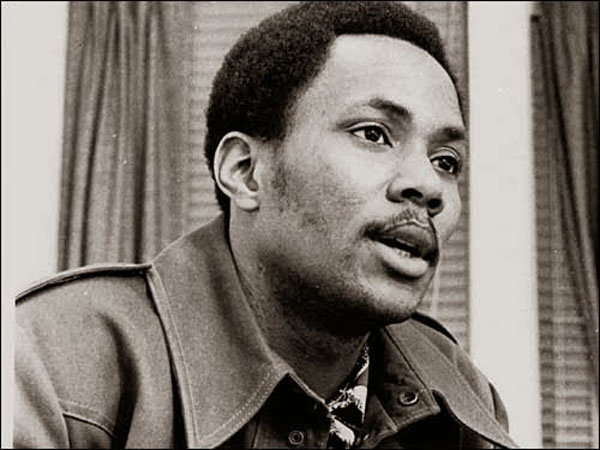
3. Frank Wills

His Feats: Nighttime security guard at the Watergate Hotel and Office Complex who while on his rounds in the summer of 1972, found a strip of duct tape preventing a door latch from closing all the way. He removed it and continued on his way. 30 minutes later, he returned to the spot and saw that someone reaffixed the tape to the latch. Feeling something suspicious was going on, he promptly called the cops. What he discovered would become front page news as the late night burglary of the Democratic National Convention Headquarters which would lead to a major coverup as well as a series of scandals that led to the resignation of a US president.

Why He’s Ignored: Well, despite being held a hero with a few talk show appearances immediately after the Watergate break-in, he died broke and in obscurity. Once his 15 minutes of fame were up, he had constant trouble finding employment and was unsuccessful. Even Howard University wouldn’t hire him because they didn’t want the government to withhold their funds in retribution. In 1983, he’d be arrested for shoplifting a pair of $12 shoes which led to a year in prison. Still, if he’s ignored for anything, it’s because he was just an ordinary guy doing his job and a reluctant whistleblower, which doesn’t go well with the Watergate narrative. Yet, there are plenty of people who’ve made history every day and Wills is one of them.

4. Aryabhata

His Feats: Indian astrologer and mathematician. Said by many to have invented zero and narrow down the value of pie to the correct four decimal places. Studied both lunar and solar eclipses as well as the Earth’s rotation on its axis as well as measured the Earth’s circumference to 99.8% accuracy.

Why He’s Ignored: Well, since history is basically told in the our euro-centric point of view in most western countries, his Indian nationality is certainly an obvious factor. That and imperialism has basically promoted the notion of European supremacy bias. The fact that this Indian mathematician and astronomer existed at all doesn’t suit that narrative.

1920_subhash_chandra_bose_as_student

5. Subhas Chandra Bose

His Feats: Leader of the Indian National Congress who sought full, immediate independence for India from Great Britain in contrast to Mohandas K. Gandhi’s “passive resistance” methods (though he was a great admirer and called him, “father of our nation” while Gandhi plotted against him). As a statesman and rebel leader, he was jailed as well as wore various disguises while traveling to India and beyond to bolster support for the cause. Was known in India for his decorum and respect as well has had mysterious death in 1945 with rumored sightings of Elvis-like proportions.

Why He’s Ignored: While he’s certainly revered in India, he’s seldom known anywhere else mostly because he courted the Axis Powers during World War II and the fact that Gandhi’s means of peace makes a far more better story in the PR department. Yet, like it or not, Bose’s more aggressive techniques (as those of other freedom fighters) did a far more to bring India’s independence than Gandhi ever did.

rosalind-franklin

6. Rosalind Franklin

Her Feats: British Jewish scientist who unraveled the structure of DNA with the double helix as well as was part of her team that won the Nobel Prize of 1962. Also helped unravel the structure of the Tobacco Mosaic Virus and RNA.

Why She’s Ignored: Well, three reasons. First, as a female scientist, she wasn’t acknowledged for her work by her male colleagues until 1968 and even since, she’s just a footnote in a high school biology textbook. Second, working in x-ray crystallography that helped her that famous discovery, also lead to her early death from ovarian cancer in 1958 at the age of 37. Third, the Nobel Prize isn’t awarded posthumously, though you’d think they’d make an exception with her. Still, with her work in unraveling DNA, Franklin is possibly the most important female scientist in history.

7. Elijah McCoy

His Feats: Canadian-American inventor notable for 57 U. S. patents most to do with lubrication of steam engines. Born to runaway slaves in Canada and moved to Michigan at the age of 5, he studied as a mechanical engineer in Edinburgh, Scotland. Though he only could find work as a fireman and oiler at the Michigan Central Railroad, he invented an automatic lubricator for oiling steam engines, locomotives, and ships. Also invented the folding ironing board and a lawn sprinkler. Produced more patents than any other African American inventor up to the 20th century.

Why He’s Ignored: To make a short story short, despite having all those patents and debate on how much he revolutionized the railroad and machine industries with his devices, he’s not well known outside of industry and the African American community. This is mostly because he was black as well as the fact he didn’t have the money to manufacture his lubricators in large numbers until close to the end of his life and usually assigned patent rights to his employers investors. Not only that, but racial prejudice in the day was the main reason why he could only find work as a fireman and oiler in the first place, which is why he’s barely mentioned at all in any early 20th century literature at all relating to lubricators.

8. Norbert Rilleaux

His Feats: 19th century Creole African American inventor and engineer. Born in Louisiana and cousin of Edgar Degas, was the youngest teacher at the Ecole Centrale (an engineering school in Paris) at the age of 24 instructing in applied mechanics as well as a competent blacksmith and expert machinist. Best known for inventing the multiple-effect evaporator which was an energy efficient means of evaporating water as well as an important development in the sugar industry. When a yellow fever outbreak plagued New Orleans in the 1850s, he proposed a plan to the city that would eliminate the moist breeding grounds for the mosquitoes that carried the disease by addressing problems in the city’s sewer system and drying swamplands in the area. Though rejected, it was addressed several years later.

Why He’s Ignored: Well, despite helping to revolutionize the sugar industry with his refining contraption, the fact he was black and a Creole of color certainly doesn’t give him much recognition in the history books as well as those of other African American engineers, scientists, and inventors. Also, for many white Southerners of the day, giving credit to a black guy for making a device that helped the growth of the sugar industry is kind of an embarrassment.

micheaux1

9. Oscar Micheaux

His Feats: Born to a former slave father in Illinois and to a family of 13 children. Moved to Chicago at 17 in which he had several different jobs from working in stockyards and steel mills to setting up his own shoeshine stand and working as a Pullman porter. He then became a homesteader in South Dakota with all white neighbors who wouldn’t let him eat at their tables and started writing articles for the press. Wrote 7 novels based on his experiences and the failure of his first marriage as well as had his stories revolve around the theme of African Americans realizing their potential and succeeding in areas from which they were previously excluded. When his 1918 book The Homesteader was being planned for a feature film, negotiations between him and producer, he decided to form his own book and film company in Chicago and made the adaptation himself. He would go to collaborate in over 40 films focusing on contemporary African American life, black and white racial relationships, and blacks trying to achieve the American Dream in a larger and segregated society. He’d also use his films to counter white portrayals of African Americans and inferior black stereotypes. He was perhaps the most successful black filmmaker in the early 20th century and gave a lot of opportunities to African Americans in the film business. Once said, “My results…might have been narrow at times, due perhaps to certain limited situations, which I endeavored to portray, but in those limited situations, the truth was the predominate characteristic. It is only by presenting those portions of the race portrayed in my pictures, in the light and background of their true state, that we can raise our people to greater heights. I am too imbued with the spirit of Booker T. Washington to engraft false virtues upon ourselves, to make ourselves that which we are not.”

Why He’s Ignored: Outside of film buffs and the African American community, most people don’t really know who he was. Of course, the fact that Hollywood and mainstream US History tends to downplay the achievements of African Americans so we shouldn’t be surprised. Not to mention, the fact that Hollywood tends to take movies made by blacks less seriously than whites is also a factor as well as the fact that some of Micheaux’s films are now lost. Yet, as his tombstone reads, this pioneer in African American cinema was certainly, “A man ahead of his time.” Still, when it comes to the history of film and Hollywood, you can’t really ignore this man who’s certainly a historical hero indeed.

640px-Mary_Anning_painting

10. Mary Anning

Her Feats: 19th century British fossil collector, dealer, and paleontologist known for the important finds she made in the Jurassic marine beds in the cliffs along the English Channel at Lyme Regis. Discoveries included the first correctly identified ichthyosaur skeleton she found at the age of 12, the first two plesiosaur skeletons, and the first pterosaur skeleton located outside Germany, and important fish fossils. Her observations played a key role in the discovery that coprolites were fossilized feces and that belemnite fossils contained fossilised ink sacs like those of modern cephalopods. All this despite having almost no formal education and barely enough money for journal subscriptions as well as collected fossils during landslide season which was very dangerous and killed her dog.

Why She’s Ignored: As a woman from a poor family of religious dissenters who lost her cabinetmaker dad at eleven, she was screwed by the British scientific establishment from the get-go. Also, she was only published once in the scientific press in which she wrote a letter to the Magazine of Natural History disputing the “discovery” of a new genus prehistoric shark based on her own findings. Still, this didn’t stop other British scientists from wanting to talk shop with her.

11. Rabban Sauma

His Feats: 1200s Turkic/Mongol Nestorian monk turned diplomat who traveled in places such as Mongol controlled China, Baghdad, and Europe where he met with many of the monarchs and the Pope. He then chronicled his lifetime of travel which is of unique interest to modern historians giving a picture of medieval Europe at the end of the Crusading period painted by a keenly intelligent, broadminded, and statesmanlike observer as well as provides a viewpoint of East looking West.

Why He’s Ignored: Let’s just say that people may find it hard to believe that a Turkic/Mongol managed to write anything about the Crusades and medieval Europe. Yes, Western Eurocentric history, indeed.

Niels_stensen

12. Nicholas Steno

His Feats: Danish Catholic Bishop and major figure in the Catholic Counter-Reformation (enough to make him headed for sainthood) as well as tutor to the de Medici family and scientific pioneer in both anatomy and geology (that a device is named after him). In 1659, he resolved not to accept anything simply written in a book and decided to do the research himself. This self-study led him to become the father of geology and stratigraphy. Responsible for the recognition of geological strata and the theory that successive layers of geologic transformations (strata) contained a fossil record of life in chronological order.

Why He’s Ignored: Despite his many great achievements, he’s largely unknown which may be due to his religious zeal and the fact that the Catholic Church in the 17th century is best known for the Galileo Affair. Yet, even when his theological studies and religious duties caused him to put his natural science studies in the back seat, he never totally abandoned them and no one in the Catholic Church saw anything wrong with it. Still, his story doesn’t go well with some people’s point of view with the science vs. religion debate because Steno didn’t see such a conflict at least when it came to the his relationship with the Catholic Church in his later years. Was said to be a decent bishop though.

The Real People of Boardwalk Empire: Part 5 – Mae Coughlin Capone to Owney Madden

boardwalk-empire-gambling

As I may have said before, before states in the Mid Atlantic started to legalize gambling and build casinos of their own in recent times, Atlantic City was renown as the Las Vegas of the Eastern Seaboard before Las Vegas with its share of casinos and gambling establishments. It was also the city that served as a model for the Parker Brothers’ game of Monopoly but that will come out during the Great Depression but it’s no coincidence why some of the areas in that city seem to remind you of it. Nevertheless, Atlantic City also began the Miss America beauty pageant which started as a way to get more tourists to their resort boom town, but has become a national beauty contest owned by Donald Trump (and whatever he has on his hair). Still, during Prohibition, it was famous for ignoring Prohibition thanks to the efforts of one Nucky Johnson who’s the inspiration for the Steve Buscemi character on Boardwalk Empire. Yet, we’ve come to the final installment but we still have more people to go over. In this final selection, we’ll look at some historical wives to famous figures like Mae Capone, First Lady Florence Harding, and Katherine Bader. We’ll also meet Al Capone’s mother Theresina and Warren G. Harding’s alleged daughter Elizabeth Ann Blaesing. Yet, we’ll also see investigators William Frank and Eliot Ness as well as Nucky Johnson’s servant Louis Kessel. And then we have famous horse trainer Max Hirsch, boxing manager Jack “Doc” Kearns, and possible Billie Kent inspiration Dorothy “Dot” King. Finally, we’ll meet gangsters Salvatore Maranzano and Owney Madden. So without further adieu, enjoy this final installment of the real people seen from Boardwalk Empire.

53. Mae Coughlin Capone (1897-1986)

Mae Capone was Al Capone's beautiful wife and mother to his son. Yet, since she was a private person, there's very little else that's known about her. Still, Al knew how to pick em' didn't he?

Mae Capone was Al Capone’s beautiful wife and mother to his son. Yet, since she was a private person, there’s very little else that’s known about her. Still, Al knew how to pick em’ didn’t he?

Known in Life as: Al Capone’s wife.
Character or Inspiration? She’s a character on the show.
Similarities: Well, she was Irish.
Differences: Born in New York and married to Al since she was 21 three weeks after their son was born. Had syphilis. Was an ardent churchgoer. Stuck with Al until the end and was reputed to be beautiful. Still, despite her husband’s infamy as perhaps the most famous American gangster who ever lived, there’s surprisingly little about her.
Ultimate Fate: Died in Miami in 1986 at 89.

54. Max Hirsch (1880-1969)
Known in Life as: American Hall of Fame Thoroughbred horse trainer. One of the most successful in history. His horses gave him 3 wins in the Kentucky Derby, 2 wins in the Preakness Stakes, and 4 wins in the Belmont Stakes. Also, trained the 1946 Triple Crown winner Bold Venture.
Character or Inspiration? He’s a character on the show.
Similarities: Well, he did condition horses for various clients but I’m not sure if Rothstein was one of them.
Differences: Born in Texas and spent his early years as a groom and jockey at the Morris Ranch. Married with at least one son named Buddy who also followed in his footsteps.
Ultimate Fate: Died in Long Island, New York in 1969 at 88.

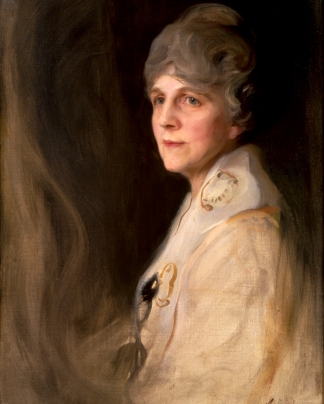
55. Florence Harding (1860-1924)

Though we're not sure whether she was called

Though we’re not sure whether she was called “Flossie” we’re pretty sure that if Florence Harding ever had anything to do with her husband’s death it had more to do with trusting the wrong doctor than anything. I mean you shouldn’t trust homeopaths for their pseudoscientific quacks.

Known in Life as: Wife of President Warren G. Harding and First Lady of the United States from 1921-1923. Known as the brains behind her husband’s newspaper business, called “The Duchess,” and was said to give notably elegant parties.
Character or Inspiration? She’s a character on the show.
Similarities: Well, she had gray hair and glasses. Also actually consulted a fortune teller who said that her husband would become President but die in office.
Differences: Was married twice and had a son with her first husband who she divorced on grounds for gross neglect. May or may not have been called “Flossie.” Once studied to be a concert pianist and worked as a piano teacher. Helped Warren run his newspaper business where she organized circulation, improved distribution, trained newsboys, purchased equipment at keen prices, and installed the first local wire service. She also managed her husband’s finances, social life, and public image. Said to have a strong influence in Warren’s administration and held outspoken political views. Her great cause was championing the welfare of war veterans and served alcohol to guests. Though alleged by Gaston Means that she killed her husband, it’s highly unlikely though she did destroy many of his papers.
Ultimate Fate: Died of renal failure after her last public appearance on Veteran’s Day in 1924. She was 64.

56. Teresina Raiola Capone (1867-1952)

Theresina Capone with her grandson Albert Francis. I guess while she didn't seem to like her son's gangster interests, she didn't seem to disown him.

Theresina Capone with her grandson Albert Francis. I guess while she didn’t seem to like her son’s gangster interests, she didn’t seem to disown him.

Known in Life as: Al Capone’s mother.
Character or Inspiration? She’s a character on the show.
Similarities: Well, she’s Italian though I’m not sure if she went to Chicago.
Differences: Born in Naples and was a seamstress before marrying barber Gabriel Capone. Had 10 children. Came to the US in 1893.
Ultimate Fate: Died in 1952 at 85.

57. Katherine Holvick Bader (1878-1969)
Known in Life as: Edward L. Bader’s wife.
Character or Inspiration? She’s a character on the show.
Similarities: Well, she did attend dinners with her husband.
Differences: Married with 4 kids. Still, there’s really not much about her.
Ultimate Fate: Died in Atlantic City in 1969 at 91.

58. Jack “Doc” Kearns (1882-1963)

Jack

Jack “Doc” Kearns was a world renown boxing manager most famous for overseeing the career of Jack Dempsey. Still, there may be details in his autobiography that might be rather sketchy.

Known in Life as: World renowned boxing trainer and manager for Jack Dempsey during the 1920s. Also trained Mickey Walker, Joe Maxim, and Archie Moore.
Character or Inspiration? He’s a character on the show.
Similarities: Trained Jack Dempsey around the time of his upcoming fight against Georges Carpentier. May have been corrupt.
Differences: Hailed from the state of Washington and wrote his autobiography called The Million Dollar Gate that was published posthumously in 1966. Quit school at 14 and stowed away on a freighter to Alaska to stake a claim in the Klondike Gold Rush. Said he worked as a dognapper and helped smuggle Chinese laborers. Was a boxer himself in 1900 and said to take part in 60 bouts. Operated a boxing club and bar in Spokane for a time. Remained an active fight manager until his death.
Ultimate Fate: Died in 1963 at 81.

59. Salvatore Maranzano (1886-1931)

Salvatore Maranzano may look rather sharp but this is perhaps the only picture I could find him alive. Other photos depict him as brutally shot up and they're not pretty. Still, let's just say he'd start a gang war and be killed by Luciano.

Salvatore Maranzano may look rather sharp but this is perhaps the only picture I could find him alive. Other photos depict him as brutally shot up and they’re not pretty. Still, let’s just say he’d start a gang war and be killed by Luciano.

Known in Life as: Early Costa Nostra boss in the US who instigated the Castellammarese War to seize control of American Mafia operations and briefly became the Mafia’s “Bosses of Bosses.”
Character or Inspiration? He’s a character on the show.
Similarities: Was in direct competition with Masseria.
Differences: Born in Italy and once studied to be a priest yet immigrated to Brooklyn in 1919 on a Sicilian mob boss’ orders. Had a commanding presence as well as greatly respected his underworld peers. Was fascinated with Julius Caesar and the Roman Empire as well as loved discussing these subjects with his less-educated American counterparts. Though he was a legitimate real estate broker, he also had businesses in bootlegging, prostitution, and illegal narcotics smuggling. Divided his organization into squads with each soldier pledging loyalty to his squad leader.
Ultimate Fate: Shot and stabbed by 4 hitmen posing as accountants in New York on Luciano’s orders in 1931. Still, he already hired someone to kill Luciano. After his murder, Luciano abolished the “Boss of Bosses” title and his organization would become the Bonnano Crime Family since it was given to Joseph Bonnano.

60. William Frank
Known in Life as: A lawyer who led a joint IRS and FBI task force to take down Nucky Johnson.
Character or Inspiration? Inspiration for Nelson Van Alden which is rather loosely based.
Similarities: Well, they did lead an operation to take down a corrupt political boss making money on illegal activities.
Differences: His operation to take Nucky Johnson down wasn’t until 1936, which was 3 years after Prohibition. Also, he probably wasn’t a religious fanatic (if so, then he perhaps wasn’t as batshit crazy as Van Alden) and was rather successful at getting his man.
Ultimate Fate: Don’t really know what happened to him.

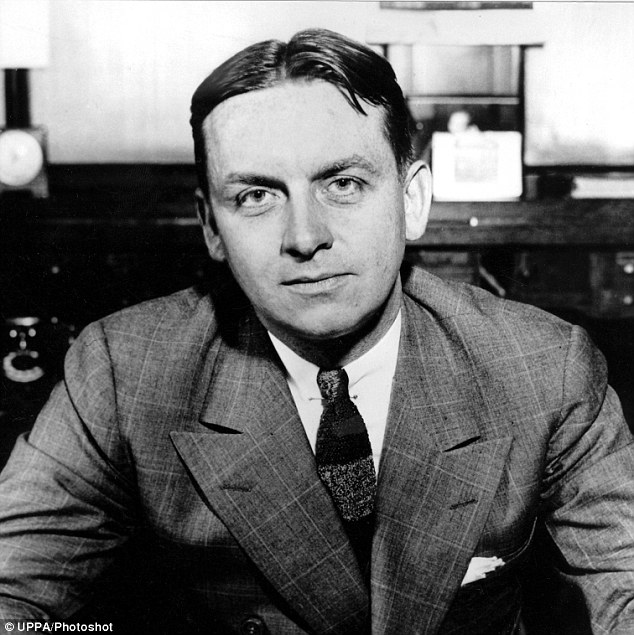
61. Eliot Ness (1903-1957)

I think Eliot Ness is one of the more overrated people in history mainly because his actions during Prohibition make a rather good story despite that he didn't take down Al Capone. Also, he was a womanizer and a drunk.

I think Eliot Ness is one of the more overrated people in history mainly because his actions during Prohibition make a rather good story despite that he didn’t take down Al Capone. Also, he was a womanizer and a drunk.

Known in Life as: American Prohibition agent famous for his efforts to enforce the 18th Amendment in Chicago as well as leader of a legendary team of law enforcement agents known as the Untouchables (and no, they didn’t take down Al Capone. IRS agent Frank J. Wilson did).
Character or Inspiration? He’s a character on the show.
Similarities: Well, he did publicly declare he’d take down Al Capone while still a Chicago Treasury agent (he didn’t in real life).
Differences: Born to Norwegian immigrants and attended the University of Chicago where he served as a member in Sigma Alpha Epsilon and graduated with an economics degree in 1925. Career as investigator began for the Retail Credit Company of Atlanta. Returned to college to earn a master’s degree in criminology. With his Untouchables, he staged raids against illegal stills and breweries and was said to have seized such facilities worth as much as a million bucks. Also used wiretapping. Had a close friend killed and survived assassination attempts. Was a womanizing drunk. Had one adopted son and was married 3 times (divorced twice).
Ultimate Fate: After Prohibition, his later years as a law enforcer would come to an end in the 1930s and his latter life consisted of two divorces, business failures, and alcoholism. Died of a heart attack in Coudersport, Pennsylvania at 54. ATF building is named after him.

62. Louis Kessel (1888-1944)

Louis Kessel was the inspiration for Boardwalk Empire's Eddie Kessler. A former cab driver, he worked as Nucky Johnson's valet, driver, and bodyguard and was called by his boss,

Louis Kessel was the inspiration for Boardwalk Empire’s Eddie Kessler. A former cab driver, he worked as Nucky Johnson’s valet, driver, and bodyguard and was called by his boss, “the most loyal man I ever knew.” If there was one thing, Nucky Johnson regretted in his life, it was not attending Kessel’s funeral (due to being incarcerated for tax evasion).

Known in Life as: Former cab driver and personal servant to Nucky Johnson at his Ritz-Carlton residence in Atlantic City. Johnson called him, “the most loyal man I ever knew.”
Character or Inspiration? Inspiration for Eddie Kessler.
Similarities: Well, he was German (despite being born in Russia). Also served as chauffer and bodyguard, too.
Differences: Born in Russia and was 42 in 1920. Was of stockier build than Anthony Laicura but had a similar appearance otherwise. Smoked a pipe. Stood 5’5” and weighed 260 lbs. Before he became a cab driver he was a wrestler and bartender. Could easily break down a door. Woke his boss every day at 3:00 pm and gave him a vigorous massage with wintergreen oil, answered his calls, and prepared him of the day. Was arrested in a prostitution sting. Had a wife and kids though (his granddaughter is still alive). Visited his boss in prison a few times a week with Johnson’s second wife Florence.
Ultimate Fate: Died in a broadsided limo accident during a drive to Lewisburg, Pennsylvania to see his incarcerated boss. He was 56. Nucky Johnson was upset that he couldn’t go to the funeral, and not being there haunted him for decades. Still, his boss would write a moving tribute for him.

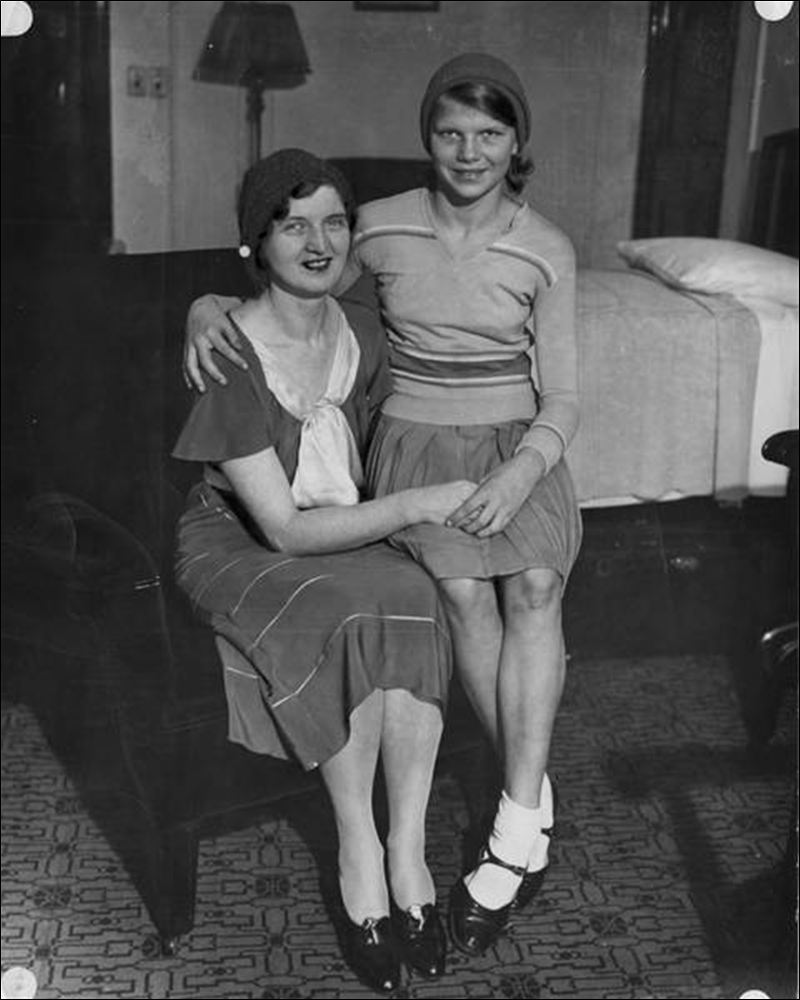
63. Elizabeth Ann Blaesing (1919-2005)

Young Elizabeth Blaesing with her mother Nan Britton. Though alleged to be Warren G. Harding's daughter, I don't think she bears any resemblance to the President. Still, Harding was known to be philanderer but might've been sterile.

Young Elizabeth Blaesing with her mother Nan Britton. Though alleged to be Warren G. Harding’s daughter, I don’t think she bears any resemblance to the President. Still, Harding was known to be philanderer but might’ve been sterile.

Known in Life as: Alleged daughter of Warren Harding by alleged mistress Nan Britton. Her claims were never conclusively proven.
Character or Inspiration? She’s a character on the show though she won’t be known by her surname Blaesing until after she was married. Yet, since we don’t know who her father is and went by different surnames prior to her marriage, we’ll just use her maiden name.
Similarities: Well, she was definitely Nan Britton’s daughter. And Warren G. Harding’s according to DNA tests.
Differences: Born in New Jersey and lived in multiple states. Married and had at least one son. Said that Warren G. Harding was her father but has refused interviews or a DNA test (not anymore).
Ultimate Fate: Died in Oregon in 2005. She was 86.

64. Dorothy “Dot” King (1896-1923)

Dorothy

Dorothy “Dot” King was a former showgirl, model, and actress who was famously found murdered in her New York apartment in a building owned by Arnold Rothstein. Still, compared to Billie Kent, she was no saint.

Known in Life as: Ziegfield Follies chorus showgirl who lived in an apartment owned by Arnold Rothstein found famously murdered in 1923.
Character or Inspiration? Likely inspiration for Billie Kent though rather loosely.
Similarities: Well, they do have a similar taste in certain infamous men like sugar daddies, playboys, top-hatted stage-door Johnnies, and Just Plain Gigolo. Both were said to have diamonds, furs, and a bachelor girl apartment in New York.
Differences: Daughter of Irish immigrants. She wasn’t the loyal mistress Billie was to Nucky on the show (who had a sugar daddy but also a Puerto Rican con man lover) and was actually in her late 20s. Also wasn’t blown up in a nightclub. Was married once to a chauffeur but he divorced her after catching her cheating on him. Appeared in only one Broadway production for 105 performances in 1920 and worked in modeling. Yet, left both to make a living as an honest to goodness vamp who had affairs with string of wealthy and powerful men.
Ultimate Fate: Murdered in her yellow silk pajamas in her New York City apartment in 1923. She was 27. Some of her jewelry was missing from the scene as well. Killing remains unsolved and no one was tried.

65. Owney Madden (1891-1965)

Owney Madden may not look like much and may have spoken in a Yorkshire accent like you hear on Downton Abbey. Yet, he was a notorious gangster who had future movie star George Raft as his personal driver (yes, that George Raft if you know who he was. Well, if you don't, he's the head gangster in Some Like It Hot, which you should watch).

Owney Madden may not look like much and may have spoken in a Yorkshire accent like you hear on Downton Abbey. Yet, he was a notorious gangster who had future movie star George Raft as his personal driver (yes, that George Raft if you know who he was. Well, if you don’t, he’s the head gangster in Some Like It Hot, which you should watch).

Known in Life as: Leading underworld figure during Prohibition in New York, most notable for his involvement in organized crime, running the famous Cotton Club, and being a leading boxing promoter in the 1930s.
Character or Inspiration? He’s a character on the show.
Similarities: Spoke in a Northern English accent.
Differences: Born in England to Irish parents. Came to US in early 1900s and was a member of New York’s Gopher Gang where he got a notorious reputation as a fighter and killer. Lead pipe and gun were his signature weapons. Enjoyed an opulent lifestyle and was often accompanied by several women. Yet was known for his violent jealousy and shot a store clerk who asked one of his girls out while boarding a trolley. Despite several witnesses, the case was dismissed. Yet, was eventually sent to Sing Sing for 20 years for his violent behavior but only served 9. Found the Gopher Gang broke up at his 1923 release so went to be a muscle for a friend’s cab business and started running Canadian whiskey to New York. Onetime personal driver would be future movie star George Raft (I’m not making this up).
Ultimate Fate: After being responsible for the killing of Vincent “Mad Dog” Coll and being arrested for a parole violation in 1932, he would soon leave New York in 1935. Settled in Hot Springs, Arkansas where he opened the Southern Club where Luciano was arrested as well as became involved with other criminal activities like illegal gambling. Became a US citizen in 1943 and married the city postmaster’s daughter. Gave up his British passport when threatened with deportation in the 1950s. Died of emphysema in 1965 at 73.

The Real People of Boardwalk Empire: Part 4 – Nan Britton to Richard “Peg Leg” Lonergan

IF

Vaudeville was one of the dominant forms of variety show entertainment from the 1880s to the early 1930s, which was very popular in the United States and Canada during the 1920s. A typical performance was made up of a series of unrelated acts groups together on a common bill. Acts could consist of popular and classical musicians, singers, dancers, comedians, trained animals, magicians, male and female drag shows, acrobats, illustrated songs, jugglers, one-act scenes from plays, athletes, lecturing celebrities, minstrels (hopefully not to a black audience), and even movies. This kind of entertainment developed from many sources including the concert saloon, minstrelsy (unfortunately), freak shows, dime museums, and literary American burlesque. It’s no wonder it’s called “the heart of American show business,” since it brought us people like Charlie Chaplin, Cary Grant, the Marx Brothers, the Three Stooges, Eddie Cantor, Buster Keaton, Mae West, Bill “Bojangles” Robinson, Abbot and Costello, Bob Hope, Judy Garland, Sammy Davis Jr., Jack Benny, and George Burns. Still, it’s a dominant form of entertainment in Boardwalk Empire filled with many showgirls that all the gangsters can screw. Nevertheless, in this selection, we’ll meet political figures like President Warren G. Harding, Irish revolutionary and politician Eamon De Valera, New Jersey Governor Edward I. Edwards, and Atlantic City Mayor Harry Bacharach. We’ll also be introduced to Al Capone’s son Albert Francis, alleged Harding mistress Nan Britton, Arnold Rothstein’s wife Carolyn, ragtime composer James Scott, and famous criminal defense lawyer William J. Fallon. And of course, Boardwalk Empire won’t be without the gangsters in which we have in this selection Big Jim Colosimo (the mustachioned guy who was killed in the pilot), Chicago Outfit adviser and Capone Associate Jake Guzik, as well as White Hand leaders “Wild Bill” Lovett and “Peg Leg” Lonergan. So without further adieu, here are some more real life historical figures from the world of the Emmy-winning Boardwalk Empire.

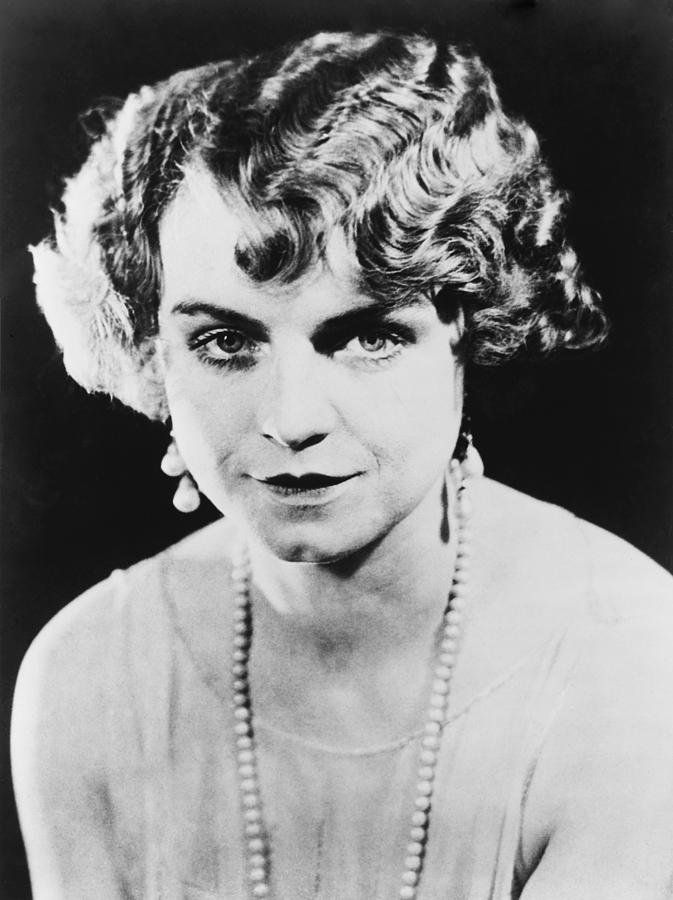
40. Nan Britton (1896-1991)

Nan Britton may or may not have been Warren Harding's babymama but she did cause a sensation with her 1927 book alleging that. Still, I wonder how she got the fur stole.

Nan Britton may or may not have been Warren Harding’s babymama but she did cause a sensation with her 1927 book alleging that. Still, I wonder how she got the fur stole.

Known in Life as: Associated with the Warren G. Harding Presidency because she publicly claimed in a tell-all book in 1928 that Harding had fathered her illegitimate daughter shortly before his election as president in 1920.
Character or Inspiration? She’s a character on the show.
Similarities: Was infatuated with Harding since she was a teenager and before he started his political career (who was a friend of her dad). Also, had his love child according to DNA evidence.
Differences: Was about 24 in 1920 and worked as a secretary in New York City. Had her daughter in 1919. Also, despite that she claimed that Harding fathered her daughter, Elizabeth Ann, there’s little concrete evidence that an affair between them ever took place and might’ve just existed in her head (save maybe an occasional hook up prior to his presidency). If so, then we’re sure that Harding wasn’t her baby daddy because he was said to be sterile (though DNA evidence has rebuked this). Also wasn’t hidden away until the 1920 election to avoid political scandal because that honor went to a woman who was Harding’s mistress but for very different reasons.
Ultimate Fate: Died in Oregon of natural causes in 1991 at 94.

41. Eamon De Valera (1882-1975)

John McGarrigle may not be a surrogate for Eamon De Valera but he did share a lot of his personality and wore glasses. Nevertheless, Valera would be a dominant figure in Ireland during the 20th century until his death in 1975.

John McGarrigle may not be a surrogate for Eamon De Valera but he did share a lot of his personality and wore glasses. Nevertheless, Valera would be a dominant figure in Ireland during the 20th century until his death in 1975.

Known in Life as: One of the dominant figures of early 20th century Ireland whose political career spanned from 1917-1973 with roles from revolutionary to several terms as head of state and government. Led the introduction of the Constitution of Ireland. Was in Sinn Fein and founded Fianna Fail. Political creed evolved from militant republicanism to cultural conservatism.
Character or Inspiration? Inspiration for John McGarrigle (though not necessarily a stand-in but close).
Similarities: Well, they had similar appearances and personality. Both fund-raised for the IRA in the US.
Differences: Born in New York to a Cuban father. Was a devout Catholic man who once considered becoming a priest yet might’ve prevented doing so because of his possible illegitimate birth (out of wedlock children couldn’t enter into the secular or diocesan priesthood at the time, though he could’ve been a priest of a religious order {like Erasmus}. Still, his half-brother was a priest though). Happily married for 65 years and fathered 7 kids. Was a math professor before getting involved in Irish politics. Was never assassinated unlike McGarrigle.
Ultimate Fate: Died in Dublin of natural causes in 1975 at 92. Body lay in Dublin Castle and was given a full funeral at St. Mary Pro-Cathedral, which was broadcast on national television.

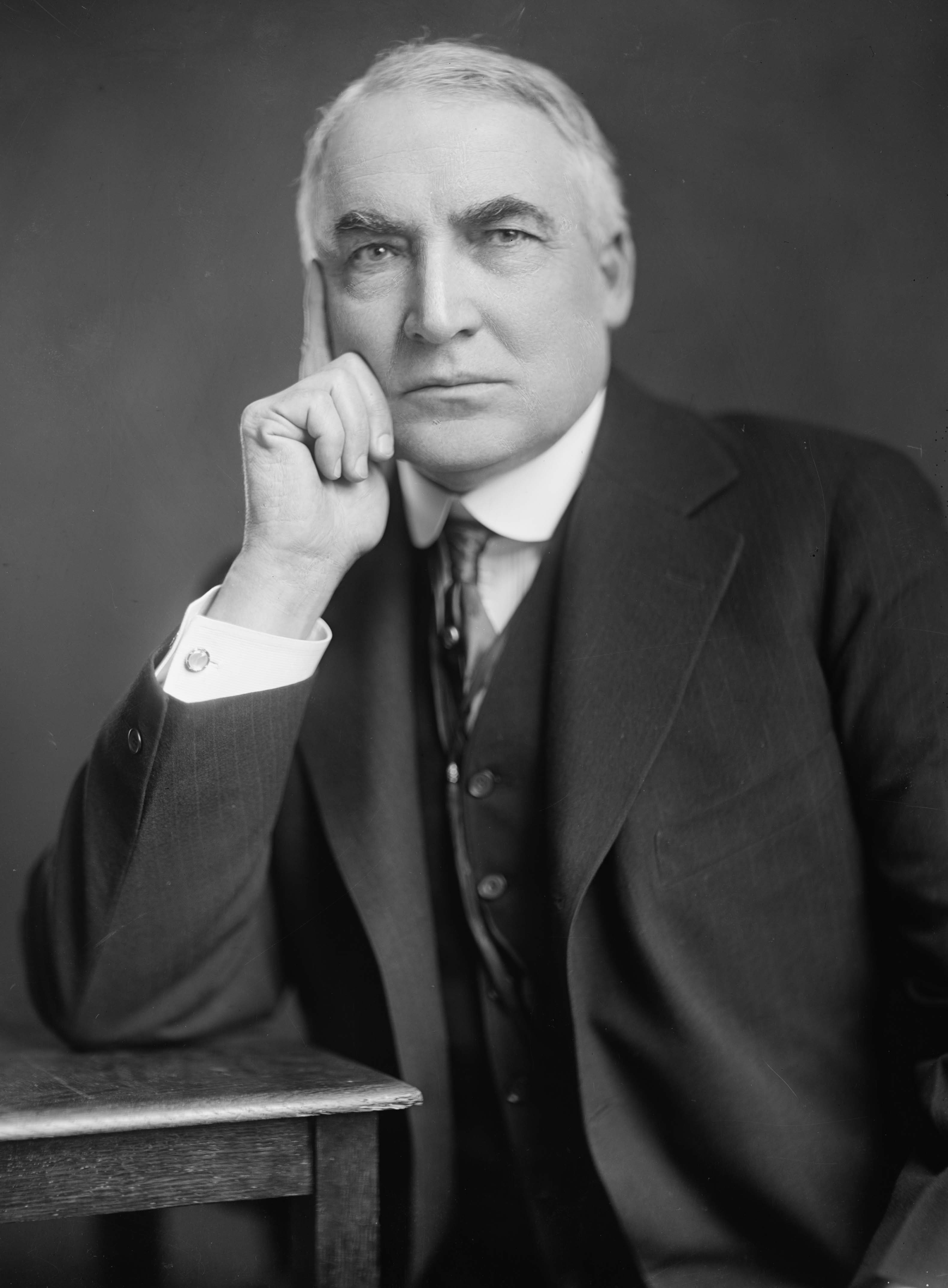
42. Warren G. Harding (1865-1923)

Warren G. Harding did make a dandy looking president in the early 1920s. Too bad that he was a horrible judge of character that Teapot Dome happened.

Warren G. Harding did make a dandy looking president in the early 1920s. Too bad that he was a horrible judge of character that Teapot Dome happened.

Known in Life as: 29th President of the United States from 1921-1923. Republican from Ohio who served in the state and US Senate but was nominated on the ballot for being an inoffensive compromise candidate and used advertising experts to publicize his presidential appearance and conservative promises like “a return to normalcy,” an end to violence and radicalism, a strong economy, and independence from European intrigues. Though appointed great minds in his cabinet like Andrew Mellon for Treasury, Herbert Hoover for Commerce, and Charles Evans Hughes for State, he also rewarded friends and contributors with powerful positions who were known as the Ohio Gang. Presidency was famous for multiple cases of corruption exposed both during and after his death, including the notorious Teapot Dome scandal which was “greatest and most sensational scandal in the history of American politics” before Watergate. Seen as one of the worst US Presidents, despite setting up what would eventually become the Department of Veterans’ Affairs.
Character or Inspiration? He’s a character on the show.
Similarities: Well, he was a womanizer and frequently cheated on his wife. Had to have a mistress hidden away during his 1920 presidential campaign. And had a love child out of wedlock to Nan Britton according to DNA evidence. But both these things didn’t apply to the same woman.
Differences: Born and spent most of his life in Ohio as well as owned a newspaper. Actual mistress who was to be hidden away wasn’t Nan Britton, but his mistress of 15 years Carrie Fulton Phillips (who he certainly did have an affair with since there are 1,000 pages of intimate letters between them which may be available online), a wife of a department store owner and a close friend. Yet, she was hidden away due to her vocal support for Germany during WWI and was deliberately blackmailed by the Republican Party with an all-expense paid vacation to East Asia. Also said to be linked to two of his wife’s friends named Susan Hodder and Grace Cross. Heavy drinker and gambler. Still, wasn’t as much a crook and more like a bad judge of character.
Ultimate Fate: Died in office under mysterious circumstances in San Francisco in 1923 at 58 (Mrs. Harding refused an autopsy. Still, even if Flossie didn’t poison her husband {and it’s highly unlikely she did}, we’re not sure what killed him. He was officially said to succumb to apoplexy and recently had a heart attack as well as food poisoning {from seafood} that led to pneumonia in Alaska but it may have been stroke, congestive heart failure, food poisoning, or heart attack. It’s also widely believed that Harding might’ve been a victim of medical malpractice since the doctor treating him when he died was a homeopath {a field of medicine that’s now considered a pseudoscience}.)

43. James “Big Jim” Colosimo (1878-1920)

Big Jim Colosimo with his lawyer. Notice that he used to wear that white suit to lure women into his prostitution cathouses. Still, you probably remember him for getting killed in the Boardwalk Empire pilot.

Big Jim Colosimo with his lawyer. Notice that he used to wear that white suit to lure women into his prostitution cathouses. Still, you probably remember him for getting killed in the Boardwalk Empire pilot.

Known in Life as: Italian American Mafia crime boss who built a criminal empire in Chicago based on prostitution, gambling, and racketeering. From 1902-1920 would lead a gang that would be known after his death as the Chicago Outfit.
Character or Inspiration? He’s a character on the show.
Similarities: Was actually a big guy with a mustache. Refused to invest in the alcohol business when Prohibition came around. Had a restaurant and night club called Colosimo’s Café (where Al Capone would work as a bouncer). Was killed in 1920 (but in May not January as in the pilot).
Differences: Born in Italy and immigrated to Chicago in 1895. Recruited Johnny Torrio from Brooklyn and made him his second in command (this would prove to be a very big mistake). Married twice and divorced once (to Torrio’s aunt whom he deserted). Frequently dressed in a white suit as well as wore diamond pins, rings, and other jewelry.
Ultimate Fate: Shot and killed in his café in Chicago in 1920 at 42. Though Torrio is the most likely suspect responsible (who may have hired Frankie Yale to do the deed), no one was ever arrested for it.

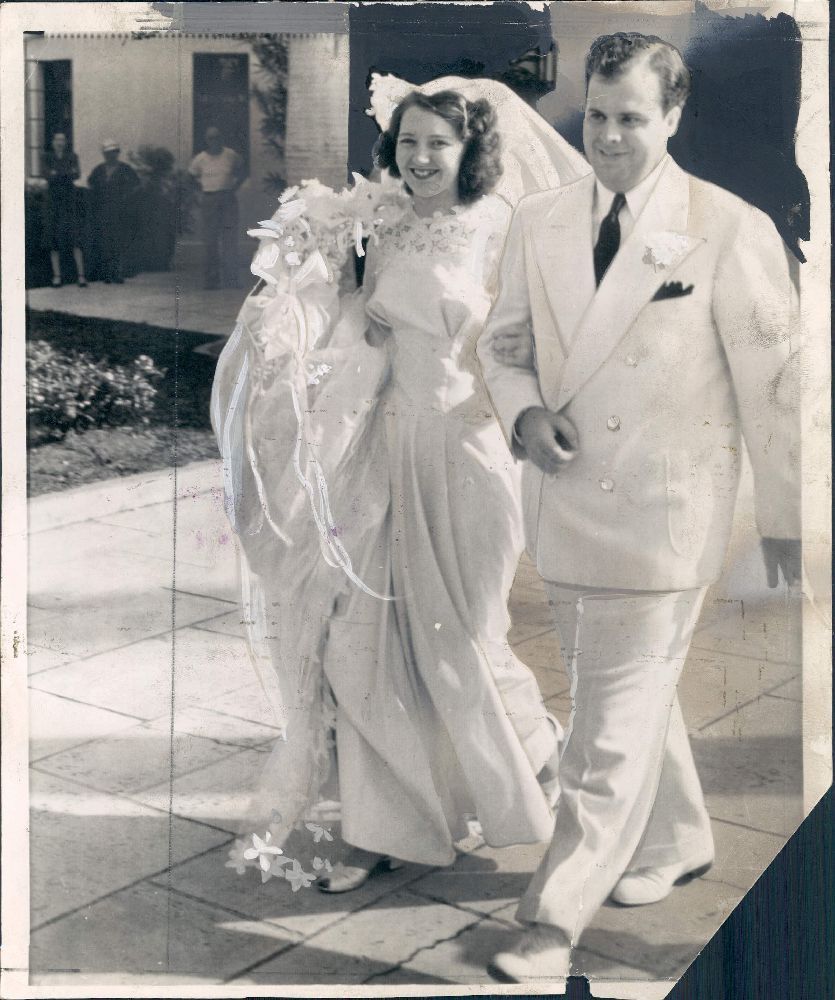
44. Albert Francis “Sonny “Capone (1918-2004)

Sonny Capone on one of his wedding days, I think. Still, basically rebelled against his dad by going to college, getting a legitimate job, and not breaking the law.

Sonny Capone on one of his wedding days, I think. Still, basically rebelled against his dad by going to college, getting a legitimate job, and not breaking the law.

Known in Life as: Al Capone’s son.
Character or Inspiration? He’s a character on the show.
Similarities: Well, he was a kid at the time (well, he was 2 in 1920). And he did have hearing problems.
Differences: Wasn’t born deaf and only went partially deaf at age 7 (due to being born with congenital syphilis and experiencing a serious mastoid infection that required brain surgery). Went to high school with Desi Arnaz Sr. from I Love Lucy and attended the University of Miami. Married 3 times and fathered at least 4 daughters. Changed his name to Albert Francis Brown in 1966 in order to distance himself from his notorious dad.
Ultimate Fate: Died in Florida of natural causes at 85 in 2004, after a lifetime as an upstanding citizen with no mob ties (except in genetics). At least a few of his daughters are still alive.

45. Jake Guzik (1886-1956)

Yes, this is a picture of Guzik from 1946 but it was one the few good ones I could find. Still, you didn't want to beat him up or his buddy Al Capone would show his famous violent tendencies in your direction.

Yes, this is a picture of Guzik from 1946 but it was one the few good ones I could find. Still, you didn’t want to beat him up or his buddy Al Capone would show his famous violent tendencies in your direction.

Known in Life as: Jewish American financial and legal advisor as well as political “greaser” for the Chicago Outfit. Had a great relationship with Al Capone.
Character or Inspiration? He’s a character on the show.
Similarities: Was involved in prostitution and protected by Al Capone (hurting him was a quick way to get Al to practically murder you).
Differences: Born in Krakow, Poland and came to the US in the early 20th century. Was incapable of using a gun or killing anyone. Served as principal bagman in payoffs to Chicago police and politicians. Capone actually came to trust and rely on his advice as well as told him to make sure his wife and kid were provided for when his health failed.
Ultimate Fate: He would also go on to work for Paul “the Waiter” Ricca and Tony Accardo. Spent a few years in prison for tax evasion. Died of a myocardial infraction in 1956 at 69. Funeral was said to put more Italians in a synagogue than ever before in history.

46. Carolyn Greene Rothstein (1888-?)

Carolyn Rothstein wasn't too happy with her husband Arnold's life choices but she stuck with him until his 1928 murder. I mean she had to put up with his gambling, stealing, marital infidelities, and having people killed.

Carolyn Rothstein wasn’t too happy with her husband Arnold’s life choices but she stuck with him until his 1928 murder. I mean she had to put up with his gambling, stealing, marital infidelities, and having people killed. Ladies, if you want to know what it’s like being a gangster’s wife, you might want to read her book if available.

Known in Life as: Arnold Rothstein’s wife.
Character or Inspiration? She’s a character on the show.
Similarities: Well, she was blond.
Differences: Was a New York showgirl before meeting her husband who interrogated her coworkers and friends after four dates. Was Irish Catholic (as well as half-Jewish) and married Arnold at 21 though he pawned all her jewelry for cash (he got it back after winning $12,000). Though remained married to Arnold until his murder, she didn’t like him being a New York gang boss and gambler. Also put up with his cheating, stealing, and killing.
Ultimate Fate: Wrote a book about her life with her husband after his murder called Now I’ll Tell You that was published in 1934. Well, she didn’t died rich if she survived Arnold by more than 10 years.

47. William J. Fallon (1886-1927)

William J. Fallon was a noted criminal defense attorney who has become the archetype of all sleazy lawyers everywhere. Still, you have to give him credit for him never losing a case pertaining to murder.

William J. Fallon was a noted criminal defense attorney who has become the archetype of all sleazy lawyers everywhere. Still, you have to give him credit for him never losing a case pertaining to murder.

Known in Life as: Criminal defense attorney in New York City who represented the city’s leading pimps, illegal narcotics dealers, embezzlers, and operators. Inspiration for Billy Flynn of Chicago as well as the archetype for the amoral criminal defense lawyer.
Character or Inspiration? He’s a character on the show.
Similarities: Well, he was known to defend a lot of famous morally dubious people. Also represented Arnold Rothstein.
Differences: Son of Irish immigrants. Graduated at the top of his class at Fordham University. Was in the New York State Assembly and was charged in 1924 for bribing a juror but acquitted. Called, “The Great Mouthpiece.” Said to be talented, vain, and flamboyant as well as drank a lot. Was very smart and eloquent but also immoral, dishonest, and self-indulgent. His 120 homicide defendants were never convicted. Married with two daughters. Wore exquisitely tailored suites, had the finest silk ties, and donned no shirt more than once. Yet, left his cobbler made shoes unshined.
Ultimate Fate: Died of heart disease at the Hotel Oxford in 1927 at 40.

48. William “Wild Bill” Lovett (1894-1923)

Yes, he may have an unremarkable appearance, but he's the famous White Hand leader known as Wild Bill Lovett who made money through dockside extortion as well had alcoholic rages that were the stuff of legend. Was shot up dead on Halloween night.

Yes, he may have an unremarkable appearance, but he’s the famous White Hand leader known as Wild Bill Lovett who made money through dockside extortion as well had alcoholic rages that were the stuff of legend. Was shot up dead on Halloween night.

Known in Life as: Irish American gangster in early 20th century New York.
Character or Inspiration? He’s a character on the show.
Similarities: Leader of the White Hand Gang and worked with “Peg Leg” Lonergan.
Differences: Spent his childhood as a juvenile delinquent in various gangs. Served in WWI and was awarded the Distinguished Service Cross for bravery. Though well-educated and articulate, was a temperamental alcoholic who made even his own men nervous. Took control of the waterfront rackets after the death of White Hand Gang leader Dinny Meehan (and was believed to have killed him). Income came from dockside extortion, burglary and other crimes. Survived a few assassination attempts such as a stabbing and 3 shots to the chest.
Ultimate Fate: Upon his 1923 marriage to Lonergan’s sister, he swore to give up criminal rackets and drinking. Turned power to his brother-in-law and was safe for 3 months, but was up to his old ways and his wife refused to take him back. Beaten and shot up near a store on Halloween night (most likely by Irish gangsters) after leaving a bar drunk. He was 29.

49. Edward I. Edwards (1863-1931)

Edward I. Edwards was governor of New Jersey during the early 1920s and US Senator from 1923-1929. Didn't have it so good after politics since he went broke and later killed himself. Nevertheless, he seems to be a rather distinguished man.

Edward I. Edwards was governor of New Jersey during the early 1920s and US Senator from 1923-1929. Didn’t have it so good after politics since he went broke and later killed himself. Nevertheless, he seems to be a rather distinguished man.

Known in Life as: Governor of New Jersey from 1920-1923 and US Senator from 1923-1929.
Character or Inspiration? He’s a character on the show.
Similarities: Frank Hague was one of his allies (they’d soon have a falling out).
Differences: Had dark hair even in the 1920s. Married with 2 kids. Studied law in his brother’s office and engaged in the banking and construction businesses. Went broke with the Wall Street crash of 1929 and was implicated in an election fraud scandal.
Ultimate Fate: Was diagnosed with skin cancer and shot himself in 1931. He was 67.

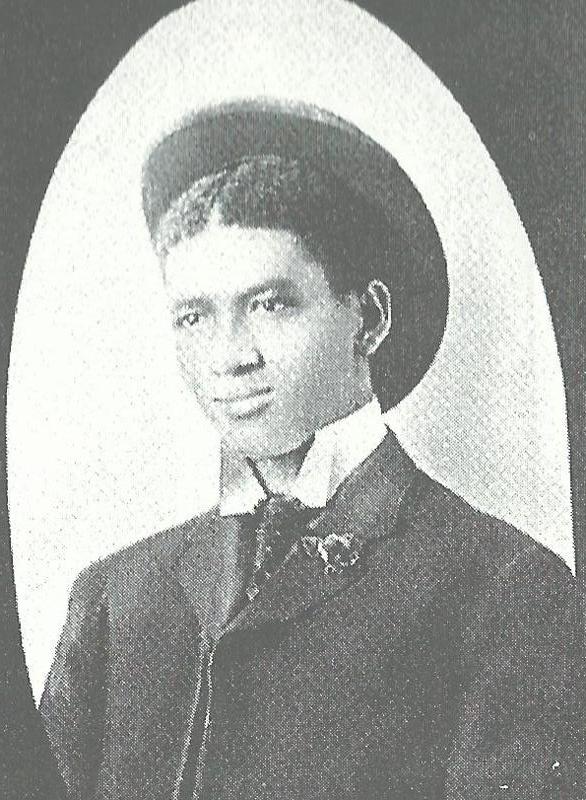
50. James Scott (1885-1938)

James Scott was one of the premiere African American ragtime composers in the early 20th century. A lot of his compositions were used as accompaniment in silent movies and his fortunes went in decline when talkies came around. Still, he has a rather nice hat and suit.

James Scott was one of the premiere African American ragtime composers in the early 20th century. A lot of his compositions were used as accompaniment in silent movies and his fortunes went in decline when talkies came around. Still, he has a rather nice hat and suit.

Known in Life as: African American ragtime composer. Regarded as one of the three most important composers of ragtime music along with Scott Joplin and Joseph Lamb.
Character or Inspiration? He’s a character on the show.
Similarities: Wearing a hat was a trademark of his.
Differences: Born in Missouri and son of former slaves. Worked in a music store in 1902 and wrote his first composition compilation in 1903. A lot of his pieces were used to accompany silent movies.
Ultimate Fate: After his wife died and the coming of sound in movies, his fortunes and health deteriorated. Published nothing after 1902. Died in Kansas City, Missouri in 1938 at 53.

51. Harry Bacharach (1873-1947)
Known in Life as: Mayor of Atlantic City for 6 months in 1912, from 1916-1920, and 1930-1935. Also served as city commissioner.
Character or Inspiration? He’s a character on the show.
Similarities: Well, he was mayor in 1920 but there’s not much on him.
Differences: Tried for election fraud in 1914 for the 1910 mayoral election. Had a Negro League Baseball team named after him called the Bacharach Giants. Him and brother Isaac founded the Betty Bacharach Home for Afflicted Children in honor of their mom in 1924 which cared for kids with polio.
Ultimate Fate: Died in Atlantic City in 1947 at 74.

52. Richard “Peg Leg” Lonegran (1900-1925)

Peg Leg Lonergan may have lost a leg in a trolley accident. Yet, he achieve distinction as the last boss of the White Hand Gang in New York as well as known to be a vicious street brawler and hater of Italians. Killed on Christmas 1925.

Peg Leg Lonergan may have lost a leg in a trolley accident. Yet, he achieve distinction as the last boss of the White Hand Gang in New York as well as known to be a vicious street brawler and hater of Italians. Killed on Christmas 1925.

Known in Life as: Irish American gangster, labor racketeer, and final leader of the White Hand Gang. Led a 2 year campaign against Frankie Yale over the New York waterfront.
Character or Inspiration? He’s a character on the show.
Similarities: Associated with the White Hand Gang and friend of Bill Lovett.
Differences: Was one 15 kids and son of a prizefighter and bare knuckle boxer named John Lonergan. Lost his right leg in a trolley car incident. Childhood friend of Bill Lovett. Believed to have been involved in at least a dozen murders during his career as well as had a reputation as a vicious street brawler. Said to hate Italians
Ultimate Fate: He and his 5 lieutenants were killed in South Brooklyn during a Christmas Day celebration at the Adonis Social Club in 1925. He was 25. Murder has been attributed to Capone but remains unsolved. White Hand Gang disappeared from the New York waterfront which allowed Frankie Yale and eventually the Five Families to take control.

The Real People of Boardwalk Empire: Part 3 – Henry Earl J. “Hymie” Weiss to Santo Trafficante Sr.

Boardwalk-Empire-Promotional-Poster-boardwalk-empire-16631443-460-647

Though once seen as the Las Vegas of the East Coast before Vegas, Atlantic City, New Jersey was also known for its beaches as well as King Neptune which is a cultural icon of the area. Of course, as someone well versed in Greek mythology, I just known him by Poseidon. Still, he was featured in an episode of Boardwalk Empire when the whiskey swept ashore but he ended up having to cut his speech short and heading to the waters to get some. Still, if Atlantic City is hurting because of other states legalizing gambling, it can sure benefit from its beaches. Nevertheless, in this selection, we’ll look at famous gangsters like Hymie Weiss, Mickey Duffy, the Lanzetta brothers, and Santo Trafficante Sr. We’ll also get to know public officials like New Jersey politician Walter E. Edge, Harding era aide who killed himself Jesse Smith, and Jersey City Mayor and Democratic political boss Frank Hague. We’ll get to boxer and heavyweight champion  sensation Jack Dempsey and renown rum runner Bill McCoy. Finally, we’ll meet some entertainers who may have a minor role but were major figures like actress and singer Edith Day, African American blues and jazz singer the Queen of Blues Mamie Smith, the musical comedic Sophie Tucker, and the magician and escape artist Theodore Hardeen best known as Harry Houdini’s younger brother. So without further adieu, let me introduce to you some real historical figures from Emmy winning HBO series Boardwalk Empire.

27. Henry Earl J. “Hymie” Weiss (1898-1926)

Not a bad looking guy here despite having the nickname of "Hymie." Still, was said to be no guy to mess with since he shot his own brother, threatened photographers, and chased after US marshals as well as sued the police over stolen shirts. Won't be North Side Gang leader for long though.

Not a bad looking guy here despite having the nickname of “Hymie.” Still, was said to be no guy to mess with since he shot his own brother, threatened photographers, and chased after US marshals as well as sued the police over stolen shirts. Won’t be North Side Gang leader for long though.

Known in Life as: American mob boss who became leader of the North Side Gang and a bitter rival of Al Capone.
Character or Inspiration? He’s a character on the show.
Similarities: Well, he’s an associate and close friend to Dean O’Banion (they knew each other as kids). Also, would take over the North Side Gang after O’Banion’s death.
Differences: Born in Poland and always carried a rosary and Bible with him to remind everyone he was Catholic despite the Jewish sounding name. Brother said he once saw him in 20 years “when he shot me.” When photographers tried to take his picture, he’d glare at them and say in a low voice, “You take a picture of me and I’ll kill you.” Once chased away a US marshal at gun point who came to arrest a friend for a Mann Act violation at a party he attended. After the marshal returned with reinforcements, arrested the friend, and confiscated a bunch of booze and weapons, Weiss would file a lawsuit to recover some silk shirts and socks he claimed the marshals had stolen. It came to nothing.
Ultimate Fate: Unfortunately, he wasn’t head of the North Side Gang for long. Was killed at O’Banion’s old flower shop in 1926 by two gunmen wielding submachine guns. He was 28.

28. Mickey Duffy (1888-1931)

Does Mickey Duffy always that glum or did he just not like getting his picture taken? Still, didn't have as much as Mickey Doyle does on Boardwalk Empire.

Does Mickey Duffy always that glum or did he just not like getting his picture taken? Still, didn’t have as much as Mickey Doyle does on Boardwalk Empire.

Known in Life as: Polish American gangster and rival Max “Boo Hoo” Huff during Prohibition. Was one of the most powerful beer bootleggers in Philadelphia.
Character or Inspiration? Inspiration for Mickey Doyle.
Similarities: Well, both were born Polish with the name Cusick (or Kuzik) yet changed to Irish sounding names (but while Duffy did it to fit in with Irish gangs in Philly and married an Irish girl, Doyle just thought the name sounded better).
Differences: Was a criminal from the time he was a child and had served time in prison in 1919 for assault and battery with intent to kill for 3 years. Got into organized crime and smuggling during Prohibition. Was one of the most dominant bootleggers in the Delaware Valley in the early 1920s with breweries in Philadelphia, Camden, and South Jersey. Despite being engaged in fights with his rivals, he owned several clubs and ran bootlegging numbers at the old Ritz-Carlton hotel. Was shot 3 times with a Thompson submachine gun and survived. Wasn’t as much of an idiot as Doyle nor as lucky either.
Ultimate Fate: Shot to death by unknown assailants at Atlantic City’s Ambassador Hotel in 1931. He was 31. The murder remains unsolved to this day. Thousands try to come to his funeral but were blocked by police.

29. Walter E. Edge (1873-1956)

Despite how he's depicted on Boardwalk Empire, Walter Edge wasn't an old man in the early 1920s and actually wore glasses. And no, he didn't have a construction business, he was a media guy.

Despite how he’s depicted on Boardwalk Empire, Walter Edge wasn’t an old man in the early 1920s and actually wore glasses. And no, he didn’t have a construction business, he was a media guy.

Known in Life as: New Jersey US Senator from 1921-1929 as well as governor from 1917-1919 and 1944-1947. Also served as US Ambassador to France from 1929-1933.
Character or Inspiration? He’s a character on the show.
Similarities: Campaign manager’s name was Nucky whose relationship with him would soon sour (in real life they openly broke in 1928 though). Also was on a possible shortlist to be Warren Harding’s VP (though he lost out due to a Republican Party leader holding a grudge against him because Edge wouldn’t appoint his guy to be county prosecutor).
Differences: Wore glasses and was never in the construction business but in media and publishing. Was only 47 in 1920. Education was in a 2 room school house and went only as far as 8th grade. Started a weekly newspaper devoted to social news when he was 10 which had a circulation of 100. Owned his own advertising business in Atlantic City when he was 17 which became a multi-million dollar agency with offices in numerous US and European cities. Founded two newspapers and bought another. Helped get worker’s compensation in New Jersey. As governor obtained legislation consolidating state boards, improving the civil service, imposing a franchise tax on public utilities, allowing greater home rule for cities, reforming corporation law, and improving state institutions, especially the prisons. Also reorganized the state road department and authorized a few bridge constructions. Was openly anti-Prohibition. Married twice and fathered 4 kids.
Ultimate Fate: Edge would go on to be Ambassador to France as well serve another term as governor in the 1940s. His second term as governor would be marked with numerous battles against Frank Hague. He would also restructure the civil service system, incorporate an anti-discrimination agency into the education department, and create a department of economic development. Would retire from politics for good in 1947 but would spend his later years as an elder statesman of New Jersey’s Republican Party. Owned the home of Richard Stockton for a time. Died of natural causes in 1956 at 82.

30. Jesse Smith (1871-1923)

I know he's supposed to be known for being found mysteriously shot in his green house on K Street, yet I can't help but say that Jesse Smith looked like a muppet. Seriously, he reminds me of the disgruntled customer at Grover's diner but in 1920s clothes.

I know he’s supposed to be known for being found mysteriously shot in his green house on K Street, yet I can’t help but say that Jesse Smith looked like a muppet. Seriously, he reminds me of the disgruntled customer at Grover’s diner but in 1920s clothes.

Known in Life as: Member of Warren G. Harding’s Ohio Gang as well as friend and gofer of Harry Daugherty.
Character or Inspiration? He’s a character on the show.
Similarities: Well, he’s an aide to Daugherty and wielded considerable influence in the Justice Department. His activities were said to make him become an embarrassment to Daugherty and the Harding administration. Was found dead with a gunshot wound in his home and a pistol by his side.
Differences: Though fat, he actually wore Harry Potter glasses and had a bit of a Hitler mustache. Was divorced and it’s only alleged that he sold liquor to bootleggers at his little green house on K Street. It’s said that Harding wanted Smith out of Washington before he went to Alaska while his administration was engulfed in the Teapot Dome scandal.
Ultimate Fate: Found dead at his K Street home with a gunshot wound and a pistol by his side. He was 52. Death was ruled a suicide though many authors who write about the Teapot Dome scandal and the Harding administration say he as murdered. Still, Smith’s well-timed death through gunshot wound is was during the worst of the Harding administration scandals of 1923 and the reason why he’s best remembered.

31. Theodore Hardeen (1876-1945)

Well, he sure looks like he could be Houdini's brother. Yet, Hardeen also had a good bit of talent as a magician and escape artist, tool. Also founded a union for magicians as well.

Well, he sure looks like he could be Houdini’s brother. Yet, Hardeen also had a good bit of talent as a magician and escape artist, tool. Also founded a union for magicians as well.

Known in Life as: Magician and escape artist who was the younger brother of Harry Houdini. Founder of the Magician’s Guild and first magician to escape from a submerged straitjacket in full view of the audience, rather than behind a curtain.
Character or Inspiration? He’s a character on the show.
Similarities: Well, when his brother was alive, he was the guy you got when you couldn’t get Houdini.
Differences: Born in Hungary. While he did study under his brother, he’s also said to have considerable talent of his own. He did many of his brother’s routines after the former’s death in 1926. Entertained the troops during World War II.
Ultimate Fate: Though he planned to write a book about his brother, he died from surgical complications in 1945 at 69.

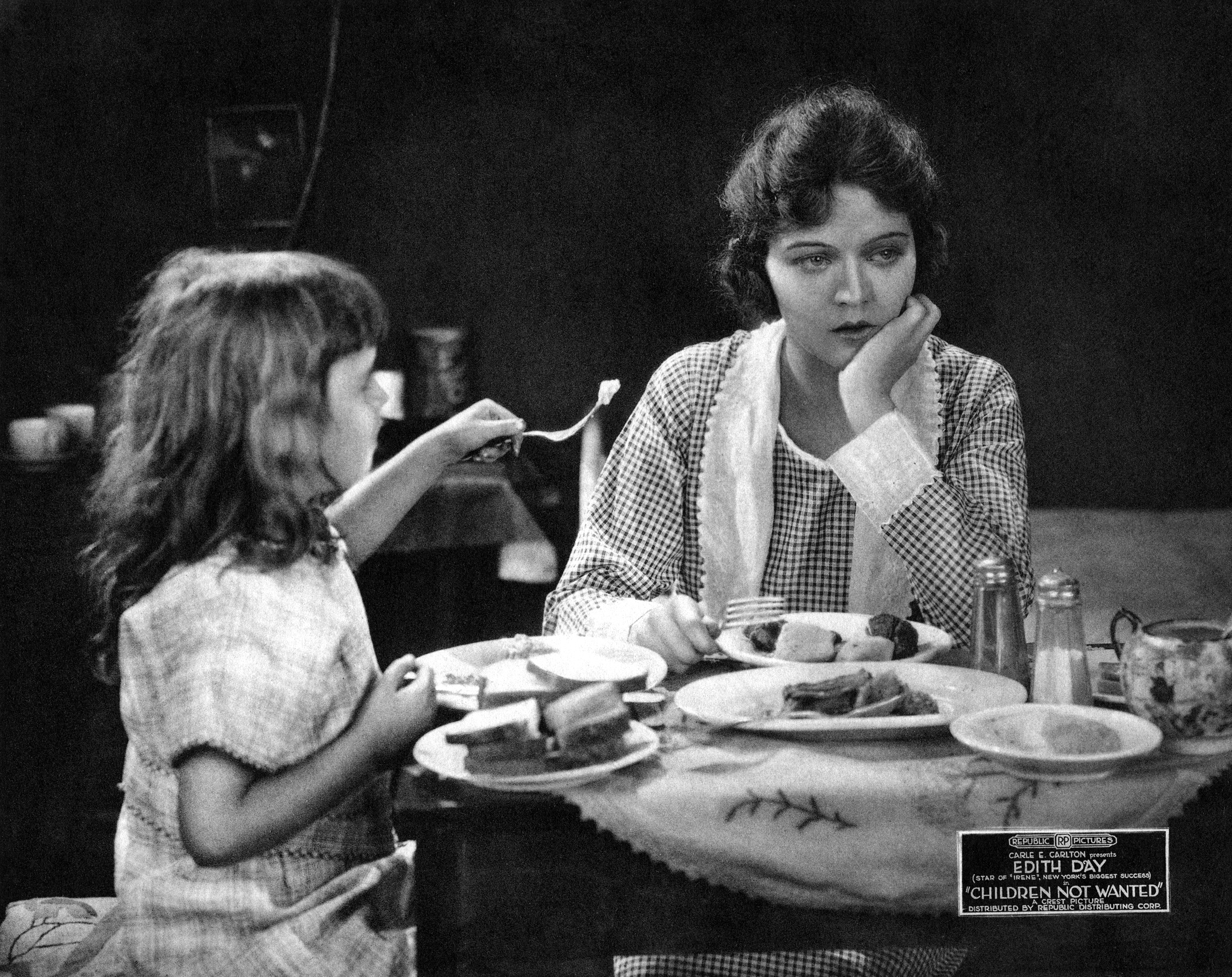
32. Edith Day (1896-1971)

Edith Day in a film by Republic Pictures called Children Not Wanted. I suppose this is a comedy, right? Still, she was more of a musical gal if you know what I mean.

Edith Day in a film by Republic Pictures called Children Not Wanted. I suppose this is a comedy, right? Still, she was more of a musical gal if you know what I mean.

Known in Life as: Actress and singer best known for her roles in Edwardian musical comedies and operettas, first on Broadway and then on London’s West End.
Character or Inspiration? She’s a character on the show.
Similarities: Sang “Alice Blue Gown.”
Differences: Was born in Minnesota. Married 3 times and saw her only son die in WWII. Best known for the title role of Irene. Was part of the 1928 cast of Show Boat in which she did 350 performances. Has a cocktail named after her.
Ultimate Fate: Died in London in 1971 at 75.

33. Mamie Smith (1883-1946)

Mamie Smith was one of the first female African American singers to work in a recording studio. She was also called "Queen of the Blues" and ushered the careers of the female singers. Apparently Niki Minaj and Beyonce probably don't know who she was.

Mamie Smith was one of the first female African American singers to work in a recording studio. She was also called “Queen of the Blues” and ushered the careers of the female singers. Apparently Niki Minaj and Beyonce probably don’t know who she was despite owing their careers to her.

Known in Life as: African American Vaudeville singer, dancer, pianist, and actress who appeared in several films late in her career. Performed in a number of styles including jazz and blues. Was the first African American artist to make vocal blues recordings in 1920.
Character or Inspiration? She’s a character on the show.
Similarities: Sang “Crazy Blues.”
Differences: Born in Cincinnati. Was a successful blues artist as well as helped the recording industry see African Americans as a great market since they bought most of her records. Helped usher careers for other female blues artists like Bessie Smith and Billie Holiday as well as opened the music industry for other African Americans in other genres. Once billed, “Queen of the Blues.” Also performed on radio. Married to movie producer Jack Goldberg.
Ultimate Fate: Died in New York in 1946 at 63.

34. Sophie Tucker (1887-1966)

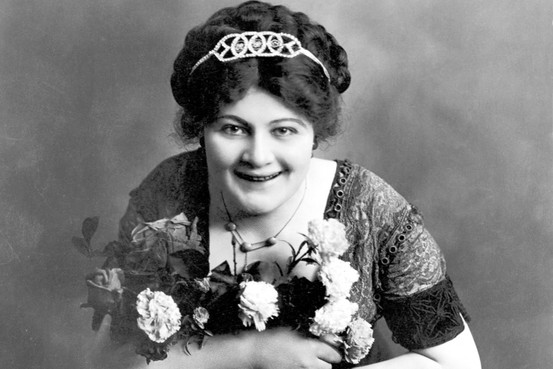
Despite being overweight, Sophie Tucker would enjoy a long career in show business entertaining generations around the world. Apparently comical risque songs never seem to go out of style. Still, you can't help but be creeped out seeing her holding flowers in this picture.

Despite being overweight, Sophie Tucker would enjoy a long career in show business entertaining generations around the world. Apparently comical risque songs never seem to go out of style. Still, you can’t help but be creeped out seeing her holding flowers in this picture.

Known in Life as: Jewish American singer, comedian, actress, and radio personality. Known for her stentorian delivery of comical and risqué songs, she was one of the most popular entertainers in the US for the first half of the 20th century. Known as “The Last of the Red Hot Mamas.”
Character or Inspiration? She’s a character on the show.
Similarities: Sang “Some of These Days.”
Differences: Born in Russia. Married 3 times and had at least one son. Began singing at her parents’ Connecticut restaurant for tips. Before taking orders she, “would stand up in the narrow space by the door and sing with all the drama I could put into it. At the end of the last chorus, between me and the onions there wasn’t a dry eye in the place.” Would continue to sing at cafes and beer gardens until she made her first Vaudeville appearance in 1907 but in blackface. When she lost her makeup, she just performed without it, she stunned the crowd by saying, “You all can see I’m a white girl. Well, I’ll tell you something more: I’m not Southern. I’m a Jewish girl and I just learned this Southern accent doing a blackface act for two years. And now, Mr. Leader, please play my song.” Though made fun of herself for being overweight, she didn’t see anything wrong with being chunky. Performed with the Ziegfield Follies as well as for King George V. Elected present of the American Federation of Actors in 1938. Had her own radio show and made numerous guest appearances in radio and television including The Ed Sullivan Show and The Tonight Show. Was a punchline to a Beatles joke by Paul McCartney.
Ultimate Fate: Continued to perform for the rest of her life until her death from a lung ailment and kidney failure in 1966 at the age of 79. Still, she influenced a lot of female performers including May West, Joan Rivers, Roseanne Barr, Carol Channing, Ethel Merman, “Mama” Cass Elliot, and Bette Midler.

35. Jack Dempsey (1895-1983)

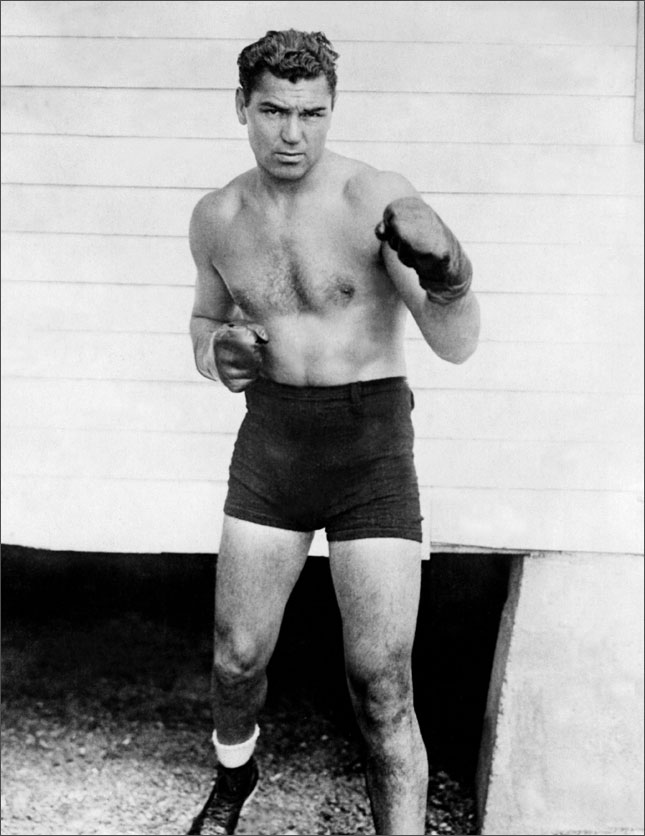
Jack Dempsey would win the World Heavyweight Championship title for most of the 1920s. Still, despite being a Mormon since he was 8, he married his 3 wives one at a time.

Jack Dempsey would win the World Heavyweight Championship title for most of the 1920s. Still, despite being a Mormon since he was 8, he married his 3 wives one at a time.

Known in Life as: American professional boxer and cultural icon of the 1920s. Held World Heavyweight Championship from 1919 to 1926. His aggressive style and exceptional punching power made him one of the most popular boxers in history. Had many of his fights set financial and attendance records, including the first million dollar gate.
Character or Inspiration? He’s a character on the show.
Similarities: Well, he’s a famous boxer and his fights were frequently broadcasted on the radio.
Differences: Born in Colorado and was baptized at 8 into the LDS church with his parents in 1903. Elementary school dropout and left home at 16. Frequently traveled underneath trains and slept in hobo camps in his early years. Started his career in barroom brawls saying, “I can’t sing and I can’t dance, but I can lick any SOB in the house.” Was a part time bodyguard for John Kearns who was the son of a US Senator. Lost the World Heavyweight Championship title in 1926 to Gene Tunney coining the phrase, “Honey, I forgot to duck.” Married 3 times and had at least 3 kids.
Ultimate Fate: Retired from boxing in the 1930s and went on to other things like writing, training, and philanthropy. Assisted Joe Louis when the latter fell on hard financial times as well as made friends with former rivals Henry Wills and Gene Tunney. Was a close friend of famous Watergate judge John Sirica. Beat up a couple of muggers in 1971. Died of heart failure in New York in 1983 at 87. Influenced Bruce Lee.

36. Frank Hague (1876-1956)

Frank Hague would be Jersey City's mayor and political boss for the New Jersey Democratic Party for 30 years. Was known to be very corrupt and a chronic backstabber as well.

Frank Hague would be Jersey City’s mayor and political boss for the New Jersey Democratic Party for 30 years. Was known to be very corrupt and a chronic backstabber as well. Still, nice suit though.

Known in Life as: Mayor of Jersey City from 1917-1947 and prominent Democratic politician and political boss. Had a widely known reputation for corruption and bossism and by 1947, enjoyed palatial homes, European vacations, and a private suite in the Plaza Hotel. Said to have amassed wealth of over $10 million at the time of his death though his city salary never exceeded $8,500 annually and he had no other legitimate income. Personal influence extended to national level, especially in federal patronage and Presidential campaigns.
Character or Inspiration? He’s a character on the show.
Similarities: Was well known as a chronic backstabber (even before the 1920s). Didn’t bat an eye at doing nefarious deeds with Democrats.
Differences: Born to Irish immigrants. Expelled from school at 14 for poor attendance and unacceptable behavior. Worked as a blacksmith’s apprentice and tried to be a boxer. Won his first election at 20. Pride and joy was the Jersey City Medical Center. Had a wife and son. Was seen as a reformer who wanted to reshape the corrupt Jersey City police force and spearhead crackdowns of prostitution and narcotics trafficking. Also made improvements to the city’s fire department. Had very little tolerance for those who opposed him publically. Took a lot of kickbacks but was able to avoid state and federal investigations for years. Use of voter fraud was said to be the stuff of legend.
Ultimate Fate: Retired from politics in 1947. Died at his Park Avenue duplex in New York in 1956 at 79. Though hundreds attended his funeral only a few removed their hats while passing his coffin. One woman held an American flag and a sign reading, “God have mercy on his sinful, greedy soul.”

37. William “Bill” McCoy (1877-1948)

Of course, I could only wonder what kind of booze Bill McCoy brought to the Eastern Seaboard. Let me see, Bacardi or Captain Morgan? Oh, wait, that's rum and he transported his stash from the Bahamas.

Of course, I could only wonder what kind of booze Bill McCoy brought to the Eastern Seaboard. Let me see, Bacardi or Captain Morgan? Oh, wait, that’s rum and he transported his stash from the Bahamas.

Known in Life as: American sea captain and rum runner smuggler during Prohibition. Smuggled whiskey from the Bahamas to the Eastern Seaboard.
Character or Inspiration? He’s a character on the show.
Similarities: Retired from bootlegging after a stint in jail in late 1923.
Differences: Though seen drinking on the show on numerous occasions, he was actually a teetotaler. Viewed John Hancock as a role model and called himself, “an honest lawbreaker.” Never paid a cent for organized crime, politicians, and law enforcement for protection. Born in Syracuse and had a bricklayer father who served in the Union blockade during the American Civil War. Attended the Pennsylvania Nautical School on board the USS Saratoga and graduated first in his class. Served as mate and quarter master on various steamers. Had a reputation as a skilled yacht builder. Moved to Florida in 1900 and only went into the bootlegging business because he and his brother fell on hard financial times. Also smuggled liquor from other Caribbean islands and Canada.
Ultimate Fate: After being arrested by the US Coast Guard, he spent 9 months in a New Jersey jail. Quit bootlegging upon his release and spent the rest of his life investing in Florida real estate as well as build boats and travel down the coast. He died in 1948 at 71.

38. The Lanzetta Brothers
Known in Life as: Six gangster brothers from Philadelphia during the 1920s and 1930s. Were notorious gunmen, numbers gamblers, narcotics dealers, and liquor bootleggers. Used an “Alky Cooking” supply network by providing a contingent row of house dwellers with home sills and paying them to sell saleable liquor. Criminal career was marked by frequent arrests and brutal violence.
Character or Inspiration? Inspiration for the D’Alessio brothers, particularly Leo and Ignacius.
Similarities: Well, both clans have brothers named Ignatius, Pius, Lucien, and Leo, who was considered the leader.
Differences: Two of the brothers were named Willie and Teo and I’m not sure if they had a brother who was a dentist anywhere. May have possibly murdered Mickey Duffy. Held out for much longer than their TV counterparts (who all die by a half-faced war vet in the first season). Leo was considered the leader since he was the oldest. Pius was “the Brain.” Ignatius was always impeccably dressed. Lucian had the explosive temper. Willie was the quiet one. And Teo, “the Baby” made women swoon because of his matinee idol good looks.
Ultimate Fate: Well, a lot of them didn’t come to good ends. Leo was killed in 1925 after leaving a barbershop in an apparent retribution of the murder of rival Joseph Bruno. Pius and Willie were killed by enemy bullets in 1936 and 1939. By 1940, Teo was serving a sentence in drug trafficking and Ignatius was released by a US Supreme Court decision declaring the New Jersey “Gangster Law” unconstitutional and might’ve joined Lucian and their mother in fleeing to Detroit.

39. Santo Trafficante Sr. (1886-1954)
Known in Life as: Sicilian born American gangster based in Florida and father of notorious mobster Santo Trafficante Jr.
Character or Inspiration? Possible inspiration for Vincenzo Petrucelli yet he hasn’t actually appeared on the show, yet.
Similarities: Both had a long time alliance and friendship with Masseria. Both were based in Florida.
Differences: Married with 5 sons. Wasn’t Masseria’s cousin, though he did send Santo Jr. to New York to learn under other mobsters. Gained power as a mobster and ruled the Mafia in Tampa from the 1930s to his 1954 death. Was a well-respected boss with ties to Luciano and Thomas Lucchese.
Ultimate Fate: Died in Tampa, Florida in 1954 at 68 and left his organization to his son who was respected under the New York bosses.

The Real People of Boardwalk Empire: Part 2 – Jimmy Boyd to Frankie Yale

boardwalk-empire-babette-s-supper-club

So we’re off to a good start. Of course, there may be plenty of famous gangsters you might recognize, some you may not, and some you may think were just made up by the writers of Boardwalk Empire but weren’t. Of course, I have to open this post in this series with a poster of Babette’s Supper Club which was a real place in 1920s Atlantic City but didn’t get the name until the 1930s. Still, it’s one of the more iconic places in the Prohibition era HBO show as well as one of Nucky Thompson’s frequent hangouts with his friends, lovers, and associates. In fact, it’s his favorite restaurant. Still, in this selection, we’ll look at Atlantic City notable Jimmy Boyd who was a partial inspiration for Jimmy Darmondy but came on the scene after the 1920s. At this time, he’s just a bell boy. Yet, I’ll also introduce to you two of Al Capone’s brothers who joined him in the Chicago Outfit bootlegging business. Their names were named Ralph and Frank. Then we’ll get to know officials in government like Gaston Means (who’s a con artist), Attorney General Harry Daugherty, Treasury Secretary, banker, and Treasury notable Andrew W. Mellon, the infamous FBI director J. Edgar Hoover, and Assistant Attorney General Mabel Walker Willebrandt who’s the inspiration for Esther Randolph. We also have famous booze baron and possible inspiration for Jay Gatsby, George Remus who you remember referring to himself in 3rd person as well as the renown entertaining powerhouse Eddie Cantor you recall for telling all those stupid jokes about dumb women. Oh, yeah, almost forgot gangsters Waxey Gordon, Dean O’Banion (the mob boss with the flower shop), and Frankie Yale. So without further adieu, in this second installment, here are some more real people from Boardwalk Empire.

14. Jimmy Boyd (1906-1974)
Known in Life as: Political operative who worked closely with Nucky Johnson and Frank Farley as well as become member of the Atlantic Board of Freeholders for about 40 years as well as executive chairman of the 4th Ward Republic Club for 2 decades.
Character or Inspiration? An inspiration for Jimmy Darmondy (though maybe a bit of a stretch).
Similarities: Well, they were war veterans and have rags to riches stories. Both were married. Both did dirty work for their bosses. Yet, that’s about it.
Differences: Probably started off as a bell hop at the Ritz and worked his way up. Served in WWII. Was never a gangster nor was killed by Nucky Johnson. Certainly wasn’t the son of “the Commodore” and a teenager nor did he go to Princeton.
Ultimate Fate: Died in 1974 at 68. His widow is still alive and established a scholarship at Atlantic Cape Community College in his name.

15. Gaston Means (1879-1938)

Actually he looks quite like the guy who played him in the show. Not sure if he made Jess Smith commit suicide but I wouldn't be surprised if he did. Nevertheless, he'll go to Leavenworth after he tried to pull a con during the Lindbergh kidnapping. Bastard.

Actually he looks quite like the guy who played him in the show. Not sure if he made Jess Smith commit suicide but I wouldn’t be surprised if he did. Nevertheless, he’ll go to Leavenworth after he tried to pull a con during the Lindbergh kidnapping. Bastard.

Known in Life as: Private detective, salesman, bootlegger, forger, swindler, murder suspect, blackmailer, and con artist. Though not involved with the Teapot Dome scandal, was associated with other members of the so-called Ohio Gang that gathered around the Harding administration. Also tried to pull a con associated with the Lindbergh kidnapping.
Character or Inspiration? He’s a character on the show.
Similarities: Had a Southern accent. Was a con man and master manipulator you couldn’t trust. Was hired as an investigator for the FBI despite his dubious reputation as a detective. Wasn’t well liked by Harry Daugherty (but for the right reasons). Assisted bootleggers and was arrested for perjury.
Differences: May or may not have had anything to do with Jess Smith’s death. Wrote a book saying that Warren G. Harding was killed by his wife and later repudiated it.
Ultimate Fate: After trying to pull a con associated with the Lindbergh kidnapping, he was arrested, found guilty, and sentence to 15 years of prison. Died at Leavenworth in 1938 at 59.

16. Eddie Cantor (1892-1964)

Yes, this is Eddie Cantor during his younger years. No, this isn't Mr. Bean I'm sorry to say. Still, you have to love how he looks in that outfit.

Yes, this is Eddie Cantor during his younger years. No, this isn’t Mr. Bean I’m sorry to say. Still, you have to love how he looks in that outfit.

Known in Life as: Performer, comedian, dancer, singer, actor, and songwriter. Worked in vaudeville, Broadway, radio, movies, and early television.
Character or Inspiration? He’s a character on the show.
Similarities: Well, he was a well-known Vaudeville performer on stage.
Differences: Raised by his maternal grandmother (whose name was Kantrowitz but was shortened to Kanter by a clerk when he attended the Surprise Lake Camp). Though you might not know it on the show, he was a happily married man from 1914 to 1962 (to a woman named Ida Tobias who suggested he used Eddie as a stage name) and father of five daughters. Also was known to entertain the audience with his intimate stories and anecdotes of his wife and kids, sometimes to his children’s chagrin. Was president of the Screen Actors Guild in the 1930s and coined the term for “the March of Dimes” for the National Foundation for Infantile Paralysis and was its spokesman for its 1938 campaign.
Ultimate Fate: Though he lost his multi-millionaire status and was left deeply in debt in the 1929 Stock Market Crash, he managed to rebuild his fortune with a new bank account and a series of highly popular bestselling humorous books with cartoons. In 1935, he, Charles Tobias and Murray Melcher would write “Merrily We Roll Along” which he recorded in the 1950s but was used as a theme song for the Merrie Melodies cartoon series for Warner Brothers between 1937 to 1964. Also had a successful career in film and television despite being turned down for The Jazz Singer. Died of a heart attack at 72 in 1964.

17. Harry Daugherty (1860-1941)

Looked much different than I thought he did. Sure he's wearing a nice 3 piece suit but he's corrupt as hell and tried to say his friend killed himself after being diagnosed with diabetes. Seems suspicious.

Looked much different than I thought he did. Sure he’s wearing a nice 3 piece suit but he’s corrupt as hell and tried to say his friend killed himself after being diagnosed with diabetes. Seems suspicious.

Known in Life as: Attorney general under Warren G. Harding and Calvin Coolidge. Was an influential official behind the election of several Congressmen and US Senators and served as Harding’s campaign manager in 1920. Instrumental for winning presidential pardons for jailed anti-war dissidents including one Eugene V. Debs. “Ohio Gang” member and may have been involved in the Teapot Dome scandal. Forced to resign as attorney general after being twice subject to US government investigations in 1924.
Character or Inspiration? He’s a character on the show.
Similarities: Was massively corrupt and untrustworthy. Shared a hotel room with Jesse Smith and was close friends with him.
Differences: Let’s just say that he and Jesse Smith may have just been good friends and leave it at that. Also, was married with two kids, fat, and bald. Was about 60 in 1920.
Ultimate Fate: After indictments and his resignation, he returned to practicing law until his retirement in 1932. Wrote a book trying to clear his name pinning the Teapot Dome scandal on Albert Fall and saying that Jesse Smith killed himself because of diabetes, not a guilty conscience. He planned on writing two more. Died in his sleep in 1941 at 81 a year after he experienced two heart attacks and pneumonia that made him blind in one eye.

18. Andrew W. Mellon (1855-1937)

Now I know that Andrew Mellon exists since he's a Pittsburgh native. And the Mellon name is incredibly famous in the area with the now Bank of New York Mellon. Nevertheless, he didn't look at all like James Cromwell as you see here.

Now I know that Andrew Mellon exists since he’s a Pittsburgh native. And the Mellon name is incredibly famous in the area with the now Bank of New York Mellon. Nevertheless, he didn’t look at all like James Cromwell as you see here.

Known in Life as: Banker, businessman, industrialist, philanthropist, art collector, US Ambassador to the UK, and US Treasury Secretary under Warren G. Harding, Calvin Coolidge, and Herbert Hoover.
Character or Inspiration? He’s a character on the show.
Similarities: Well, he was Harding’s Treasury Secretary. Responsible for upholding taxes and Prohibition despite that he hated both.
Differences: Resembled nothing like James Cromwell. Had a mustache and a head full of white hair at this time period. Believed in a progressive income tax but at lower rates. We’re not sure whether he owned a distillery in the 1920s though he denied it amid rumors. Fathered two children and was divorced. Was in his 60s and early 70s during the 1920s.
Ultimate Fate: Became unpopular with the onset of the Great Depression that he was nearly impeached but resigned in 1932. Was investigated and indicted over his personal tax returns by the FDR administration though he’d later be exonerated. Died in New York in 1937 at the age of 82.

19. Waxey Gordon (1888-1952)

Let's just say that while Waxey Gordon may seem like a guy the Boardwalk Empire writers made up, he actually was a real gangster. Still, he was born Irving Wexler and the name he's best known by was made up.

Let’s just say that while Waxey Gordon may seem like a guy the Boardwalk Empire writers made up, he actually was a real gangster. Still, he was born Irving Wexler and the name he’s best known by was made up.

Known in Life as: A Jewish American crime boss in Philadelphia during Prohibition who specialized in bootlegging and illegal gambling.
Character or Inspiration? He’s a character on the show.
Similarities: Was an associate of Arnold Rothstein and helped run most of his East Coast bootlegging operation.
Differences: Real name was Irving Wexler and was born in New York. Married to a rabbi’s daughter and had a son in medical school. Was a chunky dark skinned man. Started out as a pickpocket before he became a rum-runner during the early days of Prohibition. Lived an extravagant lifestyle from his multi-million dollar empire and had mansions in New York and Philadelphia.
Ultimate Fate: After Rothstein’s death in 1928, his glory days were over. Though he made alliances with future National Crime Syndicate founders Luciano, Lansky, and Louis Buchaller, his struggles with Lansky over bootlegging and gambling interests would lead to a gang war between the two as well as the deaths of several associates (the writers missed a great opportunity there). Lansky and Luciano would later supply US Attorney Thomas E. Dewey with evidence that led to his conviction of tax evasion in 1933. After his 10 year prison sentence, he found his gang disbanded, divorced, and his East Coast empire lost. Tried to start over as a single man by moving to California, selling 10,000lbs of coupon rationed sugar during WWII, and imported illegal drugs. Was busted for selling heroin to an undercover cop in 1951. He was convicted of narcotics and trafficking and sentence to 25 years. He died of a heart attack on Alcatraz in 1952 at 64.

20. Ralph “Bottles” Capone (1894-1974)

Now he doesn't seem to resemble Herc from The Wire at all who plays him on the show. Reminds me more of Al Capone if he ever became a milkman in a newspaper cap. You can see the family resemblance there.

Now he doesn’t seem to resemble Herc from The Wire at all who plays him on the show. Reminds me more of Al Capone if he ever became a milkman in a newspaper cap. You can see the family resemblance there.

Known in Life as: Chicago gangster and brother of Al Capone. Most famous for being “Public Enemy #3.”
Character or Inspiration? He’s a character on the show.
Similarities: Got his nickname “Bottles” for running a legal bottling plant (it was for soft drinks like ginger ale as well as soda water for mixed drinks and was very profitable for the Chicago Outfit).
Differences: Was born in Italy and came to the US as a baby making him older than Al. Married three times and divorced twice. Took his son Ralph Jr. away from his wife and had his mother raise him as her youngest child. Was the dominant soft drink vendor other than Coca Cola during the 1933 World’s Fair. Had relatively little power in the Outfit and the National Crime Syndicate.
Ultimate Fate: Remained in the Outfit after his brother’s arrest as well as hosted several high-level Outfit conferences from his brother’s Palm Island, Florida residence. Managed Chicago’s Cotton Club where he was involved in syndicate gambling and vice districts. In 1932, was convicted of tax evasion and served 3 years. Purchased a home and was a silent partner in a hotel/tavern at Mercer, Wisconsin. Moved to Wisconsin after his release. Died of natural causes in Hurley, Wisconsin in 1974 at 80. His widow would marry his best friend three years later. So let’s just say that Bottles post-crime life was very good indeed.

21. Frank Capone (1895-1924)

I know this isn't much but this is the only picture I could find of Frank Capone alive. Most of the photos featured of him on Google Images show him shot up and dead. Still, probably the best looking brother in the Capone bunch as we've seen.

I know this isn’t much but this is the only picture I could find of Frank Capone alive. Most of the photos featured of him on Google Images show him shot up and dead. Still, probably the best looking brother in the Capone bunch as we’ve seen.

Known in Life as: Chicago gangster and Al Capone’s brother who participated in the attempted takeover of Cicero, Illinois for Al’s criminal organization.
Character or Inspiration? He’s a character on the show.
Similarities: Dressed in well attired clothes to project an image of a mild-mannered businessman. Was shot to death by Chicago police shooting him up on Election Day.
Differences: Older than Al but they were close. Was involved in the Five Points Gang with Johnny Torrio. Was considered more violent than his younger brother and certainly didn’t die just defending him. Actually unleashed a wave of terror during the Illinois Democratic Party that April sending Southside gang members with submachine guns and sawed-off shotguns to make sure the locals voted for Cicero city manager Joseph Z. Klenha. Those who didn’t cooperate were assaulted and blocked. Also led an attack at the opponent’s campaign headquarters ransacking the office and assaulting several campaign workers, one of whom was shot in both legs and held hostage along with 8 others until after the primary was over. CPD had to send 70 plainclothes officers over this.
Ultimate Fate: Was shot dozens of times by Chicago police during the Illinois Democratic Primary on April 1, 1924 at 28. It was considered a justifiable shooting since police said he pulled out a gun at them though some witnesses disagree. Al escaped unharmed but retaliated by murdering one official, kidnapping others, and stealing ballot boxes from the polling stations. Still Frank Capone was laid in a silver laden casket and had an extravagant funeral that costs $200,000 worth of flowers from Dean O’Banion’s florist shop as well as over 150 cars in the motorcade. Al also had gambling dens and speakeasies closed for two hours for the funeral.

22. J. Edgar Hoover (1895-1972)

Sure the young FBI director was a rabid lifelong racist but damn, did he really know how to dress. Also, didn't wear women's clothes but sure knew how to wear a suit. Probably should've considered becoming a male model and save people from decades worth of pain with him in government.

Sure the young FBI director was a rabid lifelong racist but damn, did he really know how to dress. Also, didn’t wear women’s clothes but sure knew how to wear a suit. Probably should’ve considered becoming a male model and save people from decades worth of pain with him in government.

Known in Life as: First FBI director in the United States and led the bureau from 1924 to 1972. Instrumental in founding the FBI in 1935 and is credited with building it into a large crime fighting agency and with instituting a number of modernizations to police technology such as a centralized finger print file and forensic laboratories. Was a much more controversial later in life as evidence of his secret actions became known. His critics accused him of exceeding the FBI’s jurisdiction and used the organization to suppress dissidents and activists, to amass secrets on political leaders, and collect evidence using illegal methods. Amassed a great deal of power and was in a position to intimidate and threaten sitting US Presidents.
Character or Inspiration? He’s a character on the show.
Similarities: Was only 29 in 1924. Was obsessed with bringing down Marcus Garvey as well as racist (remember he opposed the Civil Rights Movement and taped Martin Luther King Jr.). Instituted highly selective hiring standards and ruthlessly efficient investigation procedures that provided his organization to infiltrate and thoroughly investigate criminal empires during Prohibition.
Differences: Helped carry out the Palmer Raids in 1919 (hated liberals, too, as you know) and was appointed as director of the BoI when his boss was alleged to have been involved in the Teapot Dome scandal. Despite his racism and obsession with hunting down black civil rights leaders, he didn’t ignore organized crime (at least later on). Was noted to be rather capricious in his FBI leadership as well as frequently firing agents or singling out those who “looked stupid like truck drivers” or considered “pinheads.” He was even said to relocate agents who’ve displeased him to career-ending assignments and locations (Melvin Purvis is a good example of this). Was alleged to be gay as well as had a close lifelong friendship with Clyde Tolson (as we know it).
Ultimate Fate: Hoover will lead the FBI for a very long time serving as its director under every US President to Calvin Coolidge to Richard Nixon and will gain a lot of power and notoriety. Died from a heart attack at his Washington D. C. home in 1972 at 77 and his body lay in state at the Capitol Rotunda with Warren Burger and Richard Nixon. Still, Nixon’s appointment of L. Patrick Gray over Hoover’s No. 2 at the time Mark Felt would lead Felt to leak information to Bob Woodward and Carl Bernstein on the Watergate Scandal.

23. Mabel Walker Willebrant (1889-1963)

And you thought Esther Randolph was just totally made up to make the 1920s seem like a more feminist time than it was. Actually, she's based on a real Assistant Attorney General named Mabel Walker Willebrandt who actually did nail George Remus and other wrongdoers during Prohibition. Too bad she didn't get promoted to Attorney General under Herbert Hoover. Damn, and we couldn't get a woman Attorney General until the 1990s. Isn't sexism unfair?

And you thought Esther Randolph was just totally made up to make the 1920s seem like a more feminist time than it was. Actually, she’s based on a real Assistant Attorney General named Mabel Walker Willebrandt who actually did nail George Remus and other wrongdoers during Prohibition. And this is her picture here. Pretty wasn’t she? Too bad she didn’t get promoted to Attorney General under Herbert Hoover. Damn, and we couldn’t get a woman Attorney General until the 1990s. Isn’t sexism a bitch?

Known in Life as: “First Lady of Law” was US Assistant Attorney General from 1921-1929 handling cases concerning violations of the Volstead Act, federal taxation, and the Bureau of Federal Prisons.
Character or Inspiration? Inspiration for US Attorney Esther Randolph.
Similarities: Well, they’re both Assistant Attorney Generals in the 1920s who deal with the Volstead Act. Both were willing to take down bootleggers when their superiors wouldn’t. Brought down George Remus and were successful in the biggest prosecutions during Prohibition. Both showed high degrees of professionalism.
Differences: Was divorced but she probably didn’t sleep with her assistant. Wasn’t reduced to prosecuting bit time bootleggers at the D. C. night court circuit for she had other things to do. And she’d probably not ally herself with booze barons. Yet, she did get her start defending prostitutes without pay and handled 2000 cases pertaining to them. During WWI, she served as head of the Legal Advisory Board for draft cases in Los Angeles, California. Oh, and she was the second woman appointed as Assistant Attorney General but the first to serve an extended term, which made her the highest ranking woman in the federal government. Her administration the establishment for the Alderson federal prison which was the first of its kind for women. She was also an opponent to Prohibition but aggressively upheld the Volstead Act but criticized the federal government’s efforts to enforce the law in her book The Inside of Prohibition describing political interference, incompetent public officials, and public indifference. Her efforts to prosecute bootleggers were hampered by the Treasury and Justice Departments though she managed to prosecute 48,734 Prohibition-related cases from June 1924 to June 1925, of which 39,072 resulted in convictions. Submitted 278 cases of certiorari to the Supreme Court regarding defense, clarification, and enforcement of Prohibition and the Volstead Act. Also argued more than 40 cases before the Supreme Court and won several victories.
Ultimate Fate: Though she heavily campaigned for Herbert Hoover in 1928, she failed to be appointed Attorney General (not surprisingly) and resigned her post in 1929. She continued to work as an attorney having offices in Washington and Los Angeles. In 1950 she represented the Screen Actors Guild during a labor hearing as well as California Fruit Industries. Became the first woman to chair a committee of the American Bar Association on the committee of aeronautical law as well as held several honorary doctorates. Later converted to Roman Catholicism and died of natural causes in Riverside, California in 1963 at 73.

24. George Remus (1874-1952)

Cincinnati booze baron George Remus behind bars. After he gets out of prison he's going to find out his wife had an affair and basically swindled him royally. He'd then kill her in front of a lot people in broad daylight and get off on temporary insanity. Yet, George Remus won't be nearly that rich again.

Cincinnati booze baron George Remus behind bars. After he gets out of prison he’s going to find out his wife had an affair and basically swindled him royally. He’d then kill her in front of a lot people in broad daylight and get off on temporary insanity. Yet, George Remus won’t be nearly that rich again.

Known in Life as: Cincinnati lawyer and bootlegger during Prohibition. It’s been claimed that he was the inspiration for the title character in The Great Gatsby by F. Scott Fitzgerald.
Character or Inspiration? He’s a character on the show.
Similarities: Was brought down by a female Assistant Attorney General. Exploited a loophole in the Volstead Act that permitted its trade for medicinal purposes (which was why he moved to Cincinnati where 80% of the US “bonded” whiskey was located). Entered the booze business to get rich but wasn’t really violent. Was a teetotaler as well as short, fat, and bald. Actually referred to himself in the 3rd person.
Differences: Born in Germany and came to the US at 5. Supported his family by working in a pharmacy at 14 because his dad couldn’t work. Bought the pharmacy at 19 and another at 24 but became a lawyer after getting bored. Daughter was Romola Remus who played Dorothy Gale in the 1910 silent version of The Wizard of Oz when she was 8. Specialized in criminal defense and became rather famous that he was earning $50,000 annually by 1920 on his legal career alone. Married twice and divorced once. Was known as “The King of Bootleggers” for his vast booze empire as well as extravagant lifestyle and parties you’d see in The Great Gatsby including one in which he gave all the adult male guests diamond watches and their wives a brand new car. At his peak he owned 10 distilleries, employed 3,000 people, and had the most dominant bootlegging operation in the Midwest that would put Al Capone to shame. Loved fine food, art, literature, and swimming. Was well liked by the local kids as well as let them swim in his Grecian Olympic sized swimming pool. Beloved in Cincinnati and known for his generosity.
Ultimate Fate: In 1925, he was indicted for 3,000 violations under the Volstead Act and convicted by a grand jury in just 2 hours as well as received a 2 year prison sentence. While in the slammer, befriended a fellow prison inmate who turned out to be an undercover Prohibition agent named Franklin Dodge who later resigned and had an affair with his second wife Imogene. Dodge and Imogene would liquidate his assets and hide as much money as possible, strip his large Marble Palace mansion of everything of value and nail the doors shut, attempt to deport him, and even hire a hitman to murder him for $15,000. Imogene sold his Fleischmann distillery in which she gave him $100 for it and would file for divorce. In 1927, he had his driver chase his second wife and daughter through Eden Park on her way to the divorce finalization, where he fatally shot his wife in the abdomen in front of the Spring House Gazebo in front of horrified onlookers. He successfully pleaded temporary insanity in record time while acting as his own attorney with a case bringing national headlines for a month as well as prosecuted by a former president’s grandson. Was sentenced for 6 months. Upon release, tried to return to bootlegging but found it was taken over by gangsters so he moved to Covington, Kentucky where he lived a modest life for the next 20 years without incident and though he tried to regain his vast fortune, he was never successful. He died there in 1952 of natural causes at 77.

25. Dean O’Banion (1892-1924)

Dean O'Banion posing in a photo with his wife Viola holding one of his bouquets he styled himself. Too bad he'll be whacked by Frankie Yale's boys in his own flower shop.

Dean O’Banion posing in a photo with his wife Viola holding one of his bouquets he styled himself. Too bad he’ll be whacked by Frankie Yale’s boys in his own flower shop.

Known in Life as: Irish American gangster in Chicago and rival of Johnny Torrio and Al Capone during the brutal Chicago bootlegging wars of the 1920s. Led the North Side Gang until his murder by Frankie Yale, John Scalise, and Albert Anselmi in 1924.
Character or Inspiration? He’s a character on the show.
Similarities: Owned a flower shop (which was originally set up for a money laundering scheme but he found out he actually liked it). Had his men encroach others’ territory and breweries.
Differences: Was once a choir boy as a kid and sang at Chicago’s Holy Name Cathedral. Childhood buddies were Hymie Weiss, Vincent Drucci, and Bugs Moran who were in the Market Street Gang specializing in theft and robbery. Worked as a singing waiter at McGovern’s Liberty Inn and was said to have a beautiful tenor voice while his buddies picked pockets in the coatroom. Also drugged his patron’s drinks known then as “slipping a Mickey Finn.” They also inflicted violence in the 42nd and 43rd ward for political bosses. As a head of the North Side Gang, his men stole liquor from other bootleggers, hijacked trucks en route (a pioneer in that), tried to frame Torrio and Capone for a murdered, trolled the Genna brothers (a Chicago Outfit affiliated gang) for no apparent practical reason, and conned Angelo Genna out of a large sum of money. Also did flower arrangements for mob funerals and regularly attended Mass at Holy Name Cathedral. At his height he was making $1 million in the early 1920s when he and his gang eliminated the bootlegging competition. Abhorred prostitution.
Ultimate Fate: Shot up by two of Frankie Yale’s hitmen in his flower shop in 1924 at the age of 32. Was denied to be buried on consecrated ground by the Catholic Church but his funeral was presided by a priest who knew him since childhood and was quite lavish. His killing would spark a 5 year gang war between the North Side Gang and the Chicago Outfit which would culminate in the 1929 St. Valentine’s Day Massacre.

26. Frankie Yale (1893-1928)

Yes, that's Frankie Yale. Despite the Ivy League sounding name, he's actually was an Italian born gangster who didn't go to college. Still, he and Al Capone were good friends, for a while.

Yes, that’s Frankie Yale. Despite the Ivy League sounding name, he’s actually was an Italian born gangster who didn’t go to college. Still, he and Al Capone were good friends, for a while. Had a very expensive gangster funeral.

Known in Life as: Brooklyn gangster and original employer of Al Capone before the latter moved to Chicago.
Character or Inspiration? He’s a character on the show.
Similarities: Well, he was responsible for killing Dean O’Banion in his flower shop though possibly could’ve killed Colosimo (we aren’t sure on that one).
Differences: Born in Italy, came to the US at 7, and befriended Johnny Torrio as a teenager who ushered him in the Five Points Gang. Believed in putting business ahead of ego. Took over Brooklyn’s ice delivery trade by selling “protection” and creating monopolies. Opened a bar on the Seaside Walk in Coney Island with the proceeds known as Harvard Inn. It was in this place where a young waiter named Al Capone got his famous scar. His gang also engaged in Black Hand extortion activities (especially in rackets with dock workers and unions) and ran a string of brothels. Had a sideline of notorious foul-smelling cigars packaged in boxes that bore his smiling face as well as operated his own funeral home. Was one of Brooklyn’s biggest bootleggers at the beginning of Prohibition as well as known for his generosity for the less fortunate people in his neighborhood. Yet, was a violent man who didn’t hesitate to inflict pain on others and beat his younger brother so badly he wound up in the hospital. Married twice as well as fathered 3 daughters. Survived a lot of assassination attempts and supplied much of Al Capone’s whiskey imported from Canada and would oversee the transport personally.
Ultimate Fate: Unfortunately, his long friendship with Capone began to fray when his Chicago bound trucks would fall to hijacking before leaving Brooklyn. When Capone found that Yale was stealing his booze, his informant tried to kill Yale but was gunned down instead. On July 1, 1928, Yale received a cryptic call in his Sunrise Club saying that something was wrong with his wife. Yale would dash out in his brand new armored coffee-colored Lincoln coup (but lacked bullet-proof windows) and took up at New Ultrecht Avenue in which he was chased by a Buick sedan carrying four armed men (who were from Capone’s Chicago Outfit). The Buick would catch up to him and Yale was murdered in a storm of bullets that cause his car to crash into the stoop of a brownstone at No. 923. He was 35 (still, the writers missed a great opportunity here). Had one of the most impressive gangland funerals in American history which was attended by thousands of people and set a standard for opulence for American gangsters that has been seldom matched over the years. Also led to drama when two different women claimed to be his wife.

The Real People of Boardwalk Empire: Part 1- Enoch “Nucky” Johnson to Louis “Commodore” Kuehnle

boardwalk-empire

A few months ago my dad was reading a book about the Rooney family and the early days of owning the Pittsburgh Steelers. Since we’ve been watching the first three seasons of Boardwalk Empire, my dad had to show me the name of “Arnold Rothstein” when he got to the part about Art Rooney’s luck as a gambler on the horse racing track. Let’s just say that before he managed to read the guy’s name, he thought that Rothstein was just a fictional character created by the writers of the hit Emmy-winning HBO show. Of course, I couldn’t write about Boardwalk Empire at that moment since I was possibly working on my blog series on movie history. Yet, that incident got me to thinking about doing a series dedicated to the historical figures who’ve appeared or inspired  characters on the show no matter how minor. I mean sure I’ve watched the first three seasons but I really like the show and it’s not because of the violence. I like the characters, the clothes, the sets, and well, the historicity of it all. Still, since Boardwalk Empire is airing it’s final season around this time of year, I thought this little five part blog series would be a nice commemoration as a tribute to the Prohibition Era, the 1920s, the Jazz Age, and all that. In this selection, we’ll look at Atlantic City locals like Enoch L. “Nucky” Johnson and his brother Alf, Mary Ill, Mayor Edward L. Bader, and Louis “Commodore” Kuehnle. We’ll also get to know Casper Holstein an inspiration to Casper Holstein. Of course, we’ll also get to see famous gangsters like Johnny Torrio and Al Capone from Chicago and men like Arnold Rothstein, Charles “Lucky” Luciano, Meyer Lansky, Benjamin “Bugsy” Siegel, and Joe Masseria. So without further adieu, let me introduce you to my first installment of the real people of Boardwalk Empire.

1. Enoch L. “Nucky” Johnson (1883-1968)

Doesn't seem to remind me of Steve Buscemi in the least. Rather he seems to resemble an old timey college professor of some sort. Still, very well dressed.

Doesn’t seem to remind me of Steve Buscemi in the least. Rather he seems to resemble an old timey college professor of some sort. Still, very well dressed.

Known in Life as: He was a New Jersey political boss and racketeer. From the 1910s to his 1941 conviction and imprisonment, he was the undisputed “boss” of the political machine that controlled Atlantic City and the Atlantic County government. His rule saw Atlantic City as a refuge from Prohibition and was at its height of popularity as a tourist destination. His organization engaged in bootlegging, gambling, and prostitution. Yet, he was also known for giving freely to those in need and was widely beloved by local citizens, among whom his benevolence and generosity were legendary.
Character or Inspiration? He’s the main inspiration for “Nucky” Thompson and to a lesser extent Chalky White.
Similarities: Well, he and Nucky had wives named Mabel who died in 1912 (but from TB not suicide) and began to live fast lives after that. They both lived on the ninth story of the Ritz-Carlton rather lavishly, wore a fresh red carnation on their lapels daily, and had a German personal assistant and valet. They also both served as Atlantic County treasurer and were natty dressers. Like Chalky, he was seen as a benefactor to the Northside African American community but that’s pretty much it.
Differences: Unlike Nucky on the show, Johnson didn’t have any kids and didn’t remarry until 1941 and to a showgirl 25 years his junior. Also, in addition to mob boss, booze baron, political boss, sheriff, and county treasurer, Johnson was also county collector, campaign manager to Walter E. Edge, publisher of a weekly newspaper, president of a banking and loan company, and director of a Philadelphia brewery. Yet, though a political boss, he didn’t have much influence in US politics outside the state of New Jersey where he helped get several governors and US Senators elected. Not to mention, he briefly studied to be a teacher and before quitting for an unpaid clerkship and eventually work for his sheriff father (thus, he basically rose to power through nepotism). Still, Johnson didn’t have a terrible childhood, was probably a WASP, or an abusive dad who was a drunk(as far as we know) and wasn’t known for killing anybody (at least in the premeditated sense) or engaging in competition or turf wars with organized crime (though he did take a cut in illegal alcohol sales in Atlantic City). Also was 37 in 1920 as well as a tall, muscular, and bespeckled man who weighed 225 and stood 6’4” tall. Not to mention, he swam every week to keep in shape and was a forceful and outgoing personality.
Ultimate Fate: Was convicted and imprisoned for tax evasion (after being under investigation since 1933 thanks to William Randolph Hearst who leaked his name out of spite because they were both after the same showgirl). Was paroled in 1945 as well as worked in sales at the Richfield Oil Company and with his wife for Renault Winery. Yet, he did continue to dress impeccably and attend political events. Died of natural causes in 1968 at 85.

2. Alfred “Alf” Johnson (1878-1958)

Of course, I don't know if this is from the 1920s but it's the only picture I could find of him. Still, he doesn't look that bad and seems to love his little kitty.

Of course, I don’t know if this is from the 1920s but it’s the only picture I could find of him. Still, he doesn’t look that bad and seems to love his little kitty.

Known in Life as: Sheriff of Atlantic County and Nucky Johnson’s brother.
Character or Inspiration? Inspiration for Eli Thompson.
Similarities: Well, he was his brother’s henchman and did serve as county sheriff.
Differences: Unlike Eli Thompson in the show, Alf Johnson was actually older than his more famous brother Nucky. Also, he didn’t have any kids and may not have been married. Not to mention, his father was also a sheriff as well and wasn’t brought up in an abusive home and probably not Irish Catholic. In addition didn’t become sheriff until after 1920 long after his brother and father served that post.
Ultimate Fate: Died from a lingering illness in 1958 at 80.

3. Mary Ill
Known in Life as: Housewife, boardinghouse maid, and political activist. Best known for requesting a meeting with Nucky Johnson and being one of his political supporters.
Character or Inspiration? Inspiration for Margaret Shroeder.
Similarities: Well, they were both married to part-time baker’s helpers who were gamblers and abusive drunks. Like Margaret, she was also active in local politics and charitable organizations.
Differences: It’s fair to say that she and Nucky Johnson were never romantically involved (and certainly not married, though they did remain friends and he did give her $100 and a house). Nor did Johnson have her husband murdered (actually had him banned from local gambling halls instead). Also, we’re not sure whether she’s even an Irish immigrant.
Ultimate Fate: Well, her extensive interviews were used as research for a non-fiction book (the show was based on) and helped create Nucky Thompson’s character on the show. She at least lived long enough for that.

4. Arnold Rothstein (1882-1928)

Yes, ladies, this is a genuine photograph of the guy who fixed the 1919 World Series on his telephone. Kind of disappoints you that he doesn't look like the New York Jewish mob boss from Boardwalk Empire doesn't it?

Yes, ladies, this is a genuine photograph of the guy who fixed the 1919 World Series on his telephone. Kind of disappoints you that he doesn’t look like the New York Jewish mob boss from Boardwalk Empire doesn’t it?

Known in Life as: Jewish American racketeer, businessman, gambler, and kingpin of the Jewish mob in New York City. Best known for being a corrupting influence in professional sports and fixing the 1919 World Series. According to Leo Katcher, “transformed organized crime from a thuggish activity by hoodlums into a big business, run like a corporation, with himself at the top.” Rich Cohen says he was the first person to realize that Prohibition was a business opportunity, a means to enormous wealth who, “understood the truths of early century capitalism (giving people what they want) and came to dominate them.”
Character or Inspiration? He’s a character on the show.
Similarities: Well, he did have a criminal organization that included notables like Meyer Lansky, Jack “Legs” Diamond, Charles “Lucky” Luciano, Benjamin “Bugsy” Siegel, and Dutch Schultz. Frequently mediated differences between the New York gangs and reportedly charged a hefty fee for his services. Did business in both bootlegging and narcotics as well as on the street (but surrounded by bodyguards). Wore bow ties.
Differences: He was nowhere near as attractive as Michael Stuhlbarg is and certainly didn’t fit the mainstream idea of handsome. And despite what the show implies, he wasn’t faithful to his wife (had at least 2 known mistresses). Also, he’s only alleged to fix the 1919 World Series while official records state it wasn’t fixed at all nor was he involved. Let’s just say that all the evidence and minutes of the Grand Jury disappeared during the investigation and the case was dismissed. While not shown on the show, he also exploited his role as mediator in the legitimate business world and soon forced Tammany Hall to recognize him as a necessary ally in its running of the city. Let’s just say Nucky Thompson’s role in Atlantic City is similar to his in New York City.
Ultimate Fate: Due to failure to pay a large debt of $320,000 that resulted from a 3 day long fixed high stakes poker game, he was shot and mortally wounded during a business meeting at Manhattan’s Central Park Hotel on 7th Avenue near 55th Street in 1928. He died at 46 at Stuyvesant Polyclinic Hospital. Who was responsible for his murder remains a mystery to this day. Still, by fast forwarding to 1931, I think the show’s writers missed a great opportunity with this. His illegal empire was divided by his underlings after his death and the political boss system of the 19th century was in total collapse. Ten years after his murder, his estate would be bankrupt and all his wealth would disappear.

5. Charles “Lucky” Luciano (1897-1962)

Now seriously, I'm not sure if I'd want that guy to star in Clint Eastwood's Jersey Boys. Then again, he doesn't look that bad, for an outright Prohibition bootlegging gangster. Of course, he'll whack anybody who stands in his way.

Now seriously, I’m not sure if I’d want that guy to star in Clint Eastwood’s Jersey Boys. Then again, he doesn’t look that bad, for an outright Prohibition bootlegging gangster. Of course, he’ll whack anybody who stands in his way.

Known in Life as: Sicilian-born American mobster and considered the father of modernized crime in the United States for splitting New York City into 5 different Mafia crime families and establishment of the first Commission. He was the first official boss of the Genovese crime family. Along with Meyer Lansky, he was instrumental in the development of the National Crime Syndicate of the United States. Said to be the most powerful American Mafia boss of all time.
Character or Inspiration? He’s a character on the show.
Similarities: Met and befriended Meyer Lansky as a teenager as well as Rothstein’s protégé. Was a womanizer. Arranged Masseria’s murder in 1931.
Differences: Actually started working as a gunman for Masseria before he went to Rothstein in the early 1920s and didn’t return to him until after Rothstein’s murder. He didn’t turn against Rothstein nor did Rothstein double cross him. Also, may have been called “Lucky” as early as 1923 after being severely beaten by 3 men and having his throat slashed. Not to mention, despite being arrested 25 times between 1916 to 1936, he spent no time in prison. Actually he got beat up a lot over his lifetime and survived a 1929 kidnapping when he was beaten and stabbed by 3 men before being dumped on a Staten Island beach (this would’ve made a great episode). Certainly wasn’t nearly as handsome as Vincent Piazza on the show.
Ultimate Fate: Though he’d continue trying to run his criminal enterprise, Luciano would later see prison in the late 1930s, would strike a deal with the US government to help root out German and Italian agents in New York, and would be deported to Italy in 1946. Except for a stint in Cuba, he would remain in Italy for the rest of his life. Also, would get in trouble with the Italian authorities which would result in a ban from Rome and his passport revoked. Died of a heart attack in Naples International Airport in 1962 at 65.

6. Alphonse “Al” Capone (1899-1947)

Now this is the 1920s Prohibition gangster we all remember unless we're under 5 or hiding under a rock somewhere. Still, he had great fashion sense.

Now this is the 1920s Prohibition gangster we all remember unless we’re under 10 or hiding under a rock somewhere. Still, he had great fashion sense and today he’s the most famous American gangster who ever lived.

Known in Life as: A violent Chicago gangster who attained national fame during Prohibition and was crime boss of that city for seven years. Alleged to be responsible for the Saint Valentine’s Day Massacre of 1929 (show missed great opportunity there). Possibly the most famous Prohibition gangster in the United States who ever lived.
Character or Inspiration? He’s a character on the show.
Similarities: Was born in New York. Said he served in WWI (even though he didn’t but he was embarrassed that he got his nasty scar from a knife fight). Had an Irish wife and brothers in the business as well (save one who was a Prohibition agent).
Differences: Was bigger than Stephen Graham. Moved to Chicago after being in memberships with small town gangs and the Five Points Gang where he was mentored by Frankie Yale. Was 21 in 1920 and started out in Chicago as a Johnny Torrio’s bodyguard not driver. Still, though he may have been a violent gangster who gained control of the Chicago bootlegging through violent means, he knew the value of PR and would stylize himself as a generous benefactor and a modern day Robin Hood. He’d also help cultivate relationships with Mayor William Hale Thompson and the city police.
Ultimate Fate: Was investigated and convicted of tax evasion thanks to the efforts of IRS agent Frank J. Wilson. Was sentenced to 11 years in prison but would serve 7 including a stint in Alcatraz where he’d be diagnosed with syphilis and gonorrhea. Was paroled in 1939 and would spend his remaining years in Florida where he showed symptoms of syphillic dementia. Died of cardiac arrest after suffering a stroke in 1947 at 48. His Chicago Outfit would continue at a low profile though and is still around.

7. Meyer Lansky (1902-1983)

Still, while Luciano is the better looking gangster on Boardwalk Empire, Lansky probably beats him in the looks department in real life. Of course, that's just my opinion. Nevertheless, Lansky will eventually outlive most of his peers from this era and enjoy a nice retirement in Florida.

Still, while Luciano is the better looking gangster on Boardwalk Empire, Lansky probably beats him in the looks department in real life. Of course, that’s just my opinion. Nevertheless, Lansky will eventually outlive most of his peers from this era and enjoy a nice retirement in Florida.

Known in Life as: Called the “Mob’s Accountant” was a major organized crime figure who along with Luciano was instrumental in developing the National Crime Syndicate in the United States. Thought to be one of the most powerful men in the country for decades. Had a gambling empire that stretched across the seas and was said to own casinos in Las Vegas, Cuba, the Bahamas, and London. Despite being in the Jewish Mob, he had as strong influence on the Italian Mafia and played a large role in consolidating the criminal underworld.
Character or Inspiration? He’s a character on the show.
Similarities: Met and befriended Luciano as a teenager as well as served as Rothstein’s protégé. Also was acquainted with Bugsy Siegel during that time as well (they became lifelong friends as well as had the latter save him several times).
Differences: Was 18 in 1920. Was much closer to Siegel than Luciano (he and Bugsy formed their own gang and were BFFs for life). Probably didn’t turn on Rothstein. Also didn’t quite look like Anatol Yusef.
Ultimate Fate: Well, he’s much luckier than a lot of his colleagues. Though he did get deported to the US from Israel and have his Cuban ventures end to the rise of Castro, he manage to establish a lot of gambling operations (considered to have high integrity) and transferred a lot of his earnings to a Swiss bank account. Was instrumental in Operation Underworld during World War II for the US Navy. From 1974 to his death of lung cancer at 81 in 1983, he spent a long peaceful retirement at Miami Beach. Yet, the amount of money he left will never be known though he was survived by his widow and 3 children.

8. Casper Holstein (1876-1944)

Let's just say that while the Harlem Renaissance had it's share of African American musicians, academics, scientists, and writers, they also their share of Prohibition era gangsters. Casper Holstein is the most famous despite his Germanic name. Yet he had a Scandinavian father.

Let’s just say that while the Harlem Renaissance had it’s share of African American musicians, academics, scientists, and writers, they also their share of Prohibition era gangsters. Casper Holstein is the most famous despite his Germanic name. Yet he had a Scandinavian father.

Known in Life as: Prominent New York gangster involved in the Harlem “numbers rackets” during the Harlem Renaissance. He, along with his rival Stephanie St. Clair, was responsible for bringing back illegal gambling to the neighborhood after an 8 year absence following the conviction of Peter H. Matthews in 1915. Was well known for his generosity with his wealth in Harlem.
Character or Inspiration? Main inspiration for Doctor Valentin Narcisse and to a lesser extent, Chalky White.
Similarities: Both hailed from the West Indies. Both were prominent crime figures in Harlem during Prohibition. Both were philanthropists and financed the Harlem Renaissance (Holstein donated money to build dormitories at black colleges, was patron to the area’s artists, writers, and poets.) Were very supportive of the UNIA-ACL and wanted to improve African American society.
Differences: Didn’t call himself a “doctor of divinity.” Was of mixed African and Danish descent. Regularly contributed to the NCAAP’s Crisis. His operation actually focused more on “number rackets” and illegal gambling than anything (though he owned a few nightclubs and other legitimate businesses). Was in the US Navy during WWI as well as had several jobs like a Manhattan porter and doorman as well as head messenger to a Wall Street brokerage firm. Was kidnapped by a few whites in 1928 for a $50,000 but was released days later with the ransom never paid. Was never involved in drugs as far as I know.
Ultimate Fate: After serving a stint in prison following his 1937 arrest for illegal gambling (after leaving the numbers game in 1932), he “retired” from gambling but continued his philanthropic activities in Harlem and got in the real estate business. He died in 1944 at 67. 2,000 people attended his funeral. Has a scholarship in at the University of the Virgin Islands and a housing development in St. Croix named after him.

9. Johnny Torrio (1882-1957)

Sure he may remind you of some distinguished gentleman you'd see at Barnes & Noble. However, this guy was a Chicago Outfit mob boss as well as Al Capone's immediate supervisor and mentor.

Sure he may remind you of some distinguished gentleman you’d see at Barnes & Noble. However, this guy was a Chicago Outfit mob boss as well as Al Capone’s immediate supervisor and mentor. He’d later quit the racket and would later become a mob consultant in New York.

Known in Life as: Italian American gangster who helped build the Chicago Outfit in the 1920s that would be inherited by his protégé Al Capone in 1925. Also put forth the idea of a National Crime Syndicate in the 1930s and later became an unofficial adviser for the Genovese crime family.
Character or Inspiration? He’s a character on the show.
Similarities: Well, he was Al Capone’s mentor who helped bring him to Chicago and was second to Big Jim Colosimo (who was his uncle by marriage and invited him to deal with extortion demands from the Black Hand.) Might’ve set up Colosimo’s murder after he refused to invest in the alcohol business (though we aren’t so sure). Made no distinction between Irish and Italians in his gang. Was a rival of the Northside Gang headed by Dean O’Banion. Handed over the reins to Capone after an assassination attempt put him in the hospital and moved to Italy in 1925.
Differences: Was only 38 in 1920 while Greg Antonacci is certainly not. Also, resembled much more of a grandfatherly businessman in his later years. Not only that, but Torrio also may have set up Colosimo’s murder for a more personal reason which was divorcing his aunt so he could marry an actress and singer. Still, we’re not sure whether he did.
Ultimate Fate: Of course, he only lived in Italy for 3 years and moved back to the US due to the rise of Benito Mussolini. Engaged in a number of legitimate businesses including liquor distribution and bail bonds and acted as a crime consultant before his income tax arrest and conviction in 1939 which resulted in 2 years in prison. After his release, dabbled in real estate and spent a nice long retirement as a promise he made to his wife. Died in a Brooklyn barber shop of a heart attack in 1957 just before he was to get his hair cut. Left a wife and three kids.

10. Benjamin “Bugsy” Siegel (1906-1947)

Oh, my is this bad boy a very handsome man? And in a checkered sports coat who knew? Still, it's a shame that this gangster would go to a bad end and with a left eye blown out of its socket. Jesus Christ!

Oh, my is this bad boy a very handsome man? And in a checkered sports coat who knew? Still, it’s a shame that this gangster would go to a bad end and with a left eye blown out of its socket. Jesus Christ!

Known in Life as: Jewish American gangster with the Luciano crime family and known to be one of the most infamous and feared gangsters of his day. Was one of the first front-page celebrity gangsters and a driving force behind the development of the Las Vegas strip, a founder and leader of Murder, Incorporated, and Prohibition bootlegger. One of the most feared hitmen in history.
Character or Inspiration? He’s a character on the show.
Similarities: Was a teenager in the 1920s as well as a close associate with Meyer Lansky (they were BFFs for life). Lansky would hire him out as a hitman. Was bloodthirsty, aggressive, and audacious.
Differences: Was a boyhood friend to Al Capone and allowed him to hide out with his aunt. Would soon rise to prominence as a gangster. Had a record that included armed robbery, rape, and murder dating back to his teenage years.
Ultimate Fate: Would soon have to move to California and develop a syndicate with Mickey Cohen during the late 1930s and early 1940s. Befriended a lot of Hollywood stars and had an extravagant life. Went to Las Vegas to develop the Flamingo Hotel on the strip which was an initial failure but made a profit. Shot in the head by an M-1 carbine at his girlfriend Virginia Hill’s Beverly Hills home in 1947 at 41. May have received “the Moe Greene Special.” His murder remains unsolved. The Flamingo Hotel still stands though.

11. Edward L. Bader (1874-1927)

Not a great photograph of the Atlantic City mayor of the 1920s who died from peritonitis, but it'll have to do. Still, very different looking from the Ed Bader we see on the HBO show.

Not a great photograph of the Atlantic City mayor of the 1920s who died from peritonitis, but it’ll have to do. Still, very different looking from the Ed Bader we see on the HBO show.

Known in Life as: Mayor of Atlantic City, New Jersey from 1920-1927.
Character or Inspiration? He’s a character on the show.
Similarities: Had a construction business prior to his election as mayor.
Differences: Was actually bald and son of Catholic German immigrants (since he was part of the Atlantic City Knights of Columbus). Played for the Latrobe Athletic Association in US professional football after attending the University of Pennsylvania. Was a champion for education. Spoke out against the KKK, was a patron of athletics, and set up a garbage collecting operation as well as helped rebuilt Atlantic City during a hurricane. Very active in his community, sponsored a lot of construction projects, organized the first Miss America pageant, as well as had a wife and four kids. Still, he was much more than a pawn to the political bosses and he and Nucky Johnson were good friends (the latter was at his deathbed).
Ultimate Fate: Died of peritonitis in 1927 at 52 (and the fact his appendix was on the left side of his torso).

12. Joe Masseria (1886-1931)

Man, he doesn't seem like a nice guy here. Still, seems to have a lighter skin complexion than Ivo Nandi on the show to my surprise. Of course, he'll be done in by Luciano some time after this picture is taken.

Man, he doesn’t seem like a nice guy here. Still, seems to have a lighter skin complexion than Ivo Nandi on the show to my surprise. Of course, he’ll be done in by Luciano some time after this picture is taken.

Known in Life as: Early Mafia boss in New York City and what is now called the Genovese crime family. Waged a bloody war to take over criminal activities in the city.
Character or Inspiration? He’s a character on the show.
Similarities: Was the big Italian crime boss in the 1920s who gangsters feared and respected. Survived numerous assassination attempts save the one ordered by Luciano.
Differences: Gave Luciano his start as a gunman before he left for Rothstein. May have played a role in the Saint Valentine’s Day Massacre of 1929. Was only top mob boss in New York for 3 years. Wasn’t the head of the Morello crime family until 1922.
Ultimate Fate: Assassinated at a Coney Island restaurant in 1931. He was 45. We’re sure it was on Luciano’s orders since he wanted to end the Castellammarese War and dissolve the old Costa Nostra structure.

13. Louis “Commodore” Kuehnle (1857-1934)

I know this is a picture of Kuehnle from 1916 but it'll have to do. Yet, he doesn't look in the way I expected him to. Wonder if he hunted animals enough to make them an endangered species.

I know this is a picture of Kuehnle from 1916 but it’ll have to do. Yet, he doesn’t look in the way I expected him to. Wonder if he hunted animals enough to make them an endangered species.

Known in Life as: American business entrepreneur and politician. Leader of the Republican organization that controlled Atlantic City during the early 1900s. Was pursued for election fraud by New Jersey governor Woodrow Wilson in 1910 and was convicted on conflict of interest in 1913 where he served 6 months in prison.
Character or Inspiration? Inspiration for Louis Kaestner a. k. a. “the Commodore” (also has a personality more akin to an evil Teddy Roosevelt).
Similarities: Both founded a political machine and were succeeded by a guy named Nucky. Both were crooks who served jail time.
Differences: Didn’t really successfully challenge Nucky Johnson (at least not to have him put in prison, though Nucky did help him to get elected as City Commissioner which he served for the rest of his life). Owned the Kuehnle Hotel where he ran a gambling and prostitution racket. Probably didn’t rape a 13 year old girl and didn’t have a maid try to poison him. Was clean shaven and had no kids.
Ultimate Fate: Died of complications from appendicitis operation in 1934 at the age of 76.

Why We Can’t End the Fed

Marriner_S._Eccles_Federal_Reserve_Board_Building

I haven’t written on anything political on this blog for a long time but I think a post on the Federal Reserve is a worthy topic of discussion since it’s not much understood even if what I have to say isn’t what people want to hear. I know this isn’t a favorite institution among Americans who sometimes think that it’s corrupt or doesn’t have much transparency. Some like to think that it’s been involved in a lot of conspiracies such as the Kennedy assassination (which it certainly wasn’t, nor has the CIA). Many view the Fed There are libertarians like Ron Paul and his son Rand who want to end the Fed thinking that it’s unconstitutional and that there’s no need for such system since they believe the economy could regulate itself on its own (I’ll get to this later). Then you have people in the Occupy movement who think that the Federal Reserve exists as a private corporation with too much power in the federal government and only serves the interests of large corporations led by people with too much power and too much money already (it’s actually an amalgamation of a government agency-corporation but with 12 privately owned district banks, yet all profits and central authority belongs to the federal government). However, while many of the anti-Fed movement don’t realize (or ignore) is that the Federal Reserve plays an essential role in the American economy which most Americans take for granted. And while it’s not a perfect system or one a lot of people like, we need to understand that to abolish the Federal Reserve would be absolutely insane.

Now you don’t have to be a financial genius to know that abolishing the Federal Reserve would be a catastrophically stupid idea. In the United States the Federal Reserve functions as a central bank to manage the nation’s money supply through monetary policy, deter bank panics, providing financial services for the government as well as private banks (particularly as a lender of last resort),  strike a balance between privatization and government involvement, and create a stable economic environment for businesses, investors, and consumers alike. All these are extremely important for a national economy as well as in our daily lives. Still, while many do blame the Fed for the country’s economic woes, many don’t understand that if the Fed wasn’t around in the first place, the US would’ve been in much worse economic shape than it has been since its creation in 1913. Yet, even Founding Father Alexander Hamilton knew that establishing a centralized national bank was necessary to stabilize and improve the nation’s credit as well as to improve handling of the US government’s financial business. While this idea was controversial for years (even in his own time), history would later vindicate Hamilton’s views on finance, particularly that of a centralized national bank and the Federal Reserve is living proof of this from its inception to its 100 year existence.

When it comes to understanding why we need the Federal Reserve, we need to remember that the Fed was created in 1913 after the US had spent 76 years without a central bank (giving us a good window into what would happen if we actually ended the Fed.) Now unlike what many free-market libertarians would want you to believe and Ron Paul’s gold standard nostalgia,  these weren’t great economic times to be honest. Of course, the reason why the US went through a period with no centralized banking system during this time had to do with a few factors. For one, the First and Second Banks of the United States were privately owned (and had foreigners share in the profits), shared only 20% of the nation’s currency supply while state banks accounted for the rest, and ran on 20 year charters which both expired before they could be renewed (all based on Hamilton’s ideas by the way save for the expiring bit). Nevertheless, the fatal flaw with Hamilton’s central banking system was that it provided a way for business interest and greed to usurp power from the federal government and common citizens. Second, a lot of Americans didn’t like a centralized banking system which they saw as undemocratic, corrupt, and favoring the interests of big business. They particularly distrusted centralized financial authority which undermined both banks, which was particularly personified in Andre Jackson who was more than happy to help the Second Bank of the United States along its demise in 1836 even to the point of vetoing congressional attempts to renew its charter to usher an era of laissez faire economics and de-centralized American banking. Unfortunately financial anarchy didn’t go so well.

Of course, running a country without a central bank empowered to issue paper money led to more than a few problems, well, more like large systematic financial fuck ups between 1837 and 1913. During this time the dollar supply was tied to private banks’ holdings and government bonds, which would’ve been fine if the need for dollars was fixed over time. Unfortunately it wasn’t the case. Since there was no central, government-backed bank able to create money on demand, the American banking couldn’t provide it nor was there a for a bank’s money supply to adjust with demand either. When people would try to withdraw more money from one bank that it had available, the bank would fail leading to other people trying to withdraw their funds from other banks. Such activities would create a vicious cycle later snowballing into widespread bank failures and contraction of lending across the economy resulting in economic depression. This happened every few years. Another reason for bank failures being so common before 1913 was the tendency of huge fluctuations in the money supply. Often the US economy would alternate between too much money in circulation and not enough causing all sorts of economic chaos.

The American banking system was particularly unstable during the Free Banking Era between 1837 and 1862 when banks had no federal oversight whatsoever. During this time, banks were short lived with an average lifespan of 5 years with half of them would failing (due to fraud, incompetence, or bad economic conditions) and a third going out of business because they couldn’t redeem their notes. You also have a practice called wildcat banking in which many banks would issue nearly worthless currency backed by questionable security (like bonds or mortgages) since the institution’s real value would often be lower than its face value. Some bank currency was more valuable than others depending on the bank you received the banknote and the quality of its assets, your state’s banking regulations, the quality of your state’s bonds if your state required such banknotes to be backed by them, and the likelihood of fraud. Not only that, but there was no transparency at all so you couldn’t tell whether your neighborhood bank’s assets were wildcat money. And if that weren’t enough, you had to deal with the fact that there were over 30,000 different currencies floating around in the United States at this period, which could be issued by almost anyone even drug stores and steakhouses. A lot of problems also stemmed from this including the fact that some currencies were worth more than others whether backed by silver, gold, or government bonds. Then you have the Panic of 1837 that caused a major recession that lasted until the mid-1840s, eight states either wholly or partially unable to pay their debts, and 343 of the nation’s 850 banks closing their doors resulting in a shock from which the system of state banks would never recover.

The National Bank Era of 1863-1913 was not much better. Though it did establish a uniform US banking policy, established a series of national banks with higher standards than many state ones,  created a national currency, and basically helped put an end to the wildcat banking practices. National banks were required to use government issued bills and back them with US government issued bonds as well as accept each other’s currency at par value. The federal government’s 1865 issue of a 10% tax on state bank bills would not only give rise to a uniform national currency by forcing all non-federal issued currency out of circulation but also the creation of checking accounts by the state banks which became the primary source for most banks’ revenue by the 1880s. Yet, despite the reforms, a lot of problems still remained. For one, while the US finally had a uniform currency, it was required to be backed up by treasuries. When such treasuries fluctuated in value, banks had to either recall loans or borrow from other banks or clearinghouses. Second the banking system of the National Bank Era created seasonal liquidity spikes particularly in rural areas during planting season when demand for funds was the highest. When the combined liquidity demands were too big, the bank would again have to find a lender of last resort to borrow from so it could pay its depositors and escape from financial ruin. Unfortunately, the responsibility would usually fall to other banks and financial institutions yet they weren’t always willing to bail out a troubled entity since doing so could put them in financial risk. This led to a string of financial panics which caused serious economic damage. Because there was a chance that you wouldn’t be able to access your bank account during an economic meltdown, Americans didn’t have much faith in their banking system.

The worst of the financial meltdowns to occur during the National Bank Era that helped facilitate the creation of the Federal Reserve was the series of events that helped lead to the Panic of 1907, the period’s worst. Now there are a variety of factors that contributed to this financial crisis that happened to converge all it once. It all began with the devastating San Francisco Earthquake of April 1906 not only developing an urgent need for cash to fund the recovery efforts and contributing to market instability but also made the survivors unable to access their cash for weeks mainly because it had been locked in bank vaults so hot from broken gas line fires that opening them would’ve caused their money to burst into flames. Not only that, 1906 was also a bumper year for crops which brewed a possible economic boom so companies nationwide wanted more cash to invest in new ventures like rebuilding San Francisco. Both of these events made dollar demand uncommonly high at a time when the money supply couldn’t increase much resulting in rising interest rates and withdrawals. Before long, the high number of withdrawals would soon put banks across the country on the brink of failure. In October of 1907, a copper miner turned banker F. Augustus Heinze and his stockbroker brother Otto tried to take over the United Copper Company’s market by buying up its shares. They failed and United Copper’s stock price tumbled causing investors to rush to pull any deposits out of any bank even remotely associated to F. Augustus Heinze. Banks and financial institutions began to fail, particularly the huge Knickerbocker Trust Company, the third largest trust in New York, which had its depositors withdrawing $8 million of its funds in less than 3 hours. Knickerbocker’s failure led banks and financial institutions nationwide to hoard their cash unwilling to lend to other banks, especially in New York. Though undisputed Wall Street king J. P. Morgan managed to bail out some of the troubled banks due to his immense wealth and his ability to get rich guys and bankers to do what he wished, he was unable to solve the systemic failures of the US finance system caused the crisis in the first place.  The Panic of 1907 would spark one of the worst recessions in US history as well as similar crises in much of the world as well as would lead to the creation of the Federal Reserve four years later.

Of course, the Federal Reserve doesn’t prevent bank panics it just serves as a better tool to deal with them as a lender of last resort as well as regulating money supply. Thanks to the Fed, the United States has experienced fewer major financial panics and the money supply is mostly under control with huge fluctuations being few and far between. Because of the Federal Reserve, the United States has become a much more stable economy which has helped create a better climate for capitalist enterprise than any US banking system has ever had in its existence. Sure the Federal Reserve isn’t a perfect institution and has problems that need corrected. Yet,  we need to understand that when the US tried to do without centralized banking, the economy was much less stable and much more unpredictable while banks weren’t always places you could put your money in. No American wants to live at the time when they’d have to worry whether their bank ran out of money, loan their money to someone else who didn’t pay them back, or issued currency notes of questionable value. Nor do Americans want to live at a time of dramatic fluctuations in the money supply either or frequent bank panics and financial meltdowns. Sure there have been accusations that the Fed serves the interests of wealthy bankers and corporations but it also serves in the best interests of all Americans by making sure that the public retained confidence in the nation’s money and where it’s held. It also helps keep our economy system moving and minimize financial disturbances threatening economic stability. Our ancestors in the 19th century didn’t have such system nor did they have as much trust in the American financial system as we do nowadays. While there were plenty of financial institution running to Washington for bailouts during the 2008 meltdown, there were very few Americans running to the banks to withdraw their life savings before they ran out of money. Thus, while the Federal Reserve may have its flaws and critics, at least it’s a viable system that has worked quite well in its 100 year existence playing a crucial role in the US economy and performing services the American people just can’t live without. So perhaps when people talk about possibly ending the Fed, you might want to remind them that our financial system before the Federal Reserve was much worse and much less accountable. Nevertheless, to say that the Fed does more harm than good is simply not the case at all.

History of the World According to the Movies: Part 94 – General History: Daily Life

Image

If you think Barry Lyndon is too boring or depressing outlook on life in the 18th century, here is the 1963 Oscar winning film Tom Jones which is based on the 1749 comic novel The History of Tom Jones, a Foundling by Henry Fielding. Though it doesn’t really provide an ideal portrait of life at the time, it nevertheless shows an accurate one. Still, even so, it continues to remind us that people living in the 18th century (or any other time in history) were just like everyone else, whores, bad table manners, and all.

Of course, I couldn’t end my movie history series without doing a post on daily life. Let’s just say while movies could show our perception of history, this doesn’t mean it played out like it actually did. Let’s just say if we used Smell-O-Vision in the historical film standpoint, you’d probably wouldn’t be able to see the movie since you’d be out of the theater by then. Still, we all know that those living in the past weren’t nearly as attractive as the actors we see onscreen as I’ve written on my previous posts and they probably didn’t talk the same either. Yet, we kind of let that slide for spectacle purposes. Nevertheless, sometimes the past  is seen as a more ideal time than it actually was, especially for those who grew up at that time. In movie history, we tend to remember some of the warm and fuzzy things about the past (though we don’t tend to ignore some parts though) like how great the clothes were, how exciting the battles were like, and how people seemed to be so polite and formal to each other. Yet, we tend to forget that sometimes the outfits were uncomfortable and not weather accommodating, how wars weren’t really that much fun for the soldiers involved, and that people could be quite vicious toward each other and didn’t always have such concept as equality. Still, there are things movies get wrong about daily life in the past which I shall list.

Health:

No matter the time and place and regardless of social class, everyone was able to receive adequate dental care and retain a full set of teeth even if your dentist was the local blacksmith with no formal dental training and there was no one in sight for miles. (Of course, every American knows the story of Washington’s teeth.)

Infant mortality was almost nonexistent. (Despite the fact that childbirth was considered a dangerous part of a woman’s life and infancy was the most dangerous time in a child’s life before modern medicine. Also, half of all children in Victorian England didn’t see their fifth birthday.)

Diseases never altered appearances despite the fact that many of them were untreatable.

Constant coughing always meant tuberculosis or some deadly respiratory disease.

Most people aged faster and died at a young age. (Of course, average lifespans were low but this was mostly due to the fact that there were so many infant and childhood deaths. Not only that but people of any age often fell victim to now-treatable injuries and illnesses {such as complications from childbirth}. Sure a life of hard work and poor diet took its toll, aging progressed as much as it does today. While living past 80 was rather rare, it wasn’t unheard of. After all, Ramses II lived to be 90 and was Pharaoh for 66 years, which was about two thousand years before Christ.)

Tar and feathering didn’t cause that much damage and could be easily overcome. (Unlike Dustin Hoffman’s character in Little Big Man, being tarred and feathered either resulted in death or if he survived not looking the same way again. In tarring and feathering, the subject would tend to have perhaps severe burns as well as hair ripped out. I mean everyone would remember what was done to you and it was never easy to overcome, if it was ever possible.)

No one worried about catching tuberculosis even around people who hung around them on a regular basis. (TB is a highly contagious disease which was considered untreatable. Then again, according to The Magic Mountain, sometimes it affect some worse than others.)

Cat o’ nine tails flogging didn’t leave any permanent scars on people’s backs. (This flogging could scar a person’s back for life as evidence by the photos of slaves.)

Women:

Women always shaved their legs and still looked well made up with perfect hair after a whole day of housework and child rearing. They also gave birth to big babies and usually lost the pregnancy weight very quickly. (Actually the last part I was making fun of how most babies in films look no less than 3 months old, even if portrayed as a newborn.)

Women of European descent had bones of steel since they could wear a huge dress with a tightly lace corset without suffocating and little damage to their body. (Wearing a huge dress was no fun and many women couldn’t breathe in a corset. Also, did damage to their internal organs.)

Women had long hair that they let flowing free. (Unless they were Ancient Roman prostitutes, but most women in history usually bound their hair to keep it clean from the elements they’d come in contact with or while doing housework.)

Women usually wore white at their wedding. (This was not standard until the Victorian Era and started by Queen Victoria herself.

Before then, it was usually blue, red, purple, or any other color embroidered and brocaded with white and silver thread for rich girls. Not to mention, well off girls did have many white outfits during the 1800s. In Sweden before the 1920s, brides wore black. For poor girls, it was usually their Sunday best. Not to mention, white easily stained and before there were better cleaning methods, wearing white was usually reserved for the upper classes.)

Women were expected to be virgins until marriage. (In some eras and cultures, yes, but for most of history, most guys would be just as happy if she was pretty, rich, young, and healthy enough to have children, strong enough to tend house, and not closely related. And even when a girl’s virginity was emphasized, so was the guy’s as well at times and usually among aristocratic circles. Not to mention, it wasn’t uncommon for a widowed mother to remarry soon after her husband’s death mostly for financial security. Not only that, but marrying a master’s widow was usually how a journeyman tradesman landed his own shop.)

Women between the 16th and the early 20th century wore their hair down in public. (Long tresses in public were considered risqué at the time. Women’s hair was usually pinned up at all times except bedtime or sickness.)

All women were expected to be housewives. (Well, this is a bit complicated but a woman’s role in life depended on her social status, especially in a pre-industrial society. Yet, in the Western World, the idea of women being solely mothers and wives didn’t come to be until the Victorian era. Sure women were expected to be wives and mothers as well as do housework {yet not always in their own house} but they also had to work, too, or at least assist their husband in their jobs. Wives of craftsmen often helped their husbands and could keep running his business in widowhood. Women who were poor or working class either worked in the factories or on the farms like their families did because they simply couldn’t afford to stay home.)

Sex:

Everyone married as teenagers until very recent times. (Ancient times, maybe. Modern times, not so much except maybe in Third-World countries. Though there were marriages that involved teenagers, most of them were concentrated among the upper classes and even then, consummation had to wait until the bride could safely deliver a child {since the teenager involved would almost always be the girl}. Still, though 13 year old mothers did exist in those days, 13 year old brides usually didn’t sleep with their husbands until they were 16 at least {or older depending on the age of the husband}. Everyone else worked and saved money, trained as apprentices or journeymen, or waited for the old man to die until they got married in their mid-twenties when they could afford to. Thus, despite that people didn’t live as long then as we do now, the average marrying age has seldom changed at least as the western world since the Middle Ages is concerned. )

Almost every historical figure was straight or asexual unless hinted otherwise. (There may not be much evidence to determine a person’s sexual orientation but there has been more evidence when it came to historical figures engaging in homosexual acts.)

Until recent times, everyone was conceived and born in wedlock unless stated otherwise. (Actually, the definition of wedlock has been loosely defined ranging from being married in the modern sense to just shacking up. Also, St. Paul says nothing in his letters about cohabitation before marriage because such a concept didn’t even exist. And until recent times, the notion of “common law” marriage was legal and widely practiced. Until recently, even when a couple did cohabit, most of the time they referred to each other “husband and wife” or “roommates” depending on sexual orientation. Not to mention, shotgun weddings in history were very common, since there was a popular saying that the first baby could come at any time after the wedding while the second always took 9 months.)

Children remained innocent and didn’t know anything about the birds and the bees. (Despite the fact that families tended to sleep in one room and at one time, most kids lived on subsistence farms for much of history. Not to mention, most ancient and medieval kids didn’t know anything about privacy. Sex education wasn’t needed then.)

Cousin marriage occurred quite frequently. (Sure there were famous people who married their first cousins like Charles Darwin, Albert Einstein, Edgar Allan Poe, and Jerry Lee Lewis. Sure first cousin marriage was accepted and happened more often to some degree but not to that kind of extent. Also, unlike today, it wasn’t uncommon for people to view even distant cousins as “cousins” as long as it was known they had a traceable common ancestor. And marriages between distant cousins happened much more frequently since they were more likely to occupy the same social status {this explains Franklin and Eleanor Roosevelt who were 5th cousins}, especially if the marriage was arranged.)

Cousin marriages led to birth defects. (Cousin marriages may double the risk of birth defects but that’s only an increase from 2% to 4% as long as it is a one-time thing in the gene pool and there hasn’t been much family intermarriage in previous generations. Now in families in which the members only marry their cousins and have only done so over generation, then you may end up having a child who looks like Charles II of Spain. But then again, there were plenty of Hapsburgs who married their nieces or nephews as well, which doesn’t do their children’s genes any favors. Not to mention, notice by “cousin” I’m only talking about first cousins since first cousin marriage is pretty much illegal in most states while most old time aristocrats married their second cousins, and most people don’t know who their third cousins are.)

Contraception didn’t exist until the 20th century. (Maybe as we know it but people have always tried to find ways to control their fertility and avoid pregnancy since they knew about the basics of sex and procreation. Yet, you don’t want to know what your ancestors used as contraception. Still, what I can say is that the idea of safe sex and STD prevention is new since until the advent of latex condoms and sanitation, the only STD protection was abstinence.)

There were no gay people until recent times. (Gay people have always existed in every culture throughout history yet sometimes it depended how openly.)

City Life:

Urban waterways were always clean and crystal clear before cities had modern municipal sanitation. (Then why did a lot of European children drink alcohol for centuries then? I mean modern water treatment was invented for a reason because you wouldn’t want to drink whatever was in those shit infested waterways at the time.)

City roads were always clean. (Except the fact that horses normally took a crap in the streets and people dumped their bodily waste out the window for centuries {during a tour of the Confederate White House, I found out that Jefferson Davis and his family flushed their bodily contents out into the street}. Sometimes people went to the bathroom out into the street.)

The city air was always clean and breathable. (From the 19th century to the 1980s, it wasn’t uncommon for Pittsburgh’s street lights to come on at noon. Also, there have been notable smog attacks in history.)
Landscapes:

Cemeteries were perfectly pleasant places to walk in during the 18th early 19th century. (By this time churchyard burial crowds grew so crowded that it proved challenging to find fresh spots to dig for fear of previous corpses’ body parts coming up when the gravedigger stuck in the shovel. Not to mention the smell of churchyards filling up with layer after layer of corpses became so unpleasant if not dangerous that the tradition of the bereaved attending grave-side services was often abandoned. Then there’s the fact that gravediggers had to drill a hole into a coffin to make room for new arrivals. They would then install a tube to draw off the gases from purification which would be burned off to make the coffin safe for handling {which could take 20 minutes}. One report said, “to inhale the gas, undiluted with atmospheric air, is instant death.” Until later in the 19th century, urban churchyards were actually environmental disaster areas you wouldn’t want to visit and this wasn’t due to people believing in ghosts. I mean 18th and early 19th century graveyards were places you’d want to avoid.)

Farm villages had nice gravel paths.

Estate lawns were always well manicured. (Despite that most of the landscaping would be done by animals like goats and sheep. However, they didn’t do as well as having a regular tractor or lawn mower would.)

Prostitution was seen as immoral. (Yes, but it was actually tolerated for much of history such as in the Middle Ages. Not only that, but there was much more prostitution {and certainly a lot more prostitutes since it was one of the few opportunities for poor women at the time} in the past than nowadays. Still, it’s no wonder that prostitution is seen as “The World’s Oldest Profession” since almost all ancient civilizations had practiced some kind of sex for currency. There’s a mention of it in Herodotus and in the Code of Hammurabi. Not only that, but it might even be older than humanity itself since Bonobos have been observed trading sexual favors for food, meaning it might go back for millions of years.)

Buildings:

Archaeological monuments were always riddled with booby-traps to protect their treasures from being stolen by robbers and future archaeologists.

No matter how much a building is bombed, you can bet it will still have running water and electricity if available.

No matter what time and place, almost everyone had houses with glass windows. (For a long time in history, window glass was expensive, especially in the 18th century. Also, many people who planned to emigrate to America were advised to take their windows with them. In early America, it wasn’t uncommon for people to remove and store their windows for safekeeping while they were away from home.)

Since the early 1800s, people used modern turning doorknobs. (These were rare during most of the 1800s and weren’t patented until 1878.)

No matter what time and place, most buildings had glass windows. (Since window glass was expensive before industrialization, only the rich can afford them. And even then, they would only put glass windows in certain buildings like their houses. Not sure about public buildings though but I know churches had them.)

Infrastructure:

Roads were always clean and navigable.

Animals:

Horses never took a dump in the street.

Hygiene:

Nobody used a bathroom or discussed bodily functions in any way, shape, or form. (Even though jokes about bodily functions are probably among the oldest on record.)

Urine wasn’t used for anything. (Let’s just say people in history had a lot of uses for urine such as tanning leather, laundry detergent, gun powder, teeth whitener, medicine {18th century doctors used it for almost anything}, and other things.)

No matter what time and place people always managed to wash their hair. (Maybe, but there are so many movies with people having clean hair when they shouldn’t, especially if it’s set during the Age of Sail.)

Communication:

Despite the cultural divides, people were able to communicate with each other without the use of a translator. (If this was true in real life, George Washington wouldn’t have fucked up in Fort Necessity.)

No matter what time or place, everyone wrote on paper. (This partly true because people in ancient and medieval times in the western world did write on a kind of paper like papyrus, parchment, and vellum. However, paper as we know was invented by the Chinese in the second century and didn’t come to Europe until the 13th century.)

All languages always had a formal spelling system.

Printing wasn’t used until the time of Johannes Gutenberg. (Monks actually used some type of printing by carving a whole page on wood during the Middle Ages while the Chinese had printing blocks. Gutenberg only came up with the notion of moveable type which was much more efficient and set off a revolution.)

British people always spoke in modern British accents. (Let’s just say if the movie takes place in England before 1800 and one of the characters is played by an American actor who can’t master an accent {say, Humphrey Bogart}, it probably won’t make much difference. I mean we don’t know how people sounded like before sound recording anyway.)

Quill pens could be used over and over again without having to be redipped in the same inkwell. (Quill pens need to be redipped into the inkwell frequently.)

Quill pens could be used in any temperature setting. (Thomas Jefferson once noted he had to stop writing one night because the ink from his pen kept freezing.)

Messengers had an easy time doing their job. (Sorry, but messengers didn’t have it easy since they had to travel miles {either running or horseback} and their lives were often at risk. Have you ever heard the phrase Don’t Shoot the Messenger?)

Dress:

Everyone dressed in modest clothes. (For the time, maybe but we did have codpieces in the 1500s and cleavage and pushed up boobs were all the rage in 17th and 18th century Europe. Also, when women wore long drawers in the 19th century, they opened at the crotch {so the woman wouldn’t have to lift her hoop skirts up to go to the bathroom}, which explains why the can-can was considered obscene. Ancient Greek athletes participated in the Olympic Games naked. Ancient Egyptian children ran around nude and seeing a topless woman in Minoan Crete was a rather common sight as well as in Egypt. Actually almost anything the Egyptians wore would be considered overly skimpy by today’s standards. Also, there was no such thing as underwear or pajamas until the Industrial Revolution.)

The Dutch wore wooden shoes. (Wooden shoes were worn by the poorer classes of Europe.)

From the Middle Ages on, women always wore underwear. (Well, to a point. But when it comes to underwear as we know it, not really. Female convicts were burned at the stake to preserve modesty, especially in the Middle Ages when most people didn’t really wear any. Not to mention, wearing billowing skirts with underwear sometimes made things difficult to go to the bathroom {but it made it perfectly acceptable for women to pee standing up}. So for a medieval woman, lifting her skirt could result in exposing her genitalia. And even when women had underwear, they still ran the risk of exposing their genitals in public because such garments were designed with a split crotch to allow them to go to the bathroom without having to reach through her skirt and pull down their drawers. So you might as well say that modern women’s underwear didn’t come out until at least the early 20th century.)

No one appeared naked in public. (Have you ever seen ancient artworks?)

Only women wore corsets. (Men wore them during special occasions, too, especially in the 19th century.)

Makeup was always safe to use and didn’t cause any disfigurement, health problems, or death whatsoever. (Despite that lead was a makeup base for hundreds of years which actually caused those three things.)

Women’s clothes never limited physical mobility or caused any health problems whatsoever. (Corsets, hoop skirts, and other old women’s fashions caused their share of health issues for women.)

People always wore left and right oriented shoes. (Such footwear was invented in 1850.)

It wasn’t unusual for clothes to have zippers attached on them. (Zippers were invented in 1891 so much of its attachment on clothing on many historical films before the 20th century is anachronistic.)

Clothing was of regular size. (Well, sometimes, but from many outfits I’ve seen in a museum, much of the clothing looks incredibly tiny.)

Diamond engagement rings were a long standing tradition. (Contrary to a lot of movies, this is only a tradition that dates back to the early 20th century after World War I usually as a way for a man to tell his girlfriend that he actually meant to marry her and wasn’t just proposing to get sex, which was a big deal considering that the early part of the interwar era was the 1920s {a period when pre-marital sex wasn’t as much taboo but birth control wasn’t widely available and slut shaming single mothers was common}. The DeBeers ran with it from there. Yet, the diamond engagement ring tradition did evolve from the notion of common engagement gifts as acrostic jewelry with the initial of the set gems spelling out words or names, and the piece didn’t always have to be a ring. As for wedding bands, well, they’ve been around since the Middle Ages or earlier {yet only for women for rather obvious reasons}, but the idea of men wearing wedding rings is a relatively newer idea.)

Bell-bottom pants appeared in the 1960s and 1970s. (They were invented in the 1920s.)

Kilts were a traditional Scottish garment. (They were around in Scotland in the 1500s which is too late for Braveheart and tartan didn’t develop until that time either and the idea that there was a particular tartan associated with the clans of Scotland stems back to the 19th century in Victorian England, not Scotland. Yet, they were worn by upper class men in Ancient Egypt. They were also seen as the default male garment in many ancient societies like in Ancient Greece except for those with a tradition of horseback riding {they wore pants since they offered a greater protection from chafing}. Still, as with kilts, you’re more likely to see Ramses II in one than William Wallace.)

Pants and jackets were relatively new clothing items. (People were wearing both of these during the Ice Age. Also, the sewing needle is 40,000 years old.)

Children:

Orphanages were usually homes to orphans. (Also to kids who were abandoned for being born out of wedlock as well as kids whose parents were too poor to feed them and kids who were homeless.)

Getting over loss of children was easier back in the day because child mortality was common. (It wasn’t any easier.)

Teddy bears had been toys for children for hundreds of years. (Teddy Bears have been around since 1902.)

Impoverished children could walk as well as possess all four limbs with all their digits. (Many children who were living in poverty during the 19th century would’ve been working in the factories, mines, or other facilities under very unsafe conditions for very long hours and a pittance. Add to that diseases, poor hygiene and malnutrition.)

Family:

Almost everyone lived in nuclear families unless specified otherwise. (Blended families and multiple generations living under one roof were a very common sight. Not to mention, people who lost a spouse usually remarried mostly due to necessity. Also, most Chinese and Indian children today are usually looked after by their grandparents.)

Fathers were always the head of their family. (It actually depended on the culture and who the most senior member of the household. In many Native American societies, descent and family allegiance came from the mother and many times the head of the family was Grandma. Not only that, but in these types of societies it wasn’t uncommon for the kids to be subject to the male authority of their maternal uncle, not their dad. In some Native American cultures, tribal headship was often passed on between brothers or from maternal uncle to nephew. In certain patrilineal societies with multi-generational households, the head of the family was usually the most senior male whether it be Grandpa or a paternal uncle such as in China.)

Teenage children often lived with their parents. (Well, most of the time in history. Yet, this doesn’t apply to those in the craft professions and the noble classes between the Middle Ages and the 19th century since they were usually sent to a foster family, master craftsman, or a boarding school once they hit a certain age. If not, then they usually started working under their parents or at another household.This was because it was popularly held that parents shouldn’t teach their own kids.)

Children were encouraged to read. (Thanks to the popularity of television and video games, yet before that reading was a primary form of entertainment with parents viewing “excessive reading” as more of an issue than “not reading enough.”)

Food and Drink:

People used sugar lumps in their tea from the 17th century. (Sugar cubes were invented in 1840.)

Food products were always genuine, edible, safe, and organic. (The 19th century was a time when food producers were notorious for adulterating their products with anything they could get their hands on which would be remotely similar to the real thing. Here are a few examples of some foods and what kind of fillers they used:

Sugar and flour: Makers of each would pad these products with “daft” with fillers including dirt, sand, plaster of Paris and gypsum.

Tea: There was one Victorian-era shipment of tea inspected by a suspicious buyer which turned out to be almost half dirt and sand.
Coffee: In the 1870s, it was common for what was sold as coffee to contain mostly roasted peas and beans {not coffee beans} flavored with chicory.

Horseradish: Part of Henry J. Heinz’s success in 1869 was initially due to him selling his mother’s grated horseradish in a clear glass jar to show that he was selling the real thing. Unlike his competitors, his product contained no turnip filler, leaves, or wood pulp.

Fruit: Since tainted fruit was blamed for the cholera epidemic of 1832, New York City briefly banned its sale in the aftermath.

Ice Cream: One sample tested from 1881 was found to contain cotton, insects, human hair, and cat hair. Also, it wasn’t unusual for ice cream shop owners to stir their concoctions with their bare hands.

Around the turn of the 20th century, 80% of the samples tested in Philadelphia was found to contain streptococci bacteria.

Butter: “Bogus butter” was sold to unsuspecting customers in the 1890s which was a concoction of bleached hog fat and animal parts.

Meat: See Upton Sinclair’s The Jungle and you can see why. Then there’s the Chicago slaughterhouses sending soldiers in the Spanish American War low quality, spoiled, and adulterated beef products. Naturally meat reaching soldiers caused an unprecedented toll of illnesses and deaths.

And food adulteration hasn’t been limited to the 19th century either.

Bread: A 1757 book claimed that bakers added sacks of old bones to their bread with other additives including chalk, white lead, ash, and slaked lime.

Baked goods: Before food and drug laws, some bakers gave their products a wash of lead chromate said to give their bread and pies a golden glow.

Cherries: One 18th century author claimed that cherry vendors rolled the fruit around their mouths to make it glisten before being displayed.

Milk: One picaresque account in 1771 described how milk was carried in open pails where it could fall prey to “spittle, snot, and tobacco squids….spatterings from coach wheels…the spewings of infants, and vermin plopping into the milk pail.”

In the Ohio River Valley, there was a perennial herb called snakeroot containing the poison tremetol which was safe for cows and passed along in their milk. Though tremetol tainted milk didn’t taste or smell any differently from other milk, thousands are said to have died from the mysterious milk sickness, especially children until frontier physician Anna Pierce Hobbs Bixby figured out the cause supposedly with the help of a Shawnee medicine woman. Still, Nancy Lincoln is said to have died from milk sickness when her son Abraham was nine years old.

Then there’s “swill milk” that came from the distillery cows fed waste mash and “whiskey slops.” Kids given swill milk were said to exhibit signs of drunkenness. Also, distillery dairy cows were so old and sick that they had to be pulled up by cranes in order to be milked.

Butter: Dairies were said to adulterate their butter with anything they could get their hands on including gypsum, gelatin, and mashed potatoes.)

Home:

No matter what time or place, people always kept their clothes in wardrobes, closets, and chests of drawers. (Until the 1600s, most people kept their clothes in trunks along with everything else that belonged to them.)

Maritime:

It wasn’t unusual to have women on board submarines. (Though you may see this a lot in movies, until perhaps a few years ago {if then}, women weren’t allowed to serve on a submarine, at least in the United States.)

Steamboats were a safe mode for transportation. (Steamboats had a lot of hazards on them in an age when these weren’t inspected or insured. By the 1850s, 500 steamboats would be involved in accidents which would kill about 4,000 people. A big cause of accidents was racing with captains ignoring safety precautions in favor of winning making them susceptible to underwater obstacles, boiler explosions, collisions, snags, and fires {it didn’t help that they were made out of wood and coated with flammable paint and varnish}. Mark Twain would lose a brother in a slow and painful death in a steamboat accident in 1858 and wouldn’t be the same after that. And in 1865, the boiler explosion on the Sultana would result in fire and kill between 1400-2200 people and become the worst maritime disaster in US history. Also, there’s a reason why the average steamboat lifespan was 4 to 5 years and let’s just say that the descriptions in accounts pertaining to steamboat accidents are horrifying. Now think about that whenever you see Showboat.)

Transportation:

Train travel was perfectly safe. (Trains and railways were rolling death traps that claimed more lives than some wars in much of the 19th and early 20th centuries whether by derailments, collisions, bridge failures, and others. And that’s for those riding the train. Plenty of people died crossing the railroads as well, especially in the United States.)

Horse transportation was relatively safe. (Horses and horse drawn vehicles brought constant carnage. According to the National Safety Council, transportation fatalities in the 19th century were 10 times the rate of today’s car traffic deaths.)

Old timey cars were perfectly safe. (Despite going 20 mph or less, they didn’t have seat belts or airbags like cars do today. Cue to Matthew’s car wreck in Downton Abbey.)

Etiquette:

Crying in public was considered shameful or as a sign of weakness. (Actually the idea of seeing crying as this was only common within the past few centuries. Before that, grieving openly was actually quite common and was more acceptable as it is today. However, don’t bet on seeing anyone crying in sword and sandal movies except at a highly dramatic moment.)

During a classical music concert most people usually sat quiet in their seats. (Not until the mid-19th century which was started when Richard Wagner {yes, Hitler’s favorite composer} requested that the audience not applaud between some key dramatic points of one of his operas. Yet, even he was alarmed when it was interpreted as an instruction of silence throughout. Still, before then, while people thought it rude to sneeze or cough during a soft section, talking and eating moving were rather common {Josef Haydn’s “Surprise” and “Joke” Symphonies were written because of his annoyance to such activities just to mess around with his audiences}. Opera audiences were even more boisterous than in the modern day {especially in Italy} with fans yelling at the characters onstage or singing along to their favorite choruses with magnetic virtuoso perform making ladies swoon in their seats like an early 1960s Beatles concert. A particular novel set piece that broke expected conventions might be booed or hissed at in the middle of a performance {sometimes riots would erupt, yes, you hear me}. Also, what we refer to as classical music was referred to back in the day as “pop music” or just “music.”)

Entertainment:

Concert venues would darken before the show would start. (Actually this is another invention by Richard Wagner {the composer with the Nazi fans}. Before then, the theater would be well lit during the performance because theatrical events were seen as social occasions and members of the audience would be in their most spectacular clothes for they were there to be seen. The early opera was more of a cabaret affair with only the diehard music fans giving it their full attention. This is partly the reason why early operas have characters repeat their important lyrics over and over again. Still, in the theater, not only was it usual to talk {or heckle} during performances, until the late 18th century, audience members could freely move around the auditorium, into the backstage area, the wings, and even onto the stage itself.)

Theaters were usually safe venues. (Yeah, safe. A series of deadly and horrifying fires {mostly in the lower culture music halls which were very crowded} caused changes in the rules which put an end to the open, cabaret style auditoriums with tables and loose seats, at least at such large venues. 19th century lime lights {yes, a real thing made with burning lime with gases} had the unfortunate tendency to start fires very quickly and because there were no fire safety regulations, these venues weren’t possible to evacuate quickly. During one decade alone, more than 400 US theaters were destroyed by fire.)

Circus tents were perfectly safe. (Canvas circus tents were often treated with paraffin and gasoline which made them an inferno waiting to happen.)

Sawing a woman in half was an old timey magic trick. (It was invented in 1921 by Percy J. Selbit which he debuted at at the Finsbury Park Empire theatre in London. Yet, this wasn’t a presentation you’d want to take your kids to since it had a strong element of graphic amoral entertainment with buckets of fake blood and a realistic spine-sawing effect, which would make Quentin Tarantino and slasher horror filmmakers everywhere cheer in sadistic glee.)

History of the World According to the Movies: Part 93 – General History: Historical Aspects

Image

The 1968 The Lion in Winter is one of the best historical films ever, which takes place in the court of King Henry II (played by Peter O’Toole) around Christmastime at Chinon (which is in France). Of course, Katharine Hepburn’s Queen Eleanor of Acquitaine (which she’d win a well deserved Oscar for) is just as conniving and manipulative as the real thing. Still, while the story is fictional royal intrigue it’s nevertheless plausible since most of the characters really did exist and were certainly like their historical counterparts. Nevertheless, that Christmas tree shouldn’t be in this movie since only Germans had them during the Middle Ages.

Of course, though I may be done with the chronological movie history, that doesn’t mean I’m completely done. These next couple of posts are about aspects of history that don’t completely fit in certain eras like how people lived or how certain institutions got on back in the day. I mean history isn’t just a bunch of self contained episodes but rather a time of human change and other things. Still, there are tons of things that history movies tend to get wrong such as movies set in the Middle Ages could have people dressing in outfits that could perhaps be the equivalent of seeing a movie about the American Revolution with all the characters dressed up in 20th century business suits. Or you can have movies set in the early 1800s with women dressed in hoop skirts and crinolines or set in the 1920s with women’s fashions from the 1940s or 1950s. Also, there’s the impression that people in history were more refined and well-behaved than they are now but when you look in the actual history books, you realize that our ancestors weren’t so different than us. Nevertheless, there are certain things movies get wrong about history which I shall list accordingly.

Crime:

Criminal masterminds of yesteryear, at least, were educated and well mannered.

Sympathetic condemned criminals were saved by the noose by someone riding up to them at the last minute. (This didn’t happen a lot, since these kinds of efforts stood a good chance of ending in outright failure.)
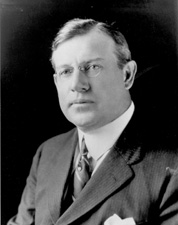
Friendly criminals were loveable rogues who wouldn’t hurt a fly unless they absolutely had to. (Most historical criminals were usually worse than their folk legends imply. Yet, there are exceptions such as Billy the Kid’s case since he’s depicted as being much more hostile than he actually was.)
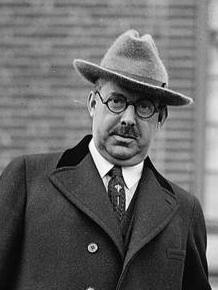
Crime didn’t happen as much in the past as it did now. (There’s less crime in Western societies nowadays than there was then thanks to better law enforcement, better opportunities, and other things.)
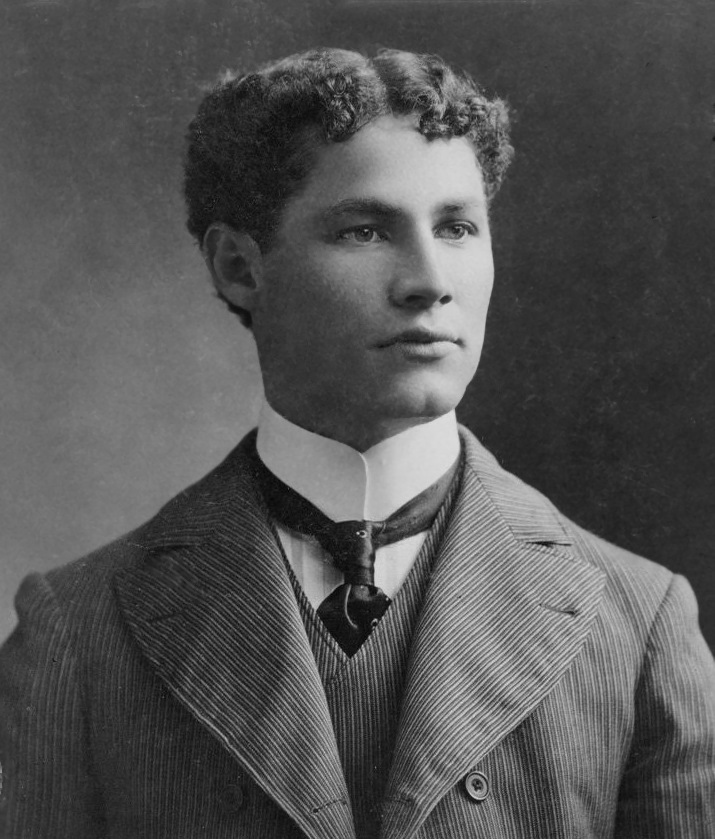
Gangsters would always go after law enforcement and their families. (Most gangsters knew that going after cops and/or  their loved ones was simply bad business. Though seen in a lot of movies, most gangsters knew that killing law enforcement officials would be put them in very big trouble. Most gangsters usually committed violence against their colleagues, underlings, and enemies. Sometimes they’d commit violent acts against other gangsters’ families, accomplices, or witnesses but that’s as far as they would go with civilians {I mean there’s a reason why we have witness protection here}. Law enforcement officials were almost never targeted since doing so would’ve been a very stupid thing to do. For instance, Dutch Schultz was killed by the mob in New York  for trying to assassinate a district attorney.)

Gangsters would throw temper tantrums and commit violent acts in public. (Yes, but while many of them were certainly dangerous people and perhaps nuts, most mob bosses would go through great lengths to appear respectable in front of the press. In other words, they knew the value of PR. On the other hand, Golden Age pirates and conquerors would always try to cultivate a ruthless and bloodthirsty image so people would learn not to mess with them. Also, it made it easier for their targets to surrender without much fighting, too.)

Kissing a mafia don’s ring was a long standing tradition. (This is something that Mario Puzo just made up and basically has no basis in reality. Sorry, Godfather fans.)

There wasn’t much graffiti on buildings until recent times. (There’s a lot of intact graffiti found at Pompeii. Much of it is about sex and is downright hilarious.)

Law Enforcement:

Hanging was a quick and painless method of execution and so was burning at the stake. (As TV Tropes and Idioms say, “but this is only true of hangings conducted since roughly 1850. Before this time, execution via hanging was usually caused by strangulation. The victim normally either stood on a cart or sat on the back of a horse: after the noose was tightened around his or her neck, the support was gently removed and the victim would strangle to death. And it wasn’t quick or pretty: the rope cutting into the throat and cutting off the breath, the twists and the contortions of the trussed body, the stench of the feces and urine as the victim’s bowels and bladder emptied, and the involuntary erection (and often ejaculation) experienced by male victims were all deliberate parts of the punishment, as was the jeering, vicious crowd which would pelt the victims with dead cats, rotting meat and vegetables, and feces as they waited to be tied to the gibbet. The families of wealthier criminals could sometimes bribe the jailers to be allowed to pull at the victim’s legs to hurry death, but this was not always permitted. Even this was better than the death accorded to women who killed their husbands, even in self-defense: they were burned, and {no matter what popular history would have us believe} most burning victims were not supplied with gunpowder or other explosives to make their deaths quicker. Executions were supposed to be agonizing. They were supposed to be slow. They were supposed to cause as much suffering as possible.”)

Executioner was always cool job to have. (Most executioners got the gig just to avoid being executed. It was a terrible job with many experiencing PTSD as well as some even committing suicide.)

Beheadings were always accomplished with just one blow.

Criminals were hanged using the long trap door ever since the Middle Ages. (This wasn’t invented until the 19th century.)

Imprisonment was always seen as a punishment. (For most of history, prison has always been seen as a holding place for criminal suspects until their trial {the original reason why they existed in the first place}, their punishment was carried out, or whatever else the authorities knew they could do with them whether it be a day in the stocks, whipping, fines, penal labor, execution, etc. or acquittal. The idea of using imprisonment  as punishment came from the Enlightenment from the 18th century as an alternative to state-sanctioned torture. Outside the Western world, imprisonment wasn’t used as a punishment until the mid-20th century.)

Trials were always fair. (Well, in some instances, yet let me say that until the Enlightenment, they were almost anything but with trial by ordeal, trial by combat, as well as the fact that the defendant had to prove their own innocence. Still, you were better off being accused of heresy under the Inquisition than of witchcraft in Colonial Salem. This is mostly because the Inquisition was actually closer to modern jurisprudence than most civil courts in the 16th and 17th centuries and observed things like having rules of evidence, an appeals process, and codified restrictions on the type and severity of punishments that could be imposed. Also, if you were tried for witchcraft, the Inquisition would usually let you go since they didn’t believe in witches in the first place.)

Weapons:

The six-gun was an accurate weapon.

Any gun can fire multiple rounds regardless of historic era. (Even though repeating firearms weren’t invented until the mid-1800s.Why do you think the musketeers wouldn’t use muskets except when there’s a war on? I mean there was a good reason why they used swords instead.)

Swords made clinking sounds up against each other.

Early gunpowder had a slow burn rate and didn’t create a lot of smoke. (Smokeless slow-burning gunpowder was invented in 1875. Before then, black gunpowder was used which burned very fast and created a lot of smoke.)

Guns discharged more ammo than their stated capacity. (This happens all the time in movies.)

Flintlock pistols were reliable weapons. (They failed to discharge 50% of the time and were considered a secondary weapon in close combat.)

Many Pre-American Civil War firearms could fire multiple rounds without reloading. (Maybe Samuel Colt’s revolver which was invented in 1847 but most Pre-Civil War guns didn’t have this feature. Nevertheless, you see Gaston firing his blunderbuss 3 times in less than a second.)

Cannon balls were the only artillery ammunition until very recent times. (They also had bar and chain shot, canister, case, and grape shot, and Sangrenel. Sometimes they’d use anything if they ran out of ammunition.)

You can shoot fairly far and accurately with a flintlock pistol. (Flintlock pistols were useless beyond point blank range.)

Discharged cannons and guns never recoiled.

Artillery guns and howitzers fired exploding shells. (Only howitzers did.)

Reloading single shot weapons took only a few seconds. (For someone who’s well trained, it would take 15 to 25 seconds.)

Double shooting artillery guns was always a good idea. (It wasn’t since it decreased range.)

Cannon balls had the potential to explode at firing. (Cannon balls are solid shot and don’t work this way.)

Chemical and biological weapons were only invented in the 20th century. (Let’s just say people have been finding creative ways to harm people with germs and chemicals. I mean medieval soldiers flung animals in castles to spread disease and the Spartans used gas warfare on the Athenians during the Peloponnesian Wars.)

Warfare:

There were more “gays” on the bad guy’s side in war than on the good guy’s side. (See “THE 300.”) Or that homosexuality is uncommon in the navy, or was. (Churchill once summed up the grand traditions of the Royal Navy as “Buggery and the lash.”)

All Cavalry regiments carried full battle flags. (They actually flew cavalry flags which are swallow tailed.)

In war, it was always the men who had girlfriends they plan to marry back home who were the first to die and it was the idiot officers who always survived.

Gunshots never damaged people’s hearing. (Hearing loss is very common problem among veterans even today.)

Gunshots and explosions were never caused as much background noise that prevented soldiers from engaging in a conversation.

Officers always gave orders on the battlefield by shouting very loudly at their troops. (For much of history, regimental flags have been used as communication since the advent of firearms since they would be so loud that nobody would be able to hear them as well as the smoke on the battlefield would’ve made it harder for the soldiers to see anything else. Not to mention, walkie talkies didn’t exist then.)

Soldiers and sailors never swore or told any dirty jokes. (So what does that mean if you talk like a sailor? Also, swearing has always been frequent in the military.)

The solider who had less than two weeks on his tour of duty and the officer set to retire always got killed.

Soldiers who were deserters were cowards who didn’t want to fight. (Actually, every desertion tells a different story.)

There were no camp followers who were prostitutes. (For God’s sake, there were prostitute camp followers.)

Most soldiers were volunteers. (What about the soldiers in ancient Sparta? Also, conscription was rather common practice back in the day and compared to how draft dodgers were treated in history, the U.S. government was pretty lenient. Most draft dodgers in other regimes would’ve been executed.)

No soldier ever shit or pissed his pants in battle.

Americans and other English speaking civilizations fight wars more fairly or less cruelly than their enemies. (It is true that the Nazis were guilty of genocide and our side was not, but that is not the same as how they fought in that war. Also the American military commonly committed genocide against the Indians.)

Wounds in war were either incredibly bloody or spurted very little blood at all.

The German army in both world wars was more efficient than the Allied forces, and while we are at it, more hygienic than their enemies. (In fact under those spotless uniforms there tended to be filthy underwear and although the Germans were organization freaks, the American military was more practical, and the Russians were the most efficient.)

Back line soldiers never shot the guy in front of them if it was one of their own. (Napoleon lost a quarter of his troops through friendly fire by this.)

Soldiers usually died in battle. (Most soldiers usually died of their wounds after the battle was over or of disease.)

The French were cowards willing to surrender at the drop of the hat who would rather eat and have sex than fight. (Well, yes, the French would rather eat and have sex than fight but so would anybody with some sense of sanity. However, if history has taught us anything, you should never underestimate the French, especially at war.)

Cavalry charges were always effective. (Horses are actually very bad at bulldozing armed soldiers. I mean, they’re not that stupid.)
There were rules of war before the 19th century. (There was an expectation that soldiers and officers respect certain customs, but nothing was formalized until the Geneva Convention in 1864.)

Arrow wounds don’t cause serious injuries and are relatively easy to remove. (Actually it depends on what kind of armor you’re wearing whether it be metal or a long silk cape. Still, we have to consider the fact that bows and arrows were the primary range weapons for most civilizations until as late as the 17th century. So yes, an arrow wound can certainly kill you. And if you barely have any armor on you, then being shot by one may make it difficult for you to do anything. This might be because of agonizing pain or your body going into shock. Nevertheless, most of the time removing the arrow is much harder than it looks but simply pulling the shaft out may just leave the arrowhead inside the wound {since shafts and arrowheads weren’t as firmly attached as Hollywood makes them out to be}. Archers would just simply snap the shaft {which is harder than movies make it look since arrow shafts were made from the hardest woods available}, widen the wound either with the knife or wiggling it around. Also, arrow wounds had a strong tendency to be badly infected. Thus, an arrow wound was almost never just a flesh wound.)

The Aristocracy:

Aristocrats throughout history, even in Rome, spoke with upper class English accents. (English did not even exist when Rome occupied Britain.)

Rich white aristocrats never sweat despite the fact that they wear multiple layers of heavy clothes. (This isn’t true because I was in Richmond one summer where I toured the Confederate White House and there was one display where all the furniture had slipcovers. And you think people covered their furniture for modesty reasons. No, it was for their protection.)

Aristocrats always had unlimited wardrobes. (Well, they did have a lot of clothes but before the sewing machine clothing was expensive that many actually put their outfits in their wills. Heck, it wasn’t unusual for many poor people to have one or two sets of clothes for their entire lives.)

Religion:

Science and religion have always been at odds. (If that was true, we’d certainly wouldn’t live in as technologically advanced society as we are now. Also, many of our great scientific discoveries were made by clergymen as well as well as other religious men and women {in the Middle Ages, most scientists worked for the Catholic Church and the Big Bang theory was formulated by a priest}. The reason why people may have to say that science and religion are incompatible has more to do with the rise of Fundamentalism than the existence of science and religion themselves.)

No matter what time or place all Christians celebrate Christmas with Christmas trees. (Christmas trees weren’t introduced to Great Britain until Queen Victoria’s marriage to Prince Albert and prior to that was mostly a German tradition. Also, Christmas wasn’t made a national holiday in the United States until the 1870s. Not to mention, from the Reformation until the 1800s, the only Christians who celebrate Christmas were Anglicans, Lutherans, and Catholics, at least in America. The Pilgrims and the Puritans never celebrated Christmas and in early Massachusetts, the holiday was banned and celebrating it had legal consequences. And even when the ban was lifted, Christmas wasn’t widely celebrated in early New England as well as kind of discouraged. Christmas was also banned in England during Oliver Cromwell’s rule in England which lasted for 11 years. Then there’s the fact that other Christian traditions celebrate Christmas on a different date.)

Goddesses were seen as feminine beings and worshiped in a way that brought peace in a society. (Dan Brown, have you ever read any mythological tales regarding ancient pantheons? I wouldn’t say that many of these pagan goddesses were peaceful beings. I mean, look what Hera did to Zeus girlfriends and many of his kids who weren’t hers.)

Mass has been said facing the people since the 1800s. (It wasn’t said this way until the 1960s mostly due to the reforms of Vatican II.)

Magdalene institutions were run by Roman Catholic nuns. (Actually while popular imagery has them run by Catholics, other religious denominations ran Magdalene institutions as well, even in Ireland. Many Magdalene institutions were also run by corporations, sometimes not religiously affiliated at all. Oh, and they didn’t just take prostitutes, unwed mothers, or young girls seen as beautiful, promiscuous and flirtatious. Many of them were orphans, petty crooks, the mentally disabled, and abused girls who had nowhere else to go. Still, it would be fair to say that Magdalene houses functioned as the privatized prisons of their day at least in Ireland. The US Magdalene institutions functioned more like rehab centers. Also, the practice of making women give up out of wedlock babies for adoption wasn’t exclusively done by Catholic nuns as you see in Philomena. Sometimes babies were given up for adoption by the girl’s own parents {and not just Catholic ones either for my dad knew of a Mennonite family who did this}. This was a very common practice in all religious denominations as well as in secular society. Philomena’s son could’ve been taken away from her by practically anybody. Yet, the movie about her still treats what happened to her as an abuse by the Catholic Church, which it was but what they did was seen as perfectly acceptable by the standards of the time.)

The use of white smoke from the Vatican during a papal election that signaled the election of a new Pope. (We’re not sure if this dates back to either 1846 or 1914 though it’s certainly not the centuries old tradition its said to be. Also, the notion of the papacy itself is newer than we think since the title of Pope wasn’t referred to the main man himself until medieval times. Not only that, but it took centuries of maneuvering and precedent setting for Rome to emerge as the undisputed seat of leadership in the Catholic Church {which was sometime during the Dark Ages since most of them by this time and earlier were declared popes retrospectively}. Before then, the Bishops of Rome were often challenged by the Patriarchs of Constantinople and some of the earliest “popes” weren’t considered Bishops of Rome and such, just the most important Christians in Rome and the surrounding areas that were considered by scholars just to give an image of direct descent from Saint Peter. Still, you’d have to admit that Saint Peter was the first Pope but he and his early successors weren’t declared popes in a modern sense. Nevertheless, Catholic Church tradition is complicated stuff but very interesting nevertheless.)

Lots of violence and injustice has been done in the name of religion. (Yes, but when you take a closer look, it’s more over something else like power, money, resources, angst, or what not. Yet, people use religion to justify their actions, even if it wasn’t their main motivation.)

Race:

European society after the Middle Ages is completely ethnically white. (Actually there were Africans living in Europe mostly because of the slave trade and there was later a sizable Asian population, too. Also, Alexandre Dumas and his son were both of African descent as well as Alexander Puskin.)

The United States:

Illegal immigration has only occurred in recent times. (Contrary to what you may see on the news, illegal immigration isn’t a recent thing in the US. There’s an entire history of illegal immigration that spans for hundreds of years. For instance, the Native Americans in Jamestown called it, “white people.”)

There were no black people fighting in America’s wars until the American Civil War. (African Americans have fought in almost every war in American history.)

All American flags had 50 stars even in the 19th century. (The flag with 50 stars didn’t come out until the 1960s when Alaska and Hawaii were added as states.)

In the US, 911 was always dialed in an emergency situation as long as there had been phones. (Calling 911 wouldn’t be an option until the 1968 when the 911 service was established. Before then, you had to press 0 and ask for emergency services.)

No African American performers wore blackface. (Sorry NAACP, but most black performers on vaudeville did. Some were light enough to put on burnt cork to make it clear to the audience. Others just bowed to vaudeville standards. I know it’s pretty unpleasant to think about it yet for much of American history, being in a blackface minstrel show was one of the few ways that actual black performers were seen by a large audience blackface or not though the music would be taken seriously for artistic merit, especially songs by Stephen Foster. However, the tradition of blackface extends to hundreds of years before its disturbing rise in popularity in the US.)

American dry crusaders were always prudish old ladies. (A lot of them were women who had suffered abuse and ruined from alcoholic husbands and fathers as well as many feminists of the day like Frances Willard who many would actually consider a social justice crusader and possible lesbian. A lot of ministers and recovering alcoholics were involved as well. Also, many dry crusaders didn’t just start trumping for temperance when they were geriatrics either.)

Two letter state abbreviations and ZIP codes were on US addresses throughout the 20th century. (ZIP codes were introduced in 1963 while two-letter state abbreviations first came into use in the 1970s.)

The Hollywood sign was always in its present letter configuration. (Until the late 1940s, the sign would’ve read “Hollywoodland” since the sign was originally erected to promote a housing development in the area.)

Stop signs were always red in the US. (Before the late 1950s, they were yellow.)

Asphalt roads always had yellow lines at the center. (This is a rather recent concept but its seen in a lot of movies set in 20th century history.)

Every 18-25 year old in the 1960s and 1970s was a freethinker and hippie activist who cared about the future and had revolution just around the corner. It was also a time when they listened to rock music, did drugs and participated in orgies.

Racism wasn’t much of a problem up in the Northern US while the South was under segregation. (A lot of places in the North had segregation as well. Not to mention, Malcolm X had a very shitty childhood because of racism and he was born in Detroit. Yet, while racism wasn’t as institutionalized in the North as it was in the South, it was still a problem.)

The US flag always had a standard configuration. (The standard design for the star part of the US flag wasn’t set up until 1912. There are plenty of American flag configurations of stars before that point.)

Government:

Rulers were unusually brutal. (Being ruler at the time was a pretty dangerous job where you couldn’t really trust anybody like your relatives, advisors, servants, or even friends. Being ruthless wasn’t an option. Assassination was a common fate for many Roman emperors and members of the royal family in Ancient Egypt.)

No matter what time or place, heroes always believed in Democracy.

Polygamous societies were always oppressive toward women.

Science:

Eugenics weren’t a popular idea before World War II. (Oh, yes they were, especially among whites.)

Telescopes were available and used since antiquity. (They were invented in the 1600s yet you see movies set before that with people using them, including Columbus.)

Western science was always the best science. (There was plenty of scientific advances being done outside. For instance, numbers were invented in India while algebra was invented in the Middle East. Arab medicine in the Middle Ages was said to be much more advanced than the Europeans and India had a form of plastic surgery. Not only that but it was the Chinese who invented gunpowder, paper, the compass, the blast furnace, borehole drilling, the toothbrush, bulkhead partition, cast iron, printing, toilet paper, and so many others. Also, the Mayas had a concept of 0 while the Romans didn’t.)

Europe:

Italy and Germany were always countries. (Most of the time they were either part of the Holy Roman Empire or a bunch of city states until the 1800s. Not to mention, Germany was split during the Cold War Same goes for Belgium. Also, the Netherlands didn’t become a country until the 1500s.)

Russian peasants were brutes or easily-riled hicks living in a deeply oppressed lifestyle in poverty. (They may not have been the most fortunate poor people in Europe but from the Middle Ages to recent times, they were much cleaner than their Western European counterparts. The reason for this is that while other Europeans weren’t bathing at all, Russians took a bath once a week at all levels even to the downtrodden serfs.)

The Swiss invented the cuckoo clock. (Sorry, Harry Lime, but the cuckoo clock was invented in Germany. However, the Swiss did invent the Swiss Army knife, Velcro, aluminum foil, cellophane, bobsleigh, laudanum, LSD, the computer mouse, Absinthe, and bank secrecy. Ulrich and Geneva were centers of Protestantism and headquarters of Calvin and Zwingli. It was also the place where the Red Cross was founded.)

Other:

The Illuminati has been a constant presence of human history which have been gathering money and influence, spinning their webs of lies and deceit in the shadowy heights of society, and had aspirations to establish a dystopian Big-Brother New World Order. (As TV Tropes and Idioms says, “There was a Masonic-like organization of intellectuals which was given this name in Real Life Bavaria in the 1770s, but it was eventually disbanded by the Bavarian government.” They were probably just another brotherhood of funny hats and their New World Order referred to a republican form of government and legislation based on human rights. And this group gets a bad rap because a French royalist blamed them and the Masons for starting the French Revolution.)

Freemasonry is thousands of years old. (Freemasonry as we know it dates back to the early 18th century. Before then, they were just a trade union of actual masons specifically master craftsmen, structural engineers, and architects.)

Everyone didn’t engage in the so-called, “modern vices” that cause such a slew of controversy today. (Actually those “modern vices” that are seen as controversial are incredibly ancient. But let’s not talk about them shall we?)

Tarot cards were used in divination throughout history. (They weren’t used in this way until the 18th century.)

People have been tortured on the iron maiden for centuries. (The first appearance of an iron maiden was in 1793, which makes the possibility of people being tortured on it {for other purposes than Uday Hussein’s enjoyment} highly unlikely.)

People smiled in photos ever since photography was invented. (Most people didn’t smile in their own photographs from the 19th century to the early 20th.)

Early pocket watches always had second hands. (Most early watches didn’t have them.)

Canada always had the Maple Leaf design as its national flag. (Canada didn’t use this flag until the 1960s.)

Celebrity endorsements of products were a relatively knew thing. (The Roman gladiators did this.)

Western society has always been more advanced and enlightened than in other parts of the world. (Well, I wouldn’t go that far since Genghis Khan’s allowed religious toleration in his empire since he basically didn’t care what his subjects believed as long as they accepted him as their ruler (and it’s the same way in most eastern empires whereas religious toleration in Europe wasn’t a popular idea until the 18th century.

History of the World According to the Movies: Part 92 – 1990s Europe

Image

Helen Mirren stars as Her Majesty Queen Elizabeth II in the 2006 The Queen in which she won a well deserved Oscar. The film is a portrait of the relationships between the British Royal Family and the Blair government amidst the tragic death of Princess Diana in a car accident, who was well loved by the public and not so much by the royals (though they were genuine upset by it). Still, you could also say that this film is about how Queen Elizabeth II was under pressure to publicly express her grief on Diana’s death despite being uncomfortable showing her emotions. Still, The Queen is a fitting film that shows what it’s like being a constitutional monarch in this day in age.

Of course, the United States wasn’t the only place where things were happening in the 1990s. After all, the Cold War ending in Europe led to a massive readjustment in Eastern Europe where the 1990s were certainly not a fun time. This is especially true if you lived in Yugoslavia which had been struggling since the 1980s to keep itself together since their dictator Josip Tito died, but it would ultimately fail in 1991 and by the end of the 1990s, the country would be no more since it would split in other nations like Croatia, Macedonia, Albania, Serbia, Montenegro, Bosnia, Slovenia, and Kosovo. Let’s just say it’s a hell hole for Europe. Of course, the other places in Eastern Europe besides the former East Germany, Romania, the Czech Republic, Slovakia, and Poland would be kind of bummed that Communism fell, except perhaps hockey players and women athletes (especially in East Germany). In Britain, you have the rise of Tony Blair as well as a lot of drama in the royal family with Prince Charles and Princess Diana getting divorced, Prince Andrew and Sarah Ferguson getting divorced, and Princess Diana dying in a car accident in 1997 which led to Elton John singing at her funeral and his eventual knightood. Still, Britpop was in vogue at this time with Oasis and the Spice Girls (that would have one member marry a famous soccer player and another father Eddie Murphy’s baby). Nevertheless, there are movies made in this time that contain their share of inaccuracies which I shall list.

Europe:

The European Union was in existence in 1993. (It was known as the EEC or European Economic Community until 1993.)

Yugoslav Wars:

It was the Cincinnati Accords that kept the peace in Bosnia. (It was the Dayton Accords contrary to Behind Enemy Lines because the treaty was signed in Dayton, Ohio. And perhaps not for long.)

France:

Jean Dominique Bauby’s girlfriend at the time wouldn’t visit him in the hospital after he experienced a debilitating stroke. (While this is shown in The Diving Bell and the Butterfly, his late-life partner Florence Ben Sadoun has claimed to be a faithful partner who visited him at Berck-Sur-Mer frequently during Bauby’s final days, driving from Paris for 3 hours 2-3 times a week to be with him {and she had 2 kids from a previous marriage as well}. And she has evidence to back it up since Bauby said so in his memoirs and there’s video footage as well. I think the writer for The Diving Bell and the Butterfly kind of owes Florence an apology.)

Jean Dominque Bauby’s baby mama visited him frequently while he was in the hospital. (Contrary to The Diving Bell and the Butterfly, it’s disputed how often Sylvie de la Rouchefoucauld visited him. She said she saw him frequently while other sources said she rarely did so and was with her boyfriend in New York the day Bauby died in 1997 and she’s hardly mentioned in his memoirs aside from a Father’s Day outing on the beach when she brings their kids to the hospital. Still, she wasn’t the long suffering ex who still loved him in the film who takes up the slack because his girlfriend wouldn’t see him. Rather she moved on. She never had to call up Bauby’s girlfriend or be worried about him being neglected because she’d be at his bedside as often as she could. Oh, and they had two kids not three since the director couldn’t decide between three child actors for the film. Then again, the mother of Bauby’s kids is a successful businesswoman with her own PR company)

During his time in the hospital Jean Dominique Bauby was an invalid babe magnet with women surrounding him in the hospital vying for his attention. (Bauby didn’t mention any of this in his book though friends said he was very charming with a sense of humor. He was also said to be engaging.)

Jean Dominique Bauby’s friend Jean Paul K came to see him in the hospital. (Contrary to The Diving Bell and the Butterfly, Bauby wrote in his memoirs that he felt guilty for not seeing his friend after he had been released from being held hostage in Lebanon.)

Jean Dominique was a miserable wreck during his time having locked-in syndrome and wanted to kill himself. (His girlfriend Florence said that he never wished to die even when he was unable to move everything in his body but an eyelid.)

Florence Ben Sadoun was a weak-willed and selfish girlfriend to Jean Dominique Bauby and was unable to face her once handsome boyfriend. (Contrary to her portrayal in The Diving Bell and the Butterfly, she was anything but. Also, she wasn’t a model at the time; she was a critic and a single mother of two.)

Great Britain:

Robin Janvin was Queen Elizabeth II’s private secretary in 1997. (Not until 1999, unlike in The Queen.)

Queen Elizabeth II:

Queen Elizabeth II and Prince Philip shared a bed. (Though shown in The Queen, the British public have known that the royal couple don’t sleep in the same bedroom since 1982 when someone tried to break in into the Queen’s chamber at Buckingham Palace. However, this just applies to Buckingham Palace since it’s not the only royal residence.)

Between Princess Diana’s death and Queen Elizabeth’s public capitulation, opposition to the monarch dropped from 25% to zero. (Contrary to The Queen, support for republicanism has remained consistent for decades at 15-20% even before and after Diana’s death.)

Prince Charles was Queen Elizabeth II’s only child. (Though he’s the only one of her kids shown in The Queen, she has four kids including Princess Anne, Prince Andrew, and Prince Edward.)

Princess Diana:

Princess Diana had an affair in 1995 with surgeon Hasnat Khan. (Contrary to Diana, though the real Khan said that he and Diana knew each other and dated for two years, but neither he nor Diana have confirmed whether they were in what you’d call “true love.” Yet, this doesn’t stop close friends from saying that he was her “true love” but maybe this is what they’d want to believe. Still, it’s likely that Khan and Diana were no more than just friends, though she might’ve been more like a desperate, wounded stalker who wouldn’t leave him alone.)

Princess Diana dated Dodi Al Fayed to make Dr. Hasnat Khan jealous. (We’re not sure about that contrary to Diana. Also, she and Khan broke up on mutual terms since he couldn’t handle the media attention of her celebrity and she didn’t want to move to Pakistan.)

Princess Diana was a sweet natured, wistful, half-wit. (According to one critic of Naomi Watts’ Diana performance, yet she’s said to be quite smart who tried to make the world a better place but she was also conniving, manipulative, and materialistic. She was also driven by payback trying to make Prince Charles jealous such as posing in a revealing swimsuit on the south of France while the Prince of Wales hosted a 50th birthday party for Camilla Parker-Bowles. Yet, didn’t work since Charles had been in love with Camilla for years {as well as fooled around with her} and only married Diana due to pressure from his family. She was also estranged from her mom for dating a Muslim and hadn’t spoken in months before she died.)

Tony Blair:

Tony Blair and his family cooked their own food while he was prime minister. (Contrary to The Queen, I’m not so sure they’d even be allowed to do this. I mean the President of the United States has his own chef and servant retinue. Then again, maybe the Blairs prefer to cook themselves.)

Miscellaneous:

Adderall was around in the early 1990s. (It wouldn’t be on the market until 1996 and wouldn’t be sold in generic until 2002.)

Nintendo game cubes were around in 1995. (Not until 2001.)

LED warning lights were around in 1995. (Strobe beacons would’ve been used because I have no memory of hearing about LED until my teens.)