A Pardon Worthy of Contempt

On the night of August 25, 2017, Donald Trump issued his first presidential pardon on former Maricopa County Sheriff Joe Arpaio for a contempt-of-court conviction over a federal court order violation meant to prevent racial profiling. The official statement from the White House read, “Sheriff Joe Arpaio is now eighty-five years old, and after more than fifty years of admirable service to our Nation, he is worthy candidate for a Presidential pardon.” But we all know that Trump promised to pardon the former Arizona sheriff at his Phoenix rally early that week. After all, to Trump and his supporters, Arpaio was just a law enforcement official convicted of only “doing his job.” Nevertheless, this presidential pardon validates the idea that promising “law and order” and protection from social disorder in the form of undocumented immigration and street crime doesn’t require adhering to the rule of law. Not to mention, it sends a powerful message to sheriffs across the country worried that cooperating with federal immigration officials could get them in trouble with the courts.


However, we must understand that Sheriff Joe Arpaio wasn’t convicted for only “doing his job.” Back in the mid to late 2000s, the federal government started escalating immigration enforcement to an unprecedented degree by relying on local law enforcement. Along with the election of a hardline anti-immigration chief prosecutor Andrew Thomas, Arpaio became the face of local law enforcement of federal immigration law. Calling himself “America’s Toughest Sheriff,” he gave celebrity tours of his infamous “Tent City” for housing undocumented immigrants whom he forced to work on chain gangs in under the sweltering desert sun, which he proudly referred to as “concentration camps.” And he often gifted guests with commemorative pairs of pink underwear he made inmates wear under their black and white uniforms. He bragged about his “sweeps” results which were local late night immigration raids to round up undocumented immigrants and hand over to Immigration and Customs Enforcement (ICE). In addition, he maintained an immigrant smuggling squad to stop cars with Latino drivers and passengers in order to check their immigration status. Despite widespread criticism by human rights groups and political leaders, Arpaio was reelected Maricopa County Sheriff 5 times thanks to a bastion of conservatives and retirees who view him as a white knight and defender of the 1950s Shangri-La they’ve sought to preserve in the largely white suburbs around Phoenix while keeping the money and political power. Yet, many of the white owners employ the undocumented immigrants Arpaio targets but he doesn’t bust them for exploiting their labor. Meanwhile soaring number of Hispanic residents comprises of a third of the county’s population which rose 47% within the last decade. After all, Maricopa County is the 4th largest county in the US and 50 miles from the Mexican border while Phoenix is a destination for undocumented immigrants and drug dealers alike. By vocally targeting undocumented immigration, Arpaio became a regular on Fox News and a hero to the Tea Party as well as a go-to media prop for conservative politicians wanting to be seen as immigration hard liners. While traveling the country to endorse these right-wing candidate, he attracts millions of dollars from political allies outside Arizona who long gave him an advantage his opponents couldn’t match. As former Phoenix police chief George Gascon told Rolling Stone, “Arpaio knows how to move the needle when it comes to appealing to the base. What he did very artfully is piggy-back on this fear of illegal immigration that was becoming so prevalent in border states like Arizona. He was able to capitalize on that and he became the hero, the only guy who would single-handedly go after it.”


But these methods raised questions on how exactly Joe Arpaio and his deputies determined who to apprehend for immigration offenses or whether they were just arresting anyone living in Maricopa County who just happened to be Latino, even in cases where the “suspects” violated no state law. His rhetoric and tactics have spread fear in Arizona’s Latino community who very understandably loathe him. Though Arpaio communicated toughness through big, theatrical stunts, his practices often violated the rights of his targets. His roadblocks to detain drivers who merely looked like undocumented immigrants was a virtual license to profile Hispanics. Reports of pull-overs with little or no discernable traffic violations became so widespread that one study showed Latinos in the northeastern part of Maricopa County as 9 times more likely to be stopped for the same infractions as other drivers. The DOJ alleged that Arpaio’s men relied on factors “such as whether passengers look ‘disheveled’ or do not speak English.” Some were justified after the fact such as an incident involving a neatly dressed group of Latinos described in a police report as “dirty.” The sheriff himself acknowledged the crackdown a “pure program to go after the illegals and not the crime first.” To make matters worse, Arpaio has frequently arrested and detained Latino US citizens, legal residents, and tourists, including children, for hours at a time without a charge or warrant. Mostly because according to Arizona State’s Charles Katz, “Illegal immigrants make up less than 10 percent of those arrested. They’re involved in less criminal activity than native-born Americans.” According to retired police officer Bill Richardson, “He’s vilified Latinos in such a way that normal people, they’re scared to death.” Such terror only makes it more difficult for police to do their jobs since it makes Latinos more afraid of law enforcement.


Groups for years have criticized the Tent City and jails over notorious minimalistic conditions as violating human and constitutional rights since the 1990s. Federal investigations on Tent City date as far back as 1995. Joe Arpaio was proud of his prison experiments as an inexpensive solution to overcrowded jails and frequently invited the media to witness each new cohort being sent to the Tent City. But what the prisoners experienced was absolutely horrific. The DOJ reported that guards referred to Latino inmates as “wetbacks,” “Mexican bitches,” “stupid Mexicans” and “fucking Mexicans.” In addition, female prisoners were forced to sleep in their own menstrual blood and were denied basic sanitary items. Officers refused to respond to inmates pleas if they made them in Spanish and sometimes put them in solitary confinement for extended periods of time if they didn’t understand English. One former inmate recounted his experience to the Washington post saying, “During the sweltering summer, the temperature could reach 115 or 120 degrees. I was in the tents when we hit 120. It was impossible to stay cool in the oppressive heat. Everyone would strip down to their underwear. There was no cold water, only water from vending machines; and eventually, the machines would run out. People would faint; some had heatstroke. That summer, ambulances came about three times. One man died in his bed. But the winter was even worse. During the winter, there were no heaters. Most jackets and heavily insulated pants weren’t allowed; they don’t want you to be comfortable.”  Holes torn into the tents let in wind and rain, drenching the beds. Prisoners would make ropes to hold tent canvases together out of black trash bags they were given as raincoats. Many inmates were forced to work in chain gangs and subjected to humiliating practices like public parades. Healthcare was substandard and often neglected as many inmates were subject to the point of extreme suffering, even death. Mentally ill detainees were especially victimized. Detention officers didn’t want to work there since it was dangerously overcrowded and understaffed. Prisoners often died with no explanation. According to attorney Michael Manning, “His entire jail operation was unconstitutionally inhumane and unconstitutionally dangerous.” To make matters worse, most of the inmates there were either low level crooks serving short sentences, suspected undocumented immigrants, or those awaiting trial. After Arpaio’s reelection defeat in 2016, the tent cities were ultimately shut down after being cited for violations against the Eighth Amendment’s prohibition against “cruel and unusual punishment” and a unanimous vote by Maricopa’s Board of Supervisors.


Joe Arpaio’s “law and order” policies weren’t successful as anti-crime measures since Maricopa County 911 response times rose dramatically during the heyday of Arpaio’s sweeps. Mostly because Arpaio had been so obsessed with the often-illusory crimes of undocumented immigrants that he’s ignored more than 400 sexual abuse cases he was responsible for investigating including assaults on children. In another incident, Arpaio staged a massive prostitution round up involving 350 deputies resulting in the Maricopa County Attorney’s Office declining 80 cases for prosecution. Meanwhile, 12 execution style murders remained unsolved. As a Phoenix resident wrote to the Arizona Republic on the incident back in the early 2010s, “If Joe Arpaio continues to spend the county’s scarce law enforcement dollars on chasing consenting adults engaged in private sexual activity, while child murders and sexual assaults remain unsolved, he should be the one to explain to the next grieving mother why her child’s killer has not been caught, prosecuted and put in prison. And the taxpayers should send him a message by electing a new sheriff who doesn’t treat public funds as his private public relations piggybank.” In addition, Arpaio was responsible for a critical and dangerous shortage of personnel on both jails and patrol because he often assigned deputies as his bodyguards and detention officers for his labor intensive, publicity producing chain gangs for TV. But the worst of his “tough on crime” publicity stunt was when he staged an assassination attempt against himself in 1999 to boost his popularity which resulted in an innocent man spending 4 years in jail waiting to clear his name.


When local political leaders criticized Arpaio’s tactics, he simply used his power to go after them. Starting in the mid-2000s, his internal affairs office was more of a task force to pursue personal grudges than an effort to keep his deputies in line. Not to mention, Arpaio had been cited for systematic abuses of power for trying to get his enemies brought up on criminal charges including local judges like Snow, members of the Maricopa County Board of Supervisors, local attorneys, county and state officials, former US Attorney General Eric Holder, municipal law enforcement, newspaper heads, and a former mayor of Phoenix. He famously investigated Barack Obama’s birth certificate which he wrote off as a forgery. In one instance, the sheriff’s office arrested a county board member who questioned the costs associated with Arpaio’s immigration crackdown and held him in jail for several hours. Another instance in 2007, led to arrests of the CEO and top editor of the Phoenix New Times for publishing an aggressive report on the sheriff’s real estate dealings and refused to comply with subpoenas for more than 2 years of the newspaper’s records on Arpaio and information on anyone who visited the website and read the stories. They were apprehended during a raid on their homes while their families looked on and were charged with violating grand-jury secrecy by reporting on the subpoenas. In 2008, Arpaio conducted a late-night raid on Mesa City Hall allegedly looking for undocumented immigrants after Police Chief George Gascon prevented him from sending officers to confront those protesting his crime sweeps over harassment and racial profiling. Gascon also hired free speech lawyers to represent the demonstrators as well. Arpaio arrested a handful of documented janitors and then raided Gascon’s police station for the workers’ computer files suspecting their papers were fake.


In the past decade hundreds of lawsuits were brought upon the Maricopa County Sheriff’s Office with charges ranging from deaths in Joe Arpaio’s jails to unlawful arrests. Far from saving money, Arpaio’s on-the-cheap Tent City has cost Maricopa County more than $50 million to defend itself against lawsuits from the sheriff’s victims. In 2007, a few Latino residents sued him for civil rights violations. The plaintiffs claimed deputies targeted them at traffic stops and sometimes detained them for hours on suspicion of being in the US without papers, apparently due to their ethnicity. The US Department of Justice investigated the Maricopa County Sheriff’s Office for 3 years and in 2011 reported that it had engaged in the worst pattern of racial profiling in US history. The DOJ subsequently filed suit against his MCSO of creating “a pervasive culture of discriminatory bias against Latinos” that “reaches the highest levels of the agency.” As a result, Judge G. Murray Snow issued an injunction preventing Arpaio from apprehending or detaining anyone purely on a suspected undocumented status or turning such people over to ICE. That same year, the US Department of Homeland Security revoked MCSO’s authority to identify and detain undocumented immigrants.


Though Joe Arpaio officially lost the civil suit in 2013, it was obvious his department hadn’t complied to Judge Snow’s 2011 injunction. The Maricopa County Sheriff’s Office kept engaging in immigration “sweeps,” turning people over to ICE (or the Border Patrol when ICE stopped accepting detainees from Arpaio’s deputies), and holding suspected undocumented immigrants in jail after they’d otherwise be released for federal agents to pick them up. After several hearings about the Maricopa County Sheriff Office’s failure to obey the 2011 order, Judge Snow cited Arpaio and some of his subordinates for civil contempt of court in 2015. The next year, Snow asked the US Attorney’s Office to charge Arpaio and 3 others with criminal contempt, which someone can only be convicted of if it’s shown that they willfully refused to obey the court order, not just failed to make sure it was obeyed. Of course, Arpaio denied deliberately disobeying Snow’s order, claiming he hadn’t properly understood it. He claimed the violations were his deputies’ fault not his. Judge Snow didn’t buy it for obvious reasons. First, witnesses testified that Arpaio and his underlings told them not to change internal policies after the court order.  Second, during his frequent media appearances, Arpaio often claimed his department was just doing what it had always done, arguing that he was simply doing the job the federal government had failed to do. He even told reporters he would “never give in to control by the federal government,” that he would not “back down” and “if they don’t like what I’m doing get the laws changed in Washington.” Third, Arpaio had attempted to dig dirt on Judge Snow himself (including having a detective investigate the federal judge’s wife). As US District Judge Susan Bolton wrote, “Not only did (Arpaio) abdicate responsibility, he announced to the world and to his subordinates that he was going to continue business as usual no matter who said otherwise. The evidence at trial proves beyond a reasonable doubt and the Court finds that Judge Snow issued a clear and definite order enjoining Defendant from detaining persons for further investigation without reasonable suspicion that a crime has been or is being committed; that Defendant knew of the order; and that Defendant willfully violated the order by failing to do anything to ensure his subordinates’ compliance and by directing them to continue to detain persons for whom no criminal charges could be filed.”


 Joe Arpaio’s July 2017 conviction for contempt of court was a predictable consequence of the way he ran his department guided by the idea that as long as law enforcement officials grabbed headlines by going after undesirable people, the public wouldn’t care how it was done. The evidence for his guilt was overwhelming and there was nothing improper about Arpaio’s trial and well-deserved conviction. Nobody contested that the former sheriff targeted and jailed Latinos in inhuman conditions on suspicion of undocumented immigration. There was no doubt he was guilty of contempt. Nobody questioned the fact he defied a court order so he could continue his race-based reign of terror that targeted innocent people on the basis of their ethnicity. He saw himself above the law and bragged about defying a court order in front of the cameras. You can’t find a clearer case of contempt of court than this. Arpaio was clearly not doing his job to enforce the law. Instead he broke it and openly disregarded it in broad daylight without a hint of remorse.


Donald Trump’s pardon of Joe Arpaio is essentially allows a government official to defy Constitutional rights with impunity. It is an endorsement of the corrupt former sheriff’s flagrant racism and birtherism. Furthermore, not only did Trump pardon Arpaio without any of the appropriate processes and procedures, but also reflects his appalling disrespect for democratic institutions. And from a moral standpoint, it is completely indefensible. Unfortunately, it shouldn’t surprise anyone that Trump would pardon such a despicable man since he shares the notorious ex-sheriff’s views such as little regard for civil rights, democracy, and the rule of law. The federal judiciary and legal system operates under the reasonable expectation that public officials like Arpaio will follow valid court orders whether they agree with them or not. Without this compliance there’s no law. Also, it reflects his priorities such as rewarding those he sees as loyal and punishing those like special prosecutor on the Russia investigation, Robert Mueller whom Trump has wanted to fire. It shouldn’t surprise no one that Arpaio is a loyal Trump supporter for years. Now in the Trump administration, when judicial norms or the rule of law threaten to limit Trump’s actions, they may be safely disregarded. As Slate’s Michael Joseph Stern writes: “Arpaio’s conviction was a test for how long and how willing Trump will be to abide judicial oversight. He flunked it. It now seems clear that many future beneficiaries of the president’s clemency will be his political allies—and that he might not wait to for them to be convicted or sentenced before issuing a pardon. Trump, in other words, may use his pardon power to stymie Robert Mueller’s investigation, as well as other inquiries into the past misdeeds of his associates.” We’d expect a crime boss or a dictator to do this but it’s the last thing we’d want from a president. In fact, such abuse on a pardon could be grounds for impeachment as James Madison explained.


On the immigration front, Donald Trump’s pardon of Joe Arpaio for aggressively enforcing immigration law in the worst way possible, it sends a very clear message to local sheriffs in public office worried about court liability. Particularly, as the administration ramps up immigration enforcement, when it comes to holding people after they’d otherwise be released from jail so ICE agents could pick them up. Since sheriffs could get in trouble with the courts for violating the Fourth Amendment. Nevertheless, Trump indicates that if they get aggressive and get in trouble with the law for it, the administration will have their back. But as Pinellas County Sheriff Bob Gualteri told the Daily Beast, “If we violate the law by doing what they ask us to do, we’re subjecting ourselves, no question, to civil liability and civil rights violations.” Some sheriffs like Gualteri feel that the Trump administration is oblivious to their concerns and for very good reason. He added that officials “are saying, ‘What are you sheriffs doing? Why aren’t you cooperating?’ when they don’t know that it is clearly a problem and that we can’t do it.” Unlike Arpaio, most local law enforcement officials aren’t interested in enforcing immigration laws since they have better things to do. As Arpaio’s case demonstrates, a local crackdown on undocumented immigration drains time and resources, hurt community relationships, and can keep law enforcement officials from doing their jobs. Maricopa County suffered an increase in violent crime because of Arpaio’s actions. Besides, Trump’s pardon power can’t shield these sheriffs from court costs and damages that their communities will have to cover. Then there are sheriffs like Arpaio who could use that pardon as an excuse to racially profile Latinos and violate their constitutional rights regardless of their immigration status and get away with abusing their power, neglecting their duties, and violating several laws. And like in Arpaio’s reign of terror, many of those victimized can’t effectively use the courts to fight back. At a time when there’s more awareness of widespread law enforcement abuse toward people of color, the Arpaios of this country are the last officials we need to enforce our laws.  


And finally, another reason why Donald Trump’s pardon of Joe Arpaio is how it emboldens white supremacists. In addition to his media savvy, Arpaio called himself a “constitutional” sheriff, emphasizing his lofty mandate to uphold the US Constitution, which is also a political dog whistle for states rights’ advocates and white supremacists with a deep-seated hatred of the federal government. And it surprised nobody that the Arizona white supremacist JT Ready had attended one of Arpaio’s rallies before shooting and killing his girlfriend, her family, and himself in 2012. Pardoning a government official who unjustly terrorized people of color could make white supremacy and white supremacist terror more acceptable. Trump has already refused to condemn white supremacists for Charlottesville for which he blamed the violence on “many sides.” In pardoning Arpaio, he essentially states that minorities’ civil rights don’t matter, especially if law enforcement is concerned. As former Justice Department Civil Rights Division head Vanita Gupta said, “If President Trump uses his power to pardon a discredited law enforcement official who persistently engaged in illegal racial profiling of the Latino community, it will not be a dog whistle to the so-called ‘alt right’ and white supremacists, but a bull horn. No amount of tweets or forced remarks read from a teleprompter could undo the damage.” Arizona Representative Raul Grjalva noted, “Pardoning Arpaio is a culmination and an added layer to what is already a very, very perilous and dangerous path in which this country is going under Trump. A path that calls for this country to marginalize some, to treat others different under the rule of law, and to essentially condone, comfort and coddle the racist and hateful organizations and individuals that are a significant part of his base.” White supremacists comprise of a key part of Trump’s base and have committed hate crimes in his name since his election. Pardoning Arpaio for just “doing his job” only empowers them further which in turn leads them to commit violence against people of color.


There is no doubt that Donald Trump’s pardon of former Sheriff Joe Arpaio was indefensible at every imaginable standpoint. It’s a smack in the face for those who worked through the judicial system to hold this man accountable and robbed people hurt by hurt by his policies of justice. And before a judge could even sentence him. It’s an insult Maricopa County’s Latino community whom Arpaio constantly victimized in his sweeps as well as its residents who bore the financial and social costs. While it might be a get-out-of-jail-free-card for county sheriffs, it can also pressure them into going against what’s best for their communities. And worst of all, it will further empower white nationalists to victimize minorities in Trump’s name. In fact, this pardon reeks of pure contempt for every American believing in justice, human dignity, and the rule of law. Arpaio may be a profile in courage for Trump, his supporters, and white supremacists who see him as a fearless force of white supremacy fighting against the brown scourge of immigration. But the sheriff’s cruel and unusual treatment of prisoners and immigrants foreshadowed the policies Trump and his allies. And Arpaios racism mirror those in the Trump administration today along with the lack of respect for legal norms and the rule of law. Though Trump’s pardon of Joe Arpaio will earn him cheers from his supporters, it is a pardon worthy of contempt.
 

The Disturbing Trend

Charlottesville didn’t prop up out of nowhere. The United States has a serious problem with systematic racism in our culture and society which should surprise no one. After all, the US was built on slavery, colonialism, Native American genocide, and white supremacy. Though we liken white supremacy as a fringe ideology only embraced by extremists, it remains firmly established as a cultural value that white people don’t want to acknowledge. Whenever there’s progress in achieving racial equality such as in outlawing slavery and civil rights, there’s always a fierce white resentment and backlash at every turn. Even today, calling out a white person’s racist behavior, beliefs, or any racial injustice will result in vicious defensive retaliation. Sometimes it might lead to whites developing a reverse racism persecution complex. Sometimes it might lead to blaming minorities for their problems beyond their control due to a steady diet of racist dog whistles they accept as mere facts of life. And sometimes it might lead to mainstream culture ignoring systemic problems disproportionately affecting minority communities as well as denying a possible national crisis. I understand white people would rather not talk about racism since they benefit from their white privilege whether they’re willing to admit it or not. But at the same time, many don’t see a problem with adopting disparaging views on minorities and immigrants. Nevertheless, while acknowledging systematic white supremacy in our nation can be extremely difficult for a white American to address, identifying and denouncing white supremacist terrorism shouldn’t be. In fact, it’s the easiest anti-racist thing a white person can do since it’s white supremacy in its most blatant and ugliest form.

And yet, Donald Trump still struggled to condemn the white supremacist attacks on Charlottesville, preferring to blame the violence on “many sides” instead on the white nationalists most responsible for it. However, Trump’s lackluster remarks aren’t surprising since white supremacists comprise a key part of his base he sees no problem pandering to them. He’s also had a ridiculously long and consistent history of racist behavior ranging from discriminatory rental practices during the 1970s, calling for the Central Park Five’s execution and still believing their nonexistent guilt, disparaging Native American casino owners during a congressional hearing in a series of ads, and promoting baseless Obama conspiracy theories like birtherism. Bigoted statements and actions feature heavily in Trump’s public life and career and were critical to his political rise to the presidency. As president, he’s kept up with the vulgar racist rhetoric as well as enacted inherently racist and xenophobic policies. But for a man known for viciously attacking people he doesn’t like, his responses to white supremacy have often been vague, indifferent, and uncharacteristic like he doesn’t really mean what he’s said. Trump may claim he’s “the least racist person that you’ve ever encountered” but his bigotry isn’t just mere political opportunism but a real element in his personality, character, and career. The fact Trump could win the presidency running a campaign catering to hostile sexism and racial resentment understates how widespread and insidious racism in America really is.

Another reason why Donald Trump struggled on Charlottesville is the fact he’s a self-absorbed prick who will do whatever it takes to come out on top as long as the consequences don’t affect him personally. He doesn’t care if he has to break rules, longstanding norms, or even laws to get what he wants. He doesn’t give a damn about the moral implications of his actions or any long-term damage he’s inflicted on the country. Others’ pain, suffering, or ruination don’t concern him. If Trump wanted to build a golf course on a stretch of land populated by forests and homes, he’d set fire to the whole place and let it burn to the ground if he knew he could get away with it. And it’s this unapologetic opportunism that makes him extremely dangerous. Why? Because while racism is a systematic and pervasive influence in our society, most politicians wouldn’t dare resort to virulent racist stereotypes at rallies or pander to white supremacists. Trump has no such moral compunctions. If horrific racist rhetoric and pandering to white supremacists attract voters, then Trump will keep at it regardless of how it affects America. White supremacists comprise a key part of his base and he will do absolutely anything to retain their support. He doesn’t care if it arouses their worst impulses and emboldens them to inflict violence on other Americans. It doesn’t matter to him if he undermines American values and legitimizes white nationalism. It doesn’t concern him if pandering to white supremacists leaves millions of Americans living in fear for their lives. Nor does he give a damn if it threatens other Americans’ rights to life, liberty, or the pursuit of happiness. What makes Trump particularly dangerous on matters of race isn’t just that he harbors highly racist views, but his willingness to capitalize on the building white backlash for his own personal gain without any thought of repercussions.

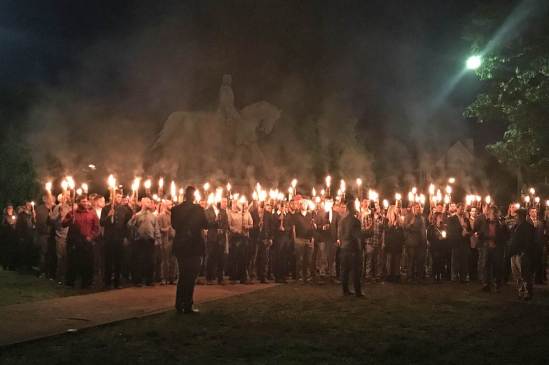
Donald Trump’s impromptu press conference after Charlottesville demonstrates where his sympathies truly lie. Despite reading a prepared statement like someone in a hostage situation, he doesn’t particularly feel that white nationalists were responsible for the violence that killed Heather Heyer and injured dozens. Rather he blames both sides for it, alleging that the counter-protesters and marchers bore equal responsibility. He thinks the “alt-left” charged at marchers with clubs (despite that the marchers projected a military presence and initiated most of the confrontations). He referred to a torchlit march with people performing Nazi salutes, chanting, “Sieg heil!,” and assaulting counter-protestors as a good example of people “very quietly protesting.” He believes the violence distracted from the “Unite the Right” rally’s aim to defend a Robert E. Lee statue (despite that they really marched to protect white America from the so-called scourge of “diversity” and not at all peacefully either). In all, made explicit all the darkest undertones of his gallingly weak statement on, “many sides.” He muddied the waters by what happened in Charlottesville over that weekend as well as softened his judgement on the march itself. To Trump, what happened in Charlottesville was simply a “disruption” between two factions of equal empirical and moral culpability (even though it wasn’t).

But what really disturbs me isn’t that Donald Trump is a flagrant racist but how his remarks on Charlottesville will influence his supporters. In the past, both Democrat and Republican presidents have denounced white supremacy when it wasn’t acceptable even if it didn’t politically benefit them. Because regardless of how messy our racial politics could get, most Americans agree that white supremacists and political violence shouldn’t be legitimized. A presidential denunciation on white supremacy isn’t just an affirmation on American values and ideals of “all men are created equal,” it also keeps our nation safe by relegating white supremacists to the extremist fringe. The fact Trump failed to clearly, consistently, and unequivocally condemn the white supremacist violence in Charlottesville not only undermines American values, but puts people in serious danger. His calling it a “disruption” is very irresponsible which brings comfort to any Trump supporter convinced there wouldn’t be any problems in America if “thugs” didn’t start them. When he said that removing Lee’s statue is “changing history and culture,” he not only echoes those believing the Confederacy as part of their Southern “heritage,” but also white nationalists’ fears of “diversity” and “political correctness” erasing both America’s past and future. When he compared Robert E. Lee to George Washington, he thrills those believing the Confederacy as morally right to secede from the United States and that slavery horrors are overblown at best. When Trump insisted that the torchlit march was the quiet and peaceful protest it certainly wasn’t, he’s not just wrong. But he in every way legitimized the ideologies these marchers expressed as good and orderly. As we can see, white supremacists have given him plenty of praise him, continue to enthusiastically support him, and commit hate crimes in his name. Research shows that even implied rhetorical support from mainstream political leaders can encourage violence from radical groups. A radical group’s elements draw major strength from any kind of mainstream legitimation. As political scientist Paul Staniland told Vox, “that kind of rhetoric can provide political cover to non-state armed groups to act in ways that are really dangerous. They can just say ‘Look, we’re just doing what the president or the leader says is acceptable.’” Had Trump credibly condemned white supremacy, white supremacists would’ve had more difficulty to sell themselves for potential followers and activists as a viable political movement. When extremist groups feel like they have mainstream support, they’re more likely to attract volunteers, organize new rallies, and stage more violent attacks.

Since Donald Trump was elected, white supremacists have started recruiting more openly and it’s possible his hardcore supporters are inclined to view them more positively than they did before. After all, Trump essentially told his supporters they should have some respect and pay attention to these tiki torch wielding white nationalists. Now that these white supremacists feel like Trump’s legitimized them, they’re planning a whole other wave of activity Hate crimes have also been on the rise since legitimizing white supremacy just makes them more likely to happen. However, the worst impact Donald Trump’s remarks on Charlottesville isn’t just emboldening white supremacists. Despite that Republicans on Capitol Hill rushed to disagree with Trump blaming “both sides” for the violence, Republican voters don’t seem too upset. In fact, according to a recent CBS poll, two-thirds of Republicans approve of his handling of Charlottesville. Meanwhile, his approval ratings usually bounce between the high 30s and low 40s while he retains 80% of his party’s support. Now I know most Trump voters aren’t white nationalists or completely horrible people (unlike their man in the White House). But the fact that Trump’s explicit racism and pandering to white supremacists weren’t dealbreakers for them illustrates that they’re at least racist enough to vote for him. And the violence that might result from Trump’s decision to give white supremacists a voice was a risk they were willing to take. It’s clear many of them agreed with at least some of what Trump had to say about Hispanics, blacks, Muslims, immigrants, etc. White resentment and cultural anxiety won Trump the White House while the Republican establishment has embraced him as their leader. But what’s especially worrisome is how his presidency made explicit racism more socially acceptable. Trump constantly dog whistles, uses dehumanizing language against, and stokes fears of minorities and outsiders. To say disparaging things and be rewarded for them sends a powerful sign that gives license to others to forgo norms of interpersonal civility and kindness. Since Trump’s election, school bullying against marginalized students has been on the rise with incidents including verbal harassment, use of derogatory and racial slurs, graffiti, assault on teachers and students, property damage, fights, violent threats, and displays involving swastikas, Nazi salutes, groping, and Confederate flags. Workplace bullying has also been on the rise. Aside from the breakdowns in civility, Trump’s influence might lead Republicans to tolerate more racist rhetoric or become more racist. It doesn’t help that the media does a phenomenally shitty job covering right-wing terrorism that many conservative Republicans don’t believe it’s even a problem. And as polls shows, many white Americans have become more racist in recent years. And to make matters worse, Trump won the white millennial vote, a key membership demographic for white supremacist radicalization.

At the same time, Donald Trump has never offered any form of reassurance to the millions of Americans living in fear of a resurgent white supremacism since before he was sworn in. At best, he’s told them their fear is their problem like it’s an obstacle to overcome. At worst, he’s told them that they provoked lethal violence against themselves. And that there wasn’t anything wrong going on at the Charlottesville rally until some people came “charging with clubs.” Trump may have briefly offered a gesture of protection to Americans worrying he’s encouraging hate and violence. But he’s rendered that gesture as nothing but a “fuck you” to those who now feel abandoned while offering all but ease to the marchers. White supremacists are a national security threat responsible for more attacks on US soil than ISIS which have increased within the last several years. In June the Anti-Defamation League reported that more than half of active Klu Klux Klan chapters formed within the last 3 years, and instability within the groups meant most were short-lived. The Southern Poverty Law Center showed there are 917 active hate groups in the US. Trump has decided to cut funding to curb white supremacist terror, appointed alt-righters to the White House, and basically pandered to white nationalists. So he’s made it perfectly clear that his administration will not do anything to protect vulnerable Americans from white supremacist terror. All the while he dog whistles, dehumanizes them, and stokes fears in his base. Thus, hate crimes will continue to rise while millions of Americans have no national leader who’ll protect them.

It’s very likely there will be further clashes like Charlottesville in the near future. But what form it takes greatly depends on police and politicians’ reactions. If authorities try to crack down on this and prevent these kinds of clashes, the likelihood of violence will be reduced. Research suggests that when mainstream elites are willing to at least not explicitly condemn violent fringe actors, they’re more capable of effectively mobilizing within the police system. As a result, they’re less likely to expect the cops to crack down as hard on them as they attempt to establish links within the ruling establishment to encourage a greater levels of mobilization. A study from the early 20th century showed how sanction and support from US officials influenced lynching. Lynch mobs were more likely to kill if they had support from political leaders and less likely if mainstream leaders spoke out against them. Judging by how the police handled Charlottesville and reports of law enforcement being affiliated with white supremacist groups, it doesn’t look encouraging across the country. Republicans on Capitol Hill haven’t done anything to crack down on white supremacist terror. Until our politicians, law enforcement, and the media start taking white supremacy as a serious threat and, we should expect another terror attack like Charlottesville. And that time could be sooner than we think.

The Tiki Torches of White Supremacy in Charlottesville

170514-charlottesville-robert-e-lee-statue-mn-1141_a2a6c4fe20de091186806cdbdd9f54c3.nbcnews-fp-1200-800

On Friday night August 11, 2017, a group of 100 white nationalists marched onto the University of Virginia campus in Charlottesville, Virginia. The marchers carried tiki torches, chanted Nazi slogans like “Sieg heil” and “blood and soil,” and gave Nazi salutes. They also chanted other slogans like “White Lives Matter,” “You will not replace us,” and alluded to the white-nationalist idea that diversity as “white genocide.” This march was a vigil for the larger planned, “Unite the Right” rally for Saturday to protest a Robert E. Lee statue removal in a local park. Alt-Right leaders were scheduled to speak before an audience comprising hundreds of far-right activists. During the rally, a fight broke out when demonstrators (nearly all white and male) surrounded some counter-protestors peacefully grouped around a statue of Thomas Jefferson in the middle of the campus. A local activist told the Guardian, “They completely surrounded us and wouldn’t let us out.” Counter-protestors reported being pepper sprayed. The police eventually intervened, declaring an “unlawful assembly” and separating the groups. But the violence persisted well into the next morning with a series of confrontations. The groups beat each other with flagpoles and bats, chanted slogans, and used chemical sprays on each other. Some even reported being doused in raw sewage. At least two people were treated for serious but non-threatening emergencies from the fights by 10:30 a.m. Police deployed tear gas against the crowd shortly before 11:30. And by noon, the group of alt-right nationalists grew to include neo-Nazis, the Klu Klux Klan, and a heavily armed militia. Police dispersed the rally minutes after its scheduled start at and were in full riot gear to clear the area. But the violence didn’t die down. As some counter-protestors started to leave, a silver Dodge Challenger plowed through them. A 32-year-old woman was killed while nine others were injured as the car fled the scene. A helicopter crash near the protests killed two police officers while twenty-five others were also treated for injuries.

As you can recall, the alt-right is a movement that strongly rejects “diversity,” “political correctness, and identity politics as well as disturbingly engages in white nationalist, fascist, and Nazi rhetoric and regalia. And I’m sure it’s clear that they’re not using white nationalist tropes just to be “ironic” as some alt-righters claim. Because you don’t just wear a swastika to a “Unite the Right” rally with irony. Nevertheless, the alt right is a key part of a broader cultural backlash that helped elect Donald Trump to the presidency. Many white Americans felt that they’re losing their ground to nonwhites or that America is losing its identity. And many believe that political, economic, and media elites are either uninterested in defending their heritage or actively trying to eradicate it. Of course, such concepts are the result of white people feeling nostalgic for an America that never existed. Members of the alt right number among Trump’s staunchest supporters with members of his administration among its ranks like Stephen Miller, Sebastian Gorka, and Steve Bannon. Thanks to Trump’s election, the alt right’s leaders have become increasingly willing to dabble in white nationalist rhetoric and tropes while trying to avoid being accused of white nationalism themselves. Sure they didn’t start out explicitly aligning themselves with white supremacists but racist rhetoric has always been a hallmark of the movement even during the 2016 Election. But Trump’s election has emboldened the alt right to come out of the white nationalist closet and show the world the kind of racist shits they actually are. Trump’s election has made racist rhetoric more acceptable among his supporters who feel they don’t need to conceal their contempt for the kinds of people they don’t like. Yet, it has also led to a resurgence of right-wing extremism with hate incidents on the rise.

But why Charlottesville? Well, many cities in the South still have public spaces and monuments celebrating key Confederate figures. Many of these weren’t erected until the 20th century with the rise of the Civil Rights Movement and Jim Crow laws coming under attack. Thus, it is clear these landmarks weren’t created to celebrate Southern “heritage” but to remind black people of their subservience to whites. In other words, the Lee statue exists in the city as a symbol of white supremacy and racism. After all, Lee’s devotion to white supremacy outshone his loyalty to his country embodying the white nationalist ethos. Since the 2015 Emmanuel AME Church shooting, there’s been a renewed push to remove Confederate monuments and rename streets and squares named after them. But wherever these campaigns succeeded, there’s often been backlash from white Southern conservatives who consider the Confederacy as part of their “heritage” and outright white nationalists. In Charlottesville, the target was a statue of Robert E. Lee in a park called Lee Park. As City Council members pointed out, Lee had no connection to Charlottesville and his commemoration was just an indirect way to celebrate the Confederacy. The city council later voted to sell the statue and rename the park as Emancipation Park (even though it’s currently still in place). This decision made the Charlottesville a target for far-right activism and shows of strength along with those keen to stand up to them and demonstrate that their ideas weren’t welcome. On July 8, 30 Klu Klux Klan members held a small rally in the city though hundreds of counter-protestors outnumbered them.

Which brings us to today. “Alt-Right” luminaries planned a large “Unite the Right” rally for Saturday. While originally intended to attract a broad coalition of “patriot” groups, it had become increasingly Nazified, some refused to sign on. Instead, explicitly fascist and white supremacist groups like the National Socialist Movement, the Klu Klux Klan, and Neo-Nazis got on board, which reflected the march’s Nazified tone. Hundreds of protestors descended upon Charlottesville for the rally which Vox called, “a belated coming-out party for an emboldened white nationalist movement in the United States.” Speakers included some alt-right personalities who’ve flirted most openly with white nationalism and self-identified white nationalists like Richard Spencer. Yet, the arc of the “Unite the Right” rally from a demonstration to bring conservative groups together to protest a controversial statue removal to a “Nazified” rally for “the pro-white movement of America,” reflects what’s been happening to the alt right as a whole.

Numerous public officials of both parties have condemned the violence along with the white supremacists who perpetuated it. However, Donald Trump tweeted 14 hours after the clashes began with, “We ALL must be united and condemn all that hate stands for. There is no place for this kind of violence in America. Lets come together as one!” He later released a statement condemning the violence “in the strongest possible terms this egregious display of hatred, bigotry and violence on many sides, on many sides.” He didn’t explicitly identify who was to blame and only used the vaguest possible terms. Trump’s response to Charlottesville is notable. After all, he didn’t wait for 14 hours to denounce Islamist terror outside the US. Nor did he let his vacation get in the way of threatening war with North Korea. Yet, Trump refused to actively condemn the white nationalists responsible for the initial violence, most of the violence and disorder, and the most serious violence in Charlottesville in the strongest possible terms. His refusal provides a misleading account of what happened as well as erroneously implies that both rally goers and counter-protestors were equally to blame. Such implication leaves it wide open for Trump supporters to assume “the left” started it. His remarks suggest that the “hate and division” are equally distributed and that the counter-protestors seeking to stand up to the rallygoers are every bit as hateful. His calling for the “swift restoration of law and order,” implies that the real problem is disrespect for police. But all Trumps statements regarding Charlottesville encourage his supporters to misinterpret the events as anyone else’s fault but the white nationalists themselves.

In context, Trump’s response to the violence in Charlottesville is an insult to Americans who’ve felt unsafe since his election and whose acknowledgement of their fears has been tepid at best. What he’s said that “many sides” must put aside their own prejudices just as much as anyone else and come together as Americans and everything will be all right. But Trump’s unwillingness to understand the rise of the “alt right,” overt racism, and street violence as anything other than a need for “both sides do it” leads him to say things that may signal white supremacists that he’s on their side, inadvertently or otherwise. When Trump calls for Americans to unite because “We love our country. We love our God. We love our flag. We’re proud of our country. We’re proud of who we are,” he’s using the same language these people use to justify trying to “protect” American “identity” from their non-white and non-Christian countrymen. When he declares “we must cherish our history” in response to a rally initially convened to protest a Robert E. Lee statue removal, he sure sounds like he’s siding with the very white supremacists wanting to keep it. Such remarks would come across as deliberate dog whistles in a more deliberate president. We all know Trump loves his base that he’s very careful about doing anything that could upset them. He also acts as if there’s any connection between the “alt-right” and Nazis. Then there’s the fact he has known white nationalists in his administration like Steve Bannon, Sebastian Gorka, and Stephen Miller. Any case where white supremacists engage in unprovoked violence against the left would do just that. Yet, it’s not clear whether Trump is deliberately sending signals to the alt-right that he’s still on their team or that thought that much about it. And that’s exactly the problem. In the last six months of his presidency, Trump has shown less concern for governing on behalf of “the haters and losers” who didn’t support him than any president in recent memory (which would include most Americans in general). Nor does he seem to care about the white supremacist threat to US citizens to understand or name it. It’s an ideology history buffs like myself are very familiar with in American history that has been used to justify slavery, segregation, lynching, hate crimes, and terrorism. And it’s one threatening not only extremist violence but American democracy as well.

It is precisely on moments like Charlottesville that an American president should speak directly on behalf of the American creed, Americans rejecting tribalism and seeking pluralism, and the idea that alt-right nationalism is antiethical to the American idea itself. At a moment when the US needs its leadership to take a unified stand against hatred, Trump’s refusal to call radical white terrorism for what it is might mark the lowest point of his presidency to date. Nevertheless, it’s not unexpected in a man like Donald Trump. Trump has a long history of racism and doesn’t see any problem with white nationalists openly supporting him or working in the White House. Nor does he see anything wrong with promoting inherently racist and xenophobic policies or running a racist, xenophobic campaign that energized the radical right. Whenever Trump has a chance to condemn white supremacists, he’s clearly and repeatedly refused to denounce them in terms that would alienate them. In fact, he continues pandering to them which very unlike what he does with nearly any people or group he dislikes (which he isn’t shy about condemning on Twitter to sabotaging their lives). His election further emboldened these white supremacists who see him as their champion. The day after Trump’s election, hate incidents soared with many carried out in his name. David Duke’s response to Charlottesville clearly reflects this noting, “This represents a turning point for the people of this country. We are determined to take our country back. We are going to fulfill the promises of Donald Trump. That’s what we believed in. That’s why we voted for Donald Trump, because he said he’s going to take our country back.” Seven months into his presidency, Trump has fostered an environment in which people who might’ve been ashamed of their shameful beliefs are now utterly unafraid to show their faces in broad daylight. And as long as white supremacists feel they can no longer hide their hate and bigotry, expect more domestic terror incidents like Charlottesville and other hate crimes.

While much of the country is confused on how the violence in Charlottesville came to be, the answer is blatantly obvious. What happened in Emancipation Park and the streets of Charlottesville didn’t just suddenly spring forth all by itself. White supremacy runs deeper than rogues in hooded robes and has always influenced politics and political violence. White supremacist policy and rhetoric is still being fostered and widely enabled. And it doesn’t take long for such mere sentiments erupt into of overt violence. When white supremacy turns violent America is less safe, especially for people of color and religious minorities. Now I know that not everyone who voted for Donald Trump is an unapologetic racist who’d gleefully march alongside fellow Neo-Nazis and Klansmen in the White Pride parade. But all Trump voters who saw him speak, heard his inflammatory rhetoric, believed in his vision for the future knew exactly what they were aligning themselves with. For millions of Americans, the fact their candidate unashamedly pandered to voters by appealing to the most despicable impulses among us wasn’t a deal-breaker. And the violence possibly resulting from Trump’s decision to give these white supremacists a voice was a risk they were willing to take. Yet, white supremacy can and will flourish when given fuel. History has shown from Reconstruction to the Civil Rights Movement that such transformations can spread like wildfire relatively fast and destroy decades of progress in flashes. All that white racial resentment toward minorities that propelled Trump to the presidency was just that. It may be easier to see white supremacists as people wearing white robes with cone hoods and swastika arm bands then a group of white men (along with some white women) with tiki torches, bad haircuts, wrinkled khakis, and a love of memes camping out in a park. Yet, keep in mind that even the most feared white supremacists during Jim Crow were just regular white men transformed from their lives as politicians, farmers, mechanics, and layabouts by sheer ideological power. White supremacist movements could often considered as “fringe” and marginal until they weren’t. So if you think that a bunch of young white guys with tiki torches aren’t capable of blood-curdling horror that destroyed countless black families, I honestly urge you to reconsider.

Signs of an Abusive Relationship (with Donald Trump)

Abusive relationships can take many forms. However, as you see on the news, America has currently been in a very abusive relationship with Donald Trump who’s now the president. Well, at least that’s what’s on the stationary because there’s no way in hell I’m acknowledging his legitimacy. Anyway, there are a lot of victims of domestic abuse who have states how Trump acts like their abuser. Then there was this one writer from Teen Vogue who wrote how Trump is gaslighting America. Of course, Donald Trump doesn’t beat the crap out of America. But an abuser doesn’t have to be violent to inflict harm. Here is a list of signs in abusive relationships and how Trump embodies every single one. Still, unlike an abusive relationship with family or intimate partners, you can’t back out of this one until 2020.

1. Does something, denies it, and then exclaims you are crazy. (Gaslighting) (Warping a victim’s sense of reality through gaslighting is a favorite tactic among abusive spouses, strongmen, and narcissists in order to control them. Trump is no exception. In fact, Trump frequently uses gaslighting to get away with a lot of crap he does even denying some of his appalling actions on camera. In the presidential campaign alone, he had already accumulated a long list of statements he made which he later denied. Hell, even when confronted with video evidence, he’s often denied it. Best examples would be telling supporters to “knock the crap out” of protestors at his rallies and publicly mocking a disabled reporter. Though unlike what other abusers do, Trump usually accuses the “dishonest media” for distorting the public for airing such footage everyone sees with their own eyes.)
2. Accuses you of doing things you aren’t doing/things they are doing. (Projection) (Trump has frequently used projection in order to turn the public against his adversaries. His attacks on Hillary Clinton during the presidential campaign are a very good example of this since made her be an out of control corrupt elitist who can’t be trusted and cares nothing about the American people. However, such description fits Trump much better than Hillary {honestly, regardless of her flaws, Hillary is a saint compared to him. I did the research}. You can especially see his projection at work during the presidential debates. Unfortunately, for Hillary, one thing that did her campaign in was that too many Americans already saw her this way long before Trump came along, thanks to Republicans and Fox News. Sure Hillary may have baggage and her flaws, but Trump is much worse than she ever could be.)
3. Does a great job promising a great future and then delivering a nightmare. (As a candidate, Trump promised to “Make America Great Again” which resonated with so many white Americans who elected the bastard to the presidency. However, as president, it’s very clear that Trump will make many of his supporters’ lives a nightmare. Just look at the people he has in his cabinet and the fact he wants to cut healthcare away from many who voted for him. Another good example is with the Trump University scandal which ripped off thousands of people. Let’s just say Trump has a record of abusing power and screwing people who trusted him.)
4. Is a chronic liars and highly manipulative. (Trump lies so much that I can never tell when he’s telling the truth and have absolutely no trust in him, president or no president. Like any demagogue, Trump is a master at manipulating the masses whether it be through using racist dog whistles or flat out racism, tweeting conspiracy theories, appealing to nostalgia and sexism, and whatever else to get attention from the media as a trainwreck nobody could look away from. The fact, he sold himself during the election as someone who alone can fix our nation’s problems even though he can’t and doesn’t really want to.)
5. Uses guilt, hope, love, obligation, fear, or confusion to get what they want. (Trump has often used fear and confusion in his campaign speeches to get what he wanted, particularly fear of minorities and it took. Yet, he also uses nostalgia and nationalism, hence the phrase “Make America Great” again and “America First.”)
6. Often likes to agitate, provoke, argue, or “crazy make” and then pretends not to know why you are so upset. (Have you seen the guy’s Twitter feed? For God’s sake, the guy’s a shameless self-promoter and provocateur who’d tweet up some crazy conspiracy theory to distract the media from any shady stuff about him. For instance, he tweeted about Obama wiretapping him to deflect attention from his dealings with the Russians. His campaign has emboldened many of his supporters to fear minorities and some to commit hate crimes.)
7. Has a “Dr. Jekyll and Mr. Hyde” personality. (From how the media and many Americans saw his address to Congress, Trump certainly has this. Sometimes I think he’s scarier when he’s on his best behavior since it’s when he’s best able to manipulate people. When he’s being gracious and dignified, don’t be fooled. He’s playing you. Because his default personality has and will always be in Mr. Hyde mode.)
8. Has a staggering lack of empathy and (sincere) remorse for their behavior. (Despite my extensive research on Trump during election season, I don’t know of any incident in which he’s ever been unconditionally nice to anyone. Furthermore, Trump has never expressed any remorse for all the terrible things he’s done to people which there are many. He’s also never apologized for anything except to save face. Nor has he freely taken any responsibility for all the harm he’s caused. And he never admits he’s wrong about anything.)
9. Yells, name calls, belittles, and gives the silent treatment. (Though I know of no instances of Trump giving the silent treatment since he never shuts up, he has frequently called people who dared challenge him liars or losers.)
10. Frequently justifies bad behavior by blaming the victim or saying they deserved it, instead of taking any responsibility. (When Trump isn’t denying wrongdoing, he often blames people for their own suffering under him. For instance, whenever Trump is confronted with wage theft allegations in which he justifies with, “they did a terrible job.”)
11. Frequently makes promises but never intends to keep them and eventually breaks them. (Trump has often promised people to do stuff in order to get what he wants. But he usually never intends to keep them and will often break them if he can get away with it. This is how Trump gets a lot of contractors to work for him despite that he has often left them with nothing.)
12. Never makes any meaningful sacrifices and only shallowly reciprocates affections in order to retain power and control. (Though abusers may reciprocate a victim’s affections, it will only be to the point to keep them under their control and will not entail any meaningful sacrifices whatsoever. Trump is no different to his supporters. Sure he may hold rallies saying how much he sympathizes with their plight and appeal to their common prejudice, but he will do absolutely nothing to help them. Because as far as he’s concerned, Trump will only cater to his supporters because they give him what he wants.)
13. Openly mistreats social inferiors and marginalized people. (This is often known as the Waiter Rule, which states that if a person isn’t nice to the waiter, they won’t be nice to you. Plenty of abusive relationships could be prevented if more people observed this rule, but it’s a very hard one to follow given that the relationship is in its initial phases, high emotions, and that people look down on waiters. However, this logic fits perfectly with Donald Trump who has a long record of mistreating those below his social status as well as openly demonized minorities on the campaign trail. And though the latter has won him many supporters that he got elected, his fans have put themselves in a very vulnerable position by ignoring critical red flags.)
14. Prone to frequent outbursts, defensiveness, and playing the victim when confronted with evidence of bad behavior. (Whenever Trump is confronted with evidence of his bad behavior, he can get very defensive as you can see from his vicious Twitter tantrums. He may even blame the media for distorting his words and conduct so he can retain his base or elicit sympathy.)
15. Frequently threatens, retaliates, and defames anyone who challenges or criticizes them. (Trump has often threatened or filed lawsuits against those who dare challenge or criticized him even on the most trivial matters. He has often used litigation to ruin people’s lives such as people who’ve sued him over wage theft allegations. At one point he threatened to sue Janney Montgomery Scott unless they fire Mark Rothman after Rothman {correctly} predicted that Trump Taj Mahal would fail, which they did. Though Rothman is currently a very wealthy man, Trump put him through hell during the early 1990s, especially since Rothman sued both Trump and his former firm over the ordeal. In addition, Trump also likes to resort to character assassination against those who’ve spoken out against him and quite viciously and with false pretenses. I may see Ted Cruz whom as America’s Lucius Malfoy, but I can totally empathize why he didn’t want to endorse Trump at the GOP National Convention. During the GOP primary, Trump called Cruz’s wife ugly and alleged that his father conspired to kill John F. Kennedy. He’s also demonized Hillary Clinton, though he just had to bring up her dirty laundry and have it take over the media.)
16. Associates with and praises questionable people you wouldn’t want to be friends with. (You can always judge a man based on the company he keeps or who he admires. Trump is no exception and those he associates with and admires is very troubling. During the 2016, he has openly praised dictators who have suppressed dissent, violated human rights, and go against American interests. Throughout his life, Trump has done business with shady characters and participated in questionable deals with US enemies. The Trump administration’s relationship with the Russians is particularly disturbing with several members having Russian ties and Trump most likely getting money from them for his businesses. One instance had Trump investing in a project with very corrupt Azerbaijani oligarchs who operated a money laundering with the Iranian Revolutionary Guard.)
17. Makes constant demands on you to fulfill their expectations while seeing little obligation in returning the favor. (You can often see Trump do this in regards to women he sees as objects while being the fat, lecherous 70ish man he is. But the most egregious example is raving over Hillary’s e-mails as Secretary of State even though he and his company have been known to destroy documents and routinely erase e-mails on their personal accounts, according to court orders. And he still hasn’t released his tax returns.)
18. Shows no respect for your interests or well-being whatsoever. (Though many supporters would swear that Trump is their champion, his actions clearly show he cares little about them. Sure he may very well build his stupid wall, but he’s much more likely to enrich himself and his corporate buddies than enact measures creating well-paying jobs or improve their lives. Because Trump’s business practices clearly show he’s no friend to labor.)
19. Resorts to grand gestures and telling you want you want to hear to win you over or to keep you from leaving. (Trump’s rallies and patriotic grandstanding with messages like “Make America Great Again” or “America First” qualify as this.)
20. Has pissed off your friends and family for reasons that have nothing to do with ideological bias. (Trump has alienated a lot of US allies with cozying up to Russia as well as inflammatory rhetoric, especially Mexico.)
21. Has caused a lot of division among your family or friends who either love them or hate them which may or may not have something to do with ideological bias. (The fact so many people in my extended family, friends, and community have voted for Trump and stand by him despite how he’s such a wretched human being only fills me with great personal shame. To acknowledge that Trump is the President of the United States already goes beneath my dignity. But though I don’t write off Trump supporters as irredeemable, I find their willingness to make excuses for his behavior deeply appalling. Because excusing his actions only enables him to treat them and others like shit with no consequence. And I get no pleasure from seeing Trump supporters having to suffer for their bad decisions.)
22. Has a habit of alienating you from your family or friends. (Since I have a lot of relatives who supported Donald Trump, I can certainly testify to this. Hell, seeing so many Trump signs in my neck of the woods was a truly alienating experience for me.)
23. Assures you they’ll take care of everything with a superficial charm that lacks any substance. (Trump frequently assures his supporters that he’s the only one who could fix our country’s problems. But he never gets into specifics and a lot of his promises during his election campaign lacked any form of substance whatsoever. Sure he might win over a crowd, but he doesn’t seem to take people’s concerns seriously if they don’t suit his interests.)
24. Is frequently jealous and adversarial toward anyone who bruises their ego, especially if it’s someone they see as a social inferior. (His attacks on Barack Obama are a textbook example of this. Trump is racist and has a long history of racism. Since Obama ran for president, he has gone out of his way to delegitimize him for years {most notably in promoting birtherism}. Even after Obama became president, Trump has called for him to release his birth certificate to prove he was born in the US {which Obama did}. But even after that, Trump still questioned Obama’s citizenship as well as called for him to release his student records since he doubted his grades warranted him entry into an Ivy League school. But it’s not just the mere fact Obama’s a black president that rankles him. It’s also that Obama is still a highly beloved and respected public figure who is much more popular than Trump could ever be. Sure Obama may have inspired deep hatred among his detractors, thanks to racism. And yes, the public might not always agree or support his policies. Yet, the reasons why people view Obama very highly has a lot to do with his impeccable character, his rhetoric, the image of America he projected onto the world, and that his policies did a lot of good for so many people.)
25. Lacks self-control and never practices self-restraint. (Trump fits this to a tee since he’s a guy who ordered an airstrike of 59 Tomahawk missiles in Syria on a whim.)
26. Never makes any effort to change their behavior despite promising to do so time and time again. (Trump has done this all the time. Remember how many times he promised to release his tax returns? Or divest himself from his businesses? Oh, wait he’s profiting from the presidency and making sweetheart deals with foreign entities.)
27. You frequently question whether they have your best interests at heart or using you for their own self-fulfillment. (This might not be the case for all Trump supporters right now. But a Trump regrets feed does exist.)
28. Treats their own family like crap if they have a relationship with them at all. (He’s cut off financial support from his great-nephew with cerebral palsy. He says sexually suggestive things about Ivanka. Might’ve physically assaulted one of his sons. Said a lot of demeaning stuff about his first two wives.)
29. Loses their temper over the most trivial matters or whenever they don’t get their way. (Trump does this all the time as you’ve probably seen his tweets over SNL and Hamilton.)
30. Shows no desire to make any compromises or concessions for any mutual benefit whatsoever. (With Trump, it’s always about him. He expects loyalty but will stab anyone in the back if he sees fit.)
31. Compels you to lower your standards of behavior and continuously make excuses for them out of fear. (He has led Republicans and voters to this as he degrades political norms, undermines democracy, profits off the presidency, violates the Emoluments Clause, colludes with Russia, etc.)
32. Lashes out when you pry into their stuff or find out what they don’t want you to know about them. (Trump especially hates it when anyone pries into his financial records and businesses. That’s why he hasn’t released his tax returns.)
33. Threatens to make your life hell if you don’t do what they expect of you. (Trump has threatened Republicans that if they don’t do what he wants, he’ll rile his supporters to vote them out of office.)
34. Has a habit of objectifying women, even in very creepy ways. (Trump does this all the time, when he talks about his daughter Ivanka. But he also said very disturbing things about Tiffany when she was a baby. Oh, and he bragged about committing sexual assault.)
35. Undermines values you hold most dear. (Basically when Trump says racist stuff and how America is no different from Russia. His policies pertaining to immigration and criminal justice which undermine civil rights and American diversity and pluralism. Constantly shows hostility toward the press. We need to face the fact that Trump isn’t a patriot and doesn’t value democracy, the Constitution, US history, or American values.)

Ladies and Gentlemen, the Shit Has Hit the Fan

Recently, it has come to our attention that the New York Times has revealed that Donald Trump Jr. welcomed a meeting with a Russian government-connected lawyer named Natalia Veselnitskaya after learning she had information that “that would incriminate Hillary [Clinton] … and would be very useful to your father” and that it was “part of Russia and its government’s support for Mr. Trump.” Trump Jr. has confirmed the meeting took place in June 2016 at Trump Tower (despite initially denying it) which also had his dad’s then-campaign manager Paul Manafort and his brother-in-law Jared Kushner in attendance. But he has downplayed the meeting’s significance claiming it was over adoption laws and later that the woman wasn’t a government official who provided anything useful. On Tuesday July 11, 2017, he has disclosed a series of e-mails of him corresponding with a British music publicist named Rob Goldstone at behest of the Agalarov family in order to prevent another NYT scoop. Except he totally didn’t and now that e-mail chain has been retrieved and released for the public and prosecutors to see. Furthermore, the chain basically debunks every lie he’s made, erodes his credibility, and confirms he’s hiding something all along.

For months, Donald Trump and his team have denied and disparaged reports that the Moscow tried to help his candidacy and that there was any collusion between the two. In fact, Trump has publicly claimed he didn’t believe that the Russian government wasn’t behind the hackings and leaks of prominent Democrats’ e-mails, which US intelligence agencies have resoundingly confirmed. Since January of 2017, reports of suspicious behavior between Trump and his team around Russia emerged  though we still lacked outright proof whether there was any behind-the-scenes collaboration between them. Though it remained theoretically possible that there was a multifaceted Russian effort to help Trump win without anyone from the Trump team knowing about it.

However, that is no longer possible since the Trump Jr. e-mail chain provides indisputable proof that people close to Donald Trump such as his son, his son-in-law, and then-campaign chair not only knew about but also encouraged a Russian government effort to help him win the White House. Seriously, Goldstone sent Trump Jr. an e-mail saying his information would be “part of Russia and its government’s support for Mr. Trump” as if Russia’s support for Lord Cheetohead was an unremarkable fact. Instead of being confused or asking what Goldstone means, Trump Jr. cheerfully answers, “If it’s what you say I love it,” tries to get the details, and forwards the whole thread to Kushner and Manafort. Any other American who knew what Goldstone was getting at would’ve turned him down and notify the candidate and the FBI. Because that is what campaign workers are supposed to do since getting help from a foreign government to win an election goes against federal law. Yet, there’s no way you can read these e-mails and not conclude that the Trump campaign’s top guys knew Russia supported their man but were willing to help. And I’m sure that President Pussygrabber knew about this going on all along.

Why? Well, how can he not? Sure the White House claims that Donald Trump knew about his son’s meeting recently. But he’s complained about the Russia investigation for months and fired his own FBI director in May, possibly to stop information that could expose him or his team to criminal charges from turning up. We should also note that Trump has often seen himself as above the law and has gone to great lengths to avoid responsibility for his actions his whole life. Not to mention, he and his team constantly lie in public about anything that makes him look bad.

What the Trump camp talked about with the Moscow-linked parties that June day at Trump Tower may never be known. But even if that meeting did lead nowhere, it still raises questions of what else Manafort and Kushner and ousted National Security adviser Michael Flynn may have said or done with the Russians. Yet, what’s clear is that we can no longer dispute the investigations into the Trump campaign and that Russian collusion is a serious mater. Robert Mueller must proceed unimpeded in his inquiry while congressional investigators need to work as well. Because the US needs to get to the bottom of this.

But why should we care about Trump’s ties to Russia? Because the Trump team’s habit of publicly lying about its contacts with Russia government emissaries is very problematic on its own terms. But it’s especially troubling since it raises a possibility that blackmail fears can influence American foreign policy. For instance, take the bombshell from US government surveillance that then Russian ambassador Sergei Kislyak revealed he and former National Security Adviser Michael Flynn discussed sanctions during the Obama-Trump transition period, which Flynn lied about. Acting Attorney General Sally Yates warned White House Counsel Don McGahn that “the national security adviser essentially could be blackmailed by the Russians.” Meaning, that if you lie about meeting a Russian official in public, then the Russian government will know and could threaten to release embarrassing and personally damaging information unless you take positions they like. When the press got a hold of this, Flynn was fired. Still, Russian intelligence knows exactly what went down between their government and the Trump campaign. Their knowledge of the facts along with the Trump team’s relentless dishonesty as well as the high consequences of getting caught, means a potentially large swath of Trump’s inner circle has been (or still may be) exposed to blackmail. This in turn makes it hard for the nation and our allies to trust that American foreign policy toward Russia serves American interests rather than in service of keeping Trump’s people out of legal and political trouble. This might be easy to ignore if Trump’s attitude and policies toward Russia was typical for an American politician. But his contempt for NATO and his unwillingness to punish Moscow for election meddling shows they’re not.

Thus, we should understand while the Donald Trump Jr. scandal is new to us, it’s not to the Russians. Keep in mind that before releasing the e-mail thread pertaining to his meeting with Veselnitskaya, Trump Jr. had publicly denied meeting Russian government representatives for months. And he called allegations that anyone on the Trump team might’ve worked with the Russians as “disgusting” and “phony.” Not to mention, his dad and many of his spokespeople have maintained what Trump Jr. said was true through the entire campaign. His e-mail messages to Goldstone show that it wasn’t. At minimum, Trump Jr., Jared Kushner, and Paul Manafort met with Veselnitskaya under the impression that she’d provide them incriminating information about Hillary Clinton as “part of Russia and its government’s support for Mr. Trump.” But while revelations and e-mails about the meeting caused a sensation in the States, Veselnitskaya knew it all along. And if she knew it, the Russian government probably did, too. And it’s something they could’ve used to increase the legal and political jeopardy facing both father and son at any moment. Still, information is power. Since Russia has the info about the Trump/Russia contacts and because the Trump team keeps lying about them, the Russia government have a lot of power. And Trump’s team knows that Russia has the goods.

So far in the Trump/Russia contact, we know that members of Trump’s campaign team met with the Russians. We know that then Alabama US Senator Jeff Sessions met Kislyak at least twice during the Trump campaign which he lied about under oath during his confirmation hearing for Attorney General. We know Jared Kushner met with Kislyak on multiple occasions. And that one of these meetings was an effort to set up a secure backchannel for Trump to communicate with the Kremlin using Russian equipment and facilities. Yet, Kushner didn’t list that foreign contact on his clearance form. Then there’s Blackwater founder and Trump backer Eric Prince who made an effort to set up back-channel communications to Russia via a meeting in Seychelles, it’s not clear what came of that. Or take Paul Manafort who was fired months before the election over receiving Russian front money in Ukraine. But he continued to advise the Trump campaign, including on the post-election Russia investigation. Or adviser Carter Page whose meeting with the Russians I know absolutely nothing about. Yet, the Russians have known all of this before the US did and then some.

Then there’s the matter with Donald Trump’s finances. We all know he still hasn’t released his tax returns and probably never will. But we all remember back in January when he erupted over the “Steele Dossier” with its wilder allegations that a secret Russian kompromat is blackmailing him over a tape depicting hookers peeing on him. However, it also contains much more boring allegation that Trump paid bribes in St. Petersburg “very discreetly and only through affiliated companies” while exploring some business deals there. Now paying bribes to Russian officials isn’t particularly shocking, especially for a real estate man like Trump. But paying bribes in pursuit of a business deal is technically illegal under the Foreign Corrupt Practices Act. Trump has called the FCPA a “horrible law” that “this country is absolutely crazy” to have on the books because it puts American businesses at a “huge disadvantage.” His business philosophy has long been a willingness to plow ahead legal gray areas as he had once dispensed with normal FCPA compliance procedures and basically go away with it. He probably did the same thing in St. Petersburg. His new chair of the Securities and Exchange Commission is a longtime FCPA critic. So Trump pretty clearly believes that American businesses should be allowed to bribe foreign officials. Nevertheless, while American authorities have little incentive to heavily scrutinize Trump’s FCPA compliance in Russia, Moscow is well-positioned to know a great deal about this. They’re also in a good position to know if the surge in Trump condo property purchases through anonymous shell companies involves any Russian citizens.

Since his inauguration, Donald Trump’s actual policy toward Russia has remained extremely idiosyncratic and friendly toward Moscow. His former National Security Adviser Michael Flynn lied about meeting with Kislyak along Sessions and Kushner. His Secretary of State Rex Tillerson has an extremely unusual resume for a top American diplomat, which featured zero military or diplomatic experience. But he has spent some time lobbying against sanctions on Russia and received the Order of Friendship award from the Russian government. Trump also appears to have explored relaxing Russian sanctions and was strikingly reluctant to affirm America’s commitment to NATO. He’s repeatedly seemed to side with the Russian government over American intelligence agencies over Russian culpability on hacking. He briefly suggested a joint Russia-US cybersecurity initiative. Furthermore, he’s made clear that Russia won’t face any repercussions for its election meddling, something lawmakers of both parties see as a direct assault on American democracy. There are plenty of explanations for his behavior, but it’s reasonable to suspect that Trump wants to keep Vladimir Putin happy so the Russians won’t release embarrassing information.

Nevertheless, a responsible administration would’ve taken Sally Yates seriously in the first place. It would’ve fired Flynn right away or forced him to come clean and apologize at once. And it would’ve learned that despite the awkward political scrutiny on Russia-related matters, lying about it would’ve been even more troubling. But the Trump administration didn’t learn that lesson as Washington remains swamp with new stories and revelations time after time. Each time, their defense consists of “this new undisclosed e-mail or meeting hardly proves wrongdoing.” But Yates points out that under the circumstances, the very lack of disclosure itself was the problem. A reluctance to come clean can reflect blundering, stubbornness, or simply blindness to a problem’s extent. Yet, the Trump crew could be hiding the truth because the truth is very bad. Thus, lying to the public to avoid Russian exposure might be the Trump administration’s best strategy. However, by repeatedly and publicly committing itself to false narratives about Russian government interactions, the Trump administration has put themselves under Russia’s thumb. Under normal circumstances, letting a president have this kind of threat hanging over him would be seen as completely intolerable. But since congressional Republicans control the federal government and do what they want, they’ll probably rationalize the matter. Like they’ve done with tolerating an admitted sexual predator in the White House and accommodating his desire to run his businesses in a way that makes it easy to bribe him. After all, H. R. McMaster and Jim Mattis will be along to babysit him except when Trump leaves them out at key summit meetings, unexpectedly drops text from a major speech, or otherwise needs to respond in real time to a crisis. Nevertheless, this puts our allies in an uncomfortable situation and our foreign policy at a downright catastrophic one. Partly because nobody has any idea about the extent of exposure and what kind of pro-Putin policies Trump might pursue in the future. Even worse, congressional Republicans apparently decided they’d rather not know and treat the Trump-Russia story as an endless series of annoying White House mistakes instead of a potentially crippling national security risk it certainly is. And if you have a former Bush ethics chief say Trump Jr.’s e-mails contain what’s “borderline treason,” then Republicans really need to wake up.

To the Honorable United States Senator Pat Toomey of Pennsylvania

Dear Senator Toomey:

I am writing to you today to strongly urge you to oppose the Better Care Reconciliation Act which will gut the Affordable Care Act, slash Medicaid by $800 billion, leave 22 million uninsured, and roll back protections for those with pre-existing conditions. Drafting of the BCRA was conducted through a highly partisan, secretive, and undemocratic process despite being one of the most consequential pieces of legislation. There is no state where a majority support it. Healthcare is a fundamental right which the federal government should guarantee to all Americans. Legislation to deprive people of healthcare and lower their quality of life is unconscionable. To vote for such an atrocious bill that will only hurt most Pennsylvanians on so many levels. Your unwillingness to even meet with your constituents on the BCRA only highlights your cowardice on this piece of legislation. You can say that recent Medicaid growth is unsustainable (it’s not). You can claim that the ACA is collapsing (contrary to what most experts believe). But even if both were true, to support the BCRA is inherently inexcusable regardless what you believe in.

Senator Toomey, I know your mind is made up and you will more than likely vote for this morally indefensible healthcare bill. After all, you have never been keen on government intervention in providing healthcare for all Americans. I agree the Affordable Care Act does not cover everyone and does not do enough to make healthcare more affordable. But there is no doubt that the ACA has expanded coverage to 20 million more Americans and improved coverage for millions more. It has also saved lives. The BCRA does nothing to fix the ACA’s flaws and even significantly weakens many of the law’s provisions such as essential health benefit requirements, a ban on pre-existing conditions, and barring lifetime or annual caps. Furthermore, the bill would drastically reduce Medicaid funding and other subsidies. All of this will significantly raise premiums, deductibles, and out of pocket costs as well as leave millions of Americans with no access to adequate care. In addition, these provisions will lead to almost a million Americans losing their jobs, medical facility closings, and widespread economic ruin in communities nationwide. Statewide 731,000 Pennsylvanians will lose their insurance while countless more will be left with more expensive but inferior coverage. Without the coverage they have, thousands will die because they couldn’t receive the care they needed including the elderly, children, people with disabilities, the chronically ill, women, veterans, substance abusers, the mentally ill, and the poor. Many of them are Medicaid recipients who may not be able to get coverage through their employer or the individual market. And despite what you think about it, it’s an indispensable program and possibly their only lifeline. Nobody should be denied healthcare regardless of who they are, especially if receiving medical treatment is a matter of life or death. And for many, without healthcare, they may be able to get a job or live an independent life with dignity.

Senator, you were elected to the US Senate to represent the interests of your constituents first and foremost. But your recent cowardly behavior suggests you’re more willing to throw Pennsylvanians under the bus for the good of the party. If you’re willing shut people out of a town hall for fear of your constituents protesting over legislation that will have a damaging impact on their lives, then perhaps you shouldn’t be a US Senator. You have a duty to vote against a wretched healthcare bill that most people in your state don’t want and will certainly ravage the state. People will die. People will lose their jobs. People will get sicker. Hospitals will close down and put communities in economic ruin. Our state’s problem with opioid addiction will exacerbate because more people won’t be able to afford treatment. Vote for the BCRA with your party and I guarantee you will have blood on your hands if it ever becomes law. I sincerely hope your name is dragged through the mud for your advocacy and support for the BCRA which will only provide worse care for Americans or no care at all. And I hope that Pennsylvanians will remember what you did within the next 5 years so they can kick you out of office by the time your term is up.

I absolutely do not care what your or your party’s views on healthcare are. Nor do I care about your negative perception of the ACA as an extension of big government. Because despite what you think, for profit healthcare is an American travesty that discriminates against the poor and must die. There is nothing you can do to convince me that free market healthcare is the best system since I’ve known countless cases where it has failed. And as someone on the autism spectrum, I will cling to my Medicaid coverage so tight that you’ll have to pry it from my cold dead hands. To support such a system that denies people access to the healthcare they need is inherently morally indefensible and violates Americans’ right to life, liberty, and the pursuit of happiness. And all that matters much more to me than any of your free market ideas you prize most highly. Well, your free market praises can go straight to hell for all I care. It deeply horrifies me that politicians like you could ever craft, let alone campaign for legislation that consists of nothing but heartless cruelty to those most vulnerable. And in the least transparent as well as most partisan and undemocratic way possible, I might add. I’d like to think my government representatives would at least have a heart not to play politics with mine or anyone else’s healthcare, especially a sick child’s. But I know full well, it’s certainly not the case. And I know it’s not the case with you which is a shame. However, if you are willing to support legislation that will only lead to pain and suffering, then may that be on your soul for the rest of your days. And may your vote for the BCRA ruin your career and reputation. Because I don’t think you’d deserve nothing less.

The Matter of Gerrymandering

11-PA-US-Congressional-Districts-All1

Every ten years after the census, each state in the US is required to redraw its legislative districts in order to accommodate changes in population. Now redistricting is supposed to be fair and proportional. But since most states in the US have their legislatures control redistricting, this isn’t always the case. As result you have a practice known as gerrymandering. Named after an early 19th century governor of Massachusetts, to gerrymander is to manipulate an electoral district’s boundaries so as to establish a political advantage for a particular party or demographic. The primary goal for this is to maximize the effect of supporters’ votes while minimizing opponents.’ Recently, gerrymandering has become a major problem in the United States mostly due to a dominant political party wanting to retain power in the state. So much so that the US Supreme Court has recently agreed to hear arguments on a partisan gerrymandering case. Nevertheless, though the practice is mostly perceived as bad for democracy through court rulings and anti-discrimination laws, it doesn’t seem to go away any time soon.

572704_81_60945_IiWPqqG_U

Gerrymandering Tactics:

07-participation-voting-and-electionsclicker-37-638

Here are common ways states gerrymander districts for representatives. Cracking and packing are the most common. But sweetheart gerrymandering exists, too so incumbents can stay in.


Cracking: consists of spreading voters of a particular type among districts in order to deny a sufficiently large voting bloc in any particular district. For example, a state might split urban area voters among several districts of mostly suburban voters. Such arrangement would be on the presumption that the two groups would vote differently and the suburban voters far more likely getting their way in elections. You can see this in action by looking at Austin, Texas in the state’s congressional map where parts of 5 districts are but not one of them contain a majority of its residents or voters. And it’s very clear the Texas Legislature drew these districts that way to curb Austin’s liberal political influence within the Republican dominated state.

Packing: To concentrate as many voters of one type into a single electoral district in order to reduce their influence in other areas. In some cases, legislatures may do this to obtain representation for a community of common interest (like a majority-minority district), rather than to dilute that interest over several districts to the point of ineffectiveness (and to avoid likely racial discrimination lawsuits if minority groups are involved). You can often see this in congressional districts pertaining to urban communities of color. When the party controlling the districting process has a statewide majority, packing is usually not necessary since the minority party can be “cracked” everywhere. Though it’s often employed by parties to pack voters together into a minimum number of districts and don’t have enough representation in others to win the majority of the House’s seats. Because by forfeiting a few districts packed with the opposition, cracking can be used in shaping the remaining districts.

Hijacking: Redraws 2 districts in such a way as to force 2 incumbents of the same political party to run against each other in one district, ensuring that one of them will be eliminated. Meanwhile, this would leave the other district to be won by someone from a different political party. A good example of this happened in my own congressional district during the early 2000s, when Congressmen John Murtha and Frank Mascara had to compete against each other. And my district ended up with a representative from Johnstown.

Kidnapping: Aims to move areas where a certain elected official has significant support to another district, making it more difficult to win future elections with a new electorate. This is often employed against politicians representing multiple urban areas, removing larger cities in order to make the district more rural.

These tactics are typically combined in some form, creating new “forfeit” seats for packed voters of one type in order to secure more seats and greater voter representation of another type. This results in candidates of one party (usually the one responsible for the gerrymandering) winning by small majorities in most of the districts and another winning by a large majority in only a few.

Gerrymandering Types:

momentum640

Prison-based gerrymandering is when they count urban prisoners in their rural corrections facilities as residents despite that they can’t vote or they don’t live there. Here is a map of what states and localities have done to handle the problem. As for those who don’t, well, it’s very clear they benefit from it.

Partisan Gerrymandering– When districts are redrawn in order to increase a political party’s power in legislatures. This is the most general form of gerrymandering that it’s just referred to as “gerrymandering.”

Incumbent or Bipartisan Gerrymandering– When the districts are redrawn in order to protect incumbents in both parties in order to keep the status quo, regardless of what voters want.

Prison-Based Gerrymandering– Counting incarcerated people who aren’t allowed to vote in the district where the prison is located instead of their home district.

Negative Racial Gerrymandering– Drawing districts to prevent racial and ethnic minorities from electing their candidates. White Southern Democrats used this from Reconstruction to the mid-20th century to reduce black people’s voting impact if efforts to effectively disenfranchise them had failed. Prohibited thanks to the 1965 Voting Rights Act and subsequent amendments.

Affirmative Racial Gerrymandering– Drawing district lines in order to favor ethnic and racial groups. Though whether it benefits minorities is very hard to say since the practice is controversial that there are several Supreme Court rulings on this. Because this type has been known to both increase and decrease minority representation in federal and state governments. Since the Civil Rights Era, it’s been difficult to determine since most minorities vote Democrat while white conservatives have shifted Republican during the last 4 decades. Nevertheless, the Supreme Court has ruled in the North Carolina case that partisan gerrymandering along racial lines is unconstitutional.

Signs of Gerrymandering in Your State:

Votes_vs_Representation_v2

One key sign of gerrymandering is that the election outcomes don’t reflect the votes cast. Now while the South is mostly Republican now, there should be more Democratic representatives as you can see. But gerrymandering skews the results so Republicans can send more representatives.

  1. The shapes of the congressional districts makes no logical sense. – This is an easy one to spot but it’s not always a guarantee. Sometimes districts can be drawn in ridiculous ways for a very important reason like adhering to the Voting Rights Act. The VRA ensures that minority voters can’t be unfairly packed or cracked in ways that reduce their chances of electing representatives representing their communities. But the vast majority of the time a contorted looking district is a warning sign of gerrymandering.
  2. Your community has virtually little in common with most of your fellow constituents in the district.– You might feel good about living in a district where your congressman shares your views. But you might think it odd that your fellow supporters don’t even live in the same city or school district. You and your Republican friends have been “packed” together into a conservative echo-chamber. Everyone shares the same ideas and generally agrees with each other. And you start feeling like you don’t need to be involved. Or the communities in the district just don’t simply belong together. For instance, in Pennsylvania, my district, the 18th, is lumped together with most of Washington and Greene Counties along with a good chunks of Allegheny and Westmoreland Counties. But the 9th District includes Fayette and Indiana Counties which don’t have much to do with each other at all. Whereas, residents in Westmoreland and Fayette County have known each other for years, especially where I live. Their high school sports teams play against each other. The state government and other organizations usually has them in the same jurisdiction. People even have friends and family living in both counties. And don’t get me started on the 12th District which is just a sliver stretching from Lawrence County through Beaver, Allegheny, Westmoreland, Somerset, and Cambria, which seems to defy all explanation. Meanwhile, the 14th District is basically crammed into a Democratic pocket in Allegheny County.
  3. Election outcomes don’t match votes.- This is the surest sign of gerrymandering. One way to measure this through the efficiency gap, computing the difference in wasted votes from the 2 political parties summed all over the districts in the state divided by the number of votes. When parties win elections in rough proportion to their electoral popularity, the efficiency gap is near zero with both parties having an equal wasted vote distribution. But if the gap exceeded a certain threshold, then you can surmise the party with fewer wasted votes could control the state as long as the district map was valid. They used this measure to determined gerrymandering in Wisconsin. In the 2012 Election, Republicans in that state had 48.6% of the 2 party votes, 61% of its 99 districts in the state legislature. Thus, its efficiency gap was 11.69% to 13%. The Supreme Court is expected to hear a case on Wisconsin’s gerrymandering in the fall of this year. Yet, in 2012, Republicans in state legislators also received a minority of the statewide vote in Florida, Michigan, North Carolina, Ohio, and my home state of Pennsylvania, but still ended up controlling the state legislatures. And scholars estimate that gerrymandering has helped congressional Republicans control 10-15 more seats in the House even though Democratic congressional candidates received more votes in 2012.
  4. Your district has been changed and you feel like you can no longer make your voice heard.– Now this has happened to me a couple times in my life since mine was switched from Murtha’s to Murphy’s while I was in college. So let’s say you’re a Democrat who’s voted for Democratic candidates during the last few elections. Then you and other Democrats get “cracked” away from your neighbors and put you into a Republican majority district. That Republican representative in your district doesn’t need to listen to your voice on your concerns because they know all their Republican supporters will re-elect them year after year. Your Democratic voice gets lost in your district’s Republican majority. This might leave you feel hopeless and disenfranchised. Or like you shouldn’t even bother voting because Tim Murphy will always win unopposed.
  5. Your representative skipped a town hall to go golfing with a lobbyist.– As taxpayers and voters, our politicians are supposed to work for us. Having politicians manipulate voting maps to keep themselves in office turns democracy on its head. When your district’s drawn to avoid outside competition and to ensure only one party’s candidate wins, chances are your representative doesn’t need worry about what their constituents think of them. Thus, they could spend more time hanging out with lobbyist friends and cater to their wealthy donors’ needs. Even if you might belong to the advantaged party, you’re still not going to get good representation because our elected official knows that reelection is in the bag, whether they listen to you or not. You see this a lot with Republican representatives voting for the American Healthcare Act which most of their constituents don’t want at all. It’s very clear, the House couldn’t have passed that bill if gerrymandering wasn’t involved.
  6. You feel like you don’t need to vote because the candidate who won the primary will win the election anyway.- When one party has manipulated the system to ensure they hold the majority in specific districts, the election itself becomes a mere formality.
  7. The dominant party’s candidates are more worried about a primary challenger than the opposition candidate.- When elected party officials pay more attention to the primary than the general election, they become more extreme since their focus is scoring points against the other party than solve problems most important to Americans. We should also understand that primaries are held on many different dates, generate less attention, and attract disproportionate shares of hardcore, ideological party activists to the polls. In 2014, only 14.6% of eligible voters participated in congressional primaries which was a record low. This means a tiny fraction of voters who are the most hardened partisans are essentially electing 90% of Congressional members.
  8. Your representatives support policies most constituents in your district oppose.- Despite that political polarization is strong in America, there are still plenty of issues most voters can agree upon. One recent example of this is Republican healthcare plan to replace Obamacare which faces strong opposition from the American public across the political spectrum and in all 50 states. However, that didn’t stop congressional Republicans from passing the American Healthcare Act in May. They were able to pass such egregious legislation because they either didn’t feel they needed to listen to their constituents’ viewpoints and/or knew that voting the way their constituents wanted them to would result in their party or donors throwing their support to a more extreme primary challenger. The fact so many congressional Republicans avoided holding townhalls when the AHCA was up for debate strongly suggest the latter.

Why Gerrymandering Is Bad:

stacked-gop

In recent years, Republicans have greatly benefited from gerrymandering as seen in this graph. And because of this, many cities aren’t well represented at all.

  1. Undermines the democratic process by putting the majority party at an unfair advantage.– With gerrymandering, your representatives pick the voters most likely to reelect them again and again. That’s not how democracy is supposed to work. We the voters should choose our politicians, not the other way around. We deserve fair elections and a transparent process for determining our districts. If not, then elections just become mere formalities.
  2. Takes power away from voters to hold their representatives accountable.-When districts have been drawn to avoid competition and to ensure one party’s candidate wins, our representatives don’t really need to worry about listening to constituents with differing political viewpoints Because they’re virtually guaranteed reelection simply because of their party affiliation and ideology. This can be very frustrating if your representative isn’t in your party and doesn’t support the same views as you do.
  3. Significant vote wastage from the other side which leads to partisan distortion.– The advantaged party will have voters in packed districts whose votes go for naught. And they will have more than 50%+1 in cracked districts to be reasonably sure of winning. 55-45% or a 10 point partisan advantage is often the target but it can be more. And sometimes it may turn out to be less. Wasted votes are almost always expected in elections. But significant vote wastage in several district may result in representatives that may reflect the interests of slightly more than 50% of their district’s voters. This might not seem much, but when you take the votes altogether, it can really add up. But a high amount of wasted votes means that vast swaths of the American electorate aren’t being represented in Congress or state legislatures at all.
  4. Reinforces and increases hyper-partisanship and polarization in government.– Forming districts to ensure high levels of partisanship often result in higher levels of partisanship in legislative bodies. Manipulating and stretching congressional districts also pushes incumbents to extremes of the political spectrum. Mostly because fear of a primary challenger drives incumbents focus on maintaining ideological purity than legislative pragmatism. If a substantial number of districts are designed to be polarized, then their representatives will act in a heavily partisan manner, creating and perpetuating partisan gridlock. Nevertheless, redistricting has become a major front in the permanent campaign between parties. Party members, Congress members, and state legislators find their own interests in reelection and majority status importantly connected to these redistricting efforts. This makes them even more inclined to cooperate with partisan team play that it drains the policy-making process of its capacity to negotiate and compromise. Thus, even well-meaning politicians can’t do their jobs representing spread-out communities with different needs and priorities, effectively maintaining offices across wide geographic areas, or solve problems that affect us all.
  5. Fewer competitive districts and more safe incumbents.– Incumbents are far more likely to be reelected under gerrymandering and are more likely to be of the majority party orchestrating the gerrymander. Thus, incumbents are usually easily renominated in subsequent elections, even if they are in the minority party. California’s 2000 redistricting effort redrew congressional district lines in ways that all but guaranteed incumbent victories. As a result California only saw congressional seat change hands between 2000 and 2010. Not to mention, if districts become increasingly stretched out, candidates must pay increased costs for transportation and campaign advertising. The incumbent’s advantage of securing funds will certainly give them a significant advantage. In many districts, some representatives could run unopposed.
  6. Reduces political power in minority groups.- Gerrymandering may be advocated to improve representation within legislatures among otherwise underrepresented minority groups by packing them into a single district. But the practices is controversial for good reason. First, being confined to a single district may lead minority groups to remain marginalized because candidates outside their district no longer need to represent them to win elections.
  7. Emboldens politicians to enact unpopular policies.– Whenever gerrymandering ensures guaranteed victories to your representative, they will have less incentive to represent their constituents’ interests, even when those interests have majority support across the electorate. And they’re much more beholden to their party establishment and wealthy donors. After all, why go to a town hall while reelection’s already in the bag? As a result, your representative more likely to support bills you won’t like whether they belong in your party or not. The passage of the AHCA by congressional Republicans is a perfect example of this since most of the American public strongly opposed it. And even now, it’s very likely many of Republicans who voted for this morally indefensible bill will be reelected anyway.
  8. Encourages redistricting practices that create inaccurate pictures of community populations.– One practice that exists today is prison-based gerrymandering. Now the Census Bureau counts incarcerated people as residents of towns where they’re confined which is used to draw legislative districts. This interferes with equal representation in virtually every state and skews demographics. This phenomenon violates the idea of one person, one vote for 3 reasons. First, these prisoners are disenfranchised in 48 states and can’t vote in local elections anyway. Second, prisons are disproportionately built in rural areas while most incarcerated people call urban areas home. Counting urban prisoners as “residents” of rural districts artificially inflates political representation in rural districts containing large prisons at expense of voters in all other places without them, especially communities bearing the most direct costs of crime. Third, counting large populations of prisoners as local residents leads to misleading conclusions about community size and growth.
  9. Drives down voter turnout.– Since gerrymandering often results in incumbents able to win elections either lopsided or unopposed, many people get disenchanted with the electoral process and not vote. After all, your vote from the opposition will probably be wasted anyway.
  10. Allows outside money and influence control parties’ agendas.– This makes representatives more beholden to party ideology and wealthy donors as well as makes it easier for extremists to gain control of the party. What happened to the GOP during the 2016 Election is a perfect example of this.

How to Detect, Handle, and Prevent Gerrymandering:

gerrymandering_compact

Here’s a rough map on what the United States would look like if the districts were redrawn for compactness. By the way, this is done by a computer.

  1. Calculating the Efficiency Gap to determine whether either party enjoyed a systematic advantage in turning votes into seats.– This is the difference of the wasted votes between political parties summed all over the districts divided by the number of votes expressed by this equation:
  • Efficiency Gap = (Total Democratic Wasted Votes – Total Republican Wasted Votes) ÷ Total Votes

When each party wins a district election in rough proportion to its popularity, the efficiency gap is near zero. But if a district plan is above a certain threshold a gap of 2 or more seats in congressional elections or a gap of 8% or greater for state legislature races, then there’s a constitutional problem.

  1. Ensure that each plan must meet neutral redistricting criteria.- The US Supreme Court has held that if a jurisdiction’s redistricting plan violates the Equal Protection Clause or the Voting Rights Act of 1965, then a federal court must order the jurisdiction to propose a new redistricting plan that remedies the gerrymandering. If that jurisdiction fails to do so, then the court itself must draw a redistricting plan that cures the violation and use its equitable powers to impose the plan on the jurisdiction. At the state level, courts may impose redistricting plans on jurisdictions where legislatures have to follow standards such as partisan fairness.
  2. Establish non-partisan redistricting commissions instead of politicians.– After all, if elected legislators want to increase their own political influence, then state legislatures shouldn’t control redistricting. After all, you wouldn’t let athletes serve as referees during their own games. So far, states like California, Hawaii, Washington, New Jersey, and Arizona have resorted to creating standing committees for redistricting since the 2010 census. These commissions’ new maps don’t have to be approved by state legislatures. Yet, they’re not necessarily non-partisan per se since they all have seats for Democratic and Republican appointees. Yet, some have additional seats reserved for independent and non-partisan figures. Letting computers to redraw districts more fairly based on the recent Census.
  3. Stop counting prisoners as residents like the Census Bureau does for redistricting state and local legislatures.– Counting prisoners as residents leads to prison-based gerrymandering which gives certain communities disproportionate representation. States can correct this by creating a special state-level census collecting home addresses of people in prison and then adjusts the US Census counts prior to redistricting. Legislation in part modeled after how Kansas changes where the US counts students and the military has also been passed in California, Delaware, Maryland, and New York. Another thing states can do is standardize collecting home address information when people are shipped off to the state pen. Over time, this will generate a complete home address information dataset for use in future redistricting or the Census Bureau to use directly. States can also prohibit state, county, and municipal legislative districts from using prison populations as padding. Those at correctional facilities should be declared as living as “addresses unknown” and not included in the redistricting data, except where the home address data exists and a state agency can adjust the Census Bureau’s redistricting data to reflect those counted at home. Such solutions can eliminate electoral harm caused by prison-based gerrymandering and provide a complete solution counting everyone in the correct location by next Census.
  4. Increase transparency regulations in the redistricting process.– When a single political party controls both the legislative houses in a state during redistricting, both Democrats and Republicans have displayed a marked propensity for conducting the process in secrecy with no oversight or standards of fairness. A 2012 investigation by the Center for Public Integrity reviewed every state’s redistricting processes for both transparency and potential for public input, assigning 24 states grades of either D or F. So the need for transparency in redistricting is clear. In response, redistricting legislation has been introduced to Congress a number of times in recent years, including Redistricting Transparency Acts of 2010, 2011, and 2013. The merit on increasing transparency in redistricting is based largely on the idea that lawmakers would be less inclined to draw gerrymandered districts if they had to defend such districts in public.
  5. Outlaw voter profiling.– In recent years, advancements in technology have led to elaborate voter datasets and special districting software has made gerrymandering a more precise science. Using such databases, gerrymandering politicians can predict voting behavior of each potential district with an astonishing degree of precision, leaving little chance for accidentally creating a competitive district. If we want redistricting based on neutral criteria, then this practice should be done away with since it’s basically the representatives choosing the voters.
  6. Experiment with alternative voting systems.– The predominant voting system in the US is a first-past-the-post system requiring single member districts to exist. Various alternative district-based voting systems that minimally rely on redistricting or not at all. These typically involve at-large elections or multimember districts. Examples include the single-transferable vote, cumulative voting, and limited voting. There are also proportional voting systems used in most European countries no districts are present, and the party that gets, for example, 30% of the votes gets roughly 30% of the seats in the legislature. Since the US has a 2 party system, that threshold could be about 45-50%. However, proportional voting systems might break the strong constituency link that’s an American election cornerstone.
FairDistricts_2.21.17

And so I end this post with a rough guide to gerrymandering in Pennsylvania. Still, this is a major problem in American democracy that affect us all. We need to do something about it.

The Republicans’ War on Obamacare Must End Once and for All

screen-shot-2017-03-08-at-2-13-54-pm

As Donald Trump’s Russian investigation circus dominates the headlines and airwaves, Senate Republicans are secretly working on their bill to repeal and replace the Affordable Care Act also known as Obamacare. So far on what we heard, it’s said to be quite similar to the dreaded American Healthcare Act that passed in the US House of Representatives back in early May save for a seven-year Medicaid expansion phase out. But it’s possible that the US Senate can vote on this bill before the 4th of July recess. Though we may not know what’s in the GOP Senate bill, we need to understand that the Republicans’ vision on healthcare is fundamentally unpopular and has more to do with implementing a massive tax cut for their rich donors and their free market ideology into federal policy. They GOP establishment doesn’t think it’s the government’s job to make sure everyone has healthcare and that publicly funded healthcare expands government power. And they’re keeping their bill a secret in order to keep their healthcare vision pure. But whatever their healthcare bill is, it’s clear it would likely lead to fewer Americans having health insurance and billions being cut from Medicaid. Should the Senate GOP come to a vote in the coming weeks, then resisting such travesty can’t be more important than now. And it’s paramount that Americans speak up against the GOP effort to repeal Obamacare before it’s too late since healthcare touches all our lives.

obamacare-trumpcare915

As a Catholic and a liberal, I’ve always believed that for-profit health insurance is inherently wrong since it makes money on people’s misery and discriminates against the old, sick, disabled, and poor. Nobody should be denied healthcare for any reason. I passionately believe that healthcare is a fundamental right that nobody can take away. As someone on the autism spectrum who’s on Medicaid, I consider such service a godsend and liberating. I’m not ashamed for relying on Medicaid since it government medical assistance has greatly helped me throughout my life. And I’m perfectly fine with my tax dollars paying for other people’s medical treatments, especially if they’re much more disadvantaged than me. Though finding a decent dentist who takes my plan is a pain in the ass, it at least provides the healthcare access I need so finding a job with health benefits isn’t a matter of life and death. If my job doesn’t provide health benefits, then I can purchase a subsidized plan on the individual market thanks to the Obamacare exchanges and the Medicaid expansion. And thanks to Obamacare, I won’t have to worry about lifetime caps or my autism being a preexisting condition. Still, while I don’t think Obamacare goes far enough and would prefer a single payer US healthcare policy, I strongly think that it’s a step in the right direction and improves healthcare access drastically. To repeal and replace it with a healthcare plan that takes healthcare away from people who benefit from Obamacare like myself is malicious and cruel. To me healthcare isn’t about government, money, or whether we should pay for other people’s treatment. It’s an issue of human dignity as well as a matter life and death. The idea of the GOP healthcare becoming law scares the hell out of me. And I’m very afraid I’ll lose my Medicaid and may never be able to get health insurance that’s just as good, or at all. I shouldn’t have to lose my healthcare just so some rich guy can have a massive tax cut he doesn’t even need. Nor should anyone else. I strongly wish the Republicans give up trying to repeal Obamacare once and for all because politicians, corporations, and employers shouldn’t decide who should have access to healthcare. If someone gets sick or injured, they should receive the best care they need without breaking the bank. And I don’t care who that person is, whether they can afford it or who has to pay for their treatment. Because if their life depends on receiving care, then nothing else should matter. And I think it’s an appalling shame that too many people in this country don’t agree with me on that.

eaker-gov-just-stop-being-poor-american-health-care-act-of-16012621

Here is a list of reasons why we need to stop the Republicans from repealing Obamacare and replacing it with a cruel substitute that nobody wants.


  1. The Republican Healthcare Plan to Repeal and Replace Obamacare is being comprised in secret and is being rushed to passage violates legislative due process.– Regardless of what you think about Obamacare, the process to pass the Affordable Care Act was lengthy, thorough, and transparent. In the House the ACA, received 79 hearings with 181 witnesses and 121 amendments as well as took over a year to pass. By contrast, Trumpcare has been rushed as well as negotiated in backrooms without input from experts, stakeholders, or the public. In the House, the AHCA received literally no hearings, no witnesses, and no substantive amendments and the Republicans passed it less than 2 months after revealing it. As of now, a group of 13 GOP Senators are deciding the future of the American healthcare system without following formal processes or seeking public input. Republican senators are now cutting deals on Trumpcare through informal working groups aimed at getting support for their healthcare plan from any holdouts. These working groups don’t include a single female Senator-Republican or Democrat. The Senate hasn’t held any public hearings or listening sessions on Trumpcare. Nor have they asked for feedback from any of the key stakeholders such as the public, children’s or disability rights groups providers, nor small business owners. Nevertheless, on such a major piece of legislation like Trumpcare, public debate is essential since it promotes accountability by leaving a public record of how a law came to be. And hearings give lawmakers the chance to hear from experts on what the bill would do. These GOP procedural shortcuts are the height of hypocrisy and set a dangerous precedent.
  2. The Republican Healthcare Plan to Repeal and Replace Obamacare is highly favorable to conservative free market ideology.– One of the main reasons for all the secrecy for the GOP drafting their healthcare legislation in secret is that Republicans want their plan to be as conservative ideologically pure as possible. Sure they want to scrap Obamacare but not because it doesn’t cover enough people and rising premiums. But they want to do so because they don’t believe the government should have to provide healthcare or regulate the healthcare industry. Nor do they believe that taxpayers should pay for other people’s healthcare. The GOP isn’t interested in the opinions of families or healthcare providers who will live out the consequences of their decisions every day. What most Americans want more government intervention in healthcare as well as expand coverage and access. The AHCA does the opposite of that which is what the Republicans want, which at its core is to redirect money spent to buy insurance for the poor to $600 billion tax cuts for the rich.
  3. The Republican Healthcare Plan to Repeal and Replace Obamacare is an unacceptable moral travesty.– Knowing what’s in the American Healthcare Act, it’s very clear that the GOP Senate’s healthcare plan would be no different from this one. A healthcare policy that denies health insurance to millions of Americans isn’t just horrifically unpopular and unsustainable, it’s also inherently cruel. Healthcare is a right that should never be denied to anyone in need of it. A bill that takes away healthcare from millions of people is unacceptable. Denying a poor person lifesaving medical care is not only a death sentence, but also undermines their humanity by reducing them to a financial risk. It also deprives them of a right to live or that their life doesn’t matter. Unfortunately this is the norm in the US healthcare system even with Obamacare though at a smaller scale. And if Trumpcare becomes law, expect such atrocities to happen more often. If we value human life and dignity, then we should make sure that nobody has the right to people’s access to healthcare. Whether this means more government intervention or a taxpayer funded healthcare system shouldn’t even matter.
  4. The Republican Healthcare Plan to Repeal and Replace Obamacare is wildly unpopular.– There is not a majority supporting the GOP healthcare plan in a single US state. Not one. Less than 20% of Americans Trumpcare. Most American healthcare establishment has condemned it. The reason why GOP Senators are now crafting healthcare legislation in secret is because they know the public doesn’t want it. And they know voting for such a plan could politically cost them big time come 2018. But at the same time, they don’t want to alienate their base and donors who want Obamacare repealed as soon as possible. Though it would be better for Republicans politically as well as the nation, if they just give up trying to repeal Obamacare and leave it alone.
  5. The Republican Healthcare Plan to Repeal and Replace Obamacare threatens health security for every American.– Unless you’re young, rich, and/or relatively healthy, Trumpcare could determine whether millions of Americans will have health coverage. The healthcare system touches all our lives and a GOP plan to repeal Obamacare could leave millions of Americans uninsured, which can be a matter of life or death to thousands of them. Not to mention, it’s greatly apparent that most of the American public and the healthcare industry don’t want the GOP’s healthcare plan. That doesn’t even get to the fact that the House passed the American Healthcare Act with no input from experts, stakeholders, or the public. Nor did the AHCA received any hearings, witnesses, or substantive amendments to the actual legislation accepted in committee. They tried to pass it 17 days after revealing it and were able to do so in less than 2 months. Surely any major piece of legislation that threatens at least your healthcare security shouldn’t be rushed through a very undemocratic process.
  6. The American Healthcare Act takes away healthcare from 23 million Americans.-According to nonpartisan estimates by the Congressional Budget Office (CBO). This will result in 24,000-44,000 more Americans dying every year from lack of insurance along with medical bankruptcies, lost wages, untreated illnesses, and others.
  7. The American Healthcare Act hikes deductibles by $1500 on average.– Trumpcare pushes Americans into low quality, high cost-sharing health insurance by providing meager tax credits compared to the Affordable Care Act. This is the opposite of what Trump promised in his campaign. This will have particular negative impact for those least able to pay them.
  8. The American Healthcare Act ends federal protections for people with pre-existing conditions.– TrumpCare incentivizes states to drop consumer protections, meaning insurance companies will be able to charge people with pre-existing conditions more. 130 million Americans have a pre-existing condition. Insurers in states that adopt opt-out waivers on ACA protections could charge people with pre-existing conditions 10 to 20 times more than others. And the CBO estimates that 1 in 6 people in the country would live in such a state. People could face premiums well over $100,000. Though Republicans are trying to make the case that high-risk pools will protect people with pre-existing conditions, they’ve been tried before and don’t work. And they usually have significantly higher premiums, lifetime limits, enrollment caps, waiting lists, and lock-out periods.
  9. The American Healthcare Act allows insurance companies to charge older Americans significantly more their healthcare.– A single, 64-year-old adult making 26,500 a year would have to pay between $13,600 and $16,100 in annual premiums, depending on whether they live in a state that sought a waiver from consumer protections. Compare this to the $1,700 the same person would have to pay under the current law, that’s a 950% increase.
  10. The American Healthcare Act cuts $834 billion from Medicaid, a program that more than 70 million Americans, half of which are children, rely on.– Medicaid is the largest health insurance provider in the United States and is funded by the government. Trumpcare cuts federal funding for the program which will result in states having to ration care and cut the quality of services. This could be devastating for the elderly, people with disabilities, the chronically ill, the mentally ill, addicts, children, and low income families. And many of these people would end up uninsured and unable to get health insurance anywhere else, especially if they have pre-existing conditions or if their employer doesn’t provide it. Under Trumpcare, Medicaid for kids, elderly, and the disabled is radically transformed into a system where states get fixed funding, regardless of their healthcare needs and unexpected disasters like Zika or opioid addiction spikes that drive up the cost of services. It’s estimated that under Trumpcare, 14 million will lose their Medicaid coverage.
  11. The American Healthcare Act puts lifetime and annual benefit caps on the table for even those with employer coverage.– This means a baby with a serious medical condition could use up its lifetime limits in the first month of life under Trumpcare.
  12. The American Healthcare Act makes women pay more for health insurance than men.– Because insurance companies could charge more for pre-existing conditions like breast cancer or assault survival and because pregnancy care no longer would be a required benefit, women would once again pay more for healthcare than men. The CBO estimates that woman wanting maternity care will have to add $1000 a month to her premiums.
  13. The American Healthcare Act defunds Planned Parenthood.– Nearly 3 million Americans, especially women and families receive affordable healthcare services annually at Planned Parenthood facilities. Trumpcare prohibits funding from going to these clinics.
  14. The American Healthcare Act harms children with special needs by cutting Special Education funds for schools.– Medicaid funds a large portion of education for students with a variety of disabilities. Buried in this bill is a provision that no longer recognizes schools as required Medicaid providers, on top of massive cuts to the program.
  15. Under the American Healthcare Act, health insurance companies can cover fewer essential health benefits even under employer plans.– Under Obamacare, insurance companies are required to cover a list of 10 essential health benefits including doctors’ services, inpatient and outpatient care, prescription drug coverage, pregnancy and childbirth, mental health services, and more as well as limits out of pocket costs. States under Trumpcare allows states to opt out of essential benefit requirements which will mean higher premiums and more out of pocket costs.
  16. The American Healthcare Act eliminates the employer mandate for large companies which will result in 7 million American workers losing employer coverage.– Under Obamacare, businesses with at least 50 employees are required to offer health insurance to their full time workers. Trumpcare eliminates this mandate which will result in large businesses dumping people off their employee-sponsored insurance. This will be particularly devastating to low income workers who may be able to afford purchasing healthcare on the individual market, especially if they have pre-existing conditions and higher premiums. And many will certainly not have the Medicaid expansion to fall back on.
  17. And the American Healthcare Act does all this to pay for $600 billion in tax breaks for the wealthy and corporations.– Providing a massive tax cut to the rich and corporations is no justification for denying millions of people healthcare. I don’t care what your political beliefs are. Still, if you want to finance healthcare access to people who can’t afford it, other people have to pay for it. And for rich people and corporations, that price is relatively small compared to what most Americans have to put up with if they don’t pay the bill.
  18. The American Healthcare Act will result in more abortions as well as maternal and infant deaths.– Because that’s what happens when you defund Planned Parenthood, cut $834 billion from Medicaid, no longer have pregnancy care as a required benefit, designate pregnancy and disabilities as pre-existing conditions, and cut access to healthcare entirely for millions of women. Lack of access to healthcare is a major reason why a lot of women terminate their pregnancies and why maternal deaths in the US are so high right now. Because when a pregnant woman doesn’t have healthcare access, having an abortion isn’t much of a choice. Because Texas refused to expand Medicaid and has taken great lengths to close its abortion clinics, it now has the highest maternal mortality rate in the entire developed world. Many of these women who die from pregnancy-related complications are poor and uninsured. Not to mention, before Obamacare, it’s widely noted that that insurance companies forced women to abort if their unborn babies had birth defects. A bill funding abortions on demand upholds the sanctity of human life far more than Trumpcare ever could, especially if a poor woman’s alternative is death. If we’re a society who values life and wants to save unborn babies, then ensuring that their mothers have access to healthcare is absolutely vital.
  19. The American Healthcare Act will exacerbate the opioid crisis.– Under the ACA, substance abuse treatment is considered an essential health benefit health insurance companies are required to cover. Many Americans also depend on Medicaid to pay for their substance abuse treatment as well. While the opioid crisis is devastating at epic proportions, it had existed long before Obamacare was made into law. Yet, if it wasn’t for Obamacare, the opioid crisis would’ve been much worse since many addicts would’ve not had access to treatment. This is especially the case for low income Americans who’ve suffered the most. Trumpcare could deny these people the very treatment they need to get their lives back on track which will result in more overdose deaths, family tragedies, and ravaged communities. Furthermore, under Trumpcare, insurance companies can deny or limit care to opioid addicts since substance abuse has often been seen as a pre-existing condition.
  20. The American Healthcare Act will result in more lives more deaths and disabilities from gun violence.– Another major public health crisis in the US is gun violence which kills nearly as many people as opioid addiction and costs American taxpayers $229 billion or over $700 per American annually. The total cost of gun violence amounts to more than the total cost of obesity and almost as much as the annual price tag for the entire Medicaid program. This includes at least $8.6 billion in direct expenses such as for emergency and medical care, which can include follow-ups, readmissions, disability, home medications, extended treatments like physical therapy, mental health services, and loss of work. From 2006-2014, the annual cost for initial hospitalizations for firearms injuries averaged $734.6 million per year. Medicaid paid about 1/3 of the costs, the largest proportion while insured patients accounted for over a quarter since most gun victims are young men from low income areas. For every one person who dies from a gunshot, there are 3 or 4 who usually survive. Individuals hospitalized for firearm injury were 30 times more likely to be re-hospitalized for another gun injury and 11 times more likely to die from gun violence within the next 5 years. A gunshot wound can wreck a person’s whole life if they don’t seek proper medical treatment as soon as possible. Many poor people either die or become permanently disabled from gunshot wounds, because they can’t afford the emergency room bill which amount to thousands of dollars. Yet, many suffer with long term physical, mental, and financial problems. And gunshot wounds often drive up US medical costs. Should Trumpcare become law, expect more gun victims leaving hospitals without adequate medical care and more uninsured victims. Not to mention, higher medical costs for the rest of us.
  21. The American Healthcare Act will result in more preventable deaths.– Despite what one Republican Idaho congressman might tell you, people have died because they were uninsured. Before the American Healthcare Act was passed, a 2009 study in the American Journal of Public Health found that lack of health insurance was associated with 45,000 deaths per year. The study’s author reported that lack of healthcare access contributed to one person dying every 12 minutes. If Trumpcare becomes law, it’s estimated that 22,000 – 44,000 will die a year due to lack of health insurance.
  22. The American Healthcare Act will hurt the US economy.– The Commonwealth Fund estimates that Trumpcare can cost over 1.8 million jobs. Not to mention, since it will certainly result in higher healthcare costs, expect job loss and hospital closings in the healthcare industry, especially in poor and rural areas. We should remember the healthcare industry accounts for 1/6 of the US economy, employs 19 million people. Also, high premiums, healthcare costs, and lack of affordable options might lead many people to reconsider quitting their jobs to start their own business, a concept known as “job lock.”
  23. The American Healthcare Act will hurt communities.– Since Trumpcare will make healthcare less affordable, this will leave many hospitals and medical facilities vulnerable to closing, particularly in rural and impoverished areas. Hospitals provide a critical function in local communities. A hospital closing not only costs jobs and revenue, but also cuts healthcare access to the people who live there, forcing them to seek medical care farther away. This can be especially devastating in impoverished and rural areas.
  24. The American Healthcare Act will hurt Americans’ quality of life.– While Obamacare has its faults, it at least provided millions of Americans with adequate healthcare coverage and options to meet many people’s needs and don’t break the bank. Thanks to the ACA, more people are covered and are more willing to visit a doctor. Not to mention, more people are able to depend less on employee-sponsored health benefits and are able to leave their job to start a business, raise a child, or retire early. And if you can’t find a job or lost one for reasons beyond one’s control, then it’s not the end of the world if your state has the Medicaid expansion. Trumpcare can have devastating implications on people’s lives, especially if they’re unable to get treatment for chronic pre-existing conditions. Many already employed may be forced to return to the workforce and to jobs they despise. Those who can’t find a job would be under increased pressure to find one while those who’ve lost theirs can lose their benefits. But both would be unable to find an affordable healthcare plan on the individual market, especially if they have a pre-existing condition. Same goes for those who lose their healthcare due to divorce or death of a spouse. People in abusive relationships could end up staying with their abusive partners. Those struggling with addiction and mental illness may not be able to seek treatment. Those who can’t work due to illness may end up unable to afford coverage and be forced to postpone treatment, which can make them even sicker. And it increases the possibility for people’s medical treatments driving them to bankruptcy.
  25. The American Healthcare Act is fundamentally Un-American.– If patriotism should mean anything to us, then it means sacrificing for the common good. Under the ACA, healthier and wealthier Americans pay a little more so sicker and poorer Americans don’t die. A for-profit healthcare system where people are seen to deserve the best deal they can get for themselves just doesn’t deliver that promise. Most Americans know that very well and are perfectly willing to subsidize poorer and sicker people under Obamacare, especially if it means better coverage for them. The Republican passage of the American Healthcare Act in May is a major betrayal to American values. In addition, it’s undemocratic to fast-track a major piece of legislation that would affect people’s lives every day without even consulting them, especially if it’s a policy the public doesn’t want at all.

We Will Gain Nothing from This

We open the month of June to Donald Trump in the Rose Garden announcing his decision that the United States will withdraw from the Paris climate agreement. Though it comes as no surprise from a man who believes that global warming is a hoax created by the Chinese, it a deeply selfish and unpopular gamble that will hurt everyone and benefit no one. No matter who you are, where you are, and what you believe in, this egregious decision will have very negative impact on you and children. At a time we can’t afford to ignore a global crisis of our own making, Trump has gambled away our futures, our health, our prosperity, and our lives. Furthermore, he has severely damaged America’s image and credibility at home and abroad. Trump’s reckless decision to pull out is a moral outrage and insult to future generations. And it poses a catastrophe for our planet, economy, and reputation around the globe.

Despite what the right-wing skeptics may claim, the threat of global warming is very real, is caused by humans, and poses devastating consequences for the planet and possibly all life on earth as we know it. Although there are some aspects of climate change we don’t understand, 97% of all climate scientists acknowledge its existence and there is overwhelming evidence that carbon emissions are changing the earth’s climate for the worse. Climate change has already unleashed disruption on the world’s ecosystems and human communities. Effects consist of rising sea levels, excessive droughts, desertification, frequent flooding, stronger storms, unpredictable weather, disease outbreaks, famines, ocean acidification, melting ice caps, extreme weather, mass extinction, habitat destruction, and other devastation. For many parts of the world, climate change can result in scarce resources, more widespread poverty, displacement, economic instability, and full out wars. Island nations are in critical danger of being totally underwater. And it will be the world’s poorest who suffer the most. There’s never been a more imminent time to act before it’s too late. Yet, we must acknowledge that the damage is already done in some places of the world. Withdrawing from the Paris Climate Accord doesn’t excuse our responsibility for the planet. Nor does it relieve us from global warming’s catastrophic consequences. Climate change isn’t a political issue catering to special interests. It’s a moral issue and a matter of life or death.

The Paris Climate Accord is a 31-page nonbinding agreement that was hammered out over weeks of tense negotiations in a December 2015. Its purpose is to create a culture of accountability to get countries take unspecified steps in fighting climate change. The backbone of this agreement is keeping global average temperatures from rising 2 degrees Celsius by the end of the century. Beyond 2 degrees, we risk dramatic higher seas, changes in weather patterns, food and water crises, and an overall more hostile world. Though critics argue that the 2-degree mark is arbitrary, or even too low to make a difference, the goal is a starting point that before Paris, the world was on track to wildly miss. To accomplish this, the accord states that countries should strive to reach “peak emissions” as soon as possible. The agreement doesn’t detail exactly how these countries should do so. But it does provide a framework for getting momentum going on greenhouse gas reduction with some oversight and accountability. Another precept is that richer countries would send $100 billion in aid to poorer countries by 2020 with the amount increasing over time. Nevertheless, it’s an agreement with near-universal support from around the world.

Donald Trump’s decision to for US withdrawal from the Paris Climate Accord spells absolute catastrophe for the planet. He may have claimed that the agreement was unfair to the United States. He may have stated it was to protect America and its citizens. And I’m sure he probably cited such an agreement made us look weak, takes jobs away, and whatever else. However, for the US to leave the Paris Climate Accord carries nothing but disastrous implications for everyone. As the world’s largest economy and second-largest CO2 emitter, US cooperation with Paris is vital to convincing other countries to make a serious effort to meet their targets. The Obama administration understood this for they played a major role in writing the Paris agreement’s original text and shaping it such that its terms were acceptable for American interests. To pull out suggests that the US doesn’t care about climate change anymore or about the potential catastrophic consequences for the planet. Yet, it also sends a broader signal that the US considers its obligations as optional and that US leadership can no longer be trusted to honor agreements on issues of vital concern for other countries. Even when it helps set the terms for the agreement itself. America’s global strategy depends on other countries trusting the US to abide closely enough to its on-paper agreements so it won’t pose a threat to them. And for better or worse, this strategy has been in force since World War II. The US has made major commitments to other countries to agree on a certain set of rules tackling the shared crisis of climate change. But the Trump administration has decided to quit those rules and simply do whatever it wants. What’s to say that the US won’t do the same thing again on something else like abandon a NATO ally or ignore an unfavorable WTO ruling? Not to mention, what if the other countries see that the US isn’t trying? Will they abandon their commitments, too? Because the Paris Accord can’t be effective without US participation.

Trump often describes his foreign policy as “America First” and had warned against “the false song of globalism” in his most comprehensive campaign speech on the matter. Sure the Paris Climate Accord is certainly globalism but climate change is a global crisis of epic proportions. But at the same time, an international commitment to fight climate change is perfectly within US interests. Now Trump is actively hostile to the international political order and every little thing he does to signal lack of interest matters. He has repeatedly questioned NATO and refused to commit defending these allies at the organization’s recent summit. He also declared the WTO as a “disaster” and his advisers prepared a report proposing to simply ignore its unfavorable rulings. By quitting an international agreement on a serious global problem, Trump has further and severely undermined global trust in US leadership and its standing on negotiating a wide range of issues. And it doesn’t help that German Chancellor Angela Merkel specifically cited that her chats with Trump on climate change as a reason that Germany couldn’t rely on the US anymore. Nevertheless, consequences of recklessly disregarding allied opinion and international institutions may not be felt tomorrow. But in the long-term, Trump’s decisions can permanently undermine American power’s core foundations. Eventually, other countries may put less faith in US-led institutions as well as seek structures and alliances that don’t depend on US cooperation. This would by necessity limit US influence over the world’s major powers as professor Paul Musgrave calls it, “hegemonic suicide.” Thus, any further actions Trump does like quitting the Paris agreement, the weaker the US gets in the long run.

Yet, quitting the Paris Climate Accord isn’t putting “America First” either. The effects of climate change may be more catastrophic in Third World countries. But the United States has also experienced it firsthand. Today, few years go by when average global temperatures aren’t the highest on record. Coastal areas of the nation have been ravaged by stronger and more devastating hurricanes. In the west, and wildfires in Texas, California, and a few other states have scorched homes to a cinder during the summer. California and the Southwest have also endured droughts which dried up major waterways. Heavy rains can bring upon terrible floods along the Mississippi River during the spring. The Midwest and the Northeast have also experienced serious snowstorms and sub-zero temperatures during the winter thanks to the Polar Vortex. Melting Arctic ice caps and rising temperatures have disrupted Alaskan wildlife and communities. Hawaii is ever more prone to rising sea levels that could put it underwater while Florida can also suffer the same fate. And in the heartland, Americans are especially prone to more destructive tornadoes plowing through their towns. That’s not even counting all the disease outbreaks, wildlife devastation, and the like. Even in the United States, there is overwhelming evidence of climate change at work and its negative impact. There is no wonder that a majority of Americans now believe that climate change is real and that the federal government should regulate greenhouse gas emissions. Major corporations including fossil fuel companies begged Trump to stay in the Paris Climate Accord. Not to mention, there was no majority of Americans who supported pulling out of Paris in any part of the country.

Of course, Trump isn’t alone to blame in quitting the Paris Climate Accord. Though some press coverage portrays his decision driven by either Steve Bannon’s policy agenda or his own idiosyncrasies, it misses the big picture almost entirely. For years, the Republican Party has adopted a rock-solid, widespread consensus opposing any serious action aimed at the United States reducing carbon emissions, which has become the bedrock of belief in the modern GOP. And in practice their influence has indefinitely crippled much effective action on combating the problem. According to a 2016 Pew Research study, only 23% of Republican voters believed that humans were responsible for global warming. Though we can’t know if any other Republican president elected in 2016 would’ve withdrawn from Paris, many institutional actors within the GOP and conservative movement strongly support this move and have urged Trump to make it. These include members of Congress (including Senate Majority Leader Mitch McConnell), think tanks, activist groups, media outlets, and conservative donors (including many with fossil fuel wealth). Even leading Republicans who might’ve supported sticking to the deal, would’ve also backed weakening environmental regulations and taken little if any action aimed at reducing carbon emissions. Nonetheless, while talking points differ, today’s GOP simply doesn’t believe climate change is a serious problem. Some may the very idea is a liberal hoax or that humans are causing the planet to warm at all. Some may acknowledge that the science is real, but argue that even if it’s accurate the consequences may not be so bad or that action is simply too costly. But beyond a few notable exceptions, most Republicans agree that addressing climate change shouldn’t be anywhere near the top in their political agenda. And those Republican politicians who conclude that the scientific consensus on climate change is accurate and tries to work with Democrats on the issue gets slammed by passionate and well-organized conservative groups and can face serious pressure from the right. We must acknowledge the reality that one of the US’s 2 major political parties is institutionally committed at nearly every level to the same basic agenda of environmental deregulation and inaction on carbon emissions. Thus, Trump’s decision to ditch the Paris deal isn’t an odd outlier but rests on that anti-environmental foundation. As long as the Republican Party embraces anti-environmental ideas like denying climate change, inaction will only continue.

As our human civilization taxes the planet, we have a shared responsibility to take care of it. This may mean we’ll have to adapt to new technologies to ensure a sustainable future. But if we don’t act now, future generations will live with the consequences. Trump’s decision to withdraw the US from the Paris climate agreement is as unwise as it is immoral as well as sends a cruel signal to the world that America doesn’t care about environmental values. Furthermore, undermines years of research and activism that made it possible. Failure to act will not only prove catastrophic for the environment, but to make us more prone to economic devastation and civil unrest. Ecosystems could be wiped out. New diseases can wreak havoc on communities. Island nations can disappear beneath the sea. Wars can break out between factions. People can be displaced due to famine, drought, or starvation. Severe storms can destroy entire communities and economies overnight. Those who oppose environmental protection often state that it cost jobs, contributes to big government, or undermines economic prosperity. Yet, whether we like it or not, we all depend on the Earth’s resources to survive and thrive. And pulling out of the Paris deal won’t bring any coal or manufacturing jobs back. Nor will it benefit the United States in anyway. Besides, there are more important things in this world than economic gain. Our planet’s health and well-being should be one of them. And as far as we know, Earth is the only planet that can support life to our liking. Not to mention, Corporate America increasingly sees climate change as a serious threat, so why shouldn’t Trump and the Republican Party? Today to deny climate change as the global crisis for our time for whatever reason can only mean further inaction, especially if conservatives remain stuck in their anti-environmental ways. Inaction only exacerbates the problem which will lead to widespread destruction. To deny climate change even if you’re a Republican is utterly inexcusable. Now more than ever we need to stand together and fight against Trump administration’s climate change skepticism and anti-environmental policies. Because combating global warming isn’t a mere political issue embraced by liberals but a moral imperative that future generations depend on. If we want to secure a bright future for our children, then the time to act is now. The United States and the world have absolutely nothing to gain from withdrawing from the Paris Climate Accord but everyone in the world has practically everything to lose.

The Political Backlash Against Public Protest

22march9-superJumbo

Now that we’ve embarked on the winter of our discontent, millions of Americans find their civil liberties, health, and personal safety either severely compromised or under constant threat. Since January, the Trump administration and Republican Party’s actions have repeatedly illustrated that it has no respect for America’s democratic values or its people. Regardless of what Trump supporters believe in, these are not normal times. Supporting such an unrespectable man is inherently unacceptable. Not because I’m a liberal Democrat who doesn’t respect other people’s values or opinions I don’t agree with. Though that may be true to some extent, especially if their beliefs can be translated into policies undermining mine or anyone else’s quality of life, fundamental rights as human beings, and affordable access to basic needs and opportunities. And I am deeply convinced that Trump’s presidency as well as Republican politicians in the federal and state governments champion policies that do nothing but screw Americans’ lives in more ways than one. For many including myself, resistance to Trump and the GOP isn’t strictly due to politics nor is it in any way optional. Yet, though I have turned to blogging the occasional diatribe several times, many have staged protests such as taking to the streets numerous times. Over the past year, a historical level of protest and activism has spilled out into the nation’s parks, streets, and sidewalks. The Women’s March anchored in Washington D.C. with echoes across the nation, was perhaps the single largest day of protest in American history.

Nevertheless, since the end of 2016, a Republican lawmakers in more than 20 states have introduced wave of anti-protest bills in state legislatures. These pieces of legislation attempt to criminalize and penalize protesting in various ways such as increasing fines and jail sentences for protestors obstructing justice, tampering with or trespassing on infrastructure such as railways and pipelines, picketing, wearing masks, or refusing to leave an “unlawful protest.” Anti-protest bills in North Dakota, Tennessee, and Florida remove liability from drivers who “accidentally” hit and kill protestors. A bill in Indiana initially instructed police to clear protestors from highways by “any means necessary.” Proposed legislation in Washington and North Carolina label protests, “economic terrorism.” A bill in Minnesota charges policing costs to protestors. Bills in Michigan and North Carolina allows businesses to sue individuals protesting them. A bill in Arizona uses anti-racketeering laws to seize protestors’ assets. And a bill in Oregon would require public community colleges to expel students convicted of participating in a “violent riot.” As the ACLU’s Vera Eidelman said, “The proposed bills have been especially pervasive in states where protests flourished recently. This flood of bills represents an unprecedented level of hostility towards protesters in the 21st century. And many of these bills attack the right to speak out precisely where the Supreme Court has historically held it to be the most robust: in public parks, streets and sidewalks.” The United Nations has also decried the trend as “incompatible with US obligations under international human rights law” and that they represent “a worrying trend that could result in a detrimental impact on the rights to freedom of peaceful assembly and freedom of expression in the country.”

Despite that some media articles portray the recent increase in legislation targeting protesting due to large and almost daily demonstrations since Trump’s inauguration, this troubling trend actually began before he took office. Anti-protest bills in Washington, Minnesota, Michigan, and North Dakota were among the earliest introduced as a direct response to the labor movement lobbying to raise the minimum wage, Black Lives Matter demonstrations erupting following police killings, and resistance against the Dakota Access Pipeline by Indigenous water protectors at Standing Rock. Still, due to Trump’s 3 executive orders on policing, Republican domination of most state legislatures, the Trump administration’s pro-policing and pro-business attitude, and the rise of constant and spontaneous anti-Trump protests, you get an atmosphere where many powerful interests have stake in suppressing mass dissent. Of course, journalists, civil liberties experts, lawyers, and Democratic lawmakers have addressed that these bills criminalize peaceful protests and chill dissent. They note that penalties for these actions already exist. For instance, there isn’t a single city or county in the US that can’t already prosecute people for intentionally obstructing cars or pedestrians or for trespassing on private property. When a protest in Baton Rouge grew so large it spilled into the streets, the problem wasn’t that law enforcement couldn’t arrest anyone engaged in wrongdoing. In fact, quite the contrary since the police relied on existing trespass or obstruction laws to dramatically and unconstitutionally overcharge peaceful protestors. Not to mention, many existing laws always attempt to balance between the right to protest and the ability to drive. Also, anti-protest legislation is obviously unconstitutional since it violates the First Amendment protecting freedom of speech. Several of these bills have already been rejected such as those in Virginia, Michigan, and Arizona. But many still remain under consideration so anyone with an interest in protecting dissent must still remain vigilant and vigorously opposing those still on the table.

Yet, there are disturbing trends behind introducing such flagrantly unconstitutional legislation are false assumptions about protesting. For instance, Arizona’s anti-protest bill was explicitly based on the claim that protestors are paid to be in the streets. The “paid protestor myth has long existed as well as been codified in police training manual and Trump’s rhetoric. However, while seasoned activists mostly dismiss the paid protestor idea as a joke, the politicians introducing these anti-protest bills are deadly serious. And it’s mostly believed that liberal billionaire George Soros who usually distributes the protesting paychecks that don’t really exist. Despite his Open Society Foundation offering grants to those working on specific projects like civil liberties and criminal justice reform, there’s absolutely no evidence he’s paid people to be in the streets. Yet, that didn’t stop Washington State Senator Doug Eriksen specifically naming him and the Sierra Club as intended targets while introducing anti-protest legislation in his state. Another protest myth is behind a measure in Georgia’s pro-policing bill package which creates a new felony for protestors throwing “human or animal excreta” at police during demonstrations. Yet, though throwing literal shit at cops has often been cited in police manuals, there’s no evidence such incidents actually happened.

Additionally, another alarming trend besides punishing people with significant imprisonment and fines based on claims with no supporting evidence, anti-protest bills also attempt to redefine what a “riot” means so more actions can fall under this category and to link protesting to terrorism. Arizona’s proposal would’ve expanded the state’s anti-racketeering laws to designate rioting under organized crime. It also would’ve redefined rioting to include vandalism. Washington’s bill went a bit further to recharacterize protests as acts of “economic terrorism” like a non-violent demonstration hurting a company’s bottom line is being re-classified as a serious threat deserving severe punishment.

Of course, the recent anti-protest legislation surge isn’t the first time state legislatures tried to clamp down on effective demonstrations. In 2006, Congress passed The Animal Enterprise Terrorism Act which allegedly protects animal enterprises by defining “eco-terrorists” as animal and environmental activists who successfully pose a threat from businesses profiting from critters. This legislation tied protesting to “terrorism” that animal rights activists were imprisoned despite doing nothing more than running a website. After AETA, the conservative bill mill known as the American Legislative Exchange Council (ALEC) produced model legislation for the state level, expanding on AETA to further erode Constitutional rights and heavily punish animal rights and environmental activists. Hopefully, none of the proposed bills were passed by any state legislature.

However, we should really keep in mind that Republican lawmakers didn’t stop there. Instead, they used an incremental approach of inserting these failed bills’ key provisions into other legislation. Some of these can include using specific language like ecological terrorism or including the same penalties for a more limited number of offenses than the original legislation. So keep that lesson in mind when it comes to this round of unconstitutional and punitive legislation.

Fortunately, many of these current anti-protest bills are so obviously unconstitutional and based on outright lies that they’re unlikely to past. Already many have failed while others have been sent back to committees for revisions to make them more acceptable to lawmakers and the general public. And we should expect to see some parts of these bills introduced elsewhere should they fail in their current form. Even so, the fact so many of these anti-protest bills that have been introduced will likely have a chilling effect on dissent as well as create a climate of confusion and fear. Few people would be as willing to protest if they thought they could easily get arrested, fined, jailed, or even killed. The lack of clarity over where these bills stand in the legislative process, the low likelihood they’ll bass in their current forms, and the actual consequences if they do is enough to cast doubt among any would be protester.

Civil liberties advocates are now questioning which individuals or interest groups are behind this legislation wave targeting mass protest and the right to dissent. ALEC is most likely involved due to its anti-worker and anti-environmental platform which many of these protests are at odds with. Yet, ALEC’s model legislation strategy is commonplace and well-absorbed so it doesn’t need formal organization from above. Lawmakers could simply copy or adapt legislation from other states. Another possible organizing force behind anti-protest legislation are police unions and their coordinated efforts of law enforcement. Thanks to the Trump administration’s pro-policing stance, it’s not much of a surprise for law enforcement organizations prioritizing criminalizing protest activity.

Americans have a love-hate relationship with protesting. On one hand, it’s disruptive to normal activity as it’s supposed to be. But on the other hand, it’s an American tradition that’s helped to advance considerable progress on civil rights and improved living conditions. Many of what the US has accomplished to create a more perfect union was made possible thanks to public protests. Of course, not all of them have been peaceful such as the labor protests during the Gilded Age. Nevertheless, even without that, it’s possible I may not be able to attend college or write this blog today. Nevertheless, to criminalize peaceful protests is a flagrant violation of the First Amendment which guarantees freedom of speech, freedom of assembly, and freedom of petition. Criminalizing peaceful protest isn’t only unconstitutional, it’s un-American and unacceptable. In a representative democracy, when people come together to voice their dissent, they help create change. Today, state representatives should be celebrating that their constituents are getting out into the streets and making their voices heard. Yet, tragically, thanks to corporate campaign donors, state reps call their efforts “garbage” and are proposing bills that would criminalize protests or even put protestors’ lives in danger. Sure they won’t admit to it when promoting these bills. But that’s the ultimate aim. Legislators in states with significant protest activity should listen to those voices speaking out, especially in moments of disagreement. Not silence them.