Mesopotamian Mythology Reexamined: the Gods

If you’ve ever taken a course on Western Civilization, you would remember that one of the first civilizations to spring up at this time would be Mesopotamia which flourished in ancient times from 4000 BCE to the rise of the Persian Empire in 539 BCE. Now this area is in modern day Iraq along the Tigris and Euphrates Rivers where it was prone to a series of unpredictable disasters as well as ongoing clashes with city states. Yet, its one of the cradles of civilization and history since it was known to invent one of the oldest systems of writing in the world known as Cuneiform. And whether you tend to be a Sumerian, Akkadian, Chaldean, Assyrian, Hittite, Babylonian, Amorite, or Who-Knows-What-Ian, its mythology is a bit easier to study this old mythology because of literacy and that a lot of the gods were borrowed between civilizations. It also helps that a lot of early biblical stories were influenced by Mesopotamian mythology (note the emphasis of “early” like Genesis), the fact Abraham was from Ur, and that the Hebrews tend to run in with these people a lot, especially during the Babylonian captivity. Still, it’s not a consistent mythology. However, as for the Mesopotamian gods, well, they weren’t a nice bunch so to speak. However, I’m not sure how they compare to the Greek and Aztec pantheons that seem to consist of the biggest divine jerks so far. Seriously, in two of my theology classes in college, we had to read part of Sumerian epic known as the Enuma Elish which is their creation story, and let’s just say it’s not the kind of story you want to hear in Sunday school. Still, the Mesopotamians viewed themselves as slaves to the gods and if they didn’t honor them, they were fucked. And if they did, they might still be fucked. But when they died, they still went to the same gloomy underworld. So yeah, it sucks to be a human in Mesopotamia. Nevertheless, there are a lot of Mesopotamian deities out there but I’m just going to focus the major deities we know most about. So without further adieu, here are the major gods of Mesopotamian mythology.

1. Anu
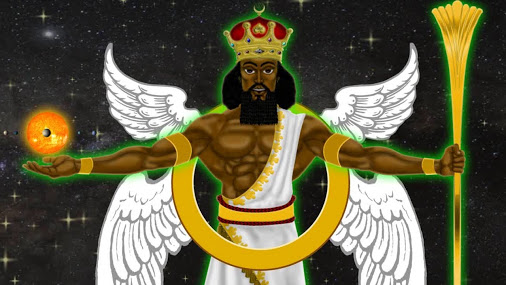
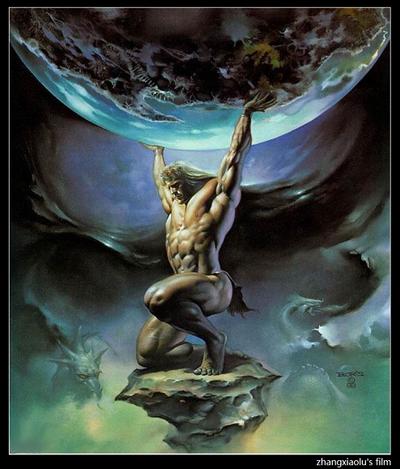
Anu is the supreme deity of the heavens as well as seen as king and father of the gods. In myths he functions as an authority figure with imperfect parenting skills. Yet, in later mythology, his role is greatly reduced.

Anu is the supreme deity of the heavens as well as seen as king and father of the gods. In myths he functions as an authority figure with imperfect parenting skills. Yet, in later mythology, his role is greatly reduced.

AKA: An

Origin: Sumerian, one of the oldest gods in the pantheon.

Type: Among the Four Primary gods out of the Seven Gods Who Decree

Domain: God of heaven, the stars, and the firmament, lord of constellations, as well as king of gods, spirits, and demons. Dwells in the highest heavenly regions. Sometimes seen as the father of the gods. In charge of the Bull of Heaven which can be used to avenge the gods. Chief god of the Great Triad with Enki and Enlil.

Pro: Was popularly believed to have the power to judge those who committed crimes and created the stars to destroy the wicked. Is generally nice to Sumerian people and rarely goes up to Heaven as far as the Assyrians and Babylonians are concerned. And yes, he was right to answer the prayers of Uruk who wanted to rein Gligamesh in. Gave Marduk 4 winds as a birthday present.

Con: Letting Ishtar borrow the Bull of Heaven was probably not a good idea, especially since Ishtar asked for it because she was enraged that Gilgamesh rejected her (for very good reasons). Also, while he’s Isthar’s father in The Epic of Gilgamesh, he’s sometimes seen as a consort (yeah, I know what you’re thinking). Has a lot of children to different consorts. Oh, and he didn’t do well on his mission to Tiamat but that’s understandable. Nevertheless, despite being the Sumerian chief deity, he doesn’t have much of a personality, doesn’t play a large role in myths, and is rarely featured in art. However, it’s basically due to that he became less of a divine entity in later times.

Symbols and Motifs: Main attribute is the royal tiara and is sometimes depicted as a hermaphrodite or jackal. “60” is his sacred number. Sometimes appears as a bull with a man’s horns. Sometimes seen resting on his throne.

City: Uruk

2. Enlil

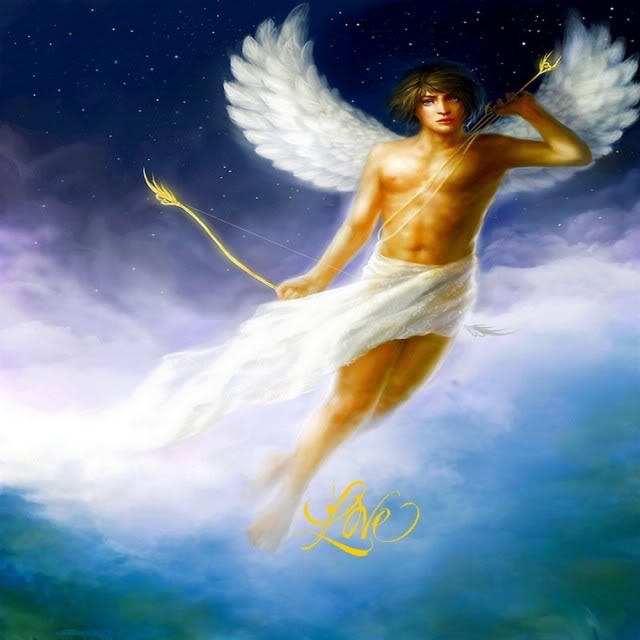
Second only to Anu, Enlil is a supreme deity with the propensity to be either as benevolent or destructive to mankind as he pleases. Though credited with giving humans agriculture, he also tried to destroy mankind by sending the Great Flood just because he was sick of the people noise. At least he gets his when he tries to get in Ninlil's skirt.

Second only to Anu, Enlil is a supreme deity with the propensity to be either as benevolent or destructive to mankind as he pleases. Though credited with giving humans agriculture, he also tried to destroy mankind by sending the Great Flood just because he was sick of the people noise. At least he gets his when he tries to get in Ninlil’s skirt.

AKA: Ellil

Origin: Sumerian

Type: Among the Four Primary gods out of the Seven Gods Who Decree

Domain: God of wind, breath, air, sky, loft, and breadth (height and distance) as well as the weather. Father of Nanna, Namtar, and Ninurta. Son of Anu. Is probably the hero in the lost Sumerian version of the Enuma Elish. Decreed kingship and declared fates. No. 2 of the Great Triad among Anu and Enki.

Pro: Believed to be the inventor of the mattock (a key agricultural pick, hoe, ax or digging tool of the Sumerians) and helped plants grow. Advised his son Ninurta on a strategy to slay the demon Asag via his talking mace Sharur which the latter sent to the realm of the gods to seek counsel from him directly. Served as intermediary between Anu and the city of Nippur as well as his No. 2. Was seen as a model for kingship.

Con: Was banished to the Underworld for seducing (or raping) Ninlil. Also requested the creation of a slave race but then got tired of their noise and tried to kill them all by sending a flood. Luckily, Enki couldn’t shut up so Utnapishtim but at least Enlil was nice enough to make him immortal after he cooled off. Yet, he did send predators and naturals disasters to keep humans in check. Oh, and he was the chief deity of Nippur in 3000 BCE before getting demoted to No. 2, and later had his role reduced in the Enuma Elish. But once he makes a decision, it’s unalterable.

Symbols and Motifs: Identified with Jupiter. Sacred number is “50.” Represented wearing a horned helmet.

City: Nippur. Temple Ekur is known as “the Mountain House.”

3. Enki

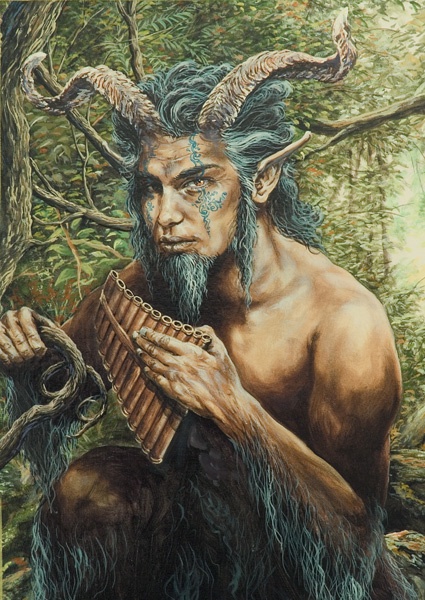
Enki is seen as a creator and benefactor of mankind who warned humanity about the Great Flood. He is the keeper of the Mes gifts of civilization. However, his personal life is utterly depraved.

Enki is seen as a creator and benefactor of mankind who warned humanity about the Great Flood. He is the keeper of the Mes gifts of civilization. However, his personal life is utterly depraved.

AKA: Ea

Origin: Sumerian.

Type: Among the Four Primary gods out of the Seven Gods Who Decree

Domain: God of water, wisdom, knowledge, crafts, mischief, creation, magic, life, replenishment, contracts, mankind, civilization, and male fertility. Husband of Ninhursag and father of Marduk. Keeper of the divine powers called Mes, the gifts of civilization (or the rules of the universe). No. 3 in the Great Triad with Anu and Enlil. Attended by a god with 2 faces called Usmu.

Pro: He’s much more fond of humanity than most of the other gods (since he helped create mankind) and is generally one of the nicest and good natured gods around. Had a lot of enduring popularity since he managed play prominent roles in most of the Mesopotamian cultures.Helped humanity survive a massive flood of Enlil’s doing (by pretending to talk to himself). Refused to get involved with dealing with Tiamat. Prefers persuasion to conflict, which he avoids as much as possible. Helped revive Inanna’s in the Underworld after what she did to him (though the gods didn’t give him much choice in the matter. He did this by creating 2 zombies to come to her aid). Built a school of learning for Nidaba. In many ways, he’s basically a Sumerian Quetzalcoatl.

Con: Banged his daughters (as well as his granddaughter and great-granddaughter) while his wife was away with his encounter with Uttu being among the sickest way possible as well as tried to eat their children. Even knocked up himself after ingesting his own semen. Also, has a lot of kids with different consorts. Confused people’s languages for almost no reason. Has a tumultuous history with Inanna who tricks him into giving the Mes when they get drunk but he fails to recover it. Put Abzu to sleep before murdering him as well as bound and gagged his adviser Mummu. Turned Abzu’s body into the heavens. Has a reputation as quite of a trickster and in some ways a Mesopotamian equivalent to Loki.

Symbols and Motifs: Identified with Mercury and referred by the number “40.” Image is a double helix snake or the Caduceus (a modern symbol in medicine). Shown in a horned crown of divinity and dressed in the skin of a carp. Symbols are goat and fish which were combined into the constellation of Capricorn. Depicted with 2 streams flowing into his shoulder with trees alongside him. Has a scepter with a ram’s head.

City: Eridu, a key sacred center of ancient Mesopotamia.

4. Ereshkigal

Ereshkigal is the ruler of Irkalla, the Mesopotamian netherworld, which isn't fun for anybody. Though not necessarily evil, she can be dark and violent as well as really hates being disrespected.

Ereshkigal is the ruler of Irkalla, the Mesopotamian netherworld, which isn’t fun for anybody. Though not necessarily evil, she can be dark and violent as well as really hates being disrespected.

AKA: Allatu, Irkalla

Origin: Sumerian

Type: Major deity since she’s the ruler of the Underworld

Domain: Goddess of Irkalla, land of the dead or the Underworld as well as death, darkness, and dust. Older sister of Inanna and wife of Nergal.

Pro: Was the only one who can pass judgement and give laws in her Underworld kingdom. As queen of the Underworld, she was a goddess her peers looked up to. She’s not intimidated by any other gods or goddesses. Is devoted to Nergal that she threatened Anu to revive the dead so they would outnumber the living if he ever took him away from her. Is very cunning and clever. Sees her few children as precious.

Con: Trapped Inanna into her Underworld kingdom and only let her go if she sacrificed her husband Dumuzid in exchange for herself (since he failed to mourn her while she was dead). Also forced her to take off her clothes at the seven gates so she’d be stripped of her powers when they met. In later myths, she later gets displaced in the Underworld by Nergal since Assyrians and Babylonians were rather patriarchal societies. Tends to be jealous of her sister’s beauty and has a long name. Can be dark and violent. Really doesn’t like being disrespected.Her abode is a boring, dreary, and crowded place. May have become queen of the Underworld after being kidnapped by the dragon Kur.

Symbols and Motifs: Lion and owl are her animals and lapis lazuli is her crystal. Depicted as nude and winged with talons as feet. Has dark hair and wears a horned headdress and a pleated cape over her shoulders.

City: Kutha

5. Ishkur

As a storm deity, Ishkur can be a force of nature. Sometimes his rains can lead to great abundance and fertility while his propensity for natural disasters can lead to widespread devastation.

As a storm deity, Ishkur can be a force of nature. Sometimes his rains can lead to great abundance and fertility while his propensity for natural disasters can lead to widespread devastation.

AKA: Adad

Origin: Akkadian

Type: Major deity

Domain: God of weather, hurricanes, storms, thunder, rain, and divination as well as inspector of the cosmos. Son of Nanna and Ningal as well as husband of Shala.

Pro: Is the Mesopotamian god who literally makes it rain, which makes the land fertile and prosperous even if they’re barren mountainsides. Can also predict the future.

Con: His storms can bring havoc and destruction as well as tend to bring him notoriety. Plays a minor role in early Sumerian myths where he’s seen as an assistant but had more prominence among the Akkadians and Assyrians due to the prevalence of storms in their areas. But he slowly became less integral during the time of the Babylonians. Can be very unpredictable ranging from benign to outright violent. Is also capable of drought and famine as well as flood.

Symbols and Motifs: Key symbols are a bull, lion, and thunderbolt. Is seen wearing a horned helmet and carrying an axe and sticks. Sacred number was “6.” Portrayed as a warrior holding a lightning bolt and club.

City: Karkara and Assur

6. Uttu
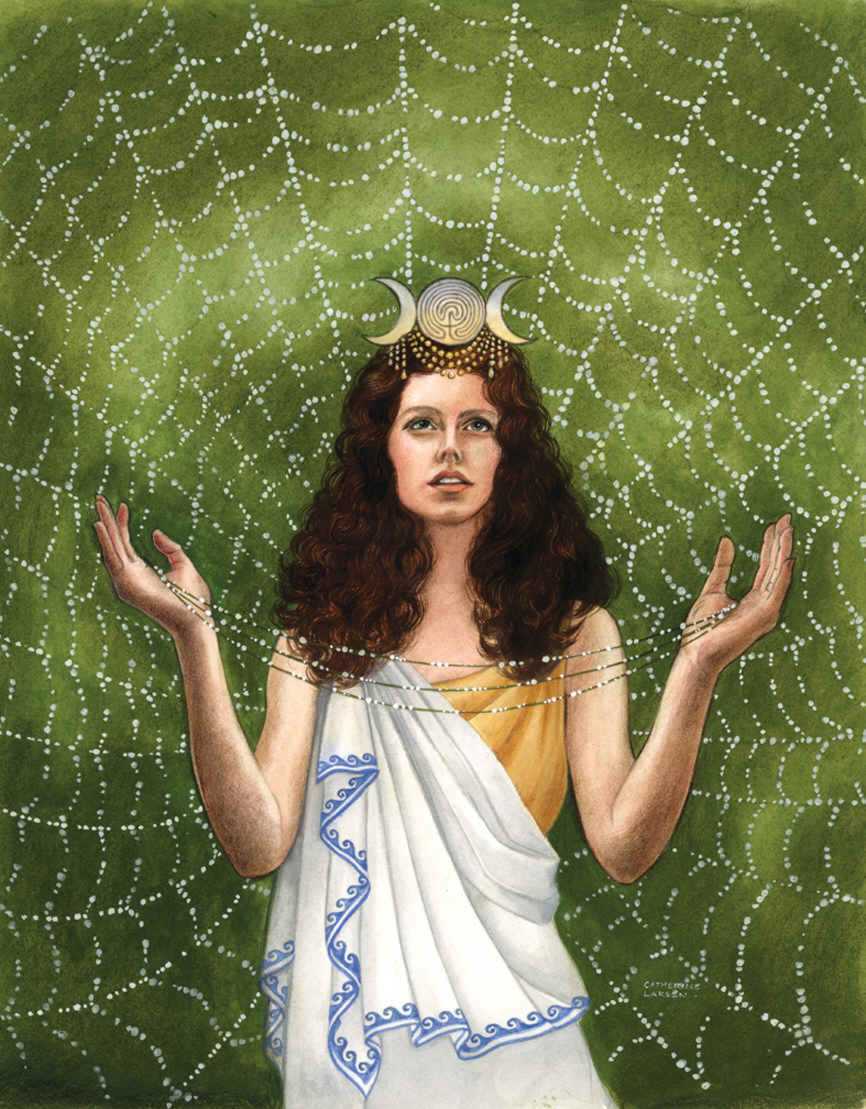
Though a minor goddess of weaving and clothing, Uttu is perhaps the best known Mesopotamian deity of the domestic sphere as well as the model for the perfect wife. However, her relationship with Enki is disturbing.

Though a minor goddess of weaving and clothing, Uttu is perhaps the best known Mesopotamian deity of the domestic sphere as well as the model for the perfect wife. However, her relationship with Enki is disturbing.

AKA: N/A

Origin: Sumerian

Type: Minor goddess

Domain: Goddess of weaving and clothing. Said to be in charge of everything pertaining to women.

Pro: Had 8 children/trees with Enki with the 8th being the Ti or the Tree of Life. Said to be a model of a perfect Sumerian wife.

Con: Was raped by Enki (her great-grandfather, grandfather, and father) and cursed him when he tried to eat their 8 children (which made him protective of her future to make it even more disgusting, but this is one version). Also, doesn’t appear much and doesn’t have much of a personality.

Symbols and Motifs: Illustrated as a spider in a web.

City: None

7. Nammu
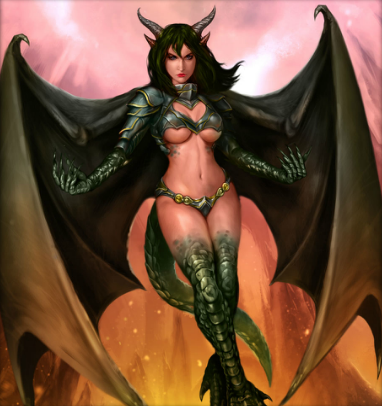
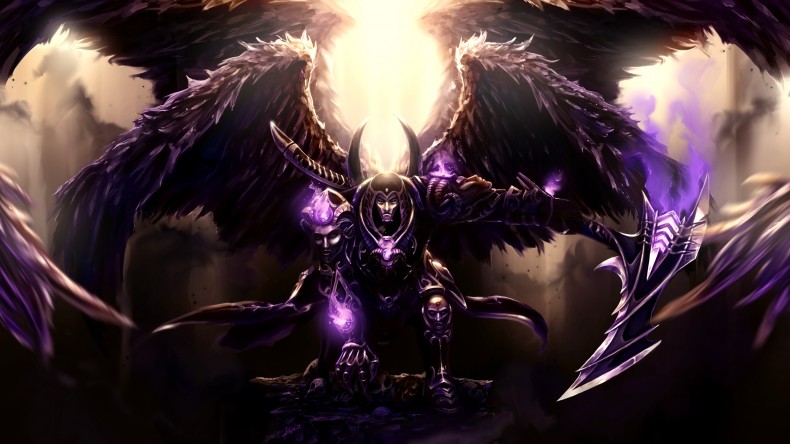
As the original primordial goddess, Tiamat brought forth a progeny of gods with her consort Abzu. But when Abzu is murdered, she really gets nasty and creates an army of monsters.

As the original primordial goddess, Tiamat brought forth a progeny of gods with her consort Abzu. But when Abzu is murdered, she really gets nasty and creates an army of monsters.

AKA: Tiamat

Origin: Sumerian

Type: Primordial Being

Domain: Goddess of primeval waters and the sea. Symbol of chaos and primordial creation. Wife of Abzu, mother and foremother of most of the gods in the pantheon.

Pro: Well, she’s quite the badass and knows how to prepare for what to expect. Warned Enki about Abzu. Can amass large armies.

Con: While she was the sole creator goddess of the Sumerian myths, she is regulated as co-creator with Abzu and became tyrant after his murder. Made her son Kingu consort (though to be fair, there weren’t many guys available who weren’t related to her). Not only that, but she’s said to have a monstrous appearance. Has a terrrible temper that you don’t want to get her angry and is driven to murder her descendents in retaliation of her husband’s (very deserved) death. Gets sliced in half by Marduk who proceeds to create the universe through her hacked body parts. Yes, she’s one nasty bitch.

Symbols and Motifs:Traditionally seen as a dragon or sea serpent along with her husband.

City: None.

8. Ninhursag

As Lady of the Mountains, Ninhursag can be a calming influence in the pantheon as well as a co-creator of mankind.  However, while she cured Enki of his woes, she wasn't happy with him cheating on her.

As Lady of the Mountains, Ninhursag can be a calming influence in the pantheon as well as a co-creator of mankind. However, while she cured Enki of his woes, she wasn’t happy with him cheating on her.

AKA: Ninmah, Nintu, Mamma, Aruru, Belet-Ili, Ki

Origin: Sumerian, one of the oldest gods in the pantheon.

Type: Among the Four Primary gods out of the Seven Gods Who Decree

Domain: Goddess of earth, nature, mountains, and fertility as well as charged with pregnancy and birth. Wife of Enki and mother of 9 of his children. Deity of Sumerian rulers. Said to be the mother of the gods. Said to be attended by foxes.

Pro: Helped create mankind with Enki and created vegetation. Said to help children when still in the womb and feeds them once born. Reputed to be a calming influence among the rest of the pantheon as well as a source of comfort, which is real major asset.

Con: Her role in creating mankind was more diminished in later myths and doesn’t seem to have much of a personality. Also, cursed Enki after he ate the plants that were actually his children to Uttu (in one version, or possibly for his incestuous affairs) so that each plant would cause a different disease (she later helped cure him, but still the other gods had to pressure her). This resulted in a barren earth and Enki begging for forgiveness. Then there’s the fact she has a lot of names and might be identified with other goddesses.

Symbols and Motifs: Tends to be depicted with Omega shaped hair and at times wears a horned headdress and a tiered skirt, often with a bow around her shoulder. Can also carry a mace or baton as well be accompanied by a lion cub on a leash. Fox is her sacred animal.

City: Eridu and Kish.

9. Ninlil
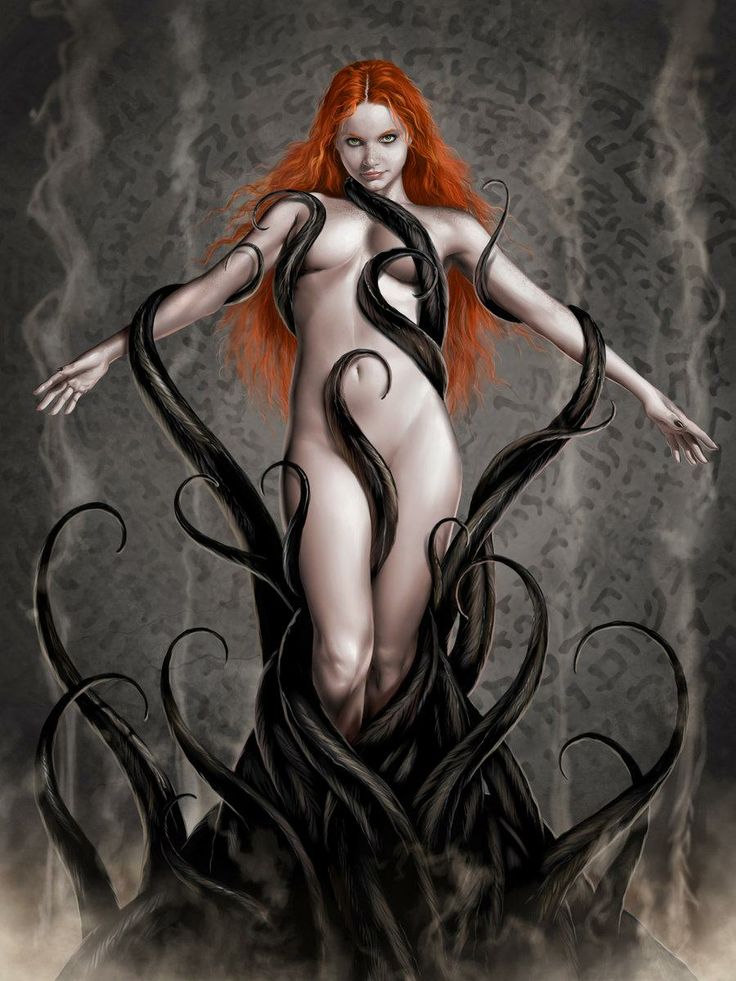
Though her name means Lady of the Wind, Ninlil is primarily known as Enlil's wife and mother of a bunch his kids. Yet, while Enlil is banished to the netherworld for raping her, she comes to his aid as well as help him procreate their way out of there. Hey, the Mesopotamians weren't feminists here!

Though her name means Lady of the Wind, Ninlil is primarily known as Enlil’s wife and mother of a bunch his kids. Yet, while Enlil is banished to the netherworld for raping her, she comes to his aid as well as help him procreate their way out of there. Hey, the Mesopotamians weren’t feminists here!

AKA: Sud, Mulittu

Origin: Sumerian

Type: Minor goddess

Domain: Goddess of the wind. Wife of Enlil and usually the mother of Nanna, Nergal, Ninazu, Ninurta, and Enbilulu.

Pro: Has an aspect of healing to her. Seems to forgive Enlil of what he did to her since she went to the Underworld for him, according to one story.

Con: Joined her husband Enlil in the Underworld after he was banished for raping her (granted it was Ancient Mesopotamia, but still it doesn’t help that she was willing to have him impregnate her several times to get out of there). Associated with northern winter storms. Still, she seems to be defined strictly as Enlil’s consort as well as a mother to a few prominent gods other than possible inspiration to the Hebrew Lilith legend.

Symbols and Motifs: Very little iconography is attributed to her.

City: Nippur and Assur

10. Nanna
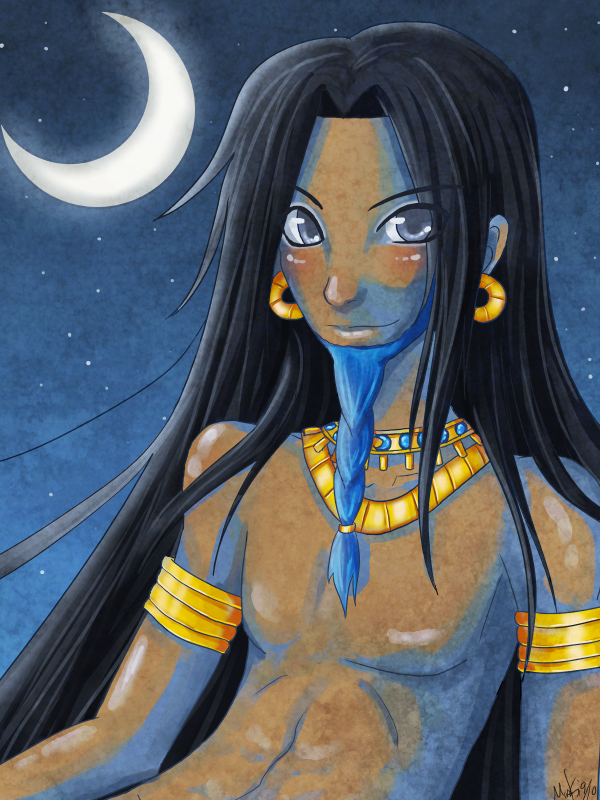
As god of the moon, Nanna is among the most benevolent and respected of the pantheon. However, his temperament is dependent on the time of the month.

As god of the moon, Nanna is among the most benevolent and respected of the pantheon. However, his temperament is dependent on the time of the month. The famous ziggurat of Ur is dedicated to him.

AKA: Suen, Sin

Origin: Sumerian

Type: Among the Three Sky Gods of the Seven Gods Who Decree

Domain: God of the moon, cattle, divination, and fertility. Son of Enlil and Ninlil. Father of Utu. Husband of Ningal. Phases govern the tide as well as the all important growth of crops.

Pro: Great with cows. Can be a diviner of fates or judge of the dead. Had a long popularity and continued to play a significant role in myths after the Akkadians lost dominance. Said to regularly visit his parents. Dispensed wisdom to humans through priests and to the other gods who consulted him. One of the most respected in the pantheon. Reputed to be a benevolent figure as well as a loving husband and father.

Con: Has unfortunate names mistaken for bad things and female babysitters. Temper waxes and wanes on a monthly cycle. Wisdom is said to be expressed in astrology.

Symbols and Motifs: Said to have a beard of lapis lazuli and rode on a winged bull. Symbols are a crescent and the tripod lamp stand. Can be represented as an old man in a flowing beard. Sacred number is “30” referring to the average successive days of a lunar month through new moon phases.

City: Ur, has a famous ziggurat attributed to him. Was once head of the pantheon in that city. A princess basically was in charge of his temple. Also has a seat in Harran.

11. Nergal

As one of the most unpleasant and feared deities in the pantheon, Nergal embodies the most destructive aspects of the sun. He's a raging bully who brings devastation wherever he goes. He accepts no surrender or mercy.

As one of the most unpleasant and feared deities in the pantheon, Nergal embodies the most destructive aspects of the sun. He’s a raging bully who brings devastation wherever he goes. He accepts no surrender or mercy.

AKA: Nirgali, Erra

Origin: Akkadian

Type: Major deity

Domain: God of fire, destruction, war, plagues, and occasionally the sun, especially during the summer or noon. Son of Enlil and Ninli. Husband of Ereshkigal. In later myths, becomes ruler of the Underworld.

Pro: Has a metal band named after him as well as a significant presence in pop culture. Him and Ereshkigal seem made for each other in the Underworld where he made his home, though he did trick his way out if it once which is a remarkable feat.

Con: Tends to be fiery and destructive as well as quite selfish and rude. He’s also a raging bully with a scorched earth policy and a penchant for satisfying his violent urges when he feels like it. Accepts no surrender and no mercy. Said to depict the negative aspects of the sun than anything and is associated with disease, demons, and evil forces. Always leaves a trail of destruction, disease, plague, and wasteland wherever he goes unless it’s the Underworld. More likely feared by the Mesopotamians than actively worshiped outside Cuthah. Also, we’re not sure about his relationship with Ereshkigal (though they might just be unusually kinky)who seems to dominate her in the Underworld in later tradition and doesn’t seem to respect her assistant. Seems not to be liked by the other gods. More like a Mesopotamian Ares.

Symbols and Motifs: Identified with Mars. Associated with a lion, bull, and rooster. Sometimes depicted with a mace or a schmitar. Can be seen wearing a lion’s mane.

City: Cuthah

12. Ninurta
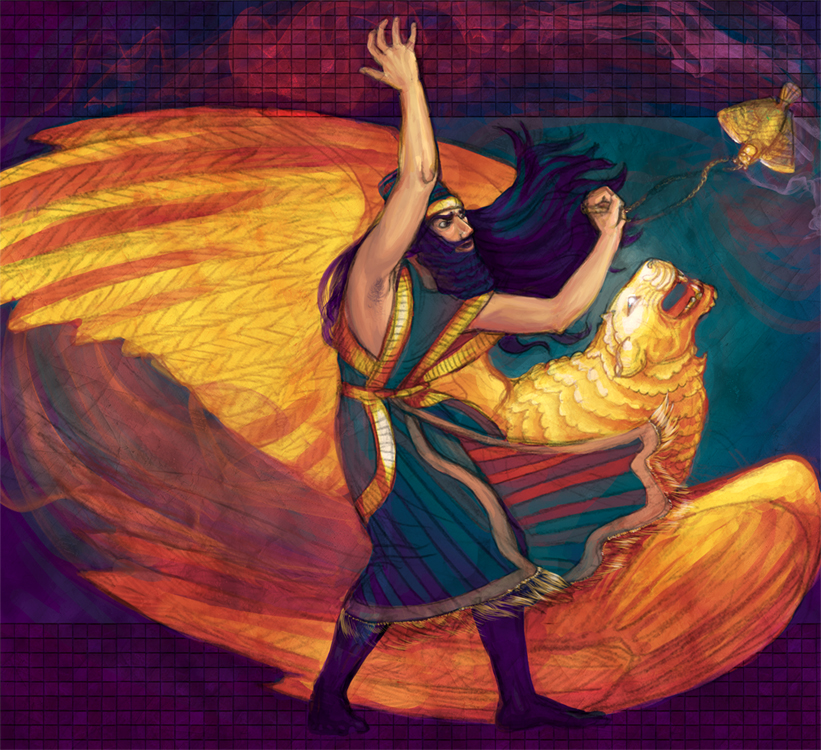
Champion of the gods, Ninurta plays a role in countless myths fighting monsters and trying to do what's best for the pantheon.  However, sometimes he tends to get a little too into the action. But he's seen as a hero and the perfect warrior among the Assyrians.

Champion of the gods, Ninurta plays a role in countless myths fighting monsters and trying to do what’s best for the pantheon. However, sometimes he tends to get a little too into the action. But he’s seen as a hero and the perfect warrior among the Assyrians.

AKA: Nigrursu

Origin: Sumerian, one of the oldest gods in the pantheon.

Type: Major deity

Domain: God of agriculture, healing, war, hunting, victory, thunder, fertility, rain, and destruction. Champion of the gods. Son of Enlil and husband of Ugallu.

Pro: Brought about agriculture after defeating a stone army of the demon Asag. Said to be a healing god who releases humans from sickness or demon possession. Is known to be a great warrior who fought a series of monsters and demons. Was entrusted by Enki with several powerful Mes. Rescued the Tablets of Destiny from the beast Anzu and the “Slain Heroes.” And used Anzu to as his chariot driver that accompanies him into battle. Created mountains to beat Kur. While he can be quite fiery like Nergal, he’s aware of his duties and strives to put the pantheon first. Seen as the perfect warrior by the Assyrians. Kind of like a Mesopotamian version of Thor.

Con: While he’s not as bad as Nergal, sometimes tends to enjoy violence a little too much since even the heat of battle, the gods can’t prevent him from wreaking unimaginable havoc on enemies and/or the entire landscape. Also, tried to steal back the Tablets after safely returning them to his father, even destroying the security precautions. Can be arrogant and impetuous.

Symbols and Motifs: Identified with Saturn and the plow. Often appears with a bow and arrow, a sickle sword named Sargaz, and a talking and shape shifting mace named Sharur. Can be depicted as standing over a monster.

City: Nippur, Girsu, Kalhu, and Lagash.

13. Inanna

Better known as Ishtar, Inanna is easily one of the most prominent goddesses and deities in the pantheon.  However, while she may be a goddess of love and beauty, practically all mortal men who've been with her have ended up dead (explaining why Gilgamesh rejected her). Also, she can be such a power hungry and spoiled brat with a very violent temper.

Better known as Ishtar, Inanna is easily one of the most prominent goddesses and deities in the pantheon. However, while she may be a goddess of love and beauty, practically all mortal men who’ve been with her have ended up dead (explaining why Gilgamesh rejected her). Also, she can be such a power hungry and spoiled brat with a very violent temper.

AKA: Ishtar, Inana

Origin: Sumerian, one of the earliest gods.

Type: Among the Three Sky Gods of the Seven Gods Who Decree

Domain: Goddess of warfare, wisdom, love, sex, beauty, lust, and fertility as well as the stars and night sky. Younger sister of Ereshkigal. Wife of Dumuzid. Has her own sex changing attendant No. 2 Ninshubar and her own beautician Cara.

Pro: She’s the most prominent female deity in the pantheon as well as the most recognized Mesopotamian deity with a strong presence in pop culture. One of the few goddesses in the pantheon to retain her prominence (but maybe not much) as well as well as retain relative popularity over centuries. Is said to be very beautiful and knows how to dress. Embodies a lot of independence and self-determination as well as able to know her way around in a patriarchal system. Existence ensures that sex and procreation give joy and continue the circle of life. Recipient of prayers regarding impotency and unrequited love. Is formidable with a fearless nature and fertile imagination. Built a city for Dumuzid to rule called Uruk.

Con: Let’s not kid ourselves, her myths don’t really list her as having a consistent parentage or constant spouse, with her being sexually linked to various gods in the pantheon as well as some mortals to spare. It doesn’t help that a god can be her dad in one myth and her husband in another (like Anu, for instance) and/or perhaps her brother. Also, if you’re a mortal man she wants to sleep with, you might as well control your urges and just say no if you value your life. Seriously, men who’ve slept with her seldom live to tell the tale unless they’re deities. Gilgamesh rejects her for this very reason (but Dummuzid learns the hard way though). However, he soon learns that she doesn’t take rejection well, since she’s a self-absorbed and tantrum prone bitch who asks Anu for the Bull of Heaven (which he warned about causing drought) to terrorize Uruk. She can also start disasters, carnage, chaos, confusion, and all out war to those who disobey her (or just don’t give her what she wants {or does something she doesn’t like}, not that the alternative is much better). But she can be very volatile and unpredictable. Also, descended to Irkalla just to nab her sister’s powers after grabbing Enki’s Mes (by getting him drunk) in pursuit of world domination. Of course, she finds herself trapped since those who enter Irkalla should never leave unless told otherwise. Ereshkigal has a lot of fun with this.

Symbols and Motifs: Identified with Venus. Symbol is an 8 pointed star or rosette. Associated with lions and frequently depicted as standing on 2 lionesses. Represented by reeds in early iconography. Can be depicted nude or richly clothed with a string of attendants and devotees. Can also have stash of weapons or be seen with carnalian or lapis lazuli. Wears a horned headdress, tiered shirt, and occasionally a cape. In some portrayals, she can even have a beard.

City: Uruk, priestesses were said to practice sacred prostitution in her honor.

14. Utu

Sun god by day, underworld judge by night, Utu embodies the sun's positive aspects by bringing warmth and light. Best known for his image being on the Code of Hammurabi.

Sun god by day, underworld judge by night, Utu embodies the sun’s positive aspects by bringing warmth and light. Best known for his image being on the Code of Hammurabi.

AKA: Shamash

Origin: Sumerian, one of the oldest gods in the pantheon

Type: Among the Three Sky Gods of the Seven Gods Who Decree

Domain: God of justice, truth, law, divination, salvation, and the sun. Son of Nanna and Ningal. Travels through earth from his mountain sleeping quarters through chariot or boat. Presides as an Underworld judge by night (though we’re not sure how he gets any sleep). Husband of Aya who’s barely mentioned (mostly because he’s so busy). Responsible for maintaining order in the universe (and with a pantheon like this, it certainly needs it).

Pro: Was right to set up Inanna with Dummuzid (well, for awhile) and eagerly paid the bill for her wedding. Embodies the positive aspects of the sun by bringing warmth and light. Plays a role through treaties, oaths, and business transactions as well as sees through duplicity so he can’t be fooled. Can interpret divine judgement through omens and priests. Sought after by humans to ward against evil and curses. Protects travelers and merchants. Can also be rather persuasive. Assisted Gilgamesh in defeating Humbaba. Is of wholly heroic and ethical character.

Con: Doesn’t appear much in myths. Of course, he could be quite busy on human matters.

Symbols and Motifs: Depicted wearing a horned helmet and carrying a saw edge weapon or a notched dagger. Symbol is the sun or a sun disk (obviously). Sometimes holds a rod and rope. Associated with Saturn and lions. Sacred number is “20.”

City: Larsa

15. Marduk

Though a patron god of Babylon, Marduk is best known for defeating Tiamat using all what you see in a Michael Bay movie at his disposal. However,  he also created the world from her corpse and demanded to be in charge of all creation in order to defeat Tiamat. But to the Babylonians, he was totally awesome.

Though a patron god of Babylon, Marduk is best known for defeating Tiamat using all what you see in a Michael Bay movie at his disposal. However, he also created the world from her corpse and demanded to be in charge of all creation in order to defeat Tiamat. But to the Babylonians, he was totally awesome.

AKA: N/A

Origin: Babylonian

Type: National deity of the Babylonian Empire.

Domain: God of vegetation, justice, magic, law, salvation, and water as well as lord of truth. Son of Enki. Custodian of the Tablets of Destiny.Husband of Sarpanit and father of Nabu. Drives a chariot with 4 poisonous horses. Said to have 50 names.

Pro: Defeated Tiamat in the Enuma Elish (at least the one we’re familiar with) by immobilizing her with the 11 winds while she broke into unstoppable rage and killed her with his bow which he made himself as well as fletched the arrows (while carrying a mace). Can throw lightning and fill his body with flame (thanks to his large hyperspace arsenal). But his mightiest weapon is the rain-flood. Also, trapped her with a net he made as well. Said to have a decent relationship with his dad. Seen as an almost messianic figure to the Babylonians and is said he would visit the Babylon again.

Con: He was basically created by the Babylonians to justify their dominance. Demanded he be made chief deity and have authority over all creation after defeating and mutilating Tiamat as well as creating the universe with her body parts. The notion that humans should be created as slaves to the gods was his idea, which he fashioned out of Kingu’s blood. May have a massive case of entitlement. Killed Tiamat and Kingu in very nasty ways. Created tornadoes. While he’s powerful enough to help people, he can easily destroy them. Other than his parents or some of his other relatives, had zero respect for his elders. Took the Tablets of Destiny from Kingu to affirm his supremacy in the universe.

Symbols and Motifs: Identified with Jupiter. Snake dragon is his symbol along with a spade.

City: Babylon. Temple is ziggurat Etemenanki.

16. Abzu
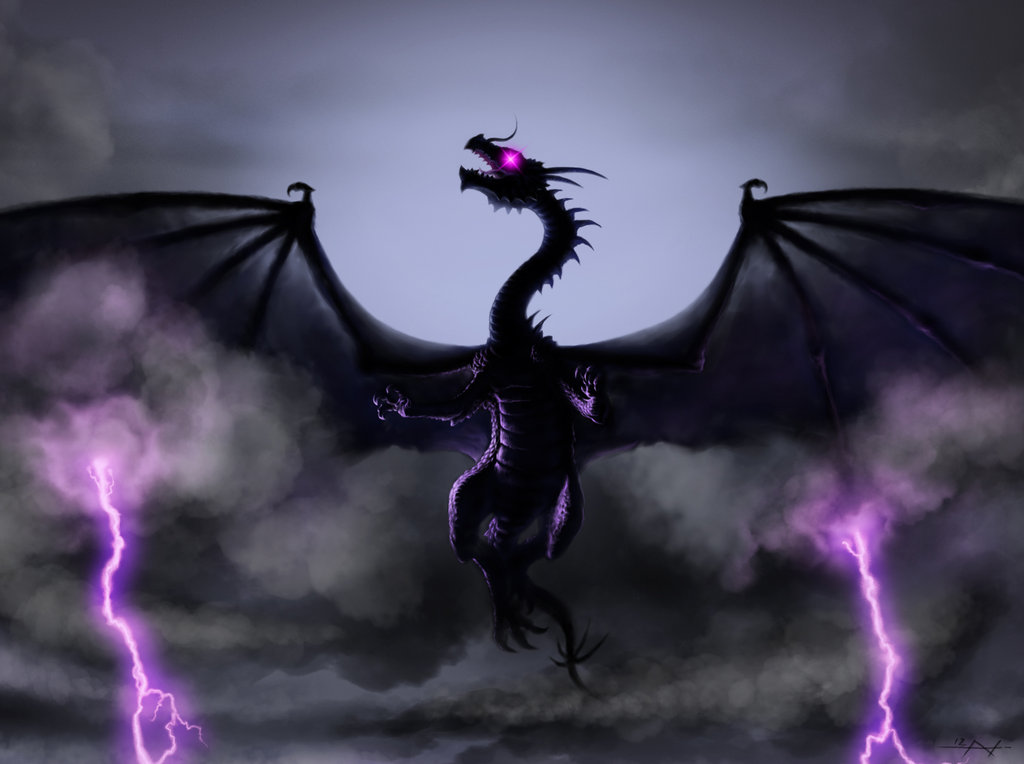
While he and Tiamat brought forth a progeny of gods, Abzu thought they were too noisy and decided to kill em all. Luckily, Enki murdered him.

While he and Tiamat brought forth a progeny of gods, Abzu thought they were too noisy and decided to kill em all. Luckily, Enki murdered him.

AKA: Apsu

Origin: Babylonian (as a deity, no less)

Type: Primordial Being

Domain: God of primeval waters but only in the Enuma Elish. In Sumer, Abzu is mostly the name of the primeval sea between the earth and the underworld. Husband of Tiamat as well as father and forefathers of a lot of other gods and goddesses. Assisted by Mummu.

Pro: Well, he managed to produce a badass family with Tiamat who seemed somewhat loyal to him.

Con: Decided to do away with his progeny just because they were making lots of noise that was distracting him from his work (which was making babies with Tiamat?).

Symbols and Motifs: Traditionally depicted as a dragon or sea serpent along with his wife.

City: None.

17. Kingu

After Abzu's death, Tiamat took her son as her consort and head of her army. Of course, he had leadership aspirations of his own but as soon as Marduk defeated Tiamat, he was next for the chopping block.

After Abzu’s death, Tiamat took her son as her consort and head of her army. Of course, he had leadership aspirations of his own but as soon as Marduk defeated Tiamat, he was next for the chopping block.

AKA: Qingu

Origin: Babylonian

Type: Major deity

Domain: Son and consort of Tiamat (with Abzu) as well as the general of her army (don’t ask) in the Enuma Elish. Candidate for ruler of the gods. Only appears in the Enuma Elish. Had Tablets of Destiny on his chest.

Pro: Well, he was loyal to his mother, for better or for worse.

Con: Was his mother’s consort and wanted to rule the universe himself. Not sure if Tiamat was under his influence after Abzu was murdered. Fled when Marduk came after despite being head of Tiamat’s army, but he got killed anyway as well as had his blood used to create humans by Enki.

Symbols and Motifs: Like his parents, tends to be depicted as a dragon.

City: None.

18. Dumuzid

Dumuzid is best known as a shepherd god and Inanna's husband whom she built a city for him to rule. But when she's trapped in the Underworld, he's the only man who doesn't mourn and is forced to take her place for 6 months.

Dumuzid is best known as a shepherd god and Inanna’s husband whom she built a city for him to rule. But when she’s trapped in the Underworld, he’s the only man who doesn’t mourn and is forced to take her place for 6 months.

AKA: Tammuz, Dumuzi

Origin: Sumerian

Type: Major deity

Domain: God of food, animals, fertility, and vegetation as well as life, death, and rebirth. Husband (or lover) of Inanna.

Pro: Seemed very determined to win Inanna (even if it was to be king for 36,000 years). Death was widely mourned by not just his goddesses, but also his animals. Reputed equivalent to the Macedonian Adonis.

Con: Didn’t mourn for Inanna when she was killed in the Underworld despite that she married him while he was a shepherd, built Uruk for him to rule, and gave him 2 demigod sons. Luckily he gets to spend 6 months on earth while his sister takes over for him during the winter. Perhaps he relished in Inanna’s absence a bit too much, but we all know what she can be like. Then again, I bet things have cooled down considerably between them.

Symbols and Motifs: Represented by date clusters or heart of date palm.

City: Uruk and Bad-Tibira

19. Mamitu
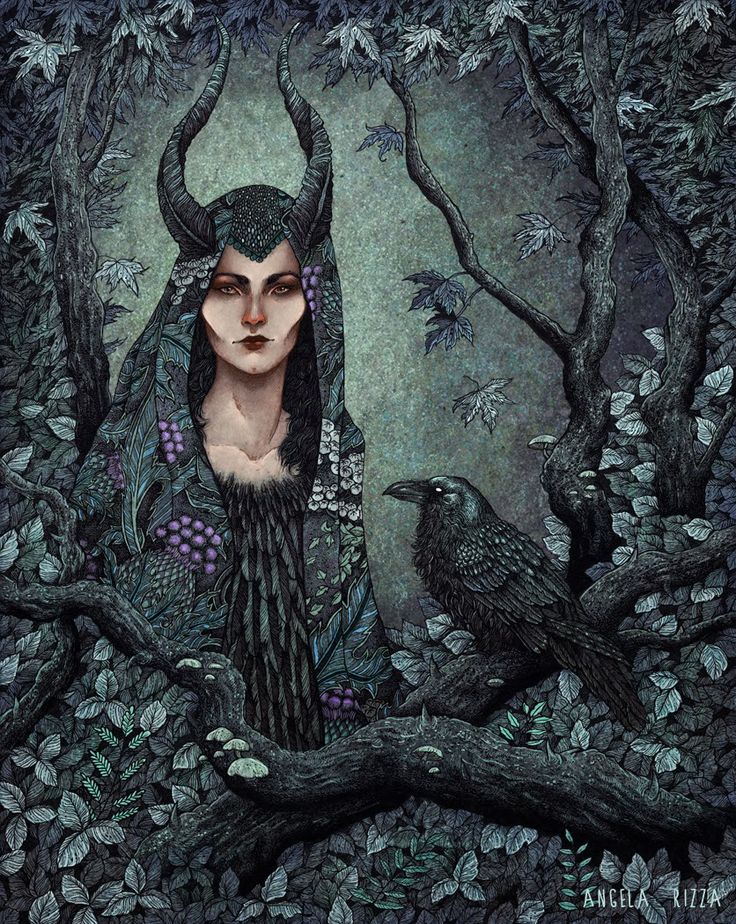
Mamitu is a judge of the Underworld who knows every history, life cycle, and fate for every creature in the universe. Still, stay on her good side. But she will tell you your fortune, for a fee.

Mamitu is a judge of the Underworld who knows every history, life cycle, and fate for every creature in the universe. Still, stay on her good side. But she will tell you your fortune, for a fee.

AKA: N/A

Origin: Akkadian

Type: Minor goddess

Domain: Goddess of destiny, oath, prophecy, and fate as well as judge of the Underworld. Decreed fates for newborns.

Pro: Knows the life cycle, history, and the fate of every creature in the universe and will let anyone know (but for a price).

Con: We’re not sure if what she’s saying is real prophecy or stuff she made up. But please, it pays to stay on her good side and you will a long life. Also, if you want to know your future, just send her a blank check to her priests. Can also be a demon of irrevocable curses.

Symbols and Motifs: Has the head of a goat with a raven as a symbol, I think.

City: None

20. Nabu

Son and assistant of Marduk, Nabu engraves the destinies the gods have decided and can determine the length of a human life.  Other than this not much is known.

Son and assistant of Marduk, Nabu engraves the destinies the gods have decided and can determine the length of a human life. Other than this not much is known.

AKA: N/A

Origin: Amorite

Type: Major deity

Domain: God of wisdom, writing, and vegetation. Keeper of the Tablets of Destiny. Son of Marduk and Sarpanit in the Babylonian rendition as well as Marduk’s assistant and scribe. Husband of Tashmetum.

Pro: Engraves the destinies of each person as the gods have decided and can determine the length of human life. Seems to have a decent relationship with Marduk despite possibly being the Mesopotamian equivalent of a nerd.

Con: Doesn’t seem to have much of a role in myths or much of a personality. But since he can determine the length of your life, be on his good side.

Symbols and Motifs: Symbols are clay writing tablet and writing stylus. Wears a horned cap and stands with his hands clasped. Rides on a winged dragon, originally belonging to his dad. Has a long fringe robe under a slit skirt.

City: Borsippa

21. Namtar

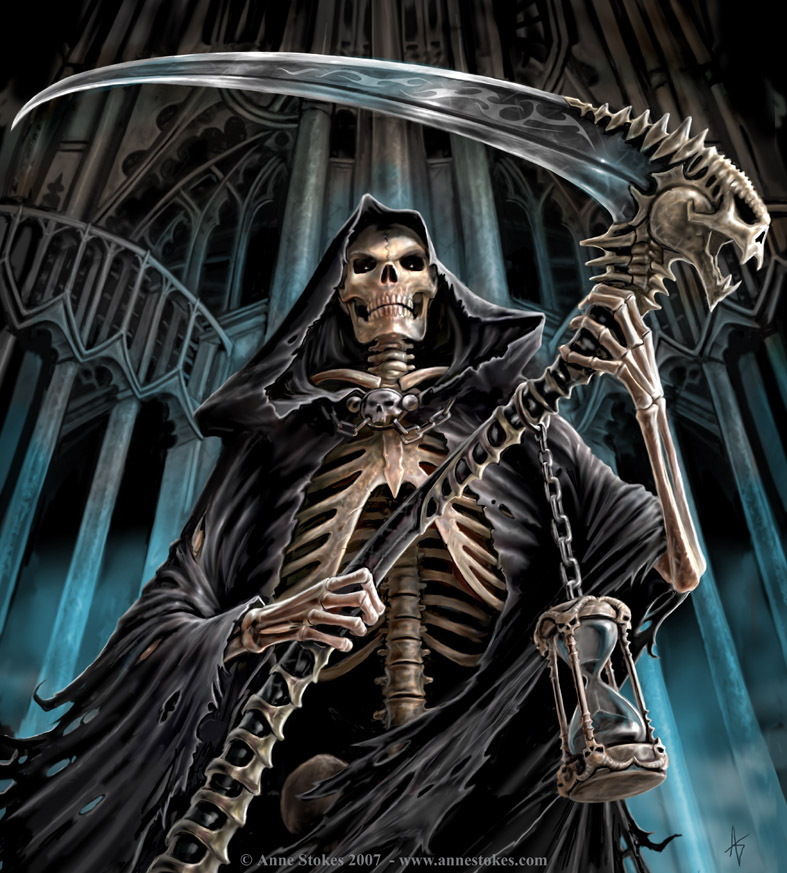
A god of death and pestilence, Namtar is an assistant to his mother Ereshkigal in the Underworld. Though people give him offerings to prevent his wrath, he isn't well liked and he knows it. Possible inspiration for the Grim Reaper.

A god of death and pestilence, Namtar is an assistant to his mother Ereshkigal in the Underworld. Though people give him offerings to prevent his wrath, he isn’t well liked and he knows it. Possible inspiration for the Grim Reaper.

AKA: N/A

Origin: Sumerian

Type: Minor god

Domain: God of death and fate as well as minister and messenger to Anu, Nergal, and Ereshkigal. Son of Enlil and Ereshkigal as well as husband of Husibiag.

Pro: Very loyal to Ereskigal and willing to take her place if she can’t come. Can leave and return to the Underworld if he has to. Can be prevented with inflicting pestilence with offerings. Very knowledgeable in anatomy.

Con: Cursed Inanna with 60 diseases on her entrance to the Underworld on different parts of her body. Considered responsible for diseases and pests and can inflict them if he feels like it. Isn’t well liked and knows it. Still, his mother won’t take it well if he’s disrespected.

Symbols and Motifs: Very little iconography is attributed to him. But he’s sometimes likened to the Grim Reaper and may have been the inspiration for it.

City: None

22. Nanshe

A benevolent goddess, Nanshe embodies social justice principles like caring for orphans and widows, advising those in debt, and taking in refugees. Nevertheless, she doesn't figure as much in myths as goddess like Inanna and Ereshkigal do.

A benevolent goddess, Nanshe embodies social justice principles like caring for orphans and widows, advising those in debt, and taking in refugees. Nevertheless, she doesn’t figure as much in myths as goddess like Inanna and Ereshkigal do.

AKA: Nazi

Origin: Sumerian

Type: Major deity

Domain: Goddess of social justice, prophecy, fertility, storerooms, and fishing. Daughter of Enki and Ninhursag. Said to have dominion over all animals in the Persian Gulf.

Pro: She’s a benevolent goddess said to nurture orphans, provide for widows, give advice for those in debt, and take refugees from war torn areas. Can give oracular messages and interpret dreams to foretell the future. Seems to avert being sidelined in later mythology unlike many goddesses in Mesopotamia as her prominence seems to rise that she eventually has assistants. Sometimes other gods rely on her for guidance. Also, sees that weights and measures are correct. Not to mention, helped heal her father Enki.

Con: Unfortunately, the name “Nancy” is probably derived from her, which was a unisex name at the time (she shares the name of a king).Not to mention, she was originally referred to as, “Nazi.” Also, she doesn’t have as much role in myths as other goddesses who quickly overshadow her.

Symbols and Motifs: Associated with birds and bats, particularly ravens and pelicans. Sometimes depicted with scales as well as represented by a fish.

City: Nina. Seat was the Sirara Temple. Also, Lagash.

23. Ashur

While the Babylonians have Marduk, the Assyrians had  Ashur as their patron hero god. However, he's not nearly as memorable.

While the Babylonians have Marduk, the Assyrians had Ashur as their patron hero god. However, he’s not nearly as memorable.

AKA: N/A

Origin: Assyrian

Type: Major and national deity of the Assyrian Empire.

Domain: God of war and Assyria. More of a symbol than a deity but under the Assyrian Empire, he was the chief god who performed Marduk’s tasks in the Enuma Elish.

Pro: Well, if the Assyrians are to be believed, he must be quite a badass, since he tends to embody the Assyrian warlike spirit. And that people still named their kids after him in present day Syria.

Con: Unfortunately, he doesn’t seem to have much of a personality and doesn’t appear much. Probably used by the Assyrians to justify their domination of northern Mesopotamia and anywhere else they ruled.

Symbols and Motifs: Represented by a winged disc with horns as well as portrayed with a bow and arrow. Sometimes seen riding a snake-dragon.

City: Assur

24. Nusku
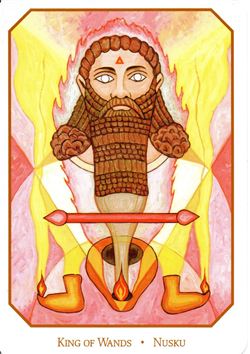
A god of fire Nusku is seen as a mediator between the gods and humanity as well as protector of the family. He also figured in a lot of rituals but not so much in myths.

A god of fire Nusku is seen as a mediator between the gods and humanity as well as protector of the family. He also figured in a lot of rituals but not so much in myths.

AKA: Nuska, Girra, Gibil

Origin: Assyrian

Type: Minor god

Domain: God of fire, light, and human civilization. Patron of the arts. Assistant to Enlil.

Pro: Natural association of all human progress with the discovery use of fire. Seen as mediator between humans and the gods as well as protector of the family, especially during the night where he’s said to ensure good dreams and deter nightmares. Figures in a lot of rituals.

Con: Doesn’t play much of a role in myths and doesn’t have much of a personality.

Symbols and Motifs: Key symbols are a lamp and a rooster.

City: Harran and Nippur.

25. Tashmetum

Wife of Nabu,  Tashmetum is often called to listen to prayers and grant requests. A beauty in her own right, her relationship with Nabu was often celebrated through ritual and ceremony.

Wife of Nabu, Tashmetum is often called to listen to prayers and grant requests. A beauty in her own right, her relationship with Nabu was often celebrated through ritual and ceremony.

AKA: Tashmetu, Tashmit

Origin: Akkadian

Type: Minor goddess

Domain: Goddess of supplication. Listener of prayers and requests. Wife of Nabu.

Pro: Well, she’s called upon to listen to prayers and grant requests. Said to be rather popular since she shares a name with a queen. Reputed to be rather attractive.

Con: Unfortunately, the only references to her in mythology as far as we know is her marriage to Nabu in which they make love in a garden before her husband hunts an ox. So while she may be a significant figure in Mesopotamia, we’re not sure how big a role she played.

Symbols and Motifs: Very little iconography is attributed to her.

City: Borsippa

26. Ninshubur

As Innana's best friend and messenger to the gods, Ninshubur plead with Enki to revive Inanna after Ereshkigal struck her dead in the Underworld. However,  she also abetted in many of Inanna's schemes as well.

As Innana’s best friend and messenger to the gods, Ninshubur plead with Enki to revive Inanna after Ereshkigal struck her dead in the Underworld. However, she also abetted in many of Inanna’s schemes as well.

AKA: Papsukkal (as a guy)

Origin: Sumerian

Type: Minor goddess

Domain: Queen of the East, messenger and Inanna’s  second-in-command. Also travels and works for other gods as well.

Pro: She’s Inanna’s loyal confidante who’d do anything to assist or help her. Pleaded with Enki to save her life after she was trapped in the Underworld.

Con: Unfortunately, being loyal to Inanna means having to assist in dubious activities such as stealing the Mes from Enki. And she basically doesn’t do anything to call her out on it. Also, in later mythologies, she’s changed to a guy.

Symbols and Motifs: There is little iconography attributed to her.

City: None

27. Nidaba

As scribe and accountant to the gods, Nidaba kept records, chronicled events, as well as performed any bookwork related duties to the pantheon. She also had her own school and did charity drives with Nanshe. However, she was eventually displaced by Nabu in later myths.

As scribe and accountant to the gods, Nidaba kept records, chronicled events, as well as performed any bookwork related duties to the pantheon. She also had her own school and did charity drives with Nanshe. However, she was eventually displaced by Nabu in later myths.

AKA: Nanibgal, Nisaba

Origin: Sumerian

Type: Minor goddess

Domain: Goddess of writing, learning, education, accounting, and harvest. Sometimes chief scribe to Nanshe and at times scribe to the gods.

Pro: Has a school of learning Enki built for her so she could better serve those in need. Keeps records, chronicles events, and performs various other bookwork-related duties for the gods. In charge of marking regional borders. With Nanshe, she occasionally helps settle disputes with mortals and gives out aid. Also, records visitors to Nanshe as well as takes care of Ninhursag’s temple.Is also a teacher of mortal scribes and divine deities. Many gods turn to her for advice.

Con: In the Babylonian period, she was basically displaced by Nabu. It’s also said she bears some resemblance to Gilgamesh’s friend Enkidu. Also, being a benevolent goddess and divine a accountant, she probably doesn’t appear in myths much.

Symbols and Motifs: Depicted with flowing hair and a horned tiara while holding grain and a crescent moon.

City: Eresh and Umma.

28. Geshtinanna
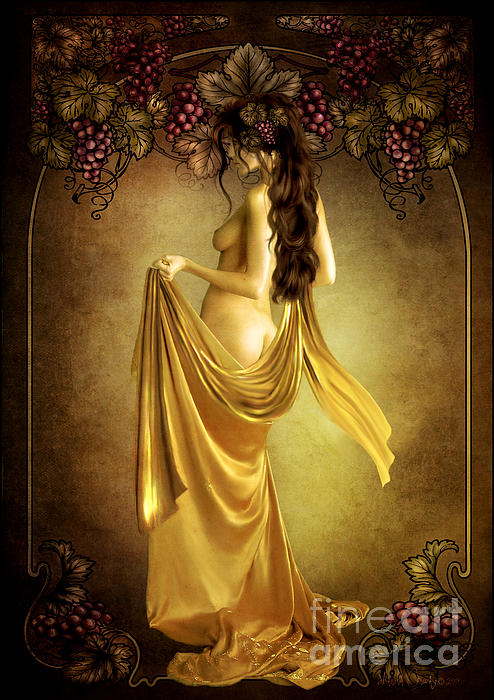
As her brother was dragged off to the Underworld, Geshtinanna  mourned his loss for days and nights as well as offered to take his place. Thus, she tends to remain in the Underworld whenever Dumuzid isn't there. Also seen as a divine poet and interpreter of dreams as well as the goddess of the vine.

As her brother was dragged off to the Underworld, Geshtinanna mourned his loss for days and nights as well as offered to take his place. Thus, she tends to remain in the Underworld whenever Dumuzid isn’t there. Also seen as a divine poet and interpreter of dreams as well as the goddess of the vine.

AKA: Ngeshtin-ana

Origin: Sumerian, one of the oldest gods in the pantheon

Type: Major deity

Domain: Goddess of the heavenly vine, wine, writing, music, and cold seasons. Divine poet and interpreter of dreams. Sister of Dumuzid.

Pro: Devoted to her brother Dumuzid that she was willing to take his place in the Underworld after Inanna’s screw up which put him there (at least she’s there for 6 months). And when he died, she lamented his loss days and nights. Also willing to protect him as he changes into a gazelle.

Con: There’s not much else about her besides what pertains to certain fragments of hymns and Inanna’s descent to the Underworld. It’s said that her cult might’ve died into the Old Babylonian period.

Symbols and Motifs: Iconography is unknown.

City: Isin, Uruk, and Nippur.

How to Treat an American Flag

american-flags-for-sale-online1

The American flag is one of the United States’ most significant and powerful patriotic symbols. We have so many stuff for it such as our national anthem, “The Star Spangled Banner,” written by a lawyer named Francis Scott Key who witnessed the Battle of Fort McHenry during the War of 1812 while a prisoner on a British ship in Baltimore Harbor. Of course, even though the flag has been around since the American Revolution but contrary to what you might’ve learned in school, it was definitely not designed by a woman named Betsy Ross (that was just some bullshit story made up by her grandson). It was more likely designed by Continental Congress delegate and signer of the Declaration of Independence Francis Hopkinson (and even his claim has holes in it but at least his involvement with the design is supported by evidence). Yet, there are also stories relating to other individuals as well. But as to whoever sewn the first American flag, it could be any flag maker in Philadelphia. Over the years, it has gone through many renditions, there wasn’t a lot of rules that pertained to the stars and stripes at first save perhaps that it should include 13 red and white stripes as well as a blue square at the top left corner that consisted of a number of stars that depicted the number of states at the time. However, until 1912, there was no pattern to how the stars should be displayed. And if you go to an American Civil War museum, then you’d find a lot of interesting patterns.

One of the many designs you might see of a Union flag in an American Civil War museum. The star configuration on the flag wouldn't be established until 1912.

One of the many designs you might see of a Union flag in an American Civil War museum. The star configuration on the flag wouldn’t be established until 1912.

Despite that the Stars and Stripes was adopted in 1777, it wasn’t until 146 years later when there was a serious attempt to establish a uniform code of etiquette for the US flag. On February 15, 1923, the War Department issued the US Flag Code which was adopted almost in their entirety on June 14 of that year by a conference of 68 patriotic organizations in Washington D.C. However, the US Flag Code didn’t become official law until years later. Now military branches have their own codes for the American Flag. This is for civilians.

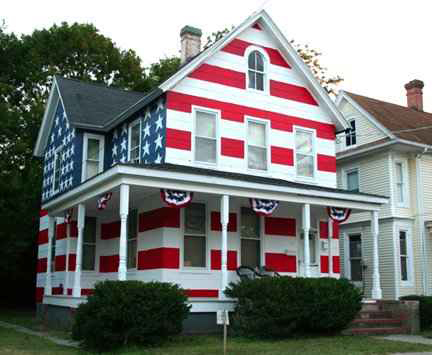
If something has the likeness of an American flag to an observer, then it should be seen as an American flag. Since this house is painted as an American flag, it's basically disrespect.

If something has the likeness of an American flag to an observer, then it should be seen as an American flag. Since this house is painted as an American flag, it’s basically disrespect.

“The words “flag, standard, colors, or ensign”, as used herein, shall include any flag, standard, colors, ensign, or any picture or representation of either, or of any part or parts of either, made of any substance or represented on any substance, of any size evidently purporting to be either of said flag, standard, colors, or ensign of the United States of America or a picture or a representation of either, upon which shall be shown the colors, the stars and the stripes, in any number of either thereof, or of any part or parts of either, by which the average person seeing the same without deliberation may believe the same to represent the flag, colors, standard, or ensign of the United States of America.” –Introduction to the US Flag Code Ch. 1 Title 4.

When to Display the Flag

The flag should be displayed at all times on a pole at public buildings, legal holidays, and other occasions.

The flag should be displayed at all times on a pole at public buildings, legal holidays, and other occasions. On all days, it’s usually hoisted on flagstaffs from sunrise to sunset.

On all days, especially on legal holidays and other special occasions.

It's always customary for classrooms to stand up and recite the "Pledge of Allegiance" every morning. But even though I love my country, saying the Pledge was kind of a pain in the ass for me. Nevertheless, Francis Bellamy had a way to salute the flag during the pledge but it was discontinued in the 1940s for bearing too much similarities to the Hitler salute (yes, really).

It’s always customary for classrooms to stand up and recite the “Pledge of Allegiance” every morning. But even though I love my country, saying the Pledge was kind of a pain in the ass for me. Nevertheless, Francis Bellamy had a way to salute the flag during the pledge but it was discontinued in the 1940s for bearing too much similarities to the Hitler salute (yes, really).

On official buildings when in use, in or near polling places on election days, and in or near schools when in session.

Customary between sunrise and sunset on buildings and on stationary flagstaffs in the open.

Citizens may fly it at any time.

The American flag flies continuously at the US Marine War Memorial in Washington D. C. which depicts the statue of the soldiers in the Iwo Jima flag raising photo, which was staged as said in Flags of Our Fathers. What happened to the men in it is pretty sad.

The American flag flies continuously at the US Marine War Memorial in Washington D. C. which depicts the statue of the soldiers in the Iwo Jima flag raising photo, which was staged as said in Flags of Our Fathers. What happened to the men in it is pretty sad.

May be displayed at night, on special occasions, preferably lighted.

Flies at the White House and the East and West fronts as well as the dome of the US Capitol at all times and at the US House and Senate while in session. Other places it flies continuously at: US customs and ports of entry, Fort McHenry National Monument and Historic Shrine as well as Flag House Square in Baltimore, the Francis Scott Key Home, the Marine Corps War Memorial (Raising of the Flag at Iwo Jima), Battle Green at Lexington, Massachusetts, the South Pole, the Moon, Valley Forge, and other places by custom.

50 flags are continuously displayed at the Washington Monument.

A Civil War era flag flies continuously at Pennsylvania Hall at Gettysburg College.

Small flags usually fly at all times on graves of those who’ve served in the US military.

Flying the Flag at Half-Staff

To fly a flag at half staff is a sign of a nation in mourning. This is usually done upon deaths of high elected official, days of remembrance, and upon presidential proclamation.

To fly a flag at half staff is a sign of a nation in mourning. This is usually done upon deaths of high elected official, days of remembrance, and upon presidential proclamation.

Signal of mourning.

Should be hoisted to the peak before being lowered to half-staff.

Durations:

  • By presidential proclamation.
  • 30 days from the day of death for a sitting or former president.
  • 10 days from the day of death for a current Vice President, current/retired Chief Supreme Court Justice, and Speaker of the House.
  • Day of death to day to burial for associate Supreme Court Justice, cabinet member, former Vice President, Senate president pro tempore, and House and Senate majority and minority leaders.
  • Day of death to following day in DC and day of death to burial in decedent’s constituency for US senator, representative, territorial delegate, and residential commissioner for Puerto Rico.
  • Day of death to burial in the decedent’s constituency for governor.
  • On Memorial Day until noon and then raised at peak.
  • On Korean War Veterans Armistice Day (July 27), National Pearl Harbor Remembrance Day (December 7), and Peace Officers Memorial Day (May 15).

How to Fly the Flag

This picture illustrates how you should fly the United States flag. And believe me, the US flag code thinks of everything.

This picture illustrates how you should fly the United States flag. And believe me, the US flag code thinks of everything.

Should be hoisted briskly and ceremoniously.

Should never touch the ground or floor.

When hung over a sidewalk, union side should be away from the building.

When hung over the center of a street, union side should be to the north in an east-west street and to the east in a north-south street.

Must not fly any flag above it or to the right if flown at the same level, except at the United Nations Headquarters and only the UN flag for the former and the member states for the latter.

When 2 flags are placed against a wall with crossed staffs, it should be at right and in front of the staff of the other flag.

When a number of flags are grouped and displayed on staffs, it should be at the center and highest point of the group.

When displayed on a private estate, it shouldn’t be hung (unless at half-staff or when an all weather flag is displayed) during rain or violent weather.

Church and Platform Use

In an auditorium, must be displayed flat, above, and behind the speaker.

When displayed on a staff at church or in a public auditorium, it must hold the position of superior prominence, in advance of the audience, and in a position of honor on the speaker’s right while he or she faces the audience. Other flags should be placed on the left facing the audience.

When it is displayed at the floor of a church or public auditorium, it should be placed on the speaker’s left.

While it may seem like a US Flag Code violation, it's actually not since this photo was taken behind the scenes. The code calls the stars to be at the observer's left and will certainly look like this to the audience. Thus, this is correct.

While it may seem like a US Flag Code violation, it’s actually not since this photo was taken behind the scenes. The code calls the stars to be at the observer’s left and will certainly look like this to the audience. Thus, this is correct.

When displayed horizontally or vertically against the wall or hung, the stars should be uppermost and at the observer’s left.

The only acceptable time when an American flag can be draped is on a coffin during a funeral for a serviceman, public official of high standing, or first responders, especially if killed in the line of duty.

The only acceptable time when an American flag can be draped is on a coffin during a funeral for a serviceman, public official of high standing, or first responders, especially if killed in the line of duty. However, it should be removed and folded before being presented to the next of kin.

When covering a casket, it should be placed so that the union (star side) is at the head and over the left shoulder. It should not be lowered into the grave or touch the ground.

Ways to display it on a casket:

  • Closed Casket: When the flag is used to drape a closed casket, it should be so placed that the union (blue field) is at the head and over the left shoulder of the deceased. It may be said that the flag is embracing the deceased who in life has served the flag.
  • Half Couch (Open): When the flag is used to drape a half-couch casket, it should be placed three layers to cover the closed half of the casket in such a manner that the blue field will be the top fold, next to the open portion of the casket on the deceased’s left.
  • Full Couch (Open): When the flag is used to drape a full-couch casket, it should be folded in a triangular shape and placed in the center part of the head panel of the casket cap, just above the left shoulder of the deceased. (ushistory.org)

Maintaining the Flag

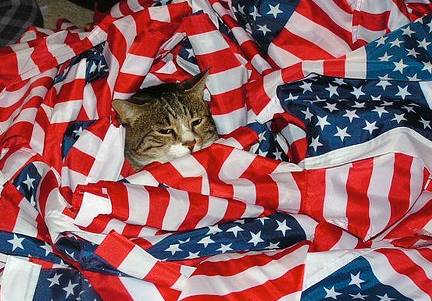
Look, I understand you want a picture of your cat for Facebook patriotic kitten photo contest. But still, American flags shouldn't be on the ground nor be placed in a jumbled up mess.

Look, I understand you want a picture of your cat for Facebook patriotic kitten photo contest. But still, American flags shouldn’t be on the ground nor be placed in a jumbled up mess.

When lowered, it should never touch the ground, water, or other object as well as received in waiting hands. It should be folded neatly and ceremoniously.

Of course, I can attach much political symbols on this picture during the 5th anniversary of 9/11. But even Mr. and Mrs. Bush should know better than to step and wipe their feet on the stars and stripes.

Of course, I can attach much political symbols on this picture during the 5th anniversary of 9/11. But even Mr. and Mrs. Bush should know better than to step and wipe their feet on the stars and stripes.

It should never be stepped on.

Gee, Beatles, this picture of the American flag seems all right with the union at the observer's left, but it's hung a little too low since the Fab Four are basically stepping on it. Then again, I'll just let them off this one since they're fantastic and British.

Gee, Beatles, this picture of the American flag seems all right with the union at the observer’s left, but it’s hung a little too low since the Fab Four are basically stepping on it. Then again, I’ll just let them off this one since they’re fantastic and British. Also, they probably weren’t consulted.

It should be cleaned and mended when necessary.

The flag should be ceremoniously folded like this:

And here's a step-by-step graphic to show you. As my experience with folding an American flag at West Overton, you need at least one other person to do this. Seriously, you see this flag folding at military funerals.

And here’s a step-by-step graphic to show you. As my experience with folding an American flag at West Overton, you need at least a few people to do this. Seriously, you see this flag folding at military funerals.

1. Begin by holding it waist-high with another person so that its surface is parallel to the ground.
2. Fold the lower half of the stripe section lengthwise over the field of stars, holding the bottom and top edges securely.
3. Fold the flag again lengthwise with the blue field on the outside.
4. Make a rectangular fold then a triangular fold by bringing the striped corner of the folded edge to meet the open top edge of the flag, starting the fold from the left side over to the right.
5. Turn the outer end point inward, parallel to the open edge, to form a second triangle.
6. The triangular folding is continued until the entire length of the flag is folded in this manner (usually thirteen triangular folds, as shown at right). On the final fold, any remnant that does not neatly fold into a triangle (or in the case of exactly even folds, the last triangle) is tucked into the previous fold.
7. When the flag is completely folded, only a triangular blue field of stars should be visible.

How to Dispose of a Worn Flag

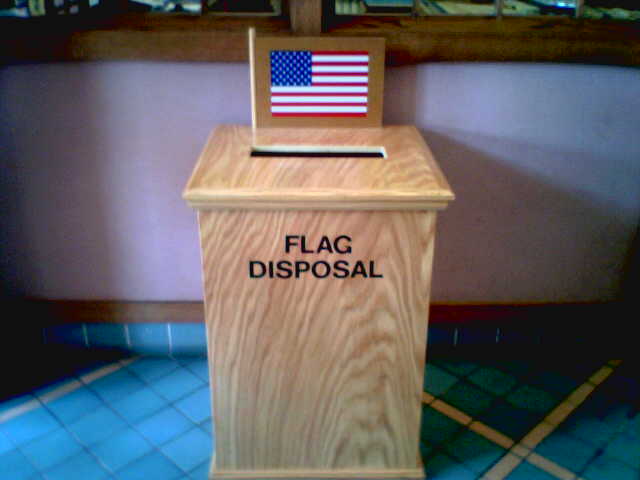
If you have an American flag that's worn out and torn to shreds, you can dispose it right in bins like these from organizations like the Boy Scouts, American Legion, VFW, the military, or others.

If you have an American flag that’s worn out and torn to shreds, you can dispose it right in bins like these from organizations like the Boy Scouts, American Legion, VFW, the military, or others.

When the flag is in a condition that makes it no longer an emblem for display, it must be destroyed in a dignified way, preferably burning. If you can’t do it yourself remember that you can always contact your local chapters of the Veterans of Foreign Wars, American Legion, Boy Scouts of America, the military or other organizations that conduct dignified flag burning and retirement ceremonies.

As your flag deteriorates, you might want to think about disposing it in a dignified manner, preferably by burning. There's a lot of organizations that take tattered flags and retire them.

As your flag deteriorates, you might want to think about disposing it in a dignified manner, preferably by burning. There’s a lot of organizations that take tattered flags and retire them.

However, if it’s made from polyester or nylon, it’s best if you have it recycled due to hazardous gases being produced while it’s being burned.

Nevertheless, if you find a damaged flag say from an era prior to 1912, you might want to have preserved in a museum immediately.

When to Salute the Flag

Unless you're a member of the band playing the National Anthem or recitation of the "Pledge of Allegiance," it's always customary to salute the flag. Servicemen do the military salute while civilians place their right hands on their hearts.

Unless you’re a member of the band playing the National Anthem or recitation of the “Pledge of Allegiance,” it’s always customary to salute the flag. Servicemen do the military salute while civilians place their right hands on their hearts.

All should face the flag, stand at attention and salute on these occasions:

1. When the flag is passing in a parade or review
2. During the ceremony of hoisting and lowering
3. While the national anthem is played
4. During the Pledge of Allegiance

During these occasions, those in uniform should render military style. Civilians should place the right hand over their heart. Men wearing hats should remove them and old it on their left shoulders during the salute.

Prohibited Uses of the Flag

Sure we may remember Janet Jackson exposing her boob at the Super Bowl in 2004. But I also remember seeing Kid Rock wearing an American flag and clutching his crotch in one of the most disrespectful ways to treat the Stars and Stripes.

Sure we may remember Janet Jackson exposing her boob at the Super Bowl in 2004. But I also remember seeing Kid Rock wearing an American flag and clutching his crotch in one of the most disrespectful ways to treat the Stars and Stripes.

Don’t dip the flag into any person or thing (except if it’s a customary ship salute).

Now this soldier has his flag upside down to say our nation is in distress over the killing of innocents in the Middle East, which is fine. However, the writing on the flag is actually more disrespectful.

Now this soldier has his flag upside down to say our nation is in distress over the killing of innocents in the Middle East, which is fine. However, the writing on the flag is actually more disrespectful.

Don’t display the flag with the union side down except as a distress signal.

It's always a tradition in pro football games to display the American flag on the field. However, it's also a violation of the US Flag Code done in the name of patriotism. Then again, it looks good for the cameras.

It’s always a tradition in pro football games to display the American flag on the field. However, it’s also a violation of the US Flag Code done in the name of patriotism. Then again, it looks good for the cameras.

Don’t carry the flag horizontally or flat, but always aloft and free.

For God's sake, this is a patriotic national symbol, not a boat cover. Show a little respect for our country, you asshole!

For God’s sake, this is a patriotic national symbol, not a boat cover. Show a little respect for our country, you asshole!

Don’t display it on a float, automobile, train or a boat except from a staff.

Apparently somebody at the Homes and Gardens channel thought an American flag would make the perfect patriotic table spread. What it really is unpatriotic disrespect.

Apparently somebody at the Homes and Gardens channel thought an American flag would make the perfect patriotic table spread. What it really is unpatriotic disrespect.

Don’t place anything on it.

Sure this may be a heartwarming photo of patriotic cuteness. But the US flag code states you shouldn't let it touch the ground or put anything on it. Babies included.

Sure this may be a heartwarming photo of patriotic cuteness. But the US flag code states you shouldn’t let it touch the ground or put anything on it. Babies included.

Don’t use it as a ceiling covering.

Now while I see nothing wrong with honoring 9/11 victims, writing their names on this flag of honor is kind of disrespectful to the American flag according to the code. No disrespect, please.

Now while I see nothing wrong with honoring 9/11 victims, writing their names on this flag of honor is kind of disrespectful to the American flag according to the code. No disrespect, please.

Don’t place any word, design, insignia, number, letter, mark, picture, or drawing on it (meaning you don’t write anything on it or use it for any design).

For a Vice Presidential candidate known for her extremely hateful conservative comments and love for traditional American values, Sarah Palin sure doesn't have any qualms about desecrating the American flag with her autograph.

For a Vice Presidential candidate known for her extremely hateful conservative comments and love for traditional American values, Sarah Palin sure doesn’t have any qualms about desecrating a sacred national symbol with her autograph.

Don’t use it as a receptacle for carrying or delivering anything.

Sure this may seem like the kind of patriotic photo op that might leave some Americans in stitches. But the Flag code specifically states that the stars and stripes shouldn't be used as a receptacle for anything.

Sure this may seem like the kind of patriotic photo op that might leave some Americans in stitches. But the Flag code specifically states that the stars and stripes shouldn’t be used as a receptacle for anything.

Don’t use it as a cover for a statue or monument.

Sure using an American flag for advertising violates the US flag code. But name a company that doesn't do this around the 4th of July. Seriously, every car dealership and beer distributor does this all the time.

Sure using an American flag for advertising violates the US flag code. But name a company that doesn’t do this around the 4th of July. Seriously, every car dealership and beer distributor does this all the time.

Don’t use it for advertising or put an advertising sign attached to the staff or halyard.

Yes, the 4th of July is a time for patriotic party supplies. But this is possibly very disrespectful to the Stars and Stripes as the Flag Code demonstrates. You might want to go with Captain America instead.

Yes, the 4th of July is a time for patriotic party supplies. But this is possibly very disrespectful to the Stars and Stripes as the Flag Code demonstrates. You might want to go with Captain America instead.

Don’t impress, print, paint, or embroider it on articles boxes, napkins, or anything designed for temporary use and discard as well as stuff like handkerchiefs and cushions.

Okay, now I know Americans love their pets and like to use them in patriotic photo ops. However, it's best you don't put an American flag where it can incur soiling and damage such as in a dog's mouth.

Okay, now I know Americans love their pets and like to use them in patriotic photo ops. However, it’s best you don’t put an American flag where it can incur soiling and damage such as in a dog’s mouth.

Don’t fasten, store, display, or use it in a manner that could leave it easily torn, soiled, or damaged in any way.

Sure this may be a sexy patriotic photo op. But it basically goes against the US flag code to wear an American flag so it's basically desecration.

Sure this may be a sexy patriotic photo op. But it basically goes against the US flag code to wear an American flag so it’s basically desecration.

Don’t use it as part of a costume or athletic uniform except if it’s a flag patch on the uniform of military personnel, firefighters, police officers, astronauts, and members of patriotic organizations (and only as designated by that organization). However, if you should wear a flag lapel, it should be pinned near the heart.

Hmm, Mrs. Palin, I know you love America and you want to take a photo to show it. But you know you're disrespecting the US flag by basically draping it on a chair. And she's among the same people who attack Obama for not wearing a lapel pin.

Hmm, Mrs. Palin, I know you love America and you want to take a photo to show it. But you know you’re disrespecting the US flag by basically draping it on a chair. And she’s among the same people who attack Obama for not wearing a lapel pin.

Don’t use it as drapery, bedding, apparel, or decoration of any sort (save a casket during funerals for servicemen, first responders, and high public officials as long as it’s taken off and ceremonially folded). If you want patriotic decoration and drapery for a speaker’s desk, go with a patriotic bunting instead with the blue above and white in the middle.

Want a patriotic decoration you can use for a podium or platform but don't want to desecrate the American flag? Use this bunting, goddammit! You can find them at any craft store.

Want a patriotic decoration you can use for a podium or platform but don’t want to desecrate the American flag? Use this bunting, goddammit! You can find them at any craft store.

Don’t festoon, draw back, up, bunched up, or in folds, but always allowed to fall free.

When it comes to flag desecration, this is perhaps the only way to disrespect the stars and strips that will get people wanting to put you in jail.

When it comes to flag desecration, this is perhaps the only way to disrespect the stars and stripes that will get people wanting to put you in jail.

As of now, there are no penalties for desecrating an American Flag though there have been suggestions with one law from 1968 saying that it could lead to a $1,000 fine or a year’s imprisonment. Nevertheless, as you’ve seen in the media, many Americans frequently violate these rules in the US Flag Code even though it’s usually those who burn the flag at protest rallies who usually receive the most criticism and calls for prosecution. Advertisers, athletic owners, and clothing designers, not so much but you see the flag’s image desecrated like this all the time in these ways. And sometimes having the flag used in this way is seen as promoting patriotism (even though the people who do this either don’t realize what they’re doing or really don’t care). And here the political spectrum doesn’t matter since shows of flag desecration are basically an American tradition at this point, even when played not to be. Even the US government does this as well since flags are a frequent image on postage stamps. Thus, to call anyone unpatriotic for disrespecting the flag is just stupid since it’s something we basically all do at one time or another.

Even the US government isn't above disrespecting the American flag in which it issues postage stamps in its likeness. However, as Americans, we tend to allow this.

Even the US government isn’t above disrespecting the American flag in which it issues postage stamps in its likeness. However, as Americans, we tend to allow this.

For more:

USFlag.org: http://www.usflag.org/uscode36.html

FAQ on the flag: http://www.ushistory.org/betsy/faq.htm

Strange Easter Traditions Around the World

Easter-Cross-And-Lilies-Wallpaper

As with Christmas, Easter is celebrated around the world as well since it’s also a religious holiday. So while some countries celebrate Easter, others may not even among Christians who might consider it too pagan like the Quakers, Puritans, and Jehovah Witnesses. Now also like Christmas, no two countries celebrate Easter the same way possibly due to seasonal patterns, old traditions, and other factors. And sometimes with American eyes, many of these traditions may seem strange. Not to mention, Easter didn’t really become a mainstream secular holiday until recently but students don’t get as many days off. Nevertheless, here are some of the strange Easter traditions you may see from around the world.

1. Czech Republic and Slovakia

Women living in some parts of Eastern Europe should expect to get their asses whipped by the fellas this Easter since it's said that such actions make them healthy and beautiful. Yeah, I know what outsiders are thinking.

Women living in some parts of Eastern Europe should expect to get their asses whipped by the fellas this Easter since it’s said that such actions make them healthy and beautiful. Yeah, I know what outsiders are thinking.

If you’re a woman living in either of these countries, expect to be chased around by men hitting with handmade whips this Easter Monday. Of course, those who aren’t into BDSM shouldn’t be disappointed because they’re not intended to be painful. It’s also believed that whipping women on Easter is supposed to make them more healthy and beautiful.

2. Finland

Those visiting the Nordic countries might wonder whether the Scandinavians, Icelanders, and Finns have gotten their Easter mixed up with Halloween since they have bonfires as well as kids dressed as witches going door to door for candy. But no, it's just their tradition.

Those visiting the Nordic countries might wonder whether the Scandinavians, Icelanders, and Finns have gotten their Easter mixed up with Halloween since they have bonfires as well as kids dressed as witches going door to door for candy. But no, it’s just their tradition.

It’s a popular superstition in Finland that all Finnish witches fly down to Germany to party with the devil on Easter. This has given rise to the tradition of children dressing up as witches with broomsticks hanging around their necks and wander around door to door to ask for treats. They also lit bonfires to keep satanic forces away that supposedly roam around this day. So Easter in Finland is kind of like Halloween. In Sweden, little girls take part in this tradition on April 30th known as Walburgis night as well as in Denmark where the children give out willow branches in exchange for candy. Another Easter tradition in Finland is watching grass grow to signify the start of spring. Once mature, children would decorate it with painted eggs and paper bunnies.

3. Russia

While the US and Germany have chocolate bunnies, those in Russia have the the Easter lamb made from butter since it's believe Satan can't transform as one. But eating a butter lamb can leave to high cholesterol and cardiovascular disease.

While the US and Germany have chocolate bunnies, those in Russia have the the Easter lamb made from butter since it’s believe Satan can’t transform as one. But eating a butter lamb can leave to high cholesterol and cardiovascular disease.

Instead of chocolate bunnies, Russians usually dig into a large piece of butter that’s in the shape of a lamb. This tradition is based on the religious idea that lambs are lucky since they’re the only animals whose form Satan couldn’t take.

4. Papua New Guinea

In this tropical country, you will find trees outside churches decorated with sticks of tobacco and cigarettes in the days leading to Easter. After the Easter Sunday church services, smokes are handed out and everyone lights up.

5. France

Every Easter in Haux, the villagers gather all their eggs to put in a large frying pan in the square. The result is perhaps the world's largest omelet.

Every Easter in Haux, the villagers gather all their eggs to put in a large frying pan in the square. The result is perhaps the world’s largest omelet.

On Easter Monday, people in the town of Haux gather together taking all the eggs from their houses and bringing them to the town square. There, they put their eggs in a massive pan used to cook a giant omelet that could feed 1,000 people and contains over 4,500 eggs.

6. New Zealand

While the US has a furry, cute Easter Bunny bringing children eggs, in New Zealand it's rabbit season with the Great Bunny Hunt. Some 20,000 bunnies are killed a year in New Zealand on Easter. They probably should just stick to Orcs.

While the US has a furry, cute Easter Bunny bringing children eggs, in New Zealand it’s rabbit season with the Great Bunny Hunt. Some 20,000 bunnies are killed a year in New Zealand on Easter. They probably should just stick to Orcs.

While the US has the cute, furry, Easter Bunny, if there’s a place Peter Cottontail should avoid this Easter, New Zealand would be it. And it’s not because of Orcs. Because on Easter, New Zealanders go out to hunt rabbits with a prize of $NZ 3,500 to who kills the most bunnies. Every year as many 20,000 rabbits are killed in this country.

7. Poland

One Easter Sunday, men aren’t allowed to cook or even stand in the kitchen or else his mustache will go gray and the Easter bread dough will fail to rise. They also believe that swallowing a willow catkin from a branch consecrated by a priest would bring health.

As for processions on Good Friday, Polish miners don ceremonial uniforms and at the Wieliczka Salt Mine where they perform the Underground Way of the Holy Cross. They march to an underground salt monument of Pope John Paul II in the underground Kinga Chapel, a place he once visited.

8. Hungary

In other parts of Eastern Europe women in traditional garb should expect to be doused by water on their way to their Easter Sunday mass. Priests should expect wet pews in their churches.

In other parts of Eastern Europe women in traditional garb should expect to be doused by water on their way to their Easter Sunday mass. Priests should expect wet pews in their churches.

On Easter, women dress in traditional garb for Sunday Mass while men jump out and pour buckets of water at them as part of a “purifying ritual.”

9. Australia

Instead of an Easter Bunny, Australia has an Easter Bilby which is a native endangered marsupial that resembles a mouse. Also, they hate rabbits which they consider pests.

Instead of an Easter Bunny, Australia has an Easter Bilby which is a native endangered marsupial that resembles a mouse. Also, they hate rabbits which they consider pests.

While the US has the Easter Bunny, Australia has the Easter Bilby bringing the eggs. One of the reasons behind this change is to create awareness of the bilby which is an endangered species. Also, there’s a strong dislike for bunnies which are considered pests that destroy crops.

10. Colombia

For their Easter dinner, instead of eggs and chocolate, the Colombians dine on iguana, turtles, and big rodents.

11. Germany

Instead of hiding their colored eggs, the Germans hang their decorated eggs out in the open on trees for all to see. Seems like the Germans have to have trees for everything.

Instead of hiding their colored eggs, the Germans hang their decorated eggs out in the open on trees for all to see. Seems like the Germans have to have trees for everything.

While children in other countries look for hidden Easter eggs, the Germans display their Easter eggs are displayed on trees and prominently in the streets. Some will have thousands of multi colored eggs hanged on them. This might be that these symbolize new life and the resurrection. They also burn their Christmas trees on Easter Sunday and eat a lot of green foods and spinach on Holy Thursday.

Germany is also home to the Oberammergau Passion Play in the village that bears its name which is performed every 10 years from May to October starting at 9:30 a.m. and continuing with a 12:15-3:00 p. m. lunch break before finally finishing at 6:00 p.m. However, the villagers do this as a thank you from God for saving them from a plague in 1633 and put a large painting of Jesus to show this. But nearly everyone in the village takes part in the play either as one of the actors or behind the scenes, making clothes and props to run it. Still, this play is very popular all over the world that bookings take place for many years before the play is performed.

12. Greece

While some countries have multi colored eggs, in Greece the eggs are only painted red to represent the blood of Christ and used for making Easter bread as well as banged on their neighbor’s heads.

In the town of Corfu, it’s tradition for the people to throw out their crockery and pots out the window on Easter Saturday. We’re not sure why they do this. Some say it’s to symbolize the rejection of Judas. Others think it’s simply the exuberance of having a smashing time after the penitential season of Lent. There are other theories of symbolism such as getting rid of evil or the change of seasons in which the old pots of last year’s harvest are exchanged for new ones. Some think it’s adopted from the old Venetian tradition of throwing out one’s winter things for new ones for spring.

In the Greek village of Vrontados, Easter is celebrated with a fireworks war between the two Greek Orthodox parishes. Parishioners make their own rockets for this. Of course, it attracts thousands of tourists.

In the Greek village of Vrontados, Easter is celebrated with a fireworks war between the two Greek Orthodox parishes. Parishioners make their own rockets for this. Of course, it attracts thousands of tourists.

In the village of Vrontados on the island of Chios, the two Orthodox churches face off every Easter with parishioners making their own rockets and teenagers leading the war against each other. It’s said to be a century old tradition which apparently started when some Greek villagers tried to scare away the Turkish army using fireworks. Some say that it started when some Greek sailors met Chinese men who taught them how to make fireworks. Anyway thousands of rockets are used and it attracts tourists every year on Easter, boosting the town’s economy.

13. Ethiopia

On the Easter festival, the people of Ethiopia celebrate a noble feast featuring a large loaf of sourdough bread called, “Dabo.” During the day, visitors are greeted with a slice of “Dabo” to honor the crucifixion of Christ. They also wear white to exemplify purity and display headbands from palm leaves which symbolize the palm leaves Jesus’s followers greeted him with during his passage into Jerusalem before his crucifixion.

14. Switzerland

For Easter, the Swiss have an age old tradition of decorating the fountains with spring flowers and colored eggs, which creates a rather stunning sight.

For Easter, the Swiss have an age old tradition of decorating the fountains with spring flowers and colored eggs, which creates a rather stunning sight.

The Frankonian Swiss have an old Easter tradition of decorating wells with painted eggs and spring flowers to celebrate the gift of life.

Switzerland is not a fan of the Easter Bunny so the Easter Cuckoo is credited with bringing children eggs instead. Yet, they still sell chocolate bunnies though.

15. Great Britain

In the town of Bacup in Northern England, Easter Saturday is celebrated with the Nutter’s Dance which has been performed since the 18th century. It’s said to originate with Moorish sailors who somehow ended up in the area but why it’s performed on Easter Saturday, there’s no explanation. It’s a strange dance led by a Whiffer (or Whipper In), who cracks a whip to drive away evil spirits represented by a group of men with blackened faces in red, black, and white costumes and neck garlands.

The English village of Hallaton in Lancashire where the villagers play a game called bottle kicking which is a no rules rugby game played with barrels. Ambulances stand by for this due to obvious reasons.

The English village of Hallaton in Lancashire where the villagers play a game called bottle kicking which is a no rules rugby game played with barrels. Ambulances stand by for this due to obvious reasons.

The village of Hallaton in Leicestershire celebrates Easter with a game of bottle kicking which is essentially a no rules rugby game played with 3 beer barrels and a pitch spread over a mile of cross country land. Ambulances are on standby every year there.

On Holy Thursday, it was once used as the day when the monarchs showed their humility and washed the poor’s feet. It was symbolic of Jesus washing the feet of his disciples, though only a select few poor got their feet washed. However, this was later changed with the ascension of the Protestant William and Mary in 1689. Nowadays the Queen just gives out money, usually the same amount as her age.

During the Easter season, the English village of Hungerford has what’s known as the Hockside festival. This begins each year when the new police constable blows his horn calling all men to the Hockside court. Two men are selected and they parade through the streets giving women oranges in exchange for kisses.

Another English Easter tradition is Morris dancing which involves guys dancing in ribbons, clogs, and sometimes funny hats. According to Blackadder, it's a very lame dance and one he doesn't like.

Another English Easter tradition is Morris dancing which involves guys dancing in ribbons, clogs, and sometimes funny hats. According to Blackadder, it’s a very lame dance and one he doesn’t like.

Britain also celebrates Easter with an Easter egg roll in which people try to roll colored hardboiled eggs on a hill. While this has taken hold in countries like the US, the Brits tend to be pretty competitive about it. Other strange Easter customs include Pace Egg plays mostly depicting Saint George and the dragon as well as Morris dancing which is an English folk dance said to originate through druidic rites but is better known to Americans as being mercilessly ripped on the first season of Blackadder. Let’s just say the Great Britain has a lot of strange Easter traditions and leave it at that.

16. Norway

On Easter in Norway, most of the businesses and public services are closed while the day is devoted to crime stories that even the milk cartons have their own mysteries on them.

On Easter in Norway, most of the businesses and public services are closed while the day is devoted to crime stories that even the milk cartons have their own mysteries on them.

In Norway, Easter is a 5 day bank holiday in which all the businesses close save the grocery store on the Saturday before. During this time Norwegians celebrate by reading crime novels known as Påskekrimmen as well as watching crime thrillers on TV. There are even mystery stories on milk cartons and magazines. Of course, why Norwegians celebrate Easter with this crime stuff is just one of those mysteries.

17. Netherlands, Belgium, and France

While Americans have the Easter Bunny, France, Belgium, and the Netherlands have the Easter Bells which is said to depart from the churches to Rome on Holy Week only to come back bringing eggs and candies for the kids. Seems like something from a bad acid trip doesn't it? But I'm not making this up.

While Americans have the Easter Bunny, France, Belgium, and the Netherlands have the Easter Bells which is said to depart from the churches to Rome on Holy Week only to come back bringing eggs and candies for the kids. Seems like something from a bad acid trip doesn’t it? But I’m not making this up.

In these countries, it’s said that the church bells fly to Rome for a few days on Holy Week and only return on Easter morning bringing back colored eggs and chocolate rabbits. It’s said the tradition started because all church bells are silent as a sign of mourning Jesus for several days before Easter. In the Netherlands and Flemish speaking Belgium, the bells fly away on Holy Saturday. In France and French speaking Belgium on Holy Thursday. Either way, replacing Santa Claus with metal bells seems like a bad acid trip to those who may never heard of it. Seriously, I’m not making this up.

18. Greece, Spain, Portugal, and Mexico as well as Latin America

A big tradition in Catholic and Orthodox countries is Judas burning in which an effigy of Judas is tried, hanged, and burned. While it's under fire for being anti-Semitic, people also burn effigies of politicians they don't like as well.

A big tradition in Catholic and Orthodox countries is Judas burning in which an effigy of Judas is tried, hanged, and burned. While it’s under fire for being anti-Semitic, people also burn effigies of politicians they don’t like as well.

In some communities in these countries, it’s customary to burn an effigy of Judas on Easter, typically depicted as hung by the neck after a fake trial. Sometimes they’d make effigies of unpopular politicians and filling the Judas effigy with fireworks. It was once practiced all over Europe before it went into decline due to it’s possible association with being called, “the burning of the Jew,” especially in Latin America. However, the Orthodox Church has since defended the practice.

19. Philippines

In the Philippines, it's not unusual pn Holy Week for some devout Catholic men to show their adoration for Christ through self-crucifixion and self-flagellation. Yes, this is insane that even the Roman Catholic Church has tried to discourage the practice there but to no avail.

In the Philippines, it’s not unusual pn Holy Week for some devout Catholic men to show their adoration for Christ through self-crucifixion and self-flagellation. Yes, this is insane that even the Roman Catholic Church has tried to discourage the practice there but to no avail. Please don’t try this at home.

In the Philippines, many devout Catholics practice self-crucifixion on Easter replicating Jesus’s suffering. The idea behind this act of insanity was this morbid ritual is to help watch the sins of the world and self-purification. The Roman Catholic Church tried to discourage this for obvious reasons but with little success. It’s also said that it’s just one manifestation of old Filipino religions that require self-flagellation. Other theories suggest it sprang out of a misinterpretation of St. Paul’s Romans 8:13, “If you live after the flesh, you shall die, but if through the spirit you mortify the deeds of the flesh, you shall live.” Of course, while some people may equate self-mortification with purification, I’d suggest you don’t try this at home, please.

20. Bermuda

Bermudans celebrate Good Friday with flying homemade kites, as well as eating codfish cakes and hot cross buns. It’s said that the tradition started when a local teacher from the British Army had difficulty explaining Christ’s ascension to his Sunday school class and made a kite to illustrate it as a result. They also hold kite contests as well.

21.Haiti

In Hati, Holy Week is celebrated with a mixture of Catholic and Voodoo traditions such as colorful parades and traditional “rara” music played on bamboo trumpets, maracas, drums, and coffee cans. Voodoo believers would make pilgrimages to the village of Souvenance, showing devotion to the spirits with drumming, chanting, and animal sacrifices.

22. Europe

In parts of Northwestern Europe, a key tradition is lighting up huge bonfires called Easter Fires on Easter Sunday and Monday. A most common explanation for this is said to originate with the Saxons as a tale of how spring triumphs over winter. However, today it just brings communities together with heavy consumption of lager, gin, and snacks. Egg tapping or knocking is also popular.

23. Cyprus

While the people of Cyprus also paint and hide eggs on Easter for the younger children to find, teenage boys follow this up with a rather violent contest of scouring for scraps of wood to use on a communal bonfire. The neighborhood with the largest bonfire at the end of the day gets the Easter bragging rights until next year. However, since there’s a limited supply of scraps among the teenage boys, it’s not uncommon for police being called in breaking fights over wood scraps or to help put out out-of-control bonfires.

24. Italy

In Florence, Easter is celebrated with a Rube Goldberg machine being carried on a cart, stuffed with explosives, and being set on fire. The result is a 20 minute fireworks show that would make Michael Bay weep.

In Florence, Easter is celebrated with a Rube Goldberg machine being carried on a cart, stuffed with explosives, and being set on fire. The result is a 20 minute fireworks show that would make Michael Bay weep.

In Florence, Easter is celebrated with building a Rube Goldberg machine containing shards from the Holy Sepulchre to symbolize the resurrection of Jesus. Called “the holy fire,” it’s placed on a candle as well as dragged through the streets on a massive cart which is over 30ft tall and has been used for well over 300 years before reaching its destination where priests and local officials carry it to the cathedral square. Once there, it’s stuffed with explosives and topped with a fuse and a fake dove when everything is ready. The Cardinal of Florence sets the fake dove ablaze while the bells of Giotto’s campanile ring out to signal that the show is about to start. What follows is 20 minutes of nonstop explosions in the city’s cathedral which would send Michael Bay weeping with adulation. If everything goes according to plan, then the fireworks signify a year of good harvests and successful business.

In Rome on Good Friday, the Pope commemorates the Via Crucis (Way of the Cross) at the Colosseum. During this a huge cross with burning torches illuminates the sky as the 14 Stations of the Cross are described in several languages. However, Americans unfamiliar with this ritual and this significance might interpret this tradition quite differently and with great offense, especially since they’re more likely to link giant burning crosses with white supremacist violence against African Americans. On Holy Saturday and Easter Sunday, Mass is celebrated with thousands of visitors in St. Peter’s Square to

25. Spain

On Holy Thursday, the streets of Verges set the stage for the macabre “Dansa de la Mort” or “Dance of Death.” In a procession traveling through the town, 5 people dress up in skeletons grab the lime light as they move to the sound of drum beats. Each skeleton carries different items with one holding a scythe, a clock without hands, and a banner warning that death could come at any time while two carry a box of ashes. Not the kind of warm sunny Easter most of us would imagine.

Relax, NAACP, these are just Catholic brotherhoods dressed in their robes and hoods for the Holy Week processions in Spain, not a white supremacist Klu Klux Klan meeting. It's considered a great honor to do this. Seriously, Spanish have been doing this for far longer than KKK has been in existence. Costume similarities are purely coincidental.

Relax, NAACP, these are just Catholic brotherhoods dressed in their robes and hoods for the Holy Week processions in Spain, not a white supremacist Klu Klux Klan meeting. There’s a lot of pride taking part in the Spanish Easter festivities that Antonio Banderas joins his brotherhood in his hometown every year. Seriously, Spanish have been doing this for far longer than KKK has been in existence. Costume similarities are purely coincidental.

This isn’t to say that there are a lot of Easter processions in Spain dating to the Middle Ages. This is performed by many Catholic brotherhoods wearing different colored robes to tell each other apart. However, they also don conical hoods to retain their anonymity, even though they tend to scare the bejesus out of any African American tourist and it doesn’t help that some of these take place at night under candlelight. The music tends to vary according to days consisting of mournful music accompanied by dramatic drum beats on Holy Thursday, utter silence on Good Friday, to celebratory music on Easter Sunday. Many tend to walk barefoot as well as wear shackles on their feet with brotherhoods carrying floats of different scenes related to the Passion of the Christ or the Sorrows of the Virgin Mary. And there is great pride for taking part and it’s said that Antonio Banderas travels to his Malaga hometown every year to take part in this with his brotherhood, “Tears and Favors”, becoming the star attraction.

26. Japan

Though western holidays like Halloween, Christmas, and Saint Patrick’s Day have become rather popular in Japan, Easter is relatively obscure since the country doesn’t have a lot of Christians. However, this doesn’t stop companies from organizing Easter themed promotions in the spring and sometimes even the summer. Tokyo Disneyland hosts an annual “Easter Wonderland” which sometimes runs well into June.

27. Latvia

A known tradition in Latvia is an Easter game played by children which is like conkers but with eggs. Players pair off and used hardboiled colored eggs joined together with string. Competitors bang the ends of the eggs together until one player’s egg breaks. The winner is the one with the stronger egg. Sounds a bit messy to say the least.

28. Guatemala

In Guatemala, the village streets are lined with rugs made from saw dust for the Easter procession which creates trail of powdery rainbows in their wake.

In Guatemala, the village streets are lined with rugs made from saw dust for the Easter procession which creates trail of powdery rainbows in their wake.

Each Easter in Guatemala, the people lace the streets of their villages with colorful sawdust carpets. On their way to Mass, the procession of faithful walk over the vibrant carpet leaving a trail of powdery rainbows in their wake.

29. Bulgaria

While Bulgarians decorate their Easter eggs, they’re also known to fight with them by pair. The last surviving one is called a “borak.”

30. Argentina

In Argentina, there's a kitschy theme park called Tierra Santa which is devoted to telling the story of Jesus. On Holy Week, they reenact the Passion within the parks walls. It's said to attract a lot of tourists.

In Argentina, there’s a kitschy theme park called Tierra Santa which is devoted to telling the story of Jesus. On Holy Week, they reenact the Passion within the parks walls. It’s said to attract a lot of tourists.

In Argentina, there is a kitsch theme park dedicated to telling the story of Jesus which unsurprisingly goes into overdrive on Easter. There’s a plastic Jesus that’s resurrected every hour and plastic statues depicting the Passion which is already a must see for the devout with hundreds gathering each hour to watch the statue emerge from a rocky outcrop to survey the crowds. On Easter, actors take up the role to bring the passion to life, carrying the cross through the park and being crucified by Roman soldiers. Sure it’s probably in bad taste but it’s a huge hit in Latin America nevertheless.

In Northern Argentina, there’s an elaborate carnival that begins on Ash Wednesday and lasts all through Lent. In this, mothers and grandmothers gather around a decorated arch and exchange dolls in a ceremony believed to unite women in an eternal bond. On Sunday in an Argentinian version of the Easter Parade, women dress up in colorful ruffled skirts and white hats in masks made with starch and water. Riding on horseback, they singing folksongs on their way to a dance honoring Pukllay, the Spirit of the Carnival. After the ceremony, the burn a large effigy of the Pukllay to signify the end of the celebration a la Burning Man.

31. Jamaica

While Good Friday is a somber time in the Easter season of Holy Week, it pays host to Kingston’s biggest annual street carnival complete with a parade, requisite debaucheries, and even preachers. Also predict the future with egg whites on water.

32. El Salvador

In the town of Texistepeque, there’s a ritual on Easter called “Talciguines” which is supposed to symbolize the fight between Jesus and Satan. Of course, Jesus is always the winner.

33. Wales

On Palm Sunday, the Welsh visit their relatives’ graves to lay flowers as well as stage Welsh singing contests called Gymafa Gan where choirs from various chapels in festivities take part and prominent conductors are invited.

34. United States

For 130 years, the White House has sponsored the Easter egg roll on its South Lawn, which provides a lot of activities for the kids.

For 130 years, the White House has sponsored the Easter egg roll on its South Lawn, which provides a lot of activities for the kids.

For 130 years, the White House has hosted the Easter Egg Roll on its South Lawn. This mainly consists of rolling a colored hardboiled egg with a large serving spoon. But nowadays an egg hunt is included as well along with other sports and crafts.

In Texas, the people of Fredericksburg hold an event called the Easter Fires of Fredericksburg Pageant, where the town gets together to celebrate an 1840 peace treaty with the Comanche and the significance with Easter by reinventing this story. It’s said that the Comanche would light fires in the hills of Fredericksburg to signify that there was no hostility between the settlers and the indigenous people. But as the fires burned the German immigrant children grew worried and to calm them down their parents told them that the fires were the Easter Bunny burning eggs in preparation for the festivities.

New York's Easter parade from 5th Avenue to 57th Street has a lot of fun festivities with people wearing outlandish Easter outfits and donning their wackiest Easter bonnets.

New York’s Easter parade from 5th Avenue to 57th Street has a lot of fun festivities with people wearing outlandish Easter outfits and donning their wackiest Easter bonnets.

In New York City, you have the Easter parade that dates back to the 1870s and one of the city’s most significant seasonal celebrations. It begins at the famous Fifth Avenue and finishes north up 57th street. There you’ll find visitors and New Yorkers alike done their most elaborate Easter bonnets.

In Southern Michigan, on Easter tens of thousands of marshmallows are dumped onto by helicopters and are rewarded candy afterwards. This tradition has spread to other areas.

Strange Christmas Traditions from Around the World

image1

While Thanksgiving in November is basically a national holiday in the United States, you can’t say the same about Christmas, which is celebrated around the world either as a religious holiday or otherwise. Now no two countries celebrate Christmas the same way which may be due seasonal patterns, old traditions, and other factors. In fact, while there are plenty of places that do celebrate Christmas some don’t at all. Yet, as for those that do, many may have certain holiday customs that may seem strange to American eyes or those in Europe. And there are even some mainstream Christmas traditions that were strictly national customs until quite recently. For instance, Christmas didn’t really become the mainstream secular holiday we celebrate now until the Victorian Era. And before Queen Victoria and Prince Albert got hitched, the notion of the Christmas tree was most strictly a German tradition. Not to mention, in early America, while you’d find people such as the Catholics, Episcopalians, and Lutherans celebrating Christmas, you’d be pressed to see any house in Puritan Boston with Christmas decorations because for a time it was banned. Nevertheless, here is a list of some of the strange Christmas customs you’d see from around the world during the season.

1. The Netherlands (and to a lesser extent, Belgium)

And you thought the United States has problems with race relations? Still, I'm sure a Barack Obama visit in the Low Countries during the Saint Nicholas season wouldn't go very well at all.

And you thought the United States has problems with race relations. Still, I’m sure a Barack Obama visit in the Low Countries during the Saint Nicholas season wouldn’t go very well at all.

I’ll start the Dutch here. Now we all know that the Netherlands is one of the most tolerant countries on Earth as well as has legalized pot and prostitution. However, during the Christmas season, people in this country (and Belgium) open their gifts in early December for Saint Nicholas Day, where children leave their shoes out for St. Nick to deliver presents for every child. In the days leading up to December 5th, St. Nick arrives through ship in on Dutch shores in mid-November and goes to each kid’s house on a white horse. However, now while having Saint Nick dress up in a bishop’s robes isn’t unusual (though it’s a carry-over from his previous job as Bishop of Turkey) but what’s strange is that he has helpers ranging from 6 to 8 black men (including a guy named, Zhwart Piet or “Black Peter”). Anyone familiar with world history can easily figure out what these guys started out as in this tradition but they’re known now as St. Nicholas’s “friends” (even if we don’t know how many of them are). Oh, and there’s another folk tradition about St. Nicholas Day regarding bad children such as kicking and beating them with switches (or pretending to) or kidnapping and sending them back to Spain in a sack (his home). Also, when you see Saint Nicholas appears on the street, you’ll see his helpers in blackface and in a fashion that many African Americans would view as virulently racist.

This tradition was made famous by David Sedaris’ commentary on the subject in his essay called, “6 to 8 Black Men.”

https://thejesuitpost.org/2013/12/worth-listening-david-sedariss-six-to-eight-black-men/

2. India

Now I don't think I'm used to this. Also looks pretty freaky.

Now I don’t think I’m used to this. Also looks pretty freaky.

While India only has 2.3% of a Christian population, you need to consider that this consists of 25 million people here, which is more than some countries’ entire populations. While many Christian Indians celebrate Christmas with gift-giving and possibly midnight Mass like much of the Western world, yet they don’t have the fir or pine trees that more temperate areas in Europe and North America have. So these Christian Indians have to improvise with decorating banana and mango trees instead and sometimes they even use the leaves from those trees to decorate their houses.

3. Czech Republic and Slovakia

In these two countries, people who are still single but don’t want to remain so tend to stand with their backs toward the door and throw a shoe over their shoulders. Those about to get married soon will have their shoe toes pointing to the door. However, there’s no clue as to how long you’d meet the person of your dreams though.

Another marriage superstition in the Czech Republic in which woman place a cherry tree twig under water. If it blooms, it means she’ll marry next year.

In Slovakia, there’s also a curious tradition in which the family patriarch fills his spoon with loksa (a type of pudding), and flings it to the ceiling. The more he can get to stick up there, the better his harvest will be next year.

4. Japan

Yes, Japanese people spend Christmas at KFC that they need to make reservations well in advance. However, I'm sure that Kentucky Fried Chicken Christmas tradition can't be good for the arteries.

Yes, Japanese people spend Christmas at KFC that they need to make reservations well in advance. However, I’m sure that Kentucky Fried Chicken Christmas tradition can’t be good for the arteries.

Japan has a few Christmas traditions that you’d find are strange. And while only a few are practicing Christians, it’s a very popular secular holiday (and sometimes celebrated more like a wintertime Valentine’s Day). The first relates to a marketing campaign from more than 40 years ago that pertains to Japanese families eating KFC for Christmas dinner. This consist of KFC selling over 240,000 barrels of chicken which is 5 to 10 time its monthly sales. However, it’s unclear on how many years it takes off the lives of your average Japanese citizen as well as how much KFC for Christmas will increase their chances for cardiovascular disease, but I bet either is entirely possible.

Another Japanese tradition is the notion of Christmas cake which is a sponge cake that contains whipped cream, chocolate, and strawberries. These are ordered months in advance and are eaten on Christmas Eve. Any cake not sold after the 25th is unwanted. For the same reason, this is partly to explain why Japanese women over 25 were referred to as “Christmas Cake” if they weren’t married by their 26th birthday (this, until relatively recent times).

Still, if you want to send a Christmas card in Japan, avoid sending any one with red unless they are bereaved. Any Christmas cards with red colors should be avoided but good luck finding a redless Christmas card at your local Hallmark store. Also, their Santa Claus or “Santa Kurohsu”, has eyes in the back of his head to keep an eye on naughty children.

5. New Zealand

Rather than using the traditional conifer, New Zealanders decorate Pohutukawa trees for Christmas.

6. Cuba

Every December, the city of Remedios hosts the Parrandas festival in which the city divides in two halves with each building a themed sculpture from light bulbs, in preparation for Christmas Eve.

7. Finland

Of course, I'm not sure if going to a cemetery to light candles for dead relatives is my idea for a great Christmas Eve. But, hey, that's what the Finns do.

Of course, I’m not sure if going to a cemetery to light candles for dead relatives is my idea for a great Christmas Eve. But, hey, that’s what the Finns do.

Now while you think the Japanese tradition of eating sponge cakes and KFC is kind of weird, you should check out on what the Finns do on Christmas Eve. Now Christmas Eve is the time of year when Finnish families head to their home saunas since it’s believed that a sauna “elf” lives there to protect it and make sure people behave themselves. Thus, families would head to their sauna, strip to their toes, and enjoy a nice good naked soak, before visiting the graves of their dead relatives and lighting candles in their memory on the sites after sunset. And if they can’t, they go to a nearby cemetery instead as well as placed candles for those relatives buried elsewhere.

Oh, and it’s said that kids in Finland sleep on the floor on Christmas Eve so the dead can use their beds.

8. Venezuela

In Caracas, it’s customary for young children to go to bed with one end of a string tied to their big toe and leaving the other end outside their bedroom window. This is because before 8 a. m., the streets are closed to cars on Christmas so people had to get up nice and early to roller skate to “Early Morning Mass” as well as proceed to tug the strings that are still hanging to wake up the kids. Still, bet roller skating to Mass wouldn’t go well in my neck of the woods though (too many hills).

9. Sweden

While the Christmas goat is a Christianized Christmas tradition taken from the Norse, the Galve Goat has been a prime target for vandalism and arson since it first burned down around midnight on Christmas Day in 1966.

While the Christmas goat is a Christianized Christmas tradition taken from the Norse, the Galve Goat has been a prime target for vandalism and arson since it first burned down around midnight on Christmas Day in 1966.

From its first erection and 1966 Christmas Eve burning, the people of Galve build this 13 meter tall straw goat as vandals keep trying to burn it down. As of 2011, it’s been burned 25 times and by 1988 burning the goat happened so often that people began taking bets for its survival ever since. However, just so you know the people of Galve don’t want their goat burned down since an American tourist served time in jail for successfully doing so in 2011.

Another tradition in Sweden is families gathering around the TV at 3 PM on Christmas Eve to watch Donald Duck cartoons from a 1958 Disney program From All of Us to You (or as it’s called there “Donald Duck and his friends wish you a Merry Christmas.”). None of these cartoons have anything to do with Christmas, yet many Swedes could recite the dubbed lines by heart. And it basically started in 1959 when there were just enough TVs in Sweden’s population but only a couple of channels to watch from.

There’s also a Swedish Christmas tradition in which pertains to the serving of rice pudding around Smorgasbord in which one peeled almond is hidden in it. The person who gets the almond is said to be married within a year.

10. Ukraine

No, this isn't Tim Burton's Nightmare Before Christmas tree. Ukranians actually decorate their Christmas tree with spiders since they think it would bring them luck.

No, this isn’t Tim Burton’s Nightmare Before Christmas tree. Ukranians actually decorate their Christmas tree with spiders since they think it would bring them luck.

You may think that the notion of decorating a Christmas tree with spider webs seems to be straight from The Nightmare Before Christmas, but in Ukraine it’s a tradition based on local folklore. The tradition starts from a story of a poor woman who couldn’t afford to decorate her Christmas tree for her kids. So some friendly spiders decided to spin webs on the tree instead. When the kids woke up the next morning, they saw the first light turn this cobweb laden tree into silver and gold. Thus, not only the children had a great Christmas, but the family was never left poor again. So, in Ukraine to decorate your tree with spider webs will ensure you good luck and fortune in the coming year. And you thought that was something you’d see Jack Skellington do.

11. Philippines

The Philippines consists of 80% Christians in its huge country with Catholicism as the most prominent denomination. In this country, Christmas celebrations last all the way into January. However, unlike a lot of countries, children leave their polished shoes out for the The Three Kings when they pass through the houses that night for the Feast of the Epiphany, marking the end of the Christmas season.

12. Great Britain

Now this is what the Brits call Christmas pudding. I know it doesn't look like something you'd get from your pudding mix back in the States.

Now this is what the Brits call Christmas pudding. I know it doesn’t look like something you’d get from your pudding mix back in the States. Looks more like cake.

Now a lot of Christmas traditions come from the Brits, yet there are few that don’t. For one, they don’t have Santa Claus but Father Christmas that now looks like Santa but in previous years was the Ghost of Christmas Present. One of them has to do with the notion of Christmas Pudding served on Christmas Day. Of course, as the pudding is stirred clockwise, every member of the family makes a wish. Sometimes it’s said that people put coins, rings, and thimbles to the mix which can symbolize wealth, marriage, and good luck for life. Still, for Americans unfamiliar with the notion of pudding in the British world of cuisine, understand that British pudding looks nothing like the creamy stuff you’d find in cups at the grocery store.

Another tradition in Great Britain has to do with children writing their Christmas wish list burning them in the back of the fireplace, hoping that the draft would carry them to the North Pole. Too bad that they haven’t heard of actually mailing them. Yet, if the letter catches fire before being sent up the chimney, the kiddie must write a new one.

Oh, and in London, it’s said that a group of competitors gather on the shore of Serpentine Lake to take part in a 100 yard race through the freezing water.

13. Canada

Yes, you can really write to Santa at H0H 0H0 and the Canada Post will assist him. Yes, I mean Canada.

Yes, you can really write to Santa at H0H 0H0 and the Canada Post will assist him. Yes, I mean Canada.

Want to send that letter to Santa but don’t know how to get it to the North Pole. Well, you’re in luck since Santa has his own postal code that consists of H0H 0H0 where it will be sent to Canada. So while Santa’s elves help with making those Christmas toys, for the past 30 years, it’s been the Canada Post volunteers who have helped Santa reply to millions of letters each year from children around the world in different languages, including Braille.

14. Spain

Now Spain is home to a lot of weird Christmas traditions but none is crazier than Catalonia's Caga Tio, which is a magic Yule log that grows and shits presents. Believe me, I'm not making this up.

Now Spain is home to a lot of weird Christmas traditions but none is crazier than Catalonia’s Caga Tio, which is a magic Yule log that grows and shits presents. Believe me, I’m not making this up.

With the exception of the peeing on the snow sweaters and the pooping reindeer, the thought of holiday fun and bodily functions usually don’t go together. However, the sole exception to this is in Catalonia, Spain, home to the extremely odd Caga Tio, which translates to “pooping log.” And no, he’s not a character from South Park. He’s a hollowed out, smiley-faced piece of wood bringing laughter and joy to Catalonian children in a long established cherished tradition of him pooping out presents. Honest to God, I’m not making this up.

Beginning on the Feast of the Immaculate Conception (December 8), Caga Tio is placed on the fireplace, covered in a blanket, and treated as a pet. Each evening, the kiddies feed the log fruits, nuts, and chocolate in hopes that it’ll grow bigger. Meanwhile, the parents secretly swap out the log with a progressively bigger one until, it’s magically full grown by Christmas (again, I’m not making this up).

On Christmas Day, the family gathers around Caga Tio and sing songs to urge it to release its loot, which translate as, “Poop log, poop candy! If you don’t poop well, I’ll hit you with a stick. Poop log!” The brats then proceed to beat the log with sticks in order to force it to defecate traditional Christmas presents like Turon nougat candy, small toys, and coins. Now that’s the craziest shit I’ve ever heard so far.

Catalonia is also known for a certain defecating figurine known as a

Catalonia is also known for a certain defecating figurine known as a “El Caganer” or “The Shitter,” which is put in the back of a nativity scene. And as you can tell, there are many types you can choose from.

Catalonia also has another Christmas tradition relating to defecation in the form of a Caganer which sits in the back of every traditional Catalan nativity scene (for at least 2 centuries). It’s a figurine of a man with his trousers down pooping, which represents fertility and good fortune. Recently, businesses have many figurines that resemble celebrities. Still, while putting a Caganer in a nativity scene is perfectly acceptable in Catalonia, it would probably be seen as something deeply sacrilegious to so in a manger scene in Kentucky. It’s also a tradition in the rest of Spain, France, Portugal, and Italy.

After Christmas, Spain has a holiday known as the Day of Innocents on December 28, which is it’s April Fool’s Day with the pranks and a day in which kids go from door to door asking for sweets, similar to Halloween, though they tend to make noise as well.Of course, this is a day to commemorate the lives of those young children slaughtered by King Herod. In Valencia, this day is celebrated with people throwing flour at each other.

Oh, and on New Year’s Eve, it’s customary for Spanish to wear red underwear and there’s even a race of people wearing only that in La Font Figuera. People of all ages participate in it.

15. Ethiopia

In Ethiopia, it's said that the shepherds were playing ganna when they heard about Jesus's birth. Of course, despite Christmas being about

In Ethiopia, it’s said that the shepherds were playing ganna when they heard about Jesus’s birth. Of course, despite Christmas being about “Peace on Earth and Good Will to Men,” this sport is anything but peaceful.

Ethiopians celebrate Christmas by playing a game called ganna on Christmas Eve. This stems from the tradition of shepherds playing it when they first heard of the birth of Jesus. However, this ball and stick game is anything but peaceful. The balls are made from olive wood or leather which can easily injure a player. And because there’s no rules on the field sizes, the goals are sometimes so far apart that neither team scores by nightfall on Christmas Eve.

16. Germany

How would you like to hear that every year on Christmas? Apparently, Christmas isn't much a

How would you like to hear that every year on Christmas? Apparently, Christmas isn’t much a “Silent Night,” in Bavaria.

While the glass pickle tradition in which a child who finds it gets an extra present may be mere rumor (it’s actually American), the tradition of the Bavarian Highlanders firing handheld mortars into air every year in traditional dress isn’t.

Yes, these are straw devils from Bavaria. And yes, they look pretty creepy.

Yes, these are straw devils from Bavaria. And yes, they look pretty creepy.

Also, in Bavaria around Christmastime, a group of people dress up as “straw devils” and run through the city of Bischofswiesen scaring the inhabitants.

In some German communities, during the celebrations, a fair haired girl would be anointed as, “Christ Child” in which she’d wear a crown of candles and visit nearby houses with a basket of presents.

And in most of Germany, kids leave their shoes outside their bedrooms for Saint Nicholas on December 5. In the morning, if they’ve been good, they’ll find a tree branch covered with sweets. If not, they’ll only find a branch, and we know what that’s going to be used for.

17. Greece

According to Greek folklore, subterranean goblins called Kallikantzaroi surface once every during the 12 days of Christmas and spend the rest of the year underground sawing the World Tree so that it would collapse and the Earth along with it. Yet, just as they’re about to make the final cuts, Christmas comes along causing them to forget about their mission so they decide to terrorize humanity. Yet, after the Christmas season, they find that the tree has healed itself and they have to start their sinister work all over again.

In northern Greece, there’s a tradition in which men get dressed in animal carcasses and carry swords, sing Christmas carols, and gather small gifts from the homes they visited. And if two different groups meet, they start a “war” until one of them surrenders.

18. Former Yugoslavia

2 weeks prior to Christmas, it’s become a tradition in the former Yugoslavia for children to sneak up to their mother and tie her feet to a chair. Then they dance and sing, “Mother’s Day, Mother’s Day, what will you pay to get away?” She then gives them presents yet even that’s not enough to satisfy their materialistic appetites. So the next week they do the same thing to their father.

19. European Alpine Region

Man, I wonder if all these guys dressing up as the Krampus have something to do with the Furry fandom. Then again, why haven't I heard of this tradition from The Sound of Music?

Man, I wonder if all these guys dressing up as the Krampus have something to do with the Furry fandom. Then again, why haven’t I heard of this tradition from The Sound of Music?

Now I’ve written quite a bit about the Krampus in my series on mythological creatures, which is part of a Christmas tradition in parts of Germany, Austria, and Hungary. Now while we have Santa who delivers presents to good little boys and girls, it’s the Krampus who handles the bad kids, who looks like an evil creature from a 1980s fantasy film. Now his job is to wreak general havoc and dish out well-deserved punishments to the bad little children of the world. Carrying a large wicker basket on his back, similar to Santa’s sack, he kidnaps the naughtiest children and sends them straight to Hell. With less naughty kids, he simply whips them. Still, though of pagan origin, he’s been part of the Alpine Christmas tradition at least since 1600 with Krampus festivals going on since the 1800s. And now his popularity is spreading across the major US cities as an excuse to wear Krampus costumes and through bacchanal parties. Not to mention, there’s a Krampusnacht in early December in which some men dress as this demonic walking carpet, get drunk, and parade around town.

They also have a female Krampus called Perchta and when she gets her hands on naughty children, she’s said to rip open their abdomens, pull out their guts, and fill them with straw. Sweet dreams, children!

20. Switzerland

In Samnaun, Switzerland, you have ClauWau or the Santa Claus World Championships where red suited people gather from around the world to compete in Christmas themed contests. Though it's officially to see who's the best Santa team, the laughs are the real goal in this competition.

In Samnaun, Switzerland, you have ClauWau or the Santa Claus World Championships where red suited people gather from around the world to compete in Christmas themed contests. Though it’s officially to see who’s the best Santa team, the laughs are the real goal in this competition.

Switzerland is home to two crazy Christmas traditions in two towns that might as well put places like the Netherlands, Japan, Finland, the Alps, and Catalonia to shame. First, the little town of Samnaun is home to what’s known as the Santa Claus World Championships or ClauWau. Here, teams from all over the world dressed in their bright red and white Santa suits meet at a local ski resort to compete in Christmas themed contests. These events consists of relay races, a wooden rocking horse obstacle course, a gingerbread decorating contest, a chimney climbing contest where St. Nicks throw bags of toys over their backs and race to ring the bell at the top of the chimney, and more, all with the goal of crowning the best Santa team. Of course, at this holly-jolly event, gaining some holiday inspired laughs is the real goal here.

On December 5th, the Swiss town of Kussnacht has Klausjagan, or

On December 5th, the Swiss town of Kussnacht has Klausjagan, or “Chasing of the Claus,” which is a 2 hour festival of villagers chasing Santa Claus with 8 foot whips as well as having locals dressed in giant illuminated stained glass bishop hats in a procession. Also have people loudly blasting cowbells, instruments, and horns.

In another Swiss town called Kussnacht, an age old pagan celebration to ward off evil spirits has evolved into the tradition of Klausjagan, translating into, “chasing the Klaus.” This 2 hour festival begins on December 5th and celebrated as Saint Nicholas Day with villagers proceeding by cracking 8ft long whips all with the intention of harassing Santa Claus. And I’m not making this up. Afterwards, there’s a procession of 200 locals dressed in giant illuminated stained glass bishop hats in an ogle of 200,000. And the festival concludes with a march of over 1,000 locals loudly blasting cowbells, instruments, and horns. Sure it may make sense as a ritual to ward off evil spirits, but directing the focus on Santa Claus since Christianization is just plain weird. Then again, merging Christian theology with old pagan rituals is how many of these traditions were created in the first place.

21. Italy

Every Epiphany Eve, the witch La Befana goes to houses where she drops gifts for the children in Italy. Of course, despite looking like an old hag, she's said to be a very nice lady.

Every Epiphany Eve, the witch La Befana goes to houses where she drops gifts for the children in Italy. Of course, despite looking like an old hag, she’s said to be a very nice lady.

In addition to Santa Claus, Italian children also have another Christmas gift giver named La Befana who’s an old haggard witch on a broom, bestowing gifts to good Italian kids on the eve of Epiphany January 5. And like Santa Claus, she brings coal to the bad kids too as well as goes down chimneys. Like many Christmas rituals and despite looking like a Halloween caricature, La Befana was once a pagan figure of a woman on a pyre to symbolize death and rebirth. She was recreated in the 13th century with Christianity in mind with an established legend as well. In it, she’s said to have turned down an invite from the Three Wise Men to visit Baby Jesus in the manger. Wracked with guilt and regret, she now travels the world on the eve to deliver presents in order to make up for the mistake. Yet, I’m sure that only Italy got the memo. Then again, there’s a similar figure named Babouschka in Russia.

Also, Italians don’t have Christmas trees, but use small wooden pyramids covered in fruit instead.

22. Ireland

In Ireland, it’s a tradition to leave mince pies and a bottle of Guinness for Santa Claus.

The Irish also have a strange tradition of men caroling in straw costumes and carrying dead wrens on sticks.

23. Mexico

In Oaxacca, they have Night of the Radishes on December 23, in which artisans carve oversized radish art to compete in the local contest.

In Oaxacca, they have Night of the Radishes on December 23, in which artisans carve oversized radish art to compete in the local contest.

In the region of Oaxaca has a Christmas tradition known as La Noche de Rabanos on December 23 or “Night of the Radishes,” which has been going on for over 116 years. This was started by 16th century Spanish Missionaries who decided to incorporate the local native carving practices into the conversion. This tradition involves a surreal arts festival in which artisans compete by carving oversized root festivals with cash prizes for the best radish sculpture. Today this contests attracts a hundred annual competitors as well as thousands of tourists.

Oaxaca is also a place where the Christmas festivities begin with a parade with people walking down the lantern-lit streets, and knocking on every door to re-enact Mary and Joseph’s search for shelter. Then they break ceramic plates near the cathedral to signify the year’s end.

Mexico is also the native range of the Poinsettia which is the standard flower for Christmas. This became incorporated in the US traditions around the time of the Mexican War.

Mexico is also the native range of the Poinsettia which is the standard flower for Christmas. This became incorporated in the US traditions around the time of the Mexican War.

Mexico is also the native range for the poinsettia and the reason why it’s a Christmas tradition in the United States since the Mexican War. According to local legend, a poverty-stricken brother and sister left a bouquet of weedy branches as a gift to the Christ Child at their church. Other children laughed at their meager offering a cluster of red star shaped flowers began to bloom from the branches and they became known as Flores de Noche Buena or “Flowers of the Holy Night,” and would be named after US Ambassador to Mexico, Joel Roberts Poinsett.

24. Norway

Norway’s Christmas seems to be regarded share some parallels with Halloween, such as a night when evil spirits taunt the living. It’s believed in Norway that on Christmas, witches come out searching for brooms to steal from hapless citizens before flying off into the cold, dark night. Thus, before Christmas, it was said that Norwegian women would hide all the household brooms and mops while the men fire guns outside to scare away the evil entities. Not to mention, it’s said that some Norwegians engage in Julebukking or “Christmas-goating” where they dress up in goat masks while visiting people. Let’s just say that Christmas in Norway is anything but silent night if you ask me. And you thought that country was just known for Lutefisk.

25. North Korea

Sure North Korea is an atheistic and communist state as mandated in which most of the residents don’t have access to electricity. Yet, the state has its own way of celebrating the Christmas season-by threatening to declare war on South Korea whenever it erects a Christmas tree near the border. Of course, North Korea said that the illuminated Christmas tree is “propaganda” that might convince people on the North Korean border that South Korea may be a better place (it is).

26. South Africa

A common Christmas dish in this country is deep fried Emperor Moth caterpillar. Doesn’t exactly look like a gourmet treat but maybe it tastes delicious.

Children are also told about the story of Danny, a young boy who angered his grandmother by eating the cookies left for Santa. She killed him in a rage and he’s said to haunt homes at Christmas.

27. Greenland

A traditional Christmas dish in this area is Kiviaq, which is better explained by one BBC commentator quoted from the Huffington Post:

“The delicacy is created by first preparing a seal skin: all the meat is removed and only a thick layer of fat remains. The skin is then sewn into a bag shape, which is stuffed with 300-500 little auk birds. Once full and airtight, the skin is sewn up and seal fat is smeared over all over the join, which acts as a repellent to flies. The seal skin is then left under a pile of rocks to ferment for a minimum of three months to a maximum of 18 months.”

Disgusting.

28. Iceland

Iceland has a Yule Cat who's not very nice and is said to devour lazy children without clothes for Christmas. You can see why Icelanders work so hard.

Iceland has a Yule Cat who’s not very nice and is said to devour lazy children without clothes for Christmas. You can see why Icelanders work so hard.

While Italy has La Befana and Catalonia has Cago Tio, Iceland has Jólakötturinn the Yule or Christmas Cat. However, he’s not a nice cat and could possibly eat you. In many Icelandic families, those who finished all their work on time receive new clothes on Christmas, slackers didn’t (though this might be a threat). So to encourage kids to work hard, parents tell their kids that Jólakötturinn can distinguish lazy children by the fact they don’t have at least one new item of clothing for Christmas. And these children would be sacrificed to him. You can see why Icelanders put in more overtime hours than most Europeans.

Here is a chart on the 13 Yule Lads and their parents. Each of them has a name in which they're best known for doing. But, let's just say they really mellowed with the coming of Santa Claus.

Here is a chart on the 13 Yule Lads and their parents. Each of them has a name in which they’re best known for doing. But, let’s just say they really mellowed with the coming of Santa Claus.

Iceland also has a group of men called the Jólasveinar or Yule Lads who are Icelandic trolls and used to steal things and cause trouble around Christmastime. And like the Yule Cat, were used to scare the kiddies straight. Yet, after the introduction of Santa Claus in the 20th century, these guys have soon mellowed to be nice enough to leave gifts in kids’ shoes. And the gift giving lasts for 13 days straight because there are 13 Jólasveinar, each with their own distinct personality, which is from December 12-24. Yet, it’s said their mom isn’t so nice and is said to stew naughty kids. Oh, and their names are Spoon Licker, Bowl Licker, Door Slammer, Sausage Swiper, Door Sniffer, Window Peeper, Meat Hook and Candle Beggar, just as an example. And it’s said that bad kids end up with a bunch of potatoes which I wouldn’t mind to tell the truth.

29. Latvia

While Mummering is done in a lot of European countries and Newfoundland, it's very prominent in Latvia. Of course, it's basically a mix between Christmas caroling and trick or treating.

While Mummering is done in a lot of European countries and Newfoundland, it’s very prominent in Latvia. Of course, it’s basically a mix between Christmas caroling and trick or treating.

In Latvia, Christmastime is still associated with pagan European roots as well as often celebrated from December 22nd to the 25th. Now the Latvian Christmas traditions bear a lot of similarities to Halloween in which people dress up as mummers wearing some kind of mask associated with dead animals and go from house to house playing music and bestowing blessings on the places they visited. In return, they’re given food to eat. In a way, this kind of ritual is like a cross between Christmas caroling and Halloween trick-or-treating. Mummering is also done in Newfoundland and other places as well.

30. Iraq

Iraq has only a few Christians but they have an unusual Christmas ceremony with lighting a bonfire from dried thorns outside their houses. The future of the family’s house depends on how the fire burns. If the thorns are reduced to ashes, then the family would have good fortune. And when fire becomes ashes, everyone jumps in to make a wish. Of course, this tradition may be on the decline due to the rise of ISIS and the fact that lighting fire may make Christians easier targets around the holidays. So sad.

31. Estonia

Like the Finns, the Estonians celebrate Christmas with a visit to the local sauna where they usually bathe nude on Christmas Eve. Basically this entails bonding with your folks in a hot room while drinking vodka, sharing stories, and relaxing. Of course, depending on point of view, this could be either a great alternative to the norm or downright horrifying (the latter in my case).

32. Wales

In Wales, we have Mari Lwyd, which is a festival in which a chosen member of the community parades around the street in a dead horse's skull. Must be traumatizing to the Welsh kiddies.

In Wales, we have Mari Lwyd, which is a festival in which a chosen member of the community parades around the street in a dead horse’s skull. Must be traumatizing to the Welsh kiddies.

Well, Mari Lwyd is more of an after Christmas tradition as well as New Year’s but it’s very crazy nevertheless. Each year in some Welsh villages, Christmas caroling takes a twisted turn when a villager is selected to perform Mari Lwyd, which consists of parading around the streets in a decorated mare’s skull (sometimes with a spring loaded jaw to snap at people) fashioned to a wooden pole covered by a white sheet, while villagers sing. Bet you wouldn’t see that in How Green Was My Valley.

33. Australia

While Europe and North America tend to associate Christmas with snow, Australia basically associates the holiday with volleyball, beach parties,

While Europe and North America tend to associate Christmas with snow, Australia basically associates the holiday with volleyball, beach parties, “Christmas Bush,” and surfing Santas. After all Christmas is a summer holiday for them.

While people in Europe and North America are dreaming of a white Christmas, that dream is basically impossible in Southern Hemisphere nations like Australia who celebrate Christmas in the summer where temperatures are between 68 to 84 degrees Fahrenheit. So images of Santa pulling up a surfboard are a common sight down under. And instead of decorating a fir or pine tree, they use a native plant known as “Christmas Bush.” Oh, and for Australians, Christmas is a time for picnics, beach parties, swimming, and volleyball, you know, traditions most Americans would associate with the 4th of July.

34. Guatemala

On December 7, Guatemala kicks of the Christmas season with La Quema del Diablo where people sweep their homes and gather trash in a big pile where the burn it with Satan in effigy.

On December 7, Guatemala kicks of the Christmas season with La Quema del Diablo where people sweep their homes and gather trash in a big pile where the burn it with Satan in effigy.

Around December 7, Guatemalans celebrate a holiday known as La Quema del Diablo where they sweep their homes and collect trash from around their property creating a massive heap of refuse on the street. The pile is crowned with a Satan effigy and set ablaze and the Christmas season can begin. No, this isn’t how “chestnuts roasting on an open fire” got started, it’s actually a cleansing ritual said to expunge evil spirits and negative energy from upcoming festivities. Seems similar to the celebration relating to the Aztec goddess Tochi sans the human sacrificing part, of course.

35. Portugal

During Christmas dinner, it’s not unusual for Portuguese families to set extra places at their tables for deceased relatives. It’s thought the practice will ensure the household good fortune.

36. Scotland

While Christmas is treated as a time of quiet reflection with family and friends, their New Year’s Eve is a loud, joyous occasion celebrating the birth of the New Year called Hogamanay. An important tradition relating to New Year’s is called First-Footing. Once midnight sets in, all eyes await the arrival of the year’s first visitor who’s said to be the predictor of good fortune in the year ahead. Tall, dark handsome men like Hugh Jackman, Gregory Peck, and Jon Hamm are preferred while women and blondes are deemed unlucky. It’s also supposed to bring an array of gifts like coins (symbolizing fortune), bread (food), and whiskey (good cheer).

Scotland also has a festival known as Up Helly Aa dating from the 1800s in which young men would mischievously drag flaming barrels of tar into the streets. Nowadays, after the fiery parade, participants gather and toss their torches into replica Viking long ship. Then they hold private parties in flamboyant costumes. This celebration signals the end of the Christmas season.

37. Denmark

On Christmas Eve, Danish families leave rice pudding or porridge to make sure the devilish elf Nisse is nice to them. It’s said if they don’t then he may steal presents before the kiddies wake up on Christmas morning.

38. Poland

In some parts of Poland, it’s still tradition for people to make their own elaborate nativity scenes for Christmas with a backdrop of local architecture. Called szopka, these scenes are painstakingly created from materials like cardboard, plastic, and tin foil. This tradition began by local craftsmen to earn extra money on Christmas. In Krakow, there’s even a szopka competition on the first Thursday in December.

39. Belgium

In Belgium, they have two Santas who come around for Saint Nicholas Day which is either Saint Nicholas or Pere Noel depending on what language you speak but they leave either gifts or sticks depending how good the kiddies are. However, they do things a little differently. For instance, while Saint Nicholas goes on a preliminary visit to know how good the kiddies are, Pere Noel just  asks Pere Fouettard, whoever he is.

40. Brazil

In Brazil, Santa Claus or they call him Papai Noel, flies down from Greenland where he drops his heavy Santa attire and opts for sleek vacation like duds. Well, what do you expect from a guy carrying a sack of toys in 90 degree heat?

41. Former Soviet Union

Instead of Santa Claus, Eastern Europe has a guy named Ded Moroz who shares many of the big guy in the red suit's characteristics. Of course, in his earliest tales, he's a cruel sorcerer who froze people and kidnapped children. And the parents had to give presents to him to get their kids back.

Instead of Santa Claus, Eastern Europe has a guy named Ded Moroz who shares many of the big guy in the red suit’s characteristics. Of course, in his earliest tales, he’s a cruel sorcerer who froze people and kidnapped children. And the parents had to give presents to him to get their kids back.

While Ded Moroz “Father Frost” has been present in Russian folklore since the 17th century, he would be reinvented by the Communists as a symbol for the New Year along with “Snow Maiden” and “New Year Boy.” Originally considered an enemy by the Communist regime, Ded Moroz was said to be an ally of the “priests and boyars” Ded Moroz was quickly adopted as New Year symbol or the Soviet replacement Christmas since the communists either hated Christmas’ religious significance or how it’s embroiled in the reckless consumerism and commercialization in the United States. But he was in a lot of Soviet style nativity scenes. Now after the fall of the Soviet Union, Ded Moroz is now a Christian Symbol once more as well as relatively popular.

42. United States

The United States isn’t above holding strange Christmas traditions either as I’ll list the following that covers certain areas:

If my relatives sent me a Christmas card like this, I would wonder what the hell was wrong with them. Seriously, this is just wrong on so many levels.

If my relatives sent me a Christmas card like this, I would wonder what the hell was wrong with them. Seriously, this is just wrong on so many levels.

Now the state of Arizona is known for right wing politics and a distaste for gun control. The Scottsville Gun Club in Scottsdale, Arizona has an event called “Santa and Machine Guns” which allows families (even those with children and babies) take their pick of weaponry from a large arsenal of pistols, shotguns, AK-47s, grenade launchers, and machine guns and use them as props in a cozy Christmas photo op with Santa Claus. Elves give gun safety instructions to the uninitiated before the picture is taken and the pictures are put on Christmas cards to send to families (one of them I put in a Christmas card post last year). Disturbingly enough (especially in the wake of Newtown), it’s a very popular event attracting hundreds lining up.

From the 16th to 19th centuries in the United States, Britain, and Canada, it wasn’t uncommon to play snap dragon around the Christmas season which people tried snatching raisins out of a bowl of burning brandy in which people would pop into the mouth to extinguish them. Successful players would be seen with their hands and mouths dripping with blue flames. It has died out for obvious reasons regarding fire safety.

Another odd US Christmas tradition that has really taken off is SantaCon, which is a time when people dress up as Santa, elves, and reindeer, sing Christmas songs, and go on bar crawls.

Another odd US Christmas tradition that has really taken off is SantaCon, which is a time when people dress up as Santa, elves, and reindeer, sing Christmas songs, and go on bar crawls.

Since 1994, the Cacophony Society in San Francisco has hosted the annual SantaCon. Originally created as a thinking man’s demonstration as a lighthearted protests on Christmas consumerism and commercialism, it’s become a worldwide Christmas convention where thousands of followers dress up as Santa Claus, elf, or reindeer and travel around a given city in massive packs bursting into Christmas songs, stopping at local bars, and stunning passersby. It’s also evolved into an elaborate party and drinking event with widespread rowdiness and public drunkenness like on Saint Patrick’s Day. Lately, it’s become a worldwide phenomenon and sometimes called, “The Running of the Santas.”

This is just a primer on Festivus for those unfamiliar with it. Of course, this was a holiday invented by a father of one of the Seinfeld writers.

This is just a primer on Festivus for those unfamiliar with it. Of course, this was a holiday invented by a father of one of the Seinfeld writers as a parody for Christmas.

And let’s not forget the old tradition of Festivus, a parody Christmas tradition popularized by Seinfeld that takes place on December 23rd. Ironically, this tradition was started by the father of one of the show’s writers. Now this includes a Festivus dinner that includes, an unadorned Festivus pole. It includes practices with the “Airing of Grievances” with each person lashing out words at others and the world about how they’ve been disappointed this year as well as the “Feats of Strength” with the head of household selecting a person at the Festivus celebration and challenging them to wrestling match. And it’s said that Festivus isn’t over until the household head is pinned. Then there’s the notion of “Festivus Miracles” which pertain to easily explainable events. Since the 1997 Seinfeld episode, “The Strike,” it’s gained a widespread adoption.

People in Southern Louisiana are known to have massive bonfires to light up the Mississippi River so that the French Papa Noel can find their houses.

In New York since 1966, TV station WPIX basically broadcasts of a Yule log burning for 24 hours on Christmas Eve and Christmas Day.

For more: http://www.whychristmas.com/cultures/

Aztec Mythology Reexamined: The Gods

Mexicos eagle

Since October is National Hispanic Heritage Month,I couldn’t think of a better mythological tradition to commemorate in October than the Aztecs. Of course, the Aztecs we know actually consisted of a bunch of ethnic groups that dominated much of Mesoamerica who spoke the Nahuatl language that dominated large parts of Mexico and Central America between the 14th to 16th centuries. Still, while you may wonder why I may discuss Aztec mythology for October to commemorate National Hispanic Heritage Month while there are a lot of Hispanics who aren’t Mexican, I list my reasons here:

1. A lot of Aztec culture was adopted by a lot of from the surrounding civilizations or descended from older ones like the Toltec. In other words, they adopted and combined several traditions with their own earlier ones, which explains why they have several creation myths. And many of while many of the deities I list in this post may have been gods worshiped in other Pre-Columbian civilizations like Quetzalcoatl, we know most of them by their Aztec names.

2. While the Aztecs obviously don’t have the only mythological tradition, their mythology is better known to us than that of any civilization in Pre-Columbian (even the Mayas). This is because the Aztecs were a dominant power in the Americas until the arrival of Hernando Cortez, had a written language, and an educated populace (they were the most literate civilization in Pre-Columbian America at the time due to having a compulsory education system), and had a mythological tradition most people would’ve remembered to write down.By contrast, there’s not so much we know about Mayan and Incan mythology.

Still, Aztec mythology can be rather confusing.The Aztecs had over 100 specific deities and supernatural creatures in their myths. And like the Egyptian gods, many of them tend to have different names as well as different incarnations (either as humanoid, beast, or somewhere in between). It also doesn’t help that Aztec mythology is not known for its consistency and many of them have a lot of different origin stories. Not only that, but many tend to have names which are very hard to pronounce or spell. Still, the Aztecs really didn’t consider their deities as “gods” in the European sense since their their word for one was “teotl” which indicated a force of nature that didn’t necessarily have an Anthropomorphic Personification. And then you have the whole human sacrifice thing the Aztecs were notorious, which they practiced with creativity previously unseen by humanity (mostly to stave off a possible cosmic apocalypse), as well as their deities possessing a notion of duality with their gods being both good and evil. Still, human sacrifice victims were treated similar to Hunger Games contestants than anything, though they were mostly exempted from a fight to the death and guaranteed a place in heavenly paradise. Some would even be seen as representatives to the gods. There are also deities who tend to be the gods of the same thing and its very unclear on who’s in charge of this pantheon. Many of them could die and be reborn many times. Not to mention, their ideas on good and evil were pretty strange. For instance, your afterlife wasn’t based on how you lived, but how you died (and even if you didn’t get into Aztec heaven, the alternatives weren’t exactly hellish). Oh, and for a culture that practiced a lot of human sacrifice and war, every Aztec child was subject to compulsory education while their treatment of slaves was said to be amazing (and more like indentured servitude). So without further adieu, here are some of the major gods you’d find in the Aztec pantheon (or at least the major ones I could find pictures for).

1. Quetzalcoatl

Quetzalcoatl is perhaps one of the nicer gods of the pantheon who didn't demand a lot of sacrifices as well as the one most of us know. He's known as a creator and friend to humanity as well as associated with death and resurrection. Still, despite his parallels with Jesus, he is no saint.

Quetzalcoatl is perhaps one of the nicer gods of the pantheon who didn’t demand a lot of sacrifices as well as the one most of us know. He’s known as a creator and friend to humanity as well as associated with death and resurrection. Still, despite his parallels with Jesus, he is no saint.

AKA: “The Feathered Serpent” and “Precious Twin”

Origin: If we go by the iconography, he’s one of the oldest gods in the pantheon with a strong Mesoamerican presence. Though he may be referred by a different name in other civilizations, his feathered serpent image has been depicted in Mesoamerican art and religion at least since 900 BCE starting with the Olmec in La Venta (or as it’s popularly believed). Still, his first documented was in the first century BCE or CE in Teotihuacan which was in the Late Preclassic or Early Classic period.

Domain: God of wisdom, life, knowledge, crafts, arts, morning star, fertility, patron of the winds, dawn and the light, and lord of the West. Patron of the Aztec priesthood, merchants, and learning. Said to be a creator deity having contributed essentially to the creation of Mankind and gave them maize. Also said to invent books and the calendar as well as taught humans crafts, farming, medicine, and astronomy. Sometimes seen as a symbol of death and the resurrection. Of course, this doesn’t stop some Mormons from believing that he’s Jesus Christ (well, they’re both said to be born by a virgin in some stories). Was once said to be the mythical king of Tula (or Teotihuacan) in human form.

Pro: Well, he’s just about the only god who either opposed human sacrifice or didn’t require it (again owing to the inconsistencies). Said to create a fifth world by journeying to the Aztec underworld Mictlán, stealing the bones of the previous races from under Mictlanteuctli’s and grinding them to mix with corn (with the help of Cihuacoatl), and using his own blood from the wounds he inflicted on his ear lobes, calves, tongue, and penis it imbue the bones with new life. Said to be able to fly, very smart, and a rather tough fighter. Not to mention, he’s the Aztec god who’s the most familiar to us and whose name isn’t a nightmare to spell. Also, unlike a lot of gods in mythology, he’s able to keep it in his pants (unlike Zeus) at least when he’s sober (though he’s sometimes said to sire royal lineages or married to Ītzpāpālōtl). Still, he’s considered one of the nicest gods in the pantheon (though that’s not saying much yet the Spanish did depict him as a benevolent figure, but this was out of ignorance though). Said to be a wise and peaceful ruler of Tula who ushered in a golden age.

Con: Spends a lot of time in the mythos fighting his brother Tezcatlipoca (though neither of them were said to be explicitly good or evil or necessarily “better,” they just really hate each other and only teamed up to slay Cipatli. Still, their rivalry caused them to destroy each other’s worlds they ruled and created). Oh, and as king of Tula, he was such a hit there that none of the other gods were receiving tribute. This led to Tezcatlipoca coming to earth, worming his way through his brother’s court and getting him rip-roaringly drunk that he ended up sleeping with his sister Quetzalpetlatl (or a priestess in some stories). Ashamed, he went into self-imposed exile, burned himself to death on a funeral pyre, came back to life, and sailed to the east on a snake raft, promising to return (but probably not as Cortes, since that is more likely Spanish propaganda). He’s also capable of jealousy (I mean he and Tezcatlipoca basically overthrew Chalchiuhtlicue and ended the fourth world in a massive flood just out of envy). Also, introduced humans to alcohol and is associated with ceremonial drunkedness. Not to mention, it’s said that Tezcatlipoca has to keep him from returning to full power or everything would be destroyed. So to say that Quetzalcoatl is the Aztec equivalent to Jesus is quite of a stretch.

Symbols and Motifs: Commonly depicted as a gigantic, coiling, feathered serpent or dragon (but many artists put wings on him which he doesn’t have in Pre-Columbian iconography though legend say he’s capable of flight). His symbols are resplendent quetzels, rattlesnakes (coatl means snake in Nahuatl), crows, and macaws. In his form as the morning star (Venus), he’s depicted as a harpy eagle. As Ehecatl, he’s the wind and is represented by spider monkeys, ducks, and the wind itself. In human form, he’s seen as an old man (explaining why he’s seen as light skinned with light hair). His insignia is a beak like mask.

City: Cholula where the world’s largest pyramid was dedicated to his worship. You could also say his other notable cities were Tula, Chichen Itza, Xochicalco, and Teotihuacan.

Offerings: He usually is perfectly fine without a human sacrifice (or outright condemn it. Still, his reasons are understandable. After all, he’s said to create humanity). He was usually offered birds, snakes, and butterflies as well other animals.

2. Tezcatlipoca

Tezcatlipoca was Quetzalcoatl's rival and archenemy as well as a trickster deity and the closest thing to an Aztec Loki. Still, on his festival a young man would be chosen in his likeness and would live the life of Riley for a year before he'd sacrificed to this deity.

Tezcatlipoca was Quetzalcoatl’s rival and archenemy as well as a trickster deity and the closest thing to an Aztec Loki. Still, on his festival a young man would be chosen in his likeness and would live the life of Riley for a year before he’d sacrificed to this deity.

AKA: “Smoking Mirror,” “The Mocker,” “Enemy of Both Sides,” “Lord of the Near and the Nigh,” “The Young Man,” “Mountainheart,” “Night, Wind,” “We are his Slaves,” “Possessor of the Sky and Earth,” “Two Reed,” and “He by whom we live”

Origin: If we go by the iconography, his figure worship may date back to as early as the Olmec or Maya. If not, then Toltec.

Domain: God of providence, magic, matter and the invisible, ruler of the night, Great Bear, impalpable, ubiquity and the twilight, and the lord of the North. God of rulers, sorcerers, slaves, nobles, and warriors as well as death, discord, temptation, and change. Associated with night sky, mischief, malice, the night winds, hurricanes, the earth, obsidian, enmity, rulership, divination, jaguars, beauty, war, and strife.He’s basically a trickster deity as well as the closest thing the Aztecs had to Loki with all its implications. Said he could be invisible, omnipresent, and could see everything. Is very much one magnificent bastard. Had 4 wives.

Pro: He’s a badass and lost a right leg battling the Cipatli with Quetzalcoatl as well as won seemingly unwinnable battles in Tula. Also, since he’s the god of slaves, he’s very nice to work for and willing to punish those who mistreated theirs. He’s also easily appeasable and generous. Not to mention, he’s said to be rather good looking and one of the more powerful gods in the pantheon. Charged with keeping Quetzalcoatl from returning to full power.

Con: He’s an eternal enemy and rival of his brother Quetzalcoatl (or alter-ego if you want to think that). Basically when upset that no offerings were made to him while his brother was king of Tula that he infiltrated his court and managed to make the Feathered Serpent so drunk that he banged their sister (or priestess) and had him basically burn himself and heading to the east. Still, he’s a smooth manipulative bastard and philandering cad. Not to mention, running off with Thaloc’s first wife Xochiquetzal (which may have been against her will) resulting in the third world’s drought and destruction through fire. Not to mention, suffers from epic mood swings and always looking for a reason to cause trouble.

Symbols and Motifs: Often depicted as a jaguar or a young man. His symbol was a disk worn as a chest pectoral though he’s associated with smoke, mirrors, and obsidian. As a human, he’s usually portrayed with a black and yellow stripe on his face and a right foot missing (though what it’s replaced with depends on the story). May sometimes have a smoking mirror on his chest or carry smoking knife. Associated with the color black.

City: His festival was the Toxcatl which took place in May. His main temple was located in Tenochtitlan. Also worshiped in Texcoco, Tlaxcala, and Chalco.

Offerings: It was Aztec tradition for the new king to stand naked in front of his likeness while emphasizing his utter unworthiness. He’d also fast for this god as well. At his temples copal incense was burned 4 times a day. Still, during Toxcatl, the Aztec priests would choose a young man to impersonate the god and he would spend a year living like a deity, wearing jewelry, partying, marrying 4 women, and being waited on by 8 attendants. Yet, when his time was up the young man would be sacrificed at Tezcatlipoca’s temple and the priests would eat his body later. The 4 ladies would be sacrificed, too. Then a new candidate would be chosen for the following year.

3.Tlaloc

Thaloc may be one of the more unpleasant gods in the Aztec pantheon yet since he's the rain god, he's one of the more essential. Still, his abode in the heavens is said to be an earthly paradise.

Thaloc may be one of the more unpleasant gods in the Aztec pantheon yet since he’s the rain god, he’s one of the more essential. Still, his abode in the heavens is said to be an earthly paradise. Nevertheless, he’s not the best looking despite having 2 gorgeous wives.

AKA: “He who is the embodiment of Earth,” “Giver,” and “Green One”

Origin: His cult is one of the oldest and most universal in Mexico. Was likely adopted by the Aztecs from the Mayan god Chaac which they may have got from Teotihuacan. Was worshiped in Mesoamerican at least 800 years before the Aztecs.

Domain: God of rain, fertility, and lightning. Lord of water. Associated with storms and mountaintops. Also said to be the lord of the heavens which was a place for for those who died violently from phenomena associated with water, such as by lightning, drowning, and water-borne diseases. Not to mention, his place also took child sacrifice victims and those who died from leprosy, venereal disease, sores, dropsy, scabies, and gout.

Pro: Seen as a beneficial god who gave life and sustenance. Also his name isn’t a spelling nightmare. Not to mention, his home is known as a place of eternal springtime and plenty. Seemed to love his wives (despite one leaving him for Tezcatlipoca, which he handled badly but you could understand why he didn’t try to get her back).

Con: He was feared since he could send hail, thunder, and lightning. Also denied water to humanity that when Quetzalcoatl asked him to make it rain, he made it rain fire destroying the third world. Required child sacrifices and it didn’t help that he was an essential god to the Aztecs. Not to mention, adult sacrifices offered to him were flayed alive.

Symbols and Motifs: His planet form is Venus while his animal forms are herons, amphibians, snails, and possibly sea creatures. Associated with turquoise, jade, green, and blue. Usually depicted with goggle eyes, a cleft lip, and jaguar fangs (though he’s said to have 2 hot wives).

City: Mount Tlaloc was his most important shrine and had 2 shrines at Tenochtitlan and possibly the Pyramid of the Sun in Teotihuacán. Shared the Great Temple with Huitzilopochtli. His festivals were  Atlcahualo in Februrary, Tozoztontli in March and April, and Atemoztli in December.

Offerings: He was offered human hearts from a bowl. Sacrifice victims were buried in blue paint and with seeds. Received offerings of jade, shells, vegetables, and sand. Still, he’s best known for requiring children sacrificed to him from mountain tops and they had to die crying. 7 kiddies would be sacrificed to him in and around Lake Texcoco. Also adult victims offered to him were flayed alive or drowned and their skins worn by the priests.

4.Tonatiuh

Though Tonatiuh is said to be a rather benevolent god who provides people warmth and nourishment through his rays, he demands a lot of sacrifices. Still, he did get the job rather fairly.

Though Tonatiuh is said to be a rather benevolent god who provides people warmth and nourishment through his rays, he demands a lot of sacrifices. Still, he did get the job rather fairly before letting it all go to his head.

AKA: “Movement of the Sun”

Origin: Well, he was a sun god who may have came from the Mayas (with the similar calendar design) since there’s a myth of Huitzilopochtli being the fifth sun as well, and he comes from the Mexica and Aztecs themselves.

Domain: God of the sun and leader of Tollan and heaven. Patron of jaguar and eagle warriors.

Pro: Well, he’s the fifth guy to be the sun after Tezcatlipoca, Quetzalcoatl, Thaloc, and Chalchiuhtlicue (well, in some versions at least). Oh, and when he applied for a job, he was a poor, crippled god Nanahuatzin but beat favorite Tecciztecatl for the post through courage, selflessness, and luck. Also said to bring warmth and nourishment to the Aztec people through his cosmic rays.

Con: Since becoming the sun, he demands a huge amount of sacrifices as tribute (though he did sacrifice himself to become the fifth sun). If he doesn’t get them, then he’d refuse to move through the sky unless the gods give themselves up to him. Also, turned the dawn god Tlahuizcalpantecuhtli just for insulting him (then again the dawn god isn’t very nice but still).

Symbols and Motifs: Usually depicted as a sun disk or the center of the Aztec calendar.

City: Tenochtitlan.

Offerings: Requires a lot of human sacrifices each morning to revitalize but apparently may not be as much as Huitzilopochtli.

5. Xochiquetzal

Xochiquetzal was an Aztec goddess of love and perhaps one of the best looking gods in the pantheon. Still, though one of the nicer deities to humans, she's as forgiving as long as the Aztecs would sacrifice at least one virgin to her every 8 years.

Xochiquetzal was an Aztec goddess of love and perhaps one of the best looking gods in the pantheon. Still, though one of the nicer deities to humans, she’s as forgiving as long as the Aztecs would sacrifice at least one virgin to her every 8 years.

AKA: “Flower Quetzel,” “Maiden,” and “Precious Feather”

Origin: Well, she may have origins in Teotihuacan or be the Virgin of Ocotlan as well as Maya Goddess I, but the jury’s still out.

Domain: Goddess of flowers, dancing, fertility, female sexuality, love, and beauty. Protector of young mothers and patroness to pregnancy, childbirth, prostitutes, and women’s crafts like weaving and embroidery. Associated with creators of luxury items, painters, and sculptors. Representative of human desire, pleasure, vegetation, and excess. Twin sister of Xochipilli and first wife of Tlaloc.

Pro: Well, unlike many of the gods in this pantheon, she’s actually quite nice to look at according to humans and the gods themselves. Also said to be a rather forgiving goddess for human crimes despite demanding virgin sacrifices.

Con: She was Thaloc’s first wife and he took their break up hard when Tezcatlipoca snatched her up and forced her to marry him (then again, she’s been linked to other gods as well as one of the goddesses said to be Quetzalcoatl’s mom). Also said to seduce a priest and turn him into a scorpion. Still, she’s said to have a reputation as having many husbands and lovers (including her brother).

Symbols and Motifs: Usually depicted as an alluring and youthful woman. Her symbols are flowers, particularly marigolds. Sacred animals are birds and butterflies.

City: Tenochtitlan. Had a festival held in her honor every 8 years called Atamalqualiztli where worshipers wore animal masks in her honor. There was also Tepeílhuitl and Xochíhuitl.

Offerings: Had a virgin sacrificed to her every 8 years in which she was flayed alive with her skin being put on a loom before being worn. Worshipers would then engage in a ritual bloodletting and bath.

6. Xochipilli

Xochipilli is Xochiquetzal and one of the more friendly gods in the Aztec pantheon in that he's somewhat of a hippie. Still, it's kind of a relief to people in the 21st century that he's the god of gays though he's married and would do it with anyone.

Xochipilli is Xochiquetzal and one of the more friendly gods in the Aztec pantheon in that he’s somewhat of a hippie. Still, it’s kind of a relief to people in the 21st century that he’s the god of gays though he’s married and would do it with anyone.

AKA: “Flower Prince,” “Five-Flower,” and “Flower Child”

Origin: His worship at least dates to the Pre-Classic Teotihuacán or the Toltecs.

Domain: God of art, games, beauty, dance, flowers, song, feasting, creativity, soul, love, fertility, and homosexuality. Patron of gay men and male prostitutes as well as painting and writing. Twin brother (or husband) of Xochiquetzal. Associated with butterflies, excess, and poetry.

Pro: Well, being the god of gays sort of reveals that Aztec society was a rather LGBT friendly one as far as I could tell. Still, he’s said to be the closest thing in the Aztec pantheon to a hippie (which means he doesn’t demand a lot of human sacrifices). Said to turn dead warriors into hummingbirds.

Con: Despite being the god of homosexuality, he’s said to actually be bi in the mythos and married to a human girl Mayahuel (who’s said to be the goddess of booze though) and is sometimes said to be romantically linked to his sister Xochiquetzel. Also associated with tobacco and psychoactive drugs. Nevertheless, he’s reputed to be a hedonist with a playful mischievous streak.

Symbols and Motifs: Hallucinogenic plants are said to be sacred to him as well as mushrooms. Usually depicted as a youthful man though rather skinless. Other symbols are flowers and tobacco.

City: Xochimilco.

Offerings: His offerings usually tend to be hallucinogenic plants, mushrooms, and flowers as well as butterflies and animal skins.

7. Huehuecoyotl

Huehuecoyotl was one of the more popular gods of the Aztec pantheon and its resident trickster deity. Still, whether he helps humanity or causes genocide usually depends on his mood. He'd also hump anything.

Huehuecoyotl was one of the more popular gods of the Aztec pantheon and its resident trickster deity. Still, whether he helps humanity or causes genocide usually depends on his mood. He’d also hump anything.

AKA: “Old Man Coyote”

Origin: We’re not sure where the Aztecs got this god from. Then again, they were said to be from Arizona where their Indians did have a coyote trickster deity.

Domain: God of dance, song, trickery, music, old age, mischief, and male sexuality. Associated with indulgence, good luck, balance, and storytelling.He’s also a trickster deity who can change gender and go both ways. As a shapeshifter, he takes any form he wants.

Pro: Well, he’s said to be rather family friendly and laid back as well as very wise. Also rather protective and beneficial mortals when other gods try to harm them as well as even interact with them directly more than Quetzalcoatl. He was one of the more popular gods in the pantheon. Was the only friend to Xolotl (in some sources).

Con: Whether he helps or harms humans usually depends on his mood. He’s also an amoral and sadistic god who was famous for causing genocide on a whim or provoke human wars for fun. Also has many of his pranks blow up in his face if they’re against other gods. Not to mention, he has the biggest sexual appetite in the pantheon and would hump anything.

Symbols and Motifs: Often depicted as an anthropomorphic coyote sometimes with black and yellow feathers. The coyote is his animal and is often seen followed by a human drummer as his attendant.

City: None but he was seen as rather an accessible god to the Aztecs though, explaining why he was so popular.

Offerings: If he needs a human sacrificed, he just starts a war.

8. Chalchiuhtlicue

Chalchiuhtlicue is the goddess of water who was dedicated at weddings and the births of children. Yet, she also caused a flood lasting for 52 years and is married to Tlaloc who has kiddies sacrificed to him.

Chalchiuhtlicue is the goddess of water who was dedicated at weddings and the births of children. Yet, she also caused a flood lasting for 52 years and is married to Tlaloc who has kiddies sacrificed to him.

AKA: “She of the Jade Skirt,” “Sad Waters,” “Woman Who Makes the Waves Swell,” “To and Fro,” “Woman Who Lives in the Sea,” “Sea Storm,” “She Who Dwells on the Back of the Tortoise,” and “She Who Shines in the Waters”

Origin: May have been a derivative from the Early Classic Teotihuacan with the Pyramid of the Moon supposedly dedicated to her. Domain: Goddess of love, beauty, fertility, youth, lakes, rivers, seas, streams, oceans, storms, and baptism. Patroness of childbirth, marriage, and water as well as protector of children and fishermen. Consort (and sometimes sister) of Tlaloc (or Xiuhtecuhtli) and co-ruler of the heavenly Tlalocan and mother of moon god Tecciztecatl.

Pro: Well, she was a better wife to Tlaloc and a protector of women and kids. Oh, and she only staged a flood to purify humanity but built a bridge linking heaven and earth for those in her good graces and turned the other residents into fish so they wouldn’t drown. And she’s quite nice to look at.

Con: You wouldn’t want to hear her name at a spelling bee. Caused a giant flood that lasted for 52 years which destroyed the fourth world. Also, don’t expect her to protect any kiddies sacrificed to her husband Tlaloc.

Symbols and Motifs: To her people, she’s seen as a river but usually depicted as a beautiful woman in a blue green skirt carrying a cross. Associated with serpents, maize, jade, shells, birds, jaguars, and green.

City: Possibly the Pyramid of the Moon in Teotihuacán. Still, there were about five annual Aztec celebrations dedicated to her and her husband like Atlcahualo in February.

Offerings: Her sacrificial victims were drowned yet they were mostly adults and only in June. Still, offerings consisted of birds, cougars, wolves, jaguars, and snakes.

9. Mictlantecuhtli

Mictlantecuhtli is the god of the dead and Lord of Mictlan (the deepest place in the Aztec underworld which takes 4 years to get to). Though not necessarily evil, he's not particularly nice and actually tried to stop Quetzalcoatl from creating humanity. Also is as creepy as hell.

Mictlantecuhtli is the god of the dead and Lord of Mictlan (the deepest place in the Aztec underworld which takes 4 years to get to). Though not necessarily evil, he’s not particularly nice and actually tried to stop Quetzalcoatl from creating humanity. Also is as creepy as hell but well suited for Halloween parties.

AKA: “Lord of Mictlan” Origin: Well, if we go by iconography, he was adopted by the Aztecs from other Mesoamerican civilizations such as the Maya and Zapotec.

Domain: God of the dead and lord of Mictlan, the Aztec Underworld.

Pro: Like a lot of death deities, he’s not technically evil and Mictlan isn’t really a bad place to be in (though not ideal and took 4 years to get there through a grueling and perilous journey). It’s said he could also grant life as well.

Con: Name is a spelling nightmare and is rather horrendous to look at (though he has a wife named Mictecacihuatl and would certainly fit right in at a Halloween party). Basically told Quetzalcoatl to not touch the bones in Mictlan and gave him an impossible task by having him play a conch shell with no holes in it (the Feathered Serpent pulled it off anyway, thanks to worms). Forced Quetzalcoatl to drop the bones which caused them to break and scatter as well as forced the Feathered Serpent to move on to plan B. Also tried to trick him into staying at Mictlan forever. Still, he’s also feared and portrayed negatively in myths. Said to take pleasure in human death and suffering. Is a bit too in love with his job.

Symbols and Motifs: Depicted as a skeleton in kingly regalia with a toothy skull and eye balls in his sockets (as well as sported an eyeball necklace and earrings fashioned from human bones). Sometimes portrayed as covered in blood. His animals are owl, bats, dogs, and spiders. His symbols are the 11th hour, knives, and the northern compass direction.

City: Tenochtitlan

Offerings: His offerings consisted of human sacrifice and ritualized cannibalism in his temples. Also, offerings to him were usually found in people’s tombs.

10. Huitzilopochtli

Huitzilopochtli is one of the newer gods of the Aztec pantheon who's best known for helping them founding the city of Tenochtitlan. However, he's one of the most bloody since it's said there were over 20,000 human sacrifices conducted in his honor for 4 days.

Huitzilopochtli is one of the newer gods of the Aztec pantheon who’s best known for helping them founding the city of Tenochtitlan. However, he’s one of the most bloody since it’s said there were over 20,000 human sacrifices conducted in his honor for 4 days.

AKA: “The Left Hand Side,” “The Dart Hurler,” and “The Divine Hurler”

Origin: He’s actually one of the Aztecs’ original deities and was brought south with them. Some say he may have been a historical figure (probably a warrior priest king) who was deified after his death.

Domain: God of war, the will, human sacrifice, and the sun. Patron of fire and lord of the South. National god of the Aztec Empire and people. Though he’s not necessarily the chief god, he’s often referred to as such and the closest the Aztecs got. Mythical founder of Tenochtitlan and told the Aztecs to change their name to Mexica. Associated with rules and gold.

Pro: He’s a badass who can use a lot of improbable weapons like a turquoise spear. Said to help guide the Aztec people into founding the city of Tenochtitlan which was the Pre-Columbian Venice in Lake Texcoco (according to legend). Allowed those who died in battle or killed by enemies as captives as well as women who died in childbirth to accompany him to the heavens. Was said to either avenge or save his mother’s life.

Con: When he was born he killed 400 of his older siblings (yet he’d kill other relatives later like putting another sister to sleep and his nephew). Not to mention, had a nasty fight with his sister that resulted in her getting dismembered and becoming a moon goddess. He’s so bright that soldiers needed their shields to protect their eyes from his sight (though he transformed them into hummingbirds and butterflies). Still, he’s best known as the god with the highest demand for sacrifices and heartburgers with hundreds of prisoners having their chests ripped out in his name.

Symbols and Motifs: Could be depicted as a hummingbird, snake, eagle, a soul of a dead warrior, or as a anthropomorphic figure with feathers on his head and left leg, black face, and holding a scepter shaped like a snake or mirror. Associated with light blue and yellow.The sun eagle that devoured a snake on a cactus is supposed to be him. Aramanth was his plant.

City: Tenochtitlan, of course since he was worship at its Great Temple. Also had a whole month in December dedicated to his worship (called Panquetzaliztli). Festivals include Atamalqualiztli and Toxcatl.

Offerings: Usually consisted of a bunch of POWs having their hearts ripped out at his temple before their bodies were flayed, decapitated, dismembered, and thrown down the stairs. Priests would devour the hearts. 20,000 were said to be sacrificed to him over 4 days. Also had flowers and quail eggs bestowed on him.

11.Tlazolteotl

Tlazolteotl is the goddess of sin, lust, and purification. Though one may be absolved of all sin and untouched by the law. But unlike the Catholic sacrament of reconciliation, confession to her was only a one time Get Out of Jail Free Card. Still, best to confess to her after you've been caught cheating.

Tlazolteotl is the goddess of sin, lust, and purification. Though one may be absolved of all sin and untouched by the law. But unlike the Catholic sacrament of reconciliation, confession to her was only a one time Get Out of Jail Free Card. Still, best to confess to her after you’ve been caught cheating. Oh, and she’s depicted eating shit.

AKA: “Goddess of Dirt,” “She Who Eats Dirt,” “She of Two Faces,” “Sin Eater,” and “Death Caused by Lust”

Origin: May have been adopted by the Aztecs from a Huxtec goddess on the Gulf Coast.

Domain: Goddess of sin and absolution, lust, carnality, purification, steam baths, midwives, filth, vice, forbidden love, and sexual misdeeds. Patroness of adulterers, protector of midwives and doctor women, and mother of Centeōtl. Associated with earth.

Pro: Usually forgave diseases and sins caused by misdeeds, particularly sexual indiscretions. One was purified if they confessed their misdeeds to her and the law wouldn’t touch them.

Con: Yet, confession to her was only a once in a lifetime deal and you didn’t want to cheat on your spouse after you’ve done so (since adultery was punishable by death in the Aztec world). She also inspired vicious desires and was thought to cause disease, especially in those who engage in forbidden love. Also shown to eat poo or give birth.

Symbols and Motifs: Usually depicted as a woman eating the shit of humanity’s sins and sometimes nude. Sometimes portrayed giving birth. Associated with black.

City: Her festival was the Ochpaniztli in September to celebrate the harvest and pertained to sweeping, ritual cleaning, and repairs as well as casting corn seed and military ceremonies.

Offerings: People would usually give her offerings of urine and excrement.

12. Xiuhtecuhtli

Xiuhtecuhtli was the god of fire and time who was associated with the Aztec New Fire Ceremony held every 52 years. Yet, other than his role in ceremonies, he doesn't seem to appear much in myths.

Xiuhtecuhtli was the god of fire and time who was associated with the Aztec New Fire Ceremony held every 52 years. Yet, other than his role in ceremonies, he doesn’t seem to appear much in myths.

AKA: “Lord of Fire,” “Lord of Turquoise,” and “Old God”

Origin: Worship and iconography at least dates back to the Post-Classic Toltecs.

Domain: God of fire, day, light, year, time, and heat. Lord of volcanoes. Personified life after death, warmth in cold, light in darkness, and food during famine. Considered father and mother of the gods as well as sometimes married to Chalchiuhtlicue. Dwelt in the turquoise enclosure in the earth’s center. Patron god of Aztec emperors who were said to be the living embodiment of his enthroned as well as merchants. Associated with rulership and youthful warriors. May actually be the chief deity of the Aztec pantheon.

Pro: Well, he’s said to be associated with being the light of the world and he’s pretty essential to the Aztecs.

Con: Despite his importance in the Aztec world, he doesn’t appear in myths much, at least in the ones we know. Still, his legends may be lost due to the Spanish burning codices during the Conquest.

Symbols and Motifs: Depicted as a young man in a red or yellow face with censer in hand (or arms crossed). Turquoise was sacred to him. His symbols are flint, birds, and butterflies. Sometimes depicted as an old man.

City: Tenochtitlan. His festival was the New Fire Ceremony which took place every 52 years. Also had an annual festival as well lasting for 10 days where kids had their ears pierced and their godparents selected. Also, during the last New Fire Ceremony, the chest cavity didn’t light.

Offerings: First mouthful of food was flung to the hearth from each meal and his temples contained an ever burning sacred fire. During the New Fire Ceremony, in which a fire was lit in a sacrificial victim’s chest cavity. Humans sacrificed to him were usually burned after their hearts were removed, naturally. Also had animal offerings as well which were thrown in the fire every year on his festival.

13. Xipe Totec

Xipe Totec was the god of spring and renewal whose festival marked the coming of spring. However, guys sacrificed to him were killed in a lot of nasty ways which made the spring celebration gorier than a Quentin Tarantino movie.

Xipe Totec was the god of spring and renewal whose festival marked the coming of spring. However, guys sacrificed to him were killed in a lot of nasty ways which made the spring celebration gorier than a Quentin Tarantino movie.

AKA: “The Flayed Lord”

Origin: Was widely worshiped in Mesoamerica during the Early Post Classic period and was probably adopted by the Aztecs.

Domain: God of force, war, agriculture, vegetation, diseases, seasons, rebirth, hunting, trades, spring, liberation and lord of the East. Patron of goldsmiths and silversmiths.

Pro: Well, he symbolizes spring and renewal. Also, his name is easy to spell and pronounce as well as likes shiny things. Not to mention, his golden skin makes him not so bad looking for a flayed lord. Helped make the transition from winter to spring as well as guided young men into manhood. Said to cure sickness, especially eye ailments.

Con: He’s said to invent war and his sacrificial victims were killed in very nasty ways since he’s not just known as “The Flayed Lord” for nothing. Also depicted with wearing rotting human skin from a dead person.

Symbols and Motifs: Usually depicted as yellow and tan as well as wearing flayed skin and carrying a rattle staff. Sometimes seen carrying a shield and a container of seeds. Without his skin, he’s a golden god.

City: Tenochtitlan and Azcapotzalco. Had an annual festival on the Spring Equinox called Tlacaxipehualiztli.

Offerings: Well, victims were usually young men (soldiers, POWs, slaves, or thieves) who were forced to fight in a fixed gladiatorial match, had their hearts cut out of chests before being flayed with skin worn by warriors and priests, shot full of arrows like Boromir, had their throats slit, or were burned.

14. Coyolxauhqui

Coyolxauhqui was a powerful magician and head of the 400 Southern Stars. Yet, when her mother fell pregnant, she sought to kill but got dismembered and became the moon by a newborn Huitzilopochtli.

Coyolxauhqui was a powerful magician and head of the 400 Southern Stars. Yet, when her mother fell pregnant, she sought to kill but got dismembered and became the moon by a newborn Huitzilopochtli.

AKA: “Face Painted with Bells” and “Golden Bells”

Origin: She was probably an original Aztec goddess based on the story with her.

Domain:Goddess of the moon and leader of the Centzon Huitznauhtin. Possibly associated with the Milky Way.

Pro: She was a powerful magician and head of the 400 Southern Stars.

Con: Basically tried to murder her mom when she became pregnant with Huitzilopochtli (perhaps alleging that Coatlicue had been having an affair, which was punishable by death in Aztec society). Was dismembered and sent to the sky when Huitzilopochtli sprang from Coatlicue’s womb. Also, her name is a spelling bee nightmare.

Symbols and Motifs: Usually depicted dismembered with a bells in her hair and skulls near her waist.

City: None as far as I know.

Offerings: I don’t think get gets any offerings or is even worshiped since she’s Huitzilopochtli’s adversary.

15. Metztli

 Metztli the moon deity can be depicted either gender in the Aztec mythos but most contemporary artists have him/her as female. Still, I used Metzli for the moon deity since I couldn't find a painting for Tecciztecatl since he/she may be a female manifestation (or nickname) of the lunar deity.

Metztli the moon deity can be depicted either gender in the Aztec mythos but most contemporary artists have him/her as female. Still, I used Metzli for the moon deity since I couldn’t find a painting for Tecciztecatl and Metzli may be a female manifestation (or nickname) of the lunar deity.

AKA: “Queen of Night” and “Old Mother”

Origin: May have been worshiped in Mesoamerica by the Otomi people before being added to the Aztec pantheon.

Domain: God/Goddess of the moon, night, and farmers. She/he could either be the same deity as Yohualticetl, Coyolxauhqui, or Tecciztecatl or possibly a combination of the 3. Sometimes said to be a lowly god of worms.

Pro: At least his/her name is simple to spell. The Otomi believed he/she sacrificed him/herself so darkness would end.

Con: Though he/she wanted to become the sun but feared its fire. Also, unlike Tonatiuh. he/she failed to sacrifice, him/herself to become the sun turned into the moon instead with face darkened by a rabbit.

Symbols and Motifs: Well, can be depicted as a man or woman and is associated with rabbits, snails, and worms. Said to carry the moon on his/her seashell.

City: None outside the Otomi.

Offerings: Probably doesn’t get any offerings except from the Otomi who saw her as a much more benevolent figure.

16. Xolotl

Xolotl is the Aztec psychopomp and Quetzalcoatl's brother who aided in his descent to Mictlan to steal the bones to create humanity. Still, despite his monstrous appearance, he's actually quite friendly.

Xolotl is the Aztec psychopomp and Quetzalcoatl’s brother who aided in his descent to Mictlan to steal the bones to create humanity. Still, despite his monstrous appearance, he’s actually quite friendly.

AKA: “The Twin”

Origin: Well, dog motifs have been seen a lot in Mesoamerican iconography so it would be no surprised if he predates the Aztecs in the region.

Domain: God of sunset, death, fire, lightning, sickness, darkness, bad luck, and deformities. Brother of Quetzalcoatl. Not a psychopomp in the Western sense but he did serve as the guide of the dead in their journey to Mictlan. The Mexican Hairless dog is named after him and so is the Mexican water salamander. Patron of the Mesoamerican ballgame. Dark personification of Venus the Evening Star.

Pro: Let’s just say he’s a lot nicer than his boss Mictlantecuhtli and his name is much easier to spell. He’s known to guard the sun when it goes into the Underworld at night as well as aid dead souls on their journey to Mictlan. He also assisted his brother Quetzalcoatl (though whether they’re twins or not depends on the story) in helping to create mankind at a considerable price.

Con: Still, if you were going for a dog headed psychopomp, he’d surely be beaten by Anubis in the looks department. Also constantly gets himself in trouble in which he gets scarred by his own lightning and beset by his own sickness. Not to mention, he may not be well liked by the gods in his own pantheon.

Symbols and Motifs: His forms are the Mexican Hairless dog and the water salamander. Usually depicted as an anthropomorphic Mexican Hairless with ragged ears and sometimes crippled. Sometimes portrayed as a skeleton or a monster animal with reversed feet.

City: None since he was the god of bad luck. Then again, he was the patron of the ball game. His festival was celebrated with a pole in August.

Offerings: Let me guess, he was usually honored with Mexican Hairless dog offerings. Not to mention, Aztec dead were usually buried with this dog for their 4 year journey to Mictlan. As for human sacrifices, I suppose he got a cut from the ball game though we’re not sure from which team.

17. Centeōtl

Centeōtl was one of the more important gods in the Aztec pantheon since he was the maize deity. Of course, despite being explicitly a man in Aztec myth (or sort of), he tends to be portrayed as a woman in contemporary art. This is one of the few paintings he isn't and is wearing his corn headdress.

Centeōtl was one of the more important gods in the Aztec pantheon since he was the maize deity. Of course, despite being explicitly a man in Aztec myth (or sort of), he tends to be portrayed as a woman in contemporary art. This is one of the few paintings he isn’t and is wearing his corn headdress.

AKA: “Dried Maize Still on the Cob,” “Maize Cob Lord,” and “Dried Ear of Maize”

Origin: May have started as a Post Classic Mayan maize god before adopted by the Aztecs. Actually he may have been worshiped earlier than that, possibly by the Olmecs.

Domain: God of maize, sustenance, and agriculture. Son of Tlazolteotl and Piltzintecuhtli (sometimes Xochiquetzal). Husband of Chicomecōātl.

Pro: Well, he was a very important deity since maize was a staple Aztec crop. Also, was one of the few fertility gods who didn’t require people being sacrificed in his name.

Con: There’s not much known about him and he doesn’t appear in many myths. Not to mention, he didn’t introduce maize to humans (that honor would go to Quetzalcoatl).

Symbols and Motifs: Usually portrayed as a young man (though the jury’s still out and some artists show him as a woman) with a yellow body. Sometimes portrayed with a maize headdress. His symbol is maize, naturally.

City: Had a maize planting festival in February sometimes consisting of naked women dancing and massive fights would break out.

Offerings: Usually had maize offerings to him as well as human sacrifice through bloodletting rituals.

18. Coatlicue

Coatlicue was a mother goddess best known to have Huitzilopochtli conceived through a ball of feathers to her other children's chagrin. Though seen as a loving mother, she tends to consume everything that lives explaining her hideous choice of fashion.

Coatlicue was a mother goddess best known to have Huitzilopochtli conceived through a ball of feathers to her other children’s chagrin. Though seen as a loving mother, she tends to consume everything that lives explaining her hideous choice of fashion.

AKA: “One with Serpent Skirt,” “The Mother of Gods,” “Goddess of Fire and Fertility, “Goddess of Life, Death and Rebirth”, and “Mother of the Southern Stars.”

Origin: She’s an original goddess in the Aztec pantheon since she’s usually listed as Huitzilopochtli’s mother.

Domain: Goddess of fertility, life, death, and rebirth. Patron of women who die in childbirth. Mother of the Southern Stars, Coyolxauhqui, and Huitzilopochtli (sometimes Quetzalcoatl and Xolotl). Associated with earth, fire, agriculture, governance, and warfare. Possibly inspired the image of Our Lady of Guadelupe after the Spanish Conquest as a Mexican figure.

Pro: Well, she was one of the few of Huitzilopochtli who wasn’t killed by him (or he actually cared about). Said to sacrifice herself in the beginning of present creation in some stories. Usually seen as a loving mother who told her son to make Coyolxauhqui the moon so she could see her every night.

Con: Let’s just say she had a hard time to explain herself when she got impregnated with Huitzilopochtli via a ball of feathers while sweeping a temple. She’s also an insatiable monster consuming everything that lives and a rather fearsome figure in Aztec art. Said to consume and rip human corpses.

Symbols and Motifs: Usually depicted as a woman with a snake skirt and a necklace made of human hearts, hands, and skulls. Her hands are typically covered in claws and exhibits hanging breasts. Sometimes portrayed as a ferocious ugly monster.

City: Mount Coatepec but has a statue in Tenochtitlan.

Offerings: Sacrificial victims to her were usually bludgeoned to death, decapitated, and had their hearts ripped out.

19. Chicomecōātl

Chicomecōātl  is the goddess of agriculture who presides over maize growth and harvest. Still, every September she does request for a young girl sacrificed as a thank you gift.

Chicomecōātl is the goddess of agriculture who presides over maize growth and harvest. Still, every September she does request for a young girl sacrificed as a thank you gift.

AKA: “Seven Snakes” “Princess of the Unripe Maize,” and “The Hairy One”

Origin: She may have been a Mayan maize goddess but we’re not exactly sure.

Domain: Goddess of agriculture, nourishment, and plenty during the Middle Culture period and wife of Centeōtl (sometimes Tezcatlipoca). Associated with energy, community, and strength. Presides over maize during the harvest.

Pro: Well, being the goddess of maize so she probably has an important job in the Aztec pantheon. Not to mention, her association with snakes is a rather positive one for the often vilified reptiles (since snakes tended to eat pests).

Con: We don’t know much about her other than being a maize goddess. Some say that she may the same deity as Centeōtl (though with the dual natures thing her presence may make more sense). Also demands a young girl sacrificed every September.

Symbols and Motifs: Usually depicted as a woman and her symbol was an ear of corn. Can be sometimes portrayed carrying corn, flowers, death, or the sun as a shield. Also associated with snakes.

City: Had a festival every September. Also tends to share festivals with her husband Centeōtl.

Offerings: Had a young girl representing her sacrificed every September. Her skin would be flayed and worn by a priest.

20. Ītzpāpālōtl

Itzpapalotl is the goddess of flint knives associated with darkness and death. Though her home may be a paradise for dead babies, she's a rather vicious goddess who's reputedly queen of  the notorious Tzitzimitl.

Itzpapalotl is the goddess of flint knives associated with darkness and death. Though her home may be a paradise for dead babies, she’s a rather vicious goddess who’s reputedly queen of the notorious Tzitzimitl.

AKA: “Obsidian Butterfly” “Bat Woman,” “Feminine Warrior,” “Dark Mother,” and “Clawed Butterfly”

Origin: She may have originated as the Goddess 2J from the Zapotec iconography.

Domain: Goddess of stone and flint knives and ruler of Tamoanchan, a paradise for dead babies and where humans were created. Associated with bats, birds, night, deaths, disasters, human sacrifice, war, and fire. Occasionally said to be the mother of Mixcoatl and sometimes the wife of Quetzalcoatl (in his Ehecatl manifestation). Patron of mothers who died in childbirth and dead infants. Said to stand for purification and rejuvenation of what is precious. Could possibly be the Queen of the Tzitzimitl.

Pro: Her abode is an earthly paradise for dead babies. Also seen as a warrior princess figure who has an invisibility cloak. Also said to be a Cihuateteo who may guide soldiers in battle as well as a Tzitzimitl known to protect women. Not to mention, she’s said to know how to dress.

Con: She’s also said to be one of the star demons, Tzitzimitl who are said to descend and eat people during a solar eclipse and attack young men at crossroads. And as a Cihuateteo, she may be said to kidnap children, cause sickness, and seduce men into sexual misbehavior. Once reputed to break the limbs of a sacred tree in paradise causing everything to wither and said to cause storms and drought. Said to be involved in the creation of Aztec booze and isn’t very pleasant at all. Could be seen as a beautiful seductive man eater in both sexual and gastronomical aspects.

Symbols and Motifs: Usually depicted as a beautiful pale woman in black but sometimes portrayed as a bat, a two headed deer, or skeleton with butterfly knife blade wings and jaguar claws. Associated with flint, eagles, bats, butterflies, knives, obsidian, vultures, and black.

City: None.

Offerings: I’m sure she had humans sacrificed to her because she’s the goddess of flint and knives used to perform them, especially during a solar eclipse.

21. Cihuacoatl

Cihuacoatl was the Aztec goddess who presided over battles and childbirth as well head of the Cihuateteo. However, she's also known to abandon her son Mixcoatl and later regret it as a possibly inspiration for La Lllorona.

Cihuacoatl was the Aztec goddess who presided over battles and childbirth as well head of the Cihuateteo and helped Quetzalcoatl create humanity. However, she’s also known to abandon her son Mixcoatl and later regret it as a possibly inspiration for La Lllorona.

AKA: “Snake Woman”

Origin: She may have been a Toltec goddess before being adopted in the Aztec pantheon.

Domain: Goddess of motherhood, fertility, midwives, and sweat baths. Patroness of Culhuacan and protectoress of the Chalmeca people. Sometimes mother of Mixcoatl and linked with La Llorona. Patroness of women who died in childbirth and queen of the Cihuateteo.

Pro: Helped Quetzalcoatl create the current race of humanity by grinding the bones of the previous ones. Said to predict disasters as well as presided over births and battles.

Con: Said to abandon her son Mixcoatl at a crossroads at Lake Xochimilco and was said to weep for him only to find a sacrificial knife. Was also known to haunt crossroads at night and abduct children, cause sickness, and seduce men.

Symbols and Motifs: Usually depicted as an old woman carrying spears and a warrior’s shield though sometimes portrayed as a young woman carrying flowers or a skeleton. Associated with maize, brooms, and snakes.

City: Culhuacan, Tenochtitlan, and Lake Xochimilco.

Offerings: Human sacrifice victims were women offered to her usually had their hearts ripped from chests and were beheaded.

22. Mixcoatl

Mixcoatl is the god of the hunt who created fire with a clever cosmic feat of engineering that has never been repeated. However, his family tree is a real tangled mess.

Mixcoatl is the god of the hunt who created fire with a clever cosmic feat of engineering that has never been repeated. However, his family tree is a real tangled mess.

AKA: “Deer Sandal” and “Cloud Serpent”

Origin: Patron deity of the Otomi and Chichimecs as well as other Mesoamerican cultures. May have originally been a Toltec warrior who was deified or possibly a Mixtec god.

Domain: God of war, the Milky Way, fire, stars, heavens, North Star, and the hunt. Sometimes a manifestation of Tezcatlipoca or Xipe Totec, son of Cihuacoatl or Ītzpāpālōtl

Pro: Name is easy to spell. Said to create fire for the Aztec people with a clever bit of cosmic engineering no one has managed to duplicate called the Cosmic Fire Drill.

Con: Said to have killed 400 of this Northern Stars siblings and his sister with 3 of his brothers. Did nothing to prevent his 400 Southern Star sons with from being killed (though that might’ve been out of not wanting to mess with Huitzilopochtli). As Quetzalcoatl’s father, he was killed by his 3 brothers. Oh, and how he knocked up Chimalma involved shooting an arrow between her legs while she was naked and consent appeared questionable. Not to mention, his manifestations and relations are relatively confusing so you might want to avoid doing his family tree.

Symbols and Motifs: Usually depicted in a black mask with candy cane stripes on his body and long hair. Equipped with a bow and arrow as well as a net or basket.

City: Had a festival in October. Also worshiped in Huejotzingo and Tlaxcala.

Offerings: Well, his honoring had hunters bleed themselves, offer their game during his festival, and have someone sacrificed in his temple.

23. Chimalma

Though Chimalma is best known for guiding the Aztecs from Aztlan, being Huitzilopochtli's shield bearer, and mother of Quetzelcoatl, she's little known for much else. Still, she either conceived the Feathered Serpent through swallowing a jade or sleeping with Mixcoatl after he shot an arrow between her legs.

Though Chimalma is best known for guiding the Aztecs from Aztlan, being Huitzilopochtli’s shield bearer, and mother of Quetzelcoatl, she’s little known for much else. Still, she either conceived the Feathered Serpent through swallowing a jade or sleeping with Mixcoatl after he shot an arrow between her legs.

AKA: “Shield Hand”

Origin: She may have been a Toltec goddess or a deity of the Chichimeca.

Domain: Goddess of fertility, life, death, and rebirth. Best known as the mother of Quetzalcoatl (though stories of his conception are a bit crazy).

Pro: Accompanied the Aztecs from their homeland of Atzlan as well as served as shield bearer to Huitzilopochtli.

Con: There’s not much about her and she’s really not known for much else besides being the mother to Quetzalcoatl.

Symbols and Motifs: Usually depicted as a woman. Her symbols are an arrow, shield, and jade.

City: None.

Offerings: I’m not sure she had any offerings.

24. Toci

Toci was the goddess of cleanliness, health, and midwives.  Still, on her special time, a woman would be sacrificed by being beheaded and flayed.

Toci was the goddess of cleanliness, health, and midwives. Still, on her special time, a woman would be sacrificed by being beheaded and flayed.

AKA: “Our Grandmother,” “Mother of the Gods,” “Woman of Discord,” and “Heart of the Earth”

Origin: She’s most likely an original Aztec deity as far as I could tell.

Domain: Goddess of healing, sweat baths, hygiene, and midwives. May be an aspect of Tlazolteotl. Was once a princess of Culhuacan before she was ordered to be flayed and sacrificed instead of offered in marriage to an Aztec nobleman, thanks to Huitzilopochtli. Associated with war.

Pro: Name is easy to spell and pronounce. Also, she’s a healer who emphasizes hygiene and cleanliness.

Con: Let’s just say she has a demand for women to be sacrificed in her honor and not screaming, despite going through the process herself.

Symbols and Motifs: Usually depicted as a woman with cotton spools on her headdress and a black mark on her cheek. Though said to be old she’s not usually portrayed as such. Her symbol is a broom, shield, and arrows.

City: Ochpaniztli was her festival time that precipitated a sweeping frenzy.

Offerings: In her honor, a woman was either beheaded or had her heart cut out then flayed. Usually she’d be lured through a deception that she was about to see the ruler.

Greek Mythology Reexamined: Minor Deities, Protogenoi, and Titans

While I basically covered all the major Ancient Greek gods months ago like in January, the Ancient Greek pantheon is among the most diverse with hundreds of gods and goddesses. And according to Greek mythology the famous gods we all know and love on Mount Olympus aren’t even the original generation. You have the Protogenoi who were created in the beginning by a god known as Chaos which is just a primordial void through which most things came into existence. Those gods who originated from Khaos were among the first as with the Greek mythological narrative. The Titans consisted of a couple classes of gods. The first generation of Titans were the second generation of Greek deities to rule the world after Cronus chopped off his dad Uranus’ genitalia in order to release his siblings (I’m not making this up). Of course, this group of Titans’ rule didn’t last since Cronus would swallow his children with the exception of one (Zeus) who basically had his dad regurgitate them and a stone decoy. The first generation of Titans would be overthrown by Zeus and the Olympians and sent to Tartarus. The second generation of Titans consist of a class of gods who were the offspring of the first generation, other than Cronus and Rhea. And then you have a group of minor deities who could be characters in the Greek myths or the anthropomorphic personification of some concept. Still, since these are large classes of deities I’m dealing with, I’ll only go over some of the most important which aren’t part of any ensemble. So without further adieu, if you’re stuck in the Greek mythological world, here are some things you need to know about the common minor figures.

1. Gaia

Sure she may be Greek Mythology's Mother Nature herself, but she's one nasty bitch who couldn't care less about how many trees you cut down or oceans you pollute. All that concerned her was what was causing her pain or filling her bowels at the moment as well as those who worshiped her.

Sure she may be Greek Mythology’s Mother Nature herself, but she’s one nasty bitch who couldn’t care less about how many trees you cut down or oceans you pollute. All that concerned her was what was causing her pain or filling her bowels at the moment as well as those who worshiped her.

AKA: Gaea, Terra Mater, Tellus, Mother Earth, Mother Nature

Type: Protogenoi

Domain:The primal Greek goddess of the earth and great mother to all such as the Earth and all the Universe, the heavenly gods, the Titans, and giants.

Pro: Well, she’s very powerful and not someone even Zeus wouldn’t mess with. Also, very much loved by Neopagans and rewarded those who worshiped her. Really cared about her followers so perhaps Neopagans are rather safe to benefit her if she ever causes an apocalypse.

Con: Despite being Mother Nature, she’s not much of a benevolent figure as the true force of Nature. She seemed to care for little else so long as they weren’t filling her bowels or causing her pain. Couldn’t care how many trees you cut down or oceans you pollute. Also spawned several monsters to kill the ruling gods whether it be Uranus or Zeus. Not to mention, she prefers to spawn minor demonic monsters to do her dirty work. Still, we’re not sure whether she cared for her offspring or just wanted them out of her. Also bore a lot of children with her own kids (like Uranus) and descendants.

Patron City: None.

Symbols: Earth.

2. Uranus

Yes, his name may inspire shits and giggles since it reminds many of somebody's butt hole. Yet, Uranus basically lived up to his name as a literal divine primordial asshole who imprisoned his own kids he thought were ugly. Serves him right to have his nuts cut off by Cronus.

Yes, his name may inspire shits and giggles since it reminds many of somebody’s butt hole. Yet, Uranus basically lived up to his name as a literal divine primordial asshole who imprisoned his own kids he thought were ugly. Serves him right to have his nuts cut off by Cronus.

AKA: Ouranus, Caelus

Type: Protogenoi

Domain: The primal sky god and father of the giants, cyclops, Hecatonchires, and the first generation Titans.

Pro: Well, he was right about what would happen to Cronus, even if he made that prophecy out of spite.

Con: He was a cruel and evil tyrant and abusive dad who imprisoned his children in Tartarus (or Gaia’s womb) because of their bizarre appearances. This led to Gaia to shape a great flint sickle blade and asked her sons to castrate him. Only Cronus was willing to do the honor. The drops from his blood became the avenging Furies and in some stories, his genitals would become mixed in the ocean’s foam and create Aphrodite. Not to mention, he’s Gaia’s also son alongside being her consort. Also, his name has basically become the butt of inappropriate jokes related to butts. Then again, he was a literal asshole in Greek mythology so the name fits.

Patron City: None for there was no cult addressing him that had survived into Classical times.

Symbols: sky and sphere usually carried by Atlas

3. Nyx

Nyx was the Greek primordial goddess of night known for her exceptional power and beauty. Still, she's so protective of her many children (unpleasant or not) that not even Zeus wants to risk taking her on.

Nyx was the Greek primordial goddess of night known for her exceptional power and beauty. Still, she’s so protective of her many children (unpleasant or not) that not even Zeus wants to risk taking her on.

AKA: Nox

Type: Protogenoi

Domain: Primal goddess of the night and mother of many deities with her brother Erebus.

Pro: Often portrayed as someone with exceptional power and beauty. Also, she’s seen as a decent mom that you don’t want to mess with her. Not only that, but even Zeus is afraid of her that he allowed her son Hypnos escape which caused a lot of misfortune to Hercules.

Con: She’s kind of a shadowy figure and rather unpredictable. Doesn’t appear much and only ever seen in glimpses and her appearances are sparse in the surviving mythology. Not only that, but a lot of her kids are personified deities that represent things that aren’t so nice like death, old age, doom, and others. Said to live on Tartarus and bore a lot of her kids with her brother.

Patron City: Megara where she had an oracle according to the geographer Pausanias.

Symbols: black cloth representing the cover of night

4. Cronus

 Cronus may be seen as a god of time and patron of the harvest. Yet, he's one mean son of a bitch who basically castrated his dad (justifiably though), disrespected his mom Gaia's wish to free his siblings, and ate his kids (save for Zeus). There's a good reason why Zeus overthrew his Titan dad as king of the gods.

Cronus may be seen as a god of time and patron of the harvest. Yet, he’s one mean son of a bitch who basically castrated his dad (justifiably though), disrespected his mom Gaia’s wish to free his siblings, and ate his kids (save for Zeus). There’s a good reason why Zeus overthrew his Titan dad as king of the gods.

AKA: Saturn, Cronos

Type: First generation Titan

Domain: Youngest and leader of the first generation of Titans as well as a god of agriculture and fertility. Patron of the harvest. In Roman mythology, he’s the god of time (though Saturn might’ve started out as a completely separate deity before being merged into Cronus.)

Pro: In some myths, he’s said to have brought a golden age of to Man which ended in Zeus’ reign. Still, had a good reason to castrate and overthrow his dad Uranus.

Con: Let’s see, castrated his dad, turned his back on his imprisoned siblings (as well as disrespected his mom Gaia’s wish to free them), probably raped his wife Rhea (who was also his sister), and even devoured his newborn children (except for Zeus who made him vomit his siblings out). Let’s just say he didn’t turn out much better than his dad or perhaps worse.

Patron City: None, but he did have his own festival in Athens called Kronia. Of course, the Romans viewed him more positively and had at least one temple to him as well as a festival called Saturnalia (which doesn’t have a lot in common in Christmas though both holidays share a few customs).

Symbols: hourglass, sickle, scythe, and harpe

5. Oceanus

Before there was Poseidon, there was Oceanus who ruled the waves. Still, not taking sides in the war between the Titans and Olympians and the overthrowing of Uranus explains why he avoided Tartarus.

Before there was Poseidon, there was Oceanus who ruled the waves. Still, not taking sides in the war between the Titans and Olympians and the overthrowing of Uranus explains why he avoided Tartarus. Still, he’s the one with a serpentine tail and horns.

AKA: Ocean

Type: First generation Titan but might’ve started as a Protogenoi.

Domain: Said to be the original ruler of Olympus before Cronus cast him into the sea. Ruled over the sea during the Titanomarchy and regulated the rising and setting of heavenly bodies, which the Greeks believed to have emerged and descended into his watery realms at the ends of the earth. Also said to be the father of rivers and streams as well as the ocean nymphs. Not to mention, had a bunch of kids with his sister Tethys.

Pro: Didn’t take sides in things like the Titanomarchy or overthrowing his father Uranus, which was the reason why he probably stuck around. Waterways were said to originate from his own tears.

Con: Doesn’t appear much in myth other than in the story of Hercules and the sun bowl or the wedding between Thetis and Peleus.

Patron City: None.

Symbols: ocean waves

6. Selene

Selene is the goddess of the moon who drives a chariot across the night sky. Unfortunately, she's also known for her obsession with Endymion and was said to have born 50 daughters by him after he was put into eternal sleep. Yeah, you can guess the disturbing unfortunate implications there.

Selene is the goddess of the moon who drives a chariot across the night sky. Unfortunately, she’s also known for her obsession with Endymion and was said to have born 50 daughters by him after he was put into eternal sleep. Yeah, you can guess the disturbing unfortunate implications there.

AKA: Luna, Phoebe, Cynthia

Type: Second generation Titan

Domain: Goddess of the moon who drove a moon chariot across the heavens.

Pro: She’s said to take on the dreaded monster Typhon which is said to be why the moon has craters. Doesn’t have a lot of lovers unlike a lot of gods in this pantheon (I’m talking to you Zeus).

Con: Unfortunately, her best known story has her obsessed with the handsome mortal Endymion who was put into eternal sleep in a cave on Mount Latmus. Didn’t stop her from visiting him or in some stories making out with or bearing 50 daughters to him which kind of puts her up there with Zeus as one of the rapiest gods of the Greek pantheon. Let’s just say that her relationship with Endymion is very unhealthy.

Patron City: Well, she’s said to have had an oracular sanctuary near Thalamai in Laconia as well as Elis and perhaps had a festival in Athens called the Pandia. Yet, other than possible moon cults in Minoan Crete, the role of the  moon itself in magic, folklore, and poetry, and the later worship of the Phrygian moon-god men, there was relatively little worship of her as a goddess.

Symbols: crescent, raised cloak, bull, rooster, dog, torch, and the moon, naturally.

7. Helios

Helios is best known as the god of the sun who drives a chariot of fiery horses. Still, while he's capable of violent strength, he's sometimes unable to defend himself such as the time when Odysseus men killed his sacred cattle.

Helios is best known as the god of the sun who drives a chariot of fiery horses. Still, while he’s capable of violent strength, he’s sometimes unable to defend himself such as the time when Odysseus men killed his sacred cattle. Still, letting his son drive his chariot was a bad idea.

AKA: Sol, Phoebus

Type: Second generation Titan

Domain: God of the sun who drove a chariot of fiery steeds across the sky.

Pro: Helped Hercules complete the labor of Erytheia to retrieve Greyon’s cattle by lending him his giant cup. Still, he’s usually nice unless he’s pissed off. Also, whether Demeter liked it or not, he was right about Hades being perfect for Persephone.

Con: Let’s just say despite that he’s capable of violent strength on multiple occasions, he’s often depicted as weak and incapable of fighting for himself. Also, when Odysseus’ men slay his sacred cattle, he told Zeus, “Either you kill these guys or else I’m going to the Underworld.” This results in Odysseus being stranded on Thrinacia as well as losing his ship and crew. Doesn’t help that his daughters on that island were witches with “evil eye” power derived from himself (with Circe being the most famous of his). Also, let his son Phaeton drive his chariot, which didn’t end well.

Patron City: Rhodes where there was once a giant statue of him which was one of the Seven Wonders of the Ancient World. The island city also held gymnastics tournaments in his honor. Also had a significant following cult in Corinth.

Symbols: chariot with flaming horses and the sun, of course.

8. Eos

Eos is the goddess of dawn who either opens the gates for her brother Helios or harnesses his horses just before he goes out. Also known for kidnapping a series of young men after being cursed with insatiable lust after her affair with Ares. Also, her laying her son Memnon on her lap might've inspired the Pieta.

Eos is the goddess of dawn who either opens the gates for her brother Helios or harnesses his horses just before he goes out. Also known for kidnapping a series of young men after being cursed with insatiable lust after her affair with Ares. Also, her laying her son Memnon on her lap might’ve inspired the Pieta.

AKA: Aurora

Type: Second generation Titan

Domain: Goddess of dawn who either opens the gates for her brother Helios or harnesses the horses on his chariot. Also, rose each morning from her home at the edge of the Oceanus.

Pro: Well, she took her son Memnon’s death in the Trojan War hard and is sometimes depicted as holding him across her knees like in the Christian Pieta paintings.

Con: Well, after caught having an affair with Ares by Aphrodite, she was cursed with an unquenchable lust which led her to abduct several handsome young men. One of her conquests ended up having to spend eternity as an old man since she forgot to ask that he have eternal youth. Another was accidentally killed.

Patron City: Well, she did have a cult in the Roman city of Matuta where she had her own festival as Aurora called the Matralia, which was only for women during their first marriage.

Symbols: golden throne, saffron rose, and angel wings.

9. Prometheus

Here's Prometheus being chained to the Caucasian mountains and having a giant eagle devour his liver on a daily basis all because he stole fire from Mount Olympus for humanity. Of course, he knew this would happen when Zeus would find out. Luckily, he'll be freed by Hercules soon enough.

Here’s Prometheus being chained to the Caucasian mountains and having a giant eagle devour his liver on a daily basis all because he stole fire from Mount Olympus for humanity. Of course, he knew this would happen when Zeus would find out. Luckily, he’ll be freed by Hercules soon enough.

AKA: None

Type: Second generation Titan

Domain: One of the original Titans who either remained neutral during the Titanomarchy’s struggle against the Olympians or sided with Zeus. He’s best known for stealing fire from the gods for humanity and suffering eternal punishment as a result by having a large eagle devouring his liver on a daily basis while chained to the Caucasian Mountains. That is, until Hercules frees him.

Pro: He was smart not to side with the Titans and he’s the only god who’d unfailingly put humanity before himself. So much that he only claimed the inedible parts of cattle to be reserved for ritual sacrifices and stole fire from Mount Olympus for humanity despite knowing what Zeus would do with him. Also, when Hercules freed him, Zeus didn’t seem to mind since he told him to let Thetis marry Peleus since her son would be greater than his father. This probably save Zeus’ throne. Not to mention, he’s one of the most popular figures in Greek Mythology with his legend enjoying appeal up to today.

Con: Let’s just say that if he wasn’t chained to a rock somewhere his brother probably wouldn’t have married Pandora. Then again, her story is rather sexist in itself and Epimetheus is kind of an idiot anyway.

Patron City: Athens where there was an altar honoring him at the Academy as well as the Panathenic festival held in his honor where there was a torch race from the altar to the Parthenon.

Symbols: torch, chains, wreath of thorns, and giant eagle

10. Atlas

Contrary to popular imagery, Atlas' job wasn't to hold up the Earth, it was the Heavens. Still, let's just say people today don't get how the Ancient Greeks saw in cosmology. Nevertheless, he's best associated with geography.

Contrary to popular imagery, Atlas’ job wasn’t to hold up the Earth, it was the Heavens. Still, let’s just say people today don’t get how the Ancient Greeks saw in cosmology. Nevertheless, he’s best associated with geography.

AKA: None

Type: Second generation Titan

Domain: Titan who was charged with holding up the sky away from the Earth to prevent the two from “embracing” as punishment for siding with the Titans against the Olmypians. Also associated with navigation and astronomy, obviously.

Pro: Helped Hercules fetch the golden apples while the Greek strongman did his task. Also didn’t fool around as much.

Con: Tried to trick Hercules with holding up the heavens permanently, but the demigod tricked him into retaking his load (either by running away or building the two great Pillars of Hercules which liberated him from his load).

Patron City: None, but he has a whole ocean named after him though.

Symbols: globe

11. Eros

Though typically seen as a cute little cherub associated with Valentine's Day, Eros actually is supposed to be depicted as a handsome young man who wasn't much into clothing. Yet, he's best remembered for shooting his arrows which can inspire love or hate.

Though typically seen as a cute little cherub associated with Valentine’s Day, Eros actually is supposed to be depicted as a handsome young man who wasn’t much into clothing. Yet, he’s best remembered for shooting his arrows which can inspire love or hate.

AKA: Cupid

Type: Well, depending on source. In some myths he’s a Protogenoi and in others a minor deity as the son of Aphrodite.

Domain: God of love as well as sexual desire and attraction.

Pro: Though usually dainty and non-threatening, he could best even the greatest of gods (usually by taking pot shots from far away with his bow that had arrows which could inspire both love and hate). He’s also one of the most benevolent and good natured gods to mortals as well as a constant and faithful companion for his mother Aphrodite (in stories he is her son). If he’s a protogenoi, he helps create the world with Chaos as a procreation deity. Genuinely loved and was faithful to Psyche.

Con: He has a mischievous side and his arrows can just as much inspire hate as love. You can guess that the Greeks believed his arrows could lead to stalkerism and sex crimes. Also, though genuinely nice, he does have a temper and could be coldly unforgiving to those who insult him as Apollo found out the hard way. Yet, he only reserves his wrath for the immortal side of his family. Not to mention, has no shame with taking his clothes off. Also, refused to show himself to Psyche that led him to abandon her for awhile.

Patron City: Was worshiped as a fertility cult in Thespiae and was rather popular in Athens.

Symbols: bow, arrow, candle heart, cupid, wings, and kisses

12. Psyche

Psyche who was the goddess of soul was once a mortal princess who Eros fell in love with despite Aphrodite's jealousy. Best known for her beauty, determination, and her insatiable curiosity that almost left her for dead when she looked into a box of beauty.

Psyche who was the goddess of soul was once a mortal princess who Eros fell in love with despite Aphrodite’s jealousy. Best known for her beauty, determination, and her insatiable curiosity that almost left her for dead when she looked into a box of beauty.

AKA: None

Type: Minor deity since she used to be mortal and former princess of Sicily.

Domain: Goddess of the soul and wife of Eros.

Pro: She was as well known for her beauty that not even Eros was immune to her charms and fell for her. She completed several seemingly impossible tasks to win back her husband Eros even if she had to petition to every god in the pantheon (which only took three but unfortunately the third was her mother-in-law Aphrodite). Was the only female mortal to travel to the underworld and succeed in her quest as well as one of the few to achieve immortality. And she did all this while pregnant and not knowing what Eros looked like.

Con: Unfortunately, she tends to let her curiosity get the best of her such as wanting to see Eros’ true form after her sisters basically tried to convince her that she might’ve married a horrible monster (despite that she previously had sex with him and conceived a child by this point. Don’t ask.) This leads her to suspect her husband as a winged serpent as well as confront him only armed with a lamp and a steak knife. Oh, and she nearly died after peeking into the box of beauty which lead to Eros saving her with a true love’s kiss as well as standing up to his mother.

Patron City: None

Symbols: a box of beauty

13. Pan

Of course, this satyr like god Pan is best associated with nature, pleasure, and sexuality who couldn't care less what goes on at Mount Olympus so much as it doesn't pertain to him. Still, out of the Greek pantheon, he's probably the one who'd most likely show up at Woodstock.

Of course, this satyr like god Pan is best associated with nature, pleasure, and sexuality who couldn’t care less what goes on at Mount Olympus so much as it doesn’t pertain to him. Still, out of the Greek pantheon, he’s probably the one who’d most likely show up at Woodstock.

AKA: Faunus

Type: Minor deity as the son of Hermes.

Domain: God of nature, the wild, goats, mountains, fields, forests, shepherds, and male sexuality.

Pro: He’s more concerned with the preservation of nature and the enjoyment of earthly pleasures such as music and sex. Though he often pals around with Dionysus, he generally doesn’t interact with other gods (besides his dad Hermes) because he simply doesn’t care about their political schemes unless it concerns him directly. Also generally friendly.

Con: Though he’s generally friendly, he’s known to be mischievous, lecherous to women, and spread panic.

Patron City: Arcadia but he was usually worshiped in caves and grottoes since he’s the only god who comes closest to being a hippie.

Symbols: pan flute and goat

14. Thanatos

Thanatos is the personification of Death who is disliked by mortals and other gods alike. Fortunately he doesn't care much about them either. Still, depicted as a pretty boy though.

Thanatos is the personification of Death who is disliked by mortals and other gods alike. Fortunately he doesn’t care much about them either. Still, depicted as a pretty boy though.

AKA: Thanatus, Mors

Type: Minor deity.

Domain: Personification of death.

Pro: Well, he doesn’t show any favoritism among mortals and gods. His existence doesn’t make war entirely pointless which was why Ares rescued him when Sisyphos put him in chains and had to spend all eternity by rolling a rock up a steep hill every day. Also, tends to be depicted as handsome.

Con: He basically hates everyone whether mortal or god and they tend to hate him back. Mortals hate him for causing and bringing death. He hates the gods for being immortal and outside his power.

Patron City: None, since he’s a death deity.

Symbols: poppy, theta, butterfly, sword, and inverted torch

15. Charon

Charon is the Ferryman who helps transport souls to the underworld just as long as they pay him. This is why the Ancient Greeks put coins in dead people's mouths and didn't cremate them. Still, letting him give you a ride for free is a noteworthy feat.

Charon is the Ferryman who helps transport souls to the underworld just as long as they pay him. This is why the Ancient Greeks put coins in dead people’s mouths and didn’t cremate them. Still, letting him give you a ride for free is a noteworthy feat.

AKA: Charun

Type: Minor deity

Domain: Ferryman of the River Archeron (and sometimes Styx) where he helps the souls of the newly dead to cross for a small price.

Pro: Well, he’s mostly harmless and is usually shown doing his job. As Charun he has a really nice hammer and is a more active guide of the dead.

Con: Let’s just say, he’s only the Ferryman for the money and if your loved ones don’t bury your corpse or give you a coin to pay him, then he’ll just leave you stranded on the coasts for a hundred years. Also, since Archeron is the river of pain and Styx the river of death, you might not want to wade in either. Let’s just say that the Ancient Greeks weren’t fans of cremation.

Patron City: None, but Greeks who died did have coins placed in their mouths to pay him.

Symbols:a haunted rowboat and a coin

16. Iris

Iris is best known as the messenger to the gods and goddess of the rainbow. She links the gods to humanity and travels at wind speed from one end of the world to the other.

Iris is best known as the messenger to the gods and goddess of the rainbow who travels on them to deliver messages from gods to mortals. Yet, sometimes the mortals would refuse to listen.

AKA: Arcus

Type: Minor deity

Domain: Messenger to the gods as well as goddess of rainbows, sea, and sky. Links the gods to humanity and travels with the speed of wind from one end of the world to the other and into the depths of the sea and the underworld.

Pro: Well, she saved Phineus from the Harpies’ torment and assured they won’t bother him again despite not being killed. Travels by rainbow.

Con: Puts perjurers to sleep with the water from the River Styx. In a play by Euripides she and Lyssa cursed Hercules with a fit of madness that led him to kill his wife Megara and their three sons. Also said to cause storms. Other than that, she doesn’t appear much.

Patron City: None.

Symbols: rainbow, of course

17. Hecate

Hecate may be a goddess of magic as well as known for her benevolence to those who venerate her. Yet, the fact she's confined to the role of a household goddess just kind of seems a little unfair to her.

Hecate may be a goddess of magic as well as known for her benevolence to those who venerate her. Yet, the fact she’s confined to the role of a household goddess just kind of seems a little unfair to her. Yet, she’s best known for appearing in Macbeth as the witches’ boss which is set in medieval Scotland. But, hey don’t ask me why that is.

AKA: Trivia

Type: Minor deity

Domain: Goddess of magic, crossroads, moon, ghosts, and necromancy. Said to have three appearances or just three heads.Feared and and revered by night travelers and worshiped by about to deliver mothers. Associated with knowledge of herbs and poisonous plants

Pro: She was honored by Zeus and is always called upon whenever men offer rich sacrifices or pray for favors according to custom. She is very generous with those who worship and honor her and will receive great blessings and victories. Assisted Demeter in the search for Persephone and became the latter’s companion on her yearly journey to and from the underworld.

Con: Despite being a powerful goddess and well loved in her own right, she doesn’t appear much in Greek mythology.

Patron City: Lagina where she had a sanctuary attended by eunuchs but is also thought to have a following in Thrace. She was also a patroness for the Macedonian Stratonikeia. Still, she was more or less worshiped as a household goddess by the Athenians seen as a protective deity who bestowed blessings and prosperity on the family. Honored with the evening feast of the Deipnon.

Symbols: paired torches, dogs, keys, and daggers.

18. Hypnos

Hypnos is the god of sleep and is best known for escaping Zeus' lightning bolt of divine retribution after he put the chief deity to sleep while Hera harassed Hercules. Of course, he went home to Mama Nyx who Zeus really didn't want to cross.

Hypnos is the god of sleep and is best known for escaping Zeus’ lightning bolt of divine retribution after he put the chief deity to sleep while Hera harassed Hercules. Of course, he went home to Mama Nyx who Zeus really didn’t want to cross.

AKA: Somnus

Type: Minor deity

Domain: God and personification of sleep. Lives in a cave next to his brother Thanatos that doesn’t see the sun rising or the moon with no gate or door. Yet, it houses a lot of hypnotic plants and poppies with the river Lethe flowing through it.

Pro: Is probably the only god that Thanatos didn’t hate (or perhaps). Is happily married to his wife Pasithea who was one of the youngest Graces and mother of his three sons. Is in good graces with Hera for all its implications.

Con: Let’s just say he has a mischievous side and managed to avoid Zeus’ bolt of divine retribution by running off to his mother Nyx for protection. Also allowed Hera to arrest Hercules in Homer by putting Zeus to sleep.

Patron City: None.

Symbols: poppy

19. Enyo

Enyo is the goddess of war and destruction who serves as a Ares' companion in battle. She is the most destructive and bloodthirsty god of the Greek Pantheon (even more so than Ares) and tends to make war absolute hell. Definitely not a pleasant goddess.

Enyo is the goddess of war and destruction who serves as a Ares’ companion in battle. She is the most destructive and bloodthirsty god of the Greek Pantheon (even more so than Ares) and tends to make war absolute hell. Definitely not a pleasant goddess.

AKA: Bellona, Duellona

Type: Minor deity

Domain: Goddess of war and destruction as well as companion of Ares often accompanying him into battle.

Pro: Well, she refuses to take sides in war but not in a good way.

Con: She’s responsible for orchestrating the destruction of cities and inflicted terror and bloodshed in battle. Would rather see Zeus battle it out with Typhon than take sides in that conflict since she delights in warfare. Still, she’s much more destructive than Ares and the bloodiest god in the whole Greek pantheon.

Patron City: None, though she did have a festival in Thebes and Orchomenos called Homoloia. As Bellona, whenever Rome declared war on someone the Fetial priests often threw a spear into her temple.

Symbols: Lady armor, sword, and shield.

20. Eris

Eris is the goddess of discord known for basically throwing a golden apple at a wedding she wasn't invited to. This led to the Judgement of Paris and the Trojan War.

Eris is the goddess of discord known for basically throwing a golden apple at a wedding she wasn’t invited to. This led to the Judgement of Paris and the Trojan War. Still, should’ve received a wedding invitation though she would cause trouble anyway.

AKA: Discordia

Type: Minor deity

Domain: Goddess of chaos, strife. and discord. Also, a deity in the modern Discordianism.

Pro: Let’s just say no harm will come to anyone in Ancient Greece if you invite her to a wedding or party.

Con: She’s not a pleasant goddess and her kids are even worse than her. Basically could be blamed for starting the Trojan war because she wasn’t invited to the wedding of Peleus and Thetis where she basically crashed the occasion and tossed a golden apple Athena, Hera, and Aphrodite fought over. This ushered the Judgement of Paris. Then again, she wasn’t invited because she had a reputation to cause trouble out of pure malice. Also escorted Typhon into his battle with Zeus. Still, she should’ve gotten a wedding invitation. A lot of people’s lives could’ve been saved that way.

Patron City: None, of course.

Symbols: Golden Apple of Discord

21. Nike

Nike is the goddess of victory led Zeus into battle against the Titans. Yet, when you hear her name, you think of a brand of athletic shoe with the famous swoosh logo.

Nike is the goddess of victory led Zeus into battle against the Titans. Yet, when you hear her name, you think of a brand of athletic shoe with the famous swoosh logo.

AKA: Victoria

Type: Minor deity

Domain: Goddess of victory, strength, and speed, and divine charioteer to Zeus.

Pro: Since she’s the goddess of victory, she’s certainly someone you’d want on your side in anything you can’t lose. Flies around battlefields and rewards victors with glory and fame. Led Zeus into battle against the Titans.

Con: She doesn’t appear much in Greek mythology and is best remembered as having an athletic shoe brand named after her which is better remembered than she is.

Patron City: None, but she was commonly depicted on Greek coins.

Symbols: torch and laurel wreath

22. Nemesis

Nemesis is the goddess that personified revenge and divine judgement of hubris before the gods. She distributes fortune to mortals, both good or bad yet her verdict is always correct whether you like it or not. You might want to devise a will if you see her in a Greek tragedy for you will die a horrible death over something you did even if consisted of speeding.

Nemesis is the goddess that personified revenge and divine judgement of hubris before the gods. She distributes fortune to mortals, both good or bad yet her verdict is always correct whether you like it or not. You might want to devise a will if you see her in a Greek tragedy for you will die a horrible death over something you did even if consisted of speeding.

AKA: Rhamnousia, Invidia, Adrasteia

Type: Minor deity

Domain: Goddess of revenge, implacable justice, and divine judgement for hubris before the gods. Also a distributor of fortune both good and bad.

Pro: She’s a respected goddess as well as always gives everybody what they deserve as far as the Greeks are concerned since they viewed her judgements as absolutely correct. Also one of the few deities that no one dared to cross intentionally since divine judgement on hubris is itself hubris. Even Zeus would avoid messing with her.

Con: Let’s just say she has no personality outside fulfilling her duties and doesn’t care what others think about her decisions. She’s also absolutely uncaring to anyone or anything that doesn’t fall within her judgement and even then, is impassive, implacable force of nature. So if she appears in a Greek tragedy in which you’re the main character, expect to meet a really nasty demise leaving a mutilated corpse and you can do nothing about it.

Patron City: Rhamnous in northeastern Attica where she had an archaic sanctuary in her honor. Had a festival in Athens called Nemesia.

Symbols: hourglass, scales, and sword

23. Astraea

Astraea is the goddess of justice, purity, and innocence who chose to leave the earth after being disenchanted with humanity's wickedness and became the constellation Virgo. Her scales would become Libra. Still, she's said to return eventually.

Astraea is the goddess of justice, purity, and innocence who chose to leave the earth after being disenchanted with humanity’s wickedness and became the constellation Virgo. Her scales would become Libra. Still, she’s said to return eventually.

AKA: Justitia, Lady Justice, the Celestial Virgin

Type: Minor deity

Domain: Goddess of justice, innocence, and purity. One of the last immortals to live with humans during the golden age of Man.

Pro: She’s one of the nicest gods of the Greek pantheon and the closest thing to an all loving deity in Ancient Greece.

Con: Basically left Earth because she thought humanity too wicked during the Iron Age (though she may come back and usher a new Golden Age). Opted to ascend into heaven become the constellation Virgo instead while her scales became Libra.

Patron City: None

Symbols: scales

24. Triton

Though he is a merman and carries a trident, he's not Ariel's dad from The Little Mermaid. Rather he's Triton who's the messenger of the sea who also carried a conch shell he blew to control the waves.

Though he is a merman and carries a trident, he’s not Ariel’s dad from The Little Mermaid. Rather he’s Triton who’s the messenger of the sea who also carried a conch shell he blew to control the waves.

AKA: None

Type: Minor deity

Domain: Messenger of the sea and herald to his father Poseidon. Lived in his parents’ golden palace Celaeno at the bottom of the sea.

Pro: Blew into his conch shell to control the waves. Guided the Argonauts to find the passage from the river back to the sea when they got lost. Sometimes depicted as a foster parent to Athena.

Con: Doesn’t appear much in Greek mythology.

Patron City: None.

Symbols: trident and conch shell

25. Circe

Circe may not be a notable goddess of magic but she's best known for having an island mansion she surrounded with predatory beast. She's also known to turn people into animals and her encounter with Odysseus.

Circe may not be a notable goddess of magic but she’s best known for having an island mansion she surrounded with predatory beast. She’s also known to turn people into animals and her encounter with Odysseus.

AKA: None

Type: Minor deity

Domain: A goddess of magic and called “the loveliest of all immortals.”

Pro: Had a vast array of knowledge of potions, drugs, and herbs and was a very powerful sorceress with her magic wand (or staff). Also, has a great monologue on sexism and double standards on Mount Olympus in The Odyssey. Seemed like a gracious hostess to Odysseus’ men at first anyway.

Con: Transformed her enemies (as well as those who offended her) into animals. Said to be exiled to the island of Aeaea for killing her husband, the prince of Colchis. Lived in a large mansion surrounded by forests and feral predators she culled with her magic. Turned some of Odysseus’ crew into pigs that he set out to rescue them with Athena’s help. Luckily he was able to gain her trust and she helped him on his journey home.

Patron City: None.

Symbols: wand or staff

Mythological Creatures Reexamined: Part 10 – Baital to Lindworm

Of course, as with any blog series, all things must come to an end. Yet, I hope those who view my posts have enjoyed this series on mythological creatures from myths and urban legend. Perhaps some of you viewing these may now have a better idea for a Halloween costume than some of the standard outfits. Nevertheless, there’s a few more we need to look at before we go. Still, in this final selection, we’ll explore the undead and spirits like the Baital from Hindu Folklore, the Black Dog from Europe, the Cu Sith from Scotland, the Aswang and Diwata from the Philippines, the Gwyllion from Wales, the Tokoloshe from Africa, and the Inugami, the Oni, and the Yuki-Onna from Japan. We also have a few English creatures such as Black Annis and the Lambton Worm. And finally, we’ll see other monsters like the cryptid American Goatman from the United States, the Sleipnir from Norse Mythology, and the Lindworm from Northern Europe. So in this final installment on my blog series of mythological creatures, I hope you enjoy these for your pleasure.


136. Baital (a. k. a. Vetala)

The Baital (or Vetala) is one of the more scarier creatures from India that's known to drive people insane or self-harm, take possession of people, and kill children. And you thought Hinduism was a more peaceful religion.

The Baital (or Vetala) is one of the more scarier creatures from India that’s known to drive people insane or self-harm, take possession of people, and kill children. And you thought Hinduism was a more peaceful religion.

Type: Undead, Hybrid, Humanoid, Spirit
From: Hindu Folklore
Features: Bony looking human with dirty brown skin and bat wings. Said to be covered in hairy brown skin and had large, creepy bat wings protruding from its back. Described as resembling dried up corpses with wings. Have eyes that never showed a glimmer or sparkle as well as appear completely dead. Body is cold, clammy, and without blood. Sometimes depicted with horns.
Behavior: Hung by their toes from mimosa trees used as burial grounds. Have very good social skills.
Habitat: India.
Is It Dangerous?: Well, they take over people’s corpses but they’re also known to drive people mad or to suicide, cause miscarriages, and kill children. Very manipulative and can control a person through his or her dreams.
Can It Be Domesticated?: Absolutely not.
How to Get Rid of It: I’m not sure you could get rid of it, yet if you’re talking to one, just don’t try to answer its questions at least for a while. Using mantras can also help.


137. Black Dog

Now while most normal black dogs are relatively harmless, this Black Dog can be a hound out of hell. It's scratch marks can instill burns on skin and is prone to bring severe injury on humans. If you see a black dog with glowing red eyes in your neighborhood, you might want to call your local exorcist at best.

Now while most normal black dogs are relatively harmless, this Black Dog can be a hound out of hell. It’s scratch marks can instill burns on skin and is prone to bring severe injury on humans. If you see a black dog with glowing red eyes in your neighborhood, you might want to call your local exorcist at best.

Type: Undead, Spirit
From: Medieval European Folklore
Features: Extremely large black canine ghost. Said to be as big as an adolescent calf and has very long and sharp nails. Eyes are either pitched black or glowing red. Mouth is constantly covered with smelling drool virtually foaming.
Behavior: Nocturnal and solitary.
Habitat: Europe and the Americas.
Is It Dangerous?: Well, seeing it once is good luck. Seeing it a second time, well, it’s basically a death omen. Can attack unharmed but tends to instill severe injury onto victims. Scratch mark would leave scorching burns on skin. Still, may be peaceful and serene at first but can suddenly attack out of nowhere. Associated with thunderstorms. However, sometimes it depends on the story.
Can It Be Domesticated?: Absolutely not despite its supposedly domestic appearance.
How to Get Rid of It: We’re not sure if you can.


138. Cu Sith

The Cu Sith is seen as an omen of death but when it barks three times, it's said a nursing mother is kidnapped to provide milk for fairies by this green hound dog. Yet, I wonder if this Scottish pooch likes green eggs an ham.

The Cu Sith is seen as an omen of death but when it barks three times, it’s said a nursing mother is kidnapped to provide milk for fairies by this green hound dog. Yet, I wonder if this Scottish pooch likes green eggs an ham.

Type: Undead, Spirit
From: Scottish Mythology
Features: Enormous dark green dog. Said to be about the size of a large calf with paws as big as a person’s hand. Said to be covered in green shaggy fur and a curled or braided tail. Could bark 3 consecutive loud barks that could be heard far away. Sometimes depicted as white.
Behavior: Solitary. Could hunt silently.
Habitat: The Scottish Highlands.
Is It Dangerous?: Seen as an omen of death and appears only to take one to the afterlife. Yet, it’s known to abduct nursing mothers and carry them off to its fairy mounds where they’d be milked to feed fairy children. Oh, and when you hear its barks out at sea, you might want to come back home until it lets out a third or be overcome with terror to the point of death. This is goes especially for guys who just had a kid.
Can It Be Domesticated?: Hell no.
How to Get Rid of It: I don’t think you can since it’s a netherworld dog.


139. Diwata

Like the Greek nymphs, the Diwata are nature spirits though could appear male or female. However, they are known to be diehard environmentalists and will curse you if you ever think of clearing their beloved forests for a strip mall. American Libertarians wanting to do business in the Philippines may want to take note of this.

Like the Greek nymphs, the Diwata are nature spirits though could appear male or female. However, they are known to be diehard environmentalists and will curse you if you ever think of clearing their beloved forests for a strip mall. American Libertarians wanting to do business in the Philippines may want to take note of this.

Type: Humanoid, Spirit
From: Philippine Mythology
Features: Male and female human like spirits seen as astoundingly beautiful and ageless. Said to have blemish free or fair color skin.
Behavior: Known as protectors of nature. Can be called upon to ensure good health, good crop growth, and good fortune.
Habitat: Philippines. Said to reside in banyan or large accia trees in the forests. Are very powerful tree huggers.
Is It Dangerous?: Let’s just say as long as you ask these spirits permission to wander the protected areas and not anger them, you’ll be fine. Those who don’t respect their surroundings will be cursed.
Can It Be Domesticated?: Since they’re human then absolutely not.
How to Get Rid of It: I don’t think you want to since they’re rather nice nature protectors. Still, respect the Philippine forests as well as them if you don’t want anything bad to happen to you.


140. Gwyllion

 She may seem like an ugly witch from Macbeth but this Gwyllion is actually a harmless prankster who won't hurt you if you treat her right. Yet, this doesn't mean she's not willing to use self-defense.


She may seem like an ugly witch from Macbeth but this Gwyllion is actually a harmless prankster who won’t hurt you if you treat her right. Yet, this doesn’t mean she’s not willing to use self-defense.

Type: Spirit, Humanoid
From: Welsh Mythology
Features: Ugly female spirit that usually wears ash colored clothing and an oblong 4 pointed hat as well as carries a pot or wooden can in one hand. Known for disturbing laughter and cries of “Wb!”
Behavior: Like to cause mischief. Like to scare and mislead travelers.
Habitat: Welsh Mountains.
Is It Dangerous?: Well, they’re normally pranksters to unsuspecting travelers though some of their hijinks may get out of hand. But if they’re threatened, then they will flash a metal knife and attack you.
Can It Be Domesticated?: No way in hell. They’re human.
How to Get Rid of It: If one enters your home, just treat her fairly and she’ll leave without doing any harm.


141. Inugami

Having an Inugami isn't all what's cracked up to be. Sure it may be fun to have a kind of dog that would give what's coming to your enemies. But getting one requires a ritual that pertains to certain practices that would get you jailed for animal cruelty.

Having an Inugami isn’t all what’s cracked up to be. Sure it may be fun to have a kind of dog that would give what’s coming to your enemies. But getting one requires a ritual that pertains to certain practices that would get you jailed for animal cruelty.

Type: Spirit, Undead
From: Japanese Mythology
Features: Dog spirit but tend to be described as werewolves.
Behavior: Master of powerful black magic.
Habitat: Japan.
Is It Dangerous?: Well, certainly. Can take possession of a person and drive him or her crazy or to suicide. Known to be used by their masters for activities like mutilating, kidnapping, or murder. Yet, if it’s master soul is said to be blinded by unstoppable rage or desire to revenge, then it could escape his or her control and kill them.
Can It Be Domesticated?: Yes, they can or were. Known to be kind and loyal companion to its human owner. However, they could be conjured in a kind of ceremony that would consist of great cruelty to animals. Still, their masters aren’t known to be very nice people.
How to Get Rid of It: These creatures are impossible to get rid of and tend to be passed from generation to generation. Still, the best answer is to simply not marry into a family that has one.


142. Sleipnir

Now Sleipnir may seem like a magnificent horse despite its 8 legs. Still, its conception is rather, well, crazy. I mean Odin's horse was born to Loki after he engaged in a one night stand with a stallion. Of course, I've never seen a case of parental confusion like this since Mrs. Doubtfire.

Now Sleipnir may seem like a magnificent horse despite its 8 legs. Still, its conception is rather, well, crazy. I mean Odin’s horse was born to Loki after he engaged in a one night stand with a stallion. Of course, I’ve never seen a case of parental confusion like this since Mrs. Doubtfire.

Type: Divine Horse
From: Norse Mythology
Features: Giant 8 legged black horse. Has magical symbols carved in his teeth. Sometimes depicted with four and other colors.
Behavior: Said to be the fastest, largest, and most powerful horse in the world. Can run through land, sea, and air. Has magical powers.
Habitat: Europe.
Is It Dangerous?: Well, it’s not said to be.
Can It Be Domesticated?: Despite being Loki’s child he birthed by a stallion (don’t ask), he’s Odin’s horse.
How to Get Rid of It: You don’t want to get rid of this horse.


143. Oni

Now the Japanese Oni may resemble a demon at first but they do a job that's similar to the Grim Reaper despite that they wear a loincloth of a skin that comes from an endangered species. Still, like many superheroes, the tend to enjoy destruction and love ruining everything that crosses their paths.

Now the Japanese Oni may resemble a demon at first but they do a job that’s similar to the Grim Reaper despite that they wear a loincloth of a skin that comes from an endangered species. Still, like many superheroes, the tend to enjoy destruction and love ruining everything that crosses their paths.

Type: Yokai, Spirit, Humanoid
From: Japanese Mythology
Features: Has a huge body, glowing horns, and wide mouth. Can have green, blue, or red skin. Said to have shaggy hair, long claws, and hideously ugly. Sometimes may have extra eyes, fingers, or toes. Often depicted wearing tiger skin loincloths.
Behavior: Can shape shift as well as be totally invisible. Doesn’t like to be seen by humans in its true form. Said to be bounty hunters for souls that escape from hell. Also said to capture souls of dying people.
Habitat: Japan.
Is It Dangerous?: They love destruction and tend to ruin everything and anything crossing in their path. Capable of causing natural disasters like mudslides, earthquakes, spreading deadly plagues, and taking over people’s body.
Can It Be Domesticated?: No way in hell. Other than that, I’m not sure how or if.
How to Get Rid of It: Dried peas are said to blind it.


144. American Goatman

While the Satyr is the closest thing in mythology to a 1960s flower child, the American Goatman is anything but despite them both being half-goat and half-man. Rather he's known to be an axe wielding psycho killer known to attack couples making out in cars in Maryland as well as cause a lot of train accidents in Kentucky.

While the Satyr is the closest thing in mythology to a 1960s flower child, the American Goatman is anything but despite them both being half-goat and half-man. Rather he’s known to be an axe wielding psycho killer known to attack couples making out in cars in Maryland as well as cause a lot of train accidents in Kentucky.

Type: Hybrid, Humanoid, Cryptid
From: United States
Features: Half-goat and half-man creature. Usually depicted with legs of a goat, a grotesque body, and wielding an axe. The one in Kentucky is said to have an aquiline nose and alabaster skin face as well as long greasy hair. The one in Texas is said to have scales.
Behavior: The one in Maryland is said to have once been a brilliant scientist transformed as such after an experiment gone wrong who hates being called hideous. The one in Kentucky is said to either be an escaped circus freak or a product of a Satanic ritual and may be capable of using hypnosis.
Habitat: United States, particularly Maryland, Kentucky, and Texas.
Is It Dangerous?: Oh, yes. Attacks cars with an axe, especially when they had young couples making out in them. One in Kentucky is said to cause a lot of accidents as well as lure people to get run over by trains.
Can It Be Domesticated?: He’s a human so no.
How to Get Rid of It: We’re not sure how.


145. Tokoloshe

While the West has the Boogeyman, Africa has a similar creature haunting people's bedrooms called the Tokoloshe which were created by evil shamans. If you see one of these, consult your local African witch doctor.

While the West has the Boogeyman, Africa has a similar creature haunting people’s bedrooms called the Tokoloshe which were created by evil shamans. If you see one of these, consult your local African witch doctor.

Type: Humanoid, Spirit, Water Monster
From: Zulu and Xhosa Folklore
Features: Has a pale skinned child size body with eyes and brain removed. Created from a recently deceased body by shaman magic. Said to be hairy. Depictions may vary in appearance.
Behavior: Capable of invisibility and can only be seen by intended victims. Tend to be rather mischievous and take on many forms.
Habitat: Africa.
Is It Dangerous?: Have been known to terrorize people by making random appearances, destroying personal belongings, and homes. Still, they could be capable of physical attacks as well as render victims helpless in trying to explain their wounds and seem absolutely deranged. At worst can bring sickness and death on the victim.
Can It Be Domesticated?: Well, they’re created by shamans who have a dark agenda.
How to Get Rid of It: Call an African witch doctor (or n’anga) to banish it from the area.


146. Yuki-Onna (a. k. a. Snow Woman)

Known as the Japanese Snow Woman, the Yuki-Onna is known to lure and kill almost every man she encounters in the snowy mountains, especially if they're domestic abusers or evil. Of course, she has been in relationships with several men and has let a few goodhearted men go from time to time.

Known as the Japanese Snow Woman, the Yuki-Onna is known to lure and kill almost every man she encounters in the snowy mountains, especially if they’re domestic abusers or evil. Of course, she has been in relationships with several men and has let a few goodhearted men go from time to time.

Type: Humanoid, Spirit, Undead
From: Japanese Mythology
Features: Ghost of a beautiful young woman with cold, transparent skin. Often seen in flowing robes.
Behavior: Ghost of a woman who froze to death in the mountains during a blizzard. Doesn’t walk on the ground so she leaves no foot prints. Could appear or disappear outdoors when she chooses. Said to be able to reproduce and had a line of several men.
Habitat: Mountains of Japan.
Is It Dangerous?: Yes. Her rage over dying alone often leads her to kill almost every guy she encounters, particularly if they’re domestic abusers or just plain evil. She may lure guys to get close to her only to have them freeze to death by her icy breath.
Can It Be Domesticated?: Absolutely not for she’s human and dead.
How to Get Rid of It: Be a nice person who doesn’t mistreat women or children and she’ll send you on your way. Still, she’ll swear you to secrecy about her existence.


147. Aswang

Though the Aswang may seem normal by day, by night it has put up an appetite for corpses and sometimes fetuses (don't ask). Still, they don't harm their friends and neighbors. Yet, if you marry one, you basically become one though.

Though the Aswang may seem normal by day, by night it has put up an appetite for corpses and sometimes fetuses (don’t ask). Still, they don’t harm their friends and neighbors. Yet, if you marry one, you basically become one though.

Type: Humanoid, Undead
From: Philippine Mythology
Features: Vampire like witch said to have leathery wings and sharp fangs. Sometimes described appearing as a bat, dog, or snake. Said to resemble a ghoulish vampire-like werewolf. Depicted with long noses and bloodshot eyes. May make noises or may not. Appearances may vary and there are a lot of different kinds.
Behavior: Capable of magical powers and shape shifting. Nocturnal though may assume normal human bodies by day and only transform if they’re hungry. Have a normal human range of emotions. Marry one can have you be one of them. Have upside down reflections.
Habitat: Western Regions of the Philippines.
Is It Dangerous?: Said to stalk its victims at night and much on corpses from graves it would replace with a banana tree carving that resembles the now consumed deceased. Sometimes these bloodthirsty monsters could eat fetuses (don’t ask). Still, they don’t harm their neighbors and can be befriended.
Can It Be Domesticated?: Absolutely not.
How to Get Rid of It: Can be repelled with garlic, salt, special prayers, ginger coins, coconut oil, and religious artifacts. Could be killed by a whip made from a stingray’s tail as well as repelled. Decapitation is another method.


148. Black Annis (a. k. a. Black Agnes or Black Anna)

For the love of God, don't let this blue iron nailed witch near small children and lambs. Still, if you want to get rid of her, have her walk into the sunlight and she'll turn to stone.

For the love of God, don’t let this blue iron nailed witch near small children and lambs. Still, if you want to get rid of her, have her walk into the sunlight and she’ll turn to stone.

Type: Humanoid
From: English Folklore
Features: Blue faced old hag with sharp iron claws.
Behavior: Capable of magical powers. Nocturnal and solitary.
Habitat: In a cave near Leicestershire.
Is It Dangerous?: Yes, known to kidnap and eat small children and lambs as well as skin their hides to hang in trees or wear around her waist as a belt.
Can It Be Domesticated?: No way in hell.
How to Get Rid of It: Bring her out to the sun and she’ll turn to stone.


149. Lambton Worm

The Lambton Worm is an English dragon that was as dangerous as it was almost invincible. If it was cut in two, it would simply reattach its parts. That is, until John Lambton basically cut it in too many pieces for it to survive. A giant meat grinder would've worked better.

The Lambton Worm is an English dragon that was as dangerous as it was almost invincible. If it was cut in two, it would simply reattach its parts. That is, until John Lambton basically cut it in too many pieces for it to survive. A giant meat grinder would’ve worked better.

Type: Dragon, Serpent
From: English Folklore
Features: Long serpent like body with huge glowing eyes and large razor sharp teeth. Sometimes said to have spikes along its body. Said not to have arms or legs.
Behavior: Could self-heal and reattach its own parts.
Habitat: England.
Is It Dangerous?: Yes, known to terrorize villagers that they gave large amounts to milk to appease it. Has a hunger for sheep and children.
Can It Be Domesticated?: Hell no.
How to Get Rid of It: Was chopped into too many pieces for it to survive by John Lambton.


150. Lindworm

The Lindworm is a large snake like dragon known to be deadly poisonous and swallow cattle whole. Yet, it was also known to terrorize on land or water as well as be very ferocious.

The Lindworm is a large snake like dragon known to be deadly poisonous and swallow cattle whole. Yet, it was also known to terrorize on land or water as well as be very ferocious. Still, we’re not sure whether this creature came from Norse Mythology or not. Probably.

Type: Dragon, Serpent
From: Northern European Mythology (possibly Norse Mythology)
Features: Extremely large and monstrous snake. Sometimes described having wings or from 2-4 limbs as well as large pointed claws. Appearances may vary.
Behavior: Solitary, amphibious, and very ferocious.
Habitat: Various locations.
Is It Dangerous?: Has a deadly poisonous bite. Said to swallow cattle and other livestock whole and sometimes ate the dead. Could terrorize land, rivers, or the seas.
Can It Be Domesticated?: No way in hell.
How to Get Rid of It: We’re not sure how.

Mythological Creatures Reexamined: Part 9 – Scorpion Man to Orthrus

Of course, in the realm of mythological monsters, you have many creatures that could serve as loyal companions or sidekicks like Pegasus or Fawkes the Phoenix. Still, this doesn’t mean that some of these creature companions can do any harm as with many Japanese mythological legends like the Kappa which makes makes a loyal friend but isn’t exactly what you’d call nice. Still, in this selection, we’ll take a look at some Greek Mythology creatures like the Onocentaur, the Hippocampus, the Hecatoncheires, the Amphisbaena, and the Orthrus. We’ll explore a few dragons like the Knucker from England, the Azhi Dahaka from Iran, the Smok Wawleski from Poland, and the Orochi from Japan. Then we’ll see a few monsters from the Western Hemisphere like the cryptid Lizardman of Scape Ore Swamp in the United States, the Dominican Ciguapa, and the Camazotz from Mayan Mythology. Finally, we’ll look at horrors like the Scorpion Man from Ancient Mesopotamia, the Weretiger from India, and the Aigamuxa from Bushman Mythology. So without further adieu, here are some more mythological monster marvels for your viewing pleasure.


121. Scorpion Man

Sure this dude may look like a total beefcake from the waist up but his tail is so venomous to kill you in seconds and he could make you stone dead with just a glance. Yet, he does have a twin brother though.

Sure this dude may look like a total beefcake from the waist up but his tail is so venomous to kill you in seconds and he could make you stone dead with just a glance. Yet, he does have a twin brother though.

Type: Hybrid, Humanoid
From: Mesopotamian Mythology
Features: Has an upper body and torso of a muscular man and lower body of a scorpion. Has a huge arching tail ending in a giant sting. Very tall and depicted with wings.
Behavior: Very strong. Have god like powers and are very good archers. There are two of them who are twin brothers and said to be guardians of the gates of heaven. Given birth by Tiamat after her husband Apsu was killed and their daughter was enslaved. Tortured dead people in the underworld by having them lie on their bellies and eat dirt.
Habitat: Ancient Middle East.
Is It Dangerous?: Tail is so loaded with venom that it could kill a grown man in seconds. Always hit their targets in fatal accuracy. Could turn people into stone with just one glance.
Can It Be Domesticated?: Well, they were heavenly guardians so they were working for someone. Also, they’re part human and sons of Tiamat.
How to Get Rid of It: I don’t think you can since they guard the gates of Mesopotamian heaven and you don’t want to work for their bosses.


122. Weretiger

While the West has the Werewolf, Asia has the Weretiger which is a very dangerous creature (save in Malaysia and Indonesia), and could become this in many different ways. Still, pretty cool though.

While the West has the Werewolf, Asia has the Weretiger which is a very dangerous creature (save in Malaysia and Indonesia), and could become this in many different ways. Still, pretty cool though.

Type: Hybrid, Humanoid
From: Indian Folklore
Features: Half human and half tiger sometimes in the same context as a werewolf. Has thick claws and sharp teeth. Often depicted bipedal and sometimes white. Has five toes on paws.
Behavior: Very intelligent as well as fast and strong. Nocturnal. Said to be humans before they turned into one through choice, doing bad things, craving for power and violence, drinking a soup made from a dead person while wearing a tiger costume, or some sort of curse. There is a Harimau Jardian from Malaysia and Indonesia that becomes one through inheritance and takes its form at night though it may be selective in its human prey at times. May be capable of magical powers and shape shifters.
Habitat: India and Asia. Lives in the jungle.
Is It Dangerous?: Yes, would prowl around the jungle looking for human prey and would attack at night to satisfy its hunger for fresh blood. Is a menace to livestock. If bitten, you could become one of them. Still, these are very nasty cats. In Indonesia and Malaysia, it’s only hostile to prey and enemies.
Can It Be Domesticated?: Don’t even think about it save maybe in Malaysia and Indonesia where they guard plantations from wild pigs.
How to Get Rid of It: I’m not sure how. Silver bullets? I mean it worked for werewolves.


123. Onocentaur

Now the Onocentaur may be similar to the standard Centaur except that it's part donkey. However, it has a very violent temper and sometimes conspires with the Sirens to attack sailors in ships.

Now the Onocentaur may be similar to the standard Centaur except that it’s part donkey. However, it has a very violent temper and sometimes conspires with the Sirens to attack sailors in ships.

Type: Hybrid, Humanoid
From: Greek Mythology (though you may think Bottom from Shakespeare’s A Midsummer Night’s Dream in his temporary form)
Features: Top half human and lower half donkey. Animal half is ashen color that might have touches white near its flanks. Has human chest, arms, and head with face surrounded by a mane of thick, long hair.
Behavior: As speedy as any horse or donkey. Tends to carry bows and clubs as weapons. Has a nature of constant conflict between its human and animal counterparts and has a very violent temper.
Habitat: Greece.
Is It Dangerous?: Yes, has a very violent temper as well as sometimes joins forces with the sirens to kill sailors on ships.
Can It Be Domesticated?: Would rather die of starvation than endure capture.
How to Get Rid of It: We’re not sure how.


124. Hippocampus

While the Kelpie is known to drown people to their deaths by offering pony rides, the Hippocampus is best known as being a chariot horse for Poseidon. Still, it has been known to help sailors and ships as well.

While the Kelpie is known to drown people to their deaths by offering pony rides, the Hippocampus is best known as being a chariot horse for Poseidon. Still, it has been known to help sailors and ships as well.

Type: Hybrid, Divine Horse, Sea Monster
From: Greek Mythology
Features: Horse with a fish like serpentine back half. Often depicted with fins covering manes and legs. Has horse like front. May be portrayed with wings. Very majestic looking.
Behavior: Could swiftly gallop in water as on land.
Habitat: Greece.
Is It Dangerous?: I don’t think so. It’s at least safe enough to domesticate.
Can It Be Domesticated?: Only by Poseidon for they are his personal sea horses. Used on his sea chariot. Also has been known to save drowning sailors and help ships through difficult passages.
How to Get Rid of It: You don’t want to get rid of this awesome creature.


125. Azhi Dahaka (a. k. a. Dahaka)

The Azhi Dahaka was a dragon created by Ahiram to destroy life on earth only to get chained to Mount Darmavand near the Caspian Sea by Atar. Yet, when Atar opened it, well, all the scorpions and venomous snakes came out.

The Azhi Dahaka was a dragon created by Ahiram to destroy life on earth only to get chained to Mount Darmavand near the Caspian Sea by Atar. Yet, when Atar opened it, well, all the scorpions and venomous snakes came out.

Type: Dragon
From: Iranian and Zorastrian Folklore
Features: 3 headed dragon with sharp fangs. Has huge jaws and long sharp teeth.
Behavior: Created by the god Ahirman to dominate the world.
Habitat: Middle East and Central Asia.
Is It Dangerous?: Oh, yes. Had an appetite for livestock before overpowering and feasting on humans.
Can It Be Domesticated?: Well, Ahirman tried to send it to destroy life on earth as well as swallow the sun but that’s about it. Of course, only a god would want to domesticate it.
How to Get Rid of It: Chained to Mount Darmavand near the Caspian Sea by Atar who later drove a sword through its belly to kill it once and for all. Yet, venomous snakes and scorpions poured out of its body. Oops! Yet, it may be back for the end of the world.


126. Knucker (a. k. a. Nicor)

The Knucker is a large flying water dragon known to live in deep pools of fresh water called knuckerholes as well as terrorizing Lyminster. Still, it was either defeated by a knight wanting to marry a princess or a giant poison pie.

The Knucker is a large flying water dragon known to live in deep pools of fresh water called knuckerholes as well as terrorizing Lyminster. Still, it was either defeated by a knight wanting to marry a princess or a giant poison pie.

Type: Dragon, Water Monster
From: English Folklore
Features: Large flying water dragon.
Behavior: Solitary and amphibious.
Habitat: Water pool near Lyminster in Sussex.
Is It Dangerous?: Known for terrorizing the village of Lyminster as well as eating the livestock and humans.
Can It Be Domesticated?: You got to be kidding me.
How to Get Rid of It: Either slain by a courageous knight trying to win the hand of a princess or by a large poisonous pie baked by a kid who died shortly after from exposure.


127. Orochi (a. k. a. Yamata no Orochi)

The Orochi was a humongous 8 headed Japanese dragon known to devour young maidens. Was defeated by the god Susanoo who managed to kill the monster by getting it drunk on 8 giant sake vases first. Well, not the kind of bedtime story for kids I see.

The Orochi was a humongous 8 headed Japanese dragon known to devour young maidens. Was defeated by the god Susanoo who managed to kill the monster by getting it drunk on 8 giant sake vases first. Well, not the kind of bedtime story for kids I see.

Type: Dragon, Serpent
From: Japanese Mythology
Features: Enormous serpent with 8 heads and 8 tails. Said to be large and long enough to cover 8 valleys and 8 mountains. Body was constantly bloody looking and inflamed. Had moss, firs, and cypress trees grow along the ridges of its back. Has red piercing eyes.
Behavior: Solitary.
Habitat: Asia.
Is It Dangerous?: Yes, existed on a diet of young maidens for several years. Once wiped out nearly a whole brood of daughters by two earth deities.
Can It Be Domesticated?: Absolutely not.
How to Get Rid of It: Got drunk on 8 giant vases of sake and fell asleep. Was slain by Susanoo into many smaller pieces. Found the great sword of Kusanagi embedded inside and presented it to his sister Ameratsu.


128. Smok Wawleski (a. k. a. Wawel Dragon)

The Smok Wawelski was a ferocious man eating dragon in Poland that seemed almost unstoppable until a cobbler's apprentice gave it a lamb full of sulfur. Guess the moral of the story is that taxidermists aren't creeps. Yeah right.

The Smok Wawelski was a ferocious man eating dragon in Poland that seemed almost unstoppable until a cobbler’s apprentice gave it a lamb full of sulfur. Guess the moral of the story is that taxidermists aren’t creeps. Yeah right.
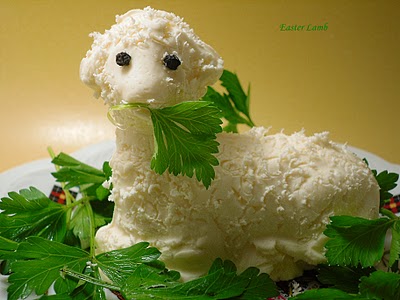
Type: Dragon
From: Polish Folklore
Features: Fire breathing dragon with 6 legs. Sometimes described as having 7 heads.
Behavior: Solitary.
Habitat: Poland. Lives in a cave at the foot of Wawel Hill near the Vistula River which is just near Krakow.
Is It Dangerous?: Yes. Evil and extremely destructive as well as breathes fire. Would leave a trail of destruction by killing farmers, ruining homes, and eating livestock. Many knights tried to slay this creature but failed. Has a particular craving for young maidens that the people of Krakow had to leave a young maiden at its den once a month.
Can It Be Domesticated?: No way in hell.
How to Get Rid of It: A cobbler’s apprentice basically presented it a sulfur stuffed lamb in which the dragon was unable to quench its thirst that it got a stomach ache and exploded. Smart guy.


129. Aigamuxa (a. k. a. Aigamuchab)

While the Aigamuxa is a known man eating beast, it's easily out maneuverable because it has eyes on its feet. Thus, it can't run and see at the same time. Still, the stuff of nightmares though.

While the Aigamuxa is a known man eating beast, it’s easily out maneuverable because it has eyes on its feet. Thus, it can’t run and see at the same time. Still, the stuff of nightmares though.

Type: Humanoid
From: Bushman Mythology
Features: Human like with eyes on its feet. Eyes could be on the soles, in step, or back of heel. Also very big. Has huge, long, and sharp pointy teeth.
Behavior: Solitary. Has to run blind.
Habitat: Africa. Lives in the dunes of deserts.
Is It Dangerous?: Yes, it’s known as a man eater.
Can It Be Domesticated?: Absolutely not for it’s a humanoid and dangerous.
How to Get Rid of It: Just out run it and make sure it can keep you in sight since it will have to stop and lie down.


130. Hecatoncheires

Sure they it may be a hideously ugly beast but if it weren't for the Hecatontcheires, Zeus probably wouldn't have been able to take revenge against his dad Cronus, imprison the Titans, and become ruler of Mount Olympus.

Sure they it may be a hideously ugly beast but if it weren’t for the Hecatontcheires, Zeus probably wouldn’t have been able to take revenge against his dad Cronus, imprison the Titans, and become ruler of Mount Olympus.

Type: Humanoid
From: Greek Mythology
Features: Giant with 50 heads and 100 arms. Overwhelmingly hideous. Depictions may vary for obvious reasons.
Behavior: There are three of them named Briareus, Cottus and Gyges. Can throw 100 rocks at a time. Very strong.
Habitat: Greece. Were once banished to Tartarus though.
Is It Dangerous?: Well, they helped Zeus defeat the Titans so you don’t want to mess with them. Very ferocious.
Can It Be Domesticated?: Only by the Olympian gods, especially Zeus but not as a pet.
How to Get Rid of It: We’re not sure how, but they’re probably immortal so it’s impossible.


131. Amphisbaena

Though I'm not sure how this snake eats or goes to the bathroom (nor do I want to), it's interesting to note that the supposedly Amphisbaena was said to have many uses in folk medicine such as ensuring safe pregnancies, curing arthritis and the common cold, attracting sexual conquests, being of pure heart and mind, or keeping warm. Yes, I know it's strange but that's the Greeks for you.

Though I’m not sure how this snake eats or goes to the bathroom (nor do I want to), it’s interesting to note that the supposedly Amphisbaena was said to have many uses in folk medicine such as ensuring safe pregnancies, curing arthritis and the common cold, attracting sexual conquests, being of pure heart and mind, or keeping warm. Yes, I know it’s strange but that’s the Greeks for you.

Type: Serpent.
From: Greek Mythology
Features: A serpent with a head on each end. Sometimes depicted with scaled chicken feet as well as feathered wings or dragon like with horns and small round ears.
Behavior: Solitary.
Habitat: Libyan Desert.
Is It Dangerous?: Yes. Considered deadly poisonous. Usually feeds off corpses though.
Can It Be Domesticated?: Absolutely not.
How to Get Rid of It: We’re not sure how.


132. Camazotz

In some Mayan tales, the Camazotz is a giant bat like creature that beheads one of the Hero Twins and uses it for a ball game. In others, it's an evil bat god associated with night, death, and sacrifice.

In some Mayan tales, the Camazotz is a giant bat like creature that beheads one of the Hero Twins and uses it for a ball game. In others, it’s an evil bat god associated with night, death, and sacrifice.

Type: Abnormal Animal
From: Mayan Mythology
Features: A gigantic vampire bat. Said to be as big as a full grown man maybe even bigger. Yet, this isn’t to be confused with the bat like deity of the same name.
Behavior: Nocturnal. Believed to exist as a stone statue during the daytime.
Habitat: Jungles of Central America as well as Xibalba, the Mayan underworld.
Is It Dangerous?: Absolutely. Would attack and suck the victim dry of blood and terrorize local people on a nightly basis. Known to kill both animals and people as well as commit genocide. Beheaded one of the Hero Twins and used his hat as a ball for a game against the gods.
Can It Be Domesticated?: Well, they’re owned by the Mayan gods who could control them any way they please. Yet, not always 100% of the time.
How to Get Rid of It: Just try to appease the Mayan gods with human sacrifices so you don’t have to face these demonic bats ever again.


133. Cigquapa

Sure she may resemble a sexy alien chick you may see fooling around with Captain Kirk on Star Trek. However, the Ciguapa is a creature in Dominican mythology with irresistible charm and capability of unspeakable cruelty.

Sure she may resemble a sexy alien chick you may see fooling around with Captain Kirk on Star Trek. However, the Ciguapa is a creature in Dominican mythology with irresistible charm and capability of unspeakable cruelty. Beware of blue women with backward feet.

Type: Humanoid
From: Dominican Folklore (possibly with roots from African or Taino legend)
Features: Blue or brown nude female with backward feet. Considered alluring or horrifying. Have manes of shiny long dark hair that covers their bodies. Have deep black eyes. May occasionally whine or chirp.
Behavior: Very smart and avoid capture with backward feet. Nocturnal.
Habitat: High Mountains of the Dominican Republic.
Is It Dangerous?: Well, don’t look at their eyes since they could bewitch you forever. Seen as an omen of death as well as lure innocent victims with their irresistible charm. Far from innocent and capable of unspeakable cruelty.
Can It Be Domesticated?: Well, they’re humanoid and would prefer not to.
How to Get Rid of It: Can only be captured if tracked down during a full moon using a black and white dog born with extra toes on its paws.


134. Lizardman of Scape Ore Swamp

No, this isn't Lizardman from The Amazing Spiderman movies or the Creature from the Black Lagoon. This is the Lizardman of Scape Ore Swamp in South Carolina from American Urban Legend. Of course, if you want to go anywhere near it, make sure you have good car insurance. You'll need it.

No, this isn’t Lizardman from The Amazing Spiderman movies or the Creature from the Black Lagoon. This is the Lizardman of Scape Ore Swamp in South Carolina from American Urban Legend. Of course, if you want to go anywhere near it, make sure you have good car insurance. You’ll need it.

Type: Humanoid, Hybrid, Cryptid
From: United States
Feature: Said to be 7ft tall, bipedal and bulky, as well as covered in dark hair and lizard like scales on his hands, feet and face. Has 3 toes on each foot and 3 fingers on each hand. May have a tail. Kind of resembles the Creature from the Black Lagoon.
Behavior: Is incredibly strong and more than capable of ripping into a car. Solitary.
Habitat: Scape Ore Swamp in Lee County, South Carolina. Seen in subways in town near the swamp.
Is It Dangerous?: Yes. Has been known to maul cars for some reason and you wouldn’t want to be in one near it.
Can It Be Domesticated?: No way in hell since its humanoid.
How to Get Rid of It: Despite what your car may go through, you might want to take a picture of it and send it to the History Channel or Syfy.


135. Orthrus

The Orthrus may appear a bit like Cerberus except that he has two heads and without the benefit of being Hades' pet guard dog. Killed by Hercules so the gods can have those red cattle.

The Orthrus may appear a bit like Cerberus except that he has two heads and without the benefit of being Hades’ pet guard dog. Killed by Hercules so the gods can have those red cattle.

Type: Hybrid, Serpent
From: Greek Mythology
Features: Giant 2 headed dog with a serpent’s tail. Muscular with sharp teeth. Sometimes just depicted as a 2 headed dog.
Behavior: Charged with protecting the red cattle of Erythia that was coveted by the Greek gods.
Habitat: Island of Erythia in Ancient Greece.
Is It Dangerous?: Yes, very ferocious and snake like tail could be instantly poisonous and lethal.
Can It Be Domesticated?: Owned by 3 bodied giant Geryon and was charged with guarding a herd of red cattle along with his master Eurytion.
How to Get Rid of It: Killed by Hercules with one strong blow of the latter’s supernaturally spiked club.

Mythological Creatures Reexamined: Part 8 – Melusine to Piasa

While many mythical creatures seem to originate in Western Mythology, especially in legends by the Greeks, there are plenty of monsters all over the world. Of course, while some of them may remind you of some of the more familiar beasts, sometimes they could be seen as different. For instance, the Chinese Jiang Shi is way different from the traditional vampire and zombie. Same goes with the Japanese Ningyo and traditional western mermaids as well as the Adlet with regular werewolves. Nevertheless, in this selection, we’ll look at aquatic creatures like the French Melusine, the Jormungand from Norse Mythology, the Aztec Ahuizotl, the Scottish Nucklelavee, as well as the cryptids like the Ogopogo from Canada and the Mokele-Mbembe from Africa. From Greek Mythology, we’ll see the parents of all monsters named Echidna and Typhon, the Peryton, and the Lamia. And then we have the cryptid Skunk Ape from the Everglades, the Elemental from Paracelsus, the Lich, the English giant Gogmagog, and the Piasa from Native American Legend. So without further adieu, here are some more mythological monstrosities for your pleasure.


106. Melusine

Let's just say there's a good reason why Melusine wanted some time by herself on Saturdays. Still, she probably should've told her husband about her lower half before they were married. Would've saved a lot of trouble.

Let’s just say there’s a good reason why Melusine wanted some time by herself on Saturdays. Still, she probably should’ve told her husband about her lower half before they were married. Would’ve saved a lot of trouble.

Type: Hybrid, Water Monster, Humanoid
From: French Folklore
Features: Half woman and half fish or serpent. Could be depicted with tails or wings. Some stories have her as a traditional siren. Considered beautiful from the waist up. Appearances vary.
Behavior: Let’s just say, she greatly values her privacy, especially when it came to bathing on a Saturday. May have been this way as a curse for being taken to Avalon in some stories. Also, hates to be teased about her lower half. Can turn into a dragon and is said to surface every 7 years.
Habitat: Streams and rivers.
Is It Dangerous?: Depends on the legend. In some stories, she’s a siren who calls to lead men to their watery deaths. In others, she’s a stealer of children who also beckons them at night and leads them to drown. In her most famous story, she’s actually pretty nice but she could turn into a dragon if you dare piss her off about what’s below her waist.
Can It Be Domesticated?: She’s part human, so no.
How to Get Rid of It: Well, she did leave her husband when he called her a serpent in front of court after he caught her bathing. Should’ve married the founder of Starbucks. At least she could model for the logo.


107. Elemental

Of course, if you take the water elemental out, you get the 1970s R&B and soul music from the other three basic elements of Earth, Wind, & Fire. Of course, I'm sure that group with actual elementals won't go too well though.

Of course, if you take the water elemental out, you get the 1970s R&B and soul music from the other three basic elements of Earth, Wind, & Fire. Of course, I’m sure that group with actual elementals won’t go too well though.

Type: Humanoid, Anthropomorphic Being, Spirit
From: 16th century alchemical writings of Paracelsus
Features: Human like creature of the elements of earth, air, fire, and water. There are four different types like Gnome (earth), Undine (water), Sylph (air), and Salamander (fire).
Behavior: Can summon their element into reality. A Salamander could shoot fire balls. A Gnome can cause earthquakes. An Undine can start tidal waves. Said to be longer lived than man but ceased existence upon death.
Habitat: Worldwide?
Is It Dangerous?: Well, though occasionally described as nice, they are often portrayed as evil or unkind. So make what you will. Also, while they are mischievous and like to play, they tend to cause disasters.
Can It Be Domesticated?: You got to be kidding me.
How to Get Rid of It: I’m not sure how.


108. Jormungand

Jormungand is another of Loki's monstrous children that is so large his body forms a circle around the entirety of Midgard. Of course, at Raganarok, he and Thor will kill each other.

Jormungand is another of Loki’s monstrous children that is so large his body forms a circle around the entirety of Midgard. Of course, at Raganarok, he and Thor will kill each other after he gets rid of all life with his poisonous breath first.

Type: Serpent, Sea Monster, Ouroburos
From: Norse Mythology
Features: Enormous snake with huge fangs and a flat tail. Basically is so large that he can circle Midgard and grasp his own tail.
Behavior: Solitary and is always in a bad mood. Spends much of his time biting his own tail until Raganarok.
Habitat: Oceans across the world.
Is It Dangerous?: Yes. His huge fangs could spit deadly venom which and is capable of exhaling poisonous gas that could kill all living creatures. Also could cause natural disasters whenever he pleased.
Can It Be Domesticated?: Hell, no. Besides, he’s Loki’s son. Yes, that Loki.
How to Get Rid of It: Destined to die at Raganarok. He and Thor are said to kill each other. Yes, he kills Thor as well as practically any creature that doesn’t drown.


109. Skunk Ape (a. k. a. Swamp Ape)

Now the Skunk Ape is seen as a Bigfoot from Florida which lives in the Everglades. However, it gives off a stench so foul that you wouldn't want to go anywhere near it. Of course, this Indian probably has no sense of smell to be that close.

Now the Skunk Ape is seen as a Bigfoot from Florida which lives in the Everglades. However, it gives off a stench so foul that you wouldn’t want to go anywhere near it. Of course, this Indian probably has no sense of smell to be that close.

Type: Cryptid, Humanoid
From: United States
Features: Large body covered in orange fur with glowing eyes of either red or green. Bipedal. Said to be 8ft tall and 300lbs. Has very long forearms and an unbelievably horrifying stench.
Behavior: Said to roll itself in the bodies of dead animals so humans could stay away from it. Solitary and nocturnal. Probably omnivorous and very strong.
Habitat: The Everglades in Florida.
Is It Dangerous?: Well, it’s smell may make you pass out but that’s about it as far as we know.
Can It Be Domesticated?: I don’t think you’d want to.
How to Get Rid of It: You’d probably just want to take a picture upon seeing it. Yet, you might want to protect your nose.


110. Lich

When researching for a Lich, I can't help but remark on how similar this creature is to Lord Voldemort. I mean Voldemort is sort of an undead entity and powerful magician known to commit evil deeds to achieve eternal life. Yet, I'm not sure if Voldemort could command legions of undead though.

When researching for a Lich, I can’t help but remark on how similar this creature is to Lord Voldemort. I mean Voldemort is sort of an undead entity and powerful magician known to commit evil deeds to achieve eternal life. Yet, I’m not sure if Voldemort could command legions of undead though.

Type: Undead, Spirit, Humanoid
From: Various Tales
Features: Skeletal looking and cadaverous. Often portrayed wearing a black cloak and carrying a staff. Sometimes depicted with armor.
Behavior: Extremely clever and capable of shape shifting as well as other magical powers. Can easily control other undead entities and often uses them as soldiers or servants. Very powerful and tends to be immortal out of its own choice. Usually tend to be magicians and wizards who used dark magic to prolong life or live forever.
Habitat: Worldwide.
Is It Dangerous?: Hell, yes. Is extremely powerful and capable of unimaginable evil and destruction. Will trick and empower any opposing human and any other force it encounters. Serves no one and if it joins forces, it’s always to execute one of its own selfish and devious schemes. Never trust one.
Can It Be Domesticated?: No way in hell.
How to Get Rid of It: Does Lord Voldemort qualify? Seriously, he was defeated and much of this entry basically describes him. Yet, it helps to understand how a Lich would get to its present state as known in the Harry Potter books.


111. Ogopogo

Known as the "Loch Ness Monster of Canada" the Ogopogo hasn't been as well known outside its native Canada. Still, if you live in North America and can't afford to go to Loch Ness, I'm sure a trip to Lake Okanagan is a suitable alternative.

Known as the “Loch Ness Monster of Canada” the Ogopogo hasn’t been as well known outside its native Canada. Still, if you live in North America and can’t afford to go to Loch Ness, I’m sure a trip to Lake Okanagan is a suitable alternative.

Type: Water Monster, Serpent, Cryptid
From: Native American Legend
Features: Large serpent with big pointy horns and seal like flippers. Said to be between 40-50ft long. Appearances may vary.
Behavior: Solitary.
Habitat: Lake Okanagan in British Columbia in Canada. Said to dwell in an underwater cave.
Is It Dangerous?: Always waiting to feast on whatever crosses its path. The shores of Monster Island are said to have been the display of leftover blood and scattered bones of its victims.
Can It Be Domesticated?: You got to be kidding me.
How to Get Rid of It: Local tribes would through dead fish or cattle to safely cross the lake to appease it. In the 1900s, crossing ferries were said to be armed. Still, even these techniques don’t always work. Nevertheless, you can always take a picture of it and send it to the History Channel or National Geographic.


112. Mokele-Mbembe

The Mokele-Mbembe is a cryptid that has inspired many a futile expedition to the African Congo in search for it. Still, this doesn't stop cable TV in the US from trying to film it while braving mosquitoes.

The Mokele-Mbembe is a cryptid that has inspired many a futile expedition to the African Congo in search for it. Still, this doesn’t stop cable TV in the US from trying to film this living dinosaur while braving mosquitoes and hippos.

Type: Water Monster, Cryptid, Living Dinosaur
From: African Folklore
Features: Large body with long neck. Said to be as big as an elephant or 15-30ft long as well as brownish gray. Has a row of short spikes protruding from the back of its neck. Some accounts say it resembles a sauropod while others compare its looks to a rhinoceros or elephant.
Behavior: Solitary and clearly wants to be left alone. Territorial herbivore that is said to appear at sunrise and sunset.
Habitat: The Congo River in Central Africa.
Is It Dangerous?: Well, it won’t eat you but that’s about it. Then again, being an herbivore should give no indication that it’s safe, especially in a continent known for many mean plant eaters that do attack people.
Can It Be Domesticated?: Don’t even think about it.
How to Get Rid of It: You wouldn’t want to get rid of this monster. I’m sure if you encounter it, the folks at National Geographic, Syfy, the Discovery Channel, or the History Channel might want to do a special.


113. Gogmagog

While Gogmagog may have been able to wipe away armies with brute force, he wasn't very savvy with battle tactics. Of course, this proved his undoing according to Geoffrey of Monmouth.

While Gogmagog may have been able to wipe away armies with brute force, he wasn’t very savvy with battle tactics. Of course, this proved his undoing according to Geoffrey of Monmouth.

Type: Humanoid
From: English Folklore
Features: Distorted human like body and twice the size like 13ft tall. Has bulging muscles. Wore animal skins with the heads and claws still attached to keep warm.
Behavior: Said to be extremely powerful and the combined strength of 20 men. May have been the son of a demon. Not very battle savvy and used simple weapons.
Habitat: England.
Is It Dangerous?: Well, since his story was written during the Middle Ages where giants were said to be known for terrorizing villages, I would say yes.
Can It Be Domesticated?: No way in hell.
How to Get Rid of It: Thrown off a cliff in a duel by Corineus.


114. Echidna

This is how the "Mother of All Monsters" Echidna gets dressed.... for dinner. I'm sure she likes to chomp on a man's strong bicep muscles. Still, it's strange that a cute little monotreme is named after this viper lady.

This is how the “Mother of All Monsters” Echidna gets dressed…. for dinner. I’m sure she likes to chomp on a man’s strong bicep muscles. Still, it’s strange that a cute little monotreme is named after this viper lady.

Type: Hybrid, Humanoid, Serpent
From: Greek Mythology
Features: Has an upper half of a beautiful woman and a lower half of a serpent. Extremely beautiful from the waist up. Sometimes depicted with more than one snake on her lower body or with wings. May have speckled skin.
Behavior: More or less remembered for her destructive children with Typhon and attacking Olympus with her husband but Zeus kept them at bay (she’s not called “Mother of Monsters” for nothing). Yet, her and Typhon seem to have a great relationship. May be part nymph.
Habitat: Greece. Lives in a cave in a hollow rock after Typhon was sealed at Mt. Etna.
Is It Dangerous?: Oh, yes despite having a spiked egg laying mammal from Australia named after her that’s quite cute. Known to entice men with her tantalizing attractiveness while concealing her lower half so she could lure them in the darkness to kill and devour.
Can It Be Domesticated?: No way in hell.
How to Get Rid of It: Murdered by the 100 eyed giant Argus Panoptes in her sleep.


115. Ahuizotl

Sure this dog may look pretty cute but keep in mind that it has an appetite for human flesh and tends to drag its victims to a watery death by drowning.

Sure this dog may look pretty cute but keep in mind that it has an appetite for human flesh and tends to drag its victims to a watery death by drowning.

Type: Hybrid, Water Monster
From: Aztec Mythology
Features: Dog and monkey cross with 5 hands. Small with black, shiny, and smooth skin. Has a long tail.
Behavior: Hands are very agile and capable of manipulation like those of a monkey and tail is very powerful.
Habitat: Near Lake Texcoco.
Is It Dangerous?: Hell yes. Has a vicious appetite for human parts and has a particular liking for nails, eyes, and teeth. Leaves leftover corpses completely unscathed except toothless with empty eye sockets and mutilated digits. Waits for a meal by hiding in a watery cave weeping like an abandoned infant. Passerby curious hikers who found themselves a little too close to the water ‘s edge would be snatched by its long powerful tail and additional creepy hand and dragged to a watery death.
Can It Be Domesticated?: You got to be kidding me.
How to Get Rid of It: We’re not sure how.


116. Lamia

Now I know Lamia is a monstrous humanoid creature hybrid known to kill children. Yet, somehow I have to feel bad for her since her affair with Zeus led Hera to force her to devour her kids and be turned into this. Seriously, what the fuck, Hera?

Now I know Lamia is a monstrous humanoid creature hybrid known to kill children. Yet, somehow I have to feel bad for her since her affair with Zeus led Hera to force her to devour her kids and be turned into this. Seriously, what the fuck, Hera?

Type: Hybrid, Humanoid
From: Greek Mythology
Features: Has woman’s head, scaly body, four legs, and a tail. In some stories, she has a body of a serpent and has her eyes removed by Zeus. Resembles more of a mermaid in Spanish mythology.
Behavior: Was once a Libyan Queen who had an affair with Zeus that led Hera forcing her to eat any children she had with the king of Mount Olympus. Is unable to close her eyes forever and is eternally haunted by the images of dead children.
Habitat: Libya.
Is It Dangerous?: Not in Spanish mythology in which she’s only angered when you try to steal her golden hair combs. In Greek mythology however, she has been cursed with an insatiable taste for kiddie flesh. In other stories, she just uses her beauty to lure young men to feed on their blood.
Can It Be Domesticated?: Hell no.
How to Get Rid of It: We’re not sure how. Seriously, we’re not sure.


117. Nuckelavee

Now a Nuckelavee may seem to have a form of centaur yet it is basically skin less and a creature of sheer terror. His breath could doom a village to starvation and plague. Let's just say you wouldn't want to go near it.

Now a Nuckelavee may seem to have a form of centaur yet it is basically skin less and a creature of sheer terror. His breath could doom a village to starvation and plague. Let’s just say you wouldn’t want to go near it.

Type: Hybrid, Sea Monster, Divine Horse
From: Orkney Folklore
Features: Skinless monster that resembles a centaur or a man on horse. Has an enlarged head and its head, veins, and tendons are all exposed. Has black blood as well as a gaping mouth with a long black tongue and sharp teeth.
Behavior: Has powerful muscles. Solitary.
Habitat: Great Britain. Prefers stale and stagnate waters.
Is It Dangerous?: Absolutely. Has diseased, rancid, and deadly breath that could wilt crops, spread plague, and sicken livestock while on one of his rampages. One of the more malevolent monsters in the Scottish Islands.
Can It Be Domesticated?: Absolutely not.
How to Get Rid of It: Swim in a stream of running water. It’s the only way you could escape him.


118. Peryton

Perytons may seem like graceful creatures but keep in mind that they aren't vegetarians and have to kill one human being to appease their Atlantian gods. So to get rid of one, you have to let it kill you.

Perytons may seem like graceful creatures but keep in mind that they aren’t vegetarians and have to kill one human being to appease their Atlantian gods. So to get rid of one, you have to let it kill you.

Type: Hybrid, Divine Bird
From: Greek Mythology
Features: Head of a deer with wings of an eagle. Has sharp teeth and long razor like fangs as well as sharp pointy antlers. May have front legs of a stag but hind legs of a bird.
Behavior: Used to be the inhabitants of Atlantis until it sank into the Atlantic Ocean but they were unable to find their souls again.
Habitat: Mediterranean Sea.
Is It Dangerous?: Well, their main objective pertains to killing a human being to regain favor with the Atlantian gods. Are constantly stalking people to kill them so their souls could be at ease.
Can It Be Domesticated?: No way in hell.
How to Get Rid of It: Well, if you want to get rid of one, you’d have to let it kill you.


119. Typhon (a. k. a. Typheus, Tyhaon, or Typhos)

Typhon was one of the fiercest monsters in Greek Mythology. When he and his wife Echidna tried to attack Mount Olympus after the Titans were imprisoned, all the gods were terrified of him but Zeus. Of course, thanks to Zeus, Typhon would be eternally sealed in Mount Etna.

Typhon was one of the fiercest monsters in Greek Mythology. When he and his wife Echidna tried to attack Mount Olympus after the Titans were imprisoned, all the gods were terrified of him but Zeus. Of course, thanks to Zeus, Typhon would be eternally sealed in Mount Etna.

Type: Hybrid, Serpent
From: Greek Mythology
Features: Enormous multi-headed monster with wings and serpent’s body. Once described as having heads of all dragons on his arms and a snake head through his neck though he’s mostly depicted with one human head. Bottom half was said to consist of viper coils which made a hissing noise. Whole body was said to be covered in wings. Appearances vary by description.
Behavior: Best known for fathering a bunch of monstrous kids with Echidna (thus being “Father of All Monsters”) and going to war against Zeus after the latter imprisoned the Titans.
Habitat: Greece. Sealed in a cave at Mount Etna.
Is It Dangerous?: Yes. Oozes with venom from his mouths while lava spews from his eyes. Was so infamous that most of the gods on Mount Olympus fled and Zeus had to take him on all by himself. Also, said to have such an explosive temper that he starts eruptions on Mt. Etna.
Can It Be Domesticated?: You got to be kidding me.
How to Get Rid of It: Sealed in Mount Etna by Zeus after he tried to attack Mount Olympus.


120. Piasa

The Piasa is a legendary creature from Mississippian culture with a cliff image that was found by a French priest Father Jacques Marquette in 1673. However, we're not sure whether mythology from it was either ancient or just made up by a guy named John Russell.

The Piasa is a legendary creature from Mississippian culture with a cliff image that was found by a French priest Father Jacques Marquette in 1673. However, we’re not sure whether mythology from it was either ancient or just made up by a guy named John Russell. Still looks pretty cool.

Type: Hybrid, Humanoid, Dragon, Divine Bird
From: Native American Legend
Features: Has a face of an angry bearded man, large antlers from its head, bat like (or bird like) wings, and four legs. Said to have a mouthful of sharp pointy teeth and powerful talons on its hind legs. Also said to be covered in scales and have a scorpion tail. Appearances vary.
Behavior: Very strong that it can easily carry a bison with its huge talons to its home in the high cliffs.
Habitat: Along the Mississippi River in the United States.
Is It Dangerous?: Yes, for once the Illini arrived it seemed to develop a taste for human flesh that the people needed to do something about it.
Can It Be Domesticated?: Absolutely not.
How to Get Rid of It: Well, a chief managed to get his people to trap the monster and shoot it with poison arrows while he acted as bait.

Mythological Creatures Reexamined: Part 7 – Nymph to Sarimanok

Mythological creatures can come in all shapes and sizes yet in stories they tend to be cast as the villainous monsters that terrorize villages, has a taste for humans and livestock, and what not. Still, it seems everyone likes to see heroes fighting monsters of one sort or another. Nevertheless, a lot of these creatures are dangerous such as dragons, serpents, and sea monsters, even though they may seem real cool. Still, in this selection, we’ll explore monsters like the six headed Scylla and the giant whirlpool Charybdis from Greek Mythology as well as the Nymph whose personality may vary. We’ll also take a look at fiends like the Headless Horseman you remember from “The Legend of Sleepy Hollow,” the Succubus, the Jiang Shi from China, the Grim Reaper, the Skeletal Warrior from Ancient Rome, and the Dhampir from the Balkans. On the urban legend angle we’ll see beasts like the British Beast of Bodmin, the Waheela from Canada, and the Lusca from Caribbean Mythology. And last but not least, we’ll examine the Ningyo from Japan which is a Japanese mermaid, the European Fairy, and the Sarimanok from the Philippines which is mostly depicted funky colored chicken. So now without further adieu, I bring you more legendary creatures for your enjoyment.


91. Nymph

Nymphs appear a lot in Greek Mythology and have a wide range of personalities. Many of them tend to serve as the companions and assistants to the gods and heroes. Yet, they are a diverse group of beings with a lot of different functions that would take up a whole blog post of its own.

Nymphs appear a lot in Greek Mythology and have a wide range of personalities. Many of them tend to serve as the companions and assistants to the gods and heroes. Yet, they are a diverse group of beings with a lot of different functions that would take up a whole blog post of its own.

Type: Spirit, Humanoid
From: Greek Mythology
Features: Usually are nubile as well as beautiful young maidens and are nature deities. There are several different types like Nereids, Naiads, Dryads, Oreads, Oceanids, and others.
Behavior: Love to dance and sing as well as are allegedly sexually promiscuous, but this doesn’t apply to all of them (there are many legends in which they weren’t as with Daphne). Are immortal but can reproduce and die from unnatural causes (as with Eurydice). Are usually handmaidens or sex partners to many of the gods. Target of satyrs.
Habitat: Any natural setting in Greece.
Is It Dangerous?: Well, they can be if you refuse to have sex with them or honor their patron god as in Orpheus’ case in some legends. Also can turn into other monsters.
Can It Be Domesticated?: Well, they’re humanoid and work for the Greek gods so, no.
How to Get Rid of It: Well, just because they’re technically immortal doesn’t mean you can’t kill them for they can be murdered.


92. Ningyo

While western mermaids can be described as having a human upper body and a fish tail, the Ningyo can have a varying amount of human and fish features depending on the story. Sometimes they just resemble a fish with a human face or be seen as hideously ugly or deformed otherworldly nightmares.

While western mermaids can be described as having a human upper body and a fish tail, the Ningyo can have a varying amount of human and fish features depending on the story. Sometimes they just resemble a fish with a human face or be seen as hideously ugly or deformed otherworldly nightmares. Let’s say that the Japanese mermaids don’t fit the traditional stereotype.

Type: Hybrid, Humanoid, Sea Monster
From: Japanese Mythology
Features: Basically they look like mermaids, except their descriptions tend to vary. Some describe it as a giant fish with a human face and a full head of hair. Sometimes depicted with horns or fangs. Sometimes portrayed as ugly or resemble as a human with scaly arms and clawed hands akin to the Creature of the Black Lagoon. At times can be seen as more human but have distorted demonic features, alabaster skin, and voices like flutes or song birds. Tend to portrayed as a Japanese mermaid though.
Behavior: Tend to warn humans about potential disasters and good fortune. Also can shape shift as well as live for a very long time like 800 years. Could cry tears of pearls. Omnivorous.
Habitat: Pacific Ocean and off the Japanese coast.
Is It Dangerous?: Usually helpful creatures but some legends do have them lure people into the ocean to kill them.
Can It Be Domesticated?: Absolutely not since they’re part human.
How to Get Rid of It: Capture on in a net or have it wash ashore without water.


93. Charybdis

In the Strait of Messina sailors had to face a tough decision between Scylla and Charybdis, both which would bring harm. Charybdis was known to suck in ships and spit them out. Let's say that Odysseus was lucky to grab onto that fig tree.

In the Strait of Messina sailors had to face a tough decision between Scylla and Charybdis, both which would bring harm. Charybdis was known to suck in ships and spit them out. Let’s say that Odysseus was lucky to grab onto that fig tree.

Type: Hybrid, Sea Monster
From: Greek Mythology
Features: A giant whirlpool or basically a sea monster that creates a giant whirlpool.
Behavior: Solitary. May have been a nymph but was turned into a sea monster for stealing one Hercules’ sheep.
Habitat: The Strait of Messina between Sicily and Italy.
Is It Dangerous?: Yes, she’s a deadly giant whirpool known to swallow waters into the sea and thrust them back 3 times a day. Any ship caught in this devastating whirlpool would be totally screwed. If you can grab onto something like a tree, you may survive.
Can It Be Domesticated?: You got to be kidding me.
How to Get Rid of It: I’m afraid you can’t. However, Odysseus did manage to survive by clinging on a fig tree when his raft was swallowed up.


94. Scylla

Opposite of Charybdis was Scylla which was a cave dwelling and six headed sea monster. If you wish to pass her, you'd have to give up six of your sailors. Of course, Odysseus tried to have her mom intervene but lost six sailors anyway.

Opposite of Charybdis was Scylla which was a cave dwelling and six headed sea monster. If you wish to pass her, you’d have to give up six of your sailors. Of course, Odysseus tried to have her mom intervene but lost six sailors anyway. Imagine if that monster worked as a toll booth operator for the Pennsylvania Turnpike. Hey, anything’s better than six men isn’t it?

Type: Hybrid, Sea Monster
From: Greek Mythology
Features: Has six heads with very long necks that stretch from her cave. Depictions of heads vary in appearance. Sometimes portrayed with tentacles.
Behavior: Solitary. May have been a nymph but was turned into a monster over a love affair or something.
Habitat: The Strait of Messina between Italy and Sicily.
Is It Dangerous?: Oh, yes. She was known to devour six sailors with each of her six heads. Odysseus lost six of his sailors this way.
Can It Be Domesticated?: Absolutely not.
How to Get Rid of It: Odysseus didn’t actually do anything but he just asked her mom Crataeis from pouncing on his ship more than once. Yet, she did manage to devour six of his men though.


95. Beast of Bodmin (a. k. a. Beast of Bodmin Moor)

The Beast of Bodmin Moor is a little known cryptid from Britain which has been rumored to mutilate livestock. While experts doubt its existence, it didn't stop a big cat skull to turn up (which was found to be a hoax).

The Beast of Bodmin Moor is a little known cryptid from Britain which has been rumored to mutilate livestock. While experts doubt its existence, it didn’t stop a big cat skull to turn up (which was found to be a hoax).

Type: Cryptid, Abnormal Animal
From: Great Britain
Features: A large black panther with red eyes. Sometimes depicted as a dog or a cat.
Behavior: Solitary and active 24/7.
Habitat: The Bodmin area of England.
Is It Dangerous?: Well, it’s been known to attack and mutilate livestock. Might’ve slaughtered 24 people in a jail in 1515. So yes.
Can It Be Domesticated?: No way in hell.
How to Get Rid of It: We’re not sure how.


96. Headless Horseman

While best known as the scary ghost that drove out Ichabod Crane from Sleepy Hollow, the Headless Horseman has been a motif in European Folklore since the Middle Ages. Has appeared in the poem "Sir Gawain and the Green Knight" as well as in the tales of the Brothers Grimm.

While best known as the scary ghost that drove out Ichabod Crane from Sleepy Hollow, the Headless Horseman has been a motif in European Folklore since the Middle Ages. Has appeared in the poem “Sir Gawain and the Green Knight” as well as in the tales of the Brothers Grimm.

Type: Spirit, Undead
From: Celtic and Germanic Mythology (though most famous in Washington Irving’s “The Legend of Sleepy Hollow”)
Features: Basically a headless ghost man on a horse. May have something to stand in for his head like a gold object or a jack o’lantern.
Behavior: Solitary and nocturnal. Spends a lot of his time searching for his missing head.
Habitat: Europe and the United States (particularly Sleepy Hollow in New York). Tends to live in graveyards.
Is It Dangerous?: Well, according to what happened to Ichabod Crane who was pursued by one on Halloween. Actually we’re not sure whether he died or just skipped town. In Celtic Mythology, it causes a death as soon as it stops riding and calls out a name.
Can It Be Domesticated?: Hell no.
How to Get Rid of It: Try to find his head. Oh, wait, you can’t. Maybe have him chase you through a bridge at a town entrance since he’s incapable of crossing one. Then again, he threw his pumpkin head to Ichabod.


97. Succubus

Sure she may look appealing but guys, any sexual intercourse with a succubus could result in sleep paralysis. If a man has sex with a succubus often enough, he could die and suffer eternal damnation as a result. Same goes with women who encounter an incubus which may result in a demon child or Merlin.

Sure she may look appealing but guys, any sexual intercourse with a succubus could result in sleep paralysis. If a man has sex with a succubus often enough, he could die and suffer eternal damnation as a result. Same goes with women who encounter an incubus which may result in a demon child or Merlin.

Type: Spirit, Humanoid
From: Middle Eastern and European Folklore
Features: Sexually appealing human body of a woman and may have demonic features like bat wings. Used to be portrayed being hideously disfigured and having 3 sets of breasts and talon like nails. Descriptions vary from legend and appear most pleasing to their intended victims. Male counterpart is Incubus.
Behavior: They are capable of super speed, strength, and stamina. Can shape shift as well as appear in dreams and are immortal.
Habitat: Worldwide and Hell.
Is It Dangerous?: Oh yes. Feed off of souls of young men in their sleep. Victims are said to feel something sitting on their nether region one night and drained, unable to move, and petrified after experiencing a wonderful erotic dream the night before. Repeated sexual activity with one may result in health deterioration and/or death.
Can It Be Domesticated?: No way in Hell.
How to Get Rid of It: Go to sleep wearing a cross necklace or crucifix. That, or don’t go to sleep at all for a while.


98. Jiang Shi (a. k. a. Jiangshi)

The Jiang Shi is basically a Chinese cross between a vampire and a zombie. Like vampires, they're  dressed in aristocratic that is outdated by at least 100 years. Yet, like a zombie it doesn't really have much of personality since it can't speak. Still, wouldn't do well in Michael Jackson's "Thriller" video since it can only move by hopping with its arms outstretched.

The Jiang Shi is basically a Chinese cross between a vampire and a zombie. Like vampires, they’re dressed in aristocratic that is outdated by at least 100 years. Yet, like a zombie it doesn’t really have much of personality since it can’t speak. Still, wouldn’t do well in Michael Jackson’s “Thriller” video since it can only move by hopping with its arms outstretched.

Type: Undead, Humanoid
From: Chinese Mythology
Features: A reanimated corpse with long strong fingernails. Tend to wear very old fashion clothes since they only wake up every hundred years. May have greenish white skin and a long prehensile tongue. Kind of a Chinese version of a vampire or zombie. Appearances vary. Depicted in the fashion of the dynastic Chinese nobility.
Behavior: Moves around with a stiff hopping gait and arms outstretched. Created when the soul refuses to leave a deceased’s body due to improper death, suicide, or just the desire to cause trouble. Have no higher consciousness such as independent thought. Can’t see, speak, or hear so they locate their prey with their sense of smell or breathing detection.
Habitat: China and Japan.
Is It Dangerous?: Yes. Known to hop around and kill the living and absorbing their life essence.
Can It Be Domesticated?: Absolutely not. They’re human, dead, and dangerous.
How to Get Rid of It: Knock it over and it won’t get up. In Japanese legend, if you can hold your breath, you can escape them. You can also ward them off by writing a special spell on thin yellow paper using chicken blood as ink and stick it to its forehead. Another method is throwing rice in their tracks because these creatures can’t pass until they’ve counted every single grain. Mirrors, rooster calls, items made from peach tree wood, Jujube seeds, Azuki beans, Ba gua signs, handbells, axes, brooms, toadstools, and stonemason’s awls are also useful. Same goes for thread stained with black ink, fire, hooves of a black donkey, the I Ching, the Tong Shu, and blood of a black dog.


99. Grim Reaper (a. k. a. Angel of Death, Spectre of Death, or Death)

In Western society the Grim Reaper has served as a personification of death. He is known to show up when someone is nearing the last few minutes of life. You may try to get out of it but if you do, it won't be for long. And if you play chess with the Grim Reaper, you'll lose.

In Western society the Grim Reaper has served as a personification of death. He is known to show up when someone is nearing the last few minutes of life. You may try to get out of it but if you do, it won’t be for long. And if you play chess with the Grim Reaper, you’ll lose.

Type: Spirit, Undead, Humanoid
From: 16th Century European Legend
Features: Usually depicted as a skull face wearing a black cloak and hood. Is usually seen carry a scythe or hourglass. Sometimes accompanied by a raven or black crow. Yet, in The Seventh Seal, he resembles a young Max von Sydow. Has hidden wings so he could fly.
Behavior: Very smart second to God and will even beat the best grandmasters in a game of chess. Yet, some stories have him tricked, bribed, or outwitted to retain someone’s life. Can teleport, use telekinesis, and rip out someone’s soul if he or she is condemned to Hell. Could sense living and dead people in his midst. Solitary and active 24/7.
Habitat: Worldwide. Usually hangs out in old folks homes, crime ridden neighborhoods, Third World countries, and hospitals.
Is It Dangerous?: Well, he usually doesn’t show up until it’s your time to die so you can’t really say he’s dangerous. Then again, there are tales in which he could cause the victim’s death.
Can It Be Domesticated?: Absolutely not.
How to Get Rid of It: You can’t. He’s Death so you can’t get rid of or avoid him. Even if you can outwit, trick, or bribe him, he will be back. If he shows up after you, just accept your fate and join him.


100. Waheela (a. k. a. Bear Dog)

While the Waheela in this picture may seem happily domesticated by this wolfskin wearing woman in this painting, remember that its home is translated into "The Headless Valley" because of the mysterious decapitations that took place there. Still, it's usually the beast to blame. You don't want to domesticate that, would you?

While the Waheela in this picture may seem happily domesticated by this wolfskin wearing woman in this painting, remember that its home is translated into “The Headless Valley” because of the mysterious decapitations that took place there. Still, it’s usually the beast to blame. You don’t want to domesticate that, would you?

Type: Cryptid, Hybrid
From: Canada
Features: Resembles a cross between a bear and a wolf. Once described as a wolf on steroids with shorter legs. Depictions may vary.
Behavior: Travel in groups of two or three. Said to be capable of supernatural powers and live for over 10,000 years.
Habitat: The Nahanni Valley in the Northwest Territories of Canada.
Is It Dangerous?: It’s habitat is also known as “The Headless Valley” because of the mysterious deaths this creature may have been responsible for resulted in bodies found that had missing heads.
Can It Be Domesticated?: No way in hell.
How to Get Rid of It: We’re not sure how.


101. Lusca

No, that's not a sharkoctopus created in some lab experiment but close. It's actually a Lusca from Caribbean Mythology said to live in the blue holes in the Bahamas. Let's say just this monster needs its own franchise if you know what I mean.

No, that’s not a sharkoctopus created in some lab experiment but close. It’s actually a Lusca from Caribbean Mythology said to live in the blue holes in the Bahamas. Let’s say just this monster needs its own franchise if you know what I mean.

Type: Hybrid, Sea Monster, Cryptid
From: Caribbean Folklore
Features: Gigantic and cross between a shark and an octopus. Described as having a shark’s head and huge octopus tentacles. Said to be between 75-200ft. Tales range from them being portrayed as multi-headed monsters, dragon like beasts, evil entities, or some type of extremely large eels.
Behavior: Can change color and blend in to hide their surroundings.
Habitat: Blue holes found in the waters around the Bahamas.
Is It Dangerous?: Known to surge out and attack out of blue holes. Said to have entire ships sunk in such blue holes in giant whirlpools only have the wreckage float back after. Some have never returned. Known to terrorize fishermen and other inhabitants.
Can It Be Domesticated?: You got to be kidding me.
How to Get Rid of It: Have it wash ashore? Torpedoes?


102. Fairy

Like nymphs, fairies can come in all shapes and sizes but they're usually depicted small with insect wings as well as be in the form of pretty women. Still, they have appeared in everything in Western literature from Shakespeare, King Arthur, Rudyard Kipling, and Peter Pan.

Like nymphs, fairies can come in all shapes and sizes but they’re usually depicted small with insect wings as well as be in the form of pretty women. Still, they have appeared in everything in Western literature from Shakespeare, King Arthur, Rudyard Kipling, and Peter Pan.

Type: Spirit, Humanoid, Imp
From: Western European Mythology
Features: Human like that’s usually very small and portrayed with insect or butterfly wings. Yet, can be tall, glowing, and angelic. Said to be dead beings, an intelligent species, or demoted angels. Appearances may vary.
Behavior: Have magical powers. May travel in groups or be solitary. At best can be regarded as blessed and holy, eager to seek help from humans in return of kindness with gifts and favors. At worst can be harassing hordes to travelers and lead people astray.
Habitat: Gardens and woodlands.
Is It Dangerous?: Can range from benevolent to malicious. So it greatly depends on the story. At worst, can be known as anything from pranksters to kidnapping children and the elderly.
Can It Be Domesticated?: Once again, depends on the story. Still, even good fairies should be treated with respect.
How to Get Rid of It: I’m not sure if you want to or can.


103. Skeletal Warrior

While some skeletons can bring reminders of death and mortality, there are those in undead armies that bring death to people and seem almost indestructible.

While some skeletons can bring reminders of death and mortality, there are those in undead armies that bring death to people and seem almost indestructible.

Type: Undead, Humanoid
From: Ancient Romany Mythology
Features: Weapon wielding humanoid skeleton. Could be armed with daggers, helmets, swords, shields, and spears. Said to be remains of dead heroes and soldiers from previously destroyed armies.
Behavior: Have an arsenal consisting of any weapons by a living soldier of battle from any army that ever existed. Travel in groups. Have supernatural strength and can use magic.
Habitat: Wherever they are called upon by evil magic.
Is It Dangerous?: Have an inhuman strength to conquer all who oppose them. Seen as omens of death.
Can It Be Domesticated?: Only by evil magicians. According to Ancient Roman mythology, they could be bodyguards of the gods.
How to Get Rid of It: I’m not sure how or if they can. Perhaps destroy the person who summoned them.


104. Dhampir

Dhampirs are basically children of vampires and humans who don't lead very nice lives. They usually tend to have uneasy tormented childhoods, have no permanent residence, and usually become vampire slayers because it's one of a few good avenues for employment. Also tend to die horribly in some stories.

Dhampirs are basically children of vampires and humans who don’t lead very nice lives. They usually tend to have uneasy tormented childhoods, have no permanent residence, and usually become vampire slayers because it’s one of a few good avenues for employment. Also tend to die horribly in some stories.

Type: Hybrid, Humanoid, Undead
From: Balkan Folklore
Features: Offspring of a human and a vampire. Albanian legends say that they untamed dark or black hair and lack a shadow. Bulgarian Folklore states that they are very dirty from having a soft body, no nails, and bones as well as a deep mark on the back like a tail. They may also have larger than normal ears, eyes, and noses. Sometimes said to have a slippery-jelly like body and only live a short life.
Behavior: Usually nomads who may have rejected their vampire/human blood. Yet, they have a lot of powers associated with vampirism like enhanced senses, psychic powers, and superhuman strength. Many tend to be vampire hunters themselves. May be the only ones to see vampires invisibly. However, they don’t have any vampire weaknesses or watered down.
Habitat: Worldwide.
Is It Dangerous?: Tries not to be, at least to humans. This doesn’t mean they aren’t.
Can It Be Domesticated?: No, they’re actually humans and want to be treated as such. Yet, they could be hired as vampire hunters by villages.
How to Get Rid of It: Though they don’t age after adulthood or die of natural causes, they can be killed. Also, they can be killed with a stake through the heart.


105. Sarimanok (a. k. a. Itotoro)

The legendary Sarimanok is a beautiful rainbow colored bird as well as a symbol of the Maranao people of the Philippines. Still, it tends to be depicted as a chicken nonetheless leading some to suspect it as created by someone on psychedelic drugs.

The legendary Sarimanok is a beautiful rainbow colored bird as well as a symbol of the Maranao people of the Philippines. Still, it tends to be depicted as a chicken nonetheless leading some to suspect it as created by someone on psychedelic drugs.

Type: Divine Bird
From: Maranao Mythology (possibly Islamic Legend)
Features: Bird with colorful wings and feathered tail. Sometimes is depicted as a colorful rooster or holding a fish in its beak or talons. Head is decorated with scroll, leaf, and spiral motifs sometimes.
Behavior: Capable of magical powers, shape shifting, and good fortune. May serve as medium to the spirit world via its unseen twin spirit bird Inikadowa.
Habitat: The Mindano Region of the Philippines.
Is It Dangerous?: I’m not so sure but it doesn’t seem to be.
Can It Be Domesticated?: Probably not.
How to Get Rid of It: Since it’s a symbol of the Maranao people of the Philippines that denotes good fortune, I would highly advise against getting rid of this Technicolor chicken.