How to Survive in Southwestern Pennsylvania-A Guide to Outsiders

1. Team jerseys not to wear on football game day: Baltimore Ravens, Cleveland Browns, Dallas Cowboys, Oakland Raiders, and maybe New England Patriots or whoever else the Steelers are playing that day.

2. Team jerseys not to wear on Hockey game day: Philadelphia Flyers or whoever else the Penguins are playing against.

3. As for Division I college teams, usually most will be for Pitt or Penn State, though there is a sizable minority who will root for West Virginia. (In my house, it’s pretty much for Pitt.)

4. When traveling on the highway during spring and summer, road construction crews will be a common sight.

5. When going through Pittsburgh, do not use the Parkway during rush hour since it will be jammed packed full of traffic.

6. As with soft drinks it’s always referred to as “pop” not soda nor coke. Also, in these parts, coke is usually seen as cocaine, which is illegal.

7. Expect drunk sports fans to be everywhere on game day since most towns in the region tend to have more bars than churches.

8. Haluski, kielbasa, and pierogies aren’t considered ethnic food in the region and will be served even at concession stands.

9. Don’t expect our country roads to be great places to drive on for there will be potholes, cracks, and other road condition issues.

10. When pronouncing Youghiogheny as in the River, remember that the first “o” is short and the “u” is silent. It’s also known as the Yough, which everyone refers to it anyway.

11. You will only be able to buy alcohol at the local state store since most local stores can’t sell booze here because it’s Pennsylvania.

12. If it stops raining on a cloudy day, always be prepared it will start  again.

13. In the winter, everyone will be mostly concerned with road conditions, delays, and closings, especially when it snows.

14. There’s a good reason why it’s said that Pittsburgh is a drinking town with a football problem and vice versa.

15. There are some parts of Fayette County I wouldn’t advise you to show your face. Same may be for Greene County as well.

16. In this area, California can be a town or a university (though not always of great repute) while Indiana is a county (and home to IUP a well known party school if you know what I mean).

17. Profanity and drinking are great traditions in this region.

18. You might want to stay away from certain areas in the Mon Valley, while you’re at it. I mean some places may be nice but it’s still kind of a shithole.

19. If you go to Ohio State, you may be surprised of what the people of Jeannette think of Terrell Pryor.

20. You might not want to go hiking in the woods the Monday after Thanksgiving (especially since it’s a day when most area children don’t have school).

21. You might want to make sure your fly’s zipped when someone tells you that “Kennywood’s open.”

22. There’s a big difference between the Immaculate Conception and the Immaculate Reception which even a child will know but will call both instances nothing short of great miraculous significance.

23. Don’t ask me why there are 4 country music stations on the radio.

24. For those who think the area seems any way similar than what was depicted in The Deer Hunter, prepare to be disappointed or in utter shock.

25. Expect many people to be decked with the black and gold on game day, especially in the fall.

26. The Primanti Bros. Pittsburgher is actually not as good as they say it is.

27. Eat n’ Park is a nice place to eat with your family and they actually have smiley face cookies for the kids.

28. Shooting deer is serious business here so be thrilled that there’s no hunting on Sunday.

29. Yinz and yunz are second person pronouns in the plural tense.

30. If there’s a closed country road, go another way since it will take months before Penn DOT will show up.

Historical Heroes Who Probably Don’t Deserve Their Fame

Image

As with fictional heroes, there are plenty of real life examples of real life heroism as well, especially in history. Some of them could be said to be our role models and inspirations as well as those whose stories are told time and time again. Of course, there are those who do great deeds in history which are heroic and then there are those whose heroism is just a load of crap and doesn’t seem to hold still to the facts. Of course, I’m not going to use recent examples unless there are really serious implications. For instance, I may love to put Ronald Reagan on here since I think he’s one of our worst presidents in the US as well as a highly overrated historical figure, but since many people’s opinions of him usually depend on their political affiliation, I know that to make that move would be controversial. Not to mention, I’m not going to put on movie stars, writers, and other celebrities unless known to accomplish something big.

1. Wyatt Earp and Co.

Known for: The famous 1881 gunfight at the O. K. Corral in Tombstone, Arizona against a group of outlaw Cowboys of ranches who were unhinged of the silver boom in the area, which killed Tom and Frank McLaury as well as Billy Clanton. Of course, Wyatt Earp is the best known but his brothers Virgil and Morgan as well as friend Doc Holliday were there as well. However, I’m just going to stick to Wyatt Earp since he’s the most famous of the bunch. Wyatt was said to be a respected and fearless lawman who helped bring law and order to the town of Tombstone. Has the reputation as the “toughest and deadliest gunman of his day.”

Why he probably doesn’t deserve his fame: Wyatt was very savvy with PR  as well as blessed with the gift of longevity so he was able to develop his modern image, which he did during the 1920s as a consultant for an article and a movie about his life. He even gave an interview for a biography that was published after his death (which is now considered mostly fiction by today’s standards). However, before the 1920s, he was pretty much known as a dubious minor figure in Western history. And his reputation has been confused by inaccurate, conflicting, and false stories told about him by others and by his own claims that cannot be corroborated. And though he did have a reputation as a lawman, he didn’t really help bring law and order to the Old West, especially with the gunfight at the O. K. Corral. In fact, the gunfight only made things worse. For one, after the gunfight, Ike Clanton tried to get the Earps and Holliday charged with murder but the four got by with self-defense. Later on, Virgil was ambushed and shot in the left arm and shoulder by a shot gun in a saloon where Ike Clanton’s hat was found in a building across the street. A few months later, Morgan was shot in the right side by gunmen firing from a dark alley while playing billiards, in which the bullet shattered his spine as well as killed him forty minutes later and eventually lodged in the thigh of George A. B. Berry. Wyatt was almost shot there himself.  Wyatt then decided to take the law in his own hands and resolved to kill all his enemies so he gathered a posse and to pursue the Cowboys in revenge which the Tombstone sheriff tried to stop him from doing. which was bloody. Separating the fact from fiction from Wyatt Earp’s life may be a difficult process, but one thing’s for sure, he didn’t leave Tombstone a better place and was more shadier and self-interested.

2. Jesse James

Known for: Famous Western outlaw and most famous member of the James-Younger Gang who staged many train, stagecoach, and bank robberies and shootings. Said to be a manifestation of frontier lawlessness or economic justice. Said to be the “American Robin Hood.” Said to be shot by the coward Robert Ford.

Why he probably doesn’t deserve his fame: Again good PR comes into play which Jesse was willing to take advantage of and it was mostly done in efforts to encourage the rise of the ex-Confederates in Missouri during Reconstruction, which many ex-Confederates like those in the James-Younger Gang were not too happy about at all and it’s pretty much a given they were no friend to racial minorities. Also, the notion of James being the “American Robin Hood” is pure bullshit because the James-Younger Gang only robbed for themselves and weren’t above killing unarmed soldiers and civilians. Many modern scholars have now placed the James-Younger Gang among those regional ex-Confederate insurgencies following the American Civil War. Not to mention, James was an unstable cold-blooded killer and after the demise of the gang, even the people of Missouri eventually got fed up with him. Oh, he once said he was absolutely committed to slavery and vowed to shoot any black in Missouri not fulfilling his role of a slave. As for Robert Ford, he wasn’t a coward and certainly no fool since he killed James with the governor’s blessing. Still, a lot of famous outlaws have this kind of image, Jesse James is the best known in America.

Image

3. Elliot Ness

Known for: An American Prohibition agent famous for enforcing the 18th Amendment in 1920s Chicago as well as leader of a team of law enforcement agents known as the Untouchables. Also credited with taking down Al Capone.

Why he probably doesn’t deserve his fame: Though he led many raids in Chicago with the help of wiretapping as well as claimed to seize $1 million in booze, Ness had almost nothing to do with taking down Capone at all and his efforts had very little impact on Capone’s operations. Also, is mostly by media savvy where Ness attained his reputation as a man who tried to rid illegal vice wherever he went but was later withered by a series of grisly murders in 1930s Cleveland followed by a string of business ventures such as a stint as chairman of the Diebold Corporation and a downward spiral after that. Not to mention, was said to be a heavy drinker, ironically. Still, if you want to know of the true people who took down Al Capone, then look to the IRS who got him on tax evasion in which the guy on his case was IRS agent and former accountant Frank J. Wilson who also worked on the Lindbergh kidnapping case in which his investigation of the money led to the arrest of Bruno Richard Hauptmann and eventually became head of the Secret Service who nearly eliminated counterfeit operations through an education program, resisted pressure from J. Edgar Hoover to transfer the Secret Service under the Justice Department under FBI jurisdiction, and initiated the practices of presidential security which is now standard procedure. Now where’s Frank J. Wilson’s TV show, Hollywood?

4. Robert E. Lee

Known for: Famous Civil War general and head of the Confederate Army of Northern Virginia. Said to be a father to his men as well as a symbol of Southern Confederate honor that hearken to the days of the Old South.

Why he probably doesn’t deserve his fame: Of course, Robert E. Lee certainly deserves his fame as Jefferson Davis’ top general as well as a Father to his Men. However, his star has been amplified by the Lost Cause Southern historians after the Civil War who paint him as some sort of saint which he certainly wasn’t. In some ways, many Southern whites tend to see him in a way that many Republicans view Reagan. Sure he graduated with no demerits at West Point which still stands, was a great soldier, and sacrificed a lot for his beloved Virginia (such as buddies, citizenship, and Arlington), but he wasn’t great with his family and was certainly no friend to black people, especially his slaves. Sure he might have hated slavery, but he was a slavery apologists as well as one of slavery’s greatest defenders and was very upset about Lincoln’s anti-slavery actions. Oh, and he committed treason against his country as well as partially responsible for so many deaths and why his four daughters were never able to find husbands. As a military leader, Lee might have been able to win battles early in the war, but he was very much a 19th century general who couldn’t adapt to the strategy and tactics that Grant and Sherman were using to defeat him and his colleagues. Oh, and then there’s Gettysburg which was the result of Lee’s planning to stage a Northern Invasion. And we know how that worked out for him.
Image

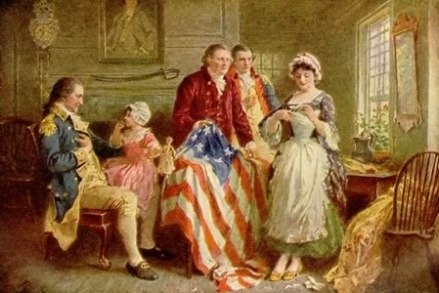
5. Betsy Ross

Known for: Designing and producing the first American flag during the Revolutionary War. Was said to be a patriotic role model for young girls and a symbol of women’s contributions to American History at least in the 19th century.

Why she doesn’t deserve her fame: Although Betsy Ross was a real women who did have an upholstery business in Philadelphia, the claim of her sewing the first American flag is dubious and might as well been cooked up by her grandson since there’s a lack of historical evidence of the famous story with her and George Washington. Also, her story didn’t come out until after her death. Not to mention, though it wouldn’t be unusual for an upholster to sew flags, she would’ve been one of 17 women who did sew them and might have contributed by using 5-point stars instead of the traditional 6-point stars or the production of it. Then again, the banner might more likely have been designed by Francis Hopkinson who was originally credited with the flag design. Still, there are plenty of Revolutionary heroines out there and other American heroines who contributed much more.

6. William Wallace

Known for: Being Scotland’s greatest hero as well as the inspiration for that God awful Mel Gibson movie (historical inaccuracies abound). A martyr for Scottish independence.

Why he probably doesn’t deserve his fame: Well, not much is known about Wallace but we’re pretty sure that he didn’t sleep with Princess Isabella (who was a child) nor did he father Edward III (who was born nearly a decade after his death). He also wasn’t a Scottish highlander but a minor aristocrat from the Scottish South whose dad fought for the English. Oh, and Robert Bruce never betrayed Wallace either (and was far more successful than him and was actually referred to as Braveheart as well as one of the greatest Scottish heroes whose claim Wallace staunchly supported). Not to mention, Wallace wasn’t above raping women and burning down schools with children and monks still inside. Then again, everybody was pretty brutal during the Middle Ages.

CheHigh

7. Che Guevara

Known for: Being one of the architects for Cuban independence as well as the highest selling T-shirt image. Seen as a hero figure who fought for freedom as well as represented civil disobedience and rebellion.

Why he probably doesn’t deserve his fame: Well, aside from being a Communist (not that there’s anything wrong with that, just ask Upton Sinclair whose novel The Jungle helped start the FDA) he was buddies with Castro and is sort of responsible for putting him and his brother in power and without the Castros, there probably wouldn’t be a Cuban Missile Crisis. Also, personally killed hundreds of people to spread communism to “liberate” the poor. Not only that, but had a strong dislike for rock music that he saw as a product of American Imperialism, even going as far as to have Cuban rock fans imprisoned in labor camps. Then there’s the fact that there some fellow Communists who couldn’t stand him either.

8. Guy Fawkes

Known for: If V for Vendetta is a guide, he’s basically known as a tragic hero who tried to blow up Parliament and died trying to strike a blow for freedom. He also gave rise to V for Vendetta and the Guy Fawkes mask.

Why he probably doesn’t deserve his fame: He and his co-conspirators in the Gunpowder Plot were terrorists and were more interested in replacing a Protestant monarchy with a Catholic one. Also, he was one of the last men brought in since he worked as a mercenary in Spain that gave him the Catholic sympathies and the demolitions expertise. And it was a Catholic who turned Fawkes in (who got a tip from one of the conspirators Francis Dresham). Not only that, but King James I was quite tolerant of Catholics and might have possibly been married to one (his son Charles had a Catholic wife and son James was openly Catholic for most of his life and his mother was known as the Catholic Mary Queen of Scots). He even handled religious issues remarkably far better than his own successors. However, King James might have granted Catholics greater freedoms if the Gunpowder Plot didn’t happen and he only went along with stricter laws on Catholics because Parliament passed them (is it difficult to explain why?) and were willing to give a load of cash to do so. Thus, Guy Fawkes actually did more to harm the freedoms of English Catholics than good at least in the 17th century. So perhaps having a terrorist represent freedom isn’t such a good idea.

index

9. Saint Sir Thomas More

Known for: One of the best minds of early Renaissance England who served as chancellor to Henry VIII as well as wrote Utopia and corresponded with Erasmus. Refused to recognize the king as the head of the English Church as well as opposed the formation of the Church of England and Henry VIII’s dissolving his marriage to Catherine of Aragon in order to marry Anne Boleyn. His bravery for sticking up to his principles even if it meant his gruesome death provided the inspiration of the play A Man for All Seasons where he’s presented as a champion of the freedom of individual conscience.

Why he probably doesn’t deserve his fame: This is a complicated case but in large part Sir Thomas More certainly does deserve his fame as one of the great Renaissance figures in Tudor England as well as his sainthood for he did stick to his religious principles. But as a champion of the freedom of individual conscience? Well, maybe according to 16th century standards where he’s perfectly fine with the burning of heretics and believed the state had every right to suppress any open dissent (guess which one went back to bite him) as well as base his defense on the plea he had not made his personal opinions known. Also, he’s certainly a guy who would certainly not be okay with his daughter marrying a Protestant as well as had his own opinions about the Catholic Church which might shock some people nowadays (such as perhaps not having a pope and more conciliatory power). Oh, and did I say he was friends with Erasmus and Thomas Cromwell (who was godfather to his first grandchild)? Catholic martyr and Renaissance intellectual, absolutely but advocate for free speech, absolutely not.

10. Hypatia

Known for: She was a female philosopher in ancient Alexandria who was said to be a martyr to science, atheism, and rationalism since she was killed by a bunch of misogynist religious fanatics.

Why she probably doesn’t deserve her fame: As a female philosopher and scientists whose teachings influenced many, she certainly deserves her fame for there aren’t many women in that field, especially in ancient times. As an atheist martyr and poster child, certainly not since she was a monotheist pagan (Neo-Platonist to be exact) who was respected and beloved by the people in Alexandria even by Christians, some of whom were her students, including a future bishop. And no one cared about her being a woman either. So what led to her death? Politics. Also, despite the Rachel Weisz portrayal, she was sixty-five at the time of her death. Still, the myth that rises from her story means that religious people aren’t the only ones to believe in ridiculous things (and I’m talking to you Carl Sagan).

Now How is this a Good Idea for a Children’s Book? And How the Hell Did This Get Published?

The other day I came across the a website site devoted to terrible library books libraries everywhere removed from their shelves. Of course, many of them were outdated and damaged, while others tend to be outright inappropriate to put on the shelves. Ones that particularly caught my eye were a good set of children’s book which either discussed a certain subject which I would see as inappropriate and/or completely misses the point or even gives a message that’s completely wrong and harmful to kids in general. Some people think that anyone can write a children’s book (not really) yet many of these examples tend to make me disagree as well as scratch my head thinking was it a good idea gone bad, how can this be a children’s book, and how did this ever get published.

1. Worst Children’s Book Author: Doris Sanford. Sure she writes kiddie books on serious issues only to manage to mislead as well as terrify parents and kids of all ages everywhere. Her books usually date from the 1980s or 1990s or  right around the time when I was a kid. These are usually books that tend to feature a child with abusive parents who shouldn’t have kids. Yet, she seems to discuss nothing wrong with the parents’ abusive behavior unless it involves pedophilia, satanic rituals, drugs, or alcoholism, and she conveys her message badly. Also, the artwork is beyond creepy and sometimes the subject matter is rather inappropriate for children. But don’t take my word for it, perhaps see for yourself how Doris Sanford discusses issues to kids like:

Satanic ritual abuse: <http://awfullibrarybooks.net/satan-for-kids/><http://awfullibrarybooks.net/satan-for-kids-part-2/>

Titled: Don’t Make Me Go Back, Mommy

Child sex abuse: <http://awfullibrarybooks.net/please-dont-talk-about-it-anymore/>

Titled: I Can’t Talk About It

Teen Drug Abuse: <http://awfullibrarybooks.net/please-dont-talk-about-it-anymore/>

Titled: I Can Say No

Divorce: <http://awfullibrarybooks.net/daddy-left-because-you-were-bad/>

Titled: Please Come Home

Parents Having an Argument (or just plain being abusive to kids, I can’t tell which): <http://awfullibrarybooks.net/lisas-parents-fight/>

Titled: Lisa’s Parents Fight

Alcoholism: <http://awfullibrarybooks.net/mommy-is-a-drunk/>

Titled: I Know the World’s Worst Secret

After looking at these books you might want to be sick.

2. Most Unintentionally Hilarious: Well, it’s perhaps Latawnya the Naughty Horse Learns to Say “No” to Drugs by Sylvia Scott Gibson. Another children’s book with a message which does get across but it’s pretty badly written. However, this is a terrible way to teach kids not to do drugs. Yeah, the characters are all talking horses but still, the illustrations of the horses smoking and drinking, well, I don’t think any parent or child can come across them without nearly dying of laughter. Yeah, it’s pretty ridiculous but falls into the “so bad, it’s good” variety. About as effective to teaching your kids not to do drugs as Reefer Madness.

Here’s a link: <http://awfullibrarybooks.net/partying-horses/>

3. Worst Message for Young Girls: I would say it would have to be between Maggie Goes on a Diet and My Beautiful Mommy. Both books are certainly geared to young girls and convey terrible messages about physical appearance and your time be much better spent if you and your daughter watch The Little Mermaid or Snow White. The former is about a teenage girl with a weight issue who ends up improving her life after she went on a diet and lost weight (such as improving her soccer game, grades, and suddenly being popular and attractive to boys). Look, in a climate of high obesity rates, I understand how important it is for a child to lose weight since we all know the health risks like diabetes, heart disease, back pain, and early death. We should encourage our kids to lose weight or go on a diet but it should be discussed as health issue and should only be done for health reasons. Also, exercise should be in equation as well. This book doesn’t discuss it as such and presents a diet as a cure for negative body image and poor self-esteem. Losing weight might improve self-esteem but it’s not going to quite make you popular, desirable to boys, or better at school. The latter is about a girl whose mother has plastic surgery (like a tummy tuck and a nose job) which is discussed in glowing terms even though there’s absolutely no reason to have it. She looks fine. I mean this is the mother being insecure about her own looks and aging, especially weight gain, which is normal for anyone who’s at least 30. If there should be a book about mommy getting plastic surgery, then perhaps put her in a disfiguring accident for God’s sake and discuss how cosmetic restorative surgery helped her get her life back together. Still, both these books teach girls that appearances matter and if your unhappy about your own physical appearance, you should change it, which will make everything better. What a load of crap. Oh, and their both written by guys, one a plastic surgeon in Miami.

Link to Maggie Goes on a Diet: <http://awfullibrarybooks.net/you-are-never-too-young-to-think-about-going-on-a-diet/>

Link to My Beautiful Mommy: <http://awfullibrarybooks.net/mommy-needs-to-get-pretty/>

4. Most Scary Subject Matter: Why, Nobody Wants a Nuclear War by Judith Vigna. Of course, there is no perfect way to talk to our kids about scary subjects, especially the concept of nuclear warfare prone to obliterate everyone practically in it’s path. Heck, it’s a scary subject for adults. Still, even worse, this was written in 1986. 1960 might have been better since the Cuban Missile Crisis happened around 1962. Read this to your kid as a bedtime story and you will be sure he or she will have nightmares.

Link: <http://awfullibrarybooks.net/end-of-the-world-for-kids/>

5. Worst Children’s Book Ever: I would have to say the honor has to go to a book called Alfie’s Home by Richard Cohen which is probably a great candidate for perhaps the worst kiddie book I ever came across. There are just so many things wrong with it that I would never recommend adults even to read it. Yeah, it’s incredibly fucked up and beyond terrible. For one, the book’s subject is about homosexuality with it’s message that it’s not okay. And of course, this is probably intended for Conservative Christian Evangelicals in the Bible Belt as well as Ex-Gay ministries everywhere. Second, it’s about a boy who questions his sexuality since his dad’s constantly working, his parents fight all the time, and his creepy uncle is sexually abusing him. Third, there’s actually a scene with the boy and his uncle in bed together and it’s implied that they are doing naughty things. Not to mention, there are pretty creepy parent diagrams later. Seriously, who shows child molestation in a children’s book, honestly? And to make things worse, the school guidance counselor attributes the kid question his sexuality because his dad’s not spending enough time with him or his mother. So the parents go to marriage counseling, the uncle gets some undefined help, Alfie spends more time with his dad, and later you see Alfie all grown up and with a wife and kids who’s not gay anymore. Really? Not only does this book portray homosexuality inaccurately, but considering what is happening in Alfie’s life, his sexual orientation is perhaps the least of his problems. Also, being a child of sex abuse can screw someone up for life. God what an awful fucked up book. Must’ve been published by a Christian publishing company in Texas or some other Southern state.

Link: <http://awfullibrarybooks.net/gayness-explained/>

And here’s another review: <http://thatguywiththeglasses.com/blogs/latest/entry/the-worst-childrens-book-ever-alfies-home>

6. Most Cringe Worthy Cover: Todd and the Talking Pinata Talk Sacrifice, though the story is not bad and it’s actually not the Talking Pinata that gets sacrificed, you have to wonder. Also, Talking Pinata and baseball bat? That could get ugly. Still, pretty weird.

Link: <http://awfullibrarybooks.net/friday-fiction-todd-and-the-talking-pinata-talk-sacrifice/>

7. Worst Excuse for a PSA: If People Were Perfect, which is an e-book from KeepYourChildSafe.org, which is to address sexual abuse and prevention. Still, it doesn’t seem to prevent kids with being traumatized, especially with those creepy illustrations. Not to mention, it’s an e-book. Also, they have another one called The Day My House Catched Fires (honestly, believe me).

Link: <http://awfullibrarybooks.net/e-weeding/>

8. Worst Use in Photography: The Lonely Doll by Dare Wright. May seem like a cute idea at the time like in 1957, but by today’s standards it’s sure as hell creepy and willing to traumatize your kids into nightmaredom as we know it. Also, the doll gets spanked by a teddy bear. Jesus Christ.

Link: <http://awfullibrarybooks.net/the-other-bride-of-chucky/>

9. Worst Retelling: The Magic Nutcracker which is kind of a creepy story catered to young girls since it’s made into a ballet, Yet, these pictures are oh, so creepy. Then again, many fairy tales tend to be creepy in general. This will make your children cringe around Christmas time. Also, pretty badly written.

Link: <http://awfullibrarybooks.net/nutcracker/>

Fictional Heroes Who Probably Don’t Deserve Their Fame

There are heroes in both real life and fiction who we all root for and admire but there could be instances when heroism is a tricky thing. Sure most heroes aren’t perfect but by the end of the day, they are the ones who save us, protect us, and inspire us. However, sometimes we tend to heroize people we really shouldn’t not because they’re flawed individuals (for even flawed individuals can achieve heroic deeds) but because their heroic deeds are either fraudulent, could easily become disastrous, or weren’t at all heroic in the first place. A good example of such would be Lance Armstrong who though it’s heroic he managed to overcome testicular cancer and win the Tour de France seven times, the fact he won on steroids is the main reason why he doesn’t deserve to be on a pedestal. Here are a list of fictional heroes who we may admire but don’t really deserve their fame.

1. Superheroes

From: Comic books, movies, and other media

Why we admire them: Well, they save everyone from total annihilation from some crazed super villain all for the greater good and with awesome super powers (or really cool gadgets) that really come in handy. Also, many of them tend to be fairly safe and accessible role models for kids and adults of alike who can be destined for nerdom compared to many of today’s professional athletes.

Why we probably shouldn’t look up to them: Sure superheroes may be pretty awesome but except when there’s a dangerous super villain who needs to be vanquished, their heroism might have the potential of inflicting more harm than good in other. For one, superheroes have a terrible habit of inflicting collateral damage that might cost not only dollars but perhaps lives. This may not mean much if faced against a notorious super villain but in the realm of day to day crimes, using superpowers might be a little overkill to bring those crooks to justice. Not to mention, many of these superheroes don’t take any responsibility for the damage they may have inadvertently caused either because they can’t afford to (like Spiderman) or just choose not to (like Batman). I mean many of these guys have secret identities for a reason and certainly don’t want their deeds traced to them (of course, Tony Stark is an exception since everyone knows he’s Iron Man and certainly takes responsibility for the damage he causes). Second, most of them tend to be the poster children of vigilantism who usually take the law in their own hands whether the authorities authorize it or not. Sure some authorities in the DC and Marvel universe may be perfectly fine with superhero vigilantism especially if it’s against a super villain but no authority would allow a normal person get away with all that. Third, some superheroes tend to be a magnet for danger since many of their loved ones tend to get into bad situations a lot and some super villains may have a personal vendetta against a superhero as well.

2. John Wayne characters

From: John Wayne movies, of course, usually westerns and war movies

Why we admire them: Since they’re the ones who usually save the day in the end and are the only people who know how as far as his fans are concerned. Also, tend to be the leaders many American men once saw as an All-American hero who embodies the best aspects of American values, patriotism, and masculinity.

Why we probably shouldn’t look up to them: Because most of John Wayne’s characters are really full of crap and tend to be assholes at best who don’t listen to anybody else’s idea of the situation, always insist that they’re right, and whine as well as bully everyone else all the more tomorrow until he gets his way. He’s not considerate for other people nor seems to think of the consequences of his own actions. Meanwhile, the townspeople are totally lost on what to do while the bad guys are making preparations to strike because John Wayne won’t shut the hell up. Oh, but since John Wayne is always the hero, he could do no wrong usually gets away with it, too mostly by luck. And how does John Wayne get rid of the bad guys? Usually through violence, which really isn’t the best solution, especially if the bad guys are Indians who just want to remain on their land like their ancestors had for thousands of years but keep getting driven off to reservations by white settlers who don’t wish to share with them or the U. S. government. Not to mention, most of John Wayne’s characters aren’t nice to women, especially if they’re played by Maureen O’Hara. Definitely not guys you want to have around.

3. James Bond

From: The Ian Fleming novel series and the movie franchise

Why we admire him: He’s a spy and makes working in an intelligence agency seem classy. Not to mention, he’s a gentleman who attracts pretty women and drinks martinis. Also, he’s willing save the world from hostile takeover from treacherous selfish men who will stop at nothing for power, revenge, or other selfish whims.

Why we probably shouldn’t look up to him: For one, he’s not really a spy, he’s more of an assassin who doesn’t seem to be very covert about his activities (I mean you can’t really cover up an explosion, car chase, or anything that consists of a climatic action scene). Also, tends to cause collateral damage which spies and assassins usually try to avoid at all times. Not to mention, he smokes and drinks as well as screws with any beautiful woman there (even if they’re affiliated with the enemy which isn’t a good idea)  and gets all the glory. Then there’s the fact he lives an extravagant lifestyle everywhere he goes with all expenses paid by MI6. Meanwhile, there are countless secret agents who are doing the actual spy work from 9 to 5 at the office who don’t get to travel, don’t get the pretty women (or men in Money Penny’s case), and don’t get the credit when a Bond villain is taken down John le Carre has to write about. Also, most Bond villains are pretty much idiots to begin with and intelligence work usually tends to be a group effort anyway. 007 may be a brave and loyal spy but he’s not the only one trying to take down Goldfinger.

4. Indiana Jones

From: The Indiana Jones movies

Why we admire him: He’s a badass archaeologist who tackles Nazis with his whip to protect precious artifacts despite his fear of snakes.  He’s a great adventure hero to boys despite being a horn dog. I mean what boy doesn’t want to be Indy? Not to mention, he’s a very likeable guy despite his flaws that we don’t care how much of a jerk he is at times.

Why we probably shouldn’t look up to him: Bad habits aside, Indy is probably not an accurate depiction of the adventurer archaeologist even by 1930s standards. I mean he’s a professor who obviously doesn’t take some of his grad students with him to the places he’s at. Not to mention, he’s rarely seen doing what an archaeologist normally does which is looking for artifacts from a archaeological dig. Sure this may be boring and the artifacts might not be that valuable or interesting (like pottery bits) but still, that’s what archaeologists do. Not to mention, he unintentionally destroys ruins when fighting the bad guys and doesn’t seem to authenticate his findings (like a crystal skull perhaps). He may kick Nazi butt, but he’s hardly a good archaeologist. Also, slept with the enemy on one occasion.

5. White Saviors

From: Any kind of media that takes place in history which may or may not have happened that usually deals with the relationships between white people and minority groups and natives.

Why we admire them: Because many of them are actual historic figures known for helping minority groups or natives and they usually make most white people feel good about themselves. Also, we know their hearts are usually in the right place and they always seem to do the right thing despite what everyone else may think.

Why we probably shouldn’t look up to them (or at least some of them): Well, this is more of a mixed bag since many of them are genuine heroes who either helped save them or even allowed them to save themselves. However, they do have a tendency to cause unintentional racism like the notion that these people are incapable of saving themselves or need a white person from the outside to help them and complaints among ethnic minorities. Not to mention, fiction dealing with white saviors tends to be sentimentalized  a great deal. Also, some of the scenarios are pretty unrealistic in themselves as well. Whites living as Indians? Pretty plausible as in Dancing with Wolves, Last of the Mohicans, and Little Big Man. An American samurai warrior? Oh, hell no. Sure white savior movies might be entertaining but perhaps we can have a little more diversity, Hollywood?

6. Private Eyes

From: Pulp fiction novels, film noir, and similar media.

Why we admire them: They dress nice, have a cool head, and stick to their principles no matter how much they clash with the cops or their own flaws. Not to mention, they’re the smartest guys in the room who solve the crimes and are willing to show the bad guy who’s boss. We always love these tough guys and loveable rogues.

Why we probably shouldn’t look up to them: Because even though they do get the bad guy and solve the case it’s usually when the perp has already left a trail of bodies in the mean time. Also, they tend to drink and smoke a lot as well as sleep with a great many women who may seem helpless at first but then usually end up being their worst nightmares. Not only that, but they also tend to make their own job seem like a glamorous profession when it really isn’t. Most private eyes don’t really solve murders unless upon request by the victim’s family or police (and many of their cases don’t really involve murder at all, initially). But what kind of cases do private eyes mostly investigate? Well, background checks, dirt digging, and spying mostly. Many of them tend to spy on people who are suspected of cheating on their spouses. Also, many of them tend to be disgraced former cops who may not be the nicest people in the world.

Fictional Villains Who Kind of Had a Point

Image

In fiction, villains are figures we’re not supposed to sympathize with and are mostly no good since they’re usually the main obstacle in the hero’s goal. Sometimes they’re evil personified but other times they could just be evil overlords serving as dragons to a higher power, very selfish people who don’t give a shit about anyone else, or just an adversary. And of course, villains tend to do bad things to make sure he or she gets his or her way and doesn’t care who gets hurt. Many of times these villains tend to have inherently evil motivations or ones that are at least misguided. However, though some of them might not have done things that might not be good, some of them tend to have motivations that seem rather complex and somewhat justified. They just probably tried to accomplish it the wrong way.

1. The Wicked Witch of the West

From: The Wizard of Oz (1939 film)

Why She’s Evil: The Wicked Witch of the West basically spends the entire time trying to pursue and kill Dorothy because she’s wearing her ruby slippers as well as killed her sister as well as conquer Oz and does whatever she can to get them such as throwing a ball of fire, sending the flying monkeys, enchanting the poppy fields, and threatens the Scarecrow with fire. She’s also a pretty menacing figure who strikes fear into Dorothy and her friends. It’s easy to see why the Wizard and Glinda wanted her dead.

Why She has a Point: Aside from wanting to conquer Oz bit, the Wicked Witch of the West does sort of have a reasonable motivation for the slippers and wanting to kill Dorothy to get them off her. For one, the slippers couldn’t be removed while Dorothy was still alive. Second, the ruby slippers belonged to her sister which she probably was supposed to get but Glinda basically put the slippers on Dorothy’s feet upon the latter’s arrival in Oz via tornado. And the Wicked Witch of the West wasn’t even consulted on the whole thing. The fact that Dorothy ends up accidentally caught up in this as her adversary which compels the Wicked Witch of the West to focus all her energies on is what makes her the villain. Also, the Wizard is pretty much a phony while Glinda was just using Dorothy as a pawn so she can control Oz herself since she made the girl go all the way to Oz when she just could’ve tap the ruby slippers in the beginning which would’ve solved everything. This sort of makes Glinda the bigger villain since she may not have the kind of motivation The Wicked Witch of the West did.

2. Madame Defarge

From: A Tale of Two Cities

Why She’s Evil: She’s a bloodthirsty French revolutionary who is all to happy to inflict violence and anti-royalist sentiment however way she can. Politics aside, she also puts the climate of the French Revolution to her advantage such as her everlasting hatred for the noble Evermonde family and her obsessive desire to see Charles Darnay guillotined. Not to mention, she almost gets her way with that when Darnay and his companions return. I mean almost.

Why She Has a Point: Madame Defarge has every reason to hate the Evermonde family since Dickens goes to great lengths to show that this family is a pretty nasty bunch who even Charles Darnay doesn’t even want to do with (since he basically changed his name and moved to a different country to get away from them). Not to mention, Dr. Manette basically denounced the clan while in prison at the Bastille. The fact that Madame Defarge is a peasant may be enough to justify her hatred for the Evermonde but her hatred for that bunch is even more personal than that as well as dates back to her childhood. The real reason? She witnessed her mother being raped by Darnay’s father and uncle, which was also the incident that put Dr. Manette in prison since he was the guy treating her. Not to mention, the Evermonde twins were never brought to justice and probably died peacefully. Still, the fact that Charles Darnay is the last living Evermonde she knows, Madame Defarge is determined to have him pay dearly for his family’s sins as a scapegoat. On the other hand, while Dr. Manette hates the Evermondes every bit as much as Madame Defarge, he’s willing to see Charles Darnay as the person he is and lets him live in his house and marry his daughter.

3. Heathcliff

From: Wuthering Heights

Why he’s Evil: Heathcliff basically makes life hell for most of the characters involved by buying Wuthering Heights and makes Hindley’s life a living hell as well as takes advantage of his alcoholism. Also, though he may be a self-made man, we never know how he got the money. Not to mention, he marries Isabella Linton out of spite for Cathy for dumping him and Edgar for marrying the only person in his life who doesn’t make him look like a psychopath. And he treats Isabella like shit as well as well as curses everyone in the room when Cathy dies which sort of makes Wuthering Heights haunted ever since. Basically he’s a complete bastard and Cathy and him might have had the same dad.

Why He Has a Point: Heathcliff probably wouldn’t be the asshole he became if Cathy’s old man didn’t die when he did. It’s perhaps plausible that Heathcliff’s love for Cathy as obsessive and destructive it is, is perhaps the only redeeming quality he has. The fact that Cathy’s father died pretty early on pretty much sets Heathcliff off a course to infamy led by Hindley’s bullying, Linton’s class prejudice, and Cathy’s rejection of him. And Heathcliff pretty much has a good reason to treat Hindley the way he did when he returns to Wuthering Heights. Heathcliff might not have been a sweet kid but he certainly wouldn’t have turned out as bad as he did if he had a decent adult in his life who might have given him the parental guidance he surely needed. The fact he’s the bad guy is that he’s all doing his deeds in revenge for bad treatment and not being seen as good enough for the world around him.

Image

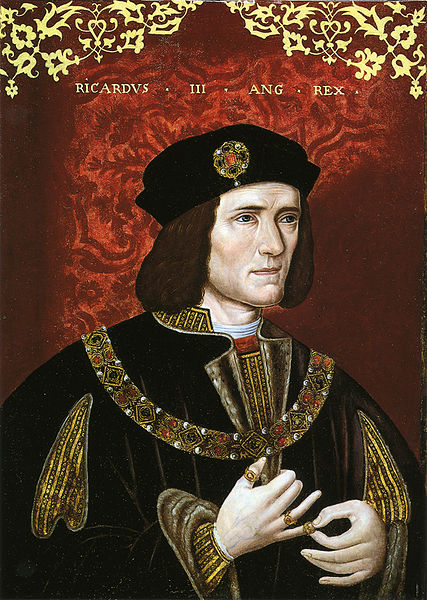
4. King Richard III (or Richard, Duke of Glouchester)

From: Richard III

Why He’s Evil: Well, if we’re to credit Shakespeare, he basically knocks off Lady Anne’s father and previous husband as well as tries to marry her which he does over the man’s corpse. Not to mention, he’s a complete bastard who later poisons his wife, drowns his brother in a vat of wine, and knocks off two of his nephews in the Tower of London so he could have the crown for himself. Evil man indeed.

Why He Has a Point: For one, Richard III was a real historical figure who probably not as bad as Shakespeare said he was or no worse than any other medieval king at the time. Not to mention, Shakespeare wrote he play during the reign of Queen Elizabeth I so it probably isn’t nearly 50% accurate given the guy who defeated him was the Queen’s grandfather. Though a great work of literature, it’s also historic propaganda. Also, though Richard III did take the throne from his nephews and put them in the Tower of London, he simply did it by stating the fact that Edward IV was engaged to another woman at the time he married their mom which not only serves as grounds of illegitimacy but also was perfectly legal at the time. Plus, the boys were children (and England had boy-kings before with disastrous results) and he was basically running the country anyway. Many people in his place would’ve done the same thing, especially during the Middle Ages. Oh, and there’s the fact that he also had his other nephews and nieces including five of Edward IV’s daughters (including Elizabeth of York who married Henry VII and was Elizabeth I’s grandmother) and two of George of Clarence’s kids as well. And there are no Tower stories about them either maybe because many of them were women and he didn’t off them but still. Not to mention, he might not have been responsible for killing the Princes in the Tower. However, the main reason why he’s depicted as a villain is that he was the last king of of a royal dynasty (who usually ends up having a bad reputation) and the fact his death brought the end of the Wars of the Roses and the beginning of the Tudors in England. Also, the fact he seized the throne also counts as well. Sure Richard III might have been bad, but he might have just as been a victim of circumstance.

5. Raoul Silvia

From: Skyfall

Why He’s Evil: For one, he basically a James Bond villain who kills a bunch of people as well as destroys MI-6 headquarters via hacking through the computers. Oh, and he has a massive beef with M and sort of gets even James Bond to question whether his own boss has his best interests.

Why He Has a Point: Face it, compared to most James Bond villains, Raoul actually has a good excuse to make M’s life a living hell, even if his actions aren’t entirely justified. I mean he used to be an agent for MI-6 as well as one of the best and M was probably the closest thing he ever had to a mom (since most recruits at MI-6 were orphans). Not to mention, James Bond sort of views M the same way. Still, how would you feel if you were tortured to the point of insanity severe facial deformity and later learned that you were left for dead by your own boss? Sure M was only doing her job but it really hit Raoul pretty hard that someone he cared for like that would ever betray him. In any case, Raoul has every reason to be angry with her, but maybe not to the point of doing what he did.

6. Stanley Kowalksi

From: A Streetcar Named Desire

Why He’s Evil: Basically he’s an abusive jerk who beats his pregnant wife and treats her sister like an unwelcome guest the whole entire time. Oh, and he basically rapes Blanche to the point of insanity on the night of her birthday, right after he takes his wife to the hospital in labor. Also, he sabotages Blanche’s relationship with Mitch as well as is a selfish man and all around hyper aggressive brute.

Why He Has a Point: By no means, do I find much sympathy with this bastard of a man. Yet, you have to have some understanding with him since anyone would probably not like if their wife’s sister suddenly turned up at their doorstep after little communication for years. Oh, and it’s pretty obvious that Stanley doesn’t know her that well in the beginning but he does his research. Also, he’s basically one of the characters of the whole thing who’s quick to point out Blanche’s rather unpleasant qualities such as that she doesn’t care for him being a Pole, after Belle Reve was lost she moonlighted as a prostitute at some seedy motel which she was kicked out of, drove her husband to suicide after she discovered him having an affair with another man, and being fired from her teaching job for having sex with a seventeen-year-old boy. Not to mention, she’s basically staying with Stella because she has nowhere else to go and has been going to great lengths to conceal her checkered past. Sure Stanley was no saint by any means nor had any right to rape her, but Blanche was certainly not one either. Not to mention, raping vulnerable and mentally unstable woman seems more terrible than having questionable consensual sex with a seventeen-year-old, as far as post WWII America was concerned.

7. Chief Inspector Charles Dreyfus

From: The Pink Panther series

Why He’s Evil: Basically went nuts and not only tried to kill Inspector Clouseau multiple times but also tried to destroy an entire country out of angry at being lied to about Clouseau’s assassination as well as whereabouts at one point or another. And he tried to pull that off pretty treacherously as a matter of fact.

Why He Has a Point: Because he’s Inspector Clouseau’s boss and later replaces him once he ends up in the madhouse. Not to mention, Clouseau is such an idiot and borderline incompetent that he basically gets through on cases despite his own stupidity and it’s pretty apparent that he’s the one who drives Dreyfus over the edge but not intentionally though. Clouseau can drive just about anyone familiar with him crazy. Still, what makes Dreyfus a villain is that he wants Clouseau dead and is willing to kill him, instead of maybe simply firing him or getting him transferred like most people would.

In Iowa, the Blind Can Buy a Gun, Take Aim, and Fire

There are probably plenty of people who shouldn’t own a gun, not just blind people. Still, it’s pretty logical why we shouldn’t issue gun permits for people who can’t even see. As a side note, Michigan and Texas are the only two states that allow blind people to hunt. While blind people in Texas are required to have a sighted companion, a blind person in Michigan can hunt alone. Still, involving the blind on gun issues tends to border on a level of silliness more than anything.

Why Modesty Doesn’t Prevent Being Objectified

As a young woman, I’m thoroughly aware that people are going to notice me by the way I dress as well as be told how I should dress in public in order to divert unwanted attention from the opposite sex whose lustful feelings I may entice which might put me in a terrible situation. Still, I’m also aware of the way the media objectifies women in the way that is unhealthy for young girls which I highly object to. Sure I’m aware how the media tells girls that wearing scantily outfits makes them look attractive but I know that the media’s agenda is to make money but portraying women in the media is an entirely different story. Besides, I never really follow fashion trends nor place my appearance as a high priority, at least not above my brains, health, or personality. I may want people to respect me but I want them to do so because I’m a human being regardless what I wear or how I look in public. However, though I think the way women are shown in the media is a great concern, many of these conservative groups blame the 1960s as to why we keep showing women as objects and so provocatively as well. Not to mention, they tell girls that if they cover up, people will respect them and they will not draw unwanted attention from guys who want nothing to do with them. Yet, though modesty does have a place in society, it’s not going to prevent women and girls being objectified which is the result of some bigger problem of society as a whole which has roots way before 1960s ever swept the world.

1. Objectification of women has been prevalent throughout history-When conservatives talk about the objectification of women, they usually use the 1960s as a starting point since that the era of the Sexual Revolution, feminism, rock n’ roll, and the miniskirt. However, like most aspects of life during the 1960s, objectification of women didn’t start in the 1960s, it was just the time when people noticed the trend and saw it as problematic.  Even so, while many people link objectification of women as an unfortunate side affect of women’s liberation, it is not and never has. Namely the reason why we start seeing this is that people in the media just used feminism and the Sexual Revolution as an excuse to depict women as more scantily clad and sexual in ways they couldn’t do otherwise. And this was all for money since sex has always sold and many guys thought that portraying women this way would make them look like they were supporting female empowerment when in fact, they weren’t. Also note that the people behind these kind of ideas were men. Feminism doesn’t just mean women having sexual freedom, but also freedom to be treated as human beings to the same degree as men are, despite their flaws or other unlikeable qualities. Still, the notion of depicting women as objects while prevalent as ever today didn’t start with feminism, but rather is a notion as old as perhaps civilization itself, maybe even earlier than that. Throughout history, women have not only been treated as objects to be bought and sold but also used to fulfill men’s needs. In stories they were seen as prizes to be won, as ornaments to be adorned, as idols to be worshiped, and even as decoration to entice people to buy some sort of product. Yes, women have been objectified throughout history, always being told to concentrate on their looks in order to be attractive as well as respectable and be good to their loved ones unconditionally, while their voices, needs, and desires don’t matter. And what these women wore didn’t make any difference since being objectified doesn’t require a person to be scantily clad. Still, there were also plenty of people who spoke out on it then as well, including women.

2. Appearance doesn’t always affect chances of getting attention- Sure it’s a given that everyone is going to judge a person by their appearance, especially a woman. And it’s also a given that we will all draw unwanted attention to ourselves in one way or another, sometimes based on what we wear, but most of the time not. Sometimes a woman would receive unwanted attention because guys simply find her attractive or whatever. Sure she may turn men’s heads while prancing around in a miniskirt but she’s just as likely to do the same in sweatpants but while some may get distracted, most of them probably won’t go any further than ogle or mildly harass her until she’s out of their sight or at least try to concentrate on what they’re doing. Some men may think about asking her out but  few would ever think of actually doing anything to her that she didn’t want. If any of those guys did try to harass or assault her, then it’s their fault not hers. Some people think that women’s clothing choices are dependent on the chances of receiving unwanted attention, while in reality, there’s no correlation between the two whatsoever. To say so is an insult to men as well since they are said to be unable to control their sexual urges as well as an insult to say that women are responsible for them and must cover up to protect themselves. If that notion was true then the Middle East would have a low rate of rape incidents and marital fidelity would be almost nonexistent. Men certainly can control their sexual urges and do so all the time regardless of how women dress or behave themselves. The prevalence of many happily marriages serve as living proof that men can be responsible for their sexual behavior and certainly do say no and not because of impotence either. The reason why some men say they can’t because they don’t want to take responsibility, just don’t want to resist the temptation, or want to have their way regardless of what the other person says. Still, because there are men who don’t want to take responsibility for their sexual behavior, it’s women who get blamed for tempting them even though they had no desire to draw that kind of attention as well as repeatedly said no. Still, that doesn’t stop other men from blaming women for their own rapes and use any excuse to try to justify why she’s responsible such as dressing provocatively, being a slut, or being drunk which they say is sort of “asking for it.” However, regardless of how slutty a woman may appear, if she was asking for it, she wouldn’t be raped and therefore, isn’t responsible for the rape itself.

However, a woman doesn’t always have to be attractive to attract unwanted attention, sexual or otherwise. For one, not every man has the same criteria of beauty standards and might find one woman attractive that others may find disgusting. Second, you may have women being harassed and gawked at for simply being ugly or wearing something that’s utterly ridiculous. Then in some areas a woman might receive unwanted attention just for simply being one in an area where there are mostly men, like in North Dakota.

3. Modesty standards are defined by culture and vary through history- Whenever conservatives use the term “modesty” it’s usually by their standards whether they be in the US or anywhere else in the world. And modesty standards will always be dictated according to culture and customs. What may be inappropriate in one culture might be perfectly fine in another. For instance, many conservative groups may not think women should wear a bikini in this country, an African Bushman may see a woman with her bikini on as way overdressed. And of course, a woman in a Christmas sweater and pajama bottoms would look too much like a slut, according to the Taliban who wish their women wear burqas. At another time in history, anyone within means would cause a scandal if they went around in public dressed in something comfortable and weather permitting in the Western world (if you ever go tour the Confederate White House in Richmond during the summer, you’ll see why). Every culture has a different standards on what’s decent and what’s not and can be subject to change depending on climate, economy, social norms, religion in some cases, or other factors. Significant events in history can also alter our perception of decency standards like wars, social movements, and aesthetic trends.

4. Modesty only enforces the importance of appearance- Since objectification of women is rather dependent on a woman’s looks modesty doesn’t at all prevent a woman from being seen as an object since it only reinforces the notion of women being judged by their outward personal appearance, which is no help to make women more human or develop a healthy body image. And for the longest time, society has always taught women that their appearance is important which has made many women and girls insecure about their body image. Still, modesty isn’t necessarily a bad thing nor is lecturing about the importance of one’s own appearance either. I fully understand that appearances are important when living in society and that people should always try to look respectable. We can all agree that no one wants to see anyone out in public in their birthday suit and that there’s nothing wrong with store owners putting signs out  that read “No Shoes, No Shirt, No Service.” Public nudity is always a distraction no matter what the person looks like or what feelings he or she projects on other people, everyone is going to assume that the nudist is a freak if he or she’s old enough to know better. Not to mention, public nudity is illegal in most areas so any nudist showing his tallywhacker will surely be arrested for indecent exposure. This is where modesty standards are okay since a taboo against public nudity is applied to everyone in which their only expectation is that they at least cover their privates in a public setting.

However, modesty can be used in harmful ways, especially when it’s unfairly applied and contributes to a negative body image or personal shame. And women have been the brunt of this kind of negative appearance reinforcement since modesty has not only been used to control them but also to judge them by their appearance as well. And the more people judge women on their appearance the more they tend to see them as objects and treat them that  way as well. Not to mention, it doesn’t help that countless women have been taught to value their physical appearance above all their personal attributes as well as that their looks are key to their success in life. Modesty may teach people to judge others by the way they dress, but it can also judge people by the way they look as well and not always fairly. For instance, a woman in a skimpy outfit would be seen as slutty but while an attractive woman in the same clothes would come off as distracting to the guys in the room, a woman who’s not so attractive, overweight, and/or over the age of 40 would be judged as disgusting wearing the same thing. Being seen as distracting to others because of your outfit may not be a good thing or cultivate a healthy body image as well as contribute to some degree of humiliation, but to some girls being criticized for wearing a skimpy outfit might be a compliment to them since it might give them an affirmation that they’re attractive. Being seen as ugly and disgusting, on the other hand, is hurtful for a woman to hear and further encourages her to develop a negative body image which could lead to further problems. Covering up because of oogling eyes is one thing, covering up because there’s something unsightly about your body is another. If we want to encourage people not to treat women as objects, we need to humanize them and see them as people first, not tell them to cover up when they’re in a skimpy outfit.

5. Objectification comes in many forms and is not always sexual- When we talk about objectification, we talk about women being seen and used as sexual objects for men’s wishes and needs, we also don’t talk about how else we treat people as objects to do what we ask them while placing very little value on them as human beings. For instance, slavery is a classic example of people being treated as less than human since slaves were forced to work each and every day with little benefit to themselves and were seen as easily disposable as well as had to do whatever their bosses wanted since he or she owned them. Paid labor has also suffered from this kind of objectification as well, especially in the days when people had to work twelve hour days six days a week while getting very little for it in return for bosses who had no regard for their well being. Things might have changed since then but even in this country we still have people being exploited by their work places whenever the upper management can get away with it, particularly in places that prohibit their workers from forming a union (which I think is unconstitutional) but still treats them as if they were a commodity which will work cheaply because he or she can’t get it anywhere else and can be disposed at will. This is increasingly evident in today’s economy where benefits are being cut and layoffs are just a fact of life. People may not always like unions but even so, unions serve a purpose in society by making employers see workers as human beings whose contribution to the economy should be recognized and valued since they are just as responsible for a company’s profits as the CEO. Business and politics tend to have habits of using people as pawns all for the money and power, but that’s another story.

Useful Relationship Deal-Breakers You Wouldn’t Find in a Relationship Manual

Sure we know the kind of deal breakers that most relationship experts tell us such as cheating, abusive behavior, financial deadbeat, or what not. Here is a list of dealbreakers that you don’t find in those manuals or other things either because they’re too obvious, don’t happen in real life, or don’t seem to cross other people’s minds. Also, these deal breakers are much more interesting to read about. And by the way, though I may use he or she, these apply mostly to both sexes.

1. If his previous relationship had ended with his significant other’s mysterious disappearance, especially if she was last seen with him. (Okay, she might not be murdered nor he may not have killed her, but still.)

2. If his last significant other died under mysterious circumstances which may or may not be due to natural causes, an accident, or suicide. (If her cause of death even remotely seems to be murder, you might want to head for the hills. And if it was murder and they never found who did it, that’s also a deal breaker.)

3. If he’s on the Megan’s Law database. (Which means he’s a registered sex offender.)

4. If he’s appeared on the Dateline during To Catch a Predator moments. (As seen on 30 Rock. Actually any show like that, really.)

5. If she planned her dream wedding almost to a T before you even propose to her or even started dating her. (This might mean that she doesn’t value your opinion or possibly cares more about the wedding than the marriage. Gaston sort of falls in this as well who basically set up a wedding before he even proposed to Belle and they weren’t even a couple.)

6. Works for an organized crime syndicate.

7. If she’s a little too much into 50 Shades of Grey.

8. Has an arrest record that can be its own epic.

9. Has a bad case of amnesia.

10. Has killed your family, friends, and/or previous significant other. (Also, applies to his own friends, family, or previous significant other. Many ancient and medieval rulers did this quite frequently.)

11. If he expresses any desire for a dream wedding that includes getting married in a Nazi uniform, especially if you’re Jewish. (And for any reason.)

12. If he’s brainwashed by his mother who uses him as an enemy spy. (As you can guess this is from The Manchurian Candidate and you can guess what happened to Janet Leigh in this one.)

13. If he’s been caught trying to elicit gay sex, especially from an undercover cop in a public restroom. (I’m looking at you Larry Craig.)

14. If he has had a history of dumping his previous significant others for their serious illnesses. (a.k.a Gingrich clone.)

15. If he goes hiking on the Appalachian Trail. (And I don’t mean actually hiking on the Appalachian Trail. I mean disappearing without notice for a certain amount of time to carry on an extramarital affair {or some other act of infidelity}. Derived from the Mark Sanford scandal who used “hiking the Appalachian Trail” as an excuse for his disappearance while he was actually was seeing a woman from Argentina.)

16. If he has a sexual discretion that won’t make him able to have sex with you and he doesn’t tell you about it until your wedding night. (And by discretion, I don’t mean erectile dysfunction either or anything that can be treatable and also don’t mean being gay either. Also, this is from The Barefoot Contessa. Also, applies if he has an STD and never tells you about until after you have sex.)

17. If he plans to move after getting married and doesn’t tell you until shortly before the wedding.

18. If he is of comfortable income and/or has a decent paying job but doesn’t pay child support or wants nothing to do with his kids. (This only applies if he has kids to a previous partner  and he’s not raising them. Not to mention, this also applies to deadbeat dads {or moms} who can afford child support and take the time to see their kids but chooses not to. This doesn’t apply to deadbeat dads {or moms} who don’t play a role in their kids lives under the mother’s {or father’s} discretion, those who can’t afford to pay child support or have other legitimate reason, men who have no knowledge of their child’s existence, and women who had given up their children for adoption.)

19. If she works in the “adult” entertainment business or sex trade. (By this, I mean occupations like stripper, “exotic” dancer, porn actor, porn model, or prostitute. Also applies to men who can also be in these professions as well as people of both sexes involved in the business and administrative side of things. Sure going out with someone in that line of work might make your friends jealous but most of us would have a problem with being in a relationship with one. I mean would you want to let your parents know you were dating a porn star? Also, some pimps tend to use dating as a recruiting tool. And ditto, if he or she is a sex trafficker.)

20. If he is just going out with you only because the person he wants to be with is unavailable or won’t date him. (This only applies to those people who don’t have much interest in their current partners.)

21. If he’s a clergyman or is closely related to one that isn’t of your denomination. (Of course, for those dating Catholics who aren’t of the faith, only the latter applies since most priests aren’t permitted to marry {except in the Eastern Rite and permanent deacons}. Also, monks and nuns can be considered as clergymen as well but they’re also known to be celibate mostly. However, this doesn’t apply if the clergyman in question is of the extended family and a different religion than the rest. While I wouldn’t have much problem with dating or marrying someone outside my religion, I would definitely reject a guy if I found out he’s a minister or related to one.)

22. If his personality reminds you of a leading male character of a Hitchcock movie. (Trust me, most major male characters in Hitchcock films tend to be evil, crazy, in trouble, aren’t particularly nice once you get to know them, or are a combination of a few. Still, even the good guys aren’t particularly men you’d want to date like Max de Winter {killed his first wife and wasn’t willing to talk about her}, John Ballantyne {suffers from amnesia brought on by PTSD and is suspected of murder}, Barry Kane {suspected of terrorism}, Richard Hannay {suspected of murder}, Guy Haines {cheats on his wife and may not have the best social skills}, L. B. “Jeff” Jeffries {peeping tom}, Roger Thornhill {suspected of murder as well as being used as a decoy}, John Robie {ex-con but still has notoriety}, and John “Scottie” Ferguson {crazy, obsessed with a woman he’s never met [because she’s dead], and kind of a creep}. The villains are much worse, naturally.)

23. If he is a religious fanatic or an obnoxiously religious person. (I’m not bashing religious people here for as a liberal Catholic in Pennsylvania, I know plenty of nice religious people throughout my life. I have nothing against them though I may not always agree with their views. I’m just bashing religious people who are either willing to commit violent acts in the name of God, use their religion as an excuse to subject their crazy beliefs on everybody, or tend to discuss their faith in a way that seems so self-righteous and egotistical that they just become a major pain in the ass {like Tim Tebow}. I have no problem with religion or religious people in general. I just have a problem with religious assholes who think they’re right about everything just because their faith says so. This also applies to atheists and other non-religious people as well.)

24. If he’s in a cult. (Could also apply to Scientology to some extent.)

25. If he’s a professional athlete. (Seriously, if you hear what kind of assholes pro-athletes can be since many tend to have big egos, a history of alleged criminal behavior, and multiple kids to a bunch of different women, at least male ones, that is. As for female athletes, many of them tend to be lesbians. Also, many professional athletes have never grew up.)

26. If he has absolutely no sense of humor.

27. If he frequently posts pictures of his junk to random people on the internet. (Like Anthony Weiner. Seriously, I don’t know why people would do such a thing when they really shouldn’t.)

28. If he has a problem with women who are smarter and more successful than him. (Men, there’s absolutely nothing wrong with women who are smart and successful in their own right. Anyone who has a problem with a woman’s success is an asshole.)

29. If he’s a gambling addict. (Or someone who can’t be trusted with money, not necessarily someone who doesn’t have any.)

30. If he’s a regular on a reality show. (Honestly, you two will have no privacy in this department.

The Moral Ambiguity of Bathroom Humor

In the American media, we have these moral crusader advocacy organizations that aren’t above decrying moral indecency whenever the media depicts something that greatly offends them. Some can range from offensive depiction of certain groups or creeds which is understandable since many of conservative decency organizations tend to be religiously affiliated while liberal ones tend to represent ethnic or religious minorities.  Some could pertain to the depiction of sex and nudity which is also understandable to moral crusaders and parents alike (however, moral outcry over depictions of a homosexual couple just sharing their life together is just a major overreaction. Same for separate beds and showing pregnancy.) Sometimes it could be the depiction of drug use, violence, or profanity which is understandable as well since most people don’t want their kids using drugs, inflicting violence, or swear (though that may not be possible) and sometimes these three things can be shown as cool in the media. However, there’s a kind of category which many moral crusaders tend to see as non-family friendly or flat out inappropriate in general which I don’t see as something you should shelter kids from which is, you guessed it, bathroom humor.

Now I understand that the human body does conduct certain bodily functions that are typically seen as crude and disgusting as well as in poor taste to talk about them in a humorous context. And when such bodily functions are sometimes brought up on TV it’s usually in advertising pertaining to health as well as discussed as discreetly as possible. For instance, in an ad for Activia yogurt, you have a bunch of women saying how the two-week Activia challenge helped “regulate” their “digestion.” Of course, you’d have to be a two-year-old not to know that what these women are talking about are their bowel movements (a parody video of this has the girl on the toilet towards the end).  Still, I can understand why you’d put women in a commercial like that instead of men because they’d probably be much more blunt about it and perhaps use profanity. Then there are plenty of commercials for laxatives and adult diapers as well. Of course, you also got the fart jokes in Gas-X but still, many of these commercials that tend to be discreet and boring all aimed for adults. And whenever there is an ad that contains bathroom humor like the farting horse commercial from Bud Light, then people complain about it citing poor taste, indecency, disgust or not suitable for children. Sure bodily functions like urinating. defecating, or farting are in poor taste, disgusting, or even indecent but there’s no way that jokes about any of them aren’t suitable for children. For God’s sake do you think you can corrupt little kids by telling them poop jokes? No, for toilet humor pertains to certain things everyone does on multiple occasions every single day of their lives. Not to mention, toilet humor has been around for a very long time and is present in almost every culture on the planet. Besides, there are many children who make their own poop jokes and think farts are funny and don’t ask me why, they just do. Still, at least potty humor in a commercial is much more entertaining than a commercial devoted to a more serious discussion of bowel movements, especially in the format of a pharma ad.

Thus, we can’t always assume what is in poor taste is always considered  something we need to shelter our kids from. Basically the only thing what bathroom humor does to children is make them more likely to engage in bathroom jokes of their own. But if references to bodily functions aren’t something we need to shelter our kids from, then why aren’t there more scenes in the media depicting people going to the bathroom? Because going to the bathroom is such a mundane activity that the act itself doesn’t really contribute to the plot unless something out of the ordinary happens while in it. Also, the notion of privacy is an issue as well even though going to the bathroom wasn’t always something people did alone. Take the Romans who had communal public toilets, for instance. Still, this doesn’t mean that these characters aren’t going to the bathroom. Going to the toilet just isn’t that important in fiction and not many people want to see that sort of thing since it’s kind of disgusting, especially when the piece is set in historical times. And believe me, you may not want to know how they conducted their business.