I Want You to View These Vintage Wartime Propaganda Posters (Second Edition)

4.2.7

Once again, the 4th of July puts us in the patriotic kick of things. Unless the Trump administration put a damper on that, like it does with everything. Anyway, I did a post of old wartime propaganda posters for the 4th of July last year. And since I have plenty left over, I thought it would be a good idea to do another. Because I think we all long for the days when propaganda didn’t try to pass itself as news. Though to be fair many of these wartime posters function more like public service announcements with messages like conserve resources, do your part, don’t give out any military secrets, buy bonds, enlist, and what not. And yes, you’ll find plenty with racist caricatures, particularly on any of the WWII ones featuring the Japanese. Still, they tend to be rather interesting to look at and not such for the artwork. But many of them have become so ingrained in the popular imagination that they’ve been parodied in pop culture for years. Nevertheless, for your reading pleasure, I give you a treasure trove of more propaganda posters from the old wartime years. Enjoy.

  1. Conserve water for the military industrial complex.

To be fair, this is for WWII when many nations were fighting for their survival. Still, the military industrial complex has gained a shadowy reputation since then.

2. This Christmas give your family the gift of war bonds.
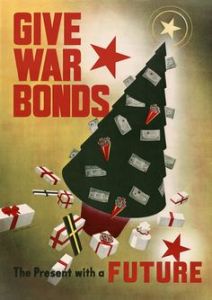
Sure your kids may not enjoy them now. But wait until they’re about to go to college. Also, it’s your patriotic duty to do so.

3. Don’t get VD or else you’ll miss the boat.

Because our nation can’t afford soldiers with gonorrhea or chlamydia. So guys, keep it in your pants.

4. Angelic lady with harp wants you to enlist at your nearest recruiter station.

Because if you don’t enlist now, there’s a good chance they’ll draft you. A gem from World War I, by the way with George M. Cohan’s “Over There.”

5. One legged sailor wants you to do your part.

Because as you can see, he already did and got his leg blown off for it. And to him, it was worth it.

6. The YWCA wants you to support women workers.
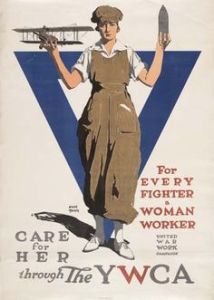
Because women build planes and bombs so men can use them to blow up or shoot down other guys. By the way, average air time in a WWI aircraft was 20 minutes.

7. “When the sword is drawn, the Navy upholds it!”
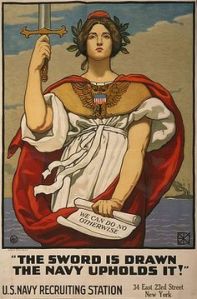
So join the US Navy. Because spending long days warding off German U-Boats sure beats trenches and planes. Seriously, anything is better than the trenches.

8. Before you bang this woman, know that she might be an STD laden whore.
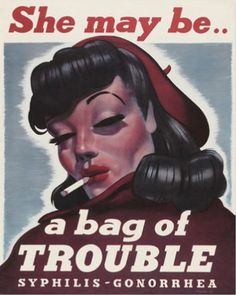
Yes, they seem to have a lot of wartime posters on STDs. But then again, contracting an STD is far worse than getting a cold.

9. Don’t be lazy or you’ll help the Nazis win.
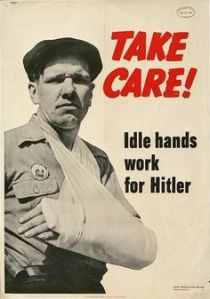
Makes me wonder if they’re putting this guy down or sympathizing with him. I mean, the guy has a broken arm and can’t really do his job.

10. Even Mickey Mouse wants you to buy bonds.

Because Mickey loves America and wants to protect it from Nazis. Despite that Walt Disney was anti-Semitic.

11. Strike a blow for the Axis and give more wood for the army.
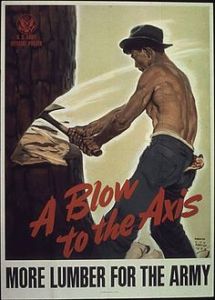
And we mean lumber this shirtless jacked guy chops down. Not the other kind since being gay in the military can give you a one way ticket to Levenworth, Kansas.

12. Civilians need food so plant more beans.
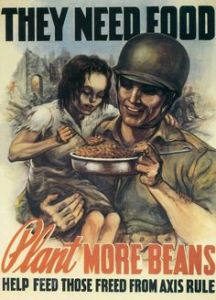
Because these people liberated from Axis occupation are absolutely starving. Mainly because of totalitarianism, systematic oppression, and the fact we bombed the shit out of their towns.

13. Buy war bonds to the moms and kids of fallen men.
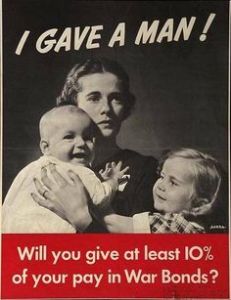
Because a lot of employers simply won’t hire single moms during the 1940s. This is especially the case when she has two kids under the age of 5.

14. In a time of war, great Americans don’t take time off when their country needs them.

Though even during a time of war, can’t people just take time off for medical needs? Besides, everyone needs a break.

15. A woman loves a man who volunteered for submarine service.

Yet, serving in a submarine is absolutely no picnic at all. Still, at least they didn’t have women on there fortunately for her.

16. Defeat the Nazis and defend religious freedom.

Though I’d think it would be more to the point if it was a synagogue instead of a church. But church works fine.

17. The traffic light is right, stop waiting to beat Hitler and enlist.

However, they forgot to put a disclaimer: Must be 18 years or older. Though the traffic light is very effective.

18. Send your scrap to Uncle Sam so they can shoot down Nazi planes.

Still, I’m not sure a burning plane for a scrap metal poster is a good idea. But then again, this is WWII so it’s understandable.

19. Want to avoid VD? Try Prophylaxis.

Prophylaxis means prevention. And I guess the prophylaxis here is keeping it in your pants.

20. Whether in the fields, factories, or combat zones, we must attack at all fronts.

Yet, this doesn’t necessarily mean using a hoe or a blow torch as weapons. But they’re the home front.

21. Kids, help Uncle Sam win the war by buying war savings stamps with your change.

Since bonds are for grownups. And the US government isn’t above getting its hands on your monthly allowance to pay for a new machine gun.

22. Ladies, don’t worry about rations, can your food instead.

Yes, they encouraged people to can their food so they’d last for weeks. Then again, they didn’t have as reliable refrigeration then.

23. The Red Cross and Uncle Sam need you!
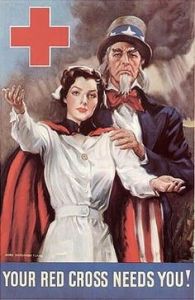
I don’t know about you, but Uncle Sam seems to be a bit creepy with that nurse. I have a bad feeling where this is leading.

24. Soldiers, when you sleep with a woman, you might pick up more than a girl.

And they think college hookup culture is bad these days. Yes, the World War II generation slept around, too.

25. This soldier wants you to save gas through carpooling.

Yes, carpooling saves gas. But the disadvantage of carpooling is that it’s not always feasible for co-workers living a neighborhood away from each other. Though this wasn’t much of a problem in the 1940s.

26. Before the war, men never thought a woman can do a blue collar job.

Yes, this is kind of sexist. But women did work in factories during both world wars. Not to mention, many female factory workers in WWI started out as girls.

27. Be wary and don’t fall for Axis propaganda.

Note they included religious bigotry on there but left out other faiths. Still, I’d worry more about Axis Sally than Tokyo Rose.

28. See a German U-Boat? Bomb it!
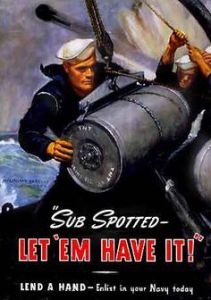
This is a navy recruitment poster. And here’s a guy carrying explosives. Hope he throws it at the Germans quick or he’s sunk.

29. Someone talked and this man’s ship got bombed.

Yes, scare them straight into shutting up while they make port in a foreign country. Still, you’d wonder if this guy ever learned to swim.

30. Uncle Sam wants you to shut up about military strategy.

Because you’ll never know when you meet a Nazi spy. So keep your trap shut.

31. The British Navy needs your bones for bombs.

They also need bones for all this other stuff, too. Though the aircraft one is puzzling to me.

32. Remember, loose talk during lunch can cost lives.

Nothing inspires paranoia like this one. Doesn’t help they’re drinking beer either. Oh, I see what they’re getting at.

33. Winston Churchill always holds the line to victory.

Here’s Churchill’s famous English bulldog portrait. And it doesn’t seem very flattering to me.

34. Careless talk will give you a German Iron Cross.

Or as this poster conveys, “make you a traitor.” Also not, the Nazi signet in full display.

35. Remember to eat healthy to be US strong.

Too bad a lot of people in our country do not nowadays. Still, you can see the point.

36. Talk less because you’ll never know if you meet a German spy.
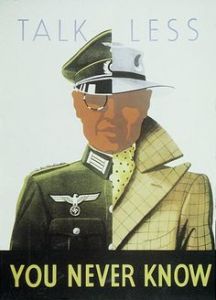
Keep in mind that the Gestapo mainly dressed in civilian clothes in Nazi Germany. So this isn’t incredibly far fetched.

37. Fight for your country so you won’t have to lose your sacred rights.

Too bad they didn’t try to warn us during the 2016 election. Because our rights are now under attack from the Trump administration and the GOP as we speak. Have you seen the GOP healthcare plan and anti-protest laws?

38. VD can be cured, but antibiotics can’t relieve your regret.

So a sailor should be a good boy to keep it in his pants and his mouth shut. Because careless talk may mean death to your comrades.

39. Set to course to victory, join the US Coast guard.

Sure patrolling the nation’s borders may seem like a boring gig as you see these guys’ faces. But at least you most likely won’t die.

40. Defend America, don’t waste your food.

Because Americans need to be healthy to defeat the Nazis. So clean your plate at dinner.

41. Empty cans? Save them for ammunition.
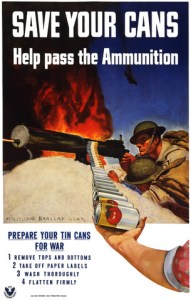
Funny how the bullet chains are cans with tomatoes. As if they’re firing a machine guns with sauce bullets.

42. To avoid careless talk, don’t forget to tie your parrot’s beak shut.

Or any military camp could just ban pets. Much easier than tying something on a parrot’s mouth.

43. Soldiers, Uncle Sam wants you to take care of your gear.

For soldiers need to make sure everything’s working so their equipment can last. Doing that, the life they could save, could be their own.

44. Support oil for it powers planes and land vehicles.
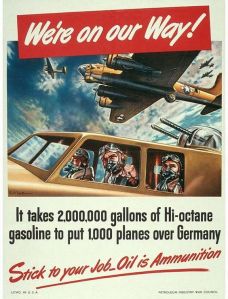
Though today, you’d be more for clean energy like wind and solar. Okay, maybe we’re not that far yet, technology wise. But we’ll get there.

45. Join the Navy and man the guns!
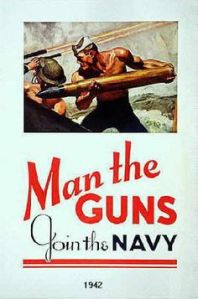
I don’t know about you. But there’s something phallic about that missile and it doesn’t help that the guy doesn’t have shirt on. Just a thought.

46. Produce to the limit or else the 2 headed Axis hulk will storm New York City.

Because you don’t want this monster destroying the Statue of Liberty. Still, in movie world, cataclysmic events in New York are commonplace.

47. Use your ration stamps to stamp out black markets.

Funny how they have a black marketer in disgusting green. Yes, ration stamps get the job done.

48. Keep em’ fighting since production wins wars and prevent accidents.

Again with the bare chest and phallic looking missiles. And you wonder why sailors are more prone to gay stereotyping.

49. Every minute counts so avoid time off.

Instead of avoiding time off, it’d be better if it said, “avoid vacation time.” Because if someone needs a day off for illness, injury, or family, then they should have it.

50. Keep our cars rolling cause America can’t hitchhike to victory.

Still, hitchhiking isn’t a good idea even if that’s a way people got around at the time. And hitchhiking to victory, forget it.

51. “We’ve just begun to fight! Watch us put it across!”

I guess this is for recruitment as the eagle looks ahead. Guess this is from WWII.

52. The housewives brigade wants your scraps.

So give them all your junk so they can give to the war effort. Metal, paper, and bacon grease preferred.

53. Don’t read history, make it. Join the Navy.

But I think reading history is very important. This goes especially for the stuff that isn’t flattering like slavery.

54. Buy bonds to keep Germany and Japan from this mom and kid.

Yes, they have menacing hands that’ll go after your family. Just imagine the suffering.

55. Men who know always say no to prostitutes.

Because prostitutes are STD ridden whores who’ll infect them. Then again, this isn’t an entirely accurate description.

56. War bonds are the crop that never fails.

Though if I can grow money I would. But unfortunately money doesn’t grow on trees. Or from the ground.

57. Eat some of each from every food group every day. Other than that, eat whatever you want.

Nowadays, you’d have to eat a set of servings from each group. And it’s usually shaped within a plate or a pyramid.

58. In a time of war, it’s best you watch your weight.
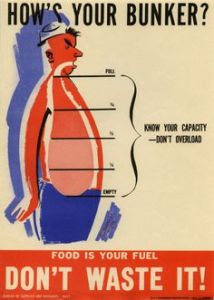
So I guess they don’t want you to overeat either. Yes, it’s best you know your capacity.

59. Knock out VD. Prophylaxis prevents disease.

And yet, they have tanks shooting out saying, “soap,” “silver,” and “mercury.” Unfortunately, such treatment aren’t as good as penicillin.

60. July 4th is Uncle Sam’s birthday and the US is still going strong after 142 years.

And see Uncle Sam charge with his bayonet among the exploding bombs. Not necessarily a safe way to run through. But it’s WWI.

61. Simple Sam breaks a tool every day at work.

Here he is on a stool with a dunce cap. Yes, his antics in the factory waste time. But he really can’t help himself.

62. The Statue of Liberty wants you to buy a liberty bond or she perishes.

So while Uncle Sam urges men to serve, Lady Liberty urges everyone else to buy bonds. But she doesn’t look defenseless here.

63. Take the pledge that you’ll use ration points and not buy black market stuff.
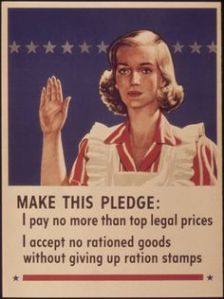
Because it’s your patriotic duty to do so as an American consumer. So raise your hand and swear to it.

64. Let the guns do the talking for silence is security.

Because the guns can do quite a lot of damage. Kind of intimidating if you ask me.

65. Sure she might be hot but she could very well be a Nazi spy.

If you want to know, just ask her what she thinks about Jewish people. Okay, maybe that’s a bad indicator.

66. Always be be on the alert and join the Marines.

Here he has a gun pointed at planes during the night. I’m sure the planes don’t know what’s coming.

67. A rattlesnake is less dangerous than careless talk.

And rattlesnake bites are are real bitch. In fact, rattlesnakes can kill you. Just look at the fangs of this thing.

68. Think this Japanese beauty is hot? Avoid her.

Crazy how they managed to put a naked woman on here. Not often you see this on a WWII poster.

69. Sailor, beware of who you screw at port.
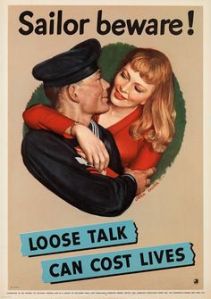
So don’t tell her anything about equipment, salings, or troop movements. She might be using her hotness to get you to talk.

70. Want to bring him back sooner? Get a war job.

Though the sooner you bring him back home, the sooner you’ll get a pink slip. So what it brings you is mixed.

71. “You give us the fire. We’ll give ’em hell!”

Here he is about to get in a fighter. Remember that bombers and pilots didn’t have a high survival rate in WWII. So he’s not likely to make it.

72. In Germany, someone is doing the same job as you, beat ’em.

Funny how they put it behind a large white swastika. Looks so evil.

73. The swastika marks the spot.

And it’s squarely on Hitler’s ass. And the planes are bombing it like crazy as he screams in pain.

74. Make every minute count for Pershing. Join the  shipyard.
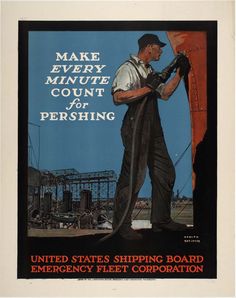
However, keep in mind that WWI era wasn’t known for good health and safety conditions. And that the guy isn’t in proper safety equipment.

75. Remember, housewives, save fats for explosives.

Because fats contain nitro glycerin. So whenever you contribute grease to the military, you’re killing Nazis.

76. Women, there’s a war to be won. So get on your feet now.
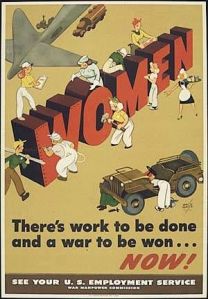
Because when there’s a war on, the US needs everyone they have. So ladies, it’s off to the munitions factories.

77. Canada needs soldiers like you in its army.

Instead of a noble knight on horseback, we have a soldier on a motorcycle. Don’t think popping a wheelie is a good idea.

78. Smack the Japanese and join the submarine service.

Here’s a guy holding a V for victory. Hope he knows that the Pacific front was particularly horrific.

79. A starving child’s life was saved because you went without luxury. So give us money.

What a way to pull at people’s heartstrings. Though recently, the American Red Cross’s reputation has suffered.

80. “Let’s go Canada!”

Apparently, Canada didn’t have its famous maple leaf flag yet. And this guy hardly looks like a badass.

81. Every time you take the day off, you help Hitler.

Seems like they’re big on getting people not to miss any day at work. Though everyone deserves a break now and then. Even in wartime.

82. Break the bottle neck traffic, carpool.
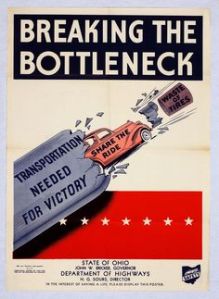
Yet, in this one, the car breaks the bottle. But you have to agree, carpooling is a good idea, whenever it’s feasible.

83. Tell where he’s going, he’ll never get there!
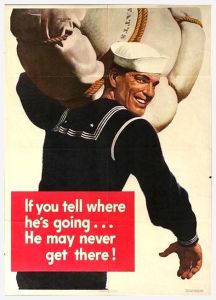
Because telling where he’s going helps the enemy. So don’t. Okay?

84. Remember, make a mistake, you help the enemy! Because there’s a war on.
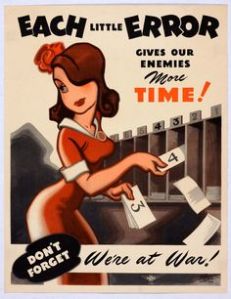
Sorry, but we can’t afford secretaries making mistakes. Too bad she might not have adequate training which I’m quite sure about.

85. Don’t forget that this hideous Japanese guy is the enemy.
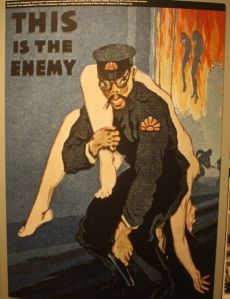
Really? Depicting Japanese guys as raping white women? That’s about as racist and horrendous as sending a bunch of Japanese Americans to internment camps out west.

86. Still need more rags for salvage.

And yet, this old guy leads an invisible homeless guy. Couldn’t see anything so cruel.

87. “Remember Pearl Harbor and purl further!”
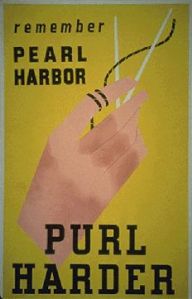
Seems like this was designed by a knitting circle. Still, it’s kind of clever.

88. Hey, British POWs, want some fresh air? Join the Free Corps.

The British Free Corps was a Waffen SS unit during WWII consisting of British prisoners of war who were stationed at the Eastern Front to fight the Russians. Only 54 joined up and major figures were later court martialed as traitors.

89. Fight the Japanese menace surrounding Australia. Blockade!

Though to be fair, militaristic Japan wanted an empire. And Australia is quite close to Indonesia.

90. “Couldn’t have done it without you!”

As if this American sailor can’t help but show how many Japanese boats he’s sunk. So proud of his accomplishments.

91. Salvage your rubber cause these guys have more important places to go.
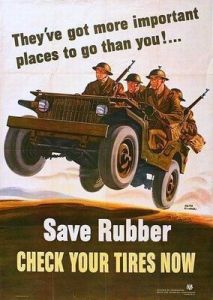
Though it seems like they’re going on a joy ride more than anything. But they need rubber for tires to get around places.

92. Talk too much and this soldier’s behind a barbed wire fence.

Of course, he’d probably be at some POW camp which is nothing like Hogan’s Heroes. But at least he can be happy he’s not from Russia.

93. Can’t fight in war? Plant a victory garden instead.
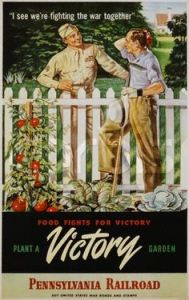
After all, if you can grow it, you don’t need to buy it. You can even give some of your produce to the troops, too.

94. Open your eyes, America, since fighting Nazis isn’t business as usual.
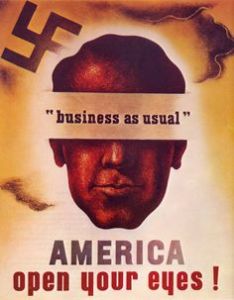
Nor is it with the Trump administration. Not sure how we’ll get through that with our federal government intact.

95. Be good this year and invest in defense.

Because if you’ve been bad and help Nazis, then you’ll probably get something worse than coal. Like a charge for treason. And Santa wouldn’t like that.

96. Keep your mouth shut and don’t rat out information.
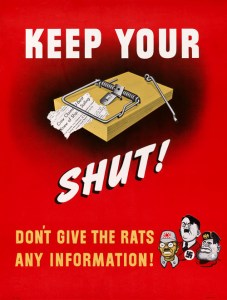
Cause you never know when the Axis powers would use it against you. So be smart and don’t say anything about war stuff.

97. The YWCA wants you to back our girls over there.
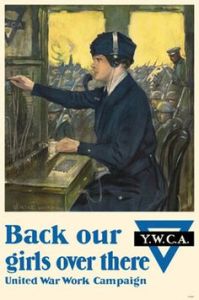
Yes, women who served in WWI didn’t get the credit they deserved. This switchboard operator is one of them.

98. Even a fish would keep its mouth shut around Japanese bait.

Boy is their rendition of the Japanese racist. Still, even if the fish took the bait, it would die right there.

99. After Iwo Jima, it’s all of us together.
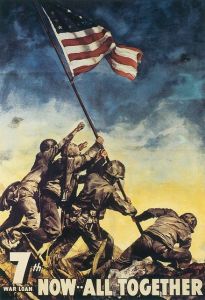
This is a depiction of the famous photo at Iwo Jima. Subject of two Clint Eastwood movies.

100. Wasting stuff helps Hitler.

And they had to do a paper version of Hitler with a weird looking mustache brush. Not flattering but he’s a horrible man anyway.

Why We Need to Stop Likening Donald Trump to Andrew Jackson

Imacon Color Scanner

As president, Donald Trump has often been linked to Andrew Jackson in both good qualities and bad. Trump has braced the comparison since he chose to grace the Oval Office with Jackson’s portrait as well as laid a wreath at his grave at the Hermitage in Nashville, Tennessee to honor his 250th birthday. Though he doesn’t try to claim that he shares the policies and attitudes Jackson embraced, he’s proposed to be in the 21st what the seventh president was during the 19th. After all, what made Jackson so fondly remembered by some was his connection to ordinary people as well as his embodiment of populist politics. Meanwhile, detractors often note how Jackson was an unapologetic racist and slave owner whose harsh treatment of Indian tribes eventually led to the Trail of Tears. And they often remark compare it to how Trump used racism to win over the support of working class whites as a political outsider taking on the establishment and riding into Washington to return power to the people. However, though understand Americans’ need to make historical comparisons, I find the idea of likening Trump to Old Hickory deeply insulting to Andrew Jackson and his memory.

Now I understand that Andrew Jackson wouldn’t rank among many Americans’ favorite presidents for very justifiable reasons. Sure he was an unapologetic racist who defended slavery without question and his policy on Indian removal in the Southeast resulted in tragic consequences such as the Trail of Tears, destruction of tribal culture, and genocide. In addition, Jackson’s dismantling of the Bank of the United States led to the Panic of 1837 as well as decades of frequent bank failures and economic instability until the creation of the Federal Reserve. Jackson’s practice of appointing personal associates, wealthy friends, and party loyalists to federal offices as a reward for victory generated what would later be called the spoils system which led to a lot of government corruption for decades and eventually the assassination of a US president. And yes, I understand that like Trump, Jackson could be especially harsh on his enemies, violated political norms and constitutional concepts he didn’t like, had some anti-intellectual tendencies, was obsessed with the media, occasionally had little regard for the law and institutions, and was seen by his detractors as an unstable demagogue and a would-be dictator.

However, besides inspiring distrust in certain elements of political elites in their day along with some other qualities, Trump and Jackson have little in common. In fact, Andrew Jackson would’ve despised Trump and liken his sham populism to an image of William Henry Harrison drinking hard cider in front of a log cabin. Jackson certainly would’ve been greatly insulted of Trump citing him as his hero and a reflection of himself. Such notion that a draft-dodging elitist and opportunist who’d apply to his high-born privilege in order to skirt the consequences for his legion of despicable business practices and did nothing to demonstrate a commitment to public service could resemble Old Hickory basically desecrates almost everything about him and what he stood for. Whenever you see Jackson’s portrait in Trump’s Oval Office, don’t see it as being enshrined in a place of honor regardless of what you think of him. Rather think of Jackson’s presence in the Oval Office as one of great misfortune of having to see a man like Trump exploit him as nothing more than a mere prop to shamelessly project his faux populist image in order to deceive his constituents with no second thought. Only to betray his lowly supporters by using his presidential power to enrich himself along with his elitist friends, backers, allies, as well as the GOP and corporate establishment at the common people’s expense. All Jackson can do is hopelessly watch by, unable to tell the world what he was all about in his defense while Trump distorts his image and legacy for his own benefit. Jackson may not have been an exemplary role model, but he was certainly no Donald Trump. And we should see Trump’s honoring him as nothing short of disgraceful to a man who’s currently turning in his grave.

By all accounts, Andrew Jackson was a complex and fascinating man who remains one of the most studied and controversial Americans in the 19th century. Whether you love him or hate him, there are plenty of qualities about the man you have to respect as well as the impact he made. And despite all the awful stuff he did, there’s a reason why historians rate his presidency so highly. Generations of parents named their sons after Jackson, often placing both his names before their surname. Jackson’s election to the presidency comes off as a vindication of American ideals and affirms American greatness. Jackson’s unapologetic defense of slavery and infamous policy regarding Indian removal have marred his complicated legacy and for very good reason. The fact he made his fortune speculating Indian lands as well as owning (and possibly trading) slaves doesn’t help his reputation. Yet, he was a staunch believer in popular democracy (at least among white men) and believed in the sanctity of the American Union with almost religious conviction. But despite his lasting reputation as an aggressive, no nonsense, I’ll-do-things-my-way kind of guy, Jackson was far more than the one dimensional caricature he’s often depicted as. He was self-raised, self-educated, and well-read in current events (with a subscription to 17 newspapers). He conducted himself as a quintessential Southern gentleman with exquisite manners and a rather gallant attitude towards women. Though nasty and spiteful to enemies, he was generous, considerate, and loyal to his friends and a devoted husband to his wife Rachel. Though strong in his convictions and an intense partisan, he was not without moments of compromise and indecision. And he wasn’t above appointing cabinet members who disagreed with him like his closest advisor Martin Van Buren as well as Edward Livingston and Louis McLane. Nor did he always hold grudges for he welcomed Thomas Hart Benton back into the fold despite being a longtime foe. Furthermore, he considered his word his bond as well as strived to exhibit fidelity, honor, and integrity.

We need to understand that what attracted ordinary people to support Jackson was totally different than what attracted people to Trump. Though 19th century political campaigns often involved nasty mudslinging, Jackson’s appeal to the common people had much more to do with the great positive sentiment Jackson evoked in the average Americans at the time. What ordinary Americans loved most about him was that he really was one of them. His father died before he was born while his mother died in his teens. Everything Jackson achieved in life came through his own efforts. What Jackson projected is the belief that any kid can grow up to be president. If a poor kid from the Carolinas can reach the White House, then it must be the case that talent, grit, and honor could make up for the humblest beginnings. His modest background as a self-made man on the frontier who championed those of his former station cast him as an outsider from the aristocracy of Washington’s political elite. The people loved him for it and voted for him out of affinity and pride. His 1829 inauguration saw one of the largest crowds by that point as he took the oath of office at the US Capitol’s East Portico. After the ceremony, Jackson invited the public to the White House for a reception where thousands of his supporters held a raucous party, inflicting a degree of damage to the fixtures and furnishings

And Andrew Jackson had done plenty in his lifetime of public service to earn his supporters’ admiration that they were glad to cast their vote for him. He served as a courier to a local colonial militia during the American Revolution and at the Battle of Hanging Rock during his early teens. At 14, he was taken captured by the British, where he braved small pox, starvation, and being slashed by a British officer for refusing to clean his boots. When he moved to Tennessee as an adult, he spent much of that time in the service of his adopted state and the US. He helped write the state’s constitution and served as a circuit judge. He represented Tennessee in the House and the Senate. He was governor of Florida while it was a federal territory. Most famously, Jackson commanded Tennessee militia and later US Army troops during the War of 1812, earning the name “Old Hickory” for his resilience in combat and willingness to endure the same hardships as his men. He fought a war against the Creek Indians with an arm in his sling from a shoulder wound. His victory at the Battle of New Orleans was the signal triumph of the American armed forces between the Revolution and the Civil War. During that time, Jackson was broadly acclaimed as second only to George Washington among the pantheon of American military heroes. Because despite the War of 1812 being virtually over for 2 weeks thanks to the Treaty of Ghent, the British had still viewed the Louisiana Purchase as illegitimate. Had the Brits seized on New Orleans, they were prepared, treaty or no treaty, to declare the Louisiana Purchase a dead letter and redraw the political map of North America. Jackson’s victory ensured that the British wouldn’t renegotiate peace terms ending the war. Though some people questioned Jackson’s politics, nobody questioned his courage and patriotism.

We should also understand that there was much more about Andrew Jackson than this image of a wild backwoodsman initially suggests. When a young woman from South Carolina named Julia Ann Conner visited his Hermitage in 1827, she found him to be nothing like she expected. Rather she wrote him to be a “venerable, dignified, fine-looking man, perfectly easy in manner.” She noted how Jackson kept articles he received from the Washington’s family on his mantelpiece as “preserved with almost sacred veneration.” Conner even joined him in a game of chess and referred Jackson as an “excellent player” as he “frequently directed my moves—apparently much interested in the fate of the game … there were no traces of the ‘military chieftain’ as he is called!” This is a very different portrait of Jackson than what many Americans are used to. But it nonetheless explains much of his character. Though he may come off as reckless, he more often played games in politics and war with skill and patience. His enemies and much of posterity never quite understood that what was the most fundamental fact about Jackson wasn’t a problem with his temper, but more often than not, his ability to control it and harness that energy in ways that would’ve driven other politicians to ruin such as intimidating his foes or advancing his agenda. Sure he was prone to fits of rage and for getting into duels and brawls, especially as a young man. But he was self-aware enough to understand his weaknesses and took care to compensate for them. With that came a kind of self-restraint, which worked so well his closest advisor, Martin Van Buren marveled how Jackson could turn anger on and off at will. But as Conner noted, he was as at home with his chessboard as he was with charging blindly forward. Though he certainly was a powerful personality, Jackson’s rise from his humble beginnings could never be possible without his shrewdness, resourcefulness, as well as his capacity to cultivate himself while retaining an image as a fearsome and violent man of action he used to his advantage. Yet, seeing Jackson this way makes the idea of him being a reflection of Trump astoundingly laughable.

Andrew Jackson’s distrust for elites and the Washington establishment was also very different from Trump’s. A political centrist and believer in Jeffersonian principles, Jackson believed that monied and business interests would corrupt Republican values. While his defeat of the Second Bank of the United States and his opposition to federal public works projects hurt ordinary Americans, his rationale behind both reflects that sentiment. Back in the 19th century, legislatures often granted corporations charters to build infrastructure which gave them valuable privileges. State governments often shared corporate ownership with private investors. Jackson feared that public investments offered unearned advantages to insiders that would surely lead to corruption and as he put it, “destroy the purity of our government.” Nevertheless, despite vetoing the Marysville Road project, Jackson’s administration saw more federal funding on infrastructure than all his predecessors combined. And Jackson’s Marysville Road veto had more to do with it connecting two towns in Kentucky, which he viewed as nothing more than a pork barrel project for Henry Clay’s home state.

As for the Second Bank of the United States, well, it was a public-private corporation partly funded by taxpayers but controlled by private investors, some of whom were European. Despite its hold on the nation’s currency gave it immense economic powers such as destroying state banks by calling in their loans, it faced no democratic oversight. And its capital was twice the federal government’s expenditures. The Panic of 1819 was particularly devastating for ordinary Americans thanks excessive land speculation, unsecured loans, misrepresentation, and the unrestrained use of paper money. The Bank did little to relieve since it was deeply enmeshed in these inflationary practices. Jackson opposed the Bank because he considered it a privileged, monopolistic, and undemocratic corporation. He was sure the Bank made dubious loans and campaign contributions to influence politicians and editors as well as to even buy elections. When the bill to renew the charter reached his desk, Jackson vetoed it bristled with populist attacks ringing eerily familiar. He charged that “The rich and powerful too often bend the acts of government to their selfish purposes.” They sought special favors “to make the rich richer and the potent more powerful,” rightly leading “the humbler members of society—the farmers, mechanics, and laborers … to complain of the injustice of their government.” In his farewell address, Jackson warned that the people, “have little or no share in the direction of the great moneyed corporations,” and were always “in danger of losing their fair influence in the government.” Today, you’d find many of these anti-big business sentiments in a Bernie Sanders speech against the Citizens United ruling, a Supreme Court decision that Jackson would’ve certainly not enforced. Trump, on the other hand, clearly sees absolutely no problem with corporate influence on government as illustrated by his donations to various political entities including Citizens United, receiving generous campaign contributions, and appointing billionaire CEOs to cabinet positions.

Nevertheless, what’s the most outrageous about the Trump-Jackson analogy is the most basic. Regardless what you think about him, Andrew Jackson was the president who more than any other, secured the future of American democracy. For the quarter-century before Jackson, presidents were essentially aristocrats who essentially appointed their own successors with the Election of 1800 being the only exception. When he was elected to the presidency in 1828, he won with 56% of the popular vote which was 12 points more than his opponent, John Quincy Adams. By frustrating Adams’s bid for reelection, Jackson broke the mold and became president at a time when states had started abandoning their property and residency voting requirements, which he both encouraged and benefitted from. Sure Jacksonian democracy fell short of today’s model since most women and blacks couldn’t vote. But by enfranchising all white males other than property owners, it represented a huge step forward from the unabashed elitism characterizing the 18th century. That elitism was part of why many in the political establishment in Jackson’s time likened him to a dangerous demagogue as well as an unstable, would-be dictator. We should note that the Founding Fathers came up with the Electoral College and election of senators through the state legislatures because they harbored a lot of distrust toward the common people and likened democracy to mob rule. Jackson knew this and as president, had repeatedly called for a constitutional amendment to abolish it for reasons we don’t have to get into after 2016. And it was certainly why then Speaker Henry Clay encouraged the House of Representatives to choose John Quincy Adams over Jackson in 1824, which resulted in his appointment as Secretary of State. Furious Jackson supporters would call this a “corrupt bargain” because their candidate won at least 42% of the popular vote. Yet, because no candidate received a clear majority of electoral votes (due to the race consisting of 4 different guys), the decision fell to the House. Still, had Jackson succeeded in eliminating the Electoral College, Trump would’ve never become president since he lost the popular vote by the largest historical margin of anyone who’s ever won the presidency.

Moreover, Andrew Jackson’s character and worldview reflected a genuine conviction in the people’s ultimate wisdom. He came to that populism through his experience and his own humble beginnings. As a self-made man, he saw his political mission to remove what he believed to be corrupting influences such as the Second Bank of the United States, entrenched federal appointees, and money speculators. That so ordinary Americans which he called “the planter, the farmer, the mechanic, and the laborer” could rise to prosperity. In other words, Jackson believed the federal government should benefit the interests of all Americans and that political participation should be a right. And he expanded the role of the presidency from mere executive to active representative of the people. Another one of Jackson’s most central beliefs was the inviolability of the federal Union and that concepts like secession and nullification were unacceptable. The fact he was willing to go to war with South Carolina when it threatened to secede during the Nullification Crisis illustrate this. Jackson believed that popular democracy spoke most clearly when the nation spoke as the nation. Not as separate polities in individual states. And that the union must be preserved above all else. His ideas in popular democracy and devotion to the Union above all else have left an indelible mark in the American consciousness, both of which he considered as inseparable. Generations after him have built on them and expanded on and in ways even he wouldn’t have imagined. Yes, his idea of popular democracy only included all white men. But it nevertheless provided a foundation for women and minorities to campaign for their voting rights as well as inspired almost every liberal and progressive movement and policy ever since. Jacksonian democracy became a touchstone of American politics that every presidential candidate since had to possess a common touch or effectively fake it. His idea of the president being the people’s representative has helped shaped the modern American presidency as we know it. And the Jacksonian concept that the union must be saved above all else strongly influenced the Union cause during the Civil War. Jackson’s policy during the Nullification Crisis set a precedent for Abraham Lincoln to follow through by sending military force against the Confederacy.

Andrew Jackson may have done plenty of terrible things that have hurt a lot people during his lifetime as well as led to plenty of negative repercussions even after he left office. He could sometimes be woefully wrong on what he thought was best for the American people. He may have stood on the wrong side of history in regards to defending slavery and removing Native Americans from their land so his friends could build plantations. Yes, he personally profited from stealing land from the Indians during the Indian wars. Yes, he brought a new coalition to elites into power such New York politicians, Pennsylvanian businessmen, and Southern slaveholders. And yes, he tended to their special interests as any typical politician. Still, Jackson was no opportunist and didn’t use populism as a political device. He didn’t use his image as a temperamental man for mere theatrics. He wanted to accomplish things. He never ever threw his friends under the bus even it was expedient to do so. He never embarrassed foreign dignitaries nor handled diplomatic disputes with anything other than moderation and skill. Nor did he try to profit from the presidency since he asked a friend to settle his business affairs after he won the election so he could focus on being president. But regardless of how we view Jackson today, he was a military hero who served his country in combat and a politician who generally placed the nation’s interests above his own. He symbolized the democratic struggle among the great majority against unearned power and special privilege. Furthermore, he was a firm believer in American democratic values as he once said, “As long as our government is administered for the good of the people, and is regulated by their will; as long as it secures to us the rights of persons and of property, liberty of conscience, and of the press, it will be worth defending.”

As Thomas Hart Benton said of the Jackson presidency, “Great is the confidence which he has always reposed in the discernment and equity of the American people. I have been accustomed to see him for many years, and under many discouraging trials; but never saw him doubt, for an instant, the ultimate support of the people … He always said the people would stand by those who stand by them.” Andrew Jackson was a very flawed man whose life and legacy reflected the best and the worst of America in his time and all time. Yet, even the ugliest parts of his life and legacy don’t dismiss him as any less than a man who tried to be worthy of the American people’s support. After all, despite that America has viewed itself as a beacon of liberty, democracy, and prosperity, it was also built on slavery and Native American displacement and genocide. And Jackson’s attitudes and actions regarding slavery and Native Americans are so glaring that they can’t be ignored. Nor should they be. Though his grave sins keep us from viewing him as an icon of reverence, Jackson’s life should teach us that even heroic men like him are seldom pillars of perfection. Jackson knew this for though he may have been critical of the founding generation, he nonetheless appreciated those responsible for crafting and refining the systems of checks and balances on which the nation was based. Even though he didn’t always observe them as president. Not to mention, a lot of Jackson’s own supporters didn’t always agree with him including close friends and advisers. Still, if Jackson and his fellow Democrats can get things so badly wrong, then we’re forever vulnerable as well. History may well remind us that we’re always at risk of falling short in the unending search for a more perfect Union.

Nevertheless, while Jackson shouldn’t be idolized on a pedestal, he doesn’t deserve outright vilification either even if he deserves being called out for his sins. Nor should he ever be reduced to a one-dimensional caricature since there’s nothing simple about him. Such approaches do a disservice to him as the complex and fascinating man he was and how he should be remembered as. Nor should he be embraced by a president who knows nothing about him, shares none of the causes he championed, and praises him so he can depict him in his own image. Donald Trump is no Andrew Jackson nor does he even come remotely close. Unlike the 7th president, this unrespectable man has repeatedly demonstrated that he cares more about himself than the American people and what is best for this nation’s future. His praises of dictators show he has more affinity for a culture common in authoritarian systems where ruling regimes have a monopoly on truth. Though he has promoted himself as a successful businessman, he’s very much a product of inherited wealth and unearned privilege which have gotten him where he is today. And he often used his status to avoid military service, federal taxes, and taking responsibility for his despicable business practices. Nor was his success the result of his hard work and natural ability. It’s very clear that Trump’s populism is a sham. Then there’s the fact Trump has promoted his real-estate investments during his presidential campaign as well as acknowledges that he “might have” discussed his global business interests in his talks with foreign leaders since his election. Even as president Trump hasn’t separated himself from his business, which puts him in clear violation of the Emoluments Clause. It’s very clear he’s profited from both his campaign and his presidency. His business interests abroad might have an impact on American foreign policy. To equate Jackson with Trump normalizes the latter in ways that should offend us in 2017. Jackson for all his faults doesn’t deserve to be equated to this unrespectable man, regardless of his sins. Jackson may not have been a great hero to many people’s eyes for very good reasons. But what Trump embodies basically goes against almost everything that Jackson stood for as well as exemplify why Americans still admire him today.

The Rejected Inventions Hall of Fame

indiapensable-inventions-9

Necessity is often considered the mother of invention. Yet, as with many parents, sometimes they produce children who don’t seem quite right. But with necessity, it’s more often than not. While we have moments like the Wright Brothers 1903 flight at Kitty Hawk, North Carolina, you have lots products you can only see in drug stores and infomercials. Nevertheless, inventions are supposed to be technological breakthroughs that make our lives easier. Unfortunately, this post doesn’t showcase these achievements. Instead, it covers the many contraptions that the world has rejected after a certain amount of time and forget about them. Some may have seemed like good ideas at the time only to go horribly wrong. As with others, we’re not sure what the rationale behind them was. But they kind of look ridiculous nonetheless. Anyway, for your reading pleasure, I present to you a treasure trove of crazy inventions from the past you might want or see. Or might not depending on what time you came from.

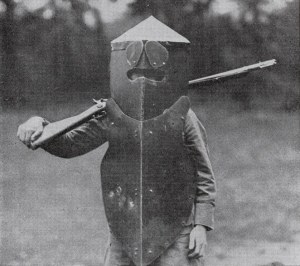
  1. Don’t worry, this body armor will protect you.

I guess the tin hunter costume didn’t quite make it for the Wizard of Oz. Also leaves arms exposed.

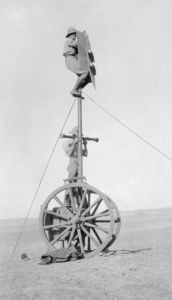
2. A wheeled watchtower always helps you spot the enemy coming from anywhere.

Though it requires strings and stakes to keep it balanced when kept in a stationary state. Also, looks as ridiculous as it is dangerous.

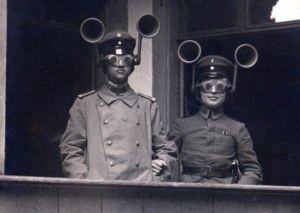
3. With these we can see and hear everything.

Because there’s nothing to let people know you’re snooping on them like goggles attached with megaphones. Also, makes people look like complete idiots.

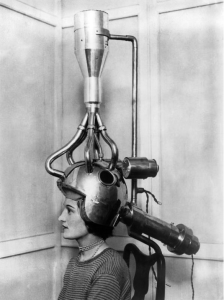
4. This contraption gives you a whole new meaning to the word, “helmet hair.”

I think this might’ve been for perms. Yet, it sure seems like what you see straight out from a Star Trek Enterprise hair salon.

5. In the 19th century, you can take a ride in a rich guy’s 6-wheeler.

And I see they have the driver in the front like they would in a coach. Because he’s a commoner. Wonder how this car makes turns.

6. Now you can  take take your baby to the park and listen to music at the same time.

The radio attached was supposed to keep baby occupied. At least until mommy’s favorite radio soap opera comes on.

7. With these goggles, you can watch TV from anywhere.

Too bad it blocks your face from the world and looks pretty dumb. But you still have to use antennas for a signal.

8. This brush will give any bald man a nice shiny chrome dome.

Then again, I know some bald men who just shave off their hair and show their scalp off proud. No need for a brush and polisher like this.

9. Keep your baby safe during a gas attack with a gas powered baby carriage.

While keeping baby safe and sound, it gives an impressing of constantly being under siege by chemical weapons. Also, kind of resembles a little fallout capsule.

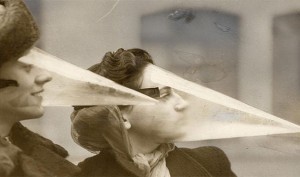
10. These cone masks will help you see through a snowstorm while you’re out.

These look more like cone bags you put on your face. But then again, these were built for function, not effect.

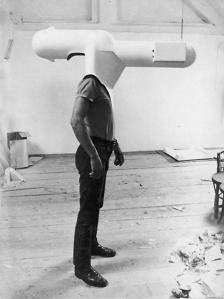
11. With this trailer, you can make room for everybody.

So how do you extend it? What’s it’s limited capacity? How much would it cost?

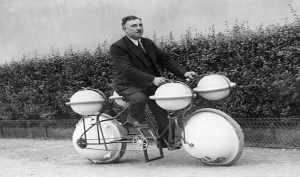
12. With an amphibious bike, you can travel on both land and water.

Helps if it has floaties as well as floatie wheels to keep you buoyant. But sure doesn’t protect you from getting your clothes wet.

13. Ever tried to scrub yourself in hard to reach places and see what you look like? We have just the solution for you.

Man, how did anyone stay clean without this? Also, how does this work in the shower?

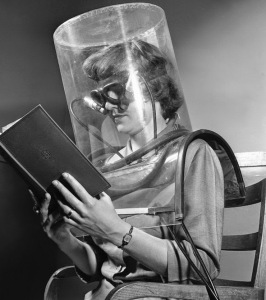
14. Ever wanted to read before bed but don’t want to sit up? These reading glasses are just for you.

Not sure how they work. But they sure make anyone look like a space alien.

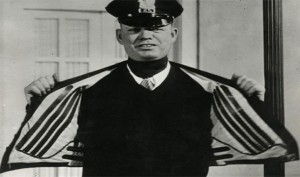
15. Keep yourself warm this winter by wearing a jacket with electric heating.

Sure it might do the trick. However, it might pose a fire hazard should something go wrong.

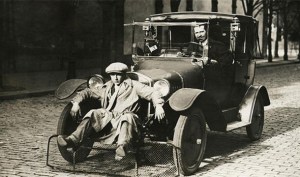
16. Now you can avoid hitting pedestrians by catching them with this metal net.

However, it might run the risk of pushing pedestrians to where they might not want to go. Also, not the safest thing in the world.

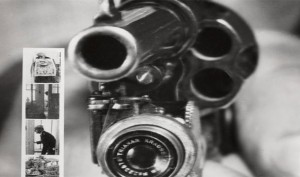
17. Nothing amuses guests more than taking their picture with a gun.

Yet, I’m sure you’ll get no smiles using it. But it’s a safer gun does make safer to play Russian roulette with.

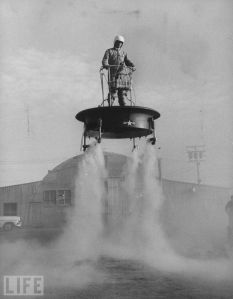
18. A flying platform will always take you to high places.

Yes, it seems quite futuristic indeed. But keep in mind the guy’s wearing equipment to protect himself from injury. Let that sink in.

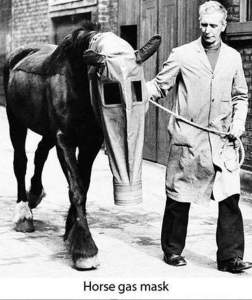
19. Don’t forget to protect your horse from gas attacks.

Yes, this is a gas mask for horses. Well, it was WWI so what do you expect?

20. Why should 8 hours of sleep get in the way of your chainsmoking habit?

Yes, there are a lot of stuff on here related to smoking. Because most of them are from before 1970.

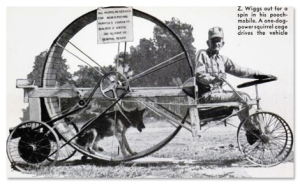
21. Featuring one of the first eco-friendly cars of its time, the pooch mobile.

Now you can save on gas and give Fido hours of exercise. Though you might sometimes have to stop every time he needs to relieve himself.

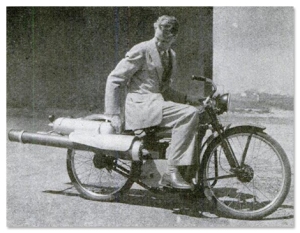
22. Nothing says speed like a jet-fuel powered motorcycle.

Uh, isn’t jet fuel more flammable than gasoline? Besides, I don’t think this guy is taking any safety precautions.

23. Why keep multiple bikes when you can have one for the whole family.

Even includes a sewing machine for mom to work on. Only seats 4.

24. Help little Susie take her first steps with this baby walker.

Seems a bit extreme to get your kid to walk this way. Besides, my sister and I started walking at 9 months with little prompting.

25. Everything is always squared with these bikes.

So how do square wheels get you anywhere? I mean most wheels are round for a reason.

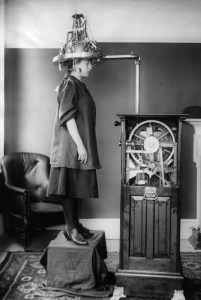
26. Get the latest bits about yourself by wearing the psychograph.

The psychograph was made to advance the study of phrenology. Well, it was a 19th century pseudoscience. That gives you plenty to know about why we no longer use this.

27. Why smoke one cigarette at a time when you can smoke a whole pack all at once.

Because if one cigarette alone won’t kill you, a whole pack lit at the same time surely will. Go ahead increase your risk for lung cancer.

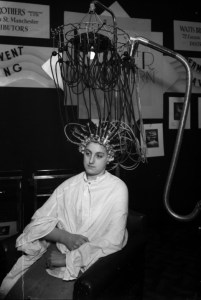
28. Is this woman getting a perm at the salon or having her brain infiltrated by aliens?

Actually, she’s just getting a perm at the beauty parlor. But yes, I know what you’re thinking.

29. Eating peas is a breeze with a peastick.

But this lets you eat peas one at a time. And there’s a device which could let you eat 6 of them all at once. It’s called a fork.

30. Why should parents debate about carrying the baby when you have this?

Because this baby carrier wouldn’t meet any child safety requirements. Besides, why take your baby ice skating when you can call a babysitter?

31. A fork with a crank can always help you eat spaghetti.

Yet, this takes 2 hands to operate. There is another device that lets you eat spaghetti with one hand. It’s called a fork.

32. With these earphones, you can eavesdrop any conversation without anyone knowing.

Too bad this is so bulky that you won’t be fooling anyone. Also it will make you look like a total idiot.

33. With a holder like this, you can share a cigarette with ease.

Because there’s no cigarette holder that says “till death do you part to lung cancer” like this one. Also, the movies seem to make sharing a cigarette look cooler without one.

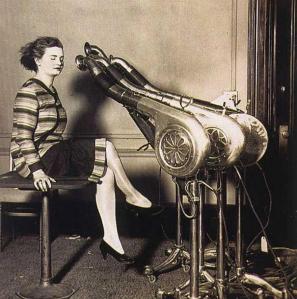
34. Drying your hair should always be an out of this world experience.

Again, this is beauty salon equipment. Not space alien technology. Know the difference.

35. With this hat, you can keep all your toiletries in one place.

Only has room for comb, brush, and toothpaste. But it’s quite stylish and nifty just the same.

36. This little restrainer will keep rover out of the bushes.

After all, there’s no device that suggest you’d might want to serve him with a salad. Yes, I can see why that didn’t see the light of day.

37. A reduce-o-matic helps you lose weight while you sit down and relax.

Sorry, but this kind of weight loss product will only slim down your wallet. Also will make you look like an idiot.

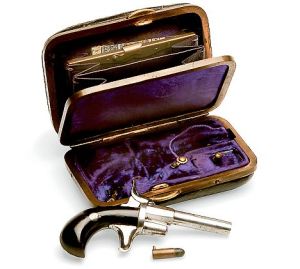
38. Every wallet should always contain some cash and a pistol.

Too bad the pistol is only small enough for a bullet. So you’d have to make the shot really count.

39. With this tea maker, tea will be ready in no time at all.

This is an antique tea maker from the Victorian days. It’s supposed to heat it before pouring it in the pot. Wonder how many accidents it caused.

40. Keep baby out in the fresh air and out of harms way with a baby cage.

This was for babies in small apartments. I know it looks pretty crazy. But yes, sometimes old-timey childcare practices fall out of favor.

41. With this blow dryer, you’ll definitely be blown away.

Seems like the hairdryer has a pretty interesting history. But still, this would be great if you’ve spent the day out in the rain.

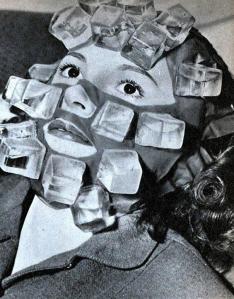
42. Need relief for a hangover? This mask should help.

However, make sure you keep it in the freezer with ice overnight. Still, this is kind of crazy.

43. Now I’ve never seen a pair of binoculars like this.

I guess this must’ve come from the 1950s. Still, I wonder if it has any sensors on it. Or is it just an ordinary pair of binoculars?

44. You know they have bidets to wash your butt? Here’s something to wash your breasts.

Uh, it’s actually not that hard to wash your breasts. You can easily get your boobs clean with a washcloth in the shower.

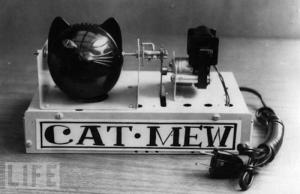
45. Ward off mice and rats with this cat mew machine.

It says meow a lot so the mice wouldn’t come anywhere near your home. Though to be fair, you’d probably break it for being annoying.

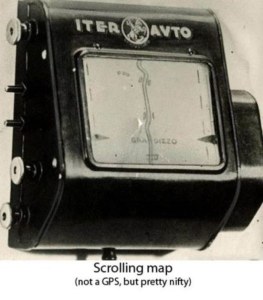
46. Now you can see where you need to go with this scrolling map.

Think of it as an old-fashioned GPS. Because that’s what it is. However, it might not be able to recalculate so you might have a hard time with it.

47. Now you can smoke in the rain with a cigar protector.

Because why should a wet day reduce your chances for lung cancer? Also includes an umbrella.

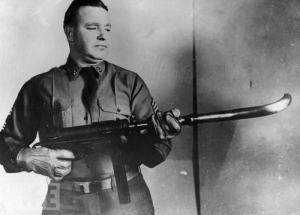
48. Shoot in those hard to reach places with an M-3 curved barrel submachine gun.

Not sure why anyone would use these if they weren’t criminals. I know it looks as lethal as it is pointless.

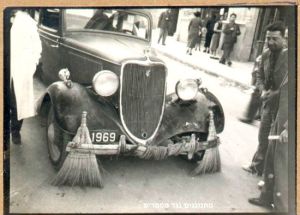
49. Attaching brooms to your car makes tire tracks a thing of the past.

Actually this was meant to protect against flat tires. Not sure if it did the job or all cars would have it.

50. Protect your baby from kidnappers with this black light detector.

No, I’m not sure how a black light guards baby. Besides, black light is more associated with raves and such.

51. A dimple maker always makes your cheeks perk up.

That looks very painful. But yes, even today some women go through pain to achieve beauty perfection.

52. With this icebike, slippery roads are a thing of the past.

Still, the wheels are quite spiky. So having a car run into one will result in a flat tire.

53. A glamor bonnet provides a vacuum to aid complexion.

For some reason, that woman seems like she’s in a hostage situation than a beauty salon. Also, the ad had to go out of its way to say it’s not a deep sea diving helmet.

54. A smog helmet will protect you from harmful pollution in the park.

Though instilling pollution regulations and the EPA really deterred smog attacks in the US. Still, might be great if you live in China.

55. An external turkey roaster can always cook to perfection.

Seems like this chicken is getting a starlet beauty treatment. Besides, there’s another device that can cook turkeys just the same. It’s called an oven.

56. A steam powered buss will take you where you need to go.

Sure it doesn’t look that big. But at least it’s faster than traveling by horse.

57. Now you can watch your favorite shows on the go with this mini TV.

Yes, they had TVs that small back in the day. But I’m sure the reception on them was terrible.

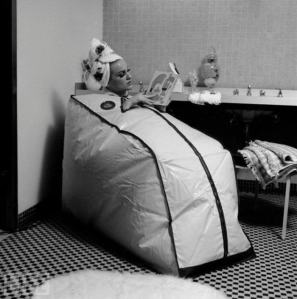
58. A portable sauna gives you the same treatment within your home.

Though you’d have to spend a lot of time in a large sack. But at least you can read in the process.

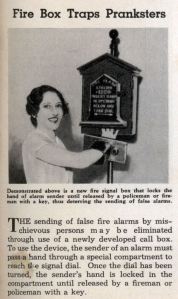
59. A fire box trap can always catch pranksters attempting to cause trouble.

I know we don’t like people pulling fire alarms for no good reason. Still, not sure if it will deter anyone since its attachment is quite flimsy.

60. Why should bedridden people not be able to play the piano?

Yes, they actually had one of these. But at least you can fold it in when you’re done with it.

61. A turntable and projector set makes for a real entertainment center.

Well, I guess it’s handy to play music and movies in one place. But I don’t think many people could afford a projector then.

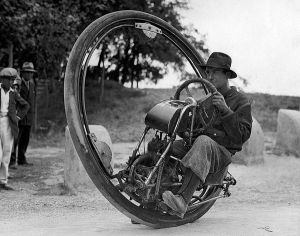
62. A one-wheeled motorcycle will always take you down the road.

I don’t know about you. But this looks like a major accident waiting to happen. Even worse that the guy isn’t wearing a helmet.

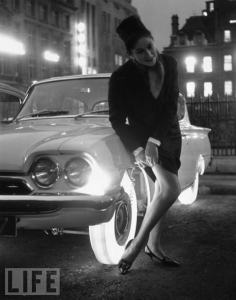
63. With illuminated tires, you can always find your car.

Though these tires have light bulbs in them and are plugged to something. Still, perhaps we can pull it off with glow sticks or solar panels t0day.

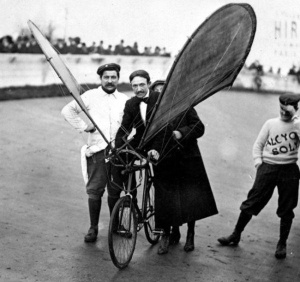
64. A flying bike may help you get off the ground.

For one, I don’t think this bike flies. Second, I’m sure the last guy who rode it ended up in a terrible accident.

65. A ciggy umbrella lets you smoke in the rain.

So you can expose yourself and others to cancer in all kinds of weather. And looking like a moron, too.

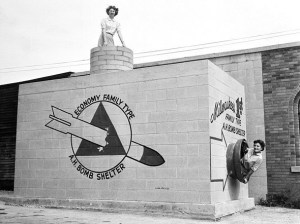
66. You can have all kinds of family fun during a nuclear holocaust in an economy sized fallout shelter.

However, you might have to assemble it yourself, first. Also, may not protect you against radiation exposure.

67. A car sled should always be equipped with a jet engine.

This is from Russia, by the way. Not sure if this actually flew. But at least you can get a laugh out of it.

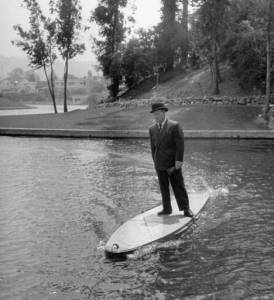
68. Nothing makes riding the waves fun than riding a motorized surfboard.

Yet, for some reason, this is more of a motorized raft on a river. Not sure how it could ride tidal waves.

69. Now cleaning your neck has become so much easier.

Nevertheless, this neck cleaner more or less resembles a torturing device. Besides, you can easily clean your neck with a wash cloth in the shower.

70. Tesla’s oscillator will be a marvel to future generations.

This was an electric generator meant to replace reciprocating steam engines. But that was superseded by more efficient steam turbines. Other than that, I’m not sure what else.

71. This radio hat will let you listen to music while on the go.

Of course, it might cause a lot of noise since it doesn’t come with headphones. Also makes you look ridiculous.

72. A parachute jacket will be a lasting marvel to aviation.

We should keep in mind that the inventor died while testing this device jumping off the Eiffel Tower. It should give us the idea of its effectiveness.

73. A pipe for 2 always has enough tobacco to go around.

Still, I’m not sure if you’d want to smoke like this. There are more awesome ways one can get lung cancer.

74. You can always get the grass cut with a power mower deluxe.

Well, at least you don’t have to worry about grass getting all over you during the riding portion. Still, kind of resembles a spacecraft.

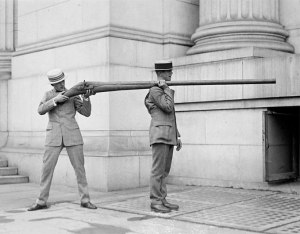
75. You can always get a great shot with a punt gun.

Too bad it’s so big that you have to ask a friend to hold it for you. So not that great isn’t it?

76. A shower hood can always keep your makeup from smearing.

Uh, isn’t getting your makeup in the sower kind of the whole point? Besides, I don’t think it does its job.

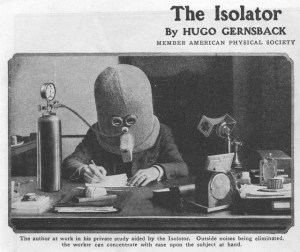
77. The Isolator can always help you concentrate on what you’re doing.

Sure it kind of resembles a diving helmet with an oxygen tank. But that’s beside the point.

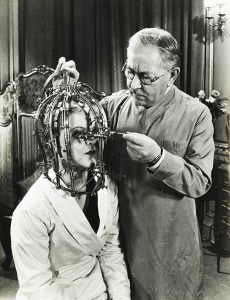
78. The beauty micrometer always makes sure your face looks right.

But for God’s sake, please don’t put me in that! I’m sure it’s a torturing device for a face.

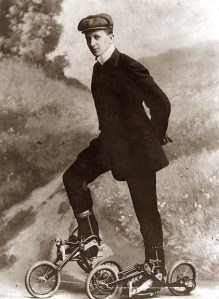
79. If you can ride on a bike, why not skate with two?

That doesn’t look safe at all, especially if he falls. Still, has kind of steampunk feel to it.

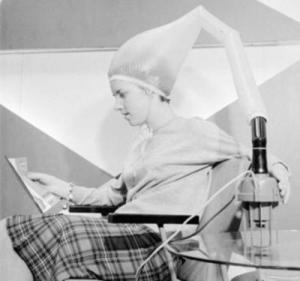
80. This hairdryer comes with its own cap.

Yes, it’s another hairdryer. I know it looks pretty ridiculous. But sometimes even nice products like hairdryers start out that way.

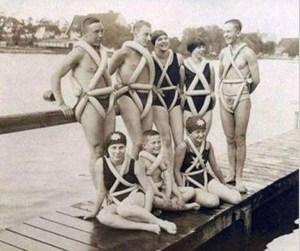
81. Why stick with bulky life jackets when you can use these swim aids.

I bet these are made from old bike tires. Besides, I think these might be harder to put on than life vests.

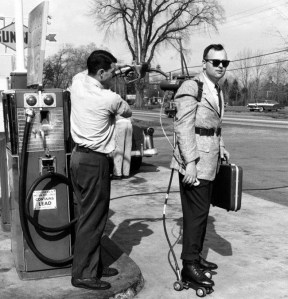
82. Motorized roller skates can get you there with great speed.

Nevertheless, these were notoriously dangerous for obvious reasons. And that’s why they’re not around anymore.

83. Nothing massages your scalp like this electric vibrator.

The picture file calls this the “scalp molester.” Nevertheless, I’m not sure if I’d want that massaging my head.

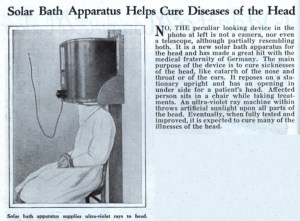
84. A solar bath apparatus can always relieve headaches.

No, I don’t think so, especially with a migraine headache. Not sure why people thought that back then.

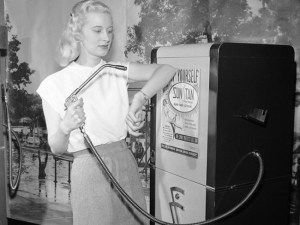
85. Back in the 1950s, you can get a spray tan from a machine.

As to why you’d want to look like an Oompah Loopah, I have no idea. Still, not sure how it compares to a tanning booth.

86. Bet you never laid your eyes on Edison’s electric pen.

Yet, it’s attached to so much equipment. So you can understand why this invention never got off the ground.

87. Now you can watch your favorite shows with this portable TV from 1967.

Sure it might make you look like you have your head stuck in a pipe. But sometimes it doesn’t matter when watching your favorite sports team.

88. Listen to your favorite records with an upside down phon0graph.

Not sure how the record could stay in place like that. Also, why?

89. Soup too hot? Attach a small fan to your spoon.

I know this looks silly and pointless. But that’s modern dining technology for you.

90. Wooden bathing suits were once the next new thing of the summer.

Because nothing characterizes 1920s swimwear like barrel chic. You can see why we don’t have them now.

91. With this machine, the blind can find their way through the magic of sound.

Yet, the contraption is a bit bulky. Besides, blind people already have something to help them get around through sound. It’s called a cane.

92. Why put on new skates when you can just clip on the blades?

Okay, that seems rather reasonable. But what if the blade snaps off and you trip and fall.

93. Why go through flipping newspaper pages when you can have yours faxed?

Because a folded newspaper with sections is much better to store than one rolled out. It’s very simple really.

94. Give your dogs exercise by tying them to a wooden beam on your car.

Note to pet owners, please don’t do this. Seriously, it’s cruelty to animals and could kill them.

95. Now you can call someone and see who you’re talking to.

Funny, how we use Skype with the Internet if we want to see who we’re talking to. But this is pretty neat.

96. The sun bath helmet protects you from UV rays.

Uh, did the inventor know that UV rays can absorb? Probably not. Also, only protects the face.

97. An aerocycle can take you anywhere you want to go.

Looks really dangerous if you ask me. Wouldn’t want to go on it.

98. Now you can have your cup of coffee while you’re on the move.

Sure people think a coffee maker in their car is convenient. But come on, it’s probably not the safest thing to have. Or every car would’ve had one.

99. An all-terrain vehicle must have lots of spare tires.

Then again, some of those may not be spare tires. But yes, it’s a bit bulky compared to newer models.

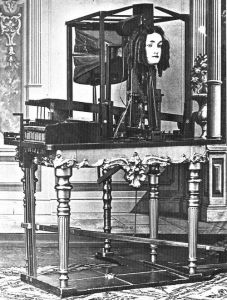
100. Stimulate human speech through pumping with the Euphonia.

I’m sure it didn’t work that well. Also, looks incredibly creepy, especially with the doll head.

A Speech for Our Times

elesson-the-great-dictator-grab

The 1940 film The Great Dictator is a historically significant political satire where Charlie Chaplin condemns Hitler, Mussolini, the Nazis, and Anti-Semitism. At the end of the movie, Chaplin as the barber is mistaken for the titular despot and gives a speech denouncing totalitarian regimes like Nazi Germany and rallying the soldiers along with the audience to fight for free liberal democracy. 76 years later with the rise of right-wing populist authoritarianism, Chaplin’s 5-minute climatic speech resonates as much as ever. These regimes may not be like the militarist nationalist regimes of the 1930s, but they can be just as much a threat to democracy, civil liberties, state institutions, human rights, and even the civic moral fiber. Many of these regimes came into power on platforms promoting racism and xenophobia. And many of the movements have demagogue leaders who have abused their power for their own enrichment, discredited and intimidated anyone who’s challenged or criticized them, and have little respect for the laws, values, and traditions in the very country they’re supposed to lead. Furthermore, their elections have emboldened extremists within their own nations into committing acts against vulnerable people with little or no consequence. But unlike some dictators of the 1930s, authoritarian leaders are much more likely to erode their constitutionally democratically elected regimes through legitimate means from within, which can even be scarier as well as just as disturbing. We must stand firm against authoritarian regimes that may not just compromise people’s liberties and rights, but can also rot a nation’s soul through corruption, misinformation, manipulation, and incompetence. Today we need to hear the words of Chaplin’s climatic speech more than ever to be reminded of our common humanity and how authoritarian leaders threaten our way of being. And since I doubt it’ll be heard at the Oscars this weekend, I have it on my blog.

Chaplin’s Final Speech from The Great Dictator:

I’m sorry, but I don’t want to be an emperor. That’s not my business. I don’t want to rule or conquer anyone. I should like to help everyone – if possible – Jew, Gentile – black man – white. We all want to help one another. Human beings are like that. We want to live by each other’s happiness – not by each other’s misery. We don’t want to hate and despise one another. In this world there is room for everyone. And the good earth is rich and can provide for everyone. The way of life can be free and beautiful, but we have lost the way.

Greed has poisoned men’s souls, has barricaded the world with hate, has goose-stepped us into misery and bloodshed. We have developed speed, but we have shut ourselves in. Machinery that gives abundance has left us in want. Our knowledge has made us cynical. Our cleverness, hard and unkind. We think too much and feel too little. More than machinery we need humanity. More than cleverness we need kindness and gentleness. Without these qualities, life will be violent and all will be lost….

The aeroplane and the radio have brought us closer together. The very nature of these inventions cries out for the goodness in men – cries out for universal brotherhood – for the unity of us all. Even now my voice is reaching millions throughout the world – millions of despairing men, women, and little children – victims of a system that makes men torture and imprison innocent people.

To those who can hear me, I say – do not despair. The misery that is now upon us is but the passing of greed – the bitterness of men who fear the way of human progress. The hate of men will pass, and dictators die, and the power they took from the people will return to the people. And so long as men die, liberty will never perish. …..

Soldiers! don’t give yourselves to brutes – men who despise you – enslave you – who regiment your lives – tell you what to do – what to think and what to feel! Who drill you – diet you – treat you like cattle, use you as cannon fodder. Don’t give yourselves to these unnatural men – machine men with machine minds and machine hearts! You are not machines! You are not cattle! You are men! You have the love of humanity in your hearts! You don’t hate! Only the unloved hate – the unloved and the unnatural! Soldiers! Don’t fight for slavery! Fight for liberty!

In the 17th Chapter of St Luke it is written: “the Kingdom of God is within man” – not one man nor a group of men, but in all men! In you! You, the people have the power – the power to create machines. The power to create happiness! You, the people, have the power to make this life free and beautiful, to make this life a wonderful adventure.

Then – in the name of democracy – let us use that power – let us all unite. Let us fight for a new world – a decent world that will give men a chance to work – that will give youth a future and old age a security. By the promise of these things, brutes have risen to power. But they lie! They do not fulfil that promise. They never will!

Dictators free themselves but they enslave the people! Now let us fight to fulfil that promise! Let us fight to free the world – to do away with national barriers – to do away with greed, with hate and intolerance. Let us fight for a world of reason, a world where science and progress will lead to all men’s happiness. Soldiers! in the name of democracy, let us all unite!

The Real Meaning of “America First” and Why It Matters

donald-trump-america-first-580x580

For the love of God, please don’t use “America First” as a catchphrase. Seriously, that phrase doesn’t remotely mean what Trump, Republicans, and over 60 million voters think it means. Because it’s a saying with historical roots that evokes one of the ugliest chapters in American history.

Like most of the humanities, history is often an underrated subject that doesn’t get the attention it deserves. Sure it may not lead to a lucrative career, but that doesn’t mean it’s not useful or necessary. But historical knowledge is often essential when it comes to understanding our world and even ourselves, especially in the realm of politics and government. Though many people might think history class is a waste of time, they are sorely mistaken. To know history is an essential part of being a good citizen in any democratic society because whatever happens in the past doesn’t really go away. What happens in the past affects us in the present as well as becomes part of our heritage. By showing us how we came to be, history also tells us who we are and what we could be. Past events can give us answers on why things happened the way they did. And they can sometimes help us find solutions, especially on what not to do. Yet, though great moments in our history are worth remembering, there are also moments of great sin and shame we shouldn’t forget, especially if their impact persists to this day. Because it’s often said that those who don’t know history are bound to repeat it. Or at least make terrible decisions that might lead to history repeating itself. Those who don’t care to know about history and see no value in it are prone to disrespect the greater humanity. And if a historically illiterate person has political power, then they pose a serious danger to us all.

Even before Donald Trump became president, it’s very clear he doesn’t know much about American history nor does he see the value in knowing it. Sure his campaign slogan was “Make America Great Again” but the kind of past he’s referring to is one of nostalgia for a time in which the United States really wasn’t that great. Nor was it a time that most of us would want to live. At the same time, Trump embodies the absolute worst in our country’s past with his rhetoric of fear and division, his message of racism and xenophobia, his decades long history of corrupt business practices, his disregard for decency, his consummate lying, and his petty vindictiveness. His presidential victory was made possible by the fact Americans are embarrassingly ignorant in civics and history, as statistics widely support this claim. History will not look kindly on the Trump supporters who elected one of the most deplorable individuals of our time to the White House and will in time be deemed morally reprehensible and ultimately forced to explain themselves to their grandchildren. I know these words seem harsh and hard to swallow for many. But as a history major, I know far too well of what happens whenever people support leaders on the wrong side of history. It’s no question that Trump certainly is and that his presidency will be an absolute disaster. And there is no way I can sugar coat it.

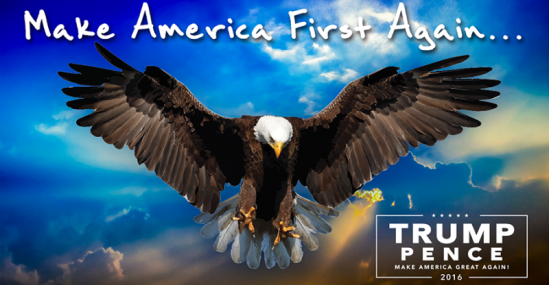
Nevertheless, Donald Trump’s historical illiteracy and apathy can be better demonstrated than in his use of the phrase of “America First” that he used as a centerpiece in his campaign. At first, this saying may seem innocent on the surface. But what does “America First” mean exactly? According to Trump, “America First” is just a catchphrase for prioritizing American interests as in, “My foreign policy will always put the interests of the American people, and American security, above all else. That will be the foundation of every decision that I will make. America First will be the major and overriding theme of my administration.” He likens it to an original slogan, telling David Sanger, “To me, America First is a brand-new modern term. I never related it to the past.” In many ways he wants to make it seem like it’s a patriotic affirmation like putting the US first above all else which certainly resonate to the over 60 million Americans who elected him president.

america-first

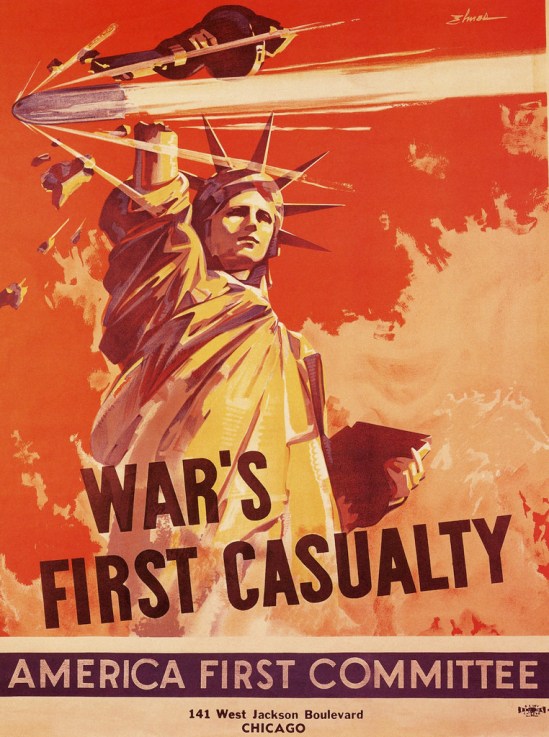
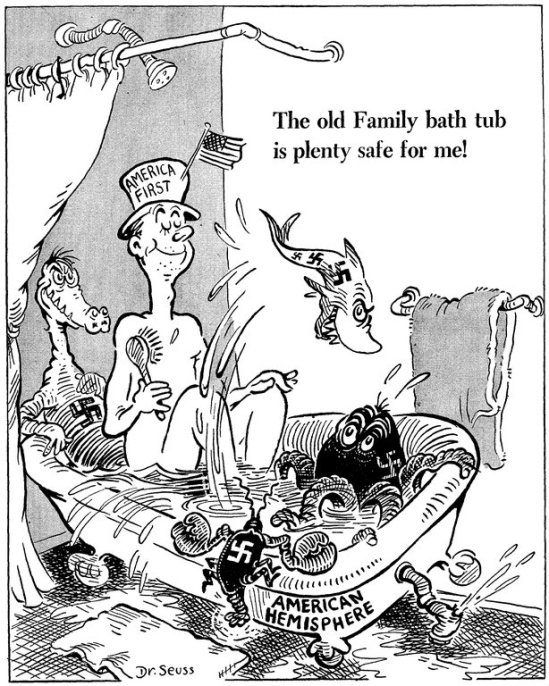
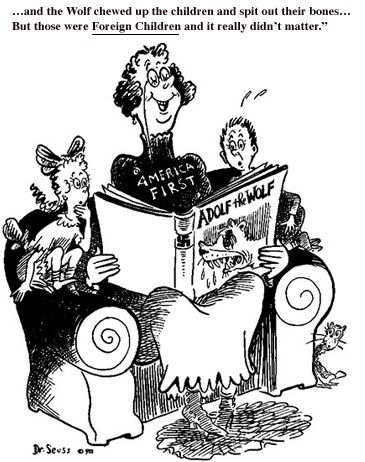
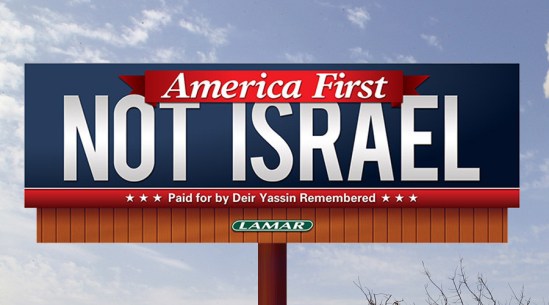
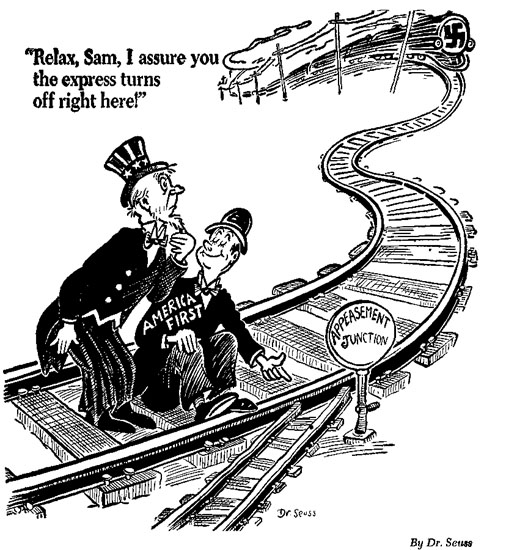
Contrary to what Trump may say, the phrase “America First” has a long history. But it’s most identified with the America First Committee, a group that opposed US entry into World War II. Though it only lasted for about a year and a half, it was one of the biggest anti-war organizations in US history with members hailing from all walks of life. However, its failure to disown its ugliest supporters would forever poison its reputation.

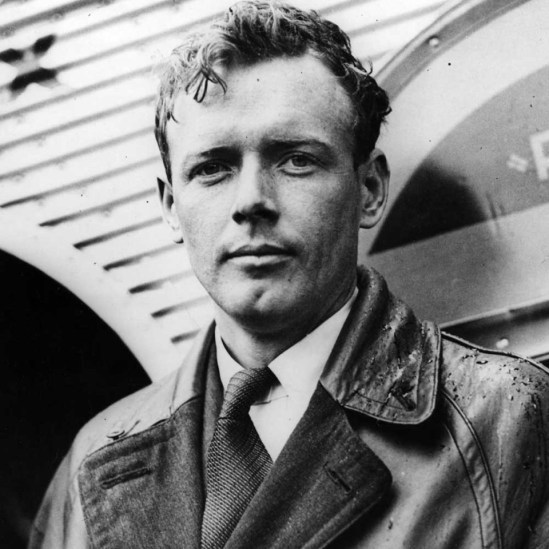
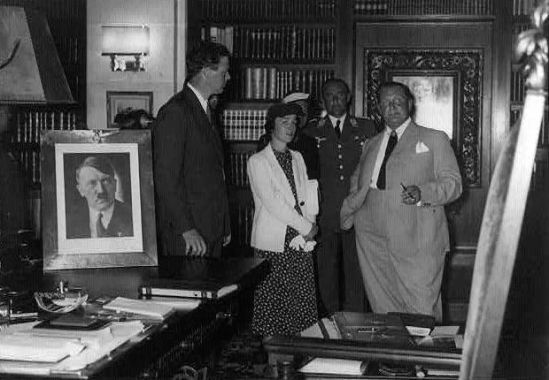
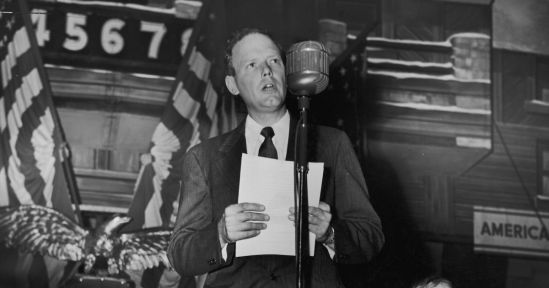
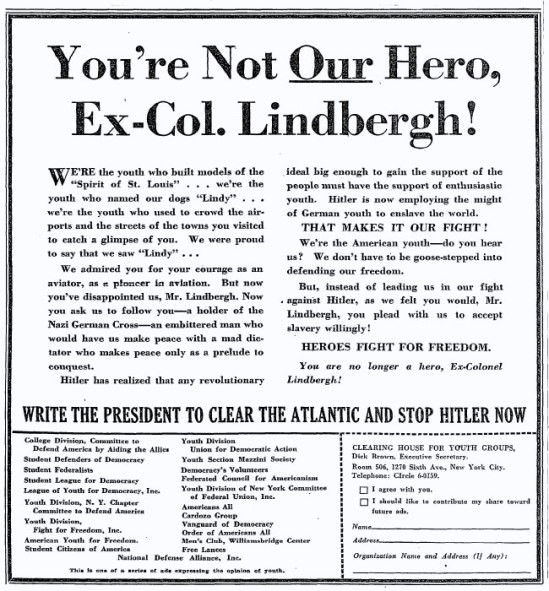
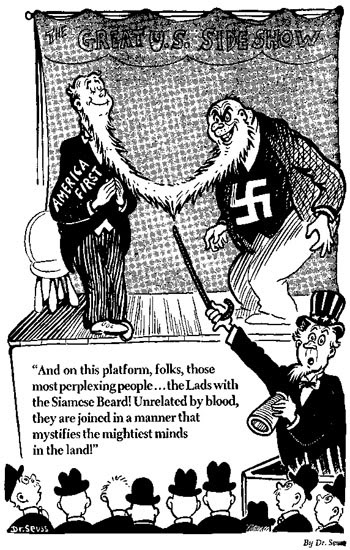
However, contrary to what Trump may say, the phrase “America First” is actually not a brand-new modern term but one that dates all the way to the early 20th century. The phrase was originally a political slogan for Woodrow Wilson’s reelection campaign in 1915 to echo the isolationist policies he’d later abandon for good reason and is also the name of a credit union based in Utah.And William Randolph Hearst often used the phrase in the 1930s as a nationalistic enthusiasm for crushing the left by hyperbole in his anti-FDR crusade. But the term would become best associated with the America First Committee, an organization whose legacy remarks upon one of the ugliest chapters in modern American history. Originally established by a group of Yale Law students including Quaker Oats heir R. Douglas Stuart Jr., future president Gerald Ford, future Peace Corps director Sargent Shriver, and future US Supreme Court justice Potter Stuart, the America First Committee was the foremost non-interventionist pressure group against the American entry into World War II. At its peak, it boasted over 800,000 paid members in 450 chapters and was one of the largest anti-war organizations in American history. It also claimed a lot of prominent members from all across the political spectrum and all walks of life. Some were millionaire financial backers like Henry Ford, General Robert E. Wood of Sears-Roebuck, meatpacker Jay Hormel, banker William J. Grace, Sterling Morton of Morton Salt, textile manufacturer William Regnery, publisher Joseph M. Patterson of the New York Daily News, and publishers Robert R. McCormick of the Chicago Tribune. Political supporters of the AFC included US Senate Democrats Burton K. Wheeler of Montana and David I. Walsh of Massachusetts, North Dakota Republican Senator Gerald P. Nye, and Socialist leader Norman Thomas. Another was Washington socialite Alice Roosevelt Longworth who was also a former president’s daughter, the then-current First Lady’s cousin, the then-president’s distant cousin, widow to a Speaker of the House, a former mistress and baby mama to a US Senator, and sister to a future Medal of Honor recipient. Oh, and her baby daddy Republican Senator William A. Borah of Idaho supported the AFC, too. The American First Committee even had celebrity allies such as novelist Sinclair Lewis, poet E. E. Cummings, Walt Disney, silent-screen icon and actress Lillian Gish, architect Frank Lloyd Wright, WWI flying ace Eddie Rickenbacker, novelist Kathleen Norris, and most importantly famed aviator Charles Lindbergh. Future president John F. Kennedy and author Gore Vidal were also AFC members.

world-war-i-battlefield-granger

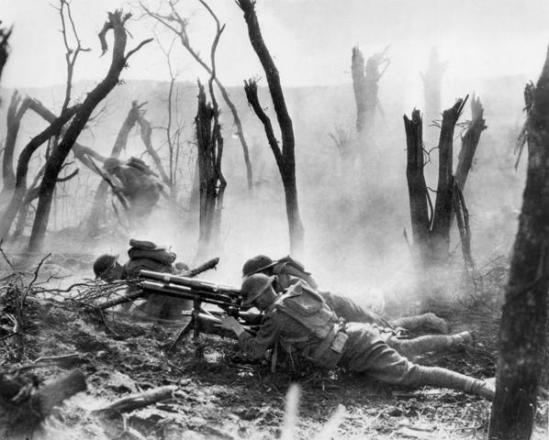
Though hard to believe today, the reasons why many Americans didn’t want to fight Nazi Germany in 1940 are somewhat understandable. After all, many saw World War I as a meaningless bloodbath between imperialistic European powers that the US had no business in. And many thought the war in Europe at the time would be the same way.

Of course, you should know that Adolf Hitler had already invaded Poland by this point and posed a significant threat to European nations who stood in his way as Great Britain was experiencing its shittiest year of the war while France and Belgium fell to the Nazis. Oh, and a militarist Japan was causing all kinds of hell for Asian countries and/or European colonial possessions in the Pacific but their front won’t be the main focus for awhile. The standard rationale for the American First Committee was that the United States was protected by 2 oceans and its vast land mass, and that intervention in Europe would turn out no better than it had in WWI. While most Americans rooted for the Allies in 1940 (85% according to a Fortune poll), they didn’t want to do anything that would help them win either. After all, the US already did that in 1917 during World War I which strongly divided the American public and didn’t seem like a conflict the country should’ve gotten involved in. Yet, after the British found Germany trying to provoke a Mexican reconquista on the American southwest, maintaining neutrality was impossible. Then there’s the fact the US was home to so many European immigrants who didn’t want to support a country they didn’t like or be thoroughly demonized as the enemy. Not to mention, the US lost about 110,000 troops during this time, including 43,000 to the influenza pandemic and they were only in the war for a little more than a year while isolationism was such a powerful influence that the US Senate refused US entry into the League of Nations despite it being among Wilson’s Fourteen Points or at least on his terms. Though Gary Gerstle would prefer the term unilateralism in which the US should be free act in the world to preserve its own interests like it had in Latin America and the Pacific. And since WWI seems like a meaningless bloodbath provoked by an archduke assassination, well, you can see why Americans wouldn’t want to be entangled in another European conflict. Then there’s the fact Britain and France participated in imperialism with colonies in Africa, Asia, and the Pacific which comes with the usual human rights violations.

fdr

The America First Committee was often highly critical of President Franklin Delano Roosevelt as well as opposed his Lend-Lease policy. On one hand, he did promise to uphold neutrality while attempting to maximize Allied support. But on the other hand, even when neutrality was popular most Americans wanted the Allies to win. FDR understood that the US would have to get involved in the war sooner or later.

Even before World War II kicked off with Hitler’s Polish invasion, most Americans demanded US neutrality on Europe that Congress passed a series of neutrality acts to keep the government from supporting either side. Though in practice, it was to keep FDR from corresponding with Winston Churchill and sending support to Britain. Because the Axis powers were widely disliked in the country, anyway.  Yet, though FDR promised to keep the US out of the war, he attempted to maximize support for the Allies on the side while skirting if not actually violating the principle of neutrality. The America First Committee profoundly distrusted him for this and harshly accused FDR of lying to the American people. Sure FDR probably acted dishonestly but to be fair, he understood that many of these Allied European nations were fighting for their lives. And he realized if Americans wanted the Allies to win, then the US government would have to help them. But the AFC criticized and opposed him at every step, especially when he decided to seek a third term and proposed Lend-Lease in early 1941 both of which most Americans supported anyway. Besides, though most Americans might not be happy with intervention, they’d be willing to so if US involvement was necessary to defeat fascism which only became increasingly apparent as 1941 went on particularly when Hitler stabbed Stalin in the back by invading Russia.
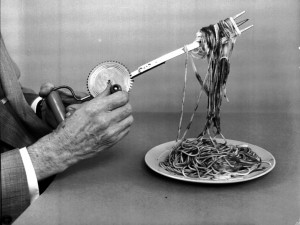
dr_0c9e0e_5416512

Though America First often tried to brand itself as a mainstream anti-war organization, it included members whose views had more to do with their anti-Semitism, pro-fascism, xenophobia, and Nazi sympathies. Unfortunately, America First refused to disown these ugly elements and would later be defined by them as you see in this Dr. Seuss cartoon.

So where does the historical baggage come in? Because all you say about the American First Committee was that it was a bipartisan anti-war group opposing US entry into WWII for pretty justifiable reasons. However, not everyone in the America First Committee opposed US intervention over the catastrophes of World War I or in the name of general pacifism. Nor was it just a group for FDR haters either. Though the AFC was harshly critical toward him and many of his opponents joined up as a way of primarily attacking the guy for his New Deal. The AFC also included more than its fair share of people whose views had more to do with their anti-Semitism, pro-fascism, and xenophobia. Some members were even said to be Nazi sympathizers. Such facts weren’t helped from the fact that the AFC so staunchly wanted to preserve American neutrality even if it meant urging the government to be nice to Hitler. Nor that it counted prominent anti-Semites of the day among its ranks. Or that several prominent AFC members believed that old-fashioned democracy was in decline and that a modern, energetic fascism represented a The Wave of the Future as Anne Morrow Lindbergh titled her 1940 booklet. She even took her pro-fascist position one step further in her book by calling US sign a pact with Germany similar to Hitler’s Non-Aggression Treaty with Josef Stalin. Naturally, the Roosevelt administration attacked the book as “the bible of every American Nazi, Fascist, Bundist and Appeaser” and it was among the most despised books of the period. She also called Hitler “a very great man, like an inspired religious leader—and as such rather fanatical—but not scheming, not selfish, not greedy for power” in a letter. As America First tried to brand itself as a mainstream organization, the anti-Semitic attitudes and Nazi sympathies of some of its leaders and many of its members began to emerge. And their refusal to disown their ugliest supporters would be its fatal flaw. According to historian Susan Dunn in a CNN article from last April, “It had to remove from its executive committee not only the notoriously anti-Semitic Henry Ford but also Avery Brundage, the former chairman of the U.S. Olympic Committee who had prevented two Jewish runners from the American track team in Berlin in 1936 from running in the finals of the 4×100 relay.” And America First’s anti-Semitic problems only became worse when Charles Lindbergh was recruited as their spokesman.

79d5c42s-960

The most famous face of America First was none other than famed aviator Charles Lindbergh, best known for his nonstop solo flight from New York to Paris in 1927. In 1940, he was a lauded as a national hero in the US. But in 1941, that was soon to change.

Now Charles Lindbergh was a natural choice to represent the America First Committee. For one, he was a major celebrity who was universally loved for his nonstop solo flight across the Atlantic. He was also relatively handsome and had a lovely family that would eventually include 5-6 children. Of course, his oldest child had already been kidnapped and murdered which was reported so exhaustively and sensationally by the press that it became known as “The Crime of the Century.” Second, he had no interest in exploiting his celebrity and was a very private man for very good reasons. Nor did he have higher ambitions of any kind, political or otherwise. Third, he came from the Midwest, which was home to the bulk of the AFC’s registered members and he was certainly one of the most famous celebrities from that area at the time. Fourth, he was no fan of FDR and had feuded with him for years which satisfied some of the haters. Fifth, he was a charismatic man whose words can sound just as good on paper as they would coming from his mouth. And finally, compared to a lot of celebrities at the time, he had a rather wholesome reputation. It’s no surprise that the famed aviator from Minnesota would become the AFC’s highest profile spokesman whose speeches were heard by hundreds of thousands within the movement and millions outside.

Hermann Göring with Charles Lindbergh. Library of Congress photo

During the mid to late 1930s, Charles Lindbergh visited Nazi Germany several times where he toured the Luftwaffe as well as hobnobbed with a bunch of high Nazi officials like Hermann Goering. Unfortunately, the place impressed him a little too much that despite condemning Krsitallanacht and seeing Hitler as a fanatic, he kind of came off as a Nazi sympathizer.

Yet, behind that boyish face, was a man with very whacked out political views though they were not unusual or socially unacceptable for the time among the American people. Lindbergh believed in eugenics as he expressed his ideal woman as having a keen intellect, good health and strong genes because “experience in breeding animals on our farm had taught me the importance of good heredity.” To be fair, he was raised at a time when eugenics was espoused across the political spectrum even though it led to some of the worst known human rights abuses known to man and was based on junk science. In the mid to late 1930s, Lindbergh made several trips to Nazi Germany to tour the Luftwaffe which made a great impression on him that he became convinced that no power in Europe or the US could defeat it. He believed that a war between Germany and the US would be bad and it would be especially for the “white race.” So much so that Lindbergh stated that he believed the survival of the white race was more important than the survival of European democracy. “We can have peace and security only so long as we band together to preserve that most priceless possession, our inheritance of European blood, only so long as we guard ourselves against attack by foreign armies and dilution by foreign races,” he wrote in his infamous 1939 article for Reader’s Digest. It didn’t help that he publicly and privately spoke of Hitler in admiring terms as having “far more character and vision than I thought existed in the German leader who has been painted in so many different ways by the accounts in America and England. He is undoubtedly a great man.” As an ardent anticommunist, Lindbergh considered Russia a “semi-Asiatic” country and saw Communism as an ideology that would destroy the West’s “racial strength” and replace everyone of European descent with “a pressing sea of Yellow, Black, and Brown.” And if Lindbergh had to choose, he’d rather see the US allied with Nazi Germany than Soviet Russia. Oh, and he was an anti-Semite who subscribed to conspiracy theories. In his reaction to anti-Jewish pogrom Kristallnacht (which consisted of the Nazis destroying over 100 synagogues along with thousands of Jewish businesses while imprisoning thousands of Jews), Lindbergh wrote, “I do not understand these riots on the part of the Germans. It seems so contrary to their sense of order and intelligence. They have undoubtedly had a difficult ‘Jewish problem’, but why is it necessary to handle it so unreasonably?” Because Hitler wanted to do terrible stuff to the Jews, asshole. And it didn’t help that he received the Commander Cross of the Order of the German Eagle from Hermann Goering on Hitler’s behalf a few weeks before which caused controversy, which he refused to return. “It seems to me that the returning of decorations, which were given in times of peace and as a gesture of friendship, can have no constructive effect,” Lindbergh wrote making excuses for Nazi Germany. “If I were to return the German medal, it seems to me that it would be an unnecessary insult. Even if war develops between us, I can see no gain in indulging in a spitting contest before that war begins.” Yes, but it would’ve at least absolved him from suspicion. Because in 1941, Lindbergh resigned his Air Force commission as colonel at FDR’s demand after proposing that the US negotiate a neutrality pact with Germany during his testimony opposing the Lend-Lease bill before House Committee on Foreign Affairs.

Robert E. Wood;Charles A. Lindbergh

On September 11, 1941, Charles Lindbergh would give a speech at an America First rally in Des Moines, Iowa. In it, he blamed the British, the Roosevelt administration, and American Jews for pushing the US into war with Europe. Guess which group he put on notice for pushing for war through their control of the media.

Charles Lindbergh’s political ideas on race, the Jewish people, and foreign policy might seem morally reprehensible and extreme today, but they were hardly fringe in the early 1940s and he had voiced them without serious public outcry at this point. If anything, resigning his Air Force commission may have worked in his favor as far as some non-interventionists were concerned. However, he would play a critical role in why “America First” has become the noxious slogan that continues to echo isolationist, defeatist, fascist, and anti-Semitic sentiments to this day. On September 11, 1941, Lindbergh would deliver a speech to a huge crowd during an America First rally in Des Moines, Iowa. In it, he identified forces pulling the US into the war as the British, the Roosevelt administration, and American Jews. And it’s what he said about the third group where he made his true thoughts known. At first, he expressed sympathy for the persecution the Jews in Germany suffered and remarked on how he understood why any American Jew would want to see the Nazi regime pay. But then he went on putting American Jews on notice, saying that America’s “tolerance” for them rested upon a fragile foundation but most somehow most still don’t seem to understand that and want the US to intervene in a war that would endanger everybody but especially them. Then Lindbergh let the Jews know what he really thought about them, “Their greatest danger to this country lies in their large ownership and influence in our motion pictures, our press, our radio, and our government.” In other words, Lindbergh saw American Jews constituting of a wealthy, influential, and conspiratorial foreign, “race” that controls “our” media and has infiltrated “our” political institutions. And that they were an internal alien out-group, hostile to “us.” In short, he blames the Jews for pushing the US into war and manipulating the narrative through the media. Such sentiment reeks classic anti-Semitism which had no basis in fact. Though Lindbergh claimed he wasn’t “attacking either the Jewish or the British people,” he went on saying, “that the leaders of both the British and the Jewish races, for reasons which are as understandable from their viewpoint as they are inadvisable from ours, for reasons which are not American, wish to involve us in the war. We cannot blame them for looking out for what they believe to be their own interests, but we also must look out for ours. We cannot allow the natural passions and prejudices of other peoples to lead our country to destruction.” So fighting an enemy that’s either bombing the shit out of you on a regular basis or persecuting (if not exterminating) people from your ethnoreligious group and possibly your loved ones from the old country aren’t American reasons? Also, their interests weren’t exactly based on “natural passions and prejudices of other peoples” either. Though Lindbergh uses such words to make British and Jewish seem like they want to drag the US into a needless war that could lead to its destruction.

nyt072141

Charles Lindbergh’s Des Moines speech was met with public outrage from all over the country over his anti-Semitic and divisive remarks that he’d suffer a massive fall from grace. So much so that his hometown even took his name off their water tower. His now tarnished reputation would never fully recover.

Somewhere in his speech Lindbergh crossed a line because public reception was not kind to him or the American First Committee from this point on. Lindbergh was strongly and swiftly condemned for his anti-Semitic and divisive words. Reporting from Europe, New York Herald Tribune columnist Dorothy Thompson wrote, “I am absolutely certain that Lindbergh is pro-Nazi. I am absolutely certain that Lindbergh foresees a new party along Nazi lines.” The San Francisco Chronicle wrote, “The voice is the voice of Lindbergh, but the words are the words of Hitler.” And those sentiments of outrage echoed widely among newspapers, columnists, politicians, and religious leaders. Interventionists opposed to America First created pamphlets indicating how Nazi Germany praised his efforts and included quotations like “Racial strength is vital; politics, a luxury.” The pamphlets also included pictures of Lindbergh and other American Firsters using the stiff-armed Bellamy Salute (a hand gesture described by Francis Bellamy to accompany his Pledge of Allegiance to the American flag that fell out of favor during the 1920s and 1930s because totalitarian regimes adopted salutes of similar form). Though the photos were taken at an angle not showing the flag, observers still found such gestures indistinguishable from the better known Heil Hitler. But Lindbergh’s detractors weren’t the only ones bashing him for his Des Moines speech. His fans who lionized him also had harsh words to say. The Des Moines Register called his speech, “so intemperate, so unfair, so dangerous in its implications that it cannot but turn many spadefuls in the digging of the grave of his influence in this country.” The anti-Roosevelt and non-interventionist loving Hearst papers condemned Lindbergh as “un-American.” His mother-in-law and sister-in-law publicly opposed his views while civic and corporate organizations cut all ties with him. Hell, his hometown of Little Falls, Minnesota took his name off their water tower. And I’m sure millions of kids probably took down their pictures of him that they put in the trash like he was a disgraced sports hero. In the public’s view, the once beloved aviator was now disgraced and his tarnished reputation would never fully recover.

america-first-2

From that point on, the America First Committee would be associated with Nazi sympathies and anti-Semitism ever since. Soon even the more moderate isolationist cut ties with the organization before it disbanded after Pearl Harbor. Since then, almost no politician who’s wanted to draw close to America First as it remains a shameful stain on our history.

In turn the America First Committee was as TIME put it on a cover story, “touched the pitch of anti-Semitism, and its fingers were tarred.” Despite its protestations that it wasn’t an anti-Semitic group and that it was looking out for American Jewish interests, America First would become associated with such anti-Semitic rhetoric Lindbergh had voiced in that infamous speech in Des Moines. So much so that more moderate isolationists started dropping out and it acquired its very bad name and pernicious reputation. And after the Japanese bombed Pearl Harbor that December, the America First Committee disbanded since there was no possibility of isolation by that point. But echoes of “America First” have persisted in the years and decades since. Before Trump decided to make it a campaign slogan, Pat Buchanan used it for his presidential campaign to run in 2000 on the Reform ticket. Of course, Buchanan believes that World War II as an “unnecessary war.” In his book A Republic, Not an Empire: Reclaiming America’s Destiny, he’s depicted Lindbergh and other pre-war isolationists as American patriots smeared by interventionists during the months leading up to Pearl Harbor. And Buchanan suggests such backlash of Lindbergh highlights “the explosiveness of mixing ethnic politics with foreign policy.” He also campaigned against free trade. Ironically, it was Trump who seeking the Reform Party nomination at the time, called Buchanan “a Hitler lover.” So it’s possible he might know something about where “America First” came from even if he doesn’t care about the implications from employing it. Because Buchanan certainly does. But as far as political figures go, Buchanan is an exception since his views on history are outside mainstream conservatism. Since the 1940s, there has almost been no politician who’s wanted to draw close to America First.

america-first-trump-800x416

Then despite the highly negative historical connotations, why the hell does Trump keep using “America First” as a catchphrase? He’s said he likes the expression. But I think he likes how his supporters positively react to it as an innocent patriotic affirmation. Mostly because a lot of his supporters have absolutely no idea where “America First” came from or what it really means.

But why would Trump employ such a phrase like “America First” in his rhetoric despite that those words echoing such an ugly chapter in America’s recent past? Sure he may like the expression, but he may even enjoy more the kind of applause and provocation he gets from uttering those words by the very supporters who have absolutely no clue where that awful phrase came from nor care to find out. And he probably doesn’t care that such catchphrase makes some people hear disturbing echoes that the Anti-Defamation League has asked him to stop using “America First” and redirected fifty-six thousand dollars in donations from the Trump family to anti-bullying and anti-bias causes.  But Trump won’t stop saying that phrase anytime soon. Because to him, it’s a tremendously popular slogan that resonates with his economic nationalism. And he’s denied the phrase’s existence as a historical term whenever reporters have pointed it out for him. For instance, when asked whether he meant isolationism last April, Trump replied, “Not isolationist, I’m not isolationist, but I am ‘America First.’ So I like the expression. I’m ‘America First. We have been disrespected, mocked and ripped off for many, many years by people that were smarter, shrewder, tougher.” In some ways, it’s possible Trump wants “America First” to mean “we will not be ripped off anymore.” And since American historical consciousness doesn’t run deep, it’s possible that Trump supporters see “America First” as an innocent affirmation of patriotism that it’s not.

america-first-1

It’s possible that Trump may believe his adoption of the phrase “America First” could supersede its past. However, I don’t think it’s possible not because of Trump. But mostly because such symbols and phrases with noxious connotations don’t usually change their meanings over time. And it’s a lesson I’ve surely learned when I argued for the Confederate Flag’s removal during the summer of 2015.

As NPR’s Ron Elving put it, “assuming he is aware of at least some of that history, Trump is demonstrating his confidence that his adoption of a phrase can supersede its past.” But is it even possible for him to shake off that phrase’s toxic past? The Atlantic states such endeavor could prove difficult especially since Trump’s inauguration speech offered little to no outreach to the millions of Americans who fear what his presidency may bring. However, I think this assumption is a bit too optimistic. I say this because many of those Trump supporters who see “America First” as an innocent patriotic affirmation also see the Confederate flag as a sacred emblem of their Southern heritage. In the summer of 2015, I wrote a post arguing why the flag should be removed due to being a symbol of white supremacy that’s been used to justify decades of subjugating, discrimination, and violence against black people, which apparently angered a lot of people who tried to tell me otherwise. The Confederate flag is often associated with very ugly chapter in American history in which a bunch of powerful white guys started a war after splitting off from the US in order to form a country where they can subjugate black people to a lifetime of involuntary servitude. It is very clear that many Southern whites still haven’t gotten over that the North won that war which outlawed slavery that they went to great lengths to make sure black people could never gain any social, economic, or political power. And despite the Civil Rights Movement and the election of Barack Obama, these people show no sign of stopping any time soon.

562f3612c361887e418b45ed

In 2015, a group in Detroit, Michigan erected a billboard like this that was condemned by the Anti-Defamation League on grounds of anti-Semitism. As Heidi Budaj said, This particular sign goes a step further and raises an old anti-Semitic canard of dual loyalty, implying that Jews are not loyal to the country in which they live. Make no mistake that while many of the Jewish people in the United States support the state of Israel as a Jewish state, we are loyal Americans.” Of course, the use of “America First” is much more closer to its historical anti-Semitic roots. However, I’m not really sure if the group who put up this billboard knows what “America First” really means or even intends to incite anti-Semitism.

That being said, I think “American First” will continue to emanate how opposition to American entanglement in the world became polluted by anti-Semitism regardless of what Trump, his supporters, or Republicans may think. They may claim they don’t hate Jewish people nor embrace a 1940s isolationism. They may not be Nazi sympathizers or be soft on Hitler the way Charles Lindbergh was or how the America First Committee might’ve been. But however they use “America First” regardless of what meaning attached to it, none of their personal biases change that phrase’s toxic isolationist, defeatist, nationalistic, fascist, and anti-Semitic evocations. And just because such people don’t believe such stuff anymore doesn’t mean such interpretations go away. I also don’t think Trump helps his case by having a noted anti-Semite and white nationalist to write his speeches on his White House along with plenty of anti-Semitic supporters (i.e. white supremacists). As Anti-Defamation League CEO Jonathan Greenblatt said, “For many Americans, the term ‘America First’ will always be associated with and tainted by this history.” Conservative editor of The Weekly Standard Bill Kristol would say the same adding on Twitter, “I’ll be unembarrassedly old-fashioned here: It is profoundly depressing and vulgar to hear an American president proclaim ‘America First.’” Greenblatt and Kristol may not always agree with everything, but when it comes to “America First,” both these men see such phrase evokes a shameful chapter in our history. And one Jewish woman wrote on Facebook, “That America First part brought me to tears and anyone who doesn’t understand why can unfriend me right now.” Despite what anyone would say, such connotations pertaining to “America First” still persist in the historical contexts, especially among American Jews. And that’s not likely to change anytime soon. So if you’re a proud patriot who wants to make America great, you should stop saying “America First” and not support politicians who use that as a catchphrase, especially if they have no idea to what it really means.

10909cs

The historical contexts of “America First” still exist in the minds of many Americans whether Jewish or Gentile this day and that’s unlikely to change. So if you want to show love to America, don’t use “America First” as your patriotic affirmation nor support politicians who use the term as a campaign slogan. Because it’s very likely they have no idea of its historical roots as to what it really means.

The Indigenous Peoples of North America: Part 10 – The Southeastern Woodlands

A coastal Safety Harbor village at the time of Spanish contact.

The Calusa people of Florida were among the earliest people to have contact with Europeans with the 1513 landing of Spanish explorer and conquistador Juan Ponce de Leon. While initial encounters between whites and Native Americans tend to be initially friendly, this wasn’t one of those times since the Calusa knew about what went on in the Caribbean from native refugees and kept driving the Spanish out each time eventually resulting in de Leon’s death in 1521, which didn’t end their hostility to whites though which lasted for a couple more centuries. And it didn’t help they were being subjected to European diseases and slaving raids. Today the Calusa tribe has been considered extinct since the 18th century.

Finally, we come to the Southeastern Woodlands, a region situated from the Mississippi River to the East Coast and from the Ohio River to the Gulf Coast. In this region, contact with the Europeans began in the early 16th century with Juan Ponce de Leon landing in what is now Florida in his hopeless quest to seek the Fountain of Youth. He never found it but he ended up discovering a land that would become a haven for Cuban refugees, rich retirees, major theme parks, astronauts, and outright nutbags. But it’s said that news of Columbus’s 1492 arrival and the effects of such event on the offshore native people such as massive death, mistreatment, and enslavement before Ponce de Leon’s arrival. At any rate, by 1519, these Indian Floridians knew enough to fear the non-native intruders. Yet despite efforts to protect themselves, many of these Indians suffered violence and death from non-native depredation and disease. As European presence became more regular and permanent after the mid-to late 16th century, the Southeastern Woodlands Native Americans were drawn into increased trade with the Spanish and later the British and French who arrived in the 17th century. At the same time the Indians continued to die from disease and were increasingly forced to deal with problems like factionalism, fraud, land grabbing, and alcohol. Aspects of traditional culture like clan and political structure began to break down as overall conflict increased. Though there was a thriving regional deerskin trade by the mid-18th century, many Indians started raising cattle as the deer disappeared. Indians also participated in the regional slave trade where they were buyers, sellers, as well as victims (some even accepted African Americans into their ranks like the Seminoles). Yet, despite that the larger, so-called civilized tribes had adopted a very similar lifestyle to their non-native neighbors such as slave based agriculture, literacy, Anglo-style government and laws, and to some extent Christianity, native land loss accelerated to the point they were almost completely dispossessed in the late 1830s. This was the famous Trail of Tears in which tens of thousands of Southeastern Native Americans were evicted from their homelands and relocated to reservations in Oklahoma with significant numbers dying in transit or shortly after their arrival. Yet, there was a number of Seminole Indians who resisted removal by hiding out in the Everglades. Today most “southeast” Indians live in Oklahoma while traditional culture is preserved in varying ways and to different degrees.

egan_panorama

Like their Northeastern Woodlands counterparts, the Southeastern Woodlands was also dominated by the mound building cultures consisting of the Adena, the Hopewell, and the Mississippian. This is painting depicting a Mississippian mound village in Louisiana.

Location: East of the Mississippi and south of the Ohio that spans to Florida and the Gulf of Mexico.

First Peoples: First inhabited at around 11,000 years ago either by people from the north or west. But they were mostly hunter-gatherers who lived in family bands. Most groups adopted large scale agriculture by 900. Adena (800 B.C.E.-200) and Hopewell peoples (300 B.C.E.-700) resided in the area in permanent villages with mound burials, earthworks, copper ornaments, extensive agriculture, and stamped pottery. Most tribes at this time lived in matrilineal clans in opposing red and white divisions to counter centralized power. Tribes were often loose aggregations of these clans. And such membership often established one’s role or position in rituals and society. Mississippian societies were highly centralized and hierarchically ranked as well as led by powerful if not absolute chiefs. Members of elite classes received tribute in goods and services from common people. Their cities were palisaded urban centers with ceremonial centers and populations of up to tens of thousands of people. They also built large mounds up to 300 acres as well as had fields that were several square miles in area.

Environment: Often humid with river valleys, forests, mountains, grasslands, saltmarshes, lagoons, and swamps. High precipitation. Experiences hot summers and mild winters.

41-72-10/20T2377

Like their Northeastern Woodlands neighbors, most of the Southeastern Woodlands tribes practiced some form of agriculture. While corn was the main crop, they also grew squash, beans, pumpkins, sunflowers, fruit, potatoes, and tomatoes.

Subsistence: Primarily hunter, gatherer, fisher, as well as agricultural subsistence. Grew corn, beans, squash, potatoes, sunflowers, yams, tomatoes, fruit, and pumpkins. Gathered nuts, acorns, persimmons, wild rice, fruit, and mushrooms. Hunted deer, raccoons, opossums, beaver, eagles, otters, squirrels, rabbits, turkeys, bear, buffalo, elk, and wild hogs. Also fished.

574083

The standard Southeastern Indian dwelling was the wattle and daub house. It consisted of pole frames covered with branches and vines and plastered by a layer of clay. Kind of looks like something you’d see from the Smurfs.

Housing: This region had several different types of homes depending on location, tribe, and availability of natural resources. The classic dwelling was made from pole frames covered with branches and vines as well as plastered by a layer of clay. This is known as a wattle and daub house. Summer houses were usually rectangular with gabled, thatched roofs like the chickee. Circular winter “town” houses could be plastered inside and out with animal skins, bamboo, bark, woven mats, and palm leaves may also be used in outer construction. Some of these homes could even have two stories. There were even house like storage structures in addition to these homes. Large towns would have huge town houses with up to several hundred seats used for conducting rituals or business. Sweat houses were also common. Then you have the Caddo people who lived in the “beehive” thatched grass houses.
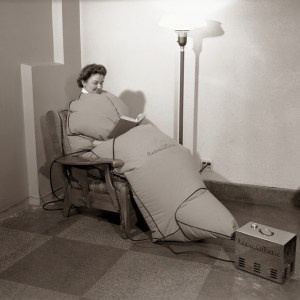
Georgia_Indian_Tattoos.15010247_large

Due to humid weather during the warmer months, Southeastern Woodlands Native Americans usually didn’t wear months. Both sexes also had a lot of body paint and tattoos.

Clothing: Most wore very little in the warmer months. Clothing was mainly made from tanned deerskin though inner bark was used to make hairnets and some textiles. Bear and buffalo robes were worn in the winter as well as ornate feather mantles or cloaks. Men wore breechcloths, shirts, leggings, shawls, or cloaks. Women usually wore short skirts, as well as tunics or mantles. Moccasins were mainly worn for travel. Ornamentation was made from shells, copper, pearls, and beads. Tattooing was widespread and body paint was used for special occasions. A lot of male warriors shaved their heads.

Transportation: Had bark and wooden canoes, preferably made from cypress. Though pine, poplar, and other wood canoes also existed.

debry_arrows

Southeastern Woodland warfare often took a great deal of ritual preparation and during such conflicts, warriors would often leave distinguishing signs to show who committed the violent deeds. Scalping was considered high war honors. Most war were usually over clan revenge.

Society: Primarily sedentary and semi-nomadic, though nomadic at the coast. Estimated to have as many as 150,000 people before European contact. Had vast trading networks, though most exchanges took place along kin networks and related families. Villages and towns were often at river valleys whenever possible which can consist of a social and ceremonial center as well as houses strung out for miles. Many tribes had some degree of social stratification and chiefs married women from allied and subject tribes to strengthen ties. Clan vengeance was a primary motivation for war. But warfare often took a great deal of ritual preparation and warriors often left a distinguishing sign to show who committed the violent deeds. Prisoners were usually tortured and sold into slavery. Scalping was common and constituted war honors. War chiefs often led war parties. Later societies could consist of large confederacies.

Algonquian_Tattoos.15005208_large

Southeastern Woodland Indians were well known to practice exogamous marriage and matrilineal descent. Incest taboos were strictly enforced while inter-clan marriage was banned.

Family Structure: Practiced exogamous marriage and matrilineal descent. Observed strict incest taboos as well as marriage within a clan. Yet, polygamy was practiced among chiefs and wealthier men who could afford it. Men hunted, fished, fought, built houses, and sometimes farmed while women tended to housework, reared children, cooked, and made clothes.

IMG_0528

From 1817-1842, the Florida Seminoles and their escaped slave allies put up a major resistance against the US Army which led the US to acquire Florida and Andrew Jackson serve as its first governor for a time. However, no Seminole resistance was better known than that of Osceola’s in the 1830s who led devastating guerrilla tactics against US troops even when vastly outnumbered before his 1837 capture and death. A few hundred Seminoles managed to stay hiding in the Everglades where their descendants reside to this day.

Practices: Wood carving, animism, shamanism, pottery, basketry, Green Corn festival, moundbuilding, Southern Ceremonial Complex, tobacco, music, dance, gambling, stickball, chunkey, metalwork, weaving, lacrosse, controlled burning, pictographs, and beadwork.

Tools and Weapons: Bows and arrows, spears, axes, adzes, clubs, fish hooks and line, nets, blow guns and darts, rope, spear throwers, grinding stones, stone pestles, flint hoes, and weirs.

Notable Tribes: Cherokee, Natchez, Choctaw, Caddo, Biloxi, Creek, Apalachee, Arawak, Seminole, Atakapa, Bayougoula, Chacato, Calusa, Chickasaw, Croatan, Timucua, Coharie, Mayaca, Mobila, Mocoso, Yazoo, Uzita, Waccamaw, Mayami, Mikasuki, Sewee, Sissipaw, Tequesta, Santee, Roanoke, Pacara, Pensacola, Quinipissa, Tocobaga, Yamassee, Winyaw, Jaega, Koasati, Machapunga, Mataumbe, Eno, Chisca, Chowanoc, Cusabo, Chitimacha, Cape Fear, Chakchiuma, Catawba, Calusa, Ais, Powhatan, Quapaw, Tonkawa, Karankawa, Cofitachiqui, Mosopelea, and Avoyel.

The Indigenous Peoples of North America: Part 9 – The Northeastern Woodlands

Iroquois-league

The Iroquois League was an association of 5 (later 6) linguistically related Northeast Woodland tribes consisting of the Mohawk, Oneida, Onondaga, Cayuga, Seneca, and Tuscarora peoples. Established between the 12th and 15th centuries, the League ruled on disputes and displace their raiding tradition except when it came to their rivals. Their political cohesion made the Iroquois one of the strongest forces in 17th and 18th century northeastern North America. Played both the French and British in the fur trade as well as sided with the latter during the French and Indian War. Was severely weakened after the American Revolution.

While the Great Plains tribes are the Native Americans you tend to see in western movies, the Northeastern Woodlands tribes are the ones you see in anything relating to early American history, particularly when it applies to Jamestown, Massachusetts Pilgrims, or the French and Indian War. Stretching from southeast Canada and east of the Mississippi River to the East coast and extending south to the Ohio River, these tribes were among the first Native Americans to have contact with Europeans than anyone else which were the Vikings who visited coastal areas from Newfoundland all the way to Cape Cod. However, they didn’t stay long and left little permanent influence. Yet, English and French settlers who arrived in the 1600s introduced these Indians to the beaver fur trade and infectious European diseases (sometimes via smallpox blankets). Sure relations were friendly at first, but they quickly deteriorated in some areas such as in 17th century Massachusetts Bay where they went from the first Thanksgiving to all out King Philip’s War in only a few decades. Yet, initial rounds of European diseases resulted in some tribes losing as much as 95% of their population alone in the early 17th century even before the Pilgrims landed at Plymouth (Squanto’s village being one of them). Growing European fur demand led to the New World becoming a center of colonial competitiveness between Britain and France which would eventually culminate into the French and Indian War. Intrusion and eventual domination of the fur trade led to systemic breakdown among these tribes including decline in native arts and material culture, relocation to trading centers even by risking famine, increased social stratification and personal ownership, alcoholism, STDs, increased inter-tribal warfare, increased pressure to convert to Christianity, and eventually Indian removal. By the mid-19th century, many Indian groups in this region had simply disappeared and most of those remaining had been militarily defeated and largely resettled on reservations, some of which were far from home like Oklahoma. On the other hand, there are more Indians in this region today than many people realize. Although they’re mostly acculturated many proudly maintain an Indian identity while Native Americans in both the US and Canada continue struggling for recognition, land, economic development, and sovereignty.

11-cahokia-large

At its peak in the 13th century, the Mississippian city of Cahokia is estimated to have a population of 40,000 which wouldn’t be surpassed by any US city until the late 18th century. This city was said to have covered 6 square miles and included about 120 human mounds in a variety of shapes, sizes, and functions. But it would soon be abandoned by 1300 and little is known about those who lived there. Today the Cahokia Mounds is considered the largest and most complex archaeological site north of the great Pre-Columbian cities of Mexico.

Location: East of the Mississippi River spanning from south central Canada to the East Coast and Ohio River as well as encompassing the Great Lakes.

First Peoples: Region has been inhabited for at least 12,000 years with the first residents said to come from the Southwest. However, while the archaic period began in 6000 B.C.E., most cultures didn’t become fully established until 3,000 years later due to a dramatically changing environment. The Adena culture from 800 B.C.E. to 200 flourished around Kentucky and Ohio who were known as the agricultural and pottery producing Mound Builders (since they either cremated or buried their dead in mounds). They also used copper tools and red ochre in burial customs. Then there’s the northern Hopewell culture of the Great Lakes from 300 B.C.E. to 700 who also built mounds through their dead as well as performed other complex funerary rituals. Also had stamped pottery, metal work, weaving, large population centers, and vast trade networks. Alongside them is the Mississippian from 700-1500 which was characterized by intensive agriculture, fine pottery, distinctive art themes, stockaded villages, and flat-topped pyramid mounds. Sites from the Mississippian culture include Cahokia near St. Louis whose influence extended as far north as Wisconsin as well as Fort Ancient and Monongahela Woodland in the Ohio Valley. It’s speculative whether the tribes in the Ohio and Illinois Valleys as well as the Great Lakes are descended by their prehistoric counterparts who were gone by the mid-17th century due to warfare and fast-moving epidemics. It was later said to be repopulated by historic tribes from other locations.

Environment: Has many variations in climate, landscape, and natural resources. Much of it thick deciduous and conifer forest, mountains, and wetlands with an abundance in rivers, lakes, and ocean. Flat forests and prairies predominate in the far western areas. Experiences cold winter with deep snows and is often hot and humid in the summer. High precipitation all year round.

88be6674-bf66-445e-9218-3cb144f77037

Northeastern Woodlands Native Americans greatly relied on agriculture, growing crops consisting of corn, beans, squash, sunflowers, and wild rice. Out of all of these, corn was their most important food above all.

Subsistence: Primarily hunter, gatherer, and fishing subsistence, agriculture, and everything in between. Crops were corn, beans, pumpkins, wild rice, sunflowers, and squash. Hunted deer, raccoon, fox, muskrat, rabbit, wolf, elk, turkey, turtles, bear, squirrel, beaver, moose, and caribou. Yet, they also hunted for whale and seals as well as fished. Gathered maple sap, honey, berries, roots, nuts, and fresh greens.

OLYMPUS DIGITAL CAMERA

The standard dwelling for the Iroquois was the longhouse which was made from bent saplings and covered with bark. Longhouses could be up to 20 feet wide and 200 feet long as well as divided into 6-8 two room sections, each housing a family and sharing a fire.

Housing: Algonquin peoples mostly built birch bark domed wigwams with woven mat covered walls and floors. Each usually housed one family. Summer wigwams usually tended to be smaller while structures like menstrual huts, sweat houses, and temporary brush shelters were also built. Iroquois usually built wooden longhouses that were 20 feet wide and up 200 feet long (though most were less than 100 feet) made of bark pieces over a sapling frame with vaulted roofs. These were divided into 6-8 two room sections, each housing one family and sharing a fire.

couple_algonquin

Northeastern Native Americans tended to wear a lot of jewelry and body paint, especially the men. In fact, while most Native American men wore their hair long, Northeastern Woodlands men tended to wear mohawks with feathers in them.

Clothing: People in the region mostly wore very little during the summer. Clothing was mostly made from deerskin and other animals. Often tanned. Generally consisted of breechcloths, skirts, leggings, and moccasins. Fur robes were worn in the winter. Women usually wore overdresses and tunics. Clothes were often decorated with softened and dyed porcupine quills and/or paint. Some groups even had fringed outfits. Adornments could consist of stone and shell jewelry, tattoos, and body paint. Shaved heads and mohawks were common among some Algonquin tribes as well as feathers in hair.

5bbaee21f082c28082ae549adc089d62

Northeastern Woodlands Native Americans often traveled on river by canoe often made from bark, animal hides, or wood. Canoe styles often depended on water conditions.

Transportation: Algonquins used swift and light birch bark canoes while the Iroquois used canoes made from elm. Small ones were used for rivers while larger ones that could fit up to 10 people were used for lakes. Most were framed with cedar and trimmed with maple. Bark was sewn on with spruce roots and caulked with pine pitch or spruce resin. Dugout canoes were used as well. Styles were also based on water conditions.

d45f5c5488ea6c58388a53f5c9e2d7a6

Northeastern Woodlands was a place of violent and frequent tribal warfare that villages tended to have fortifications of dirt and fencing even before European contact (since it was a reason why the Iroquois League existed in the first place). Ritualized torture and cannibalism were both practiced.

Society: Primarily nomadic, sedentary, and everything in between. Pre-contact population density varied. But it’s possible that as many as 2 million might’ve resided there but this is a rough estimate. Increased social stratification existed but not to the extent than in the Pacific Northwest Coast or the Southeast (though they did practice slavery). Some tribes were even part of mass confederacies later on such as the Iroquois, the Powhatan, and the Illinois. Among the Iroquois, male chiefs were elected by clan leaders who were usually female. Village councils often acted in unanimity and some chiefs were stronger than others. Western tribes often had warrior organizations to perform policing activities and some women even held some formal political power such as in the Miami, Shawnee, and Potawatomi. Nevertheless, inter-tribal warfare was harsh and frequent resulting in villages being heavily fortified by fencing and reinforced with dirt. Iroquois even revered war. Ritualized torture was common among the Iroquois while cannibalism and human sacrifice existed as well. Though most captives were frequently adopted into the tribe making up for population losses. Trade was mostly localized.

5766bc535edb1315d31943cd105607e4

Since descent and inheritance was matrilineal, Iroquois women often owned most of the family property even after marriage and kept the children if they divorced. An Iroquois woman can initiate divorce by telling her husband to leave the dwelling with his stuff. Iroquois women were also clan leaders who chose chiefs as well. Also, during marriage, an Iroquois man resided with his wife’s family.

Family Structure: Matrilineal descent among the Iroquois while Algonquins could have either this or bilateral. Bilateral or patrilineal among those near the Great Lakes and Ohio River. Men hunted, fished, and fought, while women made pottery, made clothes, looked after children, farmed, gathered, and other housework. Iroquois women owned property that stayed within their possession even after marriage and kept the kids if they separated. Married couples often resided with the wife’s family. Some Algonquin chiefs, shamans, and other wealthy men were allowed to have more than one wife if they could afford it.

3cd5103391f001ac417380ef3a0c4cc2

Lacrosse perhaps originated in 1100 and was played as a ceremonial ritual by the Northeastern Woodlands Native Americans. Teams could consist between 100-1,000 men on a field that could span 1,600 feet to 1.9 miles long. Games were said to last from sunup to sundown 2-3 days straight or longer. Also, it was a rather violent bloodsport where players actually got severely injured or killed.

Practices: Animism, shamanism, dreamcatchers, peace pipes, wampum, storytelling, tobacco, war paint, pottery, basketry, beadwork, metalwork, masks, vision quests, Midewiwin, Green Corn festival, music, dance, feast of the dead, medicine dances, lacrosse, birch bark scrolls, and pictographs.

Tools and Weapons: Bows and arrows, harpoons, fish hooks and line, clubs, tomahawks, nets, hemp and basswood bags, wooden bowls and utensils, snowshoes, knives, hoes, rakes, grind sticks and stones, snares, and spears.

Notable Tribes: Iroquois, Algonquin, Mohawk, Huron, Objiwe, Abenaki, Beothuk, Miami, Massachusett, Menominee, Erie, Ho-Chunk, Patuxent, Mahican, Anishinaabeg, Monacan, Narragansett, Illinois, Mitchiganmea, Fox, Sauk, Kickapoo, Mingo, Delaware, Wampanoag, Susquehannock, Tauxenent, Tunxis, Quinnipac, Shawnee, Cayuga, Seneca, Tuscarora, Ottawa, Tutelo, Oneida, Powhatan, Podunk, Pequot, Mohegan, and Penobscot.

The Indigenous Peoples of North America: Part 8 – The Great Plains

The-Silenced-War-Whoop-1100x790

When it comes to Native Americans in popular media, no culture area is so widely recognized as those in the Great Plains. Because Plains Indians tend to be in so many western movies, so many people tend to get the wrong impression that Plains culture was the standard way of life for North American Indians in general (save for those in the Arctic).

Out of all the indigenous peoples of North America, no culture region has been depicted in popular media more than the Native Americans from the Great Plains. Stretching from south central Canada to southeastern Texas and mostly situated between the Rocky Mountains and the Mississippi River, this region has given us tribes that have forever been ingrained in the popular perception of Native Americans for good or ill. Let’s just say in western movies, you’re bound to either see a Plains Indian or a Native American dressed as one perhaps due to how widespread Plains culture was or how lazy the screenwriters were in their research. Some aspects that distinguish Plains culture are teepees, dependence on bison, chiefs wearing war bonnets, as well as horses. Plains Indians in movies may or may not use guns. However, such descriptions don’t apply to all the Plains tribes. Not to mention, the Plains tribes didn’t acquire horses via trade and/or raid networks with the Southwestern and Great Basin tribes. But once they got a hold of these animals, the Plains Indians integrated them in their daily lives, developed a reputation for their equestrian skill, and led to the origin of the mustang. The Plains Indians also traded guns with English and French fur trappers in the areas as well (though they were always in short supply so they still depended on bows and arrows). However, while these European imports improved their lives drastically as well as helped them expand territory, they came at a very high cost in the form of European diseases. Not only that, but their dependence on bison would later come back to bite them later in the 19th century with American westward expansion, the Transcontinental Railroad, the rise of the cattle industry, and Indian Wars. At this time, the US federal government set initiatives permitting bison market hunting in order to weaken the Plains Indians and pressure them to either move onto the reservations or starve. This resulted in the bison being hunted to almost extinction. Another major change since European contact was their growing importance on warfare not against whites but also among each other both as livelihood and a sport. Yet, when Plains Indians fought each other, casualties were usually light, attacks were usually ambushes and hit and runs, success was based on quantity pertaining to horses and other property, and highest military honors were for “counting coup” consisting of touching a live enemy.

164183-004-45ADBC12

The Great Plains gets its name for being mostly vat flat grassland with rolling hills and valleys. However, while some areas in this region are perfectly suitable for agriculture (such as near the Mississippi), some areas aren’t (but most of it is great for ranching making it ideal bison country). Also prone to dramatic weather events like tornadoes, blizzards, and severe thunderstorms.

Location: Between the Rocky Mountains and the Mississippi River that spans from south central Canada to southern Texas, Oklahoma, and Arkansas.

First Peoples: It’s said that the first inhabitants of this region moved there between 40,000 and 10,000 years ago. The first millennium consisted of tribes with vast trading networks and complex religious practices. But as the region grew drier and less hospitable the nomadic bands slowly followed game and water eastward until by perhaps 1200 when the area was virtually empty. However, the region gradually repopulated due to a moderation of weather conditions as well as a severe drought in the Southwest.

Environment: Mostly flat grassland with many rolling hills and valleys, though not very rugged. Summers are very hot and winters are very cold. Trees are only found by rivers and other bodies of water. Average precipitation is low though there are higher levels in the east. Dramatic weather events such as blizzards, tornadoes, and severe thunderstorms are regular occurrences.

Uses of the Buffalo

The Plains Indians main source of survival was the buffalo which they used for everything. This diagram from the South Dakota State Historical Society illustrates which part of the animal was used for what.

Subsistence: Primarily hunter and gatherer subsistence though some practiced agriculture as well but didn’t use irrigation. Buffalo was the primary game food source which was hunted by men surrounding the animals and herding them off a cliff into confined spaces. Also hunted other animals like elk, antelope, porcupine, prairie dogs, mountain sheep, prairie chickens, eagles, cougars, wolves, beaver, bear, and deer. More agrarian tribes in the east planted crops like corn, squash, sunflowers, plums, pemmican, prairie turnip, and other wild plants. Gathered nuts, gooseberries, chokecherries, and onions. Some even fished.

sioux-dogs

Not all Plains tribes lived in teepees nor did all teepee dwelling tribes live in the Plains. However, the fact so many Plains Indians lived in these things has led many people to mistake the teepee as a standard Native American housing unit.

Housing: Mostly lived in teepees made from animal skins and poles. Each teepee could have 6-18 buffalo skins sewn together and stretched over a frame of poles. The average teepee was about 14 feet high and 14 feet in diameter and held between 5 to 8 people. Had an adjustable smoke hole at the top for ventilation. Less nomadic tribes also retained permanent earth lodges along rivers that could be square, rectangular, or beehive shaped. Each of these could hold up to 40 or more people.

Sitting-Bull-portrait

The warbonnet is perhaps the most iconic Native American headdress from the Great Plains. It was a worn by men in the tribe who’ve earned a great place of respect after completing so many eagle feathers for their deeds. Such feather earning deeds might include courageous acts in battle but also political and diplomatic gains or acts that have helped the community prosper. They were also worn by the tribe’s chosen political and spiritual leaders like Chief Sitting Bull pictured here. However, expect controversy whenever you see a non-native wearing one of these as a culturally appropriated fashion accessory, which many of today’s Plains Indians consider offensive to their culture. This especially goes for sports team mascots.

Clothing: Mostly made from deer, mountain sheep, and buffalo skin. Women wore a 2-piece  dress with optional sleeves. During colder weather, they wore leggings, moccasins, and buffalo robes. Men wore breechcloths and moccasins as well as a deerskin shirt, leggings, and a buffalo robe in winter. Garments decorated with fringe and quill work may reflect war honors. Wore necklaces and earrings made from bone, shell hair, or feathers, as well as tattoos. Important figures would wear elaborate feather headdresses and buffalo hats.War bonnets were sometimes worn into battle by men who’ve earned a place of great respect for the tribe as well as political and spiritual leaders.

egp.tra.038

When moving camp, Plains Indians would often load their belongings onto a wooden frame structure known as a travois. While pre-contact Plains tribes often used dogs, they would later pulled by horses by the 19th century. This picture is of a modern travois. Note the dog would’ve been attached to something much bigger and made to drag a much heavier load.

Transportation: Used a buffalo skin and pole travois sled to carry their belongings which was pulled by dogs.

Catlinpaint

Most of the nomadic Plains tribes tend to bands comprised of no more than 30 people at a time, mainly extended family members. Several hundred of these groups congregated together would form a tribe. And they only got together during the summer to hunt, trade, socialize, make war, raid, and perform religious ceremonies.

Society: Primarily nomadic though some could be semi-nomadic or sedentary all year round. Were not especially warlike (though this would change with European contact, but this is about pre-contact culture here. Also, some practiced ritualized torture). Shamans were said to have some degree of political and spiritual power. Trade was not as well developed there though there was a degree of sign language communication. The most fundamental unit was the extended family which could consist of up to 30 people. Bands and villages variable constituency were composed of up to several hundred people or related families, formed the tribe. Some of the more settled tribes also recognized clans and/or dual divisions. Bands only came together during the summer, uniting under much more centralized political leadership to hunt, socialize, trade, raid, make war, and perform religious ceremonies. During this time, camp police and other elite warrior societies kept order and punished offenders, especially during the hunt. During the winter, bands often separated back into their constituent families in the winter. Band or kin group chiefs were generally older men but the position was more of an honorific than authoritative. Open societies were age graded and could be entered by anyone of the proper age who could purchase admission. Social order was maintained by peer pressure.

d61defc7-63b1-4ee4-a676-d9a960726b5b_560_420

While Plains women didn’t wield as much political or social power as their men, they did hold enormous power in the domestic sphere. Since Plains practiced matrilineal descent, wives owned almost all the marital property and had sole custody of the kids in a divorce that she could initiate by throwing her husband’s belongings out of the teepee. By the way, frontiersman Kit Carson’s Cheyenne wife Making Out Road divorced him this way.
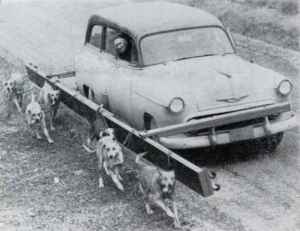
Family Structure: Primarily matrilineal descent. Men hunted and fought while women tanned hides, tended crops, gathered wild foods, cooked, made clothing as well as took down and erected teepees. Women had right to divorce by throwing her husband’s things out of the teepee as well as had custody of the children as well as owned the home. Though they weren’t as engaged in public political life as the coastal tribes, women still participated in advisory roles and through women’s societies. Dead were either buried in tree scaffolds or in the ground (which they cursed before burial in case someone disturbed it, just kidding).

7 Corps of Discovery at a Knife River Village, Vernon W Erickson

It’s worth noting that not all of the Great Plains tribes lived like those you’ve seen in westerns. For instance, the Mandan lived in permanent villages, built round earth houses like these, and farmed. They’re best known as one of the tribes encountered during the Lewis and Clark Expedition.

Practices: Animism, shamanism, storytelling, medicine bags, Great Spirit, vision quests, Sun Dance, dancing music, tobacco, incense burning, skin painting, stone pipes, common sign language, and beadwork.

Tools and Weapons: Spears, knives, bows and arrows, and clubs. Buffalo horn spoons and cups. Buffalo tail whips and buffalo water containers. Buffalo bone awls, hoes, and other tools. Buffalo sinew bowstrings and thread. Buffalo skull altars and buffalo hoof rattles.

Notable Tribes: Sioux, Comanche, Kiowa, Arapaho, Pawnee, Blackfoot, Cheyenne, Cree, Crow, Iowa, Kaw, Escanjaques, Mandan, Metis, Omaha, Osage, Otoe, Dakota, Lakota, Ponca, Quapaw, Nakoda, Teyas, Tonkawa, Waco, Wichita, Tsuu T’ina, Arikara, Missouria, Gros Ventre, Hidasta, Assiniboine, and Saulteaux.

The Indigenous Peoples of North America: Part 7 – The Southwest

130514145417-classic-us-pueblo-horizontal-large-gallery

The most distinguishing feature of this region has to be the Pueblo adobe apartment complexes with multiple stories and numerous rooms. These were built with baked bricks of clay and straw and were not held together by mortar. This complex is in Taos, New Mexico.

We now come to one of the more familiar Native American cultural areas in my series with the Southwest. You’ve probably seen stuff from this region since it’s been depicted in westerns and that you’ve might’ve seen an adobe house or a Hopi woman with traditional Padme Amidala buns. Then there are the Apache leader Geronimo who you’ve probably heard of. Like their Great Basin neighbors, the native peoples of the Southwest lived in a land that was dominated by a rocky desert. Yet, unlike the Great Basin, many of these people usually led sedentary lives and even farmed. Not that it was easy, because it wasn’t, especially without irrigation. But we know a lot about these pre-contact Native Americans better than those in other regions because they left an extensive amount of archaeology, particularly the adobe houses and villages which still stand. Not only that, but despite being among the first Native Americans groups to deal with European influence (such as the Spanish in the 1500s), but have shown a remarkable tenacity to retain their land, religion, institutions, languages, and aesthetic traditions while facing vigorous efforts over the centuries to eradicate indigenous culture as well as the people themselves. Today Southwest Indian identity remains relatively strong perhaps to a greater degree than Native Americans in most regions (like California). Today, much of the Native American population in the US is concentrated in this area with one of today’s most populous tribes being the Navajo. Of course, the fact that many Indians in the region were farmers and among the more settled probably worked in their favor as well as the fact that these cultures managed to integrate European innovations within their culture like domestic animals, silversmithing, wool and textiles, wheat and other crops, metal tools, and firearms. That and the fact the Pueblos managed to kick the Spanish out of the region for 12 years starting in 1680, leading them to moderate their demands. By the way, these Indians were also under a mission system during Spanish rule like their California counterparts. But that doesn’t change the fact that initial Spanish contact in the region wiped out 75-80% of the Southwest pre-contact population by the mid-17th century (mostly be European diseases). Or the fact Southwest saw more conflict between Native Americans and the US government than any other Indian region. The famous among them being the Apache Wars which spanned from 1849-1886 and is best remembered for numerous raids in both US and Mexico being led by Geronimo. Another famous Apache was Cochise who led a small warrior band that terrorized anyone who entered their territory as well as fought a bloody war with the US. Oh, and the fact, Native American archaeology and antiquities tend to face a lot of ethical dilemmas in general. So this isn’t a region to trifle with.

de5927ba7d37f2b9ef3f8e7b22bd0a42

The Ancestral Pueblo peoples are known for their cliff dwelling villages like the famous Cliff Palace of Mesa Verde National Park in Colorado. This part of the Mesa Verde was built and inhabited between at about the 12th-13th centuries with as many as 22,000 living there. However, while they’re said to disappear by the late 13th century, it’s more likely that they simply made a mass exodus to Arizona and New Mexico due to environmental instability as well as economic and social unrest (as evidence of violence and cannibalism have been documented). Their descendants still live there today as the Pueblo.

Location: Spans from the American Southwest to northern Mexico covering Arizona, New Mexico, and western Texas as well as Mexican states Chihuahua, California, and Sonora.

First Peoples: Outside Mesoamerica, it’s one of the longest continuous inhabited region on the continent. The first people are said to come to the area between 23,000 B.C.E. and 10,000 B.C.E. and were originally hunter gatherers before gradually making the transition to agriculture at around 4,000 years ago to 500. The region would be dominated by 5 major groups such as the sandstone cliff dwelling Ancestral Pueblo of Mesa Verde and Chaco Canyon, the Mongollon of the Colorado Plateau known for using irrigation and some of the best pottery north of Mexico, the Hohokam known for their extensive irrigation canal system as well as large villages and towns, the Hakataya known for their semi-nomadic villages and small scale agriculture, and the Southern Athapaskans (early Apache) who settled abandoned Anasazi and Mongollon villages between 1200 and 1500.

Environment: Mostly hot and arid desert with dry, rocky land and cactus with canyons, bluffs, rock formations, caves, and plateaus. Has some forests, grasslands, and few river valleys at higher elevations. Experiences little rain but mild to cool winters.

i11

Unlike a lot of Native American cultures, the Pueblo primarily survived on an agricultural subsistence. Yet, this wouldn’t be possible in a desert environment without some kind of water management, particularly irrigation. Nevertheless, unlike how corn is grown today, the Southwest Native Americans grew theirs in clumps instead of the standard rows.

Subsistence: Primarily agricultural subsistence with techniques including canal irrigation, trincheras, lithic much, and floodplain cultivation. Though some tribes like the Apache hunter-gatherers while the Navajo was somewhere in between. Crops planted consisted of corn, squash, beans, pumpkins, fruit, melons, and sunflower seeds. People living near rivers also fished. Gathered cacti, mescal, screwbeans, mesquite, and grasses. Hunted deer, mountain sheep, buffalo, wild turkey, pronghorn, and small mammals. Those with limited food access usually raided, traded, or received agricultural products as gifts

OLYMPUS DIGITAL CAMERA

While the Pueblo lived in massive adobe complexes, the Navajo lived in clay houses called hogans that could be round, conical, multi-sided, or square. They could also have internal posts as well as be covered in stone or wood such as this one.

Housing: Depended on availability of natural resources in a location, the tribe, and whether the dwelling was temporary or permanent. Farming tribes lived in houses with numerous rooms and stories made from adobe brick (made from clay and straw) and stone that could be built next to each other in villages often at strategic defense positions. These also had flat roofs. Used bone and wood ladders to reach higher buildings or rooms. Also constructed canals, aqueducts, reservoirs, dikes, and dams. They also had ceremonial pits that were called kivas as well as water wells. The Navajo built clay roundhouses sometimes outfitted by logs called hogans as well as underground homes, summer shelters, sweat houses. Brush shelters, teepees, and wickiups were commonly used among the Apache.

800px-Hopi_mealing_trough

There’s probably nothing that distinguishes the Hopi more from the other Southwest Pueblo than the trademark “squash blossom” buns worn by their unmarried women indicating their eligibility for courtship. Since the Hopi live in a matrilineal clan system, this practice is understandable. Still, Padme Amidala wore this hairstyle in at least one of the Star Wars prequels.

Clothing: Due to the climate, the Pueblo usually didn’t wear much. Though some tribes often made woven cotton clothes for colder weather. Men wore breechcloths, leggings, and ponchos while women wore blanket dresses and robes in these communities. Clothing can be decorated with flowers or feathers. Adorned themselves with turquoise jewelry believed to promote prosperity, health, and happiness. Often wore their hair long. All wore moccasins, however. Apaches usually wore clothing made from animal skins (particularly bison) or whatever else they could get their hands on.

apaches

Even before contact with the Europeans, the Apaches had already established themselves in the Southwest region as traders and raiders. After European contact, they gained a reputation as one of the most hostile groups in the region. Seen here is the legendary leader Geronimo with his half-brother, brother-in-law, and son.

Transportation: The Apaches used dogs to carry their stuff on travois (according to Francisco Coronado in 1541). Recent estimates state that these dogs may have pulled loads up to 50 pounds on long trips at rates as high as 2 or 3 miles per hour.

Society: Primarily sedentary save for tribes like the nomadic Apache and Navajo. Yet, even among the farming Pueblo tribes, there was a certain degree of mobility since growing food often required using many different environmental niches. Was a place of large scale trade between Pueblo, Navajo, and Apache groups. Devised complex systems of exchange to ensure, without risk to their independence and basic egalitarianism that each community received. Though localized raiding and plundering was a common occurrence (by the Apache raiding Pueblo villages), there were few organized wars. Of course, Apache raiding was done by small parties with specific economic targets while wars with large parties were usually to achieve retribution (but both could be quite violent on their victims). Pueblo villages had specialized offices for unique responsibilities required by their lifestyle and environment. One tribe had a chief, a war priest, and hunting chief. Some even had specialized shamans. Pueblo communities also held lands in common with village decisions requiring unanimous consent of all adult men (though women held an influential voice, too). They also had planned villages composed of large terraced buildings with many rooms. The largest of these is said to contain 700 rooms in 5 stories and may have housed as many as 1000 people. Apaches and Navajos resided in extended family units usually consisting of parents, unmarried children, their married daughters, and their families as well as relied on kinship networks. Local Apache groups and bands were headed by a male chief who was chosen due to his effectiveness and influence. He was only as strong as he was evaluated to be, no one was obligated to follow him, and his office wasn’t hereditary.

fj1jrSahXfzJnVv6UPVXPQrQ

While Pueblo marriage and lineage patterns differed among various tribes, this was not the same with the Apache. Apache women lived within the same clan their entire lives as well as inherited the family property.

Family Structure: Pueblo tribes had differing marriage practices as well as lines of descent. Apaches and Navajo practiced matrilineal descent and matrilocal, exogamous marriages. Apache men practiced varying degrees of avoidance of his wife’s close relatives while women generally inherited and owned property. Men generally hunted, fished, fought, and farmed while women took care children, kept house, made clothes, and cooked. A Hopi baby would be named until 20 days after it was born when being held from a cliff by the women at their father’s clan at dawn (like in the Lion King). Though they’d also bear gifts. A Hopi child could be given over 40 names though it’s up to the parents to decide which one to use. They can also change their names if they decide to become members of the Kachina society or after a major life event.

HomeDanceRaymondNajaMed

Another major aspect of Pueblo Native American culture are the Kachina dancers during their religious ceremonies, particularly among the Hopi and the Zuni. These dancers are masked men meant to represent spiritual beings. The Hopi also have Kachina clowns, too.

Practices: Basketry, Kachina dolls, animism, shamanism, prayer sticks, ceramics, dancing, music, sandpaintings, katsina dances, masks, textile weaving, tobacco, murals, beadwork, storytelling, pictographs, lunar calendars, and intricate blankets.

Tools and Weapons: Bows and arrows, spears, knives, grinding stone and receptacle, spindles and looms, hoes and rakes, pump drills, axes, clubs, dibble sticks, and adzes.

Notable Tribes: Pueblo, Apache, Navajo, Pima, Mojave, Tewa, Tiwa, Towa, Zuni, Quechan, Manso, La Junta, Coahuiltecan, Comecrudo, Cocopa, Karankawa, Maricopa, Mamulique, Hopi, Yavapapi, Solano, Toboso, Quems, Tamique, Tompiro, Walalpai, Yaqui, Papagos, Solano, O’odham, Mayo, Opata, Seri, Taos, and Keres.

The Indigenous Peoples of North America: Part 6 – California

the-mission-of-santa-barbara

The California mission system was one in which the Spanish used to colonize the Native Americans under their control. Whatever Father Junipero Serra’s intentions, the California mission system ended up to be one of forced labor, exploitation, disease, fatalities, and cultural genocide. However, they weren’t the only agents responsible with the mass genocide pertaining to the California tribes in the 19th century in which 90% of them were wiped out. But what you can’t dispute is that they had pretty nice architecture which became popular with the publication of Helen Hunt Jackson’s Ramona (which was intended to expose the cultural genocide).

Before the contact of Europeans and Saint Junipero Serra’s Spanish missionary system of forced indigenous labor, assimilation, and cultural genocide, California was home to the largest population of Native Americans and the most distinct tribes of any US state and the highest population density north of Mexico. Over 150 of them are said to have US federal recognition to date. They even had 500 distinct sub-tribes or groups on top of that. And before European contact, native Californians spoke 300 dialects of approximately 100 distinct languages. Of course, when the Spanish came with their missionary system, all the ecological disruption, forced labor exploitation, and introduction of Spanish diseases took care of all that that population was reduced by 90% during the 19th century from 200,000 to 15,000. Still, most of the havoc was unintentional save for the assimilation and forced labor part. But those Spanish missions started a tradition by which we know California today, one in which white people cause a lot of ecological disruption as well as exploit minorities even when they think they’re helping. Also, displacing people who’ve resided in their hometown longer than you have with either guns, germs, or steel or simply raising their property values. Nevertheless, the most common language of the Native Californians was Valley Girl speak as well as took part in rituals like surfing, playing Beach Boys music, and disrupting the private lives of celebrities. Okay, I’m kidding about that. In reality, California’s diversity in climate, topography, and wildlife was part of why these Native American communities thrived in this place. Now even the state’s ecology is under threat due to climate change, drought, wildfires, earthquakes, and what not. Basically if an area in California isn’t made a state or national park, there’s not much protection going for it before it’s turned into some shopping mall. Yet, despite all the bad things that have happened to these California tribes, their descendants still live in the state today. Just don’t mention the canonization of Father Junipero Serra as a good idea. Just don’t.
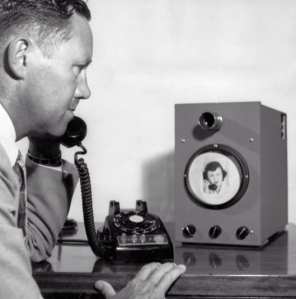
1-b

Pre-contact California had a diverse environment including the coastal beach communities, the tall redwood forests, high mountain ranges, and southern deserts. Yet, most of these people were hunter-gatherers as well as had acorns as their primary food.

Location: Most of the state of California.

First Peoples: Evidence of human occupation in this region dates to 17,000 B.C.E. Early Southern California peoples include the La Jolla and Pauma Complexes each dating 6050 B.C.E. to 1000 B.C.E. The earliest inhabitants hunted with darts powered by throwing sticks at large game and resided in either open air dwellings or caves. Yet, from 9000 B.C.E., people from this region gradually started to depend on seed collection for food as well. Around 3000 B.C.E., the Windmiller culture flourished in the Sacramento Valley where they were known for fine craftsmanship, charmstones, and burying their dead face down facing west.

Environment: Has a wide variety of climates and geographical features, rivaling any other area of comparable dimensions. Mostly a mild temperate climate with coastline, rivers, and lakes. Features range from high mountain ranges, oak and conifer forests, mixed forest grasslands, vast grasslands, coastal plains, to long semiarid deserts in southern region. Precipitation is higher in the north than the south while forests can be susceptible to wild fires. Earthquakes and floods also occur.

food

Despite that California had a region of great abundance, a lot of the Native Americans in the area mostly lived in a hunter-gatherer existence. Here are some Native Californians who just caught a deer.

Subsistence: Mainly hunter, gatherer, and fisher subsistence since there was a local abundance of food. Yet, some did practice a form of low density “wild” agriculture and “fire stick” farming. And it’s known that these Indians practiced various forms of forest gardening. Hunted animals like deer, elk, rabbits, sheep, squirrels, chipmunks, quail, mountain sheep, and bear as well as seals and sea otters. Fished for trout, salmon, mollusks, and shellfish. Occasionally ate insects as well as gathered mushrooms, roots, nuts, and seaweed. Acorns were said to be a main staple of food there as well as ground into flour to make mush or bread.

bef33278f2db98ca234311549110f2b0

California native housing depended on location, season, climate, available resources, and whether it was for temporary or permanent use. This straw wigwam house is known as a kicha.

Housing: Depends on the location, season, available resources, climate, and whether it was for temporary or permanent use. Ocean area tribes tended to build grass mat houses. Those in the northwest forest areas built cedar or redwood plank houses. Central tribes lived in subterranean round pit houses. Southern tribes could build conical homes of tule or croton and whalebone structures on the coast.

1e4aa2152cdc6f732caaf67c2ffd5a82

Since it was mostly warm and mild, the Native Californians typically wore very little clothing, save in winter in the colder areas. These women and girls are wearing grass and bead skirts with basket hats and lots of jewelry over their bras (the only article not part of the traditional outfit but necessary).

Clothing: People in this region mostly wore very little. Yet, those who lived in colder areas would wear skins and furs during the winter.

dac7422aba288a19c1b1b23ab0517123

The coastal Native California tribes fished from redwood dugout and plank canoes. Southern tribes had double paddled oars called “tomols” which were made by a secretive craftsman guild. These could hold up to a dozen people and hundreds of pounds to trade goods.

Transportation: Northwestern tribes used dugout canoes from redwoods for fishing. Southern tribes had gracefully planked canoes with double paddle oars called “tomols” and made by a secretive craftsmen guild. These could carry hundreds of pounds in trade goods and up to a dozen passengers.

trading1000

The California cultural region had an extensive trail system though trading was limited to friendly visits and religious ceremonies. Yet, some tribes had relatively rigid class systems perpetuated by custom and marriage as well as based on wealth and private property.

Society: Before European contact, this region had the highest Native American density north of present-day Mexico. It’s estimated that approximately 300,000 Indians might’ve lived there. Yet, these people tended to live a rather isolated existence due to the landscape. Lifestyle tends to vary according to climate and topography but it’s best that the vast majority of these Indians were semi-nomadic at best. Most common form of political organization was the tribelet which was a cluster of satellite villages around one or more permanent villages. It’s said that 500 of these groups existed where they shared a language, culture, and history. Each one could contain from 50-500 people on average and most were related through the male line. Now the tribelet was presided by a chief controlling economic resources and activity, settling conflicts, and organizing events. The chief was generally very wealthy and greatly respected. Some of these tribelets also had specialized occupations like craftspeople as well as minor officials like assistant chief, messenger, and dance manager. Some tribes had a relatively rigid closed class system perpetuated by marriage and custom as well as based on wealth and private property. Sometimes they even kept slaves. More nomadic groups tended to have greater social and gender equality. An extensive and continuous trail system in the region made trading in the region possible usually on friendly visits and ceremonies. Organized warfare was rare. Reasons for conflict ranged from physical offenses such as murder and rape to trespassing, sorcery, or a simple insult. Surprise attacks were preferred in regards to fighting while pitched battles were generally avoided and casualty rates were low. Also armed conflicts were relatively brief and quickly resolved as well as both parties being compensated.

cahuilla_village_detail_2

Unlike a lot of the native cultural regions, most California native family structures were mostly patrilineal. Nevertheless, polygyny was said to be practiced among chiefs, shamans, and other wealthy men who could afford more than one wife, which was less unusual.

Family Structure: Mostly patrilineal descent. Marriages usually took place when the couple was at least in their late teens or early 20s. Northern group chiefs, shamans, and other wealthy men could have more than one wife. Men usually hunted and fished while women cooked, gathered, did housework, and looked after children.

snjose-05-Ohlone-indians-dancing

Of course, we’re all too familiar with the fact that so many Native American tribes have their own dance rituals and the California region is no exception. Here is a picture of Ohlone Indians from the Mission of San Jose dancing in ceremonial regalia. Perhaps these images tell us that maybe the missionaries weren’t as much bent on cultural genocide as we thought, at least as long as they do such rituals to commemorate saint days or Christian holidays. Then again, the Spanish missions were pretty horrific and did result in cultural genocide in California.

Practices: Controlled burning, sophisticated forest gardening, basketry, animism, shamanism, psychoactive drugs, pottery, bead work, rock art, secret religious societies, tobacco, hoop and pole, hand game, cat’s cradle, music, dance, lacrosse, dice, athletic contests, and storytelling.

Tools and Weapons: Milling stones, bows and arrows, elkhorn wedges, spears, knives, nets, weirs, scrapers, hammers, and fish hooks and line. Normally made of stone, bone, obsidian, wood, grass, shell, and other materials.

Notable Tribes: Shasta, Maidu, Miwok, Mojave, Pomo, Chumash, Serrano, Wappo, Yurok, Karok, Hupa, Wintu, Yana, Kato, Wiyot, Cocopah, Juaneno, Chemehuevi, Yuki, Wailaki, Salinan, Sinkyone, Tolowa, Tataviam, Whilkut, Quechan, Modoc, Nisenan, Nomlaki, Panamint, Patwin, Mattole, Luiseno, Kawaiisu, Kitanemuk, Konkow, Klamath, Chilula, Cahuilla, Ohlone, Cupeno, Diegueno, Esselen, Kashaya, Atsuegewi, Achumawi, Shoshoni, and Nongatl.