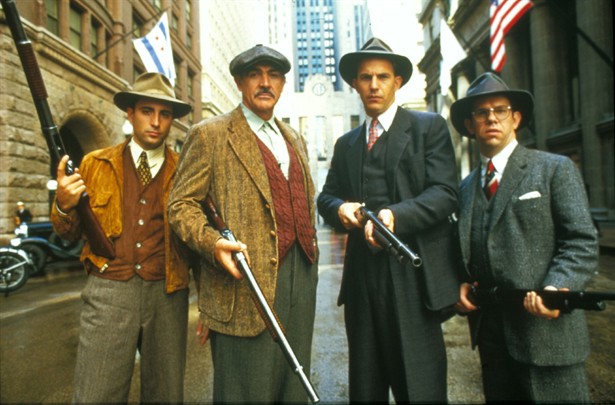
The Real People of Boardwalk Empire: Part 1- Enoch “Nucky” Johnson to Louis “Commodore” Kuehnle

boardwalk-empire

A few months ago my dad was reading a book about the Rooney family and the early days of owning the Pittsburgh Steelers. Since we’ve been watching the first three seasons of Boardwalk Empire, my dad had to show me the name of “Arnold Rothstein” when he got to the part about Art Rooney’s luck as a gambler on the horse racing track. Let’s just say that before he managed to read the guy’s name, he thought that Rothstein was just a fictional character created by the writers of the hit Emmy-winning HBO show. Of course, I couldn’t write about Boardwalk Empire at that moment since I was possibly working on my blog series on movie history. Yet, that incident got me to thinking about doing a series dedicated to the historical figures who’ve appeared or inspired  characters on the show no matter how minor. I mean sure I’ve watched the first three seasons but I really like the show and it’s not because of the violence. I like the characters, the clothes, the sets, and well, the historicity of it all. Still, since Boardwalk Empire is airing it’s final season around this time of year, I thought this little five part blog series would be a nice commemoration as a tribute to the Prohibition Era, the 1920s, the Jazz Age, and all that. In this selection, we’ll look at Atlantic City locals like Enoch L. “Nucky” Johnson and his brother Alf, Mary Ill, Mayor Edward L. Bader, and Louis “Commodore” Kuehnle. We’ll also get to know Casper Holstein an inspiration to Casper Holstein. Of course, we’ll also get to see famous gangsters like Johnny Torrio and Al Capone from Chicago and men like Arnold Rothstein, Charles “Lucky” Luciano, Meyer Lansky, Benjamin “Bugsy” Siegel, and Joe Masseria. So without further adieu, let me introduce you to my first installment of the real people of Boardwalk Empire.

1. Enoch L. “Nucky” Johnson (1883-1968)

Doesn't seem to remind me of Steve Buscemi in the least. Rather he seems to resemble an old timey college professor of some sort. Still, very well dressed.

Doesn’t seem to remind me of Steve Buscemi in the least. Rather he seems to resemble an old timey college professor of some sort. Still, very well dressed.

Known in Life as: He was a New Jersey political boss and racketeer. From the 1910s to his 1941 conviction and imprisonment, he was the undisputed “boss” of the political machine that controlled Atlantic City and the Atlantic County government. His rule saw Atlantic City as a refuge from Prohibition and was at its height of popularity as a tourist destination. His organization engaged in bootlegging, gambling, and prostitution. Yet, he was also known for giving freely to those in need and was widely beloved by local citizens, among whom his benevolence and generosity were legendary.
Character or Inspiration? He’s the main inspiration for “Nucky” Thompson and to a lesser extent Chalky White.
Similarities: Well, he and Nucky had wives named Mabel who died in 1912 (but from TB not suicide) and began to live fast lives after that. They both lived on the ninth story of the Ritz-Carlton rather lavishly, wore a fresh red carnation on their lapels daily, and had a German personal assistant and valet. They also both served as Atlantic County treasurer and were natty dressers. Like Chalky, he was seen as a benefactor to the Northside African American community but that’s pretty much it.
Differences: Unlike Nucky on the show, Johnson didn’t have any kids and didn’t remarry until 1941 and to a showgirl 25 years his junior. Also, in addition to mob boss, booze baron, political boss, sheriff, and county treasurer, Johnson was also county collector, campaign manager to Walter E. Edge, publisher of a weekly newspaper, president of a banking and loan company, and director of a Philadelphia brewery. Yet, though a political boss, he didn’t have much influence in US politics outside the state of New Jersey where he helped get several governors and US Senators elected. Not to mention, he briefly studied to be a teacher and before quitting for an unpaid clerkship and eventually work for his sheriff father (thus, he basically rose to power through nepotism). Still, Johnson didn’t have a terrible childhood, was probably a WASP, or an abusive dad who was a drunk(as far as we know) and wasn’t known for killing anybody (at least in the premeditated sense) or engaging in competition or turf wars with organized crime (though he did take a cut in illegal alcohol sales in Atlantic City). Also was 37 in 1920 as well as a tall, muscular, and bespeckled man who weighed 225 and stood 6’4” tall. Not to mention, he swam every week to keep in shape and was a forceful and outgoing personality.
Ultimate Fate: Was convicted and imprisoned for tax evasion (after being under investigation since 1933 thanks to William Randolph Hearst who leaked his name out of spite because they were both after the same showgirl). Was paroled in 1945 as well as worked in sales at the Richfield Oil Company and with his wife for Renault Winery. Yet, he did continue to dress impeccably and attend political events. Died of natural causes in 1968 at 85.

2. Alfred “Alf” Johnson (1878-1958)

Of course, I don't know if this is from the 1920s but it's the only picture I could find of him. Still, he doesn't look that bad and seems to love his little kitty.

Of course, I don’t know if this is from the 1920s but it’s the only picture I could find of him. Still, he doesn’t look that bad and seems to love his little kitty.

Known in Life as: Sheriff of Atlantic County and Nucky Johnson’s brother.
Character or Inspiration? Inspiration for Eli Thompson.
Similarities: Well, he was his brother’s henchman and did serve as county sheriff.
Differences: Unlike Eli Thompson in the show, Alf Johnson was actually older than his more famous brother Nucky. Also, he didn’t have any kids and may not have been married. Not to mention, his father was also a sheriff as well and wasn’t brought up in an abusive home and probably not Irish Catholic. In addition didn’t become sheriff until after 1920 long after his brother and father served that post.
Ultimate Fate: Died from a lingering illness in 1958 at 80.

3. Mary Ill
Known in Life as: Housewife, boardinghouse maid, and political activist. Best known for requesting a meeting with Nucky Johnson and being one of his political supporters.
Character or Inspiration? Inspiration for Margaret Shroeder.
Similarities: Well, they were both married to part-time baker’s helpers who were gamblers and abusive drunks. Like Margaret, she was also active in local politics and charitable organizations.
Differences: It’s fair to say that she and Nucky Johnson were never romantically involved (and certainly not married, though they did remain friends and he did give her $100 and a house). Nor did Johnson have her husband murdered (actually had him banned from local gambling halls instead). Also, we’re not sure whether she’s even an Irish immigrant.
Ultimate Fate: Well, her extensive interviews were used as research for a non-fiction book (the show was based on) and helped create Nucky Thompson’s character on the show. She at least lived long enough for that.

4. Arnold Rothstein (1882-1928)

Yes, ladies, this is a genuine photograph of the guy who fixed the 1919 World Series on his telephone. Kind of disappoints you that he doesn't look like the New York Jewish mob boss from Boardwalk Empire doesn't it?

Yes, ladies, this is a genuine photograph of the guy who fixed the 1919 World Series on his telephone. Kind of disappoints you that he doesn’t look like the New York Jewish mob boss from Boardwalk Empire doesn’t it?

Known in Life as: Jewish American racketeer, businessman, gambler, and kingpin of the Jewish mob in New York City. Best known for being a corrupting influence in professional sports and fixing the 1919 World Series. According to Leo Katcher, “transformed organized crime from a thuggish activity by hoodlums into a big business, run like a corporation, with himself at the top.” Rich Cohen says he was the first person to realize that Prohibition was a business opportunity, a means to enormous wealth who, “understood the truths of early century capitalism (giving people what they want) and came to dominate them.”
Character or Inspiration? He’s a character on the show.
Similarities: Well, he did have a criminal organization that included notables like Meyer Lansky, Jack “Legs” Diamond, Charles “Lucky” Luciano, Benjamin “Bugsy” Siegel, and Dutch Schultz. Frequently mediated differences between the New York gangs and reportedly charged a hefty fee for his services. Did business in both bootlegging and narcotics as well as on the street (but surrounded by bodyguards). Wore bow ties.
Differences: He was nowhere near as attractive as Michael Stuhlbarg is and certainly didn’t fit the mainstream idea of handsome. And despite what the show implies, he wasn’t faithful to his wife (had at least 2 known mistresses). Also, he’s only alleged to fix the 1919 World Series while official records state it wasn’t fixed at all nor was he involved. Let’s just say that all the evidence and minutes of the Grand Jury disappeared during the investigation and the case was dismissed. While not shown on the show, he also exploited his role as mediator in the legitimate business world and soon forced Tammany Hall to recognize him as a necessary ally in its running of the city. Let’s just say Nucky Thompson’s role in Atlantic City is similar to his in New York City.
Ultimate Fate: Due to failure to pay a large debt of $320,000 that resulted from a 3 day long fixed high stakes poker game, he was shot and mortally wounded during a business meeting at Manhattan’s Central Park Hotel on 7th Avenue near 55th Street in 1928. He died at 46 at Stuyvesant Polyclinic Hospital. Who was responsible for his murder remains a mystery to this day. Still, by fast forwarding to 1931, I think the show’s writers missed a great opportunity with this. His illegal empire was divided by his underlings after his death and the political boss system of the 19th century was in total collapse. Ten years after his murder, his estate would be bankrupt and all his wealth would disappear.

5. Charles “Lucky” Luciano (1897-1962)

Now seriously, I'm not sure if I'd want that guy to star in Clint Eastwood's Jersey Boys. Then again, he doesn't look that bad, for an outright Prohibition bootlegging gangster. Of course, he'll whack anybody who stands in his way.

Now seriously, I’m not sure if I’d want that guy to star in Clint Eastwood’s Jersey Boys. Then again, he doesn’t look that bad, for an outright Prohibition bootlegging gangster. Of course, he’ll whack anybody who stands in his way.

Known in Life as: Sicilian-born American mobster and considered the father of modernized crime in the United States for splitting New York City into 5 different Mafia crime families and establishment of the first Commission. He was the first official boss of the Genovese crime family. Along with Meyer Lansky, he was instrumental in the development of the National Crime Syndicate of the United States. Said to be the most powerful American Mafia boss of all time.
Character or Inspiration? He’s a character on the show.
Similarities: Met and befriended Meyer Lansky as a teenager as well as Rothstein’s protégé. Was a womanizer. Arranged Masseria’s murder in 1931.
Differences: Actually started working as a gunman for Masseria before he went to Rothstein in the early 1920s and didn’t return to him until after Rothstein’s murder. He didn’t turn against Rothstein nor did Rothstein double cross him. Also, may have been called “Lucky” as early as 1923 after being severely beaten by 3 men and having his throat slashed. Not to mention, despite being arrested 25 times between 1916 to 1936, he spent no time in prison. Actually he got beat up a lot over his lifetime and survived a 1929 kidnapping when he was beaten and stabbed by 3 men before being dumped on a Staten Island beach (this would’ve made a great episode). Certainly wasn’t nearly as handsome as Vincent Piazza on the show.
Ultimate Fate: Though he’d continue trying to run his criminal enterprise, Luciano would later see prison in the late 1930s, would strike a deal with the US government to help root out German and Italian agents in New York, and would be deported to Italy in 1946. Except for a stint in Cuba, he would remain in Italy for the rest of his life. Also, would get in trouble with the Italian authorities which would result in a ban from Rome and his passport revoked. Died of a heart attack in Naples International Airport in 1962 at 65.

6. Alphonse “Al” Capone (1899-1947)

Now this is the 1920s Prohibition gangster we all remember unless we're under 5 or hiding under a rock somewhere. Still, he had great fashion sense.

Now this is the 1920s Prohibition gangster we all remember unless we’re under 10 or hiding under a rock somewhere. Still, he had great fashion sense and today he’s the most famous American gangster who ever lived.

Known in Life as: A violent Chicago gangster who attained national fame during Prohibition and was crime boss of that city for seven years. Alleged to be responsible for the Saint Valentine’s Day Massacre of 1929 (show missed great opportunity there). Possibly the most famous Prohibition gangster in the United States who ever lived.
Character or Inspiration? He’s a character on the show.
Similarities: Was born in New York. Said he served in WWI (even though he didn’t but he was embarrassed that he got his nasty scar from a knife fight). Had an Irish wife and brothers in the business as well (save one who was a Prohibition agent).
Differences: Was bigger than Stephen Graham. Moved to Chicago after being in memberships with small town gangs and the Five Points Gang where he was mentored by Frankie Yale. Was 21 in 1920 and started out in Chicago as a Johnny Torrio’s bodyguard not driver. Still, though he may have been a violent gangster who gained control of the Chicago bootlegging through violent means, he knew the value of PR and would stylize himself as a generous benefactor and a modern day Robin Hood. He’d also help cultivate relationships with Mayor William Hale Thompson and the city police.
Ultimate Fate: Was investigated and convicted of tax evasion thanks to the efforts of IRS agent Frank J. Wilson. Was sentenced to 11 years in prison but would serve 7 including a stint in Alcatraz where he’d be diagnosed with syphilis and gonorrhea. Was paroled in 1939 and would spend his remaining years in Florida where he showed symptoms of syphillic dementia. Died of cardiac arrest after suffering a stroke in 1947 at 48. His Chicago Outfit would continue at a low profile though and is still around.

7. Meyer Lansky (1902-1983)

Still, while Luciano is the better looking gangster on Boardwalk Empire, Lansky probably beats him in the looks department in real life. Of course, that's just my opinion. Nevertheless, Lansky will eventually outlive most of his peers from this era and enjoy a nice retirement in Florida.

Still, while Luciano is the better looking gangster on Boardwalk Empire, Lansky probably beats him in the looks department in real life. Of course, that’s just my opinion. Nevertheless, Lansky will eventually outlive most of his peers from this era and enjoy a nice retirement in Florida.

Known in Life as: Called the “Mob’s Accountant” was a major organized crime figure who along with Luciano was instrumental in developing the National Crime Syndicate in the United States. Thought to be one of the most powerful men in the country for decades. Had a gambling empire that stretched across the seas and was said to own casinos in Las Vegas, Cuba, the Bahamas, and London. Despite being in the Jewish Mob, he had as strong influence on the Italian Mafia and played a large role in consolidating the criminal underworld.
Character or Inspiration? He’s a character on the show.
Similarities: Met and befriended Luciano as a teenager as well as served as Rothstein’s protégé. Also was acquainted with Bugsy Siegel during that time as well (they became lifelong friends as well as had the latter save him several times).
Differences: Was 18 in 1920. Was much closer to Siegel than Luciano (he and Bugsy formed their own gang and were BFFs for life). Probably didn’t turn on Rothstein. Also didn’t quite look like Anatol Yusef.
Ultimate Fate: Well, he’s much luckier than a lot of his colleagues. Though he did get deported to the US from Israel and have his Cuban ventures end to the rise of Castro, he manage to establish a lot of gambling operations (considered to have high integrity) and transferred a lot of his earnings to a Swiss bank account. Was instrumental in Operation Underworld during World War II for the US Navy. From 1974 to his death of lung cancer at 81 in 1983, he spent a long peaceful retirement at Miami Beach. Yet, the amount of money he left will never be known though he was survived by his widow and 3 children.

8. Casper Holstein (1876-1944)

Let's just say that while the Harlem Renaissance had it's share of African American musicians, academics, scientists, and writers, they also their share of Prohibition era gangsters. Casper Holstein is the most famous despite his Germanic name. Yet he had a Scandinavian father.

Let’s just say that while the Harlem Renaissance had it’s share of African American musicians, academics, scientists, and writers, they also their share of Prohibition era gangsters. Casper Holstein is the most famous despite his Germanic name. Yet he had a Scandinavian father.

Known in Life as: Prominent New York gangster involved in the Harlem “numbers rackets” during the Harlem Renaissance. He, along with his rival Stephanie St. Clair, was responsible for bringing back illegal gambling to the neighborhood after an 8 year absence following the conviction of Peter H. Matthews in 1915. Was well known for his generosity with his wealth in Harlem.
Character or Inspiration? Main inspiration for Doctor Valentin Narcisse and to a lesser extent, Chalky White.
Similarities: Both hailed from the West Indies. Both were prominent crime figures in Harlem during Prohibition. Both were philanthropists and financed the Harlem Renaissance (Holstein donated money to build dormitories at black colleges, was patron to the area’s artists, writers, and poets.) Were very supportive of the UNIA-ACL and wanted to improve African American society.
Differences: Didn’t call himself a “doctor of divinity.” Was of mixed African and Danish descent. Regularly contributed to the NCAAP’s Crisis. His operation actually focused more on “number rackets” and illegal gambling than anything (though he owned a few nightclubs and other legitimate businesses). Was in the US Navy during WWI as well as had several jobs like a Manhattan porter and doorman as well as head messenger to a Wall Street brokerage firm. Was kidnapped by a few whites in 1928 for a $50,000 but was released days later with the ransom never paid. Was never involved in drugs as far as I know.
Ultimate Fate: After serving a stint in prison following his 1937 arrest for illegal gambling (after leaving the numbers game in 1932), he “retired” from gambling but continued his philanthropic activities in Harlem and got in the real estate business. He died in 1944 at 67. 2,000 people attended his funeral. Has a scholarship in at the University of the Virgin Islands and a housing development in St. Croix named after him.

9. Johnny Torrio (1882-1957)

Sure he may remind you of some distinguished gentleman you'd see at Barnes & Noble. However, this guy was a Chicago Outfit mob boss as well as Al Capone's immediate supervisor and mentor.

Sure he may remind you of some distinguished gentleman you’d see at Barnes & Noble. However, this guy was a Chicago Outfit mob boss as well as Al Capone’s immediate supervisor and mentor. He’d later quit the racket and would later become a mob consultant in New York.

Known in Life as: Italian American gangster who helped build the Chicago Outfit in the 1920s that would be inherited by his protégé Al Capone in 1925. Also put forth the idea of a National Crime Syndicate in the 1930s and later became an unofficial adviser for the Genovese crime family.
Character or Inspiration? He’s a character on the show.
Similarities: Well, he was Al Capone’s mentor who helped bring him to Chicago and was second to Big Jim Colosimo (who was his uncle by marriage and invited him to deal with extortion demands from the Black Hand.) Might’ve set up Colosimo’s murder after he refused to invest in the alcohol business (though we aren’t so sure). Made no distinction between Irish and Italians in his gang. Was a rival of the Northside Gang headed by Dean O’Banion. Handed over the reins to Capone after an assassination attempt put him in the hospital and moved to Italy in 1925.
Differences: Was only 38 in 1920 while Greg Antonacci is certainly not. Also, resembled much more of a grandfatherly businessman in his later years. Not only that, but Torrio also may have set up Colosimo’s murder for a more personal reason which was divorcing his aunt so he could marry an actress and singer. Still, we’re not sure whether he did.
Ultimate Fate: Of course, he only lived in Italy for 3 years and moved back to the US due to the rise of Benito Mussolini. Engaged in a number of legitimate businesses including liquor distribution and bail bonds and acted as a crime consultant before his income tax arrest and conviction in 1939 which resulted in 2 years in prison. After his release, dabbled in real estate and spent a nice long retirement as a promise he made to his wife. Died in a Brooklyn barber shop of a heart attack in 1957 just before he was to get his hair cut. Left a wife and three kids.

10. Benjamin “Bugsy” Siegel (1906-1947)

Oh, my is this bad boy a very handsome man? And in a checkered sports coat who knew? Still, it's a shame that this gangster would go to a bad end and with a left eye blown out of its socket. Jesus Christ!

Oh, my is this bad boy a very handsome man? And in a checkered sports coat who knew? Still, it’s a shame that this gangster would go to a bad end and with a left eye blown out of its socket. Jesus Christ!

Known in Life as: Jewish American gangster with the Luciano crime family and known to be one of the most infamous and feared gangsters of his day. Was one of the first front-page celebrity gangsters and a driving force behind the development of the Las Vegas strip, a founder and leader of Murder, Incorporated, and Prohibition bootlegger. One of the most feared hitmen in history.
Character or Inspiration? He’s a character on the show.
Similarities: Was a teenager in the 1920s as well as a close associate with Meyer Lansky (they were BFFs for life). Lansky would hire him out as a hitman. Was bloodthirsty, aggressive, and audacious.
Differences: Was a boyhood friend to Al Capone and allowed him to hide out with his aunt. Would soon rise to prominence as a gangster. Had a record that included armed robbery, rape, and murder dating back to his teenage years.
Ultimate Fate: Would soon have to move to California and develop a syndicate with Mickey Cohen during the late 1930s and early 1940s. Befriended a lot of Hollywood stars and had an extravagant life. Went to Las Vegas to develop the Flamingo Hotel on the strip which was an initial failure but made a profit. Shot in the head by an M-1 carbine at his girlfriend Virginia Hill’s Beverly Hills home in 1947 at 41. May have received “the Moe Greene Special.” His murder remains unsolved. The Flamingo Hotel still stands though.

11. Edward L. Bader (1874-1927)
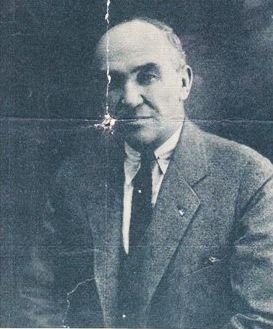
Not a great photograph of the Atlantic City mayor of the 1920s who died from peritonitis, but it'll have to do. Still, very different looking from the Ed Bader we see on the HBO show.

Not a great photograph of the Atlantic City mayor of the 1920s who died from peritonitis, but it’ll have to do. Still, very different looking from the Ed Bader we see on the HBO show.

Known in Life as: Mayor of Atlantic City, New Jersey from 1920-1927.
Character or Inspiration? He’s a character on the show.
Similarities: Had a construction business prior to his election as mayor.
Differences: Was actually bald and son of Catholic German immigrants (since he was part of the Atlantic City Knights of Columbus). Played for the Latrobe Athletic Association in US professional football after attending the University of Pennsylvania. Was a champion for education. Spoke out against the KKK, was a patron of athletics, and set up a garbage collecting operation as well as helped rebuilt Atlantic City during a hurricane. Very active in his community, sponsored a lot of construction projects, organized the first Miss America pageant, as well as had a wife and four kids. Still, he was much more than a pawn to the political bosses and he and Nucky Johnson were good friends (the latter was at his deathbed).
Ultimate Fate: Died of peritonitis in 1927 at 52 (and the fact his appendix was on the left side of his torso).

12. Joe Masseria (1886-1931)

Man, he doesn't seem like a nice guy here. Still, seems to have a lighter skin complexion than Ivo Nandi on the show to my surprise. Of course, he'll be done in by Luciano some time after this picture is taken.

Man, he doesn’t seem like a nice guy here. Still, seems to have a lighter skin complexion than Ivo Nandi on the show to my surprise. Of course, he’ll be done in by Luciano some time after this picture is taken.

Known in Life as: Early Mafia boss in New York City and what is now called the Genovese crime family. Waged a bloody war to take over criminal activities in the city.
Character or Inspiration? He’s a character on the show.
Similarities: Was the big Italian crime boss in the 1920s who gangsters feared and respected. Survived numerous assassination attempts save the one ordered by Luciano.
Differences: Gave Luciano his start as a gunman before he left for Rothstein. May have played a role in the Saint Valentine’s Day Massacre of 1929. Was only top mob boss in New York for 3 years. Wasn’t the head of the Morello crime family until 1922.
Ultimate Fate: Assassinated at a Coney Island restaurant in 1931. He was 45. We’re sure it was on Luciano’s orders since he wanted to end the Castellammarese War and dissolve the old Costa Nostra structure.

13. Louis “Commodore” Kuehnle (1857-1934)

I know this is a picture of Kuehnle from 1916 but it'll have to do. Yet, he doesn't look in the way I expected him to. Wonder if he hunted animals enough to make them an endangered species.

I know this is a picture of Kuehnle from 1916 but it’ll have to do. Yet, he doesn’t look in the way I expected him to. Wonder if he hunted animals enough to make them an endangered species.

Known in Life as: American business entrepreneur and politician. Leader of the Republican organization that controlled Atlantic City during the early 1900s. Was pursued for election fraud by New Jersey governor Woodrow Wilson in 1910 and was convicted on conflict of interest in 1913 where he served 6 months in prison.
Character or Inspiration? Inspiration for Louis Kaestner a. k. a. “the Commodore” (also has a personality more akin to an evil Teddy Roosevelt).
Similarities: Both founded a political machine and were succeeded by a guy named Nucky. Both were crooks who served jail time.
Differences: Didn’t really successfully challenge Nucky Johnson (at least not to have him put in prison, though Nucky did help him to get elected as City Commissioner which he served for the rest of his life). Owned the Kuehnle Hotel where he ran a gambling and prostitution racket. Probably didn’t rape a 13 year old girl and didn’t have a maid try to poison him. Was clean shaven and had no kids.
Ultimate Fate: Died of complications from appendicitis operation in 1934 at the age of 76.
A Word from Our Sponsors: Vandelay Wrongful Accusation Insurance

Been successfully framed for a serious crime you didn’t commit? Have you been trying to prove your innocence to the authorities who just don’t listen to you? Does the real culprit have a conspiracy against you? Sick of the real culprit getting away with the crime while you have been sentenced to years in jail? Do you believe that the criminal justice system is unfair to you and that you could better spend your time breaking out of prison and trying to clear your name by catching the real guy?

Wrongful accusations happen all the time in our everyday lives. To be falsely accused of a serious crime is perhaps one of the most horrible things anyone can experience, especially if they know that the real culprit is so much richer and more influential than he or she is and the criminal justice system can be so unfair to those it should protect. Sometimes people are just wrongfully accused of such heinous acts just because they were in a close relationship with the victim, just happened to be at the wrong place at the wrong time, have a shady history, social discrimination, or that you make a convenient fall guy in somebody else’s scheme. And while there are lawyers, they usually don’t tend to stick around once the falsely accused suspect is convicted and sent to prison. Thus, because the were so wronged by the criminal justice system, many can’t do anything else than try exonerating themselves by going on a personal mission to find the real culprits often committing a series of of other crimes in the process whether they be resisting arrest, assaulting a police officer, grand theft auto, breaking and entering, reckless endangerment, assault, and fraud. Sure these crimes are usually minor compared to what you’re unjustly being accused of but they can come back to bite you once law enforcement gets into play. And let’s just say that it would totally suck to be back in prison after all the hard work you’ve done to prove your innocence through any means necessary.

Here at Vandelay Wrongful Accusation Insurance, we understand that you were forced to commit those heinous acts since there were no legally accepted ways to prove your innocence as a fugitive from injustice. Here we strive to protect you from providing advice on how to cover your tracks as well as recommend a list of lawyers who’d be happy to defend you once you’ve exonerated yourself from the crime you’ve been accused of so you don’t have to face the legal consequences of your actions. Whether it be burglary, theft, kidnapping, torture, attempted murder, breaking and entering, hostage taking, property damage, resisting legal custody, hacking, forgery, blackmail, illegal border crossing, transporting firearms across state lines without a permit, unlawful use of a weapon, and giving the bad guy what he totally deserves, we’ll cover you as you pursue the son of a bitch responsible for ruining your life.

* Vandelay Wrongful Accusation Insurance may not be accepted in all situations in which someone is wrongfully accused of a crime and the said person may have to face the legal consequences anyway. Also, doesn’t cover crimes like murder of innocent bystanders or good guys, domestic abuse, terrorism, or sex crimes since these are very serious crimes themselves and won’t make any wrongfully accused person seem sympathetic in comparison. Vandelay Wrongful Accusation Insurance will only cover you until you’ve not only been exonerated from the original crime but also after you get off on the other crimes you’ve committed in your pursuit to clear your name.

History of the World According to the Movies: Part 91- Crime and Law Enforcement in 1990s America

Image

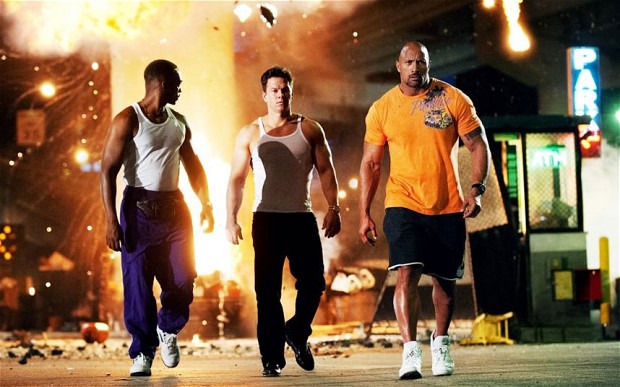
Anthony Mackie, Mark Wahlberg, and Dwayne Johnson star in Michael Bay’s too soon 2013 crime film Pain & Gain. This movie was based on a series of articles by Pete Collins which pertains to a group of violent and criminal bodybuilders as well as outright screw ups. Still, if there was an historic incident Michael Bay could do justice to, it’s this one. Yet, this film was met with outrage by their victims and their families nevertheless. Still, the real life Sun Gym gang wasn’t nearly as likeable as the guys in the movie and their crimes were much worse. Still, it probably would’ve been better if Michael Bay had made this movie perhaps 100 years after the events took place.

Despite the 1990s being a period of stability in the United States, there were plenty of stories on crime. After all, this is the decade when you have the O. J. Simpson’s Bronco chase and the media circus surrounding in his trial over the death of his ex-wife and her boyfriend. Of course, I was in preschool at the time but I sort of remember it being covered on the news and yes, I think he did it. Still, you have other stories of wrong doing as well. In Washington D. C., you have Stephen Glass who was a rising star in The New Republic until it was discovered that he was a pathological liar who may have made up stuff in his 27 out of 41 stories for the magazine which led to the rise in online journalism. In New York, you have Jordan Belfort, the so-called “Wolf of Wall Street” (which was also the nickname of Mr. Peabody), whose brokerage firm Sutton Oakmont was known as a den of sin as well as ran a “pump and dump” operation which would land him in prison for money laundering and securities fraud. He’d also share a prison cell with Tommy Chong. In the South you have con artist Steven Russell whose zany schemes and prison escapes seem too incredible to be true at times.Then there’s Miami, which is home of the Sun Gym gang who were a group of hostile bodybuilders known for kidnapping, extortion, and murder. There are a few movies about some of these exploits which contain their share of inaccuracies I shall list accordingly.

Steven Russell:

Steven Jay Russell escaped from prison wearing hot pants and fishnets. (Contrary to I Love You, Philip Morris, he did this wearing a women’s track bottoms and a tie-dyed T-shirt, since trying to escape prison wearing fishnet stockings and hot pants would be a very bad idea for a man {but certainly much more hilarious}. Also, he pulled this off in 1993, when he was still with his previous boyfriend, not Philip Morris as in the film.)

Steven Jay Russell escaped from prison by coloring his white prison uniform with green marker to resemble scrubs. (Yes, he did this but unlike in I Love You, Phillip Morris, there was a prison guard who wasn’t entirely convinced who said, “Damn, doc, those look like prison whites you’re wearing.” He cheerily replied, “Well, don’t shoot.” The guard didn’t.)

Jordan Belfort:

Jordan Belfort met Danny Porush in a restaurant. (Contrary to The Wolf of Wall Street, they met through Porush’s then wife {and first cousin} who met Jordan on the bus. She said Belfort always gave up his seat for her and found out he lived in the same building with them. She introduced her husband to Belfort thinking that he might help Danny with his struggling ambulette business. After their first conversation, Porush decided to take his Series 7 exam and get a stockbroker license.)

Jordan Belfort was arrested for crashing his Lamborghini while high on expired Quaaludes. (Yes, but the real Belfort says it was a Mercedes. He said he was so high in a drug haze that he couldn’t remember causing several different accidents on his way home, yet he did send one woman to the hospital via a head on collision. Interestingly, Belfort would later become a cell mate to Tommy Chong who encouraged him to write his memoirs.)

Jordan Belfort’s brokerage firm taped cash to a woman’s body. (While it’s seen in The Wolf of Wall Street, Danny Porush says it didn’t happen while Belfort says it did.)

Jordan Belfort hosted a dwarf tossing competition at Stratton Oakmont. (Though he considered hiring a dwarves for tossing, he didn’t actually do so. As Danny Porush said, “We never abused [or threw] the midgets in the office; we were friendly to them. There was no physical abuse.” Yet, it’s in The Wolf of Wall Street.)

Jordan Belfort was called “the Wolf of Wall Street.” (Contrary to The Wolf of Wall Street, the nickname came from an article about him. Also, he only briefly worked as a legitimate stock broker on Wall Street before the 1987 Black Monday crash that left him out of a job.)

Jordan Belfort had a chimpanzee at his Stratton Oakmont brokerage firm. (Contrary to The Wolf of Wall Street, he didn’t. According to Danny Porush, “There were no animals in the office…I would also never abuse an animal in any way.” Yet, he did admit to eating a goldfish.)

Jordan Belfort gave his employees at Stratton Oakmont riling motivational speeches. (Yes, but they were more often filled with self-adulation than Leonardo DiCaprio’s in The Wolf of Wall Street. Strangely the real Belfort is now working as a motivational speaker and corporate consultant. Yet, DiCaprio would say, “Jordan stands as a shining example of the trans formative qualities of ambition and hard work, and in that regard, he is a true motivator.” Yet, I’m not sure he’d be good in the role model department after the cheating, drugs, hazing, and his “pump and dump” schemes which led to being criminally charged, serving prison time, and having his company banned from brokerage activities.)

Stephen Glass:

The Stephen Glass story “Hack Heaven” showed how the ill-equipped The New Republic was to handling someone like him (who has systematically undermined the magazine’s editorial process) when it was exposed as a hoax in the Forbes Digital online magazine. (What’s not mentioned in Shattered Glass is that this episode was one of the key moments that established online media as a serious competitor to the traditional print rather than just a novelty. And this happened in 1998.)

Stephen Glass’ was a respected journalist for The New Republic until his “Hack Heaven” article. (Yes, but what Shattered Glass doesn’t point out is that while he enjoyed the loyalty of the staff, his reporting repeatedly drew outraged rebuttals from his article subjects that eroded his credibility and led to private skepticism in The New Republic. When scandal broke, the editor in chief Martin Peretz admitted that his wife didn’t find Glass’ stories credible and stopped reading them. During Glass’ time at the magazine, out of the 41 stories he published 27 of them were found to be either wholly or partly fabricated. He also wrote for other magazines such as The Heritage Foundation’s Policy Review, JFK Jr.’s George, Rolling Stone, and Harper’s. Not only that but he contributed to PRI’s This American Life hosted by Ira Glass {no relation}.)

The Sun Gym Gang:

The Sun Gym gang consisted of 3 main members. (Contrary to Pain & Gain, it was larger with Sun Gym owner John Mese, stripper Sabina Petrescu, and nurse Cindy Eldridge as accomplices.)

Daniel Lugo was single during the kidnapping of Marc Schiller. (He was married twice and both wives played tangential roles in his schemes. His second wife has divorced him since and won sole custody of their two daughters in 1998.)

The need to fund hormone injections motivated Adrian Doorbal’s crimes. (Contrary to Pain & Gain, he didn’t need to commit further crimes to fund them, thanks to Lugo giving him profits from the Medicare scam. He just participated in the Sun Gym gang’s criminal activities all for the violence.)

Daniel Lugo was a vicious bodybuilding moron. (Contrary to Mark Wahlberg’s portrayal in Pain & Gain, he was a smart man according to the guy who brought him down. He had other criminal activities as well such as a fraud conviction and running a lucrative Medicare scam where he bought information about the recipients and billed the government for bogus medical services. Also, he didn’t attend any self-help seminars, wore vanilla scented cologne, or cite Michael Corleone or Rocky as role models.)

The Sun Gym gang disguised as ninjas in order to kidnap Marc Schiller. (Contrary to Pain & Gain, they discussed dressing up as ninjas on Halloween night to abduct Marc Schiller. Rather they talked about dressing up as ninjas as part of their costume as trick or treaters in which they’d nab him when Schiller would give them candy. The Sun Gym gang was a group of bodybuilders in Florida so you can see why this plan was never executed. Yet, it did take about 6 tries for them to kidnap Schiller {Tony Shaloub’s character in the movie}. Still, they did dress in black, paint their faces with military makeup, and wore gloves in one of their kidnapping attempts.)

Daniel Lugo befriended Marc Schiller at the Sun Gym. (Contrary to Pain & Gain, Schiller distrusted Lugo and never went to the gym. It was actually Jorge Delgado who befriended Lugo and targeted Schiller since he worked for the man as did his wife. Not only that, but it was at Delgado’s {not Schiller’s} warehouse where the kidnappers tortured Schiller for a full month before trying to kill him. As the Miami New Times reported, “Throughout his ordeal with the gang, Schiller had been tased, burned, beaten, pistol-whipped, and forced to endure games of Russian roulette. When the gang was done with him, they made him wash down sleeping pills with liquor, put him behind the wheel of his Toyota 4Runner, and rammed it into a utility pole to make it look like a drunk driving accident. Seeing that he was still alive, they then doused the vehicle with fuel and set it on fire with him in it, but Schiller jumped out of the flaming car. Staggering, the gang ran him over twice with a Camry {not a van} and left him for dead. Miraculously, he lived after eventually coming out of a coma and woke up in the hospital.” Details of Schiller’s torture {which was much more of a living hell in real life} and escape were modified for the film. Oh, and even when Schiller was in the hospital, he organized to be transported to one in Staten Island since he was afraid the Sun Gym gang would try to kill him again. He was right.)

Daniel Lugo killed Frank Griga and Krisztina Furton. (Contrary to Pain & Gain, Adrian Doorbal did with Lugo as an accomplice at Doorbal’s Miami Lakes apartment no less. Doorbal cracked the side of Griga’s head with a blunt object, strangled him with a headlock, and injected him with horse tranquilizer. Lugo covered Furton’s mouth and tackled her yet contrary to the film, she was unarmed. Once bound, Doorbal injected her 3 times not 2, which was too much.)

Daniel Lugo and Adrian Doorbal put Frank Griga and Krisztina Furton’s body parts in barrels and dumped them in a lake. (Contrary to Pain & Gain, Lugo, Doorbal, and “Little Mario” Gray put Griga and Furton’s bodies in drums and dumped them in a drainage ditch in southwest Miami. Too bad for them, Furton had breast implants with serial numbers on them which the Miami police used to identify her remains.)

A member of the Sun Gym gang became acquainted with a demeaning Frank Griga while running into him at a strip club. (Contrary to Pain & Gain, Griga was discovered by Adrian Doorbal who spotted a picture of a Lamborghini Diablo in a photo album belonging to one of his stripper girlfriends Beatriz Weiland. He asked who owned it and it turned out that Griga was one of Weiland’s former generous boyfriends. It was she who introduced Griga to the Sun Gym gang.)

A chainsaw the Sun Gym gang planned use for cutting bodies failed to start due to it being clogged by hair. (It was actually due to them forgetting to put motor oil in it and burnt the engine while trying to start it which they returned to the Home Depot which they exchanged for an electric one with a one year guarantee to “handle all your cutting chores quickly and easily” {kind of reminds me of an episode of Dexter here}. Then that’s the time when Furton’s hair got clogged up in the chainsaw, which led to Adrian Doorbal and Daniel Lugo to chop off her head with a hatchet and used a curved blade and pliers to remove the faces and teeth on the heads.)

Jorge Delgado barbecued hands and feet of Frank Griga and Krisztina Furton outside the warehouse. (Contrary to the Dwayne Johnson expy in Pain & Gain, it was Daniel Lugo who did this and it was on a steel drum with an iron grate not an actual grill. He also grilled Griga and Furton’s skull fragments, too. When Jorge Delgado saw this, he yelled at Lugo who reluctantly agreed to move his operation to a nearby rear ally. Thankfully for them, Dexter wasn’t nearby {it being Miami}.)

At least one member of the Sun Gym gang robbed an armored truck only to get his toe shot off. (Contrary to Pain & Gain, this scene with Dwayne Johnson’s character is entirely fictional. Still, Dwayne Johnson’s character in the film as a composite of Jorge Delgado, Carl Weekes, and Mario Sanchez.)

Adrian Doorbal was a mild mannered man. (Contrary to Pain & Gain, he was violent and sadistic just as all his fellow Sun Gym gang members. And he was much more of an unstable lunatic as well.)

Daniel Lugo wanted to kidnap Marc Schiller over the latter stealing $300,000 from him. (Contrary to Pain & Gain, Lugo just wanted Schiller’s assets and used the money stealing as an excuse.)

One of the Sun Gym members worked at a church and had a gay priest come onto him. (Contrary to what goes on with Dwayne Johnson’s character in Pain & Gain, Carl Weekes didn’t work at a church or had an old gay priest come on to him. Yet, he was drug addicted ex-con who found Jesus.)

One of the Sun Gym members testified against is fellow gang members after an attack of conscience. (Contrary to Pain & Gain, Jorge Delgado just testified against his fellow gang members just to get a lenient sentence in which he got 15 years yet only served 7 ½ {while Daniel Lugo and Adrian Doorbal got the death penalty}. Dwayne John’s other real-life counterpart Carl Weekes who drove the car to run over Marc Schiller got 10 years for attempted murder. He served 7. Yet, he was described as a “weakling” by his fellow gang members since he weighed only 140 pounds. Still, like Dwayne Johnson’s character, both Delgado and Weekes declined to participate in subsequent crimes after the whole Marc Schiller thing.)

The Sun Gym gang held Marc Schiller for weeks because he was resisting. (They held him for that long because the paperwork to sign over everything he had took time. Yet, unlike in Pain & Gain, neither Daniel Lugo nor Adrian Doorbal had any qualms about killing him.)

Members of the Sun Gym gang were vicious morons and steroid-using bodybuilders. (Yes, they were steroid using bodybuilders. Yet, they were said to be the worst combination of manipulation, muscle, and murderous intent.)

Cindy Eldridge:

Cindy Eldridge was a heavyset nurse who met Adrian Doorbal during her work at the doctor’s office. They had a whirlwind courtship and married at home. (Contrary to her Rebel Wilson expy in Pain & Gain, she kind of resembled Tanning Salon Barbie and was a real fitness fanatic. Though she was a nurse who referred him to a doctor who used hormone therapy to treat the weak libidos of steroid users, she didn’t meet Doorbal as she was working but they rather met by chance in 1995 at a restaurant in Key Biscayne on the evening of her surprise 31st birthday party. Not only that, but they only married after dating for over a year at a courthouse but the union lasted for four days when she found out, Doorbal only married her so she couldn’t testify against him with regard to his role in kidnapping Marc Schiller or killing Frank Griga and Krisztina Furton, whose blood she helped Doorbal clean up at his home despite not knowing what actually happened at the time {you think she would being a nurse and all}.)

John Mese:

Sun Gym owner and accountant John Mese was arrested at his own gym. (Contrary to the Michael Bay movie, he was arrested during his own bodybuilding competition in downtown Miami. Also, two of the composites to Dwayne Johnson’s character were arrested at home, not at church. )

Marc Schiller:

Marc Schiller was a sleazy criminal. (Contrary to his Tony Shalhoub expy in Pain & Gain, the real Marc Schiller wasn’t a sleazy man in which he said, “There is no resemblance to me at all. I was always a humble, family person.” At the time, he lived in a two story poolside house with a wife and two kids as well as said that he never smoked cigars and was never surrounded by women in scantily clad bikinis {though having the Sun Gym gang kidnap a wholesome family man that Schiller wouldn’t elicit much sympathy on their part, especially since he drove a Toyota not a BMW with a “Miami Bitch” license plate}. He owned the failing Schlotzsky’s Deli franchise but still had seven figures at the bank thanks to his nutritional supplements companies. Still, the sleazy side of the Tony Shalhoub character in Pain & Gain may be based on Frank Griga who ran a phone sex business as well as smoked cigars surrounded by women in bikinis. As far as criminal activity is concerned, after he testified against the Sun Gym gang, he was arrested by federal agents as he left the courthouse. He was charged with orchestrating a Medicare billing scheme through his nutritional supplement companies. To make things worse, Sun Gym gang member Jorge Delgado was one of the witnesses to testify against Schiller, who pled guilty trying to conspiring to defraud the government. He received 46 months in prison and was ordered to pay back the government $14.6 million {it would be reduced to $128,597.87 and Schiller now insists he’s innocent and just too exhausted to defend himself}. Let’s say that unlike Mr. Monk’s kitchen floor, Marc Schiller’s record wasn’t exactly squeaky clean. Nevertheless, Marc Schiller wasn’t happy with Pain & Gain because the kidnapping incident basically ruined his life and he lost everything over it. Today he just lives in a one bedroom apartment, works for a company at $20 an hour, is divorced from his wife and only sees his kids on occasion, and has little interest in socializing and making friends. I think Michael Bay owes him an apology.)

Marc Schiller recognized Daniel Lugo from his cologne. (He recognized Lugo through his voice.)

Marc Schiller had a boat. (Contrary to Pain & Gain, he didn’t but Frank Griga did so Daniel Lugo couldn’t escape in it as he does in the movie.)

Marc Schiller helped catch Daniel Lugo by hitting him with a car in the Bahamas. (Contrary to Pain & Gain, neither Schiller nor Detective Ed DuBois were present at Daniel Lugo’s capture. Instead, Lugo was apprehended at the Hotel Montague in Nassau by a multiagency task force. Also, contrary to the movie, his girlfriend and parents went with him.)

Law Enforcement:

Ed DuBois:

Ed Dubois was a retired detective with a beautiful wife when he got the call from Marc Schiller. (Contrary to Pain & Gain, he was working for the NFL as a security consultant for Super Bowl XXIX in Miami and operating his P. I. firm he inherited from his dad {and as of 2014, he’s still working as private investigator}. He also had a leg up in the investigation because he knew the Sun Gym owner, John Mese. He was also much younger than as played by Ed Harris.)

Miscellaneous:

Frank Griga had a New York accent. (He had a Hungarian accent.)

History of the World According to the Movies: Part 86 – Crime and Law Enforcement in 1970s America

Image

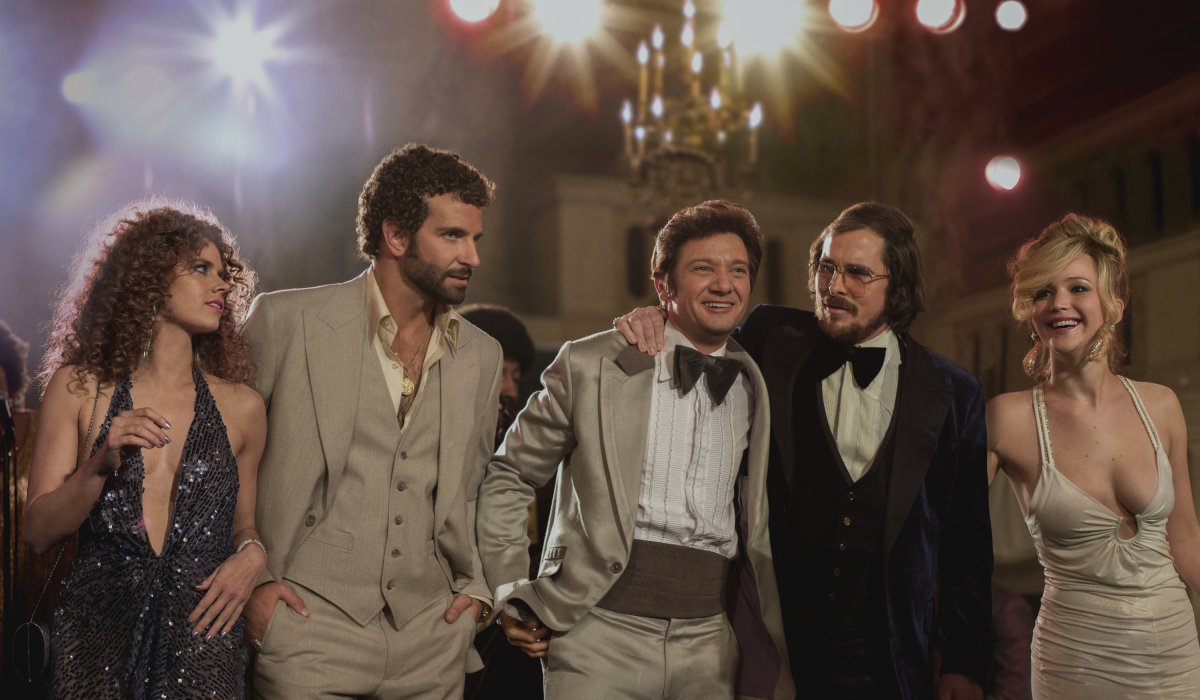
The 2013 American Hustle starring Amy Adams, Bradley Cooper, Jeremy Renner, Christian Bale, and Jennifer Lawrence is a loose retelling of the Abscam scandal. This was a collaboration between FBI agents and con artists bringing down criminals and corrupt politicians. Of course, while it says that some of the events in this film were true, the real story is much bleaker than what’s depicted on film including the happy ending. Still, the bit about Jeremy Renner giving Christian Bale the microwave as a gift actually happened if it makes you feel better.

The 1970s is a popular decade in movies pertaining to crime in the United States. And the US has more crime stories than just Watergate. You have the story of gangster Frank Lucas also known as Superfly who started as a low ranking gangster to another lord and became a noteworthy drug lord in New York. You have law enforcement officials like Joseph Pistone and Serpico who investigated either the mafia or cops behaving badly within the New York City Police Department. Next you have some of most famous serial killers active at this time like the Zodiac Killer, Ted Bundy, Jeffrey Dahmer, John Wayne Gacy, BTK, David Berkowitz, and others. You have Clifford Irving who fooled McGraw Hill into paying him to write an autobiography of Howard Hughes. Then there’s the scheme which was a collaboration of criminals and the FBI called Abscam that would later lead to the conviction of 19 people including a US senator and 6 US congressmen. Still, while there are plenty of true crime to depict in Hollywood, there are plenty of inaccuracies contained in such films which I shall list accordingly.

Ted Bundy:

Ted Bundy flunked out of law school and psychology classes. (Contrary to the 2002 film about him, he was a poor law student but graduated with honors as a psychology major.)

The “cheerleader” victim’s name was Jane Gilchrist. (Her name was Nancy Wilcox who was leaving a cheerleading competition when Bundy snatched her.)

Ted Bundy’s first arrest and Caryn Campbell’s murder took place in 1976. (They took place in 1975.)

During his first prison escape, Ted Bundy jumped from a window at a lower roof. (According to The Stranger Beside Me, he jumped from the window to the ground.)

Colorado authorities sought the death penalty for Ted Bundy. (They didn’t contrary to the 2002 film.)

Ted Bundy lost total interest in his studies after his girlfriend left him. (Contrary to the film, his breakup led him to study and take even more classes to get into American politics even working in political campaigns for the Republican Party. Also, he and that girlfriend would get back together while he was seeing someone else but would later end that relationship without explanation while they were engaged.)

Ted Bundy hotwired a car. (Contrary to the 2002 film, he found the keys inside it to steal the vehicle. Guess the owner was a complete idiot.)

Ted Bundy’s final victim was a girl rope skipping in the park named Susan Moore. (Her name was Kimberly Leach who was returning to the school gym to retrieve her forgotten purse when Bundy abducted her. She’d never claim it.)

Ted Bundy’s Volkswagen was yellow. (It was tan.)

Ted Bundy’s final arrest for stealing a car in Florida took place in an open field in broad daylight. (Contrary to the 2002 film, it took place in 1978 in a residential neighborhood at 1:00 AM.)

Ted Bundy took a woman from her home by wrapping her in a large sheet and carrying her to his car in front of witnesses in a street. (Contrary to the 2002 film, he stated he was always careful about witness identification.)

Clifford Irving:

Clifford Irving used a Newsweek article “The Secret World of Howard Hughes,” as research for his fake autobiography of Howard Hughes in 1971. (The article came out in 1976 after Hughes died and included a sketch of the last few years of his life. Clifford Irving wouldn’t have access to this like he does in The Hoax. Also, though Irving himself criticized the film, there’s not much I can write about the accuracy since he’s a pretty unreliable person.)

Jimmy Burke:

Jimmy Burke was a nasty and ruthless mobster who loved hijacking trucks. (He was even nastier than Robert DeNiro’s expy portrayal of him in Goodfellas. In real life, he liked to shake down people by locking their kids in the fridge as well as cut his wife’s annoying ex-boyfriend into pieces and committed numerous other murders. He and Vario also ripped of the robbers and other guys involved in the Lufthansa, which nobody got more than a $50,000 cut and most got less {out of a $6 million robbery}. The robbers involved still got murdered for asking for a fair cut. Talk about being screwed royally.)

Paul Vario:

Paul Vario was a likeable capo who helped protect other gangsters from themselves. (Contrary to his Goodfellas expy, he had more direct involvement in the nastier and bloodier crimes committed by his crew. In Wiseguy, Henry Hill recalled Vario attacking a barmaid with a baseball bat after she told his wife they were having an affair. Yet, Wiseguy author Nicholas Pileggi writes, “He abhorred unnecessary violence {the kind he hadn’t ordered}, mainly because it was bad for business.” Oh, and he also had an affair with Henry Hill’s wife while he was in prison.)

Henry Hill:

Henry Hill never personally killed anyone despite being an accomplice in several murders. (He actually had killed three people, contrary to Goodfellas. Yet, he isn’t the most reliable narrator in the movie nor is he meant to.)

Tommy De Simone:

Tommy De Simone was a short violent pistol. (Contrary to the Joe Pesci expy portrayal in Goodfellas, he was about 6’2” and weighed over 200 pounds. Also, he was born in 1950 so he wasn’t the same age as Henry Hill. Not only that, he was a much nastier man than Pesci was in the film. What ultimately led to his murder was that he tried to rape Henry Hill’s wife when he was in prison {though killing Billy Batts may have also had something to do with it, too}.)

Benjamin “Lefty” Ruggerio:

Benjamin “Lefty” Ruggerio was Joseph Pistone’s faithful friend during his time as Donnie Brasco. (He was a genuine thug who Pistone despised. Most of his positive traits in Donnie Brasco were taken from the real life Sonny Black, the only gangster Pistone felt some kinship and considered to have a genuine good side.)

Benjamin “Lefty” Ruggerio was whacked. (Contrary to Donnie Brasco, he was arrested by FBI agents in 1981 and sentence to 20 years in prison thanks to Pistone’s work. He was released in the early 1990s and died of cancer on Thanksgiving 1995 at the age of 72. Yet, Sonny Black certainly was since he was found in a body bag with guns shot wounds and his hands cut off in 1982. Also, it was Sonny Black who removed his jewelry not Lefty.)

Angelo Sepe:

Angelo Sepe was a murder victim found hanging in a meat truck freezer for his involvement in the Lufthansa Heist. (Actually contrary to Goodfellas, this was a how a man named Richard Eaton was murdered {after being tortured by Jimmy Burke} for stealing $250,000 and skimming even more being laundered {he had no involvement with the heist}. As for Sepe, he wasn’t a victim in the Lufthansa Heist, but actually the one carrying out the murders. He’d later be killed by a hit squad for robbing a Lucchese affiliated drug trafficker.)

Sonny Black:

Sonny Black was ruthless and brutal gangster. (Contrary to Donnie Brasco, he was the only gangster whom Joseph Pistone felt any kinship and thought he possessed any redeeming qualities. In Donnie Brasco, his worst traits were taken from Pistone’s earliest mentor who was so notoriously nasty that he was feared and hated by other gangsters and eventually went into hiding, knowing that dozens of New York Mafiosi had been dreaming of putting a bullet into him for decades. His character is absent from the film.)

Frank Lucas:

Frank Lucas paid a cop off on the street for finding his drug stash in his trunk. (Unlike in American Gangster, Lucas paid off the guy at the station.)

Frank Lucas was in prison from 1976-1991. (Contrary to American Gangster, he was out on parole between 1981-1984.)

Frank Lucas kept his money in a doghouse. (He didn’t. Yet, Julie Lucas was said to throw suitcases full of money out the bathroom window during their arrest.)

Julie Lucas left her husband after he was arrested on drug charges. (Contrary to American Gangster, they have been married for over 40 years and are still together to this day. Yet, she did go back to Puerto Rico to raise her kids with her parents.)

Frank Lucas snitched on dirty cops, not drug dealers. (Unlike in American Gangster, he snitched on dirty cops, fellow drug dealers, and members of the mob. Yet, he didn’t do it out of the goodness of his heart.)

Frank Lucas smuggled heroin from Vietnam in the coffins of dead American servicemen. (Though this is in American Gangster, this is highly disputed. Though Lucas claims this, he could sometimes exaggerate the numbers. US Sergeant Lesley “Ike” Atkinson claimed he used teak furniture and military luggage to smuggle the heroin.)

Julie Lucas was well aware of her husband’s business but was uninvolved. (Though she’s shown to be this way in American Gangster, she was certainly an accomplice since she was arrested and convicted for her involvement in Frank’s drug business.)

Frank Lucas and his wife were childless. (Though it’s seen in American Gangster, they actually had seven kids.)

Frank Lucas’ wife Julie was a former Miss Puerto Rico. (Contrary to American Gangster, there was never a woman listed among the Miss Puerto Rico’s winners list by the name of Julie Fariat. Yet, Lucas did meet his wife there while on a retreat to dream up “business” ideas.)

Frank Lucas gave himself away when he wore a fur coat. (Well, it’s kind of exaggerated in American Gangster but the cops already knew who he was by then.)

The Zodiac Killings:

Robert Graysmith was the hero in the Zodiac case. (Contrary to Zodiac, his analysis isn’t universally accepted, though the film doesn’t present him as perfect. Yet, casting Jake Gyllenhaal in that role makes him a more sympathetic character, no matter what he does whether it’s trying to match killings to lunar cycles, badgering witnesses, getting carried away with his own fame, neglecting his family, naming suspects based on unorthodox investigations, quit his job, and gets obsessed with a serial killer. Also, he was cartoonist for God’s sake.)

There were no surviving witnesses in the Zodiac killings. (There were two but they weren’t much help. Still, though the Zodiac killer boasted about killing 37 people, there was only enough evidence to confirm 5 and there were 2 survivors.)

Rick Marshall may have been the Zodiac killer. (Zodiac leaves this open though he certainly wasn’t since the hypothesis was disproved by fingerprint analysis.)

Allen Leigh may have been the Zodiac killer. (This is what Graysmith believed in Zodiac but the evidence against him was seen as circumstantial and his candidacy as a suspect was disqualified due to handwriting analysis and DNA tests.)

The Zodiac killer was responsible for killing 12 people. (He was only confirmed in killing 5 people unlike what Curse of the Zodiac says. And, no, the case wasn’t officially closed in 2004 by the San Francisco Police Department. It’s still open.)

Law Enforcement:

Ritchie Roberts:

Detective Ritchie Roberts was the prosecutor and lead investigator in Frank Lucas’ case. (This wouldn’t be allowed in the United States. Yet, Roberts was the prosecutor but he wasn’t the lead investigator.)

Ritchie Roberts was the main figure in the Frank Lucas investigation. (Contrary to American Gangster, he was relatively minor figure and among a whole squad of guys who worked on it. Ex-New Jersey cops Ed Jones, Al Spearman and Ben Abruzzo played a much bigger role and weren’t happy when they were left out in American Gangster. Jones said, “We spent nearly two years risking our lives on that case, and then we see a guy who had no interest before we made the arrests take the credit. We’re angry.” Yet, Lucas did have a hit on Roberts and Roberts did pay for one of his kids’ education and is his son’s godfather. Yes, they’re still friends to this day.)

During his time in the Frank Lucas case, Ritchie Roberts was in a heated custody battle with his ex. (Sorry, but unlike what American Gangster shows, Roberts never had any children with his first wife. In fact, he told the New York Post that the depiction of his relationship with his first wife was offensive.)

Ritchie Roberts arrested Frank Lucas while the latter was leaving church. (Contrary to American Gangster, the Lucases were arrested in their New Jersey home.)

Joseph Pistone (a. k. a. Donnie Brasco):

The FBI agents working with Joseph Pistone were useless fools. (One of the clownish characters in Donnie Brasco was actually an FBI agent posing as a dangerous mob turf boss during the operation. Also. Pistone was an FBI agent.)

Joseph Pistone was a good looking guy. (Contrary to Donnie Brasco, he looked nothing like Johnny Depp.)

Joseph Pistone began to identify with the members of the Bonnano family during his undercover work as Donnie Brasco. (Contrary to Donnie Brasco, Pistone only had a real relationship with Sonny Black. He found the rest of the gangsters only superficially charming, having to deal with their brutality and lack of any basic humanity day in and day out more or less reinforced his negative views on the Mafia. So, no, he didn’t turn away from the FBI and became a gangster at heart.)

During his time as Donnie Brasco, Joseph Pistone conspired to commit a murder and assaulted a civilian. (Unlike what you see in Donnie Brasco, Pistone wouldn’t have done either since such activities would’ve sent him to jail {though he had 4 contracts to whack people but he claims to have never followed through}. Yet, he and undercover agents did stage fake whacks with the police but the targets would be admitted in a witness protection program. He actually went undercover as a jeweler.)

Abscam:

Melvin Weinberg had been living a life of crime since he smashed windows for his father as a child. (Contrary to American Hustle, he only began working for his father as an adult and after his first marriage to a woman named Mary who had three kids with him {absent from the film and not even mentioned} but David O. Russell you wouldn’t find an overweight Christian Bale {who gained over 40 pounds and avoided the gym for his role} smashing windows as anything adorable. But yes, Weinberg did smash windows to drum up his dad’s business though a later report says he did it at behest of a local union to punish businesses that used non-union glaziers. Not only that but the glass business was heavily corrupt at the time in which companies bribed unions and cheated customers.)

Camden Mayor Angelo Errichetti was a selfless politician who only got involved in Abscam to provide jobs to his constituents. (Like his Jeremy Renner expy, Errichetti did care for the people of Camden, New Jersey, and was widely praised for it. However, he had a reputation for committing crimes. During the Abscam operation, he offered to get the fake sheikh into illegal business such as money counterfeiting and drug smuggling. Oh, and he asked for a $400,000 bribe. Still, at least they got his hair style right.)

Melvin and Cynthia Marie Weinberg were a young couple during the Abscam operation. (Though their expies were portrayed by a pushing 40 Christian Bale and Jennifer Lawrence who’s my age, the real Weinbergs were much older with Melvin in his 50s and Cynthia Marie in her late 40s. However, there was no love pentagon between them that included a mobster and an FBI agent. Still, Weinberg kind of looked like a more or less cleaned up version of Salman Rushide or an Iranian ayatollah in a 1970s business suit.)

Tony Amoroso was a crazy coke head FBI agent involved in Abscam who wore curlers in his hair. (Unlike his expy in American Hustle, Amoroso was only one of a number of agents involved in the scam. Also, there’s no evidence he wore curlers, went nuts, beat up his boss, snorted cocaine, or carried on an affair with Weinburg’s mistress. Bradley Cooper’s character is also an expy for FBI agent John Goode who came up with the Abscam idea in the first place.)

Melvin Weinburg was a kind man who was conflicted between shacking up with his mistress and being a dad to his adopted son. (He abandoned his first wife and their three biological children for his then mistress and later wife Cynthia Marie. Thus, he was more of a scumbag than his Christian Bale expy in American Hustle.)

Cynthia Marie Weinberg nearly blew her husband’s cover and left her husband for a mobster. (Unlike her expy in American Hustle, Cynthia didn’t almost blow her husband’s cover by accident {since she wasn’t involved} or shacked up comfortably with a mobster. In fact, contrary to the Jennifer Lawrence expy she wasn’t a ditz according to columnist Jack Anderson. Rather she was seen as a whistleblower, yet she was devoted to her husband that she sold her engagement ring to bail Mel out when he was arrest for fraud. Yet, she wasn’t aware that her husband was cheating on her even after Mel’s story was told in The Sting Man. Rather, Mel insisted her that the mistress was a figment of journalist-author Robert W. Greene’s imagination just to add sex to the book so it would sell. She fell for it. But she later did find out eventually and confronted Evelyn but it didn’t take place in a ladies’ room nor did it end with a kiss. Nor did her marriage with Melvin end in an amicable divorce. Rather, Melvin abandoned her for his mistress and she hanged herself in 1982 weeks after going to the press claiming that he profited from Abscam and accused her husband of taking bribes and gifts including a microwave oven. She was 50.)

Melvin Weinberg left his wife, Cynthia Marie for Evelyn Knight and lived happily ever after. (Contrary to American Hustle, Weinberg abandoned his wife for Evelyn. Yet, while he and Evelyn did marry and adopted a son {who’s now a cop}, they later divorced. They still live near each other but they aren’t on speaking terms.)

Melvin Weinberg was just a big time con artist before he was recruited as an FBI informant for Abscam. (Contrary to his expy in American Hustle, he had already been an FBI informant for years and had a reputation for always delivering. In fact, he was so good as an informant, he thought he could make a living from it and did it only for the money and legal benefits. He also liked to outsmart corrupt politicians whom he called, “a bunch of perverts, drunks, and crooks.” He managed to get six US congressmen and a senator convicted of bribery {he tried to bribe Larry Pressler and John Murtha but they were too smart to take the case of money he offered them}. Still, many Americans and the US government were ambivalent about Abscam and some called it entrapment. Yet, the fallout of Abscam didn’t make the political figures appear corrupt, just stupid and the American people weren’t happy about it that the Justice Department was forced to issue new guidelines restricting undercover operations against politicians.)

The fake sheikh in the Abscam operation was played by a Mexican American agent who spoke no Arabic. (Contrary to American Hustle, he was played by three agents. First, by FBI agent Mike Dennehy who’s the brother of the Tony and Golden Globe award winning Brian who spoke no Arabic and perhaps made an even less convincing sheikh than a Mexican. Second, by a Lebanese American who probably did. They even added another fictional sheikh promoted to full emir.)

Evelyn Knight was an American woman impersonating a British aristocrat who was involved in Melvin Weinberg’s scams. (Unlike the Amy Adams expy in American Hustle, Knight was actually British but she was involved in her boyfriend’s scams but to a lesser extent and she didn’t know what Melvin did until one of his victims sued him and the Feds had an arrest warrant out for her. Weinberg would agree to help the FBI with 4 cases if charges against her were dropped. Still, she was said to be very beautiful that Melvin called her “Lady Evelyn” though nobody thought she was nobility. Also, she wasn’t involved in Abscam or with an FBI agent {yet she did almost leave Melvin for Wayne Newton}.)

Melvin Weinberg felt so bad for Mayor Errichetti that he tried to engineer a reduced sentence for him. (Like their expies in American Hustle, Weinberg did have a fondness for Errichetti but he made no attempt to protect him from prosecution. Yet, the admiration had more to do with Errichetti being the biggest crook of them all. Also, contrary to Jeremy Renner, Errichetti got a 6 year stint in prison {and served 2 ½ years, not 18 months. Still, Errichetti helped open Abscam wide and connected Weinberg with a whole host of US congressmen.)

Miscellaneous:

Detective John Trupo blew his brains out during the 1970s before his fellow cops could arrest him. (Contrary to American Gangster, Frank Lucas said that he didn’t know what happened to him and is still alive as far as he knows.)

FBI informant Danny Greene was killed in a Cadillac. (Contrary to Kill the Irishman, he was killed in a Lincoln Continental.)

Gangster Carmine Galante was killed during the winter. (He was killed in July 1979, unlike what you see in Donnie Brasco.)

Charles Manson was a serial killer. (Not exactly, but he had a tendency to enable them since his followers certainly were. He’s only know to may have killed one person personally.)

Jeffrey Dahmer was sentenced to 957 years in federal prison. (Contrary to the Jeremy Renner film about him, he was convicted of 15 murders at a state trial in Wisconsin and served his sentence at a state correctional facility.)

Son of Sam was a serial killer in the Bronx. (He was active in Queens.)

Louis Cafora and his wife were found dead in a Pepto-Bismol pink 1979 Coupe DeVille Cadillac by kids playing in a parking lot. (Contrary to Goodfellas, their bodies were never found and the car was a Fleetwood but it was pink. The guy drove it to an FBI investigation in that.)

History of the World According to the Movies: Part 85 – The Watergate Scandals

Image

The 1976 film All the President’s Men is perhaps the definitive film in relation to the events of the Watergate scandals. It stars Robert Redford and Dustin Hoffman as two young Washington Post reporters Bob Woodward and Carl Bernstein. Though not always true real events, this movie shows the first seven months in uncovering one of the biggest political scandals in American history that led to the fall of a US president. Yet, while it portrays the press as the hero, it was actually a group effort between journalists and government whistle blowers.

Perhaps no event in American history during the 1970s takes no more significance than the Watergate scandals of the Nixon administration. Political corruption has always existed in American politics even at the time of the founding Fathers (look it up). Yet, among all the political scandals in US history, Watergate remains the most infamous in which a midnight break-in gone wrong at the eponymous Washington DC hotel and office complex (at the Democratic National Committee headquarters, no less) would lead to a massive coverup of Richard Nixon and his administration once the burglars were found to have connections to Nixon’s reelection campaign. Watergate would then be the term that would cover an array of clandestine and often illegal activities undertaken by the Nixon administration including “dirty tricks” like bugging the offices of political opponents and people of whom Nixon or his officials were suspicious as well as ordering harassment of activists groups and political figures, using the FBI, CIA, and the IRS. When Congress discovered a conspiracy as well as multiple administration abuses, Nixon’s resistance would lead to a constitutional crisis, articles of impeachment, and Nixon resigning from the presidency leaving the office in disgrace. However, though there are some movies about the Watergate scandals, there are some things that these films get wrong which I shall list.

Richard Nixon:

Richard Nixon knew about the Watergate break-in before it happened. (Actually he didn’t until after it happened. Yet, since the burglars consisted of a CIA agent and were funded by his reelection campaign, Nixon became worried that the full extent of his illegal activities would be known. Thus, proceed with the coverup.)

Richard Nixon felt guilty about Watergate and had some regard for the law. (Nixon never felt sorry about Watergate and had little regard for the law to get what he wanted and had no qualms about covering up illegal activity. Yet, his lack of guilt had more to do with the fact that he was a power-hungry social climber all his life {with a horrible childhood to boot as well as had to make concessions in his life like going to Whittier College instead of Ivy League}. Sorry, Oliver Stone.)

At his resignation, Nixon said, “To leave office before my term is completed is abhorrent to every instinct in my body. I have never been a quitter.” (He actually said, “I have never been a quitter. To leave office before my term is completed is abhorrent to every instinct in my body.”)

Richard Nixon signed his resignation letter the day before he left office and prior to it being publicly announced. (Contrary to Nixon, he publically announced his resignation and signed the letter the next day before departing from the White House that noon.)
Robert Preston landed a helicopter on the White House Lawn the day before Richard Nixon answered with “the boil must be picked” in front of the House Judiciary Committee Subpoena for Additional Presidential Tape Recordings. (Contrary to The Assassination of Richard Nixon, these events happened a couple of months apart with the former in February and the latter in April of 1974.)

The key motive for the Watergate cover-up had a lot to do with Cold war politics and Richard Nixon’s pre-presidential involvement in the Kennedy Assassination. (Contrary to Nixon, the Watergate Scandals had nothing to do with either {and he certainly wasn’t involved with the CIA on the latter since Nixon had almost nothing political against John F. Kennedy except for beating him in a presidential race}. However, the cover up became necessary not because of anything Nixon did in the Eisenhower administration, but because his own presidential administration used government power {FBI, IRS, and CIA} illegally. Such conduct was so widespread, it was a habit. And when some of his own operatives were caught in the Watergate burglary, they were silenced before they led to what Nixon attorney general John Mitchell called, “the White House horrors.”)

The 1972 Election:

Richard M. Nixon described George McGovern as “that pansy, poet, socialist.” (Maybe, yet contrary to Nixon, the real McGovern says that “Nixon never once mentioned my name in public in the 1972 presidential campaign. He would neither debate me, nor appear on the same stage, or even in the same city. So I think my family was cheered to hear my name at long last on Mr. Nixon’s lips—courtesy of Oliver Stone and Anthony Hopkins.” Man, apart from the behind the scenes of the Nixon reelection campaign, the 1972 election must’ve been pretty boring. Also, to call McGovern a “pansy” is highly inaccurate since the guy was a freaking war hero {which he didn’t mention probably because he didn’t want Nixon’s guys to swiftboat him}.)

Bob Woodward and Carl Bernstein:

Bob Woodward and Carl Bernstein directly caused the fall of Richard Nixon. (Contrary to All the President’s Men, Bob Woodward and Carl Bernstein were just the messenger boys. The film ignores the contributions of various conscientious public servants. There’s Senator Sam Ervin whose select committee held the first congressional Watergate hearings and discovered the existence of the White House tapes. Then there’s Congressmen Peter Rodino who was chairman of the Judiciary Committee that approved 3 articles of impeachment against Nixon. Next you have the embarrassingly named Archibald Cox, the special prosecutor fired in the Saturday Night Massacre and his replacement Leon Jaworski. Finally, you have tough minded federal district court judge John Sirica who made it clear that he’d squeeze the burglars until they talked and the president until he turned over the tapes. It was collective action of the press, bureaucrats, and politicians that brought the fall of Nixon. And not all of them had pure motives to bring Nixon’s fall either as in the Mark Felt example. Of course, some of these guys are mentioned in the book but you’d understand that Bob Woodward has an ego a mile wide despite not being as attractive as Robert Redford. Carl Bernstein looks more like an emo version of Dustin Hoffman.)

The name of the lawyer who encountered Bob Woodward at the arraignment of the Watergate burglars was named “Markham.” (His name was Douglas Caddy.)

Herbert Sloan was reliable source for Carl Bernstein. (Contrary to All the President’s Men, their relationship was more complicated. The last minute conversation between Bernstein and Sloan resulted in a massive miscommunication that led to the printing that Sloan had implicated H. R. Haldeman to a Grand Jury {Sloan couldn’t verify the claims of Haldeman’s involvement in the Watergate burglary directly. Sloan’s lawyer would deny such claims}. Later the White House would denounce the Washington Post for “shabby journalism” and the newspaper’s investigation was greatly set back while it made the validity of the previous Watergate articles public. As for Woodward and Bernstein, it took them 5 weeks to regain credibility and publish another front page article.)

Bob Woodward and Carl Bernstein worked like the perfect team during their time on the Watergate story. (While it’s implied in All the President’s Men, they had a rocky relationship, often fighting and disagreeing on the details of their stories. Also, after Nixon’s resignation, they split up and while they would collaborate on The Final Days and The Secret Man together, they pretty much didn’t collaborate much.)

Bob Woodward and Carl Bernstein’s homes were bugged. (They weren’t as far as we know.)

Bob Woodward was a confident and take charge kind of guy. (Contrary to Robert Redford’s portrayal in All the President’s Men, he’s described in the book as “a registered Republican, was cautious, an awkward writer and shy interviewer.” Also, he had only been at The Washington Post for 8 months prior to Watergate and still had a lot to learn from his colleagues.)

Carl Bernstein was a shaggy chain-smoking journalist who almost seemed to stumble through his investigation at times. (Yes, he was but contrary to All the President’s Men, he’s described in the book as “brash, ready to take a chance, a polished writer and cunning interviewer.”)

Bob Woodward was blond. (His hair was as brown as a mahogany table.)

Bob Woodward and Carl Bernstein were on the Watergate story for 7 months. (Their time on the story lasted for a year and a half.)

The Washington Post:

Barry Sussman played no role in breaking in the Watergate story. (While he’s absent in All the President’s Men, he was one of the major players since he was the first person of the Washington Post to pick up the Watergate story and would continue to write and edit stories about it for the duration. He would be a major supporter for Woodward and Bernstein.)

Washington Post managing editor Howard Simons was a passive man. (Contrary to All the President’s Men, he was an aggressive and outspoken reporter who supported Woodward and Bernstein throughout their entire story.)

Katherine Graham played little role in the Watergate story. (For God’s sake, she was the publisher of the Washington Post and she’s not portrayed in All the President’s Men at all. Sure most of the Washington Post employees were male during the 1970s but she was the one who helped the paper gain power and even helped its notoriety by publishing “The Pentagon Papers.” When Woodward and Bernstein were writing about the Watergate scandals, she had to defend the newspaper from attacks by the federal government and it was because of her leadership that the company managed to survive and flourish. Also, Graham was the person at the Washington Post who made the final decision to publish the Woodward and Bernstein’s stories.)

Deep Throat:

No one knew who Deep Throat was. (Deep Throat’s identity was an open secret for years even Nixon suspected that Mark Felt was leaking information to Bob Woodward but decided not to go after him. However, Mark Felt wasn’t a saint for it’s more likely that he leaked the information out of revenge against Nixon for not promoting him to replace J. Edgar Hoover. As Woodward would say, “Felt believed he was protecting the bureau by finding a way, clandestine as it was, to push some of the information from the FBI interviews and files out to the public, to help build public and political pressure to make Nixon and his people answerable. He had nothing but contempt for the Nixon White House and their efforts to manipulate the Bureau for political reasons.” Though Deep Throat’s identity was a mystery for over 30 years, Felt was the main candidate. Still, having Hal Holbrook portray him in All the President’s Men is actually a historically accurate approximation.)

Deep Throat was two ditzy teenage girls. (This was the premise for the comedy Dick, though it’s implausible. Also, Felt’s identity as Deep Throat wasn’t much of a mystery to many in Washington.)

Deep Throat wasn’t an informant for Bob Woodward until the Watergate scandal. (Though it’s implied in All the President’s Men, Mark Felt had passed information to Woodward a month before Watergate. Woodward’s story at the time was the attempted assassination of Governor and Presidential candidate George Wallace, a case that Felt was investigating. Also, contrary to the film, Felt didn’t approach Woodward on Watergate, Woodward called Felt in his office just days after the break-in.)

Donald Segretti:

Donald Segretti seemed like a decent guy who just happened to destroy Edward Muskie’s presidential campaign. (He was also a mentor to Karl Rove. Yes, old Turd Blossom himself.)

Donald Segretti felt regret for his actions in Watergate for he didn’t know what he had gotten himself into or the full extent of repercussions. (Contrary to All the President’s Men, Segretti was recruited for these dirty tricks and knew exactly what he was doing all along. According to a blog on the movie, “On 27th October, 1972, Time Magazine published an article claiming that it had obtained information from FBI files that Dwight Chaplin had hired Segretti to disrupt the Democratic campaign. The following month Carl Bernstein interviewed Segretti who admitted that E. Howard Hunt and Gordon Liddy were behind the dirty tricks campaign against the Democratic Party {Spartacus Educational}.” Perhaps Segretti was playing Bernstein for a sap in the film, but he certainly didn’t feel any regret at least until he got caught. By then, he just ratted out his co-conspirators.)

The Frost/Nixon Interviews:

Richard Nixon apologized to David Frost about Watergate. (Contrary to Frost/Nixon, Nixon’s team prepared a confession but when it came down to the interview, Nixon couldn’t bring himself to say it until his staff had to coax him.)

Richard Nixon and David Frost discussed Watergate on the last night of the Nixon interviews. (They discussed it on the first night. Also, Frost/Nixon ignores the fact that Nixon received 20% of the ad revenue from the interviews enticing him to want to get more people to watch it. Also, the ratings for the interviews dropped dramatically after all the Watergate material had been discussed and he didn’t admit anything that wasn’t public knowledge.)

David Frost and Richard Nixon didn’t meet before the Frost/Nixon interviews of 1976. (They first met in 1968 when Nixon was running for president. Apparently, Nixon enjoyed the interview so much that after he was elected, he met Frost at the White House to discuss producing a TV special.)

David Frost thought Richard Nixon did a terrible job on the first three interviews. (Frost thought that Nixon did a great job.)

Nixon confessed to David Frost about Watergate. (He didn’t but he did apologize for disappointing the American people. Also, many people thought Nixon got the best of David Frost during the interviews.)

Richard Nixon made a late night telephone call to David Frost just before their last interview. (The late night telephone call in Frost/Nixon never happened.)

Jack Brennan was a humorless military man who had no problem bullying and threatening people in order to protect Nixon’s image. (Though he was a former Marine, he was known to be friendly and good natured person as well as quite funny. It was also said that Brennan might have been able to talk Nixon out of Watergate if he had served on his staff during the latter’s presidency.)

Miscellaneous:

TV reporter Sally Aiken claimed that Ken Clawson wrote the infamous “Canuck Letter.” (Her name was Marilyn Berger yet All the Presidents Men {the book} states that it was a female bookkeeper who isn’t named anyway so that could be forgiven.)

“The bookkeeper” wasn’t a particularly bright woman who didn’t play a vital role in uncovering the Watergate story. (While All the President’s Men downplays her role in the scandal, she was a very smart woman who played a critical role as a bookkeeper for Nixon’s reelection campaign under Maurice Stans. She had direct access to accounts and what was being done in spite of Richard Nixon. She contacted the FBI considerably earlier than her boss Herbert Sloan, informed investigators about money being disbursed to G. Gordon Liddy and others, along with the shredding of the ledgers and important documents that would incriminate the committee. Her name was Judy Hoback and Carl Bernstein probably didn’t have to speak very softly to her or use the first letters of her last name to coax verification of Nixon campaign members involved in illegal actions.)

History of the World According to the Movies: Part 81 – The Kennedy Assassination

Image

Kevin Costner stars as New Orleans DA and crackpot Kennedy assassination conspiracy theorist Jim Garrison whose investigation into the case led to a catastrophic miscarriage of justice in Oliver Stone’s 1991 epic craptatrophic disasterpiece JFK. Yet, you wouldn’t know it from watching the Oliver Stone film because he treats practically everything Garrison says in this movie as true (it’s not for I wouldn’t have devoted a whole post to this. In fact, even Bobby Kennedy thought Garrison was a crackpot). Look, as much as I criticize Mel Gibson’s treatment in history, at least most of his subjects don’t have any living immediate family members. Still, if you want to know more about the Kennedy assassination, you can easily look it up. I mean there are academic websites that debunk much of what is seen in the film.

The Kennedy assassination was an American tragedy that sent a nation in mourning when a lone gunman named Lee Harvey Oswald shot President John F. Kennedy from a textbook depository window during a motorcade procession in Dallas. As far as this goes, there could be no dispute. Yet, while most historians agree that the “Single Bullet” theory is the official and most complete version of events as far as current evidence is concerned, there are plenty of people who just can’t accept it and the motives and events behind Kennedy’s death are hotly disputed by non-experts. Many tend to believe that there was a conspiracy behind John F. Kennedy’s death that involved, well, take your pick. As Dave Barry would say, “First of all, Kennedy was assassinated, which was traumatic enough in itself but was made even worse by the fact that we never did find out for sure what happened, which means that for the rest of our lives we’re going to be opening People magazine and reading articles about yet another conspiracy buff claiming to have conclusive proof that Lee Harvey Oswald was actually working for Roy Orbison or the Nabisco Corporation or whatever.” Of course, we’re sure Roy Orbison and Nabisco weren’t involved with the Kennedy assassination but it pretty much sums up the accuracy in Oliver Stone’s JFK. The movie itself is about a New Orleans DA named Jim Garrison who finds himself unsatisfied with the Warren Report and reopens the Kennedy assassination case to formulate his own theory, which leads to an innocent man being put on trial for the ultimate crime. Almost every expert on the Kennedy assassination (even those who believe in a conspiracy) believes Garrison to be unreliable at best and insane at worst. Yet, everything that Garrison formulates is treated as fact in the film, when his investigation on the Kennedy assassination was really a flimsy case conducted on dubious methods. Yet, despite the historical bullshit in JFK, many people tend to believe Oliver Stone’s retelling of such events compelling them to dismiss actual facts as fiction. In some ways, JFK kind of shows the Hollywood version of history possibly at its worse and because of it actual history on the Kennedy assassination is erased from the public consciousness and the assumption that all the historical bullshit in JFK is entirely factual. I will list such inaccuracies here, which may make you understand why most Kennedy experts believe in the “single bullet theory” after all.

Lyndon B. Johnson:

After the Kennedy assassination, Lyndon B. Johnson ordered Kennedy’s limo refurbished since it was filled with bullet holes. (Johnson didn’t have to do this since the only bullet strikes were to the windshield and chrome topping which would’ve been replaced anyway. These are in the National Archives. Nice try, Oliver Stone.)

Rose Cherami:

Rose Cherami predicted the Kennedy assassination and was killed for it. (Her only link to the Kennedy assassination had to do with her absurd story about Oswald and Ruby being bed partners who’ve been shacking up for years. She was a middle aged prostitute with a drug addiction and a lengthy rap sheet who was ruled to be “criminally insane” years prior to the assassination and had been rejected as an informant for the FBI because her information rarely checked out. Still, her 1965 death was an accident.)

Lee Bowers:

Witness Lee Bowers died of a “strange shock.” (He died of natural causes two years after his Warren Commission testimony and there was no evidence of foul play.)

During the Warren Commission, Lee Bowers said he saw a “flash of light” and “smoke.” (Contrary to JFK, he mentioned neither.)

Jean Hill:

Witness Jean Hill claimed, “I saw a man shooting from over there behind that fence [on the Grassy Knoll].” (Though she’d make such claims later, she didn’t say this in the 1960s.)

Jean Hill was sequestered and intimidated shortly after the JFK assassination. (Along with Mary Moorman and Don Featherston of the Dallas Times Herald, she went to the Sheriff’s office press room. Doesn’t seem she was intimidated to me.)

Dean Andrews:

Dean Andrews was a shady sinister individual who concealed knowledge of the plot to assassinate John F. Kennedy. (Contrary to JFK, he was just a harmless lawyer who liked to tell tall tales. Also, he didn’t think that Clay Shaw and Clay Bertrand were the same person. When asked whether he knew who killed Kennedy he said, “The answer is negative. If I knew, I would have put down like a thousand pound canary. . . . I don’t know who killed Number One. If I did, I would have went and sang like a canary a long time ago. I like this country too, you know.”)

Guy Bannister:

Around the time of the Kennedy assassination, Guy Bannister pistol-whipped Jack Martin due to “strange things” Martin had been seeing around his office. (Contrary to JFK, the pistol-whip episode was the result of an argument over phone bills gone ugly.)

Guy Bannister was linked to anti-Castro CIA activities. (Contrary to JFK, there’s no evidence whatsoever he was. Still, he wasn’t a loveable guy for he was a racist segregationist and had a Cold-War fueled wacky imagination.)

Guy Bannister died under suspicious circumstances. (He died of natural causes.)

Jack Martin:

Jack Martin was aware of Operation Mongoose. (Sorry, Oliver Stone, but even if Martin knew that the US government was anti-Castro, he wouldn’t know the CIA mission’s code-name.)

Jack Martin was a reliable witness. (Contrary to JFK, this guy had a mental history as well as wackier accusations against David Ferrie and others. Oh, and did I say that Jack S. Martin was an alias for Edward Stuart Suggs who had a criminal history of impersonating people from certain professions? Even people on Garrison’s team thought him unreliable. Also, Guy Bannister knew this man was untrustworthy.)

Jack Ruby:

Jack Ruby shouted “Oswald!” when he shot John F. Kennedy’s assassin Lee Harvey Oswald. (Contrary to JFK, he didn’t say anything. Also, he always claimed shooting Oswald was an impulsive act. Yet, people who knew him claimed he planned to kill Oswald for the sake of publicity since he was bound to get off on it. He was wrong. Also, his rabbi said he was a Kennedy fan.)

Jack Ruby died injected with cancer. (Seriously, Oliver Stone, Ruby didn’t die of cancer yet he was suffering lung cancer at the time. He actually died of a pulmonary embolism that had formed in his leg. As with his cancer, can’t you just blame cigarettes? I mean that’s how a lot people got it.)

Clay Shaw:

Clay Shaw’s alias was “Clay Bertrand.” (Contrary to JFK, the officer claiming this was contradicted by other witnesses and declared as non-credible by a judge. Also, Garrison and his teamed combed the French Quarter of New Orleans and failed to find any evidence of “Bertrand” ever existing as Shaw.)

Clay Shaw was a Texas businessman. (He was a man of Louisiana all his life.)

Clay Shaw was the Grassy Knoll shooter who was only acquitted on a technicality. (The jury at Clay Shaw’s trial thought Jim Garrison’s case against him was so full of shit that they acquitted him in record time. There’s no evidence that he and David Ferrie knew each other, belonged to black ops, planned a presidential assassination, or even pranced around with Kevin Bacon dressed as Mozart. Clay Shaw was just this respected New Orleans businessman, decorated war hero, philanthropist, and friend of Tennessee Williams who was guilty of nothing more than looking very creepy. David Ferrie was probably guilty of the same but he had a rare skin disease that he wore a homemade red wig and black eyebrows. Not to mention, Shaw and Ferrie were probably gay {well, Shaw was while Ferrie had a less than desirable personal life} but they were both enthusiastic Kennedy supporters. As for the Grassy Knoll shooter, there probably wasn’t one according to reliable evidence.)

Clay Shaw got off on a technicality that he didn’t have adequate legal representation while being booked. (Shaw was a wealthy businessman so he could afford the best legal representation around. Still, his trial should never have happened since he was a completely innocent man.)

Lee Harvey Oswald:

Lee Harvey Oswald was completely innocent of killing John F. Kennedy and was arrested as only a victim of circumstance. (This is part of Oliver Stone’s premise in JFK. However, most people familiar with the Kennedy assassination knew he was guilty whether he acted alone or not.)

Lafayette square was a strange place for someone like Lee Harvey Oswald to spend in his spare time. (Contrary to JFK, Lafayette Square was only a block from Oswald’s workplace. So it’s understandable why he’d hang out there in his spare time Communist or not.)

Lee Harvey Oswald didn’t order a rifle through the mail which was made by others to frame him. (Sorry, Jim Garrison in JFK, but the rifle in the Kennedy assassination was mailed to a guy named A. Hidell. It was Oswald’s alias and he was carrying an A. Hidell ID in his wallet during his arrest. So yes, Oswald did order a rifle through the mail.)

Lee Harvey Oswald’s Fair Play for Cuba office was in the same building as Jim Banister’s and 544 Camp Street and 531 Lafayette Street were in the same location. (Actually contrary to JFK, they had totally separate entrances and were about 60 steps apart according to a private detective’s testimony on Frontline in 1993.)

Lee Harvey Oswald distributed Fair Pay for Cuba leaflets in Dallas. (He did this in New Orleans, not Dallas unlike what Executive Action says.)

Lee Harvey Oswald was being impersonated in the months preceding to the JFK assassination. (Oh, for fuck’s sake, Oliver Stone, that’s a load of bullshit. John Wilkes Booth maybe {since he was an actor from a well-known acting family}, but Oswald, no way in hell. Yet, there were plenty of people who did claim to see Oswald in places where he’s never been to.)

Lee Harvey Oswald spoke Russian that his wife Marina thought he was a native speaker. (He spoke Russian with a heavy accent that she thought he was part of the Baltic Republics where Russian wasn’t a native language.)

Lee Harvey Oswald gave secrets to the Russians. (He was a defector from the US and nothing more but was treated well in the Soviet Union since they had considerable propaganda value and the government wanted them to be happy. It’s kind of similar to what Tom Cruise gets from the Scientology establishment for being a big celebrity. Thus, Oswald probably didn’t have any Soviet intelligence ties.)

Lee Harvey Oswald ran past Victoria Adams and Sandra Styles after shooting President Kennedy. (The women descended the stairs several minutes after Oswald contrary to JFK.)

Lee Harvey Oswald passed a note of that described the assassination plot to FBI agent Hosty. (Sorry, Oliver Stone, but such note contradicts all witness testimony and would’ve been vastly implausible that Oswald would pass such important information so easily.)

There’s no motive of why Lee Harvey Oswald wanted to kill JFK. (Contrary to JFK, Oswald wasn’t the naïve innocent as seen in the film. He was a Marxist with a history of violent behavior as well as a confirmed criminal. An acquaintance he had a discussion with in 1963 named Volkmar Schmidt said he “was extremely critical of President Kennedy, and he was just obsessed with what America did to support this invasion at the Bay of Pigs, obsessed with his anger towards Kennedy.” Schmidt considered Oswald “a deeply troubled man” who was “totally obsessed with his own political agenda,” and who “would have have found anybody of importance to assassinate . . . to leave a mark in the history books, no matter what.” Hell, he tried to target a high profile general and possibly Richard M. Nixon. Let’s just say it’s very plausible that he could’ve acted alone, which may have been the truth after all.)

Lee Harvey Oswald and his wife Marina had no trouble getting out of the Soviet Union. (Actually they endured an extensive bureaucratic hassle to get Marina out of the country.)

If Lee Harvey Oswald was guilty, then he would’ve had to make a headshot at the range of 88 yards through heavy foliage. (Contrary to JFK, the path between the Sniper’s Nest and JFK’s limo was clear so Oswald would’ve had no trouble shooting Kennedy from 88 yards.)

Lee Harvey Oswald tried to sock Officer MacDonald during the Texas Theater melee. (Contrary to JFK, he drew his gun and tried to shoot him.)

Lee Harvey Oswald had a local televised debate with anti-Castro militant Carlos Bringuier. (It was on a public affairs show for a local radio station.)

Dozens of cops descended on Texas Theater to arrest Lee Harvey Oswald for entering without paying admission. (For God’s sake, Oliver Stone, if Oswald’s only crime was entering a theater without paying for tickets, he would’ve just been kicked out of the establishment by the theater staff with no intervention of police whatsoever. The reason why Oswald had a dozen cops descending on him because he was already suspected of murdering a police officer. Not as serious as killing a president, but much more damning than not paying for admission.)

There were stories about Lee Harvey Oswald before he was ever charged with killing Kennedy. (Contrary to JFK, Oswald was chief suspect for hours before being officially charged, which was at 11:00pm. Yet, Oliver Stone is right about there being stories of Oswald before he was charged with killing the president. After all, his being suspect for hours gave plenty of time for police investigators to check his background in newspaper files {though I’m sure those stories wouldn’t be coming from New Zealand out of all places}. Criminal suspects have such background checks all the time.)

Lee Harvey Oswald was interrogated for 12 hours and nobody made a record of it. (Contrary to JFK, you can actually find reports from each of Oswald’s interrogators in The Warren Commission Report. And yes, they would’ve been admissible in court. Not only that but in 1963, most police departments didn’t record suspect interrogations and Texas only started doing so in 1992. Hell, even in the 2000s, there were still police departments in the country not recording suspect interrogations.)

Paraffin tests showed that Lee Harvey Oswald didn’t fire from his rifle. (Apparently Oliver Stone doesn’t know that paraffin tests have no value whatsoever and were mainly used to intimidate suspects.)

David Ferrie:

David Ferrie confessed to participating in the JFK assassination at the Fountainbleu Hotel. (He strongly refuted such claims and even offered to take a lie-detector test to prove his innocence as well as continued denying any knowledge of Lee Harvey Oswald or any conspiracy to assassinate JFK. Yet, he and Oswald did serve together in the Civil Air Patrol during the 1950s but that’s as far as their relationship goes. Besides, he was known to be very Anti-Castro {though his time helping anti-Castro exiles was brief and insignificant due to concerns over his personal life} and worked for a known John Bircher. Not to mention, this man was working nearly every day as a private investigator on a case for a New Orleans attorney who only went to Texas with his friends on the fateful day on a weekend trip planned two weeks in advance, six hours after the assassination happened. Still, it’s said that Ferrie was a staunch Kennedy supporter thrilled to see a fellow Catholic like him become president. Still, the reason why he was seen as a suspect was due to the drunken ravings of a guy who hated him named Jack S. Martin, which even the man himself would later recant. The real Jim Garrison would call Martin “a liar who hates Ferrie.” Martin would also file a lawsuit against Jim Garrison for “conspiracy to harass, molest, intimidate, and persecute” him.)

David Ferrie was murdered or committed suicide shortly after his confession to Jim Garrison. (Actually contrary to JFK, it’s more likely he died of natural causes with an intracranial berry aneurysm {the culmination of years of poor health} as an official cause of death with no evidence of foul play. New Orleans DA Jim Garrison didn’t challenge this.)

David Ferrie was former priest who was defrocked for being gay. (Yes, he wanted to be a priest at some time in his early life but contrary to JFK, he was never defrocked because he was never ordained in the first place. Yet, he did study in a seminary for three years before leaving due to “emotional instability” {meaning it was less about sexual orientation and more about not being the closet about his sexuality, since priests are supposed to be celibate regardless of sexual orientation}. Whether this meant he was gay is anyone’s guess but he was arrested on moral charges at various times in his life and it’s said he may have used his position as a cadet squadron leader to develop improper relations between 14 to 18 year old boys.)

Jim Garrison:

New Orleans District Attorney Jim Garrison was a heroic man who tried to reveal the truth about the Kennedy assassination which the Federal government failed to do with the Warren Commission. (The Warren Commission’s report may not be 100% accurate but it’s a far more trustworthy source of information than Oliver Stone’s 1991 disasterpiece JFK or whatever Jim Garrison found in his investigation. Garrison didn’t solve the Kennedy assassination and had a reputation for bringing sensationalistic charges and winning front-page headlines, which rarely produced convictions. He was said to be a deeply eccentric, volatile individual who was popular to some degree but was mistrusted by a great deal of New Orleans. According to TTI, “He had a raft of incredibly bizarre theories about people he tied to the assassination case (his actual logic for the “Clay Bertrand” alias was that “[homosexuals] change their last names, but not their first names”), and was willing to subject witnesses to hypnosis and “truth serum” in order to get the story he wanted. The Clay Shaw trial was a sham, in which Garrison did everything short of set fire to the Fifth Amendment, and the judge was vocal in his disgust at Garrison’s behavior; the jurors only took a half-hour to find Shaw innocent and reported in their statements that they were appalled at the sheer lack of evidence. Even when he saw Claw Shaw acquitted of all charges, Garrison then charged him with perjury for claiming his innocence during sworn testimony. A federal judge finally quashed the charge as a violation of Shaw’s civil rights, for hounding him without just cause. The film postscript also claims CIA Director Richard Helms admitted Shaw was an agent. False-Shaw was admitted to have provided intelligence to the CIA as part of the Domestic Contact Service from things he observed while doing business in Europe. Thousands of businesspeople, diplomats and students did the same. There is no evidence Shaw was ever a paid CIA agent. In the film, the “source” for this was a French communist newspaper well-known to be a propaganda organ for Moscow. The KGB actually spread many of the early conspiracy rumors in an effort to weaken US morale, going so far as to fund authors who propagated them by using agents or front groups (without these authors’ knowledge to be sure). The “Clay Shaw CIA Agent” story was just one in a series of false stories they planted.” Yet, in JFK, Garrison is seen as a guy who could do no wrong and whatever he says is gospel truth. Apparently, Oliver Stone didn’t take the time to investigate Garrison’s propensity for bullshit. Thus, congratulations, Oliver Stone, for you just graduated from the Mel Gibson School of Movie History.)

Jim Garrison’s theory on the Kennedy assassination was backed by evidence. (Contrary to JFK, according to investigator Pershing Gervais, “Garrison inverted the criminal investigatory process. You should begin by assembling the facts and from the facts you may deduce a theory of the crime. . . . Garrison did the opposite. He started with a theory and then assembled some facts to support it. Those facts that fit the theory, he accepted. Those that did not, he either ignored or rejected as CIA misinformation.”A lone wolf model of integrity, he was not.)

Jim Garrison’s office was bugged during his own inquiry of the Kennedy assassination. (Garrison would claim this but there’s no evidence to support it. Probably should’ve though.)

Jim Garrison was a decent family man. (Contrary to JFK, Garrison was a homophobe who many said he spent his time as New Orleans DA to wage a vendetta against the city’s gay community and is alleged to have been a closet case himself while Shaw’s gayness was well-known among his close friends who couldn’t care less. He’s also alleged to have molested a thirteen-year-old boy as well as others, according to one book about him. None of that has ever been proven but it’s worth noting that he wasn’t anything like the squeaky clean Kevin Costner portrayal. Also, it’s said that he used to slap his wife in public all the time and was once federally indicted for accepting bribes as DA in New Orleans. Oh, and in 1952, he was relieved from the National Guard after being diagnosed with “severe and disabling psychoneurosis.”)

Jim Garrison was present at Clay Shaw’s trial during Shaw’s testimony and during the reading of his verdict. (Contrary to JFK, Garrison wasn’t present at either. Also, he heard about Shaw’s acquittal in his office from aides and flew into a rage upon hearing it.)

NBC and Newsweek fabricated reports on Jim Garrison as part of a smear campaign. (No, neither of them did. NBC’s broadcast included many witnesses making credible, damaging allegations about the methods employed by Garrison and his staff. However, NBC didn’t allege whether he used truth serum on Perry Russo for they’d have no way of knowing. Also, Newsweek‘s story of him was factually accurate.)

Most of Jim Garrison’s witnesses died of mysterious causes. (None of them did with Perry Russo living another 25 years after implicating Clay Shaw and was a consultant for JFK. Nice try, Oliver Stone.)

Jim Garrison’s main witness for the Kennedy assassination investigation was a gay prostitute, Willie O’Keefe. (Contrary to JFK, it was a heterosexual insurance salesman named Perry Russo whose testimony wasn’t very lively at first until Garrison gave him truth serum and subjected him to question under hypnosis. At this point, Russo “remembered” all sorts of wacky things. He was Garrison’s entire case against Clay Shaw. O’Keefe is a composite of Russo, David Logan, Raymond Broshears and William Morris who had severe credibility problems as witnesses.)

Jim Garrison never used any dubious methods to get information from witnesses and potential suspects as well as never tried to manipulate the press. (Uh, contrary to JFK, he was known to jack witnesses with barbiturates as well as hypnotizing them. Such methods made his case seem like a messy pile of incoherent fantasies wrung out of vulnerable people by unethical means. NBC News interviewed people who accused him of trying to bribe witnesses and investigating through unethical means. Also, between Clay Shaw’s arrest and trial, Garrison would embark on his own publicity campaign. On The Tonight Show and Playboy, he implicated Lyndon Johnson, the CIA, the FBI, as well as unnamed Neo-Nazis. He told Jim Phelan of the Saturday Evening Post that the Kennedy assassination was “a homosexual thrill killing” concocted by David Ferrie, Clay Shaw, Jack Ruby {who’s gay name was “Pinkie” according to Garrison}, and Lee Harvey Oswald {referred by Garrison as “a switch-hitter who couldn’t satisfy his wife.”})

Before Robert F. Kennedy’s shooting Jim Garrison claimed, “If he wins, they’ll kill him. He wants to avenge his brother. He wants to stop that war.” (Sorry, Oliver Stone, but Garrison actually didn’t have nice words to say about him. Rather, Garrison claimed that Bobby was “without any question of a doubt . . . interfering with the investigation of the murder of his brother” and was making “a real effort to stop it.” So Garrison didn’t really mourn for RFK. It’s most likely he said this because Bobby thought that Garrison’s claims of a conspiracy were full of shit and wouldn’t hesitate to say so. Not to mention, Garrison didn’t take that kind of criticism, even from Bobby.)

Jim Garrison and his family viewed the Lee Harvey Oswald press conference in early to mid-evening. (Contrary to JFK, Garrison and his family wouldn’t have watched the Oswald press conference at dinner time because it took place after 11:00 pm.)

Jim Garrison first questioned Clay Shaw on Easter Sunday. (He first questioned Shaw in December, 1966.)

Jim Garrison became interested in the Kennedy assassination by watching TV. (Contrary to JFK, he only became involved when Jack Martin came forward with a story linking Lee Harvey Oswald to David Ferrie.)

Miscellaneous:

Eladio De Valle was murdered for his involvement with the Kennedy assassination. (Contrary to JFK, he was murdered because of his underworld activities and was never linked to the JFK assassination in any way, shape, or form.)

A Congressional Investigation from 1976-1979 found a “probable conspiracy” in the assassination of John F. Kennedy and recommended the Justice Department investigate further. As of 1991, the Justice Department has done nothing. (This is the Epilogue on JFK, yet the Justice Department did take action by asking the Ramsey Panel to investigate one teensy bit of evidence used by the HSCA to declare a conspiracy in a dictabelt recording. They ruled that the evidence was invalid in 1982. Yet, its primary conclusion that, “Lee Harvey Oswald fired three shots at President John F. Kennedy. The second and third shots he fired struck the President. The third shot he fired killed the President.” has been backed by scientific evidence which withstood the test of time. Oliver Stone could’ve educated us about that, but as of 2014, he has done nothing.)

There was a man who had a seizure in front of Parkland Hospital around 12:15 PM on the day that JFK was shot which made it easier for the shooters to move into their places. He later vanished and never checked into the hospital. (This is according to Jim Garrison in the historical disasterpiece JFK. However, the man’s name was Jerry Belknap who suffered from fainting spells after being hit by a car several years earlier and his presence at Parkland had absolutely nothing to do with any conspiracy to assassinate JFK. He actually arrived there by ambulance that day {he showed his $12.50 receipt to the FBI when they tracked him down the following May} and claimed to have left without registering because he felt better after receiving a glass of water and an aspirin. He was just leaving the hospital when the President’s motorcade pulled into the parking lot in which Belknap realized he wouldn’t be able to see a doctor anytime soon anyway.)

Witness Domingo Benevides refused to identify Lee Harvey Oswald as the shooter in the JFK assassination. (Contrary to JFK, Benevides didn’t refuse to identify Oswald. It was more along the lines that he said he didn’t see the shooter well enough for an identification, but he later identified Oswald.)

Three cartridges were lying neatly side by side at the Sniper’s nest. (They were found scattered like you would expect.)

Dr. James Humes was an old man when he did John F. Kennedy’s autopsy. (He was 39 years old.)

The JFK assassination was a conspiracy engineered by high-level government hawks who wanted to prevent him from pulling out of Southeast Asia after his 1964 reelection. Possible culprits consisted of the military, the Dallas police, the intelligence community, multinational corporations, and with Lyndon B. Johnson and J. Edgar Hoover as accomplices after the fact. (For God’s sake, Oliver Stone, your hypothesis for JFK was ridiculous. For one, there’s no evidence that Kennedy even remotely envisioned withdrawing US involvement from Vietnam. Actually quite the opposite and might’ve done the same thing Johnson did for Kennedy was a consummate Cold Warrior elected on a hawkish platform, not a peacenik of any sort. Not to mention, he was a political centrist who was reluctant to press too far for Civil Rights. Let’s just say that Lyndon B. Johnson had a much more liberal domestic agenda than Kennedy did. So killing Kennedy might not have suited the anti-progressives’ best interests at all. Thus, such an elaborate conspiracy to kill him over it might’ve been a tad unnecessary and it’s pretty clear that Kennedy wasn’t a victim of the establishment as Oliver Stone implies. Kennedy was the establishment and that is why a lot of people like him to this day. Second, Oswald was said to be a Communist and a Castro supporter who spent a stint in the Soviet Union between 1959 and 1962. I’m sure such a conspiracy including US government officials wouldn’t have hired a possible pro-Castro hitman to kill JFK.)

Robert F. Kennedy was at his office when J. Edgar Hoover informed him of his brother’s assassination. (He was actually having a lunchtime meeting at his Hickory Hill Home and took the call by his pool.)

The three hobos arrested were in connection with the Kennedy assassination and they were impeccably dressed. (According to Jim Garrison in JFK that is, but in reality they had no connection to the JFK assassination whatsoever. Also, their names were Harry Doyle, John Gebney, and Gus Abrams and dressed like you’d expect of hoboes.)

The laying of new flooring of the Depository’s sixth floor was done by “unknown workmen in the building.” (Sorry, Oliver Stone, but the Dallas Depository knew the people who did the new flooring for they were Depository employees like Lee Harvey Oswald.)

Texas Governor John Connally was seated directly in front of John F. Kennedy in the presidential limousine during that fateful afternoon in Dallas. (He was sitting on a left diagonal from Kennedy. Yet, many pictures have him sitting directly in front of him for some reason, especially conspiracy theorists.)

Witness Bill Newman said the shots came from the “fence up on the Knoll.” (Actually unlike in JFK, Newman and his wife Gail said that they believed the shots came directly from behind them- the “mall” {Pergola}- not the Stockade Fence.)

The 112th Military Intelligence Group was told to stand down before the Kennedy Assassination. (They had some agents in Dallas to help protect the president contrary to JFK.)

Mr. X was a reliable witness. (His character in JFK is loosely based on L. Fletcher Prouty who has expressed a wide variety of crackpot opinions regarding the Kennedy assassination.)

The Zapruder film established that there were three shots fired in 5.6 seconds. (The real Zapruder film establishes that the shots were fired within 8 to 9 seconds.)

51 witnesses heard shots from the Grassy Knoll. (Contrary to JFK, the Knoll witnesses only amounted to 20 as far as a House Select Committee was concerned.)

Jackie Kennedy pulled her husband down in the limo allowing the Sniper’s Nest shooter to hit Texas Governor John Connally. (She did no such thing according to video evidence.)

John F. Kennedy was shot in 1968. (He was shot in 1963. His brother was shot that year though.)

Beverly Oliver was a reliable witness in the JFK assassination. (Contrary to JFK, she wasn’t known to Jim Garrison until years later and her story contains elements that are extremely implausible.)

Witness Julia Ann Mercer saw Jack Ruby in a pickup truck near Dealey Plaza on the morning of the JFK assassination. (Contrary to JFK, the police who were with truck failed to confirm Mercer’s story. Yet, Oliver Stone treats this as historical fact.)

Dallas Mayor Cabell (whose brother was CIA director at the time) changed the Dallas motorcade route on the day John F. Kennedy was scheduled to arrive. (Contrary to JFK, this never happened. Route was announced a few days in advance. Besides, it was all drawn up between the Secret Service and Governor Connally’s staff with the intention of direct access to the Trade Mart.)

Parkland doctors testified at Clay Shaw’s trial. (They didn’t.)

On the day of the Kennedy assassination, there was a telex warning of a possible attempt to all the FBI officers. (Contrary to JFK, this was claimed by one less-than-credible witness. No copies exist and there were no corroborating witnesses.)

The entire Washington DC phone system was out for an hour following the Kennedy assassination. (Contrary to JFK, the system was overloaded but most calls went through.)

Dallas cops didn’t bother to determine whether Lee Harvey Oswald’s rifle had been fired the day of the Kennedy assassination. (For God’s sake, Oliver Stone, Dallas cops failed to determine this because 1963 CSI forensics didn’t have tests to conclude whether a gun had been recently fired. So it wasn’t reluctance on the Dallas police’s fault, it’s the fact they didn’t have access to that kind of technology.)

Janet Conforto disappeared a week after she linked Lee Harvey Oswald to Jack Ruby. (Unlike what JFK implies, she never linked Ruby to Oswald. Also, she died in a motorcycle accident in 1980, 11 years after Clay Shaw was acquitted.)

There was a cloud of smoke from a gun coming from the Grassy Knoll. (Oliver Stone couldn’t find a gun that emitted so much smoke so he had the special effects people blow the smoke from the bellows.)

History of the World According to the Movies: Part 73 – The Post-War American West

Image

Warren Beatty and Annette Bening star in the 1991 film of Bugsy where they portray the famed gangster Bugsy Siegel and “queen of the gangster molls” Virginia Hill. While their relationship was very accurately depicted in the film, their personalities weren’t. Bugsy Siegel was a notorious hitman who enjoyed killing and torturing people but did cultivate himself as an extravagant playboy. Virginia Hill was also an experience foul-mouthed criminal who had been involved with a string of gangsters and earned her way to the top through that and blackmailing thousands of dollars. Still, while this film says that Bugsy helped found Las Vegas, he was better known for making it the city it is today as a city of tacky glamor if you know what I mean. Still, we don’t know who killed him.

The American West seems to be a popular destination of post-WWII films set in the United States but it’s mostly different from the place we were accustomed to in the 19th century. Instead of the cowboys and Indian wilderness fare you see in the Old West movies, you have a much more cosmopolitan atmosphere with skyscrapers, fancy cars, glamor, luxury, gangsters, femme fatales, private eyes, fedoras, and Hollywood celebrities. Settings in Post-War films of the American West are usually set in places like San Francisco, Los Angeles, and Las Vegas or other swanky place. And many a time they usually revolve around crime and violence which would send people to flee to the suburbs if they could afford to do so. Yet, instead of the American idealism you see in westerns, these movies more or less portray the dark side of the American Dream in many respects with very few people you could trust if any since backstabbing is a common occurrence. Oh, and almost anyone could kill or be killed. Thus, many post-war era gangster and film noir movies are set in this location. Yes, Hollywood is still up and running yet the Old Hollywood Era as we know is about to decline due to TV as well as the end of the Studio System and Hays Code that will just be around the corner in the 1960s but RKO will get bought be a tire company before the 1940s are over. You also have many East Coast mobsters on a mass exodus to LA and Vegas where they will invest in new gambling enterprises as well as ritzy buildings but there will be killing. Then you have the Los Angeles Police Department, which is infamous for its corruption and violence against minorities. Nevertheless, there are movies set in this era that contain their share of inaccuracies which I shall list accordingly.

Gangsters and Criminals:

Mickey Cohen:

Gangster Mickey Cohen was taken down by the LAPD’s Gangster Squad trying to avenge the murder of one of their beloved wire tapper, Conwell Keeler during a shootout at the crime boss’s hotel with dozens of gangsters getting mowed down. (Contrary to Gangster Squad, the real Gangster Squad had no need to avenge the death of their beloved wire tapper since he was very much alive at the time and would actually outlive Cohen as well as most of the members on the original squad. Oh, and he did not have a porn stache either. As for Mickey Cohen, his capture didn’t happen in the way and he was arrested on tax evasion. The scene of his capture actually played out with cops simply confronting Cohen on some evidence that they found while digging into his incinerator. They also asked him how he could afford $50,000 to decorate his house all while shooting bullets. Also, unlike the movie, Jack O’Mara didn’t beat up Mickey or play any part of his capture since it happened in 1961, when he was retired {though he did watch Cohen’s trial as a civilian}.)

Mickey Cohen lived in a mansion. (Contrary to Gangster Squad, he didn’t. Rather he and his wife lived in a Brentwood house despite being wiretapped by police who listened to their conversations. The Cohens didn’t notice the wires until their gardener discovered them in 1948. The Vice Squad did this to blackmail him and the scheme ended in a public messy scandal.)

Mickey Cohen organized the murder of opponent Jack Dragna. (Contrary to Gangster Squad, Dragna died of a heart attack in 1956 so there’s no evidence Mickey ever organized the guy’s murder unless it was with through a regular diet of fried chicken or something else that’s bad for the arteries.)

Mickey Cohen murdered Jack Walen at his house. (While it’s possible he killed the guy, Whalen wasn’t killed at his home. He was shot in 1959 during a dinner with Cohen and his associates. Cohen wasn’t accused or convicted of the murder himself.)

Mickey Cohen was sent to Alcatraz for murder in 1949. (He was imprisoned in 1951 in which he was sentenced for four years and 1961 both times for tax evasion. He was sent to Alcatraz on his second arrest but he was later transferred to a federal facility in Atlanta, where he’d be released in 1972.)

Mickey Cohen often fired at cops. (Most organized syndicate mobsters would never try use violence on cops or other law enforcement because they knew shooting one would mean serious trouble. Also, the Gangster Squad often harassed Cohen’s organization to make it more difficult for him to conduct business.)

Mickey Cohen was killed with a lead pipe in prison. (He was hit with one, but he died in 1976 of stomach cancer and he was out of prison by then.)

Mickey Cohen was a violent sociopath. (Contrary to Gangster Squad, Sean Penn’s portrayal makes him a cardboard cutout. The real Mickey Cohen was a far more interesting man who hung out with celebrities like Errol Flynn and Robert Mitchum. He even had Billy Graham try to convert him. He was also seen as a suave gentleman beyond reproach as well as viewed by many as a real-life celebrity with his violent tendencies seen by few {with his shooting rampage after Bugsy Siegel’s death being one of them}. Those who made Gangster Squad seemed to use video games as source material.)

Mickey Cohen was slim and wasn’t afraid to get his hands dirty. (Cohen had a great fondness for ice cream that he considered as one of the four essential food groups which he ate every meal and a pathological fear of germs. He was also rather short. A more accurate Cohen would be a short, chubby, and frowning man who was endlessly washing his hands. Definitely not Sean Penn. Perhaps Jonah Hill.)

Mickey Cohen was recruited by Bugsy Siegel after the latter saw him rip off one of his operations. (Actually contrary to Bugsy, Cohen was sent from Cleveland to help Siegel and become his #2. Yet, they did admire and respect each other. When Bugsy was murdered, Cohen was so angry he stormed to the Hotel Roosevelt where he believed the killers were staying and shot up his gun to the ceiling demanding they show themselves.)

Mickey Cohen never married and had a mistress named Grace Faraday who he was very possessive of. (Contrary to Gangster Squad, though he was a philanderer, he had been married since 1940. His wife was LaVonne Weaver who was a petite model and dance instructor who put up with his affairs. They split in 1951.)

After Mickey Cohen’s arrest, leaders of the LAPD tried to take over his operations. (While the LAPD had a notorious reputation for corruption, I highly doubt that police officers would be involved with taking over Mickey Cohen’s organization like in L. A. Confidential since they just wanted to dissolve the organization. But there was some sort of power struggle among his lieutenants that did result in a lot of violence.)

Bugsy Siegel:

Despite being a murderer and a philanderer, deep down Bugsy Siegel was a charmer, romantic, and doting dad who baked cakes for his little girl’s birthday. (Sorry, Warren Beatty, but I understand you played him this way. Yet, the philandering and murdering bit are pretty much true. Still, the real Bugsy Siegel was arrested various times for rape, drug possession, carrying concealed weapons, and a string of murders, though he usually got off. Witnesses were beaten up, and in some cases, mysteriously died. When his old pal Bo Weinberg got on Bugsy’s bad side, Bugsy pistol whipped him, stabbed him in the neck, and repeatedly stabbed him in the stomach while Weinberg was gasping his way to an agonizing death. After his death, Bugsy repeatedly punctured Weinberg’s gut before throwing him into the East River just to get rid of the intestinal gases that make human bodies float after death. Yeah, he was that kind of guy.)

Bugsy Siegel was reluctant to kill Hank Greenberg. (Contrary to Bugsy, Bugsy and Greenberg were more like colleagues of the Jewish mob hit squad Murder Inc. than friends. Also, Greenberg was a much smarter man than his Elliot Gould portrayal. Sure he would threaten to turn in fellow mobsters for cash, but he never visited Bugsy and lived in LA because he was almost killed while hiding out with his former gang in Detroit. As for his murder, the New York mob establishment had already viewed Greenberg as a stool pigeon when he sent a letter he’d narc them out unless they gave him money to survive since he had been on the lam for several months thus making him a marked man. Furthermore Bugsy killed Greenberg with 3 other mobsters including Siegel’s brother-in-law and Virginia Hill wasn’t waiting in the car. Not only that, but Bugsy was too happy to kill Greenberg that he was advised by his other posse members to stay away from the slaying. His gang was too scared of him to get him to change his mind or suggest a smarter way to kill Greenberg that the murder was sloppily handled. The ensuing trial would reveal Bugsy’s true image to the West Coast for the first time.)

When Bugsy Siegel arrived in Las Vegas, the place was just a barren strip of Nevada desert and the first guy to envision it as a resort city it is today. (Except that contrary to Bugsy, Bugsy Siegel didn’t really personally hew Las Vegas out of untouched sand. Las Vegas had been inhabited since the 1930s during the Hoover Dam construction and by the time Bugsy is set in 1946, it already had a casino as well as become a kind of tourist destination {except that it was a nuclear testing site}. As a matter of fact, Bugsy Siegel actually bought into an existing casino development headed by Bill Wilkerson, who’s not in the film. With that he brought the idea of a pampered and exclusive hotel on the Vegas strip at a time when most of the city’s lodgings had a cowboy theme. It’s through the Flamingo’s construction that Siegel laid the groundwork of some of the ritzy hotels that are seen everywhere in the Vegas strip today.)

The Mafia was reluctant to grasp Bugsy Siegel’s ideas about Las Vegas. (Contrary to Bugsy, they were happy about looking for ways to extend their gambling operations in havens like Vegas and Havanna. In fact, Bugsy had run several offshore gambling operations in California and Nevada was just an extension of that. What the Mafia wasn’t sold on was the cost. Still, even after Bugsy was killed, organized crime syndicates would move in to build several high end hotels in the 1950s. If it weren’t for the mob, Las Vegas would just consist of a bunch of cowboy joints.)

Bugsy Siegel launched a surprise attack against Chicago mob boss Joey Epstein for the latter’s comments on Virginia Hill. (Contrary to Bugsy, this didn’t happen.)

Bugsy Siegel went to California to try to claim the state’s rackets for the East Coast bosses. (Yes, but Bugsy didn’t tell you that he also went there to flee from the New York authorities who were cracking down on organized crime hard.)

Bugsy Siegel was duped by Virginia Hill for millions in the construction and running of the Flamingo. (Contrary to Bugsy, both might’ve been involved in the skimmings with Siegel controlling most of the money while Hill was his henchman. Yet, Hill might’ve informed on him to the Chicago bosses which might’ve led to Bugsy’s murder. Not to mention, construction materials weren’t cheap at the end of World War II and the hotel had opened too soon. Yet, it would make a profit but Bugsy wouldn’t be around to enjoy it.)

Bugsy Siegel was killed right after the Flamingo’s failure. (He lived on for another year but most historians say that he knew his time was coming. Yet, his death had more to do with cutting too many powerful interests {particularly those who sent him in the first place} out of his West Coast revenues. In other words, he had taken his famous cavalier attitude too far and failed to check himself. By the time of his death the mob families out east had grown tired of his losses and rebellion and sent someone to take him out.)

Bugsy Siegel met his end being shot in the chest while he was watching a showreel by himself seeing himself doing a Hollywood screen test. (Actually though Bugsy was watching showreels at the time of this death, he was in a conversation with another gangster during that time. And he wasn’t shot in the chest but in the head with such force that his eye was blown out and later found by some unfortunate person 15ft away from his body. Still, I can see why Barry Levinson would clean Bugsy’s death scene up.)

Bugsy Siegel wanted to kill Axis leaders. (Actually he wanted to sell explosives to Mussolini in order to prevent Jewish persecution. However, he didn’t meet any Nazis during his European trip. Wish he would though for he would’ve made a great Inglourious Basterd.)

Esta Siegel:

Esta Siegel was forced to stay back East while her husband set out to build his empire out West. (Actually contrary to Bugsy, she went with him and resided in their Los Angeles mansion which they rented at way more than $40,000. Also, Esta’s brother was involved in some of Bugsy’s criminal activities who was a well-known Mafia hitman in his own right, too. She probably knew more than the movie implies. She divorced Bugsy in 1946.)

Jack Dragna:

Jack Dragna was a pathetic mobster who let Bugsy intimidate him. (Actually contrary to Bugsy, he was just as scary mobster as they come and smart enough to know when he was outgunned.)

Jack Dragna was Mickey Cohen’s boss. (Contrary to Gangster Squad, they were equals in Bugsy Siegel’s organization. When Cohen succeeded Bugsy, Dragna resented it so much that he tried to have him killed several times. However, Cohen just refused to believe that Dragna wanted him dead.)

Johnny Stompanato:

Johnny Stompanato was shot in the head in 1949. (Contrary to Gangster Squad, he was stabbed with scissors in 1958 by Cheryl Crane, the daughter of his girlfriend Lana Turner. It’s said she did it due to how Stompanato was treating her mother bit the official motive was self-defense {and despite suspicion, it’s certainly not true that Cheryl had a crush on Stompanato because she’s a lesbian}. Still, Stompanato and Turner had a relationship filled with violent arguments, physical abuse, and repeated reconciliations. Stompanato also pulled a gun at Sean Connery on suspicion that the Scotsman was having an affair with Turner while they were filming a movie together in England. Connery grabbed the gun out of Stompanato’s hand and twisted the gangster’s wrist, causing the crook to run sheepishly off the set.)

Johnny Stompanato and Lana Turner dated in 1953. (They didn’t meet until 1957. But having Guy Pearce mistake Lana Turner for a Lana Turner lookalike hooker was just too funny to resist on L. A. Confidential.)

Meyer Lansky:

Meyer Lansky admired Virginia Hill. (Maybe in Bugsy, but in real life, he would’ve saw her for what she was but he may have had some respect and admired her for her ability to earn money. Still, Ben Kingsley’s portray in Bugsy is mostly accurate to the real guy.)

Virginia Hill:

Virginia Hill was a regular gangster’s moll. (Contrary to Bugsy, she was not. Rather she was an experienced criminal as well as a foul mouthed viper and it was this nature that actually drew Bugsy to her in the first place. Though she started out as a prostitute, she did move up as a co-conspirator in several Mafia operations as well as represented Chicago mob interests in Vegas. In 1951, she was known as “queen of the gangster molls.”)

Virginia Hill was linked to Chicago mob boss Joey Epstein. (Yes, but he wasn’t the only one for she was involved with several high ranked mobsters like Frank Costello, Joe Adonis and others before meeting Bugsy. In Hollywood, she took her lessons in her mobster affairs and was known to blackmail several actors for thousands of dollars under threat that she’d reveal vices that could ruin their careers. She also had enough money to rent two mansions which Bugsy frequented since his family lived in Los Angeles. Bugsy didn’t need to be her sugar daddy.)

Virginia Hill was in Las Vegas when Bugsy Siegel was murdered. (She was out of the country taking a flight to Paris four days before. Yet, Bugsy was killed at one of her mansions.)

Virginia Hill was so devastated by Bugsy Siegel’s death that she committed suicide. (Actually, while she kills herself in Bugsy, the real Virginia Hill wouldn’t do the deed until 20 years later when she was living in Austria, though it may have been under suspicious circumstances since it’s said Joe Adonis was in the same village she was. By that time, she already married and had a child. Also, she might’ve been involved in Bugsy’s murder in the first place.)

Barbara Graham:

Barbara Graham had one infant son by the time of her murder conviction. (She had 2 sons from her first marriage who aren’t seen in I Want to Live! who were at least school age. But their father had custody and she probably never saw them again. Also, her youngest son was named Tommy, not Bobby, yet his name was probably changed for legal reasons. Still, she was married 4 times.)

Barbara Graham was faithful to her husband Henry. (She had an affair with Emmet Perkins who was a bit player for Mickey Cohen. Not to mention, she was frequently associated with men with records of violent crime.)

Barbara Graham wasn’t addicted to drugs. (She was a heroin addict.)

Barbara Graham didn’t kill Mabel Monahan. (Contrary to I Want to Live!, we can never be sure because her credibility was destroyed since she offered $25,000 to a fellow inmate to pose as a friend to provide an alibi. However, she was an undercover informer who wanted to reduce her own manslaughter sentence. Not to mention, she had already served time for perjury. Jack Santo and Emmet Perkins were certainly guilty though. However, Barbara was at the Monahan house during Mabel’s murder, which we can’t dispute. Still, she may not have been completely innocent but there’s reasonable doubt on the murder charge. Nevertheless, she probably should’ve received life in prison instead because the prosecutor’s case was flimsy. The papers also failed to cover the Monahan case objectively because she was a pretty woman, opting for sensationalism and speculation over substance and significant developments. She got way more coverage than he co-defendants Jack Santo and Emmet Perkins and the media tended to assume her guilt even before the trial. You can say she was more or less convicted because her checkered past and good looks basically made her tabloid fodder and proven guilty by public opinion. Thus, this got her legally screwed over. Nevertheless, even if Graham did pistol whip Monahan, this doesn’t necessarily make her guilty of murder since Monahan’s cause of death was asphyxiation {a.k.a. strangled}. Also, she had no record of violent crime prior to the Monahan incident and there was no physical evidence linking her to Monahan’s murder.)

Barbara Graham was the last person to approach the Monahan House. (According to John True and Baxter Shorter, she was the first. But when it comes to their accounts, Shorter and True’s stories about the Mabel Monahan murder tend to diverge aside from the pistol whipping and search for valuables. For instance, in Shorter’s account Emmet Perkins and John True struck Monahan {with Perkins pistol whipping her} while Jack Santo and Perkins tied her up and dragged her into the hall closet. True’s account has Graham pistol whipping Monahan  and slipping a pillow case on her but has Santo and Perkins tying her up and fastening a strap around Monahan’s neck. Nevertheless, if you take the coroner’s report which states that Monahan was strangled and both these guys’ accounts, the filmmakers of I Want to Live! could’ve made a very convincing case of Barbara Graham’s innocence.)

John True implicated Barbara Graham for murdering Mabel Monahan. (Contrary to I Want to Live!, while it seems True would’ve done this {though legalities have his name changed to Bruce King}, he only implicated her for beating Monahan up, possibly so he won’t have to spend a day in prison. He might’ve thought Graham’s pistol whipping killed her, but Monahan didn’t die that way. So at worst, True’s account only implicates Graham of robbery and assault {or possibly attempted murder}, but not actual murder. Baxter Shorter didn’t implicate her for murder either. In fact, the last two guys Monahan’s even seen with in both their stories are Emmet Perkins and Jack Santo with both of them tying and dragging her away. Not to mention, it’s possible Shorter and True may not have seen or heard the actual murder take place {since Monahan was probably knocked out by then}. Still, it’s probably fair to say that the prosecutor screwed up somewhere.)

Barbara Graham, Emmet Perkins, and Jack Santo were caught with their clothes on. (They were all caught naked. Santo even sported an erection. Also, the guy accompanying them was John True not Bruce King. But True would later be released after he agreed to testify against Santo, Perkins, and Graham, especially after informant Baxter Shorter’s kidnapping. In short, John True was in fear of his life and quite possibly incriminated Graham to save his own ass. He also had no criminal record, prior to the Monahan episode so he made a more reliable witness. Not to mention, it took a couple of months for them to get caught for there was a reward of $5,000 for information on Mabel Monahan’s death. And they were all on the run as soon as True identified them as his crime partners.)

Barbara Graham was clothed in a scarlet outfit on her execution and a medal of Saint Jude. (According to Row Diva she wore, “a champagne wool suit with matching covered buttons, brown high-heel shoes, small, gold, drop earrings, and a crucifix around her neck, but no underwear and a stethoscope in her cleavage. It was a tight fitting suit for her slender 120 pounds body.“)

All Barbara Graham wanted was a normal life as a wife and mother. (While she might’ve wanted this, being married 4 times as well as a mother of 3 didn’t stop her from committing petty crimes and engaging in drug addiction and prostitution.Still, her husbands were probably as bad as you’d expect.)

Barbara Graham was straight. (She went both ways and might’ve been more than friends with in Donna Prow, an inmate she tried to bribe for a false alibi that she spent the night of the Monahan murder with undercover cop Sam Sirianni whom Prow was working for. Nevertheless, Sirianni played these tapes of their conversations in court but he was a cop just doing his job. Still, his was one of the most damning testimonies at Graham’s trial.)

Barbara Graham was telling the truth during her murder trial. (Actually, while she did admit to bribing Donna Prow due to desperation, she testified that she was home with her husband and son on the night of the murder, which definitely wasn’t the case. Thus, she committed perjury again. But I suspect she was probably desperate. Nevertheless, while Graham was certainly guilty of robbery, perjury, as well as breaking and entering {and possibly attempted murder or assault}, she shouldn’t have been convicted of murder.)

Edward Montgomery worked on Barbara Graham’s case before she was arrested. (He didn’t meet her until the latter part of her trial.)

Law Enforcement:

The Los Angeles Police Department Bloody Christmas incident was a short brawl. (This is seen in L. A. Confidential though the officers in the real 1951 incident had different names pertaining to the suspects and the victims {changed for legal reasons, no doubt}, but it was actually a 95 minute no holds barred beat down on seven guys {5 Hispanic, 2 white} by drunken cops during the LAPD Christmas party on Christmas Eve. And this incident wasn’t properly investigated until the LAPD was pressured to by the Mexican American community. This incident would eventually result in 8 indictments, 54 transfers, and 39 suspensions without pay. As with the indictments, only 5 were convicted and only one served more than a year in prison. Still, as many as 50 LAPD offers were said to participate in the ordeal as well were known and/or witnessed by at least 100 people. So the LAPD’s reputation for police brutality {particularly to minorities} even existed in the 1950s as well.)

The Gangster Squad:

The formation of the Gangster Squad was due to the fact that Los Angeles was a defenseless against a crime lord like Mickey Cohen. (Contrary to Gangster Squad, the main reason why the Gangster Squad was formed was because gang violence threatened LA’s image, not the city itself.)

Police officer William H. Parker was a no-nonsense Christian in his 70s. (Despite his Nick Nolte portrayal in Gangster Squad, Parker was far more controversial and was only 45 in 1949. During his tenure as chief, he faced accusations of police brutality and racial animosity toward Los Angeles’ black and Latino residents which led to the Watts riots of 1965. Yet, he did desegregate the police force during the Civil Rights movement.)

There were black and Latino members in the Gangster Squad. (Contrary to Gangster Squad, there weren’t. In fact, the LAPD isn’t known to be one of the most minority friendly organizations, to put it mildly. L. A. Confidential‘s LAPD is much closer to the norm, at least when it comes to minorities.)

Police officer William H. Parker created the Gangster Squad. (It was created by Chief Clemence B. Horrall in 1946.)

There were only 6 members of the Gangster Squad. (There were 18 but it would later expand to include 37.)

Conwell Keeler was the first to die on the Gangster Squad. (Contrary to Gangster Squad, he was the last of the original to die which was of a stroke in 2012, not shot in the line of duty. Max Kennard was the first of the squad to die.)

Max Kennard was shot in the line of duty. (Contrary to Gangster Squad, he died in a car crash in 1952 after he had retired.)

The Gangster Squad was responsible for Mickey Cohen’s arrest. (The IRS and the LAPD were since Cohen got nailed for tax evasion.)

Police officer John O’Mara had a son during his time in the Gangster Squad. (He had a daughter. Also, he died in 2003.)

Daryl Gates was Chief William Parker’s driver in 1949. (He didn’t enter the LAPD until September of that year and didn’t become Parker’s driver until many years later.)

The Black Dahlia Murder:

Everyone knew Elizabeth Short as “Betty.” (Contrary to The Black Dahlia, she was usually called “Betty” during her childhood but preferred to be called “Beth.” Nobody in LA knew her as “Betty.”)

Elizabeth Short’s organs were removed during her murder. (Contrary to The Black Dahlia, her autopsy didn’t say this.)

Elizabeth Short was a prostitute and made at least one porno movie. (Contrary to The Black Dahlia, she was an aspiring actress who was involved with quite a few men.)

Elizabeth Short dabbled in lesbianism. (I’m sure this is something Brian DePalma just made up as fetish fuel or something. Sure Short was no saint but I don’t think having her dabble in lesbianism is going a bit too far.)

Elizabeth Short was a young woman looking for trouble. (Contrary to The Black Dahlia, this probably isn’t true. She just wanted to make it into movies. Her childhood friend Mary Pacios said, “Elizabeth Short is one of the most maligned victims in the history of this country.”)

Hollywood:

Rock Hudson starred in North by Northwest. (Cary Grant did, not Rock Hudson.)

George Reeves:

All of George Reeves’ scenes were cut from the film From Here to Eternity. (Actually the finished film includes all of his scenes, contrary to Hollywoodland. You probably wouldn’t notice him though since he wasn’t part of the main cast. The test screening scene in the film was inspired by urban legend.)

George Reeves burned his costume to celebrate the cancellation of his Superman series. (He’s said to burn his costume at the end of each season contrary to Hollywoodland.)

George Reeves’ fiancée Leonore Lemmon attended the reading of his last will and testament and was shocked to get nothing. (She knew she wasn’t getting anything from him after he died and wasn’t invited to the reading contrary to Hollywoodland. Still, it’s no surprise that he left his estate to Toni who gave him his house, car, and paid many of his bills during their relationship. As to Reeves’ death, we’re not sure what happened since Leonore Lemmon proved to be an unreliable witness while most of the people there were drunk.)

George Reeves’ murder investigation was conducted by detective Louis Simo. (Adrien Brody’s character in Hollywoodland is fictional but he’s based on actual detectives Reeves’ mother hired. Yet, contrary to the film, George Reeves mother never accepted the police verdict of suicide and continued to agitate for a fuller investigation after her son’s death.)

George Reeves got the role of Superman as Eddie Mannix’s way to please his wife Toni. (Contrary to Hollywoodland, they didn’t know each other before Mole Men since they met on the set when Reeves was already playing Superman. Also, while Toni did a lot for him as a sugar mama such as buy him a house, he got the Superman job on his own.)

George Reeves dumped Toni Mannix for Leonore Lemmon. (Actually he and Toni broke up before he even met Leonore. Rather Reeves wanted Toni to leave Eddie and marry him but she refused.)

George Reeves was dissatisfied with being typecast as Superman. (Contrary to Hollywoodland, Reeves might’ve hated the job but not enough that he would take his own life over it. Also, he was said to be scheduled to do two more seasons of Superman and was given a pay raise. Also, he was scheduled to go on tour as Superman and box the former light-heavyweight champion Archie Moore which he had been excited about. Still, he may have hated the job but he loved some of the perks.)

George Reeves did all his own stunts in the Superman series. (Except he didn’t do most of them as implied by Hollywoodland. Yet, he did do a few cable aided takeoffs and did fall once.)

George Reeves was murdered before Toni and Eddie Mannix’s wedding anniversary. (Eddie and Toni were married on May 31 and George was killed on June 16.)

Toni Mannix:

Toni Mannix was pissed when George Reeves dumped her for Leonore Lemmon. (Actually contrary to Hollywoodland, she was furious that she’s said to have made constant harassing calls to his house, threatened to tell the press he was gay, and talked to friends about killing him. Even worse, she even possibly stole his beloved schnauzer and had him put to sleep. As for her husband Eddie Mannix, he was more disturbed that George deserted his wife than the whole affair and for good reason.)

Alfred Hitchcock:

Alfred Hitchcock was offered to direct The Diary of Anne Frank during the premiere of North by Northwest. (Contrary to Hitchcock, Hitch would’ve been the worst choice to direct that movie. Besides, the movie version came out four months before North by Northwest.)

Alfred Hitcock’s sign off on his show was “Good Evening.” (It was his greeting at the beginning of every episode of Alfred Hitchcock Presents. He’d always sign off with “Good Night.” Why did Hitchcock get this wrong?)

Charlie Chaplin:

While still in New York Harbor on a steamer liner, Charlie Chaplin was barred from reentering the United States during the 1950s on account of his suspect politics. (He was actually barred from reentry when he was half way across the Atlantic. Of course, Richard Attenborough wanted to show the Statue of Liberty.)

Charlie Chaplin didn’t make any movies during his exile in Switzerland. (He continued to make films though his career wasn’t the same.)

Rita Hayworth:

Rita Hayworth was pregnant in 1951. (Contrary to Hollywoodland, she wasn’t. In fact, she had her last child in 1949.)

Joan Crawford:

Joan Crawford was an abusive mother who beat her children with wire hangers. (Even Christina Crawford admitted that Joan never beaten her kids with a wire hanger ever. In fact, she hated them that she didn’t want to use them on her clothes or her kids.’ Yet, the wire hanger scene is famous in Mommie Dearest and Joan Crawford has been associated with them ever since. As for the abusive part, when Christina Crawford’s Mommie Dearest came out, it met objections from a number of people who knew her including ex-husband Douglas Fairbanks Jr., Bette Davis, Myrna Loy, Van Johnson, colleagues, friends, and even her twin daughters Cathy and Cynthia who had fond memories of their adoptive mother. Sure Joan Crawford may not have been a perfect parent but just because she didn’t have a good relationship with two of her children, doesn’t mean she was a terrible parent. It’s been suggested that Christina Crawford wrote Mommie Dearest because she either had been left out of her mom’s will or that her mother replaced Christina on a soap opera she was a regular on while undertaking major surgery.)

Joan Crawford was fired from MGM. (She wasn’t contrary to Mommie Dearest. She actually paid MGM to be released so she could work for Warner Brothers.)

Marilyn Monroe:

Marilyn Monroe was a famous actress in 1951. (She was still a small-time player then.)

Bela Lugosi:

By the time he worked for Ed Wood, Bela Lugosi hadn’t made a film in four years. (Actually the year before Wood and Lugosi had done Glen or Glenda in 1953, Bela Lugosi did the 1952 “classic” Bela Lugosi Meets a Brooklyn Gorilla. Never heard of it? Neither did I. He also did The Black Sheep in 1956. Probably never heard of that one either.)

During the time he was working for Ed Wood, Bela Lugosi had been living an isolated existence at his suburban bungalow Hollywood with his ex-wife’s two Chihuahuas. (Actually by this time, he was living with his fifth wife Hope Lininger, saw his teenage son Bela George Lugosi, and enjoyed visits by his biggest fan Frank Sinatra {yes, that Frank Sinatra}. When Lugosi entered rehab for his morphine addiction, Sinatra would send him either a $1,000 check or a lavish gift hamper {depending on the biography} with a note: “Thank you so much for many, many wonderful hours of entertainment.” Not only that, but Lugosi would die at 72.)

Bela Lugosi was prone to fits of swearing. (He wasn’t, especially in front of women.)

Bela Lugosi did his own water stunts in Bride of the Monster. (He didn’t.)

The Bela Lugosi’s scenes in Plan 9 from Outer Space were filmed outside his own house. (No, but they were filmed outside Tor Johnson’s house though.)

Ed Wood:

In order to appease his backers the Southern Baptist Church, the entire cast for Plan 9 from Outer Space was baptized at a Beverly Hills swimming pool. (Contrary to the movie Ed Wood, only Ed Wood and Swedish wrestler Tor Johnson were baptized by the Southern Baptists. 412lb Johnson crashed through the preacher’s hands and lay there at the bottom of the pool like a rock while the minister struggled vainly to heave him out. Wood would remember Johnson affectionately as “Always the showman, Tor allowed the suspense long enough for the drama to build, then swam away.” Still, at least Ed Wood looked more or less like Johnny Depp. Yet, he did get the Southern Baptist Church to fund his movie by lying them into thinking he was going to make a religious film.)

Chained Girls was made before Glen or Glenda. (It was made after Glen or Glenda, which was Wood’s first film and based on the life of one of the first transsexuals. And yes, Wood played the title role since crossdressing was one of his hobbies.)

Ed Wood was a closet alcoholic. (Everyone who worked with Wood knew he was a womanizing drunk.)

Ed Wood’s transvestite tendencies and strange friendships led to his break up with his longtime girlfriend Dolores Fuller. (Contrary to Ed Wood, his drinking did. Apparently, Dolores was perfectly fine with him putting on women’s clothing, wearing high heels, suspenders, and a bra, just not hanging around in bars.)

Ed Wood hooked up with Kathy O’Hara shortly after his break up with Dolores Fuller. (Contrary to Ed Wood, Wood had a short and impulsive first marriage to Norma McCarty in between his relationships with Fuller and O’Hara. “It only lasted for days and minutes,” remarked Kathy O’Hara, “ending as soon as he put on a nightgown.”)

Ed Wood met his idol Orson Welles. (He never met Welles, contrary to Ed Wood.)

Dolores Fuller:

Dolores Fuller was a moron who was a judgmental and wholly unpleasant person. (Burton biographer Ken Hanke criticized Sarah Jessica Parker’s portrayal of Dolores Fuller saying that she was a savvy and humorous woman. During her relationship with Ed Wood, she had regular TV jobs on programs like Queen for a Day and The Dinah Shore Show. She was also a successful songwriter for Elvis Presley. Yes, that Elvis Presley. Still, she didn’t like her depiction in Ed Wood either. Still, she was better off dumping Ed Wood since he drank himself to death at 54 and ended his career writing for porn. Not only that, but prior to his death, Wood and his wife were so poor that they were evicted from their flophouse apartment. His wife Kathy would be left destitute.)

Dolores Fuller was an unsupportive girlfriend to Ed Wood. (Contrary to Ed Wood, she did try to be supportive to Ed. For instance, in Glen or Glenda, she not only acted in the film, but also helped raise money, scout locations, and pick the wardrobe for Wood’s character {that included some of her own clothes.} And no, he didn’t make a woman hotter than her. She also adored Bela Lugosi for she was also of Hungarian descent herself and even cooked him goulash the way he liked it.)

Dolores Fuller smoked. (The real Dolores Fuller said she never did.)

History of the World According to the Movies: Part 61 – Depression Era Outlaws

Image

I couldn’t have a post dedicated to Depression Era outlaws in the movies without using a picture from the 1967 Bonnie and Clyde. Sure this is a very entertaining movie with all the violence and sex any box office smash could ask for starring the sexy Warren Beatty and the sultry Faye Dunaway who have great chemistry. However, remember that this movie doesn’t tell the real story of Bonnie and Clyde who were no more than a couple of ruthless thugs that didn’t rob from the rich to give to the poor. Nor were they that stylish and good looking either.

You’d think that the repeal to Prohibition would lead to less crime now that alcohol was legal again. However, since this was the time of the Great Depression, you’d be dead wrong. Thanks to the Great Depression and the fact that people back then didn’t have the modern conveniences we have now, 1930s America had a new generation of outlaw legends whose exploits were read in the papers or heard on the radio. Sure they weren’t nice people but many of these outlaws seemed to emanate a sense of romanticism during difficult times. People didn’t mind that they robbed banks, killed people, or held people hostage because their adventures provided some sort of escape from the normal hard life of the general population since these guys didn’t let the law stop them. Didn’t hurt that they dressed well, too. Still, many of these Depression outlaws had celebrity status such as John Dillinger, Pretty Boy Floyd, Machine Gun Kelly, Bonnie and Clyde, and the Barker gang. And, yes, the 1930s is a rather popular setting for gangster films as well as movies dealing with crime. Nevertheless, there are some liberties Hollywood tends to take with the facts on many of them which I shall list accordingly.

Outlaws and Gangsters:

Henry Young:

Henry Young was convicted of stealing $5 to save his sister from destitution. (This is from a film called Murder in the First Degree that stars Kevin Bacon which seems so sweet but it’s bullshit. The real Henry Young was a hardened bank robber who had taken a hostage at least on one occasion and committed a murder in 1933. In the 1930s, he had been incarcerated in at least 2 state prisons before landing in Alcatraz. Also, he killed Rufus McCain a year after his return in the general prison population, was only in solitary confinement for a few months {not 3 years and certainly not kept in a dungeon}, and didn’t die at Alcatraz in the early 1940s. In fact, he left Alcatraz in 1948 for the US Medical Center for Federal Prisoners and was transferred to the Washington State Penitentiary in 1954. In 1972, he’d be released, jump parole, and disappear. His whereabouts and fate remain unknown to this day.)

Machine Gun Kelly:

Machine Gun Kelly’s girlfriend was Flo Becker. (Her name as Kathryn Thorne and she was his wife.)

Bonnie and Clyde:

Bonnie Parker pressured Clyde Barrow into robbing banks along with pulling big time heists and the two had sympathy for the dispossessed. (Clyde was already a confirmed criminal who had spent time in jail and killed a man by the time he met Bonnie, who also had a husband in prison {who was an abusive drunk no less}. Clyde more or less wore the pants in the relationship and they may not have been as much in love with each other as the movie implies. Also, neither displayed any sympathies or motives for the unfortunate. Not to mention, Clyde was a careless and remorseless killer in pursuit of small stakes, hardly a sympathetic figure at all. He also had a series of love affairs before he met Bonnie and his strongest commitments to women were to his mother and older sister. Bonnie was more of a criminal groupie more than anything and was depicted as a cigar smoking moll. Besides, they didn’t look anything like Warren Beatty and Faye Dunaway and certainly wouldn’t be dressing in those kind of clothes {which resemble designer outfits than anything either of them would actually wear}. Actually their real life counterparts more or less resemble a couple of hicks though Clyde’s brother and sister-in-law were much better looking than Gene Hackman and Estelle Parsons who play them in the film {with the real Blanche Barrow saying about Bonnie and Clyde, “That movie made me look like a screaming horse’s ass.”}. The story of Kathryn Thorne and George Kelly Barnes might have been a better tale to film as a kind of relationship where a woman led a man astray and inflated his criminal ambitions. And as a Robin Hood figure who conducted big time heists and tried to avoid killing, John Dillinger.)

Bonnie Parker smoked cigars. (She didn’t despite the photo. She and Clyde smoked cigarettes. She did drink whiskey though.)

Bonnie Parker and Clyde Barrow broke the bonds of convention and became a threat to the status quo who didn’t fear cops and lived a life of glamorous luxury outrunning them. (Bonnie and Clyde were sometimes incompetent and often careless crooks who lived a hard life punctuated by narrow escapes, bungled robberies, injury, and murder. Oh, and they became one of the first outlaw media stars when police found photos of them fooling around with guns.)

Bonnie Parker and Clyde Barrow robbed rich people and banks to give to the poor. (Most of their victims were small town store owners and farmers’ savings banks. During the Depression, they basically robbed from ordinary hard working Americans to give to themselves. What a couple of heroes, yeah right.)

Bonnie Parker and Clyde Barrow often robbed banks together. (Actually they robbed less than 15 banks during their life of crime, some more than once. Also, they usually got away with very little like $80 in one incident, but. In the more successful robberies, Clyde mostly committed them with a criminal associate named Raymond Hamilton. Bonnie would sometimes drive the getaway car but she’d usually stay a hideout while the rest of the gang robbed the bank. Not to mention, unlike in the 1967 film, Bonnie and Clyde would rarely attempt bank jobs on their own and more commonly robbed grocery stores and gas stations that usually had a low take that they had to commit more robberies just to get by. The frequency of these crimes made the couple easier to track.)

Bonnie Parker fired a gun many times during her crime spree with Clyde Barrow. (There’s been controversy over the shooting of Bonnie who may never have fired a gun and seemed not to have been charged with any capital offense.)

The exploits of Bonnie and Clyde were part of one daring crime spree. (Actually Clyde and Bonnie were imprisoned for stints during their career together. Also, the movie about them leaves out a near-fatal car accident that left Bonnie so badly burned down one leg that she was left permanently disabled as well as the fact they made frequent visits to their families.)

Bonnie Parker and Clyde Barrow were two criminals in love. (Like I said, Bonnie was kind of a criminal groupie who may have had a mental disorder that made her attracted to seriously violent men. This is a sexual fetish called hybristophilia, or “Bonnie and Clyde Syndrome,” which you see with a lot of women who are attracted to convicted murderers or death row inmates with the most famous example being Carol Anne Boone marrying serial killer, Ted Bundy. So the entire romance between Bonnie and Clyde may have had less to do with love and more to do with her disturbing paraphilia. Not only that, while Bonnie was killed at 23, she had been married to another man for seven years and she was wearing her wedding ring when she died.)

Bonnie and Clyde were hunted down by Frank Hamer who was a bounty hunter. (Hamer was actually hired by the Texas prison system administrator to hunt down Bonnie and Clyde but not as a bounty hunter. He was actually an ex-Texas Ranger called out of retirement. Also, unlike in Bonnie and Clyde, he wasn’t an idiot and had never personally interacted with them before the 1934 shoot-out. Thus, he wouldn’t be kidnapped and embarrassed by the Barrow gang. Still, Hamer’s surviving family were so outraged at the man’s depiction that they filed a defamation lawsuit against Warner Brothers which the movie studio settled out of court.)

Bonnie and Clyde were the crime media darlings of their day. (They were around the same time as John Dillinger who the public actually had more sympathy for. Still, when Bonnie and Clyde came out, newspaper columnist Mike Royko printed a number of angry letters from many of the Barrow Gang’s real-life victims. One said: “They got my father. They did him with machine guns. He lived for three days.” Besides, while Dillinger dominated headlines in the United States, Bonnie and Clyde rarely received any newspaper attention outside the Dallas area.)

The Barrow gang sent photos and poetry to the press. (The photos and poetry were found by police who sent them for publication. They took the photos for their own amusement.)

Clyde Barrow died outside the car while Bonnie Parker died in. (Clyde died in the car with Bonnie.)

Bonnie Parker and Clyde Barrow met when Clyde was at Bonnie’s trying to steal her mother’s car. (According to Bonnie’s mother the two met over a mug of hot chocolate at a friend’s house not during a stick-up. Also, they didn’t go on their crime spree until two years into their relationship. Oh, and Bonnie was unemployed at the time.)

Clyde Barrow was impotent. (He wasn’t. His impotence was invented for the film. Still, he did kill a guy in prison for sexually abusing him though.)

Dillinger and Associates:

Dillinger’s gang was responsible for killing a lot of people. (They were responsible for the deaths of a dozen people. Public Enemies just takes it to the nth power.)

Little Bohemia served as a hideout for the Dillinger gang after a disastrous robbery at Sioux Falls. (Actually this wasn’t the case as depicted in Public Enemies since a lot happened between Sioux Falls and Little Bohemia. The film skips over events like the bank robbery in Mason City, Iowa on March 13, 1934, Dillinger, Billie, and Van Meter’s narrow escape from police in St. Paul on April 1st, and a visit to Red Hamilton’s sister Anna Steve a few days before Little Bohemia.)

The Dillinger Gang expected more than what they got during the Sioux Falls robbery. (Though the gang managed to get $46,000 in the Sioux Falls robbery, unlike in Public Enemies, they expected to net at least six figures at the First National Bank in Mason City, Iowa not Sioux Falls. They knew that there was about $250,000 in the bank’s vault but only netted 1/5th of the money because Red Hamilton got stalled by an intelligent bank manager.)

John Dillinger:

John Dillinger died after Pretty Boy Floyd, Homer Van Meter, and Baby Face Nelson. (He actually got killed before all of them. Dillinger was killed in Chicago on July 22, 1934 while Van Meter was shot to death that August by police in St. Paul. Floyd was gunned down in East Liverpool, Ohio on October 22, 1934 and Baby Face Nelson died in a shootout on November 27, 1934 in Barrington, Illinois. And, no, Melvin Purvis didn’t gun down all of them unlike in Public Enemies save maybe Pretty Boy Floyd.)

John Dillinger said, “Why? I have absolutely nothing I want to do in Indiana.” (He would never say this because he would never have dismissed his home state.)

John Dillinger took 3 people prisoner with a wooden gun during a prison escape. (He took 17 possibly 20. Still, while legend says that he used a gun made out of soap and shoe polish, Dillinger always claimed to have used a wooden gun and there are photos to prove it.)

John Dillinger was present at the Indiana State Prison break that took place on September 26, 1933. (He was imprisoned in Lima, Ohio at the time though he did smuggle guns in the place for his associates while robbing banks during that June but we’re not sure how. Nevertheless, the breakout didn’t happen like in Public Enemies as TTI quotes: “According to Bryan Borrough’s book, the escapees took the guards hostage with the guns, then paraded them into the administration building, while fooling the tower guards into thinking that the prisoners were just being escorted by the day captain. Four of them escaped by taking a visiting sheriff hostage in his car, while Pete Pierpont and his group stole a car from a gas station across the street. Only a clerk was injured, shot in the leg. There was none of the mass bloodshed shown in the movie.” As to John “Red” Hamilton, he was there but he was one of the inmates who escaped {as well as the only one to get recaptured before his death in April of 1934} not just outside the prison helping Dillinger with the breakout. Still, except to Indiana Police Officer Matt Leach, Dillinger was relatively unknown before the mass breakout and was first presumably known to many after he broke out of jail in Lima.)

John Dillinger shot down three people consisting of two detectives during the Racine robbery and a police officer during the Sioux Falls robbery. (Dillinger killed nobody during these robberies. In fact, the only person he’s believed to have actually shot and killed was police officer William O’Malley when Dillinger and Red Hamilton held up the First National Bank in East Chicago, Illinois {allegedly when Dillinger lost his temper}. It was this officer’s murder that Dillinger was standing trial for in Indiana.)

John Dillinger was Public Enemy #1 in 1933. (He didn’t become Public Enemy #1 until his 31st birthday on June 22, 1934.)

John Dillinger was shot in the shoulder during the Sioux Falls robbery. (He was shot a week after that during the robbery of the First National Bank in Mason City, Iowa.)

John Dillinger had a brief conversation with Melvin Purvis during the former’s incarceration. (They may have come close to seeing each other shortly before Dillinger died but they didn’t exchange words. However, Dillinger had multiple in-prison encounters with his original pursuer Indiana State Police detective Matt Leach, who was actually more competent than the FBI in pursuing him.)

John Dillinger died within seconds after being shot by Winstead. (He lived a few minutes before taking his last breath. However, he didn’t say “Bye, bye, blackbird” though.)

John Dillinger was a ruthless gangster that regularly killed innocent people. (He’s only said to have killed one police officer during his entire life and it’s questionable whether he actually did it. Still, he was a blue collar crook who planned his bank robberies around not killing people. He robbed for the money, the thrill, and as revenge against a corrupt system he felt betrayed the common man like himself. He despised cold-blooded killers and Baby Face Nelson because he knew he was a criminal and that the people after him were just doing their jobs. He hated being forced to work with Baby Face Nelson and never even bothered trying to hide it. He even threatened to kill Nelson if he shot anyone needlessly despite that Nelson helped Dillinger escape from Crown Point Prison. The resentment was mutual since Nelson hated how Dillinger got all the attention and how the press was drooling over him with all his sightings making the front page. Those who were killed during his robberies were usually shot either by Baby Face Nelson or Homer Van Meter. Nevertheless, many movies portray Dillinger as a remorseless killer with Public Enemies being no exception.)

John Dillinger’s pocket watch had Billie Frechette’s photo inside. (The photo inside was Polly Hamilton’s not Billie’s.)

John Dillinger drove away from the Crown Point jail in Sheriff Holley’s Ford V8. (Deputy Sheriff Ernest Blunk was the actual driver in the escape and Dillinger didn’t get behind the wheel until after Blunk and Saager were set free outside of Peotone, Illinois.)

John Dillinger was recommended Louis Piquett by Alvin Carpis during his incarceration at Crown Point Prison. (It was prison trusty Sam Cahoon who recommended Piquett, which was arranged by the East Chicago mob.)

John Dillinger was shot from behind outside Chicago’s Biograph Theater while strolling with two women. (He actually pulled a gun and tried to get away after he noticed Melvin Purvis standing aside. The agents opened fire and Dillinger was shot three times with bystanders being injured by bullets and debris. Yet, Public Enemies shows him dying without putting a fight though he was accompanied by Polly Hamilton and Anna Sage {who tipped off the authorities}.)

John Dillinger and Anna Sage were friends before she informed on him. (They were not nor did they know each other long before she tipped the authorities on him, and she mainly did it because she was threatened with deportation. She was just Polly Hamilton’s madam and Dillinger knew her after Little Bohemia.)

John Dillinger walked into police headquarters during his own investigation. (No, but he actually walked into another police station and this was after he received plastic surgery which he thought would make him unrecognizable in public. He just didn’t count on his plastic surgeon reaching out to the FBI.)

John Dillinger didn’t alter his appearance in the final months before his death. (He actually had plastic surgery a month and a half before his death including a fingerprint removal/alteration that his family didn’t recognize him when they saw his corpse. Yet, they managed to identify him because he had a scar on his thigh which he received from a barbed wire fence during a watermelon raid years prior. And no, he didn’t look like Johnny Depp. Still, all movies about him don’t have Dillinger alter his appearance for practical reasons. Yet, playwright Joseph Kesselring would take Dillinger’s plastic surgery bit and run with it in Arsenic and Old Lace. Oh, and like Jonathan Brewster, Dillinger had an alcoholic doctor, too {who was an inspiration for Dr. Einstein in the play}.)

John Dillinger was betrayed since he was making too many waves. (Dillinger had a $15,000 reward on him which would’ve been an irresistible sum to anyone during the Depression. Also, Anna Sage was being threatened with deportation while his plastic surgeon was reaching out to the FBI. Also, Dillinger was getting careless since his plastic surgery that he started appearing in public venues thinking that his altered looks would keep him safe. It was only a matter of time.)

John Dillinger was in rigorous health when he died. (Actually he had a heart condition according to a 1938 book by a physician from the Indiana State Prison.)

John Dillinger saw himself in the PSAs when he was at the movies. (There’s no proof he did but it’s possible.)

Billie Frechette:

Billie Frechette was arrested after the shootout at the Little Bohemia Lodge. (She was arrested before that. Her arrest was partly why Dillinger and his gang went to Little Bohemia so Dillinger could take his mind off his girlfriend. Also, Dillinger was in the same car during Billie’s arrest yet Purvis didn’t take notice until after it drove away.)

Billie Frechette was John Dillinger’s true love. (Yes, he loved her but he had many girlfriends. Still, when Billie got arrested, Dillinger was so distraught that the rest of the gang {even Nelson} had to discourage him from attempting to rescue her. Nevertheless, he moved on to Polly Hamilton two months later.)

Billie Frechette was a sweet and fragile innocent. (Actually she had worked in nudie nightclubs for awhile and had developed an affinity for the wrong kind of men. Oh, and she and Dillinger were only together for six months.)

Billie Frechette was slapped around during her interrogation. (The FBI treated her badly like handcuffing to a chair under bright lights as well as interrogating her relentlessly for 24 hours straight, when she begged to be allowed to sleep. Yet, there seemed to be no slapping but it was enough for Purvis’ secretary to say something about it.)

Anna Sage:

Anna Sage wore red on the day John Dillinger was killed. (She wore orange, not red. Yet, she’s known as “the Woman in Red.” Oh, and she contacted the Chicago police on Dillinger’s whereabouts not the FBI.)

Homer van Meter:

Homer van Meter was shot dead 20 or more times at Little Bohemia by FBI agents. (Contrary to Public Enemies, was killed after Dillinger and managed to escape from Little Bohemia. He was killed by the St. Paul Police Department who shot him 52 times with some of his fingers shot off as well. His death was a lot uglier than portrayed in the film.)

Homer van Meter escaped from Michigan City Prison during the September 26, 1933 breakout. (He had been paroled by that time.)

John “Red” Hamilton:

John “Red” Hamilton had all his digits. (One of his nicknames was “Three Finger Jack” by the authorities because he was missing two fingers from his right hand and would later lose a third during the East Chicago bank job. Still, Public Enemies probably didn’t have the budget to do CGI on the guys hand.)

Red Hamilton was killed at Little Bohemia. (He died from a wound he received during a shootout at a roadblock during the escape from Little Bohemia.)

Pretty Boy Floyd:

Pretty Boy Floyd was shot near an apple orchard. (He was shot in an open field outside a farm house and by a sniper at great distance. Still, he’s alleged to have died unarmed though I highly doubt it. Nevertheless, his funeral was attended by about 20,000 to 40,000 people, the largest in Oklahoma history.)

Pretty Boy Floyd started out as a boxer who fought under his nickname. (This is in a biopic about him but it’s not true. Floyd never had a career as a professional boxer and actually received his nickname from a robbery. It was a nickname he despised.)

Pretty Boy Floyd’s last words were “You have killed me, you can rot in hell.” (Actually it’s said his last words were, “Fuck you. I’m through. You have got me twice.”)

Baby Face Nelson:

Baby Face Nelson was executed by the electric chair 1937. (Contrary to O Brother, Where Art Thou?, he died in a 1934 shootout so his death in the electric chair didn’t happen and he never stepped foot in Mississippi. His death in Barrington, Illinois happened like something you’d see in a Quentin Tarantino movie according to TTI: “In his real shootout on November 27, 1934 in Barrington, Illinois against Agents Samuel P. Cowley and Herman Hollis (both of whom were mortally wounded), Nelson refused to fall despite having been struck a total of seventeen times (Hollis shot him ten times in his legs with a shotgun, and Cowley shot him seven times with a submachine gun). This is attributed to adrenaline surging through his body – which kept Nelson alive for approximately three hours before he succumbed to his wounds. And the bullets that felled Cowley and Hollis were fired after Nelson had been really shot up.” Man, why isn’t this scene in Public Enemies?)

Baby Face Nelson and Tommy Carroll escaped from the Sherone Apartments building when police tried to arrest them. (A bungled up attempt to arrest a criminal did happen at this building but the guy was Verne Miller, who was wanted for the Kansas City Massacre in June 1933. Yet, the Dillinger gang did have a shooting in an apartment building but it was at the Lincoln Court Apartments in St. Paul, Minnesota, which involved Dillinger, Billie Frechette, and Homer van Meter. Basically it consisted of Dillinger and Billie getting away while van Meter fired at the agents.)

Baby Face Nelson and several others were killed when FBI agents raided Dillinger’s hideout. (Though this is Nelson’s death scene in Public Enemies, in reality, it was his most famous escape with every single criminal getting away unharmed. The only casualties were a civilian killed by FBI agents and an Fed killed by Baby Face Nelson himself. Nelson also shot another agent and a police officer there, too. Only three of the gang’s women were taken into custody that consisted of Nelson and Tommy Carroll’s wives and Homer van Meter’s girlfriend. So like Public Enemies the raid at Little Bohemia was a disaster, but for the FBI.)

During the Sioux Falls Robbery, a boy jumped on Baby Face Nelson’s back and struggled with him a few moments before Nelson threw him off shattering a window. (This incident did happen to Nelson but this was during a robbery Merchants National Bank in South Bend, Indiana on June 30, 1934.)

Baby Face Nelson’s real name was George Nelson. (Actually George Nelson was a pseudonym and he hated his nickname “Baby Face Nelson.” His real name was Lester Joseph Gillis. Still, he was a homicidal maniac known for killing more FBI agents in the line of duty than any other person.)

Law Enforcement:

The FBI used enhanced interrogation techniques on Dillinger gang members called the “third degree.” (Though it’s shown in Public Enemies, it’s very unlikely enhanced interrogation techniques were used on Dillinger gang members, though it’s alleged to have happened to other prisoners. Still, agents who tried using physical torture got very little information for the pain they inflicted on prisoners. The senior men got agents who attempted this back in line. Nevertheless, they more likely had these people in the room for hours to wear them down like most law enforcement do but no one wants to see that. Also, when Dillinger heard rumors about an interrogator had done something like this to Billie Frechette, it’s said Dillinger considered assassinating the guy.)

The failure at Little Bohemia was due to poor FBI judgment. (It was also due to J. Edgar Hoover wanting all the credit and glory for his own organization and made it a policy to cooperate as little as possible with other law enforcement agencies. One of the reasons why Purvis didn’t rely on local authorities when he should’ve was because he was worried about what his boss may think. Still, in Little Bohemia, Purvis was basically screwed either way.)

Melvin Purvis:

Melvin Purvis and the FBI were after John Dillinger from the very beginning. (Contrary to Public Enemies, the early hunt for John Dillinger was actually primarily led by the Indiana State Police. In that period, the most the FBI did to get involved in the Dillinger manhunt was attending a number of conferences and offering to help in fingerprinting. After the death of Sheriff Sarber, J. Edgar Hoover actually ignored pleas from then Indiana Governor Paul McNutt for the FBI’s help until Dillinger drove a stolen car over state lines during his escape at Crown Point Prison {because before then, Dillinger hadn’t committed a federal crime}. As for Purvis, he had been SAC of the Chicago field office for several months when Dillinger first began robbing banks.)

Melvin Purvis was assigned to lead the hunt for John Dillinger. (He was the head of the FBI’s Chicago office but the person leading the Dillinger investigation in the final months before Dillinger’s death was fellow agent Samuel P. Cowley. Hoover actually thought Purvis to be quite inept {though he might’ve just said that out of jealousy of Purvis getting all the media attention}.)

Melvin Purvis shot himself with the gun he killed John Dillinger with. (The gun he shot himself with in 1961 was given to him by his colleagues as a retirement gift when he left the FBI in 1935. Dillinger was gunned down in 1934, and not by Purvis. Also, guns make terrible retirement gifts, really.)

The death of Pretty Boy Floyd helped Melvin Purvis land the Dillinger case. (Actually Floyd’s death happened after Dillinger was killed though Purvis was there, but he and his agents had help. It had more to do with Dillinger’s escape from Crown Point prison in which Dillinger drove a stolen sheriff’s car between the Indiana and Illinois state border.)

Melvin Purvis was an experienced FBI agent who was dragged down by well-meaning but raw agents. (He was just as inexperienced as his co-workers. According to Brian Burroughs, “He once “forgot” to arrest George “Machine Gun” Kelly, despite iron-clad intelligence from other FBI agents of a meeting Kelly had planned at a Chicago tavern. And under his leadership, the Dillinger manhunt became a comedy of errors. For months, Purvis inexplicably neglected to order a watch kept on the homes of Dillinger’s family and associates, allowing the outlaw to hide out in ease. Purvis ordered raids on the wrong houses, and arrests of the wrong people. And he and his men lost Dillinger’s trail countless times.  They were finally able to corner him only because an informant, Anna Sage (the fabled ‘woman in red;’ though she actually wore orange, as the film shows’) contacted the Chicago police with information on Dillinger’s whereabouts.” Also, he never threatened to resign unless J. Edgar Hoover obtained experienced law enforcement officials skilled with guns and he wasn’t a fearless man of action.)

J. Edgar Hoover:

J. Edgar Hoover and Agent Melvin Purvis killed John Dillinger. (Dillinger was gunned down by agents Charles Hurt, Charles Winstead, and Herman Hollis. Most historical accounts usually name Winstead as the guy who delivered the fatal shot to the back of Dillinger’s head. J. Edgar Hoover even sent Winstead a letter of commendation for it.)

J. Edgar Hoover was a cross-dressing homosexual momma’s boy. (Well, he and Clyde Tolson were very good friends who spent a lot of time together and were buried side by side. Tolson also inherited the bulk of Hoover’s estate when he died. Still, whether to say Hoover and Tolson were lovers is anyone’s guess {though there were rumors}. However, as to whether he was a cross dresser, we’re pretty sure that this is a myth, though many wish it was true. As for his mother, he actually spied on her. Still, the fact he lived with his mother until her death wasn’t unusual for Hoover’s generation. He was, however, a Freemason and a highly commended one at that.)

The Lindbergh Kidnapping:

The notion of the crime laboratory in the FBI originated with the kidnapping of the Lindbergh baby. (The crime lab had been around much earlier according to the FBI’s website. Also, it was actually the New Jersey police headed by Superintendent Norman Schwartzkopf Sr. {father and namesake of the future commander of Desert Storm} that did the work on the Lindbergh kidnapping, including the forensics that led to the mill where the kidnapper was employed. The Treasury Department was also involved with cracking the case with Frank J. Wilson able to incriminate Bruno Hauptmann through the serial numbers on the money that was found at his place.)

The Lindbergh baby kidnapping was a watershed moment in J. Edgar Hoover’s career. (The Lindbergh case actually merits a little more than a couple of pages in any Hoover biography. He wasn’t at the center of the investigation or the subsequent trial.)

History of the World According to the Movies: Part 58 – Prohibition

Image

Of course, I couldn’t do a post about Prohibition without having a picture from the 1987 film The Untouchables with Kevin Costner as Elliot Ness and Sean Connery who does one of the worst Irish accents ever and still wins an Oscar for Best Supporting Actor. Still, while the Brian De Palma film does capture the popular image of Prohibition, it gets the whole story wrong when it came to Al Capone. Elliot Ness didn’t take down Al Capone nor ever met the guy. Nor was Frank J. Wilson a gun toting accountant. He was an IRS agent who spent his time in Chicago gathering information about Capone’s money because tax evasion was the only charge that stuck to him. Also, there were 12 Untouchables, not 4 and none of them died. Neither did Frank Nitti who was Al Capone’s No. 2.

Of course, we can’t talk about 1920s America without discussing Prohibition, which has been one of the default settings for many gangster films since the 1930s which made a fortune in Warner Brothers. From 1920 to 1933 alcohol was illegal in the United States under the 18th Amendment, which was in place thanks to the advocacy of Temperance organizations (though you have to admit, alcoholism was a big problem for much of US history which hurt a lot of families which explains why many people in the movement were also feminists). Still, this didn’t mean that alcohol’s ban was going to stop people from drinking because it wasn’t. Rather it was the reason that people kept on drinking that led to gin being made in bathtubs or by moonshiners, smuggled by organized crime syndicates as well as the likes of men like Al Capone, and served only in hole-in-the-wall bars known as speakeasies that could be highly prone to raids by stolid, humorless cops, or an ambush by Prohibition agents. Still, while Prohibition seemed like a good idea at the time, it actually did more harm than good such as leading to the rise of organized crime and violence in cities, alcoholism among women, people getting seriously ill or possibly dying from drink which you didn’t know what was in it, moon shining, and others. Nevertheless, movies set in this time tend to get a few things wrong, which I shall list accordingly.

Gangsters:

Only Italian led organized crime syndicates got involved in Prohibition. (Actually practically a lot of ethnic groups had their own organized crime syndicate involved during Prohibition, not just the Italians. You had Irish guys like Bugs Moran, Jews like Meyer Lansky, black guys like Bumpy Johnson, and others. Yet, when people think of the mafia, they think of The Godfather for some reason. Oh, and not all Italian gangsters were Sicilian either. For example, Al Capone was Neapolitan.)

Gangster Peter Gusenberg was born in 1898. (He was born in 1888.)

Tommy guns were popular and reliable weapons for gangsters. (What Prohibition Era gangster wouldn’t be without his trusted tommy gun blowing everything around him to bits and killing everyone in sight nicknamed the “Chicago Typewriter”? Actually tommy guns weren’t as popular in Prohibition Era gangland as movies led you to believe since they were subject to frequent jams, which is one of the many problems it had. Nevertheless, its place as one of the first fully automatic weapons and association with gangsters during Prohibition was the inspiration for one of America’s first federal gun control laws, which required to register them.)

Al Capone:

Al Capone saw Enrico Caruso perform at the Chicago opera house while Elliot Ness was investigating him. (Elliot Ness started to investigate Capone in 1929. Enrico Caruso died in 1921, before Capone was just a relative unknown gangster working for Chicago Outfit head Johnny Torrio. Capone would become head of the Chicago Outfit in 1925.)

The jury in Al Capone’s trial was switched to the jury next door after the discovery that the first one had been bribed. (Something like this really happened but not in the way it’s depicted in The Untouchables. In real life, the jury was switched much earlier in the trial according to TTI, “the pool of jurors both sides could select or veto was switched; switching it when they did in the film, even if it had been allowed, would have meant that the new jury was handicapped by having missed the presentation of key evidence.” And no, it wouldn’t be switched with a jury in a divorce case in the next courtroom since divorces are covered by state law and Al Capone was charged with federal tax evasion, cases which wouldn’t be held in the same courthouse.)

Al Capone’s lawyer attempted to enter a plea without his client’s consent. (He never did this because this is a good way to have a mistrial, an overturned conviction, and an attorney disbarment. Al Capone’s lawyer wouldn’t have attempted this because such action would’ve not only cause him to lose his case {which happened anyway} but also to lose his job. For a lawyer to enter a plea without his or her client’s consent falls under Legal Stupidity 101, even in the 1920s.)

When found guilty Al Capone became violently angry over the verdict and punched his attorney. (Capone actually accepted his verdict calmly while meekly proclaiming to the press that he was innocent. He may have often been violent and unpleasant with his competitors and those inside his organization, he was very protective of his public image as a genial, “misunderstood benefactor” of Chicago and took great pains while in public {and dealing with the press} to remain refined, polite, and well mannered. He would’ve never made a public outburst in front of a courtroom, especially in front of the press. Yes, he was prone to temper tantrums but he knew how to behave himself in public.)

Al Capone’s wife was a Chicago single mom named Maureen Flannery with a daughter. (Her name was Mae Josephine Coughlin. She was an Irish American girl from Capone’s native Brooklyn who gave birth to his son before they were married.)

Al Capone last saw Frank Nitti in 1946. (Nitti had killed himself in 1943 so such reunion would’ve been impossible.)

Al Capone beat one of his associates to death with a baseball in front of British journalists at a party. (Yes, Capone is said to have personally attacked people with a baseball bat on at least three occasions but only when he was on the job. He would’ve never acted like that in front of the press or at a public party since he didn’t want people to think he was a violent sociopath.)

Al Capone was born in Italy but raised in a Brooklyn slum. (He was born in Brooklyn in 1899.)

Al Capone was indicted for tax evasion three months after the St. Valentine’s Day Massacre of 1929. (He was indicted and convicted of tax evasion in 1931.)

Al Capone killed Joe Aiello on a train in 1929. (Aiello was killed in a drive by shooting in 1930.)

Al Capone’s scar was caused from broken glass from a window. (It was actually a knife wound he received during an knife fight  he had between Frank Gallucio over a remark he made at the latter’s sister Lena at the Harvard Inn on Coney Island in 1917. Despite having the nickname of “Scarface” Capone was actually his scars which he would come to great lengths to hide in photographs and claim they were war wounds {though he never actually served in the military}.)

Al Capone was faithful to his wife. (Remember he died from syphilis so where did he contract that from? Then again, his son Albert Francis Capone was born with congenital syphilis due to this and that was a month before he married the boy’s mother. Still, it’s been proposed that his ruthless and raging personality was caused by him suffering third stage syphilis though which he probably contracted by the time he was 20 and possibly from his wife. Still, it’s a tough call.)

Al Capone moved to Chicago because he wanted to get in the liquor business there. (That and the fact he left Brooklyn because he was being investigated for murder.)

Frank Nitti:

Frank Nitti was killed by Elliot Ness after taunting him about murdering his partner. (Nitti actually killed himself in 1943 mostly because he had been indicted for extorting the Hollywood film industry and didn’t want to go to prison. It was also rumored he was suffering from terminal cancer. Also, he was a much smarter man that he’s depicted in The Untouchables because he took the reins of Capone’s organization and diversified the Chicago Outfit’s interest after Prohibition ended.)

Frank Nitti was one of Al Capone’s bodyguards. (He was Capone’s second-in-command as well as main enforcer. At least Road to Perdition gets his role right.)

Dutch Schultz:

Dutch Schultz had an unrequited love for a policeman’s wife during Prohibition. (This probably never happened. Also, he was married, sort of though not technically {it’s kind of complicated but he at least had romantic relations with at least two women, possibly having children with one of them}. Still, there’s a movie about his love for a policeman’s wife called Portrait of a Mobster with Vic Morrow.)

Dutch Schultz worked for Legs Diamond and his gang when he started up as a racketeer. (His first boss was named Joe Noe who initially hired him to tend a speakeasy but would make him his partner when Shultz earned a reputation for brutality and having a nasty temper. Also, before Noe hired him, Schultz was just a feeder and pressman for various trucking companies as well as a small time crook who’d already served prison time. Diamond was one of his competitors he had a gang war with.)

Dutch Schultz was shot by his friend Bo Wetzel by mistake, despite betraying him and already had a hit on him. (Actually he was done in by the Mafia Commission {the New York organized crime syndicate}, when he asked them for permission to kill U. S. Attorney Thomas Dewey {who was after him for two tax evasion. Also, he’s the same guy from “Dewey Defeats Truman”} in an attempt to avert his conviction. The Commission unanimously refused {for good reason} but he made an outburst and attempted to kill Dewey anyway. The Commission would later order Schultz’s murder just to save Dewey’s life. He was shot in the men’s room {either peeing or washing his hands} at his Newark, New Jersey headquarters by two hitmen from Murder Inc. Nevertheless, Schultz’s fatal flaw was his own selfish idiocy.)

Law Enforcement:

There were four members of the Untouchables and two of them died. (The Untouchables did exist and were led by Elliot Ness but they consisted of just 12 people and they all survived Prohibition. Oh, and they mostly raided stills and breweries. Also, the Treasury Department didn’t have a single casualty from Prohibition either.)

The Untouchables worked for the Treasury Department. (They were Prohibition agents who weren’t under Treasury Department jurisdiction.)

Law enforcement agents during Prohibition were always clean cut guys who usually didn’t drink. (There was a lot of corrupt law enforcement during Prohibition, since such corruption led many organized crime syndicates prosper and many agents did drink. Elliot Ness was an alcoholic.)

Frank J. Wilson:

Frank J. Wilson was an Untouchable as well as a gun toting accountant. (He wasn’t nor was he a gun toting accountant. He was an IRS agent who took down Al Capone, and he did it without a gun but by gathering information about his finances that revealed millions of dollars the crime boss made during Prohibition. This guy was totally screwed in The Untouchables but he actually ended up having a better life than Ness. He was also an investigator in the Lindbergh kidnapping case and would head the Secret Service before taking a long and comfortable retirement until his death in 1970.)

Elliot Ness:

There was a rooftop chase during Al Capone’s trial when Elliot Ness to the stand. (No there wasn’t but it’s in The Untouchables.)

Elliot Ness took down Al Capone. (The IRS did for Capone was put in prison for tax evasion, specifically by Franklin J. Wilson, though Ness did try to root out corruption in Chicago’s law enforcement while applying pressure to Al Capone’s organization but his raids in illegal breweries were intended as diversions. And no, Capone wasn’t taken down with Ness giving a big gun to a geeky looking accountant on Ness’ team because Ness had absolutely nothing to do with it. Capone wasn’t taken down by guns; he was taken down by some Treasury Department agent investigating the crime lord’s finances for three years, like tracking down his accountants and bookkeepers, that sort of thing. And Al Capone knew this and hired five guys to murder him for it but ended up canceling the hit after urgings from former mentor Johnny Torrio. Seems to me, Al Capone was more scared of some guy from the Treasury Department disguised as a tourist gathering dirt on his finances than the “great” Elliot Ness. It’s pretty funny thinking about it.)

Elliot Ness’ resolve to get Al Capone was only strengthened when Capone and Nitti threatened his loving wife and daughter. (For one, when Ness was assigned to Capone he was a young bachelor still living with his parents though he’d get married later on but his first marriage was a failure. Second, since Ness was a law enforcement officer, to threaten him or any members of his family would’ve been unthinkable for any gangster in the Chicago Outfit. Third, Al Capone wasn’t really scared of him as he was of IRS agent Frank J. Wilson who wanted to know more about his finances though he did underestimate the IRS.)

Elliot Ness once smashed a crate of pretty green parasols from Canada as well as participated on a horseback raid in Montana as well as a shootout in a station. (Ness never did these things. I’m sure anyone writing the screenplay to Brian De Palma’s The Untouchables, just made these things up.)

Elliot Ness was a clean cut law enforcement officer who didn’t drink or fool around. (He used political/family connections to get his Chicago assignment as a Prohibition agent. Also, he was an inveterate philanderer and an alcoholic like Jimmy McNulty, but more of a hypocrite. Not to mention, he was divorced twice by the 1940s, which really said something and the rest of his life was plagued by business failures.)

Miscellaneous:

Al Capone and Elliot Ness met face to face. (They never did.)

Prohibition just consisted of G-Men vs. gangsters. (Actually there were other people involved in Prohibition like moonshiners in the Appalachians, rum runners, speakeasy workers, and such. It wasn’t all gangsters and law enforcement.)

Bootleg alcoholic drinks were safe to drink. (This isn’t always the case and a lot of people died from bad booze during this time.)

History of the World According to the Movies: Part 43 – The American West: Outlaws and Lawmen

Image

You’re probably asking me, “who are these guys?” Yet, many would remember the 1969 film Butch Cassidy and the Sundance Kid which starred Paul Newman and Robert Redford respectively. Of course, this movie isn’t the most accurate story about them but it ain’t boring and usually skips some of the dull parts about their lives anyway. Also, Newman and Redford were at the peak of hotness in their days (especially Redford since he hasn’t aged well). Still, if you want to know what happened to them, read this post but it won’t be pretty.

Of course, Indians and soldiers weren’t the only ones becoming legends in the Old West. It was a time of outlaws, gunfighters, and lawmen like Billy the Kid, Jesse James, Butch Cassidy and the Sundance Kid, and Wyatt Earp. Sure Hollywood has made movies about these legends time after time and we just can’t get enough of them. You can say they were the rock stars of their day and have somehow made it into the American folklore. Many of us have even grew up with these movies. However, in westerns, we seem to get the impression that the Old West was more crime ridden and violent than it really was. We think that banks were prime targets for robbers and that outlaws tend to terrorize towns on daily basis. We think that the local sheriff was either the muscle of law and order or just an incompetent prick. Still, the reality wasn’t so simple and sometimes lawmen and criminals weren’t the people you’d think they be. And while there was violence, it tends to be greatly exaggerated in westerns even in the Old Hollywood times (From the Waco Kid in Blazing Saddles: “I must’ve killed more men than Cecil B. de Mille.”) and it’s sometimes really exaggerated in Sam Peckinpah films (very few movie characters are known to survive his films). Nevertheless, these movies have plenty of inaccuracies which I shall list accordingly.

Outlaws:

Outlaws ruled the West and those who came to Arizona via South would have been shot on sight.

Bank robberies were common in Western towns. (Though most of them usually got caught since banks were usually not too far from the sheriff’s office. Actually stagecoaches and trains were more common targets while outlaws would consider robbing a bank a suicide mission. Butch Cassidy and his gang were among the very few successful bank robbers in the Old West but they only robbed two.)

Train robberies happened all the time and they were awesome. (They only happened for a short period of time and more often in the East than in the West. Oh, and they’d rarely get away with the crime. From History Banter: “When outlaws robbed trains in the West, they would most often board the train like any other passenger and when the train reached a designated point, they pulled out guns, demanded that passengers hand over all their valuables, and then they rode horses that their accomplices had stashed by the side of the train tracks. Outlaws would also rob trains by simply ripping up train tracks. When the train screeched to a halt, the bandits would board and go about their thieving business. There were no instances of outlaws leaping off their horses to board moving trains. It just didn’t happen.” However, soon railroad companies Pinkertons to protect train shipments which were people you didn’t want to mess with since they tend to kill train robbers in the Old West 99% of the time.)

Jack McCall:

Jack McCall worked as a hired gunman. (He worked alone. Also, his reason for killing Wild Bill Hickock is thought to be either being embarrassed by his victim paying for breakfast that morning or being paid to do it by the gamblers frightened that Hickock might become Deadwood’s sheriff.)

Jesse James:

Jesse James was the Robin Hood of the West. (All the booty he took was mostly for himself and his gang. Also, he was racist, mentally unstable, sadistic, and brutal and was said to kill seventeen men without remorse. However, as an ex-Confederate, he seems to have a Freudian excuse since many of them weren’t accepted back in American society during Reconstruction. Still, he should’ve quit when his brother thought it was a good idea. From American Experience: “A teenager when he rode off to join Confederate guerrillas in 1864, Jesse James never really stopped fighting the Civil War. Unable to accept the defeat of the secessionist cause, Jesse trained his fury on banks, trains and stagecoaches. He fancied himself a modern Robin Hood, robbing from Radical Republicans and giving to the poor. But the myth hid the darker reality of a repeat murderer whose need for attention kept him committing crimes long after the cause he championed was gone.”)

Zerelda James was killed by a bomb from federal agents. (Jesse’s younger half-brother was but she lost an arm. However, she outlived Jesse by decades and died at 92.)

Jesse James was a gunfighter. (His victims were almost always unarmed.)

Frank and Jesse James waited four years to go on a crime spree after the Civil War. (Their first crime happened on February 1866, less than a year after the war.)

Jesse James was a Wild West outlaw. (His operations usually took place in Missouri and he never really went west.)

The expansion of railroads caused Frank and Jesse James to become outlaws. (There were never plans for railroads to come any place close to the James farm or any other neighboring farm. Also, we kind of know that their reason to turn to crime was more out of vengeance for Confederate defeat in the Civil War.)

Jesse James had a relatively peaceful childhood. (From the LA Times: “The truth is that at 15 years of age he was beaten by ropes and horsewhips by the Kansas Jayhawker federal militia and watched as his stepfather was hung on the James farm, in part because they were Southern sympathizers.”)

James-Younger Gang:

Archie Clement was a member of the James-Younger Gang. (It’s alleged he was but he wasn’t. However, he never stopped raiding after the Civil War and was gunned down in 1866 by militia in Lexington, Missouri.)

Bob Younger died in the Northfield raid. (He and his brothers Cole and Jim were captured and given a life sentence. Bob died of TB in prison.)

The James and Youngers were cousins. (They weren’t related to each other. They just served in the Quantrill’s Raiders’ regiment together in the Civil War.)

The James Gang hid out in caves. (As Frank James put it, “Jesse and I never went into any place that didn’t have a back door.”)

The James Gang didn’t have a hideout in Texas. (From the L. A. Times: “In truth they did have such a hideout which they called “Peace Ranch,” known by the Texans as “James Hollow.””)

The Wild Bunch:

Butch Cassidy and the Sundance Kid were involved in the Wilcox Train Robbery of 1899 and the Tipton Train Robbery of 1900. (It’s unclear whether they were involved in either.)

Butch Cassidy and the Sundance Kid went to Bolivia straight from the US, where they continued to rob banks as before. (Actually they went to Argentina and had a ranch there before going to Bolivia where they went straight and led respectable lives. But the Pinkertons caught up with them so they went to Bolivia. They may have robbed a bank there, but we’re not sure. Still, it would’ve been more accurate in Butch Cassidy and the Sundance Kid if the two leads discussed going to Argentina, instead of Bolivia. But their lives at Argentina would be boring so Bolivia it is.)

We’re not sure what happened to Butch Cassidy and the Sundance Kid after San Vicente. (They actually opened fire from a house and were surrounded by the Bolivian army cavalry. However, it’s very likely that Butch and Sundance actually ended up killing themselves, according to a PBS documentary.)

Butch Cassidy and the Sundance Kid were members of the Hole-in-the-Wall Gang. (They were called the Wild Bunch and the Hole-in-the-Wall was a meeting place. However, The Wild Bunch is actually a title of a Sam Peckinpah kill em’ all western so we’ll let it slide.)

Butch Cassidy and the Sundance Kid killed a lot of people during their life of crime. (Butch had only killed a few people in his entire life while Sundance didn’t kill anyone.)

Charles Woodcock tried to resist the Wild Bunch twice. (Yes, he was a real guy and actually did run afoul of Butch Cassidy’s Wild Bunch. However, the second time, he just let the robbers in and abandoned his capitalist heroics.)

Marshal Joe Lefors and an Indian scout named Lord Baltimore were charged with hunting down Butch Cassidy’s Wild Bunch Gang with a long, inescapable pursuit across the west. (E. H. Harriman actually hired the Pinkerton Detective Agency to hunt down the Wild Bunch. Also, Lord Baltimore didn’t exist though Lefors was part of a posse. However, Butch Cassidy easily evaded the posse.)

Etta Place was a school teacher. (She may be Sundance’s girlfriend {or wife} who accompanied him and Butch to South America, but we’re not sure who she actually was. She may have been a school teacher, but she could’ve been a prostitute for all we know. Her name was probably Etta but Place is probably not her real surname. Still, we don’t know what happened to her since she vanishes after 1909.)

Billy the Kid:

Billy the Kid committed his first murder at 12 and went on to kill over twenty people before turning 21. (He committed his first murder at 18 and he only killed 8 men in his entire life {well, he at least killed four [mostly while escaping from jail and in self-defense] and was involved in four others}. Not to mention, Billy didn’t become an outlaw until he was in his late teens after he was arrested on charges that may have been botched. Also, he was willing to go straight whenever given the chance, was loyal to people who’ve been good to him, and only led a life of crime due to mitigating circumstances beyond his control.)

Billy the Kid’s girlfriend was white. (She was Mexican. Her name was Paulita Maxwell.)

Billy the Kid was a young raging psychopath. (Unlike many outlaws in the West or in history, he was anything but. But, yes he was violent, but most of his victims were armed. Still, he was more of a cattle rustler and horse thief when he absolutely needed to and wouldn’t really rob banks or trains.)

Billy the Kid lived in Tombstone in 1881. (He spent the last years of his life in New Mexico. Actually he spent a lot of his life in New Mexico.)

Billy the Kid was from Texas. (We’re not sure where he’s from though it said he was born in New York.)

Billy the Kid was born William Bonney. (He was born Henry McCarty yet he used William Bonny as an alias as well as Kid Antrim.)

Billy the Kid was killed by Sheriff Pat Garrett as a suicide by cop scenario. (It wasn’t a suicide by cop scenario since Billy was shot in the back and had no idea Pat Garrett was in the same area. His last words were, “Quien es? Quien es?” {Spanish for “Who’s that?”}. Also, he was perfectly fine with fame and fortune.)

Billy the Kid was left handed. (He was right handed. Yet, he’s known as The Left-Handed Gun in the movie where Paul Newman plays him.)

Billy the Kid killed Buckshot Roberts in 1880. (Roberts was killed in 1878 by Charley Bowdre a member of his gang.)

Lawmen:

Western lawmen had shiny metal badges. (Not until 1874. They also didn’t wear uniforms either.)

Western sheriffs were honest and law abiding men who brought law and order into towns. (It wasn’t unusual for 19th century law men to be former criminals. Cue to the Western town scene in Django Unchained when King Shultz shoots the sheriff and then asks for the marshal. From Balladeer’s Blog: “Lawmen were often corrupt out west, behaving more like redneck sheriffs in the south do. Hickok was no different. Wearing a badge AND owning a saloon, as Wild Bill often did,  meant you could ruthlessly enforce the laws against your competitors but overlook your own establishment’s violations. However, in general that and acceptance of bribes marked the extent of his dishonesty.” The Earps weren’t that much different either.)

Tom Cotton was sheriff in Cochise County, AZ in 1881. (Johnny Behan was the Cochise County sheriff at the time. Wyatt Earp would later steal his girlfriend Josephine Marcus. Cotton is a fictional character and so is Jimmy Bryan.)

Allen Pinkerton was involved in shootouts by the James-Younger Gang and was robbed by them. (He was never personally involved in the James-Younger shootouts nor robbed by them.)

The Earp Brothers:

Wyatt Earp followed his dad as patriarch of his family as he built the west. (Virgil was more of the patriarch than Wyatt. Wyatt was just the one who tried to get revenge on his brothers being maimed and killed.)

Wyatt Earp and Doc Holliday were the best of buds. (This is disputed since some say Doc was actually closer to Wyatt’s brother Morgan who was the same age as he was. Morgan’s death might’ve been a motivating factor for him to join Wyatt on a series of revenge killings and would explain of their separation not long after.)

Wyatt Earp first met Doc Holliday in Tombstone. (They met years earlier at Fort Griffin, Texas.)

Wyatt Earp was at the O. K. Corral gunfight all by himself. (He was with his brothers Virgil and Morgan as well as Doc Holliday. Unlike in Frontier Marshal which gets a lot of things wrong about Wyatt Earp most movies get right.)

Wyatt Earp and Doc Holliday were getting up in years by 1878. (Wyatt was 30 at the time while Doc was 27. Also, Doc died at 36. At least they got the bit about them fooling with prostitutes in Cheyenne Autumn, though they were played by Jimmy Stewart and Arthur Kennedy who were way too old to play them.)

Wyatt Earp drank whiskey on a regular basis. (According to his wife Josephine, he rarely drank alcohol.)

James Earp was the youngest Earp brother who was killed in Tombstone. (He was the oldest {if you don’t count older half-brother Newton Earp} and he wasn’t involved in any of the events pertaining to the gunfight at the O. K. Corral. He was actually a saloon keeper minding his own business who died in 1926 at the young age of 84 of totally natural causes. However, in movies, he usually gets killed at a tender young age even though he was a middle aged bald guy with a mustache and goatee at the time and married to a former prostitute and madam. Still, the only Earp brother who was killed in Tombstone was Morgan and that was after the gunfight at the O. K. Corral, which sparked the Earp Vendetta Ride where Wyatt and Warren Earp along with Doc Holliday and others would seek vengeance on the Cowboys.)

Wyatt Earp was always fond of wholesome Christian women. (Maybe but he wasn’t too picky since his second wife was a prostitute {and they lived in a common law marriage for 8 years} who accompanied Wyatt to Tombstone whom he sent away to his family in order to get her away from opiates. His third wife was a showgirl {and maybe a former prostitute} who’d been living with the Cochise County sheriff when she met him. Oh, and did I say she was Jewish? Also, there’s no wonder why hostile ranchers called the Earp brothers, “fighting pimps.” However, in movies, only Doc Holliday gets to be with his real life love interest {or at least someone of her profession like a Mexican whore in My Darling Clementine}, while Wyatt has to settle for some wholesome school teacher.)

None of the Earp brothers had mustaches. (All of the brothers had mustaches by the 1880s according to photographs. Doc Holliday had one, too. Yet, many movies the Earps and Doc are all clean shaven {well, Doc does get a mustache occasionally}.)

Wyatt Earp was the paragon of a Western lawman. (He was much shadier and self-interested than how he was mostly portrayed. He was a sometime lawman but a full time gambler, confidence man, and associate for prostitutes and pimps.)

Wyatt Earp’s wife Urilla Sutherland died of typhoid a year into their marriage during the middle stages in pregnancy. (She was ill but it’s suggested she might’ve died in childbirth.)

After losing his wife, Wyatt Earp drank up a bottle of booze on his front lawn and made the rest into a Molotov cocktail in which he threw into his own window burning his house. (He actually just sold the land he and Urilla had purchased. Also, who names their daughter Urilla?)

Wyatt Earp got the job of lawman in Wichita, Kansas by apprehending someone or in a shoot out. (It’s more likely he was recruited by the Witchita marshal who asked him nicely to join up.)

Wyatt Earp was a frontier marshal before the famous gunfight at the O. K. Corral. (In Tombstone, he had little, if any, legal authority and him and Morgan usually made their living riding shotgun in stagecoaches. Actually he was never a marshal in Tombstone period. However, his brother Virgil was the marshal though and he deputized Morgan and Wyatt minutes before the O. K. Corral gunfight.)

The Earps and Doc Holliday survived the O. K. Corral gunfight without a scratch. (Wyatt did. However, Virgil and Morgan were wounded while Doc Holliday was grazed with a bullet.)

Virgil Earp was a nice quiet family man during his time at Tombstone. (His genealogical profile states that he had a daughter in the 1860s who wasn’t in his life much until she was already married with kids in 1898 after she wrote a letter to him. His first wife had spent years thinking he was killed in the American Civil War until that time. In Tombstone, he was residing with his live-in girlfriend Allie Sullivan. He also had a legal wife but nothing is known about her. Only half-brother Newton Earp seems to be the family man of this bunch and he wasn’t even in Tombstone.)

Around the time of the O. K. Corral gunfight James Earp was a teenager, Virgil Earp was in his twenties, Wyatt Earp was thirty, and Morgan Earp was in his thirties. (Actually James was 40, Virgil was 38, Wyatt was 33, and Morgan was 30. Thus, what the hell My Darling Clementine?)

Virgil Earp was killed by being shot in the back by “Old Man” Clanton. (For one, “Old Man” Clanton was dead before the O. K. Corral gunfight. Second, while Virgil was shot in an ambush, he actually survived until 1905 but he never recovered from his wound in his left arm. Third, he died of pneumonia at 57.)

Virgil, Wyatt, and Morgan Earp all arrived in Tombstone together. (Wyatt, Virgil , and James Earp would arrive together. Morgan was on his way while youngest brother Warren would soon follow. In Tombstone, James and Warren weren’t there at all.)

Virgil and Morgan Earp were ambushed the same night. (Virgil was ambushed in December 1881 while Morgan was killed in March 1882. That’s a few month difference.)

Virgil Earp hit Ike Clanton over the head with the butt of his gun in a saloon after the latter made threats against the Earps. (This is mostly true except that it took place on a street outside and Wyatt struck Ike Clanton across the mouth with his Smith & Wesson leaving a small gouge on the lower left side of his gun barrel {presumably from one of Ike’s teeth}. Also, unlike what Tombstone says, there was no shooting in Fly’s photography studio or at a Mexican wedding. Not to mention, the Cowboys didn’t shoot up any of the Earp wives or anyone else’s.)

Doc Holliday and the Earp brothers cleaned up Tombstone. (From Baladeer’s Blog: “Doc and the Earps were also a crime faction running some gambling and prostitution in Tombstone. They were the upstarts to the established Clantons and McClaureys who also controlled rustling and political graft in the area. The Holliday- Earp faction DID win the gunfight at the OK Corral and made headlines with the gangland- style executions of several of their enemies after Morgan Earp was killed. However, the Clanton faction won in the end, with Doc and the Earps fleeing Arizona Territory. It’s fun watching how badly movies twist the facts to present Doc and company as the victors of that gang war.”)

Doc Holliday:

Doc Holliday was the only doctor in Tombstone, Arizona during the gunfight at the OK Corral. He was also from Boston. (For one, he was a Georgian dentist who had given up his practice mostly due to him having tuberculosis and a cough so bad that nobody would be his patient. And he was from Georgia not Boston. Also, he died six years after the gunfight of TB in Colorado which he had been suffering for years. Not to mention, Tombstone already had a full-time surgeon to tend to all gun-shot related needs. Too bad for the Clantons though.)

Doc Holliday was shot dead by Curly Bill Brocius right before the showdown at the O. K. Corral who in turn was killed by his girlfriend Jerry. (What the hell, Frontier Marshal? Kill a household legend just before the showdown that made him famous was about to take place? Still, Doc Holliday died in 1887 while Brocius would get gunned down by Wyatt Earp several days after the O. K. Corral gunfight. Not to mention, Brocius wasn’t at the gunfight. Also, Doc’s girlfriend was Big-Nosed Kate or Mary Katherine Horony. However, she did use Elder and Fisher as aliases.)

Doc Holliday killed Johnny Ringo. (Ringo more likely killed himself. If not, then Wyatt Earp probably did.)

Doc Holliday was a fine lawmen in the West. (According to Balladeer’s Blog: “Doc was more like a western gangster than a lawman. When Holliday was jailed for tampering with a horserace in Denver after fleeing Arizona, a newspaper war broke out over the controversial figure, who was in danger of being extradited to Arizona Territory where his old enemies could easily engineer his death in prison. Doc naturally cooperated with the anti- extradition newspapers pushing him as a heroic lawman figure against the pro- extradition newspapers depicting him as a criminal. Many myths about Doc Holliday, especially about him being a lawman, had their origin in this outrageous tabloid war. “)

Pat Garrett:

Pat Garrett was clean shaven and dressed in rags. (Photos show him as a dashing man in a mustache wearing a three piece suit.)

Pat Garrett’s middle name started with a J. (His middle name was Floyd.)

Wild Bill Hickock:

Wild Bill Hickock was killed before the Battle of Little Big Horn. (He was shot two months after the battle took place. I’m sure Dustin Hoffman seemed to have some memory problems as a 120 year old man in Little Big Man.)

Wild Bill Hickock and Calamity Jane were romantically involved. (There’s no evidence to this though Jane did claim they were married. Also, at the time of death Bill was married to a 50 year old circus proprietor.)

Wild Bill Hickock was a marshal of Dodge City. (Other Kansas locales, sure, but never Dodge City. However, Dodge City has always been the default western town for Kansas.)

Lincoln County War:

John Tunstall:

John Tunstall was a fatherly old man who was murdered in 1878. (He was killed at 25. Still, he wasn’t a father figure to his cowhands nor was he a better person than his rival Murphy. Also, it was Murphy’s partner James Dolan who probably ordered his assassination, not Murphy.)

Lawrence Murphy:

Lawrence Murphy was involved in the Lincoln County War. (He had already sold his interest in the company of his partners Dolan and Riley who renamed it as the Jas. J. Dolan & Co. Murphy and was based in Santa Fe. Murphy may have been the main instigator of the Lincoln County War but he was battling bowel cancer since 1877 and wasn’t involved in the day to day activities. He’d die in October of 1878.)

John Kinney and Lawrence Murphy died at McSween’s house. (Lawrence Murphy died of cancer in 1878 and would’ve never been present at the McSween house. John Kinney was shot in the face by Billy the Kid but he survived another 40 years after the incident. Thus, Billy the Kid could never have killed either.)

Doc Scurlock:

Doc Scurlock had a romance with Lawrence Murphy’s Chinese sex slave, Yen Sun around the time of the Lincoln County War. (He had been married for two years by this point to Maria Miguela Herrera. He’d later have 10 children with her.)

Buckshot Roberts:

Buckshot Roberts’ job was to hunt down the Regulators and boy, was he evil. (Unlike his portrayal in Young Guns, he didn’t try to hunt them down. Rather he was just in town trying to collect his dues and leave when the Regulators ambushed him. He died the day after the showdown from a gunshot wound to his chest.)

Tombstone:

Tombstone, Arizona was a rowdy cow town with a lot of new wooden buildings in 1879. (It was a mining boom town in the early stages of development with a few wooden buildings. However, these were outnumbered by many adobe ones which were outnumbered by tents.)

Tombstone was in Cochise County in 1879. (It was part of Prima County until it was gerrymandered in Cochise County in 1881.)

Gunfight at the O. K. Corral:

The gunfight at the O. K. Corral lasted for 6 minutes and a medium range, heavily armed shootout. (It was a 30 second face-to-face affair involving few firearms. It also took place at 3 in the afternoon, not at dawn.)

All six Clantons were killed in the gunfight at the O. K. Corral. (Only three people died which included Billy Clanton as well as Tom and Frank McLaury. At least one of them was killed by Doc Holliday. Ike Clanton and Billy Claiborne ran unarmed before the shooting started. Ike Clanton brought murder charges against the Earps and Doc Holliday. According to Wikipedia: “The Cowboys claimed the Earps had killed the outlaws as they attempted to surrender. During the Spicer hearing, the coroner and witnesses presented conflicting evidence about whether the Cowboys had their hands in the air or guns in their hands or were trying to draw their weapon when the fighting started.” Spicer ruled that the lawmen had acted within their authority. Ike Clanton would be killed by a detective in Springfield, AZ in 1887. )

The gunfight at the O. K. Corral took place inside the building and during a warm sunny day. (It actually took place on a vacant lot owned by CS Fly and on a cold overcast day with snow on the ground.)

Clanton Gang and Associates:

“Old Man” Clanton was killed at the O. K. Corral gunfight. (He died in August of 1881 which was before the gunfight.)

Billy Clanton was in his thirties when he participated in the O. K. Corral. (He was 19 at the time. In Tombstone, he’s played by 33 year old Thomas Haden Church. At least Dennis Hopper was a better choice in Gunfight at the O. K. Corral, though he may not have had a heart to heart conversation with Wyatt Earp.)

Fred White died the night he was shot. (He actually lived to testify against Curly Bill Boucis and died a couple days after the Iron Springs shootout. From Imdb: “it was his testimony that the shooting was accidental that led to the freeing of “Curly” Bill, not a “lack of witnesses” as Tombstone depicts.”)

Johnny Ringo was killed at the O. K. Corral gunfight. (He wasn’t. Also, it’s said he later killed himself.)

Johnny Ringo was a remorseless killer. (Contrary to his portrayal in Tombstone, historical research could only point to him committing one murder. At one point in his life, he even served as a town marshal and all accounts said he was a conscientious and efficient lawman.)

Ike and Billy Clanton had a brother named Sam. (There was never a Clanton brother named Sam. They did have a brother named Phin but he wasn’t at the O. K. Corral gunfight and died in 1905.)

Curly Bill Brocius and Johnny Ringo were the leaders of the Cowboys prior to the Earps’ arrival in Tombstone. (“Old Man” Clanton was until his death, during a rustling expedition into Mexico, about 1-1/2 years after the Earps arrived. Brocius and Ringo were just members of the Clanton gang and nothing more.)

Earp Vendetta Ride:

Texas Jack Vermillion was part of Wyatt Earp’s Vendetta Ride before Frank Stillwell was killed. (He joined up a day after.)

27 Cowboys were killed on Earp’s Vendetta Ride. (Only 4 Cowboy deaths were officially recorded with actual numbers being between 8-15 total. Still, it wasn’t a number to boast about in the newspapers.)

Big Nose Kate:

Big Nose Kate had an American accent. (She was Hungarian and didn’t come to the United States until she was ten.)

Big Nose Kate burned down a building so she could free her jailed boyfriend Doc Holliday. (This is just a legend but she does burn down something in Gunfight at the O. K. Corral.)

Other:

Billy Breckenridge was a young man in 1881. (He was 35 at the time unlike his depiction in Tombstone.)

The Iron Springs shootout between Wyatt’s posse and Curly Bill Boucis’ gang was an ambush by the latter. (Unlike Tombstone depicts, the two parties almost met by accident with Earp and his men looking for water where Bill and his guys were camping at the time.)

Mattie Blaycock Earp died shortly after leaving Tombstone. (She actually met up with Big Nose Kate and lived another eight years. Also, she was a brunette not a blonde like in Tombstone. Still, there’s no evidence whether she was addicted to opium while in Tombstone either.)