Hail to the Chief US Presidential Portraits

Image

Since Presidents’ Day is around the corner, I thought it would be best to commemorate the occasion with a list of presidential artwork as much as the eye could see. Since the US constitution was ratified, we had a string of forty-three US presidents  who left their mark of leadership on this country for good and for ill. Of course, I could go all day including the official presidential portraits but that would be boring. Instead, I’ll go for a much more interesting fare, something not much presidential and more in a non-traditional manner. So without further adieu, here is your updated gallery of presidential portraits like you’ve never seen them before.

1. George Washington- See the Father of Our Country juxtaposed with the Terminator and, yes, he will be back.

He may be first in war, first in peace, first in the hearts of his countrymen, but he will certainly lead a revolution on your ass with that gun of his.

He may be first in war, first in peace, first in the hearts of his countrymen, but he will certainly lead a revolution on your ass with that gun of his.

2. John Adams- Caught writing in the margins of his books. Too bad he didn’t use pencil instead.

Still, I hope it's not a book he'll have to return to the library. Because he'll have to pay for it for being defaced.

Still, I hope it’s not a book he’ll have to return to the library. Because he’ll have to pay for it for being defaced.

3. Thomas Jefferson- Here he is showing the Declaration of Independence in front of gorillas.

Of course, gorillas can't read and wouldn't understand what the Declaration of Independence would mean.

Of course, gorillas can’t read and wouldn’t understand what the Declaration of Independence would mean.

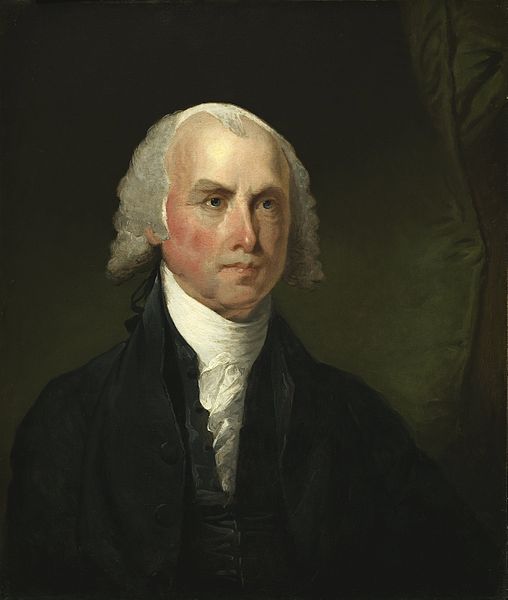
4. James Madison- In Lord of War wearing a regular suit. Granted he’s actually one of our nation’s most underrated presidents and Father of our Constitution.
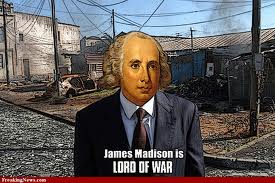
Would've been better if there were a burning White House in the background but I kind of had to make do. Of course, British did set fire to the White House during his presidency I kid you not.

Would’ve been better if there were a burning White House in the background but I kind of had to make do. Of course, British did set fire to the White House during his presidency I kid you not.

5. James Monroe- Carrying ham for dinner. Of course, he did issue the Monroe Doctrine, too, and was very popular in his day that they call his term “The Era of Good Feelings.” Also, I’ve actually visited his grave, by the way, which is in a cage.

Though he was a significant president, his tomb kind of seems hardly what you'd expect from a former US president. Still, he's interred in a cage.

Though he was a significant president, his tomb kind of seems hardly what you’d expect from a former US president. Still, he’s interred in a cage.

6. John Quincy Adams- Sporting long white mutton chops like a senior citizen werewolf. Kind of intense, too.

Hey, at least I didn't post a picture of Anthony Hopkins playing him in Amistad. Also, he liked to swim in the nude and has his clothes snatched by a reporter.

Hey, at least I didn’t post a picture of Anthony Hopkins playing him in Amistad. Also, he liked to swim in the nude and has his clothes snatched by a reporter.

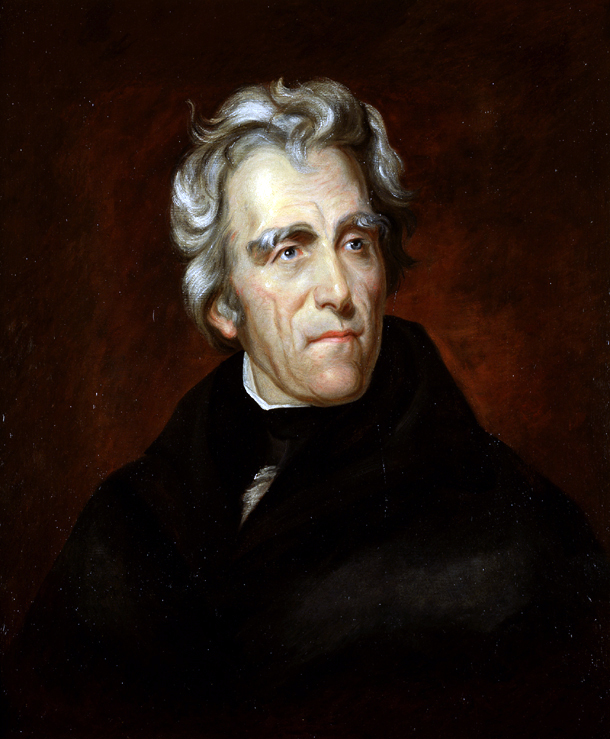
7. Andrew Jackson- No alien should want to get in a duel with him.

It's said that he had such a filthy mouth that his pet parrot had to be removed from his funeral. Also, had a reputation for being rather aggressive and played dirty politics. Not to mention, some of his policies were highly questionable such as nixing the US Bank and Indian Removal.

It’s said that he had such a filthy mouth that his pet parrot had to be removed from his funeral. Also, had a reputation for being rather aggressive and played dirty politics. Not to mention, some of his policies were highly questionable such as nixing the US Bank and Indian Removal.

8. Martin Van Buren- His hairstyle is to die for, especially if it’s in funky colors.

Will always be remembered for his facial hair but was hardly a remarkable president.

Will always be remembered for his facial hair but was hardly a remarkable president.

9. William Henry Harrison- Though the hero of Tippecanoe, he was only president for 30 days before succumbing to a pneumonia. Also, ran a false campaign saying he was born in a log cabin though his dad had signed The Declaration of Independence.Still, I wouldn’t say he was an attractive fellow with his long schnozz.

Well, what can I say, the man was dead in thirty days? Note: Don't plan on reciting a long inauguration speech on a rainy day.

Well, what can I say, the man was dead in thirty days? Note: Don’t plan on reciting a long inauguration speech on a rainy day.

10. John Tyler- This is a picture of him in his younger years. Not bad. However, he’d go on to be universally hated by everyone in his party during his presidency but at least he kind of helped establish who takes over after the president dies. Fathered 15 kids with his youngest daughter living into the Truman administration as well as betrayed his country towards the end for the Confederacy. I’ve seen his grave as well, I think.

By his physical description, I’m sure his kids made good with his genetics. Still, many did consider him a turd though. And his grave has a bust of him. Known to be the first guy to declare himself president after his predecessor died which cleared up matters tremendously.

11. James K. Polk- Depicted as a zombie. Granted we did have the Mexican War under him as well as gained a great deal of territory. Did everything he said he would, unlike many presidents.

Has a voracious appetite for brains, usually consisting of dead soldiers from the Mexican Wars. Of course, they weren't the freshest around by that time.

Has a voracious appetite for brains, usually consisting of dead soldiers from the Mexican Wars. Of course, they weren’t the freshest around by that time.

12. Zachary Taylor- On a very bad hair day. I mean Old Rough and Ready is more like Old Fluff and Ready.

And does he look gorgeous in that fro? And how. Sadly, he died a little over a year in office.

And does he look gorgeous in that fro? And how. Sadly, he died a little over a year in office.

13. Millard Fillmore- With the Shepard Fairey treatment. Still, this guy had a lot of quirks, signed the Fugitive Slave Act, and helped found The Know Nothing Party which was nativist and Anti-Catholic.
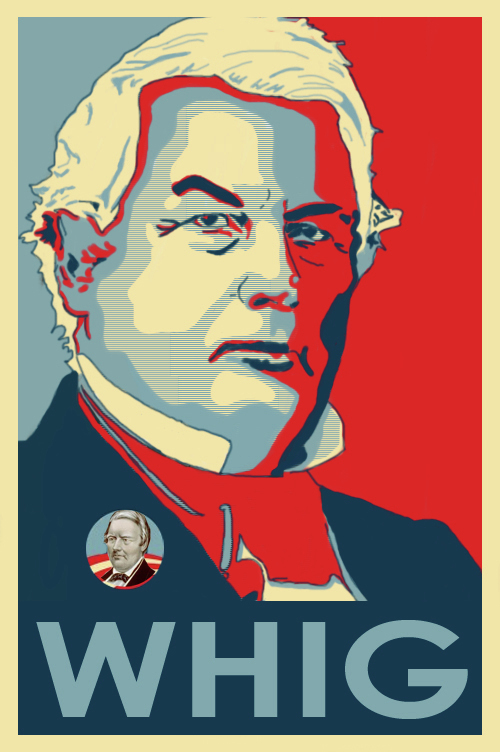
Yet, he was a Whig even though he's said to be a complete weirdo and/or turd.

Yet, he was a Whig even though he’s said to be a complete weirdo and/or turd.

14. Franklin Pierce- Depicted as a snazzy redhead. Known for having the first Christmas Tree in the White House. However, was seen as a pro-slavery Democrat from New Hampshire, a drunk, and one of the worst presidents ever. The fact he saw Bleeding Kansas under his presidency doesn’t help matters either.

Of course, he did have nice hair, even though he was a terrible president from the Granite State. Said to have fallen off his horse during the Mexican Wars as well as a hero "of many a well fought bottle."

Of course, he did have nice hair, even though he was a terrible president from the Granite State. Said to have fallen off his horse during the Mexican Wars as well as a hero “of many a well fought bottle.” Still, a very deeply unlucky man.

15. James Buchanan- Sure he’s from Pennsylvania and might’ve been gay, but he’s one of the worst presidents we ever had whose administration oversaw the United States divided in two. Also, though unmarried, wasn’t very attractive.

Said to have been sent to Russia so no one would have to deal with him. Last words were "History will vindicate me." It didn't. Considered the worst president and an embarrassment to Pennsylvania (besides Tom Corbett).

Said to have been sent to Russia so no one would have to deal with him. Last words were “History will vindicate me.” It didn’t. Considered the worst president and an embarrassment to Pennsylvania (besides Tom Corbett).

16. Abraham Lincoln- The Great Emancipator rides a bear carrying an AK-47.
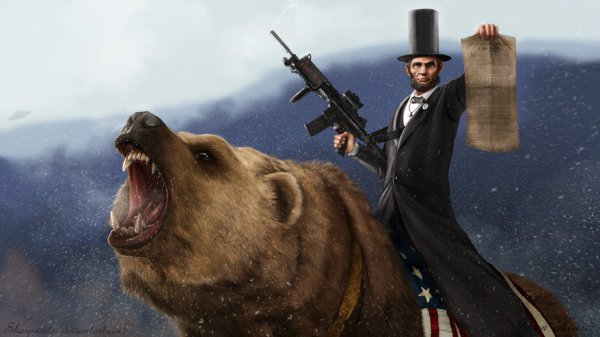
Of course, this is a guy with a whole list of presidential accomplishments and might be considered the best. Just wait until they see his Gettysburg Address.

Of course, this is a guy with a whole list of presidential accomplishments and might be considered the best who helped free the slaves and save the Union through whatever means necessary. His role in winning it made the US a stronger nation than before in the long term. Just wait until they see his Gettysburg Address.

17. Andrew Johnson- Doesn’t look very happy. A self-made man and Southern Unionist, he didn’t care much for Southern aristocrats or blacks either so he wasn’t a fan of Reconstruction. Was impeached for firing a cabinet member and since the Radical Republicans simply didn’t like him, but survived by just one vote.
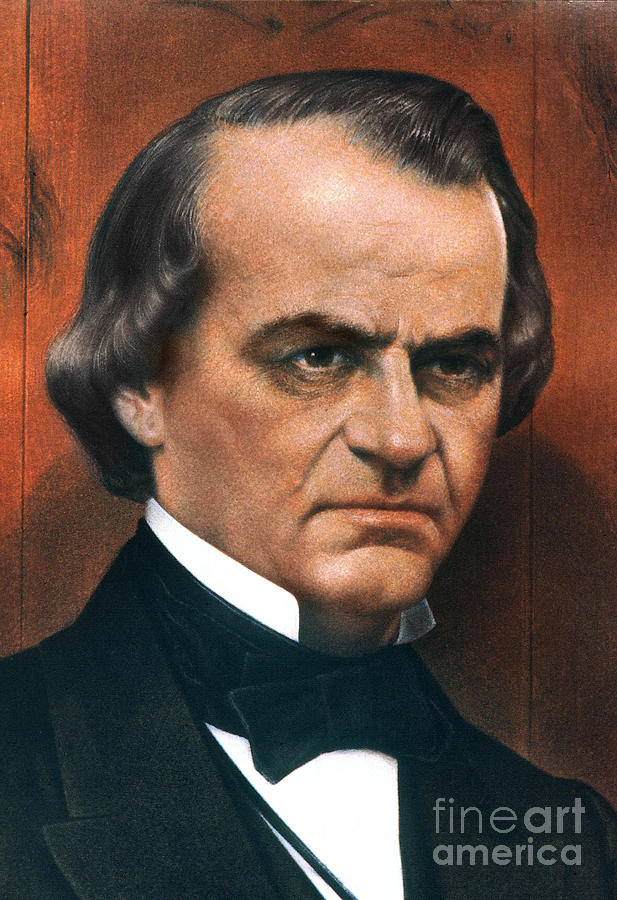
Believe it or not his wife (who he married as a teenager) taught him to read and write. He may have shared some of Lincoln's views but had none of his warm personality.

Believe it or not his wife (who he married as a teenager) taught him to read and write (who he probably owes much of his career to for he wouldn’t have gone very far without her). He may have shared some of Lincoln’s views but had none of his warm personality. Of course, my eastern Tennessee ancestors would’ve shared attitudes similar to him since I had a 3rd great grandfather from Tennessee who fought for the Union (along with a few of his brothers).

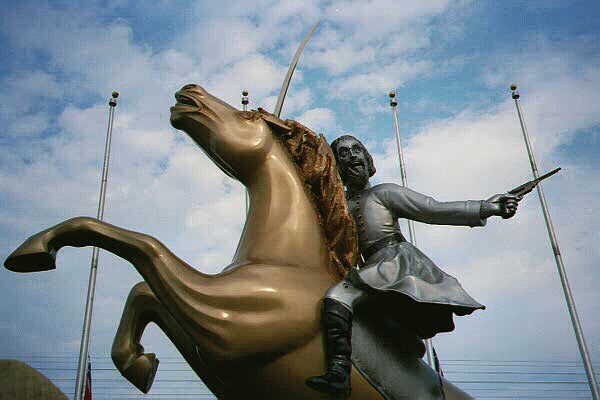
18. Ulysses S. Grant- Seen here with sunglasses and a can of Folgers after a night getting drunk on just two drinks (actually it was his cigar smoking that killed him). Still, he was a masterful military general who was ahead of his time (him and Sherman are said to be the first 20th century generals) who did win the US Civil War. Also, was said to be a very well liked president despite it being the 1870s who traveled the world after leaving office, wrote an autobiography, as well as one of the biggest presidential funerals ever. Not to mention, he has awesome tomb in New York my mom didn’t know even existed.

Of course, Grant probably didn't wear sunglasses but he sure could've used them. Still, if I ever get the chance to go to New York City, I will visit his tomb.

Of course, Grant probably didn’t wear sunglasses but he sure could’ve used them. Still, if I ever get the chance to go to New York City, I will visit his tomb. Held a lot of modern views and aggressively treated the KKK as the terrorists they were.

19. Rutherford B. Hayes- Seen as a weary old man with an awesome long beard. Won the presidency by just one vote and didn’t serve any booze in the White House. Had nine kids with his wife who he met in college (really and they both had graduated, too).

Still, he's better remembered in Paraguay. Not mention, his ending of Reconstruction had a lot of negative repercussions for blacks (like segregation). Called "Rutherfraud" or "His Fraudulency" by his enemies.

Still, he’s better remembered in Paraguay. Not mention, his ending of Reconstruction had a lot of negative repercussions for blacks (like segregation). Called “Rutherfraud” or “His Fraudulency” by his enemies.

20. James A. Garfield- Not to be confused with the cat, this guy was best known for being shot at the train station by a disgruntled office seeker. Could’ve been saved if if he had been treated by modern medicine and if Alexander Graham Bell’s metal detector had found the bullet. Awesome beard though.

They said he may have made a decent president, if he hadn't have gotten shot. Still, he was right to refuse the guy who would eventually kill him since the man was crazy.

They said he may have made a decent president, if he hadn’t have gotten shot. Still, he was right to refuse the guy who would eventually kill him since the man was crazy.

21. Chester A. Arthur- The president with the awesome whiskers who brought down the spoils system after being a beneficiary of it almost all his life (of course, since his predecessor was shot by a disgruntled office seeker, it’s understandable why he’d change his position).

Also said to be a natty dresser and work six hour days. However, he did get a lot done in his term. Not to mention, there were rumors about him being born in Canada which are certainly not true (he was born in Vermont).

Also said to be a natty dresser and work six hour days. However, he did get a lot done in his term. Not to mention, there were rumors about him being born in Canada which are certainly not true (he was born in Vermont). Didn’t serve a second term because of his health but he was rather popular in his lifetime.

22 & 24. Grover Cleveland- Depicted as a Sesame Street character. Served 2 non-consecutive terms, married his ward in the White House, admitted he fathered an illegitimate child (more like taking one for the team), and was said to be underrated according to Libertarians (odd for a Democrat but he’s said to oppose unions). Also, his daughter had a candy bar named after her called the Baby Ruth (according to some but probably not).

Contrary to the name and picture, Grover Cleveland has nothing to do with Sesame Street or Ohio.

Contrary to the name and picture, Grover Cleveland has nothing to do with Sesame Street or Ohio.

23. Benjamin Harrison- Grandson of William Henry Harrison and was probably elected because of his awesome beard. However, he and his wife were afraid of electricity and he had such an icy personality that Cleveland was voted back in.Seen on a horse in his Civil War years.

Then again, Cleveland was a draft dodger while he actually fought. Also was called "The Human Iceberg." Had two possums named Mr. Protection and Mr. Reciprocity.

Then again, Cleveland was a draft dodger while he actually fought. Also was called “The Human Iceberg.” Had two possums named Mr. Protection and Mr. Reciprocity.

25. William McKinley- President during the Spanish American War and the first year of the 20th century. Appointed Teddy Roosevelt as his vice president so his party members could keep him out of the way. After winning reelection, gets assassinated by an anarchist. Here’s his campaign poster.

Prosperity for the 1% anyway yet he did help the US achieve world power status. Ironically was assassinated next to an X-Ray machine that could've saved his life.

Prosperity for the 1% anyway yet he did help the US achieve world power status. Ironically was assassinated next to an X-Ray machine that could’ve saved his life.

26. Teddy Roosevelt- Hunts Bigfoot and shoots him dead.
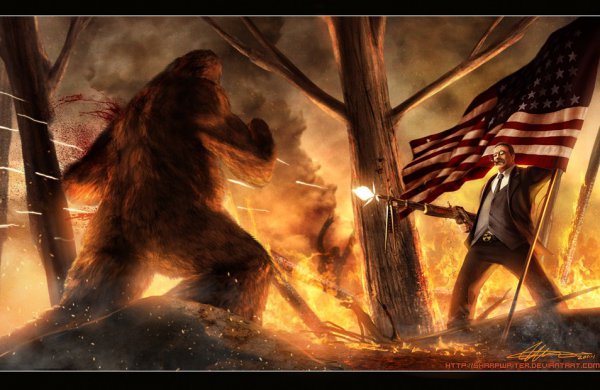
And this is why no one has ever found Bigfoot. Still, he's one of the most badass presidents ever with long list of accomplishments and a colorful personality and family to boot. Has a cuddly toy named after him.

And this is why no one has ever found Bigfoot. Still, he’s one of the most badass presidents ever with long list of accomplishments and a colorful personality and family to boot. Has a cuddly toy named after him.

27. William Howard Taft- Had a rather disappointing administration as far as Teddy Roosevelt is concerned that he ran against him on the Progressive Party during 1912. Best known for being so fat to get stuck in a bath tub and having to install a new one which could fit 4 people. Became Chief Justice of the Supreme Court after leaving office.
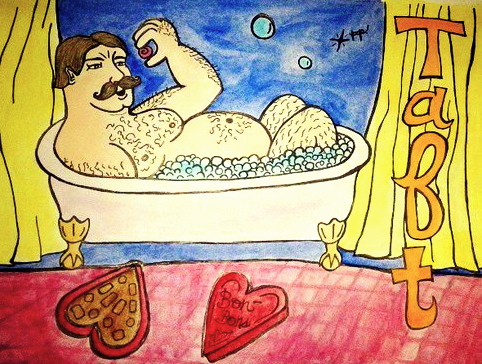
And here's him eating Valentine's Day chocolates from his White House bathtub. Would've been easier to design a shower stall instead.

And here’s him eating Valentine’s Day chocolates from his White House bathtub. Would’ve been easier to design a shower stall instead.

28. Woodrow Wilson- Stern, racist, and intellectual, he was a visionary for formation of the United Nations and help start the Federal Reserve (you’d have to give him credit on that). Not to mention, he did try to have Germany be treated decently (Germany getting the shaft was Clemenceau’s not Wilson’s). Also, led our country during WWI and his administration saw women getting the right to vote for the first time as well as the beginning of Prohibition and income tax. Wasn’t one of the best presidents but hardly one of the worst.
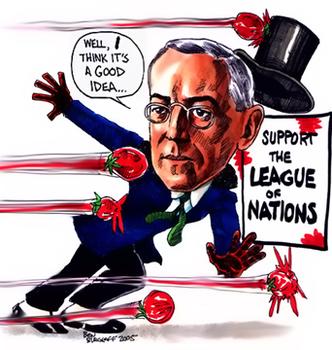
The League of Nations was actually one of his good ideas. Yet, this wasn't well received in the US and the Senate refused member recognition.

The League of Nations was actually one of his good ideas. Yet, this wasn’t well received in the US and the Senate refused member recognition.

29. Warren G. Harding- Smoked and partied at the White House. Administration oversaw Teapot Dome (the worst US political scandal before Watergate, which oversaw the incarceration of a US cabinet member). Had mistresses but probably fathered no illegitimate children (he was sterile contrary to what Boardwalk Empire says). Dies three years in under mysterious circumstances.

Probably unfit to be president and all too trusting. Yet, his personal habits with alcohol did show how Prohibition was a bad idea. Oh, but it was the 1920s.

Probably unfit to be president and all too trusting. Yet, his personal habits with alcohol did show how Prohibition was a bad idea. Oh, but it was the 1920s.

30. Calvin Coolidge- Sworn in by his old man (a justice of the peace) while staying in his New England home. Was so laissez-faire that his economic policies might’ve been responsible for the Stock Market Crash of 1929 (which might make him a grandfather of Reaganomics but not in a good way). Was a man of few words who didn’t let his wife wear pants.
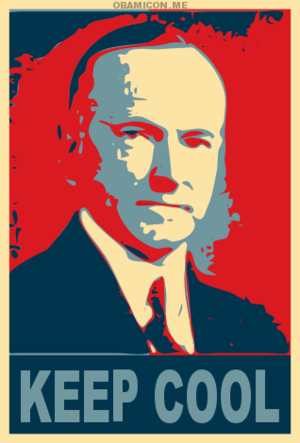
Sure, he may be one of the nice silent types, but he did help make the Roaring Twenties roar. However, his opposition to granting federal aid in all forms ended, especially when he should've. Not to mention, signed a racist immigration policy.

Sure, he may be one of the nice silent types, but he did help make the Roaring Twenties roar. However, his opposition to granting federal aid in all forms ended, especially when he should’ve. Not to mention, signed a racist immigration policy.

31. Herbert Hoover- Of course, while seen as a very smart man with an equally smart wife who can speak Chinese as well as seen a great humanitarian during the 1920s, he was a fairly lousy president given the circumstances. I mean the Great Depression happened under his watch and what he did do didn’t amount to much (with the exception of Hoover Dam).

In some ways, he's kind of the Republican's version of Jimmy Carter. Of course, he might have done all right but just didn't have the knack of taking a grasp of the situation in his term. He's proof that sometimes businessmen don't make good presidents.

In some ways, he’s kind of the Republican’s version of Jimmy Carter. Of course, he might have done all right but just didn’t have the knack of taking a grasp of the situation in his term. He’s proof that sometimes businessmen don’t make good presidents.

32. Franklin Delano Roosevelt- Encapsulated in a transformer so who wants to mess with him now?

Forget Captain America, I want FDR Prime on my side. Take that Hitlertron! Besides, many of his New Deal policies are still around today and he did help lead our country into World War II. Also, had King George VI eat a hotdog.

Forget Captain America, I want FDR Prime on my side. Take that Hitlertron! Besides, many of his New Deal policies are still around today and he did help lead our country into World War II. Also, had King George VI eat a hotdog.

33. Harry S. Truman- Here one of our great self-made men and ultimate smart aleck sports a zoot suit to emphasize that “The buck stops here, Daddy-O.”

The only president to use nuclear weapons. He helped implement the Marshall Plan as well as fire MacArthur (which needed to be done). "The Dewey Defeats Truman" headline is particularly ironic (since he pounded the guy by a landslide for being much more likeable.)

The only president to use nuclear weapons. He helped implement the Marshall Plan, desegregate the military, as well as fire MacArthur (which needed to be done). “The Dewey Defeats Truman” headline is particularly ironic (since he pounded the guy by a landslide for being much more likeable.)

34. Dwight D. Eisenhower- Supreme Allied Commander during WWII, Commander of NATO, saw the worst of the Cold War, the beginnings of the Civil Rights Movement, the Vietnam War, and modern Middle East politics. Appointed Nixon as vice president. Best known for his bald head.

The last great Republican president, as far as I'm concerned. Of course, he did help end the Korean War for now but a lot of terrible shit did happen during his presidency like the Red Scare.

The last great Republican president, as far as I’m concerned. Of course, he did help end the Korean War for now but a lot of terrible shit did happen during his presidency like the Red Scare.

35. John F. Kennedy- On a moon riding a robotic unicorn with a laser horn.

"Ask not what your country can do for you. Ask what you can do for your country. Now use your laser horn of death, Robosparkles"- JFK Also, don't ask me about his assassination or any conspiracy surrounding it. Let's not go there.

“Ask not what your country can do for you. Ask what you can do for your country. Now use your laser horn of death, Robosparkles!”- JFK Also, don’t ask me about his assassination or any conspiracy surrounding it. Let’s not go there.

36. Lyndon B. Johnson- Probably now laughing in his grave knowing that all the young people who complained about him for escalating the Vietnam War are now on Medicare. Not to mention, signed a lot of Civil Rights legislation which would later cost his party the South (explaining why many Southerners are now Republican). Has a long list of accomplishments and stories.

LBJ: Living in his Great Society programs and under effects of his Civil Rights legislation whether you like it or not. Also, he's known to be very weird at times.

LBJ: Living in his Great Society programs and under effects of his Civil Rights legislation whether you like it or not. Also, he’s known to be very weird at times.

37. Richard M. Nixon- See Tricky Dick wrestle a saber-tooth tiger. Of course, he’ll do it through his dirty tricks since he was pretty much an asshole.
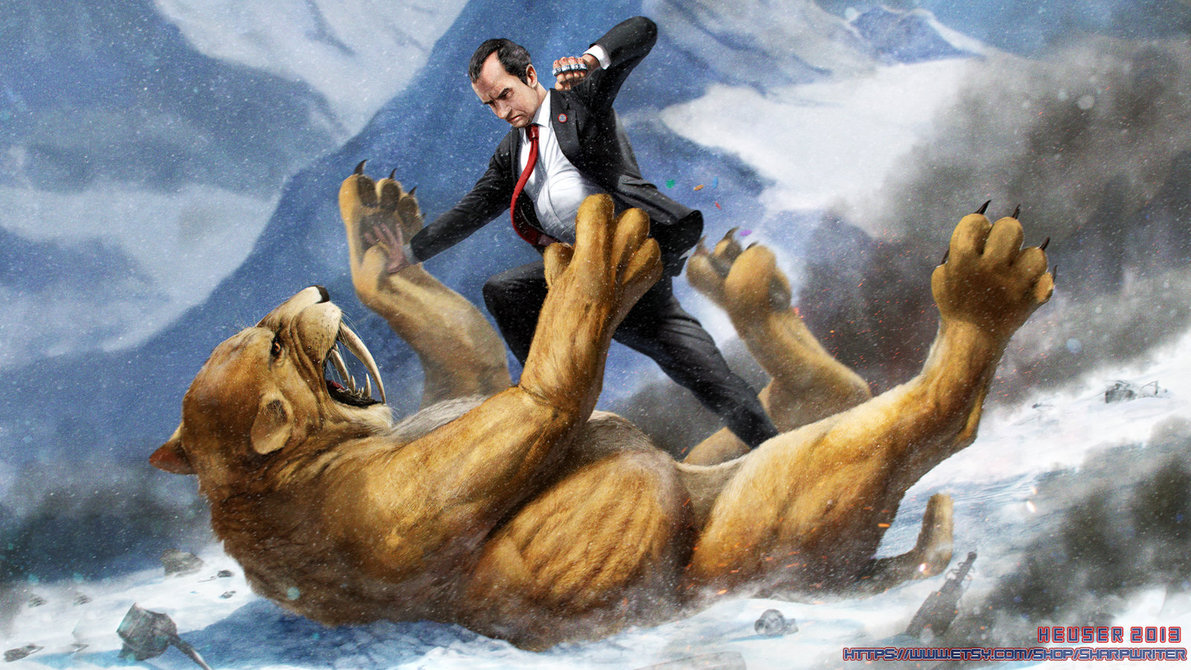
Between the two of them, I'd root for the Sabertooth. I mean the guy's certainly a crook who'd do almost anything to win. Not to mention, he tried to pull many dirty tricks on his enemies.

Between the two of them, I’d root for the Sabertooth. I mean the guy’s certainly a crook who’d do almost anything to win. Not to mention, he tried to pull many dirty tricks on his enemies.

38. Gerald R. Ford- Played college football, worked as a model, and pardoned Nixon (to some people’s chagrin). Wife is more famous than him since she spread awareness about breast cancer and alcoholism.
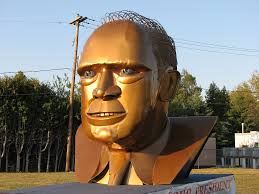
Possibly one of the ugliest busts of a president I've ever seen. Hate to say this but it makes Gerry look like a space alien.

Possibly one of the ugliest busts of a president I’ve ever seen. Hate to say this but it makes Gerry look like a space alien.

39. Jimmy Carter- His heart was in the right place but wasn’t the best president though he did set some good examples like the White House Solar Panels. Also, helped bring peace between Israel and Egypt (which may now be in jeopardy). More memorable as an ex-president though.

Look, Georgia, as lame as Carter may be as a president, he's still less of an embarrassment than Pierce or Buchanan. I mean the guy travels to Third World countries to dig latrines for villages. Also, I don't know what to make of this artwork.

Look, Georgia, as lame as Carter may be as a president, he’s still less of an embarrassment than Pierce or Buchanan. I mean the guy travels to Third World countries to dig latrines for villages. Also, I don’t know what to make of this artwork.

40. Ronald Reagan- The Gipper rides and causes a shooting spree on his velocipede. Of course, don’t forget to duck. Also, don’t mention Iran Contra and the Savings and Loans scandals either. He doesn’t like that.
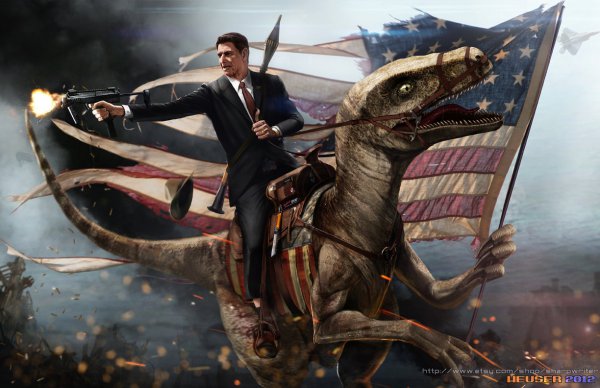
Look, I may not like Reagan, but I think this image does some justice for his fans. Still, he's an overrated president who did make his mistakes. Also, his policies didn't bring the end of the Cold War which was set to end anyway and even he realized that Reaganomics wasn't good for the economy.

Look, I may not like Reagan, but I think this image does some justice for his fans. Still, he’s an overrated president who did make his mistakes. Also, his policies didn’t bring the end of the Cold War which was set to end anyway and even he realized that Reaganomics wasn’t good for the economy.

41. George H. W. Bush- As a zombie who wants everyone to “Read my lips, no new taxes. Now give me your brains.”

By seeing him like this, it's understandable why his president was Dan Quayle. Because Quayle had no brains to eat as well as served as a viable protection against would-be assassins.

By seeing him like this, it’s understandable why his president was Dan Quayle. Because Quayle had no brains to eat as well as served as a viable protection against would-be assassins.

42. Bill Clinton- In the midst of utter turmoil with an intern by his side, Slick Willy protects America from the threat of hostile corporate giant Ronald McDonald.
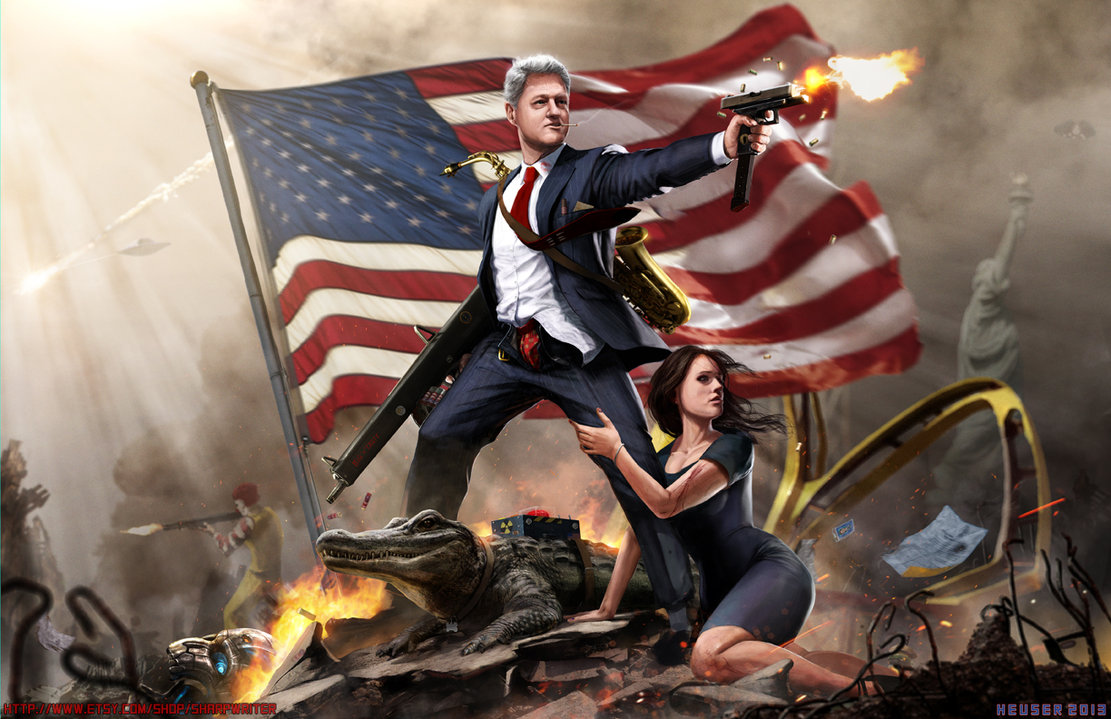
Clinton may not be a perfect guy but he's a Rhodes Scholar with an equally amazing wife. Not to mention, you really can't help but like the man.

Clinton may not be a perfect guy but he’s a Rhodes Scholar with an equally amazing wife. Not to mention, you really can’t help but like the man.

43. George W. Bush- Sucking the blood from the Statue of Liberty’s neck with his fangs.
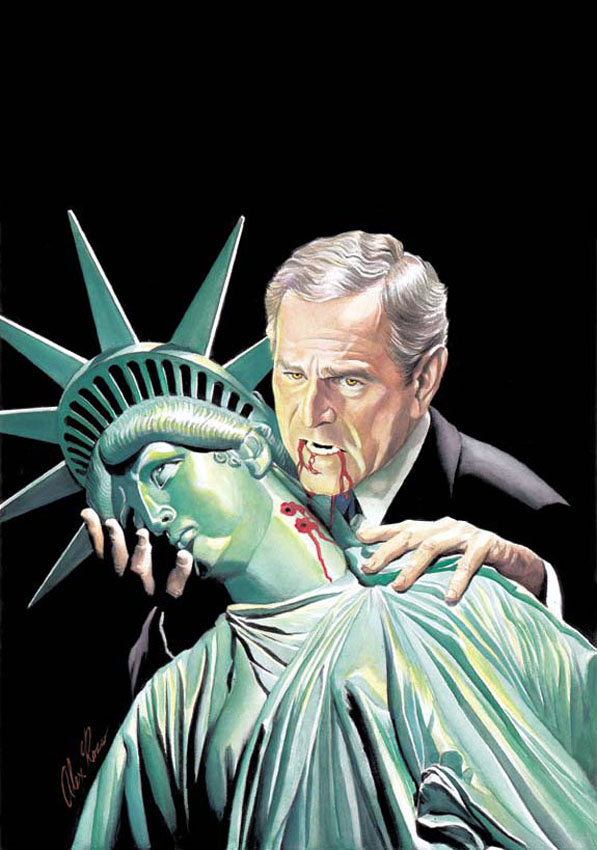
Hey, it could be worse, could be one of the sparkly vampires from Twilight. At least he doesn't sparkle. Still, there's no way I can depict this guy favorably. There are hundreds of reasons why I dislike him and his presidency that I don't want to put down since it's a long list.

Hey, it could be worse, could be one of the sparkly vampires from Twilight. At least he doesn’t sparkle. Still, there’s no way I can depict this guy favorably. There are hundreds of reasons why I dislike him and his presidency that I don’t want to put down since it’s a long list.

44. Barack Obama- Riding on a lion armed with a crossbow and light saber, Barry is no man to mess with.
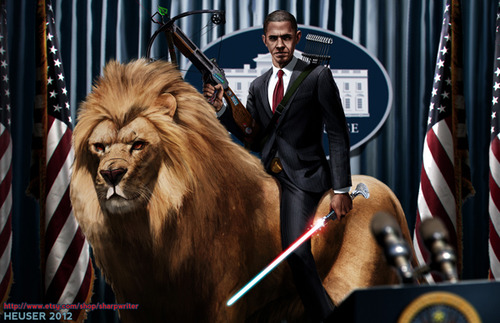
Now here's change I can believe in. Still, like him or not, he's better than Bush in comparison. At least he got Bin Laden, get healthcare passed, end the Iraq War, and helped avoid war with Syria. Not to mention, he does look very badass on the lion which looks very hungry for John Boehner.
Now here’s change I can believe in. Still, like him or not, he’s better than Bush in comparison. At least he got Bin Laden, get healthcare passed, end the Iraq War, and helped avoid war with Syria. Not to mention, he does look very badass on the lion which looks very hungry for John Boehner.

The Coroner Doth Protest Too Much – Questionable Death Verdicts

While everyone arrives in this world one way, there are plenty of ways for people to die, just ask the people who do the Darwin Awards. Still, while determining a deceased’s cause of death may be easy in most circumstances especially if we’re well acquainted with them, some aren’t so straightforward. Then there are the cases in which cause of death is highly debatable as well as some that are ruled as one thing but seem almost entirely another. Without further adieu, here are some of the more questionable death verdicts from officials in real stories, historic examples, and urban legends.(I don’t include people who died from mysterious circumstances under modern dictators because we probably know what happened to them. I won’t do recent cases either).

1. The deceased: Bekhter, the ambitious half-brother of Temujin (a. k. a. Genghis Khan as we know him).

Official Cause of Death: Hunting Accident

Reason to suspect otherwise: One source argues that Temujin and his brother Kasar killed Bekhter in which it says that he spied on their outcast family for the Tayichiut tribe who threw them all out a few years ago and hunted Temujin. Also said to have a brother named Begutei who was his half-brother’s loyal friend and assistant. You also have to consider  that Temujin’s father was poisoned when he was nine years old and the tribal politics of the day in which such incidents probably weren’t that uncommon.

Probability: Since this was the 1100s – 1200s in Mongolia we’re talking about, we really can’t be sure. Could be a number of things. Mongols didn’t lead easy lives. Also, hunting was a way of life for them.

Verdict: Indeterminable.

2. The deceased: William II (Rufus), King of England from 1087-1100

Official Cause of Death: Hunting Accident in the New Forest with a crossbow bolt to his lung.

Reason to suspect otherwise: William was a ruthless king (of course most medieval kings had to be) and not well liked from the nobles. Also, it’s said that his hunting buddies abandoned him right afterwards and his body was discovered a few days later by peasants and brought back. Then you have his youngest brother the soon-to-be Henry I Beauclerc who may have been itching for the throne and said to receive cash from his father William the Conqueror instead of the usual land holdings, figuring the kid would eventually end up with everything anyway. Apparently he did. Also, wasn’t uncommon for medieval kings to be killed by family members. May seem a little too convenient.

Probability: Hmm…Well, William did die while he was certainly out hunting with his buddies and they did abandon him. Then again, they may have left him in the New Forest out of being worried about their old holdings. A king’s death might put their feudal claims in jeopardy.

Verdict: Indeterminable.

3. The deceased: An Englishman found in his apartment decapitated by a chainsaw.

Official Cause of Death: Accident for the British police ruled his death as “not suspicious.”

Reason to suspect otherwise: Well, an article says that he was the last tenant in a remaining block of apartments set to be cleared for redevelopment. Also, chainsaw decapitation is usually not self-inflicted.

Probability: Though there have been people who decapitated themselves with a chainsaw in the Darwin Awards (requiring a rare exceptional level of stupidity). So it’s possible but  highly unlikely.

Verdict: I’m fairly 99.9% sure this was murder just by the chainsaw decapitation alone.

4. The deceased: A Russian man fished out from a river wrapped in sellotape and stuffed in a large zipped up sack.

Official Cause of Death: Russian authorities say that the man was standing on a bridge unreeling sellotape. During a sudden gust of wind, the sellotape wrapped against the man resulting in him losing balance and falling over the rail right into the sack hanging on to it. The current dragged the sack downstream after it sunk with the slider caught on a snag and fastening itself. Totally accidental.

Reason to suspect otherwise: That the official version makes less logical sense than supposing he’d been murdered by the Russian organized crime syndicate or by the police who made up this bullshit (since Russia is notorious for having a corrupt police force and that people have dashboard cameras to use as evidence). I think a better death verdict would be that someone seized the man, wrapped him in sellotape and stuffed him in a sack which was fastened before being thrown into the river to drown. Also, why the hell would a guy be unreeling sellotape on a bridge and how could a gust of wind result in the sellotape unwrapping itself? And how could that guy just so happen to fall into a sack which fastened itself? Jesus Christ!

Probability: I don’t know if any medical examiner in the US would look at such a case without suspecting a possible mob hit. I can’t think how such a death could be accidental.

Verdict: Murder. I mean isn’t it obvious?

5. The deceased: Giuseppe Pinelli, suspect of the Piazza Fontana Building, who jumped out of a window after saying “It’s Anarchy’s End!”

Official Cause of Death: Italian police ruled accident.

Reason to suspect otherwise: Well, he kind of made a rousing exclamation before jumping out a window while being a bombing suspect. I would suggest he jumped to his death on purpose to evade capture. Suicide.

Probability: How could anyone actually jump out of a window by accident? Other than a construction worker or something?

Verdict: Most likely a suicide.

6. The deceased: A British spy who who had missing for two years found dead by asphyxiation with a padlocked duffel bag in his bathtub.

Official Cause of Death: One theory says it was a warped case of erotic asphyxiation in which the guy wormed his way into the duffel bag, zipped it all the way up, and padlocked it.

Reason to suspect otherwise: The guy was found like this after being missing for two freaking years! If he really did die by erotic asphyxiation, I think the police would’ve gotten to him a lot sooner wouldn’t they? My guess is that the person with him probably stuffed him in a duffel bag, zipped it all the way up, padlocked it so he wouldn’t get out, and left him there after throwing him in his bathtub. And being a spy, the motives for killing him are endless.

Probability: Well, some people do have kinky sex lives and tend to do kinky stuff solo but really? If he was playing a sex game, surely he wouldn’t be missing for two freaking years!

Verdict: I don’t know about you, but it looks like murder to me.

7. The deceased: Russian Prince Dmitry, youngest son of Czar Ivan the Terrible and possible heir to the throne after his death during the reign of Boyar (noble) Boris Godunov. Found stabbed in the woods at eight years old.

Official Cause of Death: According to Godunov and his official investigators said he accidentally slit his own throat during a seizure.

Reason to suspect otherwise: For one, he was found with a slit throat in the woods. Second, since he was Ivan the Terrible’s son (even though the Russian Orthodox Church saw him as illegitimate) he would have a much better claim to the throne than Boris Godunov (who was only Ivan’s daughter-in-law’s brother). And he had been exiled when Boris became de facto ruler after Ivan’s death. Also, many Russian historians theorize this (since Boris Godunov is a celebrated major figure in Russian history). Not to mention, killing royal brats isn’t very uncommon in Russian history (look at the Romanovs during the Russian Revolution and like Anastasia, Dmitry, too, had his string of impostors).

Probability: Of course, there is a theory he might’ve had a seizure while playing a Russian knife game svaika (don’t try this at home) with him holding the blade toward his neck, but most epileptics experience seizures with their palms wide open making self-infliction highly unlikely.

Verdict: Given the circumstances, it seems more likely Boris had Dmitry assassinated.

8. The deceased: Two teenage boys run over by a train in rural Arkansas.

Official Cause of Death: According to the local coroner, these kids got run over by a train while passed out stoned after smoking two dozen marijuana joints. So totally accidental.

Reason to suspect otherwise: This has been disputed by the train conductor and a second autopsy. The train conductor said that the boys were lined up perfectly parallel to each other so intoxication was highly unlikely. A second autopsy noted that there was barely any marijuana in the boys’ systems and that one of them may have already been dead when the train hit them, suggesting they may have been killed elsewhere and placed on the track to make their deaths look like an accident. Seems like murder to me.

Probability: Of course, people do get run over by trains all the time (I’ve known a few who have). This situation with the boys seems too cut and dry like it was something from Double Indemnity (and yes, that movie involved killing a guy and having him fall off from a train).

Verdict: Murder, plain and simple.

9. The deceased: Abie “Kid Twist” Reles dead after falling out of a window at the Half Moon Hotel in Coney Island in 1941

Official Cause of Death: Police charged with “protecting” him said he fell out the window while trying to get away.

Reason to suspect otherwise: Reles was in the process to testify against his bosses at Murder Inc.- sending several to the electric chair. Seems more plausible that the police may not have been so helpful and probably pushed him out the window or they weren’t doing their jobs.

Probability: Highly unlikely because it seems to have some similarities on how Eva Marie Saint’s brother died in On the Waterfront (and he was also set to testify).

Verdict: Murder, obviously.

10. The deceased: A man found decapitated in Arkansas.

Official Cause of Death: According to a medical examiner, died of perforated ulcer and that a dog ate his head. Still, ruled it as perfectly natural causes.

Reason to suspect otherwise: Decapitation kills a person a lot quicker than a perforated ulcer. I mean, isn’t it obvious. Also, dogs don’t normally eat human heads, unless they’re zombie dogs.

Probability: How does one die of a perforated ulcer after being decapitated? Oh, wait, he doesn’t because he’s already dead by decapitation.

Verdict: Obviously murder. The medical examiner is an idiot.

11. The deceased: King Cleomenes of Sparta, found dead with flesh carved from his legs, hips, and stomach with a bloodstained knife lying next to him.

Official Cause of Death: Everyone agreed he killed himself.

Reason to suspect otherwise: Where to begin? Well, he was exiled for bribing a Delphic Oracle. He intimidated his way back to power threatening rebellion but was accused of insanity by his half-brothers and put in the stocks. Oh, and his skin was carved.

Probability: Really? Does someone really flay their own skin? I don’t think so.

Verdict: Most likely he was murdered and no one wanted to lose theirs since Sparta executed people for saying that.

12. The deceased: A female US Army private who was raped.

Official Cause of Death: According to the Department of Defense, she committed suicide. Their report says she punched herself in the face which resulted in loose front teeth and a broken nose, mutilated her genital area before being douched with acid. After that, she poured a combustible liquid on herself before setting herself on fire and inflicting a shot in her head. She survived long enough to drag herself to a KBR contractor leaving a bloody trail all the way and setting setting his tent ablaze to cover up her own self-inflicted crimes.

Reason to suspect otherwise: It makes more sense that she was raped and murdered by a KBR contractor who shot her in the head an poured gasoline on everything before setting his tent on fire. Seems like too much overkill to be a suicide. It’s not that complicated. Clearly someone must be covering up for KBR at Department of Defense.

Probability: Seriously, this doesn’t hold up to any logic in reality to be a suicide since suicides only require relatively few actions. Besides, no one would put him or herself through that kind of self-mutilation.

Verdict: Rape and murder, obviously.

13. The deceased: French admiral, Pierre-Charles Villeneuve found dead in 1806 at the Hotel de la Patrie in Rennes with seven stab wounds to the chest.

Official Cause of Death: Suicide.

Reason to suspect otherwise: For one, this guy is most famous for losing the Battle of Trafalgar. Also, one stab wound might seem like suicide but seven? Really that’s kind of overkill.

Probability: It’s pretty impossible for someone to stab themselves seven times in the chest. Also, he probably had plenty of people angry with him.

Verdict: Murder.

14. The deceased: Officer Terrence Yeakey.

Official Cause of Death: Suicide. Said he slashed his own hands and throat, crawl a mile or so of rough terrain, and shot himself in the head with the revolver pointing downwards from a distance to get no powder burns.

Reason to suspect otherwise: For God’s sake, the guy was lying dead with slash throat and wrists as well as a bullet to the head with a revolver aimed downwards at considerable distance. Either the guy had extendable elastic arms or was obviously murdered. Also, they didn’t find a gun at the scene of the crime. Also, you couldn’t crawl a mile in rough terrain after slashing your own wrists and throat.

Probability: Highly unlikely that anyone could commit suicide in such fashion.

Verdict: Murder.

15. The deceased: Earl Little, Baptist lay preacher and father of Malcolm X.

Official Cause of Death: Ruled as a suicide in which Little shot himself in the back of the head and tied himself to a railroad. Some say it was a streetcar accident.

Reason to suspect otherwise: Let’s just say, Malcolm X had a good reason to be angry at whites since he had a very shitty childhood which deeply affected him as an adult (though he didn’t advocate violence and was willing to work with Martin Luther King Jr.). His father was a very big influence in his early life and had been active in black pride movements as well as admired Marcus Garvey, though he died when Malcolm was six. Not to mention, various members of the Little family may have been frequent targets of white violence (like Malcolm’s three uncles) and the family had moved three times because of threats from the KKK and the Black Legion. Also, while there was a gunshot wound, there was no gun.

Probability: Malcolm and his family never really believed that Earl died in an accident or killed himself and I might want to take their word on it.

Verdict: Murder, which was probably racially motivated.

16. The deceased: Alexandre Stavisky, early 20th century French embezzler. Found dead from a bullet wound in 1934.

Official Cause of Death: Officially ruled as a suicide. One satirical newspaper said, “Stavisky committed suicide by a bullet which was shot at a 3 meter range (about 10 feet). That’s what you get when you have a long arm.” (a French expression for wielding a lot of wealth and influence.)

Reason to suspect otherwise: The guy was involved in a scandal pertaining to him making deals with government officials and some newspapers have speculated he was shot by police. Also, the guy was killed by a bullet fired ten feet away from him.

Probability: You can’t kill yourself firing a bullet ten feet away from you. There’s just no way.

Verdict: Murder, obviously.

More Historical Villans Who May Not Have Been That Bad

Image

Of course, this is a continuation of my last post on how some historical figures tend to get some bad reputation for being misunderstood or not being fairly represented in mainstream history while some are too overrated for their own good. Some of them may have been bad by our standards like the Spanish Inquisition but by the standards of their time may have been just as terrible as other authorities, if not more humane. Others may have terrible reputations for being on the opposite side or for being a convenient scapegoat like Lucrezia Borgia or they were simply very unlucky rulers who got unceremoniously deposed like Richard III, thus with successors needing to justify their actions. Still, here is a list of historical villains who are probably not as bad as portrayed.

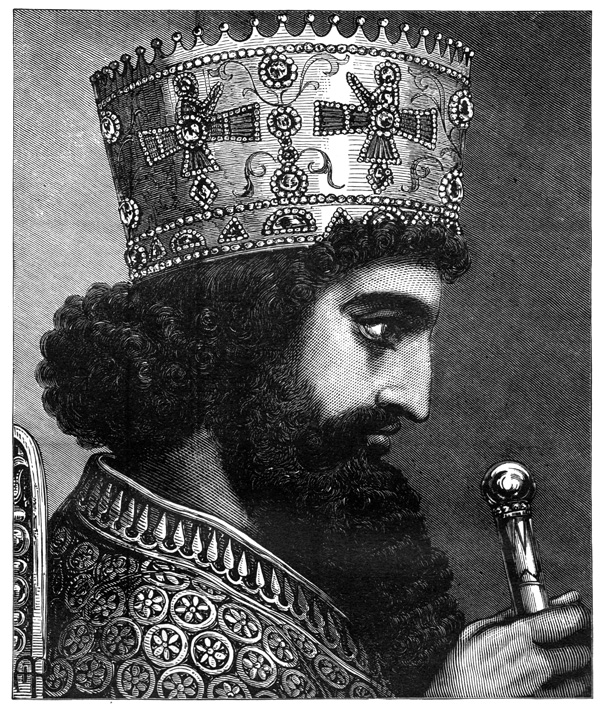
1. The Persians (especially Xerxes I)

You know them as: The bad guys from 300. Not to mention, they are the adversaries of the Greeks in any American class on the history of western civilization.

Why they might not have been that bad: If the Iranian outrage over 300 should tell you anything,  it’s that Persians have been victims of unfair historical depictions for generations and they need not be. Sure they were itching to take over Greece and help start the Persian Wars, but in those days so was everyone. Of course, the Persians just happened to amass one of the largest empires in the ancient world and somehow got their asses kicked by the Greeks and Alexander. Yes, they were warlike, but so was any power entity with an empire. However, what we can say is that they were a rather sophisticated and progressive civilization with one of the oldest religions still in existence (albeit Zoroastrianism, though with much fewer followers as well as the faith of Freddie Mercury) and a empire with a government policy of tolerance toward other cultures and religions. If you read the Old Testament, they are seen as the only group of conquerors who the Jews seemed to get along with. Even Xerxes gets better press in Esther who may start out as a dick but does get better. His dad is a nice guy in Daniel who takes the prophet in after sacking Babylon. Of course, the Persians let the Jewish people return to their homeland, ending the Babylonian captivity. Yet, Xerxes wasn’t as nearly debauched as portrayed on 300 and certainly didn’t look like a reject from Cirque d’ Soleil. Also, he was never in Greece during the whole thing. In Iran, he’s seen as a hero  and is very beloved that he’s known as “the Great.” Sure the Persians should probably have never fought the Greeks but, c’mon, they weren’t a terrible civilization.

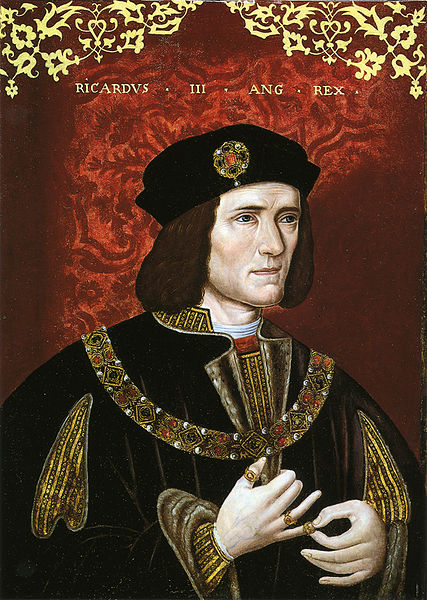
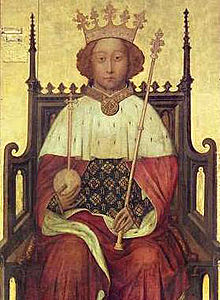
2. King Richard II

220px-Richard_II_King_of_England

You know him as: The cruel, vindictive, and irresponsible king in Shakespeare’s Richard II. Said to have suffered from mental illness and rule as a tyrannical absolute monarch but an incompetent one and a failure.

Why he may not have been that bad: Richard II is perhaps one of the most misunderstood and unlucky monarchs in history who gets his reputation because he was overthrown and possibly by people who didn’t like him. Also, his fall from power began the Wars of the Roses which put England in chaos for much of the 1400s. Though he may have seen as poster boy for medieval tyranny over several centuries after his death, modern historians have now reexamined the English monarch who probably was not as tyrannical or incompetent as previously depicted. And he may not have been mentally ill, though he did ascend the throne at the age of ten and was a rather religious man. Contemporary accounts and forensic science have said he was a smart, tall, and good looking guy and his portrait is one of the most accurate portrayals of a monarch to date. He was said to be a great patron of culture and the arts (he was great supporter of Geoffrey Chaucer). Not to mention, he tried to be a good king in the traditional medieval sense and really tried to do what was best for his country. He tried to avoid war with France so he won’t have to raise taxes on the peasantry (and the fact that a peasant’s revolt and the Hundred Years’ War was going on in his childhood, these policies seem to make perfect sense). However, what did him in was that his policies pissed off the wrong people (i.e. nobles and relatives) who wanted a war with France and though Richard knew they were a threat to his power, he didn’t do the necessary thing to stop them like a tyrant would (i. e. have them executed). Also, disinheriting and exiling his cousin Henry Bolingbroke was probably not a good idea even after his dad John of Gaunt died (who basically helped keep peace between the two). So while Henry was exiled he gathered a following of prominent nobles also fed up with him and together they overthrew Richard who later died in the Tower of London under mysterious circumstances. And he’s suffered a bad reputation ever since. So while Richard II may not have been a crazy megalomaniac he’s depicted as but his story is a good example of a decent leader pissing off the wrong people led to his terrible portrayal in the history books, especially when his successors had to go to great lengths to justify getting rid of him.

3. Ulysses S. Grant

You know him as: “The Butcher” who only won the Civil War for the Union because he had plenty of men to spare and was more willing to send his troops to their deaths, later to become a shitty president over a corrupt administration. Said to have also been a drunk.

Why he may not have been that bad: While Grant did send a lot of his soldiers to their deaths during the Civil War and wasn’t one of our better US presidents, he was a well loved figure while for much of his life since then and even after his death. Even his funeral and his tomb dedication had a great attendance turnout and for a long time was put in the same league with Washington and Lincoln. However, what does his historical reputation in is the rise of the “Lost Cause” school of history consisting of Pro-South historians who try to rationalize why a pure and civilized culture of theirs (in their eyes) succumbed to a great fall. In their minds, since Grant was largely responsible for winning the Civil War for the North, he’s the bad guy. However, while Grant’s relationship with alcohol has been debated, he certainly not a “butcher,” a terrible general, or as shitty of a president as he’s been depicted for a long time. Sure Grant may have graduated in the middle of his class at West Point and had a bad stint as as civilian before the Civil War, he was said to be a fairly good soldier and military officer who was calm under fire and a general who may have been ahead of his time. Sure he was willing to put his men in dangerous situations and knew he could replace the ones he lost, but he was good to his soldiers and they loved him. Not to mention, General Sherman was two years older than him and had spent his entire career in the military was happy to have him as his commanding officer, which is saying something. He won battles but he won them with the kind of tactics and strategy one would see from 20th century generals, which earned him a nickname of “The Butcher” but he was also known as “Unconditional Surrender” Grant for his willingness to accept Confederate surrender without exposing them to humiliation, earning respect from allies and enemies alike. Off the battlefield, he wasn’t a violent man but one who was devoted to his family and had a rather sane mind as well as a good man holding many modern views. As president Grant was elected for two terms and tried to do things like protect African American citizenship, eliminate vestiges of Confederate nationalism and slavery, and defeat the KKK. He also tried to promote America’s image overseas and basically left office with a country more united than he was sworn in at a time when many US presidencies resulted in the opposite. Besides, most of the problems Grant faced as president had more to do with the context of his times and the political culture than anything to do with him personally. And after his presidency, he and his wife traveled the world to promote America’s image abroad and wrote his memoirs which mostly dealt with his time in the Civil War more than anything. Grant may have not have been a great president but he wasn’t the kind of general or man “Lost Cause” historians make him out to be.

4. William Tecumseh Sherman

You know him as: The general who burned down Atlanta and torched Georgia, thanks to Gone with the Wind. And just as an uncaring monster as Grant but more bloodthirsty and crazy.

Why he may not have been that bad: Sure Sherman was one of the most ruthless, vicious, and terrifying Union generals on the battlefield, but he did have a tendency to show mercy once the smoke cleared and was willing to let his defeated enemies go home without further molestation. Of course, he did torch Atlanta and brought the Civil War to Southern civilians but he believed that in order the North to win, then it was the Union’s job to make the war so terrible for the South that the Confederates would be less willing to fight and his strategy ultimately worked. Also, in the beginning of the war, Sherman was one of the few generals who guessed correctly it would last more than 90 days. Historians have said he was one of the most pragmatic Civil War generals ever and avoided many tactical mistakes and didn’t do anything unusually stupid. Not to mention, Sherman was willing to fight for his country despite suffering an earlier incident of PTSD. And like Grant, he was a seen as a father to his men. Now maybe Sherman didn’t fight like a 19th century gentleman, but he had his reasons.

5. Benedict Arnold

lossy-page1-488px-Benedict_Arnold._Copy_of_engraving_by_H._B._Hall_after_John_Trumbull,_published_1879.,_1931_-_1932_-_NARA_-_532921.tif

You know him as: If you’re American, his name is synonymous with vile and cowardly traitor who tried selling the fort at West Point to the British.

Why he may not have been that bad: Well, as an American, I’m very much biased about him since I’ve been taught to see the guy in the same league as Judas. So, yes, I do consider him a villain. However, before he betrayed his country, Arnold started out as a capable commander for the colonists’ side during the Revolutionary War and was largely responsible for winning Saratoga since his commanding officer General Horatio Gates mostly kept himself in a tent (this guy was useless). Still, perhaps one of the reasons why he betrayed his country was that he made many powerful enemies among the upper brass and congress that he wouldn’t be eligible for promotion or additional wages for his military service he deserved (though it was due to lack of money that the government could spare). To make things worse, other officers were receiving credit for his accomplishments. Of course, it didn’t help that Arnold married a daughter of a British sympathizer. Still, he only tried to sell out West Point when Washington wouldn’t let him resign in order to evade the dishonorable consequences. Sure Arnold was a traitor, but he should’ve gotten the credit he deserved which he didn’t, which might have led to him trying to sell West Point. In other words, Arnold turned traitor because he got screwed.

6. The Vikings

You know them as: The Norse and Germanic tribesmen from Scandinavia who are brutish and bloodthirsty raiders, plunderers, and killers. Also wore horned helmets.

Why they may not be that bad: While the term “viking” may refer to a Norse pirate, the Vikings were no more savage or prone to violence than any other people at the time and had a very sophisticated culture (as were all the other Germanic tribes). Also, they were explorers, traders, and fine craftsmen in their own right. Not to mention, they bathed frequently and treated their wives better (Viking women had more rights than many of their counterparts). As for the horned helmets, they only wore them for ceremonial occasions since wearing them during raiding and battle would be highly impractical (though they did wear their weapons all the time). However, the Vikings get their bad press since many of their targets tended to be monasteries (for obvious reasons) as well as other areas where at least one person could read or write (which the Vikings didn’t really do that much but they did have a system). And it doesn’t help their case that they considered themselves a race of warriors with a warrior religion and Valhalla. To consider these people as brutish and bloodthirsty killers would be like a compliment to them because such would get them into their Viking heaven. Sure the Vikings were bloodthirsty warriors but they were so much more than that and just as violent as everyone else.

7. The Waffen-SS

You know them as: The black uniformed clad Nazi soldiers in WWII films who are part of the elite, special forces organization of the German military where the soldiers would serve the front lines. Not to mention, they helped orchestrate the Holocaust.

Why they may not have been that bad: Sure they weren’t the Gestapo but even with the snazzy black outfits, the SS wasn’t really as feared elite, special forces organization as many WWII media make it out to be. In short, they were no more a threat to the Allies than non-SS divisions in the German Army. Some SS did distinguish themselves in combat but the only extra training an SS unit would receive that regular army units didn’t as ideological. In fact, it’s said that some SS units had worse combat training and equipment than non-SS units. Besides, they weren’t used as front line combat units until 1943 and before that their role consisted as bodyguards and internal security with their military role barely mentioned and thought of as a little more than thugs (in their own country). Though many of them certainly were Nazis and served in battle as well as were Hitler’s troops that helped exterminate millions of innocent people (they were under the command of Himmler after all and were deservedly banned in Germany after the war in 1945), they weren’t the kind of evil elite special forces organization of combat units you’d see in WWII films that have nothing to do with the Holocaust. Evil, yes, but they were just as defeatable soldiers as anyone else. Not to mention, the SS and the Gestapo weren’t the same thing.

8. Commodous

You know him as: The bad Roman Emperor in Gladiator who kills his dad, has a thing for his sister, kills Russell Crowe’s family and puts him in slavery, and fought in the gladiatorial games before his death in the arena.

Why he may not have been that bad: Sure Commodous did fight in the arena but that’s one of the only accurate things about him from that movie. Of course, he may not have been a great Roman Emperor like his dad Marcus Aurelius but he didn’t have a thing for his sister (actually had her killed for conspiring against him), didn’t kill his dad (who died from natural causes), and didn’t die in the arena (he was strangled while bathing). In fact, Commodous and Marcus Aurelius most likely got along splendidly since they certainly have had to. For one, there was no official line of succession since many Roman Emperors either didn’t have any surviving sons or didn’t live long enough to have any. Before Marcus Aurelius most Emperors would usually choose and adopt their successors outside their biological families. Commodous’s succession was unusual since he was the first Emperor “born to the purple” and broke tradition by succeeding his father. Not to mention, Commodous ruled jointly with his father for four years before the old man’s death. In short, there is overwhelming evidence that Marcus Aurelius chose his son to succeed him. Still, his dad is known as the last of the “Five Good Emperors” for a reason since Commodous was actually considered a bad emperor for believing himself to be Hercules and renaming everything in the Empire including Rome after himself, which wouldn’t go well with Romans. Oh, and he did order one his slaves to be burned for making his bath too cold. Still, he only became the tyrannical dictator in history after several attempts were made on his life and before then basically did whatever he fancied and had a grand old time. Even so, none of this makes him as bad as most rulers in history even in Rome where it wasn’t unusual for Roman Emperors to have people in their lives trying to kill them (even by people charged with protecting them like the Praetorian guard or members of their own family). Still, he was more or less power mad and ignorant of responsibilities than anything though he did bring an end to the Pax Romana, devalued Roman coinage while simultaneously raising taxes which created a wave of poverty unseen since the Old Republic.  Of course, that all may be senatorial bullshit but there’s a reason why he’s not considered a good ruler. Terrible ruler, yes, but not the Commodous depicted in Gladiator.

9. Ivan the Terrible

250px-Ivan-Groznyi-Parsuna

You know him as: The crazy Russian Czar who massacred the city of Novorgod and killed his own son in a violent rage. Also had a habit of torturing people in lots of brutal and deadly ways.

Why he may not have been that bad: Well, he’s certainly a villain and certainly wasn’t a pleasant ruler to reckon with but he was no more brutal or worse than most rulers of his time or even by Russian standards (though Russia was still a pretty shitty place). Still, what gives Ivan a bad rap is that he was a deeply religious man who acknowledged his treacherous deeds as a way of doing penance. Besides, he’s mostly remembered for transforming Russia into a multiethnic and multiconfessional state (meaning he probably didn’t kill anyone for being of a different culture or different religion once he’d already conquered them, which is saying something compared to many 16th century rulers in Europe like Cathy de Medici). Not to mention, he was a fairly competent Czar (as well as the first) who transformed Russia from a medieval state to a regional and emerging power (though it wouldn’t be modernized to some extent until years later and mostly took Siberia because nobody wanted it). He was even popular among the common people as well as a patron of the arts and founder of Russia’s first Print Yard. In short, he’s largely responsible for what Russia is today. Plus, he most likely died from natural causes at 54 (an old man by 16th century Russian standards). Brutal, crazy, unpredictable, and cruel, yes, but he wasn’t a ruler out of the ordinary. Also, the Russian war for “terrible” can also translate as “awesome.”

10. J. Bruce Ismay

You know him as: The guy whose company was responsible for building and commissioning the Titanic as well as a bullying prick who pressures Captain Smith to run the ship at full speed into an ice field and cowardly jumping into a lifeboat to save himself while there were still hundreds of women and children aboard the ship.

Why he may not have been that bad: Ismay didn’t really pressure Captain Smith to take the ship full speed (more or less was the Captain’s decision) though he wasn’t totally blameless. Titanic was an ill-equipped ship that didn’t have enough lifeboats for the passengers (and while it was sinking many of them weren’t filled to full capacity), had no searchlight, had a crew who wasn’t trained to handle emergency situations, and didn’t have anyone to keep watch equipped with binoculars. To make things worse, Captain Smith cancelled a lifeboat drill and the ship had received radio warnings of icebergs in the area that were ignored. Nevertheless, when Titanic did hit an iceberg, Ismay was diligent in helping load and lower the lifeboats and only took his seat after making sure there were no women or children there to take it instead. However, we know now that there were hundreds of women and children who went down with the ship who were mostly in steerage and some couldn’t get out anyway. Ismay probably had no idea of this and maybe was in a state of panic. Yet, many rich guys who survived the Titanic also suffered in their reputation for exactly that as well just because they should’ve been willing to go down with the ship instead unless all the women and children were on the lifeboats. However, since Ismay practically owned Titanic, his reputation took a deeper dive. Ismay may have bore some responsibility for the Titanic disaster since it came from his line but he wasn’t really a bullying prick nor a dirty coward as depicted.

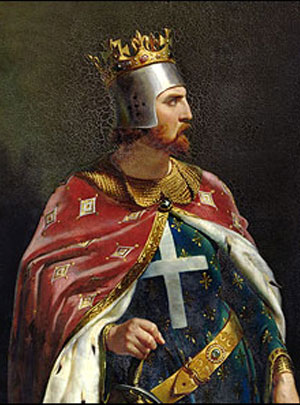
11. King Edward I Longshanks

553px-EdwardI-Cassell

You know him as: The evil king in Braveheart who wanted to take over Scotland, threw his son’s lover out the window, ruled as a oppressive tyrant, and was a “cruel pagan.”

Why he may not have been that bad: Of course, Edward was a brutal conqueror abroad as well as an anti-Semite but you’d expect these things from almost any medieval king. Still, he didn’t throw his son’s lover out the window, was a pagan, nor ruled like a tyrant. In fact, he was a Christian no more or less devout than your average medieval king and certainly didn’t oppress his English subjects (foreign ones are a whole different matter). Furthermore, he was considered a social radical by medieval European standards since he set up Parliament as a permanent institution, set up a working system of taxation, and helped draft complex legislation which would help revolutionize England forever. Not only that but he initially went to Scotland to mediate a matter which almost caused a civil war. Of course, he did break his word anyway but any medieval king would do the same thing. Thus, sure Edward may have been a land grabber but he was a pretty decent king by medieval standards and no brutal than your average ruler at the time.

12. Genghis Khan

khan2

You know him as: The bloodthirsty Mongol conqueror who founded one of the largest empires of all time stretching from Hungary, India, and China. Known for riding with his barbarian Mongol forces and putting whole cities to waste while making a hell on earth for men, women, and children.

Why he may not have been that bad: Well, Genghis and his Mongol hordes were certainly not a group you’d want to mess with and of course, they would very much like to be known for that so your city could easily surrender. Still, much of what’s written by them were authored by their conquered subjects who kind of exaggerated their bloodlust. However, Genghis Khan wasn’t just a bloodthirsty conqueror. He also managed to unite the Mongol tribes who’ve been fighting against themselves for thousands of years, which at the time was almost unthinkable and all in the span of a couple of decades through skillful political maneuvers like attracting allegiance of other tribes and defeated enemies, giving those he defeated a share in the spoils of war, and basing promotions on merit than politics. Not to mention, his idea of conquering everything in sight was a primarily a team building exercise to keep the tribes from fighting each other with such conquest continuing after his death making the Mongols not only a powerful foe but also very rich and powerful in the process. Sure Genghis Khan and his Mongols weren’t the nicest guys, but at least he had rather unselfish reason to conquer mainland Asia.

13. The Spanish Conquistadors

You know them as: The cruel and barbaric mercenaries who mercilessly toppled two major Indian empires to satisfy their greed, enslaved a race of people, forced them to convert to Christianity, and committed some of the worst human rights abuses in the age of Exploration.

Why they may not have been that bad: Of course, as cruel and merciless as the conquistadors were they weren’t as evil as they’re seen in many depictions. As bad as they treated the Indians, they were more interested in using them as a labor force and assimilating them into their culture (well, as much as they could) than actually killing them. Furthermore, many Spanish Conquistadors took native wives and treated their mixed race kids as members of their families. Not to mention, they weren’t nearly as racist as their English colonial counterparts who discouraged Indian intermarriage and just saw them as an obstacle that kept them from taking their land (it’s not wonder that many Indian children by English settlers joined the Indian tribes). Of course, the conquistadors did wipe out 95% of the American indigenous population but it mostly through germs and in places where no Spaniard had stepped foot. Also, Cortes could not have brought down the Aztec Empire if he didn’t have help from the local Indian tribes who were already fed up with them despite that he probably did betray them in the end (unsurprisingly). Not to mention, the conquistadors conquered civilizations that were cruel conquerors in their own right who also treated their defeated subjects like shit. So many Indians really didn’t have it much worse than before but last least the Mesoamerican Indians didn’t have to worry about being captured in battle in order to have their heart ripped open from their chests. Seriously, both Spanish and Indians had their moments of savagery especially in Meso and South America. Sure the Spanish conquistadors were cruel, ruthless, and greedy, but they weren’t the only guys out for gold and were no more worse conquerors than those of other European nationalities or their indigenous foes. Besides, the English colonists stabbed the Indians in the back in much worse ways.

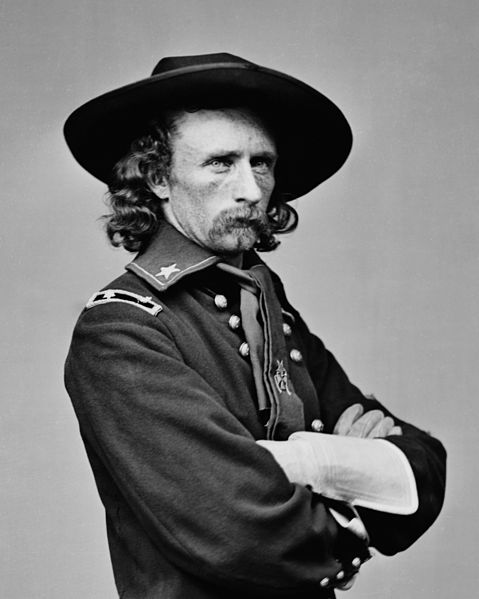
14. George Armstrong Custer

479px-Custer_Bvt_MG_Geo_A_1865_LC-BH831-365-crop

You know him as: The flamboyant, cowardly, and idiotic bigot who spent more time looking good for the camera than fighting. Sometimes seen as the lucky idiot at the right place at the right time or someone who gleefully orchestrated Indian massacres and got exactly what he deserved at Little Bighorn.

Why he may not have been that bad: Sure Custer wasn’t the Indians’ friend nor a model soldier who wasn’t above using women and children as human shields. And he was certainly flamboyant but many portrayals of him usually tend to exaggerate his shortcomings (even in movies like They Died with Their Boots On which portrays Custer in a more favorable light). Still, many of them tend to ignore the fact that despite graduating at the bottom of his class at West Point, Custer was a capable soldier and cavalry commander who actually fought bravely in battle and could even be considered a war hero (for his actions in Gettysburg during the Civil War when he held off the Confederate cavalry). And though he attained the brevet rank of general, his promotion was certainly not a mistake. Not to mention, despite his penchant for recklessness that incurred high casualties, Custer did manage to earn the respect and loyalty of his men. What did Custer in at Little Bighorn had more to do with his ego overriding his judgment in attacking a force that vastly outnumbered his (never a good idea). As for his attitude toward the Indians, Custer was no more racist or bigoted against them than anyone else at the time and he certainly didn’t kill Indians out of sadistic glee (he mainly killed Indians because it was part of his job). Sure Custer wasn’t a perfect  soldier and was no friend to the Indians but he wasn’t an incompetent idiot, a sadistic bigot, or a dirty coward either.

15. Queen Anne Boleyn

220px-Anneboleyn2

You know her as: The scheming and manipulative woman who led Henry VIII astray from his wife Catherine as well as compelled him to break away from the Catholic Church. Also was said to be a major slut, have deformities, and stole Henry away from her sister, Mary. Not to mention, she was Queen Elizabeth I’s mother and got her head chopped off for being a major slut.

Why she may not have been that bad: Sure Anne may have had some ambition to some degree and was a highly intelligent beauty with a strong personality and independent streak as well as been partly the reason for Henry VIII’s break with the Catholic Church after the Pope wouldn’t annul his marriage to Catherine of Aragon (for understandable reasons that he was being held captive by Catherine’s nephew Charles V who certainly didn’t want his aunt cast aside) but she was more of a victim of circumstance than anything else. And she didn’t have a sixth finger or a third breast or else she would have never been presented to court in the first place. Yet, she certainly was in her mid to late twenties when she got involved with Henry VIII as well as in her thirties when she had Queen Elizabeth. Still, how much she had to do with Henry’s defiance of papal power is up for debate but she did have some reformist attitudes (so did Erasmus and Thomas More but they didn’t break away). Yet, Anne Boleyn wasn’t Henry’s only reason for wanting to an annulment from the Pope since he only broke  away from the Catholic Church after he knocked her up but he also wanted to disinherit his daughter Mary, too (a simple divorce wouldn’t have done that). However, many historians agree that there is no evidence that she had sex with anyone other than Henry VIII and most of the charges against her leading to her beheading were mostly trumped up (her real crime being she had miscarried two boys). Her sister Mary on the other hand, had a reputation for being a major slut and already had a husband by the time she and Henry VIII were having their dalliance possibly resulting in two children Henry never acknowledged (though he wasn’t an entirely faithful husband to Catherine either). Besides, Mary had been recalled from the French court for her sexual exploits. Not only was Anne was a virgin until she was over thirty (which is unusual by 16th century standards), she had refused to sleep with Henry for years and had some regard for her chastity. And many historians think that Henry was more or less stalking her though she did go along with his attentions and eventually gave in (but not just because of love, ambition and pressure from her family could’ve been factors. After all, it wouldn’t be right to say no to a king). Nevertheless, Anne would pay her price as well as make plenty of enemies at court but led to her execution was something she just couldn’t control. An interesting woman in her own right, yes, but Anne wasn’t a scheming whore who might have suffered the penalty for doing what might’ve been expected of her. More of a convenient scapegoat than anything else.

16. Dr. Hawley Harvey Crippen

You know him as: The guy who killed his wife, chopped up and disposed her body in his basement, and ran off with his mistress on a ship only to be captured through wireless communication and convicted on forensic evidence (a first for the latter two). He was eventually hanged.

Why he may not have been that bad: Well, let’s just say the Crippen case may not be as open and shut case as it once appeared to be 100 years ago and there are plenty of gaping holes. Recent forensic scientists have examined the preserved remains with 21st century technology and have come up with findings that raise significant doubts whether Crippen killed his wife. Through DNA testing, they not only found that the remains found in Crippen’s basement weren’t Cora’s, but also that they belonged to a man. And they did plenty of test to make sure of that one. Then there’s the question of whether the remains found in Crippen’s basement was actually planted by the police as evidence who were under tremendous pressure to nab a suspect for such heinous crime (they didn’t want another Jack the Ripper case). Besides, if Crippen was so keen on getting away with killing his wife, why would he successfully dispose of her limbs and head while burying her torso in his cellar under his dining room? Surely anyone would know that this is a very stupid way to dispose a body, especially in the early 1900s. Then there’s the fact that the case didn’t become public until after the remains were found. Clearly something suspicious was going on in the investigation. Still, it’s growing ever more likely that if Dr. Crippen was responsible for killing anyone, it would’ve been due to his work in homeopathic drugs than anything. So as far as Cora’s murder, there’s a good chance he may be innocent after all.

Words and Meaning Through Time

Image

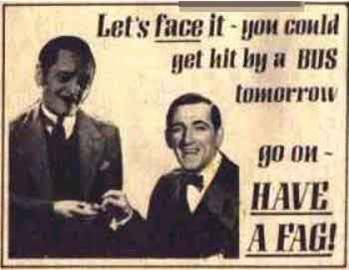
If I ever offended any gays with this picture, I completely apologize since this is just a good picture for this post. Besides, it’s an old-timey advertisement for cigarettes (probably in Britain) and not meant to offend any one. The word “fag” as the short form of an offensive homophobic slur is a more recent development.

While I discussed how certain sayings don’t always translate well in different cultures, in this post I will devote to certain words and their acquired meanings through time particularly in English, especially those with certain unsavory NSFW connotations attached since many of them are fun to trace. Though many words have lasted for centuries, some of them could be considered offensive in one generation while totally harmless the next and vice versa. Misplaced context might incite in giggles, shock, or a “Huh?” followed by “Oh, okay.” Others may have certain dirty little etymologies. So without further adieu, let me show you the amusing little way words have changed meaning through time.

1. Gay- we all know that its present meaning refers to someone who’s of homosexual orientation but this definition dates to the 1930s and before then was only used in gay and theatrical subcultures, at one time it was described as “happy, carefree, joyful” but this was only dating to the late 1800s and was used only among New York criminals before that, it’s original meaning is actually prostitute (and yes, it was used in 1900 to describe a gay male prostitute but only briefly before it started meaning homosexuals in general.)

2. Queer- of course, this is now seen as a slur directed against gay people though it’s the “Q” in the LGBTQ community and perhaps used among themselves (like how blacks use the N-word). Before then, it meant “strange, odd.”

3. Idiot, Moron, Imbecile- these started as clinical terms to describe someone as dumber than Forrest Gump. As they fell into the general insult terms of today they were replaced by a kinder, gentler term: “retarded.”

4. Retarded- a former clinical term once used as a political correctness measure to describe someone who’s mentally handicapped, has nowadays evolved to the worst possible word to describe a person with this condition that it’s now almost considered hate speech.

5. Lesbian- before it became to mean a woman with a homosexual orientation  due to is association with the ancient Greek poet Sappho as well as her sexual behavior, it just meant “someone from Lesbos.” Actually anything associated with Sappho will be associated with lesbianism because she’s known more for that than her own poetry, sad to say.

6. Making Love- now a more discreet euphemism for sexual intercourse, this has meant everything romance and courtship to making out and PDA.

7. Faggot- once meant a bundle of sticks tied together and used for a fire before it became a homophobic slur. How it came to be a anti-gay slur, no one knows.

8. Weird- before it meant “sort of generally eccentric,” its original definitions were “scary” or “supernatural.”

9. Shag- once meant a tobacco product, now just means sex.

10. Boner- originally meant “embarrassing and/or major blunder” now it’s just something old guys get for four hours after taking Viagra.

11. Violent- at onetime this was defined as “overly emotional” yet we still associated with “blood, guts, killing, as well as psychological and bodily harm.”

12. Straight- though still means “totally linear” or “less funny guy in a comedy act” it also used to denote “law-abiding” and “clean,” now it means “heterosexual.”

13. High- though it still means “upward” it also used to mean “happy” before it obtained its current definition “in a drug influenced haze.”

14. Boob, Boobie- used to mean “dummy” before it took on it’s current definition of “breast” in the 1970s.

15. Hung- when used as an adjective, it used to be “hungover,” “executed through strangulation,” or “lynched.” Now it just means something sexual.

16. Glory Hole- once meant “a mineral rich trench pit.” Now it’s something else entirely.

17. Pleasure- has a lot of multiple meanings like “getting enjoyment out of doing something,” or “pleased.” Now it’s almost always used in a sexual context.

18. Ecstasy- used to mean “happiness” or “pleasure,” now refers to an illegal recreational drug.

19. Molest- once meant “disturb” or “bothered” now used as a term referring to unwanted sexual contact, particularly with a minor.

20. Fondle- used to refer to innocent or affectionate touching, now it pertains to touching in a sexual or erotic context.

21. Tranny- in British slang it was “transistor radio” while in American slang it was, “automobile transition.” Today it refers to either “transgender” or “transvestite.”

22. Fetish- back in the day it meant something like “totem object associated with a spirit.” Nowadays it refers to an erotic fixation to something that shouldn’t be.

23. Inter-Sexual, Bisexual- both used to mean “unisex,” now the former describes a “hermaphrodite” while the other just pertains someone who “goes both ways” in sexual orientation. (Bisexual has also meant “hermaphrodite” as well.)

24. Courtesan- once meant “courtier” or “court lady” now means “high class prostitute,” “mistress,” or “kept woman.”

25. Intercourse- used to mean “communication between individuals,” now refers to “copulation.”

26. Conversation- once meant “sexual intercourse or intimacy” now pertains to, “social communication involving two or more individuals.” Could also have meant “sexual harassment.”

27. Naughty- once meant “ill-behaved” but though it retains the meaning, it also refers to wayward sexual behavior.

28. Fanny- in more innocent times was a nickname for Frances. Now refers to “rear end” in the US and “female genitalia” in the UK and Australia.

29. Knock Up- at an earlier time it meant “to wake up” (by knocking on the door). Nowadays “to impregnate.”

30. Come Out- in olden days “to be considered an adult who frequents social gatherings” particularly to young women when it came to finding a husband. Now it means “to acknowledge one’s homosexuality to the world.”

31. Titillate- in the early days it might have meant “to tickle” but now means “to excite sexual arousal.”

32. Pussy- though originally used in reference to a cat, can also be used today in referring to either “cowardice” or “female genitalia.” (The latter part usage goes way back since there’s a 1930s song called “My Girl’s Pussy” and I don’t think the guy’s talking about a cat here.)

33. Ejaculate- originally meant “to exclaim or interject” now means something a guy does during sexual intercourse.

34. Abstinence- usually has retained it’s original meaning “to refrain from” but while it was originally used to give up alcohol it now pertains to refraining from sexual intercourse.

35. Cute- used to mean “shrewd and perceptive” but now means “adorable.”

36. Diddle- at one time it meant “to swindle” or “to waste time over trifling.” Can now be a vulgar term “To copulate.”

37. Ass- once meant “donkey” but can be used for “bum” or as a common insult.

38. Thong- originally pertained to strip of leather usually on the sandals, later came to designate a flip flop, and is now referred to as a sleazy and very uncomfortable type of underwear or swimsuit bottom. (Please don’t wear one.)

39. Dick- has always been a nickname for Richard as well as referred to “detective,” but has come to be a slang term for “penis” as well as a common insult term toward a guy.

40. Orgy- originally this described any kind of gross indulgence, but nowadays it mostly describes those of a sexual nature, especially when it refers to groups.

41. Prick- originally meant either “something sharp” or “getting hurt by something sharp” but now could be used in slang for “penis” as well as a common insult term toward a guy.

42. Making Whoopie- in the early 20th century this meant “living luxuriously” now means about the same as “making love” in the dirtiest context.

43. Hypochondria- this word’s meaning has changed dramatically over the years. Though nowadays it refers to unusually excessive concern for one’s health or tendency to fear or imagine having illnesses you don’t actually have but this usage dates back to Victorian times. In ancient Greece, this referred to describe the pain arising from a malarial infection on the liver and spleen. Centuries later its meaning changed to “depression.” And in the mid-20th century was used as a euphemism for other more serious mental illnesses like borderline personality disorder and hebephrenia.

44. Douche- derived from the French word for “shower” and has been described as a cleansing flood of liquid rushing into an orifice. Nowadays, well, it’s a liquid which a woman squirts to wash her privates (and that’s all I’ll say) as well as a common insult term. In usage could mean “an abrupt shock to nerves, emotions, or awareness.”

45. Dyke- originally derived from the Dutch term for “ditch” now means “lesbian.”

46. Yiffer- originally meant “a stout pole used in scaffolding” until the furries came along. (Don’t ask.)

47. Nuclear- used to mean just “central” like in a nucleus before the Atom Bomb, nuclear energy, nuclear weapons, or nuclear disasters.

48. Toilet- used to describe one’s dressing, cleaning, and grooming process. Nowadays it refers to the essential fixture used for relieving oneself which flushes to expel one’s bodily waste.

49. Hump- at one time meant “to exert oneself” or “move swiftly” now is just used as a sex euphemism referring to dog mating rituals. (If you’ve seen what some dogs do with one another, you’ll know what I mean.)

50. Slut- used to refer to a woman who’s “messy looking” now it’s a derogatory term for a sexually promiscuous woman.

51. Sexy- used to describe someone as “obsessed with sex” before it was used to denote someone as “sexually attractive.”

52. Rusty Trombone- while Oscar the Grouch actually meant an oxidized brass instrument, it can also refer to a sex act.

53. Spunk- though it nowadays means “courage, spirit, and determination” it used to be associated with lewd feminine behavior.

54. Fag- once used as a slang term for “cigarette.” Nowadays it’s short for the famous homophobic slur.

55. Vibrator- used to describe a couple of gadgets, one used in a barbershop to foam shaving cream, the other as a massage device to relax, cure headaches etc. Nowadays it’s a gadget that does something completely different.

56. Incontinent- in Shakespeare’s day meant “cease from sexual abstinence.” Now it’s defined as “losing control of one’s bowels.”

57. Butt- once meant “boat.” Nowadays means “rear end” or “end of a cigarette.”

58. Mistress- used to mean the boss’ wife, a female boss, or “Mrs.” in general. Nowadays it refers to the “other woman” in an adulterous tryst.

59. Aroused- used in the past tense to “arise.”  Now it’s just sexual excitement.

60. Condom- was once used as a short form for “condominium.” Now it’s referred to as a contraceptive.

61. Naz, Nazi- in Germany, this was a nickname for Ignaz (Ignatius), until the 1920s.

62. Jap- used to be a nickname for Jasper, but please don’t call anyone this nowadays especially a Japanese person or a Jewish woman. Still, it has a lot more definitions than that.

63. Negro- was once the only decent term to describe blacks until the late 1960s. Now it’s just either a racist or political incorrect term, with the possible exception in Latin America.

64. Spastic- originally it meant “frantic” or “manic” as it still does in the US. But in the UK it’s the equivalent of the R-word.

65. Sod- used to mean “clod of earth” but is now another British insult.

66. Nothing- though usually a harmless word meaning zero, in Shakespeare’s day it referred to a woman’s naughty bits or her virginity. (As in Much Ado About Nothing).

67. Nunnery- let’s just say that when Hamlet told Ophelia “Get thee to a nunnery” he may have meant a different kind of house full of women but not of piety and chastity kind. Also, with Anti-Catholic sentiment growing in England, “nunnery” became an euphemism for “brothel.”

68. Fishmonger- though it could mean “someone who sells fish,” it could also be referred to in Shakespeare’s time as a “pimp.”

69. Dude- though it just means “guy” from the 1960s, it’s older meanings ranged from “city slicker,” “fancy boy,” or “gay blade.” Definitely don’t want to call a guy from the 19th century that because it was considered an insult.

70. Hobby Horse- though it now refers to a child’s plaything, in 1700s, it could either mean “obsession” or “prostitute.”

71. Horns- though it could mean the protuberances of an antelope or reference of sexual arousal (like horny), it could be used as an Elizabethan reference pertaining to a guy getting cheated on signified by a bunny ears gesture.

72. Dork- though since the 1980s it’s a another term for “nerd,” before then it was a slang term for “penis.”

73. Schmuck- its original meaning is “fool” though it allegedly meant “penis.” Of course, it’s probably safe to say it means “dick” which can mean both. Still, you don’t want to call a Jew this.

74. Minion- though we associate with “henchman” it’s originally derived from the French “mignon” referring to certain attractive courtiers of the male specialty.

75. Gunsel- while we may associate it as “gun-wielding hoodlum” but before The Maltese Falcon, it referred to either a young boy kept for sexual purposes or a passive partner in anal intercourse. (And yes, I think one of The Maltese Falcon characters either has or is a gunsel in its original context.)

76. Punk- though it now means someone who’s either a juvenile delinquent, unfriendly homeless kid, or someone from the Punk Rock subculture in much of history it had many unsavory meanings. In Shakespeare’s time, it meant “prostitute, in the 1890s, it was slang to something similar to the original meaning of gunsel.

77. Orchid, Avacado, Testify- all these have a word origin which meant “testicle.” Now these are an exotic flower, a fruit used in guacamole, and to give legal testimony.

78. Funky- though most of us under fifty associate it with the Disco Era or something upbeat you can dance to, it was originally referred to the smell of a woman’s vagina.

79. Rape- though we’re more used to it referring to “sex with an unwilling partner,” there was once a broader context that meant “kidnapping” or “assault.” Could have also meant “kidnapping for sex,” or “marriage” in ancient times whether or not the actual sex was consensual afterwards (though it was probably questionable to say the least.) Also, Alexander Pope’s Rape of the Lock is about a girl getting an unwilling haircut, not actually being raped as we know it. (Seriously it is.)

80. Hooker- though today and for much of history has meant “prostitute” in the old studio wrestling days it meant to describe wrestlers of legitimate wrestling backgrounds so was used as a compliment.

More Historical Heroes and Why They Probably Don’t Deserve Their Fame

Richard_the_Lionheart

Since I got a number of views on my last post on historical heroes, there are plenty of others I didn’t seem to touch upon who are immortalized for their heroic deeds but weren’t as great people as thought or the stories were just plain made up.  I’m not going to use John F. Kennedy though he may not have had as great a presidency as it’s perceived, he’s still considered a hero since he managed to have the kind of life he led despite suffering from serious health problems like Addison’s. Also, I’m not going to use King Henry V though he may not be the guy Shakespeare depicted and actually quite ruthless, though no more than most medieval kings in his day. Yet, sometimes history isn’t as unbiased as you think it is. Here are more historical heroes I will kindly list here:

1. Medieval Knights

Known for: Being the champions of Christendom and chivalry who fought baddies, wooed ladies without seducing them, behaved honorably, and saved the day with a sword. They always fought for their country, king, and God. As good guys, they were always willing to protect the weak and vulnerable you could always count on them to rescue a damsel in distress. They’d also fight tournaments to win a lady’s favor.

Why they may not deserve their fame: Of course, there may have been some knights like this but they were human beings like any other. For instance, we all know that King Arthur’s knights weren’t all like that. I mean Sir Lancelot may do good in battle and be able to heal others yet he deserted his wife and kid as well as banged his boss’ wife. Mordred was an evil product of incest who does his old man in (in some versions, in others, he’s just Arthur’s evil nephew, brother-in-law, or not related to him at all). Sir Gawain was a homicidal maniac and had many other issues. Still, though a knight may claim loyalty to a nation, a king, or his lord, he was ultimately a mercenary working for himself mostly for land, power, and riches. If they were of the a Crusade Order, they could be ruthless and fanatical but so was everyone in the Middle Ages to some extent. However, it’s interesting to note that the Crusades weren’t just fought in the name of God to capture the Holy Land from the Muslims. Rather, many thought the Crusades were a good idea since it would not only grant knights penance for killing Muslims but also keep many of them from fighting and terrorizing each other as well as raping, pillaging and burning peasant villages. Really, they would do this to their fellow Europeans or even their own serfs, let alone Muslims. Yet, they wouldn’t kill each other unless it was in battle and considered the slaughter of peasants after capturing a village whether they be men, women, or children. Still, as for medieval damsels in distress, they probably wouldn’t call on a knight in shining armor to save them unless it was a last resort or if the guy was her husband. Most damsels in distress at the time usually tried to save themselves, because they’d never know what a knight may do to them.

2. King Richard the Lionheart

Known for: Being the good King Richard in the Robin Hood stories and seen as a paragon of knighthood and champion of Christendom. Badass hero of the Crusades.

Why he may not deserve his fame: King Richard I was a rather complex individual like any member of his family (like King John, for instance). He wasn’t the biggest jerk but he was as warlike as he was greedy. He certainly liked being in France better than England (there’s a story where he claimed to sell London if he could find a buyer, oh, and he only spent six months of his reign there anyway). And as like anyone in his family, he wasn’t above stabbing people in the back (of course, you can say that about any ruler in the Middle Ages.) Of course, he only saw his subjects as producers of tax revenue to support his exploits abroad. Then there’s the time when he was taken hostage by Archduke Leopold I of Austria and Holy Roman Emperor Henry VI. Of course, he was ransomed after two years but it was from the pockets of his English subjects. And he was taken prisoner by a guy he used to boss around. Richard may have been a great warrior king but he wasn’t good at anything that didn’t involve warfare and tactics like budgeting, tolerating, or judging. So Good King Richard wasn’t such a great English king after all. Yet, as a paragon of knighthood and chivalry, well, as far as actual medieval knights go, he may not be far off.

index

3. Charles Lindbergh

Known for: Being the first man to fly across the Atlantic solo from New York to Paris on The Spirit of Saint Louis. One of the biggest celebrities of his day. Also, his son was kidnapped and killed in one of the most infamous child abduction cases in history.

Why he may not deserve his fame: Well, Lindbergh certainly does deserve his fame but there’s no doubt about that. Yet, just because his picture may be in the history books and your grandpa might have had a poster of him, doesn’t mean that he’s a kind of role model you’d want to emulate or put on a pedestal. For one, he believed in eugenics and racist which wasn’t unusual at the time yet his beliefs on either may have been too much for those in the 1930s. Also, it certainly doesn’t help his case that he was a staunch isolationist (though he stuck with his country before Pearl Harbor), accepted a medal from Nazi Germany (and didn’t return it after the Kristallnacht), had a friendship with Anti-Semitic Henry Ford, and was willing to make excuses for Hitler. So no wonder he was suspected of being a Nazi sympathizer. Oh, and 29 years after his death it was discovered that he fathered seven children to three German women (trust me, you can’t make things like this up and it was mentioned on PBS).

Lady_Godiva_by_John_Collier

4. Lady Godiva

Known for: 11th century pre-Norman Conquest Saxon noblewoman who pleaded with her despotic husband Leofric to be nice to his subjects and reduce taxes. Yet, when he refused, as a protest, she got up on her white horse and rode the streets of Coventry in her birthday suit.

Why she may not deserve her fame: Well, Lady Godiva has a bit in common with Betsy Ross, two famous women who get credit for something they didn’t actually do but receive credit long after their deaths. Still, though Betsy Ross most likely didn’t design the first American flag, there’s reasonable evidence that she might have had some involvement with its production. With Lady Godiva, however, there’s no historical evidence that she was ever known for anything from being beyond a sweet and charitable woman. She may have pleaded with Leofric to be nice and reduce taxes but that’s probably as true as the legend about her gets. Still, there’s no evidence that she ever rode naked into Coventry and that legend only surfaced about 200 years after her death. She was, however, the only female to remain a major Saxon landholder after the Norman Conquest.

Imacon Color Scanner

5. Andrew Jackson

Known for: Seen as a war hero in the War of 1812 and a populist bad ass who loved his wife and stood up for the people against the wealthy elite. President of the United States during the late 1820s and early 1830s. Nicknamed “Old Hickory.” Father of Jacksonian democracy as well as one of the godfathers of the modern Democratic Party. Picture is on the $20 bill.

Why he may not deserve his fame: There’s more than one good reason why Andrew Jackson is considered one of the most controversial US presidents to this day. The most obvious being his policies towards Native Americans such as his aggressive enforcement of the Indian Removal Act (despite that the law was struck down by the Supreme Court) which resulted in the relocation of thousands of Indians to Oklahoma and the Trail of Tears. Of course, it was said he did it out of belief that it would prevent a war with the tribes and possibly a civil war but still, it was a policy that denied human rights to a group of people for no good reason, resulted in genocide, and has put a strain on Native Americans ever since. Then there’s Jackson’s policy of getting rid of the Bank of the United States which would later be a direct cause of the Panic of 1837 throwing the nation into a deep depression (basically this is what would happen if we got rid of the Federal Reserve). Finally, you got the introduction of the spoils system which chose unelected government workers based on party loyalty regardless whether these people had any qualifications to do their jobs. This brought widespread corruption and incompetence as well as lack of accountability on every level of government and would eventually played a role in the assassination of a US president (James A. Garfield was shot by a rejected office seeker). As a side note, he appointed Roger B. Taney as Chief Justice to the Supreme Court (who will have an important role in the notorious Dred Scott Decision). Also, engaged in dirty campaign tactics against John Quincy Adams, did a bunch of things that would certainly get him arrested today (such as fighting duels), and might have been a bit crazy (yet he’s still a rather interesting and complex man).

6. Ronald Reagan

Known for: President of the United States during the 1980s, and seen as the greatest president of all time by American conservatives. Said to have ended the Cold War, revived the economy through Reaganomics, restored dignity and self-respect to the presidency, restored American pride and morale, and did all these super wonderful things that helped make the USA the greatest nation on earth. Voted as the Greatest American on the History Channel.

Why he may not deserve his fame: I tried to refrain from writing about him since he was a popular president but still, he doesn’t really deserve all the hype. Not to mention, conservatives still sort of make Reagan into a man he wasn’t. For one, the 1980s weren’t a wonderful time in history, especially since it was a time when many corporations started basically outsourcing their productions to other countries (and many areas never recovered). Reagan’s economic policies also started widening the gap between rich and poor, created budget deficits as well as an increase in homelessness. However, he did increase taxes a few times when he realized that tax cuts for the rich weren’t helping. Other blunders include the Iran-Contra Affair (which lowered American credibility), huge budget deficits (which made GOP “fiscal conservatism neither fiscal nor conservative), his environmental ignorance (believed that trees caused pollution), his do-nothing reaction to the looming AIDS epidemic, courting Saddam Hussein, and the list goes on. As for the Cold War, Reagan showed little sign of burying the hatchet with the Soviet Union (“evil empire” as he called it) until the Mikhail Gorbachev assumed power in 1985. And even then he was uncooperative in peace talks with the Russian leader until facing a scandal and low approval ratings, he was willing to do anything. And as for Russia’s bankruptcy, it was due to the War in Afghanistan that started while Reagan was still in California so bankruptcy was the Soviets’ own fault. Also, he had Alzheimer’s during his presidency (his son has even said this.) Then there are the times before he became president. For one, he didn’t become a Republican until age 51 and was mostly willing to change his political views for his declining career and satisfy his father-in-law. He opposed civil rights and Medicare, was almost recalled during his term as governor of California, sent the California Highway Patrol to crack down on campus protests at Berkeley, and oh, legalized no-fault divorce and abortion in California (though he later switched his position on the latter after realizing what it might to do him politically but still he didn’t do anything to make abortion illegal again and this was in 1967 so he had a good six years). Not to mention, he was divorced (from actress Jane Wyman), certainly engaged in pre-marital sex (wife Nancy was pregnant at the altar), was more into astrology than Jesus, and basically betrayed his fellow actors by leaking some of their names to the House Committee of Un-American Activities while president of the Screen Actors Guild. Reagan may not have been one of the worst American Presidents, but he certainly shouldn’t be ranked among one of the best. In fact, he wasn’t much of a great president anyway. I may be a liberal but even so, I don’t believe he deserves the hype regardless of anyone’s political affiliation.

7. Woodrow Wilson

Known for: US President during WWI and was seen as a model for Progressivism and Idealism. His 14 Points speech helped set the stage for the United Nations and earned him a Nobel Peace Prize.

Why he may not deserve his fame: Wilson’s presidency has come under significant controversy in recent years. Though many of his economic policies tend to be seen in a positive light since many his reforms on that front were greatly needed, he appointed the heads of large corporations to agencies supposedly regulating business. Not to mention, they did no favors for women, minorities, immigrants, workers, or others in need of assistance. Though his Virginia upbringing during the Civil War might have inspired his commitment to peace, it also served as the major influence to his hardcore racism and his policy of mandatory segregation of the government. I mean he was considered a racist even by early 20th century standards and seem to have a nostalgia for slavery (though he deemed it uneconomical). Oh, and he barred blacks from serving in the Navy which was at times more than 1/3 African American dating from the revolutionary war. To be fair, he was no fan of immigrants either and criticized Irish immigrants harshly. Then there’s the fact he’s one of the nation’s first of the Red Scare anti-socialist and anti-communist presidents, launched the Espionage Act of 1918 which arrested those who spoke out against WWI, and ran his reelection campaign on a pacifist platform (though he would be calling for war at the start of his second term). Though he’s seen as an anti-imperialist, he ended up intervening in places like the Dominican Republic, Haiti, and Mexico. Of course, the Mexicans were attacking our borders but in some ways, they were doing it in response for the US occupation of Veracruz. As for ending WWI and other related foreign policy, let’s just say that it’s complicated. Wilson may have consented to punishing Germany for starting the war (even though Germany certainly didn’t). However, it would be unfair to blame him for the events surrounding actions during the Treaty of Versailles, especially when it came to Germany getting the short end of the stick. For one, Wilson wasn’t well aware about European politics and saw WWI as a war between Democracy and Absolute Monarchy (Germany was actually a constitutional monarchy while Russia was ruled by Czarist autocrat before the Russian Revolution.) Second, the US only entered the war in 1917 when it started in 1914. Also, France’s Georges Clemenceau was more the dominating influence at Versailles than Wilson ever was and wanted to punish Germany for a lot more than just WWI (like the Franco-Prussian War). Thus, Clemenceau wanted revenge, not peace. Not to mention, David Lloyd George was more concerned with politics in his native Britain than anything. Wilson may have been a bad president but he’s far from being one of the greats.

nbfs2

8. Nathan Bedford Forrest

Known for: Well, I’ll get to part of that in a moment. However, in the South, he’s considered a great Confederate Civil War general and kind of a hero. I mean he has so many places and memorials dedicated to him it’s ridiculous.

Why he may not deserve his fame: Forrest is perhaps one of the worst examples when it comes to being seen as a historical hero. Of course, this would stem from the Pro-white Southern “Lost Cause” school of history which seemed to prevail during segregation. However, while Robert E. Lee may not have been the great general or the great man he’s portrayed as but at least he has some admirable qualities you can respect. Despite his flaws, Lee can be seen as a great hero and a great man. However, this is not so with Forrest since he’s best known as the first Grand Wizard of the KKK as well as a figure associated with white supremacy (he may not have been as racist but still). And it doesn’t help he was a slave trader before the Civil War either. Nevertheless, Forrest still embodies the worst of the Confederacy during the Civil War mostly because of what happened at the Battle of Fort Pillow. Fort Pillow was a Union held fort which Forrest managed to attack and capture back in 1864. However, it was a battle that where countless black and Southern Unionist troops were killed and may not have died in combat. In other words, these two groups of captured soldiers were basically slaughtered after surrender, which is a war crime. Of course, Confederate commanders didn’t record that such massacre took place at Fort Pillow (even Forrest’s report doesn’t mention it), yet there is significant evidence that states such slaughter took place. For one, there are accounts by Union survivors and some even from Confederate soldiers writing back home. Second, the Union casualty rates pertaining to the battle are unusually higher (like nearly 300 killed out of around 600-700) than what the Confederates sustained (which was about 14 killed and 86 wounded out of 5,000-6,000). And in some ways the Union casualty rate is much higher than it should be if the Confederates sustained a rate like that in 1864. This is also telling when you consider that only 90 of the 262 black Union troops involved managed to survive the battle. Out of the white Union forces, only 205 out of 500 survived. If this doesn’t convince anyone why Nathan Bedford Forrest shouldn’t be remembered so fondly, then I don’t know what does.

9. Dwight D. Eisenhower

Known for: Being an admirable and badass general during WWII as Supreme Allied Commander and a great president who maintained stability in the early years of the Cold War and warned of the Military-Industrial complex. Affectionately nicknamed Ike in the 1950s. Possibly the most bipartisan and compromise-friendly US president of the 20th century.

Why he may not deserve his fame: Eisenhower certainly does deserve his fame and certainly can be considered a hero, in some ways, a lot of what happened under his presidency that have long term implications for the United States and need to be discussed. For one, Eisenhower appointed Richard M. Nixon as his running mate and it’s clear to say that Nixon may not have been elected president if he wasn’t tapped as Ike’s VP. Of course, we all know about the long term implications with that appointment. Of course, what should really get more attention in regards to Eisenhower’s presidency is his foreign policy which done its share of long term damage of US credibility over the decades. For one, Eisenhower supported a couple of coups against democratically elected governments such as Prime Minister Mossadegh in Iran and President Arbenz in Guatemala. Both these guys were replaced by dictators. Overthrowing Mossadegh has critically strained relations between the Islamic world and the West to this day. Overthrowing Arbenz had put Guatemala under the successive rule of military dictatorships for decades. Also, Ike supported the Batista regime in Cuba which gives the Castro brothers a few good reasons to hate the US. Then there’s the fact he blocked an important vote on Vietnamese unification and installed pro-US dictator Ngo Dinh Diem in South Vietnam after finding out that 80% of the Vietnamese would’ve sided with Ho Chih Minh and the Communists in said referendum, setting the stage for US involvement in the Vietnam War. Sure Eisenhower may have been a good president or even a great one, yet some of his shady foreign policy decisions have done more than its fair share to hurt US credibility and these should not be ignored.

10. Mohandas K, Gandhi

Known for: Seen as a saint who through the principles of ahimsa (nonviolence) brought independence to India in 1947.

Why he may not deserve his fame: This is a controversial one since Gandhi did help bring independence to India as well as inspired hundreds and has certainly earned respect. However, the Indian Independence Movement was a strong force well before he entered the scene when he did, he basically served as a figurehead for a cause and was happy to take the credit while other leaders did most of the work (like Nehru, Jinnah, Bose). Sure he talked of peace but also played politics as ruthlessly and slimy as any politician (more of a pacifist Machiavellian if you will). And he wasn’t above politically stabbing people in the back. Also, his ideas weren’t that original and even he knew that (basically nonviolence had been a kind of idea dating thousands of years. Not to mention, he was a British educated lawyer who spent a spell living in South Africa (of you knew that). Then there’s his private life which isn’t pretty. For one, he was difficult and demanding, a tyrannical and abusive father, obsessed with the workings of his own and other people’s bowels, and subject to long bouts of depression during which he refused to speak to even his closest associates. Also, slept naked alongside his female disciples after the death of his wife.

Robin-Hood-Errol-Flynn-002

11. Medieval Outlaws

Known for: Being honorable men who steal from the rich to give to the poor, live in the forest, and stick up to corrupt sheriffs and noblemen, you know, like in Robin Hood. Basically a fugitive from a unfair justice system.

Why they may not deserve their fame: Outlaws then were probably no better or worse than today’s criminals. However, with lack of adequate law enforcement outlaws can basically get away with a lot more shit then (seriously no one would want to be the sheriff of Nottingham, it would’ve been a lot worse than being a cop on The Wire, especially since there was a lot more crime in the Middle Ages as there is today). Of course, outlaws would certainly steal from the rich yet they’d also rob or harm just about anybody. Also, many of those in England became knights later on so you might want to see what I have to say about them.

images3

12. Cowboys

Known for: Seen as heroes of the Wild West who travel the open range on cattle drives while doing a bunch of other shit, I’m not sure what. They traveled on horseback by day and sang songs by the campfire at night. Sometimes they’d even shoot bad guys or Indians. Still, cowboys are seen as one of most prominent American cultural icons and loved by everyone everywhere.

Why they may not deserve their fame: This might depend on your definition of heroism since real cowboys were much different from the ones you saw in the movies. Besides, if you ask any boy in the 19th century whether he’d like to be a cowboy, he’d more likely say no unless he was black, Mexican, Indian, a poor white, gay, or an immigrant off the boat. I mean the job of cowboy was a low wage and low status job that entailed herding cattle from the ranches to the railroads which would transport them to the slaughterhouses in Chicago. The average cowboy earned a dollar a day for his hard work, slept in a barracks on the home ranch, and were more concerned with cattle rustlers and predators than Indians (Indians were more of a job for the US Army). Also, they wouldn’t be wearing those nice cowboy outfits you’d see at rodeos. Not to mention, they were notorious in Kansas for their wild and violent behavior especially since the place was seen as an end of a long cattle drive where cowboys received their pay as well as had towns with drinking and gambling establishments.

Things in American History Worse than Obamacare

In the news, I’ve been hearing things about what these Republicans in Congress are griping about how Obamacare is the worst thing that has ever happened in American History. As a former history major in college, I have to disagree big time. Obamacare may not be the best thing since sliced bread but as the worst, not even close. So here I have a list of things in American History that are much worse than Obamacare just to put people in perspective which assures me, the US is certainly going to be okay with it.

Things in American History Worse than Obamacare (Some of these might be according to my opinion):

Concepts: slavery, DDT, Birth of a Nation, Fox News (couldn’t resist), for-profit health care (yes, even the system Obamacare replaces), Blackwater, the Atom Bomb, Social Darwinism, Monsanto, racism, smallpox blankets, anti-intellectualism, abuse of laissez faire, sexism, napalm, child labor, Hays Code, blackface minstrel shows

People (Hall of Shame): Thomas Midgely (inventor of leaden fuel and CFCs), J. Edgar Hoover, Dick Cheney, Bernie Madoff, Jerry Sandusky, Lance Armstrong, Newt Gingrich (first used the government shutdown as a political ploy), Whittaker Chambers, Joseph McCarthy, Jack Abramoff, Dr. James W. Watts (helped popularized the lobotomy in the US), Roger B. Taney (said that blacks have no rights which whites are bound to respect in the Dred Scott Decision), Benedict Arnold, Henry Wirz (warden of Andersonville Prison and only person in the Civil War convicted and executed for war crimes), Nathan Bedford Forrest (responsible for the Fort Pillow Massacre and was first KKK Grand Wizard), Strom Thurmond, Richard Nixon, Anthony Comstock, Jeffrey Amherst, Anita Bryant

Groups: the KKK, the Religious Right, the Dixiecrats, robber barons, global warming deniers

Places: Andersonville Prison, Triangle Shirtwaist Factory, Indian Reservations

Events:

Wars: The Civil War, the Indian Wars, Vietnam War, Korean War,Spanish American War, Mexican Wars, WWI, Attack on Pearl Harbor, War of 1812, Iraq War, Battle of Little Bighorn, Wounded Knee Massacre, Philippine American War, Bataan Death March

Scandals: Watergate, Iran-Contra, Teapot Dome Scandal, Savings and Loans Scandal, Lewinsky Scandal, Plamegat, Enron, Chappaquiddick, Black Sox Scandal, 21 Game Show Cheating Scandal, Hollinger Scandal, Abramoff Lobbying Scandal, doping scandals

High Crimes and Attacks (non-war related): Kennedy Assassination, RFK Assassination,  Lincoln Assassination, Oklahoma City Bombings, Haymarket Riot, Kent State shooting, Virginia Tech shooting, Jonestown, Columbine, Sandy Hook, Aurora, 9/11,Valentine’s Day Massacre, O. J. Simpson Trial (1990s), Waco, MLK Assassination, the Boston Massacre, Boston Marathon Bombings, Bleeding Kansas, Trayvon Martin shooting, LA Race Riots, the Murder of Matthew Shepard, Lindbergh Baby Kidnapping, New York Draft Riots, lynchings, Tuscon shooting

Disasters: Hurricane Katrina, Hurricane Sandy, Challenger Explosion, Columbia Explosion, BP/Deepwater Horizon Oil Spill, Exxon Valdez Oil Spill, San Francisco Earthquake, Johnstown Flood, The Dust Bowl, Triangle Shirtwaist Fire, Chicago Fire, Three Mile Island.

Economic Upheaval: The Great Depression, Panic of 1837, Stock Market Crash of 1929, Wall Street Meltdown of 2008

Crises: Spanish Flu Epidemic, Cuban Missile Crisis, Iran Hostage Crisis, Secession Crisis

Others: Scopes Monkey Trial, Salem Witch Trials, slave trade

Legal Actions: Jim Crow laws, Dred Scott Decision (worst Supreme Court decision in history), Chinese Exclusion Act, Plessy vs. Ferguson, Citizens United ruling, Alien and Sedition Acts, Patriot Act, Fugitive Slave Act, the Intolerable Acts, Comstock Laws, 18th Amendment, Kelo vs. New London (government can use eminent domain for the benefit of selling it to private developers), Indian Removal Act, Death of the Voting Rights Act, Shoot First Laws (unjust when it comes to certain cases)

Bad Policies: Japanese Internment Camps, Prohibition, the Pardon of Scooter Libby, Nullification Crisis, Trail of Tears, US-Soviet Nuclear Arms Race, Cold War, Palmer Raids, spoils system, McCarthyism, voter discrimination, Imperialism, government shutdowns, death penalty, 3/5 Compromise

Of course, this is only as much as I could think of but feel free to list more in the comments section. Still, I don’t think Obamacare is in any way worse than all the things I have already listed from American History, which I can offer a decent explanation. Of course, there are certain items I didn’t list since they may be subject to controversy. Still, if the United States can survive as a country through all this, then I’m confident, it will be fine under Obamacare.

Underrated, Overlooked, Forgotten, and Ignored Historical Heroes who Need More Love

Some historical heroes get all the glory and praise even though they didn’t really deserve it. Others perform great deeds but are barely recognized for them for some reason whether it be by race, gender, job, or just that they don’t really fit into the historical narrative. Others are famous for one reason or another but aren’t really fully recognized for their work because they may share some unlikable quality the status quo doesn’t like or their accomplishments just get lost in the historic record. In some ways, history doesn’t do much justice to them either. Here are some of the great historical heroes who need more love. (I’m not including Tesla because he’s on too many lists already.)

1. Frank J. Wilson

His Feats: He was the IRS agent who nailed Al Capone, used the serial numbers on ransom notes to help solve kidnapping and murder of the Lindbergh baby (well, he nailed Bruno Hauptmann), and eventually became head of the Secret Service where he successfully resisted attempts of an FBI takeover orchestrated by J. Edgar Hoover, nearly eliminated the production and distribution of counterfeit money through a nationwide education program, and initiated practices in presidential security which have since become standard procedure, all before retiring in 1947. It’s been said that Al Capone had a plot to kill him which he later cancelled and came to regret.

Why He’s Ignored: Wilson couldn’t bask in the glory of his accomplishments since secrecy was part of his job. Even during his three year investigation of Al Capone, he didn’t even tell his wife about his work if that gives you any idea. So naturally the credit went to Elliot Ness instead.

2. Mary Seacole

Her Feats: She’s best known as a nurse in the Crimean War who used her own resources to set up her own hospital to treat the wounded even though she ended up bankrupt afterwards and her popular made it possible for much of the British public to support her. Known as “Mother Seacole.” Her autobiography was one of the first written by a black woman in Britain as well as successfully combated racial prejudice.

Why She’s Ignored: Well, she’s not actually ignored in Britain and her home country Jamaica, most people in the world have barely heard of her. Also, she was black (though her father was Scottish), not conventionally educated (mostly learned to be a nurse from her mother), and her presence in the Crimean War doesn’t fit well with the Florence Nightingale. Also, Nightingale criticized her for keeping a “bad house” in the Crimea and was responsible for “much drunkenness and improper conduct.” Whether Nightingale was either telling the truth or acting out of jealousy is unclear. Not to mention, there’s some debate over whether Seacole’s achievements were exaggerated for political reasons, especially in recent years. Of course, she’s no Florence Nightingale but even that shouldn’t dismiss her from the history books or even as a pioneer in nursing since she did have an amazing story as well as helped make nursing a more respectable profession . Still, since she was quite popular with the soldiers who were willing to raise money for her, she was certainly no fraud.

3. Helen Keller

Her Feats: Overcame her blindness and deafness after a bout with illness as a toddler as well as graduate from Radcliffe College. Later she became a writer, lecturer, and lifelong activist for the disabled, disadvantaged, women, and ethnic minorities as well as sent money to the NAACP and helped co-found the American Civil Liberties Union.

Why She’s Ignored: Helen Keller isn’t really ignored as a historical figure per se, but almost everything about her and the reason why she’s such an influential figure often is. Of course, this is because to talk about her adult life and how she achieved fame is to acknowledge Keller’s radical politics, namely the fact she had been a Socialist since she was in college. Her radical political views stemmed from her realization of how social conditions had an impact on how likely a person was going to end up disabled. Not only that, but she also knew full well that she was able to receive the guidance she got from Anne Sullivan was because of her privileged background. Her Socialist politics and activities were very well known at the time and she made no secret about them either. If you don’t believe it, here’s a quote of hers from 1911, “The few own the many because they possess the means of livelihood of all … The country is governed for the richest, for the corporations, the bankers, the land speculators, and for the exploiters of labor. The majority of mankind are working people. So long as their fair demands—the ownership and control of their livelihoods—are set at naught, we can have neither men’s rights nor women’s rights. The majority of mankind is ground down by industrial oppression in order that the small remnant may live in ease.” Of course, you’ll never hear that from Helen Keller in elementary school. Of course, many conservative parents wouldn’t really want their children to glorify a Socialist, would they? Still, you don’t make it to the TIME 100 of the 20th Century just by overcoming being blind and deaf.

532px-Clarabartonwcbbrady

4. Clara Barton

Her Feats: Well, she was a teacher who started New Jersey’s first public school, a patent clerk (first female to work in the US government), army nurse, humanitarian, political activist, and founder of the American Red Cross as well as ran the Office of Missing Soldiers.

Why She’s Ignored: Well, she’s not really much ignored when it comes to moments of her life such as the Civil War and founding of the American Red Cross. Of course, most people know her for being a Civil War nurse but she wasn’t just that. For one, she started out as a teacher for a dozen years in schools in Canada in West Georgia and was rather successful. She even started a free school in New Jersey which she ended up quitting after being past over for a promotion. After that she worked at the U.S. Patent Office as a clerk, which made her the first woman to hold a job in the US government. After the war, she ran an office to find missing Civil War soldiers whose fate were unknown other than they didn’t come back. Before the Civil War, searching for dead soldiers wasn’t done before even though we take the concept for granted today. The Clara Barton National Historic Site is one of the first national historic sites dedicated to the accomplishments of a woman. However, in American history class, she’s only a footnote.

Helen_Hunt_Jackson_NYPL

5. Helen Hunt Jackson

Her Feats: She was one of the early Native American rights activists who wrote A Century of Dishonor chronicling the mistreatment of Indians that was legally sanctioned by state and federal policy and a novel Ramona. Both books remain in print to this day as she also attracted considerable attention to her cause.

Why She’s Ignored: Well, for one, she was living at a time when Native American rights was a fairly controversial issue (like gun control in some states), especially since the US government’s higher priority was taking land from the Indians and placing them on reservations. Speaking of the US government, she wasn’t well liked by them, the settlers, or the military officers she documented as being corrupt as well as encroaching and stealing Indian lands. Doesn’t fit in the Western movies does it?

6. Dr. Charles R. Drew

His Feats: He was a physician, surgeon, and medical researcher best known for developing techniques for blood storage and applied his expert knowledge in developing large-scale blood banks early in WWII, allowing medics to save thousands of lives of Allied Forces. Also, bears distinction as the first black surgeon selected to serve as ab examiner on he American Board of Surgery.

Why He’s Ignored: Unfortunately the racial politics at the time cost Drew his job after he protested the racial segregation in the donation of blood over it lacking scientific foundation. Also, he was black and most black doctors and scientists weren’t going to be the ones winning the Nobel Prizes in Medicine or be talked about in a school history or science class. I mean most of history was written by white men, right? Then there’s the fact that he’s responsible for saving thousands of lives back in WWII which many white veterans might not even want to admit, especially if they’re from the South. Not to mention, his work in blood storage continues to save people’s lives to this day but not many would want to hear that it was a black man who made that possible.

7. Percy Julian

His Feats: He was a research chemist who pioneered in the chemical synthesis of medicinal drugs from plants. He was first to synthesize the natural product of physostigmine and a pioneer in the large-scale industrial chemical synthesis of human hormones, steroids, progesterone, and testosterone from plant sterols such as stigmasterol and sitosterol. His work would lay the foundation for the steroid drug industry’s cortisone, other cortisteroids, and birth control pills. Later, he started his own company for synthesized steroid intermediates of the Mexican wild yam, greatly reducing the cost of these products to large multinational pharmaceutical companies, helping significantly expand the use of several important drugs. Received more than 130 chemical patents and was the first African American to hold a doctorate in chemistry as well as inducted into the National Academy of Sciences and second African American scientist inducted from any field.

Why He’s Ignored: Still, though Julian’s scientific contributions radically changed the world, perhaps the only recognition he gets nowadays is his own Nova episode called Forgotten Genius. Still, most people outside the black scientific community don’t really know who this guy is. His race has a lot to do with this since any white scientist with a similar list of accomplishments would’ve certainly become a household name. There are other factors in his life that play a role as well. For one, unlike his much more famous counterparts, Julian didn’t spend most of his career at a college but in a corporation (mostly because he couldn’t get an academic position after a scandal got him fired from Howard University. Not to mention, he didn’t have a good chance getting hired anywhere else mostly because he was black and this was pre-Civil Rights Era). Still, working in a corporation isn’t going to help a scientist’s chances receiving a Nobel Prize which Percy Julian certainly didn’t receive (but definitely deserved). Nevertheless, for a man like him to make the kind of contributions he did despite tremendous odds makes him a very significant figure indeed.

JamesMadison

8. James Madison

His Feats: Founding father, “Father of the Constitution,” secretary of state, and 4th President of the United States. He was the first president to lead a nation into war (reluctantly after negotiations and embargoes had failed), first president to face enemy gunfire while in office, and the first (and only) president to exercise his authority as Commander in Chief while in battle. He did all this while presiding over a divided cabinet, a factious party, a difficult Congress, and useless generals. In 1814 as the misnamed War of 1812 continued, he and Dolley were forced to flee Washington while British troops burned down the White House and Capitol. Yet, he still signed a peace treaty with Great Britain later that year, which ended the “Second War of Independence” and resulting in the US losing no territory. Madison miraculously brought peace to America (despite near-treasonous actions by New England), and showed that the new nation still had what it took. Outside the War of 1812, created the Second Bank of the United States, a stronger military, a high tariff to protect the new factories opened during the war, and a federally subsidized road and canal system. When he stepped down in 1817, ex-president John Adams wrote to ex-president Thomas Jefferson (Madison’s former mentor, predecessor, and close friend) that Madison had, “acquired more glory, and established more union than all three predecessors…put together.”

Why He’s Ignored: As a founding father, Madison is very well known since he’s the one delegate from the Constitutional Convention who devised much of the system of the US government as we know today. As president though, he’s best known as Dolley Madison’s husband. And though Mrs. Madison might have had plenty of contributions of her own such as stopping Congressmen from killing each other, playing hostess, saving critical memorabilia from the British, and set precedent for the role of First Lady, Mr. Madison is continually placed on the lists of Top 10 US presidents by academics. Also, the War of 1812 isn’t a significant war on the American radar mostly because it lasted less than 3 years, didn’t have Americans fighting each other or abroad, was fought at a time before photos and film documentation, and didn’t result in the loss or gain of any territory. Not to mention, it only comes up when we talk about “The Star Spangled Banner,” Tecumseh, the Battle of New Orleans (fought two weeks after the war had ended due to slow communication), and Dolley Madison’s heroic actions as the White House burned.

9. Elizabeth Kenny

Her Feats: She an unaccredited Australian nurse who devised a controversial new approach for the treatment of polio before Dr. Jonas Salk developed the vaccine which eradicated the virus in most countries. Her findings ran counter to conventional medical wisdom, which demonstrated the need to exercise the muscles affected by polio instead of immobilizing them. Her principles of muscle rehabilitation would become the foundation of physical therapy. Polio survivor and actor Alan Alda basically stated that she was his main reason for being a feminist since his mother used her methods for treating him.

Why She’s Ignored: Her idea of physical therapy to combat polio though successful stirred significant controversy in the medical community, especially in her own country who questioned her results and methodology. Also, she wasn’t formally trained as a nurse (and might have learned her craft from a midwife.) Then there’s the fact she’s a woman whose methods challenged conventional medical wisdom. Not to mention, her treatments weren’t always successful. Even so, they helped improve the quality of life of thousands of people who probably would’ve ended up paralyzed otherwise and her methods nowadays are considered medical gospel.

10. Beulah Henry

Her Feats: Known as “Lady Edison” she had a role in over 100 inventions though she was more of a visionary who relied on model makers and engineers to bring them to life since she lacked the technical knowledge. Of her many inventions lists the vacuum ice freezer, the “protograph” (a primitive photocopier), the inflatable doll, the can opener, hair curlers, the “Latho” (a sponge that held a bar of soap in the center), and an umbrella with a snap-on cloth cover that allowed it to be color coordinated.

Why She’s Ignored: For one, she’s a woman at a time when the most famous inventors were men. Also, she only took 49 patents while many of her male counterparts took way more for things they weren’t totally their own ideas (I’m talking to you Edison).

11. Walter Reuther

His Feats: Labor activist, trade unionist, and helped make the United Auto Workers a force to be reckoned with as well as helped legitimize the presence of unions as a method of leverage for employers and a powerful political force. He successfully led major strikes against Ford and General Motors during the 1930s and 1940s. Founded Americans for Democratic Action in 1947, negotiated a merger that formed the AFL-CIO, marched with Dr. Martin Luther King, and the list goes on.

Why He’s Ignored: Well, to put it this way, politics. Although Reuther’s union activism was responsible for improving the lives of millions of Americans, he’s not a kind of guy Red State school board would want to see in an American History textbook. Also, the fact he was a Socialist in the 1930s and spent a stint in the Soviet Union don’t help his case either along with a 200 page FBI file. Not to mention, how unions continue to decline in power since the 1980s. I mean conservatives don’t like him at all.

gallery_6

12. Frances Perkins

Her Feats: First US female cabinet member who served as Secretary of Labor under President Franklin Delano Roosevelt. She played an essential role in the New Deal program as well as the second-longest US cabinet member in history. Not only did she help pull the labor movement into the New Deal coalition, she also championed many New Deal aspects like the Civilian Conservation Corps, the Public Works Administration (succeeded by the Federal Works Agency and the labor portion of the National Industrial Recovery Act she also played a role in). She helped established unemployment benefits, elderly pensions, welfare,minimum wage, overtime laws, and defined the standard of the 44 hour workweek. She pushed to reduce workplace accidents and helped craft laws against child labor as well as formed policy dealing with labor unions and alleviating strikes through the US Conciliation Service. The US Labor Department building is named after her in her honor.

Why She’s Ignored: Well, there was a recent scandal involving a mural depicting her in the Maine Labor Department Headquarters, which the governor wanted removed. The claims were that he received complaints from state business officials and an anonymous fax charging it was reminiscent of “communist North Korea where they use these murals to brainwash the masses.” He also ordered that the names of seven conference rooms in the state’s labor department be changed, including one named after Perkins. If that gives you any idea why she’s seen as a token cabinet member in a U.S. History book, then here it is.

Historical Villains Who May Not Have Been That Bad

427px-King_Richard_III

History is meant to teach us about the past since people are bound to repeat it. However, history has a tendency to be rather subjective since it was written so many years ago so it’s not without bias since people aren’t perfect. Not to mention, history has a tendency to be written by the victors as well as be adapted to certain dramatic media that may not have much account for facts or cares more for entertainment. As a result, some historical villains may end up with undeserved reputations or may seem to be worse than they actually were. So here I have a list of those whose reputation as a villain was based on accounts that were heavily biased or exaggerated. However, this doesn’t include bad guys who deserve their reputation even though they did great things, except in special cases or people considered a hero in one culture but villain in another.

1. King Richard III

You know him as: The villain protagonist in Shakespeare’s Richard III who locks the two princes in the Tower and later kills them just to get the throne of England, drowns his brother in a vat of wine, killed Anne Neville’s father and first husband, and poisoned his wife. He’s also said to be a hunchback and have a limp arm as well as a creepy old man.

Why he may not have been that bad: This is perhaps the most famous case of history being written by the victors since Shakespeare wrote about Richard III during the reign of Queen Elizabeth I whose grandfather defeated the guy at the Battle of Bosworth Field that ended the Wars of the Roses. Not to mention, Richard III was the last ruler of a royal dynasty and it’s almost always the last ruler of a royal dynasty is stuck with the bad historical reputation (Queen Elizabeth I is an exception since she had arranged James VI of Scotland to succeed which made the transition of power rather peaceful, ruled for over 40 years, helped England on its way to becoming a world power, and was called “The Virgin Queen” even after her death). Oh, and there’s the fact he seized power from his own nephews (who were children but still). Still, though Richard III may have been a ruthless ruler but he not much unlike most rulers of his day, especially during the Wars of the Roses. As for taking the throne, yes, he probably did put the Princes in the Tower but we really don’t know what happened to them. However, Richard III just simply had them declared illegitimate on account that their dad was engaged to another woman before he ended up marrying their mom, which was perfectly legal at the time. He also had their sisters and his other brother’s kids declared illegitimate as well and he didn’t do anything with them. Besides, when Richard took the throne, he was already running the country as regent for a child king and England already had two child kings who didn’t turn out that great so many probably would’ve preferred to see an adult on the throne anyway. Not to mention, Henry VII would’ve done the same thing. Still, Richard III probably didn’t betray his older brother Edward, murder any family members, didn’t kill Anne Neville’s father and first husband or forced her to marry him nor poisoned her, and wasn’t as deformed as portrayed even though he had a mild case of scoliosis. And he certainly wasn’t a creepy old man for he died at only 32.

2. Macbeth

You know him as: The villain protagonist in Macbeth whose wife berates him into killing King Duncan after it’s imminent that he will become king of Scotland. Yet, once he does kill Duncan and becomes king him and his wife not only become driven mad with guilt but also he starts a killing spree of his own before he’s killed by a guy who was born via c-section.

Why he may not have been that bad: Believe it or not, Macbeth was a real king of Scotland but he’s nothing like the guy in that Shakespeare play that bears his name. Not to mention, Shakespeare wrote him like to appeal to King James I who was a descendent of King Duncan. And Shakespeare couldn’t depict Duncan as the weak, ineffective, and/or tyrannical ruler he really was which was tantamount to treason in 1606. Also, this was to echo King James I’s belief in the notion of the Divine Right of Kings (despite his succession in England being prearranged). The only thing the play gets right is that  Macbeth killed Duncan, became king of Scotland, and was later killed in battle. However, the real story was that Macbeth killed King Duncan after defeating him in battle who was encroaching on his lands. Though he was eventually killed  in battle himself by the future King Malcolm III, by that time he had ruled Scotland successfully for 17 years as well as known for his charity toward the poor and had even visited Rome during that time. So Macbeth was probably a good king. Not to mention, Malcolm III was even gracious enough to have the guy’s stepson succeed him. Sure Macbeth was an usurper but he wasn’t much of a tyrant. As for Lady Macbeth, we don’t know much about her except she was real, she had at least one child from a previous marriage, and her name was Gruoch (though how much of a role she did have in Macbeth killing Duncan might be debated.)

3. King George III

You know him as: If you’re from the United States, he’s the tyrannical king who raised all those taxes after the French and Indian War that got the colonists rattled up into declaring independence and raging the American Revolution.

Why he may not have been that bad: King George III was actually said to be a decent king who had absolutely nothing to do with those policies that brought on the American Revolution since he was a constitutional monarch who wasn’t really running the country. It was Parliament who saw no problem with instilling taxes without the colonists’ consent and was unwilling to see their American counterparts as equals. George was just a convenient scapegoat who the colonists can blame these policies on since he was head of state as well as the fact that news didn’t travel so fast in those days. I mean the colonists may know that Parliament was running the country but they probably didn’t have any idea who the prime minister was but they certainly knew who was the king. Besides, he very interest in politics. Not to mention, there’s a city in North Carolina named after his wife, Queen Charlotte. In England, George III is remembered as one of the best members of the Hanoverian Dynasty as well as grandfather to Queen Victoria and the king who went nuts near he end of his life (probably senility or dementia).

spanish_inquisition_desktop_copy-5580

4. The Spanish Inquisition and Co.

You know them as: The fanatical religious hit squad that tries and burns people at the stake for heresy, witchcraft, and anything else that challenges the status quo or goes against the Catholic Church. Real frothing at the mouth types and agents of persecution you know.

Why they may not have been that bad: Sure the Inquisition may have been a tool of oppression but they weren’t really living in more enlightened times where it wasn’t unusual for secular governments to persecute people either, especially during the Reformation. I mean until very recent times, there wasn’t really such thing as freedom of speech or religion while torture was considered a standard method of interrogation until the 18th century. Every system of authority tortured people at the time of the Inquisition whether it be a king or a local sheriff. The Spanish Inquisition preferred a psychological method of torture by imprisoning people without letting them know who denounced them and the charges against them until the actual trial. Not to mention, heretics weren’t really much enlightened folks either since there many of them who aren’t much different than radical anarchists. And Protestants also had their own system of persecution of heretics that included other Protestants of different sects and Catholics alike. Still, the Catholic Church may have used the Inquisition to root out heresies in Europe, but they didn’t really execute or harshly torture anyone because clergymen were forbidden to shed blood and usually turned their convicts to the secular authorities to execute them (even though they could still confess and repent before sentence was carried out via auto de fe). As with witchcraft, the Inquisition just saw it as superstitious nonsense and since the 7th century the Catholic Church explicitly forbade belief in witchcraft and persecution of people accused of it and merely investigated witchcraft cases to relieve the witchcraft hysteria. Still, witchcraft was considered a crime under secular law, accused witches were more likely to be executed under the Protestants since the witch craze was more of a Protestant thing, and that the Spanish Inquisition actually ended witch burning in Spain a whole century before the witch-hunts began to wane in the rest of Europe. They also held that allegations of witchcraft be backed by solid evidence and if you were accused as a witch in a case that involved the Inquisition, your chances of surviving the accusation were pretty good. And in some ways, the Inquisition was more progressive for it’s time since it introduced the legal concept of presumption of innocence, had inquisitors provide the accused with legal counsel, considered confession without factual corroboration an unfit grounds for sentence, and was forbidden to accept accusations from ex-convicts or people who could benefit from the sentence. Secular courts at the time observed none of that. Also, most of what we hear about the Inquisition came from Elizabethan Era writings that basically greatly exaggerated them and not all Inquisitions were religiously motivated either. For instance, the Spanish Inquisition was more of a state ministry started by King Ferdinand and Queen Isabella to convert the Moors and Jews, reform the Church, punish heretics, and correct superstitions. But mostly the Inquisition was more or less after heretics and didn’t have as many killed as many would think. By our standards the Inquisition may only seem like notorious villains in history but by the context of the day, not so much, especially given the events of the day.

5. Cardinal Richelieu

You know him as: One of the villains in the Alexandre Dumas story The Three Musketeers and subsequent adaptations. Said to be pretty devious guy. Has awesome red robes and a cool mustache to boot.

Why he may not have been that bad: Cardinal Richelieu actually ran France while King Louis XIII was still a child and even though he was a devious man, is considered one of the greatest statesman of France who helped make the country a superpower later in the 17th century. There’s even a painting of him that depicts him standing proudly in armor. Dumas probably thought that shiny red robes and awesome mustache would make him a great villain. Not to mention, many of those adaptations were British and American after all and Britain was an enemy of France at the time. Ruthless leader, yes, but what kind of person in power wasn’t in the 17th century?

6. Emperor Nero

You know him as: The Roman Emperor who fiddled when Rome burned and blamed it on the Christians even though he set the city on fire deliberately to make room for a palace extension. The one who killed his mother and first two wives as well as an arrogant and insane megalomaniac who forced people to attend his performances and locked them in the auditorium so they wouldn’t leave. Saw himself as the greatest artist who ever lived. Not to mention, eventually committed suicide.

Why he may not have been that bad: Most of what is written about Nero that survives to this day was by people who personally knew and hated him (an exception would be his friend Senectus who praised him). So there’s a question of historical reliability here and some of the bad things he did might have been exaggerated. Sure he may not have been a pleasant man and he probably was a great lover in he arts yet as an emperor, he probably was not much worse than those who ruled in his day. He might have blamed the Great Fire of Rome on the Christians but he most definitely didn’t set fire to the city and when he heard the news of the fire while in Actium, rushed back to the city to oversee the relief efforts and paying out of his own pockets quite generously. As for his second wife, she might have died due to a difficult pregnancy and it’s said he had a good reason for killing his mother. Was also said to have great affinity from the common people which doesn’t really look good for the aristocratic Roman historians.

Rasputin-PD

7.  Grigory Rasputin

You know him as: The “Mad Monk” and evil sorcerer and madman who had the Russian Imperial family under his supernatural spell and took advantage of them because it was said to be able to heal the Czar’s hemophiliac son.

Why he may not have been that bad: Rasputin wasn’t an evil sorcerer and though he did enjoy great perks for his close relationship with the Royal family, he certainly didn’t have an affair with the Czar’s wife Alexandra and might have helped Czarevitch Alexei by not giving him aspirin. At worst he was probably a harmless and eccentric religious figure that many of the Russian aristocracy was jealous of him as well as a convenient scapegoat for Nicholas II’s failed policies in Russia. I mean Russia was an absolute monarchy so Nicholas II might have had the aristocrats executed if they blamed him. Rasputin was no saint but he wasn’t a monster and certainly didn’t kill the Imperial family since he was dead before the Russian Revolution ever took place.

8. Catherine de’ Medici

You know her as: The French queen who instigated the Saint Batholomew’s Day Massacre in which tens of French Protestants were killed. Said to be a “Catholic bigot” who washed  her hands in the blood of innocent Protestants. She was an admirer of Machiavelli and used The Prince as a self-help manual to ensure that her husband and sons ruled France. Hundreds of noble and wealthy Frenchmen died by her hand or otherwise. She even arranged to have her son Charles to be sexually abused by courtiers in an unsuccessful attempt to turn him gay so that he died childless and his younger brother Henry (who she adored) would become king (Charles died childless anyway).

Why she may not have been that bad: As one of the cruelest rulers of the early Renaissance, Catherine de’ Medici certainly deserves her bad reputation as a ruthless power behind the throne of France as well as an abusive mother not above using her children as political pawns. Though to be fair, she was running the country during a very unstable time such as the Reformation which put France in almost complete chaos with a significant Protestant population. Not only that but three of her sons succeeded to the French throne at a very young age so it’s pretty understandable why she’d rule through her kids. However, calling a “Catholic bigot” is a bit much for she probably wasn’t as much of one as English contemporaries make her out to be. Sure she was pro-Catholic and certainly no friend to the Huguenots, yet she wasn’t the most anti-Protestant ruler in Europe out there. Yet, she was more of a pragmatist than anything who was willing to at least try to make peace with the Protestants and was only willing to enact hard line policies against them and only out of anger and frustration because she failed to grasp the theological issues that drove the movement. Even so, she was willing to let her daughter marry one who did (who would later become Henry IV of France by the way and issue the Edict of Nantes). As for the St. Batholomew’s Day Massacre, though she probably does bear the brunt of making the whole thing an honest to goodness massacre, it’s very unlikely that she was totally responsible for it (actually most modern historians think the Guises instigated it out of fear of the marriage between Margaret of Valois and Henry of Navarre, but it was only Henri, Duke of Guise who went around placing Huguenots under his own protection and was one of the few Catholic participants to apologize for the whole affair) and was certainly more of a spur of the moment event (might have been kicked off by accident with the killing of Admiral de Coligny). However, if she was partly responsible, it had more to do with preventing a Huguenot insurrection over the death of de Coligny more or less acting on Machiavelli’s advice to kill all enemies in one blow. Still, accounts of the slaughter are pretty much a tangled mess and soon spiraled out of control of Catherine or any other leader. Also, there were even some Catholics like the Guises whose attitude against Protestants Catherine found too extreme. In turn, the Guises thought she was letting the Huguenots have it too easy. Still, though Catherine de’ Medici was the de facto leader of France, her authority was always limited by the effects of the French Civil Wars of Religion. Cruel and ruthless she certainly was but she seemed to have a good reason to be.

Antonio_Saleri_by_Natale_Schiavoni

9. Antonio Salieri

You know him as: Contemporary of Wolfgang Amadeus Mozart as well as his chief rival and discreet murderer who poisoned him while he requested the Requiem Mass, which would be the younger composer’s last. Always had a inferiority complex toward Mozart, though he did have talent. Also said to be a celibate pervert who lusted after students. This perception was popularized by Amadeus.

Why he may not have been that bad: Of course, Salieri wasn’t nearly as talented as Mozart was, he was still a fantastic composer and would later end up mentoring later composers like Ludwig von Beethoven, Franz Lizst, and Franz Schubert along with plenty of others. Heck, it could be said that Salieri’s legacy is one of the greatest in European music so he was no mediocre talent by any standards. Besides, he could listen to a music composition in his head while reading the manuscript which is quite a feat of musical ability in itself. Still, Salieri and Mozart weren’t rivals but friends and collaborators though Mozart was said to be pretty annoying that it was even remarked by Franz Joseph Haydn that he made a hundred enemies at a single party. Sure they were competitors on a professional basis but the two greatly respected each other (though they had one major dispute over The Marriage of Figaro) as well as attended each other’s operas. Salieri actively helped to bring about the premieres of several of Mozart’s later works as well as arranged concerts celebrating Mozart’s work after his death. And when Salieri was given the chance to set up a production in Vienna, of anything he wanted, he chose The Magic Flute. He even taught one of Mozart’s sons. Still, Salieri certainly didn’t kill Mozart (it was said to be an epidemic of rhuematic fever), didn’t commission the Requiem Mass (though Mozart never knew who did but we know it was Franz von Walsegg), didn’t try to sabotage his career behind the scenes, didn’t go nuts and try to kill himself, and wasn’t a celibate pervert (he had a wife). Actually, the rivalry between Salieri and Mozart was made up in the 19th century to represent the musical rivalry between Germany (well, Austria’s a separate country, but they speak German there, too) and Italy.

10. King John

You know him as: That selfish royal asshole as well as greedy and ambitious Prince John in the Robin Hood stories who has desires on becoming king and is willing to seize the English throne while his brother Richard the Lionheart was away on Crusade. Known as an incompetent and idiotic king who managed to get the whole country excommunicated, losing territory to the Welsh and the French, and was forced to sign the Magna Carta. Always put himself first and would kill anyone who’d get in his way as well as willing to betray his father and brothers on several occasions to further his goals.

Why he may not have been that bad: Sure King John wasn’t one of  England’s greatest kings but he certainly wasn’t the villain the Robin Hood legends make him out to be. However, the reason why King John is depicted as such is that he could never get away from Richard’s shadow who seemed to be the pinnacle of knightly chivalry and charismatic leader. John, on the other hand, had a nasty habit of making enemies (like the nobility who basically forced him to sign the Magna Carta, but then again, Richard the Lionheart’s constant absence sort of gave the nobles too much free rein so John’s attempts to take control again were met with hostility) and like his older brother also increased taxation to incredible levels to fund wars commanders deemed hopeless. Still, except in matters in military and public relations, John wasn’t a totally incompetent ruler and unlike his brother, actually spent most of his reign running the country. He wasn’t illiterate or stupid by all accounts and  was even known to be seen as a bookish scholar who had written many books on law as well as considered one of the premier legal minds of his age, so much so that his judgement had often been sought prior to his kingship in regards to legal disputes. He’s also recognized as the founder of the modern British navy (which is a pretty big distinction since Britain basically amassed an empire with it). Many of Richard’s disastrous peacetime and his hostage situation basically bankrupt the country so there’s probably a good reason why John would scheme to become king. And though John always put himself first and would kill anyone who’d get in his way even in his own family to further his own goals, this wasn’t an uncommon characteristic of a medieval monarch. In fact, from watching Lion in Winter, you can say his whole family was like that. King John may not have been a nice guy but he wasn’t a complete idiot who just lusted for power.

11. Emperor Caligula

You know him as: That crazy megalomaniac Roman emperor known to make his horse a consul, talking to statues, locking granaries, declaring war on Poseidon (and then “winning,” then commanding his soldiers to collect seashells as war prizes), boning his sisters (or anything else that moves), having a god complex, possibly killing his uncle, and the list goes on and on with many of these deeds making even a Third World dictator blush. And since Caligula means “Bootsie,” kneel before Bootsie, you plebeians! And he hated his nickname, reportedly.

Why he may not have been that bad: Well, there’s no mistake that he probably had megalomaniac tendencies since he and his entire family were killed by his own bodyguards (everyone but Claudius who the guards thought he was too stupid to be a danger. They fell for it. And, yes, they even beat his two-year-old daughter to death, too.) I mean how crazy do you have to be killed by your own bodyguards along with your entire family? Sure he wanted to increase his authority which made him unpopular with the Senate. However, there aren’t that many contemporary sources out there and what sources we do have about him were written about 80 years after his death during another dynasty of Emperors (who always liked to demonize their predecessor). Thus, how much of those stories are true or whether there were exaggerations is up for debate. He probably didn’t make his horse a consul or bone his sisters (though one of them served as his empress but they were both married to other people. His degree of craziness is also questioned though many agreed that he probably was a decent emperor until perhaps 6-8 months into his reign when when he was struck by a serious illness that might have resulted in brain damage and altered his personality. Yet, recent archaeology revealed he may have been a redhead. Crazy megalomaniac, absolutely but we don’t know how much.

12. Captain William Bligh

You know him as: That sadistic captain on Mutiny on the Bounty. A ruthless autocrat on his ship who subjected his men to harsh punishments that caused the deaths of at least two sailors. Soon the crew grew fed up with him and committed mutiny against him after their vacation at Tahiti staged by First Mate Fletcher Christian. However, though he managed to make home despite amazing odds, he manages just to get a slap on the wrist for it.

Why he may not have been that bad: Though Bligh might not have been the greatest captain, he certainly not the worst by 18th century Royal Navy standards. In fact, he was probably no more brutal than your average 18th century Royal Navy captain and in his time, Bligh may have been seen as fairly strict, but fair, and not as strict as he could have been. In some ways, Bligh might have been too lenient for his own good. More modern historians tend to blame the cause of the mutiny not on Bligh’s harsh disciplinary methods but on him giving the crew a nice long vacation in the tropics of Tahiti, causing them to be oversensitive to discipline. It also didn’t help that Bligh wasn’t a likeable captain who inspired loyalty and that some of the crew members began to develop relationships among the Tahitian women, including Fletcher Christian. Not to mention, there were crew members who remained loyal to Bligh after the mutiny who were in the lifeboat with him. Otherwise, he might not have been able to make it back.

458px-Marie-Antoinette,_1775_-_Musée_Antoine_Lécuyer2

13. Marie Antoinette

You know her as: The French queen who told her impoverished French subjects, “Let them eat cake” prior to the French Revolution which cost her and her husband’s heads. Sometimes seen as an airhead but other times she’s a decadent noblewoman who spends all her time and state money on partying and dresses while callously ignoring the suffering of the people. Some say she was a slut or the real power behind the throne.

Why she may have not been that bad: Marie Antoinette might not have done anything to start the French Revolution at least intentionally. Of course, her husband Louis XVI is demonized as well but he was the one who was actually governing the country at the time and was a weak and indecisive ruler. Also, he spent way more money than she did (mostly on wars like the American Revolution). And though she was spending money on dresses and her time partying, so was everyone else at Versailles so she basically had to. Yet, Marie Antoinette didn’t much care for the Versailles party scene and even had a retreat house where she could relax once in a while. But, still, France’s problems were very much in existence even before Marie Antoinette arrived in France and it’s very unlikely that she didn’t even know anything about the country’s problems because Louis XVI didn’t consult or even inform her on matters of the state so she had no influence whatsoever on his policies. Not to mention, Marie Antoinette was really a kind young woman who was unprepared for becoming queen, and tried to cope with things the best she could. She never said, “Let them eat cake” either. Still, because she was Austrian, she was a frequent target of the pamphleteers which were the tabloids of the day. Though she was certainly extravagant, she was no more extravagant than other royal family members.

14. Niccolo Machiavelli

You know him as: The author of The Prince, a book long time considered as a go-to guide for unruly despots with its endorsements of ruthlessness and amorality, which caused such a scandal. Also, it was the first political treatise and entirely secular work during the Renaissance. Ever since his name has been associated with duplicity, ruthlessness, dishonest, and other unsavory character traits. Best known for saying, “And here comes in the question whether it is better to be loved rather than feared, or feared rather than loved. It might perhaps be answered that we should wish to be both; but since love and fear can hardly exist together, if we must choose between them, it is far safer to be feared than loved.”

Why he may not have been that bad: First, The Prince is really not a book that advocates selling your soul for power or endorses policies of  Third World dictators, but is merely about maintaining for the good of the prince and ultimately the state and “However, it is important above all to avoid being hated.” Thus, Machiavelli wrote The Prince with its original message being about the importance of pragmatism, one of the attributes of modern politics. However, “the ends justify the means” is more of a mistranslation and something Machiavelli  would approve of. It’s more or less “one must think of the final result” or the ultimate effect the words would have on a prince’s political image. Also, he kind of advised to avoid being hated which many people tend to forget. Second, at the time he wrote the book, Italy was in a chaotic state so to keep order, a prince had to pretty much rule with an iron fist and there was plenty of competition for power. In that time a ruler had to be ruthless, nasty, and tyrannical just to get and maintain the job. Third, Machiavelli probably wrote the book in order to ingratiate himself with the Medici family who had just taken over Florence (who promptly ignored his advice since they chose to be universally loved and ended up massively in debt for it). Then there’s Machiavelli himself whose other works (that were discovered in more recent times) mostly were about supporting republican regimes with a major emphasis on freedom (though advocated using similar means to operate and maintain). Also, he was actually more of a very sociable satirist who who also happened to be and observant historian and good rhetor. He was probably more or less the Jon Stewart of his day and friends with Michelangelo.

15. Lucrezia Borgia

You know her as: The scheming, amoral poisoner who abetted her father and brother in their Machiavellian plans to dominate Europe. Her last name was a synonym in Victorian times for sadistic female poisoner. Also said to have committed incest with her father and brother.

Why she may not have been that bad: Technically, this could apply to her family since the Borgias were no more murderous than any other prominent family at the time in Renaissance Italy and mostly got a lot of flack since they were social climbers, were mentioned in
The Prince, and were Spanish. As with Pope Alexander VI, a recent biography states that there’s no evidence that he had any kids since there are no contemporaneous records of him having a wife, mistress, or children it’s unsure how he’s related to Giovanni, Caesare, and Lucrezia. Thus, it might have just have all been gossip since Savonarola criticized him on committing every sin but sexual immorality. However, I’m mostly sticking to Lucrezia since she got most of the blame even though she’s the most innocent of the bunch. She only got the bad rep by her contemporaries because she was a convenient scapegoat. Rather, there’s no evidence that she ever harmed a flea, let alone commit multiple murders. Still, she might have had it much easier if she had been a poisoner. She was more or less used as a pawn for the family to ally with powerful families through marriage, and then canceling the marriages when they weren’t useful anymore. Also, she didn’t commit incest either (for she was certainly not the mother of the mysterious baby that appeared between her two marriages) and she probably never had sex until her second marriage (though there is some speculation). However, she did have a few affairs during her third marriage but that’s just as bad as she got. Not to mention, as the respectable and accomplished Duchess of Ferrera, she managed to rise above her previous reputation and survive the fall of the Borgias following her father’s death.

515px-Cleopatra_-_John_William_Waterhouse

16. Cleopatra VII

You know her as: Last ruler of Egypt who was seen as a scheming femme fatale whose sins led to her death and to the destruction of Egypt as an independent nation. Known for seducing Marc Antony and Julius Caesar and killed family members like the two half-brothers she married. Killed herself via asp.

Why she may not have been that bad: Cleopatra may not have been a great beauty but she certainly wasn’t embarrassed about her looks either. She did have a bewitching voice and a strong, forceful personality. Also, she was Macedonian Greek and descendant from one of Alexander the Great’s generals. Still, though she did seduce Marc Antony and Julius Caesar, she probably saw it as a legitimate way to convince them to help restore order in a country quickly approaching lawlessness and poverty while at the same time preventing Rome from invading and enslaving the populace. Of course, she didn’t entirely succeed in the end, but neither did she entirely fail either. Oh, and the killing off family members, that was standard practice in Egyptian royalty. There are also some scholars who believe that the asp story was a cover-up and that Cleopatra was killed on the orders by Octavian. She might have been a schemer, but her aim was to keep Egypt independent and only failed because Rome was the stronger power and that Marc Antony was there who was also Octavian’s rival at the time as well as dumped his sister.

17. Queen Hatshepsut

You know her as: The wicked stepmother who stole the throne from Thutmose III and had herself crowned King of Egypt as well as ruled the country with an iron fist until her death despite her stepson being a competent adult for most of her reign and was in control of the military. Proof? After Hatshepsut’s death, Thutmose walled up all her inscriptions, tore down her statues, and obliterated her name from the histories. Also, Thutmose is said to have murdered her before becoming Egypt’s most  successful and best loved ruler.

Why she may not have been that bad: So how could a woman in ancient Egypt like 1514 BCE stage a successful palace coup while her opponent had complete control of the military? Chances are Queen Hatshepsut probably wouldn’t have lasted that long and Thutmose would’ve certainly have killed her as she done so. Yet, she was even in charge while he was an adult. Also, Hatshepsut’s obliteration from the historical records didn’t begin until twenty years after her death. Historians now think that Hatshepsut and Thutmose III were co-rulers and allies and that Thutmose III or one of his sons only began to wall up her inscriptions because even decades after her death, people saw her as a more legitimate ruler than Thutmose. Perhaps Thutmose III wasn’t ancient Egypt’s most successful and best loved ruler after all. Also, Hatshepsut more likely died of cancer than anything else.

Historical Heroes Who Probably Don’t Deserve Their Fame

Image

As with fictional heroes, there are plenty of real life examples of real life heroism as well, especially in history. Some of them could be said to be our role models and inspirations as well as those whose stories are told time and time again. Of course, there are those who do great deeds in history which are heroic and then there are those whose heroism is just a load of crap and doesn’t seem to hold still to the facts. Of course, I’m not going to use recent examples unless there are really serious implications. For instance, I may love to put Ronald Reagan on here since I think he’s one of our worst presidents in the US as well as a highly overrated historical figure, but since many people’s opinions of him usually depend on their political affiliation, I know that to make that move would be controversial. Not to mention, I’m not going to put on movie stars, writers, and other celebrities unless known to accomplish something big.

1. Wyatt Earp and Co.

Known for: The famous 1881 gunfight at the O. K. Corral in Tombstone, Arizona against a group of outlaw Cowboys of ranches who were unhinged of the silver boom in the area, which killed Tom and Frank McLaury as well as Billy Clanton. Of course, Wyatt Earp is the best known but his brothers Virgil and Morgan as well as friend Doc Holliday were there as well. However, I’m just going to stick to Wyatt Earp since he’s the most famous of the bunch. Wyatt was said to be a respected and fearless lawman who helped bring law and order to the town of Tombstone. Has the reputation as the “toughest and deadliest gunman of his day.”

Why he probably doesn’t deserve his fame: Wyatt was very savvy with PR  as well as blessed with the gift of longevity so he was able to develop his modern image, which he did during the 1920s as a consultant for an article and a movie about his life. He even gave an interview for a biography that was published after his death (which is now considered mostly fiction by today’s standards). However, before the 1920s, he was pretty much known as a dubious minor figure in Western history. And his reputation has been confused by inaccurate, conflicting, and false stories told about him by others and by his own claims that cannot be corroborated. And though he did have a reputation as a lawman, he didn’t really help bring law and order to the Old West, especially with the gunfight at the O. K. Corral. In fact, the gunfight only made things worse. For one, after the gunfight, Ike Clanton tried to get the Earps and Holliday charged with murder but the four got by with self-defense. Later on, Virgil was ambushed and shot in the left arm and shoulder by a shot gun in a saloon where Ike Clanton’s hat was found in a building across the street. A few months later, Morgan was shot in the right side by gunmen firing from a dark alley while playing billiards, in which the bullet shattered his spine as well as killed him forty minutes later and eventually lodged in the thigh of George A. B. Berry. Wyatt was almost shot there himself.  Wyatt then decided to take the law in his own hands and resolved to kill all his enemies so he gathered a posse and to pursue the Cowboys in revenge which the Tombstone sheriff tried to stop him from doing. which was bloody. Separating the fact from fiction from Wyatt Earp’s life may be a difficult process, but one thing’s for sure, he didn’t leave Tombstone a better place and was more shadier and self-interested.

2. Jesse James

Known for: Famous Western outlaw and most famous member of the James-Younger Gang who staged many train, stagecoach, and bank robberies and shootings. Said to be a manifestation of frontier lawlessness or economic justice. Said to be the “American Robin Hood.” Said to be shot by the coward Robert Ford.

Why he probably doesn’t deserve his fame: Again good PR comes into play which Jesse was willing to take advantage of and it was mostly done in efforts to encourage the rise of the ex-Confederates in Missouri during Reconstruction, which many ex-Confederates like those in the James-Younger Gang were not too happy about at all and it’s pretty much a given they were no friend to racial minorities. Also, the notion of James being the “American Robin Hood” is pure bullshit because the James-Younger Gang only robbed for themselves and weren’t above killing unarmed soldiers and civilians. Many modern scholars have now placed the James-Younger Gang among those regional ex-Confederate insurgencies following the American Civil War. Not to mention, James was an unstable cold-blooded killer and after the demise of the gang, even the people of Missouri eventually got fed up with him. Oh, he once said he was absolutely committed to slavery and vowed to shoot any black in Missouri not fulfilling his role of a slave. As for Robert Ford, he wasn’t a coward and certainly no fool since he killed James with the governor’s blessing. Still, a lot of famous outlaws have this kind of image, Jesse James is the best known in America.

Image

3. Elliot Ness

Known for: An American Prohibition agent famous for enforcing the 18th Amendment in 1920s Chicago as well as leader of a team of law enforcement agents known as the Untouchables. Also credited with taking down Al Capone.

Why he probably doesn’t deserve his fame: Though he led many raids in Chicago with the help of wiretapping as well as claimed to seize $1 million in booze, Ness had almost nothing to do with taking down Capone at all and his efforts had very little impact on Capone’s operations. Also, is mostly by media savvy where Ness attained his reputation as a man who tried to rid illegal vice wherever he went but was later withered by a series of grisly murders in 1930s Cleveland followed by a string of business ventures such as a stint as chairman of the Diebold Corporation and a downward spiral after that. Not to mention, was said to be a heavy drinker, ironically. Still, if you want to know of the true people who took down Al Capone, then look to the IRS who got him on tax evasion in which the guy on his case was IRS agent and former accountant Frank J. Wilson who also worked on the Lindbergh kidnapping case in which his investigation of the money led to the arrest of Bruno Richard Hauptmann and eventually became head of the Secret Service who nearly eliminated counterfeit operations through an education program, resisted pressure from J. Edgar Hoover to transfer the Secret Service under the Justice Department under FBI jurisdiction, and initiated the practices of presidential security which is now standard procedure. Now where’s Frank J. Wilson’s TV show, Hollywood?

4. Robert E. Lee

Known for: Famous Civil War general and head of the Confederate Army of Northern Virginia. Said to be a father to his men as well as a symbol of Southern Confederate honor that hearken to the days of the Old South.

Why he probably doesn’t deserve his fame: Of course, Robert E. Lee certainly deserves his fame as Jefferson Davis’ top general as well as a Father to his Men. However, his star has been amplified by the Lost Cause Southern historians after the Civil War who paint him as some sort of saint which he certainly wasn’t. In some ways, many Southern whites tend to see him in a way that many Republicans view Reagan. Sure he graduated with no demerits at West Point which still stands, was a great soldier, and sacrificed a lot for his beloved Virginia (such as buddies, citizenship, and Arlington), but he wasn’t great with his family and was certainly no friend to black people, especially his slaves. Sure he might have hated slavery, but he was a slavery apologists as well as one of slavery’s greatest defenders and was very upset about Lincoln’s anti-slavery actions. Oh, and he committed treason against his country as well as partially responsible for so many deaths and why his four daughters were never able to find husbands. As a military leader, Lee might have been able to win battles early in the war, but he was very much a 19th century general who couldn’t adapt to the strategy and tactics that Grant and Sherman were using to defeat him and his colleagues. Oh, and then there’s Gettysburg which was the result of Lee’s planning to stage a Northern Invasion. And we know how that worked out for him.

Image

5. Betsy Ross

Known for: Designing and producing the first American flag during the Revolutionary War. Was said to be a patriotic role model for young girls and a symbol of women’s contributions to American History at least in the 19th century.

Why she doesn’t deserve her fame: Although Betsy Ross was a real women who did have an upholstery business in Philadelphia, the claim of her sewing the first American flag is dubious and might as well been cooked up by her grandson since there’s a lack of historical evidence of the famous story with her and George Washington. Also, her story didn’t come out until after her death. Not to mention, though it wouldn’t be unusual for an upholster to sew flags, she would’ve been one of 17 women who did sew them and might have contributed by using 5-point stars instead of the traditional 6-point stars or the production of it. Then again, the banner might more likely have been designed by Francis Hopkinson who was originally credited with the flag design. Still, there are plenty of Revolutionary heroines out there and other American heroines who contributed much more.

6. William Wallace

Known for: Being Scotland’s greatest hero as well as the inspiration for that God awful Mel Gibson movie (historical inaccuracies abound). A martyr for Scottish independence.

Why he probably doesn’t deserve his fame: Well, not much is known about Wallace but we’re pretty sure that he didn’t sleep with Princess Isabella (who was a child) nor did he father Edward III (who was born nearly a decade after his death). He also wasn’t a Scottish highlander but a minor aristocrat from the Scottish South whose dad fought for the English. Oh, and Robert Bruce never betrayed Wallace either (and was far more successful than him and was actually referred to as Braveheart as well as one of the greatest Scottish heroes whose claim Wallace staunchly supported). Not to mention, Wallace wasn’t above raping women and burning down schools with children and monks still inside. Then again, everybody was pretty brutal during the Middle Ages.

CheHigh

7. Che Guevara

Known for: Being one of the architects for Cuban independence as well as the highest selling T-shirt image. Seen as a hero figure who fought for freedom as well as represented civil disobedience and rebellion.

Why he probably doesn’t deserve his fame: Well, aside from being a Communist (not that there’s anything wrong with that, just ask Upton Sinclair whose novel The Jungle helped start the FDA) he was buddies with Castro and is sort of responsible for putting him and his brother in power and without the Castros, there probably wouldn’t be a Cuban Missile Crisis. Also, personally killed hundreds of people to spread communism to “liberate” the poor. Not only that, but had a strong dislike for rock music that he saw as a product of American Imperialism, even going as far as to have Cuban rock fans imprisoned in labor camps. Then there’s the fact that there some fellow Communists who couldn’t stand him either.

8. Guy Fawkes

Known for: If V for Vendetta is a guide, he’s basically known as a tragic hero who tried to blow up Parliament and died trying to strike a blow for freedom. He also gave rise to V for Vendetta and the Guy Fawkes mask.

Why he probably doesn’t deserve his fame: He and his co-conspirators in the Gunpowder Plot were terrorists and were more interested in replacing a Protestant monarchy with a Catholic one. Also, he was one of the last men brought in since he worked as a mercenary in Spain that gave him the Catholic sympathies and the demolitions expertise. And it was a Catholic who turned Fawkes in (who got a tip from one of the conspirators Francis Dresham). Not only that, but King James I was quite tolerant of Catholics and might have possibly been married to one (his son Charles had a Catholic wife and son James was openly Catholic for most of his life and his mother was known as the Catholic Mary Queen of Scots). He even handled religious issues remarkably far better than his own successors. However, King James might have granted Catholics greater freedoms if the Gunpowder Plot didn’t happen and he only went along with stricter laws on Catholics because Parliament passed them (is it difficult to explain why?) and were willing to give a load of cash to do so. Thus, Guy Fawkes actually did more to harm the freedoms of English Catholics than good at least in the 17th century. So perhaps having a terrorist represent freedom isn’t such a good idea.

index

9. Saint Sir Thomas More

Known for: One of the best minds of early Renaissance England who served as chancellor to Henry VIII as well as wrote Utopia and corresponded with Erasmus. Refused to recognize the king as the head of the English Church as well as opposed the formation of the Church of England and Henry VIII’s dissolving his marriage to Catherine of Aragon in order to marry Anne Boleyn. His bravery for sticking up to his principles even if it meant his gruesome death provided the inspiration of the play A Man for All Seasons where he’s presented as a champion of the freedom of individual conscience.

Why he probably doesn’t deserve his fame: This is a complicated case but in large part Sir Thomas More certainly does deserve his fame as one of the great Renaissance figures in Tudor England as well as his sainthood for he did stick to his religious principles. But as a champion of the freedom of individual conscience? Well, maybe according to 16th century standards where he’s perfectly fine with the burning of heretics and believed the state had every right to suppress any open dissent (guess which one went back to bite him) as well as base his defense on the plea he had not made his personal opinions known. Also, he’s certainly a guy who would certainly not be okay with his daughter marrying a Protestant as well as had his own opinions about the Catholic Church which might shock some people nowadays (such as perhaps not having a pope and more conciliatory power). Oh, and did I say he was friends with Erasmus and Thomas Cromwell (who was godfather to his first grandchild)? Catholic martyr and Renaissance intellectual, absolutely but advocate for free speech, absolutely not.

10. Hypatia

Known for: She was a female philosopher in ancient Alexandria who was said to be a martyr to science, atheism, and rationalism since she was killed by a bunch of misogynist religious fanatics.

Why she probably doesn’t deserve her fame: As a female philosopher and scientists whose teachings influenced many, she certainly deserves her fame for there aren’t many women in that field, especially in ancient times. As an atheist martyr and poster child, certainly not since she was a monotheist pagan (Neo-Platonist to be exact) who was respected and beloved by the people in Alexandria even by Christians, some of whom were her students, including a future bishop. And no one cared about her being a woman either. So what led to her death? Politics. Also, despite the Rachel Weisz portrayal, she was sixty-five at the time of her death. Still, the myth that rises from her story means that religious people aren’t the only ones to believe in ridiculous things (and I’m talking to you Carl Sagan).