The Real Meaning of “America First” and Why It Matters

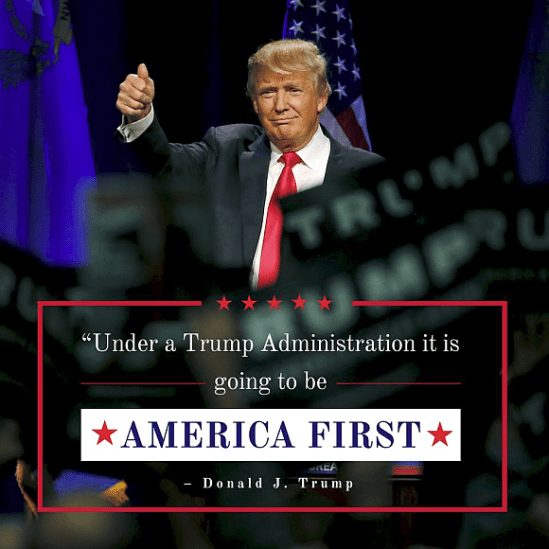
donald-trump-america-first-580x580

For the love of God, please don’t use “America First” as a catchphrase. Seriously, that phrase doesn’t remotely mean what Trump, Republicans, and over 60 million voters think it means. Because it’s a saying with historical roots that evokes one of the ugliest chapters in American history.

Like most of the humanities, history is often an underrated subject that doesn’t get the attention it deserves. Sure it may not lead to a lucrative career, but that doesn’t mean it’s not useful or necessary. But historical knowledge is often essential when it comes to understanding our world and even ourselves, especially in the realm of politics and government. Though many people might think history class is a waste of time, they are sorely mistaken. To know history is an essential part of being a good citizen in any democratic society because whatever happens in the past doesn’t really go away. What happens in the past affects us in the present as well as becomes part of our heritage. By showing us how we came to be, history also tells us who we are and what we could be. Past events can give us answers on why things happened the way they did. And they can sometimes help us find solutions, especially on what not to do. Yet, though great moments in our history are worth remembering, there are also moments of great sin and shame we shouldn’t forget, especially if their impact persists to this day. Because it’s often said that those who don’t know history are bound to repeat it. Or at least make terrible decisions that might lead to history repeating itself. Those who don’t care to know about history and see no value in it are prone to disrespect the greater humanity. And if a historically illiterate person has political power, then they pose a serious danger to us all.

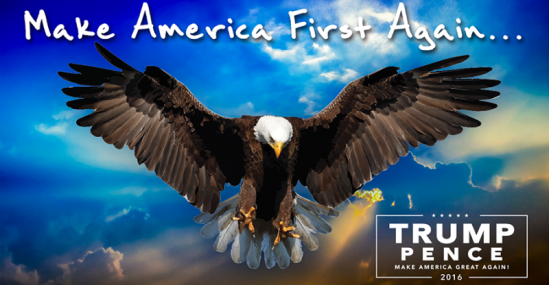
Even before Donald Trump became president, it’s very clear he doesn’t know much about American history nor does he see the value in knowing it. Sure his campaign slogan was “Make America Great Again” but the kind of past he’s referring to is one of nostalgia for a time in which the United States really wasn’t that great. Nor was it a time that most of us would want to live. At the same time, Trump embodies the absolute worst in our country’s past with his rhetoric of fear and division, his message of racism and xenophobia, his decades long history of corrupt business practices, his disregard for decency, his consummate lying, and his petty vindictiveness. His presidential victory was made possible by the fact Americans are embarrassingly ignorant in civics and history, as statistics widely support this claim. History will not look kindly on the Trump supporters who elected one of the most deplorable individuals of our time to the White House and will in time be deemed morally reprehensible and ultimately forced to explain themselves to their grandchildren. I know these words seem harsh and hard to swallow for many. But as a history major, I know far too well of what happens whenever people support leaders on the wrong side of history. It’s no question that Trump certainly is and that his presidency will be an absolute disaster. And there is no way I can sugar coat it.

Nevertheless, Donald Trump’s historical illiteracy and apathy can be better demonstrated than in his use of the phrase of “America First” that he used as a centerpiece in his campaign. At first, this saying may seem innocent on the surface. But what does “America First” mean exactly? According to Trump, “America First” is just a catchphrase for prioritizing American interests as in, “My foreign policy will always put the interests of the American people, and American security, above all else. That will be the foundation of every decision that I will make. America First will be the major and overriding theme of my administration.” He likens it to an original slogan, telling David Sanger, “To me, America First is a brand-new modern term. I never related it to the past.” In many ways he wants to make it seem like it’s a patriotic affirmation like putting the US first above all else which certainly resonate to the over 60 million Americans who elected him president.
america-first

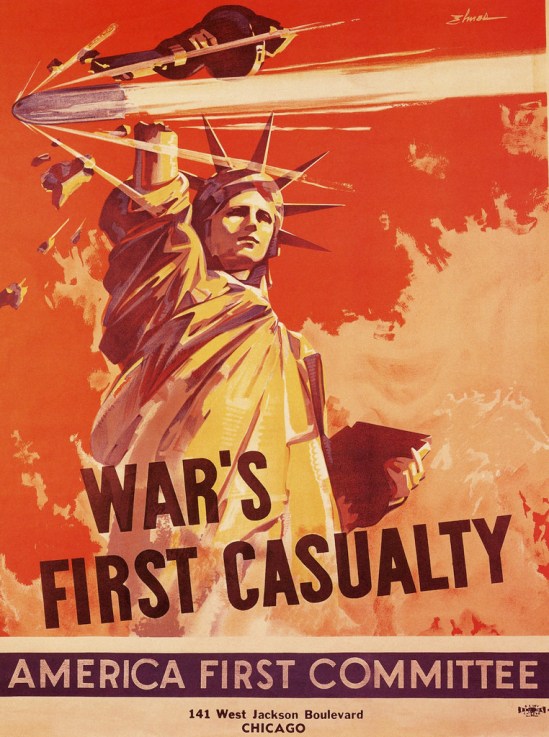
Contrary to what Trump may say, the phrase “America First” has a long history. But it’s most identified with the America First Committee, a group that opposed US entry into World War II. Though it only lasted for about a year and a half, it was one of the biggest anti-war organizations in US history with members hailing from all walks of life. However, its failure to disown its ugliest supporters would forever poison its reputation.

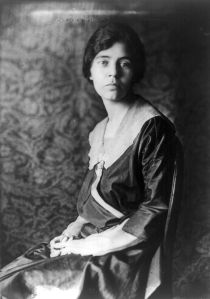
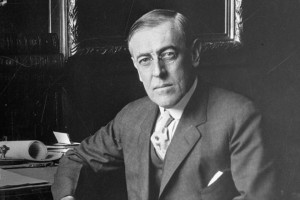
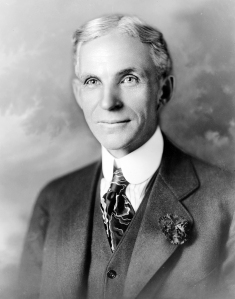
However, contrary to what Trump may say, the phrase “America First” is actually not a brand-new modern term but one that dates all the way to the early 20th century. The phrase was originally a political slogan for Woodrow Wilson’s reelection campaign in 1915 to echo the isolationist policies he’d later abandon for good reason and is also the name of a credit union based in Utah.And William Randolph Hearst often used the phrase in the 1930s as a nationalistic enthusiasm for crushing the left by hyperbole in his anti-FDR crusade. But the term would become best associated with the America First Committee, an organization whose legacy remarks upon one of the ugliest chapters in modern American history. Originally established by a group of Yale Law students including Quaker Oats heir R. Douglas Stuart Jr., future president Gerald Ford, future Peace Corps director Sargent Shriver, and future US Supreme Court justice Potter Stuart, the America First Committee was the foremost non-interventionist pressure group against the American entry into World War II. At its peak, it boasted over 800,000 paid members in 450 chapters and was one of the largest anti-war organizations in American history. It also claimed a lot of prominent members from all across the political spectrum and all walks of life. Some were millionaire financial backers like Henry Ford, General Robert E. Wood of Sears-Roebuck, meatpacker Jay Hormel, banker William J. Grace, Sterling Morton of Morton Salt, textile manufacturer William Regnery, publisher Joseph M. Patterson of the New York Daily News, and publishers Robert R. McCormick of the Chicago Tribune. Political supporters of the AFC included US Senate Democrats Burton K. Wheeler of Montana and David I. Walsh of Massachusetts, North Dakota Republican Senator Gerald P. Nye, and Socialist leader Norman Thomas. Another was Washington socialite Alice Roosevelt Longworth who was also a former president’s daughter, the then-current First Lady’s cousin, the then-president’s distant cousin, widow to a Speaker of the House, a former mistress and baby mama to a US Senator, and sister to a future Medal of Honor recipient. Oh, and her baby daddy Republican Senator William A. Borah of Idaho supported the AFC, too. The American First Committee even had celebrity allies such as novelist Sinclair Lewis, poet E. E. Cummings, Walt Disney, silent-screen icon and actress Lillian Gish, architect Frank Lloyd Wright, WWI flying ace Eddie Rickenbacker, novelist Kathleen Norris, and most importantly famed aviator Charles Lindbergh. Future president John F. Kennedy and author Gore Vidal were also AFC members.
world-war-i-battlefield-granger

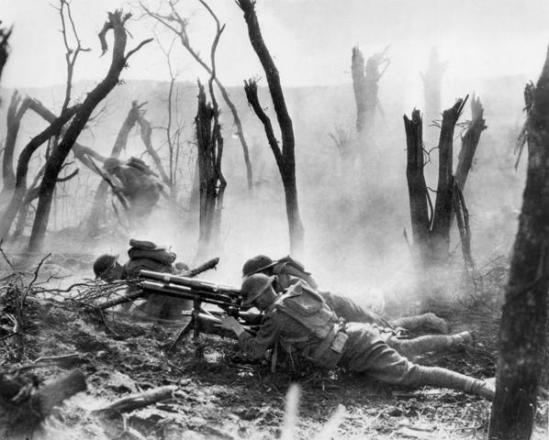
Though hard to believe today, the reasons why many Americans didn’t want to fight Nazi Germany in 1940 are somewhat understandable. After all, many saw World War I as a meaningless bloodbath between imperialistic European powers that the US had no business in. And many thought the war in Europe at the time would be the same way.

Of course, you should know that Adolf Hitler had already invaded Poland by this point and posed a significant threat to European nations who stood in his way as Great Britain was experiencing its shittiest year of the war while France and Belgium fell to the Nazis. Oh, and a militarist Japan was causing all kinds of hell for Asian countries and/or European colonial possessions in the Pacific but their front won’t be the main focus for awhile. The standard rationale for the American First Committee was that the United States was protected by 2 oceans and its vast land mass, and that intervention in Europe would turn out no better than it had in WWI. While most Americans rooted for the Allies in 1940 (85% according to a Fortune poll), they didn’t want to do anything that would help them win either. After all, the US already did that in 1917 during World War I which strongly divided the American public and didn’t seem like a conflict the country should’ve gotten involved in. Yet, after the British found Germany trying to provoke a Mexican reconquista on the American southwest, maintaining neutrality was impossible. Then there’s the fact the US was home to so many European immigrants who didn’t want to support a country they didn’t like or be thoroughly demonized as the enemy. Not to mention, the US lost about 110,000 troops during this time, including 43,000 to the influenza pandemic and they were only in the war for a little more than a year while isolationism was such a powerful influence that the US Senate refused US entry into the League of Nations despite it being among Wilson’s Fourteen Points or at least on his terms. Though Gary Gerstle would prefer the term unilateralism in which the US should be free act in the world to preserve its own interests like it had in Latin America and the Pacific. And since WWI seems like a meaningless bloodbath provoked by an archduke assassination, well, you can see why Americans wouldn’t want to be entangled in another European conflict. Then there’s the fact Britain and France participated in imperialism with colonies in Africa, Asia, and the Pacific which comes with the usual human rights violations.
fdr

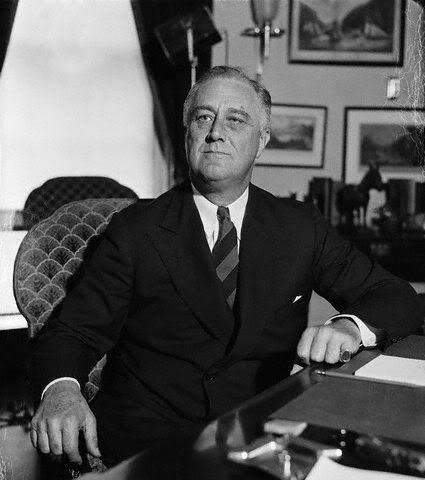
The America First Committee was often highly critical of President Franklin Delano Roosevelt as well as opposed his Lend-Lease policy. On one hand, he did promise to uphold neutrality while attempting to maximize Allied support. But on the other hand, even when neutrality was popular most Americans wanted the Allies to win. FDR understood that the US would have to get involved in the war sooner or later.

Even before World War II kicked off with Hitler’s Polish invasion, most Americans demanded US neutrality on Europe that Congress passed a series of neutrality acts to keep the government from supporting either side. Though in practice, it was to keep FDR from corresponding with Winston Churchill and sending support to Britain. Because the Axis powers were widely disliked in the country, anyway.  Yet, though FDR promised to keep the US out of the war, he attempted to maximize support for the Allies on the side while skirting if not actually violating the principle of neutrality. The America First Committee profoundly distrusted him for this and harshly accused FDR of lying to the American people. Sure FDR probably acted dishonestly but to be fair, he understood that many of these Allied European nations were fighting for their lives. And he realized if Americans wanted the Allies to win, then the US government would have to help them. But the AFC criticized and opposed him at every step, especially when he decided to seek a third term and proposed Lend-Lease in early 1941 both of which most Americans supported anyway. Besides, though most Americans might not be happy with intervention, they’d be willing to so if US involvement was necessary to defeat fascism which only became increasingly apparent as 1941 went on particularly when Hitler stabbed Stalin in the back by invading Russia.
dr_0c9e0e_5416512

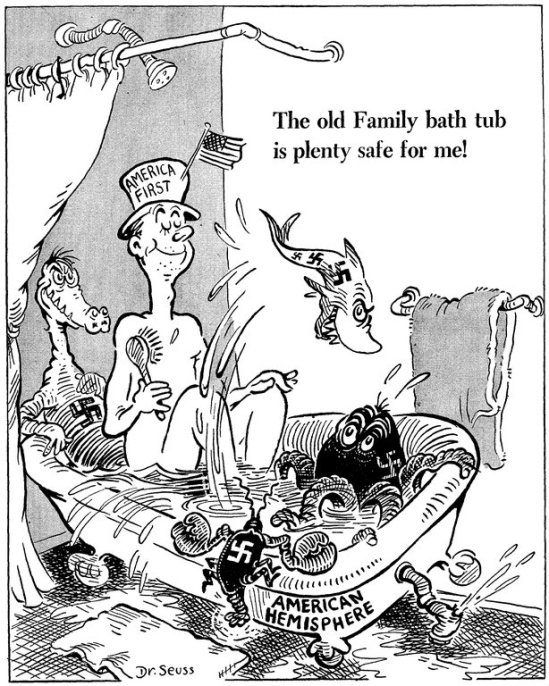
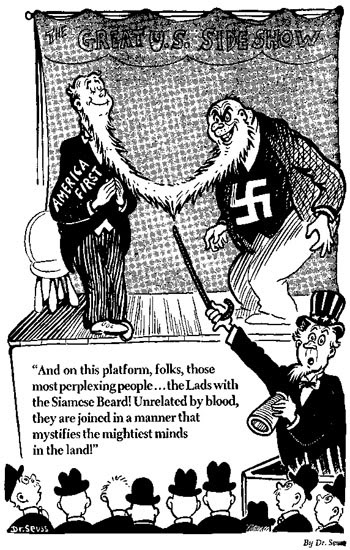
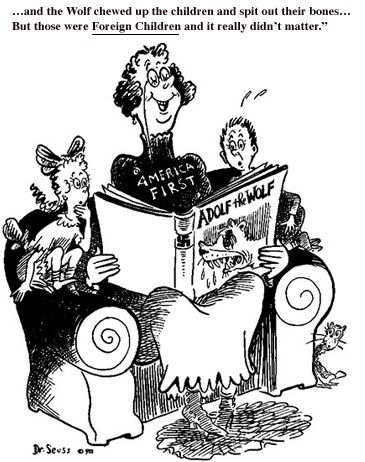
Though America First often tried to brand itself as a mainstream anti-war organization, it included members whose views had more to do with their anti-Semitism, pro-fascism, xenophobia, and Nazi sympathies. Unfortunately, America First refused to disown these ugly elements and would later be defined by them as you see in this Dr. Seuss cartoon.

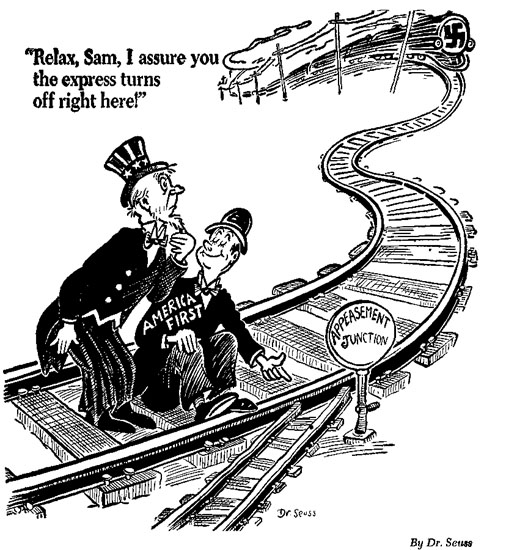
So where does the historical baggage come in? Because all you say about the American First Committee was that it was a bipartisan anti-war group opposing US entry into WWII for pretty justifiable reasons. However, not everyone in the America First Committee opposed US intervention over the catastrophes of World War I or in the name of general pacifism. Nor was it just a group for FDR haters either. Though the AFC was harshly critical toward him and many of his opponents joined up as a way of primarily attacking the guy for his New Deal. The AFC also included more than its fair share of people whose views had more to do with their anti-Semitism, pro-fascism, and xenophobia. Some members were even said to be Nazi sympathizers. Such facts weren’t helped from the fact that the AFC so staunchly wanted to preserve American neutrality even if it meant urging the government to be nice to Hitler. Nor that it counted prominent anti-Semites of the day among its ranks. Or that several prominent AFC members believed that old-fashioned democracy was in decline and that a modern, energetic fascism represented a The Wave of the Future as Anne Morrow Lindbergh titled her 1940 booklet. She even took her pro-fascist position one step further in her book by calling US sign a pact with Germany similar to Hitler’s Non-Aggression Treaty with Josef Stalin. Naturally, the Roosevelt administration attacked the book as “the bible of every American Nazi, Fascist, Bundist and Appeaser” and it was among the most despised books of the period. She also called Hitler “a very great man, like an inspired religious leader—and as such rather fanatical—but not scheming, not selfish, not greedy for power” in a letter. As America First tried to brand itself as a mainstream organization, the anti-Semitic attitudes and Nazi sympathies of some of its leaders and many of its members began to emerge. And their refusal to disown their ugliest supporters would be its fatal flaw. According to historian Susan Dunn in a CNN article from last April, “It had to remove from its executive committee not only the notoriously anti-Semitic Henry Ford but also Avery Brundage, the former chairman of the U.S. Olympic Committee who had prevented two Jewish runners from the American track team in Berlin in 1936 from running in the finals of the 4×100 relay.” And America First’s anti-Semitic problems only became worse when Charles Lindbergh was recruited as their spokesman.
79d5c42s-960

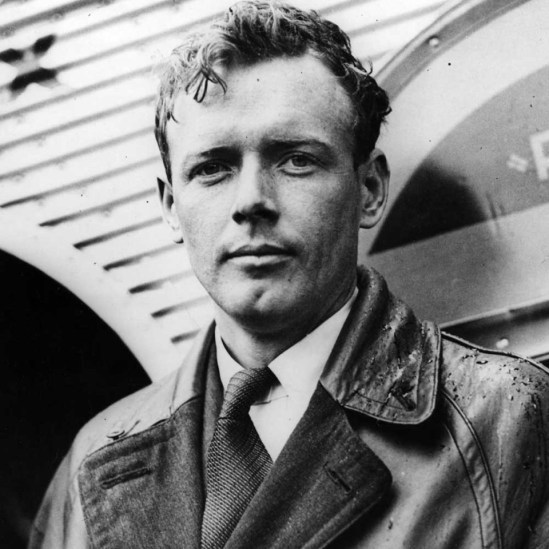
The most famous face of America First was none other than famed aviator Charles Lindbergh, best known for his nonstop solo flight from New York to Paris in 1927. In 1940, he was a lauded as a national hero in the US. But in 1941, that was soon to change.

Now Charles Lindbergh was a natural choice to represent the America First Committee. For one, he was a major celebrity who was universally loved for his nonstop solo flight across the Atlantic. He was also relatively handsome and had a lovely family that would eventually include 5-6 children. Of course, his oldest child had already been kidnapped and murdered which was reported so exhaustively and sensationally by the press that it became known as “The Crime of the Century.” Second, he had no interest in exploiting his celebrity and was a very private man for very good reasons. Nor did he have higher ambitions of any kind, political or otherwise. Third, he came from the Midwest, which was home to the bulk of the AFC’s registered members and he was certainly one of the most famous celebrities from that area at the time. Fourth, he was no fan of FDR and had feuded with him for years which satisfied some of the haters. Fifth, he was a charismatic man whose words can sound just as good on paper as they would coming from his mouth. And finally, compared to a lot of celebrities at the time, he had a rather wholesome reputation. It’s no surprise that the famed aviator from Minnesota would become the AFC’s highest profile spokesman whose speeches were heard by hundreds of thousands within the movement and millions outside.
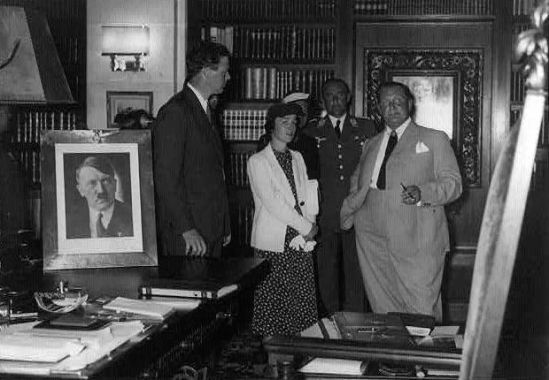
Hermann Göring with Charles Lindbergh. Library of Congress photo

During the mid to late 1930s, Charles Lindbergh visited Nazi Germany several times where he toured the Luftwaffe as well as hobnobbed with a bunch of high Nazi officials like Hermann Goering. Unfortunately, the place impressed him a little too much that despite condemning Krsitallanacht and seeing Hitler as a fanatic, he kind of came off as a Nazi sympathizer.

Yet, behind that boyish face, was a man with very whacked out political views though they were not unusual or socially unacceptable for the time among the American people. Lindbergh believed in eugenics as he expressed his ideal woman as having a keen intellect, good health and strong genes because “experience in breeding animals on our farm had taught me the importance of good heredity.” To be fair, he was raised at a time when eugenics was espoused across the political spectrum even though it led to some of the worst known human rights abuses known to man and was based on junk science. In the mid to late 1930s, Lindbergh made several trips to Nazi Germany to tour the Luftwaffe which made a great impression on him that he became convinced that no power in Europe or the US could defeat it. He believed that a war between Germany and the US would be bad and it would be especially for the “white race.” So much so that Lindbergh stated that he believed the survival of the white race was more important than the survival of European democracy. “We can have peace and security only so long as we band together to preserve that most priceless possession, our inheritance of European blood, only so long as we guard ourselves against attack by foreign armies and dilution by foreign races,” he wrote in his infamous 1939 article for Reader’s Digest. It didn’t help that he publicly and privately spoke of Hitler in admiring terms as having “far more character and vision than I thought existed in the German leader who has been painted in so many different ways by the accounts in America and England. He is undoubtedly a great man.” As an ardent anticommunist, Lindbergh considered Russia a “semi-Asiatic” country and saw Communism as an ideology that would destroy the West’s “racial strength” and replace everyone of European descent with “a pressing sea of Yellow, Black, and Brown.” And if Lindbergh had to choose, he’d rather see the US allied with Nazi Germany than Soviet Russia. Oh, and he was an anti-Semite who subscribed to conspiracy theories. In his reaction to anti-Jewish pogrom Kristallnacht (which consisted of the Nazis destroying over 100 synagogues along with thousands of Jewish businesses while imprisoning thousands of Jews), Lindbergh wrote, “I do not understand these riots on the part of the Germans. It seems so contrary to their sense of order and intelligence. They have undoubtedly had a difficult ‘Jewish problem’, but why is it necessary to handle it so unreasonably?” Because Hitler wanted to do terrible stuff to the Jews, asshole. And it didn’t help that he received the Commander Cross of the Order of the German Eagle from Hermann Goering on Hitler’s behalf a few weeks before which caused controversy, which he refused to return. “It seems to me that the returning of decorations, which were given in times of peace and as a gesture of friendship, can have no constructive effect,” Lindbergh wrote making excuses for Nazi Germany. “If I were to return the German medal, it seems to me that it would be an unnecessary insult. Even if war develops between us, I can see no gain in indulging in a spitting contest before that war begins.” Yes, but it would’ve at least absolved him from suspicion. Because in 1941, Lindbergh resigned his Air Force commission as colonel at FDR’s demand after proposing that the US negotiate a neutrality pact with Germany during his testimony opposing the Lend-Lease bill before House Committee on Foreign Affairs.
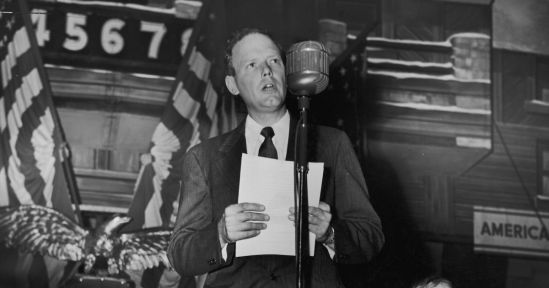
Robert E. Wood;Charles A. Lindbergh

On September 11, 1941, Charles Lindbergh would give a speech at an America First rally in Des Moines, Iowa. In it, he blamed the British, the Roosevelt administration, and American Jews for pushing the US into war with Europe. Guess which group he put on notice for pushing for war through their control of the media.

Charles Lindbergh’s political ideas on race, the Jewish people, and foreign policy might seem morally reprehensible and extreme today, but they were hardly fringe in the early 1940s and he had voiced them without serious public outcry at this point. If anything, resigning his Air Force commission may have worked in his favor as far as some non-interventionists were concerned. However, he would play a critical role in why “America First” has become the noxious slogan that continues to echo isolationist, defeatist, fascist, and anti-Semitic sentiments to this day. On September 11, 1941, Lindbergh would deliver a speech to a huge crowd during an America First rally in Des Moines, Iowa. In it, he identified forces pulling the US into the war as the British, the Roosevelt administration, and American Jews. And it’s what he said about the third group where he made his true thoughts known. At first, he expressed sympathy for the persecution the Jews in Germany suffered and remarked on how he understood why any American Jew would want to see the Nazi regime pay. But then he went on putting American Jews on notice, saying that America’s “tolerance” for them rested upon a fragile foundation but most somehow most still don’t seem to understand that and want the US to intervene in a war that would endanger everybody but especially them. Then Lindbergh let the Jews know what he really thought about them, “Their greatest danger to this country lies in their large ownership and influence in our motion pictures, our press, our radio, and our government.” In other words, Lindbergh saw American Jews constituting of a wealthy, influential, and conspiratorial foreign, “race” that controls “our” media and has infiltrated “our” political institutions. And that they were an internal alien out-group, hostile to “us.” In short, he blames the Jews for pushing the US into war and manipulating the narrative through the media. Such sentiment reeks classic anti-Semitism which had no basis in fact. Though Lindbergh claimed he wasn’t “attacking either the Jewish or the British people,” he went on saying, “that the leaders of both the British and the Jewish races, for reasons which are as understandable from their viewpoint as they are inadvisable from ours, for reasons which are not American, wish to involve us in the war. We cannot blame them for looking out for what they believe to be their own interests, but we also must look out for ours. We cannot allow the natural passions and prejudices of other peoples to lead our country to destruction.” So fighting an enemy that’s either bombing the shit out of you on a regular basis or persecuting (if not exterminating) people from your ethnoreligious group and possibly your loved ones from the old country aren’t American reasons? Also, their interests weren’t exactly based on “natural passions and prejudices of other peoples” either. Though Lindbergh uses such words to make British and Jewish seem like they want to drag the US into a needless war that could lead to its destruction.
nyt072141

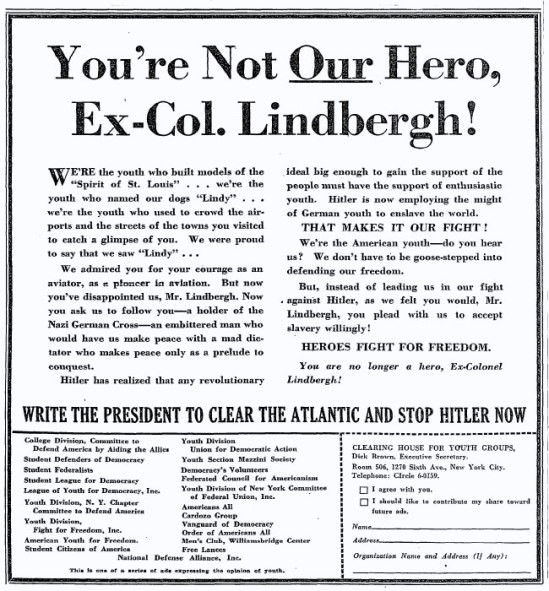
Charles Lindbergh’s Des Moines speech was met with public outrage from all over the country over his anti-Semitic and divisive remarks that he’d suffer a massive fall from grace. So much so that his hometown even took his name off their water tower. His now tarnished reputation would never fully recover.

Somewhere in his speech Lindbergh crossed a line because public reception was not kind to him or the American First Committee from this point on. Lindbergh was strongly and swiftly condemned for his anti-Semitic and divisive words. Reporting from Europe, New York Herald Tribune columnist Dorothy Thompson wrote, “I am absolutely certain that Lindbergh is pro-Nazi. I am absolutely certain that Lindbergh foresees a new party along Nazi lines.” The San Francisco Chronicle wrote, “The voice is the voice of Lindbergh, but the words are the words of Hitler.” And those sentiments of outrage echoed widely among newspapers, columnists, politicians, and religious leaders. Interventionists opposed to America First created pamphlets indicating how Nazi Germany praised his efforts and included quotations like “Racial strength is vital; politics, a luxury.” The pamphlets also included pictures of Lindbergh and other American Firsters using the stiff-armed Bellamy Salute (a hand gesture described by Francis Bellamy to accompany his Pledge of Allegiance to the American flag that fell out of favor during the 1920s and 1930s because totalitarian regimes adopted salutes of similar form). Though the photos were taken at an angle not showing the flag, observers still found such gestures indistinguishable from the better known Heil Hitler. But Lindbergh’s detractors weren’t the only ones bashing him for his Des Moines speech. His fans who lionized him also had harsh words to say. The Des Moines Register called his speech, “so intemperate, so unfair, so dangerous in its implications that it cannot but turn many spadefuls in the digging of the grave of his influence in this country.” The anti-Roosevelt and non-interventionist loving Hearst papers condemned Lindbergh as “un-American.” His mother-in-law and sister-in-law publicly opposed his views while civic and corporate organizations cut all ties with him. Hell, his hometown of Little Falls, Minnesota took his name off their water tower. And I’m sure millions of kids probably took down their pictures of him that they put in the trash like he was a disgraced sports hero. In the public’s view, the once beloved aviator was now disgraced and his tarnished reputation would never fully recover.
america-first-2

From that point on, the America First Committee would be associated with Nazi sympathies and anti-Semitism ever since. Soon even the more moderate isolationist cut ties with the organization before it disbanded after Pearl Harbor. Since then, almost no politician who’s wanted to draw close to America First as it remains a shameful stain on our history.

In turn the America First Committee was as TIME put it on a cover story, “touched the pitch of anti-Semitism, and its fingers were tarred.” Despite its protestations that it wasn’t an anti-Semitic group and that it was looking out for American Jewish interests, America First would become associated with such anti-Semitic rhetoric Lindbergh had voiced in that infamous speech in Des Moines. So much so that more moderate isolationists started dropping out and it acquired its very bad name and pernicious reputation. And after the Japanese bombed Pearl Harbor that December, the America First Committee disbanded since there was no possibility of isolation by that point. But echoes of “America First” have persisted in the years and decades since. Before Trump decided to make it a campaign slogan, Pat Buchanan used it for his presidential campaign to run in 2000 on the Reform ticket. Of course, Buchanan believes that World War II as an “unnecessary war.” In his book A Republic, Not an Empire: Reclaiming America’s Destiny, he’s depicted Lindbergh and other pre-war isolationists as American patriots smeared by interventionists during the months leading up to Pearl Harbor. And Buchanan suggests such backlash of Lindbergh highlights “the explosiveness of mixing ethnic politics with foreign policy.” He also campaigned against free trade. Ironically, it was Trump who seeking the Reform Party nomination at the time, called Buchanan “a Hitler lover.” So it’s possible he might know something about where “America First” came from even if he doesn’t care about the implications from employing it. Because Buchanan certainly does. But as far as political figures go, Buchanan is an exception since his views on history are outside mainstream conservatism. Since the 1940s, there has almost been no politician who’s wanted to draw close to America First.
america-first-trump-800x416

Then despite the highly negative historical connotations, why the hell does Trump keep using “America First” as a catchphrase? He’s said he likes the expression. But I think he likes how his supporters positively react to it as an innocent patriotic affirmation. Mostly because a lot of his supporters have absolutely no idea where “America First” came from or what it really means.

But why would Trump employ such a phrase like “America First” in his rhetoric despite that those words echoing such an ugly chapter in America’s recent past? Sure he may like the expression, but he may even enjoy more the kind of applause and provocation he gets from uttering those words by the very supporters who have absolutely no clue where that awful phrase came from nor care to find out. And he probably doesn’t care that such catchphrase makes some people hear disturbing echoes that the Anti-Defamation League has asked him to stop using “America First” and redirected fifty-six thousand dollars in donations from the Trump family to anti-bullying and anti-bias causes.  But Trump won’t stop saying that phrase anytime soon. Because to him, it’s a tremendously popular slogan that resonates with his economic nationalism. And he’s denied the phrase’s existence as a historical term whenever reporters have pointed it out for him. For instance, when asked whether he meant isolationism last April, Trump replied, “Not isolationist, I’m not isolationist, but I am ‘America First.’ So I like the expression. I’m ‘America First. We have been disrespected, mocked and ripped off for many, many years by people that were smarter, shrewder, tougher.” In some ways, it’s possible Trump wants “America First” to mean “we will not be ripped off anymore.” And since American historical consciousness doesn’t run deep, it’s possible that Trump supporters see “America First” as an innocent affirmation of patriotism that it’s not.
america-first-1

It’s possible that Trump may believe his adoption of the phrase “America First” could supersede its past. However, I don’t think it’s possible not because of Trump. But mostly because such symbols and phrases with noxious connotations don’t usually change their meanings over time. And it’s a lesson I’ve surely learned when I argued for the Confederate Flag’s removal during the summer of 2015.

As NPR’s Ron Elving put it, “assuming he is aware of at least some of that history, Trump is demonstrating his confidence that his adoption of a phrase can supersede its past.” But is it even possible for him to shake off that phrase’s toxic past? The Atlantic states such endeavor could prove difficult especially since Trump’s inauguration speech offered little to no outreach to the millions of Americans who fear what his presidency may bring. However, I think this assumption is a bit too optimistic. I say this because many of those Trump supporters who see “America First” as an innocent patriotic affirmation also see the Confederate flag as a sacred emblem of their Southern heritage. In the summer of 2015, I wrote a post arguing why the flag should be removed due to being a symbol of white supremacy that’s been used to justify decades of subjugating, discrimination, and violence against black people, which apparently angered a lot of people who tried to tell me otherwise. The Confederate flag is often associated with very ugly chapter in American history in which a bunch of powerful white guys started a war after splitting off from the US in order to form a country where they can subjugate black people to a lifetime of involuntary servitude. It is very clear that many Southern whites still haven’t gotten over that the North won that war which outlawed slavery that they went to great lengths to make sure black people could never gain any social, economic, or political power. And despite the Civil Rights Movement and the election of Barack Obama, these people show no sign of stopping any time soon.

562f3612c361887e418b45ed

In 2015, a group in Detroit, Michigan erected a billboard like this that was condemned by the Anti-Defamation League on grounds of anti-Semitism. As Heidi Budaj said, This particular sign goes a step further and raises an old anti-Semitic canard of dual loyalty, implying that Jews are not loyal to the country in which they live. Make no mistake that while many of the Jewish people in the United States support the state of Israel as a Jewish state, we are loyal Americans.” Of course, the use of “America First” is much more closer to its historical anti-Semitic roots. However, I’m not really sure if the group who put up this billboard knows what “America First” really means or even intends to incite anti-Semitism.

That being said, I think “American First” will continue to emanate how opposition to American entanglement in the world became polluted by anti-Semitism regardless of what Trump, his supporters, or Republicans may think. They may claim they don’t hate Jewish people nor embrace a 1940s isolationism. They may not be Nazi sympathizers or be soft on Hitler the way Charles Lindbergh was or how the America First Committee might’ve been. But however they use “America First” regardless of what meaning attached to it, none of their personal biases change that phrase’s toxic isolationist, defeatist, nationalistic, fascist, and anti-Semitic evocations. And just because such people don’t believe such stuff anymore doesn’t mean such interpretations go away. I also don’t think Trump helps his case by having a noted anti-Semite and white nationalist to write his speeches on his White House along with plenty of anti-Semitic supporters (i.e. white supremacists). As Anti-Defamation League CEO Jonathan Greenblatt said, “For many Americans, the term ‘America First’ will always be associated with and tainted by this history.” Conservative editor of The Weekly Standard Bill Kristol would say the same adding on Twitter, “I’ll be unembarrassedly old-fashioned here: It is profoundly depressing and vulgar to hear an American president proclaim ‘America First.’” Greenblatt and Kristol may not always agree with everything, but when it comes to “America First,” both these men see such phrase evokes a shameful chapter in our history. And one Jewish woman wrote on Facebook, “That America First part brought me to tears and anyone who doesn’t understand why can unfriend me right now.” Despite what anyone would say, such connotations pertaining to “America First” still persist in the historical contexts, especially among American Jews. And that’s not likely to change anytime soon. So if you’re a proud patriot who wants to make America great, you should stop saying “America First” and not support politicians who use that as a catchphrase, especially if they have no idea to what it really means.
10909cs

The historical contexts of “America First” still exist in the minds of many Americans whether Jewish or Gentile this day and that’s unlikely to change. So if you want to show love to America, don’t use “America First” as your patriotic affirmation nor support politicians who use the term as a campaign slogan. Because it’s very likely they have no idea of its historical roots as to what it really means.
US Vice Presidential Hall of Shame

2000px-US-VicePresident-1948Seal.svg

In the coming weeks, we have the coming national conventions for the Republican and Democratic nominees. However, before these can get off the ground, we have the veepstakes where the presumptive nominee has to choose a running mate for the ticket. Now selecting the VP has been a long tradition in American politics and history. But what does a vice president do, exactly? Well, as far the presidential campaign goes, a vice presidential candidate is supposed to balance the ticket and make the presidential candidate look good. As for the vice president, well, their job is to make the president look good, do a lot of ceremonial stuff, and be prepared to take over whenever the president can’t perform their duties. But it depends. If the president is sick or injured and is still kicking, then the VP might assume the president’s duties in an acting capacity. But if the president  dies or gets assassinated, then the VP assumes the job. This has happened 8 times, starting with President John Tyler assuming office after William Henry Harrison contracted pneumonia and died after 30 days. Since Harrison was the first president to die in office, this was much uncertainty regarding succession. But Tyler cleared this up by resolving Harrison’s death made him president and had himself sworn in. Or the VP can ascend the presidency if the president gets into some shady shenanigans that either results in their removal or resignation as in the case with Gerald Ford succeeding Richard Nixon. VPs are also said to preside over impeachment trials of federal judges and preside as President of the Senate. Other than that, the VP role can vary depending on the guy who’s in office as well as his relationship with the president. However, don’t assume that the vice presidency is a useless position because political campaigns as well as the fact 9 guys assumed the presidency from there show it’s not. Nevertheless, while our nation has had some good veeps, but a lot of vice presidents have held office and achieved little of consequence. Then there are ones who deserve special mention but not because they’re good or a nonentity. Mostly because they’re noteworthy for being really terrible veeps such as corrupt, backstabbing, useless, just plain stupid or something else. So here is a list of vice presidents that no presumptive nominee wants on their ticket.

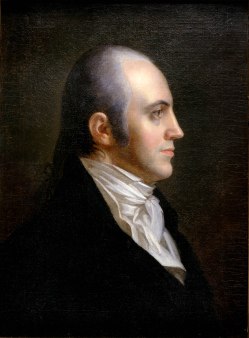
Vanderlyn_Burr

Unlike the other VPs on this list, at least Aaron Burr gets to be depicted in a hit Broadway musical. Unfortunately, for him, it’s called Hamilton and it’s about the guy he shot in a duel.

  1. Aaron Burr

Served Under: Thomas Jefferson (1801-1805)

Why He Seemed Good at the Time: Actually while he was intended to be Jefferson’s vice president, Jefferson didn’t have much say in the actual selection. Nevertheless, this brilliant guy graduated from Princeton at 16, served as a Continental Army officer in the American Revolution (rising to the rank Lieutenant Colonel), as well as had a successful career as a lawyer and politician (he was US Senator from New York). Had a great relationship with his daughter Theodosia (and was a better father to his known illegitimate children, too, unlike Jefferson. He also supported women’s rights and opposed slavery). Not to mention, being from the north provided a great balance with Jefferson’s southern disposition.

Why He Wasn’t: He’s one of the best known US vice presidents and it’s mostly for the wrong reasons. Aside from being relentlessly horny (his second wife divorced him when he was 80 on grounds of adultery, kept detailed records on his encounters with prostitutes, fathered at least two illegitimate children, and was considered a notorious womanizer), he had a knack for making powerful enemies as well as a reputation for being a political opportunist with an unbridled ambition. Though he ran as vice president on Thomas Jefferson’s Democratic-Republican ticket, most voters tended chose both men without indicating the intended office. When he and Jefferson were tied in the election of 1800, Burr dragged out the uncertainty to manipulate it to his will which resulted in political instability and a potential constitutional crisis (which would later be corrected by the 12th Amendment establishing a separate selection process for President and Vice President). Luckily, Alexander Hamilton sorted the matter out by rallying his fellow Federalists in Congress to side with Jefferson who ended up winning the presidency, mainly because he hated Burr more. Though it did take 36 ballots. Nevertheless, since Jefferson was understandably pissed at Burr for not doing anything to stop efforts to usurp the presidency, there was understandable tension. And it was enough for Jefferson to drop Burr from the ticket in 1804. After losing the New York gubernatorial election to a dark horse candidate by one of the largest margins in that state’s history, he would be forever known in American history for challenging and killing Alexander Hamilton in a duel in New Jersey. Though indicted, he was never tried and all charges were eventually dropped. But it effectively ended his political career. Yet, despite the incident which led his name live on in infamy, he was said to be unmoved by Hamilton’s death and expressed no regret for his role in the duel.

Later Life: After his vice presidency, he’d travel west seeking both new political and economic opportunities, which led to his arrest and indictment for treason in 1807. According to accusations, he schemed to create an independent country in the center of North America and or the present day American Southwest and parts of present-day Mexico. Some claim he wanted some or all the Louisiana Purchase form himself. Burr on the other hand, claimed he intended to take possession of a 40,000 acre Texas farm leased by the Spanish Crown. He was acquitted but his schemes left him with large debts and few influential friends. Spent time in Europe to regain his fortunes before returning to New York to resume his law practice. Daughter and son-in-law would disappear in 1812-1813 at sea and it’s unknown whether they were murdered by pirates or shipwrecked in a storm. Married his second wife, wealthy widow Eliza Jumel in 1833 who kicked him out after 4 months when he tried to make off with her fortune. Suffered a stroke in 1834 and died two years later in a Staten Island boardinghouse at 80.

Trivia: Grandson of the famed Puritan fire and brimstone preacher Jonathan Edwards, best known for his sermon “Sinners in the Hands of an Angry God.” His father was also a minister and even studied theology at the time (as an attempt to join the family business). But he changed career paths when he realized that a church career wasn’t for him. Was a college classmate to James Madison and introduced him to his future wife Dolley. Befriended philosopher Jeremy Bentham while he was trying to regain his fortunes in Europe. Son John Pierre Burr was an active member of Philadelphia’s Underground Railroad, served as an agent for the abolitionist newspaper The Liberator, worked in the National Black Convention movement, and served as Chairman of the American Moral Reform Society. Grandson Frank J. Webb wrote the second African American novel The Garies and Their Friends which was published in 1857. His complex character and political self-interest perhaps made him the most controversial American Founding Fathers to date.

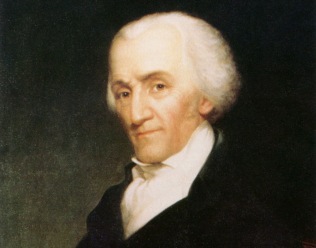
FC-003-ElbridgeGerry

Sure he became infamous due to his state’s redistricting map that he’ll always be known for the term “gerrymandering.” But he wasn’t Madison’s first choice. So he kind of had to take what he can get.

  1. Elbridge Gerry

Served Under: James Madison (1813-1814)

Why He Seemed Good at the Time: For one, he had a long political career from the American Revolutionary period and it didn’t hurt he resided in Massachusetts. He vocally opposed British colonial policy in the 1760s and was active in the early stages of organizing resistance in the American Revolution. Signed the Declaration of Independence and the Articles of Confederation as well attended the Constitutional Convention in 1787 (but refused to sign it since it lacked a Bill of Rights). However, he would be actively involved with drafting and passing the Bill of Rights as an inaugural member of the US Congress. Was friends with both Federalists and Democratic-Republicans. Also, since Madison was a Southerner who was a teenager and college student at the time, Gerry seemed to complement him quite well. Not to mention, he posed less of a threat to James Monroe.

Why He Wasn’t: By 1812, the guy had a shady political reputation, especially in his home state. As Governor of Massachusetts, the legislature approved new state senate districts that led him becoming the namesake of “gerrymandering” a process in which electoral districts are drawn with the aim of aiding the party in power as well as caused political gridlock across the country ever since. Not to mention, also being remembered for refusing to sign the US Constitution, which we know was based on many of Madison’s ideas. Then there’s his role in the XYZ Affair which led to an undeclared naval Quasi-War with France. He would be accused of collaborating with the French (when he wasn’t and only stayed in France after Charles Cotesworth Pinckney and John Marshall had left because Talleyrand threatened war if he left). This resulted in the negative press damaging his reputation and being burned in effigy by protesters in front of his home. The “gerrymandering” incident, support of the War of 1812, and clashes with Federalist newspapers and printers during his term as governor damaged his reputation even further led to him to lose election in 1812. When he was selected for the vice presidency, he was having financial difficulties and asked Madison for a federal position. Luckily, Madison managed to win reelection quite easily and Gerry died a year and a half after being sworn in. However, this is not the guy you want as your running mate.

Later Life: He died during his term at 70 so there’s not much about him. Though his career has been difficult to characterize.

Trivia: Only Declaration of Independence signer buried in Washington D.C. Grandson became a US Congressman from Maine.

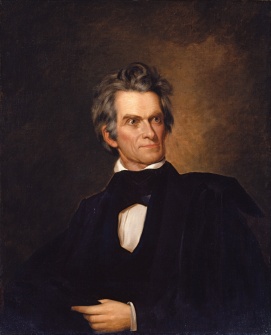
George_Peter_Alexander_Healy_-_John_C._Calhoun_-_Google_Art_Project

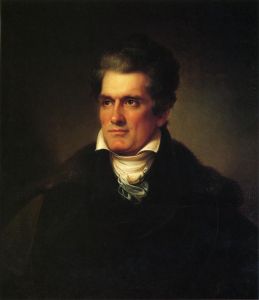
While John C. Calhoun was one of the most influential American politicians in history, his ideas about slavery and states’ rights would eventually end up tearing the nation apart as well as continue to sour American race relations and the political process as we speak. While Andrew Jackson’s presidential legacy isn’t a bed of roses, at least his decisive victory in the Battle of New Orleans in 1815 led Britain to recognize the Louisiana Purchase as US territory. Calhoun’s legacy by contrast, contains nothing worth commemorating a statue for. And he makes Andrew Jackson look good by comparison.

  1. John C. Calhoun

Served Under: John Quincy Adams and Andrew Jackson (1825-1832)

Why He Seemed Good at the Time: When it came to the divisive and very ugly elections of 1824 and 1828, having him as vice president was the only thing everyone could agree upon. Not to mention, he was one of the best known politicians of his day as well as seen as a voice for the antebellum South.

Why He Wasn’t: While Calhoun was certainly one of the most influential politicians in American history, he leaves one of the worst political legacies which has fucked up this country ever since. And it doesn’t help that his ideas have had enormous influence on Southern secessionist leaders as well as other politicians. While it wasn’t unusual for many American politicians to express racist views and own slaves, Calhoun was also a staunch defender of slavery which he viewed as a positive good as well as based his claims on paternalism and white supremacy. Chief Supreme Court Justice Roger B. Taney would base his infamous Dredd Scott decision on Calhoun’s ideas, ruling that that the federal government can’t prohibit slavery and that blacks have rights no white man is bound to respect. As for having him as vice president, well, let’s just say if there was one thing John Quincy Adams and Andrew Jackson can agree on it’s that Calhoun was a complete prick. Calhoun didn’t see eye to eye with Adams on most things and worked to undermine him. So in 1828, he decided to run with Andrew Jackson thinking things would be different. After all, while Adams hated slavery, Jackson owned slaves on his Tennessee plantation. He was wrong. Mostly because Calhoun championed nullification which states that if states don’t like a federal law, they could just ignore it (laying groundwork for secession, the American Civil War, and 600,000 dead Americans). Jackson disagreed with this policy completely. The two men becoming estranged and Calhoun’s resignation, but not after the Peggy Eaton affair resulted in most of Jackson’s cabinet being fired. Jackson had also replaced him in the meantime with anti-slavery Northern diplomat Martin Van Buren with whom he was on much better terms. For the rest of his life Jackson would express regret over not executing Calhoun as a traitor, making backroom conflicts between JFK and LBJ seem trivial. And let’s just say, it’s hard to disagree with him.

Later Life: Went to the US Senate where he’d advocate for slavery, states’ rights, and agricultural interests. He’d resign in 1843 so he could run for the Democratic presidential nomination in 1844. But he gained little support and decided to quit. That same year, he was appointed by John Tyler as Secretary of State where he presided over the Oregon Boundary Dispute and the Annexation of Texas (prompting the Mexican-American War). He returned to the Senate in 1845 and opposed the Mexican-American on account that it would distort the national character by undermining republicanism in favor of empire by bringing non-white persons (also known as “Mexicans”) into the country. Vigorously opposed the Wilmot Provisio which would’ve banned slavery in the new territories and it was defeated in the Senate each time it passed the House. Also rejected the Compromise of 1850 as well as affirmed the right of the South to leave the Union in response to Northern subjugation. Died of TB in 1850 at 68.

Trivia: Calhoun’s wife Floride prompted her own scandal by shunning the War Secretary’s wife Peggy Eaton, on account that she was fooling around with future Husband #2 while Husband #1 was still alive. Since Jackson and his wife Rachel were themselves subject to such political attacks when they married while her should’ve been ex-husband failed to finalize their divorce and Eaton being a close friend of his, Jackson was massively pissed. Called the Petticoat Affair, this resulted in almost all but one of Jackson’s Cabinet members being replaced. Body was hidden during the American Civil War over concerns on desecration.  Let’s just say you’re bound to hear his name when controversy arises out of something named after him for good reason. His monument was vandalized in Charleston, South Carolina after the Charleston Shooting in 2015.

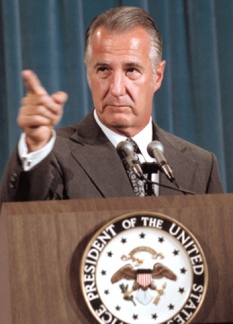
Angew in Trouble at News Conference

Caption: “Vice President Spiro Agnew points to a reporter at a news conference called to answer accusations of corruption and wrong-doing by him.” Agnew might’ve been a shitty human being. But that’s no excuse for being a shitty vice president. He’s on here because he was known for taking bribes and had to resign in disgrace.

  1. Spiro T. Agnew

Served Under: Richard M. Nixon (1969-1973)

Why He Seemed Good at the Time: Let’s see. He was a graduate of Johns Hopkins University as well as served as a US Army officer during WWJJ and Korean War. Was a prominent Greek American politician who served as Baltimore County Executive which was predominantly Democratic and Governor of Maryland. Also opposed segregation that 82,000 Democrats in that state voted for him. Not to mention, as governor, he worked with Democrats to pass tax and judicial reforms, anti-pollution laws, as well as civil rights actions like open housing and repealing anti-miscegenation. His immigrant background, moderate image, and success in a Democratic state made him an attractive running mate. And Nixon personally selected him over better known Republican names for these reasons. His career is one of the fastest political rises in American history.

Why He Wasn’t: Regardless on what you think about Gerald Ford as president, you should at least praise the Lord and rejoice that Ford just happened to be vice president when Nixon resigned. Seriously, Gerry Ford may have his faults and critics, but at least he wasn’t anything like this guy who, if he spent another 10 months in office would’ve became president instead. And let’s just say, it would’ve been very bad for the nation. Sure we don’t expect much in our vice presidents. Yes, the public was willing to overlook his habit of using terms like “fat Jap” and other denigrations to minorities. And yes, the public tended to be fine with Agnew being Nixon’s attack dog relishing in uttering phrases like “nattering nabobs of negativism” to define the White House press corps. Yet, even other VPs do such mudslinging so that’s kind of expected. However, we do kind of wish that they not take any bribes or at least pursue them openly. Unfortunately, this was too difficult for Agnew. In 1973, he was investigated by Maryland’s US Attorney Office on charges amounting to extortion, tax fraud, bribery, and conspiracy. He was charged with having accepted bribes amounting to more $147,500 while Baltimore County Executive, Governor of Maryland, and Vice President. That October, Agnew pleaded no contest to a single charge that he failed to report $29,500 of income received in 1967, on condition that he resign as VP in disgrace to avoid prison time. He was fined $10,000 as well as received 3 years probation, and disbarment. Historians widely consider him among the worst VPs in American history.

Later Life: Agnew would remain unrepentant post-resignation, insisting the money was actually campaign contributions and unsuccessfully attempted to write off the $268,462 fine on his taxes in 1983. Always maintained that the tax evasion and bribery charges were attempts by Nixon to divert attention from the growing Watergate scandal (reality, they were not). He and Nixon would never speak to each other again, though Agnew attended the latter’s funeral at his daughters’ invitation. After leaving politics, he became an international trade executive with homes in Rancho Mirage, California, as well as in Arnold and Bowie, Maryland. Briefly reentered the public spotlight calling for the US to withdraw support from Israel on its allegedly bad treatment of Christians. In 1980, he published a memoir implying that Nixon and Chief of Staff Alexander Haig had planned to assassinate him if he refused to resign. Died of leukemia in 1996 at 77.
Trivia: Wrote a novel called The Canfield Delusion about a Vice President who was “destroyed by his own ambition.” Maryland state portrait was taken down between 1979-1995.

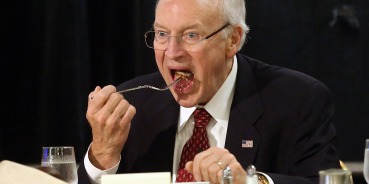
1424101166-154351616-cheney

Dick Cheney may be one of the most qualified and powerful vice presidents to date. However, as a behind the scenes man, Cheney was seen as either the architect or shadowy puppetmaster behind the Bush Administration’s most controversial policies. He has certainly not admitted being wrong on any of them after leaving office, even defending them.

  1. Dick Cheney

Served Under: George W. Bush (2001-2009)

Why He Seemed Good at the Time: Cheney was a seasoned Republican politician and businessman who rose from congressional intern to White House Chief of Staff during the Nixon and Ford administrations. Was Wyoming US Representative from 1979-1989 and served as Defense Secretary under George H.W. Bush. Was CEO of Halliburton during the Clinton Administration where he left with a $20 million retirement package. Also, it helps that he was the head of Dubya’s own vice-presidential search committee. Then again, he did have a very impressive political resume. So he wasn’t quite wrong.

Why He Wasn’t: During his political career, Cheney was known to vote against Head Start and a resolution calling on South Africa to release Nelson Mandela (and still stands by this one). While he trumpets his success in the private sector, his primary “accomplishment” with running Haliburton was purchasing a company that eventually had to pay out $4 billion in settlements related to asbestos lawsuits. However, as VP, he’d make up for it by advocating for 2 wars and doling out no-bid contracts. Play a major role behind the scenes during the Bush Administration, particularly in its response to 9/11, the War on Terror, and Iraq (based on erroneous WMD claims), as well as defended its record on anti-terrorism. Was often criticized for such policies as well as NSA wiretapping and so-called “enhanced interrogation techniques” better known as “torture.” Oh, and he cited executive privilege over refusing to disclose documents. As one of the most powerful vice presidents in US history, Cheney was often seen as a “shadow president” and creating a “fourth branch of government” all to himself. In 2005, his office was investigated over the CIA Leak Scandal which resulted in the resignation, perjury conviction, and commutation of his chief of staff I. Lewis “Scooter” Libby. Has been compared to Darth Vader, stirred controversy as commencement speaker at Brigham Young University in 2007, and has had calls from media and advocacy groups calling for his prosecution under various anti-torture and war crime statutes. Shot his friend Harry Whittington in the face during a quail hunt in 2006 by accident with alcohol certainly being involved. Term in office was highlighted as he exceeded the authority of his office, contributed to secrecy in government, engaged in political vendettas and taken the lead in advancing unwise policies on the environment, energy, foreign affairs, budgets and taxes. By the time he left office, he was almost universally loathed by the American people.
Later Life: Since leaving the vice presidency, he has been active in defending the Bush Administration’s legacy as well as vociferously criticized the current Obama Administration. Hosted a private fundraiser for Mitt Romney in 2012 that netted $4 million. Spoke positive about the Tea Party. Written two books with his daughter Liz.

Trivia: Wife Lynne Cheney was chair of the National Endowment for the Arts from 1986-1996 and is now a public speaker, author, and fellow at the American Enterprise Institute. She also wrote a lesbian romance novel.

DA-SC-07-43800

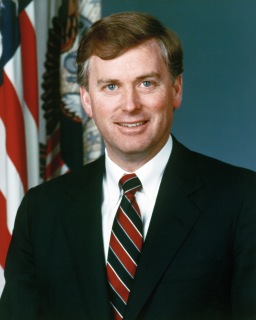
As the elder Bush’s VP, Dan Quayle would be a cause of continual embarrassment throughout the Bush campaign and presidency for being a total idiot. Another good Quayle quote: “The other day [the President] said, I know you’ve had some rough times, and I want to do something that will show the nation what faith that I have in you, in your maturity and sense of responsibility. Would you like a puppy?”

  1. Dan Quayle

Served Under: George H.W. Bush (1989-1992)

Why He Seemed Good at the Time: Well, he was a young fresh face to the Republican Party who served in variety of political offices in Indiana, defeated an 8 term veteran in his first US congressional race, and was elected to the US Senate at 33 as well as won reelection by large margins. He came from a wealthy family (that owned a newspaper in Indiana) and wasn’t a bad looking guy. Reagan once said the man had, “energy and enthusiasm.” Apparently, the elder Bush viewed him as a great insurance policy that would help save taxpayers money on his personal security detail. Also, having Quayle around would prevent Democrats from calling for his impeachment when it came to policies they really didn’t like.

Why He Wasn’t: Let’s just say the senior Bush’s choice in a running mate cause controversy from the very beginning. On questions regarding his military service in the National Guard to evade the draft during the Vietnam War, a golf trip with Paula Parkinson in Florida, and whether he had enough experience to be president, he seemed evasive in his answers. He would later be epically shut down by Lloyd Bentsen with “You’re no Jack Kennedy” in the vice presidential debate after he compared his own public service to that of John F. Kennedy. Yet, Bush and Quayle still won. During his vice presidency, Quayle would be widely ridiculed by the media and general public as well as be seen as an idiot and generally incompetent. Had a tendency to make public statements that were either self-contradictory, confused, or impossible. Examples: “The Holocaust was an obscene period in our nation’s history. … No, not our nation’s, but in World War II. I mean, we all lived in this century. I didn’t live in this century, but in this century’s history,” “I have made good judgments in the past. I have made good judgments in the future,” “Republicans understand the importance of bondage between a mother and child,” and during his address to the United Negro College Fund whose slogan is “A mind is a terrible thing to waste”: “You take the UNCF model that what a waste it is to lose one’s mind or not to have a mind is being very wasteful. How true that is.” When asked about sending humans to Mars, Quayle said, “Mars is essentially in the same orbit [as Earth]….Mars is somewhat the same distance from the Sun, which is very important. We have seen pictures where there are canals, we believe, and water. If there is water, that means there is oxygen. If oxygen, that means we can breathe.” Also, while we may not expect much from vice presidents, we do think that they should at least be able to spell the word “potato” right. But that didn’t stop him from trying to alter a 12-year-old boy’s already correct spelling to “potatoe.” And no, I don’t care if he was relying on an errant flashcard from that elementary school. If you’re an adult, you should’ve learned how to spell potato without having to rely on flash cards!

Later Life: Declined offers to run for Governor of Indiana and the presidency and moved to Arizona. Ran for the Republican Presidential nomination in 2000, ironically saying “we do not want another candidate who needs on-the-job training” on then front-runner George W. Bush. But he quickly withdrew and backed Bush after coming 8th in an Ames straw poll. Wrote 3 books. Joined Cerberus Capital Management in 1999 where he now serves as chairman of the company’s Global Investments division. Serves in various boards of directors for corporations like the Heckmann Corporation, Azora Bank, K2 Sports, Amtran, Inc., Central Newspapers, Inc., and BTC, Inc.

Trivia: Son was a one term congressman in Arizona but was defeated in a reelection primary due to redistricting. But he’s said to be equally moronic.

20090817053612!RichardMentorJohnson

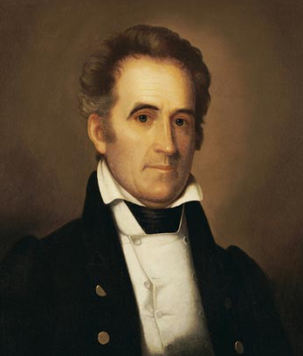
Richard Mentor Johnson’s status as a war hero for killing Tecumseh, his political career in Kentucky, and endorsement by Andrew Jackson himself should’ve made him a viable running mate for Martin Van Buren. Unfortunately, the guy was way too open about his personal life which made him a political nightmare in 1836 that the Democrats decided to run Van Buren with no VP at all.

  1. Richard Mentor Johnson

Served Under: Martin Van Buren (1837-1841)

Why He Seemed Good at the Time: Was reported to personally kill Tecumseh during the War of 1812 which he always used to exploit in his political career with glee that included time in the House and Senate. Was a campaigner against debt imprisonment and religious freedom (like abolishing the practice of “no mail on Sundays” rule). Also being from Kentucky helped balanced the ticket since Van Buren was from New York. Then there’s the slogan, “Rumpsey Dumpsey, Rumpsey Dumpsey, Colonel Johnson killed Tecumseh,” which is just great. Not to mention, he was endorsed by none other than Andrew Jackson himself for the vice presidency.

Why He Wasn’t: While he was said to dress like a farmhand and curse like a sailor, he was a antebellum political PR disaster. He publicly admitted to having a black common law wife named Julia Chinn and treating his slave daughters as legit. He also had two other slave mistresses, one of whom he tried to introduce to polite society. So what’s wrong with that? Morally nothing but politically everything, especially in the antebellum years where it earned him “the most vulgar man of all vulgar men.” Let’s just say when you’re running for a major political office and have cater to a bunch of racist slave owners as well as incredibly racist whites, it’s just completely stupid. This goes even if you’re the 19th century equivalent to the “I Killed Bin Laden Guy” like he was. Besides, this already cost him his career in the Senate. Though he had Jackson’s backing in the 1836 election (because Jackson didn’t give a shit about his personal life), the Democrats were far from united behind him and barely obtained the necessary two thirds vote at the 1835 DNC. Despite one state’s Democratic legislators refusing to vote for him, he won anyway. Unsurprisingly he proved to be a great liability in the 1836 general election. His public relationship with his slave cost a lot of Democratic votes in the South. He also failed to garner much support in the West despite his reputation as an Indian fighter and a war hero. As vice president, Johnson’s penchant for wielding his power for his own interests didn’t abate. After the Panic of 1837, he took a 9 month absence during which he returned to Kentucky to open a tavern and spa on his farm to offset his continued financial problems. Also proposed an expedition to the North Pole so Americans could drill into the center of the earth which was soundly defeated. Since he proved to be such a liability for the Democrats in 1836, they refused to renominate him for vice-president in 1840 and Van Buren campaigned without a running mate, while Jackson saw him as a “dead weight” and threw his support to James K. Polk. Undaunted Johnson continued to campaign to retain his office where he made rambling, incoherent speeches, raising his shirt to show war wounds from the Battle of the Thames, and leveling charges against William Henry Harrison that were so poorly received that they led to a riot in Cleveland.

Later Life: Returned to his Kentucky farm to oversee his tavern where he served in the state legislator and was a pallbearer for Daniel Boone at his reinternment at Frankfort Cemetery. But he never gave up on a return to public office with an unsuccessful campaign for the US Senate against John C. Crittenden in 1842 and a presidential run in 1844. Ran for Kentucky governor as an independent in 1848 but later conceded. Suffered dementia and died of a stroke at 70.

Trivia: Known for wearing a bright red vest and tie in his later life. Political prominence led to a family dynasty with 2 brothers and his nephew all being elected to the US Congress. Also had 2 other slave mistresses after his “wife” Julia Chinn died. One tried to run off with an Indian but he sold her while the other was her sister.

John_C_Breckinridge-04775-restored

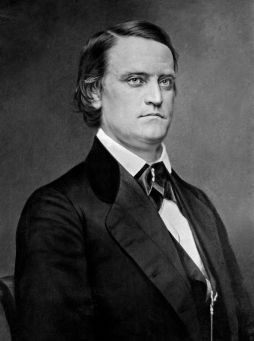
As James Buchanan’s vice president, John C. Breckinridge was a rising political star and the youngest VP ever at 36. However, his views on slavery and secession alienated Buchanan and his friend Stephen Douglas as well as tore apart his party. He later got expelled from the US Senate and became a general for the Confederacy.

  1. John Breckinridge

Served Under: James Buchanan (1857-1861)

Why He Seemed Good at the Time: Well, he was only 36 at the time, making him the youngest VP in US history as well as came from a prominent Kentucky family. Was a veteran of the Mexican American War. Was a states’ rights proponent who was against the legal interference with slavery which balanced the ticket with Buchanan. And let’s just say, things in the US were getting really bad by this time. Helped that he actively campaigned for Buchanan, too.

Why He Wasn’t: Well, let’s just say Buchanan resented the fact that he supported Franklin Pierce and Stephen Douglas (though to be fair Douglas was his friend but their relationship wouldn’t last). His pro-slavery views frequently led him to clash with Buchanan and Douglas, especially over the matter with Kansas that would soon be bleeding. When elected to the Kentucky legislature during his term, he endorsed the Dredd Scott decision and cautioned that John Brown’s raid on Harper’s Ferry was evidence on either negro equality or violence. In 1860, he accepted the nomination for president from protesting Democratic delegates who didn’t like Douglas. Another group of protesting delegates formed the Constitution Union Party and nominated John Bell. Believed in the right of secession and was accused of favoring Union breakup. Though he denied it, they were right. Still, while Breckinridge won 18.1% of the popular vote and placed second in the Electoral College, such disunion in the Democratic Party would result in Abraham Lincoln swept most of the northern states and won the presidency with 180 electoral votes. After losing to Lincoln, he announced his support for slavery and secession.

Later Life: His support for slavery and secession in his return to the Senate made his term a very short one. Since 7 states had already left the Union by this time, he was almost alone in his defense. He would later be indicted for treason after enlisting in the Confederate Army as well as be declared traitor and expelled by the US Senate. He would flee behind Confederate lines where he was commissioned as a Brigadier general. Was promoted to major general after the Battle of Shiloh as well as saw action at Stone River, Missionary Ridge, and the Shenandoah Valley. In 1865, he was appointed to Confederate Secretary of War and urged Jefferson Davis to surrender at the fall of Richmond. After the war, he fled to Cuba, Britain, and Canada as well as toured Europe for 2 years. All to escape treason charges before he could return after granted amnesty. Back in Kentucky, he resumed his law practice, served as counsel for the Cincinnati Southern Railway, and resisted calls to return to politics. Suffered from a variety of health problems in his later years. Died in 1875 at 54.

Trivia: Publicly denounced the Klu Klux Klan in 1870 as well as supported passage of a state statute legalizing black testimony against whites in court. Was played by Jason Isaacs in the 2014 film Field of Lost Shoes.

William_Rufus_DeVane_King_1839_portrait

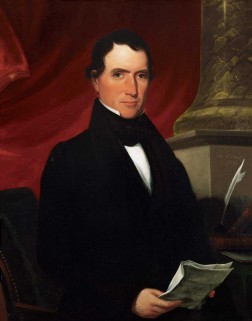
William Rufus King was a moderate Unionist Democrat and a Southerner who made a great running mate for Franklin Pierce. However, he took the oath of office in Cuba and was dead after 45 days.

  1. William Rufus King

Served Under: Franklin Pierce (1853)

Why He Seemed Good at the Time: He was a longtime politician and diplomat. As a Democrat, he was considered a Unionist as well as a moderate on issues pertaining to sectionalism, slavery, and westward expansion, all of which contributed to the American Civil War. He helped draft the Compromise of 1850.

Why He Wasn’t: Uh, he wasn’t in the best shape at the time. Because he took the VP oath of office on foreign soil in Havana, Cuba. Died 45 days into his term. Also, prior to the vice presidency, supported a gag rule in the Senate on antislavery petitions, opposed proposals to abolish slavery in Washington D.C., and was a member of one of Alabama’s largest slaveholding families with a vast cotton plantation to boot.

Later Life: He died 45 days after being sworn in from TB. So there’s nothing to say about him.

Trivia: Only vice president never to marry and resided much of his life with future president James Buchanan (who also never married, by complete coincidence. Not that there’s anything wrong with that but there has been speculation that they might’ve been more than just good friends).

Hannibal_Hamlin,_photo_portrait_seated,_c1860-65-retouched-crop

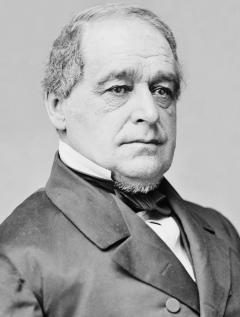
As a do nothing politician from Maine, Hannibal Hamlin was a safe choice as Abraham Lincoln’s VP in a very ugly election year. However, once he became vice president, he continued being useless that he spent most of his time in Maine anyway.

  1. Hannibal Hamlin

Served Under: Abraham Lincoln (1861-1865)

Why He Seemed Good at the Time: He was a senator, congressman, and governor from Maine mainly put on the ticket with Lincoln to provide a geographical balance in the 1860 election. That and the fact, his reputation as a do nothing politician who used his office to grant favors made him a safe choice as a running mate at a time when having a certain political agenda would lead to controversy. And since Lincoln was a highly controversial candidate for his stance against slavery expansion, having Hamlin as his running mate worked in his favor.

Why He Wasn’t: He’s a classic example of a vice president who exercised no power and no influence, even losing control of the patronage for his own state. It didn’t help that he and Lincoln never met until after the 1860 election. While Lincoln sometimes asked Hamlin for advice, his role was so limited that he often stayed in Maine, complaining about his insignificance. Also strongly supported Joseph Hooker’s appointment as commander for the Army of the Potomac that would end in failure at the Battle of Chancellorsville. He was so bored with his job that he joined the Maine Coast Guard as a cook. He was dropped from the ticket in 1864 for Andrew Johnson.

Later Life: Returned to the US Senate in 1869 where he served until 1880 due to ailing health. Served as Ambassador to Spain from 1881-1882. Died at 81 in 1891.

Trivia: Had two sons who became Civil War generals (one of them was a brevet). Son Cyrus called for enlistment of black troops and commanded a brigade of freedmen in the Mississippi River Campaign. Son Charles and daughter Sarah were present at Ford’s Theater during the Lincoln assassination. Great-granddaughter Sally was a child actress who made many spoken word for Victor Talking Machine Company in the early 20th century. Nephew was an Civil War surgeon who wrote books about Chancellorsville and Andersonville Prison.

Thomas_Riley_Marshall_headshot

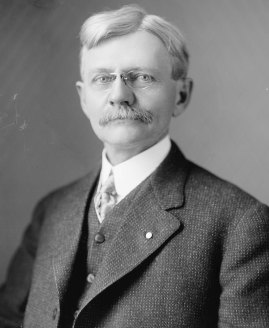
While Woodrow Wilson’s VP was known for his good sense of humor, he didn’t show much enthusiasm for the job and didn’t get on with his boss. However, what puts him on the list is that when Wilson suffered from a debilitating stroke, he refused to do his job.

  1. Thomas R. Marshall

Served Under: Woodrow Wilson (1913-1921)

Why He Seemed Good at the Time: He was a prominent lawyer in Indiana as well as a politician who rose to become its governor where he proposed controversial and progressive state constitution and pressed for other progressive reforms. It also helped that Indiana was a critical swing state in 1912. Was also great at giving speeches.

Why He Wasn’t: Wilson and Marshall had an ideological rift that led Wilson limit his influence in the administration and his brand of humor led Wilson to move his office away from the White House. Still, his best known moment was when Wilson was incapacitated from a stroke in October 1919 which prompted a leadership crisis. Because of personal dislike, Edith Wilson and his advisers sought to keep Marshall uninformed about to president’s condition to prevent him from easily assuming the presidency. Yet, while many people, including cabinet officials and Congressional leaders urged Marshall to become acting president, he refused to forcibly assume the presidency for fear of setting a precedent. Well, since there was no such thing as an acting president at the time, isn’t setting a precedent for one supposed to be his fucking job? I think so. Hell, the guy was already holding cabinet meetings while Wilson was in Europe. I’m sure setting a precedent as acting president would be something he could handle. But because Marshall didn’t do his job and was too chickenshit to stick up against Edith and Wilson’s advisers, there was no strong leadership in the executive branch. And the administration’s opponents defeated the ratification of the League of Nations treaty which effectively returned the US to an isolationist foreign policy.

Later Life: Tried to run for president in 1920 but only the Indiana Democrats supported him. Opened an Indianapolis law practice, wrote several legal books and a memoir, as well as continued to travel and speak publicly. Died of a heart attack while on a trip in 1925 at 71.

Trivia: Was known for his wit and sense of humor who said, “What this country really needs is a good five-cent cigar.” Only VP to be a target of an assassination attempt.

Henry-A.-Wallace-Townsend

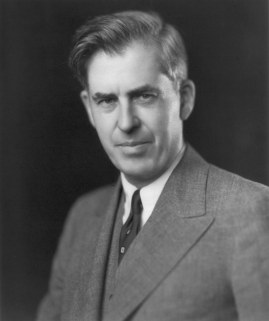
As FDR’s Secretary of Agriculture, Henry Wallace was almost second to none when it came to helping farmers and feeding the hungry during the Great Depression. However, as vice president, his left-wing views, crazy religious beliefs, and idiotic perception of the Soviet Union made him a source of controversy. It’s no wonder that the Democrats had FDR dump him for Harry S. Truman and the nation is better for it.

  1. Henry Wallace

Served Under: Franklin Delano Roosevelt (1941-1945)

Why He Seemed Good at the Time: Unlike John Nance Garner, he was a strong supporter of New Deal liberalism, rapid desegregation, and softer policies toward the Soviet Union. Also, had a successful career in agriculture that FDR appointed him Secretary of Agriculture when he was still a Republican (to be fair, the Roosevelts knew him a long way back). And while controversial, he was said to be really good at that job. Arthur M. Schlesinger wrote of him: “In 1933, a quarter of the American people still lived on farms, and agricultural policy was a matter of high political and economic significance. Farmers had been devastated by depression. H.A.’s ambition was to restore the farmers’ position in the national economy. He sought to give them the same opportunity to improve income by controlling output that business corporations already possessed. In time he widened his concern beyond commercial farming to subsistence farming and rural poverty. For the urban poor, he provided food stamps and school lunches. He instituted programs for land-use planning, soil conservation, and erosion control. And always he promoted research to combat plant and animal diseases, to locate drought-resistant crops and to develop hybrid seeds in order to increase productivity.”

Why He Wasn’t: Even as Secretary of Agriculture, Wallace was very controversial for his left wing views, bizarre religious beliefs (such as dabbling in mysticism and fad diets), and friendship with a Russian man said to cause a diplomatic upset while on an expedition in Asia. This guy tended to march his own unique political funky drummer. FDR’s tapping him as VP caused considerable controversy among the conservative Southern Democrats, many of whom mistrusted him, revolted during the Democratic National Convention that FDR threatened to decline the nomination while Eleanor delivered a conciliatory speech. As vice president, his tremendous naiveté about the world would prevent him from seeing the Soviet Union as a particular threat (as the tens of millions Stalin killed begged to differ). This is mostly because he saw a fully sanitized version of the Siberian slave labor camps in which the Soviets claimed the work as being done by, “volunteers.” Wallace took it hook, line, and sinker (idiot). May have had a Messiah-Complex. But his public feuds with officials caused significant controversy in the midst of WWII. During the 1944 election, the Democrats got fed up with Wallace and dropped him from the ticket in favor of Harry Truman (winning 90% of the vote) who became president had FDR died after 82 days. Had he been VP at the time, the Wallace administration would’ve been a very trippy administration. Sure Truman has received a lot of criticism from both left and right over the years, but even his staunches foes have to concede that the Berlin Airlift was a humiliating defeat for the Eastern Block. Not to mention, despite not having a college education and being unprepared for the presidency since FDR largely ignored him, Truman proved to be a way better president than this guy could’ve been.

Later Life: Served as Secretary of Commerce during FDR’s last month in office and into the Truman administration where he continued to attract controversy on his comments pertaining to the Soviet Union. This led Truman to fire him in 1946. After that, he became editor of The New Republic which he used as a platform to oppose Truman’s foreign policies and ran for president in 1948 as a Progressive Party candidate, advocating universal healthcare, desegregation and end to black disenfranchisement, and an end to the Cold War where he won 2.4% of the popular vote. Retired to New York to focus on farming. Supported the Korean War and later apologized for his former stance on the Soviet Union. Died of amyotrophic lateral sclerosis in 1965 at 77.

Trivia: George Washington Carver resided with his family as a student and later teacher at Iowa State. Wallace would accompany Carver on his nature walks. Work on plants helped introduce the concept of hybrid vigor as well as experimented with breeding high-yielding hybrid corn. Introduced econometrics to the field of agriculture. Founded the Hi-Bred Corn Company.

2896_127849027553

Before Henry Wallace was VP, FDR had conservative Texas Democrat John Nance Garner. Now first term Garner was great. But second term Garner, not so much. Hell, he even tried to run against FDR in 1940.

  1. John Nance Garner

Served Under: Franklin Delano Roosevelt (1933-1941)

Why He Seemed Good at the Time: He was a US congressman from Texas who rose to Speaker of the House. His conservative stance and Southern background made him a great balance on the FDR ticket in the 1932 election.

Why He Wasn’t: First term John Nance Garner was great since he helped sell FDR’s New Deal policy. Second term Garner, not so much. As a conservative Democrat from Texas, he opposed labor union sit down strikes and New Deal deficit spending, he sabotaged FDR’s policies (such as the court packing scheme). In 1940, he became the only sitting VP to challenge the sitting president for the party’s nomination. He lost. But by this time, a lot of Democrats didn’t find him appealing. Make way for proto-hippie Henry Wallace.

Later Life: Retired to his Uvalde, Texas home where he spent the last 26 years of his life as well as settled into a life of an elder statesman who was consulted by active Democratic politicians. Died in 1967 at 98 and is the longest lived VP to date.

Trivia: Called “Cactus Jack.” Was close to Harry S. Truman.

Schuyler_Colfax_portrait

Close to the same age as Ulysses S. Grant, Schuyler Colfax seemed to be a great running mate due to his illustrious congressional career which led to him becoming House Speaker and being a champion against slavery and nativism. However, the guy was was corrupt as hell when it was revealed in a congressional investigation that he had taken bribes from the Union Pacific Railroad. Also, kind of a backstabbler. Oh, and he should’ve been played by a younger man in Lincoln because he was a year younger than Grant.

  1. Schuyler Colfax

Served Under: Ulysses S. Grant (1869-1873)

Why He Seemed Good at the Time: Well, like Grant, he was only in his mid 40s as well as had a political career that led him to become House Speaker, which made up for Grant’s lack of political expertise. Was known for his opposition to slavery, anti-nativism, and a founder of the Republican Party. Not to mention, he had a pretty awesome name.

Why He Wasn’t: Two things. First, thinking Grant would serve one term, he attempted to garner support for his 1872 Republican presidential bid by telling friends he wouldn’t seek a second VP term. By the way, this was part of his plan. But when Grant ran again, so did he but ended up being dropped from the ticket in favor of Henry Wilson. Second, in 1873, a Congressional investigation into the Credit Mobiler Scandal named him as one of the Congressmen who likely received payments of cash and discounted stock from the Union Pacific Railroad in exchange for favorable action during construction of the First Transcontinental Railroad. It was later revealed that he had taken $1,200 gift check for 20 shares of Credit Mobiler stock, which he denied after leaving office. In addition, Congress also revealed a more damning accusation that Colfax received a $4,000 gift in 1868 from a contractor who supplied envelopes to the federal government while he was chairman of the Post Office and Road Committee. Since these incidents took place while he was a Congressman and was scheduled to leave office the following month anyway, he wasn’t censured or forced to resign.

Later Life: Never ran again for office since his political career was ruined. Spent the rest of his life working as a business executive as well as a popular lecturer and speech maker. Died in Minnesota in 1885 while changing trains as he was en route to Iowa.

Trivia: Was friends with Horace Greely.

Chas_G_Dawes-H&E

It’s no wonder that Calvin Coolidge selected Charles G. Dawes as his VP since he was a successful businessman, politician, and military general. However, the guy refused to attend cabinet meetings and napped through an appointee’s confirmation vote which cost the guy his job.

  1. Charles G. Dawes

Served Under: Calvin Coolidge (1925-1929)

Why He Seemed Good at the Time: He was a successful businessman and politician as well as served as a US Army officer during WWI rising to Brigadier general. Was also awarded a Nobel Peace Prize for his work in the Dawes Plan in 1925, was a program to enable Germany to restore and stabilize its economy after the war. Also, he was the first guy willing to take the job and was loyal to him and his campaign.

Why He Wasn’t: While there are presidents who didn’t get along with their veeps, Dawes didn’t even try. Soon after election, he sent Coolidge a letter saying that he would not attend cabinet meetings. The first time he addressed the Senate, he made a speech denouncing the way it conducted business, pissing off Coolidge. Later, he napped through a decisive vote which resulted in a Coolidge attorney general appointee losing his job. By 1929, he and Coolidge would despise each other and they’d have a feud that broke into open hostility. As for his Nobel Peace Prize win for his plan to restore German economic equilibrium, well, that worked spectacularly (it was ultimately an epic disaster since it didn’t help Germany’s economic woes nor prevent the rise of Adolf Hitler and Nazi Germany).

Later Life: Became the US ambassador to the UK and headed Herbert Hoover’s Reconstruction Finance Corporation. Returned to the banking business for nearly two decades and became chairman of the board of City National Bank and Trust Co. until his death in 1951 at 85.

Trivia: Was a self-taught pianist and composer who composed “Melody in Major” in 1912 which has been used to the lyrics “It’s All in the Game” that’s become a pop standard that’s been covered countless times. Was friends with General John Pershing. Descendant of William Dawes who accompanied Paul Revere.

220px-DTompkins

As governor of New York, he organized the state militia and invested his own money into it during the War of 1812. As James Monroe’s vice president, he was mostly drunk due to money problems and not being reimbursed for his efforts by the federal government.

  1. Daniel D. Tompkins

Served Under: James Monroe (1817-1825)

Why He Seemed Good at the Time: While a jurist by background, he was noted as one of the most enterprising governors during the War of 1812. Organized the state militia by often investing his own capital when the legislature wouldn’t approve the necessary funds. Yet, he failed to recover the loans despite massive litigation.

Why He Wasn’t: Well, the guy was already not in the best of health when he was sworn in. He fell off a horse in 1814. He also suffered money problems and slipped into alcoholism. Let’s just say he was often so drunk that he couldn’t perform simple parliamentary duties. Described by Martin Van Buren as “the most injured of men” as well as by another as a “degraded sot.” He made an especially poor presider when of the Senate while it debated the Missouri Compromise in 1820.

Later Life: His post-vice presidency was among the shortest in US history. Because he drank himself to death 3 months after leaving office at 50 in 1825.

Trivia: Has a neighborhood in Staten Island named after him.

Levi_Morton_-_Brady-Handy_portrait_-_standard_crop

While Levi Morton had enormous walrus sideburns that were fashionable at the turn of the century, he was a shitty VP to Benjamin Harrison. His failure to ensure passage of a black voting rights bill was due to his belief that he should remain impartial. Harrison, on the other hand, had other ideas.

  1. Levi P. Morton

Served Under: Benjamin Harrison (1889-1893)

Why He Seemed Good at the Time: Was a distinguished politician who was once considered to be James A. Garfield’s running mate but declined. Served as an ambassador to France and was very popular there. Also placed the first rivet in the construction of the Statue of Liberty. Besides, I guess Harrison wanted to repeat the Garfield tradition of selecting the running mate with the most awesome side burns. Since it worked before.

Why He Wasn’t: Had little noteworthy to hang his enormous sideburns on. His one “accomplishment” was doing little to support passage on a bill to enforce black voting rights in the South against a Democratic filibuster in the Senate. Harrison blamed him for the bill’s failure because he believed his role was to be impartial. Was outfoxed by parliamentary procedure and replaced by Whitelaw Reed in the election of 1892 which Harrison lost. Because that’s what happens when you’re an utterly useless vice president.

Later Life: Served as Governor of New York and retired as a real estate investor. Died on his 96th birthday in 1920.

Trivia: Had vast landholdings. His summer home in Rhode Island is now owned by Salve Regina University.

Thomas_Andrews_Hendricks

As a seasoned politician and popular Indiana governor known for defending the Democratic position during the American Civil War, Thomas A. Hendricks was a natural choice for Grover Cleveland’s running mate. Unfortunately, what made him very popular among the Democrats at the time was that he hate black people.

  1. Thomas A. Hendricks

Served Under: Grover Cleveland (1885)

Why He Seemed Good at the Time: Was a prominent politician in Indiana where he rose to become congressman, senator, and governor. Was also quite popular in the Democratic Party for defending its position during the American Civil War.

Why He Wasn’t: He was a fervent secessionist and pro-slavery supporter who opposed ratification of the 13th, 14th, and 15th, Amendments abolishing slavery as well as granting citizenship and suffrage to African Americans. Also supported segregation. Luckily he was in ill health at the time and died 8 months into his term at 66.

Later Life: He only lasted as VP for 8 months so there’s not much to write about in this section.

Trivia: There’s not anything interesting about him.

Olympic Sports from Ancient Greece

laurel-wreath

This August, athletes will gather around the world at Rio de Janeiro for the 2016 Olympic Games, well, the ones who aren’t dissuaded from coming by fears pertaining to lack first respondents at the premises, Zika virus, pollution, and all the other ugly stuff going on in Brazil at the moment. Way before we had the modern Olympic Games of today, there were those of Ancient Greece. The first recorded Olympic Games in history was held at Olympia in 776 BCE which only featured one event, a foot race across the stadium. The first Olympic Champion was a cook and baker named Koroibos of Elis and from then on, every victor was recorded and each Olympiad after them. This gave us the first accurate chronology of the Greek world. However, whether this was the first Olympic Games in history will never be known. As to how they got started is a mystery. And it doesn’t help that Greek mythology isn’t noted for its consistency. Some attribute the origins to Zeus celebrating his victory over his father Kronos. Others attribute them to Pelops in honor of his father-in-law Oinomaos. Another legend attributes their founding to the famous Greek mythological hero Heracles (or Hercules as you know him). At any rate, organized athletic competitions already existed in both the Minoan and Mycenaean civilizations even if their sporting events were originally associated with funeral rituals, particularly those who’ve fallen in battle like the games of Patrolcus in Homer’s Iliad (organized by Achilles, no doubt). Nevertheless, every 4 years, people from all over Greece and beyond would flock to the sacred city of Olympia whether they be athletes seeking a prize, spectators, trainers, officials, and what not. When a 19th century French aristocrat named Baron Pierre de Coubertin decided to found the International Olympic Committee and restore to the Olympic Games, he intended to restore the games to as close to the Greek spirit as possible but without the religious elements, banning women from watching, and nudity. Yet, de Coubertain’s view of the Ancient Greek Olympics was kind of romanticized and sometimes unfair as best seen when Jim Thorpe was stripped of his medals because he played semi-pro sports (while the athletes were supposed to be amateurs). Meanwhile, the Ancient Greeks? They didn’t even have a designation on amateur or pro in their vocabulary. Nevertheless, the Olympic Games were quite different in Ancient Greece from the ones we’re used to.

olympia18

Here’s a close visual approximation on what Ancient Olympia might’ve looked like. But during antiquity, this would be where the Olympic Games were held every 4 years to honor the king of the gods Zeus.

Differences from the modern Olympic Games in general:

  1. It is only one of the Panhellenic Games in Ancient Greece with the quadrennial Pythian as well as the biennial Nemean and Isthmian. All these were sports festivals of Ancient Greek religious significance including the Olympics. However, the Olympics would remain the most prestigious of the four and best remembered.
statue-of-zeus-at-olympia

Here’s an artist’s depiction on the Statue of Zeus in his Olympia temple. He was the chief deity of the Greek gods who threw lightning bolts whenever pissed as well as couldn’t keep it in his pants.

2. It was a sports festival to honor Zeus and always took place at the sanctuary of Zeus in Olympia from 700 BCE. And it was because of this that they were suppressed by Roman Emperor Theodosius in 394 as part of a campaign to impose Christianity as the state religion of the Roman Empire.

3. Greek city states marked this occasion with a 3 month Olympic Truce so athletes could travel to the Games in safety when there would be no war or battles and no capital punishment. Violation of that truce consisted of fines. Yet, city states would also use the Olympic Games as a political tool to assert dominance over their rivals as well as later spread Hellenic culture throughout the Mediterranean.

4. Also featured religious celebrations as well as art competitions.

P91664-BKGR-2

Here is an olive wreath. Wreaths like these would be bestowed as prizes to Olympic victors along with an etching of their name to the winners roll (except for jockeys and charioteers). Further prizes bestowed on them would depending on their city-state of origin though they’d receive a hero’s welcome and other perks.

5. Prizes were only given to victors which consisted of olive leaf wreaths or crowns as well as other rewards from their home city states (Athenian Olympic winners could have a free meal in the City Hall every day for the rest of their lives as well as a substantial amount of cash). Chariot drivers only received red woolen ribbons worn on the upper arms or around the head while the horse owner received the crown. No Olympic medals in gold, silver, or bronze.

IMG_3812

Here is a hanging of the kind of Olympic events you’d see in Ancient Greece. These included sports in the Pentathlon, Track, Combat, and Equestrian.

6. Had fewer events and lasted for 5 days during the summer at the first full moon after the summer solstice (like mid-July). There were no winter events. However, athletes had to arrive one month before the games and had to declare that they’ve been training for at least 10 months.

_60137085_60137084

Despite that women weren’t allowed to even watch the Olympic Games in Ancient Greece under penalty of being thrown off Mt. Typaion (well, at least married women anyway), here you see women in Grecian dress at the most recent Olympic torch ceremony at the ruins of Olympia. I’ll get to the torch part later.

7. Only freeborn Greek men and boys who were citizens from Greek city states were allowed to participate (as long as they had a clean record, didn’t defile any temples, or violate the Olympic Truce). Married women weren’t even allowed to watch on penalty of death via being thrown off Mt. Typaion (though they could enter their horses in the equestrian events as well as chariot teams. But they couldn’t drive the chariot themselves. But men who were foreign born and slaves could and did. Also, unmarried girls could watch as well as the Demeter Chamyne priestess). However, ladies can compete, organize, and officiate in the Hera Games as long as they weren’t married but these consists of foot races, chariot racing, wrestling, and dances.

Training

Unless they were in the hoplite races or the equestrian events, Ancient Greek Olympic athletes usually performed naked. It was part of the Olympic dress code. Yes, I know it’s kind of weird but it’s an Ancient Greek thing.

8. Athletes competed in the nude unless noted otherwise. Exceptions were hoplite racers (who competed in armor) as well as jockeys and charioteers (for obvious safety reasons). Trainers were required to be nude after an athlete’s mother tried to pass herself off as one (but wasn’t executed because she was from a prominent Olympic family).

Greek-Olympic-torch

Despite the association of lit torches with the Olympics, the Ancient Greeks had no Olympic torch relay. Other Ancient Greek sporting events did, however, including Athens.

9. There was no torch relay (though other Panhellenic Games did have torch relays in their other athletic festivals, including those at Athens).

10. Events were supervised by trained judges from Elis, the Hellanodikai (or agonothetai) who also had various assistants such as the alytai (police officers or referees). Originally these were inherited positions but they were later chosen by lot. They also had the power to disqualify, sort separate the men athletes from the boys (usually by physical appearance), and fine athletes for rule infringement. These guys wore purple cloaks and had special seats of honor in the stadium. Their decisions could never be revoked but they were subject to a council of elders and could be fined if any athlete successfully appealed.

11. Penalties for rule breaking ranged from exclusion and fines to flogging. Fines were paid to the sanctuary and the wronged athlete. But if an offender could not afford to pay the fine, then the city absorbed the penalty or else faced exclusion from the next Olympic Games.

The Greeks Played Naked for the Sake of Beauty

Just a bunch of guys training in the Olympics. Note how most of them have toned bodies like you’d see from 300. Don’t think that’s realistic. Come on.

12. First day consisted of an opening ceremony, judges and athletes taking oaths, competitor registration and scheduling, as well as sacrifice presentations to the gods. Second day consisted of the equestrian events and pentathlon before ending with honor the shrine of Pelops and a parade at the sanctuary of Zeus that included feasting and revelry. Third day had arrival of judges, ambassadors, competitors and Great Altar sacrificial animals, afternoon running races, and a public banquet at the Prytaneion. Fourth day was devoted to combat sports which ended with the hoplite race. And the fifth day was devoted to the closing ceremony.

Phidippides

While there is an Ancient Greek legend of the first marathon of a messenger running a great distance to inform the leaders of their victory there before collapsing and dying, there was no Ancient Greek Olympic Marathon. Because Ancient Greek athletes weren’t that crazy to run 26 miles.

13. Despite the name having Greek origins as well as a famous story to go with it from the Persian Wars, there was no Olympic marathon.

Ben-Hur_chariot_jumps

Sure this is from the chariot scene in the 1959 Ben Hur which takes place in Ancient Roman times and in 1st century Palestine. However, this is a very historically accurate portrayal on what ancient equestrian events were like. Ancient Greek Olympic chariot racing wouldn’t have been much different since it was a very violent sport with most races experiencing at least one crash and fatalities weren’t unheard of. Ancient chariot races would make today’s auto races seem like mere tea parties.

14. Equestrian events took place in the Hippodrome and were the province of the elite who can afford to equip and maintain horses and a chariot as well as cover the costs of trainers and the charioteer or jockey (who were usually paid servants, family members, or slaves). Only the owners received the olive wreaths and Altis statues, not the athletes. Yet, unlike the equestrian events of today, they appealed to the less than idealistic spectator instincts like “shock value TV” nowadays. Most of the fascination was predicated by their violent nature with the races being quite dangerous and sometimes fatal (think of the Ben Hur chariot race scene. Most chariot races had at least 1 crash per race). Collisions, crashes, and horse wrecks were common, especially near the critical turning post. Equestrian race lengths were grueling distances.

874c70c911ba3f95957efad32328b115

And here’s another picture from the chariot scene in Ben Hur. Notice how Judah knocked Messala off his chariot away from the spiked wheel which means he’s likely going to die sometime later. Ancient Greek Olympic chariot racing was quite similar in its violence. And the violence in these equestrian events contributed to the entertainment value. Remember these sports weren’t for wimps.

15. Athletes caught cheating had to build a statue of themselves and engrave their name on it so that the city people would know who might cheat in life. These statues were called Zanes.

BH-8

Like the Roman chariot race scene in Ben Hur, cheating was also frequent in the Ancient Greek Olympics. However, while those caught cheating had to engrave their names on a Zane statue, they were never made to forfeit their winnings. Just a bad reputation. Yeah, I know it’s pretty awful but a winner was a winner in Ancient Greece even if he was corrupt. Like Tom Brady and the New England Patriots which won 4 Super Bowls.

16. If a winner was caught cheating, he was never made to give up his winnings despite his corruption. Nevertheless, cheating was very common in these games with other participants tampering with other athletes’ equipment, bribing officials, or making them fall during a chariot race (again think of Ben Hur with Messala’s metal spike on his wheel that would basically grind into his rivals’ wheels and cause them to wreck. However, given that Messala is an aristocrat and an officer, it’s very unlikely that he’d be driving his own chariot. Chances are he’d hire someone to drive it for him).

17. No measurements were recorded of the length pertaining to a jump, discus, or javelin throw. No times were kept for the running events. But winners’ names might be recorded but they wouldn’t be considered record holders. Because breaking records wasn’t a thing.

Ancient boxing

This is probably not an Ancient Greek Olympic event depiction due to a female presence. Yet, while modern combat sports match contenders through weight classes, this wasn’t the case in Ancient Greece. During their Olympics, people were matched up according to lot, though the unluckier athletes had a chance to forfeit.

18. Combatants were matched to each other by matching lots before each round. Unlucky athletes matched up against a much stronger opponent usually had the opportunity to withdraw before it was too late to avoid serious injury.

19. Runners and horse racers were sorted into their names by lot.

olympian-zeus (2)

And here are the ruins of what’s left of the Temple of Zeus in Olympia. It’s said to be one of the 7 Wonders of the Ancient world according to Herodotus.

The events were also quite different in the Ancient Greek Olympic Games. Sure we have some of these events in our modern Olympics, but they’re not quite conducted like nowadays. Some of them are not on the modern Olympic sports roster due to obvious reasons like safety and cruelty to animals. Other events you see in the modern Olympic Games were either not known in Greece at the time or even invented.

epidaurus-stadium-02

This is what’s left of the Olympia stadium which hosted the Ancient Greek Olympics. At one time, it could hold about 45,000 spectators (and not a single woman among them, well, as far as the rules are concerned).

Greek Olympic Events:

ancient-sports-stars

Olympic victors in Ancient Greece would become instant celebrities and were celebrated like heroes in their home town. Here is a victor being bestowed an olive wreath from Nike, the Greek goddess of victory.

Track:

Ancient Greece, race illustration

Track events were a long time staple of the Ancient Greek Olympics, which hosted 4 of these. These include 3 races of varying distances as well as a hoplite race where participants were clad in armor.

  1. Stadion – From Olympic Legacy: “The “stadion” was a simple sprint from one end of the stadium to the other, a distance of 600 feet (192.27 meters). This premiere competition of the ancient Olympics was the only event for the first thirteen Olympiads and was never omitted from the program in a millennium. In addition, the stadion became part of the pentathlon when it was introduced in 708 BC.”
  2. Diaulos- From Olympic Legacy: “At 1,200 feet (384.54 meters), the “diaulos” was double the length of the stadion. This second-oldest event was run in a straight line from one end of the stadium to the other and back, rather than in an elliptical lap, as we do today.”
  3. Dolichos- From Olympic Legacy: “Although the exact distance that “dolichos” runner had to traverse is not clear, it is known that this was a lengthy race, requiring great endurance. It is possible that the length was 24 stadia, or 14, 400 feet (4,615 meters).”
unit8_b_big

The Hoplitodromos was usually the grand finale of each Ancient Greek Olympic Games. This consisted of athletes running 1,200 ft across the stadium in full hoplite armor. And yes, it was probably not comfortable to do that in mid-July, especially in Greece.

4. Hoplitodromos- From Olympic Legacy: “This theatrical event was the grand finale of each Olympiad. Participants raced the length of a diaulos (1,200 feet / 384.54 meters) with helmet, greaves (lower-leg armor), and a round shield. This militaristic closing event was a reminder that the Olympic truce was almost over.” These were the only runners who didn’t compete in the buff but this was probably not pleasant for the athletes. Think of the armor coming off loose, men tripping and falling, as well as other crowd pleasing chaos.

Pentathlon:

; I21K ; G20H; C18D; S25T

In Ancient Greece, the Pentathlon was a major spectacle that consisted of 5 events like 200m dash, javelin, long jump, discus, and wrestling. Nowadays, discus, javelin, and long jump are considered separate events. Not so in Ancient Greece.

  1. Pentathlon- From Olympic Legacy: “The pentathlon consisted of five competitions. The 200-meter dash ( [stadion] ) and [wrestling] were events in their own right, but the remaining events (long jump, discus, and javelin) were only part of the pentathlon competition. Unfortunately, little is known about the order of competition, rules, or how a winner was determined. It is certain, however, that pentathletes (who were greatly admired in antiquity) must have possessed incredible endurance in order to compete in five events in one afternoon. Although it is not known who invented it or how it originated, we do know it was a very popular event.”
reconstructed jump small

Unlike its modern counterpart, the Ancient Greek Olympic long jump was quite different. For instance, pentathlon athletes used small weights on each hand to pull this off. It wasn’t easy to accomplish.

6. Long Jump- From Olympic Legacy: “The most significant difference between the ancient long jump and its modern cousin is in the use of jumping weights called “halteres.” These small weights held in each hand were swung forward with great force as the jump was launched to propel the jumper forward as much as possible. They would then be swung back and down just before landing. This technically challenging feat was often performed to the accompaniment of flute music, which helped the athlete to maintain the necessary rhythm and spilt-second timing. The jumps took place in a rectangular sand pit in the stadium, with a small take-off ramp on one side. It is unknown whether the long-jump of antiquity was a single, double, or even triple jump.”

8477516_orig

Here’s a an Ancient Greek sculpture of an Olympic discus thrower. Unlike today’s throwers, pentathlon athletes back in Olympia probably threw no further than with a 3/4 turn. The discus itself was either made of stone or metal.

7. Discus- From Olympic Legacy: “This curious sport lives on in the modern Games. The graceful poses of ancient throwers were almost the same as those of today, except that it is likely the ancient athlete made no more than a three-quarter turn, in contrast to the full spins that are standard technique today. Very little is known about the length of throws in those days, although any figure would have little meaning without knowing the weight of the discus that was thrown. Discuses, which were made of stone or metal, were often marked with inscriptions. The terms of the ancient Olympic truce were engraved on a discus and displayed in the Altis.”

c2bd965a04a2b374c638d68269c7610f

Ancient Greek pentathlon athletes used a leather throng to fling the javelin. It helped if the athlete had military training because soldiers relied heavily on javelins as an offensive weapon.

8. Javelin- From Olympic Legacy: “This event is another example of the traditions that live on the Games of today. In ancient times, this was not a idle sport—warriors relied heavily on the javelin as an offensive weapon. The only real difference between the ancient and modern versions of this event is the use of the “anklye”—a leather thong used to fling the javelin. This strap, which was wound around the shaft and held by its free end, unwound as the spear was thrown, making the javelin spin and ensuring a steady flight.”


Combat:

referee-watches-greek-wrestlers-in-ancient-olympic-games

Here’s a painting depicting an Olympic wrestling match from Ancient Greece. I know it involves a couple of naked guys going at it which I’m aware will upset parents and Bible Belt Christians. But this is what Ancient Greek combat sports were like. I’m trying to enlighten people here.

  1. Wrestling- From Olympic Legacy: “Matches were held in an area filled with sand. Once a match began, it continued without interval until one man had thrown his opponent three times (touching the ground with the back, shoulders, or hip constituted a fall). There were no divisions by weigh, and the bigger men tended to win. Contestants were allowed to trip, but not to bite, gouge, or punch. Over the years, the variety of holds and tricks grew in number and sophistication. Wrestling became the final event of the pentathlon when it was introduced in 708 BC.”
1c41b932488b9cca567aaf66273204ff

Here’s an Ancient Greek sculpture of an Olympic boxer. Boxing was one of the most brutal sports at the time. And participants often ended up disfigured (since most boxers bashed each other’s heads). Too bad the leather straps didn’t offer much protection.

10. Boxing- From Olympic Legacy: “Although ancient boxing is similar to its modern counterpart, matches were not conducted in a roped-off ring and there were no breaks and no time limit. Victory was declared when one opponent was knocked out or conceded the contest. No wrestling or holding were allowed, but it was possible to hit a fallen opponent. Virtually all blows were directed to the head, while the body was left exposed. A series of hand straps evolved over the years, culminating in a relatively sophisticated glove. This hand-gear did not lessen the violence of this sport, and ancient boxers were very recognizable by their “cauliflower ears” and other facial disfigurements.” Serious injuries were common and fatalities weren’t unknown. It was considered to be the most violent sport in Ancient Greece.

wrestling1

Panrkation was an a very brutal, empty hand submission, and all-in type of wrestling in Ancient Greece with scarcely any rules other than no gouging eyes or biting. Basically combatants do almost whatever it takes to pummel their opponent to the ground. Used techniques or wrestling, boxing, and others. It’s the Ancient Greek equivalent to MMA.

11. Pankration- From Olympic Legacy: “This hugely popular event, which ancient poets were inspired to immortalize with numerous odes, is unlike any competition today. It was a conglomeration of elements from boxing, a form a wrestling known as “ground wrestling,” and elements quite unique to itself. Judging by what was allowed—competitors could strike with the fist, an open hand, twist arms, even break fingers!—the pankration seems very violent, yet it was considered less dangerous than boxing. Much of the struggle took place on the ground, although several upright holds were popular. In contrast to the sand-filled wrestling square, the pankration was conducted in an area where the ground was watered and somewhat muddy.” In a nutshell, this is the Ancient Greek equivalent to MMA and UFC in which the only illegal moves were eye gouging and biting. Also experienced some occasional fatalities.The famous Greek philosopher Plato was said to do extremely well in this event. Yes, that Plato. Yeah, you probably don’t imagine your Greek philosophers doing MMA stuff. But if he wasn’t, he’d be just known as Aristocles.


Equestrian:

William-Trego-xx-The-Chariot-Race-from-Ben-Hur-xx-James-A-Michener-Art-Museum

This is a 1908 painting of the Ben Hur chariot scene where Judah gets back on his chariot and eventually knocks Messala down which sends him to his eventual death. In Ancient Greek Olympics, this type of chariot racing was called Tethrippon which consisted of 4 horse chariots doing 12 laps across the track. It’s more like Ancient Greek NASCAR than contemporary harness racing while much more violent and much less safe. Seriously, people actually died in these races.

  1. Tethrippon- From Ancient History Encyclopedia: “the four-horse chariot race added in 680 BCE, run over ten or twelve circuits of the hippodrome. A version using foals over 8 circuits was added in 384 BCE.” Keep in mind that 12 circuits translates to 14 kilometers or 8.7 miles.
3984727

Ancient Greek Olympic horse racing was extremely dangerous since jockeys rode with no saddles, stirrups, horseshoes, or safety equipment. They were also riding on rough ground. So if riders were thrown off their horses, they would die.

13. Keles- From Ancient History Encyclopedia: “a horse race added in 648 BCE and run over 6 circuits. A version for foals was added in 256 BCE.” Keep in mind that 6 circuits equal 7 kilometers or 4.3 miles. Remember that horseshoes, saddles, and stirrups weren’t invented yet though whips were sometimes employed. It was especially dangerous because the ground was so rough. Riders thrown to the ground usually died. This kind of horseback riding isn’t one for wimps and perhaps the most dangerous.

14. Apene- From Ancient History Encyclopedia: “a race with chariots pulled by two mules, added in 500 BCE (dropped from 444 BCE).”

15. Kalpe- From Ancient History Encyclopedia: “a trotting horse race for mares, added in 496 BCE (dropped from 444 BCE).” FAMSF adds: “After a few laps around the track on the animals’ backs, the riders jumped off and ran the last lap alongside the galloping horse. In addition to the challenge of trying to keep up on foot with a horse, the competitors also had to avoid being trampled to death.” Wonder what the body count on this sport was. This just seems so stupid.

P0010

While the Tethrippon consisted of a chariot race pulled by 4 horses, the Synoris chariots were pulled by 2. But it’s way more dangerous than modern harness racing.

16. Synoris- From Ancient History Encyclopedia: “the two-horse chariot race run over eight circuits of the hippodrome, added in 408 BCE. A version using foals over three circuits was added in 268 BCE.”

Other:

0692fb1f2b19321579cd6cb52183ac9c

Alongside athletic events, the Ancient Greek Olympics had a contest for trumpeters. The winner would be seen as the herald of the Games.

  1. Herald and Trumpeter Competitions- From Ancient History Encyclopedia: “added in 396 BCE. This was held on the first day and the winners – those whose sound carried the furthest – were also given the honour of announcing the victors on the final day at the official prize-giving event.” At least people didn’t die in this event.

olivewreath


I Want You to View These Vintage Wartime Propaganda Posters

3ed877fe648cdd7a5bae5e9a1962adc9

Now that we’re in the patriotic swing of things for the 4th of July, perhaps we should take a look at some wartime propaganda. Of course, last year I did a series on Declaration of Independence signers which wasn’t a huge hit among the blogosphere or Google Search. But this year, I think doing a post on wartime propaganda from the two World Wars from the early 20th century might bring some flag waving fervor. Or it just might be something that I could have a lot of fun with. After all, I’ve already done the American flag. Nevertheless, these propaganda posters not only served as iconic images from governments and other agencies to do their part for the effort, but also pointed out that as a nation at war, we’re all in this together. And if you’re not doing your part or making any sacrifices, you’re being an unpatriotic dimwit who should be ashamed of yourself. Still, it’s interesting to look at these posters and see what kind of messages and images there are at the time. You’ll find Uncle Sam and Rosie the Riveter. But you’ll also find stuff on encouraging conservation, not throwing stuff away, buying bonds, men keeping it in their pants, and even carpooling. Yes, carpooling. Not only that, but a lot of these propaganda posters have been parodied over the years, even after the conflicts that made their existence. So for your reading pleasure, I want you to see a treasure trove of some historical posters encouraging you to do your part for the cause.


  1. Your friends are fighting, why aren’t you, man?
This is a recruitment poster from Canada encouraging young men to join the armed forces. And Canada certainly participated in both world wars. James Doohan was one of the most famous Canadian WWII veterans since he was Scotty from Star Trek.

This is a recruitment poster from Canada encouraging young men to join the armed forces. And Canada certainly participated in both world wars. James Doohan was one of the most famous Canadian WWII veterans since he was Scotty from Star Trek.

2. Be a Merchant Marine and help deliver the goods.

The merchant marines are among the most underrated war heroes in both world wars since transporting supplies is crucial for any war effort. However, like you see in Mr. Roberts, they don't see much action and it was very boring gig.

The merchant marines are among the most underrated war heroes in both world wars since transporting supplies is crucial for any war effort. However, like you see in Mr. Roberts, they don’t see much action and it was very boring gig.

3. Ladies, Joan of Arc saved her country, you can save yours by buying stamps.

Except that Joan of Arc saved France by being the French Army's mascot and providing divine inspiration. Lincoln's comment of Ulysses S. Grant's drinking would describe her perfectly.

Except that Joan of Arc saved France by being the French Army’s mascot and providing divine inspiration. Lincoln’s comment of Ulysses S. Grant’s drinking would describe her perfectly for those who think she had schizophrenia.

4. “My M-1 does the talking!”

There are a lot of posters encouraging people to be careful what they say or write. Because they can unintentionally help the enemy. And you don't want to do that.

There are a lot of posters encouraging people to be careful what they say or write. Because they can unintentionally help the enemy. And you don’t want to do that.

5. Remember men, disease is disguised so don’t gamble with VD.

I know this is telling men to keep it in their pants. But given double standards and realistic consequences, I think this message is necessary. Because people really need to be careful on who they screw.

I know this is telling men to keep it in their pants. But given double standards and realistic consequences, I think this message is necessary. Because people really need to be careful on who they screw.

6. “He gives 100%. You can lend 10%.”

And it looks like he's stepped on a mine and isn't long for this world. If that's not giving 100%, I don't know what is.

And it looks like he’s stepped on a mine and isn’t long for this world. If that’s not giving 100%, I don’t know what is.

7. Uncle Sam says, “Fill those empty seats!”

Because car sharing saves on gas that could be used to fuel our tanks in North Africa. And this is definitely from WWII, by the way.

Because car sharing saves on gas that could be used to fuel our tanks in North Africa. And this is definitely from WWII, by the way.

8. Housewives, save waste fats for explosives.

Because bacon grease can be used as nitro glycerin. And I'm not kidding on this.

Because bacon grease can be used as nitro glycerin. And I’m not kidding on this.

9. Remember men, self-control is self preservation.

Because screwing whores at the front leads you prone to contracting nasty STDs. So keep it in your pants, boys.

Because screwing whores at the front leads you prone to contracting nasty STDs. So keep it in your pants, boys.

10. Survive the wartime winter with coal for warmth.

Because the war effort needs oil. But you can also order wood. Love the freezing penguin in this.

Because the war effort needs oil. But you can also order wood. Love the freezing penguin in this.

11. Can this Nazi save more grease than you?

There's ammunition in this kitchen with bacon grease. And even the Nazis know that.

There’s ammunition in this kitchen with bacon grease. And even the Nazis know that.

12. Maintain your gas mask.

Because you might need it during a gas attack. So don't use it as a knapsack and pillow. Wonder what people doing with their gas masks for that poster to exist.

Because you might need it during a gas attack. So don’t use it as a knapsack and pillow. Wonder what people doing with their gas masks for that poster to exist.

13. “Let’s catch him with his ‘panzers’ down!”

I think this is a clever one for WWII. Notice how Hitler has swastikas on his underwear.

I think this is a clever one for WWII. Notice how Hitler has swastikas on his underwear.

14. Mr. Peanut goes to war.

Not even corporate advertising mascots were exempt from war service. Mr. Peanut from Planter's ought to know.

Not even corporate advertising mascots were exempt from war service. Mr. Peanut from Planter’s ought to know. Weird to see him without his top hat and monocle.

15. Saving old metal and paper puts the lid on Hitler.

Salvage saves lives and so does recycling. So save as much as you can on paper and metal.

Salvage saves lives and so does recycling. So save as much as you can on paper and metal.

16. Buying bonds and saving money will beat the devil!

And the devil here is Adolf Hitler. Here he's even red with horns and pointy ears.

And the devil here is Adolf Hitler. Here he’s even red with horns and pointy ears.

17. Join the tanks and beat em’ rough!

Wonder why they have a screaming black cat here. Sure it looks evil but it was more stupid to be on a battlefield than malicious.

Wonder why they have a screaming black cat here. Sure it looks evil but it was more stupid to be on a battlefield than malicious.

18. Civilians, if you don’t need it, don’t buy it.

Yeah, you really don't need to buy a white elephant. Of course, it's only in here as a figure of speech.

Yeah, you really don’t need to buy a white elephant. Of course, it’s only in here as a figure of speech.

19. Uncle Sam says, “Protect your nation’s honor, enlist now!”

Enlist now because your nation has just been raped, metaphorically. Of course, I think this might be from WWI.

Enlist now because your nation has just been raped, metaphorically. Of course, I think this might be from WWI though.

20. This dog’s owner died because someone wouldn’t shut up.

Yes, go with the gold star dog treatment. Because dogs are seen as loyal friends to their master and are quite adorable.

Yes, go with the gold star dog treatment. Because dogs are seen as loyal friends to their master and are quite adorable.

21. “Tell nobody-not even her!”

Because you'll never know where you'll find a Nazi spy. This is especially if she talks in a German accent.

Because you’ll never know where you’ll find a Nazi spy. This is especially if she talks in a German accent.

22. Dressing extravagantly is unpatriotic.

Because in wartime, everyone should make sacrifices. So dressing to the nines isn't just bad form, it's unpatriotic. Get it?

Because in wartime, everyone should make sacrifices. So dressing to the nines isn’t just bad form, it’s unpatriotic. Get it?

23. This man’s life is in your hands.

If I were him, I'd be more worried about throwing it too late than it being a dud. Those things can blow your freaking hand off.

If I were him, I’d be more worried about throwing it too late than it being a dud. Those things can blow your freaking hand off.

24. Remember, the Nazis burned books that Americans can still read.

Because unlike Americans, the Nazis don't believe in a free press. This is why they staged book burnings. Yes, they hate American freedom.

Because unlike Americans, the Nazis don’t believe in a free press. This is why they staged book burnings. Yes, they hate American freedom.

25. No sailor has to prove he’s a man on shore leave.

Because giving in to 1940s masculinity pressures might get you an STD. And there's no medicine for regret.

Because giving in to 1940s masculinity pressures might get you an STD. And there’s no medicine for regret.

26. Drivers, drive a truck for Uncle Sam.

I could tell this is from WWI because of the car design. And the artwork is a little bit crude, too.

I could tell this is from WWI because of the car design. And the artwork is a little bit crude, too.

27. The kitchen is the key to victory, eat less bread.

Because our men need carbs, dammit. So eat more garden veggies instead.

Because our men need carbs, dammit. So eat more garden veggies instead.

28. Remember, our men are ready to fight at any time.

However, looking at this you have to wonder how these soldiers got any sleep. Oh, wait, some of these guys didn't sleep for days.

However, looking at this you have to wonder how these soldiers got any sleep. Oh, wait, some of these guys didn’t sleep for days.

29. This woman is wanted for murder.

Because she didn't know when to shut the hell up. This cost lives overseas. Yeah, watch your mouth, ladies.

Because she didn’t know when to shut the hell up. This cost lives overseas. Yeah, watch your mouth, ladies.

30. Uncle Sam wants you to stop stealing tools!

Because combat crews need them to repair stuff with. At least this poster makes a lot of sense.

Because combat crews need them to repair stuff with. At least this poster makes a lot of sense.

31. This, soldier, is what is known as a booby trap.

Because she's loaded with boobs and STDS. Don't have sex with her. Seriously, keep it in your pants.

Because she’s loaded with boobs and STDS. Don’t have sex with her. Seriously, keep it in your pants.

32. Help China! Because China is helping us.

Well, they should be helping us. But the Nationalist and Communist factions don't like each other at all. So it's not uncommon for these Chinese factions in some areas to fight each other or side with Japan.

Well, they should be helping us. But the Nationalist and Communist factions don’t like each other at all. So it’s not uncommon for these Chinese factions in some areas to fight each other or side with Japan.

33. Don’t let the Nazi swastika touch them!

So buy bonds and keep our kiddies safe from the Nazis. This is especially if you and/or your kids are Jewish.

So buy bonds and keep our kiddies safe from the Nazis. This is especially if you and/or your kids are Jewish.

34. Careless talk took her daddy!

So be careful of what you say. You may not know when you're talking to an enemy spy in your neighborhood.

So be careful of what you say. You may not know when you’re talking to an enemy spy in your neighborhood.

35. Losing an arm at Pearl Harbor shouldn’t keep you away from patriotic duties.

After all, just because he can't be a soldier no more doesn't mean he can't help. Because you don't need two arms to hold a blow torch.

After all, just because he can’t be a soldier no more doesn’t mean he can’t help. Because you don’t need two arms to hold a blow torch.

36. Keep your mouth shut and don’t be a sucker!

Because a fish that opens its mouth is a sucker, hook, line, and sinker. Still, you have to like the artwork on this.

Because a fish that opens its mouth is a sucker, hook, line, and sinker. Still, you have to like the artwork on this.

37. For defense, give blood since it’s life.

However, this offer's not available for blacks since their blood isn't fit for white GIs, especially from the segregated South. I know it's based on dubious claims based on racism, but that's what people believed in those days.

However, this offer’s not available for blacks since their blood isn’t fit for white GIs’ veins in transfusions. I know that concept based on pseudoscientific claims as well as stupid flagrant racism, but that’s what white Americans believed in the 1940s.

38. On April 19, 1917, Wake Up America Day.

I guess this date was picked specifically as the anniversary of the American Revolution. Also the girl is wearing a cocked hat and carrying a lantern.

I guess this date was picked specifically as the anniversary of the American Revolution. Also the girl is wearing a cocked hat and carrying a lantern.

39. Plant your own garden for victory.

Both world wars encouraged people to plant their own vegetable gardens for food. This is from WWI.

Both world wars encouraged people to plant their own vegetable gardens for food. This is from WWI.

40. It’s a women’s war so join the WAVES!

This woman's face says, "This is not what I signed up for. Really hope this ship on my radio doesn't get bombed. Don't want to hear a bunch of screaming sailors going down to their deaths."

This woman’s face says, “This is not what I signed up for. Really hope this ship on my radio doesn’t get bombed. Don’t want to hear a bunch of screaming sailors going down to their deaths.”

41. Soldiers, know the risks of syphilis and gonorrhea.

To be fair, regardless of what this ad says, there's a strong chance that many of these guys didn't have a lot of sex education. And yes, STDs do kill. But yeah, it's not really nice to women.

To be fair, regardless of what this ad says, there’s a strong chance that many of these guys didn’t have a lot of sex education. And yes, STDs do kill. But yeah, it’s not really nice to women.

42. “If you talk too much, this man may die.”

Another poster that says, "loose lips, sink ships." Besides, he seems like a handsome sailor in that submarine.

Another poster that says, “loose lips, sink ships.” Besides, he seems like a handsome sailor in that submarine.

43. Destroy this mad brute of a Hun, enlist.

The funny part about this poster that it's from WWI as you can see by the Kaiser helmet. Still, you have to ask yourself whether this image inspired King Kong.

The funny part about this poster that it’s from WWI as you can see by the Kaiser helmet. Still, you have to ask yourself whether this image inspired King Kong.

44. While commuting to work, try to squeeze for one more.

Yet, I'm not sure how many people this car can take. Since it seems full to the brim already.

Yet, I’m not sure how many people this car can take. Since it seems full to the brim already.

45. Remember, war bonds are always cheaper than wooden crosses.

Or military funerals for that matter. And yes, the US military did a lot of them during both world wars.

Or military funerals for that matter. And yes, the US military did a lot of them during both world wars.

46. Like digging a foxhole, conserving’s for your own protection.

Because conservation helps save resources for the war effort. Plus, it's good for the environment in an age where one of the biggest threats is climate change.

Because conservation helps save resources for the war effort. Plus, it’s good for the environment in an age where one of the biggest threats is climate change.

47. Wake up, America, civilization calls every man, woman, and child.

And here's the lady personifying America fast asleep. Another WWI poster.

And here’s the lady personifying America fast asleep. Another WWI poster.

48. Along with gardening, wartime housewives should also take to canning.

This is a famous picture I've might've seen somewhere. Nevertheless, the girl looks a bit freaky to me.

This is a famous picture I’ve might’ve seen somewhere. Nevertheless, the girl looks a bit freaky to me.

49. Remember, every time you miss work for no reason, you stab the Statue of Liberty in the back.

Because time must not be wasted. Still, bound to make you guilty of missing work during WWII.

Because time must not be wasted. Still, bound to make you guilty of missing work during WWII.

50. Always practice good eating habits in fox holes.

Because it might make your ass a huge target for enemy gunfire. So eat wisely.

Because it might make your ass a huge target for enemy gunfire. So eat wisely.

51. This soldier needs smokes more than anything else.

What he really needs is to quit smoking. But don't bet on that because only the doctors in his day see it'll kill him if the war doesn't.

What he really needs is to quit smoking. But don’t bet on that because only the doctors in his day see it’ll kill him if the war doesn’t.

52. See action now and join the submarine service.

They do a bunch of cool stuff like shooting down U-boats. However, I don't see a sinking ship on fire as a glorious sight worthy of a recruitment poster.

They do a bunch of cool stuff like shooting down U-boats. However, I don’t see a sinking ship on fire as a glorious sight worthy of a recruitment poster.

53. Remember, the enemy is watching you.

I've seen this one parodied a few times. Those eyes are so menacing which is kind of the point.

I’ve seen this one parodied a few times. Those eyes are so menacing which is kind of the point.

54. Help military pilots by building and fixing the planes right.

He can't fix any plane problems in the air. Nor could he shoot down Nazis either. So don't screw up his chances of survival. Not that they're great anyway.

He can’t fix any plane problems in the air. Nor could he shoot down Nazis either. So don’t screw up his chances of survival. Not that they’re great anyway.

55. Remember, men, beautiful blondes aren’t always so dumb.

This one tells soldiers to be careful that you're not discussing battle plans around pretty civilian women. Because she could be a Nazi spy and you don't want anyone to die.

This one tells soldiers to be careful that you’re not discussing battle plans around pretty civilian women. Because she could be a Nazi spy and you don’t want anyone to needlessly die.

56. Donate your books for soldiers to pass the time.

Because soldiers in the trenches can be really starved for entertainment. And they can't really abandon their stations there either.

Because soldiers in the trenches can be really starved for entertainment. And they can’t really abandon their stations there either.

57. More firepower, over here!

"But please, bomb them not me. We don't need any friendly firepower here." Note that friendly fire happens in wars 10% of the time.

“But please, bomb them not me. We don’t need any friendly firepower here.” Note that friendly fire happens in wars 10% of the time.

58. Gremlins like to throw stuff in your eyes, so wear safety goggles.

Gremlins or no gremlins, wear safety goggles. Because when you're working with munitions, you're working with a lot of harmful chemicals. Duh.

Gremlins or no gremlins, wear safety goggles. Because when you’re working with munitions, you’re working with a lot of harmful chemicals. Duh.

59. Every girl is pulling for victory!

Yes, these ladies are pulling for victory with their united war work while the men are languishing in the trenches. Surely anyone with a right mind needs to believe that they should have the vote by now.

Yes, these ladies are pulling for victory with their united war work while the men are languishing in the trenches. Surely anyone with a right mind needs to believe that they should have the vote by now.

60. In wartime, have you ever considered a staycation?

After all, it saves gas and you'd probably not want to go to Europe anyway. Or Asia. Or North Africa. Or anywhere in the Pacific.

After all, it saves gas and you’d probably not want to go to Europe anyway. Or Asia. Or North Africa. Or anywhere in the Pacific.

61. Even sports figures like Joe Louis enlist to do their part.

A lot of male celebrities fought in WWII like Jimmy Stewart, Clark Gable, Tyrone Power, David Niven, Henry Fonda, and others. One major celebrity who didn't fight in WWII but could: John Wayne.

A lot of male celebrities fought in WWII like Jimmy Stewart, Clark Gable, Tyrone Power, David Niven, Henry Fonda, and others. One major celebrity who didn’t fight in WWII but could: John Wayne.

62. For war nerves, stop needless noise.

Yes, war is scary. But it helps to keep calm in the face of danger even when you're shitting your pants. Same goes when you come in contact with a bear.

Yes, war is scary. But it helps to keep calm in the face of danger even when you’re shitting your pants. Same goes when you come in contact with a bear.

63. Whose boy will die if we should fail?

That's a harrowing propaganda poster. But when in war, a lot of soldiers die. Such is life.

That’s a harrowing propaganda poster. But when in war, a lot of soldiers die. Such is life.

64. Be patriotic and save the food.

Yes, people save food because soldiers need it. Because America is begging you.

Yes, people save food because soldiers need it. Because America is begging you.

65. GIs will take care of Japan, this is how you can save money.

This poster gives you some good ideas to save money at a time of rising prices on the Home Front. Also great tips for money saving in general. At least most of them.

This poster gives you some good ideas to save money at a time of rising prices on the Home Front. Also great tips for money saving in general. At least most of them.

66. This is a Russian soldier. He is your friend.

Well, only until the war ends and the Soviet Union is engaged in an arms race with the US over nuclear weapons. So don't expect the friendship to last.

Well, only until the war ends and the Soviet Union is engaged in an arms race with the US over nuclear weapons. So don’t expect the friendship to last. Also, he doesn’t really fight for freedom because Stalinist Russia isn’t a freedom loving place. Not to mention the genocide and purges.

67. Do with less so they’ll have enough!

That's another famous WWII poster, too. And the GI just sits drinking his coffee.

That’s another famous WWII poster, too. And the GI just sits drinking his coffee.

68. Remember, take precautions during an air raid.

Sure you're going to be scared shitless during one. But this doesn't mean you have to go crazy. In fact, on the contrary.

Sure you’re going to be scared shitless during one. But this doesn’t mean you have to go crazy. In fact, on the contrary.

69. Liberty on the phone, war effort needs cash now!

Not sure how she's able to talk with that ridiculous crown on her head. But she'll manage.

Not sure how she’s able to talk with that ridiculous crown on her head. But she’ll manage.

70. For action, enlist in the air service.

Just remember that you'll have insufficient time to train and that a pilot's in flight lifespan is 20 minutes. As I've learned from Blackadder.

Just remember that you’ll have insufficient time to train and that a pilot’s in flight lifespan is 20 minutes. As I’ve learned from Blackadder.

71. Join the Navy, the service for fighting men.

And that guy has to spread his legs on a torpedo. In a Dr. Strangelove bomb pose, no less.

And that guy has to spread his legs on a torpedo. As for fighting men, it doesn’t apply to everyone. Mr. Roberts points that out brilliantly.

72. We’ll win the war, you give us the stuff.

Guy seems quite proud of himself holding up a Japanese Rising Sun flag. He'll probably hang it as a souvenir in his office someday.

Guy seems quite proud of himself holding up a Japanese Rising Sun flag. He’ll probably hang it as a souvenir in his office someday.

73. Join the Veterinary War Corps and treat horses.

Sure the guys may learn something useful. However, WWI kind of helped us all realize that the cavalry had no future in 20th century warfare.

Sure the guys may learn something useful. However, WWI kind of helped us all realize that the cavalry had no future in 20th century warfare.

74. If I was a man, I’d join the Navy.

Seems like they're really pressuring guys to join the Navy with fanservice and an appeal of masculinity. From WWI by the way.

Seems like they’re really pressuring guys to join the Navy with fanservice and an appeal of masculinity. From WWI by the way.

75. Here’s life in the US Navy and what it offers.

A sailor's life at sea is great until either a U-Boat bombs it or seasickness. Also, I'm not sure if monkeys are allowed on board.

A sailor’s life at sea is great until either a U-Boat bombs it or seasickness. Also, I’m not sure if monkeys are allowed on board. Sure beats the trenches though.

76. Guys, enlist so you won’t have to disappoint your kids.

Of course, if men didn't list during WWI, there's a chance they could be drafted. Still, this is another famous poster.

Of course, if men didn’t list during WWI, there’s a chance they could be drafted. Also, didn’t seem to factor in PTSD either. Still, this is another famous poster.

77. Don’t take a chance with prostitutes, guys, these dames are loaded.

So, soldiers, keep it in your pants and don't take your chances. Yet, as we know from human nature, such statements aren't 100% effective.

So, soldiers, keep it in your pants and don’t take your chances. Yet, as we know from human nature, such statements aren’t 100% effective.

78. Join the submarine service and learn to operate something like this.

Wonder why they chose to use a shirtless sailor with a male gaze. Seems a bit suspect, considering that women weren't allowed on subs for a very long time.

Wonder why they chose to use a shirtless sailor with a male gaze. Seems a bit suspect, considering that women weren’t allowed on subs for a very long time.

79. Rosie the Riveter says: “We can do it!”

Of course, I couldn't forget to add her. Such an icon for female empowerment during WWII to get women working in factories.

Of course, I couldn’t forget to add her. Such an icon for female empowerment during WWII to get women working in factories.

80. Even Santa Claus has gone to war.

And he's holding an automatic weapon, too. Not sure if that makes him good or bad though.

And he’s holding an automatic weapon, too. Not sure if that makes him good or bad though.

81. Prevent trench foot, clean and dry your feet, soldiers!

I'm sure this was endemic during WWI since troops spend long spans of time in the trenches. Yet, where would they be able to clean them?

I’m sure this was endemic during WWI since troops spend long spans of time in the trenches. Yet, where would they be able to clean them?

82. In the Pacific, we’re all in this together.

Everyone should know this is the Iwo Jima pose from the photo. Now it's an American iconic image from WWII.

Everyone should know this is the Iwo Jima pose from the photo. Now it’s an American iconic image from WWII.

83. Ladies, take up the jobs he left behind.

Just note, that after the war, you'll be forced to give that job back if it's still available. After that, you'll need to settle into being a wife and mother in suburbia. Because housewives are what women were made to be (sarcasm).

Just note, that after the war, you’ll be forced to give that job back if it’s still available. After that, you’ll need to settle into being a wife and mother in suburbia. Because housewives are what women were expected to be in peacetime (sarcasm).

84. Uncle Sam wants you to buy war bonds.

Here Uncle Sam comes from the sky in blazing glory. He also carries an American flag, too.

Here Uncle Sam comes from the sky in blazing glory. He also carries an American flag, too.

85. Even a dog can enlist, why not you?

Man, they really tried to put men on guilt trips during WWI. Yet, here's scruffy in his Red Cross glory. One dog in that war was even made a sergeant (no joke).

Man, they really tried to put men on guilt trips during WWI. Yet, here’s scruffy in his Red Cross glory. One dog in that war was even made a sergeant (no joke).

86. Housewives, preserve perishable food with cans and jars.

Her she is holding her tin cans. Let's hope she didn't forget to label them because that would be a problem.

Her she is holding her tin cans. Let’s hope she didn’t forget to label them because that would be a problem.

87. In war, knowledge wins.

So learn something by going to your public library. Because the Internet ain't available yet.

So learn something by going to your public library. Because the Internet ain’t available yet.

88. Even office workers do their part with their typewriters.

Is that supposed to be Miss USA? Then again, I don't pay attention to those beauty pageants anyway.

Is that supposed to be Miss USA? Then again, I don’t pay attention to those beauty pageants anyway.

89. Remember, absence makes the war last longer.

So don't sleep in and stay on the job. Yes, it's not easy doing work all day. But you want victory, dammit.

So don’t sleep in and stay on the job. Yes, it’s not easy doing work all day. But you want victory, dammit.

90. Just because she looks clean doesn’t mean she is.

Another anti-STD ad to scare men into keeping it in their pants. As if they didn't have film noir to do it for them already.

Another anti-STD ad to scare men into keeping it in their pants. As if they didn’t have film noir to do it for them already.

91. Tragically, all these soldiers now have syphilis.

Some of them will soon give their wives and sweethearts a very big surprise. And, no, they won't like it. STDs: The gift that keeps on giving whether you'd like it or not.

Some of them will soon give their wives and sweethearts a very big surprise. And, no, they won’t like it. STDs: The gift that keeps on giving whether you’d like it or not.

92. Learn while you serve: join the US Coast Guard.

Because it's the least exciting military branch there is which is great for chickenshits. You just have to watch for enemy ships all day.

Because it’s the least exciting military branch there is which is great for chickenshits. You just have to watch for enemy ships all day.

93. Don’t be a job hopper, it’s bad for the war effort.

Like how the job hopper is depicted as an insect with a hat and lunch box. So funny.

Like how the job hopper is depicted as an insect with a hat and lunch box. So funny.

94. Save your cans and help pass the ammunition.

Like how the bullet chain turns into cans. However, this is about recycling and donating scrap metal.

Like how the bullet chain turns into cans. However, this is about recycling and donating scrap metal.

95. Buy bonds so your kid won’t grow up a Nazi.

Now this is a poster that'll make any parent scared. Yeah, you don't want your kids growing up Nazi.

Now this is a poster that’ll make any parent scared. Yeah, you don’t want your kids growing up Nazi.

96. Ladies, join the Armed forces and help win the war.

Yes, women served in the military during WWII, too. And yes, they did all kinds of things there.

Yes, women served in the military during WWII, too. And yes, they did all kinds of things there.

97. Don’t wait for them to come home, be with them by being a WAC.

Because it's a women's war, too. Also, don't forget to put on lipstick before venturing out of the battlefield.

Because it’s a women’s war, too. Also, don’t forget to put on lipstick before venturing out of the battlefield.

98. Remember, when you ride alone, you let the Nazis win.

So carpool whenever you can. You don't want an invisible Hitler in the passenger seat. You really don't.

So carpool whenever you can. You don’t want an invisible Hitler in the passenger seat. You really don’t.

99. Yes, it can happen here.

Yes, keep em' firing so it doesn't happen here. However, if you live in Britain, it already has since they dealt with the Blitz.

Yes, keep em’ firing so it doesn’t happen here. However, if you live in Britain, it already has since they dealt with the Blitz.

100. Sow the seeds for victory, plant a war garden.

Doesn't hurt if there's a rainbow shining on it either. Such an uplifting image during a time of war.

Doesn’t hurt if there’s a rainbow shining on it either. Such an uplifting image during a time of war.

US State Mount Rushmore: Part 10 – Virginia to Wyoming

Well, we’ve come to the last post in our series. I hope you enjoyed it as much as I have compiling it. I tried to do the best I could even though I might’ve copied and pasted from Wikipedia on some occasions. Well, on a lot of occasions. Well, anyway, in this final selection, I give you the Mount Rushmores I’ve arranged from Virginia to Wyoming. From Virginia we’ll meet 4 Founding Fathers consisting of 3 presidents and a Chief Justice of the Supreme Court. In Washington State we’ll meet a guy known for “Purple Haze,” an Indian you’d mistake for a major city, a famed stripper with a mom from hell, and a Japanese civil rights activist who tried and failed. From West Virginia we have a major early civil rights leader who was quite the manipulative bastard, an eccentric Confederate general, a lady who founded a major holiday, and a decorated lady war hero who’d put Audie Murphy to shame. In Wisconsin we’ll meet a witch hunting senator with a drinking problem, your great-grandpa’s Bernie Sanders, a guitarist whose influence is still felt in the music industry, and a controversial suffragette. Last but not least we come to Wyoming where we’ll get to know a famed artist who paints like a kindergartner, the first woman summoned for jury duty, a lady justice of the peace, and the first white guy to visit Yellowstone National Park.


46. Virginia

Who knew that a young man who started a major world war by bungling a diplomatic mission would eventually be seen as a father to his country? While it's said that George Washington couldn't tell a lie, in reality he had established his own spy ring during the American Revolution who used double agents during the Battle of Trenton and was an expert in misinformation.

Who knew that a young man who started a major world war by bungling a diplomatic mission would eventually be seen as a father to his country? While it’s said that George Washington couldn’t tell a lie, in reality he had established his own spy ring during the American Revolution who used double agents during the Battle of Trenton and was an expert in misinformation.

Figure 1: George Washington– First President of the United States from 1789-1797, Founding Father, Commander-in-Chief of the Continental Army during the American Revolution, and presided over the convention that drafted the current US Constitution that during his lifetime was called the “father of his country.” Widely admired for his strong leadership qualities, he was unanimously elected president in the first two national elections. His administration oversaw the creation of a strong, well-financed national government that maintained neutrality in the French Revolutionary Wars, suppressed the Whiskey Rebellion, and won acceptance among Americans of all types. And his presidency established many precedents, still in use today, such as the cabinet system, the inaugural address, and the title Mr. President. His retirement after 2 terms also established a tradition that lasted until 1940 when FDR won an unprecedented 3rd term and later inspired the 22nd Amendment that now limits the president to 2 elected terms. Gained prominence at 22 as a senior officer in the Virginia militia when he bungled up a diplomatic mission on the banks of the Ohio that was way above his expertise (as well as possibly doomed from the start since it mostly consisted of him telling the French to get out) and accidentally started the French and Indian War, a major global conflict between the British and French over colonial possessions that lasted for 9 years. In 1775, he was commissioned as commander-in-chief of the Continental Army of the American Revolution. In that command, he forced the British out of Boston in 1776, but was defeated and nearly captured later that year when he lost New York City. After crossing the Delaware River in the middle of winter, he defeated the British in two battles (Trenton and Princeton), retook New Jersey and restored momentum to the Patriot cause. His strategy enabled Continental forces to capture two major British armies at Saratoga in 1777 and Yorktown in 1781. While lauded for his selection and supervision of his generals, preservation and command of the army, coordination with the Congress, with state governors and their militia, and attention to supplies, logistics, and training, he was repeatedly outmaneuvered by British generals with large armies. Resigned as commander-in-chief after victory was finalized in 1783. Presided over the Constitutional Convention in 1787 which devised a new form of federal government for the US. As president, he worked to unify rival factions in the fledgling nation. Supported Hamilton’s programs to satisfy all debts, federal and state, established a permanent seat of government, implemented an effective tax system, and created a national bank. Avoided war with Great Britain by securing the Jay Treaty in 1795 despite intense Jeffersonian opposition. Though supported Federalist policies, he remained nonpartisan. His Farewell Address was an influential primer on civic virtue, warning against partisanship, sectionalism, and involvement in foreign wars. His use of national authority pursued many ends, especially the preservation of liberty, reduction of regional tensions, and promotion of a spirit of American nationalism. Upon his death, he was eulogized by Henry Lee as “first in war, first in peace, and first in the hearts of his countrymen.” Revered in life as in death he is almost always consistently ranked among the top 3 presidents in American history.

"We hold these truths to be self-evident, that all men are created equal; that they are endowed by their Creator with inherent and inalienable Rights; that among these, are Life, Liberty, and the pursuit of Happiness; that to secure these rights, Governments are instituted among Men, deriving their just powers from the consent of the governed; that whenever any Form of Government becomes destructive of these ends, it is the Right of the people to alter or abolish it, and to institute new Government, laying its foundation on such principles, and organizing its powers in such form, as to them shall seem most likely to effect their Safety and Happiness." - from the Declaration of Independence (1776)

“We hold these truths to be self-evident, that all men are created equal; that they are endowed by their Creator with inherent and inalienable Rights; that among these, are Life, Liberty, and the pursuit of Happiness; that to secure these rights, Governments are instituted among Men, deriving their just powers from the consent of the governed; that whenever any Form of Government becomes destructive of these ends, it is the Right of the people to alter or abolish it, and to institute new Government, laying its foundation on such principles, and organizing its powers in such form, as to them shall seem most likely to effect their Safety and Happiness.” – from the Declaration of Independence (1776)

Figure 2: Thomas Jefferson– president from 1801-1809 who was a Founding Father known as the principal author of the Declaration of Independence as well as a proponent of democracy, republicanism, and individual rights, motivating American colonists to break from Great Britain and form a new nation. Produced formative documents and decisions at both the state and national level. Besides drafting the Declaration of Independence during the American Revolution, he drafted the law for religious freedom as a Virginia legislator and served as a wartime governor. Was US Minister to France in 1785 and served as the country’s first Secretary of State under George Washington. With Madison, he organized the Democratic-Republican Party to oppose the Federalist Party during the formation of the First Party System and anonymously wrote the Kentucky and Virginia Resolutions in 1798–1799, which sought to embolden states’ rights in opposition to the national government by nullifying the Alien and Sedition Acts. As president, he pursued the nation’s shipping and trade interests against Barbary pirates and aggressive British trade policies. But the highlight of his administration was organizing the Louisiana Purchase which doubled the size of the US. Yet, he reduced the size of the military and began a controversial Indian removal process in the newly organized Louisiana Territory. Second term was beset with difficulties at home such as Aaron Burr’s trial and American trade being diminished with the Embargo Act as a response to British threats to US shipping. Yet, is ranked by historians as among the greatest US presidents. Was a renaissance man who mastered many disciplines which ranged from surveying and mathematics to horticulture and inventions. Proven architect in the classical tradition and designed his dream house Monticello. Besides English, was well versed in Latin, Greek, French, Italian, and Spanish. After his presidency, he founded the University of Virginia. Was a skilled writer and correspondent with his only full length book Notes on the State of Virginia being considered the most important American book before 1800 and more than 18,000 wrote letters of political and philosophical substance during his life.

Though only standing at 5'4" weighing around 100 pounds as well as being exceedingly shy and wearing black all the time, James Madison played such a pivotal role in drafting and promoting the U.S. Constitution that he's often credited as its primary author. As president, he also led the US through a major war without suspending civil liberties, attacking minorities, or expanding presidential powers. Considering how other wartime presidents handled conflicts, this is very impressive.

Though only standing at 5’4″ weighing around 100 lbs as well as being exceedingly shy and wearing black all the time, James Madison played such a pivotal role in drafting and promoting the U.S. Constitution that he’s often credited as its primary author. As president, he also led the US through a major war without suspending civil liberties, attacking minorities, or expanding presidential powers. Considering how other wartime presidents handled conflicts, this is very impressive.

Figure 3: James Madison– president from 1809-1817 who was a political theorist and statesman hailed as the “Father of the Constitution” and “Father of the Bill of Rights” for his pivotal roles in drafting and promoting the U.S. Constitution and the Bill of Rights. Was one of the most active participants during the Constitutional Convention who spoke numerous times, convinced George Washington to attend and preside, kept a diary of the convention’s proceedings as well as came up with the Virginia Plan that included representation based on population and is seen as the US Constitution’s first draft. His role in drafting the US Constitution was so important, that he’s often credited as its primary author. After the Constitutional Convention, he became one of the leaders in the movement to ratify the Constitution both nationally and in Virginia. Collaboration with John Jay and Alexander Hamilton produced The Federalist Papers among the most important treatises in support of the Constitution. While he initially favored a strong national government during constitution deliberations, he later preferred stronger state governments, before settling between the two extremes late in his life. In 1789, he became a leader in the new House of Representatives, working closely with Washington, drafting many basic laws and is noted for drafting the first ten amendments to the Constitution thus, earning him the nickname “Father of the Bill of Rights.” Broke with the Federalist Party in 1791 to organize the Democratic-Republican Party with Jefferson as well as later drafted the Kentucky and Virginia Resolutions arguing that states can nullify unconstitutional laws. As Jefferson’s Secretary of State, he supervised with the Louisiana Purchase and was a party in the Supreme Court case Marbury v. Madison. As president, he presided over renewed prosperity for several years. After failures of diplomatic protests and a trade embargo against Britain, he led the US into the War of 1812 which was an administrative morass, as the US had neither a strong army nor financial system. At one point, he and his wife Dolley had to flee the White House because the British torched the place along with the rest of Washington D. C. He afterward supported a stronger national government and a strong military, as well as the national bank, which he had long opposed. And his chief accomplishment after his presidency was preserving the Constitution and holding the nation together through the nation’s first major war without suspending civil liberties, attacking minorities, or expanding presidential powers, which is very impressive.  After his presidency and Jefferson’s death, he was appointed head of the University of Virginia, a position he held for 10 years until his death.

John Marshall may not have been the first Chief Supreme Court Justice but he's very much responsible for shaping the US Supreme Court and the judicial branch as it is today. His ruling on Marbury v. Madison established the process of judicial review. Why we don't talk about him more in schools I have no idea.

John Marshall may not have been the first Chief Supreme Court Justice but he’s very much responsible for shaping the US Supreme Court and the judicial branch as it is today. His ruling on Marbury v. Madison established the process of judicial review. Why we don’t talk about him more in schools I have no idea.

Figure 4: John Marshall– Chief Justice of the Supreme Court from 1801-1835 whose court opinions helped lay the basis for United States constitutional law and possibly the Supreme Court of the United States a coequal branch of government along with the legislative and executive branches. As longest-serving Chief Justice and the 4th longest-serving justice in U.S. Supreme Court history, he dominated the Court for over three decades and played a significant role in the development of the American legal system. Most notably, he reinforced the principle that federal courts are obligated to exercise judicial review in, by disregarding purported laws if they violate the constitution in Marbury v. Madison. Thus, he cemented the position of the American judiciary as an independent and influential branch of government. His court would go on to make several important decisions relating to federalism, affecting the balance of power between the federal government and the states during the early years of the republic, particularly repeatedly confirming the supremacy of federal law over state law, and supporting an expansive reading of the enumerated powers. Of course, some of his decisions were unpopular but he built up the third branch of the federal government, and augmented federal power in the name of the Constitution, and the rule of law. Through his actions he gave the US Supreme Court the energy, weight, and dignity of what many would say is a third co-equal branch of the U.S. government and brought to life the constitutional standards of the new nation. His influential rulings reshaped American government and made the Supreme Court the final arbiter of constitutional interpretation. Wrote a 5 volume biography of George Washington and defended the legal rights of corporations by tying them to individual rights of stockholders on property, which might’ve set some negative precedents down the line.


47. Washington

"Purple haze, all in my brain/Lately things just don't seem the same,/Acting funny, but I don't know why,/'Scuse me while I kiss the sky." - from "Purple Haze" (1967)

“Purple haze, all in my brain/Lately things just don’t seem the same,/Acting funny, but I don’t know why,/’Scuse me while I kiss the sky.” – from “Purple Haze” (1967)

Figure 1: Jimi Hendrix– rock guitarist, singer, and songwriter who, although his mainstream career only spanned 4 years, is widely recognized as one of the most influential electric guitarists in the history of popular music and one of the most celebrated musicians of the 20th century. Began playing guitar at 15, and served as a US Army paratrooper with an honorable discharge, he began playing gigs on the chitlin’ circuit which earned him a place in the the Isley Brothers’ backing band and later with Little Richard, with whom he continued to work through mid-1965. Was discovered by Linda Keith when he moved to London in late 1966. Within months, he achieved 3 top ten hits in the UK with the Jimi Hendrix Experience: “Hey Joe,” “Purple Haze,” and “The Wind Cries Mary.” Achieved fame in the US after his performance at the Monterey Pop Festival in 1967. As the world’s highest paid performer, he headlined the Woodstock Festival and the Isle of Wight Festival before his accidental death from barbiturate-related asphyxia at the age of 27. Inspired musically by American rock and roll and electric blues, he favored overdriven amplifiers with high volume and gain, and was instrumental in utilizing the previously undesirable sounds caused by guitar amplifier feedback. Helped popularizing the use of a wah-wah pedal in mainstream rock, and was the first artist to use stereophonic phasing effects in music recordings. Despite his hectic touring schedule and notorious perfectionism, was a prolific recording artist who left behind numerous unreleased recordings. Influence is evident in a variety of popular music formats, and has contributed significantly to the development of hard rock, heavy metal, funk, post-punk, and hip hop music.

Okay, maybe calling Gypsy Rose Lee a stripper is like calling Frank Sinatra a saloon singer, but her striptease routine made her one of the most theatrical entertainers of her time. Today, she's better known for the musical about her legendary stage mother from hell.

Okay, maybe calling Gypsy Rose Lee a stripper is like calling Frank Sinatra a saloon singer, but her striptease routine made her one of the most theatrical entertainers of her time. Today, she’s better known for the musical about her legendary stage mother from hell.

Figure 2: Gypsy Rose Lee– burlesque entertainer famous for her striptease act who was also an actress, author, and playwright whose 1957 memoir was made into the stage musical and film Gypsy. After a childhood of living with a definitive stage mother from hell and her better talented sister June Havoc, she soon discovered that she could make money in burlesque. Initially it’s said that her act was propelled forward when a shoulder strap on one of her gowns gave way which caused her dress to fall to her feet despite her efforts to cover herself. Encouraged by the audience’s response, she went on to make the trick the focus of her performance. Her innovations were an almost casual strip style compared to the herky-jerky styles of most burlesque strippers (she emphasized the “tease” in “striptease”), and brought a sharp sense of humor into her act as well. Became as famous for her onstage wit as for her strip style and was one of the biggest stars of Minsky’s Burlesque where she performed for 4 years and was frequently arrested in raids. During the Great Depression, she spoke at various union meetings in support of New York laborers and it’s said that her talks were among those that attracted the largest audiences. Made 5 films in Hollywood as Louise Hovick but her acting was generally panned so she returned to New York City. Viewed herself as a “high-class” stripper, and approved of H. L. Mencken’s term “ecdysiast”, which he coined as a more “dignified” way of referring to the profession. Authored a mystery thriller in 1941 called The G-String Murders and Mother Finds a Body in 1942. Supported of the Popular Front movement in the Spanish Civil War and raised money for charity to alleviate the suffering of Spanish children during the conflict.

Chief Seattle was a prominent figure among his people who pursued a path of accommodation to white settlers. However, we're not really sure what he said in that highly publicized speech.

Chief Seattle was a prominent figure among his people who pursued a path of accommodation to white settlers. However, we’re not really sure what he said in that highly publicized speech.

Figure 3: Chief Seattle– Duwamish chief who was a prominent figure among his people known for pursuing a path of accommodation to white settlers, forming a personal relationship with “Doc” Maynard. Has a widely publicized speech arguing in favor of ecological responsibility and respect of Native Americans’ land rights attributed to him but what he actually said has been lost through translation and rewriting. Earned his reputation as a leader and a warrior at a young age, ambushing and defeating groups of tribal enemy raiders coming up the Green River from the Cascade foothills, and attacking the Chimakum and the S’Klallam tribes living on the Olympic Peninsula. When his people were driven from their traditional clamming grounds, he met with “Doc” Maynard in Olympia where they formed a friendly relationship useful to them both. By persuading the settlers at the white settlement of Duwamps to rename their town Seattle, Maynard established their support for his people and negotiated relatively peaceful relations with the tribes.

Takuji Yamashita may not have been very successful in challenging unjust laws against Asians regarding citizenship, joining a profession, or owning land. But his arguments in front of the Washington State Supreme Court were certainly solid. It was only due to the judges' racism that he wasn't able to practice law or own property.

Takuji Yamashita may not have been very successful in challenging unjust laws against Asians regarding citizenship, joining a profession, or owning land. But his arguments in front of the Washington State Supreme Court were certainly solid. It was only due to the judges’ racism that he wasn’t able to practice law or own property.

Figure 4: Takuji Yamashita– civil rights campaigner who in spite of social and legal barriers, directly challenged three major barriers against Asians in the United States: citizenship, joining a profession, and owning land. Immigrated from Japan to the US as a child where though he graduated from Tacoma High School in 2 years, received a law degree at the University of Washington, and passed the state bar exam with distinction, couldn’t practice law due to his country of national origin. He appealed, but the State Supreme Court unanimously ruled him ineligible to be an American and unable to practice law. Entered legal waters again when he appealed an alien land law prohibiting Asians from owning property only for Washington’s attorney general maintaining that in order for Japanese people to fit in, their “marked physical characteristics” would have to be destroyed, that “the Negro, the Indian and the Chinaman” had already demonstrated assimilation was not possible for them. Though the US Supreme Court heard the case, it was denied. Later managed restaurants and hotels in Seattle and Bremerton and an oyster business in Silverdale until WWII where he and his wife were interned and lost everything they had. Returned to Japan in 1957 where he died less than 2 years later.


48. West Virginia

"In any country, regardless of what its laws say, wherever people act upon the idea that the disadvantage of one man is the good of another, there slavery exists. Wherever, in any country the whole people feel that the happiness of all is dependent upon the happiness of the weakest, there freedom exists."

“In any country, regardless of what its laws say, wherever people act upon the idea that the disadvantage of one man is the good of another, there slavery exists. Wherever, in any country the whole people feel that the happiness of all is dependent upon the happiness of the weakest, there freedom exists.”

Figure 1: Booker T. Washington– educator, author, orator, and advisor to presidents of the United States who was the dominant leader in the African-American community between 1890 and 1915. Was from the last generation of black American leaders born into slavery and became the leading voice of the former slaves and their descendants who were newly oppressed in the South by disenfranchisement and the Jim Crow discriminatory laws enacted in the post-Reconstruction Southern states in the late 19th and early 20th centuries. Based was the Tuskegee Institute, he gave a speech, known as the “Atlanta compromise,” which brought him national fame. Called for black progress through education and entrepreneurship, rather than trying to challenge directly the Jim Crow segregation and the disenfranchisement of black voters in the South. Mobilized a nationwide coalition of middle-class blacks, church leaders, and white philanthropists and politicians, with a long-term goal of building the community’s economic strength and pride by a focus on self-help and schooling. Was challenged by black militants in the North, led by W. E. B. Du Bois who set up the NAACP in 1909 to work for political change as well as tried with limited success to challenge Washington’s political machine for leadership in the black community but also built wider networks among white allies in the North. Yet, he also secretly supported court challenges to segregation and passed on funds raised for this purpose. Mastered the nuances of the political arena in the late 19th century, which enabled him to manipulate the media, raise money, strategize, network, pressure, reward friends and distribute funds while punishing those who opposed his plans for uplifting blacks which earned him the nickname the “Wizard of Tuskegee.” His long-term goal was to end the disenfranchisement of the vast majority of African Americans, who still lived in the South. Historians are divided on whether to call him a visionary civil rights leader or a political boss.

Though Stonewall Jackson was kind of eccentric, he was nevertheless among the most formidable Confederate generals during the American Civil War. Shortly before his death due to friendly fire, Robert E. Lee once said of him, "You are better off than I am, for while you have lost your left, I have lost my right arm."

Though Stonewall Jackson was kind of eccentric, he was nevertheless among the most formidable Confederate generals during the American Civil War. Shortly before his death due to friendly fire, Robert E. Lee once said of him, “You are better off than I am, for while you have lost your left, I have lost my right arm.”

Figure 2: Thomas Jonathan “Stonewall” Jackson– Confederate general during the American Civil War and the best-know Confederate commander after Robert E. Lee. Military career includes the Valley Campaign of 1862 and his service as a corps commander in the Army of Northern Virginia under Lee. His Valley Campaign and his envelopment of the Union Army’s right wing at Chancellorsville are studied worldwide, even today as examples of bold and innovative leadership. Excelled as well in other battles such as in the First Battle of Bull Run where he received his famous nickname “Stonewall,” the Second Battle of Bull Run, and the battles of Antietam and Fredericksburg. But he wasn’t a universally successful commander, however, as displayed by his late arrival and confused efforts during the Seven Days Battles around Richmond, in 1862. Was rather eccentric as well as a religious fanatic who disliked fighting on a Sunday but that didn’t stop him from doing so who also wrote tender letters to his wife. But that doesn’t stop military historians considering him to be one of the most gifted tactical commanders in US history. Unfortunately, during the Battle of Chancellorsville in 1863, Confederate pickets accidentally shot him which resulted in his arm being amputated and dying of pneumonia 8 days later. His loss was a severe setback for the Confederacy, not only affecting it’s military prospects but also the morale of its army and the general public. In death, he became of Southern heroism and commitment, and later a mainstay in the pantheon of the “Lost Cause.”

Though she never married or had children of her own, Anna Jarvis is widely seen as the founder of Mother's Day. Unfortunately for her, she didn't take commercialism into consideration.

Though she never married or had children of her own, Anna Jarvis is widely seen as the founder of Mother’s Day. Unfortunately for her, she didn’t take commercialism into consideration.

Figure 3: Anna Marie Jarvis– founder of Mother’s Day in the US. Inspired by her community organizer mother’s Sunday school prayer: “I hope and pray that someone, sometime, will found a memorial mothers day commemorating her for the matchless service she renders to humanity in every field of life. She is entitled to it.” 3 years after her mom died, she held a memorial ceremony to honor her mother and all mothers at her church which is today the International Mother’s Day Shrine marking the first Mother’s Day observance. In the ensuing years, she embarked upon a campaign to make “Mother’s Day” a recognized holiday, spending significant amount of time writing to countless business executives, church groups, and politicians at the state and national level to promote the commemorative day. She was so involved in the process that she quit her job to incorporate the Mother’s Day International Association (MDIA) in 1912 to encourage national and international recognition of the day. The soon holiday spread throughout every U.S. state and numerous foreign countries, including Canada, Mexico, China, Japan, and throughout South America and Africa. In 1914, her persistent efforts would pay off when President Wilson proclaimed Mother’s Day a national holiday. However, she wasn’t happy with how the day she saw as a sentimental holiday ended up falling to the excesses of commercialism which she should’ve foreseen.

In her nearly 30 year career as a US Army nurse, Colonel Ruby Bradley served in both WWII and Korea with great distinction whether it be surviving a Japanese prison camp or almost getting blown up. She is said to be the most decorated woman in military history.

In her nearly 30 year career as a US Army nurse, Colonel Ruby Bradley served in both WWII and Korea with great distinction whether it be surviving a Japanese prison camp or almost getting blown up. She is said to be the most decorated woman in military history.

Figure 4: Ruby Bradley– one of the most decorated women in US military history who entered the US Army Nurse Corps as a surgical nurse in 1934 and was serving at Camp John Hay in the Philippines when she was captured by the Japanese army 3 weeks after the attack on Pearl Harbor. Was moved to Santo Tomas Internment Camp in Manila in 1943 where she and several other imprisoned nurses earned the title “Angel of Fatigues” from fellow captives. For the next several months, she provided medical help to the prisoners and sought to feed starving children by shoving food into her pockets, often going hungry herself. As she lost weight, she used the room in her uniform for smuggling surgical equipment into the prisoner-of-war camp where she assisted in 230 operations and delivered 13 babies. Only weighed 86 lbs when Americans liberated her camp in 1945. Also served in the Korean War as Chief Nurse for the 171st Evacuation Hospital. During a 1950 Chinese counteroffensive, she refused to leave until she had loaded the sick and wounded onto a plane in Pyongyang while surrounded by 100,000 advancing Chinese soldiers and was able to jump aboard the plane just as her ambulance exploded from an enemy shell. The next year, she was named Chief Nurse for the 8th Army where she supervised over 500 Army nurses throughout Korea. Was promoted to colonel in 1958 and retired in 1963.


49. Wisconsin

Wisconsin Senator Joseph McCarthy is perhaps one of the most insidious figures during the Cold War who ruined countless lives and careers through his accusations of Communism. When a a lawyer named Fred Fisher was among his targets, his employer Joseph N. Welch responded, "Until this moment, Senator, I think I never really gauged your cruelty or your recklessness… Let us not assassinate this lad further, senator. You've done enough. Have you no sense of decency, sir? At long last, have you left no sense of decency?"

Wisconsin Senator Joseph McCarthy is perhaps one of the most insidious figures during the Cold War who ruined countless lives and careers through his accusations of Communism. When a a lawyer named Fred Fisher was among his targets, his employer Joseph N. Welch responded, “Until this moment, Senator, I think I never really gauged your cruelty or your recklessness… Let us not assassinate this lad further, senator. You’ve done enough. Have you no sense of decency, sir? At long last, have you left no sense of decency?”

Figure 1: Joseph McCarthy– US Senator from Wisconsin who, in 1950 became the most visible public face of a period in which Cold War tensions fueled fears of widespread Communist subversion. Noted for making claims that there were large numbers of Communists and Soviet spies and sympathizers inside the United States federal government and elsewhere. However, his tactics and inability to substantiate his claims led him to be censured by the United States Senate. Name coined the term, “McCarthyism” in 1950 in reference to his practices, which was applied to similar anti-communism and witch hunt activities which ruined so many people’s lives. Today it’s more generally referred to demagogic, reckless, and unsubstantiated accusations, as well as public attacks on the character or patriotism of political opponents. But the term also works in his case since he used various charges of communism, communist sympathies, disloyalty, or homosexuality to attack a number of politicians and other individuals inside and outside of government. Fortunately, by 1954 with the highly publicized Army-McCarthy hearings, US Senator’s suicide, and Murrow making an ass out of him, his support and popularity faded and was censured by the US Senate, making him one of the few to be disciplined in this fashion. Remains a very controversial figure with his share of defenders. However, while most historians agree that while there was some degree of Soviet espionage in the US at the time, they believe that his actions ultimately harmed Anti-Communist efforts more than helped. Is always depicted in a negative light and deservedly so.

Though a Wisconsin politician, Robert La Follette had a national impact on the US political process by introducing the direct primary. Before he came along with his Wisconsin Idea, political candidates were usually selected by party bosses who usually ran the elections.

Though a Wisconsin politician, Robert La Follette had a national impact on the US political process by introducing the direct primary. Before he came along with his Wisconsin Idea, political candidates were usually selected by party bosses who usually ran the elections.

Figure 2: Robert LaFollette Sr.– politician who served as governor and US Senator Wisconsin as well as ran for president carrying his own state and winning 17% of the vote. But he’s best known for being the Bernie Sanders of his day who’s been called “arguably the most important and recognized leader of the opposition to the growing dominance of corporations over the Government” and is seen as one of the greatest politicians in US history. Was a proponent of progressivism and a vocal opponent of railroad trusts, bossism, WWI, and the League of Nations. Championed numerous progressive reforms, including the first workers’ compensation system, railroad rate reform, direct legislation, municipal home rule, open government, the minimum wage, non-partisan elections, the open primary system, direct election of U.S. Senators, women’s suffrage, child labor laws, social security, consumers’ rights, and progressive taxation. As governor, he created an atmosphere of close cooperation between the state government and the University of Wisconsin in the development of progressive policy, which became known as the Wisconsin Idea with policy goals including the recall, referendum, direct primary, and initiative which were aimed at giving citizens a more direct role in government. As US Senator, he opposed the prosecution of Eugene Debs and played a key role initiating the investigation of the Teapot Dome Scandal during the Harding administration. While a brilliant orator given to periodic bouts of “nerves, he made many enemies, particularly for his opposition to WWI and defense of free speech during war time. And a lot of his ideas were met with considerable opposition to some of his ideas, even within his Republican party. Published the ten-volume The Making of America.

Les Paul musical innovations have had a profound influence on the recording industry. Though more popularly known as creating an electric guitar and his career with then wife Mary Ford, he also experimented considerably with multitrack recording.

Les Paul musical innovations have had a profound influence on the recording industry. Though more popularly known as creating an electric guitar and his career with then wife Mary Ford, he also experimented considerably with multitrack recording.

Figure 3: Les Paul– jazz, country, and blues guitarists, songwriter, luthier, and inventor who’s best known as one of the pioneers of the solid-body electric guitar, which made the sound of rock and roll possible. Also credited with many recording innovations as his early experiments with overdubbing (also known as sound on sound), delay effects such as tape delay, phasing effects and multitrack recording were among the first to attract widespread attention. Innovative talents also extended to his playing style including licks, trills, chording sequences, fretting techniques and timing, which set him apart from his contemporaries and inspired many guitarists of the present day. In the 1950s, he recorded with his wife Mary Ford, selling millions of records. Is one of a handful of artists with a permanent, stand-alone exhibit in the Rock and Roll Hall of Fame where he’s prominently named on its website as an “architect” and a “key inductee” along with Sam Phillips and Alan Freed. Only person inducted in both the Rock and Roll Hall of Fame and the National Inventors Hall of Fame.

"Everybody counts in applying democracy. And there will never be a true democracy until every responsible and law-abiding adult in it, without regard to race, sex, color or creed has his or her own inalienable and unpurchasable voice in government."

“Everybody counts in applying democracy. And there will never be a true democracy until every responsible and law-abiding adult in it, without regard to race, sex, color or creed has his or her own inalienable and unpurchasable voice in government.”

Figure 4: Carrie Chapman Catt– teacher, superintendent, and women’s suffrage leader who campaigned for the 19th Amendment as president of the National American Woman Suffrage Association where she increased the size of the organization and fundraised many dollars as well directed NAWSA to support the war effort during American entry in WWI which shifted the public’s perception of the suffragettes in their favor. Nevertheless, her tactics in order to achieve women’s suffrage weren’t without controversy since she sometimes appealed to the prejudices of the time. But some historians consider her stance on women’s rights to be representative to white women only as well find some of her arguments and remarks to be racist. Also founded the League of Women Voters and the International Alliance of Women. In 1933, she organized a protest committee of 9,000 non-Jewish women who sent a letter of protest to Adolf Hitler decrying acts of violence and restrictive laws against German Jews as well as pressured the US government to ease immigration restrictions to benefit more Jewish refugees. In 1940, she organized the Women’s Centennial Congress to celebrate the feminist movement in the US.


50. Wyoming

With his style of drip painting, Jackson Pollock one of the best known artists in the abstract expressionist movement. However, whether you'd call what he did art is entirely up to you.

With his style of drip painting, Jackson Pollock one of the best known artists in the abstract expressionist movement. However, whether you’d call what he did art is entirely up to you.

Figure 1: Jackson Pollock– influential American painter and a major figure in the abstract expressionist movement well known for his style of drip painting. A major artist of his generation, he enjoyed considerable fame and notoriety who was regarded as a recluse, had a volatile personality, and struggled with alcoholism for most of his life. His work has been subject of important critical debates on whether it should be considered art or something created by an adult man that could be easily copied by a 5-year-old.

Eliza Stewart Boyd was the first woman in the US to serve on a jury in 1870 Laramie, Wyoming. Nevertheless, I think this photo is unflattering but it's the only one of her I could find.

Eliza Stewart Boyd was the first woman in the US to serve on a jury in 1870 Laramie, Wyoming. Nevertheless, I think this photo is unflattering but it’s the only one of her I could find.

Figure 2: Eliza Stewart Boyd– teacher who became the first woman in America ever selected to serve on a jury when her name was drawn from a March 1870 voters’ roll to serve on a grand jury which was convened later that month in Laramie. After the grand jury was convened, 5 other women made history becoming the first women in the world to serve on a trial jury. This was made possible since Wyoming’s first territorial legislature granted women full equal political rights even though they still couldn’t vote for president when the territory achieved statehood. Would also be the first woman in Wyoming to be nominated to run for the Territorial legislature but she declined for unknown reasons.

Though she only served a term of 9 months in Wyoming's South Pass City, Esther Hobart Morris achieved distinction as the first American woman to be appointed justice of the peace. She would later have a role in the women's suffrage movement.

Though she only served a term of 9 months in Wyoming’s South Pass City, Esther Hobart Morris achieved distinction as the first American woman to be appointed justice of the peace. She would later have a role in the women’s suffrage movement.

Figure 3: Esther Hobart Morris– first US woman justice of the peace in 1870 in South Pass City, Wyoming where she was appointed to fill after the last guy resigned in protest over the then territory’s passage of the women’s suffrage amendment the previous December. Served a term of less than 9 months where she ruled on 27 cases during her more than eight months in office, including 9 criminal cases. And she held court over a place where men outnumbered women 4 to 1 as well as over a camp of miners, gamblers, speculators, business owners, prostitutes, and rounders. Is even said to have her own husband arrested. Though pointed as a leader of Wyoming’s suffrage amendment, her role in the legislation is disputed. However, it is clear she had strongly encouraged and influenced her town’s saloon owner and representative to Wyoming’s Constitutional Convention to introduce a women’s suffrage clause to its constitution. Nevertheless, in 1869, Wyoming became the first jurisdiction in the US to grant women the right to vote, which wasn’t granted to women nationally until 1920. After her term as justice of the peace, she’d be active in the women’s suffrage movement for the rest of her life and was seen as a Wyoming legend.

During the winter of 1807-1808, John Colter became the first known white person to step foot in what is now Yellowstone National Park. His escape from the Blackfeet Indians is said to make him a legend.

During the winter of 1807-1808, John Colter became the first known white person to step foot in what is now Yellowstone National Park. His escape from the Blackfeet Indians is said to make him a legend.

Figure 4: John Colter– member of the Louis and Clark Expedition who’s best remembered for explorations during the winter of 1807-08 where he became the first known white person to enter the region that became Yellowstone National Park and to see the Teton Mountain Range. Because he spent months alone in the wilderness, he’s widely considered to be the first mountain man and his escape from the Blackfeet Indians made him a legend. In 1810, he visited William Clark and provided details of his explorations since they last met. From this information, Clark would create a map which was the most comprehensive map produced of the exploration’s region for the next 75 years.

US State Mount Rushmore: Part 9 – South Dakota to Vermont

Yeah, we’re starting to wind down here. For those asking me why I had the Wright brothers together and the Perry brothers listed separately. Allow me to explain that. You see, the reason why I have the Wright brothers listed together is because they accomplished controlled heavier than air flight together and were practically inseparable. By contrast, while the Perry brothers were both naval officers, they both achieved distinction separately and are known for doing different things. Maybe it’s best we get down to business. Now in this penultimate selection, I intend to bring you some more Mount Rushmores I compiled from South Dakota to Vermont. First, it’s to the Mount Rushmore state South Dakota where we’ll get to know a holy man who inspired his people to win Little Bighorn, a scientist with his own element named after him, and two Native American women with one who advocated for grave protection and another who wrote an opera. Second, we find ourselves in Tennessee where we’ll meet a man called Old Hickory, a king of the wild frontier who hated him, a man he had evicted, and a woman who might be a descendant of someone he owned who started one of the first “Black Lives Matter” campaigns. After that, it’s down to the Lone Star State of Texas where you’ll find bigger than life personalities like a president known for his Great Society and eccentric ways, a leader in the Texas Revolution who couldn’t catch a break, a teenage boy who went to hell and back, and a germaphobic billionaire. Next, we’re on to Utah where we’ll encounter a Mormon Moses, a wrongly convicted left-wing songwriter, a legendary companion of Sundance, and a dean of Western writers. And finally, we make it up the Green Mountains of Vermont where you’ll meet president with walrus whiskers, a Green Mountain boy, the only black guy to get elected in the antebellum period, and a founder of a major religion in Utah.


41. South Dakota

"I hardly sustain myself beneath the weight of white men's blood that I have shed. The whites provoked the war; their injustices, their indignities to our families, the cruel, unheard of and wholly unprovoked massacre at Fort Lyon … shook all the veins which bind and support me. I rose, tomahawk in hand, and I have done all the hurt to the whites that I could."

“I hardly sustain myself beneath the weight of white men’s blood that I have shed. The whites provoked the war; their injustices, their indignities to our families, the cruel, unheard of and wholly unprovoked massacre at Fort Lyon … shook all the veins which bind and support me. I rose, tomahawk in hand, and I have done all the hurt to the whites that I could.”

Figure 1: Sitting Bull– Hunkpapa Lakota holy man who led his people during years of resistance to United States government policies. Best known for having a vision in which he saw many soldiers, “as thick as grasshoppers,” falling upside down into the Lakota camp, which his people took as a foreshadowing of a major victory in which a large number of soldiers would be killed which inspired his people to a major victory in the Battle of Little Bighorn, a battle where the confederated Lakota tribes and the North Cheyenne annihilated Lt. Col. George Armstrong Custer and his battalion. After the battle, he and his people left the US for Wood Mountain Canada’s Northwest Territories where he remained until 1881 when he and most of his band returned to US territory and surrendered to U.S. forces. Was killed by Indian agency police on the Standing Rock Indian Reservation during an attempt to arrest him, at a time when authorities feared that he would join the Ghost Dance movement.

In the early 1970s, Maria Pearson was appalled how Indian skeletal remains were treated differently from their white counterparts. In response, she went to the Iowa governor's office in traditional attire saying, You can give me back my people's bones and you can quit digging them up."

In the early 1970s, Maria Pearson was appalled how Indian skeletal remains were treated differently from their white counterparts. In response, she went to the Iowa governor’s office in traditional attire saying, You can give me back my people’s bones and you can quit digging them up.”

Figure 2: Maria Pearson– Yankton Dakota activist who successfully challenged the legal treatment of Native American human remains. Was one of the primary catalysts for the creation of the Native American Graves Protection and Repatriation Act (NAGPRA) with her actions leading her being called “the Founding Mother of the modern Indian repatriation movement.” When asked what the Iowa governor could do for her she replied, “You can give me back my people’s bones and you can quit digging them up.”

As a member of the Manhattan Project, Ernest Lawrence worked on the uranium-isotope separation and invented the cyclotron. He has an element named after him in his honor.

As a member of the Manhattan Project, Ernest Lawrence worked on the uranium-isotope separation and invented the cyclotron. He has an element named after him in his honor.

Figure 3: Ernest Lawrence– pioneering American nuclear scientist and winner of the Nobel Prize in Physics in 1939 for his invention of the cyclotron. Known for his work on uranium-isotope separation for the Manhattan Project, for founding the Lawrence Berkeley National Laboratory and the Lawrence Livermore National Laboratory. After the war, Lawrence campaigned extensively for government sponsorship of large scientific programs, and was a forceful advocate of “Big Science”, with its requirements for big machines and big money. Strongly backed Edward Teller’s campaign for a second nuclear weapons laboratory, which Lawrence located in Livermore, California. Chemical element 103 was named lawrencium in his honor after its discovery at Berkeley in 1961.

“The old legends of America belong quite as much to the blue-eyed little patriot as to the black-haired aborigine. And when they are grown tall like the wise grown-ups may they not lack interest in a further study of Indian folklore, a study which so strongly suggests our near kinship with the rest of humanity and points a steady finger toward the great brotherhood of mankind, and by which one is so forcibly impressed with the possible earnestness of life as seen through the teepee door! If it be true that much lies "in the eye of the beholder," then in the American aborigine as in any other race, sincerity of belief, though it were based upon mere optical illusion, demands a little respect. After all he seems at heart much like other peoples.”

“The old legends of America belong quite as much to the blue-eyed little patriot as to the black-haired aborigine. And when they are grown tall like the wise grown-ups may they not lack interest in a further study of Indian folklore, a study which so strongly suggests our near kinship with the rest of humanity and points a steady finger toward the great brotherhood of mankind, and by which one is so forcibly impressed with the possible earnestness of life as seen through the teepee door! If it be true that much lies “in the eye of the beholder,” then in the American aborigine as in any other race, sincerity of belief, though it were based upon mere optical illusion, demands a little respect.
After all he seems at heart much like other peoples.”

Figure 4: Zitkala-Ša (a.k.a. Gertrude Simmons Bonnin)– Yankton Dakota writer, editor, musician, teacher and political activist who wrote several works chronicling her identity struggles and pulls between mainstream culture and her Native American heritage. Her later books in English were among the first works to bring traditional Native American stories to a widespread white readership. Wrote a libretto and songs for The Sun Dance Opera which was the first American Indian opera which was composed in romantic style based on Sioux and Ute themes. Co-founded the National Council of American Indians in 1926 to lobby for rights to United States citizenship and civil rights where she served as its president until her death in 1938.


42. Tennessee

While Andrew Jackson achieved national fame by becoming the hero of New Orleans, his presidency ushered in the spoils system, decentralized banking, and the Trail of Tears. His legacy has been a source of controversy ever since.

While Andrew Jackson achieved national fame by becoming the hero of New Orleans, his presidency ushered in the spoils system, decentralized banking, and the Trail of Tears. His legacy has been a source of controversy ever since.

Figure 1: Andrew Jackson– president from 1829-1837 who gained national fame through his role in the War of 1812, most famously when he won a decisive victory over the main British army at the Battle of New Orleans albeit some weeks after the Treaty of Ghent had already been signed which had no bearing on the New Orleans crisis as the British government considered the Louisiana Purchase illegitimate. Had the British forces captured the city, then the Louisiana Purchase would’ve been declared a dead letter and the North America political map would’ve looked very different today since the fate of the US or the Western world as we know it may well have hung on this battle’s outcome. Invaded Florida in 1818 which led to the First Seminole War and the Adams–Onís Treaty of 1819, which formally transferred Florida from Spain to the US. As president, he denied the right of a state to secede from the union or to nullify federal law during the Nullification Crisis as well as threatened the use of military force if South Carolina (or any other state) attempted to do so. Administration marked the ascendency of the spoils system, a practice in which a political party gives government jobs to its supporters, friends and relatives as a reward for working toward victory, and as an incentive to keep working for the party and one which eventually led to a presidential assassination in 1881. Vetoed to recharter the Second Bank of the United States which would lead to the Panic of 1837 which caused a 7 year recession. Signed the Indian Removal Act which relocated a number of native tribes in the South to Indian Territory (now Oklahoma) and gave rise to the Trail of Tears. Was the main founder of the modern Democratic Party as well as remains its iconic hero but was always a fierce partisan, with many friends and many enemies. Though seen as a champion of the common man in his day, he remains one of the most studied and most controversial Americans of the 19th century.

Davy Crockett became famous in his lifetime for his larger-than-life that were popularized in stage plays and almanacs. Even in death, he continues to credited with acts of mythical proportion.

Davy Crockett became famous in his lifetime for his larger-than-life that were popularized in stage plays and almanacs. Even in death, he continues to credited with acts of mythical proportion.

Figure 2: Davy Crockett– folk hero, frontiersman, soldier, and politician commonly referred to as “King of the Wild Frontier” who represented Tennessee in the US Congress and served in the Texas Revolution where he died during the Battle of the Alamo. Gained a reputation for hunting and storytelling while growing up in East Tennessee becoming famous in his own lifetime for larger-than-life exploits popularized by stage plays and almanacs. As a congressman, he vehemently opposed many of Jackson’s policies, most notably the Indian Removal Act which led to his defeat in the 1831 elections, though he’d win another term 2 years later before losing for good in 1835. His loss in 1835 prompted his angry departure to Texas shortly thereafter. After his death at the Alamo, he continues to be credited with acts of mythic proportion and is one of the best known American folk heroes. Trademark is his coonskin cap and his saying, “Always be sure you are right, then go ahead.”

In 1821, Sequoyah completed his independent Cherokee syllabry which made literacy in the Cherokee possible. This is one of the few times in recorded history that a member of a pre-literate people has independently created an effective writing system.

In 1821, Sequoyah completed his independent Cherokee syllabry which made literacy in the Cherokee possible. This is one of the few times in recorded history that a member of a pre-literate people has independently created an effective writing system.

Figure 3: Sequoyah– Cherokee silversmith who in 1821 completed his independent creation of a Cherokee syllabary, making reading and writing in Cherokee possible marking one of the few times in recorded history that a member of a pre-literate people independently created an effective writing system. After seeing its worth, the Cherokee nation quickly began using his syllabary and officially adopted it in 1825 with their literacy rate quickly surpassing that of the surrounding European-American settlers.

“The miscegnation laws of the South only operate against the legitimate union of the races; they leave the white man free to seduce all the colored girls he can, but it is death to the colored man who yields to the force and advances of a similar attraction in white women. White men lynch the offending Afro-American, not because he is a despoiler of virtue, but because he succumbs to the smiles of white women.”

“The miscegnation laws of the South only operate against the legitimate union of the races; they leave the white man free to seduce all the colored girls he can, but it is death to the colored man who yields to the force and advances of a similar attraction in white women. White men lynch the offending Afro-American, not because he is a despoiler of virtue, but because he succumbs to the smiles of white women.”

Figure 4: Ida B. Wells– journalist, newspaper editor, suffragist, sociologist, Georgist, and an early leader in the Civil Rights Movement as well as one of the founders of the NAACP. Born into slavery, she’s best known for documenting lynching in the US in the 1890s as well as showing that it was often used as a way to control and punish blacks who competed with whites or try to exercise their political rights like voting, rather than being based on black criminal acts as whites usually claimed particularly when it came to sexual relationships pertaining to black men and white women (which she found were mostly consensual). Organized a black boycott of the 1893 World’s Columbian Exposition in Chicago with Frederick Douglass and other leaders over its failure to collaborate with the black community on exhibits to represent African-American life. Was active in women’s rights and the women’s suffrage movement, establishing several notable women’s organizations. Was skilled and persuasive rhetorician and traveled internationally on lecture tours.


43. Texas

"Let us reject any among us who seek to reopen old wounds and to rekindle old hatreds. They stand in the way of a seeking nation. Let us now join reason to faith and action to experience, to transform our unity of interest into a unity of purpose. For the hour and the day and the time are here to achieve progress without strife, to achieve change without hatred—not without difference of opinion, but without the deep and abiding divisions which scar the union for generations."

“Let us reject any among us who seek to reopen old wounds and to rekindle old hatreds. They stand in the way of a seeking nation. Let us now join reason to faith and action to experience, to transform our unity of interest into a unity of purpose. For the hour and the day and the time are here to achieve progress without strife, to achieve change without hatred—not without difference of opinion, but without the deep and abiding divisions which scar the union for generations.”

Figure 1: Lyndon B. Johnson– president from 1963-1969 who assumed office following John F. Kennedy’s assassination. Designed the “Great Society” legislation upholding civil rights, public broadcasting, Medicare, Medicaid, aid to education, the arts, urban and rural development, public services, and his “War on Poverty.” Along with a growing economy, his War on Poverty helped millions of Americans rise above the poverty line during his presidency. His civil rights legislation banned racial discrimination in in public facilities, interstate commerce, the workplace, and housing, while his Voting Rights Act outlawed certain requirements in southern states used to disenfranchise African Americans. In 1965, he signed the Immigration and Nationality Act which reformed the country’s immigration system and removed all racial and national origin quotas. Was renowned for his domineering, sometimes abrasive, personality and the “Johnson treatment”—his aggressive coercion of powerful politicians to advance legislation. Though he escalated the Vietnam War in 1964 which led to his eventual political downfall, most experts believe that it would’ve happened anyway no matter who was in charge. While he began his presidency with widespread approval, his support declined as the public became upset with both war and the growing violence at home. His civil rights legislation led to a mass exodus of the white Democratic South to the Republican Party as well as the collapse of the New Deal coalition (though he knew this would happen but supported civil rights anyway which is a very admirable thing for a politician to do). Presidency was said to be the peak of modern US liberalism after the New Deal era. His domestic policies and the passage of many major laws, affecting civil rights, gun control, wilderness preservation, and Social Security have led some historians to rank him favorably.

"Fellow citizens, in the name of your rights and liberties, which I believe have been trampled upon, I refuse to take this oath."- from 1860 when Texas decided to secede. Sam would later lose his post as Governor of Texas over this. Man, this guy can't catch a break.

“Fellow citizens, in the name of your rights and liberties, which I believe have been trampled upon, I refuse to take this oath.”- from 1860 when Texas decided to secede. Sam would later lose his post as Governor of Texas over this. Man, this guy can’t catch a break.

Figure 2: Sam Houston– politician and soldier best known for his role in bringing Texas into the US. Prior to his Texas years, spent time with the Cherokee Nation, fought in the War of 1812, and was a Tennessee politician who seen by many as Andrew Jackson’s protégé (despite their differing views on the treatment of Native Americans) and was eventually elected governor. But he later resigned after his first wife left him shortly after their wedding and made public statements embarrassing to him where he went in exile with the Cherokee to the Arkansas Territory where he became an honorary member of the tribe. While he was in Washington D. C. to expose government agent fraud against the Cherokee, he beat an Ohio congressman with a hickory cane on Pennsylvania Avenue which resulted in a high profile trial. Secured Texan independence from Mexico with his victory at San Jacinto and was twice elected president of the Texas Republic before annexation. Was the only governor within a Confederate state to oppose secession and refuse an oath of allegiance to the Confederacy, which resulted in his removal from office by the Texas secession convention. However, to avoid bloodshed, he refused a Union army offer to put down the Confederate rebellion and decided to retire to Huntsville, Texas where he died before the American Civil War was over. Was the only person to have become the governor of two different U.S. states through popular election as well as the only state governor to have been a foreign head of state.

“Now comes the picture of mass defeat, the most awesome spectacle of the war. It is in the bent bodies of old women who poke among ruins seeking some miserable object that will link their lives with the old days. It is in the shamed darting eyes of the defeated. It is in the faces of the little boys who regard our triumphant columns with fear and fascination. And above all it is in the thousands of beaten, dusty soldiers who stream along the roads towards the stockades. Their feet clump wearily, mechanically, hopelessly on the still endless road of war. They move as haggard, gray masses, in which the individual had neither life nor meaning. It is impossible to see in these men the quality that made them stand up and fight like demons out of hell a few shorts months ago.” - from To Hell and Back

“Now comes the picture of mass defeat, the most awesome spectacle of the war. It is in the bent bodies of old women who poke among ruins seeking some miserable object that will link their lives with the old days. It is in the shamed darting eyes of the defeated. It is in the faces of the little boys who regard our triumphant columns with fear and fascination. And above all it is in the thousands of beaten, dusty soldiers who stream along the roads towards the stockades. Their feet clump wearily, mechanically, hopelessly on the still endless road of war. They move as haggard, gray masses, in which the individual had neither life nor meaning. It is impossible to see in these men the quality that made them stand up and fight like demons out of hell a few shorts months ago.” – from To Hell and Back

Figure 3: Audie Murphy– one of the most decorated combat soldiers in WWII who received every military combat award for valor available from the US Army as well as French and Belgian awards for heroism. Received a Medal of Honor for valor demonstrated at age 19 for single-handedly holding off an entire company of German soldiers for an hour at Colmar Pocket in France in January 1945, then leading a successful counterattack while wounded and out of ammunition. Born into a sharecropper family with an absent father and a 5th grade education, he lied about his age to enlist in the Army where he saw action in the Allied invasion of Sicily and the Battle of Anzio, and in 1944 was part of the liberation of Rome and invasion of southern France. Also fought at Montélimar, and led his men on a successful assault at the L’Omet quarry near Cleurie in northeastern France in October. After the war, he enjoyed a 21 year acting career, playing himself in a movie adaptation of his 1949 memoirs To Hell and Back. Was also a fairly accomplished songwriter and bred quarter horses. His suffering from PTSD led him to sleep with a loaded handgun under his pillow and look for solace in addictive sleeping pills but he only spoke candidly about it in an effort to draw attention to the problems of returning veterans from Korea and Vietnam. And called on the government to give increased consideration and study to the emotional impact of combat experiences and to extend health care benefits to veterans. As a result, legislation pertaining to PTSD was introduced 5 months after his death in a plane crash in 1971. Was buried at Arlington National Cemetery with full honors and a plain headstone of an ordinary soldier just like he wanted.

Howard Hughes might seem handsome in this one. And yes, he might fly big planes, make big spectacle movies, and date some of thie most gorgeous women in Hollywood. But remember this is Howard Hughes who's not all together there. Stay away from him.

Howard Hughes might seem handsome in this one. And yes, he might fly big planes, make big spectacle movies, and date some of the most gorgeous women in Hollywood. But remember this is Howard Hughes who’s not all together there. Stay away from him.

Figure 4: Howard Hughes– business tycoon, entrepreneur, investor, aviator, aerospace engineer, inventor, filmmaker and philanthropist who was known as one of the most financially successful individuals in the world. As a maverick film tycoon, he gained prominence in Hollywood from the late 1920s, making big-budget and often controversial films like The Racket, Hell’s Angels, Scarface, and The Outlaw. Formed the Hughes Aircraft Company in 1932, hiring numerous engineers and designers and spent the rest of the 1930s setting multiple world air speed records and building the Hughes H-1 Racer and H-4 Hercules (now better known as the “Spruce Goose”). Also acquired and expanded Trans World Airlines (TWA) and later acquired Air West, renaming it Hughes Airwest. However, he’s best remembered for his eccentric behavior and reclusive lifestyle in later life, caused in part by a worsening obsessive–compulsive disorder (OCD) and chronic pain. Also known for dating famous women such as Billie Dove, Faith Domergue, Bette Davis, Ava Gardner, Olivia de Havilland, Katharine Hepburn, Ginger Rogers and Gene Tierney. Launched the Howard Hughes Medical Institute that was formed for biomedical research in 1953 which still stands and continues his legacy. When he died, his reclusive activities (and possibly his drug use) made him practically unrecognizable with his hair, beard, fingernails, and toenails long, his tall 6ft 4in frame at 90lbs, and the FBI having to use fingerprints to conclusively identify his body. His estate has been contested ever since for his original will has never been found.


44. Utah

Called by his Mormon followers as the "American Moses" Brigham Young led the Mormon pioneers in an exodus through the desert to what they saw as a promise land. Well, in this photo, he's certainly pulling the Moses bears look quite well. Also had 55 wives and 56 children whereas Moses only had one.

Called by his Mormon followers as the “American Moses” Brigham Young led the Mormon pioneers in an exodus through the desert to what they saw as a promise land. Well, in this photo, he’s certainly pulling the Moses bears look quite well. Also had 55 wives and 56 children whereas Moses only had one.

Figure 1: Brigham Young– Mormon leader and settler of the western US who was second President of  The Church of Jesus Christ of Latter-day Saints (LDS Church) from 1847 until his death in 1877 who founded Salt Lake City and served as Utah’s first governor. Also founded the precursors to the University of Utah and Brigham Young University. Best referred to as “American Moses” for leading his Mormon pioneer followers in an exodus through a desert to what they saw was the promised land. Dubbed by followers as the “Lion of the Lord” for his bold personality and was also commonly called “Brother Brigham.” Was a polygamist and was involved in controversies regarding black people and the Priesthood, the Utah War, and the Mountain Meadows massacre where his followers killed an Arkansas party comprising over 120 men, women, and children over 6.

"My will is easy to decide,/For there is nothing to divide./My kin don't need to fuss and moan —/"Moss does not cling to a rolling stone." My body? — Oh! — If I could choose,/I would to ashes it reduce,/And let the merry breezes blow/My dust to where some flowers grow. Perhaps some fading flower then/Would come to life and bloom again./This is my last and final will./Good luck to all of you." - from "My Last Will" (1915)

“My will is easy to decide,/For there is nothing to divide./My kin don’t need to fuss and moan —/”Moss does not cling to a rolling stone.”
My body? — Oh! — If I could choose,/I would to ashes it reduce,/And let the merry breezes blow/My dust to where some flowers grow.
Perhaps some fading flower then/Would come to life and bloom again./This is my last and final will./Good luck to all of you.” – from “My Last Will” (1915)

Figure 2: Joe Hill– labor activist, songwriter, cartoonist, and IWW member whose most famous songs include “The Preacher and the Slave,” “The Tramp,” “There is Power in a Union,” “The Rebel Girl,” and “Casey Jones—the Union Scab,” which express the harsh and combative life of itinerant workers, and call for them  to organize their efforts to improve working conditions. Coined the phrase, “pie in the sky.” In 1914, he was accused of murdering 2 guys in a Salt Lake City grocery store on the basis of gunshot injury that he claimed he got in a fight over a woman (which didn’t check out until nearly a century later). Nevertheless, he was convicted in a controversial trial. After an unsuccessful appeal, political debates, and international calls for clemency from high-profile figures and workers’ organizations, he was executed anyway by firing squad. He’s been memorialized in several folk songs while his life and death have inspired books and poetry.

Looking sharp, Butch Cassidy. May not look like Paul Newman but not bad. Of course, you and Sundance won't have it very good in Bolivia.

Looking sharp, Butch Cassidy. May not look like Paul Newman but not bad. Of course, you and Sundance won’t have it very good in Bolivia.

Figure 3: Butch Cassidy– notorious train robber, bank robber, and leader of the Wild Bunch gang in the American Old West who, after pursuing a career in crime for several years in the US, was forced to flee with the Sundance Kid and his girlfriend Etta Place due to pressures being pursued by the Pinkerton Detective Agency. They first fled to Argentina and the Bolivia, where he and the Sundance Kid were most likely killed in a shootout in November 1908.

“You can plan all you want to. You can lie in your morning bed and fill whole notebooks with schemes and intentions. But within a single afternoon, within hours or minutes, everything you plan and everything you have fought to make yourself can be undone as a slug is undone when salt is poured on him. And right up to the moment when you find yourself dissolving into foam you can still believe you are doing fine.” - from Crossing to Safety

“You can plan all you want to. You can lie in your morning bed and fill whole notebooks with schemes and intentions. But within a single afternoon, within hours or minutes, everything you plan and everything you have fought to make yourself can be undone as a slug is undone when salt is poured on him. And right up to the moment when you find yourself dissolving into foam you can still believe you are doing fine.” – from Crossing to Safety

Figure 4: Wallace Stegner– novelist, short story writer, environmentalist, and historian who’s often called “The Dean of Western Writers” as well as won a Pulitzer Prize in 1972 and a National Book Award in 1977. Most famous novel is Angle of Repose that was based on the letters of Mary Hallock Foote. Though he explained his use of unpublished archival letters briefly in the beginning, his use of uncredited passages taken directly from Foote’s letters caused a continuing controversy. Served as a government scientist and was an advocate of water conservation in the west and wrote a forward in a Sierra Club book that was used in the campaign to prevent dams in Dinosaur National Monument and helped launch the modern environmental movement. Co-founded the Committee for Green Foothills, an environmental organization dedicated to preserving and protecting the hills, forests, creeks, wetlands and coastal lands of the San Francisco Peninsula.


45. Vermont

Chester A. Arthur may not be the greatest US president. But when James A. Garfield got assassinated by a crazed office seeker, he championed the civil service reform he once opposed. Certainly no fool. Also had amazing walrus whiskers.

Chester A. Arthur may not be the greatest US president. But when James A. Garfield got assassinated by a crazed office seeker, he championed the civil service reform he once opposed. Certainly no fool. Also had amazing walrus whiskers.

Figure 1: Chester A. Arthur– president from 1881-1885 who succeeded James A. Garfield upon the latter’s assassination. While his early career in politics earned him a negative reputation as a stooge for New York’s political machine as member of the Stalwart faction, he surprised his critics by embracing the cause of civil service reform by advocating and later enforcing the Pendleton Civil Service Reform Act which was the centerpiece of his administration. This legislation brought an end to the spoils system which corrupted American political system for decades and eventually led to the Garfield assassination in the first place. Though forced to retire at the close of his term because of ill health, he earned praise among contemporaries for his solid performance in office. Also presided over the rebirth of the US Navy, banned polygamy, yet signed the Chinese Exclusion Act which effectively banned Chinese immigration and the Dawes Act which called for an allotment system that proved detrimental to Native Americans. Journalist Alexander McClure later wrote, “No man ever entered the Presidency so profoundly and widely distrusted as Chester Alan Arthur, and no one ever retired … more generally respected, alike by political friend and foe.”

Here's an 1875 engraving of Ethan Allen leading the attack on Fort Ticonderoga with his Green Mountain Boys. The land he and his brothers purchased would soon become the town of Burlington where Bernie Sanders was mayor.

Here’s an 1875 engraving of Ethan Allen leading the attack on Fort Ticonderoga with his Green Mountain Boys. The land he and his brothers purchased would soon become the town of Burlington where Bernie Sanders was mayor.

Figure 2: Ethan Allen– farmer, businessman, land speculator, philosopher, writer, lay theologian, soldier, and politician who’s best known as one of the founders of Vermont and for the capture of Fort Ticonderoga early in the American Revolution along with Benedict Arnold. His land speculation involving the New Hampshire Grants (present day Vermont) during the late 1760s got him embroiled in legal disputes which led him to form the Green Mountain Boys whom he led in a campaign of intimidation and property destruction to drive New York settlers from the Grants. After the capture of Fort Ticonderoga, he led the Boys in a failed attempt on Montreal that resulted in his capture by British authorities. Was released in a prisoner exchange in 1778 and returned to his previous business as usual (like driving New York settlers out of Vermont). While he was active in efforts by Vermont’s leadership for recognition by Congress, he also participated in controversial negotiations with the British over the possibility of Vermont becoming a separate British province. Wrote accounts of his exploits in the war that were widely read in the 19th century, as well as philosophical treatises and documents relating to the politics of Vermont’s formation. Business dealings included successful farming operations, one of Connecticut’s early iron works, and land speculation in the Vermont territory. The land he and his brothers purchased include tracts that eventually became Burlington, Vermont.

Alexander Twilight achieved distinction as the first African American to graduate from an American college as well as hold elected office. And he was the only black state legislator in the country during the antebellum period. Has nothing to do with vampire romance novels despite the name.

Alexander Twilight achieved distinction as the first African American to graduate from an American college as well as hold elected office. And he was the only black state legislator in the country during the antebellum period. Has nothing to do with vampire romance novels despite the name.

Figure 3: Alexander Twilight– educator, Congregational minister and politician who is best known as first African American known to have earned a bachelor’s degree from an American college or university which he received from Middlebury College in 1823. Became the principal of the Orleans County Grammar School in 1829 where he designed and built Athenian Hall which was the first granite public building in Vermont. In 1836, he was elected to the Vermont General Assembly becoming the first African American legislator and the only one ever elected to a state legislature before the American Civil War.

Though Joseph Smith would found the Mormon Church which would eventually have 15 million members. However, he was killed by a mob while in jail before the Mormons got to Utah. So that is why he's on for Vermont.

Though Joseph Smith would found the Mormon Church which would eventually have 15 million members. However, he was killed by a mob while in jail before the Mormons got to Utah. So that is why he’s on for Vermont.

Figure 4: Joseph Smith– religious leader and founder of Mormonism and the Latter Day Saint movement who, at 24 published the Book of Mormon. By the time of his death 14 years later, he had attracted tens of thousands of followers and founded a religious culture that continues to the present. In western New York that was said to be the site of intense religious revivalism during the Second Great Awakening, he said to have experience a series of visions including one in which he saw “two personages” (presumably God the Father and Jesus Christ) and others in which an angel named Moroni directed him to a buried book of golden plates inscribed with a Judeo-Christian history of an ancient American civilization. His book of Mormon is what he said was an English translation of what was on those plates in 1830. That same year, he organized the Church of Christ, calling it a restoration of the early Christian church with members later being called either “Latter-Day Saints” or “Mormons.” The next year he and his followers moved west, planning to build a communalistic American Zion, first gathering in Kirtland, Ohio and establishing an outpost in Independence, Missouri intended to be Zion’s “center place.” However, the collapse of the church-sponsored Kirtland Society and violent skirmishes with non-Mormon Missourians caused him and his followers to establish a new settlement in Nauvoo, Illinois, where he became a spiritual and political leader. However, in 1844, he and the Nauvoo city council angered non-Mormon by destroying a newspaper criticizing his power and practice of polygamy. While imprisoned in Carthage, Illinois, he was killed by a mob storming the jailhouse. Published many revelations and other texts that his followers regard as scripture. Teachings include unique views about the nature of God, cosmology, family structures, political organization, and religious collectivism. Followers regard him as a prophet comparable to Moses and Elijah and is considered the founder of several religious denominations, including The Church of Jesus Christ of Latter-day Saints and the Community of Christ.

US State Mount Rushmore: Part 8 – Oklahoma to South Carolina

While some states might have so many famous faces to choose from, others don’t since they don’t tend to have large populations to begin with. North Dakota was one of the most difficult by far since there aren’t a lot of famous people from that state. And at one time I was considering putting Lawrence Welk until I found the guy from Texas Instruments. Nevada was another example that I almost went with Pat Nixon until I found that Louise Bryant grew up there. Anyway, in this selection I bring you some more Mount Rushmores I compiled from Oklahoma to South Carolina. From Oklahoma where the wind blows sweeping from the plains, I bring you a Cherokee with a wry sense of humor with a penchant in political satire, a Depression Era folksinger whose songs inspired later generations, a major black literary figure, and an Olympic gold medalist who had his medals taken away from him for stupid reasons. After that, it’s on to Oregon where you’ll meet a prolific jazz singer, a radical journalist, a chemist turned peace activist, a radical journalist who helped Warren Beatty win an Oscar, and a well-renown psychologist. Then, we go to my home Keystone state of Pennsylvania where we’ll acquaint ourselves with one of America’s first renaissance men, a marine biologist who warned of the dangers of pesticides, a medical scientist who stopped a major epidemic, and America’s first big time songwriter. Next, it’s off to Rhode Island where we have a yankee doodle boy on Broadway, two brothers who became distinguished naval officers, and a soldier who wrote a letter to his wife. Finally, we come to Palmetto State South Carolina where you’ll encounter a man whose ideas drove a nation apart, a woman who founded a college in Daytona Beach, a godfather of soul, and an FBI agent who was so great at his job that he earned the ire from J. Edgar Hoover.

36. Oklahoma

“The thing about my jokes is that they don’t hurt anybody. You can say they’re not funny or they’re terrible or they’re good or whatever it is, but they don’t do no harm. But with Congress — every time they make a joke it’s a law. And every time they make a law it’s a joke.”

Figure 1: Will Rogers– Cherokee cowboy, vaudeville performer, humorist, newspaper columnist, social commentator, radio personality, and stage and motion picture actor known as “Oklahoma’s Favorite Son” and was the Jon Stewart of his day as well as the highest paid Hollywood movie star. Began in vaudeville where his rope act led to success in the Ziegfeld Follies and the first of many movie contracts. Traveled around the world in which he provided Americans first-hand accounts of his travels, made 71 movies, and wrote more than 4,000 nationally syndicated newspaper columns. His earthly anecdotes and folksy style allowed him to poke fun at gangsters, prohibition, politicians, government programs, and a lot of other controversial topics in a way appreciated by a national audience with no one offended. His aphorisms, couched in humorous terms were widely quoted with “I’ve never met a man I didn’t like,” his most famous. Died in a plane crash in Alaska with Wiley Post.

“I ain’t got no home, I’m just a-roamin’ ’round,/Just a wandrin’ worker, I go from town to town./And the police make it hard wherever I may go/And I ain’t got no home in this world anymore.” -from “I Ain’t Got No Home”

Figure 2: Woody Guthrie– singer-songwriter and musician whose musical legacy includes hundreds of political, traditional and children’s songs, ballads and improvised works. Frequently performed with the slogan “This machine kills fascists” displayed on his guitar. “This Land Is Your Land” is his best known song and has many recordings archived in the Library of Congress. Has been acknowledged as a major influence by Bob Dylan, Johnny Cash, his son Arlo, and others. Many of his songs are about his experiences in the Dust Bowl era during the Great Depression when he traveled with displaced farmers from Oklahoma to California and learned their traditional folk and blues songs, earning him the nickname “Dust Bowl Troubadour.” Was associated with US Communist groups throughout his life, though was seemingly not a member of any. In spite of spending his later years suffering from Huntington’s Disease that would later kill him, he served as a figurehead in the folk movement, providing inspiration to a generation of new folk musicians.

“I am an invisible man. No, I am not a spook like those who haunted Edgar Allan Poe; nor am I one of your Hollywood-movie ectoplasms. I am a man of substance, of flesh and bone, fiber and liquids — and I might even be said to possess a mind. I am invisible, understand, simply because people refuse to see me.” -from Invisible Man (1952)

Figure 3: Ralph Ellison– novelist, literary critic, and scholar best known for Invisible Man which won the National Book Award in 1953. Also wrote Shadow and Act, a collection of political, social, and critical essays, and Going to the Territory. The New York Times said that the best of these essays in addition to the novel “among the gods of America’s literary Parnassus.” More manuscripts were discovered in his home after his death resulting in publication of Flying Home and Other Stories and Juneteenth which was a 368-page condensation of more than 2000 pages written by Ellison over a period of 40 years. And 300 pages of his manuscript for that novel were lost in a 1967 fire at his house. His Invisible Man explores the theme of man’s search for identity and place in society as seen from an unnamed African American man during the 1930s as well as the alienating effects of North and South racism.

While Jim Thorpe won his gold medals in the 1912 Olympics, he was soon stripped of them not because of steroid use, but because he earned money playing baseball. Also, I think being Native American might have something to do with it.

While Jim Thorpe won his gold medals in the 1912 Olympics, he was soon stripped of them not because of steroid use, but because he earned money playing baseball. Also, I think being Native American might have something to do with it.

Figure 4: Jim Thorpe– Sac and Fox athlete who’s considered one of the most versatile athletes of modern sports won Olympic gold medals in the 1912 pentathlon and decathlon, played American football (collegiate and professional), and played professional baseball and basketball. Lost his Olympic titles after it was found he was paid for playing 2 seasons of semi-professional baseball before competing in the Olympics, thus violating the stupid bullshit amateurism rules that were in place (and racism). The International Olympic Committee (IOC) restored his Olympic medals 30 years after his death. Was nominally the first president of the American Professional Football Association (APFA) from 1920-21, which would become the National Football League (NFL) in 1922. Played professional sports until he was 41. Voted the Greatest Athlete of the 20th Century in an ABC poll.

37. Oregon

“Two weeks ago today,/My daddy went away,/And promised me to write every night./Now you know how they are,/When they get away so far,/They just can’t treat a gal right,/Now all I do is sit and wait,/Thinkin’ his love has turned to hate.”-from “Mail Man Blues” (1924)

Figure 1: Lee Morse– jazz and blues singer-songwriter, guitarist, and actress whose greatest popularity was in the 1920s and 1930s as a torch singer (though her career began in 1917 and ended with her sudden death in 1954). Known for her strong, deep singing voice and vocal range, which often belied her petite frame and possessed a contralto vocal range, and one of her trademarks was her unique style of yodeling. Her early recordings labeled her as “Miss Lee Morse” so the public wouldn’t mistake her for a guy. Recording over 200 songs over her career she was one of the most recorded female singers of the 1920s. But her career declined due to alcoholism, illness, and her boyfriend dumping her for a stripper. Was also moderately successful as an actress on the Broadway stage and made 3 one-reel films. Most famous song is “If You Want the Rainbow.”

Linus Pauling is the only man in world to have ever won two unshared Nobel Prizes. The first was in Chemistry for his research in chemical bonding. His second was in Peace for his activism against weapons of mass destruction. His only regret was that his wife Ava wasn't awarded the Nobel Peace Prize with him since she was deeply involved in peace work.

Linus Pauling is the only man in world to have ever won two unshared Nobel Prizes. The first was in Chemistry for his research in chemical bonding. His second was in Peace for his activism against weapons of mass destruction. His only regret was that his wife Ava wasn’t awarded the Nobel Peace Prize with him since she was deeply involved in peace work.

Figure 2: Linus Pauling– chemist, biochemist, peace activist, author, and educator who published more than 1200 papers and books, of which about 850 dealt with scientific topics and was one of the founders of the fields of quantum chemistry and molecular biology. Was awarded the 1954 Nobel Prize in Chemistry for his scientific work in chemical bonding and the 1962 Nobel Peace Prize for his peace activism calling for an end of nuclear weapons testing and war itself, making him the only person to be awarded 2 unshared Nobel Peace Prizes, only one of 4 individuals to win more than one Nobel Prize, and the only one of 2 to be awarded Nobel Prizes in different fields. Also worked on DNA’s structure. As been listed among the greatest scientists of all time.

Despite being brought up in a life of privilege, John Reed would be well known for his radical politics as much as his journalism. After he died, he was buried near the Kremlin wall, became an international symbol of Bolshevism, and was the subject of a movie directed and starring Warren Beatty.

Despite being brought up in a life of privilege, John Reed would be well known for his radical politics as much as his journalism. After he died, he was buried near the Kremlin wall, became an international symbol of Bolshevism, and was the subject of a movie directed and starring Warren Beatty.

Figure 3: John Reed– journalist, poet, and socialist activist, best remembered for his first-hand account of the Bolshevik Revolution, Ten Days That Shook the World. Died in Russia in 1920 with wife Louise Bryant by his side, and was buried at the Kremlin Wall Necropolis, one of only two Americans to have been given this honor in Russia. For the Communist movement to which he belonged, he became a symbol of the international nature of the Bolshevik revolution, a martyr buried at the Kremlin wall amidst solemn fanfare, his name to be uttered reverently as a member of the radical pantheon.

Elias Porter was notable psychologist whose findings contributed to Carl Rogers' client-centered therapy. His primary contributions were in areas of non-directive approaches, relationship awareness theory and psychometric tests.

Elias Porter was notable psychologist whose findings contributed to Carl Rogers’ client-centered therapy. His primary contributions were in areas of non-directive approaches, relationship awareness theory and psychometric tests.

Figure 4: Elias Porter– psychologist whose primary contributions to the field were in the areas of non-directive approaches, relationship awareness theory and psychometric tests. His career included military, government, business and clinical settings as well as helped contribute to Rogers’ client-centered therapy which has proven to be an effective and popular treatment.

38. Pennsylvania

“I think opinions should be judged of by their influences and effects; and if a man holds none that tend to make him less virtuous or more vicious, it may be concluded that he holds none that are dangerous, which I hope is the case with me.” -from a letter to his father in 1738

Figure 1: Benjamin Franklin– Founding Father and renown polymath who was a leading author, printer, journalist, publisher, political theorist, politician, Freemason, postmaster, scientist, inventor, civic activist, statesman, and diplomat. Was a major figure in the American Enlightenment and the history of physics for his discoveries and theories regarding electricity as well as invented lightning rod, bifocals, and the Franklin stove, among other inventions. Also facilitated many civic organizations, including Philadelphia’s fire department and a university. Earned the title of “The First American” for his early and indefatigable campaigning for colonial unity, initially as an author and spokesman in London for several colonies. Was foundational in defining the American ethos as a marriage of the practical values of thrift, hard work, education, community spirit, self-governing institutions, and opposition to authoritarianism both political and religious, with the scientific and tolerant values of the Enlightenment. Became a successful newspaper editor and printer in Philadelphia publishing the Pennsylvania Chronicle, Poor Richard’s Almanack, and the Pennsylvania Gazette. Played a major role in establishing the University of Pennsylvania and became a national hero in America when, as an agent for several colonies, he spearheaded an effort in London to have the Parliament of Great Britain repeal the unpopular Stamp Act. As an accomplished diplomat, he was he was widely admired among the French as American minister to Paris and was a major figure in the development of positive Franco-American relations with his efforts securing support for the American Revolution by shipments of crucial munitions proving vital for the American war effort. As the British postmaster for the colonies, he set up the first national communications network. Played a major role in the development of the Declaration Independence which he signed as well as the US Constitution. His colorful life and legacy of scientific and political achievement, and status as one of America’s most influential Founding Fathers.

“We stand now where two roads diverge. But unlike the roads in Robert Frost’s familiar poem, they are not equally fair. The road we have long been traveling is deceptively easy, a smooth superhighway on which we progress with great speed, but at its end lies disaster. The other fork of the road — the one less traveled by — offers our last, our only chance to reach a destination that assures the preservation of the earth.” -from Silent Spring (1962)

Figure 2: Rachel Carson– marine biologist, conservationist and nature writer whose book Silent Spring and other writings are credited with advancing the global environmental movement. Began her career as an aquatic biologist in the U.S. Bureau of Fisheries, and became a full-time nature writer in the 1950s when her 1951 bestseller won her a National Book Award, recognition as a gifted writer, and financial security. Her next book The Edge of the Sea and the issued version of her first book Under the Sea Wind, were also bestsellers. These books comprise of a sea trilogy that explores the whole of ocean life from the shores to the depths. Best known for Silent Spring which highlighted the environmental problems that she believed were caused by synthetic pesticides (which were verified by experts) and brought environmental concerns to an unprecedented share of the American people. While her book met with fierce opposition by chemical companies, it spurred a reversal in national pesticide policy, which led to a nationwide ban on DDT and other pesticides, and it inspired a grassroots environmental movement that led to the creation of the U.S. Environmental Protection Agency.

“Nothing happens quite by chance. It’s a question of accretion of information and experience … it’s just chance that I happened to be here at this particular time when there was available and at my disposal the great experience of all the investigators who plodded along for a number of years.”

Figure 3: Jonas Salk– medical researcher and virologist who discovered and developed the first successful polio vaccine which was considered one of the most frightening public health problems in the world at the time with annual epidemics increasingly devastating in the postwar US. When news of the vaccine’s success was made public on April 12, 1955, Salk was hailed as a “miracle worker” and the day almost became a national holiday. Campaigned for mandatory vaccination, claiming that public health should be considered a “moral commitment.” His sole focus had been to develop a safe and effective vaccine as rapidly as possible, with no interest in personal profit. When asked who owned the patent to it, Salk said, “There is no patent. Could you patent the sun?” Founded the Salk Institute for Biological Studies in La Jolla, California, which is today a center for medical and scientific research. Spent his last years searching for a vaccine against HIV.

“Beautiful dreamer, wake unto me,/Starlight and dewdrops are waiting for thee;/Sounds of the rude world heard in the day,/Lull’d by the moonlight have all pass’d away.” -from “Beautiful Dreamer” (1862)

Figure 4: Stephen Foster– songwriter called “the father of American music” primarily known for his parlor and minstrel music. Wrote over 200 songs; among his best-known are “Oh! Susanna”, “Camptown Races”, “Old Folks at Home”, “My Old Kentucky Home”, “Jeanie with the Light Brown Hair”, “Old Black Joe”, and “Beautiful Dreamer,” many of which remained popular more than 150 years after he wrote them and are thought to be autobiographical. Has been identified as “the most famous songwriter of the nineteenth century,” and may be the most recognizable American composer in other countries. Compositions are sometimes referred to as “childhood songs” because they are included in the music curriculum of early education. While most of his handwritten music manuscripts are lost, copies printed by publishers of his day can be found in various collections.

39. Rhode Island

“Give my regards to Broadway, remember me to Herald Square,/Tell all the gang at Forty-Second Street, that I will soon be there;/Whisper of how I’m yearning to mingle with the old time throng;/Give my regards to old Broadway and say that I’ll be there ere long.” – From “Give My Regards to Broadway” (1904)

Figure 1: George M. Cohan– entertainer, playwright, composer, lyricist, actor, singer, dancer and producer who began his career in vaudeville as a child performing with his parents and sister in an act known as “The Four Cohans” and later wrote, composed, produced, and appeared in more than three dozen Broadway musicals. Published more than 300 songs during his lifetime, including the standards “Over There”, “Give My Regards to Broadway”, “The Yankee Doodle Boy” and “You’re a Grand Old Flag.” Displayed remarkable theatrical longevity, appearing in films until the 1930s, and continuing to perform as a headline artist until 1940. In the decade before WWI, he was known as “the man who owned Broadway” and is considered the father of American musical comedy. Originated his famous curtain speech: “My mother thanks you, my father thanks you, my sister thanks you, and I thank you.”

No, this isn't the guy who played Chandler from Friends. This is Commodore Matthew Perry who played a leading role in the opening of Japan in the 1850s. Also played a key role in modernizing the US Navy.

No, this isn’t the guy who played Chandler from Friends. This is Commodore Matthew Perry who played a leading role in the opening of Japan in the 1850s. Also played a key role in modernizing the US Navy.

Figure 2: Matthew C. Perry– commodore in the US Navy and commanded a number of ships. Served in several wars, most notably in the Mexican–American War and the War of 1812 as well as played a leading role in the opening of Japan to the West with the Convention of Kanagawa in 1854. Was very concerned with the education of naval officers and helped develop an apprentice system which helped establish the curriculum at the US Naval Academy. Became a leading advocate of modernizing the US Navy in the advent of the steam engine as well as came to be considered “The Father of the Steam Navy.”

“We have met the enemy and they are ours. Two ships, two brigs, one schooner and one sloop.”- Dispatch to William Henry Harrison after the Battle of Lake Erie (1813). Of course, he’s Matthew Perry’s better looking brother. But he didn’t live too long since he died of yellow fever in Trinidad.

Figure 3: Oliver Hazard Perry– naval commander who served in the West Indies during the Quasi War with France, the Mediterranean during the Barbary Wars, and in the Caribbean fighting piracy and the slave trade. But is best known for his heroic role in the War of 1812 during the Battle of Lake Erie, earning the title “Hero of Lake Erie” for his leadership materially aiding the successful outcomes of all nine Lake Erie military campaign victories, and the fleet victory was a turning point in the battle for the west in the War of 1812. Remembered for the words on his battle flag, “Don’t Give Up the Ship” and his message to General William Henry Harrison which reads in part, “We have met the enemy and they are ours; …” So seminal was his career that he was lionized in the press (being the subject of scores of books and articles), has been heavily memorialized, and many places and ships have been named in his honor. Post war years were marred by controversies.

“But, O Sarah! If the dead can come back to this earth and flit unseen around those they loved, I shall always be near you; in the brightest day and in the darkest night—amidst your happiest scenes and gloomiest hours—always, always; and if there be a soft breeze upon your cheek, it shall be my breath; or the cool air fans your throbbing temple, it shall be my spirit passing by.
Sarah, do not mourn me dead; think I am gone and wait for me, for we shall meet again.” – from a letter to his wife (1861). He doesn’t come back.

Figure 4: Sullivan Ballou– lawyer, politician, and an officer in the Union Army during the American Civil War best remembered for that eloquent letter he wrote to his wife Sarah one week before he fought in the First Battle of Bull Run where he was killed, which was found in his trunk and may never have been mailed. It was reclaimed and delivered to his widow by Rhode Island’s governor. Reading this letter is guaranteed to make you cry.

40. South Carolina

John C. Calhoun was the kind of politician who was a political cancer on the US government during the antebellum period. His strong defense of slavery and his advocacy on nullification would influence southern secessionists. Among our American politicians in history, I would put Calhoun as one of the worst.

Figure 1: John C. Calhoun– statesman and political theorist who’s best known for his strong defense of free trade and slavery, his distrust of majoritarianism, and for leading the South toward secession from the Union. As Vice President, he had a difficult relationship with Jackson due primarily to the Nullification Crisis and Peggy Eaton Affair. Nicknamed the “cast-iron man” for his ideological rigidity built his reputation as a political theorist. His concept of republicanism emphasized approval of slavery and minority rights, with the Southern states the minority in question. Supported states’ rights and nullification, through which states could declare null and void federal laws viewed as unconstitutional. Called for a concurrent majority whereby the minority could sometimes block proposals that it felt infringed on their liberties via filibuster. Was a strong proponent of slavery, which he defended as a “positive good” rather than as a “necessary evil.” His positions are credited with influencing Southern secessionists and starting the American Civil War.

Rising from poverty by getting an education, Mary McLeod Bethune would go on to found a school that would become Bethune-Cookman University. As president of her school, she maintained high standards as well as attracted tourists and donors by demonstrating what educated African Americans could do.

Rising from poverty by getting an education, Mary McLeod Bethune would go on to found a school that would become Bethune-Cookman University. As president of her school, she maintained high standards as well as attracted tourists and donors by demonstrating what educated African Americans could do.

Figure 2: Mary McLeod Bethune– educator, stateswoman, philanthropist, humanitarian and civil rights activist best known for starting a private school for African-American students in Daytona Beach, Florida. Attracted donations of time and money, and developed the academic school as a college which became Bethune-Cookman University of which she was president from 1932-1942 and 1946-47 and was one of the few women in the world to serve as a college president at that time. Born of slave parents and started working in the cotton fields at the age 5, she took an early interest in becoming educated and was able to attend college with the help of benefactors. At her school she maintained high standards and promoted the school with tourists and donors, to demonstrate what educated African Americans could do. Was also active in women’s clubs, which were strong civic organizations supporting welfare and other needs, and became a national leader. As the member of the Black Cabinet, she advised FDR on concerns of black people and helped share his message and achievements with black voters in the north (since Southern blacks had largely been disenfranchised since the turn of the century).

“Wo! I feel good, I knew that I wouldn’t of/I feel good, I knew that I wouldn’t of/So good, so good, I got you”-from “I Got You” (1966)

Figure 3: James Brown– singer, songwriter, record producer, dancer and bandleader known as the founding father of funk music and a major figure of 20th century popular music and dance. Referred to as the “Godfather of Soul” he influenced the development of several music genres in a career that spanned 6 decades. Best known songs are “Papa’s Got a Brand New Bag,” “I Got You,” “It’s a Man’s Man’s Man’s World,” “Please, Please, Please,” “Say It Loud – I’m Black and I’m Proud,” “Get Up (I Feel Like Being a) Sex Machine,” and “Living in America.” Also built a reputation as a tireless live performer with the Famous Flames and his backing band, sometimes known as the James Brown Band or the James Brown Orchestra.

Called,

Called, “Little Mel” because of his short stature, FBI Agent Melvin Purvis led manhunts that tracked some of the highest profile criminals of the Great Depression. And the only thing that could get in his way is J. Edgar Hoover’s bruised ego.

Figure 4: Melvin Purvis– law enforcement official and FBI agent called “Little Mel” due to his short stature but is noted for leading the manhunts that tracked such outlaws as Baby Face Nelson, Pretty Boy Floyd, and John Dillinger. However, while his feats brought him considerable fame, J. Edgar Hoover once demoted him because he was jealous of the publicity he was getting, only to call him back when his replacement was shot by Baby Face Nelson. Served in the US Army as an intelligence officer during World War II, reaching the rank of colonel, assisting with compiling evidence against Nazi leaders during the Nuremburg trials.

US State Mount Rushmore: Part 7 – New Mexico to Ohio

I know you might be surprised to find out that the guy behind Mount Rushmore was a member of the KKK or that Charles Lindbergh had 3 secret families in Europe. But we have to acknowledge that our historical figures aren’t perfect. They’re just human beings in their own time like the rest of us. Besides, how many presidents were slave owners? Does this mean we should judge them as horrible people? Nevertheless, just because some historical figure may be racist that doesn’t mean we should take down certain monuments in honor of them, just as long they didn’t leave much of a negative legacy pertaining to race. For instance, while there were some students who wanted Woodrow Wilson’s statue removed from Princeton due to his deep seated racism and I can’t blame them for it, we have to acknowledge Wilson did do a lot of good things, many of which have a positive impact today such as his Fourteen Points and the Federal Reserve which our country needed. And that’s why I don’t think his statue should be removed. If there’s a famous American’s statue that should be removed, I’d recommend a more suitable candidate like Jefferson Davis or John C. Calhoun. Moving on, in this installment, I’ll bring you of my own Mount Rushmores from New Mexico to Ohio. First, in the southwest, we come to New Mexico where we’ll meet a noted frontiersman whose legend surpassed his stature, an artist known paintings with Freudian interpretations, a scientist who led a team building weapons of mass destruction, and the most famous teenage hoodlum. Second, it’s off to Empire State New York, where you’ll get to know 3 Roosevelts and a man who’s now the subject of a hit hip hop Broadway musical. Third, we come to North Carolina where we’ll get to see a legendary jazz musician, a legendary newscaster, an entertaining short story writer, and a First Lady who set the standards of a White House hostess. Then there’s North Dakota where we’ll meet a female jazz singer, a French adventurer, an overlooked Native American war hero, and a co-founder of a calculator company. Finally, we’re on to the Buckeye State of Ohio where you’ll find two brothers who learned to fly, a man on the moon, a general who saved the Union, and a lovable domestic terrorist.


31. New Mexico

Kit Carson was such a legend in American history even in his own lifetime, that many people tend to mistake him as a fictional character. However, he certainly, but he wasn't kind of guy he's often perceived. For instance, while he was an Indian fighter, he didn't hate Indians. He was also short, not ruggedly built, and illiterate.

Kit Carson was such a legend in American history even in his own lifetime, that many people tend to mistake him as a fictional character. However, he certainly, but he wasn’t kind of guy he’s often perceived even when he was alive. For instance, while he was an Indian fighter, he didn’t hate Indians. He was also short, had fine features, and couldn’t read or write. His slight stature often took his fans by surprise, including one by the name of William Tecumseh Sherman.

Figure 1: Kit Carson– frontiersman who worked as a fur, wilderness guide, Indian agent, and army officer who became a frontier legend in his own lifetime via biographies and news articles as well as exaggerated versions exploits being subject to dime novels. His time as a fur trapper in the Rocky Mountains where he lived and married among the Cheyenne and Arapaho tribes led to John C. Fremont hiring him as a guide on an expedition that covered much of California, Oregon, and the Great Basin area. Through Fremont’s accounts, he’d achieve national fame. Also participated in the uprising against Mexican rule in California as well as served as a scout and courier in the Mexican-American War for his rescue mission after the Battle of San Pasqual and for his coast-to-coast journey from California to Washington, DC to deliver news of the conflict in California to the U.S. government. And during the American Civil War, he led a Union regiment of mostly Hispanic volunteers from New Mexico at the Battle of Valverde in 1862 and later led forces to suppress the Navajo, Mescalero Apache, and the Kiowa and Comanche Indians.

Georgia O'Keeffe is often well known for her paintings pertaining to skyscrapers, flowers, desert skulls, and Freudian interpretations. Of course, her flower paintings are often seen as veiled illusions of female genitalia. Yet, in reality, they're actually plant genitalia because that's what flowers are.

Georgia O’Keeffe is often well known for her paintings pertaining to skyscrapers, flowers, desert skulls, and Freudian interpretations. Of course, her flower paintings are often seen as veiled illusions of female genitalia. Yet, in reality, they’re actually plant genitalia because that’s what flowers are.

Figure 2: Georgia O’Keeffe– artist best known for her paintings of enlarged vaginalike flowers, New York skyscrapers, and New Mexico landscapes who’s been recognized as the “Mother of American modernism.” A lot of her work has been subject to Freudian interpretation as well as undertones pertaining to sex and death.

When the first atomic bomb was detonated on July 16, 1945 during the Trinity test in New Mexico, J. Robert Oppenheimer remarked later that it reminded him of the words from the Bhagavad Gita: "Now I am become Death, the destroyer of worlds." After the atom bomb drops on Japan, he'd later feel that he had blood on his hands.

When the first atomic bomb was detonated on July 16, 1945 during the Trinity test in New Mexico, J. Robert Oppenheimer remarked later that it reminded him of the words from the Bhagavad Gita: “Now I am become Death, the destroyer of worlds.” After the atom bomb drops on Japan, he’d later feel that he had blood on his hands. Also sounded like Fred Rogers, by the way.

Figure 3: J. Robert Oppenheimer– theoretical physicist and professor who was the head of the Los Alamos Laboratory and is among those who are called “father of the atomic bomb” for their role in the Manhattan project which developed the first nuclear weapons used in Hiroshima and Nagasaki. After the war, he became chairman of the influential General Advisory Committee of the newly created United States Atomic Energy Commission, and used that position to lobby for international control of nuclear power to avert nuclear proliferation and a nuclear arms race with the Soviet Union. But after provoking ire from many politicians for his outspoken opinions during McCarthyism, he suffered the revocation of his security clearance in a much-publicized hearing in 1954, and was effectively stripped of his direct political influence. His achievements in physics include the Born–Oppenheimer approximation for molecular wavefunctions, work on the theory of electrons and positrons, the Oppenheimer–Phillips process in nuclear fusion, and the first prediction of quantum tunneling as well as made important contributions to the modern theory of neutron stars and black holes, as well as to quantum mechanics, quantum field theory, and the interactions of cosmic rays. Remembered as a founding father of the American school of theoretical physics that gained world prominence.

In many respects, the main reasons why Billy the Kid became an outlaw had more to do with being poor and having no one to care for him at a young age. When he got a chance to go straight, he usually took it. While his daring prison escape made him a legend, I tend to see him as a tragic figure.

In many respects, the main reasons why Billy the Kid became an outlaw had more to do with being poor and having no one to care for him at a young age. When he got a chance to go straight, he usually took it. While his daring prison escape made him a legend, I tend to see him as a tragic figure.

Figure 4: Billy the Kid– Old West gunfighter and outlaw who participated in New Mexico’s Lincoln County War and is known to have killed eight men. An outlaw and fugitive since adolescence, his notoriety grew when the Las Vegas, New Mexico’s Las Vegas Gazette and the New York Sun carried stories about his crimes. Though captured by Sheriff Pat Garrett where he was convicted of killing Sheriff William J. Brady and sentenced to hang, he escaped from jail in April 1881, killing 2 sheriff’s deputies in the process evaded capture for more than 2 months before Garrett ultimately shot and killed him that July. His legend grew over the next several decades that he didn’t die that night with a number of men claiming to be him.


32. New York

"A good many of you are probably acquainted with the old proverb, “Speak softly and carry a big stick — you will go far.” If a man continually blusters, if he lacks civility, a big stick will not save him from trouble, and neither will speaking softly avail, if back of the softness there does not lie strength, power." -from a speech in 1901. He actually said this before he was president, by the way. Still, while he did have his faults, you can't hate this guy.

“A good many of you are probably acquainted with the old proverb, “Speak softly and carry a big stick — you will go far.” If a man continually blusters, if he lacks civility, a big stick will not save him from trouble, and neither will speaking softly avail, if back of the softness there does not lie strength, power.” -from a speech in 1901. He actually said this before he was president, by the way. Still, while he did have his faults, you can’t hate this guy.

Figure 1: Theodore Roosevelt– statesman, author, explorer, soldier, naturalist, and reformer who served as president from 1901-1909. Successfully overcame his childhood health problems by embracing a strenuous lifestyle as well as integrated his exuberant personality, vast range of interests, and world-famous achievements into a “cowboy” persona defined by robust masculinity. His first book of many The Naval War of 1812 established him as both a learned historian and a popular writer. Escaped to the wilderness of the American West and operated a cattle ranch for some time in the Dakotas. Gained national fame for courage during the Spanish–American War serving with the Rough Riders. As president, he led his party and country into the Progressive Era championing his “Square Deal” domestic policies, promising the average citizen fairness, breaking of trusts, regulation of railroads, and pure food and drugs. With conservation a top priority, he established myriad new national parks, forests, and monuments intended to preserve the nation’s natural resources. His foreign policy focused on Central America where he began construction of the Panama Canal, greatly expanded the US Navy, and sent the Great White Fleet on a world tour to project the United States’ naval power around the globe, and made an effort to end the Russo-Japanese War which won him the 1906 Nobel Peace Prize. After his presidency, went on a safari to Africa and toured Europe. Founded his Progressive “Bull Moose” Party in 1912 after failing to gain the Republican nomination for a third term as well as survived an assassination attempt that year in the most badass way imaginable. Later led a 2 year expedition in the Amazon Basin, nearly dying of tropical disease. Has been consistently ranked by scholars as one of the greatest US presidents while his colorful personality and interesting life has made him one of the most memorable. Catchphrase is “Speak softly and carry a big stick.” His family was also quite badass with his oldest son receiving the Medal of Honor for leading troops on the beaches of Normandy during WWII while his niece was none other than Eleanor Roosevelt herself.

"So, first of all, let me assert my firm belief that the only thing we have to fear is fear itself — nameless, unreasoning, unjustified terror which paralyzes needed efforts to convert retreat into advance. In every dark hour of our national life a leadership of frankness and vigor has met with that understanding and support of the people themselves which is essential to victory."- from his first inaugural address (1933)

“So, first of all, let me assert my firm belief that the only thing we have to fear is fear itself — nameless, unreasoning, unjustified terror which paralyzes needed efforts to convert retreat into advance. In every dark hour of our national life a leadership of frankness and vigor has met with that understanding and support of the people themselves which is essential to victory.”- from his first inaugural address (1933)

Figure 2: Franklin Delano Roosevelt– president from 1933-1945 who won a record 4 presidential elections and dominated his party for many years as a central figure in world events during the mid-20th century, leading the US during a time of worldwide economic depression and total war. His program for relief, recovery, and reform known as the New Deal involved a great expansion of the role of federal government in the economy with major surviving programs including the Securities and Exchange Commission, the Wagner Act, the Federal Deposit Insurance Corporation, and Social Security. As leader of the Democratic Party, he built the New Deal Coalition, bringing together and uniting labor unions, big city machines, white ethnics, African Americans, and rural Southern whites to support the party that significantly realigned the American politics after 1932, creating the Fifth Party System as well as defined American liberalism throughout the middle third of the 20th century. Key moments in his pre-presidential career include his marriage to Eleanor Roosevelt, opposing Tammany Hall, his time as Assistant Secretary of the Navy during WWI, trying to recover from debilitating polio that struck him in 1921, and his time as Governor of New York. Administration saw repeal of Prohibition, massive Supreme Court backlash on New Deal programs that resulted in his court packing scheme, the Dust Bowl, many public works projects like the Tennessee Valley Authority (TVA), the Japanese attack on Pearl Harbor, WII, Japanese American internment camps, and the Yalta Conference. Often ranked by scholars as one of the top three U.S. Presidents, along with Abraham Lincoln and George Washington as well as possibly seen as the greatest US president of the 20th century.

"At all times, day by day, we have to continue fighting for freedom of religion, freedom of speech, and freedom from want — for these are things that must be gained in peace as well as in war." - from (1943)

“At all times, day by day, we have to continue fighting for freedom of religion, freedom of speech, and freedom from want — for these are things that must be gained in peace as well as in war.” – from (1943)

Figure 3: Eleanor Roosevelt– politician, diplomat, and activist as well as the longest-serving First Lady who later served as US Delegate to the United Nations General Assembly from 1945-1952. Was called by Harry S. Truman as “First Lady of the World” in tribute to her human rights achievements. As a teenager, she overcame a very unhappy childhood losing a father who was womanizing alcoholic and a mother disappointed in her because she wasn’t pretty enough along with a younger brother as well as who knows what she went through at her grandma’s before she blossomed while attending finishing school in England. While her marriage to her fifth cousin Franklin was complicated with his affair with Lucy Mercer and his controlling mother, she found a way to fulfill herself by taking up social work and social causes as well as ultimately persuaded her husband to stay in politics and began regularly making public appearances on his behalf throughout his public career in government. As First Lady, she significantly reshaped and redefined the role of that office during her tenure and beyond for future First Ladies. While widely respected in later years, she was controversial for her outspokenness, particularly for her stance on racial issues. Was the first presidential spouse to hold press conferences, write a syndicated newspaper column, and speak at a national convention. Publicly disagreed with her husband’s policies on a few occasions. Advocated for expanded roles for women in the workplace, the civil rights of African Americans and Asian Americans, and the rights of World War II refugees. Remained active in politics after her husband’s death and for the rest of her life. Pressed the US to join the United Nations where she became its first US delegate serving as the first chair of the UN Commission on Human Rights, and oversaw the drafting of the Universal Declaration of Human Rights. By the time of her death, was regarded as “one of the most esteemed women in the world”; she was called “the object of almost universal respect” in her New York Times obituary.

"Unless your government is respectable, foreigners will invade your rights; and to maintain tranquillity you must be respectable; even to observe neutrality you must have a strong government." -from (1788) stumping for ratification for the US Constitution, no doubt. Alexander Hamilton knew the value of a strong central government.

“Unless your government is respectable, foreigners will invade your rights; and to maintain tranquillity you must be respectable; even to observe neutrality you must have a strong government.” -from (1788) stumping for ratification for the US Constitution, no doubt. Alexander Hamilton knew the value of a strong central government and a strong central economic system.

Figure 4: Alexander Hamilton– Founding Father who rose to chief staff aide to General George Washington during the American Revolution, one of the most influential interpreters and promoters of the U.S. Constitution, founder of the first voter-based political party called the Federalist Party, Father of the US Coast Guard, and first Secretary of the Treasury. Born out of wedlock and orphaned at a young age in the West Indies, he came to New York as a student at King’s College (now Columbia University), rose to captain during the American Revolution, and becoming Washington’s most senior aide after being sent on numerous important missions to tell generals what his boss wanted. Helped achieve ratification of the US Constitution by writing 51 of the 85 installments of The Federalist Papers, which to this day are the single most important reference for Constitutional interpretation as well as set precedents for federal authority that are still used by the courts. As Treasury Secretary, he made immeasurable contributions to the nation’s financial system by having the Federal government assume states’ debts, payment of war bonds, the establishment of a national bank, a system of tariffs, creation of a mechanism to collect taxes, and friendly trade relations with Britain. His monetary policy saved the fledgling US from financial ruin. Could’ve risen to the presidency had he not have been involved in a sex scandal that came out in 1797 that ruined his reputation. Opposed John Adams’ reelection in 1800 which led to a tie between Thomas Jefferson and Aaron Burr and later lobbied his fellow Federalist congressmen to side with Jefferson despite philosophical differences mainly because he saw Burr as an unprincipled opportunist. Burr later killed him in a duel.


33. North Carolina

On his saxophone, John Coltrane became an iconic figure in jazz who has influenced innumerable musicians. His death at 40 from liver cancer in 1967 shocked many in the musical community.

On his saxophone, John Coltrane became an iconic figure in jazz who has influenced innumerable musicians. His death at 40 from liver cancer in 1967 shocked many in the musical community.

Figure 1: John Coltrane– jazz saxophonist and composer who helped pioneer the use of modes in jazz and was later at the forefront of free jazz. Led at least 50 recording sessions during his career and appeared as a sideman on many albums of other musicians including Miles Davis and Thelonious Monk. His music took on an increasingly spiritual dimension influencing innumerable musicians, and remains one of the most significant saxophonists in music history. Posthumous honors include canonization by the African Orthodox Church and a special Pulitzer Prize in 2007.

"We can deny our heritage and our history, but we cannot escape responsibility for the result. There is no way for a citizen of a republic to abdicate his responsibilities. As a nation we have come into our full inheritance at a tender age. We proclaim ourselves, as indeed we are, the defenders of freedom, wherever it continues to exist in the world, but we cannot defend freedom abroad by deserting it at home. The actions of the junior Senator from Wisconsin have caused alarm and dismay amongst our allies abroad, and given considerable comfort to our enemies. And whose fault is that? Not really his. He didn't create this situation of fear; he merely exploited it — and rather successfully. Cassius was right. "The fault, dear Brutus, is not in our stars, but in ourselves." Good night, and good luck." -from his broadcast on See It Now from 1954.

“We can deny our heritage and our history, but we cannot escape responsibility for the result. There is no way for a citizen of a republic to abdicate his responsibilities. As a nation we have come into our full inheritance at a tender age. We proclaim ourselves, as indeed we are, the defenders of freedom, wherever it continues to exist in the world, but we cannot defend freedom abroad by deserting it at home. The actions of the junior Senator from Wisconsin have caused alarm and dismay amongst our allies abroad, and given considerable comfort to our enemies. And whose fault is that? Not really his. He didn’t create this situation of fear; he merely exploited it — and rather successfully. Cassius was right. “The fault, dear Brutus, is not in our stars, but in ourselves.” Good night, and good luck.” -from his broadcast on See It Now from 1954.

Figure 2: Edward R. Murrow– broadcast journalist who first came to prominence with a series of radio broadcasts for the news division of CBS during WWII which were followed by millions of listeners in the US as well as assembled a team of foreign correspondents as the Murrow Boys. As a pioneer in TV news broadcasting, he produced a series of reports that helped lead to the censure of Senator Joseph McCarthy. However, his hard-hitting approach to the news and willingness to cover controversial subjects cost him influence in the world of television as well as eventually got his show canceled. Considered one of journalism’s greatest figures for his honesty and integrity in delivering the news by many except the sensationalist cable news networks, particularly Fox News.

"I know you. I have heard of you all my life. I know now what a scourge you have been to your country. Instead of killing fools you have been murdering the youth and genius that are necessary to make a people live and grow great." - from "The Fool Killer" (1908)

“I know you. I have heard of you all my life. I know now what a scourge you have been to your country. Instead of killing fools you have been murdering the youth and genius that are necessary to make a people live and grow great.” – from “The Fool Killer” (1908)

Figure 3: O. Henry– short story writer whose tales were known for their wit, wordplay, warm characterization, and surprise endings. Writing career took off while he was serving a 5 year prison sentence for embezzlement where he had 14 stories published under various pseudonyms but was later released good behavior after 3. Based many of his stories in his own time in New York City and mostly deal with ordinary people though his characters can be roaming the cattle-lands of Texas, exploring the art of the con-man, or investigating the tensions of class and wealth in turn-of-the-century New York. Had an inimitable hand for isolating some element of society and describing it with an incredible economy and grace of language. Best known works are “The Gift of the Magi,” “The Ransom of Red Chief,” “The Cop and the Anthem,” “A Retrieved Reformation,” “The Duplicity of Hargraves,” and “The Caballero’s Way.” Coined the term, “banana republic.”

Dolley Madison is one of the best known First Ladies who helped boost her husband's popularity with her iconic style and social presence, hosted the first inaugural ball in Washington D.C., and saved a portrait of George Washington when the British torched the White House during the War of 1812. Still, in 1794, 43-year-old James Madison managed to shock everyone by marrying her.

Dolley Madison is one of the best known First Ladies who helped boost her husband’s popularity with her iconic style and social presence, hosted the first inaugural ball in Washington D.C., and saved a portrait of George Washington when the British torched the White House during the War of 1812. Still, in 1794, 43-year-old James Madison managed to shock everyone by marrying her. And she was my age at the time.

Figure 4: Dolley Madison– First Lady and wife of James Madison who was noted for her social graces which boosted her husband’s popularity during his presidency and did much to define the role of the President’s spouse. Also helped to furnish the newly constructed White House and is credited with saving the classic portrait of George Washington when the British set fire to the White House in 1814 during the War of 1812. Before her husband’s presidency, she sometimes served as First Lady to Thomas Jefferson for official ceremonial functions.


34. North Dakota

From vocalist to her local radio station to singing with Benny Goodman's big band, Peggy Lee would become a noted multi-faceted artist and performer writing music for films, acting, and creating conceptual record albums. On Lady and the Tramp, she not only sang, but also wrote some songs as well as provided the voices of 4 characters. Why she was omitted from the Oscars in memoriam roll in 2002, I have no idea.

From vocalist to her local radio station to singing with Benny Goodman’s big band, Peggy Lee would become a noted multi-faceted artist and performer writing music for films, acting, and creating conceptual record albums. On Lady and the Tramp, she not only sang, but also wrote some songs as well as provided the voices of 4 characters. Why she was omitted from the Oscars in memoriam roll in 2002, I have no idea.

Figure 1: Peggy Lee– jazz and popular music singer, songwriter, composer, and actress in a career spanning 6 decades. From her beginning as local radio vocalist to singing with Benny Goodman’s band, she forged a sophisticated persona, evolving into a multi-faceted artist and performer. Wrote music for films, acted, and created conceptual record albums-encompassing jazz, chamber, pop, and art songs. Was among the first of the “old guard” to recognized rock n’roll and recorded with The Beatles, Randy Newman, Carole King, and James Taylor and others. Was nominated for Best Supporting Actress for her performance in Pete Kelly’s Blues. But is better known for her work in Lady and the Tramp where she wrote songs, supplied the singing, and did the speaking voices of 4 characters.

While the Marquis de Mores only spent 3 years in North Dakota's Badlands, he did manage to leave an impression. He's also said to challenge Teddy Roosevelt to a duel.

While the Marquis de Mores only spent 3 years in North Dakota’s Badlands, he did manage to leave an impression. He’s also said to challenge Teddy Roosevelt to a duel.

Figure 2: Marquis de Mores– famous duelist, frontier ranchman in the Badlands of Dakota Territory during the final years of the American Old West era, a railroad pioneer in Vietnam, and an anti-Semitic politician in his native France. Tried to revolutionize the ranching industry by shipping refrigerated meat to Chicago by railroad, thus bypassing the Chicago stockyards by building a meat packing plant for this purpose in a town he founded in 1883 and named after his wife Medora (which failed, by the way). Notoriously sent Theodore Roosevelt what the latter interpreted as a challenge to a duel though nothing came of it. Was called the “Emperor of the Bad Lands.” After he left the Dakota Territory, was embroiled in political controversies for the remainder of his life before being assassinated in North Africa which prompted no enquiries or serious attempts to put his murderers to justice.

A combat veteran in 2 wars, Woodrow W. Keeble managed to single-handedly destroy 3 enemy machine gun bunkers and kill an additional 7 in nearby trenches during the Korean War. However, it would take a long campaign by his family an congressional delegations to award him with the Medal of Honor he so richly deserved. Perhaps being an Indian had something to do with it.

A combat veteran in 2 wars, Woodrow W. Keeble managed to single-handedly destroy 3 enemy machine gun bunkers and kill an additional 7 in nearby trenches during the Korean War. However, it would take a long campaign by his family an congressional delegations to award him with the Medal of Honor he so richly deserved. Perhaps being an Indian had something to do with it.

Figure 3: Woodrow W. Keeble– member of the Sisseton Wahpeton Oyate of the Lake Traverse Reservation who was a US Army National Guard combat veteran of both WWII and the Korean War. Following a long campaign by his family and the congressional delegations of both North and South Dakota he was posthumously awarded the Medal of Honor for his actions on October 20, 1951 in which he single-handedly destroyed three enemy machine-gun bunkers and killed an additional seven enemy soldiers in nearby trenches. Had he been white, not only would he have received a Medal of Honor in his own lifetime, but also get his own Hollywood movie.

As a co-founder of Texas Instruments, Patrick E. Haggerty turned an small Texas oil exploration company into the leader of semiconductors it is today. You probably have used one of TI's calculators and it's probably because of him.

As a co-founder of Texas Instruments, Patrick E. Haggerty turned an small Texas oil exploration company into the leader of semiconductors it is today. You probably have used one of TI’s calculators and it’s probably because of him.

Figure 4: Patrick E. Haggerty– engineer and businessman who co-founded Texas Instruments where he served as president and chairman as well as was most responsible for turning a small Texas oil exploration company into the leader in semiconductors that it is today. Under his influence, the company invested in transistors when their commercial value was still much in question but ended up creating the first silicon transistor, the first commercial transistor radio, and the first integrated circuit.


35. Ohio

Funded by their Dayton, Ohio bicycle shop, Wilbur and Orville Wright would soon create a heavier than air flying machine that would be among the first to stay in flight in 1903. Sure there may be some controversy about whether they made the first flight, but the Wright Brothers have pictures of theirs.

Funded by their Dayton, Ohio bicycle shop, Wilbur and Orville Wright would soon create a heavier than air flying machine that would be among the first to stay in flight in 1903. Sure there may be some controversy about whether they made the first flight, but the Wright Brothers have pictures of theirs.

Figure 1: The Wright Brothers– inventors and aviation pioneers who are credited with building the world’s first successful airplane and making the first controlled, powered and sustained heavier-than-air human flight, on December 17, 1903 near Kitty Hawk, North Carolina. Developed their flying machine into the first practical fixed-wing aircraft within the next 2 years. But their fundamental breakthrough was their invention of three-axis control, which enabled the pilot to steer the aircraft effectively and to maintain its equilibrium, a method that became and remains standard on fixed-wing aircraft of all kinds. Gained the mechanical skills essential for their success by working for years in their shop in Dayton, Ohio with printing presses, bicycles, motors, and other machinery. And it was their work with bicycles in particular that influenced their belief that an unstable vehicle like a flying machine could be controlled and balanced with practice. Their extensive glider tests would help them develop their skills as pilots while their shop employee built the first airplane engine. Their status as inventors of the airplane has been subject to counter-claims by various parties with much controversy persisting over the many competing claims of early aviators.

"The exciting part for me, as a pilot, was the landing on the moon … Walking on the lunar surface was very interesting, but it was something we looked on as reasonably safe and predictable." - from an interview in 2007.

“The exciting part for me, as a pilot, was the landing on the moon … Walking on the lunar surface was very interesting, but it was something we looked on as reasonably safe and predictable.” – from an interview in 2007.

Figure 2: Neil Armstrong– aerospace engineer, naval aviator, test pilot, university professor, and astronaut who was the first person to walk on the moon. Joining NASA in 1962, he made his first space flight as command pilot of Gemini 8 in March 1966, becoming the organization’s first civilian astronaut to fly in space as well as performed the first space docking with David Scott. But the mission was aborted after he used some of his reentry control fuel to prevent a dangerous spin caused by a stuck thruster, in the first in-flight space emergency. Was commander of Apollo 11, the first manned Moon landing mission in July 1969 where he and Buzz Aldrin descended onto the lunar surface and spent 2 ½ hours outside the spacecraft while Michael Collins remained in lunar orbit in the Command/Service Module. Later served on two accident investigations pertaining to Apollo 13 and the Challenger disaster and taught at the University of Cincinnati. Said, ”That’s one small step for man, one giant leap for mankind.”

"There was no time during the rebellion when I did not think, and often say, that the South was more to be benefited by its defeat than the North. The latter had the people, the institutions, and the territory to make a great and prosperous nation. The former was burdened with an institution abhorrent to all civilized people not brought up under it, and one which degraded labor, kept it in ignorance, and enervated the governing class. "-from his personal memoirs

“There was no time during the rebellion when I did not think, and often say, that the South was more to be benefited by its defeat than the North. The latter had the people, the institutions, and the territory to make a great and prosperous nation. The former was burdened with an institution abhorrent to all civilized people not brought up under it, and one which degraded labor, kept it in ignorance, and enervated the governing class. “-from his personal memoirs

Figure 3: Ulysses S. Grant– president from 1869-1877 who’s better known as Commanding General of the United States Army during the American Civil War in which he worked closely with Lincoln to lead the Union Army to victory over the Confederacy. Earned his reputation as an aggressive commander early in the war by taking control of Kentucky and most of Tennessee and led Union forces to victory in the Battle of Shiloh. Earned the nickname “Unconditional Surrender Grant,” because his generous surrender terms allowed his enemies to lose with dignity. Though some said that he was a drunk (which is hard to prove) or was just a butcher who only won because he had superior numbers (which wasn’t the whole story as you’ve seen with some of Lincoln’s other generals, particularly George B. McClellan). After a series of coordinated battles by July 1863, he defeated Confederate armies and seized control of Vicksburg which gave full Union control of the Mississippi River and divided the Confederacy into two. Was promoted to Lieutenant General after his victories of the Chattanooga Campaign. Confronted Robert E. Lee in a series of bloody battles trapping the latter’s army in their defense of Richmond that led to Lee’s Appomattox surrender which effectively ended the war. And since he let Lee surrender with dignity, Lee would never tolerate a bad word about the man in his face. As president, he stabilized the nation during the turbulent Reconstruction, prosecuted the Klu Klux Klan, established Yellowstone as the world’s first national park as well as the National Park system, and enforced civil and voting rights laws using the army and the Department of Justice. Responded to charges of corruption in executive offices more than any other 19th century president but appointed the first Civil Service Commission and signed legislation ending the corrupt moiety system. And while his presidency was marred by a severe economic depression, he remained highly popular for the rest of the 19th century. Embarked on a widely praised 2 year world tour after he left office wrote his memoirs that proved to be a financial and critical success. Hailed for his military genius and his strategies featured in military history books, scholars have rated his presidency as mixed but his reputation has significantly improved in recent years.

"If it is deemed necessary that I should forfeit my life for the furtherance of the ends of justice, and mingle my blood further with the blood of my children and with the blood of millions in this slave country whose rights are disregarded by wicked, cruel, and unjust enactments, I submit; so let it be done!"

“If it is deemed necessary that I should forfeit my life for the furtherance of the ends of justice, and mingle my blood further with the blood of my children and with the blood of millions in this slave country whose rights are disregarded by wicked, cruel, and unjust enactments, I submit; so let it be done!”

Figure 4: John Brown– abolitionist who believed armed insurrection was the only way to overthrow the institution of slavery in the United States and saw himself as the instrument of God’s wrath in punishing men for the sin of owning slaves. Commanded forces at the Battle of Black Jack and the Battle of Osawatomie during the 1856 conflict in Kansas with his followers killing 5 slavery supporters at Pottawatomie. Yet he’s best known for leading an unsuccessful raid on the federal armory at Harper’s Ferry that killed 7 people which ended in the group’s capture as well as resulted in his conviction and death sentence by hanging. But not without electrifying the nation and escalating the tensions that would lead to secession and the American Civil War. His actions prior to the Civil War as an abolitionist, and the tactics he chose, still make him a controversial figure today that he’s sometimes memorialized as a heroic martyr and a visionary and sometimes vilified as a madman and terrorist. And it doesn’t help that historians remain divided on whether it’s accurate to refer him as “America’s first domestic terrorist.”

US State Mount Rushmore: Part 6 – Montana to New Jersey

Guess we’re halfway through. I know you might find it unusual that Jim Henson is included among the Mississippi crowd but he actually was from that state even if it didn’t seem apparent to you. And yes, I know Elvis is more or less associated with Memphis and it might seem out of place to put him in Mississippi. But I have news for you, Elvis was born there as well. However, let’s move on shall we? Because in this selection, I will bring you some more Mount Rushmores from the states of Montana to New Jersey. First, it’s up in Montana where we’ll meet the first US Congresswoman, a guide at Glacier National Park who hung out with Blackfeet Indians, a very underrated microbiologist, and an adventurer who played an important role in the creation of Yellowstone National Park. Second, it’s off to Nebraska where we have an author’s whose books suggest lesbian undertones, a Catholic priest who founded a home for troubled youth, the man responsible for Mount Rushmore, and a formidable Indian chief. Third, we go to Nevada where you’ll find a journalist who covered the Russian Revolution, an animal rights activist, a basket weaver, and a teenage boy who showed what can brown do for you. Next, we go to Granit State New Hampshire where you’ll meet these rock solid figures consisting of an astronaut, a reclusive novelist, a noted sculptor whose work still stands, and a Treasury secretary who introduced the first paper US currency. And last but not least, we come to Garden or Toxic Dump State New Jersey where you’ll find a legendary inventor, a Scottish minister who modernized Princeton, a fiery suffragist, and a US president who enacted much needed Progressive Era reforms even if he was a filthy racist.

26. Montana

Though Jeannette Rankin could vote for herself when she ran for Congress in 1916, she couldn't vote for president. She'd go to serve for 2 non-consecutive terms, mostly because she was a pacifist and a US entered a world war during both of them.

Though Jeannette Rankin could vote for herself when she ran for Congress in 1916, she couldn’t vote for president. She’d go to serve for 2 non-consecutive terms, mostly because she was a pacifist and the US entered a world war during both of them.

Figure 1: Jeannette Rankin– first woman to hold a high government office in the US when she was elected as the first US Congresswoman from the state of Montana. Also elected in 1940. As a lifelong pacifist she was one of 56 members of Congress who voted against entry into WWI and the only member of Congress to vote against declaring war on Japan after the attack on Pearl Harbor in 1941.

As a fur trader, James Willard Schultz lived among the Blackfoot Indians where he married, had a son, and was adopted into the tribe. Is also well known for guiding and outfitting local hunters at what is now Glacier National Park where he explored an named many of the features.

As a fur trader, James Willard Schultz lived among the Blackfoot Indians where he married, had a son, and was adopted into the tribe. Is also well known for guiding and outfitting local hunters at what is now Glacier National Park where he explored an named many of the features.

Figure 2: James Willard Schultz– author, explorer, Glacier National Park guide, fur trader and historian of the Blackfoot Indians. Lived amongst the Pikuni tribe during the period 1880-82 where he was given the name “Apikuni” by their chief, Running Crane, a word that’s Blackfeet for “spotted robe.” He had an Indian wife and a son called Lone Wolf as well. Is most noted for his prolific stories about Blackfoot life and his contributions to the naming of prominent features in Glacier National Park. Unfortunately, suffered from ill health for most of his last 30 years since guiding at the rugged Glacier took a physical toll on him. Published 37 fiction and non-fiction books dealing with the Blackfoot, Koontenai, and Flathead Indians. Works received critical literary acclaim from the general media as well as academia for his story telling and contributions to ethnology.

Throughout his career, Maurice Hilleman developed over 40 vaccines with 8 of those among the 14 recommended in current vaccine schedules. He's credited with saving more lives than any other medical scientist in the 20th century. Sad he's not as well known as he should.

Throughout his career, Maurice Hilleman developed over 40 vaccines with 8 of those among the 14 recommended in current vaccine schedules. He’s credited with saving more lives than any other medical scientist in the 20th century. Sad he’s not as well known as he should.

Figure 3: Maurice Hilleman– microbiologist who specialized in vaccinology and developed over 40 vaccines, an unparalleled record of productivity. Developed 8 of the 14 routinely recommended in current vaccine schedules comprising of those for measles, mumps, hepatitis A, hepatitis B, chickenpox, meningitis, pneumonia and Haemophilus influenzae bacteria. Also played a role in the discovery of the cold-producing adenoviruses, the hepatitis viruses, and the cancer-causing virus SV40. Credited with saving more lives than any other medical scientist in the 20th century and described as “the most successful vaccinologist in history.”

Nathaniel P. Langford is best known for playing a role in the creation of Yellowstone National Park and serving as its first superintendent. Unfortunately, he only had the job for 5 years because he didn't have the resources to effectively run it like a salary.

Nathaniel P. Langford is best known for playing a role in the creation of Yellowstone National Park and serving as its first superintendent. Unfortunately, he only had the job for 5 years because he didn’t have the resources to effectively run it like a salary.

Figure 4: Nathaniel P. Langford– explorer, businessman, bureaucrat, vigilante and historian who played an important role in the early years of the Montana gold fields, territorial government and the creation of Yellowstone National Park. Was a member of the 1870 Washburn–Langford–Doane Expedition which explored portions of the region that soon would become the iconic park. Though he was the park’s first superintendent, he didn’t have much time to run it and only entered it twice during his 5 years as superintendent since there was no salary, no funding to run the park, and no way to enforce legal protection for its wildlife or geological features. He also lacked the means to improve or properly protect the place without formal policy or regulations. This left Yellowstone vulnerable to poachers, vandals, and others seeking to raid its resources and there was lawlessness and exploitation of the park’s resources. He was forced out in 1877 by political pressure accusing him of neglect which was partly true.

27. Nebraska

“The great fact was the land itself, which seemed to overwhelm the little beginnings of human society that struggled in its sombre wastes. It was from facing this vast hardness that the boy’s mouth had become so bitter; because he felt that men were too weak to make any mark here, that the land wanted to be let alone, to preserve its own fierce strength, its peculiar, savage kind of beauty, its uninterrupted mournfulness.” from O! Pioneers (1913). Nevertheless, while Willa Cather is said to be among America’s first lesbian authors, her sexuality is still hotly debated.

Figure 1: Willa Cather– author who achieved recognition for her novels of frontier life on the Great Plains including O Pioneers!, The Song of the Lark, and My Ántonia. Was awarded the Pulitzer Prize for One of Ours, a novel set during WWI. Work is often marked by its nostalgic tone, her subject matter and themes drawn from memories of her early years on the American plains in Nebraska. Sexual identity remains a point of contention among scholars despite being widely seen as a lesbian.

“Often it has been said that youth is the nation’s greatest asset. But it is more than that – it is the world’s greatest asset. More than that, it is perhaps the world’s only hope.”

“Often it has been said that youth is the nation’s greatest asset. But it is more than that – it is the world’s greatest asset. More than that, it is perhaps the world’s only hope.”

Figure 2: Edward J. Flanagan– Catholic priest who founded an orphanage for homeless boys known as Boys Town which now also serves as a center for troubled youth. Stated, “there’s no such thing as a bad boy” and rejected the reform school model. Pioneered efforts to save children from neglect, abuse, poverty, illiteracy and lawlessness as well as passionately advocated for issues few dared to broach in his day. Wrote numerous articles, booklets, and books on child-rearing for parents. Served on several committees and boards dealing with the welfare of children and was the author of articles on child welfare as well as traveled to study child welfare problems in Ireland, Japan, Korea, Germany, and Austria. Received his own Oscar when Spencer Tracy won one for Best Actor in a biopic about his life which read: “To Father Flanagan, whose great humanity, kindly simplicity, and inspiring courage were strong enough to shine through my humble effort. Spencer Tracy.” Was given the title, “Servant of God” and may be in the process of becoming a saint.

Sculptor Gutzon Borglum is best known for carving 4 presidents into Mount Rushmore in Rapid City, South Dakota. However, we should note that Borglum had deep racist convictions in Nordic superiority and was a member of the Klu Klux Klan.

Sculptor Gutzon Borglum is best known for carving 4 presidents into Mount Rushmore in Rapid City, South Dakota. However, we should note that Borglum had deep racist convictions in Nordic superiority and was a member of the Klu Klux Klan.

Figure 3: Gutzon Borglum– artist and sculptor who is associated with his creation of Mount Rushmore National Memorial as well as other works of art including a bust of Abraham Lincoln exhibited in the White House by Theodore Roosevelt and now held in the United States Capitol Crypt in Washington, D.C. Also carved the faces in Stone Mountain, Georgia which was for the United Daughters for the Confederacy. The fact he was a strong nativist, racist, and member of the Klu Klux Klan made him a suitable choice.

While not as well known as some of his Indian contemporaries, Ogala Lakota Chief Red Cloud was one of the most formidable Native American opponents the US Army has ever faced. Because of him, the Fetterman Fight in Red Cloud's War was said to be US Army's worst defeat on the Great Plains before Little Bighorn, of course.

While not as well known as some of his Indian contemporaries, Ogala Lakota Chief Red Cloud was one of the most formidable Native American opponents the US Army has ever faced. Because of him, the Fetterman Fight in Red Cloud’s War was said to be US Army’s worst defeat on the Great Plains before Little Bighorn, of course.

Figure 4: Red Cloud– an important leader of the Oglala Lakota who was one of the most capable Native American opponents the United States Army faced, leading a successful campaign in 1866-1868 known as Red Cloud’s War which was over control of the Powder River Country in northeastern Wyoming and southern Montana. The largest action, the Fetterman Fight (with 81 men killed on the U.S. side), was the worst military defeat suffered by the U.S. on the Great Plains until the Battle of the Little Bighorn ten years later. After signing the treaty of Fort Laramie, he led his people in the important transition to reservation life.

28. Nevada

Lousie Bryant was a Marxist journalist know for her coverage of the Russian Revolution as well as the leaders involved. After John Reed's death in Baku, she collected his papers for future publication as well as married a third time, had a daughter, as well as continued her travels and her work at least for awhile.

Lousie Bryant was a Marxist journalist know for her coverage of the Russian Revolution as well as the leaders involved. After John Reed’s death in Baku, she collected his papers for future publication as well as married a third time, had a daughter, as well as continued her travels and her work at least for awhile.

Figure 1: Louise Bryant– feminist, activist, and journalist known for her sympathetic coverage of Russia and the Bolsheviks during the Russian Revolution along with her second husband John Reed. Wrote about leading Russian women such as Katherine Breshkovsky and Maria Spiridonova as well as men including Alexander Kerensky, Vladimir Lenin, and Leon Trotsky and her news stories appeared in newspapers across the U.S. and Canada in the years immediately following WWI. Defended the Russian Revolution in a testimony before the Overman Committee, a Senate subcommittee established to investigate Bolshevik influence in the US in 1919 as well as undertook a nationwide speaking tour to encourage public support of the Bolsheviks and to discourage armed U.S. intervention in Russia. After Reed’s death, she continued to write for Hearst about Russia as well as Turkey, Hungary, Greece, Italy, and other countries in Europe and the Middle East.

While some little girls might wish for a pony at some point their lives, Velma Bronn Johnston led a campaign to stop the eradication of free roaming horses on the American landscape. She was instrumental in passing legislation to stop using aircraft and land vehicles to stop their inumane capture.

While some little girls might wish for a pony at some point their lives, Velma Bronn Johnston led a campaign to stop the eradication of free roaming horses on the American landscape. She was instrumental in passing legislation to stop using aircraft and land vehicles to stop their inumane capture.

Figure 2: Velma Bronn Johnston– animal rights activist who led a campaign to stop the eradication of mustangs and free-roaming burros from public lands as well as was instrumental in passing legislation to stop using aircraft and land vehicles from inhumanely capturing them.

Though she spent her earlier years cooking and doing washing for miners and their families, Dat So La Lee would gain recognition for her basket weaving when she worked for a couple of art dealers who discovered the quality of her work. Not sure what she got out of the baskets she sold.

Though she spent her earlier years cooking and doing washing for miners and their families, Dat So La Lee would gain recognition for her basket weaving when she worked for a couple of art dealers who discovered the quality of her work. Not sure what she got out of the baskets she sold.

Figure 3: Dat So La Lee (a.k.a. Louisa Keyser)– member of the Washoe people and celebrated Native American basket weaver whose basketry came to national prominence during the Arts and Crafts movement and the “basket craze” of the early 20th century. Said to have made 120 baskets which were sold to her employers’ emporium. 20 of these were purchased from the State of Nevada.

When he was only 19, James E. Casey founded what would soon become UPS. By the time of his death, he was worth $100 million.

When he was only 19, James E. Casey founded what would soon become UPS. By the time of his death, he was worth $100 million.

Figure 4: James E. Casey– businessman and philanthropist who at 19, founded the American Messenger Company in 1907 where he served as president, CEO, and chairman which would later become the United Parcel Service (UPS). Also created Casey Family Programs and the Annie E. Casey Foundation with his siblings in 1966 to help children who were unable to live with their birth parents—giving them stability and an opportunity to grow to responsible adulthood because he sought to ways to help those who lacked a family life he found to be so crucial to his own success. Left a net worth of $100 million at the time of his death.

29. New Hampshire

While Alan Shepard wasn't able to orbit the earth, he did manage to be the first American in space. Also got to play golf on the moon which is pretty awesome to watch. Because it's on the moon.

While Alan Shepard wasn’t able to orbit the earth, he did manage to be the first American in space. Also got to play golf on the moon which is pretty awesome to watch. Because it’s on the moon.

Figure 1: Alan Shepard– naval officer and aviator, test pilot, businessman, and one of the original Mercury 7 NASA astronauts who in May 1961 became the second person and the first American to travel into space. Commanded the Apollo 14 mission in 1971, piloting the lander Antares to the most accurate landing of the Apollo missions. Was the fifth oldest person to walk on the moon and the only one of the Mercury 7 to do so as well as hit 2 golf balls on the lunar surface.

J. D. Salinger's Catcher in the Rye is widely celebrated as an American classic. However, Salinger wasn't really comfortable with his fame and went into hiding in New Hampshire for the rest of his life. Also had a thing for women in their teens and early 20s which is kind of creepy.

J. D. Salinger’s Catcher in the Rye is widely celebrated as an American classic. However, Salinger wasn’t really comfortable with his fame and went into hiding in New Hampshire for the rest of his life. Also had a thing for women in their teens and early 20s which is kind of creepy.

Figure 2: J.D. Salinger– writer who won acclaim early in life but became reclusive for more than a half-century. Best known for his novel The Catcher in the Rye which was an immediate popular success with his depiction of adolescent alienation and loss of innocence in the protagonist Holden Caulfield was influential, especially among adolescent readers. Even today, it remains popular and controversial, selling around 250,000 copies a year.

Daniel Chester French was one of the most acclaimed sculptors at around the turn of the century. However, none of his works compare than his statue of Abraham Lincoln at the Lincoln Memorial.

Daniel Chester French was one of the most acclaimed sculptors at around the turn of the century. However, none of his works compare than his statue of Abraham Lincoln at the Lincoln Memorial.

Figure 3: Daniel Chester French– one of the most prolific and acclaimed American sculptors of the late 19th and early 20th centuries who is best known for his design of the monumental work as well as the statue of Abraham Lincoln at the Lincoln Memorial. Was a founding member of the National Sculptor Society, helped design the Pulitzer Prize gold medals, as well as helped found the Berkshire Playhouse.  Many of his public monuments still stand.

“True democracy makes no enquiry about the color of skin, or the place of nativity, whereever it sees man, it recognizes a being endowed by his Creator with original inalienable rights.” – from (1845)

Figure 4: Salmon P. Chase– politician and jurist who served as Chief Justice of the Supreme Court who presided over the Senate trial of Andrew Johnson’s impeachment proceedings in 1868. Yet, is better known for his time as Secretary of Treasury in the Lincoln administration where he strengthened the federal government by introducing its first paper currency as well as a national bank during the American Civil War. Prior to the war, he articulated the “slave power conspiracy” thesis, devoting his energies to the destruction of what he considered the Slave Power which was a conspiracy of Southern slave owners to seize control of the federal government and block the progress of liberty (and to be fair, he was right since pro-slavery politicians were a dominant political influence during the Antebellum years). And coined the coined the slogan of the Free Soil Party, “Free Soil, Free Labor, Free Men.”

30. New Jersey

Thomas Edison first gained notice with his phonograph which earned him the nickname,

Thomas Edison first gained notice with his phonograph which earned him the nickname, “The Wizard of Menlo Park.” It was the first machine to record sound and eventually gave rise to the recording industry.

Figure 1: Thomas Edison– inventor and businessman dubbed, “The Wizard of Menlo Park” who developed many devices that greatly influenced life around the world including the phonograph, the motion picture camera, the long-lasting, practical electric light bulb which had impacts in electric light and power utilities, sound recording, and motion pictures all of which established major industries worldwide. Also had an impact in mass communication and in particular, telecommunications. Other inventions like a stock ticker, a mechanical vote recorder, a battery for an electric car, and a system of electric-power generation and distribution to homes, businesses, and factories which is a crucial development in the modern industrialized world. Was one of the first inventors to apply the principles of mass production on a large scale to the process of invention, and because of that, he’s often credited with the creation of the first industrial research laboratory. Held 1,093 US patents in his name as well as many in the UK, France, and Germany.

While president of what became known as Princeton, John Witherspoon turned a subpar college for training ministers to a major institution of learning worthy of competing with Harvard and Yale. James Madison and Aaron Burr were among his pupils.

While president of what became known as Princeton, John Witherspoon turned a subpar college for training ministers to a major institution of learning worthy of competing with Harvard and Yale. James Madison and Aaron Burr were among his students.

Figure 2: John Witherspoon– Presbyterian minister, politician, professor, Founding Father, and president of the College of New Jersey which is now known as Princeton University who was an influential figure in the development of the United States’ national character. Transformed Princeton from a sub-par college chiefly designed to train clergymen to a prestigious educational institution that would equip leaders of a new country through fundraising locally and in his native Scotland, adding 300 of his own books to the college library, purchasing scientific equipment, and instituting a number of reforms including modeling the syllabus and university structure after that used in Scottish universities as well as firmed up entrance requirements which helped the school compete with Harvard and Yale. Was also a signer of the Declaration of Independence as a delegate from New Jersey and might’ve formulated an early version of American exceptionalism. Aaron Burr and James Madison were among his most famous students.

Alice Paul had a Ph.D from the University of Pennsylvania as well as spent time in the militant British WSPU. She'd apply what she learned to the women's suffrage movement in the US and got to see the results in 1920.

Alice Paul had a Ph.D from the University of Pennsylvania as well as spent time in the militant British WSPU. She’d apply what she learned to the women’s suffrage movement in the US and got to see the results in 1920.

Figure 3: Alice Paul– suffragist, feminist, and women’s rights activist who was the main leader and strategist of the 1910s campaign for the 19th Amendment which prohibits sex discrimination in the right to vote. A Sociology Ph.D., she wrote her dissertation was entitled “The Legal Position of Women in Pennsylvania” that discussed the history of the women’s movement in Pennsylvania and the rest of the U.S., and urged woman suffrage as the key issue of the day. She also spent time in the UK with the militant WSPU, participating in their demonstrations and marches as as learned tactics she applied when she came home to the US. Along with Lucy Burns and others, she strategized the events such as the Woman Suffrage Procession and the Silent Sentinels, which led the campaign that resulted in its successful passage in 1920. Demonstrated for the women’s right to vote through organizing the Women’s Suffrage Procession in 1913, picketing in front of the White House sometimes with violent opposition as well as going on hunger strikes in prison. Spent a half century as leader of the National Woman’s Party, which fought for her Equal Rights Amendment to secure constitutional equality for women winning a large degree of success with the inclusion of women as a group protected against discrimination by the Civil Rights Act of 1964.

“Our own desire for a new international order under which reason and justice and the common interests of mankind shall prevail is the desire of enlightened men everywhere. Without that new order the world will be without peace and human life will lack tolerable conditions of existence and development. Having set our hand to the task of achieving it, we shall not turn back.” -from a speech to Congress (1918) in which he’s trying to get the US to join the League of Nations. It didn’t work.

Figure 4: Woodrow Wilson– academic and college president of Princeton who served as US president from 1913-1921 whose administration saw the passage of progressive legislation policies unparalleled until the New Deal in 1933 which include the establishment of the Federal Reserve, the Federal Trade Commission, the Clayton Antitrust Act, the Federal Farm Loan Act as well as reintroduction of the income tax. Avoided a railroad strike and economic crisis by imposing an 8-hour workday on railroads. His Clayton Antitrust Act prohibited price discrimination, agreements prohibiting retailers from handling other companies’ products, and directorates and agreements to control other companies as well as dictated accountability of individual corporate officers and clarified guidelines and ended union liability antitrust laws as well. Administration saw passage of 3 Constitutional Amendments which authorized direct election of senators, Prohibition, and female suffrage. Second term saw the US entry into WWI, the Spanish Flu epidemic, the Russian Revolution, and the Palmer Raids. In 1918, he issued his principles for peace in the Fourteen Points and promoted the formation of a League of Nations as well as a Wilsonian ideology that called for an activist foreign policy that called on the nation to promote global democracy. Was awarded the Nobel Peace Prize in 1919 for his international efforts. While praised for his foreign policy efforts that has led to establishment of the United Nations, he has been criticized by several historians for his virulent racism and his shitty record on civil rights and civil liberties.

US State Mount Rushmore: Part 5 – Massachusetts to Missouri

So we’re coming to the half-way point in the series. When it came to compiling this series, some states were easier than others since not every state has a lot of famous people. I know who I have for Massachusetts is bound to get complaints since I’m well aware that some people might have other ideas on which people I should put on since the state has a very rich history with Puritans, patriots, authors, and other historical figures. Virginia is another one since it has all Founding Fathers and no Robert E. Lee in sight. And don’t get me started about New York or California. Nevertheless, I bring you more Mount Rushmore compilations in my series from Massachusetts to Missouri. From Massachusetts I’ll introduce you to an underrated Founding Father, an author most people read in high school, the most famous suffragette, and a guy whose main interests included camping in the woods and sticking it to the man. After that, it’s on to Michigan where you’ll meet an industrialist who revolutionized transportation and the American way of life, a controversial civil rights activist, and two labor leaders with one buried under concrete somewhere in Detroit. Then we venture into the state of Minnesota where you’ll meet a Native American historian, an iconic cartoonist, a celebrated author of the Jazz Age, and a legendary aviator who maybe shouldn’t be hanging around with Nazis. Next, it’s down South to Mississippi where you’ll find a leader of a bunch of states that broke off from the country over slavery, a man they call a rock n’ roll king, a woman who organized Freedom Summer, and a puppeteer who died too soon. Finally, we go to Show Me State Missouri where you’ll see an animation tycoon, a black beauty maven, a smartass US president, and an expatriate poet who inspired a hit Broadway musical.

21. Massachusetts

John Adams is perhaps one of the more underrated Founding Fathers since he contributed so much to this country yet remained forgotten for years. But you have to admire him for representing the British troops involved with the Boston Massacre because he believed they had a right to counsel and protection of innocence. And because Boston was rife with anti-British sentiment at this point, this was a job no local attorney wanted.

John Adams is perhaps one of the more underrated Founding Fathers since he contributed so much to this country yet remained forgotten for years. But you have to admire him for representing the British troops involved with the Boston Massacre because he believed they had a right to counsel and protection of innocence. And because Boston was rife with anti-British sentiment at this point, this was a job no local attorney wanted.

Figure 1: John Adams– lawyer, author, statesman, and diplomat who served as president and as a Founding Father was a leader of American independence. Was a political theorist in the Age of Enlightenment who promoted republicanism and a strong central government with his innovative ideas frequently published. Though he collaborated with cousin Samuel Adams, he established his prominence prior to the American Revolution providing a successful though unpopular defense of British soldiers involved with the Boston Massacre and played a major role in persuading the Continental Congress to declare independence as well as assisted Jefferson in drafting the Declaration of Independence in 1776 and was its foremost advocate. As a diplomat, he established the eventual peace treaty with Great Britain and acquired vital governmental loans from Amsterdam bankers. Was the primary author of the Massachusetts Constitution in 1780 which influenced American political theory as did his earlier Thoughts on Government. Narrowly avoided a war with France and appointed John Marshall during his presidency and is often called, “the father of the American Navy.” Though he wasn’t a popular president to serve another term and had been forgotten for decades, modern historians have ranked his presidency favorably and his legacy has been rediscovered in recent years.

“How slowly I have made my way in life! How much is still to be done! How little worth — outwardly speaking — is all that I have achieved! The bubble reputation is as much a bubble in literature as in war, and I should not be one whit the happier if mine were world-wide and time-long than I was when nobody but yourself had faith in me.
The only sensible ends of literature are, first, the pleasurable toil of writing; second, the gratification of one’s family and friends; and, lastly, the solid cash.” -from a 1851 letter. Still, you have to admit, Nathaniel Hawthorne wasn’t a bad looking guy in 1841.

Figure 2: Nathaniel Hawthorne– novelist and short story writer known for works featuring moral allegories with a Puritan inspiration set in New England. His fiction is considered part of the Romantic movement and, more specifically Dark romanticism with themes often centering on the inherent guilt, evil and sin of humanity with his works often having moral messages and deep psychological complexity, loaded symbolism, and sometimes bordering on surrealism. His portrayals of the past are a version of historical fiction used only as a vehicle to express common themes of ancestral sin, guilt and retribution. And later works reflect his negative view of the Transcendentalist movement. Best known for writing The Scarlet Letter which is almost always required reading in high school and while students complain about boring them to tears because they have no appreciation whatsoever for a great literary genius. Also wrote The House of the Seven Gables, Twice-Told Tales, The Blithedale Romance, The Marble Faun, “Young Goodman Brown,” “Rappacchini’s Daughter,” and Tanglewood Tales.

“Cautious, careful people, always casting about to preserve their reputation and social standing, never can bring about a reform. Those who are really in earnest must be willing to be anything or nothing in the world’s estimation.”

Figure 3: Susan B. Anthony– social reformer and feminist who played a pivotal role in the women’s suffrage movement. Collaborated with her lifelong friend Elizabeth Cady Stanton in social reform activities primarily in women’s rights publishing a newspaper called The Revolution, founding the National Woman Suffrage Association, with Matilda Joslyn Gage worked on what eventually grew into a 6-volume History of Woman Suffrage, and arranged for Congress to be presented with an amendment giving women the right to vote which was ratified as the 19th Amendment in 1920. Best known for being arrested for voting in Rochester, New York in 1872 which resulted in her conviction in a widely publicized trial. Played a key role in creating the International Council of Women which is still active. Though harshly ridiculed and accused of destroying the institution of marriage when she started campaigning for women’s rights, public perception changed radically during her lifetime mostly because of her efforts that she celebrated her 80th birthday at the White House.

“My desire for knowledge is intermittent; but my desire to bathe my head in atmospheres unknown to my feet is perennial and constant. The highest that we can attain to is not Knowledge, but Sympathy with Intelligence. I do not know that this higher knowledge amounts to anything more definite than a novel and grand surprise on a sudden revelation of the insufficiency of all that we called Knowledge before — a discovery that there are more things in heaven and earth than are dreamed of in our philosophy.” from Walking

Figure 4: Henry David Thoreau– author, poet, philosopher, abolitionist, naturalist, tax resister, development critic, surveyor, and historian. As a leading transcendentalist, he’s best known for his book Walden, a reflection upon simple living in natural surroundings and his essay Resistance to Civil Government (also known as Civil Disobedience), an argument for disobedience to an unjust state. His books, articles, essays, journals, and poetry total over 20 volumes. Lasting contributions are his writings on natural history and philosophy, where he anticipated the methods and findings of ecology and environmental history, two sources of modern-day environmentalism. Literary style interweaves close natural observation, personal experience, pointed rhetoric, symbolic meanings, and historical lore, while displaying a poetic sensibility, philosophical austerity, and “Yankee” love of practical detail. Philosophy of civil disobedience later influenced the political thoughts and actions of such notable figures as Leo Tolstoy, Mahatma Gandhi, and Martin Luther King, Jr.

22. Michigan

Henry Ford's Model T was the first economy car on the road and in many ways transformed America and the world. However, he was also an Anti-Semite who kind of got too cozy with Hitler, hated unions, and repeatedly clashed with his son Edsel. But unlike Walton, at least he believed in paying his workers a decent wage.

Henry Ford’s Model T was the first economy car on the road and in many ways transformed America and the world. However, he was also an Anti-Semite who kind of got too cozy with Hitler, hated unions, and repeatedly clashed with his son Edsel. But unlike Walton, at least he believed in paying his workers a decent wage.

Figure 1: Henry Ford– industrialist who founded the Ford Motor Company and sponsored the development of the assembly line technique of mass production which led him to become one of the richest and best known people in the world. His development, manufacture, and introduction of the Model T revolutionized transportation and American industry which transformed the automobile from an expensive curiosity into a practical conveyance that would profoundly impact the landscape of the twentieth century. Credited with “Fordism” which was mass production of inexpensive goods coupled with high wages for workers and believed in consumerism as the key to world peace. His intense commitment to systematically lowering costs resulted in many technical and business innovations, including a franchise system that put dealerships throughout most of North America and in major cities on six continents. Was widely known for his pacifism during WWI and publishing antisemitic tracts like the The International Jew (as well as did business with the Nazis well into WWII). Was adamantly against labor unions as well.

“We cannot think of uniting with others, until after we have first united among ourselves. We cannot think of being acceptable to others until we have first proven acceptable to ourselves.” – from A Declaration of Independence (1964)

Figure 2: Malcolm X– Muslim minister and human rights activist who has been called one of the greatest and most influential African Americans in history. To admirers he was a courageous advocate for the rights of blacks, a man who indicted white America in the harshest terms for its crimes against black Americans while detractors accused him of preaching racism and violence. Though he served as the public face for the Nation of Islam for a dozen years, he soon grew disillusioned with the group and its leader that he eventually repudiated it, disavowed racism, and founded Muslim Mosque, Inc. and the Organization of Afro-American Unity where he continued to emphasize Pan-Africanism, black self-determination, and black self-defense. His book, The Autobiography of Malcolm X, published shortly after his assassination, is considered one of the most influential non-fiction books of the 20th century.

“There’s a direct relationship between the ballot box and the bread box, and what the union fights for and wins at the bargaining table can be taken away in the legislative halls.” – from 1970. Still very much rings true today as we’ve seen in government. Still, while Henry Ford believed in giving his workers fair wages so they buy his cars, Walter Reuther and his UAW made sure Ford kept it that way.

Figure 3: Walter Reuther– labor union leader who made the United Auto Workers a major force not only in the auto industry but also in the Democratic Party and the Congress of Industrial Organizations (CIO) in the mid 20th century. As a leading liberal and supporter of the New Deal coalition, working to strengthen the labor union movement, raise wages, and give union leaders a greater voice in state and national Democratic party politics. As a senior union organizer in the 1930s, he helped win major strikes for union recognition against General Motors and Ford with a highly publicized confrontation with Ford security forces in 1937. During the course, he’d be hospitalized after being badly beaten by strike breakers. He’d also survive two assassination attempts, one of them which permanently crippled his right hand. After WWII, he led a 113 day strike against General Motors with limited success. Delivered contracts for his membership through brilliant negotiating tactics such as choosing one of the “big three” automakers, and if it did not offer concessions, he’d strike it and let the other two absorb its sales. Not to mention, along with higher hourly wages, he’d also negotiate for paid vacations, employer-funded pensions, health insurance, supplementary unemployment benefits, and lower price cars for workers. Was a major supporter in the Civil Rights Movement where he participated in the March on Washington as well as the Selma to Montgomery March. Also marched with with the United Farm Workers. He even stood beside Martin Luther King Jr. during the latter’s “I Have a Dream” speech. In his prime, he was said to be influential and powerful enough to frighten conservatives that Barry Goldwater once declared him a more dangerous menace to the US than the Soviet Union or Sputnik.

As head of a Teamsters Union, Jimmy Hoffa was a very controversial figure in his lifetime, especially with his ties to the mob. Yet, whether you call him a saint or corrupt boss, it's a safe bet that his body is under some Detroit concrete by now.

As head of a Teamsters Union, Jimmy Hoffa was a very controversial figure in his lifetime, especially with his ties to the mob. Yet, whether you call him a saint or corrupt boss, it’s a safe bet that his body is under some Detroit concrete by now.

Figure 4: Jimmy Hoffa– union leader and author who served as president of the Teamsters Union from 1958-1971 where he played a major role in the growth and development of the union which eventually became the largest (by membership) in the United States with over 1.5 million members at its peak, during his terms as its leader. His involvement with organized crime got him into a lot of trouble which led him convicted of jury tampering, attempted bribery, and fraud in 1964 as well as his imprisonment in 1967 and sentence to 13 years after an exhaustive appeal process. And he was only released when he agreed to resign in 1971 as part of a pardon agreement with Nixon which blocked him from union activities until 1980. His disappearance in 1975 has given rise to many theories as to what happened to him (though organized crime had something to do with his death). While his critics say he enriched himself at the expense of the teamsters, his defenders claim that “dedication as an American labor leader for more than 40 years, as well as his widely recognized accomplishments on behalf of teamsters and all working people in America” should not be forgotten.

23. Minnesota

After spending some time treating Indians on reservations, Dr. Charles Eastman became a prolific Indian activist as well as a historian his Santee Dakota people. He is one of the first to write American history from the Native American point of view.

After spending some time treating Indians on reservations, Dr. Charles Eastman became a prolific Indian activist as well as a historian his Santee Dakota people. He is one of the first Native Americans to write American history from the Native American point of view.

Figure 1: Charles Eastman– Santee Dakota physician, writer, national lecturer, and reformer who in the early 20th century was “one of the most prolific authors and speakers on Sioux ethnohistory and American Indian affairs.” After working as a physician on reservations in South Dakota (one time caring for Indians after Wounded Knee), he became increasingly active in politics and issues on Native American rights, he worked to improve the lives of youths, and founded 32 Native American chapters of the Young Men’s Christian Association (YMCA) as well as also helped found the Boy Scouts of America. Also considered the first Native American author to write American history from the Native American point of view.

Nicknamed

Nicknamed “Sparky,” Charles Schulz was the creator of the Peanuts comic strip that featured memorable characters like Snoopy and Charlie Brown. It would run for nearly 50 years and influence later cartoonists whho came after him.

Figure 2: Charles Schulz– cartoonist best known for his comic strip Peanuts (which featured the characters Charlie Brown and Snoopy, among others). Widely regarded as one of the most influential cartoonists of all time, cited as a major influence by many later cartoonists. Calvin and Hobbes creator Bill Watterson wrote in 2007: “Peanuts pretty much defines the modern comic strip, so even now it’s hard to see it with fresh eyes. The clean, minimalist drawings, the sarcastic humor, the unflinching emotional honesty, the inner thoughts of a household pet, the serious treatment of children, the wild fantasies, the merchandising on an enormous scale—in countless ways, Schulz blazed the wide trail that most every cartoonist since has tried to follow.”

“Once one is caught up into the material world not one person in ten thousand finds the time to form literary taste, to examine the validity of philosophic concepts for himself, or to form what, for lack of a better phrase, I might call the wise and tragic sense of life.” – From a letter to his daughter (1940). Nevertheless, while F. Scott Fitzgerald’s The Great Gatsby is celebrated as an embodiment of the 1920s, it also shows the excess and shallow of the Jazz Age that doesn’t make the decade seem like a fun time.

Figure 3: F. Scott Fitzgerald– novelist and short story writer whose works are the paradigmatic writings of the Jazz Age and is widely regarded as one of the greatest American writers of the 20th century. Considered a member of the “Lost Generation” of the 1920s, he wrote 5 novels and numerous short stories many of which treat themes of youth and promise, and age and despair. Best known work is The Great Gatsby which is considered required reading in many high school and college classes as well as continues to sell millions of copies.

When Charles Lindbergh flew solo on his the Spirit of Saint Louis from New York to Paris, he was hailed as a national hero. However, aside from his kid being murdered, we tend to forget about his belief in eugenics, his friendliness toward Hitler and the Third Reich, and his 3 secret European families.

When Charles Lindbergh flew solo on his the Spirit of Saint Louis from New York to Paris, he was hailed as a national hero. However, aside from his kid being murdered, we tend to forget about his belief in eugenics, his friendliness toward Hitler and the Third Reich, and his 3 secret European families. Lucky Lindy, indeed.

Figure 4: Charles Lindbergh– aviator, author, inventor, military officer, explorer, and social activist who emerged making the first solo transatlantic flight from New York to Paris with his Spirit of Saint Louis monoplane which earned him an Orteig Prize and the Medal of Honor. His son’s kidnapping and eventual murder was the subject of a major government investigation and a national tragedy. While he was (somewhat rightfully) accused of being a fascist for shaking hands with Hitler, he flew 50 combat missions in the Pacific during WWII as a civilian consultant. Later became a prolific prize-winning author, international explorer, inventor, and environmentalist. Had 7 children in 3 secret European families.

24. Mississippi

Elected as President of the Confederacy during the American Civil War, Jefferson Davis was unable to find a strategy to defeat the Union and wasn't the effective war leader Lincoln was. If Jefferson Davis gets any reverence or honors today, then it has more to do what he did after the war and Lost Cause mythology.

Elected as President of the Confederacy during the American Civil War, Jefferson Davis was unable to find a strategy to defeat the Union and wasn’t the effective war leader Lincoln was. If Jefferson Davis gets any reverence or honors today, then it has more to do what he did after the war and Lost Cause mythology.

Figure 1: Jefferson Davis– politician best known as the President of the Confederacy during the American Civil War who took personal charge of the Confederate war plans but was unable to find a strategy to defeat the more populous and industrialized Union. After the war had ended, remained a proud apologist for the cause of slavery for which he and the Confederacy had fought. Many historians attribute the Confederacy’s weaknesses to his poor leadership like his preoccupation with detail, reluctance to delegate responsibility, lack of popular appeal, feuds with powerful state governors and generals, favoritism toward old friends, inability to get along with people who disagreed with him, neglect of civil matters in favor of military ones, and resistance to public opinion all worked against him. Wrote a memoir entitled The Rise and Fall of the Confederate Government. And while he was initially displaced by Ex-Confederate affection, but through his reconciliation efforts between North and South, they eventually came to appreciate his role in the war, seeing him as a Southern patriot, and he became a hero of the Lost Cause in the post-Reconstruction South.

I'm not a very big Elvis fan. But I have to admit that it's no wonder he was seen as a sex symbol during the 1950s. But I guess drugs , booze, and peanut butter, banana, and bacon of sandwiches put an end to that.

I’m not a very big Elvis fan. But I have to admit that it’s no wonder he was seen as a sex symbol during the 1950s. But I guess drugs , booze, and peanut butter, banana, and bacon of sandwiches put an end to that.

Figure 2: Elvis Presley– musician, singer, and actor who is regarded as one of the most significant cultural icons of the 20th century, he is often referred to as “the King of Rock and Roll”, or simply, “the King.” Was an early popularizer of rockabilly, an uptempo, backbeat-driven fusion of country music and rhythm and blues and regarded as the leading figure of rock and roll after a series of successful network television appearances and chart-topping records. His energized interpretations of songs and sexually provocative performance style, combined with a singularly potent mix of influences across color lines that coincided with the dawn of the Civil Rights Movement, made him enormously popular—and controversial. As one of the most celebrated and influential musicians of the 20th century, he was commercially successful in many genres pop, blues and gospel and is the best-selling solo artist in the history of recorded music with estimated record sales of around 600 million worldwide.

“I always said if I lived to get grown and had a chance, I was going to try to get something for my mother and I was going to do something for the black man of the South if it would cost my life; I was determined to see that things were changed.” – from (1965)

Figure 3: Fannie Lou Hamer– voting rights activist, civil rights leader, and philanthropist who was instrumental in organizing Mississippi’s Freedom Summer for the Student Nonviolent Coordinating Committee (SNCC) which attempted to register as many African American voters in the state as possible as well as set up dozens of Freedom Schools, Freedom Houses, and community centers in small towns throughout Mississippi to aid the local black population. Later became the vice-chair of the Mississippi Freedom Democratic Party, which she represented at the 1964 Democratic National Convention in Atlantic City, New Jersey. Epitaph reads: “I am sick and tired of being sick and tired.”

We all know that Jim Henson has shaped so many childhoods with his characters on Sesame Street and the Muppets. And while those beloved characters are still around today, we can all agree that his sudden death was just too soon.

We all know that Jim Henson has shaped so many childhoods with his characters on Sesame Street and the Muppets. And while those beloved characters are still around today, we can all agree that his sudden death was just too soon.

Figure 4: Jim Henson– puppeteer, artist, cartoonist, inventor, screenwriter, songwriter, musician, actor, film director, and producer who achieved international fame as the creator of the Muppets. Helped develop characters for Sesame Street with which he was involved for 20 years as well as won fame for his creations, particularly Kermit the Frog, Rowlf the Dog, and Ernie. Also had frequent roles in Muppets films such as The Muppet Movie, The Great Muppet Caper and The Muppets Take Manhattan, and created advanced puppets for projects like Fraggle Rock, The Dark Crystal, and Labyrinth. Founded the Jim Henson Company, Jim Henson Foundation, and Jim Henson’s Creature Shop. His sudden death from streptococcal toxic shock syndrome was widely lamented in the film and television industries.

25. Missouri

Yes, I know Walt Disney wasn't the kind of wholesome and lovable guy he portrayed himself as. Also he smoked like a chimney that he croaked. But still, you have to admit, his films still entertain since generations have practically been raised on them. Nevertheless, contrary to popular belief, he was fried not frozen.

Yes, I know Walt Disney wasn’t the kind of wholesome and lovable guy he portrayed himself as. Also he smoked like a chimney that he croaked. But still, you have to admit, his films still entertain since generations have practically been raised on them. Nevertheless, contrary to popular belief, he was fried not frozen after his death.

Figure 1: Walt Disney– entrepreneur, animator, voice actor, and film producer who was a prominent figure within the American animation industry and throughout the world and is regarded as a cultural icon. Known for his influence and contributions to entertainment during the 20th century and as a Hollywood business mogul, co-founded the Walt Disney Company with his producer brother. As his studio became more successful, he became more adventurous in his cartoons introducing synchronized sound, full-color three-strip Technicolor, feature-length cartoons and introducing technical developments on cameras. Noted as a filmmaker and popular showman as well as an innovator in animation and theme park design. With his staff created famous fictional characters including Mickey Mouse, Donald Duck, and Goofy and was the original voice for Mickey himself. He also produced feature films like Snow White and the Seven Dwarfs, Pinocchio, Dumbo, Fantasia, Bambi, and more. Yet, he wasn’t said to be great to work with. Moved to theme parks in the 1950s where he opened Disneyland and was in the planning stage of Disney World when he died of lung cancer. Left behind a vast legacy, including numerous animated shorts and feature films produced during his lifetime; the company, parks, and animation studio that bear his name; and the California Institute of the Arts (CalArts). Reputation changed in the years after his death, away from an American patriot and toward someone whose work was representative of American imperialism. But his movies continue to entertain.

While not technically a millionaire, Madam C.J. Walker became the wealthiest African American woman with her line of beauty products. Was also known for her activism and philanthropy with her home used as a gathering place for the black community.

While not technically a millionaire, Madam C.J. Walker became the wealthiest African American woman with her line of beauty products. Was also known for her activism and philanthropy with her home used as a social gathering place for the black community.

Figure 2: Madam C. J. Walker– entrepreneur, philanthropist, and a political and social activist who is eulogized as the first female self-made millionaire in America and became one of the wealthiest African American women in the country. Made her fortune by developing and marketing a line of beauty products for black women through the successful business she founded the Madame C.J. Walker Manufacturing Company. And in addition to sales training and grooming, she showed other black women how to budget, build their own businesses, and encouraged them to become financially independent. Also known for her philanthropy and social activism who donated to numerous organizations and was a patron of the arts. Her lavish Villa Lewaro served as a social gathering place for the African American community.

“I fired him because he wouldn’t respect the authority of the president. That’s the answer to that. I didn’t fire him because he was a dumb son of a bitch, although he was, but that’s not against the law for generals. If it was, half to three-quarters of them would be in jail.”- On why he fired General Douglas MacArthur. Still, truth be told, MacArthur had it coming.

Figure 3: Harry S. Truman– president from 1945-1953 whose administration saw the final months of WWII and the start of the Cold War as well as marked a turning point in US foreign policy in which it renounced isolationism for good. Made the decision to drop the atomic bomb on Hiroshima and Nagasaki. Helped found the United Nations and issued the Truman Doctrine to contain Communism as well as got the $13 billion Marshall Plan enacted to rebuild Western Europe. Oversaw the Berlin Airlift, the creation of NATO, and most of the Korean War. On the domestic front, he successfully guided the American through the post-war economic challenges as well as submitted first comprehensive civil rights legislation and issued Executive Orders to start racial integration in the military and federal agencies. His 1948 election upset to win a full term as president has often been invoked by later ‘underdog’ presidential candidates. Popular and scholarly assessments of his presidency initially were unfavorable but became more positive over time following his retirement from politics. However, his firing of Douglas MacArthur during the Korean War did attract considerable controversy even though it was the right decision.

“Endurance of friendship does not depend/Upon ourselves, but upon circumstance./But circumstance is not undetermined./Unreal friendship may turn to real/But real friendship, once ended, cannot be mended./Sooner shall enmity turn to alliance./The enmity that never knew friendship/Can sooner know accord.”- from Murder in the Cathedral (1935)

Figure 4: T.S. Eliot– expatriate essayist, publisher, playwright, literary and social critic and “one of the twentieth century’s major poets” who attracted widespread attention for his poem “The Love Song of J. Alfred Prufrock,” which is seen as a masterpiece of the Modernist movement and was followed by some of the best-known poems in the English language, including The Waste Land, “The Hollow Men,” “Ash Wednesday,” and Four Quartets. Also known for 7 plays, particularly Murder in the Cathedral and made major contributions to literary criticism as well. Awarded the Nobel Prize in Literature in 1948, “for his outstanding, pioneer contribution to present-day poetry.” His Old Possum’s Book of Practical Cats was made into the highly popular Broadway musical Cats.