Mythological Creatures Reexamined: Part 6 – Ennedi Tiger to Bunyip

As you’ve seen in my previous posts, there tends to be a lot of legendary creatures that are associated with spirits or the dead like zombies, vampires, ghosts, or wendigos. Some of them are harmless like the Noppera-bo while others not so much. Of course, death can be a scary thing but what’s even scarier is seeing a person you sort of know who’s dead moving around as if still alive. Even scarier than that is your dead grandmother rising out of her grave hungry for your brains. Still, in this selection, we’ll take a look at these other wordly beings like the Angel, the Demon, the Genie, the Krampus, and others. We’ll also explore urban legend creatures like the Ennedi Tiger, the Nandi Bear, and the Mngwa from Africa as well as the Bunyip from Australia and the Snallygaster from the United States. Then we’ll see other legendary creatures like Beowulf‘s Grendel, Fenrir and the Draugr from Norse Mythology, the Tengu from Chinese Legend, and the Kitsune from Japanese Mythology. So for your viewing pleasure, here are some more mythological creatures to see.


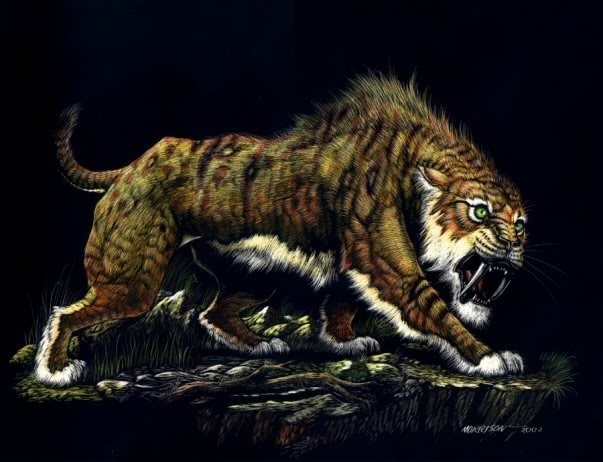
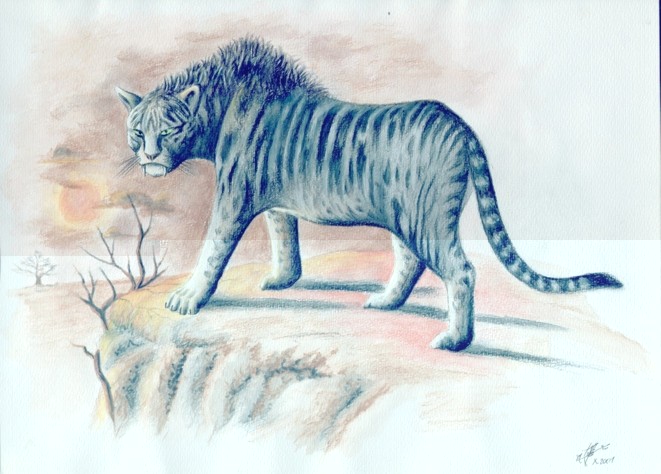
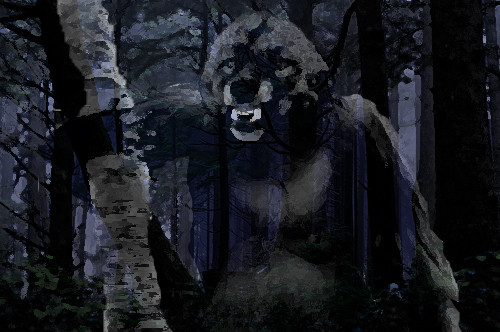
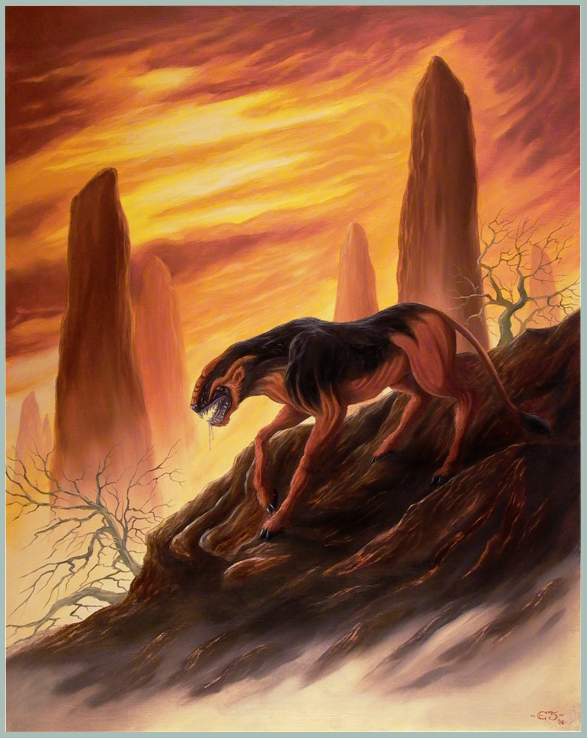
76. Ennedi Tiger

No, this isn't Diego from Ice Age or a Saber Tooth Tiger. It's actually an Ennedi Tiger from the Ennedi Plateau in Central Africa. Sure it can rip you to shreds but it's a cryptid, you might want to take its picture if you saw it.

No, this isn’t Diego from Ice Age or a Saber Tooth Tiger. It’s actually an Ennedi Tiger from the Ennedi Plateau in Central Africa. Sure it can rip you to shreds but it’s a cryptid, you might want to take its picture if you saw it.

Type: Cryptid, Living Fossil
From: Africa
Features: Basically resembles a saber tooth cat larger than a lion and lacks a tail. Said to be reddish brown with white stripes. Water type has red with white markings and may look more like a walrus or otter with long teeth. Its appearances vary.
Behavior: Solitary and nocturnal. Very fierce and could carry large antelope.
Habitat: Sub-Saharan Africa on the Ennedi Plateau near Chad and the Central African Republic. Has two different species with one living in mountains and the other in water.
Is It Dangerous?: Uh, yes, because it’s a large fearsome cat that can tear you to shreds.
Can It Be Domesticated?: Hell no.
How to Get Rid of It: We’re not sure how, nor whether we’d want to since it’s a cryptid.


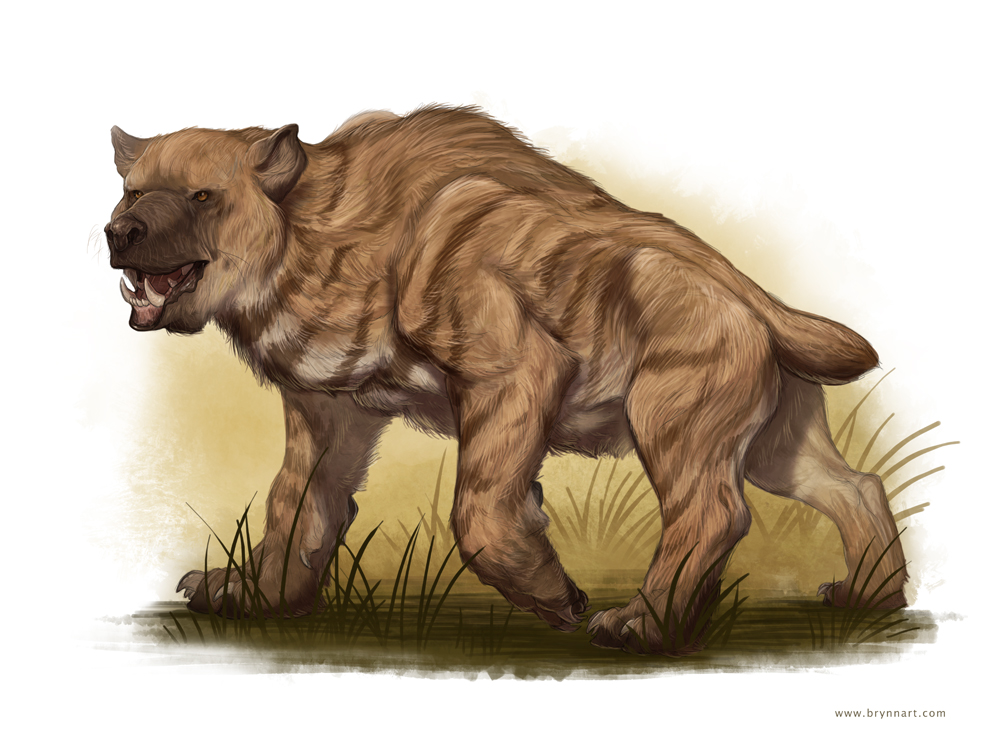
77. Nandi Bear

Of course, this creature looks more like a cross between a bear and a hyena. Yet, the Nandi Bear is very aggressive and will kill you in very brutal ways so it could chomp on your brains. Lovely.

Of course, this creature looks more like a cross between a bear and a hyena. Yet, the Nandi Bear is very aggressive and will kill you in very brutal ways so it could chomp on your brains. Lovely.

Type: Cryptid
From: The Nandi People of Africa
Features: Overgrown hyena like beast with one eye. Has long sharp claws and spotted fur. Very muscular.
Behavior: Very fast, agile, and aggressive. Can climb trees to spy and ambush on victims.
Habitat: Kenya.
Is It Dangerous?: Known to be extremely violent and attack its human prey viciously for their brains. Once you see their single eye, there’s no way to escape.
Can It Be Domesticated?: You got to be kidding me.
How to Get Rid of It: Forget about it, if it goes after you, you’re basically screwed.


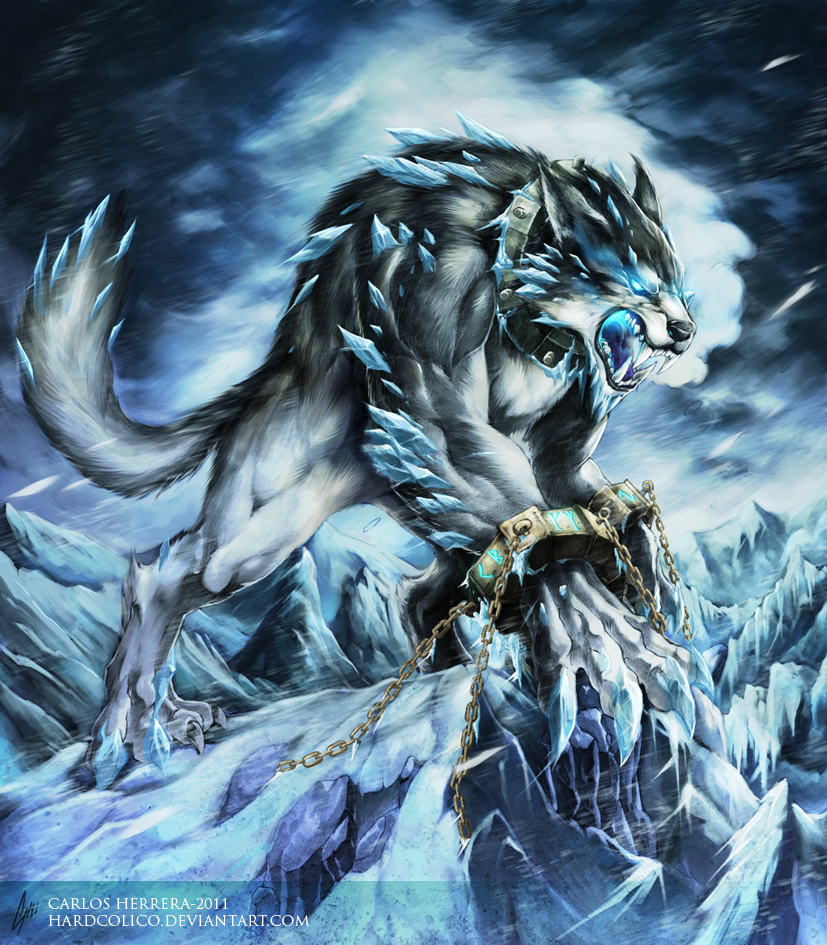
78. Fenrir

Cry all you want, Fenrir, but there's no way you're going to get out those chains until Raganarok when you'll join your father Loki against the Asgardians in the epic battle that would lead to each other's mutual destruction.

Cry all you want, Fenrir, but there’s no way you’re going to get out those chains until Raganarok when you’ll join your father Loki against the Asgardians in the epic battle that would lead to each other’s mutual destruction.

Type: Abnormal Animal
From: Norse Mythology
Features: Gigantic wolf. Sometimes depicted with horns and giant jaws as well as white.
Behavior: Son of Loki. Solitary.
Habitat: Europe.
Is It Dangerous?: Oh, yes. He could kill other Norse gods, let alone humans.
Can It Be Domesticated?: Absolutely not since he’s Loki’s son. Yes, I mean that Loki.
How to Get Rid of It: Destined to die at Raganarok.


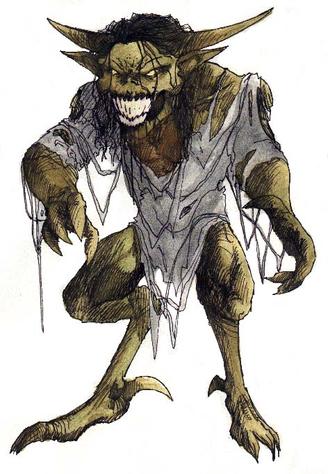
79. Grendel

Grendel seems so happy that King Hrothgar hold all those lavish parties at his house despite all the drunken noise and revelry they're making. Of course, this means spending every night for 12 years on an all you can eat buffet of his favorite food: humans. That is, until Beowulf shows up.

Grendel seems so happy that King Hrothgar hold all those lavish parties at his house despite all the drunken noise and revelry they’re making. Of course, this means spending every night for 12 years on an all you can eat buffet of his favorite food: humans. That is, until Beowulf shows up.

Type: Humanoid
From: Beowulf
Features: Giant and deformed troll-like human. Has impenetrable leathery skin, large canine teeth, and long nails at the end of his claw like hands. Sometimes depicted with horns and like something out of Maurice Sendak as well as with hair. Usually portrayed as brown. Still, depictions vary.
Behavior: Solitary and nocturnal. Has supernatural strength and absolute lack of fear of death. Also, hates noisy neighbors who like to party at night.
Habitat: Denmark. Hangs out in swamps.
Is It Dangerous?: Oh, yes. Loves to torture helpless animals yet his greatest hunger is human flesh, especially if they’re partying at King Hrothgar’s place. He crashed his party for human flesh every night for 12 years.
Can It Be Domesticated?: No way in hell.
How to Get Rid of It: Beowulf basically cut off his arm and had him bleed to death. On to his mom.


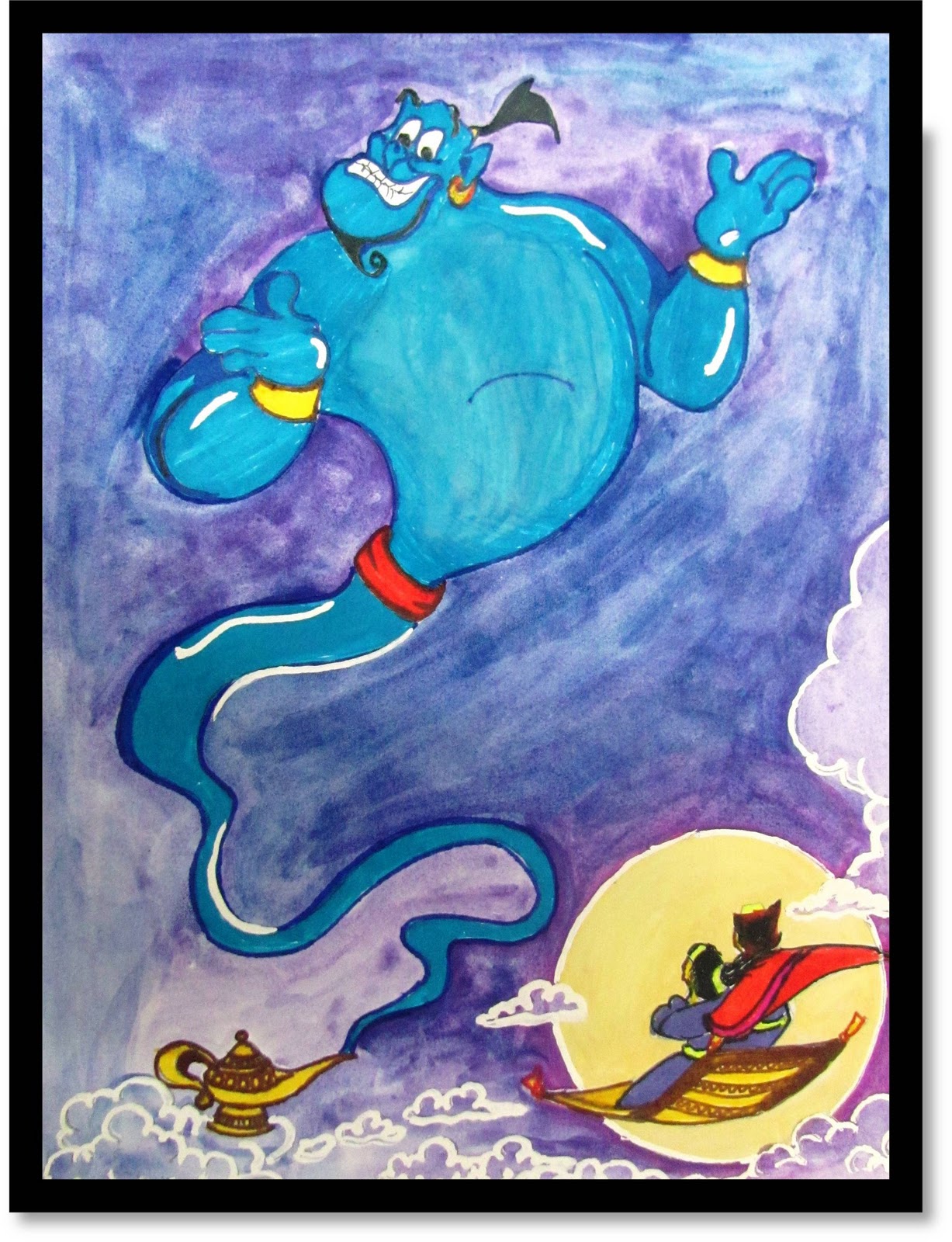
80. Genie (a. k. a. Djinn or Jinn)

I don't usually use Disney caricature paintings for blog posts on mythology. Yet, since the recent passing of Robin Williams, I couldn't resist using the Genie from Aladdin.

I don’t usually use Disney caricature paintings for blog posts on mythology. Yet, since the recent passing of Robin Williams, I couldn’t resist using the Genie from Aladdin.

Type: Spirit, Humanoid
From: Middle Eastern Folklore
Features: Usually depicted with an upper human body and a wispy haze for legs. Tend to be either red or blue. Wardrobe varies but usually in Arab dress.
Behavior: Have free will, can grant wishes. Also, have amazing phenomenal cosmic powers packed into an itty bitty living space. Come in a wide range of personalities.
Habitat: The Middle East or North Africa. Usually reside in a lamp or in a ring. Actually they could live in practically any inanimate object.
Is It Dangerous?: Depends on the genie or who its master is. Bad ones can send sandstorms and kidnap people just for kicks. However, they are unable to kill anyone though.
Can It Be Domesticated?: Well, not as a pet. Yet, they can grant their masters wishes (which is usually 3). Yet, the wishes sometimes have prohibitions though which may consist of: make people fall in love, killing anyone, or having people come back from the dead.
How to Get Rid of It: C’mon you don’t want to get rid of one if you found it. I mean if I had one, I’ll just wish for a job, to move out of my parents’ house, and perhaps a publishing deal for a book I wrote.


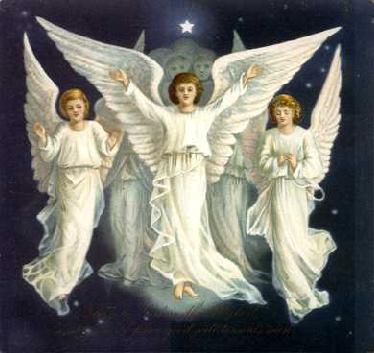
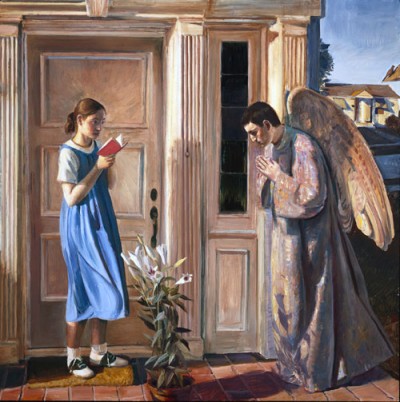
81. Angel

Now while the popular imagery of angels is depicted in this picture, the original imagery of them based on what you see in the Bible are pretty funky. For instance, cherub aren't those fat little angels you see in Renaissance paintings. They more or less resemble rock music guitarists than those.

Now while the popular imagery of angels is depicted in this picture, the original imagery of them based on what you see in the Bible are pretty funky. For instance, cherub aren’t those fat little angels you see in Renaissance paintings. They more or less resemble rock music guitarists than those.

Type: Spirit, Celestial Being
From: Worldwide (though mentioned in the Bible).
Features: Usually depicted as human with feathered wings. There are many different types and appearances vary.
Behavior: Very good and have many magical powers and are powerful second to God. Have enhanced senses as well as super strength and speed.
Habitat: Heaven or the celestial regions of the universe.
Is It Dangerous?: Well, maybe that one named Lucifer. However, unless you’re no demon or destined for Hell, they’re usually harmless.
Can It Be Domesticated?: No way.
How to Get Rid of It: You can’t they’re immortal and have God on their side, well at least the good ones.


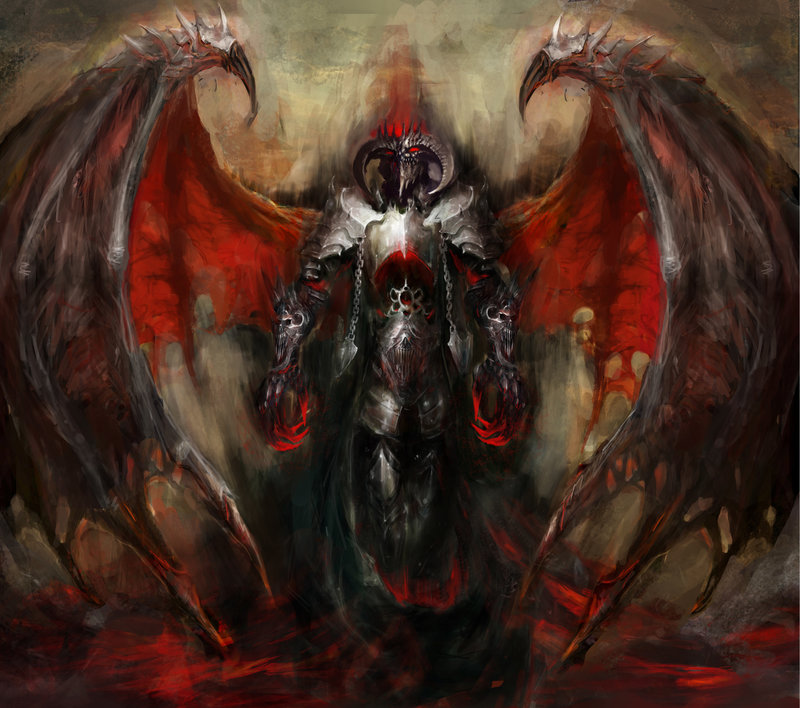
82. Demon

Who though that such a badass scary guy like the Demonic Lord Metalpants would scream like a little girl while watching The Exorcist? Oh, I forgot he's a demon and was really horrified what the priest did to that evil spirit in the movie.

Who though that such a badass scary guy like the Demonic Lord Metalpants would scream like a little girl while watching The Exorcist? Oh, I forgot he’s a demon and was really horrified what the priest did to that evil spirit in the movie.

Type: Spirit, Humanoid
From: Worldwide.
Features: Usually depicted as red with horns and a forked tail. Sometimes seen with bat wings. However, appearances may vary.
Behavior: Almost impossible to kill and capable of all kinds of evil magic. Also are very strong and fast.
Habitat: Hell or the Underworld.
Is It Dangerous?: Well, they’re known to possess and rape people as well as get others to do very bad things in exchange for their souls.
Can It Be Domesticated?: No way in Hell.
How to Get Rid of It: Either get Jesus or an exorcist. Jessica Tate from Soap is a good choice as well as your parish priest. Also, you can use holy water, Solomon’s Key, salt, angelic weapons, and a Devil’s Trap.


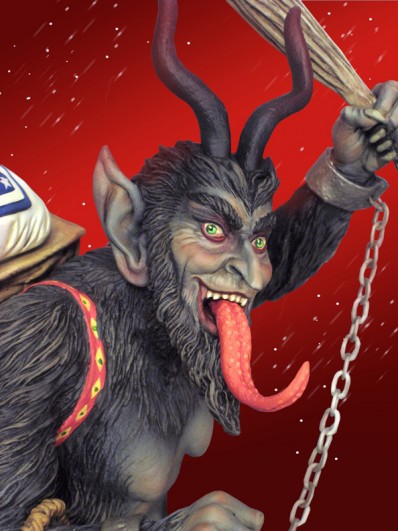
83. Krampus

So kids, in a lot of places in Europe, if you've been good, you receive a lot of great presents from Santa Claus. If you've been bad, then this guy would take you on a trip to his torture dungeon. Of course, he'll have to kidnap you first.

So kids, in a lot of places in Europe, if you’ve been good, you receive a lot of great presents from Santa Claus for Christmas (or around that time anyway). If you’ve been bad, then this guy would take you on a trip to his torture dungeon. Of course, he’ll have to kidnap you first.

Type: Spirit
From: Northern and Central European Folklore.
Features: Has a goat’s head, red skin, razor sharp teeth, a fur covered body, and an unusually long tongue. About 6ft tall but is constantly hunched over.
Behavior: Solitary and nocturnal. Very strong and fast.
Habitat: Europe. Has his own torture chamber in a large cave.
Is It Dangerous?: Well, he’s known to kidnap and torture naughty children. Considered the evil counterpart to Santa Claus.
Can It Be Domesticated?: Hell no.
How to Get Rid of It: Just be good this year and I’m sure you’ll have Santa give you gifts instead of be visited by this guy.


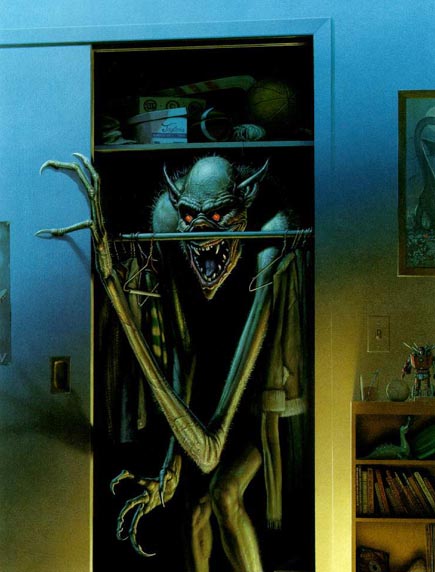
84. Boogeyman

Yes, it's a boogeyman in that closet. No, I'm not sure if it works for Monsters Inc. or loves disco music but I will ask.

Yes, it’s a boogeyman in that closet. No, I’m not sure if it works for Monsters Inc. or loves disco music but I will ask.

Type: Spirit, Undead
From: European and American Folklore.
Features: Shadow that takes a shape of a feared monster. Has no specific appearance.
Behavior: Has shape shifting powers. Solitary and nocturnal.
Habitat: Where kids sleep.
Is It Dangerous?: Well, as long as children are well behaved. Or else, if they’ve been bad, then it’s bound to kidnap them.
Can It Be Domesticated?: Absolutely not.
How to Get Rid of It: Just don’t feed off fear as well as be good.


85. Draugr

No, I'm sure this guy doesn't want you to bring him a shrubbery. He's a Draugr who's from a race of walking dead Viking warriors, not a Knight of Ni. I'm not sure if he'd want anything to do with a shrubbery anyway.

No, I’m sure this guy doesn’t want you to bring him a shrubbery. He’s a Draugr who’s from a race of walking dead Viking warriors, not a Knight of Ni. I’m not sure if he’d want anything to do with a shrubbery anyway.

Type: Undead, Spirit, Humanoid
From: Norse Mythology
Features: Basically they are the ghosts of dead Viking warriors who didn’t make it to Valhalla. Have a strong and decaying stench and can adjust size at will. Described as extremely heavy.
Behavior: Travel in groups as well as think telepathically and subject under the goddess Hel. Have superhuman strength and can enter the dreams of the living. Have some semblance of intelligence as well as guard their treasure in some legends.
Habitat: Land, sea, or the Viking graves.
Is It Dangerous?: Well, they are known for driving living people and animals insane. Also, if one of them or Hel, get you, you can become one of them. Enjoy devouring the flesh and sucking the blood of their victims.
Can It Be Domesticated?: Well, they’re created and controlled by Hel but only by her.
How to Get Rid of It: When a Viking died, their loved ones placed scissors on their chests along with bits of twigs hidden in their clothes. Also, had their big toes tied together. Yet, once they become these creatures, they’re almost unstoppable. Yet, can only be stopped after being completely disabled.


86. Mngwa (a. k. a. Nunda)

Sure this may be a pretty feline but remember that the Mngwa is a stealthy and sneaky predator that tends to be out of control. So if you find yourself being chased by one, you're basically screwed.

Sure this may be a pretty feline but remember that the Mngwa is a stealthy and sneaky predator that tends to be out of control. So if you find yourself being chased by one, you’re basically screwed. Seriously, you won’t survive this man-eating cat’s grasp for even natives won’t hunt it.

Type: Cryptid
From: Swahili Hunting Song
Features: Said to be about the size of a pony and as well as resembled a leopard in gray fur. Has huge razor sharp teeth as well as padded paws. Also is said to have creepy yellow eyes.
Behavior: Solitary, nocturnal, and stronger than a lion. Tends to be out of control.
Habitat: Tall grass in the Savannah of Tanzania and Kenya.
Is It Dangerous?: Absolutely, has been a known man-eater and a very stealthy predator said to stalk without a sound.
Can It Be Domesticated?: Absolutely not in your life.
How to Get Rid of It: No hunter has ever succeeded in killing one. So if you have one chasing you, you’re screwed. Even natives won’t go after it just out of common sense.


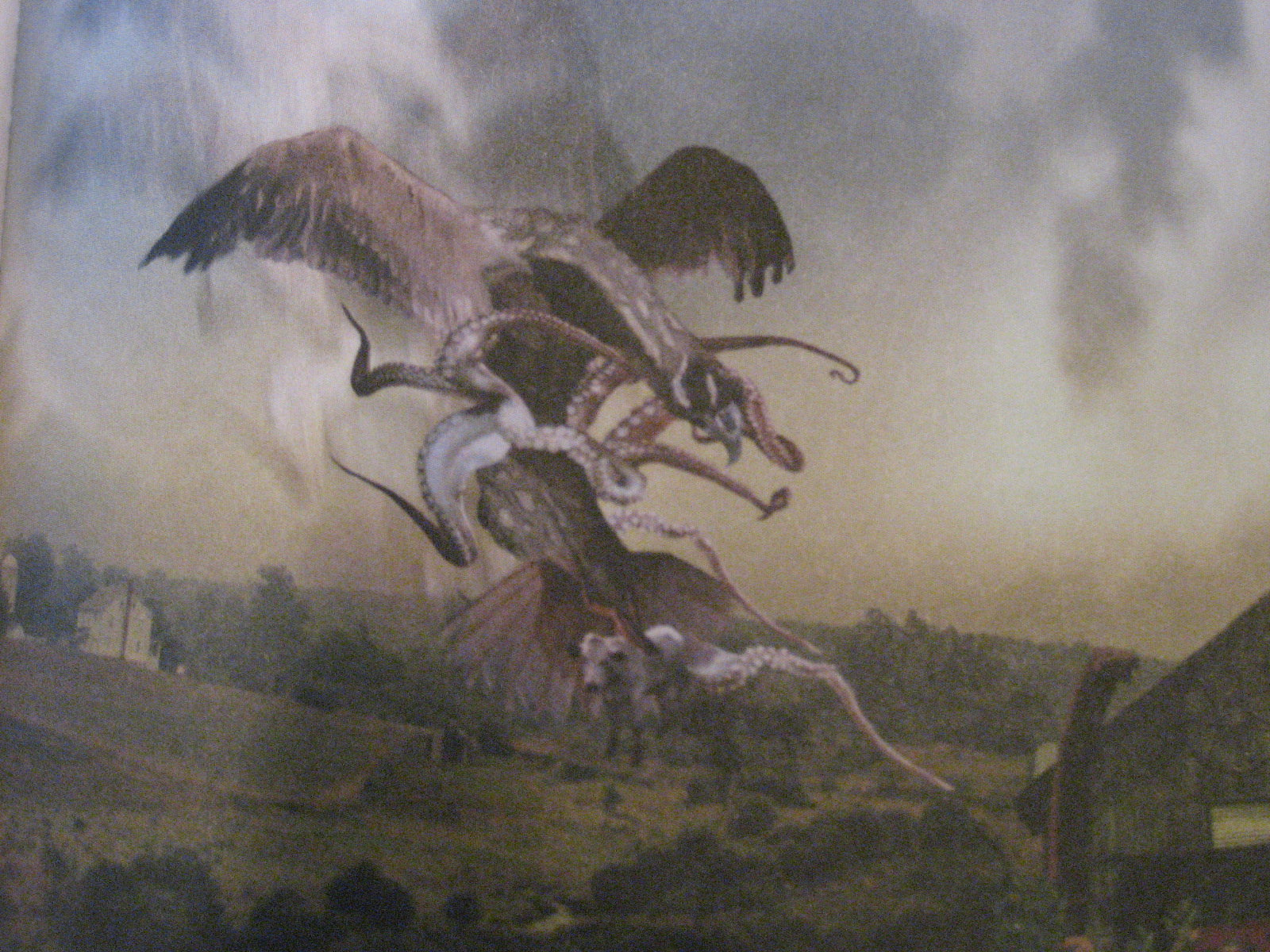
87. Snallygaster

Yes, that tentacled bird carrying a cow is a Snallygaster, best known for its fight with the Dwayyo. Also, well known for taking large livestock that some Maryland have 7 pointed stars on their barns. Hey, don't ask me for I didn't make up this creature.

Yes, that tentacled bird carrying a cow is a Snallygaster, best known for its fight with the Dwayyo. Also, well known for taking large livestock that some Maryland have 7 pointed stars on their barns. Hey, don’t ask me for I didn’t make up this creature.

Type: Cryptid, Divine Bird, Hybrid
From: United States
Features: Descriptions vary widely though it has giant wings. Earliest incarnations have it as having half-bird features of a siren with the nightmarish features of a ghoul or demon. Other descriptions have it as half-reptile and half-bird with a metallic beak lined with razor sharp teeth and sometimes octopus like tentacles. Later legends have it with a single eye on its forehead and claws like steel hooks sounding like a train whistle. Sometimes depicted as a one eyed dragon.
Behavior: Solitary and nocturnal. Very sneaky predator.
Habitat: Between Frederick and Washington Counties in Maryland.
Is It Dangerous?: Said to suck the blood of its victims and go after livestock.
Can It Be Domesticated?: No way in hell.
How to Get Rid of It: Put a seven-pointed star on your barn and it will avoid devouring your livestock.


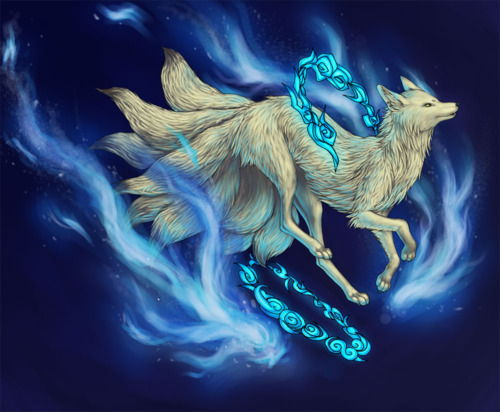
88. Kitsune

The Kitsune is a beautiful 9 tailed fox of Japanese Legend known for possessing high intelligence and magical powers. Yet, it could also be a trickster as well as be portrayed in stories as a guardian, friend, lover, or wife. Yes, I know it's fucked up but the Japanese didn't come up with the Minotaur did they?

The Kitsune is a beautiful 9 tailed fox of Japanese Legend known for possessing high intelligence and magical powers. Yet, it could also be a trickster as well as be portrayed in stories as a guardian, friend, lover, or wife. Yes, I know it’s fucked up but the Japanese didn’t come up with the Minotaur did they?

Type: Undead, Spirit
From: Japanese Folklore
Features: Fox like with numerous tails. Usually white or black.
Behavior: Has magical powers and is very intelligent. Can change into human form as well as bend time and space.
Habitat: Japan.
Is It Dangerous?: Yes, they can be evil and destructive but usually not. Yet, they tend to be vicious pranksters as well as possess people.
Can It Be Domesticated?: I’m not sure but probably not.
How to Get Rid of It: It’s revered in Japan and served as an inspiration for a character on Pokemon so you probably don’t want to get rid of it.


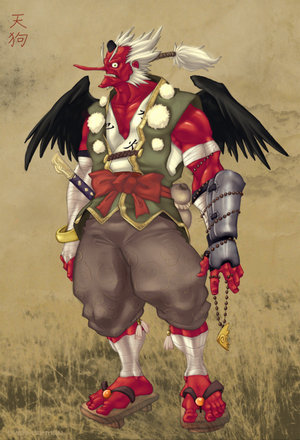
89. Tengu

Despite originating in China, the Tengu has more lasting appeal in Japan as well as appears in a lot of its legends. Also, tends to be depicted as red with a big nose.

Despite originating in China, the Tengu has more lasting appeal in Japan as well as appears in a lot of its legends. Also, tends to be depicted as red with a big nose.

Type: Humanoid, Hybrid, Divine Bird, Spirit
From: Chinese and Japanese Mythology
Features: Head of a beaked man with the wings and talons of a large crow. Appearances vary in depiction. There are a few different types.
Behavior: The larger its nose, the more powerful it’s supposed to be. Very mischievous and tend to take the shape of monks to trick travelers as well as serve their victims succulent meals of feces. Can telepathically speak to their victims as well as usually drop them in some foreign land where they remain lost.
Habitat: China and Japan.
Is It Dangerous?: Have a tendency for kidnapping children and were blamed for many unsolved disappearances. In Buddhism, they are harbringers and demons for war.
Can It Be Domesticated?: No since it’s part human.
How to Get Rid of It: I’m not sure how on this one.


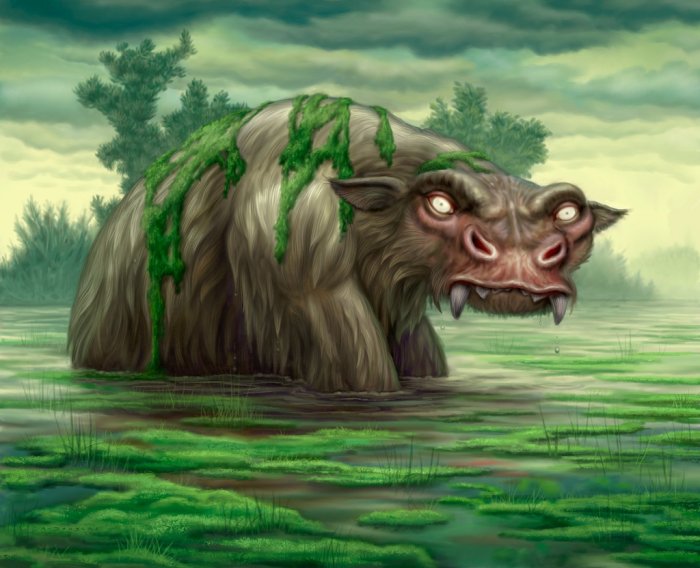
90. Bunyip

Sure there may be a few lush riverbeds and swamps in Australia but you don't want to venture in the waters with this creature giant hanging around, especially since it finds women and children delicious.

Sure there may be a few lush riverbeds and swamps in Australia but you don’t want to venture in the waters with this creature giant hanging around, especially since it finds women and children delicious.

Type: Water Monster, Cryptid
From: Aboriginal Mythology
Features: Very large with huge mouth and crocodile tail. Body can be snake like furry, or human looking. Some accounts describe it as having a dog like face, dark fur, flippers, a horse’s tail, as well as large tusks, and/or horns.
Behavior: Solitary.
Habitat: Australia. Prefers marshes and riverbeds.
Is It Dangerous?: Oh, yes. Known to attack or mutilate anyone who ventures too close to swamps or lakes where they hide and live. Is especially fond of women and children for dinner.
Can It Be Domesticated?: You got to be kidding me.
How to Get Rid of It: Mostly it will get you before you can get it. Then again, Australia doesn’t have a lot of swamps and lakes anyway since most of the country is practically desert.

Mythological Creatures Reexamined: Part 5 – Hippogriff to Dwayyo

Some of the legendary creatures depicted in this series are derived from mythological stories, superstitions, and folklore passed on through generations over centuries and have been well represented in the media or in art. Others are cryptozoological creatures alleged to actually exist in contemporary times though its existence has yet to be documented by the scientific community. However, these creatures can also appear in the former category yet many are usually the stuff of urban legend where the lines of truth and fiction are blurred. In this selection, we’ll see cryptids like Spring-heeled Jack and Owlman from Britain, the Dover Demon, the Squonk, and the Dwayyo from the United States, and the Mongolian Death Worm from the Gobi Desert. As for legendary creatures, we’ll take a look at the Ghoul from the Middle East, the Satyr from Greek Mythology, the Cockatrice, the Hippogriff, and the Catolbepas from Ancient Rome, the Wraith and the Fomorian from Ancient European Folklore, the Noppera-bo from Japanese Mythology, and the Wendigo from Native American legend. So without further adieu, here are more legendary creatures for your pleasure.


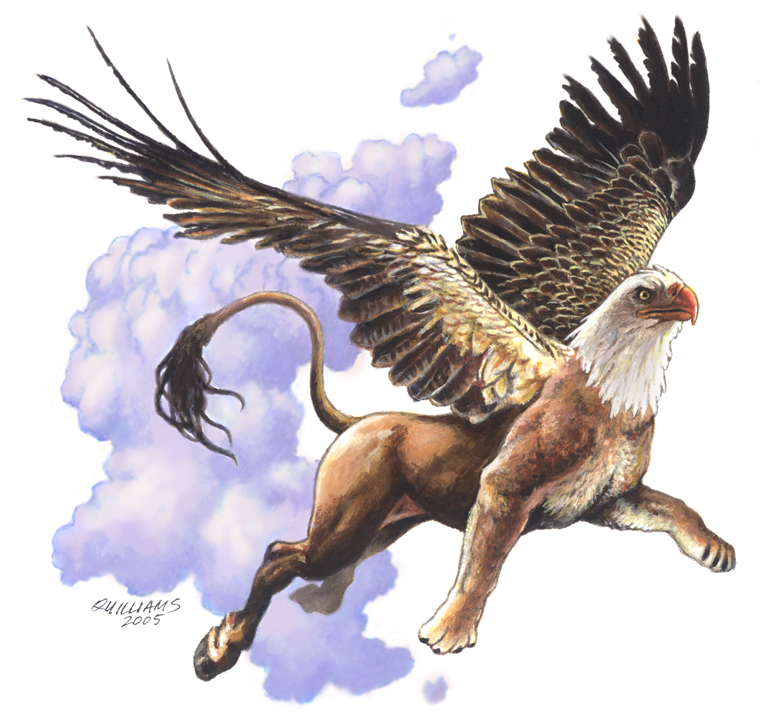
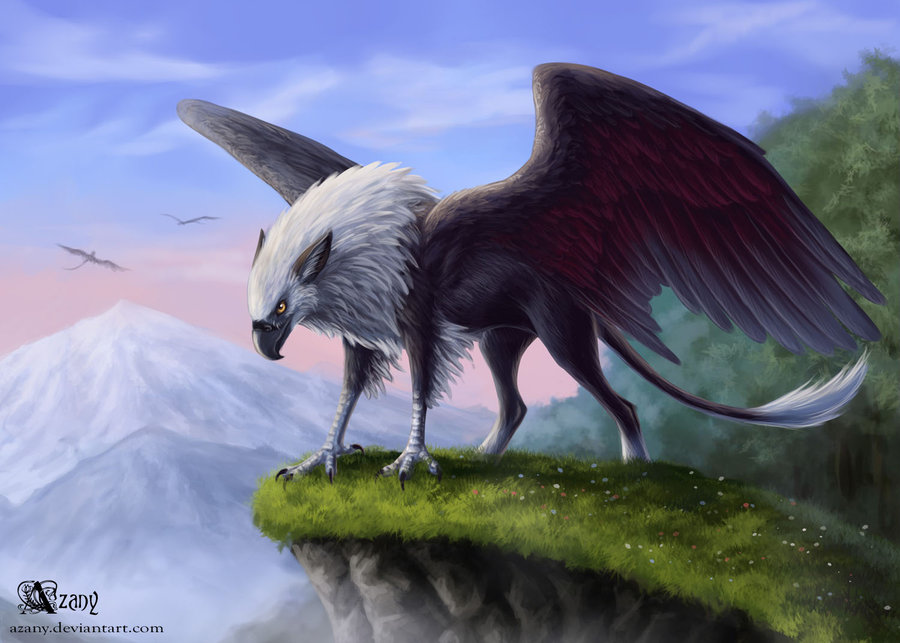
61. Hippogriff

Though best remembered as a creature from Harry Potter, the Hippogriff was first made by Virgil in his Ecologues though it wouldn't receive its name until the 16th century. So J. K. Rowling didn't make this creature up.

Though best remembered as a creature from Harry Potter, the Hippogriff was first made by Virgil in his Ecologues though it wouldn’t receive its name until the 16th century. So J. K. Rowling didn’t make this creature up.

Type: Hybrid, Divine Bird
From: Roman Mythology (yet, it’s most famously featured in Harry Potter and the Prisoner of Azkaban.)
Features: Head, wings, and claws like an eagle but body like a horse. Well-toned and muscular. Sometimes depicted as having claws like a lion.
Behavior: Faster, stronger, and more intelligent than griffins. Can move as fast as lightning.
Habitat: Egypt, the Middle East, and parts of Europe and Asia
Is It Dangerous?: Not as long as you can treat them with respect. Otherwise, you know what Buckbeak did to Draco Malfoy.
Can It Be Domesticated?: Yes, they can be easily tamed and serve as companions to knights and sorcerers.
How to Get Rid of It: Well, you can behead it or strike it with an air missile. Yet, you probably don’t want to do that, especially if it’s Buckbeak.


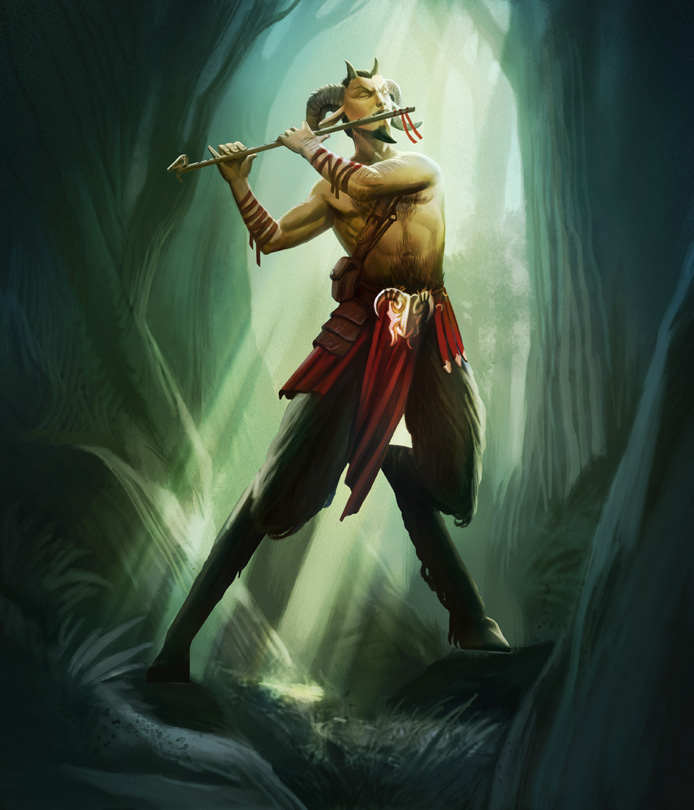
62. Satyr

Satyrs are best known for being peaceful forest dwelling creatures known for engaging in hedonistic pleasures like music, dance, wine, and sex. In short, they're kind of like the Greek mythological equivalent of hippies. Yet, why is there one in C. S. Lewis Narnia series I have no idea.

Satyrs are best known for being peaceful forest dwelling creatures known for engaging in hedonistic pleasures like music, dance, wine, and sex. In short, they’re kind of like the Greek mythological equivalent of hippies. Yet, why is there one in C. S. Lewis Narnia series I have no idea.

Type: Hybrid, Humanoid
From: Greek Mythology
Features: Human upper body with goat like legs and tail. Usually depicted with brown fur and often as male with horns. Often wear a full beard and have long curly hair. Sometimes seen as old and ugly and sometimes not. At times could be depicted as being well endowed or balding.
Behavior: Associated with pipe playing and play a tail piece during festivals honoring Dionysus in Greek myths. Love wine, music, dance, and any kind of pleasure. Often seen pursuing mountain nymphs and trying to seduce them. Still, they are absolutely fearless and has a deep connection with nature.
Habitat: Deep in woods and mountains.
Is It Dangerous?: Only when drunk and/or horny. Still, will only attack in self-defense so don’t try to get on its bad side.
Can It Be Domesticated?: No, for they are humanoid.
How to Get Rid of It: I’m not sure how for the Greek myths don’t say. Then again, environmental devastation may do it.


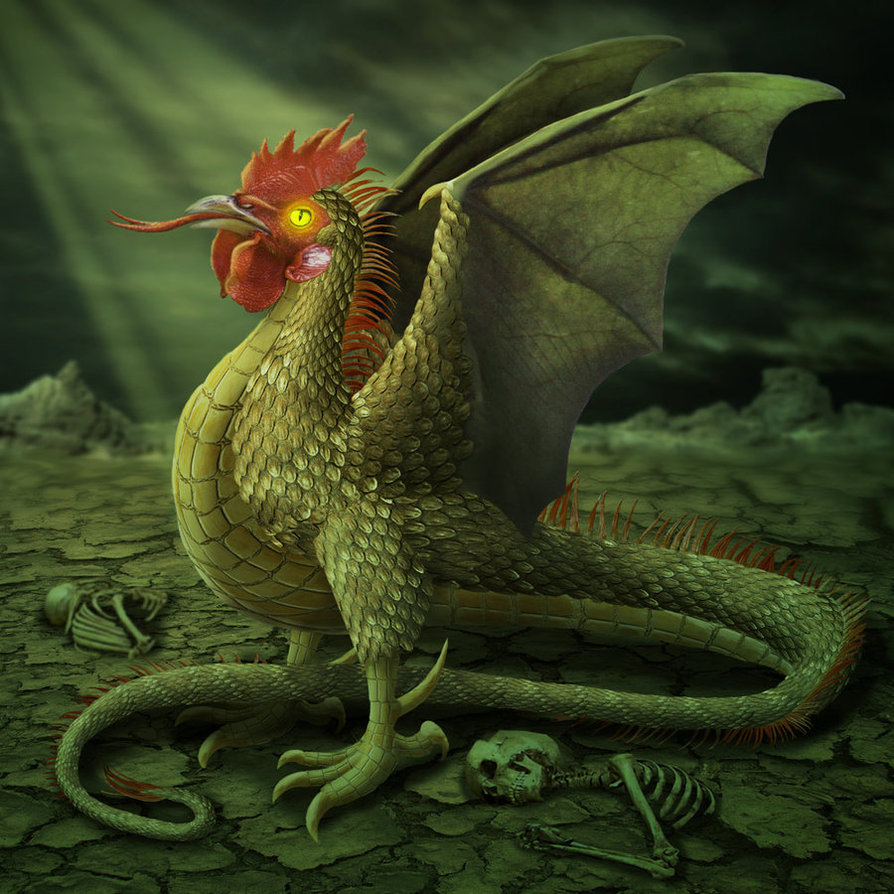
63. Cockatrice

Sure this may resemble a dragon with a chicken head. Yet, be warned that this creature is capable of killing you by looking at you, touching you, or even breathing on you. Keep away at all times.

Sure this may resemble a dragon with a chicken head. Yet, be warned that this creature is capable of killing you by looking at you, touching you, or even breathing on you. Keep away at all times.

Type: Hybrid, Dragon
From: Roman Mythology
Features: Head, claws, and wings of a rooster. Has reptile’s body and tail. About as tall as a large rooster. Often depicted as a dragon with a rooster’s head. Tends to be confused with a basilisk.
Behavior: Solitary.
Habitat: Europe.
Is It Dangerous?: Oh, yes. Can terrorize people into an extreme state of panic. Can turn people into stone just by looking at them as well as kill just by touching and breathing on others. Powers of petrification are still active after death. Has a deadly poisonous breath.
Can It Be Domesticated?: Absolutely not.
How to Get Rid of It: Have a weasel or crow go after it. Also, trick the beast into seeing its own reflection. It also doesn’t like roosters either.


64. Ghoul

Ghouls are basically zombies which are more persistent predators for brains and have paralyzing touch. They're also capable of shape shifting as well as lure people into the desert to devour.

Ghouls are basically zombies which are more persistent predators for brains and have paralyzing touch. They’re also capable of shape shifting as well as lure people into the desert to devour.

Type: Undead, Humanoid
From: Arabian Folklore
Features: Undead and decomposing human body in an emaciated form. Skin is pale and lifeless while eyes and hair seem that they have never seen daylight. Appearances vary though.
Behavior: Despite being seemingly weak and fragile, they’re actually very strong. Have powerful hands and fingers. Capable of regeneration and shape shifting. Tends to steal coins. Travel in groups and nocturnal.
Habitat: Worldwide. Live in the desert or abandoned places.
Is It Dangerous?: Very capable of tearing a normal healthy human apart in mere seconds. Their hands can make an incredibly deadly grip. Usually tend to eat on kiddie corpses and drink blood but they would take a living human on occasion and they especially like fresh brain matter. Has a paralyzing touch and is a super persistent predator. Seriously, they make zombies seem friendly. If you survive being bitten by one, you become one of them.
Can It Be Domesticated?: No way in hell.
How to Get Rid of It: Kill it with a single swipe of the sword. If you miss swinging it twice, it will come back to life twice as powerful. A light can also help as well as using fire, acid, or decapitation.


65. Catolbepas

Now the catoblepas won't eat you but this doesn't mean that it's safe to be around it. After all, it eats poison plants so its breath could either kill you or turn you into stone. Still, this one pictured doesn't seem too happy for some reason.

Now the catoblepas won’t eat you but this doesn’t mean that it’s safe to be around it. After all, it eats poison plants so its breath could either kill you or turn you into stone. Still, this one pictured doesn’t seem too happy for some reason.

Type: Hybrid
From: Ancient Roman Folklore
Features: Has large boar’s head, a small pig’s body, with wings. Sometimes described as having a body of a buffalo or bull with iron like scales along its back. May be depicted with horns. Appearances may vary.
Behavior: Doesn’t see much of anything since its head is so big. Solitary.
Habitat: Ethiopia.
Is It Dangerous?: Has toxic breath due to eating poisonous plants and is capable of killing anything around it. When it sets its eyes on anything living, it turns to stone.
Can It Be Domesticated?: Hell no.
How to Get Rid of It: We’re not sure about that one.


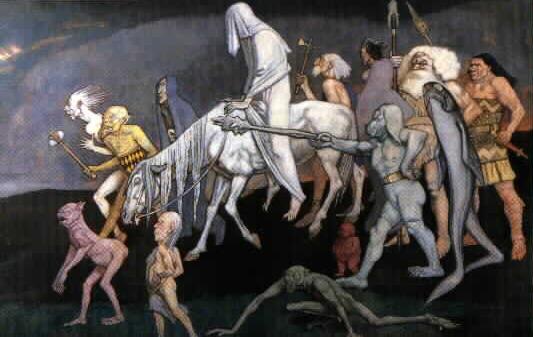
66. Wraith

I know this is a ring wraith from Lord of the Rings since it's on a horse. Yet, the dementors from Harry Potter also qualify. Still, these dark spirits usually hunt souls for sport and fill the air with hate, sorrow, and doom. Let's just say, it wouldn't be a good idea to invite a wraith to a Halloween Party, despite being terrifying.

I know this is a ring wraith from Lord of the Rings since it’s on a horse. Yet, the dementors from Harry Potter also qualify. Still, these dark spirits usually hunt souls for sport and fill the air with hate, sorrow, and doom. Let’s just say, it wouldn’t be a good idea to invite a wraith to a Halloween Party, despite being terrifying.

Type: Undead, Spirit
From: Ancient European Folklore
Features: Often portrayed as dark and shadow like entities wearing black hooded cloaks. Arms, legs, and faces tend to be skeletal. Faces could be endless black holes in their hoods. Sometimes appear as dark and shapeless shadows. May be depicted on deadly horses.
Behavior: Travel in hordes and nocturnal. Very intelligent and are super persistent. Always fill the air with hate, sorrow, and doom. Can make a room seem lifeless and cold in seconds. The dementors from Harry Potter can qualify as these.
Habitat: Worldwide but mostly in dark forests and caves.
Is It Dangerous?: Oh, my God, yes. These ghostly terrors hunt souls for sport. They are evil to the core draining the life out of anything they touch and leave bodies lifeless without souls. That or the victims become part of their clan. When angry, can unleash powerful waves of energy with their hate and drain entire villages of the will to live and take their souls.
Can It Be Domesticated?: Well, they were hired by Sauron and Azkaban, but you’d have to be morally bankrupt to use these on people.
How to Get Rid of It: Either try to survive until midnight in a place where it can’t get to you or use holy magic. You could also try cutting its head off.


67. Fomorian

The Fomorians were considered to be a race of semi-divine spirits in Ancient Ireland, perhaps being the old gods similar to the Greek Titans. Still, they kind of resemble creatures that you'd find at a bar in Mos Eisley. Just saying.

The Fomorians were considered to be a race of semi-divine spirits in Ancient Ireland, perhaps being the old gods similar to the Greek Titans. Still, they kind of resemble creatures that you’d find at a bar in Mos Eisley. Just saying.

Type: Hybrid
From: Celtic Mythology
Features: Large deformed body made up of animal parts. Appearances vary but every way grotesque looking.
Behavior: Travel in groups. Possess magical powers.
Habitat: Ireland.
Is It Dangerous?: Said to have poisonous skin that oozed with deadly sweat, which doomed any person who made contact with one. Known to terrorize the Irish people, destroy armies, and forced them to make child sacrifices.
Can It Be Domesticated?: Absolutely not.
How to Get Rid of It: Driven by Tuatha De Dannan into the sea.


68. Noppera-bo

Sure she may be terrifying with no face but this noppera-bo is usually harmless. Yet, that doesn't mean that she's caused an occasional heart attack once in a while.

Sure she may be terrifying with no face but this noppera-bo is usually harmless. Yet, that doesn’t mean that she’s caused an occasional heart attack once in a while.

Type: Spirit, Humanoid
From: Japanese Mythology
Features: Human body without a face. Perhaps impersonating someone familiar to the victim.
Behavior: Solitary.
Habitat: Japan. Usually around graveyards.
Is It Dangerous?: No, these ghosts are absolutely harmless.
Can It Be Domesticated?: Sorry, but they’re humanoid and could scare the shit out of you.
How to Get Rid of It: You can’t. They’re ghosts for God’s sake.


69. Spring-heeled Jack

Spring-heeled Jack may wear an outfit similar to Batman but remember he's not known to be associated with good things. In fact, just the opposite. Still, he's one of the better known creatures from Victorian urban legend.

Spring-heeled Jack may wear an outfit similar to Batman but remember he’s not known to be associated with good things. In fact, just the opposite. Still, he’s one of the better known creatures from Victorian urban legend.

Type: Cryptid, Humanoid (may actually be former Cryptid but there were sightings in the Victorian Era. Also, may have inspired Batman in appearance.)
From: 19th century British Folklore
Features: Wears a metal mask to cover his hideous face and breathes blue flames. Has evil glowing eyes and long sharp metal claws. Mask might be part of his face or cover his face after being horribly disfigured with severe burns. Sometimes depicted in a black cape like Batman.
Behavior: Can jump to great heights with extreme speed and ease into surprise attacks or away from authorities. Solitary and nocturnal.
Habitat: England
Is It Dangerous?: Has been reported attacking several young women and men. Said to blow his blue flame in their faces and freeze them with fear. Would later proceed to slash them with his iron claws.
Can It Be Domesticated?: Hell no.
How to Get Rid of It: Sorry, you can’t stop him because he’s always able to escape.


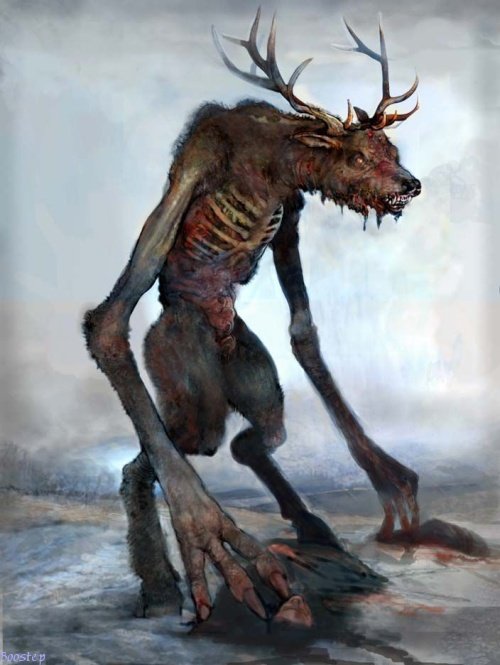
70. Wendigo (a. k. a. Windigo or Witiko)

The Wendigo is a very violent creature from Native American legend known to feast on human flesh in snowy forests.  Still, it has been mentioned by Henry Wadsworth Longfellow in his 1855 Song of Hiawatha. And it is prevalent in a lot of recent media depictions.

The Wendigo is a very violent creature from Native American legend known to feast on human flesh in snowy forests. Still, it has been mentioned by Henry Wadsworth Longfellow in his 1855 Song of Hiawatha. And it is prevalent in a lot of recent media depictions.

Type: Undead, Humanoid, Spirit
From: Native American Folklore
Features: Has a bone body, sharp crooked teeth, and disfigured face. Has very thin skin and sunken eyes. Said to have a heart of ice visibly seen through the chest pumping. Appearances may vary according to depiction.
Behavior: Solitary and very patient hunter. Said to be formerly human but starved and turned to cannibalism. Known to have the ability to control the weather and bring powerful snowstorms.
Habitat: United States and Canada. Lurks in snowy forests.
Is It Dangerous?: Known for silently stalking its human prey in the snowy forests. Also have the power to summon wild beast to aid in its attacks. Very violent.
Can It Be Domesticated?: Absolutely no way in hell.
How to Get Rid of It: Shatter its icicle heart with a silver stake.


71. Dover Demon

The Dover Demon is a strange urban legend creature that was reportedly sighted by two teenagers in 1977 in Dover Massachusetts. Of course, these sightings have ceased for a short period so there's not much to go by. Yet, it's still a good idea for a cheap Halloween costume.

The Dover Demon is a strange urban legend creature that was reportedly sighted by two teenagers in 1977 in Dover Massachusetts. Of course, these sightings have ceased for a short period so there’s not much to go by. Yet, it’s still a good idea for a cheap Halloween costume.

Type: Cryptid, Spirit
From: United States
Features: Watermelon shaped head which is disproportionally large for its body. Has illuminated orange eyes, long, thin arms with slender fingers, as well as sand paper like flesh toned skin. Could be bipedal or walk on all fours. Said to have no nose, no mouth, no ears, and no mouth. Also said to be 3ft tall, chalky skin, and made a blood curdling noise.
Behavior: Solitary and nocturnal.
Habitat: Dover, Massachusetts. Lives in forests.
Is It Dangerous?: We’re not totally sure.
Can It Be Domesticated?: Probably not.
How to Get Rid of It: If you’ve seen this, you’d want to take a picture of it. Getting rid of it won’t be in your best interests.


72. Mongolian Death Worm

No, that's not an intimidating worm monster from Tatooine but close. It's actually a Mongolian Death Worm which may give Genghis Khan a run for his money. Still, someone in Hollywood really should be pitching a monster movie for this guy.

No, that’s not an intimidating worm monster from Tatooine but close. It’s actually a Mongolian Death Worm which may give Genghis Khan a run for his money. Still, someone in Hollywood really should be pitching a monster movie for this guy.

Type: Cryptid
From: Mongolian Mythology
Features: Enormous slimy red worm with long razor sharp fangs. Body is about 2 -5ft long. Resembles a living piece of intestine riddled with visible veins and gooey slime. That or a giant monster parasite.
Behavior: Solitary. Hibernates most of the year except June and July.
Habitat: The Gobi Desert in Mongolia.
Is It Dangerous?: Oh, yes it is. Humans are its favorite prey. Capable of spitting fatal splashes of venom and electricity (even at a distance). Said to make anything it touches turn yellow and corrode. Can emerge from the sands out of nowhere to attack. Touching it causes an instant and painful death.
Can It Be Domesticated?: No way in hell.
How to Get Rid of It: We’re not sure how at this point. Perhaps drop a bomb on it.


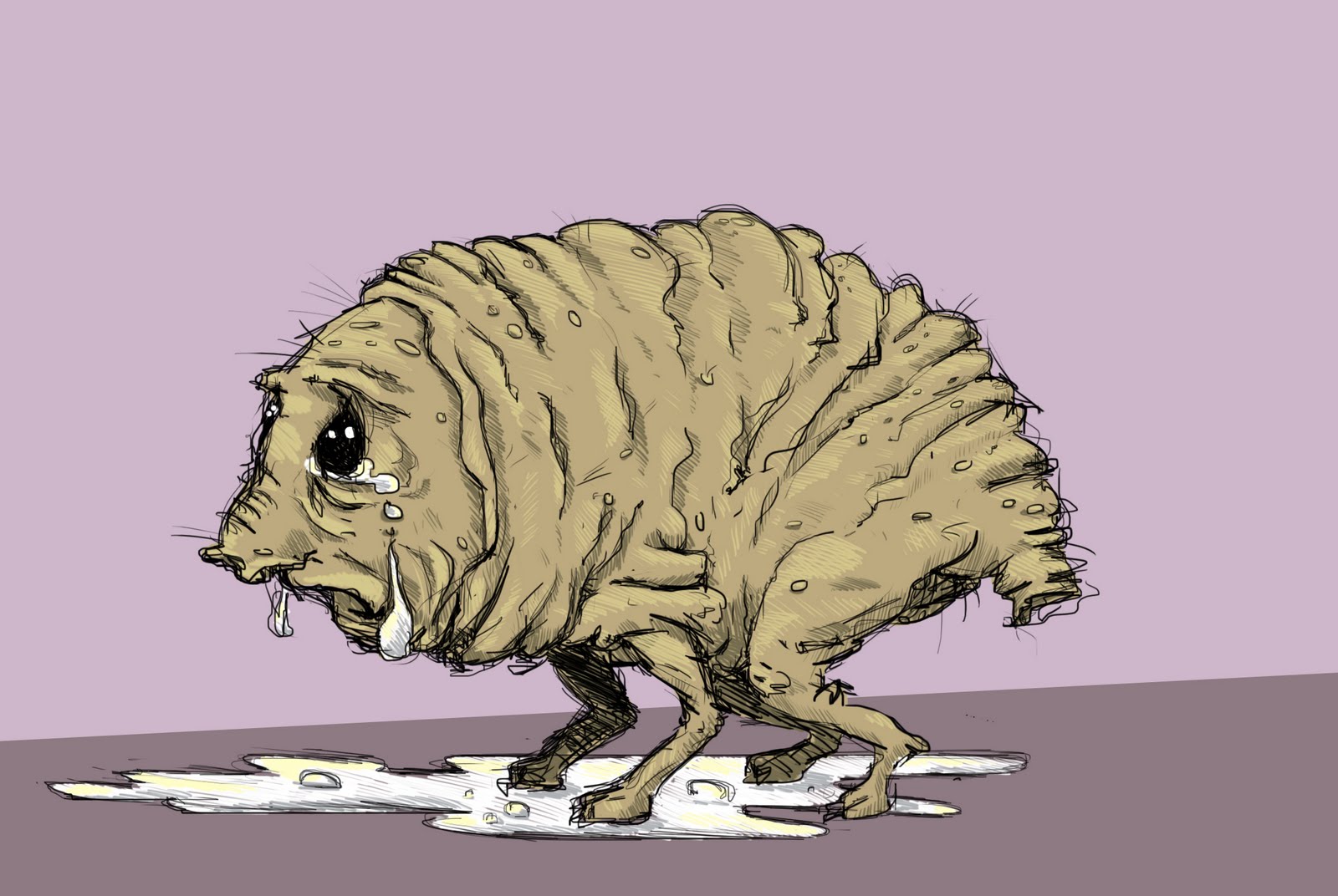
73. Squonk

Sure this may seem like an idea pet if you're into that sort of thing. However, the Squonk is known to dissolve into tears and bubbles so to capture it is impossible. Sorry kids. Still, a Pittsburgh based art collective is named after this creature called Squonk Opera.

Sure this may seem like an idea pet if you’re into that sort of thing. However, the Squonk is known to dissolve into tears and bubbles so to capture it is impossible. Sorry kids. Still, a Pittsburgh based performance art collective is named after this creature called Squonk Opera.

Type: Cryptid
From: United States
Features: Has unfitting skin covered in warts and blemishes. Appearances vary.
Behavior: Spends a lot of time weeping and hides in plain sight out of being ashamed for its appearance.
Habitat: The hemlock forests of northern Pennsylvania.
Is It Dangerous?: I haven’t heard anything about it that’s dangerous.
Can It Be Domesticated?: It just dissolves into tears and bubbles when hunters try to capture it. Therefore, impossible.
How to Get Rid of It: It just gets rid of itself by dissolving into tears and bubbles.


74. Owlman

Behold, Owlman, a man sized owl that haunts the village of Mawnan in Cornwall, England. Its stare could petrify people with fear for days, sometimes weeks. Still, it's said to be Britain's answer to Mothman in the cryptozoological world.

Behold, Owlman, a man sized owl that haunts the village of Mawnan in Cornwall, England. Its stare could petrify people with fear for days, sometimes weeks. Still, it’s said to be Britain’s answer to Mothman in the cryptozoological world.

Type: Divine Bird, Cryptid
From: British Folklore
Features: Human-sized owl with glowing eyes. Has huge razor sharp talons and a large pointy beak. Sometimes depicted as an owl-man hybrid.
Behavior: Solitary and nocturnal.
Habitat: Cornwall’s village of Mawnan in England. May live in a church tower.
Is It Dangerous?: Its stare is said to leave whoever encounters it petrified with fear sometimes for days or weeks.
Can It Be Domesticated?: Absolutely not.
How to Get Rid of It: We’re not sure how. Missiles?


75. Dwayyo (a. k. a. Dewayyo or the Maryland Dogman)

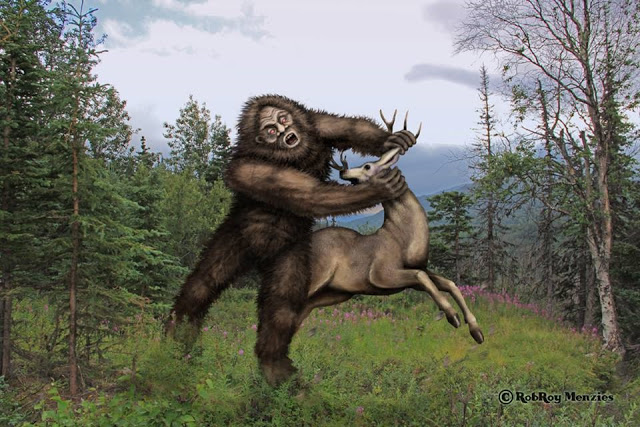
The Dwayyo is an urban legend creature in Maryland best known for almost resembling a close relation to Chewbacca as well as its ongoing struggle with the Snallygaster. Hey, it's not like I made this stuff up here. That's what the legend says.

The Dwayyo is an urban legend creature in Maryland best known for almost resembling a close relation to Chewbacca as well as its ongoing struggle with the Snallygaster. Hey, it’s not like I made this stuff up here. That’s what the legend says.

Type: Cryptid, Humanoid
From: United States
Features: Said to be hairy, have a bushy tail, and is sometimes bipedal. Can be depicted as a werewolf, Bear man, or others. Appearances vary.
Behavior: Solitary and nocturnal. Enemy of the Snallygaster.
Habitat: Between Middletown and Wolfsville in Maryland.
Is It Dangerous?: Has been known to attack humans according to some news reports.
Can It Be Domesticated?: Absolutely not.
How to Get Rid of It: I’m not sure how. Maybe we should just watch it fight with the Snallygaster.

Mythological Creatures Reexamined: Part 4 – Zombie to Adlet

In my series I have gone over many legendary creatures you’re familiar with as well as quite a few you may or may not have heard before. Then there are some you might know rather well but others, well, wouldn’t know otherwise. Still, virtually all of these creatures are mythical as far as I’m concerned. Yet, if you’re tired of having to pick a scary monster to be for Halloween, then this is the blog series for you. In this selection we’ll go over a few favorites like the Zombie, the Unicorn, the Werewolf, the Vampire, the Leprechaun, the Loch Ness Monster, the Goblin, and the Banshee (though I’m not sure about that one). We’ll also see some creatures that you may not have heard before like the Valkyrie from Norse Mythology, the legendary spirit of La Llorona from Latin America and the American Southwest, the Roc and Leviathan from Middle Eastern Mythology, the legendary Stymphalian Bird from Greek Mythology, the Kongamato from Africa, and the Adlet from Inuit legend. So without further adieu, here are some more legendary creatures from myth and urban legend for your pleasure.


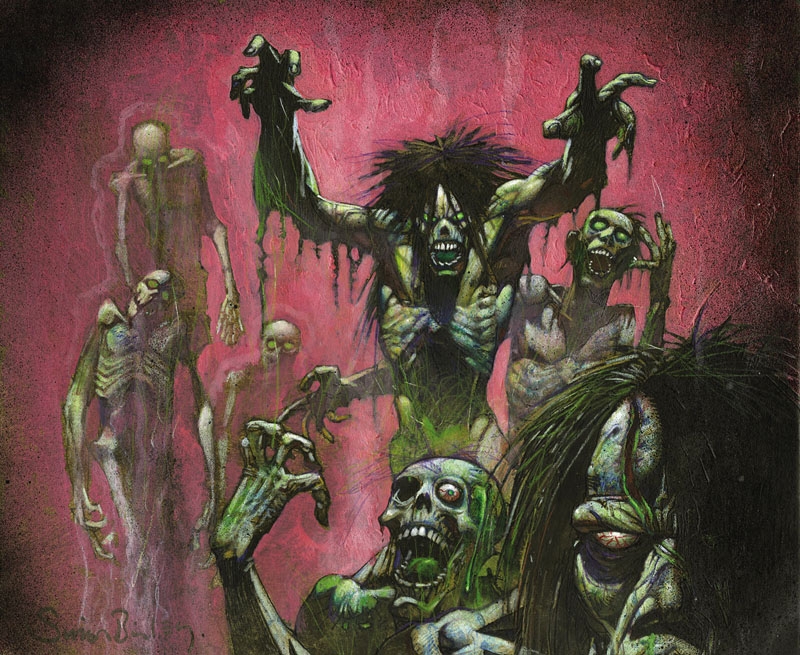
46. Zombie

From how I see it, this could either be an artistic representation of a zombie rampage or a bunch of them doing the Michael Jackson "Thriller" dance at a rave.

From how I see it, this could either be an artistic representation of a zombie rampage or a bunch of them doing the Michael Jackson “Thriller” dance at a rave.

Type: Undead, Humanoid
From: Bantu Mythology and Caribbean Folklore
Features: Reanimated human corpses in different stages of composition. Usually depicted as green.
Behavior: Usually travel in groups and active 24/7. Are stronger than the average person and though they may seem slow, they are actually clever predators who know the value of team work. Also have superhuman stamina and are absolutely fearless.
Habitat: Anywhere humans live but particularly graveyards.
Is It Dangerous?: Oh, yes. They’re always violent man-eaters searching for new meat and spread disease wherever they go. If bitten by one, you turn into a zombie.
Can It Be Domesticated?: Not on your life.
How to Get Rid of It: Basically you have to decapitate it or aim for its brain. Cuts, blows, bullets, and severed limbs might slow them down but will not stop them. Using fire on them has various effects.


47. Unicorn

There's no way anyone could hate these majestic and beautiful creatures, especially little girls and My Little Pony fans. Of course, I hope most My Little Pony fans are little girls. But then again, to each his own.

There’s no way anyone could hate these majestic and beautiful creatures, especially little girls and My Little Pony fans. I mean these legendary creatures are relatively harmless, represent everything wholesome and good, and are associated with rainbows and sparkles. But then again, to each his own. Still, I’m very sure this unicorn is a male since his junk is showing.

Type: Divine Horse
From: Various Mythology and Folklore
Features: Usually horse like with a horn on forehead. Can be of any color but usually white. Tend to be very beautiful. In the past have been described as having a body of a wild ass and being white, read, and black. Sometimes described as having a head of a stag, feet of an elephant, and tail of a boar with a single long black horn. Sometimes depicted with a billy goat’s beard, a lion’s tail, and cloven hooves.
Behavior: Solitary and peaceful. Fast and nimble. Blood may have restorative properties but it’s cursed. Also said to poop in rainbows and sparkles.
Habitat: Worldwide, particularly woodlands.
Is It Dangerous?: Not at all.
Can It Be Domesticated?: Yes, but they’re very difficult to capture. Sometimes can only be trapped by a virgin but good luck finding one.
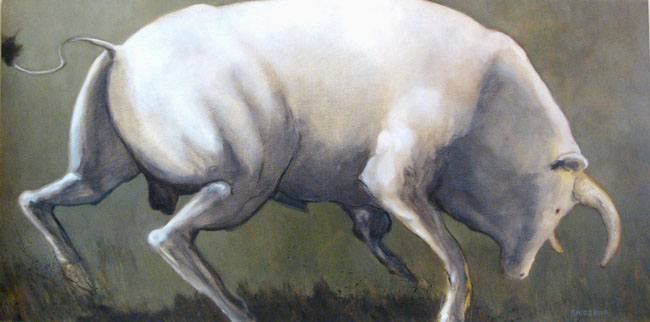
How to Get Rid of It: You don’t want to get rid of one. Seriously, you don’t.


48. Valkyrie

Of course, though many may have heard the name of Valkyrie from that Tom Cruise movie, those familiar with this beauty are opera goers and Richard Wagner fans. Then again, we've all heard "Ride of the Valkyries" at least once. I mean how can you not?

Of course, though many may have heard the name of Valkyrie from that Tom Cruise movie, those familiar with this beauty are opera goers and Richard Wagner fans. Then again, we’ve all heard “Ride of the Valkyries” at least once. I mean how can you not?

Type: Humanoid, Spirit
From: Norse Mythology
Features: Beautiful female warriors. Sometimes depicted with wings or riding a magnificent horse. Often portrayed as carrying a shield, sword, and/or spear. Sometimes may yield a bow and arrow. Usually depicted with blond hair and in armor.
Behavior: Travel in groups. Charged with escorting fallen warriors to Valhalla or the Folkvangr. Absolutely fearless but may be the occasionally instigate battles and engage in them.
Habitat: The Viking world of the gods, particularly Asgard and Valhalla.
Is It Dangerous?: Not really but I really can’t say. Yet, they have been accused as devouring the flesh of the slain.
Can It Be Domesticated?: Absolutely not. Also, they work for Freyja.
How to Get Rid of It: You can’t for they’re immortal.


49. Werewolf

Of course, werewolves have been known to howl at the moon at night, especially when the moon is full. Yet, other than being half human and half wolf, yet as to how people become one and what they do varies by culture.

Of course, werewolves have been known to howl at the moon at night, especially when the moon is full. Yet, other than being half human and half wolf, yet as to how people become one and what they do varies by culture. Still, these animals aren’t sexy beasts you might want to sleep with. Well, Remus Lupin may be a possible exception to that but he’s a nice guy who knows his magic.

Type: Hybrid, Humanoid
From: Ancient European Mythology
Features: Large wolf-like body, long fangs, and glowing eyes. Often humans transformed into wolves whether voluntarily or during the night of a full moon. Can have humanoid bodies and walk on two legs. Have strong teeth and claws. Usually depicted brown or gray and let out a howl at the moon.
Behavior: Often travel in groups and tend to be nocturnal. They are very strong and very fast as well as very good swimmers. Are telepathic, relatively fast healers, and could see in the dark. Capable of learning magic and have increased senses and stamina.
Habitat: Wherever wolves and humans are present at times. Tend to hang out in graveyards where they feast on corpses.
Is It Dangerous?: In human form, most of them aren’t (think Remus Lupin from Harry Potter). Bitten by one in human form and you won’t turn into one. Yet, in wolf form, they are especially dangerous and if they bite you, you can be one of them.
Can It Be Domesticated?: Absolutely not for they are practically people and in wolf form are very dangerous.
How to Get Rid of It: Remove its heart, give it wolfsbane, or shoot it with a silver bullet. Using a weapon blessed by your local church would do nicely if silver bullets aren’t available. Still, they aren’t immortal and will succumb to old age and can be killed in regular ways.


50. Vampire

Hardly any legendary creature has generated much media from the West as the vampire. Sure theses bloodsucking creatures may have their fans, but seriously, you don't want to date one.

Hardly any legendary creature has generated much media from the West as the vampire. Sure theses bloodsucking creatures may have their fans, but seriously, you don’t want to date one.

Type: Undead, Humanoid
From: Various Mythology and Folklore
Features: Pale humans with fangs that consume blood. Could be depicted as sexy, aristocratic, or beastly but they don’t reflect in mirrors. Can have pointy ears or bat wings. Can live forever if you let them and usually are portrayed with antiquated fashion sense. Can be depicted from nearly human to rotting corpse.
Behavior: Can be solitary or travel in groups. Sometimes can transform into bats. Often nocturnal. Capable of magic, flight, invisibility, telepathy, telekinesis, weather and mental manipulation, hypnosis, and more. Are very strong and fast as well as have enhanced senses.
Habitat: Anywhere where humans live. Also tend to inhabit dark and dingy castles.
Is It Dangerous?: Oh, yes. Getting bitten by one will turn you into one whether you like it or not. And they usually tend to go on killing sprees or invade people’s houses (though they will settle for the blood of the family pet). Yet, they can be warded off with garlic, holy water, or holy paraphernalia like a crucifix or rosary. Not to mention, they also tend to avoid churches and any place where there’s a lot of fire or garlic. Still, don’t have sex with one no matter how tempted you are. And I mean you, lovers of Anne Rice, Twilight, and True Blood.
Can It Be Domesticated?: No way in hell. They’re practically humans and are very dangerous.
How to Get Rid of It: Well, there are a number of ways. You can expose them to sunlight, decapitate them, drive a stake through their hearts, touch them with a crucifix, remove their hearts, set fire on them, bless them with holy water, have them chase you into a church, and enlist the help of your friendly neighborhood werewolf.


51. Leprechaun

Sure this leprechaun may seem scary looking but he's a mostly harmless creature associated with Saint Patrick's Day. Of course, he doesn't take too kindly on negative Irish stereotypes though.

Sure this leprechaun may seem scary looking but he’s a mostly harmless creature associated with Saint Patrick’s Day. Of course, he doesn’t take too kindly on negative Irish stereotypes though.

Type: Imp, Humanoid, Spirit
From: Irish Folklore
Features: Usually human looking but only about 5 inches at height though usually portrayed as high as a small child. Mostly depicted with red hair and wearing green (or red) as well as smoking a pipe. Appearances vary.
Behavior: Very clever and fast. Said to spend its time making shoes, storing coins in a pot of gold at the end of the rainbow, and partaking in mischief.
Habitat: Ireland. Often live in moors, caves, forests, or gardens.
Is It Dangerous?: Not really.
Can It Be Domesticated?: Well, it can lead you to its pot of gold or grant you three wishes but it’s very hard to catch. Yet, you have to let it go afterwards. Of course, in the Harry Potter universe, you might want to go with the three wishes because Leprechaun gold disappears quickly and is considered pointless to pursue.
How to Get Rid of It: You don’t want to get rid of this creature.


52. Leviathan

The Leviathan is a large sea monster from Mesopotamian Mythology that can cause storms and chaos as well as eats humans. You might want to avoid this creature at all costs.

The Leviathan is a large sea monster from Mesopotamian Mythology that can cause storms and chaos as well as eats humans. You might want to avoid this creature at all costs. Unless you have supernatural aid, you’re basically screwed with this one.

Type: Sea Monster, Serpent
From: Mesopotamian Mythology (mentioned in the Bible)
Features: Is very large and usually depicted as serpent like. Can appear in many forms like a large fish or whale. Has a large powerful jaws.
Behavior: Solitary but a natural born swimmer and very strong. Shape shifting and see angels and demons where humans cannot.
Habitat: Can survive on land or water.
Is It Dangerous?: Oh, yes. They are venomous and eat humans. Also, capable of causing storms and other chaos.
Can It Be Domesticated?: Absolutely not.
How to Get Rid of It: Can only be killed through supernatural means. Can survive most wounds, reattach themselves, and are immune to disease. So if you’re pursued by one, go down on your knees and pray like mad even if you’re an atheist. That or call for a wizard.


53. Loch Ness Monster (a. k. a. Nessie)

One of the most prolific creatures in cryptozoology is the Loch Ness monster who was reputed to be first photographed in 1933 (though it's now known to be a hoax). Still, whether it be a possible living dinosaur or outright hoax, I'm sure the people of Loch Ness aren't complaining how the monster has helped their tourist industry.

One of the most prolific creatures in cryptozoology is the Loch Ness monster who was reputed to be first photographed in 1933 (though it’s now known to be a hoax). Still, whether it be a possible living dinosaur or outright hoax, I’m sure the people of Loch Ness aren’t complaining how the monster has helped their tourist industry.

Type: Water Monster, Cryptid, Living Dinosaur
From: Scottish Folklore
Features: Long neck, large body, flippers, and tail.
Behavior: Solitary.
Habitat: The waters of Loch Ness in Scotland.
Is It Dangerous?: We’re not sure but Saint Columba reported of one killing a man and dragging him to watery depths according to a 7th century story.
Can It Be Domesticated?: No way in hell.
How to Get Rid of It: Well, Saint Columba just made the sign of the cross and told the monster to stay away. Still, nowadays you don’t want to get rid of it since seeing one makes it a great photo op.


54. La Llorona

La Llorona is a spirit of a woman who drowned her children so she could be with the man she loved who wouldn't have her. Thus, she drowned herself and has never been permitted to enter the afterlife until she has found them. Still, to drown your kids for a man is seriously messed up.

La Llorona is a spirit of a woman who drowned her children so she could be with the man she loved who wouldn’t have her. Thus, she drowned herself and has never been permitted to enter the afterlife until she has found them. Still, to drown your kids for a man is seriously messed up.

Type: Undead, Spirit, Humanoid
From: Latin American Legend
Features: A spirit of a young woman in white seen weeping. Can be depicted crying “Ay mis hijos!” (“Oh, my children!”).
Behavior: Was once a woman named Maria who drowned her children after discovering her husband was unfaithful or to be with the man she loved. Yet, she committed suicide when he wouldn’t have her. Unable to enter the afterlife until she has found her kids. Solitary and nocturnal. Yet, you can summon her if you say her name twice in front of a mirror in a locked room.
Habitat: Mexico and much of the American Southwest.
Is It Dangerous?: Well, it’s believed that those who hear her are marked for death and in some versions of the legend, she may kidnap kids that bear a resemblance to her missing children.
Can It Be Domesticated?: Absolutely not.
How to Get Rid of It: You can’t she’s doomed to walk the Earth for eternity.


55. Roc

On the subject of mythical birds, the Roc is a giant bird from Middle Eastern legend that could carry elephants by its claws. Still, whatever you do, don't take any of its giant eggs. Seriously, don't.

On the subject of mythical birds, the Roc is a giant bird from Middle Eastern legend that could carry elephants by its claws. Still, whatever you do, don’t take any of its giant eggs. Seriously, don’t.

Type: Divine Bird
From: Middle Eastern Mythology
Features: Gigantic bird of prey with a forked tongue. Could either have the same color as an eagle or simply white. Its enormous beak is lined with sharp pointed teeth.
Behavior: Solitary. Presence can darken the night sky and the flap of its huge wings could cause hurricane like winds. Said to be a fierce guardian of a secret valley filled with jewels. Lays huge eggs.
Habitat: Madagascar.
Is It Dangerous?: Well, it’s know n to swoop down to grab animals and people in order to carry them off to feast upon or rip apart for its young. Can carry anything as big as an elephant in its talons. So yes. Also, don’t steal one of its eggs or it will destroy entire ships over in revenge as Sinbad learned the hard way.
Can It Be Domesticated?: No way in hell.
How to Get Rid of It: Large harpoon or missile might do the trick.


56. Stymphalian Bird (a. k. a. Stymphalides)

Stymphalian birds may seem awesome but these pets of Ares were nothing but hostile pests in Arcadia that Hercules had to perform his Sixth Labor with the assistance of Hephaestus and Athena. Still, this painting may give the idea that Hercules' Sixth Labor was the Ancient Greek version of Angry Birds.

Stymphalian birds may seem awesome but these pets of Ares were nothing but hostile pests in Arcadia that Hercules had to perform his Sixth Labor with the assistance of Hephaestus and Athena. Still, this painting may give the idea that Hercules’ Sixth Labor was the Ancient Greek version of Angry Birds.

Type: Divine Bird
From: Greek Mythology
Features: Large bird with sharp and arrow like bronze feathers, metal beak and claws. Sometimes depicted with helmets.
Behavior: Ferocious and superiorly strong. Travel in groups.
Habitat: Arcadia in Ancient Greece.
Is It Dangerous?: Yes, their dung is poisonous and would shed their killer feathers like spears among attacking soldiers that easily pierced armor. Their killer plumage is said to terrorize the people of Arcadia. Known to devour all the dead and killing those injured with their beaks.
Can It Be Domesticated?: Only by Ares for they were his pets.
How to Get Rid of It: With the help of Athena, Hercules managed to disperse these monster birds with a loud thunderous rattle Hephaestus made for the occasion. He then proceeded to shoot each one of them with his arrows.


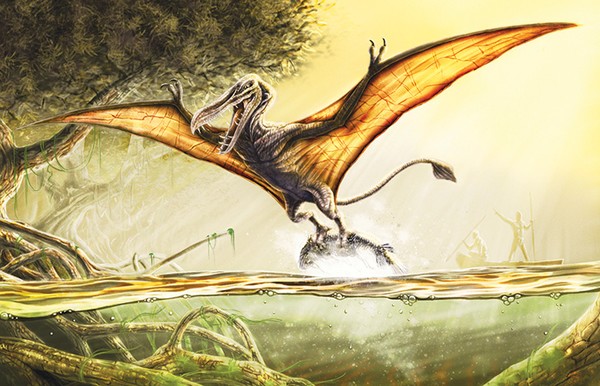
57. Kongamato

Now the Kongamato may be a creature you may not have heard of but it's sort of a large Pterodactyl on steroids that is said to reside in Central Africa. Still, if you see it, don't ever dare to look it in the eye since it will be sent into a flying rage and kill you.

Now the Kongamato may be a creature you may not have heard of but it’s sort of a large Pterodactyl on steroids that is said to reside in Central Africa. Still, if you see it, don’t ever dare to look it in the eye since it will be sent into a flying rage and kill you.

Type: Cryptid, Living Dinosaur
From: African Folklore
Features: Large bird with a tooth filled bill, leathery reptilian skin, and bat like wings. Has large, sharp, and powerful claws. Can resemble a pterosaur and is said to be red or black. Wingspan is said to be 3-3 ½ ft and is estimated to be 4 ½ ft from feet to tail.
Behavior: Hates being looked at in the eye. Said to have a very short temper.
Habitat: The jungles and swamps of Central Africa covering Angola, Zamibia, and the DRC.
Is It Dangerous?: Can clutch and carry off substantially large prey with ease. Known to suddenly attack from the sky only to dive into lakes and rivers to capsize boats and drown any passengers. Any living creature who dares looks into its eyes, angers it and faces certain death. Sightings or mention sends entire villages running in fear, abandoning possessions and homes.
Can It Be Domesticated?: No way in hell.
How to Get Rid of It: If you saw one, you wouldn’t want to get rid of it. Just don’t look at it in the eye.


58. Goblin

Goblins come in a variety of shapes, sizes, and personality. I see that this one is some badass warrior with a big ass knife as well as a bow and arrow. You may not want to mess with him.

Goblins come in a variety of shapes, sizes, and personality. I see that this one is some badass warrior with a big ass knife as well as a bow and arrow. You may not want to mess with him.

Type: Imp
From: Worldwide Legend
Features: At most they are 3 – 3 ½ ft tall and weigh up to 40 – 45 pounds. Utterly grotesque looking. Often depicted as brown, gray, green. Could have long fingers and elf like ears. Can be flat faced with small sharp fangs and a broad nose. Sometimes portrayed with hair or horns. Give off an awful stench. Appearances vary and there are a lot of different types.
Behavior: Travel in large numbers. Can range from annoying, mischievous, to downright evil. Said to be greedy and love gold. Can resort to dirty tricks and ambushes. Sometimes may possess magical abilities. Can be stupid or cowardly though in Harry Potter, they’re seen as dependable bankers.
Habitat: Caves, dungeons, ghost towns, and woodlands.
Is It Dangerous?: Depends on the story. The Gringotts goblins in Harry Potter aren’t very hostile but you don’t want to mess with them. The ones in Middle Earth, well, let’s say you want to go anywhere near them. Yet, some legends have them ride giant wolves into battle.
Can It Be Domesticated?: Once again, depends on the story.
How to Get Rid of It: I’m not sure about this one.


59. Banshee

Now if you think this fearsome banshee isn't much to look at, you don't want to hear anything that comes out of her mouth which is an omen of death. Yeah, kind of kills the mood rather literally.

Now if you think this fearsome banshee isn’t much to look at, you don’t want to hear anything that comes out of her mouth which is an omen of death. Yeah, kind of kills the mood rather literally.

Type: Undead, Spirit, Humanoid
From: Irish Folklore
Features: Can appear as a young woman, a distinguished matron, or a tousled old hag. Known for shrieking incredibly loud but can sometimes be heard eerie singing or softly wailing. Hair is often long and light in color. Often seen wearing a gray or white hooded cloak. Often depicted in decomposition. Still, appearances vary.
Behavior: Solitary and nocturnal. Said to be capable of transforming into animals associated with witchcraft like a crow, hare, and weasel. Often depicted as airborne.
Habitat: Ireland.
Is It Dangerous?: Hearing her cry at night means that someone is about to die. Originally it only pertained to five Irish families but intermarriage has expanded that. In some legends, her cries meant that someone holy was about to bite the dust. In any event, hearing her cries isn’t a good sign.
Can It Be Domesticated?: Absolutely not.
How to Get Rid of It: I’m not sure if you can.


60. Adlet (a.k.a. Erqugdlit or Erqugdlit)

You may think the Adlet is some Native American werewolf and in a way you might be right. Yet, these creatures were as wolf people and are in this state all the time. Werewolves are a different story.

You may think the Adlet is some Native American werewolf and in a way you might be right. Yet, these creatures were as wolf people and are in this state all the time. Werewolves are a different story.

Type: Hybrid, Humanoid
From: Inuit Mythology
Features: Has upper body of human and lower body of dog. Covered in fiery red fur and often have a long snout, pointed ears, long tails, and fiercely yellow eyes. Depictions may vary.
Behavior: Travel in packs and are very ferocious.
Habitat: Labrador and Hudson Bay Coasts of Canada.
Is It Dangerous?: Yes, they are known to be bloodthirsty and some were said to be sent across the sea to ravage the white races by their mother. They are merciless killers known to attack and feed on anything that crosses in their path. Favorite treat is blood from a newly slain human.
Can It Be Domesticated?: Hell no.
How to Get Rid of It: Are susceptible and can be destroyed with silver and fire.


Mythological Creatures Reexamined: Part 3 – Golem to Troll

Of course, there seems to be a lot of Greek monsters and dragons from the west so far but I’ll soon get to other cultures and folklore as well as urban legends when I get the chance. Still, this selection has a lot of diversity as far as mythological creatures go. From Greek Mythology we have Talos and the Phoenix. From Scandanvian legend, Norse Mythology, and Northern European Folklore we have the Kraken, the Ogre, and the Troll. We also touch upon American Urban Legendary creatures like Mothman and the Jersey Devil as well as the Seed Eater from Canada and the Gremlin from World War II. Then there’s the Golem from Jewish Folklore, the Leucrocuta from Indian Mythology, the Kelpie from Celtic Mythology, the Thunderbird from Native American Legend, and the Kappa from Japanese Mythology. Finally we have one of the more universal creatures known as the Ghost. Talk about a United Nations of legendary creatures here. Now without further adieu, here is a list of even more mythological monsters.


31. Golem

Now the moral of the Golem story is that making a magical figurine out of rock, clay, or wood to have it serve your needs probably isn't a good idea. Nor is slavery in that matter.

Now the moral of the Golem story is that making a magical figurine out of rock, clay, or wood to have it serve your needs probably isn’t a good idea. Nor is slavery in that matter.

Type: Anthropomorphic Being, Humanoid
From: Jewish Folklore (mentioned in the Bible)
Features: Has a human like body made of clay, rock, or wood. Often have the word “emeth” written on their foreheads or a stone tablet placed on the monster’s mouth.
Behavior: Live in people’s households and generally peaceful until they grow up and learn about life by observing the people around them. Can’t speak very much.
Habitat: Czech Republic
Is It Dangerous?: Not at first, but as they grow strong and learn about life, their bursts of anger become increasingly violent.
Can It Be Domesticated?: Well, they can serve as slaves but will eventually grow too big and strong for their master to handle. Let’s just say domesticating one isn’t a good idea.
How to Get Rid of It: Say “meth” which is the Hebrew word for death.


32. Gremlin

Basically these are the little creatures who get into your machinery when they aren't working right. So if your car wouldn't start or can't get cell phone reception, it's probably the gremlins.

Basically these are the little creatures who get into your machinery when they aren’t working right. So if your car wouldn’t start or can’t get cell phone reception, it’s probably the gremlins.

Type: Imp
From: Superstitions from RAF pilots during WWII.
Features: Small creatures with oversized pointy ears. Resemble miniature gargoyles. Sometimes depicted with fur or wings.
Behavior: Usually travel in groups causing mayhem and mischief to people as they please. Love to hide from people so they could watch their frustrations over their pranks. They also like fooling around with electrical devices like cars and planes.
Habitat: Anywhere. Yet, machinery and electronics are ideal places.
Is It Dangerous?: Most of their pranks are harmless but some of these miniature monster pranks could have tragic outcomes like plane wrecks and car accidents.
Can It Be Domesticated?: Absolutely not.
How to Get Rid of It: I’m not sure if you can but it will be difficult.


33. Leucrocuta (a. k. a. Corcotta or Leucrotta)

Sure this monster may seem harmless but it's basically a man eater Indian monster known to lure people in a trap just by calling their names.

Sure this monster may seem harmless but it’s basically a man eater Indian monster known to lure people in a trap just by calling their names.

Type: Hybrid
From: Indian and Ethiopian Mythology
Features: Has a horse’s head and hind quarters as well as front legs and body of a lion. About the size of a donkey with large bony gums stretching from ear to ear. Sometimes depicted with a badger’s head. Sometimes described as part lion, hyena, horse, and badger. Usually portrayed with cloven hooves and making hyena sounds.
Behavior: Solitary.
Habitat: India
Is It Dangerous?: Yes, said to call victims by name to lure them out and tear them to pieces. Sometimes imitate the sounds of a wounded person so it could attract curious dogs and feast on them. Very fast.
Can It Be Domesticated?: Don’t even think about it.
How to Get Rid of It: I’m not sure how or if you can.


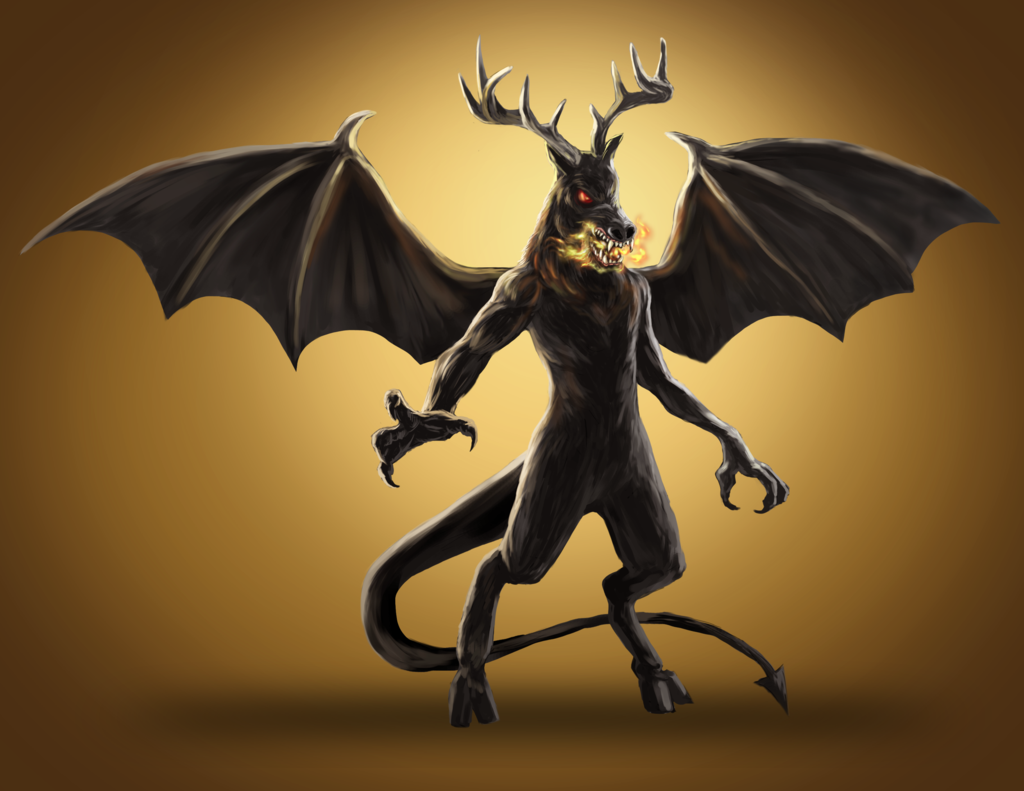
34. Jersey Devil

Of course, the legend of the Jersey Devil predates New Jersey's reputation for superfund sites, gangsters, corruption, and Snooki. Still, if this monster was on MTV's Jersey Shore, I bet the show wouldn't be canceled.

Of course, the legend of the Jersey Devil predates New Jersey’s reputation for superfund sites, gangsters, corruption, and Snooki. Still, if this monster was on MTV’s Jersey Shore, I bet the show wouldn’t be canceled.

Type: Cryptid, Spirit
From: United States
Features: Has deformed body and head of a horse, horns, and large bat like wings. Sometimes depicted with antlers, claws, and/or tusks.
Behavior: Solitary and nocturnal.
Habitat: Pine Barrens in southern New Jersey. Lives near swamps and forests.
Is It Dangerous?: Yes, known to terrorize the neighboring villages. Sometimes would burst out of chimneys to attack people and animals as well as steal a pot of simmering stew. Prone to kill people and livestock as well as feast on small children.
Can It Be Domesticated?: No way in hell.
How to Get Rid of It: Well, I’m sure New Jersey’s superfund sites might take care of that creature.


35. Kraken

Of course, who's ever on that submarine isn't going to last once the Kraken is done playing with it. Still, Perseus didn't fight with this monster in the original myths, because it's a Scandinavian monster, not Greek. Having Thor fight it would make more sense.

Of course, who’s ever on that submarine isn’t going to last once the Kraken is done playing with it. Still, Perseus didn’t fight with this monster in the original myths, because it’s a Scandinavian monster, not Greek. Having Thor fight it would make more sense.

Type: Sea Monster, Cryptid
From: Norwegian and Scandinavian Legend (Not Greek Mythology despite it being the monster in Clash of the Titans. It was only there because Ray Harryhausen didn’t want to do another dragon and that “release the Cetus” didn’t have a nice ring to it.)
Features: Gigantic squid or octopus. Said to be the size of a small island that some sightings could be logged as pieces of land. Can be 100-150ft in length or more. Has an infinite lifespan. Sometimes depicted as a sea serpent or humanoid squid. Sometimes depicted with gnashing teeth.
Behavior: Solitary.
Habitat: Coasts of Norway, Greenland, and Iceland. Can survive both in land and water.
Is It Dangerous?: Oh, yes. Has superhuman strength that could easily wrap its tentacles around ships and drag them into deep waters with ease. Can create powerful whirlpools when they quickly submerge which can suck down anything caught with it, including large ships. Can rip apart huge fleets and destroy cities and humans with its might.
Can It Be Domesticated?: Absolutely not.
How to Get Rid of It: You might want to use a harpoon or several. Perhaps a giant fishing net.


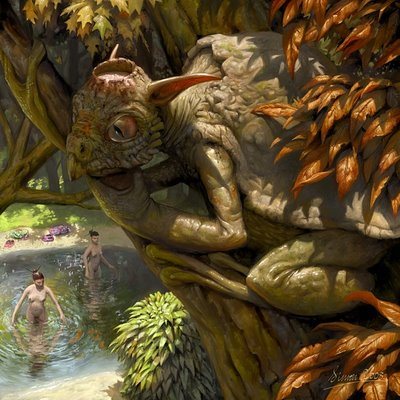
36. Kappa

The Kappa is a complex monster which can range from harmless prankster and sexual harassser to outright vicious. Of course, this one is an outright pervert watching women skinny dipping. Also kind of resembles a cross between a house elf and a turtle.

The Kappa is a complex monster which can range from harmless prankster and sexual harassser to outright vicious. Of course, this one is an outright pervert watching women skinny dipping. Also kind of resembles a cross between a house elf and a turtle.

Type: Cryptid, Imp, Yokai, Water Monster
From: Japanese Mythology
Features: Roughly humanoid in form and about the size of a child. Have scaly reptilian skin that could be green, yellow, or blue as well as webbed hands and feet. Can smell like fish. Appearance varies from region to region. Most consistent features are a beak for a mouth, a carapace, a flat hairless plate on the forehead called a sara which is always filled with water and a source of power. May have arms connected to each other that they could slide from one end to the other.
Behavior: Are expert swimmers, very intelligent, and knowledgeable in medicine. Are very mischievous and enjoy playing pranks on people. Obsess over politeness. Curious about human civilization and can speak Japanese. They can also be help farmers irrigate their land. Omnivores.
Habitat: Japan. Inhabit ponds and rivers. May venture on land occasionally and spend fall and winter in the mountains.
Is It Dangerous?: Their pranks can range from relatively harmless like looking up women’s kimonos and passing gas to the malevolent like drowning people and animals, kidnapping children, and raping women. They do love human flesh but their favorite food is cucumbers. Carve your name and birth date on a cucumber and throw it in the pond, they’ll leave you alone.
Can It Be Domesticated?: If you befriend one, it will be a friend for life or go against its word.
How to Get Rid of It: Trick it to hollow its head by making one bow. It will spill water and be powerless. Let its sara dry and it will die.


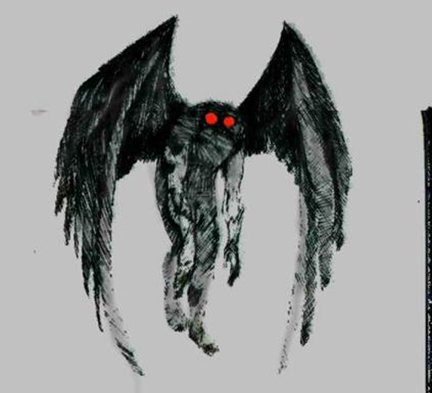
37. Mothman

Now I posted a picture of a Mothman sculpture in a previous post which I think is kind of creepy. Yet, it has appeared on TV shows now and then such as Spongebob Squarepants and The X Files which have absolutely nothing in common with each other. Also, has his own Syfy movie. Still, I wish he could be in a fight with Godzilla.

Now I posted a picture of a Mothman sculpture in a previous post which I think is kind of creepy. Yet, it has appeared on TV shows now and then such as Spongebob Squarepants and The X Files which have absolutely nothing in common with each other. Also, has his own Syfy movie. Still, I wish he could be in a fight with Godzilla.

Type: Cryptid, Humanoid, Hybrid
From: United States but might have roots in older folk tales
Features: Has torso, arms, and legs of a man as well as insect like head, 10ft wings, and hands and feet. Has large bright red eyes and is very tall.
Behavior: Solitary and nocturnal. Capable of teleportation and possesses superhuman strength.
Habitat: Point Pleasant area of West Virginia.
Is It Dangerous?: We’re not really sure about that since most of his stories are related to sightings. May predict or cause natural disasters. Yet, looking into his eyes may cause blindness and irritation.
Can It Be Domesticated?: Absolutely not.
How to Get Rid of It: Again, we’re not sure about that either.


38. Seed Eater (a. k. a. Birdman or Rag Face)

If this guy was a muppet character on Sesame Street, I bet he'd be the neighborhood serial killer. Seriously, he totally looks the part to be in a muppet edition of Texas Chainsaw Massacre.

If this guy was a muppet character on Sesame Street, I bet he’d be the neighborhood serial killer. Seriously, he totally looks the part to be in a muppet edition of Texas Chainsaw Massacre.

Type: Humanoid (Yet, despite the name, this monster isn’t known for eating seeds but children.)
From: Canada (created by a blogger named Cliff Howry.)
Features: Tall and has a vague human appearance, dark green or brown skin, and long dark hair. Wears a stitched rag mask with two eye holes to see and another for a mouth, beak, or snout. Emits a foul odor.
Behavior: Solitary and nocturnal. Can climb trees and make sudden noises or movements before disappearing.
Habitat: North America. Resides in woodlands.
Is It Dangerous?: Yes, has been known to hunt children for its prey every few years, which is why it tends to hunt playgrounds. Yet, it will attack anyone who interferes. Most adult abductions will result in the person being turned into another Seed Eater.
Can It Be Domesticated?: No way in hell.
How to Get Rid of It: Well, one boy managed to beat this monster with a baseball bat to repel. Yet, he was unable to speak again due what the monster did to his throat and now lives in a basement guarded 24/7.


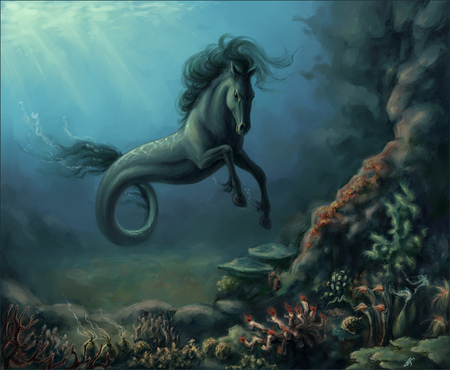
39. Kelpie (a. k. a. Water Horse)

Sure this may be a lovely creature you'd want to ride on. Yet, bear in mind that you don't want to go on a water pony ride on this thing which tends to fake tameness to lure its prey: humans.

Sure this may be a lovely creature you’d want to ride on. Yet, bear in mind that you don’t want to go on a water pony ride on this thing which tends to fake tameness to lure its prey: humans.

Type: Water Monster
From: Celtic Mythology
Features: Often depicted with a horse’s head with finned front limbs and a fish tail. Mostly depicted as black but can be gray, green, or white. Mane is always wet and covered with seaweed. Howls and wails before upcoming storms. Loch Ness Monster is sometimes identified as one. Appearances vary on depiction.
Behavior: Solitary. Has shapeshifting abilities in its magic bridle and can adopt to human form. Said to have the strength of 10 horses.
Habitat: Near freshwater lakes, streams, and rivers.
Is It Dangerous?: Yes, eats humans. Despite being seemingly tame at first, it’s been known to lure people tempted to mount it for an apparently innocent ride. However, once a person saddles up, the creature would dive into the deepest waters and drown its victims. Can transform into a smoking hot man or woman to lure a victim of the opposite sex into a trap, usually to a watery grave where it could eat them.
Can It Be Domesticated?: Yes it can be harnessed to transport heavy millstones. However, it can’t be domesticated for long because it hates being enslaved at farms.
How to Get Rid of It: Can be captured using a halter stamped with a cross sign. Can be killed by being shot with a silver bullet.


40. Ogre

Now ogres may not always be completely stupid in legends but they are nothing like what you see in the Shrek movies. Of course, the Shrek in the original William Steig stories was pretty ugly than in the Dreamworks films.

Now ogres may not always be completely stupid in legends but they are nothing like what you see in the Shrek movies. Of course, the Shrek in the original William Steig stories was pretty ugly than in the Dreamworks films. Yet, Shrek is a parody.

Type: Humanoid
From: Northern European Folklore
Features: Large, muscular, and ugly with deformed facial features. Tend to smell bad. Often depicted as green. Sometimes portrayed with horns or fangs.
Behavior: Solitary. Often seen as stupid but many are highly intelligent and could even perform magic. Yet, mostly use primitive weapons in battle.
Habitat: Near villages in swamps and mountains.
Is It Dangerous?: Absolutely. They have tremendous strength and could easily rip apart their enemies with their bare hands. Can be brutal and exhibit cruel and vicious violence, especially when hungry. Doesn’t help you that human flesh is their favorite meal, especially the tender flesh of small children.
Can It Be Domesticated?: No way in hell. Well, Shrek, maybe but not as a pet. Then again, Shrek isn’t a bad ogre.
How to Get Rid of It: Depends on the story.


41. Talos

Now this is Talos as designed by Ray Harryhausen for Jason and the Argonauts. However, remember he's not the guy who's modeled for the Colossus of Rhodes. That would be Helios. Still, he does a Colossus of Rhodes pose in the movie.

Now this is Talos as designed by Ray Harryhausen for Jason and the Argonauts. However, remember he’s not the guy who’s modeled for the Colossus of Rhodes. That would be Helios. Still, he does a Colossus of Rhodes pose in the movie.

Type: Humanoid, Anthropomorphic Being
From: Greek Mythology
Features: Gigantic human-like body made of bronze. Ran on ichor, the blood of the gods with a bronze nail keeping the fluid from leaking out.
Behavior: Created by Hephaestus and is strong enough to move boulders at any ships. Charged with guarding Zeus’ lover Europa on Crete.
Habitat: Crete in Ancient Greece.
Is It Dangerous?: Yes. He can hurl huge boulders at ships and burned any captured pirates on his armor. Actually you can say he was made to be a killing machine.
Can It Be Domesticated?: Not as a pet but he was used by Zeus to guard his lover Europa on Crete.
How to Get Rid of It: Charmed and given a sleeping potion by Medea who removed the bronze nail from his heel and drained his lifeblood that finally killed him.


42. Phoenix (a. k. a. Firebird)

Despite the fact it's a firebird, the phoenixes are usually harmless creatures to anyone who's good. Of course, this doesn't mean it can't attack for Fawkes did blind a basilisk in Harry Potter.

Despite the fact it’s a firebird, the phoenixes are usually harmless creatures to anyone who’s good. Of course, this doesn’t mean it can’t attack for Fawkes did blind a basilisk in Harry Potter.

Type: Divine Bird
From: Greek Mythology (first described by Herodotus in 484-425 BCE.)
Features: Traditionally splendidly multi-colored firebird resembling an eagle. Usually depicted with orange, red, and yellow feathers but coloration varies by legend. Also portrayed as gigantic Its life cycles could last from 500 to 1000 years. Tears are pure and capable of extreme healing powers. Cry is the most soothing and captivating song one could ever grace to hear. Older images have them with nimbuses and seven rays.
Behavior: Solitary. Eats only spices and drinks dew.
Habitat: Greece.
Is It Dangerous?: Despite being a fire bird, they’re incapable of killing or crushing a single living creature. Yet, they can burn or peck you though.
Can It Be Domesticated?: Well, it’s been known to serve as a sidekick to heroes and warriors so yes. Also, Dumbledore owned one in Harry Potter.
How to Get Rid of It: Well, you can kill it, but all it’s going to do is combust and rise from its ashes all over again. I mean it’s immortal so destroying one is basically pointless.


43. Thunderbird

Now this is probably one of the few legendary creatures you've heard of from Native American Legend. Of course, this may be because this bird has a car from Ford as well as an e-mail service named after it.

Now this is probably one of the few legendary creatures you’ve heard of from Native American Legend. Of course, this may be because this bird has a car from Ford as well as an e-mail service named after it.

Type: Divine Bird, Cryptid
From: Native American Folklore
Features: An extremely large bird resembling an eagle capable of shooting lightning. Traditionally depicted as multicolored with two curling horns and teeth within its beak. Can be blue, purple, white, or yellow in depiction. Carries around golden snakes with it.
Behavior: Solitary. Wingbeats can pull clouds together. Its wing claps can generate thunder. Generates sheet lightning by flashing its eyes when it blinks. And throws lightning bolts made by glowing snakes it carries around with. Has variations that have other powers like shapeshifting, generating rainfall, and others.
Habitat: The Americas.
Is It Dangerous?: It’s best to be avoided at all costs, refrain from disturbing or upsetting it in anyway. Else, you might become a human lightning rod.
Can It Be Domesticated?: No way in hell.
How to Get Rid of It: You can’t since they’re probably immortal.


44. Ghost

Now ghosts can come in all shapes and sizes but I'm sure seeing one will certainly freak anyone help. I mean imagine if you're grandmother's spirit came back from the dead. You wouldn't want that.

Now ghosts can come in all shapes and sizes but I’m sure seeing one will certainly freak anyone help. I mean imagine if you’re grandmother’s spirit came back from the dead. You wouldn’t want that.

Type: Spirit, Undead
From: Worldwide
Features: Basically disembodied souls of humans or other creatures. Can be depicted white or transparent. Can be portrayed as a white mass or as normal people or animals. Have no density. Can moan, wail, whisper, scream, or cry.
Behavior: Depends on the ghost. Have superhuman speed and can pass through things. Also possess telekinesis and glow in the dark.
Habitat: Graveyards, haunted houses, old stomping grounds, and other places.
Is It Dangerous?: Depends on the particular ghost. Though they could possess other people’s bodies and minds. Yet, if you’re killed by a ghost, you usually end up becoming one since such demise is unnatural.
Can It Be Domesticated?: Nope. They’re dead.
How to Get Rid of It: Best to confront it with iron, salt, or Holy Relics. Also, burning the item that keeps them on earth also helps transport them to the afterlife.


45. Troll

Trolls are among the more familiar creatures in Norse Mythology which are known to be man-eaters that tend to turn into stone at sunrise. Today, they're just obnoxious internet commentars who rant on things they know nothing about.

Trolls are among the more familiar creatures in Norse Mythology which are known to be man-eaters that tend to turn into stone at sunrise. Today, they’re just obnoxious internet commentars who rant on things they know nothing about.

Type: Humanoid
From: Norse Mythology
Features: Very large, ugly, and beast like monsters that smell very bad. May have horns, long arms, warts, hairy skin, and humped backs. Also said to have disfigured faces, deformed teeth, and huge ears. Usually depicted as green or gray. There are a lot of different types.
Behavior: Either solitary or live together in family groups. Not very bright but very strong. Also nocturnal. Could behave more like human beings in some legends.
Habitat: Caves, under bridges, burrows, underground, and isolated mountains.
Is It Dangerous?: Yes, they are man eaters and are rarely helpful to human beings.
Can It Be Domesticated?: Hell, no.
How to Get Rid of It: Exposing them to sunlight may turn them into stone.

Mythological Creatures Reexamined: Part 2 – Peluda to Griffin

So we’re off to a good start with the monsters in legend and myth. Of course, we have many more to go though you’ve noticed that some of the Greek monsters were related to the Twelve Labors of Hercules. Well, he did fight a lot of ferocious monsters but that’s why you hire a super strong demi-god for the job. Still, in this selection we have even more creatures for your pleasure. Of course, we’ll look at a few from the Greeks like the Lernaean Hydra, the Nemean Lion, the Aetus Caucasius, the Gorgon, the Minotaur, the Sphinx, the Centaur, Pegasus, the Siren, and the Harpy. Yes, Greek Mythology has a lot of monsters. For the Middle East we have the Manticore and the Griffin. We also have Mary Shelley’s Frankenstein Monster (though I’m not sure if this would qualify other than being an undead lab creation since Dr. Frankenstein was kind of the real monster in that story), the Peluda Dragon, and the Mermaid. So without further adieu I introduce you to these monsters from Greek Mythology and others.

16. Peluda (a. k. a. Occitan)

Sorry, but this isn't a dinosaur from Jurassic Park either. Just a dragon from French Folklore known to survive the Great Flood who was killed by a widower who cut its tail.

Sorry, but this isn’t a dinosaur from Jurassic Park either. Just a dragon from French Folklore known to survive the Great Flood who was killed by a widower who cut off its tail.

Type: Dragon
From: French Folklore
Features: Being green with spikes all over its body are its defining features. Yet, accounts depend whether it has an ox sized porcupine body or just a mess of green hair like projections that were actually poison quills. Traditionally depicted with a snake’s head, neck, and tail as well as large tortoise like feet. Often portrayed as a very shaggy dragon.
Behavior: Solitary and extremely aggressive.
Habitat: Huisne River in France. Resides in a cave where it waited out the Great Flood.
Is It Dangerous?: Absolutely. Has extremely poisonous quills it could fire off like arrows, breathe fire, wither crops with a searing breath, create floods by stepping into rivers, kill a full grown man with a single stroke of its tail, spit out a powerful stream of water or acid, and is practically invulnerable except in its tail. Has been known to terrorize Le Ferte-Bernard, France and devour humans and livestock.
Can It Be Domesticated?: No way in hell.
How to Get Rid of It: Simple, cut off its tail. One guy did this when the dragon killed his fiancée. Messed with the wrong dude there.

17. Lernaean Hydra (a. k. a. Hydra)

Of course, contrary to the Disney movie, the head slicing of this Hydra in the original myths went a lot differently. Still, Hercules knew what he was dealing with so he enlisted his nephew to help.

Of course, contrary to the Disney movie, the head slicing of this Hydra in the original myths went a lot differently. Still, Hercules knew what he was dealing with so he enlisted his nephew to help.

Type: Hybrid, Sea Monster, Serpent
From: Greek Mythology
Features: Gigantic water serpent with one large head and eight smaller ones. Largest head was immortal. All heads sprout very sharp razor fangs overflowing with deadly venom. Has very thick and strong body, webbed feet, and serpent tail.
Behavior: Solitary and extremely ferocious.
Habitat: Lerna in Ancient Greece, where he was blocking the town’s only water source when Hercules came along. Lives in a swamp.
Is It Dangerous?: Absolutely. Breath is extremely poisonous which could kill all living things in his territory. Blood and saliva are also poisonous.
Can It Be Domesticated?: You can forget about that. He hates humans.
How to Get Rid of It: You can forget trying to kill him in the conventional way because battle wounds would just make it stronger especially if you resort to decapitation. That only leads it to sprouting more heads. Hercules couldn’t defeat this monster without the help of his nephew Iolaus who burned the flesh from every hydra head his uncle decapitated. Hercules proceeded to bury the remaining immortal head deep underground. Hercules would use the monster’s poisonous blood for his later labors.

18. Nemean Lion

Of course, this may be a magnificent lion but its a real destructive force and has skin that's almost indestructible. That's why Hercules strangled it with his bare hands and wore its skin for armor.

Of course, this may be a magnificent lion but its a real destructive force and has skin that’s almost indestructible. That’s why Hercules strangled it with his bare hands and wore its skin for armor.

Type: Abnormal Animal
From: Greek Mythology
Features: Just a large lion with golden fur with very sharp claws (sharper than any mortal’s sword). Often depicted with a man which means he’s probably a male.
Behavior: Solitary but not looking for a group of lionesses to bang, which is outside of normal lone male lion behavior.
Habitat: Nemea in Ancient Greece. Lives in a cave.
Is It Dangerous?: Yes. He’s extremely strong with impenetrable skin. Can kill any human with a swipe of his claw. Has a ravenous taste for blood. Known to terrorize Nemea.
Can It Be Domesticated?: Don’t even think about it.
How to Get Rid of It: Strangled by Hercules’ bare hands. Skinned the beast with one if his claws and made a cloak he used as armor.

19. Frankenstein (a. k. a. Frankenstein’s Monster)

Of course, I know people would have a problem if I didn't go with the Boris Karloff edition of Frankenstein's Monster. Still, even if he did burn a windmill and drown that girl, you kind of have to feel pretty bad for him since everyone in the village was being a complete jerk. Still, what Dr. Frankenstein did to him was just cruel.

Of course, I know people would have a problem if I didn’t go with the Boris Karloff edition of Frankenstein’s Monster. Still, even if he did burn a windmill and drown that girl, you kind of have to feel pretty bad for him since everyone in the village was being a complete jerk. Still, what Dr. Frankenstein did to him was just cruel.

Type: Undead (created in a freak experiment by a medical student named Victor Frankenstein but calls himself Adam)
From: Mary Shelley’s Frankenstein from the 19th century.
Features: A hideous monster made out of deceased body parts from various corpses. About as tall and muscular as an NBA player. Often depicted as green with bolts in his neck and surgical all over him. Mostly portrayed as having a flat-looking head, sunken eyes, and wearing ragged clothes. Movies have him possess an abnormal brain.
Behavior: Solitary but not by choice yet is also emotional and sensitive. In the novel, he is extremely intelligent, eloquent, well-mannered, and knows how to read as well as eager to learn and experience life. He’s even fluent in three languages. Seeks to connect with people but has a hard time due to his hideous appearance that makes people want to run away and shun him. Movies have him mute and almost infantile as well as afraid of fire.
Habitat: Germany but roamed the Arctic.
Is It Dangerous?: He’s generally peaceful but can be easily provoked with rage. Still, he’s very strong. The reason why he becomes so violent later on is because he’s very bad with first impressions which leads to him scaring people who ostracize him. Of course, he probably wouldn’t have killed Victor’s brother and bride if Victor had just at least accepted him or at least gave him a girlfriend. Victor is just revolted that his creation isn’t beautiful.
Can It Be Domesticated?: Well, not like a pet, but he could live in human society if Victor (or anyone else) just accepted him.
How to Get Rid of It: In the book, he perishes with Dr. Victor Frankenstein in the Arctic weeping over Victor’s corpse. Movies vary.

20. Aetus Caucasius (a. k. a. Caucasian Eagle, Griffin-Vulture, or Ethon)

You may not have heard of this creature, but this is the giant bird that pecked Prometheus' liver every day after Zeus punished him for giving fire to humans. Well, until Hercules killed it during his labor for the golden apples.

You may not have heard of this creature, but this is the giant bird that pecked Prometheus’ liver every day after Zeus punished him for giving fire to humans. Well, until Hercules killed it during his labor for the golden apples.

Type: Divine Bird
From: Greek Mythology
Features: A gigantic demonic eagle. Sometimes said to be automation by Hephaestus. Sometimes depicted as a vulture.
Behavior: Solitary. Basically is sent by Zeus to fly to Mount Kazbek to disembowel Prometheus on a daily basis as punishment for stealing fire for humanity.
Habitat: Mount Kazbek in the Caucasus.
Is It Dangerous?: Well, there’s no sign that it has ever harmed mortals. However, I’m sure that nobody in their right mind would want to go near it.
Can It Be Domesticated?: Only by Zeus.
How to Get Rid of It: Killed by Hercules with an arrow.

21. Gorgon

Of course, Medusa was best know for not being much to look at. Well, I don't mean she was ugly. It's just when people would look at her and her sisters, they'd turn to stone, literally.

Of course, Medusa was best know for not being much to look at. Well, I don’t mean she was ugly. It’s just when people would look at her and her sisters, they’d turn to stone, literally.

Type: Hybrid, Serpent, Humanoid
From: Greek Mythology (Medusa’s the most famous)
Features: Usually depicted as a woman with snakes in her hair or having snakes as hair. Traditionally they had a woman’s upper half, fangs, snake as hair (or in hair), and a serpent’s lower body. Have long pointed nails and forked tongues. Sometimes described as having golden wings, bronze claws, and boar tusks. Stheno and Euryale may be immortal while Medusa is certainly not. Either seen as completely hideous or beautiful but their looks were still pointless anyway.
Behavior: There are three of them named Stheno, Euryale, and Medusa who are sisters living together. Were originally humans but were transformed to such beasts because of excessive vanity (well, that or just born that way. Or Medusa became one after sex with Poseidon {though consent may vary}, thanks to Athena). Basically have hated them since.
Habitat: Greece.
Is It Dangerous?: Yes, anyone who looks at them turns to stone and they’d use such tactic to satisfy their complete hatred for humans and Stheno was said to kill more people than her sisters combined. Of course, if they look at you, then you’d just be petrified.
Can It Be Domesticated?: Since they used to be human, no.
How to Get Rid of It: Well, in Medusa’s case, Perseus basically beheaded her while using his shield as a mirror. The others may be immortal.

22. Minotaur

Of course, you don't want to face this man eating bull headed monster. Seriously, this guy is almost unstoppable for a human and bovine hybrid. Still, he was the monster in the original Hunger Games in the Ancient Greek legends.

Of course, you don’t want to face this man eating bull headed monster. Seriously, this guy is almost unstoppable for a human and bovine hybrid. Still, he was the monster in the original Hunger Games in the Ancient Greek legends.

Type: Hybrid, Humanoid
From: Greek Mythology
Features: Body of human male with head and tail of a bull. Named Prince Asterion. Medieval depictions have him with a bull body but a human torso and/or head. Has long sharp pointy nails. Sometimes depicted as hairy, sometimes not.
Behavior: Solitary but not really by choice. Has more to do with his stepdad (or biological dad) sealing him up in a Labyrinth for being bull headed and tailed.
Habitat: Crete in Ancient Greece. Sealed in a Labyrinth under Knossos palace.
Is It Dangerous?: Well, it’s known to have an insatiable appetite for human flesh which might have more to do with the fact that Minos tends to feed him slaves from Athens every year. Still, he’s very strong and extremely ferocious.
Can It Be Domesticated?: Unless you keep him in a Labyrinth under the Knossos like Minos would. Then again, he’s technically a man, so no.
How to Get Rid of It: Killed by Theseus with his bare hands.

23. Sphinx

Of course, the moral story of Oedipus and the Sphinx is that all those years in Quiz Bowl could amount to saving Thebes. Still, after Oedipus successfully answered the Riddles of the Sphinx, thinks don't go so well when he marries Jocasta and becomes King of Thebes. Still, Oedipus's tragedy would've been avoided if his legal parents just told him he was adopted.

Of course, the moral story of Oedipus and the Sphinx is that all those years in Quiz Bowl could amount to saving Thebes. Still, after Oedipus successfully answered the Riddles of the Sphinx, thinks don’t go so well when he marries Jocasta and becomes King of Thebes. Still, Oedipus’s tragedy would’ve been avoided if his legal parents just told him he was adopted.

Type: Hybrid, Humanoid
From: Greek, Mesopotamian, and Egyptian Mythology
Features: Head of a woman, body of a lion, feathered wings, and snake tail. Sometimes depicted with dragon wings. Sometimes depicted with a mane. Mesopotamian and Egyptian Sphinxes are usually male. The Greek Sphnix is always female. Some accounts have it containing the body of a wolf or head of a ram with massive horns. Tends to be portrayed with a woman’s upper body.
Behavior: Can talk but speaks in riddles which she’s absolutely confident you won’t answer. Solitary.
Habitat: Mount Phicium near Thebes in Ancient Greece.
Is It Dangerous?: Well, she terrorized Thebes and wouldn’t let people leave unless they could answer her riddles. She strangled and devoured those who didn’t.
Can It Be Domesticated?: Absolutely not.
How to Get Rid of It: Leapt to her death off a cliff in a rage after Oedipus answered her riddles successfully.

24. Manticore

Of course, this may be magnificent but he's a man eater who nobody has been able to subdue. Seriously, if you see a lion with a man's face and scorpion tail, head for the hills. Oh, wait, too late for that.

Of course, this may be magnificent but he’s a man eater who nobody has been able to subdue. Seriously, if you see a lion with a man’s face and scorpion tail, head for the hills. Oh, wait, too late for that.

Type: Hybrid, Humanoid
From: Indian and Persian Legend
Features: Has lion’s body, a man’s head, and a scorpion like tail with poisonous spikes (or dragon’s). Has three rows of shark like teeth and an oversized mouth. Huge and muscular with a lion’s mane. Equipped with extremely long and sharp claws as well as a trumpet sounding voice. Sometimes is depicted with bat like wings. Can be portrayed with a tiger’s body as well as well as just a lion’s head.
Behavior: Solitary and very ferocious.
Habitat: Asia
Is It Dangerous?: Oh yes. Tail is poisonous and capable of shooting spikes at its victims at a distance which paralyzes them. Can kill and devour any man with a few simple bites. Has a hunger and taste strictly for human flesh. Leaves no clothes, possessions, or bones of prey behind.
Can It Be Domesticated?: No way in hell.
How to Get Rid of It: When you encounter a manticore, you’re basically screwed since its mythology states that not one victim has ever escaped its grasp to tell the tale.

25. Centaur

Some say that the Greeks' concept for a centaur came from seeing a bunch of guys mounted on horseback from Eastern Europe. Of course, these creatures have certain human and animal personality traits.

Some say that the Greeks’ concept for a centaur came from seeing a bunch of guys mounted on horseback from Eastern Europe. Of course, these creatures have certain human and animal personality traits.

Type: Hybrid, Humanoid
From: Greek Mythology
Features: Top half body and bottom half horse. Often depicted with long hair and sometimes with wings or antlers.
Behavior: Often live in herds with up to 50 members. Actively avoid humans. Can be pretty wise as well as be quite skilled with herbal healing, astronomy and archery.
Habitat: Greece. Tend to live in deep old growth forests and mountain areas.
Is It Dangerous?: Well, they’re not man eaters but they have enhanced strength, speed, and combat skills. Yet, they could also be wild and crazed creatures that could wreak havoc and pillaging with improvised weapons to satisfy their lusts. And yes, they can rape women (so think about that for a second when you read Harry Potter and the Order of the Phoenix). Either way, you don’t want to mess with them.
Can It Be Domesticated?: Absolutely not, since they’re semi-humanoid and prefer their own kind, socially.
How to Get Rid of It: Drive them off a cliff when they’re angry or horny since they aren’t easily defeated with weapons.

26. Pegasus

Now Pegasus was one of the coolest horses in Greek Mythology, and no, he didn't get his wings from drinking a bunch of Red Bull. Still, I can see why Zeus kept him after Bellephron fell off of him.

Now Pegasus was one of the coolest horses in Greek Mythology, and no, he didn’t get his wings from drinking a bunch of Red Bull. Still, I can see why Zeus kept him after Bellephron fell off of him.

Type: Divine Horse
From: Greek Mythology
Features: Magnificent white horse with feathered wings. Can be depicted other colors and with a horn.
Behavior: Solitary and is often used as a sidekick. Also, brings lightning and thunder from Mount Olympus under Zeus. Creator of the Hippocrene fountain at Mount Helicon.
Habitat: Greece and later Mount Olympus.
Is It Dangerous?: Not to humans and is perfectly tame.
Can It Be Domesticated?: Yes, goes through three owners in Greek mythology. First by Perseus after slaying Medusa and then captured by Bellephron. After Bellephron’s fall, Zeus keeps him.
How to Get Rid of It: He’s immortal so you can’t and so cool you don’t want to.

27. Siren

Contrary to most depictions, the Sirens weren't mermaids. They were birdwomen whose songs drove sailors to their gory demise. Also, they aren't very suited for the water anyway and were known to have drowned.

Contrary to most depictions, the Sirens weren’t mermaids. They were birdwomen whose songs drove sailors to their gory demise. Also, they aren’t very suited for the water anyway and were known to have drowned.

Type: Hybrid, Humanoid
From: Greek Mythology
Features: Head and body of a woman as well as legs and wings of a bird. Sang beautiful and hypnotic songs that no man can resist (except Odysseus). Said to be very beautiful and rather angelic looking and are sometimes depicted with golden wings and feathers. They aren’t mermaids but often mistaken as such. Sometimes they’re just depicted as women, usually naked though.
Behavior: Travel in groups. Odysseus encounters three of them. Were Persephone’s handmaidens and were transformed to their present state by Demeter after Hades kidnapped her daughter. Whether it was to punish them or help her search for Persephone is anyone’s guess. I mean Demeter is one of the nicest goddesses but she didn’t take her daughter’s abduction very well at all.
Habitat: Mediterranean Sea. Contrary to popular belief, they aren’t fully aquatic.
Is It Dangerous?: Well, their songs have led to many drownings and shipwrecks on their island. They would also kill and devour survivors. Odysseus was the only guy known to hear their songs and tell the tale. Still, despite being beautiful and angelic, they’re evil little buggers.
Can It Be Domesticated?: They’re bird women so certainly not. Nor are they women you want to bring home, especially if you’re a married man.
How to Get Rid of It: Some say that when a Orpheus sang his song, they were so heartbroken at being outdone that they threw themselves from their island, died, and turned into rocks. Those ships who passed them unharmed would compel these beauties to drown themselves.

28. Mermaid

Of course, everyone's familiar with mermaids since they appear in Disney movies, tuna labels, fairy tales, and so much more. Of course, many of the legends are kind of in the reverse Disney's Little Mermaid but they don't end well.

Of course, everyone’s familiar with mermaids since they appear in Disney movies, tuna labels, fairy tales, and so much more. Of course, many of the legends are kind of in the reverse Disney’s Little Mermaid but they don’t end well.

Type: Hybrid, Sea Monster, Humanoid
From: Various Worldwide Mythologies.
Features: Has upper body of a woman and a fish like torso and tail. Said to be beautiful with long hair and semi-divine. Have sharp claws and teeth as well as underwater respiration. Known for singing their songs.
Behavior: Can be solitary or travel in groups. Can see in the dark and resist the cold. They can even read people’s thoughts.
Habitat: Seas and Oceans.
Is It Dangerous?: Well, they have been known to lure lonely sailors by overcoming them with lust and dragging them to their underwater kingdoms. The sailors usually drowned. Yet, whether they caused their deaths accidentally or out of pure spite, depends on the story. Also known to cause horrible storms that led to shipwrecks and a lot of sailors’ deaths. Have enhanced strength and are fast swimmers.
Can It Be Domesticated?: Well, they’re part human so no.
How to Get Rid of It: I don’t know, either break her heart, fish net, harpoon, or run her aground.

29. Harpy

Now while the Sirens may sing sailors just to eat them, these fearsome ladies tend to snatch and torture those on a one way ticket to Tartarus or Ancient Greek Hell.

Now while the Sirens may sing sailors just to eat them, these fearsome ladies tend to snatch and torture those on a one way ticket to Tartarus or Ancient Greek Hell.

Type: Hybrid, Humanoid
From: Greek Mythology
Features: Has the top half of a witch with extremely claws and wings of a vulture. Sometimes depicted as ugly hags with long greasy hair and faces covered in warts or beautiful women. Reek of decay and death and nearly impossible to bear everywhere they went.
Behavior: Travel in groups. Willing to steal any scrap of food they set eyes on and foul anything they didn’t consume. Charged with abducted and torturing souls on the way to Tartarus.
Habitat: Greece
Is It Dangerous?: Tended to torture the wicked by pecking and scratching their bodies endlessly as well as prevented a guy from eating his food by vomiting on it (or stealing it). Also, though they’d usually snatch the dead souls, sometimes they’d sneak out the Underworld in search of living prey. A lot of mysterious disappearances in Ancient Greece were blamed on them.
Can It Be Domesticated?: Since they’re part human, not really.
How to Get Rid of It: You can’t they’re immortal.

30. Griffin

Yes, these are awesome birds that guard treasure as well as eat horses. Still, pretty cool though despite the viciousness. Yes, I'd want a statue of one on my front door bannister.

Yes, these are awesome birds that guard treasure as well as eat horses. Still, pretty cool though despite the viciousness. Yes, I’d want a statue of one on my front door bannister.

Type: Hybrid, Divine Bird
From: Egyptian and Mesopotamian Mythology
Features: Has head, claws, and wings of an eagle and body and tail of a lion. Large, powerful, and majestic. Sometimes depicted with lion ears.
Behavior: Solitary. Fond of treasure and are eager to dig and guard it in their mountain lairs.
Habitat: Middle East as well as parts of Europe and Asia. Lives in the mountains near their treasure troves.
Is It Dangerous?: Oh, yes. They don’t take well to treasure seeking humans invading their nests, especially on horseback. They are prone to killing horses on sight, though they may occasionally mate with some of them. These birds are aggressive, very strong, and will use their claws if they have to.
Can It Be Domesticated?: No way in hell.
How to Get Rid of It: C’mon, despite killing horses, these birds are cool. I mean you don’t want to get rid of them.

Mythological Creatures Reexamined: Part 1 – Abominable Snowman to Tarrasque

Mythical creatures have always fascinated us since many of them do tend to look cool. Some of them have been  folk monsters in stories and superstitions that date back generations. Others are relatively recent creatures of urban legend. Some of these are monsters you may be familiar with or have dressed up for Halloween while others may not be so well known. Nevertheless, they are creatures that are well worth a look since Halloween will soon be upon us even if it’s just the month of September so I might as well get this series out of the way. In this selection we will look at a few cryptid monsters like the Abominable Snowman, Bigfoot, and the Chupacabra. We’ll see some dragons of legend like Cetus, Fafnir, Wyvern, and Tarrasque. We’ll look at a few monsters from Greek mythology like the Cyclops, Chimera, the Cretan Bull, Cerberus, and the Erymanthian Boar. Finally, we’ll take a glance at the legendary Basilisk as well as H. P.  Lovecraft’s best known Eldritch Abomination Cthulhu. So without further adieu, do I introduce the first installment of my series on mythological creatures.

1. Abominable Snowman (a. k. a. Yeti, Meteth, or Rakshasa)

Of course, this Yeti is angry with all the tourism that's going on Mt. Everest these days.

Of course, there’s a reason why the Yeti are known as the Abominable Snowmen for a reason because you don’t want to run into them.

Type: Cryptid, Humanoid
From: Tibetan Folklore
Features: Usually giant human-like body, white shaggy fur, big feet. Walks upright and is very strong and athletic. Said to make a whistling sound or roar like a lion but smells bad. Could have large yellow teeth and razor sharp fangs. Tibetan legends have three variations of Yeti called the Rimi (2-3m), the Nyalmot (2.5-4.5 m), and the Raksi-Bombo (1-1.5m), which all vary in height. Yet, their versions usually could be red or gray. Often portrayed as a tall ape-like figure covered in white hair akin to a Himalayan Sasquatch. Sometimes depicted with a bear, dog, or cat head though. Also could be depicted with horns. Said to live up to 1,000 years.
Behavior: They’re mostly solitary and only meet each other during mating season.
Habitat: Mostly in the Himalayan Mountains. Buddhist legends say they live in dense snow caves on the glaciers.
Is It Dangerous?: They’re known to be extremely territorial as well as very strong, athletic, could survive very harsh conditions, and have good sensory perception. Yet, they’re said to mainly eat greens and vegetables but will devour humans if they have the opportunity. They’re also rumored to be very fond of strong alcoholic drinks. Still, Buddhist legend states that they’re peaceful and shy. Some sources say they’re aggressive and will attack humans, especially if threatened. So yes, they’re dangerous.
Can It Be Domesticated?: Absolutely not.
How to Get Rid of It: Other than have it run off a cliff at a high elevation, I really can’t say. Shooting them won’t do much damage.

2. Chupacabra

This Chupacabra looks as if it's a mix between a porcupine, hyena, and a bull dog with rabies.

This Chupacabra looks as if it’s a mix between a porcupine, hyena, and a bull dog with rabies.

Type: Cryptid
From: Latin America
Features: Most commonly depicted as a heavy creature about the size of a small bear (like 3-5ft tall) with spikes on its back from head to tail. Usually depicted as a green with leathery greenish gray skin and an alien shaped head bearing big red eyes, though it could be depicted as a hairless dog or a large mammalian predator with hair. Is mostly seen upright and hopping like a kangaroo. Sometimes depicted with bat wings wings or horns. Could have forked tongue, a wolf like nose, and large fangs. Said to hiss and screech when alarmed and leave a sulfuric stench behind. Is a shapeshifter.
Behavior: Primarily solitary and nocturnal at least in its normal form.
Habitat: The Americas particularly as north as the Southern US to South America.
Is It Dangerous?: Has a habit of attacking and drinking the blood of livestock, particularly goats. Whether they’re dangerous to humans isn’t quite clear.
Can It Be Domesticated?: No, especially if you’re a goat farmer.
How to Get Rid of It: We’re not sure how.

3. Cretan Bull

You can never guess that this white bull was the father of the Minotaur making the latter a product of bestiality. Yeah, I know that's depraved but that's the Ancient Greeks for you.

You can never guess that this white bull was the father of the Minotaur making the latter a product of bestiality. Yeah, I know that’s fucked up but that’s the Ancient Greeks for you.

Type: Abnormal Animal
From: Greek Mythology
Features: A large white bull. Created and sent forth from the sea by Poseidon as a gift to King Minos, then later used as the sea god’s tool to get back at Minos. Yet, can be depicted other colors though.
Behavior: Depends on how Poseidon and Minos are getting along.
Habitat: Crete, naturally. Was later released to Marathon by Hercules.
Is It Dangerous?: It’s an uncontrollably angry bull thanks to Poseidon falling out with Minos, yet somehow his wife Pasiphae was able to fall in love and mate with it, producing the Minotaur.
Can It Be Domesticated?: It’s hard to say. It was owned by King Minos, but he caused a lot of trouble at Crete like levelling orchard walls and destroying crops. So domestication probably wouldn’t work out.
How to Get Rid of It: Send Hercules or Theseus to capture him while the latter had it finally sacrificed.

4. Cerberus

Though it bears a great resemblance in almost every way, this isn't the monster protecting the Sorcerer's Stone in the first Harry Potter book. Rather it's basically guarding the Underworld to keep souls from getting out.

Though it bears a great resemblance in almost every way, this isn’t the monster Fluffy protecting the Sorcerer’s Stone in the first Harry Potter book. Rather it’s basically Cerberus guarding the Underworld to keep souls from getting out.

Type: Hybrid
From: Greek Mythology
Features: Mostly depicted as a giant 3-headed dog about 16ft high. Yet, the Greek myths also said he had a spiked dragon’s tale and manes made out of live serpents. Very strong and immortal. Makes ear splitting howls day and night. Has razor sharp teeth that shoot with venom and breath fatal to humans.
Behavior: Basically guards the Underworld for Hades to keep mortals out and the place dead inside.
Habitat: The Greek Underworld.
Is It Dangerous?: Since Hades is one of the nicest Greek gods, Cerberus may be fierce demonic dog but he’s not known to bite or attack anyone. Yet, this doesn’t mean he’s not dangerous for Hades has him as a guard dog for a reason and he’s known to eat trespassers with his breath. However, he does have a weakness for soft flute music and cake if you want to get past him.
Can It Be Domesticated?: Yes, since its owned by Hades and only by him. He can also have you borrow him as long as you don’t hurt him and bring him back when you’re done. And Hercules did.
How to Get Rid of It: Since Hades owns it, to do so would be impossible.

5. Cthulhu

I'm sure there's no way in hell that woman and her dog are going to escape that Lovecraftian monstrosity.

I’m sure there’s no way in hell that woman and her dog are going to escape that Lovecraftian monstrosity. Sorry, but Beelzebub isn’t going to have the devil put aside in this case since Cthulhu is the devil here and won’t take no for an answer.

Type: Eldritch Abomination, Sea Monster
From: H. P. Lovecraft
Features: Has large green human like body, squid like head with long tentacles, giant bat like wings, and sharp eagle like talons. Depicted with thick green skin covered in scales and wart like bumps. Can shapeshift.
Behavior: Solitary yet he was a high priest of an ancient alien race called “the Great Old Ones.”
Habitat: Pacific Ocean
Is It Dangerous?: Absolutely. Can use his tentacles and talons to crush or tear apart his enemies. He is a bloodthirsty mythical beast that can invade people’s dreams and control them with his mind. He tends to have them perform human sacrifices to him to prove their loyalty. Has a tendency to go on a rampage of death and destruction to quench its thirst for bloodshed and violence. So if you come across him, you’re basically screwed.
Can It Be Domesticated?: Absolutely not since he has the tendency to domesticate humans.
How to Get Rid of It: He’s immortal so you can’t. If you encounter him, you’re screwed.

6. Basilisk

I'm sure Harry Potter fans aren't going to be too happy using this picture for the Basilisk. Yet, this creature's appearance was said to have a chicken head in the earliest legends.

I’m sure Harry Potter fans aren’t going to be too happy using this picture for the Basilisk. Yet, this creature’s appearance was said to have a chicken head in the earliest legends.

Type: Hybrid, Serpent
From: Roman Mythology
Features: Usually depicted as a reptile though size and composition may vary according to depiction. Head and claws of a rooster with a reptile’s body and tail in a traditional sense. Said to be the size of a chicken and tend to be depicted with feathers or with dagger like teeth lined in their pointed beaks. In some depictions, they have fangs. Sometimes could be depicted as a giant snake like in Harry Potter and the Chamber of Secrets. Sometimes depicted as a dragon.
Behavior: Solitary as far as we know.
Habitat: Europe.
Is It Dangerous?: Hell, yes. They could kill all but a few living things with a single glance even from afar. Also, have poisonous breath and could quickly kill their victims with strangulation. It’s venom is highly deadly that it one drop could kill in a matter of minutes and could contaminate water for 100 years. And as we learn from Harry Potter and the Chamber of Secrets, its glance through certain mediums like ghosts, mirrors, water, and cameras could result in petrification which can only be cured by mandrakes. Also one of the most dangerous creatures from that universe.
Can It Be Domesticated?: Unless you’re the heir of Slytherin, you should probably not even think about it.
How to Get Rid of It: Either get a weasel or crow to scare it away or trick it into seeing its own reflection in a mirror making it unintentionally kill itself. Having a rooster around is a good deterrent since a rooster crow could send it to a violent death through disorientation and seizures. If it’s a giant snake, then blinding it and putting a sword through its head would do. Yet, make sure you have a phoenix with you if you do the latter.

7. Cyclops

If this is the cyclops Polyphemus from Homer's Odyssey, then he's going to have it coming with Odysseus soon.

If this is the cyclops Polyphemus from Homer’s Odyssey, then he’s going to have it coming with Odysseus soon.

Type: Humanoid
From: Greek Mythology
Features: Bipedal with one eye are its defining features. Usually humanoid. Traditionally a hairy giant covered in insects and filth. They also smell terrible. However, it could take on a humanoid appearance and be normal size like Leela from Futurama, though I’m not sure if she’s technically one but she matches a lot of depictions. Could resemble anything from trolls to Sasquatch. Sometimes depicted with a horn on its head, too. In Greek mythology there are many different types such as the Steropes, Arges, and the Brontes (yet I’m sure they aren’t the sisters who wrote about madwomen in attics and women falling for awful men like Heathcliff or Mr. Rochester).
Behavior: Their social behavior varies. Can have repulsive grooming habits as well as spend a lot of time making tools and weapons for Hephaestus.
Habitat: Various regions of Greece and surrounding areas.
Is It Dangerous?: Well, they like to feast on raw flesh, including humans. Pounding their humongous hammers could cause earthquakes while heating from their furnaces could be responsible for volcanic eruptions, according to the Ancient Greeks. Yet, they possess great strength and stamina, have power over lightning, acute hearing and vision, and are invulnerable to heat. Still, since many of them are Poseidon’s kids, you don’t want to mess with them.
Can It Be Domesticated?: Absolutely not, since they’re technically humanoid.
How to Get Rid of It: Well, according to Odysseus, getting one drunk and sticking a spear into its eye certainly did the trick. Let’s just say Polyphemus had no idea what he was dealing with. Still, most of the time you don’t want to get rid of them if they’re working under Hephaestus, not that you won’t be able to kill them anyway.

8. Chimera

Despite the butch appearance of a mane, the Chimera is actually a girl. Don't ask me I get this tidbit from Greek mythology here. Still, I'm sure the Chimera's masculine appearance won't get her labeled as a member of a lioness softball team or associated with the East German lionesses.

Despite the butch appearance of a mane, the Chimera is actually a girl. Don’t ask me I get this tidbit from Greek mythology here. Still, I’m sure the Chimera’s masculine appearance won’t get her labeled as a member of a lioness softball team or associated with the East German lionesses.

Type: Hybrid
From: Greek Mythology
Features: Traditionally depicted with three heads consisting of a snake, lioness, and goat, yet configuration varies. Has a body of a lioness. Some depictions have a lion mane even though the one in Greek Mythology is female. Sometimes depicted with another snake head, goat horns, and/or dragon wings. Sometimes portrayed with two snake heads and no goat head at all. Sometimes even has a dragon head or feather wings.
Behavior: Usually solitary.
Habitat: Lycia in Ancient Greece.
Is It Dangerous?: Oh, yes. Can breathe fire and have three heads attack independently. Has been known to kill people and resist many attempts on her life. Seeing her was a bad omen for storms, shipwrecks, and natural disasters. Is very strong, has enhanced senses, and very sharp claws.
Can It Be Domesticated?: Absolutely not.
How to Get Rid of It: Poisoned spear by Bellerophon with the help of Pegasus.

9. Bigfoot (a. k. a. Sasquatch)

I'm sure you won't see this scene from Harry and the Hendersons. Still, you don't want to mess with this Sasquatch.

I’m sure you won’t see this scene from Harry and the Hendersons. Still, you don’t want to mess with this Sasquatch.

Type: Cryptid, Humanoid
From: United States, possibly from Native American Legend
Features: Usually depicted as a large, hairy, bipedal humanoid. Kind of a cross between a human and a large ape, particularly an orangutan or gorilla. Can be 7-9ft tall and weigh up to 500 pounds. Has big feet. Can live up to 123 years.
Behavior: Solitary. Omnivorous and mainly nocturnal.
Habitat: Mainly in forests in the Pacific Northwest.
Is It Dangerous?: It can be since it can crush trees with a single punch and has enhanced senses, particularly night vision and smell. Still, you don’t want to mess with it.
Can It Be Domesticated?: If domesticating one didn’t work out for the Hendersons, then it certainly won’t work out for you.
How to Get Rid of It: If you actually saw one, you wouldn’t want to get rid of it, especially if you work for the History Channel.

10. Cetus

Of course, "release the Cetus" doesn't seem to be quite badass. Still, this is the monster that Perseus saved Andromeda from and not the Kraken which would make more mythological sense if it was featured in Thor.

Of course, “release the Cetus” doesn’t seem to be quite badass. Still, this is the monster that Perseus saved Andromeda from and not the Kraken which would make more mythological sense if it was featured in Thor.

Type: Dragon, Sea Monster
From: Greek Mythology (it’s actually the monster Perseus fought to save Andromeda, the Kraken was just used for Clash of the Titans because Ray Harryhausen simply didn’t want to do another dragon. Of course, “Release the Cetus” doesn’t have a nice ring to it.)
Features: Has large head, clawed forearms, serpent-like body and tail. Could be depicted as a sea monster or serpentine fish. Said to have canine like front legs and a whale’s torso with a serpentine tail slit at the end.
Behavior: Solitary and only does Poseidon’s bidding.
Habitat: Western Asia. Is amphibious so it could live on sea or land.
Is It Dangerous?: Well, it nearly killed Andromeda who was chained to a rock for its dinner. Has been known to destroy an entire city. Still, you only have to worry about its viciousness if you’re not on good terms with Poseidon.
Can It Be Domesticated?: Only if you’re Poseidon since it’s his pet.
How to Get Rid of It: Perseus just used Medusa’s severed head and held it up to the creature’s eyes.

11. Ladon

Of course, if you want any of them golden apples, you'll have to get through this serpentine dragon first, Hercules.

Of course, if you want any of them golden apples, you’ll have to get through this serpentine dragon first, Hercules.

Type: Dragon, Serpent
From: Greek Mythology
Features: Snake like with numerous heads. Sometimes depicted as a standard dragon.
Behavior: Solitary. Guards the golden apples in the Garden of Hesperides.
Habitat: The Garden of the Hesperides. Resides twisted around the tree of the golden apples.
Is It Dangerous?: Yes, it’s dangerous since it’s pretty fierce and is charged to guard the golden apples.
Can It Be Domesticated?: Well, it’s charged to guard the golden apples for the gods so it must be answerable to somebody.
How to Get Rid of It: Killed by Hercules with an arrow in most versions, though it’s observed by Jason and the Argonauts sometime later.

12. Erymanthian Boar

Now here's one nasty pig that's big, mean, and wildly out of control. You don't want to get past this piece of bacon.

Now here’s one nasty pig that’s big, mean, and wildly out of control. You don’t want to get past this piece of bacon.

Type: Abnormal Animal
From: Greek Mythology
Features: Extremely large boar with razor sharp teeth. As tall as an adult human and weighs a ton. Said to have canine teeth and large upward tusks. Snored loudly.
Behavior: Solitary and very aggressive.
Habitat: Mount Erymanthus
Is It Dangerous?: Yep, very aggressive. Would descend Mount Erymanthus daily goring and ramming victims as well as rampaging the countryside. This is one very nasty pig.
Can It Be Domesticated?: Well, it was used by the gods at times to settle scores. May have been owned by Apollo.
How to Get Rid of It: Captured by Hercules who provoked to run outside its den into the deep snow.

13. Fafnir

Basically, the story of Fafnir guarding a large treasure trove in a mountain only to be defeated by a little person would later be ripped of by J. R. R. Tolkein. Look it up, LOTR and Hobbit fans. Still, my parents aren't to fond of the Peter Jackson movies.

Basically, the story of Fafnir guarding a large treasure trove in a mountain only to be defeated by a little person would later be ripped off by J. R. R. Tolkein. Look it up, LOTR and Hobbit fans. Still, my parents aren’t to fond of the Peter Jackson movies. Well, as far as The Hobbit is concerned.

Type: Dragon, Serpent
From: Norse Mythology (inspiration for Smaug from The Hobbit)
Features: Traditionally serpent-like and huge. Often depicted as a conventional dragon and occasionally with a horn on his head. Can also talk.
Behavior: Solitary. Used to be the son of a dwarf king until he got greedy and mean.
Habitat: Iceland. Lives in a cave where he greedily guards his cursed treasure of Andvari.
Is It Dangerous?: Yes, he breathes poison all around the countryside and is very strong.
Can It Be Domesticated?: Owing that he was once a dwarf and has an agenda, then no.
How to Get Rid of It: Mortally struck by Sigurd with a sword. Yet, he did say the guy’s foster father wanted to kill him and have the treasure himself.

14. Wyvern

Defeat one of these nasty dragons and you'll be a local legend in your town for life. Seriously, it's a very dangerous dragon, which should suit Hagrid just fine.

Defeat one of these nasty dragons and you’ll be a local legend in your town for life. Seriously, it’s a very dangerous dragon, which should suit Hagrid just fine.

Type: Dragon
From: Northern Europe Folklore
Features: Serpentine head, winged spiked body with pointed tail. Have very long legs and very terrible breath reminiscent of devoured meat and flesh. Has no arms. One of the largest species of dragons. Sometimes depicted with horns. A sea dwelling variant has a fish tail.
Behavior: Solitary. Always flying and looking for food.
Habitat: Europe.
Is It Dangerous?: Oh, yes. They could expel fire from their noses and are deemed exceptionally powerful and evil to the core. They eat just about any animal they could get their hands on and kill without remorse. Can squash crowds of people, herds of livestock, and even village buildings.
Can It Be Domesticated?: Absolutely not.
How to Get Rid of It: Legend doesn’t quite say but those who do kill one are usually seen as heroes. Make that what you will.

15. Tarrasque (a. k. a. Tarasco)

No, contrary to its appearance, this fire breathing monster isn't a dinosaur from Jurassic Park. Actually it's a ferocious dragon from French Folklore.

No, contrary to its appearance, this fire breathing monster isn’t a dinosaur from Jurassic Park. Actually it’s a ferocious dragon from French Folklore.

Type: Dragon
From: French Folklore
Features: Sharp fangs, body covered in large iron-like scales, and whip like tail. Said to have a lion’s head, ox like body covered in turtle shell, spikes along its back, and a scorpion stinger tail. Often depicted as a giant spiked turtle-lizard.
Behavior: Solitary.
Habitat: Nerulac, France
Is It Dangerous?: Hell yes. Spews fire from its mouth, tail is poisonous, and could destroy buildings. Destroyed many villages and killed many peasants. Was invincible against knights and catapults. Yet, has a weakness for soft music.
Can It Be Domesticated?: Absolutely not unless you’re Saint Martha.
How to Get Rid of It: Calmed down by Saint Martha of Bethany (don’t ask me) by music and blinded it with her lock of hair made into a leash. Once she led it to Nerulac, the villagers killed it once and for all.

Celtic Mythology Reexamined: Figures from Arthurian Legend

Camelot_Avalon_Empowerment

Sorry, but the figures you won’t find in this post are Sir Robin, the fighting obsessed Black Knight, the women of Castle Anthrax, the Knights of Ni, Brother Maynard, Prince Herbert, Tim the Enchanter, the Killer Rabbit and the Monster of Aaaargh. King Arthur: “On second thought, let’s not go to Camelot. It’s a silly place.”

While Celtic mythology is rather influential in itself though you may not realize it with many popular legends and figures. Unfortunately, it’s very hard to sort out since Celts were largely spread out in Western Europe, had no writing system, and a lot were conquered and assimilated rather early (like before Jesus) so much of their legends didn’t survive save maybe those coming from Ireland or the British Isles. Not to mention, the fact that most of what we know in Celtic mythology was written down during the Middle Ages when most of Europe was Christian, which can muddle a few things as well as lots of characters with names hard to pronounce. Don’t get me wrong but there’s a reason why I’m doing a post on Celtic gods or goddesses. Nevertheless, one of the more popular stories revolves around a man named King Arthur with his Knights of the Round Table in Camelot, the renown wizard Merlin, his wife Guinevere, and so many others. Though we’re not sure whether Arthur was a real historical figure (if so then a Romano-British general of some outpost who fought against the Saxons) or a mythological king, these legends (though Christianized) enjoyed a lot of popularity in Medieval Europe (as well as up to today in fact) particularly in England where he’s been seen as a national figure (though the earliest stories came from Wales and Cornwall in the 5th century. Also, these stories have been very popular in France.). Nevertheless, these legends aren’t known for their consistency. So without further adieu, here are an assortment of figures from the Arthurian Legends.

1. King Arthur
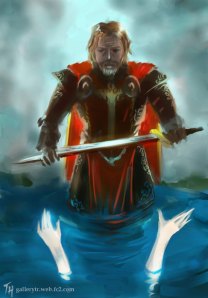
King Arthur receiving Excalibur from the Lady of the Lake after the Sword in the Stone is broken. Known for glowing brightly as well as having an insanely sharp edge. Scabbard is said to stop the wearer from bleeding. It's said that who wielded Excalibur could never be defeated in battle, though this isn't set in stone.

King Arthur receiving Excalibur from the Lady of the Lake after the Sword in the Stone is broken. Known for glowing brightly as well as having an insanely sharp edge. Scabbard is said to stop the wearer from bleeding. It’s said that who wielded Excalibur could never be defeated in battle, though this isn’t set in stone.

You know him as: The perfect warrior king who ruled Great Britain during a Golden Age with Merlin at his side but fell to treachery and now sleeps, waiting for his land’s hour of need (or else has succumbed to his wounds after the Battle of Camlann). He’s a legendary and somewhat tragic figure who tries to overcome the land’s chaos and the notion of “might makes right” through noble chivalry but is ultimately undone. Son of Uther Pendragon and Igraine who was married to Duke Gorlois of Cornwall at the time her famous son was conceived through a rape by deception (assisted by Merlin no less, though Uther and Igraine got married before he was born but poor Gorlois {who got killed}, according to Geoffrey of Monmouth). Raised by Merlin (or Sir Ector depending on the version). Became king when he pulled the Sword in the Stone (which may not have been Excalibur depending on version. If not, then he received it as a gift from the Lady of the Lake after the Sword in the Stone breaks). United Britain, set up a Round Table with his Knights, drives off the Saxons, and reigns as a beloved king in an age of chivalry. Should’ve paid more attention to Guinevere if you know what I mean.

What you don’t know about him: Though always a warrior hero, he wasn’t always the clean-cut king we all know and love. In earlier traditions he was quite lustful, jealous, prideful, and greedy. He could be seen quarreling with churchmen, trying to steal Tristan’s pigs, killing a rival over a woman, and fathering several sons, none of them by Guinevere. Oh, and in the earlier legends, he was more of a warrior than king doing his own grunt work half the time as well as becomes king only because he’s the only guy to stall the Saxon invasion. Oh, and when he has Guinevere burned at the stake, he’s not conflicted about it at all in the original rendition. Yet, at least the early legends didn’t have him trying drown all the Mayday babies after finding out he knocked up his sister.

Earliest Mention: First surviving reference from Welsh and Breton sources at around 600 A. D. In the earlier stories, he’s only an allied commander and war hero and commander of lower birth who won a lot of battles against the Saxons in the 7th century Historia Brittonum (which has the first description of Arthur’s career.) He’s also said to have a dog named Cabal and kill his own son Amr.

2. Merlin
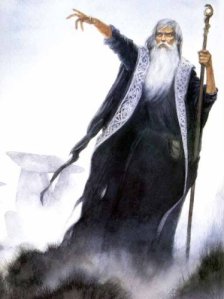
Merlin is perhaps the inspiration of the old wizard archetype that has taken the form of Albus Dumbledore and Gandalf the Gray. Yet, this doesn't mean that Merlin is wholly good since his portrayal is rather dependent on the writer who could cast him as a hero, anti-hero, or villain.

Merlin is perhaps the inspiration of the old wizard archetype that has taken the form of Albus Dumbledore and Gandalf the Gray. Yet, this doesn’t mean that Merlin is wholly good since his portrayal is rather dependent on the writer who could cast him as a hero, anti-hero, or villain.

You know him as: King Arthur’s wizard mentor who may have raised him (except in the stories in which Sir Ector does then Merlin is just the honorary uncle who leaves him at Sir Ector’s doorstep). In most versions, he’s the son of mortal nun raped by a demon explaining why he has magic powers he could only use for good and was said to be one of the last shape-changers during his childhood. Through magic and intrigue he’s responsible for King Arthur’s existence and rise to glory as well as many other events in Arthurian legend. Had a tendency to teach magic to younger women and his relationship with Nimue led to her betraying him and binding him to a tree, rock, or cave (depending on version).

What you don’t know about him: Though his mom is almost always a mortal woman, his dad’s identity varies through legend. Sometimes he’s a demon and in others he could be a fairy, deity, Satan, or nobody. Still, his actions could be highly questionable such as helping Uther to disguise himself as Gorlois so he could father Arthur with Igraine, snatching Arthur away and having someone else raise him, as well arranging the Sword in the Stone test so events would happen as prophesied. Not telling Arthur who his parents were caused many rebellions during the latter’s early reign, as well as Arthur knocking up his sister, and the May Day massacre.

Earliest Mention: Merlin as we know him appears in Geoffrey of Monmouth’s Historia Regum Britannae written around 1136 and was based on an amalgamation of previous historical and mythical figures. Geoffrey originally based his version on eccentric mystic Myrddin Wyllt and Romano-British war leader, Ambrosius Aurelianus. Referred as Merlin Ambrosius  by Geoffrey of Monmouth for this reason.

3. Queen Guinevere

Guinevere has been portrayed as everything from a weak and opportunistic traitor to a fatally flawed but noble and virtuous gentlewoman. She could be praised for her friendliness, intelligence, and gentility or depicted as a vindictive adultress disliked by well-bred knights. Sometimes she's portrayed inauspiciously or hardly at all.

Guinevere has been portrayed as everything from a weak and opportunistic traitor to a fatally flawed but noble and virtuous gentlewoman. She could be praised for her friendliness, intelligence, and gentility or depicted as a vindictive adultress disliked by well-bred knights. Sometimes she’s portrayed inauspiciously or hardly at all.

You know her as: King Arthur’s wife and consort as well as best known for dooming her husband’s kingdom by having an affair with Sir Lancelot (well, the later legends anyway). Daughter of King Leodegrance (in the non-Welsh medieval romance), she was known for her great beauty and intelligence. After her affair with Sir Lancelot was exposed, Arthur condemned her to burn at the stake though Lancelot eventually rescued her anyway which sent Arthur into a rage and pressure the king to confront the knight. While Arthur is in France, Mordred prepares to take over and marry her himself. Her fate after this depends according to version (either she assented, ran away to hide in the Tower of London, or spent the rest of her life in a convent.) After Camlann, she meets Lancelot one last time before returning to the convent to spend the rest of her life. She also had famous abduction story where she’s kidnapped by the king of the “Summer Country” and King Arthur had to spend a year to find her and are finally reunited by Saint Gildas (in one of the earlier renditions. In a later rendition, she’s rescued by Lancelot and their affair begins from here.)

What you don’t know about her: In the earlier Welsh legends, King Arthur is married to three Guineveres (or she just has 3 different dads) and her family composition varies by version. In early Welsh variants, she has a sister Gwenhwyfach and it’s their contention that led to the Battle of Camlann. In the stories where she’s the daughter of King Leodegrance, she has an evil identical half-sister with the same name who tries to get rid of her and ruin her life but was stopped thanks to the Pope. Though childless in most stories, one has her bearing two sons to Mordred and she sometimes takes up with him, too in some variants as well.  In Geoffrey of Monmouth’s account, she’s a beautiful educated Romano-British noblewoman in stories prior to the 13th century, she’s badass warrior and magic-user.

Earliest Mention: Earliest mention of her as King Arthur’s queen is in the Welsh tale Culhwch ac Olwen written in the early 1100s, but little more is said about her. Also, her name has a lot of spelling variations.

4. Sir Lancelot
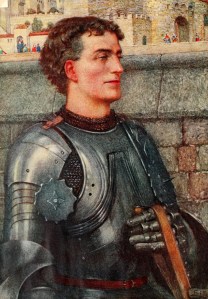
Sir Lancelot may have been a latecomer in the Arthurian mythos but he quickly became very popular afterwards. In the later romances he's a main focus.

Sir Lancelot may have been a latecomer in the Arthurian mythos but he quickly became very popular afterwards. In the later romances he’s a main focus. Also, Guinevere isn’t the only woman he’s linked with in the legends.

You know him as: He’s probably the Knight of the Round Table you’re most familiar with and is seen as King Arthur’s greatest champion whose affair with Queen Guinevere brings Camelot’s downfall. Seen as the bravest knight, sometimes uniquely perfect in every way save his relationships with women as well as buddies with almost all the knights. Son of King Ban and Queen Elaine by was raised by the Lady of the Lake. Father of Sir Galahad with Elaine of Corbenic who had him sleep with her by tricking him into thinking she was Guinevere (though it’s said they were married for ten years after that.) Went on the Holy Grail quest to atone for his sins but he forgot everything about purity and all that as well as resumes his affair with Guinevere. When found out, he escaped before King Arthur could confront him but he rescues Guinevere from the stake. They meet one last time after Arthur’s death before he spends the rest of his life as a priest by her death.

What you don’t know about him: While known to go on a homicidal rampage in Monty Python and the Holy Grail, it’s worth remembering that he was mentally unstable prone to slaughtering innocents at no provocation, only to collapse in abject apologies afterward in the Sir Thomas Malory rendition (this is exactly how Monty Python depicted him though they depict him as rather sexually ambiguous.) Also had the habit of wandering into the other knights’ pavilions and making himself at home. Not to mention, he’s actually a relative latecomer as a Knight of the Round Table he joins long after it’s assembled.

Earliest Mention: Introduced in the 12th century by French writer Chretien de Troyes in Erec and Enide. First appearance as a main character was in Le Chevelier de la Charette (or “Lancelot, Knight of the Cart”). His patron was one of Queen Eleanor of Acquitaine’s daughters who may have ordered de Troyes to add Lancelot’s infamous affair with Guinevere. Thus, it’s possible the entire crux of a huge portion of the Arthurian Romances was the result of a lady wanting to turn an adventure story into a medieval equivalent of a Harlequin Romance novel.

5. Sir Gawain

Sir Gawain was King Arthur's nephew and original champion. He's known for his unparallelled courteousness and his way with women. His symbol is a gold pentangle on a red background (at least from the Green Knight legend).

Sir Gawain was King Arthur’s nephew and original champion. He’s known for his unparallelled courteousness and his way with women. His symbol is a gold pentangle on a red background (at least from the Green Knight legend).

You know him as: Knight of the Round Table and King Arthur’s nephew. Son of Morgause and King Lot of Lothain and Orkney, he is the best known of the Orkney brothers (depending on whether you accept Mordred as one of them.) Before Sir Lancelot, he was King Arthur’s greatest champion. He’s often seen as formidable, courteous, and compassionate warrior who’s loyal to his king and family. He’s a friend to young knights, defender of the poor, and defender of women as “The Maiden’s Knight.” Some legends have the sun as his source of strength and is said to be a great healer through his knowledge of herbs. Best known stories of him are his struggles with the Green Knight and his wedding to Dame Ragnell (an early prot0-feminist tale. Yet, he’s been romantically linked to other women in legends particularly Lady Bertilak from the Green Knight legend. He’s also credited with fathering at least 3 kids.)  Accompanied King Arthur on the quest for the Holy Grail yet, is buddies with Sir Percival, and  feuded with Sir Lancelot after the latter killed a few of his brothers (save Mordred.) Dies in an attempt to prevent Mordred’s usurpation.

What you don’t know about him: In the earlier legends, it’s implied that he’s King Arthur’s second-in-command as well as the true and rightful heir to his uncle’s throne. Of course, he was later struck down by Mordred’s forces. The French legends about him weren’t as glowing about him and depict him as a proud and worldly knight demonstrating through his failures the danger of neglecting the spirit for futile gifts of the material world. On the Post-Vulgate Grail Quest, he always has the purest intentions but can’t see God’s grace to notice the error in his ways.

Earliest Mention: He’s been mentioned in some of the earliest Welsh Arthurian sources under the name Gwalchmei who was seen as a traditional Welsh hero.

6. Sir Percival

There are many versions of Sir Percival's birth and family. His father may be Alain de Gros, King Pellinore, or another worthy knight. If Pellinore, then his brothers are Sir Agovale, Sir Lamorak, Sir Dornar, and Sir Tor. Guess there's a reason why his mom didn't want him to be a knight.

There are many versions of Sir Percival’s birth and family. His father may be Alain de Gros, King Pellinore, or another worthy knight. If Pellinore, then his brothers are Sir Agovale, Sir Lamorak, Sir Dornar, and Sir Tor. Guess there’s a reason why his mom didn’t want him to be a knight.

You know him as: Knight of the Round Table and known as “the Best Knight of the World.” Said to be the youngest of King Arthur’s knights as well as rather naive with few social skills since his mom raised him in the Welsh forests ignorant of the ways of men until he was 15 (then he went to join the Round Table through beating Sir Kay.) Still, in a lot of stories, he’s either a virgin or has very little experience with women, which is okay since he’s a teenager. Yet, don’t attack anyone unarmed in front of him or he will beat you up as Sir Kay learned the hard way. In some stories he has a sword that could cut through anything and would never break except in the toughest battle of his life. Best known for his involvement in the Holy Grail quest in which he meets the Fisher King but fails to answer a question to heal him, resists a beautiful enchantress, and was one of the two knights who accompanied Sir Galahad at the Grail castle.

What you don’t know about him: In earlier Grail narratives, he’s the hero while Galahad takes over in the later legends. Also, while he has a girlfriend in the earlier works, he’s certainly sexually inexperienced in the later versions and almost certainly stays that way since he becomes a monk. In some tales, he’s best friends with Sir Gawain (who’s sometimes his cousin) and in one legend even chooses to share a curse Gawain brought upon himself. His willingness to save his friend’s life by splitting the curse in half though they each get wounded badly.

Earliest Mention: He’s a difficult case. While he first appears under his regular name during the 1100s in Chrietien de Troyes’ le Conte du Graal (“Perceval, the Story of the Grail”), there is a similar character named Peredur in the Welsh legends but to what extent de Troyes adapted such stories into his work is a matter of debate.

7. Sir Galahad

Sir Galahad is one of the more familiar Knights of the Round Table but he's one of the most recent and least interesting. Rather he's seen as "the world's greatest knight." Then again, his character may have been inspired by the practices of the Cistercian Order founded by Saint Bernard of Clairvaux.

Sir Galahad is one of the more familiar Knights of the Round Table but he’s one of the most recent and least interesting. Rather he’s seen as “the world’s greatest knight.” Then again, his character may have been inspired by the practices of the Cistercian Order founded by Saint Bernard of Clairvaux.

You know him as: Knight of the Round Table and hero of the Holy Grail legend. Though an illegitimate son (conceived through rape of deception) of Sir Lancelot and Elaine of Corbenic, he is known for his gallantry and purity. Upon reaching adulthood, he’s knighted by his dad and joins the Round Table after being the only person to survive the Siege Perilous and pulling a sword out of a rock. During the Grail Quest, he smites his enemies, saves Sir Percival from 20 knights, rescues damsels in distress, and what not. After receiving the Grail, he is taken up to Heaven and never to be seen again.

What you don’t know about him: He was actually named after his dad Sir Lancelot (who’s name was originally Galahad before changing it). Also, despite being one of the best known Knights of the Round Table, he doesn’t really do much except go on a quest for the Holy Grail which was what he was pretty much chosen for.

Earliest Mention: He’s a latecomer in Arthurian legend with his first appearance being in the 13th century French Lancelot-Grail cycle. Most of what he does in the Holy Grail quest, Sir Percival does in earlier versions.

8. Sir Kay
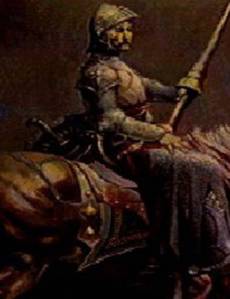
Though known for his bad mouth as well as bullying and boorish behavior, Sir Kay appeared in some of the earliest Arthurian legends as one of King Arthur's premier knights. Later legends have him as a jerk to get the crap beat out of him.

Though known for his bad mouth as well as bullying and boorish behavior, Sir Kay appeared in some of the earliest Arthurian legends as one of King Arthur’s premier knights. Later legends have him as a jerk to get the crap beat out of him.

You know him as: As son of Sir Ector, he’s King Arthur’s foster brother, seneschal, as well as one of the first Knights of the Round Table. Though a loyal and capable knight, he tends to manipulate the king to get his way and prior to the Sword of the Stone story (the story he’s best known in), Arthur was his squire at a tournament who only pulled the sword out because he couldn’t get the new knight’s sword due to being locked out of the house. Sure he tries to claim he pulled the sword but later relents it was Arthur. He’s also kind of a hothead with a fiery temper and sometimes could be bit of a bully who mainly serves either as a foil or to get the crap beat out of him by the new knight.

What you don’t know about him: While he’s not seen in a great light in the best known Arthurian legends, the Welsh legends have him as a really badass knight capable of magical powers like growing giant size, generating so much body heat he could keep dry in the rain, holding his breath underwater for 9 days as well as going without sleep the same amount of time. Also, it’s said that if no wounds could be healed from his sword.

Earliest Mention: He’s one of the earliest characters in Arthurian legend from the original Welsh tales.

9. Sir Bedivere

Sir Bedivere returning Excalibur to the Lady of the Lake. Though a prominent figure in the early Arthurian Mythos, this is what he's most remembered for. Well, that and trying women for witchcraft by weighing them against ducks.

Sir Bedivere returning Excalibur to the Lady of the Lake. Though a prominent figure in the early Arthurian Mythos, this is what he’s most remembered for. Well, that and trying women for witchcraft by weighing them against ducks.

You know him as: Early Knight of the Round Table and King Arthur’s marshal (or cup-bearer in later versions.) In the Arthurian mythos, he’s best known for being the only Round Table Knight to survive the Battle of Camlann and throws Excalibur back to the Lady of the Lake at the mortally wounded King Arthur’s request.  In pop culture, he’s best known for condemning a woman to death for witchcraft by weighing her against against a duck since he believes she’s made out of wood in Monty Python and the Holy Grail.

What you don’t know about him: In older Welsh legends, he’s the handsome one handed knight with a four pronged spear and was known for using dark magic against his foes with great skill and aggression to the townspeople’s chagrin. He’s also said to be the best looking knight in Britain.

Earliest Mention: He’s one of the oldest characters in Arthurian legend from the original Welsh tales.

10. Sir Mordred
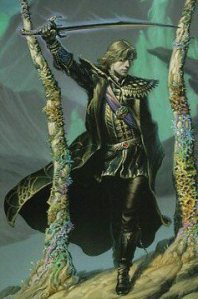
Sir Mordred once a capable knight only to become traitor when discovering he was a product of incest. In the Welsh sources, he's only King Arthur's nephew and in the earliest sources, they're not related at all.

Sir Mordred who was once a capable knight only to become traitor when discovering he was a product of incest. In the Welsh sources, he’s only King Arthur’s nephew and in the earliest sources, they’re not related at all.

You know him as: Knight of the Round Table and notorious traitor who fought King Arthur at the Battle of Camlann where that claimed both their lives (or at least his if you accept the King Arthur in sleep narrative). He’s popularly seen as King Arthur’s illegitimate son by his half-sister Morgause (if not, then Morgan Le Fay). At first, he’s a loyal and competent knight until he finds out about his real father. Let’s just say it’s goes downhill from there. Though two of his half-brothers expose Guinevere’s affair with Sir Lancelot, he nevertheless exploits it when King Arthur leaves him in charge of the kingdom so he could fight the guy who slept with his wife. Once his uncle dad is gone, he officially has himself declared king. Camlann is fought when King Arthur returns.

What you don’t know about him: In the Welsh legends, he’s only King Arthur’s nephew (if related at all) and foster son as well as was legitimately conceived between Morgause and her husband. In stories where he takes over the kingdom while King Arthur is away, he marries (or at least tries to marry) Guinevere though she didn’t have much choice in the matter. In stories he doesn’t, he’s married to Queen Guinevere’s sister Gwenhwyfach (making him King Arthur’s brother-in-law) and his inevitable confrontation with King Arthur at Camlann was due to a spat between their wives.

Earliest Mention: The first surviving mention of him is in the 10th century Annales Cambriae where he’s listed as Merdaut. All it says is that him and Arthur died at Camlann but it’s never certain whether they killed each other or were on opposite sides. He first plays role of traitor on Geoffrey of Monmouth’s Historia Regum Britannae.

11. Sir Palomides

Sir Palomides may be the most famous Non-European Knight of the Round Table, but he has such rotten luck. Not only did he fall in love with a girl who had the hots for his best friend, but in some stories, he's killed after the Grail Quest for killing that woman's husband.

Sir Palomides may be the most famous Non-European Knight of the Round Table, but he has such rotten luck. Not only did he fall in love with a girl who had the hots for his best friend, but in some stories, he’s killed after the Grail Quest for killing that woman’s husband.

You know him as: Knight of the Round Table from the Middle East along with his brothers Segwarides and Safir. Originally a pagan prince of Esclabor before converting to Christianity (in some versions during the Grail Quest). While best friends with Sir Tristan, he sort of resents him when they both fall in love with Iseult the Fair, though he doesn’t want that to t ruin their relationship (also, because he lost a joust with Sir Tristan that determined which one called dibs). Best known for taking over King Pellinore’s hunt for the Questing Beast which proved to be just as fruitless as the hope of having a relationship with Iseult the Fair (though Sir Thomas Malory has him finally slay the beast after his conversion to Christianity which releases him from worldly entanglements).

What you don’t know about him: His fate differs according to version. In Sir Thomas Malory’s tale, he sides with Sir Lancelot after the latter’s affair with Queen Guinevere is exposed and is made a Duke of Provence. In the Post-Vulgate version, Sir Gawain kills him after the Holy Grail Quest since he killed King Mark of Cornwall for slaying Sir Tristan.

Earliest Mention: First appears in the 13th century Prose Tristan an expansion of the Tristan and Isolde story.

12. Sir Ywain
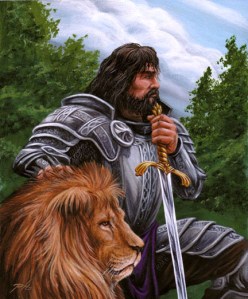
Sure Sir Ywain may have killed a supernatural fountain guardian who beat up his cousin and later married the guy's widow. But he at least has a cool lion despite that he's the Round Table Knight you probably never heard of.

Sure Sir Ywain may have killed a supernatural fountain guardian who beat up his cousin and later married the guy’s widow. But he at least has a cool lion despite that he’s the Round Table Knight you probably never heard of.

You know him as: Knight of the Round Table and son of King Urien (sometimes with Morgan Le Fay, which makes him King Arthur’s nephew). Best known for rescuing a lion from a serpent who proves to be a loyal companion and symbol of knightly virtue. As for him, not so much since he ended up killing a guardian of a supernatural storm-causing fountain because the guy beat up his cousin. Not to mention, he also marries the guy’s widow Laudine who later dumps him after Sir Gawain tempts him into another adventure (they make up thanks to the lion helping him to shape up after he’s basically devastated by the whole thing).

What you don’t know about him: He was a very popular character in the Arthurian legends during the Middle Ages though he’s not a well known knight nowadays though he’s more or less seen as “the one with the lion” if he is. Also, there’s a Welsh legend of him playing chess with King Arthur as the Saxons prepare to fight the Battle of Badon.

Earliest Mention: He’s one of the earliest characters associated with King Arthur from the Welsh legends. Also, he’s based on the historical figure Owain mab Urien, King of Reghed in Great Britain.

13. Sir Tristan
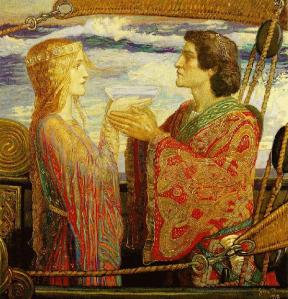
I don't know about Sir Tristan here, but I'm sure that sharing a love potion with your uncle's fiancee is never a good idea. Really not a good idea, on a positive note, he's not in the Harry Potter universe where love potions are date rape drugs.

I don’t know about Sir Tristan here, but I’m sure that sharing a love potion with your uncle’s fiancee is never a good idea. Really not a good idea, on a positive note, he’s not in the Harry Potter universe where love potions are date rape drugs.

You know him as: Knight of the Roundtable who was sent by his Uncle King Mark of Cornwall to fetch the Irish princess Iseult the Fair for the Cornish king’s wedding. Yet, on the way, they accidentally consume a love potion and fall helplessly in love. Though she marries King Mark as promised, the pair undergo a lot of trials and tribulations that test their secret affair. Of course, this goes on until their tragic deaths by despair (his by poison out of thinking she abandoned him) but they’re buried side by side as two star crossed lovers should be with a honeysuckle springing from her grave around a hazel tree growing from his (that or a briar twirling around a rose or just pain dead).

What you don’t know about him: Since he couldn’t marry his beloved Iseult the Fair, he married another woman named Iseult of the White Handsand is only attracted to her because she shared his beloved’s name. It goes as worse as you’d expect since this Iseult ended up indirectly killing him by saying his beloved was never coming back just as the girl arrives to cure him.

Earliest Mention: He makes his early appearance in the early 12th century in Celtic mythology and/or folklore though his affair with Iseult the Fair is incorporated into the Arthurian Mythos later.

14. Morgause
Though Queen of Lothain and Orkney and mother of five sons and a number of daughters, Morgause still has a heft sexual appetite. Yet, this is what did her in at the end when her son Gaheris lopped her head off.

Though Queen of Lothain and Orkney and mother of five sons and a number of daughters, Morgause still has a heft sexual appetite. Yet, this is what did her in at the end when her son Gaheris lopped her head off.

You know her as: King Arthur’s half-sister, wife of King Lot of Lothain and Orkney, and mother of the Orkney brothers: Sir Gawain, Sir Agavain, Sir Gareth, Sir Gaheris, and Sir Mordred. May have conceived Mordred with King Arthur in an act of inadvertent incest, but they’re estranged upon realization for good reason. Yet, despite five boys and a number of daughters, she manages to be some sort of cougar being very friendly with younger men (King Arthur included). After King Lot’s death, she has an affair with Sir Lamorak (son of the guy who killed her husband), which leads to her son Sir Gaheris beheading her in bed though tries to frame her lover leading Agavain, Gawain, and Mordred to get rid of him.

What you don’t know about her: In her earlier stories, she does nothing but be the mother of the Orkney brothers. She doesn’t become a fully formed character until Sir Thomas Malory’s Le Morte d’Arthur. Also tends to be combined with Morgan Le Fay and some scholars think she was created due to a translation error.

Earliest Mention: She’s a later addition appearing in Chretien de Troyes Perceval as Orcades. Yet, she did have a few earlier counterparts before then.

15. Morgan Le Fay

Morgan Le Fay is perhaps one of the best known characters in Arthurian legend as well as one of the most popular. Somehow there's something hard to resist with such a complex scheming witch who feels that Queen Guinevere's a hypocrite for banishing her lover and taking up with Sir Lancelot. Of course, she also had the hots for him as well.

Morgan Le Fay is perhaps one of the best known characters in Arthurian legend as well as one of the most popular. Somehow there’s something hard to resist with such a complex scheming witch who feels that Queen Guinevere’s a hypocrite for banishing her lover and taking up with Sir Lancelot. Of course, she also had the hots for him as well.

You know her as: King Arthur’s half-sister, a powerful sorceress, and in later traditions, wife of King Uriens and mother of Sir Ywain. Though some modern renditions make her Mordred’s mother, she is not but like her sister Morgause, she has a string of lovers nevertheless (though Uriens doesn’t seem to mind when she’s married to him). Yet, while she sometimes has a adversarial relationship with King Arthur (to the point when she tries to arrange his downfall but fails), she’s more of a an arch-enemy toward Guinevere (who exposed her having an affair with her cousin). Also, part of her hatred for Guinevere stems from the fact she herself wanted to sleep with Sir Lancelot. She devotes a lot of her time in the legend to exposing Guinevere’s affair with Sir Lancelot though King Arthur didn’t believe her no matter how hard she tried to convince him. Yet, somehow she mellows, she and Arthur reconcile, and soon takes him up to Avalon after Camlann.

What you don’t know about her: She may have started out in Arthurian legend as a supernatural being possibly a goddess. Also, she didn’t start out as King Arthur’s half-sister and actually had nine in her early appearances. Not only that, but her early appearances have her as a benevolent sorceress who might’ve saved King Arthur’s life. She also plays a role assisting Sir Ywain in one story, too as a healer but the story doesn’t imply that they are mother and son. Oh, and she appears in stories that are unconnected with the Arthurian Mythos as well.

Earliest Mention: It’s hard to say whether she started out as a French character or as a Welsh one. She’s first mentioned by name in Geoffrey of Monmouth’s Vita Merlini while the later French tales feature her with all her familiar traits.

16. Nyneve
She may not have given King Arthur Excalibur but Nyneve's a magical being who's closely identified as being the Lady of the Lake. Also, has many names like Nimue, Niniane, and Vivian.

She may not have given King Arthur Excalibur but Nyneve’s a magical being who’s closely identified as being the Lady of the Lake. Also, has many names like Nimue, Niniane, and Vivian.

You know her as: She’s best known as the Lady of the Lake (though she’s not the one who gave King Arthur Excalibur, though she was a servant of hers in some versions who’s later beheaded in the Sir Thomas Malory stories).  Learned magic from Merlin who fell for her yet she ends up betraying him and using her powers to lock him in a tree, (rock, or cave). Afterwards, she replaces Merlin as King Arthur’s adviser. Still, her love is Sir Pelleas who she used her magic to hate a girl who was thoroughly uninterested in him (yet, she ended up dying in despair). Nevertheless, the guy lived mostly because of her. Associated with Avalon and may have raised Sir Lancelot.

What you don’t know about her: Though one of the more familiar characters in Arthurian legend, there’s not a lot of stories about her and her character.

Earliest Mention: Either in the works by Chretian de Troyes or the Lancelot Grail cycle. About as early as the 1100s maybe even before that.

17. Iseult the Fair

Iseult's affair with Sir Tristan is one of the more enduring medieval love stories that has stood the test of time. Yet, this was originally a separate story before being part of the Arthur Mythos.

Iseult’s affair with Sir Tristan is one of the more enduring medieval love stories that has stood the test of time. Yet, this was originally a separate story before being part of the Arthur Mythos.

You know her as: An Irish princess who heals Sir Tristan and is arranged to marry his Uncle King Mark of Cornwall. Yet, when she and Tristan accidentally drink a love potion en route, they fall hopelessly in love. Once she’s married, they embark on a tragic love affair consisting of secret meetings until King Mark banishes Tristan from Cornwall. They meet again when Tristan is poisoned (or stabbed in the back by King Mark once he catches him playing a harp from a tree).

What you don’t know about her: In verse tradition, she and Tristan don’t meet again after he’s banished until he’s on his deathbed. Some versions have their affair go much longer and in some stories they even have kids. Also, she has a lot of guys attracted to her mostly so they could have a conflict with Tristan.

Earliest Mention: Like Sir Tristan, she makes her first appearance in the 12th century in Celtic mythology and/or folklore, though her affair was treated as a separate story and incorporated in the the King Arthur Mythos later.

18. King Pellinore
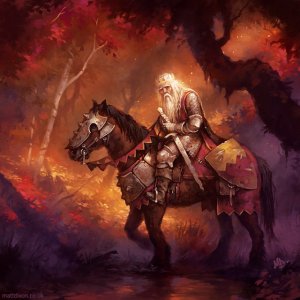
King Pellinore on the endless hunt of the legendary Questing Beast whose appearance can't be articulated in this post. Still, this guy probably should've been making less war and spend more time with his family or families.

King Pellinore on the endless hunt of the legendary Questing Beast whose appearance can’t be articulated in this post. Still, this guy probably should’ve been making less war and spend more time with his family or families.

You know him as: Best known for his endless hunt of the Questing Beast and beating King Arthur in three jousts which breaks the Sword in the Stone, which leads to the latter to fetch Excalibur from the Lady of the Lake (if the sword is Excalibur, Merlin just enchants Arthur to save his life. Both become friends afterwards and he’s invited to join the Round Table afterwards. Also, he’s known to have a lot of kids to different women and at least has three sons join the Round Table, too (though he’s sometimes referred to as Sir Percival’s father). Not to mention, he helps King Arthur put down a lot of rebellions of other kings including his brother-in-law Lot of Lothian. Kills King Lot of Orkney during a battle that results in a blood feud with the Orkney brothers and many other deaths including his own son Lamorak.

What you don’t know about him: When trying to rescue Nyneve, he refused to provide aid to a wounded knight and his ailing lady. Lady later killed herself with her dead lover’s sword before he would eventually find out she was his own daughter.

Earliest Mention: He’s at least in Arthurian legend as early as the Post-Vulgate cycle.

Our Father Who Art in Heaven, Hallowed Be Thy Religious Art

The-Last-Supper

As a lifelong practicing Catholic, art aficionado, and history buff, I always have a great appreciation for religious art, architecture, music, and movies. Well, just as long as I find them to be of great artistic quality and not something that looks like you can put it on somebody’s T-Shirt. Quality religious art has always been greatly influential in our modern culture whether it’s the great Madonna and Child paintings from the Renaissance, large intricate Gothic cathedrals from the Middle Ages, sacred hymns, and a lot of religious films of the 1950s. I mean Ben Hur might’ve starred Charlton Heston but you have to enjoy the chariot race scene. I can go on and on about the great religious masterworks but that would be a very long post since it would involve scores and scores of paintings and sculptures you’re already familiar with. Instead, I’ll focus on some of the great blunders that would make everyone wonder why God hadn’t unleashed His wrath on the artist in the first place. Yet, since this is about bad religious artworks, here are a few points to follow.

1. This isn’t a post that shows anti-religious artwork or anything that’s intentionally depicted as sacrilegious. In fact, much of the works were done by religious artists themselves but they just didn’t seem to depict the true spirit of the religious subjects that they’re either tacky or unintentionally funny. Examples include, crapsaccharine mentality, bad artistic representation, or images that in some way don’t make any sense.

2. This isn’t an anti-religious post, just a post of bad religious expression in art. Rather, as a Catholic, I don’t see anything wrong with making fun of religion as long as it’s not offensive. Since religious art plays a critical role in our culture, I see nothing wrong with mocking the tacky pieces.

3. This isn’t a post depicting religious artwork used for an amusing purpose or has the equivalent of Jesus being depicted in a Batman suit, a celebrity in an iconographic image or a dog version of The Last Supper. I know these exist but they were supposed to be funny on purpose. These works shown in this post were initially intended to be taken seriously as well as catered to an audience.

4. These aren’t artworks with religious motifs or symbolism in otherwise secular works.

5. These are mostly done by contemporary artists since I can’t bring myself to criticize the great masterpieces of religious art during the Renaissance and Baroque Era unless it’s Abraham trying to sacrifice Isaac with a blunderbuss to his head. Yet, I haven’t found this one yet.

6. Yes, most of these works derive from Christianity yet that’s because many Christian artworks tend to be the worst offenders. Basically if Christians are willing to depict Jesus in a business suit, I’ll practically run with it. I’m also willing to post Jesus with a gun.

7. Some of these would have quotes as to what the artist intended for this work to mean, which aren’t in my own words.

8. This doesn’t include bad restoration work so the lady who made Jesus look like a monkey is off the hook.

So without further adieu, here is an assortment of kitschy religious artwork.

1. Leaping Jesus on the cross talking to the women of Jerusalem.

I suppose this is for a children's Bible but even in kids' Bibles, this isn't depicted as a very happy occasion. I mean Jesus is supposed to be suffering in deathly agony carrying a huge cross. This doesn't cut it.

I suppose this is for a children’s Bible but even in kids’ Bibles, this isn’t depicted as a very happy occasion. I mean Jesus is supposed to be suffering in deathly agony carrying a huge cross. This doesn’t cut it.

2. Jesus rising out of his tomb body and spirit.

I think this moment is meant to be left to the imagination. Also, when the women approached the tomb, Jesus' body wasn't there at all. Not to mention, why does Jesus look like he's just out of a gym.

I think this moment is meant to be left to the imagination. Also, when the women approached the tomb, Jesus’ body wasn’t there at all. Not to mention, why does Jesus look like he’s just out of a gym?

3. “It seems obvious that if Jesus were to shock the status quo in the 21st century with a tattoo that it would say ‘Father.'”

Except this could easily be some 1990s rock musician who could easily look like Jesus. Also, he probably wouldn't be looking at us with such intensity of a male stripper into his job. He's probably using his "Father" tattoo as an excuse to show off those biceps to some Christian ladies.

Except this could easily be some 1990s rock musician who could easily look like Jesus. Also, he probably wouldn’t be looking at us with such intensity of a male stripper into his job. He’s probably using his “Father” tattoo as an excuse to show off those biceps to some Christian ladies.

4. “The anguish that God experiences while His children are abused is the cumulative experience of all the abused children since the beginning of time compressed into one eternal moment.”

While the broken dolls may represent God’s children having to put up with worldly abuse, Jesus’s facial expression doesn’t seem overcome by anguish over innocent souls suffering. Rather Jesus appears in this painting like he’s doing a promo for some “Head and Shoulders” shampoo commercial. Let’s just say if a Christian artist doesn’t know the difference between the facial expressions of “upset” or “happiness during shampoo massage,” he shouldn’t be doing religious paintings.

5. Jesus during story time at school.

Seriously, I kind find this picture of Jesus sitting with the little ones during story time a bit unnerving for some reason. Just find seeing a 1st century man in his thirties at a modern day elementary school just out of place.

Seriously, I kind find this picture of Jesus sitting with the little ones during story time a bit unnerving for some reason. Just find seeing a 1st century man in his thirties at a modern day elementary school just out of place.

6. Jesus at the United Nations.

"Uh, fellas, can you please let me? I can't get through the door here. It's too tiny. Seriously, I need a bigger entrance."

“Uh, fellas, can you please let me? I can’t get through the door here. It’s too tiny. Seriously, I need a bigger entrance.”

7. Just a still life of Christian imagery.

So we have cross, Holy Spirit Dove, divine light, Roman soldier, lyre, Bible, two greatest commandments, and a coffee cup? Seriously, I don’t think there were any coffee drinkers in 1st century Palestine.

8. Jesus at the Liberty Bell.

I don't know about you but Jesus seems a little frustrated over being in a painting with lots of Americana. I mean he doesn't seem to be happy as a figure of American patriotism.

I don’t know about you but Jesus seems a little frustrated over being in a painting with lots of Americana. I mean he doesn’t seem to be happy as a figure of American patriotism.

9. Jesus is always the senior business partner. “Christ’s presence is an integral part of daily life, no matter one’s profession or calling.”

I don't know about you but while I think Jesus' presence should be encouraged in business meetings, it doesn't mean everyone's going to listen to him. Also, remember that time when he's yelling and overturning tables at the temple. Man, you don't want to see him like that.

I don’t know about you but while I think Jesus’ presence should be encouraged in business meetings, it doesn’t mean everyone’s going to listen to him. Also, remember that time when he’s yelling and overturning tables at the temple. Man, you don’t want to see him like that.
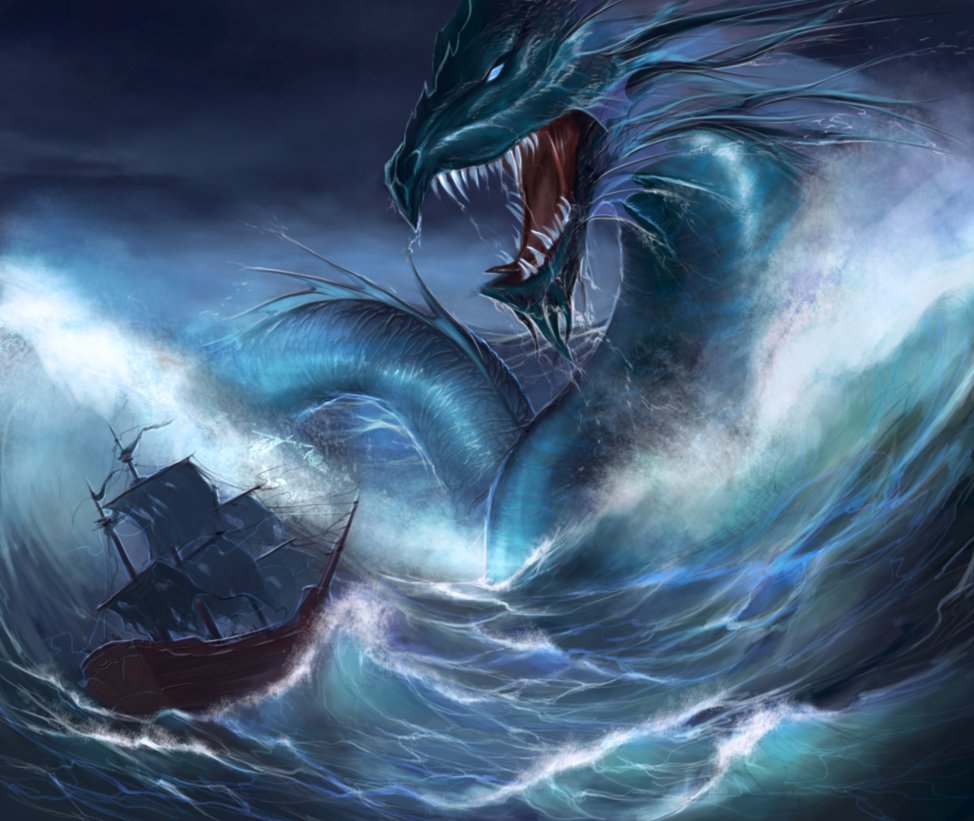
10. Jesus takes up the soul of Michael Jackson wearing the King of Pop’s glittery glove.

Seriously, why have Michael Jackson in a religious painting? I mean what the hell did this ever get produced? Guess it’s someone’s fan work I guess. A Michael Jackson zombie portrait would’ve been much more appropriate.

11. A suffering Jesus with a chalice and a tiger?

Seriously what does a white tiger have to do with Jesus' suffering other than the fact the artist thought it was too awesome to leave out?

Seriously what does a white tiger have to do with Jesus’ suffering other than the fact the artist thought it was too awesome to leave out?

12. If only Jesus had taken anabolic steroids, he probably wouldn’t have suffered on the cross.

Sorry, I can’t take this painting seriously for some reason. Maybe it’s seeing Jesus with a body like Arnold Schwarzeneggar. Also, Jesus seems to have a determined expression on his face and for breaking off the wood on the cross.

13. A modern rendition of the Annunciation.

I know the girl in blue is supposed to be the Virgin Mother dressed as her favorite Disney princess but she looks like such a kid in this it's not even funny. In fact, it's kind of creepy. The Angel Gabriel praying kind of irks me, too. I think the Annunciation should be depicted in its own time or with an older Mary for God's sake.

I know the girl in blue is supposed to be the Virgin Mother dressed as her favorite Disney princess but she looks like such a kid in this it’s not even funny. In fact, it’s kind of creepy. The Angel Gabriel praying kind of irks me, too. I think the Annunciation should be depicted in its own time or with an older Mary for God’s sake.

14. Jesus reaches for the sky.

Heard that God hated this statue of his beloved son so much that he sent a lightning bolt down to destroy it. Guess there's a limit to the level of tackiness the Almighty can tolerate.

Heard that God hated this statue of his beloved son so much that he sent a lightning bolt down to destroy it. Guess there’s a limit to the level of tackiness the Almighty can tolerate.

15. “Only God will share in the fullness of your sufferings and never forsake you.”

Also, if you shoot up heroin, Jesus also gets high so it balances out. I mean I guess assuming that Jesus and the addict share the same tattooed arm. Still, perhaps Jesus shouldn't materialize behind unsuspecting people anymore since it has lead to a lot of misunderstandings.

Also, if you shoot up heroin, Jesus also gets high so it balances out. I mean I guess assuming that Jesus and the addict share the same tattooed arm. Still, perhaps Jesus shouldn’t materialize behind unsuspecting people anymore since it has lead to a lot of misunderstandings.

16. The Most Holy Trinity.

I get the whole “Jesus is God” thing with Christianity but he’s “the Son” of the Holy Trinity, not “the Father” and “the Holy Spirit.” Let’s just say if you depict Jesus as all three persons of the Trinity, you have a problem. Also, the little angels don’t seem too happy with the Jesuses stomping on their heads.

17. Jesus riding on a dinosaur, need I say more.

Yes, this picture is as ridiculous as it sounds since Jesus is depicted in a prehistoric setting, let alone before the New Testament.

Yes, this picture is as ridiculous as it sounds since Jesus is depicted in a prehistoric setting, let alone before the New Testament.

18. Jesus Christ is the savior of truckers.

Now I don't want to insult any truckers since they perform a valuable purpose that we can't deny and I know that many of them need Jesus' protection as well. Yet, somehow I find this so tacky that I'd expect it to be seen in some rundown trailer for some reason. And the fact it's velvet.

Now I don’t want to insult any truckers since they perform a valuable purpose that we can’t deny and I know that many of them need Jesus’ protection as well. Yet, somehow I find this so tacky that I’d expect it to be seen in some rundown trailer for some reason. And the fact it’s velvet.

19. Jesus moping on the cross.

For some reason, I can't help looking at this and  not expect Jesus about to break into some Flashdance routine after he says his prayers. Also, where are his "stigmata" marks for his hands and feet seem totally bare.

For some reason, I can’t help looking at this and not expect Jesus about to break into some Flashdance routine after he says his prayers. Also, where are his “stigmata” marks for his hands and feet seem totally bare.

20. And yet another picture with Jesus and the dinosaur.

Now Jesus with a dinosaur is ridiculous enough. Jesus with a dinosaur, rainbow, and a young blond girl just takes tackiness to a whole other level. Looks like Jesus is so excited to finally see a dino after working on his new time machine or something.

Now Jesus with a dinosaur is ridiculous enough. Jesus with a dinosaur, rainbow, and a young blond girl just takes tackiness to a whole other level. Looks like Jesus is so excited to finally see a dino after working on his new time machine or something.

21. See Jesus hang out with his buddy Lord Krishna.

Of course, Jesus and Krishna are both said to be human incarnations of God or a god. Yet, outside India (where Krishna is a major icon in Hinduism), this picture would kind of border on blasphemy because of the whole one god rule in Christianity.

Of course, Jesus and Krishna are both said to be human incarnations of God or a god. Yet, outside India (where Krishna is a major icon in Hinduism), this picture would kind of border on blasphemy because of the whole one god rule in Christianity.

22. The King of Rock and Roll meets the King of Kings.

For some reason Elvis Presley doesn't seem thrilled meeting Jesus despite that he was a staunch Christian all his life and didn't like people calling him "King" to his face for this reason. Probably is due to the fact Elvis was disappointed about the buffet up in Heaven.

For some reason Elvis Presley doesn’t seem thrilled meeting Jesus despite that he was a staunch Christian all his life and didn’t like people calling him “King” to his face for this reason. Probably is due to the fact Elvis was disappointed about the buffet up in Heaven.

23, Here’s the Mormonism Founder Joseph Smith as a Spinx.

For a moment, I almost thought it was a tacky monument to Buster Keaton at some Los Angeles country club. My apologies to the late great silent screen star.

For a moment, I almost thought it was a tacky monument to Buster Keaton at some Los Angeles country club. My apologies to the late great silent screen star.

24. Of course, this art work depicts Jesus’ little known Sermon of Stepford.

This was actually done by a Mormon artist and it was alleged that this was supposed to be a picture of Jesus with his polygamous wives. Despite that many Mormons (particularly early ones) believe Jesus  had at least two wives, the artist denies this. Still, such Mormon concept makes Dan Brown's idea of Jesus and Mary Magdalene as a couple seem pretty tame.

This was actually done by a Mormon artist and it was alleged that this was supposed to be a picture of Jesus with his polygamous wives. Despite that many Mormons (particularly early ones) believe Jesus had at least two wives, the artist denies this. Still, such Mormon concept makes Dan Brown’s idea of Jesus and Mary Magdalene as a couple seem pretty tame.

25. Lucifer snared on the power lines.

So, remember kids, the main reason we have power lines is because they're the best defense against Satan. The fact they provide electricity to your house is purely coincidental.

So, remember kids, the main reason we have power lines is because they’re the best defense against Satan. The fact they provide electricity to your house is purely coincidental.

26. See Jesus walking in the woods with a huge bear.

"As my Father in Heaven proclaimed, only you can prevent forest fires." And then the bear made out with Jesus's food sack.

“As my Father in Heaven proclaimed, only you can prevent forest fires.” And then the bear made out with Jesus’s food sack.

27. C’mon, kids, let’s go to Heaven to join Jesus in the Rapture.

Man, despite all the carnage wreaking havoc during the apocalypse, these people don't seem to worry about losing everything in eternal hellfire. All that matters to them is gleefully going up to Jesus in 1950s fashions.

Man, despite all the carnage wreaking havoc during the apocalypse, these people don’t seem to worry about losing everything in eternal hellfire. All that matters to them is gleefully going up to Jesus in 1950s fashions.

28. Jesus taking all souls to Heaven while destruction wreaks havoc on earth.

Come to think about it, this picture makes a compelling case why Michael Bay should do a film on the Rapture. Think of his depiction as the Christian version of the Transformers series. Also, why are all the figures wearing white gowns in this?

Come to think about it, this picture makes a compelling case why Michael Bay should do a film on the Rapture. Think of his depiction as the Christian version of the Transformers series. Also, why are all the figures wearing white gowns in this?

29. Welcome to the Rapture, please let the angel guide you to your appropriate destination before being taken up to Heaven.

Also, why the 1950s fashions? I mean the Rapture didn't happen then. And if it were to occur sometime in the future, people would certainly not be dressed like they're from the 1950s.

Also, why the 1950s fashions? I mean the Rapture didn’t happen then. And if it were to occur sometime in the future, people would certainly not be dressed like they’re from the 1950s.

30. Jesus will help you through the raging waters of the storm.

"See that stretch of land, going there, steer thataway full speed ahead." Also, what the hell is that boat pilot wearing? Because that doesn't resemble a life jacket to me.

“See that stretch of land, going there, steer thataway full speed ahead.” Also, what the hell is that boat pilot wearing? Because that doesn’t resemble a life jacket to me.

31. Nothing brings a true expression of Christianity than a sculpture of two disembodied hands in a praying position.

This freakish statue stands in front of Oral Roberts University. Nevertheless, despite it being a religious artwork, Christian piety didn't seem to be what I had in mind upon seeing this.

This freakish statue stands in front of Oral Roberts University. Nevertheless, despite it being a religious artwork, Christian piety didn’t seem to be what I had in mind upon seeing this.

32. See the Dark Lord Satan tempting-I mean lending his evil- I mean giving wise words of wisdom to these two kids standing near him.

This is a Satanic monument for the Oklahoma State Capitol. Now I know that real Satanist are nothing like how they're depicted in Hollywood. Yet, I don't think presenting Lucifer with a goat head and seated like a mall Santa is helping their case.

This is a Satanic monument for the Oklahoma State Capitol. Now I know that real Satanist are nothing like how they’re depicted in Hollywood. Yet, I don’t think presenting Lucifer with a goat head and seated like a mall Santa is helping their case.

33. See Jesus bestowing his words of wisdom to Adam and Eve in the Garden of Eden. According to the artist: “The Introduction is a stunning portrayal of that first moment of man’s special blessing from God. A brand new world sparkles and vibrates with color and movement as Adam and Eve gaze with a wonder and tenderness to set the standard for all time.”

I don't know about you but I know that just because Christianity says, "Jesus is God" doesn't mean that Jesus should be in this  because he's "the Son" and that incarnation of the Holy Trinity doesn't show up until the New Testament. Adam and Eve are in Genesis and thus, in the Old Testament. Portraying God as the old man in the sky would've been more appropriate. Also, I'm sure that Adam and Eve aren't just gazing at each other in wonder and tenderness.

I don’t know about you but I know that just because Christianity says, “Jesus is God” doesn’t mean that Jesus should be in this because he’s “the Son” and that incarnation of the Holy Trinity doesn’t show up until the New Testament. Adam and Eve are in Genesis and thus, in the Old Testament. Portraying God as the old man in the sky would’ve been more appropriate. Also, I’m sure that Adam and Eve aren’t just gazing at each other in wonder and tenderness.

34. To suit your Holy Communion needs, here’s a wine dispenser of Jesus’ hand.

I don’t know about you but I kind of find the idea of blood spurting into the chalice from Jesus’s giant stigmatic hand kind of creepy. Kind of has the all too literal “Body and Blood of Christ” connotation to it.

35. What better Christian velvet painting to have than three Jesuses looking towards the moon.

Somehow I look at this picture and the words come to mind are, "I'm just a poor boy nobody loves me./ He's just a poor boy from a poor family./ Spare him his life from this monstrosity." Also, three Jesuses is way too many and kind of creepy.

Somehow I look at this picture and the words come to mind are, “I’m just a poor boy nobody loves me./ He’s just a poor boy from a poor family./ Spare him his life from this monstrosity.” Also, three Jesuses is way too many and kind of creepy.

36. Here’s Jesus greeting the doves from the sky after his baptism.

I don't know about you but I'm not sure this artist knows how to draw sun rays because his tend to resemble scorching flames. Hope those doves didn't get burned.

I don’t know about you but I’m not sure this artist knows how to draw sun rays because his tend to resemble scorching flames. Hope those doves didn’t get burned.

37. Don’t worry, Jesus is here to stop the storm at sea.

Think of this painting as a Christian themed version of Lost since everyone on that boat seems to be racially diverse and wearing modern day clothes. Also, why is there a wooden sailboat here? We don't use those kinds of boats anymore.

Think of this painting as a Christian themed version of Lost since everyone on that boat seems to be racially diverse and wearing modern day clothes. Also, why is there a wooden sailboat here? We don’t use those kinds of boats anymore.

38. Jesus is always online with your concerns.

However, despite the image, those who wish to chat with Jesus on the internet would be sorely disappointed because Jesus didn't mean "online" at a digital standpoint. Still, despite his hairstyle not conforming to office regulations, he sure knows how to dress for work.

However, despite the image, those who wish to chat with Jesus on the internet would be sorely disappointed because Jesus didn’t mean “online” at a digital standpoint. Still, despite his hairstyle not conforming to office regulations, he sure knows how to dress for work.

39. Jesus in Heaven with his celestial horses.

Yes, you hear me, Jesus with his stable of celestial cloud horses. Seriously, don’t tell me that even Christian artists could be on acid? Because this is messed up, man. Also, there’s a giant cloud dove in this, too.

40. Jesus Christ is the Good Shepherd as well as a sexy beefcake.

Who made our Lord and Savior into a figure on a Harlequin Romance novel? Seriously, why make Jesus sexy when most Christian denominations don’t consider him to have any sexual activity? Of course, if this was for a cover of some Jesus-Mary Magdalene shipping fanfic, I’d totally understand, Dan Brown.

41. Goku kneels down for Jesus.

I’m sure Goku from Dragon Ball Z wasn’t at the crucifixion nor would he have been the beloved disciple. Seriously, this is pretty tacky fanart or something.

42. You don’t want to see naked crucified Jesus when he’s angry.

"Where's my clothes?" Man, Jesus may be crucified, but he can sure grow into the Incredible Hulk when he wants to. Also, exposed genitalia might be offensive to many Christians just a little FYI.

“Where’s my clothes?” Man, Jesus may be crucified, but he can sure grow into the Incredible Hulk when he wants to. Also, exposed genitalia might be offensive to many Christians just a little FYI.

43. “The man in the middle represents the modern Christian … a man who must decide whether or not he will stand up for his Christian beliefs. Many are shouting out to tell him what to do. He raises his hand to say, ‘Be silent, for I know that Jesus is the Christ!'”

Christians may be persecuted in some parts in the world but usually in countries like North Korea. However, I’m sure the white male in a business suit is surely not oppressed in Christendom not in the least. Yet, you can tell where this artist’s politics stand in this painting with making the white male suit a symbol of the modern Christian.

44. Jesus was the inspiration for the constitution.

Maybe Jesus was but he has to share credit with the Enlightenment figures like John Locke and Rousseau. Nevertheless, Lincoln, John Adams, and Alexander are trying to start a barbershop quartet while Washington doesn’t seem too interested. Still, this is a more blatant painting commemorating the artist’s conservative politics than it is about Jesus.

45. Here’s a painting of the biblical heroine Judith of Bethulia who beheaded a guy named Holofernes in of the extra canonical books of the Bible.

Of course, this painting seems to resemble something that would be hung on some college guy's dorm room. Yeah, a badass biblical heroine is reduced to some scantily clad chick you see in certain action movies. Pretty much a shame.

Of course, this painting seems to resemble something that would be hung on some college guy’s dorm room. Yeah, a badass biblical heroine is reduced to some scantily clad chick you see in certain action movies. Pretty much a shame.

46. See Jesus and Beelzebub box each other in the ring.

Jesus and Satan boxing with oven mitts while God serves as announcer. Now I've seen everything. Still, all the angels and demons feel so excited about the match.

Jesus and Satan boxing with oven mitts while God serves as announcer. Now I’ve seen everything. Still, all the angels and demons feel so excited about the match.

47. Jesus gets mauled by a bear and trying to confront it.

Uh, Jesus, you might want to run away because it has cubs in the background. Trying to make peace with a mama bear is never a good idea, honest to God I'm not kidding.

Uh, Jesus, you might want to run away because it has cubs in the background. Trying to make peace with a mama bear is never a good idea, honest to God I’m not kidding.

48. Accept NASCAR Jesus as your Lord and savior.

Honestly, this is one of the most redneck Jesus artworks I’ve ever seen. Hey, I didn’t know Jesus had Budweiser as a sponsor. Of course, he’s just at the track to protect racers from wrecking into each other or dying while wrecking into each other, since wrecking is basically the only interesting thing that happens during NASCAR races.

49. My, Jesus, what green eyes you have.

Kenny Loggins doesn't seem to have aged well in recent years. Nor does he seem to have grown out of that 1980s haircut of his.

Kenny Loggins doesn’t seem to have aged well in recent years. Nor does he seem to have grown out of that 1980s haircut of his.

50. Aww, what a sweet painting of Jesus watching a child sleep.

For some reason, I find this rather creepy, especially reading Jesus' expression and his trying to touch the child's head.

For some reason, I find this rather creepy, especially reading Jesus’ expression and his trying to touch the child’s head.

Original Fairy Tales Part 3

Last time I did Little Red Riding Hood, The Pied Piper of Hamelin, Puss in Boots, Rapunzel, Rumpelstiltskin, Sleeping Beauty, Snow White and the Seven Dwarfs, Three Billy Goats Gruff, The Three Little Pigs, The Fisherman and His Wife, The Little Mermaid, and the Girl Without Hands. Of course, these aren’t the only tales we know but I have a few more to go over in this one. Still, many people would say that fairy tales are merely stories for children and are rather G rated. Yet, what most parents don’t realize is that many of them contain a lot of family unfriendly material like sex, violence, and creepy features. So without further adieu, here are even more familiar fairy tales with their original versions.

Pinocchio

Geppetto creating Pinocchio.

Geppetto creating Pinocchio.

How You Know It: Toymaker makes wooden puppet boy who comes to life and would be a real boy if he is good. Unfortunately, Pinocchio is kind of mischievous and gets into all sorts of trouble but his nose grows when lies while he sees bad boys being turned into donkeys and sold to the circus. After saving Geppetto from a fish, he shapes up and becomes a real boy.

The Original Version: Based on the 1883 book “The Adventures of Pinocchio” by Italian Carol Collodi. While Pinocchio was mischievous in the movie, he’s far so in the source material where he runs away as soon as he could walk. He’s found by police who put Geppetto in prison on suspicion on abuse. Oh, and the talking cricket who warns him of the dangers on hedonistic pleasures and obedience, Pinocchio kills him (sorry, Jiminy). When Geppetto is released, he insists Pinocchio go to school but the living puppet sells his schoolbooks for a ticket to a puppet show where he encounters a fox and a cat who steal his money and try to rob him.

The Emperor’s New Clothes

Emperor parades in his new clothes and exposes himself at the same time.

Emperor parades in his new clothes and exposes himself at the same time.

How You Know It: Fashion obsessed Emperor is swindled by two “weavers” (con artists) who offer to make him a set of new clothes with a special material that would only be invisible to complete idiots. Emperor thinks this would help him find out who in his court is unworthy for their position and gives them permission. Nobody makes a fuss regardless of whether they believe those two crooks until the Emperor decides to parade in his new “outfit” in which a child points out that he is naked.

The Original Version: Written by Hans Christian Andersen but while illustrated adaptations usually have the Emperor in his underwear, the original version makes it clear he was probably completely nude. Oh, and he still goes on with the procession even the kid speaks about the Emperor not having any clothes on. Still, this may be based on an old Spanish tale from the Middle Ages yet the king is cheated by “weavers” who claim to make clothes that would be invisible to anyone who’s not a son of the guy’s presumed father.

The Nutcracker and the Mouse King

Girl receives nutcracker for Christmas.

Girl receives nutcracker for Christmas.

How You Know It: Kids receive a toy nutcracker for Christmas by their godfather Drosselmeier. One of the kids breaks but is later repaired with the young girl swearing to be its nurse before going to bed. That night the nutcracker comes alive and thanks to the girl, is able to overcome his foes (such as the mouse royal family) and eventually kills them before transforming into a handsome prince. He then takes her to show his doll kingdom.

The Original Version: It’s an 1816 German tale by author E.T. A. Hoffman and his version is much creepier than the one you’d see at the ballet around Christmas time. In this tale, the girl is named Marie who’s seven and the nutcracker is actually Drosselmeier’s nephew transformed by an evil mouse queen’s curse for 7 years. And he’s at least in his early teens. Also, the sadistic Mouse King has seven heads, visits her three times, eats sugar dolls, and makes Marie surrender all her candy and toys to him or else he’ll destroy the nutcracker. Then there’s the mice biting a princess and turns her into a monster but, too. Oh, and after the tour Marie wakes up in her own bed and tells her parents of the whole thing the next day who don’t believe her and forbid her to speak about it again (even though she has the Mouse Kings 7 crowns to show for it). Yet, Marie goes to the nutcracker and vows that she’d love him if he was real, even if he was ugly which breaks the curse and he asks her to marry him. She accepts and after a year, the nutcracker prince/king takes her to the doll kingdom where she is crowned queen.

The Princess and the Pea

Pea under a bunch of mattresses, girl still can't sleep.

Pea under a bunch of mattresses, girl still can’t sleep.

How You Know It: A prince wants to marry a real princess and tries to find one to no avail. One night, a young woman claiming to be a real princess seeks shelter from a storm. The queen suggest she test her by placing a pea on a bedstead and piling 20 mattresses and feather beds on top of it. There the young woman spends the night. The next morning she tells her hosts she endured a sleepless night being kept awake by something hard on her bed. The prince rejoices since the young woman was found to be a princess. They marry and live happily ever after.

The Original Version: Written by Hans Christen Andersen who claimed to have heard it as a child but it has never been a traditional tale in Denmark. It might’ve been in Sweden but that version used seven peas. Also, in Andersen’s version, the pea was said to have bruised the princess.

Bluebeard

If your new man keeps a torture cellar of his brutally murdered previous wives, that’s a dealbreaker, ladies.

How You Know It: Rich widower asks young woman to marry him. After the wedding, he gives her a set of keys to every room in the mansion with the stipulation that she never ever use to golden key to open a certain room in the house. While her husband is on a business trip, the woman naturally gets bored and increasingly curious about this particular room that she does. And to her shock, she finds the blood spattered bodies of all Bluebeard’s former wives he murdered for money as well as a basin full of blood. She flees in horror but when her husband returns, he finds out one way or the other, and threatens to kill her, too. Woman gets saved at last minute (whether by her family or the authorities).

The Original Version: The most familiar version is from the 17th century author Charles Perrault which is based on an old French folk tale which may have been inspired by a true story relating to a friend of Joan of Arc (yes, that Joan) named Giles de Rais who was also a famous 15th century serial killer (yet he killed children just for the heck of it not wives for money). Still, in the Perrault version, the woman actually escapes and ends marrying a better guy. Though the author tried to make the Bluebeard story about how curiosity is a flaw as well as could ruin a perfectly good marriage if a wife sticks her nose in her husband’s affairs, he kind of failed miserably considering that Bluebeard’s dark secret consisted of brutally murdered wives in a torture cellar.

Bluebeard has major trust issues for good reason.

Bluebeard has major trust issues for good reason.

There’s an English version called “Mr. Fox” that was cited in a play by William Shakespeare. This one has the heroine actually witness the villain murdering his previous bride and confronting him at the pre-wedding breakfast with the severed hand of that unfortunate lady and is saved by her relatives and suitors. There’s also a second Grimm Brothers variant in called “Fitcher’s Bird that says that the heroine was only wrong in that she got caught. Of course, she also finds her sisters’ bodies in a way her husband can’t detect and ultimately comes out on top.

The Tortoise and the Hare

Tortoise and the hare are about to race. Guess who wins.

Tortoise and the hare are about to race. Guess who wins.

How You Know It: Hare ridicules tortoise that he can outrun him in any race chiefly due to obvious biological differences. The tortoise challenges to a race to prove it. The next day, the hare is so confident in his natural ability that he shows off by messing around the entire race. Finds out later that the tortoise ended up ahead of him and wins.

The Original Version: This is one of Aesop’s fables from Ancient Greece, which had the hare actually take a nap halfway through before realizing that the tortoise had beat him. Still, there’s a version by the Grimm Brothers that replaces the tortoise with a hedgehog who has a bet with the hare that whoever wins gets a bottle of brandy and a gold coin. Oh, and the hedgehog cheats by having his wife dress up as him and hide at the finish line only to come up before the hare just crosses it. Being a sore loser, the hare challenges the hedgehog again and they start at the finish line. The hedgehogs pull the same trick. The hare keeps challenging the hedgehog more than 70 times (with the hedgehogs winning through the same trick each time). That is, until the 74th time when a blood vessel bursts in the hare’s throat and he collapses at the middle of the racetrack, gurgling his last confused breaths while drowning in his own blood.

The Red Shoes

Girl can't stop dancing in her red shoes.

Girl can’t stop dancing in her red shoes.

How You Know It: Girl gets a red pair of shoes, can’t stop dancing to take them off, and dies.

The Original Version: Based on a story by Hans Christen Andersen. Still, she’s brought in by a rich lady who gives her a pair of shoes. Yet, being the materialistic brat she is, she remains obsessed with the shoes. Yet, of course when she starts dancing at a party (when her adoptive mom is ill) she just can’t stop as if the shoes have a life of their own. Of course, this really has a negative effect of her life that she can’t attend her adoptive mother’s funeral. Oh, and there’s an angel that condemns her to dance even after she dies as a warning to kids everywhere. The girl begs for mercy but the red shoes take her away before the angel could say anything else. She then has an executioner cut of her feet, yet that doesn’t do the trick for the shoes continue to dance before her. Eventually the angel gives the girl mercy she asked for and her heart bursts so she’s taken up to heaven.

The Sorcerer’s Apprentice

Perhaps using magic to help with housework is probably not a good idea.

Perhaps using magic to help with housework is probably not a good idea.

How You Know It: Kid magician apprentices for a sorcerer but he’s stuck with mopping the floor instead using no magic. When his master’s away, the boy enchants a broom to do the work for him (using magic in which he’s not fully trained). The floor is soon covered in water and the apprentice realizes he can’t stop the broom because he doesn’t know how. He splits the broom with an ax but new brooms form from the pieces and each take a pail fetching water at twice the speed. Sorcerer comes back at the last minute to save the day.

The Original Version: Though remembered as a Disney sequence from Fantasia, it’s from an 18th century poem by Goethe, but the sorcerer isn’t as angry in that. Also, there’s an Ancient Roman version to this as well by Lucian from 150 AD. Yet, the master is actually an Egyptian priest called Pancrates and the role in the apprentice is the guy’s friend Eucrates who thinks he could cause some magic after just eavesdropping on his companion. Yet, the implement here is a pestle.

The Snow Queen

The Snow Queen takes the boy to her ice castle.

The Snow Queen takes the boy to her ice castle.

How You Know It: Magical winter queen kidnaps young boy named Kai and takes him to her castle and makes him forget about his home. Girl named Gerda makes long hard journey to save him, with the help of a robber girl and her animal friends, a princess, a couple old ladies, and others.

The Original Version: Written by Hans Christian Andersen. Sure people think Frozen is based on this but it’s a bit of a stretch (it was originally going to be an adaptation but it didn’t work out that way). Still, the Snow Queen in the Hans Christian Andersen tale bears more resemblance to the White Witch in the Chronicles of Narnia series with the exception that she’s not an evil person. Besides, Kai willingly stays with her and she’s willing to let him leave if he once though he has to accomplish an almost impossible task. Also, the story has a prequel with an evil troll (who’s actually Satan) makes a magic mirror of cynicism, it slips from his grasp and shatters into a billion pieces. One of those hits Kai in the heart and eye (before the Snow Queen kidnaps him though even with a frozen heart, he still lives but it takes Gerda’s tears to thaw him). Not to mention, there’s a lot of Christian subtext in this story which many adaptations leave out.

Original Fairy Tales Part 2

Last time I did Aladdin, Ali Baba and the Forty Thieves, Beauty and the Beast, Cinderella, The Elves and the Shoemaker, The Gingerbread Man, The Frog Prince, Goldilocks and the Three Bears, Hansel and Gretel, and Jack and the Beanstalk. Of course, these aren’t the only fairy tales we all know since I’m going to go over a few more in this one. Let’s just say that while fairy tales are said to contain fantastical elements or happy endings, sometimes neither is the case. And sometimes there’s a lot of violence thrown in as well. So now on with more fairy tales and their original versions I should talk about accordingly.

Little Red Riding Hood

Little Red Riding Hood at her grandmother's. "Grandmother" looks inexplicably hairy with big teeth.

Little Red Riding Hood at her grandmother’s. “Grandmother” looks inexplicably hairy with big teeth.

How You Know It: Red hooded girl goes out into the woods with a basket of goodies to give to her sick grandmother. On her way, she is stopped by a wolf who asks her where she’s going. Too innocent to know better, she just tells him flat out. The wolf later takes a shortcut to the grandmother’s house, either swallows her or holds the grandmother hostage, and sits in her bed wearing her bedclothes. When Little Red arrives, she remarks on how unusual her “grandmother” looks until she says “Grandma, what big teeth you have!” In which the wolf replies, “All the better to eat you with my dear!” Wolf springs out while Little Red is either eaten or escapes. Yet, soon Little Red and her grandmother are rescued by a passing huntsman (or lumberjack) who kills the wolf, and they all live happily ever after.

The Original Version: The original Little Red Riding Hood first appeared in print as a story by 17th century French writer Charles Perrault (yet this tale may have been as old as the 10th century). And in that version, the story ends with the girl’s death followed by a moral such as, “Children, especially attractive, well-bred young ladies, should never talk to strangers, for if they should do so, they may well provide dinner for a wolf.” This might mean that, “any stranger could be a pedophile, serial killer, and/or rapist.” There’s no woodsman who saves her at the last minute, there’s no grandmother, and the wolf lives, end of story. Also, in Perrault’s story, she didn’t have a red hood but a red cape, which was his artistic touch for original folk tale didn’t even describe what color Little Red’s cloak was (and the Grimm Brothers added the hood part though their version has a happier ending as well as a sequel in which Little Red and her grandmother kill another wolf themselves). Still, some of the early versions play this fairy tale as one of seduction with the wolf not just wanting to eat Little Red and in some earlier variants. And in early versions with a happy ending, the wolf is punished horribly such as the huntsman either cutting him open or filling his stomach full of stones. Oh, and in some of these, Little Red gets away from the wolf with no outside help from anyone.

The Pied Piper of Hamelin

Pied Piper luring the kids out of the town with his music because he didn't get paid.

Pied Piper luring the kids out of the town with his music because he didn’t get paid.

How You Know It: Town hires broke musician to clear local rat infestation with his unconventional methods in exchange to pay him back. Rat catching musician lures rats away with his musical chops but the townspeople reneged on their promise and refuse to pay him. In revenge, the Pied Piper uses his music on the local kids who follow him out of the town and who knows where and are never seen again.

The Original Version: This is a very old tale which may have roots from a true story of how Hamelin lost its children but in the original the kiddos are all drowned in the river. The earliest record from the town chronicles is in the entry from 1384 which says “It is 100 years since our children left.” Some historians believe that the plague killed all the kids while others speculate that they were forced to move due to overpopulation. There are even some who say that this story was an allegory to the disastrous Children’s Crusade (though this may not have consisted just kids but also displaced homeless people) and that the Pied Piper was Nicholas of Colonge. There are plenty of other theories out there as well.

Puss in Boots

Puss meets the ogre.

Puss meets the ogre.

How You Know It: Miller dies and his youngest son finds himself stuck with the old man’s anthropomorphic cat. Cat promises to make the guy rich if he buys him some boots. Once he has them, Puss makes several visits to the local king claiming to be a servant to the Marquis of Carabas, each time bringing gifts he caught himself. He soon has his owner play up the ruse by having him skinny dip in a river with Puss claiming that someone stole his clothes in front of the king and his daughter. Puss then has the country folk brought into his scheme by having the king tell the king that the lands belong to the Marquis of Carabas or else face certain death. He later goes to the castle in which he flatters and taunts the resident ogre into proving his powers by transforming into a mouse, whereupon Puss promptly kills and eats him. When the king arrives, he is impressed with the bogus marquis and his estate and gives him his daughter in marriage and everyone lives happily ever after.

The Original Version: The most familiar version of this story was “The Master Cat, or The Cat in Boots” by 17th century French writer Charles Perrault but the cat in the story wasn’t named Puss in Boots, it was just a fan nickname. However, this tale of the trickster cat is way older than what many people expect. The earliest version is actually by a Hindu priest from Kashmir whose 5th century compilation the Panchatantra has a tale following a cat similar to Puss but he fares much less well than Perrault’s version as he attempts to make his fortune in the king’s palace.

Miller son changes into clothes and meets princess.

Miller son changes into clothes and meets princess.

In 1553, the Venetian writer Giovanni Francesco Straparola had a tale “Costantino Fortunato” which also falls on similar lines of Puss in Boots except that it takes place in Bohemia, the young man is the son of a local woman, the cat is a fairy in disguise, and the castle belongs to a lord who conveniently perishes in an accident. The young man eventually becomes Bohemia’s king. Yet, we’re not sure whether this one had origins in oral tradition or Straparola just made it up.

Then there’s a similar Puss in Boots tale published in 1634 by Neapolitan Giambattista Basile, yet the young man is actually a beggar whose fortunes are achieved in the same manner as Perrault’s. Yet, the tale ends with the former beggar boy promising the cat a gold coffin at his death as an expression of his gratitude. Three days later, the cat plays dead to test his master and is absolutely mortified to hear his master tell his wife to take the dead cat by its paws and throw it out the window. The cat leaps up frantic to know whether this was a better reward for helping his owner to a better life and runs away, leaving the ungrateful bastard to fend for himself. It’s almost certain that Charles Perrault wasn’t aware of these previous versions.

Rapunzel

Witch about to get Rapunzel a haircut after discovering what she was doing with the prince.

Witch about to get Rapunzel a haircut after discovering what she was doing with the prince.

How You Know It: Witch kidnaps abnormally long haired girl and shuts her up in a tower due to her dad stealing some of her garden plant to satisfy her mom’s pregnancy cravings. The only way to have access to the tower was to say “Rapunzel, Rapunzel, let down your hair.” A smitten prince gets wind of this, climbs up to rescue her and the two live happily ever after.

The Original Version: The best known version is by the Brothers Grimm (though probably based on a story called “Petronsinella” by Italian Giambattista Basile though it contains more bawdy language and Mamoidselle La Force’s Persinette which has a fairy instead of a witch) yet this is quite different in which prince doesn’t rescue Rapunzel the first time he’s up there (yet he visits several times) but while they do make plans to elope, they also engage in less family-friendly activities as revealed later when Rapunzel complains to the witch about how tight her dress was getting around the middle (though the Grimms would change this). This would cause the witch to cut off the girl’s hair to lure the prince in and banished her to the desert where she lives as a beggar with no home, no money, and two little mouths to feed after a few months. When the prince came, the witch pushed him off the tower into a bed of thorns which left him blind. They wandered in the desert for some time (during which Rapunzel bore twin boys) before running into each other. Rapunzel would embrace him weeping in which her tears restored the prince’s sight and they all lived happily ever after.

Rapunzel letting her hair down for the prince.

Rapunzel letting her hair down for the prince.

It is said that the tale has some elements to the story of Saint Barbara such as having the girl locked in a tower, though Barbara’s ordeal was more or less honor-related abuse for defying her dad and it didn’t end well for her. Then there’s the 10th century Persian tale Rudaba which also has the “let down your hair” motif. Still, there are many older forms such as the Italian tale “Snow White Fire-Red” in which the prince is cursed by an ogress for breaking her pitcher in which the only girl he could marry was Snow White Fire-Red (the “daughter” of another ogress who like Rapunzel also has extremely long hair and lives in a tower but we’re not sure how she got there). Oh, and she’s a magic girl who enchants furniture as well as other tricks. The story ends when the other ogress curses her to make the prince forget her but she later helps break that one, too. Older forms of Rapunzel have similar variants like this one.

Rumpelstiltskin

Weird little helper ask for payback but relents if queen could say his name.

Weird little helper ask for payback but relents if queen could say his name.

How You Know It: Miller boats about his daughter’s exaggerated domestic skills with the talent she could spin straw into gold in an effort to feel important. King catches wind of this and the girl finds herself locked in room and charged with the aforesaid impossible task with nothing but a spinning wheel and a royal death threat (yet, the king later says he’d marry the girl after he completes her task). Well, almost impossible when a weird little man suddenly shows up and offers to do the deed in exchange for a few favors such as her necklace, ring, and firstborn child. Once the girl marries the king and has a child, the weirdo shows up and tells her to pay up. Yet, the queen is rather unwilling to fulfill her end of the bargain for obvious reasons so the guy says that she could keep the kid if she can guess his name within the next three days. Frantic, the queen and her servants try to think up but finally a messenger does happen to catch the weird guy boasting about his name. The Queen guesses Rumpelstiltskin correctly and the little man’s plan is foiled.

The Original Version: Rumpelstitskin’s fate in the original story has him flying off the window on a spoon while the Grimms have him either simply leaving in a huff or tearing himself in two after stamping in a fit of rage. Still, this story has a lot of cultural variants. There’s also another Grimm tale called “The Three Aunts” which is about a girl in the same situation but instead of her firstborn child, the women just ask to attend her wedding as her aunts as well as ensure her that she won’t need their help again. Yet, the king did learn his lesson in that one once he saw what years of spinning did to these women.

Sleeping Beauty

Princess is fast asleep in magical coma.

Princess is fast asleep in magical coma.

How You Know It: A girl is born to a king and queen and all the fairies are invited to celebrate. Well, save one who shows up anyway and curses her to death by spindle touching while another just succeeds in softening the curse to sleep. However, despite the king and queen’s efforts to rid the kingdom, the princess ends up in a cursed sleep anyway (though sometimes the whole kingdom is put to sleep as well for a century). Soon the prince shows up, plants a kiss that brings her back to life and they live happily ever after.

The Original Version: While the best known version of this tale is the Grimm’s version which was probably the main inspiration for the Disney movie (sans the 13 fairies, magic frog, and a lot of dead suitors in the forest surrounding the castle), there are plenty of earlier variants. The earliest printed version was compiled by 17th century Neapolitan author Giambattista Basile whose retelling called “Sun, Moon, and Talia” would make Walt Disney look like a feminist. In this one, the princess falls in a magic coma not by pricking a spindle but touching a thread of hemp under her fingernail. Thinking her dead, her dad props her on a velvet chair and abandons her. Sometime later another king comes across that very castle while hunting and tries to check the place out. There he finds the sleeping princess, falls in love with her, carries her to the bed, rapes her, and leaves forgetting the whole affair. The princess wakes up when one of her infant twins sucks the splinter out of her finger (yes, she had twins while in her unconscious state.) Soon the king returns to see her again finds her awake and proceeds to confess that he was the kids’ father. Despite her not knowing anything about him other than as her rapist baby daddy, the two go on a weekend sex marathon in the hay, and the princess and twins move into the king’s castle but they are kept secret from his wife. The Queen soon finds out and orders the kids cooked and served to her husband but the cook hides the tots at his or her home and prepared a goat dish in its place. The Queen later sent for the princess just to have her thrown in the fire for having sex with her husband. Luckily, the king arrives, has his wife thrown in the fire, marries the princess, finds their kids and they all live happily ever after.

Prince finds Sleeping Beauty.

Prince finds Sleeping Beauty.

In the 17th century French writer Charles Perrault’s version of this tale has an epilogue in which the already married princess (who’s also a mother of two) has to deal with her jealous part ogre mother-in-law. She demands to have the wife and kids cooked and eaten but the cook hides them and serves animals instead. The queen proceeds to prepare a big pot of nasty venomous creatures to kill them but the prince arrives just in time, the queen falls into the pot and everyone lives happily ever after. In the Grimm version, this was a separate story called “The Mother-In-Law” in which the queen is just put to death. Also, in the Perrault version, the king and queen simply abandon the princess as soon as the fairy is done putting everyone else to sleep for 100 years and the princess doesn’t age a bit. Oh, and she wakes up when the prince merely enters her chamber when the 100 years are up averting the whole sexual assault thing.

Snow White and the Seven Dwarfs

Please don't eat that apple.

Please don’t eat that apple.

How You Know It: A queen wishes for a child with rose red lips, snow white skin, and ebony black hair. She gets her wish but promptly dies soon after Snow White’s birth and is replaced by a beauty obsessed wicked stepmother. She’s so obsessed with her own looks that she asks the mirror every day, “Mirror, mirror on the wall, who’s the fairest of them all?” Of course, the mirror always says she is until one day it says that Snow White is which sends the queen into plotting her assassination. She orders a huntsman to do the deed and cut out her heart as a royal trophy. The huntsman is unable to do this so he lets Snow White go (and brings a pig’s heart to the queen instead). After some time in the woods Snow White falls with a bunch of dwarfs who let her stay as long as she does the housework. But the queen is undeterred so she disguises herself as a peddler and tries to kill her via poison apple. Snow White eats it and drops to the floor. When the dwarfs find her, they assume she’s dead and put her in a glass coffin where they keep watch. Soon a prince arrives and revives her with a kiss and they live happily ever after.

The Original Version: The Grimm version is the most familiar to us, yet the queen tries to kill Snow White in more ways than in the Disney movie. In the Grimm version, the queen asks the huntsman to bring Snow White’s heart to her so she could eat it yet the guy gives her pig parts instead. And when disguised as a peddler, she not only tries poison apple as an assassination method, but also tight corset lacing and poison comb. Snow White falls unconscious from these but the dwarves manage to revive her. The poison apple was just the only method that seemed to stick. Oh, and the wicked queen dies at her stepdaughter’s wedding where she is forced to dance to death in red hot shoes. Not only that, but the Grimm retelling was the first version of the tale to have the wicked queen as Snow White’s stepmother. In earlier versions, she’s her biological mother and took her daughter to pick flowers in the woods and abandons her.

Snow White doing housework for the seven dwarfs.

Snow White doing housework for the seven dwarfs.

As for Snow White, during most of the story’s action she is about seven years old and the prince doesn’t kiss her back to life. Rather he takes her home (despite thinking her dead) but on the way, the coffin is jolted and Snow White is revived after the bits of poison apple are dislodged from her throat. Also, when she stumbles at the dwarves’ home, her first idea doesn’t pertain to clean up after them. Rather, she eats their food, drinks their wine, and sleeps in their beds. When the dwarves come home, their place is a mess. There are also other cultural variants of Snow White as well including an Albanian one where she kills her stepmother and lives with 40 dragons.

Three Billy Goats Gruff

Looks like the troll messed with the wrong goat this time.

Looks like the troll messed with the wrong goat this time.

How You Know It: Three Billy goat brothers attempt to cross a bridge for greener pastures but has a bad tempered troll living under it. The youngest two go first but they shiver in the troll’s presence and only get off by saying that their brother would make a better dish than them. When the oldest brother ventures, he trounces the troll and throws him off the bridge so he and his brothers could cross it and eat the grass from the other side.

The Original Version: This is derived from a Norwegian folk tale compiled by Peter Christen Asbjørnsen and Jorgen Moe.

The Three Little Pigs

Third little pig working on his brick house while his brothers have a good time. Boy will they pay for it later.

Third little pig working on his brick house while his brothers have a good time. Boy will they pay for it later.

How You Know It: Three pigs move out of their mom’s house to find their fortune and all build places of their own. Soon the Big Bad Wolf comes on the scene with intentions to eat them and due to the first two pigs’ poor choice of building materials, their houses are burned down. Yet, when he gets to the third pig’s brick house, he tries to blow it down but couldn’t so he tries to get access through the chimney but the third pig thwarts him.

The Original Version: This story was written in the 1840s and unlike most adaptations, the wolf actually eats the first two little pigs. Also, the Big Bad Wolf is cooked to death in a pot of boiling water, thanks to the third pig.

The Fisherman and His Wife

Fisherman about to ask a favor from a fish on behalf of his wife. Notice the castle in the background.

Fisherman about to ask a favor from a fish on behalf of his wife. Notice the castle in the background.

How You Know It: Poor fisherman captures a magic fish and lets it go. When he tells his wife, she suggested asking the fish for a wish such as a nice house. The wife becomes ever more greedy and wishes for more and more things until the ticked off fish eventually reduces them to the same life the fisherman and his wife had before.

The Original Version: While most adaptations use his tale about how money can’t buy happiness and such, the original tale Grimm version has the fish grant the fisherman’s wife such wishes to be queen, empress, and even pope. Yet, the fish has enough when she asks to be equal to God and thus revokes everything granted.

The Little Mermaid

Sorry, Mermaid, but this isn't Disney. Your prince ain't going for you this time.

Sorry, Mermaid, but this isn’t Disney. Your prince ain’t going for you this time.

How You Know It: Mermaid falls in love with a human prince she rescued and exchanges her voice for plastic surgery from the sea witch. She and the prince get together and after some rough patches end up happily ever after.

The Original Version: Unfortunately, the Hans Christen Andersen version isn’t as happy as the Disney movie. For one, the mermaid doesn’t just exchange her voice for legs (by having her tongue cut out), but she also finds it painful to walk. If she could make the prince fall in love and marry her, she could be a full fledge human all her life. Yet, if the prince marries someone else, she would die. Also, the sea witch is a rather neutral character in this and her motives are simply payment. Though the prince may be charmed by the mermaid and takes her in, he ends up with someone else. While her sisters give the mermaid a knife to kill the prince, she can’t bring herself to do so and dies dissolving in froth.

The Girl Without Hands

Looks like dismemberment is the only way you can please the devil this time.

Looks like dismemberment is the only way you can please the devil this time.

How You Know It: Devil offers poor man wealth if he gives him whatever is standing behind his mill. Poor man thinks it’s an apple tree, but it’s actually his daughter. Devil tries to take girl but can’t because she’s so pure so he threatens to take her dad unless she allows him to chop off her own hands. She agrees and father does so. Oh, and there’s a bit about receiving silver replacements, marrying a king, and giving birth to an alleged changeling caused by a miscommunication, as well as regaining the hands she lost after the king found her seven years later.

The Original Version: In earlier variants the young girl chops off her arms to make herself ugly to her brother who’s trying to rape her. In another, the dad chops off the daughter’s hands because she refuses to have sex with him.