
Something tells me they’ll soon make a movie about this. Kind of reminds me of Death at a Funeral. Still, such mix up must be pretty terrible, especially when the other guy was supposed to be cremated.
Author Archives: historymaniacmegan
More Historical Heroes and Why They Probably Don’t Deserve Their Fame
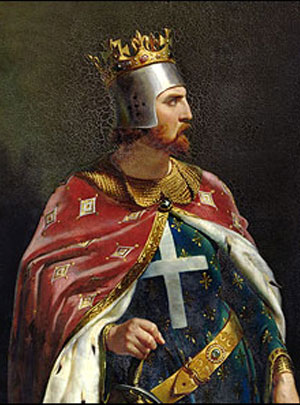
Since I got a number of views on my last post on historical heroes, there are plenty of others I didn’t seem to touch upon who are immortalized for their heroic deeds but weren’t as great people as thought or the stories were just plain made up. I’m not going to use John F. Kennedy though he may not have had as great a presidency as it’s perceived, he’s still considered a hero since he managed to have the kind of life he led despite suffering from serious health problems like Addison’s. Also, I’m not going to use King Henry V though he may not be the guy Shakespeare depicted and actually quite ruthless, though no more than most medieval kings in his day. Yet, sometimes history isn’t as unbiased as you think it is. Here are more historical heroes I will kindly list here:
1. Medieval Knights
Known for: Being the champions of Christendom and chivalry who fought baddies, wooed ladies without seducing them, behaved honorably, and saved the day with a sword. They always fought for their country, king, and God. As good guys, they were always willing to protect the weak and vulnerable you could always count on them to rescue a damsel in distress. They’d also fight tournaments to win a lady’s favor.
Why they may not deserve their fame: Of course, there may have been some knights like this but they were human beings like any other. For instance, we all know that King Arthur’s knights weren’t all like that. I mean Sir Lancelot may do good in battle and be able to heal others yet he deserted his wife and kid as well as banged his boss’ wife. Mordred was an evil product of incest who does his old man in (in some versions, in others, he’s just Arthur’s evil nephew, brother-in-law, or not related to him at all). Sir Gawain was a homicidal maniac and had many other issues. Still, though a knight may claim loyalty to a nation, a king, or his lord, he was ultimately a mercenary working for himself mostly for land, power, and riches. If they were of the a Crusade Order, they could be ruthless and fanatical but so was everyone in the Middle Ages to some extent. However, it’s interesting to note that the Crusades weren’t just fought in the name of God to capture the Holy Land from the Muslims. Rather, many thought the Crusades were a good idea since it would not only grant knights penance for killing Muslims but also keep many of them from fighting and terrorizing each other as well as raping, pillaging and burning peasant villages. Really, they would do this to their fellow Europeans or even their own serfs, let alone Muslims. Yet, they wouldn’t kill each other unless it was in battle and considered the slaughter of peasants after capturing a village whether they be men, women, or children. Still, as for medieval damsels in distress, they probably wouldn’t call on a knight in shining armor to save them unless it was a last resort or if the guy was her husband. Most damsels in distress at the time usually tried to save themselves, because they’d never know what a knight may do to them.
2. King Richard the Lionheart
Known for: Being the good King Richard in the Robin Hood stories and seen as a paragon of knighthood and champion of Christendom. Badass hero of the Crusades.
Why he may not deserve his fame: King Richard I was a rather complex individual like any member of his family (like King John, for instance). He wasn’t the biggest jerk but he was as warlike as he was greedy. He certainly liked being in France better than England (there’s a story where he claimed to sell London if he could find a buyer, oh, and he only spent six months of his reign there anyway). And as like anyone in his family, he wasn’t above stabbing people in the back (of course, you can say that about any ruler in the Middle Ages.) Of course, he only saw his subjects as producers of tax revenue to support his exploits abroad. Then there’s the time when he was taken hostage by Archduke Leopold I of Austria and Holy Roman Emperor Henry VI. Of course, he was ransomed after two years but it was from the pockets of his English subjects. And he was taken prisoner by a guy he used to boss around. Richard may have been a great warrior king but he wasn’t good at anything that didn’t involve warfare and tactics like budgeting, tolerating, or judging. So Good King Richard wasn’t such a great English king after all. Yet, as a paragon of knighthood and chivalry, well, as far as actual medieval knights go, he may not be far off.

3. Charles Lindbergh
Known for: Being the first man to fly across the Atlantic solo from New York to Paris on The Spirit of Saint Louis. One of the biggest celebrities of his day. Also, his son was kidnapped and killed in one of the most infamous child abduction cases in history.
Why he may not deserve his fame: Well, Lindbergh certainly does deserve his fame but there’s no doubt about that. Yet, just because his picture may be in the history books and your grandpa might have had a poster of him, doesn’t mean that he’s a kind of role model you’d want to emulate or put on a pedestal. For one, he believed in eugenics and racist which wasn’t unusual at the time yet his beliefs on either may have been too much for those in the 1930s. Also, it certainly doesn’t help his case that he was a staunch isolationist (though he stuck with his country before Pearl Harbor), accepted a medal from Nazi Germany (and didn’t return it after the Kristallnacht), had a friendship with Anti-Semitic Henry Ford, and was willing to make excuses for Hitler. So no wonder he was suspected of being a Nazi sympathizer. Oh, and 29 years after his death it was discovered that he fathered seven children to three German women (trust me, you can’t make things like this up and it was mentioned on PBS).
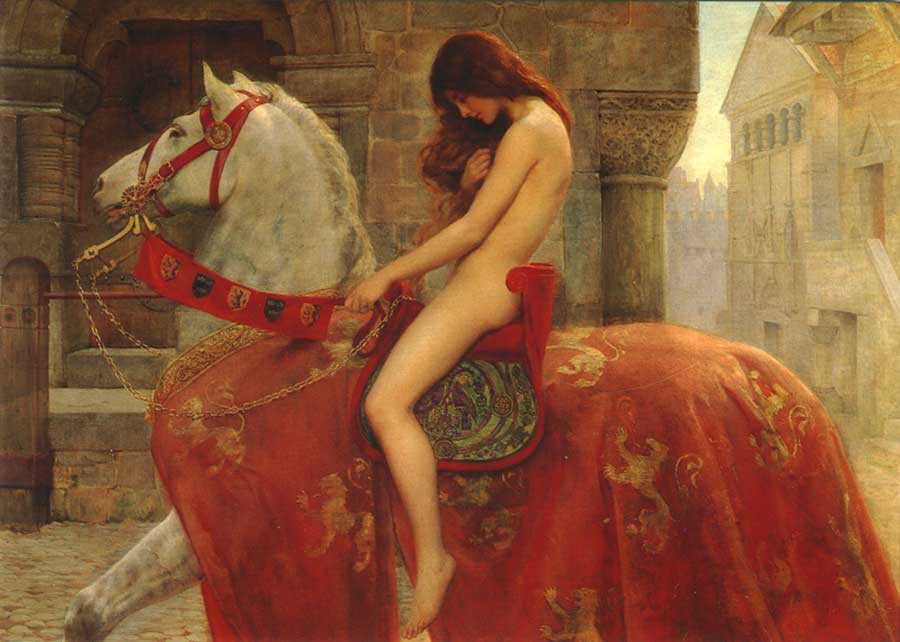
4. Lady Godiva
Known for: 11th century pre-Norman Conquest Saxon noblewoman who pleaded with her despotic husband Leofric to be nice to his subjects and reduce taxes. Yet, when he refused, as a protest, she got up on her white horse and rode the streets of Coventry in her birthday suit.
Why she may not deserve her fame: Well, Lady Godiva has a bit in common with Betsy Ross, two famous women who get credit for something they didn’t actually do but receive credit long after their deaths. Still, though Betsy Ross most likely didn’t design the first American flag, there’s reasonable evidence that she might have had some involvement with its production. With Lady Godiva, however, there’s no historical evidence that she was ever known for anything from being beyond a sweet and charitable woman. She may have pleaded with Leofric to be nice and reduce taxes but that’s probably as true as the legend about her gets. Still, there’s no evidence that she ever rode naked into Coventry and that legend only surfaced about 200 years after her death. She was, however, the only female to remain a major Saxon landholder after the Norman Conquest.
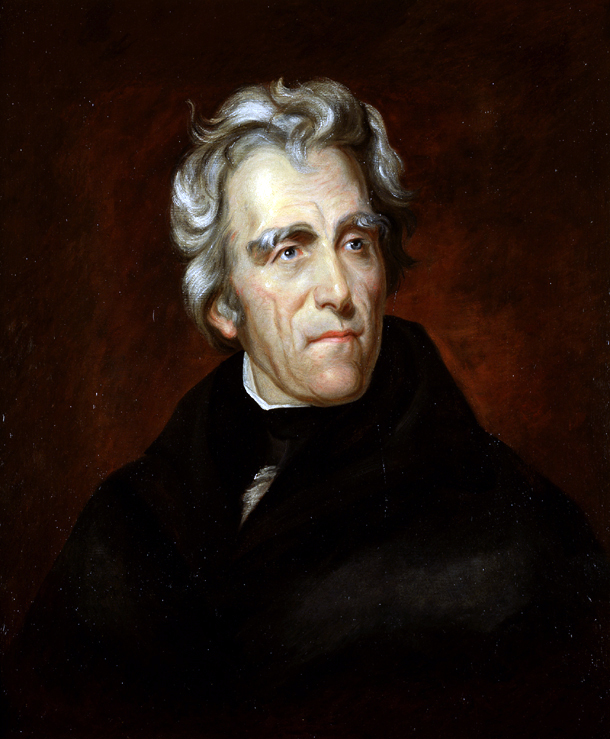
5. Andrew Jackson
Known for: Seen as a war hero in the War of 1812 and a populist bad ass who loved his wife and stood up for the people against the wealthy elite. President of the United States during the late 1820s and early 1830s. Nicknamed “Old Hickory.” Father of Jacksonian democracy as well as one of the godfathers of the modern Democratic Party. Picture is on the $20 bill.
Why he may not deserve his fame: There’s more than one good reason why Andrew Jackson is considered one of the most controversial US presidents to this day. The most obvious being his policies towards Native Americans such as his aggressive enforcement of the Indian Removal Act (despite that the law was struck down by the Supreme Court) which resulted in the relocation of thousands of Indians to Oklahoma and the Trail of Tears. Of course, it was said he did it out of belief that it would prevent a war with the tribes and possibly a civil war but still, it was a policy that denied human rights to a group of people for no good reason, resulted in genocide, and has put a strain on Native Americans ever since. Then there’s Jackson’s policy of getting rid of the Bank of the United States which would later be a direct cause of the Panic of 1837 throwing the nation into a deep depression (basically this is what would happen if we got rid of the Federal Reserve). Finally, you got the introduction of the spoils system which chose unelected government workers based on party loyalty regardless whether these people had any qualifications to do their jobs. This brought widespread corruption and incompetence as well as lack of accountability on every level of government and would eventually played a role in the assassination of a US president (James A. Garfield was shot by a rejected office seeker). As a side note, he appointed Roger B. Taney as Chief Justice to the Supreme Court (who will have an important role in the notorious Dred Scott Decision). Also, engaged in dirty campaign tactics against John Quincy Adams, did a bunch of things that would certainly get him arrested today (such as fighting duels), and might have been a bit crazy (yet he’s still a rather interesting and complex man).
6. Ronald Reagan
Known for: President of the United States during the 1980s, and seen as the greatest president of all time by American conservatives. Said to have ended the Cold War, revived the economy through Reaganomics, restored dignity and self-respect to the presidency, restored American pride and morale, and did all these super wonderful things that helped make the USA the greatest nation on earth. Voted as the Greatest American on the History Channel.
Why he may not deserve his fame: I tried to refrain from writing about him since he was a popular president but still, he doesn’t really deserve all the hype. Not to mention, conservatives still sort of make Reagan into a man he wasn’t. For one, the 1980s weren’t a wonderful time in history, especially since it was a time when many corporations started basically outsourcing their productions to other countries (and many areas never recovered). Reagan’s economic policies also started widening the gap between rich and poor, created budget deficits as well as an increase in homelessness. However, he did increase taxes a few times when he realized that tax cuts for the rich weren’t helping. Other blunders include the Iran-Contra Affair (which lowered American credibility), huge budget deficits (which made GOP “fiscal conservatism neither fiscal nor conservative), his environmental ignorance (believed that trees caused pollution), his do-nothing reaction to the looming AIDS epidemic, courting Saddam Hussein, and the list goes on. As for the Cold War, Reagan showed little sign of burying the hatchet with the Soviet Union (“evil empire” as he called it) until the Mikhail Gorbachev assumed power in 1985. And even then he was uncooperative in peace talks with the Russian leader until facing a scandal and low approval ratings, he was willing to do anything. And as for Russia’s bankruptcy, it was due to the War in Afghanistan that started while Reagan was still in California so bankruptcy was the Soviets’ own fault. Also, he had Alzheimer’s during his presidency (his son has even said this.) Then there are the times before he became president. For one, he didn’t become a Republican until age 51 and was mostly willing to change his political views for his declining career and satisfy his father-in-law. He opposed civil rights and Medicare, was almost recalled during his term as governor of California, sent the California Highway Patrol to crack down on campus protests at Berkeley, and oh, legalized no-fault divorce and abortion in California (though he later switched his position on the latter after realizing what it might to do him politically but still he didn’t do anything to make abortion illegal again and this was in 1967 so he had a good six years). Not to mention, he was divorced (from actress Jane Wyman), certainly engaged in pre-marital sex (wife Nancy was pregnant at the altar), was more into astrology than Jesus, and basically betrayed his fellow actors by leaking some of their names to the House Committee of Un-American Activities while president of the Screen Actors Guild. Reagan may not have been one of the worst American Presidents, but he certainly shouldn’t be ranked among one of the best. In fact, he wasn’t much of a great president anyway. I may be a liberal but even so, I don’t believe he deserves the hype regardless of anyone’s political affiliation.
7. Woodrow Wilson
Known for: US President during WWI and was seen as a model for Progressivism and Idealism. His 14 Points speech helped set the stage for the United Nations and earned him a Nobel Peace Prize.
Why he may not deserve his fame: Wilson’s presidency has come under significant controversy in recent years. Though many of his economic policies tend to be seen in a positive light since many his reforms on that front were greatly needed, he appointed the heads of large corporations to agencies supposedly regulating business. Not to mention, they did no favors for women, minorities, immigrants, workers, or others in need of assistance. Though his Virginia upbringing during the Civil War might have inspired his commitment to peace, it also served as the major influence to his hardcore racism and his policy of mandatory segregation of the government. I mean he was considered a racist even by early 20th century standards and seem to have a nostalgia for slavery (though he deemed it uneconomical). Oh, and he barred blacks from serving in the Navy which was at times more than 1/3 African American dating from the revolutionary war. To be fair, he was no fan of immigrants either and criticized Irish immigrants harshly. Then there’s the fact he’s one of the nation’s first of the Red Scare anti-socialist and anti-communist presidents, launched the Espionage Act of 1918 which arrested those who spoke out against WWI, and ran his reelection campaign on a pacifist platform (though he would be calling for war at the start of his second term). Though he’s seen as an anti-imperialist, he ended up intervening in places like the Dominican Republic, Haiti, and Mexico. Of course, the Mexicans were attacking our borders but in some ways, they were doing it in response for the US occupation of Veracruz. As for ending WWI and other related foreign policy, let’s just say that it’s complicated. Wilson may have consented to punishing Germany for starting the war (even though Germany certainly didn’t). However, it would be unfair to blame him for the events surrounding actions during the Treaty of Versailles, especially when it came to Germany getting the short end of the stick. For one, Wilson wasn’t well aware about European politics and saw WWI as a war between Democracy and Absolute Monarchy (Germany was actually a constitutional monarchy while Russia was ruled by Czarist autocrat before the Russian Revolution.) Second, the US only entered the war in 1917 when it started in 1914. Also, France’s Georges Clemenceau was more the dominating influence at Versailles than Wilson ever was and wanted to punish Germany for a lot more than just WWI (like the Franco-Prussian War). Thus, Clemenceau wanted revenge, not peace. Not to mention, David Lloyd George was more concerned with politics in his native Britain than anything. Wilson may have been a bad president but he’s far from being one of the greats.
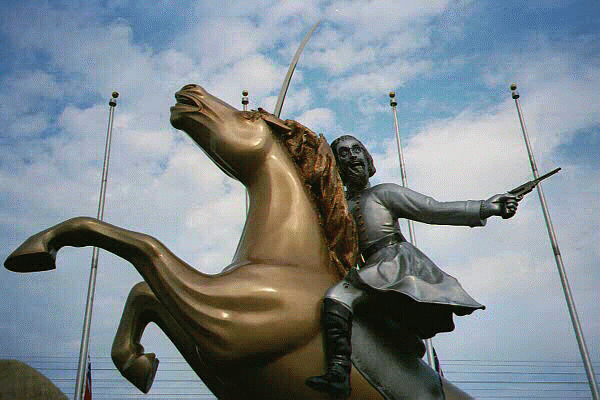
8. Nathan Bedford Forrest
Known for: Well, I’ll get to part of that in a moment. However, in the South, he’s considered a great Confederate Civil War general and kind of a hero. I mean he has so many places and memorials dedicated to him it’s ridiculous.
Why he may not deserve his fame: Forrest is perhaps one of the worst examples when it comes to being seen as a historical hero. Of course, this would stem from the Pro-white Southern “Lost Cause” school of history which seemed to prevail during segregation. However, while Robert E. Lee may not have been the great general or the great man he’s portrayed as but at least he has some admirable qualities you can respect. Despite his flaws, Lee can be seen as a great hero and a great man. However, this is not so with Forrest since he’s best known as the first Grand Wizard of the KKK as well as a figure associated with white supremacy (he may not have been as racist but still). And it doesn’t help he was a slave trader before the Civil War either. Nevertheless, Forrest still embodies the worst of the Confederacy during the Civil War mostly because of what happened at the Battle of Fort Pillow. Fort Pillow was a Union held fort which Forrest managed to attack and capture back in 1864. However, it was a battle that where countless black and Southern Unionist troops were killed and may not have died in combat. In other words, these two groups of captured soldiers were basically slaughtered after surrender, which is a war crime. Of course, Confederate commanders didn’t record that such massacre took place at Fort Pillow (even Forrest’s report doesn’t mention it), yet there is significant evidence that states such slaughter took place. For one, there are accounts by Union survivors and some even from Confederate soldiers writing back home. Second, the Union casualty rates pertaining to the battle are unusually higher (like nearly 300 killed out of around 600-700) than what the Confederates sustained (which was about 14 killed and 86 wounded out of 5,000-6,000). And in some ways the Union casualty rate is much higher than it should be if the Confederates sustained a rate like that in 1864. This is also telling when you consider that only 90 of the 262 black Union troops involved managed to survive the battle. Out of the white Union forces, only 205 out of 500 survived. If this doesn’t convince anyone why Nathan Bedford Forrest shouldn’t be remembered so fondly, then I don’t know what does.
9. Dwight D. Eisenhower
Known for: Being an admirable and badass general during WWII as Supreme Allied Commander and a great president who maintained stability in the early years of the Cold War and warned of the Military-Industrial complex. Affectionately nicknamed Ike in the 1950s. Possibly the most bipartisan and compromise-friendly US president of the 20th century.
Why he may not deserve his fame: Eisenhower certainly does deserve his fame and certainly can be considered a hero, in some ways, a lot of what happened under his presidency that have long term implications for the United States and need to be discussed. For one, Eisenhower appointed Richard M. Nixon as his running mate and it’s clear to say that Nixon may not have been elected president if he wasn’t tapped as Ike’s VP. Of course, we all know about the long term implications with that appointment. Of course, what should really get more attention in regards to Eisenhower’s presidency is his foreign policy which done its share of long term damage of US credibility over the decades. For one, Eisenhower supported a couple of coups against democratically elected governments such as Prime Minister Mossadegh in Iran and President Arbenz in Guatemala. Both these guys were replaced by dictators. Overthrowing Mossadegh has critically strained relations between the Islamic world and the West to this day. Overthrowing Arbenz had put Guatemala under the successive rule of military dictatorships for decades. Also, Ike supported the Batista regime in Cuba which gives the Castro brothers a few good reasons to hate the US. Then there’s the fact he blocked an important vote on Vietnamese unification and installed pro-US dictator Ngo Dinh Diem in South Vietnam after finding out that 80% of the Vietnamese would’ve sided with Ho Chih Minh and the Communists in said referendum, setting the stage for US involvement in the Vietnam War. Sure Eisenhower may have been a good president or even a great one, yet some of his shady foreign policy decisions have done more than its fair share to hurt US credibility and these should not be ignored.
10. Mohandas K, Gandhi
Known for: Seen as a saint who through the principles of ahimsa (nonviolence) brought independence to India in 1947.
Why he may not deserve his fame: This is a controversial one since Gandhi did help bring independence to India as well as inspired hundreds and has certainly earned respect. However, the Indian Independence Movement was a strong force well before he entered the scene when he did, he basically served as a figurehead for a cause and was happy to take the credit while other leaders did most of the work (like Nehru, Jinnah, Bose). Sure he talked of peace but also played politics as ruthlessly and slimy as any politician (more of a pacifist Machiavellian if you will). And he wasn’t above politically stabbing people in the back. Also, his ideas weren’t that original and even he knew that (basically nonviolence had been a kind of idea dating thousands of years. Not to mention, he was a British educated lawyer who spent a spell living in South Africa (of you knew that). Then there’s his private life which isn’t pretty. For one, he was difficult and demanding, a tyrannical and abusive father, obsessed with the workings of his own and other people’s bowels, and subject to long bouts of depression during which he refused to speak to even his closest associates. Also, slept naked alongside his female disciples after the death of his wife.

11. Medieval Outlaws
Known for: Being honorable men who steal from the rich to give to the poor, live in the forest, and stick up to corrupt sheriffs and noblemen, you know, like in Robin Hood. Basically a fugitive from a unfair justice system.
Why they may not deserve their fame: Outlaws then were probably no better or worse than today’s criminals. However, with lack of adequate law enforcement outlaws can basically get away with a lot more shit then (seriously no one would want to be the sheriff of Nottingham, it would’ve been a lot worse than being a cop on The Wire, especially since there was a lot more crime in the Middle Ages as there is today). Of course, outlaws would certainly steal from the rich yet they’d also rob or harm just about anybody. Also, many of those in England became knights later on so you might want to see what I have to say about them.
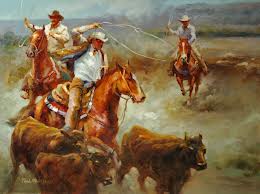
12. Cowboys
Known for: Seen as heroes of the Wild West who travel the open range on cattle drives while doing a bunch of other shit, I’m not sure what. They traveled on horseback by day and sang songs by the campfire at night. Sometimes they’d even shoot bad guys or Indians. Still, cowboys are seen as one of most prominent American cultural icons and loved by everyone everywhere.
Why they may not deserve their fame: This might depend on your definition of heroism since real cowboys were much different from the ones you saw in the movies. Besides, if you ask any boy in the 19th century whether he’d like to be a cowboy, he’d more likely say no unless he was black, Mexican, Indian, a poor white, gay, or an immigrant off the boat. I mean the job of cowboy was a low wage and low status job that entailed herding cattle from the ranches to the railroads which would transport them to the slaughterhouses in Chicago. The average cowboy earned a dollar a day for his hard work, slept in a barracks on the home ranch, and were more concerned with cattle rustlers and predators than Indians (Indians were more of a job for the US Army). Also, they wouldn’t be wearing those nice cowboy outfits you’d see at rodeos. Not to mention, they were notorious in Kansas for their wild and violent behavior especially since the place was seen as an end of a long cattle drive where cowboys received their pay as well as had towns with drinking and gambling establishments.
Weirdest Ads For and Against Obamacare
I need time to see some of these.
$2.5M Settlement in Pennsylvania ‘Kids for Cash’ Scandal
Somehow I think these kids deserve much more than a $2.5 million settlement since their disadvantaged backgrounds made them targets of the juvenile justice system. These companies and the judges took something away from these kids that could never be taken back, Still, I think whoever is in charge of these companies should also face criminal charges.
Myths and Facts on Environmental Protection Policy
In my post about the US government shutdown, I used issues such as increasing national defense and environmental protection to illustrate why the GOP isn’t the political party for smaller government it says it is. For instance, national defense only increases the size of the government, especially at a time of war yet it’s a policy most Republicans like. On the other hand, laws relating to environmental protection has helped Americans save money, yet Republicans hate it. However, as a government policy, environmental policy is one of the most understood thanks to media outlets like Fox News and other conservatives who basically try to trivialize it. Here is a list of the many opponents of environmental protection tend to say with my explanations on why they’re false.
1. Myth: Environmental conditions only affect the natural world and wildlife.
Perhaps the most infamous of them all. Of course, a conservative would say this to trivialize environmental issues as “special interests.” This is even more false than saying that all environmentalists are tree hugging hippies. If this was true, then we probably shouldn’t have much to worry about when there’s an environmental catastrophe. Of course, this is bullshit since the health of the natural environment has an impact on everything, especially people. Just because humans may be responsible for much of the world’s environmental problems, they also fall victim to them. Pollution has caused a variety of health problems through the years like respiratory illnesses, cancer, birth defects, infertility (including miscarriages and stillbirths), infections, heart disease, and the list goes on. Polluted drinking water can spell a crisis in public health in any community and droughts can lead to mass starvation (think of the Dust Bowl). And in some instances, an environmental disaster can lead to a destruction of a whole community as well as bring social problems like economic collapse, mass poverty, homelessness, and other things. You can say that if you destroy the land, you also destroy the people.
2. Myth: Environmental policy is a burden to taxpayers and contributes to big government.
Like I said in my post about the government shutdown, this is absolutely false. In fact, this is another lie by Republicans who inflict the small government argument when it comes to policies they don’t like. Sure environmental policy may cost taxpayer money but it also helps save tax dollars by tackling problems that contribute to more government spending. For instance, pollution and environmental disasters contribute much more to big government than any funding to the EPA ever has.
High pollution levels can contribute to higher health care costs as well as more government spending on health care. This is especially true when you consider senior citizens and the poor since these two groups of people receive health care through medical assistance and are most susceptible to pollution related illnesses. Senior citizens are more likely to have been exposed to higher levels of pollution and over a longer period of time than younger generations. They are more likely to have grown up in a highly polluted area, had an environmentally hazardous job, have a history of smoking (and exposure to secondhand smoke), and to have someone in their family who died of a pollution related illness at an early age. It’s no wonder why senior citizens are so prone to respiratory illnesses like lung cancer, emphysema, asthma, and others. Of course, some may say because senior citizens are more susceptible to illness in general, yet you can’t really dismiss the environmental factor either. As for the poor, they are more likely to be exposed to high levels of pollution because many live near environmentally hazardous establishments. These can consist of toxic waste dumps, power plants, or dirty industry centers that lower property values and aren’t nice places to live. Thus, residences near these places will always consist of people below the poverty line who can’t afford to live anywhere else, especially in cities. If you live in a rural area, then the chances of an environmentally hazardous establishment moving in are very high since many of your neighbors will welcome if there’s something in it for them, most of the population won’t be willing to sue (and if they do the chances of losing are high), and for those who do object, most won’t be able to do anything about it since no one’s going to pay attention. Oh, and many of the rural poor tend to whites who vote Republican and watch Fox News (Fucked News, as I call it). Nevertheless, high pollution and high poverty go hand in hand. Thus, pollution related illnesses are a burden to the healthcare industry, communities, the nation, and the taxpayer.
Another drain on taxpayers which the EPA helps prevent are environmental disasters since they are incredibly expensive to clean up and restore. Of course, polluting industries tend to be the main cause of these environmental disasters yet the job of clean up and restoration will always fall to the state and/or federal government for various reasons. For one, federal and state governments usually do the job better than anyone else and don’t need a court order to do so. Second, an environmental disaster precipitates a state of emergency in which environmental damage must be promptly acted upon before there’s serious long term consequences. Third, in an event of environmental catastrophe, most local communities don’t have the money and resources for the necessary action so responsibility will fall on a higher power. Finally, most corporations that cause environmental disasters will go out of their way in order to avoid responsibility for environmental damages such as fighting lawsuits (the case concerning the Exxon-Valdez Oil Spill ended up at the Supreme Court but wasn’t settled since Alito had to recuse himself). So while environmental protection may cost taxpayers something, lack of environmental protection will cost taxpayers much more.
3. Myth: Environmental policy hurts the economy, hurts businesses, and kills jobs.
Republicans will use this myth all the time when it comes to rallying against environmental policy as if they are trying to justify that economic benefit is worth the environmental costs, especially in the area of dirty industry. However, how environmental protection policy actually affects the economy, is far more complicated. Of course, environmental protection is a popular scapegoat for conservatives when it comes to economic problems but there are many reasons why economies and businesses fail usually ranging from unfair competition, unethical business practices, bad economic policies, unsatisfied greed, or just simply plain ol’ fashioned bad decision making. And hardly any of them have anything to do with EPA regulations. Of course, EPA regulations may hurt smaller polluting businesses but most polluting companies can accommodate with environmental policy. However, for businesses, environmental protection is no fun since it means complying with more rules, may dip into profits, gets businesses to stop doing what’s more convenient and cost-effective to them, and compels them to be more environmentally responsible. It’s no wonder businesses don’t like environmental protection since they tend to be from a world in which success is based on short-term profit gains, fast growth, unrestrained corporate greed, and fierce competition, which is hardly a sustainable economic model.
Yet, what many pro-business people tend to ignore is that environmental protection doesn’t hurt economies as much as environmental destruction. The Lorax illustrates this to near perfection with the Oncler who builds his empire by destroying an entire forest to supply his factories. Of course, he becomes wealthy yet things fall apart for him once the last tree is cut down. His family abandons him, his factory goes to ruin, and the forest once filled with colorful trees is now a wasteland. Since the Oncler basically obtained his raw materials in a way that was most convenient to him in order to satisfy his own greed, he gets to see all he worked hard for all his life go down the drain. Of course, many corporate leaders don’t learn their lessons or suffer the consequences from all the environmental destruction they cause. Yet, many people do, those whose business is dependent upon environmental conditions and availability of natural resources. Environmental policies may not bring big profits but they might help a company stay in business since they may give reasons for businesses to adapt, encourage the development of green industry, ensure sustainability of resources and sustainable growth, and make businesses more competitive. As for consumers, more eco-friendly products might help them save money on certain products like at the pump for instance.
Things in American History Worse than Obamacare
In the news, I’ve been hearing things about what these Republicans in Congress are griping about how Obamacare is the worst thing that has ever happened in American History. As a former history major in college, I have to disagree big time. Obamacare may not be the best thing since sliced bread but as the worst, not even close. So here I have a list of things in American History that are much worse than Obamacare just to put people in perspective which assures me, the US is certainly going to be okay with it.
Things in American History Worse than Obamacare (Some of these might be according to my opinion):
Concepts: slavery, DDT, Birth of a Nation, Fox News (couldn’t resist), for-profit health care (yes, even the system Obamacare replaces), Blackwater, the Atom Bomb, Social Darwinism, Monsanto, racism, smallpox blankets, anti-intellectualism, abuse of laissez faire, sexism, napalm, child labor, Hays Code, blackface minstrel shows
People (Hall of Shame): Thomas Midgely (inventor of leaden fuel and CFCs), J. Edgar Hoover, Dick Cheney, Bernie Madoff, Jerry Sandusky, Lance Armstrong, Newt Gingrich (first used the government shutdown as a political ploy), Whittaker Chambers, Joseph McCarthy, Jack Abramoff, Dr. James W. Watts (helped popularized the lobotomy in the US), Roger B. Taney (said that blacks have no rights which whites are bound to respect in the Dred Scott Decision), Benedict Arnold, Henry Wirz (warden of Andersonville Prison and only person in the Civil War convicted and executed for war crimes), Nathan Bedford Forrest (responsible for the Fort Pillow Massacre and was first KKK Grand Wizard), Strom Thurmond, Richard Nixon, Anthony Comstock, Jeffrey Amherst, Anita Bryant
Groups: the KKK, the Religious Right, the Dixiecrats, robber barons, global warming deniers
Places: Andersonville Prison, Triangle Shirtwaist Factory, Indian Reservations
Events:
Wars: The Civil War, the Indian Wars, Vietnam War, Korean War,Spanish American War, Mexican Wars, WWI, Attack on Pearl Harbor, War of 1812, Iraq War, Battle of Little Bighorn, Wounded Knee Massacre, Philippine American War, Bataan Death March
Scandals: Watergate, Iran-Contra, Teapot Dome Scandal, Savings and Loans Scandal, Lewinsky Scandal, Plamegat, Enron, Chappaquiddick, Black Sox Scandal, 21 Game Show Cheating Scandal, Hollinger Scandal, Abramoff Lobbying Scandal, doping scandals
High Crimes and Attacks (non-war related): Kennedy Assassination, RFK Assassination, Lincoln Assassination, Oklahoma City Bombings, Haymarket Riot, Kent State shooting, Virginia Tech shooting, Jonestown, Columbine, Sandy Hook, Aurora, 9/11,Valentine’s Day Massacre, O. J. Simpson Trial (1990s), Waco, MLK Assassination, the Boston Massacre, Boston Marathon Bombings, Bleeding Kansas, Trayvon Martin shooting, LA Race Riots, the Murder of Matthew Shepard, Lindbergh Baby Kidnapping, New York Draft Riots, lynchings, Tuscon shooting
Disasters: Hurricane Katrina, Hurricane Sandy, Challenger Explosion, Columbia Explosion, BP/Deepwater Horizon Oil Spill, Exxon Valdez Oil Spill, San Francisco Earthquake, Johnstown Flood, The Dust Bowl, Triangle Shirtwaist Fire, Chicago Fire, Three Mile Island.
Economic Upheaval: The Great Depression, Panic of 1837, Stock Market Crash of 1929, Wall Street Meltdown of 2008
Crises: Spanish Flu Epidemic, Cuban Missile Crisis, Iran Hostage Crisis, Secession Crisis
Others: Scopes Monkey Trial, Salem Witch Trials, slave trade
Legal Actions: Jim Crow laws, Dred Scott Decision (worst Supreme Court decision in history), Chinese Exclusion Act, Plessy vs. Ferguson, Citizens United ruling, Alien and Sedition Acts, Patriot Act, Fugitive Slave Act, the Intolerable Acts, Comstock Laws, 18th Amendment, Kelo vs. New London (government can use eminent domain for the benefit of selling it to private developers), Indian Removal Act, Death of the Voting Rights Act, Shoot First Laws (unjust when it comes to certain cases)
Bad Policies: Japanese Internment Camps, Prohibition, the Pardon of Scooter Libby, Nullification Crisis, Trail of Tears, US-Soviet Nuclear Arms Race, Cold War, Palmer Raids, spoils system, McCarthyism, voter discrimination, Imperialism, government shutdowns, death penalty, 3/5 Compromise
Of course, this is only as much as I could think of but feel free to list more in the comments section. Still, I don’t think Obamacare is in any way worse than all the things I have already listed from American History, which I can offer a decent explanation. Of course, there are certain items I didn’t list since they may be subject to controversy. Still, if the United States can survive as a country through all this, then I’m confident, it will be fine under Obamacare.
Fiscal Cliffdiving…for kids!
This is a great explanation for what’s going on with the US economy. I’ll happily reblog this post on my blog. I recommend this to everyone.

How to Explain the ‘Fiscal Cliff’ and Its Consequences to a Small Child
- Let’s say that you are a third grader in Ms. Merka’s class.
- In order to get everyone to do their homework assignments on time, Ms. Merka hands out candy as a reward.
View original post 588 more words
Recycling History: Even Cavemen Lived a Green Lifestyle
So why do you never see recycling bins on The Flinstones?
Feminist Films Before the 1960s

We often assume that feminism didn’t really take off until the 1960s and before that time, women basically were portrayed as happy housewives, submissive damsels in distress, innocent ingenues or evil women who led their men astray. These are the basic images of women in old movies that tend to come to our mind as well as the notion that gender roles were observed without question before the 1960s. However, these notions are dead wrong since feminism has always been apparent throughout history and there have been people who’ve questioned the notion of gender roles for centuries. Old Hollywood is no exception for many old movies have a great treasure trove of strong female characters as well as featured movies which challenged notions of gender roles and relationships between men and women. Here’s a short list of what I considered to be old movies that even a feminist would approve of:
1. Gone with the Wind
You wouldn’t think I’d put this movie on here since fans tend to watch it for the romance between Scarlett O’Hara and Rhett Butler while critics and detractors would cite the historical inaccuracy, negative racial stereotypes, lack of good male characters, complain that it’s four hours long, or dismiss it as a mere chick flick. Some may not think that Gone with the Wind isn’t a feminist movie since it won a bunch of Oscars, holds the distinction of highest grossing movie of all time, was made in the 1930s, and is regarded as one of the greatest films of all time. Surely a movie with these distinctions and flaws can’t be feminist. Well, that’s where you’re wrong since I would very much regard this movie as a highly feminist film as well as a one of the most ground breaking movies for women. For one, this is a film about the experiences of women in the South during the American Civil War and the early years of Reconstruction and how such events affected their lives. It depicts women playing a role in history at a time when professional historians seldom wrote about women or before the concept of women’s studies even existed. Not only that, but it also shows how the American Civil War was also a woman’s war as much as a man’s whether it be on the home front or on the front lines. And this is back in 1939. Second, it features a strong and well developed female protagonist in Scarlett O’Hara who isn’t entirely a saint but certainly no damsel in distress. Not to mention, she eventually challenges the conventional notions of how a women should act at the time and does morally dubious things, isn’t universally liked, is very much a realistic character for her time, and is actually a strong female character feminists would approve of (even a lot of today’s action girls don’t amount to her rich characterization). I mean despite that she’s selfish, amoral, immature, materialistic, she’s very intelligent and later emerges as a strong and driven young woman ever determined to do what she can to avoid starvation or being a burden to others. Of course, this movie was based on the book by Margaret Mitchell, yet nevertheless, Gone with the Wind is a great feminist film which shows that a movie which features women’s experiences as well as a strong female protagonist with moral ambiguities could break records at the box office, win 8 Academy Awards, and be well regarded as one of the greatest films of all time. Of course, it’s not 100% relevant, but it’s still a timeless classic that holds up in so many ways. If there is a feminist film before 1960 which deserves a spot on this list, then Gone with the Wind is the gold standard.
2. Peyton Place
I place this film on this list since it portrays almost every character as three-dimensional entities who don’t necessarily come off as entirely unsympathetic (with the exception of Lucas Cross but I’ll get to him later). Yet, whatever their flaws, viewers are encouraged not to judge these people no matter but only to understand them as people. It’s also noteworthy to point out of how certain female characters don’t seem to conform to your 1950s standards. For instance, Allison Mackenzie puts her deceased father on a pedestal, mostly finds herself on the receiving end of her mother’s insecurities, and has a lifelong aspiration to be a writer. Her mother Constance (played by Lana Turner) is has managed to succeed both as a mother and businesswoman but can’t really leave her secret past behind which proves detrimental in her relationships with her daughter and new boyfriend Michael Rossi, the new high school principal. Allison’s best friend, Selena Cross is seen as a good girl whose stepfather Lucas makes her life at home the closest thing to hell on earth. Her motivation in the film is to achieve financial independence so she and her brother could escape from their godforsaken home. She’s an interesting case since she’s still seen as a sympathetic character despite having an abortion and later committing murder. Of course, Lucas raped her so who could blame her for killing him but she barely gets off (since the doctor almost didn’t testify). Then we have Betty Anderson who likes dress in sexy clothes, drink alcohol, behave in scandalous ways, and is much more forthcoming about her sexuality but still genuinely loves her boyfriend and does make peace with his father. Peyton Place is also a relevant film which condemns sexual abuse for how should be depicted as well as make Selena’s abortion and murder seem justified. The film always shows Lucas’ conduct to Selena as unwanted and never holds her responsible for Lucas’ actions.
3. I Was a Male War Bride
I put this film on the list since it’s one that specifically addresses sexism with a very interesting twist. Still, unlike most of the movies I have on this list, this one features a male protagonist played by Cary Grant. However, I included this movie on here because it addresses how sexism can negatively affect men. Set in Europe right after World War II, this movie is about a French officer who marries an American servicewoman and decides to spend his married life in the States. However, what him and Ann Sheridan have to go through is a bureaucratic nightmare through the War Brides Act, which is seen clearly as sexist US government policy. To the US only the men took foreign spouses and the military and red tape stacked against American servicewomen marrying men from another country. Of course, being an American servicewoman, it’s Ann Sheridan who’s being discriminated against on account of her sex. However, it’s Cary Grant who has to suffer for it firsthand since he has to endlessly explain that he’s married to an American soldier and entitled to shelter and transportation in a system that doesn’t recognize his gender as compatible with his situation. For one, Grant has to pass as a war bride in order to go back to the United States with his wife since all the spousal regulations seem to be for brides. Of course, he puts through a lot of shit and humiliation being a “war bride” such as having to fill out a form reserved for women, spending most of a night looking for a place to sleep, and having to board a boat in drag. On a further note, this is loosely based on a true story so there probably were a few “war brides” who just happened to be dudes. And they probably had to go through similar shit. Of course, while there may be plenty of movies that address men defying traditional gender roles, I Was a Male War Bride is one of few films that promotes the issue of feminism to a male audience.
4. Mildred Pierce
Of course, I had to include this Oscar-winning film since it’s one of early movies that centers around a successful self-made woman and single mother who despite her hard work and efforts to please her daughter, still gets no respect. It’s a very bleak look at what women can expect if they live and work alone in a man’s world, beset by men who want to exploit them, sexually or otherwise. She starts as an ordinary housewife driven to working as a waitress after her unemployed husband takes off and later starts her own restaurant and chain. Mildred Pierce is a woman is both a victim of circumstance as well as herself as well as a strong female protagonist with real flaws and assets. She is a hard worker with good business sense as well as a devoted mother. Of course, being a devoted mother to Veda is her biggest flaw, not due to bad parenting (she ain’t perfect), but how Veda is just one of the most ungrateful brats in movie history. Still, though she may be a woman in a man’s world, she’s still someone we sympathize with and want to succeed since she kind of reminds women of themselves in many ways. Not only that, but as a businesswoman, she becomes a victim to the same mistakes as any man would. Of course, Mildred met her downfall, but at least she made it to the top despite great odds.
5. A Letter to Three Wives
This is perhaps one of the most relevant films for women since it pertains to an issue that all women face, which is the struggle for perfection. Yet, it also tells women that they don’t have to be superwomen in order to be loved and appreciated by the men in their lives. All three women protagonists are each imperfect in their own way and have very imperfect lives and marriages. All three somehow feel inadequate when compared to their “friend” Addie Ross who their husbands see as a goddess and is probably the closest thing to a superwoman in her time, though she really is a complete bitch. Not to mention, all three think that the the strain on their marriages is their fault. And adding insult to injury, she sends them a letter telling these three women that she ran off with one of their husbands. It’s also interesting to note these women lead very different lives from one another, struggle with very different issues, and are portrayed in non-stereotypical fashion. You got Jeanne Crain who left the farm to serve her country only to come back having a difficult time adjusting to her husband’s world which is so different than the one she left behind. She sees herself as hick who wears cheap mail order clothes worrying that she wouldn’t be able to impress her upper class husband’s friends with her man being completely blind to what she’s dealing with. Ann Sothern is a working mother and breadwinner whose schoolteacher husband (Kirk Douglas) isn’t much thrilled with. It’s not just that she’s earning more money than he is but that she’s earning a living writing for a radio soap opera and how her job interferes with their lives. However, Kirk Douglas knows full well and accepts his situation since Sothern is just as smart as he is and that her status as a breadwinner allows him to have the career he wants without having to worry about the bills. Yet, Sothern doesn’t seem to know what Douglas wants from her. Then we have Linda Darnell who’s from the wrong side of the tracks and sees herself as a gold digger who married her boss just to escape her working class light. But Darnell and Paul Douglas’ marriage gives the two of them exactly what they need. Yet, she wonders whether she’d miss her husband if he was gone. Of course, the ending is rather ambiguous but we can be sure that at least Sothern and Darnell have husbands who surely care for them despite their own flaws and that whether Crain’s husband left her or not, she’s willing to survive without him and at least has friends.
6. Adam’s Rib
Of course, this is another comedy which is said to feature a battle of the sexes between Katherine Hepburn and Spencer Tracy. Yet, unlike most movies that feature a battle of the sexes, this one doesn’t insult the intelligence and rationality of either party. And in some respects Hepburn and Tracy both make valid points about sexism and treatment of those in the criminal justice system, particularly when a crime of passion is involved. Of course, Hepburn is the feminist who thinks men and women are equal, notes the double standard that exists for women and men regarding adultery, and humiliates Tracy in court in order to prove that he’s not immune to sexism as any man. Of course, Hepburn may have her sympathies with Judy Holliday who’s accused of shooting her asshole husband after catching him having an affair, but she knows it since she’s also a woman and sees why her client would snap. Furthermore, she’s very aware on how women were treated by society at the time and strives to make sure her client gets as fair a treatment as any man would in her place. On the other hand, though Hepburn is right to acknowledge sexism, this doesn’t mean that Tracy is completely in the wrong. Rather, though Tracy may have his own biases, he’s certainly no male chauvinist pig nor does he have anything against women, but quite the contrary. Actually, he’s a more progressive man for his time who’s perfectly fine with his wife’s force and ambition. He’s just not happy about her using the case for her own selfish purposes. To him, Judy Holliday’s gender and situation are practically irrelevant is as far as his job as a prosecutor goes. In Tracy’s eyes, Judy Holliday is guilty of attempted murder and showed disregard for the law as there should never be an excuse for such behavior regardless of gender. If Judy Holliday had been a man, it would be very clear that Tracy would’ve judged her no differently. Unfortunately for Tracy, though he may be on the side of the law and have no special affection for Holliday’s husband, he’s nevertheless working in his interests. And we’re very much instructed to sympathize with Judy Holliday since her husband is a man with no redeemable qualities and should never have custody of the kids.
7. All About Eve
Of course, this film may have it’s flaws but it’s an essential feminist film nonetheless because it shows the sexual bias and the entertainment industry and how such makes women become rivals instead of friends. Of course, it says that a woman isn’t complete without her man, but so did many Hollywood films at the time. Still, Margo Channing is an aging actress who plays roles of younger women and is insecure about growing older and settling down with her boyfriend Bill Sampson. She sees newcomer Eve Harrington as a threat to her career and goes through a diva meltdown which is dismissed as an overreaction until Eve tries to seduce Bill. However, the reality is that though aging, Margo is a highly talented actress at the height of her career as well as a star with legendary status who’s probably in a more secure position than many of her peers. Not to mention, she’s still very pretty and is dating a man who’s eight years younger than her who loves and respects her for who she is. However, Margo’s flaw is that she views her career as the most important thing in her life and knows all too well that her line of work where aging can be career killer. Yet, though Eve Harrington is a genuine threat, it’s age that triumphs over youth in this one and in some ways is a better female role model because of it. Margo may be a bitch but sometimes her whining can be seen as perfectly justified. Even though Margo learns to accept getting older, settles down with Bill, and decides not to play younger women, she loses nothing letting Eve play Cora and become a star. Sure Eve Harrington may be young, pretty, and talented, but she’s a sociopath who will do whatever it takes to get whatever she wants. And she manages to fool almost everyone in the cast except Birdie and Addison. Margo is a woman of integrity with supportive and sincere friends and has some genuine humanity in her. Eve is just a cold and manipulative bitch willing to use people as tools and cares only for herself. And since Margo’s willing to accept the direction of her career and start having a life outside of the theater, she survives Eve Harrington as well as many of the young actresses who come after her. Eve submits to critic Addison DeWitt, selling her soul to all her fans and the media since she has nothing but her career.
8. The Barefoot Contessa
This is more of a cautionary tale pertaining to the objectification of women and the price they pay for it. The film unfolds as a fairy tale turned tragedy as we see Ava Gardner as a person like Humphrey Bogart does, but is viewed by the rest of the male cast as an object to be exploited for their benefit without any account for her whether it be by looks, talent, status, or what not. In some way, this is what objectification really is and Ava Gardner ultimately suffers for it. Ava Gardner is a woman who is smart as she is beautiful whose main motivation is to enjoy the challenge and escape that a Hollywood career might offer a woman who will nevertheless value the simpler things in life. However, she’s also a woman who’s known to have sex with multiple men (known as her “cousins”) and has a mind of her own. And in every fairy tale there has to be a Prince Charming as in the Count Favrini or so Gardner assumes he is. Yet, once she marries him, you realize he’s just willing to use her as much as most of the other male characters. But in this case, it’s because she’s a glamorous celebrity whose marriage to her will work in his plans to bring his family to a memorable end. And it doesn’t end well for Gardner.
9. Roman Holiday
Of course, this is a romantic comedy, but it’s one that encourages women to do what’s best for themselves for a change. Of course, the man who’s stifling Audrey Hepburn’s life in the beginning isn’t a romantic interest but her dad who’s a king, which makes her a princess. And as a princess, she has royal duties which consists of going on diplomatic trips as well as having her schedule filled with PR activities all day long. Soon all the stress catches up with Hepburn that she takes off in the middle of the night and spends the next day doing whatever she wants such as living a day without her crushing responsibilities. And she does this only to the benefit of herself. Of course, Hepburn eventually has to return to her life as a princess but she does as a more assertive young woman who’s willing to accommodate her own needs alongside her duties and more able to think for herself.
10. Now, Voyager
Kind of has a similar message to Roman Holiday yet, Charlotte Vale’s path to empowerment and learning to think for herself doesn’t completely solve her problems. However, the domineering force in her life is her emotionally abusive mother who tried to control her all her life and lets her know that she is unwanted and unloved. Not to mention, Mrs. Vale doesn’t want her daughter to have much of a life either and does all the decision making for her. That is until Charlotte suffers a nervous breakdown and is confined to a sanitarium and later emerges out of her shell, goes on a cruise where she meet the unhappily married Jerry, and falls in love with him. Though adulterous, their relationship would have a positive impact on both their lives. When she returns, she confronts her mother and finds that she’s no longer scared of living for herself. After her mother dies, Charlotte returns to the sanitarium where she becomes a surrogate mother to Jerry’s daughter Tina. Also, unlike many women in old movies, Charlotte is perfectly all right to live without a man, doesn’t need to settle down for just anyone, and is willing to be happy with what she has, which is a lot but still.
11. Giant
Of course, this doesn’t start out as a feminist film since it begins with Rock Hudson and Elizabeth Taylor’s whirlwind courtship and marriage. However, once they start their married life in Texas, Taylor starts turning Hudson’s world upside down. For one, she treats the Mexican workers on Reata as human beings, doesn’t see anything unfeminine with discussing politics, and has no qualms about defying tradition. Still, I think what makes this movie as a feminist film is how it depicts femininity. This is expressed through Elizabeth Taylor in relation to Mercedes McCambridge. Taylor is perfectly comfortable with being a woman and isn’t ashamed of her femininity. Yet, she’s still a strong woman who isn’t afraid to do what she thinks is right or speak her mind whenever she feels like it. She may be a woman but she’s also her own person and refuses to conform to her gender’s expectations. In the end, her life with Hudson helps change him into a better man though it takes a long time. On the other hand, McCambridge sees her femininity as something to be ashamed of and denies it in order to be one of the boys in order to feel dominant. She’s a misogynist and hates Taylor with an instant passion. She is butch and violent and thinks that only these two traits can be a show of strength. Of course, her harshness and violent demeanor are what causes her downfall after falling off Taylor’s horse that she treated so badly. In some ways, these two women show the difference between being a strong female character and being a female character just acting macho.
12. The Three Faces of Eve
This is a film that depicts a woman with multiple personalities superbly played by Joanne Woodward (best known for her marriage to Paul Newman) who received an Oscar for her performance that year. Of course, the afflicted woman is a quiet, mousy, and unassuming housewife named Eve White who suffers from headaches and occasional blackouts, from which emerges the wild party girl Eve Black. However, though Eve had this problem since childhood, this mental illness persists as a way for her to act out in an unhappy marriage with a man who doesn’t understand her condition nor cares to. In many respects, he’s an abusive jerk who later dumps her and later abandons their daughter. And Eve begins to recover as a third personality of the stable Jane emerges who gathers strength once Eve starts living as a single woman. In some ways, Eve’s personality disorder fed off of her unhappiness in a life she was reluctant to leave. Yet, when she does, Jane becomes stronger since she’s the most healthy personality as two Eves decline and starts leading a new life better than the one she left. May not be a feminist film, but it works out like one as far as I’m concerned.
13. Pinky
I know this one is the least known movies on the list about a black girl who can pass for white but don’t ask why she’s played by white girl Jeanne Crain. Then again, the Jeanne Crain portrayal makes sense. Anyway, she comes home from nursing school with a white boyfriend who she’s all set to marry and start a new life with him in Colorado. However, her grandmother isn’t too happy and asks her to take care of former boss Ethel Barrymore who’s on her deathbed. Crain reluctantly abides but thinks Barrymore is an unpleasant old woman to work for. Yet, when she dies, Crain finds out that this woman left everything to her in order that her estate would serve as a black clinic and nursing school (this is in the South during segregation). And when Barrymore’s will becomes contested by family members, she decides to fight and wins. May seem like a career vs. man story but is far more complex since the issue of race in involved. For Crain, marriage not only means being with the man of her dreams yet this would mean she’d have to live as a white woman for the rest of her life. Yet, she chooses to risk her relationship so she can fulfill the old lady’s wishes and help her community as well as brave the rampant climate of racism. It may not be the easiest choice to make but it was one that would make Crain a much happier woman because of it. And in a time when women were being encouraged to be happy homemakers, this movie is a breath of fresh air.
Beijing’s Advice to Residents for Fighting Toxic Air? Cook Less.
I don’t think Beijing’s pollution problem has anything to do with cooking. Rather I think it has more to do with their dirty industrial plants and factories. I mean they’re obviously a higher polluter than anyone who cooks. And I can’t believe that anyone would need a facial there either.
 The Lone Girl in a Crowd