In These Haunted United States – Part 2: Hawaii to Maryland

Now we’re off to a great start. You might notice how some of these places might be familiar to you such as famous battlefields and other areas. I know that Alcatraz is a familiar place for anyone since it housed some of the notorious criminals in early 20th century America. It’s also used in a lot of movies as a filming location. Still, a lot of places might have their own ghost stories for whatever the reason. Sometimes it was a place where there were a lot of deaths and mistreatment like prisons, insane asylums, and battlefields. Sometimes it had a checkered past such as some of these mansions and hotels. Sometimes there might be a chance that some structure was built on top of an Indian burial ground. But occasionally, you might have a place with an alleged haunting for almost no reason at all like UAA’s auditorium. I mean other than Wendy Williamson, you don’t know why other ghosts would hang out there. Nevertheless, in this section, I’ll bring you another set of haunted places in the US. These will include a royal palace that was home to the last rulers of Hawaii’s monarchy, a state prison in Idaho, hotels in Illinois and Indiana, a home that was sight to a notorious murder in Iowa, a small house haunted by a mysterious girl in Kansas, a mental institution in Kentucky, a plantation in Louisiana, a lighthouse in Maine, and a Civil War battlefield in Maryland. So for your reading pleasure, I give you another installment of some of the most haunted places in the United States.

11. Hawaii
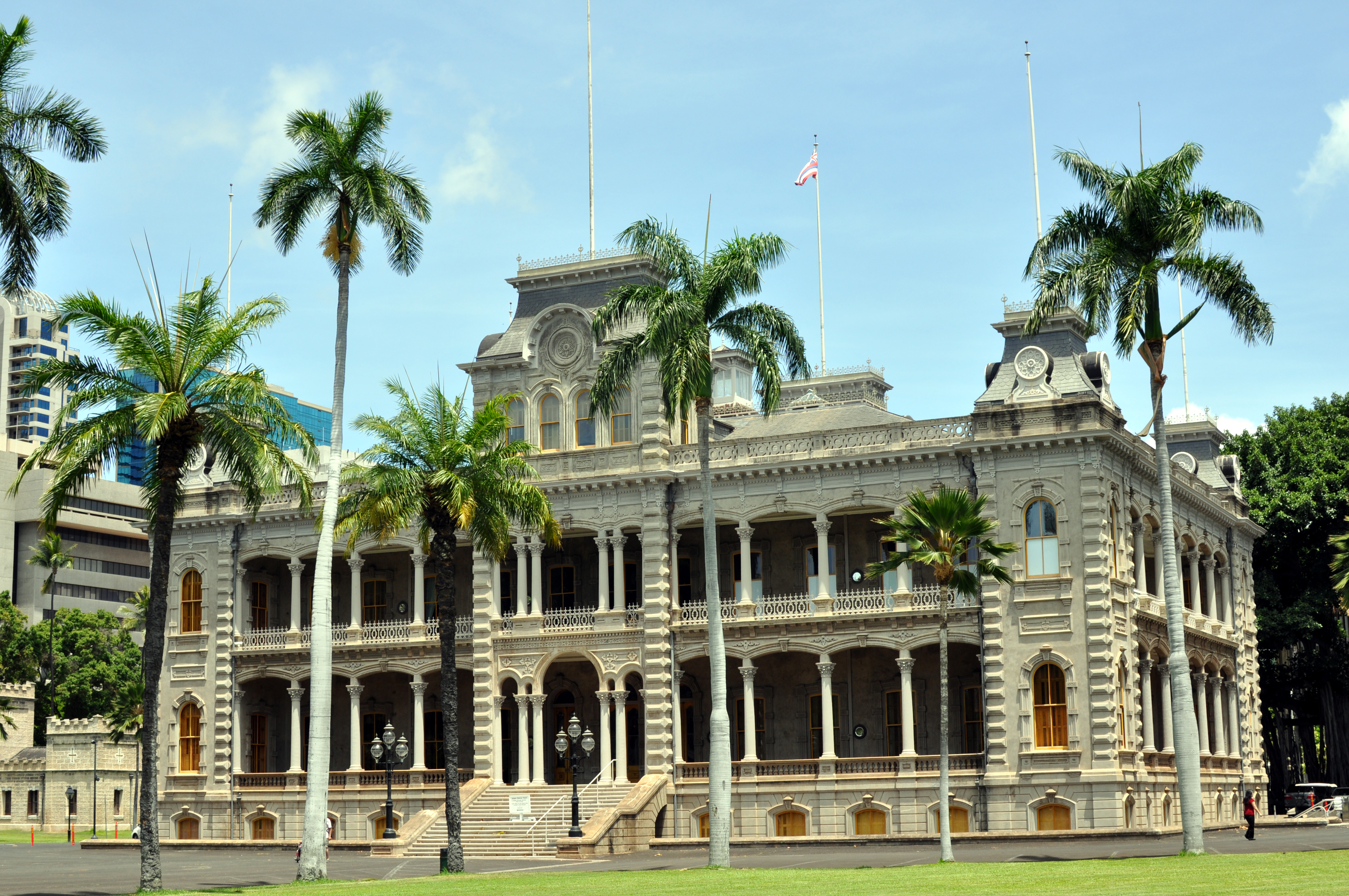
From 1845 to 1893, the Iolani Palace was home to the last rulers of the Hawaiian monarchy (and it's said that some of the royal family members still reside there as ghosts). Under US rule it would be used as the Hawaiian seat of government until 1969. It's the only royal palace on US soil.

From 1845 to 1893, the Iolani Palace was home to the last rulers of the Hawaiian monarchy (and it’s said that some of the royal family members still reside there as ghosts). Under US rule it would be used as the Hawaiian seat of government until 1969. It’s the only royal palace on US soil.

Most Haunted Place: ‘Iolani Palace in Honolulu

History: Constructed in 1845, it was the residence of the Hawaiian Royal Family from Kamehameha III to Queen Lili’uokalani. After the royal family was overthrown in 1893, it was used as the territorial and later state capitol until 1969.

Present Use: It’s now a museum for the public.

Sightings: It’s said that various royal ghosts have been seen or heard there.

Anyone Famous?: It’s been reported that the most frequent sightings have revolved around Queen Lili’uokalani.

Open to Tourists?: Yes.

Other Haunts: Hamakuapoko, Pounder Beach, Barber’s Point, Dole Cannery Signature Theaters,  Hilton Hawaii Village, Kaka’ako Fire Station, Morgan’s Corner, Nu’uanu, Sacred Heart Academy, State Capitol Building, Kahala Mall, Waikiki Parc Hotel, Waialae Drive-In Theaters, King Kamehameha’s Kona Beach Hotel, Waimano Building, Hickam Air Force Base

12. Idaho

During its operation, Boise's old Idaho State Penitentiary received over 13,000 prisoners. The most famous of these are a political assassin and a black widow serial killer. Closed over riots and poor living conditions.

During its operation, Boise’s old Idaho State Penitentiary received over 13,000 prisoners. The most famous of these are a political assassin and a black widow serial killer. Closed over riots and poor living conditions.

Most Haunted Place: Old Idaho State Penitentiary in Boise

History: Was a functional prison in the Western US from 1872-1973.  Received more than 13,000 inmates with maximum occupancy at about 600. 215 of the inmates were women. Saw 10 executions. Famous inmates were Harry Orchard who assassinated a former governor in 1905 and Lyda Southard, infamously known as Idaho’s Lady Bluebeard for killing several husbands for the life insurance. It was a place of violence and riots. Closed over riots due to horrible living conditions. It’s now owned by the Idaho Historical Society.

Present Use: It’s now a museum and contains an arboretum.

Sightings: There have been reports of footsteps, voices, shouts, and overwhelming emotional sensations. It’s been reported there was one death row inmate who jumped off the third floor is said to make his presence known by a greenish light and causing batteries to go dead.

Anyone Famous?: No.

Open to Tourists?: Yes.

Other Haunts: Farragut State Park, Harms Memorial Hospital, Joyce Building, Owyhee Mountains, Egyptian Theater, Idaho State University at Pocatello, Pete’s Tavern, Pioneer Boot Hill Cemetery

13. Illinois

Since its opening in 1893, Chicago's Congress Plaza Hotel has had a long and colorful history from protests to presidential guests. It's also been the place for a lot of haunted ghost sightings, including that of a hobo and a guy in disco attire.

Since its opening in 1893, Chicago’s Congress Plaza Hotel has had a long and colorful history from protests to presidential guests. It’s also been the place for a lot of haunted ghost sightings, including that of a hobo and a guy in disco attire.

Most Haunted Place: Congress Plaza Hotel in Chicago

History: First opened in 1893 for the World’s Columbian Exposition and has underwent two major expansions and renovations. It’s 11 stories with 871 guest rooms. In 1912, it was the sight of Teddy Roosevelt’s “Bull Moose” speech. In October 1916, Woodrow Wilson passed this hotel as part of his visit to the city where he was greeted by over 100 suffragette protestors from the National Women’s Party. They were attacked by a mob as police looked on and/or laughed. In 1932, it was FDR’s transition team headquarters. Known for its artwork by Louis Grell and for providing lodgings for several US presidents from Grover Cleveland to FDR. In 2003, about 130 members of UNITE HERE went on strike to proposed a 7% wage cut that soon became one of the world’s longest, ending in 2013. No concessions were given by management though Barack Obama briefly stood in the picket line in 2007. It’s now owned by a Syrian national.

Present Use: It’s still used as a hotel as I’ve seen on the website.

Sightings: Guests and employees have reported everything from apparitions and voices to the presence of a room so horrible that it’s been boarded over. Ghosts reported include a boy whose mother threw him out a window, a workman said to be buried in the walls during construction, a pegleg hobo who was murdered, a Spanish American War vet who shot himself, and a guy in disco attire.

Anyone Famous?: Well, some people have reported sightings of Al Capone and Teddy Roosevelt. It’s also alleged Jake “Greasy Thumb” Guzik’s ghost resides there as well. Of course the guy was one of Al Capone’s henchmen and is said to live there for several years. For those who want to know more about Guzik, check out my series on Boardwalk Empire since he’s a character on the show.

Open to Tourists?: Yes, if you can afford it.

Other Haunts: Ashmore Estates, Bachelor’s Grove Cemetery, Crenshaw House, Former Chicago Historical Society Building, Stickney House, St. Turbius Church, Aux Sable Cemetery, Scutt Mansion, Graceland Cemetery, Lincoln Theater, Eldred House, Tinker Swiss Cottage, Anderson Cemetery, Dana-Thomas House, Ninth Street Pub, St. Rita of Cascia, Leland Tower, Sheraton Gateway Suites, Desoto House Hotel, Woodstock Opera House, Blood’s Point Cemetery, House of Blues, Robinson Woods, Harrison Street Inn, Original Springs Mineral Spa and Hotel, Ruebel Hotel, Hotel Baker, Willowbrook Ballroom, Greenwood Cemetery, Benedictine University, St. George Antiochian Orthodox Church, Lincoln Square Theater, Massock Mausoleum, Three Mile House, Krome Family Cemetery, Red Lion Pub, Mineral Springs Hotel, Peoria State Hospital, Morton College, McPike Mansion, Clark Street Bridge, American Flight 191 Crash Site, Mount Carmel Cemetery, Waldheim Cemetery, McKendree University

14. Indiana

French Lick Springs Hotel was originally built for those who came to experience the healing benefits of the area's sulfur springs. Today it's now part of a casino resort complex. Of course, before then, it tended to get in trouble with the state for illegal gambling operations.

French Lick Springs Hotel was originally built for those who came to experience the healing benefits of the area’s sulfur springs. Today it’s now part of a casino resort complex. Of course, before then, it tended to get in trouble with the state for illegal gambling operations.

Most Haunted Place: French Lick Springs Hotel in French Lick

History: The resort was originally built for those who came to partake the advertised healing properties of the town’s sulfur springs. After the original hotel burned down in 1897, the current structure was constructed by DNC chair and Indianapolis mayor Thomas Taggart. Had been seized by the state government for illegal gambling. Famous guests include FDR (who announced his presidential campaign there) and Ronald Reagan.

Present Use: It’s now part of a larger casino resort complex.

Sightings: Many report hearing footsteps and voices. Some say there’s a ghost of an elevator attendant who helps out as well as one of a bride who committed suicide and a black bellhop. Not only that, but it’s said there are ghosts calling the front desk from empty rooms.

Anyone Famous?: It’s said to be haunted by original owner Thomas Taggart who’s been reported to operate the elevator when the place gets busy, appear riding a horse in the ballroom or down the halls, and hold ghostly parties.

Open to Tourists?: Yes, if you can afford it.

Other Haunts: Central State Hospital, Dunes State Park, Story Inn, Willard Library, Whispers Estate, Cry Baby Bridge, Fort Rouge Plant, Barber Hotel, Battle Field Memorial, Hoosier National Forest, Indiana University, Scales Lake, Old Sycamore Haunted Bridge, Chesterfield Christian Church, Cloverdale Cemetery, Adams County Cheese Factory, Eastland Mall, Lakeside Park, Franklin College, Bishop Noll Institute, St. Joseph’s Old Abandoned Catholic Church, Hanna House, House of Blue Lights, James Dean’s Grave, New Haven Historical City Hall

15. Iowa
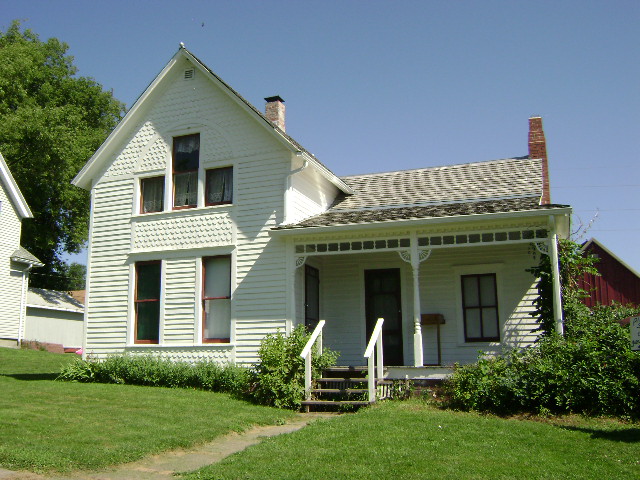
Villisca's  Moore House was the site of an infamous unsolved murder that killed 8 people. Until 1994, previous owners would claim they saw a guy wielding an ax at the foot of their beds.

Villisca’s Moore House was the site of an infamous unsolved murder that killed 8 people. Until 1994, previous owners would claim they saw a guy wielding an ax at the foot of their beds.

Most Haunted Place: Josiah B. and Sara Moore House in Villisca

History: Built in 1868 and served as a private residence. Josiah and Sara Moore bought the house in 1903 and lived there until 1912. On June 9 of that year, all 6 members of the Moore household and 2 houseguests (both children) were bludgeoned to death by an axe at the residence. The murder remains unsolved. After the murders, went through possession 8 times until 1994 when the last owners decided to restore the house to its 1912 condition.

Present Use: Has been a local museum since the 1990s.

Sightings: Prior to the 1994 renovations, there were reports from former tenants claiming they saw a figure of an axe wielding man at the foot of their beds. Others report their kids waking up to the sounds of children crying. One dad reported that a knife forcefully stabbed him in the thumb. Other incidences included finding shoes filled with blood and a closet door opening and closing by itself.

Anyone Famous?: Well, other than the victims, no.

Open to Tourists?: Yes.

Other Haunts: Drake University, Independence State Hospital, Iowa State Penitentiary, Jordan House, Stony Hollow Road, Hotel Blackhawk, Cresco Theatre, KD Station, Tara Bridge, Mathias Ham House, Oakland Cemetery

16. Kansas
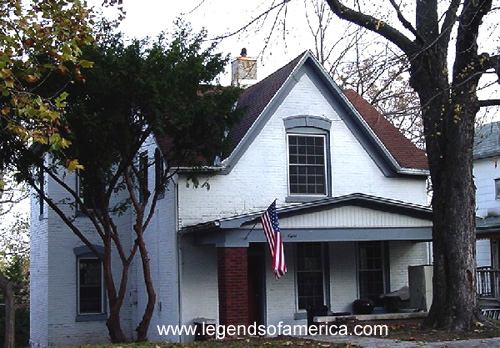
While it has changed hands as a private residence, the Sallie House is said to be haunted by a little girl named "Sallie" and an older woman said to be violent toward a male owner. Though vacant, it's still privately owned so I wouldn't recommend anyone to visit it.

While it has changed hands as a private residence, the Sallie House is said to be haunted by a little girl named “Sallie” and an older woman said to be violent toward a male owner. Though vacant, it’s still privately owned so I wouldn’t recommend anyone to visit it.

Most Haunted Place: The Sallie House in Atchison

History: Built in 1857 as a private residence. Has changed in various hands.

Present Use: As of 2015, it’s currently been vacant since 2004. Has been currently owned by a landlord since the 1990s so I guess it’s still being used as a residence.

Sightings: It’s reportedly been haunted by a little girl named “Sallie” who liked play little pranks and an older, unidentified woman who was violent toward a male owner.

Anyone Famous?: No.

Open to Tourists?: No.

Other Haunts: Atchison itself, Brown Grand Theater, Kansas Aviation Museum, Kansas State University, McConnell Air Force Base, Topeka High School, Wichita State University, Fort Leavenworth National Cemetery, Molly’s Hollow, St. Jacob’s Well, Theorosa’s Bridge, Hutchinson Public Library, Hamburger Hill, Potwin Place

17. Kentucky
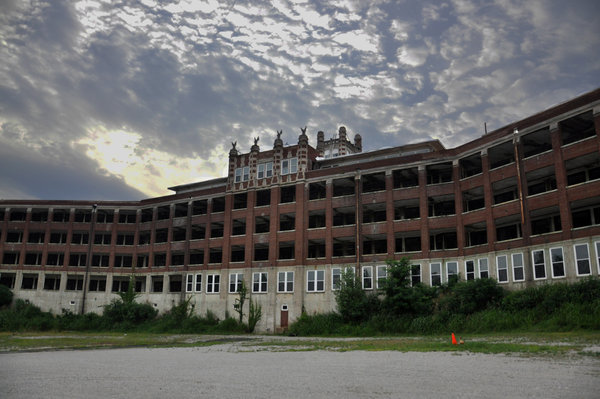
Like Seaside, the Waverly Hills Sanatorium initially operated as a treatment center for TB patients before becoming a mental institution. And it was closed for similar reasons. However, unlike Seaside, the current owners are paranormal enthusiasts and want to convert this place into a hotel as far as I know.

Like Seaside, the Waverly Hills Sanatorium initially operated as a treatment center for TB patients before becoming a mental institution. And it was closed for similar reasons. However, unlike Seaside, the current owners are paranormal enthusiasts and want to convert this place into a hotel as far as I know.

Most Haunted Place: Waverly Hills Sanatorium in Louisville

History: Opened in 1910 as a tuberculosis sanatorium after the area was ravaged by an epidemic that prompted its construction.  After the sanatorium was closed in 1962, it was converted to a geriatric center, a nursing home for the elderly and mentally handicapped. The place was closed by the state due to patient neglect as is common in these environments of understaffed and overcrowded institutions. It’s said that thousands have died there, though it’s more likely 8,212.

Present Use: It has basically been abandoned until its current owners have decided to restore it and just happen to be paranormal enthusiasts. There are currently plans to convert the place into a 4 star hotel for the haunted hotel enthusiasts as well as regular patrons. However, it once hosted an extreme metal and metalcore festival in 2007. But it’s not likely to happen again due to complaints made by local residents.

Sightings: Many ghosts are said to haunt the place including children chanting “Ring Around the Rosey” on the roof, a nurse who committed suicide via jumping off the roof, a little girl playing hide and seek, a little boy playing ball, an old woman in chains, a man in a white coat and other ghosts treading down the halls. Others consist of various voices, a floating head, lights coming on without electricity, and a flicker of a TV screen.

Anyone Famous?: No.

Open to Tourists?: Not sure.

Other Haunts: Perryville Battlefield, Bob Mackey’s Music World, X Cave at Carter Caves, Raven Hill Cemetery, Old Louisville, House on Coon Branch, White Hall, Phillips’ Folly, Rocky Point Manor, Ditto House, Cave Hill Cemetery, Lick Creek Cemetery, Maple Hill Manor, Loudon House, Sherman’s Tavern, Old Greensburg Courthouse, Seelbach Hilton, Louisville Palace Theater, Mammoth Cave, Camp Zachary Taylor

18. Louisiana
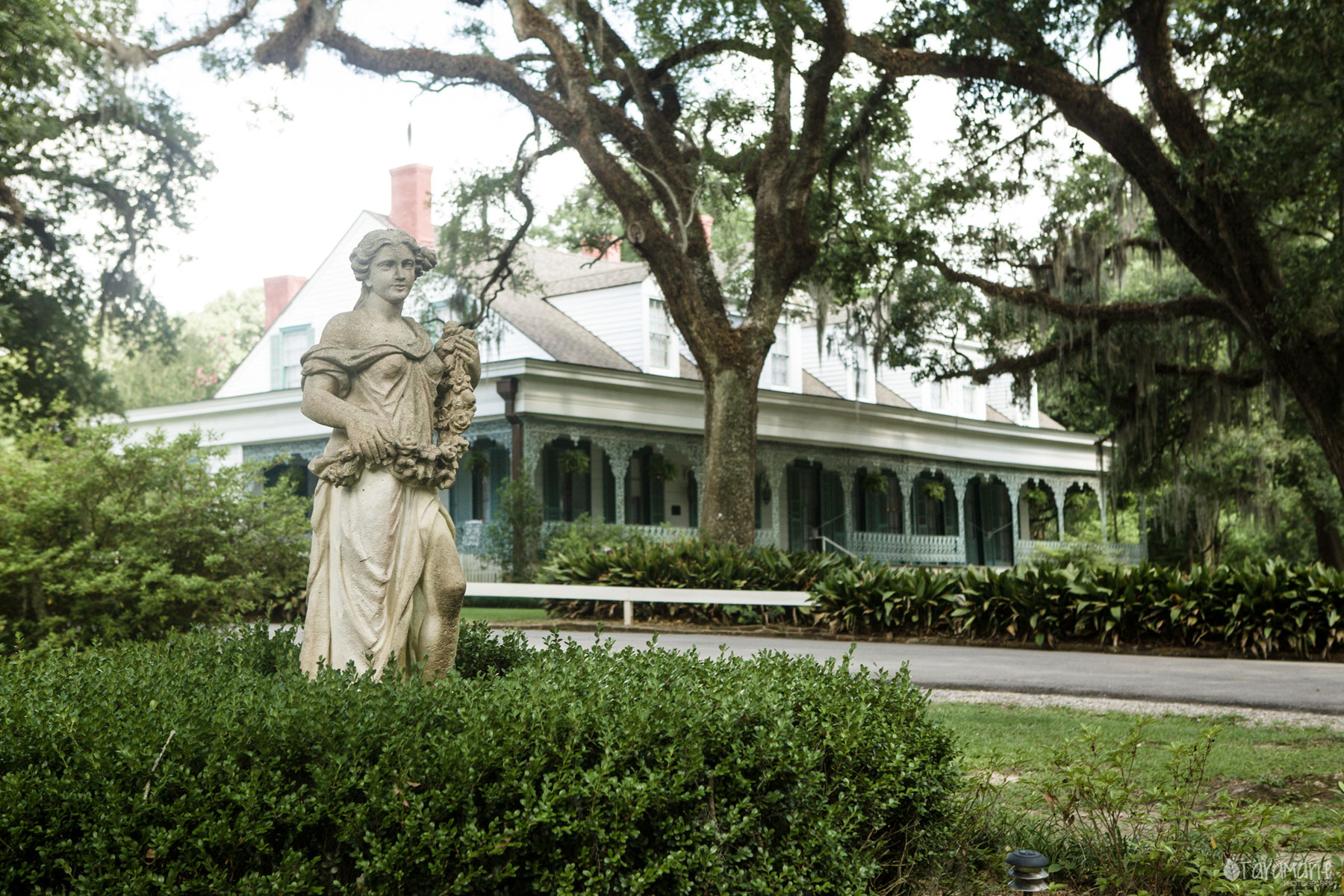
The Myrtles Plantation in Louisiana has had its share of owners and incidences. Today it's operated as a bed and breakfast by paranormal enthusiasts.

The Myrtles Plantation in Louisiana has had its share of owners and incidences. Today it’s operated as a bed and breakfast by paranormal enthusiasts.

Most Haunted Place: The Myrtles Plantation in St. Francisville

History: Built in 1796 by General David Bradford who lived there until President John Adams pardoned him for his involvement in the Whiskey Rebellion (by the way, I actually went to Bradford’s house in Washington, PA). In 1817, his daughter and son-in-law Sarah and Clark Woodruff managed the plantation but she and two of their kids died in yellow fever epidemic during the early 1820s. When his mother-in-law died Clark and his surviving daughter moved out. In 1834, it was sold to Ruffin Gray Stirling who took an extensive remodeling project and doubled the size of the building. They had 9 children but 5 died young. Stirling died in 1854 and left the place to his wife Mary Cobb. In 1865, she hired son-in-law William Winter and he resided there with his wife Sarah and their 6 children, one of whom died of typhoid at 3. In 1871, Winter was shot at his porch by E.S. Webber and died within minutes on the 17th step of the stairs. Sarah died in 1878 while her mother Mary died in 1880 and the plantation passed to her Stephen. However, the place was heavily in debt and it changed hands several times until it was bought by current owners James and Frances Kermeen Myers.

Present Use: Currently a bed and breakfast offering historical and mystery tours.

Sightings: It is supposedly the home of at least 12 ghosts usually consisting of previous residents and slaves. It’s said that visitors and employees still hear William Winter’s dying footsteps to this day. It’s also reputed to be built over an Indian burial ground. Another reported seeing Sara Woodruff and her two dead children through a mirror. Other ghosts include a slave woman in a green turban, a young Native American woman, a young girl who died in 1868, and of two slaves asking to do any chores.

Anyone Famous?: No.

Open to Tourists?: Yes.

Other Haunts: Central Louisiana State Hospital, Le Petit Theatre du Vieux Carre, Louisiana State Penitentiary, Magnolia Plantation, Le Beau Mansion, Tomb of Marie Laveau, Caddo Parish Penal Farm, Bonnie and Clyde Ambush Site, Marian Grotto of Our Lady of Lourdes, Elise Reus Memorial School, Manchac Swamp

19. Maine

Maine's Wood Island Lighthouse might seem to have an uneventful history. However, in 1896 it was the scene of a drifter killing a deputy sheriff and committing suicide. It's said his moans and footsteps are often heard. Why Stephen King doesn't write something about this I'll never know. Seriously, Maine is the guy's home state for God's sake.

Maine’s Wood Island Lighthouse might seem to have an uneventful history. However, in 1896 it was the scene of a drifter killing a deputy sheriff and committing suicide. It’s said his moans and footsteps are often heard. Why Stephen King doesn’t write something about this I’ll never know. Seriously, Maine is the guy’s home state for God’s sake.

Most Haunted Place: Wood Island Lighthouse in Wood Island

History: A 47ft tall conical white tower of granite rubble lighthouse. It’s the second oldest in Maine and 11th oldest in the nation. Established in 1808 but its current structure was erected in 1858. In March 1865, Lightkeeper Eben Emerson saved the crew of the British brig Edyth Anne from drowning in a heavy storm and was commended by the Canadian government with a reward of binoculars. Another lightkeeper had a dog named Sailor who became famous for ringing the station’s fog bell to greet passing ships by taking the belt cord in its mouth and pulling it with his teeth. Currently maintained by the United States Coast Guard and The Friends of Wood Island Light.

Present Use: It’s still used as a lighthouse to this day as well as a historical site.

Sightings: In 1896, a drifter shot and killed a local deputy sheriff and then went to the lighthouse to kill himself. It’s said his moans and footsteps are often heard, as well as shadows with a human form. Locked doors are also known to somehow open by themselves.

Anyone Famous?: No.

Open to Tourists?: Yes, but they only offer seasonal tours though.

Other Haunts: Camden Hills, Captain Fairfield’s Inn, Fort Knox, Southern Maine Community College, University of Southern Maine, West Side Lake, York Village Historical Museum, Strand Cinema, Boothbay Opera House, Captain Lord Mansion, Ellis Pond, Fort William Henry, Beckett’s Castle, Maine State Prison

20. Maryland

Antietam was the first battle in the American Civil War to take place on Union soil and one that experience the most losses in a single day. Though it was a strategic Union victory, it was tactically inconclusive. And it was a rather lucky break for McClellan. Today it's a national battlefield in Maryland. But sometimes I tend to call it, "Maryland's Gettysburg."

Antietam was the first battle in the American Civil War to take place on Union soil and one that experience the most losses in a single day. Though it was a strategic Union victory, it was tactically inconclusive. And it was a rather lucky break for McClellan. Today it’s a national battlefield in Maryland. But sometimes I tend to call it, “Maryland’s Gettysburg.”

Most Haunted Place: Antietam Battlefield in Sharpsburg

History: Site of the Battle of Antietam on September 17, 1862, which marked Robert E. Lee’s first northern invasion and George B. McClellan’s lucky break. Still, neither side really gained anything from it. It was the bloodiest single day battle in the American Civil War with a combined tally of dead, wounded, or missing at 22,717.

Present Use: It’s now a national park with 330,000 visiting the place each year.

Sightings: Many visitors have reported seeing apparitions in uniforms as well as hearing cannon and gunfire. Blue balls of light, disembodied voices, orbs, phantom drumming, and strange mists have also been reported.

Anyone Famous?: Not that I can name off hand.

Open to Tourists?: Yes.

Other Haunts: Auburn House, Chestnut Lodge, University of Maryland Morrill Hall, Point Lookout Lighthouse, Westminster Hall and Burying Ground, Dr. Mudd’s House, Jonathan Hager House, Maryland State House, Bachelor’s Point, Decoursey Bridge, St. Paul’s Cemetery, Kitty Knight House, Fort McHenry, Baltimore County Almshouse
In These Haunted United States – Part 1: Alabama to Georgia

Note: Since stories about hauntings have ambiguous authenticity, I’ll put them under urban legends just for convenience. In fact, some of them might be outright hoaxes but are part of the haunted American tradition just in case. Besides, I’m more interested in doing the places anyway than talking about the ghost stuff. Yet, I do think the ghost stuff is interesting even though I don’t believe in anything pertaining to the occult or paranormal.

As we all know Halloween is upon us and for many going to a haunted house is a long time tradition. Of course, there are plenty of people who pay to be scared by ghosts and monsters but I’m not one of them. However, there are plenty of places in the United States that have their own ghost stories and alleged paranormal activity that’s the stuff of urban legend and folklore. Some of these places are open to the public and can be visited by tourists with no problem. Some still remain private property and ask that horror afficionados keep out. Others are abandoned and wish tourists keep out just for their own safety. In this series, I’ll cover some of the most haunted locations in the country according to each state. And there’s a chance some might contain more frights than others. In each section, I’ll cover significant hauntings of ten states. This one, we look at a blast furnace in Alabama, a college auditorium in Alaska, an Old West titty bar in Arizona, a hotel and onetime ladie’s school and medical resort in Arkansas, a notorious prison in California, a hotel in Colorado, a mental institution in Connecticut, a fort in Delaware, a theater in Florida, and an old hotel that was used as a military hospital in Georgia. So for your reading pleasure, enjoy my first section of haunted sites in the United States.

  1. Alabama
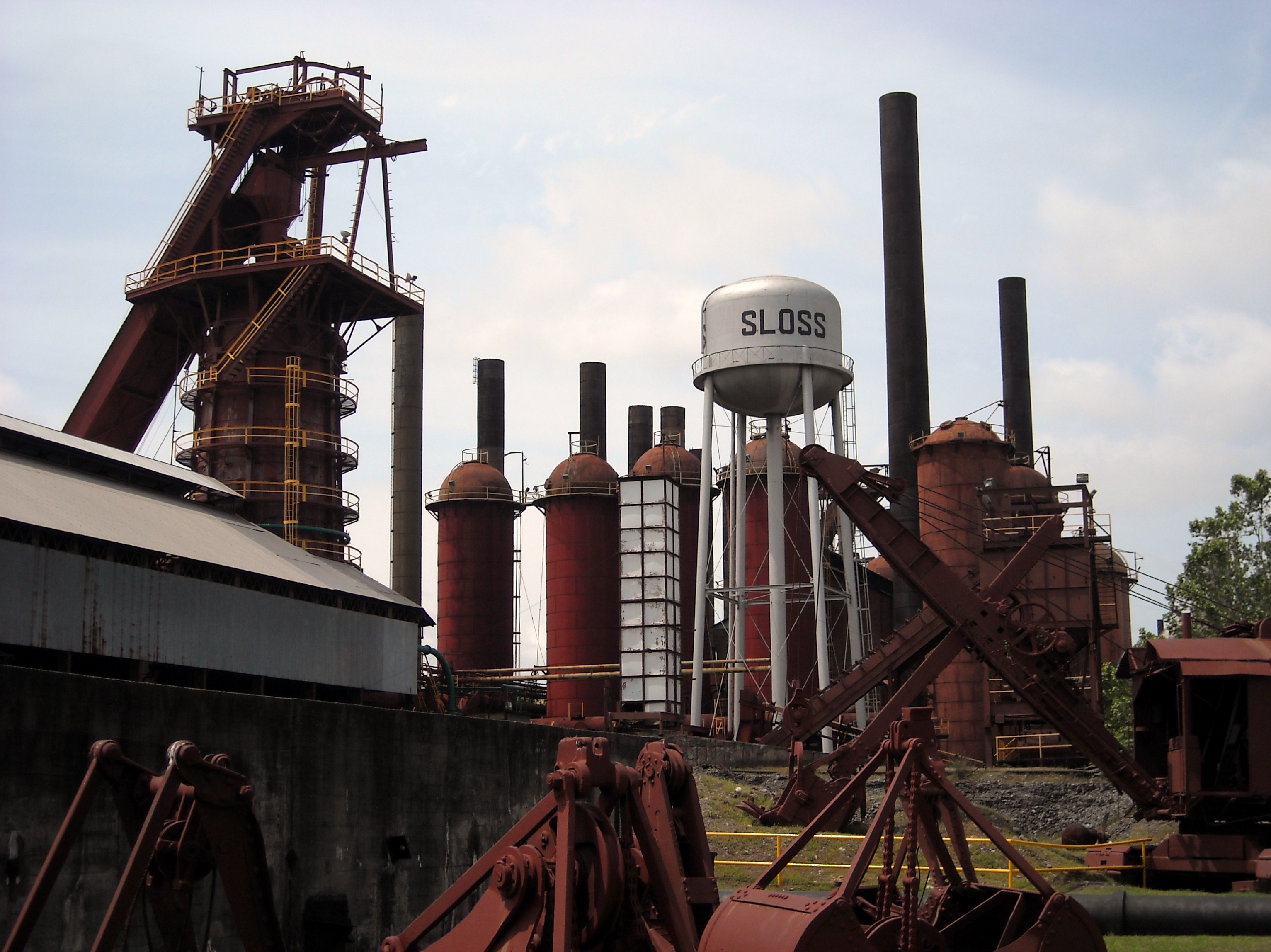
Originally built to promote railroad development, Birmingham's Sloss Furnaces was one of the biggest producers of pig iron in the country during its operation. Since OSHA regulations didn't exist at the time, it was a dangerous workplace. So it's reputation as a haunt isn't so surprising.

Originally built to promote railroad development, Birmingham’s Sloss Furnaces was one of the biggest producers of pig iron in the country during its operation. Since OSHA regulations didn’t exist at the time, it was a dangerous workplace. So it’s reputation as a haunt isn’t so surprising.

Most Haunted Place: Sloss Furnaces in Birmingham

History: It was a pig iron blast furnace that operated from 1882-1971. Founded by Colonel James Withers Sloss in order to promote a railroad development. At one time, it produced 25% of the nation’s iron and steel. Given that it existed in an era of no OSHA regulations, you can imagine how dangerous working there could result in accidental deaths, loss of limbs, and other misfortunes.

Present Use: It’s the only blast furnace in the country to be preserved and restored for public use. It’s now a museum and has a nationally recognized metal arts program. Also hosts a barbecue cookoff, concerts, and Muse of Fire shows.

Sightings: It’s reported that screams, odd noises, apparitions, and even the malevolent ghost of a former foreman haunt this place. There are also stories of limbless ghosts.

Anyone Famous?: No.

Open to Tourists?: Yes, and it’s a big haunted attraction and hosts a ghost tour on Halloween.

Other Haunts: Boyington Oak, Gaineswood, Kenworthy Hall, Pickens County Courthouse, Prat Hall at Huntington College, Richards DAR House, Oakleigh, Adams Grove Presbyterian Church, Sweetwater Mansion, Auburn University Chapel, East Lake Park, Rocky Hill Castle, Sturdivant Hall

  1. Alaska
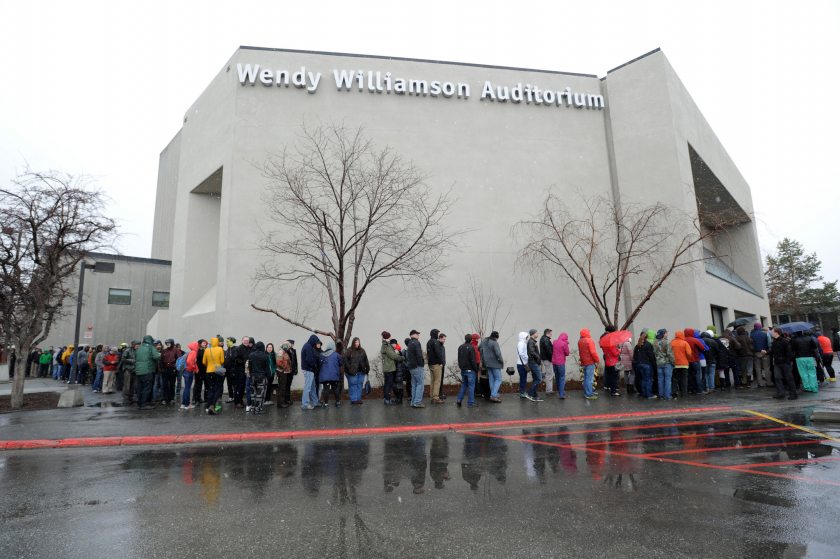
UAA's Wendy Williamson Auditorium hasn't been around long. But it's said to be a key hangout for Alaskan ghosts for some reason. Yet, only the presences late Wendy Williamson's spirit makes any sense. After all, the guy was a musician and professor as well as had the building named after him.

UAA’s Wendy Williamson Auditorium hasn’t been around long. But it’s said to be a key hangout for Alaskan ghosts for some reason. Yet, only the presences late Wendy Williamson’s spirit makes any sense. After all, the guy was a musician and professor as well as had the building named after him.

Most Haunted Place: UAA’s Wendy Williamson Auditorium in Anchorage

History: It was built in 1973. However, it’s said to contain odd features such as doors that lead to nowhere, unused elevator shafts, and a catwalk that serves no purpose. Other than that, it’s mostly what you’d expect of any college auditorium.

Present Use: Still very much used for the same purpose it was originally built for such as hosting events, lectures, and concerts.

Sightings: It’s said that footsteps and voices are often heard. Ghosts consist of a woman in a white dress, an aggressive man, a teenage boy, a local professor, and children. The aggressive man is reported to shove brunette women down stairwells or pull their hair. There are also reports of flying objects, exploding lights, disembodied voices, shadow figures, water and lights that turn on by themselves, etc.

Anyone Famous?: Well, in a local capacity. It’s said that its namesake John Wendell “Wendy” Williamson haunts there. He was a musician and professor of the school. He’s rumored to play piano in the lobby. Still, his haunting in the building is the most understandable.

Open to Tourists?: Not sure.

Other Haunts: Dimond Center, Red Onion Saloon, Historic Silverbow Inn, Golden North Hotel, Kennecott Copper Mines, West High School in Anchorage, Whittier, Ship Creek, Historic Anchorage Hotel

  1. Arizona
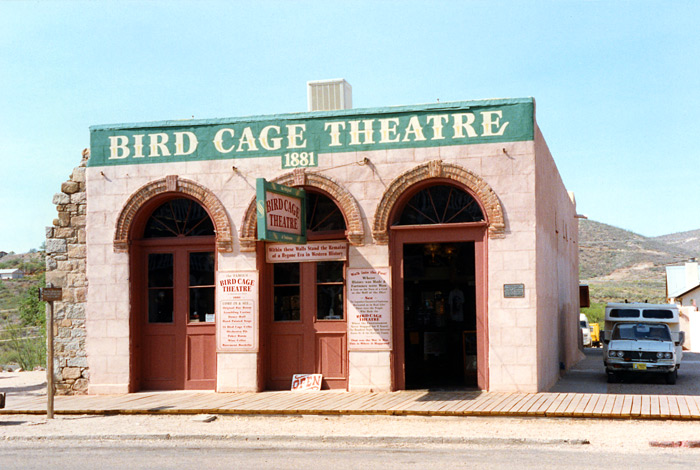
Originally set up to present respectable family entertainment in Tombstone, the Bird Cage Theatre's original owners soon realized the town economics didn't support their aspirations. So it was turned to the Old West equivalent to a titty bar with a gambling area and brothel. Said to have 26 people killed in brawls and their spirits are alleged to lurk there to its day. Still, the wax figures make this places look creepy enough from the inside.

Originally set up to present respectable family entertainment in Tombstone, the Bird Cage Theatre’s original owners soon realized the town economics didn’t support their aspirations. So it was turned to the Old West equivalent to a titty bar with a gambling area and brothel. Said to have 26 people killed in brawls and their spirits are alleged to lurk there to its day. Still, the wax figures make this places look creepy enough from the inside.

Most Haunted Place: Bird Cage Theatre in Tombstone

History: It was a theater, saloon, gambling parlor, and brothel that operated between 1881 and 1889, during the height of the silver boom. Had 14 cribs that hung from the ceiling. Owned by variety performers Lottie and William “Billy” Hutchinson who originally wanted to present respectable family shows like they saw in San Francisco. But the town’s economics didn’t support their aspirations so they basically made it a titty bar for the rough mining crowd. Saw 26 people killed in brawls with 140 bullet holes remaining in the building. Doc Holliday, Wyatt Earp, William Randolph Hearst, Curly Bill Broncius, Diamond Jim Brady, Bat Masterson, and Johnny Ringo all visited there. It wasn’t a place to bring your kids. After it closed in 1892, it wouldn’t be reopened or disturbed until 1934.

Present Use: It’s now a museum and sometimes a movie location.

Sightings: Visitors and staff have reported eerie music, laughter, and shouts echoing through the building as well as ghosts of cowboys and prostitutes. Some have reported they could still smell odors of cigars and whiskey.

Anyone Famous?: Curly Bill Broncius is most likely since he was killed there. And it’s said there were 26 male ghosts at the place.

Open to Tourists?: Yes. Opened year round from 8:00 a.m. until dusk.

Other Haunts: Boot Hill, Copper Queen Hotel, Gadsden Hotel, Monte Vista Hotel, Vulture Mine, NAU’s Morton Hall, Arizona State Prison Complex, Oliver House, Thornton Road Domes, Jerome Grand Hotel, Casey Moore’s Oyster House, Hotel San Carlos, Hermosa Inn, Hotel Congress, Canyon de Chelly, Fox Theatre, Pointe Hilton Tapatio Cliffs Resort, Crowne Plaza San Marcos, Hannagan Meadow Lodge, Hotel St. Michael, Pioneer Hotel, Connor Hotel, Sonoita Inn, El Tovar Hotel, San Xavier del Bac, Bisbee Courthouse, The Weatherford Hotel

  1. Arkansas
Ever since it opened in 1886, the Cresent Hotel in Eureka Springs has mostly been used as a hotel (and still is). However, it did operate as a school for young women in the early 20th century. Not only that, but it had a interesting time as a medical resort under noted quack Norman G. Baker. Let's just say that guy has a rather interesting story.

Ever since it opened in 1886, the Cresent Hotel in Eureka Springs has mostly been used as a hotel (and still is). However, it did operate as a school for young women in the early 20th century. Not only that, but it had a interesting time as a medical resort under noted quack Norman G. Baker. Let’s just say that guy has a rather interesting story.

Most Haunted Place: The Crescent Hotel and Spa in Eureka Springs

History: Opened in 1886 as a year-round resort hotel for rich people. It had its own in-house orchestra and hosted a lot of dance parties. It also held picnics, hiking, streetcar rides, and popular Tally-ho rides to Sanitarium Lake or some other attraction. Cost was $294,000. From 1908-1934, it was a college for rich girls. And between 1937 and 1940, it was operated as Baker’s Cancer Curing Hospital when it was owned by purple enthusiast, inventor, radio personality, and quack Norman G. Baker. He was later put in prison. In 1967, it was nearly burned to the ground. In 1997, its owner Marty Roenigk died in a car accident. His widow still owns the hotel to this day.

Present Use: It’s still operating as a hotel, but it’s open to everyone willing to pay.

Sightings: Seen as the most haunted hotel in America. It’s said to be haunted by several spirits including a young woman who died falling from the roof, a nurse pushing a gurney, a staff doctor, a stonemason who slipped off the roof, a cancer victim, as well as several former guests and owners.

Anyone Famous?: Well, it’s none other than owner Norman G. Baker. A millionaire entrepreneur, radio broadcaster, and inventor who secured fame as well as state and federal prison terms by promoting a supposed cure for cancer in the 1930s. Created the Tangley calliaphone, which is an air blown musical instrument. Owned a radio station in Iowa and Mexico. He’s probably the white haired one with hypnotic eyes wearing a white suit, lavender tie, and purple shirt. Said to drive an orchid color car and desecrate the Crescent Hotel’s walls with his favorite colors. Also known to be one of the most ruthless quacks in American history as well as a precursor to the radio “shock jock.” Hollywood needs to make a movie about this guy.

Open to Tourists?: Yes. You can even stay there (if you can afford it). You can even get married there if you want, too. They also have ghost tours.

Other Haunts: Fort Chaffee, King Opera House, Prairie Grove Battlefield, McCollum-Chidister Hotel, Powhatan Courthouse, Desha County Courthouse, Old State House, Rush-Gates House

  1. California
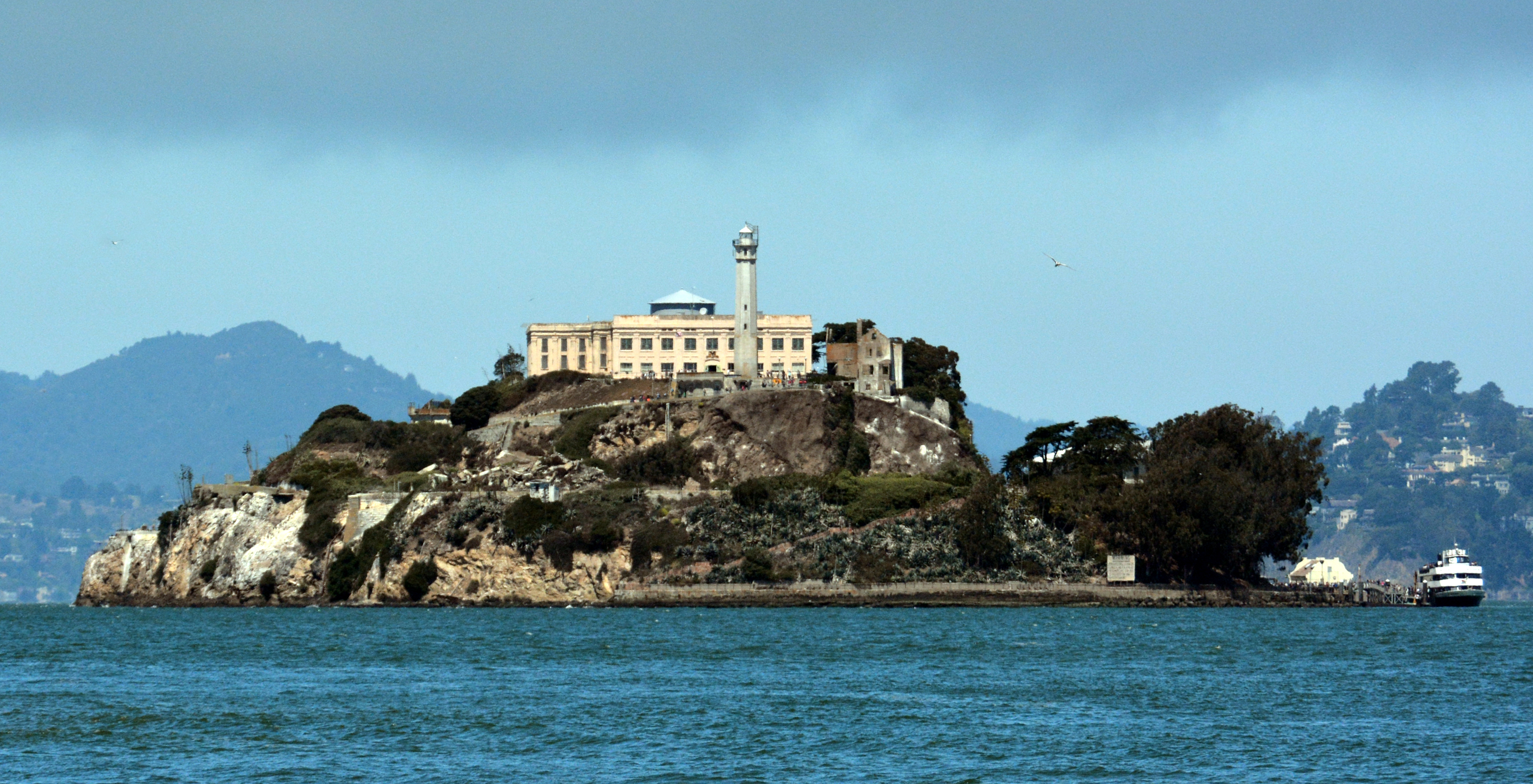
While Hollywood is home to the most famous movie stars, Alcatraz Island was home to some of the most notorious criminals during its time as a federal prison. Noted inmates include Al Capone, Robert Stroud (known as "Birdman of Alcatraz"), James "Whitey" Bulger, George "Machine Gun" Kelly, Mickey Cohen, and Alvin "Creepy" Karpis. It's alleges their spirits haunt the place.

While Hollywood is home to the most famous movie stars, Alcatraz Island was home to some of the most notorious criminals during its time as a federal prison. Noted inmates include Al Capone, Robert Stroud (known as “Birdman of Alcatraz”), James “Whitey” Bulger, George “Machine Gun” Kelly, Mickey Cohen, and Alvin “Creepy” Karpis. It’s alleges their spirits haunt the place.

Most Haunted Place: Alcatraz Island in San Francisco

History: It’s a small island with developed facilities for a lighthouse, military fortification, military prison, and federal prison. Named by Spanish explorer Juan Manuel de Ayala who named it La Isla de los Alcatraces or “Island of the Pelicans.” Was also a place for a major Native American protest in 1969-1970. Has the oldest lighthouse on the West Coast which was built in 1846. Was a military garrison in its early years when California was added to the United States and was home to Civil War prisoners as early as 1861.  After the war, it was used as a military prison which housed Confederates caught on the West Coast, Hopi men in the 1870s, as well as POWs and conscientious objectors like Philip Grosser. While it was known for being harsh to hardened criminals, it basically functioned in a minimum security capacity during its military prison phase. In the event of the San Francisco Earthquake, it also housed the city’s criminals as well. From 1933-1963, it was designated federal prison which housed Al Capone, Robert Stroud, George “Machine Gun” Kelly, Bumpy Johnson, Puerto Rican terrorist Rafael Miranda, Mickey Cohen, Arthur “Doc” Barker, James “Whitey” Bulger, Roy Gardner, Henri Young, and Alvin “Creepy” Karpis. Also provided housing for the prison staff and families. Saw several escape attempts with the possibility of 5 inmates being successful. It’s best remembered as a federal prison with an infamous reputation. Ceased federal penitentiary operations due to structural deterioration (saltwater damage and corrosion), government budget cuts, rising costs of running the prison, and diminishing security measures.
Present Use: Museum and film site. American Indian groups hold ceremonies there, particularly on Columbus Day and Thanksgiving.

Sightings: People have reported screams, sounds of violent fights, doors slamming, and people being shoved or scratched. C-Block is said to be haunted by a prisoner who was killed in the laundry room. It’s said that James A. Johnston himself is reported to see ghosts there. And prisoners have reported seeing ghosts of Native American prisoners and officials who perished during the American Civil War.

Anyone Famous?: Well, one park ranger claimed he heard Al Capone practicing his banjo in the showers. George “Machine Gun” Kelly and Alvin “Creepy” Karpis have also been sighted. One couple reported hearing canaries from Robert Stroud’s cell (despite that Stroud was never allowed to keep any birds on Alcatraz).

Open to Tourists?: Yes. You can even take a cruise there.

Other Haunts: USS Hornet, Mission San Jose, Preston School of Industry, Hotel Leger, Battery Point Lighthouse, Wolfe Manor, Amargosa Opera House and Hotel, American Idol Mansion, Barney’s Beanery, The Comedy Store, Fort MacArthur, Pico House, Hollywood, Hollywood Forever Cemetery, Chateau Marmont, Lincoln Heights Jail, Linda Vista Community Hospital, Universal Studios, RMS Queen Mary, Hollywood Roosevelt Hotel, Vogue Theater, Dominican University of California, Bodie, Point Sur Lighthouse, Tor House and Hawk Tower, National Exchange Hotel, Holbrooke Hotel, Mission San Juan Capistrano, Disneyland, El Adobe de Capistrano, Black Star Canyon, Yost Theater, Mission Inn, Old Sacramento, Hotel de Coronado, Whaley House, Casa de Estudillo, Mission San Miguel, Moss Beach Distillery, La Purisima Mission, Winchester Mystery House, Olivias Adobe, Elizabeth Bard Memorial Hospital, Glen Tavern Inn

  1. Colorado
Estes Park's Stanley Hotel has a reputation for its haunts that it served as an inspiration for Stephen King's The Shining. Of course, I'm sure King's stay at the hotel didn't lead him to lose his mind and attack his family. But the guy does have a warped imagination.

Estes Park’s Stanley Hotel has a reputation for its haunts that it served as an inspiration for Stephen King’s The Shining. Of course, I’m sure King’s stay at the hotel didn’t lead him to lose his mind and attack his family. But the guy does have a warped imagination.

Most Haunted Place: The Stanley Hotel in Estes Park

History: Originally a hotel for rich people that opened in 1909 and founded by F. O. Stanley who was famous for the Stanley Steamer after he was recommended to go out west due to suffering tuberculosis. Once had a golf course and an ice pond. Stanley also set up the town’s bank as well as developed a sewer, water, and power company. And he’s said to help restore wildlife to the area.

Present Use: It’s still a hotel but it’s also a museum, too. There’s also plans for a horror museum by the way.

Sightings: This place was the original inspiration for Stephen King’s The Shining. Staff and guests often report hearing parties in the empty ballroom as well as someone playing the piano, thought to be the former owner’s wife. One room is said to contain ghosts of children and a housekeeper. Stephen King said he witnessed some of this while on vacation with his family.

Anyone Famous?: Well, F. O. and Flora Stanley are said to appear in formal attire on the main staircase and areas. Another is the Earl of Dunraven who previously owned the land before Stanley.

Open to Tourists?: Yes, if you can afford it.

Other Haunts: Hotel Jerome, Osgood Castle, Pioneer Park, Molly Brown House, Brown Palace Hotel, Central City Masonic Cemetery, St. Cloud Hotel, Imperial Hotel, Cheesman Park, Fitzsimons Army Hospital, Blackhawk, Stage Coach Country Inn, Onaledge

  1. Connecticut
Though originally built as a tuberculosis treatment center for children, Waterford's Seaside Sanatorium had a reputation for a high suicide rate and abuse while it was a mental institution. Now abandoned, there are plans to tear it down.

Though originally built as a tuberculosis treatment center for children, Waterford’s Seaside Sanatorium had a reputation for a high suicide rate and abuse while it was a mental institution. Now abandoned, there are plans to tear it down.

Most Haunted Place: Seaside Sanatorium in Waterford

History: Built in in 1934, it was one of the first institution designed for heliotropic treatment of children with tuberculosis. Since the 1940s, it’s been home to several different medical facilities, including an old folk’s home and the most notorious mental institution. The mental asylum exhibited a high suicide rate and was subject to a string of abuse cases. Designed by famous architect Cass Gilbert who also designed the building for the US Supreme Court.

Present Use: Currently none, since it’s been passed through the hands of a few developers from 1996. However, there have been plans to tear the place down (either to replace with condos or a state park). As of today, it remains abandoned and boarded up.

Sightings: There are plenty of apparitions and voices reported there. Spirit orb photos have also been taken.

Anyone Famous?: No.

Open to Tourists?: The grounds are open to the public, but the building isn’t.

Other Haunts: Bara-Hack, Dudleytown, Hartford Conservatory, New London Ledge Lighthouse, Remington Arms, Union Cemetery, Fairfiled Hills State Hospital, Norwich State Hospital, Little People’s Village, Gunntown Cemetery, Hanna Cranna’s Grave, Penfield Reef Lighthouse, Phelps Mansion, Mansfield Training School, Savoy Hotel and Majestic Theater, Sterling Opera House, Yankee Pedlar Inn, Downs Road, Hookman’s Cemetery, Midnight Mary’s Grave

  1. Delaware
While Fort Delaware experienced military activity as early as the War of 1812, it's best known for being a Civil War military prison. Continued military operations until after WWII.

While Fort Delaware experienced military activity as early as the War of 1812, it’s best known for being a Civil War military prison. Continued military operations until after WWII.

Most Haunted Place: Fort Delaware in Pea Patch Island

History: A fortress where its military activity dates back to the War of 1812. It was designed by chief engineer Joseph Gilbert Totten. It was used by the Union Army during the American Civil War as a military prison for Confederate POWs, federal convicts, and privateer officers. It’s said that it held as many as 33,000 prisoners with 2,500 died. Disease was the leading killer. But people did try to escape. In 1878, it had been struck by a massive hurricane that destroyed the south side and partially damaged Trinity Chapel. In 1885, the post-war hospital was struck by a tornado. It continued military operations until 1947.

Present Use: It’s now a living history museum and state park.

Sightings: It’s said that many soldiers from the Civil War still haunt the fort with full body apparitions, footsteps, and voices all widely reported.

Anyone Famous?: No.

Open to Tourists?: Yes.

Other Haunts: Delaware Governor’s Mansion, Cooches Bridge, Belmont Hall, Deer Park Tavern, Camp Arrowhead, Memorial Hall, Dickinson Mansion

  1. Florida
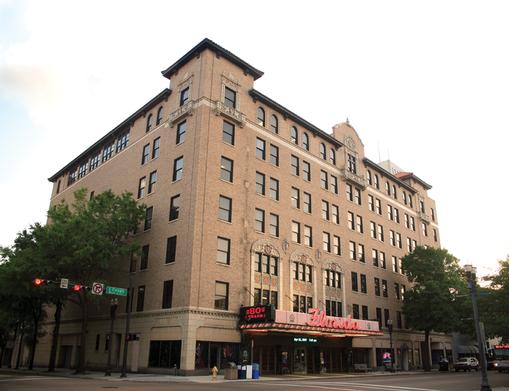
Built in 1927, Jacksonville's Florida Theatre is said to be one of only 4 high style movie palaces in the state. Now it's a live theater and event center. Best known performance there was an Elvis Presley concert.

Built in 1927, Jacksonville’s Florida Theatre is said to be one of only 4 high style movie palaces in the state. Now it’s a live theater and event center. Best known performance there was an Elvis Presley concert.

Most Haunted Place: Florida Theatre in Jacksonville

History: Built in 1927 and is said to be one of only 4 remaining high style movie palaces in the state. However, it later ceased operations as a movie house though but they also used it for live events, too. It’s said that even Elvis Presley performed there once in the 1950s.
Present Use: Used as a performance venue where they hold concerts and shows.

Sightings: It’s said that there were as many as 50 spirits reported there.

Anyone Famous?: No.

Open to Tourists?: Yes, but you won’t be able to see any movies there.

Other Haunts: Casa Monica Hotel, Bitmore Hotel, Fort Cooper, Leaf Theater, Veda Mound, University of South Florida Library, Ponce de Leon Hotel, Boston House, Royalty Theater, Orange Blossom Trail, Old Amelia Island Jail, Gibson Inn, Old Polk County Courthouse, Twin Ponds, Black Creek Cemetery, Coon Hill Cemetery, Krome Insane Asylum, Miami River Inn, Curtis Mansion, Oviedo, Sunland Hospital, Crampton Brewery, Timberchase Apartments, Harder Hall, Al Capone’s House, Anastasia Island Lighthouse, St. Francis Inn, Florida Sunshine Skyway Bridge, Umatilla Cemetery, Annie Russell Theatre

  1. Georgia
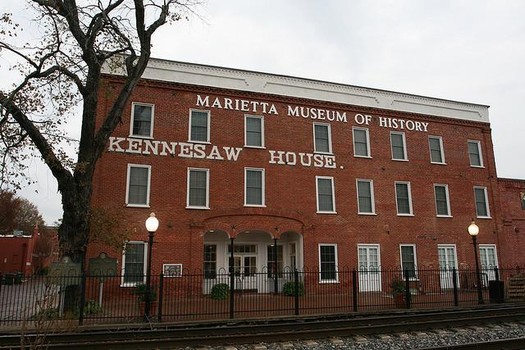
The Kennesaw House has served a variety of purposes in its operation. Originally built as a warehouse, it was used as a hotel, Civil War hospital, shops, offices, and a restaurant. Today it's a museum and home to the Marietta Historical Society.

The Kennesaw House has served a variety of purposes in its operation. Originally built as a warehouse, it was used as a hotel, Civil War hospital, shops, offices, and a restaurant. Today it’s the Marietta Museum of History.
Most Haunted Place: Kennesaw House in Marietta
History: One of the town’s oldest buildings which was constructed in 1845. Though it was intended to be a cotton warehouse, it was turned into a hotel in 1855. Was where the Great Locomotive Chase began in 1862. During the American Civil War, it served as a Confederate hospital and was spared from Sherman’s Atlanta Campaign mainly because the owner was a Mason and his son-in-law was a Union spy. It was taken over by the Union Army instead (but the 4th floor did catch fire). In 1920, the first floor was converted into retail shops until 1979, when the top floors were converted into offices and the bottom became the Brickworks restaurant. The building would soon be turned over to the Marietta Museum of History who owns it to this day.
Present Use: Now houses the Marietta Museum of History.

Sightings: Hundreds of wounded Confederate soldiers have been reported to still haunt the place. One tells how a group in an elevator somehow ended up stopping at the basement where they saw soldiers in their hospital beds.

Anyone Famous?: No.

Open to Tourists?: Yes.

Other Haunts: Moon River Brewing Company, Springer Opera House, Colonial Park Cemetery, Sorrell-Weed House, Savannah’s Madison Square, Bonaventure Cemetery, Old Candler Hospital, Perkins & Sons Candlery, Old Pink House, Marshall House, Kehoe House, Willis-Jones House, Windsor Hotel, Booth House, Hay House, Ansley Park

Old Rules in the Evolution of Sports

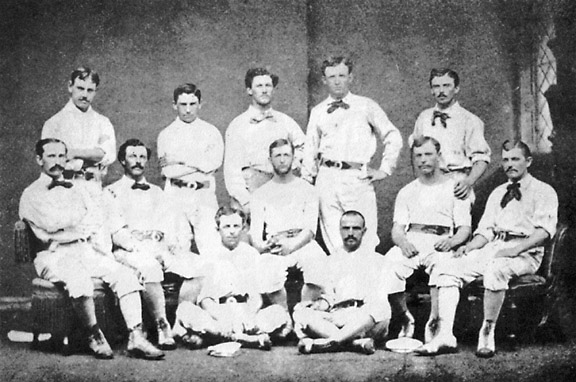
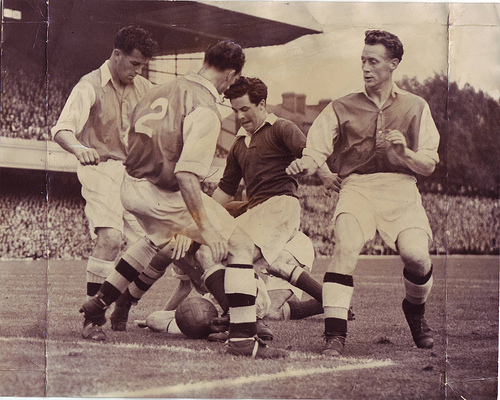
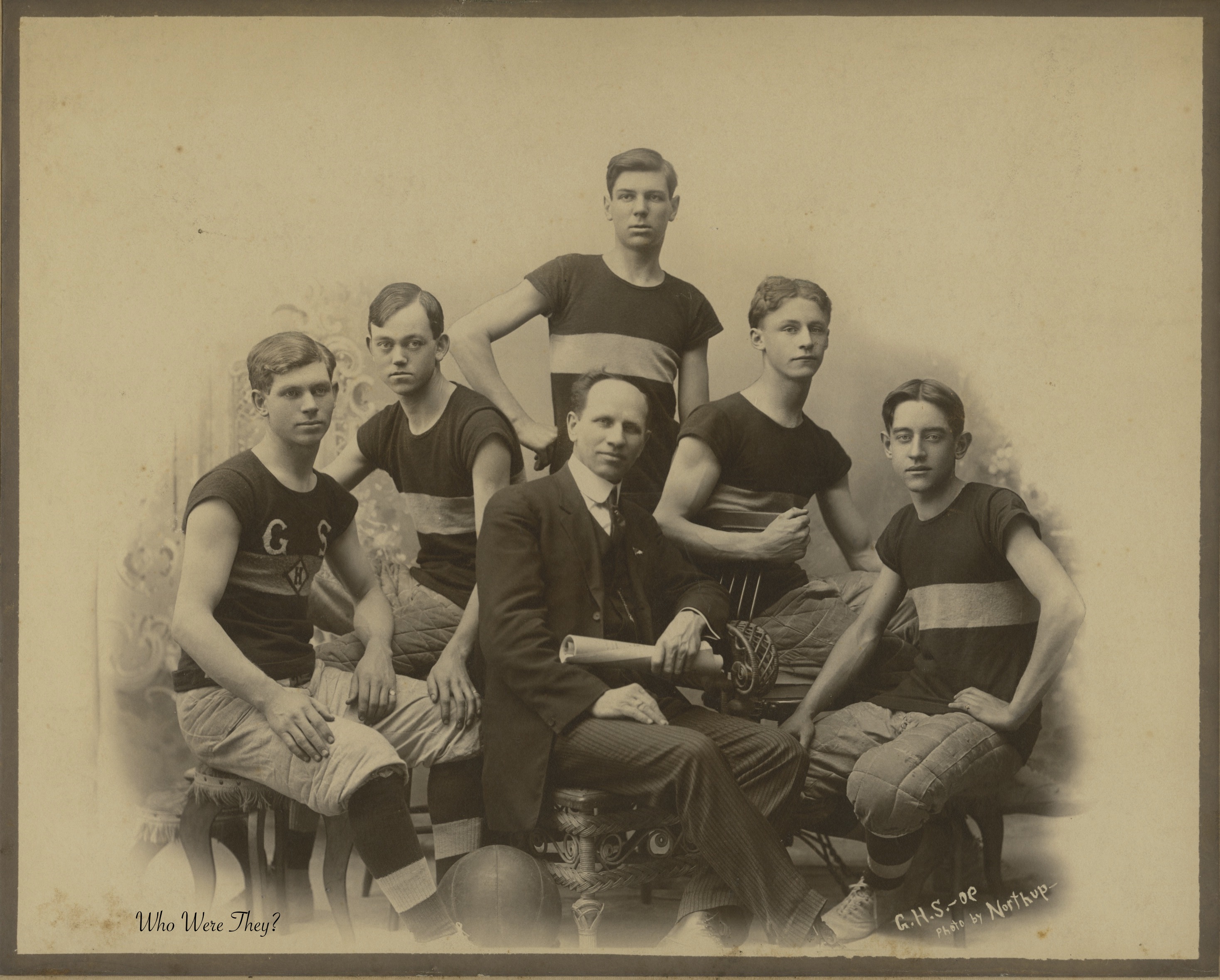
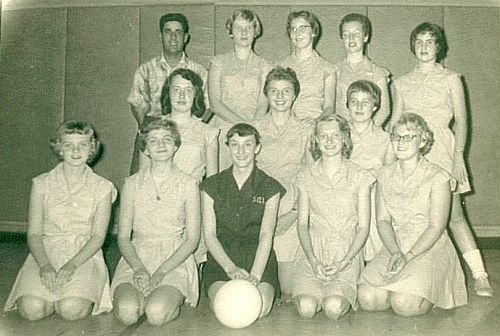
Sports have been with us for a very long time either to play or to watch. And like most games, sports come with an object as well as a set of rules to follow in order to obtain it. However, we sometimes have a tendency sports for granted thinking that the game has been played this way. But you would be wrong since sport rules just didn’t come out in the open. Rather they had to be develop over time.  In sports rules are meant to be broken. So much that they’re constantly revised to improve quality of play and participant safety, which are both important. I mean sports need to be fair and fun. And participants need to be safe or else the franchise or school can run the risk of being sued. So for your pleasure, I present to you old sports rules for favorite American games to show how they used to be played but with commentary for further comedic effect. This excludes sports that contain racing, targets, or judging.

Baseball

In the 19th century, baseball was a gentlemen's game and a great American pastime. It was a time when pitchers can only throw underhand, balls can be caught on the bounce, a pitcher can cover a ball in his own saliva, batters can cite pitch preference, and umpires could confer with the players and fans. Even earlier, there were no strikes, teams played to a 21 score, and bases were run clockwise. Yes, it was a hell of a game in those days.

In the 19th century, baseball was a gentlemen’s game and a great American pastime. It was a time when pitchers can only throw underhand, balls can be caught on the bounce, a pitcher can cover a ball in his own saliva, batters can cite pitch preference, and umpires could confer with the players and fans. Even earlier, there were no strikes, teams played to a 21 score, and bases were run clockwise. Yes, it was a hell of a game in those days.

Until the 1920s, pitchers could coat the ball with anything at their disposal, including spit, mucus, and petroleum jelly. (Perhaps we should give germaphobic baseball players more respect, especially germaphobic pitchers. Seriously, disgusting.)

Of course, pitchers needed all the help they could get. Until 1883, they were required to throw underhand as if tossing a horseshoe as well as keep both firmly planted on the ground during their delivery. They were also prohibited from stepping toward the plate. (Gives you an idea of how much it sucked being a pitcher those days.)

Batters could call high or low pitch between 1867-1887. This helps explain some of the unusually high batting averages during that era. (Then again, I’m sure the players were less likely to be busted for steroid use.)

Called strikes didn’t exist until 1858. Before then batters stayed at the plate until they put the ball in play, regardless of whether it took one pitch or a hundred. A new rule change in 1879 declared that 9 balls made a walk. This rule was changed several more times until 1889, when it was reduced to the now-standard 4 balls. (If it weren’t for strikes, balls, or fouls, baseball games might’ve lasted for days.)

In the 19th century, if an umpire can’t see whether a catch was fairly made, he could confer it with the spectators and the players. (Seriously, why confer with the fans or players? That doesn’t make any sense. Most of the fans would root for the home team. Besides, if this was a case the Pittsburgh Pirates wouldn’t have 20 consecutive losing seasons already.)

Fly balls can be caught off on a bounce until 1864, and foul balls until 1883. (Kind of sounds like something your mom used to do when your 6-year old nephew wanted to join the big kids’ kickball game.)

From 1885 to 1893, baseball bats were allowed to be flat. But it would be revoked since they have a tendency to splinter into pieces upon baseball contact. (Flat bats in baseball? Seriously, this isn’t cricket. Next thing, it’ll be just making up rules as you go along. Besides, think of all the splinter injuries among batters.)

Rather than crouching, catchers would stand a few feet behind home plate until the 1900s. (Wonder how that worked out. Guess this led to many catchers getting head injuries.)

Before a baseball game consisted of 9 innings from 1857 on, it wasn’t unusual for a baseball game to last until one team scored a predetermined number of runs, which was usually 21. (Now that’s crazy. I mean most winning teams don’t score that high in a baseball game for God’s sake.)

In the early days, whenever a ball was hit in the long grass or bushes, play was suspended until the ball was recovered with both teams fanning out to find it. (Man, imagine the delays you’d have at these games.)

In the mid-19th century, a baserunner could be put out between bases by having the ball thrown directly at them. This was known as “patching,” “plugging,” or “soaking” was considered central to the manly spirit of the game. (And you think football has a problem with concussions.)

In the earliest days of baseball, bases were commonly run clockwise with today’s third being first. In some variations, the first hitting batsman could chose to either run clockwise or counterclockwise and the subsequent hitters in an inning would have to follow suit. (“Hey, Rodriguez, you’re running the wrong way! First base is on the right side of home plate this inning!” Man, really hate to be those players at the time.)

Golf

In the olden days, golf seemed to have rules that applied to just about anything. They had rules applied to whenever the ball landed in poop or was carried by a dog. They had rules pertaining to striking caddies. They even had rules applying to when it as appropriate for players to steal each other's balls. Yes, golf rules could be very specific at times.

In the olden days, golf seemed to have rules that applied to just about anything. They had rules applied to whenever the ball landed in poop or was carried by a dog. They had rules pertaining to striking caddies. They even had rules applying to when it as appropriate for players to steal each other’s balls. Yes, golf rules could be very specific at times.

When one player’s ball blocked the path of another player’s ball on the green but was at least 6 inches away, the obstructing player’s ball wasn’t lifted. Instead, the player who was farthest away from the hole had to curve or chip their putt around their opponent’s ball. The “stymie rule” as it became known, was officially abolished in 1952, when the United States Golf Association and the Royal and Ancient Golf Club of St. Andrews established a new joint set of rules. (Both organizations must’ve believed that the “stymie rule” was lame or inspired a lot of bad behavior among golfers. Not that curving or chipping an opponent’s putt is very exciting.)

Golf courses haven’t always had a standard number of holes. That changed in 1764 when the Royal and Ancient Golf Club converted from 22 holes to 18 holes because the club thought the first 4 holes were too short. (So that’s how the 18 holes started. Seems like a pretty lame reason.)

Golf holes used to come in many sizes. That changed in 1891 when the Royal and Ancient Golf Club determined that the hole should have exactly a 4.25 inch diameter. The precise size was chosen in order to comply with a popular Scottish hole cutter invented 62 years earlier. (Seriously, if you wanted to standardize the size of the golf hole due to a popular Scottish hole cutting invention from 62 years ago, shouldn’t you’ve done it earlier?)

The Royal and Ancient Golf Club introduced stroke play in 1759 which granted victory to the player with the fewest strokes over a set number of holes. Before it was match play, whereby each hole was treated as a separate competition and the player who won the most holes, won the match. (Match play golf seems like fun. Then again, it’s probably as boring as hell, too.)

In 1744, players were required to tee the ball if it was within a club’s length of the hole. (Why couldn’t they just hit the ball with the club like most golfers do? Makes better sense.)

From 1908-1984 was a rule on dropped balls out of bounds or into the water which says: “A ball shall be dropped in the following manner: The player himself shall drop it. He shall face the hole, stand erect, and drop the ball behind him over his shoulder.” Today golfers now have to stand erect and drop the ball at an arm’s length. (And if you’re Tiger Woods, you better keep your man balls in your pants. Seriously, the shoulder rule is stupid.)

In 1828, a player was allowed to hijack an opponent’s ball should it land in a hazard like sand, mud, or rubbish. (“Seems like Tiger Woods has stolen his opponent’s ball in the sand trap again. Man, why can’t Tiger just play with his own balls?”)

In 1812, if a player’s ball struck his opponent or his caddy, his opponent lost the hole. But if a player’s ball struck his own caddy, then the player lost the hole. (Man, do I yearn for the days of 1812 when golf had the potential of becoming a contact sport. Would’ve made the game a lot more interesting and entertaining.)

In 1776, a player could pick a ball out of a fresh pile of excrement and play it on a one stroke penalty. (Guess they had a lot of livestock at the country club and no fence. Didn’t know golf rules applied to balls landing in shit.)

In 1773, a player could pay a fine for giving an old ball to his caddy. (Guess 18th century golfers didn’t like helping their caddies. Jerks. They were also paid pretty shitty, too.)

In 1956-2008, players weren’t allowed to remove a ball for identification purposes. (Yes, this is stupid. Seriously, you can pick up a ball if it lands in shit but you can’t lift it to see if it’s yours? Makes no sense.)

In 1783, whenever a dog carried or hijacked a ball in play, the player was allowed to use another as long as it lay as near to the original spot. (Seems like 18th century golf courses had a lot of stray dogs running around.)

Before the 14 club rule of 1939, a golfer could use as many clubs in a round as he wanted. (Boy, I’d sure hate to be a caddy before 1939.)

From 1744-1952, players had to play a whole round with one ball unless lot, even if it’s badly damaged. (Now that sucks especially if it’s covered in shit.)

Between 1744-1952, when a ball was within 20 yards of the hole, the flag stick had to be removed. (Golfers with poor eyesight were at a real disadvantage there.)

Tennis

Ah, tennis a genteel sport before the advent of Jon McEnroe and Serena Williams. However, early tennis was indoors with people passing a wooden ball with their hands over a 5ft high net.

Ah, tennis a genteel sport before the advent of Jon McEnroe and Serena Williams. However, early tennis was indoors with people passing a wooden ball with their hands over a 5ft high net.

During tennis’s infancy, the game mostly took place indoors, where the ball was played off the walls with the player’s hands. As the game progressed, some players started using gloves with webbing to protect their hands before eventually upgrading to a primitive form of today’s tennis racket. (To me, if it’s not two people hitting the ball over the net with rackets, it’s not tennis. Otherwise it’s a form of handball. Also, webbed gloves, really?)

The first indoor tennis courts had nets rising to 5 feet high at the ends and drooped to 3 ½ feet in the middle. (You might as well think of indoor tennis as another game of two player of scaled-down volleyball.)

Tiebreakers weren’t introduced until 1970. They occur when games are deadlocked at a score 6-6. (Man, wonder how they determined winners at Wimbledon until then.)

According to a Victorian rulebook, tennis was a game made for 3. (3 players? Seriously, that doesn’t even make sense! Even 8 person tennis is more plausible than this!)

Some early tennis balls were made of wood and barely bounced at all. (Of course, I’m sure wooden ball tennis resulted in a lot of injuries. No wonder early tennis players wore gloves to protect their hands.)

 Soccer

Though better known as football to much of the known world, soccer is very popular sport worldwide. However,  in early soccer, tripping, shin kicking, and carrying the ball were all permitted. But cleats weren't.

Though better known as football to much of the known world, soccer is very popular sport worldwide. However, in early soccer, tripping, shin kicking, and carrying the ball were all permitted. But cleats weren’t.

Tripping, shin kicking, and even carrying the ball were all permitted. Following an implementation of a new set of rules in 1863, these practices were forbidden. (I can understand carrying the ball. However, I guess the tripping and shin kicking led to a lot of soccer fights among players.)

Prior to Charles Goodyear’s invention of vulcanized rubber in 1836, soccer players kicked around “balls” made from human and animal skulls, stitched-up cloth, and inflated pig and cow bladders. (Wait a minute, pig bladders were used in football as well. Still, the skull part really doesn’t make me want to see a Pirates of the Caribbean soccer game.)

According to an early set of rules established in Sheffield, England, in 1857, the ball could be caught off another player’s pass, provided it had not touched the ground. A free kick then ensued. (So in Sheffield soccer, pass interference was perfectly permissible.)

In 1858, players were allowed to catch the ball provided that it hadn’t touched the ground or had been thrown from the touchline. (I’m not very familiar with soccer. However, I’m sure this rule doesn’t make much sense.)

Cleats were once banned. According to a set of 14 rules established by the English Football Association in 1863, “No player shall be allowed to wear projecting nails, iron plates, or gutta percha on the soles or heels of his boots.” (Sounds like something you hear from Monty Python.)

A 1863 Cambridge rule reads, “The maximum length of the ground shall be 200 yards, the maximum breadth shall be 100 yards, the length and breadth shall be marked off with flags; and the goals shall be defined by two upright posts, 8 yards apart, without any tape or bar across them.” (Wait a minute? Since when were the biggest soccer fields bigger than modern football fields in the US? Also, two posts 8 yards apart doesn’t make goal posts stand out. I mean they use nets for soccer goals for a reason.)

In the early days of soccer, players were allowed to punch the ball. (I’m sure this is really not a good idea.)

A 1858 Sheffield rule states that a ball might be hit or pushed with the hand. But they couldn’t hold the ball except in free kicks. (In soccer, there’s a reason why the goalie is the only person to use their hands. Also, holding a ball for a kick is what we call, “punting” in US football.)

According to the 1858 Sheffield rules, “Pushing with the hands is allowed but no hacking or tripping up is fair under any circumstances whatever.” (Something tells me that Victorian soccer players seemed rather prone to violence. Wonder what the fans were like then.)

An 1871 rule states that no player should score a goal with a free kick. (Now that’s just stupid.)

An 1856 Cambridge rule states: “When a player catches the ball directly from the foot, he may kick it as he can without running with it. In no other case may the ball be touched with the hands, except to stop it.” (Uh, isn’t the whole idea about soccer kicking and running after the ball? Also, what’s with stopping the ball with your hands? Only the goalie is allowed to do that.)

An 1863 Cambridge rule reads, “A goal shall be won when the ball passes between the goal-posts or over the space between the goal-posts (at whatever height), not being thrown, knocked on, or carried.” (Hate to say this, but I kind of get the impression that soccer goal posts might’ve resembled field goal posts in the old days.)

Basketball

Invented by James Naismith, basketball is one of the quintessential American sports. However, in the olden days, there was no dribbling, players were out due to substitutions or fouling twice, coaches couldn't address their players, and the court was covered in a cage.

Invented by James Naismith, basketball is one of the quintessential American sports. However, in the olden days, there was no dribbling, players were out due to substitutions or fouling twice, coaches couldn’t address their players, and boundaries weren’t clearly defined that teams and players resorted to all kinds of antics when the ball was out of bounds.

Between 1900-1921, players who were substituted weren’t allowed to reenter the game. In fact, it wasn’t until 1934 that players were allowed to reenter the game more than once after coming out with a breather. Unlimited substitutions were finally allowed by teams in 1945. (I can see it now. “Sorry, Lebron James, but you can’t get back in the game after taking a pee break during commercial. You know the rules.”)

One of Dr. James Naismith’s original rules was: “The ball may be batted in any direction with one or both hands, but never with the fist.” (Seems like his vision of basketball sort of had a volleyball feel. But most NBA players usually fist bump each other off the court, not the ball in play on.)

Coaches were prohibited from addressing their players during the game until 1949, when they were allowed to speak to them only during timeouts. (Wonder how many teams lost games because they couldn’t consult with the coach. Seriously, that’s stupid.)

In Dr. Naismith’s game, the ball should be held by the hands, not the arms or any other body parts. (Boy would he be appalled by how modern NBA players hold the ball under their arm to slow down the pace, keep rebounds away, and other reasons.)

Another Naismith original rule read, “A player cannot run with the ball. The player must throw it from the spot on which he catches it, allowance to be made for a man running at good speed.” (So no running with the ball, then? Does this mean that players can’t dribble? Because that’s how most basketball players today run with the ball. It makes better sense that way.)

Until 1911, players were disqualified from the game after collecting their second foul. The rule has since been amended to 5 fouls in high school and college and 6 fouls at NBA games. (“Second foul, Michael Jordan? Confined to bench!”)

Under Dr. Naismith’s rules, “No shouldering, holding, pushing, striking or tripping in any way of an opponent. The first infringement of this rule by any person shall count as a foul; the second shall disqualify him until the next goal is made or, if there was evident intent to injure the person, for the whole of the game. No substitution shall be allowed.” (Now I’ve went through the two fouls. And I understand the fighting aspect of it. However, what’s with the no substitution thing? Does this mean that one jerk getting kicked out for misbehavior results in having less than 5 players on the court? What if the whole team does stuff like this? Is that even fair?)

Time restrictions on ball possession weren’t introduced until 1933. Until then, one team could legally hold onto the ball for the duration of the entire game after building a comfortable lead. (Man, that doesn’t seem fair at all. Wonder if this rule resulted into fights on the court.)

Hard to believe but dribbling wasn’t originally part of basketball. In fact, continuously pounding the ball into the hardwood didn’t come into vogue until 1909, when players were allowed to take more than one bounce before being required to shoot or pass. (Seriously, basketball is built on dribbling. That’s the point. Where the hell would basketball be without dribbling?)

Until 1938, players and fans alike had to endure a jump ball at half-court after every made field goal. The rule was eventually abolished because it slowed the pace of play. (Yeah, I can see why they changed that. Kind of like kick off but not very practical in a basketball setting. Wonder how many false starts they got out of it.)

Under Naismith a ball out of bounds goes to the first person touching it unless he holds it for over 5 seconds. However, these boundaries weren’t defined with most cases being just walls. It wasn’t until 1904, that the boundaries became straight lines. However, the original rule has led to pushing, shoving, elbowing, desperate dives, and total insanity. It was even worse when the ball ended up in balconies with players in mad dash to be first up the stairs creating jams and fights. This led to teams forming wedges to block opponents from going up the stairs. Sometimes they even tried hoisting players to the balcony in an effort to be the first to touch the ball first. (For some reason all this seems straight out of Space Jam for me.)

In the NBA it was illegal for teams to, “guarding an area instead of a specific offensive player, or was double teaming an offensive player away from the ball.” (Seriously, what’s the point of team sports if you can’t let multiple players do defense?)

From 1913-1933, out of bounds plays were eliminated by erecting wire mesh and chain link fencing around the entire court. This resulted in additional rough play with players body checking each other into the wire mesh. Such actions resulted in cuts, bruises, and sometimes infections. (Okay, maybe cage basketball isn’t a good idea.)

One of Dr. Naismith’s rules said: “If either side makes three consecutive fouls it shall count as a goal for the opponents (consecutive means without the opponents in the meantime making a foul).” (Uh, fouls are supposed to be bad. Also, 3 straight fouls = 2 free points for the other team, really?)

Another Naismith gem: “A goal shall be made when the ball is thrown or batted from the grounds into the basket and stays there, providing those defending the goal do no touch or disturb the goal. If the ball rests on the edges, and the opponent moves the basket, it shall count as a goal.” (Again with the soccer and volleyball jargon. Also, most basketballs don’t go through baskets and stay there, but through nets that have no bottom. Otherwise, how would you get the ball out?)

Under Dr. James Naismith, early basketball was supposed to be officiated by a referee and an umpire who “shall be the judge of the men and shall note the fouls and notify the referee when three consecutive fouls have been made. He shall have power to disqualify men.” (I’m sure the umpire-referee dynamic worked real well, which doesn’t exist anymore. Today it’s just 3 referees who mostly get shouted at and might either fix or gamble in the games they’re officiating.)

Of course, Naismith intended that referees have a lot of responsibilities during the game as he “shall be judge of the ball and shall decide when the ball is in play, in bounds, to which side it belongs, and shall keep the time.” (Apparently, he didn’t foresee how basketball has an official timekeeper at every level as well as the arbitrary determination of what humans can do in different fractions of a second. Seriously, in Pep Band I’ve seen teams call a time out when there’s a fraction of a second left on the clock.)

In the early days of women’s basketball, there could be 6 players on the court consisting of 3 forwards and 3 defenders and the court was divided in 3 zones with 2 players stationary. Later, this was reduced to 2 and the players consisted of 2 stationary guards, 2 stationary forwards, and 2 rovers that could move throughout the entire court. (Yes, there separate rules for women’s basketball. I know that’s crazy.)

Ice Hockey

Ice hockey evolved from field hockey and has become Canada's national pastime. However, early ice hockey used to have 7 players on the rink, banned goalies from dropping to the ice, and consisted of 2 30 minute periods.

Ice hockey evolved from field hockey and has become Canada’s national pastime. However, early ice hockey used to have 7 players on the rink, banned goalies from dropping to the ice, and consisted of 2 30 minute periods.

Forward passing wasn’t allowed until the 1929-1930 season. Until then, a player can move the puck forward only by handling it with his stick. (You mean they just don’t use their sticks in hockey?)

An 1899 rule of hockey once stated: “Any player guilty of using profane or abusive language to any officials or other players shall be liable to be ruled off by the referee.” (Sidney Crosby may be a great hockey player of many talents, but restraining profanities during a game is not one of them.)

Before we had periods, most players played until the winning team reached a predetermined score like 10, 15, 20. (Most hockey teams score less that in any given game.)

Ice hockey borrowed many of its rules from field hockey, including the use of “bully” requiring opposing centers to bang their sticks together 3 times before trying to control the face-off. That fell out of vogue in 1913 when the modern face-off was introduced. (Yeah, banging 3 sticks before play is kind of lame.)

Each team was allowed to play 7 men at a time from 1880 until the 1911-1912 season. This included the goalie, 2 defensemen, 3 forwards, and a rover who switched from defense to offense as needed. (I wonder who would be the rover for the Pittsburgh Penguins. Uh, never mind.)

Goaltenders were not allowed to drop to the ice when making saves and could, drop to the ice when and could, in fact, be penalized for doing so. This rule was eventually changed prior to the 1917-1918 season. (“Marc Andre Fleury drops to the ice again. Guess it’s time for him to go to the bad boy box for the third time in a row.”)

The game used to be structured quite differently, too. The 1910-1911 season saw hockey change from 2 30-minute periods to 3 20-minute periods-a format we have today. (Still, wonder why an average hockey game lasts over 2 hours. Then again, time outs and commercials add up.)

Football

Football has become one of America's most popular sports. However, while it has never been a genteel sport, it was way more violent and injury inducing in the 19th century. Seriously, early football had 20 guys to a field and they were encouraged to score touchdowns through any means necessary.

Football has become one of America’s most popular sports which evolved from rugby and soccer. However, while it has never been a genteel sport, it was way more violent and injury inducing in the 19th century. Seriously, early football had 20 guys to a field and they were encouraged to score touchdowns through any means necessary.

Football teams were originally allowed to take the field with 20 players per side. In 1880, that number was reduced to 11 thanks to the sweeping changes championed by Yale graduate Walter Camp. (40 players on a field? Yeah, that’s going to cause a lot of safety issues.)

Another change introduced by Camp in 1880 was reducing the field size by half to 110 yards. In 1911, it was changed to its current length of 100 yards. (Which is good because imagine how the stadiums would be if football fields were 220 yards. Yeah, gaining touchdowns would take a lot out of you.)

Gaining first downs used to be a lot easier. From 1882-1906, players were given 3 attempts to advance the ball 5 yards for a first down. Distance was later changed to 10 yards and a fourth down was added in 1912. (5 yards for a first down? Then again, they were playing on a 110 yard field at the time.)

Forward passing wasn’t legal until 1905. The innovation was introduced after 18 players were killed and 159 were seriously injured on the football fields across America earlier that year. (And they said that football players getting concussions was a big problem. Imagine what problems the NFL would’ve had in 1905.)

Football has never been a genteel sport, but it was especially brutal in the 19th century, when players were encouraged to score touchdowns through any means necessary. Punching, eye-gouging, and tackling around the neck were all legal. (If we played football by these rules today, imagine how many players would end up in the emergency room. Yeah, be thankful that they don’t have vintage football like they do vintage baseball.)

Until the 1980s, the NFL had a strange policy on helmets stating, “A player who uses a helmet he is not wearing as a weapon shall be ejected.” (Since how can a football helmet be used as a weapon? Seriously, I don’t get it.)

Volleyball

Volleyball is a rather popular sport all over the world. It was invented by a YMCA coach named William G. Morgan and  not too far from where basketball was born. Of course, under his rules, games consisted of 9 innings as well as 3 serves by each team. And if the first was out of bounds the server had a second try.

Volleyball is a rather popular sport all over the world. It was invented by a YMCA coach named William G. Morgan and not too far from where basketball was born. Of course, under his rules, games consisted of 9 innings as well as 3 serves by each team. And if the first was out of bounds the server had a second try.

Early volleyball could have any number of players on a team, 9 innings, and each team being granted 3 serves within each inning. There was also no limit to the number of ball contacts for each team before sending the ball into the opponent’s court. Later the number of players was reduced to 6 maximum, number of ball contacts to 3, and the inning system ditched for a predetermined score or winner of a set of games. (Yeah, volleyball isn’t like baseball and the inning system is too long.)

Under the original William G. Morgan rules, a volleyball net was supposed to be about 6 1/2 feet high and a court of 25 feet wide and 50 feet long. (Modern courts are much bigger like 59 x 29 1/2 ft. Besides, while high school or recreational volleyball players might find 6 1/2 feet high nets sufficient for play, this wouldn’t be the case for college and pro teams of either gender. Seriously, men’s volleyball nets are 8 ft high while women’s are 7 ft and 4 inches. And there are plenty high school girls who would never have a chance playing Div. I volleyball because they didn’t win the genetic lottery on height requirements.)

Under Morgan’s original rules, if a served ball was out of bounds a second serve was allowed. (Boy, I would’ve loved to be permitted a second serve in gym class. Of course, I’d probably mess it up, too.)

In early volleyball, players could continuously “air dribble” the ball to a restraining line 4 feet from the net. (Is it just me or does a dribbling line not make any sense?)

Olympic Wrestling

Now the wrestling I'm talking about here is Olympic wrestling that you've seen in Foxcatcher. Now this form was inspired by a couple contact sports in Ancient Greece. Both had men compete in the nude and both were rather violent as hell. One form's only two rules were against gouging eyes or biting.

Now the wrestling I’m talking about here is Olympic wrestling that you’ve seen in Foxcatcher. Now this form was inspired by a couple contact sports in Ancient Greece. Both had men compete in the nude and both were rather violent as hell. One form’s only two rules were against gouging eyes or biting.

In Ancient Greece, the Pale wrestling matches had players scored points when his opponent touched the ground with his back, hip, shoulder, or tapped out due to a submission-hold or was forced out of the wrestling-area. First to score 3 points wins. (And you thought a wrestler had to win by pinning down his opponent.)

One of the Ancient Greek Pale wrestling rules listed: “It is at the discretion of the referee whether or not twisting the fingers with the intention of forcing the opponent to concede defeat is permitted.” (So the legality of finger twisting is determined by the ref’s discretion. Not sure how I feel about this.)

Another form of Ancient Greek wrestling was Pankration which was more freestyle and only had prohibitions against gouging eyes or biting. Note that most Ancient Greek Olympians were men who competed in the nude. (So remember that gouging eyes and biting were forbidden. But punching teeth out and groin attacks were perfectly fine.Let’s just say, it’s way more brutal and violent than MMA, UFC, or the cage fighting stuff.)

In Ancient Greece, wrestling competitions there were no time limits or weight classes. Competitions were designated by age group, particularly men and boys (who were usually 17-20 years old). (You mean they let teenage boys do this? Seriously, that’s messed up.)

Boxing

Boxing is one of the oldest sports that has been around since ancient times. It's also one of the most violent. Old timey boxing matches were more like street fights and often bare knuckled. In Ancient Rome, it wasn't unusual to see two boxers fight to the death.

Boxing is one of the oldest sports that has been around since ancient times. It’s also one of the most violent. Old timey boxing matches were more like street fights and often bare knuckled. In Ancient Rome, it wasn’t unusual to see two boxers fight to the death.

Fights were often contested bared-knuckled from 1681-the late 19th century. According to the London Prize Ring Rules in 1838, spiked shoes were also allowed within limits. (Bare knuckles and shoe spikes, not very good safety practices.)

In Ancient Rome, boxers would often wear leather thongs on their fists which would later became a harder leather weapon containing metal studs. Later they had their leather wraps armored with a special copper and iron rings. (In modern day boxing, metal on arms is really illegal.)

In addition to fist fighting, early modern boxing matches also contained fencing and cudgeling. (Uh, I thought boxing didn’t contain weapons. Otherwise, it wouldn’t be boxing, right?)

In early Roman boxing, participants were slaves often fought to the death at the Roman Amphitheaters to please the spectators. Later trained combat performers soon became a valuable commodity and their lives weren’t given up without due consideration. (So I guess Roman boxing wasn’t less gory than their gladiator games. Then again, it was abolished in Rome in 393 AD due to excessive brutality.)

Until the mid 18th century, it wasn’t prohibited to attack an opponent even after he fell to the ground. (Dude, how can this be even cool?)

In Ancient Greece, there were no weight classes, rounds, or time limits. And opponents were selected by chance while fights lasted until one player was unable to fight. (So how is that fair? I mean pair a skinny guy with a more muscular man and there’s not much competition. Of course, in early boxing short and/or skinny guys usually got beaten.)

The first modern boxing rules were introduced by champion Jack Broughton in 1743 to protect fighters in the ring where deaths sometimes occurred. (You mean this was getting people killed?)

An early article on in 1713 described boxing as a system of headbutting, punching, eye-gouging, chokes, and hard throws. (Of course, anyone injured couldn’t expect decent medical care due to living in the 18th century. Also seem to resemble street fights more than actual boxing.)

In the 18th and 19th centuries, when a fighter went down, he had a count of 30 seconds to recover. (Modern boxers only have 10. Then again, the 30 second rule makes getting up all too easy.)

Lacrosse

Lacrosse is one of the few popular sports today with origins in Pre-Columbian America. However, it was mostly played between tribes on an open field with as many as hundreds of young men on a team. And now it's played by many high school girls.

Lacrosse is one of the few popular sports today with origins in Pre-Columbian America. However, it was mostly played between tribes on an open field with as many as hundreds of young men on a team. And now it’s played by many high school girls.

In 1868, when a player was fouled in a game, he was required to report to the captain who reported to the umpire. The umpire thus warned the offending player on the. Persistent complaining on fouling resulted the offending player being ejected from the game an the match lost. (So it was the players who were supposed to report fouls to the officials. Yeah, I can see that working well.)

In Pre-Columbian America, lacrosse teams could consist of as many as 100 to 1,000 young men and the goals can be up as far as 500 yards to 6 miles on an open plain. Games could last from 2-3 days with play being from dawn to dusk. Some tribes even had goal posts 6-9 ft apart. And they used a ball of wood or deerskin stuffed with hair. (Man, this is like lacrosse on steroids. Now that’s crazy. Also, I’m sure hundreds of guys swarming after a ball can result in a lot of injuries.)

Water Polo

Water polo is often played in pools everywhere in the western world. However, early water polo was more like water football in which  players would try to carry a small ball to the pool edge. It was often said to erupt in fights with at least one player floating unconscious by the end of the game.

Water polo is often played in pools everywhere in the western world. However, early water polo was more like water football in which players would try to carry a small ball to the pool edge. It was often said to erupt in fights with at least one player floating unconscious by the end of the game.

At one point, water polo balls were made of leather which absorbed water and became heavier during the game. (Leather may be good for a lot of sports. But water polo isn’t one of them.)

Whenever a player came too near a goal, a goalie on the pool deck would often jump on him. (Now that’s something anyone wouldn’t expect.)

The earliest games were played with a small rubber ball often imported from India. This was later changed to a leather soccer ball or one of a pig’s stomach because players used to put the small ball in their swimming trunks and swim underwater towards the goal. Once there, the player would remove the ball and slam it onto the pool deck. (Hey, isn’t that cheating? Yeah, I think that’s cheating.)

Early games were more like water football or rugby and often nothing more than water gang fights as players ignored the ball, preferring underwater wrestling matches usually ending with one man floating to the surface unconscious. (So, kids, remember not to go to the pool when they’re playing water polo. I’m sure you don’t want a water sport be as much like hockey as possible.)

Worst Excuses for Keeping a Confederate Flag

Confederate_Rebel_Flag.svg

Disclaimer: While I am not apologetic in my stance on the Confederate Flag issue and wish for its removal, I understand this post may feature some material bound to offend a significant part of the US population, particularly in the South. And while the Confederate Flag has been taken down at the South Carolina state house, plenty of such flags remain in the area such as in Mississippi. Seriously, the Confederate Flag only belongs in museums, historical sites, Civil War media, and cemeteries. No where else. Nevertheless, I’ve done my research on this. So don’t say that I don’t know my history if the flag offends me. Because I know my history and can completely understand why that flag offends people. Also, anyone offended by the picture should know that I’m not praising the Confederate Flag in any way. In fact, this is an article on me debunking excuses people make on keeping it.

Now in my “Thoughts on Charleston” post, I discussed how the Charleston Church shooting was racially motivated and why it was a problem. I also discussed a bit on why the Confederate Flag needs to be removed. However, while the South Carolina state house agreed to remove the flag from its state legislature, there was a substantial number of white people who weren’t happy about it. In fact, they were quite angry. And this led to a spat between the Klu Klux Klan and the Black Panthers nearby over last weekend. Others may think that we should worry about bigger things other than removing a flag, especially when it comes to stopping terror. However, many of these people either have no idea what this flag really stands for or conveniently ignore that fact. Many tend to keep Confederate Flags just to express their southern pride or love for Southern Rock groups. Some may keep a Confederate Flag thinking it’s a cool symbol of rebelling against authority. And many are quick to defend that the Confederate Flag is a symbol of heritage, not hate. Not to mention, in states like Georgia, Florida, Louisiana, Mississippi, South Carolina have laws banning the public mutilation, defilement, and cast of contempt on this flag. But such laws were overruled by the US Supreme Court in 1989 and aren’t enforceable anyway. But I’m sure they’re still on the books. However, hate to let ya’ll down, but the Confederate Flag is nothing more than a symbol of white supremacy and history shows this. Always has been, always will be. It’s not hard to figure out the American Civil War was over slavery and a lot of powerful white Southerners were really big fans of it. Nevertheless, I present to you many of worst excuses that people make about keeping the Confederate Flag.

  1. “The Confederate Flag is a symbol of Southern heritage and pride.”
While the Confederate Flag is a symbol of Southern heritage, it's one that embodies some of the worst aspects in the history of the American South. Basically it represents a region that split with the country in the name of preserving and expanding an institution where blacks were coerced into a lifetime of involuntary servitude with no rights or compensation. Here is an engraving of a slave auction in Virginia where this mother and daughter are unlikely to see each other again.

While the Confederate Flag is a symbol of Southern heritage, it’s one that embodies some of the worst aspects in the history of the American South. Basically it represents a region that split with the country in the name of preserving and expanding an institution where blacks were coerced into a lifetime of involuntary servitude with no rights or compensation. Here is an engraving of a slave auction in Virginia where this mother and daughter are unlikely to see each other again.

Well, if you feel that a Confederate Flag is a symbol of Southern pride, then I think you might want to find yourself a better way to express that. But while I agree that the Confederate Flag is a symbol of Southern heritage, but in a way that reflects the worst of what it represents. By this, I mean a time in which the South was run by a wealthy elite who owned large plantations manned by a large underclass of blacks who either were or among descendants of kidnap victims and subjugated under a lifetime of involuntary servitude, which they depended on. And they tend to use a rationale that blacks were lazy and inferior simpletons in order to justify it. Now many of the Northern states on the other hand, had outlawed this notorious institution and was a realm of many anti-slavery activities that these Southern aristocrats didn’t like. This was especially the case since the cotton gin led to an economic boom in the region which made these rich guys even more dependent to keep blacks in a lifetime state of involuntary servitude. Of course, it also explains why Mississippi was home to the most millionaires in 1860. So tensions build up over the years which result in a bunch of political dysfunction and sporadic moments of violence. It soon got to the point that these wealthy elites became so distressed about the North being no fan of enslaving black people, that they decided to split from the country to form their own so they never have to worry about such encroachment again. Of course, the North didn’t like them leaving the country and so commences a bloody 4-year war, which the North won by the way. And the white Southerners were very bitter that this war helped outlaw such practices so they went to great lengths to make sure that blacks could never gain any social, political, or economic power. Of course, they managed to get away with such practices for decades until blacks started demonstrating during the 1950s and 1960s. But it doesn’t stop the white Southerners from romanticizing the days when wealthy plantation owners forced black people to work for them so they didn’t have to abide to certain whitey hiring regulations other than perhaps the occasional overseer. They don’t want to think about the highly unethical implications and human rights violations pertaining to forced black labor as well as other anti-black policies so they conveniently choose to forget that. But still, you get the idea what the Confederate Flag sort of represents.

  1. “The Confederate Flag is a symbol of freedom and states’ rights.”
While Confederate Flag supporters often say that the American Civil War was about states' rights, moments like the Fugitive Slave Act and the Dred Scott Decision show this wasn't the case. Sure the South wanted to preserve slavery and their way of life. But they also wanted to expand it into the territories and force the North to return runaway slaves. Since Northern states had banned slavery for quite some time, it didn't want to comply. Now this is a poster warning free blacks in Boston to be wary of slave catchers and kidnappers who might want to enslave them.

While Confederate Flag supporters often say that the American Civil War was about states’ rights, moments like the Fugitive Slave Act and the Dred Scott Decision show this wasn’t the case. Sure the South wanted to preserve slavery and their way of life. But they also wanted to expand it into the territories and force the North to return runaway slaves. Since Northern states had banned slavery for quite some time, it didn’t want to comply. Now this is a poster warning free blacks in Boston to be wary of slave catchers and kidnappers who might want to enslave them.

Yes, but this flag represents the Confederacy which split from the Union in 1860-1861, but the “freedom” and “states’ rights” in this pertained to the idea that a white person was free to own slaves who were usually black. Besides, those who think the American Civil War was fought over states’ rights should really look up the Fugitive Slave Act of 1850, which required that all escaped slaves were to be returned to their masters upon capture and that citizens and officials had to cooperate, even in free states. Then there’s the Dred Scott Decision that centered on a black man who tried to sue for his and his family’s freedom on account that his master had died in a free territory. But the Supreme Court denied that request in which Chief Justice Roger Taney said that blacks were, “beings of an inferior order, and altogether unfit to associate with the white race, either in social or political relations, and so far inferior that they had no rights which the white man was bound to respect.” You should also take into account that thanks to the 3/5ths Compromise in the Constitution, the Southern states had a lot of political influence and representation in Congress, but industrialization, urbanization, and immigration would give the North much more political power. Now both the Fugitive Slave Act and the Dred Scott Decision took place before 1860 and were heavily favorable to slave owners in the South. But they also both reveal that the South didn’t just want to keep slavery within their borders (and they were in no position to abandon it either). They wanted to expand it to the territories and force the North to support that institution against their will. Abraham Lincoln and his fellow Republicans opposed both these measures in 1860 which led to the South seceding from the Union after Lincoln’s election to president in 1860. So much for states’ rights.

Dred Scott was a slave who tried to sue the government for his and his family's freedom on account that he spent time in a free territory. However, the Supreme Court ruled against him on account that blacks weren't considered US citizens and had no right to sue. Also, the Missouri Compromise of 1850 was declared unconstitutional which carried a designation of free territories in the first place. It has been known as the worst US Supreme court ruling in history. And it's no surprise that a few of the justices at the time were slave owners.

Dred Scott was a slave who tried to sue the government for his and his family’s freedom on account that he spent time in a free territory. However, the Supreme Court ruled against him on account that blacks weren’t considered US citizens and had no right to sue. Also, the Missouri Compromise of 1850 was declared unconstitutional which carried a designation of free territories in the first place. It has been known as the worst US Supreme court ruling in history. And it’s no surprise that a few of the justices at the time were slave owners.

We should also take into account that documents pertaining to the South’s split from the union because they refused to be in a country that was turning them into second-class citizens and refused to honor one of their most cherished beliefs, that slavery was beneficial to the negro. And it’s very clear that the Confederates weren’t in any way shy about this since the right to own slaves was written into their constitution. Besides, Confederate Vice President Alexander Stephens said it himself in his “Cornerstone” speech, “Our new government is founded upon exactly the opposite idea; its foundations are laid, its corner- stone rests, upon the great truth that the negro is not equal to the white man; that slavery subordination to the superior race is his natural and normal condition. This, our new government, is the first, in the history of the world, based upon this great physical, philosophical, and moral truth…” And in Texas’s secession declaration, slavery is mentioned at a whopping 21 times as well as said that governments and states of the nation were established, “exclusively by the white race, for themselves and their posterity,” and this didn’t apply to black people. So to say that the Confederate Flag was a symbol any other freedom than for whites to treat African Americans as property as well as force them to work for them against their will and with no compensation, then that argument is relatively weak. Besides, most historians think that the South played the states’ rights card only when they disagreed with federal policy and only when the rights in question applied to their states.

  1. “My ancestors fought under that flag.”
Southern Unionism was widespread throughout the Confederacy during the American Civil War. Southern Unionists comprised of 25% of Union Forces including my 3rd great-grandfather from East Tennessee and at least 3 of his brothers. This is an engraving of Southern Unionist refugees from Georgia in East Tennessee, a hotbed for Union sympathizers.

Southern Unionism was widespread throughout the Confederacy during the American Civil War. Southern Unionists comprised of 25% of Union Forces including my 3rd great-grandfather from East Tennessee and at least 3 of his brothers. This is an engraving of Southern Unionist refugees from Georgia in East Tennessee, a hotbed for Union sympathizers. However, in the “Lost Cause” myth, these people tend to be totally erased.

Are you sure about that? The National Park Service has a database listing American Civil War soldiers and sailors so you can look up your ancestors there. But even if your Civil War ancestors were white and resided in the Confederacy, there’s a substantial chance that they might not have fought for the side you previously thought. Unionism was widespread in the Confederacy during the Civil War (explaining the existence of West Virginia) and 25% of Union soldiers also resided in a secessionist state. So perhaps flying a Confederate Flag at your front porch may not actually be your way to honor the memory of your ancestors than possibly giving them the finger on the cause and country they fought for. This is especially the case if you find out that your 3rd great-grandfather from Arkansas actually fought for the Army of the Tennessee instead of the Army of Tennessee according to family legend.

Southern Unionists were often targets of violence by Confederates during the American Civil War. This is an engraving of a mass hanging of Southern Unionists in Gainesville, Texas.

Southern Unionists were often targets of violence by Confederates during the American Civil War (mostly for resisting draft laws but many were arrested as well). This is an engraving of a mass hanging of Southern Unionists in Gainesville, Texas. Like black troops, Southern Unionists who also fought for the Union also risked execution upon capture. Sometimes this would lead their families consigned to the not-so-tender mercies of their often unforgiving neighbors. After the Civil War, many Southern Unionists continued to be persecuted for their wartime beliefs after Reconstruction as well as targets of the Klu Klux Klan.

Nevertheless, there are plenty of descendants of Confederate veterans who don’t want anything to do with the Confederate Flag. Of course, many of these sons of Confederate veterans tend to be black and would want no part in honoring what their ancestors fought for. Not surprisingly, these guys were white and most likely owned slaves as well.

These are the official and military flags used by the Confederacy during the American Civil War. Though never used in any official capacity, the Confederate Battle Flag was used as an unofficial emblem of the Confederacy. This was because it was a very recognizable design from long distances.

These are the official and military flags used by the Confederacy during the American Civil War. Though never used in any official capacity, the Confederate Battle Flag was used as an unofficial emblem of the Confederacy. This was because it was a very recognizable design from long distances.

Even so, the Confederate Flag we know today was actually used as the Battle Flag for the Army of Northern Virginia but the design wouldn’t be incorporated in the official Confederate Flag design until 1863 with the “Stainless Banner” flag as well as in the “Blood-Stained Banner” in 1865. But both these flags have the Confederate Battle insignia in the upper left corner. But before these two flags, there was the “Stars and Bars” flag which had 3 stripes in red and white as well as a blue square with 13 stars. But this would later be disowned since it was too similar to the Union Flag and caused confusion during the 1st Battle of Bull Run (especially at long distances). So let’s just say if your Confederate ancestors fought under that flag, it was more or less on an unofficial basis. So it’s no surprise why the Confederate Battle Flag has become a widely recognized symbol of the American South since it was the Confederacy’s most recognized flag during most of the war. And the later flag designs both show this. But as far as we know the Confederate Flag was never adopted by the Confederate Congress, was never officially used for Confederate veterans groups, and never flew over state capitols during the Confederacy. So for the descendants of Confederate veterans, I’ll rule this as partially true.

  1. “Even if it is racist, the meaning of words and symbols is relative to the individual.”
The swastika is a good example of how symbols can be interpreted in many different ways. In Jainism, Hinduism, and Buddhism, it's a sacred and auspicious symbol as well as a good luck charm. But try to explain that to Westerns who link it with Nazism, Anti-Semitism, totalitarianism, racism,  hate, and mass slaughter.

The swastika is a good example of how symbols can be interpreted in many different ways. In Jainism, Hinduism, and Buddhism, it’s a sacred and auspicious symbol as well as a good luck charm. But try to explain that to Westerns who link it with Nazism, Anti-Semitism, totalitarianism, racism, hate, and mass slaughter. Of course, the Nazi swastika is turned, but still. Nevertheless, unlike Americans with the Confederate Flag, Asians can still play the culture card for the swastika because they’ve used it way long before it became associated with Nazism.

Yes, words and symbols can mean a variety of different things depending on the individual. But even though you may fly a Confederate Flag showing your love for Lynyrd Skynyrd doesn’t mean that your neighbors would interpret it that way. But most of the time words and symbols carry meanings that stand independently of any individual’s subjective interpretation. Such that it might lead your passionate but non-racist Rebel Flag waving Lynyrd Skynyrd fan to be mistaken for racist  or believing that any pursuit of white supremacy isn’t wrong and may be worthy of celebration. This is especially true when a symbol or term has very negative connotations for a certain group of people explaining why many people want the Washington Redskins to change their name. It also explains why nobody in the West no longer uses swastikas for decoration.

  1. “Taking down the Confederate Flag will rewrite history.”
Whenever Confederate Flag supporters complain how removing this banner would rewrite history, what they really mean is that it will change the American Civil War history as they remember it. Of course, it's no surprise that many of these Confederate Flag supporters believe in the myth of the "Lost Cause" which is a virulently racist and very distorting pseudo-history viewpoint. Of course, Birth of a Nation basically shows the worst of the "Lost Cause" myth and the ideology it supports.

Whenever Confederate Flag supporters complain how removing this banner would rewrite history, what they really mean is that it will change the American Civil War history as they remember it. Of course, it’s no surprise that many of these Confederate Flag supporters believe in the myth of the “Lost Cause” which is a virulently racist and very distorting pseudo-history viewpoint. Of course, Birth of a Nation basically shows the worst of the “Lost Cause” myth and the ideology it supports.

Actually, when we’re talking about taking down the Confederate Flag, it will still be used in a historic capacity such as being displayed in museums and historic sites, Civil War media, and Civil War reenactments. Not sure if displaying them on Confederate Civil War memorials and monuments is acceptable, but I’ll leave it. Let’s just say Confederate Flag removal will only apply to places like government buildings, state and national parks (save Civil War battlefields), public schools and colleges, and other public places. Still, taking down the Confederate Flag may not rewrite history but it will help put the Neo-Confederate “Lost Cause” myth to rest since it was only made up to justify the oppression of African Americans in the South with Jim Crow laws and extralegal violence. I think removing the Confederate Flag might help Americans come to terms with an ugly part of their history, which many tend to ignore. So removing it might rewrite history to an extent, but only in a way that brings down the “Lost Cause” myth which continues to be influential in media and in schools despite that it’s a major distortion of history used to serve a very racist political agenda. And sometimes historic distortions need to be corrected by removing symbols of hate from where they don’t belong.

  1. “Even if it is racist, meanings of words and symbols can change over time.”
It's illegal in Germany to wave a Nazi flag. But it's a perfect illustration of how once symbols acquire a negative interpretation to them, it usually stays that way. And the fact people still make excuses of keeping the Confederate Flag just makes it more disturbing. Nevertheless, an American keeping a Confederate Flag is certainly equivalent to a German keeping a Nazi one.

It’s illegal in Germany to wave a Nazi flag. But it’s a perfect illustration of how once symbols acquire a negative interpretation to them, it usually stays that way. And the fact people still make excuses of keeping the Confederate Flag just makes it more disturbing. Nevertheless, an American keeping a Confederate Flag is certainly equivalent to a German keeping a Nazi one.

They may but if a symbol acquires a highly negative meaning, it tends to stay that way. And at its most benign, it’s been used by the historically-ignorant without being fully cognizant of its implications. But whether it represented a defunct government whose reason for existence was to preserve slavery or as a symbolic embodiment of the so-called “Lost Cause” myth, you can’t take pride in such a flag without tacitly endorsing a racist view or being remarkably clueless. Even if your ancestors fought for the Confederacy. And since the American Civil War, Southern whites tended to use the Neo-Confederate “Lost Cause” myth as their history just to enact Jim Crow laws as well as keep black people from any form of social, political, or economic power. The Confederate Flag is an artifact from that history as the “Lost Cause” myth continues to be propagated by Sons of the Confederate Veterans as well as United Daughters of the Confederacy. However, these two organizations as well as other historical societies tend to be among the more mild offenders.

FILE - "In this April 14, 1964 black-and-white file photo, a man holds a Confederate flag at right, as demonstrators, including one carrying a sign saying: "More than 300,000 Negroes are Denied Vote in Ala", demonstrate in front of an Indianapolis hotel where then-Alabama Governor George Wallace was staying." The Confederate Flag enjoyed a resurgence of popularity after World War II, particularly to white supremacists who saw the rising Civil Rights Movement as a threat. Let's just say white segregationists' use of the Confederate Flag was no accident.

FILE – “In this April 14, 1964 black-and-white file photo, a man holds a Confederate flag at right, as demonstrators, including one carrying a sign saying: “More than 300,000 Negroes are Denied Vote in Ala”, demonstrate in front of an Indianapolis hotel where then-Alabama Governor George Wallace was staying.” The Confederate Flag enjoyed a resurgence of popularity after World War II, particularly to white supremacists who saw the rising Civil Rights Movement as a threat. Let’s just say white segregationists’ use of the Confederate Flag was no accident.

Yet, after World War II, the Confederate Flag enjoyed a resurgence of popularity in the South used by segregationist whites to protest integration especially with the ruling of Brown v. Board of Education which declared school segregation unconstitutional. Southern states tended to use the Confederate Flag in their public pageantry during the Civil Rights Movement with the South Carolina raising flag at their state capitol in 1961. Two notable groups who used this as a symbol were the Dixiecrats and the Klu Klux Klan, both noted for white supremacy and opposition to the Civil Rights Movement. As Southern historian Gordon Rhea said: “It is no accident that Confederate symbols have been the mainstay of white supremacist organizations, from the Ku Klux Klan to the skinheads. They did not appropriate the Confederate battle flag simply because it was pretty. They picked it because it was the flag of a nation dedicated to their ideals: ‘that the negro is not equal to the white man’. The Confederate flag, we are told, represents heritage, not hate. But why should we celebrate a heritage grounded in hate, a heritage whose self-avowed reason for existence was the exploitation and debasement of a sizeable segment of its population?”

  1. “Just because I keep a Confederate Flag doesn’t mean I’m racist.”
I'm not saying that Confederate Flag supporters are racists. It's just that I find it a hard time to consider them not to be when I see them waving a flag that's clearly a symbol for white supremacy by any means necessary. Seriously, this flag has been used to justify racist policies in the South, opposition to the Civil Rights Movement, and extralegal violence against African Americans. So I don't think Confederate Flag supporters are helping their case.

I’m not saying that Confederate Flag supporters are racists. It’s just that I find it a hard time to consider them not to be when I see them waving a flag that’s clearly a symbol for white supremacy by any means necessary. Seriously, this flag has been used to justify racist policies in the South, opposition to the Civil Rights Movement, and extralegal violence against African Americans. So I don’t think Confederate Flag supporters are helping their case.

Maybe, but as I said time words and symbols carry meanings that stand independently of any individual’s subjective interpretation. Just ask any Asian Hindu and Buddhist who’s denied Anti-Semitism while wearing a swastika T-shirt. You may not see yourself as a racist, but try convincing your cringing black neighbors that whenever they see the Confederate Flag flying outside your porch. Sure you might fly it in the name of southern pride or that you’re a fan of Lynyrd Skynyrd. But most of the African American community and others identify it as a symbol of white supremacy, as well as political repression and violence against blacks. Many people also identify it as a symbol of treason in which a power elite of rich white guys seceded from the union in order to preserve a way of life that benefited no one but themselves as well as subjugated 40% the region’s population to a lifetime of involuntary servitude and a legal designation of property.

  1. “The Confederate Flag has nothing to do with racism.”
Uh, yes, the Confederate Flag has everything to do with racism. In fact, it's been always used as a symbol of racism from the moment of its inception. In fact, the guy who designed it said it himself and he certainly wasn't in the closet about his white supremacy.

Uh, yes, the Confederate Flag has everything to do with racism. In fact, it’s been always used as a symbol of racism from the moment of its inception. In fact, the guy who designed it said it himself and he certainly wasn’t in the closet about his white supremacy.

Really? But even in the antebellum American South, most Southern whites didn’t own slaves either. But most of them supported slavery anyway and a lot of them fought for the Confederacy. In the Antebellum South, white supremacy was accepted by almost all white Southerners of all classes which made slavery seem natural, legitimate, and essential for a civilized society. The whole Old South had a system of preserving slavery with elaborate codes of speech, behavior, or practices illustrating the subordination of blacks to whites. Southern whites serving on “slave patrols” and “overseers” were offered positions of power and honor. Such positions gave poor white Southerners the authority to stop, search, whip, maim, and even kill any slave traveling outside their plantation. “Slave patrols” were institutions bringing Southern whites of all classes in support of the prevailing economic and racial order. Oh, and policing and punishing slaves who transgressed the regimentation of slave society at the time was seen as community service. Not to mention, there was a constant fear of free blacks threatening law and order in the Old South as well. Also, there was no secret ballot so a poorer white guy voting against the wishes of the establishment ran the chance of facing social ostracism. Many Southern whites were linked to extensive kinship networks and/or depended on white Southern planters economically. Then there’s the fact many non-slaveholders perceived the possibility of owning slaves one day with the opening of the territories and how slavery gave poor whites some sense that they weren’t at the bottom of the Southern plantation society. So how could the Confederate Flag have nothing to do with racism, then how could it represent a society built around the idea of white supremacy?

  1. “The Confederate Flag doesn’t represent hate and violence.”
For over a century, the Confederate Flag has has stood for the idea that African Americans are less-than-equal members of the political community and that using any illegal violence against their interest is justified and that it’s noble to fight and die for the purpose of enslaving black people even if it means betraying the country. White supremacist organizations like the Klu Klux Klan have been known to use these flags as their symbols. Since it has inspired acts of violence such as lynchings and terrorism toward African Americans, its use is no accident. Still, if the Confederate Flag isn't a symbol of hate and violence, then I don't know what is.

For over a century, the Confederate Flag has has stood for the idea that African Americans are less-than-equal members of the political community and that using any illegal violence against their interest is justified and that it’s noble to fight and die for the purpose of enslaving black people even if it means betraying the country. White supremacist organizations like the Klu Klux Klan have been known to use these flags as their symbols. Since it has inspired acts of violence such as lynchings and terrorism toward African Americans, its use is no accident. Still, if the Confederate Flag isn’t a symbol of hate and violence, then I don’t know what is.

Seriously? Uh, for over a century it has inspired Southern whites to systematically discriminate and commit violence against African Americans. In fact, Southern whites split from the country and started a war because they so strongly viewed that blacks were inferior to human beings and should be put in their place through any means necessary (even though a significant number of white Southerners wanted no such thing like my Tennessee ancestors). For over a century, the Confederate Flag has stood for the idea that African Americans are less-than-equal members of the political community and that using any illegal violence against their interest is justified and that it’s noble to fight and die for the purpose of enslaving black people even if it means betraying the country. Such violence has involved hate crimes like lynchings and acts of terror by groups like the Klu Klux Klan and white supremacist groups. And for a long time Southern whites got away with it because the legal system always ruled in favor of white interests that African Americans would be put in jail for even the most trivial offenses. Nevertheless, if the Confederate Flag doesn’t represent hate and violence, then I don’t know what does.

  1. “The Confederate Flag is a symbol of the proud, distinctive heritage and gentility of the Old South.”
Contrary to the images of  elegant plantations, happy slaves, proper Southern gentlemen, and beautiful Southern belles, life in the Old South wasn't the kind of society people imagine it. The Old South consisted of a society built on white supremacy, slavery, and rule of a rich wealthy elite wanting to preserve a way of life that benefitted no one but themselves.

Contrary to the images of elegant plantations, happy slaves, proper Southern gentlemen, and beautiful Southern belles, life in the Old South wasn’t the kind of society people imagine it. The Old South consisted of a society built on white supremacy, slavery, and rule of a rich wealthy elite wanting to preserve a way of life that benefited no one but themselves. Anyone who wasn’t rich or white meant politically nothing.

Really? What the Confederate Flag symbolizes of the Old South is a heritage that’s distinctive all right. But it’s not genteel in any way and not something for Southerners to be proud of. The heritage the Confederate Flag symbolizes is an ugly one in which society is controlled by a wealthy slave owning elite with whites of all classes united under a doctrine of white supremacy and economic dependency. It represents the idea of blacks being inferior and should be kept in their place by any means necessary. It represents poorer whites who accepted the status quo that was against their own interests under the threat of social ostracism. Not to mention, education was only available to those who could afford it and many poor whites made less than their Northern counterparts. But they embraced racism since their skin color gave them more rights and opportunities than even the most well-off free blacks who had no civil rights (and it didn’t help that most free blacks were very poor and marginalized). Not to mention, the unrealistic prospect that they can be part of the white Southern elite if they can work hard enough. But nevertheless, the Old South was a society that worked mainly in the interests of the white rich guys who ran it. And by the eve of the Civil War, that wealth would be more concentrated. Thus, the kind of society of the Old South was based on the notion of slaves and land being status symbols, concentration of wealth and power at the hands of a few rich white guys, the idea that blacks were property and inferior to whites, and that unless you were a rich white guy who owned a plantation, you meant politically nothing.

  1. “The cry to take the Confederate Flag down is unjustified.”
During the Jim Crow Era, it wasn't uncommon for blacks to be targets for lynchings, especially in the South. These were meant to keep black people in their place as an act of terror and intimidation. And yes, the Confederate Flag was used to justify this since it was seen as the emblem for the notoriously racist myth of the "Lost Cause." If this horrific scene doesn't justify calls to remove the Confederate Flag, then I don't know what does.

During the Jim Crow Era, it wasn’t uncommon for blacks to be targets for lynchings, especially in the South. These were meant to keep black people in their place as an act of terror and intimidation. And yes, the Confederate Flag was used to justify this since it was seen as the emblem for the notoriously racist myth of the “Lost Cause.” If this horrific scene doesn’t justify calls to remove the Confederate Flag, then I don’t know what does.

Seriously? Sure many whites think the Confederate flag is a symbol of Southern pride and heritage, which has been hijacked by white supremacist groups. But as history tells us, there was never a time in which the Confederate flag was used to represent anything other than the right for whites to subjugate black people and perpetuate slavery. And when slavery was outlawed, it was used as a banner for white supremacy through any means whether it meant instilling Jim Crow laws, acts of extralegal terror, or opposing the Civil Rights Movement. It’s no wonder why so many people think it’s a racist symbol, particularly most African Americans who’ve seen it as nothing but a symbol of oppression and terror. The sheer presence and endorsement of such a flag by state governments promotes the idea that black lives don’t matter under any circumstance. And it doesn’t help that many Southern states have enacted laws that work against the best interests of the poor and minorities, particularly Voter ID laws, regressive taxes, welfare drug tests, right to work laws, and Stand Your Ground. So I’m sure that there’s nothing unjustified about removing a symbol that has denoted nothing more than white supremacy. This is especially if such ideas kept you from exercising your constitutional rights or in a system in which the odds of receiving justice weren’t in your favor.

  1. “If the Confederate Flag was used as a national flag, then how could it represent slavery and racism?”
In his "Cornerstone Speech," Confederate Vice President Alexander Stephens declared that African slavery was the "immediate cause" of secession and that the Confederate Constitution had put to rest, "agitating questions" as to the "proper status of the negro in our form of civilization." Naturally the Article 1 Section 9 (4) in the Confederate Constitution says: "No bill of attainder, ex post facto law, or law denying or impairing the right of property in negro slaves shall be passed." So the chief and immediate cause of the American Civil War was slavery. As Alex Stephens said it himself. Ironically, he was also friends with a little-known Illinois politician named Abraham Lincoln.

In his “Cornerstone Speech,” Confederate Vice President Alexander Stephens declared that African slavery was the “immediate cause” of secession and that the Confederate Constitution had put to rest, “agitating questions” as to the “proper status of the negro in our form of civilization.” Naturally the Article 1 Section 9 (4) in the Confederate Constitution says: “No bill of attainder, ex post facto law, or law denying or impairing the right of property in negro slaves shall be passed.” So the chief and immediate cause of the American Civil War was slavery. As Alex Stephens said it himself. Ironically, he was also friends with a little-known Illinois politician named Abraham Lincoln.

First off, the Confederate Flag we know was officially used as a Battle flag and was only a national flag in an unofficial capacity. Secondly, preservation and expansion of slavery was the most important reason why the South seceded from the Union to form the Confederacy in the first place. Slavery was even called “the cornerstone of the Confederacy” for God’s sake. And obviously, you can’t enslave blacks without having some justification that it’s perfectly fine to do so. Thus, that’s where racism and white supremacy kick in, especially when it comes to getting poorer whites to accept and defend the status quo even if it’s not in their best interests to do so.

  1. “The Confederate Flag is a quaint historical artifact and a memorial to those who’ve fought gallantly and bravely (even in a service of a cause no longer considered virtuous).”
Had the Confederate Flag been confined to be used for educational, historical, and memorial purposes, it would've remained a quaint artifact of history. Unfortunately, white Southerners who supported the Confederate cause never got over racism or losing the Civil War. So instead they made the Confederate Flag an emblem for the "Lost Cause" myth which they used to justify the systematic discrimination and violence against African Americans for decades.

Had the Confederate Flag been confined to be used for educational, historical, and memorial purposes, it would’ve remained a quaint artifact of history. Unfortunately, white Southerners who supported the Confederate cause never got over racism or losing the Civil War. So instead they made the Confederate Flag an emblem for the “Lost Cause” myth which they used to justify the systematic discrimination and violence against African Americans for decades.

Now I am not against anyone honoring their ancestors for their gallantry and bravery, even if it wasn’t on the right side or in service of a cause I wouldn’t consider virtuous. However, if the Confederate Flag was just used as a quaint historical artifact and memorial only shown in museums, historical societies, soldiers’ reunions, or soldiers’ graves, then I’d have little to no problem with it. Unfortunately, people don’t always learn their lessons and even when slavery was outlawed in the US, the virulent ideas of white supremacy remained, especially in the South. We know this because many Southern whites were so vehemently opposed to Reconstruction policies that they’d commit acts of terror to make sure African Americans didn’t exercise their rights. And when these guys returned to power, they passed significant legislation to segregate, disenfranchise, as well as deny them any kind of opportunity for advancement. They also justified such actions through an ideology known as the “Lost Cause” which painted blacks as loyal, benevolent, and subservient slaves to their masters as well as claimed that the American Civil War was fought over states’ rights, not slavery. It also reinforced notions that Jim Crow laws were a proper solution to Reconstruction racial tensions, Confederate soldiers were good, Union soldiers were bad, the Klu Klux Klan were heroic vigilantes, Robert E. Lee was an infallible icon, African American freedom and political power was bad, and any violence committed against blacks was justified no matter how illegal. The Confederate Flag was often seen as a symbol for the “Lost Cause” which promoted such ideas as well as remained an influential narrative of the Civil War for years since it was a history that many white Southerners were comfortable with. Plus, most textbook companies usually cater to Texas anyway. But the “Lost Cause” mythology’s key characteristic was the use of white supremacy as a means to an end. So while the Confederate Flag may be seen as historic artifact by some to honor Confederate soldiers, it’s also been used for far more sinister purposes such as oppressing black people for decades.

  1. “Slavery and racism wasn’t just limited to the Old South.”
Yes, slavery existed in the North as well as the South during the Colonial and Revolutionary Eras. And I'm aware racism in the North has existed as well. However, between 1777 to 1804, Northern states have taken steps to outlaw the practice, though most took gradual steps.

Yes, slavery existed in the North as well as the South during the Colonial and Revolutionary Eras. And I’m aware racism in the North has existed as well. However, between 1777 to 1804, Northern states have taken steps to outlaw the practice, though most took gradual steps.

Yes, I’m well aware that slavery and racism have existed in the North as well as still does to a certain extent. And yes, I know that doesn’t get much attention in the history books as it should (but you can say the same for a lot of stuff in American history, unfortunately). But most of the racism in the North had more to do with economics, political representation, and housing combined with the fact that they were viewed as inferior because they looked different from everyone else. But the racism was nonetheless destructive, systematic, and pervasive as anyone would know from the life of Malcolm X. And yes, white supremacy terrorism, lynchings, and other extralegal violence did take place there, too. Still, while the North had segregation, too, African Americans had more political rights and economic opportunities than they would’ve in the South (for instance, the right to vote). You can also say the same for the West as well (where the African American population has been way underrepresented in western movies).

While slavery was practiced in the North during the Colonial Era and the American Revolution, it was never as widely practiced or seen as anything economically important as in the South. This chart shows the right and restrictions of Northern slaves.

While slavery was practiced in the North during the Colonial Era and the American Revolution, it was never as widely practiced or seen as anything economically important as in the South. This chart shows the right and restrictions of Northern slaves.

However, while the North isn’t completely innocent of racial injustices either (as I can testify), it was never to the extent that they saw slavery as a cornerstone to the social order which must be preserved by any means necessary. In fact, between 1777 to 1804, every state north of the Ohio River and the Mason-Dixon Line have passed anti-slavery laws and constitutions though for many it was a gradual process. But this didn’t mean the North didn’t have any economic interests in slavery or that Northern free blacks were treated equal to whites prior to the Civil War, which was certainly not the case. Nor did it mean that all of the abolitionists weren’t racist for that wasn’t the case either (with a notable exceptions of Frederick Douglass and John Brown). It wasn’t uncommon for Northerners to oppose slavery due to the view that it was incompatible with free labor.

John C. Calhoun was an influential politician during the Antebellum Era as well as one of the most terrible who ever lived. His most important contributions are ideas that states can declare federal laws null and void that they believed unconstitutional as well as the notion of slavery being a positive good. Such views would be influential in South's escalating threats of and eventual secession.

John C. Calhoun was an influential politician during the Antebellum Era as well as one of the most terrible who ever lived. His most important contributions are ideas that states can declare federal laws null and void that they believed unconstitutional as well as the notion of slavery being a positive good. Such views would be influential in South’s escalating threats of and eventual secession.

The South, on the other hand, had an economic system that depended on slavery that they developed a militant pro-slavery ideology that Southerners responded waged vitriolic responses to political change in the North, especially when it came to slavery in the territories and runaways in the North. The fact Abraham Lincoln came from a party opposed to slavery expansion led several southern states to secede from the Union. When slavery was outlawed, white Southerners weren’t at all happy that they did whatever it took to return to power and do whatever it took to make sure African Americans didn’t exercise their political or economic rights. When African Americans tried to defy them, Southern whites responded with terrorism and violence as long as they could get away with it. And despite the strides blacks took during the Civil Rights Movement, it’s still the case in many ways but in a different form. Yes, the North isn’t above committing racial injustices. But racism was never so ingrained or central in Northern society that it would be willing to divide the country over the right to subjugate a group of people into a lifetime of involuntary servitude due to the color of their skin.

  1. “But slavery existed in America long before the Confederate Flag.”
Yes, the US had slavery long before the Confederate Flag. But the United States was founded on the ideas of life, liberty, equality, and the pursuit of happiness. And it was these ideas that helped influence the Abolitionist Movement dedicated to outlaw slavery throughout the Union during the Antebellum years. Did they think black people were equal? No, but that's beside the point.

Yes, the US had slavery long before the Confederate Flag. But the United States was founded on the ideas of life, liberty, equality, and the pursuit of happiness. And it was these ideas that helped influence the Abolitionist Movement dedicated to outlaw slavery throughout the Union during the Antebellum years. Did they think black people were equal? No, but that’s beside the point.

Yes, but the United States wasn’t founded on the idea of preserving or expanding an institution dedicated to subjugating black people to a lifetime of involuntary servitude. Sure many of the Founding Fathers owned slaves and held racist views. But as any school child knows, the US was founded as nation based on the ideas of life, liberty, and the pursuit of happiness as well as that “all men are created equal.” Many of our Founding Fathers may not have believed it in the strictest sense but such ideas have inspired a spirit present in movements related to abolitionism, feminism, civil rights, organized labor, LGBT rights, and other social reforms. Sure there may be Americans who have funny ideas about liberty but in some ways, these ideals have inspired a lot of positive things in this country. And it’s these ideals that have helped made the US flag such a sacred symbol of our nation that embodies them. On the other hand, the Confederacy was founded on preserving and expanding an institution that denied blacks any recognition of humanity and justified even illegal violence to keep it that way.

  1. “But the Confederate Flag is on the state flag of Mississippi.”
This is the state flag of Mississippi. The Confederate Flag square on the top left represents states longing for a time in their history when they were the state with the most millionaires. Of course, knowing Mississippi you can guess why. Not surprisingly, it has been this state's flag since 1894 so it was adopted by an all-white legislature bent on making sure that blacks have no economic or political power.

This is the state flag of Mississippi. The Confederate Flag square on the top left represents states longing for a time in their history when they were the state with the most millionaires. Of course, knowing Mississippi you can guess why. Not surprisingly, it has been this state’s flag since 1894 so it was adopted by an all-white legislature bent on making sure that blacks have no economic or political power.

Yes, but that’s a problem for the state government of Mississippi to sort out. But if you want to show your love for Mississippi then I see no reason for you to fly it (but I recommend that you put on a disclaimer). Just remember that the Confederate Battle Flag was put on it in 1894 at a time when the state’s black residents were denied political rights and economic opportunities thanks to white supremacists politicians.

  1. “The Confederate Flag is a symbol of resistance against an oppressive authority.”
While Confederate Flag supporters tend to argue that the South seceded due to Northern economic and cultural aggression, it's really not the case. In fact, it had more to do with the fact that the North didn't want to cooperate or expand slavery and had successfully retaliated by electing Abraham Lincoln as president in 1860. This shows the caning of Massachusetts US Senator Charles Sumner by South Carolina US Congressman Preston Brooks in the Senate chamber. Yes, the South was usually the aggressor when it came to the years leading up to the American Civil War.

While Confederate Flag supporters tend to argue that the South seceded due to Northern economic and cultural aggression, it’s really not the case. In fact, it had more to do with the fact that the North didn’t want to cooperate or expand slavery and had successfully retaliated by electing Abraham Lincoln as president in 1860. This shows the caning of Massachusetts US Senator Charles Sumner by South Carolina US Congressman Preston Brooks in the Senate chamber. Yes, the South was usually the aggressor when it came to the years leading up to the American Civil War.

People tend to use the Confederate Flag thinking it a symbol of rebellion and sticking it to the man, thanks to the “Lost Cause” ideology that painted the North as an oppressive authority that just steamrolled them with superior resources and manpower (even though these weren’t the only reasons the North beat the South). And that the South split from the Union over Northern economic and cultural aggression over the Southern way of life. But contrary to popular belief, both North and South supported states’ rights only when it was convenient to do so. This is especially true with slavery an institution they not only wanted to protect but also expand and didn’t give a shit what the North thought about it as long as the area didn’t become powerful enough to overtake their influence on the federal government. As Brooks Adams noted: “Between the slave power and states’ rights there was no necessary connection. The slave power, when in control, was a centralizing influence, and all the most considerable encroachments on states’ rights were its acts. The acquisition and admission of Louisiana; the Embargo; the War of 1812; the annexation of Texas “by joint resolution” [rather than treaty]; the war with Mexico, declared by the mere announcement of President Polk; the Fugitive Slave Law; the Dred Scott decision — all triumphs of the slave power — did far more than either tariffs or internal improvements, which in their origin were also southern measures, to destroy the very memory of states’ rights as they existed in 1789. Whenever a question arose of extending or protecting slavery, the slaveholders became friends of centralized power, and used that dangerous weapon with a kind of frenzy. Slavery in fact required centralization in order to maintain and protect itself, but it required to control the centralized machine; it needed despotic principles of government, but it needed them exclusively for its own use. Thus, in truth, states’ rights were the protection of the free states, and as a matter of fact, during the domination of the slave power, Massachusetts appealed to this protecting principle as often and almost as loudly as South Carolina.”

Whenever it came to states' rights in the years leading up to the American Civil War, it was only Southern states' rights that the South really cared about. To them, infringing their northern neighbors' rights not to support slavery was fair game to them. This was demonstrated with their support for the Fugitive Slave Act and the Dred Scott Decision. As with any states' rights proponent, Southerners only supported states' rights when it suited them.

Whenever it came to states’ rights in the years leading up to the American Civil War, it was only Southern states’ rights that the South really cared about. To them, infringing their northern neighbors’ rights not to support slavery was fair game to them. This was demonstrated with their support for the Fugitive Slave Act and the Dred Scott Decision. As with any states’ rights proponent, Southerners only supported states’ rights when it suited them, particularly on policies they didn’t like.

Historian William C. Davis explained the Confederate Constitution’s protection at the national level as: “To the old Union they had said that the Federal power had no authority to interfere with slavery issues in a state. To their new nation they would declare that the state had no power to interfere with a federal protection of slavery. Of all the many testimonials to the fact that slavery, and not states’ rights, really lay at the heart of their movement, this was the most eloquent of all.” So the kind of “economic and cultural aggression” the South was rebelling against was that the North simply didn’t want the Southern way of life encroaching on their states’ rights. In fact, the South wanted to remain dominant in the federal government in order to protect and expand slavery. When they failed to maintain dominance of the federal government through democratic means (as demonstrated by Abraham Lincoln’s election as president), they sought other means such as military aggression by right of force and coercion. Thus, the Civil War occurred. Nevertheless, who was the aggressor in the Civil War is very hard to say, but in the decades leading up to it, I’m certain it wasn’t the North.

  1. “But you see many black people with a Confederate Flag. So how can it be racist?”
Now Confederate Flag defenders love to show black people with the banner they love to prove it's not racist. However, symbols and words can carry a different meaning than what the individual intends. Such actions don't disprove the Confederate Flag as a racist symbol regardless of the individual's race or ethnicity. In fact, most African Americans view the Confederate Flag as racist. So sorry, Kanye West.

Now Confederate Flag defenders love to show black people with the banner they love to prove it’s not racist. However, symbols and words can carry a different meaning than what the individual intends. Such actions don’t disprove the Confederate Flag as a racist symbol regardless of the individual’s race or ethnicity. In fact, most African Americans view the Confederate Flag as racist. So sorry, Kanye West.

Like I said, symbols and words can carry meanings that stand independently of any individual’s subjective interpretation. There may be African Americans who may not think the Confederate Flag is a racist symbol. But this doesn’t mean that all blacks share this view. In fact, most blacks usually link the Confederate Flag to white supremacy as well as anti-black suppression and terrorism. And history shows that they have a compelling reason to believe this since the “Lost Cause” myth as well as its use by politicians

  1. “But various Southern Rock groups used the Confederate Flag like Lynyrd Skynyrd.”
Since the 1960s and 1970s, many Southern Rock bands have used Confederate Flag imagery. Lynyrd Skynyrd is the most famous among them. However, since 2012, the band has stopped using the flag on their albums and promotional materials  due to racist connotations. Same goes for Wal Mart and NASCAR in recent years.

Since the 1960s and 1970s, many Southern Rock bands have used Confederate Flag imagery. Lynyrd Skynyrd is the most famous among them. However, since 2012, the band has stopped using the flag on their albums and promotional materials due to racist connotations. Same goes for Wal Mart and NASCAR in recent years.

Yes, but Lynyrd Skynyrd has distanced themselves from that symbol since 2012 and has stopped using the flag on their albums and promotional materials. This was over the racist connotations. And since the Charleston shooting, it has been dropped by various retailers, flag manufacturers, and NASCAR.

  1. “The Civil War’s been over for 150 years so why waste our time over arguing about the Confederate Flag?”
As long as people revere and celebrate the Confederate Flag, then they shall carry the banner of a heritage that embodies nothing but the worst of their history. The Confederate Flag is nothing but a white supremacist symbol that advocates racism, hate, and violence against African Americans. It always has been and always will. We need to take it down for good.

As long as people revere and celebrate the Confederate Flag, then they shall carry the banner of a heritage that embodies nothing but the worst of their history. The Confederate Flag is nothing but a white supremacist symbol that advocates racism, hate, and violence against African Americans. It always has been and always will. We need to take it down for good.

Yes, slavery may be over. But the racism is still alive and well which affects those victimized by it whether it be through violence or the system. Blacks still find themselves discriminated against, undervalued, and negatively stereotyped, especially in the South. And whenever African Americans demonstrated in Ferguson and Baltimore over unlawful police killings saying “Black Lives Matter,” there were plenty of whites who saw them as nothing but disrespectful thugs (which may be true for some but that’s beside the point). White supremacy groups still remain in this country and they still do terrible things. Even though many may not be violent or perhaps racist, many still display the Confederate Flag believing it represents something that it doesn’t. And we still have Americans still expressing reverence for the “Lost Cause” myth which is still taught in American schools, especially since textbook companies still cater to Texas. But if we didn’t have slavery, the Civil War, and Martin Luther King Day, then I’m sure that much of African American history would be ignored in the classroom. Not to mention, when it comes to antebellum slavery, schoolchildren are more likely to read Uncle Tom’s Cabin than The Autobiography of Frederick Douglass: American Slave. Not only that, but the “Lost Cause” myth also distorts the American Civil War that paints a picture of the conflict which had nothing to do with the reality.

Know Your Signers: Part 7 – John Penn to George Walton

revolutionary-war

So we’re on the final segment of my post series about the signers of the Declaration of Independence. Of course, I hope you enjoy reading it as I relished in spending a week compiling research from various websites and using Google Images for pictures. At least the portraits are public domain as far as I’m concerned. Still, all too often we tend to model the Founding Fathers in our own image. One group might say that the Founding Fathers were strong Christians and founded this country on Christian principles while another group might say that they were Deist secularists who founded this country on Enlightenment principles. However, as a progressive Catholic history buff, I have to say that the truth is that while all the Founding Fathers were Christians at least in the nominal sense, their practices and devotion varied among individuals as it always has among Christian Americans. Jefferson and Franklin may not have been fans of organized religion while Samuel Adams was a staunch Puritan, Charles Carroll of Carrollton had to be a strong Catholic to put up with religious discrimination in Maryland, Benjamin Rush thought all kids should learn Christianity in schools, and John Witherspoon was a clergyman (but he also diversified Princeton’s curriculum considerably and purchased scientific equipment). But as far as religion and science are concerned, it’s pretty clear that most of them didn’t see much of a conflict or at least tried to see a way both can coexist. But, let’s just say in terms of what they believed about medicine and sanitation, you might not want to know. In this final installment, we wrap up the North Carolina signer delegation with John Penn as well as cover those of South Carolina and Georgia. First, there’s John Penn who was instrumental in opening communications between North Carolina and Nathaniel Green. Second, it’s off to South Carolina with Edward Rutledge who was the youngest signer of the lot as well as brother of a crazy Supreme Court Justice followed by Thomas Heyward Jr. After them comes Thomas Lynch Jr. who was sent to the Continental Congress to replace his ailing father but later went off on a seafaring voyage and never returned. Rounding out the South Carolina delegation is Arthur Middleton a scion of a patriot family who liked fine art, classical literature, music, and traveling Europe. Finally it’s off to Georgia with Button Gwinnett who got killed in a duel by a political rival, Lyman Hall a failed minister turned physician, and George Walton who got in trouble over the Gwinnett duel. So for your flag waving reading delights, we come to the final set of our signers who declared this country’s independence.

49. John Penn

Though he didn't have much formal education, John Penn managed to establish communications between Nathaniel Greene and the North Carolina Board of War.  Mostly retired to his law practice after the war though.

Though he didn’t have much formal education, John Penn managed to establish communications between Nathaniel Greene and the North Carolina Board of War. Mostly retired to his law practice after the war though.

Lived: (1741-1788) He was 35 at the signing and 47 at his death.

Family: Son of Moses Penn and Catherine Taylor. Was an only child. Married Susannah Lyme in 1763 and had 2 children.

State: North Carolina

Occupation: Lawyer

Early Life: Born in Port Royal, Virginia. Attended a common school for 2 years because his dad didn’t think education was important. At 18, he started studying law with his uncle and entered the bar in 1762. Moved to Williamsborough, North Carolina where he practiced law (possibly over being brought to court for some malicious slander against British policy). Was elected to the North Carolina Provincial Congress in 1774 who sent him to the Continental Congress that same year.

Significant Roles: Signed the Articles of Confederation and served on the Board of War. Also signed the Halifax Resolves (which was North Carolina’s constitution). Might’ve been challenged to a duel with Henry Laurens but the two ended up buddies in 1777-1778. On the North Carolina Board of War (where he was the only guy doing anything as his two colleagues were incompetent), he established effective communication with General Nathaniel Greene in Hillsborough in 1780 where they raised recruits, found funding for the military, provided transportation and supplies, disarmed Tories, and generally spurred the people into action.

Ultimate Fate: After the war, he retired to practice law though he had a stint as a receiver of taxes in 1784. Currently buried at Guildford Courthouse.

Trivia: Has a ship named after him. An historical highway marker honoring him was the first one erected by the State of North Carolina (January 10, 1936). Was a proponent for free speech.

50. Edward Rutledge

Though you wouldn't tell by this picture, Edward Rutledge was actually the youngest Declaration of Independence signer. He was also a notable politician in South Carolina though he didn't live long.

Though you wouldn’t tell by this picture, Edward Rutledge was actually the youngest Declaration of Independence signer. He was also a notable politician in South Carolina though he didn’t live long.

Lived: (1749-1800) He was 26 at the signing and 50 at his death.

Family: Son of Dr. John Rutledge and Sarah Hext. Father was a Scots-Irish physician. Youngest of 7 children. Married Henrietta Middleton and Mary Shubrick Eveleigh and had 3 children.

State: South Carolina

Occupation: Lawyer, planter, soldier, and landowner

Early Life: Born in Charleston. Followed his brothers John and Hugh into studying law in London and was admitted to the Middle Temple in 1772, before returning to Charleston to practice with his partner Charles Cotesworth Pinckney. Owned more than 50 slaves. Along with brother John he was elected to the Continental Congress in 1774.

Significant Roles: Worked to have African Americans expelled from the Continental Army (but was unsuccessful). Voted how he was instructed to, (explaining why Adams thought him a waste of political space). Was elected to the South Carolina General Assembly in 1776. Served as captain in the South Carolina militia where he fought the Battle of Beaufort in 1779. Was captured by the British in the fall of Charleston and held prisoner in Florida until 1781.

Ultimate Fate: After his release, he returned to the state assembly and served until 1796. Was known as an active legislator and an advocate for the confiscation of Loyalist property. Was opposed to the African slave trade. Served in the state senate for 2 years and was elected governor in 1798. While attending an important meeting in Columbia, he was sent home due to gout. He died before the end of his term, presumably of apoplexy resulting from hearing the news of George Washington’s death. Buried at Saint Philip’s Episcopal Church Cemetery in Charleston.

Trivia: Youngest delegate to sign the Declaration of Independence. Brother of Supreme Court Justice John Rutledge who went nuts. Brother-in-law of Thomas Lynch Jr. and Arthur Middleton. Said to be an uncommonly benevolent guy except if you were a Loyalist or black.

51. Thomas Heyward Jr.

Aside to being a signer of the Declaration of Independence, Thomas Heyward Jr. was also involved in defending Charleston from the British. And he was taken prisoner in St. Augustine, Florida until 1781.

Aside to being a signer of the Declaration of Independence, Thomas Heyward Jr. was also involved in defending Charleston from the British. And he was taken prisoner in St. Augustine, Florida until 1781.

Lived: (1746-1809) He was 29 at the signing and 62 at his death.

Family: Son of Daniel Heyward and Maria Miles. Married Elizabeth Matthews and Elizabeth Savage (later Parker) and had 9 children with 4 surviving to adulthood.

State: South Carolina

Occupation: Lawyer, soldier, planter, and landowner

Early Life: Born in what is now Jasper County, South Carolina. Educated at home and studied law in England where he was a member of the Honorable Society of the Middle Temple. But saw that the Brits looked down on Americans though. Established his White Hall sugar plantation in 1772. Elected to the South Carolina General Assembly the same year. Elected to the Continental Congress in 1775.

Significant Roles: Was a signer for the Articles of Confederation. Returned to South Carolina in 1778 to serve as a judge and command a militia force. Taken prisoner by the British during the siege of Charleston where his plantation was burned and his 130 slaves were taken to Jamaica. Held in Florida until 1781.

Ultimate Fate: Continued to serve as judge after the war and retired in 1798. Buried at Old House Plantation.

Trivia: Named after his older brother so not a “Jr.” in the strictest sense. Ancestor of Dubose Heyward whose play “Porgy” was adapted into “Porgy and Bess.”

52. Thomas Lynch Jr.

Thomas Lynch Jr. was selected for the Continental Congress to replace his ailing father. But ailing himself, he and his wife decided to go on a Caribbean vacation but were caught in a storm after setting sail. They were never seen again.

Thomas Lynch Jr. was selected for the Continental Congress to replace his ailing father. But ailing himself, he and his wife decided to go on a Caribbean vacation but were caught in a storm after setting sail. They were never seen again.

Lived: (1749-1779) He was 26 at the signing and 29-30 at his death (most definitely).

Family: Son of Thomas Lynch and Elizabeth Allston (later Moultrie). Was the 3rd Thomas Lynch in his line so he should be Thomas Lynch III. Married Elizabeth Shubrick and had no children.

State: South Carolina

Occupation: Planter, landowner, soldier, and lawyer

Early Life: Born in what is now Georgetown, South Carolina, where he was educated at the Indigo Society School. Attended Eton and graduated from Cambridge University in England. Studied law in London’s Middle Temple before returning to America in 1772. Elected to the South Carolina Provincial Congress in 1774. Was a company commander of the 1st South Carolina regiment in 1775 and elected to the Continental Congress to replace his father who had recently died from a stroke.

Significant Roles: Became severely ill from malaria and would become a semi-invalid for the rest of his life.  In 1779, he and his wife set out on an ocean voyage to St. Eustatius to improve his health. But the ship disappeared in a storm and they were never seen again. Plantation Hopseewee still stands though.

Ultimate Fate: Lynch most likely didn’t survive the American Revolution.

Trivia: Before the voyage prior to disappearance, he made a will, stipulating that heirs of his female relatives must change their surname to Lynch in order to inherit the family estate, a rice plantation (an apparently, one of his nephews actually did). He and his dad were the only father and son pair to serve at the same time in the Continental Congress. Youngest signer of the Declaration of Independence to die. Brother-in-law to Edward Rutledge.

53. Arthur Middleton

Now this picture of Arthur Middleton is taken from a family portrait with his wife and first child during their 3 year tour of Europe. Nevertheless, he was a more radical thinker than his dad and would soon be a trustee of Charleston College.

Now this picture of Arthur Middleton is taken from a family portrait with his wife and first child during their 3 year tour of Europe. Nevertheless, he was a more radical thinker than his dad and would soon be a trustee of Charleston College.

Lived: (1742-1787) He was 34 at the signing and 44 at his death.

Family: Son of Henry Middleton and Mary Baker Williams. Father owned approximately 20 plantations consisting in all of 50,000 acres and 800 slaves. He was also a leader of British opposition in South Carolina as well. Married Mary Izard in 1764 and had 9 children. Eldest son Henry would become a US Representative, an ambassador to Russia, and Governor of South Carolina.

State: South Carolina

Occupation: Planter, landowner, soldier, lawyer, and college trustee

Early Life: Born in Charleston. Educated in England at the Harrow School and graduated from Cambridge University in 1760. Studied law at the Middle Temple and traveled across Europe before returning to America in 1764 to get married (they’d later go on a 3 year tour of Europe in 1770). Was a leader of the American Party in South Carolina and one of the boldest members of the Council of Safety and its Secret Committee. Elected to the South Carolina General Assembly in 1765. As a Patriot, he was more of a radical thinker than his dad and his attitude toward Loyalists was said to be ruthless (and yes, he did think tarring and feathering them was a good idea). In 1776, he was elected to succeed his dad in the Continental Congress.

Significant Roles: After signing the Declaration of Independence, he became an officer in the local militia that participated in the defense of Charleston and was taken prisoner during the siege by the British. Held in St. Augustine, Florida until 1781. Plantation Middleton Place was plundered and devastated. Was appointed to the State Senate in 1782.

Ultimate Fate: Was one of the original trustees of Charleston College. Buried in his family mausoleum at Middleton Place in his beloved 18th century garden. Home is a National Historic Landmark.

Trivia: Died on New Year’s Day. 3rd great nephew was Baldur von Schirach, a onetime leader of the Hitler Youth who was governor of the Reichsgau Vienna and was convicted of “crimes against humanity” during the Nuremberg trials. Has a ship named after him. Had a refined taste in music, literature, music, and art. Brother-in-law of Edward Rutledge.

54. Button Gwinnett

Button Gwinnett has the distinction of being the Declaration of Independence signer with the most valuable signature. Of course, he was a rather obscure guy before the Revolution and got himself killed in a duel with longtime rival Lachlan McIntosh not long after. And it was mostly his fault since he challenged the guy. Yeah, kids, dueling isn't a good idea.

Button Gwinnett has the distinction of being the Declaration of Independence signer with the most valuable signature. Of course, he was a rather obscure guy before the Revolution and got himself killed in a duel with longtime rival Lachlan McIntosh not long after. And it was mostly his fault since he challenged the guy. Yeah, kids, dueling isn’t a good idea.

Lived: (1735-1777) He was 40-41 at the signing and 41-42 at his death.

Family: Son of the Reverend Samuel Gwinnett and Anne Eames. Was third of 7 children. Married Anne Bourne in 1757 and had 4 daughters but none of them left any descendants.

State: Georgia

Occupation: Merchant, planter, shopkeeper, businessman and landowner

Early Life: Born in England. Not much is known about his life there except that he became a merchant and got married. Came to America in 1762 and arrived in Georgia in 1765. There, he abandoned his mercantile pursuits and bought a tract of land to start a plantation where he prospered. Was elected to the Georgia Provincial Assembly in 1769, where he met Lyman Hall one of his closest allies and Lachlan McIntosh one of his most bitter enemies. Wasn’t a strong advocate for colonial rights until 1775 when St. John’s Parish, which encompassed his lands, threatened to secede from Georgia due to the colony’s conservative response to the events of the times.

Significant Roles: After voting for independence, he accompanied Carter Braxton to as far as Virginia carrying a proposed state constitution drawn up by John Adams. Was a candidate for Brigadier General in the 1st Regiment in the Continental Army during his time in the Continental Congress, but he lost out to Lachlan McIntosh which made him super pissed. Later in 1776, he returned to Georgia to serve in the state legislature where he wrote the original draft to Georgia’s first state constitution. He later became Georgia Assembly Speaker and later Governor. However, his rivalry with Lachlan McIntosh would soon get nasty when he ordered the latter to arrest his own brother for treason in irons as well as lead in what turned out to be a poorly planned and poorly led military expedition in East Florida. In May 1, 1777, McIntosh would denounce Gwinnett in front of the state legislature in the harshest of terms, calling him “a scoundrel and a lying rascal.” Gwinnett called on McIntosh and demanded an apology but the latter refused so he challenged the guy to a duel. So just outside of Savannah in Sir James Wright’s pasture, the two shot each other, fell wounded, and Gwinnett died from a gangrene infection a few days later. Though McIntosh would be acquitted with his murder, he was ordered by George Washington to Continental Army headquarters where he spent the winter in Valley Forge. Buried in Savannah’s Colonial Park Cemetery (though we don’t know where) and has a large monument in its downtown cemetery.

Ultimate Fate: Gwinnett didn’t survive the Revolution (and it was mostly his fault).

Trivia: Has the most sought after signature by autograph collectors wishing to gather a complete set of the 56 signers (and people have paid as much as $250,000 for it). 51 examples are known to exist since he was so obscure prior to the signing and died shortly afterward. Only 10 of those are in private hands. Has a county named after him in Georgia.

55. Lyman Hall

Dr. Lyman Hall was a failed minister turned physician who helped made sure that his little community in Georgia would be represented in the Continental Congress. So they had them send him.

Dr. Lyman Hall was a failed minister turned physician who helped made sure that his little community in Georgia would be represented in the Continental Congress. So they had them send him.

Lived: (1724-1790) He was 52 at the signing and 66 at his death.

Family: Son of John Hall and Mary Street. Married Abigail Burr and Mary Osbourne and had a son who died without issue.

State: Georgia

Occupation: Minister, teacher, physician, planter, and landowner

Early Life: Born in Wallingford, Connecticut. Graduated from Yale in 1747 and was called to the pulpit of present day Bridgeport in 1749 but the congregation hated him so much that he was fired in 1751 on charges against his moral character. Though he’d continue preaching for 2 more years, he decided to become a doctor instead. In 1757, he moved to Dorcester, South Carolina to establish himself as a physician, which was community founded by Congregationalist migrants from Massachusetts decades earlier. And when these settlers moved to what is now Liberty County, Georgia, he went with them and became a leading citizen of the newly formed town of Sunbury as well as operated a rice plantation. Now this place was in St. John’s Parish which was a radical hotbed in predominantly loyalist Georgia in the years leading up to the Revolution. Still, Georgia wasn’t represented at all in the First Continental Congress but through Hall’s influence, he got St. John’s Parish to send a delegate to the Second Continental Congress, himself.

Significant Roles: Well, his efforts in the Continental Congress led Georgia to send its own delegation. In 1779, Sunbury was burned by the British which led him and his family to head north until the British evacuation in 1782. But his home, plantation, and slaves were confiscated. For Hall, this resulted in great financial loss.

Ultimate Fate: After the war, he returned to Georgia where he settled in Savannah. In 1783, he was elected Governor of Georgia in which he advocated the chartering a state university since he believed that education, particularly religious education would result in a more virtuous citizenry. This would lead to the chartering of the University of Georgia in 1785 which was one of the first state universities in the nation. When his term was up, he resumed his medical practice and bought a plantation in Burke County, where he died and is currently buried.

Trivia: Has a county named after him in Georgia.

56. George Walton

Though apprenticed as a carpenter, George Walton decided to pursue law as soon as he was legally able. He would soon damage his political career for his clashes with Button Gwinnett as result in his expulsion and indictment for various criminal activities. But he also helped defend Savannah and was held as a POW by the British for 2 years.

Though apprenticed as a carpenter, George Walton decided to pursue law as soon as he was legally able. He would soon damage his political career for his clashes with Button Gwinnett as result in his expulsion and indictment for various criminal activities. But he also helped defend Savannah and was held as a POW by the British for 2 years.

Lived: (ca. 1749-1804) He was at least 26-27 at the signing and at least 54-55 at his death. We’re actually not sure when he was born since his birth year has been listed to as early as 1740.

Family: Son of Robert Walton and Mary Hughes. Was orphaned by the time he was 12 and raised by his uncle. Brother John also served in the Continental Congress. Married Dorothy Camber in 1778 and had 2 sons. But since his great-grandson’s death in 1925, he currently has no living descendants.

State: Georgia

Occupation: Carpenter, lawyer, soldier, and college trustee

Early Life: Born in Cumberland County, Virginia. Was apprenticed to his carpenter uncle at 12 who thought his nephew’s reading would contribute to laziness. Thus, it’s no surprise that he left his uncle as soon as he could as well as far away as possibly like Savannah, Georgia in 1769. There he studied law and was admitted to the bar in 1774. Was elected Secretary to the Provincial Congress and president of the Council of Safety. Elected to the Continental Congress in 1776-1778.

Significant Roles: His passionate political battles with Button Gwinnett would lead to his expulsion from office and indictment for various criminal activities. He would also be censured over his involvement the Gwinnett and McIntosh duel. Was commissioned Colonel of the 1st Regiment of the Georgia militia and in the Battalion of General Robert Howe. Fought in the Battle of Savannah where he was wounded by a cannonball in the leg while he was on his horse as well as captured by the British. He was held captive for 2 years and exchanged in 1779 for a British naval officer. Later he was appointed Governor of Georgia that same year and would only serve 2 months since he was just there to fill a vacancy until someone else was elected.

Ultimate Fate: In 1783-1789, he would become Chief Justice of Georgia before being elected governor in 1789 helping to set up a state government in Augusta and making peace with the Creek Indians. In 1795, he became a US Senator but retired after a year. In 1799 he was appointed to Georgia’s Superior Court where he’d serve for the rest of his life. Died at College Hill in Augusta after long bouts with gout. Currently buried in the Signers Monument in Augusta.

Trivia: Has a county in Georgia named after him (ironically near Gwinnett since the two men hated each other). Was a trustee for the University of Georgia and Richmond Academy.

Know Your Signers: Part 6 – Richard Henry Lee to Joseph Hewes

Writing_the_Declaration_of_Independence_1776_cph.3g09904

Other than the number slaves, as you go further along the list of Declaration of Independence signers, you start to notice how they keep getting younger. Most the northern delegates seem to be middle aged or elderly while many of the southern delegates tend to be either in their 30s or younger. Of course, this isn’t hard to explain why. After all, a significant majority of signatories south of the Mason-Dixon Line grew up plantations owned by notable and wealthy families. Many of them tend to be sent to best schools, sometimes abroad and have been groomed for political office and southern aristocracy from day one. Besides, the southern delegates have all the slaves on their plantation to do all the fieldwork and other manual labor for them. On the other hand, the delegates from New England had to work for a living to actually get anywhere or wait until the old man dies to inherit their property (possibly a combination of the two). Many of them also seemed to have longer political careers. Add to the fact that the New England colonies had been settled longer than say, places like North Carolina and Georgia. Then again, it could also be due to the fact that the older southern politicians simply didn’t feel like making the journey to Philadelphia while the northern politicians wanted to send their most notable guys in the legislatures. In this section, it’s on to the other 6 delegates of Virginia as well as two of the delegates from North Carolina. First, of the gentlemen from Virginia sans George Wythe, there’s Richard Henry Lee who was an early advocate for independence as who put forth the motion to declare independence from Great Britain. Second, you have Thomas Jefferson who wrote the Declaration of Independence as well as became a US president. Following him is Benjamin Harrison V who’s better known for being an ancestor of 2 US Presidents, one of them being his son William Henry who caught pneumonia at his inauguration and was dead within a month. After him is Thomas Nelson Jr. who personally led the Virginia Militia at the Battle of Yorktown as well as Francis Lightfoot Lee who was Richard Henry Lee’s brother. Rounding up the Virginia delegation is Carter Braxton a planter and merchant who also invested heavily in the Revolutionary War effort. Finally, from the North Carolina delegation, you have William Hooper and Joseph Hewes. So for your Founders nostalgia pleasure, here are some more Declaration of Independence signers to get acquainted with.

41. Richard Henry Lee

Richard Henry Lee is best known for his motion during the Second Continental Congress calling for the colonies' to declare their independence from Great Britain. His famous Lee Resolution helped moved the 13 colonies toward independence.  He also led the movement to oppose the US Constitution, however.

Richard Henry Lee is best known for his motion during the Second Continental Congress calling for the colonies’ to declare their independence from Great Britain. His famous Lee Resolution helped moved the 13 colonies toward independence. He also led the movement to oppose the US Constitution, however.

Lived: (1732-1794) He was 44 at the signing and 62 at his death.

Family: Son of Thomas Lee and Hannah Harrison Ludwell. Came from a line of military officers, diplomats, and legislators. Father was Governor of Virginia before his death in 1750. Married Anne Aylett and Anne Gaskins Pinckard and had 13 children. Daughter married a nephew of George Washington.

State: Virginia

Occupation: Planter, lawyer, soldier, and landowner

Early Life: Born in Westmoreland County, Virginia and spent most of his childhood at his parents’ Stratford Hall. Was groomed for a political career by his dad from day one who sent him to neighboring planters to associate him with neighboring men of prominence (a very common practice at the time). In 1748, he attended the Queen Elizabeth Grammar School in England but had to return in 1753 to settle his family estate because his parents died 3 years earlier. Formed and led a militia in the French and Indian War and marched them to Alexandria to join General Edward Braddock but were rebuffed. Was appointed justice of the peace in 1757 and elected to the Virginia House of Burgesses the next year. Was an early advocate of independence and helped create one of the early Committees of Correspondence among many independence-minded Americans in various colonies. Is credited with authoring the Westmoreland Resolution which was publicly signed by prominent landowners including four brothers of George Washington as well as threatened “danger and disgrace” to those who paid the stamp tax. Was chosen as a delegate for the Continental Congress in 1774.

Significant Roles: Was an early advocate for independence and it was he put forth the motion to declare independence from Great Britain. Didn’t vote during the adoption of the Declaration of Independence but signed it anyway when he returned from Virginia.

Ultimate Fate: In 1784, he was elected President of the Congress under the Articles of Confederation. In 1785, he was very active in passing numerous legislation such as the establishment of the US Dollar for the national currency but wasn’t a fan of federal taxes and supported the Ordinances of 1784 and 1785 so the US government can have revenue from land sales. Opposed the Constitution and was a proponent on states’ rights. In 1789, he was elected a US Senator and served as President pro tempore in 1792. Was one of the strongest advocates for the Bill of Rights. Died at his Chantilly Plantation. Buried at Burnt House Fields.

Trivia: Brother of Francis Lightfoot Lee which makes them the only pair of brothers to sign the Declaration of Independence. Home Chantilly is now a National Historic Site and an archaeological dig. Was known for his great oratory skills as well as his fiery, rebellious spirit, which brought him many enemies.

42. Thomas Jefferson

It's always been Thomas Jefferson's words that appear on the Declaration of Independence. And while he's certainly a major American icon of republicanism,  liberty, and democracy, he's not a man without controversy. Sure he's a highly rated president but his term wasn't all bed and roses. And then there's him owning hundreds of slaves and fathering children with one of them.

It’s always been Thomas Jefferson’s words that appear on the Declaration of Independence. And while he’s certainly a major American icon of republicanism, liberty, and democracy, he’s not a man without controversy. Sure he’s a highly rated president but his term wasn’t all bed and roses. And then there’s him owning hundreds of slaves and fathering children with one of them.

Lived: (1743-1826) Was 33 at the signing and 83 at his death.

Family: Son of Peter Jefferson and Jane Randolph. Father was a planter, estate manager, and surveyor who died when he was 14. Was the 3rd of 10 children. Married Martha Wayles Skelton (his third cousin as well as in a lavish ceremony that lasted for several days at her family home) in 1772 and had 6 children with only 2 daughters surviving to adulthood. Was so distraught over his wife’s death that he shut himself in his room for 3 weeks pacing back and forth nearly exhausted. He would never remarry. Had at least one child with his slave Sally Hemings (which was confirmed by DNA evidence).

State: Virginia

Occupation: Planter, landowner, inventor, farmer, philosopher, diplomat, author, lawyer, architect, musician, political theorist, and polymath

Early Life: Born in Shadwell near Charlottesville and the Virginia Wilderness. Grew up in Tuckahoe Plantation with his maternal relatives. Inherited Monticello at 21, 7 years after his father’s death, which consisted of 5,000 acres and 150 slaves (he’d later inherit 11,000 acres from his father-in-law as well as 135 slaves and considerable debts, which would contribute to his financial problems {along with a lack of interest in economics}). Entered the College of William and Mary at 16 and studied under law professor George Wythe as well as graduated in 1762. Studied law and worked as a law clerk for Wythe before being admitted to the Virginia bar in 1767 as well as practicing law as a circuit lawyer (for many of Virginia’s elite families). Began construction of Monticello in 1768 (which he will never finish). Elected to the Virginia House of Burgesses in 1769. Elected to the Continental Congress in 1775.

Significant Roles: In 1776, he was appointed to the Committee of Five along with John Adams, Robert R. Livingston, Roger Sherman, and Benjamin Franklin. Wrote the first draft of the Declaration of Independence in 17 days drawing from his own proposed draft of the Virginia Constitution and George Mason’s draft of the Virginia Declaration of Rights as well as other sources. Final draft was presented in June 28, 1776. It would be considered one of his major achievements. After the colonies declared their independence, he returned to Virginia where he was elected to the Virginia House of Delegates, often helping to write laws for the new state. He was especially proud of the Bill for Establishing Religious Freedom. In 1779, he was elected Governor of Virginia in which he transferred the state capital from Williamsburg to Richmond. In 1780, he prepared Richmond for attack by moving all military supplies to a foundry located 5 miles out of town, which was captured by Benedict Arnold in 1781. He was then forced to evacuate the city as the British burned the new fledgling capital. That June, General Cornwallis sent Banastre Tarleton to capture him at Monticello but he escaped to Poplar Forest after being warned. The General Assembly considered an inquiry of his actions, thinking he had failed as governor and thus, wasn’t reelected. Started writing Notes on the State of Virginia in 1780 (which would be first published in 1785).

Ultimate Fate: In 1783, he was selected as a delegate to the Confederation Congress where he recommended that American currency should be based on the decimal system. He also played a central role and advancing policy for the settlement of western territories as well as the principal author of the Land Ordinance of 1784. Later that year he was sent as a minister of France to join Benjamin Franklin and John Adams. He’d also become a companion to the Marquis de Layfayette and allowed him to use his residence as a meeting place with other republicans. Was in France at the start of the French Revolution, including the storming of the Bastille, but got the hell out in the nick of time. When he returned to the US, he was appointed Secretary of State by George Washington where he repeatedly with Alexander Hamilton, which led to the political two party system. His political actions to form a party and efforts to undermine Hamilton led Washington to dismiss him but he resigned voluntarily in 1793. Washington never forgave him for his actions and never spoke to him again. However, the two did compromise when it came to designating a capital in Washington D.C. In 1796, he was elected vice-president to John Adams. He had a more hands-off approach but he wrote a manual called his Parliamentary Pocket Book. During this time, he advocated nullification and drafted a threat for Kentucky to secede. It’s said that had his actions been known, he might’ve been impeached for treason. But these actions made Washington appalled, but influenced the idea of states’ rights up to the Civil War and beyond. He also attacked Adams in private, predicted he’d only serve one term, and encouraged France to invade England. Was elected president in 1800 after being chosen by the House of Representatives when he and Aaron Burr were in a tie (thankfully Hamilton hated Burr more than him). His administration saw the First Barbary War, the Louisiana Purchase, the Lewis and Clark Expedition (which was a huge success with only one unpreventable fatality), and the establishment of West Point. However, his Indian policy consisted forcibly moving Cherokee and Shawnee tribes to lands west of the Mississippi which violated a treaty between the US Government and the Cherokee Nation. He refused to recognize Haiti, calling it a “slave republic.” Tried to get Secretary of State James Madison to remove John Adams’ “midnight judges” which resulted in the case Marbury vs. Madison. Also tried to annex Florida. During his second term, there was the embargo against Britain. Oh, and he segregated the US postal system which didn’t allow blacks to carry mail. Retired from the presidency in 1809 and founded the University of Virginia in 1819, which was the first public college in America (if not, the world). Was visited by Lafayette in 1824. Final years and days were plagued by health problems and financial difficulties and died thousands of dollars in debt (explaining why he never freed many of his slaves). Had a quiet funeral as he wanted and is buried at Monticello.

Trivia: As a lifelong bibliophile, his library would soon extend to over 6,500 books by 1815 which he offered to sell 6,000 for $23,950 to the government after the British burned the Library of Congress in 1814 (he’d buy more books though). Had an on-again, off-again friendship with John Adams that would last for the rest of their lives. Was a very close friend and mentor of James Madison. Was accomplished on the violin and cello. Was a member of the American Philosophical Society for 35 years and served as its president in 1797. Was also a member of the American Academy of Arts and Sciences in 1787 and the American Antiquarian Society in 1814. Died on the 50th Anniversary of the Declaration of Independence on the same day as John Adams. Invented the dumbwaiter, revolving book stand, cipher wheel, “Great Clock,” and swivel chair. Believed in universal white male suffrage as well as public education but hated central banks (until the Louisiana Purchase). Was a strong supporter of the French Revolution (except its bloodier and violent aspects). Was a Christian Deist and cut and pasted his Bible (though he was also a practicing Episcopalian). Was a big time slave owner and slavery apologist (owned over 300 slaves in his lifetime. But to be fair, he also handled a number of freedom suits for slaves as well. No wonder this guy was conflicted). As president, he’s said to greet dignitaries at the White House in his bathrobe and slippers (then again, he had a tendency to greet visitors while still in his pajamas). Spoke numerous languages. Is commended on Mount Rushmore and the Jefferson Memorial in Washington D.C. Received an honorary doctorate in law from Harvard University. Initiated a program at the Federal Armories to develop interchangeable parts for firearms. Wrote the Declaration of Independence on the first swivel chair. Had his whole family inoculated with smallpox and publicly ate a tomato to prove it wasn’t poisonous. Had a slave trained as a French chef. Believed that Indians should give up their own cultures, religions, and lifestyles to assimilate into Western European-style agriculture. Designed the buildings for the University of Virginia as well as planned its curriculum and served as its first rector. Said to write over 18,000 letters during his life. Despite his volume of writings, he was said to be socially awkward and a poor public speaker who had difficulty maintaining close personal relationships (which is probably why he got along so well with John Adams and James Madison as well as said to be on the autism spectrum). Had a reputation for wearing wacky, mismatched outfits. Said not to like being president. Had red hair.

43. Benjamin Harrison V

Benjamin Harrison V was a Chairman of the Committee of the Whole during the independence debates of 1776. He'd also have a son and a great-grandson who'd later become US Presidents.

Benjamin Harrison V was a Chairman of the Committee of the Whole during the independence debates of 1776. He’d also have a son and a great-grandson who’d later become US Presidents. This miniature is the only surviving life portrait of him that exists.

Lived: (1726-1791) He was 50 at the signing and 65 at his death.

Family: Son of Benjamin Harrison IV and Ann Carter. First Benjamin might have arrived to Virginia in 1630. One of 10 children (well, white children as far as we know since there were a number of mixed race slaves on the plantation by the time Benny V inherited the estate). Youngest brother Charles was a Brigadier General in the Continental Army. Father and 2 of his sisters were killed in 1745 after being struck by lightning while trying to shut a window. Married Elizabeth Bassett in 1748 and had 8 children including US President William Henry Harrison.

State: Virginia

Occupation: Planter, landowner, and merchant

Early Life: Born on Berkeley Plantation and inherited the bulk of the estate at his father’s death in 1745. Was a graduate of William and Mary. Was elected to the Virginia House of Burgesses in 1756 as well as served as a county justice. Participated in a boycott with other colony lawmakers in 1770 over the British tax on tea. Also co-sponsored a bill that declared certain laws passed by Parliament affecting Virginia to be illegal without the consent of colonists in Virginia. Selected for the Continental Congress in 1774.

Significant Roles: Served as Chairman of the Committee of the Whole which presided over the final debates on the independence resolution presented by Richard Henry Lee as well as amended and adopted the final form of the Declaration of Independence on July 2, 1776. He also delivered the final reading of the Declaration to the Continental Congress. Later in 1776, he joined some delegates to meet with George Washington in Cambridge Massachusetts to plan the continuing, supporting, and regulating the Continental Army. Returned to Virginia in 1777 and was Speaker of the House of Burgesses until 1780. In 1781, he relocated his family from Berkeley Plantation before heading to Philadelphia to rally for military support due to the threat of Benedict Arnold’s position at the James River with 1,600 men. He succeeded in getting increased gunpowder, supplies, and troops but only on a delayed basis. Though he and his family avoided capture in Arnold’s January 1781 raid, most of his house and possessions were destroyed. Still, he managed to rebuild his home, correspond with Washington, and continued rallying for support for the war effort on behalf of the southern states. Was elected Governor of Virginia around the time of Yorktown.

Ultimate Fate: Since Virginia’s financial resources were drained when he assumed governorship, he opposed any offensive action toward Native Americans and tried to retain diplomatic relations with the Cherokee, Chickasaw, and the Creek tribes. He also had to deal with Continental Army mutinies as well as the release of British POWs. But he was never able to relieve the state debts. In 1788, he was a member of the Virginia Ratifying Convention for the US Constitution which he opposed on the absence of a Bill of Rights. Remained in the Virginia legislature until his death after a dinner party celebrating his final electoral success. Buried at Berkeley Plantation.

Trivia: Father William Henry Harrison and great-grandfather (and namesake) of Benjamin Harrison. Was defeated in an electoral race by a man named John Tyler Sr. (father of his son’s running mate who’d declare himself president after his boss died of pneumonia after 30 days in office). Was a well-known enemy of John Adams (which was mostly due to their lifestyles and personalities. Adams called him, “another Sir John Falstaff”). Known for his sense of humor as well as rotund that he told Elbridge Gerry after the signing: “I shall have a great advantage over you, Mr. Gerry, when we are all hung for what we are now doing. From the size and weight of my body I shall die in a few minutes and be with the angels, but from the lightness of your body you will dance in the air an hour or two before you are dead.” Was 6ft 4in and weighed 240 lbs. Wife was a niece of Martha Washington.

44. Thomas Nelson Jr.

Aside from signing the Declaration of Independence, Thomas Nelson Jr. was an active revolutionary in Yorktown where he staged a

Aside from signing the Declaration of Independence, Thomas Nelson Jr. was an active revolutionary in Yorktown where he staged a “tea party” and led the Virginia Militia during the siege and battle. It’s said he ordered artillery to fire at the house occupied by Charles Cornwallis. Yet, there are 3 cannonballs lodged inside the house’s outer walls.

Lived: (1738-1789) He was 37 at the signing and 50 at his death.

Family: Son of William Nelson and Elizabeth Burwell. But was named after his grandfather Thomas “Scotch Tom” Nelson who was from England. Married Lucy Grymes in 1762 and had 11 children including a son Hugh who’d become a US Congressman.

State: Virginia

Occupation: Planter, landowner, and soldier

Early Life: Born in Yorktown and was educated in England, attending Newcome’s School, Eton, and graduating from Cambridge University in 1760. Was elected to the Virginia House of Burgesses in 1761. In 1774, he spent some of his personal fortune to send needed supplies to Boston after its port was closed, arranged a Yorktown tea party, and threw 2 half-chests into the York River. Was appointed Colonel of a Virginia infantry regiment in 1775 but he resigned to serve in the Second Continental Congress in 1776.

Significant Roles: Left the Continental Congress in 1777 after experiencing a severe bout with asthma. Was elected Governor of Virginia in 1781. In October of that year, he personally led the Virginia Militia in the siege and battle of Yorktown and was said to order his artillery to fire on a house occupied by General Cornwallis (as well as offering five guineas to the first man who hit the house). This house still has 3 cannonballs lodged in its outer walls.

Ultimate Fate: Ill health forced him to resign the governorship after Yorktown and his personal fortune was ruined. Despite raising a substantial amount of money for the French fleet on his own credit, he was never compensated, even his personal loan of $2 million. Had to move into his son’s home “Mont Air” in Hanover County due to living on the edge of poverty with asthma, where he died. Buried at Grace churchyard in Yorktown. However, he was given a beautiful eulogy at his funeral by his friend Colonel Innes. Still, when asked on whether he felt embittered about his treatment, he said, “I would do it all over again.” Though his home experienced damage during Yorktown, it still stands to this day.

Trivia: Has a county named after him in Virginia and Kentucky. Named after his uncle Thomas and wasn’t really a “Jr.” in the strictest sense.

45. Francis Lightfoot Lee

Like any plantation son, Francis Lightfoot Lee was groomed for politics. But unlike his brother, he saw public office as nothing more than a duty. But he was the Chairman of a Committee charged with supporting the Continental Army at Valley Forge.

Like any plantation son, Francis Lightfoot Lee was groomed for politics. But unlike his brother, he saw public office as nothing more than a duty. But he was the Chairman of a Committee charged with supporting the Continental Army at Valley Forge.

Lived: (1734-1797) He was 31 at the signing and 62 at his death.

Family: Son of Thomas Lee and Hannah Harrison Ludwell. Came from a line of military officers, diplomats, and legislators. Father was Governor of Virginia before his death in 1750. Parents died when he was 16. Married Rebecca Plater Tayloe in 1769 and had no children.

State: Virginia

Occupation: Activist, planter, and landowner

Early Life: Born in Westmoreland County, Virginia and spent most of his childhood at his parents’ Stratford Hall. Was mostly educated at home and spent a lot time studying in his parents’ library, unlike his brothers. Formal education ended at 16 when his parents died and his oldest brother Philip assumed guardianship. He was elected to the Virginia House of Burgesses in 1758 but never saw politics as anything more than a duty. And basically preferred library discussions and back-room strategy to public debate. Was an active protestor of the Stamp Act. Wrote the Virginia Resolutions in 1766. Joined Virginia’s Committee of Correspondence in 1773. In 1775, he was elected as a delegate to the Continental Congress where he served until 1779.

Significant Roles: Served in the Virginia State Senate in 1778-1782. Signed the Articles of Confederation. Said to be chair on a special committee to support the Continental Army at Valley Forge.

Ultimate Fate: Retired to his Richmond County, Menokin estate to raise his infirm brother William’s daughters, which he willed to his nephew. He and wife died 10 days apart. Buried with his in-laws at Mount Airy Plantation. Not as well-known as his brother.

Trivia: Brother of Richard Henry Lee, which makes them the only pair of brothers to sign the Declaration of Independence. Was friends with Thomas Jefferson and Patrick Henry.

46. Carter Braxton

As a Virginia planter and merchant, Carter Braxton  was one of the richest men in the colony said to own as many as 12,000 acres and 165 slaves by the 1760s. He's also said to father as many as 16 children and may be the signer with the most descendants with some of them being black.

As a Virginia planter and merchant, Carter Braxton was one of the richest men in the colony said to own as many as 12,000 acres and 165 slaves by the 1760s. He’s also said to father as many as 16 children and may be the signer with the most descendants with some of them being black.

Lived: (1736-1797) He was 39 at the signing and 61 at his death.

Family: Son of George Braxton Jr. and Mary Carter. Grandfather Robert “King” Carter was one of the wealthiest and most powerful landowners and slave owners in Virginia. Father died when he was 17. Married Judith Robinson and Elizabeth Corbin (both heiresses) and may have had as many as 18 children. May have had children with slaves since most people with the name of Carter Braxton since the Civil War have been African American.

State: Virginia

Occupation: Merchant, planter, soldier, and landowner

Early Life: Born on Newington Plantation in King and Queen County, Virginia. Attended the College of William and Mary. After his second marriage, he bought a boat and turned his energies to trade in the West Indies and American colonies establishing relations with various firms including Willing & Morris of Philadelphia. Was elected to the House of Burgesses in 1761. Also served as sheriff of King and Queen County, colonel of its militia, and vestryman at his church. Though a more right of center guy, he signed the First Virginia Association to protest the Townshend duties as well as the fourth one which authorized local committees of safety as well as a volunteer militia. In 1774, when the colony’s gunpowder and flintlocks were seized, he negotiated a compromise between Patrick Henry and his own father-in-law and averted a crisis. Was elected to the Continental Congress in 1775 after the death of Peyton Randolph.

Significant Roles: Though he initially opposed the Declaration of Independence as premature, but eventually signed it. Attracted criticism from the revolutionaries with his pamphlet, Address to the Convention, which was a reply to John Adams’s Thoughts on Government. His Chericoke House would burn down in 1776 shortly before Christmas and would move to the Grove House of West Point, Virginia. Invested a great deal of his wealth in the American Revolution such as loaning money as well as funding shipping and privateering (losing about half of his 14 ships). Was censured in 1777 for the Phoenix Affair in which one of his ships seized a neutral Portuguese vessel from Brazil. Sold corned meat and tobacco for weapons, ammunition, salt, wheat, cloth, and other trade goods. Had some of his plantations destroyed by the British during the war. In addition to the debts of his brother and father as well as through his poor agricultural business practices, he also accumulated war debts from the Continental Congress as well as Robert Morris.

Ultimate Fate: In 1786, he sold his plantation and settled in a smaller house in Richmond. Sued Robert Morris for 28,257 pounds in 1787 (which he won, but wouldn’t get the payout as we know about the land speculating Robert Morris). In 1791, he purchased Strawberry Hill for his wife which he conveyed to his sons. Served 2 terms in Virginia’s Council of State in 1785 and 1793. Died at his Richmond Home. May have been buried in Chericoke.

Trivia: Owned at least 12,000 acres and 165 slaves by the 1760s. Has a county in West Virginia named after him. May be the signer with the most descendants. Great-grandson was a Governor of Kentucky, US Senator, and president of the American Bar Association.

47. William Hooper

As a Declaration of Independence signer, William Hooper had the makings of an unlikely patriot since he once worked as an attorney for the colonial government and was dragged in the streets by an angry mob. But as a patriot, he went through a lot since the British burned his homes in Wilmington and Finian which led him to depend on friends for food, shelter, and medical care, especially after contracting malaria.

As a Declaration of Independence signer, William Hooper had the makings of an unlikely patriot since he once worked as an attorney for the colonial government and was dragged in the streets by an angry mob. But as a patriot, he went through a lot since the British burned his homes in Wilmington and Finian which led him to depend on friends for food, shelter, and medical care, especially after contracting malaria.

Lived: (1742-1790) He was 34 at the signing and 48 at his death.

Family: Son of the Reverend William Hooper and Mary Dennie. Father was a Scottish minister. Married Anne Clark in 1767 and had 3 children.

State: North Carolina

Occupation: Lawyer, planter, and landowner

Early Life: Born in Boston. Educated in the Boston Latin School and Harvard University where he graduated with honors in 1760. Studied law under James Otis and was admitted to the bar in 1764. Decided to move to Wilmington, North Carolina because Massachusetts had too many lawyers. Once he was there, he worked as a circuit lawyer for Cape Fear and built a highly respected reputation among the wealthy farmers and fellow lawyers in the area. Represented the colonial government in several cases. In 1770, he was appointed the Deputy Attorney General of North Carolina. Initially supported the British colonial government as well as worked with the colonial governor to suppress a rebellious group known as the Regulators. It was reported that these guys dragged him through the streets of Hillsborough during a riot in 1770. He then advised to send as much force as necessary to stamp out the rebels and eve accompanied the troops at the Battle of Alamance in 1771. But soon his support for the colonial government began to erode even though the Patriots found him harder to accept and even called him a Loyalist. In 1773, he was elected to the North Carolina General Assembly where he became an opponent to colonial attempts to pass laws regulating the provincial courts. In 1774, he was appointed to North Carolina’s Committee of Correspondence. That same year, he was appointed delegate to the Continental Congress.

Significant Roles: Though he missed the vote for independence divvying his time between Philadelphia and setting up a new government in North Carolina, he signed the Declaration of Independence anyway. While the British attempted to capture him during the Revolution, he and his family moved to Wilmington since his estate at Finian was vulnerable to attacks. However, in 1781, the British captured Wilmington where General Cornwallis and his troops fell back after the Battle of Guilford Courthouse. Hooper found himself separated from his family. In addition, the British burned down both of his estates and he was forced to rely on friends for food and shelter as well as being nursed back to health after contracting malaria. When reunited, he settled with his family in Hillsborough.

Ultimate Fate: After the Revolution, he returned to his law practice but lost favor in politics due to his Federalist stance due to his influential connections, his mistrust of the lower class, and his widely criticized soft dealings with Loyalists. Appointed federal judge in 1786 to mediate a border dispute between New York and Massachusetts. In 1787-1788, he campaigned heavily for North Carolina to ratify the US Constitution but he became quite ill. Currently interred at Guilford Courthouse National Military Ground. Hillsborough home still stands as a National Historic Site.

Trivia: Has an impressive 19 ft monument with his own statue at his final resting place.

48. Joseph Hewes

A Quaker merchant who didn't mind war and owned slaves, Joseph Hewes also contributed significantly to the Continental Navy where he lent his fleet of ships that he outfitted as well as recruited the captains. John Paul Jones was one of his picks.

A Quaker merchant who didn’t mind war and owned slaves, Joseph Hewes also contributed significantly to the Continental Navy where he lent his fleet of ships that he outfitted as well as recruited the captains. John Paul Jones was one of his picks.

Lived: (1730-1779) He was 46 at the signing and 49 at his death.

Family: Son of Aaron Hewes and Providence Worth Hewes. Parents were Quakers who immigrated to New Jersey. Never married or had any children because his fiancée died days before their wedding and wrote that he was a sad and lonely man who never wanted to remain a bachelor.

State: North Carolina

Occupation: Merchant

Early Life: Born in Princeton, New Jersey. Though he attended what is now Princeton there is no evidence he graduated. But he did apprentice under a merchant as well as became a successful one with a good name and strong reputation. Moved to Edenton, North Carolina at 30 and quickly won over the populace with his charm and honorable businesslike character. Elected to the North Carolina General Assembly in 1763. Was elected to the Continental Congress in 1774 because of his activism for the cause of American independence, which he had to be talked into by his constituents. Consequently, his state was among the early independence supporters.

Significant Roles: Though he knew that the majority of North Carolina wanted independence, he found it hard to convey his opinion in Congress without being laughed or scolded at. He was also constantly interrupted by those who disagreed with him, especially in the days leading up to the American Revolution. In 1776, he was appointed Secretary of the Naval Affairs Committee where John Adams said he, “laid the foundation, the cornerstone of the American Navy.” He also provided his extensive fleet of ships, outfitted them, and chose the most capable captains with John Paul Jones being one of them. In 1779, he retreated to New Jersey due to ailing health. Everyone in the Continental Congress attended his funeral and is buried in Philadelphia’s Christ Church Burial Ground.

Ultimate Fate: Hewes didn’t survive the Revolution.

Trivia: Kept a diary the last few years of his life. Despite not quite conforming to his Quaker beliefs (like advocating war and owning slaves), he still maintained a relationship with his family. In fact, he left sizable requests to his folks as well as to several Quaker institutions.

Know Your Signers: Part 5 – George Read to George Wythe

MP900446427

Heading out of Pennsylvania, we now cross the Mason-Dixon line which would soon separate the slave states from the free states. Of course, while slavery was endemic in the South (I mean they had those big plantations and ignited a war by seceding from the union over this), the North wasn’t completely slavery free either. They just didn’t practice it as much. But even in the American Revolution, it was entirely legal throughout all of the 13 colonies so it shouldn’t be a surprise that even a significant number of delegates from as far as New England owned slaves. They just didn’t own as many as their southern counterparts. However, this didn’t mean they were exactly comfortable about the whole slavery thing (or at least in a way John C. Calhoun was since he absolutely had no shame about subjugating black people for a lifetime of involuntary servitude). In fact, many of the slave delegates themselves were rather uncomfortable about it but they tend to rationalize why it shouldn’t be abolished. And it doesn’t help at all that some of the slaves they owned were their own children (again, I’m talking to you, Jefferson). But even in the most benevolent plantations, slavery was still a dehumanizing institution which treated people as property, divided families, and gave rise to the pervasive racism against African Americans that plagues our white citizens, systems, and institutions to this day. However, compared to how American slaves had it in the South during the antebellum years, slaves living during the American Revolution didn’t have it so bad (because the cotton gin wasn’t invented yet, which basically triggered a demand for slavery in the cotton industry, especially in the Deep South). In this section, we’ll cover the delegates from Delaware and Maryland as well as George Wythe of Virginia. First, from Delaware there’s George Read who actually voted against independence but decided to put his old John Hancock there anyway. Second, you have Caesar Rodney who rode 70 miles on horseback through a thunderstorm to cast his vote for American independence in order to break a tie between Read and our next guy Thomas McKean. Then it’s on to Maryland with Samuel Chase a fiery orator who’d be best known for ruining his career in the Continental Congress by insider trading and being the only Supreme Court Justice in history to be impeached. After him is his friend William Paca, a gentle giant who’d write speeches for him as well as become a federal judge. Next is Thomas Stone who would later quit his political career after his wife fell ill while visiting him in Philadelphia. And rounding out the Maryland delegation is Charles Carroll of Carrollton who spent most of his pre-Revolutionary life barred from practicing law, voting, or public office because of his Catholicism. Finally, you have Virginia’s George Wythe who was a well noted law professor at William and Mary whose pupils included Henry Clay, John Marshall and Thomas Jefferson. So to satisfy your patriotic fever this 4th of July weekend, here are more of your Declaration of Independence signers.

33. George Read

While George Read actually voted against independence, he was no Loyalist by any means. Because if he was, he wouldn't have signed the Declaration of Independence in the first place. Was also a proponent of the New Jersey Plan, by the way.

While George Read actually voted against independence, he was no Loyalist by any means. Because if he was, he wouldn’t have signed the Declaration of Independence in the first place. Was also a proponent of the New Jersey Plan, by the way.

Lived: (1733-1798) He was 43 at the signing and 65 at his death.

Family: Son of John Read and Mary Howell. Father was a founder of Charlestown, Maryland and an original proprietor of that city. Had 2 brothers who were officers in the Continental Army and Navy. Had a sister who married a Governor of Delaware. Married his pastor’s daughter, Gertrude Ross Till in 1753 and had 5 children including a son who served as the first US Attorney in Delaware and another son who was a prominent lawyer and banker in Philadelphia. Great-granddaughter was a sister-in-law to Franklin Pierce.

State: Delaware

Occupation: Lawyer

Early Life: Born in Cecil County, Maryland but family moved to New Castle, Delaware while he was still an infant, settling near the village of Christiana. Attended the Reverend Francis Allison’s Academy in New London, Pennsylvania. Studied law in Philadelphia with John Moland and admitted to the Pennsylvania Bar in 1753. He then returned to Delaware to establish a practice. Appointed Crown Attorney General for Delaware in 1763 as well as served 12 years in the Delaware Assembly. During the 1760s, he was very much in favor of reconciling differences with Great Britain but led the Delaware Committee of Correspondence. Elected to the Continental Congress in 1774.

Significant Roles: When Congress actually voted for the Declaration of Independence, he surprised many by voting against it compelling Caesar Rodney to ride overnight to break the deadlock between Delaware’s delegation. But once he signed it anyway, he was committed to the cause (at least technically). Was president of the Delaware Constitutional Convention in 1776. In 1777, he narrowly escaped capture while returning home from Philadelphia during British occupation. But in light of the Delaware governor’s capture, he assumed office that year serving until March 1778 which left him completely exhausted. During these months, he tried mostly in vain to recruit additional soldiers and protect the state from raiders from Philadelphia and off ships in the Delaware River. This led the Delaware Assembly being moved to Dover and one county wasn’t seated due to a disruption at the polls negating the results. After being replaced by Caesar Rodney, he returned to the Assembly. In 1782, he would be appointed Judge of the Court of Appeals in Cases of Capture.

Ultimate Fate: Represented Delaware in the 1786 Annapolis Convention and the 1787 Constitutional Convention. Was a proponent of the New Jersey Plan as well as giving Congress the right to vote state laws, and electing senators to 9 year terms or during good behavior. Oh, and he threatened to leave the Delaware delegation if the rights of small states weren’t guaranteed by the Constitution. Yet, once they were assured, he led the ratification movement and as a result of his efforts, Delaware became the first state. In 1789, he was elected a US Senator where he’d serve until 1793 to accept an appointment as Chief Justice of the Delaware Supreme Court (as well as his seat vacant for 2 years). Is buried in the Immanuel Episcopal Church Cemetery. Home is now an historic landmark.

Trivia: Brother-in-law to George Ross. Neighbor to Thomas McKean. Was described by a delegate at the Constitutional Convention as “his legal abilities are said to be very great, but his powers of oratory are fatiguing and tiresome to the last degree; his voice is feeble and his articulation so bad that few can have patience to attend him.”

34. Caesar Rodney

Because he was missing half his face due to skin cancer and bad 18th century medicine, no contemporary portraits of Caesar Rodney exist. But even dying of skin cancer didn't stop him from traveling 70 miles overnight on horseback during a thunderstorm. It's even more impressive that he lived for 8 more years.

Because he was missing half his face due to skin cancer and bad 18th century medicine, no contemporary portraits of Caesar Rodney exist. But even dying of skin cancer didn’t stop him from traveling 70 miles overnight on horseback during a thunderstorm. It’s even more impressive that he lived for 8 more years.

Lived: (1728-1784) He was 47 at the signing and 55 at his death.

Family: Son of Caesar Rodney and Elizabeth Crawford. Lost his dad at 17 and was placed under a guardian. Grandfather William Rodney was speaker of Delaware’s Colonial Assembly. Never married.

State: Delaware

Occupation: Lawyer, landowner, and soldier

Early Life: Born on his family’s 800 acre “Byfield” farm in Kent County, Delaware. Orphaned at 17 and taken in by a man named Nicholas Ridgely. In 1755, he was elected Kent County sheriff and served the maximum 3 years. After this post, he was appointed to a series of positions including Register of Wills, Recorder of Deeds, Clerk of the Orphan’s Court, Justice of the Peace, and judge in the lower courts. Commissioned as Captain in the Dover Hundred Company of Colonel John Vining’s Delaware militia during the French and Indian War but never saw combat service. Served in the Delaware Assembly in 1761-1776, serving as speaker several times. In 1769-1777, he was Associate Supreme Court Justice of the Lower Counties. Was a Stamp Act delegate in 1765 and a leader in the Delaware Committee of Correspondence. In June 15, 1775, he and Thomas McKean led the effort for the Assembly to sever ties with Britain and the King. Served in the Continental Congress 1774-1776.

Significant Roles: For his military experience, he was named Brigadier General of the Delaware militia where he was frequently charged with suppress Loyalist insurrections with some being arrested or jailed. And he was on the lookout for Loyalist activity in Dover when he received word from Thomas McKean that he and George Read were deadlocked on the vote for independence. To break it, he rode 70 miles on horseback through a thunderstorm on the night of July 1, 1776, arriving in Philadelphia “in his boots and spurs” the next morning (all while suffering skin cancer with literally half his face missing. Seriously, I’m sure as hell not making this up). However, after he signed it, he suffered electoral defeat in the Delaware Constitutional Convention and in the Delaware Assembly. After hearing about a friend’s death in the Battle of Princeton, he went to join General George Washington in 1777 but Washington soon returned him to Delaware as a Major General of the Delaware militia. There he protected the state from British military intrusions and controlled continued Loyalist activity. Later that year, he was reelected back in the Delaware Assembly. In 1778, with one governor in captivity and another one exhausted, he assumed the governorship of Delaware which didn’t have as much power as a modern governor does today but he was really popular among the Delaware Assembly which was the real power as well as with the Delaware militia. During his time he scoured the state for money, supplies, and soldiers to support the national war effort with the Delaware Continentals fighting well in the Battle of Long Island and the Battle of Monmouth. But the regiment was nearly destroyed that the remnant can only fight with a Maryland regiment for the remainder of the war and he had done much to stabilize the situation. But ill health forced him to resign in 1781, just after Yorktown.

Ultimate Fate: Returned to the Delaware Assembly where he was sent to the US Congress under the Articles of Confederation. He was then elected to the Legislative Council and elected him Speaker as well as met in his home as his health rapidly declined. Buried at the Christ Church Cemetery in Dover.

Trivia: Said to have a great sense of humor and be quite witty. No contemporary portrait of him exists because half of his face was scarred by skin cancer and primitive cauterization/surgery techniques (which would later kill him). Usually kept the afflicted area hidden under a green kerchief wrapped around his head.

35. Thomas McKean

Thomas McKean was an outspoken advocate for American independence who was instrumental in persuading others to vote for a split from Great Britain. He was also well over 6ft tall, wore a cocked hat, walked with a gold headed cane but had a quick temper and vigorous personality. His time as Governor of Pennsylvania was frequently the center of controversy, however.

Thomas McKean was an outspoken advocate for American independence who was instrumental in persuading others to vote for a split from Great Britain. He was also well over 6ft tall, wore a cocked hat, walked with a gold headed cane but had a quick temper and vigorous personality. His time as Governor of Pennsylvania was frequently the center of controversy, however.

Lived: (1734-1817) He was 42 at the signing and 83 at his death.

Family: Son of William McKean and Letitia Finney. Father was a tavern-keeper. Married Mary Borden and Sarah Armitage and had 10 children. Daughter married a Spanish diplomat.

State: Delaware

Occupation: Lawyer, soldier, investor, and civil servant

Early Life: Born in New London Township, Delaware. Attended Reverend Francis Allison’s school. At 16, he began studying law under his cousin David Finney and was admitted to the Bar of the Lower Counties in 1755. The next year he was appointed deputy Attorney General for Sussex County (a colonial equivalent to an Assistant District Attorney). In 1762-1776, he was a member of the Delaware Assembly, serving as speaker in 1772-1773. In 1765, he was appointed judge to Court of Common Pleas as well as became a customs collector in New Castle in 1771. Represented Delaware in the Stamp Act Congress in 1765, proposing the voting procedure that the Continental Congress later adopted in which each colony should have one vote regardless of size (which would later be adopted in the Articles of Confederation). This led him to be among the Stamp Act Congress’s most influential members and was also on the committee to up the memorial rights and grievances. When the president of the body refused to sign, well, McKean really let him have it. Despite his primary residence being in Philadelphia, he’d represent Delaware in the First and Second Continental Congress in 1774-1776.

Significant Roles: Was an outspoken advocate for independence and was a key voice in persuading others to split with Great Britain. And it was he who insisted that Caesar Rodney ride all night to break the tie between him and George Read. After the voting for independence, he left Congress to serve as colonel in command of the Fourth Battalion of the Pennsylvania Associators who joined George Washington’s defense of New York City at Perth Amboy, New Jersey. But he returned to Delaware when elected to the special convention to draft a new state constitution, making a long ride from Philadelphia to Dover in a single day and drafting the document virtually by himself. Returned to the Continental Congress in 1777 where he served until 1783. He would also help draft the Articles of Confederation. In 1781, he was elected President of the Continental Congress after Samuel Huntington resigned due to ill health. And he would be in this post during the Battle of Yorktown (as well as Governor of Delaware). Oh, and from 1777 to 1799, he also served as Chief Justice of Pennsylvania where he largely set up the rules of justice in that state (as well as helped set precedent of how the US judicial system operates in the US Supreme Court).

Ultimate Fate: Was a member of the convention of Pennsylvania which ratified the US Constitution. Played a key role in the Whiskey Rebellion, arguing to Washington and his Cabinet that it should be left up to the courts to prosecute and punish the rebels. Later, he and General William Irvine also wrote to Governor Thomas Mifflin where they discussed the mission of federal committees to negotiate with the rebels but both felt that government must suppress the insurrection in order to prevent it from spreading to nearby counties. In 1799, he was elected Governor of Pennsylvania serving until 1808. First thing he’s said to do was kicking Federalist employees from state government positions becoming the father of the spoils system (he’d do the same with his fellow Democratic-Republicans when they disagreed with him). He also filed a partially successful libel suit against a newspaper calling for his impeachment in which he was by the US House of Representatives in 1807, but his friends intervened. Still, he wasn’t all bad since he was for protecting defendants, penal reform, and expanding free education to all. When he was 80, he led a Philadelphia citizens group to organize a strong defense in Philadelphia during the War of 1812. Spent his retirement in Pennsylvania writing, discussing politics, and enjoying the considerable wealth he had earned through investments and real estate. Currently buried in Philadelphia’s Laurel Hill Cemetery.

Trivia: Neighbor to George Read. Received an honorary L.L.D. from Dartmouth, Princeton, and the University of Pennsylvania. Was over 6ft tall. Frequently wore a large cocked hat and carried a gold-headed cane. Was known for his quick temper and vigorous personality. Has a county in Pennsylvania named after him. May have signed the Declaration of Independence as late as 1781.

36. Samuel Chase

While the men signing the Declaration of Independence pledged their lives, fortunes, and sacred honor, Samuel Chase used his position in the Continental Congress to corner the flour market through insider trading. This greatly damaged his reputation. Also became the only US Supreme Court Justice in history to be impeached.

While the men signing the Declaration of Independence pledged their lives, fortunes, and sacred honor, Samuel Chase used his position in the Continental Congress to corner the flour market through insider trading. This greatly damaged his reputation. Also became the only US Supreme Court Justice in history to be impeached.

Lived: (1741-1811) He was 35 at the signing and 70 at his death.

Family: Son of the Reverend Thomas Chase and Matilda Walker. Was an only child. Married Ann Baldwin and Hannah Kilty and had 9 children.

State: Maryland

Occupation: Lawyer

Early Life: Born near Princess Anne, Maryland and educated at home. At 18, he left for Annapolis to study law under John Hall. Admitted to the bar in 1761 and started his own law practice in Annapolis. In 1764, he was elected to the Maryland General Assembly, an office he’d hold for 20 years. In 1766, he became embroiled in a war with words against loyalist members of the Maryland political establishment who thought him “a busy, reckless incendiary, a ringleader of mobs, a foul-mouthed and inflaming son of discord and faction, a common disturber of the public tranquility.” And he in turn though they were brought into power by “proprietary influence, court favour, and the wealth and influence of the tools and favourites who infest this city.” Helped co-found the Anne Arundel Sons of Liberty chapter with William Paca in opposition to the Stamp Act. In 1769, he began construction on his mansion of what would become known as the Chase-Lloyd House (which is a National Historic Landmark), which he sold in 1771. Was a member of the Continental Congress in 1774-1778.

Significant Roles: Was a states rights, “firebrand” revolutionary. Remained in the Continental Congress until 1778 when he was found involved in an attempt to corner the flour market using inside information gained through his position in Congress. This resulted in him not returning the next year and damaging his reputation (hey, I didn’t necessarily say that these signers had to be saints).

Ultimate Fate: Moved to Baltimore in 1786 which remained his home for the rest of his life. In 1788-1796, he was Chief justice of the District Criminal Court in Baltimore. In 1791-1796, he was Chief Justice of the Maryland General Court. Appointed as an associate justice on the Supreme Court by George Washington in 1796 where he served until his death. However, in 1804-1805, he was impeached for allegedly letting his partisan leanings affect his court decisions. Though acquitted (on bipartisan margins), his trial raised constitutional questions over the nature of the judiciary and was at the end of a series of efforts to define the appropriate extent of judicial independence under the Constitution. Also set limits on impeachment power, fixed the concept that the judiciary was prohibited from engaging in partisan politics, defined the role of a judge in a criminal jury, and clarified jurisprudence. Died of a heart attack in Washington D.C. and is buried in what is now Old Saint Paul’s Cemetery.

Trivia: Was nicknamed “Old Bacon Face.” In 1762, he was expelled from the Forensic Club, an Annapolis debating society for, “extremely irregular and indecent” behavior. Has been the only US Supreme Court Justice to be impeached.

37. William Paca

This is a 7 and a half foot portrait of William Paca who was well over 6ft tall by any stretch of the imagination. Of course, he was said to be rather refined and cultured. He also knew how to dress.

This is a 7 and a half foot portrait of William Paca who was well over 6ft tall by any stretch of the imagination. Of course, he was said to be rather refined and cultured. He also knew how to dress.

Lived: (1740-1799) He was 35 at the signing and 58 at his death.

Family: Son of John Paca and Elizabeth Smith. Father was a wealthy planter. Was the second son and had 5 sisters. Married Mary Chew and Anne Harrison had 4 legitimate children but only son John Philemon would survive into adulthood. Both wives would die before they’d reach 40. Also had 2 daughters outside marriage (one who was black) and acknowledged them both.

State: Maryland

Occupation: Lawyer, planter, pundit, and landowner

Early Life: Born in Abington, Maryland. Attended the Philadelphia Academy and Charity School and what is now the University of Pennsylvania graduating in 1759 and earning a master’s degree in 1762. Studied law under Stephen Bordley in Annapolis and entered the bar in 1761. After that, he established a practice in Annapolis. In 1765, he and Samuel Chase would establish the Anne Arundel chapter of the Sons of Liberty in opposition to the Stamp Act. He’d also write a lot of Chase’s speeches as well. Elected to the Maryland General Assembly in 1771 where he served until 1779. Elected to the Continental Congress in 1774-1779.

Significant Roles: Wrote letters and newspaper articles supporting independence. In 1779, he became Chief Justice of the state of Maryland. In 1780, he was elected to serve as a federal judge on the Court of Appeals in Cases of Capture. In 1782, he was elected Governor of Maryland serving for 3 years.

Ultimate Fate: Was an author and complier of several provisions of what became the Bill of Rights. In 1789, he was appointed by George Washington as a federal judge on the United States District Court for the District of Maryland. His opinion on the Betsey case was the first District Court opinion to be published. Died on his estate at Wye Hall where he’s buried in the family cemetery. It is now a National Historic Site. House was destroyed in 1879 along with his papers and diaries. So we don’t really have a lot to go on about him.

Trivia: Born on Halloween. Older brother’s name was Aquila. Despite being a classic well-mannered introvert who preferred to write, he was over 6 feet tall and was portly built.

38. Thomas Stone

Though he signed the Declaration of Independence, Thomas Stone was initially a pacifist who would favor reconciliation with Britain than start a gruesome war. However, while working on the committee that formed the Articles of Confederation, his wife fell ill with smallpox while visiting him during a smallpox epidemic. He later gave up public life to take care of his wife and kids. It's said he died of a broken heart over what followed.

Though he signed the Declaration of Independence, Thomas Stone was initially a pacifist who would favor reconciliation with Britain than start a gruesome war. However, while working on the committee that formed the Articles of Confederation, his wife fell ill with smallpox while visiting him during a smallpox epidemic. He later gave up public life to take care of his wife and kids. It’s said he died of a broken heart over her death.

Lived: (1743-1787) He was 32-33 at the signing and 43-44 at his death.

Family: Son of David Stone and Elizabeth Jenifer (who were probably cousins). Came from a prominent and was the second son in a large family. Brothers Michael and John also had important political careers. Married Margaret Brown in 1768 and had 3 children.

State: Maryland

Occupation: Planter, lawyer, and landowner

Early Life: Born at Poynton Manor in Charles County, Maryland. Studied law under Thomas Johnson in Annapolis and was admitted to the bar in 1764. Established a practice in Frederick Maryland. During the 1760s, he joined the Committee of Correspondence for Charles County and was a member of the Annapolis Convention in 1774-1776 where he was sent to the Continental Congress.

Significant Roles: Though he voted in favor of drafting a declaration of independence in 1776, he was previously a pacifist in favor of opening diplomatic relations with Britain as well as reluctant to start a gruesome war. Was assigned to the committee that drafted the Articles of Confederation. But was beset by tragedy when his wife fell ill from smallpox after an inoculation gone wrong and her health would continue for the rest of her life. After signing, he took her home and declined any future appointment to Congress except in 1784 when the meetings were in Annapolis.

Ultimate Fate: Though he accepted election to the Maryland Senate in 1779-1785, he gave up his law practice to take care of Margaret and their kids. And as her health continued to decline, he gradually withdrew from public life. When she died in 1787, he became depressed and died less than 4 months later in Alexandria, Virginia, reportedly of a “broken heart.” Buried at his plantation home which remained in his family for 5 generations until it was sold privately in 1936.

Trivia: Purchased 400 acres from his brother-in-law and built an estate called Habre de Venture, in which the construction was overseen by his brother Michael. It still stands today as a National Historic Site.

39. Charles Carroll of Carrollton

Though trained as a lawyer, Charles Carroll of Carrollton could not vote, run for office, or practice law in Maryland due to his Catholicism. Nevertheless, he managed to become one of the wealthiest men in the colony, engage in debates with Loyalists through newspapers, and managed to outlive all his fellow signers as well as die at the ripe old age of 95.

Though trained as a lawyer, Charles Carroll of Carrollton could not vote, run for office, or practice law in Maryland due to his Catholicism. Nevertheless, he managed to become one of the wealthiest men in the colony, engage in debates with Loyalists through newspapers, breaking the Catholic ban through getting elected to Maryland’s Provincial Congress, and managed to outlive all his fellow signers as well as die at the ripe old age of 95.

Lived: (1737-1832) He was 38 at the signing and 95 at his death.

Family: Son of Charles Carroll of Annapolis and Elizabeth Brooke. Grandfather came from Ireland and served as Attorney General to the 3rd Lord Baltimore. Was the only child and born when his parents weren’t married until he was about 20. Was one of several Carroll family members named Charles. Married Mary Darnall and had 7 children with 3 surviving to adulthood.

State: Maryland

Occupation: Planter, lawyer, pundit, activist, businessman, investor, diplomat, and landowner

Early Life: Born in Annapolis. Educated in Jesuit preparatory schools such as Bohemian Manor in Cecil County and the College of St. Omer in Belgium. He’d later graduate from the Lycee Louis-le-Grand in Paris in 1755. Studied law in London before returning to Annapolis in 1755. Because Roman Catholics had been barred from voting, political office, or practicing law in Maryland since 1704, he focused on being a landed aristocrat instead particularly after he inherited Carrollton Manor. He would soon own extensive agricultural estates like Doughoregan and its large manor, Hockley Forge and Mill as well as financing new enterprises on Maryland’s Western Shore. All these would soon make him one of the wealthiest men in the colonies. As the dispute between the colonies and the Crown intensified, he engaged in a debate with loyalist lawyer and politician Daniel Dulany the Younger through a series of anonymous newspaper letters maintaining the right of the colonies to control their own taxation. In these debates, he argued that the government of Maryland had long been the monopoly of four families, the Ogles, the Taskers, the Bladens and the Dulanys. Eventually word spread of their true identities as his fame and his notoriety grew. Dulany soon attacked him personally but he answered each one in statesmanlike fashion and considerable restraint, arguing when Dulany engaged in “virulent invective and illiberal abuse, we may fairly presume, that arguments are either wanting, or that ignorance or incapacity know not how to apply them.” Was a leading opponent of British rule and served on various committees of correspondence. Played an important role in the burning of the Annapolis harbor of the Peggy Stewart which was destroyed in 1774. Also believed that only violence could break the impasse with Great Britain. Was a member of the Annapolis Convention of 1774-1776 as well as the Continental Congress in 1776-1778.

Significant Roles: In 1776, he went on a 3 man mission to Canada in order to seek French Canadian assistance in the war with Britain (since he was a Catholic who spoke French). Though he was joined by Samuel Chase, Benjamin Franklin, and his cousin Father John Carroll, the commission failed to accomplish anything due to a failed invasion in Canada by the Continental Army. Was an early and strong supporter for independence but arrived too late for the Declaration of Independence vote (but he still signed). Returned to Maryland in 1778 to assist the formation of a new state government there. Elected to the Maryland State Senate in 1781 where he served until 1800. In 1779, he was against the confiscation of Loyalist property feeling it unjust, but such measures passed anyway.

Ultimate Fate: Was elected to the first US Senate in 1789. But in 1792 he resigned to stay in the Maryland Senate when a law prohibited anyone from serving in the state and national legislatures at the same time. Retired from public life in 1801 and wasn’t sympathetic to the War of 1812. Came out of retirement to help create the Baltimore and Ohio Railroad in 1827 with his last public act laying the cornerstone. In may 1832, he was asked to appear at the Democratic National Convention but declined due to ill health. Funeral was held at what is now the Basilica of the National Shrine of the Assumption of the Blessed Virgin Mary. Buried at his Doughoregan Manor Chapel at Ellicott City, Maryland. Home is still owned and lived in by his descendants to this day and is a National Historic Landmark.

Trivia: Only Roman Catholic to sign the Declaration of Independence. He was also the longest lived and the last surviving signer as well. Funded Homewood House as a wedding present for his alcoholic son which is now the main campus for Johns Hopkins University. Cousin John Carroll was the first American Catholic Bishop. Has a university in Wisconsin named after him as well as counties in various states. Great-grandson was Governor of Maryland. Contrary to popular legend, he always signed his name as “Charles Carroll of Carrollton” to distinguish himself from his father and grandfather (seriously, other signers had very commonplace names). Was a slave owner and slavery apologist. Fluent in French. Has a statue in the crypt of the US Capitol. His Baltimore mansion was the largest and most expensive house in town at the time.

40. George Wythe

George Wythe was a noted classics scholar and judge who as a law professor at William and Mary be a mentor to a lot of America's future leaders. The most famous being Thomas Jefferson whom he willed his whole library to at his death.

George Wythe was a noted classics scholar and judge who as a law professor at William and Mary be a mentor to a lot of America’s future leaders. The most famous being Thomas Jefferson whom he willed his whole library to at his death.

Lived: (1726-1806) He was 49-50 at the signing and 79-80 at his death.

Family: Son of Thomas Wythe and Margaret Walker. Plantation was owned and operated by family for 3 generations prior. Father died when he was a kid. Married Ann Lewis and Elizabeth Taliafererro. Had no surviving children.

State: Virginia

Occupation: Lawyer, professor, planter, civil servant, and landowner

Early Life: Born on his family’s plantation Chesterville. Probably attended grammar school in Williamsburg before studying law in his uncle’s office. Was admitted to the bar in 1746 and moved to Spotsylvania County to start his legal practice but returned to Williamsburg after his wife Ann suddenly died 8 months after their Christmas season marriage. There, he’d make law and scholarship his life. Secured his first government job in 1748 as a clerk for 2 committees for the Virginia House of Burgesses. In 1750, he was elected an alderman of Williamsburg and served as the king’s attorney general in 1754-1755. Was elected to the Virginia House of Burgesses in 1754 and inherited Chesterville from his deceased yet childless older brother in 1755. In 1761, he began his teaching career at William and Mary where he taught students and legal apprentices alike (and would be the first US law professor in 1779). This career would span for nearly 30 years. Though known for his modesty and quiet dignity, he’d soon gain a radical reputation for his opposition to the Stamp Act in 1765 (and did a lot of stuff in the 1760s and 1770s that I can’t even describe save that he was trying to stave off the colonial governors and their clerks). In 1774, he witnessed Patrick Henry’s speech at St. John’s Episcopal Church. In 1775, he was elected to the Continental Congress as a delegate to replace George Washington who was off serving as commander of Continental forces. Also served in various courts and became a high profile judge.

Significant Roles: During the Revolution, he was a respected member of the Continental Congress and held to such esteem that the Virginia delegates basically left the first space open for him when he signed the Declaration of Independence (even John Adams liked him). He then hurried back to Virginia to help establish its new state government in which he helped establish a new state court system. However, when he returned to Virginia, he found out that the guy he leased his Chesterville plantation to was a British spy who invited British raiding parties to not just damage neighboring plantations but also Williamsburg and other settlements along the James River. In 1777, he was appointed to the High Court of Chancery, a post he’d hold for the rest of his life. In 1780, he was said to scare a British raiding party back in a ship while hunting partridge.  But when neighbors attacked his overseer at Hog Island, he was forced to flee to Chesterville and ultimately to New York and England. French allies used his Williamsburg home with Count Rochambeau occupying it during the Yorktown Campaign. As law professor, he introduced a lecture system based on the Commentaries published by William Blackstone, as well as Matthew Bacon’s New Abridgement of the Law, and Acts of Virginia’s Assembly. He also developed experiential tools, including moot courts and mock legislative sessions, which are still used today.

Ultimate Fate: In 1787, he became a delegate to the Constitutional Convention who was considered “one of the most learned legal Characters of the present age” and known for his “exemplary life,” but “no great politician” because he had “too favorable opinion of Men.” But he left early to tend to his ailing wife Elizabeth who was dying. In 1788, he was elected to the Virginia Ratifying Convention which he spoke in favor. That same year he resigned as law professor of William and Mary and moved to Richmond to concentrate more on his judicial duties. Was probably poisoned by his dissolute great-nephew when he tried to deny him an inheritance (since he had been stealing money from him) in favor of his free biracial personal assistant. But the guy was acquitted because the only eyewitness was black and barred from testimony. Buried at Saint John’s Episcopal Church in Richmond. Is very well known in Virginia and American legal circles but not much anywhere else.

Trivia: Was Thomas Jefferson’s law professor and political mentor at William and Mary. Also taught Henry Clay and John Marshall. Was a prominent opponent on slavery (though he owned slaves). Known for his outdated Quaker dress as well as gentle manner which would cause even a surly dog to “unbend and wag his tail.” Left his large book collection to Thomas Jefferson (with whom he was the closest). Has a university in Utah named after him. Motto was “Secundis dubiisque rectus”, translated as “Upright in prosperity and perils.” His 1782 decision in Commonwealth v. Caton would become a predecessor in John Marshall’s decision in Marbury v. Madison years later.

Know Your Signers: Part 4 – Benjamin Rush to George Ross

founding+fathers+3

As I now approach the midpoint of this series, you might’ve noticed how many of these signers tend to hold more than one political office at the same time. All I have to say is that this practice wasn’t uncommon at the time for many reasons. For one, politics in the 1700s was more a civic duty for the landed upper and middle classes which didn’t consist of a high number. Not to mention, we should understand that suffrage and electoral eligibility was restricted to mostly white male property owners in the colonies who were over 21. In some cases, the eligibility guidelines went even further such as religious tests disqualifying Catholics, Jews, and Quakers and even property owners can be ineligible if they didn’t make the colony’s property requirements. And we’ll meet at least one Declaration of Independence signer who was unable to participate in colonial politics prior to the Revolution simply due to provincial voting restrictions. Still, such small franchises would leave relatively few eligible voters to participate in elections so it’s not unusual that you might have guys holding more than one political office since most of them would’ve been fairly well off. Not to mention, many highborn colonists considered political office as more of a civic duty than a career. Also, many of the colonial public offices weren’t technically full time jobs either and legislatures usually met a few times each year. Then there’s the fact that most of the elected higher offices usually came from the legislature as well. In this section, we’ll cover the rest of the Pennsylvania delegation since 9 of its signers came from there. Unfortunately for me, none of them came from where I live since Western Pennsylvania very much frontier country at the time with small towns and farmland. Pittsburgh might’ve been a city but it wasn’t much of one by any stretch of the imagination (it will have its own university in the 1780s though). So in 1776 Pennsylvania, almost everything revolves around Philadelphia, which was the bustling colonial American metropolis and a halfway point between the 13 colonies. This is why the Continental Congress typically met there and Pennsylvania is called “the Keystone State.” I mean you couldn’t have an American Revolution without it. But all the Pennsylvania signers usually resided in either Philadelphia or somewhere in the eastern part of the state. First, you have noted physician Benjamin Rush who was a noted Enlightenment thinker you probably haven’t heard of. But despite that he had some great ideas, you wouldn’t really want him as your doctor. Second, there’s Benjamin Franklin a man so famous in American history that he needs no introduction. Third, you have John Morton whose family came to the colonies from Finland and is the first signer to die. After that is George Clymer, perhaps the only guy in this bunch who actually had any connection to my local region. Next is James Smith who doesn’t have much significance among this lot followed by George Taylor, a former indentured servant turned businessman who almost gets screwed over. Then there’s James Wilson, a Founding Father who later became a Supreme Court Justice but doesn’t get the recognition he deserves in the history books. Finally, there’s George Ross who presided over a case that would spark a states’ rights controversy. So for your American history reading pleasure, I bring you the rest of the Pennsylvania delegation among the Declaration of Independence signers, sans Robert Morris of course.

25. Benjamin Rush

Dr. Benjamin Rush was a leading physician in early America whose ideas had a major impact on the medical profession and prepare the way for later medical research. Unfortunately, he was a firm proponent of certain medical practices like bloodletting and purging, seen as outdated even in his own day. Then again, even the best medicine in the 18th century wasn't anything to write home about. And let's just leave it at that.

Dr. Benjamin Rush was a leading physician in early America whose ideas had a major impact on the medical profession and prepare the way for later medical research. Unfortunately, he was a firm proponent of certain medical practices like bloodletting and purging, seen as outdated even in his own day. Then again, even the best medicine in the 18th century wasn’t anything to write home about. And let’s just leave it at that.

Lived: (1746-1813) He was 30 at the signing and 67 at his death.

Family: Son of John Rush and Susanna Hall. Fourth of 7 children. Lost his dad when he was six. Mother ran a country store. Was a remote relative of William Penn. Married Julia Stockton in 1776 and had 13 children. Son John suffered from depression after serving a tour of duty in the US Navy and was placed in a mental ward for 30 years. Son Richard served the cabinets of James Madison and James Monroe.

State: Pennsylvania

Occupation: Physician, social reformer, educator, professor, scientist, writer, and humanitarian

Early Life: Born just outside Philadelphia on his family’s plantation. Was sent to live with an aunt and uncle in Philadelphia at 8, to receive a more proper education. Attended the Reverend Samuel Findley’s academy in Maryland. Graduated from what is now Princeton in 1760. Apprenticed under Dr. John Redman in Philadelphia before furthering his studies at the University of Edinburgh where he earned his M.D. in 1768. A year later, he returned to colonies and set up his practice in Philadelphia as well as became professor of chemistry in what is now the University of Pennsylvania. Was active in the Sons of Liberty as well as sent to the Continental Congress.

Significant Roles: Represented Philadelphia during Pennsylvania’s own Constitutional Convention in 1776 and got into trouble when he criticized the final product. Besides serving on the medical committee, he accompanied the Philadelphia militia during the British occupations of Philadelphia and New Jersey, specifically the Battle of Princeton. Soon became the Continental Army Surgeon General until 1778 over reporting some other doctor’s misappropriation of food and wine supplies. Also known for bashing George Washington.

Ultimate Fate: After the war, he was appointed to the staff of Pennsylvania Hospital in 1783 where he remained until his death. Was a delegate for the Pennsylvania delegation that adopted the US Constitution. Elected Fellow of the American Academy of Arts and Sciences in 1788. Appointed treasurer of the US Mint 1797-1813. Later became professor of medical practice and clinical theory at the University of Pennsylvania in 1791, though the quality of his medicine was quite primitive, even for the time. Supplied the Corps of Discovery with medicine during the Lewis and Clark Expedition (of course, they had these mercury containing laxatives known as “Rush’s Thunderbolts” but they didn’t kill anybody during the trip and provided an excellent tracer for archaeologists. As for fatalities, Lewis and Clark only lost one guy to Peritonitis was couldn’t be treated with even the most advanced medicine at the time). Died of typhus and is buried in the Christ Church Burial Ground in Philadelphia.

Trivia: Son-in-law to Richard Stockton. Founded Dickinson College. Thought all youth should be instructed in the Christian religion. Christian Universalists deem him their religion’s founder (though Rush was a very religious man, he was Presbyterian). Opposed slavery and was friends with the Reverend Richard Allen and helped him found the African Methodist Episcopal Church (though he was pretty racist and though that blackness was a skin disease and discouraged interracial marriage. Oh, and he owned a slave even when he joined the Pennsylvania Abolition Society in 1784). Helped reconcile the friendship between John Adams and Thomas Jefferson in 1812. Formulated the idea of Republican motherhood and thought that women should be educated in singing, dances, sciences, bookkeeping, history, and moral philosophy (but not metaphysics, mathematics, logic, or advanced science). But he was instrumental in founding the Young Ladies’ Academy of Philadelphia which was the city’s first women’s college (but he opposed to coeducational classrooms). Opposed capital punishment except in first-degree murder and wasn’t a fan of public punishments either. Educated over 3000 medical students. Has a medical school in Chicago named after him. Called, “The Father of American Psychiatry” for his advocacy that the mentally ill should be treated like human beings. Established a public dispensary for low income patients as well as a public works associating with draining and rerouting Dock Creek, which kept the mosquitoes out of Philadelphia. While he actively sought new explanations and new approaches to treatment, he was very much a doctor of his time who advocated bloodletting and purges as well as was accused of killing more patients than he had saved. Fluent in French, Italian, and Spanish. Published the first American chemistry textbook as well as wrote several volumes on medical education and influential patriotic essays. Thomas Paine consulted him when writing Common Sense. Elected a foreign member of the Royal Swedish Academy of Sciences in 1794. Was a founding member for what is now the

26. Benjamin Franklin

Benjamin Franklin is one of the most famous and influential Founding Fathers to date as well as the closest thing America has to a Renaissance man. Even before the American Revolution, he was considered an international celebrity as well as prolific self-made man. Nevertheless, his own set of accomplishments didn't stop John Adams from resenting him.

Benjamin Franklin is one of the most famous and influential Founding Fathers to date as well as the closest thing America has to a Renaissance man. Even before the American Revolution, he was considered an international celebrity as well as prolific self-made man. Nevertheless, his own set of accomplishments didn’t stop John Adams from resenting him for his dissolute ways, even in France.

Lived: (1706-1790) Was 70 at the signing and 84 at his death.

Family: Son of Josiah Franklin and his second wife Abiah Folger. Father was a candle maker and businessman. Came from a family of 17 children and was the youngest son. Brother James founded The New England Courant which was the first truly independent newspaper in the colonies. Had a common law marriage with Deborah Read and had 3 children. Son William was a prominent Loyalist and the last governor of New Jersey (whom Franklin raised his illegitimate son).

State: Pennsylvania

Occupation: Author, candle maker, printer, composer, political theorist, editor, journalist, bookseller, postmaster, publisher, accountant, businessman, scientist, inventor, civic activist, diplomat, newspaperman, satirist, and pundit

Early Life: Born in Boston. Father wanted him to be a clergyman but could only send him to the Boston Latin School for 2 years and his schooling ended at 10. But he was a voracious reader who continued his education. At 12 after spending 2 years working with his father before being apprenticed to his older brother James, a printer. When denied a chance to write a letter to his brother’s paper for publication, he wrote a series of letters under the name “Silence Dogood” which became a subject of conversation around town with his brother and the paper unaware of the ruse (for a time). Ran the Courant when his brother was in jail for 3 weeks in 1722 for publishing unflattering material about the governor. Became a fugitive by leaving James’s apprenticeship without permission and ran away to Philadelphia at 17. After working at various printer shops in Philadelphia and London, he worked for a merchant as a shopkeeper, clerk, and bookkeeper. When his boss died, he returned to his former trade and founded a newspaper called The Pennsylvania Gazette, which was a very unique newspaper of its time which contributed to a broader culture in Pennsylvania. Saw the press as a public service duty, but he was already writing for papers long before setting up his own and continued to contribute to other publications. In 1733-1758, he published Poor Richard’s Almanack which sold about 10,000 copies per year. Began his autobiography in 1771. Wrote The Way to Wealth in 1758. Retired from printing in 1747 and created a partnership with his foreman. In 1751, he was elected to the Pennsylvania Assembly and was later appointed postmaster-general (his most notable reform in domestic politics with mail sent out every week). Headed the Pennsylvania delegation to the Albany Congress in 1754 and proposed a Plan of Union for the colonies (which wasn’t adopted). In 1756, he organized the Pennsylvania Militia where he was elected “Colonel” but declined the honor. Became a member of the Royal Society of the Arts the same year (which instituted the Benjamin Franklin Medal in 1956). In 1757, he was sent to Great Britain for 5 years by the Pennsylvania Assembly as a colonial agent to protest the influence of the Penn family where he became involved in radical politics. When he returned, he was made Pennsylvania Assembly Speaker but soon lost his seat. He spent most of the 1760s and early 1770s traveling around Europe and engaging resisting British policies, often acting as a spokesman of American interests in England and writing popular essays on behalf of the colonies as well as hobnobbed with various great minds and celebrities of the day like Joseph Priestly, David Hume, Erasmus Darwin, Josiah Wedgewood, James Watt, and more. In 1773, he obtained letters between Massachusetts Governor Thomas Hutchinson and tax collector Andrew Oliver which led to the British regarding him as a fomenter of serious trouble. In 1774, his sympathies for the rebel cause led to his dismissal as a colonial postmaster general.

Significant Roles: Well, he provided an early response to British surveillance through his own network of counter-surveillance and manipulation. After returning to Philadelphia in 1775, he was chosen unanimously as a Pennsylvania delegate to the Second Continental Congress. He was also chosen as the Unite States Postmaster General in the newly formed United States Postal Office. In June 1776, he was appointed as a member to the Committee of Five with John Adams, Thomas Jefferson, Robert R. Livingston, and Roger Sherman. Though he didn’t attend most of the meetings due to gout, he’s said to make several small but important changes to the Declaration of Independence, of which he was the oldest delegate to sign. In December that year, he was dispatched to France as a commissioner for the United States where he helped secure an alliance with the French, led to King Louis XVI to sign an edict for religious tolerance, and helped negotiate the Treaty of Paris in 1783.

Ultimate Fate: Was elected a Fellow of the American Academy of Arts and Sciences in 1781. When he returned home, he occupied a position as the champion of American independence second to only George Washington. From 1785-1788, he was governor of Pennsylvania. In 1787, he was a delegate to the Constitutional Convention where he mostly held an honorable position. Plagued with gout and obesity since middle age, his health worsened. And after signing the US Constitution in 1787, he was rarely appeared in public until his death. Died of pleurisy attack at his Philadelphia home. Approximately 20,000 people attended his funeral. Buried at Christ Church burial ground. Will specifically lists no less than nine houses, over ten thousand pounds of specific distributions of cash and cash-denominated assets (worth in excess of a million pounds in today’s money, taking inflation into account), three thousand acres of land he was granted in Georgia, additional land holdings near the Ohio river and in Philadelphia, and two different businesses (both a printshop adjacent to his home and a type foundry elsewhere). A giant statue of him was erected in Philadelphia in 1976. Still, his lasting fame is inconsequential and is perhaps the first international celebrity from America.

Trivia: Was an advocate of free speech since he was a teenager. Developed a phonetic alphabet that didn’t take. Employed one of the colonial era’s first woman printers. Discovered that lightning was electricity, was a pioneer in population studies, and studied Atlantic Ocean currents. Other disciplines include meteorology, thermodynamics, and oceanography. Invented bifocals, the Franklin stove, glass armonica, newspaper chain, catheter, volunteer fire department, anti-counterfeiting techniques on currency (which he printed for New Jersey), the monthly news magazine, and lightning rod. Help found the Library Company of Philadelphia and hired the first American librarian (it was also headquartered at Independence Hall and is now a major scholarly and research library with 500,000 rare books, pamphlets, and broadsides, 160,000 manuscripts, and 75,000 graphic items). Facilitated many civic organizations including Philadelphia’s fire department and played a major role in establishing the University of Pennsylvania as well as Pennsylvania Hospital. Help set up a new model for higher education during the 1750s such a college focusing on the professions with courses taught in English by professors as well as no religious test for admissions. Set up the first national communication network. Elected first president of the American Philosophical Society. Called, “The First American.” Defined the American ethos as a as a marriage of the practical values of thrift, hard work, education, community spirit, self-governing institutions, and opposition to authoritarianism both political and religious, with the scientific and tolerant values of the Enlightenment. Printed for the Moravians at Bethlehem, Pennsylvania where he visited many times. Was a ladies’ man and prolific adulterer as well as wrote about everything from having sex with older women to farting. Freed his own slaves toward the end of his life and became a prominent abolitionist. Is on the $100 bill. Things named after him include warships, towns, counties, educational institutions, and corporations. Pen names include Silence Dogood and Richard Saunders. Said to play the harp and the violin as well as composed music. Was an avid chess player. Took “air baths” which makes him a nudist or perhaps exhibitionist. Awarded honorary degrees from Harvard and Yale in 1753, an honorary Doctor of Law degree from the University of Saint Andrews in 1759, and an honorary doctorate in scientific accomplishments at Oxford University in 1762. Bequeathed $4,400 to Boston and Philadelphia in hopes to gather interest for 200 years (which resulted in $2,000,000 for Philadelphia and $5,000,000 for Boston). Witnessed the world’s first hydrogen balloon flight. Known to take naps during meetings and often came late to meetings. Had 50 different epithets for being drunk (so yes, he really loved to party which is no surprise). And when he went out drinking during the Revolution, he always had a platoon of soldiers to guard him because the other Founding Father’s were afraid that he’d leak out military secrets while on a binge. Had a wicked sense of humor. Never patented any of his inventions so people can use them for free. Was a Deist who doubted the divinity of Christ and wasn’t much of a fan of organized religion.

27. John Morton

It's popularly said that Pennsylvania wouldn't be the "Keystone State" if it wasn't for John Morton being the swing vote delegate for American Independence. Was also in charge of drafting the Articles of Confederation. But he would die from tuberculosis.

It’s popularly said that Pennsylvania wouldn’t be the “Keystone State” if it wasn’t for John Morton being the swing vote delegate for American Independence. Was also in charge of drafting the Articles of Confederation. But he would die from tuberculosis.

Lived: (1725-1777) He was 48-49 at the signing and 51-52 at his death.

Family: Son of John Morton Sr. and Mary Archer, both of Finnish descent. Great-grandfather immigrated to New Sweden in 1654. Father died before he was born and mother remarried a guy named Sketchley when he was 7. Married Ann Justis in 1748 and had 9 children. Son was a surgeon who died on a British ship as a prisoner of war.

State: Pennsylvania

Occupation: Farmer and surveyor

Early Life: Born in Ridley Township, Pennsylvania. Educated by his stepfather. Elected to the Pennsylvania Provincial Assembly in 1756 and was appointed justice of the peace the next year which he held until 1764.  Resigned from the Assembly in 1766 to become sheriff of Chester County but returned as Speaker in 1769. Appointed as an associate justice of the Supreme Court of Pennsylvania in 1774. Elected to the First Continental Congress in 1774 and the Second Continental Congress in 1775.

Significant Roles: In 1776, he was the swing delegate that allowed Pennsylvania to vote in favor of the Declaration of Independence. But he opposed the radical Pennsylvania Constitution of 1776 as well. Chaired the committee that wrote the Articles of Confederation but died (presumably of tuberculosis) before they were ratified. Buried in St. Paul’s Burial Ground in Chester, Pennsylvania. Was the first Declaration of Independence signer to die. His wife Anne had to flee Philadelphia to New Jersey during the Battle of Brandywine a year later which resulted in much of his papers being destroyed. So we don’t know much about him.

Ultimate Fate: Morton didn’t survive the Revolution.

Trivia: Original family name was Märtensson.

28. George Clymer

George Clymer was an early advocate for independence as well as was one of the few Continental Congress delegates to remain in Philadelphia in the interest of maintaining congressional business. Was also a delegate to the Constitutional Convention. Became a noted philanthropist later in life who donated the land that would become Indiana  Pennsylvania.

George Clymer was an early advocate for independence as well as was one of the few Continental Congress delegates to remain in Philadelphia in the interest of maintaining congressional business. Was also a delegate to the Constitutional Convention. Became a noted philanthropist later in life who donated the land that would become Indiana Pennsylvania.

Lived: (1739-1813) He was 37 at the signing and 73 at his death.

Family: Was orphaned when he was only a year old so he was by his maternal aunt and uncle Hannah and William Coleman. Grandfather was one of the original settlers of the Penn colony. Married Elizabeth Meredith in 1765 and had 9 children with only 5 surviving infancy. Son John Meredith died in 1787 at 18.

State: Pennsylvania

Occupation: Merchant, businessman, diplomat, pundit, and philanthropist

Early Life: Born in Philadelphia. Was orphaned at only a year old and raised by his maternal aunt and uncle. Uncle apprenticed him as a merchant. Was a patriot and leader in the Philadelphia demonstrations resulting from the Stamp Act and Tea Act. Member of the Continental Congress in 1776-1780.

Significant Roles: Was one of the first patriots to advocate complete independence from Great Britain. Served as a treasurer in the Continental Congress. Was sent with Sampson Matthews to inspect the northern army on behalf of Congress in 1776. Stayed with Robert Morris and George Walton in Philadelphia during British occupation while the British vandalized his home (but his family managed to hide in the woods nearby). Was instrumental in chartering a bank to raise money for supplies for the Continental Army, which is said to save it from dissolution. In 1779-1780 he and son engaged in a lucrative trade deal with the island of St. Eustatius. In 1780, was elected to the Pennsylvania State Legislature. Wrote many political letters and articles.

Ultimate Fate: In 1782, he was sent on the tour of the southern states in a vain attempt to get the legislatures to pay their subscriptions due to the central government. Represented his state in the Constitutional Convention in 1787 and elected to the first US Congress in 1789. Was first president of the Philadelphia Bank and the Pennsylvania Academy of Fine Arts as well as vice-president of the Philadelphia Agricultural Society. Was in charge with enforcing the excise tax in Pennsylvania which gave rise to the Whiskey Rebellion. Was one of the commissioners to negotiate a treaty with the Creek Indian confederacy in Coleraine, Georgia. Buried in Trenton, New Jersey’s Friends Burying Ground. Summerseat, his Morrisville home still stands.

Trivia: Had at least one other child before his marriage that has previously gone unnoticed by previous historians (well, at least one that he knew about which he wrote in a letter to the rector of Christ Church, his pastor, but it also hints to the possibility of more). So Clymer wasn’t exactly the most wholesome Founding Father out there. Donated the property for Indiana, Pennsylvania county seat and is considered the borough’s benefactor. Has a ship named after him. Believed in rights for all people.

29. James Smith

Prior to signing the Declaration of Independence, James Smith raised the first volunteer revolutionary militia in 1774. Other than that, he doesn't really seem to lead an exciting life. Also, most of his papers were destroyed in an office fire so we don't know much about him.

Prior to signing the Declaration of Independence, James Smith raised the first volunteer revolutionary militia in 1774. Other than that, he doesn’t really seem to lead an exciting life. Also, most of his papers were destroyed in an office fire so we don’t know much about him.

Lived: (ca. 1720 – 1806) He was about 55-56 at the signing and about 85-86 at his death.

Family: Son of John Smith. Married Eleanor Armor and had 5 children. Has no living descendants.

State: Pennsylvania

Occupation: Lawyer, businessman, surveyor, and soldier

Early Life: Born in Ulster, Ireland. Immigrated to Chester County, Pennsylvania as a boy. Practiced law in Shippensburg and York, where he was a militia captain. Went into the ironmaking business in the 1760s but lost a small fortune. Raised the first revolutionary volunteer militia company in 1774, but deferred to the younger men. Appointed to the Provincial convention in Philadelphia and elected to the Continental Congress in 1776-1778.

Significant Roles: Actively supported the cause for American independence. Attended the Pennsylvania Constitutional Convention in 1776.  Elected to the Pennsylvania General Assembly in 1780. Became a brigadier general in the state militia.

Ultimate Fate: Declined political office in 1785 due to advanced age and resumed practicing law until he was 80. In 1805, it’s said a fire occurred in his office which destroyed most of his papers so there’s little about him we know. Buried in York, Pennsylvania.

Trivia: Has a dorm named after him at the University of Delaware. Said to be quite a prankster and loved having people guess his exact age.

30. George Taylor

Though he started out as a former indentured servant, George Taylor be greatly involved in the production of artillery ammunition for the Continental Army during the American Revolution. Unfortunately the ironworks was sitting on land owned by Loyalist Joseph Galloway. So let's just say that things didn't turn out well for him after Galloway fled Philadelphia.

Though he started out as a former indentured servant, George Taylor be greatly involved in the production of artillery ammunition for the Continental Army during the American Revolution. Unfortunately the ironworks was sitting on land owned by Loyalist Joseph Galloway. So let’s just say that things didn’t turn out well for him after Galloway fled Philadelphia.

Lived: (1716-1781) He was 59-60 at the signing and 64-65 at his death.

Family: Father was said to be a Protestant clergyman. Married Ann Taylor Savage in 1742 who was his master’s widow (a typical practice in those days) and had 2 children neither of whom survived him (but son did marry and have 5 children). Also had 5 kids with his housekeeper Naomi Smith.

State: Pennsylvania

Occupation: Indentured servant, laborer, ironmaster, bookkeeper, tavernkeeper, businessman, landowner, and soldier

Early Life: Born in Ireland and immigrated at 20 where he landed in Philadelphia. Was indentured to Samuel Savage, Jr. Ironmaster at Warwick furnace and started as a laborer. But Savage discovered he had some degree of education so he promoted him to bookkeeper. After Savage’s death, he married his widow and managed his two ironworks for the next 10 years until his stepson came of legal age in 1752. In 1755, he formed a partnership to lease the Durham Furnace in Upper Bucks County. Served as Bucks County justice of the peace in 1757-1763. Moved to Easton, Pennsylvania after the Durham lease expired and where he obtained Bachmann’s Tavern (now the Easton House in 1761. In 1764, he became the justice of the peace in Northampton County and was elected to the Pennsylvania Provincial Assembly. During this time he purchased 331 acres of land near Allentown’s Biery Port where he built an impression two-story stone Georgian mansion on a bluff overlooking the Lehigh River, which was completed in 1768 (now known as the George Taylor House and is now a National Historic Landmark). He leased half the property to farming and sold the estate in 1776, 2 years after moving back to Durham. There in 1774, he arranged to lease the Durham Iron Works which was acquired by Joseph Galloway who later resigned from the First Continental Congress when his plan to avert a break from England. In 1775, he was commissioned as colonel in the Third Battalion of the Pennsylvania militia.

Significant Roles: His Durham Iron Works was one of the first in Pennsylvania to supply cannon shot and shells the Continental Army. Was elected to the Second Continental Congress late in 1776, which was an appointment that lasted over 7 months. In 1777, he was appointed to Pennsylvania’s Supreme Executive Council but later retired due to ill health. During the war, he continued to oversee production of cannon shot and shells for the Continental Army and Navy. But when the Loyalist Joseph Galloway fled Philadelphia, the Durham mill was seized. Taylor filed an appeal but the Durham Furnace was sold to a new owner but was able to continue production (even though he sold some of his estates). He then leased the Greenwich Forge in what is today Warren County and moved back to Easton in 1780, where he died.

Ultimate Fate: Currently buried in the Easton Cemetery and the final house he lived in is considered the city’s oldest surviving house. Though he wanted his estate to be divided equally between his love children and grandchildren, this request was denied. He was engulfed in financial difficulties and legal entanglements over the Durham Furnace and Greenwich Forge which dragged out until 1799. But at that point, his estate was insolvent. Still, outside of Lehigh County who basically adore the man, he’s seldom known anywhere else.

Trivia: Only ironmaster and indentured servant to sign the Declaration of Independence.

31. James Wilson

Though a firm advocate for independence, James Wilson didn't cast his vote until he was given the go ahead by his constituents. Also had his home besieged by a drunken mob in 1779, an event known as the Fort Wilson Riot. He was also a prominent legal theorist who was quite active in the Constitutional Convention and later became a Supreme Court Justice. Unfortunately, he's barely remembered today.

Though a firm advocate for independence, James Wilson didn’t cast his vote until he was given the go ahead by his constituents. Also had his home besieged by a drunken mob in 1779, an event known as the Fort Wilson Riot. He was also a prominent legal theorist who was quite active in the Constitutional Convention and later became a Supreme Court Justice. Unfortunately, he’s barely remembered today.

Lived: (1742-1798) He was 33 at the signing and 55 at his death.

Family: Son of William Wilson and Alison Landall. Father was a Scottish farmer. Married Rachel Bird and Hannah Gray (later Bartlett) and had 7 children.

State: Pennsylvania

Occupation: Professor, legal theorist, lawyer, businessman, investor, soldier, and college trustee

Early Life: Born in Scotland and studied at the Universities of St. Andrews, Edinburgh, and Glasgow but never obtained a degree, though he was influenced by the leading Scottish Enlightenment figures of the day. This led him to move to Philadelphia in 1766 where he began teaching and tutoring at what is now the University of Pennsylvania where he earned an honorary Master of Arts. Studied law under James Dickinson for 2 years before the bar. After that, he set up a successful practice in Reading as well as had a small farm in Carlisle. Published  “Considerations on the Nature and Extent of the Legislative Authority of the British Parliament” in 1774 (but wrote in 1768), which argued that Parliament had no authority to tax the colonies because they had no representation in Parliament. Also presented his views that power came from the people. Was commissioned Colonel of the 4th Cumberland County Battalion and would soon rise to the rank of Brigadier General in the Pennsylvania State Militia.

Significant Roles: As a member of the Continental Congress of 1776, he was a firm advocate for independence but refused to vote until he heard back to see if it was okay with his constituents. He was also one of the leaders in the formation of French policy. He also served on the Committee of Spies where he helped define treason. After defending 23 from property seizure and exile in 1779, he and 35 colleagues were forced to barricade their homes from a drunken angry mob before being rescued by soldiers. Called “the Fort Wilson Riot” this resulted in 6 killed as well as 17-19 wounded. Engaged in land speculation and investing.

Ultimate Fate: As a delegate at the 1787 Constitutional Convention, he was one of the most learned Framers of the Constitution. Was on the committee that produced the first draft of the US Constitution as well as proposed the 3/5ths Compromise as well as understood the implications of dual sovereignty. Addressed the convention 168 times. And at the ratification convention, he stumped hard which lead Pennsylvania to become the second state in the Union. His 1787 “speech in the statehouse yard” was second in influence to The Federalist Papers, which was printed and widely distributed. In 1789, he was appointed by George Washington as one of the 6 original members of the United States Supreme Court. Was first professor of law at what is now the University of Pennsylvania in 1790 and delivered a couple series of lectures some of which were later compiled by his son Bird for an edition in 1804.  Final years were marked by financial failures which resulted in a brief imprisonment at a debtor’s prison in New Jersey while his debt was paid off by his son.  He then escaped to North Carolina to escape other creditors but was again briefly imprisoned.  Died after suffering malaria and a stroke while visiting a friend in Edenton, North Carolina. Currently buried at Christ Churchyard in Philadelphia.

Trivia: Was a founding trustee of Dickinson College. Considered one of the most underrated Founding Fathers by American legal scholars. Supported the popular election of senators. Viewed legal study as a branch of general cultured education.

32. George Ross

Though George Ross spent 12 years as a Crown prosecutor, he would later side with the patriots and help draft Pennsylvania's constitution in 1776. Presided on a case that would cause a states' rights controversy just before his early death.

Though George Ross spent 12 years as a Crown prosecutor, he would later side with the patriots and help draft Pennsylvania’s constitution in 1776. Presided on a case that would cause a states’ rights controversy just before his early death.

Lived: (1730-1779) He was 46 at the signing and 49 at his death.

Family: Son of a Scottish Anglican clergyman. Had at least a half-brother John and a sister named Gertrude. Possibly oldest son of his dad’s second wife. Married Anne Lawler in 1751 and had 2 sons and a daughter.

State: Pennsylvania

Occupation: Lawyer and soldier

Early Life: Born in New Castle, Delaware and educated at home. Studied law at his half-brother John’s office and was admitted to the Pennsylvania Bar in Philadelphia in 1750. In addition to being a member of the Pennsylvania Provincial Assembly in 1768, he was also a Tory Crown Prosecutor for 12 years. But he later changed his mind and became a delegate to the Continental Congress in 1774-1777.  Was Colonel in the Pennsylvania militia in 1775-1776.

Significant Roles: Was the last of the Pennsylvania delegation to sign the Declaration of Independence. Though reelected to the Continental Congress in 1777, he resigned due to poor health. Was vice president at the Pennsylvania Constitutional Convention in 1776 and appointed Judge of the Admiralty Court in Pennsylvania in shortly after. One of his cases during this time sparked the states’ rights controversy which wouldn’t be resolved until 1809. Died in office. Buried in Christ Church Burial Ground in Philadelphia.

Ultimate Fate: Ross didn’t survive the American Revolution.

Trivia: Brother-in-law to George Read.

Know Your Signers: Part 3 – Francis Lewis to Robert Morris

download

Now while the second group of guys aren’t nearly as interesting as the first bunch, you wouldn’t say the same with these men. You might not know some of these people but quite of few of them made some significant contributions to the American Revolution as well as the nation. In many ways, this kind of makes since because many of the Declaration of Independence signers were sent to Philadelphia by their legislators and were notable men in their communities. A lot of them also had land as well as plenty of disposable income. In this section, I wrap up the rest of the New York signatory delegation, the 5 signers from New Jersey a bunch I really found interesting, and Robert Morris of Pennsylvania who I know because he has a Division II university named after him in Pittsburgh. First, you have the last 2 New York signatories Francis Lewis and Lewis Morris (no relation to Robert but he was the half-brother to Gouveneur Morris, who played a key role in the Constitutional Convention). Second, it’s on to New Jersey with a delegation, I call the 5 Revolutionary Jersey Boys who were selected to replace the entire New Jersey delegation from the First Continental Congress who opposed it. There’s Richard Stockton who would later be taken prisoner by the British in the dead of night, be subject to torture, irons, and other inhumane conditions, and lost almost everything, including his beloved library (known to be among the finest in the colonies). Then there’s the Reverend John Witherspoon a Scottish Presbyterian minister who became the president of what is now Princeton and would achieve great things in American higher education. Next up is Francis Hopkinson who contrary to the stupid Betsy Ross bullshit, actually designed the first American flag as well as was involved in the design of the Great Seal of the United States. After that is John Hart who left land to some Baptists so they could build a church as well as let the Continental Army camp on his farm and had lunch with General George Washington prior to the Battle of Monmouth. Then there’s Abraham Clark a poor man’s lawyer whose sons were captured by the British as well as treated appallingly as prisoners of war. Finally, there’s Robert Morris of Pennsylvania best known for being a major source of funds for the American Revolution and whose financial contributions were crucial to the Continental Army’s success. However, he wasn’t the best authority when it came to spending his own money. Now for all you fans of 1776 and everything pertaining to men in tights and fluffy wigs, here are some more profiles of the Declaration of Independence signers.

17. Francis Lewis

Sure he was a man of reasonable means, but it would certainly suck to be Francis Lewis. I mean he was taken as a POW for 7 years while serving as a contractor in the French and Indian War. During the Revolution, his home was Long Island home burned to the ground by the British, his wife was taken prisoner and kept in appalling conditions for 2 years until she got sick and died, and his daughter married a British Naval Officer, moved to England, and basically disowned her parents. Didn't help that he spent most of his life savings on  supplying the Continental Army.

Sure he was a man of reasonable means, but it would certainly suck to be Francis Lewis. I mean he was taken as a POW for 7 years while serving as a contractor in the French and Indian War. During the Revolution, his home was Long Island home burned to the ground by the British, his wife was taken prisoner and kept in appalling conditions for 2 years until she got sick and died, and his daughter married a British Naval Officer, moved to England, and basically disowned her parents. Didn’t help that he spent most of his life savings on supplying the Continental Army.

Lived: (1713-1802) Was 63 at the signing and 89 at his death.

Family: Son of Morgan Lewis and Anne Pettingale. Married Elizabeth Annesley and had 7 children with 3 surviving infancy. Son Morgan Lewis served in the army during the Revolutionary War and eventually became governor.

State: New York

Occupation: Merchant, farmer, landowner, and mercantile agent

Early Life: Born in Wales. Educated in Scotland and attended the Westminster School in London, before entering into the mercantile business. Moved to Whitestone, New York in 1734. In 1756, he was taken prisoner and shipped in a box to France while serving as a British mercantile agent while a clothing contractor at Fort Oswego. In 1763, he returned and was granted 5,000 acres to compensate for the 7 lost years of his life. Was a member of the Committee of Sixty and the New York Provincial Congress. Was a delegate of the Continental Congress in 1775.

Significant Roles: Signed the Articles of Confederation in 1778 as well as served as Chairman of the Continental Board of Admiralty. Home in Whitestone was burned to the ground during the American Revolution by British soldiers and his wife spent 2 years in captivity denied a change of clothes or adequate food as well as in dirty, damp, and cold conditions. She’d eventually get sick and die, unsurprisingly. Even worse his only daughter would marry a British Naval Officer and move to England, refusing to see or correspond with her parents. Would spend almost all his life savings purchasing supplies for the Continental Army.

Ultimate Fate: Basically retired from public service after the Revolution and resided with his 2 sons for the rest of his life. Buried at Trinity Church Cemetery.

Trivia: Ancestor of Hollywood director William Wellman. Has many descendants stretching all the way to Idaho. Died on New Year’s Eve. Had a great-grandson who died in the Battle of Gettysburg.

18. Lewis Morris

While Lewis Morris was a strong supporter of American Independence, he's paid the price with his beloved family home Morrisania burned and looted by the British during the occupation of New York. But compared to Francis Lewis and Richard Stockton, he got off easy. Still, can't help but wonder whether he's an ancestor to the late Tim Russert. Wonder why.

While Lewis Morris was a strong supporter of American Independence, he’s paid the price with his beloved family home Morrisania burned and looted by the British during the occupation of New York. But compared to Francis Lewis and Richard Stockton, he got off easy. Still, can’t help but wonder whether he’s an ancestor to the late Tim Russert. Seriously, the guy looks as if he could be the guy’s 4th or 5th great-grandfather.

Lived: (1726-1798) He was 50 at the signing and 71 at his death.

Family: Son of Lewis Morris and Catherine Staats. He was the third guy to be named Lewis (there’s a very interesting story about his family but I won’t divulge). Married Mary Walton in 1749 and had 10 children. His 3 eldest sons served in the Revolutionary War with distinction.

State: New York

Occupation: Landowner and developer

Early Life: Born on his family estate of Morrisania, (now a neighborhood in the Bronx). Inherited the estate upon his father’s death in 1762. Appointed judge of the colony’s Admiralty Court in 1760 and elected to the New York Assembly in 1769 but resigned in 1774. Member of the New York Provincial Congress 1775-1777 and was sent to the Continental Congress these same years.

Significant Roles: He was an active supporter for independence that it’s said when his half-brother Gouveneur allegedly warned him about what he was doing, he stated, “Damn the consequences. Give me the pen.” Served two nonconsecutive times in the New York State Senate (1777-1781 and 1783-1790). Home was looted and burned by the British during the occupation of New York.

Ultimate Fate: Aside from politics, Morris spent some time after the Revolution to rebuild his family estate. Was a delegate for the New York Convention to ratify the US Constitution in 1788. In 1790, he offered Morrisania as the site of the US capital (which was refused). Died on his estate and is buried in the family vault beneath St. Ann’s Church in the Bronx.

Trivia: Half-brother of Gouverneur Morris. Great-grandson was a pioneering astrophotographer. Aside from the US, has descendants in Australia and the Netherlands.

19. Richard Stockton

Few signers had more tragic stories than New Jersey's Richard Stockton. Months after signing the Declaration of Independence, he was kidnapped by a band of Loyalists as well as placed in a complete hell of a prison for 5 weeks, and emerged on parole with his health so destroyed that he never recovered. He also had his furniture, belongings, crops, and livestock either taken or destroyed. His estate was occupied by General Cornwallis. And his library, one of the finest in the colonies was burned. But he never lost his faith and he refused to take any loyalty oath to his British captors that would've given him a pardon from General Howe. Which is why he has a statue in the US Capitol today.

Few signers had more tragic stories than New Jersey’s Richard Stockton. Months after signing the Declaration of Independence, he was kidnapped by a band of Loyalists as well as placed in a complete hell of a prison for 5 weeks, and emerged on parole with his health so destroyed that he never recovered. He also had his furniture, belongings, crops, and livestock either taken or destroyed. His estate was occupied by General Cornwallis. And his library, one of the finest in the colonies was burned. But he never lost his faith and he refused to take any loyalty oath to his British captors that would’ve given him a pardon from General Howe. Which is why he has a statue in the US Capitol today.

Lived: (1730-1781) He was 45 at the signing and 50 at his death.

Family: Son of John Stockton and Abigail Philips who were first cousins. Father was a wealthy landowner who donated some property for what is now known as Princeton University. Married Annis Boudinot and had 6 children, including a son who became an eminent lawyer and Federalist leader.

State: New Jersey

Occupation: Lawyer, landowner, and college trustee

Early Life: Born at the family home in Princeton called Morven. Attended Samuel Finley’s Academy in Nottingham and graduated from Princeton in 1748. Studied law in Newark under David Ogden and admitted to the bar in 1748 rising to great distinction. Received the degree of sergeant at law in 1763 (highest degree at the time). Was a trustee of Princeton for 26 years. In 1766 to 1767, he gave up his law practice to travel to England, Scotland, and Ireland, personally presenting King George III an address from the Princeton trustees, acknowledging the repeal of the Stamp Act. In Scotland, his and Benjamin Rush’s personal efforts resulted in the Princeton presidency by the Reverend John Witherspoon. After he returned to America, he was elevated to the New Jersey Provincial Council in 1768 and appointed to the Provincial Supreme Court in 1774. He was more of the moderate on the colonial troubles with Great Britain and drafted a Commonwealth approach to the colonial secretary which was rejected. Was elected to the Second Continental Congress in 1776.

Significant Roles: He was the first person from New Jersey to sign the Declaration of Independence. Sent by Congress with George Clymer on an exhausting 2 month journey to Fort Ticonderoga, Saratoga, and Albany to assist the Continental Army during the American Revolution. When he returned to Princeton, he traveled 30 miles east to the home of a friend named John Covenhoven, to evacuate his family to safety and away from the British Army. But they were captured in the middle of the night, dragged from their beds by Loyalists, stripped of their property, and marched to Perth Amboy to be turned in by the British. Though General William Howe offered him a pardon if he remained in peaceable obedience with the King, but he never did. So he was put in irons and brutally treated as a common criminal. He was then moved to Provost Prison in New York, where he was intentionally starved and subjected to the freezing cold weather. He was released on parole 5 weeks later on January 13, 1777 and his health was ruined. He found Morven occupied by General Cornwallis as well as his furniture, household belongings, as well as crops and livestock confiscated and destroyed. His library, one of the finest in the colonies was burned.  But his treatment in the New York prison prompted the Continental Congress to pass a resolution directing General Washington to inquire into the circumstances. However, though he took an oath swearing loyalty to the United States, he had to resign Congress due to a promise he made not to meddle in American affairs during the war. Though there were rumors that he recanted, there was nothing written about doubts of Stockton’s loyalty in any of the papers of members of Congress or in any books or newspapers at the time. Nor did he deliver any protection papers which he would’ve done if Howe gave him a pardon.

Ultimate Fate: Stockton would try to rebuild his life by reopening his law practice and teaching new students. However, he developed cancer of the lip that spread to his throat. He was never free of pain until he died at Morven. He had a large funeral on the campus of Princeton University with a large audience of citizens, friends, and students of the college were in attendance. Buried in Princeton’s Stony Brook Meeting House Cemetery. Is barely remembered by anyone outside of New Jersey which is kind of a shame.

Trivia: Father-in-law to Benjamin Rush. Wife was one of America’s first published female poets. Was a close friend of George Washington. Grandson was a hero in the War of 1812, Military Governor of California, and US Senator from New Jersey. Has a university named after him and a statue in the US Capitol (one of 6 to be so honored).

20. John Witherspoon

The Reverend John Witherspoon was a Scottish Presbyterian minister who arrived to America to become the president of what is now Princeton University. There, he transformed a broke and ill-equipped college whose purpose was to train ministers to an Ivy League and intellectual powerhouse akin to Harvard and Yale. However, he was also a staunch Protestant and nationalist who formulated a type of Protestant American Exceptionalism, embraced by a number conservative Evangelicals in the Bible Belt.

The Reverend John Witherspoon was a Scottish Presbyterian minister who arrived to America to become the president of what is now Princeton University. There, he transformed a broke and ill-equipped college whose purpose was to train ministers to an Ivy League and intellectual powerhouse akin to Harvard and Yale. However, he was also a staunch Protestant and nationalist who formulated a type of Protestant American Exceptionalism, embraced by a number of conservative Evangelical Christians in the Bible Belt today.

Lived: (1723-1794) Was 53 at the signing and 71 at his death.

Family: Son of the Reverend James Witherspoon and Anne Walker. Married Elizabeth Montgomery and Anne Marshal Dill and had a total of 12 children.

State: New Jersey

Occupation: Minister, theologian, professor, philosopher, and college president

Early Life: Born in Scotland. Attended Haddington Grammar School and graduated from the University of Edinburgh in 1739 but remained to study divinity. Was awarded an honorary doctorate from the University of Saint Andrews in 1764. Was a staunch Protestant, nationalist, and supporter of republicanism who basically formulated an early form of American Protestant exceptionalism. Was naturally opposed to the Catholic Legitimist Jacobite Rising of 1745-1746 and was briefly imprisoned at Doune Castle after the Battle of Falkirk, which has long term effects on his health. After 2 pastorates as a Presbyterian minister and three well-known works on theology, he was recruited by Richard Stockton and Benjamin Rush to become president and head professor of what is now known as Princeton University. Though he initially turned them down, he eventually accepted, leaving Scotland for New Jersey in 1768. Upon his arrival, he found the school in debt with weak instruction and a library collection which clearly failed to meet the students’ needs. He immediately began fundraising both there and his native Scotland, added 300 of his own books to the library, and purchased science equipment. He also instituted a number of reforms like modeling a syllabus and university structure that used the University of Edinburgh and other Scottish universities, firmed up entrance requirements, helping the school compete with Yale and Harvard. Personally taught courses in Eloquence, Chronology (history), Divinity, and Moral Philosophy. All in all, he transformed a college designed to predominantly train clergymen into a school that would equip the leaders of a new nation. Also helped organize the Nassau Presbyterian Church. A staunch critic of British policies, he embraced his new home, joined New Jersey’s Committee of Correspondence, gave a high profile sermon, and was elected to the Continental Congress serving from 1776-1782.

Significant Roles: Well, he was appointed the Congressional Chaplain by John Hancock and voted to adopt the Virginia Resolution for Independence. He was also one of the most influential members as well, serving in 100 committees. Helped draft the Articles of Confederation, helped organize executive departments, played a major role in shaping foreign policy, and drew up instructions for peace commissioners. Lost as son in the Battle of Germantown. Had to close and evacuate the college in 1778 which resulted in the main building Nassau Hall being badly damaged and his papers and personal notes lost. He was responsible for Nassau’s rebuilding after the war.

Ultimate Fate: Served twice in the New Jersey State Legislature and strongly supported the adoption of the US Constitution during the New Jersey ratification debates. Went blind in 1792. Died at his home and is buried in the Princeton Cemetery. Has a statue at Princeton University as well as in his native Scotland. Still, outside Princeton and New Jersey, most Americans don’t seem to remember him.

Trivia: Only college president and clergyman to sign the Declaration of Independence (well, working clergyman anyway). Has a think tank, a lay religious society, and a college in South Dakota named after him. Former students consisted of James Madison, Aaron Burr, Hugh Henry Brackenridge (who founded the University of Pittsburgh), 37 judges (including 3 Supreme Court justices), 10 cabinet members, 12 members of the Continental Congress, 28 US Senators, and 49 US Congressmen. Early life was subject to a Scottish documentary.

21. Francis Hopkinson

Aside from signing the Declaration of Independence, Francis Hopkinson is also known for designing the first American flag, a claim which is supported by the journals of the Continental Congress. He also assisted in the design of the Great Seal of the United States as well as was an amateur author and songwriter. Most of his stuff revolved around popular airs and political satire. Not only that but he was also said to be a rather talented musician on the harpsicord and invented the Bellarmonic.

Aside from signing the Declaration of Independence, Francis Hopkinson is also known for designing the first American flag, a claim which is supported by the journals of the Continental Congress. He also assisted in the design of the Great Seal of the United States as well as was an amateur author and songwriter. Most of his stuff revolved around popular airs and political satire. Not only that but he was also said to be a rather talented musician on the harpsicord and invented the Bellarmonic.

Lived: (1737-1791) He was 38 at the signing and 53 at his death.

Family: Son of Thomas Hopkinson and Mary Johnson. Married Ann Borden in 1768 and had 5 children. Son Joseph was a US Congressman and federal judge.

State: New Jersey

Occupation: Lawyer, diplomat, civil servant, businessman, author, songwriter, composer, musician, and satirist

Early Life: Born in Philadelphia. Member of the first class of what is now known as the University of Pennsylvania where he graduated in 1757, received his master’s degree in 1760, and an honorary doctorate of laws in 1790. Was secretary to a Provincial Council of Pennsylvania Indian commission in 1761 that made a treaty with the Delaware and several Iroquois tribes. In 1763, he was appointed customs collector for Salem, New Jersey. Spent from May 1766 to August 1767 in England in hopes of becoming commissioner of customs for North America but was unsuccessful. In 1768, he returned to Philadelphia to run a dry goods business. Was appointed customs collector of New Castle, Delaware in 1772. Moved to Bordentown, New Jersey in 1774 and became a member of the New Jersey Provincial council while he resigned his crown-appointed position in 1776.

Significant Roles: Although you’ve heard the story of Betsy Ross (which was cooked up by her grandson), it was definitely him who designed the first American flag and the Continental Congress journals support this. And though he asked for cask of wine and some cash for these, he received absolutely no compensation (and it sucks even more that so many people accept the bogus Betsy Ross legend as historical fact). He also helped design the Great Seal of the United States. He departed Congress in November of 1776 to serve on the Navy Board of Philadelphia and later became its chairman. In 1778, he was treasurer of the Continental Loan Office. In 1779, he was appointed judge of the Admiralty Court, a position he’d hold in 1780 and 1787.

Ultimate Fate: In 1789, he was nominated and confirmed as a federal judge in Philadelphia. However, a few years in, he suddenly died of an apoplectic seizure. He’s buried in Christ Church Burial Ground in Philadelphia.

Trivia: As an amateur author, he wrote popular airs and political satires in the form of poems and pamphlets (some which were widely circulated). Started playing harpsicord at 17 while he hand-copied arias, songs, and instrumental pieces by many European composers. Also, said to be the first American born composer to commit a composition to paper. Was an organist at Philadelphia’s Christ Church where he composed and edited a number of hymns and psalms. Invented the Bellarmonic (a glass harmonica combined with a keyboard). In 1788, he published a collection of 8 songs which he dedicated to his friend George Washington as well as his daughter.

22. John Hart

Though he had little formal education, John Hart was a successful farmer and businessman. Had George Washington and his Continental Army camp on his land and had lunch with the commander himself, prior to the Battle of Monmouth. Also donated land to a group of Baptists to build a church where he's buried. And the thing is, he wasn't even a Baptist.

Though he had little formal education, John Hart was a successful farmer and businessman. Had George Washington and his Continental Army camp on his land and had lunch with the commander himself, prior to the Battle of Monmouth. Also donated land to a group of Baptists to build a church where he’s buried. And the thing is, he wasn’t even a Baptist.

Lived: (bt. 1706 and 1713-1779) He was around 67-70 at the signing and about 70-73 at his death (we’re not sure when he was born).

Family: Son of Captain Edward Hart who was a farmer, public assessor, justice of the peace, and leader of a local militia unit during the French and Indian War. Grandfather was a carpenter from New York. Married Deborah Scudder in 1741 and had 13 children.

State: New Jersey

Occupation: Landowner, farmer, businessman, and philanthropist

Early Life: Either born in Stonington Connecticut or Hopewell Township, New Jersey. Had very little formal education and was mostly self-taught. In 1747, he donated a piece of his land to local Baptists who had been seeking a place to build their church which became the Old Baptist Meeting House. Was elected to the Hunterdon Board of Chosen Freeholders in 1750 and to the New Jersey Colonial Assembly in 1761 where he served until 1771. In 1773, he’d buy a substantial mill enterprise with his son-in-law John Polhemus. Was a Court of Common Pleas Judge and on New Jersey’s Committee of Correspondence. Elected to the Second Continental Congress in 1776.

Significant Roles: However, Hart was only in the Continental Congress until August of that year because he had return to New Jersey to be speaker of its General Assembly. He’d also take on additional duties. In 1776, he was obliged to escape and hide for a short time in the nearby Sourland Mountains as his farm was raided by British and Hessian troops who damaged but didn’t completely destroy the property (this after his wife just died that October. His mills were destroyed though). He only returned home after Washington crossed the Delaware to capture Trenton as well as the Battle of Princeton.  But having to survive the winter weather in the wilderness ruined his health. In June 22-24 1778, he invited the Continental Army to camp on his farm (numbering 12,000) and had lunch with George Washington. Left for Hopewell from Trenton that November due to his kidney stone affliction which killed him 6 months later in a slow and painful death.

Ultimate Fate: Hart didn’t survive the American Revolution. But he’s buried at the church he helped make possible.

Trivia: Often called, “Honest John.” Son-in-law was an officer in the Continental Army. Owned 4 slaves. Said to ride 30 miles to see his wife while they were dating.

23. Abraham Clark

Though we think about the signers as a bunch of rich guys in powered wigs and ruffles, Abraham Clark  didn't fit the mold since he equated such fashion statements with extravagant wealth. He also didn't believe in using public office for personal favors. But he made an exception when he mentioned his sons being held in a British prison ship under appalling conditions. Though the British offered their release if he recanted, he refused.

Though we think about the signers as a bunch of rich guys in powered wigs and ruffles, Abraham Clark didn’t fit the mold since he equated such fashion statements with extravagant wealth. Known as “the poor man’s counselor” because he gave advice for little or no fee. He also didn’t believe in using public office for personal favors. But he made an exception when he mentioned his sons being held in a British prison ship under appalling conditions. Though the British offered their release if he recanted, he refused.

Lived: (1726-1794) He was 50 at the signing and 68 at his death.

Family: Son of Thomas Clark and Hannah Winans. Said to be an only child. Married Sarah Hatfield in 1748 and had 10 children. Two of his sons were officers in the Continental Army.

State: New Jersey

Occupation: Surveyor and lawyer

Early Life: Born in Elizabethtown, New Jersey. Showed an aptitude in mathematics at a young age that his dad hired a tutor to teach him surveying. Too frail for heavy farm work, he taught himself law while working as a surveyor before going into practice (we’re not sure if he was admitted to the bar but it probably didn’t matter as much then). As a lawyer he became quite popular and became known as the “poor man’s lawyer” since he offered to defend the poor if they couldn’t afford one. Entered politics as a clerk in the New Jersey Provincial Assembly and later became High Sheriff of Essex County.

Significant Roles: Was a highly vocal advocate for independence, he was appointed to the Continental Congress in 1776. Refused to speak of his 2 sons in Congress even after they were both captured, tortured, and beaten. But he did bring them up when they were put on a prison ship called the Jersey, known for its brutality.  One was thrown into a dungeon and given no food except what could be pushed through a keyhole as well as lay in his own blood, urine, and feces. However, the British offered the lives of his sons in exchange for him to recant but he refused. Remained in Congress until 1778 where he was elected to the New Jersey Legislative Council but he served two more terms. Buried at Rahway Cemetery.

Ultimate Fate: Served in the US House of Representatives from 1791-1794. Retired before New Jersey’s Constitutional Convention in 1794. Died of sunstroke at home.

Trivia: Has a township and high school named after him. Never wore a wig or ruffles because he hated elitism. Nor did he believe in using political office for personal favors. It’s popularly said that he was the signer who was probably closest to the typical American citizen. Said to own 3 slaves. Would rather have the words, “liberty” on American currency than a portrait of a US President.

24. Robert Morris

As "Financier of the American Revolution" Robert Morris's played a very pivotal role in the American war for independence that can in no way be overstated. Without his financial backing, George Washington could not effectively rage war against the British. Without his fleet of ships, there would be no Continental Navy to speak of. He also had a lot of good ideas about economics which were taken by his disciple Alexander Hamilton. However, his habit of land speculation would soon catch up on him and he'd be put in a debtor's prison. This led Congress to make the first bankruptcy laws just to get him out of there.

As “Financier of the American Revolution” Robert Morris’s played a very pivotal role in the American war for independence that can in no way be overstated. Without his financial backing, George Washington could not effectively rage war against the British. Without his fleet of ships, there would be no Continental Navy to speak of. He also had a lot of good ideas about economics which were taken by his disciple Alexander Hamilton. However, his habit of land speculation would soon catch up on him and he’d be put in a debtor’s prison. This led Congress to make the first bankruptcy laws just to get him out of there.

Lived: (1734-1806) He was 42 at the signing and 72 at his death.

Family: Son of Robert Morris Sr. and Elizabeth Murphet. Father would become a tobacco agent in Maryland and died by being accidentally hit by a ship’s gun when his son was a teenager. Married Mary White in 1769 and had 7 children.

State: Pennsylvania

Occupation: Merchant, financier, banker, businessman, relator, philanthropist, and investor

Early Life: Born in Liverpool, England. Immigrated to Oxford, Maryland to join his father at 13. Educated by a private tutor and was a quick learner. Later in his teens, he was sent to Philadelphia to study as well as stay with a family friend who arranged that him to become an apprentice to a shipping and banking firm of Charles Willing. When he died, Morris entered a partnership with his son Thomas called Willing, Morris, & Co. which would last until 1779. Their firm’s interests consisted of shipping, real estate, and other lines of business like slave trading (even though they both supported non-importation agreements as well as free trade). Their ships traded with places like India, the Levant, the West Indies, Cuba, Spain, and Italy and quickly became one of the most prosperous businesses in Pennsylvania. Began his public career in 1765 by serving on a local committee of merchants organized to protest the Stamp Act mostly as a mediator between the protestors and the British agents. He would later serve in the Pennsylvania Committee of Correspondence and the Provincial Assembly. Served as a delegate to the Second Continental Congress from 1775-1778.

Significant Roles: In 1775, the Continental Congress contracted with his company to work with the Secret Committee of Trade. Devised a system to smuggle war supplies from France the same year as well as handling much of the financial transactions. Served with John Adams on the committee that wrote the Model Treaty which incorporated his long held belief of free trade and acted the basis of the 1778 treaty with France. Gave his best ship The Black Prince to the Continental Congress. Used his extensive international trading network as a spy network and gathered intelligence on British troop movements. Actually voted against independence yet abstained the following day (which was said to be pivotal) and signed anyway saying, “I am not one of those politicians that run testy when my own plans are not adopted. I think it is the duty of a good citizen to follow when he cannot lead.” Personally paid £10,000 to pay the Continental Army which kept it together since US currency had no value but his “Morris Notes” did. Owned privateers that stole cargo from English ships and engaged in profiteering. Supplied 80% of the Continental bullets fired and almost 75% of the revenue for all other expenses of the fledgling government. Served in the Pennsylvania State Legislature from 1776-1781 in which he worked on the state constitution to restore checks and balances as well as overturn religious test laws that disenfranchised 40% of the male citizenry. Was called to restore the Pennsylvania economy in 1780 when it went bankrupt. From 1781-1784, he was appointed Superintendent of Finance of the United States where he proposed to establish a national bank and chartered the Bank of North America in which he personally contributed $74 million during the war and immediately thereafter while the citizens contributed $800,000. Instituted a lot of reforms like reducing the civil lists, using competitive bidding for contracts, tightening accounting procedures, and demanding the federal government’s full share of support from the states. With Gouveneur Morris (no relation), he also proposed a national economic system in a document called, “On Public Credit as well as managed to make the US currency a decimal currency, a very progressive idea at the time. Took an active role to help move Washington and his army from New York to Yorktown, Virginia where he acted as quartermaster and supplied over $14 million of his own credit as well as coordinated with the French Navy. In 1782, he proposed and presented to Congress to recommend the establishment of a national mint and decimal coinage, which wasn’t fulfilled until a decade later.

Ultimate Fate: In 1781, he purchased a home which he rebuilt. He would later have John Adams and George Washington occupy the house during their presidencies. It would also be the place where Washington would stay during the Constitutional Convention. In 1787, he was elected as a delegate to the Constitutional Convention and arranged to have Gouveneur Morris appointed as well.  Though he had a lot of influence behind the scenes his most significant role was nominating George Washington as president. Though he declined to be Secretary of the Treasury, he did recommend Alexander Hamilton who was his economic disciple. Served as a US Senator from 1789-1795 and supported not just Hamilton’s economic system but internal improvements as well. Founded several canal companies and a steam engine company. Invested in a considerable portion of Western New York real estate in 1791 and soon became deeply involved in land speculation that he overextended himself financially. Due to the French Revolution, Napoleonic Wars, and Panic of 1796-1797, Morris would be left “land rich but cash poor” since he owned large tracts of land but didn’t have money to pay the collectors. He also tried to avoid creditors and was sued by a former business partner who had been in a debtor’s prison for fraud. Morris would later be arrested and imprisoned for debt as well as hurt US economy and the fortunes of many prominent Federalists. But this led to the US Congress to pass its first bankruptcy legislation in 1800 just to get him out of prison. After his release, he spent the rest of his life in retirement in poor health and assisted by his saintly wife. He’s buried in the family vault of his brother-in-law Bishop William White at Christ Church. Has a monument in Philadelphia.

Trivia: Called, “the Financier of the American Revolution” and was considered the second most powerful man in America next to George Washington. Has a university named after him in Pittsburgh and in Illinois. Brother-in-law was an Episcopalian bishop. Underwrote the Empress of China voyage which was the first American ship to visit the Chinese mainland. During the American Revolution, he had one of the largest private navies in the world (saying that his firm had 250 ships). Was the first American to use the dollar sign on official documents and in official communication. Launched a hot air balloon from his garden. His icehouse was the model of one Washington installed at Mount Vernon. Backed the Chestnut Street Theater. Buddies with Gouveneur Morris.

Know Your Signers: Part 2 – Stephen Hopkins to Philip Livingston

reading-the-declaration-of-independence-to-the-troops

So we’re off to a good start. Okay, there’s a good chance you might know some of these Declaration of Independence signers. I mean the delegation of Massachusetts certainly has names you most likely would’ve heard of in history class since Boston was a big hots spot of radical colonial activity and rioting during the lead up to the American Revolution. I mean you have the Boston Massacre as well as the Boston Tea Party. Of course, you probably don’t know who the hell those guys from New Hampshire are. And if you recognize Josiah Bartlett, you’re probably a fan of The West Wing. Most of the guys in this installment you probably won’t have any idea unless they’re very notable in your home state. Which means you’re probably from New England and not from Massachusetts or New Hampshire. This section, we’ll meet the Declaration of Independence signers from Connecticut and Rhode Island as a couple from New York (the other two will be in the next post along with Robert Morris and the 5 Revolutionary Jersey Boys). First, we have Stephen Hopkins and William Ellery from Rhode Island who may be well known in the state. But outside Rhode Island, hardly anyone has any idea who either of them were. Yet, one of them is an ancestor to the woman who’d marry Kevin Bacon. Second, it’s off to Connecticut where we have Roger Sherman best known for presenting the Connecticut Compromise during the Constitutional Convention and is why Connecticut is called the “Constitution State.” He was also on the Committee of Five that actually drafted the Declaration of Independence as well. After him are fellow Connecticut Yankees Samuel Huntington, William Williams, and Oliver Wolcott. Finally, it’s on to the first two guys of New York William Floyd and Philip Livingston who are the ancestors of David Crosby from the Byrds and Crosby, Stills, and Nash and Eleanor Roosevelt. So for your American history reading enjoyment, feel free to read my second installment of the Declaration of Independence signers who were much more than just boring white guys. Well, at least some of them anyway.

9. Stephen Hopkins

Prior to this project, I had no idea of who Stephen Hopkins was but I couldn't believe how long his Wikipedia entry was. Seriously, this guy might as well be the Ben Franklin of Rhode Island with his kind of credentials. Because I sure as hell doubt that anyone in Western Pennsylvania even knows who he was.

Prior to this project, I had no idea of who Stephen Hopkins was but I couldn’t believe how long his Wikipedia entry was. Seriously, this guy might as well be the Ben Franklin of Rhode Island with his kind of credentials. Because I sure as hell doubt that anyone in Western Pennsylvania even knows who he was. “Greatest Statesman of Rhode Island” he certainly was. Good God.

Lived: (1707-1785) He was 69 at the signing and 78 at his death.

Family: Son of William Hopkins and Ruth Wilkinson. Second of 9 children. Grandfather William Hopkins served the Rhode Island colony for 40 years as Major, Deputy, Assistant, and Speaker of the House of Deputies. Great-Grandfather Thomas Hopkins was an original settler of Providence and first cousin of royal governor Benedict Arnold (no, not that guy). Younger brother Esek was first commander in chief of the Continental Navy (though he really sucked). Married Sarah Scott at 19 and had 7 kids. Second wife was Anne Smith, who converted him to Quakerism but they had no children (but her daughter married his youngest son).

State: Rhode Island

Occupation: Surveyor, astronomer, merchant, college administrator, manufacturer, and businessman

Early Life: Born in Providence but spent his childhood Chopmist Hill (now Scituate). Despite being from a prominent and wealthy family (he inherited 160 acres of land at a young age which he’d later sell), he received almost no formal education since there were no schools in the area. But he made up for it by voraciously reading books in his family library where he developed an interest in science, mathematics, and literature. Learned surveying skills from his maternal grandfather which he put to good use to create maps of Scituate and Providence. Held his first public office as justice of the peace at 23 as well as a judge on the Inferior Court of Common Pleas in 1736. Other offices he held during this time were President of the Town Council, Deputy, and Speaker of the House of Deputies. In 1742, he moved to Providence and established himself as a merchant, manufacturer, and businessman. In 1751, he would become Chief Justice of the Rhode Island Supreme Court for the first time (he’d serve 2 more nonconsecutive times). In 1755, he was elected Governor of Rhode Island for the first time (he’d serve 3 more nonconsecutive times). However, during his governorship, he got into a major rivalry with Samuel Ward whom he later sued for 40,000 pounds, which he lost. Their rivalry would become a serious distraction for the colonial government that they both agreed not to run for office in 1768 and opted for a compromise candidate instead. ). In 1764, he published an anti-Stamp Act pamphlet called “The Rights of the Colonies Examined” which gave him name recognition throughout the 13 colonies. As Chief Justice, he was a principal player in the Gaspee Affair when a group of angry Rhode Islanders bombarded a British revenue vessel and burned it to the waterline. In 1774, he was selected as a delegate for the First Continental Congress and served until 1776 when ill health forced him to resign.

Significant Roles: Co-owned Hope Furnace which produced pig iron and cannons during the Revolutionary War, which would be managed by his son Rufus for 4 decades. Signed the Declaration of Independence saying, “my hand trembles but my heart does not” as worsening palsy compelled him to use his left hand to steady his right. His knowledge of the shipping business was particularly useful as a member of the naval committee that helped Congress purchase, outfit, man and operate the first ships of the new Continental Navy. He was even instrumental in framing naval legislation and drafting the rules and regulations necessary to govern the fledgling organization.

Ultimate Fate: Remained an active member of the Rhode Island Assembly between 1777-1779. Died at his home and is buried in the North Burial Ground in Providence. Though known as “the greatest statesmen of Rhode Island,” he’s hardly known anywhere else.

Trivia: Was an ardent supporter, founding trustee, and served as the first chancellor of what is now Brown University from 1764-1785. In 1769, he was involved in the observation of the transit of Venus across the face of the sun, a rare astronomical event. Founded the Providence Library Company in 1753 and was member of the Philosophical Society of Newport. Depicted dozing at a tavern table in John Greenwood’s Captains Carousing in Surinam. First wife was the third great niece of Anne Hutchinson.  Had very interesting views on slavery and probably wouldn’t have introduce an anti-slavery importation bill (or free any of his 5 slaves) without significant pressure from Rhode Island’s large Quaker population. Had a liberty ship named after him which was the first to sink a German surface warship during WWII.

10. William Ellery

William Ellery is best associated with being involved in a dispute between the Baptists and the Congregationalists during the founding of what's known today as Brown University. Also, the British burned his house in Newport in December 1776, which was perhaps his worst Christmas ever. Not to mention, he had 19 kids and is an ancestor to the woman who'd marry Kevin Bacon.

William Ellery is best associated with being involved in a dispute between the Baptists and the Congregationalists during the founding of what’s known today as Brown University. Also, the British burned his house in Newport in December 1776, which was perhaps his worst Christmas ever. Not to mention, he had 19 kids and is an ancestor to the woman who’d marry Kevin Bacon.

Lived: (1727-1820) He was 48 at the signing and 92 at his death.

Family: Second son of William Ellery Sr. and Elizabeth Almy. Father was a merchant and Harvard graduate. Married Ann Remington and Abigail Carey as well as had a total of 19 children.

State: Rhode Island

Occupation: Merchant, customs collector, and lawyer

Early Life: Born in Newport and received his early education from his father. Graduated from Harvard in 1747 where he excelled in Latin and Greek. He then returned to Newport where he worked as a merchant and customs collector. With the Reverend Ezra Stiles, he was sought consultation by the Baptists on writing a charter for a college which would later be known as Brown University. However, being the staunch Congregationalists they were, they wanted to give college control to their group but the Baptists withdrew their petition until it was rewritten to assure Baptist control. This led to him and Stiles refusing their board of trustees seats. Started practicing law at 43 in 1770 and became active in the Sons of Liberty.

Significant Roles: All his term in the Second Continental Congress is significant is that he was chosen as a delegate in 1776 to replace somebody who died. However, he’s the reason why the British seized the town of Newport and burned his home to the ground in December of 1776. This led him to borrow money from his friends to pay his expenses.

Ultimate Fate: All he does after the Revolution is serve a year as the Chief Justice of the Rhode Island Supreme Court, became an abolitionist, and resumed his old job as a customs collector until his death. Buried in Newport’s Common Burial Ground. The Rhode Island Society of the Sons of the Revolution and the William Ellery Chapter of the Daughters of the American Revolution make an annual commemoration at his grave on July 4.

Trivia: Has the second biggest signature on the Declaration of Independence. Ancestor of Edie and Kyra Sedgwick (the latter also known as Mrs. Kevin Bacon). Preferred to travel by horse over carriage and was known as the “Congressman on Horseback” when he came to meet his constituents. Loved to grow flowers and vegetables in his spare time. Said to be a kind and gentle man.

11. Roger Sherman

Roger Sherman is often described as a "terse, ineloquent speaker leaving few memorable quotes." But Thomas Jefferson would reply, "That is Mr. Sherman, of Connecticut, a man who never said a foolish thing in his life." Still, he's the reason why Connecticut is known as "the Constitution State" because he came up with the Connecticut Compromise. This Ralph Earl portrait of him is said to be "one of the most striking portraits of the age."

Roger Sherman is often described as a “terse, ineloquent speaker leaving few memorable quotes.” But Thomas Jefferson would reply, “That is Mr. Sherman, of Connecticut, a man who never said a foolish thing in his life.” Still, he’s the reason why Connecticut is known as “the Constitution State” because he came up with the Connecticut Compromise. This Ralph Earl portrait of him is said to be “one of the most striking portraits of the age.”

Lived: (1721-1793) He was 54 at the signing and 72 at his death.

Family: Son of William Sherman and Mehetabel Wellington. Born into a not-so-well-off Massachusetts farm family that later moved to Connecticut. Married to Elizabeth Hartwell and Rebecca Minot Prescott and had 15 children between the two of them. He would start a political dynasty with 3 US Senators, 2 US Attorney Generals, a Secretary of State, a state governor, and a founding trustee of a university.

State: Connecticut

Occupation: Lawyer, shoemaker, shopkeeper, clerk, surveyor, astronomer, professor, theologian, and philanthropist

Early Life: Born in Newton, Massachusetts before his family moved to Connecticut very early in his childhood. Education didn’t extend beyond grammar school or his father’s library but he had a high aptitude for learning to make up for it. He was also taken under the wing of his parish minister, Reverend Samuel Dunbar. Started out as a shoemaker before moving to New Mitford to open a shop with his brother. There he soon became a leading citizen where he served as town clerk and was county surveyor in 1745. In 1759, he started providing astronomical calculations for almanacs. Was admitted to the Connecticut bar in 1754 despite no formal legal training as well as wrote A Caveat Against Injustice the same year. Represented New Mitford by serving two nonconsecutive terms in the Connecticut House of Representatives. Elected justice of the peace in 1762 and common pleas judge in 1765. Was elected to the Governor’s Council in 1766, a position he’d serve until 1785. In 1768, he became a Superior Court Justice, a position he’d serve until 1789.

Significant Roles: As a member of the Continental Congress he served on the Committee of Five with John Adams, Thomas Jefferson, Benjamin Franklin, and Robert R. Livingston. In 1776, he was on a committee with John Adams which was responsible for establishing guidelines for US embassy officials in Canada with instructions including, “You are to declare that we hold sacred the rights of conscience, and may promise to the whole people, solemnly in our name, the free and undisturbed exercise of their religion. And…that all civil rights and the rights to hold office were to be extended to persons of any Christian denomination.”

Ultimate Fate: In 1784, he was elected the first mayor of New Haven, a position he’d serve until his death. Was one of the oldest delegates in the Constitutional Convention but was very active and influential. Though he initially supported a unicameral legislature, he decided that was unattainable. Thus, he and Oliver Ellsworth decided to formulate the Great Compromise in which every state would have two senators and state representation would be determined by population. He was elected to the US Congress and was elected US Senator two years later. In 1790, he and Richard Law were appointed to revise the confused and archaic Connecticut statutes, which they accomplished with great success. Died after a two month bout with typhoid and is buried in Grove Street Cemetery. He’s probably the best known New England signer outside Massachusetts.

Trivia: Best known for being the only person to sign all 4 great state papers of the United States such as the US Continental Association, the Declaration of Independence, the Articles of Confederation, and the US Constitution. Ancestor of Solicitor General and Watergate prosecutor Archibald Cox. Was a treasurer and major benefactor of Yale where he taught religion for many years and engaged in lengthy correspondences with some of the greatest theologians at the time, promoted the construction of a campus chapel, as well as received an honorary Master of Arts degree.

12. Samuel Huntington

Samuel Huntington was elected President of the Continental Congress in 1779 for his calm manner  that earned the respect of his fellow delegates. His term saw the ratification of the Articles of Confederation. Not well known outside of Connecticut where some historians call him the First President of the United States, but I think that's pushing it.

Samuel Huntington was elected President of the Continental Congress in 1779 for his calm manner that earned the respect of his fellow delegates. His term saw the ratification of the Articles of Confederation. Not well known outside of Connecticut where some historians call him the First President of the United States, but I think that’s pushing it.

Lived: (1731-1796) Was 44 at the signing and 64 at his death.

Family: Son of Nathaniel and Mehetabel Huntington. Was fourth of 10 children but oldest son. Father was a farmer. Married his pastor’s daughter and possible childhood sweetheart Martha Devotion in 1761. They had no children but raised his brother Joseph’s kids as their own. His nephew Samuel would become Governor of Ohio.

State: Connecticut

Occupation: Cooper, farmer, and lawyer

Early Life: Born in Windham (now Scotland), Connecticut. Had limited education in the common schools and mostly educated himself with the help of the Reverend Ebenezer Devotion’s library and books borrowed from local lawyers. Apprenticed to a cooper at 16 but helped his dad on the farm. Admitted to the bar in 1754 and moved to Norwich to practice law. After briefly serving as a selectman, he began his 20 year career in the Connecticut Assembly. He was also appointed King’s Attorney for Connecticut in 1768 and the Superior Court in 1773 eventually rising to Chief Justice in 1784. Was such an outspoken critic of the Coercive Acts that the assembly sent him to the Second Continental Congress in 1775.

Significant Roles: Was elected President of the Continental Congress in 1779 for his hard work and calm manner that earned the respect of his fellow delegates. It was mostly a ceremonial position with no real authority, but he had to handle a great deal of correspondence and sign official documents. Mostly spent these two years urging the states and their legislatures to support the levies for men, supplies, and money needed to fight the Revolutionary War. His term also saw the ratification of the Articles of Confederation. Resigned in 1781 due to ill health. Yet, he returned to Congress in 1783 to see the success of the Revolution embodied in the Treaty of Paris.

Ultimate Fate: Was elected lieutenant governor in Connecticut in 1785 and became governor the next year, a post he held until his death. Supported the Northwest Ordinance. In 1788, he presided over the Connecticut Convention called to ratify the US Constitution as well as saw Connecticut’s transition to a US state. Resolved the issue of a permanent capital in Hartford and saw the construction of the state house. Died at his home. Buried in the Old Norwichtown Cemetery (behind his mansion) where his tomb underwent extensive restoration and renovation in 2003. Not well known outside of Connecticut.

Trivia: Has a town in Pennsylvania and a county in Indiana named after him.

13. William Williams

Though ordained a deacon as teenager, William Williams would soon have his divinity studies interrupted by his service in the French and Indian War. Soon decided that preaching wasn't for him and decided to be a merchant. Still, he was a rather prolific supporter in the Revolutionary War effort.

Though ordained a deacon as teenager, William Williams would soon have his divinity studies interrupted by his service in the French and Indian War. Soon decided that preaching wasn’t for him and decided to be a merchant. Still, he was a rather prolific supporter in the Revolutionary War effort.

Lived: (1731-1811) He was 45 at the signing and 80 at his death.

Family: Son of Reverend Tom Solomon Williams and Mary Porter. Married Mary Trumbull in 1771 and had 3 children.

State: Connecticut

Occupation: Lay minister, merchant, soldier, businessman, pundit, and shopkeeper

Early Life: Born in Lebanon, Connecticut. Said to profess a religious vocation at an early age and might’ve been ordained a deacon as a teenager. Studied theology and law at Harvard though he took a break to fight in the French and Indian War. Afterwards, opened a store called The Williams Inc. Was a successful merchant and pastor of Lebanon’s First Congregational Church (though he decided that a church career wasn’t for him). Member of the Connecticut Assembly for over 40 years and served as a judge for 35 years. Wrote letters to newspapers on British policies during the lead up to the Revolution and was elected to the Continental Congress in 1776.

Significant Roles: He didn’t technically vote for independence and was basically elected to replace Oliver Wolcott but he signed a formal copy. Signed the Articles of Confederation. Opened his home to American soldiers and their allies. Purchased supplies with his own money and went from door to door raising funds and collecting blankets.

Ultimate Fate: Spent his later years as a county judge. Was a delegate for the ratifying convention in Connecticut for the US Constitution. Buried in Trumbull Cemetery. Home still survives.

Trivia: Father-in-law was a Speaker of the US House of Representatives. Brother-in-law to John Trumbull, best known for his American Revolution paintings. Mostly self-controlled unless he was passionate about something then his language could be described as, “violent.”

14. Oliver Wolcott

Aside from signing the Declaration of Independence, Dr. Oliver Wolcott was also involved in the American Revolution as a commander of 14 regiments at the rank of Major General. Had a town named after him while he was still alive.

Aside from signing the Declaration of Independence, Dr. Oliver Wolcott was also involved in the American Revolution as a commander of 14 regiments at the rank of Major General. Had a town named after him while he was still alive.

Lived: (1726-1797) He was 49 at the signing and 71 at his death.

Family: Son of Roger Wolcott who was a royal governor of Connecticut. Youngest of 14 children. Married Lorraine “Laura” Collins in 1755 and had 5 children.

State: Connecticut

Occupation: Physician, diplomat, and soldier

Early Life: Born in Windsor, Connecticut. Graduated from Yale in 1747. Raised his own militia company to fight in the French and Indian War, serving as Captain on the northern frontier. After the war, he studied medicine with his brother Alexander and was appointed sheriff of the newly created Litchfield County, which he served from 1751-1771. Also represented Litchfield in the Connecticut Assembly as well as Council. In 1775, he served as Commissioner of Indian Affairs for the Northern Department.

Significant Roles: Aside from signing the Declaration of Independence, he commanded 14 regiments and was made at least a Brigadier General in 1777. Attended the Congress in Yorktown in 1778. Was said to be consulted on important military movements and listened to with great confidence and respect.

Ultimate Fate: Said to help make peace with the Six Nations in In 1786, he was elected Lieutenant Governor of Connecticut, a position he’d hold for 10 years. In 1787, he was a member of the Connecticut State Convention to ratify the US Constitution. Elected governor in 1796 but died in office the next year.

Trivia: Had a town in Connecticut named after him while he was still alive when he cast the deciding vote in the state legislature to incorporate it. His town of Litchfield was a site for bullet manufacturing during the American Revolution.

15. William Floyd

Now William Floyd is said to be the ancestor of noted rock legend and lesbian sperm donor David Crosby who was in the Byrds and Crosby, Stills, and Nash. However, you wouldn't know it from the expression of his face in this painting. Then again, he probably drank a lot.

Now William Floyd is said to be the ancestor of noted rock legend and lesbian sperm donor David Crosby who was in the Byrds and Crosby, Stills, and Nash. However, you wouldn’t know it from the expression of his face in this painting. Then again, he probably drank a lot.

Lived: (1734-1821) He was 41 at the signing and 86 at his death.

Family: Born into a family of Welsh origins and had been in New York for 4 generations. Married Hannah Jones and Joanna Strong and had 5 children.

State: New York

Occupation: Farmer, landowner, and soldier

Early Life: Born in Brookhaven, New York on Long Island. Took over the family farm when his father died. Was a delegate in the First Continental Congress in 1774-1776.

Significant Roles: Was a member of the Suffolk County Militia early in the American Revolution and rose to the rank of Major General. Member of the New York State Senate from 1777-1788. When the British were marching on Long Island he had fisherman take his family to Long Island Sound to Middletown Connecticut for safety. When he came home after the 7 year British occupation, he found his home turned into a stable and ruined. He spent a year rebuilding it and getting rid of the horseshit all over the place.

Ultimate Fate: In 1784, he purchased a track of land in central New York near the headwaters of the Mohawk River receiving a grant of 10,000 acres. In 1789, he was elected to the US Congress. Buried in a town in Oneida County that bears his name. His house still stands as part of the Fire Island National Seashore.

Trivia: Is an ancestor of cinematographer Floyd Crosby and rock musician David Crosby (Floyd is also David’s dad by the way). Was listed as largest slaveholder in New York in 1820 who owned 6 while his household also included 2 free blacks.

16. Philip Livingston

Though Philip Livingston's dad was an English lord with a title, he was the fourth son so he had to work for a living as a merchant. Still, he was a strong supporter of independence even though he didn't quite survive the Revolution. Was an ancestor of Eleanor Roosevelt.

Though Philip Livingston’s dad was an English lord with a title, he was the fourth son so he had to work for a living as a merchant. Still, he was a strong supporter of independence even though he didn’t quite survive the Revolution. Was an ancestor of Eleanor Roosevelt.

Lived: (1716-1778) He was 60 at the signing and 62 at his death.

Family: Son of Philip Livingston, 2nd Lord of the Manor. He was the fourth son so he didn’t get anything and had to work for a living. Mother was a daughter of a Dutch mayor of Albany. Married Christina Ten Broeck in 1740 and had 9 children. Part of the famous American Livingston family.

State: New York

Occupation: Merchant, diplomat, and philanthropist

Early Life: Born in Albany. Graduated from Yale in 1737 and settled in New York City to pursue a mercantile career. Served as alderman 1754-1763. Became a delegate to the Albany Congress in 1754 as well. There, he joined delegates from several other colonies to negotiate with Indians to discuss common plans for dealing with the French and Indian War as well as developed a Plan of Union which was rejected by King George II. He was also an active promoter of efforts to raise funds for this war as well. Served in the New York Assembly from 1759-1769, including a stint as speaker in 1768. Attended the Stamp Act Congress in 1765 and became strongly aligned with the radical block as well as joined New York City’s Committee of Correspondence and Committee of Sixty. Was president of the New York Provincial Congress in 1775 and delegate to the Continental Congress that year.

Significant Roles: Strongly supported separation from Great Britain and used a lot of his assets to assist the Continental Army. Was appointed to the New York State Senate in 1777. Died suddenly during a Continental Congress session in York, Pennsylvania and is buried in the Prospect Hill Cemetery there. Both his homes were seized during the British occupation of New York City which they turned into a military hospital and barracks. Family fled to Kingston.

Ultimate Fate: Livingston didn’t survive the American Revolution.

Trivia: Was an original promoter of what is now Columbia University. Ancestor of Eleanor Roosevelt (on her mother’s side).