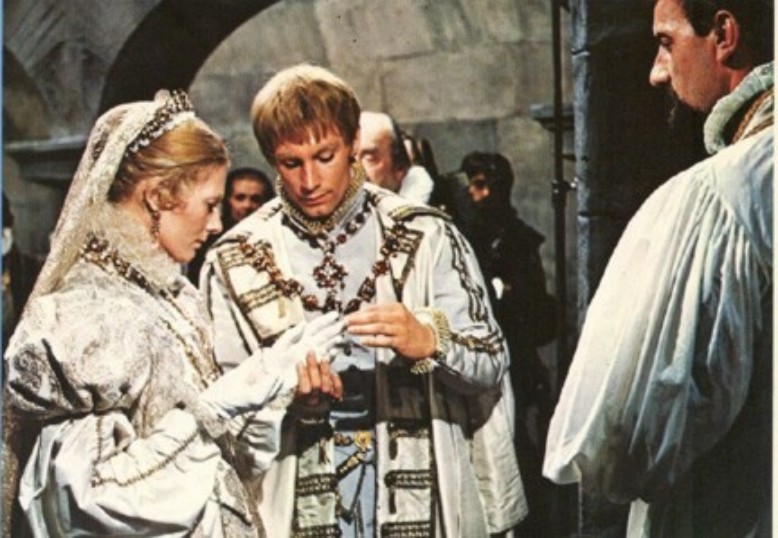
History of the World According to the Movies: Part 45 – 19th Century France

Image

As much as I love Les Miserables, if there’s a movie about the 19th century I should put on this post, it would have to be Gance’s 1927 silent epic Napoleon since this is seen as a very significant film chronicling the life of the French Emperor Napoleon Bonaparte played by Albert Dieudonne. And there is no person who’s more important in France during this period than this guy who tried to conquer Europe but ultimately failed at Waterloo. Nevertheless, I know how the French take their movie industry seriously as well as their history and they probably wouldn’t like it if I put a picture of a film from their history which wasn’t made by them.

Of course, America wasn’t the only place making history in the 19th century. Nor was it just a century of imperialism and colonization either. The 19th century was a very important time in our history. For one, it’s a time of the Napoleonic Wars which would wreak Europe for the first 15 years until Waterloo where one 5’7″ Corsican from seemingly nowhere sought to conquer Europe to put it under his domain. Of course, I’m talking about Napoleon Bonaparte. It was a century of rebellions, revolutions, nationalism, and unification of Germany and Italy as well as the formation of a new country called Belgium. It was a century of great scientific and technological innovation with the Industrial Revolution, modern medicine, the discovery of fossils, and other things I can’t name off the top of my head. Furthermore, it was a great century of cultural contributions of writers, composers, painters, sculptors, and others. Let’s just say the 19th century is perhaps a very trans formative century in which the world would never be the same after all these developments. Not to mention, this is a time well represented in movies since there’s so many world changing things happening here.

While the French Revolution sought to get rid of kings once and for all, the French government wouldn’t get rid of them for good until the 1870s. From this they would be ruled by three dynasties such as the Bonapartes who called themselves Emperor like Napoleon from 1804-1815 roughly and his nephew Napoleon III who ruled from 1852-1870. Both of these guys actually seized power during France’s first two republics and thus put an end to them. You have the Bourbon monarchy that once ruled France prior to the French Revolution who were restored when Napoleon was exiled with the reigns of Louis XVIII and Charles X that lasted until the 1830s. Then you have the House of Orleans a Bourbon collateral branch with the 18 year reign of Louis Philippe. He would be overthrown when the monarchy was abolished in 1848. Nevertheless, because of all this, France now has three royal pretenders to this day, which puts them in such an unenviable position. Still, other than that, France would see other rebellions such the 1832 June Rebellion seen in Les Miserables which would end very badly for Marius’ friends. You’d also have authors such as Alexandre Dumas, Victor Hugo, Gustave Flaubert, and other literary luminaries. Paris would be the place of great art movements like Impressionism and Post-Impressionism as well as others. France would also be the home of Louis Pasteur the famous scientist who would bring medicine out of it’s medieval stasis and the Curies who’d discover radium, win Nobel Prizes, and spawn a daughter who’d also win a Nobel Prize as well. Nevertheless, movies set in 19th century France have their share of inaccuracies which I shall list.

Napoleon Bonaparte:

Napoleon was a near psychotic with dreams of world domination. (He was overreachingly ambitious and ruthless, but he was nowhere in Hitler’s league.)

Napoleon Bonaparte rose to greatness through the ranks. (Yes, but he was also a part of an ancient but impoverished aristocratic family as well as educated in the foremost military academy in France.)

Napoleon spoke with a thick French accent. (He spoke French with a Corsican accent because he was from Corsica and he didn’t learn French until he was 9. Also, he actually hated France when he was growing up and never forgave his dad for submitting to French rule as well as dreamed of liberating Corsica from the French. Heck, he’d be furious to see someone play him in a French accent because for a long time, he didn’t consider himself French. Nevertheless, his support of the French Revolution would get himself and his family thrown out of Corsica for the rest of their lives.)

Napoleon was short, even by nineteenth century standards. (His height was 5’7” which is considered short by our standard but by nineteenth century standards, this was considered about average. As a side note, Admiral Horatio Nelson was 5’4.” Still, Napoleon’s nickname “The Little Corporal” was a more affectionate moniker that had more to do with his humility than his height.)

Talleyrand was present at Napoleon’s reburial in 1840. (He had died 2 years before that.)

Napoleon was able to observe an entire battlefield and beyond from where he was sitting or standing. (Part of his defeat at Waterloo was contributed by the fact he didn’t know what the hell was going on during that battle since he had hemorrhoids. During the Battle of Hougoumont, most of Wellington’s army was hidden from French view among ridges, trees, and etc. and Napoleon was unable to see that Wellington didn’t move throughout the whole time. Also, according to one report, Napoleon was unaware that there was a fortified castle behind the wood of Hougomont when the battle began {the forest was chopped in 1816}.)

Napoleon always had the habit of putting his hand in his coat pocket. (He only had his hand in his pocket while posing for portraits as most men did at the time.)

Napoleonic Wars:

The French used American made frigates during the Napoleonic Wars. (American warships didn’t have a good reputation in Europe until after the War of 1812. The possible exception would’ve been the America the US gave France after the Revolutionary War.)

Napoleon was furious when Marshall Ney delivered a captured British flag from Quatre Bras to him because Ney didn’t launch troops in pursuit of the Duke of Wellington’s army. (Ney was too busy at Quatre Bras to run such an errand on June 16, 1815 and only met Napoleon the next day with the latter arriving at Quatre Bras with part of his force from Ligny. Also, Napoleon didn’t order his top commanders to pursue the allied armies before noon on June 17th, 1815 either.)

The French Army of the North crossed the Dutch border on the evening of June 15, 1815 during the ball in Brussels. (They actually crossed the border on the morning of June 14th and Wellington received news of it 8 hours before the ball in Brussels. He delayed action because he felt he still had to be concerned about a possible French thrust further to the west of the road through Mons.)

The French Army used rifles in the Napoleonic Wars. (Napoleon had discarded these weapons as too slow to reload since their barrels had grooves inside them. Washington wasn’t too fond of these guns either.)

Colonel Cambronne died in defiance of being forced to surrender to Colonel Halkett. (He actually surrendered to Colonel Hugh William Halkett, the commander of a brigade of lowly Hanoverian Landwehr {militia}. Though wounded, he was still well enough to manage an escape when an opportunity unexpectedly presented itself moments later. He died in 1842 of a ripe old age.)

Practically all of Napoleon’s Old Guard died at the Battle of Waterloo. (C’mon, there had to be some survivors.)

The French commander at Avila threatened local peasants to tell him where the cannon was shortly after the journey to Avila with the cannon started. (Avila was too far away from the cannon heading toward the town. The peasants could’ve never known where it was or even know anything about it. Communication was very slow in those days.)

François Louis Fournier challenged Pierre Dupont to their first duel when Dupont was sent to arrest Fournier for killing the Mayor of Strasbourg’s son in 1800. (Contrary to The Duellists, they had their first duel in 1794. Also, Dupont was actually sent to tell Fournier that he had really bummed everyone out by killing his opponent and was now totally not invited to the party that night. Yes, this triggered 19 years of vicious death matches between the two men. They would duel 17 times with their final battle being in 1813 {not 1816 as the film portrays}.)

Dupont was willing to duel Fournier with pistols. (Dupont avoided fighting Fournier with pistols because the latter was known as an excellent shot famous for shooting clay pipes out of the mouths of Hussars riding past him while smoking. To fight a pistol duel with such man would’ve been a death wish. Also, pistol duels were more fatal in general as in the case of what happened to Alexander Hamilton. Yet, Andrew Jackson did manage to survive one with a bullet in his chest that remained in there for the rest of his life.)

Andoche Junoit said about not needing a sign when the artillery shells dump soil where he was painting one. (This was based on an actual incident, except that Junoit was writing a letter to Napoleon, not painting a sign.)

French troops marched in step when the moved across country. (They used a route step which put the troops in a loose formation but not in step because marching in step was too tiresome and inefficient. Of course, if they were in an American high school marching band instead of a 19th century European army, it would be a different story.)

Franco Prussian War and the Paris Commune:

Paris was a nice place to live in 1870 and 1871. (No, it wasn’t. Paris was actually under siege, battered soldiers anxiously discussed the Franco-Prussian war in the coffee shops, people ate their own pets and even elephants at the zoo just to stay alive, students manning the barricades, beggars dying of starvation in the streets, monocle German officers peering down cannons from just beyond the city limits, and after the city had fallen to the Germans, a revolutionary Commune set up ending the Communards being shot dead by firing squads. In short, this would be a scene that makes Paris in Les Miserables look pretty nice.)

The Dreyfus Affair:

The Dreyfus Affair had nothing to do with anti-Semitism. (It’s like saying that the American Civil War didn’t have anything to do with slavery. Yes, the Dreyfus Affair was one of the nastiest cases dealing with anti-Semitism in which a Jewish military officer named Alfred Dreyfus was accused and convicted of treason before being sent in a Devil’s Island prison in French Guiana. When they found out it was a different guy who committed the crime Dreyfus was accused of, there was a large scale cover-up with the real culprit being pardoned by the French government. Nevertheless, Dreyfus’ Jewishness made him an easy target.)

Alfred Dreyfus was officially exonerated when Emile Zola recently died. (He wasn’t finally exonerated of all charges by a military commission in 1906 as well as reinstated and made Knight of the Legion of Honor. Zola died in 1902. Still, despite being pardoned in 1899, he would again be convicted of treason in a second trial despite overwhelming evidence he was innocent.)

Louis Pasteur:

Louis Pasteur’s daughter Annette married a man named Matel. (Actually his daughter’s name was Marie Louise and she married a man named René Vallery-Radot. She was one of two of Pasteur’s five kids who survived into adulthood as well as his only surviving daughter. His three oldest daughters died of typhoid, which served as his prime motivation for curing infectious diseases. Still, Pasteur is a significant figure since he’s known as the father of modern medicine.)

Napoleon III and Louis Pasteur didn’t get along. (Napoleon III was his patron who built him a laboratory with all the resources he needed for his research only halting it when he became gravely ill since he didn’t want to waste money on a laboratory for a person who may soon be dead. Yet, even when Pasteur was sick, Emperor Napoleon III personally visited him and assured him that he’d get his lab. He’d even bring court members to admire Pasteur’s projects. Still, unlike in The Story of Louis Pasteur, Napoleon III wasn’t a stupid reactionary nor did he exile the scientist but a guy with an ego that got France into disastrous wars and foreign misadventures, which would get him to fall into Otto von Bismarck’s trap in the Franco Prussian War. I mean there’s a reason why Napoleon III was France’s last monarch. Louis Pasteur was Emperor Napoleon III’s favorite scientist and Pasteur’s main worry had more to do with the French Emperor seeing him as a miracle worker who could do almost anything. This led to Napoleon III assigning Pasteur tasks always outside his experience but the scientist always came through. The two would remain friends even after Napoleon III was overthrown and Pasteur would refuse to say a bad thing about the Emperor as well as remained grateful to him towards the end of his life. Nevertheless, I wonder what it would be like to have Louis Pasteur visit a hospital during the American Civil War.)

Moulin Rouge:

The Moulin Rouge was a haven for Bohemian artists animated by the chance to live out their four tenets: Truth, Beauty, Freedom, and Love. (Actually the Moulin Rouge was driven by commercial success like any other club in its day. Still, it’s commercial success has a lot to do with a dirt little dance of the time called the can-can. Nevertheless, it wasn’t really Henri Touluse-Lautrec’s favorite place in the world but they basically hired him to do posters for it and he had his own table there.)

The can-can was created at the Moulin Rouge. (It had actually been around since the 1830s but it was a far more respectable dance before the Moulin Rouge opened in 1889. It originally started as more of a rowdy as well as reckless high-spirited and high kicking working class jig which didn’t show much flashing knickers. However, the Moulin Rouge took this dance and supercharged it for all the world to see using it to help advertise their courtesan dancers {yes, most of their dancers were whores}. Still, contrary to many movies, the can-can at Moulin Rouge wasn’t a kind of dance you’d want your kids to see since it became more crude and explicit as time went on. Nevertheless, the scandalous can-can put Moulin Rouge on the map.)

Moulin Rouge’s sign read “L’amor.” (It read “Can-Can” which was what it was known for.)

Can-can dancers always danced in a line during the 1890s. (They were semi-professional solo dancers. And it didn’t become a highly choreographed dance until the early 20th century.)

Vincent van Gogh:

Vincent van Gogh went mad and sliced off his ear after a fight with Paul Gaugain. (He only sliced up a portion of his left lobe which he gave to his favorite prostitute Rachel at a local brothel in Arles. Later on 30 townspeople would make a petition to get rid of him.)

Vincent van Gogh shot himself in a wheat field while working on his last painting. (This is depicted in Lust for Life, though there weren’t any witnesses to van Gogh’s shooting so we really don’t know whether he was in a wheat field or a barn. Still, he probably wasn’t working on Wheat Field with Crows, which has been seen as his last work but it’s not since he completed at least two other paintings after it. Also, in 2011 two of his recent biographers contested whether van Gogh committed suicide due to the upbeat deposition of his paintings right before he died, his view that suicide was immoral and sinful, the fact that he traveled a mile between the wheat field and the inn after sustaining a fatal stomach wound {though he died from complications two days later}, how the bullet entered his stomach at an oblique angle {and that it was brown with a purple halo that meant the gun was fired at some distance}, and the possibility of him and the unlikelihood of him of being able to obtain a gun despite his well-known mental health problems {as well as the public knowledge of his destructive tendencies}. The authors contend that a couple village teenage boys might’ve shot him by accident and that he claimed he tried to kill himself so the kids wouldn’t get in trouble. Of course, this theory has recently stirred considerable controversy though there’s some reasonable evidence on both sides. Either way, he didn’t get shot while working on Wheat Field with Crows.)

Miscellaneous:

Alexandre Dumas was white. (He was biracial and had a black grandmother. Father was one of Napoleon’s generals who also became the highest ranked person of color in any European military and was born in Haiti to a French nobleman and his slave. Quoted as saying to a guy who insulted him because of his mixed-race, “My father was a mulatto, my grandfather was Negro, and my great-grandfather a monkey. You see, Sir, my family starts where yours ends.” Still, he’s played by Gerard Depardieu when Lenny Kravitz would’ve made a better choice {at least Kravitz is biracial despite not being French}.)

The June Rebellion of 1832 was a French Revolution. (Not like the one that took place in 1789. Yet, this was set off by the death of one General Jean-Maximilien Lamarque who was a political opponent to French King Louis Philippe. Now this should shed some light on why Marius’ friends were all killed. Still, this is a relatively small and not quite significant event in French history as well as an outright failure.)

Antoine Nicolau was deeply in love with Bernadette Soubirious and vowed to remain unmarried when she entered a convent. (No such relationship was ever said to exist between the two of them.)

Vital Dutour was an atheist who didn’t find faith until he suffered from cancer of the larynx. (He was a devout Catholic who simply thought Bernadette was hallucinating. Also, it was a different guy who suffered the cancer of the larynx in the novel The Song of Bernadette who’s probably an expy of the freethinking Emile Zola who denounced the industry that sprang up at the miraculous spring at Lourdes.)

Henri de Toulouse Lautrec’s drink of choice was cognac. (It was absinthe which was said to be an alcoholic psychoactive drug of the 1890s but it’s actually about as dangerous as any highly alcoholic and it’s psychoactive properties were highly exaggerated. So no it’s not like an 1890s LSD with booze.)

History of the World According to the Movies: Part 34 – Life in Cavalier Europe

Image

I don’t think my movie history series of the Cavalier years could be complete without a picture from Stanley Kubrick’s 1975 Barry Lyndon. Sure it was a commercial flop with mixed reviews upon its release but I think its price tag was worth the effort to bring the 18th century to life like never before. In many ways, this is an underrated masterpiece of scenery and costume porn which should live throughout the ages. If you haven’t watched this, you certainly should go on Netflix and rent this one. I guarantee watching this movie is well worth your time.

The Cavalier years in Europe were an eventful time in other European countries. You had the rise of the Netherlands which was a haven for religious freedom, tulips, trade, and painting by Rembrandt, Rubens, and Vermeer. You have Vasa Sweden, a dominant European power at the time with one of the biggest screwed up royal families at the time, wars with Russia, and Queen Christina. In Denmark, you have King Christian VII a crazy asshole king who married King George III’s sister who like to dress in guys clothes and sleep with the Danish king’s chief minister. Of course, you also have Germany with its divided little city states which was home to Johann Sebastian Bach and other great German composers of that time. Then you have Italy which invented opera and other musical concepts we use today like writing music on paper, constructed many ornate buildings that defined architecture of the period, and also produced many great artists all the same. Nevertheless, you had the extraordinary Casanova who trotted the continent as well as changed jobs at the same frequency he changed women. Still, there are plenty of things the films in set in this era get wrong, which I shall list accordingly.

Denmark:

The Danish royal court spoke Danish during the 18th century. (The court language at the Danish court was German. Danish was referred to as, “the people’s language.”)

Princess Caroline Matilda (sister of King George III) met King Christian VII while he was relieving himself against a tree. (According to one historian, their first meeting was seen as “exceedingly romantic” to the point where Christian “committed a number of awful breaches of etiquette by embracing and kissing her repeatedly in the presence of the whole Court.” Of course, she was 15 while he was 17 and they were engaged already. Also, Christian VII would later get tired of her.)

King Christian VII’s main vice was excessive masturbation. (Christian VII’s excesses also included drink, sado-masochism, handsome young men and prostitutes, most famously Støvlet-Cathrine, or Catherine-of-the-Boots. Also, he had a brutally abusive upbringing at the hands of his guardian complete with regular beatings that had him writing on the floor in agony. Still, he was plagued by severe mental illness throughout his life, which would make his brother-in-law King George III sane by comparison {but at least George was a nicer guy crazy or not}.)

Johann Struensee and Queen Caroline Matilda bonded over their shared passion of Enlightenment ideas. (There’s scant evidence of intellectualism in Caroline Matilda’s biographies. Yet, Struensee was a free-thinker.)

Queen Caroline Matilda and Johann Struensee’s relationship was a pure and charming romance. (Contrary to the Danish film A Royal Affair, there was gossip Struensee was also having an affair with one of Caroline Matilda’s ladies-in-waiting at the same time named Elisabeth von Eyden.)

Copenhagen was shocked by Queen Caroline Matilda’s extramarital affair with her husband’s chief minister. (The Danish court was more outraged by Caroline Matilda’s habit for transvestitism than her extramarital affair {because she lived in the 18th century and the Danish court thought the concept of spouses loving each other was appallingly bourgeois}. Also, she was actually more sturdily built than she appeared in A Royal Affair.)

Johann Struensee encouraged King Christian VII’s carousing and whoring. (He actually advised the king to improve his marriage with his wife.)

Vasa Sweden:

Queen Christina of Sweden gave up the throne for love. (She gave it up because she wanted to convert to Catholicism {illegal in Sweden at the time} and there was a growing discontent in her arbitrary and wasteful ways. She was also known to have granted tons of ennoblements and suffered many nervous breakdowns. Still, as far as her appearance goes, she was butch and ugly and had traditionally male-like mannerisms, interests, and way of dressing as well as might have been biologically intersex. But she’s played by Greta Garbo.)

Queen Christina’s abdication was a spur of the moment decision. (She had prepared for it long in advance in order to ensure a smooth transition and as little fuss as possible. She then left the country out of conviction, not romantic infatuation. Still, Christina was a relatively sane, competent, and eccentric female ruler in a dynasty filled with nutjobs. Also, she actually technically king of Sweden.)

The Netherlands:

Jan Vermeer never painted his wife. (He did paint her and while she was pregnant {well, it’s sometimes said but opinions from art historians differ whether she was or if 17th century Dutch fashions made women look that way}.)

Jan Vermeer used a camera obscura to produce arrestingly lifelike scenes. (There’s no physical documentary evidence he did and art historians argued over this.)

Jan Vermeer used his lover as a model in Girl with a Pearl Earring. (He may have used his 12-year-old daughter for this painting and the emotional affair between him and Griet probably never happened.)

Girl with a Pearl Earring was considered obscene in its day. (At most it would’ve been subtly sensual in an era when people like Rembrandt and Rubens were painting full on nudes.)

William of Orange was King of Holland. (He was Stadhouder of the Seven Netherlands, never King of Holland. Yet, he would later become King of England though.)

The Young Woman with a Water Pitcher was painted in 1665. (It was painted in 1662-1663.)

Spain:

The Spanish Inquisition examined Francisco Goya’s “Los Caprichos” etchings in 1792. (Goya created these etchings in 1797.)

Divided Germany:

“Music for the Royal Fireworks” was played in 1671. (Handel composed the piece in 1749.)

William Friedermann Bach competed against Louis Marchand and died a young man. (Actually his dad Johann Sebastian Bach competed against Marchand. Also, William Friedermann Bach lived around 1710-1784 which means he was in his seventies when he died.)

Ludwig van Beethoven had his first public recital when he was 12 and his dad said he was 9. (He was 8 and his dad said he was 6.)

Ludwig van Beethoven was humiliated for a poor performance as well as beaten by his dad. (His dad never humiliated him in public. Also, if he had beaten Beethoven for anything, it was probably because he was a drunk. Still, as the oldest surviving child, Beethoven had to take care of his younger siblings at a young age because of his dad’s alcoholism and his mothers death when he was 16. He started out as a musician by giving piano lessons.)

The Scientific Revolution:

Most European scientists weren’t superstitious and believed in rational thought. (Isaac Newton experimented with alchemy and so did his peers. Also, he wrote a great deal about religion, too.)

Casanova:

Casanova was one of the biggest skirt chaser extraordinaire of his day. (Casanova was also a deacon, lawyer, military officer, writer, violinist, con man, pimp, gourmand, dancer, businessman, diplomat, spy, politician, medic, social philosopher, cabalist, librarian, and playwright. He was a man of far reaching intellect and curiosity as well as a devout Catholic who believed in the power of prayer, ironically. Not to mention, he also gambled as well as had sex with numerous women but he also respected them as people and believed in sexual consent. However, his sexual behavior wasn’t much out of norm, especially in the world he lived in. As for his looks, he more likely resembled Adrien Brody {a more appropriate casting choice historically and personally speaking} than Heath Ledger {who actually portrayed him, cute but not someone you’d want to play the kind of guy Casanova was}. Then again, between Casanova and Adrien Brody, Brody is more likely the hotter one of the two.)

Casanova had sex with 3,800 women. (His memoirs recorded sex between 122-136 women along with several men. From losing his virginity at 16 to his death at 73, this would mean 3 lovers a year. Quite chaste for the 18th century.)

Casanova fell afoul of the Inquisition for having a passionate affair with a nun. (It was more over him spreading heretical ideas about astrology and the Cabbalah. Still, he probably wished the Inquisition could’ve tried to nail him on banging a nun. However, when it came to sexual indiscretions, the Inquisition didn’t give a shit.)

Casanova believed in women’s education. (From The Guardian: “Casanova’s interest in women’s liberation seems to have extended mostly to liberating their bosoms from their bodices.” In other words, he believed women were entitled to as much sexual fulfillment as men {and said that most of his sexual pleasure comes from her enjoyment, which was unheard of at the time}. Though he did value a woman’s intelligence {also praising their wit and brains as well as beauty} and never judged her sexual behavior. As to women’s education, I believe his editor Jean Laforgue might’ve added it in a version of the guy’s memoirs.)

Casanova lost interest in women who yielded to him. (He was a man who rekindled affairs with past flames and kept lively and affectionate correspondences with past loves well into his old age. He was even happy to meet his love children.)

Casanova was an irresistible seducer who never fell in love with any of his conquests. (He did have many meaningless hookups but he fell deeply in love with many of the women he met, though not always succeeding in winning their hearts.)

Cavalier Life:

Sword fighting could happen at any place and at any time for any reason and would go on for a long time until one of the combatants was killed or injured. (To quote Stewart Granger from Scaramouche, “Mr. President, the deputy from Soissons will be absent from this assembly… permanently” or “3 to 6 months or so says the doctor.”)

Protestant countries became more prosperous because of their work ethic. (Actually, it had more to do with the fact that Protestant nations were more or less compelled to become more secular and religiously tolerant than the Catholic ones, especially in the Netherlands. Also, they were near a coastline and had widespread trading economies, colonies, urbanization, constitutional monarchies, and the incident with the Spanish Armada which deprived Spain of its superpower status. Still, there were plenty of scientists and engineers living in Catholic countries at that time as well and weren’t being persecuted by the Inquisition either. France was also a world power as well and Spain still had a large empire.)

Belgium existed in the 18th century. (The Kingdom of Belgium didn’t exist until 1830.)

Straight men in the 18th century never wore makeup. (Aristocratic men did and wore wigs and elaborate clothing, too. As TTI said, “they’re hyper-heterosexuals whose feminine mannerisms are supposedly a way of attracting women.” Yet, the only guys who were makeup in history movies on this era are suspected to be gay with the exception to Barry Lyndon.)

People ate grapes in the 1600s northern Europe. (They wouldn’t even be eating them in Paris.)

The causes of the Seven Years War aren’t well known to historians. (Prussia had invaded a rich region in Austria 16 years before in the War of the Austrian Succession, which Austria wanted back. Meanwhile Great Britain and France were feuding over some disputed territory in North America as well as India. Nevertheless, though American schoolchildren may not know much about Prussia and Austria’s situation, they would definitely know the situation between Britain and France, especially if they lived in Southwestern Pennsylvania, where the whole thing started with the involvement of a twenty-two year old Virginia militia Colonel named George Washington.)

Champagne was consumed in wide champagne saucers during the 18th century. (It would’ve been consumed from tall conical glasses. This glass design wasn’t invented until 1850.)

People ate with four point forks during the 17th century. (They were invented in the 18th century.)

Musketeers never used muskets. (They did, but only in battle.)

Wigs were never vermin infested. (They were vermin magnets and attracted lice. Some of those women’s wigs were styled with lard, starch, and powder applied over cage frames and horsehair pads.)

18th century noblewomen had outrageous wigs. (They were even more outrageous since some of them could have birdcages in them, complete with actual birds. Still, I can understand why films made in the 18th century usually kind of down play these looks for good reason since these wigs were ridiculous.)

“Amazing Grace” was an 18th century hymn. (The tune we know today was composed in the 19th century, though the lyrics existed in the 1790s. Thus, in Amazing Grace, the eponymous song wouldn’t be sung back then like we would. But this inaccuracy is justified. )

Dresses had very modest cleavage or none at all. (17th and 18th century fashions were obsessed with cleavage and pushed up boobs. For a brief period in the 18th century, it wasn’t uncommon for some women in the French court to expose one breast completely to look fashionable.)

Churchmen and Jesuits were corrupt and evil. (Sure the Catholic Church and other established churches were corrupt, but clergymen at the time had human failings like anyone else.)

Chandeliers always existed for the swashbuckling hero to swing on during a fight scene or to drop down on his enemy.
Thrown swords always hit their targets. (Odds of this working 100% of the time are impossible.)

Good sword fighting consisted with two combatants to hit each other’s weapons with an impressive clang. (Sorry, Errol Flynn and other sword fighters, but real cavaliers didn’t fight that way in duels. Real sword fights were much more gory and violent usually resulting in nasty bloody wounds or body parts being chopped off. If anyone from Hollywood would face a real swordsman from that era, he’d be dead. Still, using moves in a sword fight from an Errol Flynn movie would basically render a sword useless as well as cause extreme stress to the blade. Basil Rathbone, Cornel Wilde, and Tyrone Power’s fights onscreen were notable exceptions of real life sword fighting minus the blood since they were skilled swordsmen in real life.)

A sword fight indoors usually destroyed an entire room.

Great historical actions such as wars were decisively influenced by the love affairs of certain characters. (I doubt that many great historical actions were decisively influenced by love affairs of historical personalities. Kings and royals, may be but nobles, not so much.)

Little boys never wore dresses. (Uh, there’s some picture of a 18th century French prince wearing one just like his mother and sister. Besides, these were the days that boys didn’t wear pants until they were potty trained. Yet, little boys in movies set during this period are usually wearing pants.)

Highwaymen were dashing and debonair gentlemen thieves of armed robbery. (Yes, highwaymen were the rock stars of their day alongside pirates, but they tended to be romanticized since they road on horses, and therefore were considered a cut above common bandits. Their executions tended to attract large crowds. Still, most of these guys weren’t nice people at all.)

Master swordsmen also took gymnastics and choreography lessons.

All swashbuckling heroes fell for high-born women of quality able to generate a lot of chemistry and belligerent sexual tension.

Weapons laden dirigibles existed during the 17th century. (Seriously? Why do you have these in a Three Musketeers movie, Hollywood? The Mongolfier brothers wouldn’t be born for another century.)

Elderly men could survive with a gaping hole in their chests and let doctors stick their mucky fingers in it during the 17th century. (This is probably not possible and very disgusting. Still, in these days surgery was dangerous, violent, and performed by barbers.Physicians would usually reserve their skills for more genteel treatments.)

Europeans ate pineapples during the 17th century. (Pineapples were used as decoration at this time because refrigeration would basically rot them out since transportation by boat usually took a month or more.)

Tobacco was only seen as a recreational drug. (It was also seen as a health cure in Europe at this time, kind of like medicinal marijuana.)

The waltz was a popular European dance in the 18th century. (Only a century later. Back then, it was a highly scandalous European dance in the same way twerking would be considered today.)

Soldiers tossed away ramrods once they were done with them. (No soldier would do such a thing because they would need this after firing to reload. In the days of single shot firearms, only an idiot would do this deliberately.)

History of the World According to the Movies: Part 33 – Cavalier European Empires

Image

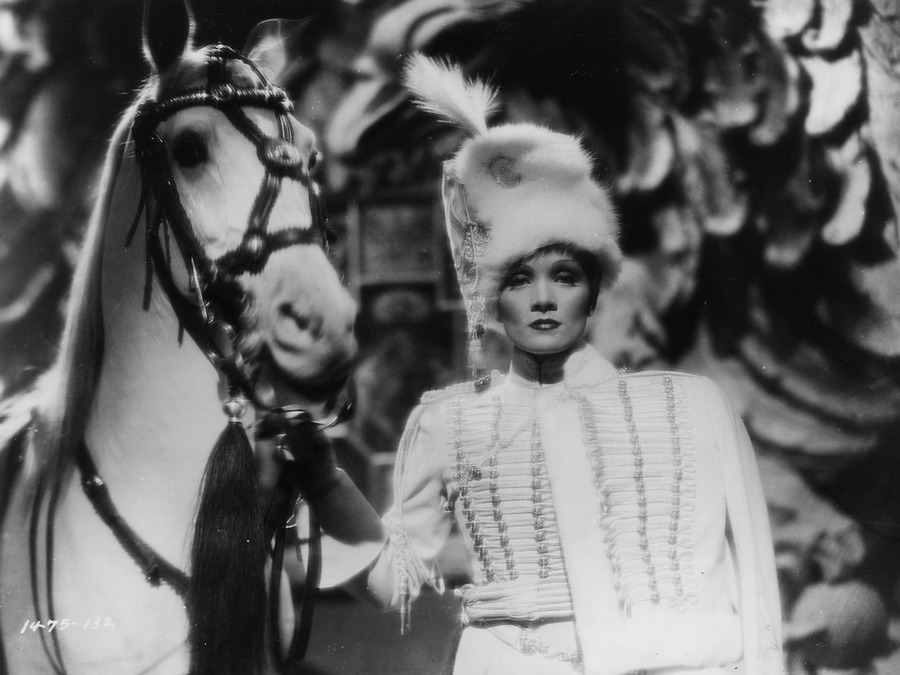
The Scarlet Empress from 1934. Sure it does detail the story of young Catherine the Great quite accurately to the point she had many lovers as well as a husband who wouldn’t have sex with her. However, Catherine the Great didn’t just sleep her way to the top nor did she get by just on her looks as depicted in this film. Nor was she a naive princess trapped in a frightening castle in Moscow but a palace in Saint Petersburg that she’d feel more at home. Also, she didn’t look anything like Marlene Dietrich (since she had lost her looks, youth, and even her health by that point) though she was German. Nevertheless, this film less of a historical biopic and more of an excuse for Josef von Sternberg to make a film with scary S&M scenes because the Hays Code wouldn’t allow that.

While most movies of the Cavalier Era in Europe are set in Great Britain and France, they weren’t the only countries in which things were happening. It was also an age of European Empires in which three European entities were scrambling to take over places on their own continent (like splitting Poland three ways). These countries are Russia, Austria, and Prussia who at one time were homes of a few of the most famous enlightened absolute monarchs of all time. You have Russia, which was involved in a power struggle after the death of Ivan the Terrible (with a short rule of Boris Godunov), the rise of the Romanov Czars, an undertaking of modernization under Peter the Great (who was willing to cut guys’ beards off), as well as the rule of Catherine the Great. You have Austria, home of the Hapsburg royal family that had produced Empress Maria Theresa and Emperor Joseph II as well as Mozart and one of the most infamous female serial killers of all time. Then you have Prussia a new country in Europe home to one of the most formidable militaries in Europe as with its best monarch being a Pan-European and anti-statist King Frederick the Great (but you wouldn’t know it from the films made by his embarrassing fans, the Nazis who make him out as some kind of proto-Hitler). Nevertheless, movies about this era in these countries tend to get a lot of stuff wrong, which I shall show you.

Czarist Russia:

During the troubled year of 1612, Polish troops were thrown back from Moscow. (They held the city for two years only to be expelled by Kuzma Minin and Dmitrty Pozharsky.)

Eighteenth century Russia’s capital was Moscow which was a primitive place as shown by the monstrosity décor of the palace. (Actually, the capital in eighteenth century Russia was St. Petersburg and would remain so until the Russian Revolution. Also, the Winter Palace was built in the classical style of architecture.)

Catherine the Great was a gorgeous vixen who relied on her beauty and wiles to win influence and become Empress of Russia. (Catherine the Great looked nothing like Marlene Dietrich and didn’t sleep her way to the top either even though she did have lovers but this could be explained by the fact she was married to a total idiot who wouldn’t sleep with her and was under tremendous pressure to produce an heir, at least in her early years. In other words, her initial reason for taking lovers was to save her own ass. But many of these guys filled other roles in her life besides boy toys and lasted for quite some time {or power but many of her lovers did help Russia and remained loyal to her at least as her subjects}. Three of them fathered her children; one helped her develop rapport with key military regiments which would help stage a coup that made her empress. Another served as a political confidante. However, Catherine the Great wasn’t an attractive woman and she made her way to the top not by her looks and sexuality, but by her brains, courage, character and magnificence {since she lost her looks, youth, and health by the time she became Empress. Still, it was her brains that impressed the likes of men such as King Frederick the Great of Prussia and she was pen pals with Voltaire.)

Catherine the Great was a girly girl who aspired to be a toe-dancer. (She was a tomboy with an avid personality and love of deep thoughts who at fourteen said, “I am a philosopher,” and wrote a long treatise to prove it. Also, she was large, boisterous, and slightly walleyed. Not to mention, she really liked to read as a way to escape her misery from court life during her marriage developing her political skills to counteract with the vicious intrigues threatening to ensnare her.)

Empress Elizabeth was a tyrannical bitch as well as frumpy and old. (She wasn’t a nice lady but she was able to seize her throne in a military coup in 1641. Yet, she was considered very attractive and tall despite her malice, spite, vengefulness, vanity, and a deep and pervasive fearfulness. However, this woman was one of Catherine the Great’s role models as well as principal mentor who taught her everything that she needed to know about being the Empress of Russia. Like Catherine, she also had many lovers.)

Empress Elizabeth’s reign was filled with mass fetish torture. (Her reign was quite merciful despite being kind of tyrannical bitch. Seems Sternberg has a thing for S&M torture and probably used young Catherine the Great as an excuse.)

Count Alexei Razumovsky was a moody pretty boy with wild hair and eye makeup who fell in love with the future Catherine the Great at first sight. (He was actually Empress Elizabeth’s lover {or secret husband} and looked more like you’d imagine a typical Republican Congressman {interestingly the guy who played this man in The Scarlet Empress was future Republican Congressman John Lodge}, especially after a long lunch. Well, maybe Empress Elizabeth liked him for his personality.)

Grigori Orlov killed Czar Peter III. (His brother Alexei is the most likely suspect {you could also said he was the original “Scarface” since it was his nickname}. Also, she plotted her takeover with lots of supporters and the coup to overthrow Peter III was planned months in advance.)

Nikolai Ilyich was Catherine the Great’s chancellor in 1763. (It was actually Nikita Ivanovich Panin.)

Alexei Chernoff was a fiance to one of Catherine the Great’s ladies in waiting as well as her lover in 1763 who slept his way to be commander of the palace guard. (Her lover at the time was Grigori Orlov. Chernoff is fictional.)

Catherine the Great exiled people to the Crimea in the 1760s. (She didn’t have Crimea annexed until 1783. However, she did exile people to Siberia.)

Catherine the Great ordered her husband’s murder. (There’s no evidence she ordered her husband Peter III’s assassination, though she may have been complicit. Yet, she did order Ivan VI’s yet he was trying to stage a coup against her and was mentally unstable anyway due to his solitary confinement since he was a baby {but he would’ve been a bad Czar anyway, even as a figurehead}.)

It was through discovering her own sexuality in which Catherine the Great became a political sophisticate. (No, she was already a very intelligent political sophisticate before she lost her virginity and it wasn’t to some random guardsman.)

Catherine the Great had one son by 1763. (She had given birth to three by this time while only her two sons by then {her daughter died at two}. She may have had a daughter by Orlov who may have married a guy named Klinger but historians aren’t so sure. Then again, her son by Orlov was never publicly acknowledged until after her death {though everyone knew already}.)

Grigory Orlov had a mustache. (His portrait depicts him clean shaven.)

Catherine the Great didn’t care for the peasants and serfs. (She tried to institute some reforms for the serfs and peasants but whatever she did wasn’t going to make them happy or win favor with the nobles who supported her. Also, she owed her throne to the support of the nobility so doing anything to benefit the serfs wasn’t going to help her.)

Elizaveta Alexeievna (a. k. a. Princess Tarakanoff or Princess Cockroach) was a real princess as well as a threat to Catherine the Great. (She claimed to be an illegitimate daughter of Empress Elizabeth but we’re not sure where she really came from or that she was anything other than a pretender. Yet, at one time she did travel Western Europe and was a mistress to an Austrian count. She was also known by other names.)

Alexei Orlov betrayed Catherine the Great for Princess Tarakanoff. (He never betrayed Catherine and it’s actually said that he actually seduced and lured the pretender, arrested her, and brought her to Russia where she was imprisoned until her death from tuberculosis. Still, it’s said Empress Catherine the Great had to deal with about 26 pretenders to the throne.)

Catherine the Great had blond hair. (She had dark hair but in movies, she’s depicted as blond.)

Catherine the Great and Peter III had an initially happy marriage. (If this was the case, Catherine would never have to take lovers. Her marriage to then Grand Duke Peter was actually doomed from the start more or less because she was still a virgin by her tenth wedding anniversary. Also, they loathed each other and their 17 year marriage was never consummated.)

Catherine the Great first met her husband shortly before she married him. (She first met him when she was ten years old and instantly detested him though she married him six years later after arriving in Russia the year before.)

Catherine the Great was reluctant to overthrow her husband. (She was all for it for she had nothing but contempt for him since had been humiliated and exploited by him for years and he became increasingly hostile to her. Also, he threatened to expel her to a convent after Empress Elizabeth died, which made Catherine all the more fearful of him. Still, her life as Peter III’s wife was perhaps one of the darkest episodes of her life.)

Catherine the Great overthrew her husband by having him killed. (She actually had him arrested and forced him to abdicate. It’s highly unlikely she had ordered him killed, but she was certainly the mastermind in overthrowing him along with the nobility, Orthodox Church, and the military who’ve all been alienated by his policies. Besides, she staged bloodless coup when he was out of town at the time.)

Peter III was highly abusive or downright insane. (He actually was more of an Germanophile willing to end a war against his idol Frederick the Great without consulting anyone as well as highly immature and had crazy manchild tendencies {as far as Catherine’s memoirs were concerned}. Nevertheless, he had no common sense a whole different kind of idiocy. Still, he was a complete asshole nevertheless and had no affinity for Russian culture.)

Catherine the Great was faithful to her husband until the very end. (She had been faithful to him during the first ten years but she had taken three lovers in the last seven years mostly out of necessity. Yet, it’s present in The Rise of Catherine the Great.)

Hapsburg Austria-Hungary:

Antonio Salieri was Mozart’s sworn enemy who was jealous of his talent and had him poisoned. (Actually though Salieri wasn’t the kind of composer Mozart was, he was considered a fantastic composer sort of like Evegeni Malkin to Sidney Crosby in the classical music world. Also, Mozart probably died from a long term illness, not poison and was probably not buried in a mass grave at least at first. As with Mozart and Salieri’s relationship, well, they were friends and collaborators as well as respected each other for their talents and attended each other’s performances {Salieri even attended Mozart’s funeral and gave his son free music lessons}. The perception of the two as rivals was created to show the competing musical giants of Germany and Italy who were the most dominant classical music nations of the nineteenth century {and maybe Russian writer Alexander Pushkin}. Actually Amadeus gets a lot of things wrong on Mozart’s life such as his relationship with his mother-in-law, who commissioned the Requiem Mass and who finished it, and how he was buried.)

Antonio Salieri tried to sabotage Wolfgang Amadeus Mozart’s career. (Salieri did not such thing and actually respected Mozart as a musician and a composer. They may have been competing for jobs but they also encouraged each other. Their rival was mostly professional. Mozart even wrote that Salieri even enjoyed of The Magic Flute and this opera was his choice to be performed in Vienna when could’ve easily selected his own music.)

Wolfgang Amadeus Mozart was a arrogant and eccentric filthy-minded manchild. (Yes, he was known for crass scatological humor and pranks as well as would’ve given the fluffiest wig to write the score of South Park: the Musical in the 18th century. However, he was probably as much of a manchild as you’d expect any guy in his twenties {who only told his toilet jokes around close friends and family}. Still, he was a serious composer who knew how to behave himself in public since he had been performing from a very young age. He was also a loving and faithful husband to Constanze as well as there for her when she suffered from a near-fatal illness. Also, he wasn’t an alcoholic by 18th century standards. Still, Amadeus does get right how annoying he was since Joseph Haydn once saw him making 100 enemies at a single party.)

Wolfgang Amadeus Mozart was in court service throughout the 1780s. (He wasn’t offered an official position in Vienna until 1787.)

Wolfgang Amadeus Mozart collapsed at the premiere of The Magic Flute. (He had been sick for some time but no, he didn’t collapse because he conducted several performances afterward until he was unable to get out of bed.)

Wolfgang Amadeus Mozart was buried in a pauper’s grave. (Yes, he died in debt but by the time of his death, he was making 10,000 florins a year putting him in the top 5% of the population in Vienna. Also, his operas were huge successes. Of course, this myth results from a mistranslation since the German words for “communal” and “common” were similar. Still, he was buried in a common grave, which is more to say “not a fancy one” as middle class people of his day. Nevertheless, it was quite common for many people in the 18th century to be buried in plots they didn’t own {especially middle class people in Vienna like Mozart}, from which they were eventually dug up to make space for others. This explains why Mozart’s remains were never found. So he wasn’t buried in a ditch, more like he was put in a regular grave, dug up ten years later, and moved but the guys doing the moving forgot where they put them. Uh, maybe it would’ve been better off if he was buried in a ditch.)

Wolfgang Amadeus Mozart was buried in torrential rain. (He was buried in fair weather.)

Wolfgang Amadeus Mozart and his wife Constanze had a troubled marriage. (Sure Mozart wasn’t the best husband and had an annoying personality. However, he and Constanze had a happy marriage with two sons who survived into adulthood {though their folks weren’t initially thrilled of the match}. Yet, their courtship didn’t go smoothly nor was it love at first sight when they met at least on his part {he was 21 and she was 15}. Interestingly, Mozart was initially in love with her sister Aloysia who rejected him and married another man. Still, Constanze was actually a trained musician from a musical family who played a role in her husband’s career and financially savvy enough to make herself financially secure or even well-off after Mozart’s death.)

Wolfgang Amadeus Mozart and Constanze had only one son. (They actually had six kids but only two sons survived infancy.)

As an adult, Wolfgang Amadeus Mozart begged his dad for money and was unable to impress him. (Actually Leopold Mozart bragged about his son in letters on how much money his son was making so he wasn’t an under appreciated artist who suffered all his life. Cracked.com says he was more like a Michael Bolton of the 1700s who was a popular artist with some huge hits but not seen as a huge deal.)

Antonio Salieri commissioned the Requiem Mass as well as dressed up as Mozart’s dead father to freak him out and helped Mozart finish it. (Actually it was Count Walsegg-Stuppach who commissioned the Requiem Mass because he wanted to commemorate his dead wife and secretly wanted to claim the music as his own {though we’re not sure Mozart knew his identity}. And it was Franz Xaver Süssmayr who helped Mozart finished it.)

Don Giovanni and The Marriage of Figaro were flops. (Contrary to what Amadeus says, they were both sensational hits audiences just couldn’t get enough of. In fact, Emperor Joseph II had to restrict encores for The Marriage of Figaro just after its first three performances.)

Antonio Salieri was a celibate bachelor all his life. (He had a wife and eight kids as well as at least one mistress. So he probably didn’t make a pact with God to give his chastity.)

Constanze Mozart left for a spa with her son once her husband became seriously ill. (Despite suffering from poor health herself and having two young children, Constanze would never have left her sick husband for a spa. She and her sister were actually with Mozart on his deathbed the whole time. However, she didn’t go to his funeral since she was said to be too grief-stricken to attend.)

Constanze Mozart didn’t have a love of music. (She was a trained musician from a musical family like Mozart himself. Also, one of Mozart’s letters say that she actually loved his music and wanted him to write some of it down. Still, she fell in love with him through his music, not his fart jokes.)

Vienna high society was familiar with Johann Sebastian Bach’s music during the 1780s. (Wolfgang Amadeus Mozart did know about Bach since he was friends with the composer’s son. However, no one else in Vienna or anywhere would’ve known about Bach’s music until Felix Mendelssohn rediscovered him which was 40 years after Mozart’s death. Heck, Bach wasn’t known as a composer during his lifetime, just simple church organist who was very good at his job. Not to mention, composing came with his job as it was.)

Catarina Cavalieri slept with Wolfgang Amadeus Mozart in order to get the lead singing role in the premiere of the The Abduction from the Seraglio. (Mozart did give her the part of the lead in The Abduction from the Seraglio in July of 1782 but she didn’t have to seduce him to get the role since he had written the previous year to his dad that he “never had relations of that sort with any woman.” Also, he had a girlfriend at the time who he’d later marry {and remain faithful to for the rest of his life, especially in a period when promiscuity was open and more widely accepted}. Still, it’s more likely Cavalieri actually slept with Salieri to get the role if she had to at all {though it’s more likely she got the part because she was just a good opera singer though she was Salieri’s student}. This is because she was generally known to be Salieri’s mistress who was with him as his date during the premiere of The Magic Flute {and Mozart wrote of picking them up on the way to the performance}.)

Antonio Salieri used his influence to prevent Wolfgang Amadeus Mozart from getting a job to teach the Princess of Württemberg. (Mozart did apply for the position but Salieri got the gig instead mostly because of his reputation as a singing teacher. However, there were other Italian composers in Emperor Joseph II’s court scheming to prevent Mozart from advancing his career because he was their competition. Still, Salieri’s music was more in a tradition of German composers at that time.)

Mozart wrote most of his compositions in the first draft. (He revised his music like most composers did. This was a 19th century theory.)

Wolfgang Amadeus Mozart was right handed. (He was left handed.)

Countess Elizabeth Bathory was innocent of any murders she allegedly committed and was really a kind and loving mother and ruler who was in the wrong place at the wrong time as well as a victim of the malicious slanders of greedy noblemen. (This woman was nicknamed “The Blood Countess” and was the most prolific female serial killer in history. She’s believed to be responsible for torturing hundreds of young women to death {about 650 to be exact}, though there was only enough evidence to convict 80 of them {still putting many of her male counterparts to shame}. Over 300 witnesses testified that young women would regularly enter her castle and only their corpses would come out, which was backed up by physical evidence and the presence of horribly, mutilated dead, dying, and imprisoned girls found at her arrest. As for being a ruler, she didn’t have any land, power, or direct power after her husband died since her son had inherited the family’s estate while their oldest daughter acted as regent while he was a minor. Thus, Bathory was technically powerless and this was the reason why the Hapsburg Empire waited about a decade between the crimes being first reported and launching an investigation. Still, her family’s influence kept her from being put on trial and they put her on house arrest for the rest of her life {her accomplices were}.)

Countess Elizabeth Bathory was spied on by monks. (She was a member of the Lutheran church and her crimes were reported there. Saying that she was a victim by some Catholic Church conspiracy is completely bogus. Still, the Bathorys weren’t on good terms with the Hapsburgs, though they were a powerful family.)

Countess Elizabeth Bathory killed several young women in order to stay young and beautiful while she was in power. (For God’s sake, she wasn’t in power at the time. Also, killing people in order to remain young and beautiful is a lame motive. Nevertheless, she’s said to have suffered from some mental illness as well as been exposed to incredible violence which her family condoned. Her husband might’ve taught her new torture methods or may not have known anything about her crimes since they were done in his absence {though he wasn’t a nice guy either}.)

Countess Elizabeth Bathory had an affair with Caravaggio. (She didn’t.)

Countess Elizabeth Bathory Bathory bathed in blood. (Bathing in blood isn’t easily achievable since it clots within 5 to 8 minutes. No witness accounts of Bathory bloodbaths exist.)

Baron von Munchausen had a mustache and/or beard. (He was a real person though he sometimes stretched the truth but his portrait doesn’t reveal any facial hair on him though. Nevertheless, 18th century gentlemen were usually clean shaven, Baron von Munchausen included.)

Prussia:

Prussian officers wore mustaches in the 18th century. (Only Hussar light cavalry officers did at the time. Facial hair had fallen out of fashion for gentlemen from the late 17th century to the early 19th century.)

Frederick the Great wasn’t above using conscription to supply his armies once he ran out of men. (Most rulers used conscription at this time. It wasn’t unusual among most European nations at the time.)

Frederick the Great said, “L’audace, l’audace. Toujours l’audace!” (Historians mostly attribute this quote to French Revolutionary Danton.)

Frederick the Great was a proto-Hitler. (Really? Uh, someone must’ve seen too many Nazi propaganda films {where Frederick the Great would most likely appear in film wise}. However, when it comes to famous figures, he’s probably has one of the most embarrassing fandoms ever {Nazis and German imperialists that love to invoke his name in order to justify their ruthless realpolitik}. Sure he was ruthless absolutist monarch of a militarist kingdom, but to consider him a proto-Hitler is absolutely absurd. In fact, he would’ve personally loathed Nazis. He was devout Francophile {and disdained German culture, nationalism, and tradition} who imposed religious toleration and social welfare policies for veterans. He helped weed out many of the archaic and unjust practices that oppressed his people. He was very interested in the arts, sciences and philosophy. And even when he invaded certain entities, it was mostly for resources and he knew when to quit. Also, he might’ve been gay since he didn’t show any interest in women despite being married {there were gay rumors about him during his own lifetime}.)

Frederick the Great spoke German. (He most often spoke French because he was a Francophile and abhorred German culture.)

History of the World According to the Movies: Part 32 – 18th Century Georgian Great Britain

Image

This is from The Madness of King George from 1994 when King George III suffered from his first bout of madness (or porphyria) from 1787 to 1788. I’ve heard this is a shining example of a film from that time period with Nigel Hawthorne and Helen Mirren. However, before she became known to Americans for playing the current Queen Elizabeth II, Helen Mirren played George III’s distressed Queen Charlotte (who has a city named after her in North Carolina). Still, this movie shows that even Kings in 18th century Georgian Great Britain didn’t always get the best medical care so you could can figure out how everyone else got treated.

On the death of Queen Anne in 1714, the House of Stuart would eventually come to an end and since 56 of the Stuart heirs were Catholic, they were ultimately disqualified and the throne went to an obscure Stuart Protestant relation named Elector George of Hanover, kicking off the Hanover Dynasty, which would end with Queen Victoria (well, as far as the name goes since practically every British Monarch from King George I is technically from this House). From 1714 to 1837, this would be known as the Georgian Era since the first four Hanover monarchs were all named George. A lot happens under this time such as the Hanover-Stuart Wars with Bonnie Prince Charlie, the French and Indian War, the American Revolution, the Napoleonic Wars, and the War of 1812. Of course other than the ones Americans participated in, the British were very much victors since the 18th century was a good time to be a Brit (well, sort of). Nevertheless, it’s around this time when Britain drastically expands its empire as well as becomes a constitutional monarchy (mainly because George I didn’t show much interest running Britain so he appointed a prime minster). In Hollywood, this is an era of men wearing tights, powdered wigs, and women donning big dresses like you like you see in movies about the American Revolution. Also, you have the gentry and aristocrats with their lovely English countryside estates. Not to mention, you even have some adaptations from Georgian literature as well. Still, there are a number of things Hollywood gets wrong of this era which I should list.

Hanover-Stuart Wars:

Rob Roy MacGregor was a heroic man of impeccable honor. (He was a murderer and a cattle thief. Also, he had an anti-Whig attitude, attacked a kirk at Arngask during a service, stealing the congregation’s bibles, and forcing its members to strip naked. Still, while Braveheart may have its historical inaccuracies, at least it manages to get good reviews, accolades, and classic status. Rob Roy gets none.)

Rob Roy MacGregor was a cuddly pacifist. (In his own words he’s quoted as saying, “never desired a more pleasant and satisfying breakfast any morning than to see a Whig’s house in flames.” Sorry, but he wasn’t like Liam Neeson portrayed him.)

Mary MacGregor was raped and impregnated by Archibald Cunningham to provoke Rob Roy. (Archibald Cunningham was a fictional character. However, there was a legend about Mary getting raped but it was by John Grahame but historians doubt that such sexual violence ever took place. Yet, if it did, she certainly didn’t get pregnant by it since she wasn’t at the time {though she would have Robin Og four years later in 1716}. So perhaps such pregnancy was possible assuming Mary MacGregor was a whale or an elephant, biologically speaking. Not to mention, Rob Roy once took Grahame prisoner but treated him well. If Grahame raped Mary, Rob Roy may not have been so friendly.)

John Grahame and Archibald Cunningham stole the £1,000 given to Rob Roy MacGregor by the Marquis de Montrose in 1712. (Montrose provided Rob Roy £1,000 annually from 1702 to 1712. As for the theft, one Rob Roy’s men may have been responsible, perhaps even Rob Roy himself despite his honest reputation.)

Bonnie Prince Charlie:

Bonnie Prince Charlie had a Scottish accent. (He grew up in France so thus, would’ve had a French accent.)

Bonnie Prince Charlie was a heroic man for Scotland. (He’s more or less seen as a hero because he was a convenient symbol for a lost cause than his actual behavior and some of his followers deserved more of a reputation than he did. He lived his life in the French court and behaved like a typical French noble. He was adulterous and drank in despair as well as was a guy who really should’ve been pitied more than anything.)

Bonnie Prince Charlie’s relationship with Clementina Walkinshaw was romantic. (Their relationship was said to be rather abusive but it’s unconfirmed, though they’d have a daughter together.)

Georgian Britain:

Dick Turpin:

Dick Turpin had a horse named Black Bess and died by a gunshot in the English countryside. (Actually he never had a horse named Black Bess and he was hung {for stealing horses} after his mailman turned him in to the authorities while he was imprisoned for stealing chickens from a farmer. Also, he was no saint by any means since he was a poacher, burglar, horse thief and murderer.)

Belle and Davinier (a mixed race couple of the 18th century between biracial daughter of an Admiral {who was the Strom Thurmond of his day} and his slave and a French servant of her uncle, made into a movie in 2013):

Dido Elizabeth Belle married John Davinier when her uncle Lord Mansfield was still alive. (She married Davinier after Lord Mansfield died and there’s no evidence that Davinier and Mansfield ever met.)

Dido Elizabeth Belle received a generous sum of money after her father Admiral Lindsay died. (Contrary to Belle, she got nothing. Her uncle left her with a substantial sum but not with the kind of money that would attract gold-diggers. Belle just makes her much richer than she would’ve been just to have gold diggers around.)

Dido Elizabeth Belle was brought up as an aristocratic lady who wasn’t allowed to dine formally with guests. (Yes, she was treated as a member of the family but unlike what Belle shows, she was also responsible for looking after the dairy and poultry.)

John Davinier was a lawyer and apprentice to Lord Mansfield. (He was described as a servant perhaps to the second Lord Mansfield around the time he married Dido. He’d later become a gentleman with Dido’s inherited income.)

Georgiana Cavendish, Duchess of Devonshire:

Duchess Georgiana of Devonshire was a small and skinny woman. (She was tall, big boned, and red hair. Also, she had rapid weight fluctuations throughout her life because of her wild living and poor eating habits. In The Duchess she’s played by Keira Knightley who’s small by comparison.)

Duchess Georgiana of Devonshire was a proper lady. (She was more of a party girl notorious for her reckless living, but she was also an enthusiast on politics as well as campaigner, fashion icon, chemist, talented author, and mineral scientist. She was a fierce intelligent woman, a genuine effective power broker, and her role in politics was no small achievement considering that women wouldn’t get the vote until over a century later. Still, she did have an out of wedlock daughter to a future British Prime Minister who’s associated with Earl Grey tea. Nevertheless, her worst vice was her gambling addiction which resulted in incredible debts that plagued her throughout her life and make even Wall Street investors blush. She would conceal or lie about them constantly as well as borrowed money from exasperated friends and rarely paid them back. )

Duchess Georgiana was outraged when she found out about her husband’s affair with her best friend. (She may have wanted a fairy tale marriage and might’ve been upset about the Duke sleeping with her best friend Bess Foster. Yet, she wasn’t naive about the existence or popularity of mistresses or extramarital affairs. To her, these things were normal since she grew up in nobility since they didn’t marry for love or companionship in those days {though Georgiana’s parents were an exception, however}. Besides, she was willing to let Lady Bess live with her because she was emotionally dependent on her. They would be in this one true threesome for twenty-five years {though no party was exactly faithful}. Yet, Keira Knightley’s Georgiana seems to have grown up under a rock somewhere. )

Duchess Georgiana took up with Charles Grey after she had been severely provoked by her husband and he was the only lover she had. (This wasn’t the case. Also, though Charles Grey was the love of Georgiana’s life, she also had other boyfriends before and after him. The Duke of Dorset, a notoriously handsome playboy was one of them.)

Charles Grey, 2nd Earl Grey:

Charles Grey was young man about to attend Cambridge in 1774 and participated in the wager among the young ladies and other young men at a foot race around that time. And this was where he met seventeen-year old Georgiana, the future Duchess of Devonshire. (Charles wouldn’t have been about to attend Cambridge in 1774 because he was ten years old. He may have been about to attend Eton instead because he was a child. So why a seventeen year old girl would be interested in a guy who’s supposed to be ten? Also, Charles and Georgiana first met each other when he was 23 and she was 30, which was after her marriage to the Duke of Devonshire and his election into Parliament.)

William Cavendish, Duke of Devonshire:

William Cavendish, Duke of Devonshire raped his wife Georgiana in which they conceived a son. (Despite how The Duchess would imply, this never happened since the Duke was never an abusive man. It’s very likely that Georgiana and the Duke conceived their son through consensual sex since she had been suffering from several miscarriages and two daughters prior. Not only that, but the Duke of Devonshire was 26 when he married 17-year-old Georgiana {giving them a nine year age difference like my parents} yet he’s played by Ralph Fiennes.)

Lady Bess Foster:

Lady Bess Foster hooked up with the Duke of Devonshire to get her kids back. (Her sons remained in Ireland during the majority of their childhood and adolescence but they did visit her and were on good terms with Georgiana’s children as well as their various legitimate and illegitimate half-siblings. Thus, there’s no evidence her sons lived at Devonshire as little children or that she took up with the Duke to gain custody.)

Lady Bess Foster was a loving and faithful mistress to the Duke of Devonshire. (True, she probably did love him but he wasn’t the only guy she slept with. She was banging all kinds of guys while she was supposed to be tutoring the Duke’s illegitimate daughter Charlotte, which led to their break up and her affair with the Duke of Richmond, hoping he’d marry her. However, it’s not until after Richmond dumped her and Georgiana’s death do she and the Duke of Devonshire get back together. Still, their short marriage did scandalize the town back in the early 1800s.)

Lady Bess Foster was a romantic, self-sacrificing woman wronged by fate who lived devoting herself to Georgiana and ultimately her true love the Duke of Devonshire. (From what Amanda Foreman says in her biography of Georgiana, Lady Bess was a calculating, affective, insincere woman who only cared about herself. She may have cared about the Duke and Duchess of Devonshire but her affections would only last as far as her financial security did {meaning she was a gold digger, folks}. Oh, and she was more or less wronged by the consequences of her own actions.)

John Thomas Foster:

John Thomas Foster beat his wife with a stick. (He was an asshole but he was never a wife beater. What John Foster did to his wife Lady Bess was take away their kids, desert her, and leave her without a penny.)

King George III:

King George III managed to mysteriously recover from his madness in 1789. (Yes, but he would later suffer madness episodes in 1804 and is said to become permanently insane by 1811 which did lead to his son becoming regent and him spending the rest of his life at Windsor Castle. It also destroyed his family. Unlike the end of The Madness of King George, the story of his madness doesn’t really have a happy ending.)

King George III suffered from mental illness. (He went nuts later in life. He might have suffered from the genetic blood disorder porphyria or just plain dementia. Still, whatever it was, his doctors weren’t much help.)

King George III was a tyrant king. (Contrary to what American Revolutionary films say, he wasn’t nor was he responsible for all those bad policies which led to the American Revolution {except maybe the military response to the Boston Tea Party}. Rather they were the work of the British Parliament who basically ran the government because George III was a constitutional monarch. But the colonists usually blamed him because he was head of state at the time and they probably didn’t know who the prime minister was anyway {making him a convenient scapegoat}. Nevertheless, the British see him as one of the country’s better monarchs since he didn’t do anything embarrassing {unlike his son George IV} and was a fundamentally decent man. Not to mention, Britain was probably better off keeping him on the throne even after he went nuts within the last decade of his life. Still, American school children seemed to be lied to about George III’s so-called tyranny to this day despite for saying this to John Adams: “I was the last person to consent to the separation [of America and Britain], but I will be the first to accept the friendship of the United States as an independent power.” He was also a great admirer of George Washington and was reputed to say after the war that if Washington retired, “he will be the greatest man in the world.”)

Queen Charlotte:

Queen Charlotte was determined to do what it took to make George III well. (She was a submissive and obedient wife who became despondent and depressed at the first signs of her husband’s illness. Still, Charlotte, North Carolina is named after her.)

King George IV:

Robert Burt married George IV and Maria Fitzherbert in secret was only paid £10 for it. (He received £500 and a never-fulfilled promise of appointment as royal chaplain. George IV’s marriage was invalid because he married without his dad’s consent and Maria was Catholic {and British royals still can’t marry Catholics to this day}.)

George IV was a dirt bag prince who was reveled in his dad’s deteriorating mental state that he did what he could to connive politicians into becoming regent and rule in his dad’s place. (Yes, he wanted to be regent as well as didn’t get along with his dad. Yet, he also had genuine concern for his father despite his ardent desire to finally exercise some real power.)

King George IV was a universally beloved if not particularly intellectual figure. (He’s actually a highly controversial figure seen as a principal liar, cad, and scoundrel by many Englishmen. Also, he wasn’t Prince Regent during the French Revolution, but between 1811-1820 contrary to what’s seen in The Scarlet Pimpernel films. Still, he wasn’t stupid. Yet, this is what a friend said about him, “A more contemptible, cowardly, selfish, unfeeling dog does not exist….There have been good and wise kings but not many of them…and this I believe to be one of the worst.” )

King William IV:

Prince William, Duke of Clarence was a member of the House of Commons. (He wouldn’t have been allowed to serve but he was a member of the House of Lords starting 1789 where he did speak against the abolition of the slave trade. Also, he was King George III’s son and would become King William IV after his father and brother had passed. However, he did threaten his dad that he’d run for the House of Commons though in order to become a duke like his brothers.)

Prince William, Duke of Clarence wagered his black coachman against William Wilberforce at a card game in 1782. (It’s unlikely he owned any domestic servants at the time since slavery was virtually eliminated in England with Somerset’s Case of 1772. Also, he was serving in the Royal Navy at the time {interestingly, George Washington had endorsed a plot to capture him in New York}.)

James Maclaine and William Plunket (highwaymen):

James Maclaine was rescued in a Knightsbridge jail by William Plunket during a robbery but they ended up in Newgate Prison in which they bought their way out with a ruby Plunkett swallowed. (Actually the two got started after Maclaine lost his fortune at a gaming table during a masquerade in which he and Plunket donned Venetian masks and held up a farmer. Before that, Irishman Maclaine only managed patchy career as a grocer while Plunket was an apothecary.)

James Maclaine was captured while trying to save a noblewoman. (He was caught while selling stolen clothes in which he accidentally gave his real name and address to the shopkeeper.)

William Plunket rode up at the last minute to save his pale James Maclaine before he was hung. (This didn’t happen since Maclaine was hanged in 1750. Also, Plunket probably knew such effort would’ve been for naught since the authorities would’ve apprehended him on the spot. Plunket was never apprehended. Of course, you can’t have Plunket leave his pal alone to hang, would you?)

Other:

William Pitt the Younger was an atheist. (He was a member of the Church of England and his affiliation wasn’t just in name only.)

Barbara Spooner was William Wilberforce’s passionate intellectual equal. (Maybe, but she was timid and a poor hostess yet Wilberforce was kind of an introvert so they were a love match despite their eighteen year age difference.)

The Earl of Rochester was a young, flamboyant, and mischievous man in the 1740s. (The Earl of Rochester at the time was Henry Hyde who was a former Tory MP in his 70s with an interest in opera. Still, he wouldn’t look like a young Alan Cumming at the time.)

Miscellaneous:

British officers toasted the King while sitting at the beginning of a meal. (They always stood to toast the king until William IV’s ascension in 1830.)

Most non-whites in 18th century London were slaves. (There was a long-established non-white presence in London during the 18th century which consisted of 3% of the city’s population with many well-integrated and free.)

18th century English aristocratic men were openly homosexual. (Some maybe, but not all of them. Also, all of the Georgian kings were exclusively straight as far as the historical record goes. Still, even if a male 18th century aristocrat was gay, he wouldn’t be open about it.)

18th century England was an idyllic place with immaculately clean homes. (It was a smelly, grubby, and uncomfortable place where even the grandest homes were not too far from squalor. Also, the people inside of them weren’t too clean themselves.)

George Fox lived in the late 18th century. (His dates are 1624-1691.)

Criminals could escape the London sewers in the 18th century. (London didn’t have a sewer system at this time.)

Early 18th century British troops used socket bayonets. (They used plug types.)

18th century Highland cattle were brown. (They would’ve been black at the time.)

British soldiers were referred to as “redcoats” during the 18th century. (They wouldn’t be referred to this until 1870.)

It wasn’t uncommon for British troops to run free-for-all across the battlefield. (The British had a highly disciplined and well trained army at this time when cohesion of troops was important. Also, a bayonet charge would consist of slowly marching toward the enemy in a double time quick step {like a jog} until a few yards away. Then they would go full speed ahead.)

Higher ranked British officers would stand in the front lines with the full battalion during battle. (Any British officer above a captain would’ve been on horseback and were definitely on the front lines during an attack.)

People in 18th century Great Britain had representation in Parliament. (Little did the colonists know that many of the British in their own country had taxation without representation {or at least adequate compared to what was laid out in the US constitution}. This is the case because there were plenty of people in the country that couldn’t vote or hold office {property owning white Protestant males} or had parliamentary districts which didn’t reflect to population changes {which is where “rotten borough” comes in}.)

Banastre Tarleton was in the House of Commons in 1782. (He was on parole after a disastrous performance in Virginia so he couldn’t have debated negotiations with Americans. Also, he entered the House of Commons in 1784. Also, Tarleton was never a lord but a baronet.)

The Duke of Cumberland was on the House of Commons. (He was a duke and a king’s son, so no.)

William Pitt the Younger and Charles Fox sided with each other after the French Revolution. (They were both Whigs but Fox supported it while Pitt was against it. Also unlike in Amazing Grace, Fox was ten years older than Pitt and was in his mid-thirties when the latter became prime minister.)

John Newton was aged blind man who confessed about his involvement to William Wilberforce shortly after the latter got married in 1797. (He had already written about it in a book published 9 years earlier.)

Maria Fitzherbert was a divorcee. (She was a widow when she met George IV. The biggest strike against her was that she was Catholic.)

William Pitt the Younger arranged the marriage between George IV and Caroline of Brunswick. (He probably helped but it was more or less the idea of George’s family.)

History of the World According to the Movies: Part 31 – Stuart Great Britain

Image

Perhaps no other movie defines the nastiness of Stuart Great Britain like 1970’s Cromwell, which pertains to the English Civil War. Plus, it’s kind of interesting to see the two leads played by guys who went on to play Albus Dumbledore and Obi Wan Kenobi. Still, for a British filmmaker to make a movie covering a war in which both sides are hardly noble will ensue in some unfortunate implications, especially one showing Cromwell in a positive light and played by an Irishman. Also, Cromwell should be wearing bright red.

While 17th century France was a playground for gallant swashbuckling cavaliers, fair noble ladies, and intellectuals, Great Britain is a very different story, especially since it was under a dynasty that started out as the royal family of Scotland after the death of Queen Elizabeth I. Sure like France, Britain was on its way up in the world with colonization, science, and what not, but the 17th century weren’t happy times for the country since it, almost had its government blown up by a group of Catholic terrorists, got embroiled in a nasty civil war between king and Parliament, beheaded its own king, went eleven years under a theocratic military dictatorship which banned Christmas, had an outbreak of plague and a great fire in London, deposed another king after he reigned for 3 years in favor of his daughter and son-in-law in the Netherlands, and that pretty much sums it up for you. Still, there’s a reason why movies set in the 17th century usually take place in France and not in Great Britain. While you can always root for the French musketeers, you couldn’t say the same about the cavaliers under King Charles I who were fighting for a king who was just after power. Nor could you root for the Puritan Roundheads under Oliver Cromwell who banned Christmas and was responsible for the deaths of thousands of Irish Catholics (explaining why he’s so reviled in Ireland to this day). Still, what movies we have on the Stuart Era do contain their share of inaccuracies which I shall list.

King James I:

King James I spoke in an English accent. (He was Scottish and his mother was Mary, Queen of Scots.)

Gunpowder Plot:

Guy Fawkes was a doomed moral victor and tragic hero who died striking a blow for freedom. (Despite what V for Vendetta told you, he was a terrorist in the Gunpowder Plot who tried to blow up Parliament because they wanted to replace the Protestant monarchy with a Catholic one and were unsuccessful. Yet, he was never a member of the core conspiracy and mainly recruited for his Catholic fervor as a mercenary in Spain as well as his explosives expertise. But he was one of the first to join despite not being the mastermind. Also, the Gunpowder Plot did more harm to English Catholics than good. Interestingly, the guy who turned him in was Catholic as well for he was told not to come to Parliament by one of his conspirators who was his brother-in-law.)

English Civil Wars:

Matthew Hopkins:

Matthew Hopkins was a Witchfinder General who was relentlessly pursued to death by Richard Marshall. (Richard Marshall was a fictional character. However, it was the gentry, the clergy, the magistrates who are said to undermine his work in the law and were in pursuit of Hopkins throughout his murderous career. Also, contrary to his Vincent Price portrayal {which is very appropriate} he was in his twenties at the time, not 56 as Price was at the time {still, I can’t blame the casting director on that choice}. Not only that but he was never even sanctioned to perform his witch hunting duties.)

Matthew Hopkins got one woman to confess to a black cat and a stoat. (He got woman to confess to having a polecat called Newes, a fat spaniel with no legs named Jarmara, a greyhound with an ox head that could turn itself into a headless 4-year-old child named Vinegar Tom, and various others including Elemanzer, Pyewacket, Grizzell and Greedigut names Hopkins claimed, “which no mortal could invent.” Obviously has never met Sarah Palin’s kids.)

Matthew Hopkins was axed to death by Richard Marshall. (He died of tuberculosis in 1647 at his Essex home but you wouldn’t want that in Witchfinder General. And he was no older than 25.)

Oliver Cromwell:

Oliver Cromwell and Henry Ireton were among the five members of Parliament who King Charles I tried to arrest when he entered the House of Commons. Cromwell stayed in his seat and defied the king. (The members who King Charles I tried to arrest were John Pym, John Hampden, Denzil Holles {great name}, William Strode, and Sir Arthur Hesilrige. Not only that, but Cromwell wasn’t present at Parliament at the time and didn’t meet Henry Ireton until two years later at the Battle of Edgehill. Also, Ireton wasn’t an MP.)

Oliver Cromwell planned to move to America in 1640. (He planned a trip to America but it was axed six years earlier.)

Oliver Cromwell suggested to Charles I that he believed England should have a democracy. (He made no such suggesting to King Charles I. Also, they only met once when King Charles I was under house arrest on the Isle of Wight in 1648 at a time when king, Parliament and army were trying in vain to hammer out a constitutional settlement. Not to mention, Cromwell disagreed with army radicals demanding universal manhood suffrage back in the 1640s and ruled Great Britain as a military dictator. Nevertheless, interestingly in the 1970 film Cromwell, they’re portrayed by Richard Harris and Sir Alec Guinness, which is kind of awesome in itself. Also kind of ironic that Richard Harris was a strong Irish Catholic, a casting decision that would make the real Oliver Cromwell roll in his grave.)

Oliver Cromwell was a colonel at the Battle of Edgehill in 1642. (He was only a captain.)

Oliver Cromwell said this soldier’s prayer, “O Lord, Thou knowest how busy I must be this day. If I forget Thee, do not forget me.” (It was said by Royalist Sir Jacob Astley. But since Richard Harris played Cromwell and has a nice voice, you can easily see why he says this in his 1970 biopic.)

Oliver Cromwell was commander-in-chief of the Parliamentary forces while Sir Thomas Fairfax was his subordinate. (Fairfax was “Lord General” {commander-in-chief} of the New Model Army during the English Civil War. Cromwell was one of the few politicians to retain a military command while the New Model Army was set up and was “Lieutenant-General” as well as commanded the cavalry. So this was the other way around.)

Oliver Cromwell personally arrested King Charles I at Oxford. (King Charles I surrendered to the Scottish army and was only handed to Parliament some time later on ransom of £400,000. He was seized by New Model Army troops led by Cornet Joyce and taken to Hampton Court Palace. There, he escaped again and ended up surrendering to the Parliamentary Governor on the Isle of Wight. It was there he struck a second deal with the Scottish and started the Second Civil War. Also, he and Cromwell only met once.)

Oliver Cromwell brought troops into the House of Commons and declared a majority. (This is reminiscent of Pride’s Purge of 1648 in which troops under Colonel Thomas Pride refused entry to those MPs he deemed unsuitable. Cromwell was away at the time and it’s unclear how much he knew about this in advance. The MPs left after the Purge were known as the Rump Parliament.)

Oliver Cromwell dismissed the idea of becoming king instantly since he thought it was absurd for what he fought for. (He was immediately reluctant to accept an offer of kingship but took the idea seriously as Parliament thought it vital. He turned it down after several weeks of negotiations since the army was opposed to it.)

After Charles I is executed and he was offered the crown, Oliver Cromwell told the Rump Parliament they had six years to form a new government. (They had four years by this time; since Cromwell was offered the crown eight years after Charles I was executed.)

Oliver Cromwell became “Lord Protector” in 1651. (He didn’t become this until 1653.)

Oliver Cromwell didn’t have warts on his face. (He did since he coined the term, “warts and all.” Yet, even he’s seen much more attractive with his Richard Harris portrayal.)

Oliver Cromwell was for the common man who believed in universal public education. (He suppressed groups who spoke out for the rights of the common man {like the Levellers and the Diggers} during the English Civil War {and some of the Levellers allied with the Royalists}. He also despised the Irish and Catholics like a lot good Puritans. Also, he was a military dictator, though he broke absolute monarchy in Great Britain, turned it into a major world power, and helped lay the foundations for modern Parliamentary Democracy though his vindication is relatively recent in Great Britain.)

Oliver Cromwell was pro-king in 1640 before he saw gold on the altar of his church. (He didn’t like King Charles I for various reasons but he was reluctant to rebel.)

Oliver Cromwell spent six years on his farm between the Second and Third English Civil War. (He was slaughtering Irish Catholics at the time.)

Oliver Cromwell and Thomas Fairfax were best friends until Fairfax worried that King Charles I wasn’t getting a fair trial. (Fairfax did step out at King Charles I’s trial but there was no falling out between him and Cromwell until the latter had Farifax’s son-in-law arrested a few weeks before Cromwell’s death. In fact he remained Lord General of the Commonwealth forces until 1650 when he didn’t want to pre-emptively attack Scotland in fear he’d get mooned. Also, Fairfax and Cromwell didn’t reconcile at the latter’s deathbed.)

Oliver Cromwell lived in Cambridge around 1640. (He lived in Ely from 1636-1647, not Cambridge.)

Oliver Cromwell presented motion in Parliament demanding the Earl of Strafford’s death for misleading the king. (The Earl of Strafford was already impeached on charges of treason with his trial lasting for seven weeks. Strafford was able to successfully defend himself against any charge presented to him in court. Also, it was John Pym who proposed a bill of attainer for Strafford’s death, not Cromwell.)

After the Battle of Edgehill, Oliver Cromwell returned to Cambridge to create his New Model Army. (He actually returned to Cambridge to develop his disciplined Ironsides cavalry. And while the New Model Army was based on many of his ideas, Sir Thomas Fairfax was actually in charge with Cromwell as his lieutenant-general.)

Oliver Cromwell was a driven and ruthless man filled with religious zeal whose conscience forced him into a course he didn’t wish when circumstances intervene. (Sure he was a ruthless man filled with religious zeal, but his character and religious views also lead him to his darker actions during the Second English Civil War and in Ireland, which is the reason as an Irish Catholic, I don’t really have much love for this man.)

Oliver Cromwell ended up creating his own military dictatorship called the Protectorate because it was forced by the incompetence and greed of the Rump Parliament which was a benevolent dictatorship providing schools and universities as well as a proud, prosperous, God-fearing nation. (Uh, his dismissal of the Rump Parliament had more to do with his growing unhappiness with the lack of progress made and dismissed it by force. However, he didn’t set up the Protectorate until after setting up a religious assembly to run the country {which failed to work together and ultimately dismissed itself}. Still, he never promised to provide schools and universities but the country was at peace and did prosper, yet it was not much of a benevolent dictatorship as Richard Harris put it in the 1970 film {just ask the Irish or anyone who knows he banned theater, sport, and Christmas}.)

Roundheads:

The Roundhead New Model Army wore black and gold hopped coats. (They wore red coats since they were the original “red coats.” British soldiers would be known as “red coats” ever since.)

The Roundheads were significantly outnumbered by the Royalists at the Battle of Naseby in June 1645. (This was the other way around with the Roundheads outnumbering Royalists 2-t0-1.)

Oliver Cromwell Jr. was killed during the Battle of Naseby in 1645. (He died of smallpox while in garrison at Newport Pagnell.)

The Rump Parliament was dissolved after Oliver Cromwell was offered the crown. (He dissolved the Rump Parliament before becoming leader of the British Protectorate, which was before he was offered the crown.)

John Pym was pronounced dead in 1646. (He died in 1643.)

Roundheads wore red sashes. (Royalists had red sashes. Roundheads had tawny or blue ones.)

Denzil Holles was Speaker of the House of Commons. (He never was.)

Sir Thomas Fairfax:

Thomas Fairfax voted in Parliament in 1647. (He became a Member of Parliament in 1654.)

Thomas Fairfax was present at King Charles I’s trial. (He wasn’t but his wife Anne was before being forcibly removed after telling the court what she thought of them.)

Thomas Fairfax was addressed as Lord Fairfax throughout the English Civil Wars. (He didn’t become a Baron until 1648. Before then, he was addressed as “Sir.”)

Henry Ireton:

Henry Ireton was among the delegation of MPs who offered Oliver Cromwell the crown. (Cromwell wasn’t offered the crown until near the end of his life in 1657. By that time, his son-in-law Ireton had been dead for six years. Not only that, but Ireton was never an MP.)

Henry Ireton was Oliver Cromwell’s cousin who was a sanctimonious Puritan bigot and a terrible general. (He was Cromwell’s son-in-law and no bigot to say the least {at least by 17th century standards}. He was also a moderate and a talented general.)

Robert Devereux, 3rd Earl of Essex (not to confuse with Elizabeth I’s boy toy who was his dad):

The Earl of Essex led the Parliamentarian forces at the Battle of Edgehill who agreed on a parley with the Royalists to start the battle at 9 am. Yet, an anxious Oliver Cromwell orders the first shot. (Essex did command the battle but it started at 3pm and it was him who gave the  order to fire. Also, Cromwell was late for the battle and only had command of 60 horsemen out of 13,000 men.)

Royalists:

The Battle of Edgehill was a Royalist victory. (The outcome was inconclusive with about 1500 combined losses, which ended on the second day.)

“Behold the head of a traitor!” was said after Charles I was beheaded. (They weren’t, especially by the executioner who wished to remain anonymous.)

Queen Henrietta Maria was a scheming Lady Macbeth type woman who was in a half-hearted struggle against her husband. (She was a French Catholic Queen of England and sister of Louis XIII who wasn’t popular with many of her Protestant subjects thinking that Charles I was trying to re-Catholicize the English church {he mostly wanted power though and refused to compromise}. Still, he really loved and accepted his wife and though Protestant, was not nearly the religious bigot Cromwell and his Puritans ended up as {at least Charles I never made bloodthirsty raids on Ireland and Scotland who hate Cromwell to this day}. Oh, he did? Crap.)

Thomas Wentworth, Earl of Strafford:

The Earl of Strafford advised King Charles I against recalling Parliament to fund a military campaign in Northern Scotland. (Strafford actually advised King Charles I to do this.)

The Earl of Strafford and Queen Henrietta Maria plead with King Charles I to arrest those in Parliament who gave Charles I  a list of grievances for the king to address in order to finance the conflict. (It’s unlikely this happened  since King Charles I didn’t arrest anyone. He just shut Parliament down. Yet, he had to recall Parliament a short time later to ask for more money after his army was defeated by the Scots.)

King Charles I:

King Charles I was brought to trial for planning another English Civil War. (The Second English Civil War was fought and he was only put on trial after his second defeat. Also, the Parliamentarians kind of expected this to happen and acted accordingly.)

King Charles I had light hair. (Portraits depict him having darker hair. Yet, like Sir Alec Guinness, he wasn’t a physically impressive man)

King Charles I was tried by the House of Commons. (He was tried by the Rump Parliament that remained after “Pride’s Purge.” )

Parliament questioned the witnesses in front of King Charles I during his trial. (King Charles I was only present during the first few days of his trial which consisted of questioning the king of the charges. He was dismissed from Court before the trial actually took place.)

King Charles I was a weak-willed and indecisive man strongly influenced by his counselors and his strong-willed wife. Furthermore, he saw himself as a man chosen by God to and driven to do anything to preserve the dignity of the position because he couldn’t compromise. (Sure this makes a sympathetic Sir Alec Guinness portrayal but it’s not the King Charles I known to history. Sure he believed God chose him to be king and that he was a polite family man of good moral character. However, this guy believed in the divine right of kings to rule and was absolutely pissed off when Parliament tried to exact more power to him in exchange for finances. He tried to work around it by levying fines himself in a very unpopular move between 1629-1640. Also, he tried to impose religious uniformity on the Scottish church causing them to rebel as well as married a French Catholic princess he faithfully loved. Not to mention, other monarchs have compromised with Parliament including his old man James I who also believed in the divine right of kings. Charles I didn’t believe he had any need to compromise and thought he was only answerable to God. Also, he’s one of those reasons why the monarch isn’t allowed to enter the House of Commons in Great Britain today. King Charles I may not have been as bad as some history books say but he was anything but weak-willed and indecisive as well as greedy for power {though unlike his dad, didn’t understand how power actually worked}.)

Sir Edward Hyde:

Sir Edward Hyde was knighted by 1641. (He wasn’t a peer until 1661.)

Sir Edward Hyde testified against King Charles I. (He turned against the king, but never gave testimony at his trial. In fact, he was out of the country at the time.)

Sir Edward Hyde notified the five members of Parliament of King Charles I’s intention to arrest them with 500 men. All but Oliver Cromwell (It was Lady Carlisle who was John Pym’s lover and Queen Henrietta Maria’s friend who notified the the members. Also, Cromwell wasn’t even one of the five MPs with an arrest warrant so he couldn’t make his stand as seen in the 1970 film. Still, King Charles I sent 400 soldiers after the five MPs not 100 and by that time they had already fled. Charles I then pursued them into the city of London but fled the capital with his family after he failed to find them.)

Restoration:

King Charles II:

Charles II was impotent. (He was anything but since he was a known womanizer who fathered at least 14 kids with seven mistresses.)

King Charles II was a fun loving and sophisticated king who brought back the good things in life after the Puritan excesses of Cromwell’s republic and the bloody civil wars. (Maybe, but he was also a diehard absolutist {though this kind of runs in his family}, amazingly unprincipled, and more willing to forsake freedom of religion than Cromwell {as per agreement with the Scots in the later civil wars}. While in actual power, he was inept in actual government and brought England to the nadir of its strength in two disastrous wars against a nation that had sheltered him in exile {France}. Also, was miserable in war and his all his attempts to get the crown back by force failed so he didn’t become king until Parliament asked him to come back. Still, he was nice to his wife and mistresses. As for Cromwell’s republic, it was more of a theocratic military dictatorship than anything.)

King Charles II loved his King Charles spaniels. (Yes, but they weren’t referred to as King Charles spaniels at the time.)

John Wilmot, Earl of Rochester:

John Wilmot, Earl of Rochester and Elizabeth Barry were lovers in an exclusive relationship. (Yes, they were lovers for five years and had a daughter together but the Earl of Rochester was also happily married with three legitimate children {though he had plenty on the side}. Barry also had affairs with other men and had another daughter with Rochester’s friend George Etheridge.)

John Wilmot, Earl of Rochester’s nose fell off as a result of syphilis. (Syphilis or not, his nose didn’t fall off. It’s generally thought he died from alcoholism and STDs though one person theorizes he suffered from Bright’s disease. However, he may not have converted to Christianity on his deathbed, since this tidbit is disputed by scholars on accuracy.)

Nell Gwynn:

Nell Gwynn became a British actress after taking up with King Charles II. (She was already a noted theater personality before she met the Merry Monarch.)

Nell Gwynn seduced Charles II into banning women roles being played by men in 1660. (She was ten years old at the time and wouldn’t meet Charles II until eight years later. Thus, there was no way this would’ve happened.)

Edward Kynaston:

Edward  Kynaston was reduced to playing bawdy songs in drag at music halls after a short career in the limelight on the stage as a female impersonator. This was because a law was passed in 1660 that forbade men from playing women’s roles. (Yes, this guy was a real female impersonator in the limelight when the days of men playing women came to an end. And yes, men couldn’t play women’s roles for a time after 1660. However, though he lost his career of playing women’s roles, he ended up becoming just as successful playing men {including Othello} as well as married and had children. So he actually didn’t become unemployable contrary to Stage Beauty {unlike some of his peers so his fall may be forgiven}. Also, I don’t think music halls came around until the 1830s.)

Edward Kynaston was a lover of the George Villiers, the Duke of Buckingham. (There were rumors and lampoons, but we’re not sure if any of that was true. Yet, he’s said to be sexually ambiguous.)

Edward Kynaston’s dresser Maria Hughes ended up becoming one of the first actresses in Great Britain under “Margaret Hughes” who he later fell in love with. (Contrary to Stage Beauty,  the only person Kynaston and Margaret Hughes may have known in real life was Margaret’s patron Sir Charles Sedley, whom she was said to be his lover {as well as rumored to be sleeping with Charles II}. However, Margaret Hughes was probably her real name and she wasn’t Kynaston’s dresser nor lover. Her great love was King Charles II’s cousin, Prince Rupert on the Rhine {known for taking his poodle into battle} and she would have a daughter by him as well as remain with him for the rest of his life.)

Elizabeth Barry:

Elizabeth Barry was a struggling an untalented actress until she met John Wilmot, Earl of Rochester who coached her. (This is a myth written by Edward Curll famous for his inaccurate biographies. She was already established actress in both comedy and tragedy and she wasn’t considered an attractive woman. Still, she did receive acting lessons from the Earl of Rochester for two years before becoming his mistress.)

King James II:

James II was a cruel tyrant. (He’s more or less seen now as a stupid, stubborn man with an exaggerated sense of his own rights. Of course, being openly Catholic and having a healthy son by his second wife didn’t help his case with the British. Also, he was in favor of religious toleration among all Christians, which was a rather progressive policy in Europe at the time but this was one of reasons why the mainstream Anglicans hated him and wanted him deposed {because they thought such policy would make England and Scotland officially Catholic}. Nevertheless, New York {city and state} was named after this guy.)

James II was king in 1690. (He had been deposed by then by his daughter and son-in-law during the Glorious Revolution.)

Other:

Saint Paul’s Cathedral was designed during the Great Plague in the 17th century. (It wasn’t built until after the Great Fire of London in 1666.)

The Earl of Essex and the Earl of Manchester sat in the House of Commons. (They sat in the House of Lords, which would prohibit them from sitting in the House of Commons.)

History of the World According to the Movies: Part 30 – The French Revolution

Image

A still of the imposing guillotine in the 1935 version of Charles Dickens’ A Tale of Two Cities which starred Ronald Colman (known for his great sexy English voice). Still, this execution device would be seen as a symbol of the French Revolution in its later years, especially during the Reign of Terror when everyone turned on each other and everything turned to shit.

Unfortunately, at the close of the 18th century, French society during Bourbon France wasn’t doing quite as well as literature would make you think it would be. For one, a series of wars and extravagances of the wealthy nobility and royalty would put France deeply and debt. Not to mention, by 1763, France would lose a major colonial war with Great Britain and gave up its claims in North America and India. France also had a series of monarchs who ascended the throne at very young ages with Louis XVI and Marie Antoinette being very much unprepared to run a country, let alone an absolute monarchy. Furthermore, you had a rigid social system more or less akin to castes, a famine making bread too expensive for the average person to buy, bitter, crude, ranting over “the Austrian Bitch” at Versailles, and a arbitrary non-income based tax system greater with tax demand greater than some people’s incomes. No wonder why Madame De Farge was such a bitter and angry bitch in A Tale of Two Cities. Still, another factor I should mention in regarding the French Revolution was The Affair of the Diamond Necklace which was a great big con by a couple of fake nobles who hired a prostitute to pose as Marie Antoinette to buy a certain expensive necklace which duped the court and further damaged the French royalty’s reputation (which has also been made into a movie). Nevertheless, it began with the storming of the Bastille on the progressive ideas inspired by the American Revolution France helped fund. It ended up with the Reign of Terror, the guillotine, and political extremism and chaos. Nevertheless, movies set in this time period tend to get a lot of stuff wrong, which I shall list.

Note: I see a lot of articles relating to the French Revolution to Les Miserables. However Les Mis doesn’t take place during the French Revolution (though the historic events depicted were inspired by it) since it takes place in the 19th century after Napoleon. Also, if it took place during the French Revolution of 1789, all the guys would be wearing 18th century outfits and the women would have dresses without corsets, which they aren’t.

The Affair of the Diamond Necklace:

Jeanne de Saint-Remy de Valois and her family had a family estate. (They were poor and living in the Paris slums {though she was a descendent of Henri II through an illegitimate son but her ancestors had squandered all their money}.)

Jeanne de Saint-Remy de Valois confessed to stealing the famous diamond necklace after her trial. (She would’ve never admitted to this. If so, then she probably said she was dead broke and deserved the best of everything.)

Jeanne de Saint-Remy de Valois’ parents were murdered after speaking out against the corruption of the monarchy and their house was burned. (Her alcoholic dad died of natural causes and her household servant mother abandoned her and her siblings for another man. She and her siblings were eventually taken in by a noblewoman after being forced to beg. Also, her dad went around moaning about how he should have loads of free cash for being an illegitimate descendant of a king as did his daughter. Yet his Valois descent was legally recognized. Talk about an entitlement complex.)

Jeanne de Saint-Remy de Valois presented the diamond necklace to Marie Antoinette in 1786 but she declined. (She presented it in 1778 and 1781. Marie Antoinette declined both times.)

Jeanne de Saint-Remy de Valois used the diamonds from the necklace to buy her family estate. (She was a con-artist who tried to use the necklace to gain wealth, power, and royal patronage. Her husband Comte Nicholas la Motte was a con-artist, too, as well as after the same things {he may have had a fake noble title}. Instead, she and her husband helped bring on the scandalous royal Affair of the Diamond Necklace.)

Nicholas de la Motte sold some of the diamonds in Paris. (He sold them in London. Strangely, this guy was actually played by Adrien Brody who’d later play a more different kind of conman than what La Motte was {a bastard who let everyone else involved with the Affair of the Diamond Necklace take the fall by catching the first boat to London}.)

Cardinal Rohan harbored significant doubts about Jeanne de Saint-Remy de Valois. (He was too trusting of her for his own good and he fell for Jeanne’s scheme because he wanted to be in Queen Marie Antoinette’s favor again. She and her husband even hired a prostitute to play the French Queen buying the diamond necklace from him during a secret nighttime rendezvous at a Versailles garden. The Cardinal and the court fell for it.)

Nicole d’Oliva was a witness at the Diamond Necklace trial. (She was a prostitute as well as one of the accused who tried fleeing to Brussels but was captured and imprisoned in the Bastille {where she gave birth}. She was acquitted for impersonating the queen because she was a simple, uneducated woman with a baby in tow.)

The French Revolution:

Danton was a moderate liberal revolutionary killed by the revolutionary excesses by the Reign of Terror. (Danton may not have been as hot on the Reign of Terror as some of his fellow Jacobins would, but he commended huge loyalty and respect from the militant Parisian crowd who was at times more extreme than the Jacobins.)

Louis Philippe II Duke of Orleans was the primary orchestrator of the French Revolution that he cooked up to seize the throne, used forgery and impersonation to frame Marie Antoinette for fraud in the Affair of the Diamond Necklace, and cast the deciding vote for the execution of Louis XVI. (Actually, he didn’t orchestrate the French Revolution, but he did support it at first only to turn against its excesses, saved several people from being executed, and was eventually guillotined himself. Still, unlike most aristocrats, Philippe did believe in the principles of Rousseau and Montesquieu as well as used his position to support liberalism and democratic reform. And yes, he did vote for the execution of Louis XVI though he was hardly a decider and some took it as an attempt by him to get rid of the king and seize the throne for himself.)

Maximilien de Robespierre sent some secret police thugs to destroy the print shop where Camille Desmoulins had printed Le Vieux Cordelier, which popularized the Dantonists attempts to turn back the Reign of Terror. (Robespierre did no such thing but he did have Desmoulins and his wife executed {not his child}.)

Fabre d’Egalantine was present at the Tennis Court Oath. (He didn’t because he wasn’t a member of the Estates General in 1789. Thus, contrary to Danton, Robespierre would have no reason to tell Jacques-Louis David to exclude him in his painting depicting it.)

Maximilien Robespierre was an icy, neurotic, ugly and inhuman man. (Yet, he was the model of the modern French intellectual who was the touchstone of orthodoxy in the French Revolution. He was a theorist turned man of action who laid out party lines and devised strategy in the interest of the masses. Nevertheless, as fanatical as he was, there were still people more bloodthirsty than him. Not to mention, he co-authored The Declaration of the Rights of Man with Thomas Paine, advocated against capital punishment, and was involved in such causes as abolishing slavery, eliminating property qualification to be represented in government, and granting rights to Protestants and Jews. Still, he was actually quite attractive as far as his portraits go. Basically his artistic depictions vary according to what people thought of him.)

Louis de Saint-Just was a young hippie of the 18th century. (Yes, he was one of the younger French Revolutionaries but he was no hippie. He’s described by his contemporaries as a fanatical egomaniac who was more daring and outspoken than Robespierre. Still, he was respected for his strong convictions despite his flaws, which were fairly moderate. Oh, and he wasn’t a warm and fuzzy kind of guy.)

Louis-Antoine St. Just had a cousin who was an actress and married an English noblemen traveling incognito to save French aristocrats. (I’m not sure about this. Probably something made up by Baroness Orczy in her Scarlet Pimpernel novels.)

Guillotines on wheels were available around 1789. (The earliest record of a guillotine was in 1792, just in time to slice King Louis XVI’s head. And there was never one on wheels or even one small enough to fit into someone’s front door. Actually a real guillotine was about 12-15 feet high and had to be disassembled for transport.)

Most of the nobles fleeing during the French Revolution were innocent people persecuted by the barbarous French republicans. (In the earliest years they were fleeing the French Revolution because they hated every single thing about it from the beginning especially being deprived of their unearned class privileges. Nevertheless, neither was better than the other. Still, with every Charles Darnay, there’s a Marquis de St. Evremonde who made Madame De Farge look like a girl scout. At least Madame De Farge’s anger is understandable, but it’s how she takes out her rage which makes her a bad person.)

Hundreds of innocent people were guillotined every day during the Reign of Terror. (The Reign of Terror lasted for 14 months in which the average people executed a day was two, and the number was much smaller in total. Among those guillotined were sleazy profiteers, troublemakers, military deserters, and petty crooks whom any court in its normal course of business would’ve hanged in a heartbeat. They also executed people who resisted them as well. Charles Dickens may exaggerate the body count of the French Revolution as well, but he’s right when he said that the British government was no less oppressive to criminals nor the poor either. Of course, his A Tale of Two Cities is much less biased about the French Revolution than other 19th century accounts in his language.)

The French Revolution’s main purpose was to kill aristocrats. (Actually it was to set a liberal and progressive system of government like that in the United States after the American Revolution. They wanted to establish a constitution, give all rights to the people and just rights. Yet, they couldn’t just abolish the monarchy and aristocracy just like that who didn’t want to lose their power. They tried a constitutional monarchy approach but it didn’t take due to aristocrat resistance, the spineless tendency of the monarchy to switch sides, loss of control, and lack of organization which led to the Reign of Terror.)

The Dauphin Louis-Charles was smuggled out of France during the French Revolution and found safe haven in Austria. (The boy died in prison at the age of ten in 1794 or 1795. Sorry, Baroness Orczy, but even the Scarlet Pimpernel couldn’t have saved him. Still, the French revolutionary government did keep his death a secret to bargain with the Austrians.)

Maximilien Robespierre was waspish, posturing, and campy. (He was always considered prim and priggish.)

Paul Chauvelin was a member and agent of the Committee of Public Safety and died at Thermidor. (He’s based on a real person named Bernard-Francois, Marquis of Chauvelin who was a notable military officer who served with Rochambeau during the American Revolution as well as assistant ambassador to England during the French Revolution. However, he was never involved with the Committee of Public Safety and survived Thermidor. He died in 1832.)

Miscellaneous:

Everyone in the Third Estate was a peasant under the Acien Regime. (Actually the Third Estate consisted of people who worked for a living and that also included France’s middle and professional class as well. In fact, most of the leaders of the French Revolution were from the middle class as well were college educated.)

Conditions at the Bastille prison were terrible at the time of Louis XVI. (The most horrid thing about the Bastille at the time was that you could end up there without any trial which gave its reputation as a symbol of despotism, oppression of liberty, censorship, royal tyranny, and torture. However, the dungeon cells of the Bastille were no longer in use during Louis XVI’s reign and most prisoners were housed in the middle layers of the building into cells 16 feet across with rudimentary furniture and often, a window. Most prisoners could bring their own possessions {the Marquis de Sade brought a vast quantity of fixtures and fittings as well as his entire library}. Dogs and cats were permitted to control the rat population while drinking, smoking, and card playing were allowed. Oh, and the Bastille governor was given a daily fixed amount for each rank of prisoner with 3 livres for the poor {more than what some Frenchmen lived on} and over five times that for higher ranking ones. So poor Dr. Manette probably didn’t have it so bad.)

French in the Acien regime was backward and stagnant as well as in need of a revolution. (Yes, there was a lot of poverty in France during the 18th century. Interest in enlightened science had never been stronger with guys like the Mongolfier brothers and the Lavosiers with their work in chemistry {both in and outside the scientific realm since they were a happily married couple [Hollywood, please make a movie with them]}. Louis XVI took on invention and innovation and the government was reforming food production, public health, and more. Philanthropy was plentiful and there were schools for the disabled. Arts also continued to evolve and develop. Not to mention, censorship had ended by the 1770s which led to an explosion of the press. Also, you had enlightenment thinkers like Montesquieu and Voltaire. The Industrial Revolution had also taken hold of France yet not to the same extent as Great Britain and 25% of the pre-Revolutionary French nobility had originated by someone buying their way to a noble title. Still, France did have money problems and every king after Henri IV had ascended the throne as minor.)

Most of the French nobility were a homogeneous group of overfed and debauched abusers. (It was a mix bunch of up and coming ennobled entrepreneurs as well as impoverished nobles from old families.)

French prisoners appeared in the courtroom during their trials. (Those facing criminal charges in France at the time didn’t have habeas corpus or Miranda rights. Most of the time they didn’t know what they were accused of or their sentence until it was carried out.)

French had tight moral standards regarding sex. (In France, it was pretty much anything goes during the Ancien Regime at least at the upper crust. Besides, at the time most people married who their parents wanted them to and as long as they did their duties, they could have as many lovers as they wanted. Also, many married couples in France at the time didn’t have anything to do with each other.)

France was racially equal in the 1780s. (Sorry, but this is just plain wrong. Also, The Declaration of the Rights of Man only applied to white men though slavery would be abolished in France during 1794 though Napoleon would reintroduce it in 1802.)

History of the World According to the Movies: Part 29 – Bourbon France

Image

Whenever a movie takes place in Bourbon France, it will usually be an adaptation of Alexandre Dumas’ The Three Musketeers for some reason. Still, it’s kind of ironic that Charlie Sheen’s character later ends up a priest, but not a very good one. Of course, this is the 1993 Disney adaptation of the Dumas novel.

We come to an area of European history we like to know as the Cavalier years since a lot of swashbuckler movies usually take place at this time. However, this was also a period great artistic and scientific development. The 17th and 18th centuries were the times of the Scientific Revolution and Enlightenment, a time of great literature and music, as well as other cultural feats like baroque and classical architecture. It was also a time that men wore wigs, tights, cosmetics, and flashy clothes but were still considered specimens of masculinity nevertheless. Yet, it was a time of civil war in England and Russia, colonial empire (which we covered already), and wars over political matters or just for the hell of it. Still, at least by the time France entered the 30 Years War on the Protestant side, Europe was no longer fighting over religion. Nevertheless, this is a highly romanticized period since many swashbuckling novels written in the 1800s also take place in this period, especially in France.

The Bourbon Dynasty would start late in the 16th century with Henri of Navarre and continue until the French Revolution for the most part. Still, this is the era of the Three Musketeers, Cyrano de Bergerac, and a lot of other elements we’d associate with Cavalier France. In cultural media, it seems that Cardinal Richelieu tends to be present in more Three Musketeers adaptations than he ever was at Mass as well as appeared in many, many films. Still, it’s no wonder why many swashbuckling movies take place in this period since this was a time when France enjoyed a cultural heyday with literature, music, colonies, science, philosophy, and architecture. However, despite all the beauty associated Cavalier France, money problems and absolute monarchy started by the Sun King Louis XIV would later come to bite the country in the ass and so would a French Revolution ensue but that’s for another post. Yet, as expected, there are plenty of things movies still get wrong about Bourbon France, which I shall list accordingly.

Bourbon France:

Cardinal Richelieu:

Cardinal Richelieu was a slimy and evil politician who tried to undermine King Louis XIII and taking France for himself. (In France, he’s actually a national hero who helped turn the nation into a seventeenth century world power and saved it from being encircled and destroyed by the Hapsburgs. Also, Louis XIII relied on him a great deal for good reason.)

Cyrano de Bergerac:

Cyrano de Bergerac was shy among women because of he was insecure of his long nose and managed to woo his cousin Roxane through a good-looking man named Christian. (For one, Christian and Roxane are fictional characters. Besides, the real Cyrano didn’t concern himself about being attractive toward women because he was gay and had a boyfriend.)

Cyrano de Bergerac had a huge nose. (It wasn’t as big as they make it out to be in adaptations nor did he obsess about it.)

Louis XIII:

Louis XIII was gay. (We’re not sure what he was. Most historians say he’s bisexual and leave it at that, which is fair.)

Louis XIII was a bumbling and incompetent king. (Louis XIII was dependent on Cardinal Richelieu to govern France {as well as smart enough to let him run the country}, but he wasn’t any way incompetent since they did put down a nobility revolt, established the Academie Francaise, and oversaw overseas expansion. Still, he ascended the throne as a child.)

D’Artagnan:

D’Artagnan was a victim of assassination in 1662. (Though he’s more remembered as being a character in The Three Musketeers, he actually did exist. However, he died in battle during a siege at Maastricht more than a decade later caused by a musket ball at his throat. Nevertheless, he does have a statue in France. Also, he didn’t have an affair with Anne of Austria. However, he really was captain of the Musketeers though. Still, he didn’t become a Musketeer until 1633, which was five years after Dumas’ famous novel ended.)

Monsieur Treville:

Monsieur Treville was captain of the Musketeers in 1625. (He didn’t become captain until after Dumas novel ends, and at this time, he’s actually starting out his career as one. Dumas sort of got some of the dates wrong.)

Louis XIV:

King Louis XIV was remembered as a generous king who reigned in peace and prosperity. (He’s considered by the French public as an authoritarian and heartless king, if not a political genius. Also, he wasn’t replaced by his brother Philippe of Orleans. Not to mention, he spent a lot of his reign at war, especially in the later years. )

King Louis XIV was unmarried in 1662. (He was already hitched to the Infanta Maria Teresa of Spain. Not only that, he already had fathered at least two children to two different women by them.)

Louis XIV and Philippe of Orleans were twins. (Louis XIV was two years older and they weren’t born out of wedlock either. Also, neither of them looked like Leonard DiCaprio.)

Philippe of Orleans:

Philippe of Orleans was the Man in the Iron Mask. (Philippe and the Man in the Iron Mask were two totally different individuals. Heck, the Man in the Iron Mask was most likely a man named Eustache Dauger de Cavoye {as far the prison registry is concerned} who was held in various jails for 34 years. His imprisonment probably had nothing to do with some secret conspiracy. Oh, and the iron mask wasn’t really made out of iron but black velvet as well as worn voluntarily. Also, Philippe was very much in the open at the same time as a notorious homosexual who was able to marry twice and have several children.)

Louis XV:

Louis XV heard the music of Mozart’s Don Giovanni during a lavish ball. (Louis XV died in 1774 while Don Giovanni was composed in 1787. Thus, Louis XV could never have heard it.)

Louis XV was an ugly old fart. (He was known for being a very handsome man.)

Louis XVI:

Louis XVI was a tyrant. (He was more or less weak and indecisive as a ruler of France. His predecessors were though.)

Louis XVI was afraid of sex. (He wasn’t able to have sex with Marie Antoinette because he had a problem with his wee-wee, to put it in a family friendly context. However, he did have it fixed and they did have kids.)

Louis XVI was a weak man afraid of his shadow. (He was smart and socially awkward. Yet, he was too young and unprepared to be king as well as especially unprepared to contend with the responsibility of fixing France’s failing finances caused by his predecessors.)

Louis XVI grew fat during his marriage to Marie Antoinette. (He had been overweight even before he even met his wife, though he probably did pack on the pounds as he grew older, but not to the degree of his brother.)

Louis XVI and Marie Antoinette shared a bedchamber. (They had separate rooms except when Louis was making one of his infrequent rounds to get Marie interested.)

Marie Antoinette and Louis XVI managed have sex a few months after their marriage. (It took them seven years to consummate it.)

Louis XVI and Marie Antoinette had 3 children. (They had four children but three only survived infancy.)

The marriage between Louis XVI and Marie Antoinette was a disaster. (Actually this would only apply to their sex life in their first seven years. However, both partners were faithful and they certainly had a relationship of mutual love and respect {better than how many royal couples had it}. Their marriage wasn’t perfect but it wasn’t a complete failure either.)

Marie Antoinette:

Marie Antoinette’s extravagant habits of shopping, gambling, partying, and building her country house bankrupted the French treasury. She was unpopular because she screwed other men and was manipulated her husband. (Actually France’s money problems had been the fault of her husband and his family, not hers since Versailles was home to an entire culture of great extravagance among the royalty and nobility {and the royal treasury was broke long before she arrived}. Not mention, more of France’s money was spent on the American Revolution than the Queen of France. Even if Marie Antoinette had a spending problem, she wasn’t the only one nor was she the first and she probably spent a lot to have friends as well distract herself from her unsatisfactory sex life with Louis XVI. Also, she never screwed anyone but her husband and they didn’t have sex in the first years of their marriage which was his problem not hers. As for what did her in, it was the fact she was the target of rumor and criticism as well as the fact she came from Austria which made her unpopular with the court. Oh, and she didn’t say, “Let them eat cake” either {Rousseau said this when she was a child}. Thus, Marie Antoinette was a scapegoat not an instigator.)

Marie Antoinette spoke in a French accent. (She was Austrian.)

Marie Antoinette was a typical teenage girl. (Who the daughter of a powerful Austrian Empress and married to the French heir to the throne at the time during the 18th century. Sorry, Sofia Coppola, but by 18th century standards, she wasn’t a typical teenage girl.)

Marie Antoinette was unpopular in France from the get-go. (She was actually extremely popular in France when she arrived. People liked how pretty and kind she was as well as the kind of charities she pursued. In some ways, they viewed her and Louis XVI as a chance to refresh the French monarchy and give it the life that had started to seep under Louis XV. Of course, this wasn’t to be since royal spending and common libels at the time as well as the changing political situation in France {while excluding the poor voices from government} would take a toll on her popularity.)

Marie Antoinette was Louis XVI’s puppet master. (Her mother Empress Maria Theresa wished she was this but she had no influence whatsoever on her husband’s policies nor did he even consult or inform her on matters of state.)

Marie Antoinette had a strong lesbian relationship with her courtier Gabrielle de Polastron, duchesse de Polignac. (They did have a strong relationship but whether it was anything more than platonic is unclear since close female friendships weren’t uncommon in this period.)

Marie Antoinette was blond. (She was a strawberry blonde since Madame du Barry referred to as, “the little redhead.”)

Marie Antoinette’s rift between her and Cardinal Rohan was over an inappropriate joke about her mother. (Actually it had more to do with Rohan being the ambassador to Austria at a time when Poland was being torn up. He sent word to Marie Antoinette about how her mother was crying over Poland’s woes with a handkerchief in one hand and a sword in another. Unfortunately, she wasn’t on good terms with Madame du Barry who read Rohan’s letter aloud at a dinner party. Marie Antoinette’s relationship with the Cardinal went downhill ever since. )

Marie Antoinette was nasty, demanding, and confident queen. (She was just a naïve party girl who didn’t have the opportunity to develop into a ruler during her short reign but did try to live up to her role.)

Marie Antoinette was born during the spring time. (Yes, she was assuming if her birthplace was Argentina because she was born in November and was from Austria.)

Marie Antoinette was a frivolous woman. (She was a teetotaler who ate frugally as well as was notorious for modesty {but this was pre-revolutionary France}. She had high moral standards and prohibited uncouth or off-color remarks in her presence as well as exercised a special vigilance over anyone in her care. She was also a charitable woman as well as a devoted mother to her children, despite being a party girl in her youth.)

Marie wasn’t a virgin when she married Louis XVI. (She was and would remain so for seven years until she and Louis XVI managed to consummate it.)

Marquis de Sade:

Marquis de Sade was a shadowy and villainous rapist. (He was a little more than an S&M enthusiast and pervy fiction author. He was also a writer, philosopher, revolutionary, and politician. He was a proponent of extreme freedom unrestrained by morality, religion, or law. I’m not sure what he’d think of Fifty Shades of Grey though.)

The Marquis de Sade was a martyr to the oppression and censorship of church and state. (He wasn’t. Also, his initial incarceration had nothing to do with his writing but with sexual scandals involving servants, prostitutes, and his sister-in-law. The reason why he was at Charenton was because he abused the hell out of the insanity defense in order to get a cushy sentence. He was deeply unpopular with the inmates there because of his special treatment and kept under constant police surveillance for good reason.)

Marquis de Sade’s chambermaid served as his liaison to a publisher. (She was actually a woman de Sade had a sexual relationship with since her early teens until close to his death in which she was paid 3 francs for every sexual encounter she had with him. She was 17 at the time and wasn’t murdered by anyone.)

Marquis de Sade was at the height of his literary powers at Charenton as well as tall and trim. (He was past his prime as well as of middling height and perhaps morbidly obese near the end of his life with his writings rather tame but not particularly good.)

Marquis de Sade died a hideous death at middle age. (He died peacefully in his bed at 74.)

The Reign of Terror was caused by de Sade’s best writing of 120 Days of Sodom. (It was written before the French Revolution even took off at the Bastille as well as his other scandalous works that got him in prison. Oh, and Justine wasn’t one of his smuggled works at Charenton but conventional novels as well as a number of plays he worked on throughout his life in hopes they’d be performed. Yet, most of them were soundly rejected by publishers. However, he was involved in theatrical productions there but they were conventional Parisian dramas.)

The Abbe de Coulmier was a young and handsome priest when he met de Sade. (Sure he’s played by a young Joaquin Phoenix, but he was four-foot tall 60-year-old man with severe scoliosis at the time he met de Sade. In many ways, he more or less resembled Yoda than Joaquin Phoenix. Still, he was a pretty corrupt guy at Charenton who gave special privileges to de Sade while the rest of the inmates lived in squalid conditions and were treated very poorly {they were only given minor parts in plays while the major roles went to professional actors}. Coulmier actually ran the place like his own personal palace and was a committed Bonarpartist. He didn’t care about curing the patients since the terror baths and other cruel outdated techniques {like bloodletting and purges} were his ideas and he was deeply unpopular with the inmates. He received complaints from the French medical establishment, largely because he was grossly unqualified. Yet, he never cut out de Sade’s tongue {nor did anyone}.)

Dr. Royar-Collard was a Bonapartist who introduced terror baths and tried to stop plays at Charenton. (The man did neither since it was Coulmier who introduced the terror baths and it was the French authorities who closed the Charenton theater a year after de Sade died, which was before he had any influence on the place. Also, he was a monarchist as well as a reasonable authority figure whose only mistreatment of de Sade was trying to get him thrown out of Charenton because he wasn’t mentally ill and got institutionalized in order to avoid jail. Oh, and he didn’t rape and marry a teenage girl unlike in Quills.)

Life and Times at Versailles:

The Palace at Versailles was a glamorous, elegant and classy place. (It was also a place Louis XIV had built in order to create his cult of personality in order to keep French high ranking nobles in line. Royal residents had no privacy whatsoever. Also, people didn’t bathe and wigs were prone to pest infestation.)

Princess Louise of France was 13 in the year 1765. (She was 28 at the time. She would later become a famous nun. Of course, with an embarrassing dad like Louis XV who could blame her.)

The Palace of Versailles was constructed at the time of Cardinal Richelieu. (He was dead before the palace was even in the planning stages.)

Princess Victoire had a pet Pekingese in 1768. (Europeans didn’t keep these dogs until after the Second Opium War. At this time, the only person who owned a Pekingese was the Chinese Emperor.)

The Comte de Provence (future King Louis XVIII) was the father of the duc d’Angoulême. (This boy was the son of the Comte d’ Artois {future King Charles X} while the Comte de Provence never had any kids with his wife. Interestingly, the duc d’Angoulême would later be Princess Marie-Therese’s husband and pretender Louis XIX.)

Poor servants dressed the residents at the Versailles Palace. (They may have dressed lower nobility but certainly nobody at Versailles. Nobles dressed the royalty there.)

No one at the Court of Versailles was fat. (There were a number of people who were overweight there or even obese. For instance, Louis XVI was kind rotund as a socially awkward young man even when he and Marie Antoinette were married. His brother Comte de Provence {future Louis XVIII} was even fatter {to the extent he was clinically obese} and his weight might have been the reason he had difficulty consummating his marriage with his wife {explaining why they didn’t have kids}. He later ended up becoming too fat to walk and later developed gout. The Polignac set were known for being rowdy, witty, and overindulgent in too much as well as might’ve had members who were overweight.)

Madame Gabrielle de Polignac was a loud, vulgar slut. (She was raised by nuns and was a very refined lady who was an attentive mother to her kids and governess to Marie Antoinette’s children. She wasn’t a saint but she was a woman of charm and discretion who loved simplicity and country life. But Sofia Coppola’s Marie Antoinette kind of slanders her.)

Swedish Count Axel von Fersen and Marie Antoinette met at a masked ball and had a brief affair. (They met at the opera and he was a steady presence in her life, living near Versailles while in France. He even assisted the royal family in their escape to the country. Whether they had sex was unsure {though Fersen was a Casanova in his day} but he certainly didn’t father any of her children nor would they have conducted it without using any kind of discretion. Nevertheless, Marie Antoinette remained completely dutiful to her husband and stuck with him even under the threat of death when people advised her to leave.)

Madame du Barry was banished from the French Court at Versailles in 1786. (She had been banished from Versailles since 1774, the year Louis XV died from smallpox.)

Anne of Austria was Austrian. (She was a Spanish princess. Thus, her name is a misnomer since her name should really be Anne of Spain. Still, why the hell is she called Anne of Austria if she’s from Spain?)

History of the World According to the Movies: Part 23 – Life in Renaissance Europe

Image

Perhaps no movie captures the Renaissance more than The Agony and the Ecstasy starring Charlton Heston as Michelangelo. Though it is true that Michelangelo painted the ceiling of the Sistine Chapel, it’s said that Heston thought the artist was 100% heterosexual, which is actually not true. In fact, he actually wrote love poems to certain young men and his female figures have been known to be based on his studies of male anatomy.

The Renaissance covers a lot of ground in movies. And of course, whether we like it or not, the Renaissance changed Europe forever with works of art, science, religion, philosophy, and so much more. Italy produced artists like Leonardo, Michelangelo, Raphael, and Donatello or was call them The Teenage Mutant Ninja Turtles (again with the turtle nonsense, well, I can’t help it). Italy also had a lot of other notables, too, like Titian, Botticelli, Cellini, Galileo, Machiavelli, Dante, and others. Of course, Renaissance Italy was rife with corrupt popes and wars with all sorts of backstabbing and intrigue. Yet, they did manage to create great art. Then you have Renaissance Spain home of the Spanish Inquisition that became a new country and world power by founding one of the first big colonial Empires (more on this later)  as well as served as a bastion for the Catholic Counter-Reformation (Ignatius Loyola and Theresa of Avila were from there) yet they also produced the notable Miguel Cervantes who wrote Don Quixote, one of the first western novels as well as a satire of chivalry. Then you have the artist El Greco who did many religious paintings in Toledo and would later inspire other artists like Picasso, the Impressionists, and others. Renaissance Germany would also be a place of chaos due to religious wars and reformations, some more radical than others. Yet, Germany also had its share of painters as well as Johnannes Gutenberg whose moveable type invention would change communication for ever. Then you have Russia, which started to take its familiar form under the legendary Ivan the Terrible. Nevertheless, movies centered around life in Renaissance Europe do take some artistic liberties which I will list accordingly.

Italy:

Michelangelo was straight. (Sorry, Charlton Heston, Michelangelo was gay {or perhaps bisexual} and so was Leonardo. Still, I wonder they cast Heston in this role because of this since he was convinced the man who painted the Sistine Chapel was 100% heterosexual and the fact he’s been playing roles that carry homoerotic subtext throughout his career.)

Galieo got in trouble with the Catholic Church for supporting Copernicus’ theory of heliocentricity and put him under house arrest as a result. (No, it was more or less for depicting his friend, Pope Urban VIII as an idiotic peasant in a satire he wrote {who had been defending him} as well as alienating the Jesuits and two Vatican astronomers. This was because he was using his scientific findings to reinterpret Scripture {which was really not a good thing to do}. As TTI assesses the Galileo affair, “To keep it short, the Church of Galileo’s day issued a non-infallible disciplinary ruling concerning a scientist who was advocating a new and still-unproved theory and demanding that the Church change its understanding of Scripture to fit his. At the end of the day, the entire fiasco boils down to an overgrown squabble involving a cranky old man and a bunch of annoyed bigwigs who decided to cut him down to size.” Oh, and he was given a manservant under house arrest at his villa and published another scientific book without incident. Nevertheless, if religion played a role into Galileo’s condemnation, it had more to do with the Catholic Church’s reaction to the Protestant Reformation which was still going on by the early 1600s and won’t effectively end until the 30 Years War. We should know that the religious climate at the time was rife with Christian Fundamentalism on both sides during the Reformation.)

Galileo was first condemned by the Catholic Church. (He was actually very popular with the Church until he started being an asshole to the Pope. Rather the first people to condemn him were secular scholars. In fact, geocentricity was the dominant view held by the majority of scientists in his day, secular and otherwise. And you can guess what the secular scholars were using to refute his arguments. So maybe you can see why Galileo was reinterpreting Scripture based on his scientific findings, which got him inevitable trouble with the Catholic Church. So from the Church’s standpoint doing science is fine, but using science to reinterpret the Scriptures, no way in hell.)

Leonardo Da Vinci was part of a secret society that knew the secret of Jesus. (My guess this is something Dan Brown just made up for a story.)

Italy was a peaceful place during the Renaissance. (The Italian city-states were constantly at each other’s throats for a significant time period. These Italian wars were also a reason why Machiavelli wrote The Prince.)

Giordano Bruno was unjustly burned at the stake for his embrace of Copernican astronomy and his doctrine of the plurality of inhabited worlds. (It was actually for his theological heresies as TTI lists: “that Christ was not God but merely an unusually skillful magician, that the Holy Ghost is the anima mundi, that the Devil will be saved, etc.” He had multiple chances to repent but was defiant to the very end. Oh, and he claimed he was the real messenger of God and denounced the Church as charlatans {this would’ve been a capital offense}. So though he may have been unjustly burned at the stake by our standards, those in the 16th would’ve seen his execution perfectly justified, which would make him more of a martyr for religious freedom than for science.)

Marco Venier was in love with Veronica Franco. (They may have been intimate but their love story might’ve been greatly exaggerated.)

Artemisia Gentileschi painted nude men and had an obsession with male genitals. (She painted female nudes and a very violent painting on Judith slaying Holofernes with blood spurting out of the guy’s head.)

The relationship between Artemisia and her mentor Tassi was consensual and loving. (He wasn’t her long term mentor and any sexual relationship they did had consisted of rape or other sexual abuse. Also, they despised each other.)

Agostino Tassi was a handsome and devoted lover to Artemisia. (He was a philanderer and serial rapist {jailed for sexual crimes} who only appeared briefly in Artemisia’s life. He’s said to have had sex with his sister-in-law as well as killed his wife. Oh, and during his rape trial, he defended his innocence as well as called Artemsia, her mother, and sisters whores. And yet, he’s portrayed as a good guy in Artemisia’s 1997 biopic.)

Artemisia ardently defended Tassi during his rape trial. (She condemned him and vigorously described how he raped her. Seriously, why is Artemisia and Tassi’s relationship portrayed as a love story when it was really anything but?)

Caravaggio was gay. (Well, his name was Michelangelo, but we can’t be sure.)

Benvenuto Cellini was a ladies’ man who had a relationship with a Florentine Duchess. (Well, he did fool around with some of his models {one of them gave him an illegitimate daughter}, but there’s probably a good chance he wasn’t dallying with a duchess. He also married his servant and had five children. However, he didn’t always limit himself to women because he was charged with sodomy 4 times {and three of them were against men}.)

Raphael was commissioned to paint the ceiling of the Sistine Chapel. (Julius II had him commissioned for another project at the time yet he was definitely influenced by Michelangelo’s work. Oh, and he convinced the Pope to put Michelangelo on the Sistine Chapel.)

Galileo’s daughter Virginia was wooed by a man named Marsili who was a scion of a wealthy family for eight years. (She had been in a convent as a young girl and became a nun because being illegitimate meant she would never be courted by wealthy men like Marsili. Still, she was close to her father.)

Ireland:

Hugh O’Donnell’s ascension in Donegal helped prophesized independence from England under Elizabethan rule, which allows him to convince the Irish lords to band together with other clans and bargain for their freedom for a position of strength. (Well, Hugh O’Donnell was a real person but he was unable to get the local Irish lords to join him or able to gain any independence from England whatsoever and wouldn’t become independent until the 1920s. Oh, and O’Donnell ended up fleeing and dying in Spain.)

Russia:

Ivan IV almost gave up the throne after his wife died since he thought her death was God’s punishment on him, yet stayed on the will of the people. (Well, Ivan the Terrible was a religious man, but he actually blamed his wife’s death on the boyars, claiming they maliciously poisoned her {though this is disputed}. Nevertheless, despite his lack of real evidence, Ivan IV had a number of boyars tortured and executed. Of course, he had a strong dislike for the boyars since childhood anyway so he might’ve been using his wife’s death as an excuse. As for the abdication and leaving Moscow, he only did that a few years later alleging it was over aristocratic and clerical treason and embezzlement. He only returned because the boyars feared an uprising from the Muscovite citizenry, and Ivan only agreed on the condition he was granted absolute power. So the autocratic Czardom began.)

Sweden:

Eric of Sweden was king 1585. (His half-brother John III was at the time. Also, he had abandoned his proposal to marry Elizabeth I in 1560 when his father died. He was deposed in 1568 and had died in captivity in 1577.)

Spain:

Philip II was a power hungry and religious zealot man who just wanted to dominate England so he sent the Spanish Armada. (Sure he was power hungry and yes, he did want to rule England as well as cash in on New World riches. However, he sent the Spanish Armada because English privateers were raiding Spanish ships and colonies as well as that Elizabeth encouraged a rebellion in the Netherlands.)

Philip II was a hunched and shadowy figure with a dark beard and an incompetent king as well as a religious fanatic. He was also a cruel tyrant. (Yes, he was a religious man and a rigidly conscientious one feeling he had a duty to retain his Hapsburg patrimony and re-establish the Roman Catholic faith in Europe, but he wasn’t cruel by 16th century standards. However, he was tall, blonde, and handsome as well as highly intelligent having several successes with his foreign policies. Many of his descendants are a different story {because he followed a tradition of marrying his relatives}.)

The Spanish Infanta was a child around the time of the Spanish Armada. (She was 21.)

Queen Isabella was in love with a Spanish Conquistador and had her life threatened by the Grand Inquisitor. (None of these happened. Also, she was the one who started the Spanish Inquisition in the first place and ran it as a state institution. Not to mention, she was dead before the Spanish Conquistadors even existed.)

Out of King Ferdinand and Isabella, it was Isabella who wore the pants. (Well, Ferdinand of Aragon was one of Machiavelli’s models for The Prince and did rule jointly with his wife, but yeah, the Spanish Inquisition was her idea.)

El Greco was imprisoned and facing execution before the Spanish Inquisition. (He lived spent the rest of his life in Toledo where he had a family {as well as lived to be a grandfather} and worked for various religious institutions. Also, he was living near an area the Spanish Inquisition had the most influence. So if he was ever tried by the Spanish Inquisition, he probably wasn’t facing a death sentence. Furthermore, he even painted a Grand Inquisitor’s portrait.)

Miguel Cervantes was imprisoned by the Spanish Inquisition. (Cervantes actually did begin writing Don Quixote while in prison but wasn’t because he wrote a play that the Spanish establishment didn’t like. The real reason why he was imprisoned was due to financial irregularities in his accounts which happened twice. In short, it was money problems, not angering the Spanish Inquisition. It would’ve made more historical sense in Man of La Mancha to have Cervantes arrested for failing to repay his bookie.)

The University of Salamanca was filled with the medieval mentality that gripped Spain during the fifteenth century. (Like the Portuguese, the Spanish had the best geographical knowledge of the day at its disposal so they could’ve had justifiable doubt on Columbus’ theories. Also, is was a big intellectual center of Catholic Spain where they debated about the standing of Indians, economics, and law.)

Malta:

The Great Siege of Malta involving the order of St. John of Jerusalem took place in 1528 in which it was a force of 400 Knights and 800 mercenaries against. (Actually the siege took place in 1565 and the Knights of St. John weren’t granted Malta and Tripoli by Holy Roman Emperor Charles V until 1530. As for numbers, the most probable is 9000 including the Maltese militia. However, they did face against 40,000 Turkish attackers at most though the number is more like 25,000-30,000.)

Renaissance Life:

Renaissance maidens never had to worry about mud stains on the train of their beautiful gowns. (Despite the fact that people peed and threw their bodily waste out of the windows.)

Most people executed for witchcraft were wise women who were ahead of their time. (For one, most people who were executed for witchcraft were people who their neighbors didn’t like and claimed them for practicing witchcraft. Favorite targets were outcasts/marginals or people who lived outside society norms like supposed thieves, supposed unbelievers, unwed mothers, strange old women living outside the village, and so on. And they weren’t always women, by the way. Also, since the late Middle Ages was the time of plague outbreaks, most landlords needed any workforce they could get, wise women were the only eligible midwives and local medics around. And when anyone died of from treatable conditions like childbirth complications, these women often took the blame but they probably wouldn’t be burned for it since to do so would obviously be the stupidest thing possible. Not to mention, anyone trying to denounce a “witch” at that time was considered a troublemaker and flogged.)

People washed their faces with water. (They rarely bathed at this time since they thought it was bad for you. Also, they thought water was unhealthy.)

Double bittted axes were used to chop down trees. (They were invented in the US during the 1870s.)

Sidesaddles had 2 pommels. (They only had one which held only the right leg in place.)

The Renaissance only lasted for 100 years. (It actually overlaps with the Middle Ages and may have perhaps lasted for 300 years starting in Italy in the 1300s with Dante, Giotto, and others.)

The Renaissance was a period of Enlightenment. (In a way, yes, but it wasn’t one of the most enlightened time in Europe with the Protestant Reformation {and all the ugly stuff that went with it}, people being tortured, and notions like freedom of religion and speech being almost unheard of {or used as a pragmatic policy}. And almost nobody gave a shit about the working class or poor other than themselves {the peasants in Protestant principalities learned the hard way and Luther gave them absolutely no sympathy}. Besides, the fact the first person to play Juliet was a teenage boy kind of illustrates how people viewed women during that period. Also, the notion of religious toleration was much more exercised in Asian entities and to a much greater extent for hundreds of years than in Europe at this point {since religious pluralism was the norm in many of these vast Asian empires}. Not to mention, while there were plenty of Renaissance scientists, Renaissance medicine was just as terrible as it was in the Middle Ages and will remain so until well into the 19th century. Oh, and the 1500s also marked the early years of Spanish colonialism, too. And there were all kinds of wars and violent crime. So to say that the Renaissance was a period of Enlightenment really doesn’t hold up.)

People drank water. (No one drank the stuff during this time. It was considered unhealthy. Most would drink ale instead {including children.})

The early 16th century was an age of superstition mixed with paganism and fostering an unquestioning obedience of people. (Not necessarily since this the Renaissance was in full stride by this time. But this was a time rife with a high level of religiosity in Northern Europe which gave rise to the Reformation.)

Solid chocolate was available at this time. (It wasn’t until two centuries later. Though chocolate was introduced in Europe by the Spanish during the 16th century, most people would either be drinking or eating the beans at this time.)

Men used to drape their cloaks on mud puddles for ladies to walk on, which either never got dirty or washed regularly. (I doubt men did this in Renaissance Europe, even if the women behind them were queens. This is probably a myth.)

Formal duels of honor were the preferred means of settling fights. (Only among the upper classes who were the only ones with any time to concern themselves with codes of honor, formal challenges to their character, reputation, or social status. Scuffles, street-fights, reencounters, affrays, ambushes, brawls, dunking violence, and assassinations were far more common. Men went around armed because they lived in a violent world where self-defense was necessary against the daily possibility of personal assault.)

Only gentlemen owned rapiers. (It originated with common citizen and soldiers with frequent street-fighting, brawling, urban gang wars, and dueling. The earliest references for rapier use pertain to urban homicides, criminal assaults, and common fighting guilds. If The Wire took place during the Renaissance, you can pretty much guess that almost every character would be armed with one of these.)

It wasn’t unusual for a noblewoman to want to aspire to be an actress. (For someone of noble birth from up until very recent times, an acting career would be unthinkable regardless of gender. Actors were looked down upon during much of history and the Age of Shakespeare was no exception. If a nobleman was ever involved in a theatrical production during the 1500s, he was either a patron or a playwright, not an actor. Thus, it would’ve been more accurate in Shakespeare in Love if Gwyneth Paltrow’s character was either a peasant girl with acting ambitions {since most roles were played by men} or a noblewoman who wanted to be a playwright.)

Being “broken at the wheel” was a way to extract confessions. (It was an execution method, mostly for offenders who committed the most serious crimes. As TTI explains: “The victim would be strapped to a cart wheel, then have their arms and legs broken with sledge hammers. They would then bleed to death slowly. It was reserved for people such as heretics whom even the ordinary painful death by burning or hanging was considered too good for. In the Austria-based Empire of the Habsburgs, it was the harshest punishment reserved for traitors and rebels against the State.”)

History of the World According to the Movies: Part 22 – Renaissance France and Scotland

Image

A scene from the 1971 film on Mary, Queen of Scots starring Vanessa Redgrave in the title role where she marries her half-cousin Henry Stuart, Lord Darnley in a Catholic ceremony. Sure this may look like a fairy tale wedding to some people but those who know anything about the story of Mary, Queen of Scots knows that it all goes downhill from there. Seriously, Darnley was a real jerk as Timothy Dalton played him.

Of course, if there’s a movie about Tudor England, chances are that you will have either France or Scotland as their enemies (or Spain but that’s for another post). Nevertheless, these countries go well together with the Renaissance era since they both had Catholic monarchs as well as a large number of Protestants in them. It also helps that Mary, Queen of Scots grew up in France and was married to the French king (I’m not kidding on this for her first husband was Francis II). France during the 1500s was ruled by the Valois family as well as the place where the Catholic and Protestant clashes came to a head with religious wars and the Saint Bartholomew’s Day Massacre. Yet, you also had a guy like Henri of Navarre who was willing to convert to Catholicism and marry a French princess so the country could be at peace. Of course, once he ascended the French throne, he issued the Edict of Nantes which brought religious toleration to the Catholic country. Then you have Scotland, home of Mary, Queen of Scots who was one of the most unlucky monarchs of history with a poor choice of men as well as a Catholic queen in a country with a Protestant majority population. Not to mention, she’d end up abdicate for her son and would later be beheaded by her cousin Queen Elizabeth I in England. Nevertheless, movies about Renaissance Scotland and France do contain their share of errors which I shall list accordingly.

France:

Catherine de’ Medici:

Catherine de’ Medici instigated the St. Bartholomew’s Day Massacre. (Sure she was anything but a saint and she saw little wrong with the travesty, but she’s probably innocent of starting the whole thing. Also, she was planning to ally herself with the Navarre family who were Protestants. The massacre was probably more likely a spur of the moment thing started by the Guise family because of the marriage between Medici’s daughter and Henri of Navarre. And the Guises were more extremist Catholics than the French royal family. Still, Henri Duke of Guise would later apologize for the whole affair and put the Huguenots under his personal protection.)

Catherine de’ Medici poisoned Queen Jeanne III of Navarre. (Jeanne died of natural causes but people suspected poison.)

Henri III:

Veronica Franco slept with French King Henri III and convinced him of a Franco-Venetian alliance. (Yes, she did sleep with him while he visited Venice, but she didn’t convince him to ally with the city-state. She wrote poems for him as well as dedicated poetic works to the French king though.)

Henri, Duke of Anjou (later King Henri III) had a clothing obsession and dressed in drag in front of the English court of Queen Elizabeth I. (Yes, he did like clothes and occasionally dressed in drag. Yet, he never actually went to England or met Queen Elizabeth I. His brother Francois did and was one of Elizabeth’s few suitors to court her in person earned the nickname of “Frog.”)

King Henri III was a flaming cross dresser. (Yes, he was a cross dresser but he was anything but gay since the number of female mistresses he had was unaccountable. Thus, he was more of a cross dressing skirt chaser extraordinaire.)

Henri III had an incestuous relationship with his aunt Scottish Queen mother Mary of Guise. (They never had a sexual relationship. Also, they never met or were blood related. She was just his brother’s mother-in-law. Oh, and Mary of Guise was a member of an extremely Catholic family in France who were rivals to the Valois royals.)

Marguerite of Valois:

Marguerite of Valois’s lover Joseph La Mole was wounded by marauding Catholics during the Saint Bartholomew’s Day Massacre. (This is based on a true story, but she claimed the man was a different guy named Monsieur de Teian. Still, it’s said she and La Mole were involved, but that’s as far as it goes.)

Marguerite of Valois was a beautiful ivory skin brunette as well as poisonous. (From contemporary portraits I’ve seen of her, she seems to have lighter hair as well as bears a strong resemblance to Catherine de Medici {who wasn’t the most attractive woman}. However, she probably got by on her fashion sense and personality since she had a string of lovers. Also, she was used more as an unwilling pawn than anything.)

Other:

Charles IX died of arsenic poisoning and was mistakenly assassinated by his family. (He died of tuberculosis, not poison. Also, his family wasn’t trying to assassinate Henri of Navarre for he was too valuable for them to kill.)

Catherine de’ Medici’s children committed incest together while Henri III had feelings for his mother. (This is highly unlikely, but this was probably started by Alexandre Dumas in his novel  Le Reine Margot.)

Diane de Poitiers plead the king for mercy on behalf of her husband Count Louis de Breze who’s been charged with treason while the adult prince Henri wrestled with his groom. (It was her father who was charged with treason which was in 1523 when Prince Henri was 4 years old.)

Stuart Scotland:

Mary of Guise:

Queen mother Mary of Guise rode in front of her troops on the battlefield with both legs over the horse. (Even a reigning queen wouldn’t ride in front of her troops {and she actually refused to do so} as well as rode side-saddle. Oh, and she sent a fleet against the English and rebelling Scottish Protestant landlords with a fleet.)

Queen mother Mary of Guise was killed by Francis Walsingham. (She died in June 1560 of dropsy realizing she had it the previous April.)

Mary, Queen of Scots:

Mary, Queen of Scots made decisions based on her emotions. (There were perfectly logical theories why she’d marry Darnley and Bothwell, neither of these guys were good men.)

Mary, Queen of Scots was petite. (She was said to be 6 feet tall.)

Mary, Queen of Scots approved the murder of her husband Lord Darnley. (We don’t know whether she approved or not {though many historians think she was innocent} but still, having him alive wasn’t going to make her life better and it’s not like the guy didn’t deserved it because he was kind of a bastard. I mean the guy killed one of her friends in front of her while she was pregnant. He was also said to have died under mysterious circumstances. Also, the authenticity of the Casket Letters has been hotly debated.)

Mary, Queen of Scots was abused by her jailer. (Her jailer, Amyas Paulet treated her rather well.)

Mary, Queen of Scots had a Scottish accent. (She had been living in France since she was a child and was once married to the French king. She would’ve had a French accent.)

Mary, Queen of Scots had a West Highland White terrier. (It appeared in Scotland in the 19th century.)

Mary, Queen of Scots was executed for no reason. (She was involved in the Babington Plot which was a conspiracy to put herself on the English throne {though she wasn’t originally a part of it though getting her in might have been a job by Francis Walsingham}.)

Mary, Queen of Scots was blonde. (She was a redhead.)

Mary, Queen of Scots was executed by a single swift axe stroke. (It took two ax strokes to lop her head off with the executioner using the axe as a saw. Some said it took three.)

Mary, Queen of Scots’ execution was held indoors. (It took place in the great hall at Fotheringay castle, which isn’t near the Scottish mountains but in flat English countryside.)

Mary, Queen of Scots had James VI of Scotland (or James I of England) at the Earl of Bothwell’s estate. (He was born in Edinburgh castle.)

Mary, Queen of Scots was pretty right up to her execution. (She wore a wig at the time and had suffered from wearing lead based makeup. Oh, and she died at 44 and had been in custody at various places.)

It was only the English Protestants who wanted Mary, Queen of Scots dead. (The Continental Catholic powers might’ve been involved as well. After all, who would support the overthrow of a Protestant monarchy for a woman shacking up with her husband’s killer? She was worse than worthless to them alive.)

Mary, Queen of Scots escaped with the Earl of Bothwell after the Rizzio murder. (She didn’t. She actually escaped with Darnley, believe it or not.)

Mary, Queen of Scots married her last two husbands for love. (Darnley maybe, but Bothwell, no way.)

Mary, Queen of Scots was romantically involved with her secretary David Rizzio. (They weren’t involved but Darnley did suspect it. Still, there’s no question that Darnley was the father of James I of England.)

Henry Stuart, Lord Darnley:

Lord Darnley had a homosexual affair with David Rizzio. (He was actually jealous of Rizzio for his association with his wife, which was the reason he killed him.)

Lord Darnley was sent to Scotland to woo Mary, Queen of Scots. (It was to help his dad, Lennox with financial stuff.)

Lord Darnley was a member of one England’s oldest Catholic families at the time. (His dad was an exiled Scottish lord while his mother was a Tudor and a Douglas. Also, he was Mary’s half-cousin who did have rights to the Stuart crown.)

Lord Darnley was in love with Mary, Queen of Scots. (He probably didn’t love her.)

Lord Darnley had syphilis in the days following his death. (We’re not sure what he had or whether it was syphilis, smallpox, fever, or poisoning. Yet, it didn’t kill him.)

Lord Darnley had set the explosion at Kirk o’ Field to kill his wife Mary, Queen of Scots. (We’re pretty sure that he didn’t set the explosion.)

James Hepburn, Earl of Bothwell:

The Earl of Bothwell and Mary, Queen of Scots had a loving relationship. (I don’t think Mary felt any love for this man.)

The Earl of Bothwell was at Mary and Darnley’s wedding. (He was in exile at the time.)

James Hepburn, Earl of Bothwell was in love with Mary, Queen of Scots and thought about her best interests. (Bothwell wasn’t exactly what you’d call a nice guy. Sure most historians believe that he killed Lord Darnley but that’s not the worst thing he did {actually he kind of did Mary a favor}. He squandered his fiancée out of her possessions and later abandoned her {which will later cause him to spend the last ten years of his life in prison}. He was said to have gotten divorced from his first wife for fooling around with a servant {or because he had his eye on Mary or the crown}. Then there’s how he managed to get hitched to Mary, Queen of Scots. Mary, Queen of Scots says that the two were in love and she freely consented. But actual historical accounts say that they were just friends before the two married and that Bothwell was more or less after her for power. Also, Bothwell might have even kidnapped and raped her in order to secure her marriage to her and the crown. Not to mention, they were married in a Protestant rite, which wouldn’t be what Mary had in mind. Still, Mary’s marriage to Bothwell was one of the reasons why she was forced to abdicate in favor of her infant son James VI {who’d eventually become James I of England} and was later imprisoned by her own people before Elizabeth I got her.)

The Earl of Bothwell was executed by dragging. (He died in a Danish prison.)

James Stewart, Earl of Moray:

The Earl of Moray plotted against Mary, Queen of Scots and wished to use his half-sister as a figurehead. (Despite their religious differences, Mary, Queen of Scots and the Earl of Moray seemed to get along rather well. He only turned against Mary in opposition to her marriage to Lord Darnley but he was pardoned after returning to Scotland from seeking shelter in England.)

Other:

Scottish lords wore kilts in Mary, Queen of Scots’ court. (Scottish lords didn’t wear kilts in 16th century Scotland.)

History of the World According to the Movies: Part 21 – The Elizabethan Age

Image

From the historic travesty Elizabeth and Elizabeth: The Golden Age where dramatic license runs wild and real history comes to die. I mean you’d be better learning real history from a Renaissance Fair than in this historic disasterpiece. Yet, like Braveheart, this got Oscar nominations nevertheless. Also, there’s no way in hell Elizabeth looked like that in her fifties.

Of course, my last post didn’t cover the whole Tudor age since Hollywood makes a lot of movies in this era since the Tudors produced both Henry VIII and Queen Elizabeth I. However, between their, Henry VIII’s other children Edward VI and Mary I also ruled England for those eleven years which were eventful but short. Nevertheless, Elizabeth I ascended the throne 1558 and would rule for over forty years which would signal the English Renaissance in its full flower. England soon became interested in settling colonies in the Americas with Roanoke (which failed), Shakespeare wrote his plays, the Church of England as we know it began to take shape, Mary, Queen of Scots lost her head, and the English defeated the Spanish Armada. Elizabeth I was an astute monarch who helped bring England onto the world stage and led a true golden age. However, she never married and died childless which meant that her throne went to the King of Scotland at the time named James VI (I’ll get to this somehow). Nevertheless, this post will be long since one Indian director made a couple of films called Elizabeth and Elizabeth: the Golden Age that offend me both as a Catholic, a film lover, and history buff, which I should list accordingly. Apparently these were very popular in Great Britain but do make me worried since I believe filmmakers should have at least some concern with facts like people’s life dates for instance. Shekhar Kapur apparently seems to take as much of a dramatic license as Mel Gibson. Still, here are some of the movie inaccuracies from the Elizabethan Age.

Edward and Mary:

Edward VI:

Edward VI was sickly child all his life. (He was said to be good in health until a teenage bout with measles which weakened his immune system.)

The Duke of Northumberland pressured a dying Edward VI to have his daughter-in-law Lady Jane Grey succeed him. (Lady Jane’s succession was Edward’s own idea dating before his final illness so he could stop the Catholic Mary from getting the throne. Yet, the marriage between Lady Jane and Guilford Dudley was the Duke of Northumberland’s idea.)

Edward VI died of tuberculosis. (He died of a chest infection but we’re not sure whether it was TB or not.)

Lady Jane Grey and Guilford Dudley:

Guilford Dudley was a virgin with a passion for social justice and he and Lady Jane actually loved each other. (In reality, he was a total asshole who had a temper tantrum when Jane refused to make him king after her coronation. They hated each other and Jane never wanted to marry Guilford in the first place. She was so repelled by him that their marriage was never consummated and she refused to see him on the night before his execution. I’m sorry, but that Lady Jane movie starring Cary Elwes and Helena Bonham Carter is just a load a crap because Guilford and Jane’s relationship was anything but a romantic love story. Rather, it was a match made in hell {and definitely their parents’ idea}. )

Lady Jane Grey and Guilford Dudley lived as man and wife in their own house. (Though they did get married, they never lived as a married couple the short time they were together {Jane was obliged to live with her in-laws and became convinced they were trying to murder her}. Jane would be crowned a month after their wedding {and would refuse Guilford to be crowned king}. Nine days later, they’d both be in prison in separate towers, never to contact each other again. Of course, their marriage would’ve been a disaster anyway.)

The Wyatt Rebellion was a plot to put Jane Grey back on the throne. (It was a plot to put Elizabeth on the throne.)

Guilford Dudley was youngest of three sons. (He was the youngest of five sons who’ve all survived to adulthood.)

Jane Grey was a precocious and talented scholar with zeal for social reform. (Yes, she was a very intelligent young lady. However, monarchs were never interested in social reform during the 1500s. In fact, those interested in social reform were commoners, who were executed trying to instill it by themselves.)

Lady Jane Grey didn’t want to marry Lord Guilford Dudley because she was in love with Edward VI. (She was actually in love with a guy named Edward Seymour, Earl of Hertford. That and the fact Dudley was a total jerk she had nothing in common with.)

Mary I:

Mary Tudor was fat. (She was said to be rail thin at least until cancer bloated her. Her and Elizabeth weren’t considered very attractive, especially toward the ends of their reigns.)

Mary I was a cruel tyrant who was worthy of her “Bloody Mary” nickname. (She executed less people than anyone else in her dynasty. She was mostly hated for marrying Philip II. Also, she was capable of inspiring great loyalty, especially to her friends and servants.)

Mary I died from a phantom pregnancy. (She died from cancer three years after experiencing a false pregnancy {which might have been a tumor that caused recurring abdominal swelling}.)

Princess Elizabeth:

Robert Dudley was with Elizabeth when she was arrested and sent to the Tower of London. (He was already in prison by this time with his four brothers since his brother Guilford was married to Lady Jane Grey. Yet, all the Dudley brothers save Guilford {who’d be executed} would all be released by 1555.)

Elizabeth was under house arrest at Hatfield for four years. (It was at Woodstock, but I doubt if there was brown acid there.)

Elizabeth was addressed as “Princess Elizabeth” during the reign of her half-sister. (She had been declared a bastard and stripped of that title.)

Princess Elizabeth’s first crush was Lord Thomas Seymour yet she was a knowing nymphet who tempted him. (Her first crush was probably her childhood friend Robert Dudley. Still, Elizabeth did live with Catherine Parr after she married Thomas Seymour who she had been in love with throughout her marriage to Henry VIII. However, her relationship with Thomas Seymour at the time bordered more on sexual abuse. I mean the guy would go into Elizabeth’s room half-naked every morning chasing her around the bed and spanking her butt {for non-disciplinary reasons} as well as even tried to kiss her at least once. Oh, and Elizabeth was 14 at the time. Nevertheless, Elizabeth tried getting up early so she would already be dressed when he turned up. Thus, she was certainly not that into him at all. Also, Catherine Parr was once seen to have held Elizabeth fast while Seymour ripped the girl’s dress apart. Still, in Young Bess, they seem to make Seymour’s attentions on her seem to be the result of Elizabeth’s tempting him, which weren’t.)

Others:

Bishop Stephen Gardiner was a Catholic fanatic who had people in his diocese executed and supported Mary I’s marriage to Philip II. (He was considered a moderate who didn’t have anyone executed and actually opposed Mary I marrying Philip II.)

The Duke of Norfolk was a Catholic conspiracy plotter who urged Mary I to kill Elizabeth before she succeeded the throne. (The Duke of Norfolk was vague about his religion and never considered himself other than Anglican and only got involved in the conspiracies against Elizabeth much later.)

John Fekenham was an old man when he tried to convert Jane Grey to Catholicism. (He was only in his thirties.)

Nicholas Ridley and Hugh Latimer were burned with an unnamed woman. (They weren’t executed with anyone else.)

Elizabethan Age:

Elizabeth I:

Elizabeth I received a marriage proposal from Henry Duke of Anjou. (He never met and never proposed to her. Also, he was married to someone else.)

Elizabeth I was a major slut. (If she was, she had a clever way of hiding it even though many reputable historians continue to assert that she was a virgin for various reasons or that she wasn’t sexually active during her reign. First, she knew if it could be proven that she wasn’t a virgin, she would lose all her power. Second, she wouldn’t have much of an opportunity to have sex since she was constantly surrounded by maids, courtiers, and other servants as well as had several bed maids so she never slept alone. Besides, she had no way of being certain which of these people were spies for one of her many enemies and could destroy her with a report of any sexual indiscretion. Not to mention, many historians said she was too politically savvy to be caught with her pants down, unlike like some politicians today. Thus, there’s pretty much a plausible historical case that Queen Bess wasn’t getting any.)

Elizabeth I met Mary, Queen of Scots. (They never met in person. Still, Mary, Queen of Scots would later have a grandson who’d suffer the same fate for different reasons.)

Elizabeth I cut her hair to show she was a virgin. (She didn’t and wore a wig to hide her thinning and graying hair as well as wore make up to conceal her smallpox scars, which she did later in her reign.)

Elizabeth I reprimanded a council member for divorcing twice. (Obtaining a divorce was almost impossible at the time {and Henry VIII knew that very well, though he wasn’t technically seeking a divorce}.)

Elizabeth I consulted with Dr. John Dee on matters around the time of the Spanish Armada. (He was abroad at the time and would return after the Spanish Armada.)

Men in Elizabeth I’s court wore long cloaks and carried swords in the Queen’s presence. (Weapons were forbidden in court {except by the Royal Guard} and Elizabeth I had banned long cloaks in case an assassin was hiding a weapon under it.)

Elizabeth I never married over her love for Robert Dudley. (Sure it’s very likely Robert Dudley was the love of her life. However, there are several explanations for this and she probably had other reasons not to marry Dudley other than him having a wife or two. Not only that, but the time when Dudley was in between marriages she chose not to. This might’ve been due to the fact that Dudley’s first wife died under suspicious circumstances which didn’t help his reputation. Also, the cult of the Virgin Queen wasn’t used to full effect until over 20 years after she became queen with her last serious marriage proposal. Thus, it was much more likely that Elizabeth I chose not to marry because staying single was good politics as well as being a Protestant queen in the 16th century didn’t provide her with a lot of options in the marriage market.)

Elizabeth I was a calculating and vicious queen. (She was actually quite intelligent and charming.)

Elizabeth I was the same age as Henri III. (She was 18 years older than him.)

Elizabeth I set up Lord Darnley with Mary, Queen of Scots. (She forbade the match since Mary and Darnley were half-cousins.)

Elizabeth I wore a suit of armor. (She never did.)

Elizabeth I’s funeral procession was led on the frozen Thames. (She died in the spring of 1603.)

The Pope excommunicated Elizabeth I early in her reign which made her a fair target for Catholic assassins. (He excommunicated her in 1570 which severed official Roman Catholic ties to England {not an act by British bishops who really had no say anyway}. Still, Elizabeth I didn’t really care about what her people believed in as long as they didn’t do anything treasonous. Her 1570 excommunication only made Elizabeth I more likely to execute Catholics only because she didn’t want them to be more loyal to the Pope than her.)

Elizabeth I was almost assassinated during the river pageant early in her reign. (This happened in 1578 but it was a salute gone wrong and no one was killed.)

Elizabeth I was a dimwitted nymphomaniac as a young woman. (She was neither since she was a very competent ruler as well as an intellectually distinguished woman of her age who knew the value of keeping it in her pants.)

Elizabeth I’s relationship with Robert Dudley was physically abusive. (Tempestuous and fascinating in power balance maybe, but it was never physically abusive.)

Elizabeth I was reluctant to see the Earl of Essex beheaded. (She was a lot more keen than she was in Elizabeth and Essex.)

Sir Robert Dudley, Earl of Leicester:

Sir Robert Dudley was a traitor, a conspirator, and a Catholic convert who was banished for being involved in a Catholic plot. (Dudley was a devoted Puritan and remained faithful to his Queen throughout his life. Oh, and he was banished because of a scandal over the mysterious death of his wife Amy who fell down the stairs under suspicious circumstances.)

Elizabeth I didn’t know that the Earl of Leicester was married. (She attended his wedding. Also, he married his first wife while Elizabeth’s dad was still king and they both knew each other since they were kids.)

Sir Robert Dudley was not present in the Tilbury camp during the Spanish Armada Crisis. (He was a Lieutenant General during the whole affair and would die shortly after. Oh, and Elizabeth I actually took his death hard.)

Robert Dudley had an affair with Lettice Knollys. (She was married to Walter Devereux and had many children with him including Robert Devereux, Earl of Essex another favorite of Queen Elizabeth I. Oh, and she married Robert Dudley in 1578.)

Sir William Cecil, Lord Burghley:

Sir William Cecil was old enough to be Elizabeth I’s dad. (He was only 13 years older than her.)

Sir William Cecil was made Lord Burghley when Elizabeth I retired him. (She ennobled him as a reward for his services 13 years into her reign and he remained her most loyal adviser until his death.)

Lord Burghley was alive around the time of the Earl of Essex’s execution in 1601. (He died in 1598.)

Sir Francis Walsingham:

Sir Francis Walsingham was a ruthless and scheming middle aged man who killed a young boy, was a proponent of torture and sexually ambiguous. (He was only a few years older than her and wasn’t much of a schemer as he’s depicted in the Cate Blanchett movie nor did he ever kill a young boy {or anyone}. Oh, and he wasn’t a key figure in English politics until after he was recalled from France since he spent his early years in court as a servant to Sir William Cecil. On a personal note, he was very religious, happily married, and had a daughter who married Sir Philip Sidney and Robert Devereux. Still, he was a proponent of torture.)

Elizabeth I visited Sir Francis Walsingham when he was dying. (She let him die in poverty and simply didn’t visit him.)

Francis Walsingham had trapped and executed the Duke of Norfolk. (Walsingham was in France when Norfolk was executed.)

Francis Walsingham locked up six bishops to guarantee passage of the Act of uniformity to secure the Queen’s act, which won by five votes. (No such action ever took place {actually Sir William Cecil got them to agree through more complex means}. According to Movie Mistakes Cecil, “effectively became the first government whip, using many techniques, the most important being a procedural device that limited debate to that which was justified by Scripture alone. The Catholic MP’s walked out in protest. The two ringleaders of the protest were taken to the Tower of London.” Also, Elizabethan bishops didn’t wear black mitres either.)

The Babington Plot:

Alvaro de la Quadra was assassinated in retaliation for the Babington Plot. (He died in 1564, 22 years before the Babington plot ever took place.)

The Babington Plot ended with Anthony Babington aiming a pistol at Elizabeth I in St. Paul’s Cathedral. (It was thwarted in the planning stages and was one of the main reasons Mary, Queen of Scots was executed.)

The Spanish Armada:

The English lost ships during their clash with the Spanish Armada. (No single ship was lost.)

The Spanish Armada battle took place off the coast of England. (It was off the coast of France.)

The English defeat of the Spanish Armada was due to the English navy efforts. (The Spanish Armada campaign was disastrously mismanaged {by the Spanish} yet they could’ve won easily as the English ran out of ammo. Yet, they were shipwrecked by powerful storms off the West coast of Ireland.)

William Shakespeare:

Shakespeare’s inspiration Viola was a woman who aspired to be an actress in one of his plays. (The romance of Shakespeare in Love never happened. Also, he may have been bisexual since his sonnets focus on a young boy and a Dark Lady.)

Macbeth was performed before Hamlet. (Hamlet was performed before Macbeth.)

Shakespeare didn’t author his plays but was given them by Edward de Vere. (There’s some debate over this but it’s plausible. Also, a PBS special argued this quite convincingly. My guess is these guys probably collaborated.)

Richard III was played on the eve of the Essex Rebellion. (It was Richard II.)

William Shakespeare wrote the King James Bible. (It’s very likely he didn’t, but if he did, he wasn’t the sole collaborator.)

Sir Walter Raleigh:

Sir Walter Raleigh was the hero of the English Campaign against the Spanish Armada. (Sir Francis Drake was since it was his moment of triumph. Raleigh was kept in Ireland at that time on special business.)

Elizabeth I knighted Sir Walter Raleigh to keep him in England and against his will. (It was a reward for his services. Also, he was knighted on a ship and not against his will.)

Sir Walter Raleigh was a pirate who was imprisoned around the time of the Spanish Armada. (Drake was the pirate. Also, Raleigh only was imprisoned by Elizabeth I several years after the Spanish Armada.)

Sir Walter Raleigh had an easily understandable accent. (His strong West Country accent made it difficult for some courtiers to understand him and made him an object of ridicule. For instance, Elizabeth I called him “Water” because of it. Also, Drake had the same accent.)

Sir Walter Raleigh had an affair with Bess Throckmorton around the time of the Spanish Armada. (This happened three years after the English defeated the fleet. Oh, and she was secretly married to him as well as had his child. Not to mention, Elizabeth I didn’t know about Raleigh’s secret marriage and family until several months after his child Damerei was born. The infant died during Raleigh’s imprisonment in the Tower of London.)

Sir Walter Raleigh introduced potatoes to Europe. (The Spanish Conquistadors did in 1570 while Raleigh was at Oxford, which were cultivated in Peru for thousands of years. Francisco Pizzaro would’ve been a better candidate.)

Sir Walter Raleigh introduced tobacco to Europe. (Maybe in England but the person who introduced tobacco to Europe was actually Christopher Columbus himself. In fact, it had already been considered a wonder drug as well as smoked when Raleigh was six years old.)

Sir Walter Raleigh discovered “Virginia” which he named after Elizabeth I. (Sure he sent a mission to establish a settlement in Roanoke Island around 1584 {which failed and is off the coast of today’s North Carolina} but he never set foot in the New World. Also “Virginia” was derived by the name of the Roanoke chief “Wingina” which was modified by Queen Elizabeth I to “Virginia.”)

Sir Walter Raleigh returned home from Virginia. (The first successful English colony in Virginia was founded as Jamestown in 1607, four years after Elizabeth I died. Seriously?)

Sir Walter Raleigh was cool, sardonic, and proud. (He was 19 years younger than Elizabeth I as well as a major suck up constantly seeking more financial rewards from the queen to finance his lavish wardrobe. Also, he had a pair of gem encrusted shoes worth £6000 at the time {and would make Imelda Marcos look like a cheapskate}. Also, he’d probably not cover mud puddles with his cloak for her since he may not have wanted to get shit all over it.)

Elizabeth I put Sir Walter Raleigh in jail for marrying one of her ladies in waiting. (Yes, but Throckmorton was forbidden to enter a relationship without the queen’s approval. Raleigh and Throckmorton were in a relationship and had a baby together before the queen knew anything about it.)

Sir Walter Raleigh and his wife spent the rest of their lives in the New World. (They remained in England for the rest of their lives. Also, even after Walter’s execution in 1618, it’s said Bess had his disembodied head embalmed and kept it in her house until she died. Sometimes it’s said she even showed it off to dinner guests.)

Robert Devereux, Earl of Essex:

The Earl of Essex and Elizabeth I had a romantic relationship. (Historians interpreted it as a mother-son relationship, grand romance, or both.)

The Earl of Essex was an advocate of freedom and democracy. (Sure he was popular, but he wouldn’t be any advocate for democracy or freedom.)

The Earl of Essex showed up with an army to take Elizabeth I’s throne. (He only came by himself and covered in mud. Also, his rebellion was more of a temper tantrum.)

Others:

Kat Astley was the same age as Elizabeth I. (She was 30 years older than her and served as her governess as well as the closest thing she had to a mom at the time.)

Robert Cecil was a supercilious counselor at Elizabeth I’s court. (He was her chief counselor whom she’d refer to as “my dwarf” since he was small and had a curved spine.)

Bishop Stephen Gardiner, the Earl of Arundel, and the Duke of Sussex were executed for plotting against Elizabeth I. (Gardiner died before Elizabeth took the throne, the Earl of Arundel was sentenced to the Tower of London and died in prison, and the Duke of Sussex was a loyal supporter of hers who was never implicated in any plots or executed.)

Sir Thomas Elyot was drowned by Ballard for being a reverse mole. (He died on his Cambridgeshire estates in 1546.)

The Duke of Norfolk was a cold, power-hungry, and calculating mastermind Catholic in his thirties trying to overthrow Queen Elizabeth. (Yes, he was involved in plots to overthrow Queen Elizabeth I which consisted of marrying Mary, Queen of Scots {without the Queen’s permission} and the Babington Plot {these happened within 14 years apart from each other}. However, he was just a naïve and gullible co-conspirator. Oh, and he was 22 year old Protestant {as we know} when Elizabeth succeeded the throne but was 36 at his execution. Interestingly, he was also Elizabeth’s first cousin through her mother’s side. As one blogger noted, “Thomas Howard, 4th Duke of Norfolk, came from a long line of men with a tendency for pissing off the monarch and getting imprisoned or executed, and decided not to break with tradition.”)

John Ballard was a co-conspirator in the Ridolfi plot with the Duke of Norfolk. (He wasn’t but he was considered an initiator in the Babington Plot and was executed for his involvement in it in 1586. Oh, and he was a Jesuit.)

Lettice Knollys died by a poison dress meant for Elizabeth I. (She outlived Elizabeth by 31 years.)

Christopher Marlowe was alive in 1598. (He died in 1593.)

Ben Jonson’s dad was a glass maker. (He was clergyman while his stepdad was a bricklayer.)

Francis Drake brought potatoes to the Old World. (The Spanish brought them from Peru.)

Men in the Elizabethan era used rapiers as a weapon of choice. (They despised it, and preferred good old long swords.)