History of the World According to the Movies: Part 30 – The French Revolution

Image

A still of the imposing guillotine in the 1935 version of Charles Dickens’ A Tale of Two Cities which starred Ronald Colman (known for his great sexy English voice). Still, this execution device would be seen as a symbol of the French Revolution in its later years, especially during the Reign of Terror when everyone turned on each other and everything turned to shit.

Unfortunately, at the close of the 18th century, French society during Bourbon France wasn’t doing quite as well as literature would make you think it would be. For one, a series of wars and extravagances of the wealthy nobility and royalty would put France deeply and debt. Not to mention, by 1763, France would lose a major colonial war with Great Britain and gave up its claims in North America and India. France also had a series of monarchs who ascended the throne at very young ages with Louis XVI and Marie Antoinette being very much unprepared to run a country, let alone an absolute monarchy. Furthermore, you had a rigid social system more or less akin to castes, a famine making bread too expensive for the average person to buy, bitter, crude, ranting over “the Austrian Bitch” at Versailles, and a arbitrary non-income based tax system greater with tax demand greater than some people’s incomes. No wonder why Madame De Farge was such a bitter and angry bitch in A Tale of Two Cities. Still, another factor I should mention in regarding the French Revolution was The Affair of the Diamond Necklace which was a great big con by a couple of fake nobles who hired a prostitute to pose as Marie Antoinette to buy a certain expensive necklace which duped the court and further damaged the French royalty’s reputation (which has also been made into a movie). Nevertheless, it began with the storming of the Bastille on the progressive ideas inspired by the American Revolution France helped fund. It ended up with the Reign of Terror, the guillotine, and political extremism and chaos. Nevertheless, movies set in this time period tend to get a lot of stuff wrong, which I shall list.

Note: I see a lot of articles relating to the French Revolution to Les Miserables. However Les Mis doesn’t take place during the French Revolution (though the historic events depicted were inspired by it) since it takes place in the 19th century after Napoleon. Also, if it took place during the French Revolution of 1789, all the guys would be wearing 18th century outfits and the women would have dresses without corsets, which they aren’t.

The Affair of the Diamond Necklace:

Jeanne de Saint-Remy de Valois and her family had a family estate. (They were poor and living in the Paris slums {though she was a descendent of Henri II through an illegitimate son but her ancestors had squandered all their money}.)

Jeanne de Saint-Remy de Valois confessed to stealing the famous diamond necklace after her trial. (She would’ve never admitted to this. If so, then she probably said she was dead broke and deserved the best of everything.)

Jeanne de Saint-Remy de Valois’ parents were murdered after speaking out against the corruption of the monarchy and their house was burned. (Her alcoholic dad died of natural causes and her household servant mother abandoned her and her siblings for another man. She and her siblings were eventually taken in by a noblewoman after being forced to beg. Also, her dad went around moaning about how he should have loads of free cash for being an illegitimate descendant of a king as did his daughter. Yet his Valois descent was legally recognized. Talk about an entitlement complex.)

Jeanne de Saint-Remy de Valois presented the diamond necklace to Marie Antoinette in 1786 but she declined. (She presented it in 1778 and 1781. Marie Antoinette declined both times.)

Jeanne de Saint-Remy de Valois used the diamonds from the necklace to buy her family estate. (She was a con-artist who tried to use the necklace to gain wealth, power, and royal patronage. Her husband Comte Nicholas la Motte was a con-artist, too, as well as after the same things {he may have had a fake noble title}. Instead, she and her husband helped bring on the scandalous royal Affair of the Diamond Necklace.)

Nicholas de la Motte sold some of the diamonds in Paris. (He sold them in London. Strangely, this guy was actually played by Adrien Brody who’d later play a more different kind of conman than what La Motte was {a bastard who let everyone else involved with the Affair of the Diamond Necklace take the fall by catching the first boat to London}.)

Cardinal Rohan harbored significant doubts about Jeanne de Saint-Remy de Valois. (He was too trusting of her for his own good and he fell for Jeanne’s scheme because he wanted to be in Queen Marie Antoinette’s favor again. She and her husband even hired a prostitute to play the French Queen buying the diamond necklace from him during a secret nighttime rendezvous at a Versailles garden. The Cardinal and the court fell for it.)

Nicole d’Oliva was a witness at the Diamond Necklace trial. (She was a prostitute as well as one of the accused who tried fleeing to Brussels but was captured and imprisoned in the Bastille {where she gave birth}. She was acquitted for impersonating the queen because she was a simple, uneducated woman with a baby in tow.)

The French Revolution:

Danton was a moderate liberal revolutionary killed by the revolutionary excesses by the Reign of Terror. (Danton may not have been as hot on the Reign of Terror as some of his fellow Jacobins would, but he commended huge loyalty and respect from the militant Parisian crowd who was at times more extreme than the Jacobins.)

Louis Philippe II Duke of Orleans was the primary orchestrator of the French Revolution that he cooked up to seize the throne, used forgery and impersonation to frame Marie Antoinette for fraud in the Affair of the Diamond Necklace, and cast the deciding vote for the execution of Louis XVI. (Actually, he didn’t orchestrate the French Revolution, but he did support it at first only to turn against its excesses, saved several people from being executed, and was eventually guillotined himself. Still, unlike most aristocrats, Philippe did believe in the principles of Rousseau and Montesquieu as well as used his position to support liberalism and democratic reform. And yes, he did vote for the execution of Louis XVI though he was hardly a decider and some took it as an attempt by him to get rid of the king and seize the throne for himself.)

Maximilien de Robespierre sent some secret police thugs to destroy the print shop where Camille Desmoulins had printed Le Vieux Cordelier, which popularized the Dantonists attempts to turn back the Reign of Terror. (Robespierre did no such thing but he did have Desmoulins and his wife executed {not his child}.)

Fabre d’Egalantine was present at the Tennis Court Oath. (He didn’t because he wasn’t a member of the Estates General in 1789. Thus, contrary to Danton, Robespierre would have no reason to tell Jacques-Louis David to exclude him in his painting depicting it.)

Maximilien Robespierre was an icy, neurotic, ugly and inhuman man. (Yet, he was the model of the modern French intellectual who was the touchstone of orthodoxy in the French Revolution. He was a theorist turned man of action who laid out party lines and devised strategy in the interest of the masses. Nevertheless, as fanatical as he was, there were still people more bloodthirsty than him. Not to mention, he co-authored The Declaration of the Rights of Man with Thomas Paine, advocated against capital punishment, and was involved in such causes as abolishing slavery, eliminating property qualification to be represented in government, and granting rights to Protestants and Jews. Still, he was actually quite attractive as far as his portraits go. Basically his artistic depictions vary according to what people thought of him.)

Louis de Saint-Just was a young hippie of the 18th century. (Yes, he was one of the younger French Revolutionaries but he was no hippie. He’s described by his contemporaries as a fanatical egomaniac who was more daring and outspoken than Robespierre. Still, he was respected for his strong convictions despite his flaws, which were fairly moderate. Oh, and he wasn’t a warm and fuzzy kind of guy.)

Louis-Antoine St. Just had a cousin who was an actress and married an English noblemen traveling incognito to save French aristocrats. (I’m not sure about this. Probably something made up by Baroness Orczy in her Scarlet Pimpernel novels.)

Guillotines on wheels were available around 1789. (The earliest record of a guillotine was in 1792, just in time to slice King Louis XVI’s head. And there was never one on wheels or even one small enough to fit into someone’s front door. Actually a real guillotine was about 12-15 feet high and had to be disassembled for transport.)

Most of the nobles fleeing during the French Revolution were innocent people persecuted by the barbarous French republicans. (In the earliest years they were fleeing the French Revolution because they hated every single thing about it from the beginning especially being deprived of their unearned class privileges. Nevertheless, neither was better than the other. Still, with every Charles Darnay, there’s a Marquis de St. Evremonde who made Madame De Farge look like a girl scout. At least Madame De Farge’s anger is understandable, but it’s how she takes out her rage which makes her a bad person.)

Hundreds of innocent people were guillotined every day during the Reign of Terror. (The Reign of Terror lasted for 14 months in which the average people executed a day was two, and the number was much smaller in total. Among those guillotined were sleazy profiteers, troublemakers, military deserters, and petty crooks whom any court in its normal course of business would’ve hanged in a heartbeat. They also executed people who resisted them as well. Charles Dickens may exaggerate the body count of the French Revolution as well, but he’s right when he said that the British government was no less oppressive to criminals nor the poor either. Of course, his A Tale of Two Cities is much less biased about the French Revolution than other 19th century accounts in his language.)

The French Revolution’s main purpose was to kill aristocrats. (Actually it was to set a liberal and progressive system of government like that in the United States after the American Revolution. They wanted to establish a constitution, give all rights to the people and just rights. Yet, they couldn’t just abolish the monarchy and aristocracy just like that who didn’t want to lose their power. They tried a constitutional monarchy approach but it didn’t take due to aristocrat resistance, the spineless tendency of the monarchy to switch sides, loss of control, and lack of organization which led to the Reign of Terror.)

The Dauphin Louis-Charles was smuggled out of France during the French Revolution and found safe haven in Austria. (The boy died in prison at the age of ten in 1794 or 1795. Sorry, Baroness Orczy, but even the Scarlet Pimpernel couldn’t have saved him. Still, the French revolutionary government did keep his death a secret to bargain with the Austrians.)

Maximilien Robespierre was waspish, posturing, and campy. (He was always considered prim and priggish.)

Paul Chauvelin was a member and agent of the Committee of Public Safety and died at Thermidor. (He’s based on a real person named Bernard-Francois, Marquis of Chauvelin who was a notable military officer who served with Rochambeau during the American Revolution as well as assistant ambassador to England during the French Revolution. However, he was never involved with the Committee of Public Safety and survived Thermidor. He died in 1832.)

Miscellaneous:

Everyone in the Third Estate was a peasant under the Acien Regime. (Actually the Third Estate consisted of people who worked for a living and that also included France’s middle and professional class as well. In fact, most of the leaders of the French Revolution were from the middle class as well were college educated.)

Conditions at the Bastille prison were terrible at the time of Louis XVI. (The most horrid thing about the Bastille at the time was that you could end up there without any trial which gave its reputation as a symbol of despotism, oppression of liberty, censorship, royal tyranny, and torture. However, the dungeon cells of the Bastille were no longer in use during Louis XVI’s reign and most prisoners were housed in the middle layers of the building into cells 16 feet across with rudimentary furniture and often, a window. Most prisoners could bring their own possessions {the Marquis de Sade brought a vast quantity of fixtures and fittings as well as his entire library}. Dogs and cats were permitted to control the rat population while drinking, smoking, and card playing were allowed. Oh, and the Bastille governor was given a daily fixed amount for each rank of prisoner with 3 livres for the poor {more than what some Frenchmen lived on} and over five times that for higher ranking ones. So poor Dr. Manette probably didn’t have it so bad.)

French in the Acien regime was backward and stagnant as well as in need of a revolution. (Yes, there was a lot of poverty in France during the 18th century. Interest in enlightened science had never been stronger with guys like the Mongolfier brothers and the Lavosiers with their work in chemistry {both in and outside the scientific realm since they were a happily married couple [Hollywood, please make a movie with them]}. Louis XVI took on invention and innovation and the government was reforming food production, public health, and more. Philanthropy was plentiful and there were schools for the disabled. Arts also continued to evolve and develop. Not to mention, censorship had ended by the 1770s which led to an explosion of the press. Also, you had enlightenment thinkers like Montesquieu and Voltaire. The Industrial Revolution had also taken hold of France yet not to the same extent as Great Britain and 25% of the pre-Revolutionary French nobility had originated by someone buying their way to a noble title. Still, France did have money problems and every king after Henri IV had ascended the throne as minor.)

Most of the French nobility were a homogeneous group of overfed and debauched abusers. (It was a mix bunch of up and coming ennobled entrepreneurs as well as impoverished nobles from old families.)

French prisoners appeared in the courtroom during their trials. (Those facing criminal charges in France at the time didn’t have habeas corpus or Miranda rights. Most of the time they didn’t know what they were accused of or their sentence until it was carried out.)

French had tight moral standards regarding sex. (In France, it was pretty much anything goes during the Ancien Regime at least at the upper crust. Besides, at the time most people married who their parents wanted them to and as long as they did their duties, they could have as many lovers as they wanted. Also, many married couples in France at the time didn’t have anything to do with each other.)

France was racially equal in the 1780s. (Sorry, but this is just plain wrong. Also, The Declaration of the Rights of Man only applied to white men though slavery would be abolished in France during 1794 though Napoleon would reintroduce it in 1802.)

History of the World According to the Movies: Part 29 – Bourbon France

Image

Whenever a movie takes place in Bourbon France, it will usually be an adaptation of Alexandre Dumas’ The Three Musketeers for some reason. Still, it’s kind of ironic that Charlie Sheen’s character later ends up a priest, but not a very good one. Of course, this is the 1993 Disney adaptation of the Dumas novel.

We come to an area of European history we like to know as the Cavalier years since a lot of swashbuckler movies usually take place at this time. However, this was also a period great artistic and scientific development. The 17th and 18th centuries were the times of the Scientific Revolution and Enlightenment, a time of great literature and music, as well as other cultural feats like baroque and classical architecture. It was also a time that men wore wigs, tights, cosmetics, and flashy clothes but were still considered specimens of masculinity nevertheless. Yet, it was a time of civil war in England and Russia, colonial empire (which we covered already), and wars over political matters or just for the hell of it. Still, at least by the time France entered the 30 Years War on the Protestant side, Europe was no longer fighting over religion. Nevertheless, this is a highly romanticized period since many swashbuckling novels written in the 1800s also take place in this period, especially in France.

The Bourbon Dynasty would start late in the 16th century with Henri of Navarre and continue until the French Revolution for the most part. Still, this is the era of the Three Musketeers, Cyrano de Bergerac, and a lot of other elements we’d associate with Cavalier France. In cultural media, it seems that Cardinal Richelieu tends to be present in more Three Musketeers adaptations than he ever was at Mass as well as appeared in many, many films. Still, it’s no wonder why many swashbuckling movies take place in this period since this was a time when France enjoyed a cultural heyday with literature, music, colonies, science, philosophy, and architecture. However, despite all the beauty associated Cavalier France, money problems and absolute monarchy started by the Sun King Louis XIV would later come to bite the country in the ass and so would a French Revolution ensue but that’s for another post. Yet, as expected, there are plenty of things movies still get wrong about Bourbon France, which I shall list accordingly.

Bourbon France:

Cardinal Richelieu:

Cardinal Richelieu was a slimy and evil politician who tried to undermine King Louis XIII and taking France for himself. (In France, he’s actually a national hero who helped turn the nation into a seventeenth century world power and saved it from being encircled and destroyed by the Hapsburgs. Also, Louis XIII relied on him a great deal for good reason.)

Cyrano de Bergerac:

Cyrano de Bergerac was shy among women because of he was insecure of his long nose and managed to woo his cousin Roxane through a good-looking man named Christian. (For one, Christian and Roxane are fictional characters. Besides, the real Cyrano didn’t concern himself about being attractive toward women because he was gay and had a boyfriend.)

Cyrano de Bergerac had a huge nose. (It wasn’t as big as they make it out to be in adaptations nor did he obsess about it.)

Louis XIII:

Louis XIII was gay. (We’re not sure what he was. Most historians say he’s bisexual and leave it at that, which is fair.)

Louis XIII was a bumbling and incompetent king. (Louis XIII was dependent on Cardinal Richelieu to govern France {as well as smart enough to let him run the country}, but he wasn’t any way incompetent since they did put down a nobility revolt, established the Academie Francaise, and oversaw overseas expansion. Still, he ascended the throne as a child.)

D’Artagnan:

D’Artagnan was a victim of assassination in 1662. (Though he’s more remembered as being a character in The Three Musketeers, he actually did exist. However, he died in battle during a siege at Maastricht more than a decade later caused by a musket ball at his throat. Nevertheless, he does have a statue in France. Also, he didn’t have an affair with Anne of Austria. However, he really was captain of the Musketeers though. Still, he didn’t become a Musketeer until 1633, which was five years after Dumas’ famous novel ended.)

Monsieur Treville:

Monsieur Treville was captain of the Musketeers in 1625. (He didn’t become captain until after Dumas novel ends, and at this time, he’s actually starting out his career as one. Dumas sort of got some of the dates wrong.)

Louis XIV:

King Louis XIV was remembered as a generous king who reigned in peace and prosperity. (He’s considered by the French public as an authoritarian and heartless king, if not a political genius. Also, he wasn’t replaced by his brother Philippe of Orleans. Not to mention, he spent a lot of his reign at war, especially in the later years. )

King Louis XIV was unmarried in 1662. (He was already hitched to the Infanta Maria Teresa of Spain. Not only that, he already had fathered at least two children to two different women by them.)

Louis XIV and Philippe of Orleans were twins. (Louis XIV was two years older and they weren’t born out of wedlock either. Also, neither of them looked like Leonard DiCaprio.)

Philippe of Orleans:

Philippe of Orleans was the Man in the Iron Mask. (Philippe and the Man in the Iron Mask were two totally different individuals. Heck, the Man in the Iron Mask was most likely a man named Eustache Dauger de Cavoye {as far the prison registry is concerned} who was held in various jails for 34 years. His imprisonment probably had nothing to do with some secret conspiracy. Oh, and the iron mask wasn’t really made out of iron but black velvet as well as worn voluntarily. Also, Philippe was very much in the open at the same time as a notorious homosexual who was able to marry twice and have several children.)

Louis XV:

Louis XV heard the music of Mozart’s Don Giovanni during a lavish ball. (Louis XV died in 1774 while Don Giovanni was composed in 1787. Thus, Louis XV could never have heard it.)

Louis XV was an ugly old fart. (He was known for being a very handsome man.)

Louis XVI:

Louis XVI was a tyrant. (He was more or less weak and indecisive as a ruler of France. His predecessors were though.)

Louis XVI was afraid of sex. (He wasn’t able to have sex with Marie Antoinette because he had a problem with his wee-wee, to put it in a family friendly context. However, he did have it fixed and they did have kids.)

Louis XVI was a weak man afraid of his shadow. (He was smart and socially awkward. Yet, he was too young and unprepared to be king as well as especially unprepared to contend with the responsibility of fixing France’s failing finances caused by his predecessors.)

Louis XVI grew fat during his marriage to Marie Antoinette. (He had been overweight even before he even met his wife, though he probably did pack on the pounds as he grew older, but not to the degree of his brother.)

Louis XVI and Marie Antoinette shared a bedchamber. (They had separate rooms except when Louis was making one of his infrequent rounds to get Marie interested.)

Marie Antoinette and Louis XVI managed have sex a few months after their marriage. (It took them seven years to consummate it.)

Louis XVI and Marie Antoinette had 3 children. (They had four children but three only survived infancy.)

The marriage between Louis XVI and Marie Antoinette was a disaster. (Actually this would only apply to their sex life in their first seven years. However, both partners were faithful and they certainly had a relationship of mutual love and respect {better than how many royal couples had it}. Their marriage wasn’t perfect but it wasn’t a complete failure either.)

Marie Antoinette:

Marie Antoinette’s extravagant habits of shopping, gambling, partying, and building her country house bankrupted the French treasury. She was unpopular because she screwed other men and was manipulated her husband. (Actually France’s money problems had been the fault of her husband and his family, not hers since Versailles was home to an entire culture of great extravagance among the royalty and nobility {and the royal treasury was broke long before she arrived}. Not mention, more of France’s money was spent on the American Revolution than the Queen of France. Even if Marie Antoinette had a spending problem, she wasn’t the only one nor was she the first and she probably spent a lot to have friends as well distract herself from her unsatisfactory sex life with Louis XVI. Also, she never screwed anyone but her husband and they didn’t have sex in the first years of their marriage which was his problem not hers. As for what did her in, it was the fact she was the target of rumor and criticism as well as the fact she came from Austria which made her unpopular with the court. Oh, and she didn’t say, “Let them eat cake” either {Rousseau said this when she was a child}. Thus, Marie Antoinette was a scapegoat not an instigator.)

Marie Antoinette spoke in a French accent. (She was Austrian.)

Marie Antoinette was a typical teenage girl. (Who the daughter of a powerful Austrian Empress and married to the French heir to the throne at the time during the 18th century. Sorry, Sofia Coppola, but by 18th century standards, she wasn’t a typical teenage girl.)

Marie Antoinette was unpopular in France from the get-go. (She was actually extremely popular in France when she arrived. People liked how pretty and kind she was as well as the kind of charities she pursued. In some ways, they viewed her and Louis XVI as a chance to refresh the French monarchy and give it the life that had started to seep under Louis XV. Of course, this wasn’t to be since royal spending and common libels at the time as well as the changing political situation in France {while excluding the poor voices from government} would take a toll on her popularity.)

Marie Antoinette was Louis XVI’s puppet master. (Her mother Empress Maria Theresa wished she was this but she had no influence whatsoever on her husband’s policies nor did he even consult or inform her on matters of state.)

Marie Antoinette had a strong lesbian relationship with her courtier Gabrielle de Polastron, duchesse de Polignac. (They did have a strong relationship but whether it was anything more than platonic is unclear since close female friendships weren’t uncommon in this period.)

Marie Antoinette was blond. (She was a strawberry blonde since Madame du Barry referred to as, “the little redhead.”)

Marie Antoinette’s rift between her and Cardinal Rohan was over an inappropriate joke about her mother. (Actually it had more to do with Rohan being the ambassador to Austria at a time when Poland was being torn up. He sent word to Marie Antoinette about how her mother was crying over Poland’s woes with a handkerchief in one hand and a sword in another. Unfortunately, she wasn’t on good terms with Madame du Barry who read Rohan’s letter aloud at a dinner party. Marie Antoinette’s relationship with the Cardinal went downhill ever since. )

Marie Antoinette was nasty, demanding, and confident queen. (She was just a naïve party girl who didn’t have the opportunity to develop into a ruler during her short reign but did try to live up to her role.)

Marie Antoinette was born during the spring time. (Yes, she was assuming if her birthplace was Argentina because she was born in November and was from Austria.)

Marie Antoinette was a frivolous woman. (She was a teetotaler who ate frugally as well as was notorious for modesty {but this was pre-revolutionary France}. She had high moral standards and prohibited uncouth or off-color remarks in her presence as well as exercised a special vigilance over anyone in her care. She was also a charitable woman as well as a devoted mother to her children, despite being a party girl in her youth.)

Marie wasn’t a virgin when she married Louis XVI. (She was and would remain so for seven years until she and Louis XVI managed to consummate it.)

Marquis de Sade:

Marquis de Sade was a shadowy and villainous rapist. (He was a little more than an S&M enthusiast and pervy fiction author. He was also a writer, philosopher, revolutionary, and politician. He was a proponent of extreme freedom unrestrained by morality, religion, or law. I’m not sure what he’d think of Fifty Shades of Grey though.)

The Marquis de Sade was a martyr to the oppression and censorship of church and state. (He wasn’t. Also, his initial incarceration had nothing to do with his writing but with sexual scandals involving servants, prostitutes, and his sister-in-law. The reason why he was at Charenton was because he abused the hell out of the insanity defense in order to get a cushy sentence. He was deeply unpopular with the inmates there because of his special treatment and kept under constant police surveillance for good reason.)

Marquis de Sade’s chambermaid served as his liaison to a publisher. (She was actually a woman de Sade had a sexual relationship with since her early teens until close to his death in which she was paid 3 francs for every sexual encounter she had with him. She was 17 at the time and wasn’t murdered by anyone.)

Marquis de Sade was at the height of his literary powers at Charenton as well as tall and trim. (He was past his prime as well as of middling height and perhaps morbidly obese near the end of his life with his writings rather tame but not particularly good.)

Marquis de Sade died a hideous death at middle age. (He died peacefully in his bed at 74.)

The Reign of Terror was caused by de Sade’s best writing of 120 Days of Sodom. (It was written before the French Revolution even took off at the Bastille as well as his other scandalous works that got him in prison. Oh, and Justine wasn’t one of his smuggled works at Charenton but conventional novels as well as a number of plays he worked on throughout his life in hopes they’d be performed. Yet, most of them were soundly rejected by publishers. However, he was involved in theatrical productions there but they were conventional Parisian dramas.)

The Abbe de Coulmier was a young and handsome priest when he met de Sade. (Sure he’s played by a young Joaquin Phoenix, but he was four-foot tall 60-year-old man with severe scoliosis at the time he met de Sade. In many ways, he more or less resembled Yoda than Joaquin Phoenix. Still, he was a pretty corrupt guy at Charenton who gave special privileges to de Sade while the rest of the inmates lived in squalid conditions and were treated very poorly {they were only given minor parts in plays while the major roles went to professional actors}. Coulmier actually ran the place like his own personal palace and was a committed Bonarpartist. He didn’t care about curing the patients since the terror baths and other cruel outdated techniques {like bloodletting and purges} were his ideas and he was deeply unpopular with the inmates. He received complaints from the French medical establishment, largely because he was grossly unqualified. Yet, he never cut out de Sade’s tongue {nor did anyone}.)

Dr. Royar-Collard was a Bonapartist who introduced terror baths and tried to stop plays at Charenton. (The man did neither since it was Coulmier who introduced the terror baths and it was the French authorities who closed the Charenton theater a year after de Sade died, which was before he had any influence on the place. Also, he was a monarchist as well as a reasonable authority figure whose only mistreatment of de Sade was trying to get him thrown out of Charenton because he wasn’t mentally ill and got institutionalized in order to avoid jail. Oh, and he didn’t rape and marry a teenage girl unlike in Quills.)

Life and Times at Versailles:

The Palace at Versailles was a glamorous, elegant and classy place. (It was also a place Louis XIV had built in order to create his cult of personality in order to keep French high ranking nobles in line. Royal residents had no privacy whatsoever. Also, people didn’t bathe and wigs were prone to pest infestation.)

Princess Louise of France was 13 in the year 1765. (She was 28 at the time. She would later become a famous nun. Of course, with an embarrassing dad like Louis XV who could blame her.)

The Palace of Versailles was constructed at the time of Cardinal Richelieu. (He was dead before the palace was even in the planning stages.)

Princess Victoire had a pet Pekingese in 1768. (Europeans didn’t keep these dogs until after the Second Opium War. At this time, the only person who owned a Pekingese was the Chinese Emperor.)

The Comte de Provence (future King Louis XVIII) was the father of the duc d’Angoulême. (This boy was the son of the Comte d’ Artois {future King Charles X} while the Comte de Provence never had any kids with his wife. Interestingly, the duc d’Angoulême would later be Princess Marie-Therese’s husband and pretender Louis XIX.)

Poor servants dressed the residents at the Versailles Palace. (They may have dressed lower nobility but certainly nobody at Versailles. Nobles dressed the royalty there.)

No one at the Court of Versailles was fat. (There were a number of people who were overweight there or even obese. For instance, Louis XVI was kind rotund as a socially awkward young man even when he and Marie Antoinette were married. His brother Comte de Provence {future Louis XVIII} was even fatter {to the extent he was clinically obese} and his weight might have been the reason he had difficulty consummating his marriage with his wife {explaining why they didn’t have kids}. He later ended up becoming too fat to walk and later developed gout. The Polignac set were known for being rowdy, witty, and overindulgent in too much as well as might’ve had members who were overweight.)

Madame Gabrielle de Polignac was a loud, vulgar slut. (She was raised by nuns and was a very refined lady who was an attentive mother to her kids and governess to Marie Antoinette’s children. She wasn’t a saint but she was a woman of charm and discretion who loved simplicity and country life. But Sofia Coppola’s Marie Antoinette kind of slanders her.)

Swedish Count Axel von Fersen and Marie Antoinette met at a masked ball and had a brief affair. (They met at the opera and he was a steady presence in her life, living near Versailles while in France. He even assisted the royal family in their escape to the country. Whether they had sex was unsure {though Fersen was a Casanova in his day} but he certainly didn’t father any of her children nor would they have conducted it without using any kind of discretion. Nevertheless, Marie Antoinette remained completely dutiful to her husband and stuck with him even under the threat of death when people advised her to leave.)

Madame du Barry was banished from the French Court at Versailles in 1786. (She had been banished from Versailles since 1774, the year Louis XV died from smallpox.)

Anne of Austria was Austrian. (She was a Spanish princess. Thus, her name is a misnomer since her name should really be Anne of Spain. Still, why the hell is she called Anne of Austria if she’s from Spain?)

History of the World According to the Movies: Part 28 – The Age of Sail and Other Things

Image

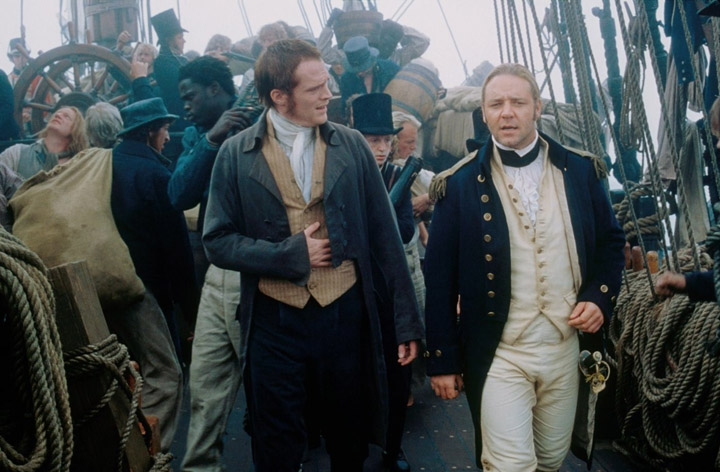
I know that Master and Commander: The Far Side of the World takes place during the Napoleonic Wars, but if there’s any film that embodies the Age of Sail, it’s this one. Of course, this movie was based on the Aubrey-Maturin bromance series by Patrick O’ Brian with the characters played by Russell Crowe and Paul Bettany. Nevertheless, this is a fairly more accurate film than a lot of Age of Sail films Hollywood has made. Nevertheless, by the standards of his day, Jack Aubrey is a fairly good captain though the contentedness of his crew may not have been typical on a British war ship. I mean there has to be at least many British seamen on the HMS Surprise who didn’t want to be there since many were kidnapped by press gangs at the time, especially since the British Navy’s habit of abducting American sailors led to the War of 1812.

In a way, the age of Colonial Empire in movies could never complete without discussing the Age of Sail which spanned from the 1400s up to the mid-19th century. It was an era of great big wooden ships with high masts, billowing sails, and a crew of jolly old sailors. Of course, these ships were among the primary methods of long distance transportation for nearly 400 years and it’s usually with these ships that European nations were able to become rich, build navies, and create a colonial empire ushering an age of globalization. Nevertheless, naval strength in the Age of Sail also made countries powerful, explaining why Great Britain managed to become a world superpower with an empire that lasted so long. Since Hollywood has made pirate movies and adventure films in the era of colonization or Napoleonic Wars, you will certainly see ships like these time and time again. The Age of Sail is also a highly romanticized era because of how much it has been depicted in movies, books, and television despite that life aboard these sailing vessels wasn’t all that it’s cracked up to be since these were the days that people didn’t have refrigeration, modern medicine, proper sanitation, adequate pest control, or even swimming lessons. Oh, and there were so many things that could kill you.Not to mention, many of the ships in movies tend to look too much alike and are sometimes much bigger than what many of these seafarers would’ve actually used. Yet, this is mainly because smaller ships wouldn’t be good filming locations. Nevertheless, movies continue to romanticize this era and this is where inaccuracies come to play.

The Age of Sail:

Navigation:

Maps were always accurate and precise. (Many times they weren’t. Also, remember that until the mid-18th century, there was no such thing as longitude.)

Ships:

Steel haul tall ships existed in the late 1700s. (They came into fashion 100 years later.)

Late 16th century Dutch ships had arched type sterns. (They had high castle-like sterns. Arched type sterns came a century or two later.)

Wooden sailing ships sailed in every direction in all kinds of weather with the main and topsails square to the masts at all times. (They only did this when navigating by the wind in their favorable direction, and only in good weather.)

Fully rigged wooden sailing ships could be turned simply by spinning the wheel. (There’s a whole array of multi-man complex procedures to turn a ship, even for a close change. They didn’t operate like cars do today. Steam engines and electric motors didn’t exist before the 19th century.)

Disabling the rudder chain cables on a large wooden ship only took a single man a few minutes. (Disabling a rudder chain took a single man days and only with the proper implement.)

A large wooden ship could be successfully operated by a small crew. (I’m not sure if one could be operated by less than ten guys. Then again, one of Magellan’s ships was successfully crewed by eighteen guys by the end {though he had died in the Philippines}. Still, no pre-19th century naval officer would worry about two men trying to steal a ship because it couldn’t be crewed by two guys.)

All British Men of War ships were painted in the “Nelson Checker” pattern around 1720. (This pattern wasn’t common until the Napoleonic Wars when used by Admiral Horatio Nelson.)

18th century wooden ships had a Plimsoll line. (This wasn’t used until the 19th century.)

Wooden ships were always impeccably clean. (These were notoriously filthy and infested with vermin.)

Wooden ships always consisted in wood that was in the best condition whether submerged or not. (Wooden ships weren’t in nearly as ship shape upon returning. They had barnacles on the hull and perhaps rotting wood. Plus, if it’s a warship, there would need to be some repairs and cannon blasts through it. Also, a ship’s carpenter was perhaps the second most valuable person on the ship next to the doctor.)

Damage caused by naval warfare could be fixed in a jiffy. (Somehow in movies, the ship’s carpenters never seem to get killed or they’re able to patch up a ship very quickly. I don’t think fast repair work is possible without power tools.)

Sailors:

Most wooden-ship era sailors volunteered to go out to sea and were lawful, clean-cut, and loyal members of the crew. (Being a sailor was one of the shittiest jobs in the era of wooden ships. Most sailors in the Royal Navy were kidnapped by thugs as a four-limbed drunk at a local tavern and were forced to serve on merchant ships. “Pressed men” were paid less than volunteers {if paid at all}, shackled onto ships while on port so they wouldn’t escape, and were whipped for any minor offense in the navy rulebook they didn’t get to read. They also had little or no chance of advancement and lived in appalling conditions. And of course, they had to deal with storms, crowded quarters, being away from their families, and tropical diseases. 75% of pressed sailors were dead within two years. Also, many Golden Age pirates started out as British sailors.)

Most sailors were content with serving on board a ship. (A lot ship crews weren’t really content because many sailors didn’t want to go to sea in the first place. The British Royal Navy recruited press gangs to kidnap four-limbed men on a regular basis. Also, the British Navy’s impressment of American sailors was one of the reasons for the War of 1812.)

Sailors mostly swabbed the deck on ships. (They did a lot of other stuff than just that.)

Most sailors knew how to swim. (Most of them didn’t and very few captains offered swimming lessons to their crews they didn’t really think it was worth it since swimming would just delay the inevitable or that it would encourage them to jump ship and desert when close to shore {remember this is a time when sailors were treated poorly and many were forced at sea against their will}. Many sailors usually expected a quick death if they were thrown overboard anyway. 16th century chroniclers of sea-life described that swimming and diving skills were valued because they were so rare.)

Drunken sailors were looked down upon. (Actually all sailors were looked down upon whether they were drunk or not. Also, officers thought a drunken sailor was less of security risk because drunk sailors were less likely to mutiny under horrific conditions. Yet, this doesn’t mean they were less likely to get flogged though.)

Most sailors were heterosexual and were willing to delay sexual gratification. (Maybe some sailors but it didn’t seem to prevent them screwing whores at ports, contracting STDs, and having a reputation of being sodomites. And sometimes in situations with a crew full of men, let’s just say there’s so many naval related gay stereotypes for a reason. Not to mention, there may be some gay homoerotic undertones in Moby Dick and Billy Budd. Make that what you will.)

Sailors were usually clean shaven by the time they returned home. (During the Age of Sail, most of them would’ve returned with a full beard since shaving requires fresh water and supplies were limited on a ship. Most pirate captains would certainly have had one.)

Most seamen were very healthy, well fed, and well cared for on a wooden ship. (Medicine before the 19th century wasn’t very reliable and naval seamen didn’t really have a long lifespan since there were so many ways to die on the ship like drowning, disease, starvation, or cannonball. Also, sailors on lawful vessels were usually treated rather shitty.)

Sailors almost never got seasick. (Many did including Lord Admiral Horatio Nelson {yet he was still a very capable officer who rose through the ranks and earned his noble title}.)

Seamen were punished by flogging most of the time. (They could also be tarred and feathered, keel-hauled, or other things and the whole crew was made to watch. Flogging was the most common punishment though and even that could be deadly. However, good captains would try not to punish their men this way unless it was necessary.)

Sailors on wooden ships always had quality food. (Maybe at first, but the quality would deteriorate as the voyage went on and could be infested with vermin. Yet, for some, the ship cuisine would’ve been better than what they ate ashore.)

All seamen were white. (There was a sizeable number of black sailors during the 18th century since officers were willing to take all the healthy four-limbed men they could get even if they were runaway slaves. Practically every harpooner in Moby Dick is non-white.)

There were no children on board. (There were powder monkeys who assisted gun crews, ship’s boys who carried ammunition, and boy cadets as young as twelve or nine.  Also, seamen generally started their careers as boys before reaching the seaman rank at 16 and leaving the sea at 26. )

Officers:

Captains on ships usually dished out orders on deck. (They also relied on their helmsmen to do such tasks.)

Captains on wooden ships would halt a thousand man ship of the line battle to rescue a single enlisted man who had fallen overboard. (Captains would’ve done no such thing since a naval battle was impossible to stop. Also, seamen were viewed as expendable in those days. A ship’s carpenter or doctor was more likely.)

Sadistic captains got away with everything. (Captain Bligh would’ve been court-martialed for tying a guy to the masthead during a storm, which he most certainly didn’t do.)

There were no child naval officers. (Most Royal Navy officers up until after the Napoleonic Wars {as far as I know} started as midshipmen  as early as their teens or younger. Midshipmen could be as young as twelve or even nine while lieutenants could be as young as eighteen. Of course, many of these kids were from prominent naval families, aristocrats, or the professional class. Master and Commander is perhaps one of the few movies that shows this. So yes, many seamen had to follow orders from teenagers believe it or not.)

Weaponry:

Triple cannons could fire multiple shots around the 17th century. (Cannons were muzzle loading at this time and couldn’t be reloaded.)

No wooden warship ran out of cannon balls.

Sea battles were fairly clean affairs starting with cannons firing at close range eventually with crews engaging in close combat. (Most of the time there would be debris everywhere due to cannon balls at close range.)

Loading cannons on ships took seconds. (It took longer than that.)

Naval:

The 18th century British Navy used Semaphore code with holding two flags in different positions. (They set up different flags on the masts on ships.)

British fleets in 1720 could have some 10 3-decked ships in a single line. (The Royal Navy had only six of these ships on commission worldwide in 1720.)

Royal Navy officers could be promoted to Commodore during the 18th century. (This wasn’t a rank in the Royal Navy until 1796.)

Royal Navy officers could be promoted to Lieutenant Commander during the 18th century. (This wasn’t a rank in the Royal Navy until 1877.)

Royal Navy press gangs only kidnapped adults into naval service. (They also abducted boys as young as eleven to serve as powder monkeys or teenage seamen. Powder monkeys assisted gun crews and learned most of the ship basics but were paid little {if anything}, treated poorly, and were expendable. Most boy pirates probably started out as powder monkeys.)

Royal Navy midshipmen went to school to learn how to become officers during the Age of Sail. (They didn’t attend school but learned on the ship as children.)

Other:

Ship surgeons performed slow and careful surgery. (Most ship surgeons usually cut limbs as fast as they could in order to spare the patient extra pain because they didn’t have any anesthesia in those days {except maybe alcoholic beverages}. Nevertheless, I don’t think that kid in Master and Commander would’ve been so laid back while Maturin was taking his freaking arm off since the pain would’ve been excruciating. I’m surprised this boy wasn’t screaming like a little kid getting a vaccination.)

Natives:

‘Wild Indians” were vicious, or at least more vicious than Europeans.

Tropical island locals and Africans practiced cannibalism and were headhunters. (Not really. Also, accounts of cannibalism among Indians in the Caribbean were greatly exaggerated and stemmed from the notion of a tribal practice keeping the bones of one’s ancestors in their homes so their spirits could watch over them. There has never been any evidence of indigenous cannibalism ever found in the Caribbean.)

Native warriors were usually bare chested and were threats to civilized society.

Natives had loose sexual customs.

Natives were primitive and savage. (Many indigenous cultures were rather complex as well as sophisticated and not all consisted of hunter-gatherer societies.)

Only converting to Christianity made Indians less violent and savage. (I don’t think this is the case since Indians all had their reasons of whether to convert to Christianity. Indian women in French territories even had French husbands like Sacajawea.)

Indian princesses (or a chief’s daughter) usually ended up with a white protagonist. (Many cultures didn’t have hereditary royalty. However, there were plenty of normal native women who ended up with whites as well.)

Native women were scantily clad. (I’m sure some women from indigenous tribes wore more than a bikini made out of coconuts.)

Natives believed white people were gods. (White people would like think native tribesmen did. However, many natives weren’t that naïve.)

Native Polynesian women wore grass skirts and coconut bras, especially in Hawaii.

Miscellaneous:

Martini Henry rifles had repeating ammunition. (They were single shot breech loading weapons.)

Singapore was a metropolis during the 18th century inhabited by Chinese. (It was a minor fishing village called “Temasek.” Also, it would’ve been inhabited by Malays and nobody would’ve heard anything about it. Singapore as we know it was founded Sir Thomas Stamford Bingley Raffles {love the guy’s name} in 1819 on behalf of the East India Company.)

Archaeologists were adventurers who discovered legendary artifacts, lost cities, and fought bad guys. (Even in the time of Imperialism a lot of archaeologists weren’t like Indiana Jones. T. E. Lawrence may have been an exception of this, however. Still, there were plenty of archaeologists with not so glorious discoveries as well.)

Old timey big game hunters were real manly men. (Yet, they somehow put a lot of animals on the endangered species list. Nowadays, many are known as “poachers.” However, Lieutenant Colonel Patterson at least didn’t kill those maneating lions for sport.)

All adventurers, archaeologists, and hunters wore safari outfits in Africa. (Some were in conventional dress.)

In 18th century Tortuga, women could safely walk around without any fear of being raped. (Considering that this was one of those hangouts for pirates who had no qualms about murder and spend long periods of time without women around, would I consider Tortuga safe in the 1700s? Hell, no.)

History of the World According to the Movies: Part 27 – The British Scramble for Africa

Image

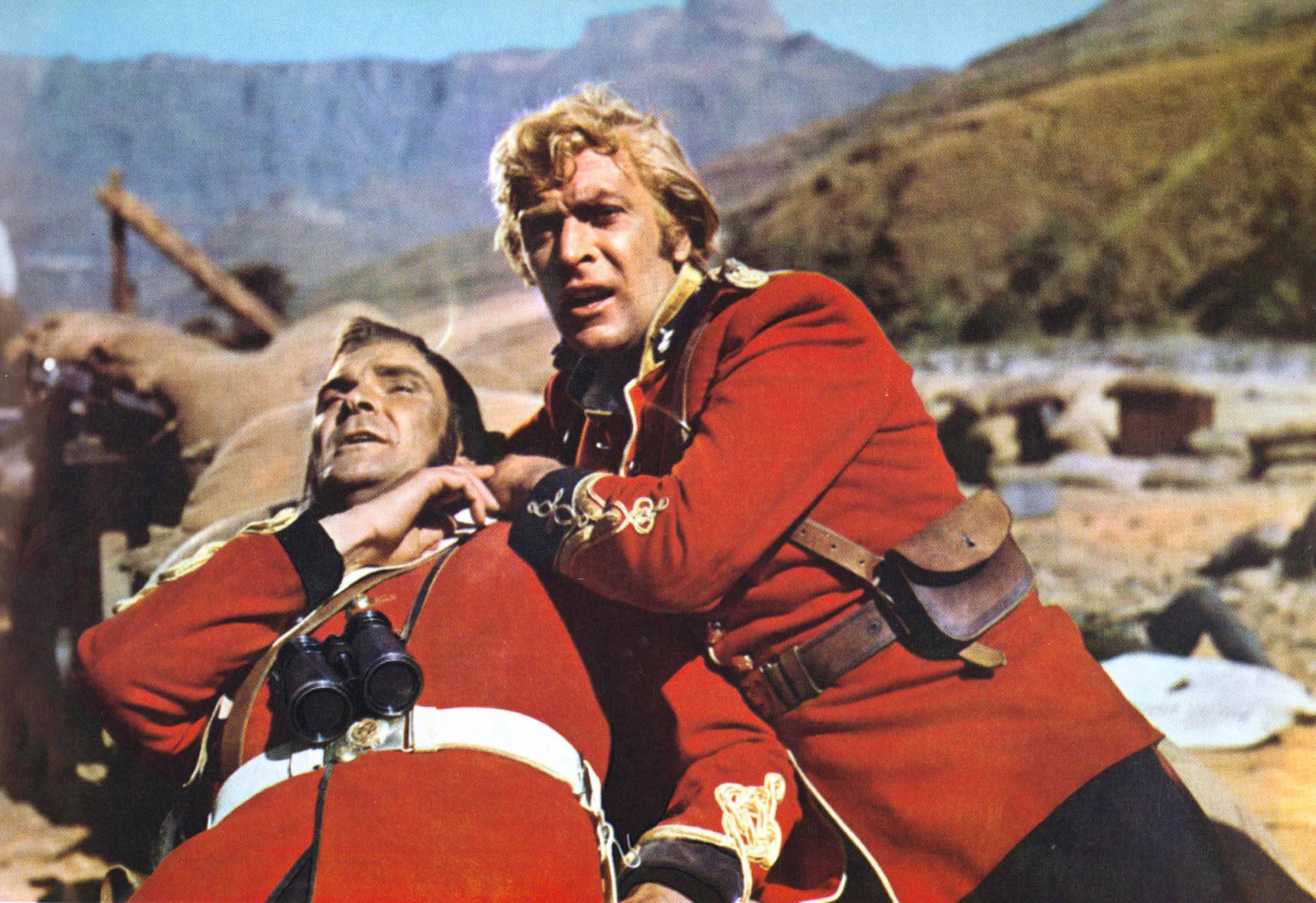
The 1964 movie Zulu which pertains to the Battle of Rorke’s Drift in which the exhausted British forces manage to defeat a large Zulu force. Also, this was a big movie for Sir Michael Caine pictured here as Lt. Bromhead. Nevertheless, this features British soldiers fighting in their dress uniforms and severely lacking the Chester A. Arthur whiskers characteristic of 1879. Not to mention, it even slanders a Victoria’s Cross recipient. Oh, and the battle was fought from late afternoon until dawn.

When it comes to movies based in the British Empire, Africa is always one of the more popular locations for some reason. Be it maybe that it’s continent of hostile tribes and creatures, a place of many famous wars, or what have you. Yet, for some reason whenever you see movies on the Scramble for Africa, they will usually feature the British Empire as the entity the white male protagonist is working for (unless he’s an archaeologist). Nevertheless, you have the explorations with men like Sir Richard Burton, Dr. David Livingstone, and others braving hostile natives, Arabs, and jungle to find the source of the Nile. You have the Anglo-Zulu Wars in Southern Africa with British forces going against hostile African tribes wielding spears. Then you have The River War in which the British faced a Islamic fundamentalist leader named the Mahdi who may have saw himself as an Islamic Messiah or Tecumseh. General “Chinese” Charles Gordon is featured in this war as well since he tried to protect Khartoum from falling into Mahdist hands only to die and be immortalized for the British public for generations. Then you have the Boer Wars where the British were fighting against the Dutch settlers in South Africa. Still, when you watch movies relating to the British Scramble for Africa, you may find yourself cheering for the British Imperialists even though they weren’t necessarily the good guys. Also, expect the white man’s burden and other unfortunate implications to turn up as well. Nevertheless, I shall list the historical inaccuracies many of these British Empire movies in Africa tend to make.

Exploration:

Sir Richard Burton published a translation of The Perfumed Garden in the mid-1850s. (It wasn’t published until 1886.)

By the 1850s, Sir Richard Burton spoke 23 languages, including Arabic, Hebrew, and Chinese. (He spoke fewer languages in the 1850s but he definitely spoke Arabic at that point since he was really into Islamic culture. However, he never mastered Chinese and learned Hebrew much later in life.)

Larry Oliphant was gay. (He was straight. The filmmakers in The Mountains of the Moon were trying to make Speke’s betrayal of Burton more dramatic after all they’ve been through. Still, Oliphant was on Burton’s side the whole time and while he did manipulate Speke to gain publishing rights on his claim, he eventually realized his errors. And Speke didn’t really betray him inasmuch as “bruised his ego.” Burton didn’t like being upstaged and tried to make Speke’s discovery of Lake Victoria much less notable than it really was as well as attacked his character. Also, Burton had a habit of making enemies in high places since he was a Victorian non-conformist.)

Henry Stanley was English since he was born at St. Asaph. (St. Asaph is in Wales. Also, he was born John Rowlands.)

Dr. David Livingstone was an honorable man to the very end. (His private diaries tell a very different story. Also, he probably wasn’t altogether there when he met Henry Stanley. Also, Stanley wasn’t what you’d call a Boy Scout.)

John Speke was gay and in love with Sir Richard Burton. (There’s no evidence he was one way or the other or even in love with Burton. Speke is said to harbor a deep resentment toward Burton and was willing to hide it until they returned to London. There, he beat Burton to the report of the Royal Geographic Society and claim success as his own.)

John Speke had light hair and was clean shaven. (Photographs depict him with dark hair and a beard.)

John Hanning Speke committed suicide. (An inquest into his death concluded he died in a hunting accident and he had a fatal wound just below the armpit. Nevertheless, even a Victorian gentleman like Speke who had so many years of meticulous gun handling could die of a an accidental gunshot wound. Gun owners know that accidental discharges happen all the time.)

Sir Richard Francis Burton was a believer in racial equality.  (Burton was no less racist than his contemporaries and enjoyed living and studying with other cultures as well as wrote numerous travel books. He also knew 29 languages, some of which he mastered so well to pass as native. Speke, on the other hand, thought living among Africans was repugnant and referred to them as creatures and savages.)

John Speke met Sir Richard Burton in Zanzibar. (They met at Aden in Yemen.)

Sir Richard Burton went into Harrar with John Speke. (Speke wasn’t with him in Harrar.)

Anglo-Zulu War:

Color Sergeant Bourne was a towering middle-aged man. (He was a slight build and 24 years old as well as the youngest Color Sergeant in the British Empire. His nickname was “The Kid.” At least he had some decent Victorian whiskers in Zulu.)

The Battle at Rorke’s Drift was fought in broad daylight. (It began in the afternoon and went throughout the night.)

Most of the 24th Regiment of Foot B Company were clean shaven. (From the Guardian: “photographs of the real veterans of Rorke’s Drift look like candidates for Britain’s Best Walrus Impersonator 1879. (Winner: Lieutenant Chard; Mr Congeniality: Lieutenant Bromhead.)” Yeah, but I don’t think Michael Caine would look good in a pair of mutton chops. Besides, the walrus mustaches may have made it very less likely to take Zulu seriously.)

Private Henry Hook was a shambling boozehound, dirty coward, and a trouble until his moment in battle when he had a sudden burst of courage that he was bayoneting and shooting Zulu warriors all over the place. (He was a churchgoing teetotaler with an exemplary record who earned a Victoria’s Cross for saving a at least a dozen patients in a hospital. Hook’s daughter was so offended by her father’s portrayal in the film that she walked out of Zulu’s premiere. Also, he received a distinctive scar due to his encounter with a Zulu assegai knocking off his pith helmet while he was defending a hospital. And he doesn’t wear a pith helmet in the movie.)

The last shot at the battle at Rorke’s Drift was fired at first light with another wave of Zulu turning up. (The last shot of the battle was fired at 4 a.m.)

The 24th Regiment of Foot consisted of Welshmen in 1879 and their song was “Men of Harlech.” (It would become affiliated with Wales in 1881. The 1879 24th Regiment was affiliated with Warwickshire and most of the men at Rorke’s Drift were English, Welsh, and Irish. Oh, and their song was “The Warwickshire Lads.”)

Gonville Bromhead and John Chard received their commissions in 1872. (They had already received them by that year. Chard had held his commission three years and three months longer than Bromhead.)

Bromhead was a fresh young lieutenant. (Both him and Chard were old for their rank who’ve been repeatedly passed over for a promotion as unlikely to amount to much. He’s also said to either be partially deaf or suffering from PTSD. However, Bromhead would later end his career as a major while Chard’s would end up a colonel.)

Zulu chief Cetshwayo sent his impi to attack Rorke’s Drift. (He actually ordered his impi to leave the installation alone for good reason. However, it was his half-brother Dabulamanzi who ordered the attack thinking he would get a quick victory that would impress the king. He also commanded the uThulwana and led the Zulu forces in the attack. Of course, you can figure out where that was headed.)

Gonville Bromhead was a sharp steely soldier. (One of his fellow officers described him as, “a capital fellow at everything except soldiering.” He’s said not to be very bright and may have been assigned to Rorke’s Drift because of his supposed partial deafness {which might’ve been a misinterpretation of PTSD} was thought to limit his ability to command {with his superiors thinking he wouldn’t see any action}. He probably wasn’t a pansy aristocrat turned hardened soldier after his first battle like the Michael Caine portrayal but he was very well-liked.)

John Chard was the epitome of British manhood. (He was widely considered lazy and useless.)

Reverend Otto Witt instigated the Natal soldiers to desert their post by warning them of the Zulu approach. (The native Natal soldiers did desert their post {leaving at their own accord} but not at the Witts’ instigation. He didn’t warn them of the Zulu approach either but he was one of the lookouts who initially saw them arrive. However, the Natal Native Contingent deserters were fired at as they left and one of their NCOs was killed. Their captain would later be convicted at a court-martial for desertion and dismissed from the British Army.)

Soldiers of the Natal Native Contingent were issued European style uniforms. (They weren’t.)

Reverent Otto Witt was a pacifist old missionary with a daughter. (He was a much younger and married man with two kids. Also, he wasn’t a pacifist since he helped the British at Rorke’s Drift in any way he could as well as defended the interests of white colonists. However, he did leave before the battle but only because he wanted to protect his family.)

Zulu warriors saluted the British officers at the hill after the battle. (They did appear on the hill the following morning but just observed in silence for some time before leaving again since they were just as exhausted as the Brits, hungry, and low on ammunition. Oh, and there were British reinforcements coming so they didn’t have time to salute any British soldiers. Still, any remaining Zulu who were wounded and left behind were rounded up and executed. )

Private Hitch was shot through the thigh by a Zulu sniper. (He was shot through the shoulder in which the bullet shattered his shoulder blade. There’s even a photo of him with his arm in a sling and there are paintings of the 1879 battle depicted in Zulu in which he has his arm held still by a belt. He would later become a London cab driver.)

C Company was stationed at Rorke’s Drift. (It was B Company of the 24th Regiment of Foot.)

Corporal Schiess was a member of the Mounted Police. (He was a member of the Natal Native Contingent. Also, he was 22 years old.)

The 17th Lancers were stationed in South Africa during the Battle of Isandlwana. (They were only sent after the battle with the 1st Dragoons.)

Surgeon John Henry Reynolds was a “Surgeon-Major, Army Hospital Corps” during the battle of Rorke’s Drift. (He was promoted to this rank after the battle.)

The detachment of cavalry from “Durnford’s Horse” consisted of white settler farmers who rode up to the mission station to their deaths in the Battle of Isandlwana.(They actually survived the battle and consisted of black riders sent to Rorke’s Drift to warn the garrison there. They were present in the opening action with the Zulus but rode off due to lack of ammunition. Also, they weren’t lead by Captain Stephenson who was head of the infantry Natal Native Contingent.)

Corporal William Allen was a model soldier. (He had been recently demoted from sergeant following the battle of Rorke’s Drift. Oh, and he was 35 years old at the time.)

Gonville Bromhead was blond. (His 1872 picture makes him a dark haired Chester A. Arthur look-alike. However, he’s played by Michael Caine who has a significantly lighter hair color.)

The Mahdist War:

General Charles George Gordon was a fallen hero to British presence and a great military leader against the Mahdi in Khartoum. (Yes, he was a great general, but he was also an Evangelical Christian who had some whacked out views about cosmology but set up a boys camp as well as visited the sick and the old, was a robust 5’ 5” feet all, and never married. Other than that, most of what is said about his character is speculative. Also, though he and the Mahdi corresponded, they never met {though the Mahdi’s grandson really thought they should’ve so it was left in Khartoum}.)

General George Gordon and the Mahdi were killed around the same time. (Yes, Gordon was killed in battle. However the Mahdi died several months later probably attributed to typhus.)

The battle at Abu Klea was a British defeat. (It was a British victory.)

The Mahdi’s spectacular jihad was just out of plain religious fanaticism. (Not really. Actually it was related to the Egyptian penetration into the Sudan in the 1820s, the Suez Canal, modernization, and other factors associated with imperialism. It’s a long complicated history, but imperialism was more or less was what the Mahdi was rebelling against.)

The Mahdi presented Colonel Stewart’s hand to General Gordon. (This didn’t happen because they never personally met in real life. Also, though the Mahdi’s men did murder Colonel Stewart and Frank Power, but the Mahdi only received the former’s head as a trophy. Also, he only told Gordon to get out of Sudan so further bloodshed would be avoided by writing a polite letter to him. Of course, you couldn’t have a polite letter exchange in Khartoum.)

General Charles Gordon came out facing the Mahdists storming Khartoum calmly and with dignity before getting killed with a spear. After that, his head is brought back on a stick for the Mahdi who was displeased. (He actually came out shooting and ran out of ammo on the staircase {like in a Tarantino movie if you get my drift}. Also, he was killed by a gunshot to the chest, not a spear. And he was killed for being mistaken as a Turk out of all things. Oh, and the Mahdi specifically ordered that General Gordon shouldn’t be killed.)

The famous charge of the 21st Lancers during the Battle of Omdurman happened the day after the main battle. (Both main battle and charge occurred around the same day.)

British soldiers in the Omdurman campaign of 1898 wore scarlet jackets. (They wore khaki uniforms while the cavalry wore blue jackets.)

The Royal Suffolk Regiment served and Egypt and was a relief force to rescue General Gordon. (There was never a Royal Suffolk Regiment. Yet, there was a Suffolk Regiment but they took part in neither. Actually during this period, the First Battalion was posted in India and the Second Battalion was in various locations.)

The two-day relief force for General Gordon managed to recapture Khartoum in 1885. (They discovered that the city was already taken and the Mahdist forces were strong so they were forced to retreat, leaving Sudan to the Mahdi. The British would recapture Khartoum 13 years later in 1898.)

Other:

The Tsavo maneating lions killed for sport. (No predator does this except humans. Also, Lieutenant Colonel Patterson doesn’t mention this and he killed the two lions over a nonhuman bait. He even says their killing pattern was consistent with normal lion hunting patterns.Still, Patterson states that he had a leopard kill 30 of his sheep and goats in one night. Still, for the Tsavo lions to kill and eat people, they must have been in a desperate situation {one was said to have a severe dental disease which would’ve made him a poor hunter} since most big cats usually kill to survive.)

The lions at Tsavo, Kenya killed 135 people. (They more likely ate 35, but we’re not sure how many were killed and not eaten. Still, there were 135 African and Indian workers employed at the construction of the Ugandan railway.)

Both maneating lions at Tsavo had large manes. (The maneating lions at Tsavo were male but they didn’t have manes {they’re actually taxidermied and put on display and at the Field Museum of Natural History at Chicago}. Also, male Tsavo lions either have minimal manes or none at all and Tsavo lions generally are far more aggressive and unpredictable than lions you normally see. Not to mention, animal handlers hate the idea of shaving a lion’s mane. Still, I don’t understand why the makers of The Ghost and the Darkness didn’t consider using lionesses as Tsavo lion stand-ins. I mean they had a male dog play Lassie for God’s sake.)

Lieutenant Colonel John Henry Patterson killed the lions with the aid of an American ex-Confederate soldier Charles Remington. (Charles Remington never existed and there was no professional hunter ever present at Tsavo or anyone like the Michael Douglas character {who was in there because they didn’t want it to look like a pure ego project on Val Kilmer’s part. Also, Douglas helped produce the film}. Nevertheless, Patterson had to kill the maneating lions all on his own but he was a lot more badass than his Val Kilmer portrayal.)

One of the Tsavo lions escaped a trap surrounded by three Indian railroad guards firing that failed to kill him. (This happened except it involved ten guys firing it {which included Mombasa police} and the one bullet that came close to the target broke the cage’s lock, letting the lion escape.)

The Tsavo Bridge was a truss. (It was a plate girder type.)

Karen Blixen caught syphilis from her philandering husband Bror. (Yes, Bror cheated on her but there’s some doubt he might’ve been the cause. Oh, and she hadn’t miraculously recovered when she took up with Denys Finch-Hatton as seen in Out of Africa.)

Sir Henry “Jock” Delves Broughton shot himself dead in the Happy Valley region of Kenya via shotgun shortly after he acquitted for killing his wife’s lover in 1941 while Alice de Janze died of an overdose. (He died a year later in England of a morphine overdose which he had been taking for a back injury, it was ruled a suicide. Still, he was no longer accepted among the Happy Valley society and it’s very likely he killed his wife’s lover {though the case remains unsolved}. Alice de Janze shot herself that September {who’s also suspected}. Interestingly, Kenya’s Happy Valley consisted of a group of colonial ex-patriate British and Anglo-Irish aristocrats during inter-war period in the Wanjohi Valley, notorious for their decadent, hedonistic, eccentric, and scandalous lifestyles which seem straight out of an Agatha Christie novel. )

Karen Blixen thought it was baseless prejudice when she was asked whether she sided with the Germans during World War I. (Well, she may have thought this but she was an old friend of legendary German General Paul Von Lettow-Vorbeck {who’s not in Out of Africa unfortunately} as well as offered to send horses for his cavalry and carried his signed photo with her. So I don’t think Karen’s friend was being biased here when she asked her whether she was rooting for the Kaiser.)

Karen Blixen once fought attacking lions with a bull whip while on the Savannah. (Most of her biographers believe she just made this up.)

When Karen Blixen lost her land, she plead with the British governor on her knees at a garden party for the rights of the Kikuyu people to live on her farm. (British governor Sir Joseph Byrne probably did grant territory to the Kikuyu people as a favor to Karen but there’s no record that she begged him on her knees at a garden party.)

History of the World According to the Movies: Part 26 – The Golden Age of Piracy

Image

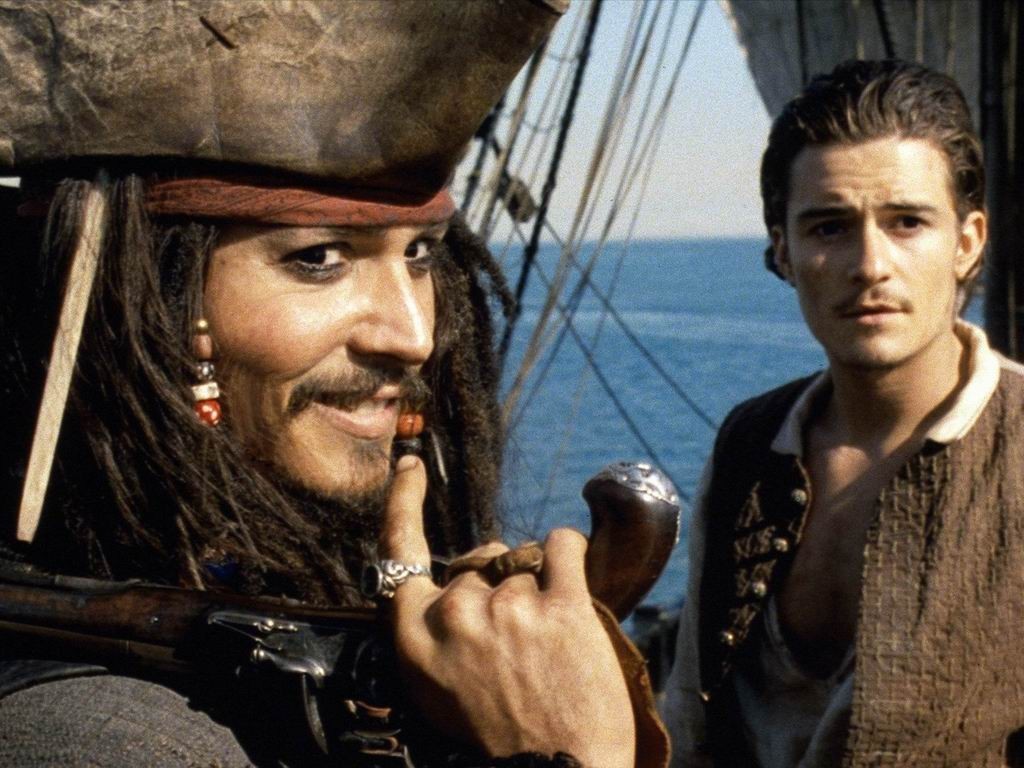
Of course, it would be very appropriate for me to show a picture from Pirates of the Caribbean series which has brought this era to a new generation. Still, these movies aren’t meant to be historically accurate but even they aren’t very good, you still can look forward to Captain Jack Sparrow. Nevertheless, Orlando Bloom perhaps may have looked more like a real Golden Age pirate than Johnny Depp would since the latter was in his forties at the time.

Ahoy, mateys! We come to the post of perhaps one of the most popular cinematic eras of all time, the Golden Age of Piracy. You may be wondering why in the hell does the Golden Age of Piracy have anything to do with Colonialism or Imperialism. Well, quite a lot actually since these pirates were the organized crime syndicates and highwaymen of the high seas with a Golden Age lasting roughly between 1650-1720. Whenever there is trading going on in history through water transportation, you’re going to have pirates. And with European colonial expansion, you have an influx of trading goods coming and going through the trade routes of the Atlantic Ocean. At first many of these European pirates were hired as privateers to cause trouble for Spain or act as a stand-in for a navy, but once England and France had a professional navy as well as the War of the Spanish Succession, the privateer tradition had died. Yet, rather than give up their privateering life to go straight, many of them opted for piracy and led the risky life of an outlaw. Nevertheless, the Golden Age of Piracy has been a subject of frequent romanticization, especially in Hollywood adventure movies and many have become legends in their own right. Nevertheless, there are plenty of things that movies get wrong about pirates in this Golden Era of lawlessness and adventure.

Anne Bonny:

Anne Bonny disguised herself as a man during her career. (She disguised herself as a boy when she was a kid, but not when she was a pirate. Her gender was public knowledge. However, Mary Read certainly did {and so did other female pirates since cross-dressing as a guy was much easier for women to do in those days}.)

Anne Bonny’s mentor was Blackbeard. (They didn’t know each other.)

Anne Bonny commanded her own ship. (She never did. She was always on Calico Jack’s ship with Mary Read. Still, she probably should’ve.)

Anne Bonny’s pirate boyfriend was French. (Her pirate boyfriend was Captain “Calico Jack” Rackam. She may have even had a couple of kids with him. Mary Read may also count as an intimate partner.)

Anne Bonny died on an islet at a sandy beach. (She more likely died in South Carolina at the age of 84 since her dad managed to ransom her while she was pregnant in jail {or so she said}. It’s said she married a respectable man and had eight children in addition to her two by Rackam. Still, we’re not sure what really happened to her.)

William Kidd:

Captain William Kidd was a pirate as well as savvy manipulative sociopath ultimately undone by the son of a man he had killed. (There’s only evidence that he was a privateer and that his fame springs from the sensational circumstances of his questioning before the English Parliament and the ensuing trial perhaps in a desperate attempt to clear his name. Also, compared to other pirates and privateers, his actual depredations on the high seas were less destructive and less lucrative than those of his contemporaries. Still, he may have been a notorious pirate or just an unjustly vilified and prosecuted privateer in an age typified by the rationalization and empire.)

William Kidd was ugly. (His portrait on Wikipedia suggests he was quite handsome. Still, he probably didn’t look anything like how Charles Laughton portrayed him.)

Blackbeard:

Henry Morgan and Blackbeard were contemporaries. (Morgan had died in 1688 when Blackbeard would’ve been at least a child if he was ever born at the time.)

Blackbeard was the pirate whom all pirates feared as well as an evil dick. (Yes, he was feared but he wasn’t evil or as violent as most pirates at the time. He tried to avoid violence whenever he could and went out of his way to take care of his men even though he did shoot and wound his first mate, it was said he did it to save the guy from dying in an upcoming battle. He commanded his ships with the permission of their crews and was seen as a more shrewd and calculating leader who relied on this fearsome image and PR more than violent force. Oh, and there are no accounts of him ever killing anyone who didn’t try to kill him first {not even those he held captive}.)

Blackbeard was short. (He was a tall and imposing man and looked almost nothing like Ian McShane. Actually, Sacha Baron Cohen would better fit his description.)

Blackbeard lived to be 70. (He was caught and killed at 40. Also, we’re pretty sure he didn’t fake his own death because he was shot no fewer than five times and cut about twenty. Oh, and there are reports that his body was thrown in an inlet while his head was suspended by a bowsprit of his Lieutenant Maynard’s sloop so he could collect the reward {but he was screwed over in the process after all he’d been through to get him}.)

Blackbeard was a pirate when the British were using privateers. (The British had outlawed privateering before Blackbeard came along.)

Blackbeard’s flag depicted a flaming skull. (It featured a devil horned skeleton spearing a heart holding an hourglass.)

Golden Age Pirate Life:

Some pirates had dads who were in the same profession. (I suppose some did, yet pirates didn’t have long careers so I’m not sure if they knew people from different generations. And even if they did, they wouldn’t know it {and neither would anyone else}. Still, it’s very unlikely that a blacksmith would go into the pirating trade since these master tradesmen had their own shops as well as a steady source of income. Having Will Turner as a Royal Navy sailor would’ve made more sense.)

There was no distinction of appearance between a pirate and a common sailor. (For God’s sake, Robert Louis Stevenson, there’s no way that anyone in the 17th century would hire a pirate crew and not even know it. I mean pirates like Long John Silver would never work for a regular captain even for buried treasure.)

Pirates wore clean clothes. (The only time their clothes were washed was in a rainstorm. They also didn’t bathe.)

Pirates were nice to African slaves who were members of their crew. (Sometimes, especially in Blackbeard’s case who had a black Quartermaster named Caesar but it depended on the ship. However, pirates sometimes resold Africans into slavery or turned them in for the reward. There are even occasions when they could be used as slaves doing menial work on board a ship. And if they were members of the crew, they may or may not be given the same shares as the rest. Yet, there were white pirates who saw them as either a commodity or less useful than “white” sailors {except marooners who’ve already proven themselves against the Spanish}.)

“Scallywag” referred to a fellow pirate. (This word wasn’t in use until after the American Civil War in which people in the Confederacy would refer to their pro-Unionist neighbors who collaborated during Reconstruction.)

Life aboard a pirate ship was unpredictably violent, chaotic, and teetering on the brink of mutiny. (Many naval ships with poorly paid sailors and autocratic captains under the thumbs of nobles or private investors were like this at the time. However, many pirate crews functioned more like organized crime families than anything. After all, they were known to be “gangsters of the sea,” than anything.)

Pirates sailed in big heavily armed wooden warships such as three masted Galleons. (Most of the time they sailed in whatever they could steal or hold on to. The average pirate ship was a small, fast, maneuverable craft that could zip around shoals larger ships wouldn’t navigate. Most of the time, they’d use single masted sloops. The heaviest pirate ships were converted merchantmen like Blackbeard’s Queen Anne’s Revenge.)

Good pirates never raided merchant ships or settlements. (This is the very definition of pirating. All pirates did this because that’s what they do.)

Pirates mostly raided ships through violent means. (Most pirates would try to cultivate an image of ruthlessness so they could just get merchant ships to surrender without a fight. But when they fought, God help you!)

Most female pirates were easy to detect and their gender was public knowledge. (Most of the time you wouldn’t be able to tell which pirates were women {except maybe those without facial hair but they could easily be teenage boys}. Still, it’s said many just dressed up as guys just to protect themselves than any other reason. Anne Bonny and Mary Read were probably the exceptions to this {but they were shagging their captain, bringing booty, and putting up a hell of a fight}. Some like Grace O’Malley even became captains. Yet, most pirates didn’t allow women on their ships since their presence was bad luck unless she was talented in bringing boatloads of booty.)

Pirates had democratic rule on their ship and treated everyone equally. (Some pirate ships were democratic havens sometimes they weren’t. And not every pirate crew treated everyone equally. Also, there’s little historical evidence of pirate democracy on the islands. Still, pirate governments probably functioned more like crime families.)

Pirate captains commanded with an iron fist. (Many times the captain was the ultimate power aboard a ship. If he didn’t like you, you were gone. Yet, the captain and his officers were more likely to listen to redress from their crew because he couldn’t rely on the support or threat of punishment from a higher authority. They usually commanded because of skill, daring, and the ability to win prize and booty. Some were elected by their crew members by a vote and only didn’t have the last say except in battle. Sometimes power was shared between the captain and quartermaster and some pirate crews were just a loose confederation of thieves. Still, it depended on the ship but a typical pirate captain usually commanded like a head of an organized crime syndicate than anything.)

Pirates kept parrots as pets. (They also kept dogs and cats aboard, too, since they were used to keep vermin down. Yet, they may have kept parrots as exotic pets or “booty” as well as taken other animals on board a ship while in town. They also took livestock on board, too. Of course, there are accounts of one pirate trying to steal a herd of cattle on his ship, but he learned to regret it that he was willing to surrender to the British authorities since the cows were all puking and spewing all over the place. The British authorities just left him alone.)

Pirates only killed foreign soldiers and officers and never sank any ship unless it wasn’t from their country. (I don’t think pirates cared about who they killed or whose ships they sank. Of course, they didn’t attack English ships when England was using privateers but that soon went out of favor once they had made peace with Spain. I’m not sure if they would have any sense of patriotism from governments wanting to hang them. Unless they were privateers of course.)

The cutlass was a pirate weapon of choice. (It was the last weapon they wanted to reach for. Their preferred weapons were firearms {which weren’t effective by our standards}.)

Pirates usually raided and robbed warships. (They usually tried to avoid warships since they were designed for combat except Spanish Galleons. Besides, merchant ships were their primary targets.)

Pirates attacked other ships by sinking them and slaughtering their crew. (Actually, they’d go great lengths to avoid either if they could scare the ship into submission. They’d actually ask the enemy crew what they thought of their captain. If he was bad, he’d be beaten and maybe executed. If he was just, then the pirates would send the group to a lesser ship and send them on their way.)

Good pirates were a rough, roguish, and jovial bunch. (They were also ruthless cutthroats, murderers, raiders, and thieves. And they weren’t people you’d want to take home to your mother and not because they hardly bathed.)

Pirates wore gold earrings during the Golden Age of Piracy. (There’s no evidence because earrings on men weren’t fashionable at about the turn of the 18th century. Though pirates may have been an exception of that.)

Pirates’ treasure consisted of mostly precious items like gold. (Pirates treasure didn’t just consist of gold and precious items but also clothes, jewelry, sugar, spices, citrus fruit, fresh water, and maps as well as almost any trade goods stolen from merchant ships {they’d take practically anything}. And I’m not sure if they’d go bury it on some remote island in the Caribbean either. Not to mention, pirates rarely ran into merchant ships carrying precious metals or jewelry in large quantities.)

Pirates forced people to join their crew against their will. (Most of the time they only did this to carpenters, doctors, and other skilled workers for obvious reasons.)

Pirates left a lot of buried treasure on islands and drew maps to find it. (Pirates lived fast and hard lives who usually spend their money on women and booze as soon as it was in their hands as well as never had enough gold worth hiding. Besides, they usually faced an uncertain future so there was little incentive to stash their savings. Also, they split their treasure amongst themselves since they won it together. Thus, they didn’t leave a lot of buried treasure around since there was always a possibility that they could be hung from a dock not far in the future. And if they did, they certainly wouldn’t have drawn a map to find it since they’d rather use maps to trace known trade routes. They would only bury it where it was the easiest for them to get and the hardest for others to find. Captain William Kidd was the only pirate to actually do this perhaps successfully.)

Most Golden Age pirates were adult men of all ages. (Actually the Golden Age pirates were a very young crowd with some being children and adolescents {and yes, the Royal Navy press gangs did kidnap children since no kid wants to be a powder monkey}. Still, most of them were in their twenties and their careers were short-lived due to things like battles, infighting, disease, or the punishment on piracy at the time. Not many pirates lived past 30 and very few lived into middle age. Yet, most movie pirates are played by actors in their 30s or older.)

Golden Age pirates mostly did their raiding in the Caribbean. (A lot of Golden Age piracy is attributed to the Caribbean, but many raided ships in other waterways as well.)

Pirates were only in existence during the seventeenth and eighteenth century and were only European. (Piracy has been as old as the invention of the boat and there are still pirates today. Also, pirates came from all over the world.)

A popular pirate punishment was walking the plank. (Almost never happened since it’s easier to throw someone overboard. They did do marooning, flogging, casting overboard, torture, keel-hauling, and more.)

Most pirates were outlaws working for themselves. (Actually, there were also pirate mercenaries called privateers who worked for someone else like a government.)

Pirate curses are real and do come true. (Most of the time pirate curses are based on superstition and usually didn’t come true. Of course, many pirate superstitions could be something Robert Louis Stevenson just made up.)

The most famous pirates were the best ones. (The most famous pirates were usually captured, brought to trial, and/or killed immediately because someone had to be there for their exploits to be written down. As with the best pirates who avoided capture, we probably don’t know their names. Then again, you had guys like Henry Morgan who ended up governor of Jamaica and knighted and Henry Every who successfully retired with all his loot and suffered almost no repercussions from his crimes.)

Pirates were marooned onto lush deserted tropical islands. (No, they were marooned on islands with very little vegetation which could get swept up with the tide. They didn’t want a Robinson Crusoe situation on their hands.)

Pirates were hanged without trial after capture. (They were usually hanged after they were put on trial since piracy certainly was a capital crime though pirates were robbers and thieves at heart as well as desperate men with nothing to lose.)

Pirates spoke in pirate accents using phrases like “shiver my timbers,” “arr,” or “Fifteen Men on a Dead Man’s Chest.” (No, they didn’t talk like the stereotypical pirates we see in the media. I’m sure Robert Louis Stevenson made that up. Also, there was no universal pirate accent since it makes no damn sense.)

All pirates had black flags with a skull and cross bones on them or a skull with crossed swords. (They also had red ones which were used in raids but meant that there was no quarter, no prisoners, kill or be killed. Black flags meant that the pirates were giving quarter like accepting terms of surrender and leave some of you alive. Also, black flag designs varied from ship to ship. Blackbeard’s had a devil horned skeleton holding an hourglass and stabbing a heart with a spear, lovely.)

Pirates had a hook hand as a prosthetic limb. (Yes, at least a couple pirates did have peg legs {though most pirates without a leg usually used crutches}, but it’s not very likely that pirates had hook hands because they wouldn’t be very practical. A pirate with a missing hand would more likely have a wooden arm if that.)

Pirates became captain by fighting the old one in a duel. (Sometimes they were elected by their crews. Duels among leaders could split a crew’s loyalties. Sometimes a default leader would emerge, be he the oldest, smartest, or most charismatic.)

Sailors became pirates to live a life of crime. (They actually ditched their jobs as sailors because being a sailor was one of the shittiest jobs ever and conditions on lawful ships were terrible. And if you were in the Royal Navy, you were likely pressed into naval service {a.k.a kidnapped by gangs of hired thugs looking for drunks with all four limbs} after getting wasted at a coastal tavern than actually sign up for it. Impressed sailors comprised half of the British navy at one point and were paid less than volunteers {if paid at all]} as well as had little or no chance of advancement. Impressed sailors were also shackled to the ships on port so they wouldn’t try to escape and were flailed for even the most minor offense in the navy handbook they probably didn’t get to read. Furthermore, 75% of impressed sailors in the Royal Navy were dead within two years. Oh, and sailors had to deal with storms, crowded quarters, and tropical diseases. Only a minority became pirates just for the enjoyment of being an outlaw. Most sailors became pirates to escape a life of certain death and constant humiliation as well as low pay and very little room for advancement.)

Golden Age pirates treated their lawful sailor prisoners like dirt. (Pirates sometimes recruited captured sailors for their crews and treated them better than their own officers or superiors. Also, Black Bart was a sailor captured by pirates and became their captain six weeks later. And his crew knew exactly where he came from and didn’t give a shit. Blackbeard’s crew is said to be 60% black so sometimes racial divisions didn’t matter.)

Pirates were the rock stars of the 18th century. (Well, it was a time when many outlaws were considered this so this could be true.)

“Good business” for pirates consisted of plotting global maritime domination and pursuing personal grudges. (They’d more likely be arranging profitable trade deals and raids merchant companies may depend on.)

Pirates towns were filled with loose women, shooting, and endless drinking. (There were pirate settlements but they were mostly havens to escape from the civil authorities. They may have joined together to form loose confederations, dispensed vigilante justice, similar to a frontier town but they didn’t have any organized government. It’s probably wiser to say that pirates were the gangsters of the high seas.)

Pirates saw themselves as cutthroats willing to kill a merchant seaman in the blink of an eye. (They saw themselves as independent businessmen. Also, they didn’t kill hapless merchant seaman since that would give them an incentive to resist {of course, those who resisted would either be handled roughly or killed}. Besides, they’d more likely give them a job offer. Still, it’s easier to understand Golden Age pirates if you see them as seafaring gangsters.)

Pirates never swore. (Uh, they were notorious for profanity.)

Pirates had a penchant for high class women. (While most love interests in pirate movies are seen as such, real pirates would usually not go for ladies like Elizabeth Swan, because such conquests would be like telling her Port Royal governor dad to arrest and hang them. They more likely slept with lower class women and whores.)

History of the World According to the Movies: Part 25 – Colonial Empires

Image

Pardon my American bias, but perhaps the Last of Mohicans is perhaps one of the best known movies set in the French and Indian War. Of course, this war has other names but as far as the British and the French were concerned, it was a war over disputed colonial territory in both India and North America. And it was fought on a global scale lasting for nine years which Great Britain won big time. Yet, this was perhaps one of the most important conflicts in history, especially at a colonial stand point. Also, who could forget Daniel Day-Lewis as Natty Bumppo?

From the 1600s to just after World War II, the world had entered in an age of colonialism and Imperialism which had ushered an age of commerce, international trade, and globalization. The Age of Colonial Empires has two phases. The first consists of the colonization of the Americas and the second colonization of Africa, which is another post. While Spain’s influence in Europe was in decline due to the Spanish Armada Incident, losing a series of wars, aristocratic dominance, as well as generations of Hapsburg inbreeding that produced a series of feeble kings leading its ruling dynasty to die out and be succeeded by Louis XIV’s grandson (this really happened), it still enjoyed a flourishing cultural period in the arts during the 16th and 17th century as well as had a large Latin American Empire that was going to last them until the Napoleonic Wars (well, most of it anyway). And for quite some time between Napoleon and the French and Indian War, Spain’s American Empire possessed most of the land consisting of today’s United States as well as stretched as far north as Minnesota (mainly because the French gave up in North America and handed Spain the Louisiana Territory, but Napoleon would get it back once he took over Spain). Then you have France who had a major colonial empire in North America that reached from Eastern Canada to the Mississippi Delta. Of course, France would later be caught in an imperialistic war with Britain over disputed territory and then abandon its claims to North America in a conflict known as the French and Indian War. Yet, they would soon end up colonizing much of West Africa, Madagascar, and Southeast Asia. Then you have the British Empire which ended up to dominate much of the world at its peak  and is very much present in movies relating to colonialism or imperialism. Nevertheless, movies about the colonial empires seem to have unfortunate implications at times as well as historical inaccuracies I shall list accordingly.

Spanish Empire:

The Spanish Jesuits were involved in the struggle with the Guarani against the Spanish and Portuguese around the Guarani War following the treaty of Madrid during the 1750s. (Only the Guarani themselves fought against the oppression resulting in a three-year war against the Portuguese.)

Jesuit missionaries directly disobeyed Altamirano’s orders and stayed to fight with their converts. (No Jesuit missionary in Paraguay directly disobeyed Altimirano’s orders nor did they stay to fight with their converts. In reality, they actually surrendered control of their missions in 1754 but the Guarani refused to relocate. However, since Hollywood likes Indian-friendly white protagonists, the Jesuits in The Mission stayed. After all, you wouldn’t want Robert DeNiro and Jeremy Irons abandon those poor little Indians would you?)

Luis Altamirano was a cardinal sent by the Pope who was also a Jesuit. (He was actually a Jesuit priest sent by the Superior General of the Society of Jesus, Ignazio Visconti to preserve the Jesuit Order in Europe in the face of attacks in Spain and Portugal, especially in the face of the transfer of territory to Portugal which consisted of seven Guarani missions that were settled by the Jesuits and Guaranis in the 17th century. Sadly, they were only suppressed a few years later anyway.)

The Spanish Navy used captured Englishmen to man their galleys as slaves. (Galleys were used by the Spanish Empire but they didn’t man them with English Protestants {even if Spain did have an Inquisition}. Nor did they enslave their enemies either.)

The reduction missions were havens for Indians. (Yet, there’s an opinion out there that these missions were repressive theocratic city-states with a high degree of coercion and imposition on the local population. The Spanish mission system often used the Indian converts as enslaved labor as well as served as a mechanism of cultural genocide with thousands of Indians dying from overwork, horrid conditions, brutal treatment, and disease. Indian resistance and escapes were a frequent occurrence. However, at a historical standpoint, you can say that the Spanish Mission System was a haven for the Indians when compared to such institutions like plantation slavery or Nazi concentration camps.)

French Colonial Empire:

The French Foreign Legion consisted of entirely of foreigners, which was why they were such a good fighting force. (30% of the members were French who lied about their nationality. The real reason why they were so effective was their insane physical training, harsh discipline, and a strong sense of espirit de corp and brothers-in-arms.)

Anyone could join the French Foreign Legion. (In the early days since its creation yes, but not anymore, they do background checks, psychological tests, and physical examinations.)

The French Foreign Legion did most of the fighting in wars France was involved in since its creation. (France’s regular army and colonial troops did.)

The Perdicaris incident consisted of an American woman named Eden Pedicaris abducted by the Berber bandit named Mulai Ahmed el Raisuli. (Actually Perdicaris was named Ion and a man with a reputation as a Greek-American playboy as well. His stepson was kidnapped as well. He also renounced his American citizenship in order to be a citizen of Greece. Hollywood probably changed this for a romantic subplot, but still…)

Raisuli was a virtuous Muslim freedom fighter. (Many historical accounts list he was a mixture of feudal bandit and political power player. One account records an incident when Raisuli’s brother-in-law planned to take a second wife; Raisuli stormed the wedding party and hacked the bride and her mother to death. In The Wind and the Lion, he’s played by Sean Connery who carries a romance with Candice Bergan’s character.)

Henri “Papillon” Charriere was a prisoner on Devil’s Island. (He’s documented to have been incarcerated at Saint Laurent, not Devil’s Island. He never served any time at the infamous French Guiana penal colony.)

The tragedy of French Colonialism in Africa was that it ended. (To the Algerians, the fact that French Colonialism in Africa ended was the best thing about French Colonialism.)

The British Empire:

The British East India Company:

The East India Company did business in the Caribbean. (They didn’t, but they did business in China though.)

Veerapandiya Kattabomman was a king of Panchalankurichi during the war he raged on the British East India Company. His arsenal had a lot of guns. (He was a Polygar chieftan, not a king, but he did resist British rule during the 18th century. Also, his arsenal only had a few guns.)

The Raj:

The British were benevolent overlords to the Indians in India. (Actually, they were anything but even though they did let them go to their colleges and serve in their armed forces. Same with other imperial nations.)

Caribbean:

Port Royal was a bustling metropolis as well as a clean and proper little English town during the 18th century. (It was destroyed in an earthquake around 1692 and subsequently rebuilt but not like it’s seen in the Pirates of the Caribbean movies.)

Port Royal was built atop a hundred-foot basaltic cliffs. (It was built on a low spit of sand south of Kingston Harbor where the elevation is no more than 10 feet above sea level.)

The Royal Navy stationed 100 gun ships of the Line in the Caribbean in the early 1700s. (The English bases of that area couldn’t support ships that size at the time. Besides, the ships would’ve been much too big and deep drafted to be of much use in the Caribbean waters anyway. Not to mention, the Royal Navy only had six such ships at the time which were most likely situated at the British shores. Of course, Pirates of the Caribbean and other pirate movies have to depict large wooden war ships.)

Oceania:

The reason for the mutiny on the Bounty was Captain Bligh’s brutal treatment to his men as well as subject them to especially cruel and harsh punishments. (Actually Captain Bligh was one of the least violent than most captains in the whole Royal Navy at the time and only flogged 11% of his men {Captain James Cook flogged 26% of his men while Captain George Vancouver flogged 53%}. What his crew really had a problem with was the banality of his command {or maybe having a terrible personality, perhaps being too nice of a guy and let discipline go to hell} which doesn’t make for an entertaining movie. It’s said that he failed to speak his roles properly in the theater of his command as well as stuck and picked at the scabs he inflicted, which breached personal space as well as his intrusive rules and regulations. He also had an incompetent crew with most of the men being under 30, which brought upon his sharpness of tongue and short temper that kept the men on their toes, especially after the 5 month Tahitian vacation. In short, historians say he was nothing more than was a foul-tempered, highly-critical authoritarian with a superiority complex. Compassion and diplomacy were not his strong suits. Also, another reason was the fact that some of the Bounty crew had taken Tahitian wives including Fletcher Christian as well as their long vacation on the island which caused them to be overly sensitive to discipline but this is made apparent in the films. Bligh should not have given his crew a long vacation, which let discipline on the ship go to hell, especially since it’s said that he personally witnessed Captain James Cook being killed by Hawaiians before the Bounty voyage. The deterioration of Bligh and Christian’s relationship was also a factor.)

William Bligh was a captain during the Bounty voyage. (He was technically a Lieutenant but he had experienced mutinies before.)

Captain Bligh ordered a dead man flogged. (He never did this, ever. Also, out of his crew only 2 people died before the mutiny which consisted of a seaman and the ship’s surgeon. He never had men keelhauled either.)

The H.MS. Bounty consisted of impressed sailors. (Though impressed sailors were a very common thing at the time, the Bounty had no impressed sailors. In fact, Bligh actually chose most of the crew himself {mostly recommended by influential patrons} and many of those on board have previously been on other voyages including Fletcher Christian. But everyone on board was under 40. Still, most of the mutineers were lower ranking officers and seamen.)

Captain Bligh and Fletcher Christian had a homosexual relationship. (Bligh was married with six children and there has never been much doubt about Christian being straight {since he couldn’t keep it in his pants}. They had more of a master-pupil relationship since they’ve been on voyages together before.)

Fletcher Christian was Captain Bligh’s second-in-command. (Sailing master John Fryer was officially {who actually remained loyal despite his displacement}. But Bligh and Christian had such a warm relationship that Christian is seen as thus and Bligh soon designated him as Acting Lieutenant, which would’ve gotten him promoted to full Lieutenant, if he just kept it in his pants during the 5 month vacation in Tahiti.)

The first thing Fletcher Christian and the mutineers did after the mutiny was sail to Tahiti. (They actually went to an island called Tabuai, south of Tahiti where the encountered immediate hostility from the natives.)

Fletcher Christian and the mutineers returned to Tahiti welcomed by the natives on the Bounty and told them nothing. (Christian basically told them a lie about Captain Cook needing supplies and Bligh decided to stay with him {despite that Cook had been killed by native Hawaiians in the 1770s}. But the natives were delighted to help the mutineers, gathered some supplies and natives before setting sail to Tabuai where they built a fort. But a fight broke out which resulted in several natives getting killed, including 6 women. So they decided to return to Tahiti again with 16 of the remaining Bounty crew electing to stay {and 14 those who remained in Tahiti would soon get caught, by the way 18 months later by the Pandora. Two would be killed in the meantime} while Christian and 8 other mutineers left the island for good.)

Fletcher Christian decided to burn down the Bounty at Pitcarin Island. (The decision to destroy it was a consensus of the mutineers because there was no to conceal it and they didn’t want passing ships to identify their island. However, it was Christian’s idea and not done without his knowledge.)

Fletcher Christian died on Pitcarin Island’s beach as the Bounty burned. (There are no beaches on Pitcarin and Christian died much later at the hands of the six Tahitian men {he previously kidnapped and enslaved along with twelve Tahitian women} during subsequent conflicts on the island along with 4 other mutineers. This, according to a diary by mutineer Edward Young.)

Captain Bligh was a much older man during the Bounty voyage. (He was in his thirties and would endure a couple more mutinies in his lifetime. He died as vice-admiral and served as governor of New South Wales. He died in 1817. Still, his voyage back to East Timor after the mutiny kind of demonstrates he probably wasn’t such a bad guy since he was accompanied by 18 of his men. Also, Fletcher Christian was 23, which explains a lot and and his physical description was said to be close to Clark Gable.)

Midshipman Roger Byam was a royal officer on the Bounty. (He’s a fictional character in the 1930s film but he’s based on a real person who was Midshipman Peter Heywood. However, despite being condemned to die and getting off on king’s mercy {thanks to being from an influential family that could give him a good lawyer}, he protested his innocence during the court-martial, saying that he was detained against his will. Oh, and by the way, unlike the Franchot Tone character, Heywood was only 15 when he signed on to the Bounty and was a distant relative to Fletcher Christian’s. Still, we’re not sure if he was telling the truth because he’s listed among the officers being treated for venereal disease along with Christian and that ship master John Fryer recalled to his wife that Heywood was one of the men who grabbed Bligh from his bed during the mutiny. Then again, you can also argue that Heywood was a typical horny teenage boy and let’s just say abstinence-only sex education will certainly not work on a 16 year old boy spending 5 months on an island with gorgeous and uninhibited women, especially after spending a year on a ship with a bunch of men {well, for the most part}.)

After Captain Bligh’s departure, only the mutineers remained on the Bounty. (4 were detained against their will for their needed skills and lack of space on the long boat. For instance, under Christian’s watch, the carpenter and the armorer were not allowed to leave under any circumstances.)

The mutiny on the Bounty helped bring about a new discipline, based on mutual respect between others and men, by which Britain’s sea power is maintained as security for all who pass upon the sea. (There was no change in Royal Navy discipline before or after the mutiny.)

Most of the natives who went with the Bounty mutineers left Tahiti willingly. (We’re not sure about that. One native survivor recalled being kidnapped.)

The mutiny on the Bounty was a violent affair which happened during the early evening. (It happened in the early hours in the morning while Bligh and everyone else were asleep. Also, it was totally unexpected and bloodless.)

Almost all the tried Bounty mutineers but one were executed. (Only six out of the ten mutineers were sentenced to death and only three of them were hanged. Two received king’s mercy and a third got off on a legality. Four of the tried mutineers were acquitted. Four of the mutineers who were captured at Tahiti drowned on the way to England on the Pandora {a ship said to be worse than the Bounty}, which struck a feef and sank. Christian and eight of the mutineers kidnapped several Tahitians and went to Pitcarin. All but one would die before their fate would become known to the outside world.)

Captain Bligh returned to Tahiti specifically to find the men who mutinied against him. (Actually he returned to Tahiti on another breadfruit mission. The guy in charge to find the mutineers was a man named Captain Edward Edwards, who made Bligh look like a Boy Scout. Also, Bligh was there after the mutineers on Tahiti were found. Bligh wasn’t at the mutineers’ court-martial because of his Tahitian mission.)

Fletcher Christian was a decent man. (His credentials are rather questionable and his actions could be traced as the root cause of the problems on Pitcarin and all that entails. Still, as an officer, he was a skilled navigator.)

Admiral Hood presided at William Bligh’s court-martial. (He did preside over the court-martial of the alleged mutineers who returned to England.)

Australia was referred to its present name in the 1790s. (It would be referred as Australia only more than a decade later. At that time people called it “New Holland.” It didn’t become Australia officially until 1824.)

The Bounty mutiny was triggered by Bligh’s decision to make a second attempt around Cape Horn and hence circumnavigate the globe. (He was ordered to take his cargo of breadfruit to Jamaica via the Endeavor Strait, the Sunda Strait, and the Cape of Good Hope as well as embark additional plants en route. Another attempt to sail around Cape Horn would’ve endangered the tropical plant cargo due to the near Antarctic temperatures they would’ve encountered.)

The British Army confrontation of the 1854 gold miners’ rebellion at the Eureka Stockade in Victoria, Australia killed hundreds of people. (The official death count reads 27 names consisting of 22 miners and 5 soldiers. Yet, there have been wounded miners who escaped and died of their injuries later but their deaths are never attributed to the stockade involvement.)

Captain James Cook discovered Australia in 1770. (He led the first British expedition to Australia but other European explorers had been there. Also, you can say it was discovered by the Australian Aborigines themselves.)

Other:

The English brought “civilization” to the countries they occupied when they had an empire.

Foreigners from Africa, Asia, or the Oceania usually spoke in Pidgin English or Engrish. (Most of them spoke in their native tongues. If they knew English, they certainly didn’t speak like that.)

The Union Jack flag has been used by the British since the ascension of King James I. (It wasn’t used until 1801, yet you see it in almost every film featuring Great Britain before that.)

The British were the most benign imperial overlords. (Well, they were the most successful imperial overlords and weren’t as bad like King Leopold II’s Belgian Congo {well, any colonial empire can be seen benign in comparison}. However, this didn’t stop some areas of the world wanting independence from them.)

British soldiers wore white helmets with their regimental crest during active duty. (They wore plain cork helmets and basic uniforms. They didn’t wear the parade dress uniforms like you see on Zulu during the armed battle. That would be like wearing a tuxedo at a construction site.)

British grenadiers wore bearskin miter caps during the early 18th century. (These weren’t issued until 1768.)

The French and Indian War:

The 60th Regiment (the Royal Americans) were massacred during the French and Indian War because of their use of British military tactics. (They were raised in America and were trained to fight wars under conditions suited for such environment and used their training to their advantage.)

Major Robert Rogers’ Rangers portaged their whaleboats over a ridge during the Saint Francis raid. (They actually did this two years prior from Lake George to Wood Creek so they could avoid the French outposts along Fort Ticonderoga.)

Colonel Edward Munro was killed during the journey to Fort Edward and had his heart cut out and munched on by an Indian ally of the French. (Actually the guy was Lieutenant Colonel George Monro and he actually survived the massacre at Fort William Henry which left only 184 dead or captive {but he died three months later of a stroke}. Sorry, James Fenimore Cooper.)

Lieutenant Colonel George Monro was a widower with two grown daughters at the time of the Fort William Henry massacre. (There’s no record he ever married. However, Cora Munro was based on a real person named Jane McRae who actually did have a fiancée who fought for the British. Yet, this was in the American Revolution and she was killed. Oh, and in the book The Last of the Mohicans, she’s black {which means her and Alice didn’t have the same mom}.)

The Mohegans and Mahicans have been extinct Indian tribes since the French and Indian War. (Both are still around today and are federally recognized to boot.)

French-allied Indians attacked the British led garrison from Fort William Henry in revenge against Monro destroying a native village. (There’s no evidence of them attacking Fort William Henry for anything other than booty and prisoners, which they felt they had been denied by the French and were enraged that the British forces were allowed to depart after suffering a few casualties. Besides, the massacre only lasted only three hours with 184 dead or taken prisoner {though they did exaggerate back then with as many as 1500}.)

Mohawk Joseph Brandt was a chief during the French and Indian War. (He was 15 years old in 1757 and wouldn’t become one until towards the end. Also, he’d be a relatively unknown at the time working for Sir William Johnson.)

The Marquis de Montcalm condoned the Indian ambush massacre near Fort William Henry. (The Indians attacked the retreating British retinue against this guy’s orders and he was disgusted by their actions. Also, when he ensured that the British Forces at Fort William Henry be guaranteed safe passage, he meant it. Unfortunately, the Indians wanted some possessions and prisoners, which didn’t settle with him. Nevertheless, the Massacre at Fort William Henry was caused more by a conflict between European military etiquette and the customs of the French Indian allies. Montcalm was never going to make anyone happy no matter what he did.)

The Marquis de Montcalm was a terrible man. (Well, as far as The Last of the Mohicans is concerned because he was a French aristocrat, general, diplomat, and scholar as well as won a lot of battles against the British. Still, he wasn’t a bad guy since he did give generous terms of surrender to the British even if that pissed off his Indian allies.)

The British Forces were nicer to their Indian allies than the French. (They were just as notoriously bad to their Indian allies and were using them as pawns just like the French were {the British weren’t that nice to American militia units either as shown by Braddock’s defeat}. However, in The Last of the Mohicans it seems that Indians and settlers seem to coexist peacefully, but American history has shown us otherwise at times.)

The massacre at Fort William Henry began with an Indian ambush and slaughter at some distance from the fort. (It was more of a one-sided brawl beginning when the British left their entrenchments. The French-allied Indians {many who’ve been drinking} fell upon the provincial wounded {killing 17 of them}, seized British-allied Indians, black slaves, and female camp followers. They also killed and robbed paroled soldiers. Nevertheless, it was more of an attack on the militia at the rear column who weren’t protected by a small French guard. It lasted for a short time that most provincials panicked and ran.)

Around the time of the French and Indian War, the Huron Indians lived in a native village led by a great chief who could decide all. (They were Catholics who lived in mission towns adjacent to the French. They were also assimilated and pacifist and were nearly wiped out by the British as a result. Also, there’s no way in hell that they’d be allied with the French and not know anything about the fur trade which was probably the main reason any side had Indian allies in the first place.)

New York frontiersmen and Mohawk Indians were present during the siege of Fort William Henry. (The Mohawks had refused to scout for the British during 1756 and 1757. Yet, the British did have scouts consisting of Stockbridge Indians {including Mohicans} and New Hampshire frontiersmen who were certainly at the fort. Also, the fort was largely garrisoned by British regulars and American militia.)

The British and the Mohawks were enemies during the French and Indian War. (They were allies.)

The Saint Francis raid was a heroic act in which no Abenaki women and children were taken prisoner. (General Jeffrey Amherst may have ordered to spare women and children {though he’s known for giving Indians small pox blankets} but the history books are less clear whether Major Rogers’ men had followed it through {which is highly unlikely}. Also, the raid on Saint Francis was at 3 am and is not seen a heroic action {more like genocide} unlike what the film Northwest Passage depicts which is about Major Robert Rogers and his Rangers heroically wiping out an Indian village out of revenge {which is kind of true}. Northwest Passage‘s depiction of the British during the Saint Francis genocide would be an equivalent of casting American soldiers during the My Lai massacre in a positive light. Seriously, what the hell, Hollywood?)

Major Robert Rogers and his Rangers wore uniforms similar to what Peter Pan wore. (They just wore a simple green jacket. However, I don’t know if I’d want to see Spencer Tracy in a Peter Pan outfit.)

History of the World According to the Movies: Part 24 – Early Colonization

Image

Of course, Disney’s 1995 Pocahontas is probably the only movie from the early colonization era most people have seen. However, for those who were kids when this movie came out, a lot of what this movie says about the founding of Jamestown is bullshit. For instance, John Smith looked much more like his voice talent Mel Gibson in real life than as a blond stud. He also had a talent for bullshit so some of the accuracy in his writings is sketchy. Also, Pocahontas was only a pre-teen in 1607 and never had any romantic encounter with John Smith at all. Talk about all that ruining your childhood.

Sure I may go back and forth from European history with the rest of the world. Yet, in many ways, history relating to Colonialism and Imperialism runs very much from the 1400s until after the Second World War, which means we’re covering a very large length of time. It is also a time of early globalization but not as we know it since many peoples are subjugated by European powers who may soon use white supremacy to justify it. Also, this era marks the beginning of slavery in the western world with the slave trade which was just unspeakably horrible with terrible implications we’re dealing with today. Many Hollywood movies usually take place at this time since there’s a lot of famous literature from this period in history sometimes told as adventures {like Kipling’s from British India}, pirates, exotic locations, and great white heroes. In fact, many filmmakers like doing movies set during this era because not only can they do an action packed adventure set in exotic locations, but also have a white male protagonist the audience can relate to (well, white audiences in the US or UK at least). Nevertheless, expect the White Man’s Burden to come up a lot in these movies whether intentionally or not, especially in literary adaptations in which the source material can be rather racist.

We begin this era with the Age of Exploration, in which traders tried to find a quicker route to Asia in order to bypass the Muslim middlemen. Though Columbus didn’t really discovered America, he opened the Americas up for business with the Columbian Exchange and the world would never be the same again. The Age of Colonization and international trade had begun. At first it was Spain and Portugal amassing colonial and trading empires but later powers like France, Britain, and the Netherlands would join in and be fabulously wealthy from it. Of course, you have the Spanish Conquistadors colonizing much of Latin America through guns, germs, and steel (as well as native allies who were fed up with their overlords). Areas of the Spanish Empire would include some islands in the Caribbean, most of Central America, much of South America except Brazil, the Guianas, and Suriname, the American Southwest, and Florida. The French would soon amass a colonial empire reaching from Canada all the way down to the Mississippi founding cities like New Orleans, Detroit, Montreal, St. Louis, Baton Rouge, Quebec City, Mobile, and Biloxi. Then you have the British who settled in Roanoke in the 1580s (which failed) and Jamestown around 1607 which would be the first permanent settlement of the Americas. Nevertheless, movies sometimes get a lot of facts wrong during the early colonization, which I should list accordingly.

Columbus:

Christopher Columbus sailed to the West Indies to prove that the world was round. (Actually he wanted to prove that sailing west would lead to a shorter route to the East Indies since most people in his day didn’t believe that there would be two mass continents on the way. He was wrong. Also, most Europeans haven’t believed in a flat earth since antiquity anyway {maybe even before Jesus}. The notion that Europeans believed the world was flat around the time of Columbus was just some bullshit made up by Washington Irving, which is rather insulting if you think about it.)

Columbus was the first European to make landfall in the Americas. (The Vikings were about five hundred years earlier, but they didn’t stay long. However, what is significant about Columbus’ landfall in the Americas is that it marks the start of a permanent European presence that changed the world. Thus, even though Columbus wasn’t the first European in the Americas, his voyages made more of an impact on history than the Vikings did.)

Columbus met his friend Diego Arana while on a trading voyage from Lisbon. (He didn’t meet the guy until several years later.)

One of Columbus’ men was eaten by sharks on his first voyage to the New World. (Nobody died during that voyage, at least at sea anyway. The thirty-nine men he left behind were killed by the time he returned to Hispanola.)

Columbus realized he didn’t land in India. (He never realized he actually landed in the Bahamas instead.)

Christopher was nearly executed during a near mutiny on his voyage. (He wasn’t, but he almost had his crew mutiny twice.)

Alonso Pinzon was a supportive sidekick to Columbus. (He was a case-hardened mariner whose support made Columbus’ voyage possible.)

Columbus was a forward-thinking idealist with his good intentions subverted by greedy and evil Spaniards. (He was a failure as a colonial founder and administrator that all his official responsibilities and duties were stripped by 1500 when the crown took charge and sent Columbus and his brothers home in chains. He also blamed everyone but himself for his spectacular fall from grace. Oh, and he systematically enslaved the Taino Indians, introduced Old World diseases to the New World {like smallpox}, and syphilis to bring back to Europe {but unknowingly and on accident}.)

The Nina, Pinta, and the Santa Maria all made it back to Spain. (The Santa Maria wrecked so only the Nina and Pinta made it back.)

Columbus took three voyages in which he fell out of favor on his second. (He took four voyages with the second tarnishing his reputation and the third leading to his downfall.)

Columbus’ achievements were forgotten until his son Hernando’s biography of him recounted them. (He was named and praised by all 16th century chroniclers.)

Explorations:

Juan Ponce de Leon discovered Florida in 1523. (He sailed to Florida in 1513 and died in 1521.)

Conquistadores:

The Spanish were among some of the cruelest conquerors in history who exploited the Indians for gold via slave labor, destroyed their culture, and forced them to convert to Christianity. (Yes, they did all of that and yes, they were cruel but they were better overlords than, well, the English. At least the Spanish married native women and lived in a society that accepted their mixed race children. Not to mention, they also tried to make Christianity more accessible to the Indians and there were priests who argued that they be treated better {and many Indians converted willingly}. Besides, the Spanish conquistadors wouldn’t have overthrown the Aztec Empire without their Indian allies {who were already sick of the Aztecs by then}. Not only that, but their defeat of the Aztec Empire showed that the Aztec gods have failed them. And though the Spanish had wiped out about 95% of the Indian population in the Americas, they mostly did it by accident usually through the spread of their germs and probably never set foot in most of the areas where Indians died by their diseases. The English gave Indians smallpox blankets and ostracized people for marrying Indians, with the exception of John Rolfe, of course.)

The Spanish conquistadors brought the collapse of Mayan civilization. (Actually Mayan civilization had been nonexistent for centuries before the Spanish set foot and they mostly brought the collapse onto themselves perhaps through environmental destruction. Also, the people the Spanish conquistadors met were Aztecs, not Maya.)

In 1560, the large El Dorado expedition was under Gonzalo Pizarro set off from Peruvian Sierras. The only document surviving from this lost expedition is the diary of monk Gaspar de Carvajal. (Gonzalo Pizarro {half-brother of Francisco, by the way} died twelve years before the Ursua El Dorado expedition. As a matter of fact, he was executed as a famous traitor to the king of Spain. Pizarro’s El Dorado expedition took place in 1541 and came down from Ecuador led by Francisco de Orellana, which Carvajal did accompany him as well as chronicle it but the main body was forced to turn back due to hardships like disease and hunger. Yet, a small detachment {including Carvajal} did press on and managed to follow the Amazon River all the way down to the Atlantic as well as landed on the coast of Venezuela in 1542. Dominican Friar Gaspar de Carvajal wasn’t on the El Dorado expedition but rather living safely at his Lima monastery because he didn’t want to go on another expedition to the Amazon ever again since he had lost an eye from an Indian attack. However, he’s in Herzog’s Aguirre Wrath of God to serve as the voice of reason and narrator.)

Lope de Aguirre went mad and was marooned in the Amazon. (He brought his men down to the Atlantic following the same route that Carvajal had taken nearly twenty years before, reaching the mouth of the Amazon on July 4, 1561 and sailed from there to the Venezuelan island of Margarita where he instituted another reign of terror that matched his ferocity in his behavior in the Amazon. At the end of August, Margarita was devastated, while Aguirre had left for the Venezuelan mainland. He met his death at the hands of royalist forces in Barquisimento on October 27, 1561 since he had killed expedition leader Pedro de Ursua, Don Fernando, and at least forty members as well as launched a reign of terror in the Amazon and incited a rebellion against Philip II and schemed to overthrow Spanish rule in Peru. His body was quartered and thrown into the street and a solemn proclamation was issued requiring any house belonging to Aguirre be leveled and strewn with salt so “no trace or memory….should remain.” Many of Aguirre’s men were offered pardons.)

Lope de Aguirre was a common criminal and a pathological killer who went insane. (He was a middle-aged mercenary soldier who came to the New World in search of riches like many conquistadors and went there at a young age. However, while he did kill a lot of people and instigate reigns of terror as well as may have been crazy, he was also an astute politician and leader of men. He also found on the Amazon theater on what he believed equal to the scale of his vast ambitions, a place he could be in his own words “Prince of Freedom” and “Wrath of God.” He also was a guy who incited a rebellion against Philip II as well as gave a speech calling his men to relinquish their Spanish nationality. He even wrote a letter to the king shortly before his death.)

The Spanish Church sided with the strong during the 16th century. (Spanish missionaries in the New World were among the first people to denounce the conquistadors’ treatment of Indians {dating as early as 1511}, most famously Dominican Friar Bartolome de Las Casas. Many Spanish clergymen were also among some of the most renowned intellectuals of their day bringing old ideas about justice and responsibilities of kingship as well as a new culture of Renaissance driven thinkers like Erasmus and Saint Sir Thomas More. However, don’t get the impression that Spanish missionaries were totally wonderful people, because even the nicest ones had their limits in kindness and had played roles in wiping out Indians and their culture. Like the conquistadores, they also exploited Indians by having them work as slave labor and other abuses. Yet, though we do tend to somewhat blame Spanish missionaries for Indian cultural destruction, we also have to account that more Indian cultures were wiped out through European diseases, many of which never had contact with white people at all.)

Dominican Friar Gaspar de Carvajal died in a native ambush on the Amazon River. (He died of old age in his monastery in Lima in 1584.)

Dominican Friar Gaspar de Carvajal was a cowardly priest as well as corrupt religious fanatic who always sided with the strongest. (He was actually a born survivor who lost an eye during an Indian attack and had dedicated his life to the conversion of Indians {in other words, a missionary badass}. He had a benevolent attitude toward the Indians which was consistent with his fellow Dominican brother Bartolome de Las Casas.)

Spanish conquistadores believed in the lost city of El Dorado. (Actually this may have been based on a myth by the Chibcha Indians of South America. However, sometimes the Spanish authorities used this story to set up expeditions in search of this city of gold in hopes of getting troublemakers out of Peru, never to return.)

The El Dorado expedition of 1560 was lost. (Actually there’s more documentation of the last ten months of Lope de Aguirre’s life than his first fifty years because of this since it’s well documented. Also, people in South America very well knew what happened on this expedition.)

Francisco Orellana was buried in Nazca tomb in a Nazca fashion. (The Nazca culture was already extinct by 800 A.D. before the Spanish Conquistadors ever got to Peru in 1532. However, Orellana is said to have vanished while looking for a lost Nazca city. However, he’s unlikely to have met any Nazca.)

Hernando Cortes sailed to the New World for gold and glory. (True, but he was sent there to trade with the natives. But he overruled his orders and even defeated the Spanish army sent to arrest him.

Hernando Cortes often enslaved Spanish prisoners. (Yes, he took fellow Spaniards as prisoners. But the idea of enslaving a fellow Christian or Spaniard would’ve horrified him.)

Hernando Cortes was a humorless hardass who’d use natives as tools and betray allies at the drop of a hat if he doesn’t get his way. (He was a charming diplomat who forged real alliances with some native groups. For he wouldn’t have taken down the Aztec Empire without them.)

Jamestown:

Pocahontas saved John Smith’s life and carried on a romance with him. (Yes, she might have saved his life but no, she didn’t have a romantic relationship with him unlike what Disney says. Also, she was about ten or eleven at the time and she really wasn’t called Pocahontas but Matoaka. However, they did meet. By the way, when she saw him again, she slapped him in the face. Oh, and he also claimed about being “saved” by powerful women on more than one occasion. Not to mention, he didn’t write about Pocahontas saving his life in his 1608 account and that story first appeared in 1622, possibly to take advantage of her prominence in England. So it’s best to look at it with suspicion.)

Coastal Virginia was filled with mountains and thick pine trees. (Coastal Virginia is actually flat and swampy. Virginia’s mountains are hundreds of miles away from it.)

Governor John Ratcliffe was a villainous man. (He was actually more foolishly trusting than anything. Interestingly, he was flayed and later burned alive by Powhatan Indians in 1609 but of course, you wouldn’t see that in a Disney movie. Oh, and he wasn’t the first governor of Jamestown and wasn’t in charge during the voyage {though he was captain of the ship Discovery}. Nor was he sent back to England in chains after being removed. This was not over Indian treatment, but over enlisting colonists to build a governor’s house, trade with Indians, and handling food shortages. Not to mention, he and John Smith were allies and he didn’t think the Indians were barbaric because he’d been trading with them. Oh, and he died because Indians tricked him with a lure for food which resulted in his family unfriendly death in 1609. However, considering the circumstances Jamestown was facing, you couldn’t blame the guy.)

John Smith was a clean shaven handsome blond guy. (He was actually a short, portly, brown-haired, and bearded man as well as pushing thirty.)

John Smith was a decent guy when it came to the Indians. (John Smith was much more of jerk in real life and actually kidnapped an Indian leader so the guy’s tribe would provide him with plentiful resources. He had a tendency to exaggerate {or just plain make up} things in his accounts. He was also a mercenary and fantasist who could be ambitious, abrasive, self-promoting, and feisty. Still, he was competent even though he was unpopular among the colonists {well, the first wave who saw themselves as his social superiors}.)

The Indians and white Jamestown settlers all managed to make friends. (American history pertaining to Native Americans tells a very different story, very different. Besides, unlike what the Disney movie suggests, after John Smith had to seek medical attention for a “gunpowder accident,” relations between the Indians and settlers at Jamestown would shortly go to hell. Also, while John Smith would see Pocahontas again, he wouldn’t return to Jamestown.)

John Smith went scouting around after landfall in Virginia. (He was arrested and clapped in irons during the voyage {for concealing a mutiny} and wasn’t released until a month after landing at Jamestown. He did most of his exploring and trading after that.)

John Rolfe and Pocahontas had a serenely happy marriage and was easily accepted among the English. (She was probably not as happy or as accepted as depicted in The New World. One letter from an acquaintance said that Rolfe dragged her around as a “sore against her will.” Yet, the marriage did help stabilize native and settler relations. Oh, and Rolfe wasn’t above using his wife’s image to sell tobacco.)

John Smith was nearly executed on top of a bluff at dawn in front of angry colonists who had come to rescue him. (He was going to be executed in Powhatan’s longhouse in front of his warriors and counselors. The colonists didn’t know where he was. Of course, this is coming from the real John Smith.)

Chief Powhatan had a loving relationship with Pocahontas’s mother. (Maybe, but the guy had at least 50 wives each of whom gave him at least one child before being sent back to where they came from. Assuming she didn’t die in childbirth, we can say that Pocahontas’s mother would’ve suffered a similar fate though she’d be supported by Powhatan until she found another husband. So let’s just say that Powahatan and Pocahontas’s mother didn’t have a typical marital relationship.

Chief Powhatan was actually a good father to Pocahontas who was his only daughter. (Pocahontas was his favorite daughter but she was also one of his innumerable children by an estimated 50 wives. And of his kids, Smith also had contact with one of his sons. Also, he didn’t try to save her when she was kidnapped by the English, which led to her berating him and choosing to stay with the British as well as convert to Christianity. Of course, Powhatan had his reasons for not attacking the British camp. His people were also political savvy and very fierce in battle. Oh, and he may have ruled over as many as 34 tribes.)

Kocoum was an Indian who was betrothed to Pocahontas. (Mattaponi tradition holds that Kocoum was Pocahontas’ first husband who was killed after her capture in 1613 or may have not been murdered at all. Yet, there’s another theory that this guy could possibly be an Indian nickname of John Rolfe himself.)

Pocahontas was an Indian princess. (She was a chief’s daughter but she was presented at King James I’s court as one. Thus, she was viewed as a princess in her lifetime, just not among her own people.)

Edward Wingfield was shot and killed by settlers at Jamestown. (He died in 1630 in his eighties and wrote several books about Jamestown.)

Pocahontas was accompanied by her uncle Opechancanough while traveling in England who was to mark a notch on a stick every time he encountered an Englishman. (While the notches story is accurate, she was actually accompanied by her half-brother-in-law Tomocomo who was also sent to search for John Smith. He returned to Virginia with Samuel Argall and John Rolfe in 1617 but he didn’t have nice things to say about the English and was disgraced. Oh, and Opechancanough actually staged a massacre at the Virginia colony years later which killed 350 people in one hour.)

John Smith had tattoos. (The European practice of tattooing was dead for centuries and wouldn’t be readopted until a century later {unless if they were French Canadian soldiers}. However, it’s possible that John Smith might’ve had native tattoos though.)

King James I ordered John Smith to leave Jamestown. (He left for England in 1609 due to a gunpowder accident which resulted in severe burns, yet he recovered.)

Pocahontas was kidnapped by English settlers while John Smith was still in Jamestown. (Pocahontas was kidnapped in 1613. John left for England in 1609.)

Captain Christopher Newport had two fully functioning arms at Jamestown. (He had part of his arm severed before he landed at Jamestown.)

The first Jamestown colonists sailed on the Susan Constant. (They sailed on the Susan Constant, Godspeed, and Discovery.)

New France:

Jesuit priests proselytized Indians and were accompanied by lay domestics on their missions back in 1634. (At this time, French Jesuit priests were sent in pairs partly to avoid sexual temptation. They only had lay domestics later in which they had to sign a civil contract and take a vow of chastity, poverty, and obedience to accompany the Jesuit priests on missions. And no, they didn’t embark on long journeys so close to winter freeze-ups.)

French 17th century Jesuit priests baptized with saliva. (Saliva has never been a valid matter for baptism and no 17th century Jesuit {let alone any priest} would never have baptized anyone with their own spit.)

Algonquin Indians killed priests during disease outbreaks within their walls. (They never did this even though they knew that missionary priests may have spread the diseases that killed many of them.)

French colonists took Indian wives out of love. (They took Indian wives in order to help bring peace to the tribes and the French. Taking Indian wives also helped French Canadian fur traders do business with their indigenous in-laws, which benefited both parties.)

History of the World According to the Movies: Part 23 – Life in Renaissance Europe

Image

Perhaps no movie captures the Renaissance more than The Agony and the Ecstasy starring Charlton Heston as Michelangelo. Though it is true that Michelangelo painted the ceiling of the Sistine Chapel, it’s said that Heston thought the artist was 100% heterosexual, which is actually not true. In fact, he actually wrote love poems to certain young men and his female figures have been known to be based on his studies of male anatomy.

The Renaissance covers a lot of ground in movies. And of course, whether we like it or not, the Renaissance changed Europe forever with works of art, science, religion, philosophy, and so much more. Italy produced artists like Leonardo, Michelangelo, Raphael, and Donatello or was call them The Teenage Mutant Ninja Turtles (again with the turtle nonsense, well, I can’t help it). Italy also had a lot of other notables, too, like Titian, Botticelli, Cellini, Galileo, Machiavelli, Dante, and others. Of course, Renaissance Italy was rife with corrupt popes and wars with all sorts of backstabbing and intrigue. Yet, they did manage to create great art. Then you have Renaissance Spain home of the Spanish Inquisition that became a new country and world power by founding one of the first big colonial Empires (more on this later)  as well as served as a bastion for the Catholic Counter-Reformation (Ignatius Loyola and Theresa of Avila were from there) yet they also produced the notable Miguel Cervantes who wrote Don Quixote, one of the first western novels as well as a satire of chivalry. Then you have the artist El Greco who did many religious paintings in Toledo and would later inspire other artists like Picasso, the Impressionists, and others. Renaissance Germany would also be a place of chaos due to religious wars and reformations, some more radical than others. Yet, Germany also had its share of painters as well as Johnannes Gutenberg whose moveable type invention would change communication for ever. Then you have Russia, which started to take its familiar form under the legendary Ivan the Terrible. Nevertheless, movies centered around life in Renaissance Europe do take some artistic liberties which I will list accordingly.

Italy:

Michelangelo was straight. (Sorry, Charlton Heston, Michelangelo was gay {or perhaps bisexual} and so was Leonardo. Still, I wonder they cast Heston in this role because of this since he was convinced the man who painted the Sistine Chapel was 100% heterosexual and the fact he’s been playing roles that carry homoerotic subtext throughout his career.)

Galieo got in trouble with the Catholic Church for supporting Copernicus’ theory of heliocentricity and put him under house arrest as a result. (No, it was more or less for depicting his friend, Pope Urban VIII as an idiotic peasant in a satire he wrote {who had been defending him} as well as alienating the Jesuits and two Vatican astronomers. This was because he was using his scientific findings to reinterpret Scripture {which was really not a good thing to do}. As TTI assesses the Galileo affair, “To keep it short, the Church of Galileo’s day issued a non-infallible disciplinary ruling concerning a scientist who was advocating a new and still-unproved theory and demanding that the Church change its understanding of Scripture to fit his. At the end of the day, the entire fiasco boils down to an overgrown squabble involving a cranky old man and a bunch of annoyed bigwigs who decided to cut him down to size.” Oh, and he was given a manservant under house arrest at his villa and published another scientific book without incident. Nevertheless, if religion played a role into Galileo’s condemnation, it had more to do with the Catholic Church’s reaction to the Protestant Reformation which was still going on by the early 1600s and won’t effectively end until the 30 Years War. We should know that the religious climate at the time was rife with Christian Fundamentalism on both sides during the Reformation.)

Galileo was first condemned by the Catholic Church. (He was actually very popular with the Church until he started being an asshole to the Pope. Rather the first people to condemn him were secular scholars. In fact, geocentricity was the dominant view held by the majority of scientists in his day, secular and otherwise. And you can guess what the secular scholars were using to refute his arguments. So maybe you can see why Galileo was reinterpreting Scripture based on his scientific findings, which got him inevitable trouble with the Catholic Church. So from the Church’s standpoint doing science is fine, but using science to reinterpret the Scriptures, no way in hell.)

Leonardo Da Vinci was part of a secret society that knew the secret of Jesus. (My guess this is something Dan Brown just made up for a story.)

Italy was a peaceful place during the Renaissance. (The Italian city-states were constantly at each other’s throats for a significant time period. These Italian wars were also a reason why Machiavelli wrote The Prince.)

Giordano Bruno was unjustly burned at the stake for his embrace of Copernican astronomy and his doctrine of the plurality of inhabited worlds. (It was actually for his theological heresies as TTI lists: “that Christ was not God but merely an unusually skillful magician, that the Holy Ghost is the anima mundi, that the Devil will be saved, etc.” He had multiple chances to repent but was defiant to the very end. Oh, and he claimed he was the real messenger of God and denounced the Church as charlatans {this would’ve been a capital offense}. So though he may have been unjustly burned at the stake by our standards, those in the 16th would’ve seen his execution perfectly justified, which would make him more of a martyr for religious freedom than for science.)

Marco Venier was in love with Veronica Franco. (They may have been intimate but their love story might’ve been greatly exaggerated.)

Artemisia Gentileschi painted nude men and had an obsession with male genitals. (She painted female nudes and a very violent painting on Judith slaying Holofernes with blood spurting out of the guy’s head.)

The relationship between Artemisia and her mentor Tassi was consensual and loving. (He wasn’t her long term mentor and any sexual relationship they did had consisted of rape or other sexual abuse. Also, they despised each other.)

Agostino Tassi was a handsome and devoted lover to Artemisia. (He was a philanderer and serial rapist {jailed for sexual crimes} who only appeared briefly in Artemisia’s life. He’s said to have had sex with his sister-in-law as well as killed his wife. Oh, and during his rape trial, he defended his innocence as well as called Artemsia, her mother, and sisters whores. And yet, he’s portrayed as a good guy in Artemisia’s 1997 biopic.)

Artemisia ardently defended Tassi during his rape trial. (She condemned him and vigorously described how he raped her. Seriously, why is Artemisia and Tassi’s relationship portrayed as a love story when it was really anything but?)

Caravaggio was gay. (Well, his name was Michelangelo, but we can’t be sure.)

Benvenuto Cellini was a ladies’ man who had a relationship with a Florentine Duchess. (Well, he did fool around with some of his models {one of them gave him an illegitimate daughter}, but there’s probably a good chance he wasn’t dallying with a duchess. He also married his servant and had five children. However, he didn’t always limit himself to women because he was charged with sodomy 4 times {and three of them were against men}.)

Raphael was commissioned to paint the ceiling of the Sistine Chapel. (Julius II had him commissioned for another project at the time yet he was definitely influenced by Michelangelo’s work. Oh, and he convinced the Pope to put Michelangelo on the Sistine Chapel.)

Galileo’s daughter Virginia was wooed by a man named Marsili who was a scion of a wealthy family for eight years. (She had been in a convent as a young girl and became a nun because being illegitimate meant she would never be courted by wealthy men like Marsili. Still, she was close to her father.)

Ireland:

Hugh O’Donnell’s ascension in Donegal helped prophesized independence from England under Elizabethan rule, which allows him to convince the Irish lords to band together with other clans and bargain for their freedom for a position of strength. (Well, Hugh O’Donnell was a real person but he was unable to get the local Irish lords to join him or able to gain any independence from England whatsoever and wouldn’t become independent until the 1920s. Oh, and O’Donnell ended up fleeing and dying in Spain.)

Russia:

Ivan IV almost gave up the throne after his wife died since he thought her death was God’s punishment on him, yet stayed on the will of the people. (Well, Ivan the Terrible was a religious man, but he actually blamed his wife’s death on the boyars, claiming they maliciously poisoned her {though this is disputed}. Nevertheless, despite his lack of real evidence, Ivan IV had a number of boyars tortured and executed. Of course, he had a strong dislike for the boyars since childhood anyway so he might’ve been using his wife’s death as an excuse. As for the abdication and leaving Moscow, he only did that a few years later alleging it was over aristocratic and clerical treason and embezzlement. He only returned because the boyars feared an uprising from the Muscovite citizenry, and Ivan only agreed on the condition he was granted absolute power. So the autocratic Czardom began.)

Sweden:

Eric of Sweden was king 1585. (His half-brother John III was at the time. Also, he had abandoned his proposal to marry Elizabeth I in 1560 when his father died. He was deposed in 1568 and had died in captivity in 1577.)

Spain:

Philip II was a power hungry and religious zealot man who just wanted to dominate England so he sent the Spanish Armada. (Sure he was power hungry and yes, he did want to rule England as well as cash in on New World riches. However, he sent the Spanish Armada because English privateers were raiding Spanish ships and colonies as well as that Elizabeth encouraged a rebellion in the Netherlands.)

Philip II was a hunched and shadowy figure with a dark beard and an incompetent king as well as a religious fanatic. He was also a cruel tyrant. (Yes, he was a religious man and a rigidly conscientious one feeling he had a duty to retain his Hapsburg patrimony and re-establish the Roman Catholic faith in Europe, but he wasn’t cruel by 16th century standards. However, he was tall, blonde, and handsome as well as highly intelligent having several successes with his foreign policies. Many of his descendants are a different story {because he followed a tradition of marrying his relatives}.)

The Spanish Infanta was a child around the time of the Spanish Armada. (She was 21.)

Queen Isabella was in love with a Spanish Conquistador and had her life threatened by the Grand Inquisitor. (None of these happened. Also, she was the one who started the Spanish Inquisition in the first place and ran it as a state institution. Not to mention, she was dead before the Spanish Conquistadors even existed.)

Out of King Ferdinand and Isabella, it was Isabella who wore the pants. (Well, Ferdinand of Aragon was one of Machiavelli’s models for The Prince and did rule jointly with his wife, but yeah, the Spanish Inquisition was her idea.)

El Greco was imprisoned and facing execution before the Spanish Inquisition. (He lived spent the rest of his life in Toledo where he had a family {as well as lived to be a grandfather} and worked for various religious institutions. Also, he was living near an area the Spanish Inquisition had the most influence. So if he was ever tried by the Spanish Inquisition, he probably wasn’t facing a death sentence. Furthermore, he even painted a Grand Inquisitor’s portrait.)

Miguel Cervantes was imprisoned by the Spanish Inquisition. (Cervantes actually did begin writing Don Quixote while in prison but wasn’t because he wrote a play that the Spanish establishment didn’t like. The real reason why he was imprisoned was due to financial irregularities in his accounts which happened twice. In short, it was money problems, not angering the Spanish Inquisition. It would’ve made more historical sense in Man of La Mancha to have Cervantes arrested for failing to repay his bookie.)

The University of Salamanca was filled with the medieval mentality that gripped Spain during the fifteenth century. (Like the Portuguese, the Spanish had the best geographical knowledge of the day at its disposal so they could’ve had justifiable doubt on Columbus’ theories. Also, is was a big intellectual center of Catholic Spain where they debated about the standing of Indians, economics, and law.)

Malta:

The Great Siege of Malta involving the order of St. John of Jerusalem took place in 1528 in which it was a force of 400 Knights and 800 mercenaries against. (Actually the siege took place in 1565 and the Knights of St. John weren’t granted Malta and Tripoli by Holy Roman Emperor Charles V until 1530. As for numbers, the most probable is 9000 including the Maltese militia. However, they did face against 40,000 Turkish attackers at most though the number is more like 25,000-30,000.)

Renaissance Life:

Renaissance maidens never had to worry about mud stains on the train of their beautiful gowns. (Despite the fact that people peed and threw their bodily waste out of the windows.)

Most people executed for witchcraft were wise women who were ahead of their time. (For one, most people who were executed for witchcraft were people who their neighbors didn’t like and claimed them for practicing witchcraft. Favorite targets were outcasts/marginals or people who lived outside society norms like supposed thieves, supposed unbelievers, unwed mothers, strange old women living outside the village, and so on. And they weren’t always women, by the way. Also, since the late Middle Ages was the time of plague outbreaks, most landlords needed any workforce they could get, wise women were the only eligible midwives and local medics around. And when anyone died of from treatable conditions like childbirth complications, these women often took the blame but they probably wouldn’t be burned for it since to do so would obviously be the stupidest thing possible. Not to mention, anyone trying to denounce a “witch” at that time was considered a troublemaker and flogged.)

People washed their faces with water. (They rarely bathed at this time since they thought it was bad for you. Also, they thought water was unhealthy.)

Double bittted axes were used to chop down trees. (They were invented in the US during the 1870s.)

Sidesaddles had 2 pommels. (They only had one which held only the right leg in place.)

The Renaissance only lasted for 100 years. (It actually overlaps with the Middle Ages and may have perhaps lasted for 300 years starting in Italy in the 1300s with Dante, Giotto, and others.)

The Renaissance was a period of Enlightenment. (In a way, yes, but it wasn’t one of the most enlightened time in Europe with the Protestant Reformation {and all the ugly stuff that went with it}, people being tortured, and notions like freedom of religion and speech being almost unheard of {or used as a pragmatic policy}. And almost nobody gave a shit about the working class or poor other than themselves {the peasants in Protestant principalities learned the hard way and Luther gave them absolutely no sympathy}. Besides, the fact the first person to play Juliet was a teenage boy kind of illustrates how people viewed women during that period. Also, the notion of religious toleration was much more exercised in Asian entities and to a much greater extent for hundreds of years than in Europe at this point {since religious pluralism was the norm in many of these vast Asian empires}. Not to mention, while there were plenty of Renaissance scientists, Renaissance medicine was just as terrible as it was in the Middle Ages and will remain so until well into the 19th century. Oh, and the 1500s also marked the early years of Spanish colonialism, too. And there were all kinds of wars and violent crime. So to say that the Renaissance was a period of Enlightenment really doesn’t hold up.)

People drank water. (No one drank the stuff during this time. It was considered unhealthy. Most would drink ale instead {including children.})

The early 16th century was an age of superstition mixed with paganism and fostering an unquestioning obedience of people. (Not necessarily since this the Renaissance was in full stride by this time. But this was a time rife with a high level of religiosity in Northern Europe which gave rise to the Reformation.)

Solid chocolate was available at this time. (It wasn’t until two centuries later. Though chocolate was introduced in Europe by the Spanish during the 16th century, most people would either be drinking or eating the beans at this time.)

Men used to drape their cloaks on mud puddles for ladies to walk on, which either never got dirty or washed regularly. (I doubt men did this in Renaissance Europe, even if the women behind them were queens. This is probably a myth.)

Formal duels of honor were the preferred means of settling fights. (Only among the upper classes who were the only ones with any time to concern themselves with codes of honor, formal challenges to their character, reputation, or social status. Scuffles, street-fights, reencounters, affrays, ambushes, brawls, dunking violence, and assassinations were far more common. Men went around armed because they lived in a violent world where self-defense was necessary against the daily possibility of personal assault.)

Only gentlemen owned rapiers. (It originated with common citizen and soldiers with frequent street-fighting, brawling, urban gang wars, and dueling. The earliest references for rapier use pertain to urban homicides, criminal assaults, and common fighting guilds. If The Wire took place during the Renaissance, you can pretty much guess that almost every character would be armed with one of these.)

It wasn’t unusual for a noblewoman to want to aspire to be an actress. (For someone of noble birth from up until very recent times, an acting career would be unthinkable regardless of gender. Actors were looked down upon during much of history and the Age of Shakespeare was no exception. If a nobleman was ever involved in a theatrical production during the 1500s, he was either a patron or a playwright, not an actor. Thus, it would’ve been more accurate in Shakespeare in Love if Gwyneth Paltrow’s character was either a peasant girl with acting ambitions {since most roles were played by men} or a noblewoman who wanted to be a playwright.)

Being “broken at the wheel” was a way to extract confessions. (It was an execution method, mostly for offenders who committed the most serious crimes. As TTI explains: “The victim would be strapped to a cart wheel, then have their arms and legs broken with sledge hammers. They would then bleed to death slowly. It was reserved for people such as heretics whom even the ordinary painful death by burning or hanging was considered too good for. In the Austria-based Empire of the Habsburgs, it was the harshest punishment reserved for traitors and rebels against the State.”)

History of the World According to the Movies: Part 22 – Renaissance France and Scotland

Image

A scene from the 1971 film on Mary, Queen of Scots starring Vanessa Redgrave in the title role where she marries her half-cousin Henry Stuart, Lord Darnley in a Catholic ceremony. Sure this may look like a fairy tale wedding to some people but those who know anything about the story of Mary, Queen of Scots knows that it all goes downhill from there. Seriously, Darnley was a real jerk as Timothy Dalton played him.

Of course, if there’s a movie about Tudor England, chances are that you will have either France or Scotland as their enemies (or Spain but that’s for another post). Nevertheless, these countries go well together with the Renaissance era since they both had Catholic monarchs as well as a large number of Protestants in them. It also helps that Mary, Queen of Scots grew up in France and was married to the French king (I’m not kidding on this for her first husband was Francis II). France during the 1500s was ruled by the Valois family as well as the place where the Catholic and Protestant clashes came to a head with religious wars and the Saint Bartholomew’s Day Massacre. Yet, you also had a guy like Henri of Navarre who was willing to convert to Catholicism and marry a French princess so the country could be at peace. Of course, once he ascended the French throne, he issued the Edict of Nantes which brought religious toleration to the Catholic country. Then you have Scotland, home of Mary, Queen of Scots who was one of the most unlucky monarchs of history with a poor choice of men as well as a Catholic queen in a country with a Protestant majority population. Not to mention, she’d end up abdicate for her son and would later be beheaded by her cousin Queen Elizabeth I in England. Nevertheless, movies about Renaissance Scotland and France do contain their share of errors which I shall list accordingly.

France:

Catherine de’ Medici:

Catherine de’ Medici instigated the St. Bartholomew’s Day Massacre. (Sure she was anything but a saint and she saw little wrong with the travesty, but she’s probably innocent of starting the whole thing. Also, she was planning to ally herself with the Navarre family who were Protestants. The massacre was probably more likely a spur of the moment thing started by the Guise family because of the marriage between Medici’s daughter and Henri of Navarre. And the Guises were more extremist Catholics than the French royal family. Still, Henri Duke of Guise would later apologize for the whole affair and put the Huguenots under his personal protection.)

Catherine de’ Medici poisoned Queen Jeanne III of Navarre. (Jeanne died of natural causes but people suspected poison.)

Henri III:

Veronica Franco slept with French King Henri III and convinced him of a Franco-Venetian alliance. (Yes, she did sleep with him while he visited Venice, but she didn’t convince him to ally with the city-state. She wrote poems for him as well as dedicated poetic works to the French king though.)

Henri, Duke of Anjou (later King Henri III) had a clothing obsession and dressed in drag in front of the English court of Queen Elizabeth I. (Yes, he did like clothes and occasionally dressed in drag. Yet, he never actually went to England or met Queen Elizabeth I. His brother Francois did and was one of Elizabeth’s few suitors to court her in person earned the nickname of “Frog.”)

King Henri III was a flaming cross dresser. (Yes, he was a cross dresser but he was anything but gay since the number of female mistresses he had was unaccountable. Thus, he was more of a cross dressing skirt chaser extraordinaire.)

Henri III had an incestuous relationship with his aunt Scottish Queen mother Mary of Guise. (They never had a sexual relationship. Also, they never met or were blood related. She was just his brother’s mother-in-law. Oh, and Mary of Guise was a member of an extremely Catholic family in France who were rivals to the Valois royals.)

Marguerite of Valois:

Marguerite of Valois’s lover Joseph La Mole was wounded by marauding Catholics during the Saint Bartholomew’s Day Massacre. (This is based on a true story, but she claimed the man was a different guy named Monsieur de Teian. Still, it’s said she and La Mole were involved, but that’s as far as it goes.)

Marguerite of Valois was a beautiful ivory skin brunette as well as poisonous. (From contemporary portraits I’ve seen of her, she seems to have lighter hair as well as bears a strong resemblance to Catherine de Medici {who wasn’t the most attractive woman}. However, she probably got by on her fashion sense and personality since she had a string of lovers. Also, she was used more as an unwilling pawn than anything.)

Other:

Charles IX died of arsenic poisoning and was mistakenly assassinated by his family. (He died of tuberculosis, not poison. Also, his family wasn’t trying to assassinate Henri of Navarre for he was too valuable for them to kill.)

Catherine de’ Medici’s children committed incest together while Henri III had feelings for his mother. (This is highly unlikely, but this was probably started by Alexandre Dumas in his novel  Le Reine Margot.)

Diane de Poitiers plead the king for mercy on behalf of her husband Count Louis de Breze who’s been charged with treason while the adult prince Henri wrestled with his groom. (It was her father who was charged with treason which was in 1523 when Prince Henri was 4 years old.)

Stuart Scotland:

Mary of Guise:

Queen mother Mary of Guise rode in front of her troops on the battlefield with both legs over the horse. (Even a reigning queen wouldn’t ride in front of her troops {and she actually refused to do so} as well as rode side-saddle. Oh, and she sent a fleet against the English and rebelling Scottish Protestant landlords with a fleet.)

Queen mother Mary of Guise was killed by Francis Walsingham. (She died in June 1560 of dropsy realizing she had it the previous April.)

Mary, Queen of Scots:

Mary, Queen of Scots made decisions based on her emotions. (There were perfectly logical theories why she’d marry Darnley and Bothwell, neither of these guys were good men.)

Mary, Queen of Scots was petite. (She was said to be 6 feet tall.)

Mary, Queen of Scots approved the murder of her husband Lord Darnley. (We don’t know whether she approved or not {though many historians think she was innocent} but still, having him alive wasn’t going to make her life better and it’s not like the guy didn’t deserved it because he was kind of a bastard. I mean the guy killed one of her friends in front of her while she was pregnant. He was also said to have died under mysterious circumstances. Also, the authenticity of the Casket Letters has been hotly debated.)

Mary, Queen of Scots was abused by her jailer. (Her jailer, Amyas Paulet treated her rather well.)

Mary, Queen of Scots had a Scottish accent. (She had been living in France since she was a child and was once married to the French king. She would’ve had a French accent.)

Mary, Queen of Scots had a West Highland White terrier. (It appeared in Scotland in the 19th century.)

Mary, Queen of Scots was executed for no reason. (She was involved in the Babington Plot which was a conspiracy to put herself on the English throne {though she wasn’t originally a part of it though getting her in might have been a job by Francis Walsingham}.)

Mary, Queen of Scots was blonde. (She was a redhead.)

Mary, Queen of Scots was executed by a single swift axe stroke. (It took two ax strokes to lop her head off with the executioner using the axe as a saw. Some said it took three.)

Mary, Queen of Scots’ execution was held indoors. (It took place in the great hall at Fotheringay castle, which isn’t near the Scottish mountains but in flat English countryside.)

Mary, Queen of Scots had James VI of Scotland (or James I of England) at the Earl of Bothwell’s estate. (He was born in Edinburgh castle.)

Mary, Queen of Scots was pretty right up to her execution. (She wore a wig at the time and had suffered from wearing lead based makeup. Oh, and she died at 44 and had been in custody at various places.)

It was only the English Protestants who wanted Mary, Queen of Scots dead. (The Continental Catholic powers might’ve been involved as well. After all, who would support the overthrow of a Protestant monarchy for a woman shacking up with her husband’s killer? She was worse than worthless to them alive.)

Mary, Queen of Scots escaped with the Earl of Bothwell after the Rizzio murder. (She didn’t. She actually escaped with Darnley, believe it or not.)

Mary, Queen of Scots married her last two husbands for love. (Darnley maybe, but Bothwell, no way.)

Mary, Queen of Scots was romantically involved with her secretary David Rizzio. (They weren’t involved but Darnley did suspect it. Still, there’s no question that Darnley was the father of James I of England.)

Henry Stuart, Lord Darnley:

Lord Darnley had a homosexual affair with David Rizzio. (He was actually jealous of Rizzio for his association with his wife, which was the reason he killed him.)

Lord Darnley was sent to Scotland to woo Mary, Queen of Scots. (It was to help his dad, Lennox with financial stuff.)

Lord Darnley was a member of one England’s oldest Catholic families at the time. (His dad was an exiled Scottish lord while his mother was a Tudor and a Douglas. Also, he was Mary’s half-cousin who did have rights to the Stuart crown.)

Lord Darnley was in love with Mary, Queen of Scots. (He probably didn’t love her.)

Lord Darnley had syphilis in the days following his death. (We’re not sure what he had or whether it was syphilis, smallpox, fever, or poisoning. Yet, it didn’t kill him.)

Lord Darnley had set the explosion at Kirk o’ Field to kill his wife Mary, Queen of Scots. (We’re pretty sure that he didn’t set the explosion.)

James Hepburn, Earl of Bothwell:

The Earl of Bothwell and Mary, Queen of Scots had a loving relationship. (I don’t think Mary felt any love for this man.)

The Earl of Bothwell was at Mary and Darnley’s wedding. (He was in exile at the time.)

James Hepburn, Earl of Bothwell was in love with Mary, Queen of Scots and thought about her best interests. (Bothwell wasn’t exactly what you’d call a nice guy. Sure most historians believe that he killed Lord Darnley but that’s not the worst thing he did {actually he kind of did Mary a favor}. He squandered his fiancée out of her possessions and later abandoned her {which will later cause him to spend the last ten years of his life in prison}. He was said to have gotten divorced from his first wife for fooling around with a servant {or because he had his eye on Mary or the crown}. Then there’s how he managed to get hitched to Mary, Queen of Scots. Mary, Queen of Scots says that the two were in love and she freely consented. But actual historical accounts say that they were just friends before the two married and that Bothwell was more or less after her for power. Also, Bothwell might have even kidnapped and raped her in order to secure her marriage to her and the crown. Not to mention, they were married in a Protestant rite, which wouldn’t be what Mary had in mind. Still, Mary’s marriage to Bothwell was one of the reasons why she was forced to abdicate in favor of her infant son James VI {who’d eventually become James I of England} and was later imprisoned by her own people before Elizabeth I got her.)

The Earl of Bothwell was executed by dragging. (He died in a Danish prison.)

James Stewart, Earl of Moray:

The Earl of Moray plotted against Mary, Queen of Scots and wished to use his half-sister as a figurehead. (Despite their religious differences, Mary, Queen of Scots and the Earl of Moray seemed to get along rather well. He only turned against Mary in opposition to her marriage to Lord Darnley but he was pardoned after returning to Scotland from seeking shelter in England.)

Other:

Scottish lords wore kilts in Mary, Queen of Scots’ court. (Scottish lords didn’t wear kilts in 16th century Scotland.)

History of the World According to the Movies: Part 21 – The Elizabethan Age

Image

From the historic travesty Elizabeth and Elizabeth: The Golden Age where dramatic license runs wild and real history comes to die. I mean you’d be better learning real history from a Renaissance Fair than in this historic disasterpiece. Yet, like Braveheart, this got Oscar nominations nevertheless. Also, there’s no way in hell Elizabeth looked like that in her fifties.

Of course, my last post didn’t cover the whole Tudor age since Hollywood makes a lot of movies in this era since the Tudors produced both Henry VIII and Queen Elizabeth I. However, between their, Henry VIII’s other children Edward VI and Mary I also ruled England for those eleven years which were eventful but short. Nevertheless, Elizabeth I ascended the throne 1558 and would rule for over forty years which would signal the English Renaissance in its full flower. England soon became interested in settling colonies in the Americas with Roanoke (which failed), Shakespeare wrote his plays, the Church of England as we know it began to take shape, Mary, Queen of Scots lost her head, and the English defeated the Spanish Armada. Elizabeth I was an astute monarch who helped bring England onto the world stage and led a true golden age. However, she never married and died childless which meant that her throne went to the King of Scotland at the time named James VI (I’ll get to this somehow). Nevertheless, this post will be long since one Indian director made a couple of films called Elizabeth and Elizabeth: the Golden Age that offend me both as a Catholic, a film lover, and history buff, which I should list accordingly. Apparently these were very popular in Great Britain but do make me worried since I believe filmmakers should have at least some concern with facts like people’s life dates for instance. Shekhar Kapur apparently seems to take as much of a dramatic license as Mel Gibson. Still, here are some of the movie inaccuracies from the Elizabethan Age.

Edward and Mary:

Edward VI:

Edward VI was sickly child all his life. (He was said to be good in health until a teenage bout with measles which weakened his immune system.)

The Duke of Northumberland pressured a dying Edward VI to have his daughter-in-law Lady Jane Grey succeed him. (Lady Jane’s succession was Edward’s own idea dating before his final illness so he could stop the Catholic Mary from getting the throne. Yet, the marriage between Lady Jane and Guilford Dudley was the Duke of Northumberland’s idea.)

Edward VI died of tuberculosis. (He died of a chest infection but we’re not sure whether it was TB or not.)

Lady Jane Grey and Guilford Dudley:

Guilford Dudley was a virgin with a passion for social justice and he and Lady Jane actually loved each other. (In reality, he was a total asshole who had a temper tantrum when Jane refused to make him king after her coronation. They hated each other and Jane never wanted to marry Guilford in the first place. She was so repelled by him that their marriage was never consummated and she refused to see him on the night before his execution. I’m sorry, but that Lady Jane movie starring Cary Elwes and Helena Bonham Carter is just a load a crap because Guilford and Jane’s relationship was anything but a romantic love story. Rather, it was a match made in hell {and definitely their parents’ idea}. )

Lady Jane Grey and Guilford Dudley lived as man and wife in their own house. (Though they did get married, they never lived as a married couple the short time they were together {Jane was obliged to live with her in-laws and became convinced they were trying to murder her}. Jane would be crowned a month after their wedding {and would refuse Guilford to be crowned king}. Nine days later, they’d both be in prison in separate towers, never to contact each other again. Of course, their marriage would’ve been a disaster anyway.)

The Wyatt Rebellion was a plot to put Jane Grey back on the throne. (It was a plot to put Elizabeth on the throne.)

Guilford Dudley was youngest of three sons. (He was the youngest of five sons who’ve all survived to adulthood.)

Jane Grey was a precocious and talented scholar with zeal for social reform. (Yes, she was a very intelligent young lady. However, monarchs were never interested in social reform during the 1500s. In fact, those interested in social reform were commoners, who were executed trying to instill it by themselves.)

Lady Jane Grey didn’t want to marry Lord Guilford Dudley because she was in love with Edward VI. (She was actually in love with a guy named Edward Seymour, Earl of Hertford. That and the fact Dudley was a total jerk she had nothing in common with.)

Mary I:

Mary Tudor was fat. (She was said to be rail thin at least until cancer bloated her. Her and Elizabeth weren’t considered very attractive, especially toward the ends of their reigns.)

Mary I was a cruel tyrant who was worthy of her “Bloody Mary” nickname. (She executed less people than anyone else in her dynasty. She was mostly hated for marrying Philip II. Also, she was capable of inspiring great loyalty, especially to her friends and servants.)

Mary I died from a phantom pregnancy. (She died from cancer three years after experiencing a false pregnancy {which might have been a tumor that caused recurring abdominal swelling}.)

Princess Elizabeth:

Robert Dudley was with Elizabeth when she was arrested and sent to the Tower of London. (He was already in prison by this time with his four brothers since his brother Guilford was married to Lady Jane Grey. Yet, all the Dudley brothers save Guilford {who’d be executed} would all be released by 1555.)

Elizabeth was under house arrest at Hatfield for four years. (It was at Woodstock, but I doubt if there was brown acid there.)

Elizabeth was addressed as “Princess Elizabeth” during the reign of her half-sister. (She had been declared a bastard and stripped of that title.)

Princess Elizabeth’s first crush was Lord Thomas Seymour yet she was a knowing nymphet who tempted him. (Her first crush was probably her childhood friend Robert Dudley. Still, Elizabeth did live with Catherine Parr after she married Thomas Seymour who she had been in love with throughout her marriage to Henry VIII. However, her relationship with Thomas Seymour at the time bordered more on sexual abuse. I mean the guy would go into Elizabeth’s room half-naked every morning chasing her around the bed and spanking her butt {for non-disciplinary reasons} as well as even tried to kiss her at least once. Oh, and Elizabeth was 14 at the time. Nevertheless, Elizabeth tried getting up early so she would already be dressed when he turned up. Thus, she was certainly not that into him at all. Also, Catherine Parr was once seen to have held Elizabeth fast while Seymour ripped the girl’s dress apart. Still, in Young Bess, they seem to make Seymour’s attentions on her seem to be the result of Elizabeth’s tempting him, which weren’t.)

Others:

Bishop Stephen Gardiner was a Catholic fanatic who had people in his diocese executed and supported Mary I’s marriage to Philip II. (He was considered a moderate who didn’t have anyone executed and actually opposed Mary I marrying Philip II.)

The Duke of Norfolk was a Catholic conspiracy plotter who urged Mary I to kill Elizabeth before she succeeded the throne. (The Duke of Norfolk was vague about his religion and never considered himself other than Anglican and only got involved in the conspiracies against Elizabeth much later.)

John Fekenham was an old man when he tried to convert Jane Grey to Catholicism. (He was only in his thirties.)

Nicholas Ridley and Hugh Latimer were burned with an unnamed woman. (They weren’t executed with anyone else.)

Elizabethan Age:

Elizabeth I:

Elizabeth I received a marriage proposal from Henry Duke of Anjou. (He never met and never proposed to her. Also, he was married to someone else.)

Elizabeth I was a major slut. (If she was, she had a clever way of hiding it even though many reputable historians continue to assert that she was a virgin for various reasons or that she wasn’t sexually active during her reign. First, she knew if it could be proven that she wasn’t a virgin, she would lose all her power. Second, she wouldn’t have much of an opportunity to have sex since she was constantly surrounded by maids, courtiers, and other servants as well as had several bed maids so she never slept alone. Besides, she had no way of being certain which of these people were spies for one of her many enemies and could destroy her with a report of any sexual indiscretion. Not to mention, many historians said she was too politically savvy to be caught with her pants down, unlike like some politicians today. Thus, there’s pretty much a plausible historical case that Queen Bess wasn’t getting any.)

Elizabeth I met Mary, Queen of Scots. (They never met in person. Still, Mary, Queen of Scots would later have a grandson who’d suffer the same fate for different reasons.)

Elizabeth I cut her hair to show she was a virgin. (She didn’t and wore a wig to hide her thinning and graying hair as well as wore make up to conceal her smallpox scars, which she did later in her reign.)

Elizabeth I reprimanded a council member for divorcing twice. (Obtaining a divorce was almost impossible at the time {and Henry VIII knew that very well, though he wasn’t technically seeking a divorce}.)

Elizabeth I consulted with Dr. John Dee on matters around the time of the Spanish Armada. (He was abroad at the time and would return after the Spanish Armada.)

Men in Elizabeth I’s court wore long cloaks and carried swords in the Queen’s presence. (Weapons were forbidden in court {except by the Royal Guard} and Elizabeth I had banned long cloaks in case an assassin was hiding a weapon under it.)

Elizabeth I never married over her love for Robert Dudley. (Sure it’s very likely Robert Dudley was the love of her life. However, there are several explanations for this and she probably had other reasons not to marry Dudley other than him having a wife or two. Not only that, but the time when Dudley was in between marriages she chose not to. This might’ve been due to the fact that Dudley’s first wife died under suspicious circumstances which didn’t help his reputation. Also, the cult of the Virgin Queen wasn’t used to full effect until over 20 years after she became queen with her last serious marriage proposal. Thus, it was much more likely that Elizabeth I chose not to marry because staying single was good politics as well as being a Protestant queen in the 16th century didn’t provide her with a lot of options in the marriage market.)

Elizabeth I was a calculating and vicious queen. (She was actually quite intelligent and charming.)

Elizabeth I was the same age as Henri III. (She was 18 years older than him.)

Elizabeth I set up Lord Darnley with Mary, Queen of Scots. (She forbade the match since Mary and Darnley were half-cousins.)

Elizabeth I wore a suit of armor. (She never did.)

Elizabeth I’s funeral procession was led on the frozen Thames. (She died in the spring of 1603.)

The Pope excommunicated Elizabeth I early in her reign which made her a fair target for Catholic assassins. (He excommunicated her in 1570 which severed official Roman Catholic ties to England {not an act by British bishops who really had no say anyway}. Still, Elizabeth I didn’t really care about what her people believed in as long as they didn’t do anything treasonous. Her 1570 excommunication only made Elizabeth I more likely to execute Catholics only because she didn’t want them to be more loyal to the Pope than her.)

Elizabeth I was almost assassinated during the river pageant early in her reign. (This happened in 1578 but it was a salute gone wrong and no one was killed.)

Elizabeth I was a dimwitted nymphomaniac as a young woman. (She was neither since she was a very competent ruler as well as an intellectually distinguished woman of her age who knew the value of keeping it in her pants.)

Elizabeth I’s relationship with Robert Dudley was physically abusive. (Tempestuous and fascinating in power balance maybe, but it was never physically abusive.)

Elizabeth I was reluctant to see the Earl of Essex beheaded. (She was a lot more keen than she was in Elizabeth and Essex.)

Sir Robert Dudley, Earl of Leicester:

Sir Robert Dudley was a traitor, a conspirator, and a Catholic convert who was banished for being involved in a Catholic plot. (Dudley was a devoted Puritan and remained faithful to his Queen throughout his life. Oh, and he was banished because of a scandal over the mysterious death of his wife Amy who fell down the stairs under suspicious circumstances.)

Elizabeth I didn’t know that the Earl of Leicester was married. (She attended his wedding. Also, he married his first wife while Elizabeth’s dad was still king and they both knew each other since they were kids.)

Sir Robert Dudley was not present in the Tilbury camp during the Spanish Armada Crisis. (He was a Lieutenant General during the whole affair and would die shortly after. Oh, and Elizabeth I actually took his death hard.)

Robert Dudley had an affair with Lettice Knollys. (She was married to Walter Devereux and had many children with him including Robert Devereux, Earl of Essex another favorite of Queen Elizabeth I. Oh, and she married Robert Dudley in 1578.)

Sir William Cecil, Lord Burghley:

Sir William Cecil was old enough to be Elizabeth I’s dad. (He was only 13 years older than her.)

Sir William Cecil was made Lord Burghley when Elizabeth I retired him. (She ennobled him as a reward for his services 13 years into her reign and he remained her most loyal adviser until his death.)

Lord Burghley was alive around the time of the Earl of Essex’s execution in 1601. (He died in 1598.)

Sir Francis Walsingham:

Sir Francis Walsingham was a ruthless and scheming middle aged man who killed a young boy, was a proponent of torture and sexually ambiguous. (He was only a few years older than her and wasn’t much of a schemer as he’s depicted in the Cate Blanchett movie nor did he ever kill a young boy {or anyone}. Oh, and he wasn’t a key figure in English politics until after he was recalled from France since he spent his early years in court as a servant to Sir William Cecil. On a personal note, he was very religious, happily married, and had a daughter who married Sir Philip Sidney and Robert Devereux. Still, he was a proponent of torture.)

Elizabeth I visited Sir Francis Walsingham when he was dying. (She let him die in poverty and simply didn’t visit him.)

Francis Walsingham had trapped and executed the Duke of Norfolk. (Walsingham was in France when Norfolk was executed.)

Francis Walsingham locked up six bishops to guarantee passage of the Act of uniformity to secure the Queen’s act, which won by five votes. (No such action ever took place {actually Sir William Cecil got them to agree through more complex means}. According to Movie Mistakes Cecil, “effectively became the first government whip, using many techniques, the most important being a procedural device that limited debate to that which was justified by Scripture alone. The Catholic MP’s walked out in protest. The two ringleaders of the protest were taken to the Tower of London.” Also, Elizabethan bishops didn’t wear black mitres either.)

The Babington Plot:

Alvaro de la Quadra was assassinated in retaliation for the Babington Plot. (He died in 1564, 22 years before the Babington plot ever took place.)

The Babington Plot ended with Anthony Babington aiming a pistol at Elizabeth I in St. Paul’s Cathedral. (It was thwarted in the planning stages and was one of the main reasons Mary, Queen of Scots was executed.)

The Spanish Armada:

The English lost ships during their clash with the Spanish Armada. (No single ship was lost.)

The Spanish Armada battle took place off the coast of England. (It was off the coast of France.)

The English defeat of the Spanish Armada was due to the English navy efforts. (The Spanish Armada campaign was disastrously mismanaged {by the Spanish} yet they could’ve won easily as the English ran out of ammo. Yet, they were shipwrecked by powerful storms off the West coast of Ireland.)

William Shakespeare:

Shakespeare’s inspiration Viola was a woman who aspired to be an actress in one of his plays. (The romance of Shakespeare in Love never happened. Also, he may have been bisexual since his sonnets focus on a young boy and a Dark Lady.)

Macbeth was performed before Hamlet. (Hamlet was performed before Macbeth.)

Shakespeare didn’t author his plays but was given them by Edward de Vere. (There’s some debate over this but it’s plausible. Also, a PBS special argued this quite convincingly. My guess is these guys probably collaborated.)

Richard III was played on the eve of the Essex Rebellion. (It was Richard II.)

William Shakespeare wrote the King James Bible. (It’s very likely he didn’t, but if he did, he wasn’t the sole collaborator.)

Sir Walter Raleigh:

Sir Walter Raleigh was the hero of the English Campaign against the Spanish Armada. (Sir Francis Drake was since it was his moment of triumph. Raleigh was kept in Ireland at that time on special business.)

Elizabeth I knighted Sir Walter Raleigh to keep him in England and against his will. (It was a reward for his services. Also, he was knighted on a ship and not against his will.)

Sir Walter Raleigh was a pirate who was imprisoned around the time of the Spanish Armada. (Drake was the pirate. Also, Raleigh only was imprisoned by Elizabeth I several years after the Spanish Armada.)

Sir Walter Raleigh had an easily understandable accent. (His strong West Country accent made it difficult for some courtiers to understand him and made him an object of ridicule. For instance, Elizabeth I called him “Water” because of it. Also, Drake had the same accent.)

Sir Walter Raleigh had an affair with Bess Throckmorton around the time of the Spanish Armada. (This happened three years after the English defeated the fleet. Oh, and she was secretly married to him as well as had his child. Not to mention, Elizabeth I didn’t know about Raleigh’s secret marriage and family until several months after his child Damerei was born. The infant died during Raleigh’s imprisonment in the Tower of London.)

Sir Walter Raleigh introduced potatoes to Europe. (The Spanish Conquistadors did in 1570 while Raleigh was at Oxford, which were cultivated in Peru for thousands of years. Francisco Pizzaro would’ve been a better candidate.)

Sir Walter Raleigh introduced tobacco to Europe. (Maybe in England but the person who introduced tobacco to Europe was actually Christopher Columbus himself. In fact, it had already been considered a wonder drug as well as smoked when Raleigh was six years old.)

Sir Walter Raleigh discovered “Virginia” which he named after Elizabeth I. (Sure he sent a mission to establish a settlement in Roanoke Island around 1584 {which failed and is off the coast of today’s North Carolina} but he never set foot in the New World. Also “Virginia” was derived by the name of the Roanoke chief “Wingina” which was modified by Queen Elizabeth I to “Virginia.”)

Sir Walter Raleigh returned home from Virginia. (The first successful English colony in Virginia was founded as Jamestown in 1607, four years after Elizabeth I died. Seriously?)

Sir Walter Raleigh was cool, sardonic, and proud. (He was 19 years younger than Elizabeth I as well as a major suck up constantly seeking more financial rewards from the queen to finance his lavish wardrobe. Also, he had a pair of gem encrusted shoes worth £6000 at the time {and would make Imelda Marcos look like a cheapskate}. Also, he’d probably not cover mud puddles with his cloak for her since he may not have wanted to get shit all over it.)

Elizabeth I put Sir Walter Raleigh in jail for marrying one of her ladies in waiting. (Yes, but Throckmorton was forbidden to enter a relationship without the queen’s approval. Raleigh and Throckmorton were in a relationship and had a baby together before the queen knew anything about it.)

Sir Walter Raleigh and his wife spent the rest of their lives in the New World. (They remained in England for the rest of their lives. Also, even after Walter’s execution in 1618, it’s said Bess had his disembodied head embalmed and kept it in her house until she died. Sometimes it’s said she even showed it off to dinner guests.)

Robert Devereux, Earl of Essex:

The Earl of Essex and Elizabeth I had a romantic relationship. (Historians interpreted it as a mother-son relationship, grand romance, or both.)

The Earl of Essex was an advocate of freedom and democracy. (Sure he was popular, but he wouldn’t be any advocate for democracy or freedom.)

The Earl of Essex showed up with an army to take Elizabeth I’s throne. (He only came by himself and covered in mud. Also, his rebellion was more of a temper tantrum.)

Others:

Kat Astley was the same age as Elizabeth I. (She was 30 years older than her and served as her governess as well as the closest thing she had to a mom at the time.)

Robert Cecil was a supercilious counselor at Elizabeth I’s court. (He was her chief counselor whom she’d refer to as “my dwarf” since he was small and had a curved spine.)

Bishop Stephen Gardiner, the Earl of Arundel, and the Duke of Sussex were executed for plotting against Elizabeth I. (Gardiner died before Elizabeth took the throne, the Earl of Arundel was sentenced to the Tower of London and died in prison, and the Duke of Sussex was a loyal supporter of hers who was never implicated in any plots or executed.)

Sir Thomas Elyot was drowned by Ballard for being a reverse mole. (He died on his Cambridgeshire estates in 1546.)

The Duke of Norfolk was a cold, power-hungry, and calculating mastermind Catholic in his thirties trying to overthrow Queen Elizabeth. (Yes, he was involved in plots to overthrow Queen Elizabeth I which consisted of marrying Mary, Queen of Scots {without the Queen’s permission} and the Babington Plot {these happened within 14 years apart from each other}. However, he was just a naïve and gullible co-conspirator. Oh, and he was 22 year old Protestant {as we know} when Elizabeth succeeded the throne but was 36 at his execution. Interestingly, he was also Elizabeth’s first cousin through her mother’s side. As one blogger noted, “Thomas Howard, 4th Duke of Norfolk, came from a long line of men with a tendency for pissing off the monarch and getting imprisoned or executed, and decided not to break with tradition.”)

John Ballard was a co-conspirator in the Ridolfi plot with the Duke of Norfolk. (He wasn’t but he was considered an initiator in the Babington Plot and was executed for his involvement in it in 1586. Oh, and he was a Jesuit.)

Lettice Knollys died by a poison dress meant for Elizabeth I. (She outlived Elizabeth by 31 years.)

Christopher Marlowe was alive in 1598. (He died in 1593.)

Ben Jonson’s dad was a glass maker. (He was clergyman while his stepdad was a bricklayer.)

Francis Drake brought potatoes to the Old World. (The Spanish brought them from Peru.)

Men in the Elizabethan era used rapiers as a weapon of choice. (They despised it, and preferred good old long swords.)