History of the World According to the Movies: Part 80 – 1960s America

Image

Hair is a 1979 musical film pertaining to the hippie movement of the 1960s. Here is a picture which approximate of how the free-loving, drug-experimenting, peace-loving, anti-establishment, and psychedelic rock listening hippies is seen in Hollywood. Sure they’re seen as colorful renegades but actual photos of them may leave you disappointed in some respect. Yet, where would 1960s America be without them?

The 1960s is an interesting time period in the world in which everything seem to go through a rapid change. Of course, the storminess of the sixties was bound to happen sooner or later since the tensions during the Post-WWII era were about to come out in the open. In the US you have civil rights movements and protests galore with hippies and psychedelic rock music. You also have some big hairdos that were heavily reinforced by styling products as well as Mad Men style workplace ethic. Yet, American music would face competition from the British invasion that was led by the Beatles. Let’s just say a lot of stuff happens in this decade that is unforgettable. Yet, in movies set in this decade, you either have the beehives and pillboxes, mop tops and miniskirts with go-go boots, or hippies. Yeah, it’s crazy all right. Yet, you also have memorable figures like John F. Kennedy, Lyndon B. Johnson, and others. But with the groovy exterior you had things like the Cold War, the Vietnam War, and social civil unrest which came with social reform movements like the fight for civil rights. Still, since the 1960s have such a profound effect on the pop culture landscape, we’re going to remember them for a long time.

1960s America often serves as a background in many films set in this time. A lot of defining moments in this time would include the height of Cold War hysteria, the Space Race, the Civil Rights Movement, and the Vietnam War. There was also an explosion of discontent among the masses since  protest movements erupted across the country. Apparently people had something to be angry about whether it was war, sexism, racism, working conditions, limited rights, or what not. Then there were assassinations of John F. Kennedy, Robert F. Kennedy, and Martin Luther King. On the cultural side, rock and roll was rising while the Hollywood studio system fell into decline to its final nail in the coffin. In fact, much of the old long held facets of the American establishment would fall into decline such as racial segregation and disenfranchisement that had been going on since the 1890s thanks to the Civil Rights Movement. Yet, while the 1960s has a profound effect on the American cultural ethos, plenty of movies set at the time do have their share of inaccuracies which I shall list accordingly.

John F. Kennedy:

John F. Kennedy’s presidency was known as Camelot during his administration. (It wasn’t referred to as Camelot until a week after his assassination with the publication of Theodore H. White’s interview with Jacqueline Kennedy in Life magazine.)

John F. Kennedy was alive in December 1964. (He’d been dead a year by this point yet Simon Birch features a report of him giving a speech. The journalist was probably using a Ouija board. I mean Lyndon B. Johnson was elected to his own term that year.)

John F. Kennedy was a physically fit and healthy man. (He was in frail health all his life and was in constant pain that he had to spend half of the day in bed as well as tried to relieve it through painkillers like novocaine and amphetamines. He suffered from Addison’s disease, back problems, APS-2, STDs {obviously}, fevers, and abdominal pain. Heck, he couldn’t obtain life insurance. Yet, for a man in his condition, he had lived far longer than even the most optimistic doctors at the time would’ve anticipated. Kennedy lied about his health to get into navy during WWII {though he served heroically} and received last rites four times by the Catholic Church. Kennedy would lie about his health his whole life but he was determined to live every minute he had {yet most people in public life did at the time}.)

John F. Kennedy and the CIA didn’t get along. (Unlike what JFK suggests, he may have tried to blame the CIA for the failure of the Bay of Pigs invasion but he knew it was his fault. Yet, most of what Kennedy said about the CIA is pretty glowing. When asked about whether the CIA was conducting any unauthorized activity in South Vietnam, Kennedy said, “I think that while the CIA may have made mistakes, as we all do, on different occasions, and has had many successes which may go unheralded, in my opinion in this case it is unfair to charge them as they have been charged. I think they have done a good job.” There were also people with CIA connections in the Warren Commission, too.)

John F. Kennedy was still alive in December 1963. (Contrary to Forrest Gump, he was already assassinated by this point. Thus, Forrest should’ve never met JFK because the All-American team members were announced in December.)

Robert F. Kennedy:

Robert F. Kennedy’s speech “On the Mindless Menace of Violence” was delivered in Indianapolis on April 5, 1968. (It was delivered twice. First, it was given in Indianapolis on the previous day but it was later presented as a recorded at the City Club in Cleveland. Though you wouldn’t know it from Bobby.)

The FBI was involved with Robert F. Kennedy’s assassination. (They most likely were not unlike what Nixon suggests.)

Robert F. Kennedy announced his intention to run for president in 1967. (He didn’t announce his intention to run until March 1968.)

Robert F. Kennedy was an upper class twit. (He was upper class but he wasn’t a twit as portrayed in Hoffa. Also, his personal class war with Jimmy Hoffa during the late 1950s was seen as dynamite material. When Kennedy published his book The Enemy Within, he sent Hoffa a signed copy with an inscription: “To Jimmy, I’m sending you this book so you won’t have to use union funds to buy one. Bobby.”)

Robert F. Kennedy was guarded by the Secret Service during his run for president in 1968. (If he had Secret Service protection at the time, chances are he may not have been assassinated and American history might’ve gone on very differently. It was only after Kennedy’s assassination that presidential hopefuls were entitled to Secret Service detail.)

Eugene Allen:

Eugene Allen had two sons. One became a Black Panther while the other died in Vietnam. (Contrary to The Butler, he actually had one son who went to Vietnam but he survived, worked for the State Department, and is still alive today. Oh, and his wife wasn’t a drunk who had an affair.)

Lyndon B. Johnson:

President Lyndon B. Johnson was a pawn of the establishment. (Most LBJ portrayals would show him as this except that he signed a lot of civil rights legislation, started his Great Society that included things like Medicare, declared War on Poverty, signed some environmental legislation and others. Yet, he gets a bad rap for escalating the Vietnam War, which is something he may not have done if it weren’t for the political pressure to do something after the Gulf of Tonkin incident. And trying to get much of this legislation passed wasn’t always in his best political interests either. So he was more than just a mere pawn. Also, he was a pretty astute politician who knew how to get things done.)

Lyndon B. Johnson was a colorful figure. (Movies tend to skim over somethings about him. Incidences include holding a dog by the ears, showing his appendicitis scar, eating his food quickly and taking the food of those who haven’t even finished yet, conducting meetings on the toilet, and waving his penis {which he affectionately called “Jumbo”} at the White House Press Corps to intimidate them. He also peed on one of his Secret Servicemen, had a phone installed in the White House bathroom and frequently told the person on the other end where he was, had an amphibious car he liked to drive into a lake and scream about the breaks failing in the the company of guests, and sent Pope Paul VI a bust of himself, not the pontiff. He also did something known as “the Johnson treatment” when he leaned really close to a politician through an effective combination of cajolery, browbeating, and outright intimidation that august body has ever seen. And then, LBJ would escalate to kicking the guy with his steel-toed boots that left many people’s shins bleeding. He’s also said to have even more lovers than John F. Kennedy but it perhaps helped that “Jumbo” lived up to its name. Not to mention, he’d swear a lot. Yet, he did have a heart though, since he was the one to comfort Rose Kennedy when JFK was shot as well as marched in Kennedy’s funeral procession when he was told not to by the Secret Service. And he didn’t care for the Kennedys either nor did they like him. Let’s just say doing a miniseries on his presidency would be pretty entertaining, indeed.)

Richard Nixon:

Richard Nixon was a bad public speaker. (Contrary to the Oliver Stone film, Nixon was a decisive and confident speaker which explains why he was able to convince so many people to vote for him in 1968.)

Edie Sedgwick:

Edie Sedgwick and the Velvet Underground’s Nico didn’t get along. (Contrary to Factory Girl, they were friends. Edie warned Nico about Andy Warhol’s behavior and Nico was upset when Edie died.)

Jimmy Hoffa:

Mob boss Carol d’Allesandro ordered the hit of Jimmy Hoffa. (The mob boss in Hoffa is fictional. Yet, FBI did suspect Anthony “Tony Pro” Provenzano and Anthony “Tony Jack” Giacalone for ordering the hit. They were the ones who arranged to meet him at a suburban restaurant in Detroit’s Bloomfield section called the Machus Red Fox. Yet, unlike in the movie, Hoffa went alone.)
Jimmy Hoffa was murdered in a parking lot in front of the Machus Red Fox. (If he was, then we probably would’ve known what happened to him since the Red Fox was busy the night Hoffa disappeared. The toughest mob hitmen wouldn’t have risked shooting him in plain view of shoppers, diners, and restaurant staff. Not only that, but one witness claimed seeing a car drive away with Hoffa and three men in it. It was very likely he was killed in another location. Still, Hoffa’s body has ever been found.)

Sports:

3 point lines existed in 1964. (They weren’t introduced until 1971.)

College football teams traveled to away games by bus in the 1960s. (By the 1960s they were traveling by plane. Also, no college team in a Division I. school could fit in a single bus. Hell, when my high school football team traveled, I don’t think they could fit in a whole school bus either.)

Ring card girls were used in boxing fights during the 1960s. (Not until the late 1970s at Caesar’s Palace.)

Sportscaster Howard Cosell wore a toupee in the 1960s. (Contrary to Ali, he wore a come over, not a toupee. He’d start wearing hairpieces in the early 1970s.)

Rubin Carter:

Boxer Rubin Carter beat his white opponent Joey Giardello to a pulp but lost the middle weight title fight of 1964 because of blatantly racist judges. (Contrary to The Hurricane, Carter lost the fight so badly that the real Giardello sued the filmmakers over that scene and got a nice settlement from it. Even Carter admitted that Giardello’s win was well deserved though he performed well until the last round.)

Rubin Carter left the military with full honors and was a model citizen. (Unlike what The Hurricane implies, Carter was actually court-martialed four times for various behavioral and disciplinary offenses and was eventually discharged as “unfit for military service.” Also, the film conveniently leaves out that he was convicted for assault and armed robbery at 14 {his fourth juvenile offense} and was already a savage street fighter an gang leader then. By 22, he was convicted of three brutal street muggings and the detective who arrested him on that case was black. His murder accusation wasn’t just based on racial profiling {which can’t really be proven}, wrongfully convicted or not since he was no model citizen whatsoever. Also, unlike his Denzel Washington portrayal, he was only 5’8.”)

Rubin Carter was at the height of his boxing career when he was arrested for murder. (Unlike what The Hurricane suggests, Carter’s boxing career was on a downhill slide. Out of his last 14 fights, he lost 6 and tied 1. A middleweight contender for champion of the world, not in the least.)

Rubin Carter and John Artis were convicted by an all-white jury. (Contrary to The Hurricane, the second jury had two blacks and it still convicted them. The first jury included one black guy but his name wasn’t drawn in the final deliberations.)

Rubin Carter and John Artis were arrested right after the robbery and murders at the Lafayette Grill. (Contrary to The Hurricane, they were arrested a few months later as a case was built against them.)

Rubin Carter and John Artis were wrongfully convicted for the Lafayette Grill Murders. (There was enough evidence to convict Carter twice {both times set aside due to procedural errors by the prosecution that had failed to turn in some evidence and thus didn’t give him a fair trial}. He actually miserably failed a lie detector test and refused to take it a second time. At his second trial, it was revealed that several witnesses who provided Carter’s alibi admitted they had been asked to lie for him. He was almost convicted a third time, but the judge figured it wasn’t worth it since 22 years had passed and all the people were either dead or ridiculously old. Sure Carter was released in 1988 but he was never exonerated. Oh, and contrary to the movie, Carter knew Artis reasonably well by that night of the murders. Let’s just say when we’re talking about racial injustice in the criminal justice system, Rubin Carter doesn’t make a good mascot. And Bob Dylan wrote a song for this guy?)

Rubin Carter and John Artis were convicted on the word of Bello and Bradley who were thieves and liars and the surviving shooting victim said that Carter didn’t do it. (Contrary to The Hurricane or the Bob Dylan song, it’s more complicated. Sure Bello and Bradley were thieves, but Bello’s testimony helped police tracked down Carter’s car minutes after the crime. Other evidence linked Carter to the crime as well. As for the shooting survivor, well, Willie Marins said at Carter’s trial that he didn’t know him and Artis were the killers.)

Rubin Carter and John Artis had rock solid alibis for the time of the Lafayette Grill murders. (Unlike in The Hurricane, they had at least several, depending on the source material. Let’s just say having several different alibis doesn’t help your case.)

Rubin Carter was stopped by police because he was driving while black. (Unlike in The Hurricane, the cops were specifically looking for Carter and his car because it matched the description given by the two eyewitnesses. Oh, and did I mention, he was in the back seat when they found him?)

Rubin Carter was a civil rights activist prior to his arrest. (There’s no evidence he was an activist.)

Muhammad Ali:

Muhammad Ali’s association with the Nation of Islam didn’t have much to do with his life. (If he didn’t join the Nation of Islam, his draft refusal wouldn’t have been so much a big deal {then again, maybe it would}. I mean the guy changed his name from Cassius Clay when he joined that organization which was known for its violence {though he’d later become a Sunni Muslim like his friend Malcolm X. But Ali’s beliefs on violence were in line with the Nation of Islam’s teachings}. Still, what treatment Muhammad Ali received in refusing was pretty disproportionate, yet his stance against the Vietnam War made it easier for other black people to speak out against it, including Martin Luther King.)

Muhammad Ali played little role in Malcolm X’s life. (These guys were good friends and it was Malcolm X who helped introduce Ali to the Nation of Islam but Ali is nowhere to be seen in Malcolm X while Malcolm X is only seen for a few minutes in Ali.)

Ernie Davis:

Ernie Davis was introduced to the Cleveland Browns in the full Browns uniform. (Contrary to The Express, he was introduced wearing what many men would wear to a board meeting. Also, he wasn’t part of the Browns’ roster then so the coach wouldn’t allow it.)

Ernie Davis had a stuttering problem which he overcame by saying grace at the table and reading the Bible aloud at night. (Yes, he had a serious stuttering problem but he overcame as he got older by reading aloud school books and sports books, never the Bible. Also, he was raised by his grandparents and did move in with his mom at 12. However, unlike in The Express, his uncle’s name wasn’t Will Jr. but Chuck.)

Ernie Davis was a football star in Syracuse University. (Yes, but The Express leaves out that he also excelled in baseball in basketball in high school. And while he played in football during his time in college, he also played varsity basketball as well. Also, in 1961, he was name by Sports Illustrated as one of college sports’ all-around athletes. Still, sports biopics are notorious for omitting stuff about their subjects’ accomplishments in other sports. I mean you’ll never see movies that talk about Lou Gehrig being a fullback at Columbia University and had gone there on a football scholarship. Nor would you see that Jackie Robinson excelled in football, track, and basketball alongside baseball in high school and college as well as served in the military as an officer during WWII {where he refused to move to the back of the bus} and the fact that his brother was an Olympic silver medalist in the 1936 games.)

Ernie Davis was a relative unknown until his college years. (Contrary to The Express, in his senior year in high school, Davis received more than 50 scholarship offers. High school athletes with those kind of offers aren’t mere unknowns, even in the 1960s.)

Ernie Davis was a saint. (Though he’s depicted like this in The Express, that’s probably not a realistic portrayal. However, at least he refused to play with the Redskins.)

Crime and Law Enforcement:

John Artis was about to attend college on an athletic scholarship when he was arrested for the Lafayette Grill murders. (Contrary to what The Hurricane suggests, he was arrested in October 1966 and had been out of high school for two years before then and wasn’t attending college then. There’s no evidence he enrolled at a college or had any college scholarship. In fact, he had been drafted into the Army.)

Gangster Bumpy Johnson died during the winter of 1968 at an appliance store. (Contrary to American Gangster, he died in New York during the summer. Also, he died while eating at a restaurant of a heart attack. Yet, while the real Frank Lucas said he was there, his widow said he died in the arms of a childhood friend.)

Frank Lucas was Bumpy Johnson’s driver for 15 years. (Though it’s seen in American Gangster, Mayme Johnson may admit that Lucas drove her husband a few times but Bumpy didn’t really see him anything more than someone he may have allowed to carry his coat. Also, Bumpy had been out of prison for five years prior to his 1968 death that leaves a possible window of 5 years in which Lucas could be his driver.)

Miranda rights were being read in the spring 1966. (They wouldn’t start being read to criminals until months later.)

Frank Abagnale:

Frank Abagnale’s dad was shady as hell. (Contrary to Catch Me if You Can, Frank Sr. wasn’t a hustler but he was among his son’s first victims. Frank Abagnale began his criminal life with petty scams involving his dad’s credit card, racking up thousands on a spending spree before his old man got the bill. This is probably why he ran away from home.)

Frank Abagnale pretended to be a French substitute teacher at his new high school. (The real Abagnale said he never pulled this scam.)

Frank Abagnale was driven into a life of crime because of his parents’ divorce. (Contrary to Catch Me if You Can, the real Abagnale said this in his 1981 memoirs, “If I wanted to lay down a baby con, I could say I was the product of a broken home. But I’d only be bum-rapping my parents.” According to him, his real motive for pulling scams was for sex and money. Yes, he was just a horny teenage boy who wanted to get laid and only continued because he was good at it.)

For years Frank Abagnale was chased by FBI agent Carl Hanratty who caught him in France. (While Abagnale was friends with an agent named Joe Shea, they didn’t bond until after his capture. In fact, Shea had no idea he was a teenager until Abagnale was caught. Not to mention, there were several FBI agents chasing him but he didn’t have a Batman/Joker relationship with any of them and certainly didn’t call them at Christmas since he didn’t want them to know where he was. Interestingly, Abagnale is currently a CEO at his own security consulting company.)

Frank Abagnale was able to be convincing in his roles without having to do much work. (Of course, he did a lot more effort into researching his roles than what was shown in Catch Me if You Can. He also read medical texts and periodicals.)

Frank Abagnale escaped from a VC10 jetliner by removing the toilet and climbing down beneath it, eventually fleeing through the hatch from the tarmac. (Abagnale claims this in his 1981 memoirs but airline experts say that such an escape would’ve been impossible.)

Frank Abagnale was an only child. (He was one of four children in his family but none of his siblings became con artists.)

Frank Abagnale was caught in a French warehouse during a terse standoff between him and the FBI. (Contrary to Catch Me if You Can, Abagnale wasn’t captured by cunning FBI work. In France, he was recognized by his ex-girlfriend of an Air France stewardess who notified the police. After spending time in a French jail, he spent a year in a Swedish jail until a judge helped him get repatriated in the US. His final arrest was in New York when he was recognized by two detectives after walking past their car.)

The Boston Strangler:

There were 13 Boston Strangler victims. (He killed 11 as far as we know. One victim died of a heart attack while the other was beaten to death which doesn’t really match the Strangler’s pattern.)

Albert De Salvo suffered from a multiple personality disorder and committed the murders in a psychotic state. (Contrary to the Tony Curtis movie, there’s no evidence he was never suspected of having such disorder. Yet, if he had any kind of mental disorder, he may have been a sociopath for he did have a criminal record at a young age and torture animals as a kid.)

Albert De Salvo was the Boston Strangler. (Well, contrary to the Tony Curtis film. it’s been disputed for a long time. However, he may have killed at least one. Yet, he was never tried or convicted on any of the murders {he was actually sentenced for a series of rapes and unrelated robbery charges}. Also, until recently though De Salvo confessed, there was initially no evidence to substantiate his claims.)

The Boston Strangler murdered pretty young women. (All but 4 of the murders involved women over 50.)

Miscellaneous:

Chicago’s NBC Tower was around during the 1960s. (It first opened in 1989.)

FedEx was around in 1964. (It didn’t start operations until 1973.)

1960s hippies wore tie-dyed clothing and colorful costumes. (Many of the 1960s photographs had them in fairly drab clothing such as sweaters and jeans. Also, tie dye didn’t become stylish until the 1970s.)

Most protests that took place in the 1960s revolved around Vietnam and Civil Rights. (There were also protests pertaining to free speech and other things. Take your pick.)

Most protestors of the 1960s were mentally ill, academically weak, rebelling against their parents’ values and/or demonstrating out of concern for themselves. (A lot of college student protestors were from upper to middle class families and did rather well in school and not all of them were rebelling against their parents. As for young protestors in the Civil Rights movement, many black students probably protested with their parents.)

Laura Bush voted for LBJ in 1964. (Unlike what W. suggests, she didn’t because she was 18 and the voting age at the time was 21 and would remain so until 1972.)

The National Weather Service was around during 1967. (It was the Weather Bureau then but it didn’t become the National Weather Service until late 1970.)

Minnesota school buses in the 1960s were painted yellow and black. (Along with Nebraska, they were the only states that had orange and black school buses.)

Helen Gahagan Douglas was still a Congresswoman in 1963. (She left Congress in 1951 and didn’t run in 1950 because she ran for Senator. She lost to Richard M. Nixon who he referred to as “pink down to her underwear.”)

Bra burning stories were around in 1967. (The first story was released in 1968. Also, though the Women’s Movement was active in the 1960s and 1970s, most feminists didn’t burn their bras.)

The Mount Sutro Tower was around in 1962. (It was built in the 1970s.)

Truman Capote’s Black & White Ball took place in 1967. (It took place in 1966.)

Had John F. Kennedy lived, he would’ve pulled out of Vietnam before the affair went out of control while Lyndon Baines Johnson was a warmonger. (This is what Oliver Stone believes. Yet, RFK has admitted that his brother probably would never have pulled out of Vietnam. Also, Johnson escalated the war as part of a political deal with conservative factions to get his social agenda passed. Not to mention, the Gulf of Tonkin incident sent a nationwide outcry for American action that put political pressure on Johnson. Still, Johnson’s reasons for escalating the war were political. His personal opinion would be summed up here, “I don’t think it’s worth fighting for, and I don’t think that we can get out. It just the biggest damn mess I ever saw.”)

John F. Kennedy and Richard M. Nixon were enemies. (Actually despite running for president against each other, they were buddies for 14 years and they saw themselves as political centrists as well as served in the Navy. However, it ended when they ran against each other though, unsurprisingly. Still, politics does make strange bedfellows. Jack and Bobby were friends with Joe McCarthy, too, though more so for Bobby. Yet, they weren’t so keen on Adlai Stevenson.)

Chauncey Eskridge was at the hotel where Martin Luther King Jr. was shot during the man’s assassination. (I think Eskridge is a fictional character from Ali but I’m not sure.)
History of the World According to the Movies: Part 79 – The Vietnam War

Image

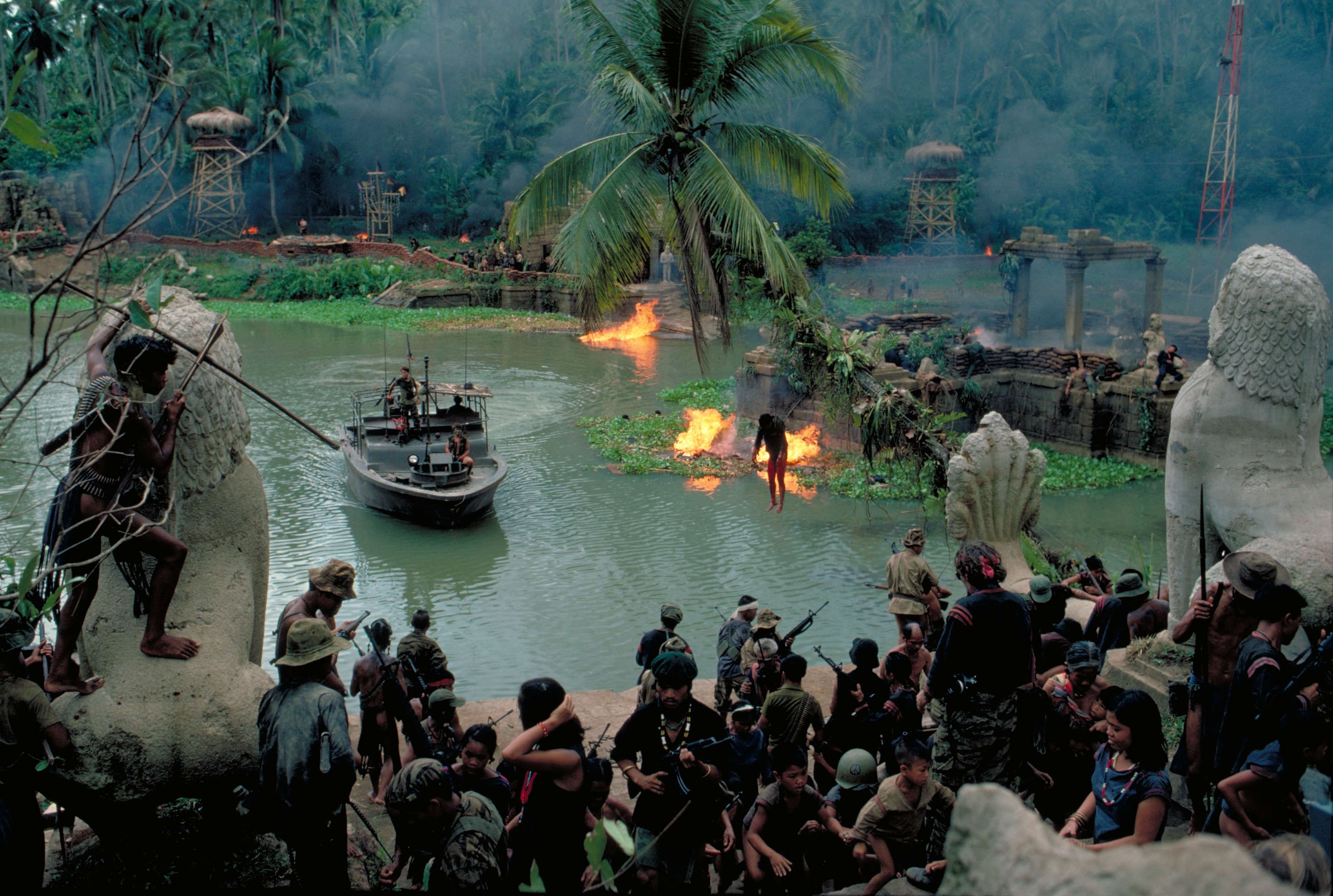
Francis Ford Coppola’s 1979 epic Apocalypse Now is a Vietnam War rendition of Joseph Conrad’s Heart of Darkness. Though it may not be a film you may want to show your kids, it’s one of the more definitive films about Vietnam that has shaped the popular Hollywood perspective. Of course, it depicts the Vietnam War as kind of the hell it was with American soldiers of questionable sanity as well as the smell of napalm in the morning. Also, it has a psychedelic rock soundtrack, too.

Of course, I couldn’t begin the Post-War era and plunge into the 1960s without talking about a little thing called the Vietnam War which began as a war of colonialism between the Vietnamese and the French only to turn into a civil war with Cold War implications when Ho Chi Minh’s forces wanted to unite Vietnam under a Communist government. Whenever we think about this war, we usually picture jungle guerrilla warfare, draftees being sent against their will, American troops committing human rights violations, hippies protesting, napalm, Agent Orange, Asian hookers, and helicopters. Whenever you see a movie on Vietnam, you will tend to hear songs like “For What It’s Worth” b Buffalo Springfield, the Doors, Creedence Clearwater Revival, Jimi Hendrix’s “All Along the Watchtower,” the Rolling Stones, and other psychedelic rock music. Most Vietnam movies will feature US troops who may start the war either as idealistic young men or unwilling draftees then slowly become broken and disillusioned wrecks at best or crazy homicidal maniacs at worst. Either way, your American movie GIs will need serious psychological help when they come back home. And unless it’s the terrible John Wayne Green Berets or the unreliable narrative of Forrest Gump, don’t expect any movie adaptation on the Vietnam War speak favorably because it’s one of the most controversial conflicts as far as the US is concerned. And while the US may win some battles in Vietnam, let’s just say their fighting would be like trying to fix a watch with a sledgehammer. Nevertheless, there are plenty of movies about the Vietnam War that do contain their share of inaccuracies which I shall list.

Lyndon B. Johnson:

Lyndon B. Johnson’s escalation of the Vietnam War was an unpopular policy decision from the beginning. (Actually it was rather popular back in the day especially after the Gulf of Tonkin incident, which happened when Johnson was running for his own term as President {he was serving out Kennedy’s term at this time}. It only started becoming unpopular in 1968 at least in the media {despite not having a single major newspaper thinking the US should leave Vietnam}, though a lot of civilians supported it then even if they didn’t like it. Yet, it had definitely become unpopular by Richard Nixon’s presidency though.)

Lyndon Baines Johnson got America into the Vietnam War. (He only brought that war closer to home. Actually, it was years in the making and had been supported by previous administrations of both parties. Other presidents would’ve done the same thing as Johnson at the time for escalation was bound to happen.)

Ron Kovic:
Ron Kovic apologized for his role in the accidental death of a Marine Corporal to his family, yet the man’s wife couldn’t forgive him. (Although this is depicted in Born on the Fourth of July, it never happened.)

Ron Kovic was inspired into becoming an anti-war activist when he saw his high school sweetheart in a protest after the Kent State shootings. (Contrary to Born on the Fourth of July, Donna never existed and Kovic didn’t see the protests in person, yet he was inspired into becoming an anti-war activist after seeing that protest on TV and was certainly outraged of how the protesters were treated.)

Major Fred Peck threatened to take Ron Kovic’s head if anything was said about the Marine Corporal’s day. (Peck wasn’t interviewed for Born on the Fourth of July, but Kovic did voice such concerns to him. However, the major just investigated and concluded that Kovic probably didn’t kill the Marine. He even promoted Kovic as a leader of a new scout group.)

Ron Kovic was a recipient of the Army Commendation Medal. (Kovic was a Marine, Oliver Stone.)

During Ron Kovic’s protest with his fellow Vietnam vets at the Republican National Convention of 1972, they made a scene that attracted a few cameras, blocked an aisle, and riled the delegates. When one Republican delegate spat at Kovic, security guards moved in, roughly pushing and pulling veterans from the hall and physically prevented reporters from following. Outside, Kovic was beaten and thrown out of his wheelchair by an undercover cop. (The scene with the Republican National Convention of 1972 actually happened but it was less dramatic than how Oliver Stone put it. Robert Dornan is said to have persuaded the guards into the convention but told Kovic and his pals not to make a scene. Unsurprisingly, Kovic and his friends ignore him. Yet, Dornan said, “It was not as big a disturbance as the movie showed, but it was a disturbance. They were screaming. The guards came down and politely pulled their chairs backward. [They] put them out peaceably.” According to UPI, the scene went like this: “After about five minutes, security agents wheeled them in protesting out a side door. I went out and watched him and the other two congratulating one another, bragging about what they’d accomplished.”)

Le Ly:

Le Ly was married to a US soldier named Steve Butler who later committed suicide. (Contrary to Heaven & Earth, she actually married two American men named Ed Munro and Dennis Hayslip. Her first husband was more than twice her age and died from emphysema. Her second marriage wasn’t a happy one. However, contrary to the Oliver Stone film, she hadn’t been in Vietnam since 1973 because she’s viewed as a traitor there.)

Adrian Cronauer:

Air Force DJ Adrian Cronauer was staunchly liberal, anti-military, and antiwar. (Sorry, but Good Morning Vietnam gets this wrong. Cronauer described himself as “a lifelong card carrying Republican” and served as vice-chair in the 2004 Bush/Cheney re-election campaign {as far from an anti-war liberal as anyone could possibly be but much more controversial}. Not to mention, he was a Sergeant, not Airman First Class. Cronauer also states that much of what Robin Williams did in that movie would’ve gotten him court-martialed in a heartbeat. And, no, he wasn’t kicked out of Vietnam but left when his tour of duty ended.)

Air Force DJ Adrian Cronauer played rock music with commentary during his tour in Vietnam. (Actually he just played rock music with no commentary.)

Adrian Cronauer lied his way to teach an English class so he could get close to a local. (Yes, he did teach English but not for that reason and he didn’t lie his way in either.)

Khmer Rouge:

Dith Pran and his family escaped Cambodia by going straight to Thailand and the Red Cross. (Actually contrary to The Killing Fields, he was found by the Vietnamese before that and made a village chief before his American ties were discovered. Also, the movie doesn’t show him being tortured and the fact that he lost over 50 family members including three brothers and a sister during Khmer Rouge. Interestingly, the man who played Pran, Dr. Haing Ngor also survived Khmer Rouge as well but lost his wife. After winning his Oscar, he was gunned down in an LA parking garage by muggers who wanted the locket he swore never to part with.)

New York Times reporter Sydney Schanberg was a loyal friend to Dith Pran. (Contrary to The Killing Fields, the real Al Rockoff said that Schanberg was a lying coward and that many of the scenes in the French Embassay at Phnom Penh are inaccurate. Let’s just say that Schanberg and Rockoff probably didn’t get along.)

Laos:

The Pathet Lao POW camp had 6 prisoners. (Contrary to Rescue Dawn, it had seven besides Christian Bale’s character.)

US Navy pilot Dieter Dengler spoke English with an American accent. (While his Christian Bale portrayal does in Rescue Dawn, he actually spoke English with a heavy German accent since he was born in Germany.)

Dieter Dengler was a Flight Lieutenant in the US Navy. (There’s no such rank in the US military. It’s an RAF rank. Dengler’s real rank was Junior Grade Lieutenant.)

US Air Force pilot Eugene DeBruin was a selfish and unstable prisoner who threatened to betray his fellow captives at any time and didn’t know what to do when it came time to escape. (DeBruin’s brother Jerry and fellow captive Pisidhi Indradat were very unhappy with how Eugene DeBruin was depicted in Werner Herzog’s Rescue Dawn. Both say that DeBruin taught his fellow cellmates English, shared his food and blanket, and even returned after escaping to help an injured cellmate. When it came time to escape, DeBruin simply refused to leave while some sick prisoners remained and he is still considered missing to this day {though there were reports of him being alive as late as January 1968}. Pisidhi Indradat called him,“The finest man I have ever met.” Not only that, he also helped plan and implement the escape as well. Of course, the film was already completed by the time Werner Herzog found this out.)

During the escape from the Pathet Lao POW camp, Dieter Dengler shot the two prison guards. (Contrary to Rescue Dawn, this was DeBruin’s idea and it was Pisidhi Indradat. Also, the Thai Indradat would later be captured and put in another prison camp but he and his fellow Lao prisoners would  be rescued by Lao troops and the CIA. He’s the only survivor from Rescue Dawn who’s still alive to this day.)

Dieter Dengler formulated the idea of storing rice in bamboo tubes during the escape from the Pathet Lao camp. (This was Eugene DeBruin’s idea.)

While in the Pathet Lao POW camp, Dieter Dengler  formulated an entire escape plane that included uncuffing the hand cuffs with a nail. (Contrary to Rescue Dawn, this was the other prisoners’ idea before Dengler ever stepped foot at the camp and didn’t tell him about it until two weeks after he arrived.)

American Home Front:

The military was outraged by the idea of a US sergeant and his men kidnapping, gang raping, and killing a Vietnamese girl. (Though the men were convicted and sentenced, there’s very little evidence that anyone was. Also, though not mentioned in Casualties of War, the convicted men’s sentences were greatly reduced on appeal. Unsurprisingly, the military still has a problem with handling cases of sexual assault.)

Vietnam veterans were spit on by anti-war protestors. (Not a single incidence of this has been reported.)

Vietnam produced more American casualties than almost any other. (Of course, movies set in Vietnam do put emphasis on the US casualty rate which was 58,000 troops, which is less than what America lost in the American Civil War and both World Wars. Yet, the Vietnamese suffered much more.)

Older people supported the Vietnam War while younger people opposed it. (Actually younger people were more likely to support the war than their parents; younger people who opposed it were just more vocal. The parents were more likely to oppose the war due to WWII and Korea and especially if they had a son who was eligible for the draft.)

Married men couldn’t get drafted to Vietnam. (US legislation sewed up that loophole in 1965. Yet, if you were the son of a famous politician in Texas, on the other hand….)

Pittsburgh during the Vietnam era was filled with people of Eastern European descent and Orthodox living in trailer parks whose women wore babushkas and combat boots and men worked in the steel mills as well as hunted in forests with Ponderosa pines. (Contrary to The Deer Hunter, there are no Ponderosa Pines in Pennsylvania and though most guys did work in steel mills, most millworkers didn’t live in trailer parks, have wives that wore babushkas or combat boots. And not everyone in Pittsburgh is Eastern European descent or Orthodox in that matter. Oh, and why did they have to hunt Asian Red deer instead of white tail deer?)

Most American soldiers during the Vietnam War were draftees. (Contrary to most Vietnam War movies, 2/3 of American forces serving there were volunteers and so were three US presidential candidates like John Kerry, John McCain, and Al Gore. Of course, these are volunteers in the loosest sense such as people who voluntarily enlisted.)

Most US draftees were usually sent to Vietnam. (Actually many were sent someplace else to fill in for other soldiers but you wouldn’t want to go to Vietnam though.)

The first US draft lottery took place in 1968 before the MLK assassination. (It took place in 1969.)

Miscellaneous:

In Vietnam, the sun set over the ocean. (Vietnam has no west coast.)

The Vietnam War was just North Vietnamese vs. the US. (It was at first the French vs. the Vietnamese then it was the North Vietnamese vs. South Vietnamese with South Korea, the United States, Australians, and New Zelanders aiding the South and the North Koreans and Soviets aiding the North. Then it was the Vietnam vs. China.)

The Vietnam War was a guerilla jungle conflict. (Well, most of the time it was. Yet, about 75% US troops there lived on bases that were decked like little isles off Americana with all the amenities of American living. Those 75% had to worry more about getting injured in sports or catching STDs than getting killed.)

The North Vietnamese were a poorly armed guerilla force. (They had a badass air force as well as were supplied by the Soviets with tanks, anti-aircraft guns, and heavy artillery. Yet, the equipment was so good that the Soviets had to stop shipping it through China because the Chinese kept swiping it. Not only those, but the guerrillas in the South were well-integrated into the regular North Vietnamese forces and had some training before seeing combat. Oh, and they had AK-47s which were far superior than what the Americans had, especially M-16s which sucked. But, yeah, they did use guerilla tactics to an advantage.)

US Sergeant Tony Meserve saved Private Sven Erickson. (Contrary to Casualties of War, he didn’t but Meserve did have a heroic reputation and was nominated for a Bronze Star for coming to a GI’s aid when his ammo pouch had exploded.)

NVA/VC Sappers were used as suicide bombers. (Though it’s said so in Platoon, Sappers were actually too valuable to be seen as such for they were specially trained combat engineers/reconnaissance commandos who used stealth to infiltrate a camp’s defenses and take out strategic targets, such as barbed wire obstacles or bunkers, with explosives before the main attack. Yet, the North Vietnamese and the Vietcong did use suicide bombers but they didn’t consist of their demolitions experts.)

NVA/VC troops wore steel helmets. (Contrary to Platoon, only North Vietnamese anti-aircraft troops protecting bases in Laos, Cambodia, and North Vietnam. Those in South Vietnam wore floppy “boonie hats” or the standard North Vietnamese sun helmet.)

The 3rd Training Ranger Battalion served in the Vietnam War. (There has never been such unit in the US military yet We Were Soldiers does give special thanks to them in the credits.)

Parris Island trained Texas Marines for Vietnam. (Contrary to Full Metal Jacket, Cowboy would’ve trained in San Diego since it was for Marines recruits who lived west of the Mississippi River. Parris Island was for recruits who lived east.)

Vietnam Marine era drill instructors were nasty and sadistic pieces of work. (Contrary to Full Metal Jacket, Lee Ermey {who was a sergeant in real life} said in an interview that a drill instructor would never slap, choke, or punch a recruit {at least openly}, even back when he was a young Marine. Also, Gunnery Sergeant Hartman is far more verbally abusive in the movie than what would be permitted in real life. The drill sergeant in Forrest Gump is a more accurate example.)

The French Mobile Group 100 was ambushed and killed to the last man. (Contrary to We Were Soldiers, it was ambushed several times and they were able to escape in all of them, though they did suffer severe casualties. Also, they didn’t consist of members of the French Foreign Legion but rather the 1st and 2nd Korea Battalions, Battalion de Marche of the 43rd Colonial Infantry and the 2nd Group of the 10th Colonial Artillery.)

Huey helicopters could lift about 19,000 pounds. (Contrary to Apocalypse Now, they couldn’t life more than 10,500 pounds.)

M16s had 30 round magazines. (They had 20 round magazines.)

The Vietcong used red tracer ammunition. (The US did. The Vietcong used green.)

US soldiers wore camouflage uniforms during the Vietnam War. (They wore green. )

Vietnamese civilians were passive victims, prostitutes, or conniving with the enemy.

The Vietcong were ludicrously sadistic and evil. (As you see in The Deer Hunter. In real life, they were just very determined to win.)

Every American helicopter used in the Vietnam War was a Huey. (H-34 Choctaws, SH-3 Sea Kings, CH-47 Chinooks, CH-46 Sea Knights and OH-6 Cayuses were also in use but you wouldn’t see them in Vietnam Era films.)

The Communist Vietnamese won almost every major engagement in the Vietnam War. (Actually the US won every single major battle in the Tet Offensive, while the Viet Cong took so many losses they played no major role in the war at that point. Not only that, the North Vietnamese never really won a major battle. The reason why the North Vietnamese won the Vietnam War had more to do with the fact that they just kept coming no matter what the Americans threw at them. In short, they wanted to win more than Americans wanted them to lose.)

American troop levels in Vietnam were 500,000 in 1968. (Levels reached 500,000 a year later.)

American jeeps in Vietnam had ignition switches. (They didn’t.)

National Security Action Memorandum 263 was the first step in total US withdrawal in the Vietnam War. (Contrary to JFK, it only foresaw the withdrawal of 1,000 advisers, and not even those if South Vietnam failed to “take up slack.”)

History of the World According to the Movies: Part 78 – The Civil Rights Movement

Image

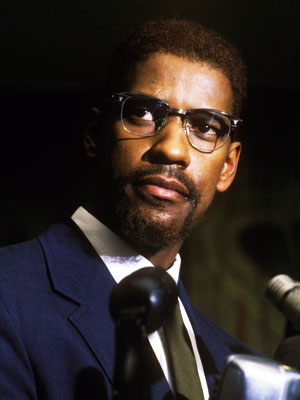
Denzel Washington portrayed Malcolm X in Spike Lee’s 1992 biopic. Sure this may not be the most accurate rendition about his interesting life, but it helps explain why he had the ideas he did. You may love him or hate him but he was much more than an angry black man whose attitude toward whites wasn’t without probable cause because he lived with racism and was greatly harmed by it at a young age. Still, at least this movie averts the idea of a white savior as well as the impression that blacks are incapable of saving themselves which is why I have a picture from the film on this post.

Another event going on in the United States during the Post-War era is the Civil Rights Movement which is seen as one of the most important events in modern American history in which African Americans across the nation stood up and pressured the government to bring progress towards racial equality under the law after nearly a century of being treated as second-class citizens with little or no rights in much of the country, especially in the South. These were laws that pertained to segregation, disenfranchisement, a ban on interracial marriage, or a black guy having a good chance of going to jail for checking out a white woman. We’re not sure when the Civil Rights Movement actually began since there have been blacks who’ve challenged the system as well as made gains in society. Yet, the first big event of the Civil Rights Movement was the 1954 Supreme Court case of Brown vs. Board of Education of Topeka in which a group of black parents sued the a Topeka school district so their kids didn’t have to travel miles to attend a crappier school. Thanks to their efforts as well as the NAACP with Thurgood Marshall representing, the Supreme Court struck down the earlier Plessy vs. Ferguson and declared that school segregation was inherently unconstitutional. The NAACP would go on challenge other discrimination laws as well. In 1955, a Montgomery woman named Rosa Parks was arrested refusing to give up her seat to a white person and move to the back of the bus. This led to the Montgomery Bus Boycott led by Rev. Martin Luther King Jr. and local NAACP head E. D. Dixon. It was a long struggle but they prevailed. Soon there were demonstrations across the nation such as the Freedom Riders, Little Rock, the March on Washington, and others. Sure there was a lot of racist resistance, but by the 1970s segregation was mostly over, the Voting Rights Act was passed, and while racism still exists in a lot of forms, it is no longer acceptable as far as the law and society goes. However, Hollywood isn’t always the right reference when it comes to the Civil Rights Movement though they could make a kind of inspirational story, yet they do have the tendency to introduce a white savior, which leads to the notion that blacks were incapable of saving themselves. Still, there are plenty of other inaccuracies seen in films set in this era which I shall list.

Malcom X:

Malcom X had dark hair. (He was a natural redhead and had lighter skin. Seriously, he was nicknamed “Red” by his friends because of his hair color. Sure people may not believe that a black person can have red hair but it does happen.)

The break between Malcolm X and Elijah Muhammad was emotionally jarring for the both of them. (Actually, Muhammad was already envious of Malcolm X for all the attention he was getting and Nation of Islam leaders saw him as a threat to Muhammad’s leadership, even before Malcolm left. When Louis Lomax wrote a book about the Nation of Islam When the Word Is Given, he used a photo of Malcolm X on the cover and reproduced five of his speeches and only one of Muhammad’s, greatly upsetting the guy. Not much love was lost between the two when Malcolm left. In some ways, the relationship between Malcolm X and Elijah Muhammad resembled less of parent-child surrogacy. Rather, it was more along the lines of Malcolm X playing Katniss Everdeen to Elijah Muhammad’s President Coin {though with the opposite outcome if you remember what happened in Mockingjay}.)

It was only after his pilgrimage to Mecca Malcolm X realized that the Nation of Islam’s bastardization of Islam was horseshit. (Actually contrary to Malcolm X, Malcolm actually made his Mecca pilgrimage after he left the Nation of Islam and became a Sunni Muslim. He already knew that the Nation of Islam’s flavor of Islam was horsehit by that time and didn’t need to go to Mecca to realize this. Yet, Spike Lee was right that it was in Saudi Arabia where he saw racial equality in action and the effect on him was very profound. Rather it made him realize that American racism wasn’t a function of whiteness per se as well as consider possible reconciliation between the races in the US. But this didn’t mean he was ready to forgive white America though.)

The attack at the Edmund Pettus Bridge in Selma, Alabama and the New Jersey Riots took place in Malcolm X’s lifetime. (Both of these incidences happened after Malcolm X was assassinated in February of 1965. One happened a month after he died and the other occurred two years later.)

Malcolm X’s family was of no particular importance on him. (Despite that his dad died under suspicious circumstances when he was six and his mother was institutionalized when he was thirteen and that he spent his teenage years in a series of foster homes, his siblings were of major importance to him. Quite a few of his siblings were members of the Nation of Islam and Malcolm’s break with it did cause some degree of drama since his brother Wilfred remained active in that organization. They also secured their mother’s release from that institution 24 years after she was confined {though Malcolm almost never talk about her for fear he’d snap if someone made the wrong remark but he did visit her}. Yet, you wouldn’t know it from Malcolm X, which leaves them out.)

Malcolm X spent weeks in solitary confinement. (He never spent any more than 24 hours in solitary contrary to the Spike Lee film. Otherwise, he wouldn’t have been moved to a lower security facility, which he was in real life.)

Malcolm X was a first-class criminal in his younger days prior to his imprisonment. (Contrary to Malcolm X, Malcolm and his gang weren’t the experts they were made out to be. They rarely made plans and none of them could pick a lock. They usually committed larceny in the early evenings at places where owners couldn’t be roused by the doorbell and had trouble selling their stolen goods which were stashed in Malcolm’s apartment. Also, Malcolm was arrested by police when he had a stolen watch repaired at a local jeweler’s who promptly reported him to the police. Oh, and he turned in all of his accomplices while in custody.)

Malcolm X grew disillusioned with the Nation of Islam when he found that it was corrupt with its leaders enjoying lavish houses, new cars, and the sexual favors of young secretaries. (While Malcolm X treats Malcolm’s break from Elijah Muhammad as a son’s disillusionment with a morally flawed surrogate father, Malcolm left the Nation of Islam for political as well as personal reasons. Even before he learned of Elijah Muhammad’s infidelities, Malcolm was already fed up with his leader’s policy of nonengagement that not only prevented members of a group from participating in civil rights protests but even forbade voting. By 1963, he knew that the policy of nonengagement was hurting his recruitment efforts in black communities, as the Civil Rights movement grew in the South. Despite attacking Martin Luther King Jr.’s approach to non-violent resistance, he eventually saw that the Nation of Islam offered no real opportunity to black activists facing vicious white racists in the South. He also knew very well that the Nation of Islam wasn’t above making deals with white people when it suited the leaders’ interests. Malcolm would even admit that while criticizing the civil rights activists working with white liberals, he negotiated a mutual noninterference agreement with the Atlanta chapter of the Klu Klux Klan on Elijah Muhammad’s orders that made him realize that his leader’s insistence that all whites were devils made it possible to justify dealing with the worst of them {such as the hate group most likely responsible for killing Malcolm’s dad}. Thus, Malcolm X’s disillusionment with the Nation of Islam had less to do with the sins of its leaders and more to do with their policies on politics and race relations, particularly the group’s refusal to campaign for civil rights.)

Malcolm X was introduced to the ideas of the Nation of Islam through his cellmate in prison. (Contrary to Malcolm X, his cellmate introduced him to literature, not religion though the two would remain friends. Malcolm actually joined the Nation of Islam at the insistence of family members notably brothers Reginald and Philbert and his half-sister Ella who wrote to him in prison. Yet, once he was a member of the Nation of Islam, he didn’t have to enlighten his friend Shorty who wasn’t transferred upstate and actually became a member himself but not for long when he disagreed with some of Elijah Muhammad’s teachings. Also, the preacher he challenged wasn’t an older man as played by Christopher Plummer but a young Harvard Seminary student who was much more wise and willing to accept that Jesus was brown.)

Malcom X was working as a train porter for the New Haven Line at the time of a boxing match between Billy Cohn and Joe Louis. (Louis and Cohn would have two boxing matches together in the 1940s. Malcolm wasn’t working for the New Haven Line at either time.)

Malcolm X was followed by CIA agents while he was in Mecca. (Contrary to Malcolm X, he was followed by Mecca’s secret service during his trip.)

Malcolm X spent his last year in foreboding the inevitable as well as receiving death threats from the Nation of Islam through telephone calls. (Actually he was quite busy during his final months. Moments include his brief meeting with Martin Luther King Jr. at the U. S. Capitol {that included a photo-op} and his “The Ballot or the Bullet” speech at the symposium sponsored by the Congress of Racial Equality. He attended a meeting of the Organization of African Unity and had talks with the leaders of Egypt, Tanzania, Nigeria, Ghana, Guinea, Kenya, and Uganda. In October 1964, he had a day-long meeting with leaders of the Student Nonviolent Coordinating Committee in Nairobi which resulted in cooperation between the SNCC and Malcolm’s newly formed Organization of Afro-American Unity. In December of 1964, he made an appearance with Fannie Lou Hamer and other Mississippi civil rights activists as Malcolm’s honored guests at an OAAU meeting in Harlem. In February of 1965, he met with Coretta Scott King in Selma where he affirmed his desire to assist King’s voting rights and explained that if whites knew he was an alternative “it might be easier for them to accept Martin’s proposals.” He even sent a telegram to the American Nazi Party saying: “I am no longer held in check from fighting white supremacists by Elijah Muhammad’s separationist Black Muslim Movement and if your present racist agitation of our people there in Alabama causes physical harm to Reverend King or any other Black Americans. . . you and your KKK friends will be met with maximum physical retaliation.” Yet, almost none of that is depicted in Malcolm X.)

White operatives might’ve been involved in Malcolm X’s assassination. (Contrary to Malcolm X, Malcolm’s independent political discourse attracted deadly enemies. Yet, Malcolm was probably more or less killed by those in The Nation of Islam than anyone else. In fact, the Nation of Islam directed nearly all its violence toward other blacks, particularly defectors. Malcolm certainly would’ve been on the top of their list.)

Betty Shabazz:

Betty Shabazz was a simpleton who was always complaining about Malcolm X’s eating habits. (Contrary to Malcolm X, she was a highly intelligent woman and one of the few Muslims with a college degree. Also, despite that Malcolm definitely wore the pants in the relationship; she wasn’t easily intimidated, not even by her husband.)

Betty Shabazz took all four of her kids to the Audubon Ballroom on February 21, 1965. (She only took three of them contrary to Malcolm X. The youngest was left with a friend.)

Freedom Summer:

The trial involving the murder of the three civil rights activists was a swift movement of justice. (Contrary to Mississippi Burning, it wasn’t for it actually took four years and numerous trials to get them sentenced to anything at all. Not to mention, though the seven convicted were sentenced more to 10 years, none of them served more than six.)

During the case of three missing civil rights activists in Mississippi, FBI agents resorted to vigilante tactics. (Sorry, Mississippi Burning, but it’s said that they paid informants with cash. Seriously, there’s no way in hell FBI agents would get away with what Gene Hackman and William Defoe did in that movie.)

The informant pertaining to the case of the civil rights activists was the sheriff’s wife. (Though depicted this way in Mississippi Burning, it was a person named Mr. X, who decided to remain anonymous but he decided to give information not out of the goodness of his heart but for the $30,000 reward.)

The disappearance and murder of the three missing Civil Rights activists in Mississippi was a police conspiracy. (Contrary to Mississippi Burning, we’re not sure what it was but the local police were certainly no help.)

The FBI was happy to oblige the investigation into the disappearance and murder of three civil rights activists. (Contrary to Mississippi Burning, J. Edgar Hoover wanted absolutely nothing to do with the Civil Rights Movement because he thought it as a load of Communist bullshit and was a racist. He only caved to send FBI agents due to the case’s national attention as well as the fact he was under heavy pressure from Lyndon B. Johnson.)

J. Edgar Hoover sent hundreds of agents to Mississippi to investigate the case of the missing civil rights activists. (Initially, he only sent 11 contrary to what Mississippi Burning depicts. It was a pretty lame effort.)

The FBI agents in Mississippi were hell bent on finding the killers of three civil rights activists and preventing further violence. (Contrary to Mississippi Burning, most of the FBI agents there couldn’t care less. It’s said that the FBI and the Justice Department would only intervene when absolutely necessary in their own point of view. In some cases, it’s said they stood by while beatings took place right in front of them.)

Miscellaneous:

The Civil Rights Movement wouldn’t have been made possible without benevolent white people who helped African Americans out with their own sense of moral responsibility. (Yes, there were whites who supported the Civil Rights Movement such as the white Freedom Riders but the Civil Rights Movement was decades in the making and mostly led by African American organizations like the NAACP as well as other organizations of color. And it was the NAACP’s Thurgood Marshall who argued for the black families involved in Brown v. Board of Education as well as thirty-one others. And out of the 32 case he argued in front of the Supreme Court, Marshall only lost 3 and would soon be seated on the Supreme Court himself as the first African American justice.)

The FBI was the honorable vanguard of civil rights protectors. (They were reluctant presence throughout the proceedings and would only investigate only under heavy pressure by President Lyndon B. Johnson. Also, J. Edgar Hoover had been spying on Martin Luther King Jr. and other civil rights leaders.)

Black Civil Rights activists trembled in the fear of whites, disbanded their conversations whenever whites approached, and retreated in mute submission. (Contrary to Mississippi Burning {which was harshly criticized by Coretta Scott King for ignoring the role of black and white activists}, most blacks in Mississippi during Freedom Summer weren’t like this. In 1963, 85,000 black Mississippians cast “freedom ballots” to show their determination and prove, contrary to white declarations that they were quite serious about voting. Despite church bombings, arrests, and murders a year later, Mississippi blacks met at local Freedom Schools all summer long. They voted for Freedom Democratic Party delegates to the Democratic National Convention in Atlantic City that year and created an autonomous social movement. These people were badasses who showed that they wouldn’t be terrorized into silence even if it costs them their lives. Eventually they prevailed. Mississippi Burning fails to show this which is a complete shame. They knew that the white establishment would retaliate with violence but they weren’t quaking illiterates unable and unwilling to stand up for themselves for they certainly did.)

The Civil Rights abuses in Birmingham took place in 1961. (They took place in 1964.)

The Nation of Islam was willing to challenge white authority but didn’t engage in militant action unless its members were threatened. (Actually, their reluctance to challenge white authority was one of the reasons why Malcolm X became disillusioned with the Nation of Islam in the first place. However, Malcolm X would never drop his militant streak and became increasingly close to militant civil rights activist late in life. Still, that Nation of Islam confrontation against white authorities in Spike Lee’s Malcolm X really did happen.)

The Black Panthers were a bunch of leather clad radical leftists. (Actually, they were more or less a community action organization during the late 1960s and 1970s who only wore guns for self-defense. Though they did acquire a shady reputation and were monitored by the FBI.)

History of the World According to the Movies: Part 77 – The Space Race

Image

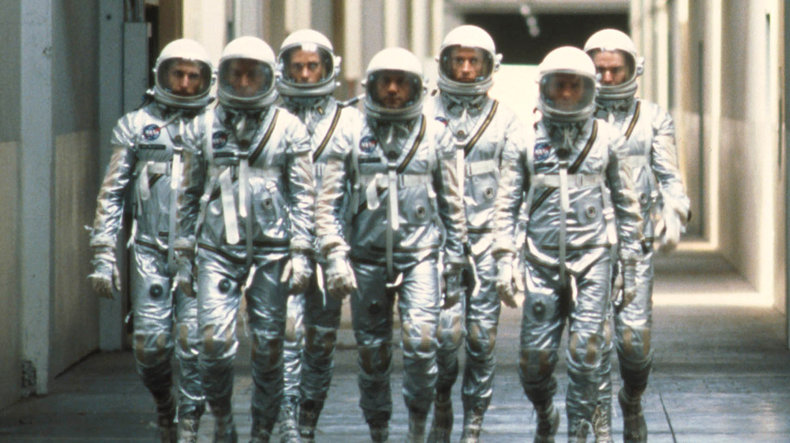
The Right Stuff is a 1983 film about the breaking of the sound barrier as well as the original astronauts of the Mercury 7. The film isn’t entirely historically accurate and does get a lot of stuff wrong but it’s among the great movies featured on Roger Ebert’s list. Still, while it has an almost all-star cast, the guys they portrayed were much shorter in real life since NASA height limit was 5’11.”

One of the key events in the Cold War was the Space Race in which the United States and Russia competed to put the first artificial satellite (Russia), the first manned spaceflight (Russia), and the first man on the moon (US). Of course, if there was a more constructive way to channel Cold War aggression and competitiveness, then the race to Space Exploration was it. After all, the race for nuclear weapons kind of scared the hell out of people while the Space Race gave everyone a way to boast about one’s national technological marvels while not having to worry about being blown to oblivion. Thus, when US President Dwight D. Eisenhower announced the national desire to launch an artificial satellite in 1955, the Space Race was on. Then the Soviets beat the US in the first round in 1957 with Sputnik 1 which basically sent the US freaking. Then the Russians launched Sputnik 2 which carried a dog named Laika into space who died five to seven hours after launch due to stress and overheating (well, the satellite was never intended to bring her back alive, though Moscow said she was euthanized but her death was kept secret for over 40 years). In 1958, the US launched Explorer 1 that discovered the Van Allen belt. Then you have the race for manned spaceflight in 1961 with Soviet Yuri Gagarin being the first man in space on Vostok 1 and the Russians would launch the first woman Valentina Tereshkova two years later (though the US would launch the first LGBT person in space in the 1980s if you know what I mean). Later in 1961, the US would launch Alan Shepard as their first man in space followed by John Glenn in 1962 as the first man to orbit the earth. Yet, even later that year, US President John F. Kennedy announced the US’ intent to land on the moon by the end of the decade. However, the US would beat the Soviets on this one and put a man on the moon by the end of the decade mostly because the Soviet manned moon program was beset with problems from the start, though they did send a probe there before Neil Armstrong made his one small step for man. Nevertheless, movies made pertaining to the Space Race do have their share of inaccuracies which I shall list.

Yuri Gagarin:

Yuri Gagarin lifted off into space at night. (He lifted off at 9:07AM Moscow time.)

Werner Von Braun:

Werner Von Braun was involved in the failed attempt to launch the Vanguard rocket. (Sorry, Homer Hickam, but you had no need to send your condolences to him since he wasn’t involved in the project and wouldn’t have been upset at all. You should’ve sent them to the Navy, much to Von Braun’s disliking.)

NASA:

NASA astronauts were over 6 feet tall. (Let’s just say the maximum height limit NASA is 5’11” thus, anyone over that would be considered ineligible. But astronauts in movies are always played by taller people.)

NASA scientists were bumbling idiots who needed design tips from the astronauts to even make the spaceships. (Contrary to The Right Stuff, it was the NASA scientists who designed the spaceships that put the astronauts into space and brought them right back. Also, NASA scientists were among the best and the brightest minds in the nation. Heck, at the time there were German scientists from WWII like Werner von Braun who were able to duck war crimes indictments because the US needed to compete with the Russians. These guys deserve their own movie, too.)

President John F. Kennedy inspired the US space program. (NASA was established during Dwight D. Eisenhower’s presidency in 1958 contrary to Apollo 13.)

The Mercury 7:

Virgil “Gus” Grissom was 5’10.” (Contrary to Fred Ward’s portrayal of him in The Right Stuff, he was 5’5.” Also, his full name was Virgil Ivan Grissom, with the first he found personally embarrassing and the middle a propaganda embarrassment in itself. It’s no wonder why they called him, “Gus.” Also, the first guy to be launched into space twice as well as the first one of the Mercury 7 to die when he met his end during a launch pad test for the Apollo 1 mission.)

All the Mercury 7 astronauts all raised their hands when asked “Which one of you will be the first into space?” (Contrary to The Right Stuff, the question was actually about whether they were confident they would return from space.)

Gordon Cooper was a Korean War veteran. (Contrary to The Right Stuff, he was the only astronaut of the Mercury 7 who wasn’t a combat veteran. He was also the only nonsmoker and managed to hold his breath longer than John Glenn or Scott Carpenter unlike in the movie.)

Though John Glenn was planned to go on seven orbits on Friendship 7, he only landed after three. (He was always planned to land after 3 orbits and did so though the ground did tell him that he was to go for 7 it was to inform him that he was in a stable orbit. Also, he was the oldest man in space then since he was the oldest astronaut of the Mercury 7 and he’s the only one of that group still living at the age of 93 as of 2014.)

NASA chose Alan Shepard to be the first American man in space. (Actually while this is implied in The Right Stuff, Shepard was actually chosen by his peers.)

Gordon Cooper was the last American to go into space alone. (As of 1982 when The Right Stuff came out and as an astronaut of NASA. However in 2004 two guys on Scale Composite’s SpaceShipOne named Mike Mevill and Brian Binnie have the latter on the day when Gordon Cooper died.)

John Glenn traveled 17,500 miles per hour on Friendship 7. (No Mercury spacecraft had a guidance system that permitted to measure its velocity.)

Gordon Cooper was the only person of the Mercury 7 not to fly a Mercury mission. (Deke Slayton was due to a heart condition but he’ll go into space in 1975 during the Apollo-Soyuz test project as a docking module pilot. As for Gordon Cooper, he went into space in 1963 on Faith 7 and was the first American to spend more than a day in space. He would also be the commander on Gemini 5 two years later.)

Deke Slayton could swim. (Despite the pool scene in The Right Stuff, he could not and never told anyone. Also, during underwater training, Slayton sank to the bottom and had to be rescued. He subsequently practiced holding his breath in the kitchen sink according to his wife Marge.)

Gus Grissom panicked when his Liberty 7 sank in a splashdown landing that he caused the premature detonation of the hatch’s explosive bolts. (Actually contrary to The Right Stuff, the premature detonation was due to mechanical failure, not human error. Yet, it took a long time to find that out.)

Gus Grissom was an incompetent pilot as well as a womanizer. (He was neither contrary to his portrayal in The Right Stuff. Besides, NASA didn’t see him as an idiot since he flew on a Gemini mission and was selected to command the Apollo 1 mission before a fire during practice killed everyone on the launch pad. Not to mention, neither did his fellow astronauts on the Mercury 7 either. By contrast, Scott Carpenter had a little controversy with his mission in the realm of fuel management and never flew again.)
John Glenn hummed “The Battle Hymn of the Republic” during his potentially fatal re-entry. (Contrary to The Right Stuff, he didn’t do this.)

John Glenn was threatened of being replaced by another astronaut when he got into a shouting match with a NASA official who ordered him to get on the phone with his wife Annie and tell her to let Vice President Lyndon B. Johnson in. (Contrary to The Right Stuff, Glenn did confirm the incident but didn’t mention other astronauts, “I saw red. I said that if they wanted to do that, they’d have a press conference to announce their decision and I’d have one to announce mine, and if they wanted to talk about it anymore, they’d have to wait until I took a shower. When I came back, they were gone and I never heard any more about it.”)

All John Glenn did during his flight on Friendship 7 was gaze at the star and talked about the so-called “fireflies” outside his spacecraft (“They were droplets of frozen water vapor from the capsule’s heat exchanger system, but their fireflylike glow remains a mystery” as John Glenn wrote). (Contrary to The Right Stuff, Glenn said he did more than that including taking his blood pressure, taking pictures of the Canary Islands and the Sahara, testing his vision, and doing exercises with bungee cords to compare his readings to previous ones taken on the ground.)

Apollo 13:

The glitch on Apollo 13 sent the crew into total chaos. (Actually contrary to Apollo 13, NASA had already simulated many of the faults that would occur on the actual Apollo 13. Not to mention, the astronauts remained with cool heads at all times than what the film implies with the emotional tensions being played up for drama.)

Jim Lovell and Fred Haise were a bit mistrustful of Jack Swigert who replaced Ken Mattingly when the latter had to pull out due to rubella. They were also worried about his competence with docking the Command Module. (Contrary to Apollo 13, Swigert was an expert on the Apollo command module who literally wrote the book on emergency procedures, many of which were actually used on the mission. Yes, there was a little apprehension when he replaced Mattingly but it was short-lived and had more to do with the fact he was a last-minute inclusion they had to bunk with for the duration than with his abilities, especially after what happened. Also, if he couldn’t dock the Command Modules, his cremates could’ve done it.)

Ken Mattingly was bumped off from the Apollo 13 mission for rubella. (Yes, he was yet though the film gets this correct as well as the fact he never contracted it. Yet, viewers may have a hard time wondering why Mattingly was grounded despite never contracting the disease. The answer is that a week prior to the launch, one of the backup crew members named Charles Duke contracted rubella from his kids and everyone else on both the prime and backup crew was exposed since they trained together. Aside from the obvious exception of Duke, Mattingly was the only one of both crews who didn’t have rubella as a child, and thus, wasn’t immune. So three days before the launch, Mattingly was out and Swigert was in.)

Ken Mattingly was rewarded for not nobly going into space and saving his stricken crewmembers from the control center. (Contrary to Apollo 13, the tasks Mattingly performed were down to a whole team operating more closely on the lines of existing procedures.)
Commander James Lovell said, “Houston we have a problem.” (Actually he said, “Houston, we’ve had a problem” though he probably should’ve said that. Also, the real Jim Lovell looked more like an older Edward Norton than Tom Hanks.)

Ken Mattingly was at home drinking when the Apollo 13 accident occurred and only knew from watching the TV. (Contrary to the film, he was at Mission Control at the time. Also, Gary Sinise was much more attractive than he was in real life.)

A team of engineers devised a solution to the Command Module on Apollo 13 by making its air filters fit the incompatible slots of the Lunar Module’s filters. (Contrary to Apollo 13, this was devised by a single NASA engineer while driving to work.)

Marilyn Lovell’s wedding ring went down the drain while she was taking a shower before her husband’s Apollo 13 mission. (Unlike in Apollo 13, her ring was too big to fall through the drain cover and Marilyn was able to retrieve it.)

Alan Shepard was bumped to Apollo 14 because of inner ear problems. (Contrary to Apollo 13, it was his lack of training and the relatively short time until launch. Bumping his crew up to Apollo 14 would give his crew more time to train. Still, Alan Shepard would get to be on the moon and use his own golf clubs, too.)

Miscellaneous:

The launches of Sputnik and Yuri Gagarin took place in Star City, Russia. (They took place in Baikonur Cosmodrome which is in present-day Kazakhstan. Still, it’s worth noting that Yuri Gagarin was mistaken for an alien when he landed in a Russian village and asked them for a phone. I’m sure being 5’2” in an orange jumpsuit didn’t help.)

History of the World According to the Movies: Part 76 – The Cold War

Image

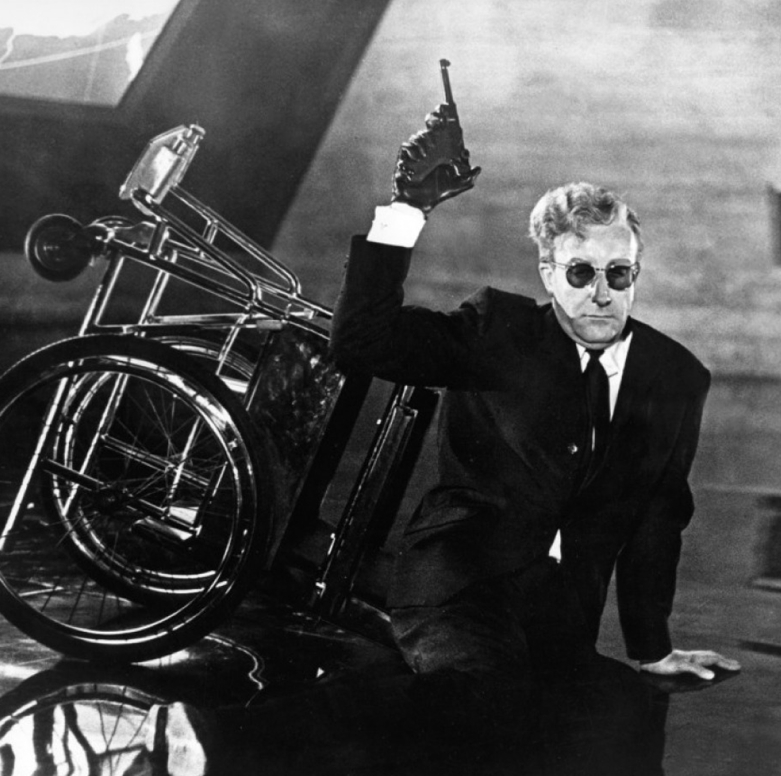
Stanley Kubrick’s 1964 Dr. Strangelove: or How I Stopped Worrying and Love the Bomb is one of the great Cold War satires that perfectly captures the historical mood of the time. Peter Sellers’ titular character shown here is based off of guys like Henry Kissinger, Edward Teller, and Werner Von Braun. Sellers also plays the President of the United States and a British Lieutenant stuck with General Ripper. Yet, one of the most surprising things in this movie is the presence of James Earl Jones as an Air Force pilot (yes, that James Earl Jones).

The problem with doing a movie history of the Cold War is that for many years there are so many movies that use it as a contemporary setting, particularly spy films. Thus, it makes the idea particularly hard to separate the history from the fantasy, well, maybe not that hard but close enough. Still, Hollywood had plenty of material to go by with the Cold War and it shows, even today with every James Bond movie or Tom Clancy or John LeCarre film adaptation. Nevertheless, from 1945 to 1991, the Western societies and Communist countries were locked in a war of influence with The United States and the Soviet Union being the two major superpowers involved. It was a time of arms races with building doomsday weapons and scrambling to get to outer space (which I’ll get to later). It was time in which indirect conflicts would be backed by one or the other. And it was a time of paranoia and scares in which people were afraid of nuclear annihilation and suspicious of opposing spies. You also had the Berlin Wall. Yet, it would all come down in 1991 with the collapse of the Soviet Union, which made many bummed out of their minds. Nevertheless, there were plenty of movies made pertaining to this era which have their share of inaccuracies I shall list.

Red Scare:

Senator Joseph R. McCarthy was an upstart member of the US Senate who just went a little too crazy over the Red Scare of the 1950s as well as well-liked figure in the Republican Party. (Actually, by 1948, McCarthy was in a career crisis mode by that time after allegations of bribery arose in 1948 which might have brought him impeachment or at the very least censure. Either way, his political career was on the way out and by this point, even the Republicans felt that he was an embarrassment so they sent him to do a speech in Wheeling where McCarthy made his famous anti-Communist stump speech that led to seven years of witch-hunts as well as made him politically bulletproof until 1954. Though Hollywood may make it seem otherwise, the Republican Party at the time didn’t intend to make Senator McCarthy a major political sensation. Rather, they were just trying to make him quietly go away.)

Senator Joseph McCarthy’s influence was at its height by 1953. (It was already on the wane by the time Edward R. Murrow’s show about him aired due to years of investigative reporting by other journalists by Drew Pearson. As Murrow said in Newsweek, “It’s a sad state of affairs when people think I was courageous” in presenting his show. Still, having Joseph McCarthy on See It Now certainly helped Americans everywhere to see how batshit insane this guy really was. Oh, and the Joe McCarthy footage in Good Night and Good Luck, well, it’s actually him despite some people complaining that the actor playing him hammed too much.)

The McCarthy era was one of the worst Red Scare eras in American history. (The notorious Palmer Raids of 1919-1920 would make the McCarthy hearings look like a picnic.)

McCarthyism made the job of finding Soviet spies easier. (It made the job harder. Not only that but accusing people of being Communist Party members actually allowed many bonafide Soviet spies to escape prosecution like Mary Jane Keeney who worked for the GRU and she was the only one of McCarthy’s accusations who was anything close to guilty. You could say that McCarthy was kind of a godsend to Soviet spies operating in the US.)

J. Edgar Hoover had little involvement in McCarthyism. (If it wasn’t for J. Edgar Hoover and the FBI, then the McCarthy witch-hunt would’ve been written off akin to the bullshit you’d typically hear on Fox News that nobody should take seriously. J. Edgar Hoover and his FBI were the muscle behind the McCarthy witch-hunts and the reason why the Red Scare of the 1950s ruined so many lives.)

American Communists were cynical opportunists as well as racists only interested in seizing power in the US on behalf of the Soviets and not improving social and labor conditions in the country. (The movie I Was a Communist for the FBI portrays American Communists as this. However, the reality was {mostly} the opposite in regards to people like Pete Seeger, Paul Robeson, or a lot of other folk singers as well as others. One critic was especially critical of the 1951 film writing, “In many respects, this heated item bears comparison to the hearings before the House Un-American Activities Committee—which, incidentally, it extols. … For instance, in glibly detailing how the Communists foment racial hate and labor unrest in this country … [it] hint[s] that most Negroes and most laborers are ‘pinks’. It raises suspicion of school teachers … [and] that people who embrace liberal causes, such as the Scottsboro trial defense, are Communist dupes … and the film itself glows with patriotism. But it plays a bit recklessly with fire.”)

The K-19 Submarine Accident:

K-19 was the Soviet Union’s first nuclear submarine. (It was actually the Russians’ first nuclear missile submarine. The first nuclear Russian submarine was K-3 {an attack sub} which wasn’t as prone to serious nuclear accidents as K-19 was though similarly “reliable.” Also, contrary to the titular film K-19: The Widowmaker, the sub was actually much roomier than it’s depicted since it’s being played by a diesel sub. Of course, Kathryn Bigelow and the other filmmakers did try to secure the boat as a production set but the Russian Navy declined {for obvious reasons since it had a service life marred by a large number of accidents. The Russian Navy probably was worried about the film crew’s safety or thought filming there would be nuts}. As of 2014, the submarine is said to be preserved in a submarine graveyard after it was bought by one of the members of the original crew. Still, it’s worth mentioning that its first submarine commander did look a lot like Harrison Ford though {though his character’s name was changed out respect for the real life counterpart’s family}, which partly explains why his performance was praised by the remaining survivors.)

Seven men died as a result of radiation exposure during the K-19 nuclear accident. (Contrary to the 2002 film, 8 did that included all 7 members of the engineering team along with their divisional officer, within the next month from July 4, 1961. However, 15 would die from the after-effects of radiation exposure within the next two years.)

The K-19 was nicknamed: “The Widowmaker.” (It was never nicknamed “The Widowmaker” though it would’ve been an appropriate one since it did create a lot of widows and quite a few widowers during its construction and service. Rather its nickname was “Hiroshima” but after the accident. It would have a lot more accidents in its subsequent years of service with some resulting in fatalities {yes, it was put back into service after the meltdown}. Incidents include a 1972 fire that would kill 30 people and an electrical short circuit in 1982 that would kill one. Still, “The Widowmaker” is a lot more badass name than “Hiroshima.”)

There was an actual mutiny on the K-19 during the 1961 accident. (Contrary to the movie, the Captain was savvy enough to throw almost all the submarine’s small arms overboard out of concern of the possibility of mutiny.)

The Bay of Pigs Invasion:

The New York Times didn’t publish a story on the Bay of Pigs Invasion and regretted it. (This is a widely believed myth that’s depicted in Thirteen Days. The paper published a front-page story on the Bay of Pigs Invasion preparations two weeks before the event occurred, but it didn’t address any CIA involvement and that invasion was imminent.)

The failure of the Bay of Pigs invasion and the political fallout that followed may have been the first strike that eventually became a conspiracy to assassinate John F. Kennedy. (Contrary to JFK, there’s no proof of this.)

Cuban Missile Crisis:

Kenneth O’ Donnell was the chief agent in preventing the Cuban Missile Crisis from escalating. (It was really, Ted Sorensen. As former Defense Secretary Robert S. McNamara said, “For God’s sakes, Kenny O’Donnell didn’t have any role whatsoever in the missile crisis; he was a political appointment secretary to the President; that’s absurd.” I wonder why they put Kenny O’Donnell in Thirteen Days because he’s played by Kevin Costner {who looks nothing like the real guy at all} and Ted Sorensen’s not. Yet, almost everyone in the Kennedy Executive Committee of National Security was more important than Kenneth O’Donnell. Shame Thirteen Days didn’t have the guts or funding to keep Kevin Costner out of the film.)

John F. Kennedy was worried about the prospect of millions of people dying in a nuclear holocaust around the time of the Cuban Missile Crisis. (Yes, he certainly was and so was almost everyone in the Kennedy White House during that time. Yet, contrary to Thirteen Days, it wasn’t the only thing on his mind since his first comment to the real Kenneth O’Donnell when the crisis broke out was about how two militant Anti-Castro Republicans would do in the polls: “We’ve just elected [Homer] Capehart in Indiana, and Ken Keating will probably be the next president of the United States.” Yet, let’s just say that a president worrying about his electoral prospects in such a crisis may be understandable. Still, while Thirteen Days was criticized for not devoting much time to Cuba and Russia, this is understandable since it’s based on memoirs from various Kennedy officials. Khrushchev had to get to Kennedy through Radio Moscow to talk to him during this time. Then again, perhaps Khrushchev should’ve been more worried about his job because he’d lose it after the Cuban Missile Crisis {which he kind of started}, though he got off pretty easy compared to other Soviet leaders.)

Kenneth O’Donnell made phone calls to Commander Ecker and Adlai Stevenson during the Cuban Missile Crisis. (O’Donnell played almost no part at all in the Cuban Missile Crisis despite his Kevin Costner portrayal in Thirteen Days. Thus, these phone calls never occurred.)

The secret deal with the Soviets over the Turkish missiles was shared with the members of the Executive Committee of National Security in the Kennedy Administration. (Contrary to Thirteen Days, it was only known to very few people such as JFK, RFK, Dean Rusk, Ted Sorensen, and perhaps McNamara. Robert F. Kennedy vaguely hinted at this deal in his 1968 memoir Thirteen Days: A Memoir of the Cuban Missile Crisis. The secret deal wasn’t known to the public until 1989 when it was officially confirmed by Ted Sorensen.)

President John F. Kennedy didn’t wear a hat when he left Chicago during the Cuban Missile Crisis. (Contrary to Thirteen Days, he did, supposedly with a cold, since the White House Press Corps certainly would’ve noticed it for JFK almost never wore one.)

Nikita Khrushchev’s acceptance of peace contained the lines, “you and I should not now pull on the ends of the rope in which you have tied the knot of war, because the harder you and I pull, the tighter the knot will become…”(Contrary to Thirteen Days, this quote appeared in Khrushchev’s first letter from October 26, 1962, not October 27.)

The Cuban Missile Crisis took place in November 1962. (It took place in October.)

Soviet-Afghan War:

Representative Charlie Wilson greeted Pakistani president General Muhammad Zia-ul-Haq in Islamabad in a smart suit. (Unlike in Charlie Wilson’s War, he was in a Stetson hat and heeled cowboy boots almost making him look 7ft tall. Also, the conversation was about India, not fighting the Soviets. Not to mention, Pakistan was developing a nuclear bomb at this time, but you wouldn’t know it from the film. Then again, Wilson denied in front of congressional subcommittees. At the same time it’s said he told Zia at a state dinner, “Mr. President, as far as I’m concerned you can make all the bombs you want because you are our friends and they, the Indians, are our enemies.” {Actually the bit about the Indians isn’t exactly true for they weren’t US enemies}.)

Representative Charlie Wilson was a womanizing booze hound. (His exploits weren’t just limited to women and booze. He was also said to be a drug user.)

Charlie Wilson and General Zia were willing to help the Afghans so they could improve the lives of refugees. (Sure the refugee bit as a main motivation was more to make Wilson and Zia sympathetic characters in the Aaron Sorkin film though the refugee bit wasn’t even the half of it as far as motivations were concerned. It had more to do with Cold War politics and an enemy infidel invasion next door as far as the US and Pakistan were concerned. Yet, the story is far too complex for 1 ½ hour film.)

Charlie Wilson was willing to build a few schools in Afghanistan after the Soviets were defeated. (I’m not sure about this. Still, Charlie Wilson’s War leaves out actions by the ISI, MI6, CIA, and Saudi Arabia as well as the various factions in both Afghanistan and Pakistan. Also, he had no remorse or regret over arming the Afghan rebels despite the consequences.)

Charlie Wilson was the only American politician involved with the Soviet War in Afghanistan. (Contrary to Charlie Wilson’s War, Ronald Reagan actually gave the order to provide the Mujahadeen with Stinger missiles that denied the Soviets air supremacy and turn the momentum of battle after 1986. And remember that many of the Mujahadeen would later become Islamic warriors and form the Taliban so, yeah, he did negotiate with terrorists. Still, Charlie Wilson didn’t carry out his operation without the government’s knowledge but with the government’s approval.)

All of Charlie Wilson’s aides were gorgeous women. (His chief aide was a man named Charlie Schnabel.)

Robert Hanssen:

Robert Hanssen’s wife Bonnie didn’t know that he was a spy for the Russians. (Contrary to Breach, she knew since 1969 when she found $10,000 in cash at their home. Yet, by Hanssen’s capture in 2001, she was living in denial. Still, despite all the shit he had her put up with, Bonnie still wouldn’t want to divorce him. Yet, judging by the fact that Hanssen was a member of Opus Dei who videotaped himself having sex with his wife he’d watch with a high school buddy, he probably did it for the money.)

Miscellaneous:

Everything in the USSR was terrible, or technically backward, and that life was worse for them in every way, compared to the “democratic West.” (While the citizens of the Soviet Union certainly lacked civil rights compared to us, there were many aspects of their country that was advanced. For example, they were landing their cosmonauts on land, while ours had to fall into the sea. Their literacy rate was higher than the US, and their public education system superior. There was very little crime and doctors were making house calls right up to the bitter end – of communism, that is.)

The Soviets had the ability to nuke the US to oblivion. (Contrary to most movies that gives us the impression that the Soviets had thousands of nukes ready to unleash a fiery death on American cities, they only had 200 strategic bombers in all, tops. Their missiles weren’t much better. Yet, let’s just say, in the nuclear capabilities department, the Soviet Union was behind at least in the 1950s. If the Soviet Union had a chance to nuke the US into oblivion, it would’ve been in the 1980s.)

All Russians were Caucasian. (Russians came from a variety of backgrounds and ethnicities as well as cultures.)

All Communist countries were Soviet puppets. (Maybe Poland and East Germany though their relations with the USSR weren’t entirely smooth. As for the rest of the Iron Curtain, they tried to gain more autonomy from the Soviet Union even though they were Communist. As for the Asian Communist states, China was at odds with Russian and tried to invade Vietnam, the Korean War was Kim Il-Sung’s idea, and Vietnam actually thwarted the Chinese invasion. Oh, and Vietnam wouldn’t put up with China invading them either.)

Communist banned religion in their countries. (Officially atheist, sure, but many religious traditions in those countries did survive to this day. Not to mention, many Chinese religions actually don’t require belief in a god and tend to have characteristics that resemble philosophy. Also, explain to me how John Paul II was able to become Pope? I mean John Paul II spent most of his life before pope as a Catholic priest/bishop in a Communist country. Not to mention, though the Soviet Union did persecute clergymen and tried to dismantle religious institutions, the laity was mostly tolerated {same goes for other Eastern Bloc nations} since persecuting a group that made up the majority of Russia’s population was a bad idea. Not to mention, Josef Stalin would actually revive the Russian Orthodox Church to drum up support for Russia’s entry into WWII and never bothered to persecute the Georgian Orthodox Church because he was afraid of angering his mother. There would be a time when the anti-religious policies would be revived under Khrushchev , they’d be considerably relaxed under Brezhnev onward.)

Some East German Stasi agents would betray their agency and help those they had under surveillance. (The plot to The Lives of Others revolves around this but unfortunately, no Stasi agent has publically regretted their actions, let alone help their victims. Also, the Stasi agents watching were also under surveillance so they wouldn’t get away with what Wiesler did. Ironically, they guy who played Wiesler was also under surveillance and later found out that his then wife was a registered informant on him.)

Russia was a US ally in 1947. (A more accurate term would be frenemy since they still kept ambassadors {enemy nations don’t send ambassadors to each other} but Russia and the US weren’t exactly friends.)

At least one woman was awarded the “Hero of the Soviet Union” twice. (This is the Soviet equivalent of the Congressional Medal of Honor. 92 Soviet women were awarded this once {50 posthumously} yet there’s no record of any woman being awarded it twice.)

The Soviets had the power to launch nuclear missiles with a push of a button. (Contrary to Dr. Strangelove {which is a great satire by the way}, unless the Russians were planning an offensive on the US in which use of nukes was imminent, the Soviet premier couldn’t just press a button to start off a nuke. The Soviets used a particularly toxic and rather corrosive blend of rocket fuel for their missiles and since they didn’t have the kind of metallurgy the US did; Russian missiles could only be fueled for a limited time before they’d have to be unfueled, maintained, and refueled. As a result unless an offensive posture was needed in the event of a nuclear war, the Soviet missiles were kept empty of rocket fuel until they were set to be launched. And the fueling process of Soviet nuke missiles usually took up to four hours, which would’ve made launching preparations very problematic. Oh, and the Soviets had a mostly train-based missile launch system under an impression that it would be more difficult to destroy a mobile target than one at a stationary reinforced location. Yet, such train-based missile launch system made US intelligence agencies very good at finding things with the increasingly ubiquitous spy satellites that were more or less developed to spy on the Soviet Union. Let’s just say if Nikita Khrushchev was able to cause a nuclear holocaust with a push of a red button, there probably would’ve been no Cuban Missile Crisis since he was only willing to deploy Soviet missiles at Cuba after the US has had deployed their missiles in Turkey which could hit Moscow within 16 minutes to launch. Yet, problems arose when it became uncertain of whether Cuba had any authority to launch them or whether Cuba would launch them anyway as well as the United States finding out. Maybe the Russians should’ve stuck to making assault weapons since the AK-47 is the most widely used and popular assault rifle on earth and has killed far more people than nukes.)

Soviet officers wore beards. (Facial hair was prohibited in the Soviet Union’s armed forces.)

Russian soldiers were equipped with Swedish Gustav M45 submachine gun. (Look, unless this is a WWII movie of the Eastern Front or any time before 1946, it would be best if Russian soldiers during the Cold War would be equipped with AK-47s since it’s the most recognized Soviet Union weapon on earth and is made all over the world. Not to mention, everyone practically knows what they look like and can be found anywhere.)

History of the World According to the Movies: Part 75 – The Post-War World

Image

Nowhere Boy is a 2009 film that tells the story of John Lennon’s early life in Liverpool from his broken childhood, his relationships with his mother and aunt, and his friendships with Paul McCartney and George Harrison who’d later help form the Beatles in the 1960s. Sure it does have its share of artistic license but it does ring true.

While Post-WWII America is covered a lot in movies, there are a lot of other things that happened in the world as well. Of course, you have the Cold War with Josef Stalin setting up his Iron Curtain in Eastern Europe (but I’ll get to it later) as well as the spread of Communism to China and parts of Asia like Vietnam. Since World War II basically cost a lot for countries like Britain and France and other colonial nations, they started granting their colonies independence such as India, Iceland, Indonesia, Burma, Israel, Lebanon, Pakistan, Syria, and The Philippines. Let’s just say the Post-War Era would see surge in geographical media since the political boundaries were changing. Some countries would part on more peaceful terms than others with British willing to grant independence to India and Pakistan with barely any fuss while Algeria and Vietnam basically had to fight France. You have the rebuilding of war zones under the Marshall Plan but Hollywood doesn’t pay attention to that since many Europeans don’t remember the late 1940s fondly since it involved being occupied, having to return to rubble or other hardships. In the early 1950s, you have the Korean War in which North Korea under Kim Il Sung launched an invasion on South Korea. With the help of UN forces, South Korea managed to retain independence while other countries were able to get out with an armistice in 1953, neither side really won. Nevertheless, while there are some movies made in this time, they do have their share of errors which I shall list.

Great Britain:

The Quarrymen:

John Lennon was taller than Paul McCartney when they were teenagers. (Actually they were about the same height. Yet, the real Paul McCartney didn’t like his portrayal in Nowhere Boy since the actor playing him was substantially shorter than the one playing John Lennon telling the Telegraph “Put John in a trench! Or put me in platforms!” However, the kid did look a bit younger, which is okay since Paul was about two years younger than John and it would’ve been very difficult to find a taller actor to pass for 14 {which was how old Paul was when he met John}. George Harrison was a year younger than Paul.)

John Lennon’s Uncle George died in front of him. (Contrary to Nowhere Boy, John’s uncle died when he was away.)

John Lennon and his Aunt Mimi didn’t get along. (While Nowhere Boy depicts John Lennon’s aunt as a total bitch, Mimi was a kind woman and obviously loved John. Heck, she raised him and gave him a stable home but Mimi never cut John’s contact with his mom. He’d also try to call her every day for the rest of their lives. Then again, John was said by many people who knew him as a rude and difficult person.)

Paul McCartney was right handed. (He was left-handed for he played guitars upside down during his teenage years {especially if they weren’t his}. Nowhere Boy doesn’t contain such scene.)

“In Spite of All The Danger” was recorded after John Lennon’s mother died. (Contrary to Nowhere Boy, it was recorded three days before.)

John Lennon received his first guitar from his Aunt Mimi. (He received it from his mother for his birthday I think.)

John Lennon punched Paul McCartney in the face at his mother’s funeral. (Paul McCartney claims this didn’t happen, though it’s depicted in Nowhere Boy. Yet, John was devastated of his mother’s death like that.)

John Lennon had blue eyes. (He had brown but the actor playing him in Nowhere Boy does. The only Beatles member not to have brown eyes was Ringo.)

Paul McCartney first saw John Lennon, when the latter played “Maggie Mae.” (The song was “Come and Go with Me.”)

Colin Clark:

Colin Clark was starstruck when he saw Marilyn Monroe for the first time during the filming of The Prince and the Showgirl. (Actually, Clark wrote upon first seeing her as “Nasty complexion, a lot of facial hair, shapeless figure and, when the glasses came off, a very vague look in her eye.” As for The Prince and the Showgirl, it’s actually a pretty good movie. Still, Clark probably wasn’t the kind of gentleman as seen in My Week with Marilyn.)

Colin Clark enjoyed a week long fling with Marilyn Monroe. (Well, according to his diary he did as depicted in My Week with Marilyn. Yet, his account could’ve just been a self-serving fantasy, since a lot of it can’t be verified. Either way, his story about Marilyn Monroe is kind of creepy, not romantic.)

Sylvia Plath:

Sylvia Plath’s sister Aurelia didn’t meet Ted Hughes until after Plath married him. (Contrary to Sylvia, she attended their wedding.)

C. S. Lewis:

C. S. Lewis had one stepson. (He had two but you wouldn’t know it from Shadowlands.)

C.S. Lewis knew how to drive. (He never learned how despite numerous attempts.)

C.S. Lewis and Joy Gresham didn’t leave England after their wedding and went to the “Golden Valley” for their honeymoon. (They actually spent their honeymoon in Greece contrary to Shadowlands. However, aside from his WWI Army stint, Lewis had never left England before and was afraid Greece wouldn’t live up to what he had imagined and read Homer and Aristotle {in Greek} to build up a mental image. He wasn’t disappointed.)

During the 1950s, C. S. Lewis taught at Magdalen College at Oxford University. (Contrary to Shadowlands, in 1954, Lewis would accept a professorship of Medieval and Renaissance English at Cambridge University but he did so on the condition he’d be able to return to his home in Oxford for vacations and long weekends during the university term. Guess Cambridge was desperate.)

Joy Gresham:

Joy Gresham broke her leg while answering a call from C. S. Lewis in her London home. (Contrary to Shadowlands, she broke her leg while answering a call from a friend while she was in Oxford. Also, she was treated in an Oxford hospital for cancer.)

France:

The buildings in late 1940s Paris buildings were all in lovely and in tan sandstone. (Actually until the cleaning project of by Culture minister Andre Malreaux in the late 1960s, the buildings of Paris were black after centuries from pollution. Though this would’ve been what Julie Powell would’ve imagined 1949 Paris in Julie & Julia.)

Kon-Tiki Expedition:

During the Kon-Tiki expedition of 1947, the rafts’s parrot was eaten by a shark. (Contrary to the 2012 Norwegian film, it simply washed overboard by a large wave though it might’ve been eaten by a shark later.)

The Kon-Tiki’s crew got access to valuable US military equipment once they landed in Peru. (Thor Heyerdahl actually arranged for the equipment during a visit to the Pentagon before traveling to Peru.)

The Kon-Tiki’s crew was worried about the Galapagos Maelstrom. (The maelstrom was taken from an Edgar Allan Poe story which is in the 2012 film. However, Heyerdahl was actually more worried about strong ocean currents that could sweep the raft back towards Central America.)

Herman Watzinger was a pudgy, unathletic, and difficult man. (In Norway the portrayal of Thor Heyerdahl’s first mate was the source of controversy. The guy who played him admitted, “Watzinger was tall, dark, and Norwegian Youth Champion in the 100 meter. He was everything I’m not.”)

Herman Watzinger disobeyed Thor Heyerdahl’s direct order and threw a harpoon at a whale shark under the Kon-Tiki raft. (Actually Erik Hesselburg harpooned the whale shark with the rest of the crew cheering him on.)

Herman Watzinger and Thor Heyerdahl argued about the hemp ropes to hold the balsa logs together for the entire voyaged in which Watzinger begged Heyerdahl at sea to add steel cables he smuggled abroad. (According to Heyerdahl’s account and many of the crew’s relatives, this didn’t happen. The balsa wood was soft enough that the rope ate through the wood and it was eventually protected by the space that had been created around it. Also, there are a lot of made up scenarios in the 2012 Kon-Tiki film as critic Andrew Barker says, “It’s frustratingly ironic that Kon-Tiki’s most outrageously fantastical sequences are completely verifiable, and its most predictable, workaday conflicts are completely made up.”)

The crew of the Kon-Tiki waited for a 13th wave to carry them over the reef. (According to the documentary, they just waited for a wave big enough to do so.)

Thor Heyerdahl believed that Polynesia was populated by people from Peru. (Maybe but he also believed that the original Kon-Tiki voyage was undertaken by tall white redheaded men with beards. He also though that the Pre-Columbian American civilization like the Aztecs, Incas, or Mayas only arose with the help of advanced technical knowledge brought by early European voyagers and these white people were driven out of Peru and fled westward on rafts.)

The Korean War:

South Korea was ruled under the better government than North Korea. (Actually the South Korean government was almost just as authoritarian as the North Korean one minus the obsessive personality cult and the Communist political system. It was only after the Korean War that South Korea would gradually become more democratic {sort of} while North Korea would be ruled by three generations of dictators.)

Male US military personnel in the Korean War all had regular haircuts. (Actually you were bald or have been away for a long time from civilization, most guys in the armed forces could only get crewcuts for it was the only men’s hairstyle available for them {as well as for male military brats like my dad while my Grandpa C was stationed in New Mexico}. Yet, you wouldn’t know it from any adaptation of M*A*S*H.)

Only the US, North Korea, and South Korea were involved in the Korean War. (Actually, the Korean War could very well be considered a last world war. On the North Korean side, you had North Korea, China, and the Soviet Union. On the South Korean side, you had South Korea and the UN forces, mostly comprised of Americans but there were people from 16 other countries participating. Yet, it’s because of the TV M*A*S*H that anyone knows anything about it at all.)

General Douglas MacArthur:

General Douglas MacArthur’s tactics in the Korean War were working and was quite capable of winning the war if only President Harry S. Truman would only allow him to utilize the full military might of the United States. (While MacArthur implies this, it’s said that MacArthur wanted to nuke China and was willing to ignore Truman’s orders not to. Then again, he may have said this just to get Truman to fire his ass so he could leave the war with dignity intact, for they both knew that he wouldn’t be returning to head the UN Forces when they two met that fateful day. Besides, by that time, MacArthur was in his 70s and had been in the military longer than Eisenhower at this point. Actually, Eisenhower once worked for him for seven years as a young officer or “studied dramatics” as he called it.)

General Douglas MacArthur was upset that President Truman fired him. (Actually according to many historians, MacArthur might’ve been asking for Truman to do so for he accepted the president’s action without resistance and parted on amicable terms {though it did lead to Truman’s approval ratings taking a record nosedive, which led him to have one of the lowest of any sitting president before or since. Yet, this had much to do with MacArthur being a darling of the media and the American people at the time}. Because of the Korean War, Mac Arthur felt that he couldn’t resign and refused to be removed from command. Because MacArthur was a WWII hero, Truman felt he couldn’t ask MacArthur for his resignation but couldn’t allow him to resume his command. Firing MacArthur was his only option. Thus, Truman would conduct the war in a sane way as well as have MacArthur leave the war with his dignity intact.)

Miscellaneous:

The hotline telephone between Moscow and Washington DC was in use in 1953. (It wasn’t installed until 1963.)

No homes had television antennae in 1959. (Most of them did in developed countries because most people owned a TV.)

The UN existed in at the end of WWII. (It wasn’t formed until three months later in October of 1945.)

Stargazer lilies were around in 1953. (They weren’t created until 1974.)

Plastic bags existed in 1953. (They didn’t.)

Razor ribbon was used in prisons in the 1950s. (It wasn’t invented until the late 1960s.)

Ketchup and mustard were in plastic containers in the 1950s. (They were stored in glass bottles.)

Scented candles were around in 1958. (Unless they were DIY. Factory made ones, no.)

Movie theaters had one projector with reels being unchanged. (At this time, movie theaters always had two projectors that alternated and changed reels every 20 minutes.)

Dry cleaning was a new technology and business idea in 1949. (Dry cleaning had been around since the early 20th century and the process was discovered in the mid-19th century by a French inventor. Contrary to The Man Who Wasn’t There, a town like Santa Rosa, CA would’ve had at least 10 dry cleaners by 1949. So it wasn’t a new idea. Maybe John Polito’s character should’ve been a TV salesman instead of a dry cleaner.)

Bubble wrap envelopes existed at this time. (Bubble wrap didn’t exist until 1964 and bubble wrap envelopes wouldn’t appear until the late 1970s.)

3D movies were popular in 1957. (It was a passing fad of 1953-1954. No 3D movies were made after 1954 until the 2000s, well, at least when it came to showing movies in 3D.)

Teflon pans were available in 1949. (While Teflon was accidentally invented in 1938, Teflon pans weren’t sold until 1956. Before then, only Teflon pots were available.)

1949 beer bottles had screw tops. (They didn’t.)

Cubicles were around in 1955. (They were introduced in the mid-1960s.)

CPR was mouth to mouth in the 1950s. (It wasn’t mouth to mouth until the 1970s after a promotion by the Red Cross. CPR at the time involved the raising and lowering of the victim’s arms like you see in The Treasure of the Sierra Madre.)

Etch-a-Sketch was available during this time period. (It wasn’t sold in the US until 1960.)

Women were allowed to apply for Rhodes scholarships in the 1950s. (Not until the 1970s.)

TVs came on immediately. (Actually TVs at the time used vacuum tubes that it took a couple of minutes for them to warm up once switched on. “Instant on” TVs didn’t come out until the late 1960s.)

History of the World According to the Movies: Part 74 – Music of Post-War America

Image

The 2004 biopic Ray tells the early life story of Ray Charles whose music would influence music for decades starring Jamie Foxx in his Academy Award winning performance. His music ranged from genres like jazz, R&B (fusing R&B and Gospel into Soul music), pop, rock n’ roll, and country. He was called “the only true genius” by none other than Frank Sinatra. Billy Joel said, “This may sound like sacrilege, but I think Ray Charles was more important than Elvis Presley.” Not to mention, the Beatles all expressed admiration for his achievements with Paul McCartney crediting him as the as the reason for getting into music. This film was released a few months after the man’s death but regardless of accuracy, it’s a fitting tribute that will let people know who this man really was. Not only that, but Jamie Foxx isn’t just playing Ray Charles in this movie, he is Ray Charles.

Whether they believed that the Post-WWII Era in America was a very good time or a very bad time, everyone has to concede the fact that the music was awesome. In this time, you have a great treasure trove of music that has become not only influential but also is still listened to today whether it be folk, big band, jazz, pop, R&B, country, blues, or the new genre of rock n’ roll. But of course, some people in my area may remember that time for doo wop since they play those specials on my PBS affiliate station during pledge drives. Still, this is the time of the popular singers like Frank Sinatra, Perry Como, Tony Bennett, Dean Martin, Bobby Darin, Mitch Miller, and others. You have folk artists like Pete Seeger and the Kingston Trio. You have jazz musicians like Miles Davis, Dizzy Gillespie, Charlie “Bird” Parker, John Coltrane, Thelonious Monk as well as singers like Ella Fitzgerald, Nina Simone, and Sarah Vaughn. You have R&B artists like Little Richard, Ray Charles, Etta James, and others. You have country stars like Hank Williams, Johnny Cash, Tex Ritter, Frankie Laine, Patsy Cline, and others. Finally, you have rock n’ roll with artists like Elvis Presley, Chuck Berry, Jerry Lee Lewis, Bo Diddley, Buddy Holly, Ritchie Valens, Carl Perkins, and others. Oh, and you have Harry Belafonte, Les Paul, and plenty of crossovers and I mean, plenty. And this is just a sampling of those who had record hits. A lot of musicals and biopics are set in this era because of how the music and those who made them became legendary. Yet, many of these movies have their share of errors which I shall list accordingly.

Etta James:
Etta James never recorded before signing at Chess Records. (She recorded “Wallflower” for Modern Records before signing with Chess.)

Chuck Berry:

When arrested for violating the Mann Act, Chuck Berry angrily pointed out the resemblance between the Beach Boys “Surfin’ USA” and his “Sweet Little Sixteen.” (He was arrested in 1959 when nobody heard about the Beach Boys. The Beach Boys released “Surfin’ USA” in 1963 when he was still in prison and after Elvis entered the Army in 1958. Alan Freed didn’t introduce the song either since he was out of the radio business by then. Yet, you wouldn’t know it from Cadillac Records.)

Chuck Berry didn’t write “Johnny B. Goode.” (You may think this after seeing the first Back to the Future with Michael J. Fox playing the song while one the members called his cousin Chuck Berry up. However, Chuck Berry actually wrote the song himself and did the duck walk, too. The song is also partly autobiographical as well. Still, despite that Chuck Berry was in Cadillac Records, I can’t find “Johnny B. Goode” on the movie’s soundtrack album.)

Chuck Berry recorded “No Particular Place”, “Nadine”, and “Promised Land” in the mid-1950s. (Contrary to Cadillac Records, Berry recorded these songs in 1964. Yet, he did record “Johnny B. Goode” in 1955 which was his breakout hit but it’s not included in Cadillac Records. In many ways, to exclude “Johnny B. Goode” in a movie about Chess Records that Chuck Berry was a part of is a capital crime of the filmmakers and not just because I played that song in high school marching band.)

Frank Sinatra:

Frank Sinatra’s “Come Fly with Me” was a hit in 1956. (It was released in 1957.)

Frank Sinatra enlisted the help of the Mafia to get the part of Private Maggio in From Here to Eternity. (Sorry, Godfather fans, but no horses were harmed in Sinatra’s pursuit to get the part of Maggio in From Here to Eternity, though it’s alleged he did have ties to the mob. Then again, most historians say that it was considered a package deal in those days to work in Vegas and rub elbows with guys named “Bugsy.” The horse’s head bit was probably something Mario Puzo just made up. It’s more likely his then-wife Ava Gardner persuaded the wife of Columbia’s studio head Harry Cohn to use her influence on him. Still, his performance in that movie not only won him an Oscar but also revived his career after years of decline. And, yes, he really could act.)

Buddy Holly:

Buddy Holly recorded “Crying, Waiting, Hoping” with his band in a recording studio. (Actually contrary to the 1987 La Bamba, he never performed this song with his band. He actually recorded it playing his own guitar on a home tape recorder. Only after his death, it was made into studio release after musical overdubs.)

The Crickets disbanded after Buddy Holly died. (Actually though you may think this they’re still around today.)

Buddy Holly toured with a full orchestra during his final concert. (Contrary to The Buddy Holly Story, he actually toured with a small unnamed band that consisted of Waylon Jennings on bass {yes, that Waylon Jennings}, Carl Bunch on drums, and Tommy Allsup on lead guitar.)

Buddy Holly was musically literate. (While there’s a scene of him writing a score in The Buddy Holly Story, the real Buddy Holly couldn’t read or write music.)

Buddy Holly was born with the last name of Holly. (His family’s name was Holley and he got his stage name from a misprint on a record label. He adopted the revised spelling.)

Buddy Holly toured with Same Cooke. (He never did.)

Buddy Holly’s fellow Crickets members were Jesse and Ray Bob. (Their names were Jerry Allison and Joe B. Mauldin.)

Buddy Holly’s parents were against him being a rock musician. (Actually contrary to The Buddy Holly Story, they were more supportive than a lot of parents were. His mother even helped him write the lyrics to “Maybe Baby.”)

Buddy Holly’s pastor was opposed to his musical projects. (You’d think that Holly’s pastor and family would’ve been opposed to his music projects since they were Baptists, but not so. In fact, it’s said that Holly regularly tithed his to church.)

Buddy Holly’s final concert was at the Clear Lake Auditorium and he traveled on his Winter Party 59’ tour on Greyhound buses. (It was at the Surf Ballroom in Clear Lake, Iowa and his Winter Party 59’ tour traveled on unheated school buses. They probably were dreaming of touring on a Greyhound.)

Buddy Holly’s front teeth were knocked out before a performance on US television. (They were knocked out before his performance in the UK.)

Cindy Lou was the name of Buddy Holly’s girlfriend when he wrote “Peggy Sue.” (Cindy Lou was Buddy’s niece but it was renamed after the name of a girlfriend of one of his bandmates from the Crickets.)

Buddy Holly and the Crickets performed “Maybe Baby” on the Ed Sullivan Show. (The songs the performed were “Peggy Sue,” “That’ll Be the Day,” and “Oh, Boy.”)

Buddy Holly produced his own songs. (His producer Norman Petty did.)

Ritchie Valens:

Ritchie Valens and his half-brother Bob Morales were in love with the same girl. (Contrary to the 1987 La Bamba, there was no such love triangle between Ritchie, Bob, or Rosie. I’m not sure if there ever was a Rosie. However, this poetic license was based on the director’s personal experience in which he and his brother were vying over the same girl.)

Ritchie Valens was right handed. (He was left-handed.)

Ritchie Valens played “Donna” on American Bandstand in October 1958. (Actually he sang, “Come on, Let’s Go” contrary to La Bamba.)

Jerry Lee Lewis:

Jerry Lee Lewis was in his thirties when he married his 13-year old cousin Myra. (Actually he was only 22 but he’s played by a 35 year old Dennis Quaid in Great Balls of Fire!, which makes it seem very creepy. Yet, even a guy in his twenties marrying his 13 year old cousin is disgusting enough.)

Jerry Lee Lewis snuck into a dance hall to hear Big Maybelle sing “Lotta Shakin’ Goin’ On” which he would later cover. (Contrary to Great Balls of Fire!, this didn’t happen, but that scene does reveal that a lot of early rock n’roll songs were originally performed by black singers and a lot of white performers would appropriate black music, usually without their credit. A more famous example would be “Hound Dog” which was originally recorded by Big Mama Thornton before Elvis came along. Yes, early rock n’roll did consist of white people stealing black people’s songs.)

Jerry Lee Lewis proposed to Myra Gale Brown minutes before they got married while on the road to Mississippi. (Actually according to Brown, he proposed to her two days before they were on the road. However, it’s understandable that they got married in Mississippi since the minimal age there in 1957 was 14 for men and 12 for women but it would be changed later that year. However, Lewis’ marriage to Brown was illegal but not because Myra was 13 years old {though Lewis said she was 15}. In fact, despite being in his early 20s, Lewis’ marriage to Myra was his third and it began before his second divorce was made final. Thus, it was illegal on grounds of bigamy, not age of consent laws. Actually, this was a second time he married someone while divorcing another.)

Jerry Lee Lewis performed “I’m on Fire” in 1958. (He recorded it in 1964.)

Jerry Lee Lewis was a household name around Johnny Cash’s first show. (He wasn’t famous at the time and only had one hit. Also, he wasn’t used to the stage contrary to Walk the Line.)

“Great Balls of Fire” was No. 1 on the Billboard charts. (It only made No. 2 at the highest.)

Jerry Lee Lewis and Myra Gale Brown lived happily ever after they were exposed by the British press that made him cut his tour short and the scandal that erupted effectively killed the superstar phase of his career.(Though Jerry and Myra were married for 13 years and had 2 kids before their 1970 divorce, Myra wrote, “The good ol’ days, of which there were exactly 569, were over.” Not to mention, for those not familiar with Jerry Lee Lewis, he led a dark and driven life shadowed with drugs, booze, scandal, and the ends of two of his seven wives as well as one of his six kids. Also, he was said to be violently abusive to his wives as well.)

Johnny Cash:

Johnny Cash’s first wife Vivian was a total bitch who was disapproved of his early attempts to break into the music scene as well as urged him to give it up and focus on getting a better job from her father. (According to Johnny Cash’s autobiography, his first wife was extremely supportive and their marital problems didn’t start until after career took off. Their marriage also lasted for about a decade {though he pretty much abandoned his staunch Catholic first wife to force her into seeking a divorce}. Yet, in Walk the Line, you want Johnny to end up with June and not make him look like such a total drug addled jerk. Then again, his daughter Roseanne did have a good relationship with her stepmother. His dad is also shown as a dick as well in Walk the Line, but he was really a distant and silent type according to Cash yet this had more to do with him not speaking publicly against his old man. But Ray Cash wasn’t a nice man who constantly belittled Johnny and his siblings as well as openly blamed Johnny for his brother’s death on circular saw accident. Yet, it is true that his parents named him J.R {and his family always referred to him by this} but he had to change it to John when he enlisted in the Air Force.)

Johnny Cash had no facial scars. (He actually had a scar on the side of his chin. Joaquin Phoenix doesn’t.)

Johnny Cash only had one brother. (He had three brothers and three sisters. Yet, his brother Jack did die that way as in Walk the Line, which wracked John with guilt.)

“I Still Miss Someone” was about his brother Jack while “Walk the Line” was about June. (Actually, “I Still Miss Someone” was about June while “Walk the Line” was about Vivian and his relationship with her didn’t last.)

Johnny Cash smashed the footlights in Las Vegas during a concert. (He actually smashed the footlights at the Grand Ole Oprey.)

During an audition, Johnny Cash’s first choice to play gospel music was challenged by the studio owner as insincere. (Contrary to Walk the Line, this didn’t happen. Cash just played “Folsom Prison Blues” at his audition and Sam Philips signed him up on a Sun Records contract right away.)

Bobby Darin:

Bobby Darin was an aged and decrepit man in the late 1950s. (Actually despite having life long health problems that would claim his life at 37 {and he knew he wasn’t going to live long either}, Darin actually looked pretty much what you’d expect a guy in his twenties and aged much more gracefully, even if it was premature. Let’s just say casting 45 year old Kevin Spacey as Bobby Darin probably makes the guy look more aged and decrepit even than he really was.)

Bobby Darin was wholly self-absorbed and selfish performer. (He was also a producer who worked to further careers of other talented performers though you wouldn’t know it in Beyond the Sea. One of the performers he helped was Richard Pryor.)

Elvis Presley:

Elvis Presley’s career was basically over by 1958 when he was drafted into the military. (Actually, his career as a teen sensation probably was or at least on a temporary sabbatical but remember, he ended his career wearing white rhinestone costumes over his overweight frame while performing in Las Vegas followed by his 1977 death on the floor of his bathroom. Still, there’s probably no one watching Great Balls of Fire! Who doesn’t know anything about Elvis. Not to mention, Johnny Cash also was a recording artist at Sun Records at this time, too, and there’s a photo of him with Elvis in the studio.)

Elvis Presley had black hair. (He was a natural blond and dyed it black starting in 1957. Marilyn Monroe and Lucille Ball were both natural brunettes by contrast, yet that’s not how we remember them hair color wise.)

Elvis Presley was left handed. (He was right handed.)

Elvis Presley had a drummer in his band during his years at Sun Records. (He had a bass guitarist and a lead guitarist while he played rhythm. Yet, he didn’t have a drummer join his band until he worked for RCA.)

Elvis Presley’s controversial appearance on The Milton Berle Show was during December 1956. (The episode aired in June and wouldn’t rerun in December because it was live.)

“Can’t Help Falling in Love” was a hit in 1957. (It was released in 1961.)

Ray Charles:

Ray Charles was from Florida. (He was born in Georgia but he did spend most of his childhood there.)

Ray Charles wasn’t sexually active until his musical career. (He said he had his first sexual experience at 13 with a 19 year old girl while still in blind school. But you wouldn’t know it from Ray.)

Ray Charles was only married once. (He was married twice. He was first married to a woman named Eileen Williams from 1951 to 1952. She’s not shown in Ray nor the fact that his first child was born in 1950. His marriage to Della Beatrice Howard {known as “Bea”} was his second which took place in 1955 and their first son Ray Charles Robinson Jr. would be born the same year. They would later have two other children.)

Ray Charles only had one illegitimate child to Margie Hendricks named Charles Ray in 1959. (Contrary to Ray, the boy’s name was Charles Wayne. Actually during the course of his life, Ray Charles would have 12 kids to 10 different women putting many sports figures and rappers to shame. Aside from the three sons he had with Bea and Charles Wayne to Margie Hendricks, he had a kid name Evelyn to girlfriend Louise Mitchell in 1950, a daughter Raenee to Mae Mosely Lyles in 1961, a daughter named Shelia Raye Charles Robinson to Sandra Jean Betts in 1963, a daughter Alicia in 1966 to a woman who remains unidentified to this day, a daughter named Alexandra to Chantal Bertrand, a son named Vincent to Arlette Kotchounian in 1977, a daughter named Robyn to Gloria Moffett in 1978, and a son named Ryan Corey to Mary Anne den Bok in 1987. And this is all coming from his Wikipedia page.)

Ray Charles met Quincy Jones at while auditioning for a club the night he arrived in Seattle. (Contrary to Ray, they met a few days later.)

The death of his brother led Ray Charles to use drugs. (Yes, he was traumatized about his brother’s drowning despite being five but the biggest heartbreak in his early life was the loss of his mother when he was 15. Yet, he never claimed that he started using drugs other than that he wanted to, though drug use was part of the jazz and R&B culture at the time. Still, he was never that apologetic as he’s depicted in Ray for his heroin addiction. And though he’d kick his heroin habit in 1964 which was mostly more out of avoiding to avoid going to prison after his arrest for possession, he continued to smoke pot for the rest of his life. He also drank gin almost every day. Still, he was hardly a spokesman for sobriety.)

Ray Charles pushed Margie Hendricks to have an abortion when he found out she was pregnant with his child. (He never did contrary to Ray. On the contrary, he was willing to acknowledge and welcome all his children and there were many. Also, his womanizing is far more downplayed in the movie and he said he had no capacity or any desire to stay faithful to one woman.)

Miscellaneous:

Buddy Holly, Ritchie Valens, and Jim “the Big Bopper” Richardson died in a 1958 plane crash. (They died in 1959. American Hot Wax has it take place before the 1958 riot that ended Alan Freed’s career.)

“Mannish Boy” was a popular song in 1948. (It was released in 1955.)

“Mack the Knife” was a popular song in 1958. (It was released in 1959, but it’s a great theme song for Quiz Show which is about people doing very bad things for money and fame.)

The riot at the live Rock n’Roll show in 1958 was started by DJ Alan Freed which was held at the Paramount Theater in Brooklyn, NY. (Actually contrary to American Hot Wax, the riot happened at the Boston Arena and Freed was eventually cleared of all charges. Yet, he was fired from his job at the WINS Radio in New York and forced into bankruptcy.)

Johnny Cash, Jerry Lee Lewis, June Carter, and Elvis Presley toured together for Sun Records. (Unfortunately, contrary to Walk the Line, this couldn’t have happened. By the time Jerry Lee Lewis was signed to Sun Records, Elvis had moved to RCA and toured on his own.)

Duke Ellington’s “In a Sentimental Mood” was popular in 1958. (It was released in 1962.)

“Tutti Frutti” was a song on the radio in the early 1950s. (It was released in November 1955.)

Saxophonist David “Fathead” Newman was a little more than a loudmouth junkie. (Yes, he was into drugs but he and Ray Charles were friends for over a decade. Contrary to Ray, he was a soft-spoken, gentle man of few words. Both were brought up on bebop though Ray ignores this. To Ray Charles, jazz was the center of his soul.)

Mary Ann Fisher was a manipulative tart. (Contrary to Ray, she’s said to be sometimes infuriating and sometimes endearing as well as engaging.)

Record executive Ahmet Ertegun spoke with a thick Turkish accent. (He spoke with hardly any accent as in Ray, not with a thick one as in Beyond the Sea.)

Surf music was popular in the 1950s. (Actually there were few surf music hits at this time and they sounded like doo wop more than anything.)

Leonard Chess opened Chess Studios in the mid-1950s. (Contrary to Cadillac Records, Chess Studios opened in 1957. At the time, he would’ve recorded exclusively at Universal Recording. Also, I find it hard believe that he’d look like Adrien Brody.)

History of the World According to the Movies: Part 73 – The Post-War American West

Image

Warren Beatty and Annette Bening star in the 1991 film of Bugsy where they portray the famed gangster Bugsy Siegel and “queen of the gangster molls” Virginia Hill. While their relationship was very accurately depicted in the film, their personalities weren’t. Bugsy Siegel was a notorious hitman who enjoyed killing and torturing people but did cultivate himself as an extravagant playboy. Virginia Hill was also an experience foul-mouthed criminal who had been involved with a string of gangsters and earned her way to the top through that and blackmailing thousands of dollars. Still, while this film says that Bugsy helped found Las Vegas, he was better known for making it the city it is today as a city of tacky glamor if you know what I mean. Still, we don’t know who killed him.

The American West seems to be a popular destination of post-WWII films set in the United States but it’s mostly different from the place we were accustomed to in the 19th century. Instead of the cowboys and Indian wilderness fare you see in the Old West movies, you have a much more cosmopolitan atmosphere with skyscrapers, fancy cars, glamor, luxury, gangsters, femme fatales, private eyes, fedoras, and Hollywood celebrities. Settings in Post-War films of the American West are usually set in places like San Francisco, Los Angeles, and Las Vegas or other swanky place. And many a time they usually revolve around crime and violence which would send people to flee to the suburbs if they could afford to do so. Yet, instead of the American idealism you see in westerns, these movies more or less portray the dark side of the American Dream in many respects with very few people you could trust if any since backstabbing is a common occurrence. Oh, and almost anyone could kill or be killed. Thus, many post-war era gangster and film noir movies are set in this location. Yes, Hollywood is still up and running yet the Old Hollywood Era as we know is about to decline due to TV as well as the end of the Studio System and Hays Code that will just be around the corner in the 1960s but RKO will get bought be a tire company before the 1940s are over. You also have many East Coast mobsters on a mass exodus to LA and Vegas where they will invest in new gambling enterprises as well as ritzy buildings but there will be killing. Then you have the Los Angeles Police Department, which is infamous for its corruption and violence against minorities. Nevertheless, there are movies set in this era that contain their share of inaccuracies which I shall list accordingly.

Gangsters and Criminals:

Mickey Cohen:

Gangster Mickey Cohen was taken down by the LAPD’s Gangster Squad trying to avenge the murder of one of their beloved wire tapper, Conwell Keeler during a shootout at the crime boss’s hotel with dozens of gangsters getting mowed down. (Contrary to Gangster Squad, the real Gangster Squad had no need to avenge the death of their beloved wire tapper since he was very much alive at the time and would actually outlive Cohen as well as most of the members on the original squad. Oh, and he did not have a porn stache either. As for Mickey Cohen, his capture didn’t happen in the way and he was arrested on tax evasion. The scene of his capture actually played out with cops simply confronting Cohen on some evidence that they found while digging into his incinerator. They also asked him how he could afford $50,000 to decorate his house all while shooting bullets. Also, unlike the movie, Jack O’Mara didn’t beat up Mickey or play any part of his capture since it happened in 1961, when he was retired {though he did watch Cohen’s trial as a civilian}.)

Mickey Cohen lived in a mansion. (Contrary to Gangster Squad, he didn’t. Rather he and his wife lived in a Brentwood house despite being wiretapped by police who listened to their conversations. The Cohens didn’t notice the wires until their gardener discovered them in 1948. The Vice Squad did this to blackmail him and the scheme ended in a public messy scandal.)

Mickey Cohen organized the murder of opponent Jack Dragna. (Contrary to Gangster Squad, Dragna died of a heart attack in 1956 so there’s no evidence Mickey ever organized the guy’s murder unless it was with through a regular diet of fried chicken or something else that’s bad for the arteries.)

Mickey Cohen murdered Jack Walen at his house. (While it’s possible he killed the guy, Whalen wasn’t killed at his home. He was shot in 1959 during a dinner with Cohen and his associates. Cohen wasn’t accused or convicted of the murder himself.)

Mickey Cohen was sent to Alcatraz for murder in 1949. (He was imprisoned in 1951 in which he was sentenced for four years and 1961 both times for tax evasion. He was sent to Alcatraz on his second arrest but he was later transferred to a federal facility in Atlanta, where he’d be released in 1972.)

Mickey Cohen often fired at cops. (Most organized syndicate mobsters would never try use violence on cops or other law enforcement because they knew shooting one would mean serious trouble. Also, the Gangster Squad often harassed Cohen’s organization to make it more difficult for him to conduct business.)

Mickey Cohen was killed with a lead pipe in prison. (He was hit with one, but he died in 1976 of stomach cancer and he was out of prison by then.)

Mickey Cohen was a violent sociopath. (Contrary to Gangster Squad, Sean Penn’s portrayal makes him a cardboard cutout. The real Mickey Cohen was a far more interesting man who hung out with celebrities like Errol Flynn and Robert Mitchum. He even had Billy Graham try to convert him. He was also seen as a suave gentleman beyond reproach as well as viewed by many as a real-life celebrity with his violent tendencies seen by few {with his shooting rampage after Bugsy Siegel’s death being one of them}. Those who made Gangster Squad seemed to use video games as source material.)

Mickey Cohen was slim and wasn’t afraid to get his hands dirty. (Cohen had a great fondness for ice cream that he considered as one of the four essential food groups which he ate every meal and a pathological fear of germs. He was also rather short. A more accurate Cohen would be a short, chubby, and frowning man who was endlessly washing his hands. Definitely not Sean Penn. Perhaps Jonah Hill.)

Mickey Cohen was recruited by Bugsy Siegel after the latter saw him rip off one of his operations. (Actually contrary to Bugsy, Cohen was sent from Cleveland to help Siegel and become his #2. Yet, they did admire and respect each other. When Bugsy was murdered, Cohen was so angry he stormed to the Hotel Roosevelt where he believed the killers were staying and shot up his gun to the ceiling demanding they show themselves.)

Mickey Cohen never married and had a mistress named Grace Faraday who he was very possessive of. (Contrary to Gangster Squad, though he was a philanderer, he had been married since 1940. His wife was LaVonne Weaver who was a petite model and dance instructor who put up with his affairs. They split in 1951.)

After Mickey Cohen’s arrest, leaders of the LAPD tried to take over his operations. (While the LAPD had a notorious reputation for corruption, I highly doubt that police officers would be involved with taking over Mickey Cohen’s organization like in L. A. Confidential since they just wanted to dissolve the organization. But there was some sort of power struggle among his lieutenants that did result in a lot of violence.)

Bugsy Siegel:

Despite being a murderer and a philanderer, deep down Bugsy Siegel was a charmer, romantic, and doting dad who baked cakes for his little girl’s birthday. (Sorry, Warren Beatty, but I understand you played him this way. Yet, the philandering and murdering bit are pretty much true. Still, the real Bugsy Siegel was arrested various times for rape, drug possession, carrying concealed weapons, and a string of murders, though he usually got off. Witnesses were beaten up, and in some cases, mysteriously died. When his old pal Bo Weinberg got on Bugsy’s bad side, Bugsy pistol whipped him, stabbed him in the neck, and repeatedly stabbed him in the stomach while Weinberg was gasping his way to an agonizing death. After his death, Bugsy repeatedly punctured Weinberg’s gut before throwing him into the East River just to get rid of the intestinal gases that make human bodies float after death. Yeah, he was that kind of guy.)

Bugsy Siegel was reluctant to kill Hank Greenberg. (Contrary to Bugsy, Bugsy and Greenberg were more like colleagues of the Jewish mob hit squad Murder Inc. than friends. Also, Greenberg was a much smarter man than his Elliot Gould portrayal. Sure he would threaten to turn in fellow mobsters for cash, but he never visited Bugsy and lived in LA because he was almost killed while hiding out with his former gang in Detroit. As for his murder, the New York mob establishment had already viewed Greenberg as a stool pigeon when he sent a letter he’d narc them out unless they gave him money to survive since he had been on the lam for several months thus making him a marked man. Furthermore Bugsy killed Greenberg with 3 other mobsters including Siegel’s brother-in-law and Virginia Hill wasn’t waiting in the car. Not only that, but Bugsy was too happy to kill Greenberg that he was advised by his other posse members to stay away from the slaying. His gang was too scared of him to get him to change his mind or suggest a smarter way to kill Greenberg that the murder was sloppily handled. The ensuing trial would reveal Bugsy’s true image to the West Coast for the first time.)

When Bugsy Siegel arrived in Las Vegas, the place was just a barren strip of Nevada desert and the first guy to envision it as a resort city it is today. (Except that contrary to Bugsy, Bugsy Siegel didn’t really personally hew Las Vegas out of untouched sand. Las Vegas had been inhabited since the 1930s during the Hoover Dam construction and by the time Bugsy is set in 1946, it already had a casino as well as become a kind of tourist destination {except that it was a nuclear testing site}. As a matter of fact, Bugsy Siegel actually bought into an existing casino development headed by Bill Wilkerson, who’s not in the film. With that he brought the idea of a pampered and exclusive hotel on the Vegas strip at a time when most of the city’s lodgings had a cowboy theme. It’s through the Flamingo’s construction that Siegel laid the groundwork of some of the ritzy hotels that are seen everywhere in the Vegas strip today.)

The Mafia was reluctant to grasp Bugsy Siegel’s ideas about Las Vegas. (Contrary to Bugsy, they were happy about looking for ways to extend their gambling operations in havens like Vegas and Havanna. In fact, Bugsy had run several offshore gambling operations in California and Nevada was just an extension of that. What the Mafia wasn’t sold on was the cost. Still, even after Bugsy was killed, organized crime syndicates would move in to build several high end hotels in the 1950s. If it weren’t for the mob, Las Vegas would just consist of a bunch of cowboy joints.)

Bugsy Siegel launched a surprise attack against Chicago mob boss Joey Epstein for the latter’s comments on Virginia Hill. (Contrary to Bugsy, this didn’t happen.)

Bugsy Siegel went to California to try to claim the state’s rackets for the East Coast bosses. (Yes, but Bugsy didn’t tell you that he also went there to flee from the New York authorities who were cracking down on organized crime hard.)

Bugsy Siegel was duped by Virginia Hill for millions in the construction and running of the Flamingo. (Contrary to Bugsy, both might’ve been involved in the skimmings with Siegel controlling most of the money while Hill was his henchman. Yet, Hill might’ve informed on him to the Chicago bosses which might’ve led to Bugsy’s murder. Not to mention, construction materials weren’t cheap at the end of World War II and the hotel had opened too soon. Yet, it would make a profit but Bugsy wouldn’t be around to enjoy it.)

Bugsy Siegel was killed right after the Flamingo’s failure. (He lived on for another year but most historians say that he knew his time was coming. Yet, his death had more to do with cutting too many powerful interests {particularly those who sent him in the first place} out of his West Coast revenues. In other words, he had taken his famous cavalier attitude too far and failed to check himself. By the time of his death the mob families out east had grown tired of his losses and rebellion and sent someone to take him out.)

Bugsy Siegel met his end being shot in the chest while he was watching a showreel by himself seeing himself doing a Hollywood screen test. (Actually though Bugsy was watching showreels at the time of this death, he was in a conversation with another gangster during that time. And he wasn’t shot in the chest but in the head with such force that his eye was blown out and later found by some unfortunate person 15ft away from his body. Still, I can see why Barry Levinson would clean Bugsy’s death scene up.)

Bugsy Siegel wanted to kill Axis leaders. (Actually he wanted to sell explosives to Mussolini in order to prevent Jewish persecution. However, he didn’t meet any Nazis during his European trip. Wish he would though for he would’ve made a great Inglourious Basterd.)

Esta Siegel:

Esta Siegel was forced to stay back East while her husband set out to build his empire out West. (Actually contrary to Bugsy, she went with him and resided in their Los Angeles mansion which they rented at way more than $40,000. Also, Esta’s brother was involved in some of Bugsy’s criminal activities who was a well-known Mafia hitman in his own right, too. She probably knew more than the movie implies. She divorced Bugsy in 1946.)

Jack Dragna:

Jack Dragna was a pathetic mobster who let Bugsy intimidate him. (Actually contrary to Bugsy, he was just as scary mobster as they come and smart enough to know when he was outgunned.)

Jack Dragna was Mickey Cohen’s boss. (Contrary to Gangster Squad, they were equals in Bugsy Siegel’s organization. When Cohen succeeded Bugsy, Dragna resented it so much that he tried to have him killed several times. However, Cohen just refused to believe that Dragna wanted him dead.)

Johnny Stompanato:

Johnny Stompanato was shot in the head in 1949. (Contrary to Gangster Squad, he was stabbed with scissors in 1958 by Cheryl Crane, the daughter of his girlfriend Lana Turner. It’s said she did it due to how Stompanato was treating her mother bit the official motive was self-defense {and despite suspicion, it’s certainly not true that Cheryl had a crush on Stompanato because she’s a lesbian}. Still, Stompanato and Turner had a relationship filled with violent arguments, physical abuse, and repeated reconciliations. Stompanato also pulled a gun at Sean Connery on suspicion that the Scotsman was having an affair with Turner while they were filming a movie together in England. Connery grabbed the gun out of Stompanato’s hand and twisted the gangster’s wrist, causing the crook to run sheepishly off the set.)

Johnny Stompanato and Lana Turner dated in 1953. (They didn’t meet until 1957. But having Guy Pearce mistake Lana Turner for a Lana Turner lookalike hooker was just too funny to resist on L. A. Confidential.)

Meyer Lansky:

Meyer Lansky admired Virginia Hill. (Maybe in Bugsy, but in real life, he would’ve saw her for what she was but he may have had some respect and admired her for her ability to earn money. Still, Ben Kingsley’s portray in Bugsy is mostly accurate to the real guy.)

Virginia Hill:

Virginia Hill was a regular gangster’s moll. (Contrary to Bugsy, she was not. Rather she was an experienced criminal as well as a foul mouthed viper and it was this nature that actually drew Bugsy to her in the first place. Though she started out as a prostitute, she did move up as a co-conspirator in several Mafia operations as well as represented Chicago mob interests in Vegas. In 1951, she was known as “queen of the gangster molls.”)

Virginia Hill was linked to Chicago mob boss Joey Epstein. (Yes, but he wasn’t the only one for she was involved with several high ranked mobsters like Frank Costello, Joe Adonis and others before meeting Bugsy. In Hollywood, she took her lessons in her mobster affairs and was known to blackmail several actors for thousands of dollars under threat that she’d reveal vices that could ruin their careers. She also had enough money to rent two mansions which Bugsy frequented since his family lived in Los Angeles. Bugsy didn’t need to be her sugar daddy.)

Virginia Hill was in Las Vegas when Bugsy Siegel was murdered. (She was out of the country taking a flight to Paris four days before. Yet, Bugsy was killed at one of her mansions.)

Virginia Hill was so devastated by Bugsy Siegel’s death that she committed suicide. (Actually, while she kills herself in Bugsy, the real Virginia Hill wouldn’t do the deed until 20 years later when she was living in Austria, though it may have been under suspicious circumstances since it’s said Joe Adonis was in the same village she was. By that time, she already married and had a child. Also, she might’ve been involved in Bugsy’s murder in the first place.)

Barbara Graham:

Barbara Graham had one infant son by the time of her murder conviction. (She had 2 sons from her first marriage who aren’t seen in I Want to Live! who were at least school age. But their father had custody and she probably never saw them again. Also, her youngest son was named Tommy, not Bobby, yet his name was probably changed for legal reasons. Still, she was married 4 times.)

Barbara Graham was faithful to her husband Henry. (She had an affair with Emmet Perkins who was a bit player for Mickey Cohen. Not to mention, she was frequently associated with men with records of violent crime.)

Barbara Graham wasn’t addicted to drugs. (She was a heroin addict.)

Barbara Graham didn’t kill Mabel Monahan. (Contrary to I Want to Live!, we can never be sure because her credibility was destroyed since she offered $25,000 to a fellow inmate to pose as a friend to provide an alibi. However, she was an undercover informer who wanted to reduce her own manslaughter sentence. Not to mention, she had already served time for perjury. Jack Santo and Emmet Perkins were certainly guilty though. However, Barbara was at the Monahan house during Mabel’s murder, which we can’t dispute. Still, she may not have been completely innocent but there’s reasonable doubt on the murder charge. Nevertheless, she probably should’ve received life in prison instead because the prosecutor’s case was flimsy. The papers also failed to cover the Monahan case objectively because she was a pretty woman, opting for sensationalism and speculation over substance and significant developments. She got way more coverage than he co-defendants Jack Santo and Emmet Perkins and the media tended to assume her guilt even before the trial. You can say she was more or less convicted because her checkered past and good looks basically made her tabloid fodder and proven guilty by public opinion. Thus, this got her legally screwed over. Nevertheless, even if Graham did pistol whip Monahan, this doesn’t necessarily make her guilty of murder since Monahan’s cause of death was asphyxiation {a.k.a. strangled}. Also, she had no record of violent crime prior to the Monahan incident and there was no physical evidence linking her to Monahan’s murder.)

Barbara Graham was the last person to approach the Monahan House. (According to John True and Baxter Shorter, she was the first. But when it comes to their accounts, Shorter and True’s stories about the Mabel Monahan murder tend to diverge aside from the pistol whipping and search for valuables. For instance, in Shorter’s account Emmet Perkins and John True struck Monahan {with Perkins pistol whipping her} while Jack Santo and Perkins tied her up and dragged her into the hall closet. True’s account has Graham pistol whipping Monahan  and slipping a pillow case on her but has Santo and Perkins tying her up and fastening a strap around Monahan’s neck. Nevertheless, if you take the coroner’s report which states that Monahan was strangled and both these guys’ accounts, the filmmakers of I Want to Live! could’ve made a very convincing case of Barbara Graham’s innocence.)

John True implicated Barbara Graham for murdering Mabel Monahan. (Contrary to I Want to Live!, while it seems True would’ve done this {though legalities have his name changed to Bruce King}, he only implicated her for beating Monahan up, possibly so he won’t have to spend a day in prison. He might’ve thought Graham’s pistol whipping killed her, but Monahan didn’t die that way. So at worst, True’s account only implicates Graham of robbery and assault {or possibly attempted murder}, but not actual murder. Baxter Shorter didn’t implicate her for murder either. In fact, the last two guys Monahan’s even seen with in both their stories are Emmet Perkins and Jack Santo with both of them tying and dragging her away. Not to mention, it’s possible Shorter and True may not have seen or heard the actual murder take place {since Monahan was probably knocked out by then}. Still, it’s probably fair to say that the prosecutor screwed up somewhere.)

Barbara Graham, Emmet Perkins, and Jack Santo were caught with their clothes on. (They were all caught naked. Santo even sported an erection. Also, the guy accompanying them was John True not Bruce King. But True would later be released after he agreed to testify against Santo, Perkins, and Graham, especially after informant Baxter Shorter’s kidnapping. In short, John True was in fear of his life and quite possibly incriminated Graham to save his own ass. He also had no criminal record, prior to the Monahan episode so he made a more reliable witness. Not to mention, it took a couple of months for them to get caught for there was a reward of $5,000 for information on Mabel Monahan’s death. And they were all on the run as soon as True identified them as his crime partners.)

Barbara Graham was clothed in a scarlet outfit on her execution and a medal of Saint Jude. (According to Row Diva she wore, “a champagne wool suit with matching covered buttons, brown high-heel shoes, small, gold, drop earrings, and a crucifix around her neck, but no underwear and a stethoscope in her cleavage. It was a tight fitting suit for her slender 120 pounds body.“)

All Barbara Graham wanted was a normal life as a wife and mother. (While she might’ve wanted this, being married 4 times as well as a mother of 3 didn’t stop her from committing petty crimes and engaging in drug addiction and prostitution.Still, her husbands were probably as bad as you’d expect.)

Barbara Graham was straight. (She went both ways and might’ve been more than friends with in Donna Prow, an inmate she tried to bribe for a false alibi that she spent the night of the Monahan murder with undercover cop Sam Sirianni whom Prow was working for. Nevertheless, Sirianni played these tapes of their conversations in court but he was a cop just doing his job. Still, his was one of the most damning testimonies at Graham’s trial.)

Barbara Graham was telling the truth during her murder trial. (Actually, while she did admit to bribing Donna Prow due to desperation, she testified that she was home with her husband and son on the night of the murder, which definitely wasn’t the case. Thus, she committed perjury again. But I suspect she was probably desperate. Nevertheless, while Graham was certainly guilty of robbery, perjury, as well as breaking and entering {and possibly attempted murder or assault}, she shouldn’t have been convicted of murder.)

Edward Montgomery worked on Barbara Graham’s case before she was arrested. (He didn’t meet her until the latter part of her trial.)

Law Enforcement:

The Los Angeles Police Department Bloody Christmas incident was a short brawl. (This is seen in L. A. Confidential though the officers in the real 1951 incident had different names pertaining to the suspects and the victims {changed for legal reasons, no doubt}, but it was actually a 95 minute no holds barred beat down on seven guys {5 Hispanic, 2 white} by drunken cops during the LAPD Christmas party on Christmas Eve. And this incident wasn’t properly investigated until the LAPD was pressured to by the Mexican American community. This incident would eventually result in 8 indictments, 54 transfers, and 39 suspensions without pay. As with the indictments, only 5 were convicted and only one served more than a year in prison. Still, as many as 50 LAPD offers were said to participate in the ordeal as well were known and/or witnessed by at least 100 people. So the LAPD’s reputation for police brutality {particularly to minorities} even existed in the 1950s as well.)

The Gangster Squad:

The formation of the Gangster Squad was due to the fact that Los Angeles was a defenseless against a crime lord like Mickey Cohen. (Contrary to Gangster Squad, the main reason why the Gangster Squad was formed was because gang violence threatened LA’s image, not the city itself.)

Police officer William H. Parker was a no-nonsense Christian in his 70s. (Despite his Nick Nolte portrayal in Gangster Squad, Parker was far more controversial and was only 45 in 1949. During his tenure as chief, he faced accusations of police brutality and racial animosity toward Los Angeles’ black and Latino residents which led to the Watts riots of 1965. Yet, he did desegregate the police force during the Civil Rights movement.)

There were black and Latino members in the Gangster Squad. (Contrary to Gangster Squad, there weren’t. In fact, the LAPD isn’t known to be one of the most minority friendly organizations, to put it mildly. L. A. Confidential‘s LAPD is much closer to the norm, at least when it comes to minorities.)

Police officer William H. Parker created the Gangster Squad. (It was created by Chief Clemence B. Horrall in 1946.)

There were only 6 members of the Gangster Squad. (There were 18 but it would later expand to include 37.)

Conwell Keeler was the first to die on the Gangster Squad. (Contrary to Gangster Squad, he was the last of the original to die which was of a stroke in 2012, not shot in the line of duty. Max Kennard was the first of the squad to die.)

Max Kennard was shot in the line of duty. (Contrary to Gangster Squad, he died in a car crash in 1952 after he had retired.)

The Gangster Squad was responsible for Mickey Cohen’s arrest. (The IRS and the LAPD were since Cohen got nailed for tax evasion.)

Police officer John O’Mara had a son during his time in the Gangster Squad. (He had a daughter. Also, he died in 2003.)

Daryl Gates was Chief William Parker’s driver in 1949. (He didn’t enter the LAPD until September of that year and didn’t become Parker’s driver until many years later.)

The Black Dahlia Murder:

Everyone knew Elizabeth Short as “Betty.” (Contrary to The Black Dahlia, she was usually called “Betty” during her childhood but preferred to be called “Beth.” Nobody in LA knew her as “Betty.”)

Elizabeth Short’s organs were removed during her murder. (Contrary to The Black Dahlia, her autopsy didn’t say this.)

Elizabeth Short was a prostitute and made at least one porno movie. (Contrary to The Black Dahlia, she was an aspiring actress who was involved with quite a few men.)

Elizabeth Short dabbled in lesbianism. (I’m sure this is something Brian DePalma just made up as fetish fuel or something. Sure Short was no saint but I don’t think having her dabble in lesbianism is going a bit too far.)

Elizabeth Short was a young woman looking for trouble. (Contrary to The Black Dahlia, this probably isn’t true. She just wanted to make it into movies. Her childhood friend Mary Pacios said, “Elizabeth Short is one of the most maligned victims in the history of this country.”)

Hollywood:

Rock Hudson starred in North by Northwest. (Cary Grant did, not Rock Hudson.)

George Reeves:

All of George Reeves’ scenes were cut from the film From Here to Eternity. (Actually the finished film includes all of his scenes, contrary to Hollywoodland. You probably wouldn’t notice him though since he wasn’t part of the main cast. The test screening scene in the film was inspired by urban legend.)

George Reeves burned his costume to celebrate the cancellation of his Superman series. (He’s said to burn his costume at the end of each season contrary to Hollywoodland.)

George Reeves’ fiancée Leonore Lemmon attended the reading of his last will and testament and was shocked to get nothing. (She knew she wasn’t getting anything from him after he died and wasn’t invited to the reading contrary to Hollywoodland. Still, it’s no surprise that he left his estate to Toni who gave him his house, car, and paid many of his bills during their relationship. As to Reeves’ death, we’re not sure what happened since Leonore Lemmon proved to be an unreliable witness while most of the people there were drunk.)

George Reeves’ murder investigation was conducted by detective Louis Simo. (Adrien Brody’s character in Hollywoodland is fictional but he’s based on actual detectives Reeves’ mother hired. Yet, contrary to the film, George Reeves mother never accepted the police verdict of suicide and continued to agitate for a fuller investigation after her son’s death.)

George Reeves got the role of Superman as Eddie Mannix’s way to please his wife Toni. (Contrary to Hollywoodland, they didn’t know each other before Mole Men since they met on the set when Reeves was already playing Superman. Also, while Toni did a lot for him as a sugar mama such as buy him a house, he got the Superman job on his own.)

George Reeves dumped Toni Mannix for Leonore Lemmon. (Actually he and Toni broke up before he even met Leonore. Rather Reeves wanted Toni to leave Eddie and marry him but she refused.)

George Reeves was dissatisfied with being typecast as Superman. (Contrary to Hollywoodland, Reeves might’ve hated the job but not enough that he would take his own life over it. Also, he was said to be scheduled to do two more seasons of Superman and was given a pay raise. Also, he was scheduled to go on tour as Superman and box the former light-heavyweight champion Archie Moore which he had been excited about. Still, he may have hated the job but he loved some of the perks.)

George Reeves did all his own stunts in the Superman series. (Except he didn’t do most of them as implied by Hollywoodland. Yet, he did do a few cable aided takeoffs and did fall once.)

George Reeves was murdered before Toni and Eddie Mannix’s wedding anniversary. (Eddie and Toni were married on May 31 and George was killed on June 16.)

Toni Mannix:

Toni Mannix was pissed when George Reeves dumped her for Leonore Lemmon. (Actually contrary to Hollywoodland, she was furious that she’s said to have made constant harassing calls to his house, threatened to tell the press he was gay, and talked to friends about killing him. Even worse, she even possibly stole his beloved schnauzer and had him put to sleep. As for her husband Eddie Mannix, he was more disturbed that George deserted his wife than the whole affair and for good reason.)

Alfred Hitchcock:

Alfred Hitchcock was offered to direct The Diary of Anne Frank during the premiere of North by Northwest. (Contrary to Hitchcock, Hitch would’ve been the worst choice to direct that movie. Besides, the movie version came out four months before North by Northwest.)

Alfred Hitcock’s sign off on his show was “Good Evening.” (It was his greeting at the beginning of every episode of Alfred Hitchcock Presents. He’d always sign off with “Good Night.” Why did Hitchcock get this wrong?)

Charlie Chaplin:

While still in New York Harbor on a steamer liner, Charlie Chaplin was barred from reentering the United States during the 1950s on account of his suspect politics. (He was actually barred from reentry when he was half way across the Atlantic. Of course, Richard Attenborough wanted to show the Statue of Liberty.)

Charlie Chaplin didn’t make any movies during his exile in Switzerland. (He continued to make films though his career wasn’t the same.)

Rita Hayworth:

Rita Hayworth was pregnant in 1951. (Contrary to Hollywoodland, she wasn’t. In fact, she had her last child in 1949.)

Joan Crawford:

Joan Crawford was an abusive mother who beat her children with wire hangers. (Even Christina Crawford admitted that Joan never beaten her kids with a wire hanger ever. In fact, she hated them that she didn’t want to use them on her clothes or her kids.’ Yet, the wire hanger scene is famous in Mommie Dearest and Joan Crawford has been associated with them ever since. As for the abusive part, when Christina Crawford’s Mommie Dearest came out, it met objections from a number of people who knew her including ex-husband Douglas Fairbanks Jr., Bette Davis, Myrna Loy, Van Johnson, colleagues, friends, and even her twin daughters Cathy and Cynthia who had fond memories of their adoptive mother. Sure Joan Crawford may not have been a perfect parent but just because she didn’t have a good relationship with two of her children, doesn’t mean she was a terrible parent. It’s been suggested that Christina Crawford wrote Mommie Dearest because she either had been left out of her mom’s will or that her mother replaced Christina on a soap opera she was a regular on while undertaking major surgery.)

Joan Crawford was fired from MGM. (She wasn’t contrary to Mommie Dearest. She actually paid MGM to be released so she could work for Warner Brothers.)

Marilyn Monroe:

Marilyn Monroe was a famous actress in 1951. (She was still a small-time player then.)

Bela Lugosi:

By the time he worked for Ed Wood, Bela Lugosi hadn’t made a film in four years. (Actually the year before Wood and Lugosi had done Glen or Glenda in 1953, Bela Lugosi did the 1952 “classic” Bela Lugosi Meets a Brooklyn Gorilla. Never heard of it? Neither did I. He also did The Black Sheep in 1956. Probably never heard of that one either.)

During the time he was working for Ed Wood, Bela Lugosi had been living an isolated existence at his suburban bungalow Hollywood with his ex-wife’s two Chihuahuas. (Actually by this time, he was living with his fifth wife Hope Lininger, saw his teenage son Bela George Lugosi, and enjoyed visits by his biggest fan Frank Sinatra {yes, that Frank Sinatra}. When Lugosi entered rehab for his morphine addiction, Sinatra would send him either a $1,000 check or a lavish gift hamper {depending on the biography} with a note: “Thank you so much for many, many wonderful hours of entertainment.” Not only that, but Lugosi would die at 72.)

Bela Lugosi was prone to fits of swearing. (He wasn’t, especially in front of women.)

Bela Lugosi did his own water stunts in Bride of the Monster. (He didn’t.)

The Bela Lugosi’s scenes in Plan 9 from Outer Space were filmed outside his own house. (No, but they were filmed outside Tor Johnson’s house though.)

Ed Wood:

In order to appease his backers the Southern Baptist Church, the entire cast for Plan 9 from Outer Space was baptized at a Beverly Hills swimming pool. (Contrary to the movie Ed Wood, only Ed Wood and Swedish wrestler Tor Johnson were baptized by the Southern Baptists. 412lb Johnson crashed through the preacher’s hands and lay there at the bottom of the pool like a rock while the minister struggled vainly to heave him out. Wood would remember Johnson affectionately as “Always the showman, Tor allowed the suspense long enough for the drama to build, then swam away.” Still, at least Ed Wood looked more or less like Johnny Depp. Yet, he did get the Southern Baptist Church to fund his movie by lying them into thinking he was going to make a religious film.)

Chained Girls was made before Glen or Glenda. (It was made after Glen or Glenda, which was Wood’s first film and based on the life of one of the first transsexuals. And yes, Wood played the title role since crossdressing was one of his hobbies.)

Ed Wood was a closet alcoholic. (Everyone who worked with Wood knew he was a womanizing drunk.)

Ed Wood’s transvestite tendencies and strange friendships led to his break up with his longtime girlfriend Dolores Fuller. (Contrary to Ed Wood, his drinking did. Apparently, Dolores was perfectly fine with him putting on women’s clothing, wearing high heels, suspenders, and a bra, just not hanging around in bars.)

Ed Wood hooked up with Kathy O’Hara shortly after his break up with Dolores Fuller. (Contrary to Ed Wood, Wood had a short and impulsive first marriage to Norma McCarty in between his relationships with Fuller and O’Hara. “It only lasted for days and minutes,” remarked Kathy O’Hara, “ending as soon as he put on a nightgown.”)

Ed Wood met his idol Orson Welles. (He never met Welles, contrary to Ed Wood.)

Dolores Fuller:

Dolores Fuller was a moron who was a judgmental and wholly unpleasant person. (Burton biographer Ken Hanke criticized Sarah Jessica Parker’s portrayal of Dolores Fuller saying that she was a savvy and humorous woman. During her relationship with Ed Wood, she had regular TV jobs on programs like Queen for a Day and The Dinah Shore Show. She was also a successful songwriter for Elvis Presley. Yes, that Elvis Presley. Still, she didn’t like her depiction in Ed Wood either. Still, she was better off dumping Ed Wood since he drank himself to death at 54 and ended his career writing for porn. Not only that, but prior to his death, Wood and his wife were so poor that they were evicted from their flophouse apartment. His wife Kathy would be left destitute.)

Dolores Fuller was an unsupportive girlfriend to Ed Wood. (Contrary to Ed Wood, she did try to be supportive to Ed. For instance, in Glen or Glenda, she not only acted in the film, but also helped raise money, scout locations, and pick the wardrobe for Wood’s character {that included some of her own clothes.} And no, he didn’t make a woman hotter than her. She also adored Bela Lugosi for she was also of Hungarian descent herself and even cooked him goulash the way he liked it.)

Dolores Fuller smoked. (The real Dolores Fuller said she never did.)

History of the World According to the Movies: Part 72 – Post-War America

Image

Joan Allen and William H. Macy are seen here in the 1998 Pleasantville about a community that lives in a 1950s TV sitcom with a plot that goes along the same lines as The Purple Rose of Cairo in reverse meets The Giver. Here are these two presented in 1950s caricatures. Joan Allen is seen here as the perfect mom who can make rice crispy treats and still look fabulous. William H. Macy is the standard 1950s dad who knows everything and always does the right thing but needs a martini after going through a typical day at the office. Yet, this kind of picture shows post war America as many would remember it with a picture of a perfect American home as a cover of burgeoning anxieties over social change.

The few posts I’m going to focus more on the post-war world between the end of World War II in 1945 to 1960. And right now I’m happy that I don’t have to do any more World War II posts anymore because I had to to eight. Many people tend to remember this time as the good old days (at least in America) with suburban houses, white picket fences, manicured lawns, wholesomeness, and fancy cars. Yet, underneath that fancy world of stability and consumerism is a deep underbelly of social anxiety. It was also a time of great change with a higher rate of consumerism, new styles of living like the suburbs of the urban sprawl, decolonization, and highway infrastructure.  And then there’s the advent of television which will find its way in the homes across the world of anyone who could afford one. It is a new media outlet for communication and entertainment as well as of great influence. Oh, and there’s the Cold War and the potential threat of nuclear annihilation that could come at any time. And they call these time the good old days and make nostalgic movies about them. Good grief.

The United States emerged from World War II with relative ease compared to other nations since it was one of the few major countries to come out of the conflict with its infrastructure intact. It was a time of great prosperity and stability with the baby boom, suburban explosion, highway expansion, and other things. However, it was also a time of great anxiety in the United States since World War II changed so much even as Americans tried to revert to what everything was supposed to be. Except it wasn’t. Dad would sometimes have PTSD induced nightmares while Mom would daydream about her days working in a munitions factory when she had a real job and nobody cared about whether she looked like crap. Uncle Arthur would sometimes come to visit from Greenwich Village with his “roommate” Rodney while Mom and Dad asked him why he’s not yet married and would try to fix him up with a nice girl he’d have absolutely no interest in. Then you have Susie who wants to be a doctor which the family doesn’t want to encourage or Elsie’s painting that’s seen as a selfish hobby. I mean after all, aren’t girls supposed to be more concerned with finding a husband than anything? Next you have Uncle Gary who’s in trouble for being a Communist Party membership in his college days and is being forced to name names and Aunt Gertrude’s “free-spirited” attitude doesn’t seem to be helping. Then there’s Little Bobby and Betty Lou who don’t understand why they can’t invite the black kids down the road to Little Mindy’s birthday party. I mean nobody else in inviting the black family to their social events for some reason. And the black family is thinking about suing the local nearby school so their kids don’t have to attend the one farther away. Nevertheless, while there are plenty of movies made in this era, there are a share of inaccuracies I shall list accordingly.

Juan Trippe:

Juan Trippe was a smarmy airline vulture plotting with meretricious politicians to take over the world’s air routes. (Yes, he was a schemer but he was as concerned with long term survival as with achieving a monopoly. He knew that Pan Am needed domestic feeder routes and that his airline would be in a competitive disadvantage if limited to overseas operations. Trippe’s attempt to use political pressure to force Howard Hughes to sell TWA was perfectly rational in a business sense. Had Trippe had gotten his way Pan Am would still be flying and 2001: A Space Odyssey wouldn’t really look so unrealistic with the Pan Am spaceships.)

Howard Hughes:

In 1947, Howard Hughes’ Hercules plane managed to fly over boats and newsreel cameras for over a minute. (The real Hercules was airborne for only 20 seconds and was never more than 70 feet above the water. Also, unlike in The Aviator Odie wasn’t with him during the flight because Hughes wanted there be no doubt that he was at the controls. Those on board with him were: Radio Operator Merle Coffee, Flight Engineer Don Smith, Flight Mechanic John Glen, James McNamara, and various reporters. Oh, and witnesses weren’t seated and separated from Hughes when he was at the controls either since newsreel footage reveals people actually standing in the cockpit with James McNamara steps away from the rich eccentric.)

Howard Hughes loaned Donald Nixon {brother of Richard Nixon} $250,000 in 1956 to secure a Pentagon contract, which would’ve brought Richard Nixon down if made public. (Contrary to The Hoax, the money was to help Donald Nixon save his restaurant chain, which was public knowledge by the 1960 presidential race. So, no, it wouldn’t have brought Nixon down.)

J. Edgar Hoover:

J. Edgar Hoover was a visionary vigilante who stood alone against the reds with all American protests movements as indicative of communism. (Hoover himself believe this but he wasn’t since his red scare targets went beyond communists and anarchists to include prominent and unprominent liberals, federal judges, senators, anyone belonging to any union, the ACLU, black nationalists like Marcus Garvey, and others. His investigation created files on more than 200,000 people and organizations.)

Eugene Allen:

Eugene Allen got the job as the White House butler by getting caught stealing cake in a hotel, getting hired as a waiter and later impressing a White House who happened to be there. (Sorry, Lee Daniels, while it makes for an interesting story, Eugene Allen became the White House butler simply by applying for the job like a normal person would.)

Chuck Yeager:

Chuck Yeager’s NF-104 flight was an unplanned, spur of the moment thing. (Contrary to The Right Stuff, it was well planned as referenced in the book and his autobiography.)

Chuck Yeager was asked to break the sound barrier on October 13, 1947. (Contrary to The Right Stuff, he wasn’t. He had been flying the Bell X-1 since August of that year and made 8 previous powered flights. When he actually did break the sound barrier, it was by accident for he was aiming at Mach .97 but at speeds just under Mach 1, a shock wave made the Machmeter read low.)

When Chuck Yeager broke the sound barrier, people thought that his plane had exploded. (Unlike in The Right Stuff, a scientist actually predicted a sonic boom would happen, which was expected.)

There were fatal accidents on the Bell X-1 before Chuck Yeager broke the sound barrier. (There weren’t any.)

Chuck Yeager’s wife was there when her husband broke the sound barrier. (Actually she wasn’t. Also, she didn’t know about the first supersonic flight until three months later because Yeager’s Bell X-1 supersonic flight was conducted in complete secrecy.)

Chuck Yeager became a major general. (He retired at brigadier.)

Bettie Page:

Bettie Page was a model in 1946. (She didn’t begin modeling until 1950.)

Bettie Page and her husband Billy didn’t attend Hume-Fogg High School in Nashville, TN. (Contrary to The Notorious Bettie Page, they did.)

Bettie Page was totally OK with her job in fetish/costume/modeling and was quite naïve as to the erotic uses of such photos of her. (Actually while The Notorious Bettie Page shows her like this, she wasn’t necessarily naive. Her attitude basically was “God made us nude, so how bad could it be?” but the more extreme fetish posing fostered sexual deviant desires. Numerous fully nude shoots she did for amateur camera clubs bears this out. Eventually she became fed up with this kind of modeling and became a born-again Christian in 1959, but I wouldn’t blame her.)

William Shawn:

New Yorker editor William Shawn arranged for Richard Avedon to take pictures of Perry Smith and Dick Hickock, arranged Truman Capote’s reading, and accompanied Capote to Kansas for the executions. (Contrary to Capote, Shawn’s sons say he didn’t do any of that and actually felt squeamish about Capote’s reading project.)

Writers:

Ayn Rand:
Ayn Rand’s original title for Atlas Shrugged was Atlas Shrugged. (It was called The Strike when she was working on it contrary to The Passion of Ayn Rand. She didn’t change it to Atlas Shrugged until her husband suggested it. Yet, it’s true she did have an affair with a man 25 years younger than her.)

Truman Capote:

Truman Capote bribed the warden in order to visit Dick Hickock and Perry Smith. (It’s more likely he engaged in a legal firm named Saffels and Hope to negotiate his access deal with the Governor of Kansas no less. So, no, he probably didn’t bribe a warden under the table as Capote implies, but what would you rather see?)

Truman Capote promised to help Dick Hickock and Perry Smith find adequate legal representation. (Contrary to Capote, the real Truman Capote never offered to find a proper lawyer for Hickock and Smith.)

Truman Capote visited Perry Smith a lot from his prison cell. (They mostly communicated by letter but you sort of need to see Truman Capote visit Perry Smith in prison in Capote since you don’t get the suspenseful effect if Capote and Smith were just pen pals.)

During his trip to Holcomb, Kansas, Truman Capote saw the bloodied mattresses during his visit to the scene of the crime at the Clutter house. (Contrary to Infamous, by the time Capote arrived at Holcomb, the mattresses, bedclothes, sofa, and other bloodstained items were burned on November 16 by four friends of Herb Clutter volunteering to clean up the house.)

Truman Capote attended the Clutter family’s viewing at the funeral home. (Contrary to Capote, he arrived in Holcomb, Kansas several days after the funeral had taken place. Also, from Imdb: “According to “In Cold Blood”, the detail about the heads of the deceased being wrapped in gauze was related to Capote by Nancy Clutter’s friend, Susan Kidwell, who visited the funeral parlor with Nancy’s boyfriend Bobby Rupp, while the caskets remained open.”)

Truman Capote witnessed Dick Hickock and Perry Smith’s hanging. (He only witnessed Dick Hickock’s hanging. He couldn’t stand the thought of watching Smith die so he left before it happened.)

Truman Capote wrote with a typewriter. (Contrary to his Philip Seymour Hoffman portrayal, he wrote everything in longhand.)

Truman Capote’s hair was parted on the right side and he wore his watch on his left wrist. (Photos of him show his hair parted on the left side and wearing his watch on his right wrist.)

Julia Child:

Julia and Paul Child had a spat with Julia’s father about Joseph McCarthy during her sister’s wedding reception. (Yes, Julia and Paul were critics of Joe McCarthy but while Dorothy McWilliams got married in 1951, McCarthy was a relative unknown outside Wisconsin and wouldn’t have the kind of pull that would send Paul for questioning in Washington. So the argument in the wedding reception of Julie & Julia is fictional. However, Mr. McWilliams was a supporter of Richard Nixon, who did have a name for himself then.)

The original boeuf bourguignon recipe included carrots. (It didn’t, yet Julia uses carrots in the stew in Julie & Julia.)

Julia and Paul Child moved to Paris in 1949. (They moved in 1948.)

Julia Child’s father didn’t approve of either of his daughters’ marriages. (Julia and Paul’s marriage, yes. Dorothy’s marriage to Ivan Cousins, there’s no evidence he did though it’s implied in Julie & Julia. Nevertheless, despite being tiny, Paul Child was kind of a badass since he was a black belt in judo while he and Julia met each other in the OSS during World War II.)

Scientists:

Dr. John Nash:

John Nash’s hallucinations were visual and auditory. (Actually, Nash was just a schizophrenic who just heard voices in his head, though since film is a visual medium, depicting his illness more accurately in A Beautiful Mind wouldn’t be very helpful to viewers {and the real Nash was perfectly fine with this}. Also, he didn’t develop schizophrenic symptoms until some years after graduate school. )

Between his years at Princeton and MIT, John Nash worked for the Pentagon. (He actually worked for the RAND Corporation as a consultant but he did do work in decoding Soviet communications. Also, he didn’t work for the Wheeler Lab while at MIT because it doesn’t exist and there’s no such pen ceremony at Princeton either.)

Through his wife’s love and devotion, John Nash was able to reduce incidence of frequent hallucinations by committing to a medication regiment and learning over time to ignore them just in time to win the Nobel Prize in Economics. (That’s a nice story, Ron Howard, but it’s full of shit. John and Alicia actually divorced in 1963 {though she did help him and they did renew their relationship when he won the Nobel Prize [which he wasn’t allowed to accept due to being off his meds as well as for fear that he’d whip out his dick and scream racial slurs at imaginary Jews] as well as remarry in 2001}. However, Alicia’s reason for divorcing John had more to do with him getting caught picking up young men at public toilets and not things like schizophrenia, fathering a kid out of wedlock and not paying child support {though this happened before he may have met his wife}, anti-Semitism, throwing his wife to the ground and placing his foot on her neck in front of his own students at a picnic, and you name it. Yeah, somehow boning dudes at men’s rooms was a deal breaker for Alicia. As for the medication, he hadn’t been on anything since 1970 and he recovered despite refusing treatment, which actually might’ve been a better decision in the long run even if he wasn’t allowed to receive his Nobel Prize out of fear of making a TMZ worthy spectacle of himself. But Ron Howard put it in anyway because he didn’t want to encourage potentially mentally ill movie goers to stop therapy, which may not have been available for Nash.)

Dr. Alfred Kinsey:

Dr. Alfred Kinsey was a skinny average looking guy. (Contrary to Kinsey, he looked less like Liam Neeson and more like a slightly overweight William H. Macy. Oh, and he was in his fifties at the time when Sexual Behavior of the Human Male was published.)

Dr. Alfred Kinsey was a passive partner during his affairs with men. (He actually wasn’t, particularly during his affair with Clyde Martin in 1939 and he wasn’t the only one.)

Those who objected to Dr. Kinsey’s research on human sexuality were either anti-sex prudes or conservatives. (Yes, there were people who objected to Kinsey’s research as in the man’s biopic. Yet, some of his methods would’ve been pretty controversial even by our standards. Kinsey was known to persuade many of the male researchers who worked with him to try gay sex, often with him and insisted he was “happily married” to avoid scandal. He also made secret films of his subjects having sex, joining in, gathering unusual data on children’s sexual responses from a pedophile, and presenting them as a product of a wider study.)

Dr. Alfred Kinsey was a professor at Indiana University. (He was a professor of the University of Indiana.)

Dr. Alfred Kinsey’s parents were still together when he was working on his sexual research books. (Actually, his parents divorced in 1931 when Kinsey was 37 and he never saw or contacted his father again after that. Yet, in Kinsey, family and friends are visiting Alfred Sr. at home after Alfred Jr.’s mother Sara was just buried.)

Albert Einstein:

Albert Einstein accepted Werner Heisenberg’s uncertainty principle as a fundamental physical law. (He never did saying, “Quantum mechanics is certainly imposing. But an inner voice tells me that it is not yet the real thing. The theory says a lot, but does not really bring us any closer to the secret of the ‘old one’. I, at any rate, am convinced that He (God)does not throw dice.” [Quantum Mechanics is based on laws of probability … hence the reference to dice.])

Albert Einstein had a niece named Catherine Boyd. (I.Q.’s plot has Einstein’s niece as a main character. However, she probably didn’t exist since Einstein had one sister who didn’t have children. Thus, he was nobody’s uncle, at least in a biological sense.)

Kurt Godel:

Kurt Godel was mischievous and gregarious. (He was famously shy and reclusive. Also, along with Boris Podolsky, he was between 17 and 30 years younger than Einstein. In I. Q. they’re about the same age.)

Sports:

The Houston Astros existed in the late 1940s. (They didn’t.)

Brooklyn Dodgers sportscaster Ray Barber broadcasted the away games for his team in Philadelphia and Cincinnati. (Contrary to 42, no team broadcaster ever went with his team during an away game. Also, at that time, away game broadcasting consisted of recreating the came back in the studio from a pitch by pitch summary transmitted over telegraph wire from the stadium where the game was played.)

Wendell Smith was the first black member of the Baseball Writers Association of America. (Contrary to 42, Sam Lacy was in 1948.)

Brooklyn Dodgers player Dixie Walker was traded for signing  a petition over Jackie Robinson. (While he certainly did sign a petition, he only did so under pressure from his teammates but he was more civil to Jackie Robinson by the end of the season and gained much respect for him. As for his trading, it had more to do with him being in his late thirties and nearing the end of his career.)

Brooklyn Dodgers GM Leo Durocher was suspended by team commissioner Happy Chandler over his affair with an Actress Larraine Day. (Though he was suspended and did have an affair with Larraine Day, Durocher was actually suspended by Chandler due to allegations of gambling.)

Pee Wee Reese put his arm around Jackie Robinson during the 1947 game between the Cincinnati Reds and the Brooklyn Dodgers. (Contrary to 42, this happened in 1948.)

Boxer Billy Fox was undefeated by November 1947. (He had lost a professional match a few months earlier in February against Gus Lesnevich.)

Jake LaMotta:

Boxer Jake LaMotta beat up his brother Joey on the vaguest suspicion that he might’ve slept with his second wife Vicki. (Contrary to Raging Bull, the victim was Jake’s friend and eventual co-author of his autobiography Peter Savage. Somehow they managed to bury the hatchet judging by hindsight but a fight scene between Robert DeNiro and Joe Pesci is probably mandatory in a Martin Scorsese film, particularly if it’s about boxing.)

Jake LaMotta would often perform Marlon Brando’s scene from On the Waterfront during his club routines in the ring. (He actually did Shakespeare, but you wouldn’t expect a famous boxer to be into him. As with the fight with Marcel Cerdan, while LaMotta said it was the happiest moment of his life, Cerdan would die 4 months later in a transatlantic plane crash after agreeing to a rematch with him. What makes it sadder is that Cerdan was on his way to see his girlfriend, the singer Edith Piaf who was devastated.)

Jackie Robinson:

Jackie Robinson proposed to his girlfriend Rachel after he signed up with the Brooklyn Dodgers in 1947. (Actually they were engaged in 1943 while he was still in the Army unlike what 42 implies. And the Dodgers spring training wasn’t held in Panama City, Panama but Havanna, Cuba, but you can understand why the makers of 42 changed that.)

Jackie Robinson broke a bat in the dugout tunnel. (He never did.)

When he was up to bat, Jackie Robinson was hit in the head by racist Pirates Pitcher Fritz Ostermueller which resulted in a fight between the two on the mound. (Actually, Ostermueller was a left handed pitcher whose pitch hit Robinson on the left wrist which he claimed was a brushback pitch without racist intent. There was no fight on the mound afterwards, though I would’ve preferred that over watching baseball.)

Jackie Robinson stole 27 bases without getting caught in his 1947 season. (The number of bases he stole during his rookie year is unknown since caught stealing wasn’t an officially recorded baseball statistic at the time and wouldn’t be until 1951.)

Jackie Robinson was the first black man to play Major League Baseball. (He wasn’t for the first one was Moses Fleetwood Walker, catcher for the Toronto Blue Stockings from 1884 to 1889, when the MLB officially erected its color barrier. Yet, Robinson was the guy who’d break the color barrier in Major League baseball in 1947.)

The Quiz Show Scandals:

Herbert Stempel’s time on Twenty-One was over when he answered On the Waterfront instead of Marty as the 1955 Oscar winner for Best Picture on the insistence of the show’s producers during his match against Charles Van Doren. (Yes, he did give the wrong answer on the Marty question despite that he watched the movie three times because he mistakenly believed that NBC would give him a TV job afterwards. However, Stempel and Van Doren would go on for another tie game before the latter won.)

Twenty-One’s host Jack Barry, Geritol, and NBC were all involved in the show’s rigging. (Contrary to Quiz Show they weren’t. Barry didn’t know anything about the rigging but covered it up when he found out. All the involvement NBC and Geritol had with the Twenty-One scandal is asking Barry and producer Dan Enright to change the show after the disastrous first episode. Without Barry’s knowledge, Enright opted to rig the show.)

Charles Van Doren was single during his time on Twenty-One and never taught again after the scandal. (According to a 2008 article, he said he had a regular girlfriend {not present in Quiz Show} and he actually did continue to teach after the scandal though is career wasn’t the same.)

Congressional lawyer Dick Goodwin met Charles Van Doren while the latter was teaching at Columbia University. (They actually met at the NBC canteen, but the outcome was the same as in Quiz Show.)

Charles Van Doren was a contestant on Twenty-One before the Soviet launch of Sputnik I. (Sputnik’s launched happened in October 1957. Van Doren was on Twenty-One from November 1956 to March 1957.)

Charles Van Doren weaseled his way out of Twenty-One by answering a question wrong live on air during the show as the game show rigging congressional investigation was underway. (Van Doren had already left the show by the time the rigging investigation began. However, Van Doren did throw a question but it was more of NBC’s choice according to him and show producer Al Freedman for they had already chosen his replacement.)

Twenty-One was the only show implicated in the quiz show scandals which lasted for a year. (It lasted for three years and Twenty-One wasn’t the only show that was implicated in rigging nor was it the first, though you wouldn’t know it from Quiz Show. Shows that were also rigged were Tic-Tac-Dough, The $64,000 Question, The $64,000 Challenge, and Dotto which actually set off the 1958 investigations. Nevertheless, the reputations of the key contestants on these shows were ruined and quiz shows virtually disappeared from prime time American TV for decades.)

Dick Goodwin played a pivotal role in the investigation of the quiz show scandals. (Though Goodwin co-produced Quiz Show, which was an adaptation of his Remembering America, he actually had relatively little to do with the investigations.)

Miscellaneous:

Homer Hickam’s dad was named John. (Contrary to October Sky, Homer was named after his father.)

The 1950s was a great wholesome time to grow up. (Despite racism, sexism, McCarthyism, homophobia, smoking and drinking, lead in paint, gasoline, and food cans, pesticides, pollution, conservatism, and threat of nuclear war.)

All adults smoked during the 1950s and had no idea it would lead to further health problems. (Actually only half of adult men in the US did as well as a third of women. Andy Rooney never smoked, for example. Also, doctors were well aware of the effects of smoking at the time.)

CBS producer Fred W. Friendly was a smoker. (Contrary to Goodnight and Good Luck, Friendly actually didn’t smoke and lived to be 82 though many of his peers did. Unfortunately, being smoke free didn’t make him as good looking as George Clooney.)

NBC’s Today Show studio was set in Studio 1A in 1958. (It wouldn’t move to its present day location until 1994 and was actually located further down but in the same building. Still, at that time, there would’ve been no windowed corner or a view of Rockefeller Plaza.)

The Reuben Sandwich was the only invented sandwich entered in a sandwich contest by Reuben Kay. (Well, some claim it was invented by a wholesale grocer named Reuben Kulakofsky at Omaha’s Blackstone Hotel in 1925. However, it was actually invented by one of Blackstone’s waitresses named Fern Snider who entered the recipe in the national sandwich competition in 1956 and won. So maybe we should just call it a Fern Sandwich then.)

Americans in the 1950s were prudes who didn’t talk about sex and didn’t experience until they were married. (Actually Americans in the 1950s enjoyed sex as much as they do now, they just didn’t talk about it nor were they as open to discussing sexual matters as later generations. And, no, unlike what you see on old sitcoms, most married couples didn’t sleep in twin beds {censorship regulations prohibited married couples in the same bed or the word “pregnant”}. Not to mention, after WWII, the Sexual Revolution was well under way with Kinsey’s books on sexual behavior {both which became bestsellers}, Masters and Johnson, the beginnings of the gay community, and the invention of the pill. As for premarital sex, it wasn’t uncommon for many women to be pregnant on their wedding day and the 1950s had the highest rate of teen pregnancy on record. Still, as for teen sex, it wasn’t very common since the prospect of a shotgun wedding was a deterrent for either gender but it did happen.)

You could buy drinks in Kansas in the 1950s. (Kansas was a dry state until the mid-1980s.)

The George Washington Bridge had 2 levels in 1952. (It just had one level then.)

Louis Bamberger was still alive in the 1950s. (He died in 1944 but he’s in I. Q. for some reason.)

Families with disabled children would often have them institutionalized because they didn’t want them to be seen. (Actually families that had a disabled child would often institutionalize them because conditions like Down Syndrome were so poorly understood and the necessary education and facilities for caring one in-home were few. A mentally disabled child simply had a better chance of getting the services he or she needed at an institution. It wasn’t that disabled kids were looked down upon, though that was true and some parents did tell their other children that the disabled kid in question had died.)

Suburban American homes often had sleek modern furniture. (Actually most of the average American family furniture in suburbia mostly consisted of heirlooms and antiques for furniture was comparatively more expensive than it is now. Not to mention, most Americans couldn’t afford to replace a lot of second-hand stuff they already had, even if they did qualify on the installment plan. Besides, there was no IKEA in the US yet.)

Laura Kinney found the Clutter family dead that fateful Sunday morning after the murder in November 1959. (It was actually Nancy Clutter’s two friends Nancy and Susan who found the Clutter family dead at their Holcomb, Kansas home.)

The 1950s era was a decade of conservatism. (Social conservatism, absolutely, especially in regards to sex and sexual orientation as well as the rights of nonsmokers. Yet, views on racial politics and gender roles varied by demographic but the status quo was largely in force in social mores and law books. However, the 1950s wasn’t a good decade for political conservatism in the modern sense, especially since it had been tarred by association by the McCarthy era early on. While we do see the 1950s as a decade of conservatism, most Americans at the time wouldn’t have approved the right wing antics of Fox News or the state of the Republican Party today, regardless of how much they would agree with them. Still, the 1950s was a decade of consensus where right-wing looneyness wouldn’t be tolerated. Both Democrats and Republicans usually elected moderate and bipartisan politicians like Eisenhower. Ironically many people on the political right today have a lot of nostalgia for this decade despite that 1950s American politics would’ve had no place for them, even among Republicans.)

Being drafted in the 1950s was an unpleasant experience. (If you were Elvis, but not everyone. The reason why the US government didn’t get rid of the draft in the 1950s America was more due to the fact many poor men saw it as a godsend, especially those who lived in areas where the only way out was a football scholarship. For a poor 18-year-old boy in the 1950s, the draft was something that gave him a guaranteed employment for 5 years with a reward for a college education under the G. I. Bill at little or no cost. Hundreds of thousands of men would’ve never had the chance to go to community college or attend good universities if it weren’t for the G. I. Bill. Many guys would sign up before they could be drafted so they could choose which branch they wanted to serve in. It was only during the Vietnam War when the draft would become unpopular enough to abolish. Yet, at this time, a military draft could be one poor boy’s ticket to the middle class and economic mobility, which was mostly true.)

Diesel locomotives went through Grand Central Station in the 1950s. (Actually Grand Central Station had only allowed electric locomotives long before then.)

Federal income taxes were due on April 15th at this time. (They were actually due on March 15th.)

Alvin Dewey learned of the arrests of Dick Hickock and Perry Smith while he was having Christmas dinner with his family. (He actually learned about the arrests on December 30, 1959.)

Perry Smith was substantially taller than Dick Hickock. (Contrary to Infamous, they were about the same height.)

TV personality Arthur Godfrey had brown hair. (He was famous for having red hair with his nickname being “Old Redhead.”)

The Interstate highway system was around in 1947. (It began in 1956.)

Americans in the 1950s were a lot more religious than they are now. (Actually while most people were members of a church, they didn’t necessarily go every Sunday. Even if they did, they were much more quiet about religion than churchgoers today and saw proselytizing as intrusive and unpleasant. Jehovah’s Witnesses weren’t well liked because of their efforts to seek more followers. Oh, and Christians did define themselves by denomination and would never have said, “just Christian.” Yet, many people on the Religious Right have nostalgia for this decade despite that most 1950s Americans would view such nuts as one notch above the KKK. Fanaticism of any kind didn’t have any place in 1950s America.)

Gay bars were quite out in the open in this time period. (They were extremely clandestine places since homophobia was rife in the US at the time.)

Frank Lucas began his life of crime when he saw his twelve year old cousin killed by the police when he was six. (This is entirely plausible as told in American Gangster but it was inspired by a story about his cousin being murdered by members of the Klu Klux Klan, which there is very little evidence to support it.)

California used an electric chair to execute criminals in the late 1940s. (It never has used the electric chair as a means of execution.)

History of the World According to the Movies: Part 71 – World War II: POWs, Resistance Fighters, and Other Things

Image

1963’s The Great Escape famous for starring Steve McQueen in that iconic motorcycle scene where he’s chasing himself. Yet, it’s also known for it’s famous depiction of a great POW camp escape in which three tunnels were dug in the prisoners’ bunkers that were named Tom, Dick, and Harry. While it kind of does take liberties with the truth, I’m sure this film will be loved by generations. Nevertheless, POW camp prisoners in Germany considered escaping as a duty and would come up with a lot of creative ways to do so, some of those not shown in film.

I mainly did my movie history blog posts around World War II based on location but there are some aspects in which it isn’t possible, yet there are plenty of movies made pertaining to them nevertheless. In some ways, World War II movies don’t just have to be war movies. You can have prison movies set in POW Camps like Bridge on the River Kwai or The Great Escape with Nazi commandants and such. A lot of times you’ll always have at least one person who wants to escape but some may not have the kind of bad luck William Holden did. You have movies with Resistance (mostly French) freedom fighters who’ve had enough with Hitler’s occupation and if Hitler was in a theater, they wouldn’t hesitate to blow it up to bits. Then you have spy stuff with internationally assembled crack teams of soldiers played by some of the most famous names in cinema also possibly trying to blow something up. Or possibly stealing some secrets from the Nazis. Either way, there would have to be a Nazi uniform change at some point in the plot. Still, while there are plenty of movies about these things, there are plenty of stuff they tend to get wrong, which I shall make note of accordingly.

Resistance Movements:

Everyone in France supported the French resistance and the Free French movement. (The truth is most French mostly remained neutral at least in the beginning up to D-Day even though they certainly didn’t like being occupied. Also, the French Resistance mostly consisted of young people.)

Else Gebel was a political anti-fascist prisoner who was sympathetic to Sophie Scholl’s plight. (Unlike the German movie Sophie Scholl, it’s plausible that Gebel was a Gestapo mole. Then again Sophie probably wouldn’t have known that.)

Resistance movements were only on the Allied side. (Actually there were people who did have resistance movements but joined the Axis powers. People like Indian Independence leader Chandra Bose for instance. You can see why he isn’t remembered. Also, you have the White Russians.)

Resistance movements were all united in a common goal and seldom fought amongst each other. (Some countries actually had more than one movement and it wasn’t unusual for them to end up fighting each other as well. According to TTI: “China had so many turncoats-turned-resistance fighters-turned-bandits that the historical community generally wrings its hands and splits it up into local and regional warlords, nationalist guerrillas, communist guerrillas and Chinese Communist Party guerrillas, with some room for overlap.”)

Norwegian “limpet mines” gave off big explosions on German ships. (Contrary to Max Manus, according to Imdb: “Such mines contained only a small amount (4 kg) of explosives and were placed on a target ship’s hull beneath the water line. In that position, even a small hole can do a lot of damage (in part due to the water pressure surrounding the hull).” But filmmakers can’t be satisfied with a small amount of explosives so if it doesn’t blow up spectacularly, it’s not worth seeing.)

Jens Christian Hauge was in the Norwegian resistance in 1940. (He joined the resistance later because he was in jail in 1940.)

The Oslo harbor was brightly lit to help Norwegian resistance members sabotage German ships. (Unlike in Max Manus, Oslo had a blackout enforced in case of long awaited Allied bombing raids. Max and his friends probably had to work in the dark.)

POW Camps:

World War II prisoners were treated in accords with the Geneva Conventions or at least had a right to. (The Japanese weren’t subject to the Geneva Convention and POWs until the 1950s and treated their prisoners horrifically {though this had more to do with them being under a fascist military dictatorship}. As for Japanese POWs, they didn’t expect to be treated as anything other than shit to begin with though the Japanese government at the time couldn’t care less about their fates. Still, treatment of them varied by country, though no Japanese POW wouldn’t want to be held in captivity by the Chinese or Soviets.

As for the Germans, while they generally kept to the Geneva Convention when it came to US, UK, French prisoners or what not until perhaps close to the end though treatment did vary from camp to camp. Yet, the Nazis didn’t believe the Geneva Convention applied to Eastern Europeans so captured Red Army soldiers usually ended up as slaves or starved in death camps at best {this is why they’re considered Holocaust victims. Also, while 5 million Soviet POWs were taken, only 2 million were liberated by the end of the war}. Those who were liberated were sent to filtration camps that were effectively high security prisons until they were cleared or condemned. Those who were cleared were cleared {consisting of more than 90% of Soviet POWs}, were freed and sometimes re-drafted. Those who were condemned could be executed, sent to a Siberian gulag, or stripped of rank and sent to a penal regiment {which was for mid-rate crimes like surrendering or retreating when fully capable to fight}. Those in penal regiments had hard, dirty, and dangerous jobs with a high death rate. This would entail penal tank crews being sent out with their hatches shut to prevent them surrendering again while penal infantries were tasked with playing a deadly game of minesweeper. Maybe the Japanese had the right idea with committing suicide as far as the Russians were concerned. Italian POWs in German custody were also treated poorly. Soviet prison camps were unsurprisingly harsh to Axis prisoners that many would try to surrender to other Allied countries like Britain or the US. Their treatment of Axis POWs consists of basically what you’d expect in Stalinist Russia. Then you have the Katyn Massacre of Poles that happened while Russia was allied with Nazi Germany.)

The three guys who got away in the great escape were from the British Commonwealth. (Contrary to The Great Escape, the guys who got away were Dutch and Norwegian. Most were killed, executed, or sent back though.)

The great escape happened during the summer months. (The actual escape actually occurred in March when there was still snow on the ground. Most of the escapees trying to run across country were forced by deep snow to leave the fields and go onto the roads as well as into the hands of German patrols. Oops!)

Escapees during the great escape were all shot in a common space at one time. (50 were shot in many different places, sometimes alone or in groups.)

Executions of great escapees were conducted by uniformed German troops using a Spandau machine gun. (Actually contrary to The Great Escape, they were conducted by Gestapo agents using pistols at close range not with a machine gun in Ramboesque fashion.)
It wasn’t unusual for Allied prisoners to assault German guards during an escape. (Contrary to The Great Escape, Allied prisoners actually avoided doing this at all costs since such actions would be tantamount for inviting execution or at least some time in a highly unpleasant German military prison like Colditz if lucky.)

Italian prisoners in Allied POW camps were considered civilians once Italy joined the Allies. (Sorry, Major Battiagila, but your country’s allegiance doesn’t exempt you from being tried for war crimes as you said in Von Ryan’s Express.)

POWs in German prison camps always wanted to escape for some reason. (Actually it was their duty to try to escape and would go through many creative ways to pull it off. Believe me, I’ve seen Nova episodes on this.)

Officers and enlisted men would be in mixed quarters in every German POW camp. (The Germans always segregated officers and enlisted men in separate POW camps.)

A group of Allied prisoners at a German POW camp formed their own soccer team that won against Germans for respect. (Well, there’s a movie about this called Victory, but there wasn’t an Allied soccer team and to my knowledge I don’t think Pele served in World War II, let alone do time at a German prison camp {seriously why?}. Yet, there was a Ukranian POW soccer team but they beat their resident Nazi captors miserably and repeatedly that they ended up arrested, tortured, and executed by the Gestapo as well as taken to work camps.)

Espionage:

Ian Fleming was a WWI vet by the time he joined the 30 Commando Unit. (Though Fleming is seen wearing ribbons of the 1914-1918 War Medal and Victory Medal in Age of Heroes, he was born in 1908 and would’ve been too young to fight since he was only 10 when the war ended.)

British spy Violette Szabo was tall blonde. (She was a brunette who was less than 5’5.” But she’s played by British actress Virginia McKenna {the woman from Born Free} in a biopic about her. She was a widow of a French soldier as well as a British spy who underwent two missions in occupied France. She was captured by the Germans on her second mission who interrogated, tortured, and deported her to a concentration camp in Germany. Still, the film Carve Her Name with Pride doesn’t show her fate in Ravensbrueck concentration camp which was execution by firing squad at the age of twenty-three but it was made in the 1950s. Her companions were gassed.)

A Polish spy at Bletchley Park passed crucial secrets to the Soviet Union during the Enigma decryption. (Actually contrary to the 2001 Enigma, the traitor was actually a guy named John Cairncross who’s British.)

The OSS was around before Pearl Harbor. (It was founded in 1942.)

MI6 was a reliable intelligence agency during WWII. (Actually in 1939, the Nazis had already exposed MI6’s networks in Europe and the Special Operations Executive took over functions in wartime. Thus, you wouldn’t want to report secrets to MI6 but the SOE.)

Ulysses Diello was a valet to the British ambassador in Turkey who passed secrets to the Germans as Agent Cicero. (Yes, there was an Agent Cicero who was a valet to the British Ambassador to Turkey and was an immensely successful spy. Yet, unlike what 5 Fingers suggests, he was actually Kosovo born Albanian Elyeza Bazna who spoke very poor English and was far from the perfect facsimile of an English gentleman as James Mason’s portrayal. Also, that part about the pursuit after Agent Cicero flees the British Ambassador’s residence is pure fiction.)

War Crimes Trials:

German soldiers were executed for the Malmedy massacre during the Battle of the Bulge. (Actually while there were Germans found guilty as well as sentenced to death, no death sentence was carried out so Marlene Dietrich wouldn’t have to worry so much in Judgment at Nuremberg.)

Wehrmacht officers would disguise themselves as SS officials during the Nuremberg trials. (Actually SS officers would try to disguise themselves as Wehrmacht officials to hide their involvement. At Nuremberg, you’d rather be an ordinary soldier than an SS official.)

Miscellaneous:

World War II soldiers lit their cigarettes with butane lighters. (Butane lighters weren’t invented until the 1950s.)

Air raid sirens always gave a continuously constant sound. (Most of the sirens were hand cranked and gave variable sound when cranked hard 5 times and slacked off 5 times.)

Nazi sympathizers were fans of Chopin’s music. (Contrary to Shining Through, most Nazi supporters would’ve detested Chopin for his Polish and French ethnicity alone.)

WWII bombing crews always stood at a good chance of surviving. (If it’s World War II and you find yourself on a bombing crew, make sure you get your affairs in order and make your peace with the Almighty because less than 50% of them managed to survive their tour.)

German soldiers used night vision scopes in World War II. (Well, not exactly though they were around in Nazi Germany at the time. Still, these infrared scopes were clumsy, very heavy, rare, and reserved for special ops. Also, it’s inconceivable any would’ve been stationed near a glorified officer’s brothel.)

Combat squads could travel in broad daylight and allow enlisted men to talk a lot. (Unlike the journey in Saving Private Ryan, squads would never be allowed to travel during the day time because they’d risk exposing themselves to the enemy. They usually would travel at night in order to go unprotected by the enemy. Also, arguing with your captain during such a mission would’ve resulted in you getting court-martialed.)

World War II military vehicles had radial tires. (Radial tires were patented in 1915 but they weren’t used on vehicles until the 1960s.)

Monopolization of the radio during combat was always a good idea. (Radio nets were shared with the entire squadron during combat and were only to be used in emergencies or by a commanding officer. To describe everything you’re doing while crowding out what others in your squadron are doing, would lead to your squad mates beating the living crap out of you back at the base.)

Aerial torpedoes were designed to attack airfields. (They were made to attack ships and were launched at low-level waters, not to attack land based targets.)

Military nurses had long flowing hairstyles during the war. (They weren’t permitted to have long flowing hair styles while in uniform. Rather the permitted length of hair had to be just above their collars. Thus, they either had to wear it up or cut it. As for makeup, they either were allowed to wear skin tone cosmetics or none at all.)

Nobody smoked during World War II. (Contrary to Pearl Harbor, most people smoked during the 1940s. The only people who didn’t smoke in 1940s movies, were those who hadn’t yet entered puberty. To have nobody smoke in a World War II film is perhaps one of the greatest historical sins a filmmaker could commit. Yes, I know smoking is bad for you, but still.)

Mistreating civilians was a violation of the Geneva Convention at this time. (No, the revision of the Geneva Convention in regard to civilians wasn’t adopted until 1949, unfortunately.)

Soldiers always wore their helmets buckled. (It was common for soldiers to leave their helmets unbuckled due to the common belief that the helmet would break a soldier’s neck when it reacted to a concussion due to a nearby explosion.)
During the war, people rode on bicycles with rubber tires. (By a certain point in the war, only wooden tires would be available, especially in Europe.)

You could easily pick out a Gestapo. (Gestapo usually wore civilian clothes so, no.)

Foreign girls always went for American GIs, particularly if he’s the white protagonist.

During special operations, an Allied soldier could always find a Nazi uniform to fit him perfectly as a disguise.

Special operations always consisted of a group of people from different countries played by big named actors so no Allied country’s participation in the war goes unrecognized.

Despite being bombed, buildings would always have electricity and running water.