
Out of all the classic movies I watched growing up and in college, there are plenty of underrated gems out there that many have never heard of but should definitely watch. This goes especially for movies with very dark themes like A Face in the Crowd, Ace in the Hole, Sweet Smell of Success, Paths of Glory, and so many others. Although they may not have been box office sensations, a lot of have gained relevance over each passing generation. A Face in the Crowd examines the power of TV publicity with a disturbing but brilliant performance by Andy Griffith as “Lonesome Rhodes” whose demagoguery and wicked ways will certainly horrify Boomers. Ace in the Hole revolves around a sleazy reporter who delays rescuing efforts on a guy trapped in a canyon so he can take full advantage of the media sensation surrounding it, to perilous results. Paths of Glory examines injustice within the military when infantry soldiers pay the price for generals’ incompetence and failure to take responsibility for their blunders. Especially when soldiers defy orders and sensibly flee from battle to save their own skin. While Sweet Smell of Success is about a sleazy columnist willing to destroy a young musician’s reputation because he’s not at all happy about him dating his sister.
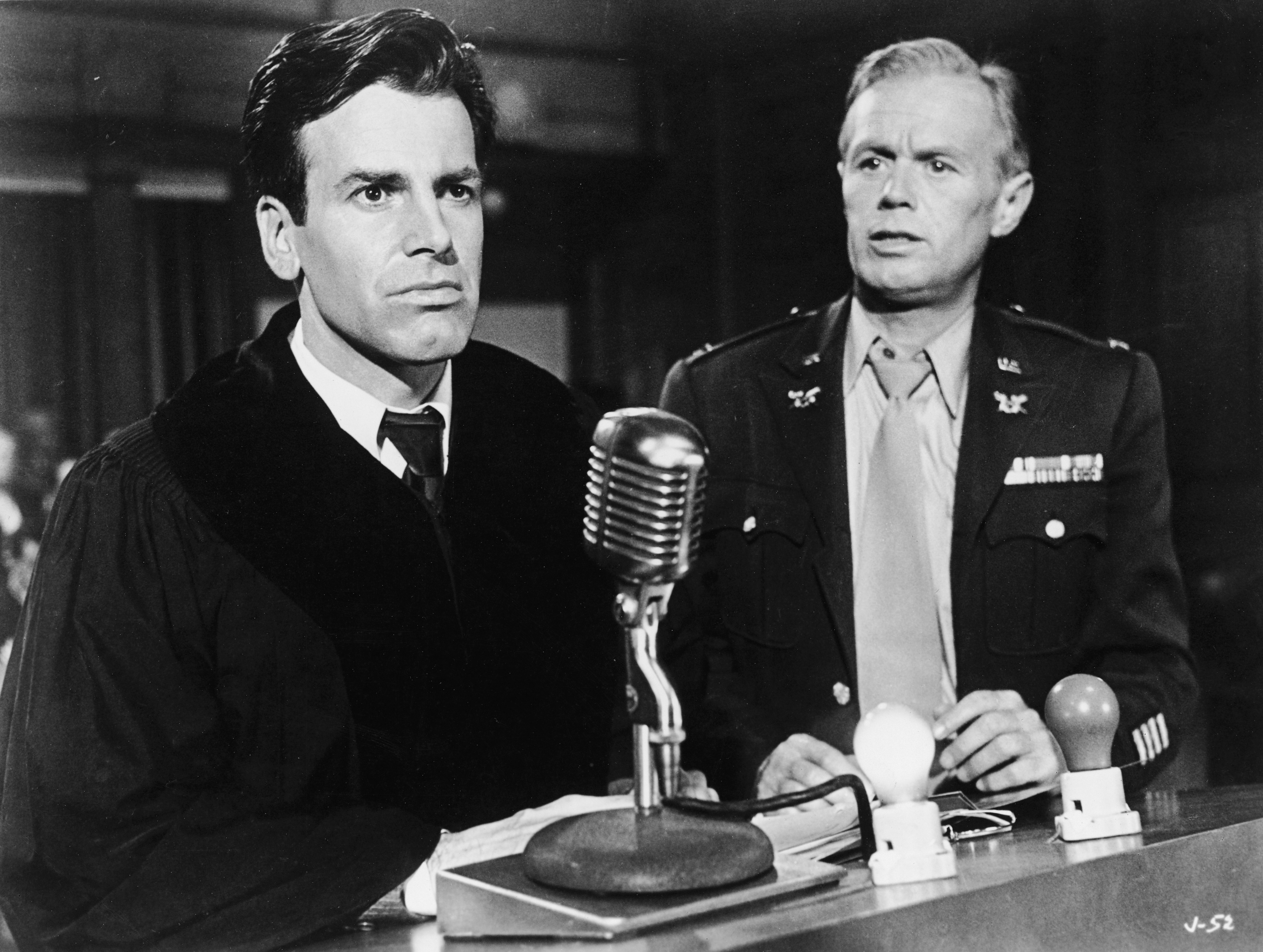
But the granddaddy of all these dark but underappreciated classic films has to go to the 1961 seminal Judgment at Nuremberg, as its relevance only gains stature since I first saw it in high school. Although it’s over two hours long, I highly recommend everyone watch it and that it will blow your freaking mind with a cast of A-List sensations and Golden Age luminaries like Spencer Tracy, Richard Widmark, Burt Lancaster, Marlene Dietrich, Judy Garland, and Montgomery Clift, along with up-and-coming talents like Maximilian Schell and William Shatner. Based on a teleplay by Abby Mann, the movie is a courtroom drama centered on a judges’ trial for crimes against humanity and their complicity in the Holocaust. Given the subject matter, you might expect a trigger warning as akin to most Holocaust films. However, the graphic Nazi concentration camp footage in Judgment at Nuremberg will probably be the least disturbing thing you see in the whole film. Because this isn’t your run of the mill Holocaust movie like Schindler’s List (although I do believe such films serve a purpose). Instead, the film mainly explores on how a society and relatively decent people could enable such an atrocity like the Holocaust happen, which Hollywood rarely asks in movies depicting Nazi war crimes. And yet, if we want to understand the Holocaust and make sure nothing like it happens again, it’s an absolutely critical aspect people really need to address.
Although Judgment at Nuremberg lacks much of the graphic horror show content of today’s Holocaust movies, it can be a far more unsettling film to watch because of the message it conveys: you can’t always count on wokeness, social progress, and innovation to shield your neck of the woods from committing widescale atrocities. And that being a decent and well-meaning human being won’t always save you from complicity with evil. When I first watched this movie, I found listening to many of the characters’ speeches far more frightening to hear than watching the entirety of Schindler’s List. Not because they were filled with graphic violent descriptions (they weren’t), but because of how it profoundly shatters most people’s perceptions of the Holocaust, especially in Hollywood movies. We’re often taught that no matter how awful it was and how many millions were killed, it was something that could only be carried out by depraved, fanatical, and vicious psychopaths within the military ranks of a totalitarian regime like the Third Reich. Yes, these are hard to watch but they depict the Holocaust as something that can only happen under bad people in some faraway place within a backward time in history. While only the victims and their protectors are only given a shred of humanity.
On the other hand, Judgement at Nuremberg tells us to throw this perception out the window and gives us a far more horrifying portrait of the Holocaust that most people aren’t comfortable with but is more in line with the historical reality. While the young, fiery defense attorney Hans Rolfe and the dignified accused judge Ernst Janning agree that the Holocaust was a very terrible thing, their speeches offer some very disturbing insights into the genocide. Rolfe states that Germany was no more unique than any other western country in committing human rights atrocities, that other countries also played a role in the Third Reich’s rise, and that Nazi ideas like eugenics and anti-Semitism were seen as perfectly acceptable within establishments worldwide (and sometimes put into policy). Ernst Janning is depicted as a fundamentally decent man who did horrible things for the Nazi regime in the name of patriotism. He knows what he did was wrong and is truly sorry for his loathsome actions. While his testimony shows how easily a democratic country with decent people like the distressed Weimar Germany can be so vulnerable to nationalistic and white supremacist propaganda that could sweep a totalitarian regime into power. And how even good people can casually excuse heinous state-sponsored atrocities for the so-called good of the country. Sure, Janning doesn’t conform to what most people see in a Nuremberg defendant. But we must acknowledge that he’s far from an anomaly. And if it weren’t for people like him, there would be no Holocaust. Yes, there were a lot of sicko perpetrators and Nazi diehards. But most of the people involved in killing over 6 million Jews and millions of others were no more like ourselves. If Ernst Janning can be complicit in state-sponsored mass murder, so can you.
Both Rolfe and Janning’s testimonies teach us a very chilling but nonetheless important lesson that a lot of Holocaust movies seem to ignore. Or at least not teach us in such an effective in powerful way. Most Holocaust films asks us to see ourselves as the hapless victims or the heroes. Judgment at Nuremberg asks us to see ourselves as not just the slaughtered masses or those who defied the Third Reich, but also the bystander German people and the enablers who carried out the heinous Nazi agenda. Sure, you can teach schoolchildren the Holocaust all you want by showing as many starved concentration camp inmates, piled naked corpses in mass graves, gas chambers, and other sick scenes. But unless we also teach how the Holocaust could’ve happened in your country and how you can be swept into supporting anti-democratic regimes and committing these atrocities, no amount of footage from Auschwitz will make any difference in preventing another genocide. Yes, victim perspectives are important and the film certainly shows this (namely with a physically wrecked Montgomery Clift and a broken Judy Garland). But we also must see that the bystanders, enablers, and perpetrators were also human beings no different from us. And that we can be just as easily manipulated in enabling and participating in the mass slaughter of millions of people just as we can be among the millions slaughtered. While Judgment at Nuremberg greatly succeeds in conveying this essential lesson, most Holocaust films fail to even acknowledge it. Because as in history, nobody wants to see themselves as the bad guy, even a sympathetic one who hated knowingly sending innocent people to their deaths under the Nazis like Ernst Janning.
Nevertheless, Judgement at Nuremberg also teaches that just because the Holocaust wouldn’t be possible without the ordinary Germans’ complicity and participation in the state-sponsored genocide, that doesn’t excuse their crimes regardless of their motivations. Sure, Rolfe and Janning’s testimonies are essential in understanding the mass-killings of millions under the Nazi regime. Yet, Judge Haywood still rules the four judges as guilty and that knowingly passing death sentences on innocent people is inexcusable. Doesn’t matter if it’s for love of country. Nor if you’re doing it under a tyrannical Nazi regime or under Nazi orders. Judge Haywood’s verdict speech highlights that true love of country doesn’t mean conveniently ditching your moral principles after a bunch of white supremacist thugs overthrow your democracy. Or to ignore or cooperate with whatever terrible things happening within your own nation. If you have to participate in crimes against humanity to ensure your country’s survival, then what does your nation stand for anymore? As Haywood notes, “A country isn’t a rock. It’s not an extension of one’s self. It’s what it stands for. It’s what it stands for when standing for something is the most difficult!” Thus, if you see your country committing some great evil, excuses and complicity aren’t the answer. Active resistance against that evil is, especially if when it’s most difficult. Otherwise, what’s the point of national survival if you don’t stick up for what your country is supposed to stand for?

 The Lone Girl in a Crowd
This is what is so appalling about what we’re seeing today: the government began systematically attacking its own states, its own people, and it took us entirely too long to react. ” Oregon? They attacked Oregon? wow. Hand me the salad, hon.” “hey, what’s this I hear about some foreign-looking people being deported back to South America….Luis, are you okay?”